PALATKA CENTER FOR REHABILITATION AND HEALING
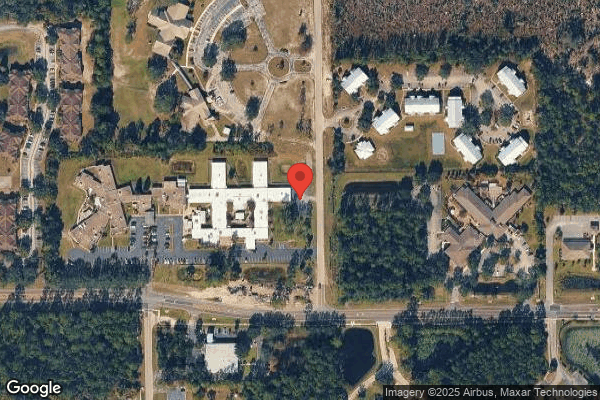

110 KAY LARKIN DR, PALATKA, FL 32177 (386) 325-0173
For profit - Limited Liability company 180 Beds INFINITE CARE Data: November 2025
Trust Grade
55/100
#400 of 690 in FL
Last Inspection: February 2025

Within standard 12-15 month inspection cycle. Federal law requires annual inspections.

Overview

Palatka Center for Rehabilitation and Healing has a Trust Grade of C, indicating it is average and falls in the middle of the pack among nursing homes. It ranks #400 out of 690 facilities in Florida, placing it in the bottom half, and #3 out of 3 in Putnam County, meaning only one other local option is better. Unfortunately, the facility's trend is worsening, with issues increasing from 4 in 2024 to 10 in 2025. Staffing is a concern, with a turnover rate of 56%, which is above the Florida average of 42%, indicating staff may not stay long enough to build strong relationships with residents. Although there have been no fines, which is a positive sign, there were specific incidents found during inspections, such as a resident being prescribed medication that increases the risk of falls without proper evaluation and another resident not having their nebulizer equipment properly maintained. Overall, while there are strengths in some areas, there are significant weaknesses that families should consider when researching this facility.

Trust Score
C
55/100
In Florida
#400/690
Bottom 43%
Safety Record
Low Risk
No red flags
Inspections
Getting Worse
4 → 10 violations
Staff Stability
⚠ Watch
56% turnover. Above average. Higher turnover means staff may not know residents' routines.
Penalties
✓ Good
No fines on record. Clean compliance history, better than most Florida facilities.
Skilled Nurses
○ Average
Each resident gets 34 minutes of Registered Nurse (RN) attention daily — about average for Florida. RNs are the most trained staff who monitor for health changes.
Violations
⚠ Watch
32 deficiencies on record. Higher than average. Multiple issues found across inspections.
★★★☆☆
3.0
Overall Rating
★★★☆☆
3.0
Staff Levels
★★★★★
5.0
Care Quality
★★☆☆☆
2.0
Inspection Score
Stable
2024: 4 issues
2025: 10 issues

The Good

  • 5-Star Quality Measures · Strong clinical quality outcomes
  • Full Sprinkler Coverage · Fire safety systems throughout facility
  • No fines on record

Facility shows strength in quality measures, fire safety.

The Bad

3-Star Overall Rating

Near Florida average (3.2)

Meets federal standards, typical of most facilities

Staff Turnover: 56%

10pts above Florida avg (46%)

Frequent staff changes - ask about care continuity

Chain: INFINITE CARE

Part of a multi-facility chain

Ask about local staffing decisions and management

Staff turnover is elevated (56%)

8 points above Florida average of 48%

The Ugly 32 deficiencies on record

Feb 2025 10 deficiencies
CONCERN (D)

Potential for Harm - no one hurt, but risky conditions existed

Deficiency F0604 (Tag F0604)

Could have caused harm · This affected 1 resident

**NOTE- TERMS IN BRACKETS HAVE BEEN EDITED TO PROTECT CONFIDENTIALITY** Based on observation, interview and record review the facility failed to ensure that residents were treated with dignity and res...

Read full inspector narrative →
**NOTE- TERMS IN BRACKETS HAVE BEEN EDITED TO PROTECT CONFIDENTIALITY** Based on observation, interview and record review the facility failed to ensure that residents were treated with dignity and respect and were free from physical restraint use when 1 resident had a splint on one hand and a nonskid sock covering the other hand for 1 resident (Resident #116) of 2 residents observed for positioning and mobility. Findings include: Review of the admission record documented that Resident #116 was admitted to the facility on [DATE], with medical diagnoses including hemiplegia [the complete loss of movement of one side of the body] and hemiparesis [weakness and partial loss of movement of one side of the body] following cerebral infarction affecting right dominant side [a stroke affecting the right side of the body],cognitive communication deficit[ difficulty communicating], and contracture, left hand [ a tightening of muscles and ligaments that prevents normal movement of the affected part]. During an observation on 02/17/2025 at 1:53 PM, Resident #116 was wearing a splint on her left hand and a non-skid sock on her right hand. During an observation on 2/1820/25 at 9:28 AM Resident #116 was observed lying in bed with her eyes closed. There was a splint on her left hand, and a non-skid sock on her right hand. During an observation on 2/18/2025 at 12:58 PM Resident #116 was dressed in street clothes, her hair had been combed. She had a splint on her left hand, and a non-skid sock on her right hand. During an observation on 2/1920/25 at 8:51 AM, Resident #116 could be heard from outside of her room calling out,hollering. Upon entering her room, she was observed lying in bed with her eyes open. She was wearing a blue sock on her right hand and a splint on her left hand. During an interview on 2/19/2025 at 8:50 AM, Staff C, Licensed Practical Nurse (LPN) stated, Her [Resident #116] daughter either requested the sock or approved it. During an interview on 2/19/25 at 9:53 AM, the Administrator stated, She [Resident #116] should not have a sock on her hand. Review of Resident #116's physician orders from 12/01/2024 through 2/17/2025 revealed no orders for gloves, mittens, or Geri-sleeves (sleeves used to protect the skin on arms and legs from damage caused by friction and shearing). Review of Resident #116's Consent forms revealed no consent for gloves, mittens or any form of restrictive or restraining devices for her hand. Review of the policy and procedure, titled, Restorative - Physical Restraint Program, last reviewed of 12/10/2024, read, Policy: The facility will not impose the use of any physical restraint on any resident for discipline or convenience . Physical Restraints are defined as any manual method or physical or mechanical device, material, or equipment attached or adjacent to the residents body that the individual cannot remove easily, which restricts freedom of movement or normal access to one's body . Devices that may meet the definition of physical restraints are leg or hand restraints, hand mitts .
CONCERN (D)

Potential for Harm - no one hurt, but risky conditions existed

Assessment Accuracy (Tag F0641)

Could have caused harm · This affected 1 resident

**NOTE- TERMS IN BRACKETS HAVE BEEN EDITED TO PROTECT CONFIDENTIALITY** Based on record review and interview, the facility failed to ensure accuracy of minimum data set assessments for 1 (Resident #4)...

Read full inspector narrative →
**NOTE- TERMS IN BRACKETS HAVE BEEN EDITED TO PROTECT CONFIDENTIALITY** Based on record review and interview, the facility failed to ensure accuracy of minimum data set assessments for 1 (Resident #4) of 6 residents reviewed for respiratory services and 1 (Resident #143) of 5 reviewed for unnecessary medications. Findings include: 1)Resident #4 physician order dated 7/5/2024 read, Oxygen @ 3 L/Min (at 3 liters per minute) continuous inhalation via nc (nasal cannula) every shift for sob (shortness of breath). Review of Resident #4 Minimum Data Set (MDS) titled Quarterly dated 12/24/2024 read, Section O Special Treatments, Procedures and Programs: Oxygen therapy was coded No. Review of Resident #4 admission Record resident was admitted on [DATE] with diagnosis including but not limited to acute respiratory failure with hypoxia, heart failure, type 2 diabetes, and acute posthemorrhagic anemia. During an interview on 2/19/2025 at 3:40 PM with the Regional MDS Consultant stated, [Resident #4's MDS appears to need to be corrected. I will modify Section O and correct the oxygen section. 2)Review of Resident #143 no physician order for insulin. Review of Resident #143 Medication Administration Record (MAR) for the month of November 2024 there was no insulin administered for the month. Review of Resident #143 diagnosis did not include Diabetes Mellitus. Review of Resident #143 MDS titled Quarterly dated 11/25/2024 read, Section N-Medication documented resident received insulin injections for last 7 days. During an interview on 2/19/2025 at 3:42 PM with the Regional MDS Consultant stated, [Resident #143's MDS appears to need to be corrected, insulin was not administered. I will modify the section. We follow the RAI (Resident Assessment Instrument).
CONCERN (D)

Potential for Harm - no one hurt, but risky conditions existed

Comprehensive Care Plan (Tag F0656)

Could have caused harm · This affected 1 resident

**NOTE- TERMS IN BRACKETS HAVE BEEN EDITED TO PROTECT CONFIDENTIALITY** Based on an interview, and record review, the facility failed to develop and implement a comprehensive person-centered care plan...

Read full inspector narrative →
**NOTE- TERMS IN BRACKETS HAVE BEEN EDITED TO PROTECT CONFIDENTIALITY** Based on an interview, and record review, the facility failed to develop and implement a comprehensive person-centered care plan for 1 (Resident #44) of 3 residents reviewed for urinary tract infections (UTI) , and for 1 resident (Resident #21) of 4 residents reviewed for mood and behaviors. Findings include: Review of Resident #21's medical record documented diagnoses that included depression. Review of Resident #21's physician progress note dated 1/31/2025 read, Chief Complaint: Depression, dementia and insomnia. Reason for Today's Encounter: Today, I saw the patient for medication management as patient has active psychiatric diagnosis, is on psych( psychiatric) meds(medications), is in the facility setting, and the last psychiatric visit was 4 or more weeks ago and as it was reported to me that patient is unstable requiring psychiatric assessment. History of Present Illness: This is a [AGE] year old patient with a past psychiatric history of depression, dementia and insomnia. Review of Resident #21's progress note dated 11/09/2024 read, resident refused shower for nurse and certified nursing aide. Resident began to get upset once staff was consistently kept encouraging him to do so. Resident refused x 3. Review of Resident #21's progress note dated 1/06/2025 read, Resident refused shower today. Review of Resident #21's progress note dated 1/09/2025 read, resident refused labs, MD(Medical Doctor) in facility and made aware, no new orders received. Review of Resident #21's care plan did not reveal a care plan focus related to a focus on potential of behavior related to diagnosis of depression or being unstable. During an interview conducted on 2/19/2025 at 7:45 AM the Director of Nursing (DON) stated The interdisciplinary team (IDT) should have initiated a care plan for [Resident #21's name] with a focus for behaviors, refusing care, or being on an anti-depressant with interventions and goals and this was not done. 2) Review of Resident #44's medical record documented diagnoses that included a diagnosis of urinary tract infection(UTI). Review of Resident #44's physician order dated 2/12/2025 read, Macrobid 100MG, give 1 capsule by mouth two times a day for UTI (urinary tract infection) for 7 days. Review of Resident #44's care plan did not show a care plan for a UTI or antibiotic therapy. During an interview on 2/18/2025 at 8:15 AM the Administrator stated , The IDT (interdisciplinary team) is responsible for identifying and care planning and failed to do so for [Resident #44's name]for a UTI (urinary tract infection) or for antibiotic therapy and the team should have done so.
CONCERN (D)

Potential for Harm - no one hurt, but risky conditions existed

Quality of Care (Tag F0684)

Could have caused harm · This affected 1 resident

**NOTE- TERMS IN BRACKETS HAVE BEEN EDITED TO PROTECT CONFIDENTIALITY** 3.) On 2/18/2025 at 8:21 AM, Resident #456 was sitting semi reclined in her bed in her room. Resident #456 was holding a medicat...

Read full inspector narrative →
**NOTE- TERMS IN BRACKETS HAVE BEEN EDITED TO PROTECT CONFIDENTIALITY** 3.) On 2/18/2025 at 8:21 AM, Resident #456 was sitting semi reclined in her bed in her room. Resident #456 was holding a medication cup in her hand. There were 3 tablets and 1 capsule in the medication cup that Resident #456 was holding. There was no nurse in Resident #456's room. A nurse was standing outside of Resident #456's room at a medication cart attending to a computer screen. During an interview on 2/18/2025 beginning at 8:21 AM, Resident #456 stated the tablets and the capsule in the medication cup were her medicine. She pointed at the capsule and stated this one is for my head. Review of Resident #456's care plan, date initiated 2/6/2025, failed to reveal documentation Resident #456 had been assessed as capable of self-administration of her medications. Review of Resident #456's medication administration records, dated 2/1/2025 through 2/28/2025, documented Resident #456 had been administered Metoprolol Succinate ER [Extended Release] 24 Hour 100 milligrams for hypertension; Meloxicam oral tablet 7.5 milligrams 1 tablet by mouth one time a day for muscle spasms; Lisinopril oral tablet 5 milligrams 1 tablet by mouth one time a day for hypertension; and Cephalexin capsule 500 milligrams 1 capsule three times a day for abscess on scalp for 10 days on 2/18/2025 at 9:00 AM. During interview on 2/19/2025 at 9:44 AM, Staff A, Registered Nurse, stated the nurse administering medications was supposed to watch residents swallow medications during medication administration. During interview on 2/19/2025 at 11:56 AM, the Director of Nursing stated her expectation was the nurse should stay in the resident's room until the resident had taken the administered medications. Based on interview and record review the facility failed to administer blood pressure medication following parameters for 2 (Resident #103 and 143) out of 8 residents reviewed for medication administration and failed to follow professional standards of practice during medication administration to 1 resident, Resident #456. Findings include: 1.) Review of Resident #103 physician order dated 9/7/2023 read, Metoprolol Tartrate Oral Tablet 25 MG (milligram) (Metoprolol Tartrate) Give 12.5 mg by mouth two times a day for hypertension hold for SBP<120 (systolic blood pressure less than 120). Review of Resident #103's Medication Administration Record (MAR) for the month of January 2025 documented Metoprolol Tartrate 12.5 mg was given at 0900 [9:00 AM] on 1/16/2025 with a systolic blood pressure (SBP) of 108, 1/18/2025 with a systolic blood pressure of 118, 1/19/2025 with a SBP of 115, 1/21/2025 with a SBP of 114, 1/30/2025 with a SBP of 118 and at 2100 [ 9:00 PM] on 1/5/2025 with a SBP of 113, 1/15/2025 with a SBP of 117, 1/19/2025 with a SBP of110, 1/23/2024 with a SBP of 118, 1/28/2025 with a SBP of 110 and on 1/29/2025 with a SBP of 113. Review of Resident #103's Medication Administration Record (MAR) for the month of February 2025 documented Metoprolol Tartrate 12.5 mg was given at 0900 [9:00 AM] 2/6/2025 with a SBP of 116, 2/14/2025 with a SBP of 111, 2/17/2025 with a SBP of 114, 2/18/2025 with a SBP of 116, on 2/19/2025 with a SBP of 114 and at 2100 on 2/4/2025 with a SBP of 118, 2/5/2025 with a SBP of 112, 2/12/2025 with a SBP of 110, 2/15/2025 with a SBP 118, 2/16/2025 with a SBP of 112, 2/17/2025 with a SBP of 116 and on 2/18/2025 with a SBP of 114. Review of Resident #103 admission record resident was admitted on [DATE] with diagnosis including but not limited to atrial fibrillation, essential hypertension, fatigue, dysuria. During an interview on 2/19/2025 at 10:40 AM with the Director of Nursing stated, [Resident #103's name] blood pressure medication was given out of parameters. Staff should follow the provider's parameters. The nurses should follow the parameters and get clarification from the provider if they are unsure of an order. During an interview on 2/19/2025 at 4:17 PM with Medical Director stated, Staff are expected to follow parameters and call if they gave any questions regarding the medication order. [Resident #103's name and Resident #143 name] have not had any adverse medical issues due to her blood pressure medication administration. [Resident #143 name] medication order was a transcription error it should have been hold for systolic blood pressure greater than 130. Review of the facility policy and procedure titled Administration of Drugs with a last review date of 12/10/2024 read, Policy: Residents shall receive their medication on a timely basis and in accordance with our established policies. Procedure: .Should there be an doubt concerning the administering of medication(s), the physician's order must be verified before the medication is administered. 2.) Review of Resident #143 physician order dated 2/4/2025 read, Midodrine 5 MG (milligrams), give 1 table by mouth three times a day, hold for systolic greater than 110, hold for SBP>110 (systolic blood pressure greater than 110). Review of Resident #143's Medication Administration Record (MAR) for the month of January 2025 documented administration of Midodrine 5 MG .hold for systolic greater than 110 was given on the following dates, times and blood pressure readings on 1/3/2025 6:00 AM, Blood Pressure (BP) 135/77, 1/6/2025 10:00 PM, BP 148/87, 1/7/2025 6:00 AM, BP 164/92, 1/7/2024 10:00 PM, BP 126/88, 1/8/2025 6:00 AM, BP 134/78, 1/10/2025 6:00 AM, BP 117/68, 1/10/2025 2:00 PM, BP 111/66, 1/11/2025 6:00 AM, BP 130/69, 1/11/2025 10:00 PM, BP 130/63, 1/12/2025 6:00 AM, BP 132/75, 1/14/2025 10:00 PM, BP 112/71, 1/17/2025 10:00 PM, BP 111/ 78, 1/18/2025 6:00 AM, BP 111/78, 1/20/2025 2:00 PM, BP 111/69, 1/22/2025 2:00 PM, BP 114/64, 1/23/2025 10:00 PM, BP 99/54, not administered, 1/29/2025 2:00 PM, BP 131/70, 1/31/2025 2:00 PM, BP 131/87, and 1/31/2025 10:00 PM, BP 121/74. Review of Resident #143's Medication Administration Record (MAR) for the month of February 2025 documented administration of Midodrine 5 MG .hold for systolic greater than 110 was given on the following dates, times and blood pressure readings on 2/1/2025 6:00 AM, BP 122/74 and 2/2/2025 2:00 PM, BP 127/76. Review of Resident #143 progress note dated 1/2/2025, His past medical history is significant for . hypotension. During an interview on 2/20/2025 at 10:05 AM with the Director of Nursing stated, I would expect that if a resident has a medication order with parameters that the nurse administering the medication would administer the medication according to the parameters ordered and if the nurse needed any clarification about the order or parameters, that prior to administration they would notify the physician.
CONCERN (D)

Potential for Harm - no one hurt, but risky conditions existed

Respiratory Care (Tag F0695)

Could have caused harm · This affected 1 resident

2)During an observation on 2/17/2025 at 10:23 AM Resident #125 was lying in bed with oxygen being administered at 3 liters per minute via nasal canula. During an observation on 2/18/2025 at 8:12 AM R...

Read full inspector narrative →
2)During an observation on 2/17/2025 at 10:23 AM Resident #125 was lying in bed with oxygen being administered at 3 liters per minute via nasal canula. During an observation on 2/18/2025 at 8:12 AM Resident #125 was sitting up in bed with oxygen being administered at 3 liters via nasal cannula. During an interview on 2/18/2025 at 8:12 AM with Resident #125 stated, The nurse change it yesterday and change my tubing. I will take off my nasal cannula once in a while but I do not adjust the machine. Resident #125 physician order date 6/24/2024 read, Oxygen @ 2L/Min (at 2 liters per minute) via nasal cannula continuous inhalation every shift. During an interview on 2/18/2025 at 1:50 with Staff 125 RN stated, [Resident #125 name] Oxygen is running at 3 liters. After checking her orders Resident #125 should be at 2 liters I will adjust the concentrator rate. During an interview on 2/19/2025 at 10:44 AM with the Director of Nursing (DON) stated, Staff should monitor the flow rate and make sure it is at the appropriate rate. Review of the facility policy and procedure titled Oxygen Administration with a last review date of 12/10/2024 read, Purpose: The purpose of this procedure is to provide guidelines for oxygen administration. Procedure: .7. Turn on the oxygen. Start the flow of oxygen at the prescribed rate. Based on observation, interview and record review, the facility staff failed to ensure that oxygen was administered consistent with professional standards of practice for two (Resident #8 and Resident #125) of 6 residents reviewed for respiratory care . Findings include: 1.) During an observation on 2/17/2025 at 10:15 AM, Resident #8 was sleeping in their bed. She was observed with a nasal cannula in her nose attached to an oxygen concentrator running at 3 liters per minute (LPM). During an observation on 2/18/2025 at 12:51 PM, Resident #8 was observed sitting at the nurse's station in her wheelchair without her oxygen therapy of 2 LPM of continuous flow via a nasal cannula. During an observation on 2/19/2025 at 8:03 AM, Resident #8 was observed sleeping in her bed. She was observed with a nasal cannula in her nose attached to an oxygen concentrator running at 3 LPM. During an interview on 02/18/25 1:36 PM with the Director of Nursing, she stated that her expectations are that if a resident has an order for continuous oxygen that the resident should be kept on the prescribed flow of oxygen at all times by providing the resident with a portable oxygen cylinder. She stated that it would be expected that all departments who interact with the Resident be aware of their oxygen needs and make sure they are on oxygen as ordered. During an interview on 2/18/2025 at 1:26 PM with the Activities Assistant, she stated that Resident #8 was brought to the activities room for assistance with breakfast, stayed for activities after breakfast and then ate lunch with assistance, she was then brought to the nurse's station after she finished lunch. The Activities Assistant stated that during that timeframe Resident #8 was not on any oxygen flow. During an interview on 2/19/2025 at 8:03 AM with Staff D, Registered Nurse (RN) she confirmed that Resident #8's oxygen flow rate was running at 3 LPM and Resident #8's is ordered to have her oxygen flow at 2 LPM. Review of Resident #8 physician order dated 1/30/2025, reads Oxygen @ 2 L/Min (liters per minute) continuous inhalation via nasal cannula every shift for SOB (shortness of breath).
CONCERN (D)

Potential for Harm - no one hurt, but risky conditions existed

Deficiency F0757 (Tag F0757)

Could have caused harm · This affected 1 resident

Based on interview and record review the facility failed to ensure residents' medications regimens were free of unnecessary antibiotic use based on adequate indications to reduce the risk of the devel...

Read full inspector narrative →
Based on interview and record review the facility failed to ensure residents' medications regimens were free of unnecessary antibiotic use based on adequate indications to reduce the risk of the developement of antibiotic resistant organisms for 1 (Resident #134) of 6 residents reviewed for unnecessary medications. Findings include: Review of Resident #134's admission record documented diagnoses that included ,but were not limited to chronic kidney disease, stage 4 (severe). Review of Resident #134's nursing progress notes Change in Condition form dated 1/6/2025 at 2:24 PM, read, Other change in condition: . Outcomes of Physical Assessment: Positive findings reported on the resident/patient evaluation for this change in condition were: .GU/Urine Status Evaluation: Painful urination .Primary Care Provider Feedback: Primary Care Provider responded with the following feedback: A. Recommendations: Bactrim DS one tab(tablet) po(by mouth) bid ( two times a day) x7days. Review of Resident #134's Physician orders dated 1/6/2025 at 2:29 PM read, Sulfamethoxazole-Trimethoprim Tablet 800-160 MG: Give 1 tablet by mouth every 12 hours for Prophylaxis for 7 Days. Review of Resident #134's Medication Administration Record (MAR) read, Sulfamethoxazole-Trimethoprim Tablet 800-160 MG: Give 1 tablet by mouth every 12 hours for Prophylaxis for 7 Days. The MAR documented administration of 13 doses of Sulfamethoxazole-Trimethoprim (Bactrim DS), beginning at 9:00 PM on 1/6/2025, through 9:00 PM on 1/12/2025. Review of Resident #134's progress notes dated 1/8/2025 read, Medication List: Sulfamethoxazole-Trimethoprim Tablet 800-160 MG, Give 1 tablet by mouth every 12 hours for Prophylaxis for 7 Days, 800-160MG, ACTIVE, 1/6/2025 to 1/13/2025 . Chief Complaint / Nature of Presenting Problem: Follow up for assessment and management of care with skilled nursing with lab . During an interview on 2/19/2025 at 9:30 AM, the Director of Nursing (DON) stated, If a resident has burning on urination, sometimes the doctor will treat with wide spectrum antibiotics. We should collect a UA( urinalysis). We should follow our policies for antibiotic stewardship. During an interview on 2/19/2025 at 10:21 AM, the Advanced Practice Registered Nurse (APRN) A stated, The antibiotics [for Resident #134] were prophylactic for symptoms [of a urinary tract infection]. Typically, we start antibiotics, get a urinalysis (UA) with a culture and sensitivity (C&S). I am not sure why there wasn't a UA. It's my error for not noting it. It should have been discontinued if the U/A was negative. During an interview on 2/19/2025 at 10:48 AM, the Infection Preventionist stated, If a resident displays signs and symptoms of a UTI (urinary tract infection), we notify the MD. Hopefully they will do a UA and C&S ( urine culture and sensitivity). We notify the MD (Medical Doctor) or provider and get orders with the stop date and a diagnosis for the orders. We want to get the specimen before starting antibiotics. We observe the resident, assess their abdomen, check the urine for odors, make sure they are afebrile, check for alterations in mental status, and signs and symptoms of infection. We try to educate the MD to not give broad spectrum antibiotics and not get labs (a urine C&S). We remind the MD if the resident is asymptomatic to possibly stop the antibiotics. We did not follow our antibiotic stewardship policy. The antibiotic should have been stopped. During an interview on 2/19/2025 at 11:10 AM, the Medical Director stated, [For a resident with burning on urination] I give antibiotics first and then get the UA. If the UA is negative, then we will stop the antibiotics. Waiting on the labs can make if difficult because of the delay and the patient can get sicker. Sometimes patients refuse labs, and then I can go in and cancel the order. I actually ordered the antibiotics [for Resident #134] and did not order labs. Review of the facility's policy, last reviewed on 12/10/2024, titled Antibiotic Stewardship read, Policy Statement: Antibiotics will be prescribed and administered to residents under the guidance of the facility's Antibiotic Stewardship Program. Policy Interpretation and Implementation: . 4. If an antibiotic is indicated, prescribers will provide complete antibiotic orders including the following elements: a. Drug name; b. Dose; c. frequency of administration; d. duration of treatment: 1) start and stop date; or 2) number of days of therapy e. route of administration; and f. indications of use . 10. When antibiotics are prescribed over the phone, the primary care practitioner will assess the resident within 72 hours of the telephone order.
CONCERN (D)

Potential for Harm - no one hurt, but risky conditions existed

Deficiency F0761 (Tag F0761)

Could have caused harm · This affected 1 resident

Based on observation, interview, and record review the facility failed to ensure the drugs and biologicals used in the facility were stored in accordance with currently accepted professional standards...

Read full inspector narrative →
Based on observation, interview, and record review the facility failed to ensure the drugs and biologicals used in the facility were stored in accordance with currently accepted professional standards of practice when unsecured medications were observed in resident rooms for 1 out of 4 units reviewed for unattended medication. Finding include: 1)During an observation on 2/17/2025 at 10:17 AM Resident # 65 was lying in bed and on top of her bedside table there was a bottle of Fluticasone Propionate Lotion 0.05%. (photographic evidence obtained) During an interview on 2/17/2025 at 10:17 AM Resident #65 stated, I have the nurse apply the lotion to my back when it is itchy. Review of Resident #65 physician orders did not reveal a medication self-administration order. Review of Resident #65 care plan did not document a focus for medication self-administration. During an observation on 2/17/2025 at 10:21 AM Resident #80 was sitting in a wheelchair in her room. There was a circular white tablet in a plastic medication cup on top of the bedside table. (photographic evidence obtained) During an interview on 2/17/2025 at 10:21 AM Resident #80 stated, The nurse brought me a tums. I had heart burn and upset stomach. Review of Resident #80 physician orders did not reveal a medication self-administration order. Review of Resident #80 care plan did not document a focus for medication self-administration. During an observation on 2/17/2025 at 10:41 AM Resident # 4 was sitting in his room. On top of the residents bedside table there were 4 circular white tablets. (photographic evidence obtained.) During an interview on 2/17/2025 at 10:41 AM Resident #4 stated, The nurse just gave me these pills. They are Tylenol and the other is for my heart. Review of Resident #4 physician orders did not reveal a medication self-administration order. Review of Resident #4 care plan did not document a focus for medication self-admisnitration. During an interview on 2/19/2025 at 10:58 AM the Director of Nursing (DON) stated, We usually do a self-administration assessment to determine if the residents are able to self-administer medication. I don't see that (self administration assessment) completed for [Resident #80's name, Resident #65's name, and Resident #4's name]. The nursing staff should stay with the resident to make sure that they take the medication. Medication should not be left unattended in the resident's room. Review of the policy and procedure titled Medication storage with a last review date of 12/10/2024 read, Policy: Medication will be stored in a manner that maintains the integrity of the product and ensures the safety of the residents and is in accordance with FL [Florida] Department of Health guidelines. Procedure: A. With the exception of Emergency Drug Kits, all medications will be stored in a locked cabinet, cart or medication room that is accessible only to authorized personnel, as defined by the facility policy.
CONCERN (D)

Potential for Harm - no one hurt, but risky conditions existed

Infection Control (Tag F0880)

Could have caused harm · This affected 1 resident

3) During an observation on 02/17/25 at 10:03 AM Resident #47 was lying in bed with oxygen being administered at three liters per minute, a nebulizer mask was on top of the drawer with no bag. During ...

Read full inspector narrative →
3) During an observation on 02/17/25 at 10:03 AM Resident #47 was lying in bed with oxygen being administered at three liters per minute, a nebulizer mask was on top of the drawer with no bag. During an observation on 2/18/2025 at 8:15 AM Resident #47 was lying in bed the nebulizer mask was on top of the drawer without a bag. Review of Resident #47 physician order dated 8/22/2024 read, Albuterol Sulfate Nebulization Solution (2.5 MG/3ML) (2.5 milligram/3 milliliter)0.083% 3 milliliter inhale orally via nebulizer every 6 hours as needed for Shortness of Breath Review of Resident #47 physician order dated 11/7/2024 read, Ipratropium-Albuterol Inhalation Solution 0.5-2.5 (3) MG/3ML (Ipratropium-Albuterol) 3 ml inhale orally via nebulizer every 6 hours as needed for SOB (shortness of breath). During an interview on 2/18/2025 at 1:52 PM Staff B Registered Nurse (RN) stated, [Resident #47 name] nebulizer mask should be stored in a bag when not in use. The bag should be dated. During an interview 2/19/2025 at 10:48 AM the Director of Nursing stated Nebulizer masks and oxygen tubing should be bagged when not in use. Review of the policy and procedure titled Respiratory Therapy Equipment with a last review date of 12/10/2024 read, Purpose: The purpose of this procedure is to provide guidelines to help prevent nosocomial infections associated with respiratory therapy equipment, including ventilators, and to prevent transmission of infections to resident and staff .Procedure: .5. Keep oxygen cannula and tubing used PRN (as needed) in a plastic bag when not in use. Based on observation, interview, and record review, the facility failed to maintain an infection prevention and control program designed to help prevent the transmission of communicable diseases and infection by failing to perform hand hygiene during medication administration for 4 (Residents #96 and #407) of 6 residents observed for medication administration, and failed to follow acceptable standards of care for storage of respiratory care equipment for 2 ( Resident #47 and Resident #143) of 6 residents reviewed for Respiratory care. Findings include: During an observation on 2/19/25 at 8:25 AM, Staff A, Registered Nurse (RN) was observed administering a medication intravenously to Resident #96 without performing hand hygiene before donning gloves and administering the medication or after removing her gown and gloves. Staff A, RN was observed returning to the medication cart to administer another residents medications. During an interview on 2/19/25 at 8:34 AM, Staff A, RN stated, I didn't wash my hands. During an observation on 2/19/25 at 8:37 AM, Staff C, Licensed Practical Nurse (LPN) was observed preparing medications without performing hand hygiene, entering the residents room and administering oral medications to Resident #407 without performing hand hygiene. Staff C, LPN returned to the medication cart and began preparing medications for another resident. During an interview on 2/19/25 at 8:40 AM, Staff C, LPN stated, I didn't use the hand foam. Review of the policy and procedure, last updated on 12/10/24, titled Handwahing / Hand Hygiene, read, Policy Statement: This facility considers hand hygiene the primary means to prevent the spread of infection. Policy Interpretation and Implementation . 2. All presonnel shall follow handwahing/hand hygiene processes to prevent the spread of infections to other personnel, residents, and visitors . 5. Use an alcohol-based hand-rub containing at least 62% alcohol; or alternatively, soap (anti-microbial or non-antimicrobial) and water for the following situations . c. Before preparing or handling medications . 6. Hand hygiene is the last step after removing and disposing of personal protective equipment. 2.) During an observation on 2/17/2025 at 10:04 AM, Resident #143's nebulizer mask was observed on the bedside table without a bag. (Photographic Evidence Obtained) During an observation on 2/18/2025 at 12:51 PM, Resident #8's nasal cannula was observed laying on the floor in her room. The oxygen concentrator was not on at the time of the observation and the Resident was not in the room. (Photographic Evidence Obtained) During an interview on 2/18/2025 at 12:51 PM, Staff D, Registered Nurse (RN), stated, A residents' nasal cannula should be stored in a bag when not in use. During an interview on 2/18/2025 at 1:36 PM the Director of Nursing, stated, Respiratory equipment including nebulizer mask should be stored in a bag when not in use. If a resident has an oxygen order to be used as needed, when the resident does not have the cannula on, it would also be stored in a bag. Review of Resident #143's physician order dated 8/27/2024, reads Budesonide inhalation suspension 0.5 milligram (MG)/2 milliliters (ML), 1 puff inhale orally two times a day for wheezing. Review of Resident #143's physician order dated 8/27/2024, reads Albuterol Sulfate hydrofluoroalkane (HFA) inhalation aerosol solution 108 (90 Base) micrograms (MCG)/ Albuterol Sulfate (ACT), 2 puff inhale orally every 4 hours as needed for wheezing.
CONCERN (D)

Potential for Harm - no one hurt, but risky conditions existed

Antibiotic Stewardship (Tag F0881)

Could have caused harm · This affected 1 resident

Based on interview and record review the facility failed to implement its antibiotic stewardship protocol when it failed to monitor the use of antibiotics to reduce the risk of development of antibiot...

Read full inspector narrative →
Based on interview and record review the facility failed to implement its antibiotic stewardship protocol when it failed to monitor the use of antibiotics to reduce the risk of development of antibiotic resistance for 1 (Resident # 134) of 3 residents reviewed for urinary tract infections. Findings include: Review of Resident #134's admission record documented diagnoses that included ,but were not limited to chronic kidney disease, stage 4 (severe). Review of Resident #134's nursing progress notes Change in Condition form dated 1/6/2025 at 2:24 PM, read, Other change in condition: . Outcomes of Physical Assessment: Positive findings reported on the resident/patient evaluation for this change in condition were: .GU/Urine Status Evaluation: Painful urination .Primary Care Provider Feedback: Primary Care Provider responded with the following feedback: A. Recommendations: Bactrim DS one tab(tablet) po(by mouth) bid ( two times a day) x7days. Review of Resident #134's Physician orders dated 1/6/2025 at 2:29 PM read, Sulfamethoxazole-Trimethoprim Tablet 800-160 MG: Give 1 tablet by mouth every 12 hours for Prophylaxis for 7 Days. Review of Resident #134's Medication Administration Record (MAR) read, Sulfamethoxazole-Trimethoprim Tablet 800-160 MG: Give 1 tablet by mouth every 12 hours for Prophylaxis for 7 Days. The MAR documented administration of 13 doses of Sulfamethoxazole-Trimethoprim (Bactrim DS), beginning at 9:00 PM on 1/6/2025, through 9:00 PM on 1/12/2025. Review of Resident #134's progress notes dated 1/8/2025 read, Medication List: Sulfamethoxazole-Trimethoprim Tablet 800-160 MG, Give 1 tablet by mouth every 12 hours for Prophylaxis for 7 Days, 800-160MG, ACTIVE, 1/6/2025 to 1/13/2025 . Chief Complaint / Nature of Presenting Problem: Follow up for assessment and management of care with skilled nursing with lab . During an interview on 2/19/2025 at 9:30 AM, the Director of Nursing (DON) stated, If a resident has burning on urination, sometimes the doctor will treat with wide spectrum antibiotics. We should collect a UA( urinalysis). We should follow our policies for antibiotic stewardship. During an interview on 2/19/2025 at 10:21 AM, the Advanced Practice Registered Nurse (APRN) A stated, The antibiotics [for Resident #134] were prophylactic for symptoms [of a urinary tract infection]. Typically, we start antibiotics, get a urinalysis (UA) with a culture and sensitivity (C&S). I am not sure why there wasn't a UA. It's my error for not noting it. It should have been discontinued if the U/A was negative. During an interview on 2/19/2025 at 10:48 AM, the Infection Preventionist stated, If a resident displays signs and symptoms of a UTI (urinary tract infection), we notify the MD. Hopefully they will do a UA and C&S ( urine culture and sensitivity). We notify the MD (Medical Doctor) or provider and get orders with the stop date and a diagnosis for the orders. We want to get the specimen before starting antibiotics. We observe the resident, assess their abdomen, check the urine for odors, make sure they are afebrile, check for alterations in mental status, and signs and symptoms of infection. We try to educate the MD to not give broad spectrum antibiotics and not get labs (a urine C&S). We remind the MD if the resident is asymptomatic to possibly stop the antibiotics. We did not follow our antibiotic stewardship policy. The antibiotic should have been stopped. During an interview on 2/19/2025 at 11:10 AM, the Medical Director stated, [For a resident with burning on urination] I give antibiotics first and then get the UA. If the UA is negative, then we will stop the antibiotics. Waiting on the labs can make if difficult because of the delay and the patient can get sicker. Sometimes patients refuse labs, and then I can go in and cancel the order. I actually ordered the antibiotics [for Resident #134] and did not order labs. Review of the facility's policy, last reviewed on 12/10/2024, titled Antibiotic Stewardship read, Policy Statement: Antibiotics will be prescribed and administered to residents under the guidance of the facility's Antibiotic Stewardship Program. Policy Interpretation and Implementation: . 4. If an antibiotic is indicated, prescribers will provide complete antibiotic orders including the following elements: a. Drug name; b. Dose; c. frequency of administration; d. duration of treatment: 1) start and stop date; or 2) number of days of therapy e. route of administration; and f. indications of use. Review of the facility's Clinical Protocol, last reviewed on 12/10/2024, titled Urinary Tract Infection/Bacteriuria read, Assessment and Recognition: . 2. The staff and practitioners will identify individuals with possible signs and symptoms of a urinary tract infection (UTI) .b. Nurses should observe, document, and report signs and symptoms (for example, fever or hematuria (blood in the urine)) in detail and avoid premature diagnostic conclusions .e . The presence of pyuria or a positive leukocyte esterase test alone are not enough to prove that the individual has a UTI, but the absence of pyuria or a negative leukocyte esterase test is fairly strong evidence that a UTI is not present. Cause Identification: 1. The physician will help nursing staff interpret any signs, symptoms, and lab test results. Diagnosis must be based on the entire picture and not just one or several findings in isolation. a. Before diagnosing a UTI or urosepsis (a serious infection that occurs when a UTI spreads to the bloodstream) and ordering antibiotics, the physician should consider a resident's overall picture including specific evidence that helps confirm or refute the diagnosis of a UTI (as described above). 3. Because nonspecific or systemic symptoms can be due to diverse factors either instead of or along with a UTI, the staff and practitioner will also consider additional or alternative causes regardless of whether bacteriuria or urinary symptom is present . Treatment/Management: 1. The physician will order appropriate treatment for verified or suspected UTIs and/or urosepsis based on a pertinent assessment. a. Empirical treatment should be based on a documented description of an individual's symptoms and on consideration of relevant test results, co-existing illnesses and conditions, and pertinent risk factors . 3. The physician should consider stopping antibiotics or switching parenteral to oral antibiotics in individuals with uncomplicated UTIs who have been afebrile and asymptomatic for at least 48 hours. Monitoring: 1. The physician and nursing staff will review the status of individuals who are being treated for a UTI and adjust treatment accordingly. a. Decisions should be made primarily on the basis of clinical signs and symptoms. The goal of treatment in most cases is to control signs and symptoms of infection, not to eliminate bacteriuria .
CONCERN (E)

Potential for Harm - no one hurt, but risky conditions existed

Drug Regimen Review (Tag F0756)

Could have caused harm · This affected multiple residents

Based on record review and interview the facility failed to provide a rationale when actions were not taken for pharmacy recommendations for 3 (Resident #7, #84, and #99) of 5 residents review for unn...

Read full inspector narrative →
Based on record review and interview the facility failed to provide a rationale when actions were not taken for pharmacy recommendations for 3 (Resident #7, #84, and #99) of 5 residents review for unnecessary medication. Findings include: 1)Review of Resident #7 Drug Regimen Review dated 7/10/2024 read, Consultant Pharmacist Recommendations. Currently receiving Oxybutynin (Ditropan) three times daily for urinary incontinence. Oxybutynin (Ditropan) can increase risk of dizziness and falls. Per clinical record, with recent falls. Periodic discontinuation recommended to determine current need and minimize resistance to the drug. Please evaluate, consider trail taper to two times daily with eventual discontinue, if appropriate . Physician Response: Disagree with no rationale included. Review of Resident #7 Drug Regimen Review dated 11/27/2024 read, Consultant Pharmacist Recommendations. Currently with active order for Hydrocodone/APAP which can increase risk of falls with recent documented falls per clinical record. Please evaluate possible casual relationship, Consider tapering dose or implementing alternative treatment, if appropriate .Physician Response: Disagree with no rationale included. Review of Resident #7 progress note did not document a rational for recommendations on 7/10/2024 and 11/27/2024 pharmacy recommendations. During an interview on 2/20/2025 at 9:15 AM with the Administrator stated, I am not sure if the provider have to provide a reason why, I will have to check with the Director of nursing. During an interview on 2/20/2025 at 9:20 AM with the Director of Nursing stated, The provider should write a reason why they are in disagreement with the pharmacist recommendations The provider reviewed the medication but I do not see a rationale. Review of the facility policy and procedure titled Pharmacy Services-Drug Regimen Free from Unnecessary Drugs with a last review date of 12/10/2024 read, Intent: The intent of this policy is each resident's entire drug/medication regimen is managed and monitored to promote or maintain the resident's highest practicable mental, physical, and psychosocial wellbeing . 2. Review of Resident #84 Drug Regimen Review dated 7/10/2024 read, Consultant Pharmacist Recommendations. Currently receiving Gabapentin which has potential for dizziness and drowsiness, increasing the risk of falls. Per clinical record, with recent falls. Please evaluate possible causal relationship . Consider trial taper Gabapentin to 100mg three times daily, if appropriate . Physician Response: Disagree with no rationale included. Review of Resident #84 Drug Regimen Review dated 8/13/2024 read, Consultant Pharmacist Recommendations. Currently receiving Guaifenesin LA tabs (Mucinex) without a stop date. Please evaluate current need. Consider add stop date, if appropriate . Physician Response: Disagree with no rationale included. During an interview on 2/20/2025 at 11:00 AM with the Director of Nursing stated, The provider should write a reason why they are in disagreement with the pharmacist recommendations. In the progress notes he writes that the recommendations have been reviewed but does not write a rationale. Review of the facility policy and procedure titled Pharmacy Services-Drug Regimen Free from Unnecessary Drugs with a last review date of 12/10/2024 read, Intent: The intent of this policy is each resident's entire drug/medication regimen is managed and monitored to promote or maintain the resident's highest practicable mental, physical, and psychosocial wellbeing . 3. Review of Resident #99 Drug Regimen Review dated 7/23/2024 read, Consultant Pharmacist Recommendations. Currently with order for Rivaroxaban (Xarelto) once daily in the morning with start date: 08/11/24. Recommended to be given once daily after dinner to improve absorption. Please consider switching to once daily after dinner, if appropriate . Physician Response: Disagree with no rationale included. Review of Resident #99 Drug Regimen Review dated 7/23/2024 read, Consultant Pharmacist Recommendations. Currently receiving Methotrexate Injection 50mg once a week. Please evaluate need for high dose. Consider taper to 25mg once a week, if appropriate . Physician Response: Disagree with no rationale included. Review of Resident #99 Drug Regimen Review dated 7/23/2024 read, Consultant Pharmacist Recommendations. Currently has an active order for Lorazepam prn without a specified stop date. Please note that CMS guidelines do not allow maintaining open ended orders for PRN psychotropics on medication profiles. Please evaluate and consider discontinue Lorazepam prn, if appropriate . Physician Response: Disagree with no rationale included. Review of Resident #99 Drug Regimen Review dated 10/9/2024 read, Consultant Pharmacist Recommendations. Currently receiving Duloxetine (Cymbalta) with estimated CrCl below 30ml/min. Use not recommended when CrCl is below 30ml/min due increased incidence of nausea and/or diarrhea. Please evaluate risk versus benefit and switch to alternate therapy, if appropriate . Physician Response: Disagree with no rationale included. Review of Resident #99 Drug Regimen Review dated 10/9/2024 read, Consultant Pharmacist Recommendations. Currently receiving Lorazepam which can increase risk of falls. Per clinical record, with recent falls. Please evaluate, consider tapering dose or implementing alternative treatment, if appropriate . Physician Response: Disagree with no rationale included. During an interview on 2/20/2025 at 11:00 AM with the Director of Nursing stated, The provider should write a reason why they are in disagreement with the pharmacist recommendations. In the progress notes he writes that the recommendations have been reviewed but does not write a rationale. Review of the facility policy and procedure titled Pharmacy Services-Drug Regimen Free from Unnecessary Drugs with a last review date of 12/10/2024 read, Intent: The intent of this policy is each resident's entire drug/medication regimen is managed and monitored to promote or maintain the resident's highest practicable mental, physical, and psychosocial wellbeing .
Nov 2024 1 deficiency
CONCERN (D) 📢 Someone Reported This

A family member, employee, or ombudsman was alarmed enough to file a formal complaint

Potential for Harm - no one hurt, but risky conditions existed

Infection Control (Tag F0880)

Could have caused harm · This affected 1 resident

**NOTE- TERMS IN BRACKETS HAVE BEEN EDITED TO PROTECT CONFIDENTIALITY** Based on observation, interview and review of policy and procedures, the facility failed to adhere to infection control practice...

Read full inspector narrative →
**NOTE- TERMS IN BRACKETS HAVE BEEN EDITED TO PROTECT CONFIDENTIALITY** Based on observation, interview and review of policy and procedures, the facility failed to adhere to infection control practice standards during incontinence care for 2 out of 3 residents reviewed for incontinence care (Residents #5 and #6). Findings include: 1. Review of the admission record documented that Resident #5 was admitted to the facility on [DATE] with the following diagnoses displaced intertrochanteric facture of the left femur, subsequent encounter for closed fracture with routine healing, chronic obstructive pulmonary disease, with (acute) exacerbation, atherosclerotic heart disease of native coronary artery heart disease) without angina pectoris (chest pain), primary generalized osteoarthritis and essential primary hypertension. During an observation on 11/7/2024 at 10:40 AM, Resident #5 was lying in bed with the television on. There were incontinence briefs on Resident #5's dresser. During an interview on 11/7/2024 at 10:40 AM, Resident #5 stated, I am incontinent and can't get up by myself. During an observation of incontinence care for Resident #5 on 11/7/2024 at 12:15 PM, Staff B, Certified Nursing Assistant (CNA), was gathering all supplies. Staff B donned gloves without performing hand hygiene, removed the soiled incontinence brief, performed incontinence care and applied barrier cream to Resident #5's buttocks without changing soiled gloves and placed a clean brief on Resident #5. Staff B placed a clean under pad under Resident #5 without changing soiled gloves. During an interview on 11/7/2024 at 12:25 PM, Staff B, CNA, stated, I should have washed my hands and put on clean gloves after I applied [Resident #5's name] barrier cream, before I changed her brief and the bed pad. 2. Review of the admission Record documented that Resident #6 was admitted to the facility on [DATE] with the following diagnoses, Acute embolism and thrombosis of deep veins of the left lower extremity ( a blood clot in the left lower leg), other pulmonary embolism (a blood clot in the lung) without acute cor pulmonale (enlarged right side of the heart), type 2 diabetes mellitus with unspecified complications, paroxysmal atrial fibrillation(an irregular heart beat),and essential primary hypertension. During an observation of incontinence care for Resident #6 on 11/7/2024 at 1:30 PM, Staff A, CNA, donned gloves and removed Resident #6's soiled brief, performed incontinence care, and without changing gloves, opened the plastic bag containing linens, placed a clean under pad and clean brief on Resident #6 without changing soiled gloves. During an interview on 11/7/2024 at 1:40 PM, Staff A, CNA, stated, I should have changed my gloves and washed my hands after I finished peri-care, before I got into the clean linens. I should have done that to maintain infection control. Review of the policy and procedure titled Nursing-Perineal Care read, Purpose: The purposes of this procedure are to provide cleanliness and comfort to the resident, to prevent infections and skin irritation, and to observe the resident's skin condition. Procedure: 1. Wash your hands thoroughly before beginning the procedure . 19. Remove disposable gloves. Discard into designated container. Wash hands . 26. Wash hands. Review of the policy and procedure titled Handwashing/Hand Hygiene read, Policy Statement: The facility considers hand hygiene to be the primary means to prevent the spread of infections. Policy interpretation and Implementation: 2. All personnel shall follow the handwashing/hand hygiene procedures to help prevent the spread of infections to other personnel, residents, and visitors . 5. Use an alcohol-based hand rub containing at least 62% alcohol; or, alternatively, soap (antimicrobial or non-antimicrobial) and water for the following situations . b. before and after direct contact with residents . h. Before moving from contaminated body site to clean body site during resident care during resident care; i. after contact with a resident's intact skin.
Aug 2024 3 deficiencies
CONCERN (D) 📢 Someone Reported This

A family member, employee, or ombudsman was alarmed enough to file a formal complaint

Potential for Harm - no one hurt, but risky conditions existed

Safe Environment (Tag F0584)

Could have caused harm · This affected 1 resident

Based on observation, interview and record review, the facility failed to provide a clean and homelike environment in 1 of 2 wings in the facility. Findings include: During an observation while conduc...

Read full inspector narrative →
Based on observation, interview and record review, the facility failed to provide a clean and homelike environment in 1 of 2 wings in the facility. Findings include: During an observation while conducting the facility tour on 8/12/2024 beginning at 10:00 AM, there were one blanket on the floor near the window and one plastic cup under the resident's bedside table in Resident #10's room, one medication cup on the floor in Resident #6's room, one plastic cup on the floor and one blue glove on the floor in the bathroom in Resident #7 and Resident #8's room, dried brown substance in the front of the toilet from the seat of the toilet down to the floor and one towel under sink on the floor in Resident #9's room. During an interview on 8/12/2024 at 10:19 AM, Staff B, Housekeeper, confirmed the items observed on the floor and stated, I work 7 AM to 3 PM. There is no 3 PM -11 PM or 11 PM- 7 AM shifts for housekeeping. During an interview on 8/12/2024 at approximately 10:25 AM, Staff C, Certified Nursing Assistant (CNA), confirmed the items observed on the floor and stated, Housekeepers work only days. When I work 3-11 shift, it is up to the CNAs to clean up after the patients in their rooms. CNAs do need to clean up rooms first thing in the morning and housekeeping works 7 AM- 3 PM. During an interview on 8/12/2024 at 11:30 AM, the Housekeeping Supervisor stated, The housekeepers work on 7 AM -3 PM shift and there is one housekeeper who works 8 AM -4 PM. During an interview on 8/12/2024 at 5:15 PM, the Director of Nursing confirmed the findings.
CONCERN (D) 📢 Someone Reported This

A family member, employee, or ombudsman was alarmed enough to file a formal complaint

Potential for Harm - no one hurt, but risky conditions existed

Comprehensive Care Plan (Tag F0656)

Could have caused harm · This affected 1 resident

**NOTE- TERMS IN BRACKETS HAVE BEEN EDITED TO PROTECT CONFIDENTIALITY** Based on observation, record review, and interview, the facility failed to ensure comprehensive person-centered care plans were ...

Read full inspector narrative →
**NOTE- TERMS IN BRACKETS HAVE BEEN EDITED TO PROTECT CONFIDENTIALITY** Based on observation, record review, and interview, the facility failed to ensure comprehensive person-centered care plans were developed and implemented for 1 of 3 residents reviewed, Residents #5. Findings include: 1. Review of Resident #5's admission record revealed the resident was most recently admitted on [DATE] with diagnoses including unspecified dislocation of left hip, non-pressure chronic ulcer of right thigh, stage 2 pressure ulcer of sacral region, hemiplegia and hemiparesis following cerebral infarction affecting left non-dominant side, contracture of right and left hips and knees, and Methicillin susceptible Staphylococcus aureus infection (with onset date of 6/24/2024). Review of Resident #5's care plan with the last review date of 7/17/2024 showed it read, Focus: Falls- The resident is at risk for falls r/t [related to] impaired functional mobility, sleeps on edge of bed, incontinence, bilateral knee contractures . Interventions: 2/19/24: Fall Mats. During an observation on 8/12/2024 at 11:15 AM, Resident #5 was in bed. There were no fall mats by the resident bed on the floor. During an observation with Staff A, Licensed Practical Nurse (LPN), on 8/12/2024 at 2:22 PM, Resident #5 was in bed. There were no fall mats by the resident bed on the floor. During an interview on 8/12/2024 at 2:22 PM, Staff A, LPN, confirmed that the resident was fall risk and there were no fall mats on the floor. During an interview regarding fall mats for Resident #5 on 8/12/2024 at 3:25 PM, the Director of Nursing stated that the care plan interventions need to be implemented. 2. Review of Resident #5's physician order dated 6/27/2024 showed it read, Contact isolation related to MRSA [Methicillin-Resistant Staphylococcus aureus], All services to be provided in patient room secondary to contact isolation precautions related to MRSA every shift. During an observation on 8/12/2024 at 12:09 PM, there was a signage on Resident #5's room that read, STOP. Contact Precautions. Everyone Must: Clean their hands, including before entering and when leaving the room. Providers and Staff Must Also: Put on gloves before room entry. Discard gloves before room exit. Put on gown before room entry. Discard gown before room exit. Review of Resident #5's care plan with the last review date of 7/17/2024 revealed no care plan focus for contact isolation precautions. During an interview on 8/12/2024 at 3:24 PM, the Director of Nursing verified that there was no care plan entry for contact isolation precautions and stated, He [Resident #5] got enhanced barrier precautions on care plan only. They are different. Review of the facility policy and procedure titled Person Centered Care Planning revised in December 2016 showed it read, An individualized comprehensive care plan will be person centered, and must include measurable objectives and timetables that meet the resident's medical, nursing, and psychosocial needs. This care plan will consider the whole person, taking into account each resident's unique qualities, abilities, interests, preferences, and needs.
CONCERN (D) 📢 Someone Reported This

A family member, employee, or ombudsman was alarmed enough to file a formal complaint

Potential for Harm - no one hurt, but risky conditions existed

Infection Control (Tag F0880)

Could have caused harm · This affected 1 resident

**NOTE- TERMS IN BRACKETS HAVE BEEN EDITED TO PROTECT CONFIDENTIALITY** Based on observation, interview, and record review, the facility failed to ensure staff used appropriate personal protective equ...

Read full inspector narrative →
**NOTE- TERMS IN BRACKETS HAVE BEEN EDITED TO PROTECT CONFIDENTIALITY** Based on observation, interview, and record review, the facility failed to ensure staff used appropriate personal protective equipment while providing direct care to the residents on contact precautions to prevent the possible spread of infection and communicable diseases (Photographic evidence obtained). Findings include: Review of Resident #5's admission record revealed the resident was most recently admitted on [DATE] with diagnoses including unspecified dislocation of left hip, non-pressure chronic ulcer of right thigh, stage 2 pressure ulcer of sacral region, hemiplegia and hemiparesis following cerebral infarction affecting left non-dominant side, contracture of right and left hips and knees, and Methicillin susceptible Staphylococcus aureus infection (with onset date of 6/24/2024). Review of Resident #5's physician order dated 6/27/2024 showed it read, Contact isolation related to MRSA [Methicillin-Resistant Staphylococcus Aureus], All services to be provided in patient room secondary to contact isolation precautions related to MRSA every shift. During an observation on 8/12/2024 at 12:09 PM, there was a signage on Resident #5's room that read, STOP. Contact Precautions. Everyone Must: Clean their hands, including before entering and when leaving the room. Providers and Staff Must Also: Put on gloves before room entry. Discard gloves before room exit. Put on gown before room entry. Discard gown before room exit. Staff A, Licensed Practical Nurse (LPN), was in Resident #5's room, preparing the food for the resident. Staff A did not have gloves or gown while assisting with food preparation. During an interview on 8/12/2024 at 12:12 PM, Staff A, LPN, stated, I didn't have gown and gloves. I was preparing food for her. I will put gown and gloves if I provide direct care. He has MRSA. During an interview on 8/12/2024 at 12:26 PM, the Director of Nursing stated, The staff are supposed to follow the contact precautions when the residents are on specific isolation. They have to use gown and gloves. Review of the facility policy and procedure titled Isolation- Categories of Transmission-Based Precautions revised in September 2022, showed it read, Policy Statement: Transmission-based precautions are initiated when a resident develops signs and symptoms of a transmissible infection; arrives for admission with symptoms of an infection; or had a laboratory confirmed infection; and is at risk of transmitting the infection to other residents . Contact Precautions . 7. Staff and visitors wear gloves (clean, non-sterile) when entering the room . 8. Staff and visitors wear a disposable gown upon entering the room and remove before leaving the room and avoid touching potentially contaminated surfaces with clothing after gown is removed.
Nov 2023 13 deficiencies
CONCERN (D)

Potential for Harm - no one hurt, but risky conditions existed

Comprehensive Assessments (Tag F0636)

Could have caused harm · This affected 1 resident

**NOTE- TERMS IN BRACKETS HAVE BEEN EDITED TO PROTECT CONFIDENTIALITY** 2. Review of Resident #20's admission record revealed the resident was admitted to the facility on [DATE]. Review of Resident #2...

Read full inspector narrative →
**NOTE- TERMS IN BRACKETS HAVE BEEN EDITED TO PROTECT CONFIDENTIALITY** 2. Review of Resident #20's admission record revealed the resident was admitted to the facility on [DATE]. Review of Resident #20's medical records revealed the resident had a fall with injury on 10/3/2023. Resident #20 returned to the facility following a temporary absence for hospitalization on 10/9/2023 with a new diagnosis of fracture of left radius. Review of Resident #20's Minimum Data Set showed the resident's next assessment reference date of 10/16/2023 that was 18 days overdue. During an interview on 11/3/2023 at approximately 7:45 AM, the Director of Nursing stated, My expectation is that upon return to the facility, the assessment should be completed within 14 days. Review of the facility policy and procedure titled Resident Assessment Instrument (RAI) last reviewed on 3/30/2023 reads, Intent: It is the policy of the facility to adhere to the following procedures related to the proper documentation and utilization of a resident's Minimum Data Set (MDS) to ensure a comprehensive and accurate assessment of residents will be completed in the format and in accordance with time frames stipulated by the Department of Health and Human Services Center for Medicare and Medicaid Services. This assessment system will provide a comprehensive, accurate, standardized, reproducible assessment of each resident's functional capabilities and assist staff to identify problems for care plan development. Based on record review and interview, the facility failed to complete a minimum data set assessment in a timely manner for 1 of 5 residents reviewed for respiratory services, Resident #231, and 1 of 4 residents reviewed for accidents, Resident #20. Findings include: 1. Review of Resident #231's admission record showed the resident was admitted to the facility on [DATE]. Review of Resident #231's minimum data set assessments on 11/1/2023 showed the resident's Admission/Medicare 5 Day comprehensive assessment had a status of In Progress. During an interview on 11/1/2023 at 1:01 PM, the Minimum Data Set Coordinator stated Resident #231's Admission/Medicare 5 Day comprehensive assessment was due on 10/25/2023 and confirmed that it was not completed in a timely manner.
CONCERN (D)

Potential for Harm - no one hurt, but risky conditions existed

Assessment Accuracy (Tag F0641)

Could have caused harm · This affected 1 resident

**NOTE- TERMS IN BRACKETS HAVE BEEN EDITED TO PROTECT CONFIDENTIALITY** 3. Review of Resident #41's physician order dated 7/28/2023 reads, May Consult [Hospice's name] Hospice Care. Review of Resident...

Read full inspector narrative →
**NOTE- TERMS IN BRACKETS HAVE BEEN EDITED TO PROTECT CONFIDENTIALITY** 3. Review of Resident #41's physician order dated 7/28/2023 reads, May Consult [Hospice's name] Hospice Care. Review of Resident #41's medical records revealed an RN-Initial Comprehensive Assessment for hospice completed on 7/28/2023. Review of Resident's #41's Significant Change MDS dated [DATE] showed no hospice care while a resident identified under Section O. Special Treatment, Procedures, and Programs. During an interview on 11/1/2023 at 10:37 AM, the Director of Nursing stated, [Resident #41's name] is receiving hospice services and should have been coded. During an interview on 11/1/2023 at 10:52 AM, the MDS Coordinator stated, [Resident #41's name] is not coded for hospice services. We will correct it. Review of the facility policy and procedure titled Resident Assessment with the last review date of 3/30/2023 reads, Intent: It is the policy of the facility to provide care and services related to Resident Assessment/Instrument and Process in accordance to State and Federal regulation. Procedure: This policy will include . 7. Accuracy of Assessment. 2. Review of Resident #179's admission record showed the resident was admitted to the facility on [DATE] with diagnoses including presence of unspecified artificial knee joint, hypertension, difficulty in walking, and gastro-esophageal reflux disease. Review of Resident #179's Discharge Planning Review dated 10/2/2023 showed the resident was discharged to private residence. Review of Resident #179's Minimum Data Set Assessment Discharge Return Not Anticipated dated 10/2/2023 showed the resident had been discharged to a short-term general hospital (acute hospital) under Section A2100. During an interview on 11/1/2023 at 10:42 AM, the Social Services Director stated, [Resident #179's Name] discharged home with her husband with home health. I arranged for home health services. I documented her discharge in the discharge summary. During an interview on 11/1/2023 at 11:06 AM, the MDS Coordinator confirmed the discharge assessment showed Resident #179 was discharged to an acute hospital. Based on record review and interview, the facility failed to ensure the assessments accurately reflected the resident's status at the time of assessment for 2 of 2 residents reviewed for hospice services, Residents #27 and #41, and 1 of 4 residents reviewed for discharge, Resident #179. Findings include: 1. Review of Hospice Medicare Revocation Statement signed by Resident #27 showed the resident had revoked the hospice election on 11/23/2022 to seek aggressive treatment. Review of Resident #27's Minimum Data Set (MDS) dated [DATE] showed hospice care while a resident under Section O. Special Treatment, Procedures, and Programs. During an interview on 11/3/2023 at approximately 7:45 AM, the Director of Nursing stated Resident #27 should not be coded as hospice. Review of the facility policy and procedure titled Resident Assessment Instrument (RAI) last reviewed on 3/30/2023 reads, Intent: It is the policy of the facility to adhere to the following procedures related to the proper documentation and utilization of a resident's Minimum Data Set (MDS) to ensure a comprehensive and accurate assessment of residents will be completed in the format and in accordance with time frames stipulated by the Department of Health and Human Services Center for Medicare and Medicaid Services. This assessment system will provide a comprehensive, accurate, standardized, reproducible assessment of each resident's functional capabilities and assist staff to identify problems for care plan development. Procedure . 4. Assessments are also completed for residents who have experienced a Significant Change. Within 14 days after the facility determines, or should have determined, that there has been a significant change in the resident's physical or mental condition . A significant change in status MOS [Sic.] is required when a resident elects, and revokes the hospice benefit, and if decline or improvement from baseline in 2 or more areas of the residence functional status.
CONCERN (D)

Potential for Harm - no one hurt, but risky conditions existed

Comprehensive Care Plan (Tag F0656)

Could have caused harm · This affected 1 resident

Based on interview and record review, the facility failed to develop a person-centered care plan for 1 of 2 residents reviewed for hospice services, Resident #41, and 1 of 8 residents reviewed for nut...

Read full inspector narrative →
Based on interview and record review, the facility failed to develop a person-centered care plan for 1 of 2 residents reviewed for hospice services, Resident #41, and 1 of 8 residents reviewed for nutrition, Resident #101. Findings include: 1. Review of Resident #41's physician order dated 9/29/2023 reads, [Hospice's name] Hospice. Review of Resident #41 progress notes dated 7/28/2023 reads, Consultation done on shift. [Hospice's name] consultation nurse stated that a nurse will be out to facility Monday and patient will be assigned a case manager at that time. Review of Resident #41's medical records revealed an RN-Initial Comprehensive Assessment for hospice completed on 7/28/2023. Review of Resident #41's care plan revealed no focus or interventions for hospice services. During an interview on 11/1/2023 at 10:37 AM, the Director of Nursing stated, Once hospice is recommended for a resident and the resident is signed up, we will include the services in the resident's care plan. [Resident #41's name] is receiving hospice services and should have been care planned. During an interview on 11/1/2023 at 10:52 AM, the MDS (Minimum Data Set) Coordinator stated, Resident is not care planned for hospice. We will correct it. 2. Review of Resident #101's physician order dated 7/24/2023 reads, Low Concentrated Sweets. Review of Resident #101's care plan initiated on 9/19/2023 reads, Focus: Dietary- The resident has nutritional problem or potential nutritional problem . Goal: The resident will maintain adequate nutritional status as evidenced by maintaining weight within (X)% of (specify baseline), no s/sx [signs and symptoms] of malnutrition, and consuming at least (X)% of at least (specify) meals daily through review date . Interventions: Device: Adaptive equipment as ordered. During an interview on 11/1/2023 at 9:55 AM, the Registered Dietician stated, I oversee the nutritional portion of the care plan. [Resident #101's name] care plan is not completed, and the resident does not use adaptive equipment. Review of the facility policy and procedure titled Person Centered Care Planning with the last review date of 3/30/2023 reads, An individualized comprehensive care plan will be person centered and must include measurable objectives and timetables that meet the resident's medical, nursing, mental, and psychosocial needs. The care plan will consider the whole person, taking into account each resident's unique qualities, abilities, interests, preferences, and needs. The facility's IDT [Interdisciplinary Team], in coordination with the resident, the resident's family or representative, develops and maintains this care plan in an effort to attain and /or maintain the highest level of function the resident may be expected to reach . Care plans are to be revised as changes in the resident's condition warrant or when there is a change in resident preference or choice of treatment.
CONCERN (D)

Potential for Harm - no one hurt, but risky conditions existed

Quality of Care (Tag F0684)

Could have caused harm · This affected 1 resident

Based on observation, interview, and record review, the facility failed to ensure residents received treatment and care in accordance with professional standards for wound care for 1 of 3 residents re...

Read full inspector narrative →
Based on observation, interview, and record review, the facility failed to ensure residents received treatment and care in accordance with professional standards for wound care for 1 of 3 residents reviewed for skin conditions, Resident #4. Findings include: During an observation on 10/30/2023 at 10:35 AM, Resident #4 was sitting in her wheelchair with a dressing dated 10/25/2023 on her right forearm (photographic evidence obtained). During an interview on 10/30/2023 at 10:35 AM, Resident #4 stated, I have a skin tear on my arm. Review of Resident #4's physician order dated 10/13/2023 reads, Cleanse right forearm skin tear with NS [Normal Saline] apply TAO [triple-antibiotic ointment] with dry dressing. Monitor for s/s [signs/symptoms] of pain, infection, and or any concerns. Notify MD [Medical Doctor] as needed, in the evening for right forearm skin tear. During an interview on 11/1/2023 at 10:48 AM, the Director of Nursing stated, Staff is supposed to follow physician orders. Dressing should have been changed daily. Review of the facility policy and procedure titled Wound Care with the last review date of 3/30/2023 reads, Purpose: The purpose of this procedure is to provide guidelines for the care of wounds to promote healing.
CONCERN (D)

Potential for Harm - no one hurt, but risky conditions existed

Deficiency F0688 (Tag F0688)

Could have caused harm · This affected 1 resident

Based on record review and interview, the facility failed to ensure residents received restorative services as recommended by the physical therapist to increase range of motion and/or to prevent furth...

Read full inspector narrative →
Based on record review and interview, the facility failed to ensure residents received restorative services as recommended by the physical therapist to increase range of motion and/or to prevent further decrease in range of motion for 1 of 3 residents reviewed for activities of daily living, Resident #161. Findings include: Review of Resident #161's care plan initiated on 5/20/2023 revealed Resident #161 was a high risk for falls related to gait/balance problems with a history of pelvic fracture and unaware of safety needs. Fall prevention interventions included physical therapy evaluation and treatment as ordered or as needed. Review of Resident #161's physical therapy discharge summary for the dates of service of 6/17/2023 through 8/4/2023, reads, Discharge Recommendations and Status, Range of Motion Program Established/ Trained: Patient is currently able to move feet up and down, and tier is functional and with Restorative Nursing Program, patient will be able to move feet up and down and move legs up and down by performing the following Restorative Nursing interventions: allow resident to assist as possible, keep hands in position to maintain support of joint, complete each motion in a smooth, slow, rhythmic motion, encourage resident to assist with the ROM [Range of Motion] and passive ROM. Prognosis . Good with consistent staff follow-through. During an interview on 11/1/2023 at 9:58 AM, the Director of Rehabilitation stated Resident #161 had received physical therapy services from 6/1/2023 until 8/4/2023; Resident #161 had been discharged from physical therapy to the facility restorative program to work on bed mobility and transfers; and Resident #161's restorative program was to include active and passive range of motion including upper and lower body range of motion, bed mobility, rolling and sitting on the edge of the bed to maintain core strength. During an interview on 11/1/2023 at 10:04 AM, Staff A, Licensed Practical Nurse/ Unit Manager stated there was no documentation Resident #161 had participated in a restorative program. During an interview on 11/1/2023 beginning at 10:10 AM, Staff D, Restorative Certified Nursing Assistant stated Resident #161 was not on a restorative program and Resident #161 had been on restorative around August and they only had restorative on her for a certain amount of time. Staff D confirmed there was no documentation to show Resident #161 had participated in a restorative program or of a date for Resident #161 to stop receiving restorative services. During an interview on 11/1/2023 at 10:15 AM, the Director of Rehabilitation stated, We did not put stop times or dates or period of time for restorative programs until recently when the new Director of Nursing came.
CONCERN (D)

Potential for Harm - no one hurt, but risky conditions existed

Deficiency F0692 (Tag F0692)

Could have caused harm · This affected 1 resident

Based on observation, interview, and record review, the facility failed to maintain appropriate parameters of nutritional status for 1 of 8 residents reviewed for nutrition, Resident #169. Findings i...

Read full inspector narrative →
Based on observation, interview, and record review, the facility failed to maintain appropriate parameters of nutritional status for 1 of 8 residents reviewed for nutrition, Resident #169. Findings include: During an observation on 10/30/2023 at 12:36 PM, Resident #169 was eating independently in her room, with no supplement noted on her meal tray. During an observation on 10/31/2023 at 12:40 PM, Resident #169 was eating independently in her room, with no supplement noted on her meal tray. During an interview on 11/1/2023 at 12:35 PM, Resident #169's family member stated, I have not seen any supplements come with her lunch meals when I have been present. Review of Resident #169's physician order dated 9/14/2023 reads, Liberal Renal Diet, Regular Texture, Thin Consistency. Review of Resident #169's physician order dated 9/21/2023 reads, Weight: Daily x [times] 3 consecutive days and then weekly one time a day every Mon [Monday]. Review of Resident #169's Nutrition Assessment with an effective date of 10/11/2023 Reads, A. Data . 5. Rate of weight loss/gain as 5%. B. Nutrition . 3. Current Nutritional Supplementation: Med Pass 2.0. 4. Current appetite: a. poor . 10. Meal Assistance: a. independent . E. Nutritional Assessment/ Diagnosis/ Intervention/ Monitoring: 1. Assessment Narrative: [Resident #169's name] is being reevaluated today s/p [status post] return from hospital admission and high risk nutrition status. Upon previous admission she had a series of weight loss PTA. Her po [oral] intake and appetite were very poor upon that admission and following her hospital stay she is now down from 141# [pounds] to a current weight of 123# (5% + weight loss in less than a month). She has expressed interest in certain foods, which will be ordered, however her po intake remain low. Will continue to follow . Nutritional Goals: Resident will maintain weight within 2-3% of current BW. Resident will consume 50%+ of supplements in addition to current meal intake. Nutritional Interventions: Recommend enhanced foods due to continued poor po intake which continues to influence wt. [weight] loss. Also, recommend Boost or equivalent BID to supplement K calories and protein. Review of Resident #169's orders revealed no Med Pass or other supplement in addition to her diet. Review of Resident #169's Weights and Vital Summary revealed missing weights on 9/25/2023, 10/16/2023, 10/23/2023, and 10/30/2023. During an interview on 11/1/2023 at 9:40 AM, the Registered Dietician stated, Intake has been fair. Med Pass three times a day and continue to eat. I can rewrite the order and have the doctor sign off on it. It should be once a week any time. I see a trend in weight loss. We put a recommendation to do weekly weights. She was 126 and now she is 122; more than 8% weight loss. She has been on the radar of concern poorly motivated and difficult because they are not willing to try. Review of the facility policy and procedure titled Referrals to the Dietician with the last review date of 3/30/2023 reads, Policy: The facility is committed to providing the best quality nutritional care to its residents. All residents at nutritional risk will be referred to the dietician, or Nutrition and Dietetics Technician Registered (NDTR) as assigned, by the Dietary Manager.
CONCERN (D)

Potential for Harm - no one hurt, but risky conditions existed

Deficiency F0761 (Tag F0761)

Could have caused harm · This affected 1 resident

**NOTE- TERMS IN BRACKETS HAVE BEEN EDITED TO PROTECT CONFIDENTIALITY** Based on observation, interview, and record review, the facility failed to ensure medications were labeled in accordance with cu...

Read full inspector narrative →
**NOTE- TERMS IN BRACKETS HAVE BEEN EDITED TO PROTECT CONFIDENTIALITY** Based on observation, interview, and record review, the facility failed to ensure medications were labeled in accordance with currently accepted professional principles in 1 of 3 medication rooms, and 1 of 4 medication carts. Findings include: During an observation of the Medication Room in the Ocean View Unit with Staff B, Licensed Practical Nurse (LPN)/ Unit Manager, on [DATE] at 9:55 AM, there was an open vial of Latanoprost ophthalmologic drops with no opened and expiration date. During an observation of the Front Hallway [NAME] Cart with Staff B, LPN/ Unit Manager on [DATE] at 10:12 AM, there were one opened Lyumjev KwikPen with no opened and expiration date, one opened insulin glargine-yfgn pen with no opened and expiration date, one Breo Elipta inhaler with no opened and expiration date and the front label reading discard (6 weeks), and one unopened insulin glargine-yfgn 10 milliliter (ml) vial with the label reading refrigerate until opened. During an interview on [DATE] at 10:12 AM, Staff B, LPN/ Unit Manager, stated, My expectation for nurses to date the medication once opened. During an interview on [DATE] at 10:47 AM, Staff C, LPN, [NAME] Landing Unit Manager, stated, When a nurse opens medication, the nurse is supposed to be dating medication. During an interview on [DATE] at 1:48 PM, the Director of Nursing (DON) stated, My expectation is when the nurse opens a medication to date the medication they are using. Review of the instructions for use of Lyumjev KwikPen reads, Throw away the Lyumjev KwikPen you are using after 28 days, even if it still has insulin left in it. Review of the Specialty Rx document titled Medication with Shortened Expiration Dates reads, Many healthcare providers are not aware that the expiration dating of many products change once the items are removed from their primary packaging and are in use. Once these products are opened, they must be used within a specific time frame to avoid reduced potency and, potentially, reduce efficacy . Ophthalmic Products . Latanoprost, refrigerate until opened may be used for 42 days after opening. Review of the facility policy and procedure titled Medication Storage with the last review date of [DATE] reads, Policy: Medications will be stored in a manner that maintains the integrity of the product and ensures the safety of the residents and is in accordance with the FL [Florida] Department of Health guidelines. Procedure . F. Expired, discontinued and/or contaminated medications will be removed from the medication storage areas and disposed of in accordance with facility policy.
CONCERN (D)

Potential for Harm - no one hurt, but risky conditions existed

Food Safety (Tag F0812)

Could have caused harm · This affected 1 resident

Based on observation, interview, and record review, the facility failed to ensure food was stored in the kitchen cooler and in the stock/storage room areas in accordance with professional standards. F...

Read full inspector narrative →
Based on observation, interview, and record review, the facility failed to ensure food was stored in the kitchen cooler and in the stock/storage room areas in accordance with professional standards. Findings include: During an initial tour of the kitchen with the Certified Dietary Manager (CDM) on 10/30/2023 at 9:15 AM, there were a full-size black tub with 3 large raw roasts with no type of identifying label or date on the product or the container, a sandwich labeled tuna and dated 10/25, and a clear bag with what appeared to be pineapple and peaches or mandarin orange bits without a date or label in the walk-in cooler. There were boxes of vanilla wafers, and four opened bread containers with no received or opened date in the stock room. During an interview on 10/30/2023 at 9:30 AM, the CDM verified that all food items should be labeled and dated in the cooler and stock/storage room. The CDM confirmed that all sandwiches should be correctly labeled and dated for storage and discarded on the 3rd day. The CDM could not confirm if the date on the tuna sandwich was the date it was made or if it was the discard date. The CDM could not verify if the mixture was peaches or mandarin oranges with the pineapple in the clear bag. Review of the facility policy and procedure titled Food Storage with the last review date of 3/30/2023 reads, Procedure . 1. Dry Storage Rooms . d. To ensure freshness, store opened and bulk items in tightly covered containers. All containers must be labeled and dated . 2. Refrigerators . d. Date, label, and tightly seal all refrigerated foods, using clean, nonabsorbent, covered containers that are approved for food storage. e. Use all leftovers within 48 hours. Discard items that are over 48 hours old. Review of the facility policy and procedure titled Food Safety and Sanitation with the last review date of 3/30/2023 reads, Receiving . Label foods with delivery date and discard by date . Refrigerated Storage . All leftovers should be labeled and dated.
CONCERN (D)

Potential for Harm - no one hurt, but risky conditions existed

Medical Records (Tag F0842)

Could have caused harm · This affected 1 resident

Based on observation, interview, and record review, the facility failed to ensure medical records were documented accurately for wound care treatments for 1 of 3 residents reviewed for skin conditions...

Read full inspector narrative →
Based on observation, interview, and record review, the facility failed to ensure medical records were documented accurately for wound care treatments for 1 of 3 residents reviewed for skin conditions (Resident #4), and for 1 of 3 residents reviewed for turning and positioning and 1 of 4 residents reviewed for discharge (Resident #430). Findings include: 1. During an observation on 10/30/2023 at 10:35 AM, Resident #4 was sitting in her wheelchair with a dressing dated 10/25/2023 on her right forearm. During an interview on 10/30/2023 at 10:35 AM, Resident #4 stated, I have a skin tear on my arm. Review of Resident #4's physician order dated 10/13/2023 reads, Cleanse right forearm skin tear with NS [Normal Saline] apply TAO [triple-antibiotic ointment] with dry dressing. Monitor for s/s [signs/symptoms] of pain, infection, and or any concerns. Notify MD [Medical Doctor] as needed, in the evening for right forearm skin tear. Review of Resident #4's Treatment Administration Record for October 2023 showed staff initials for completion of wound treatment for forearm skin tear on 10/26/2023, 10/27/2023, and 10/29/2023. During an interview on 11/1/2023 at 10:48 AM, the Director of Nursing stated, Staff is supposed to follow physician orders. Dressing should have been changed daily. Documentation should be done accurately. 2. Review of Resident #430's Bed Mobility Task for July 2023 revealed no information recorded at first shift on 7/14/2023, 7/16/2023, 7/17/2023, 7/22/2023, 7/23/2023, 7/24/2023, 7/25/2023, 7/29/2023, and 7/30/2023, at second shift on 7/14/2023 and 7/28/2023, and at third shift on 7/15/2023, 7/16/2023, 7/25/2023, and 7/29/2023. Review of Resident #430's Bed Mobility Task for August 2023 revealed no information recorded at first shift on 8/11/2023, 8/17/2023, 8/25/2023, 8/26/2023, 8/28/2023, 8/29/2023, and 8/30/2023, at second shift on 8/11/2023, 8/12/2023, 8/14/2023, 8/15/2023, 8/16/2023, 8/19/2023, 8/21/2023, 8/22/2023, 8/24/2023, 8/25/2023, 8/28/2023, and 8/29/2023, and at third shift on 8/13/2023, 8/22/2023, 8/25/2023, and 8/27/2023. During an interview on 11/3/2023 at 7:57 AM, the Director of Nursing stated, There are gaps in the documentation of the task. Staff should be documenting all completed tasks. 3. Review of Resident #430's Nursing Home to Hospital Transfer Form reads, Date admitted : 7/14/2023 . Sent to: [local hospital's name]. Date of Transfer: 6/3/2023 . Form completed: 7/31/2023. Review of Resident #430's Nursing Home to Hospital Transfer Form reads, Date admitted : 8/11/2023 . Sent to: [local hospital's name]. Date of Transfer: 7/31/2023 . Form completed: 8/31/2023. During an interview on 11/3/2023 at 7:57 AM, the Director of Nursing stated, [Resident #430's name] was discharged to hospital on 7/31/2023 and returned the same day. [Resident #430's name] was discharged to hospital on 8/31/2023 and did not return to the facility. There was a data entry error the date of transfers self-populate in the system as the most recent admission date and the nurse has to go back and manually change the date. Review of the facility policy and procedure titled Documentation, Clinical with the last reviewed date of 3/30/2023 reads, Purpose: The facility clinical staff will document the provision of care and services according to nursing standards and regulatory requirements. When completed, documentation will accurately reflect the clinical care and other services provided to the resident and ensure that the appropriate information is available to all interdisciplinary team members.
CONCERN (E)

Potential for Harm - no one hurt, but risky conditions existed

PASARR Coordination (Tag F0644)

Could have caused harm · This affected multiple residents

**NOTE- TERMS IN BRACKETS HAVE BEEN EDITED TO PROTECT CONFIDENTIALITY** Based on interview and record review, the facility failed to ensure the residents with newly evident or possible serious mental ...

Read full inspector narrative →
**NOTE- TERMS IN BRACKETS HAVE BEEN EDITED TO PROTECT CONFIDENTIALITY** Based on interview and record review, the facility failed to ensure the residents with newly evident or possible serious mental disorder, intellectual disability or related condition were referred to the appropriate state designated authority for 3 of 4 residents reviewed for mood and behaviors, Residents #53, #95, #142. Findings include: 1. Review of Resident #142's admission record showed the resident was admitted on [DATE] and was diagnosed with brief psychotic disorder on 9/27/2022. Review of Resident #142's physician order dated 7/14/2023 reads, Valproic Acid (Depakote)**Sent to lab 7/14/2023 1:41 AM ET [Eastern Time] ** one time only related to autistic disorder, brief psychotic disorder. Review of Resident #142's physician order dated 8/30/2023 reads, Depakote Oral Tablet Delayed Release (Divalproex Sodium) give 750 mg [milligram] by mouth two times a day for mood disorder. Review of State of Florida Agency for Health Care Administration Preadmission Screening and Resident Review (PASRR) dated 8/19/2022 showed no mental illness or suspected mental illness. Review of Resident #142's Annual MDS dated [DATE] showed psychotic disorder (other than schizophrenia) under Section I. Active Diagnoses. Review of Resident #142's care plan initiated on 10/5/2022 reads, Mood/ Behavior- The resident has a behavior problem- attention seeking behaviors r/t [related to] cognitive impairment due to autism/psychosis, resident also noted to void on floor rather than in bathroom, takes off soiled briefs and throws them on the floor. Curses and teases other residents. 2. Review of Resident #53's admission record showed the resident was admitted on [DATE] and was diagnosed with brief psychotic disorder on 2/1/2022. Review of Resident #53's Quarterly MDS dated [DATE] showed psychotic disorder (other than schizophrenia) under Section I. Active Diagnoses. Review of Resident #53's progress note dated 5/12/2023 reads, History of Present Illness: This is an [AGE] years old patient with past psychiatric history of depression, anxiety, dementia, insomnia and mood disorder. Prior to last visit, patient was suffering from sign and symptoms of mood disorder. Staff reported increased aggression and behaviors. Ordered Depakote and Depakote related labs. Review of Resident #53's care plan initiated on 11/1/2023 reads, Mood- The resident has a mood problem r/t depression, dementia, delusional disorder, brief psychotic disorder. Review of State of Florida Agency for Health Care Administration Preadmission Screening and Resident Review (PASRR) dated 6/29/2016 showed depressive disorder. 3. Review of Resident #95's admission record showed the resident was admitted on [DATE] and was diagnosed with brief psychotic disorder on 1/26/2022. Review of Resident #95's Quarterly MDS dated [DATE] showed psychotic disorder (other than schizophrenia) under Section I. Active Diagnoses. Review of Resident #95's Psychiatry Subsequent Note dated 5/26/2023 reads, Assessment and Plan: Pt [patient] is unstable requiring med [medication] changes: As per collected information and interview, it appears that patient is unstable. I feel the symptoms are occurring due to exacerbation of underlying depressive disorder. The symptoms are occurring almost daily and causing severe distress. Review of State of Florida Agency for Health Care Administration Preadmission Screening and Resident Review (PASRR) dated 9/10/2018 showed depressive disorder. During an interview on 11/2/2023 at 7:25 AM, the Director of Nursing stated, [Resident #53's name], [Resident #95's name], and [Resident #142's name] should have triggered for a review. I do not have that documentation. Review of the facility policy and procedure titled Resident Assessment with last review date of 3/30/2023 reads, Intent: It is the policy of the facility to provide care and services related to Resident Assessment/Instrument and Process in accordance to State and Federal regulation. Procedure: This policy will include . 9. Coordination of PASARR and Assessments. 10. PASARR Screening for MD [Mental Disorder] & ID [Intellectual Disability].
CONCERN (E)

Potential for Harm - no one hurt, but risky conditions existed

Respiratory Care (Tag F0695)

Could have caused harm · This affected multiple residents

3. During an observation on 10/30/2023 at 11:23 AM, Resident #104's nebulizer mask was on top of the drawer without a bag. The tubing was not dated (photographic evidence obtained). During an intervie...

Read full inspector narrative →
3. During an observation on 10/30/2023 at 11:23 AM, Resident #104's nebulizer mask was on top of the drawer without a bag. The tubing was not dated (photographic evidence obtained). During an interview on 10/30/2023 at 11:24 AM, Resident #104 stated, I was congested and I am using the nebulizer for treatment for my cough and shortness of breath. Review of Resident #104's physician order dated 9/11/2023 reads, Ipratropium-Albuterol Solution 0.5-2.5 (3) MG/ML [milligram/milliliter] 3 ml inhale orally every 4 hours as needed for SOB [shortness of breath] or wheezing via nebulizer. Review of Resident #104's physician order dated 9/29/2023 reads, Nebulizer equipment change: change nebulizer mask/HHN and tubing weekly, every day shift every Wed [Wednesday]. Review of Resident #104's physician order dated 10/24/2023 reads, Ipratropium-Albuterol Solution 0.5-2.5 (3) MG/ML 1 vial inhale orally every 4 hours related to acute cough. During an interview on 11/1/2023 at 10:41 AM, the Director of Nursing stated, Nebulizer mask should be stored in a bag when not in use and labeled with date. 4. During an observation on 10/30/2023 at 10:48 AM, Resident #142's oxygen tubing was wrapped on top of the oxygen concentrator machine. The tubing was dated 9/28/2023 (photographic evidence obtained). During an observation on 10/31/2023 at 8:05 AM, Resident #142's oxygen tubing was wrapped on top of the oxygen concentrator machine. The tubing was dated 9/28/2023. Review of Resident #142's physician order dated 8/28/2023 reads, Oxygen @ 2 L/Min via NC inhalation as needed, as resident allows. During an interview on 11/1/2023 at 10:45 AM, the Director of Nursing stated, Tubing should be changed every 7 days and bagged when not in use. Review of the facility policy and procedure titled Respiratory Therapy Equipment with the last review date of 3/30/2023 reads, Purpose: The purpose of this procedure is to provide guidelines to help prevent nosocomial infections associated with respiratory therapy equipment, including ventilators, and to prevent transmission of infections to residents and staff. Procedure. Oxygen Administration . 4. Change oxygen cannula and tubing as necessary . Medication Nebulizers/Continuous Aerosol: 1. Obtain equipment. 2. Perform hand hygiene. 3. After completion of therapy: a. Remove nebulizer container; b. Rinse container with fresh tap water; and c. Dry with clean paper towel or gauze sponge. 4. Use caution not to contaminate internal nebulizer tubes. 5. Store circuit in plastic bag, marked with date and resident's name, between uses. 6. Perform Hand Hygiene. Based on observation, interview, and record review, the facility failed to ensure residents received respiratory care services consistent with professional standards of practice for 4 of 6 residents reviewed for respiratory care, Residents #123, #231, #104 and #142. Findings include: 1. During an observation on 10/30/2023 at 12:36 PM, Resident #123's oxygen (O2) tubing had no date. The respiratory plastic bag was on top of the O2 condenser located at the bedside, which was dated 9/13/2023 (photographic evidence obtained). During an observation on 10/31/2023 at 3:47 PM, Resident #123's respiratory plastic bag was dated 9/13/2023. There was no date on the oxygen tubing (photographic evidence obtained). During an interview on 10/31/2023 at 3:47 PM, Resident #123 stated, I need my oxygen on all the time. I get very winded without having it on. During an interview on 11/1/2023 at approximately 1:00 PM, the Director of Nursing stated, I don't have any words. Review of Resident #123's physician order dated 8/1/2023 reads, Oxygen @ [at] 2 L/Min [Liters/Minute] via NC [nasal cannula] inhalation as needed. Review of Resident #123's physician order dated 8/1/2023 reads, Oxygen tubing, cannula/mask change weekly and PRN [as needed] every evening shift every Thu [Thursday]. 2. Review of Resident #231's physician order dated 10/12/2023 revealed Budesonide Suspension 0.5 milligrams/ 2 milliliters to be inhaled orally every 12 hours for shortness of breath. During an observation on 10/30/2023 at 10:10 AM, there was an unbagged nebulizer mask on top of Resident #161's bedside table. The nebulizer mask was not stored in a bag. During an interview on 10/30/2023 at 10:15 AM, Resident #231 stated, I use the nebulizer every once in a while. During an interview on 11/1/2023 at 8:22 AM, the Director of Nursing stated Resident #231's nebulizer mask should be stored in a dated bag and changed every 7 days.
CONCERN (E)

Potential for Harm - no one hurt, but risky conditions existed

Deficiency F0698 (Tag F0698)

Could have caused harm · This affected multiple residents

**NOTE- TERMS IN BRACKETS HAVE BEEN EDITED TO PROTECT CONFIDENTIALITY** 2. Review of Resident #147's physician order dated 9/12/2022 reads, Liberal Renal diet, Regular Texture, Thin consistency. Revie...

Read full inspector narrative →
**NOTE- TERMS IN BRACKETS HAVE BEEN EDITED TO PROTECT CONFIDENTIALITY** 2. Review of Resident #147's physician order dated 9/12/2022 reads, Liberal Renal diet, Regular Texture, Thin consistency. Review of Resident #147's physician order dated 9/12/2023 reads, Dialysis: Vitals Signs Pre Dialysis every day shift every Mon, Wed, Fri for Dialysis. Review of Resident #147's physician order dated 9/12/2023 reads, Dialysis: Vitals Signs Post Dialysis every evening shift every Mon [Monday], Wed [Wednesday], Fri [Friday] for Dialysis. Review of Resident #147's physician order dated 9/12/2022 reads, Dialysis: AV Fistula- Monitor for Signs & Symptoms of Infection every shift. Assess site for any change in skin condition. Report any noted redness, edema, or increased skin temperature to MD every shift. Review of Resident #147's Medication Administration Record for October 2023 for vital signs post dialysis revealed no recording on 10/2/2023,10/6/2023, 10/9/2023, 10/11/2023, 10/13/2023, 10/16/2023, 10/20/2023, and 10/30/2023. Review of Resident #147's Medication Administration Record for October 2023 for vital signs pre dialysis revealed no recording on 10/9/2023 and 10/23/2023. Review of Resident #147's Medication Administration Record for October 2023 for weight from dialysis revealed no recording on 10/2/2023, 10/6/2023, 10/9/2023, 10/16/2023, 10/20/2023, and 10/23/2023. Review of Resident #147's Dialysis Communication Binder with the Director of Nursing on 11/2/2023 at 8:05 AM revealed no additional pre or post vitals or weights from dialysis recorded. During an interview on 11/2/2023 at 8:05 AM, the Director of Nursing stated, We have no other record of vitals or weights. We have gaps in the documentation. Review of the facility policy and procedure titled Care of the resident receiving Dialysis with the last review date of 3/30/2023 reads, Policy: The facility will provide care to the resident receiving dialysis to maintain the patency of the arteriovenous shunt, prevent complications such as infections, bleeding and trauma, and identify specific measures to follow if complications occur. The care will be directed by license nurses. Based on record review and interview, the facility failed to ensure dialysis services were provided consistent with professional standards related to the assessment of the resident's condition and monitoring for 2 of 2 residents reviewed for dialysis, Residents #9 and #147. Findings include: 1. Review of Resident #9's admission record revealed the resident was originally admitted on [DATE] with diagnoses that included end stage renal disease and dependence on renal dialysis. Review of Resident #9's physician order dated 9/29/2023 reads, Dialysis: Vital Signs Pre-Dialysis every night shift every Tue [Tuesday], Thu [Thursday], Sat [Saturday], Please fill out Dialysis Communication form at desk and send with resident with vitals and other information needed. Review of Resident #9's Medication Administration Record for the period of 10/1/2023 through 10/31/2023 revealed Resident #9's vital signs had not been recorded on Tuesday 10/3/2023, Thursday 10/12/2023, Tuesday 10/17/2023, and Tuesday 10/24/2023, being coded as 9 (Other/See Progress Notes), on Saturday 10/7/2023 and Tuesday 10/10/2023, being coded as 7 (Sleeping), and on Saturday 10/28/2023, being coded as 5 (Hold/See Progress Note). During an interview on 10/31/2023 at 9:47 AM, Staff A, Licensed Practical Nurse/ Unit Manager, acknowledged that Resident #9's vital signs had not been recorded as ordered by the physician. She confirmed it was the nurses' responsibility to complete pre-dialysis vitals and bruit and thrill monitoring. Review of Resident #9's progress notes with the Director of Nursing revealed no documentation related to the reasons Resident #9's vital signs had not been recorded on 10/3/2023, 10/12/2023, 10/17/2023, 10/24/2023, and 10/28/2023. Review of Resident #9's dialysis communication forms with the Director of Nursing showed Resident #9's pre-dialysis vital signs had not been entered on the dialysis communication form for the dates not recorded on the medication administration record. During an interview on 11/2/2023 beginning at 8:09 AM, the Director of Nursing confirmed Resident #9's pre-dialysis vital signs had not been recorded on either the medication administration record or on the dialysis communication form for the 7 days reviewed. Review of Resident #9's physician order dated 9/29/2023 reads, Dialysis: AV [arteriovenous] Shunt/Fistula L [left] arm - Check Bruit and Thrill every shift. Auscultate for bruit and palpate for thrill. Document (+) if present and (-) if absent. Report absence of either bruit or thrill to MD [Medical Doctor] every shift. Review of Resident #9's Medication Administration Record for the period from 10/1/2023 through 10/31/2023 with the Director of Nursing revealed no entries indicating Resident #9 had been assessed for the presence and absence of bruit and thrill at first shift on 10/6/2023, 10/8/2023, 10/21/2023, 10/22/2023, and 10/25/2023, at second shift on 10/6/2023, 10/7/2023, 10/10/2023, 10/16/2023, 10/17/2023, and 10/22/2023, and at third shift on 10/6/2023. 10/8/2023, and 10/12/2023. During an interview on 11/2/2023 at 8:29 AM, the Director of Nursing confirmed Resident #9's medication administration record for October 2023 revealed no documentation indicating Resident #9 had been assessed for the presence and absence of bruit and thrill every shift for the days with no entries.
CONCERN (E) 📢 Someone Reported This

A family member, employee, or ombudsman was alarmed enough to file a formal complaint

Potential for Harm - no one hurt, but risky conditions existed

Deficiency F0800 (Tag F0800)

Could have caused harm · This affected multiple residents

Based on observation, interview, and record review, the facility failed to ensure the resident choices or preferences were followed. Findings include: Review of the menu posted on 10/30/2023 at 9:25 A...

Read full inspector narrative →
Based on observation, interview, and record review, the facility failed to ensure the resident choices or preferences were followed. Findings include: Review of the menu posted on 10/30/2023 at 9:25 AM outside of the café dining room showed the breakfast menu included egg, sausage, cheese sandwich, and English muffin. During an observation on 10/30/2023 at 9:25 AM in the café dining room, the residents were served scrambled eggs, toast, and hot cereal. During an interview on 10/31/2023 at 12:03 PM, Resident #33 [Resident Council President] stated, The posted menus are not what we receive on numerous occasions and that food preferences are not honored nor are we given a select menu. The dietary manager stated the budget did not always allow them to have meats for breakfast. The facility has been out of eggs on several occasions, and we are served grits, cheese, and toast. During an interview on 10/31/2023 at 12:10 PM, Resident #17 stated, The kitchen runs out of the regular meal before all residents get served and the remaining residents get something totally different on numerous occasions. I was not served my choices. I am never served meats for breakfast. During an interview on 10/31/2023 at 12:20 PM, Resident #106 stated, I prefer fried eggs and never get them even when requesting them. Review of the menu posted on 10/31/2023 at 12:30 PM outside of the main dining room showed a lunch menu of chicken fried steak, baked potato, seasoned corn, biscuit, and poke cake. During an observation on 10/31/2023 at 12:30 PM, the residents were served turkey pot pie, California blend vegetables, and honey bun cake. Review of the meal tray ticket dated 10/31/2023 for Resident #145 showed the resident received turkey pot pie, California blend vegetables, and honey bun cake. The ticket reads, Dislike: No Turkey. Review of the document labeled as Palatka Center for Rehab & Healing Client List Report dated 10/31/2023 showed numerous residents were on a select menu. During an interview on 10/31/2023 at 1:15 PM, the Certified Dietary Manager (CDM) stated, The staff sometimes post the wrong menus on the board. I visit the residents and obtain food preferences and choices on paper but do not always have time to enter the information in the tray card system. I do not always order the correct food amounts every week and an alternate meal is served. The CDM verified the meal tray for Resident #145 listed a dislike for turkey and Resident #145 received turkey pot pie for lunch and should have been offered an alternate choice. The CDM confirmed that she had not ordered eggs for several weeks and the residents were served grits, cheese, and toast instead. Durina an interview on 11/01/23 at 1:03 PM, the Registered Dietician (RD) stated Resident #17 could have meats for breakfast.
Apr 2023 2 deficiencies
CONCERN (D) 📢 Someone Reported This

A family member, employee, or ombudsman was alarmed enough to file a formal complaint

Potential for Harm - no one hurt, but risky conditions existed

Quality of Care (Tag F0684)

Could have caused harm · This affected 1 resident

**NOTE- TERMS IN BRACKETS HAVE BEEN EDITED TO PROTECT CONFIDENTIALITY** Based on interview and record review the facility failed to ensure treatment and care were received for preventive skin breakdow...

Read full inspector narrative →
**NOTE- TERMS IN BRACKETS HAVE BEEN EDITED TO PROTECT CONFIDENTIALITY** Based on interview and record review the facility failed to ensure treatment and care were received for preventive skin breakdown measures for 2 of 3 residents (Resident #3 and Resident #4). Findings include: During an interview on 4/7/23 at 9:10 AM Resident #3 stated that he does not know if he receives barrier cream or Nystatin Powder. Review of the admission record documented Resident #3 was admitted on [DATE] with diagnosis that included but not limited to chronic obstructive pulmonary disease, hemiplegia and hemiparesis, type 2 diabetes, dependence on wheelchair, and urinary tract infections. Review of physician orders for Resident #3 dated 1/26/22 read Barrier cream apply with every brief change every shift day, evening, night every shift. Review of physician orders for Resident #3 dated 9/30/22 read Nystatin Powder apply to groin topically two times a day for preventive measures. Review of the Treatment Administration Record (TAR) for Resident #3 dated March 2023 revealed barrier cream was not documented as applied for preventive measures on March 13, 23, 28, and 29 on the day shift and March 3, 10, 17, 23, and 31 for the evening shift. Review of the TAR for Resident #3 dated March 2023 revealed Nystatin Powder was not documented as applied for preventive measures on March 3, 10, 17, 23, 27, and 30 for the night shift and March 13, 25, 28 and 29 for the day shift. Review of the TAR for Resident #3 dated April 2023 revealed barrier cream was not documented as applied for preventive measures on April 1 and 6 on the day shift, April 6 on the evening shift and April 2 on the night shift. Review of the TAR for Resident #3 dated April 2023 revealed Nystatin Powder was not documented as applied for preventive measures on April 1 and 6 for the day shift and April 6 for the night shift. Review of the admission record documented Resident #4 was admitted with diagnosis that included but not limited to diabetes, localized edema (swelling), anemia, anticoagulant therapy (blood thinners) and dependence on wheelchair. Review of the physician orders for Resident #4 dated 6/6/22 read: Weekly skin observation every day shift every Sat (Saturday). Review of the TAR for Resident #4 dated March 2023 revealed weekly skin observations were not documented as completed as ordered on March 4, 11, 18 and 25. During an interview on 4/7/23 at 12:22 PM Staff A, License Practical Nurse stated Physician orders have to be followed. Nystatin and barrier cream not being applied would increase the potential for skin breakdown. During an interview on 4/7/2023 at 12:48 PM the Director of Nursing (DON) stated, I expect the physician orders to be followed and the documentation to be completed on the TAR.
CONCERN (D) 📢 Someone Reported This

A family member, employee, or ombudsman was alarmed enough to file a formal complaint

Potential for Harm - no one hurt, but risky conditions existed

Food Safety (Tag F0812)

Could have caused harm · This affected 1 resident

Based on observation and interview the facility failed to ensure a safe and clean environment in the kitchen. (photographic evidence obtained). Findings include: During a tour of the kitchen on 4/7/2...

Read full inspector narrative →
Based on observation and interview the facility failed to ensure a safe and clean environment in the kitchen. (photographic evidence obtained). Findings include: During a tour of the kitchen on 4/7/23 at 10:52 AM the floor was observed dirty with pieces of food and papers scattered on the floor and a visual brown collection of dirt around walls and on the floor. During an interview on 4/7/23 at 10:58 AM Staff F, nutritional service staff member, stated that the floors are not done very often. They are dirty. The housekeeping does not clean the floors and there is not anyone assigned to clean the floor except for the [kitchen] staff. We mop after every meal. The Director and Supervisors will clean the floor occasionally. During an interview on 4/7/23 at 1:36 PM Staff G, Food Services Supervisor, stated that the floors are swept and mopped three times a day after every meal and staff are supposed to ensure that food and scraps are swept off the floor. During a tour of the kitchen on 4/7/23 at 2:02 PM with Staff G, Food Services Supervisor, and the Administrator the floor was observed dirty with scattered pieces of food and paper with visual brown dirt caked around the corners and walls and sporadically all over the floor. The floor had just been mopped following lunch and still had wet areas. During an interview on 4/7/23 at 2:14 PM the Administrator stated that he knows that they have an issue with the cleanliness of the kitchen floor. No policy was provided for cleaning the kitchen floor.
May 2022 3 deficiencies
CONCERN (D)

Potential for Harm - no one hurt, but risky conditions existed

Deficiency F0637 (Tag F0637)

Could have caused harm · This affected 1 resident

Based on record review and interview, the facility failed to complete a significant change minimum data set assessment for 1 of 5 residents, Resident #136, when enrolled in a hospice care program. Fi...

Read full inspector narrative →
Based on record review and interview, the facility failed to complete a significant change minimum data set assessment for 1 of 5 residents, Resident #136, when enrolled in a hospice care program. Findings include: Review of Resident #136's medical record documented Resident #136 was enrolled in a hospice care program on 10/21/2021. Review of Resident #136's Minimum Data Sets (MDS) completed over the period of 10/21/2021 through 4/22/2022 did not contain documentation of a MDS being completed when the resident suffered a significant change and was admitted into a hospice care program on 10/21/2021. During an interview on 5/18/2022, the Director of Nursing verified Resident #136 began receiving hospice services on 10/21/2021. She verified the facility had not completed a significant change minimum data set when Resident #136 enrolled in the hospice care program.
CONCERN (D)

Potential for Harm - no one hurt, but risky conditions existed

Incontinence Care (Tag F0690)

Could have caused harm · This affected 1 resident

**NOTE- TERMS IN BRACKETS HAVE BEEN EDITED TO PROTECT CONFIDENTIALITY** Based on observation, interview, and record review, the facility failed to ensure appropriate care and services were provided to...

Read full inspector narrative →
**NOTE- TERMS IN BRACKETS HAVE BEEN EDITED TO PROTECT CONFIDENTIALITY** Based on observation, interview, and record review, the facility failed to ensure appropriate care and services were provided to decrease the risk of urinary tract infections for 1 of 4 residents with an indwelling catheter, Resident #104. Findings include: Review of Resident #104's medical record documented the resident was admitted to the facility on [DATE] with diagnoses including benign prostatic hyperplasia (BPH) without lower urinary tract symptoms, stage 3 chronic kidney disease, type 2 diabetes mellitus with diabetic chronic kidney disease, unspecified dementia without behavioral disturbance, and adult failure to thrive. During an observation on 5/17/2022 at approximately 2:40 PM, Resident #104's catheter drainage bag was resting on the floor with urine leaking from the corner of the bag onto the floor (Photographic evidence obtained). During an observation with the Director of Nursing (DON) on 5/17/2022 at approximately 3:15 PM, Resident #104's catheter drainage bag was resting on the floor with urine leaking from the corner of the bag onto the floor. During an interview on 5/17/2022 at approximately 3:15 PM, the DON verified the catheter drainage bag was leaking onto the floor and stated, It obviously needs to be changed right away. I would expect the nurses to change a Foley bag that looked like this. Review of the facility policy and procedure titled, Catheter Care, including Drainage Bag Care/Maintenance reviewed on 1/25/22, reads, Purpose: To provide safe and proper care of the resident with an indwelling urinary catheter; To minimize the risk of bladder infection . Procedure: 12. Empty the catheter drainage bag at least every eight hours or as necessary. The level of urine should not be allowed to reach the antireflux valve at the top of the drainage bag. 13. If an obstruction of the system is suspected, if the system has been contaminated or if sediment is accumulating in the lumen of the tubing, report this to the resident's nurse.
CONCERN (D)

Potential for Harm - no one hurt, but risky conditions existed

Respiratory Care (Tag F0695)

Could have caused harm · This affected 1 resident

2. During an observation on 5/17/2022 at 2:15 PM, Resident #2 was being administered oxygen via nasal cannula at a flow rate of 2 liters per minute. During an observation with Staff A, LPN, on 5/18/20...

Read full inspector narrative →
2. During an observation on 5/17/2022 at 2:15 PM, Resident #2 was being administered oxygen via nasal cannula at a flow rate of 2 liters per minute. During an observation with Staff A, LPN, on 5/18/2022 at 9:14 AM, Resident #2 was being administered oxygen at 2 liters per minute via nasal cannula. During an interview on 5/18/2022 at 9:15 AM, Staff A, LPN, stated, If a resident is receiving oxygen via nasal cannula, I ensure that the rate is running correctly by comparing the physician's order to the rate of oxygen. The oxygen rate is currently flowing at 2 liters. I will review the physician's order to double-check if it is correct right now. Review of Resident #2's physician's order with Staff A, LPN, showed, 1 liter via nasal cannula continuously. Resident may remove adlib. During an interview on 5/18/2022 at approximately 9:17 AM, Staff A, LPN, stated, The correct oxygen flow rate should be at 1 liter of oxygen, not 2 liters. During an interview on 5/18/2022 at 12:30 PM, the Director of Nursing stated it was her expectation that the nursing staff would follow the physician's order for the administration of oxygen. Review of the facility policy and procedure titled, Oxygen Administration with a review date of 1/25/2022, reads, Preparation: 1. Verify that there is a physician's order for this procedure. Review the physician's orders or facility protocol for oxygen administration. Based on observation, interview, and record review, the facility failed to ensure respiratory care and services were provided in accordance with professional standards of practice for 2 of 4 residents, reviewed for respiratory care, Residents #15 and #94. Findings include: 1. Review of the medical record for Resident #94 documented the resident was admitted to the facility with a diagnosis of chronic obstructive pulmonary disease, heart disease, anemia, and dependence on supplemental oxygen. During an observation on 5/16/2022 at 10:10 AM, Resident #94 was resting in bed with his eyes open. The resident was being administered oxygen at 3.5 liters per minute via nasal cannula. Review of Resident #94's physician order dated 4/15/2022 reads, Oxygen at 3 liters/minute via nasal cannula every shift. During an observation on 5/17/2022 at 9:00 AM, Resident #94 was resting in bed with his eyes closed. Oxygen was being administered at 3.5 liters per minute via nasal cannula. During an observation on 5/17/2022 at 8:51 AM, Resident #94 was resting in bed with his eyes closed. Oxygen was being administered at 3.5 liters per minute via nasal cannula. During an interview on 5/18/2022 at 10:00 AM, Staff B, Licensed Practical Nurse (LPN), confirmed Resident #94's physician's order was to administer oxygen at 3 liters per minute via nasal cannula. Staff B confirmed that oxygen was being administered to the resident at 3.5 liters per minute via nasal cannula.
Understanding Severity Codes (click to expand)
Life-Threatening (Immediate Jeopardy)
J - Isolated K - Pattern L - Widespread
Actual Harm
G - Isolated H - Pattern I - Widespread
Potential for Harm
D - Isolated E - Pattern F - Widespread
No Harm (Minor)
A - Isolated B - Pattern C - Widespread

Questions to Ask on Your Visit

  • "Why is there high staff turnover? How do you retain staff?"
  • "Can I speak with families of current residents?"
  • "What's your RN coverage like on weekends and overnight?"

Our Honest Assessment

Strengths
  • • No major safety red flags. No abuse findings, life-threatening violations, or SFF status.
  • • No fines on record. Clean compliance history, better than most Florida facilities.
Concerns
  • • 32 deficiencies on record. Higher than average. Multiple issues found across inspections.
  • • Grade C (55/100). Below average facility with significant concerns.
  • • 56% turnover. Above average. Higher turnover means staff may not know residents' routines.
Bottom line: Mixed indicators with Trust Score of 55/100. Visit in person and ask pointed questions.

About This Facility

What is Palatka Center For Rehabilitation And Healing's CMS Rating?

CMS assigns PALATKA CENTER FOR REHABILITATION AND HEALING an overall rating of 3 out of 5 stars, which is considered average nationally. Within Florida, this rating places the facility higher than 0% of the state's 100 nursing homes. This mid-range rating indicates the facility meets federal standards but may have areas for improvement.

How is Palatka Center For Rehabilitation And Healing Staffed?

CMS rates PALATKA CENTER FOR REHABILITATION AND HEALING's staffing level at 3 out of 5 stars, which is average compared to other nursing homes. Staff turnover is 56%, which is 10 percentage points above the Florida average of 46%. High turnover can affect care consistency as new staff learn residents' individual needs.

What Have Inspectors Found at Palatka Center For Rehabilitation And Healing?

State health inspectors documented 32 deficiencies at PALATKA CENTER FOR REHABILITATION AND HEALING during 2022 to 2025. These included: 32 with potential for harm.

Who Owns and Operates Palatka Center For Rehabilitation And Healing?

PALATKA CENTER FOR REHABILITATION AND HEALING is owned by a for-profit company. For-profit facilities operate as businesses with obligations to shareholders or private owners. The facility is operated by INFINITE CARE, a chain that manages multiple nursing homes. With 180 certified beds and approximately 144 residents (about 80% occupancy), it is a mid-sized facility located in PALATKA, Florida.

How Does Palatka Center For Rehabilitation And Healing Compare to Other Florida Nursing Homes?

Compared to the 100 nursing homes in Florida, PALATKA CENTER FOR REHABILITATION AND HEALING's overall rating (3 stars) is below the state average of 3.2, staff turnover (56%) is significantly higher than the state average of 46%, and health inspection rating (2 stars) is below the national benchmark.

What Should Families Ask When Visiting Palatka Center For Rehabilitation And Healing?

Based on this facility's data, families visiting should ask: "How do you ensure continuity of care given staff turnover, and what is your staff retention strategy?" "Can I visit during a mealtime to observe dining assistance and food quality?" "How do you handle medical emergencies, and what is your hospital transfer rate?" "Can I speak with family members of current residents about their experience?" These questions are particularly relevant given the facility's high staff turnover rate.

Is Palatka Center For Rehabilitation And Healing Safe?

Based on CMS inspection data, PALATKA CENTER FOR REHABILITATION AND HEALING has a clean safety record: no substantiated abuse findings (meaning no confirmed cases of resident harm), no Immediate Jeopardy citations (the most serious violation level indicating risk of serious injury or death), and is not on the Special Focus Facility watch list (a federal program monitoring the lowest-performing 1% of nursing homes). The facility has a 3-star overall rating and ranks #100 of 100 nursing homes in Florida. While no facility is perfect, families should still ask about staff-to-resident ratios and recent inspection results during their visit.

Do Nurses at Palatka Center For Rehabilitation And Healing Stick Around?

Staff turnover at PALATKA CENTER FOR REHABILITATION AND HEALING is high. At 56%, the facility is 10 percentage points above the Florida average of 46%. High turnover means new staff may not know residents' individual needs, medications, or preferences. It can also be disorienting for residents, especially those with dementia who rely on familiar faces. Families should ask: What is causing the turnover? What retention programs are in place? How do you ensure care continuity during staff transitions?

Was Palatka Center For Rehabilitation And Healing Ever Fined?

PALATKA CENTER FOR REHABILITATION AND HEALING has no federal fines on record. CMS issues fines when nursing homes fail to meet care standards or don't correct problems found during inspections. The absence of fines suggests the facility has either maintained compliance or corrected any issues before penalties were assessed. This is a positive indicator, though families should still review recent inspection reports for the full picture.

Is Palatka Center For Rehabilitation And Healing on Any Federal Watch List?

PALATKA CENTER FOR REHABILITATION AND HEALING is not on any federal watch list. The most significant is the Special Focus Facility (SFF) program, which identifies the bottom 1% of nursing homes nationally based on persistent, serious quality problems. Not being on this list means the facility has avoided the pattern of deficiencies that triggers enhanced federal oversight. This is a positive indicator, though families should still review the facility's inspection history directly.