ST MARK VILLAGE

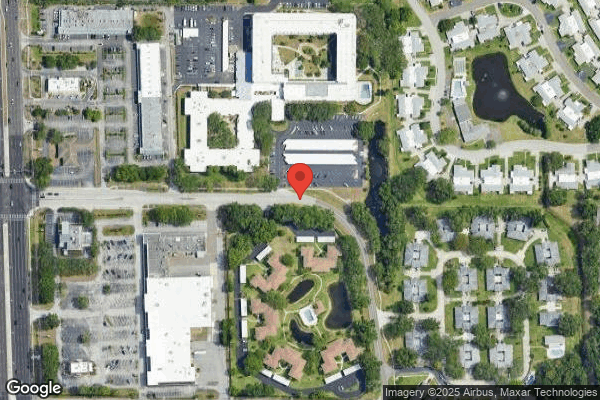
2655 NEBRASKA AVE, PALM HARBOR, FL 34684 (727) 785-2577
Non profit - Corporation 80 Beds Independent Data: November 2025
Trust Grade
85/100
#121 of 690 in FL
Last Inspection: January 2024

Within standard 12-15 month inspection cycle. Federal law requires annual inspections.

Overview

St Mark Village has a Trust Grade of B+, which means it is considered above average and recommended for families looking for care. It ranks #121 out of 690 nursing homes in Florida, placing it in the top half overall, and #3 out of 64 in Pinellas County, indicating that only two local options are better. The facility is improving, as it has reduced its issues from two in 2021 to none in 2024. While staffing is a concern with a turnover rate of 56%, which is higher than the state average, it does have a good overall star rating of 5/5 for quality and health inspections. Notably, there have been incidents where the facility failed to maintain a clean environment and did not properly update care plans for residents, highlighting areas needing attention despite the absence of fines and solid RN coverage.

Trust Score
B+
85/100
In Florida
#121/690
Top 17%
Safety Record
Low Risk
No red flags
Inspections
Getting Better
2 → 0 violations
Staff Stability
⚠ Watch
56% turnover. Above average. Higher turnover means staff may not know residents' routines.
Penalties
✓ Good
No fines on record. Clean compliance history, better than most Florida facilities.
Skilled Nurses
✓ Good
Each resident gets 58 minutes of Registered Nurse (RN) attention daily — more than average for Florida. RNs are trained to catch health problems early.
Violations
✓ Good
Only 4 deficiencies on record. Cleaner than most facilities. Minor issues only.
★★★★★
5.0
Overall Rating
★★★★☆
4.0
Staff Levels
★★★★★
5.0
Care Quality
★★★★★
5.0
Inspection Score
Stable
2021: 2 issues
2024: 0 issues

The Good

  • 4-Star Staffing Rating · Above-average nurse staffing levels
  • 5-Star Quality Measures · Strong clinical quality outcomes
  • Full Sprinkler Coverage · Fire safety systems throughout facility
  • No fines on record

Facility shows strength in staffing levels, quality measures, fire safety.

The Bad

Staff Turnover: 56%

10pts above Florida avg (46%)

Frequent staff changes - ask about care continuity

Staff turnover is elevated (56%)

8 points above Florida average of 48%

The Ugly 4 deficiencies on record

Dec 2021 2 deficiencies
CONCERN (D)

Potential for Harm - no one hurt, but risky conditions existed

Safe Environment (Tag F0584)

Could have caused harm · This affected 1 resident

Based on observations, interviews, and record review the facility failed maintain a clean and sanitary environment for one (Resident #208) out of twenty-one residents in the sample group regarding not...

Read full inspector narrative →
Based on observations, interviews, and record review the facility failed maintain a clean and sanitary environment for one (Resident #208) out of twenty-one residents in the sample group regarding not deep cleaning and sanitizing a room. Findings included: During the initial tour of the facility, on 12/27/21 at 09:45 a.m. an empty room was entered. No resident names were noted on the door. Resident items were still present in the room. On a shelf in the closet, designated for bed A, there was a bottle of water, a bed pan, and a bedside commode bucket observed. In the closet, designated for bed A, there were clothes labeled with Resident #208's name on them. The dresser, designated for bed A, had wound care supplies in the top drawer. The dresser for bed A had a wrist band with Resident #208's name on it, a telfa gauze, 4x4 sponges, two rolls of cloth tape, one roll of gauze bandage, a roll of edema wrap, two no stick barrier wipes, and a clear plastic bag labeled wound care supplies which contained a roll of clear tape, and a container of no stick barrier spray. A second plastic bag contained a roll of cloth edema wrap and four Mepitel gauzes. In the closet, designated for bed B, were clothes labeled with Resident #209's name on them. Photographic evidence was obtained. A review of the current facility census, dated 12/27/21, indicated Resident #208 and Resident #209 were no longer in the facility. A review of the medical records revealed Resident #208 was discharged on 12/20/21 to the hospital. A review of the medical records revealed Resident #209 was discharged on 12/16/21. Review of a nursing admit/readmit form for Resident #208 dated 12/27/21 at 11:16 p.m. revealed the resident was admitted back to the previous room, in bed B, where the items were discovered on 12/27/21 at 9:45 a.m. in the empty room. Resident #208 had previously been in bed A before discharge. On 12/28/21 at 06:40 AM, in an interview was conducted with the Director of Nursing (DON). The DON stated, The room should have been terminally cleaned by housekeeping before yesterday, and definitely after the resident in the room was discharged a week prior. The DON confirmed the items in the closet were still there, and the photographic evidence taken the day before was the same and the Resident #208 had been admitted back into the room to the other bed prior to the terminal cleaning being completed. On 12/29/21 at 1:23 pm an interview was conducted with the Plant Operations Director (POD), Plant Operations Manager (POM), and Nursing Home Administrator (NHA). The POD stated there is no time frame on when the rooms get terminally cleaned before the next resident moves in, but it is usually within two days of a resident leaving the room. He stated it is the Certified Nursing Assistants (CNA) job to make sure that all the personal items are removed from a room. He stated the clothing, wound care supplies, bedpan, and bed side commode bucket should have been taken care of by the CNAs. The NHA stated the CNAs should have taken the items out of the room. He stated the rooms are to be emptied and cleaned before the resident comes into the room. He makes sure empty rooms are clean before the next resident comes into the room. Review of the policy titled Routine Cleaning and Disinfection, with a copyright date of 2021, revealed the following: Policy: It is the policy of this facility to ensure the provision of routine cleaning and disinfection in order to provide a safe, sanitary environment and to prevent the development and transmission of infections to the extent possible. Policy Explanation and Compliance Guidelines: 6. Frequency of cleanings will vary a. Patient rooms inspections will be done by the housekeeping staff daily. Cleaning will be done as needed. b. All patient rooms will be deep cleaned after each vacancy and also reinspected prior to a new resident moving in.
CONCERN (D)

Potential for Harm - no one hurt, but risky conditions existed

Deficiency F0657 (Tag F0657)

Could have caused harm · This affected 1 resident

**NOTE- TERMS IN BRACKETS HAVE BEEN EDITED TO PROTECT CONFIDENTIALITY** Based on observations, interviews, facility policy and record reviews the facility failed to ensure the interventions on the res...

Read full inspector narrative →
**NOTE- TERMS IN BRACKETS HAVE BEEN EDITED TO PROTECT CONFIDENTIALITY** Based on observations, interviews, facility policy and record reviews the facility failed to ensure the interventions on the resident centered care plan were revised, related to wound care for one (Resident #3) of twenty-one residents in the sample group. Findings included: On 12/28/2021 at 1:37 p.m. a wound care observation was conducted for Resident #3. The wound was located on the left lower lateral calf and was diagnosed as a venous stasis wound related to Peripheral Vascular Disease (PVD). A review of the medical record for Resident #3 indicated he was admitted on [DATE] with diagnoses that included peripheral vascular disease (PVD). A review of the Order Summary Report for Resident #3 revealed an active order for wound care started on 2/28/2021 to Cleanse area to left lateral lower extremity with normal saline and apply oil emulsion and cover with Collagen and dry dressing and change every day and as needed (PRN), for PVD. A review of the Comprehensive Care Plan for Resident #3 was conducted on 12/28/21, a focus area for Resident #3 was listed as follows: Focus: He is at risk for further skin alterations related to unavoidable risk due to decreased mobility, fragile skin, PVD, bowel and bladder incontinence, scratches self. He was admitted with multiple skin alterations (date initiated: 9/2/20) Goals: He will not sustain further skin alterations of unknown origin thru next review date (revision on: 10/13/21). Skin alteration to RLE (right lower extremity) will heal without complications by next review date (revision on: 2/17/21) Skin tear to RLE will resolve by next review date (revision on: 12/17/21) Skin tear to right upper arm will heal without complications by next review date (revision on 12/17/21) Skin alterations to left heel will heal without complications by next review date (revision on 12/17/21) Skin tear to left forearm will heal without complications by next review date (revision on: 12/17/21) Skin tear to left upper arm will heal without complication by next review date (revision on 12/17/21) Review of the Care Plan showed no goal related to the left lateral lower extremity associated with the wound care observations conducted on 12/28/21. Interventions related to specific wound area included:: Treatment to right upper arm per orders see TAR (treatment administration record) (date initiated 9/7/21) Treatment to left forearm per orders see TAR (date initiated 11/28/21) Treatment to left heel per orders see TAR (date initiated 9/28/21) Treatment to left upper arm per orders see TAR (date initiated 12/27/21) Treatment to right lower extremity per order see TAR (date initiated 11/23/21) An interview was conducted on 12/29/2021 at 9:00 a.m., with the Clinical Manager for MDS, who is responsible for updating care plans. During the interview she confirmed a goal and intervention for Resident #3's left lower leg Venous Stasis wound was not listed on the current care plan. She stated I pulled his care plan yesterday (12/28/2021) and noticed I had resolved it accidentally, by completing the intervention on 10/13/2021, and it is my fault that it's not there right now on the care plan. The wound should have been on his care plan the whole time. Immediately after the interview, the Clinical Manager revised Resident #3's care plan and showed the survey team she added the intervention. The intervention read Treatment to left lateral lower extremity per orders see TAR. (date initiated 12/27/21). A review of the facility policy titled Comprehensive Care Plans, with revision made in September 2021, Pages 01-02 read as follows: POLICY: It is the policy of this facility to develop and implement a comprehensive person-centered care plan for each resident, consistent with resident rights, that includes measurable objectives and timeframe's to meet a resident's medical, nursing, and mental and psychosocial needs that are identified in the resident's comprehensive assessment. Policy explanation and compliance guidelines: 2. The comprehensive care plan will be developed within 7 days after completion of the comprehensive MDS assessment. 3. The comprehensive care plan will describe, at a minimum, the following: a. The services that are to be furnished to attain or maintain the resident's highest practicable physical, mental, and psychosocial well-being. b. Any services that would otherwise be furnished but are not provided due to the resident's exercise of his or her right to refuse treatment. c. Any specialized services or specialized rehabilitation services the nursing facility will provide as a result of PASARR (Preadmission Screening and Resident Review) recommendations. d. The resident's goals for admission, desired outcomes, and preferences for future discharge. e. Discharge plans, as appropriate. 5. The comprehensive care plan will be reviewed and revised by the interdisciplinary team after each comprehensive and quarterly MDS assessment. 8. Qualified staff responsible for carrying out interventions specified in the care plan will be notified of their roles and responsibilities for carrying out the interventions, initially and when changes are made.
Nov 2020 2 deficiencies
CONCERN (D)

Potential for Harm - no one hurt, but risky conditions existed

Deficiency F0698 (Tag F0698)

Could have caused harm · This affected 1 resident

**NOTE- TERMS IN BRACKETS HAVE BEEN EDITED TO PROTECT CONFIDENTIALITY** Based on observations, record reviews, and interviews the facility failed to immediately monitor and document the status of the ...

Read full inspector narrative →
**NOTE- TERMS IN BRACKETS HAVE BEEN EDITED TO PROTECT CONFIDENTIALITY** Based on observations, record reviews, and interviews the facility failed to immediately monitor and document the status of the resident upon returning from the dialysis treatment for one (Resident #153) of one Dialysis resident reviewed. This failure had the potential to result in delayed management of changes in condition and complications arising from dialysis. Findings: Resident #153 was admitted on [DATE]. The admission Record included diagnoses not limited to unspecified Chronic Kidney Disease and Type 2 Diabetes Mellitus without complications. A review of the Order Summary Report indicated Resident #153 had Dialysis at 10:15 a.m. on Tuesdays, Thursdays, and Saturdays with an offsite vendor. The care plan for Resident #153 identified that the resident needed hemodialysis related to renal failure and staff were to monitor/document/report as needed (prn) any signs/symptoms (s/sx) of infection to access site: redness, swelling, warmth or drainage and monitor/document/report prn new/worsening peripheral edema. An observation and interview was conducted with Resident #153 on 11/23/20 at 4:21 p.m., as she sat in her wheelchair in her room after returning from Dialysis. At 2:03 p.m. on 11/23/20, Staff Member C, Licensed Practical Nurse (LPN) stated she sent a communication form with the resident, which was completed by the Dialysis Center and returned to the facility. On 11/25/20 at 12:24 p.m., Staff Member C stated Resident #153 did not return to the facility until after her shift ended. A review of the Dialysis Communication Reports and progress notes related to Resident #153 was conducted with Staff Member C. The reports indicated Facility Nursing staff to document the following in the Resident's Medical Record when the resident returns to the facility: - a. Vital signs; - b. Skin integrity; - c. any bleeding or concern with dialysis access site (Notify the dialysis center also); - d. Any other issue with the Resident regarding dialysis. Review of the communication reports and progress notes in the resident's medical record indicated that on 11/7/2020 and 11/13/2020 two out of seven opportunities (from 11/7/2020 through 11/23/2020), there was no documentation of the resident's status including vital signs and skin integrity immediately after return. There was also no documentation if there had been any bleeding or concerns with the dialysis site and any other issue regarding dialysis. There had been no documentation as instructed in the resident's medical record. The staff member confirmed these findings and stated they (nursing) were suppose to document her return with the items listed on the communication report. The Service Agreement between the facility and the Dialysis Center indicated that both parties were to ensure there was documented evidence of collaboration of care and communication between the Nursing Facility and ESRD Dialysis Unit. On 11/25/20 at 4:51 p.m., the Director of Nursing stated the facility audited the Dialysis forms and would be implementing a new one. She added that there should have been at least a progress note on the resident's status when returning from Dialysis.
CONCERN (E)

Potential for Harm - no one hurt, but risky conditions existed

Deficiency F0565 (Tag F0565)

Could have caused harm · This affected multiple residents

**NOTE- TERMS IN BRACKETS HAVE BEEN EDITED TO PROTECT CONFIDENTIALITY** Based on interview and record review the facility failed to demonstrate responsiveness to resident council concerns regarding nu...

Read full inspector narrative →
**NOTE- TERMS IN BRACKETS HAVE BEEN EDITED TO PROTECT CONFIDENTIALITY** Based on interview and record review the facility failed to demonstrate responsiveness to resident council concerns regarding nursing care when voiced grievances were not addressed and acted upon for three out of three months reviewed. The facility did not provide the resident council with responses, actions, and rationale taken regarding their concerns. Findings: An interview was conducted with the facility Life Enrichment Director on 11/23/20 at 1:45 p.m. She confirmed that she was the appointed facility staff facilitator for the resident council. She reported that there was no council president in accordance with the residents' wishes. She reported that the council met monthly but that during the coronavirus disease (COVID-19) pandemic the group format had been stopped and replaced with a monthly survey format. She explained that the survey was conducted individually by life enrichment staff with each resident as an opportunity for residents to voice any concerns. She reported that concerns voiced in the survey were taken to appropriate department heads, and minutes were compiled from the survey and distributed back to the residents. Resident council minutes were reviewed for September 2020, October 2020, and November 2020. At the top of each document was the following: The meeting of the Resident Association was unable to be held due to restrictions related to COVID, however Residents were visited by [staff name] to allow them to voice their opinions by filling out a questionnaire where resident answers were kept anonymous. The minutes for each month revealed No concerns under the heading Old Business. The minutes for September, dated 09/17/20, revealed the following under the heading New Business .Nursing: Some residents shared they get the help and care they need without waiting, and some shared that sometimes there is a wait, and it depends on the staff member. Life Enrichment met with [name], the Director of Nursing (DON). [DON] is going to write up a grievance and do retraining with the staff. The minutes for October, dated 10/15/20, revealed the following under the heading New Business .Nursing: Some residents shared they get the help and care they need without waiting, and some shared that sometimes there is a wait, and it depends on the staff member. One resident expressed needing to use the restroom every 30 minutes due to a diuretic, which is more than what her scheduled bathroom times are, so she sometimes has to wait to get help. The minutes for November, dated 11/18/20, revealed the following under the heading New Business .Nursing: Most residents think that Staff give the help that the Residents need without waiting a long time, and others shared that they wait a long time at night and think that more Staff are needed during that time. [Life Enrichment Director] asked Residents what makes them think more Staff are needed. It was shared that they hear the Aide's (sic) conversations outside their rooms, and 'why else would they be waiting so long.' [Life Enrichment Director] shared that we have the State required staff needed at night and the long wait would be looked into. Facility grievance logs were reviewed for September, October, and November 2020. There were no entries on behalf of the resident council. During a review of facility grievances with the facility Social Services Director on 11/24/20 at 1:30 p.m., it was confirmed that there were no grievances filed on behalf of the resident council. On 11/24/20 at 3:30 p.m. a small group meeting with three regular resident council members was conducted. Attendees were Residents # 4, # 6, and # 32. A review of the Minimum Data Set (MDS) for each resident was conducted and revealed the following Brief Inventory of Mental Status (BIMS) for each: Resident # 4 had a BIMS of 14 which meant that she cognitively intact; Resident #6 had a BIMS of 14 which meant that she was cognitively intact; Resident #32 had a BIMS of 12 which meant that the resident had moderate cognitive impairment (score range 8-12). The residents confirmed that they were regular council members, confirmed that there had been no group council meetings due to precautions related to COVID, confirmed they participated in the replacement survey format, and reported that they did receive the minutes but that it doesn't say the outcome of the concern. Regarding concerns about nursing care, long wait times, and staffing revealed in the September, October, and November council minutes, all three residents confirmed the concerns and that they were ongoing. Resident # 6 stated that there had been occurrences twice in the last two weeks where the facility was short nurses on the night shift and the facility Director of Nursing (DON) had to come in and cover. Resident # 4 stated that there was often just one nurse and one aide on each hallway at night and said, takes a long time for them to come to my room and answer my light .sometimes as long as calling four times. The residents could not identify specifics about the facility grievance process and council concerns. The residents stated they did not know what happened with the concerns they expressed in council meetings. On 11/24/20 at 4:30 p.m. a follow-up interview to the council meeting was conducted with the Life Enrichment Director. Regarding the nursing care concerns revealed in the minutes for [DATE] - November 2020 she stated that her role was to report the concern to the appropriate department which she identified as nursing but that beyond that she couldn't comment. On 11/25/20 at 9:10 a.m. an interview was conducted with the facility Administrator, the DON, and the Life Enrichment Director. The Life Enrichment Director re-confirmed that her role was to take concerns expressed by the resident council to the relevant department head. She confirmed that she had brought the concerns expressed about nursing care, long wait times, and staffing to the DON for the months of September and October. The Administrator, DON, and Life Enrichment Director all confirmed that there was not a facility process/practice for grievances/concerns voiced by the resident council. The DON stated the nursing care/wait times/staffing concerns voiced by the resident council had been brought to her attention. Regarding the concerns expressed in September 2020 she stated that the concerns were addressed in the Certified Nursing Assistant (CNA) meeting stating she, would have to double check on a nurses meeting if I addressed with nurses .but did address with the CNAs .addressed about answering call lights promptly, making sure residents got their needs met appropriately. She stated that the CNAs had not provided any feedback as to why long wait times were happening and that no further root cause analyses had been conducted. Regarding the concerns expressed in October 2020 she said, I haven't addressed it yet .was going to at the next CNA meeting again . The Administrator said, it sounds like we need to do a root cause analysis for the facility related to this area. Review of the facility policy titled, Resident and Family Grievances with a revision date of October 2019 revealed: Policy Explanation and Compliance Guidelines: .8. Grievances may be voiced in the following forums: .d. Verbal complaint during resident or family council meetings .; 10. Procedure: .b. The staff member receiving the grievance will record the nature and specifics of the grievance on the designated grievance form, or assist the resident or family member to complete the form .c. Forward the grievance form to the Grievance Official as soon as practicable .The Grievance Official will take steps to resolve the grievance, and record information about the grievance .The Grievance Official, or designee, will keep the resident or family member appraised of progress towards resolution of grievances
Understanding Severity Codes (click to expand)
Life-Threatening (Immediate Jeopardy)
J - Isolated K - Pattern L - Widespread
Actual Harm
G - Isolated H - Pattern I - Widespread
Potential for Harm
D - Isolated E - Pattern F - Widespread
No Harm (Minor)
A - Isolated B - Pattern C - Widespread

Questions to Ask on Your Visit

  • "Why is there high staff turnover? How do you retain staff?"
  • "Can I speak with families of current residents?"
  • "What's your RN coverage like on weekends and overnight?"

Our Honest Assessment

Strengths
  • • Grade B+ (85/100). Above average facility, better than most options in Florida.
  • • No major safety red flags. No abuse findings, life-threatening violations, or SFF status.
  • • No fines on record. Clean compliance history, better than most Florida facilities.
  • • Only 4 deficiencies on record. Cleaner than most facilities. Minor issues only.
Concerns
  • • 56% turnover. Above average. Higher turnover means staff may not know residents' routines.
Bottom line: Generally positive indicators. Standard due diligence and a personal visit recommended.

About This Facility

What is St Mark Village's CMS Rating?

CMS assigns ST MARK VILLAGE an overall rating of 5 out of 5 stars, which is considered much above average nationally. Within Florida, this rating places the facility higher than 99% of the state's 100 nursing homes. This rating reflects solid performance across the metrics CMS uses to evaluate nursing home quality.

How is St Mark Village Staffed?

CMS rates ST MARK VILLAGE's staffing level at 4 out of 5 stars, which is above average compared to other nursing homes. Staff turnover is 56%, which is 10 percentage points above the Florida average of 46%. High turnover can affect care consistency as new staff learn residents' individual needs. RN turnover specifically is 56%, which is notably high. RNs provide skilled clinical oversight, so turnover in this role can affect medical care quality.

What Have Inspectors Found at St Mark Village?

State health inspectors documented 4 deficiencies at ST MARK VILLAGE during 2020 to 2021. These included: 4 with potential for harm.

Who Owns and Operates St Mark Village?

ST MARK VILLAGE is owned by a non-profit organization. Non-profit facilities reinvest revenue into operations rather than distributing to shareholders. The facility operates independently rather than as part of a larger chain. With 80 certified beds and approximately 48 residents (about 60% occupancy), it is a smaller facility located in PALM HARBOR, Florida.

How Does St Mark Village Compare to Other Florida Nursing Homes?

Compared to the 100 nursing homes in Florida, ST MARK VILLAGE's overall rating (5 stars) is above the state average of 3.2, staff turnover (56%) is significantly higher than the state average of 46%, and health inspection rating (5 stars) is much above the national benchmark.

What Should Families Ask When Visiting St Mark Village?

Based on this facility's data, families visiting should ask: "How do you ensure continuity of care given staff turnover, and what is your staff retention strategy?" "Can I visit during a mealtime to observe dining assistance and food quality?" "How do you handle medical emergencies, and what is your hospital transfer rate?" "Can I speak with family members of current residents about their experience?" These questions are particularly relevant given the facility's high staff turnover rate.

Is St Mark Village Safe?

Based on CMS inspection data, ST MARK VILLAGE has a clean safety record: no substantiated abuse findings (meaning no confirmed cases of resident harm), no Immediate Jeopardy citations (the most serious violation level indicating risk of serious injury or death), and is not on the Special Focus Facility watch list (a federal program monitoring the lowest-performing 1% of nursing homes). The facility has a 5-star overall rating and ranks #1 of 100 nursing homes in Florida. While no facility is perfect, families should still ask about staff-to-resident ratios and recent inspection results during their visit.

Do Nurses at St Mark Village Stick Around?

Staff turnover at ST MARK VILLAGE is high. At 56%, the facility is 10 percentage points above the Florida average of 46%. Registered Nurse turnover is particularly concerning at 56%. RNs handle complex medical decisions and coordinate care — frequent RN changes can directly impact care quality. High turnover means new staff may not know residents' individual needs, medications, or preferences. It can also be disorienting for residents, especially those with dementia who rely on familiar faces. Families should ask: What is causing the turnover? What retention programs are in place? How do you ensure care continuity during staff transitions?

Was St Mark Village Ever Fined?

ST MARK VILLAGE has no federal fines on record. CMS issues fines when nursing homes fail to meet care standards or don't correct problems found during inspections. The absence of fines suggests the facility has either maintained compliance or corrected any issues before penalties were assessed. This is a positive indicator, though families should still review recent inspection reports for the full picture.

Is St Mark Village on Any Federal Watch List?

ST MARK VILLAGE is not on any federal watch list. The most significant is the Special Focus Facility (SFF) program, which identifies the bottom 1% of nursing homes nationally based on persistent, serious quality problems. Not being on this list means the facility has avoided the pattern of deficiencies that triggers enhanced federal oversight. This is a positive indicator, though families should still review the facility's inspection history directly.