ARABELLA HEALTH & WELLNESS OF PENSACOLA
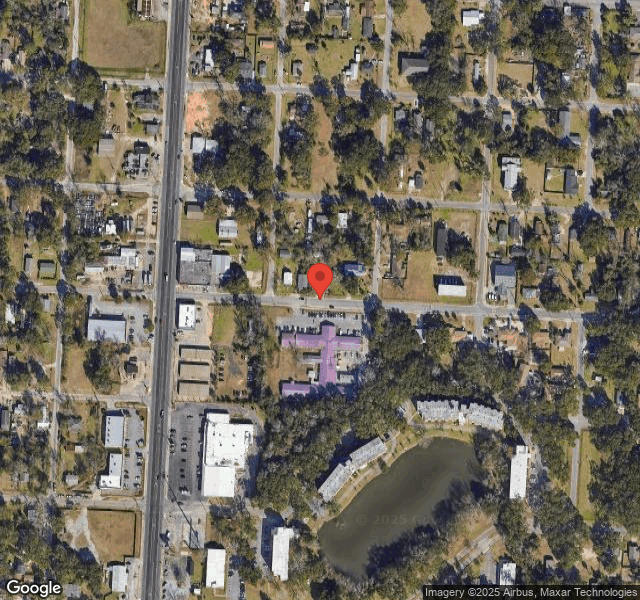

1717 W AVERY ST, PENSACOLA, FL 32501 (850) 434-2355
For profit - Individual 118 Beds ARABELLA HEALTHCARE MANAGEMENT Data: November 2025
Trust Grade
75/100
#158 of 690 in FL
Last Inspection: February 2025

Within standard 12-15 month inspection cycle. Federal law requires annual inspections.

Overview

Arabella Health & Wellness of Pensacola has a Trust Grade of B, indicating it is a good choice for families seeking care, as it falls within the solid range of 70-79. The facility ranks #158 out of 690 in Florida, placing it in the top half of nursing homes in the state, and #7 out of 15 in Escambia County, meaning there are only six local options that are better. The facility is trending positively, with issues decreasing from three in 2023 to two in 2025. However, staffing is a weakness here, earning only 2 out of 5 stars, with a concerning turnover rate of 56%, significantly above the state average of 42%. On a positive note, there have been no fines reported, which is reassuring, but the facility has less RN coverage than 78% of Florida facilities, raising concerns about the level of nursing oversight. Specific incidents noted during inspections include a nurse administering medications without them being available for one resident and failing to follow proper infection control practices when handling medication. Additionally, there was an incident where a resident eloped from the facility without the necessary report being filed. These findings indicate that while there are strengths, such as the lack of fines and a decent overall rating, there are also significant areas that need improvement to ensure resident safety and care.

Trust Score
B
75/100
In Florida
#158/690
Top 22%
Safety Record
Low Risk
No red flags
Inspections
Getting Better
3 → 2 violations
Staff Stability
⚠ Watch
56% turnover. Above average. Higher turnover means staff may not know residents' routines.
Penalties
✓ Good
No fines on record. Clean compliance history, better than most Florida facilities.
Skilled Nurses
⚠ Watch
Each resident gets only 28 minutes of Registered Nurse (RN) attention daily — below average for Florida. Fewer RN minutes means fewer trained eyes watching for problems.
Violations
○ Average
8 deficiencies on record. Average for a facility this size. Mostly minor or procedural issues.
★★★★☆
4.0
Overall Rating
★★☆☆☆
2.0
Staff Levels
★★★☆☆
3.0
Care Quality
★★★★☆
4.0
Inspection Score
Stable
2023: 3 issues
2025: 2 issues

The Good

  • Full Sprinkler Coverage · Fire safety systems throughout facility
  • No fines on record

Facility shows strength in fire safety.

The Bad

Staff Turnover: 56%

Near Florida avg (46%)

Frequent staff changes - ask about care continuity

Chain: ARABELLA HEALTHCARE MANAGEMENT

Part of a multi-facility chain

Ask about local staffing decisions and management

Staff turnover is elevated (56%)

8 points above Florida average of 48%

The Ugly 8 deficiencies on record

Feb 2025 2 deficiencies
CONCERN (D)

Potential for Harm - no one hurt, but risky conditions existed

Pharmacy Services (Tag F0755)

Could have caused harm · This affected 1 resident

Based on observations, interviews, and record reviews, the facility failed to provide medications to meet the needs of 1 of 5 residents sampled for medication administration observation. (Resident #16...

Read full inspector narrative →
Based on observations, interviews, and record reviews, the facility failed to provide medications to meet the needs of 1 of 5 residents sampled for medication administration observation. (Resident #16) The findings include: On 2/19/25 at approximately 10:25 AM, an observation was made of Nurse B, a Licensed Practical Nurse, administering medications to Resident #16. During this observation, it was observed that the scheduled medication Azelastine HCL Nasal Solution 137 micrograms (a medication used to relieve sinus congestion) and Breo Elipta Inhalation aerosol powder 100-25 micrograms/ACT (a medication used to treat Chronic Obstructive Pulmonary Disease) were not available to administer as ordered to Resident #16. On 2/19/25 at approximately 10:40 AM, an interview was conducted with Nurse B, who indicated that she was not sure why the resident was out of these two medications, but that she would contact the pharmacy to have them sent in, and notify the physician to obtain an order to hold the medication until available. On 2/19/25 at approximately 10:50 AM, an interview was conducted with the Regional Nurse, who indicated it was her expectation that all medications be re-ordered from pharmacy in a timely manner. A review was conducted of the facility policy titled 5.0 Reordering, Changing, & Discontinued Medication Orders, states, Policy: The facility will communicate any medication reorders, changes, or discontinuations to the pharmacy in accordance with pharmacy guidelines and state/federal regulations; thus ensuring standardized process of communication. Procedure: A. All orders must clearly be communicated to the pharmacy by the facility. This includes resident's full name (first and last). B. Reorder/Refill Orders- 1. Refills can be requested by placing the refill strip portion of the medication on the Refill Order Form and faxing to the pharmacy. 4. Electronic Orders: Refill orders can be submitted electronically from a prescriber through their escribing software or through a facilities EMAR (electronic medication record) system as long as the order is not discontinued.
CONCERN (D)

Potential for Harm - no one hurt, but risky conditions existed

Infection Control (Tag F0880)

Could have caused harm · This affected 1 resident

Resident #21 On 2/19/25 at approximately 9:36 AM, an observation was made of Nurse A during medication administration for Resident #21. Nurse A was observed to touch the inside of the medication cup, ...

Read full inspector narrative →
Resident #21 On 2/19/25 at approximately 9:36 AM, an observation was made of Nurse A during medication administration for Resident #21. Nurse A was observed to touch the inside of the medication cup, and the inside of the water cup with her bare hand. Further observations of Nurse A revealed that the nurse failed to clean the hub of the Lantus insulin pen (a medication used to treat Diabetes type II) with an alcohol swab prior to applying the needle. On 2/19/25 at approximately 10:00 AM, an interview was conducted with Nurse A, who indicated that touching the inside of the medication cup and water cup would be considered an infection control issue. Nurse A further confirmed that she did not clean the hub of the Lantus insulin pen prior to applying the needle and this too would be considered an infection control issue. On 2/19/25 at approximately 10:50 AM, an interview was conducted with the Regional Nurse, who indicated that it is the facility's expectation that the nurses do not touch the inside of the medication or water cups, and that the nurses also clean the hub of all insulin pens with alcohol prior to applying the needle. The Lantus SoloStar pen guide states under How to use your Lantus Solostar pen in 6 steps, Step 2. Attach the needle. * Wipe the pen tip (rubber seal) with an alcohol swab. The facility policy titled Infection Prevention and Control Program states, Policy: This facility has established and maintains an infection prevention and control program designed to provide a safe, sanitary, and comfortable environment and to help prevent the development and transmission of communicable diseases and infections as per accepted national standards and guidelines. Policy Explanation and Compliance Guidelines: 4. Standard Precautions: d. Licensed staff shall adhere to safe injection and medication administration practices, as described in relevant facility policies. Based on observations, interviews, policy review, and record review, the facility failed to wear proper protective equipment during catheter care for 1 of 1 resident observed during catheter care (Resident #13), failed to maintain sterile processes during tracheostomy care for 1 of 1 residents observed during tracheostomy care (Resident #36), failed to implement their legionella (a water born virus) plan for surveillance and prevention, and failed to follow infection control processes during medication pass for 1 of 5 residents observed during medication pass (Resident #21), The findings included: Resident #13 On 2/19/25 at approximately 9:30 AM, an observation of Staff B, a Certified Nursing Assistant (CNA), was conducted as she provided catheter care for Resident #13. Staff B failed to apply a barrier gown before she provided catheter care for Resident #13, who had been placed on enhanced barrier precautions to protect him from a catheter associated infections. A review of the physician orders for Resident #13 was conducted. A foley catheter was ordered to be inserted for Resident #13 on 1/9/25. Catheter care was ordered to be completed for the resident every shift. A physician order dated 1/14/25 indicated that the resident was to be placed on enhanced barrier precautions. On 2/19/25 at approximately 10:00 AM, an interview was conducted with Staff B. When asked about why she did not apply a gown during catheter care, the CNA indicated that she should have worn a gown while she provided catheter care. On 2/20/25 at approximately 9:00 AM, an interview was conducted with the Director of Nursing (DON). She was notified that Staff B did not wear a gown during catheter care for Resident #13. The DON indicated that a gown should have been worn. She indicated that staff retraining has already been initiated. A review of the facility policy titled Enhanced Barrier Precautions, dated 3/20/2024, was conducted. The policy states, Enhanced Barrier Precautions is an infection control intervention designed to reduce the transmission of multidrug-resistant organisms. Enhanced Barrier precautions were indicated to employ targeted gown and glove use during high contact resident care activities. The policy further indicated that Enhanced barrier precautions were to be unutilized for residents with urinary catheters to prevent infections with multi-drug-resistant organisms. Resident #36 On 2/19/25, an observation was made as Nurse C, a Licensed Practical Nurse (LPN), provided tracheostomy care to Resident #36. When she opened the sterile kit, the kit was upside down causing the sterile gloves to come out first and the suction catheter and other items to land on top of the sterile gloves. Nurse C handled the suction catheter, the container to hold the normal saline, and drain sponge prior to applying the sterile gloves, thus rendering those items unsterile. During the process, Nurse C touched multiple surfaces that were not clean as she provided tracheostomy care. Nurse C proceeded to change the inner canula next using the same gloves she applied at the beginning of the process. Immediately after the observation, an interview was conducted with Nurse C. She was asked if tracheostomy care/changing the inner cannula should be conducted as a sterile procedure. She indicated that she will look at the physician orders to double check and see if sterile procedure should have been utilized. She later indicated that changing the inner canula should have been completed utilizing sterile processes. She was asked if she has received training regarding the process for tracheostomy care. She could not recall when she had been trained. On 2/20/25 at approximately 9:00 AM, an interview was conducted with the DON. The DON was notified that there was concerns regarding maintaining sterility during tracheostomy care as Nurse C changed the resident's inner cannula. The DON indicated that training had been completed regarding tracheostomy care by the facility recently. A review of the facility policy for Tracheostomy Care dated 1/5/25 was conducted. The policy indicated that suctioning should be performed utilizing sterile technique. Legionella plan On 2/20/25 at approximately 9:00 AM, the facility's maintenance director was asked to provide information regarding the facility's water surveillance process. The Maintenance Director indicated that water is being tested using test strips. A copy of the facility's water testing logs for the past year along with other documentation regarding the facility's program for prevention of waterborne disease was requested. The Maintenance Director indicated that water was being tested utilizing test strips but not being logged. He was asked to provide any documentation regarding the facility water management program along with a copy of the facility policy and procedure for water management. The Maintenance Director provided a copy of the facility water management program policy. The policy indicated that a risk assessment was to be conducted by the water management team annually to identify where Legionella and other opportunistic waterborne pathogens could grow and spread in the facility's water system. The policy indicated that the Maintenance Director would maintain the facility's water management action plan and keep a copy in the facility water management program binder. The policy indicated that control measures were to be applied to address potential hazards at each control point in the water system. The policy further stated that a variety of measures would be utilized including physical controls, temperature management, disinfectant level control, visual inspections, and environmental testing for pathogens. These measures should be specified in the water management program action plan. Testing protocols and control limits will be established for each control measure. Individuals responsible for testing or visual inspections will document findings. The water management team were directed by the policy to regularly verify that the water management program is being implemented as designed. The Maintenance Director did not provide information regarding the annual risk assessment as indicated in the facility's policy. There was no water management provided for review. The facility did not provide documentation that testing was being performed at the time of the survey.
Nov 2023 3 deficiencies
CONCERN (D)

Potential for Harm - no one hurt, but risky conditions existed

Report Alleged Abuse (Tag F0609)

Could have caused harm · This affected 1 resident

Based on record reviews and interviews, the facility failed to submit an adverse incident report for 1 of 1 residents sampled for elopement. (Resident #44) The findings include: On 11/30/23, during a...

Read full inspector narrative →
Based on record reviews and interviews, the facility failed to submit an adverse incident report for 1 of 1 residents sampled for elopement. (Resident #44) The findings include: On 11/30/23, during a review of facility adverse incident reports, it was discovered that Resident #44 eloped from the facility on 10/6/23. There was no evidence that the facility submitted a federal report. On 11/30/23 at approximately 1:00 PM, an interview was conducted with the Administrator. The Administrator stated they did not do a federal report because they were under the impression they only needed to do the adverse incident report to the State. The Administrator stated they were advised by their Corporate Nurse to file the adverse incident which was submitted by their corporate consultant.
CONCERN (D)

Potential for Harm - no one hurt, but risky conditions existed

Food Safety (Tag F0812)

Could have caused harm · This affected 1 resident

Based on observations, interview, and record review, the facility failed to store food in accordance with professional standards in the facility's unit nourishment refrigerators. The findings include:...

Read full inspector narrative →
Based on observations, interview, and record review, the facility failed to store food in accordance with professional standards in the facility's unit nourishment refrigerators. The findings include: On 11/30/2023 at approximately 11:00 AM, the nourishment refrigerators at the two nurse's stations were inspected. The station #2 refrigerator was found to be filled with a number of resident personal food items that were out of date or unlabeled. Facility supplements were found to be in date but with one opened container. Both the freezer and refrigerator were found to have old food spills that had not been wiped up. (Photographic evidence obtained) The station #1 refrigerator appeared clean. There were no personal Resident food items present. All nourishment containers were unopened and within expiration dates. The floor under the refrigerator was stained with uncleaned food spills. The charge nurse stated she had called maintenance to have the floor cleaned. On 11/30/2023 at approximately 11:00 AM, the charge nurse station #2 verified that opened supplements should be discarded within 24 hours and that this container was outside of the facility policy of 24 hours. She also stated that food brought into the facility by families are supposed to be dated and the resident's name placed on container. She stated that prepared food brought in be family should be discarded after 72 hours. The policy entitled Food brought into residents from outside sources from the Nutrition Services Manual (dated June 2015) revealed, Any food, which is not to be eaten right away, should be transported in a clean, disposable, sealed container .Your nurse will label, date, and store this food in the nursing unit's nourishment refigerator. If the food is not used within 3 days, it will be discarded. The policy titled Cleaning and Sanitizing of Refrigerator, Cooler and Freezer from the Nutrition Services Manual (dated June 2015), Discard all leftover items over 72 hours old or per state/local regulation.
CONCERN (D)

Potential for Harm - no one hurt, but risky conditions existed

Infection Control (Tag F0880)

Could have caused harm · This affected 1 resident

Based on observations, interviews, and record review, the facility failed to maintain infection control practices for 1 of 4 residents observed during medication administration observation. (Resident ...

Read full inspector narrative →
Based on observations, interviews, and record review, the facility failed to maintain infection control practices for 1 of 4 residents observed during medication administration observation. (Resident #5) The findings include: On 11/29/23 at approximately 9:09 AM, an observation was made of Nurse A, a Licensed Practical Nurse (LPN), administering medications to Resident #5. Nurse A placed Resident #5's Azelastine Nasal spray (a medication used to treat sinus allergies), Breo Ellipta Aerosol Powder inhaler (a medication used to treat chronic obstructive pulmonary disease), and Visine ophthalmic solution (eye drops used to treat dry eyes) on Resident #5's over the bed table without placing a barrier between the table and the medications. Nurse A then applied clean gloves and assisted in pulling Resident #5 up in the bed. Nurse A then changed gloves without performing hand hygiene. Nurse A then administered Resident #5's inhaler, nasal spray and eye drops without changing gloves and performing hand hygiene in-between each medication, and between each eye. Nurse A then removed her gloves and performed hand hygiene. On 11/29/23 at approximately 9:28 AM, an interview was conducted with Nurse A. Nurse A confirmed that she did not place a barrier on the over the bed table prior to placing Resident #5's medications on the table. When asked if Nurse A changed gloves and performed hand hygiene after pulling the resident up in bed and administering resident #5's medications, Nurse A stated she changed gloves but did not wash her hands. When asked if Nurse A changed gloves and perform hand hygiene in between administering resident #5's nasal spray and eye drops, Nurse A stated, No I did not, and I know better. Nurse A confirmed that this would be considered an infection control issue. On 11/29/23 at approximately 1:45 PM, an interview was conducted with the Director of Nursing (DON). The DON confirmed that her expectation for infection control during medication administration is for the nurse to place a barrier in between medications and the over the bed table, and for the nurse to change gloves and perform hand hygiene in between administering nasal sprays and eye drops. A review of the facility policy titled Nursing Procedure Manual Medication Administration Nose Drops (dated January 2013) revealed, Purpose: To safely administer nose drops. Procedure: 6. Wash hands and apply gloves. 7. Assist resident/patient to lay back with head slightly lower than shoulders unless contraindicated. 10. Instill the number of drops ordered into each nostril. 12. Wipe any drainage with tissue. 14. Remove gloves and wash hands. A review of the facility policy titled Nursing Procedure Manual Medication Administration Eye Drops (also dated January 2013) revealed: Purpose: To safely administer medications to the eye(s). Procedure: 6. Assist the resident/patient into comfortable position for administration. 7. Wash hands. 8. Apply clean gloves. 16. Wash hands and apply new clean gloves if administering medication to the other eye. 17. Assist resident/patient into a comfortable position with call light in reach. 18. Remove gloves and wash hands.
Jul 2022 3 deficiencies
CONCERN (D)

Potential for Harm - no one hurt, but risky conditions existed

Deficiency F0554 (Tag F0554)

Could have caused harm · This affected 1 resident

Based on observation, resident and staff interviews, and record and policy review, the facility failed to ensure the interdisciplinary team assessed and determined a resident was capable of self-admin...

Read full inspector narrative →
Based on observation, resident and staff interviews, and record and policy review, the facility failed to ensure the interdisciplinary team assessed and determined a resident was capable of self-administration of medications prior to allowing 1 of 21 sampled residents to self-administer medications. (Resident #16) The findings include: An observation of Resident #16 was conducted on 7/11/2022 at 2:01 PM. A medication cup containing 6 pills was observed to be sitting on her over bed table. No staff were present in the room with the medications and resident. (Photographic evidence obtained) An interview was conducted with Resident #16 on 7/11/2022 at 2:01 PM. Resident #16 stated the nurse does not have to observe her take her pills because she knows she will take them. An interview was conducted with Employee B (Licensed Practical Nurse) on 7/11/2022 at 2:04 PM. Employee B stated she had just walked out of the room and confirmed she leaves the pills with Resident #16 because she is good about taking them. She further confirmed she is supposed to watch the resident take her pills. Review of Resident #16's record revealed no assessments to conclude the resident was capable of self-administration of medications. An interview was conducted with the Director of Nursing (DON) on 7/13/2022 at 3:01 PM. The DON stated Resident #16 had not been assessed to self-administer medications. Review of the policy Medication Management: Self Administration of Medication Review (3F-3.7.1-A) with an original date of 05/2014 revealed the purpose of completing the Self Administration of Medication Review form is to evaluate the resident's ability to safely self-administer medications. The responsible person was listed as the Licensed Nurse. The policy indicated this review should be completed upon admission if the resident requests to self administer, when there is a change in clinical condition, and quarterly. Review of instructions revealed the following: Enter the resident information at the bottom of the form. Explain the questions and required demonstration to the resident. Enter a check mark next to each question that best describes resident's ability to complete task: a. fully capable, b. able with assist, c. unable, d. not applicable. Enter the signature/title and date as the person completing the evaluation. Enter date that the interdisciplinary team reviewed. Enter a check mark to indicate if approval to self-administer was granted. Enter a brief explanation if approval is not granted in the lines provided. Each member of the interdisciplinary team enters signature and title. File in resident's clinical record upon completion. Review of the policy Medication Administration (M 1.1) with an original date of 01/2013 instructed on page 2, item number 16, to remain with the resident until all medication is taken.
CONCERN (D)

Potential for Harm - no one hurt, but risky conditions existed

Grievances (Tag F0585)

Could have caused harm · This affected 1 resident

**NOTE- TERMS IN BRACKETS HAVE BEEN EDITED TO PROTECT CONFIDENTIALITY** Based on resident and staff interviews and record and policy review, the facility failed to assist a resident with filing a grie...

Read full inspector narrative →
**NOTE- TERMS IN BRACKETS HAVE BEEN EDITED TO PROTECT CONFIDENTIALITY** Based on resident and staff interviews and record and policy review, the facility failed to assist a resident with filing a grievance regarding missing items after receiving verbal report and failed to ensure prompt efforts to resolve the grievance for 1 of 1 sampled resident with missing items. (Resident #98) The findings include: An interview was conducted with Resident #98 on 7/11/2022 at 1:11 PM. The resident stated she had two (2) blankets missing for a couple of weeks now and had reported the missing items to Employee A (Certified Nurse Aide) a couple of weeks ago. A telephone interview was conducted with Employee A on 7/13/2022 at 9:55 AM. She stated not too long ago Resident #98 reported she had two (2) blankets missing. She further stated that she reported this to a laundry staff member. Employee A stated she did not assist the resident in filing a grievance regarding the missing items and not aware of the facility's grievance policy for missing items. An interview was conducted with the Social Services Director (SSD) on 7/13/2022 at 9:36 AM. The SSD stated she was in charge of grievances but was not aware of the missing blankets. Review of Resident #98's medical record revealed an admission Minimum Data Set (MDS)with an assessment reference date of 6/2/2022 indicating the resident had a Brief Interview for Mental Status (BIMS) score of 14, indicating she was cognitively intact. The record indicated the resident was admitted to the facility on [DATE]. Review of the facility grievance logs for May, June, and July 2022 revealed no grievances filed on behalf of Resident #98. Review of Employee A's personnel file revealed she had received education regarding the facility's grievance process on 3/22/2021. Review of the policy Resident/Patient Grievance Process (Version 7.4) reviewed 12/2019 revealed a grievance is a concern or complaint that is unable to be immediately resolved and requires further investigation and action by facility leadership to achieve resolution. A grievance may be initiated at any time by any entity or anonymously upon identification of the grievance or complaint. Assist residents/patients who cannot prepare a written grievance without assistance.
CONCERN (D)

Potential for Harm - no one hurt, but risky conditions existed

ADL Care (Tag F0677)

Could have caused harm · This affected 1 resident

**NOTE- TERMS IN BRACKETS HAVE BEEN EDITED TO PROTECT CONFIDENTIALITY** Based on observations, resident and staff interviews and record reviews, the facility failed to ensure staff provided assistance...

Read full inspector narrative →
**NOTE- TERMS IN BRACKETS HAVE BEEN EDITED TO PROTECT CONFIDENTIALITY** Based on observations, resident and staff interviews and record reviews, the facility failed to ensure staff provided assistance with Activities of Daily Living (ADL) regarding nail care for dependent residents for 2 of 2 residents sampled. (Residents #54 and #98) The findings include: Observations of Resident #54 were conducted on 7/11/2022 at approximately 12:20 PM and 7/13/2022 at approximately 8:30 AM. Fingernails on both hands were observed to be long and discolored. The index fingernails, in particular, were so long they were beginning to twist. The resident's left hand was contracted into the palm. On 7/13/2022 at 8:21 AM, an interview was conducted with Resident #54. The resident stated she was told by a staff member that her nails would be cut but no one ever came to do it. A review of Resident #54's medical record revealed a principal diagnosis of hemiplegia and hemiparesis following cerebral infarction affecting left non-dominant side. Additional diagnoses include, but are not limited to, diabetes and contracture of the left hand. The last quarterly Minimum Data Set (MDS) with an assessment reference date of 5/9/2022 revealed under Section G - Functional Status that the resident requires a one person physical assist with personal hygiene and bathing. Review of the bath/shower schedule revealed the resident receives a bath/shower on Monday, Wednesday, and Friday during the 7AM-3PM shift. A review of the bath/shower questions certified nurse aides (CNAs) chart on electronically in the [NAME] revealed no questions concerning nail care. The medical record revealed no offer or refusal of nail care. The current care plan initiated 2/11/2019 and revised 5/12/2022 revealed the resident has a decline in ADL self-care performance after a stroke resulting in immobility on the left side. Interventions indicate staff will meet the resident's needs. Review of the bath/shower sheets maintained in a binder at the nurse's station revealed no completed bath/shower sheets for Resident #54. Further review revealed that nail care does not get documented on the bath/shower sheets. An interview was conducted with Employee C and Employee D, both CNAs, on 7/13/2022 at 8:45 AM. When asked who is responsible for nail care, Employee C stated that CNAs are responsible first, then activities staff. When asked where nail care gets documented, Employee C replied that she did not know. Employee C confirmed that nail care is typically performed on bath/shower days. During the interview, a joint observation was made of Resident #54's fingernails. Both Employees C and D confirmed the nails required attention. Employee D stated CNA staff refer residents to nursing when nails get that long because they are not comfortable cutting the nails themselves. Both Employees C and D reported this resident had not been referred to nursing. On 7/13/2022 at approximately 9:00 AM, an interview was conducted with Employee F, Charge Nurse. Employee F confirmed that bath/shower sheets do not contain a field for documenting completion of nail care. She stated that she expects nurses to identify necessary nail care during rounding and medication pass. She further stated if nursing receives a referral for nail care, she expects nursing to chart it in the medical record once completed. Review of nurse progress notes for Resident #54 for the last 6-months revealed no entries related to nail care referrals or nail care provided. Observations of Resident #98 were conducted on 7/11/2022 at 12:05 PM, 7/12/2022 at 4:20 PM, and 7/13/2022 at 9:00 AM. During these observations the resident was in bed and her fingernails were observed to be discolored and about 1-2 cm long past the nail bed. An interview was conducted with Resident #98 on 7/11/2022 at 12:05 PM. The resident stated the staff do not offer to trim her fingernails. Review of Resident #98's medical record revealed an admission MDS with an assessment reference date of 6/2/2022 indicating the resident had a Brief Interview for Mental Status (BIMS) score of 14, indicating she was cognitively intact. Review of Section G - Functional Status revealed she required extensive assist of one person for personal hygiene. Review of the shower schedule revealed she was scheduled to be bathed/showered every Monday, Wednesday, and Friday on 3-11 shift. Review of the bathing documentation forms revealed she was bathed by staff on 6/29, 7/1, 7/7, 7/9, and 7/11. The form did not indicate if fingernail care was offered. The clinical record revealed no documented refusals of nail care. An interview was conducted with Employee F, Charge Nurse, on 7/13/2022 at 9:20 AM. She stated fingernail care and trimming is expected to be performed on bath days. Employee F observed Resident #98's fingernails during the interview and stated the fingernails were about 0.5 inch past the nail bed on her right hand and needed to be trimmed and cleaned: not quite as long on the left hand. She asked the resident if she wanted her nails trimmed and the resident replied, Yes. A review of the policy Nail Care (N 1.0) with an original date of 01/2013 revealed the purpose is to prevent infection and promote healthy nails. Further review revealed on page 2, item number 16, provide nail care according to resident/patient preference and need.
Understanding Severity Codes (click to expand)
Life-Threatening (Immediate Jeopardy)
J - Isolated K - Pattern L - Widespread
Actual Harm
G - Isolated H - Pattern I - Widespread
Potential for Harm
D - Isolated E - Pattern F - Widespread
No Harm (Minor)
A - Isolated B - Pattern C - Widespread

Questions to Ask on Your Visit

  • "Why is there high staff turnover? How do you retain staff?"
  • "Can I speak with families of current residents?"
  • "What's your RN coverage like on weekends and overnight?"

Our Honest Assessment

Strengths
  • • No major safety red flags. No abuse findings, life-threatening violations, or SFF status.
  • • No fines on record. Clean compliance history, better than most Florida facilities.
Concerns
  • • 56% turnover. Above average. Higher turnover means staff may not know residents' routines.
Bottom line: Generally positive indicators. Standard due diligence and a personal visit recommended.

About This Facility

What is Arabella Health & Wellness Of Pensacola's CMS Rating?

CMS assigns ARABELLA HEALTH & WELLNESS OF PENSACOLA an overall rating of 4 out of 5 stars, which is considered above average nationally. Within Florida, this rating places the facility higher than 99% of the state's 100 nursing homes. This rating reflects solid performance across the metrics CMS uses to evaluate nursing home quality.

How is Arabella Health & Wellness Of Pensacola Staffed?

CMS rates ARABELLA HEALTH & WELLNESS OF PENSACOLA's staffing level at 2 out of 5 stars, which is below average compared to other nursing homes. Staff turnover is 56%, which is 10 percentage points above the Florida average of 46%. High turnover can affect care consistency as new staff learn residents' individual needs. RN turnover specifically is 62%, which is notably high. RNs provide skilled clinical oversight, so turnover in this role can affect medical care quality.

What Have Inspectors Found at Arabella Health & Wellness Of Pensacola?

State health inspectors documented 8 deficiencies at ARABELLA HEALTH & WELLNESS OF PENSACOLA during 2022 to 2025. These included: 8 with potential for harm.

Who Owns and Operates Arabella Health & Wellness Of Pensacola?

ARABELLA HEALTH & WELLNESS OF PENSACOLA is owned by a for-profit company. For-profit facilities operate as businesses with obligations to shareholders or private owners. The facility is operated by ARABELLA HEALTHCARE MANAGEMENT, a chain that manages multiple nursing homes. With 118 certified beds and approximately 91 residents (about 77% occupancy), it is a mid-sized facility located in PENSACOLA, Florida.

How Does Arabella Health & Wellness Of Pensacola Compare to Other Florida Nursing Homes?

Compared to the 100 nursing homes in Florida, ARABELLA HEALTH & WELLNESS OF PENSACOLA's overall rating (4 stars) is above the state average of 3.2, staff turnover (56%) is near the state average of 46%, and health inspection rating (4 stars) is above the national benchmark.

What Should Families Ask When Visiting Arabella Health & Wellness Of Pensacola?

Based on this facility's data, families visiting should ask: "How do you ensure continuity of care given staff turnover, and what is your staff retention strategy?" "Can you walk me through typical staffing levels on day, evening, and night shifts?" "Can I visit during a mealtime to observe dining assistance and food quality?" "How do you handle medical emergencies, and what is your hospital transfer rate?" These questions are particularly relevant given the facility's high staff turnover rate and the below-average staffing rating.

Is Arabella Health & Wellness Of Pensacola Safe?

Based on CMS inspection data, ARABELLA HEALTH & WELLNESS OF PENSACOLA has a clean safety record: no substantiated abuse findings (meaning no confirmed cases of resident harm), no Immediate Jeopardy citations (the most serious violation level indicating risk of serious injury or death), and is not on the Special Focus Facility watch list (a federal program monitoring the lowest-performing 1% of nursing homes). The facility has a 4-star overall rating and ranks #1 of 100 nursing homes in Florida. While no facility is perfect, families should still ask about staff-to-resident ratios and recent inspection results during their visit.

Do Nurses at Arabella Health & Wellness Of Pensacola Stick Around?

Staff turnover at ARABELLA HEALTH & WELLNESS OF PENSACOLA is high. At 56%, the facility is 10 percentage points above the Florida average of 46%. Registered Nurse turnover is particularly concerning at 62%. RNs handle complex medical decisions and coordinate care — frequent RN changes can directly impact care quality. High turnover means new staff may not know residents' individual needs, medications, or preferences. It can also be disorienting for residents, especially those with dementia who rely on familiar faces. Families should ask: What is causing the turnover? What retention programs are in place? How do you ensure care continuity during staff transitions?

Was Arabella Health & Wellness Of Pensacola Ever Fined?

ARABELLA HEALTH & WELLNESS OF PENSACOLA has no federal fines on record. CMS issues fines when nursing homes fail to meet care standards or don't correct problems found during inspections. The absence of fines suggests the facility has either maintained compliance or corrected any issues before penalties were assessed. This is a positive indicator, though families should still review recent inspection reports for the full picture.

Is Arabella Health & Wellness Of Pensacola on Any Federal Watch List?

ARABELLA HEALTH & WELLNESS OF PENSACOLA is not on any federal watch list. The most significant is the Special Focus Facility (SFF) program, which identifies the bottom 1% of nursing homes nationally based on persistent, serious quality problems. Not being on this list means the facility has avoided the pattern of deficiencies that triggers enhanced federal oversight. This is a positive indicator, though families should still review the facility's inspection history directly.