AVIATA AT SOUTH DAYTONA
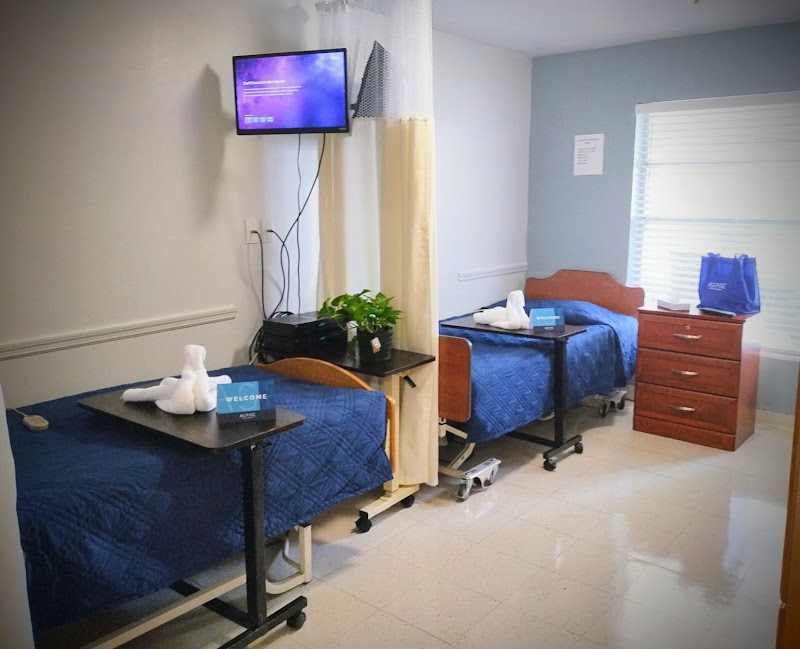
650 REED CANAL RD, SOUTH DAYTONA, FL 32119 (386) 767-4831
For profit - Limited Liability company 65 Beds AVIATA HEALTH GROUP Data: November 2025
Trust Grade
55/100
#327 of 690 in FL
Last Inspection: August 2023

Over 2 years since last inspection. Current conditions may differ from available data.

Overview

Aviata at South Daytona has a Trust Grade of C, which means it is average compared to other nursing homes, sitting in the middle of the pack. It ranks #327 out of 690 facilities in Florida, indicating it is in the top half, and #19 out of 29 in Volusia County, which means only a few local options are better. The facility is improving, with issues decreasing from five in 2023 to one in 2025. However, staffing is a concern, as it has a rating of 2 out of 5 stars and a high turnover rate of 62%, which is above the state average. There are also significant fines totaling $25,723, higher than 81% of Florida facilities, suggesting ongoing compliance issues. Specific incidents noted during inspections include a failure to ensure hot water was available in resident and employee bathrooms, which could impact comfort and hygiene for all residents. Additionally, staff were observed not adhering to food safety standards, such as not wearing hairnets in the kitchen, which could pose health risks. Lastly, there was a medication error rate of over 13%, indicating a concerning level of mistakes in medication administration that could affect residents' health. Overall, while there are some strengths, such as a good quality measures rating of 4 out of 5, potential residents and their families should weigh both the improvements and the existing concerns carefully.

Trust Score
C
55/100
In Florida
#327/690
Top 47%
Safety Record
Low Risk
No red flags
Inspections
Getting Better
5 → 1 violations
Staff Stability
⚠ Watch
62% turnover. Above average. Higher turnover means staff may not know residents' routines.
Penalties
○ Average
$25,723 in fines. Higher than 52% of Florida facilities. Some compliance issues.
Skilled Nurses
⚠ Watch
Each resident gets only 25 minutes of Registered Nurse (RN) attention daily — below average for Florida. Fewer RN minutes means fewer trained eyes watching for problems.
Violations
⚠ Watch
15 deficiencies on record. Higher than average. Multiple issues found across inspections.
★★★☆☆
3.0
Overall Rating
★★☆☆☆
2.0
Staff Levels
★★★★☆
4.0
Care Quality
★★★☆☆
3.0
Inspection Score
Stable
2023: 5 issues
2025: 1 issues

The Good

  • 4-Star Quality Measures · Strong clinical quality outcomes
  • Full Sprinkler Coverage · Fire safety systems throughout facility
  • No fines on record

Facility shows strength in quality measures, fire safety.

The Bad

3-Star Overall Rating

Near Florida average (3.2)

Meets federal standards, typical of most facilities

Staff Turnover: 62%

16pts above Florida avg (46%)

Frequent staff changes - ask about care continuity

Federal Fines: $25,723

Below median ($33,413)

Moderate penalties - review what triggered them

Chain: AVIATA HEALTH GROUP

Part of a multi-facility chain

Ask about local staffing decisions and management

Staff turnover is elevated (62%)

14 points above Florida average of 48%

The Ugly 15 deficiencies on record

Jul 2025 1 deficiency
CONCERN (F) 📢 Someone Reported This

A family member, employee, or ombudsman was alarmed enough to file a formal complaint

Potential for Harm - no one hurt, but risky conditions existed

Safe Environment (Tag F0921)

Could have caused harm · This affected most or all residents

**NOTE- TERMS IN BRACKETS HAVE BEEN EDITED TO PROTECT CONFIDENTIALITY** Based on observations, staff interviews, document review, and facility policy and procedure review, the facility failed to maint...

Read full inspector narrative →
**NOTE- TERMS IN BRACKETS HAVE BEEN EDITED TO PROTECT CONFIDENTIALITY** Based on observations, staff interviews, document review, and facility policy and procedure review, the facility failed to maintain a sanitary and comfortable environment for residents and staff by failing to ensure hot water was available in resident rooms, resident shower rooms and employee bathrooms. This deficient practice had the potential to impact all 51 residents residing in the facility at the time of the survey. The findings include:On 07/14/25 at 12:41 PM, water temperatures in the facility were taken in the presence of the Regional Plant Operations. Using a dial stem thermometer, resident bathrooms, shower rooms and employee hand washing stations were measured and revealed the following:East Sideroom [ROOM NUMBER]: 78 [NAME] #2: 78 [NAME] #3: 91 [NAME] #4: 78 FRooms #5 and #7 (Jack and [NAME]/ shared bathroom): 70 FRooms #6 and #8: 80 FRooms #10 and #12: 80 [NAME] Side Shower Room: 78 FEmployee Restroom [ROOM NUMBER]: 80 FEmployee Restroom [ROOM NUMBER]: 80 FWest SideRooms #16 and #18: 78 FRooms #19 and #21:100 FRooms #20 and #22: 80 FRooms #24 and #26: 78 [NAME] #27: 98 FWest Side Shower Room: 90 [NAME] 07/14/25 at 11:01 AM, an interview was conducted with Employee C, who works in housekeeping. He reported he has worked at the facility for almost a year and complained that the lack of hot water affects his ability to clean effectively. He especially has a hard time waxing the floors, as he cannot use cold water for the waxing process and has to go to the kitchen to obtain hot water to wax the floors. On 07/14/25 at 11:04 AM, an interview was conducted with Employee B, CNA, who reported she has worked at the facility for 11 months and explained that the hot water has not worked since she started working at the facility. The shower room on the east and west hallway get somewhat warm and many resident bathrooms don't have hot water. Residents often refuse incontinent care or bed baths because they don't want to be bathed in cold water. A resident recently yelled at her that she was cruel for using cold water for incontinent care. She explained that residents are supposed to receive 2 showers each week. On 07/14/25 at 11:12 AM, an interview was conducted with the Infection Control Preventionist/Wound Care, RN, who reported she has worked at the facility since December of 2024. The lack of hot water has been a problem from the start and felt that the lack of hot water may affect effective infection control, as hot water is needed for all aspects of infection control. The lack of hot water forced CNAs to switch from using wash clothes with warm water to using disposable wipes. On 07/14/25 at 11:22 AM, an interview was conducted with Employee A, RN, who reported she has worked at the facility since September of 2024. She explained that the lack of hot water makes her job difficult. Residents have been complaining about the lack of hot water since she started working at the facility. Residents have refused incontinent care and hygiene assistance because they complain the water is too cold. During the last staff meeting, the Maintenance Director informed staff that the facility will soon spend $50K to fix the plumbing. On 07/14/25 at 1:15 PM, an interview was conducted with the Regional Plant Operations, who reported he has worked as the Regional Plant Operations for 1 1/2 years. He explained that he oversees the maintenance of buildings in this region. He usually communicates with the building's Maintenance Director through email. He further explained that we were made aware of the lack of hot water problem as a company in approximately April 2025. He said a plumber has been out to the facility and diagnosed the problem stems from the cold water leaking into the hot water. The building will need to be re-piped on the hot side. He verified that hot water temperature should be between 105 - 110 degrees Fahrenheit. An estimate for the plumbing work was submitted to the corporate office two months ago, and they are waiting for approval. On 07/14/25 at 2:17 PM, the Administrator was interviewed and reported she has worked at the facility since November of 2024. She mentioned that the immediate plan for residents without hot water in their room is a wipe warmer located at the nurse station. They also offer residents bed baths, and CNAs know which rooms they can obtain warm water from. She was notified about the problem with the lack of warm water in April of this year. She explained that the corporate office has known about the problem of a lack of hot water since April 2025. When asked about the facility's Performance Improvement Plan (PIP) for the lack of hot water, she explained that actions of the PIP are to gather resident feedback on water temperature preferences during resident council meetings and town hall meetings. She could not provide documented evidence resident feedback on water temperature preferences were obtained. On 07/14/25 at 3:00 PM, an interview was conducted with Resident #11. She described an incident which took place in May 2025, which she filed a facility grievance. She explained that while receiving incontinent care, a certified nurse assistant (CNA) wiped her with a cold washcloth. She explained that she had a stroke, and her body does not react well to cold water. She said she has not had a shower since the incident and uses disposable wipes to clean herself.Review of facility grievances documented that Resident #11 complained that on 05/27/25, a CNA. wiped her with a cold washcloth. The resident expressed dislike of coldness, and the CNA did it again. On 07/14/25 at 3:56 PM, the Administrator provided resident council meeting minutes. Review of the resident council meeting minutes lacked documented evidence of resident feedback on water temperature preferences. She stated that she spoke to a resident related to water temperatures at the 05/30/25 town hall meeting but didn't document the resident's water temperature preference. Review of the previous 3 months of maintenance work orders lacked documentation of work orders related to hot water. Review of the Ad Hoc Quality Assurance and Performance Improvement Meeting, which was created on 04/07/25 and documented the facility was to solicit resident responses to temperatures as a means of tracking. The PIP lacked documented evidence of obtaining resident responses to water temperatures. Review of the facility's policy Monitoring and Recording Facility Hot Water Temperature for Resident Rooms, Common Areas and Shower Rooms, Document Name: M-227; Effective: 11/30/14. Policy: To maintain and control hot water temperatures within the facility to federal and state standards. Hot water temperatures will be maintained to an acceptable level for the safety of the residents and staff. Page 2 of 2 documented.Hot water drawn for bathing and/or whirlpool usage must be between 100- 110 degrees Fahrenheit.
Aug 2023 5 deficiencies
CONCERN (D)

Potential for Harm - no one hurt, but risky conditions existed

Transfer Notice (Tag F0623)

Could have caused harm · This affected 1 resident

**NOTE- TERMS IN BRACKETS HAVE BEEN EDITED TO PROTECT CONFIDENTIALITY** Based on a review of resident records, facility policies and procedures, and interviews with staff, the facility failed to provi...

Read full inspector narrative →
**NOTE- TERMS IN BRACKETS HAVE BEEN EDITED TO PROTECT CONFIDENTIALITY** Based on a review of resident records, facility policies and procedures, and interviews with staff, the facility failed to provide written notification of emergency transfer and failed to send that notification to the Office of the State Long-Term Care Ombudsman for one (Resident #47) of one resident reviewed for [NAME] Acts (voluntary or involuntary hospital admission for psychiatric care and stabilization), from a total of 22 residents in the sample. The findings include: A review of Resident #47's medical record found he was admitted to the facility on [DATE]. He had diagnoses including, but not limited to, dementia with behavioral disturbance, history of transient-ischemic attack (a brief stroke-like attack), mild cognitive impairment, insomnia, anxiety, and major depressive disorder, single episode, moderate. Resident #47's medical record revealed that he had a family member designated as his primary emergency contact and responsible party. A quarterly minimum data set (MDS) assessment with a reference date of 8/22/23, noted that Resident #47 presented with continuous inattention and disorganized thoughts. He was assessed with a short temper and was easily annoyed on 7 to 11 out of a total of 14 days over the assessment look-back period. Physical behavior towards others such as hitting, kicking, pushing, and scratching, and verbal symptoms toward others (threatening, cursing, screaming) occurred on 1 to 3 days of the 7-day look-back period. Resident #47 was ambulatory without assistance. Resident #47 was care planned on 2/28/23, and was last reviewed 8/9/23 for multiple behaviors including, but not limited to, kicking, slapping, or punching others, awake throughout the night, wandering, pacing, exit seeking, combativeness, hallucinations, delusions, screaming, cursing and rejection of care. The care plan description reported a resident-to-resident altercation on 8/3/23 and a hospital transfer for a [NAME] Act on 8/4/23. The goal was to have fewer episodes of behavior by the review date. Interventions included medications as ordered, anticipating and meeting needs, explaining procedures, and intervening as necessary to protect the rights and safety of others. Remove resident from situation and take to alternate location. Send out for psychiatric evaluation (8/4/23). A review of the July and August 2023 medication administration records (MARs), revealed that Resident #47 received Quetiapine Fumarate (an antipsychotic medication used to treat bipolar disorder and schizophrenia) 100 mg (milligrams) three times daily and Ativan (a medication used to treat anxiety) 0.5 mg twice daily. A review of the resident's nursing progress notes revealed that on 8/3/23, a certified nursing assistant (CNA) called a nurse to the dining room. The CNA stated she saw Resident #47 punch a female resident in the face, and the CNA sustained a bump on the left side of her lip. The nurse and CNA tried to move Resident #47 away from the woman, when he became combative, hitting staff in the face. They were unable to redirect Resident #47. He was described as confused, combative, and unable to answer questions about the incident. A physician's order was obtained to send Resident #47 to the emergency room (ER) for a change in cognition and combative behavior toward staff. 911 was called, police and emergency medical services (EMS) arrived, and Resident #47 was transported to the emergency room. A progress note dated 8/4/23 indicated the psychiatric nurse practitioner (NP) and physician were both notified of the altercation. The NP evaluated Resident #47 and completed the [NAME] Act paperwork. The sheriff and responsible party were notified. Resident #47's record contained a Certificate of Professional Initiating Involuntary Examination (a form required to initiate a [NAME] Act) dated 8/4/23, initiated by the psychiatric NP. It noted diagnoses including major depressive disorder, general anxiety disorder and dementia with agitation. The NP noted Resident #47 had a mental illness and because of the mental illness, was unable to determine for himself whether an examination was necessary. There was substantial likelihood that without care or treatment, the resident would cause serious bodily harm to others in the near future as evidenced by his recent behavior. The supporting evidence noted the incident, and assessed Resident #47 as unpredictable and dangerous to residents and staff. He could not be managed on psychotropic medications and would benefit from psychiatric hospitalization to adjust medication in a safe environment. (copy obtained) Further review of the record found there was no written notification provided to Resident #47 or his representative stating the reason for or effective date of the transfer; the location to which the resident was being transferred; a statement of the resident's appeal rights, including the the name, address (mailing and email), and telephone number of the entity that received such requests; or information about how to obtain an appeal form, assistance in completing the form, and submitting the appeal hearing request; including the name, address and telephone number of the Office of the State Long-Term Care Ombudsman. An interview was conducted with the facility's Regional Nurse Consultant (RNC) on 8/28/23 at 3:28 p.m. She confirmed that she had reviewed Resident #47's record and was unable to locate the required written notification of the transfer. The RNC stated it was her expectation that the form be completed for an emergency transfer. Review of the facility's policy for Transfer/Discharge Notification and Right to Appeal (policy OP-102) effective 9/23/17 and revised on 10/24/22 revealed: Policy: Transfer and discharges of resident, initiated by the center (facility initiated) will be conducted according to Federal and/or State regulatory requirements. Procedure: The center must permit each resident to remain in the center and not transfer or discharge the resident unless: a. The transfer or discharge is necessary for the resident's welfare and the resident's needs cannot be met in the center . Notice Before Transfer: Before a center transfers a resident, the center must: -Notify the resident and resident representative(s) of the transfer and reason for the move in writing . -The center must send a copy of the notice to a representative of the Office of the State Long-Term Care Ombudsman . -Notice must be made as soon as practicable before transfer . Contents of the Notice: The written notice must include the following: -The reason for the transfer . -The effective date of the transfer . -The location to which the resident is transferred . -A statement of the resident's appeal rights including the name, address, telephone number of the entity which receives such request . (copy obtained) .
CONCERN (D)

Potential for Harm - no one hurt, but risky conditions existed

Deficiency F0625 (Tag F0625)

Could have caused harm · This affected 1 resident

**NOTE- TERMS IN BRACKETS HAVE BEEN EDITED TO PROTECT CONFIDENTIALITY** Based on a review of resident records, facility policies and procedures, and interviews with staff, the facility failed to provi...

Read full inspector narrative →
**NOTE- TERMS IN BRACKETS HAVE BEEN EDITED TO PROTECT CONFIDENTIALITY** Based on a review of resident records, facility policies and procedures, and interviews with staff, the facility failed to provide written information prior to hospital transfer that notified the resident/representative of the facility's bed hold policy for one (Resident #47) of one resident (Resident 47) reviewed for a hospital transfer/Baker Act, from a total of 22 residents in the sample. The findings include: A review of Resident #47's medical record found he was admitted to the facility on [DATE]. He had diagnoses including, but not limited to, dementia with behavioral disturbance, history of transient-ischemic attack (a brief stroke-like attack), mild cognitive impairment, insomnia, anxiety, and major depressive disorder, single episode, moderate. Resident #47's medical record revealed that he had a family member designated as his primary emergency contact and responsible party. A quarterly minimum data set (MDS) assessment with a reference date of 8/22/23, noted that Resident #47 presented with continuous inattention and disorganized thoughts. He was assessed with a short temper and was easily annoyed on 7 to 11 out of a total of 14 days over the assessment look-back period. Physical behavior towards others such as hitting, kicking, pushing, and scratching, and verbal symptoms toward others (threatening, cursing, screaming) occurred on 1 to 3 days of the 7-day look-back period. Resident #47 was ambulatory without assistance. Resident #47 was care planned on 2/28/23, and was last reviewed 8/9/23 for multiple behaviors including, but not limited to, kicking, slapping, or punching others, awake throughout the night, wandering, pacing, exit seeking, combativeness, hallucinations, delusions, screaming, cursing and rejection of care. The care plan description reported a resident-to-resident altercation on 8/3/23 and a hospital transfer for a [NAME] Act on 8/4/23. The goal was to have fewer episodes of behavior by the review date. Interventions included medications as ordered, anticipating and meeting needs, explaining procedures, and intervening as necessary to protect the rights and safety of others. Remove resident from situation and take to alternate location. Send out for psychiatric evaluation (8/4/23). A review of the resident's nursing progress notes revealed that on 8/3/23, a certified nursing assistant (CNA) called a nurse to the dining room. The CNA stated she saw Resident #47 punch a female resident in the face, and the CNA sustained a bump on the left side of her lip. The nurse and CNA tried to move Resident #47 away from the woman, when he became combative, hitting staff in the face. They were unable to redirect Resident #47. He was described as confused, combative, and unable to answer questions about the incident. A physician's order was obtained to send Resident #47 to the emergency room (ER) for a change in cognition and combative behavior toward staff. 911 was called, police and emergency medical services (EMS) arrived, and Resident #47 was transported to the emergency room. A progress note dated 8/4/23 indicated the psychiatric nurse practitioner (NP) and physician were both notified of the altercation. The NP evaluated Resident #47 and completed the [NAME] Act paperwork. The sheriff and responsible party were notified. A Certificate of Professional Initiating Involuntary Examination was completed by the psychiatric nurse practitioner (NP) on 8/4/23 and noted that the resident could not be managed on psychotropic medications and would benefit from psychiatric hospitalization to adjust medication in a safe environment. (copy obtained) Per the record, Resident #47 remained hospitalized until 8/9/23, however, there was no bed hold notice provided to the resident or representative notifying them of the facility's bed hold policy, the duration the bed would be held in his absence, or any daily room rate should the resident/representative choose to hold a bed while hospitalized . An interview was conducted with the facility's Regional Nurse Consultant on 8/28/23 at 3:28 p.m. She confirmed she had reviewed Resident #47's record and was unable to locate written notification of the bed hold. She stated it was her expectation that the form be completed for an emergency transfer. A review of the facility's policy for Bed Hold (policy SS-136), effective 3/1/15 and revised 11/1/17, revealed: Policy: Resident or Resident Representative will be notified on admission and at the time of transfer (to the hospital or therapeutic leave) of the bed hold policies, according to Federal/State requirements. Procedure: .2. At the time of transfer to the hospital. the center will provide a copy of notification of bed hold. -Requirement at time of transfer is met if the resident's copy of the notice is sent with other papers accompanying resident to the hospital. 3. The resident and/or representative to sign the Bed Hold Authorization, if possible, or if not available, telephone authorization may be used and documented in the clinical record or on a bed hold authorization form. (copy obtained) .
CONCERN (D)

Potential for Harm - no one hurt, but risky conditions existed

ADL Care (Tag F0677)

Could have caused harm · This affected 1 resident

**NOTE- TERMS IN BRACKETS HAVE BEEN EDITED TO PROTECT CONFIDENTIALITY** Based on observation, interview, and record review, the facility failed to ensure that one (Resident #1) of two residents who we...

Read full inspector narrative →
**NOTE- TERMS IN BRACKETS HAVE BEEN EDITED TO PROTECT CONFIDENTIALITY** Based on observation, interview, and record review, the facility failed to ensure that one (Resident #1) of two residents who were unable to carry out activities of daily living (ADL) independently, from a sample of 22 residents, received the care and services necessary to maintain good grooming and personal hygiene. Resident #1 was not provided adequate nail care. The findings include: On 8/27/23 at 3:00 p.m., Resident #1 was observed in bed watching television. Her fingernails were long on both hands. In an interview on 8/27/23 at 3:02 p.m., Resident #1 confirmed that she preferred her fingernails short and polished. She looked at her thumbnails and said, These are too long and dirty; they need to be trimmed. A review of the resident's medical record revealed that she was admitted to the facility on [DATE]. Her diagnoses included, but were not limited to, neurocognitive disorder with Lewy bodies (dementia), osteoarthritis, unspecified cognitive/communication disorder, major depression, and unspecified dementia and without behavioral disturbance. A review of the care plan revealed that Resident #1 had a focus area for activities of daily living (ADL) self-care deficit related to dementia, impaired balance, limited mobility, and musculoskeletal impairment. Interventions included, but were not limited to: Check nail length and trim and clean on bath day and as necessary. Report any changes to the nurse. (copy obtained) A review of the quarterly minimum data set (MDS) assessment with an assessment reference date (ARD) of 6/13/23, revealed that the resident had a brief interview for mental status (BIMS) score of 3 out of 15 possible points, indicating severe cognitive impairment. She also required limited one-person physical assistance with bed mobility and transfers, extensive one-person physical assistance with toilet use and personal hygiene, and total one-person physical assistance with bathing. She was documented as always incontinent of bowel and bladder. Rejection of care behaviors was not exhibited. (copy obtained) On 8/29/23 at 2:15 p.m., Resident #1 was observed in bed, alert, pleasant, and responding appropriately to questions about her fingernails. Both of her thumb nails were approximately two inches long and covered with brown matter. The resident stated she previously told a man that she wanted nail care. She was asked if she desired nail care today and she said, yes. On 8/29/23 at 2:19 p.m. in an interview with Certified Nursing assistant (CNA) C, she was asked who was responsible for providing nail care to the residents. She stated, CNAs provide nail care as we give care on shower days and as needed. She confirmed that she was assigned to Resident #1. She stated the resident required extensive to total care assistance for all ADLs. CNA C was accompanied to the resident's room and confirmed that the resident's nails were long and soiled. She stated the resident's brother did her nails at times when he visited. The resident stated again that she would like her nails clipped and filed. CNA C left to collect supplies to perform nail care. On 8/29/23 at 2:29 p.m. in an interview with Licensed Practical Nurse (LPN) D, she was asked who was responsible for providing nail care to residents. She replied, CNAs do nail care on shower days and anytime that it is needed. When asked how she ensured that that care/tasks assigned to CNAs had been completed, she stated that at times she went into the residents' rooms with the CNAs to assist in the provision of care. Additionally, the CNAs completed shower sheets and documentation for the care they provided during their shift. A review of the facility's policy and procedure for Bathing/Showering (revision date 9/1/17), revealed: Assistance with showering and bathing will be provided at least twice a week and PRN (as needed) to cleanse and refresh the resident. The resident shall be asked on admission to establish a frequency schedule for bathing. This schedule will take precedence over the twice a week and PRN cleansing. The resident's frequency and preferences for bathing will be reviewed at least quarterly during care conference. A review of the facility's policy and procedure for Care of Nails (revision date 9/1/17), revealed that the procedure for nail care included the following: 1. Perform hand hygiene 2. Explain procedure to resident and bring the following equipment to resident's bedside. a. Basin, optional b. Towel c. Emery board d. Orange sticks e. Nail clippers 3. Place towel beneath the area to be treated. 4. May soak hand in basin half- full with warm water if needed. 5. Trim fingernails. 6. Clean nails. 7. Apply lotion to nail area if indicated. 8. Clean and return equipment to designated area. 9. Discard disposable equipment. 10. Perform hand hygiene. .
CONCERN (E)

Potential for Harm - no one hurt, but risky conditions existed

Unnecessary Medications (Tag F0759)

Could have caused harm · This affected multiple residents

Based on observations, record reviews, and staff interviews, the facility failed to ensure a medication error rate of less than 5%. There were five errors with 38 opportunities for error, resulting in...

Read full inspector narrative →
Based on observations, record reviews, and staff interviews, the facility failed to ensure a medication error rate of less than 5%. There were five errors with 38 opportunities for error, resulting in an error rate of 13.15789% and involving four (Residents #24, #29, #44, and #9) of six residents observed during medication administration, from a total of 22 residents in the sample. The findings include: During medication administration on 8/28/23 at 3:45 p.m., Licensed Practical Nurse (LPN) A was observed preparing medication for Resident #24. She obtained Eliquis (anticoagulant) 5 milligrams (mg), Coreg 6.25 mg for blood pressure, another Eliquis 5 mg and Vitamin C 500 mg. She stated medication should be crushed and administered via gastrostomy tube (G-tube - feeding tube). She picked up a pill crusher pouch ready to pour the medication in. She was asked to verify the medications with the orders and she confirmed that she had pulled two tablets of Eliquis 5mg instead of one as was ordered. She removed one Eliquis pill from the medication cup and discarded it. On 8/28/23 at 3:53 p.m., LPN A was preparing medication for Resident #29. She obtained Aspirin (blood thinner) 81 mg chewable, Senna S 8.6-50 mg for constipation, Midodrine 10 mg for hypotension (low blood pressure), and clonazepam 0.5 mg for anxiety disorder. She crushed the medication, mixed it in apple sauce then administered the medication to the resident by mouth. She was asked to review the physician's orders. After reviewing the physician's orders, she stated the medication should have been administered via G-tube. She further stated the resident was able to eat by mouth and was only getting bolus feedings via the G-tube. She said she did not pay attention because she thought since the resident was eating a mechanically textured diet, he could have the medication crushed. (Copies of the physician's orders were obtained.) On 8/29/23 at 10:08 a.m., LPN B was observed preparing medications for Resident #44. After reviewing the physician's orders, she stated she was missing Glimepiride 1 mg and Folic acid 1 mg for type II diabetes. She obtained over-the-counter folic acid 800 micrograms (mcg) and stated she would administer one and a quarter tablets of the folic acid. As she was pulling the medication from the packaging, she was asked to review the physician's order again. She stated the order was for Folic Acid 1mg, give 2 tablets by mouth one time a day. It was explained to her that 2 mg (two tablets) was the equivalent of 2000 mcg and again stated she would administer 1.25 tablets from the 800 mcg. She said, I don't know what I'm doing wrong. She then walked to the medication storage area at the nurses' station to see whether there was medication available of that strength. The Assistant Director of Nursing (ADON), who was at the nursing station, asked what she was looking for. She said folic acid 1mg. She was told that the resident would have their own medication for that strength; central supply did not order that strength. When asked if she had taken care of the resident previously, she replied,I had him on Wednesday and Thursday last week. She was asked what medication she administered then and she replied that she could not remember. A review of the reorder history revealed that the order for glimepiride was reordered on 8/22/23 and the medication administration record was signed off indicating the medication was not available. She was asked what the facility's protocol was for reordering medication. She replied, I'm not sure about the process in this facility, I work as needed. LPN B was observed again on 8/29/23 at 10:08 a.m. preparing medication for Resident #9. She obtained Vitamin D 1250 mg. A review of the physician's orders revealed an order for Calcium - Vitamin D 600- 400 mg. As LPN B was about to administer the medication to the resident, she was asked to clarify the mediations in the cup. She confirmed that she had the wrong medication (Vitamin D 1250 mg instead of Calcium - Vitamin D 600- 400 mg). She discarded the medication and obtained the correct medication. During an interview with the ADON on 8/29/23 at 10:45 a.m., she stated the nursing staff should reorder medications when they have at least three days' worth of medication left. When asked about the medications for Resident #44, she confirmed that the medication had not been available since 8/22/23. She added that she contacted the pharmacy and there was an issue with the insurance. The nurse assigned to the resident should have followed up. During an interview on 8/29/23 at 11:46 a.m., the Director of Nursing (DON) and ADON were notified of the concerns observed during medication administration. They both acknowledged the errors and the DON stated she would initiate training and competency checks for all nurses. A review of the facility's policy and procedure for Administering Medications (revised April 2019), revealed: 4. Medications are administered in accordance with prescriber orders, including any required time frames. 10. The individual administering the medication checks the label three (3) times to verify the right resident, right medication, right dose, right time and right method (route) of medication before giving the medication. (copy obtained) .
CONCERN (E)

Potential for Harm - no one hurt, but risky conditions existed

Safe Environment (Tag F0921)

Could have caused harm · This affected multiple residents

**NOTE- TERMS IN BRACKETS HAVE BEEN EDITED TO PROTECT CONFIDENTIALITY** Based on observations throughout the facility and interviews with staff, the facility failed to provide a sanitary, homelike env...

Read full inspector narrative →
**NOTE- TERMS IN BRACKETS HAVE BEEN EDITED TO PROTECT CONFIDENTIALITY** Based on observations throughout the facility and interviews with staff, the facility failed to provide a sanitary, homelike environment for residents, staff and visitors by neglecting to maintain walls that housed resident personal air conditioner units in five of five rooms observed on the east wing (rooms 2, 3, 4, 6 and 12) out of 10 rooms on the unit and a total of 22 resident rooms in the facility. The facility also failed to provide needed maintenance and cleaning to the baseboards and the carpeted walls under the handrails on both the east and west wings. The findings include: Observations of the east wing were conducted on 8/27/23 at 12:56 p.m. In room [ROOM NUMBER], approximately 16 inches of the vertical surface wall to the right of the window air conditioner was observed with a significant amount of what appeared to be water damage. The wall was warped, bubbled, and cracking/peeling. The area extended approximately 16 inches up the right side of the unit. A ¼ inch gap between the unit and the wall exposed sunlight and the outdoors. Several feet of the horizontal wall surface above the baseboard had similar damage (warping and peeling paint and drywall). The windowsill housing the air conditioner was coated with dark dust and dirt-like matter. The floors and door jambs were scuffed and stained. (Photographic evidence obtained) Four more rooms on the east wing were inspected on 8/29/23 at 2:01 p.m. The window air conditioner in room [ROOM NUMBER] was observed with a similar ¼ inch gap to the outdoors along the right side of the unit. The sill to the right of the unit was coated with dark substance resembling dirt and dust. The sill and wall to the left of the unit in room [ROOM NUMBER] was observed with the same dark substance on the sill and wall. room [ROOM NUMBER] presented with the same condition on the right side of the air conditioner. In room [ROOM NUMBER], the grates and interior of the air conditioner were observed with black spots, resembling biological growth. The wall to the right of the unit was chipped and warped. There was also a 1/4-inch gap between the unit and the wall at the top of the unit on the right. Sunlight could be seen through the gap. (Photographic evidence obtained) The wall carpeting beneath the handrails on both the east and west wings was soiled with dark stains at the bottom where the carpet met the baseboard. Horizontal surfaces of the baseboard throughout both units were coated with dark substances resembling dirt and dust that wiped off with a finger swipe. The baseboards and doors were scuffed, dirty and in need of repairs or paint, as were the floors at the corners of door jambs throughout. (Photographic evidence obtained) A tour of the unit and halls was conducted with the Interim Administrator on 8/29/23 at 2:22 p.m. She confirmed the condition of the air conditioning units and walls and stated she had already spoken to the new owners about the situation. She acknowledged this was only a sampling of rooms and confirmed the condition of the walls, doors, floors and baseboards throughout the facility. .
Nov 2021 9 deficiencies
CONCERN (D)

Potential for Harm - no one hurt, but risky conditions existed

Resident Rights (Tag F0550)

Could have caused harm · This affected 1 resident

**NOTE- TERMS IN BRACKETS HAVE BEEN EDITED TO PROTECT CONFIDENTIALITY** Based on observations, a review of resident records, and staff interviews, the facility failed to ensure each resident's right t...

Read full inspector narrative →
**NOTE- TERMS IN BRACKETS HAVE BEEN EDITED TO PROTECT CONFIDENTIALITY** Based on observations, a review of resident records, and staff interviews, the facility failed to ensure each resident's right to a dignified existence by failing to 1) Ensure privacy during enteral feeding for one (Resident #12) of three residents reviewed for dignity, 2) Refrain from using labels to identify residents by their dining needs in the presence of the resident for one (Resident #38) of three residents reviewed for dignity, and 3) Respectfully escort one (Resident #44) of one resistive resident to her room for incontinence care, from a total of three residents reviewed for dignity and a total of 30 residents in the sample. The findings include: 1. An observation of Resident #12's room was conducted with the Administrator on 11/10/21 at 1:54 PM. The bedroom door was open upon arrival and Resident #12 was observed in the B bed. Licensed Practical Nurse (LPN) G was standing over him. Another (unsampled) resident was in the C bed, approximately four feet away from Resident #12. The privacy curtain between the two beds was open, leaving Resident #12 visually exposed. LPN G was using a 60 milliliter enteral feeding (tube feeding) bolus syringe to plunge its unknown contents through Resident #12's gastrostomy tube (a surgical opening into the stomach from the abdominal wall for the introduction of food or medications). Anyone in the hallway and Resident #12's roommate in the C bed could see the procedure. LPN G was asked to provide Resident #12 with privacy during the procedure by closing the curtain. She complied. The Administrator, who was present, acknowledged that LPN G's failure to provide privacy during the procedure was a dignity concern for Resident #12. A record review for Resident #12 found he was [AGE] years old. His admission Minimum Data Set (MDS) assessment with an assessment reference date (ARD) of 8/27/21, noted he had memory problems and moderately impaired cognitive skills for daily decision making. Resident #12 required extensive assistance from staff with all activities of daily living. The resident's diagnoses included CVA (cardiovascular accident - stroke) and gastrostomy status. Resident #12 had a current physician's order to consume nothing by mouth and another order for enteral feedings through his PEG tube (percutaneous endoscopic gastrostomy, a feeding tube). An interview was conducted with the Director of Nursing (DON) on 11/10/21 at 2:10 PM. She was told of the observation of Resident #12 and LPN G. The DON said, Oh no and shook her head. She said, That is a dignity issue. 2. An observation of Resident #38 was conducted in her room on 11/07/21 at 12:55 PM. She was lying partially on her left side in her bed. Resident #38 was not able to respond to any greetings other than to stare at the speaker. She appeared thin and frail. Certified Nursing Assistant (CNA) J entered the room at this time. It was lunch time and she was asked if the residents would be eating in their room today. She said, Yes, but she (pointing to Resident #38) is a feeder. Resident #38's roommate, who was in the next bed, exclaimed, I'm not a feeder! CNA J responded by saying No, you are not a feeder. An interview was conducted with LPN K on 11/09/21 at 11:44 AM. When asked about Resident #38's nutritional needs, she replied, She is a feed. She is total (assist) for everything, Hoyer (a mechanical lift used for transferring a resident between surfaces) and a feed. A record review for Resident #38 found a quarterly MDS assessment with an ARD of 10/12/21. She was assessed with continuous inattention and disorganized thought. Resident #38 required extensive assistance with activities of daily living including feeding. Her diagnoses included CVA, non-Alzheimer's dementia and depression. A Nutritional Review, dated 4/14/21, also noted Resident #38 required total assistance with eating. A review of the CMS (Centers for Medicare and Medicaid Services) 672 (Resident Census and Condition) form found there were seven residents in the facility who were dependent on staff for dining at the time of the survey. In an interview with CNA M on 11/10/21 at 11:12 AM, she was asked how the facility staff referred to residents who needed to be fed by staff. She replied Feeders. When it was suggested the term was degrading, CNA M explained that was what everyone here called it. She stated she had received training in treating residents with dignity and respect and acknowledged using such a label was a dignity issue. In an interview with the DON on 11/10/21 at 2:10 PM, she was told of the observation. The DON said the term feeder should not be used for residents who were dependent diners. The DON agreed the use of labels for residents, especially in their presence, was a dignity issue, and said she did not realize the term was being used by staff. 3. Observations of Resident #44 throughout the survey (11/7/21 to 11/10/21) found she had a preference for independently walking up and down the long hallway repeatedly during the day. During an observation on 11/09/21 at 2:10 PM, CNA H and another unsampled employee were seen escorting Resident #44, who was able to walk without assistance, to her bedroom. Each employee had one arm hooked under each of the resident's underarms. When the trio reached Resident #44's room, the unidentified CNA walked away. CNA H let go of Resident #44's arm at the threshold of the bedroom in order for the resident to enter the room. Instead, Resident #44 started to back out of the room. CNA H, who was now directly behind the resident, placed her open right hand on the resident's upper middle back and pushed her towards and into the bedroom. The Activities Director, who was present at the time, explained that Resident #44 would walk and walk and refuse to stop to go to her room for personal care. She often needed assistance getting that care. CNA H emerged from Resident #44's room on 11/09/21 at 2:13 PM with a tied up plastic bag in her hand, contents unknown. She disposed of the bag in the soiled utility room. CNA H was interviewed at this time. She explained that Resident #44 had been up wandering the hallways since the overnight shift last night. Resident #44 needed personal care and hopefully, a nap. This resident did not like to stop walking for personal care and when staff tried to direct her to her room, she plopped herself on the floor. It took two staff members to get Resident #44 back to her room. A record review for Resident #44 found she was [AGE] years old. The Significant Change MDS with an ARD of 10/19/21 noted inattention was continuously present. She required supervision with locomotion on and off the unit. Her walking was not steady, but she was able to stabilize without staff assistance. Resident #44 was assessed as requiring extensive assistance from one person with toilet use and was always incontinent of bowel and bladder. Resident #44 was care planned on 10/12/21 for her multiple behaviors which included wandering while holding several items, and removing her brief and voiding on the floor. There was no mention of her refusing to go to her room for personal or incontinence care in her behavioral plan of care. (Photographic evidence obtained) On 11/10/21 at 3:14 PM during an interview with LPN I, she said she was not aware staff were using a 2-person escort when Resident #44 refused to be changed. She explained it was a very rare occasion that this resident plopped down to the ground, but she usually responded well enough to one person accompanying her to her room. The DON, who was also present, also expressed unawareness of the 2-person transport and nudge into the room. She also stated a side-by-side one-person escort was usually sufficient. The DON acknowledged while it was not a forceful gesture, the method used to get Resident #44 to, and into, her room was not dignified. The DON said she had recognized that overall, facility staff needed retraining in dignity issues for this population. She said staff did receive some dignity training online, but face-to-face training was her goal. .
CONCERN (D)

Potential for Harm - no one hurt, but risky conditions existed

Deficiency F0692 (Tag F0692)

Could have caused harm · This affected 1 resident

**NOTE- TERMS IN BRACKETS HAVE BEEN EDITED TO PROTECT CONFIDENTIALITY** Based on observations, record review and interviews, the facility failed to ensure that one (Resident #23) of four residents rev...

Read full inspector narrative →
**NOTE- TERMS IN BRACKETS HAVE BEEN EDITED TO PROTECT CONFIDENTIALITY** Based on observations, record review and interviews, the facility failed to ensure that one (Resident #23) of four residents reviewed for nutritional risk, out of 30 sampled residents, was properly monitored for acceptable parameters of nutritional status. Specifically, the facility failed to ensure Resident #23 was properly monitored for potential weight loss. The findings include: A review of Resident #23's medical record revealed she was admitted to the facility on [DATE]. Her primary diagnosis was dementia with behavioral disturbance. Secondary diagnoses included diabetes, schizoaffective disorder, hypertension, hypothyroidism, mild protein-calorie malnutrition, vitamin B12 deficiency anemia, and vitamin D deficiency. The 9/16/21 minimum data set (MDS) assessment documented a brief interview for mental status (BIMS) score of 0 out of a possible 15 points, indicating severe cognitive impairment. Resident #23 was documented as requiring supervision with set-up only for eating. Her weight was documented as 142 lbs. (pounds), and she was noted to have had no recent weight loss. She was documented as not rejecting care. Further review if the record revealed the resident had two documented weights. She was noted to weigh 153 lbs. on 3/9/21 and 142 lbs. on 5/25/21. There were no additional weights documented. This weight decline was a 7.19% loss, indicating a downward trend. (A weight loss of 7.5% in a three-month period of time is considered a significant loss.) A 6/16/21 Nutrition Therapy Recommendation documented that the resident needed fortified foods with meals, due to a weight trending down. A Nutritional Review, dated 9/17/21, indicated the resident was on a consistent carbohydrate diet (CCD), regular texture. She was also on fortified foods, and no added salt (NAS), for weight loss. She was documented as dependent with eating and needs to be fed, as she was difficult to get to eat or drink at times. The nutritional assessment documented that she had no recent weights, with the last being recorded as 142 lbs. on 5/25/21. The assessment noted that there was no identified weight trend in the last 30, 90, 180 days due to no trend due to no recent weights. The resident was noted to need continued monitoring of weights and intake, as needed. The resident was documented to have an anticipated decline if unable to consume adequate intake. A physician's progress note, dated 10/7/21, indicated the resident was somewhat dependent for activities of daily living. She was noted to have mild protein-calorie malnutrition, and the facility should encourage completion of all meals and snacks. The physician's progress note also identified that the resident had hypothyroidism, and it was advised that the facility report any weight changes. The progress note also documented that the resident had hyperlipidemia, and was advised to be on a low-fat diet with daily exercise. This physician's progress note identified that the resident's weight was 142 lbs. (documented on 5/25/21). A care plan initiated 3/17/21, and last revised on 7/7/21, revealed that the resident had a nutritional problem or potential nutritional problem related to dementia, schizoaffective disorder, diabetes, hypertension, multiple behaviors, wandering, refusal to eat or drink at times, therapeutic diet, and above BMI (body mass index) range of 27.1. She had the potential for weight loss anticipated. She was noted to have fortified foods, refusal to be weighed at times, and combative with staff. Identified interventions, in pertinent part, indicated to offer snacks during the day; provide and serve diet as ordered, with fortified foods with meals; RD (registered dietitian) to evaluate and make diet change recommendations PRN (as needed); and weigh as ordered. A care plan initiated on 3/9/21, and last revised on 5/14/21, revealed that the resident had an ADL (activities of daily living)/self-care performance deficit related to dementia. Interventions, in pertinent part, identified that the resident was able to eat with set-up to limited assistance with meals. The lunch meal was served to Resident #23 on 11/10/21 at 12:18 p.m. Resident #23 was observed sitting up in her room next to her lunch tray. Staff was heard in the hallway stating that someone would come and assist her with her meal. On 11/10/21 at 12:44 p.m., Resident #23 was observed resting in bed, and her food tray was gone. An interview was conducted with Certified Nursing Assistant (CNA) P on 11/10/21 at 12:45 p.m. He stated he had assisted Resident #23 with her lunch because she required assistance with meals. He stated the resident did not want to eat her lunch, he could not make her eat her meal, and he had not provided her an alternative meal. He stated he had not been trained to provide alternatives or offer interventions to encourage the resident to eat if she did not want what had been provided. He further stated he had three other residents on the unit to assist with meals during this shift, and he could not force Resident #23 to eat her provided meal. An interview was conducted with the registered dietitian (RD) on 11/10/21 at 12:00 p.m. She stated she tried to come to the facility once a week to review initial, quarterly, and annual nutritional assessments. She would review for wounds, weight loss, and significant changes in weights. In October, she noted that a lot of residents did not have documented weights. She stated she gave this list to the Director of Nursing (DON). She further stated some of these residents may not have been compliant or may have been on hospice. She said the facility had tried to get resident weights, because they were needed. An interview was conducted with the DON on 11/10/21 at 4:09 p.m. She stated when she started, she had spoken with the RD. She stated she had not known that they did not have all of the resident weights. The restorative aide would do the weights, but they had been hiring new restorative aides, and were still training them. She sent the information to the RD so the facility could assess for any resident weight loss. She stated she would then take the information to the physician, and they would establish physician's orders as needed for the residents. The facility policy for Weighing the Resident, last revised 10/4/2021, stated in pertinent part: Residents will be weighted unless ordered otherwise by the physician: -Admission/readmission x 3 days -Weekly x 4 weeks -Monthly thereafter -As needed Weights will be completed as indicated and documented in the clinical record. Record weight and alert nurse to any significant change. Nurse to notify the physician of any significant weight change; consult with the Director of Dietary Services and/or dietitian; Notify the Interdisciplinary Team in order to update the plan of care. (Photographic evidence obtained) The facility policy on Dining and Food Preferences, last revised 9/2017, stated in pertinent part: The individual tray assembly ticket will identify all food items appropriate for the resident/patient based on diet order, allergies and intolerances, and preferences. Upon meal service, any resident/patient with expressed or observed refusal of food and/or beverage will be offered an alternate selection of comparable nutrition value. The alternate meal and/or beverage selection will be provided in a timely manner. (Photographic evidence obtained) .
CONCERN (D)

Potential for Harm - no one hurt, but risky conditions existed

Staffing Information (Tag F0732)

Could have caused harm · This affected 1 resident

Based on observation, review of facility records and interviews with staff, the facility failed to post daily staffing information that included the name of the facility and the actual number of hours...

Read full inspector narrative →
Based on observation, review of facility records and interviews with staff, the facility failed to post daily staffing information that included the name of the facility and the actual number of hours worked by Registered Nurses (RNs), Licensed Practical Nurses (LPNs) and Certified Nurse Aides (CNAs) on one of four days during the survey, and on an indeterminate number of days between 10/27/21 and 11/7/21. The findings include: An observation of the posted nurse staffing hours was made on 11/07/21 at 11:15 AM. The form was encased in a plastic picture frame and prominently displayed on the countertop at the nurses' station. The document, however, reflected the staffing hours for RNs, LPNs and CNAs for the day of 10/27/21. There were no additional completed staffing forms for more recent dates behind the single sheet. (Photographic evidence obtained) An interview was conducted with the Staffing Coordinator (SC) on 11/10/21 at 3:01 PM. She stated the night nurse was responsible for posting the daily nurse staffing form, but if the night nurse did not post it, she would. The SC did not realize the staffing was still posted for 10/27/21 on the day survey commenced, 11/7/21. She had no explanation. By survey exit on 11/10/21 at 5:50 PM, no staffing hour sheets for the missing dates 10/28/21 to 11/6/21 had been provided for review. .
CONCERN (D)

Potential for Harm - no one hurt, but risky conditions existed

Medication Errors (Tag F0758)

Could have caused harm · This affected 1 resident

**NOTE- TERMS IN BRACKETS HAVE BEEN EDITED TO PROTECT CONFIDENTIALITY** Based on a review of resident records, interviews with staff, and a review of facility policies and procedures, the facility fai...

Read full inspector narrative →
**NOTE- TERMS IN BRACKETS HAVE BEEN EDITED TO PROTECT CONFIDENTIALITY** Based on a review of resident records, interviews with staff, and a review of facility policies and procedures, the facility failed to ensure PRN (as needed) orders for psychotropic medications were limited to 14 days, and were not renewed unless the prescribing practitioner evaluated the resident for one (Resident #5) of one residents with an open-ended PRN order, out of six residents reviewed for unnecessary medications, from a total of 30 residents in the sample. The findings include: A record review for Resident #5 revealed she was [AGE] years old. An admission Minimum Data Set (MDS) assessment with an assessment reference date of 8/9/21, noted inattention and disorganized thought were continuously present. Diagnoses included non-Alzheimer's dementia, anxiety, depression and schizophrenia. Resident #5 had a physician's order for Lorazepam (used to treat anxiety) 0.5 milligrams every two hours as needed for anxiety, which was started on 9/18/20. The end date was noted as indefinite. (Photographic evidence obtained) Further review of the clinical record found there was no documentation by Resident #5's physician(s) justifying or extending the use of the Lorazepam beyond the 14-day period as required. A review of Resident #5's medication administration records (MARs), found the Lorazepam was administered on the following dates in 2021: January 1st and 7th; February 5th, 7th, 10th, 20th, 22nd and 26th; March 10th; April 9th, 19th and 23rd; May 6th, 14th and 19th; June 10th and 19th; July 3rd, and August 9th, 16th, and 28th. (Photographic evidence obtained) A review of the Narcotic Count Sheet for Resident #5's Lorazepam, indicated additional doses were counted and signed out for administration on: May 9, 2021, May 22, 2021, October 4, 2021 and October 25, 2021. (Photographic evidence obtained) An interview was conducted with Licensed Practical Nurse (LPN) I on 11/10/21 at 1:08 p.m. She was asked who entered physician's orders into the electronic record. She stated the night nurse usually filed the orders and checked them for accuracy. LPN I was asked if she was aware of the duration PRN psychotropic medications was limited to. LPN I stated some medications might be prescribed indefinitely. She was unaware of the requirement for a 14-day limit on PRN psychotropic medications, unless that medication was reviewed with justification documented by the physician. An interview was conducted with the Director of Nursing (DON) on 11/10/21 at 2:10 p.m. She was asked to review the order for Resident #5's Lorazepam. When she recognized the order duration was indefinite, she said, No, that is supposed to have a 14-day stop date. The DON acknowledged there had been no stop date since the order was written on 9/18/20. A review of the facility's policy and procedure titled Medication Management, Psychotropic Medications (policy N-1255 revised 3/23/18), revealed: Policy: Residents who have not used Psychotropic medications are not given these medications unless it is necessary to treat a specific condition as diagnosed . Procedure: . 7. PRN physician orders for psychotropic medications are limited to 14 days, except, if the physician or prescribing practitioner believes that it is appropriate to extend beyond 14 days and documents the rationale in the medical record. (Photographic evidence obtained) .
CONCERN (D)

Potential for Harm - no one hurt, but risky conditions existed

Deficiency F0825 (Tag F0825)

Could have caused harm · This affected 1 resident

**NOTE- TERMS IN BRACKETS HAVE BEEN EDITED TO PROTECT CONFIDENTIALITY** Based on observations, record review and interviews, the facility failed to ensure residents who required restorative services t...

Read full inspector narrative →
**NOTE- TERMS IN BRACKETS HAVE BEEN EDITED TO PROTECT CONFIDENTIALITY** Based on observations, record review and interviews, the facility failed to ensure residents who required restorative services to assist with carrying out activities of daily living, received those services. Specifically, the facility failed to ensure one (Resident #50) of three residents reviewed for activities of daily living (ADLs), from a total of 30 sampled residents, received appropriate restorative assistance with dining. The findings include: A review of Resident #50's medical record, revealed she was initially admitted to the facility on [DATE], and then readmitted on [DATE]. Her primary diagnosis was lack of coordination. Secondary diagnoses included chronic obstructive pulmonary disease, dementia with behavioral disturbance, anxiety, muscle weakness, mild protein-calorie malnutrition, anorexia, and a need for assistance with personal care. The 10/26/21 minimum data set (MDS) assessment documented a brief interview for mental status (BIMS) score of 0 out of a possible 15 points, indicating severe cognitive impairment. The resident was documented as requiring extensive assistance of one person for eating. A review of the resident's record revealed a Nutritional Review on 10/24/21 that indicated the resident was on a regular, dysphagia advanced diet with the addition of Med Pass (nutritional supplement). She was documented as requiring supervision with eating. She was noted to require restorative dining. Additional documentation indicated the resident was able to eat by herself with the assistance of a staff member. Her intake was between 76-100% of meals while in restorative dining. The facility would continue to encourage intake and snacks. A physician's progress note, dated 10/28/21, indicated the resident was somewhat dependent for ADLs. She was noted to have mild protein-calorie malnutrition, and the facility should encourage completion of all meals and snacks. A 3/3/21 physician's order documented that the resident should receive restorative dining, set up for meals, prefers three sugars with oatmeal, cut up/break up chunks of food; provide verbal, visual, tactile cues for patient to sustain attention toward meal assist with completion of intake to meet nutritional needs; tactile cue-put spoon in patient hand and provide assistance with putting food on utensil and then to patient mouth 1-2 times, patient will then facilitate the motion on her own. With meals. A care plan, initiated 8/30/19 with last revision on 10/14/21, documented that the resident had an ADL/Self-Care Performance Deficit related to dementia, fatigue, and generalized weakness. Interventions included, in pertinent part, that the resident was on restorative-dining, to provide the resident with set-up, reduce as much as you can from being visually overwhelming. Have resident sit upright in chair to improve her alertness and engagement with meals. Provide verbal and visual cues for resident to re-attend (may put food on spoon and hand to resident to help reorient towards meal). Turn plate so foods are close to resident . All meals seven days a week. Continuous observation on 11/9/21 from 10:01 a.m. until 1:44 p.m. revealed: -11:01 a.m. Resident #50 was observed in bed with her eyes shut. -11:17 a.m. Resident #50 came out of her room, and sat in a chair across from her room in the facility hallway. -11:26 a.m. A snack and drink cart came down the hallway, and a staff member handed the resident an opened package of cheese crackers. She was offered no drink. The resident sat in her chair, and held the crackers in her hand. There was no staff around to cue or assist the resident to eat the crackers. She continued to hold them in her hand. -11:29 a.m. The resident stood up, still holding the crackers in her hand. A staff member observed the resident standing up, and asked her if she wanted to lie down in bed. The staff member assisted the resident into her room, turned off the resident's overhead light, and exited the room at 11:30 a.m. The resident was now observed in bed, with the lights out, and the crackers were gone. -12:50 p.m. Resident #50 was observed with her eyes open, still in bed with the lights off. Meals were now being brought to the resident rooms. -12:54 p.m. The resident's meal was brought to her room. She was assisted to sit up on the side of her bed, her meal placed in front of her on her table, and the staff member left. -1:01 p.m. The resident was observed holding a piece of bread in her hands, and holding a bowl of food up to her mouth and licking the contents. No staff was observed cueing or assisting the resident during the meal. -1:07 p.m. Certified Nursing Assistant (CNA) L was observed entering the resident's room and repositioning her in bed. She sat her up in bed, stirred up some of her mashed potatoes, and offered the resident a bite. The resident turned her head away, so CNA L left the room. -1:20 p.m. The resident was observed still sitting up in bed, staring at her plate, left untouched. CNA L entered the resident's room again and asked the resident, You don't want it? She picked up the resident's roommate's tray and left the room. -1:32 p.m. CNA L entered the resident's room and said, You didn't like this, did you? She then took Resident #50's lunch tray and left the room. CNA L was observed at 1:36 p.m. pushing the lunch meal cart back down the facility hallway, without offering the resident any additional food items. -1:43 p.m. CNA L entered the resident's room and cleaned the resident with a washcloth. She did not offer the resident any additional food or drink. An interview was conducted with CNA L on 11/9/21 at 1:44 p.m. She said Resident #50 was on a mechanical soft diet and could eat by herself. Sometimes the resident would need a little help with her drinks. If the resident liked her meal, she would have eaten it all up, but she did not like the one that came today. CNA L stated the resident ate better with a pureed diet, but that was not what she was normally eating. The resident really enjoyed eating sweets. The following meal observations were made on 11/10/21: Breakfast An observation on 11/10/21 at 8:27 a.m., revealed the resident sitting up in her bed with her overbed table in front of her. She was observed eating unsupervised. She had a divided plate, and had eaten 75% of her meal. She had a full cup of orange juice and an uneaten bowl of cereal out of reach on the bedside table. She had no other drink on her tray. Her meal ticket documented that the resident required a divided plate, a foam built-up spoon, and a two handled cup. Only the divided plate was observed in use. An interview was conducted with the registered dietitian (RD) on 11/10/21 at 12:00 p.m. She stated she tried to come to the facility once a week to review initial, quarterly, and annual nutritional assessments. She said she would review for wounds, weight loss, and significant changes in weights. Resident #50 required staff participation with dining, which would include one-on-one assistance at meals. The RD said this would be a part of the resident's restorative program to improve meal intake. Lunch On 11/10/21 at 12:19 p.m., Resident #50's lunch tray was brought to her room. She did not have the two-handled cup or the built-up spoon on her tray, as was identified on her meal ticket. She was assisted to the side of her bed, the overbed table was placed in front of her, and the staff member left the room. The resident did not touch her food, but drank only from her water cup. She did not have her dessert or milk. The Director of Rehab (DOR) was interviewed on 11/10/21 at 12:24 p.m., as she entered Resident #50's room. She stated the resident should not be sitting on the edge of her bed eating, she should be on the restorative dining program, and should be eating in the dining room so she could receive cueing or assistance as needed. The DOR stated the resident did not have the adaptive equipment identified on the meal ticket and did not have her dessert. The Occupational Therapist (OT) was interviewed on 11/10/21 at 12:28 p.m. She stated the resident needed assistance with dining. The resident's dining needs fluctuated, but she had required assistance with dining for awhile. CNA L was interviewed on 11/10/21 at 12:38 p.m. She stated the resident should be eating her meals in a chair. She said she had not looked at the meal tickets before to see whether adaptive equipment was being served with the resident's meal. It was understood that the dietary department would be responsible for ensuring meals were served properly. Resident #50 should be in the dining room to get assistance with meals, because she needed restorative dining. The resident needed help with meals. An interview was conducted Restorative CNA O on 11/10/21 at 12:47 p.m. She stated there were two restorative aides. For restorative dining, the residents should be receiving assistance with all of their meals in the dining room. Resident #50, due to her dementia, would want to go to sleep if she was always eating in her bed. The resident should be eating with assistance in the dining room. An interview was conducted with the Certified Dietary Manager (CDM) on 11/10/21 at 2:24 p.m. He stated once the resident meals were sent to the floor, the dietary department did not monitor how the food was prepared in front of the residents. The dietary department and the staff on the floor should all be looking at the resident meal tickets to ensure the meal tickets matched the items that were served to the residents. Both the staff on the meal service line and the CNAs on the floor should all be making sure the residents received the right food and any adaptive equipment. He stated he was not aware that Resident #50 required adaptive equipment with dining, but would review her record. At 2:44 p.m., the CDM said he had reviewed the resident's meal ticket and noted that it indicated adaptive equipment, but he could not find any current physician's orders for them. An interview was conducted with the Director of Nursing (DON) on 11/10/21 at 4:09 p.m. She stated they had new restorative aides that they were training. Resident #50 required restorative dining. She said she thought that meant staff would sit with the resident and help the resident stay at her current best level for dining. She stated that would include adaptive equipment. The facility policy on Restorative Nursing Services, last revised 8/24/17, stated in pertinent part: Restorative nursing will be provided to residents as indicated upon evaluation to assist in achieving the highest practicable level of physical functioning as possible. (Photographic evidence obtained) The facility policy on Dining and Food Preferences, last revised 9/17, stated in pertinent part: The individual tray assembly ticket will identify all food items appropriate for the resident/patient based on diet order, allergies and intolerances, and preferences. Upon meal service, any resident/patient with expressed or observed refusal of food and/or beverage will be offered an alternate selection of comparable nutrition value. The alternate meal and/or beverage selection will be provided in a timely manner. (Photographic evidence obtained) .
CONCERN (D)

Potential for Harm - no one hurt, but risky conditions existed

Medical Records (Tag F0842)

Could have caused harm · This affected 1 resident

**NOTE- TERMS IN BRACKETS HAVE BEEN EDITED TO PROTECT CONFIDENTIALITY** Based on a review of resident records and interviews with staff, the facility failed to ensure accurate documentation of psychot...

Read full inspector narrative →
**NOTE- TERMS IN BRACKETS HAVE BEEN EDITED TO PROTECT CONFIDENTIALITY** Based on a review of resident records and interviews with staff, the facility failed to ensure accurate documentation of psychotropic medication administration for one (Resident #5) of six residents reviewed for unnecessary and psychotropic medications, from a total of 30 residents in the sample. The findings include: A record review for Resident #5 revealed she was [AGE] years old. She had diagnoses including non-Alzheimer's dementia, anxiety, depression and schizophrenia. Resident #5 had a physician's order, dated 9/18/20, for Lorazepam (used to treat anxiety) 0.5 milligrams (mg) every two hours as needed for anxiety. (Photographic evidence obtained) A review of the Medication Administration Records (MAR) and corresponding Narcotic Count Sheets for Resident #5 identified discrepancies on the following dates: On May 6, 2021, May 14, 2021, and May 19, 2021, the MAR was signed by a nurse indicating one dose of Lorazepam was administered to Resident #5 on each of those days, however, the corresponding Narcotic Count Sheet indicated additional doses were dispensed on May 9, 2021 (1 dose) and May 22, 2021 (1 dose). Those dispensed doses were not noted on the MAR. (Photographic evidence obtained) In October 2021, the MAR was not signed all month, indicating zero (0) doses of Lorazepam were administered to the resident, however, the Narcotic Count Sheet indicated Lorazepam 0.5 mg was dispensed on October 4, 2021 (1 dose) and October 25, 2021 (1 dose). (Photographic evidence obtained) An interview was conducted with the Director of Nursing (DON) on 11/10/21 at 2:10 p.m. She was asked to review the Narcotic Count Sheets and the MARs for Resident #5's Lorazepam. After doing so, she acknowledged the discrepancies and that the MAR and Narcotic Count Sheets did not match. The DON could not explain the discrepancies. .
CONCERN (D)

Potential for Harm - no one hurt, but risky conditions existed

Deficiency F0849 (Tag F0849)

Could have caused harm · This affected 1 resident

Based on staff interviews, a review of resident records, and a review of facility policies and procedures, the facility failed to maintain a current hospice plan of care in the resident records for on...

Read full inspector narrative →
Based on staff interviews, a review of resident records, and a review of facility policies and procedures, the facility failed to maintain a current hospice plan of care in the resident records for one (Resident #5) of two residents reviewed for hospice services, out of four residents receiving hospice, from a total of 30 residents in the sample. The findings include: An interview was conducted with Resident #5's hospice certified nursing assistant (CNA) on 11/09/21 at 11:35 a.m. after she emerged from Resident #5's room. She stated she came in to see Resident #5 twice a week to provide patient care, showers, bed baths and range of motion exercises. Some mornings she assisted with breakfast if Resident #5 was still in bed, as she needed help if eating in bed. After the hospice CNA provided care, she said she documented that and gave the notes to the hospice provider. Licensed Practical Nurse (LPN) K was interviewed on 11/09/21 at 11:29 a.m. She confirmed Resident #5 was on hospice and that the hospice nurse was just in yesterday. The CNA also came in 2 times a week and as needed. She was asked how she knew what the hospice plan of care, as opposed to the facility's care plan was. LPN K said she knew it would likely address keeping Resident #5 comfortable and pain-free, notifying hospice of any changes, and incorporating her advance directives. A record review for Resident #5 found an annual minimum data set (MDS) assessment with an assessment reference date of 8/9/21. Resident #5 was noted with continuous inattention and disorganized thought. She required extensive to total assistance with activities of daily living. Her diagnoses included non-Alzheimer's dementia, malnutrition, anxiety, depression, schizophrenia, sick sinus syndrome, and adult failure to thrive. Resident #5 was coded with a terminal prognosis that would result in a life expectancy of less than six months and was under hospice care. Resident #5 was care planned on 10/26/21 for her multiple diagnoses and needs. All care plans noted she was under hospice care with a decline anticipated. She had a specific plan of care for her terminal prognosis related to dementia. Interventions included having hospice care in the facility and working cooperatively with hospice to ensure the resident's needs were met. A Hospice Benefit Election form was signed by Resident #5's representative on 5/26/20. Further review of Resident #5's hospice records found there was no hospice plan of care or update to the plan of care since 9/18/20. An interview was conducted with the Director of Nursing (DON) on 11/10/21 at 10:54 a.m. She stated hospice staff verbally communicated with her when they came in to see the residents. The DON was not aware that the facility had no updates to Resident #5's hospice plan of care since 2020. A review of the facility's Hospice Services Agreement with Resident #5's hospice provider, dated 1/12/18, stated in Section 2: Responsibilities and Services to be Furnished by Hospice: .2.1 Hospice Plan of Care and Facility Services: Hospice will develop and/or maintain a Hospice Plan of Care for Hospice Patient in accordance with the COP (conditions of participation) for hospice . Hospice will furnish facility a copy of the applicable Hospice Plan of Care after admission to the hospice program. Hospice will update the plan of care in accordance with provisions of the COP. Any such updates to the Hospice Plan of Care by Hospice must be reviewed with facility's Minimum Data Set department and maintained in the facility's care plan binder.
CONCERN (E)

Potential for Harm - no one hurt, but risky conditions existed

Safe Environment (Tag F0584)

Could have caused harm · This affected multiple residents

2. On 11/7/21 at 12:25 p.m., Resident #2 was observed watching television while lying in his bed. There were two pillows observed under Resident #2's head. The pillows were observed to be without pill...

Read full inspector narrative →
2. On 11/7/21 at 12:25 p.m., Resident #2 was observed watching television while lying in his bed. There were two pillows observed under Resident #2's head. The pillows were observed to be without pillowcases. One pillow, beige in color, was observed to have darker beige stains and was observed to have a rip along one seam with white filler coming out. The second pillow, blue in color, was observed to have it's first layer of cloth ripped away from it's second layer, and beige stains were observed. Permission was obtained from Resident #2 to take a photograph of his pillows. In an interview with Resident #2 at this time, he was asked how long his pillows had been in this condition. He shrugged and replied, I really don't know. These have been my pillows for a while. On 11/8/21 at 9:45 a.m., the same two previously mentioned pillows were observed on Resident #2's bed. They were not in pillow cases, and were in the same condition as described on 11/7/21. On 11/9/21 at 12:20 p.m., Resident #2 was observed lying in bed. Two pillows were observed under his head with pillowcases on them. Resident #2 was asked if he had received new pillows. He stated he wasn't sure if they were new pillows. He was asked if staff had placed pillowcases on the pillows for him, and he stated yes. On 11/9/21 at 4:40 p.m., Resident #2 was observed returning to his room. He was asked if his pillows could be checked before he got in bed. He stated yes. Under the pillow cases, the pillows were observed to be the same two pillows from the observations made on 11/7 and 11/8/21. One pillow remained stained and torn on the seam with white filler coming out. The second pillow remained with a ripped top blue covering, exposing the actual pillow, and was stained. On 11/9/21 at 4:45 p.m., the Director of Nursing (DON) was asked to come to Resident #2's room to observe his pillows. The DON asked Resident #2's permission to inspect his pillows. He agreed. The DON pulled the cases back and observed one pillow with stains and a ripped seam with white filler coming out, and the second pillow with stains and a ripped blue top layer exposing the inside of the pillow. The DON was advised the pillows were observed in this condition on 11/7/21 ans 11/8/21 without pillowcases. Today both pillows had pillow cases on them, but the same soiled, ripped pillows were inside the cases. The DON was asked who was responsible for ensuring bed linens and pillows were in acceptable condition. She stated, Well, I would hope if a nurses' aide saw these pillows, they would remove them and get new pillows before just putting cases on them. Based on observations and interviews, the facility failed to provide a safe, clean, comfortable, and homelike environment. Specifically, the facility failed to ensure dining throughout the facility was provided in a way to maximize independence, personalization, and a comfortable, homelike environment at mealtimes. This had the potential to affect all 54 residents in the facility. The facility also failed to ensure resident bed linens were clean and in good condition for one (Resident #2) of eight sampled residents reviewed for environmental concerns, from a total of 30 residents in the sample. The findings include: 1. Lunch service was observed on 11/7/21 at 12:28 p.m. Residents were served lunch in resident rooms and in the main dining room with all meals left on top of the plastic serving trays. The meals were not placed on tables or prepared for the residents in a homelike manner. Lunch service was observed on 11/9/21 at 12:32 p.m. Meal service was again served with the food kept on the plastic serving trays for all residents in the dining room and in resident rooms. Lunch service was observed on 11/10/21 at 12:18 p.m. Meal service was again served to all residents with the food items kept on the plastic serving trays. An interview was conducted with the Registered Dietitian (RD) on 11/10/21 at 12:00 p.m. She stated she tried to come to the facility once a week to review initial, quarterly, and annual nutritional assessments. She further stated it would not be a homelike environment to serve meals on top of plastic serving trays. It would limit the dining space the resident would have to use while eating, and it could minimize a resident's ability to eat sufficiently without feeling rushed. An interview was conducted with the Certified Dietary Manager (CDM) on 11/10/21 at 2:24 p.m. He stated once the resident meals were sent to the floor, the dietary department did not monitor how the food was prepared in front of the residents. He was not aware that keeping serving trays underneath resident meals was not considered a homelike environment during dining.
CONCERN (F)

Potential for Harm - no one hurt, but risky conditions existed

Food Safety (Tag F0812)

Could have caused harm · This affected most or all residents

Based on observations and staff interviews, the facility failed to prepare, distribute and serve food in accordance with professional standards for food service safety. This failure affected all 54 re...

Read full inspector narrative →
Based on observations and staff interviews, the facility failed to prepare, distribute and serve food in accordance with professional standards for food service safety. This failure affected all 54 residents who received meals from the kitchen, as well as any residents who received food from the nourishment room, from a total of 55 residents in the facility. The findings include: On 11/7/21 at 12:39 p.m., two clinical staff were observed entering the kitchen without hairnets. On 11/9/21, the trayline was observed at 12:10 p.m. Observations were made of Dietary Aide S putting plastic bottoms on top of a resident's plate. The Certified Dietary Manager (CDM) was asked at this time whether bottoms were being used as tops and he stated no. Observations were made of a barbequed chicken sandwich being served on a plate that was being compromised by being pressed down on with the plastic bottom. The CDM stated they were bottoms, then proceeded to ask staff to use tops and bottoms plastic ware on each plate. At this time Dietary Aide S stated, We don't have enough tops. The CDM did not respond to her, so she proceeded with the use of the bottoms. Observations were made of the dietary staff running out of plastic tops and bottoms. Kitchen Staff Member R was asked how many plates they had left to serve and she stated about 20. The CDM then directed the dietary staff to go to the resident hallways and get the plastic tops so they could be cleaned and used again for the last 20 trays. During trayline, a clinical staff member entered the kitchen without a hairnet and took 5 to 7 steps across the kitchen before being told to exit. Kitchen Staff Member R changed gloves without washing her hands first. It was observed at this time the kitchen had run out of hamburger buns for the lunch meal service and had to use sandwich bread for the last 20 or so plates. Kitchen Staff Member R was again observed changing gloves without washing her hands between glove changes. The CDM told the kitchen staff to wash the tops before putting them on the remainder of the plates. Dietary Aide S was observed waving two tops through the air to get them dry before placing them on top of the plates. During an interview with Dietary Aide S, she was asked how long the kitchen had been low on plastic tops and bottoms. She replied, Around the same time as the pandemic started sometime last year. She reported the CDM was aware of the equipment shortage. An interview was conducted with the CDM on 11/09/21 at 1:48 p.m. He stated he was not aware of the shortage of plastic tops and bottoms, and he was not able to place an order for more himself. An interview was conducted with Manager in Training T on 11/10/21 at 9:30 a.m. He stated he had been employed with the facility for 2.5 weeks, and was not made aware of the shortage of plastic tops and bottoms, but he would order more of them. On 11/9/21 at 4:00 p.m., an observation was made of the facility's nourishment room refrigerator. A pitcher of cranberry juice was dated 11/1/21 to 11/4/21. (Photographic evidence obtained) On 11/10/21 at 2:45 p.m., a second observation was made of the facility's nourishment room refrigerator. A bag containing two cupcakes was labeled with a name but it was not dated. One Styrofoam container with food in it was labeled with a name and room number on it but no date. Applesauce to be used for medication pass was dated 11/5/21 to 11/8/21, and a bag of fruit was labeled with a name, a room number and was dated 8/24/21. (Photographic evidence obtained) An interview was conducted the Manager in Training T on 11/10/21 at 2:45 p.m. When asked who was responsible for cleaning the nourishment room, he reported the Certified Nursing Assistants (CNAs) were responsible. On 11/10/21 at 3:48 p.m., Personal Care Assistant (PCA) D was asked about cleaning of the nourishment room and refrigerator. She reported that housekeeping was responsible for cleaning out the refrigerator. On 11/10/21 at 3:49 p.m., the Housekeeping Manager was asked who was responsible for cleaning the nourishment room. He reported that housekeeping cleaned the floors and wiped down the inside of the refrigerator on Fridays, but they did not dispose of anything in the refrigerator. On 11/10/21 at 4:15 p.m., the Director of Nursing (DON) was interviewed about the nourishment room cleanliness. She stated she believed the kitchen staff were responsible for cleaning it, and she had no duties assigned to nursing staff related to the nourishment room. .
Understanding Severity Codes (click to expand)
Life-Threatening (Immediate Jeopardy)
J - Isolated K - Pattern L - Widespread
Actual Harm
G - Isolated H - Pattern I - Widespread
Potential for Harm
D - Isolated E - Pattern F - Widespread
No Harm (Minor)
A - Isolated B - Pattern C - Widespread

Questions to Ask on Your Visit

  • "Why is there high staff turnover? How do you retain staff?"
  • "Can I speak with families of current residents?"
  • "What's your RN coverage like on weekends and overnight?"

Our Honest Assessment

Strengths
  • • No major safety red flags. No abuse findings, life-threatening violations, or SFF status.
Concerns
  • • 15 deficiencies on record. Higher than average. Multiple issues found across inspections.
  • • $25,723 in fines. Higher than 94% of Florida facilities, suggesting repeated compliance issues.
  • • Grade C (55/100). Below average facility with significant concerns.
  • • 62% turnover. Above average. Higher turnover means staff may not know residents' routines.
Bottom line: Mixed indicators with Trust Score of 55/100. Visit in person and ask pointed questions.

About This Facility

What is Aviata At South Daytona's CMS Rating?

CMS assigns AVIATA AT SOUTH DAYTONA an overall rating of 3 out of 5 stars, which is considered average nationally. Within Florida, this rating places the facility higher than 0% of the state's 100 nursing homes. This mid-range rating indicates the facility meets federal standards but may have areas for improvement.
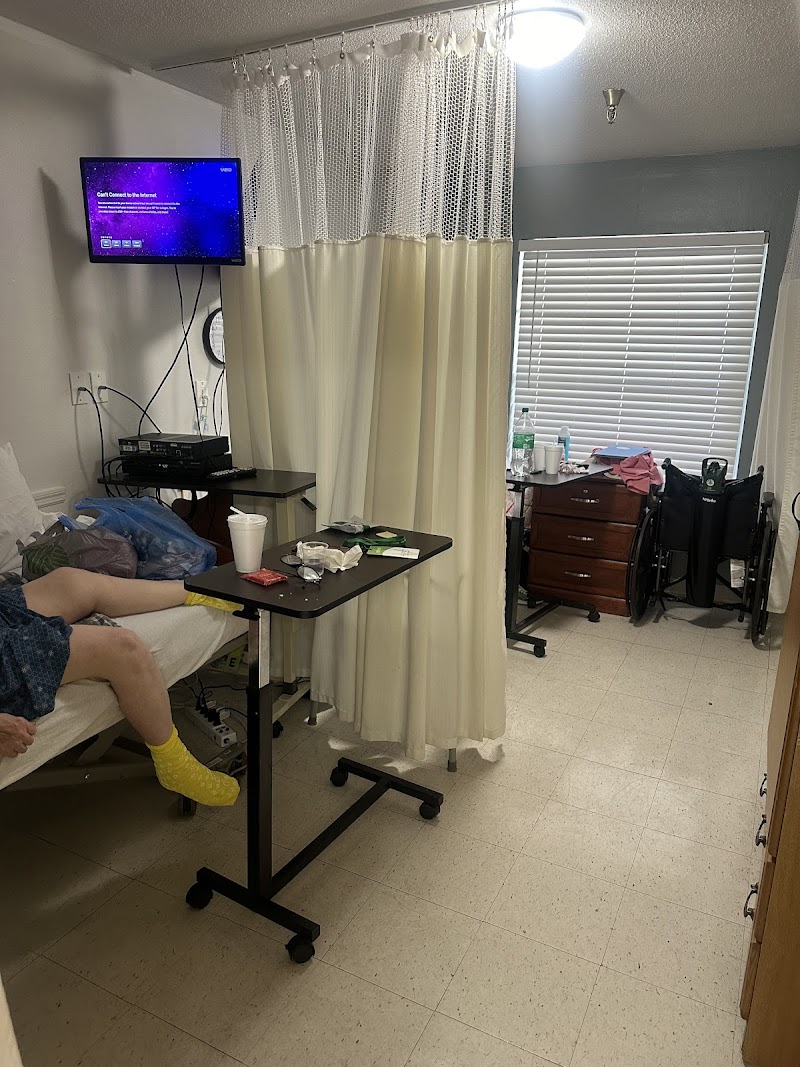
How is Aviata At South Daytona Staffed?

CMS rates AVIATA AT SOUTH DAYTONA's staffing level at 2 out of 5 stars, which is below average compared to other nursing homes. Staff turnover is 62%, which is 16 percentage points above the Florida average of 46%. High turnover can affect care consistency as new staff learn residents' individual needs. RN turnover specifically is 80%, which is notably high. RNs provide skilled clinical oversight, so turnover in this role can affect medical care quality.

What Have Inspectors Found at Aviata At South Daytona?

State health inspectors documented 15 deficiencies at AVIATA AT SOUTH DAYTONA during 2021 to 2025. These included: 15 with potential for harm.
Who Owns and Operates Aviata At South Daytona?

AVIATA AT SOUTH DAYTONA is owned by a for-profit company. For-profit facilities operate as businesses with obligations to shareholders or private owners. The facility is operated by AVIATA HEALTH GROUP, a chain that manages multiple nursing homes. With 65 certified beds and approximately 53 residents (about 82% occupancy), it is a smaller facility located in SOUTH DAYTONA, Florida.
How Does Aviata At South Daytona Compare to Other Florida Nursing Homes?

Compared to the 100 nursing homes in Florida, AVIATA AT SOUTH DAYTONA's overall rating (3 stars) is below the state average of 3.2, staff turnover (62%) is significantly higher than the state average of 46%, and health inspection rating (3 stars) is at the national benchmark.

What Should Families Ask When Visiting Aviata At South Daytona?

Based on this facility's data, families visiting should ask: "How do you ensure continuity of care given staff turnover, and what is your staff retention strategy?" "Can you walk me through typical staffing levels on day, evening, and night shifts?" "Can I visit during a mealtime to observe dining assistance and food quality?" "How do you handle medical emergencies, and what is your hospital transfer rate?" These questions are particularly relevant given the facility's high staff turnover rate and the below-average staffing rating.

Is Aviata At South Daytona Safe?

Based on CMS inspection data, AVIATA AT SOUTH DAYTONA has a clean safety record: no substantiated abuse findings (meaning no confirmed cases of resident harm), no Immediate Jeopardy citations (the most serious violation level indicating risk of serious injury or death), and is not on the Special Focus Facility watch list (a federal program monitoring the lowest-performing 1% of nursing homes). The facility has a 3-star overall rating and ranks #100 of 100 nursing homes in Florida. While no facility is perfect, families should still ask about staff-to-resident ratios and recent inspection results during their visit.

Do Nurses at Aviata At South Daytona Stick Around?

Staff turnover at AVIATA AT SOUTH DAYTONA is high. At 62%, the facility is 16 percentage points above the Florida average of 46%. Registered Nurse turnover is particularly concerning at 80%. RNs handle complex medical decisions and coordinate care — frequent RN changes can directly impact care quality. High turnover means new staff may not know residents' individual needs, medications, or preferences. It can also be disorienting for residents, especially those with dementia who rely on familiar faces. Families should ask: What is causing the turnover? What retention programs are in place? How do you ensure care continuity during staff transitions?

Was Aviata At South Daytona Ever Fined?

AVIATA AT SOUTH DAYTONA has been fined $25,723 across 8 penalty actions. This is below the Florida average of $33,336. While any fine indicates a compliance issue, fines under $50,000 are relatively common and typically reflect isolated problems that were subsequently corrected. Families should ask what specific issues led to these fines and confirm they've been resolved.

Is Aviata At South Daytona on Any Federal Watch List?

AVIATA AT SOUTH DAYTONA is not on any federal watch list. The most significant is the Special Focus Facility (SFF) program, which identifies the bottom 1% of nursing homes nationally based on persistent, serious quality problems. Not being on this list means the facility has avoided the pattern of deficiencies that triggers enhanced federal oversight. This is a positive indicator, though families should still review the facility's inspection history directly.