SUN TERRACE HEALTH CARE CENTER


105 TRINITY LAKES DR, SUN CITY CENTER, FL 33573 (813) 634-3324
For profit - Partnership 130 Beds CLEAR CHOICE HEALTHCARE Data: November 2025
Trust Grade
80/100
#286 of 690 in FL
Last Inspection: June 2024

Within standard 12-15 month inspection cycle. Federal law requires annual inspections.

Overview

Sun Terrace Health Care Center has a Trust Grade of B+, indicating it is recommended and performs above average compared to other facilities. It ranks #286 out of 690 in Florida, placing it in the top half, and #6 out of 28 in Hillsborough County, so only five local options are better. However, the facility's trend is worsening, with issues increasing from three in 2022 to four in 2024. Staffing is a strength, with a 4 out of 5 rating and a turnover rate of 39%, which is below the state average, suggesting staff stability. On the downside, there have been concerns regarding food safety and proper care for residents with medical devices, such as improperly stored food and inadequate dressing for a PICC line, indicating areas that need improvement. Overall, while there are strengths in staffing and a good reputation, families should be aware of the specific incidents that need addressing.

Trust Score
B+
80/100
In Florida
#286/690
Top 41%
Safety Record
Low Risk
No red flags
Inspections
Getting Worse
3 → 4 violations
Staff Stability
○ Average
39% turnover. Near Florida's 48% average. Typical for the industry.
Penalties
✓ Good
No fines on record. Clean compliance history, better than most Florida facilities.
Skilled Nurses
✓ Good
Each resident gets 44 minutes of Registered Nurse (RN) attention daily — more than average for Florida. RNs are trained to catch health problems early.
Violations
⚠ Watch
11 deficiencies on record. Higher than average. Multiple issues found across inspections.
★★★★☆
4.0
Overall Rating
★★★★☆
4.0
Staff Levels
★★★★☆
4.0
Care Quality
★★★★☆
4.0
Inspection Score
Stable
2022: 3 issues
2024: 4 issues

The Good

  • 4-Star Staffing Rating · Above-average nurse staffing levels
  • 4-Star Quality Measures · Strong clinical quality outcomes
  • Full Sprinkler Coverage · Fire safety systems throughout facility
  • No fines on record
  • Staff turnover below average (39%)

    9 points below Florida average of 48%

Facility shows strength in staffing levels, quality measures, fire safety.

The Bad

Staff Turnover: 39%

Near Florida avg (46%)

Typical for the industry

Chain: CLEAR CHOICE HEALTHCARE

Part of a multi-facility chain

Ask about local staffing decisions and management

The Ugly 11 deficiencies on record

Jun 2024 4 deficiencies
CONCERN (D)

Potential for Harm - no one hurt, but risky conditions existed

Quality of Care (Tag F0684)

Could have caused harm · This affected 1 resident

Based on observation, record review, and interview, the facility failed to ensure residents received care and services for PICC (Peripherally Inserted Central Catheter) access device in accordance wit...

Read full inspector narrative →
Based on observation, record review, and interview, the facility failed to ensure residents received care and services for PICC (Peripherally Inserted Central Catheter) access device in accordance with professional standards of practice for 1 of 3 reviewed residents with a PICC access device, Resident #104 (Photographic evidence obtained). Findings include: During an observation on 6/3/2024 at 9:52 AM, Resident #104's PICC line was visible in right upper arm. The transparent dressing over the gauze securing PICC and insertion site was not visible. The transparent dressing was peeling off on one side. The dressing was dated 5/28/2024. During an observation on 6/4/2024 at 10:22 AM, Resident #104's PICC line was visible in right upper arm. The transparent dressing over the gauze securing PICC and insertion site was not visible. The transparent dressing was peeling off on one side. The dressing was dated 5/28/2024. During an interview on 6/4/2024 at 10:22 AM, Resident #104 stated, I don't remember exactly when the dressing was changed, but they change the dressing about once a week. Review of Resident #104's physician order dated 5/14/2024 read, Dressing change every week and PRN [as needed]. RUA [Right Upper Arm] Measure length of line and circumference of arm upon admission/insertion then weekly. To measure length start from hub of PICC line to insertion site on forearm, to measure arm circumference measure at the insertion site around the forearm. Continue weekly until line discontinued. Document the length of line & circumference of arm upon admission/insertion below. PICC Line Length [blank] cm [centimeter]. Arm Circumference: [blank] cm, every day shift every 7 day(s) for IV [Intravenous] maintenance, Report s/s [sign and symptom] of infections/infiltration/dislodgement to MD [Medical Doctor]. Change dressing weekly and document measurement of line. During an interview on 6/4/2024 at 11:57 PM, Staff A, Licensed Practical Nurse (LPN), stated, The PICC dressing should have been changed when dressing was observed to be peeling away and within 24 hours since gauze was used under the transparent dressing. During an interview on 6/4/2024 at 11:59 PM, Staff B, Registered Nurse (RN), Unit Manager, stated, The PICC line dressing should have been changed within 24 hours. Gauze cannot be left under the transparent dressing we use bio patches [antibiotic patch] so we can see the site and monitor for signs and symptoms of infection. During an interview on 6/4/2024 at 3:58 PM, the Director of Nursing stated, Gauze should not be placed under the transparent dressing and if gauze is under the transparent dressing, then the dressing has to be changed again within 24 hours. We should not use gauze for our PICC line dressing. We should be using only a transparent dressing applied over a bio patch. Review of the facility policy and procedure titled Catheter Insertion and Care with the last approval date of 2/22/2024 read, Policy: Midline catheter dressings will be changed at specified intervals, or when needed, to prevent catheter-related infections associated with contaminated loosened or soiled catheter site dressings . General guidelines . 4. Use a sterile, transparent, semi-permeable membrane (TSM) or gauze dressing. If gauze dressing is used, cover the gauze with TSM dressing and change the dressing every 48 hours.
CONCERN (D)

Potential for Harm - no one hurt, but risky conditions existed

Medical Records (Tag F0842)

Could have caused harm · This affected 1 resident

Based on record review and interview, the facility failed to ensure medical records were complete and accurate for 1 of 3 reviewed residents with PICC (Peripherally Inserted Central Catheter) line, Re...

Read full inspector narrative →
Based on record review and interview, the facility failed to ensure medical records were complete and accurate for 1 of 3 reviewed residents with PICC (Peripherally Inserted Central Catheter) line, Resident #104. Findings include: Review of Resident #104's physician order dated 5/14/2024 read, Dressing change every week and PRN [as needed]. RUA [Right Upper Arm] Measure length of line and circumference of arm upon admission/insertion then weekly. To measure length start from hub of PICC line to insertion site on forearm, to measure arm circumference measure at the insertion site around the forearm. Continue weekly until line discontinued. Document the length of line & circumference of arm upon admission/insertion below. PICC Line Length [blank] cm [centimeter]. Arm Circumference: [blank] cm, every day shift every 7 day(s) for IV [Intravenous] maintenance, Report s/s [sign and symptom] of infections/infiltration/dislodgement to MD [Medical Doctor]. Change dressing weekly and document measurement of line. Review of Resident #104's Medication Administration Record (MAR) for May 2024 and June 2024 revealed no documentation for PICC line length or arm circumference for 5/14/2024, 5/21/2024, 5/28/2024 and 6/4/2024. During an interview on 6/5/2024 at 11:50 AM, the Director of Nursing stated, I've spoken with those nurses and the measurements were done but not documented. During an interview on 6/5/2024 at 12:00 PM, Staff C, Registered Nurse (RN), stated, I did the dressing changes on 5/14, 5/28 and 6/4 and measured the length of the line and the circumference. I did not document the measurements. During an interview on 6/5/2024 at 12:20 PM, Staff B, RN, stated, I did the dressing change on 5/21/2024 and measured the length of the line and the circumference, but did not document the measurements. During an interview on 6/5/2024 at 12:50 PM, the Director of Nursing stated, PICC lines are to be measured for length and circumference of insertion site are to be measured and documented on the TAR with weekly dressing changes. Review of the facility policy and procedure titled Catheter Insertion and Care with the last review date of 2/22/2024 read, Documentation: 1. The following information should be recorded in the resident's medical record . c. Any complications, interventions that were done.
CONCERN (D)

Potential for Harm - no one hurt, but risky conditions existed

Infection Control (Tag F0880)

Could have caused harm · This affected 1 resident

Based on observation, interview, and record review, the facility failed to ensure staff used proper PPE (Personal Protective Equipment) while providing high-contact care for 1 of 3 residents reviewed ...

Read full inspector narrative →
Based on observation, interview, and record review, the facility failed to ensure staff used proper PPE (Personal Protective Equipment) while providing high-contact care for 1 of 3 residents reviewed for transmission-based precautions, Resident #341, and failed to ensure staff performed hand hygiene between residents during meal tray delivery to help prevent the possible development and transmission of communicable disease and infections. Findings include: Review of Resident #341's physician order dated 6/4/2024 showed that it read, Enhanced Barrier Precautions for Dx [diagnosis] Wound every shift nurse to verify correct door signage and equipment present. During an observation on 6/5/2024 at 8:01 AM, Resident #341's door had a sign posted for Enhanced Barrier Precaution (EBP) use. Staff D, Certified Nursing Assistant (CNA), wore gloves, but no gown, opened Resident #341's shared bathroom door from inside the bathroom and pushed Resident #341 in her wheelchair into the resident's room. After exiting Resident #341's bathroom with the resident, Staff D doffed her gloves and threw them in the trashcan. Without performing hand hygiene or wearing a gown and gloves, Staff D proceeded to wheel the resident to her bedside, helped her adjust positions in the wheelchair and pulled the resident's bedside stand, containing the resident's breakfast tray, to the resident. Without performing hand hygiene or wearing a gown and gloves, Staff D removed the covers from the breakfast item containers and juice drinks and placed the resident's eating utensils on the plate containing the food items. Staff D exited the resident's room, proceeded down the hallway and performed hand hygiene in the dirty utility room sink. Review of the Enhanced Barrier Precautions Sign by the CDC (Centers for Disease Control and Prevention) visibly posted on Resident #341's room door showed that it read, STOP: Enhanced Barrier Precautions. Everyone Must: Clean their hands, including before entering and when leaving a room. Providers and Staff Must Also: Wear gloves and a gown for the following high-contact resident care activities: Dressing, Bathing/Showering, Transferring, Changing Linens, Providing Hygiene, Changing briefs or assisting with toileting, Device care or use: central line, urinary catheter, feeding tube, tracheostomy, Wound care: any skin opening requiring a dressing. During an observation from 8:01 AM through 8:17 AM, Staff D, CNA, returned from Resident #341's room to the breakfast tray cart and grabbed the breakfast tray for Resident #119 and entered the resident's room. Staff D placed the breakfast tray on the resident's bedside table, removed the food item and drink container covers, opened, and placed the condiments in the resident's coffee cup for Resident #119 and placed the resident's eating utensils onto the plate of food for the resident. Without performing hand hygiene, Staff D proceeded to Resident #339's bed in the same room and touched Resident #339 on the right shoulder, adjusted her top covers, and spoke to her before exiting the room. Without performing hand hygiene before or after direct contact with Resident #339, Staff D then returned to the breakfast tray cart and grabbed the breakfast tray for Resident #342. Staff D proceeded to Resident #342's room and assisted Resident #342 with setting up his tray, moved his food containers and drink containers to within reach of the resident, adjusted his bed height with the remote and moved his bedside table in front of the resident in bed. Staff D exited Resident #342's room without performing hand hygiene, proceeded to the breakfast tray cart, grabbed the dining tray for Resident #339 and entered the resident's room and placed the tray on Resident #339's bedside table. Staff D, without performing hand hygiene, donned a pair of gloves, adjusted Resident #339's pillow, assisted her with repositioning up in bed, elevated the head of the bed, adjusted the resident's covers, removed the lids from the food and drink containers and assisted the resident with her utensils. Without doffing her gloves, Staff D returned to Resident #119's bedside, picked up her tray cover off the floor and set it on Resident #119's bed. Staff D then doffed her gloves in the trashcan and exited the room. During an interview on 6/5/2024 at 8:18 AM, Staff D, CNA, stated, I didn't wash my hands before or after resident care or between moving between residents while delivering their meals or helping with tray set up and care. I should have sanitized my hands before and after each tray delivery before moving on to the next resident. For the resident on Enhanced Barrier Precautions [Resident #341], I should have worn a gown and gloves when I helped her in the bathroom. I only wore gloves. I did not wash my hands after I removed the gloves. I should wear a gown and gloves as soon as I enter the room for a resident on EBP, especially when helping them with toileting or personal care. During an interview on 6/5/2024 at 8:35 AM, the Director of Nursing (DON) stated, The staff should be performing hand hygiene before and after care with each resident, including tray delivery between every resident. The nursing staff should be wearing a gown and gloves when performing her [Resident #341] peri-care and toileting. Review of the facility policy and procedure titled Isolation- Precautions Overview; SNF & ALF with the last review date of 2/22/2024 showed that it read, Purpose: To provide a system of isolation precautions to prevent the transmission of infection. To prevent the transmission of infectious diseases. Procedure: 1. The guidelines contain two tiers of precautions, Standard Precautions and Transmission Based Precautions (Airborne, Enhanced Barrier, Droplet and Contact Precautions) . Enhanced Barrier Precautions- refer to an infection control intervention designed to reduce transmission of multidrug-resistant organisms that employs targeted gown and glove use during high contact resident activities. EBP are used in conjunction with standard precautions and expand the use of PPE to donning of gown and gloves during high-contact resident care activities that provide opportunities for transfer of MDROs [Multidrug Resistant Microorganisms] to staff hands and clothing. Review of the facility policy and procedure titled Infection Prevention- Hand Hygiene with the last review date of 2/22/2024 showed that it read, Overview: The facility will follow the Center for Disease Control (CDC) Guidelines for handwashing/hand hygiene. Handwashing/hand hygiene is the single most important procedure for preventing nosocomial infections. The facility requires personnel to wash hands thoroughly to remove dirt, organic material, and transient microorganisms. Handwashing is mandated between resident contact in an effort to prevent the spread of infection. Hands must be washed after the following, including, but not limited to . Contact with contaminated items or surfaces . Contact with resident . Removal of gloves.
CONCERN (E)

Potential for Harm - no one hurt, but risky conditions existed

Food Safety (Tag F0812)

Could have caused harm · This affected multiple residents

Based on observation, interview, and record review, the facility failed to ensure food was safely stored, covered, labeled, or discarded in the areas of the kitchen, walk-in cooler, walk-in freezer, r...

Read full inspector narrative →
Based on observation, interview, and record review, the facility failed to ensure food was safely stored, covered, labeled, or discarded in the areas of the kitchen, walk-in cooler, walk-in freezer, reach-in freezer, and stock room (Photographic evidence obtained). Findings include: During an observation while conducting a walk-through tour of the kitchen with the Dietary Manager (DM) on 6/3/2024 starting at 8:40 AM, there were one large, perforated pan with raw chicken pieces thawing that was not in running water or covered; one sheet pan with 20 packages containing meat products with no identifying label or date on the pan or packages; three cases of health shakes, each containing 72 individual cartons, that were completely thawed and were in a case that read, Keep Frozen; and three containers containing pesto with no date or identifying label in the walk-in cooler. There was one opened large clear bag of a breaded food product with no label or date on the product in the walk-in freezer. There was French fries left opened and exposed to the elements in the reach-in freezer. During an interview on 6/3/2024 at 8:45 AM, the DM stated that the raw chicken on the large pan should have been submerged under running water. The DM confirmed the large sheet pan with 20 packages of meat product found in the walk-in cooler was deli turkey and did not have a label or date. The DM stated that the cases of health shakes should have been stored in the freezer as marked and the amount pulled to thaw according to the prescribed health shakes needs. The DM confirmed that the pesto containers should have been labeled or kept in the original container and dated. The DM stated that the food product found open in the walk-in, and reach-in freezer should have been closed properly, labeled, and dated according to policy. During an observation while conducting the follow-up kitchen tour with the DM on 6/4/2024 at 6:30 AM, there were one large and uncovered clear container with white dry powdery content with no identifying label or date in the kitchen prep area; one pan with a white substance partially covered in plastic with part of the product exposed with no label or date, on the bottom shelf of the prep table; one opened container of dry instant mashed potatoes; one chemical spray bottle marked heavy duty degreaser on the shelf between the exposed pan and the opened potato container; approximately 190 glass plates and bowls that were not inverted or covered in a shelf in the kitchen; two opened bread packages with use-by dates of 5/26 and 6/02; five pans of food that had no identifying label in the reach-in refrigerator; and one large opened bag of sugar with no opened date. During an interview on 6/4/2024 at 6:45 AM, the DM confirmed that the observed products had no label or date and identified the large clear container with dry powdery content as food thickener. The DM identified the pan with a white substance that was partially exposed as flour. The DM stated that the chemical spray bottle should not have been stored near any food products. The DM stated the glass plates and bowls should have been stored inverted or covered and were not stored properly. The DM verified the bread product was outdated and should have been discarded on the labeled dates of 5/26 and 6/02. Review of the facility policy and procedure titled Thawing with no date read, Purpose: Foods are thawed properly to prevent food borne illness. Procedure . 2. Thaw foods according to one of the following choices as indicated . Submerged under running water. Review of the facility policy and procedure titled Food Storage Overview with no date read, Procedure . 5. Chemicals must be clearly labeled, kept in original containers when possible, and kept in a locked area away from food . 8. All stock is to be rotated . b. Food should be dated with date received as it is placed on the shelves . Refrigerator Storage: 12. Leftover food is stored in covered containers or wrapped securely. Each item is clearly labeled and dated before being refrigerated . 14. Refrigeration . e. Foods are to be covered, labeled, and dated including month, day, and year . Freezer Storage: 15. Frozen Foods . c. All foods should be covered, labeled, and dated including month, day, and year.
Mar 2022 3 deficiencies
CONCERN (D)

Potential for Harm - no one hurt, but risky conditions existed

Resident Rights (Tag F0550)

Could have caused harm · This affected 1 resident

**NOTE- TERMS IN BRACKETS HAVE BEEN EDITED TO PROTECT CONFIDENTIALITY** Based on observations and interviews, the facility failed to maintain an environment that promotes dignity and privacy for one (...

Read full inspector narrative →
**NOTE- TERMS IN BRACKETS HAVE BEEN EDITED TO PROTECT CONFIDENTIALITY** Based on observations and interviews, the facility failed to maintain an environment that promotes dignity and privacy for one (Resident #87) of thirty five sampled residents. Findings included: A review of Resident #87's Medical Record revealed that Resident #87 was admitted to the facility on [DATE] with diagnoses of generalized anxiety disorder and chronic obstructive pulmonary disease. A review of Resident #87's Minimum Data Set (MDS) Assessment revealed, under Section C - Cognitive Patterns, a Brief Interview for Mental Status (BIMS) score of 14, which indicated that Resident #87 was cognitively intact. An observation of medication administration for Resident #87 was conducted on 03/16/2022 at 09:10 AM with Staff G, Registered Nurse (RN). After pulling Resident #87's medications from the medication cart, Staff G, RN knocked on Resident #87's door and asked permission to enter the room. Resident #87 granted Staff G, RN to enter her room and administer the medications. During the observation, Resident #87 requested that Staff G, RN explain the medications that she was administering to her because there were certain medications that she did not want to take. While Staff G, RN was explaining the medications to Resident #87, Staff H, Licensed Practical Nurse (LPN) knocked on Resident #87's door and entered the room. Staff H, LPN did not ask permission to enter Resident #87's room and did not announce herself while entering Resident #87's room. While Staff H, LPN was speaking to Staff G, RN, Resident #87 asked Staff H, LPN what her purpose was for coming into the room. Staff H, LPN answered Resident #87 by stating I just needed some help. Resident #87 asked Staff H, LPN if there was anything that she needed from her. Staff H, LPN exited the room without answering Resident #87's question. After Staff H, LPN exited the room, Resident #87 became angry and stated that she felt disrespected that Staff H, LPN entered the room while Staff G, RN was explaining medications to her and that the conversation could have waited until she was done speaking to Staff G, RN. An interview was conducted on 03/16/2022 at 09:25 AM with Staff G, RN. Staff G, RN stated when entering a resident's room, staff should knock on the door and announce themselves before entering the resident's room. Staff G, RN also stated she did not hear Staff H, LPN knock before entering Resident #87's room and the conversation could have waited until she was done speaking with Resident #87. An interview was conducted on 03/16/2022 at 02:25 PM with Staff H, LPN. Staff H, LPN stated she entered Resident #87's room because she needed to speak with Staff G, RN about another resident and where to find an item for that resident. Staff H, LPN also stated she did knock on Resident #87's door before entering, but did not ask permission to enter the room. Staff H, LPN stated she was just in a hurry and she did not think about asking for permission to enter the room at the time. An interview was conducted on 03/17/2022 at 08:06 AM with the facility's Director of Nursing (DON). The DON stated multiple staff members enter resident's rooms throughout the day and should knock on the resident's door and ask the resident for permission to enter the room. Staff should respect the resident's dignity and privacy and should only enter the room if the resident states that it is ok. The DON stated that staff should address the resident and inform them if they needed to speak to another staff member in the middle of an interaction or care. A review of the facility policy titled Resident Dignity and Personal Property, with no effective date, revealed under the section titled Policy that the facility provides care for residents in a manner that respects and enhances each resident's dignity, individuality, and right to personal privacy. The policy also revealed under the section titled Procedure that staff should care for residents in a manner that maintains dignity and individuality such as knock on doors before entering; announce your presence, and include the resident in conversation.
CONCERN (D)

Potential for Harm - no one hurt, but risky conditions existed

Comprehensive Care Plan (Tag F0656)

Could have caused harm · This affected 1 resident

**NOTE- TERMS IN BRACKETS HAVE BEEN EDITED TO PROTECT CONFIDENTIALITY** 2. A record review of Resident #25's care plan revealed the resident sustained a skin tear on the left lower leg, dated for 1/27...

Read full inspector narrative →
**NOTE- TERMS IN BRACKETS HAVE BEEN EDITED TO PROTECT CONFIDENTIALITY** 2. A record review of Resident #25's care plan revealed the resident sustained a skin tear on the left lower leg, dated for 1/27/22. Resident #25's Progress Notes, dated 2/9/22 at 10:23 a.m. revealed . the nursing staff was rounding on the unit the CNA notified the nurse that during transfer of the resident the resident obtained a skin tear to the right lower leg The area was assessed by the nurse and a skin tear measuring 5x3cm [centimeters] was noticed . Resident #25's admission record revealed medical diagnoses of Parkinson's disease, unspecified dementia without behavioral disturbance, muscle weakness, and congestive heart failure. The resident's minimum data set (MDS), dated [DATE], revealed the resident has impaired cognition and requires extensive assistance with two staff members for assistance in bed mobility, and has total dependence on staff for transfers. Resident #25's care plan revealed a focus area of The resident has actual impairment to skin integrity of the . Hx [history] of skin impairments r/t [related to] fragile skin . This focus area was initiated on 1/04/2021 with interventions of applying bilateral lower extremity geri sleeves for protection of paper-thin skin. This intervention was implemented on 01/27/2022. Resident #25's order summary report revealed an active physician order, ordered on 02/10/2022 for Patient to have BLU [Bilateral Lower] BUE [Bilateral Upper] geri-sleeves. Apply in the AM and remove in the PM. every day shift Apply. An observation on 3/14/22 at 10:14 am. of Resident #25 revealed the resident lying in bed with skin discoloration on the arms. No Geri-sleeves were observed on the resident's arms. A follow-up observation of the resident on 03/15/22 at 10:59 a.m. revealed the resident in the same bed position without Geri-sleeves placed on the arms. An interview on 03/15/22 at 1:37 p.m. with Staff B, Certified Nursing Assistance (CNA) revealed the resident has very fragile skin, so it is important to be gentle during care to prevent skin tears and alterations. An observation with Staff A, CNA of the resident revealed the resident lying in bed without bilateral upper or lower extremity Geri-sleeves in place. Staff A stated placing Geri-sleeves onto a resident is a nursing duty, not a CNA duty. An interview on 03/15/22 at 1:44 p.m. with Staff C, Licensed Practical Nurse (LPN) confirmed it was a nursing responsibility to don a resident's Geri-sleeves. Staff B confirmed the resident required Geri-sleeves for both the arms and legs, but the physician order does not specify what time of the shift the sleeves should be donned. Staff B stated she was going to don the resident's Geri-sleeves before the end of her shift. The staff member's shift ended at 3p.m. An online medical record task review for the resident with Staff B, LPN confirmed and revealed the start of the task was 7 a.m. and ended at 3 p.m. An interview with the Director of Nursing (DON) on 03/15/22 at 2:06 p.m. confirmed a CNA can place Geri-sleeves onto a resident. A follow-up interview at 2:34 p.m. on 03/15/22 with the DON revealed the physician order for the Geri-sleeves does not specify a timeframe because they are meant to be donned when care is being provided. Resident #25 is super high risk for skin tears. Therefore, the Geri-sleeves are meant to be donned during care, such as when a Hoyer lift is used, to prevent skin tears and breakage. A follow-up interview on 03/16/22 at 09:55 a.m. with Staff B, LPN confirmed she was the nurse on duty the day the resident sustained a skin tear during a Hoyer lift transfer. The skin tear occurred on the resident's leg. An interview on 03/16/22 at 10:13 a.m. with Staff D, CNA confirmed her presence during the Hoyer lift transfer in which the resident sustained a lower leg skin tear. Staff C confirmed knowledge that a CNA can don a resident's Geri-sleeves and stated staff must be very careful when providing care due to the resident being at high-risk for skin tears. Staff C stated herself and another CNA placed the resident into the Hoyer lift sling and got her into the chair. They then noticed blood on the floor and looked around to see where it was coming from. That is when they noticed a skin tear on the resident's leg, so they reported it to the nurse. During this interview, Staff D stated the resident only had Geri-sleeves for arm protection, but not for the legs/lower extremities. Therefore, during this care transfer event, nothing was donned to the resident's legs to prevent skin alteration. Further review of Resident #25's care plan revealed a focus area for The resident has potential for impaired skin integrity, initiated on 2/07/2022. Interventions for this focus area included placing Geri-sleeves to the bilateral lower extremities, initiated on 6/24/2021. An interview with the Director of Nursing (DON) on 03/17/22 at 9:02 a.m. revealed CNAs are allowed to don a resident's Geri-sleeve. the resident sustained a skin tear on the lower leg during a Hoyer lift transfer. The Hoyer lift slings compress the person and move against the skin, so for someone like Resident #25 with very fragile skin, could cause a sheering effect. The Geri-sleeves act as a extra layer of skin to assist in skin protection and skin integrity. The DON confirmed the goal is to implement a resident's care plan. 3. A policy review of Baseline, Resident Centered Comprehensive Care Plans, & Care Plan Summary, copyrighted in 2018, revealed the purpose of the policy is Completion and implementation of the baseline care plan within 48 hours of a resident's admission is intended to promote continuality of care and communication among nursing home staff, increase resident safety, and safeguard against adverse events that are most likely to occur . Included within the procedures is . Comprehensive Care Plans must be developed within 7 days after completion of the comprehensive assessment . and review and revise the care plan after each assessment . If the comprehensive assessment and comprehensive care plan identified a change in the resident's goals, or physical, mental, or psychosocial functioning, which was otherwise not identified in the baseline care plan, those changes must be incorporated into an updated summary provided to the resident and his or her representative, if applicable. Based on observation, interview, and record review the facility failed to ensure the care plan was implemented related to preventing skin impairment for one (Resident #25) of three in-house acquired pressure injury residents, and 2. facility did not ensure to implement the plan of care for Resident # 37 regarding placement of an ankle brace and podus boots. Findings included: 1. Medical record review for Resident #37 revealed that the resident was admitted to the facility on [DATE] with a re-admission date of 1/7/22. Resident #37 had multiple diagnoses not limited to paraplegia, spinal stenosis lumbar region, difficulty walking and generalized weakness. Resident #37 is alert and oriented with a BIMS (Brief Interview for Mental Status) of 14 indicating cognitively intact. A review of Resident #37's plan of care revealed that (Effective date 3/04/22) the resident was care planned for ADL (activities of daily living) self-care performance deficit related to chronic back pain, post laminectomy, impaired ROM (range of motion). Intervention: Bilateral podus boots trial by therapy. Resident utilizes a splint (Bionic Stir up Brace) for right ankle to be worn as tolerated with sneaker. Continual trial being completed with therapy. Once trial is completed nursing staff to complete. During an interview with the resident on 03/15/22 at 10:29 AM Resident #37 reported that she hasn't had her brace for her right ankle that therapy would apply, or a podus boot. On 03/15/22 at 1:05 PM an additional interview with Resident #37 was conducted in her room as she was having lunch. She just had taken off her ankle brace because it was bothering her. She reported that staff does not put on her brace. Usually, staff member (F) will put her ankle brace on, but she hasn't been in. On 03/16/22 09:52 AM resident was observed in bed doing a cross word puzzle, no brace or podus boot on. On 03/17/22 at 9:35 AM Resident #37 reported that her podus boots were on top of the storage bin along with her ankle brace. The resident reported that her ankle brace bothered her and needs high socks, so the brace doesn't rub against her skin. On 03/17/22 09:40 AM an interview was conducted with the Director of Nursing (DON) she was not aware the resident was not wearing podus boots throughout the survey, she stated that she would look into the matter. The DON reported back on 03/17/22 at 10:31 AM, Resident #37's ankle splint should have been applied even though it was on a trial basis. Interview with Staff member (F) was conducted on 03/17/22 at 10:43 AM regarding the ankle brace and podus boots. She reported that when she is here, she will place the ankle brace on the resident which she wears 4-5 hours. Staff member (F) was asked how about when she is not in the building since, she had been on vacation for the last week. She reports that another therapist would place the brace on the resident. She was asked if she could provide documentation that the brace has been placed on the resident since the order of 3/4/22. She was unable to provide documentation that the brace had been placed on the resident or that the resident had refused.
CONCERN (D)

Potential for Harm - no one hurt, but risky conditions existed

Pressure Ulcer Prevention (Tag F0686)

Could have caused harm · This affected 1 resident

**NOTE- TERMS IN BRACKETS HAVE BEEN EDITED TO PROTECT CONFIDENTIALITY** Based on observation, interview, and record review the facility failed to implement pressure injury prevention measures for one ...

Read full inspector narrative →
**NOTE- TERMS IN BRACKETS HAVE BEEN EDITED TO PROTECT CONFIDENTIALITY** Based on observation, interview, and record review the facility failed to implement pressure injury prevention measures for one (Resident #25) of three residents sampled for in-house acquired pressure ulcers. Findings included: Resident #25's admission record revealed medical diagnoses of Parkinson's disease, unspecified dementia without behavioral disturbance, muscle weakness, and congestive heart failure. The resident's minimum data set (MDS), dated [DATE], revealed the resident has impaired cognition and requires extensive assistance with two staff members for assistance in bed mobility, and has total dependence on staff for transfers. Further review of the resident's MDS revealed the resident is at risk for developing pressure ulcers/injuries. The resident has one or more unhealed pressure ulcers/injuries. Resident #25's care plan revealed a focus area for The resident has potential for impaired skin integrity, initiated on 2/07/2022, with interventions of encouraging patient to float heels whenever in the bed, initiated on 5/28/2021 Resident #25's order summary report revealed active physician orders for Skin prep to bilateral heels every shift for DTI [deep tissue injury] right heel, ordered on 05/28/2021, and Float heels when in bed on 2 pillows every shift for DTI right heel, ordered on 05/28/2021. Resident #25's order summary report revealed an active physician order revealed active physician orders for Skin prep to bilateral heels every shift for DTI right heel, ordered on 05/28/2021, and Float heels when in bed on 2 pillows every shift for DTI right heel, ordered on 05/28/2021. An observation on 3/14/22 at 10:14 am. of Resident #25 revealed the resident lying in bed without pillows in place to float the resident's heels. A follow-up observation of the resident on 03/15/22 at 10:59 a.m. revealed the resident in the same bed position without pillows in place to float the resident's heels. An interview on 03/15/22 at 1:37 p.m. with Staff B, Certified Nursing Assistance (CNA) revealed the resident has very fragile skin, so it is important to be gentle during care to prevent skin tears and alterations. A pillow is placed behind her arm and hip to assist with position. The resident is currently being treated for a pressure injury on the back of her leg on her thigh I think and on her heel. Staff B confirmed the resident did not have pillows underneath her feet. Staff B stated the resident had the pillows underneath her heels at night and so they were removed to give her a break from the elevation. An observation on 03/15/22 at 1:44 p.m. with Staff C, Licensed Practical Nurse (LPN) around Resident #25's room revealed no pillows were available to place underneath the resident's feet/heels. Staff C stated the purpose of floating a resident's heels is to prevent and/or assist in preventing the development of a deep tissue injury/pressure ulcer. An interview on 3/15/22 at 2:06 p.m. with the Director of Nursing (DON) confirmed the resident is at risk for pressure ulcers. The DON confirmed that when a resident is in bed, the expectation would be for the heels to be floated. The DON confirmed the expectation is for pillows to be underneath the resident's heels to float them to reduce the risk of developing a pressure ulcer. A policy review of Skin Integrity, dated 09/2017, revealed the purpose is To provide consistent assessment and evaluation, monitoring, documentation, and implementation of therapeutic interventions to heal and maintain skin integrity, unless clinically unavoidable. To promote the prevention of pressure ulcer/injury development; To promote the healing of existing pressure ulcers/injury (including prevention of infection to the extent possible); and to prevent development of additional pressure ulcer/injury. Underneath the section Assessment/Evaluation, revealed A resident care plan will be created to assist with maintaining intact skin integrity, prevention of pressure ulcers of healing of any non-intact skin. Care plan will include measurable goals and appropriate interventions . treatment orders will be implemented per Physician's orders.
Jan 2021 4 deficiencies
CONCERN (D)

Potential for Harm - no one hurt, but risky conditions existed

Comprehensive Care Plan (Tag F0656)

Could have caused harm · This affected 1 resident

**NOTE- TERMS IN BRACKETS HAVE BEEN EDITED TO PROTECT CONFIDENTIALITY** Based on observations, staff interviews, and medical record review the facility failed to ensure care plan interventions were im...

Read full inspector narrative →
**NOTE- TERMS IN BRACKETS HAVE BEEN EDITED TO PROTECT CONFIDENTIALITY** Based on observations, staff interviews, and medical record review the facility failed to ensure care plan interventions were implemented for one (#98) of 54 sampled residents as evidenced by Resident #98 not wearing an abductor wedge pillow between her legs as ordered and care planned. Findings Included: A record review for Resident #98 revealed admission diagnoses to include fracture of unspecified part of neck of Left Femur, subsequent encounter for closed fracture with routine healing, weakness, and difficulty walking. A review of active physician orders dated 12/05/2020 revealed an order to apply abductor wedge between legs when in wheelchair for LE (lower extremity) positioning every shift and dated 12/02/2020 Hip Range of Motion (ROM) precautions every shift. Record review of the admission Minimum data Set (MDS) dated [DATE] revealed a Brief Interview for Mental Status (BIMS) Score of 14, indicating the resident was cognitively intact. Review of the Care Plan for Resident #98 initiated on 12/4/20 revealed a focus area for alteration in musculoskeletal status related to left (L) hip replacement with a goal of remaining free of injuries or complications, and interventions to include hip abductor pillow as ordered. On 01/05/2021 at 09:46 a.m., Resident #98 was observed sitting in a wheelchair and not wearing the abductor wedge pillow between her legs. During an observation on 01/06/2021 at 09:08 a.m., Resident #98 was observed again to not be wearing the abductor wedge pillow between her legs. During an interview with the resident she stated that she was concerned that the abductor wedge was not being put on her. She stated that she was always supposed to be wearing it when up in the wheelchair. Resident #98 further indicated that the Certified Nursing Assistant (CNA) usually puts it on when she assisted her to the wheelchair in the morning, and that she did not want to go back to the hospital with her left hip joint popped out of socket because she crossed her legs while not wearing it. A review of the Medication Administration Record (MAR) for Resident #98 revealed that every shift documentation was to be made on application of the adductor wedge between legs when the resident was in the wheelchair for all shifts, as was the Hip abductor pillow and Hip ROM precautions every shift. On 01/05/2021 evening and night shift had not documented the abductor wedge usage while in the wheelchair, and on 1/06/2021 to 01/07/2021 no documentation was made for all shifts for application of the abductor wedge between legs when in the wheelchair for LE positioning. An interview was conducted on 01/08/2021 at 08:10 a.m. with the Director of Rehabilitation regarding observations of Resident #98 and her concern that she was not wearing the physician ordered abductor wedge pillow between her legs while seated in a wheelchair. The Director of Rehabilitation indicated that if it was a physician order, her expectation was that Resident #98 should be wearing it. The Director of Rehabilitation confirmed the physician order in the Clinical Medical Record, and also indicated that the abductor wedge was typically labeled just abductor pillow on the care plan, and not separated between abductor wedge pillow and abductor pillow, which the latter was applied, while the resident was in bed. An interview was conducted on 01/08/2021 at 09:09 a.m., with Staff M, Licensed Practical Nurse (LPN). Staff M, (LPN) was asked who places the abductor wedge between the resident's legs when in the wheelchair for LE positioning. He indicated that he puts it on the resident and that she has never refused to wear it in all the time he has been the resident's nurse. He was further asked why the resident was not wearing it on 01/06/2020, and also why there was no documentation for that day in the MAR for the device being applied or not applied. Staff M, (LPN) was not able to provide an answer. During an interview with the Director of Nursing (DON) on 01/08/2021 at 9:18 a.m., she was informed of observations made of Resident #98. The DON reported that she was made aware of the situation from the Director of Rehabilitation. The DON stated that the CNA should be putting it on and the nurse should visually inspect that it was on since they are responsible for charting on it, or at lease verify it is place.
CONCERN (D)

Potential for Harm - no one hurt, but risky conditions existed

Quality of Care (Tag F0684)

Could have caused harm · This affected 1 resident

**NOTE- TERMS IN BRACKETS HAVE BEEN EDITED TO PROTECT CONFIDENTIALITY** Based on record review, observation, and interviews the facility did not ensure appropriate physician's orders were obtained and...

Read full inspector narrative →
**NOTE- TERMS IN BRACKETS HAVE BEEN EDITED TO PROTECT CONFIDENTIALITY** Based on record review, observation, and interviews the facility did not ensure appropriate physician's orders were obtained and implemented for nephrostomy tubes for one (#226) of 54 sampled residents. Findings included: A review of Resident #226's clinical record revealed she was admitted to the facility on [DATE] with a diagnosis of iron deficiency anemia secondary to blood loss, according to the face sheet in the admission record. Review of the admission summary dated [DATE] reflected a left iliac crest (rear) nephrostomy tube site and right iliac crest (rear) nephrostomy tube site. The 12/19/20 skin check indicated 2. other nephrostomy. Review of the care plan dated 12/22/20 and revised on 12/30/20 showed a Focus area of nephrostomy tubes. The interventions included change tubes as ordered and monitor tubes as ordered. A review of the Minimum Data Set (MDS) assessment, section H, bladder and bowel, dated 1/8/21 reflected an indwelling catheter (including Suprapubic catheter and nephrostomy tube). A review of the physician assistant progress note dated 12/28/20 reflected a hospitalization in October 2020 for AKI (acute kidney injury, large pelvic mass causing bilateral hydronephrosis s/p (status post) bilateral nephrostomy tube placement. A review of the physician's orders in the medical record reflected the following: 12/21/20 type of ostomy care every shift as needed for colostomy 12/21/20 type of ostomy care every shift as needed for ostomy care 12/21/20 change urostomy wafer and pouch every day using (wafer size and type), pouch type (closed or drainable). May use barrier paste/powder and skin prep as needed to ensure adhesion of wafer as needed for colostomy care. Change prn (as needed) for non-adhering wafer. 12/21/20 change ostomy wafer and pouch every day using (wafer size and type), pouch type (closed or drainable). May use barrier paste/powder and skin prep as needed to ensure adhesion of wafer every day shift for ostomy care. A review of the treatment administration record (TAR) for the months of December 2020 and January 2021 reflected the following: The ostomy wafer and pouch treatment for ostomy care were all signed beginning 12/22/20, three days after the resident was admitted , and the ostomy care every shift had also been signed beginning 12/21/20, two days after the resident was admitted . The colostomy care was not signed. On 1/08/21 at 10:54 AM, an interview was conducted with Staff J, LPN (licensed practical nurse). Staff J, LPN said Resident #226 has bilateral nephrostomy tubes. The nephrostomy tube care was Q (every) shift. The surveyor asked what type of care was provided to the nephrostomy tubes. Staff J, LPN said she empties it and checks the site daily. Staff J, LPN said she was not sure about the dressing change, she would have to look. She thinks it was daily. Staff J, LPN said she was going in right now to assess the nephrostomy tubes because she heard the stitches were pulling. Staff J, said she wasn't sure when the dressing changes were; it may be on her shift. She just does what was ordered and checks to make sure they were taken care of. On 1/08/21 at 11:05 AM, an observation was conducted with Staff J, LPN and Resident #226. Resident #226 was in her bed with the head of bed elevated to about seventy-five degrees. Resident #226 permitted the nurse to check the nephrostomy tubes. The left flank nephrostomy tube had an undated dressing that was wadded up around the tube near the insertion site with dried reddish-brown moist drainage. The site was slightly red at the insertion site and slightly macerated with sutures holding the tube in place. The right nephrostomy tube adhesive dressing was intact but full of bloody yellowish-clear drainage. The site was macerated and red. The dressing was also undated. Neither dressing was a wafer with pouch as indicated in the physician orders. Staff J, LPN said sometimes the doctors don't want the dressings changed until they see them for the follow up visit. She would have to check and see what the order was. In a follow up interview on 1/08/21 at 11:27 AM with Staff J, LPN she confirmed the dressings were in bad condition. She said she told the unit manager and stated that the order was not appropriate either, so she changed the dressings and the unit manager changed the order. She said she was surprised the dressings were in such bad condition, and she will have to check things herself instead of assuming they were ok. On 1/08/21 at 11:56 AM, an interview was conducted with Staff I, LPN UM (unit manager). She said Staff N, RN (registered nurse) was the unit manager on the hall for Resident #226. Staff I, LPN UM said the nurse (Staff J, LPN) told her about the dressings and asked if she (Staff I, LPN UM) knew when they were last changed. I said I did not. Staff I, LPN UM reported that on admission the UM does the admission, the chart check, the medication, puts the treatment in place, or the UM can call the doctor and get the treatments in place. The admitting nurse does the admission assessment. We do have an admitting nurse who does some of the admission assessments, but usually it was done by the floor nurse. On 1/08/21 at 12:06 PM, an interview was conducted with Staff N, RN UM for Resident #226. Staff N, RN said one of the management team and the unit managers audits the charts. Whoever discovers the area would notify the physician and get treatment orders. Staff N, RN UM confirmed Resident #226 had nephrostomy tubes. Staff N, RN UM said that treatment for nephrostomy tubes would be to cleanse with normal saline, check for signs and symptoms of infection, and check the tube. The treatment was a split dressing and secure with paper tape. The surveyor asked if the treatment that had been ordered was appropriate. Staff N, RN UM said, Not typically, we would use that on an ostomy or urostomy. Staff N, RN UM also said it was brought to his attention that Resident #226 didn't have a nephrostomy treatment, so he notified the physician and put the treatment order in today. The surveyor asked about the treatments that were signed indicting they were being done and Staff N, RN UM said he would have to look into it. On 1/08/21 at 12:32 PM, an interview was conducted with the DON (director of nursing) and NHA (nursing home administrator). The DON said Staff I, LPN UM reported Resident #226 had a dressing on and the surveyor didn't see an order for a dressing. Staff N, RN UM said the surveyor asked him who does the reviews. The DON said she thinks there was a batch order and nephrostomy was not an option, so they didn't change it. The DON confirmed the treatment was not an appropriate nephrostomy dressing order. She confirmed the treatments had been signed for a colostomy and urostomy. When they did her skin check they should have realized she had nephrostomy tubes and put in correct orders for flushing and dressing. On 1/08/21 at 1:43 PM, another interview was conducted with the DON. She said Resident #226 could get an incisional site infection if they don't change the dressings regularly. The DON also said she spoke to the nurses and they said they have been changing the dressings everyday until yesterday when the resident refused.
CONCERN (D)

Potential for Harm - no one hurt, but risky conditions existed

Incontinence Care (Tag F0690)

Could have caused harm · This affected 1 resident

Based on observation, interview and Centers for Disease Control and Prevention (CDC) guidelines, the facility failed to ensure an indwelling urinary catheter bag and tubing was maintained off the floo...

Read full inspector narrative →
Based on observation, interview and Centers for Disease Control and Prevention (CDC) guidelines, the facility failed to ensure an indwelling urinary catheter bag and tubing was maintained off the floor to prevent potential infection for one resident #(243) during two of two observations, of 5 residents with catheters. Findings included: On 1/05/21 at 4:30 PM, an observation of Resident #243 revealed he was lying in bed with the urinary catheter bag and tubing on the left side of the bed hanging from the bed frame and resting on the floor. The catheter bag was completely on the floor. On 1/07/21 at 8:44 AM, another observation was conducted. Resident #243 was in his bed watching TV. The bed was in the low position near the floor. The catheter bag was sitting completely on the floor near the head of the bed on the resident's left side facing the door. The tubing was also on the floor. On 1/07/21 at 8:46 AM, an interview and observation was conducted with Staff I, LPN UM. Staff I, LPN UM confirmed the catheter bag and tubing were on the floor. A review of Resident #243's clinical record revealed a diagnosis of obstructive and reflux uropathy according to the face sheet in the admission record. On 1/08/21 at 8:55 AM, an interview was conducted with the DON. She said the catheter should not touch the floor. The following information was found at https://www.cdc.gov/infectioncontrol/guidelines/cauti/index.html: Catheter-Associated Urinary Tract Infections (CAUTI) Guideline for Prevention of Catheter-Associated Urinary Tract Infections (2009) III. Proper Techniques for Urinary Catheter Maintenance III.B.2. Keep the collecting bag below the level of the bladder at all times. Do not rest the bag on the floor.
CONCERN (D)

Potential for Harm - no one hurt, but risky conditions existed

Laboratory Services (Tag F0770)

Could have caused harm · This affected 1 resident

Based on interviews and record review the facility failed to ensure laboratory services were provided in a timely manner in accordance with physician orders for one (#112) of 54 sampled residents rela...

Read full inspector narrative →
Based on interviews and record review the facility failed to ensure laboratory services were provided in a timely manner in accordance with physician orders for one (#112) of 54 sampled residents related to a lipid panel. Findings included: A medical record review was conducted for Resident #112 to ensure that the Medication Regimen Review recommendations were being followed. A review of Resident #112's admission record revealed a diagnosis of hyperlipidemia. A review of the Pharmacist Medication Regimen Review for the last three months revealed that on 11/22/2020 a recommendation was made for a lipid panel now and every 12 months to monitor the medication of Atorvastain. There was a physician signature on the form acknowledging the pharmacist recommendation and a signature by Staff C, Registered Nurse (RN) Unit Manager (UM) that documented noted and the date of 11/30/20. Further medical record review revealed a physician's order was written in the computerized system on 11/30/2020 for a lipid panel in the a.m. and then yearly per pharmacy recommendation. A review of the lab records, however, revealed that the order was not followed through on and no lipid panel had been conducted. An interview was conducted with Staff C, RN UM on 1/7/2021 who confirmed that the order had not been conducted for the lipid panel until the surveyor asked for the resident's Medication Administration Record yesterday, 1/6/2021. On 01/08/21 at 12:19 P.M., an additional interview was conducted with the DON (Director of Nursing) in regard to following a physician's order. The DON confirmed that she was not aware that the order for the labs had not been followed through on until the surveyor had requested the documentation. Facility then had a STAT order for the labs on 1/6/2021. The DON reports that there is no facility policy for following physicians' orders as this was a standard of care. A telephone call was made to the facility Pharmacist on 1/8/2021 at 1:49 p.m. He was asked if he had expectations of the facility following recommendations. The pharmacist stated that once the physician reviews the recommendation and approves it, the facility must follow through.
Understanding Severity Codes (click to expand)
Life-Threatening (Immediate Jeopardy)
J - Isolated K - Pattern L - Widespread
Actual Harm
G - Isolated H - Pattern I - Widespread
Potential for Harm
D - Isolated E - Pattern F - Widespread
No Harm (Minor)
A - Isolated B - Pattern C - Widespread

Questions to Ask on Your Visit

  • "Can I speak with families of current residents?"
  • "What's your RN coverage like on weekends and overnight?"

Our Honest Assessment

Strengths
  • • Grade B+ (80/100). Above average facility, better than most options in Florida.
  • • No major safety red flags. No abuse findings, life-threatening violations, or SFF status.
  • • No fines on record. Clean compliance history, better than most Florida facilities.
  • • 39% turnover. Below Florida's 48% average. Good staff retention means consistent care.
Concerns
  • • 11 deficiencies on record. Higher than average. Multiple issues found across inspections.
Bottom line: Generally positive indicators. Standard due diligence and a personal visit recommended.

About This Facility

What is Sun Terrace Health's CMS Rating?

CMS assigns SUN TERRACE HEALTH CARE CENTER an overall rating of 4 out of 5 stars, which is considered above average nationally. Within Florida, this rating places the facility higher than 99% of the state's 100 nursing homes. This rating reflects solid performance across the metrics CMS uses to evaluate nursing home quality.

How is Sun Terrace Health Staffed?

CMS rates SUN TERRACE HEALTH CARE CENTER's staffing level at 4 out of 5 stars, which is above average compared to other nursing homes. Staff turnover is 39%, compared to the Florida average of 46%. This relatively stable workforce can support continuity of care.

What Have Inspectors Found at Sun Terrace Health?

State health inspectors documented 11 deficiencies at SUN TERRACE HEALTH CARE CENTER during 2021 to 2024. These included: 11 with potential for harm.
Who Owns and Operates Sun Terrace Health?

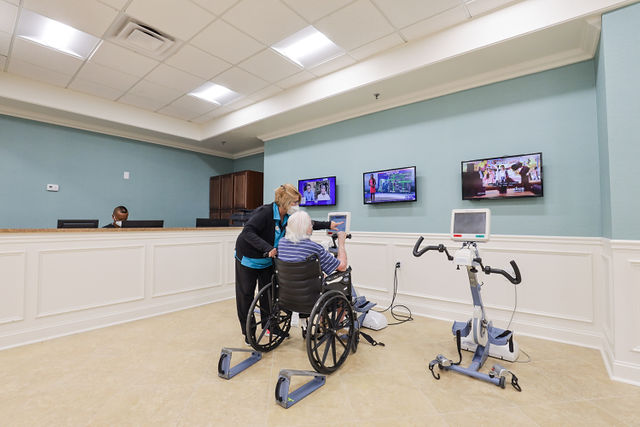
SUN TERRACE HEALTH CARE CENTER is owned by a for-profit company. For-profit facilities operate as businesses with obligations to shareholders or private owners. The facility is operated by CLEAR CHOICE HEALTHCARE, a chain that manages multiple nursing homes. With 130 certified beds and approximately 125 residents (about 96% occupancy), it is a mid-sized facility located in SUN CITY CENTER, Florida.

How Does Sun Terrace Health Compare to Other Florida Nursing Homes?

Compared to the 100 nursing homes in Florida, SUN TERRACE HEALTH CARE CENTER's overall rating (4 stars) is above the state average of 3.2, staff turnover (39%) is near the state average of 46%, and health inspection rating (4 stars) is above the national benchmark.

What Should Families Ask When Visiting Sun Terrace Health?

Based on this facility's data, families visiting should ask: "Can I visit during a mealtime to observe dining assistance and food quality?" "How do you handle medical emergencies, and what is your hospital transfer rate?" "Can I speak with family members of current residents about their experience?"

Is Sun Terrace Health Safe?

Based on CMS inspection data, SUN TERRACE HEALTH CARE CENTER has a clean safety record: no substantiated abuse findings (meaning no confirmed cases of resident harm), no Immediate Jeopardy citations (the most serious violation level indicating risk of serious injury or death), and is not on the Special Focus Facility watch list (a federal program monitoring the lowest-performing 1% of nursing homes). The facility has a 4-star overall rating and ranks #1 of 100 nursing homes in Florida. While no facility is perfect, families should still ask about staff-to-resident ratios and recent inspection results during their visit.

Do Nurses at Sun Terrace Health Stick Around?

SUN TERRACE HEALTH CARE CENTER has a staff turnover rate of 39%, which is about average for Florida nursing homes (state average: 46%). Moderate turnover is common in nursing homes, but families should still ask about staff tenure and how the facility maintains care continuity when employees leave.

Was Sun Terrace Health Ever Fined?

SUN TERRACE HEALTH CARE CENTER has no federal fines on record. CMS issues fines when nursing homes fail to meet care standards or don't correct problems found during inspections. The absence of fines suggests the facility has either maintained compliance or corrected any issues before penalties were assessed. This is a positive indicator, though families should still review recent inspection reports for the full picture.

Is Sun Terrace Health on Any Federal Watch List?

SUN TERRACE HEALTH CARE CENTER is not on any federal watch list. The most significant is the Special Focus Facility (SFF) program, which identifies the bottom 1% of nursing homes nationally based on persistent, serious quality problems. Not being on this list means the facility has avoided the pattern of deficiencies that triggers enhanced federal oversight. This is a positive indicator, though families should still review the facility's inspection history directly.