SOLARIS HEALTHCARE WATERMAN

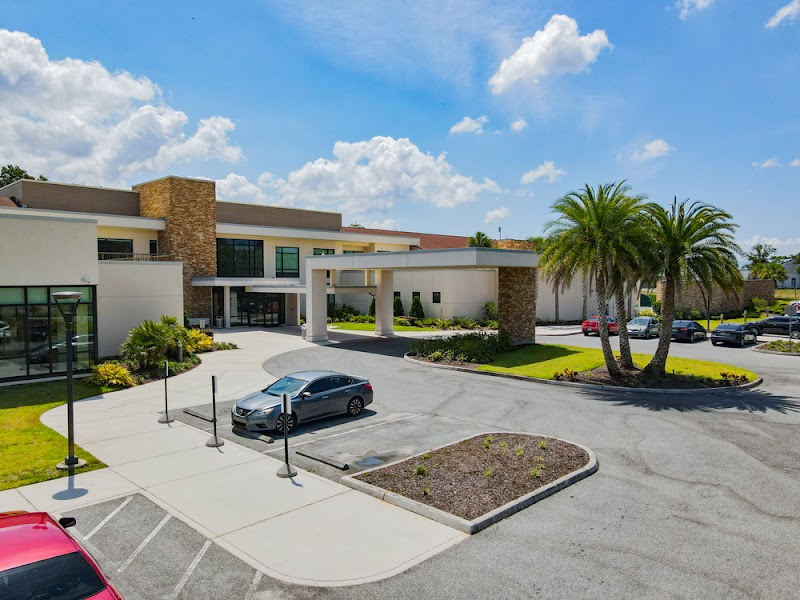
4501 WATERMAN WAY, TAVARES, FL 32778 (352) 609-4000
For profit - Corporation 120 Beds SOLARIS HEALTHCARE Data: November 2025
Trust Grade
85/100
#113 of 690 in FL
Last Inspection: August 2025

Inspected within the last 6 months. Data reflects current conditions.

Overview

Solaris Healthcare Waterman has a Trust Grade of B+, which means it is recommended and above average compared to other nursing homes. It ranks #113 out of 690 facilities in Florida, placing it in the top half, and #2 out of 17 in Lake County, indicating only one local option is better. The facility is improving, with issues decreasing from 7 in 2024 to 3 in 2025. Staffing is rated average with a 3/5 star rating, but the turnover rate is concerning at 53%, higher than the state average of 42%. Notably, there have been zero fines, which is a positive sign. However, there have been incidents where proper infection control measures were not followed during IV medication administration and food safety was not adequately maintained in the kitchen, highlighting areas that need attention. Overall, while the facility has strengths such as excellent RN coverage and no fines, families should be aware of the staffing turnover and specific health and safety issues.

Trust Score
B+
85/100
In Florida
#113/690
Top 16%
Safety Record
Low Risk
No red flags
Inspections
Getting Better
7 → 3 violations
Staff Stability
⚠ Watch
53% turnover. Above average. Higher turnover means staff may not know residents' routines.
Penalties
✓ Good
No fines on record. Clean compliance history, better than most Florida facilities.
Skilled Nurses
✓ Good
Each resident gets 44 minutes of Registered Nurse (RN) attention daily — more than average for Florida. RNs are trained to catch health problems early.
Violations
⚠ Watch
16 deficiencies on record. Higher than average. Multiple issues found across inspections.
★★★★★
5.0
Overall Rating
★★★☆☆
3.0
Staff Levels
★★★★★
5.0
Care Quality
★★★★☆
4.0
Inspection Score
Stable
2024: 7 issues
2025: 3 issues

The Good

  • 5-Star Quality Measures · Strong clinical quality outcomes
  • Full Sprinkler Coverage · Fire safety systems throughout facility
  • No fines on record

Facility shows strength in quality measures, fire safety.

The Bad

Staff Turnover: 53%

Near Florida avg (46%)

Higher turnover may affect care consistency

Chain: SOLARIS HEALTHCARE

Part of a multi-facility chain

Ask about local staffing decisions and management

The Ugly 16 deficiencies on record

Aug 2025 3 deficiencies
CONCERN (D)

Potential for Harm - no one hurt, but risky conditions existed

Deficiency F0561 (Tag F0561)

Could have caused harm · This affected 1 resident

**NOTE- TERMS IN BRACKETS HAVE BEEN EDITED TO PROTECT CONFIDENTIALITY** Based on observation, interview, and record review, the facility failed to ensure residents' preference for shower date and time...

Read full inspector narrative →
**NOTE- TERMS IN BRACKETS HAVE BEEN EDITED TO PROTECT CONFIDENTIALITY** Based on observation, interview, and record review, the facility failed to ensure residents' preference for shower date and time was honored for 1 of 4 residents reviewed (Resident #107). Findings include: During an observation on 7/30/2025 at 8:50 AM, the communication board in Resident #107's room showed that the resident was scheduled to have two showers weekly on Wednesday and Sundays. During an interview on 7/30/2025 at 8:45 AM, Resident #107 stated that her usual shower days were Sundays and Wednesdays. This past Sunday (7/27/2025), she requested a shower, and the aide informed her that she could not have a shower, only a bed bath. The resident informed the aide that she did not want a bed bath, she wanted a shower, but the aide refused and informed her she would give a bed bath. The resident stated that she was never given a bed bath or a shower on 7/27/2025. During an interview on 7/30/2025 at 12:23 PM, Staff A, Certified Nursing Assistant (CNA), stated that she was the aide providing care for Resident #107 on the evening of 7/27/2025. Staff A stated, It was [Resident #107's name]'s shower day, but by the time I got to her, she said it was too late, and to just put her to bed, so I did. [Resident #107's name] asked to have her peri-area washed, and did not want her gown changed, as it was still clean. I asked if she was sure, but she said just wash my peri area. This occurred around 8:00 PM. She likes to shower right after dinner. If I remember right, we only had two CNAs that night. Normally, we have three, so it took longer for me to get to her. During an interview on 7/31/2025 at 9:08 AM, the Director of Nursing (DON) stated, I interviewed [Resident #107's name] and [Staff A, CNA's name]. [Staff A's name] should have documented the bed bath for [Resident #107's name] as refused if the bed bath was not completed. During an interview on 7/31/2025 at 10:10 AM, Staff B, Registered Nurse (RN), stated, I was the nurse on shift for [Resident #107's name] on the evening of 7/27/25. I review and sign the shower sheets at the end of the shift. [Staff A, CNA's name] never informed me that [Resident #107's name] refused a shower or a bed bath. I expect the CNAs to inform me when a resident refuses a shower or bed bath. Review of Resident #107's ADL (Activities of Daily Living) task records showed the resident preferred Wednesdays and Sundays at 3-11 shift for bathing. Review of Resident #107's Minimum Data Set (MDS) assessment dated [DATE] showed the resident was dependent for showering and bathing under Section GG- Functional Status. Review of Resident #107's care plan dated 5/22/2025 read, Focus: Resident has specific preferences r/t [related to] day to day activities. Goal: Staff need to be aware of resident preferences and incorporate them into daily care. Review of the facility policy and procedure titled Activities of Daily Living (ADL), Supporting with the last review date of 12/10/2024 read, Policy Statement: Residents will be provided with care, treatment, and services as appropriate to maintain or improve their ability to carry out activities of daily living (ADLs). Residents who are unable to carry out activities of daily living independently will receive the services necessary to maintain good nutrition, grooming, and personal and oral hygiene. 2. Appropriate care and services will be provided for residents who are unable to carry out ADLs independently, with the consent of the resident and in accordance with the plan of care, including appropriate support and assistance with: a. Hygiene (bathing, dressing, grooming, and oral care).
CONCERN (D)

Potential for Harm - no one hurt, but risky conditions existed

Respiratory Care (Tag F0695)

Could have caused harm · This affected 1 resident

Based on observation, interview, and record review, the facility failed to provide respiratory services consistent with professional standards of practice for 3 of 4 residents reviewed for oxygen ther...

Read full inspector narrative →
Based on observation, interview, and record review, the facility failed to provide respiratory services consistent with professional standards of practice for 3 of 4 residents reviewed for oxygen therapy (Residents #46, #136, and #139). Findings include: 1. During an observation on 7/28/2025 at 10:30 AM, Resident #46 was sitting in the recliner, receiving oxygen via nasal cannula at 3.5 liters per minute (LPM). During an observation on 7/29/2025 at 10:11 AM, Resident #46 was receiving oxygen via nasal cannula at 3.5 LPM. Review of Resident #46's physician orders showed an order dated 7/1/2025 for administration of oxygen at 2 LPM every shift. During an interview on 7/29/2025 at 10:11 AM, Resident #46, stated, I never touch the setting on the concentrator. I do not know how or where to adjust. 2. During an observation on 7/28/2025 at 9:16 AM, Resident #147’s nebulizer mask was clipped on the nebulizer machine sitting on the resident’s bedside table. The mask was not bagged. The resident was receiving oxygen at 4.5 LPM with humidification (Photographic evidence obtained). During an observation on 7/29/2025 at approximately 8:54 AM, Resident #147 was receiving oxygen at 4 LPM with humidification. Review of Resident #147’s physician orders showed an order dated 7/24/2025 for continuous administration of oxygen at 5 LPM via nasal cannula. Review of Resident #147’s physician orders showed an order dated 7/24/2025 for Levalbuterol 0.63 MG (milligram)/3ML (milliliter) nebulization solution; 3 ml inhale orally via nebulizer every 8 hours for hypoxia. Review of Resident #147’s physician orders showed an order dated 7/24/2025 for Budesonide Inhalation Suspension 0.5 MG/2ML; 1 vial inhale orally in the morning for shortness of breath, rinse mouth after. During an interview on 7/29/2025 at approximately 8:54 AM, Resident #147 stated, I do not touch the oxygen concentrator, or the mask. Nurses come in and work on it and tell me what to do. During an interview on 7/31/2025 at 8:40 AM, the Director of Nursing (DON) stated, “My expectation is the oxygen settings to be correct.” 3. During an observation on 7/28/2025 at 9:42 AM, Resident #139 was sitting in a wheelchair in his room. There was a nebulizer mask sitting on top of the nebulizer machine on the bedside table unbagged. During an interview on 7/28/2025 at 9:58 AM, Staff C, Registered Nurse (RN), stated that Resident #139's nebulizer mask should have been stored in a plastic bag with a date written on the bag. During an interview on 7/28/2025 at 11:30 AM, the Director of Nursing (DON) confirmed that nebulizer masks should be stored in a plastic bag when not in use. Review of Resident #139's physician orders showed an order dated 7/9/2025 for Albuterol Sulfate Inhalation Nebulization Solution (2.5 MG/3ML) 0.083% (Albuterol Sulfate); 3 ML inhale orally via nebulizer every 6 hours as needed for shortness of breath or wheezing.
CONCERN (D)

Potential for Harm - no one hurt, but risky conditions existed

Infection Control (Tag F0880)

Could have caused harm · This affected 1 resident

Based on observation, interview, and policy and procedure review, the facility failed to prevent the possible spread of infection and communicable diseases when failing to place a resident on contact ...

Read full inspector narrative →
Based on observation, interview, and policy and procedure review, the facility failed to prevent the possible spread of infection and communicable diseases when failing to place a resident on contact precaution during testing for possible C-Diff (Clostridium difficile) toxin (Resident #94), and failing to ensure staff donned appropriate personal protective equipment (PPE) and performed appropriate hand hygiene upon entering and exiting the resident's room. Findings include: During an observation on 7/28/2025 at 11:13 AM, there was no isolation signage on Resident #94's room door and there was no PPE available. During an interview on 7/28/2025 at 11:13 AM, Resident #94 stated, I have been having loose stool, and they did a test on it for me. I had that C. diff before. Review of Resident #94's physician orders dated 7/28/2025 read, Need Stool r/o (rule out) possible recurrent C-diff one time only for check for possible recurrent C-diff for 3 Days. During an observation on 7/29/2025 at 9:18 AM, Staff F, Certified Nursing Assistant (CNA), entered Resident #94's room, used hand sanitizer, exited room after 3 minutes, and used hand sanitizer. There was no isolation signage or PPE supplies on door of the room. During an observation on 7/30/2025 at 9:30 AM, Staff F, CNA, entered Resident #94's room, used hand sanitizer, exited the residents room after 3 minutes, used hand sanitizer, and entered a different resident's room. There was no isolation signage or PPE supplies on the door of the room. During an observation on 7/30/2025 at 10:32 AM, Staff D, Licensed Practical Nurse (LPN), entered Resident #94's room, used hand sanitizer on entry, and exited 3 minutes later and used hand sanitizer. Staff D returned to the medication cart. Review of Resident #94's infectious disease consult note dated 7/30/2025 read, Patient is a 95 y/o [year old] male who was admitted into [Name of a local hospital] back in May 2025 for weakness. Patient has had hx [history of] C-diff in the past. He now resides at Solaris skilled nursing facility; he was recently treated for C-diff and stool was normally formed. Now reported patient is having ongoing watery stools and C-diff was positive. ID [Infectious disease] consulted for antibiotics management. Seen today up in the chair awake responsive. He reports watery stools. Denies abdominal pain, no tenderness or distention noted. During an interview on 7/30/2025 at 12:15 PM, Staff E, Registered Nurse (RN), stated, He [Resident #94] was positive for C diff, and we need to place him on isolation. He should have been placed on isolation on the 28th when we got the order. We always do that. The nurse, that day, forgot to do it. During an interview on 7/30/2025 at 12:45 PM, Staff F, CNA, stated, I did not know until now that he has C diff. We should wash our hands and not use the sanitizer. I know a resident on precautions when I see the signs. During an interview on 7/31/2025 at 7:15 AM, the Director of Nursing (DON) stated, We should have placed him [Resident #94] on precautions right away when we got the order. Review of the facility policy and procedure titled Clostridium Difficile with the last approval date of 12/17/2024 read, Policy Statement: Preventive measures will be taken to prevent the occurrence of Clostridium difficile infections among residents and precautions will be taken while caring for residents with C. Difficile (to prevent the transmission of C. Difficile to others). Policy Interpretation and Implementation: 1. Clostridium Difficile infection will be considered in residents with acute onset of diarrhea (three or more unformed stools within 24 hours) or abdominal pain. 2. Residents considered at high risk for developing symptoms associated with C. Difficile include those with: a. Advanced age. c. Previous gastrointestinal illness caused by C. Difficile. 10. Residents with diarrhea associated with C. Difficile will be placed on Contact Precautions. D. Residents with diarrhea and suspected C. Difficile while awaiting laboratory results. 11. When caring for residents with diarrhea or fecal incontinence caused by C. Difficile, staff will maintain vigilant hand hygiene. Hand washing with soap and water is superior to ABHR (alcohol-based hand rub) for the mechanical removal of C. Difficile spores from hands.
Apr 2024 7 deficiencies
CONCERN (D)

Potential for Harm - no one hurt, but risky conditions existed

Assessment Accuracy (Tag F0641)

Could have caused harm · This affected 1 resident

**NOTE- TERMS IN BRACKETS HAVE BEEN EDITED TO PROTECT CONFIDENTIALITY** 2. Review of Resident #115's Discharge MDS dated [DATE] under Section A, Subsection A2105 showed the resident was discharged to ...

Read full inspector narrative →
**NOTE- TERMS IN BRACKETS HAVE BEEN EDITED TO PROTECT CONFIDENTIALITY** 2. Review of Resident #115's Discharge MDS dated [DATE] under Section A, Subsection A2105 showed the resident was discharged to short term general hospital. Review of Resident #115's progress note dated 3/15/2024 read, Resident was d/c [discharged ] home today about 1650 [4:50 PM]. She has not been seen by the doctor and family is aware. During an interview on 4/23/2024 at 2:14 PM, the Regional Director of Clinical Reimbursement and MDS Director stated that discharge status for Resident #115 was coded inaccurately. Review of the facility policy and procedure titled Resident Assessment Instrument with the last review date of 1/16/2024 read, Policy Statement: A comprehensive assessment of a resident's needs shall be made using the most recent version of the Resident Assessment Instrument. Policy Interpretation and Implementation: The assessment Coordinator is responsible for ensuring that the Interdisciplinary Assessment Team conducts timely resident assessment and reviews according to the most recent RAI [Resident Assessment Instrument] manual specifications. Based on observation, record review, and interview, the facility failed to ensure the Minimum Dat Set (MDS) assessment accurately reflected the resident's status for 1 of 2 residents reviewed for oxygen therapy, Resident #420, and 1 of 3 residents reviewed for discharge, Resident #115. Findings include: 1. During an observation on 4/22/2024 at 9:26 AM, Resident #420 was lying in bed, receiving oxygen at 2 liters per minute via nasal cannula. Review of Resident #420's physician order dated 4/5/2024 read, Oxygen (2L/nc prn) [liters via nasal canula as needed] as needed. Review of Resident #420's weights and vitals summary showed that the resident was receiving oxygen via nasal cannula on 4/4/2024, 4/6/2024, and 4/7/2024. Review of Resident #420's 5-Day MDS dated [DATE] did not show oxygen coded as in use while being a resident in the facility. During an interview on 4/24/2024 at 1:07 PM, the MDS Director stated, I do not look at the vitals CNAs [Certified Nursing Assistants] put in. I trust the nurse documentation. The nurse documents as not being done. Sometimes CNA documents as being done, and it is not so. I like to see nurse documentation to back it up. During an interview on 4/24/2024 at 1:37 PM, the Director of Nursing stated, CNA documentation should be considered accurate.
CONCERN (D)

Potential for Harm - no one hurt, but risky conditions existed

Quality of Care (Tag F0684)

Could have caused harm · This affected 1 resident

Based on record review and interview, the facility failed to ensure residents received medication as per physician order for 1 of 6 residents reviewed for blood pressure medication, Resident #106. Fin...

Read full inspector narrative →
Based on record review and interview, the facility failed to ensure residents received medication as per physician order for 1 of 6 residents reviewed for blood pressure medication, Resident #106. Findings include: Review of Resident #106's physician order dated 3/15/2024 read, Midodrine HCl Oral Tablet 5 MG [milligram] (Midodrine HCl) Give 1 tablet by mouth every 8 hours for hypertension hold if SBP [Systolic Blood Pressure] greater than 130. Review of Resident #106's Medication Administration Record for April 2024 showed the resident received Midodrine 5 mg on 4/1/2024 at 2:00 PM with the blood pressure of 150/91, on 4/4/2024 at 2:00 PM with the blood pressure of 164/94 and at 10:00 PM with the blood pressure of 160/90, on 4/8/2024 at 10:00 PM with the blood pressure of 150/67, on 4/13/2024 at 10:00 PM with the blood pressure of 146/93, on 4/14/2024 at 6:00 AM with the blood pressure of 146/93, and on 4/22/2024 at 2:00 PM with the blood pressure of 138/83. During an interview on 4/24/2024 at 9:21 AM, the Director of Nursing stated, It was a medication error. I spoke with the doctor and the resident. Doctor stated we need to continue with the medication and resident had no adverse effects. During an interview on 4/24/2024 at 9:35 AM, Physician #1 provided no comment on possible side effects of administration of Midodrine 5 mg to Resident #106 when the blood pressure is greater than 130. During an interview on 4/24/2024 at 11:05 AM, Physician #2, Cardiologist, stated, Midodrine 5 mg is a very low dose. In cardiology, we do not use it. It is very insufficient. I spoke to the resident [Resident #106] and she had no side effects. Extra 5 mg of Midodrine is not going to have any major impact overall. It is not a very good vasopressor, but sometimes it is all we got. Review of the facility policy and procedure titled Medication Administration- General Guidelines with the last review date of 1/16/2024 read, Policy: Medications are administered as prescribed in accordance with good nursing principles and practices and only by persons legally authorized to do so . Procedures . B. Administration . 2) Medications are administered in accordance with written orders of the prescriber.
CONCERN (D)

Potential for Harm - no one hurt, but risky conditions existed

Deficiency F0692 (Tag F0692)

Could have caused harm · This affected 1 resident

Based on observation, interview, and record review, the facility failed to ensure residents were not served known allergen food items for 1 of 6 residents reviewed for nutrition, Resident #419. Findin...

Read full inspector narrative →
Based on observation, interview, and record review, the facility failed to ensure residents were not served known allergen food items for 1 of 6 residents reviewed for nutrition, Resident #419. Findings include: During an interview on 4/22/2024 at 10:12 AM, Resident #419 stated, I have been here in the facility for a few days. The food is not good. They give chicken twice a day. If you do not like it, they give you either a peanut butter sandwich which I am allergic to or turkey sandwich. During an observation on 4/22/2024 at 12:30 PM, Resident #419 was eating lunch in her room. The tray included a ham sandwich wrapped in plastic with a piece of lettuce and tomato garnish on the plate (Photographic evidence obtained). During an interview on 4/22/2024 at 12:30 PM, Resident #419 stated, If I had tomato, I would swell up. If it would have been on the sandwich, I would not be able to eat it. The sandwich came wrapped individually from the tomato. Review of Resident #419's admission record showed the resident was allergic to to Lisinopril, sulfa antibiotics, almond oil, peanuts, and tomato. Review of Resident #419's hospital records provided from the discharging hospital documented, intolerance to tomato. Review of Resident #419's meal ticket read, Allergies: Peanuts, Tomato/Almond Oil. During an interview on 4/24/2024 at 12:28 PM, Staff C, Certified Nursing Assistant (CNA), stated, Allergies are on the meal ticket. The resident tells us what they want, and we go and get it from the kitchen. We will lift the plate lid and see that it is appropriate for the resident. During an interview on 4/24/2024 at 12:43 PM, the Regional Dietary Manager stated, It was definitely an overlook. We have a system in place. The meals get checked three times and then also checked by the CNA. If they request an alternative, the CNA goes back and checks at that point. Review of the facility policy and procedure titled Tray Identification with the last review date of 1/16/2024 read, Policy Statement: Appropriate identification/coding shall be used to identify various diets. Policy Interpretation and Implementation . 2. The Food Services Manager or designee will check trays for correct diets before the food carts or meal trays are transported to their designated areas. 3. Nursing staff shall check each food tray for the correct diet before serving the residents. Review of the facility policy and procedure titled Food Allergies and Intolerances with the last review date of 1/16/2024 read, Policy Statement: Residents with food allergies and/or intolerances will be identified upon admission and steps will be taken to prevent resident exposure to the allergens.
CONCERN (D)

Potential for Harm - no one hurt, but risky conditions existed

Tube Feeding (Tag F0693)

Could have caused harm · This affected 1 resident

**NOTE- TERMS IN BRACKETS HAVE BEEN EDITED TO PROTECT CONFIDENTIALITY** Based on observation, interview, and record review, the facility failed to ensure residents received the appropriate enteral fee...

Read full inspector narrative →
**NOTE- TERMS IN BRACKETS HAVE BEEN EDITED TO PROTECT CONFIDENTIALITY** Based on observation, interview, and record review, the facility failed to ensure residents received the appropriate enteral feed for 1 of 3 residents reviewed for enteral feed administration, Resident #170. Findings include: Review of Resident #170's admission record showed the resident was admitted to the facility on [DATE] with diagnoses including hemiplegia and hemiparesis, chronic respiratory failure with hypoxia, type 2 diabetes mellitus, dementia, and gastrostomy status. During an observation on 4/23/2024 at 1:45 PM, Resident #170's enteral feed pump was running at 70 ml/hr (milliliters/hour) (Photographic evidence obtained). Review of Resident #170's physician order dated 4/18/2024 read, Enteral Feed Order two times a day Enteral Glucerna 1.5 cal/ml [calorie/ milliliter] @ [at] 80 ml/hr x 20 hours. Off at 10 am and On at 2 pm (total volume 1600 ml). Review of Resident #170's care plan dated 4/17/2024 read, Focus: Resident requires enteral tube feeding for nutrition . Interventions . Enteral feeding as ordered. During an interview on 4/23/2024 at 2:00 PM, Staff E, licensed Practical Nurse (LPN), stated, I see his pump is running at 70 ml/hr. His order reads 80 ml/hr. The rate needs to be changed. During an interview on 4/25/2024 at 10:00 AM, the Director of Nursing stated his expectation for nurses when initiating enteral feed was to verify the order and set the pump to the administration rate in the current order. Review of the facility policy and procedure titled, Enteral Tube Feeding via Continuous Pump dated 1/25/2023 and last reviewed on 1/16/24 read, Purpose: The purpose of this procedure is to provide nourishment to the resident who is unable to obtain nourishment orally. Preparation: 1. Verify that there is a physician's order for this procedure . General Guidelines . 3. Check the enteral nutrition label against the order before administration. Check the following information . g. rate of administration ml/hour.
CONCERN (D)

Potential for Harm - no one hurt, but risky conditions existed

Food Safety (Tag F0812)

Could have caused harm · This affected 1 resident

Based on observation, interview, and record review, the facility failed to ensure foods and beverages were stored in a safe and sanitary manner in 1 of 4 nourishment rooms. Findings include: During a...

Read full inspector narrative →
Based on observation, interview, and record review, the facility failed to ensure foods and beverages were stored in a safe and sanitary manner in 1 of 4 nourishment rooms. Findings include: During an observation while conducting a tour of the facility's nourishment rooms with the Certified Dietary Manager on 4/22/2024 beginning at 9:38 AM, there were an unlabeled and undated plastic grocery bag with 2 containers of unidentifiable food on the top shelf of the refrigerator, an unlabeled Taco Bell bag containing one Taco with the date of 4/7/2024, an unlabeled Burger King bag containing a cheese burger and French fries with the date of 4/13/2024, and an unlabeled and undated Wendy's bag containing a burger and side salad in the right side drawer of the refrigerator, and four pieces of celery wrapped in saran wrap with a date of 4/13/2024 in the butter tray of the refrigerator in the 400 hall nourishment room. During an interview on 4/22/2024 approximately at 9:40 AM, the Certified Dietary Manager acknowledged the expired and/or undated and unlabeled foods in the refrigerator and stated, Everything should be labeled with the resident's room number and the dates marked on it. I have posted the policies and there seems to be a problem with this hall only. Review of the facility policy and procedure titled Storage of Foods Brought to Residents by Family/Visitors dated 2/9/2023 and last reviewed on 1/16/24 read, Policy Interpretation and Implementation . 6. Perishable foods must be stored in a manner which minimizes risk of cross contamination in the designated resident refrigerators. These foods will be labeled with the resident's name and dated. 7. The nursing staff is responsible for discarding perishable foods within 3 days or before the use by/expiration date, whichever comes first.
CONCERN (D)

Potential for Harm - no one hurt, but risky conditions existed

Medical Records (Tag F0842)

Could have caused harm · This affected 1 resident

Based on observation, interview, and record review, the facility failed to ensure resident records were complete and accurate for 1 of 2 residents sampled for oxygen therapy, Resident #417. Findings i...

Read full inspector narrative →
Based on observation, interview, and record review, the facility failed to ensure resident records were complete and accurate for 1 of 2 residents sampled for oxygen therapy, Resident #417. Findings include: During an observation on 4/22/2024 at 9:31 AM, Resident #417 was sitting up in a recliner in his room, receiving oxygen via nasal cannula at 2 liters per minute. During an observation on 4/23/2024 at 1:30 PM, Resident #417 was sitting up in a recliner in his room, receiving oxygen via nasal cannula at 2 liters per minute. Review of Resident #417's physician order dated 4/11/2023 read, (ACC-OXYGEN) Oxygen (Specify L/Min [liter/minute] and via device) every shift for COPD [Chronic obstructive pulmonary disease] and SOB [Shortness of breath]. During an interview on 4/23/2024 at 2:05 PM, the Director of Nursing stated, Initially we go by the 3008 form and then input orders in the system. The order is incomplete and should include the rate and the device. Review of the facility policy and procedure titled Documentation with the last reviewed date of 1/16/2024 read, Policy Statement: All services provided to the resident, or any changes in the resident's medical or mental condition, shall be documented in the resident's medical record.
CONCERN (E)

Potential for Harm - no one hurt, but risky conditions existed

Infection Control (Tag F0880)

Could have caused harm · This affected multiple residents

2. During an observation on 4/22/2024 at 9:40 AM, Resident #418 was sitting in a recliner in his room, receiving IV (intravenous) medication via PICC (Peripherally Inserted Central Catheter) line loca...

Read full inspector narrative →
2. During an observation on 4/22/2024 at 9:40 AM, Resident #418 was sitting in a recliner in his room, receiving IV (intravenous) medication via PICC (Peripherally Inserted Central Catheter) line located on RUE (Right Upper Extremity). During an observation on 4/22/2024 at 9:41 AM, Staff A, License Practical Nurse (LPN), was disconnecting Resident #418's IV tubing. Staff A did not have a gown. During an interview on 4/22/2024 at 9:48 AM, Staff A, LPN, stated, I wear gloves because it was just the removal of IV tubing. Every room will have signs and PPE depending on why you are going in the room. I am the nurse for this unit. I know every resident and what I need to wear when going into the rooms. Review of Resident #418's physician order dated 4/4/2024 read, Enhanced Barrier Precautions for picc line every shift for precautions for picc line. During an observation on 4/22/2024 at 10:06 AM, Staff B, Occupational Therapist, was in Resident #85's room assisting with direct care. Staff B did not have a gown. There was no enhanced barrier precaution signage or personal protective equipment noted outside of room. During an interview on 4/22/2024 at 2:38 PM, Staff B, Occupational Therapist, stated, I am the Occupational Therapist for [Resident #85's name]. She was wet and I was changing her and assisting her with peri care. I did not know she was on enhanced barrier precautions. Normally, there would be a sign posted outside of the room and that is how we know what precautions to take. The room did not have any signs posted when I entered. Review of Resident #85 physician order dated 4/4/2024 read, Enhanced Barrier Precautions for MRSA Hx [Methicillin-Resistant Staphylococcus Aureus History] and wound every shift for precautions for MRSA Hx and wound. Review of Resident #85's physician order dated 4/19/2024 read, Enhanced Barrier Precautions: surgical wound every shift for foley and surgical wound. During an interview on 4/24/2024 at 1:30 PM, the Director of Nursing stated, Staff should be gowning when providing direct care. They have orders in the system as well as signage posted. During an interview on 4/25/2024 at 8:55 AM, the Infection Preventionist stated, There are orders set in the system and message will pop up. [Resident #85's name] had covid and then signs were taken down and enhance barrier was not put back up. Head of departments get a listing who is on precautions every day. Staff should 100% wear gown when in direct patient contact. Review of the facility policy and procedure titled Enhanced Barrier Precautions with the last review date of 1/16/2024 read, Policy Statement: This facility follows recommended CDC [Centers for Disease Control and Prevention] enhanced barrier precautions, to interrupt the spread of multidrug resistant organisms (MDROs) within the facility. For the purposes of this guidance, the MDROs for which the use of EBP [Enhanced Barrier Precautions] applies are based on local epidemiology. At a minimum, they should include resistant organisms targeted by CDC but can also include other epidemiologically important MDROs. Policy Interpretation and Implementation: 1. While in the building, employees are required to strictly adhere to established infection prevention and control policies, including . c. Appropriate use of PPE [Personal Protective Equipment]. Based on observation, interview, and record review, the facility failed to utilize appropriate isolation precaution signages to help prevent the possible transmission of communicable diseases and infections for Residents #19, #82, and #85 (Photographic evidence obtained), and failed to ensure the staff used appropriate PPE (Personal Protective Equipment) while providing direct care to the residents on isolation precautions for Resident #418. Findings include: 1. Review of Resident #19's physician order dated 4/21/2024 read, COVID-19: Strict Isolation: Resident require strict isolation for positive COVID-19 every shift for COVID positive for 10 days. Review of Resident #19's care plan dated 4/22/2024 read, Focus: Resident is diagnosed with COVID-19 infection. Date Initiated: 04/22/2024 . Interventions . Droplet Isolation Precautions. During an observation on 4/22/2024 at 9:48 AM, Resident #19's door had a sign reading Enhanced Barrier Precautions on the door. Review of Resident #82's physician order dated 4/19/2024 read, COVID-19: Strict Isolation: Resident require strict isolation for positive COVID-19 every shift for COVID positive for 10 days. Review of Resident #82's care plan dated 4/20/2024 read, Focus: Resident is diagnosed with COVID-19 infection. Date Initiated: 04/20/2024 . Interventions . Droplet Isolation Precautions. During an observation on 4/22/2024 at 9:55 AM, Resident #82's door had a sign reading Enhanced Barrier Precautions on the door. During an interview on 4/22/2024 at 10:05 AM, the Infection Preventionist confirmed Residents #19 and #82 had inaccurate isolation precaution signs on their doors, and stated, They should have droplet precaution signs on their doors due to their COVID positive status. Review of the facility policy and procedure titled, Isolation- Notices of Transmission-Based Precautions revised on 10/16/2023 read, Policy Statement: Appropriate isolation notices will be used to alert staff of the implementation of Transmission-Based Precautions, while protecting the privacy of the resident. Policy Interpretation and Implementation: 1. When Transmission-Based Precautions are implemented, an appropriate sign will be placed at the entrance/doorway of the resident's room. Signs will be used to alert staff of the implementation of Transmission-Based Precautions and to alert visitors to report to the nurse's station before entering the room, while respecting the resident's privacy.
Dec 2022 6 deficiencies
CONCERN (D)

Potential for Harm - no one hurt, but risky conditions existed

Quality of Care (Tag F0684)

Could have caused harm · This affected 1 resident

**NOTE- TERMS IN BRACKETS HAVE BEEN EDITED TO PROTECT CONFIDENTIALITY** 2. Review of the admission record for Resident #73 documented the resident was admitted on [DATE] with diagnosis including but n...

Read full inspector narrative →
**NOTE- TERMS IN BRACKETS HAVE BEEN EDITED TO PROTECT CONFIDENTIALITY** 2. Review of the admission record for Resident #73 documented the resident was admitted on [DATE] with diagnosis including but not limited to end stage renal disease, displaced trimalleolar fracture of right lower leg, subsequent encounter for closed fracture with routine healing, dependence on renal dialysis, acute on [sic] chronic diastolic heart failure, hypertensive heart and chronic kidney disease with heart failure and stage 1 through stage 4 chronic kidney disease or unspecified chronic kidney disease, type 2 diabetes mellitus with diabetic peripheral angiopathy without gangrene, and essential hypertension. Review of the physician order dated 6/17/22 read complete COMS-post dialysis evaluation one time a day every Mon, Wed, Fri [Monday, Wednesday, Friday]. Review of the COMS-Pre/Post Dialysis Evaluation for Resident #73 revealed missing post dialysis evaluations for the following dates: 12/14/22, 12/9/22, 12/07/22, 11/30/22, 11/28/22, 11/25/22, 11/04/22, and 11/02/22. During an interview on 12/22/22 at 7:45 AM Staff K, Licensed Practical Nurse (LPN) stated, [Resident #73's Name] goes to dialysis on Monday, Wednesday, and Friday, is on fluid restrictions, and is sometimes noncompliant. The nursing staff do the pre-dialysis evaluation and send her [to dialysis center] with a dialysis book and a snack. When she returns, we do the post dialysis evaluation. At times, the dialysis facility will not send the required information. The nurse will try to call and get the information. The post evaluation will be done even if we do not get information from the dialysis center to assess resident and make sure blood pressure is stable. Especially since dialysis patients are sometimes not stable. During an interview on 12/22/22 at 9:30 AM the DON confirmed Resident #73 had missing pre/post dialysis evaluations on some days. Review of the facility policy titled, Documentation Standards revised 1/22/22 reads,3. Nursing staff should chart by exception, as often as necessary, in addition to scheduled charting. 3. During an observation of IV medication administration for Resident #226 on 12/21/22 at 8:04 AM Staff D, Registered Nurse (RN) removed medication from medication cart, donned PPE (personal protective equipment) and entered Resident #226's room, turned on light and put gloves on with no hand hygiene performed. Staff D doffed PPE and exited room. Staff D went to get IV tubing from medication room, returned to med cart, unlocked med cart, and retrieved medication without hand hygiene. Staff D donned PPE and grabbed gloves, enter room, and applied hand sanitizer. Placed IV medication and supplies on top of night table without cleaning table or placing a barrier. Staff D connected the medication to the IV tubing, primed IV line, and inserted tubing into the IV pump. Staff D cleaned the needleless connector with alcohol and uncapped the 10 milliliters (ml) syringe of normal saline, removed the air. Staff D administered the 10 milliliters of normal saline without checking for blood return to verify placement of the line. Staff D removed the syringe and connected the IV tubing to the PICC line needleless connector without cleaning the needless connector. During an interview on 10:08 AM Staff D, RN stated, I am not sure if I need to check for blood return. 4. During an observation of IV (intravenous) medication and oral medication administration for Resident #91 on 12/21/22 at 9:48 AM Staff G, LPN removed medication from medication cart, donned PPE, and entered Resident #91's room, performed hand hygiene, and placed on gloves. Staff G placed IV medication and supplies on top of side table without cleaning table or placing a barrier. Staff G handed oral medication to resident. Staff G removed IV fluids and supplies from resident bedside table and placed it on resident's recliner. Staff G connected the fluids to the IV tubing, primed IV line, and inserted tubing into the IV pump. Staff cleaned the needleless connector with alcohol and uncapped the 10 ml syringe of normal saline and removed the air. Staff administered the 10 ml of normal saline without checking for blood return to verify placement of the line. Staff G removed syringe and needless connector came in to contact with resident bedrail. Staff G connected the IV tubing to the midline needleless connector without cleaning the needleless connector. During an interview on 12/21/22 at 3:50 PM Staff G stated, I did not check for blood return. I was never informed to pull back. I haven't been in a hospital setting in a long time, and not aware if the new guidelines. During an interview on 12/21/22 at 2:59 PM the DON stated that the staff are expected to draw blood to verify placement of the line. Review of the facility policy titled Administration of an Intermittent Infusion last reviewed 1/22/22, reads: Procedure .4. Perform hand hygiene. 5. Assemble equipment and supplies on a clean work surface 16. Maintain asepsis, attach flush syringe to needleless connector. Aspirate the catheter to obtain positive blood return to verify vascular access device patency. Flush with prescribed flushing agent. Remove syringe. 17. Perform a vigorous mechanical scrub to manually disinfect the needleless connector. Allow to air dry. Attach administration set to needless connector .24. Perform hand hygiene. Based on observation, interview and record review, the facility failed to ensure that residents received treatment and care in accordance with professional standards of practice for 2 of 5 residents receiving IV (Intravenous) medications (Residents #91, #226) and 1 of 4 residents receiving dialysis treatments (Residents #73). Findings include: 1. Review of the admission record documented Resident #91 was admitted to the facility on [DATE] with diagnoses including syncope and collapse, bradycardia, chronic kidney disease, lipoprotein deficiency, type II diabetes mellitus, atherosclerotic heart disease, dehydration, chronic osteomyelitis, and infection following a procedure. During an observation on 12/20/22 at 9:30 AM, Resident #91 had a midline catheter dressing that was initialed and dated 12/15/22. A 4 by 4 [4 inch by 4 inch] gauze pad was observed folded in half under the clear bandage covering the catheter insertion site. Review of Resident #91's physician orders dated 12/19/22 read, midline dressing and injection cap change every day shift every Thurs [Thursday] for midline care and on 12/15/22 midline site analysis (right upper arm) every shift midline site analysis. During an interview on 12/20/22 at 9:40 AM the Director of Nursing (DON) confirmed the dressing was dated 12/15/22 and that his expectation was that the dressing should have been changed after two days due to having gauze under the dressing. Review of facility policy dated 1/15/04 and reviewed on 01/22/22 titled, Midline Catheter Dressing Change read Guidance: .2. When a transparent dressing is applied over a sterile gauze dressing it is considered a gauze dressing and is changed: 2.1 Upon admission 2.2 Every two days . 23. Label dressing with: 23.1 Date and time 23.2 Nurse's initials.
CONCERN (D)

Potential for Harm - no one hurt, but risky conditions existed

Deficiency F0761 (Tag F0761)

Could have caused harm · This affected 1 resident

**NOTE- TERMS IN BRACKETS HAVE BEEN EDITED TO PROTECT CONFIDENTIALITY** Based on observation, interview, and record review , the facility failed to ensure that drugs and biologicals used in the facili...

Read full inspector narrative →
**NOTE- TERMS IN BRACKETS HAVE BEEN EDITED TO PROTECT CONFIDENTIALITY** Based on observation, interview, and record review , the facility failed to ensure that drugs and biologicals used in the facility were stored and labeled in accordance with currently accepted professional principles in 3 of 8 medication carts. Findings include: During an observation of medication cart #4 with Staff A, Licensed Practical Nurse (LPN), there were two bottles of artificial tears with no date opened or expiration date. During an interview on [DATE] at 9:50 AM Staff A, LPN, stated medication should be labeled with the date that it is opened and an expiration date as well. During an observation of medication cart #5 on [DATE] at 9:56 AM with Staff B, LPN, there was a bottle of Gentamicin 0.3% eye drops and Prednisolone AC 1% eye drops with no date opened or expiration date and a bottle of B Complex Vitamins with an expiration date 11/2022. During an interview on [DATE] at 10:04 AM Staff B, LPN, stated expired medication should be thrown away and eye drops should be dated. During an observation of medication cart #6 on [DATE] at 10:07 AM with Staff C, Registered Nurse, (RN), there was a bottle of Fexofenadine with expiration date of 11/2022 and a bottle of artificial tears with no date opened or expiration date. During an interview on [DATE] at 10:12 AM with Staff C, RN stated expired medication should be removed from medication cart and all medications should be dated with an opened and expire date. During an interview on [DATE] at 10:49 AM with Director of Nursing (DON) stated all medications should be labeled upon being opened. Expired medication should be tossed. Staff are expected to check their medication carts every day. Review of the facility policy titled Storage and Expiration Dating of Medications , Biologicals last reviewed [DATE] reads: .4. Facility should ensure that medications and biologicals that: (1) have an expired date on the label; (2) have been retained longer than recommended by manufacturer or supplier guidelines; or (3) have been contaminated or deteriorated, are stored separate from other medications until destroyed or return to the pharmacy or supplier. 5. Once any medication or biological package is opened, Facility should follow manufacturer/supplier guidelines with respect to expiration dates for open medications. Facility staff should record the date opened on the primary medication container (vial, bottle, inhaler) when the medication has a shortened expiration date once opened or opened 5.4 When an ophthalmic solution or suspension has a manufacturer's shortened beyond use date once opened, facility staff should record the date opened and the date to expire on the container.
CONCERN (D)

Potential for Harm - no one hurt, but risky conditions existed

Medical Records (Tag F0842)

Could have caused harm · This affected 1 resident

**NOTE- TERMS IN BRACKETS HAVE BEEN EDITED TO PROTECT CONFIDENTIALITY** Based on interview, and record review the facility failed to maintain accurate and complete medical records for 1 of 2 residents...

Read full inspector narrative →
**NOTE- TERMS IN BRACKETS HAVE BEEN EDITED TO PROTECT CONFIDENTIALITY** Based on interview, and record review the facility failed to maintain accurate and complete medical records for 1 of 2 residents reviewed for pressure ulcers (Resident #42) and 1 of 5 residents reviewed for IV (Intravenous) therapy (Resident #91). Findings include: 1. Review of the admission record for Resident #42 documented the resident was admitted to facility on 6/10/2022 with diagnosis that included but not limited to multiple sclerosis, essential hypertension, functional quadriplegia, dysphagia, neuromuscular dysfunction of bladder, and pressure ulcer of sacral region stage 3. Record review of the physician orders dated 11/21/2022 reads: Dakins (1/2 strength) solution 0.25 % (sodium hypochlorite) apply to sacrum topically every day shift for wound on sacrum apply Dakins wet to dry to dry to sacrum with 4x4's and cover with calcium alginate and foam dressin [sic] daily. Review of the skin and wound evaluation dated 12/20/2022 reads: A. Describe: 1. Type: 15. Pressure. 15a. Stage: 3. Stage 3: Full Thickness skin loss. Review of skin and wound evaluation dated 11/21/2022 reads: A. Describe: 1. Type: 15. Pressure. 15a. Stage: 3. Stage 3: Full Thickness skin loss. Review of skin and wound evaluation dated 11/14/2022 reads: A. Describe: 1. Type: 15. Pressure. 15a. Stage: 3. Stage 3: Full Thickness skin loss. Review of the specialty physician wound evaluation and management summary dated 12/15/2022 for Resident #42 reads: Chief Complaint: Patient presents with a wound on her sacrum. History of present illness: At the request of the referring provider, [providers name], a thorough wound care assessment and evaluation was performed today. She [Resident #42] has a stage 4 wound sacrum for at least 174 days duration. There is moderate serous exudate. There is no indication of pain associated with this condition. Review of the specialty physician wound evaluation and management summary dated 11/17/2022 for Resident #42 reads: Chief Complaint: Patient presents with a wound on her sacrum. History of present illness: At the request of the referring provider, [providers name], a thorough wound care assessment and evaluation was performed today. She [Resident #42] has a stage 4 wound sacrum for at least 167 days duration. There is moderate serous exudate. There is no indication of pain associated with this condition. During an interview on 12/21/2022 at 11:47 AM the Director of Nursing (DON) stated once a pressure sore is staged by [the specialty physicians] that is what we will consider the stage to be. We have meetings on Tuesday, and we review all wounds. [The specialty physicians] will have report with the wound care nurse. During an interview on 12/21/022 at 10:17 AM Staff H, Licensed Practical Nurse (LPN), stated that [Resident #42 name] has a stage 3 pressure ulcer which was staged by [the specialty physicians] and has improved. When Staff H, LPN reviewed [the specialty physicians] notes, Staff H confirmed [the specialty physicians] notes stated the wound was a stage 4. Staff H stated I do not know why I said stage 3. I got confused due to the report saying MDS 3. During an interview on 12/22/2022 at 9:25 AM the DON confirmed [Resident #42's name] pressure ulcer was documented as a stage 3 incorrectly. The DON stated [Resident #42's name] has a stage 4 pressure ulcer, not a stage 3. Review of the facility policy titled Documentation Standards last reviewed on 1/22/2022 reads: Policy: It is the policy of this facility that documentation will reflect medical presence, team approach, and clinical decision making to promote quality of care. Documentation standards will follow established professional ethics and practices Guidelines 4. Documentation content should be clinically pertinent. 5. Charting should contain specific and accurate details to inform staff, demonstrate awareness of resident's condition, and/or problems, and facilitate quality of care. Record significant changes in the resident changes in the resident's condition, response to treatment/medications follow-up with physician/allied health professionals, and notification of resident /representative. 2. Review of the admission record documented Resident #91 was admitted to the facility on [DATE] with diagnoses including syncope and collapse, bradycardia, chronic kidney disease, lipoprotein deficiency, type II diabetes mellitus, atherosclerotic heart disease, dehydration, chronic osteomyelitis, and infection following a procedure. Review of Resident #91's Medication Administration Record for the month of December 2022 showed Staff J, Licensed Practical Nurse (LPN) administered Sodium Chloride Solution 5% - Use 1000 milliliters (ml) intravenously every shift for hydration infused 3 liters continuously on December 16th, 2022 during the day shift. Review of Written Statement from Staff J, LPN, reads, I get another certified nurse to handle them (intravenous medications) for me. Upon the beginning of my shift on 12/16/22, there was already IV (intravenous) fluids running on my patient in room [ROOM NUMBER] (Resident #91's Room). I only monitored throughout my shift. Review of written statement from Staff E, LPN reads, I am a Nurse Supervisor at [Name of Facility] and have been hanging and flushing IV medications for [Staff J's Name] .She has not been hanging them. Review of written statement from Staff I, LPN reads, I'm the Nurse Supervisor on the 3PM to 11PM shift at [Name of Facility] and have been hanging and flushing IV medications in assistance for IV administration. I assist [Staff J's Name] with regards to IV administration and flushing. During the interview on 12/20/22 at 1:15 PM the DON confirmed Staff J, LPN, was documented as administering the IV fluids on Resident #91 Medication Administration Record.
CONCERN (E)

Potential for Harm - no one hurt, but risky conditions existed

Food Safety (Tag F0812)

Could have caused harm · This affected multiple residents

Based on observation, interview, and record review the facility failed to ensure foods and beverages were stored in a safe and sanitary manner in the main kitchen and in 8 of 8 nourishment areas. Fin...

Read full inspector narrative →
Based on observation, interview, and record review the facility failed to ensure foods and beverages were stored in a safe and sanitary manner in the main kitchen and in 8 of 8 nourishment areas. Findings include: A tour of the facility main kitchen was completed with the Certified Dietary Manager on 12/19/2022 beginning at 9:30 AM. There was an undated bag of French fries, an undated opened bag of chicken nuggets, an undated opened bag of onion rings, 3 undated and unlabeled bags of pizza crust and an undated bag of hash brown potatoes stored in the reach in freezer. During an interview on 12/19/2022 beginning at 9:30 AM, the Certified Dietary Manager acknowledged the open, undated, and unlabeled food items were stored in the reach in freezer. A tour of the facility nourishment rooms was completed on 12/19/2022 beginning at 9:48 AM with the Certified Dietary Manager. On 12/19/2022 at 9:48 AM in the Low 200 Hall nourishment room, there was an undated, unlabeled container of takeout food stored in the microwave oven. On 12/19/2022 at 9:51 AM in the High 200 Hall nourishment room, there were brown and red substances splattered on the interior base of the freezer. On 12/19/2022 at 9:55 AM in the Low 400 Hall nourishment room, there was a brown substance splattered in the freezer, there was no thermometer in the freezer, there was food built up on the microwave oven plate and opaque splatters on the exterior front glass of the microwave oven. On 12/19/2022 at 9:59 AM in the High 400 Hall nourishment room, there were 3 thawed nutritional supplements with no thawed-on date stored in the refrigerator, there was a brown substance splattered on the lower side shelf of the refrigerator and a yellow substance splattered on the interior base of the freezer. On 12/19/2022 at 10:04 AM in High 300 Hall nourishment room, there was a sticky substance on the interior base of the refrigerator, there were 2 undated bagged slices of pizza in the refrigerator, 1 undated and unlabeled Styrofoam container stored in the refrigerator, and there was a brown built up sticky substance on the interior base of the freezer. On 12/19/2022 at 10:07 AM in the Low 300 Hall nourishment room, there was a sticky tan and pink substance splattered in the refrigerator, there was a thawed nutritional supplement with no thawed-on date stored in the refrigerator, and there was a sticky brown substance along the groove of the freezer rubber seal. On 12/19/2022 at 10:15 AM in the Activities Bistro, there was an undated, unlabeled squeeze bottle of a brown liquid and an undated, unlabeled squeeze bottle of yellow liquid stored in the refrigerator, there was an undated, unlabeled quarter full coffee carafe and an undated, unlabeled carafe of pink liquid stored with the open top of the carafe wedged against a shelf stored in the refrigerator and there were oyster colored flakes scattered on the base of the freezer. On 12/19/2022 at 10:17 AM in the High 100 Hall nourishment room, there were 2 thawed nutritional supplements with no thawed-on date stored in the refrigerator, there were 2 undated pocket sandwiches stored in the refrigerator and there was an opaque substance on the microwave oven glass plate. On 12/19/2022 at 10:20 AM in the Low 100 Hall nourishment room, there were 2 thawed nutritional supplements with no thawed-on date stored in the refrigerator. There was a loose plastic seal hanging from the lower edge of the refrigerator. There were 2 undated breakfast sandwiches stored in the refrigerator and there was a pooled and splattered amber substance on the interior base of the freezer. During an interview on 12/19/2022 beginning at 9:30 AM, the Certified Dietary Manager acknowledged open, undated, and unlabeled food items were stored in the nourishment room refrigerators and freezers, he confirmed the nourishment rooms were in need of cleaning and he confirmed the thawed nutritional supplements stored in the refrigerators did not have a thawed-on date. Review of the nutritional supplement use instructions displayed on the nutritional supplement carton showed the use instructions read STORE FROZEN THAW AT OR BELOW 40 [degrees Fahrenheit] USE THAWED PRODUCT WITHIN 14 DAYS. Review of the policy titled Dietary Sanitation, last reviewed 1/22/2022, read Policy: The facility will store, prepare, distribute and serve food in accordance with professional standards for food service safety and Procedure: 1. Food service staff follow procedures that reduce potential for food borne pathogens, in storing, preparing and serving food 3. All refrigerators and freezers are equipped with a thermometer and regular scheduled readings are monitored by a staff member and written on the log for the corresponding location .4. Opened food packages and left over foods stored in the refrigerators are sealed and dated Cleaning and Maintenance: 1. Cleaning schedules for all equipment and areas of the dietary department are posted with completion of cleaning recorded by the staff member assigned. Review of the policy titled Food Brought in By Others, last reviewed 1/22/2022, read Policy: It is the policy of this facility to ensure the safety of the residents and to prevent foodborne illness and contamination. PROCEDURE: .2. Food brought in by family/visitors for residents will be stored accordingly to prevent the potential for food borne illnesses. 3. The facility will provide safe handling of the food once it is brought to the staff at the facility 2. Food brought in by visitors and families will be dated and stored in refrigerators on the units or in the residents rooms that are only for resident items. Prior to placing in the refrigerators the food containers will be inspected by facility staff for any leakage or odors or signs of spoilage.
CONCERN (E)

Potential for Harm - no one hurt, but risky conditions existed

Infection Control (Tag F0880)

Could have caused harm · This affected multiple residents

Based on observation, interview, and record review, the facility failed to prevent the possible spread of infection during intravenous (IV) medication administration and by not performing hand hygiene...

Read full inspector narrative →
Based on observation, interview, and record review, the facility failed to prevent the possible spread of infection during intravenous (IV) medication administration and by not performing hand hygiene for 3 of 6 medication administration observations. Findings include: During an observation of IV medication administration for Resident #226 on 12/21/22 at 8:04 AM, Staff D, Registered Nurse (RN), removed medication from medication cart, donned PPE (personal protective equipment) and entered Resident #226's room, turned on light and put gloves on with no hand hygiene performed. Staff D doffed PPE and exited room. Staff D went to get IV tubing from medication room, returned to med cart, unlocked med cart, and retrieved medication without hand hygiene. Staff D donned PPE and grabbed gloves, entered the room, and applied hand sanitizer. Staff D placed IV medication and supplies on top of night table without cleaning table or placing a barrier. Staff D connected the medication to the IV tubing, primed IV line, and inserted tubing into the IV pump. Staff D cleaned the needleless connector with alcohol and uncapped the 10 milliliters (ml) syringe of normal saline and removed the air. Staff D administered the 10 milliliters of normal saline without checking for blood return to verify placement of the line. Staff D removed the syringe and connected the IV tubing to the Peripherally Inserted Central Catheter (PICC) line needleless connector without cleaning the needless connector. During an interview on 12/21/22 at 8:17 AM, Staff D, RN stated, I should have done hand hygiene when returning from the medication room and cleaned the needleless connector after flushing before connecting the IV tubing. During an observation of medication administration on 12/21/22 at 8:22 AM, Staff K, Licensed Practical Nurse (LPN), exited a resident room, returned to the medication cart and without performing hand hygiene prepared medications for Resident #426. Staff K took medication with her to the medication room to retrieve medication which was missing from medication cart. No hand hygiene performed upon return. Staff K opened and labeled medication. Staff K entered the resident's room without performing hand hygiene, administered medications to Resident #426. Staff K administered nasal spray to Resident #426 without wearing gloves. During an interview on 12/21/2022 at 8:41 AM, Staff K, stated, I should have performed hand hygiene. I brought gloves inside the room with me to use them but forgot. I got nervous. During an observation of medication administration on 12/21/22 at 8:45 AM, Staff F, LPN, exited a resident room, returned to the medication cart, and prepared medications for Resident #6. Staff F entered the resident's room without performing hand hygiene and placed gloves on. Staff F exited the room with gloves on and retrieved a spoon from medication cart. Staff F entered the resident room without performing hand hygiene. Staff F administered medications to Resident #6 . During an interview on 12/21/2022 at 8:55 AM, Staff F, LPN, stated, I should have performed hand hygiene when I entered the room and removed my gloves and performed hand hygiene when exiting and re-entering residents room. During an observation of IV medication and oral medication administration for Resident #91 on 12/21/22 at 9:48 AM, Staff G, LPN, removed medication from medication cart, donned PPE, and entered Resident #91's room, performed hand hygiene, and placed on gloves. Staff G placed IV medication and supplies on top of side table without cleaning table or placing a barrier. Staff G handed oral medication to the resident. Staff G removed IV fluids and supplies from resident bedside table and placed it on the resident's recliner. Staff G connected the fluids to the IV tubing, primed IV line, and inserted tubing into the IV pump. Staff G cleaned the needleless connector with alcohol and uncapped the 10 ml syringe of normal saline and removed the air. Staff G administered the 10 ml of normal saline without checking for blood return to verify placement of the line. Staff G removed the syringe and needless connector came in to contact with resident bedrail. Staff G connected the IV tubing to the midline needleless connector without cleaning the needleless connector. During an interview on 12/21/22 at 10:08 AM, Staff G, LPN, stated, I should have cleaned the needleless connector before connecting the tubing to the needleless connector. During an interview on 12/21/022 at 10:52 AM, the Director of Nursing stated, Staff are expected to perform hand hygiene before and after they touch the medication and in between if needed. Staff are expected to clean the needleless port before flushing. Review of the facility policy titled Hand Hygiene, last reviewed on 1/22/2022 reads: 5. Hand Hygiene shall be performed for the following situations: before preparing or handling medications .7. The use of gloves does not replace hand washing/hand hygiene. Integration of glove use along with routine hand hygiene is recognized as the best practice for preventing healthcare associated infections. Review of the facility policy titled Administration of an Intermittent Infusion, last reviewed on 1/22/2022 reads: Procedure: . 4. Perform hand hygiene, 5. Assemble equipment and supplies on a clean work surface . 16. Maintain asepsis, attach flush syringe to needleless connector. Aspirate the catheter to obtain positive blood return to verify vascular access device patency. Flush with prescribed flushing agent. Remove syringe. 17. Perform a vigorous mechanical scrub to manually disinfect the needleless connector. Allow to air dry. Attach administration set to needleless connector . 24. Perform hand hygiene.
MINOR (C)

Minor Issue - procedural, no safety impact

Deficiency F0847 (Tag F0847)

Minor procedural issue · This affected most or all residents

Based on record review and interview the facility failed to ensure the arbitration agreements presented to 3 residents, Resident #126, Resident #127 and Resident #226, of 3 residents reviewed explicit...

Read full inspector narrative →
Based on record review and interview the facility failed to ensure the arbitration agreements presented to 3 residents, Resident #126, Resident #127 and Resident #226, of 3 residents reviewed explicitly granted the resident or his or her representative the right to rescind the agreement within 30 calendar days of signing the agreement and explicitly stated that neither the resident nor his or her representative was required to sign an agreement for binding arbitration as a condition of admission or as a requirement to continue to receive care at the facility. Findings include: Review of the facility Voluntary Binding Arbitration Agreements presented to Resident #126 on 12/14/2022, presented to Resident #127 on 12/16/2022 and presented to Resident #226 on 12/16/2022 failed to explicitly grant the resident or his or her representative the right to rescind the agreement within 30 calendar days of signing the agreement and failed to explicitly state that neither the resident nor his or her representative was required to sign an agreement for binding arbitration as a condition of admission to or as a requirement to continue to receive care at the facility. During interview on 12/21/2022 at or about 12:07 PM, the Administrator reported the facility had revised the arbitration form to include explicitly granting the resident or his or her representative the right to rescind the agreement within 30 calendar days of signing the agreement and to explicitly state that neither the resident nor his or her representative was required to sign an agreement for binding arbitration as a condition of admission to or as a requirement to continue to receive care at the facility, but facility staff had not used the revised form.
Understanding Severity Codes (click to expand)
Life-Threatening (Immediate Jeopardy)
J - Isolated K - Pattern L - Widespread
Actual Harm
G - Isolated H - Pattern I - Widespread
Potential for Harm
D - Isolated E - Pattern F - Widespread
No Harm (Minor)
A - Isolated B - Pattern C - Widespread

Questions to Ask on Your Visit

  • "Can I speak with families of current residents?"
  • "What's your RN coverage like on weekends and overnight?"

Our Honest Assessment

Strengths
  • • Grade B+ (85/100). Above average facility, better than most options in Florida.
  • • No major safety red flags. No abuse findings, life-threatening violations, or SFF status.
  • • No fines on record. Clean compliance history, better than most Florida facilities.
Concerns
  • • 16 deficiencies on record. Higher than average. Multiple issues found across inspections.
Bottom line: Generally positive indicators. Standard due diligence and a personal visit recommended.

About This Facility

What is Solaris Healthcare Waterman's CMS Rating?

CMS assigns SOLARIS HEALTHCARE WATERMAN an overall rating of 5 out of 5 stars, which is considered much above average nationally. Within Florida, this rating places the facility higher than 99% of the state's 100 nursing homes. This rating reflects solid performance across the metrics CMS uses to evaluate nursing home quality.

How is Solaris Healthcare Waterman Staffed?

CMS rates SOLARIS HEALTHCARE WATERMAN's staffing level at 3 out of 5 stars, which is average compared to other nursing homes. Staff turnover is 53%, compared to the Florida average of 46%.

What Have Inspectors Found at Solaris Healthcare Waterman?

State health inspectors documented 16 deficiencies at SOLARIS HEALTHCARE WATERMAN during 2022 to 2025. These included: 15 with potential for harm and 1 minor or isolated issues.
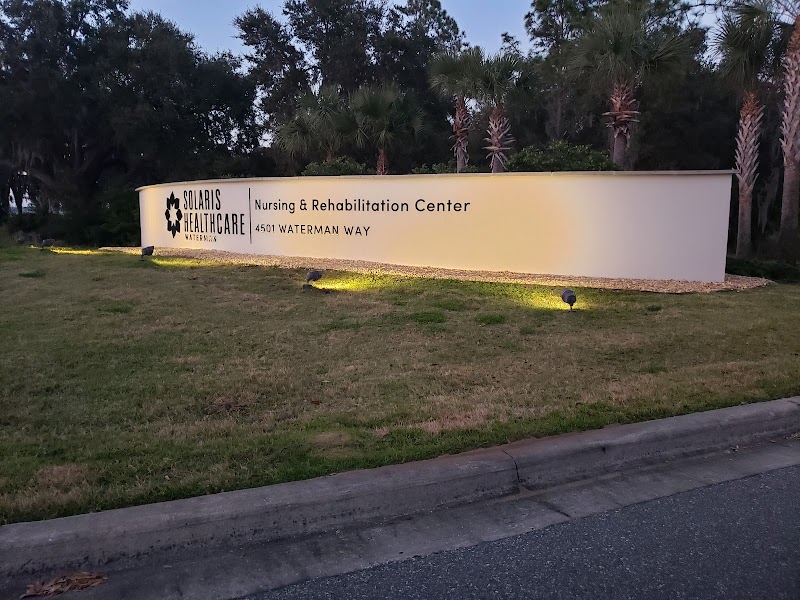
Who Owns and Operates Solaris Healthcare Waterman?

SOLARIS HEALTHCARE WATERMAN is owned by a for-profit company. For-profit facilities operate as businesses with obligations to shareholders or private owners. The facility is operated by SOLARIS HEALTHCARE, a chain that manages multiple nursing homes. With 120 certified beds and approximately 113 residents (about 94% occupancy), it is a mid-sized facility located in TAVARES, Florida.
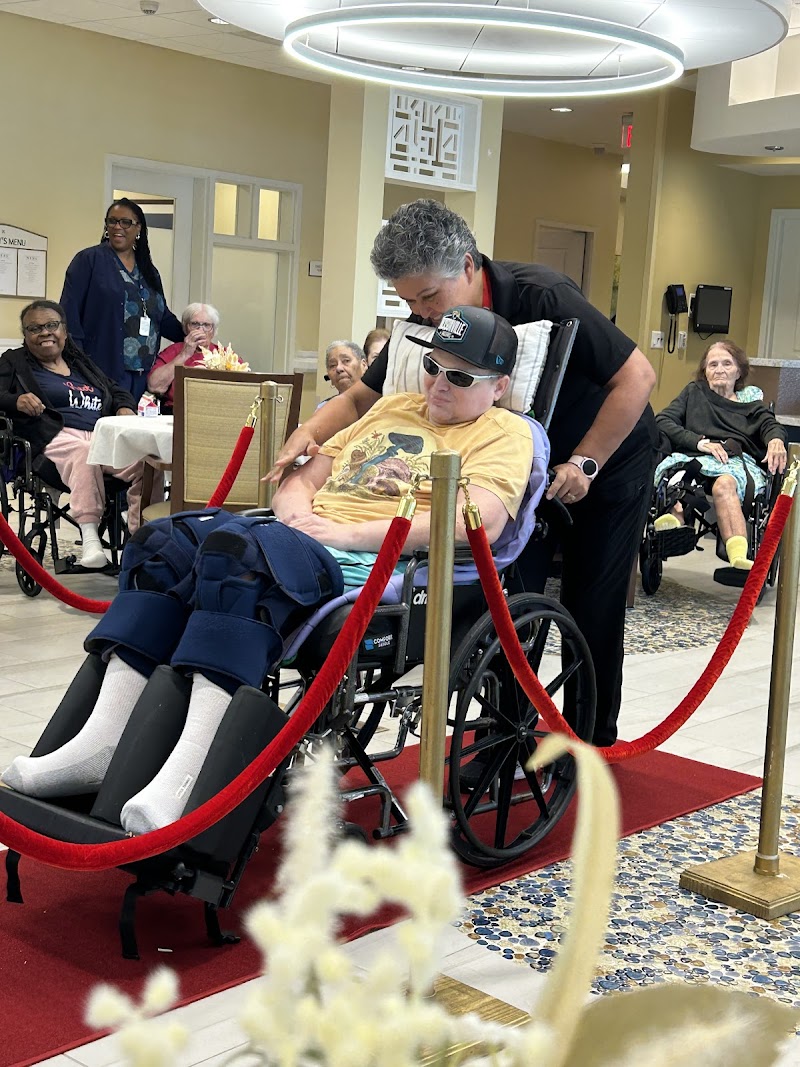
How Does Solaris Healthcare Waterman Compare to Other Florida Nursing Homes?

Compared to the 100 nursing homes in Florida, SOLARIS HEALTHCARE WATERMAN's overall rating (5 stars) is above the state average of 3.2, staff turnover (53%) is near the state average of 46%, and health inspection rating (4 stars) is above the national benchmark.

What Should Families Ask When Visiting Solaris Healthcare Waterman?

Based on this facility's data, families visiting should ask: "Can I visit during a mealtime to observe dining assistance and food quality?" "How do you handle medical emergencies, and what is your hospital transfer rate?" "Can I speak with family members of current residents about their experience?"

Is Solaris Healthcare Waterman Safe?

Based on CMS inspection data, SOLARIS HEALTHCARE WATERMAN has a clean safety record: no substantiated abuse findings (meaning no confirmed cases of resident harm), no Immediate Jeopardy citations (the most serious violation level indicating risk of serious injury or death), and is not on the Special Focus Facility watch list (a federal program monitoring the lowest-performing 1% of nursing homes). The facility has a 5-star overall rating and ranks #1 of 100 nursing homes in Florida. While no facility is perfect, families should still ask about staff-to-resident ratios and recent inspection results during their visit.

Do Nurses at Solaris Healthcare Waterman Stick Around?

SOLARIS HEALTHCARE WATERMAN has a staff turnover rate of 53%, which is 7 percentage points above the Florida average of 46%. Moderate turnover is common in nursing homes, but families should still ask about staff tenure and how the facility maintains care continuity when employees leave.

Was Solaris Healthcare Waterman Ever Fined?

SOLARIS HEALTHCARE WATERMAN has no federal fines on record. CMS issues fines when nursing homes fail to meet care standards or don't correct problems found during inspections. The absence of fines suggests the facility has either maintained compliance or corrected any issues before penalties were assessed. This is a positive indicator, though families should still review recent inspection reports for the full picture.

Is Solaris Healthcare Waterman on Any Federal Watch List?

SOLARIS HEALTHCARE WATERMAN is not on any federal watch list. The most significant is the Special Focus Facility (SFF) program, which identifies the bottom 1% of nursing homes nationally based on persistent, serious quality problems. Not being on this list means the facility has avoided the pattern of deficiencies that triggers enhanced federal oversight. This is a positive indicator, though families should still review the facility's inspection history directly.