WILLISTON CARE CENTER AND REHAB
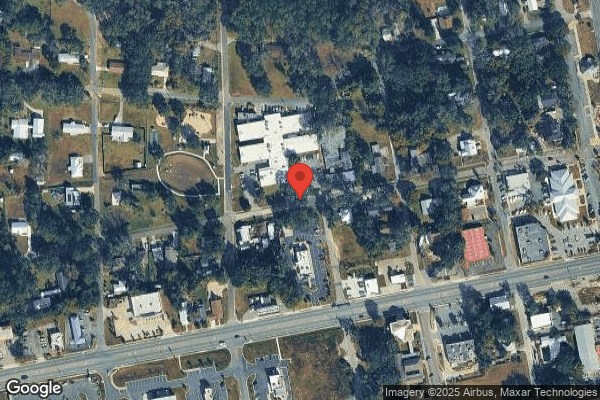

300 NW 1ST AVE, WILLISTON, FL 32696 (352) 528-3561
For profit - Limited Liability company 120 Beds GOLD FL TRUST II Data: November 2025 2 Immediate Jeopardy citations
Trust Grade
24/100
#587 of 690 in FL
Last Inspection: April 2025

Within standard 12-15 month inspection cycle. Federal law requires annual inspections.

Overview

Williston Care Center and Rehab has received a Trust Grade of F, indicating significant concerns and a poor overall quality of care. It ranks #587 out of 690 facilities in Florida, placing it in the bottom half, and is the only nursing home in Levy County. The facility's performance has remained stable, with eight issues reported in both 2024 and 2025, which suggests ongoing problems rather than improvement. While staffing has a below-average rating of 2 out of 5 stars and a turnover rate of 48%, there are critical concerns regarding RN coverage, which is lower than 98% of state facilities. Serious incidents have occurred, including a failure to provide CPR for a resident who was found unresponsive, which did not align with their advanced directives, and issues with meal service not matching residents' preferences, highlighting both serious deficiencies and the need for significant improvements in care.

Trust Score
F
24/100
In Florida
#587/690
Bottom 15%
Safety Record
High Risk
Review needed
Inspections
Holding Steady
8 → 8 violations
Staff Stability
⚠ Watch
48% turnover. Above average. Higher turnover means staff may not know residents' routines.
Penalties
✓ Good
$15,593 in fines. Lower than most Florida facilities. Relatively clean record.
Skilled Nurses
⚠ Watch
Each resident gets only 17 minutes of Registered Nurse (RN) attention daily — below average for Florida. Fewer RN minutes means fewer trained eyes watching for problems.
Violations
⚠ Watch
28 deficiencies on record. Higher than average. Multiple issues found across inspections.
★★☆☆☆
2.0
Overall Rating
★★☆☆☆
2.0
Staff Levels
★★★★★
5.0
Care Quality
★☆☆☆☆
1.0
Inspection Score
Stable
2024: 8 issues
2025: 8 issues

The Good

  • 5-Star Quality Measures · Strong clinical quality outcomes
  • Full Sprinkler Coverage · Fire safety systems throughout facility
  • No fines on record

Facility shows strength in quality measures, fire safety.

The Bad

2-Star Overall Rating

Below Florida average (3.2)

Below average - review inspection findings carefully

Staff Turnover: 48%

Near Florida avg (46%)

Higher turnover may affect care consistency

Federal Fines: $15,593

Below median ($33,413)

Minor penalties assessed

Chain: GOLD FL TRUST II

Part of a multi-facility chain

Ask about local staffing decisions and management

The Ugly 28 deficiencies on record

2 life-threatening
Apr 2025 8 deficiencies
CONCERN (D)

Potential for Harm - no one hurt, but risky conditions existed

Resident Rights (Tag F0550)

Could have caused harm · This affected 1 resident

Based on observation and interview, the facility failed to maintain dignity for a resident who needed assistance with feeding for 1 of 6 residents, Resident #5, reviewed for dining. Findings include: ...

Read full inspector narrative →
Based on observation and interview, the facility failed to maintain dignity for a resident who needed assistance with feeding for 1 of 6 residents, Resident #5, reviewed for dining. Findings include: During an observation on 3/31/2025 at 2:58 PM Staff D, Certified Nursing Assistant (CNA) was observed standing while feeding Resident #5 at bedside. During an observation on 4/02/2025 at 12:51 PM Staff D, CNA, was standing by Resident #5's bedside feeding Resident #5. During an interview on 4/02/2025 at 12:51 PM Staff D, CNA stated, I have a bad back. The CNA then quickly sat down in the chair that was beside her. During an interview on 4/02/2025 at 12:56 PM Staff C, Unit Manager stated, Staff are supposed to sit while assistive feeding. During an interview on 4/03/2025 at 9:16AM the Director of Nursing (DON) stated, There should be good lighting, set the resident up, and sit down to feed the resident. The policy and procedure were requested for assistive dining. The DON stated she did not have a policy on feeding residents, but the standard of care is for staff to sit at eye level to feed residents.
CONCERN (D)

Potential for Harm - no one hurt, but risky conditions existed

Assessment Accuracy (Tag F0641)

Could have caused harm · This affected 1 resident

**NOTE- TERMS IN BRACKETS HAVE BEEN EDITED TO PROTECT CONFIDENTIALITY** 3) Review of Resident #367's Census Data revealed the Resident was admitted to the facility on [DATE]. Review of Resident #367'...

Read full inspector narrative →
**NOTE- TERMS IN BRACKETS HAVE BEEN EDITED TO PROTECT CONFIDENTIALITY** 3) Review of Resident #367's Census Data revealed the Resident was admitted to the facility on [DATE]. Review of Resident #367's medical diagnoses included the following relevant information: Type 2 Diabetes Mellitus without complications; immunodeficiency due to drugs, other fracture of the first lumbar vertebra, subsequent encounter for fracture with routine healing; pyoderma gangrenosum; unspecified protein-calorie malnutrition; rheumatoid arthritis, unspecified; generalized anxiety disorder; brief psychotic disorder; major depressive disorder, single episode, spinal stenosis, lumbar region without neurogenic claudication; fusion of spine, lumbar region; Review of Resident #367's MDS Evaluation, dated 3/18/25 documented the following relevant information: Section C: BIMS Score 15, Section I: The resident's primary medical condition category: Metabolic - Diabetes Mellitus (DM) - No, Section N: N0300. Injections - Record the number of days that injections of any type were received during the last 7 days or since admission/entry or reentry if less than 7 days. - 6; N0350. Insulin - A. Insulin injections - Record the number of days that insulin injections were received during the last 7 days or since admission/entry or reentry if less than 7 days. - 6 Review of Resident #367's physician orders documented an order dated 3/21/25 at 11:17 PM that read, Insulin Aspart FlexPen 100 unit/ml Solution pen-injector Inject subcutaneously two times a day for DM Notify MD [Medical Doctor] for BS [blood sugar] under 70 or above 450 - Inject as per sliding scale: if 0 - 59 give sugar containing beverage if able or glucagon; 60 - 199 = 0 units; 200 - 224 = 3 units; 225 - 249 = 4 units; 250 - 274 = 5 units; 275 - 299 = 6 units; 300 - 324 = 7 units; 325 - 349 = 8 units; 350 - 374 = 9 units; 375 - 399 = 10 units; 400 - 424 = 11 units; 425 - 449 = 12 units; 450 - 700 = 14 units. Call MD for 450 and above, subcutaneously two times a day for diabetes. During an interview on 4/3/2025 at 10:27 AM, the Director of Nursing (DON) stated she expects to see that residents' Minimum Data Set (MDS), specifically Section I, would document Diabetes Mellitus as an active diagnosis. During an interview on 4/3/2025 at 1:10 PM, Staff G, MDS Coordinator, stated that she would expect to see diabetes documented in Section I and under Section I the resident's primary medical condition category: Metabolic - Diabetes Mellitus (DM) It says 'no,' and it should say, 'yes.' During an interview on 4/3/2025 at approximately 3:30 PM, Staff G, MDS Coordinator stated that they do not have a specific policy related to the completion of MDS Evaluations, that they use the Resident Assessment Instrument (RAI) Manual, and that it has everything they need. Based on record reviews and interviews, the facility failed to accurately assess the resident status for 3 of 9 residents, Residents #31, #54, and #367) reviewed for accuracy of assessments. Findings include: 1) Review of the annual Minimum Data Set (MDS) dated [DATE] section C for Resident #54 read, BIMS (Brief Interview for Mental Status as a score of 00, indicating severe cognitive impairment. Review of annual Minimum Data Set (MDS) dated [DATE] section J for Resident #54 read, Current tobacco - Yes. During an interview on 4/1/2025 at 4:06 PM Staff H, MDS Nurse stated, The resident [Resident #54] is not a smoker and the documentation in the MDS in section J, was documented in error. 2) Review of the medical diagnosis for Resident #31documented a diagnosis of acute respiratory failure with hypercapnia (a condition where there's an abnormally high level of carbon dioxide in the blood). Review of a physician order for Resident #31 read, Continuous O2 (oxygen) at 3 Liters per Minute (L/min) via NC (nasal canula) q (every) shift. Review of the annual (MDS) dated [DATE] section O for Resident #31 read, oxygen therapy-no. Review of the most recent Care Plan for Resident #31 read, (Resident #31's first name) has a potential for complications of respiratory distress. Interventions: Administer O2 as order. During an interview on 4/3/2025 at 1:20PM Staff G, MDS Nurse, stated, The resident [Resident #31] is on continuous oxygen therapy and the documentation in the MDS in section O, was documented in error.
CONCERN (D)

Potential for Harm - no one hurt, but risky conditions existed

Comprehensive Care Plan (Tag F0656)

Could have caused harm · This affected 1 resident

**NOTE- TERMS IN BRACKETS HAVE BEEN EDITED TO PROTECT CONFIDENTIALITY** 3) During an observation on 3/31/2025 at 10:02 AM Staff F Registered Nurse (RN) was speaking to Resident #33 in Spanish. During...

Read full inspector narrative →
**NOTE- TERMS IN BRACKETS HAVE BEEN EDITED TO PROTECT CONFIDENTIALITY** 3) During an observation on 3/31/2025 at 10:02 AM Staff F Registered Nurse (RN) was speaking to Resident #33 in Spanish. During an interview on 4/1/2025 at 3:56 PM with Staff G, Minimum Data Set (MDS) Coordinator stated, [Resident #33's name] speaks some English but he is not fluent in English. The best language to communicate with him would be Spanish. During an interview on 4/1/2025 at 2:30 PM with Staff C, License Practical Nurse (LPN) Unit Manager stated, In the afternoon [Resident #33's name] is a bit more confused and will reply in Spanish. During an interview on 4/2/2025 at 9:57 AM with Staff D Certified Nursing Assistant (CNA) stated, [Resident #33's name] can speak some English but if we cannot understand him. I will go get a therapist that speaks Spanish or even use a phone that will translate. Review of Resident #33's care plan did not document for focus, goals, or interventions for communication in Spanish. Review of Resident #33's Nursing admission assessment dated [DATE] read, F. Communication: 1. Communication: g. interpreter needed-foreign language .2. Primary Language: b. Spanish. 4) During an observation on 3/31/25 at 10:02 AM Resident #33 was wandering the hall of the unit and was cleaning the floors with a paper napkin. Resident #33 was repeatedly observed walking the hallway. During an observation on 4/1/2025 at 8:44 AM Resident #33 was cleaning the floor with a white paper napkin. Review of Resident #33's care plan did not document for focus, goals, and interventions related to the resident's behavior of cleaning the unit and collecting trash. During an interview on 4/2/2025 at 11:23 AM with APRN #2 stated, [Resident #33's name] likes to clean and keep active. The behaviors he is having are his preferences and not causing distress to himself or any resident. During an interview on 4/3/2025 at 9:26 AM the Director of Nursing (DON) stated, [Resident #33's name] overall is helpful and likes to keep busy by picking up trash and cleaning, no negative behaviors. The staff will redirect the residents due to safety. I do not see Resident #33 care plan for these behaviors, and it should be. During an interview on 4/3/2025 at 1:17 PM with Staff G MDS Coordinator stated, I do not see a focus for [Resident #33's name] for interpreter services due to language preferences at times and for his behaviors of cleaning due to safety. 5) Review of Resident #66 progress note dated 3/3/2025 read, Resident signed out of facility and was found at gas station near facility intoxicated. Slurred speech and alcohol smell noted. Review of Resident #66's progress note dated 3/6/2025 read, Resident was out returned to facility drunk. Resident admitted drinking. Review of Resident #66's progress note dated 3/15/2025 read, Resident was out, returned he had been drinking MD [Medical Doctor] called. To hold Pregabalin this evening, as per MD's orders. Review of Resident #66's progress note dated 3/20/2025 read, Resident returned to facility very drunk, slurred speech, walking unsteady, [Medical Doctor #1's name] called, wants meds held. Resident lying in bed at this time. During an interview on 4/2/2025 at 7:41 AM the Director of Nursing stated, [Resident #66's name] for the last month or two has started getting drunk. He is coming back with that haze with that drunk look, and you can kind of smell it but does not bring the alcohol into the facility. We reached out to the doctor, and he addressed it with him. [Resident #66's name] is denying he is drinking. I would expect this behavior to have been care planned. During an interview on 4/2/2025 at 11:21 AM the Advance Practice Registered Nurse #2 stated, The facility notified me that [Resident #66's name] was drinking and has had increased depression. He denied he was drinking, and he did not want to make changes. Resident #66 was not suicidal or raised any concern. I offered psychotherapy and every time he denied issues with drinking. During an interview on 4/3/2025 at 1:18 PM Staff G, MDS Coordinator stated, [Resident #66's name] should be care planned with a focus for his behaviors regarding drinking. I do not see that as part of his focus. Review of the policy and procedure titled Comprehensive Assessments and Care Plans with a last review date of 1/31/2025 read, Standards: It will be the standard of this facility to make a comprehensive assessment of a resident's needs, strengths, goals, life history and preferences, using the resident assessment instrument (RAI) specified by CMS [Centers for Medicare and Medicaid]. Guidelines: 1. The facility will conduct initially and periodically a comprehensive, accurate standardized reproducible assessment of each resident's functional capacity. 2) Review of Resident #367's Census Data documented the resident was admitted to the facility on [DATE]. Review of Resident #367's medical diagnoses included Type 2 Diabetes Mellitus. Review of Resident #367's physician orders documented an order dated 3/21/25 at 11:17 PM that read, Insulin Aspart FlexPen 100 unit/ml Solution pen-injector Inject subcutaneously two times a day for DM Notify MD [Medical Doctor] for BS [blood sugar] under 70 or above 450 - Inject as per sliding scale: if 0 - 59 give sugar containing beverage if able or glucagon; 60 - 199 = 0 units; 200 - 224 = 3 units; 225 - 249 = 4 units; 250 - 274 = 5 units; 275 - 299 = 6 units; 300 - 324 = 7 units; 325 - 349 = 8 units; 350 - 374 = 9 units; 375 - 399 = 10 units; 400 - 424 = 11 units; 425 - 449 = 12 units; 450 - 700 = 14 units. Call MD for 450 and above, subcutaneously two times a day for diabetes. Review of Resident #367's care plan did not contain a focused plan of care with goals and interventions related to the resident's diagnosis and treatment of Diabetes Mellitus. During an interview on 4/3/25 at 10:27 AM, the Director of Nursing (DON) stated that she expected to see Diabetes Mellitus as an active diagnosis, and be reflected on the resident's care plan. During an interview on 4/3/25 at 1:10 PM, Staff H, Minimum Data Set (MDS) Coordinator stated It's not there [the diagnosis of Diabetes Mellitus]. Somehow, we missed it for [Resident #367's name's] care plan. During an interview on 4/3/25 at 1:12 PM, Staff H, MDS Coordinator stated that a focus, goal, or intervention related to Diabetes Mellitus was not on Resident #367's Care Plan. Based on record reviews and interviews, the facility failed to develop and implement a comprehensive person-centered care plan that addressed the residents' medical, physical, mental and psychosocial needs for 4 of 9 residents, Resident numbers #31, #33, #66, and #367, reviewed for comprehensive care plans. Findings include: 1) Review of medical diagnosis for Resident #31 revealed a diagnosis of major depressive disorder, generalized anxiety disorder and persistent mood disorder. Review of the [Name of the organization that provides behavioral health/psychiatric and psychotherapy services] progress note dated 3/19/2025 for Resident #31 read, Chief Complaint: depression, anxiety, insomnia and mood disorder. During an interview on 4/2/2025 at 11:22 AM, APRN (Advanced Practice Registered Nurse) #2 stated, The Resident does have diagnosis and receives treatment for major depressive disorder, generalized anxiety disorder and persistent mood disorder. During an interview on 4/2/2025 at 12:20 PM Resident #31 stated, I have been diagnosed with anxiety and depression for about 12-13 years. Review of Resident #31's care plan did not contain a focused plan of care with goals and interventions related to the resident's diagnosis and treatment of major depressive disorder, generalized anxiety disorder and persistent mood disorder. During an interview on 4/2/2025 at 12:47 PM the DON stated, I am aware of [Resident #31 name] has a diagnosis of major depressive disorder, generalized anxiety disorder and persistent mood disorder and would expect that the resident would be care planned for those diagnosis.
CONCERN (D)

Potential for Harm - no one hurt, but risky conditions existed

ADL Care (Tag F0677)

Could have caused harm · This affected 1 resident

Based on observations, interviews and record reviews, the facility failed to provide nail care services for dependent residents for 1 of 5 residents, Resident #54, reviewed for activities of daily liv...

Read full inspector narrative →
Based on observations, interviews and record reviews, the facility failed to provide nail care services for dependent residents for 1 of 5 residents, Resident #54, reviewed for activities of daily living (ADL). Findings include: During an observation on 3/31/2025 at 10:05 AM Resident #54 was observed to have a large amount of a brown substance under the fingernails of both of her hands. During an observation on 4/1/2025 at 10:51 AM Resident #54 was observed to have a large amount of a brown substance under the fingernails of both of her hands. During an observation on 4/2/2025 at 9:20 AM Resident #54 was observed to have a large amount of a brown substance under the fingernails of both of her hands. During an interview on 4/2/2025 at 11:12 AM Staff O, Certified Nursing Aide (CNA) stated, Her (Resident #54) nails are dirty and do not look like they have been cleaned recently. During an interview on 4/2/2025 at 12:37 PM the DON (Director of Nursing) stated, My expectations are a dependent resident should have their nails cleaned with their ADL care. Review of medical diagnosis on 4/2/2025 at 2:04 PM for Resident #54 included but not limited to diagnoses of muscle weakness, dementia and osteoarthritis. Review of the annual Minimum Data Set (MDS) section C dated 2/15/2025 for Resident #54 read, Brief Interview for Mental Status (BIMS) score of 00, indicating severe cognitive impairment. Review of the annual MDS section E dated 2/15/2025 for Resident #54 read, Rejection of care - Behavior not exhibited. Review of the annual MDS section GG dated 2/15/2025 for Resident #54 read, that the Resident is dependent for showers/bathing and personal hygiene. Review of Resident #54's Care Plan dated 2/26/2025 read, Focus: [Resident #54's first name] has self-care deficits with dressing, grooming, bathing related to cognitive deficit as a result of dementia. Review of policy and procedure P&P Nail Care dated 4/1/2022 read, Policy: It will be the policy of this facility to provide nail care to residents per resident preference and to maintain dignity. Procedure: 3. Nail care includes regular cleaning and trimming.
CONCERN (D)

Potential for Harm - no one hurt, but risky conditions existed

Unnecessary Medications (Tag F0759)

Could have caused harm · This affected 1 resident

Based on observation, interview and record review the facility failed to ensure it is free of medication errors of five percent or greater for 2 of 33 observations of medication administration, the er...

Read full inspector narrative →
Based on observation, interview and record review the facility failed to ensure it is free of medication errors of five percent or greater for 2 of 33 observations of medication administration, the error rate was 6.06%. Findings include: During an observation on 4/2/2025 at 8:18 AM of Staff B License Practical Nurse (LPN) for Resident #416's medication administration, Staff B removed one tablet of Amiodarone 100 mg (milligrams), one tablet empagliflozin 10 mg, one tablet Ferex 150 plus, half a tablet of spironolactone 12.5 mg, two tablets of Bumex 2mg, one tablet of Eliquis 5 mg, on tablet of Entresto 49-51mg, and one tablet of metoprolol 25 mg placing the medications into a clear medication cup. Staff B entered Resident #416's room and administered all the medications in the medication cup. Staff B returned to the medication cart and signed off the administration of the medications as listed. Review of Resident #416's physician order dated 3/25/2025 read, Amiodarone HCI Tablet 100 mg (Amiodarone HCI) give 200 mg by mouth one time a day for htn [hypertension]. During an interview on 4/3/2025 at 8:24 AM with Staff B LPN stated, I should have given two tablets instead of just one because each tablet is 100 mg and the order reads to give 200 mg. During an interview on 4/3/2025 at 9:00 AM the Director of Nursing (DON) stated, Not giving the correct dosage amount is a medication error and staff would need to contact the doctor because she should have given two tablets instead of one. The admitting nurse copies the orders; calls the doctor who approves or makes changes. Staff are to compare the medication to the medication administration record and do the three checks and compare multiple times and compare it is the right dose and medication. The staff are expected to follow physician orders. During an interview on 4/3/2025 at 10:42 AM Medical Doctor #1 stated, Medication is for rate control. We try to tamper down due to the toxicity of the medication half a dose or even missing one dose will not cause his heart rate to spike. Anytime they do not give a medication, it is a medication error. Nurses should follow the physician orders. During an observation on 4/3/2025 at 8:40 AM Staff E, LPN was administering medication to Resident #67. Staff E, LPN placed one tablet of Vitamin D 1000 unit into a medication cup. Review of Resident #67's physician orders dated 9/4/2024 read, Vitamin D3 Tablet 5000 Units, give 1 tablet by mouth one time a day for supplement. Give w/ [with]1000 iu [international unit] to equal 6000 iu. During an interview on 4/3/2025 at 8:49 AM with Staff E LPN stated, It should be 1000 unit of Vitamin D3 not Vitamin D. We don't use a lot of Vitamin D3 so I was not sure. During an interview on 4/3/2025 at 9:13 AM the DON stated, The nurse should have pulled a Vitamin D3 1000 unit not a vitamin D 1000 unit it is not equivalent. Review of the policy and procedure titled Medication Errors with a last review date 1/31/2025 read, Policy: It will be the policy of this facility that the staff and practitioner shall try to prevent medication errors and adverse medication consequences and shall stive to identify and manage them appropriately when they occur. Review of the policy and procedures titled Medication Administration with a last review date of 1/31/2025 read, Policy: It will be the policy of the facility to administer medications in a timely manner and as prescribed by the physician, unless other wised clinically indicated or necessitated by other circumstances such as lack of availability of medication or refusals of medication by resident.
CONCERN (D)

Potential for Harm - no one hurt, but risky conditions existed

Deficiency F0761 (Tag F0761)

Could have caused harm · This affected 1 resident

2) During an observation on 3/31/2025 at 10:23 AM with Staff F Registered Nurse (RN) of [NAME] -1 Medication Cart there was one open bottle of glucose strips that did not have an open date and one ins...

Read full inspector narrative →
2) During an observation on 3/31/2025 at 10:23 AM with Staff F Registered Nurse (RN) of [NAME] -1 Medication Cart there was one open bottle of glucose strips that did not have an open date and one insulin aspart pen with an expiration date of 3/29. During an interview on 3/31/2025 at 10:27 AM with Staff F stated, Glucose strips should be labeled when opened with an open date and any expired medications should be removed from medication cart and disposed of. 3) During an observation on 3/31/2025 at 10:38 AM with Staff L, License Practical Nurse (LPN) of the Medication Cart North-2 there were three loose medications in the medication drawer and an expired Fluticasone inhalation powder with an expiration date of 3/30. During an interview on 3/31/2025 at 10:39 AM Staff L, LPN stated, There should not be any loose medication in the medication cart if they fall when pouring medication they should be disposed. Any expired medication should not be kept in the mediation cart. 4) During an observation on 3/31/2025 at 2:00 PM of Resident #51's room it showed the resident was sitting at bedside. On top of the resident's bedside table there was a medication cup containing white powder. During an interview on 3/31/2025 at 2:00 PM Resident #51's spouse stated, The nurses apply that [white powder in the medication cup] to her groin area for redness. 5) During an observation on 4/2/2025 at 4:24 PM with Staff M, RN and Staff N, LPN the medication room on the North wing could be observed. There was a small backpack, a large tumbler, and a large bag containing a coca cola bottle that was visible. During an interview on 4/2/2025 at 4:24 PM Staff N, LPN stated, Medication rooms should not be used to store personal ideas or food. The staff have a staff lounge where they can keep those items. During an interview on 4/3/2025 on 9:17 AM the Director of Nursing stated, When opening glucose strip bottles they should be labeled with an open date. Any expired medication should be disposed and not be in the medication cart. I normally like to remove the medication from the cart a day before expiring because staff might forget and give it. Medication rooms should not store any personal items, no drinks or food and medication should not be left unattended in the room. Review of the policy and procedure titled Medication/Biological Storage with a last review date of 1/31/2025 read, Policy: It will be the policy of this facility to store medications, drugs and biologicals in a safe, secure, and orderly manner. Procedure: 2. The nursing staff shall be responsible for maintaining mediation storage and preparation areas in a clean, safe, and sanitary manner. Based on observations, interviews, and record review the facility failed to ensure drugs and biologicals used in the facility were stored and labeled in accordance with accepted professional principles for 2 of 4 medication carts and 1 of 4 hallways reviewed for unattended medication and labeling. Findings include: 1) During an observation on 3/31/25 at 11:20 AM of Resident #318 it showed the resident had a PICC (peripherally inserted central catheter) line to the upper left arm. There was IV (intravenous) tubing that was not dated and an IV-cefriaxone (used to treat bacterial infections) solution medication bag that was not labeled with the date and time. During an interview on 3/31/2025 at 12:52 PM Staff F, Registered Nurse (RN) stated, The IV tubing hanging from the I/V pole for [Resident #318's name] should have a label with a date and time it was hung. During an interview on 4/03/25 at 09:16 AM the Director of Nursing (DON) stated, Staff should have labeled the medication bag and the IV tubing. Review of the policy and procedure titled IV Infusions with a last review date 1/31/2025 read, 6. Administer IV medications, fluids and flushes per physician orders. Applicable labeling of resident identifier and date(s) of administration should be present on the IV medication and tubing, as is appropriate.
CONCERN (D)

Potential for Harm - no one hurt, but risky conditions existed

Medical Records (Tag F0842)

Could have caused harm · This affected 1 resident

Based on observation, interview and record review, the facility failed to maintain complete and accurately documented medical records for 1 of 6 residents, Resident #66 reviewed for medication review ...

Read full inspector narrative →
Based on observation, interview and record review, the facility failed to maintain complete and accurately documented medical records for 1 of 6 residents, Resident #66 reviewed for medication review and 1 of 3 residents, Resident #31 reviewed for weights. Findings include: 1) Review of Resident #66's physician order dated 3/1/2025 read, Insulin Apart FlexPen 100 unit/ml [100 unit per milliliter] solution pen-injector inject as per sliding scale. Review of Resident #66 Medication Administration Record for the month of March 2025 documented Insulin Apart at 0630 [6:30 AM] on 3/27/2025 was blank, at 1630 [4:30PM] on 3/15/2025 and 3/28/2025 the entry was blank, on 3/12/2025 at 2100 [9:00 PM] the entry was blank, and no blood sugar levels or insulin coverage was documented. Review of Resident #66's progress note dated 3/28/2025 read, Resident went out today. Returned drunk slurred speech, unsteady gait. Meds held per md's [Medical Doctor's] orders. Review of Resident #66 Release of Responsibility for leave of absence form documented on 3/15/2025 at 2:04 PM Resident #66 signed himself out of the facility and returned on 3/15/2025 at 6:51 PM. During an interview on 4/1/2025 at 4:30 PM Staff P, Licensed Practical Nurse (LPN) stated, [Resident #66's name] came back to the facility and he had been drinking. I contacted the provider, and he said to hold Resident #66's medications. On 3/12/2025 I think I was not able to wake him up and I called the provider. I should have documented something in the progress notes I don't know if I did. I should have also coded the medication record accordingly instead of leaving it blank. During an interview on 4/1/2025 at 4:47 PM Staff Q, LPN stated, When I work with [Resident #66's name] he always gets his insulin. I do not know why the entry for 3/7/2025 is blank, it might not have saved, but I always give him his insulin. During an interview on 4/1/2025 at 4:42 PM Medical Doctor #1 stated, Nursing staff have contacted me when [Resident #66's name] has come back to the facility and they suspect he is intoxicated. I expect nurses to do blood sugars if they are able to. I do not think it is critical if they are not able to check his blood sugars. During an interview on 4/2/2025 at 7:45 AM the Director of Nursing stated, [Resident #66's name] had signed out on 3/15/2025 during the time of administration. The nursing staff are expected to accurately document on the medication record and use the appropriate code. The nurse should not leave blank entries on the medication record. Review of the policy and procedure titled Charting and Documentation with a last review date of 1/31/2025 read, Policy: It is the policy of this facility that services provided to the resident, or any changes in the resident's medical or mental condition, shall be documented in the resident's clinical record as is needed. Procedures: 1. Observations, medication administration, services performed, ect., should be documented in the resident's clinical records. 2) Review of the medical diagnosis for Resident #31 documented a diagnosis of diastolic (congestive) heart failure. Review of Resident #31's physician order dated 10/21/2024 read, Check weight every other day related to diastolic heat failure. Review of documented weights for March 2025 for Resident #31, did not contain documentation for weights on the following days, March 10, 12, 16, 18, 20 and 24. During an interview on 4/2/2025 at 3:24 PM Staff K, Certified Nursing Assistant (CNA) stated, I recall having (Resident #31's name) and weighing her but I must of forgot to document it. During an interview on 4/2/2025 at 12:47 PM the DON stated, My expectations are that the CNA's would weigh the residents as order.
CONCERN (D)

Potential for Harm - no one hurt, but risky conditions existed

Infection Control (Tag F0880)

Could have caused harm · This affected 1 resident

2) During an observation on 3/31/25 at 9:55 AM, Resident #29 was lying in a bariatric bed; dressed in a hospital gown and wearing a brief. Both of the resident's feet were propped up on pillows, and t...

Read full inspector narrative →
2) During an observation on 3/31/25 at 9:55 AM, Resident #29 was lying in a bariatric bed; dressed in a hospital gown and wearing a brief. Both of the resident's feet were propped up on pillows, and there was a Podus Boot (designed to support and position the ankle and foot) on his right foot. During an interview on 3/31/25 at 9:55 AM, Resident #29 stated that he wore briefs and that he required assistance from the staff for his Activities of Daily Living (ADL) needs. During an observation on 4/2/25 at 9:25 AM, Staff A, Certified Nursing Assistant (CNA) performed peri-care for Resident #29. Staff A did not remove her gloves and perform hand hygiene. Staff A opened a drawer in Resident #29's dresser, pulled out a tube of ointment, and applied some to Resident #29's sacrum and buttocks. After applying the ointment for Resident #29, while still wearing her soiled gloves, Staff A picked up the wash basin, emptied the water out of the basin and placed the basin, soap and ointment in the drawers of the resident's dresser. During an interview on 4/2/25 at 9:38 AM, Staff A, CNA stated, I should have changed my gloves and washed my hands after I dumped the basin, before putting away the ointment and soap. During an interview on 4/2/25 at 9:42 AM, the Director of Nursing (DON) stated that she would expect the staff member to remove their gloves after completing the catheter and/or peri-care, wash their hands, and don new gloves before cleaning the area or touching and/or putting away supplies. Review of the policy and procedure titled Perineal/Incontinence Care, issued 4/1/22, and last reviewed/revised 1/31/25, read, Policy: It will be the policy of this facility to provide cleanliness and comfort to the resident, to prevent infections and skin irritation, and to observe the resident's skin condition and provide appropriate care and services required to maintain functional levels while providing perineal/incontinence care. 3) During an observation on 3/31/25 at 2:55 PM, Resident #15 was sitting up in a wheelchair next to her bed. A urinary drainage bag was observed hanging off of the side of her wheelchair. During an observation on 4/2/25 at 8:18 AM, Staff A, CNA performed catheter care for Resident #15. After completing catheter care, the CNA did not remove her gloves, did not perform hand hygiene, and while still wearing her soiled gloves, she picked up the wash basin, wiped Resident #15's overbed table, emptied the water out of the basin and placed the basin in a drawer of the resident's dresser. During an interview on 4/2/25 at 9:38 AM, Staff A, CNA stated, I should have changed my gloves and washed my hands after I dumped the basin, and before putting away the soap. During an interview on 4/2/25 at 9:42 AM, the DON stated that for residents with a catheter they would be on Enhanced Barrier Precautions, and for catheter care the expectation would be for the staff member to wash their hands, don a gown and gloves, and have all necessary supplies available. She stated that she would expect the staff member to remove their gloves after completing the catheter and peri-care, wash their hands, and don new gloves before cleaning the area, touching and/or putting away supplies. Review of Resident #15's physician order documented Enhanced Barrier Precautions when providing Direct Care to resident (Gown and Gloves) - every shift for infection prevention (indwelling catheter); Catheter care with soap and water daily and as needed every evening shift for prophylaxis. Review of Resident #15's Care Plan documented Focus - [Resident #15's name] is at risk for infection and enhanced barrier precautions (EBP) are indicated due to: indwelling medical devices (specify - urinary catheter). Goals - Risk of infection will be reduced through use of enhanced barrier precautions daily through next review date. Interventions - Educate resident/family on the need for enhanced barrier precautions to reduce risk of infections. Employ enhanced barrier precautions when performing high contact resident care (dressing, bathing, transferring in room/shower/therapy, personal hygiene assist, changing linens, changing briefs, toileting, device care, wound care, therapy services) Review of the policy and procedure titled Indwelling Catheters, issued 4/1/22, last reviewed on 1/31/25, read, Policy It will be the policy of this facility to provide appropriate documentation for the use and care for indwelling catheters of the residents that have the indication for use beyond 14 days. Procedure: 8. Staff will provide daily catheter care or as ordered by the physician and/or needed. Catheter care should be provided in a manner that promotes infection control and maintenance of the insertion site. Based on observation, interview and record review the facility failed to prevent the possible spread of infection for failing to perform hand hygiene for 2 of 7 residents, Residents #15 and #29, reviewed activities of daily living and for 1 of 7 residents, Resident #416, reviewed during medication administration. Findings include: 1) During an observation on 4/2/2025 at 8:03 AM Staff B License Practical Nurse (LPN) did not perform hand hygiene and began to retrieve Resident #416's ceftazidime (used to treat bacterial infections) intravenous solution, normal saline flush, alcohol wipes and IV (intravenous) tubing. Staff B, LPN did not perform hand hygiene, donned a gown, gloves, and entered Resident #416's room. Staff B, LPN placed the supplies on the resident's bedside tablet without sanitizing or placing a barrier on the table, opened the IV tubing bag, untangled the tubing, removed a blue cover top from the connector site of the IV tube placing the cap on top of Resident #416's bedside table. Staff B, LPN connected the tubing to the IV medication bag and primed the tubing (to fill the tubing with fluid to remove the air bubbles). Staff B, LPN reconnected the cap to the end of the tubing. Staff B, LPN removed the Curos cap (a single-use device containing a foam pad impregnated with 70% isopropyl alcohol) from Resident # 416 needleless connector and proceeded to connect the IV tubing to the needless connector. During an interview on 4/2/22025 at 8:18 AM Staff B, LPN stated, I should have done hand hygiene before starting to remove the medication from the medication cart. I also should have placed a barrier on top of [Resident #416's name] bedside table and sanitized the tubing before connecting it to the Residents PICC [peripherally inserted central catheter) line. During an interview on 4/02/2025 at 9:24 AM the Director of Nursing stated, Typically when you pull the medication you will document immediately when you come out of the room and not prior to because they might refuse. The medication should be given an hour before and hour after. She should have done hand hygiene and she should have had a barrier down and sanitize and cleaned with alcohol. Review of the policy and procedure titled Hand Hygiene with a last review date of 1/31/2025 read, Policy: This facility considers hand hygiene the primary means to prevent the spread of infections. Procedure: 5. Use an alcohol-based hand rub containing at least 62% alcohol; or alternatively, soap (antimicrobial or non-antimicrobial) and water for the following situations: b. Before and after direct contact with residents; e. Before and after handling an invasive device (e.g. urinary catheters, IV access sites).
Jan 2024 8 deficiencies
CONCERN (D)

Potential for Harm - no one hurt, but risky conditions existed

Notification of Changes (Tag F0580)

Could have caused harm · This affected 1 resident

Based on record review, interview, and review of policies and procedures the facility failed to consult with the physician and/or resident representative when there was a change of condition for 2 of ...

Read full inspector narrative →
Based on record review, interview, and review of policies and procedures the facility failed to consult with the physician and/or resident representative when there was a change of condition for 2 of 4 residents, Residents #47 and #361, reviewed for changes in condition in a total sample of 37 residents. Findings include: Review of the admission record for Resident #47 documented diagnosis that include type II diabetes mellitus, chronic pancreatitis, gastroparesis, gastroesophageal reflux disease, essential tremor, and major depressive disorder. Review of the physician orders for Resident #47 dated 10/22/2023 read, Humalog injection solution inject as per sliding scale. Inject subcutaneously before meals and at bedtime. If less than 70, notify MD [Medical Doctor], follow hypoglycemia [a low blood sugar result] protocol. Inject as per sliding scale, 201-250 = 2 units, 251-300 = 4 units, 301-360 = 8 units, greater than 400, administer 10 units and notify MD. Review of the January 2024 medication administration record (MAR) for Resident #47 documented a blood sugar of 48 at 6:30 AM on 1/5/2024, a blood sugar of 54 documented on 1/6/2024 at 6:30 AM, and a blood sugar of 64 documented on 1/10/2024 at 6:30 AM. Review of the nursing progress notes for Resident #47 did not provide for documentation of the physician or the resident's representative being notified of Resident #47's blood sugar results of less than 70 per the MD orders for the month of January 2024, and the record did not contain Interact Change of Condition forms documenting notification to the resident's representative or the resident's physician of the low blood sugar results. Review of the December 2023 MAR for Resident #47 documented a blood sugar of 60 on 12/16/2023 at 6:30 AM, a blood of 44 documented on 12/21/2023 at 6:30 AM, and a blood sugar of 53 documented on 12/27/2023 at 6:30 AM. Review of the nursing progress notes for Resident #47 did not provide documentation of the physician or the resident's representative being notified of the blood sugar results of less than 70 per the MD orders for the month of December 2023, and the record did not contain Interact Change of Condition forms documenting notification to the resident's representative or the resident's physician of the low blood sugar results. During an interview on 1/11/2024 at 10:55 AM the Director of Nursing (DON) stated, All the low blood sugars should have been called to the doctor. I can't find any notification to the doctor in the chart. There are no nurses' notes about this. They should have followed the doctors' orders, and they didn't. During an interview on 1/11/2023 at 2:00 PM Staff G, Registered Nurse, (RN) stated, I remember that her [Resident #47] blood sugar was 48, she was on her cell phone, and I didn't see any concerns. I should have notified the doctor. I can't tell you why I didn't. I was not following the doctors' orders. Review of the policy and procedure titled, Diabetes/hypo/hyperglycemia [low/high blood sugar] with an issue date of 4/1/2022, last approval date of 8/12/2023 read, It will be the policy of this facility to provide appropriate care to residents with diabetes mellitus. Nursing measures and physician orders will be implemented to minimize the risk of hypo/hyperglycemia. 5. Staff will provide glucose [sugar] monitoring, medication administration, laboratory testing and diet per physician orders.7. Staff should report signs and symptoms of hypoglycemia to the physician. Many residents receiving insulin or oral hypoglycemics have parameters as to when the physician should be notified. 14. Document pertinent information regarding medication administration, changes in condition, education, or interventions in the clinical record. 2. Review of the admission record for Resident #361 documented diagnoses that include chronic obstructive pulmonary disease, asthma, type II diabetes mellitus, and essential primary hypertension. Review of the admission MDS (Minimum Data Set) for Resident #361 dated 1/5/2024 documented a BIMS (Brief Interview of Mental Status) as a 03, (suggests severe cognitive impairment). Review of the nursing progress note for Resident #361 dated 1/6/2024 at 8:21 AM read, Patient had a fall attempting to get up from his chair. Patient was checked and assessed, he denies any pain. No injuries observed. Vital signs within normal limits, b/p [blood pressure] 116/64, pulse 80, resp [respirations] 18 temp [temperature] 97.5. Review of the medical record for Resident #361 did not provide for documentation of the resident's representative being notified of the resident having suffered a fall. Review of the nursing progress note for Resident #361 dated 1/9/2024 at 1541 (3:41 PM) documented the physician was notified of the resident's fall, but the record did not contain documentation of the resident's representative being notified of the resident's fall.
CONCERN (D)

Potential for Harm - no one hurt, but risky conditions existed

Comprehensive Care Plan (Tag F0656)

Could have caused harm · This affected 1 resident

Based on observation, interview, and record review the facility failed to implement a person-centered comprehensive care plan for respiratory care for 2 of 3 residents, Resident #96 and #7, reviewed f...

Read full inspector narrative →
Based on observation, interview, and record review the facility failed to implement a person-centered comprehensive care plan for respiratory care for 2 of 3 residents, Resident #96 and #7, reviewed for respiratory care services out of a total sample of 37 residents. Findings include: Review of the admission record for Resident #96 documented diagnosis to include chronic obstructive pulmonary disease (COPD), chronic systolic congestive heart failure (CHF), acute respiratory distress, and essential primary hypertension. Review of the physician orders for Resident #96 dated 10/21/2023 read, Continuous O2 [oxygen] at 3 LPM [liters per minute] via nasal cannula as needed for respiratory distress. Review of the written plan of care for Resident #96 read, [Resident #96's name] has a potential for complications of respiratory distress r/t [related to] dx [diagnosis] of COPD and CHF. Interventions: Administer O2 as ordered (3 liters) During an observation on 1/8/2024 at 11:09 AM Resident #96 was observed in bed with oxygen being administered by a concentrator at 4 liters via nasal cannula. During an observation on 1/10/2024 at 12:16 PM Resident #96 was observed in bed with oxygen being administered by a concentrator at 3.5 liters via nasal cannula. During an interview on 1/10/2024 at 12:30 PM Staff H, Licensed Practical Nurse (LPN) stated, The oxygen is running at, I think, 3-3.5 liters. We should follow the orders and the care planned interventions when running oxygen. He is care planned for oxygen at 3 liters. During an interview on 1/11/2023 at 10:52 AM the Director of Nursing (DON) stated, We should administer oxygen at the ordered rates, and we should follow the care plans and the care planned interventions. 2. Review of the admission record for Resident #7 documented diagnosis to include chronic COPD, chronic respiratory failure with hypoxia, hypertensive heart failure, and heart failure. Review of the physician orders for Resident #7 dated 8/9/2023 read, Ipratropium-Albuterol inhalation solution 0.5-2.5 3 mg/3 ml [3 milligrams per 3 milliliters] inhale orally three times a day for COPD. Review of the written plan of care for Resident #7 read, [Resident #7's name] has a potential for complications of respiratory distress r/t dx of COPD, CHF. Interventions: Administer O2 as ordered. (3 Liters, store respiratory equipment in infection control bag when not in use; change q [every] week and prn [as needed]. During an observation on 1/8/2024 at 10:36 AM Resident #7 was observed at bedside with oxygen being administered via nasal cannula. A passive nebulizer (respiratory equipment), was sitting on the nightstand with unlabeled tubing and no infection control bag to store the nebulizer when not in use. During an interview on 1/8/2023 at 11:00 AM Staff C, LPN stated, I don't know why the passive nebulizer isn't in a bag, it should be. During an interview on 1/11/2023 at 10:52 AM the Director of Nursing (DON) stated, We should have all respiratory care equipment in a bag, and we should be following our care planned interventions. There is no policy that I know of for this.
CONCERN (D)

Potential for Harm - no one hurt, but risky conditions existed

Quality of Care (Tag F0684)

Could have caused harm · This affected 1 resident

Based on record review, interview, and review of the facility policies and procedures the facility failed to ensure residents who required blood glucose monitoring received treatment in accordance wit...

Read full inspector narrative →
Based on record review, interview, and review of the facility policies and procedures the facility failed to ensure residents who required blood glucose monitoring received treatment in accordance with professional standards of practice by failing to document, assess and treat hypoglycemia (low blood sugar) for 1 of 3 residents, Resident #47, reviewed for insulin administration. Findings include: Review of the admission record for Resident #47 documented diagnosis to include type II diabetes mellitus, chronic pancreatitis, gastroparesis, gastroesophageal reflux disease, essential tremor, and major depressive disorder. Review of the physician orders for Resident #47 dated 7/7/2023 read, For blood sugar less than 60 and resident is able to swallow, administer food or glucose gel per manufacturers instruction and notify MD [Medical Doctor] as needed for hypoglycemia. Review of the physician orders for Resident #47 dated 10/22/2023 read, Humalog injection solution inject as per sliding scale. Inject subcutaneously before meals and at bedtime. If less than 70, notify MD [Medical Doctor], follow hypoglycemia [a low blood sugar result] protocol. Inject as per sliding scale, 201-250 = 2 units, 251-300 = 4 units, 301-360 = 8 units, greater than 400, administer 10 units and notify MD. Review of the January 2024 medication administration record (MAR) for Resident #47 documented a blood sugar of 48 at 6:30 AM on 1/5/2024, a blood sugar of 54 documented on 1/6/2024 at 6:30 AM, and a blood sugar of 64 documented on 1/10/2024 at 6:30 AM. There was no documentation of treatment for the low blood sugar results as ordered by the physician. Review of the December 2023 MAR for Resident #47 documented a blood sugar of 60 on 12/16/2023 at 6:30 AM, a blood sugar of 44 on 12/21/2023 at 6:30 AM, and a blood sugar of 53 documented on 12/27/2023 at 6:30 AM. There was no documentation of treatment for the low blood sugar results as ordered by the physician. Review of the nursing progress notes for Resident #47 for the period of 12/01/2023 through 01/10/2024 did not provide for documentation of the physician being notified of Resident #47's blood sugar results of less than 70 per the MD orders related to the sliding scale and/or notification when the resident's blood sugar results were less than 60. There was no documented notification to the resident's representative of the resident's change in condition. The nursing progress notes did not provide documentation of an assessment of the resident with findings of a low blood sugar, treatment of the blood sugars less than 60, or of a reassessment of the resident's blood sugars. During an interview conducted on 1/11/2024 at 10:55 AM the Director of Nursing stated, All the low blood sugars should have been called to the doctor. I can't find any notification to the doctor in the chart, no nurses' notes about this. They should have followed the doctors' orders, and they didn't. The nurses should have treated the low blood sugars per the orders and rechecked the blood sugars. That is a standard of practice. During an interview conducted on 1/11/2023 at 2:00 PM Staff G Registered Nurse (RN) stated, I remember that her [Resident #47] blood sugar was 48, she was on her cell phone, and I didn't see any concerns. I did not use the hypoglycemia protocol. I did not recheck her blood sugar. She seemed just fine, her usual self. I don't remember if I had told the oncoming nurse about her blood sugar. I should have rechecked her blood sugar and offered her the hypoglycemia protocol. I should have notified the doctor. I can't tell you why I didn't. I was not following the doctor's orders. Review of the policy and procedure titled, Diabetes/hypo/hyperglycemia [low/high blood sugar] issued date of 4/1/2022, with a last approval date of 8/12/2023 reads It will be the policy of this facility to provide appropriate care to residents with diabetes mellitus. Nursing measures and physician orders will be implemented to minimize the risk of hypo/hyperglycemia. 5. Staff will provide glucose monitoring, medication administration, laboratory testing and diet per physician orders.7. Staff should report signs and symptoms of hypoglycemia to the physician. Many residents receiving insulin or oral hypoglycemics have parameters as to when the physician should be notified. 10. Nursing interventions, per physician orders, may vary for residents experiencing hypoglycemia depending on the severity and symptoms of the resident as residents' behavior is different depending on their sensitivity to hypoglycemia. Responsive residents that are able to swallow may receive juice or other rapidly absorbed glucose as an intervention. Responsive residents that are unable to swallow or unresponsive residents may receive oral glucose paste to the buccal mucosa, intramuscular glucagon, or IV 50% dextrose and notify physician for further orders. 14. Document pertinent information regarding medication administration, changes in condition, education, or interventions in the clinical record.
CONCERN (D)

Potential for Harm - no one hurt, but risky conditions existed

Incontinence Care (Tag F0690)

Could have caused harm · This affected 1 resident

Based on observation, interview, and record review the facility failed to provide the necessary care and services for maintaining urine flow and ensuring proper infection control techniques for urinar...

Read full inspector narrative →
Based on observation, interview, and record review the facility failed to provide the necessary care and services for maintaining urine flow and ensuring proper infection control techniques for urinary catheter care for 1 of 3 residents, Resident #361, reviewed for urinary catheters in a total sample of 37 residents. Findings include: Review of the admission record for Resident #361 documented diagnoses to include chronic obstructive pulmonary disease, asthma, type II diabetes mellitus, and essential primary hypertension. Review the physician orders for Resident #361 dated 12/29/2023 read, Catheter Care: Monitor urinary catheter for impairment of drainage flow (kinks). Ensure bag has privacy cover and is below bladder. During an observation on 1/8/2024 at 11:51 AM, Resident #361 was sitting in a wheelchair in the hallway with a urinary catheter drainage bag attached to the wheelchair with the catheter tubing resting on the floor and dragging across the floor when Resident #361 began wheeling himself in the hallway. The tubing had amber colored urine and was not able to drain into the urinary catheter drainage bag. During an observation on 1/9/2024 at 7:51 AM, Resident #361 was sleeping in bed with his urinary catheter drainage bag on the floor with amber colored urine from the top of the tubing, filling the tubing and unable to drain into the urinary catheter drainage bag. During an observation on 1/10/24 at 8:15 AM, Resident#361 was sitting in a wheelchair with a urinary catheter bag attached to the wheelchair. The catheter tubing was looped and was dragging on the floor as the resident wheeled himself in the wheelchair. The tubing was filled with amber colored urine and was unable to drain into the urinary catheter drainage bag. During an interview on 1/9/2023 at 7:55 AM Staff F, Certified Nursing Assistant (CNA) stated, Oh, it [the catheter tubing/drainage bag] should not be that way. The tubing should not be all looped and kinked and it should not be on the floor. The urine needs to drain into the bag, and it can't. During an interview on 1/9/2024 at 8:03 AM, Staff C, Licensed Practical Nurse (LPN) stated, The catheter [drainage bag] should not be on the floor and tubing should not be dragged on the ground. Catheters should be kept so urine is able to flow out and it can't that way. During an interview on 1/11/2023 at 10:40 AM the Director of Nursing (DON) stated, All catheter tubing should be free of loops or kinks that would prevent the urine from freely draining. This could cause a UTI [urinary tract infection]. We should evaluate the resident when we place them in a wheelchair to make sure the tubing is not looping, kinking, or dragging on the ground. Review of the policy and procedure titled, Indwelling Catheters with an issue date of 4/1/2022, and last approval date of 8/12/2023 read, It will be the policy of this facility to provide appropriate documentation for use and care for indwelling catheters of the resident's that have the indication for use beyond 14 days. Procedure: 10. Staff should ensure proper placement of the catheter tubing as to ensure that it is not kinked, pulling and allows for gravity drainage .
CONCERN (D)

Potential for Harm - no one hurt, but risky conditions existed

Food Safety (Tag F0812)

Could have caused harm · This affected 1 resident

Based on observations, interviews, and policy and procedure review, the facility failed to ensure food items are dated and/or labeled, expired sanitation test strips are discarded, and food is served ...

Read full inspector narrative →
Based on observations, interviews, and policy and procedure review, the facility failed to ensure food items are dated and/or labeled, expired sanitation test strips are discarded, and food is served in accordance with professional standards for food service and safety. Findings include: During an initial walk through of the kitchen on 1/08/24 at 9:15 AM with the Charge Cook, Staff E, an observation was made of nine bags of various vegetables in the reach-in freezer that had been removed from their original packaging and were not labeled with a food item identifier, receive date, or use-by date. An observation was made of test strips used for dish washing to verify the concentration of the sanitizer to verify it is strong enough to kill bacteria, viruses, and fungi, or that it is not too strong, had an expiration date of 11/20/23. An interview was conducted with Staff E on 1/08/24 at 9:20 AM. Staff E stated the test strips were expired and should have been discarded on 11/20/23, the vegetables in the reach-in freezer should have had identifying labels as well as use-by dates. An interview was conducted on 1/09/24 at 6:00 AM with the Food Service Director (FSD). The FSD stated all items should be labeled and dated (related to the assorted vegetables identified in the freezer). The FSD confirmed the test strips should have been replaced upon expiration as the expired strips may not reflect the correct readings. An observation was made on 1/08/24 at 11:30 AM of an uncovered baker rack being used to transport lunch meal trays to the west-1 hall with silverware not wrapped or covered. An observation was made on 1/08/24 at 11:43 AM of an uncovered baker rack being used to transport lunch meal trays to the west-2 hall with silverware not wrapped or covered. An observation was made on 1/08/24 at 11:50 AM of an uncovered baker rack being used to transport lunch meal trays to the north-1 hall with silverware not wrapped or covered. An observation was made on 1/08/24 at 11:30 AM of an uncovered baker rack being used to transport lunch meal trays to the north-2 hall with silverware not wrapped or covered. An observation was made on 1/09/24 at 7:30 AM of an uncovered baker rack being used to transport breakfast meal trays to the west-1 hall with juice and silverware not wrapped or covered. An observation was made on 1/09/24 at 7:44 AM of an uncovered baker rack being used to transport breakfast meal trays to the west-2 hall with juice and silverware not wrapped or covered. An observation was made on 1/09/24 at 7:44 AM of an uncovered baker rack being used to transport breakfast meal trays to the north-1 hall with juice and silverware not wrapped or covered. An observation was made on 1/09/24 at 8:03 AM of an uncovered baker rack being used to transport breakfast meal trays to the north-2 hall with juice and silverware not wrapped or covered. An observation was made on 1/09/24 at 11:22 AM of an uncovered baker rack being used to transport lunch meal trays to the west-1 hall with silverware not wrapped or covered. An observation was made on 1/09/24 at 11:30 AM of an uncovered baker rack being used to transport lunch meal trays to the west-2 hall with silverware not wrapped or covered. An observation was made on 1/09/24 at 11:44 AM of an uncovered baker rack being used to transport lunch meal trays to the north-1 hall with silverware not wrapped or covered. An observation was made on 1/09/24 at 11:55 AM of an uncovered baker rack being used to transport lunch meal trays to the north-2 hall with silverware not wrapped or covered. An observation was made on 1/10/24 at 7:25 AM of an uncovered baker rack being used to transport breakfast meal trays to the west-1 hall with juice and silverware not wrapped or covered. An observation was made on 1/10/24 at 7:37 AM of an uncovered baker rack being used to transport breakfast meal trays to the west-2 hall with juice and silverware not wrapped or covered. An interview was conducted on 1/10/24 at 7:35 AM with Staff D, Dietary Aide who stated the baker rack she was delivering down to the west-2 hall did not have a cover and the silverware was not wrapped or covered. An interview was conducted on 1/10/24 at 7:37 AM with the Administrator who confirmed the baker racks being used to deliver meals were not covered and the silverware was exposed. Review of the policy and procedure titled, Dishes and Infection Control Practices dated 4/01/2022 and revised on 10/01/2023 read, 6. Ensure that sanitation strips used to measure PPM [parts per million] are current and not past the expiration date for use for dish machines and three compartment sinks, or as otherwise indicated.
CONCERN (D)

Potential for Harm - no one hurt, but risky conditions existed

Medical Records (Tag F0842)

Could have caused harm · This affected 1 resident

Based on resident record review and interview the facility failed to ensure accurate and complete record documentation of insulin administration for 1 of 3 residents, Resident #47, reviewed for insuli...

Read full inspector narrative →
Based on resident record review and interview the facility failed to ensure accurate and complete record documentation of insulin administration for 1 of 3 residents, Resident #47, reviewed for insulin administration. Findings include: Review of the admission record for Resident #47 documented diagnosis that include type II diabetes mellitus, chronic pancreatitis, gastroparesis, gastroesophageal reflux disease, essential tremor, and major depressive disorder. Review of the physician orders for Resident #47 dated 10/22/2023 read, Humalog injection solution inject as per sliding scale. Inject subcutaneously before meals and at bedtime. If less than 70, notify MD [Medical Doctor], follow hypoglycemia [a low blood sugar result] protocol. Inject as per sliding scale, 201-250 = 2 units, 251-300 = 4 units, 301-360 = 8 units, greater than 400, administer 10 units and notify MD. Review of the physician orders for Resident #47 dated 12/14/2023 read, Lantus subcutaneous solution inject 34 units every 12 hours related to Type 2 Diabetes Mellitus. Review of January 2024 medication administration record (MAR) for Resident #47 did not provide for documentation of medication administration on 1/5/2024 at 1800 (6:00 PM), it was blank for Lantus 34 units subcutaneously. Review of the January MAR for Resident #47 Humalog injection solution inject as per sliding scale. Inject subcutaneously before meals and at bedtime, did not provide for documentation, the MAR was left blank, on 1/1/2024 at 1130, on 1/2/2024 at 1130, on 1/5/2024 at 1630 (:30 PM). Review of the December 2023 MAR for Resident #47 did not provide for documentation of medication administration on 12/31/2023 at 1800 (6:00 PM), it was blank, for Lantus 34 units subcutaneously. Review of the December 2023 MAR for Resident #47 did not provide for documentation of blood sugar or medication administration on 12/10/2023 at 11:30 AM, 12/12/2023 at 2100 (9:00 PM), 12/18/2023 at 6:30 AM, 12/18/2023 at 2100, 12/21/2023 at 2100, 12/23/2023 at 11:30 AM, 12/30/2023 at 11:30 AM, 12/31/2023 at 11:30 AM, 1630 (4:30 PM) and 2100, all areas for documentation were left blank. During an interview on 1/11/2023 at 11:07 AM the Director of Nursing (DON) stated, The nurses should be documenting all blood sugars or that the resident is out of the building. This resident has frequent leaves and goes with her medications. We should still be documenting that she is not in the building.
CONCERN (D)

Potential for Harm - no one hurt, but risky conditions existed

Infection Control (Tag F0880)

Could have caused harm · This affected 1 resident

Based on observation, interview, and review of facility policies and procedures the facility failed to ensure infection control practice standards were maintained for 1 of 5 observations during medica...

Read full inspector narrative →
Based on observation, interview, and review of facility policies and procedures the facility failed to ensure infection control practice standards were maintained for 1 of 5 observations during medication administration. Findings include: During an observation of medication administration conducted on 1/10/2024 at 7:05 AM, for Resident #4, Staff I, Registered Nurse (RN) did not perform hand hygiene when returning to the medication cart and began to prepare medications for Resident #4. Staff I, RN did not perform hand hygiene when entering Resident #4's room, touched the overbed table and moved it out of the way, and administered oral medications. Staff I, RN exited the room without performing hand hygiene, returned to the medication cart, retrieved eye drops and returned to Resident #4's room, donned gloves without performing hand hygiene, administered one eye drop into Resident #4's left eye, removed the gloves and went to the trash can to dispose of the gloves. One glove dropped on the floor beside the trash can and Staff I, RN leaned down placing her left ungloved hand on the trash can for support with her fingers on the inside rim of the trash can, she then picked up the glove with her right hand and disposed of it in the trash can. Staff I, RN returned to Resident #4's bedside, donned gloves without performing hand hygiene and administered an eye drop to Resident #4's right eye. Staff I, RN removed her gloves and wiped the excess eyedrop from Resident #4's cheek with her ungloved hand. Staff I, RN then exited the room without performing hand hygiene and began giving report to the oncoming nurse. During an interview on 1/11/2024 at 10:47 AM Staff I, RN stated, I should not have placed my hand on the trash can. I should have washed my hands or used hand sanitizer when I poured the medications, entered the room, before I put on gloves, after I removed my gloves. I just didn't think when I bent over to pick up the glove. I should not have wiped her eye drops off of her face. I didn't have any tissues and there weren't any in the room. Review of the policy and procedure titled, Hand Hygiene with an issue date of 4/1/2022, and last approval date of 8/12/2023 read, Policy: This facility considers hand hygiene the primary means to prevent the spread of infections. Procedure: 5. Use an alcohol-based hand rub containing at least 62% alcohol, or, alternatively, soap (antimicrobial or non-antimicrobial) and water for the following situations: c. Before preparing or handling medications, i. After contact with a residents intact skin, m. after removing gloves. 6. Hand hygiene is the final step after removing and disposing of personal protective equipment. 7. The use of gloves does not replace hand washing/hand hygiene. Integration of glove use along with routine hand hygiene is recognized as the best practice for preventing healthcare-associated infections.
CONCERN (E)

Potential for Harm - no one hurt, but risky conditions existed

Deficiency F0761 (Tag F0761)

Could have caused harm · This affected multiple residents

Based on observation, interview, and review of facility policy and procedure the facility failed to label and store all medications in accordance with professional standards of practice in 3 of 4 medi...

Read full inspector narrative →
Based on observation, interview, and review of facility policy and procedure the facility failed to label and store all medications in accordance with professional standards of practice in 3 of 4 medication carts reviewed for medication storage. Findings include: During an observation of medication cart #1 on 1/8/2023 at 8:55 AM with Staff A, Licensed Practical Nurse (LPN) there was one unopened Levemir insulin pen with pharmacy instructions to refrigerate until opened and one unopened Ozempic pen with pharmacy instructions to refrigerate until opened. During an interview on 1/8/2024 at 9:03 AM Staff A, LPN stated, They must have just been put on the cart. I did not put them on the cart. They should be in the refrigerator until we need them, and they are opened. During an observation of medication cart #2 on 1/8/2024 at 9:05 AM with Staff B, LPN there was one unopened bottle of latanoprost ophthalmic solution (eye drops) with pharmacy instructions to refrigerate until opened, and one Loperamide (a medication to treat diarrhea) tablet with no resident identifier and not in the original pharmacy packaging. During an interview on 1/8/2024 at 9:10 AM Staff B, LPN stated, I think the eye drops are labeled to refrigerate until opened, these are not opened. During an observation of medication cart #3 on 1/8/2024 at 9:12 AM with Staff C, LPN there was one opened 10 ml (milliliter) bottle of Lidocaine 1% with no resident identifier, no date opened and not within the original pharmacy packaging, one opened bottle of Lidocaine 1% 10 ml bottle with no date opened, one opened bottle of Dorzol/timolol ophthalmic solution with no date opened, one opened bottle of prednisolone acetate ophthalmic solution with an opened date of 11/2/2023 and one opened bottle of Latanoprost 0.005% ophthalmic solution with an open date of 11/2/23. During an interview on 1/8/2023 at 9:15 AM Staff C, LPN stated, The lidocaine should have the dates opened, what the resident's name is, and it should be in the pharmacy bag with the resident's name. I think all eye drops are good for six months after they are opened, but I don't really know. Review of GoodRx - www.goodrx.com reads, Many manufacturers recommend that you throw away eye drops 28 days after opening the bottle. This is because the preservatives inside can start to break down and allow bacteria to grow. During an interview on 1/11/2024 at 11:10 AM the Director of Nursing (DON) stated, I expect all staff to label medications, remove expired medications from the cart daily, and keep all medications in the refrigerator until they are ready to be used. Review of the policy and procedure titled, Medication/Biological Storage with an issued date of 4/1/2022, and last approval date of 8/12/2023, read, Policy: It will be the policy of this facility to store medications, drugs, and biologicals in a safe, secure, and orderly manner. Procedure: 1. Medications, drugs and biologicals shall be stored in the packaging, containers, or other dispensing systems in which they are received, unless otherwise necessary. 4. The facility shall not use discontinued, outdated up to including (7-days) or deteriorated medications, drugs, or biologicals. 10. Medications requiring refrigeration must be stored in a refrigerator located in the drug room at the nurses station or other secure location. Medications must be stored separately from food and must be labeled accordingly .
Nov 2023 3 deficiencies 2 IJ (2 affecting multiple)
CRITICAL (K) 📢 Someone Reported This

A family member, employee, or ombudsman was alarmed enough to file a formal complaint

Immediate Jeopardy (IJ) - the most serious Medicare violation

Deficiency F0678 (Tag F0678)

Someone could have died · This affected multiple residents

**NOTE- TERMS IN BRACKETS HAVE BEEN EDITED TO PROTECT CONFIDENTIALITY** Based on interviews and record review, the facility failed to honor a resident's expressed advanced directive for end of life by...

Read full inspector narrative →
**NOTE- TERMS IN BRACKETS HAVE BEEN EDITED TO PROTECT CONFIDENTIALITY** Based on interviews and record review, the facility failed to honor a resident's expressed advanced directive for end of life by failing to ensure life saving measures, such as cardiopulmonary resuscitation [CPR], were initiated when Resident #1 was found unresponsive and absent of life. Staff A, Licensed Practical Nurse stated the resident was dead and she did not provide cardiopulmonary resuscitation or contact Emergency Medical Services. The resident was not legally pronounced deceased until the Medical Director wrote a clarification statement on [DATE] at 8:27 PM stating that he had acknowledged the resident's death by releasing the remains to a funeral home. The hospice report of death record states the facility staff pronounced the resident deceased and did not document hospice's assessment of the resident's status. Resident #1 was pronounced deceased by Staff A, LPN who is not qualified to pronounce. CPR was not initiated per the resident's wishes due to the determination of being deceased by Staff A. The Administrator was informed of the existence of and provided with the template for Immediate Jeopardy on [DATE] at 1:50 PM. The Immediate Jeopardy began on [DATE] and was removed on site on [DATE]. The scope and severity of the deficiencies were lowered to E, pattern, with no actual harm, with potential for more than minimal harm when the facility provided evidence of the actions taken to remove the immediacy. Findings include: Resident #1 was admitted to the facility on [DATE] with a diagnosis of, acute and chronic respiratory failure, morbid obesity due to excess calories, cirrhosis of the liver, hemiplegia and hemiparesis following cerebral infarction, left non dominant side, atherosclerotic heart disease of native coronary artery without angina pectoris, essential (primary) hypertension, major depressive disorder, generalized anxiety, and cognitive communication deficit. Review of the Minimum Date Set (MDS) Comprehensive Quarterly Resident assessment dated [DATE] for Resident #1 documented a BIMS (Brief Interview for Mental Status) Score of 10/15 indicating moderate cognitive impairment. Review of Resident #1's resident centered care plan initiated on [DATE] read, [Resident #1's name] expressed the following wishes regarding code status and has the following advanced directives in place: is Full Code. [Full code means that if a person's heart stopped beating and/or they stopped breathing, all resuscitation procedures will be provided to keep them alive. This process can include chest compressions, intubation, and defibrillation and is referred to as CPR]. Review of Resident #1 physicians' progress note dated [DATE] read, Code status discussed/request {sic} to remain full code. Review of Resident #1's Hospice admission Orders/Hospice Certification dated [DATE] under the section titled, Resuscitation, the Do Not Resuscitate box was left blank/not checked. Review of the nursing progress note dated [DATE] at 8:06 AM, written by Staff A, LPN reads, At approximately 6:30 AM, this nurse went into room [Resident #1's room] to give medication and observed patient lying in bed on back absent of pulse and respiration. Called [Hospice company name], [Resident #1's primary care physician name], and [Resident #1's daughters name]. Review of the hospice form titled Record of Death for Resident #1 completed on [DATE] read, Relative/Guardian: [Resident #1's Daughter's Name]. Time Notified: 0640 [6:40 AM]. Nurse Notifying: [Staff A's Name]. Date & Time Of Death: [DATE] 0630 [6:30 AM]. Service of Doctor: [Resident #1's physician's Name]. Time MD Notified: 0730 [7:30 AM]. Nursing Notifying: [Staff A's Name]. Pronounced By: [Staff A's Name]. Review of Staff A, LPN's, statement of incident dated [DATE] documented, At approximately 0630 [6:30 AM], I came out of room [Facility Resident's Room Number] after passing out medication when CNA [Staff B's Name] came to me and said she thinks [Resident #1's Room Number] has passed. I went immediately and checked the resident for signs of resp. pulse [respirations and pulse]. I did not find any. I went and got my stethoscope and checked to verify my findings. I immediately went to my desk called [Name of Hospice Company] at 0640 [6:40 AM] concerning the expiration on {sic} [Resident #1's Room Number]. I called family at 0645 [6:45 AM] concerning their family member and I contacted the patients' doctor at 7A [7:00 AM]. Hospice nurse arrived to facility at approximately 0730 [7:30 AM]. Review of Resident #1's physicians orders, date created [DATE] at 7:54 AM, by Staff A, LPN, with an order date of [DATE] at 3:15 PM, read, DNR [Do Not Resuscitate]. During an interview on [DATE] at 10:00 AM, the Administrator stated, The Nurse [Staff A, LPN] assigned to Resident #1 had put a DNR order in Resident #1's chart after Resident #1 was found deceased , without an order from the Primary Physician. During a telephone interview on [DATE] at 10:16 AM, Staff B, CNA stated, Around 5:30 AM, I went into the residents' room [Resident #1's room] and noticed he was cold to touch, his lips were a little blue and his chest was not moving up and down. I notified the nurse [Staff A]. I saw her feel for a pulse, she did not start CPR, and [she] said he had passed. During a telephone interview on [DATE] at 12:17 PM, Staff A, LPN stated, At around 6:30 AM I was passing medications, when CNA [Staff B's Name] came and said she thinks [Resident #1 Name] has passed. I went immediately and checked [Resident #1's Name] for signs of respirations, pulse, I did not find any. I went and got my Stethoscope to verify my findings. The resident had no pulse, no eye movements, he was blue and stiff to the touch, he just had that look. I have been a hospice nurse on and off for over 20 years and knew he had been deceased for a while. During an interview on [DATE] at 10:30 AM, the Director of Nursing (DON) stated, The LPN [Staff A] did not start CPR. Irreversible death is someone that is cold, has blueness of lips, mottling, lividity, and stiffness. An RN (Registered Nurse) can assess these symptoms and an LPN can observe and report. An LPN can describe symptoms but cannot pronounce death. A physician can pronounce death. When asked why the LPN created a DNR order she stated, the nurse made a mistake, when she thought the resident [Resident #1] was a DNR. A request was made for documentation of Resident #1 exhibiting mottling, lividity, and stiffness. None was provided. Review of www.crossroadshospice.com/hospice-resouces/end-of-lifesigns/mottled-skin-before-death read, Mottling is blotchy, red-purplish marbling of the skin. Mottling most frequently occurs first on the feet, then travels up the legs. Mottling of skin before death is common and usually occurs during the final week of life, although in some cases it can occur earlier. Mottling is caused by the heart no longer being able to pump blood effectively. Because of this, blood pressure drops, causing extremities to feel cool to the touch. The skin then starts to become discolored. During an interview on [DATE] at 11:30 AM, the Regional Nurse Consultant/ [NAME] President (VP) of Clinical Services stated, The CNA [Staff B] informed the LPN [Staff A] the patient [Resident #1] did not seem to be breathing. The LPN [Staff A] looked at patient [Resident #1], there was no heartbeat, no breathing, cyanotic around the mouth, no signs of life. The LPN [Staff A] knew he was on hospice and later realized he was a full code. During a telephone interview on [DATE] at 11:55 AM, Staff C, CNA stated, I was doing my rounds at approximately 6:30 AM, when I was told by [Staff A's name ] that the resident [Resident #1] had passed. When I went in to see [Resident #1's name], I saw that he [Resident #1] had chocolate around his mouth, and a Three Musketeer's candy wrapper on his chest. I helped with the postmortem care of the resident [Resident #1]. During an interview on [DATE] at 2:44 PM, the Medical Director stated, I expect that when an LPN comes across a resident that is a full code and no signs of life that CPR should be started, and EMS [Emergency Medical Services] should be activated. During an interview on [DATE] at 3:15 PM, with Staff A, LPN, when asked if she could clarify why CPR was not started on [Resident #1's name], Staff A stated, When I went into the residents' room, I could see that he was dead, rigor mortis had set in. When asked why she did not chart these observations she stated, That is how I always chart it, just without pulse and respirations. Review of the policy and procedure titled Code Blue & CPR, last reviewed on [DATE], reads, Policy: This facility will honor the resident/resident representative wishes regarding either the provision or withholding of cardiopulmonary resuscitation (CPR). Review of the policy and procedures titled Advance Directives, last reviewed on [DATE], reads, Policy: It will be the policy of this facility that the resident has the right to request, refuse, and or discontinue treatment, to participate in or refuse to participate in experimental research, and to formulate an advanced directive and participate in advanced care planning. Advanced directives/advanced care planning designations will be respected in accordance with state law and facility policy. Review of the policy and procedure titled Determination of Code Status, last reviewed on [DATE], reads, Policy: The residents code status will be determined by a physician's order and/or validly executed State of Florida DNR Order Form (Florida Department of Health Do Not Resuscitate Form #DH 1896) and/or documented evidence of resident wishes being in place. 12. Any resident without a signed State of Florida DNR Order form, or without a Physician's DNR order, or without documented verbal wishes of desire for withholding of resuscitation measures, will be a Full Code. The Immediate Jeopardy (IJ) was removed on site on [DATE], after the receipt of an acceptable IJ removal plan. Review of the Removal Plan dated [DATE] documented the facility has initiated the following: On [DATE] identified staff member A, LPN and Staff B, CNA have been removed from the schedule. 1. On [DATE] the facility director of nursing/designee initiated a house wide full chart review of residence records and systems reviews to include: cross checking DNR/advanced directives with social service list, ensure DNR orders with the EHR [electronic health record] reflect resident current status, DNR books updated appropriately and reflect physician orders, accuracy of physician orders as it pertains to code status/advanced directives, yellow DNRO [Do Not Resuscitate Order] form scanned into residents records and appropriately signed by the resident or resident representative, DNR book and advanced directive list is accurate and validated, care plan and advanced directive care plan tracking form accurate, validated residents on Hospice to validate code orders, residents on Hospice services to validate code status was residents' choice. 2. On [DATE] the director of nursing conducted an audit of residents currently residing in the facility to ensure accuracy of code status within the facility's electronic health record. 3. Residents on Hospice were interviewed by a licensed nurse to validate code status. 4. On [DATE] the facilities executive director and risk manager was {sic} educated by the regional nurse consultant on components of F678 cardiopulmonary resuscitation (CPR) with an emphasis on the provision of CPR in accordance with physician orders to include monitoring of facility systems during administrative/clinical stand up and stand down to ensure residents receive the necessary care and services. Areas of focus to include: Residents Rights, Advance Directives, Following Physicians Orders, Process of code status determination, performing a Code Blue, Paging overhead during a code, Crash Cart process, Identification and response to a resident found to be unresponsive-assessment/evaluation, eInteract SBAR [Situation, Background, Assessment, Recommendation] and Stop-and-Watch to identify and document change and condition, staff to notify the facility Director of Nursing in person and or phone call as soon as possible in the event of an expired resident to review code status - if the DNS [Director of Nursing Services] is unable to be reached, the Executive Director is to be notified. The licensed nurse and one other staff member to verify code status prior to initiating CPR or withholding CPR. 5. As of [DATE], 20 out of 23 licensed nurses, that includes (Registered Nurses, Licensed practical Nurses) were educated. ***(the 3 licensed nurses that were not educated are PRN [as needed] only, were unable to be contacted and will not work until receiving this education in person) ***(Staff will not work without receiving this education) Numbers [20 out of 23] of employees obtained from current active employee roster. Residents' Rights education to include but not limited to the following: 1. The residents Code Status will be determined by a physician's order and or validly {sic} executed State of Florida DNR Order form (Florida Department of Health Do Not Resuscitate Form #DH 1896) and or documented evidence of resident wishes being in place. Advanced Directives education to include but not limited to the following: 1. In the event that the resident does not have previously developed advanced directives or declines to create and participate in development of advanced directives the resident will be considered a full code until validation of the resident/representative wishes otherwise. 2. Information about whether or not the resident has executed an advance directive shall be displayed prominently in the medical record readily retrievable by facility staff. Following Physicians Orders. Facility policy regarding code status determination. Completing verbal order if required. Location of DNR order within the EHR. Location of DNR binders (to be used when EHR is inaccessible). Paging overhead during a code. Crash Cart process. Identification and response to a resident found to be unresponsive assessment/evaluation. Timely response to a resident needing assistance. Performing a code blue mock drill documented on code checklist. P&P [policy and procedure] Determination of Code Status. P&P Mock Code. P&P Advanced Directives. P&P Residents Rights. Nursing Documentation Legal Aspects related to accuracy of documentation in the clinical record. The licensed nurse and one other staff member to verify code status prior to initiating CPR or withholding CPR. P&P Death of resident with emphasis of a resident may be declared dead by a licensed physician, emergency medical services, or the registered nurse with the physician authorization in accordance with state law. ***(Newly hired employees will receive education on the above in orientation). 2. As of [DATE], 146 out of 160 staff have been educated. ***(the 14 staff members that were not educated due to PRN and/or out of {sic} LOA (Leave of Absence)). ***(Staff will not work without receiving this education) Number of employees [146 out of 160] obtained from current active employee roster. Resident rights education to include but not limited to the following: 1. The residents code status will be determined by a physician's order and or validly executed State of Florida DNR Order form (Florida Department of Health Do Not Resuscitate Form #DH 1896) and or documented evidence of resident wishes being in place. Advanced directives education to include but not limited to the following: 1. In the event that the resident does not have previously developed advanced directives or declines to create and participate in development of advanced 2. {sic} directives the resident will be considered a full code until validation of the resident/representative wishes otherwise. 3. Information about whether or not the resident has executed an advance directive shall be displayed prominently in the medical record readily retrievable by facility staff. 4. Where to locate physician order for code status in the EHR. 5. eInteract Stop and Watch to identify and document change in condition. ***(Newly hired employees will receive education in orientation). 1. On [DATE] Systemic Change: the licensed nurse and one other staff member to verify codes status prior to initiating CPR or withholding CPR. 2. On [DATE] Systemic Change: the facility initiated an advanced directives compliance tracking tool to be used daily during morning clinical meetings to validate advanced directives for new admissions or readmissions and to validate or confirm code status log is being carried out and remains effective. This tool will be utilized to validate any changes in code status as well as tracking new admissions. 3. On [DATE] Systemic Change: the facility has initiated a supervisor tool to be used daily during clinical meeting to validate that if there is a code that the licensed nurse and one other staff member are to verify code status prior to initiating CPR or withholding CPR. 4. On [DATE] Systemic Change: the facility has initiated a supervisor tool to be used daily during clinical meetings to validate that licensed physician, a registered nurse, or emergency medical services with physician authorization in accordance with the state law has pronounced death. 5. On [DATE], [DATE], [DATE] Ad-Hoc Quality Assurance Performance Improvement meetings were carried out as it relates to resident rights to formulate advanced directives, provision of CPR, competent staffing, and neglect to include a root cause analysis using 5 why's QAPI CMS [Centers for Medicare and Medicaid Services] tool and audits to be carried out with progress presented to monthly QAA [Quality Assurance and Accreditation] to ensure compliance/recommendations. Review of the Notice of Disciplinary Action for Staff A, LPN, and Staff B, CNA related to employment suspension was documented as completed on [DATE]. Review of the house wide full chart review of resident records including cross checking DNR/advanced directives with social service list, ensure DNR orders with the EHR reflect resident current status, DNR books updated appropriately and reflect physician orders, accuracy of physician orders as it pertains to code status/advanced directives, yellow DNRO form scanned into residents records and appropriately signed by the resident or resident representative, DNR book and advanced directive list is accurate and validated, care plan and advanced directive care plan tracking form accurate, validated residents on Hospice to validate code orders, residents on Hospice services to validate code status was residence choice were documented as completed on [DATE]. Review of the audit to ensure code status within the electronic health record was documented as completed on [DATE] by the Director of Nursing. Review of education conducted by the Regional Nurse Consultant on the components of F678 Cardiopulmonary Resuscitation with an emphasis on the provisions of CPR in accordance with physician orders including monitoring of facility systems for the facility's Executive Director and the Risk Manager were documented as completed on [DATE] and for the Director of Nursing was documented as completed on [DATE]. Review of the facility's education on Resident's Rights, Advanced Directives, following Physicians Orders, facility policy regarding code status determination, completing verbal order if required, location of DNR Order with the EHR, location of DNR binders, paging overhead during a code, crash cart process, identifications and responses to a resident found to be unresponsive, assessment/evaluation, timely response to a resident needing assistance, performing a code blue (mock codes) documented on code check list, Policy and Procedure on Determination of Code Status, Policy and Procedure on Mock Code, Policy and Procedure on Advanced Directives, Policy and Procedure on Code Blue and CPR, Policy and Procedure on Resident Rights, Nursing Documentation Legal Aspects related to accuracy of documentation in the clinical record, Policy and Procedure on Death of a Resident with emphasis of a resident may be declared dead by a Licensed Physician, Emergency Medical Services, or the Registered Nurse with physician authorization for 20 out of 23 licensed nurses were documented as completed on [DATE]. Review of the facility's education on Resident's Rights, Advanced Directives, following Physicians Orders, facility policy regarding code status determination, completing verbal order if required, location of DNR Order with the EHR, location of DNR binders, where to locate physician order for code status in the EHR, einteract Stop and Watch to identify change in condition for 146 out of 160 staff was documented as completed on [DATE]. Review of the Advanced Directives Compliance Tracking Tool initiated on [DATE] was documented and up to date as of [DATE]. Review of the Supervisor Tool initiated on [DATE] was documented and up to date as of [DATE]. A review of the Ad-Hoc QAPI meetings held on [DATE], and [DATE] were carried out as it relates to Resident Rights to formulate Advanced Directives, Provisions of CPR, Competent Staffing, and Neglect. Those in attendance included The facility administrator, Director of Nursing, Clinical Educator/Risk Manager, Unit Manager, MDS, Admissions, Rehab, Staffing, Dietary, Social Services Director, Activities, Medical Records, Environmental Services, Maintenance, and the Medical Director. During staff interviews completed on [DATE], 5 RN's, 12 LPN's, and 14 CNA's verified having received education and verbalized understanding of advanced directives, facility policy regarding code status, where to find the code status in the EHR residents rights, identifying and responding to a resident found to be unresponsive, and when to initiate/withhold CPR.
CRITICAL (K) 📢 Someone Reported This

A family member, employee, or ombudsman was alarmed enough to file a formal complaint

Immediate Jeopardy (IJ) - the most serious Medicare violation

Deficiency F0726 (Tag F0726)

Someone could have died · This affected multiple residents

**NOTE- TERMS IN BRACKETS HAVE BEEN EDITED TO PROTECT CONFIDENTIALITY** The facility failed to ensure nursing staff followed policy/procedure and the nurse practice act related to initiating emergency...

Read full inspector narrative →
**NOTE- TERMS IN BRACKETS HAVE BEEN EDITED TO PROTECT CONFIDENTIALITY** The facility failed to ensure nursing staff followed policy/procedure and the nurse practice act related to initiating emergency care for a resident found to be without a pulse or respiration such as initiating cardiopulmonary resuscitation (CPR) or calling emergency medical services. Staff A, a Licensed Practical Nurse, observed Resident #1 on [DATE] at 6:30 AM, unresponsive and absent of life, pronounced Resident #1 as deceased and withheld cardiopulmonary resuscitation despite the resident's full code status. The Licensed Practical Nurse stated the resident was dead and she did not provide cardiopulmonary resuscitation or contact Emergency Medical Services. The resident was not legally pronounced deceased until the Medical Director wrote a clarification statement on [DATE] at 8:27 PM stating that he had acknowledged the resident's death by releasing the remains to a funeral home. The hospice report of death record states that facility staff pronounced the resident deceased and did not document hospice's assessment of the resident's status. Resident #1 was pronounced deceased by Staff A, LPN who is not qualified to pronounce. CPR was not initiated per the resident's wishes due to the determination of being deceased by Staff A. The Administrator was informed of the existence of and provided with the template for Immediate Jeopardy on [DATE] at 1:50 PM. The Immediate Jeopardy began on [DATE] and was removed on site on [DATE]. The scope and severity of the deficiencies were lowered to E, pattern, with no actual harm, with potential for more than minimal harm when the facility provided evidence of the actions taken to remove the immediacy. Findings include: Review of the Licensed Practical Nurse/Registered job description reads, Purpose of your job position: The primary purpose of your position is to provide direct nursing care to the residents, and to supervise the day-to-day nursing activities performed by CNA's and other nursing personnel. Such supervision must be in accordance with current federal state and local standards, guidelines, and regulations that govern our facility, and as may be required by the Director of Nursing Services or Nurse Supervisor to ensure that the highest degree of quality care is maintained at all times. Charting and Documentation: Complete and file required record keeping forms or charts upon the resident's admission, transfer and or discharge. Encourage attending physicians to review treatment plans, record and sign their orders, progress notes, etc., in accordance with established policies. Receive telephone orders from physicians and record on the physician's order form. Chart nurses' notes in an informative and descriptive manner that reflects the care provided to the resident, as well as the residents' response to the care. Maintain established nursing objectives and standards. Ensure that the direct nursing care is provided by a licensed nurse, qualified to perform the procedure. Use an automated external defibrillator as required. Perform Cardiopulmonary Resuscitation (CPR) as necessary. Ensure that personnel providing direct care to residents are providing such care in accordance with the residents' care plan and wishes. Specific Requirements: Must demonstrate knowledge and skills necessary to provide care appropriate to the age-related needs of the residents served. Must be knowledgeable of nursing and medical practices and procedures, as well as laws, regulations, and guidelines that pertain to nursing care facilities. Review of the Nurse Practice Act reads, (15) Licensed practical nurse means any person licensed in this state or holding an active multistate license under s. 464.0095 to practice practical nursing. (18) Practice of practical nursing means the performance of selected acts, including the administration of treatments and medications, in the care of the ill, injured, or infirm; the promotion of wellness, maintenance of health, and prevention of illness of others under the direction of a registered nurse, a licensed physician, a licensed osteopathic physician, a licensed podiatric physician, or a licensed dentist; and the teaching of general principles of health and wellness to the public and to students other than nursing students. Resident #1 was admitted to the facility on [DATE] with a diagnosis of acute and chronic respiratory failure, morbid obesity due to excess calories, cirrhosis of the liver, hemiplegia and hemiparesis following cerebral infarction, left nondominant side, atherosclerotic heart disease of native coronary artery without angina pectoris, essential (primary) hypertension, major depressive disorder, generalized anxiety, and cognitive communication deficit. Review of Resident #1's resident centered care plan initiated on [DATE] read, [Resident #1's name] expressed the following wishes regarding code status and has the following advanced directives in place: is Full Code. [Full code means that if a person's heart stopped beating and/or they stopped breathing, all resuscitation procedures will be provided to keep them alive. This process can include chest compressions, intubation, and defibrillation and is referred to as CPR]. Review of the nursing progress note dated [DATE] at 8:06 AM, written by Staff A, LPN reads, At approximately 6:30 AM, this nurse went into room [Resident #1's room] to give medication and observed patient lying in bed on back absent of pulse and respiration. Called [Hospice company name], [Resident #1's primary care physician name], and [Resident #1's daughters name]. Review of the hospice form titled Record of Death for Resident #1 completed on [DATE] read, Relative/Guardian: [Resident #1's Daughter's Name]. Time Notified: 0640 [6:40 AM]. Nurse Notifying: [Staff A's Name]. Date & Time Of Death: [DATE] 0630 [6:30 AM]. Service of Doctor: [Resident #1's physician's Name]. Time MD Notified: 0730 [7:30 AM]. Nursing Notifying: [Staff A's Name]. Pronounced By: [Staff A's Name]. Review of Resident #1's physicians orders, date created [DATE] at 7:54 AM, by Staff A, LPN, with an order date of [DATE] at 3:15 PM, read, DNR [Do Not Resuscitate]. During an interview on [DATE] at 10:00 AM, the Administrator stated, The Nurse [Staff A, LPN] assigned to Resident #1 had put a DNR order in Resident #1's chart after Resident #1 was found deceased , without an order from the Primary Physician. During a telephone interview on [DATE] at 10:16 AM, Staff B, CNA stated, Around 5:30 AM, I went into the residents' room [Resident #1's room] and noticed he was cold to touch, his lips were a little blue and his chest was not moving up and down. I notified the nurse [Staff A]. I saw her feel for a pulse, she did not start CPR, and [she] said he had passed. During a telephone interview on [DATE] at 12:17 PM, Staff A, LPN stated, At around 6:30 AM I was passing medications, when CNA [Staff B's Name] came and said she thinks [Resident #1 Name] has passed. I went immediately and checked [Resident #1's Name] for signs of respirations, pulse, I did not find any. I went and got my Stethoscope to verify my findings. The resident had no pulse, no eye movements, he was blue and stiff to the touch, he just had that look. I have been a hospice nurse on and off for over 20 years and knew he had been deceased for a while. During an interview on [DATE] at 10:30 AM, the Director of Nursing (DON) stated, The LPN [Staff A] did not start CPR. Irreversible death is someone that is cold, has blueness of lips, mottling, lividity, and stiffness. An RN (Registered Nurse) can assess these symptoms and an LPN can observe and report. An LPN can describe symptoms but cannot pronounce death. A physician can pronounce death. When asked why the LPN created a DNR order she stated, the nurse made a mistake, when she thought the resident [Resident #1] was a DNR. A request was made for documentation of Resident #1 exhibiting mottling, lividity, and stiffness. None was provided. During an interview on [DATE] at 11:09 AM, the Administrator stated, The nurse [Staff A] pronounced the death. When asked if an LPN can pronounce death, the Administrator stated, Two nurses can pronounce death, a single LPN cannot pronounce death. During an interview on [DATE] at 11:30 AM, the Regional Nurse Consultant/ [NAME] President (VP) of Clinical Services stated, The CNA [Staff B] informed the LPN [Staff A] the patient [Resident #1] did not seem to be breathing. The LPN [Staff A] looked at patient [Resident #1], there was no heartbeat, no breathing, cyanotic around the mouth, no signs of life. The LPN [Staff A] knew he was on hospice and later realized he was a full code. During a telephone interview on [DATE] at 11:55 AM Staff C, CNA stated, I was doing my rounds at approximately 6:30 am, when I was told by [Staff A's name] that [Resident #1] had passed. During an interview on [DATE] at 2:24 PM, the Risk Manager stated, An LPN cannot pronounce death. During an interview on [DATE] at 2:44 PM, the Medical Director stated, I expect that when an LPN comes across a resident that is a full code and no signs of life that CPR should be started, and EMS [Emergency Medical Services] should be activated. An LPN cannot pronounce death. During an interview on [DATE] at 3:15 PM, with Staff A, LPN, when asked if she could clarify why CPR was not started on [Resident #1's Name], Staff A stated, When I went into the residents' room, I could see that he was dead, rigor mortis had set in. When asked why she did not chart these observations she stated, that is how I always chart it, just without pulse and respirations. During an interview on [DATE] at 3:40 PM the Regional Nurse Consultant and VP of Clinical Services stated, An LPN cannot pronounce death, it is out of the scope of practice for an LPN. Review of the Facility Assessment Tool, updated [DATE], documented every staff member has knowledge competency in: abuse, neglect, exploitation and misappropriation, resident rights; identification of condition change; and resident preferences. Additional knowledge competencies for all staff include dementia management, infection transmission and prevention, immunization, QAPI [Quality Assurance Performance Improvement], and OSHA hazard communication. Competencies are based on current standards of practice. Competencies are verified upon orientation, at least annually and as needed. The facility provides education and training. The staff training and education program is designed to ensure knowledge competency for all staff. Review of the policy and procedure titled Code Blue & CPR, last reviewed on [DATE], reads, Policy: This facility will honor the resident/resident representative wishes regarding either the provision or withholding of cardiopulmonary resuscitation (CPR). Review of the policy and procedures titled Advance Directives, last reviewed on [DATE], reads, Policy: It will be the policy of this facility that the resident has the right to request, refuse, and or discontinue treatment, to participate in or refuse to participate in experimental research, and to formulate an advanced directive and participate in advanced care planning. Advanced directives/advanced care planning designations will be respected in accordance with state law and facility policy. Review of the policy and procedure titled Determination of Code Status, last reviewed on [DATE], reads, Policy: The residents code status will be determined by a physician's order and/or validly executed State of Florida DNR Order Form (Florida Department of Health Do Not Resuscitate Form #DH 1896) and/or documented evidence of resident wishes being in place. 12. Any resident without a signed State of Florida DNR Order form, or without a Physician's DNR order, or without documented verbal wishes of desire for withholding of resuscitation measures, will be a Full Code. Policy for pronouncement of death was requested on [DATE] at 11:30 AM and at 3:44 PM. No policy was received. The Immediate Jeopardy (IJ) was removed on site on [DATE], after the receipt of an acceptable IJ removal plan. Review of the Removal Plan dated [DATE] documented the facility has initiated the following: On [DATE] identified staff member A, LPN and staff member B, CNA have been removed from the schedule. 1. On [DATE] the facility Director of Nursing/designee initiated a house - wide full chart review of resident records and systems reviews to include: Cross checking DNR/advanced directives with Social Service List. Ensure DNR orders with the EHR [electronic health record] reflect resident status. DNR books updated appropriately and reflect physician orders. Accuracy of physician orders as it pertains to code status/advanced directives. Yellow DNRO [Do Not Resuscitate Order] form scanned into resident records and appropriately signed by the resident or resident representative. DNR book and Advanced Directive list is accurate and validated. Care Plan and advanced directive care plan tracking form accurate. Validated residents on hospice to validate code orders. Residents on hospice services to validate code status was resident's choice. 2. On [DATE] the Director of Nursing conducted an audit of residents currently residing in the facility to ensure accuracy of code status within the facility's electronic health record. 3. Residents on hospice were interviewed by a licensed nurse to validate code status. 4. On [DATE] the facilities Executive Director and Risk Manager and [DATE] Director of Nursing Services was re-educated by the Regional Nurse Consultant on components of F726 Competent Nursing Staff with an emphasis on the provision of CPR in accordance with physician orders to include monitoring of facility systems during administrative/clinical stand up and stand down to ensure residents receive the necessary care and services and ensuring only qualified individual pronouncement death of a resident in the facility. Areas of focus to include: Residents Rights, Advance Directives, Following Physicians Orders, Process of code status determination, performing a Code Blue, Paging overhead during a code, Crash Cart process, Identification and response to a resident found to be unresponsive-assessment/evaluation, eInteract SBAR [Situation, Background, Assessment, Recommendation] and Stop-and-Watch to identify and document change and condition, staff to notify the facility Director of Nursing in person and or phone call as soon as possible in the event of an expired resident to review code status - if the DNS [Director of Nursing Services] is unable to be reached, the Executive Director is to be notified. The licensed nurse and one other staff member to verify code status prior to initiating CPR or withholding CPR. The facility has initiated a supervisory tool to be used daily during clinical meetings to validate that Licensed Physician, a Registered Nurse, or Emergency Medical Services with physician authorization in accordance with the state law has pronounced death. As of [DATE], 20 out of 23 licensed nurses, that includes (Registered Nurses, Licensed practical Nurses) were educated. ***(the 3 licensed nurses that were not educated are PRN [as needed] only, were unable to be contacted and will not work until receiving this education in person) ***(Staff will not work without receiving this education) Numbers [20 out of 23] of employees obtained from current active employee roster. Residents' Rights education to include but not limited to the following: 1. The residents Code Status will be determined by a physician's order and or validly executed State of Florida DNR Order form (Florida Department of Health Do Not Resuscitate Form #DH 1896) and or documented evidence of resident wishes being in place. Advanced Directives education to include but not limited to the following: In the event that the resident does not have previously developed advanced directives or declines to create and participate in development of advanced directives the resident will be considered a 'full code' until validation of the resident/representative wishes otherwise. Information about whether or not the resident has executed an advance directive shall be displayed prominently in the medical record readily retrievable by facility staff. Procedure: If a resident is found unresponsive, begin evaluation to determine presence or absence of pulse and or respirations. In the absence of pulse and or respirations do the following: 11/2022 Revised: 1. Remain calm. Remain with the resident. 2. Call out for help. 3. Licensed Nurse will assume command of the scene and will direct other personnel in the effort. 4. Direct a staff member to announce the emergency per facility Protocol (i.e., Code Blue & room [ROOM NUMBER] times) and director staff to bring Emergency Equipment Cart to the scene. 5. Two staff members other than the one who is evaluating the resident and preparing to provide emergency care, must promptly check current code status by checking the code status sections of the EHR [Electronic Health Record], eMAR [Electronic Medication Administration Record] or point of care kiosk. At that point provisions or withholding of resuscitation efforts may begin. If a patient is determined to be a full code, CPR will be initiated immediately. 6. (* In the event the EHR is unavailable, code status may be validated using a secondary check of the code binder via presence of physician order and or a signed State of Florida Do Not Resuscitate Order (DH form #1896), and or documented verbal wishes of resident/representative or physician order) CPR will be initiated and will continue until the arrival of EMS or until discovery of a valid DNR. 7. If, after the initiation of resuscitative efforts, a physician order, a valid State of Florida Do Not Resuscitate Order (DH form #1896), and or documented verbal wishes of resident/representative is found, resuscitative efforts may be ceased or withdrawn as long as such efforts have been unsuccessful to that point. 8. If resuscitation efforts have been initiated, and are successful, such efforts should continue until arrival of EMS, even if a valid DNR/Advanced Directive has later been discovered. 9. Once resuscitative efforts are concluded, or resident is transported to the emergency center: a. Call attending/covering provider. b. Call emergency center and give report to the Admitting/Triage nurse as appropriate. c. Call resident family representative. d. Document details of resuscitative efforts in the EHR in a timely manner to include all observation/assessment and care provided. CPR sequence: 1. Check patient for responsiveness. 2. If unresponsive, call for help and activate EMS, or direct others to do so. 3. Obtain emergency equipment or direct others to do so. 4. Check for breathing and pulse. 5. If no pulse, and not breathing, begin CPR cycle (30 compressions/2 breaths) ***Compressions depths for ADULT are as follows: at least 2 inches (5cm) but avoid compressions deeper than 2.4 inches (6cm) (See AHA (American Heart Association) flowchart on next page). Clinical signs of irreversible death per AHA include: Decapitation, Transection, Decomposition, Dependent Lividity, Rigor Mortis. Following Physicians Orders. Facility policy regarding code status determination. Completing verbal order if required. Location of DNR order within the EHR. Location of DNR binders (to be used when EHR is inaccessible). Paging overhead during a code. Crash Cart process. Identification and response to a resident found to be unresponsive assessment/evaluation. Timely response to a resident needing assistance. Performing a code blue mock drill documented on code checklist. P&P [policy and procedure] Determination of Code Status. P&P Mock Code. P&P Advanced Directives. P&P Residents Rights. Nursing Documentation Legal Aspects related to accuracy of documentation in the clinical record. The licensed nurse and one other staff member to verify code status prior to initiating CPR or withholding CPR. P&P Death of resident with emphasis of a resident may be declared dead by a licensed physician, emergency medical services, or the registered nurse with the physician authorization in accordance with state law. ***(Newly hired employees will receive education on the above in orientation). 2. As of [DATE], 146 out of 160 staff have been educated. ***(the 14 staff members that were not educated due to PRN and/or out of {sic} LOA (Leave of Absence)). ***(Staff will not work without receiving this education) Number of employees [146 out of 160] obtained from current active employee roster. Resident rights education to include but not limited to the following: 1. The residents code status will be determined by a physician's order and or validly executed State of Florida DNR Order form (Florida Department of Health Do Not Resuscitate Form #DH 1896) and or documented evidence of resident wishes being in place. Advanced directives education to include but not limited to the following: 1. In the event that the resident does not have previously developed advanced directives or declines to create and participate in development of advanced 2. {sic} directives the resident will be considered a full code until validation of the resident/representative wishes otherwise. 3. Information about whether or not the resident has executed an advance directive shall be displayed prominently in the medical record readily retrievable by facility staff. 4. Where to locate physician order for code status in the EHR. 5. eInteract Stop and Watch to identify and document change in condition. ***(Newly hired employees will receive education in orientation). 1. On [DATE] Systemic Change: the licensed nurse and one other staff member to verify codes status prior to initiating CPR or withholding CPR. 2. On [DATE] Systemic Change: the facility initiated an advanced directives compliance tracking tool to be used daily during morning clinical meetings to validate advanced directives for new admissions or readmissions and to validate or confirm code status log is being carried out and remains effective. This tool will be utilized to validate any changes in code status as well as tracking new admissions. 3. On [DATE] Systemic Change: the facility has initiated a supervisor tool to be used daily during clinical meeting to validate that if there is a code that the licensed nurse and one other staff member are to verify code status prior to initiating CPR or withholding CPR. 4. On [DATE] Systemic Change: the facility has initiated a supervisor tool to be used daily during clinical meetings to validate that licensed physician, a registered nurse, or emergency medical services with physician authorization in accordance with the state law has pronounced death. 5. On [DATE], [DATE], [DATE] Ad-Hoc [when necessary or needed] Quality Assurance Performance Improvement meetings were carried out as it relates to resident rights to formulate advanced directives, provision of CPR, competent staffing and neglect to include a root cause analysis using 5 why's QAPI CMS [Centers for Medicare and Medicaid Services] tool and audits to be carried out with progress presented to monthly QAA [Quality Assurance and Accreditation] to ensure compliance/recommendations. Review of Suspension for Staff A, LPN, and staff B, CNA was documented on [DATE]. Review of the house wide full chart review of resident records including cross checking DNR/advanced directives with social service list, ensure DNR orders with the EHR [electronic health record] reflect resident current status, DNR books updated appropriately and reflect physician orders, accuracy of physician orders as it pertains to code status/advanced directives, yellow DNRO [Do Not Resuscitate Order] form scanned into residents records and appropriately signed by the resident or resident representative, DNR book and advanced directive list is accurate and validated, care plan and advanced directive care plan tracking form accurate, validated residents on Hospice to validate code orders, residents on Hospice services to validate code status was residence choice. was documented as completed on [DATE]. Review of the Director of Nursing audit to ensure code status within the electronic health record was documented as completed on [DATE]. Review of Education given by the Regional Nurse Consultant on the components of F678 Cardiopulmonary Resuscitation with an emphasis on the provisions of CPR in accordance with physician orders including monitoring of facility systems for the facility's Executive Director and the Risk Manager was documented as completed on [DATE]. Review of the facility's education on Resident's Rights, Advanced Directives, following Physicians Orders, facility policy regarding code status determination, completing verbal order if required, location of DNR Order with the EHR, location of DNR binders, paging overhead during a code, crash cart process, identifications and responses to a resident found to be unresponsive, assessment/evaluation, timely response to a resident needing assistance, performing a code blue (mock codes) documented on code check list, Policy and Procedure on Determination of Code Status, Policy and Procedure on Mock Code, Policy and Procedure on Advanced Directives, Policy and Procedure on Code Blue and CPR, Policy and Procedure on Resident Rights, Nursing Documentation Legal Aspects related to accuracy of documentation in the clinical record, Policy and Procedure on Death of a Resident t with emphasis of a resident may be declared dead by a Licensed Physician, Emergency Medical Services, or the Registered Nurse with physician authorization for 20 out of 23 licensed nurses was documented as completed on [DATE]. Review of mock code drills were documented as conducted and completed for each shift from [DATE] through [DATE]. Review of the Advanced Directives Compliance Tracking Tool initiated on [DATE], was documented and up to date as of [DATE]. Review of the Supervisor Tool initiated on [DATE] was documented and up to date as of [DATE]. A review of the Ad-Hoc QAPI meetings held on [DATE], [DATE], and [DATE], were carried out as it relates to Resident Rights to formulate Advanced Directives, Provisions of CPR, Competent Staffing, and Neglect. Those in attendance included The facility administrator, Director of Nursing, Clinical Educator/Risk Manager, Unit Manager, MDS, Admissions, Rehab, Staffing, Dietary, Social Services Director, Activities, Medical Records, Environmental Services, Maintenance, and the Medical Director. During staff interviews completed on [DATE], 5 RN's, and 12 LPN's verified having received education and verbalized understanding of resident rights, advanced directives, following physicians' orders, process of code status determination, performing a code blue, crash cart process, documentation in point click care, confirmation of code order by 2 licensed nurses, policy and procedure death of a resident with emphasis of who may declare a death in the facility. During staff interviews completed on [DATE], 5 RN's, 12 LPN's, and 14 CNA's verified having received education and verbalized understanding of advanced directives, facility policy regarding code status, where to find the code status in the EHR residents rights, identifying and responding to a resident found to be unresponsive, and when to initiate/withhold CPR.
CONCERN (D) 📢 Someone Reported This

A family member, employee, or ombudsman was alarmed enough to file a formal complaint

Potential for Harm - no one hurt, but risky conditions existed

Medical Records (Tag F0842)

Could have caused harm · This affected 1 resident

**NOTE- TERMS IN BRACKETS HAVE BEEN EDITED TO PROTECT CONFIDENTIALITY** Based on record review and interview, the facility failed to ensure a complete and accurately documented medical records for 1 o...

Read full inspector narrative →
**NOTE- TERMS IN BRACKETS HAVE BEEN EDITED TO PROTECT CONFIDENTIALITY** Based on record review and interview, the facility failed to ensure a complete and accurately documented medical records for 1 of 3 sampled residents, Resident #1. Findings include: Resident #1 was admitted to the facility on [DATE] with a diagnosis of acute and chronic respiratory failure, morbid obesity due to excess calories, cirrhosis of the liver, hemiplegia and hemiparesis following cerebral infarction, left nondominant side, atherosclerotic heart disease of native coronary artery without angina pectoris, essential (primary) hypertension, major depressive disorder, generalized anxiety, and cognitive communication deficit. Review of the nursing progress note dated [DATE] at 8:06 AM, written by Staff A, LPN reads, At approximately 6:30 AM, this nurse went into room [Resident #1's room] to give medication and observed patient lying in bed on back absent of pulse and respiration. Called [Hospice company name], [Resident #1's primary care physician name], and [Resident #1's daughters name]. [close quote] Review of Resident #1's physicians orders, date created [DATE] at 7:54 AM, by Staff A, LPN, with an order date of [DATE] at 3:15 PM, read, DNR [Do Not Resuscitate]. During an Interview on [DATE] at 10:00 AM, the Administrator stated, The Nurse [Staff A, LPN] assigned to Resident #1 had put a DNR order in Resident #1's chart after Resident #1 was found deceased , without an order from the Primary Physician. During a telephone interview on [DATE] at 11:08 AM, Resident #1's primary physician stated, I did not sign a DNR order for [Resident #1's Name]. During an interview on [DATE] at 10:00 AM, the Risk Manager stated, The certified nursing assistant [Staff B] who was assigned to [Resident #1's Name] had checked on the resident at 2:30 AM. The resident was sleeping. At 6:30 AM, she was doing her last rounds and found the resident unresponsive and cool to the touch. [Staff B's name] notified [Staff A's name] who assessed the resident, found no pulse, the resident was cool to the touch, and had pooling on his left side. There was no documentation in the resident's chart. Documentation of the pooling of blood was requested. The facility did not provide the requested documentation. During an interview on [DATE] at 10:30 AM, the Director of Nursing (DON) stated, The LPN [Staff A] did not start CPR. Irreversible death is someone that is cold, has blueness of lips, mottling, lividity, and stiffness. A request was made for documentation of Resident #1 exhibiting mottling, lividity, and stiffness. None was provided. During an interview on [DATE] at 3:15 PM, with Staff A, LPN, when asked if she [Staff A] could clarify why CPR was not started on [Resident #1's Name], Staff A stated, When I went into the residents' room [Resident #1's room], I could see that he was dead, rigor mortis had set in. When asked why she did not chart these observations she stated, That is how I always chart it, just without pulse and respirations.
Mar 2023 1 deficiency
CONCERN (F) 📢 Someone Reported This

A family member, employee, or ombudsman was alarmed enough to file a formal complaint

Potential for Harm - no one hurt, but risky conditions existed

Deficiency F0806 (Tag F0806)

Could have caused harm · This affected most or all residents

Based on observation, interview, and record review, the facility failed to ensure each resident received foods that accommodated their preferences for 5 of 5 sampled residents, Residents #1, #2, #3, #...

Read full inspector narrative →
Based on observation, interview, and record review, the facility failed to ensure each resident received foods that accommodated their preferences for 5 of 5 sampled residents, Residents #1, #2, #3, #4, and #5. Finding include: 1. During an observation on 3/6/2023 at 8:25 AM, Resident #1 was eating breakfast, which included ham, scrambled eggs and apple juice. During an interview on 3/6/2023 at 8:25 AM, Resident #1 stated the trays and items served do not match, stating, Look at it. Do you see any bread or sausage? Review of Resident #1's tray ticket revealed sausage, scrambled eggs, buttered wheat toast, jelly, and orange toast. During an interview on 3/6/2023 at 12:32 PM, the Certified Dietary Manager (CDM) verified that Resident #1 was not served the foods that were listed on the tray ticket. The CDM confirmed that the tray tickets should match the approved menus. 2. During an observation on 3/6/2023 at 8:30 AM, Resident #2 had snacks and cereal at his bedside. During an interview on 3/6/2023 at 8:30 AM, Resident #2 stated that his tray should be heated almost daily. During an interview on 3/6/2023 at 12:32 PM, the CDM stated that Resident #2 should be served food that did not need to be heated by the aides for his meals. 3. During an observation on 3/6/2023 at 8:35 AM, Resident #3 was lying in bed with no breakfast tray. During an interview on 3/6/2023 at 8:35 AM, Resident #3 stated, I did not receive a tray this morning. I have been a resident for 6 years, so there is no reason not to get a tray. No one brings a menu to the rooms anymore and they used to get one to know what was being served or to be able to ask for alternates if it was something they didn't like. Resident #3 stated an aide retrieved a plate of food but no tray, juice, or condiments, and the residents couldn't even ask the aides what was being served as the menu boards were often on the wrong date. During an interview on 3/6/2023 at 12:32 PM, the CDM stated she wasn't sure why Resident #3 did not get a breakfast tray, but he was not on a hold for meals. 4. During an observation on 3/6/2023 at 8:37 AM, Resident #4 did not have a meal tray for breakfast. During an interview on 3/6/2023 at 8:37 AM, Resident #4 stated, I buy most of my own food as I am a vegetarian, and the facility does order black bean burgers but usually serves them both lunch and dinner. I bought cream of mushroom soup, and it was prepared without adding water and was a condensed soup. The waffles this morning was stuck to the plate. Resident #4 confirmed he did not receive the dietary services for his meal request and preferences. During an interview on 3/6/2023 at 12:32 PM, the CDM verified that Resident #4 often bought food and he should be served food according to his diet preferences. 5. During an observation on 3/6/2023 at 8:40 AM, Resident #5 was eating from his breakfast meal tray. During an interview on 3/6/2023 at 8:40 AM, Resident #5 stated, I couldn't chew the meat as I have broken teeth recently and no one is giving me the food I can chew. I once was receiving mechanical meat, but they stopped sending it for some reason. My needs are being met if they would just feed me something I can eat. During an interview on 3/6/2023 at 12:32 PM, the CDM confirmed Resident #5 was on a mechanical soft diet and should get ground meats he can chew. Review of the facility policy and procedure titled P&P Provide Diet to Meets Needs of Each Resident issued on 4/1/2022 reads, Policy: The purpose of the food and nutrition services (FNS)/ dietary department is to provide high quality, nutritious and attractive meals in a safe, sanitary manner. Food will be prepared in a form to accommodate resident allergies, intolerances, and personal, religious, and cultural preferences, based on reasonable efforts. Therapeutic diets will be served as prescribed by the attending physicians or their designee. Procedure: 1. To provide food that is prepared by methods that conserve nutritive value, flavor, and appearance and in accordance with the approved menu. 2. To provide food and drink that is nutritious, palatable, attractive, and is at a safe and appetizing temperature to meet individual needs . 5. The facility will provide a food substitute of similar nutritive value to residents who choose not to eat food that is initially served or who request a different meal choice.
Jul 2022 8 deficiencies
CONCERN (D)

Potential for Harm - no one hurt, but risky conditions existed

Deficiency F0692 (Tag F0692)

Could have caused harm · This affected 1 resident

**NOTE- TERMS IN BRACKETS HAVE BEEN EDITED TO PROTECT CONFIDENTIALITY** Based on observation, interview, and record review, the facility failed to ensure nutritional supplements were offered as ordere...

Read full inspector narrative →
**NOTE- TERMS IN BRACKETS HAVE BEEN EDITED TO PROTECT CONFIDENTIALITY** Based on observation, interview, and record review, the facility failed to ensure nutritional supplements were offered as ordered by the physician for 1 of 5 residents reviewed for nutrition, Resident #70, in a total sample of 48 residents. Findings include: Review of Resident #70's records revealed the resident was admitted to the facility on [DATE] with the diagnoses including essential (primary) hypertension, major depressive disorder, other specified arthritis, personal history of COVID-19, and primary insomnia. Review of the physician orders for Resident #70 reads, Order Summary: Magic cup one time a day for wound healing lunch daily. Order Date: 07/10/2022. During an observation on 7/17/2022 at 1:39 PM, no magic cup provided to Resident #70 on her lunch tray. During an observation on 7/18/2022 at 12:34 PM, Resident #70 did not have magic cup delivered on her meal try. During an observation on 7/19/2022 at 12:44 PM, Resident #70 had no magic cup delivered on her lunch tray. During an interview on 7/19/2022 at 12:45 PM, Staff A, Licensed Practical Nurse (LPN), stated, She does have an order for a magic cup with lunch. Isn't it on the tray. I see that it isn't on the meal ticket, so I don't know how they would know to put it on the tray. During an interview on 7/19/22 at 12:56 PM, the Registered Dietician stated, I usually let the staff know that I have orders for supplements. Unfortunately, this did not get conveyed to the dietary staff and we have not provided the magic cups on the trays since the order was written on 7/11/2022. The only way that dietary would know to get the magic cup on the tray is to review the meal ticket.
CONCERN (D)

Potential for Harm - no one hurt, but risky conditions existed

Deficiency F0745 (Tag F0745)

Could have caused harm · This affected 1 resident

**NOTE- TERMS IN BRACKETS HAVE BEEN EDITED TO PROTECT CONFIDENTIALITY** Based on observation, interview, and record review, the facility failed to provide medically-related social services for 1 of 3 ...

Read full inspector narrative →
**NOTE- TERMS IN BRACKETS HAVE BEEN EDITED TO PROTECT CONFIDENTIALITY** Based on observation, interview, and record review, the facility failed to provide medically-related social services for 1 of 3 residents reviewed, Resident #17, in a total sample of 48 residents. Findings include: Review of Resident #17's admission record revealed the resident was admitted to the facility on [DATE] with the diagnoses including quadriplegia; unspecified, post-polio syndrome; central retinal vein occlusion, left eye, stable; primary open-angle glaucoma, bilateral, stage unspecified; and unspecified vision loss. During an observation on 7/17/2022 at 9:39 AM, Resident #17 was in his room, lying in his bed immobile and nonresponsive to interview attempts. Review of Resident #17's Referral to Therapy form, signed by the Speech Language Pathologist on 4/10/2022, reads, 4/3: Attempted to eval [evaluate] swallow status. Pt [patient] presents as Confused rambling incoherently. Diff [difficulty] communicating needs as he is sev [severely] HOH [hard of hearing], no glasses thus cannot use comm [communication] board to get written message. Referral to Social services requesting: glasses and Hearing device to Facilitate communication to id [identify] wants, needs, somatic c/o [complaints] and assess swallow status. During an interview on 7/19/2022 at 9:14 AM, the Social Services Director confirmed there was no documentation in Resident #17's clinical record to show that the Speech Language Pathologist's recommendation had been followed by the social services department. On 7/19/2022 beginning at 9:18 AM, an observation of Resident #17's room was completed with the Social Services Director. The Social Services Director opened Resident #17's dresser and bedside table drawers and was unable to locate a hearing device or glasses. During an interview on 7/19/2022 at 9:28 AM, Staff E, Speech Language Pathologist, stated she had spoken with the previous Social Services Director related to a referral for Resident #17 to be assessed for a hearing device and glasses to assist him with communication. During an interview on 7/19/2022 at 10:03 AM, Staff F, Licensed Practical Nurse, stated she did not know Resident #17 to have a hearing device or glasses. She added, I have never seen glasses or hearing aids since I've been taking care of him. Review of the facility policy and procedure titled P& P Social Services issued on 4/1/2022 and last reviewed on 4/7/2022, reads, Policy: It will be the policy of this facility to provide medically-related social services to attain or maintain the highest practicable physical, mental and psychosocial well-being of each resident to assure that sufficient and appropriate social services are provided to meet the resident's needs. Definitions: . Examples of medically-related social services include, but not limited to the following: . * Making referrals and obtaining needed services from outside entities (e.g. talking books, absentee ballots, community wheelchair transportation).
CONCERN (D)

Potential for Harm - no one hurt, but risky conditions existed

Medical Records (Tag F0842)

Could have caused harm · This affected 1 resident

Based on record review and interview, the facility failed to ensure medical records were complete and accurately documented for 1 of 6 residents reviewed for unnecessary medications, Resident #80, in ...

Read full inspector narrative →
Based on record review and interview, the facility failed to ensure medical records were complete and accurately documented for 1 of 6 residents reviewed for unnecessary medications, Resident #80, in a total sample of 48 residents. Findings include: Review of the admission record for Resident #80 documented an admission date of 2/16/2022 with medical diagnoses that included type 1 diabetes mellitus with diabetic peripheral angiopathy (blood vessel disease caused by high blood sugar levels) without gangrene, gastroparesis, other chronic pancreatitis, and long-term use of insulin. Review of the Medication Administration Record (MAR) for the period from 6/1/2022 through 6/30/2022 for Resident #80 reads, Humalog Solution 100 unit/ml [milliliter] (Insulin Lispro (Human)), Inject as per sliding scale: if [Blood sugar levels are] 201-250 = 2 units, under 60 follow hypoglycemia protocol, 251-300= 4 units, 301-350= 6 units, 351-400= 8 units, 401+ administer 10 units and notify MD [Medical Doctor], subcutaneously before meals and at bedtime for diabetes . Insulin Glargine-yfgn [Lantus, long-acting type of insulin that works slowly over 24 hours] 100 unit/ml Solution pen-injector, Inject 20 unit subcutaneously in the morning for DM [Diabetes Mellitus]. The MAR contained no documentation of blood sugar and Humalog administration on 6/11/2022 at 4:30 PM and 9:00 PM, and 6/22/2022 at 6:00 AM. The MAR also contained no documentation of insulin administration on 6/22/2022. Review of the medical record for Resident #80 revealed no documentation that the physician was notified on the following dates where blood sugar was documented greater than 401: 6/13/2022 at 4:30 PM documented blood sugar of 458, 6/19/2022 at 4:30 PM documented blood sugar of 546, 6/20/2022 at 11:30 AM documented blood sugar of 512, and 6/24/2022 at 6:30 AM documented blood sugar of 445. Review of the MAR for the period from 7/1/2022 through 7/31/2022 for Resident #80 reads, Humalog Solution 100 unit/ml (Insulin Lispro (Human)), Inject as per sliding scale: if [Blood sugar levels are] 201-250 = 2 units, under 60 follow hypoglycemia protocol, 251-300= 4 units, 301-350= 6 units, 351-400= 8 units, 401+ administer 10 units and notify MD, subcutaneously before meals and at bedtime for diabetes . Insulin Glargine-yfgn 100 unit/ml Solution pen-injector, Inject 20 unit subcutaneously in the morning for DM. The MAR contained no documentation of blood sugar and Humalog administration on 7/1/2022 at 4:30 PM and 9:00 PM, 7/4/22 at 6:30 AM, 7/7/2022 at 9:00 PM, 7/9/2022 at 6:30 AM, 7/10/2022 at 9:00 PM, and 7/17/2022 at 4:30 PM. The MAR also contained no documentation of insulin administration on 7/4/2022, 7/9/2022 and 7/17/2022 at 6:00 AM. Review of the medical record for Resident #80 revealed no documentation that the physician was notified on the following dates where blood sugar was documented greater than 401: 7/3/2022 at 4:30 PM documented blood sugar of 439, 7/6/2022 at 4:30 PM documented blood sugar of 500, 7/6/2022 at 9:00 PM documented blood sugar of 485, 7/9/2022 at 11:30 AM documented blood sugar of 490, 7/14/2022 at 4:30 PM documented blood sugar of 531, 7/17/2022 at 4:30 PM documented blood sugar of 543. During an interview on 7/19/2022 at 11:15 AM, Staff J, Unit Manager, Licensed Practical Nurse (LPN), stated, There is usually documentation in the progress notes if the blood sugar is over 401 and the doctor is supposed to be called. The call to the doctor is documented when the call was made and if any new orders for insulin. When there are blanks or no documentation on the MAR, it is assumed that the resident did not get the insulin. During an interview on 7/19/2022 at 11:45 AM, Staff K, LPN, confirmed that the blanks on the MAR meant that the medication was not given. She confirmed the initials on the MAR dated 7/9/22 were hers. She stated, If you didn't chart it, you didn't do it. I called the doctor but did not document it in the medical record. During an interview on 7/19/2022 at 1:10 PM, the Medical Director stated, Personally, I feel the staff has done a good job with [Resident #80's name], but needs to document better when they contact me and the I can see that follow through on record when I come in. He also stated that he received most of his notifications by text message. He was last notified on 7/17/22. Review of the facility policy and procedure titled Charting and Documentation revised in July 2017 and last reviewed on 4/7/2022 reads, Policy Statement. All services provided to the resident, progress toward the care plan goals, or any changes in the resident's medical, physical, functional or psychosocial condition, shall be documented in the resident's medical record. The medical record should facilitate communication between the interdisciplinary team regarding the resident's condition and response to care. Policy Interpretation and Implementation . 2. The following information is to be documented in the resident medical record . b. Medications administered . 3. Documentation in the medical record will be objective (not opinionated or speculative), complete, and accurate . 7. Documentation of procedures and treatments will include care-specific details, including: a. The date and time the procedure/treatment provided . f. Notification of family, physician, or other staff, if indicated. Review of the facility policy and procedure titled P & P Medication Administration issued on 1/1/2022 and last reviewed on 4/7/2022 reads, Procedure . 9. The individual administering the medication must initial the resident's MAR on the appropriate line and date for that specific day when administering the next resident's medication. If the facility is utilizing Electronic Health Records (EHR) and eMAR [electronic medication administration record], an electronic signature is appropriate . 14. When medications are administered, the individual administering the medication must record in the resident's medical record/MAR.
CONCERN (E)

Potential for Harm - no one hurt, but risky conditions existed

Respiratory Care (Tag F0695)

Could have caused harm · This affected multiple residents

**NOTE- TERMS IN BRACKETS HAVE BEEN EDITED TO PROTECT CONFIDENTIALITY** Based on observation, interview, and record review, the facility failed to ensure residents received respiratory care and servic...

Read full inspector narrative →
**NOTE- TERMS IN BRACKETS HAVE BEEN EDITED TO PROTECT CONFIDENTIALITY** Based on observation, interview, and record review, the facility failed to ensure residents received respiratory care and services consistent with professional standards of practice for 2 of 3 residents, Residents #89 and #78, in a total sample of 48 residents. Findings include: 1. Review of Resident #89's records revealed the resident was admitted to the facility with a diagnosis including chronic obstructive pulmonary disease and congestive heart failure. Review of the physician orders for Resident #89 reads, reads, Order Summary: May apply O2 [oxygen] @ [at] 3 LPM [Liters Per Minute] via nasal cannula as needed for respiratory distress related to Chronic Obstructive Pulmonary Disease . Order Date: 04/13/2022. During an observation on 7/18/2022 at 9:30 AM, Resident #89 was resting with head of bed at 30 degrees with oxygen being administered at 1 liter via nasal cannula. During an interview on 7/18/2022 at 9:11 AM, Resident #89 stated, My oxygen is set at 1 and I only use oxygen when needed. I do not change the oxygen setting. I just take the tubing out of my nose at times and put it back on when I need it. During an interview on 7/18/2022 at 10:02 AM, Staff D, License Practical Nurse (LPN) stated, Nurses check oxygen rate and tubing each shift. During an observation on 7/19/2022 at 10:10 AM, Resident #89 was resting in bed with eyes closed and oxygen being delivered at 1 liter via nasal cannula. During an interview on 7/19/2022 at 10:11 AM, Staff H, LPN, confirmed that oxygen was being administered at 1 liter per minute to Resident #89. Staff H verified the physician orders and stated that the orders were for 3 liters via nasal cannula. Staff H stated that only nurses adjust the oxygen, and she was not aware that the resident was on oxygen and had not reviewed the physician orders. During an interview on 7/19/2022 at 1:51 PM, Staff I, LPN, Unit Manager, stated, I expect our nurses to verify that the oxygen is being administered at the correct rate per physician orders and nurses are to check oxygen rate and tubing every shift. Flow sheet for oxygen administration is to be completed with each PRN [as needed] use of oxygen. 2. During an observation on 7/17/2022 at 9:37 AM, Resident #78 was sitting up in a chair with the oxygen concentrator behind the resident. Oxygen was infusing at 4 liters per minute via concentrator, and the tubing was dated 7/4/2022. A passive nebulizer mask was on the resident's bed. Review of Resident #78's records revealed the resident was admitted to the facility on [DATE] with the diagnoses including type 2 diabetes mellitus with diabetic neuropathy, hypertensive heart disease with heart failure, lymphedema, heart failure, unspecified atrial fibrillation (an irregular heartbeat), atherosclerotic heart disease of native coronary artery, and chronic obstructive pulmonary disease. Review of the physician orders for Resident #78 reads, Order Summary: May apply O2 @ 2 LPM via nasal cannula as needed related to Chronic Obstructive Pulmonary Disease . Order Date: 07/08/2022 . Order Summary: Ipratropium- Albuterol Solution 0.5-2.5 (3) mg [milligrams]/3 ml [milliliters], 3 ml inhale orally four times a day related to Chronic Obstructive Pulmonary Disease unspecified . Order Date: 05/19/2022. During an observation on 7/17/2022 at 1:00 PM, Resident #78 was sitting up in a chair with oxygen at 4 liters per minute via concentrator with a passive nebulizer mask on the resident's bed. During an interview on 7/17/2022 at approximately 1:00 PM, Staff B, Registered Nurse (RN), stated, It is running at 4 liters. The resident can't reach it. The tubing was dated 7/4. It needs to be changed. Review of the facility policy and procedure titled P & P Oxygen Administration issued on 4/1/2022, reads, Policy: It is the policy of this facility to provide guidelines for safe oxygen administration. Procedure: 1. Verify that there is a physician's order for this procedure. Review the physician's orders or facility protocol for oxygen administration. 2. Review the resident's care plan to assess for any special needs of the resident . 4. Oxygen therapy is administered by way of an oxygen mask, nasal cannula, and/or nasal catheter as is ordered by the physician or required to provide for the needs of the resident . 6. After completing the oxygen setup, administration or adjustment, it is appropriate to document in the appropriate locations of the medical record such as nurses' notes, MAR [Medication Administration Record]/TAR [Treatment Administration Record], etc.
CONCERN (E)

Potential for Harm - no one hurt, but risky conditions existed

Deficiency F0761 (Tag F0761)

Could have caused harm · This affected multiple residents

Based on observation, interview, and record review, the facility failed to ensure the drugs and biologicals used in the facility were stored and labeled in accordance with currently accepted professio...

Read full inspector narrative →
Based on observation, interview, and record review, the facility failed to ensure the drugs and biologicals used in the facility were stored and labeled in accordance with currently accepted professional principles and included the expiration date when applicable in 4 of 5 medication carts reviewed. Findings include: During an observation of medication cart #1 on 7/17/2022 at 8:50 AM with Staff A, Licensed Practical Nurse (LPN), there were one opened Timolol ophthalmic solution with no resident identifier and no opened date, one opened Latanoprost ophthalmic solution with no opened or expiration dates, one unopened Latanoprost ophthalmic solution with the pharmacy instructions to refrigerate until opened, one opened Erythromycin ophthalmic ointment with no opened date, one Basaglar insulin pen with no opened or expiration dates, one opened Lantus insulin pen with no opened or expiration dates, one unopened Humalog insulin with the pharmacy instructions to refrigerate until opened, one opened Humalog insulin with no opened or expiration dates, and one opened Lantus insulin with no opened or expiration dates. During an interview on 7/17/2022 at 8:57 AM, Staff A, LPN, stated, This is not my usual cart. All insulins should have a date when it was opened. It should not be on the cart until we need to use it. During an observation of medication cart #2 on 7/17/2022 at 8:59 AM with Staff B, Registered Nurse (RN), there were one opened Lantus insulin with no opened or expiration dates, one Victoza insulin with no opened or expiration dates, one opened Levemir insulin with no opened or expiration dates, one Tresiba pen with no opened or expiration dates, one unopened Humalog insulin with the pharmacy instructions to refrigerate until opened, one opened Humalog insulin with no opened or expiration dates, one opened Lantus insulin with no opened or expiration dates, and one bottle of lubricant eye drops with no opened or expiration dates. During an interview on 7/17/2022 at 9:03 AM, Staff B, RN, stated, All insulins should stay in the refrigerator until it is opened, and once we open them, we are supposed to put the date opened on it. During an observation of medication cart #3 on 7/17/2022 at 9:15 AM with Staff C, LPN, there were one opened Latanoprost ophthalmic solution with no opened or expiration dates, one unopened Latanoprost ophthalmic solution with the pharmacy instructions to refrigerate until opened, one opened bottle of Latanoprost ophthalmic solution with no resident identifier and no opened or expiration dates, one opened Humalog insulin with no opened or expiration dates, one unopened Lantus insulin with the pharmacy instructions to refrigerate until opened, one Ozempic pen with no opened or expiration dates and no resident identifier, and one unopened Humalog insulin with the pharmacy instructions to refrigerate until opened. During an interview on 7/17/2022 at 9:25 AM, Staff C, LPN, stated, I should have all of these labeled when they are opened, and insulin should not be on the cart if we aren't ready to use it. During an observation of medication cart #4 on 7/17/2022 at 9:31 AM with Staff D, LPN, there were one unopened Humalog insulin with the pharmacy instructions to refrigerate until opened, one opened Lantus insulin with no opened or expiration dates, one Humalog insulin with no opened or expiration dates, and one Ozempic insulin with no resident identifier and no opened or expiration dates. During an interview on 7/17/2022 at 9:37 AM, Staff D, LPN, stated, All insulins should have a label on them when they get opened or stay in the refrigerator. Review of the facility policy and procedure titled P & P Medication/Biological Storage issued on 4/1/2022 reads, Policy: It will be the policy of this facility to store medications, drugs and biologicals in a safe, secure and orderly manner. Procedure: . 2. The nursing staff shall be responsible for maintaining medication storage and preparation areas in a clean safe and sanitary manner . 5. Medications requiring specified use by dates related to the date the medication was opened, such as insulin, shall be labeled with the open date . 11. Medications requiring refrigeration must be stored in a refrigerator located in the drug room at the nurse's station or other secure location. Medications must be stored separately from food and must be labeled accordingly. Routine temperature monitoring should take place to ensure proper maintenance of appliance and medication storage.
CONCERN (E)

Potential for Harm - no one hurt, but risky conditions existed

Infection Control (Tag F0880)

Could have caused harm · This affected multiple residents

Based on observation, interview, and record review, the facility failed to maintain an infection prevention and control program to prevent the possible development and transmission of communicable dis...

Read full inspector narrative →
Based on observation, interview, and record review, the facility failed to maintain an infection prevention and control program to prevent the possible development and transmission of communicable diseases and infections. The facility failed to ensure the staff performed hand hygiene during medication administration in 6 of 8 observations of medication administration. Findings include: During an observation of medication administration on 7/19/2022 at 8:30 AM, Staff F, Licensed Practical Nurse (LPN), poured medications for Resident #8 without performing hand hygiene, entered the resident's room without performing hand hygiene, administered medications, and returned to the medication cart. During an observation of medication administration on 7/19/2022 at 8:35 AM, Staff F, LPN, poured medications for Resident #58, entered the resident's room, assisted the resident with repositioning, administered the medications, and returned to the medication cart and began pouring medications for another resident. Staff F did not perform hand hygiene. During an observation of medication administration on 7/19/2022 at 8:41 AM, Staff F, LPN, poured medications for Resident #207, entered the resident's room without performing hand hygiene, administered the medications, returned to the medication cart, and began preparing medications for another resident. During an interview on 7/19/2022 at 8:48 AM, Staff F, LPN, stated, Oh, I should have used the hand sanitizer when I went into the rooms and each time I started pouring the medications. During an observation of medication administration on 7/19/2022 at 8:52 AM, Staff A, LPN, poured medications for Resident #59 without performing hand hygiene, entered the resident's room, administered the medications, returned to the medication cart, and began preparing medications for another resident. During an observation of medication administration on 7/19/2022 at 8:55 AM, Staff A, LPN, poured medications for Resident #56 after performing hand hygiene. Staff A needed to obtain a medication from the emergency drug kit. Staff A locked the medication cart, went to the medication room, obtained the medication from the emergency drug kit, returned to the medication cart, unlocked the cart, and poured the rest of the resident's medications without performing hand hygiene. Staff A entered Resident #56's room without performing hand hygiene and returned to the medication cart. During an observation of medication administration on 7/19/2022 at 9:06 AM, Staff A, LPN, poured medications for Resident #41, entered the resident's room without performing hand hygiene, administered the medications and returned to the medication cart. During an interview on 7/19/2022 at 9:11 AM, Staff A, LPN, stated, I should have washed my hands each time I poured medications. Review of the facility policy and procedure titled P & P Hand Hygiene issued on 4/1/2022 reads, Policy: This facility considers hand hygiene the primary means to prevent the spread of infections. Procedure . 2. All personnel shall follow the handwashing/hand hygiene procedures to help prevent the spread of infections to other personnel, residents, and visitors . 5. Use an alcohol-based hand rub containing at least 62% alcohol; or, alternatively, soap (antimicrobial or non-antimicrobial) and water for the following situations . b. Before and after direct contact with residents; c. Before preparing and handling medications.
CONCERN (F)

Potential for Harm - no one hurt, but risky conditions existed

Quality of Care (Tag F0684)

Could have caused harm · This affected most or all residents

**NOTE- TERMS IN BRACKETS HAVE BEEN EDITED TO PROTECT CONFIDENTIALITY** Based on observation, interview, and record review, the facility failed to ensure the residents received care for peripherally i...

Read full inspector narrative →
**NOTE- TERMS IN BRACKETS HAVE BEEN EDITED TO PROTECT CONFIDENTIALITY** Based on observation, interview, and record review, the facility failed to ensure the residents received care for peripherally inserted central catheters in accordance with professional standards of practice for 2 of 2 residents with central venous catheters, Residents #200 and #206, in a total sample of 48 residents. Findings include: 1. During an observation on 7/17/2022 at 10:51 AM, Resident #200 had a left upper arm midline catheter with a dressing date of 7/10/22, with 2 sides lifting up and exposing the insertion site and a 2x2 gauze under the transparent dressing. During an interview on 7/17/2022 at 10:51 AM, Resident #200 stated, They haven't changed this dressing since it was put in. Review of Resident #200's records revealed the resident was admitted to the facility on [DATE] with the diagnoses including type 2 diabetes mellitus without complications, depression, cardiomyopathy (a disease of the heart muscle that makes hard for the heart to pump blood to the body), diabetic neuropathy, essential (primary) hypertension, gastroesophageal reflux disease, generalized anxiety disorder, hyperlipidemia, insomnia, presence of automatic implantable cardiac defibrillator, unspecified atrial fibrillation (an irregular heart beat), unspecified systolic (congestive) heart failure and bacteremia (an infection in the blood). Review of the physician orders for Resident #200 reads, Order Summary: midline to LUE [Left Upper Extremity) total catheter length of 16 internal, external catheter length 0. Order Date: 07/10/2022 . Order Summary: Transparent dressing - change Q [every] week and PRN [as needed] Securement device with each dressing change as needed. Order Date: 07/10/2022 . Order Summary: Normal Saline Flush Solution (Sodium Chloride Flush) use 5 cc [cubic centimeter] intravenously every 12 hours for prophylaxis. Flush central venous catheter with 5 ml [milliliter] NS [Normal Saline] before and after medication administration. Then follow with 5 ml Heparin solution, 10 u/ml. Order Date: 7/11/2022. During an interview on 7/18/2022 at 12:15 PM, Resident #200 stated, My arm started hurting last night and its very red and a little swollen. During an observation on 7/18/2022 at 12:15 PM, Resident #200's left upper arm midline catheter had a large circular half dollar sized area of redness around the insertion site. During an interview on 7/18/2022 at 1:58 PM, the Medical Doctor (MD) stated, I expect that the staff will perform dressing changes per the accepted standards; that all CVAD [Central Venous Access Devices) dressings are changed appropriately. It would be a risk for infection if they weren't, but that is a question for nursing, the DON [Director of Nursing]. During an observation of medication administration conducted by Staff D, LPN for Resident #200 on 7/20/2022 at 6:30 AM, Staff D assembled all supplies, performed hand hygiene and donned gloves, removed the end cap from the needleless connector, cleaned the needleless connector for 20 seconds with alcohol, attached the normal saline syringe, and administered 5 milliliters of normal saline without checking for the line patency (verifying for blood return) and administered the medication intravenously. During an interview on 7/20/2022 at 7:10 AM, Staff D, LPN, stated, I asked if I should check for blood return and was told that I didn't need to. There was no order for it. During an interview on 7/20/2022 at 7:30 AM, the Interim Director of Nursing stated, It is not in our policy that we have to verify blood return. Review of the facility policy and procedure titled P & P PICC IV [Peripherally Inserted Central Catheter Intravenous] Line issued on 1/1/2022, reads, Policy: It will be the policy of this facility to adhere to IV/PICC line administration guidelines as set forth by infection control, state and federal regulations. Licensed nurses shall provide care according to state and federal law . Dressing Changes: 1. Sterile dressing change using transparent dressings is performed: * 24 hours post-insertion or upon admission if not dated on admission. * At least weekly. * If the integrity of the dressing has been compromised (wet, loose, or soiled). 2. Dressing changes will be documented in the clinical record. Review of the document titled SASH Technique provided by the facility reads, The Infusion Nurses Society's Infusion Nursing Standards of Practice clearly define three purposes of catheter flushing: to assess catheter function, to maintain catheter patency, and to prevent contact between incompatible medications or fluids that could produce a precipitate. For effective catheter flushing, the nurse must have an understanding of technique and the equipment used within his/her institution as well as the type of catheter in use. S- Saline Flush ensures patency of the line of residual medication . * Aspirate for blood return to ensure line patency before each access. 2. Review of Resident #206's records revealed the resident was admitted to the facility on [DATE] with the diagnoses including other idiopathic peripheral autonomic neuropathy, COVID-19 infection, other chronic osteomyelitis right ankle and foot, and acute kidney failure, unspecified. During an observation on 7/17/2022 at 9:25 AM, Resident #206 had a PICC line dressing with a dressing date of 7/11/2022. During an observation on 7/17/22 at 2:25 PM, Resident #206 had a PICC line dressing dated 7/11/2022. Review of the physician orders for Resident #206 revealed no orders in the computer for dressing changes. Review of the Medication Administration Record (MAR) for Resident #206 revealed no dressing changes documented on the MAR. Review of the Treatment administration record (TAR) for Resident #206 revealed no dressing changes documented on the TAR. During an interview on 7/17/2022 at 2:25 PM, Staff D, Licensed Practical Nurse (LPN), stated, I don't see any orders for PICC line dressing changes. His PICC line dressing date is 7/11/2022. That was before he was admitted and I think they need to be changed, so we can see the site. I think it is every 7 days. During an observation on 7/20/2022 at 7:00 AM, Resident #206's PICC line dressing was dated 7/17/2022 and there was a 2x2 gauze dressing under the transparent dressing. During an observation of medication administration conducted by Staff D, LPN for Resident #206 on 7/20/2022 at 7:00 AM, Staff D, LPN, donned gloves after performing hand hygiene, assembled all supplies, prepared the IV medication, scrubbed the needleless connector with alcohol for 20 seconds, flushed the PICC line without checking patency of line (checking for blood return), attached the intravenous line to the needleless connector and began infusing the medication. During an interview on 7/20/2022 at 7:10 AM, Staff D, LPN, stated, I asked if I should check for blood return and was told that I didn't need to. There was no order for it. I was not aware that if there was gauze under the transparent dressing that it needed to be changed more frequently. I can't see the site to see if there is any redness or drainage at the insertion site.
CONCERN (F)

Potential for Harm - no one hurt, but risky conditions existed

Food Safety (Tag F0812)

Could have caused harm · This affected most or all residents

Based on observation, interview, and record review, the facility failed to maintain the food production area and equipment in a clean and sanitary manner. Findings include: During the initial tour on ...

Read full inspector narrative →
Based on observation, interview, and record review, the facility failed to maintain the food production area and equipment in a clean and sanitary manner. Findings include: During the initial tour on 7/17/2022 beginning at 9:07 AM with the Certified Dietary Manager (CDM), observation of the food production area and equipment showed: 1. The oven had a black sticky substance around the control knobs under both the stove top and flat top. The stove front had long black, brown and white drips running down the length of the stove front. The stove door handles had a brown substance on them. 2. The fryer had white drips and splatter on both the front and sides of the fryer. 3. The tile floor between the fryer and convection oven had large amounts of black substances on the floor. The metal strip on the floor to the left of the fryer had large amounts of black debris along its length. 4. The convection oven window was brown. When convection oven doors were open, there were black and brown substance along the inside front of the convection oven with yellow drips along the edge. 5. The steamer was located on a stainless steel two-tiered table. The bottom shelf of the table had a yellow liquid pooling in the back right corner. The floor around the steamer had areas of discoloration on the floor. (Photographic evidence obtained) During an interview on 7/17/2022 at 9:25 AM, the CDM confirmed the food production area and equipment observed during the tour were not clean. Review of the facility policy titled Cleaning Guidelines. Floors, Tables, Chairs, undated, reads 1. Kitchen floors will be swept and cleaned after each meal. A thorough cleaning using a disinfectant will be done at least daily. Major appliances will be moved at least once a month (as appropriate) in order to facilitate cleaning behind and underneath them. Review of the facility policy titled Cleaning Guidelines. Ovens, undated, reads, 10. Remove spills and food particles after each oven use as needed (before re-heating the oven).
Understanding Severity Codes (click to expand)
Life-Threatening (Immediate Jeopardy)
J - Isolated K - Pattern L - Widespread
Actual Harm
G - Isolated H - Pattern I - Widespread
Potential for Harm
D - Isolated E - Pattern F - Widespread
No Harm (Minor)
A - Isolated B - Pattern C - Widespread

Questions to Ask on Your Visit

  • "What changes have you made since the serious inspection findings?"
  • "Can I speak with families of current residents?"
  • "What's your RN coverage like on weekends and overnight?"

Our Honest Assessment

Strengths
  • • Licensed and certified facility. Meets minimum state requirements.
Concerns
  • • Multiple safety concerns identified: 2 life-threatening violation(s). Review inspection reports carefully.
  • • 28 deficiencies on record, including 2 critical (life-threatening) violations. These warrant careful review before choosing this facility.
  • • $15,593 in fines. Above average for Florida. Some compliance problems on record.
  • • Grade F (24/100). Below average facility with significant concerns.
Bottom line: Trust Score of 24/100 indicates significant concerns. Thoroughly evaluate alternatives.

About This Facility

What is Williston And Rehab's CMS Rating?

CMS assigns WILLISTON CARE CENTER AND REHAB an overall rating of 2 out of 5 stars, which is considered below average nationally. Within Florida, this rating places the facility higher than 0% of the state's 100 nursing homes. A rating at this level reflects concerns identified through health inspections, staffing assessments, or quality measures that families should carefully consider.

How is Williston And Rehab Staffed?

CMS rates WILLISTON CARE CENTER AND REHAB's staffing level at 2 out of 5 stars, which is below average compared to other nursing homes. Staff turnover is 48%, compared to the Florida average of 46%. RN turnover specifically is 57%, which is notably high. RNs provide skilled clinical oversight, so turnover in this role can affect medical care quality.

What Have Inspectors Found at Williston And Rehab?

State health inspectors documented 28 deficiencies at WILLISTON CARE CENTER AND REHAB during 2022 to 2025. These included: 2 Immediate Jeopardy (the most serious level, indicating potential for serious harm or death) and 26 with potential for harm. Immediate Jeopardy findings are rare and represent the most serious regulatory concerns. They require immediate corrective action.

Who Owns and Operates Williston And Rehab?

WILLISTON CARE CENTER AND REHAB is owned by a for-profit company. For-profit facilities operate as businesses with obligations to shareholders or private owners. The facility is operated by GOLD FL TRUST II, a chain that manages multiple nursing homes. With 120 certified beds and approximately 112 residents (about 93% occupancy), it is a mid-sized facility located in WILLISTON, Florida.

How Does Williston And Rehab Compare to Other Florida Nursing Homes?

Compared to the 100 nursing homes in Florida, WILLISTON CARE CENTER AND REHAB's overall rating (2 stars) is below the state average of 3.2, staff turnover (48%) is near the state average of 46%, and health inspection rating (1 stars) is much below the national benchmark.

What Should Families Ask When Visiting Williston And Rehab?

Based on this facility's data, families visiting should ask: "What changes have been made since the serious inspection findings, and how are you preventing similar issues?" "Can you walk me through typical staffing levels on day, evening, and night shifts?" "Can I visit during a mealtime to observe dining assistance and food quality?" "How do you handle medical emergencies, and what is your hospital transfer rate?" These questions are particularly relevant given the facility's Immediate Jeopardy citations and the below-average staffing rating.

Is Williston And Rehab Safe?

Based on CMS inspection data, WILLISTON CARE CENTER AND REHAB has documented safety concerns. Inspectors have issued 2 Immediate Jeopardy citations (the most serious violation level indicating risk of serious injury or death). The facility has a 2-star overall rating and ranks #100 of 100 nursing homes in Florida. Families considering this facility should ask detailed questions about what corrective actions have been taken since these incidents.

Do Nurses at Williston And Rehab Stick Around?

WILLISTON CARE CENTER AND REHAB has a staff turnover rate of 48%, which is about average for Florida nursing homes (state average: 46%). Moderate turnover is common in nursing homes, but families should still ask about staff tenure and how the facility maintains care continuity when employees leave.

Was Williston And Rehab Ever Fined?

WILLISTON CARE CENTER AND REHAB has been fined $15,593 across 2 penalty actions. This is below the Florida average of $33,235. While any fine indicates a compliance issue, fines under $50,000 are relatively common and typically reflect isolated problems that were subsequently corrected. Families should ask what specific issues led to these fines and confirm they've been resolved.

Is Williston And Rehab on Any Federal Watch List?

WILLISTON CARE CENTER AND REHAB is not on any federal watch list. The most significant is the Special Focus Facility (SFF) program, which identifies the bottom 1% of nursing homes nationally based on persistent, serious quality problems. Not being on this list means the facility has avoided the pattern of deficiencies that triggers enhanced federal oversight. This is a positive indicator, though families should still review the facility's inspection history directly.