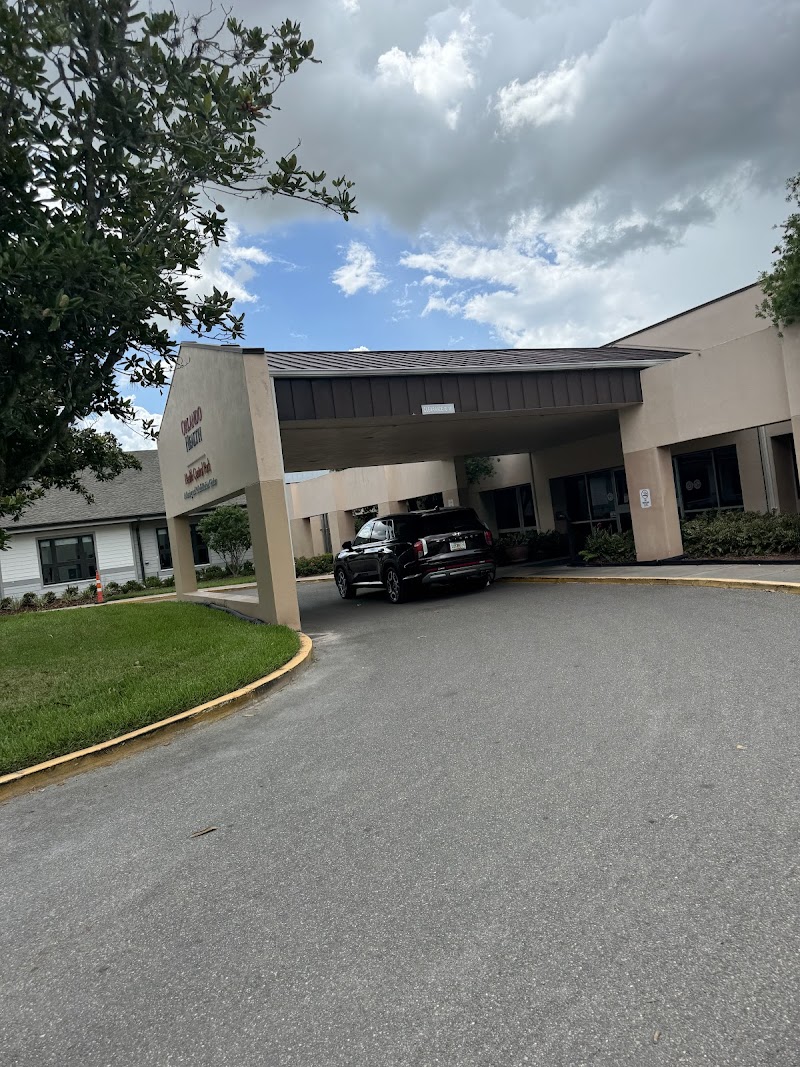
HEALTH CENTRAL PARK

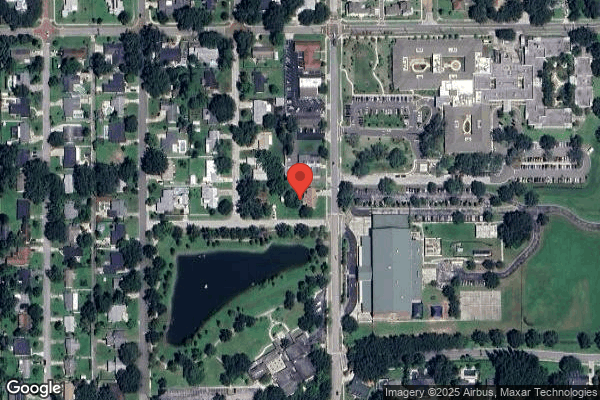
411 NORTH DILLARD STREET, WINTER GARDEN, FL 34787 (407) 296-1600
Non profit - Corporation 218 Beds Independent Data: November 2025 4 Immediate Jeopardy citations
Trust Grade
0/100
#506 of 690 in FL
Last Inspection: May 2025

Inspected within the last 6 months. Data reflects current conditions.

Overview

Health Central Park in Winter Garden, Florida, has received a Trust Grade of F, indicating significant concerns about the facility's care quality. It ranks #506 out of 690 nursing homes in Florida, placing it in the bottom half of all facilities statewide, and #26 out of 37 in Orange County, showing limited local competition. Unfortunately, the facility's situation appears to be worsening, with the number of issues increasing from 4 in 2023 to 8 in 2025. Staffing is a strong point, with a perfect score of 5/5 and a low turnover rate of 24%, suggesting that staff members are experienced and familiar with residents. However, the facility has incurred $57,145 in fines, which is concerning, as it is higher than 76% of Florida facilities, indicating repeated compliance problems. Critical incidents noted include a failure to properly care for a resident's central line intravenous catheter, which went without necessary maintenance for over 38 weeks, potentially putting the resident at risk of infection. Another critical issue involved staff lacking the necessary knowledge to provide adequate care for the same resident's CVC, raising serious concerns about staff training and competency. While the facility has excellent staffing and quality measures, these significant deficiencies highlight the need for families to carefully consider the risks involved.

Trust Score
F
0/100
In Florida
#506/690
Bottom 27%
Safety Record
High Risk
Review needed
Inspections
Getting Worse
4 → 8 violations
Staff Stability
✓ Good
24% annual turnover. Excellent stability, 24 points below Florida's 48% average. Staff who stay learn residents' needs.
Penalties
✓ Good
$57,145 in fines. Lower than most Florida facilities. Relatively clean record.
Skilled Nurses
○ Average
Each resident gets 41 minutes of Registered Nurse (RN) attention daily — about average for Florida. RNs are the most trained staff who monitor for health changes.
Violations
⚠ Watch
21 deficiencies on record. Higher than average. Multiple issues found across inspections.
★★☆☆☆
2.0
Overall Rating
★★★★★
5.0
Staff Levels
★★★★★
5.0
Care Quality
★☆☆☆☆
1.0
Inspection Score
Stable
2023: 4 issues
2025: 8 issues

The Good

  • 5-Star Staffing Rating · Excellent nurse staffing levels
  • 5-Star Quality Measures · Strong clinical quality outcomes
  • Low Staff Turnover (24%) · Staff stability means consistent care
  • Full Sprinkler Coverage · Fire safety systems throughout facility
  • No fines on record
  • Staff turnover is low (24%)

    24 points below Florida average of 48%

Facility shows strength in staffing levels, quality measures, staff retention, fire safety.

The Bad

2-Star Overall Rating

Below Florida average (3.2)

Below average - review inspection findings carefully

Federal Fines: $57,145

Above median ($33,413)

Moderate penalties - review what triggered them

The Ugly 21 deficiencies on record

4 life-threatening
May 2025 8 deficiencies
CONCERN (D)

Potential for Harm - no one hurt, but risky conditions existed

Deficiency F0558 (Tag F0558)

Could have caused harm · This affected 1 resident

**NOTE- TERMS IN BRACKETS HAVE BEEN EDITED TO PROTECT CONFIDENTIALITY** Based on interview, and record review, the facility failed to timely accommodate a resident's preference to obtain individualize...

Read full inspector narrative →
**NOTE- TERMS IN BRACKETS HAVE BEEN EDITED TO PROTECT CONFIDENTIALITY** Based on interview, and record review, the facility failed to timely accommodate a resident's preference to obtain individualized diabetic shoes for 1 of 1 residents sampled for specialized durable medical equipment, of a total sample of 53 residents, (#46). Findings: Resident #46 was admitted to the facility on [DATE], with diagnoses that included type 2 diabetes mellitus with diabetic neuropathy (nerve pain), unspecified. His Quarterly Minimum Data Set assessment dated [DATE], indicated he had intact cognitive function. On 5/19/25 at 10:32 AM, resident #46 explained he would like new specialized diabetic footwear. He said he was told by his insurance company that he was allowed a new pair of diabetic specialty shoes every year. He said he had previously spoken with a Podiatrist who provided him care in the facility about the new diabetic specialty shoes. Review of resident #46's medical record revealed a podiatry visit note dated 3/19/25 which indicated resident #46 inquired about receiving his yearly diabetic specialty shoes. Podiatrist G's note detailed the provider of the specialized diabetic footwear company was waiting on the facility to submit forms in order to move forward in the process. On 5/22/25 at 9:20 AM, Unit Secretary F, and the Director of Social Services, concurrently reviewed the Standard Written Order signed by a physician and dated 3/28/25, from the diabetic footwear company which detailed supplying and fitting inserts and shoes for persons with diabetes. Unit Secretary F said she helped facilitate getting the diabetic shoes order signed by a physician of resident #46's primary physician group. Unit Secretary F said that she had done no additional follow-up with the diabetic footwear provider to see what the delay was in providing the shoes. The Director of Social Services explained they had received no follow-up regarding resident #46's diabetic specialty shoes from the company-55 days after the signed order had been obtained. The Director of Social Services acknowledged it was the facility's responsibility to reach out to the company in order to facilitate resident #46's choice to get specialty diabetic shoes and follow up on the physician's orders. On 5/22/25 at 11:56 AM, Podiatrist G stated the specialty footwear company involved with resident #46's footwear showed a lack of timeliness in providing the ordered shoes and verified facility staff were expected to follow-up timely so that resident #46's could receive his choice of specialty diabetic footwear.
CONCERN (D)

Potential for Harm - no one hurt, but risky conditions existed

Comprehensive Care Plan (Tag F0656)

Could have caused harm · This affected 1 resident

**NOTE- TERMS IN BRACKETS HAVE BEEN EDITED TO PROTECT CONFIDENTIALITY** Based on observation, interview, and record review, the facility failed to monitor implementation of a fall prevention intervent...

Read full inspector narrative →
**NOTE- TERMS IN BRACKETS HAVE BEEN EDITED TO PROTECT CONFIDENTIALITY** Based on observation, interview, and record review, the facility failed to monitor implementation of a fall prevention intervention for 1 of 1 residents sampled regarding fall care plan interventions, of a total sample of 53 residents, (#95). Findings: Resident #95 was admitted to the facility on [DATE] with diagnoses that included unspecified dementia- unspecified severity with other behavioral disturbance, primary open-angle glaucoma (eye condition), bilateral, stage unspecific. His Quarterly Minimum Data Set assessment dated [DATE], indicated he had moderate cognitive impairment. Review of resident #95's medical record revealed a change in condition note dated 3/28/25 which indicated resident #95 was found on the floor. On 3/31/25 an interdisciplinary team (IDT) note indicated the team met to review resident #95's plan of care and fall risk after he was observed on the floor of his room next to his bed. The IDT note described resident #95 stated he had gone to sleep in his bed and woke up suddenly when he fell to the floor. The team noted resident #95 had an increased risk for falls due to impaired vision and a behavior of sleeping with his head at the foot of the bed and his legs at the head of the bed. The fall intervention put into place by the IDT team was a scoop mattress so that resident #95 had borders at the foot of the bed. Review of resident #95's care plan revealed the resident was identified as at risk for falls and injuries related to his impaired vision/blindness, glaucoma, dementia with an initiation date of 4/25/23 and a revision date of 12/04/24. The intervention for the scoop mattress to bed to maintain border of bed was dated 3/28/25. On 5/19/25 at 4:02 PM, resident #95 was lying on his bed in his room. The mattress was standard, flat mattress. He did not have a scoop mattress on his bed. On 5/20/25 at 8:47 AM, resident #95 was lying in bed in his room. A standard mattress was present. On 5/21/25 at 12:34 PM, resident #95 was again lying on a standard mattress with his head at the foot of the bed and his legs at the head of his bed. On 5/21/25 at 2:17 PM, resident #95 was seated on his bed, Certified Nursing Assistant (CNA) M verified resident #95 had a regular mattress on his bed. On 5/21/25 at 5:03 PM, Registered Nurse (RN) L verified resident #95 has a regular mattress on his bed. Resident #95 was seated on his bed. She verified that his care plan indicated that he should have a scoop mattress. On 5/21/25 at 5:26 PM, the Director of Nursing (DON) reviewed resident #95's care plan and verified he should have a scoop mattress on his bed. She explained the intervention was put in place after he was found on the floor on 3/28/25. The DON stated she recalled resident #95 had a scoop mattress on his bed and he had not refused its use. She recalled that RN J assisted with obtaining the scoop mattress for resident #95 and updating resident #95's care plan. She said she and the Assistant Director of Nursing (ADON) did rounds on the residents to check for safety items and additional care items. The DON could not explain when the scoop mattress had been removed from resident #95's bed and replaced with a regular mattress. On 5/22/25 at 10:00 AM, RN J recalled resident #95 had been found on the floor after he rolled out of his bed in March 2025. She recalled a scoop mattress was placed on resident #95's bed after that time. RN J could not say what happened to resident #95's scoop mattress or why it was not currently on his bed. She acknowledged the facility had no system to track mattresses to indicate when the scoop mattress was added or removed from resident #95's bed. On 5/22/25 at 10:09 AM, the Environmental Director said he did not recall removing or changing resident #95's mattress. He confirmed the facility has no record keeping for when a mattress was changed for a resident, and could not say if the scoop mattress was ever placed on resident #95's bed, or when it was removed. Review of the Fall Prevention and Reduction policy with an issue date of 9/25/24 indicated after a fall nursing staff were to monitor and document the resident's response to interventions, implement change(s) if indicated, and notify the provider.
CONCERN (D)

Potential for Harm - no one hurt, but risky conditions existed

ADL Care (Tag F0677)

Could have caused harm · This affected 1 resident

**NOTE- TERMS IN BRACKETS HAVE BEEN EDITED TO PROTECT CONFIDENTIALITY** Based on observation, interview, and record review the facility failed to ensure Activities of Daily Living (ADLs) were maintain...

Read full inspector narrative →
**NOTE- TERMS IN BRACKETS HAVE BEEN EDITED TO PROTECT CONFIDENTIALITY** Based on observation, interview, and record review the facility failed to ensure Activities of Daily Living (ADLs) were maintained for nail care of 1 of 1 residents reviewed for ADLs, of a total sample of 53 residents, (#141) . Findings: Resident #141 was admitted to the facility on [DATE] with hemiparesis (one sided muscle weakness) to the left side of his body. His minimum data set quarterly assessment dated [DATE] indicated the resident had impairment to his upper and lower extremities on one side. The assessment revealed resident #141 was dependent upon staff for shower and bathing, and had no behaviors, including rejection of ADLs exhibited. The assessment indicated he had mild cognitive impairment, was usually understood and usually understood others. On Tuesday, 5/20/25 at 1:27 PM, an observation of the resident #141's fingernails showed they were approximately 5 millimeters beyond the quick. A dark-colored substance was observed under the length of the fingernails with a small sliver of white nail, approximately 1 millimeter, visible. A review of the Certified Nursing Assistant (CNA) care assignment list showed the resident was scheduled to receive showers on Mondays and Thursdays on the 7:00 AM to 3:00 PM shift and fingernails were to be cleaned and trimmed on shower days. The care plan for ADL self care performance related to impaired mobility listed a goal that the resident will continue to have ADL needs anticipated and met. The intervention for bathing/showering showed the resident required assistance. The intervention also included check nail length, trim and clean on bath day and as necessary. On Thursday, 5/22/25 at 9:23 AM, observation showed resident #142's fingernails were in the same condition as on 5/20/25. His nails were not trimmed and dark-colored substance remained under the nails. At that time the resident stated he wished they would trim and clean his nails. Review of the CNA assignment for Monday, 5/19/25 revealed CNA O was assigned to care for resident #141 that day. In an interview with CNA O on 5/22/25 at 9:50 AM, she stated she gave the resident a bed bath on 5/19/25. She said she did not trim his nails that day, and did not give an explanation why.
CONCERN (D)

Potential for Harm - no one hurt, but risky conditions existed

Deficiency F0688 (Tag F0688)

Could have caused harm · This affected 1 resident

**NOTE- TERMS IN BRACKETS HAVE BEEN EDITED TO PROTECT CONFIDENTIALITY** Based on observation, interview, and record review the facility failed to provide services to prevent reduction in range of moti...

Read full inspector narrative →
**NOTE- TERMS IN BRACKETS HAVE BEEN EDITED TO PROTECT CONFIDENTIALITY** Based on observation, interview, and record review the facility failed to provide services to prevent reduction in range of motion by failing to apply bilateral palm guards per the plan of care for 1 of 1 residents reviewed for positioning, of a total sample of 53 residents, (#66). Findings: Resident #66's Minimum Data Set assessment dated [DATE] indicated the staff assessed her cognition as severely impaired. She had a diagnosis of cerebral palsy and impaired functional limitation in range of motion for both upper and lower extremities. The assessment indicated resident #66 was dependent upon staff for all activities of daily living. A care plan revised on 3/12/25 indicated she had bilateral contractions and required the use of bilateral hand splints/palm guards. On 5/19/25 at 12:15 PM, the resident was not wearing palm guards on either hand. An interview with the resident's representative at that time revealed the palm guards had not been on her hands for approximately a week. On 5/20/25 at 10:00 AM, resident #66 did not have palm guards on either hand. On 5/21/25 at 9:30 AM, the resident had a palm guard only on her left hand. On 5/22/25 at 9:15 AM, assigned Licensed Practical Nurse P could not say why the palm guard had not been applied to the resident's right hand. The nurse looked in the resident's drawers but could not locate the palm guard. On 5/22/25 at 12:25 PM, the Rehabilitation Director confirmed the resident required bilateral palm guards daily to prevent a loss of range of motion.
CONCERN (D)

Potential for Harm - no one hurt, but risky conditions existed

Deficiency F0810 (Tag F0810)

Could have caused harm · This affected 1 resident

**NOTE- TERMS IN BRACKETS HAVE BEEN EDITED TO PROTECT CONFIDENTIALITY** Based on observation, interview, and record review, the facility failed to provide the appropriate assistive device for fluids (...

Read full inspector narrative →
**NOTE- TERMS IN BRACKETS HAVE BEEN EDITED TO PROTECT CONFIDENTIALITY** Based on observation, interview, and record review, the facility failed to provide the appropriate assistive device for fluids (two-handled cup) during the lunch meal for 1 of 2 residents reviewed for assistive devices while dining on the 500 unit, of a total sample of 53 residents, (#128). Findings: On 5/19/25 at 12:30 PM, during an observation during the lunch meal, resident # 128 was observed with a standard, clear cup with no handles on his lunch tray. The resident had a paper meal ticket that indicated he required adaptive equipment including a two-handle cup. An interview with Licensed Practical Nurse Q at that time, confirmed the resident required a two-handled cup to be able to drink independently. The Minimum Data Set assessment dated [DATE] revealed an impaired functional limitation in range of motion for resident #128's upper and lower extremities on both sides. Review of a care plan revised 4/30/25 for self-care performance deficit listed the goal as the resident would continue to have activities of daily living needs anticipated and met by staff. The intervention for eating detailed resident #128 required one staff to set up for eating, and included use of a cup with handles. On 5/22/25 at 12:25 PM, the Rehabilitation Director stated the resident had a therapy screen in March 2025 which indicated resident #128 continued to require the use of a two-handled cup for fluids. (Photographic evidence obtained)
CONCERN (D)

Potential for Harm - no one hurt, but risky conditions existed

Medical Records (Tag F0842)

Could have caused harm · This affected 1 resident

Based on interview, and record review, the facility failed to maintain an accurate medical record for 1 of 2 residents reviewed for respiratory care, of a total sample of 53 residents, (#107). Finding...

Read full inspector narrative →
Based on interview, and record review, the facility failed to maintain an accurate medical record for 1 of 2 residents reviewed for respiratory care, of a total sample of 53 residents, (#107). Findings: Resident #107 had physician orders dated 3/06/25 for BiPap (Bilevel positive airway pressure) for sleep apnea. The orders included directions for staff to change the BiPap mask and tubing every month. Review of the treatment administration record for April 2025 and May 2025 revealed staff documented with their initials that the BiPap mask and tubing were changed every day. The treatment records also showed similar orders for a CPAP (continuous positive airway pressure) care and tubing changes initialed by nurses as completed. On 5/22/25 at 1:50 PM, assigned Licensed Practical Nurse (LPN) P verified her initials were listed as having changed the BiPap mask and tubing 12 times in May, although the order indicated them to be changed monthly. She was unsure why the treatment record contained orders for BiPAP care and for CPAP care. The LPN stated maybe the orders were entered incorrectly into the computer. On 5/22/25 at 3:30 PM, the Minimum Data Set Coordinator confirmed the orders and treatment records were inaccurate and the resident did not use a CPAP. He stated the order for the tubing change was entered into the system incorrectly and should have listed one day a week for the tubing changes.
CONCERN (E)

Potential for Harm - no one hurt, but risky conditions existed

Deficiency F0679 (Tag F0679)

Could have caused harm · This affected multiple residents

Based on interview, and record review, the facility failed to provide activities in resident rooms on the weekends for 3 of 4 residents reviewed for activities, of a total sample of 53 residents, (#14...

Read full inspector narrative →
Based on interview, and record review, the facility failed to provide activities in resident rooms on the weekends for 3 of 4 residents reviewed for activities, of a total sample of 53 residents, (#142, #65, #66). Findings: The care plan for resident #142 revised on 3/12/25 revealed the resident was unable to communicate and all needs were anticipated by staff. The goal indicated the resident would be encouraged to participate in activities that were meaningful to her. Review of the Recreation Therapy Services Attendance and Participation record for April and May 2025 showed the days that social visits were conducted in the resident's room. Social visits were not conducted on Saturday or Sunday. The care plan for resident #65 revised on 3/05/25 revealed the resident wanted staff to invite and encourage him to participate in programs and events. The goal indicated the resident wanted to be invited and assisted to programs. Review of the Recreation Therapy Services Attendance and Participation record for March 2025, April 2025, and May 2025 showed the days that social visits were conducted in the resident's room and attendance to other events. Social visits were not conducted on Saturday or Sunday during the three month timeframe from March 2025 to May 2025. The care plan for resident #66 revised on 3/12/25 revealed the resident needed help with all tasks and wanted staff to visit with her. The goal indicated the resident wanted to be invited and encouraged to attend programs and events. Review of the Recreation Therapy Services Attendance and Participation record for May 2025 showed the days that social visits were conducted in the resident's room. Social visits were not conducted on Saturday or Sunday for the month of May 2025. On 5/21/25 at 11:15 AM, Activities staff R discussed activities provided in the residents' rooms for residents # 142, #65, and #66. She explained social visits were approximately 10-15 minutes in length and the type of activity was documented on the Attendance and Participation record. Activities staff R explained activity was not offered on the days where nothing was documented. She said they had six staff available to provide activities/recreational therapy, two were assigned to the memory care unit and four staff were available for the rest of the facility. Activities staff R conveyed on the weekend, there was one activities/recreational therapy staff person to provide activities for the entire facility and in-room visits did not occur. On 5/19/25 there were 188 residents in the facility.
CONCERN (E)

Potential for Harm - no one hurt, but risky conditions existed

Infection Control (Tag F0880)

Could have caused harm · This affected multiple residents

**NOTE- TERMS IN BRACKETS HAVE BEEN EDITED TO PROTECT CONFIDENTIALITY** 4. Review of the Minimum Data Set assessment dated [DATE] for resident #65 revealed he had an indwelling urinary catheter. The f...

Read full inspector narrative →
**NOTE- TERMS IN BRACKETS HAVE BEEN EDITED TO PROTECT CONFIDENTIALITY** 4. Review of the Minimum Data Set assessment dated [DATE] for resident #65 revealed he had an indwelling urinary catheter. The facility policy and procedure with revision date of September 2024 indicated Enhanced Barrier Precautions applied to residents with indwelling medical devices (e.g. urinary catheters). The procedure section instructed staff to perform hand hygiene and don gown and gloves for high-contact care activities and for device care. On 5/19/25 at 10:45 AM, observation of resident #65's room revealed a purple magnet on the door frame that listed EBP for enhanced barrier precautions. A container with gowns and gloves was hanging on the back of the door. On 5/22/25 at 9:45 AM, resident #65's door into the room was closed. The purple EBP magnet was on the door frame. After knocking and gaining permission to open the door, CNA O was seen bathing and dressing resident #65, without a gown on. The CNA was wearing gloves, but not a gown, and said, I forgot, as to why she was not wearing the gown. On 5/22/25 at 10:20 AM, the Infection Preventionist confirmed that residents with indwelling urinary catheters required staff use of gloves and gown for high-contact care activities. Based on observation, interview, and record review, the facility failed to offer hand hygiene prior to meals for 35 residents, at 3 different dining locations and failed to follow evidence based practice for implementation of enhanced barrier precautions for 1 of 1 residents reviewed for enhanced barrier precautions, (#65); of a total sample of 53 residents. Findings: 1. On 5/19/25 at 11:30 AM, 25 residents were observed as they prepared to eat lunch in the main dining room. Hand hygiene for residents was not offered by staff or observed as performed. On 5/20/25 at 11:55 AM, 28 residents were observed as they prepared and ate their lunch in the main dining room. Hand hygiene for residents was not offered by staff or observed as performed. On 5/22/25 at 12:00 PM, 29 residents were observed as they prepared and ate their lunch in the main dining room. Hand hygiene for residents was not offered by staff or observed as performed. On 5/19/25 at 11:30 AM, resident #597 was wheeled into the dining room at 11:34 AM, by Physical Therapy Technician B who stated the resident came directly from working out in rehabilitation and did not use the restroom after working out. Resident #597 was not offered hand hygiene prior to eating his lunch. On 5/20/25 at 11:57 AM resident #597 was wheeled into the dining room by Physical Therapy Assistant A, who stated the resident came directly from doing physical therapy exercises and did not use the restroom after exercising. Resident #597 was not offered hand hygiene prior to eating his meal. On 5/21/25 at 12:48 PM, resident #597 was observed eating lunch in his room. He stated he washed his hands after physical therapy today because he came back to his room. He added, on Monday and Tuesday he went straight from physical therapy into the dining room and wasn't offered a way to wash his hands before eating. He stated it would have been nice to have had that offered by staff. On 5/22/25 at 12:04 PM, resident #77 stated she went on a field trip on the bus that morning. She added, staff asked them if they needed to use the restroom before lunch, but she didn't need to go. Resident #77 stated she went straight to the dining room from the bus and was not offered her a way to clean her hands. She explained she had hand wipes in her room, but she didn't go to her room and would like staff to offer her a way to clean her hands before she ate her food. On 5/22/25 at 12:13 PM, resident #88 stated she went to all the activities and this morning the residents took turns reading paragraphs of a story out loud. Resident #88 stated she came straight to the dining room from the activity and was not offered a way to clean her hands before eating. She added, months ago they used to provide hand wipes prior to eating and was not sure why they stopped doing that. On 5/22/25 at 12:55 PM, Case Manager C was assisting with meal service in the main dining room and explained she was assigned to the facility's all-hands-on-deck duties from 11:15 AM to 1:30 PM, once or twice per week. She confirmed hand hygiene was not offered to the residents prior to eating their lunch today. The Case Manager explained she had not seen hand hygiene being offered recently, but remembered it was done in the past when they offered wipes or hand sanitizer gel prior to meals. Case Manager C stated it was important for both staff and residents to wash/sanitize hands prior to meals to limit the spread of germs, and for dignity. She added it was one of the most important things. 2. On 5/19/25 at 1:00 PM, four residents were seated in the 300's unit dining room waiting for their lunch. A few minutes later at 1:13 PM, the meal cart arrived and by 1:38 PM all of the residents were observed eating. During that time no hand hygiene was offered or given for the residents prior to eating. On 5/19/25 at 5:44 PM, the 300's Unit Manager (UM) stated some of the residents who ate in the 300's unit dining area came there straight from activities and added, if they need to use the toilet, staff take them to their room and then bring them back to the dining room. On 5/20/25 at 1:25 PM, in the 300's unit dining area, four residents were observed eating lunch in the dining area but no offering of hand hygiene was observed prior to the meal. On 5/22/25 at 1:29 PM, residents #139, #103, #14, and #84 were observed dining in the 300's unit dining room. None of the residents were offered hand hygiene by the staff prior to eating. Resident #84 was observed being assisted with his lunch meal by the 300's UM, who cleaned her own hands but did not offer hand hygiene to the resident before the meal. On 5/22/25 at 1:34 PM, Registered Nurse (RN) E stated she thought resident #103 didn't need her hands washed before the meal because the resident had received a shower earlier in the day. RN E acknowledged the facility may have failed to do offer hand hygiene to the residents this week, and explained it was important to offer hand washing as it was the best tool to prevent infection. 3. On 5/22/25 at 1:00 PM , Certified Nursing Assistant (CNA) D delivered a lunch meal tray to resident #134 who was resting in bed but was not offered hand washing prior to the meal. CNA D stated she did not offer hand hygiene to resident #134 before lunch because she washed the hands of this resident earlier in the morning before breakfast, so she knew it had already been done. On 5/22/25 at 1:05 PM, resident #126 stated he routinely got up at 7:00 AM, needed help to use the bathroom, brush his teeth, shave and wash his hands. He added, later in the mornings, he walked with therapy down the hall and then went back to sit on his bed. Resident #126 stated he had not washed his hands since his morning routine and was not offered hand hygiene by staff prior to the meal. On 5/22/25 at 1:40 PM, the Director of Nursing stated it was important to wash everyone's hands before meals to get rid of microorganisms. She added, it was very important for residents who resided in such close quarters to perform hand hygiene in order to prevent the spread of illnesses among them. The facility's policy entitled hand hygiene, dated May 2022, indicated the purpose of the guidelines was to promote hand hygiene as an essential element of patient safety to reduce health care associated infections.
Sept 2023 4 deficiencies 4 IJ (3 affecting multiple)
CRITICAL (J)

Immediate Jeopardy (IJ) - the most serious Medicare violation

Deficiency F0578 (Tag F0578)

Someone could have died · This affected 1 resident

**NOTE- TERMS IN BRACKETS HAVE BEEN EDITED TO PROTECT CONFIDENTIALITY** Based on interview, and record review, the facility failed to timely follow procedures to ensure a resident's wishes related to ...

Read full inspector narrative →
**NOTE- TERMS IN BRACKETS HAVE BEEN EDITED TO PROTECT CONFIDENTIALITY** Based on interview, and record review, the facility failed to timely follow procedures to ensure a resident's wishes related to health care treatments and procedures at the end of life were accurately recorded and available to nursing staff, and failed to honor an advance directive that reflected the decision to withhold Cardiopulmonary Resuscitation (CPR) for 1 of 1 resident reviewed for Death, of a total sample of 42 residents, (#108). These failures contributed to resident #108 receiving CPR against her explicit wish for a natural, dignified death. There was likelihood resident #108 experienced severe pain, and could have suffered broken bones, organ damage and a prolonged dying process. On Friday, [DATE], at approximately 2:00 PM, resident #108 and her physician signed a Do Not Resuscitate Order (DNRO) form. The Social Services Assistant scanned the completed form to the Electronic Medical Record (EMR) and placed the document in her office. The Social Services Assistant continued her workday until 5:00 PM then left for the weekend. The Social Services Assistant failed to provide a copy of the DNRO to the nursing staff, before she left for the weekend. Upon receipt of the DNR form, the nursing staff, per policy, would have updated the EMR from Full Code status to DNR status. Nursing staff would have also placed the canary yellow DNR form in front of the resident's chart to allow for staff to quickly identify the code status during an emergency. On Sunday, [DATE], at approximately 5:20 AM, resident #108 became unresponsive, was not breathing, and had no pulse. Nurses checked the resident's EMR and paper binder chart and found a physician's order for Full Code status. Nurses determined resident #108 was Full Code status and initiated CPR. Facility staff called 911 at 5:24 AM, and when Emergency Medical Services (EMS) personnel arrived at the resident's bedside, they continued CPR from the resident's room to the ambulance. Resident #108 suffered aggressive resuscitation measures on the way to the hospital and in the Emergency Department (ED) until she was pronounced dead on [DATE] at 6:32 AM. The facility's failure to honor the right to choose withholding of lifesaving interventions placed all residents with a DNRO advanced directive at risk for serious psychosocial harm, physical trauma, and a prolonged undignified death from unwanted resuscitation efforts. This failure resulted in Immediate Jeopardy starting on [DATE]. The Immediate Jeopardy was removed on [DATE]. Findings: Review of the medical record revealed resident #108, a [AGE] year-old female, was admitted to the facility on [DATE] and readmitted from the hospital on [DATE]. Her diagnoses included metastatic (spread from origin to a distant part of the body) melanoma (deadly skin cancer), chronic congestive heart failure, aortic (heart) valve stenosis (narrowing), complete atrioventricular (heart chamber) block, oxygen dependence, acute respiratory failure, chronic obstructive lung disease, heart disease, cardiac rhythm (heartbeat) dysfunction with pacemaker, chronic peripheral (limb) venous insufficiency (blood flow), intestinal obstruction (blockage), stage 3 chronic kidney disease, type 2 diabetes mellitus, sleep apnea (breathing pause or stop), repeated falls, need for assistance with personal care, and depression. The Minimum Data Set (MDS) Death In Facility tracking assessment with an Assessment Reference Date (ARD) of [DATE] noted resident #108 was discharged from the facility to the hospital. The MDS quarterly assessment with an ARD of [DATE] noted resident #108 had a Brief Interview for Mental Status score of 11 out of 15 which indicated moderate cognitive impairment. The assessment showed the resident had no indicators of psychosis, behavioral symptoms, or rejections of evaluation or care, required extensive assistance from staff to complete her Activities of Daily Living, walked once in her room with staff assistance, did not walk outside of her room, was incontinent of bladder and bowel functions, experienced moderate pain, shortness of breath, and she required supplemental oxygen. For 7 out of 7 days during the look back period, she received injectable insulin, and antidepressant (depression), anticoagulant (blood thinner), diuretic (fluid retention), and opioid (narcotic pain) medications. The Florida Agency for Health Care Administration Medical Certification for Medicaid Long-Term Care Services and Patient Transfer Form (AHCA 5000-3008) dated [DATE] revealed resident #108 did not require a surrogate to make healthcare decisions. The readmission Agreement between the resident and the facility was signed by resident #108 on [DATE] that indicated she made her own medical and financial decisions. The medical record did not include any requests for a capacity evaluation nor a physician's determination of incapacity. The Order Listing Report showed physicians orders dated [DATE] that read, Resident is a Full Code, and [DATE] that read, Transfer to ER. The Comprehensive Care Plan included focus for self-performance care deficits, dependence on staff to complete daily living activities, infections, multiple chronic medical conditions of the heart, lungs, kidneys, muscles, and bones, diabetes with insulin dependence, abdominal surgery, skin injuries, repeated falls, adverse medication effects, depression, anxiety, risk for nutritional and hydration problems, supplemental oxygen dependence, and pain. The care plan did not include a focus for advanced directives or code status. The Psych (Psychiatric) Health Associates progress notes dated [DATE] noted resident #108 was assessed by the Psychiatric Advanced Practice Nurse Practitioner (APRN) who wrote, Thought association is intact, insight and judgement are adequate. Thought process is linear (logical and sequential), . Denies depression or anxiety noted. Denies any suicidal ideation. Patient is adjusting emotionally well to the stressful change the patient is undergoing. On [DATE] at 4:45 PM, during an interview, the Social Services Assistant said she handled most of the facility's code status changes from a full code to Do Not Resuscitate (DNR). She explained the process included her evaluation and determination of residents' cognition, the ability to make their own decisions, and she ensured they understood the full meaning of a DNRO. She stated residents who were not determined by a physician to be incapacitated signed their own DNRO, and it was valid with a physician's signature. She recalled on [DATE] at approximately 2:00 PM, resident #108 was cognitively intact and wished for DNR as part of her treatment plan when she signed the yellow DNRO form. She said the physician was in the facility, and he signed the form immediately after the resident did. She explained it was Friday when she scanned the form into the Electronic Medical Record (EMR) and decided to keep the form in her office until she returned to work on Monday. She explained she planned to give it to nurses on Monday so they could change the order and put the form in the resident's chart. She said she left work that Friday at 5:00 PM and when she returned to work on Monday [DATE], she learned the resident had died. She conveyed she told her supervisor, the Social Services Director about the DNRO and gave the form to the Unit Secretary. She said, I dropped the ball. Review of the State of Florida DO NOT RESUSCITATE ORDER form revealed both resident #108 and her physician signed the form on [DATE]. On [DATE] at 11:28 AM, in a telephone interview, resident #108's son said his mother's health had declined and she was recently diagnosed with cancer. He recalled about a week prior to [DATE] they had conversations about her code status, and she had decided she did not want to be resuscitated. He said on [DATE], the Social Services Assistant was reminded by his husband to have the DNR implemented but he wasn't aware his mother had signed it until about a week after she passed. He said no one from the facility called him, but rather sent messages through his husband. He stated it was very disappointing that no one reached out to him personally. He explained the facility communicated everything through his husband and told him everything was being handled. He spoke about the deep sorrow and anguish he felt because he knew his mother's spiritual beliefs and wishes very well as they were extremely close. He stated he was most affected when he envisioned his mother, over her body looking down and saying to herself, what are you doing to me? That's not what I asked for. On [DATE] at 4:11 PM, the Unit 300 Unit Manager explained when nurses were given a completed DNRO form for a code status change, the process included a revision of the Full Code order in the EMR to DNR and the form placed in front of the resident's paper chart kept at the nurses' station. She stated nurses depended on the EMR and paper chart for a current and accurate code status to initiate or withhold CPR when emergencies arose. On [DATE] at 4:21 PM, the Director of Nursing (DON) said all resident's code status were entered into the EMR as a physician's order and DNRO forms were kept on top in the paper binder/charts kept at the nurse's station. She explained when emergencies with cardiac and respiratory arrest occurred, nurses checked the EMR and paper chart for code status and proceeded with CPR for full code and did not proceed with a DNRO. She stated when staff other than nursing completed a DNRO with a resident who wanted to change their status, the form was given to nurses for order transcription and placement of the form onto the front of the paper chart so it was easily accessible by direct care staff. She referred to residents' wishes to change their full code status to DNR and said, it's a big deal. Review of the Change in Condition progress note dated [DATE] at 5:30 AM revealed Registered Nurse (RN) L assessed resident #108 as unresponsive, pale, and without breathing or a pulse. The note showed nurses checked the resident's records, determined the code status was Full Code, and initiated CPR until EMS personnel arrived and transported her to the hospital, on active CPR. On [DATE] at 12:37 PM, and [DATE] at 9:49 AM, unsuccessful attempts were made to interview RN L by telephone. In a telephone interview on [DATE] at 12:45 PM, the Nurse Night Shift Supervisor described the sequence of events on [DATE], the day resident #108 received CPR. She recalled RN L had called a Code Blue. She explained she entered resident #108's room and observed RN L took vital signs, and told her the resident wasn't breathing. She said nurses verified the code status in the EMR and paper chart and determined the resident was a full code. She stated she told RN L to start CPR, she called 911, and returned to assist nurses with chest compressions and oxygen ventilations via Bag Valve Mask (ambu bag) until EMS arrived and took over. She said facility management never informed her after the incident that resident #108 was a DNR. On [DATE] at 10:12 AM, in a telephone interview, Licensed Practical Nurse (LPN) M recalled resident #108's Code Blue and CPR on [DATE]. She explained when she arrived in the room, she observed that RN L obtained vital signs and initiated CPR. She stated nurses provided 2 rounds of CPR with chest compressions and ventilations by ambu bag until Law Enforcement and EMS personnel arrived. She said she heard from other staff days later there was a DNRO for resident #108. She explained nurses would have known about the DNR if the Social Services Assistant had given them the form to place in front of the medical record. On [DATE] at 10:39 AM, RN N recalled on [DATE], she observed CPR was in progress by nurses for resident #108. She said she assisted them with chest compressions and the ambu bag until EMS personnel transitioned and continued resuscitative measures. On [DATE] at 4:11 PM, the Unit 300 Unit Manager said resident #108's DNRO form was not provided to nurses after the resident and the physician signed it. She said if nurses had received the DNRO on [DATE], they would have withheld CPR. On [DATE] at 10:57 AM, the APRN said resident #108 had multiple chronic conditions, her health had declined, and she had a diagnosis of melanoma in previous months. She recalled she had discussions with resident #108 and her family about a week prior to [DATE], and the resident did not want resuscitation measures. She said resident #108 was able to make her own decisions as she only had mild cognitive impairment. The APRN explained she was upset about the CPR incident as it was preventable, and had the resident survived it likely would have been a bad outcome for her as her quality of life, could have been so much worse. On [DATE] at 2:04 PM, the Medical Director said on [DATE] around 2:00 PM he signed the DNRO yellow form for resident #108 after she had signed it with the Social Services Assistant. He explained his expectation was that the DNRO was an active physician's order that was in effect immediately after he signed it. He recalled resident #108 had good cognition and was able to make the decision to change her code status to DNR. He stated a DNRO was a very important plan of treatment to honor one's wishes. He said he was informed in the weeks after the incident, the facility completed an investigation and determined the Social Services Assistant didn't follow their process. He stated the incident could have been avoided, and had the resident survived, she likely would have suffered a very poor quality of life. He said he was disappointed it happened and accounted the event as, devastating and heartbreaking. On [DATE] at 5:32 PM, resident #108's son-in law said he and his mother-in-law had a very close relationship. He recalled on [DATE] at around 1:30 PM, he reminded the Social Services Assistant that his mother-in-law still wanted to be a DNR. He explained he was not aware she had signed the form until about 10 days after she died. He stated about a week prior to [DATE], the resident and family had discussions about a DNRO, as her health had declined, and he was confident she fully understood that the order meant there would be no CPR. Tearfully, he recalled when his mother-in-law verbalized to him and her son jointly, I definitely want it; once I'm in God's arms I don't want to come back. Review of the Fire Rescue Department Report showed on [DATE] at 5:36 AM, EMS personnel arrived at resident #108's bedside and found her unresponsive while facility staff provided CPR. While CPR continued, EMS transferred the resident to a stretcher and into an ambulance. The report revealed during emergency transport, aggressive Advanced Life Support (ALS) measures were provided that included CPR with orotracheal intubation (tube inserted into the throat to maintain an airway and provide oxygen to the lungs). ALS medications and fluids were administered through an intraosseous (directly through bone into bone marrow) and intravenous (into a vein) infusions. EMS arrived at the hospital emergency room (ER) at 6:20 AM where efforts continued while the resident was transferred from the ambulance into the ER. The ER Provider Notes showed at 6:23 AM on [DATE], EMS arrived in the ER with resident #108 while they provided CPR. Aggressive efforts continued in the ER until she was pronounced dead at 6:32 AM, one hour after CPR was initiated at the facility. On [DATE] at 5:07 PM, the Social Services Director said the Social Services Assistant reported to her and was primarily responsible for processing resident's change of code status and DNROs. She recalled on Monday [DATE], the Social Services Assistant told her that on [DATE] resident #108's completed DNRO was left in her office over the weekend, and she had not provided it to nurses. She stated the Social Services Assistant dropped the ball. On [DATE] at 4:35 PM, the Nursing Home Administrator (NHA) recalled on [DATE], he was notified by the Social Services Director that in the late afternoon on [DATE], the Social Services Assistant assisted resident #108 to complete a DNRO that was signed by the physician the same day. He said the document remained in the Social Services office over the weekend and was not provided to the nurses. He said on [DATE], two days later, the facility discussed the incident at their weekly Risk Meeting with the Risk Manager, and they completed their investigation. He explained there was no incident report completed or adverse event reported to the state agency because nurses followed the code status policy and the team felt they had resolved the issue. On [DATE] at 6:34 PM, the DON said the facility investigated the incident and determined resident #108's DNRO form was never provided to nursing staff and the nurses followed the process. On [DATE] at 2:29 PM, the Risk Manager recalled on [DATE], two weeks after resident #108 died, she was at the facility to investigate an unrelated issue. She said she investigated resident #108's CPR event at that time because there had been an internal corporate complaint related to family dissatisfaction with management communication, and an internal tracking report variance for a resident hospital transfer with CPR. She stated her expectation was that on [DATE], when the NHA learned resident #108 had a DNRO and nurses provided CPR, he should have notified her immediately. She explained the facility had not completed an incident report, and it was concluded that no reportable adverse event had occurred because the DNRO wasn't considered a physician's order, and nurses followed the code status procedure. On [DATE] at 5:31 PM, the Medical Records Coordinator said on [DATE] during a routine check, she found 2 errors with resident's code status orders in medical records that were subsequently corrected by the Unit Manager. She said she informed the DON of her findings and the DON directed that Medical Records was to continue with chart audits monthly. She could not recall if she had completed audits in August or [DATE]. She said she did not recall seeing resident #108's DNRO form when she processed the closed paper medical record after she died. On [DATE] at 9:49 AM, the DON said Medical Records did not complete advanced directive audits in August or [DATE]. She stated additional audits were completed by the Social Services Director on [DATE], and Unit Managers on [DATE]. On [DATE] at 1:09 PM, the Risk Manager said monthly Quality Assurance Performance Improvement (QAPI) meetings included reviews of policies and procedures, variances, regulatory compliance, incidents, and accidents. The NHA, DON, and Risk Manager could not recall any discussions during their last monthly QAPI meeting in [DATE] about resident #108's CPR with a DNRO incident. The Risk Manager checked the meeting minutes record, and confirmed the incident was not discussed. The Risk Manager said regulatory non-compliance related to the incident was not identified or acknowledged by the facility until [DATE], after surveyors investigated resident #108's death. Review of the undated facility Policy and Procedure titled Advanced Directives, read, . 8. All residents have the right to review and revise his/her advanced directives. 9. Information about whether or not the resident has executed an advanced directive shall be displayed prominently in the medical record. 10. b. Nursing staff and/or the social worker will document in the medical record the offer to assist and the resident's decision to accept or decline assistance. 12. The plan of care for each resident will be consistent with his or her documented treatment preferences and/or advanced directive. 13. A resident will not be treated against his or her own wishes. 17. our facility has defined advanced directives as preferences regarding treatment options and include . c. Do Not Resuscitate---indicates that, in case of respiratory or cardiac failure, the resident, legal guardian, health care proxy, or representative (sponsor) has directed that no cardiopulmonary resuscitation (CPR) or other life-sustaining treatments or methods are to be used. Review of the immediate corrective measures implemented by the facility revealed the following, which were verified by the survey team: * On [DATE] the Social Services Director and NHA met with the Social Services Assistant responsible for initiating advanced directives and education was provided on resident rights. * On [DATE] the Social Services Director conducted audits of all residents' medical records to verify the DNRO yellow form and the physician's order was correct and included in the EMR. * On [DATE] additional education of the Advanced Directive policy, Resident Rights, and timeliness was provided to the Social Services Assistant with disciplinary action. * On [DATE] resident #108's CPR event was discussed in the weekly QAPI Risk meeting. * On [DATE] a follow up meeting was conducted with the Social Services Assistant utilizing an audit tool to evaluate her understanding of advanced directives and resident rights. * From [DATE] to [DATE] the Social Services Director conducted weekly follow up and check-in meetings with the Social Services Assistant to review education and process adherence on any new code status changes. * On [DATE] the facility held an Ad-Hoc QAPI meeting that included the Medical Director. * On [DATE] the QAPI team developed licensed nurses and Certified Nursing Assistant (CNA) education that addressed their roles in Advanced Directive policies. * On [DATE] an audit plan was developed for code status verification upon admission to ensure the EMR and paper binder/chart matched. * On [DATE] an audit of all resident's code status was completed by nursing staff and medical records to ensure the EMR and chart/binder paper chart matched. * On [DATE] a plan was developed to complete weekly code status audits for 12 weeks by nursing leadership to ensure orders in the EMR and hard binder/chart matched with findings reported to QAPI. * On [DATE] education for nurses and CNAs began for advanced directives that utilized scenarios with emphasis on timeliness of orders and placement of the DNRO in the chart. * At the end of the day on [DATE], 39% of nurses and 39% of CNAs had received in person education on advanced directives. * On [DATE] the facility's plan for advanced directive education continued utilizing email to staff not scheduled with required return acknowledgement. * On [DATE] nurses and CNAs were required to complete advanced directive education prior to working their next scheduled shift. If education was not completed staff were to be removed from the schedule until their education and acknowledgement was completed. * On [DATE] education materials were sent to the two staffing agencies utilized by the facility for distribution to nurses scheduled to work at the facility that required return acknowledgement prior to working. The schedules were highlighted for any scheduled agency nurses to ensure supervisors provided education prior to working a shift. * On [DATE] at 12:17 PM, 54% of nurses and 54% of CNAs had received in person education. Education included scenarios and emphasis on timeliness of the full completion process to ensure current and correct advanced directives and DNROs were included on the EMR and paper binder/chart to ensure direct care staff had readily available access. Remaining nurses or CNAs were required to receive the education prior to working a shift. Between [DATE] and [DATE], interviews were conducted with one APRN, two RNs, five LPNs, eleven CNAs, one Speech Language Pathologist, the Social Services Assistant, and the Social Services Director regarding the facility's Immediate Jeopardy removal plans and in-service education for Advanced Directives/DNR. Eight of thirty-four nurses, eleven of eighty-four CNAs, and other staff that covered all shifts verbalized their understanding of the education provided. The resident sample was expanded to include six additional residents who died at the facility. Five residents elected DNR status and one elected Full Code status. Interviews and record reviews revealed no concerns for residents #510, #511, #512, #513, #514, and #515 related to advanced directives.
CRITICAL (K)

Immediate Jeopardy (IJ) - the most serious Medicare violation

Free from Abuse/Neglect (Tag F0600)

Someone could have died · This affected multiple residents

**NOTE- TERMS IN BRACKETS HAVE BEEN EDITED TO PROTECT CONFIDENTIALITY** Based on observation, interview and record review, the facility failed to protect the resident's right to be free from neglect b...

Read full inspector narrative →
**NOTE- TERMS IN BRACKETS HAVE BEEN EDITED TO PROTECT CONFIDENTIALITY** Based on observation, interview and record review, the facility failed to protect the resident's right to be free from neglect by their failure to provide care and maintenance for a central line intravenous catheter (CVC) per standards of care for 1 of 1 resident reviewed for CVCs, of a total sample of 42 residents, (#65). Resident #65, was readmitted to the facility from the hospital on [DATE] with a central venous line intravenous catheter to the right side of his chest. The admitting nurse noted a treatment was ordered or required in the admission documentation, but only a weekly dressing change was ordered on 11/23/22 for 3 weeks. On 12/09/22, resident #65 was again hospitalized and re-admitted back to the facility on [DATE]. Resident #65 remained at the facility for the next 38 weeks and 5 days including 7 hospitalizations and re-admittances without receiving care and services to maintain and prevent infection of the CVC. On 9/18/23 the CVC was brought to the attention of the facility staff by the surveyor, and he was transferred to the hospital for evaluation and possible removal of the CVC. As of 9/23/23, at the conclusion of the survey, resident #65 had not returned from the hospital. The facility's failure to identify and provide necessary care and services for maintenance of the central line intravenous catheter contributed to the hospitalization of resident #65 and placed all residents who were admitted /readmitted with medical devices including CVCs at risk for serious injury/impairment/death. This failure resulted in Immediate Jeopardy starting on 12/22/22 and was removed on 9/23/23. Findings: Cross reference F684 and F726. Review of Resident #65's medical record revealed he was admitted to the facility on [DATE] with diagnoses that included chronic kidney disease, stroke, epilepsy, functional quadriplegia, feeding tube to his abdomen and severe malnutrition. Review of Florida Agency for Health Care Administration 5000-3008 Medical Certification for Medicaid Long-Term Care Services and Patient Transfer Form dated 11/15/22, revealed resident #65 had a CVC tunneled catheter inserted on 11/03/22 through his Internal Jugular vein. Review of the admission Screening dated 11/15/22 revealed the nurse documented an IV/Sub q/Implanted Port to resident #65's right chest. The screening document was marked, Treatment ordered or required, under the skin assessment section, and indicated Advanced Practice Registered Nurse (APRN) I was notified of the admission and medications were confirmed. On 9/18/23 at 1:11 PM, Certified Nursing Assistant (CNA) C, lowered the resident's hospital gown to reveal a central venous intravenous catheter under a worn dressing dated in large black marker, 5/15/23. The clear CVC dressing was dirty, lifting up on the sides, and had dried blood at the insertion site. A few minutes later at 1:19 PM, Licensed Practical Nurse (LPN) A confirmed the dressing covering resident #65's CVC was dated 5/15/23, and agreed the dressing needed to be changed. She explained that although LPNs like herself could and should check the dressing site, they were not able to care for a CVC, only a Registered Nurse (RN) could do that. LPN A stated she had not looked at the CVC dressing since last week and could not say why she had not notified the Unit Manager (UM) or a physician to question the presence of the line or for orders to care for the line. Review of the undated Policy and Procedure for Abuse and Neglect revealed the definition of neglect as, .the failure of the facility, its employees or service providers to provide goods and services to a resident that are necessary to avoid physical harm, pain, mental anguish or emotional distress. The policy statement included residents had the right to be free from neglect, and the interpretation included the administration would develop and implement policies and procedures to aid in preventing neglect of residents. Signs of actual neglect are described in the document as, Inadequate provision of care and Caregiver indifference to resident's personal care and needs. In interviews on 9/18/23 at 1:45 PM and on 9/20/23 at 2:18 PM, the [NAME] Garden LPN Unit Manager (UM) described the facility process for admissions utilized an admission checklist. She described the process for the admitting nurse to assess the resident and the admission paperwork and complete the checklist. She noted within the first business day, the checklist was reviewed during the morning clinical meeting by a supervisor or manager who would often work together to double check the checklist completed by the nurse. She described a section on the checklist for devices such as IVs or urinary catheters which listed all of the orders required for the device. The [NAME] Garden UM described the last piece of the admission checklist was to develop the baseline care plan which included skin assessment which was then reviewed by the clinical team. She detailed her next step after the checklist was completed at the meeting was to meet the resident. The [NAME] Garden UM explained the UMs were responsible for entering any additional care plans based on progress notes, changes in condition or any new orders. She confirmed although she was a LPN she was IV certified, but said she was not aware of resident #65's CVC until it was brought to her attention by the surveyor on 9/18/23. The [NAME] Garden UM stated she rounded with APRN B weekly on resident #65 but said they usually only looked at the wound to his abdomen. She explained she expected the nurses and CNAs to look at the resident's skin and notify her if there were any impairments including an IV dressing. The [NAME] Garden UM stated she didn't know how the nurses missed the CVC dressing on resident #65's chest or notify anyone about the central line. She explained she thought staff saw it but since it had been there for so long they didn't say anything about it. Review of the medical record revealed resident #65 went to the hospital and re-admitted /returned to the facility 7 times between 11/15/22 and 9/18/23 for a total of 44 weeks. On each of the admission Screening forms nurses documented a full head-to-toe skin assessment was completed as well as auscultation and inspection of the chest and lungs. Four of the admission screenings, the first two (11/15/22 and 11/18/22) and the last two (6/12/23 and 6/19/23) documented resident #65's right chest CVC. All of the forms detailed either APRN B or APRN I were notified and that medications were verified, but only a single order for weekly dressing changes was ever placed. This order was made on 11/21/22 for 21 days and was discontinued on 12/09/22. Review of the medical record revealed between 11/15/22 and 9/18/23 resident #65 was seen by Physician Q four times, the Medical Director three times and by APRN I 11 times. The providers' documentation included mention of the CVC by the Medical Director on 11/18/22, by Physician Q on 6/20/23, 6/27/23 and 7/06/23, and by APRN I on 12/22/22, 6/14/23 and 6/26/23, but none of the documentation addressed maintenance care, infection prevention or any other orders for the IV. Review of the medical record and documentation provided by the facility revealed during the approximate nine-month period between 12/01/22 and 9/18/23, 99 different licensed nurses were assigned to care for resident #65. Review of nursing progress notes from 11/15/22 to 9/18/23 revealed resident #65's CVC was identified and mentioned only four times by LPN H, RN O and agency RN P. There was no documentation to indicate any of the 99 nurses queried or reported the absence of physician orders or a care plan for resident #65's CVC. In interviews on 9/18/23 at 3:43 PM, 9/19/23 at 8:50 AM and 4:15 PM, and 9/22/23 at 12:16 PM, the Director of Nursing (DON) explained neglect was failure to provide the needed services or care to a resident. She described her conclusion from her investigation so far was that staff thought someone else was taking care of resident #65's CVC, and no one took ownership of it. She found that some of the admission checklists were incomplete or had not addressed the CVC. The DON explained the licensed nurses, the nursing managers and the supervisors were all part of the check they had in place to ensure admission orders were in place, but somehow the CVC was still missed. The DON acknowledged she had not realized she did not receive some of the admission checklists that UMs were supposed to submit to her for review including for resident #65. The DON explained the assigned licensed nurse was assigned to complete head-to-toe skin checks weekly and also upon admission to the facility. She further detailed the nurse was supposed to get orders for maintenance and care of the CVC but acknowledged that had not been done during the time resident #65 had the CVC from November 2022 to the present. The DON explained resident #65 had been ordered to be sent to the hospital on 9/18/23 and needed to be evaluated by Interventional Radiology to determine the plan for his CVC. The DON stated she reviewed resident #65's medical record from 11/15/22 to 9/18/23 and could not find documentation that showed any of the 13 nurses who performed the weekly skin assessments identified, queried or reported the CVC or absence of any physician orders for the CVC. The DON confirmed all of the nurses in the facility except LPN H were IV certified, and although the LPNs were not supposed to push IV medications they were able to change the CVC dressing and check the site for signs and symptoms of complications. She stated even if the licensed nurse was uncomfortable with a CVC they should ask the RN, supervisor or a UM for help. In an interview on 9/21/23 at 11:49 AM, APRN I explained she was required to do a physical exam or focused assessment when a resident came back from the hospital based on their concerns at the time. She said part of the physical exam included listening to the heart and lungs, but explained she would ask the nurse if the resident had any wounds as part of the skin assessment. The APRN described when a resident was admitted with a device such as a CVC she would see the resident in person and provide orders for their care. She explained she did her best to review all of the orders by utilizing the information in the medical record and any hospital paperwork. The APRN stated the last time she was aware of resident #65's CVC was this past June, but explained she figured it had been removed and did not question whether there were physician orders for it. APRN I could not give a reason why she had not entered orders for resident #65's CVC herself, as she had noted it on some of her documentation. She only explained APRN B usually handled the batch orders. She said she thought it was pretty bad when she learned resident #65 had received only 3 dressing changes since he had been admitted [DATE] with the CVC. The APRN explained she was gravely concerned licensed nurses did not recognize resident #65 had a CVC and had no maintenance orders for it since December 2022. In interviews on 9/18/23 at 3:49 PM and on 9/21/23 at 12:17 PM, APRN B stated she did weekly wound rounds at the facility and regularly saw resident #65. She confirmed she did not know until 9/18/23 that resident #65 still had the CVC in his right chest and assumed it had been removed at some point. APRN B explained care for a central line would include the nurse assessing the site every shift for signs and symptoms of infection, drainage, swelling, or redness. She said other required orders for care would include flushing the line frequently and changing the dressing and accessing the port regularly and as needed to prevent infection, blood stream infection, or blood clots. APRN B stated she expected at the minimum, nurses would have seen the CVC when they performed the weekly skin checks and notify her if he didn't have any orders. On 9/21/23 at 1:46 PM, the Medical Director stated he was familiar with resident #65 and confirmed he was one of his providers. The Medical Director explained he learned of the concerns about resident #65's CVC on 9/19/23. He stated the providers should do a hands-on examination of the residents and then enter orders as required. The Medical Director indicated he felt communication was very important to prevent things like this from happening again. He said it was disappointing that would believe some part of a resident's care was not part of their job. He continued that nurses needed to communicate effectively what they saw and to notify their superiors if there was something going on or to seek guidance if they did not know something. Review of the facility's undated Facility Assessment revealed they provided care for residents with common diseases, conditions, and physical and cognitive disabilities that require complex medical care and management. The policy and procedure indicated if a resident's care was not one of the listed diagnoses, the nursing team was consulted to determine if the resident's care needs could be met. The document detailed that nurse leaders including the DON, and APRNs were consulted to review the resident's medical records to determine what skills were required by nursing staff to care for the resident and to identify any special equipment needed including educational materials. The document further detailed a relationship between itself and the hospital system that made resources readily available and accessed, including education. Review of immediate actions to remove the Immediate Jeopardy implemented by the facility revealed the following, which were verified by the survey team: On 9/18/23, central line orders were obtained for resident #65. A dressing change completed. Assessed by nurse practitioner for medical necessity of central line. New order to evaluate line removal at hospital, resident sent via medical ambulance to hospital. *On 9/18/23, an audit was completed by Director of Nursing for all resident records in electronic medical record for orders for IV lines. Orders in place for three residents, however not all appropriately scheduled. Orders were corrected. * On 9/18/23, initial education began for nurses and CNAs. Topics included skin checks, IV lines and utilization of QAPI admission tool. 100% of nurses scheduled for that day and 65% of C.N.A.s received in-person education. *On 9/18/23, a whole house skin audit was initiated by Director of Nursing and unit managers. *On 9/19/23, skin audit completed on all residents in facility. No IV lines identified other than the three residents already identified from initial audit. * On 9/19/23, A physical assessment of current IV lines in facility by Director of Nursing with no issues found. * On 9/19/23, education continued for nursing staff on skin checks, IV lines and utilization of Quality Assurance Performance Improvement (QAPI) admission tool throughout day. In-person education was provided to an additional 4 nurses and 8 CNAs. * On 9/19/23, nurse education developed to include central line policies, reinforcement of weekly skin assessment and admission processes. * On 9/20/23, education for central line policies, admission process and skin assessments began for nurses including APRN. *On 9/20/23, education packet sent to two agencies that facility currently uses for supplemental nursing coverage. Agency to distribute to nurses scheduled for facility and send acknowledgement back prior to shift. Facility schedule highlighted with agency nurses in order for supervisors to ensure that agency nurses receive education at start of shift. *On 9/20/23 an Ad-Hoc QAPI meeting was held including Medical Director. * On 9/20/23, 100% of nurses received education on central line policies, skin checks and admission process. Out of 35 staff nurses, 18 completed education in person and 17 received education through email and responded in writing via email understanding of education. * On 9/20/23, additional education developed with QAPI team for CNAs and nurses on abuse and neglect. In person education began with CNAs and nurses on skin observation for CNAs, IV central line education and identification, admissions and skin check for nurses. *On 9/20/23, DCF and 1 Day AHCA report made by Risk Manager. *On 9/21/23, education continued with nurses and CNAs in person and via email. 61% of nurses completed education with 22 completed in person and 6 via email. 67% of CNA education completed with 41 done in person and 6 via email. Education to continue. Nurses and CNAs required to complete education by end of day today or will be removed from schedule until education and acknowledgement is completed. * On 9/21/23, education packet sent to two agencies that facility currently uses for supplemental nursing coverage. Agency to distribute to nurses scheduled for facility and send acknowledgement back prior to shift. Facility schedule highlighted with agency nurses in order for supervisors to ensure that agency nurses receive education at start of shift. Review of in-service education sign in sheets and reconciliation with staff roster validated education was completed according to the facility's plan. On 9/20/23, 9/21/23 and 9/23/23 interviews were conducted with 34 of the nursing staff representing all shifts, including 7 RNs, 12 LPNs, and 15 CNAs. All verbalized understanding of the education provided by the facility. The sample was expanded to include 3 other residents identified with IV catheters. No concerns were found regarding these residents. There were no other residents at the facility with central line intravenous catheters.
CRITICAL (K)

Immediate Jeopardy (IJ) - the most serious Medicare violation

Quality of Care (Tag F0684)

Someone could have died · This affected multiple residents

**NOTE- TERMS IN BRACKETS HAVE BEEN EDITED TO PROTECT CONFIDENTIALITY** Based on observation, interview, and record review the facility failed to provide care and assessment of a central line intraven...

Read full inspector narrative →
**NOTE- TERMS IN BRACKETS HAVE BEEN EDITED TO PROTECT CONFIDENTIALITY** Based on observation, interview, and record review the facility failed to provide care and assessment of a central line intravenous catheter (CVC) for 1 of 1 resident reviewed for CVCs of a total sample of 42 residents, (#65). Resident #65, was readmitted to the facility from the hospital on [DATE] with a central venous line intravenous catheter to the right side of his chest. The admitting nurse noted a treatment was ordered or required in the admission documentation, but only a weekly dressing change was ordered on 11/23/22 for 3 weeks. On 12/09/22, resident #65 was again hospitalized and re-admitted back to the facility on [DATE]. Resident #65 remained at the facility for the next 38 weeks and 5 days including 7 hospitalizations and re-admittances without receiving care and services to maintain and prevent infection of the CVC. On 9/18/23 the CVC was brought to the attention of the facility staff by the surveyor, and he was transferred to the hospital for evaluation and possible removal of the CVC. As of 9/23/23, at the conclusion of the survey, resident #65 had not returned from the hospital. These failures placed resident #65 at risk for serious injury/impairment/death. Without appropriate central line catheter care, there was high likelihood resident #1 could have developed severe infection, blood clots, vascular damage or bled to death. The facility's failure to obtain appropriate admission orders for central line catheter care, and failure to provide assessments and care to prevent serious adverse outcomes resulted in Immediate Jeopardy starting on 12/22/22. The Immediate Jeopardy was removed on 9/23/23. Findings: Cross reference to F600 and F726 Resident #65, a [AGE] year-old was admitted to the facility on [DATE] with diagnoses of chronic kidney disease, stroke, epilepsy, functional quadriplegia, feeding tube to the stomach and severe malnutrition. Review of the Minimum Data Set (MDS) Quarterly assessment dated [DATE] revealed resident #65 had moderately impaired cognition, clear speech, and adequate vision. The assessment indicated resident #65 was totally dependent on more than two staff for transfers, bed mobility and toilet use, and totally dependent on one staff for eating, bathing and personal hygiene. The assessment revealed he did not refuse care in the look back period and had received no intravenous medications. On 9/18/23 at 11:24 AM, resident #65 was observed in bed, alert and oriented to self, location, and time. The corner of a worn-looking dressing on his right chest could be seen from the top of his hospital gown. Resident #65 acknowledged the dressing was for an Intravenous catheter (IV) but could not recall when he got it or why he had it. He indicated the facility had inserted another IV in his left arm not long ago for some medications. On 9/18/23 at 1:11 PM, Certified Nursing Assistant (CNA) C confirmed resident #65 had an IV dressing to his right chest and said she did not recall seeing anyone use it recently. After asking resident #65's permission, she lowered his hospital gown to reveal a central line IV catheter under a worn dressing dated more than four months ago, 5/15/23 in large black marker. The clear CVC dressing was dirty, lifting up on the sides, and had dried blood near the insertion site. A central line venous catheter is an indwelling device inserted into a large central vein like the internal jugular and advanced until part of it rests inside a chamber of the heart or inside the large vein entering the heart. This device is often used for administration of certain medications, hemodialysis or a specific type of nutrition that bypasses the digestive system. After placement of a CVC, nurses must maintain and monitor the line for possible serious complications like bleeding, infection and clots. The nurse and physician should be aware of and keep track of when the line was placed as complication rates increase the longer the line is left in (retrieved from www ncbi.nlm.nih.gov on 9/25/23). On 9/18/23 at 1:19 PM, the assigned Licensed Practical Nurse (LPN) A said she was aware resident #65 had a CVC to his right chest and explained it was to draw blood from occasionally as he was a hard stick. LPN A observed the CVC dressing to the resident's right chest and acknowledged the dressing was dirty, loose, with dried blood under the dressing and the antiseptic foam disc used to help prevent infection floated freely under the clear film. She confirmed the date on the dressing clearly marked in black was 5/15/23. LPN A explained central lines should have orders to assess the IV site every shift, flushes, and dressing changes for maintenance of the line. After returning to the nurses' station LPN A reviewed resident #65's physician orders and said there were no orders for resident #65's CVC. LPN A stated she was unable to provide care for a CVC and explained only a Registered Nurse (RN) could change the dressing or flush the line. She noted even if a LPN could not provide care to a CVC, they could observe the site and should report to a Registered Nurse (RN) if the dressing was old or needed to be changed. She revealed she had not looked at resident #65's CVC dressing since last week and could not explain why she had not questioned why there were no orders for it nor why she did not report it to her supervisor. On 9/18/23 at 1:45 PM, the [NAME] Garden Unit Manager (UM) confirmed resident #65's CVC dressing was dated 5/15/23. She stated she thought resident #65 was admitted to the facility with the CVC. She was unsure how long the line had been there, when it had been placed or the reason for the CVC. The UM explained the protocol for CVCs was to obtain physician orders to assess it regularly, flush it every shift, and change the dressing per orders. She explained a RN could provide care to a CVC, but LPNs were able to assess the site. The [NAME] Garden UM said regular care was important to prevent infection since the intravenous line went right to the heart. She reviewed the physician orders and said although the resident had a midline IV placed in August those orders had been discontinued. She explained she was unable to identify any physician orders for the care of resident #65's CVC. Review of the Florida Agency for Health Care Administration 5000-3008 Medical Certification for Medicaid Long-Term Care Services and Patient Transfer Form dated 11/15/22, revealed resident #65 had a CVC tunneled catheter inserted on 11/03/22 through his Internal Jugular vein. The hospital After Visit Summary printed 11/15/22 revealed a hand written, unsigned note on the second page that declared he had a right chest CVC line and a request for the Advanced Practice Registered Nurse (APRN) to please check the orders. The admission Screening dated 11/15/22 indicated resident #65 had a, IV/Sub q(subcutaneous)/Implanted Port to the right chest, and the document indicated treatment was ordered or required. The admission document also detailed APRN I and the physician were notified of the admission and the medications were verified. Review of resident #65's medical record revealed no orders were placed upon admission on [DATE] for resident #65's CVC, nor were any care plans initiated. On 11/16/22, resident #65 was sent back to the hospital for low hemoglobin and returned on 11/18/22. The Florida Agency for Health Care Administration 5000-3008 Medical Certification for Medicaid Long-Term Care Services and Patient Transfer Form dated 11/18/22 did not include the CVC on resident #65's right chest on the document, nor did the After Visit Summary dated 11/18/22. Although the hospital paperwork did not show the right chest CVC, in the admission Screening Rev 6 dated 11/18/22 the nurse documented the CVC at the right chest and again checked the box, Treatment ordered or required. The nurse also documented on the admission form that APRN B and the physician were notified and that medications were verified. Review of the Order Listing Report for 11/15/22 to 9/20/23 revealed no orders were obtained upon admission for the CVC, and no care plan was initiated. Review of the Order Listing Report for 11/15/22 to 9/20/23 revealed the only orders for the care of resident #65's CVC was a single order placed by APRN B on 11/21/22 for a weekly dressing change, Wednesdays on day shifts for 21 days. The document showed the dressing change order was discontinued on 12/09/22, and never re-ordered. There was an additional IV medication order during the 10-month time period for 60 cubic centimeters of normal saline every shift for abnormal labs for 2 days times 2 liters on 12/20/22 and ending on 12/22/22. Review of the medical record revealed no care plan ever initiated for resident #65's CVC. The medical record indicated resident #65 went to the hospital and re-admitted /returned to the facility 7 times between 11/15/22 and 9/18/23 for a total of 44 weeks. On the admission Screening form, nurses documented a full head to toe skin assessment as well as auscultation and inspection of the chest and lungs. Only the first two admission screenings (11/15/22 and 11/18/22) and the last two admission screenings (6/12/23 and 6/19/23) documented resident #65's right chest CVC. All of the forms detailed either APRN B or APRN I were notified and that medications were verified, but no orders were placed for care of resident #65's CVC except the one order for 3 weeks of dressing changes on 11/21/22. Review of resident #65's medical record revealed the resident was assessed at least 18 times by his attending physician, or APRN I from his re-admission on [DATE] to 8/16/23. The first assessment since resident #65 was re-admitted with the CVC, by APRN I on 11/16/22, a physical exam was documented including heart and lung sounds and skin assessment, but no mention of the CVC was made. On 11/18/22, the physician documented the CVC in resident #65's right chest was intact with no redness, swelling or pain to the surrounding tissue, but no orders for CVC care was mentioned or ordered. The CVC was noted present only 8 of the 18 times, but there were no orders placed or any plan for care mentioned. Review of the medical record revealed resident #65 had physician orders for a weekly skin assessment. The medical record showed no documentation of the CVC by 13 different nurses who were assigned the weekly skin assessment over 41 and a half weeks from 11/25/22 until 9/11/23. On 9/19/23 at 9:46 AM, resident #65's assigned LPN D stated she knew resident #65 and had cared for him as recently as the past weekend. LPN D stated caring for the CVC was an RN's job even though she confirmed she was IV certified before she came to the facility. She explained the only education she received at the facility about what she could do regarding CVCs or IVs was learned from other staff she trained with. She stated she was told LPNs could not flush CVCs, could not do dressing changes nor could they assess them. LPN D recalled doing a skin assessment for resident #65 in the past several weeks. She recalled he had the CVC dressing on his chest but was told to only document anything new. She recalled asking the [NAME] Garden UM what the dressing was to resident #65's chest when she started working there in June and was told it was a port. LPN D explained the UM acted like it had been there a while so she didn't think anything of it after that. On 9/20/23 at 12:30 PM, LPN E stated he usually worked on the [NAME] Garden unit and was familiar with resident #65. LPN E explained when a resident was re-admitted to the facility the assigned nurse is responsible to assess the resident, review the hospital paperwork and call the physician to give report including any IVs or other devices. He spoke about a set of orders to be used upon admission for IVs that included regular flushes, dressing changes and assessment of the site for maintenance. He confirmed he was IV certified and said he could perform dressing changes on a CVC but was unsure if an LPN was allowed to flush a CVC. LPN E recalled resident #65 came back from the hospital with the CVC a while ago, and he himself had re-admitted him from the hospital on occasion. He recalled doing the weekly skin assessment for resident #65 but said he couldn't remember if he ever checked to see if there were any orders to care for the CVC. LPN E described care for the IV site which included assessing for drainage, swelling or infection and said the dressing should be changed if it was soiled or if it was time for it to be changed. He said there was no excuse to not change it. He could not recall if he ever looked at the date on resident #65's CVC dressing, and explained nurses should not have to look at the date on the dressing as they should trust staff did what they were supposed to do. Review of the document, Nurses with Skin Checks with dates from 11/25/22 to 9/11/23 provided by the facility revealed LPN E documented weekly skin assessments on resident #65 4 times during this time period, 7/3/23, 7/17/23, 8/28/23 and 9/11/23. LPN E also documented an admission Screening Rev 7 on 6/19/23 in which he detailed the IV/Sub q/Implanted Port to resident #65's chest, and indicated treatment was ordered or required. He documented on the screening form that medications were verified and APRN I was notified of the admission, but no orders were obtained for resident #65's CVC by LPN E. In a telephone interview on 9/21/23 at 9:11 AM, LPN H confirmed she was IV certified in another state and was not allowed to technically touch an IV. She stated she could look at an IV, assess it and know something needed to be done, but was not supposed to do it herself. LPN H stated she got a mixed message on whether nurses were supposed to document an IV like a CVC dressing on the weekly skin assessment. LPN H recounted resident #65 came back with the CVC from the hospital a while ago. She explained she often cared for resident #65 and looked at his skin frequently, noting she had seen the CVC but did not look closely at it. She did not recall noticing the date 5/15/23 on the dressing, and said it never crossed her mind why she had not seen orders to care for the line. LPN H could not say why she had not asked another nurse to change the CVC dressing. Review of the document, Nurses with Skin Checks with dates from 11/25/22 to 9/11/23, revealed LPN H documented weekly skin assessments on resident #65 11 times, on 12/02/22, 12/20/22, 1/02/23, 1/17/23, 1/31/23, 2/14/23, 2/28/23, 7/10/23, 7/24/23, 8/21/23 and 9/4/23. She did not document presence of the CVC on these assessments. LPN H also documented an admission Screening Rev 7 on 6/12/23 in which she detailed the IV/Sub q/Implanted Port to resident #65's chest, and indicated treatment was ordered or required. She also documented on the screening form that medications were verified and APRN I was notified of the admission, but no orders were obtained for resident #65's CVC by LPN H. On 9/21/23 at 11:49 AM, APRN I stated she was very familiar with resident #65, and recalled in June she and APRN B discussed his CVC. She explained she did her best to review all of the residents' orders but said she didn't look at any orders for resident #65's central line. APRN I stated she figured resident #65's CVC had been removed and did not look at the date on the CVC dressing when she examined him this past June and in August. APRN I could not say why she had not put orders in for resident #65's CVC when she had examined him multiple times during his stay including in June. She said she thought APRN B usually put in the orders. She noted it was a grave concern that for almost 9 months nurses had not recognized he had a CVC and there were no orders for care. In interviews on 9/18/23 at 3:49 PM and 9/21/23 at 12:17 PM, APRN B stated she assessed wounds in the facility weekly including for resident #65. She recalled speaking to APRN I in June about resident #65's CVC but did not realize until now that it was still there. APRN B explained she did not usually have anything to do with entering orders unless someone asked her for help. She was unable to say why resident #65 did not have orders to care for the CVC other than the dressing change order that had been discontinued after 3 weeks in December. APRN B stated she was not sure why only the one order for dressing changes was placed and not other care orders like flushes and assessment of the site. She said she assumed his CVC being addressed and that facility nurses would have told her if there were no orders for it. In interviews on 9/18/23 at 3:43 PM, 9/19/23 at 8:50 AM and 4:15 PM, and on 9/22/23 at 12:16 PM, the Director of Nursing (DON) confirmed resident #65 was sent to the hospital on the evening of 9/18/23 by physician order for evaluation for removal of his CVC. She explained the CVC would have to be removed by Interventional Radiology at the hospital and she was unsure when resident #65 would return. The DON stated nurses were supposed to get orders for the care of the CVC from the physician upon re-admission to the facility. The DON confirmed all nurses working in the facility were IV certified except one, and they were expected to assess the site, change the dressing and flush the line per the physician orders. She explained licensed nurses should have noted resident #65's CVC in their weekly skin assessment, but she found that none of the nurses who performed them had noted his CVC. The DON acknowledged there were major concerns that no care was provided for resident #65's CVC, that there were no orders beyond the one that was discontinued in December and that none of the nurses who cared for him after his re-admission in May noticed his CVC dressing needed to be changed until brought to their attention by the surveyor. She stated she concluded that everyone thought someone else was taking care of it and no one took ownership of it. The policy and procedure document, Central Line Dressing Change dated June 2016, described the purpose was to reduce infections and minimize contamination of the catheter. The policy included the transparent dressing should be changed every 7 days or as needed if soiled or loose, if there was drainage or bleeding from the site the transparent sterile dressing should be changed every 48 hours if dry, the needleless connector attached to the lumen should be changed every 7 days and after every lab draw. The policy also included the insertion site should be monitored at a frequency determined by the symptoms, type of therapy, access type or by facility policy and during dressing change the site should be observed for signs and symptoms of complications and the length of the catheter should be measured. The procedure described the sterile dressing change which included the nurse to observe the insertion site for redness, swelling or drainage, to label the dressing with the date and initials of the nurse who changed the dressing and to document on the medication administration record and the resident's medical record. The undated Facility Assessment indicated the facility cared for residents that required complex medical care and management. The facility assessment also noted the facility was able to meet varied resident care needs which included medications administered by different routes including intravenous central lines. Review of immediate actions to remove the Immediate Jeopardy implemented by the facility revealed the following, which were verified by the survey team: *On 9/18/23, central line orders were obtained for resident #65. A dressing change was completed. The resident was assessed by nurse practitioner for medical necessity of central line. A new physician order was obtained to evaluate CVC line removal at the hospital. The resident was sent via medical ambulance to hospital. *On 9/18/23, an audit was completed by Director of Nursing for all residents' electronic medical record for orders for IV lines. Orders were in place for three residents, however not all orders were appropriately scheduled. The orders were corrected. * On 9/18/23, initial education began for nurses and CNAs. Topics included skin checks, IV lines and utilization of Quality Assurance Performance Improvement (QAPI) admission tool. 100% of nurses scheduled for that day and 65% of CNAs received in-person education. *On 9/18/23, a whole house skin audit was initiated by Director of Nursing and unit managers. *On 9/19/23, skin audits completed on all residents in the facility. No IV lines identified other than the three residents already identified from initial audit. * On 9/19/23, a physical assessment of current IV lines in facility conducted by Director of Nursing with no issues found. * On 9/19/23, education continued for nursing staff on skin checks, IV lines and utilization of QAPI admission tool throughout day. In-person education was provided to an additional 4 nurses and 8 CNAs. * On 9/19/23, nurse education developed to include central line policies, reinforcement of weekly skin assessment and admission processes. * On 9/20/23, education for central line policies, admission process and skin assessments began for nurses including APRN. *On 9/20/23, education packet sent to two agencies that facility currently used for supplemental nursing coverage. Agency to distribute to nurses scheduled for facility and send acknowledgement back prior to shift. Facility schedule highlighted with agency nurses in order for supervisors to ensure that agency nurses receive education at start of shift. *On 9/20/23 an Ad-Hoc QAPI meeting was held that included the Medical Director. * On 9/20/23, 100% of nurses received education on central line policies, skin checks and admission process. Out of 35 staff nurses, 18 completed education in person and 17 received education through email and responded in writing via email understanding of education. * On 9/20/23, additional education developed with QAPI team for CNAs and nurses on skin observation for CNAs, IV central line education and identification, admissions and skin check for nurses. *On 9/20/23, Department of Children and Families and 1 Day Agency for Health Care Administration (AHCA) report made by Risk Manager * On 9/200/23, in person education began with CNAs and nurses on skin observation for CNAs, IV central line education and identification, admissions and skin check for nurses. *On 9/21/23, education continued with nurses and CNAs in person and via email. 61% of nurses completed education with 22 completed in person and 6 via email. 67% of CNA education completed with 41 done in person and 6 via email. Education to continue. Nurses and CNAs required to complete education by end of day today or will be removed from schedule until education and acknowledgement is completed. * On 9/21/23, education packet sent to two agencies that facility currently uses for supplemental nursing coverage. Agency to distribute to nurses scheduled for facility and send acknowledgement back prior to shift. Facility schedule highlighted with agency nurses in order for supervisors to ensure that agency nurses receive education at start of shift. Review of in-service education sign in sheets and reconciliation with staff roster validated education was completed according to the facility's plan. On 9/20/23, 9/21/23 and 9/23/23 interviews were conducted with 34 of the nursing staff representing all shifts, including 7 RNs, 12 LPNs, and 15 CNAs. All verbalized understanding of the education provided by the facility including skin assessments, central line education for nurses and admission assessments. The sample was expanded to include 3 other residents identified with IV lines. No concerns were found regarding these residents. There were no other residents at the facility with central line intravenous catheters.
CRITICAL (K)

Immediate Jeopardy (IJ) - the most serious Medicare violation

Deficiency F0726 (Tag F0726)

Someone could have died · This affected multiple residents

**NOTE- TERMS IN BRACKETS HAVE BEEN EDITED TO PROTECT CONFIDENTIALITY** Based on observation, interview, and record review, the facility failed to ensure licensed nurses were knowledgeable and demonst...

Read full inspector narrative →
**NOTE- TERMS IN BRACKETS HAVE BEEN EDITED TO PROTECT CONFIDENTIALITY** Based on observation, interview, and record review, the facility failed to ensure licensed nurses were knowledgeable and demonstrated competency to provide care and services for a central line intravenous catheter (CVC) for 1 of 1 residents reviewed for CVCs of a total sample of 42 residents, (#65). Resident #65, was readmitted to the facility from the hospital on [DATE] with a CVC to the right side of his chest. The admitting nurse noted a treatment was ordered or required in the admission documentation, but only a weekly dressing change was ordered on 11/23/22 for 3 weeks. On 12/09/22, resident #65 was again hospitalized and re-admitted back to the facility on [DATE]. Resident #65 remained at the facility for the next 38 weeks and 5 days including 7 hospitalizations and re-admittances without receiving care and services to maintain and prevent infection of the CVC. On 9/18/23 the CVC was brought to the attention of the facility staff by the survey team, and he was transferred to the hospital for evaluation and possible removal of the CVC. As of 9/23/23, at the conclusion of the survey, resident #65 had not returned from the hospital. These failures placed resident #65 at risk for serious injury/impairment/death. Without appropriate central line catheter care, there was high likelihood resident #1 could have developed severe infection, blood clots, vascular damage or bled to death. The facility's failure to obtain appropriate admission orders for central line catheter care, and failure to provide assessments and care to prevent serious adverse outcomes resulted in Immediate Jeopardy starting on 12/22/22. The Immediate Jeopardy was removed on 9/23/23. Findings: Cross reference F600 and F684 Resident #65, a [AGE] year-old man was admitted to the facility on [DATE] with diagnoses that included chronic kidney disease, stroke, epilepsy, functional quadriplegia, feeding tube to the stomach and severe malnutrition. Review of Florida Agency for Health Care Administration 5000-3008 Medical Certification for Medicaid Long-Term Care Services and Patient Transfer Form dated 11/15/22, revealed resident #65 had a CVC tunneled catheter inserted on 11/03/22 through his Internal Jugular vein. A Progress Note dated 11/15/22 at 7:24 PM, by Licensed Practical Nurse (LPN) H indicated resident #65 was alert and oriented when he returned from the hospital for rehabilitation. LPN H documented that she notified Advanced Practice Registered Nurse (APRN) I of the admission and resident #65's medications were confirmed. Review of the admission Screening dated 11/15/22 revealed the nurse documented an IV/Sub q (subcutaneous)/Implanted Port to resident #65's right chest. The screening document was marked, Treatment ordered or required, under the section, skin assessment. On 9/18/23 at 1:11 PM, Certified Nursing Assistant (CNA) C, lowered the resident's hospital gown to reveal a central venous intravenous catheter under a worn dressing dated in large black marker, 5/15/23. The clear CVC dressing was dingy, lifting up on the sides, and had dried blood under it near the insertion site. A few minutes later at 1:19 PM, Licensed Practical Nurse, (LPN) A confirmed the dressing covering resident #65's CVC was dated 5/15/23, and agreed the dressing needed to be changed. She explained that although LPNs like herself could and should check the dressing site, they were not able to care for a CVC, only a Registered Nurse (RN) could do that. LPN A stated she had not looked at the CVC dressing since last week and could not say why she had not notified the Unit Manager (UM) or a physician to question the presence of the line or for orders to care for the line. In interviews on 9/18/23 at 1:45 PM, and on 9/20/23 at 2:18 PM, the [NAME] Garden LPN Unit Manager (UM) confirmed the worn dressing to resident #65's right chest was dated 5/15/23. She stated that although she thought resident #65 came from the hospital with the IV, she was unsure how long he had it, why he had it, or what type of IV it was. She was not sure if there were any orders associated with it, and after reviewing the electronic orders, she stated she could not find any. She described the process for admissions via utilization of an admission checklist by the admitting nurse. First, to assess the resident, then in combination with the admission paperwork to complete the checklist. She continued that within the first business day the checklist was reviewed during the morning clinical meeting by a supervisor or manager who would often work in collaboration to double check the checklist completed by the nurse. She described a section on the checklist for devices such as IVs or urinary catheters which listed all of the orders required for the device. The [NAME] Garden UM described the last piece of the admission checklist was to develop the baseline care plan which included skin assessment, then it was reviewed by the clinical team as they reviewed the chart and discussed the resident. She detailed her next step after the checklist was completed at the meeting was to meet the resident herself. The [NAME] Garden UM explained the UMs were responsible for entering any additional care plans based on progress notes, changes in condition or any new orders. She confirmed she was IV certified, but said she was not aware of resident #65's CVC until it was brought to her attention by the surveyor on 9/18/23. The [NAME] Garden UM stated she rounded with APRN B weekly on resident #65 but said they usually only looked at the wound to his abdomen. She explained she expected the nurses and CNAs to look at the resident's skin and notify her if there were any impairments including an IV dressing. She could not explain how the nurses missed the CVC dressing on resident #65's chest or notify anyone about the central line. She explained she thought staff saw it but since it had been there for so long they didn't say anything about it. Review of the job description, Nursing Manager dated 9/20/17 revealed the position functioned as a clinical generalist and was responsible for providing, managing, and coordinating the comprehensive care to their designated group of residents. Essential functions included assesses to anticipate risk, designs and implements plans of care and provides oversight of the care delivery of their specific group of residents. They also had clinical responsibility accountability and authority for implementing and collaborating the needs of residents to effectively manage their clinical outcome goals. In interviews on 9/18/23 at 3:43 PM, 9/19/23 at 8:50 AM and 4:15 PM, and 9/22/23 at 12:16 PM, the Director of Nursing (DON) explained the assigned licensed nurse was assigned to complete a head-to-toe skin check weekly and also upon each admission to the facility. The DON acknowledged she was unsure how long resident #65 had the IV or exactly what type of IV it was when it was brought to her attention on 9/18/23. She confirmed the seriousness of the concerns regarding the lack of care for resident #65's CVC since November of the past year. The DON explained the nurse who completed the admission assessments only recognized and documented resident #65's CVC on four of the seven admissions he had to the facility since he returned with it on 11/15/22. The DON stated the nurses entered the admission assessment electronically but failed to obtain the proper orders for care of the CVC such as assessments of the site every shift, flushes of the line every shift, and weekly and as needed dressing changes. She stated nurses should have recognized the CVC and called the physician for orders. The DON stated she reviewed resident #65's medical record and found no documentation from 11/15/22 to 9/18/23 that showed any of the 13 nurses who performed the weekly skin assessments identified, queried or reported the CVC nor the absence of any physician orders for the line. The DON confirmed all nurses in the facility except LPN H were IV certified, and although LPNs were not supposed to push IV medications they were able to change the CVC dressing and assess the site for signs and symptoms of complications. She stated even if the nurse was uncomfortable with a CVC they should know to ask a RN, supervisor, or UM for help. The DON stated she also found some of the admission checklists were incomplete or had not addressed the CVC. She explained the licensed nurses, the nurse managers and the supervisors were all part of the check they had in place to ensure admission orders were in place, but somehow it was still missed. The DON acknowledged she had not realized she did not receive some of the admission checklists that UMs were supposed to submit to her for review including for resident #65. Review of the medical record revealed resident #65 went to the hospital and re-admitted /returned to the facility 7 times between 11/15/22 and 9/18/23 for a total of 44 weeks. On each of the admission Screening forms nurses documented a full head-to-toe skin assessment as well as auscultation and inspection of the chest and lungs. Four of the admission screenings, the first two (11/15/22 and 11/18/22) and the last two (6/12/23 and 6/19/23) documented resident #65's right chest CVC. All of the forms detailed either APRN B or APRN I were notified and that medications were verified, but only a single order for weekly dressing changes was ever placed. This order was made on 11/21/22 for 21 days and was discontinued on 12/09/22. Further review of resident #65's medical record revealed no current orders for care or maintenance for the CVC. In an interview on 9/21/23 at 11:49 AM, APRN I explained she was required to do a physical exam or focused assessment when a resident came back from the hospital based on their concerns at the time. She said part of the physical exam included listening to the heart and lungs, but explained she would ask the nurse if the resident had any wounds as part of the skin assessment. The APRN described the admission process for a resident with a CVC. She stated the process was to assess the resident, and provide orders for care of the CVC. She explained she did her best to review all of the orders by utilizing the information in the medical record and any hospital paperwork. The APRN stated the last time she was aware of resident #65's CVC was this past June, but explained she figured it had been removed and did not question whether there were physician orders for care. APRN I could not give a reason why she had not entered orders for resident #65's CVC herself, as she had noted the CVC in her documentation. She only explained APRN B usually handled the batch orders. She said she thought it was pretty bad when she learned resident #65 had received only 3 dressing changes since he had been admitted on [DATE] with the CVC. The APRN explained she was gravely concerned licensed nurses did not recognize resident #65 had a CVC and had no maintenance orders for it since December 2022. Review of the medical record revealed between 11/15/22 and 9/18/23 resident #65 was seen 11 times by APRN I. Her documentation included mention of the CVC on 12/22/22, 6/14/23 and 6/26/23, but none of her documentation addressed maintenance care, infection prevention or any other orders for the IV. In interviews on 9/18/23 at 3:49 PM and on 9/21/23 at 12:17 PM, APRN B stated she did weekly wound rounds at the facility and regularly saw resident #65. She confirmed she did not know until 9/18/23 that resident #65 still had the CVC in his right chest and assumed it had been removed previously. APRN B explained care for a central line would include the nurse's assessment of the site every shift for signs and symptoms of infection, redness, drainage, or swelling. She explained required orders for care included flushing the line frequently and changing the dressing. She noted the line would need to be accessed regularly to prevent infection, including blood stream infection, or blood clots. APRN B noted she expected nurses would have seen the CVC when they performed the weekly skin checks and notify her if they did not have any orders for care. The job description, Nurse Practitioner dated 10/02/17 summarized the Advance Practice Registered Nurse helped with all aspects of resident care, including diagnoses, treatments and consultations. Essential functions of the position included assessment of the physical status of residents through interview, health history and physical exam, and recognition of deviations from normal in the physical examination to formulate treatment plans. Other functions included initiation of appropriate actions to facilitate the implementation of therapeutic plans consistent with continuing healthcare needs of the residents, and communication of appropriate information with the physician and other members of the healthcare team regarding the resident's condition. Further review of the medical record and documentation provided by the facility revealed during the approximate nine-month period between 12/01/22 and 9/18/23, 99 different licensed nurses were assigned to care for resident #65. Review of nursing progress notes from 11/15/22 to 9/18/23 revealed resident #65's CVC was identified and mentioned only four times by only three nurses, LPN H, RN O and agency RN P. There was no documentation to indicate any of the 99 nurses queried or reported the absence of physician orders or a care plan for resident #65's CVC. On 9/21/23 at 11:11 AM, LPN A explained only new skin impairments were documented on the weekly skin assessment. She stated since resident #65's CVC dressing was not a new impairment she did not document it. She stated she was IV certified in school and was told at that time it was not in her scope of practice to do central line dressing changes or flushes. LPN A explained she had not received education from the facility about what LPNs were or were not allowed to do with IVs or CVCs. She confirmed she was taught to look at the date on any dressing but said she did not look at the date on resident #65's dressing because she thought only the RN could do it. LPN A explained with new admission, one nurse did the assessment and the other nurse entered the orders. She said she did not understand how nurses who re-admitted resident #65 missed telling the physician about the CVC or obtain orders for the care of the line. On 9/19/23 at 9:46 AM, LPN D stated she recalled resident #65 having the CVC since she started there in May. LPN D stated she did not remember receiving any education on IVs or specifically central lines since she had been at the facility. She explained she was IV certified from her previous job and understood care for central lines was done by RNs. She stated LPNs were not supposed to assess or change CVC dressings, instead she would have to ask a RN to do it. LPN D recalled she completed a weekly skin assessment on resident #65 recently but did not document the CVC as it had been there previously. She had asked the [NAME] Garden UM about resident #65's CVC, but said they acted like it had been there awhile and were not too concerned. On 9/20/23 at 12:30 PM, LPN E stated he had worked on the [NAME] Garden unit for about 6 years. He said at admission, the resident would be assessed, then the orders would be checked and verified with the physician. He explained there was an order set for IVs that included dressing changes, site assessment and flushes. LPN E recalled he had readmitted resident #65 from the hospital at least once and was aware of the CVC. He said he was IV certified and was allowed to care for CVCs including dressing changes but was unsure whether he was allowed to flush a CVC. LPN E could not recall ever checking to see if there were any orders for resident #65's CVC and said he did not recall documenting it under the weekly skin assessment because it was not a new variance. He recalled doing the weekly skin assessment but did not recall looking at the dressing or the date on it, and explained there was no excuse to not change the dressing if it was dirty or old. LPN E stated he should not have to check the date on the dressing because other staff should be doing what they were supposed to be do. In a telephone interview on 9/21/23 at 9:11 AM, LPN H confirmed she often cared for resident #65 on the 3 PM-11 PM shift. She stated she had IV certification from another state, but the facility did not accept it. LPN H explained she knew about IVs but technically she was not allowed to touch them, so if something needed to be done she would have to ask another IV certified nurse for help. She recalled resident #65 had a lot of frequent issues with his feeding tube in his stomach and then he came back with the CVC from the hospital with it a while ago. LPN H stated she looked at resident #65's skin all the time and had seen the CVC dressing but did not look at it closely. She described collaborating with LPN E often on admissions and said the APRN usually reviewed the orders and made any adjustments as needed when they came to assess the residents themselves. LPN H stated it never crossed her mind why she had never seen any orders for the care of resident #65's CVC and she could not say why she had never looked at the date on his dressing or asked someone to change it. Review of the job description, LPN dated 11/12/18 revealed the LPN provided and documented individualized resident care including evaluation, education, medication administration, IV therapy, treatments under the supervision of the RN. Some essential functions of the LPN included competency in nursing skills, communication of appropriate information regarding the resident's condition to the physician and other members of the healthcare team and assumed an active role in keeping informed about changes in facility policy and procedures. Review of the job description, RN Staff dated 10/02/17 revealed the RN provided and documented individualized resident care to include evaluation, education, medication administration, IV therapy, and treatments. Essential functions included competency in nursing skills as defined by unit specific skills, communication of appropriate information regarding the resident's condition to the physician and other members of the healthcare team and assumed an active role in keeping informed about changes in facility policy and procedures. Finally the RN should demonstrate the knowledge and skill necessary to provide appropriate care. In interviews on 9/20/23 at 4:54 PM, and on 9/21/23 at 5:38 PM, the Clinical Educator stated all staff complete orientation and computer-based learning for resident rights, abuse/neglect, infection control, dementia care, incidents and accidents. She noted after the education, staff worked on the floor with a preceptor based on their experience level. The Clinical Educator explained the nursing staff completed a checklist with their preceptor over the first month or so that included a section on wounds for nurses and on skin checks for CNAs. She explained although IV medications were included on the checklist, care of IVs or specifically CVCs were not part of the checklist. The Clinical Educator stated if the licensed nurse had IV certification, it was expected they would have knowledge of how to care for a CVC or IV. She stated she expected nurses would notify her if they felt uncomfortable or lacked the knowledge to care for a CVC and would receive education. She was unable to provide LPN D's nor LPN E's orientation packet as they could not find it. The Clinical Educator confirmed nurses should document any skin impairments in the nurses note until they were resolved, including IVs. She stated she was surprised to learn resident #65 had not had a dressing change to his CVC nor had any orders for care since December of last year. The undated and untitled packet provided by the facility to agency nurses was reviewed. Policy and procedures for topics such as abuse, neglect and resident rights were included and staff were required to acknowledge their receipt. IVs, CVCs, weekly skin assessments or admission process were not included in the packet. Review of the 2023 Education Calendar revealed topics in the monthly education included basic nursing skills, abuse and neglect, skin and wound management, and effective communication. Review of the undated LPN Competency Skills Check Off and the undated RN Competency Skills Check Off revealed objectives included evaluate resident for potential safety problems, report safety problems to appropriate person in timely manner, review infection control policies and procedures, communicate effectively in professional relationships, complete an admission process, and provide nursing care for wound evaluation including clean dressing change. Additionally, competency section 5 required nurses to identify and utilize the admission checklist, complete admission orders, skin and wound protocols, care plans, knowledge of unit routine including IVs, admission, physician notification and physician orders. Review of nurse education for LPNs D, E and K revealed computer-based learning completed but no Competency Check Off for these LPNs were provided after upon request made to facility. Per the DON and Clinical Educator on 9/21/23, the facility was unable to find the packets for LPN E and LPN D. On 9/21/23 at 1:46 PM, the Medical Director explained he learned of the concerns about resident #65's CVC on 9/19/23. The Medical Director indicated he felt communication from nursing staff was very important to prevent things like this from happening again. He said it was disappointing that staff would believe some part of a resident's care was not part of their job. The Medical Director explained nurses needed to communicate effectively about what they saw and notify their superiors if something was going on. He said nurses should seek guidance if they did not know something. Review of immediate actions to remove the Immediate Jeopardy implemented by the facility revealed the following, which were verified by the survey team: * On 9/18/23, initial education began for nurses and CNAs. Topics included skin checks, IV lines and utilization of Quality Assurance Performance Improvement (QAPI) admission tool. 100% of nurses scheduled for that day and 65% of C.N.A.s received in-person education. * On 9/19/23, education continued for nursing staff on skin checks, IV lines and utilization of QAPI admission tool throughout day. In-person education was provided to an additional 4 nurses and 8 C.N.A.s. * On 9/19/23, nurse education developed to include central line policies, reinforcement of weekly skin assessment and admission processes. *On 9/20/23 an Ad-Hoc QAPI meeting was held that included the Medical Director. * On 9/20/23, 100% of nurses completed education for central line policies, admission process and skin assessments began for nurses including APRN. *On 9/20/23 additional education developed with QAPI team for nurses on Central lines to include identification of different types of possible lines with a written competency, and ongoing education that included skills competency checks following written competency. *On 9/20/23, education packet sent to two agencies that facility currently used for supplemental nursing coverage. Agency was to distribute to nurses scheduled for facility and send acknowledgement back prior to shift. Facility schedule highlighted with agency nurses in order for supervisors to ensure agency nurses received education at start of shift. * On 9/20/23, additional education developed with QAPI team for CNAs and nurses on abuse and neglect. In person education began with CNAs and nurses on skin observation for CNAs, IV central line education and identification, admissions and skin check for nurses. *On 9/21/23, education continued with nurses and CNAs in person and via email. 61% of nurses completed education with 22 completed in person and 6 by email. 67% of CNA education completed with 41 done in person and 6 via email. Education to continue. Nurses and CNAs required to complete education by end of day today or will be removed from schedule until education and acknowledgement is completed. * On 9/21/23, education packet sent to two agencies that facility currently uses for supplemental nursing coverage. Agency to distribute to nurses scheduled for facility and send acknowledgement back prior to shift. Facility schedule highlighted with agency nurses in order for supervisors to ensure that agency nurses receive education at start of shift. Review of in-service education sign in sheets and reconciliation with staff roster validated education was completed according to the facility's plan. On 9/20/23, 9/21/23 and 9/23/23 interviews were conducted with 34 of the nursing staff representing all shifts, including 7 RNs, 12 LPNs, and 15 CNAs. All verbalized understanding of the education provided by the facility. The sample was expanded to include 3 other residents identified with IV catheters. No concerns were found regarding these residents. There were no other residents at the facility with central line intravenous catheters.
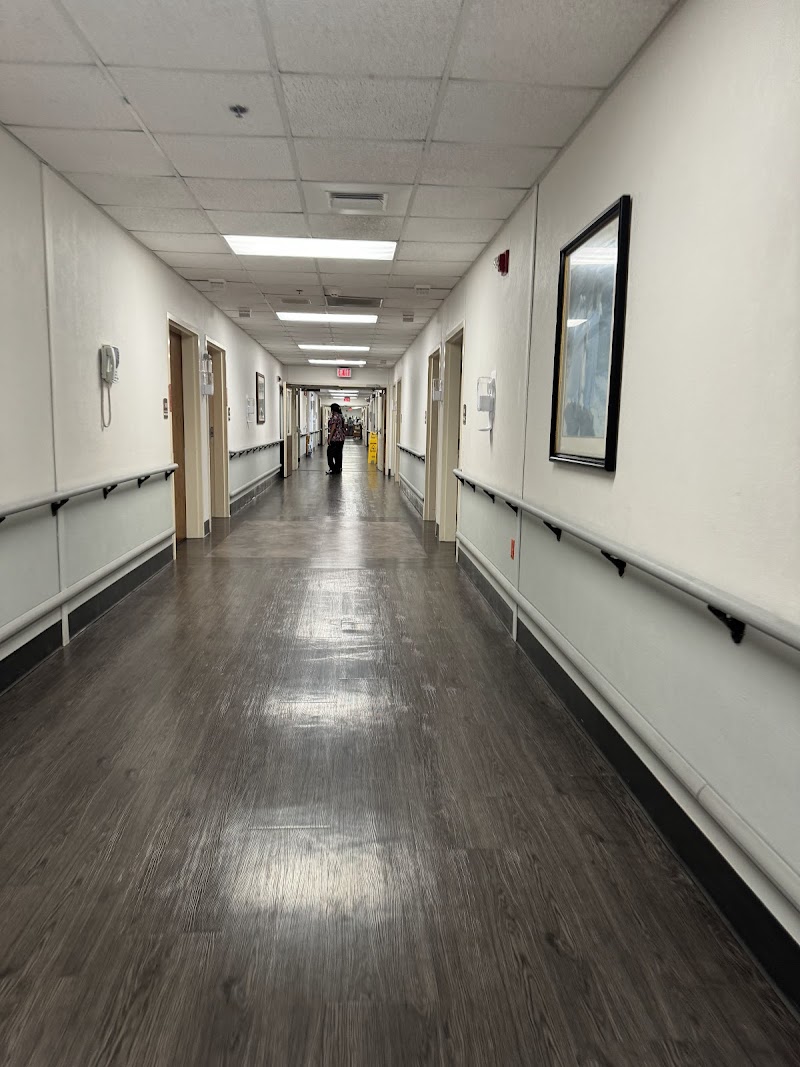
Dec 2022 1 deficiency
CONCERN (D) 📢 Someone Reported This

A family member, employee, or ombudsman was alarmed enough to file a formal complaint

Potential for Harm - no one hurt, but risky conditions existed

Respiratory Care (Tag F0695)

Could have caused harm · This affected 1 resident

**NOTE- TERMS IN BRACKETS HAVE BEEN EDITED TO PROTECT CONFIDENTIALITY** Based on observation, interview, and record review, the facility failed to ensure Oxygen (O2) therapy was administered as per ph...

Read full inspector narrative →
**NOTE- TERMS IN BRACKETS HAVE BEEN EDITED TO PROTECT CONFIDENTIALITY** Based on observation, interview, and record review, the facility failed to ensure Oxygen (O2) therapy was administered as per physician's order for 1 of 38 total residents sampled, (#3). Findings: Resident #3 was admitted to the facility on [DATE], with diagnoses of cerebral infarct, end stage renal disease, cerebral palsy, dementia, and dependence on supplemental oxygen. The resident's quarterly Minimum Data Set (MDS) assessment dated [DATE] revealed his cognition was mildly impaired and he required oxygen therapy. A physician's order dated 4/06/22, noted Oxygen (O2) 2 liters per minutes continuously every shift for shortness of breath (SOB). Observations on 12/06/22 at 9:42 AM, and on 12/06/22 at 2:55 PM, showed the resident received O2 therapy via nasal cannula, infusing at 4 liters per minute (LPM). Resident #3 stated he used oxygen 24/7 but could not say what the rate of O2 was. On 12/06/22 at 2:57 PM, the resident's oxygen settings were observed with Licensed Practical Nurse (LPN) A. She acknowledge the resident's O2 settings was at 4 LPM. The resident's physician's orders were reviewed with LPN A, and she verbalized the resident's order was for O2 at 2 LPM. LPN A explained oxygen was a medication that required a physician's order for administration and should be checked by the nurse daily. LPN A stated she did not check the resident's O2 at the beginning of her shift. On 12/06/22 at 3:00 PM, the LPN Nurse Manager was made aware of the findings, and she stated that O2 was a medication that required a physician's order, and nurses should be checking on the resident's O2 every shift. On 12/06/22 at 3:15 PM the Director of Nursing (DON) stated O2 was considered a medication that required a physician order for administration, and nurses should be checking the O2 according to physicians order every shift. The resident's care plan, has oxygen therapy ordered r/t (related) shortness of breath, comfort initiated on 10/18/20 and revised on 9/21/22 included, O2 via nasal cannula for SOB, comfort as order. A review of the Policy and procedure on Oxygen Administration not dated, indicated that under Preparation #1 read, Verify that there is a physician's order. Review the physician's orders or facility protocol for oxygen administration.
Feb 2022 8 deficiencies
CONCERN (D)

Potential for Harm - no one hurt, but risky conditions existed

Deficiency F0561 (Tag F0561)

Could have caused harm · This affected 1 resident

**NOTE- TERMS IN BRACKETS HAVE BEEN EDITED TO PROTECT CONFIDENTIALITY** 3. Resident #75 was admitted to the facility on [DATE] with diagnoses including paraplegia, fusion of the lumbar and thoracic re...

Read full inspector narrative →
**NOTE- TERMS IN BRACKETS HAVE BEEN EDITED TO PROTECT CONFIDENTIALITY** 3. Resident #75 was admitted to the facility on [DATE] with diagnoses including paraplegia, fusion of the lumbar and thoracic regions of the spine. Review of the admission MDS assessment with ARD of 8/15/21 revealed resident #75 felt it was very important to choose between a tub bath, shower, bed bath or sponge bath. The Quarterly MDS assessment dated [DATE] revealed the resident had a BIMS score of 13 which indicated he was cognitively intact. Resident #75 required extensive assistance from one person for personal hygiene. He was totally dependent on two staff for transfers and totally dependent on one staff for bathing. On 2/21/22 at 3:05 PM, the resident stated he had not received a shower since he was admitted to the facility. He stated staff gave him a bed bath, If that is what you want to call it. Resident #75 explained although he preferred showers, staff gave him bed baths as he required use of a mechanical lift and assistance from two people to get out of bed. Review of the medical record revealed resident #75 had a care plan for bathing/showering initiated on 8/10/21 and revised on 11/10/21. The document indicated the resident required assistance of two staff with bathing/showering and a sponge bath should be given when a full bath or shower could not be tolerated. The care plan indicated the resident required a mechanical lift for transfers. On 2/23/22 at 1:59 PM, CNA O stated resident #75 received bed baths because in order to have a shower he would have to be transferred via a mechanical lift to a wheelchair, taken to the shower room and again transferred with the mechanical lift to the shower chair. She explained after his shower, the resident would have to be put back to bed to have some areas of his body washed. CNA O stated this was necessary because the shower chair did not recline enough to allow access to all areas of the resident's body. She stated a shower bed would be ideal for residents who were unable to stand, and she was not sure why the facility did not have this equipment. On 2/23/22 at 3:12 PM, the DON stated she was not aware of the problem of residents being showered according to their preferences. She confirmed residents should be able to receive showers if that was their preference. The DON could not explain why the facility did not have a shower bed. Based on interview and record review, the facility failed to provide showers according to preferences for 3 of 8 residents reviewed for choices of a total sample of 54 residents, (#20, #65, #75). Findings: 1. Resident #20 was admitted to the facility on [DATE] with diagnoses of chronic congestive heart failure, acute respiratory failure with hypoxia, atrial fibrillation, dementia without behavioral disturbance, chronic obstructive pulmonary disease, and cardiac pacemaker. Review of the Annual Minimum Data Set (MDS) assessment with assessment reference date (ARD) of 9/22/21 revealed resident #20 felt it was very important to choose between a tub bath, shower, bed bath or sponge bath. The Quarterly MDS assessment with Assessment Reference Date (ARD) of 12/15/21 revealed the resident's cognition was moderately impaired with a Brief Interview for Mental Status (BIMS) score of 12/15. The assessment indicated the resident required extensive assistance from one person for dressing and personal hygiene, and extensive assistance from two persons for transfers. She was totally dependent on staff for bathing and had functional limitation in range of motion of his bilateral upper extremities. The resident's Task: ADL (Activities of Daily Living) - Daily Bathing Showers form revealed he was scheduled for showers on Monday and Thursday on the 7 AM to 3 PM shift. Review of the document for the period 1/25/22 to 2/23/22 showed check marks in the column for one-person physical assist but there was no documentation to indicate the type of bath or shower the resident received. On 2/21/22 at 3:03 PM, resident #20 stated he had only received one shower since his admission to the facility, and verbalized he had no idea why never received any additional showers. Resident #20 stated staff used a mechanical lift to transfer him, and he was left in bed all the time. On 2/22/22 at 3:07 PM, Certified Nursing Assistant (CNA) S stated resident #20's showers were scheduled for the 3 PM to 11 PM shift. However, she explained the resident received only bed baths . CNA S verbalized the resident required a mechanical lift for transfers, and the facility did not have a shower stretcher to transport him to the shower room. On 2/22/22 at 4:24 PM, the Director of Nursing (DON) stated the facility did not have a shower bed / stretcher, but residents were given the option of a tub bath, since there was a tub on the 400 Unit. In additional interviews with the DON on 2/23/22 at 1:12 PM and 3:01 PM, she stated the facility had a reclining shower chair that would enable staff to provide the resident with showers. The DON was not sure where provision of showers would be documented in the electronic medical record. The resident's Task form was reviewed with the DON, and she validated there was documentation to show some type of bed bath was given. She confirmed there was no documentation to indicate resident #20 received showers according to his expressed preference on scheduled shower days. The resident's care plan for ADL self-care performance deficits, initiated on 3/02/20 with revision on 12/26/21 read, Bathing/showering: the resident requires assistance by (1) staff with bathing/showering and as necessary. 2. Resident #65 was admitted to the facility on [DATE] with her most recent readmission on [DATE]. Her diagnoses included metabolic encephalopathy, convulsions, stroke with one-sided weaknesses and paralysis, diabetes type II with diabetic neuropathy, and anxiety disorder. Review of the Annual MDS assessment with ARD of 8/05/21 revealed resident #65 felt it was very important to choose between a tub bath, shower, bed bath or sponge bath. The resident's Quarterly MDS assessment with ARD of 1/20/22 revealed the residents' cognition was intact with a BIMS score of 14/15. Resident #65 required extensive assistance from two people for most of her ADLs and she was totally dependent on staff for bathing. She had functional limitation in range of motion was impairments on both sides of her upper and lower extremities. Review of the resident's Task form showed she was scheduled for daily bathing/showers on Monday and Thursday on the 7 AM to 3 PM shift. For the period 1/26/22 to 2/23/22 there was no documentation to indicate resident #65 received showers as scheduled. On 2/21/22 at 3:20 PM, resident #65 stated she had neither received a shower nor been taken out of bed for one year. The resident stated staff told her it took too long to give her a shower since they had to transfer her from the bed to a wheelchair, then from the wheelchair to the shower chair. She verbalized she was told it was too much. Resident #65 stated she got partial or half bed baths, and verbalized she told staff she was not being cleaned properly. On 2/22/22 at 3:33 PM, CNA P confirmed resident #65 required a mechanical lift for transfers into the wheelchair and then to the shower chair. The CNA stated the resident was paralyzed from her waist down and could not lift her feet up during transfers. CNA P explained the facility did not have a shower bed or stretcher, and a shower bed would not fit in the shower room. She confirmed she had been giving the resident bed baths instead of showers. On 2/23/22 at 10:50 AM, Registered Nurse (RN) R stated resident #65 used to receive showers in the past but had not been showered for approximately one year. RN R explained the DON at that time did not want the resident to be placed in the shower chair due to the resident's risk for falls. She stated the resident received bed baths as the facility did not have a shower bed / stretcher. On 2/23/22 at 1:12 PM, the DON stated the facility had a reclining shower chair, but this device was not rated for transport. She explained staff would have to transfer the resident to a wheelchair, transport her to the shower room and then transfer her again into the reclining shower chair. The DON stated she was aware of discussions related to the facility acquiring a shower bed, but she was not certain of the outcome. On 2/23/22 at 3:01 PM, the resident's Task: ADL-Daily Bathing Showers form for the period 1/26/22 to 2/23/22 was reviewed with the DON. She stated there was documentation to show the type of bed bath provided and verbalized there was no additional documentation to indicate the resident received showers. An intervention on the resident's care plan for ADL self-care performance deficits, initiated on 4/10/14 with revision on 1/26/22 read, The resident is totally dependent on staff to provide bath.
CONCERN (D)

Potential for Harm - no one hurt, but risky conditions existed

Comprehensive Care Plan (Tag F0656)

Could have caused harm · This affected 1 resident

**NOTE- TERMS IN BRACKETS HAVE BEEN EDITED TO PROTECT CONFIDENTIALITY** Based on interview and record review, the facility failed to develop an individualized care plan for 1 of 5 residents reviewed f...

Read full inspector narrative →
**NOTE- TERMS IN BRACKETS HAVE BEEN EDITED TO PROTECT CONFIDENTIALITY** Based on interview and record review, the facility failed to develop an individualized care plan for 1 of 5 residents reviewed for oxygen therapy of a total sample of 54 residents, (#51). Findings: Resident #51 was admitted to the facility on [DATE] with diagnoses including Cardiopulmonary Obstructive Pulmonary Disease (COPD), anxiety disorder, and dementia. Review of the medical record revealed a physician order for oxygen at two liters via nasal canula as needed for shortness of breath and COPD. Review of resident #51's care plans revealed there was no specific care plan for oxygen therapy, and this intervention was not listed in any other care plan. On 2/24/22 at 2:30 PM, the Minimum Data Set (MDS) Coordinator stated if there was an active physician order for oxygen use or a diagnosis of COPD, residents should have an associated care plan for oxygen therapy. The MDS Coordinator reviewed all of resident #51's care plans and confirmed there was no active care plan to address the resident's oxygen use.
CONCERN (D)

Potential for Harm - no one hurt, but risky conditions existed

Quality of Care (Tag F0684)

Could have caused harm · This affected 1 resident

**NOTE- TERMS IN BRACKETS HAVE BEEN EDITED TO PROTECT CONFIDENTIALITY** Based on observation, interview, and record review, the facility failed to provide non-surgical site treatment according to a ph...

Read full inspector narrative →
**NOTE- TERMS IN BRACKETS HAVE BEEN EDITED TO PROTECT CONFIDENTIALITY** Based on observation, interview, and record review, the facility failed to provide non-surgical site treatment according to a physician's order for 1 of 2 residents reviewed for non-pressure skin condition out of a sampled of 54 residents, (#83). Findings: Review of resident #83's medical record revealed she was admitted to the facility on [DATE] with diagnoses including cardiac arrest, aortic stenosis, coronary artery bypass graft, prosthetic heart valve and coronary pacemaker. The Quarterly Minimum Data Set assessment dated [DATE] documented she had moderate cognitive impairment, required extensive assistance with activities of daily living and had a surgical wound and wound care / non-surgical dressings. Review of #83's medical record revealed physician orders dated 2/11/22 to observe the right subclavian area status post removal of central line for signs/symptoms of infection and to notify the physician if signs were present. The order directed nurses to change dry sterile gauze and secure with tape daily and as needed if soiled or dislodged, until healed. Observations conducted on 2/21/22 at 11:35 AM, and 2/22/22 at 9:19 AM, 4:06 PM, and 5:13 PM revealed the dressing to resident #83's right upper chest area was dated 2/19/22. Review of the Treatment Administration Record (TAR) revealed the physician's order was transcribed correctly to reflect observation for signs and symptoms of infection and to complete a daily dressing change until the wound as healed. The TAR was initialed by nurses to verify the treatment was completed on 2/20/22 and 2/21/22. On 2/22/22 at 5:13 PM, the Director of Nursing (DON) confirmed the dressing on #83's right upper chest was dated 2/19/22. The DON stated the physician's order was written to observe for signs and symptoms of infection and to change the dressing daily and as needed. The DON explained the nurses' initials on the TAR indicated they completed the dressing change daily on 2/20/22 and 2/21/22. The DON said, Since the dressing was dated 2/19/22, the daily dressing change had not been completed as ordered by her physician. Review of the facility's policy Dressings, Dry/Clean Procedure, revised September 2013, read, Purpose: The purpose of this procedure is to provide guidelines for the application of dry, clean dressings. Preparation: 1. Verify that there is a physician's order . check the treatment record . Steps in the Procedure: . 17. Apply the ordered dressing and secure with tape or border dressing per order. Label with date and initials to the top of the dressing . Documentation: 1. The date and time the dressing was changed . 9. The signature and initials of the person recording the data .
CONCERN (E)

Potential for Harm - no one hurt, but risky conditions existed

Respiratory Care (Tag F0695)

Could have caused harm · This affected multiple residents

**NOTE- TERMS IN BRACKETS HAVE BEEN EDITED TO PROTECT CONFIDENTIALITY** 4. Resident #32 was admitted to the facility on [DATE] with diagnoses to include COPD, Parkinson's Disease, and chronic kidney ...

Read full inspector narrative →
**NOTE- TERMS IN BRACKETS HAVE BEEN EDITED TO PROTECT CONFIDENTIALITY** 4. Resident #32 was admitted to the facility on [DATE] with diagnoses to include COPD, Parkinson's Disease, and chronic kidney disease. The medical record included physician orders for oxygen at 2 LPM via nasal cannula at night and PRN for shortness of breath and admit to hospice for diagnosis of end stage COPD and Parkinson's Disease. The Annual Minimum Data Set (MDS) dated [DATE] indicated the resident's health conditions included shortness of breath. The assessment showed she used oxygen and received hospice services. Resident #32 had a care plan for oxygen related to end stage respiratory failure, and COPD. On 2/21/22 at 10:12 AM, an oxygen concentrator was noted next to resident #32's bed. The nasal canula tubing was dated 2/07/22 and it was in a plastic bag, also dated 2/07/22. The tubing was connected to the oxygen concentrator that had an external filter covered in a thick gray dust-like substance. Additional observations on 2/21/22 at 1:54 PM and 3:14 PM, and on 2/22/22 at 8:48 AM revealed no change in the condition of the filter. On 2/22/22 at 1:39 PM, the Unit Manger (UM) stated resident #32 used oxygen at night and as needed during the day. She validated the oxygen tubing and nasal cannula should be changed every Sunday night and confirmed the resident's tubing was dated 2/07/22, two weeks ago. The UM confirmed the external filter was covered with thick, gray dust-like material and stated she was unsure who was responsible for cleaning the filter. 5. Resident #13 was admitted to the facility on [DATE] with diagnoses to include acute respiratory failure with hypoxia, COPD, dependence on supplemental oxygen, and chronic heart failure. The Annual MDS assessment dated [DATE] indicated the resident used oxygen. A physician order directed nurses to apply oxygen at 2 LPM via nasal canula as needed for shortness of breath. Resident #13 had a care plan for use of oxygen due to respiratory illness, COPD and acute respiratory failure. On 2/21/22 at 10:41 AM, resident #13's oxygen concentrator was noted to have no external filter on the back of the machine. On 2/22/22 at 9:00 AM, the oxygen concentrator still did not have a filter. On 2/22/22 at 1:41 PM, the UM validated the oxygen concentrator had no external filter. She confirmed oxygen concentrators should always have a filter. On 2/23/22 at 3:00 PM, the DON stated she was not sure who was responsible for cleaning the external filters on the oxygen concentrators. She stated this is a new issue that was brought to her attention by the survey team. Based on observation, interview and record review, the facility failed to maintain oxygen flow rate as ordered by the physician for 1 resident (#60); and failed to ensure oxygen concentrators were in clean and safe condition for 6 residents (#60, #83, #49, #32, #13, and #83), out of 7 residents reviewed for respiratory care, of 16 residents receiving oxygen therapy. Findings: 1. Resident #60 was re-admitted to the facility on [DATE] with diagnoses of Chronic Obstructive Pulmonary Disease (COPD), cardiomegaly, anemia, dementia, and recent Corona Virus Disease 2019 (COVID-19) infection. On 2/21/22 at 12:05 PM, resident #60 was observed in bed. She did not have oxygen applied as the nasal cannula (NC) was draped over the left bed rail. The tubing was attached to a dirty oxygen concentrator. The rear vents of the concentrator were covered in a thick layer of gray dust particles. The oxygen flow rate was set at 3 liters per minute (LPM). A review of physician orders dated 10/15/20 noted oxygen at 2 LPM via NC as needed (PRN) for shortness of breath. An order directed nurses to change the oxygen tubing weekly and PRN, label, and date on each change every night shift on Sundays, to start on 10/18/20. Resident #60 had care plan, revised on 1/18/22, for oxygen therapy related to respiratory illness, history of COVID-19 including interventions for, Oxygen Settings: O2 via nasal prongs at 2L. On 2/21/22 at 3:00 PM, resident #60 wore the NC and received oxygen via the concentrator which was set to deliver a low rate of 3.5 LPM. The rear vents of concentrator were still covered with thick gray dust particles. On 2/21/22 at 3:08 PM, Licensed Practical Nurse (LPN) D stated she was assigned to resident #60 on the 7 AM to 3 PM shift. LPN D checked the electronic medical record (EMR) and confirmed the resident was to have her oxygen concentrator set at 2 LPM. LPN D checked the setting on resident #60's oxygen concentrator and verified it was set at 3.5 LPM. She said she had not checked the oxygen setting until prompted and acknowledged the resident was not receiving oxygen as ordered by the physician. LPN D added she thought that since the tubing was changed earlier that morning on the 11 PM to 7 AM shift, the nurse would have checked the setting then. LPN D did not notice that the thick layer of gray dust on the rear vents of the oxygen concentrator. On 2/22/22 at 10:02 AM and 2:05 PM, resident #60 wore the NC which was attached to the concentrator at bedside. The rear vents of the machine were unchanged. On 2/22/22 at 2:25 PM, LPN A and housekeeper B acknowledged resident #60's oxygen concentrator was dusty and dirty. Neither LPN A nor housekeeper B knew whether nursing or housekeeping staff were responsible for cleaning the oxygen concentrators. They did not know any details of the facility's policy related to cleaning and maintenance of oxygen concentrators. On 2/22/22 at 2:42 PM, the Environmental Services Supervisor said, Housekeeping staff do not clean or touch any of the oxygen concentrators when the residents are using them. They will clean them when the resident is finished using or when instructed by the nurse. On 2/23/22 at 3:00 PM, the Director of Nursing (DON) stated nurses were expected to check concentrator settings at least every shift to ensure oxygen infused at the prescribed flow rate. She explained residents with COPD could get carbon dioxide overloaded and make their condition worse if they got too much oxygen. The DON stated cleaning of concentrators was a new issue for the facility, and confirmed staff required further education regarding the concern. Review of the policies and procedures revised October 2010 titled, Oxygen Administration read, Preparation: Verify that there is a physician's order for this procedure. Review the physician's orders. 2. Review of resident #83's medical record revealed she was admitted to the facility on [DATE] with diagnoses including heart failure, COPD, Coronary Artery Bypass Graft (CABG), Aortic Stenosis, and cardiac arrest. Review of the Quarterly Minimum Data Set (MDS) assessment dated [DATE] documented she had moderate cognitive impairment and had been on oxygen therapy. Review of the plan of care dated 9/17/21 revealed the resident required oxygen therapy related to COPD and shortness of breath. Goals included monitor for respiratory distress, oxygen via nasal cannula at 2 to 4 liters LPM continuously. Review of the physician's orders documented oxygen at 2 to 4 LPM minute with humidifier via nasal cannula continuously for shortness of breath / COPD. The orders indicated nurses could remove oxygen for short periods as tolerated, oxygen tubing was to be changed weekly and as needed, and stored in a labeled and dated bag. On 2/21/22 at 11:39 AM; 2/22/22 at 9:19 AM, 2:38 PM and 4:06 PM; and 2/23/22 at 9:26 AM resident #83's oxygen concentrator was noted to have no external filter. There was gray dust built up on the inlet area where the room air entered the oxygen concentrator. On 2/22/22 at 2:38 PM, LPN E observed resident #83's oxygen concentrator and said, There is no external filter in the concentrator. There should be a filter to filter the air from the room. LPN E confirmed gray dust had built up in the space where the external filter should have been located. LPN E explained resident #83 was on oxygen all the time and was therefore inhaling unfiltered air. On 2/22/22 at 5:14 PM, the DON confirmed resident #83's oxygen concentrator did not have an external filter. The DON said, There should have been a filter on the concentrator to filter the room air. 3. Review of resident #49's medical record revealed she was admitted to the facility on [DATE] with diagnoses including COPD, congestive heart failure (CHF), and asphyxia. Review of the Quarterly MDS assessment dated [DATE] revealed the resident was cognitively intact and had been on oxygen therapy. Review of resident #49's plan of care dated 4/04/2016 and revised on 1/18/22, documented the resident sometimes had difficulty breathing related to her COPD, may need to use oxygen, and would use oxygen at bedtime. Interventions included physician ordered oxygen via nasal cannula at 2 LPM at bedtime. The goal was for resident #49 to have no complications related to shortness of breath. Review of the medical record revealed a physician's orders for oxygen at 2 LPM via nasal cannula due to low oxygen saturation levels during the night. On 2/21/22 at 10:54 AM and 2:40 PM, and on 2/22/22 at 9:27 AM and 1:45 PM, the filter on resident #49's oxygen concentrator was noted to be completely covered with a gray dust-like substance. On 2/22/22 at 2:38 PM, LPN E stated resident #49 wore her oxygen at night because her oxygen levels went down. LPN E observed the concentrator's external filter and confirmed it was completely covered with gray dust. LPN E then peeled the layer of dust from the external filter. She explained the external filter was used to clean the air from the room and in order for the oxygen concentrator to function properly the filter should be clean. She said, If the filter is not cleaned it becomes clogged and the resident may not receive the correct percentage of oxygen ordered by the physician. LPN E stated she was not aware who was responsible for checking and cleaning the external filters. On 02/23/22 at 9:41 AM, the Director of Nursing (DON) stated there should be an clean external filter on the oxygen concentrators. The purpose of the filter was to filter/clean the room air before concentrating and providing the percentage of oxygen per physician order to the resident. The DON explained the nurses were not aware they were responsible for checking and cleaning the filters. The licensed nursing orientation did not include oxygen concentrator filter training. Review of the Invacare Perfecto2 V Oxygen Concentrator User Manual, dated 2016, read, . 1.2 The intended use of the oxygen concentrator is to provide supplemental oxygen to patients with respiratory disorders, by separating nitrogen from room air, by way a a molecular sieve . 7.3 Cleaning the Cabinet Filter . Do Not operate the concentrator without the filter installed or with a dirty filter. There is one cabinet filter located on the back of the cabinet. 1. Remove the filter and clean as needed . 2. Clean the cabinet filter with a vacuum cleaner or wash with a mild liquid dish detergent (such a Dawn) and water. Rinse thoroughly. 3. Thoroughly dry the filter and inspect for fraying, crumbling, tears and holes. Replace filter if any damage is found . 7.6 Preventive Maintenance Checklist On Each Inspection . Clean Cabinet Filter . During Preventive Maintenance Schedule, Or Between Patients every 3 years of continuous use (Equivalent to 26,280 hours) . Clean/Replace Cabinet filters . Review of the Facility Assessment revealed the facility was capable of caring for residents with diagnoses of COPD, Pneumonia, Asthma, Chronic Lung Disease, Respiratory Failure, Bronchitis and Influenza. Respiratory treatments would include oxygen therapy, suctioning, tracheostomy care and ventilator or respirator. The document indicated the facility would determine the skills, education, and equipment necessary to meet the needs of the residents. Staff competencies would be based on the resident's needs and staff were expected to demonstrate competency during orientation, class room instruction, videos, computer-based instruction and skill's fairs. 6. Resident # 20 was admitted to the facility on [DATE] with diagnoses of chronic diastolic (congestive) heart failure, acute respiratory failure with hypoxia, atrial fibrillation, dementia without behavioral disturbance, chronic obstructive pulmonary disease, and cardiac pacemaker. Review of the medical record revealed a physician order dated 10/26/20 for oxygen at 2 LPM via nasal cannula as needed for shortness of breath while awake. Review of the resident's Quarterly Minimum Data Set (MDS) assessment with assessment reference date of 12/15/21 revealed the resident's cognition was moderately impaired with a Brief Interview For Mental Status (BIMS) score of 12/15. The assessment indicated the resident had shortness of breath or trouble breathing with exertion. On 2/21/22 at 3:03 PM, resident #20 was in bed. An oxygen concentrator to the left of his bed did not have an external filter. On 2/22/22 at 2:48 PM, LPN A stated the resident had physician's order for oxygen at 2 LPM as needed. During observation of the resident's oxygen concentrator with LPN A, he confirmed the machine did not have an external filter. He explained the maintenance department was responsible for replacing the filter. On 2/22/22 at 2:55 PM, the DON confirmed the oxygen concentrator did not have an external filter. She stated the maintenance department was responsible for replacing these filters. On 2/23/22 at 10:01 AM, Registered Nurse (RN) D stated the resident had orders for oxygen as needed. RN D checked the resident's oxygen concentrator and confirmed there was no external filter in place. RN D stated even if oxygen was ordered only as needed, and the resident was not currently connected to the machine, the filter should be in place. On 2/23/22 at 10:03 AM, Maintenance Assistant V stated maintenance staff check and replace the external filters on the oxygen concentrators monthly, and after resident use of the machine was completed. Maintenance Assistant V stated he did not know when the external filter for resident #20's oxygen concentrator was last changed. He verbalized the external filter was missing and stated he recently replaced it. The resident's care plan for oxygen therapy related to ineffective gas exchange and COPD, initiated on 10/26/20 and revised on 12/26/21 read, O2 via nasal prongs @ 2L PRN while awake and connected to C-pap at night. The facility's policy Oxygen Administration revised October 2010 read, Check the mask, tank, humidifying jar etc., to be sure they are in good working order.
CONCERN (E)

Potential for Harm - no one hurt, but risky conditions existed

Food Safety (Tag F0812)

Could have caused harm · This affected multiple residents

**NOTE- TERMS IN BRACKETS HAVE BEEN EDITED TO PROTECT CONFIDENTIALITY** Based on observation, interview and record review, the facility failed to maintain safe and sanitary conditions for food storage...

Read full inspector narrative →
**NOTE- TERMS IN BRACKETS HAVE BEEN EDITED TO PROTECT CONFIDENTIALITY** Based on observation, interview and record review, the facility failed to maintain safe and sanitary conditions for food storage in 1 of 2 nutrition rooms, (400-unit). Findings: On 2/24/22 at 9:40 AM, during a tour of the 400-unit nutrition room / pantry with the Unit Manager (UM), undated food items observed inside the refrigerator included: bag labeled room [ROOM NUMBER] with a large bucket of fried chicken with 3 biscuits, bag with 1 box onion rings, box containing fish/shrimp/French fries, box with biscuit and shrimp, bag with 2 containers of [NAME] slaw, 2 slices of cheesecake, and 64 ounces vanilla creamer which was almost empty. Food particles and trash were observed on the cabinet shelves and inside drawers. The cabinets were disorganized and there were miscellaneous condiments, nut mixture and cereal noted in the drawers as well as the cabinets. The upper cabinet adjacent to the coffee supplies had an undated bagel wrapped in tinfoil. The upper right cabinet had a bag containing 4 bottles of various vitamins and supplements and a bruised red apple was left on the countertop. The UM said, Whoever puts items into the refrigerator needs to date them and the night staff are to throw out the outdated food. The UM acknowledged the cabinets, drawers, and refrigerator were dirty, disorganized, and had outdated or undated food items present. She said, I wound not want my house kept like this. On 2/24/22 at 10:30 AM, the Food Service Director was interviewed regarding concerns identified on the 400-unit nutrition room. He said, Food brought from the outside to the panty and nutrition rooms must be thrown out after 3 days. Anyone can clean the pantries. He explained nursing staff were responsible for throwing out the outdated food and the kitchen staff should rotate items such as milk and juice. On 2/24/22 at 12:30 PM, the Food Service Director stated since nursing staff checked the refrigerator temperatures in the pantries, they would be responsible for cleaning up and throwing out outdated food. He explained Environmental Services staff cleaned the panty and nursing staff were assigned on all shifts to clean the refrigerator and throw out outdated items. The Food Service Director stated when family members provide food for the residents, nursing staff should put the residents' room number and current date on the item(s). Review of the facility policy for, Food from Family, Visitor, Community read, Food stored for resident should be labeled and dated appropriately and discarded per safe food storage guidelines. Review of the facility policy and procedure dated 2016 for, Handling Leftover Food read, Leftover food stored in the refrigerator shall bed wrapped dated, labeled with a use by date that is no more than 72 hours from the time of first use. Refrigerated leftovers stored beyond 72 hours shall be discarded.
CONCERN (F)

Potential for Harm - no one hurt, but risky conditions existed

Deficiency F0725 (Tag F0725)

Could have caused harm · This affected most or all residents

**NOTE- TERMS IN BRACKETS HAVE BEEN EDITED TO PROTECT CONFIDENTIALITY** Based on interview and record review, the facility failed to maintain sufficient nurse staffing on the night shift to promote th...

Read full inspector narrative →
**NOTE- TERMS IN BRACKETS HAVE BEEN EDITED TO PROTECT CONFIDENTIALITY** Based on interview and record review, the facility failed to maintain sufficient nurse staffing on the night shift to promote the highest practicable level of well-being for residents on 2 of 2 units; and failed to provide necessary care and services and ensure safety according to the plans of care for 7 of 16 residents reviewed for staffing concerns, (#2, #3, #10, #12, #45, #62, and #79). Findings: On 2/21/22 at 10:18 AM and 2/22/22 at 1:31 PM, resident #45, the Resident Council President, voiced a concern about the skeleton crew on the night shift. She explained there were nights when only 2 nurses and 2 Certified Nursing Assistants (CNAs) were assigned to take care of over 80 residents in the building. She explained that number of staff was not able to adequately care for everyone. She recalled residents' complaints regarding being left on the toilet too long. She expressed fear of fire or other emergency situations that would require staff to assist residents to evacuate their rooms or the building. The Resident Council President was particularly concerned about residents who were bed bound or required extensive assistance for mobility. She confirmed she had spoken to the facility's Administrator about staffing concerns on the night shift and was told the facility had a back-up plan and could call in staff when needed. On 2/21/22 at 12:34 PM, resident #10 stated the facility was short staffed and CNAs were overburdened. She explained she has a urinary catheter preferred to use a small drainage bag strapped to her leg. She stated staff replaced the small bag with a large drainage bag to cut down on the number of times needed to empty the leg bag. Review of resident #10's medical record revealed her diagnoses included generalized muscle weakness, heart failure, legal blindness, neuromuscular dysfunction of bladder and stroke with right side weakness and paralysis. Resident #10's Minimum Data Set (MDS) Significant Change in Status assessment dated [DATE] revealed she was cognitively intact and did not resist care. She required extensive assistance with bed mobility, transfers, dressing, toilet use and personal hygiene. Resident #10 had an indwelling urinary catheter. On 2/23/22 at 10:00 AM during a Resident Council group meeting, the Resident Council President reiterated the facility had a staffing issue on the night shift. She stated she had used this forum in the past to encourage resident to express their concerns about staffing and how it affected them. She explained during the last scheduled meeting of the Resident Council on 2/16/22, the group requested a meeting with the facility Administrator, Director of Nursing (DON) and the company's Chief Executive Officer (CEO) in order to address their concerns regarding staffing. The following residents expressed specific concerns related to staffing: On 2/23/22 at approximately 10:20 AM, resident #2 stated the facility is often short-staffed, especially on the night shift. Review of the resident's medical record revealed her diagnoses included generalized muscle weakness, stroke and type II diabetes. Resident #2's Minimum Data Set (MDS) Quarterly assessment dated [DATE] revealed she required extensive assistance for bed mobility, transfers, locomotion, dressing, toilet use and personal hygiene. The resident did not walk and had impairments of both upper extremities. On 2/23/22 at approximately 10:25 AM, resident #79 recalled nights when she did not receive care for the entire night shift. She said, I got changed on the 3-11 shift and went through the night shift without being changed. Resident #79 explained she wore an incontinence brief, and not being changed regularly increased her risk for bedsores especially since she had them in the past. Review of resident #79's medical record revealed her diagnoses included stroke, generalized muscle weakness, type II diabetes, and morbid obesity. Resident #79's MDS Significant Change in Status assessment dated [DATE] revealed she was cognitively intact, did not reject care and required extensive assistance of two staff for bed mobility and extensive assistance of one staff for transfers and personal hygiene. The resident was totally dependent on two staff for toilet use. She had impaired range of motion in one upper extremity, used a wheelchair for mobility and was always incontinent of bowel and bladder. Resident #79 had a care plan for activities of daily living (ADL) self-care performance deficit dated 2/22/21. The interventions included check for incontinence with routine care and provide incontinence care as indicated. A care plan for risk for pressure injury and other skin impairment dated 2/22/21 had a goal initiated on 2/09/22 related to moisture associated skin damage on resident #79's sacrum. The interventions included assist resident to turn and reposition frequently, keep skin clean and dry and provide perineal care after each incontinent episode. On 2/23/22 at approximately 10:30 AM, resident #12 stated night shift staff did not have time to provide a thorough bath or incontinence care. She said, They hurry through and do not take their time. Review of resident #12's medical record, revealed her diagnoses included left side weakness and paralysis following a stroke, generalized muscle weakness, morbid obesity, type II diabetes and acute respiratory distress syndrome. Review of the MDS Quarterly assessment dated [DATE] revealed the resident was cognitively intact and did not reject care. She required extensive assistance of two staff for bed mobility, transfer and toilet use and extensive assistance of one staff for personal hygiene and dressing. She had impaired range of motion in one upper and one lower extremity and used a wheelchair for mobility. She was always incontinent of bladder and frequently incontinent of bowel. Resident #12 had a care plan for ADL self-care performance deficit revised on 9/21/21. Interventions included provide sponge bath when a full bath cannot be tolerated, and resident requires extensive assistance of two staff to turn and reposition in bed. Document revealed resident #12 had 42-inch bed and needed assistance with proper positioning in the center of the bed. A care plan for risk for pressure injury and other skin impairment revised on 9/24/21 directed staff to assist resident to turn and reposition frequently and keep skin clean and dry. A care plan for oxygen therapy related to decreased oxygen level when sleeping at night directed nursing staff to monitor for signs and symptoms of respiratory distress. The care plan directed CNAs to prevent abdominal compression and respiratory compromise by routinely checking the resident's position to ensure she did not slide down in bed. On 2/23/22 at approximately 10:35 AM, resident #62 said, Sometimes you ring the bell needing to go to the bathroom or get changed and they do not respond. I laid there all night one night. Review of resident's medical record revealed she had diagnoses including stroke with right side paralysis and weakness, a history of falling, difficulty walking, generalized muscle weakness and type II diabetes. The MDS Significant Change in Status assessment dated [DATE] revealed the resident was cognitively intact and did not reject care. She required extensive assistance of one staff for bed mobility, transfers, dressing, toilet use and personal hygiene. She used a wheelchair for mobility and was frequently incontinent of bowel and bladder. Resident #62 had a care plan for ADL self-care performance deficit dated 5/19/21. An intervention directed CNAs to assist with toileting as the resident was frequently incontinent. A care plan for risk for pressure injury and other skin impairment dated 1/17/22 had interventions including keep skin clean and dry and observe for changes in skin status with routine care. On 2/23/22 at 11:44 AM following the Resident Council meeting, the Director of Recreation stated he was responsible for arranging resident council meetings and recording minutes. He confirmed the Resident Council members voiced concerns regarding night shift staffing during the last meeting. He stated he informed the Administrator and DON of the Resident Council's request for a meeting with them and the CEO to discuss their concerns. On 2/21/22, the Staffing Coordinator (SC) stated she facility often did not meet the State minimum staffing requirements. She confirmed that State required staffing ratios were not met for night shift nurses and/or CNAs on 13 of 14 days from 2/06/22 to 2/19/22. She stated the actual number of staff on the night shift on those days was disturbing. On 2/22/22 at 11:38 AM, the facility Director of Nursing (DON) was informed of staffing concerns on the night shift related to two to four scheduled CNAs instead of the minimum of five recommended according to the census. She acknowledged she had received complaints from staff regarding their workload on the night shift. When asked if two CNAs could adequately care for 81 residents, the DON did not have an answer. The DON from a sister facility, DON C, explained the facility was currently on a self-imposed moratorium and had not admitted new residents for over a month as it was unable to maintain and adequate number of staff. DON C acknowledged staffing on the night shift was a problem and stated she could not guarantee the residents were receiving adequate care with current staffing levels on the night shift. She confirmed the facility had not initiated the Personal Care Attendant (PCA) program to improve staff ratios on the night shift. The PCA program permits a nursing home to employ PCAs who are participating in a training program to perform designated duties in a limited scope of practice under direct supervision of licensed nursing staff and in collaboration with CNAs. Each PCA may work within a facility for up to 4 months before becoming a CNA. The purpose of this program was to provide additional staff to meet resident care needs during the Corona Virus-19 State of Emergency (retrieved on 3/03/22 from www.fhca.org). On 2/22/22 at 11:46 AM, the Administrator validated residents may not have received good care due to low staffing on the night shift. He confirmed the facility had not implemented a PCA program to supplement staffing. On 2/22/22 at 3:54 PM, CNA G stated she worked on both the evening and night shift. She said, The night shift can be vicious. She explained that on Monday night, 2/21/22, there were four CNAs assigned to care for all residents in the building, but one CNA worked only half a shift. She stated on the nights when there were only 2 CNAs, each CNA was assigned to twenty-two residents. CNA G explained in addition to a heavy assignment there was one resident, resident #3, who required assistance from three staff to turn and reposition her. CNA G felt she did not provide good patient care under those circumstances because she could not get all her assigned tasks done. She said, It takes a miracle to finish a shift. Review of resident #3's medical record revealed her diagnoses included heart disease, type II diabetes and morbid obesity. Resident #3's MDS Annual assessment dated [DATE] revealed the resident required extensive assistance of two or more staff for bed mobility and personal hygiene and was totally dependent on two or more staff for toilet use. She had impaired range of motion in both upper and lower extremities and was always incontinent of bowel and bladder. Resident #3 had a care plan for ADL self-care performance deficit initiated 5/03/17. The interventions included three to four staff to assist with bathing, bed mobility, dressing, toilet use and transfers. A care plan for risk for falls initiated on 3/25/19 included interventions for bariatric bed for bed mobility, encourage and remind resident to call for assistance and use a slide sheet for bed mobility. A care plan for risk for pressure injury and other skin injury dated 5/03/17 included interventions to provide perineal care after each incontinent episode, reposition in bed as needed and support with pillows due to frequent leaning to one side and pull up in bed with sliding lift sheet. Resident #3's [NAME] or CNA care plan reflected interventions including assistance of three to four staff for bed mobility, dressing, transfers, and toilet use. On 2/22/22 at 4:26 PM, CNA H stated she normally worked on the 500 unit on the evening shift but occasionally picked up extra shifts on the night shift. She confirmed sometimes there were only two CNAs for the entire facility on the night shift. She described the situation as rough. She explained most residents needed assistance and with that many residents she could not check on each on every two hours as required. She said, I cannot provide all the care needed. On 2/22/22 at 11:38 PM, in a telephone interview, CNA J stated she normally worked on the night shift and was frequently one of two CNAs on the 500 unit. She explained with two CNAs, they would have to divide the 45 residents between them and was only able to make rounds twice for the shift rather than every two hours. She acknowledged CNAs should check and reposition residents at least every two hours. CNA J said, It is absolutely not possible. We cannot give the proper care like that. I would go in there more often if we had enough CNAs. On 2/22/22 at 11:51 PM, in a telephone interview, Licensed Practical Nurse (LPN) K stated the facility has been short-staffed for the last 6 months. She recalled two nights recently when she worked the 400 unit with only one CNA. She acknowledged it was not appropriate for one CNA to care for almost 40 residents. She explained on those nights the CNA was not able to check and change the residents every two hours. On 2/23/22 at 12:04 AM, in a telephone interview, Registered Nurse (RN) L stated he was usually assigned to the 500 unit with a census of over forty residents. He explained there was usually only one nurse assigned to that unit. He confirmed there were often only two CNAs on the unit for the night and there were occasions when there was only one CNA assigned to the residents. He explained when the staffing was this low, the CNAs had to prioritize because there were too many residents to do everything necessary. He agreed the residents should be checked every two hours but said, It is not possible if one CNA has the unit. On 2/23/22 at 12:10 AM, in a telephone interview, CNA M stated there had been a staff shortage on the night shift for last couple of months. She said, I often work alone on this unit for the whole night shift. I cannot check my residents every two hours if I am alone. When asked how she cared for 44 residents, she said, I know who needs to be changed and who is usually soiled. But you cannot change people every two hours. She stated the facility's management knew there was a problem, but she did not see anything changing. On 2/23/22 at 9:17 AM, CNA F stated although she usually worked the day shift, she was aware of staffing concerns on the night shift. She explained at the start of her shift, she sometimes found residents heavily saturated with urine if there were one or two CNAs working on the night shift. CNA F confirmed resident #3 required three to four staff to care for her and one or two CNAs on the night shift could not adequately care for her. The facility's Policy and Procedure for Staffing revised in April 2007 included the statement, Our facility maintains adequate staffing on each shift to ensure that our resident's needs and services are met. Licensed registered nursing and licensed nursing staff are available to provide and monitor the delivery of resident services. The Facility Assessment dated 2/18/22 included a staffing plan to ensure a sufficient number of qualified staff were available to meet each resident's needs.
CONCERN (F)

Potential for Harm - no one hurt, but risky conditions existed

Administration (Tag F0835)

Could have caused harm · This affected most or all residents

Based on interview and record review, the facility failed to utilize its resources effectively to develop and implement a plan that ensured sufficient staffing on the night shift to meet residents' ca...

Read full inspector narrative →
Based on interview and record review, the facility failed to utilize its resources effectively to develop and implement a plan that ensured sufficient staffing on the night shift to meet residents' care needs. Findings: On 2/21/22 at 11:19 AM during a review of State staffing calculation forms with the Staffing Coordinator (SC), she stated she was aware the facility did not meet minimum State staffing requirements on a few days. She was informed minimum staffing requirements were not met on a significant number of days, 13 of the 14 nights shifts on the days reviewed. She stated the supervisor or manager on duty should have handled call-offs or openings in the schedule by attempting to call staff or a staffing agency to fill those slots. The SC stated she notified the Administrator whenever staffing was not sufficient. She was unable to confirm whether the supervisor or manager on duty attempted to utilize other licensed or certified staff from other departments on the dates when staffing was insufficient. On 2/22/22 at 11:38 AM, the Director of Nursing (DON) from a sister facility, DON C, stated the facility was currently on a self-imposed moratorium and had not admitted any new residents for over a month because they had been unable to maintain an adequate number of staff. DON C acknowledged staffing on the night shift was a problem. She confirmed the facility had never initiated the Personal Care Attendant (PCA) program to supplement staffing on the night shift. On 2/22/22 at 11:46 AM, during review of the State staffing calculation with the Administrator, he was informed on some nights there were only 2 CNAs in the building caring for over 80 residents and there were frequently two nurses with no nursing supervisor assigned to care for all residents. He stated he was not aware of the extent of the staffing concern on the night shift. He explained he was not responsible for hiring nursing staff. The Administrator stated he had informed his direct supervisor of the facility's staffing issues and discussed the possibility of implementing the PCA program; but at this point it had not been authorized. The PCA program permits a nursing home to employ PCAs who are participating in a training program to perform designated duties in a limited scope of practice under direct supervision of licensed nursing staff and in collaboration with CNAs. Each PCA may work within a facility for up to 4 months before becoming a CNA. The purpose of this program was to provide additional staff to meet resident care needs during the Corona Virus-19 State of Emergency, (retrieved on 3/03/22 from www.fhca.org). On 2/24/22 at 11:36 AM, the Administrator stated staffing was reviewed daily for compliance with State-mandated ratios and direct patient care hours. He explained the facility used agency to help fill openings on shifts. He stated the facility had discharged some patients to a sister facility; but said, It is hard to find other facilities who will take Medicaid patients. The Administrator clarified he understood what need to be done under regular circumstances, but this was a public health crisis. He could not elaborate on why the corporation had not implemented the PCA program which was designed to mitigate staffing shortages in this crisis. On 2/24/22 at 11:36 AM, the Administrator stated he was aware the facility had significant staffing concerns. He confirmed the facility had an emergency staffing plan but could not give specifics. He acknowledged staffing requirements had to be met under regular circumstances; but stated the facility was impacted by the current public health crisis. The Administrator could not explain why the corporation had not implemented the PCA program in the almost two years the program had been in existence. He verbalized understanding the PCA program was designed to mitigate staffing shortages in this crisis. When asked what census the facility's current staffing could accommodate, the Administrator responded he was not certain and would have to calculate. DON C stated the current availability of night shift CNAs would support a census of 50 to 60 residents. The Facility Assessment dated 2/18/22 included a staffing plan to ensure a sufficient number of qualified staff were available to meet the resident's needs. Review of the job description for the Staffing Coordinator revised on 10/06/17 revealed he/she was responsible for ensuring nursing units were adequately staffed. Essential functions included accommodating unplanned staffing variances and communicating with staff on duty or making calls to off duty personnel to adjust staffing as necessary. Review of the job description for the facility's Nursing Director revised 9/20/17 revealed he/she would plan, organize, develop and direct the operations of the nursing department. The document indicated the DON ensures a sufficient number of nursing staff is assigned daily to meet the total nursing needs of the residents. Review of the job description for the facility's Administrator revised on 3/10/20 revealed he/she was responsible for directing day-to-day functions of the facility in accordance with regulations. Essential functions included managing human resources functions such as hiring and work assignments and ensuring there was an adequate number of staff on duty at all times to meet residents' needs.
MINOR (C)

Minor Issue - procedural, no safety impact

Staffing Information (Tag F0732)

Minor procedural issue · This affected most or all residents

Based on interview and record review, the facility failed to post daily nurse staffing information that included hours worked from 1/01/21 to 2/21/22. Findings: On 2/21/22 at 10:45 AM, the Staffing C...

Read full inspector narrative →
Based on interview and record review, the facility failed to post daily nurse staffing information that included hours worked from 1/01/21 to 2/21/22. Findings: On 2/21/22 at 10:45 AM, the Staffing Coordinator (SC) confirmed she was responsible for posting the daily nurse staffing information. She explained she completed the section of the form for the day shift, and the evening and night nurse supervisors should update the form at the start of those shifts. The SC stated sometimes this was not done and she would update the form on the following day after she took it down. On 2/21/22 at 10:55 AM, the SC provided nurse staffing forms for January 2021. Review of the form dated 1/01/21 revealed it did not include a column to display the number of hours worked by each category of licensed and unlicensed nursing staff. Review of forms for January 2021 and February 2022 revealed several forms were incomplete with blank spaces left for evening and night shift data. The SC confirmed there was no column to record the number of hours worked by any staff. She stated she was not aware of the requirement for these hours to be posted. On 2/21/22 at 10:57 AM, the daily nurse staffing posting Staffing Report - Direct Resident Care form dated 2/21/22 was reviewed with the SC. The document was posted in the hallway outside the facility's main dining room and included the facility's name, census, and number and type of nursing staff on the day shift only. There was no column to display the number of hours worked per shift and rows for the evening and night shift were blank. On 2/21/22 at 11:02 AM, the Administrator was informed the facility's nurse staffing postings were incomplete as the form did not include the numbers of hours worked by nursing staff for each shift. The Administrator stated he was aware the hours for each position should be posted but did not know the current form did not display this data. He confirmed the purpose of the form was for transparency so residents and the public could easily obtain information on the facility's daily nurse staffing. Review of the facility's Policy and Procedure for Posting Direct Care Daily Staffing Numbers (undated) indicated shift staffing information would be recorded each shift, and would include, the actual time worked during that shift for each category and type of nursing staff.
Understanding Severity Codes (click to expand)
Life-Threatening (Immediate Jeopardy)
J - Isolated K - Pattern L - Widespread
Actual Harm
G - Isolated H - Pattern I - Widespread
Potential for Harm
D - Isolated E - Pattern F - Widespread
No Harm (Minor)
A - Isolated B - Pattern C - Widespread

Questions to Ask on Your Visit

  • "What changes have you made since the serious inspection findings?"
  • "Can I speak with families of current residents?"
  • "What's your RN coverage like on weekends and overnight?"

Our Honest Assessment

Strengths
  • • 24% annual turnover. Excellent stability, 24 points below Florida's 48% average. Staff who stay learn residents' needs.
Concerns
  • • Multiple safety concerns identified: 4 life-threatening violation(s), $57,145 in fines, Payment denial on record. Review inspection reports carefully.
  • • 21 deficiencies on record, including 4 critical (life-threatening) violations. These warrant careful review before choosing this facility.
  • • $57,145 in fines. Extremely high, among the most fined facilities in Florida. Major compliance failures.
  • • Grade F (0/100). Below average facility with significant concerns.
Bottom line: This facility has 4 Immediate Jeopardy findings. Serious concerns require careful evaluation.

About This Facility

What is Health Central Park's CMS Rating?

CMS assigns HEALTH CENTRAL PARK an overall rating of 2 out of 5 stars, which is considered below average nationally. Within Florida, this rating places the facility higher than 0% of the state's 100 nursing homes. A rating at this level reflects concerns identified through health inspections, staffing assessments, or quality measures that families should carefully consider.

How is Health Central Park Staffed?

CMS rates HEALTH CENTRAL PARK's staffing level at 5 out of 5 stars, which is much above average compared to other nursing homes. Staff turnover is 24%, compared to the Florida average of 46%. This relatively stable workforce can support continuity of care.

What Have Inspectors Found at Health Central Park?

State health inspectors documented 21 deficiencies at HEALTH CENTRAL PARK during 2022 to 2025. These included: 4 Immediate Jeopardy (the most serious level, indicating potential for serious harm or death), 16 with potential for harm, and 1 minor or isolated issues. Immediate Jeopardy findings are rare and represent the most serious regulatory concerns. They require immediate corrective action.

Who Owns and Operates Health Central Park?

HEALTH CENTRAL PARK is owned by a non-profit organization. Non-profit facilities reinvest revenue into operations rather than distributing to shareholders. The facility operates independently rather than as part of a larger chain. With 218 certified beds and approximately 191 residents (about 88% occupancy), it is a large facility located in WINTER GARDEN, Florida.

How Does Health Central Park Compare to Other Florida Nursing Homes?

Compared to the 100 nursing homes in Florida, HEALTH CENTRAL PARK's overall rating (2 stars) is below the state average of 3.2, staff turnover (24%) is significantly lower than the state average of 46%, and health inspection rating (1 stars) is much below the national benchmark.

What Should Families Ask When Visiting Health Central Park?

Based on this facility's data, families visiting should ask: "What changes have been made since the serious inspection findings, and how are you preventing similar issues?" "Can I visit during a mealtime to observe dining assistance and food quality?" "How do you handle medical emergencies, and what is your hospital transfer rate?" "Can I speak with family members of current residents about their experience?" These questions are particularly relevant given the facility's Immediate Jeopardy citations.

Is Health Central Park Safe?

Based on CMS inspection data, HEALTH CENTRAL PARK has documented safety concerns. Inspectors have issued 4 Immediate Jeopardy citations (the most serious violation level indicating risk of serious injury or death). The facility has a 2-star overall rating and ranks #100 of 100 nursing homes in Florida. Families considering this facility should ask detailed questions about what corrective actions have been taken since these incidents.

Do Nurses at Health Central Park Stick Around?

Staff at HEALTH CENTRAL PARK tend to stick around. With a turnover rate of 24%, the facility is 21 percentage points below the Florida average of 46%. Low turnover is a positive sign. It means caregivers have time to learn each resident's needs, medications, and personal preferences. Consistent staff also notice subtle changes in a resident's condition more quickly.

Was Health Central Park Ever Fined?

HEALTH CENTRAL PARK has been fined $57,145 across 1 penalty action. This is above the Florida average of $33,650. Fines in this range indicate compliance issues significant enough for CMS to impose meaningful financial consequences. Common causes include delayed correction of deficiencies, repeat violations, or care failures affecting resident safety. Families should ask facility leadership what changes have been made since these penalties.

Is Health Central Park on Any Federal Watch List?

HEALTH CENTRAL PARK is not on any federal watch list. The most significant is the Special Focus Facility (SFF) program, which identifies the bottom 1% of nursing homes nationally based on persistent, serious quality problems. Not being on this list means the facility has avoided the pattern of deficiencies that triggers enhanced federal oversight. This is a positive indicator, though families should still review the facility's inspection history directly.