TWIN OAKS CONVALESCENT CENTER
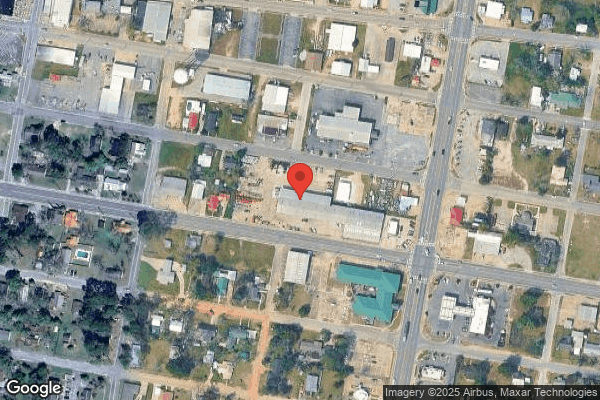
301 S0UTH BAKER STREET, ALMA, GA 31510 (912) 632-7293
Non profit - Other 88 Beds Independent Data: November 2025
Trust Grade
88/100
#41 of 353 in GA
Last Inspection: March 2025

Within standard 12-15 month inspection cycle. Federal law requires annual inspections.

Overview

Twin Oaks Convalescent Center has a Trust Grade of B+, which means it is above average and recommended for families considering care options. It ranks #41 out of 353 facilities in Georgia, placing it in the top half of nursing homes, and is the only option in Bacon County. The facility's overall performance is stable, with only two concerns noted in its first inspection, indicating no worsening trends. Staffing is rated 4 out of 5 stars, with a turnover rate of 50%, which is average compared to the state. However, there have been some issues: one resident was not provided with the enhanced precautions needed to prevent infection, and another resident's room lacked a functioning air conditioner, which could affect comfort. While the home has strengths in its overall rating and staffing, these incidents highlight areas needing improvement.

Trust Score
B+
88/100
In Georgia
#41/353
Top 11%
Safety Record
Low Risk
No red flags
Inspections
Too New
0 → 2 violations
Staff Stability
⚠ Watch
50% turnover. Above average. Higher turnover means staff may not know residents' routines.
Penalties
✓ Good
$4,194 in fines. Lower than most Georgia facilities. Relatively clean record.
Skilled Nurses
○ Average
Each resident gets 40 minutes of Registered Nurse (RN) attention daily — about average for Georgia. RNs are the most trained staff who monitor for health changes.
Violations
✓ Good
Only 2 deficiencies on record. Cleaner than most facilities. Minor issues only.
★★★★★
5.0
Overall Rating
★★★★☆
4.0
Staff Levels
★★☆☆☆
2.0
Care Quality
★★★★★
5.0
Inspection Score
Stable
: 0 issues
2025: 2 issues

The Good

  • 4-Star Staffing Rating · Above-average nurse staffing levels
  • Full Sprinkler Coverage · Fire safety systems throughout facility
  • No fines on record

Facility shows strength in staffing levels, fire safety.

The Bad

Staff Turnover: 50%

Near Georgia avg (46%)

Higher turnover may affect care consistency

Federal Fines: $4,194

Below median ($33,413)

Minor penalties assessed

The Ugly 2 deficiencies on record

Mar 2025 2 deficiencies
CONCERN (D)

Potential for Harm - no one hurt, but risky conditions existed

Infection Control (Tag F0880)

Could have caused harm · This affected 1 resident

**NOTE- TERMS IN BRACKETS HAVE BEEN EDITED TO PROTECT CONFIDENTIALITY** Based on observation, resident and staff interviews, record review, and review of the facility policy titled, Enhanced Barrier P...

Read full inspector narrative →
**NOTE- TERMS IN BRACKETS HAVE BEEN EDITED TO PROTECT CONFIDENTIALITY** Based on observation, resident and staff interviews, record review, and review of the facility policy titled, Enhanced Barrier Precautions, the facility failed to implement Enhanced Barrier Precautions (EBPs) for one resident (R) (R219) with bilateral diabetic ulcers and weeping lower leg skin tears out of four sampled residents. This failure had the potential to place R219 at risk of increased transmission of infection. Findings include: Review of the facility policy titled, Enhanced Barrier Precautions, dated 7/3/2024, revealed, .It is the policy of this facility to implement enhanced barrier precautions for the prevention of transmission of multidrug resistant organisms .prompt recognition of need .All staff receive training on enhanced barrier precautions upon hire and at least annually and are expected to comply with all designated precautions .All staff receive training on high-risk activities and common organisms that require enhanced barrier precautions .The facility will have the discretion on how to communicate to staff which residents require the use of EBP, as long as staff are aware of which residents require the use of EBP prior to providing high-contact care activities .An order for enhanced barrier precautions will be obtained for residents with any of the following .wounds (e.g., chronic wounds such as pressure ulcers, diabetic foot ulcers, surgical wounds, and chronic venous stasis ulcers . 1. Review of the admission Record located in the Profile tab of the electronic medical record (EMR) revealed R219 was admitted to the facility on [DATE] with diagnoses that included heart failure, diabetes, and gout. Review of the Order Summary located in the Orders tab of the EMR revealed the following wound orders: A. Cleanse Blisters to Bilateral lower legs with NS [normal saline], apply xeroform and cover with large Tegaderm with pad daily. Dated 3/22/2025. B. Cleanse Diabetic ulcers to the left foot, 2nd toe with wound cleanser, apply xeroform and cover with band aids daily. Dated 3/22/2025. C. Cleanse diabetic wound to bottom of Right and Left foot w/NS, pat dry, apply TAO [topical antibiotic ointment], cover with band aids daily. Dated 3/23/2025. D. Cleanse skin tears to the left upper and lower arm with wound cleanser, apply xeroform and cover with padded Tegaderm daily. Dated 3/22/2025. E. Cleanse the Diabetic Ulcer on the right foot 1st and 2nd Toes with wound cleanser, apply xeroform and cover with Band aids. Dated 3/22/2025. During an interview/observation on 3/26/2025 at 12:14 pm, R219 was sitting in her wheelchair. She was alert and communicative. Her bilateral legs were without bandages due to having had a shower. There were multiple wounds observed on her legs, and the skin tears were large and weeping clear fluid. R219 was asked if staff wore a protective gown when providing treatments to her legs. R219 stated, No, they don't. During an observation and interview on 3/26/2025 at 1:58 pm, the Treatment Nurse (TN) performed wound care to R219's lower legs. She was not observed to have worn a gown during the procedure. The TN was asked why she didn't have a gown on during the resident's wound care. She stated, I don't know why. The TN confirmed that she did not wear a gown when performing wound care and said she should have had the proper personal protective equipment (PPE) on due to the oozing wounds. During an interview on 3/26/2025 at 2:19 pm, the Infection Preventionist (IP) stated, I was not aware that the ulcers on her legs were diabetic ulcers. I thought they were skin tears. If they are diabetic ulcers, then definitely she should have had EBP precautions.
CONCERN (D)

Potential for Harm - no one hurt, but risky conditions existed

Safe Environment (Tag F0921)

Could have caused harm · This affected 1 resident

**NOTE- TERMS IN BRACKETS HAVE BEEN EDITED TO PROTECT CONFIDENTIALITY** Based on observation, resident and staff interviews, record review, and review of the facility policy titled, Safe and Homelike ...

Read full inspector narrative →
**NOTE- TERMS IN BRACKETS HAVE BEEN EDITED TO PROTECT CONFIDENTIALITY** Based on observation, resident and staff interviews, record review, and review of the facility policy titled, Safe and Homelike Environment, the facility failed to ensure one resident (R)(R59) out of 22 sampled residents' room had an adequate working air conditioner for a comfortable temperature for the resident. This failure had the potential to cause R59 to not be comfortable in her own room. Findings include: Review of the facility's policy titled, Safe and Homelike Environment, original date of 10/22 revealed Twin Oaks Convalescent Center will provide a safe, clean, comfortable and homelike environment . comfortable and safe temperature levels means that the ambient temperature should be in a relatively narrow range that minimizes residents' susceptibility to loss of body heat and risk of hypothermia/hyperthermia and is comfortable for the residents . housekeeping and maintenance services will be provided to maintain a sanitary, orderly and comfortable environment . the facility will maintain comfortable and safe temperature levels . any environmental issues that were unresolved should be reported to the Administrator. Review of R59's admission Record Face Sheet located in the electronic medical record (EMR), under the Profile tab revealed R59 was readmitted to the facility on [DATE] with diagnoses of hemiplegia, hemiparesis, cerebral infarction (stroke), atrial fibrillation, aphasia, dysphagia, and fibromyalgia. Review of R59's quarterly Minimum Data Set (MDS) located in the EMR under the MDS tab with an Assessment Reference Date (ARD) of 3/7/2025 revealed R59 had a Brief Interview of Mental Status (BIMS) completed and it indicated R59 was unable to complete due to moderately impaired cognitive skills. During an observation on 3/25/2025 at 2:25 pm, R59 revealed she was in her room and was lying in bed. She was sweating, and her hair looked damp. Observation further revealed that R59 shook her head yes when Family Member (FM)1 asked her if she was hot. FM1 revealed the air conditioner in R59's room had not worked properly for almost a year, and she had reported it to staff many times. FM1 further revealed that staff would come in and use the remote to turn the air conditioner on, and it would blow out cool air for a while, but then it would get hot again in the room. FM1 further revealed maintenance had looked at it before, but the air conditioning still would quit working after maintenance looked at it. During an observation on 3/26/2025 at 3:50 pm revealed R59 was sweating, and she stated she was hot. During an interview on 3/26/2025 at 4:00 pm with the Maintenance man revealed that if there was an issue with the air conditioning not working properly, there should be a ticket in the electronic reporting system, which indicated a work ticket had been established. The Maintenance man further revealed that the E Hall, where R59 resided, had been renovated, and all the rooms had one of two air conditioning systems in their rooms. He revealed each unit had a universal remote control that the nurses or certified nursing assistants (CNAs) could use to control the temperature. During an interview on 3/26/2025 at 4:15 pm, the Safety Coordinator revealed if an issue had been reported, it should be on their log of work tickets. Interview further revealed that after he checked the air from the unit, the temperature of R59's room was 80 degrees Fahrenheit (F). The unit in the resident's room did not have a digital readout, so you could not tell what the temperature was set on. The Safety Coordinator confirmed the air conditioner was not blowing out cool air and it should be. During an observation and interview on 3/26/2025 at 4:45 pm revealed Licensed Practical Nurse (LPN) 3 got the remote from the nurse's station that staff had access to and gave it to the Safety Coordinator and when he attempted to change the temperature the remote did not work on the unit in R59's room. Observation further revealed the Safety Coordinator had to go to the hospital maintenance office to get the remote needed for the unit in R59's room. Observation further revealed that when the Safety Coordinator used the correct remote, the air conditioner kicked on and was cycling to cool the room off. LPN3 revealed to her knowledge that the remote at the nurse's station was the only one they had available. LPN3 further revealed she had been in R59's room earlier and used that remote to adjust the temperature of the room, but she did not realize it did not work for R59's room. During an observation on 3/26/2025 at 4:30 pm, the Maintenance man and the Safety Coordinator revealed the temperature of the room was 70 degrees F after the correct remote was utilized to set it. During an interview on 3/26/2025 at 4:36 pm, with the Maintenance Supervisor revealed a work ticket had been done on 3/25/2025 by the other Maintenance man but the Safety Coordinator and the Maintenance man did not look in the right place yesterday, however he did not see any other work tickets but would get back with me if he did. The Maintenance Supervisor further revealed the average room temperature should be between 70 and 80 degrees F, but that depended on the resident's preference. During an interview on 3/26/2025 at 4:36 pm, the Maintenance Supervisor confirmed there definitely was a lack of training on work tickets and remotes that were used to control room temperatures. During an interview on 3/28/2025 at 10:57 am, the Director of Nursing (DON) revealed she expected the staff to check with the residents on whether the temperature of the room was comfortable, and if it was not comfortable, then interventions should be taken to make the room comfortable for the residents.
Understanding Severity Codes (click to expand)
Life-Threatening (Immediate Jeopardy)
J - Isolated K - Pattern L - Widespread
Actual Harm
G - Isolated H - Pattern I - Widespread
Potential for Harm
D - Isolated E - Pattern F - Widespread
No Harm (Minor)
A - Isolated B - Pattern C - Widespread

Questions to Ask on Your Visit

  • "Can I speak with families of current residents?"
  • "What's your RN coverage like on weekends and overnight?"

Our Honest Assessment

Strengths
  • • Grade B+ (88/100). Above average facility, better than most options in Georgia.
  • • No major safety red flags. No abuse findings, life-threatening violations, or SFF status.
  • • $4,194 in fines. Lower than most Georgia facilities. Relatively clean record.
  • • Only 2 deficiencies on record. Cleaner than most facilities. Minor issues only.
Concerns
  • • No significant concerns identified. This facility shows no red flags across CMS ratings, staff turnover, or federal penalties.
Bottom line: Generally positive indicators. Standard due diligence and a personal visit recommended.

About This Facility

What is Twin Oaks Convalescent Center's CMS Rating?

CMS assigns TWIN OAKS CONVALESCENT CENTER an overall rating of 5 out of 5 stars, which is considered much above average nationally. Within Georgia, this rating places the facility higher than 99% of the state's 100 nursing homes. This rating reflects solid performance across the metrics CMS uses to evaluate nursing home quality.

How is Twin Oaks Convalescent Center Staffed?

CMS rates TWIN OAKS CONVALESCENT CENTER's staffing level at 4 out of 5 stars, which is above average compared to other nursing homes. Staff turnover is 50%, compared to the Georgia average of 46%.

What Have Inspectors Found at Twin Oaks Convalescent Center?

State health inspectors documented 2 deficiencies at TWIN OAKS CONVALESCENT CENTER during 2025. These included: 2 with potential for harm.

Who Owns and Operates Twin Oaks Convalescent Center?

TWIN OAKS CONVALESCENT CENTER is owned by a non-profit organization. Non-profit facilities reinvest revenue into operations rather than distributing to shareholders. The facility operates independently rather than as part of a larger chain. With 88 certified beds and approximately 72 residents (about 82% occupancy), it is a smaller facility located in ALMA, Georgia.

How Does Twin Oaks Convalescent Center Compare to Other Georgia Nursing Homes?

Compared to the 100 nursing homes in Georgia, TWIN OAKS CONVALESCENT CENTER's overall rating (5 stars) is above the state average of 2.6, staff turnover (50%) is near the state average of 46%, and health inspection rating (5 stars) is much above the national benchmark.

What Should Families Ask When Visiting Twin Oaks Convalescent Center?

Based on this facility's data, families visiting should ask: "Can I visit during a mealtime to observe dining assistance and food quality?" "How do you handle medical emergencies, and what is your hospital transfer rate?" "Can I speak with family members of current residents about their experience?"

Is Twin Oaks Convalescent Center Safe?

Based on CMS inspection data, TWIN OAKS CONVALESCENT CENTER has a clean safety record: no substantiated abuse findings (meaning no confirmed cases of resident harm), no Immediate Jeopardy citations (the most serious violation level indicating risk of serious injury or death), and is not on the Special Focus Facility watch list (a federal program monitoring the lowest-performing 1% of nursing homes). The facility has a 5-star overall rating and ranks #1 of 100 nursing homes in Georgia. While no facility is perfect, families should still ask about staff-to-resident ratios and recent inspection results during their visit.

Do Nurses at Twin Oaks Convalescent Center Stick Around?

TWIN OAKS CONVALESCENT CENTER has a staff turnover rate of 50%, which is about average for Georgia nursing homes (state average: 46%). Moderate turnover is common in nursing homes, but families should still ask about staff tenure and how the facility maintains care continuity when employees leave.

Was Twin Oaks Convalescent Center Ever Fined?

TWIN OAKS CONVALESCENT CENTER has been fined $4,194 across 1 penalty action. This is below the Georgia average of $33,121. While any fine indicates a compliance issue, fines under $50,000 are relatively common and typically reflect isolated problems that were subsequently corrected. Families should ask what specific issues led to these fines and confirm they've been resolved.

Is Twin Oaks Convalescent Center on Any Federal Watch List?

TWIN OAKS CONVALESCENT CENTER is not on any federal watch list. The most significant is the Special Focus Facility (SFF) program, which identifies the bottom 1% of nursing homes nationally based on persistent, serious quality problems. Not being on this list means the facility has avoided the pattern of deficiencies that triggers enhanced federal oversight. This is a positive indicator, though families should still review the facility's inspection history directly.