PRUITTHEALTH - ASHBURN
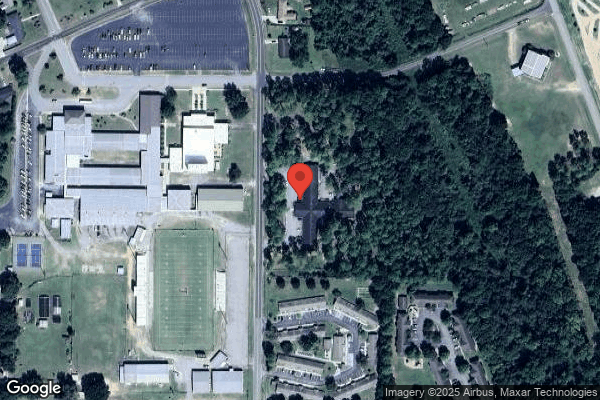
441 INDUSTRIAL BLVD, ASHBURN, GA 31714 (229) 567-3473
For profit - Corporation 76 Beds PRUITTHEALTH Data: November 2025
Trust Grade
90/100
#26 of 353 in GA
Last Inspection: May 2024

Within standard 12-15 month inspection cycle. Federal law requires annual inspections.

Overview

PruittHealth - Ashburn has received an excellent Trust Grade of A, indicating it is highly recommended and performs well compared to other facilities. It ranks #26 out of 353 nursing homes in Georgia, placing it in the top half, and is the only option in Turner County, making it a local leader. The facility's trend is stable, with the same number of issues reported in both 2022 and 2024, suggesting consistent performance. However, staffing is a concern, rated at only 1 out of 5 stars with a turnover rate of 50%, which is average but still indicates potential instability in staff. On a positive note, the facility has no fines on record, indicating compliance with regulations, and it offers more RN coverage than 81% of Georgia facilities, which helps ensure resident care. Some specific incidents reported include failures to properly sanitize food preparation equipment, which could affect resident health, and not developing care plans for residents, which is critical for their safety and well-being. Overall, while PruittHealth - Ashburn has notable strengths, families should be aware of the staffing issues and the importance of care plan adherence for resident safety.

Trust Score
A
90/100
In Georgia
#26/353
Top 7%
Safety Record
Low Risk
No red flags
Inspections
Holding Steady
2 → 2 violations
Staff Stability
⚠ Watch
50% turnover. Above average. Higher turnover means staff may not know residents' routines.
Penalties
✓ Good
No fines on record. Clean compliance history, better than most Georgia facilities.
Skilled Nurses
○ Average
Each resident gets 34 minutes of Registered Nurse (RN) attention daily — about average for Georgia. RNs are the most trained staff who monitor for health changes.
Violations
○ Average
6 deficiencies on record. Average for a facility this size. Mostly minor or procedural issues.
★★★★★
5.0
Overall Rating
★☆☆☆☆
1.0
Staff Levels
★★★★★
5.0
Care Quality
★★★★★
5.0
Inspection Score
Stable
2022: 2 issues
2024: 2 issues

The Good

  • 5-Star Quality Measures · Strong clinical quality outcomes
  • Full Sprinkler Coverage · Fire safety systems throughout facility
  • No fines on record

Facility shows strength in quality measures, fire safety.

The Bad

Staff Turnover: 50%

Near Georgia avg (46%)

Higher turnover may affect care consistency

Chain: PRUITTHEALTH

Part of a multi-facility chain

Ask about local staffing decisions and management

The Ugly 6 deficiencies on record

May 2024 2 deficiencies
CONCERN (D) 📢 Someone Reported This

A family member, employee, or ombudsman was alarmed enough to file a formal complaint

Potential for Harm - no one hurt, but risky conditions existed

Comprehensive Care Plan (Tag F0656)

Could have caused harm · This affected 1 resident

**NOTE- TERMS IN BRACKETS HAVE BEEN EDITED TO PROTECT CONFIDENTIALITY** Based on record review and staff interview, and review of the facility policy titled, Care Plans, the facility failed to develop...

Read full inspector narrative →
**NOTE- TERMS IN BRACKETS HAVE BEEN EDITED TO PROTECT CONFIDENTIALITY** Based on record review and staff interview, and review of the facility policy titled, Care Plans, the facility failed to develop a care plan to address an anti-platelet medication prescribed for a stroke for one of five Residents (R)19 and failed to implement care plan interventions for one of four residents R55 related to abuse. The sample size was 31 residents. Findings include: Review of the facilities policy titled, Care Plans, dated 7/27/2023 revealed: Baseline Care Plan- Must include the minimum health care information necessary to properly care for each patient/resident immediately upon their admission, which would address patient/resident specific health and safety concerns to prevent decline or injury, and would identify needs for supervision, behavior interventions, and assistance with activities of daily living, as necessary. 1. Record review revealed R19 was admitted on [DATE] and had a Brief Interview of Mental Status (BIMS) score of 00 indicating severe cognitive impairment. A primary admitting diagnosis, other cerebral infarction and other diagnoses included but not limited to, stroke, vascular dementia, unspecified severity, with anxiety, and depression, unspecified. Further review of the clinical records revealed the resident was readmitted to the facility under hospice after a brief hospital stay. A Minimum Data Set (MDS) Significant change assessment dated [DATE] revealed section A - reentry from acute care hospital on 3/18/2024, section C - cognitive patterns documented BIMS score 00, section I- stroke. A review of the physician orders dated 4/1/2024 through 4/30/2024 revealed that R19 was ordered to receive clopidogrel tablet 75 mg, an anti-platelet: one tablet by mount once daily with a start date of 3/18/2024 for her diagnosis of cerebral infarction. Review of R19's care plan revealed there was no care plan for a stroke or for the medication, clopidogrel, an anti-platelet. Interview on 5/2/2024 at 9:59 am with Registered Nurse (RN), Case Mix Director (CMD) revealed care plans were done when a new medication was prescribed that could cause complications or if the medicine was something the resident had never been prescribed. CMD revealed that it was her expectations that medications were care planned. 2. R55 was admitted to facility on 2/21/2023 with the following diagnoses of but not limited to moderate intellectual disabilities, dysphagia, and seizures, and delusional disorders. The Minimum Data Set (MDS) assessed a Brief Interview Mental Status Score (BIMS) of seven indicating severe cognitive impairment. Record review of R55's Electronic Medical Record (EMR) documented two incidents of R55 being a victim of sexual abuse by two residents. The Police Report dated 3/27/2024 and 3/20/2024 reported incidents of abuse involving residents in which the facility contacted law enforcement. Record review of R55's care plan revealed no plan of care created to address the sexual abuse incidents involving resident. Interview on 5/2/2024 at 9:45 am, the RN Case Mix Director reported being aware of R55 's incident of exposure to abuse by two male residents in the facility. She confirmed that a care plan was not created for R55 related to abuse to ensure prevention of future abuse. She stated that any nurse/clinical staff could update/create a care plan whether it is a fall or abuse. Interview on 5/2/2024 at 10:15 am, Director of Health Services (DHS) reported that her expectations for her staff to create care plans in a timely manner for abuse victims. Care plans are individualized reported being unaware that R55 was not done in a timely manner. The MDS Manager and Social Service are responsible for ensuring the care plan is completed. The Unit Manager would be responsible for creating the care plan at the time the incident occurred.
CONCERN (D) 📢 Someone Reported This

A family member, employee, or ombudsman was alarmed enough to file a formal complaint

Potential for Harm - no one hurt, but risky conditions existed

Deficiency F0849 (Tag F0849)

Could have caused harm · This affected 1 resident

**NOTE- TERMS IN BRACKETS HAVE BEEN EDITED TO PROTECT CONFIDENTIALITY** Based on staff interview, record review, and review of the facility policy titled, Physician Narratives, Orders, and Services fo...

Read full inspector narrative →
**NOTE- TERMS IN BRACKETS HAVE BEEN EDITED TO PROTECT CONFIDENTIALITY** Based on staff interview, record review, and review of the facility policy titled, Physician Narratives, Orders, and Services for Hospice, the facility failed to obtain a physician's order for one of nine residents, resident (R) R19 receiving hospice services. Findings included: Review of facility policy titled, Physician Narratives, Orders, and Services for Hospice dated 11/22/2021 revealed under physician orders: 2. The hospice receives a verbal or written order from a physician to admit the patient to hospice. 5. Documentation of receipt of verbal orders and written orders sent to physician for signature is maintained in the patient's clinical record. Stamped signatures are not accepted. Electronic signatures may be accepted if they meet the criteria established by the MAC. 6. When the signed order is returned it is filed in the patient's clinical record and the unsigned order is removed. 8. Documentation is maintained of all efforts to obtain signed orders from physicians in a timely manner. Record review revealed R19 was admitted on [DATE] and had a Brief Interview for Mental Status (BIMS) score of 00 indicating severe cognitive impairment. A primary admitting diagnosis, other cerebral infarction and other diagnoses included but not limited to, vascular dementia, unspecified severity, with anxiety, and depression, unspecified. A further review of the clinical records revealed R19 was readmitted to the facility under hospice after a brief hospital stay. A Significant change assessment dated [DATE] revealed section A - reentry from acute care hospital on 3/18/2024, section C - cognitive patterns documented BIMS score 00, and section O - special treatment and programs listed hospice care. Review of the comprehensive care plan for R19 revealed plan of care for hospice services that included, problem set-has elected terminal care dated 3/19/2024, goal-death with dignity thru next review 7/11/2024, and interventions- call hospice first about any changes in condition, emergency, questions about care, medication changes or transport and prior to any procedures, monitor signs and symptoms of pain, notify hospice as appropriate and as family agrees, for evaluation for hospice services, meds as ordered, notify MD of any changes, provide comfort measures. Record review revealed the authorization form for hospice services, Medicaid Hospice Election Form dated and signed on 3/18/2024 by R19's family contact, a hospice representative, and the nursing home's Clinical Competency Coordinator (CCC). Hospital discharge orders did not include hospice. The CCC's signature was located on the discharge orders indicating she reviewed the orders. Interview on 5/2/2024 at 11:25 am with Director of Health Services (DHS) revealed that if a resident were in house and required hospice services, the medical director of the facility would write an order. If the hospital were referring the resident the hospice doctor would write the order. When asked where R19's hospice order was located the DON stated that R19 came back from the hospital with hospice therefore they would not have an order but would review the hospital discharge orders and get back to us. A follow up interview on 5/2/2024 at 12:53 pm DHS revealed that when a resident was sent to the hospital, all standing orders from the facility were discontinued and new orders were completed upon re-entry into the facility. The DON revealed that an order for hospice occurred while R19 was in the hospital and confirmed there would not be an order for hospice written by the facility. The DHS revealed her expectations were that there would be an order written for hospice services, and orders be entered promptly and accurately.
Jul 2022 2 deficiencies
CONCERN (D)

Potential for Harm - no one hurt, but risky conditions existed

Deficiency F0553 (Tag F0553)

Could have caused harm · This affected 1 resident

**NOTE- TERMS IN BRACKETS HAVE BEEN EDITED TO PROTECT CONFIDENTIALITY** Based on interviews, record review, and review of facility policy titled Care Plans the facility failed to ensure the family rep...

Read full inspector narrative →
**NOTE- TERMS IN BRACKETS HAVE BEEN EDITED TO PROTECT CONFIDENTIALITY** Based on interviews, record review, and review of facility policy titled Care Plans the facility failed to ensure the family representative for one resident ((R) R#21) of five residents reviewed participated in scheduled care plan meetings. The sample size was 24. Findings include: Review of facility policy titled Care Plans, revised date 7/21/2021, admission Comprehensive Plan of Care number 7. (fourth bullet point) revealed Care plan meetings should be documented in AHT/LTC using the Multidisciplinary Care Conference User Defined Assessment (UDA) as evidence that the care conference has taken place and occurred with the multidisciplinary team, the patient/resident, and the patient/resident representative. Record review for R#21 revealed resident was admitted to the facility on [DATE] with diagnoses of encephalopathy, Hemiplegia and hemiparesis following cerebral infarction affecting right dominant side, Multiple sclerosis, Muscle weakness (generalized), severe protein-calorie malnutrition, constipation, Aphasia, Altered mental status, Locked-in state, Dry eye syndrome of bilateral lacrimal glands, Abnormal posture, specified disorders of brain, Vitamin D deficiency, muscle spasm, Gastro-esophageal reflux disease, Gastrostomy status, paralytic syndrome, and sequelae of cerebral infarction. Review of MDS Quarterly assessment dated [DATE] Section C (Cognitive Pattern) C0500 indicated BIMS score of 00 indicating resident had cognitive impairment. Section G (Functional Status) revealed resident is total dependent on staff for dressing, bathing, eating, transfers, repositioning, and personal hygiene. Review of R#21 care conference attendance forms for the last four care conferences dated 9/7/21, 12/2/21, 3/1/22, and 5/24/22, revealed there was no documentation that R#21's responsible party attended the conference. MDS Coordinator confirmed that the person listed on R#21 care conference form was not the responsible party, nor any other family member of R#21. Interview on 7/29/22 at 11:54 a.m. with R # 21 family member revealed they have never attended any care plan meetings for residents in person due to living in another state, nor over the phone. Continued interview also revealed that there had not been any invitations to attend care plan meetings since resident has been admitted to facility. Interview on 7/30/22 at 10:59 a.m. with Social Worker revealed that residents and family members are notified of care plan meetings prior to meeting date. It was reported that there is a book with all notifications that are given to the residents and family members in the Social Worker's office. Interview on 7/30/22 at 2:19 p.m. with Minimum Data Set (MDS) Coordinator revealed that the care plan schedule is completed monthly from the residents quarterly or annual assessment due date. The disciplines that attend the care plan meeting are the Social Worker, MDS, therapy, the resident, and the residents' responsible party. Continued interview also revealed that the care conference information which includes who attended the conference and what areas were discussed is documented on the care conference sheet in the residents' chart. The Social worker is reported as being responsible for notifying the resident and the resident's responsible party for the date and time of the care plan meetings.
CONCERN (D)

Potential for Harm - no one hurt, but risky conditions existed

Deficiency F0679 (Tag F0679)

Could have caused harm · This affected 1 resident

**NOTE- TERMS IN BRACKETS HAVE BEEN EDITED TO PROTECT CONFIDENTIALITY** Based on record review, resident interview, and staff interviews the facility failed to offer one resident (R#12) of 24 sampled ...

Read full inspector narrative →
**NOTE- TERMS IN BRACKETS HAVE BEEN EDITED TO PROTECT CONFIDENTIALITY** Based on record review, resident interview, and staff interviews the facility failed to offer one resident (R#12) of 24 sampled residents the opportunity to participate in activities of choice. Findings include: Review of the medical record for R#12 revealed that he was admitted to the facility with diagnoses that included but may not be limited to: Quadriplegia, C5-C7 complete, Pressure ulcer of left buttock - stage 3, Contracture - right hand, Contracture - left hand, Contracture - right elbow, Contracture - left elbow, and Contracture of muscle - multiple sites. The Quarterly Minimum Data Set (MDS) dated [DATE] for Section C: Cognitive Patterns revealed that R#12 has a Brief Interview of Mental Status (BIMS) score of 15, which indicated the resident is cognitively intact and able to make his own decisions. Further review of the medical record did not reveal any documentation of activities offered or provided to R#12. During an interview with R#12 on 7/30/22 at 10:09 a.m., he stated that he does not receive any activities, and he does not receive one-on-one room activities. R#12 stated he does not want to get up out of the bed every day, but he does want to get up sometimes. He stated the Activities Director does not come to his room and does not offer or provide him with any type of activities. R#12 stated he can hear other residents participating in activities. Interview with Activities Director (AD) on 7/31/22 at 10:19 a.m. revealed the activity assistant provides one-on-one room activities to residents who does not get out of bed. She stated it should be documented in the electronic health record Matrix Care. AD could not provide documentation to prove that one-on-one room visits was provided to R#12. AD stated the activities assistant is out of town attending a family reunion and she is unavailable for interview. AD further stated that the activities assistant should be documenting one on one visits, but she does not see any documentation of the weekly one-on-one visits in R#12 's chart. AD further stated she does not have any written documentation of one-on-one room visits.
May 2019 2 deficiencies
CONCERN (D)

Potential for Harm - no one hurt, but risky conditions existed

Transfer Notice (Tag F0623)

Could have caused harm · This affected 1 resident

**NOTE- TERMS IN BRACKETS HAVE BEEN EDITED TO PROTECT CONFIDENTIALITY** Based on resident interview, record review, and staff interview, the facility failed to provide the resident/family with a writt...

Read full inspector narrative →
**NOTE- TERMS IN BRACKETS HAVE BEEN EDITED TO PROTECT CONFIDENTIALITY** Based on resident interview, record review, and staff interview, the facility failed to provide the resident/family with a written explanation of reason for a transfer to an acute care hospital for one of three residents (R#26) reviewed for hospitalization. Findings include: Review of a Minimum Data Sets (MDS) revealed a Discharge Minimum Data Set (MDS) dated [DATE] that documented a discharge from the facility to an acute hospital. Record review revealed that R#26 was readmitted to the facility on [DATE]. Resident interview on 5/29/19 at 9:02 a.m. with R#26, who had a Brief Interview for Mental Status score of 15 dated 4/12/19, indicating that he was cognitiely intact, revealed that the resident had to go to the hospital a little over a month ago for the flu. He stated that he was in the hospital from Monday through Friday. Review of two Situation, Background, Assessment Recommendation (SBAR) forms dated for 4/2/19 revealed that the first SBAR at 10:00 a.m. documented that the Physician was notified and ordered Rocephin 1 gram for 10 days, a chest x-ray was ordered and an order for Tylenol to given for elevated temperature was received. The second SBAR dated 4/2/19 at 2:00 p.m. revealed that the resident continued to decline, and that his temperature continued to be elevated. Review of a Physician Order dated 4/2/19 revealed an order that the resident may be sent to the hospital for evaluation and treatment. Review of the medical record revealed that there was not any evidence of any documentation that the resident or family were notified in writing of the reason for the transfer to the hospital. Interview on 5/31/19 at 8:55 p.m. with the Administrator revealed that they do not give out written notices to the residents and/or family members when residents are transferred to the hospital.
CONCERN (F)

Potential for Harm - no one hurt, but risky conditions existed

Food Safety (Tag F0812)

Could have caused harm · This affected most or all residents

Based on observation, staff interview, and review of the facility policies titled, Pot/Pan Washing and Sanitation and Food Temperature, the facility failed to ensure clean pans washed in the three-com...

Read full inspector narrative →
Based on observation, staff interview, and review of the facility policies titled, Pot/Pan Washing and Sanitation and Food Temperature, the facility failed to ensure clean pans washed in the three-compartment sink were sanitized and failed to maintain a food temperature below 41 degrees Fahrenheit (F) for cold foods. This deficient practice had the potential to effect 53 of 56 residents receiving an oral diet. Findings include: 1. A record review of the policy titled Pot/Pan Washing and Sanitation dated 2014 revealed the following Procedure: Pots, pans, and utensils must be sanitized in the sanitizer sink according to one of the following methods: Heat Sanitizer: 170-degree F water for 30 seconds immersion, or Chemical Sanitizers: i. Chlorine concentration is 50 - 100 ppm and has a 75-degree F - 110-degree F water temperature with a one-minute immersion. (Chlorine becomes corrosive if water temperature is over 120-degree F; even on stainless steel). ii. Quaternary concentration is to be 200 - 300 ppm's with a water temperature of above 75 degrees or as specified by manufacture. Items need to be immersed for 60 seconds in the Quaternary. iii. Test strips for chlorine and quaternary are different. Test strips should be available to check the sanitizer level before each use. Test with appropriate test strip and record water temperature and sanitizing level during each set-up using the Three Compartment Sink Temperature/Sanitizer Log. An observation on 5/28/19 at 1:29 p.m. of the three compartment sinks, which were full of water in all three compartments, although the compartments weren't labeled the interim Dietary Manager (DM) stated that the sink the right was the sanitizer rinse sink. A Quat litmus test was done by the Cook/Aide AA, and it was revealed that it did not register that any chemical sanitizer was present. Cook/Aide AA who was washing the dishes added a pink chemical by pressing a button on the wall after she was told to do so by the interim DM, the test strip then read 500 ppm. On the right side of the three-compartment sink were four square metal pans, two spoodles, a pair of tongs, and a metal sheet pan. During an interview at this time with Cook/Aide AA, who was washing the dishes she revealed, yes, the dishes had been washed and rinsed in the sinks without any chemicals. During an interview on 5/30/19 at 11:27 a.m. with the Administrator revealed his expectations are, if there is an issue it is brought to him to be fixed. He further stated the chemical testing company came to the facility on 5/29/19 and replaced the broken chemical pump. 2. Record review of the policy for food temperatures titled Food Temperature revealed the following Procedure: all potentially hazardous cold foods must be held at 41 degrees or less. Potentially hazardous cold food should be held on the line in an ice bath at 41 degrees or below. An observation on 5/30/19 at 12:27 p.m. revealed that the coleslaw was sitting on a tray, not in an ice bath, and there were three servings of coleslaw 51-degree F, 54 - degree F, and a third serving tested registered 55 - degrees F. This was out of eight servings prepared on the food trays to be served on the South hall. During an interview on 5/30/19 at 12:30 p.m. with the Registered Dietician (RD) revealed that her expectations are for the staff to check the temperatures first before serving and that the food (that were not within safe temperatures) would not be served to the residents.
Understanding Severity Codes (click to expand)
Life-Threatening (Immediate Jeopardy)
J - Isolated K - Pattern L - Widespread
Actual Harm
G - Isolated H - Pattern I - Widespread
Potential for Harm
D - Isolated E - Pattern F - Widespread
No Harm (Minor)
A - Isolated B - Pattern C - Widespread

Questions to Ask on Your Visit

  • "Can I speak with families of current residents?"
  • "What's your RN coverage like on weekends and overnight?"

Our Honest Assessment

Strengths
  • • Grade A (90/100). Above average facility, better than most options in Georgia.
  • • No major safety red flags. No abuse findings, life-threatening violations, or SFF status.
  • • No fines on record. Clean compliance history, better than most Georgia facilities.
Concerns
  • • No significant concerns identified. This facility shows no red flags across CMS ratings, staff turnover, or federal penalties.
Bottom line: Generally positive indicators. Standard due diligence and a personal visit recommended.

About This Facility

What is Pruitthealth - Ashburn's CMS Rating?

CMS assigns PRUITTHEALTH - ASHBURN an overall rating of 5 out of 5 stars, which is considered much above average nationally. Within Georgia, this rating places the facility higher than 99% of the state's 100 nursing homes. This rating reflects solid performance across the metrics CMS uses to evaluate nursing home quality.

How is Pruitthealth - Ashburn Staffed?

CMS rates PRUITTHEALTH - ASHBURN's staffing level at 1 out of 5 stars, which is much below average compared to other nursing homes. Staff turnover is 50%, compared to the Georgia average of 46%.

What Have Inspectors Found at Pruitthealth - Ashburn?

State health inspectors documented 6 deficiencies at PRUITTHEALTH - ASHBURN during 2019 to 2024. These included: 6 with potential for harm.

Who Owns and Operates Pruitthealth - Ashburn?

PRUITTHEALTH - ASHBURN is owned by a for-profit company. For-profit facilities operate as businesses with obligations to shareholders or private owners. The facility is operated by PRUITTHEALTH, a chain that manages multiple nursing homes. With 76 certified beds and approximately 61 residents (about 80% occupancy), it is a smaller facility located in ASHBURN, Georgia.

How Does Pruitthealth - Ashburn Compare to Other Georgia Nursing Homes?

Compared to the 100 nursing homes in Georgia, PRUITTHEALTH - ASHBURN's overall rating (5 stars) is above the state average of 2.6, staff turnover (50%) is near the state average of 46%, and health inspection rating (5 stars) is much above the national benchmark.

What Should Families Ask When Visiting Pruitthealth - Ashburn?

Based on this facility's data, families visiting should ask: "Can you walk me through typical staffing levels on day, evening, and night shifts?" "Can I visit during a mealtime to observe dining assistance and food quality?" "How do you handle medical emergencies, and what is your hospital transfer rate?" "Can I speak with family members of current residents about their experience?" These questions are particularly relevant given the below-average staffing rating.

Is Pruitthealth - Ashburn Safe?

Based on CMS inspection data, PRUITTHEALTH - ASHBURN has a clean safety record: no substantiated abuse findings (meaning no confirmed cases of resident harm), no Immediate Jeopardy citations (the most serious violation level indicating risk of serious injury or death), and is not on the Special Focus Facility watch list (a federal program monitoring the lowest-performing 1% of nursing homes). The facility has a 5-star overall rating and ranks #1 of 100 nursing homes in Georgia. While no facility is perfect, families should still ask about staff-to-resident ratios and recent inspection results during their visit.

Do Nurses at Pruitthealth - Ashburn Stick Around?

PRUITTHEALTH - ASHBURN has a staff turnover rate of 50%, which is about average for Georgia nursing homes (state average: 46%). Moderate turnover is common in nursing homes, but families should still ask about staff tenure and how the facility maintains care continuity when employees leave.

Was Pruitthealth - Ashburn Ever Fined?

PRUITTHEALTH - ASHBURN has no federal fines on record. CMS issues fines when nursing homes fail to meet care standards or don't correct problems found during inspections. The absence of fines suggests the facility has either maintained compliance or corrected any issues before penalties were assessed. This is a positive indicator, though families should still review recent inspection reports for the full picture.

Is Pruitthealth - Ashburn on Any Federal Watch List?

PRUITTHEALTH - ASHBURN is not on any federal watch list. The most significant is the Special Focus Facility (SFF) program, which identifies the bottom 1% of nursing homes nationally based on persistent, serious quality problems. Not being on this list means the facility has avoided the pattern of deficiencies that triggers enhanced federal oversight. This is a positive indicator, though families should still review the facility's inspection history directly.