PRUITTHEALTH - BROOKHAVEN
3535 ASHTON WOODS DRIVE NE, ATLANTA, GA 30319 (770) 451-0236
For profit - Corporation 157 Beds PRUITTHEALTH Data: November 2025 6 Immediate Jeopardy citations
Trust Grade
0/100
#215 of 353 in GA
Last Inspection: November 2024

Within standard 12-15 month inspection cycle. Federal law requires annual inspections.

Overview

PruittHealth - Brookhaven has received a Trust Grade of F, indicating significant concerns about the quality of care provided. This places them at #215 out of 353 nursing homes in Georgia, meaning they are in the bottom half of facilities statewide, and #11 out of 18 in DeKalb County, where only a few options are better. The facility's performance is worsening, with issues increasing from 6 in 2023 to 33 in 2024, highlighting growing problems. Staffing is somewhat stable with a turnover rate of 37%, which is better than the state average, and they have good RN coverage, surpassing 88% of Georgia facilities, ensuring more attentive care. However, the facility has been cited for critical incidents, including a resident falling from bed due to inadequate assistance, leading to death, and failure to report this incident to the state, raising serious concerns about resident safety and compliance. Overall, while there are some strengths in staffing, the alarming trends and serious incidents noted make this facility a concerning choice for families.

Trust Score
F
0/100
In Georgia
#215/353
Bottom 40%
Safety Record
High Risk
Review needed
Inspections
Getting Worse
6 → 33 violations
Staff Stability
○ Average
37% turnover. Near Georgia's 48% average. Typical for the industry.
Penalties
✓ Good
$15,268 in fines. Lower than most Georgia facilities. Relatively clean record.
Skilled Nurses
○ Average
Each resident gets 40 minutes of Registered Nurse (RN) attention daily — about average for Georgia. RNs are the most trained staff who monitor for health changes.
Violations
⚠ Watch
48 deficiencies on record. Higher than average. Multiple issues found across inspections.
★★☆☆☆
2.0
Overall Rating
★★☆☆☆
2.0
Staff Levels
★★★★★
5.0
Care Quality
★☆☆☆☆
1.0
Inspection Score
Stable
2023: 6 issues
2024: 33 issues

The Good

  • 5-Star Quality Measures · Strong clinical quality outcomes
  • Full Sprinkler Coverage · Fire safety systems throughout facility
  • No fines on record
  • Staff turnover below average (37%)

    11 points below Georgia average of 48%

Facility shows strength in quality measures, fire safety.

The Bad

2-Star Overall Rating

Below Georgia average (2.6)

Below average - review inspection findings carefully

Staff Turnover: 37%

Near Georgia avg (46%)

Typical for the industry

Federal Fines: $15,268

Below median ($33,413)

Minor penalties assessed

Chain: PRUITTHEALTH

Part of a multi-facility chain

Ask about local staffing decisions and management

The Ugly 48 deficiencies on record

6 life-threatening
Nov 2024 14 deficiencies
CONCERN (D) 📢 Someone Reported This

A family member, employee, or ombudsman was alarmed enough to file a formal complaint

Potential for Harm - no one hurt, but risky conditions existed

Deficiency F0568 (Tag F0568)

Could have caused harm · This affected 1 resident

**NOTE- TERMS IN BRACKETS HAVE BEEN EDITED TO PROTECT CONFIDENTIALITY** Based on resident and staff interviews, record review and review of the facility's policy titled Resident Trust Fund Policy, th...

Read full inspector narrative →
**NOTE- TERMS IN BRACKETS HAVE BEEN EDITED TO PROTECT CONFIDENTIALITY** Based on resident and staff interviews, record review and review of the facility's policy titled Resident Trust Fund Policy, the facility failed to provide a quarterly statement to seven residents (R) (R89, R50, R46, R108, R92, R20, R7) and the facility failed to employ proper bookkeeping techniques for two residents (R89 and R46) out of 65 sampled residents. This had the potential to affect residents with trust fund accounts managed by the facility, affect the residents' financial records and overall transparency, potentially leading to confusion or errors in their account balances. Findings Include: Review of the facility's policy titled, Resident Trust Fund Policy, revised on 6/4/2024 under the Policy Statement revealed, It is the policy of [Name of Organization] and its affiliated Healthcare Centers (collectively, the Organization to protect patients' funds in accordance with applicable regulatory guidelines, as addressed in the Omnibus Budget Reconciliation Act of 1990 (OBRA) and relevant state policies. Under the section titled Scope revealed, This policy applies to all [Name of Facility] Healthcare Centers (HCCs or facilities). The Administrator of each HCC should ensure compliance with the procedures described below, as well as any additional state-specific policies that may apply. 1.Review of R89's Quarterly Minimum Data Set (MDS) assessment dated [DATE] revealed, a Brief Interview for Mental Status (BIMS) summary score of 15, which indicated the resident was cognitively intact. An interview conducted on 11/6/2024 at 9:28 am with R89 revealed he had never received a quarterly statement since he had been in the facility and stated he had concerns regarding the amount of money he had in his account. R89 stated sometimes when he asked the facility for money, they don't always give him all the money he requests. Review of R46's Annual MDS assessment dated [DATE] which revealed, a BIMS summary score of 15, which indicated little to no cognitive impairment. An interview conducted on 11/6/2024 at 11:55 am with R46 revealed she had received her resident statement for the first time on 11/6/2024 but was unable to read her statement and asked for assistance by the facility. Review of R50's Quarterly MDS assessment dated [DATE] which revealed, a BIMS summary score of 13, which indicated little to no cognitive impairment. An interview conducted on 11/6/2024 at 1:13 pm with R50 revealed she had never received a quarterly statement from the facility. Review of R108's Quarterly MDS assessment dated [DATE] which revealed, a BIMS summary score of 15, which indicated little to no cognitive impairment. An interview conducted on 11/6/2024 at 9:22 am with R108 revealed he did not know how much money he had because the facility does not provide a statement. R108 stated when he would ask questions to the Financial Counselor, she would state she would come back to address his questions and would never come back. Review of R92's revealed Quarterly MDS assessment dated [DATE] revealed, a BIMS summary score of 15, which indicated little to no cognitive impairment. An interview conducted on 11/6/2024 with R92 revealed the facility did not give him a statement or anything. R46 confirmed no one had come to talk with him about anything financially related. Review of R20's Quarterly MDS assessment dated [DATE] revealed, a BIMS summary score of 12, which indicated little to no cognitive impairment. An interview conducted on 11/6/2024 at 11:45 am with R20 revealed he was unaware of a resident statement and denied receiving any information. Review of R7's Annual MDS assessment dated [DATE] revealed, a BIMS summary score of 15, which indicated little to no cognitive impairment. An interview conducted on 11/5/2024 at 1:22 pm with R7 revealed she had never received a quarterly statement since she had been at the facility. R7 stated she requested one from the Financial Counselor, but she never brought her one. An interview conducted on 11/6/2024 at 2:00 pm with the Financial Counselor revealed she was supposed to send out resident's quarterly statements every three months. She stated the last statement she sent out was in September 2024. The Financial Counselor further stated she had never given out a printed copy of the resident's statements, but if they ask for one, she will provide one for them. The Financial Counselor further stated she was aware she was supposed to provide a copy to the residents of their quarterly statement, but she doesn't necessarily provide it to everyone because it's a lot of residents. She further stated she doesn't review the quarterly statement with everybody, but with the residents that like to be on top of it An interview conducted on 11/7/2024 at 2:19 pm with the Administrator revealed her expectations that the facility follows the Center for Medicaid and Medicare Services (CMS) guidelines for residents and their representatives to be provided with a quarterly statement. The Administrator further revealed that she has provided in-service education for the financial counselor of CMS guidelines. 2.Review of R89's Quarterly MDS assessment dated [DATE] revealed, a BIMS summary score of 15, which indicated little to no cognitive impairment. An interview conducted on 11/6/2024 at 9:28 am with R89 revealed he has never received a quarterly statement since he has been in the facility and stated he has concerns regarding the amount of money he has in his account. R89 stated sometimes when he asks the facility for money, they don't always give him all the money he requests. Review of R46's Annual MDS assessment dated [DATE] revealed, a BIMS summary score of 15, which indicated little to no cognitive impairment. An interview conducted on 11/6/2024 at 11:55 am with R46 revealed she had received her resident statement for the first time on 11/6/2024 but was unable to read her statement and asked for assistance by the facility. Record review on 11/7/2024 with the Administrator, [NAME] President of Regional Area, Financial Counselor and Administrative Assistant in Training of R89's Resident Statement Landscape from RFMS revealed the following discrepancies on his statement landscape: - On 1/24/2024, an entry was made for a debit of $3.50 to Petty Cash for the Snack Bar, but no entry was found on the snack sheet for the service date of 1/19/2024. - On 7/25/2024, an entry was made for a debit of $12.00, paid to [Name of Facility] Snacks for the Snack Bar, but no entry was found on the snack sheet for the service date of 7/19/2024. - On 7/22/2024, an entry was made for a debit of $4.36, paid to [Name of Facility] Snacks for the Snack Bar, but a duplicate entry was found for the service date of 7/15/2024. - On 10/17/24, an entry was made for a debit of $22.00 to Petty Cash for a Resident Advance Check, but no cash receipt was found for the service date of 10/8/2024. Record review on 11/7/2024 with the Administrator, [NAME] President of Regional Area, Financial Counselor and Administrative Assistant in Training of R46's Resident Statement Landscape from RFMS revealed the following discrepancies on his statement landscape. - On 8/15/2024, an entry was made for a debit of $25.00 for Personal Needs Items, but the cash receipt recorded that $20.00 was given on the service date of 8/10/2024. - On 8/6/2024, an entry was made for a debit of $15.00, paid to [Name of Facility] Snacks for the Snack Bar, but no entry was found on the snack sheet for the service date of 7/30/2024. -On 9/4/2024, an entry was made for a debit of $20.00 to Petty Cash for a Resident Advance Check, but no cash receipt was found for the service date of 8/28/2024. - On 10/1/2024, an entry was made for a debit of $15.00, paid to [Name of Facility] Snacks for Personal, but the name was not found on the snack sheet for the service date of 9/30/2024. An interview conducted on 11/7/2024 at 5:14 pm with the Administrator revealed a reconciliation will be reviewed and reimbursements will be made as appropriate. The Administrator revealed a facility wide audit will be conducted in the month of November 2024. Furthermore, the Administrator revealed the Financial Counselor had been put on a Performance Improvement Plan since 10/18/2024. The Administrator revealed the expectations were that the facility follow basic accounting standards.
CONCERN (D) 📢 Someone Reported This

A family member, employee, or ombudsman was alarmed enough to file a formal complaint

Potential for Harm - no one hurt, but risky conditions existed

Deficiency F0582 (Tag F0582)

Could have caused harm · This affected 1 resident

**NOTE- TERMS IN BRACKETS HAVE BEEN EDITED TO PROTECT CONFIDENTIALITY** Based on staff interviews, record review, and review of the facility's policy titled Advance Beneficiary Notice of Noncoverage, ...

Read full inspector narrative →
**NOTE- TERMS IN BRACKETS HAVE BEEN EDITED TO PROTECT CONFIDENTIALITY** Based on staff interviews, record review, and review of the facility's policy titled Advance Beneficiary Notice of Noncoverage, the facility failed to provide the Notice of Medicare Non-Coverage (NOMNC) to one of three residents (R) (R31) reviewed for Beneficiary Notification who remained in the facility and was discharged from Medicare Part A services. Findings include: Review of the facility's undated policy titled,Form Instructions Advance Beneficiary Notice of Noncoverage, under the section titled Overview revealed, they must complete the ABN as described below and deliver the notice to affected beneficiaries or their representative before providing the items or services that are the subject of the notice. The ABN must be delivered far enough in advance that the beneficiary or representative has time to consider the options and make an informed choice. Review of clinical records under Resident Census tab for R31 revealed on 5/2/2024 R31 was skilled Medicare part A and on 5/10/2024 a payer change was indicated. Review of clinical records for R31 revealed no evidence that a Skilled Nursing Facility Advance Beneficiary Notice of Non-coverage (SNF ABN) form or a Notice of Medicare Non-Coverage (NOMNC) was provided. Interview on 11/5/2024 at 3:26 pm with the Social Service Coordinator verified R31 was discharged from Part A services with days remaining on 5/10/2024 according to the census. She stated in her professional opinion he should have received both an ABN and a NOMNC prior to discharge on [DATE]. She stated she was not sure why he was discharged from part A services. She revealed that she thought maybe he had been admitted to the hospital but after review of the records she discovered he was not admitted to the hospital at the time of this discharge from part A services on 5/10/2024. She stated he should have received an ABN and NOMNC at least 48 hours prior to last covered date. She stated the outcome of not providing the ABN & NOMNC could cause a disadvantage to patient resulting in them not being able to file an appeal or be skilled when they could have been and to receive the services they need. Interview on 11/5/2024 at 3:47 pm with the Administrator confirmed and verified that R31 was discharged from Part A Services on 5/10/2024 and she was not sure why he was discharged from Part A services. She stated her expectation was that the facility follows CMS guidelines to ensure ABNs and NOMNC were issued timely. She revealed the possible outcome of not providing notification to residents could negatively impact care and services the resident was entitled to.
CONCERN (D) 📢 Someone Reported This

A family member, employee, or ombudsman was alarmed enough to file a formal complaint

Potential for Harm - no one hurt, but risky conditions existed

Safe Environment (Tag F0584)

Could have caused harm · This affected 1 resident

Based on observations, resident and staff interviews, the facility failed to provide a safe environment as evidenced by loose wires were exposed unsecured in the room of one of 65 sampled residents (R...

Read full inspector narrative →
Based on observations, resident and staff interviews, the facility failed to provide a safe environment as evidenced by loose wires were exposed unsecured in the room of one of 65 sampled residents (R) R50. The deficient practice had the potential to increase the risks of an accident. Findings include: Review of Electronic Medical Records (EMR) revealed, R50 was admitted with diagnoses that included but were not limited to muscle weakness, cognitive communication deficit, lack of coordination, ataxic gait, lack of physical exercise, dementia, repeated falls, and altered mental status. Review of R50's care plan dated 10/10/2024 revealed, a Problem Category: Falls, Patient/ resident at risk for falls related to fall on 5/9/2024 with Goal that patient/ resident will not sustain injury related to falling through next review; Approaches included but not limited to: assist with toileting and transfers prn, cue for safety awareness, keep environment safe, place call light within reach. Observation on 11/4/2024 at 1:45 pm revealed R50 sitting in wheelchair beside her bed. There were loose wires in the corner of R50's room hanging from the wall on the right side of her room near her rolling walker. One of the wires was noted to have an uncovered end. Observation on 11/5/2024 at 3:22 pm revealed R50 sitting up in bed. There were loose wires in the corner of R50's room hanging from the wall on the right side of her room near her rolling walker. One of the wires was noted to have an uncovered end. Observation on 11/6/2024 at 1:05 pm revealed R50 lying in bed. There were loose wires in the corner of R50's room hanging from the wall on the right side of her room near her rolling walker. One of the wires was noted to have an uncovered end. Observation and interview on 11/7/2024 at 10:10 am revealed R50 sitting in chair at the foot of her bed. There were loose wires in the corner of R50's room hanging from the wall on the right side of her room near her rolling walker. One of the wires was noted to have an uncovered end. R50 revealed that she uses her walker for ambulation which was located near the loose wires. She revealed, the loose wires had been there for a while, and no one had moved them. Interview on 11/7/2024 at 10:13 am with the Maintenance Assistant confirmed the loose wires were present in the corner of R50's room and the wires should not be there. He stated the lose wires were a cable wire, telephone cord and was unsure what the third wire was which had an uncovered end. He further stated the loose wires could cause the resident to trip and fall and get hurt. He also stated the resident could be electrocuted if the loose wires came in contact with water. Interview on 11/7/2024 at 10:19 am with Licensed Practical Nurse (LPN) UU revealed, confirmed the loose wires in the resident's room were not to be there. She stated the wires were an accident hazard. Interview on 11/7/2024 at 10:25 am with Certified Nursing Assistant (CNA) confirmed the loose wires were in R50's room and stated the wires should not be there. She stated R50 could get hurt by the loose cords being in her room. Interview on 11/7/2024 at 11:14 am with Maintenance Director revealed, his expectations were for a safe environment to be maintained for the residents and that no loose wires should be present in R50's room. He stated the outcome would be R50 could trip on the wires and hurt herself.
CONCERN (D) 📢 Someone Reported This

A family member, employee, or ombudsman was alarmed enough to file a formal complaint

Potential for Harm - no one hurt, but risky conditions existed

Comprehensive Assessments (Tag F0636)

Could have caused harm · This affected 1 resident

**NOTE- TERMS IN BRACKETS HAVE BEEN EDITED TO PROTECT CONFIDENTIALITY** Based on staff interviews and record review, the facility failed to ensure comprehensive Minimum Data Set (MDS) assessments were...

Read full inspector narrative →
**NOTE- TERMS IN BRACKETS HAVE BEEN EDITED TO PROTECT CONFIDENTIALITY** Based on staff interviews and record review, the facility failed to ensure comprehensive Minimum Data Set (MDS) assessments were completed and submitted for one of three Residents (R) (R31) reviewed for Beneficiary Notification. Specifically, the facility failed to complete and submit a Part A Prospective Payment System (PPS) Discharge MDS assessment for R31. Findings include: Review of the Electronic Medical Record (EMR) for R31 revealed the resident was admitted on [DATE] and discharged from Medicare Part A Services on 5/10/2024. Review of MDS 3.0 Resident assessments for R31 dated 5/2/2024 revealed an entry assessment was completed and accepted. Further review revealed on 5/9/2024 an assessment coded as NPE (Nursing Home Part A PPS Discharge) was deleted. Interview on 11/6/2024 at 4:48 pm with the Registered Nurse (RN) Clinical Reimbursement Consultant CC verified and confirmed that there was not a Part A PPS Discharge Assessment completed for the last covered day of part A services on 5/10/2024. She verified and confirmed the Census revealed, R31 was discharged from Medicare part A services on 5/10/2024. She revealed that a discharge MDS assessment was started on 5/9/2024 but was deleted and not submitted. She stated she was not sure if there should have been a Part A PPS Discharge Assessment completed for the end of part A services dated 5/10/2024. She stated the process was that they follow the MDS Manual for completing Medicare discharge assessments. Interview on 11/7/2024 at 9:38 am with the Administrator confirmed and verified the MDS discharge assessment was started but deleted on 5/9/2024. She confirmed it was not submitted. She stated her expectation was for the MDS coordinator to follow CMS and resident assessment instrument (RAI) guidelines assessment for competition of assessments in a timely manner. She stated if this was not done in a timely manner it had the potential for negative outcome for assessments not to be completed timely which could affect care, services and finances.
CONCERN (D) 📢 Someone Reported This

A family member, employee, or ombudsman was alarmed enough to file a formal complaint

Potential for Harm - no one hurt, but risky conditions existed

PASARR Coordination (Tag F0644)

Could have caused harm · This affected 1 resident

**NOTE- TERMS IN BRACKETS HAVE BEEN EDITED TO PROTECT CONFIDENTIALITY** Based on record reviews and staff interviews the facility failed to screen one of two residents (R) R119 reviewed for Pre-admiss...

Read full inspector narrative →
**NOTE- TERMS IN BRACKETS HAVE BEEN EDITED TO PROTECT CONFIDENTIALITY** Based on record reviews and staff interviews the facility failed to screen one of two residents (R) R119 reviewed for Pre-admission Screening and Record Review (PASARR). This deficient practice had the potential to cause R119 to not receive care and services in the most integrated setting appropriate to his needs and have diminished quality of life. Findings include: Review of Electronic Medical Records (EMR) for R119 revealed, he was admitted on [DATE] with diagnoses that included but not limited to Autistic Disorder (AD). Review of R119's quarterly Minimum Data Set (MDS) dated [DATE] for Section C (Cognitive Pattern) revealed, a Brief Interview of Mental Status (BIMS) of three which indicated severe cognitive impairment, Section I (Active Diagnosis) revealed, Non-Traumatic Brain Dysfunction. Review of R119's admission Minimum Data Set (MDS) dated [DATE] for Section C (Cognitive Pattern) revealed, a Brief Interview of Mental Status (BIMS) of three which indicated severe cognitive impairment, Section I (Active Diagnosis) revealed, Depression. Review of R119's admission referral dated 6/15/2024 revealed, R119 had a past medical history of Autism. Review of R119's PASRR Level I Assessment form dated 6/18/2024 revealed, he did not have a Primary Diagnosis of Serious Mental Illness, developmental disability or related condition. Interview on 11/5/2024 at 2:00 pm with Social Services Coordinator QQ revealed, that residents were admitted with a PASARR Level I and if they have behaviors, they are referred for a psychiatric evaluation. Interview on 11/6/2024 at 10:09 am with Social Services Coordinator QQ revealed, she had not submitted a referral for PASARR Level II assessment for R119. She confirmed R119 had been in the facility for almost four months and had not been referred for a PASARR Level II assessment. Interview on 11/7/2024 at 10:07 am with Social Services Coordinator QQ revealed, a review of the residents' diagnoses and medications were to be done on admission. She stated that if a resident had a diagnosis, that would prompt submission for a PASARR level II referral, then it should be done as soon as possible. She stated if a PASARR level II referral was not done as close to admission as possible, R119 would be missing extra services he would have benefited from and missing out on treatment which would help him. Interview on 11/7/2024 at 11:36 am with the Administrator revealed, PASARR Level II referrals were to be completed at the time of admission. She also stated that based on the Level I assessment results, if a Level II was triggered, it should be completed timely. She confirmed that R119 was admitted [DATE] and should have had a PASARR Level II referral done as close to admission as possible. The Administrator also confirmed that the PASARR Level II referral had not yet been done for R119. She stated the outcome for R119 not having a PASARR Level II referral and assessment done could cause a potential negative outcome for R119.
CONCERN (D) 📢 Someone Reported This

A family member, employee, or ombudsman was alarmed enough to file a formal complaint

Potential for Harm - no one hurt, but risky conditions existed

Deficiency F0655 (Tag F0655)

Could have caused harm · This affected 1 resident

**NOTE- TERMS IN BRACKETS HAVE BEEN EDITED TO PROTECT CONFIDENTIALITY** Based on staff interviews, record reviews, and review of the facility's policy titled Care Plans, the facility failed to develop...

Read full inspector narrative →
**NOTE- TERMS IN BRACKETS HAVE BEEN EDITED TO PROTECT CONFIDENTIALITY** Based on staff interviews, record reviews, and review of the facility's policy titled Care Plans, the facility failed to develop a baseline care plan that addressed care and management for a PICC (peripherally inserted central catheter) line within 48 hours of admission for one of four residents (R) R542 reviewed with PICC lines. This deficient practice had the potential to increase the resident's risk of adverse health outcomes related to PICC lines. Findings include: Review of the facility's policy titled Care Plan dated 12/31/1996 under the section titled, Procedure revealed, New admission Baseline Plan of Care 1. Upon a new admission, a baseline care plan will be developed by the attending nurse/nurses in conjunction with other Inter- Disciplinary Team (IDT), the patient, resident and or patient /resident representative. The baseline care plan should be initiated in 24 hours and will be completed and implemented within 48 hours of admission. 2. The Baseline Care Plan will be updated to reflect changes to approaches as necessary that result from significant changes in condition or needs, occurring prior to the development of a comprehensive care plan. 3. Within the first few days of admission, a post admission care conference will be held for updates and review of the baseline care plan. The baseline care plan should be updated to reflect changes since baseline care plan implementation . Review of Electronic Medical Records (EMR) revealed, R542 was admitted to the facility on [DATE] with a right upper arm PICC line for the administration of antibiotics. Review of the admission Minimum Data Set (MDS) assessment dated [DATE] revealed, it had not been completed related to R549 was recently admitted on [DATE]. Review of Care Plan dated 11/6/2024 revealed, no evidence of PICC line care and management. Review of Physician orders dated 11/5/2024 documented orders included but not limited to CENTRAL Access Device MAINTENANCE: Change dressing every (Q) week. Change injection caps with or without extension tubing Q week, after blood draws. Once A Day on Mon Days 07:00 AM - 07:00 PM 11/5/2024 CENTRAL Access Device MAINTENANCE: Change dressing Q week. Change injection caps with or without extension tubing Q week, after blood draws. Once A Day on Mon Days 07:00 AM - 07:00 PM 11/05/2024 Review of Nursing Progress Notes dated 10/31/2024 revealed, R549 was admitted to PH with a right upper arm picc [sic] line for the administration of antibiotics (ceftriaxone and metronidazole). Per PH SOP and the CDC's recommendations, Enhanced Barrier Precautions have been implemented. Interview on 11/5/2024 at 1:14 pm with MDS Coordinator revealed, nursing staff implemented care plans and MDS checked would check the entire care plan afterwards. Interview on 11/5/2024 at 2:19 pm with Assistant Director of Health Services (ADHS) revealed care plans were initiated by the ADHS, the Director of Health Services (DHS), the Nurse Navigator and the Unit Manager. The ADHSfurther stated whenever a resident was admitted , a baseline care plan was to be done within 48 hours. The ADHS stated, If a resident had specialized care, it was important for it to be care planned. She stated if specialized care was not care-planned for a resident, the outcome would be missed care and serious outcomes for the resident. Interview on 11/7/2024 at 9:45 am with Clinical Re-imbursement Coordinator (CRC)/ Consultant revealed nursing staff initiates care plan and follow up was done by MDS staff to ensure the resident received care. She stated the IDT team also check and ensure care plans were done. The CRC/Consultant confirmed that no care plan was done for R549's PICC line care and management since his admission on [DATE] until 11/7/2024. She stated her expectation was for R549's PICC line care and management should have been care planned within 48 hours of admission.
CONCERN (D) 📢 Someone Reported This

A family member, employee, or ombudsman was alarmed enough to file a formal complaint

Potential for Harm - no one hurt, but risky conditions existed

Comprehensive Care Plan (Tag F0656)

Could have caused harm · This affected 1 resident

**NOTE- TERMS IN BRACKETS HAVE BEEN EDITED TO PROTECT CONFIDENTIALITY** 3. Review of EMR for R6 revealed he was admitted to the facility with diagnoses that included but not limited to seizures and ce...

Read full inspector narrative →
**NOTE- TERMS IN BRACKETS HAVE BEEN EDITED TO PROTECT CONFIDENTIALITY** 3. Review of EMR for R6 revealed he was admitted to the facility with diagnoses that included but not limited to seizures and cerebral infarction. Review of the most recent quarterly minimal data set (MDS) assessment dated [DATE] revealed for Section C (Cognitive Patterns), a Brief Interview for Mental Status (BIMS) score is 5, indicating significant cognitive impairment; Section N (Medications) revealed, he received insulin, hypoglycemic, antidepressant, antianxiety, hypnotic, anticoagulant, antibiotic, diuretic, opioid, antiplatelet, and anticonvulsant medications. Review of Nurse Practitioner (NP) encounter note, dated 9/16/2024, revealed, Plan of care includes continue Phenobarbital. Monitor phenobarbital levels every 6 months and as needed. Review of the Physician Orders dated 9/26/2023 revealed, .Order to check phenobarbital levels every six months on the fourth Tuesday. Review of the resident's medication include, but not limited to Phenobarbital (anti-seizure medication) 32.4 mg 1 (one) tab daily at 9 am and Phenobarbital 32.4 mg 2 (two) tab daily at 5 pm. Review of the Medication Administration Record (MAR) revealed that the resident is monitored daily for behaviors, but nowhere in the MAR it was found that the resident was monitored for seizure precautions. Review of the most recent care plan, dated 10/31/2024, revealed that R6 was not care-planned for seizure precautions, and there was no mention of the resident's seizure diagnosis in the plan. Interview on 11/6/2024 at 10:30 am with the Unit Manager Licensed Practical Nurse LPN JJ revealed that residents with a diagnosis of seizures must have seizure precautions included in their care plan. Upon reviewing the chart, the Unit Manager LPN, JJ confirmed there was no documentation regarding seizures or seizure precautions in the care plan. Interview on 11/6/2024 at 3:15 pm with the MDS coordinator, Registered Nurse RN RR and Corporate Clinical Reimbursement Registered Nurse RN SS revealed it was not always necessary to include seizure precautions in the care plan if the resident was stable and not experiencing seizures. However, they admit that a resident should be care planned if blood work monitoring is required, such as for those on phenobarbital. Interview on 11/7/2024 at 10:23 am with the Director of Health Services (DHS) revealed that if a resident had a medical diagnosis (i.e. seizure disorder) when they complete the Minimum Data Set (MDS) it would trigger the areas that need to be care planned. Based on staff and resident interviews, record reviews, and review of the facility's policy titled Care Plans, the facility failed to develop a resident centered care plan for one of five residents (R) R68 reviewed for unnecessary medication use, that included problem, goals or interventions related to diuretic use, and one of six residents (R101) for enteral feedings received through a gastrostomy tube (G-tube). In addition, the facility failed to develop a comprehensive care plan for one of four residents (R6) with a seizure disorder that included necessary seizure precautions, to ensure the resident's optimal physical, mental, and psychosocial well-being. Findings include: Review of the policy titled Care Plans, with an effective date of 12/31/1996, under the Policy Statement revealed, It is the policy of the health care center for each resident to have a person-centered baseline care plan followed by a comprehensive care plan developed following the completion of the [NAME] Data Set (MDS) and Care Area Assessment (CAA) portions of the comprehensive assessment according to the Resident Assessment Instrument (RAI) Manual and the patient/resident choice. Under the section titled Person -Centered Care revealed, Focus is on the resident as the center of control. Supports each resident in making his or her own choices. Includes trying to understand what each resident is communicating, verbally and nonverbally, to identify what is important to each resident regarding daily routines and preferred activities and having and understanding of the resident's life before coming to reside in the health care center. 1. Review of the Electronic Medical Record (EMR) for R68, revealed that he was admitted to the facility on [DATE] with diagnoses that included, but were not limited to cerebral infarction, hemiplegia and hemiparesis of right dominant side, dementia, psychosis, major depressive disorder, hereditary and idiopathic neuropathy, chronic diastolic (congestive) heart failure, pain and chronic atrial fibrillation. Review of the physician medication orders for R68 revealed that he received Eliquis (anticoagulant) dated 11/2/2024, furosemide (diuretic) dated 3/25/2024, Jardiance (diabetic medication) dated 11/2/2024, tramadol (pain medication) dated 9/13/2024, trazodone (anti-depressant) dated 3/25/2024, Zoloft (anti-depressant) and Zyprexa (antipsychotic) dated 3/25/2024. Further review revealed, non-medication orders that included, monitor resident for signs and symptoms of bleeding/bruising every shift, monitor for signs and symptoms of hypo/hyperglycemia every shift, Pain evaluation every shift and monitor for medication side effects: Behavior Monitoring Review of the quarterly minimum data set (MDS) for R68, dated 9/20/2024, for Section N (Medications) revealed that he was receiving antipsychotic, antidepressant, anticoagulant, diuretic, opioid, and hypoglycemic as a resident. Review of the care plan last reviewed/revised date of 9/15/2024 revealed that R68 had risk for abnormal bleeding or hemorrhage because of anticoagulation usage, psychotropic drug use (trazodone, Zoloft, Zyprexa), resident has pain, resident at risk for falls related to hypertension, psychotropic medication use. 2. Review of the EMR for R101, revealed that he was admitted to the facility on [DATE], with diagnoses that included but were not limited to cerebral infarction, enterocolitis due to clostridium difficile, contractures of right upper arm, dysphagia, depression, pneumonitis due to inhalation of food and gastrostomy status. Review of the physician orders for R101, revealed orders for enhanced barrier precautions due to having a g-tube dated 9/18/2024, G-tube to be checked for residual before feeding and G-Tube placement to be checked prior to medication administration dated 8/1/2024; and Jevity 1.5 (feeding formula) to be administered through the G-tube at 55 milliliters (mL) an hour for 22 hours a day with feeding to be turned on at 10 am and then turned off at 8 am dated 10/7/2024. Review of the admission MDS dated [DATE], for R101 for Section K (Swallowing/Nutritional status) revealed, that the resident had a gastrostomy tube, and received feedings as a resident and before becoming a resident. Review of the care plan for R101 revealed, he was at risk for dehydration/malnutrition, related to C-difficile, pressure ulcers, and G-tube dated 8/1/2024. The resident received mechanically altered, pureed diet and enteral nutrition support related to a history of cardiovascular accident (CVA), dysphagia, and difficulty with self-feeding dated 8/5/2024. There were no interventions in place related to G-tube or enteral nutrition except for enteral nutrition as ordered and encourage oral meal and fluid intake. There were no interventions in place for G-tube care. Interview with the Registered Nurse (RN)/Clinical Reimbursement Coordinator (CRC) CC on 11/7/2024 at 12:33 pm revealed that if the clinical team felt that something was an issue, then it would be care planned. She continued by stating that at some point after something was discontinued, it will be discontinued on the care plan. She then stated that typically, the MDS coordinator would look at care plans quarterly, changes are reconciled with the completion of assessments.
CONCERN (D) 📢 Someone Reported This

A family member, employee, or ombudsman was alarmed enough to file a formal complaint

Potential for Harm - no one hurt, but risky conditions existed

ADL Care (Tag F0677)

Could have caused harm · This affected 1 resident

**NOTE- TERMS IN BRACKETS HAVE BEEN EDITED TO PROTECT CONFIDENTIALITY** Based on observations, staff interviews and record reviews, the facility failed to provide nail care for one of four residents (...

Read full inspector narrative →
**NOTE- TERMS IN BRACKETS HAVE BEEN EDITED TO PROTECT CONFIDENTIALITY** Based on observations, staff interviews and record reviews, the facility failed to provide nail care for one of four residents (R) R101 reviewed for Activities of Daily Living (ADLs). Specifically, the facility failed to and trim R101's long fingernails on both hands and clean fingernails on his left hand. The deficient practice had to the potential to cause skin breakdown and infection to the palm of hands with contractures. Findings include: Review of the Electronic Medical Record (EMR) for R101, revealed that he was with diagnoses that included but were not limited to cerebral infarction and contractures of right upper arm. Review of the care plans for resident R101 revealed that he has Activities of Daily Living (ADL) decline related to cardiovascular accident (CNA) with right sided hemiplegia, right arm contracture, sepsis, protein calorie malnutrition. Review of the admission Minimum Data Set (MDS) dated [DATE] for R101, Section GG (Functional Abilities and Goals) revealed, he was dependent for personal hygiene. Section I (Active Diagnoses) revealed that he had hemiplegia or Hemiparesis. Review of physician orders for R101 dated 9/26/2024 revealed, that he was to have a splint to right resting hand 5 (five) to 7 (seven) hours per day daily as tolerated with monitoring of edema, skin integrity and pain. An observation of R101 on 11/3/2024 at 2:47 pm, revealed fingernails on his right contracted hand were long and turned inward towards the palm of his hand and fingernails on his left hand were noted to be long and dirty. An observation of R101 on 11/4/2024 at 12:54 pm, revealed fingernails on his right contracted hand were long and turned inward towards the palm of his hand and fingernails on his left hand were noted to be long and dirty. An interview on 11/5/2024 at 12:36 pm with Certified Nursing Assistant (CNA) II revealed, that fingernails should be completed during showers or anytime they were long and dirty. She revealed that she would inform the unit manager regarding nail care for the hand that was contracted. An interview JJ on 11/5/2024 at 12:43 pm with Licensed Practical Nurse (LPN)/Unit Manager (UM) revealed, that if a resident hand was contracted and the CNA and nurse could perform nail care safely, they should do it. She then stated that if it could not be done safely, then they would ask podiatry to perform nail care or ask therapy if they had something to place in the resident's palm to protect it. An interview on 11/6/2024 at 4:00 pm with CNA EE revealed, that when R101 moved to the hall in which she had been assigned a week ago, he had long nails. She then stated that for as long as she has had him, he has not refused care. An interview on 11/7/2024 at 10:24 am with Director of Health Services revealed, that she expects that fingernails of residents should be cleaned and trimmed. She stated that some residents want them longer than others. She then stated that if a CNA felt comfortable about trimming the nails on a contracted hand, then I expect them to do it, and if not then they need to inform the nurse and let them handle it.
CONCERN (D) 📢 Someone Reported This

A family member, employee, or ombudsman was alarmed enough to file a formal complaint

Potential for Harm - no one hurt, but risky conditions existed

Deficiency F0679 (Tag F0679)

Could have caused harm · This affected 1 resident

**NOTE- TERMS IN BRACKETS HAVE BEEN EDITED TO PROTECT CONFIDENTIALITY** Based on observations, staff and resident interviews, record review and review of the facility's policy titled Activities Progra...

Read full inspector narrative →
**NOTE- TERMS IN BRACKETS HAVE BEEN EDITED TO PROTECT CONFIDENTIALITY** Based on observations, staff and resident interviews, record review and review of the facility's policy titled Activities Program, the facility failed to provide an ongoing program of activities based on person-center activities for three of nine residents (R) (R92, R121, and R540) reviewed for activities whose primary language was non-English. Findings Include: Review of the facility's policy titled Activities Program, dated 9/28/2023 under the section titled Procedure revealed, 5. The programming should reflect cultural and ethnic interests of the resident. Review of records revealed the facility had nine residents whose primary language was non-English. 1. Review of the clinical records for R92 revealed she was admitted to the facility with diagnoses that included but not limited to cerebral infarction, emphysema, unspecified, unspecified asthma, uncomplicated, pneumothorax, unspecified, muscle weakness, acute respiratory failure with hypoxia, shortness of breath, chest pain, chronic obstructive pulmonary disease, and pain in unspecified shoulder. Review of R92's Minimum Data Set (MDS) assessment dated [DATE] for Section C (Cognitive Pattern) revealed, a Brief Interview for Mental Status (BIMS) score of 15 which indicated little to no cognitive impairment; Section F (Preferences for Routine and Activities) revealed, the primary respondent for the questions was the resident, and indicated it was very important for her to listen to music she likes, keep up with the news, do things with groups of people, do favorite activities and go outside for fresh air. Review of R92's care plan dated 10/31/2024 revealed, R92 enjoys watching TV (television) and visits from friends and family with start date of 8/8/2024; Goal(s) Patient/ Resident will choose and participate in activities of choice, Independent Activities, 1:1 Visitation with Approaches that included but not limited to, check with patient/ resident regularly to assess satisfaction with activities offered, introduce to other patient/ residents with similar interests, give calendar of scheduled activities, describe activities available and assist patient/ resident to choose activities to match interests and abilities, give patient/ resident tour of activity areas and equipment, interview patient/ resident about preferences, past roles, customary routines, and interests, and welcome resident/ patient to the facility and introduce activities staff members. Review of the Activity Interest and Attendance Records for the past three (3) months from August 2024 through October 2024 revealed, R92 had four one-on-one in August that consisted of being brought water, going over activities for the day, conversation, and one refusal. September and October revealed no data of actively participating in 1:1 activity. Observation and Interview on 11/4/2024 at 1:39 pm with R92 revealed he was sitting in bed with the light off. R92 revealed, he had no activities because he could not read activities monthly schedule nor was the TV channels understandable. R92 shared that it was too boring at the facility and that only eat and sleep. He stated, he did not want to participate in any of today's activities because they don't hold his interest. Interview on 11/6/2024 at 12:37 pm with R92 revealed he just eat, sleep, and shower. R92 revealed, they could not go outside because they lock the doors. 2. Review of the clinical records for R121 revealed she was admitted to the facility with diagnoses that included but were not limited to encephalopathy, unspecified injury of head, muscle weakness, difficulty in walking, unsteadiness on feet, repeated falls, and unspecified dementia, Review of R121's MDS assessment dated [DATE] for Section C (Cognitive Pattern) revealed, a BIMS score of 5 (five), which indicated severe cognitive impairment; Section F (Preferences for Routine and Activities) revealed, the primary respondent for the questions was the resident, which revealed the following: it was somewhat important to participate in religious service, keep up with the news, do things with groups of people, do favorite activities and go outside for fresh air. Review of R121's care plan dated 11/7/2024 revealed resident primary language was not English and that of Chinese with Goals to Increase ability to communicate with patient, through the review and Approaches that included to provide cultural appropriate activities as able. Review of the Activity Interest and Attendance Records for the past three (3) months from August 2024 through October 2024 revealed, R121 had no data of actively participating in 1:1 activity. 3. Review of the clinical records for R540 revealed she was admitted to the with diagnoses that included but were not limited to muscle weakness, chronic osteomyelitis, benign prostatic hyperplasia without lower urinary tract symptoms, chronic venous hypertension (idiopathic) with ulcer of unspecified lower extremity, and pain. Review of R540's MDS assessment dated [DATE] for Section C (Cognitive Pattern) revealed a BIMS score of 13, which indicated little to no cognitive impairment. Section F (Preferences for Routine and Activities) revealed, the primary respondent for the questions was the resident, it was very important to participate in religious service, be around animals, keep up with the news, do things with groups of people, do favorite activities and go outside for fresh air. Review of R540's care plan dated 11/7/2024 revealed, Resident primary language was not English and that of Kannada with Goals to increase ability to communicate with resident, through the next review and Approaches that included, provide cultural appropriate activities as able, provide a communicate board to increase participation in activities, to communicate effectively with resident, and willingness to provide appropriate activities he will enjoy per cultural. Review of the Activity Interest and Attendance Records for the past three (3) months from August 2024 through October 2024 revealed no data of R540 actively participating in any 1:1 activity. Interview on 11/7/2024 at 5:14 pm with Activities Director (AD) and Regional Clinical Nurse confirmed that AD did communicate with residents via communication board and some residents could speak little English, but she did not perform activities in residents' primary language. AD revealed effective 11/6/2024 all activities monthly schedule boards will be posted in residents' primary language and going forward the activities will include music in their language, television will be programmed in their language, books/audio books will be ordered in their language, subscriptions in their language to different website for activities and when she enter social for one-on-one in documentation she would be more detailed on specific activities.
CONCERN (D) 📢 Someone Reported This

A family member, employee, or ombudsman was alarmed enough to file a formal complaint

Potential for Harm - no one hurt, but risky conditions existed

Tube Feeding (Tag F0693)

Could have caused harm · This affected 1 resident

**NOTE- TERMS IN BRACKETS HAVE BEEN EDITED TO PROTECT CONFIDENTIALITY** Based on observations, staff interviews, record review, and review of the facility's policy titled Medication Administration: En...

Read full inspector narrative →
**NOTE- TERMS IN BRACKETS HAVE BEEN EDITED TO PROTECT CONFIDENTIALITY** Based on observations, staff interviews, record review, and review of the facility's policy titled Medication Administration: Enteral Tubes, the facility failed to ensure that one of seven residents (R) R101 received enteral feedings, as ordered and to properly label and date the formula bottle, bags, and syringes used to provide the resident with needed nutrients. Findings include: Review of the facility's policy titled Medication Administration: Enteral Tubes dated 1/30/2020 under the Policy Statement revealed, The healthcare center provides safe and effective administration of enteral formula and medications. Enteral formulas will be administered via feeding tube by the physician order following nursing assessment of the resident's condition and in consultation with the dietitian and consultant pharmacist . Review of the Electronic Medical Record (EMR) for R101, revealed he was admitted to the facility with diagnoses that included but were not limited to cerebral infarction, enterocolitis due to Clostridium difficile (c-diff), contractures of right upper arm, dysphagia, pneumonitis due to inhalation of food and gastrostomy status (G-tube). Review of the physician orders for R101, revealed orders for enhanced barrier precautions due to having a g-tube dated 9/18/2024, G-tube to be checked for residual before feeding and G-Tube placement to be checked prior to medication administration dated 8/1/2024; and Jevity 1.5 (feeding formula) to be administered through the G-tube at 55 milliliters (mL) an hour for 22 hours a day with feeding to be turned on at 10 am and then turned off at 8 am dated 10/7/2024. Review of the admission MDS dated [DATE], for R101 for Section K (Swallowing/Nutritional status) revealed, that the resident had a gastrostomy tube, and received feedings as a resident and before becoming a resident. Observation on 11/3/2024 at 3:05 pm revealed, R101 receiving enteral feeding through his G-tube at the rate of 55 milliliters per hour. The formula was in a bag, and it was labeled with his name, date of 11/2/2024, his room number and the formula. The syringe was in a bag and was labeled with a date of 10/31/2024. Observation on 11/4/2024 at 12:54 pm revealed, R10's formula bottle was labeled with a date of 11/3/2024, and a time of 5 pm. The syringe was noted to be dated 11/4/2024, 6 am. The name that was on label for the syringe was not for R101. Observation on 11/5/2024 at 9:24 am revealed, R101 formula bottled was labeled with the time of 3 pm and the date of 11/4/2024. The syringe was dated 11/4/2024 and was labeled with the name of someone else. During this observation, the pump was noted to be on pause for 42:00 minutes and connected to the resident's G-tube when the surveyor entered the room. Interview on 11/5/2024 at 9:32 am with Registered Nurse (RN) RN AA revealed, that R101 had a history of c-diff. She stated that they paused it for two hours and then she would restart it at 10 am. She then stated that she would flush it when she give him his medications at 10 am. She ended the interview by stating, that the syringe was labeled incorrectly, and she would need to replace it and label it with the correct resident's name. Interview on 11/7/2024 at 10:24 am with the Director of Health Services (DHS) revealed, that it was her expectation that all nursing staff follow doctors' orders when it comes to enteral feedings. She stated that if it was ordered, it should be taken down at 8 am and then restarted at 10 am. She stated that she expects it to be taken down, not placed on pause for two hours and left connected to the resident. She then completed her interview by stating that feedings should be labeled with the resident's name, the date, the time, and the formula. She revealed that the syringe needed to have the date, the resident's name and that it was to be changed every 24 hours.
CONCERN (D) 📢 Someone Reported This

A family member, employee, or ombudsman was alarmed enough to file a formal complaint

Potential for Harm - no one hurt, but risky conditions existed

Respiratory Care (Tag F0695)

Could have caused harm · This affected 1 resident

**NOTE- TERMS IN BRACKETS HAVE BEEN EDITED TO PROTECT CONFIDENTIALITY** 2. Review of the EHR for R539 revealed she admitted to the facility with diagnoses that included but not were not limited to dep...

Read full inspector narrative →
**NOTE- TERMS IN BRACKETS HAVE BEEN EDITED TO PROTECT CONFIDENTIALITY** 2. Review of the EHR for R539 revealed she admitted to the facility with diagnoses that included but not were not limited to dependence on supplemental oxygen, shortness of breath and chronic bronchitis. Review of R539's admission MDS assessment dated [DATE] revealed, it had not been completed due to recent admission into the facility. Review of R539's physician orders dated 10/31/2024 revealed, orders that included but were not limited to: arformoterol solution for nebulization; 15 microgram (mcg)/2 milliliter (mL); amount 1(one); inhalation twice a day 9:00 am, 5:00 pm; budesonide suspension for nebulization; 0.5 milligram (mg)/2 mL; 1 vial; inhalation twice a day 9:00 am, 5:00 pm; Ipratropium-albuterol solution for nebulization; 0.5 mg-3 mg (2.5 mg base)/3 mL; amt: 1 vial; inhalation three times a day 9:00 am, 1:00 pm, 5:00 PM; Ipratropium-albuterol solution for nebulization; 0.5 mg-3 mg (2.5 mg base)/3 mL; amt: 1 vial; inhalation every 6 (six) hours - As needed (PRN). Observation on 11/4/2024 at 12:46 pm revealed, R539's nebulization mask not dated, unbagged and not covered in the bedside table drawer. Observation on 11/4/2024 at 4:00 pm revealed, R539's nebulization mask not dated, unbagged and not covered in the bedside table drawer. Observation on 11/5/2024 at 10:52 am revealed, R539's nebulization mask not dated, unbagged and not covered in the bedside table drawer. Interview on 11/4/2024 at 12:48 pm with R539 revealed she received nebulizer treatments whenever she needed it. R539 further stated the face masks used for nebulization was always kept in the drawer of the bedside table and never covered. Interview on 11/5/2024 at 10:52 am with Licensed Practical Nurse (LPN)/ Unit Manager TT revealed, R539 required nebulization as needed. She stated the nebulization mask and tubing were to be changed weekly and that they had not changed. She confirmed the mask was not covered with a bag and it should be covered in a bag. Interview on 11/5/2024 at 12:33 pm with Infection Preventionist revealed his expectations were for the nebulization masks to be placed in a bag when not in use. He stated the outcome would be potential infection especially to the aged population who were very vulnerable. Interview on 11/5/2024 at 2:10 pm with the Assistant Director of Health Services (ADHS) revealed her expectation was for nebulization masks to be kept covered in bags when not in use. She stated the outcome would be risk of infection to the resident if the masks were placed on surfaces which may be contaminated, and the resident could get respiratory infections. Interview on 11/5/2024 at 3:35 pm with the DHS revealed her expectations were for the nebulization masks to be changed weekly and kept in bags when not in use. She stated the outcome would be infection. Based on observations, resident and staff interviews, and review of the facility's policy titled Oxygen Administration, the facility failed to follow physician orders for oxygen therapy for one of 19 residents (R) (R8) on oxygen therapy. In addition, the facility failed to change nebulizer equipment weekly and cover nebulizer masks when not in use for one of 19 residents (R539) on oxygen therapy. This deficient practice posed significant risks, including potential medical complications, unmet needs, and a diminished quality of life for the resident. Findings include: Review of the facility's policy titled Oxygen Administration dated 8/2/2023 under the section titled Policy Statement revealed, It is the policy of [Name of Facility] Hospice and Healthcare Centers/Veteran Homes to provide oxygen safely and accurately to appropriate patients/residents. Under the section titled Procedure: revealed, Oxygen will be administered by licensed personnel only when ordered by the physician, PA or NP. The physician order may be written PRN for comfort/dyspnea or may specify the number of liters, method of administration and length of time the oxygen is to be administered. Oxygen ordered PRN for comfort/dyspnea will be based upon the physician/licensed nurse assessment of the patient/resident's condition including oxygen saturation levels, respiratory rate, effort used by patient/resident to breath, shortness of breath present, and respiratory distress. Use of oxygen will be based on the patient/resident's clinical condition, comfort level, and the patient/resident/family desire for oxygen therapy. Patient/residents/families have the right to refuse to use oxygen. Under the section titled Equipment revealed, 4. Regulate liter flow to ordered/desired flow rate. If using wall unit oxygen turn main control valve on completely and then regulate liter flow on flow meter. If using portable e-tank, check for full tank, and regulate flow. Turn main control valve on completely and then regulate liter flow on flow meter to ordered/desired flow rate. Review of the facility's policy titled Respiratory Oxygen Changeouts dated 1/25/2022 under the section titled, Policy Statement: revealed, To provide guidelines to help prevent infections associated with respiratory equipment and to prevent transmission of such infections to patients/residents and staff. Under the section titled Oxygen Therapy Equipment revealed, . Medication nebulizer equipment shall be changed weekly . 1. Review of the Electronic Health Record (EHR) for R8 revealed she admitted to the facility with diagnoses that included but were not limited to acute on chronic systolic (congestive) heart failure, hypertensive heart disease with heart failure, asthma, chronic respiratory failure with hypoxia, but not limited to obstructive sleep apnea, myocardial infarction, and unspecified atrial fibrillation. Review of R8's quarterly Minimum Data Set (MDS) dated [DATE] for Section C (Cognitive Patterns) revealed, a Brief Interview for Mental Status (BIMS) of 15, which indicated little to no cognitive impairment. Record review of R8's physician's orders dated 11/6/2024 revealed, oxygen at 3 (three) liters per minute (LPM) via nasal cannula, continuous. During an observation and interview on 11/3/2024 at 2:55 pm, R8's oxygen levels was administered at 2 (two) LPM via nasal cannula. R8 stated her oxygen levels was supposed to be set at 3 LPM. A follow-up observation on 11/4/2024 at 9:24 pm revealed R8's oxygen was administered at 2 LPM via nasal cannula. Observation and interview conducted on 11/5/2024 at 10:20 am with R8 revealed she was observed with no oxygen in use. R8 revealed, that her oxygen equipment started malfunctioning around 6:00 am. During observation on 11/5/2024 at 10:24 am, the call bell was activated for assistance after it was noticed that the resident's oxygen was off. Certified Nursing Assistant (CNA) VV entered the room shortly thereafter and explained that she thought she heard a call bell but was unsure from which room it was coming. CNA VV stated that she had just started working on this hall today, as she typically works on another unit. The resident's roommate then entered the room and explained that she had turned off the oxygen because, R8, expressed that she didn't like the noise and asked her to turn it off. R8 denied that she told her to turn off the oxygen. CNA VV further explained that she knows oxygen levels are supposed to be checked regularly. CNA VV mentioned that if a resident is in distress, their oxygen levels should be checked, and the floor nurse should be notified. CNA VV also noted that this was her third time in the room today, and she did not notice that R8's oxygen was off. CNA VV pointed out that some oxygen machines are silent, while others make noise, which may make it harder to detect if the oxygen is not functioning properly. An interview on 11/5/2024 at 10:32 am with Licensed Practical Nurse (LPN) XX revealed, oxygen levels were typically checked every shift, per physician's orders. LPN XX confirmed that the physician's orders must be followed, but she was unaware that the resident's oxygen had been set at 2 LPM instead of the prescribed 3 LPM for the past two days. LPN XX acknowledged that inadequate oxygen levels could lead to respiratory distress, confusion, abnormal vital signs, and other serious complications, which would be particularly risky given the resident's other health diagnoses. An interview on 11/5/2024 at 11:23 am with Director of Health Services (DHS) emphasized that it was critical for staff to follow the physician's orders. The DHS stated that it was easier for nurses to check the resident's oxygen levels while passing medications. The DHS confirmed that oxygen levels should be checked every shift, in accordance with the physician's orders. An interview on 11/5/2024 with the Administrator confirmed the expectation that all staff must follow the physician's or provider's orders to ensure proper oxygen therapy was administered at the correct rate and frequency. Failure to do so could lead to negative outcomes, such as inadequate oxygen saturation levels and other potential health risks for the resident.
CONCERN (D) 📢 Someone Reported This

A family member, employee, or ombudsman was alarmed enough to file a formal complaint

Potential for Harm - no one hurt, but risky conditions existed

Food Safety (Tag F0812)

Could have caused harm · This affected 1 resident

**NOTE- TERMS IN BRACKETS HAVE BEEN EDITED TO PROTECT CONFIDENTIALITY** Based on observations, staff interviews, record review, and review of the facility's policy titled Labeling, Dating, and Storage...

Read full inspector narrative →
**NOTE- TERMS IN BRACKETS HAVE BEEN EDITED TO PROTECT CONFIDENTIALITY** Based on observations, staff interviews, record review, and review of the facility's policy titled Labeling, Dating, and Storage, the facility failed to label dry goods and discard on or before the expiration date. In addition, the facility failed to label and store frozen food items in the freezer to ensure proper food safety and to maintain proper ice machine cleaning. The facility had a census of 119 residents that received an oral diet from the kitchen. Findings include: Review of the facility's policy titled Labeling, Dating, and Storage, dated 11/11/2022 under the section titled Policy Statement revealed, It is the policy of [Name of Facility.] for all partners who assist in handling, preparing, serving, and storing food and beverage items to follow the proper procedures for labeling, dating, and storage to ensure proper food safety. Under the section titled, Scope revealed, This applies to all Dietary partners employed by [Name of Corporation.] Under the section titled Procedure revealed, 1. Food and beverage items will have an identifying label as well as a received date and opened date, as applicable; for items prepared onsite, as 'use by' date will also be indicated. 2. Foods will be stored in their original or approved container and, if opened, shall be wrapped tightly with film, foil, etc . Observation and Interview on 11/3/2024 at 1:04 pm of the kitchen revealed, the dry storage had nine cans of 15 ounce (oz) puree beef stew that did not have an expiration date on them; eight cans of Grape Jelly- (four cans had an expiration date of 3/1/2022 and four cans with the expiration date of 12/8/2023); Thickened Juices 46 ounces -(three orange juices with expiration date of 10/24/2024 and seven apple juices with expiration date of 10/3/2024) each box was labeled with delivery date of 5/2024. The Certified Food Manager (CFM) LL verified and confirmed this date was the delivery date. In addition, one box of individual packets of [Name] seasoning, 500 counts used by date of 3/12/2023, and one opened box of individual ranch dressing packets, 200 count with opened date of 10/24/2024 and expiration date of 8/16/2024. Further observation of the kitchen revealed, ½ bag of meatballs, 30 pieces of meatballs, and a pack of fresh toast slices 12 count- located in the walk-in freezer that were not labeled or dated and the ice machine was observed to have a dirty substance inside the machine. Interview on 11/3/2024 at 1:46 pm with the Certified Food Manager (CFM) LL verified the expired canned goods in the pantry. CFM, LL revealed that he was responsible for removing and discarding all expired foods, produce, and dented cans. CFM, LL also revealed that he would conduct an in-service training to ensure all staff were adequately trained. Interview on 11/6/2024 at 10:35 am with a Registered Dietitian (RD) MM revealed, the CFM was responsible for removing and discarding all expired food, produce, and dented cans. RD, MM also indicated that she completed monthly kitchen inspections, including the dry storage pantry, walk-in cooler, and kitchen, to ensure that all expired food products, dented cans were discarded, and kitchen equipment was working correctly.
CONCERN (D) 📢 Someone Reported This

A family member, employee, or ombudsman was alarmed enough to file a formal complaint

Potential for Harm - no one hurt, but risky conditions existed

Infection Control (Tag F0880)

Could have caused harm · This affected 1 resident

**NOTE- TERMS IN BRACKETS HAVE BEEN EDITED TO PROTECT CONFIDENTIALITY** Based on observations, interviews, record review, facility document review, and review of facility policies titled P.I.C.C. (per...

Read full inspector narrative →
**NOTE- TERMS IN BRACKETS HAVE BEEN EDITED TO PROTECT CONFIDENTIALITY** Based on observations, interviews, record review, facility document review, and review of facility policies titled P.I.C.C. (peripherally inserted central catheter) Catheter Dressing Change, P.I.C.C. Infusion Access Device Maintenance, and Infection Prevention-Hand Hygiene policy, the facility failed to follow infection control practices for three of 14 residents (R) (R549, R543 and R16). Specifically, the facility failed to ensure proper hand hygiene and physicians orders for dressing change were followed when providing care of the P.I.C.C. for (R549 and R543) and failed to follow procedure for catheter care for (R16). Findings include: Review of facility's Policy titled P.I.C.C. (peripherally inserted central catheter) Catheter Dressing Change revised 10/23/2024 documented Policy Statement: [Facility name] pharmacy services requires that PICC infusion access device site care must be established in order to observe infection control policies and procedures. The procedure should be completed once a week and PRN unless physician specifies otherwise. Under Procedure: 2. Perform hand hygiene. 6. Put on non-sterile gloves and remove existing dressing pulling it towards the catheter site with a finger on the catheter site through the TSM. Review of facility's policy titled P.I.C.C. Infusion Access Device Maintenance reviewed 1/3/2024 documented Policy statement: P.I.C.C. infusion access devices must be maintained regardless if medications are being infused to maintain patency and infection control standards . All PICC infusion access devices will have the site dressing changed at least once a week and PRN if it becomes wet, loose or soiled. Review of the facility policy titled, Infection Prevention-Hand Hygiene policy revised 8/15/2023 revealed under, Handwashing with soap with water, 2. Hand Rub with Alcohol based antiseptic is recommended when hands are not visibly soiled or contaminated with blood or body fluids or when /where running water is not available. Indications requiring hand wash or hand rub:1. before and after contact with the resident 2. Before donning gloves, including sterile gloves. 3. Before inserting indwelling urinary catheters, peripheral vascular catheters or other invasive device 6. When hands move from a contaminated body site to a clean body site during resident care.7. Immediately after removal of personal protective equipment (gloves, gown, facemasks).8. After contact with inanimate objects in the immediate vicinity of the resident. Review of the facility procedure document titled, How to empty a urinary catheter drainage bag, revealed Step 7 (seven) when the bag is empty, clean the tip of the drainage tube with an alcohol wipe, assure the valve is closed, and re-insert the drainage tube in its pocket. 1.Review of Electronic Medical Records (EMR) revealed R549 was admitted to the facility on [DATE] with a right upper arm PICC line (a long, flexible tube that is inserted into a vein in the arm and threaded into a large vein near the heart) for the administration of antibiotics. Review of Care Plan dated 11/7/2024 documented Problem Start Date: 11/7/2024 Category: Resident requires IV medication through PICC LINE. Short Term Goal Target Date: 2/28/2025 R549 will not exhibit signs of complications from IV through PICC Line, localized infection, systemic infection, electrolyte imbalance, air embolus, dislodgement, infiltration, extravasation, phlebitis, fluid overload, dehydration. Nursing Approach Start Date: 11/7/2024 Follow regimen when caring for IV site, monitor for sign of infection. Review of Physician orders for R549 dated 11/5/2024 documented orders included but not limited to central access device maintenance: Change dressing every (Q) week, change injection caps with or without extension tubing Q week, after blood draws once a day on Mondays 7:00 am - 7:00 pm. Observation and interview on 11/4/2024 at 1:16 pm revealed R549 had dual lumen PICC line with dressing dated 10/27/2024. The Assistant Director of Health Services (ADHS) stated PICC lines are changed every seven days. She confirmed that R549's PICC line dressing was dated 10/27/2024 which indicated the dressing should have been changed on 11/3/2024. Her expectation was for the dressings to be changed every seven days. Interview on 11/5/2024 at 12:23 pm with Infection Preventionist (IP) revealed PICC line dressings are to be changed weekly and as needed if soiled. He stated his expectation was for PICC line dressings to be changed as ordered. Interview on 11/5/2024 at 3:38 pm with Director of Health Services (DHS) revealed her expectation was for PICC line dressings to be changed every seven days. She stated the outcome would be infection to the resident. 2. Review of the EMR revealed R543 was admitted to the facility on [DATE] with a PICC line for Total Parenteral Nutrition (TPN) for six weeks. Review of the Care Plan for R543 dated 10/21/2024 documented Problem: Nutritional Status Resident requires parenteral nutrition TPN/intravenous (IV) related to (R/T) gastrostomy tube (G-tube) site malfunction/wound, nil per oral (NPO) status r/t severe dysphagia. Observation on 11/4/2024 at 2:00 pm revealed ADHS entered R543's room without donning gown and without sanitizing her hands. Resident was on Enhance Based Precaution (EBP) due to PICC line. The ADHS did not sanitizer her hands before entering R543'S room, before donning gloves, after removing gloves, and after blood draw from PICC line. Interview on 11/4/2024 at 2:10 pm with ADHS revealed she stated she was responsible for taking the labs from PICC lines. She stated the R543 was on enhanced barrier precaution for PICC line which required her to put on a gown, and she did not put on a gown before entering R543's room. She confirmed she did not sanitize her hands, and she should have sanitized her hands before accessing R543's PICC line, before putting on gloves, after removing gloves and before exiting R543's room. She stated the outcome would be the resident could get an infection if hand hygiene is not performed before, during and after accessing a PICC line. Interview on 11/5/2024 at 3:40 pm with Director of Health Services (DHS) revealed hands were to be washed or sanitized before putting on gloves and accessing PICC lines. Hands were to be sanitized after removing gloves and while providing care to residents including residents with PICC lines. 3. Review of the EMR for R16 revealed he was admitted to the facility with diagnoses that included but not limited to retention of urine, pressure ulcer of sacral region, urinary tract infection. Review of the physician orders for R16 revealed that catheter care was to be performed every shift and Enhanced Barrier Precautions due to indwelling devices: a foley catheter and a gastrostomy tube (g-tube). Review of the care plan for R16 revealed that he required an indwelling urinary catheter related to urinary retention. Intervention included but not limited to, provide catheter care each shift and as needed. Observation and interview on 11/6/2024 at 2:15 pm revealed Certified Nursing Assistant (CNA) EE was observed providing catheter care to R16. During that observation, CNA EE was observed, donning (putting on) two pairs of gloves (double gloving), and provided catheter care for the resident by emptying the catheter bedside drainage bag in a urinal, shaking off the tube, and then returning the tube to the holder. After providing care, she then doffed (removed) the top pair of gloves and continued with the rest of the care for R16. CNA EE was asked after leaving the room, if she was supposed to be double gloving. She stated that she was never told that she could not double glove, and that she always doubled gloved when providing care for this resident. Interview on 11/6/2024 at 2:48 pm with the Infection Preventionist revealed that with EBP, staff would use gown and gloves, and it is used for resident that have a PICC line, Urinary catheters, and a feeding tube. He then stated that we do not double glove. Interview on 11/7/2024 at 10:24 am, with the DHS revealed that double gloving was not encouraged, however there was nothing in the policy that addressed double gloving. She stated that if they are double gloving, then she expects that both pair be removed, because we do not know what kind of germs or bacteria could have traveled in between the gloves.
CONCERN (D) 📢 Someone Reported This

A family member, employee, or ombudsman was alarmed enough to file a formal complaint

Potential for Harm - no one hurt, but risky conditions existed

Safe Environment (Tag F0921)

Could have caused harm · This affected 1 resident

Based on observations and staff interviews the facility failed to provide a safe and comfortable environment for the residents, staff and the public as evidenced by an unpleasant odor on one hall (Sou...

Read full inspector narrative →
Based on observations and staff interviews the facility failed to provide a safe and comfortable environment for the residents, staff and the public as evidenced by an unpleasant odor on one hall (South Wing) of three halls. This deficient practice had the potential to cause diminished quality of life. The facility census was 128 residents. Findings include: Observations from 11/3/2024 through 11/7/2024 during survey revealed an unpleasant odor was present on the South Wing of the facility. Review of facility's documents revealed there was no evidence of a facility's policy regarding environment - free from unpleasant odors. Interview on 11/7/2024 at 11:26 am with Floor Technician WW revealed, he sweeped and vacuumed the hallways daily. He also stated he would apply liquid disinfectant on the carpet only if there was a stain on the carpet. Interview on 11/7/2027 at 11:35 am with the Housekeeping Supervisor, confirmed the South Wing hallway had an odor which could be due to the area having heavy wetters. Interview on 11/7/2024 at 11:36 am with Administrator, she confirmed there had been an unpleasant odor on the South Wing hallway and at times throughout the facility. She stated she had been at the facility for about two months and the odor had been present since then. She stated her expectations were for the facility to have a homelike environment which would include lack of offensive /unpleasant odors. She stated the outcome would be the residents would not have a homelike environment and the odor would not be pleasant for the residents when they are eating or resting. She further stated the odor would also be unpleasant for staff and members of the public.
Jun 2024 19 deficiencies
CONCERN (D) 📢 Someone Reported This

A family member, employee, or ombudsman was alarmed enough to file a formal complaint

Potential for Harm - no one hurt, but risky conditions existed

Deficiency F0554 (Tag F0554)

Could have caused harm · This affected 1 resident

**NOTE- TERMS IN BRACKETS HAVE BEEN EDITED TO PROTECT CONFIDENTIALITY** Based on observations, record review, interviews, and review of the facility's policy titled Medication Administration: General ...

Read full inspector narrative →
**NOTE- TERMS IN BRACKETS HAVE BEEN EDITED TO PROTECT CONFIDENTIALITY** Based on observations, record review, interviews, and review of the facility's policy titled Medication Administration: General Guidelines, the facility failed to assess and determine if it was appropriate for one of eight sampled residents (R) (R36) to self-administer medications left at bedside. This failure placed the resident at risk for inappropriate and unsafe medication use. Findings include: Review of the facility's policy titled Medication Administration: General Guidelines, dated 5/31/2023, Procedure: Number 3. Patients/residents are allowed to self-administer medications when specifically authorized by the attending physician and in accordance with procedures for self-administration of medications. Number 9. Only the licensed or legally authorized personnel that prepare a medication may administer it. Review of R36's clinical record revealed she was admitted to the facility on [DATE] with diagnoses including anxiety disorder, muscle weakness, lack of coordination, pain, diabetes, and mild vascular dementia. Further record review revealed no evidence that an assessment for self-administration of medications was completed, there was no physician orders for resident to have medications at bedside for self-administration, and there was no care plan addressing residents ability to self-administer medications. Review of R36's Quarterly Minimum Data Set (MDS) assessment dated [DATE] revealed a Brief Interview for Mental Status (BIMS) score of 14 indicating the resident was cognitively intact. Observation on 5/6/2024 at 11:13 am, R36 was sitting in her room. Sitting on her bedside table was a small cup, containing eight pills. No staff members were observed in or around the residents room. Interview on 5/6/2024 at 11:13 am, R36 revealed she was waiting for water from the nurse to take her medications. Interview on 5/6/2024 at 2:17 pm, Unit Manager/Licensed Practical Nurse (UM/LPN) AA confirmed she had left a small cup of pills (9:00 am medications) at R36's bedside. UM LPN AA stated that she should have stayed and watched the resident take her medications. UM LPN AA stated that resident complained the drinking water was too cold and wanted tap water. UM LPN AA stated that she was going to get tap water for R36 to take her medications, but needed to assist another resident, before she got back to R36's room. Interview on 5/6/2024 at 2:38 pm, Regional Nurse Consultant (RNC) KK stated the facility has provided in-services regarding medication administration, and replied that today's incident is an automatic write-up. RNC KK verified UM LPN AA left medications at R36's bedside to go and get some tap water.
CONCERN (D) 📢 Someone Reported This

A family member, employee, or ombudsman was alarmed enough to file a formal complaint

Potential for Harm - no one hurt, but risky conditions existed

Deficiency F0558 (Tag F0558)

Could have caused harm · This affected 1 resident

**NOTE- TERMS IN BRACKETS HAVE BEEN EDITED TO PROTECT CONFIDENTIALITY** Based on record review, interviews, and review of facility policies titled Therapy Evaluations and Specialty Services: Dental Se...

Read full inspector narrative →
**NOTE- TERMS IN BRACKETS HAVE BEEN EDITED TO PROTECT CONFIDENTIALITY** Based on record review, interviews, and review of facility policies titled Therapy Evaluations and Specialty Services: Dental Services, Vision Services, Podiatry Services, Hearing Services, and Mental Health, the facility failed to accommodate the needs for three of five sampled residents (R) (R15, R39 and R42). Specifically, R15 had order for durable medical equipment (DME) lift chair to accommodate her mobility with transfers to decrease pain; and failed to ensure R39 and R42 had transportation arrangements for follow-up for post-surgical appointments, resulting in need for rescheduling missed appointments. Findings include: Review of the policy titled Therapy Evaluations dated 3/9/2023, revealed the policy is that all physician's orders for therapy evaluations be addressed in a timely manner by Physical, Occupational and/or Speech therapy as designated by the physician. The evaluation will include discipline-specific findings related to the patient/resident's functional status and underlying impairment and prior functional level. 1. Review of the electronic medical record (EMR) for R15 revealed she was admitted to the facility on [DATE], with diagnoses including osteoarthritis right knee, muscle weakness, and falls. Review of the resident's quarterly Minimum Data Set (MDS) assessment dated [DATE] revealed a Brief Interview for Mental Status (BIMS) of 11, indicating moderate cognitive impairment. Review of the care plan dated 11/16/2024 revealed R15 had impaired mobility/deconditioning. Interventions to care include encourage participation in therapy, monitor progress and responses to therapy, and provide assistive devices as ordered. Review of a Fall List provided by the facility revealed that R15 sustained 8 falls from August 2023 to most recent fall on 4/22/2024. Review of the Physician Order dated 9/20/2023 by Orthopedic Physician MMMM revealed a lift chair prescription is provided due to R15's arm weakness and leg weakness precluding her from being able to get out of bed safely on her own. Review of document titled The Certificate of Medical Necessity dated 10/24/2023 revealed R15 exhibited with right knee pain and the use of the hospital bed causes excessive strain on her right knee, causing significant pain. The document indicated the facility was to provide for the lift chair. Review of the Physician Order dated 4/13/2024 revealed R15 had an order for PT/OT to eval for seating and safety on the lift chair was discontinued. Interview on 5/1/2024 at 3:34 pm, R15's responsible party (RP) stated she used a lift chair with no problems prior to being admitted at the facility. The RP stated that R15 had been sleeping in her lift chair for 15 years. R15's RP stated that the facility is not accommodating her need for the lift chair. As prescribed by the Orthopedic Physician. A telephone interview on 5/15/2024 at 2:05 pm, Orthopedic Physician NNNN revealed R15 was seen in their office in September 2023 for arthritis in her right knee. During further interview, he stated R15 is at risk for falls and the DME lift chair should be able to prevent that from happening. He stated the lift chair was considered a reasonable accomodation for R15. A telephone interview on 5/21/2024 at 3:51 pm, Orthopedic Physician MMMM stated R15 was seen in their office on 9/20/2023, in which he wrote an order for the DME lift chair due to her arthritis in the right shoulder. Interview on 5/23/2024 at 3:01 pm, Rehabilitation Director JJJ stated R15 was never assessed for use of a lift chair. She was asked about the two different physician orders for the lift chair, and she revealed she was not aware of the physician orders for a lift chair. Interview on 5/30/2024 at 11:11 am, the Medical Director stated he was not sure why the lift chair would have been discontinued. The Medical Director stated the only reason an order would be discontinued would be if the resident didn't want it anymore or if the nurses told them the resident did not want it anymore. 2. Review of the policy titled Specialty Services: Dental Services, Vision Services, Podiatry Services, Hearing Services, and Mental Health dated 1/3/2024 documents that it shall be the responsibility of this healthcare center to provide safe and convenient transportation for the patient/resident to and from the specialty service office when necessary. Specialty Services include Dental, Vision, Podiatry, Hearing, and Mental Health services. Review of the EMR for R39 revealed she was admitted to the facility on [DATE] with diagnoses including atherosclerotic heart disease, diabetes, respiratory failure unspecified with hypercapnia, muscle weakness, morbid (severe) obesity, hepatic encephalopathy, schizophrenia, and intellectual disabilities. Review of the resident's quarterly MDS assessment dated [DATE] revealed a BIMS score eight out of 15, indicating severe moderate impairment. Review of the care plan dated 5/18/2024 revealed R39 had a left toe amputation. Interventions to care include observe and report signs of infection, sepsis, and wound care as ordered. Review of the facility's February 2024 Transportation Request revealed R39 had a surgical follow-up appointment on 2/29/2024. There is a hand written notation beside her name indicating the transportation provider was a no show and that appointment had to be rescheduled for 3/7/2024. Review of the Progress Note dated 3/7/2024 revealed that the transportation arrived late to pick up resident for the rescheduled follow up appointment. R39's appointment had to be rescheduled for 3/14/2024. Interview on 6/3/2024 at 10:13 am, Transportation Aide IIII confirmed that R39 had missed her appointments due to issues with the transportation service. She stated her first missed appointment was because the driver didn't show up. She stated that the facility could transport residents if they could sit in a wheelchair, but she stated R39 had to have a stretcher transport. Client Transportation Aide IIII stated R39's second missed appointment was due to the transportation van arrived late to pick up resident, and the appointment had to be rescheduled for 3/14/2024. During further interview, Transportation Aide IIII stated that every time the transport company does not show up, or is late, she would call to report them. 3. Review of the EMR for R42 revealed she was admitted to the facility on [DATE] with diagnoses including atherosclerotic heart disease, quadriplegia, hypothyroidism, pressure ulcer of unspecified part of back, urinary tract infection, diabetes, and atrial fibrillation. Review of the resident's quarterly MDS assessment dated [DATE] revealed a BIMS of 15 indicating no cognitive impairment. Review of the Grievance/Complaint Form: HealthCare Center dated 10/13/2024 documented that R42 missed an appointment due to transportation not showing up the morning of the appointment. Client Transportation Aide IIII confirmed that the transportation provider did not show up.
CONCERN (D) 📢 Someone Reported This

A family member, employee, or ombudsman was alarmed enough to file a formal complaint

Potential for Harm - no one hurt, but risky conditions existed

Grievances (Tag F0585)

Could have caused harm · This affected 1 resident

**NOTE- TERMS IN BRACKETS HAVE BEEN EDITED TO PROTECT CONFIDENTIALITY** Based on record review, interviews, and review of the facility policy titled Grievances: Healthcare Centers, the facility failed...

Read full inspector narrative →
**NOTE- TERMS IN BRACKETS HAVE BEEN EDITED TO PROTECT CONFIDENTIALITY** Based on record review, interviews, and review of the facility policy titled Grievances: Healthcare Centers, the facility failed to ensure prompt resolutions for residents' grievances regarding missing items. The census was 110. Findings Include: Review of the policy titled Grievances: Healthcare Centers, revised 1/10/2024, documented the policy is to follow an established process whereby patients and/or other customers may have their grievances and complaints resolved in a prompt, reasonable and consistent manner. A grievance includes complaints with respect to care and treatment that has been furnished to a patient, as well as that which has not been furnished, the behavior of staff and of other patients, and other concerns regarding the patient's facility stay. Procedure: Number 1. If the grievance is associated with a missing item, refer to the Missing Item Policy and associated forms. Number 5. The grievance/complaint should be resolved within three business days. Number 8. The Administrator will present the grievance trends to the monthly Quality Assurance and Performance Improvement Committee. Review of the facility grievances back to the last survey of June 2022 revealed grievances for missing personal items filed in November 2023 were not resolved until March 2024. The grievances were as follows: 1. Review of the Grievance/complaint form: Healthcare Centers dated 11/15/2023 documented R40 was missing a pocket dictionary, a pair of stripe socks, and a cotton blouse. The steps taken to investigate revealed: searched for the items in the laundry department, but the items were not found. It was documented that social services department had spoken to R40, regarding the clothing items that were not found. The items were offered to be replaced and R40 agreed to the outcome. The resolution date on this Grievance/complaint form was 11/16/2023, but a receipt of several items purchased from an online [NAME] notated 3/5/2024 as the date of purchase. The grievance was not resolved until four months after the grievance was filed. 2. Review of the Grievance/complaint form: Healthcare Centers dated 11/15/2023 documented R42 was missing one blue and white blouse. The Social Service department spoke to R42 and determined the appropriate resolution to the missing item was to replace it, and resident agreed. The resolution date documented on this Grievance/complaint form was 11/18/2023, but a receipt of several items purchased from an online [NAME] notated 3/26/2024 as the date of purchase. The grievance was not resolved until four months after the grievance was filed. 3. Review of the Grievance/complaint form: Healthcare Centers dated 11/15/2023 documented R41 was missing two pink shirts. The steps taken to investigate revealed: searched for the items in the laundry department, but the items were not found. The summary was noted that the Social Services department offered to replace the items, and R41 agreed to the outcome. The resolution date noted on this Grievance/complaint form was 11/18/2023, but a receipt of several items purchased from an online [NAME] notated 3/26/2024 as the date of purchase. The grievance was not resolved until four months after the grievance was filed. Interview on 5/31/2024 at 12:04 pm, Social Service Director (SSD) JJ revealed that the most common grievances filed are related to missing items. She confirmed that the identified grievances from November 2023 were noted to be resolved in November 2023, but it was identified that the residents missing items had not been replaced. The items were replaced in March 2024, with the receipts attached for proof of purchase. Interview on 5/31/2024 at 12:49 pm, SSD JJ was asked if the grievances for R40, R41, and R42 would be considered resolved within three days, when the items for each resident were not replaced until March 2024. She replied, I can't speak to why they were considered resolved in November, but upon notification to me that items hadn't been replaced, we took action to resolve at that point.
CONCERN (D) 📢 Someone Reported This

A family member, employee, or ombudsman was alarmed enough to file a formal complaint

Potential for Harm - no one hurt, but risky conditions existed

Investigate Abuse (Tag F0610)

Could have caused harm · This affected 1 resident

**NOTE- TERMS IN BRACKETS HAVE BEEN EDITED TO PROTECT CONFIDENTIALITY** Based on record review, interviews, and review of the facility's policy titled Prevention of Patient Abuse, Neglect, Exploitatio...

Read full inspector narrative →
**NOTE- TERMS IN BRACKETS HAVE BEEN EDITED TO PROTECT CONFIDENTIALITY** Based on record review, interviews, and review of the facility's policy titled Prevention of Patient Abuse, Neglect, Exploitation, Mistreatment, and Misappropriation of Property, the facility failed to provide a complete and thorough investigation of allegations of abuse for two of three residents (R) (R10 and R44) reviewed. Findings included: A review of the facility's policy titled Prevention of Patient Abuse, Neglect, Exploitation, Mistreatment, and Misappropriation of Property, revealed that interviews should be conducted with all individuals who have relevant information, utilizing open-ended questions. Written signed statements from any involved parties should be obtained (and notarized. if necessary). Statements should be gathered from the following individuals: the suspect; the person(s) making accusation(s); the patient(s) involved; reliable patients who may have witnessed the incident; and any other persons who may have information. The policy continues to document that all investigative information should be kept on file in a secured location. A review of the Electronic Medical Record (EMR) revealed that R10 was admitted to the facility on [DATE]. R10 had a Brief Interview for Mental Status (BIMS) of 11 indicating that R10 had moderate cognitive impairment. A review of the EMR revealed that R44 was admitted to the facility on [DATE] and discharged on 2/7/2023. During review of the Facility Reported incidents (FRIs) for R10 and R44, the five-day follow report indicated that witness statements and interviews were noted to have been conducted; however, no signed written statements or interview notes, from any involved parties were included in the reports. In an interview on 6/4/2024 at 1:45 pm, the Administrator revealed he could not find any witness statements that would corroborate the statements that was noted in the investigation documented by the Previous Administrator DDD. On 6/4/2024 at 2:28 pm, a phone interview was attempted with the previous Administrator DDD and a voicemail was left. There was no return call from the previous Administrator DDD.
CONCERN (D) 📢 Someone Reported This

A family member, employee, or ombudsman was alarmed enough to file a formal complaint

Potential for Harm - no one hurt, but risky conditions existed

Deficiency F0637 (Tag F0637)

Could have caused harm · This affected 1 resident

**NOTE- TERMS IN BRACKETS HAVE BEEN EDITED TO PROTECT CONFIDENTIALITY** Based on record review, interviews, and reviews of the policy titled Minimum Data Set (MDS) Assessment Accuracy, the facility fa...

Read full inspector narrative →
**NOTE- TERMS IN BRACKETS HAVE BEEN EDITED TO PROTECT CONFIDENTIALITY** Based on record review, interviews, and reviews of the policy titled Minimum Data Set (MDS) Assessment Accuracy, the facility failed to ensure that a Significant Change MDS assessment was completed for one resident (R) (R8) who had been placed on Hospice services. The sample size was 44. Findings include: Review of the policy titled Minimum Data Set (MDS) Assessment Accuracy reviewed on 1/11/2024 revealed the policy is that each Minimum Data Set (MDS) reflect the acuity and the medical status of each resident in accordance with acceptable professional standards and practices. Significant Change in Status Assessment (Comprehensive) ARD (Assessment Reference Date) must be no later than the 14th calendar day after the determination of a significant change has been made. Review of the quarterly MDS assessment dated [DATE] revealed that R8 had a Brief Interview for Mental Status (BIMS) of 15, indicating that the resident was cognitively intact. Review of the Physician's Orders for R8 indicated that resident had orders for Hospice evaluation and treat on 6/1/2023 to 8/4/2023; 6/19/2023 to 8/4/2023; and 9/8/2023 to 2/22/2024. Review of the facility records showed that R8 had one Significant Change MDS completed on 6/30/2023. There were no other Significant Change MDS assessments completed for R8, reflecting the admission to Hospice services for 9/8/2023. Interview on 6/3/2024 at 11:54 am Regional Nurse Consultant KK confirmed that there was no change of condition MDS for R8. Interview on 6/3/2024 at 12:02 pm, Corporate Minimum Data Set Coordinator (MDSC) MMM stated that R8 had hospice orders three times after he was admitted to the facility. MDSC MMM stated that a significant change MDS would not be completed based on the number of change of events, but it would be based on the impact of the event on the resident. During further interview, MDSC MMM stated going on or off of hospice and a new feeding tube would be examples of when a Significant Change MDS would be completed. She stated that R8 should have been evaluated each time a hospice assessment was completed, thus yielding a significant change MDS. MDSC MMM stated the Significant Change MDS dated [DATE] for R8 was completed due to Hospice services and resident was receiving speech therapy because he was having issues with communication and dysphagia. The MDSC MMM confirmed that there was no documentation of assessments or evaluations to determine a need for a Significant Change MDS.
CONCERN (D) 📢 Someone Reported This

A family member, employee, or ombudsman was alarmed enough to file a formal complaint

Potential for Harm - no one hurt, but risky conditions existed

Assessment Accuracy (Tag F0641)

Could have caused harm · This affected 1 resident

**NOTE- TERMS IN BRACKETS HAVE BEEN EDITED TO PROTECT CONFIDENTIALITY** Based on record review, interviews, and review of the policy titled Minimum Data Set (MDS) Assessment Accuracy Policy, the facil...

Read full inspector narrative →
**NOTE- TERMS IN BRACKETS HAVE BEEN EDITED TO PROTECT CONFIDENTIALITY** Based on record review, interviews, and review of the policy titled Minimum Data Set (MDS) Assessment Accuracy Policy, the facility failed to ensure that resident's ethnicity and language needs were properly assessed on the MDS for one of one resident (R) (R6) reviewed. Review of the Minimum Data Set (MDS) Assessment Accuracy Policy dated 12/6/2022 documented it is the policy of the healthcare center that each MDS reflect the acuity and the medical status of each patient/resident in accordance with acceptable professional standards and practices. The assessment will be scheduled to accurately account for the acuity and complexity of the patient/resident. Each Assessment Reference Date (ARD) will be chosen to capture services rendered and reflect an accurate clinical profile of each patient/resident. Review of the clinical record revealed R6 was admitted to the facility on [DATE] with diagnoses of bacterial infection, unspecified fracture of unspecified thoracic vertebra, cognitive communication deficit, diabetes, intestinal obstruction, history of falling, hypertension, atrial fibrillation, emphysema, gastro-esophageal reflux disease (GERD) and chronic kidney disease, stage 3. Review of the admission MDS dated [DATE] revealed that resident's ethnicity was listed as White. Review of the MDS dated [DATE] revealed that resident was assessed to not want an interpreter to communicate with a doctor or health care staff. In the area of toilet use, resident was assessed as requiring extensive assistance. Resident was assessed as having a Brief Interview for Mental Status (BIMS) score of 13 indicating mild cognitive impairment. Review of the care plan for R6 showed no evidence that resident was care planned language or communication barriers. Review of the History and Physical (H and P) dated 7/6/2024 revealed that R6 was identified as a primarily Greek speaking male. Interview on 5/6/2024 at 4:26 pm, Minimum Data Set Registered Nurse (MDS RN) HH, revealed that he completes the MDS for residents, but the social worker and nursing staff complete section GG assessment. He stated the social worker usually assesses the resident for language (primary) and the determination of the language depends on the language the resident uses and most likely it is through the interview that occurs with the resident and/or family. During further interview, the MDS RN HH stated that the social worker is responsible for putting a system in place for communication when there was a language barrier. MDS RN HH moreover stated that he and the social worker code language barriers. Lastly, MDS RN HH stated that he gets his information, in reference to coding language, from the interview, assessment, hospital records, and social worker.
CONCERN (D) 📢 Someone Reported This

A family member, employee, or ombudsman was alarmed enough to file a formal complaint

Potential for Harm - no one hurt, but risky conditions existed

Deficiency F0658 (Tag F0658)

Could have caused harm · This affected 1 resident

**NOTE- TERMS IN BRACKETS HAVE BEEN EDITED TO PROTECT CONFIDENTIALITY** Based on record review, policy review, interviews and review of Rule 410-10-.02 Standards of Practice for Licensed Practical Nur...

Read full inspector narrative →
**NOTE- TERMS IN BRACKETS HAVE BEEN EDITED TO PROTECT CONFIDENTIALITY** Based on record review, policy review, interviews and review of Rule 410-10-.02 Standards of Practice for Licensed Practical Nurses, the facility failed to ensure that services were provided in accordance with professional standards of quality as evidenced by the failure to conduct weekly skin assessments to identify skin breakdown and provide treatments before pressure ulcer development for two of three sampled residents (R) (R26 and R20) reviewed for pressure ulcers. Findings include: Review of the Georgia Rule 410-10-.02 - Standards of Practice for Licensed Practical Nurses revealed that: (1) The practice of licensed practical nursing means the provision of care for compensation, under the supervision of a physician practicing medicine, a dentist practicing dentistry, a podiatrist practicing podiatry, or a registered nurse practicing nursing in accordance with applicable provisions of law. Such care shall relate to the promotion of health, the prevention of illness and injury, and the restoration and maintenance of physical and mental health through acts authorized by the board, which shall include, but not be limited to the following: (a) Participating in patient assessment activities and the planning, implementation, and evaluation of the delivery of health care services and other specialized tasks when appropriately educated and consistent with board rules and regulations. (b) Providing direct personal patient observation, care, and assistance in hospitals, clinics, nursing homes, or emergency treatment facilities, or other health care facilities in areas of practice including, but not limited to coronary care, intensive care, emergency treatment, surgical care and recovery, obstetrics, pediatrics, outpatient services, dialysis, specialty labs, home health care, or other such areas of practice. 1. Review of the clinical record for R26 revealed she was admitted to the facility on [DATE] with diagnoses including sepsis, psychotic disturbance, mood disturbance, aphasia following cerebral infarction, dysphagia, and an altered mental status. Review of the admission Minimum Data Set (MDS) assessment dated [DATE] revealed a Brief Interview for Mental Status (BIMS) score of 7 out of 15, which indicated severe cognitive impairment. R26 was dependent on staff for all care. Section M revealed the resident was high risk for pressure ulcer but had no pressure ulcers, venous, or arterial ulcers in this assessment period. Pressure ulcer triggered as an area of concern on the Care Area Assessment Summary (CAAS). Review of R26's care plan dated 10/23/2023 revealed resident was at risk for skin breakdown. Interventions to care include keep skin clean and dry, provide incontinence care, report any signs of skin breakdown (sore, tender, red or broken areas). Review of R26's admission skin assessment dated [DATE] revealed skin was warm, dry, normal color, normal turgor, and without alterations in skin. Review of R26's weekly skin observations from 11/4/2023 to 12/16/2023 revealed Registered Nurse (RN) UU documented R26 had no skin or pressure injuries. Review of the Progress Note dated 10/24/2023 written by Licensed Practical Nurse (LPN) NN, documented skin observation completed and an old healed bilateral surgical scar to knees noted, and all other skin areas are intact. Per Braden score resident is not at risk for pressure injuries currently. Review of the Progress Note dated 12/22/2023, LPN AA documented R26 had redness to the right heel and dark purple discoloration to the left heel. There was redness noted to the sacral area. Review of the hospital records dated 12/26/2023 documented R26 resided in a nursing home and was admitted with an unstageable sacral decubitus with dark eschar and documented. Her left heel had purple discoloration and small area of full-thickness breakdown medially congruent with a deep tissue pressure injury (DTPI), right heel noted with a ring of non-blanchable erythema surrounding it. She had elevated troponin likely severe sepsis, acute kidney injury (AKI), dehydration (creatinine 1.32) due to poor intake, and Hypernatremia. Review of the readmission note Wound Management Detail Report dated 1/8/2024 completed by LPN NN, documented R26 had an unstageable right buttock wound with slough and eschar; wound to sacrum with necrotic tissue present; left heel and right heel wounds. These wounds were documented by LPN NN as present on readmission. Review of hospital records dated 2/3/2024, revealed R26 was readmitted to the hospital with diagnosis of pyelonephritis and sepsis secondary to urinary tract infection (UTI) and acute encephalopathy. Interview on 5/6/2024 at 2:20 pm, LPN AA revealed R26 was sent to hospital on [DATE] and returned on 1/8/2024. R26's last hospitalization was on 2/2/2024 and she passed away in hospital. Interview on 5/14/2024 at 1:44 pm, Physician Assistant (PA), SS stated he observed R26 wounds for the first time on 1/18/2024. The second time he observed the wounds was on 1/25/2024 and lastly on 2/1/2024. He stated he did not verify where R26 acquired her wounds. He stated LPN NN revealed that R26 acquired wounds when she was in hospital. Interview on 5/29/2024 at 12:09 pm, the Director of Nursing (DON) revealed she believed R26's wounds were acquired at the facility and the wounds should have been prevented. She added it appeared staff were not doing full head to toe assessments. The DON added staff should have observed R26's wounds at an early stage and concluded the head-to-toe assessment tool could have prevented the pressure wounds. 2. Review of the clinical record revealed that R20 was admitted to the facility on [DATE] with diagnoses including diabetes mellitus, encephalopathy, altered mental status and hypertension. Review of the admission MDS assessment dated [DATE] revealed a BIMS score of 11, which indicated moderate cognitive impairment. Resident required moderate assistance from staff for activities of daily living (ADL) care. Section M revealed resident was admitted without pressure ulcers and documented she was at risk of developing pressure ulcers. Pressure ulcers triggered as an area of concern on the CAAS. Review of the Skin Assessment dated 2/28/2023 revealed a Braden Scale of 20 (as being not at risk, no impairment, rarely moist and bedfast). Review of the Progress Note dated 3/1/2023 documented skin assessment shows bilateral discolorations beneath right and left breasts and resolved pressure injury scar on sacrum. Skin is otherwise clean, dry, and intact. Review of the Progress Note dated 4/25/2023 documented wound care update. Resident has developed sacral pressure wound . Resident contact notified by phone. Treatment initiated. Wound care protocols in place. Dietician notified. Review of the Skin Assessment dated 4/25/2023 documented resident has a new pressure ulcer to the sacrum that measured 4 x 5 x 5 cm (centimeters) and described as light serous exudate, slough, dark purple or rusty discoloration and stable. A second pressure injury to the left heel, described as blister, measuring 3 x 3 cm. Further review of EMR revealed that there were no weekly skin assessments done from 3/1/2023 through 4/25/2023 (eight weeks). Review of the Progress Note by [Wound Management Company] dated 4/27/2023 recorded as the first visit, documented a facility acquired stage II pressure ulcer to sacrum with measurements 5 x 4 x 0.1 cm with mild serous drainage. Further review of the note revealed the wound was discovered on 4/25/2023. Review of the Progress Note by [Wound Management Company] dated 5/1/2023 documented a facility acquired ulcer to sacrum with measurements 3.5 x 4 x 0.2 with 80% yellow/black necrotic tissue with mild drainage, not improving. Wound stage has been changed from II to unstageable for the reason covered in slough. Further review of the note revealed wound PA discussed continuing education with staff to minimize the amount of time resident spent lying on the wound and emphasized offloading to prevent wound deterioration. Staff and resident acknowledged understanding. Review of the Progress Note by [Wound Management Company] dated 5/8/2023 documented necrotic tissue in unstageable sacral wound with measurements 8 x 7 x 0.2 with 80% yellow/black necrotic tissue and mild serous drainage. Status documented as not improved. Further review of the note revealed wound PA discussed continuing education with staff to minimize the amount of time resident spent lying on the wound and emphasized offloading to prevent wound deterioration. Staff acknowledged understanding. Review of the Progress Note by [Wound Management Company] dated 5/17/2023 documented resident has been discharged from care. Interview on 5/20/2024 at 10:20 am, Licensed Practical Nurse (LP) YY revealed she is the current wound care nurse. She revealed that the initial skin assessments are done by the wound care nurse, but then the floor nurses are responsible for doing the weekly assessments, and documenting them in the EMR. LPN YY indicated that R20 had an initial skin assessment on 2/28/2023, and stated she was not assessed to be at risk for skin breakdown. During further interview, she confirmed there were no other skin assessments completed for R20 until she was seen by wound physician on 4/25/2023. Interview on 5/20/2024 at 11:42 am, RN TT revealed R20's only skin assessment was done on 2/28/2023 upon admission, and confirmed there were not any other skin assessments completed for R20, until 4/25/23. Interview on 5/22/2024 at 10:10 am, RNC KK stated that she reviewed the CNA skin notes and did not find any documentation regarding skin issues for R20 prior to 4/25/2023, when her pressure ulcer was identified. Interview on 5/22/2024 at 12:14 pm, wound Physician Assistant SS stated that he could have provided bedside debridement for R20 declining sacral wound, but indicated the facility did not get consent from R20's responsible party. Cross Refer F686
CONCERN (D) 📢 Someone Reported This

A family member, employee, or ombudsman was alarmed enough to file a formal complaint

Potential for Harm - no one hurt, but risky conditions existed

ADL Care (Tag F0677)

Could have caused harm · This affected 1 resident

**NOTE- TERMS IN BRACKETS HAVE BEEN EDITED TO PROTECT CONFIDENTIALITY** 3. Review of R27's admission Record revealed the resident was admitted to the facility on [DATE] with diagnoses including hemipl...

Read full inspector narrative →
**NOTE- TERMS IN BRACKETS HAVE BEEN EDITED TO PROTECT CONFIDENTIALITY** 3. Review of R27's admission Record revealed the resident was admitted to the facility on [DATE] with diagnoses including hemiplegia and hemiparesis following cerebral infarction affecting left non-dominant side, tinea unguium, muscle weakness, unsteadiness on feet, hyperlipidemia, chronic kidney disease, gastro-esophageal reflux disease (GERD) and chronic pain. Review of R27's quarterly Minimum Data Set (MDS) assessment dated [DATE] revealed a Brief Interview for Mental Status (BIMS) score of 15 indicating the resident was cognitively intact. Review of R27's care plan dated 3/5/2024 revealed R27 had ADL functional status/rehabilitation potential-resident requires one person assistance with ADL care. Interventions to care include one person assist with bed mobility, ADL's, and shower/baths as scheduled; however, R27 was not care planned for shower preferences. Review of the East Shower Schedule revealed that R27 is scheduled to receive showers on Tuesdays, Thursdays, and Saturdays between 7:00 am to 7:00 pm. Review of the February 2024 Shower Forms revealed R27 received a shower on 2/3/2024, 2/10/2024, 2/13/2024, 2/24/2024 and 2/27/2024. This indicates that R27 received five out 13 showers for February 2024. Review of the March 2024 Shower Forms revealed R27 received a shower on 3/5/2024, 3/9/2024, 3/12/2024, 3/16/2024, 3/19/2024, 3/24/2024, 3/26/2024 and 3/30/2024. This indicates that R27 received eight out of 13 showers for March 2024. Interview on 4/30/2024 at 11:29 am, the Regional Nurse Consultant (RNC) KK revealed the facility does not have a policy on ADL care. Interview on 5/2/2024 at 12:47 pm, R27 stated he had been receiving showers only one time a week and stated he needed more than one per week. Interview on 5/6/2024 at 2:28 pm, the Unit Manager Licensed Practical Nurse (LPN) AA stated residents are supposed to be receiving showers twice a week. She stated the Certified Nurse Aides (CNAs) document on a shower sheet when the residents get their shower. During further interview, she stated the CNA they would have to record it even if they don't provide the showers, or if residents refuse. Interview on 5/8/2024 at 3:53 pm, the Director of Health Services (DHS) confirmed that R27 should have received 13 showers in the month of February 2024 and March 2024. The Survey Team was informed that there was no policy for activities of daily living (ADL) upon request. Based on observations, record review, staff and resident interviews, the facility failed to provide activities of daily living (ADL) care for three of 10 residents (R) (R8, R35 and R27) reviewed for ADLs. Specifically, the facility failed to provide showers as scheduled for R8, R35, and R27. Findings include: Review of East Shower Schedule revealed showers were provided for residents on Mondays, Wednesdays, and Fridays from 7:00 am to 7:00 pm or from 7:00 pm to 7:00 am; and on Tuesdays, Thursdays, and Saturdays from 7:00 am to 7:00 pm or from 7:00 pm to 7:00 am. 1. Review of R8's admission Record revealed the resident was admitted to the facility with diagnoses including rhabdomyolysis, type 2 diabetes mellitus with ketoacidosis with coma, hypotension, muscle weakness, cerebellar ataxia, unspecified fall, dysarthria and anarthria, degenerative disease of nervous system, and morbid (severe) obesity due to excess calories. Review of R8's care plan revealed the resident was not care planned for bathing preferences. Review of R8's quarterly Minimum Data Set (MDS) assessment dated [DATE] revealed a Brief Interview for Mental Status (BIMS) score of 15 indicating the resident was cognitively intact. Review of the Grievance/Complaint Form: Healthcare Centers from June 2022 to present revealed a grievance dated 12/29/2023 that was filed by R8's family member. The complaint documented that R8 was not getting bathed, resident was not getting oral care, and family wanted resident out of bed more often. Review of the Inservice Education Program Summary Record Form showed an inservice was provided on 12/29/2023 addressing providing oral care and giving showers as scheduled. Review of R8's Shower Forms from December 2023 to May 2024 revealed R8 received a shower on 3/21/2024, 3/28/2024, 4/16/2024, 4/18/2024, 4/23/2024, and 4/25/2024. Review of R8's Shower Forms for July 2023 revealed R8 received a shower on 7/4/2023, 7/6/2023, 7/11/2023, 7/13/2023, 7/18/2023, 7/20/2023, 7/25/2023, and 7/27/2023. Review of R8's Shower Forms for August 2023 revealed R8 received a shower on 8/4/2023, 8/8/2023, 8/10/2023, 8/15/2023, 8/17/2023, 8/22/2023, 8/24/2023, and 8/29/2023. Interview on 5/8/2024 at 2:45 pm with R8 revealed that he received his baths on Tuesdays and Thursdays. R8 stated that he was not aware he had a choice of receiving baths two or three times per week. 2. Review of R35's admission Record revealed the resident was admitted to the facility with diagnoses including metabolic encephalopathy, malaise, autonomic neuropathy, aneurysm of artery of lower extremity, muscle weakness (generalized), malignant melanoma of skin, acute systolic (congestive) heart failure, methicillin resistant staphylococcus aureus (MRSA) infection, and altered mental status. Review of R35's care plan revealed a care plan for ADL functional status/rehabilitation potential-resident requires active range of motion to bilateral upper extremity three to five days per week. Further review of R35's care plan revealed the resident was not care planned for shower preferences. Review of R35's MDS dated [DATE] revealed a BIMS score of 15 indicating the resident was cognitively intact. Review of R35's Shower Forms from December 2023 to May 2024 revealed R35 received a shower on 4/9/2024, 4/16/2024, 4/18/2024, 4/19/2024, and 4/23/2024. Interview on 5/8/2024 at 4:13 pm with the Director of Nursing (DON) confirmed there were no shower sheets for R35 for the month of December 2023, January 2024, and February 2024. DON stated that bath/shower preferences were to be followed up with by the Unit Manager. The DON stated the expectation is that residents' showers will be acknowledged by the unit manager and that there would be three showers per week according to the schedule.
CONCERN (D) 📢 Someone Reported This

A family member, employee, or ombudsman was alarmed enough to file a formal complaint

Potential for Harm - no one hurt, but risky conditions existed

Pressure Ulcer Prevention (Tag F0686)

Could have caused harm · This affected 1 resident

**NOTE- TERMS IN BRACKETS HAVE BEEN EDITED TO PROTECT CONFIDENTIALITY** Based on record review, interviews, and review of the policy titled Documentation of Skin and Wound Care, facility failed to per...

Read full inspector narrative →
**NOTE- TERMS IN BRACKETS HAVE BEEN EDITED TO PROTECT CONFIDENTIALITY** Based on record review, interviews, and review of the policy titled Documentation of Skin and Wound Care, facility failed to perform weekly skin assessments to identify potential skin breakdown, and implement interventions in a timely manner to prevent unavoidable pressure ulcers, for two of three residents (R) (R26 and R20) reviewed for pressure ulcers. Findings include: Review of the policy titled Documentation of Skin and Wound Care dated [DATE] revealed the policy is to provide current and timely documentation of residents condition related to skin/wound care, accurate information on residents status as it pertains to skin and interventions in place and provide detailed history of the wound assessments that have occurred in the healthcare center. Procedure: Number 1. Documentation regarding wound observations should be completed on pressure ulcers Diabetic wounds and any chronic or complex wounds (weekly) on admission or re-admissions. 1. Review of the clinical record revealed R26 was admitted to the facility on [DATE] with diagnoses including sepsis, psychotic disturbance, mood disturbance, aphasia following cerebral infarction and dysphagia. Review of the Nutrition Assessment dated [DATE] completed Registered Dietician (RD) RR documented Nursing reports resident has a fair appetite since admission, and there was no facility weight available at present. RD RR documented she was adding one ounce [protein supplement] two times a day to support lean mass maintenance due to R26's potential risk of pressure injury. Review of the care plan dated [DATE] revealed resident is at risk for skin breakdown. Interventions to care include keep skin clean and dry as possible. Minimize skin exposure to moisture, provide incontinence care, and report signs of skin breakdown. Review of the Observation Detail List dated [DATE], completed by Licensed Practical Nurse (LPN) NN, revealed R26 Braden scale for predicting for pressure score of 19, indicating resident was Not at Risk - no interventions necessary for skin breakdown. Review of weekly skin observations from [DATE] to [DATE] revealed Registered Nurse (RN) UU documented that R26's skin was warm, dry, had normal color, and normal skin turgor. There was no documentation of skin or pressure injuries. There was no evidence of skin assessments being completed for week of [DATE] or [DATE]. Review of the Progress Note dated [DATE] written at 3:13 pm, Licensed Practical Nurse (LPN) NN documented R26 skin observation completed and an old healed bilateral surgical scar to knees noted, and all other skin areas are intact. Per Braden score resident is not at risk for pressure injuries currently. Review of the Progress Notes dated [DATE], [DATE], [DATE], [DATE], [DATE], and [DATE] all indicate that skin is warm and dry to touch. Normal in color. Review of the Progress Note dated [DATE] written at 6:28 pm, LPN AA documented R26 had redness to right heel and dark purple discoloration to left heel. Redness noted to sacral area. Barrier cream applied to sacral area. Repositioned and turned every two hours. Skin prep to both heels. Review of the Progress Note dated [DATE] written at 10:57 am, LPN AA documented skin warm and dry to touch. Normal in color. Review of the Progress Note dated [DATE] written at 11:49 am, RN QQ documented that resident was lethargic and not eating breakfast. Nurse Practitioner (NP) notified, new order to send to emergency room (ER) to evaluate and treat. 911 called, resident transferred to hospital. Review of the hospital ER records for R26 dated [DATE] documentation revealed: *sacral decubitus, present on admission and documented as wound unstageable, wound care following, dark eschar and documented debridement if worse. *elevated troponin level - likely in the setting of severe sepsis *acute kidney injury (AKI) *dehydration- (creatinine 1.32) Trend renal function *Hypernatremia - In the setting of dehydration due to poor intake * Unstageable sacral decubitus with dark eschar *wound care consult - breakdown across sacrum and bilateral buttocks upon admission. Resident resides in a nursing home and was admitted for shortness of breath. * wound assessment-hospital photograph time stamped [DATE] at 12:53 pm of resident's sacral ulcer - maroon to purple discoloration across her sacrum and bilateral buttocks. Resident had areas of partial to full thickness skin loss along sacrum and bilateral buttocks. *left heel had an area of purple discoloration congruent with a deep tissue pressure injury (DTPI). A small area of full-thickness breakdown was noted medially. right heel had what looked to be a resolving DTPI with a ring of non-blanchable erythema surrounding it. The area looked to be the result of pressure. *difficult to discern the etiology of residents wounds - pressure could not be ruled out. Interview on [DATE] at 1:44 pm, wound management Physician Assistant (PA) SS stated he first observed R26 wounds on [DATE]; again on [DATE] and on [DATE]. PA SS revealed that LPN NN stated R26 acquired the wounds when she was in the hospital, but confirmed he did not verify this information with the hospital records. Interview on [DATE] at 11:32 am, Registered Nurse (RN) TT revealed that she was overseeing the wound care program when R26 was admitted to the facility. She revealed that the nurses are supposed to lay eyes on each resident's wounds at least once a week. The Certified Nursing Assistants (CNA) are looking at the residents several times per day, and should be reporting to the nurses anything they find abnormal, and the nurse is supposed to go and visually check the residents skin. During further interview, RN TT indicated that skin assessments are not being done consistently. She stated the nurse's have more than they can handle most times, and that makes it difficult to do everything. Interview on [DATE] at 12:01 pm, Regional Nurse Consultant (RNC) KK revealed she believed that R26's wounds were acquired at the facility, and had no explanation why there was not any documentation to indicate the presence of the wounds. During further interview, RNC KK stated R26's wounds were preventable. Interview on [DATE] at 12:09 pm, the Director of Nursing (DON) stated she believed R26's wounds were acquired at the facility and stated the wounds should have been prevented. During further interview, she stated staff were not doing full head to toe assessments, observing the wounds in the early stages of breakdown. She stated a full head-to-toe assessment could have prevented R26's wounds. Review of the death certificate indicated R26 expired on [DATE] in the hospital. The cause of death was documented as cardiopulmonary arrest, sepsis, and pyelonephritis with an unknown interval between onset and death. 2. Review of the clinical record revealed that R20 was admitted to the facility on [DATE] with diagnoses including diabetes mellitus, encephalopathy, altered mental status and hypertension. Review of the admission MDS assessment dated [DATE] revealed a BIMS score of 11, which indicated moderate cognitive impairment. R20 required moderate assistance from staff for activities of daily living (ADL) care. Section M revealed resident was admitted without pressure ulcer and documented she was at risk of developing a pressure ulcer. Pressure ulcer triggered as an area of concern on the CAAS. Review of the Skin Assessment dated [DATE] revealed a Braden Scale of 20 (as being not at risk, no impairment, rarely moist and bedfast). Review of the Progress Note dated [DATE] documented skin assessment shows bilateral discolorations beneath right and left breasts and resolved pressure injury scar on sacrum. Skin is otherwise clean, dry, and intact. Applied barrier cream prophylactically to sacral area. Review of the Progress Note dated [DATE] documented wound care update. Resident has developed sacral pressure wound . Resident contact notified by phone. Treatment initiated. Wound care protocols in place. Dietician notified. Review of the Skin Assessment dated [DATE] documented resident has a new pressure ulcer to the sacrum that measured 4 x 5 x 5 cm (centimeters) and described as light serous exudate, slough, dark purple or rusty discoloration and stable. A second pressure injury to the left heel, described as blister, measuring 3 x 3 cm. Further review of EMR revealed that there were no weekly skin assessments done from [DATE] through [DATE] (eight weeks). Review of the Progress Note by [Wound Management Company] dated [DATE] recorded as the first visit, documented a facility acquired stage II pressure ulcer to sacrum with measurements 5 x 4 x 0.1 cm with mild serous drainage. Further review of the note revealed the wound was discovered on [DATE]. Review of the Progress Note by [Wound Management Company] dated [DATE] documented a facility acquired ulcer to sacrum with measurements 3.5 x 4 x 0.2 with 80% yellow/black necrotic tissue with mild drainage, not improving. Wound stage has been changed from II to unstageable for the reason covered in slough. Further review of the note revealed wound PA discussed continuing education with staff to minimize the amount of time resident spent lying on the wound and emphasized offloading to prevent wound deterioration. Staff and resident acknowledged understanding. Review of the Progress Note by [Wound Management Company] dated [DATE] documented necrotic tissue in unstageable sacral wound with measurements 8 x 7 x 0.2 with 80% yellow/black necrotic tissue and mild serous drainage. Status documented as not improved. Further review of the note revealed wound PA discussed continuing education with staff to minimize the amount of time resident spent lying on the wound and emphasized offloading to prevent wound deterioration. Staff acknowledged understanding. Review of the Progress Note by [Wound Management Company] dated [DATE] documented resident has been discharged from care. Interview on [DATE] at 10:20 am, Licensed Practical Nurse (LP) YY revealed she is the current wound care nurse. She revealed that the initial skin assessments are done by the wound care nurse, but then the floor nurses are responsible for doing the weekly assessments, and documenting them in the EMR. LPN YY indicated that R20 had an initial skin assessment on [DATE], and stated she was not assessed to be at risk for skin breakdown. During further interview, she confirmed there were no other skin assessments completed for R20 until she was seen by wound physician on [DATE]. Interview on [DATE] at 11:42 am, RN TT revealed R20's only skin assessment was done on [DATE] upon admission, and confirmed there were not any other skin assessments completed for R20, until [DATE]. Interview on [DATE] at 10:10 am, RNC KK stated that she reviewed the CNA skin notes and did not find any documentation regarding skin issues for R20 prior to [DATE], when her pressure ulcer was identified. Interview on [DATE] at 12:14 pm, wound Physician Assistant SS stated that he could have provided bedside debridement for R20 declining sacral wound, but indicated the facility did not get consent from R20's responsible party.
CONCERN (D) 📢 Someone Reported This

A family member, employee, or ombudsman was alarmed enough to file a formal complaint

Potential for Harm - no one hurt, but risky conditions existed

Deficiency F0688 (Tag F0688)

Could have caused harm · This affected 1 resident

**NOTE- TERMS IN BRACKETS HAVE BEEN EDITED TO PROTECT CONFIDENTIALITY** Based on observation, record review, interview, and review of the policy titled Restorative Nursing Program and Therapy Evaluati...

Read full inspector narrative →
**NOTE- TERMS IN BRACKETS HAVE BEEN EDITED TO PROTECT CONFIDENTIALITY** Based on observation, record review, interview, and review of the policy titled Restorative Nursing Program and Therapy Evaluations, the facility failed to provide restorative therapy services to attain or maintain the highest practicable physical, mental, and psychosocial well- being for two of four residents (R) (R19 and R27) reviewed who were referred for Restorative Therapy Services. Findings include: Review of the policy titled Restorative Nursing Program dated 11/4/2021 revealed that it is the policy of the facility to provide restorative nursing to the residents to maintain optimal physical, mental, and psychological functioning and well-being. Restorative nursing services are provided by qualified staff that are been trained to do such services. The nurse will complete a restorative care screening tool, determine the appropriate restorative needs and develop a care plan for each restorative service and review the resident's progress to determine discharge from the program. Review of the facilities policy titled Therapy evaluations dated 3/9/2023 revealed Number 12. Therapy staff will educate departments on specific restorative nursing programs as indicated. 1. Review of the clinical record revealed R19 was admitted to the facility on [DATE] with diagnoses including osteoarthritis of right knee, cerebellar ataxia, dysphagia, cognitive communication deficit, abnormal posture, protein-calorie malnutrition. Review of the quarterly Minimum Data Set (MDS) dated [DATE] revealed a Brief Interview for Mental Status Score (BIMS) of 14, indicating little to no cognitive impairment. Resident had impairments to both upper and lower extremities and required maximum assistance for mobility. No Restorative services were documented. Review of the PT Discharge Note dated 6/30/2023 revealed resident completed physical therapy services on 5/1/2023, to be discharged to the restorative exercise program. There is no evidence that the resident received those services. Interview on 5/8/2024 at 1:25 pm, Physical Therapist (PT) DDDD, revealed that he worked with R19 in the past, but stated he was started therapy services as of 4/25/2024 due to weakness/decline with goals to assist the resident with maximizing his potential for Activities of Daily Living) ADL care needs. PT revealed that the resident has a significant amount of stiff and arthritic knee joint that may prevent him from walking and resident could benefit from a restorative care program, after active therapy services are completed. Interview on 5/30/2024 at 11:30 am, Occupational Therapist (OC) EEEE, revealed that once a resident finishes therapy services, some are referred to Restorative Care Services for continued needs such as range of motion (ROM), use of assistive devices like splints, and for preventive care for the prevention of contractures. He also revealed that a referral is sent to restorative care nurse for those continued services and a follow-up is sometimes done by therapy depending on the restorative care need. Interview on 5/30/2024 at 11:45 am, the Director of Nursing (DON) revealed the Restorative Care Nurse started six months ago and does restorative care services. Phone interview on 5/30/2024 at 11:50 am, Restorative Care Nurse FFFF revealed she was hired to do Restorative service for one day per week and stated the only restorative care that she has done are weights for the dietician, but no other restorative care is provided. Follow-up Interview on 5/30/2024 at 11:55 am, DON and Regional Nurse Consultant (RNC) KK revealed the facility does not have an active Restorative Care Program. They confirmed that they just hired a nurse that comes one day a week as the Restorative Care Nurse; however, the DON was not aware that the nurse only comes in to do weights. The DON revealed the facility has not had a Restorative Care Program since the COVID pandemic. A list of residents on Restorative Care Services was provided to the surveyor on 5/2/2024, and the DON stated she was not aware of that list. Interview on 5/30/2024 at 1:59 pm, Rehab Director JJJ revealed the facility hasn't had a Restorative Care Program since the pandemic, therefore they have not been referring residents to that program. She stated that residents are referred for restorative care services if residents need maintenance care for contractures, splinting, positioning, passive/active range of motion, walking and transfer help. During further interview, Rehab Director JJJ revealed that the rehab department has not been actively referring residents to the restorative care program since the pandemic, but plans to start again. 2. Review of the clinical record revealed R27 was admitted to the facility on [DATE] with diagnosis that including hemiplegia and hemiparesis following cerebral infarction affecting left non-dominant side, tinea unguium, muscle weakness, unsteadiness on feet, hyperlipidemia, chronic kidney disease, gastro-esophageal reflux disease (GERD) and chronic pain. Review of R27's quarterly MDS assessment dated [DATE] revealed a Brief Interview for Mental Status (BIMS) score of 15 indicating the resident was cognitively intact. Resident had impairments to one upper and lower extremity and required maximum assistance for mobility. No Restorative services were documented. Review of the Physical Therapy Discharge Summary dated 10/19/2023 revealed that R27 was not referred to Restorative Care Services was not recommended for this resident with left upper extremity contracture. Review of the care plan dated 4/18/2024 revealed that resident was to receive restorative care services for range of motion (ROM), sitting-standing, activities of living (ADL)'s, and safe transfers with last revised date of 4/18/2024. There was no documentation of resident receiving restorative care nursing. Interview/Observation on 6/4/2024 at 1:15 pm, R27 was in his wheelchair in the hallway. His left arm was noted to be contracted. He revealed that he does not get restorative services but maybe a few times every now and then. Interview on 6/4/2024 at 10:42 am, Rehab Director JJJ, revealed R27's last treatment for rehab was on 3/1/2024. She indicated there were no recommendations for restorative care program made for upper left extremity contracture and revealed she was not aware that resident is care planned for restorative nursing program.
CONCERN (D) 📢 Someone Reported This

A family member, employee, or ombudsman was alarmed enough to file a formal complaint

Potential for Harm - no one hurt, but risky conditions existed

Deficiency F0692 (Tag F0692)

Could have caused harm · This affected 1 resident

**NOTE- TERMS IN BRACKETS HAVE BEEN EDITED TO PROTECT CONFIDENTIALITY** Based on record review, interviews, and review of the policy titled Weight Monitoring Program, the facility failed to provide ca...

Read full inspector narrative →
**NOTE- TERMS IN BRACKETS HAVE BEEN EDITED TO PROTECT CONFIDENTIALITY** Based on record review, interviews, and review of the policy titled Weight Monitoring Program, the facility failed to provide care and services to maintain an acceptable parameter for the nutritional status for one resident (R) (R26), resulting in a 7.82% weight loss in The sample size was 44 residents. Findings include: Review of the policy titled Weight Monitoring Program dated 6/2/2023 documented the weight frequency for new admissions will be weighed weekly times four weeks and/or until weight is stable. A significant weight change is defined as: 5 percent (%) weight Loss or gain in one month; a 7.5% weight Loss or gain in three months; and a 10% weight Loss or gain in six months. Patients/residents will be placed on the Weight Monitoring Program unless the weight loss is anticipated and/or planned. Patients/residents placed on the weight monitoring program will be weighed weekly. Patients/residents with a planned/anticipated weight loss will have documentation of awareness of weight loss and a notation explaining why patient/resident is not on the weight monitoring program. If the healthcare center utilizes electronic charting, this information will be located within the electronic chart. Review of the clinical record for R26 revealed she was admitted to the facility on [DATE] with diagnoses including sepsis, psychotic disturbance, mood disturbance, aphasia following cerebral infarction, dysphagia, and an altered mental status. Review of the admission Minimum Data Set (MDS) assessment dated [DATE] revealed a Brief Interview for Mental Status (BIMS) score of 7 out of 15, which indicated severe cognitive impairment. R26 was dependent on staff for all care. Review of the Nutrition Assessment dated 10/24/2023 completed by Registered Dietician (RD) RR documented Nursing reports resident has a fair appetite since admission, and there was no facility weight available at present. RD RR documented she was adding one ounce [protein supplement] two times a day to support lean mass maintenance due to R26's potential risk of pressure injury. Review of the electronic medical record (EMR) documented on 10/27/2023, Certified Nursing Assistant (CNA) WWW documented R26 weighed was 135.6 lbs. Review of the Progress Note dated 12/22/2023 at 7:27 pm, Licensed Practical Nurse (LPN) AA documented R26 required more assistance than usual with eating. Review of the Progress Note dated 12/26/2023 at 11:49 am, Registered Nurse (RN) QQ documented that Certified Nursing Assistant (CNA) reported that resident was lethargic and not eating breakfast. Nurse Practitioner (NP) notified, and new order to send to emergency room (ER) to evaluate and treat. 911 called, resident transferred to hospital. Review of R26's hospital admission records dated 12/26/2023 revealed R26 appeared dehydrated (creatinine 1.32->0.93> 0.7) Trend renal function and Hypernatremia in the setting of dehydration due to poor intake. Review of the EMR revealed R26 weight on 1/18/2024 was 125 pounds (lbs). Review of the Dietician Note dated 1/22/2024 at 3:37 pm, RD RR documented R26 newly obtained weight indicated 7.2% loss within significant time frame indicated, current weight 125 lbs. Cognitively impaired. Pureed diet in place, varied intakes between 25-50% observed, accepting fluids. Magic Cup to support intake adequacy and liquid protein for multiple wounds to support healing. During an interview on 5/7/2024 at 2:30 pm, the RD RR stated between December 2023 and January 2024, R26 had a significant weight loss of 7.86 percent. She ordered for R26 to have a supplement on 1/22/2024. During an interview on 5/8/2024 at 9:50 am, the Assistant Director of Nursing (ADON) revealed residents with weight loss were discussed in weekly meetings, when there was a significant weight loss the physician would prescribe an appetite stimulant or any form of intervention. The ADON stated she did not recall R26 being discussed in weekly weight loss meetings. During an interview on 5/8/2024 at 2:29 pm, the Regional Nurse Consultant (RNC) KK revealed staff are required to weigh all residents during the first four weeks after admission. RNC KK stated staff did not follow facility policy. She verified R26 was not weighed during the first four weeks after admission. KK stated staff should have placed interventions sooner. During an interview on 5/8/2024 at 10:09 am, the Director of Nursing (DON) revealed when a resident was losing weight, the Dietician communicates with the physician and nurses communicate with the physician and interventions are put in place. When there was a weight loss of 7% or higher the resident representative and physician would be notified. During an interview on 5/30/2024 at 1:08 pm, RD RR revealed she did not inquire from the family what R26's normal weight was. She stated R26 was not on a weight monitoring program.
CONCERN (D) 📢 Someone Reported This

A family member, employee, or ombudsman was alarmed enough to file a formal complaint

Potential for Harm - no one hurt, but risky conditions existed

Deficiency F0826 (Tag F0826)

Could have caused harm · This affected 1 resident

**NOTE- TERMS IN BRACKETS HAVE BEEN EDITED TO PROTECT CONFIDENTIALITY** Based on record review, interviews, and review of the policy titled Therapy Evaluations, the facility failed to evaluate a thera...

Read full inspector narrative →
**NOTE- TERMS IN BRACKETS HAVE BEEN EDITED TO PROTECT CONFIDENTIALITY** Based on record review, interviews, and review of the policy titled Therapy Evaluations, the facility failed to evaluate a therapy recommendation per two different physician's order for one of three sampled residents (R) (R15) related to providing a Durable Medical Equipment (DME) lift chair. Findings include: Review of the policy titled Therapy Evaluations dated 3/9/2023, revealed the policy is that all physician's orders for therapy evaluations be addressed in a timely manner by Physical, Occupational and/or Speech therapy as designated by the physician. The evaluation will include discipline-specific findings related to the patient/resident's functional status and underlying impairment and prior functional level. Procedure: Number 11. All therapy recommendations will be reviewed with the patient, family/caregiver and the Nursing Department, and subsequent training will be documented and recorded indicating the training components and understanding and competence with the instructions provided. Review of the Electronic Medical Record (EMR) for R15 revealed she was admitted to the facility on [DATE], with diagnoses including chronic systolic (congestive) heart failure, osteoarthritis right knee, cognitive communication deficit, muscle weakness, falls, type 2 diabetes, and bipolar disorder. Review of the resident's quarterly Minimum Data Set (MDS) assessment dated [DATE] revealed a Brief Interview for Mental Status (BIMS) of 11, indicating moderate cognitive impairment. Review of the history and physical office note dated 9/20/2023, written by Orthopedic Physician MMMM documented a lift chair prescription is provided due to R15's arm weakness and leg weakness precluding her from being able to get out of bed safely on her own. Orthopedic Physician MMMM indicated this apparently led to R15 staying in bed, increasing the risk of urinary tract infection and other debilitating issues. Review of the Durable Medical Equipment Order dated 10/24/2023 revealed an order for a Durable Medical Equipment (DME) lift chair. The Certificate of Medical Necessity documented the need for lift chair was due to R15's knee pain and the use of a hospital bed is causing excessive strain on residents right knee causing significant pain. Further review revealed the facility was to provide for the lift chair. The DME lift chair will make it easier for resident to get in and out of bed and alleviate pressure on the right knee and ease her pain. Further review of R15's EMR revealed R15 had sustained falls on 8/22/2023, 8/23/2023, 9/13/2023, 9/15/2023, 10/18/2023, 11/6/2023, 11/27/2023 and 4/22/2024. Interview on 5/1/2024 at 3:34 pm, R15's Responsible Party (RP) revealed that R15 had a lift chair prior to being admitted at the facility. R15's RP stated that resident had used a lift chair with no problems, and stated she had been sleeping in a lift chair for 15 years. The RP further stated that the facility was not accommodating R15's needs. A telephone interview on 5/15/2024 at 2:05 pm, the Orthopedic Physician NNNN revealed that R15 had an appointment in September 2023 for arthritis in her right knee. He stated R15 is at risk for falls and the lift chair should be able to prevent that from happening. Orthopedic Doctor, NNNN revealed he believed the lift chair was a reasonable accomodation for R15 to aide in her reduction of falls, and alleviation of pain in her knees. A telephone interview on 5/21/2024 at 3:51 pm, Orthopedic Physician MMMM confirmed R15 was in his office on 9/20/2023, and he wrote an order for the lift chair due to her arthritis in the right shoulder and knees. Interview on 5/23/2024 at 3:01 pm, Rehabilitation Director JJJ revealed the facility does not assess for DME lift chairs, and therefore R15 was never assessed to determine if she would be able to safely use a lift chair. Rehabilitation Director JJJ was asked about the physician orders from two Orthopedic Physicians for the lift chair, and she stated she was not aware R15 had two orders for a lift chair. Rehabilitation Director JJJ stated that R15 was receiving Physical Therapy (PT) on 10/19/2023 and confirms that she was not evaluated for the lift chair. During further interview, she revealed that R15 is currently receiving Occupational Therapy (OT) services due to ADL decline as of 4/11/2024.
CONCERN (D) 📢 Someone Reported This

A family member, employee, or ombudsman was alarmed enough to file a formal complaint

Potential for Harm - no one hurt, but risky conditions existed

Deficiency F0838 (Tag F0838)

Could have caused harm · This affected 1 resident

**NOTE- TERMS IN BRACKETS HAVE BEEN EDITED TO PROTECT CONFIDENTIALITY** Based on staff interviews and a review of the facility's documents titled, Facility Assessment [name of facility] and Facility A...

Read full inspector narrative →
**NOTE- TERMS IN BRACKETS HAVE BEEN EDITED TO PROTECT CONFIDENTIALITY** Based on staff interviews and a review of the facility's documents titled, Facility Assessment [name of facility] and Facility Assessment [name of facility] 2024, the facility failed to determine its capacity and capability of the clinical staff to provide the necessary care and services for one of 43 sampled residents (R) (R10). Specifically, R10 wore an external cardiac defibrillator, and facility did not have staff educated on how to care for a resident with an external defibrillator. Findings include: Review of the facility provided Facility Assessment [name of facility], revealed the facility assessment did not include a section addressing cardiac services. A review of the facility provided Facility Assessment [name of facility] 2024 revealed a sufficiency analysis category for heart/circulation. Review of the electronic medical record (EMR) revealed R10 was admitted to the facility on [DATE] with diagnoses including cerebral infarction, dysphagia, anemia, acute myocardial infarction, atherosclerotic heart disease, chronic atrial fibrillation, atrial flutter, ischemic cardiomyopathy, end-stage renal disease (ESRD), and hemiparesis following cerebral infarction affecting right dominant side. Review of the admission Minimum Data Set (MDS) assessment dated [DATE] revealed that R10 had a Brief Interview for Mental Status (BIMS) score of 11, indicating moderate cognitive impairment. Review of the Physician's Order dated 7/2/2023 confirmed that R10 was admitted with a wearable cardioverter defibrillator (WCD). Interview on 6/4/2024 at 11:45 am, Regional Nurse Consultant (RNC) KK confirmed that the two documents provided were the 2023 Facility Assessment and the 2024 Facility Assessment. Interview on 6/4/2024 at 12:55 pm, RNC KK stated that when R10 was admitted to the facility, they should have updated the facility assessment for 2023 to include the specialized care for wearable cardiac defibrillator. RNC KK confirmed that the facility did not update the 2023 Facility Assessment when they decided to admit R10 with a WCD and stated that the facility had the capability to update the facility assessment at any time.
CONCERN (D) 📢 Someone Reported This

A family member, employee, or ombudsman was alarmed enough to file a formal complaint

Potential for Harm - no one hurt, but risky conditions existed

Deficiency F0919 (Tag F0919)

Could have caused harm · This affected 1 resident

**NOTE- TERMS IN BRACKETS HAVE BEEN EDITED TO PROTECT CONFIDENTIALITY** 5. Review of the clinical record for R31 revealed the resident was admitted to the facility on [DATE], with diagnoses including ...

Read full inspector narrative →
**NOTE- TERMS IN BRACKETS HAVE BEEN EDITED TO PROTECT CONFIDENTIALITY** 5. Review of the clinical record for R31 revealed the resident was admitted to the facility on [DATE], with diagnoses including heart failure, difficulty in walking, muscle weakness, lack of coordination, hypertension, hyperlipidemia, and history of right femur fracture. Review of the quarterly MDS dated [DATE] revealed a BIMS score of 9, indicating moderate cognitive impairment. The resident required moderate assistance with ADL's. R31 was always incontinent of bowel and bladder. Observations on 5/6/2024 at 11:17 am, revealed R31's call light was out of reach. The call light was hanging from the side rail and close to the floor. Interview on 5/13/2024 at 4:00 pm, the Director of Nursing (DON) stated that residents need to have access to functioning call lights to ensure their needs are attended to. During further interview, she stated that call lights are to be within residents reach at all times, so that they can alert staff if assistance is needed. Interview on 5/13/2024 at 4:41 pm, the Administrator revealed the facility did not have a policy relating to the call light communication system. Based on observations, record review, and interviews, the facility failed to ensure that the call light communication system was functioning adequately to allow residents to call for staff assistance for five of 27 sampled residents (R) (R28, R30, R31, R35, R38). Findings include: 1. Review of the clinical record for R28 revealed the resident was admitted to the facility on [DATE], with diagnoses including hypergammaglobulinemia, shortness of breath, depression, hypertension, muscle weakness, and glaucoma. Review of the admission Minimum Set Data (MDS) assessment dated [DATE] revealed a Brief Interview for Mental Status (BIMS) score of 11, indicating moderate cognitive impairment. The resident had impairment to upper and lower extremities and required maximum assistance with ADL's. R28 was always incontinent of bowel and bladder. Observation on 5/2/2024 at 3:30 pm, revealed R28's call light was noted to be unplugged from the wall. The call light was pushed by the surveyor, and it did not come on. Observation and interview on 5/2/2024 at 3:32 pm, Licensed Practical Nurse (LPN) BB pushed the call light and confirmed it did not come on, and noticed that the call light was unplugged. She plugged the call light back in and pushed the button and the call light came on. LPN BB stated the call light was working now. 2. Review of the clinical record for R38 revealed the resident was admitted to the facility on [DATE], with diagnoses including right hip osteoarthritis, right artificial hip joint, aftercare following joint replacement surgery, muscle weakness, depression, hypothyroidism, and hypertension. Review of the admission MDS assessment dated [DATE] revealed a BIMS score of 15, indicating resident was cognitively intact. The resident had impairment to upper and lower extremities and required maximum assistance with ADL's. R38 was always incontinent of bowel and bladder. Observation on 5/6/2024 at 10:05 am, revealed R38's call light was noted to be unplugged from the wall. Interview on 5/6/2024 at 10:05 am with R38 revealed she had a hip replacement on 4/29/2024. She stated she had been pushing the call light for the last couple of days and no one came to assist her when she needed assistance. 3. Review of the clinical record for R30 revealed the resident was admitted to the facility on [DATE], with diagnoses including encephalopathy, dementia, muscle weakness, hypotension, hypertension, and glaucoma. Review of the admission MDS assessment dated [DATE] revealed a BIMS score of 5, indicating severe cognitive impairment. The resident had impairment to upper and lower extremities and required moderate assistance with ADL's. R30 was always incontinent of bowel and bladder. Observations on 5/6/2024 at 11:06 am revealed R30's call light was out of her reach, lying on the floor at the bedside. 4. Review of the clinical record for R35 revealed he was admitted to the facility on [DATE] with diagnoses of metabolic encephalopathy, diabetes, aneurysm of artery of lower extremity, neuropathy, irritable bowel syndrome, end stage renal disease (ESRD), and congestive heart failure (CHF). Review of the quarterly MDS assessment dated [DATE] revealed that resident had a BIMS of 15 indicating that the resident was cognitively intact. Interview on 5/8/2024 at 2:50 pm, resident stated that his call light works just fine, but indicated that he has to wait anywhere from five to 12 hours, before someone will come change him.
CONCERN (D) 📢 Someone Reported This

A family member, employee, or ombudsman was alarmed enough to file a formal complaint

Potential for Harm - no one hurt, but risky conditions existed

Deficiency F0940 (Tag F0940)

Could have caused harm · This affected 1 resident

**NOTE- TERMS IN BRACKETS HAVE BEEN EDITED TO PROTECT CONFIDENTIALITY** Based on record review and staff interviews, the facility failed to ensure that clinical staff were educated related to the use ...

Read full inspector narrative →
**NOTE- TERMS IN BRACKETS HAVE BEEN EDITED TO PROTECT CONFIDENTIALITY** Based on record review and staff interviews, the facility failed to ensure that clinical staff were educated related to the use of a wearable cardioverter defibrillator (WCD) for one of 43 sampled residents (R)(R10). This failure had the potential to place R10 at risk of not receiving necessary care and monitoring for cardiac instability. Findings include: Review of the electronic medical record (EMR) revealed that R10 was admitted to the facility on [DATE] with diagnoses including cerebral infarction, acute myocardial infarction, atherosclerotic heart disease, chronic atrial fibrillation, atrial flutter, ischemic cardiomyopathy, and end-stage renal disease. Resident was admitted with a WCD. Review of the admission Minimum Data Set (MDS) assessment dated [DATE] revealed that R10 had a Brief Interview for Mental Status (BIMS) score of 11, indicating moderate cognitive impairment. Review of the Physician's Order revealed an order dated 7/18/2023 to change battery daily for resident's wearable cardioverter defibrillator (WCD). Review of the July 2023 Medication Administration Record (MAR) did not indicate that R10's WCD battery was changed daily. Interview on 5/21/2024 at 3:19 pm, Certified Nursing Assistant (CNA) VVV stated I do not know what a WCD is. Interview on 5/21/2024 at 3:24 pm, CNA FF revealed she did not know what a WCD was and that they would cover it with plastic and resistant tape and wipe around the area if a resident had a WCD and needed to shower. Interview on 5/21/2024 at 3:45 pm, CNA KKK revealed she couldn't remember anything related to a WCD and stated that it had been years since she had a resident with a WCD. Interview on 5/21/2024 at 4:02 pm, CNA ZZZ stated I am not familiar with what a WCD does. I think you would do the same as a port and cover it up for a shower. I would ask the nurse. Interview on 5/21/2024 at 11:18 am, Licensed Practical Nurse (LPN) OOO revealed a WCD requires a prescription from the doctor that monitors the resident's heart. LPN OOO stated that the training was done by an outside vendor that sent in a technician to provide in-service training for the staff on how to use the WCD. LPN OOO stated the staff should ensure the WCD is functioning, and stated that any problems with the WCD should be recorded on the MAR/TAR. During further interview, LPN OOO stated If it doesn't have any problems, there's nothing to do with it. But, if something goes wrong with it, I will call my supervisor. Interview on 5/23/2024 at 12:14 pm, LPN PPP confirmed that she did not know what a WCD was. LPN PPP stated she did not receive any education about a WCD. Interview on 5/23/2024 at 12:24 pm, LPN OO revealed that R10 was in the facility in July of 2023 and confirmed he had a WCD. LPN OO stated a WCD is a jacket that a person would wear to regulate someone's heart. LPN OO stated staff are to follow the orders on the MAR, when it comes to monitoring a WCD, making sure that the WCD is charged, and/or the lights are working. LPN OO revealed for a person with a WCD, during a shower, LPN OO would get clarification from the physician; it should be in the electronic MAR for standing orders. Interview on 5/21/2024 at 11:30 am, Regional Nurse Consultant (RNC) KK revealed the facility does not have a policy on the use of a WCD. During further interview, RNC KK stated when the facility receives a resident with a WCD, the company comes out and provides an in-service on the procedures for care. She stated that the main thing was that if the alarm goes off, they should ask the resident how they are feeling, not to touch the resident, and call 911.
CONCERN (E) 📢 Someone Reported This

A family member, employee, or ombudsman was alarmed enough to file a formal complaint

Potential for Harm - no one hurt, but risky conditions existed

Safe Environment (Tag F0584)

Could have caused harm · This affected multiple residents

**NOTE- TERMS IN BRACKETS HAVE BEEN EDITED TO PROTECT CONFIDENTIALITY** Based on observations, interviews, and review of the policies titled Resident Rights and Daily Occupied Resident Room Cleaning, ...

Read full inspector narrative →
**NOTE- TERMS IN BRACKETS HAVE BEEN EDITED TO PROTECT CONFIDENTIALITY** Based on observations, interviews, and review of the policies titled Resident Rights and Daily Occupied Resident Room Cleaning, the facility failed to ensure it was maintained in a safe, clean, and comfortable home-like environment in nine resident rooms on two of three halls, including the common areas and the shower rooms and equipment used for showers. The census was 110. Findings include: Review of Resident Rights revealed under Safe Environment section revealed that residents have the right to a safe, clean, comfortable, and homelike environment . Review of the policy titled Daily Occupied Resident Room Cleaning dated 10/23/2023, revealed that daily cleaning of resident's room should include sweeping the floors, damp mop floors, report any needed work orders for repair, and use disinfectant spray on surfaces. Observation on 4/30/24 at 9:50 am during initial tour of the facility revealed there was a strong malodorous odor upon entrance of building. Observation on 4/30/24 at 9:52 am, during tour of the 200-hall revealed mild odor in hallway, floors with trash on the carpet and in resident rooms, no active housekeeping staff observed providing cleaning. Interview on 5/1/2024 at 10:46 am, family member of R19 revealed that the resident's room is always dirty, and stated they seen bugs crawling in the room. Observation on 5/1/2024 at 12:05 pm, on 100-hall revealed several resident rooms with floors that appeared to have particles and trash, no housekeeping staff cleaning observed. Observation on 5/1/2024 at 12:15 pm, on 300-hall revealed rooms [ROOM NUMBER] with badly scuffed walls and trash on the floors of the resident rooms; room [ROOM NUMBER] had hole in the wall, broken blinds in the window, and rust on the legs of the bedside table, and room [ROOM NUMBER] had trash on the floor. There was no sign of housekeeping staff doing any cleaning. Observation and interview on 5/1/2024 at 4:15 pm with Maintenance Director (MD) II and the Administrator revealed shower room on 300-hall has three shower stalls. Shower bed cushion noted with multiple cracks in the cushion that residents are placed on. Observation of room [ROOM NUMBER]-B with broken blinds on window, rust on bedside table legs, and hole in the wall. In addition, there are splashed paint spots throughout the building on wood like floors that MD II confirmed has been there for couple of years now. Observation on 5/2/2024 at 10:45 am, observation of rooms [ROOM NUMBER] on the 100-hall revealed trash on resident room floors, no housekeeping staff observed cleaning. Observation on 5/2/2024 at 1:15 pm, room [ROOM NUMBER]-B revealed floor appears unclean, hole in the wall near the bed, chucks and briefs thrown on a chair and floor. A brown stain on the wall near the bathroom entrance that appeared to be feces smeared on the wall. Interview on 5/2/2024 at 1:30 pm, with Housekeeping Director (HD) GGGG revealed that the paint spots on the floors throughout the building had been there for a while due to no drop cloth being used during a paint job. HD GGGG stated they have tried to remove the paint spots, and revealed that the list of daily tasks included wiping down all surfaces, sweeping and mopping all rooms and wipe down walls. The Housekeeping Director GGGG confirmed stain on wall in RM [ROOM NUMBER]-B appears to be a feces stain. Observation on 5/2/24 at 3:39 pm, room [ROOM NUMBER] revealed resident room with bare walls, area around the bed with food particles on the floor, multiple packs of bed chuck liners and briefs on bedside table instead of being in the drawers, dirty folded floor mat next to bed (not in use), bed has two ½ side rails with brownish stains on it. Observation on 5/6/2024 at 9:30 am, 100-hall with strong urine odor while walking through the hallway. Observation on 5/6/2024 at 5:30 pm on 300-hall shower room revealed a wig left on the countertop, with a used dirty hairbrush and cracked shower bed table mattress that is used for residents. Observation on 5/7/2024 at 1:45 pm, in room [ROOM NUMBER]-B room revealed trash on floor around the bed, wall near corner of room by window with black stain and floor baseboard loose coming off. Resident bedside table and dresser drawer pilled with multiple unused briefs thrown on top of bed side table and bed side dresser. Observation and interview on 5/8/2024 at 10:20 am, MD II confirmed in room [ROOM NUMBER] the black appearing stain on the wall and the floor baseboard coming off wall. He stated he was not aware of this stain and stated it may be scuffing marks on the wall. Interview on 5/13/2024 at 12:45 pm, with Infection Prevention BBBB revealed that both shower mattress cushions need to be replaced immediately once they are cracked. During further interview, she stated the white plastic stand is not properly cleaned and needs to be cleaned and disinfected between each resident use. Observation on 5/16/2024 at 11:11am, in room [ROOM NUMBER] revealed food crumbs behind and around the bed with bed rails that is stained and dirty for several days. Additional observation of shower room on 300-hall revealed the same cracked mattress pads observed earlier during the survey, multiple items scattered on counter-top and shower floor. Observation on 5/29/2024 at 2:15 pm, shower room on 300-hall revealed same cracked shower stretcher cushion, and items thrown randomly on the floor and countertop. Interview on 5/29/2024 at 3:30 pm, Maintenance Director II and Administrator confirmed environmental concerns identified during the survey.
CONCERN (E) 📢 Someone Reported This

A family member, employee, or ombudsman was alarmed enough to file a formal complaint

Potential for Harm - no one hurt, but risky conditions existed

Deficiency F0679 (Tag F0679)

Could have caused harm · This affected multiple residents

**NOTE- TERMS IN BRACKETS HAVE BEEN EDITED TO PROTECT CONFIDENTIALITY** Based on observations, record review, staff and resident interviews, and review of the policy titled Activities Program, the fac...

Read full inspector narrative →
**NOTE- TERMS IN BRACKETS HAVE BEEN EDITED TO PROTECT CONFIDENTIALITY** Based on observations, record review, staff and resident interviews, and review of the policy titled Activities Program, the facility failed to ensure an ongoing program of activities based on preferences for three of three residents (R) (R8, R35, R19) reviewed for activities. These residents were not provided with person-centered activities that would meet their individual needs. Findings include: Review of the policy titled Activities Program revised 9/28/2023, the policy statement revealed the center provides an ongoing program of activities designed to meet the physical, mental, and psychosocial well-being of each resident while offering a rich array of activities to the residents of the center. Procedure: Number 3. There shall be at least one different structured recreational activity provided daily each week that shall accommodate resident's needs/interests/capabilities as indicated in the care plan. Number 4. The facility posts a monthly schedule of planned activities for easy review in the center. This schedule shall include the activities, dates, times, and locations. Number 8. The activity participation will be recorded by the Activities Director/Assistant or designee in the Electronic Health Record (EHR). Participation will be completed for each resident per each activity. Review of the activity calendar for December 2023 revealed the weekend activities included a church service for the second and the 16th of December with no other activities on the other Saturdays, and there were not any activities listed for Sundays during the month. Review of the activity calendar for January 2024 revealed the weekend activities included Saturday church services on the sixth and the 20th with no other activities listed for any other Saturday for the month, and there were not any activities listed for Sundays during the month. Review of the activity calendar for February 2024 revealed the weekend activities consisted of church services on the third and 17th with no other weekend activities listed for the month. Review of the activity calendar for March 2024 revealed church services for the second and the 15th in addition to an activity listed for Sunday, the 17th; there were no other weekend activities listed for the month of March. Review of the activity calendar for April 2024 revealed on Wednesdays for the 10th, 17th, and 24th, there was only listed a 10:00 am activity; on the sixth and 20th there were church services listed for Saturdays with no activities listed on Sundays. Review of the activity calendar for May 2024 revealed weekend activities for the month showed activities for the fourth, 11th, 18th, and bingo on the 12th. Review of the facility document titled 1:1 List for East indicated R8 and R35 were to receive one to one activities. 1. Review of the admission record for R8 revealed he was admitted to the facility with diagnoses including rhabdomyolysis, diabetes mellitus with ketoacidosis with coma, hypotension, muscle weakness, cerebellar ataxia, dysarthria and anarthria, degenerative disease of nervous system, and morbid obesity. Review of the annual Minimum Data Set (MDS) assessment for R8 dated 5/22/2024 revealed a Brief Interview for Mental Status (BIMS) score of 15 indicating the resident was cognitively intact. Activity preferences were documented as very important to choose his activities. Review of Activities Notes for R8, revealed a 1:1 activity on 4/9/2024 which lasted for 15 minutes. No other activities or details were provided. Interview on 5/14/2024 at 10:20 am, R8 stated I lay in bed twenty-four hours a day, seven days per week, because they don't want to fool with me. R8 revealed that staff did not offer him to go to activities and they did not do one to one visits or offer him individual activities. R8 stated that he used to want to participate in activities, but lost interest. 2. Review of R35's admission record revealed he was admitted to the facility with diagnoses including metabolic encephalopathy, malaise, autonomic neuropathy, aneurysm of artery of lower extremity, malignant melanoma of skin, acute systolic (congestive) heart failure, methicillin resistant staphylococcus aureus (MRSA) infection, and altered mental status. Review of the quarterly MDS dated [DATE] revealed that R35 had a BIMS score of 15 indicating the resident was cognitively intact. Activity preferences were documented as very important to choose his activities. Review of the Activities Notes for R35 revealed one day of activities on 4/9/2024 which was a bingo activity that lasted for 60 minutes. No other activities or details were provided. Interview on 5/14/2024 at 10:16 am, with R35, when asked if he participated in activities the resident stated, what activities? R35 revealed the only activities that he knew of were bingo and church. R35 stated that he had not been offered or assisted to go to activities. R35 stated that he did not receive 1:1 activities and was not offered any reading materials, puzzles, etc. 3. Review of R19's admission record revealed he was admitted to the facility with diagnoses including osteoarthritis, cerebellar ataxia, dysphagia, malnutrition, age-related physical debility, cognitive communication deficit, and muscle weakness. Review of the annual MDS dated [DATE] revealed R19 had a BIMS score of 14 indicating the resident was cognitively intact. Preferences for Customary Routine and Activities revealed that doing things with groups of people, doing favorite activities, and going outside for fresh air were very important to him. Activity preferences were documented as very important to choose his activities. Observation on 5/1/2024 at 12:30 pm, R19 was in bed, alert, speech unclear but able to communicate with yes and no responses. When asked if he gets out of bed, he replied no. When asked if he is offered to get out of bed he replied no. When asked if he likes to get out of bed he replied yes. Observation on 5/2/2024 at 1:30 pm and 3:44 pm, R19 in bed watching television (tv), and says he was not asked to be gotten out of bed today. Observation on 5/6/2024 at 12:30 pm revealed R19 in bed, watching tv. Observation on 5/8/2024 at 1:25 pm, R19 was out of bed in the therapy room. He appeared happy to be out of bed. Interview on 5/2/2024 at 3:39 pm, R19 revealed that he never gets out of bed but would like to and stated no one offers him to get out of bed. Interview on 5/2/2024 at 3:45 pm, with Certified Nurse Assistant (CNA) CCCC, revealed that she does not recall R19 being out of bed except for his shower days on Mondays and Fridays. She further stated she does not recall R19 going to any activities and stated he likes to watch TV. When asked if she is aware of things he likes to do and if he is offered, she replied she didn't know. Interview on 5/15/2024 at 3:00 pm, the Activity Director (AD) stated that she had been in this position since August 2023, and stated she is the only staff member doing activities for the entire facility. She stated that she does activities that the residents like, such as coffee socials and bingo. She stated that she has incorporated more bingo, up to three times per week, due to the residents requesting to play more than once a week. She confirmed that the activities on the calendar were all the activities that she had for now and revealed it was a work in progress. The AD stated that she goes around and tries to get the residents to participate, and they say they do not want to come to activities. The AD confirmed that R8 and R35 were to be receiving 1:1 activities, but stated she is not always able to get around to the residents needing 1:1 activity.
CONCERN (E) 📢 Someone Reported This

A family member, employee, or ombudsman was alarmed enough to file a formal complaint

Potential for Harm - no one hurt, but risky conditions existed

Deficiency F0883 (Tag F0883)

Could have caused harm · This affected multiple residents

**NOTE- TERMS IN BRACKETS HAVE BEEN EDITED TO PROTECT CONFIDENTIALITY** Based on record review, interviews, and a review of the facility policies titled Influenza (Flu) Vaccinations for Health Care Ce...

Read full inspector narrative →
**NOTE- TERMS IN BRACKETS HAVE BEEN EDITED TO PROTECT CONFIDENTIALITY** Based on record review, interviews, and a review of the facility policies titled Influenza (Flu) Vaccinations for Health Care Center Residents and Pneumococcal Vaccinations, the facility failed to ensure that five residents (R) (R8, R15, R16, R40, and R45) reviewed for vaccination status, received education, were offered, consented to receive, and/or refused the pneumococcal vaccination, of 44 sampled residents. Findings include: A review of the policy titled Influenza (Flu) Vaccinations for Health Care Center Residents, with a revision date of [DATE] revealed the following: * Current and newly admitted residents will be offered the influenza vaccine beginning on [DATE] of each year and it will be offered for as long as the influenza viruses are circulating, and the unexpired vaccine is available. * Residents admitted during the flu season will be offered the vaccine within two weeks of the resident's admission to the facility, if not previously vaccinated during the season. A review of the policy titled Pneumococcal Vaccinations, with a revision date of [DATE] revealed the following: * Permission or refusal to receive the vaccine within the Centers for Disease Center (CDC) guidelines will be obtained on admission using the Pneumococcal Vaccine Consent/Refusal Form. A separate consent for each type of vaccine is required. * The Immunization Record will be a part of each patient/resident's clinical record and will be used to document the date of each pneumococcal vaccine previously received by the patient/resident and/or administered by the healthcare center. If the vaccine is refused based on medical contraindications or side effects, there must be supporting documentation in the clinical record. 1. A review of the admission record revealed that R8 was admitted to the facility on [DATE] with diagnoses including rhabdomyolysis, type 2 diabetes mellitus with ketoacidosis with coma, hypotension, 2019-nCoV acute respiratory disease, cerebellar ataxia, hyperlipidemia, degenerative disease of the nervous system, hypertension, and supraventricular tachycardia. A review of the quarterly Minimum Data Set (MDS) assessment dated [DATE] revealed that R8 had a Brief Interview for Mental Status (BIMS) score of 15, indicating the resident was cognitively intact. A review of the Preventive Health Care form revealed that R8 had not received the pneumococcal vaccine, nor was there any documentation of a history of the pneumococcal vaccination being given on the Georgia Registry of Immunization Transactions and Services (GRITS) site. 2. A review of the admission record revealed that R15 was admitted to the facility on [DATE] with diagnoses including chronic systolic (congestive) heart failure, type 2 diabetes mellitus, hyperlipidemia, hyperkalemia, venous insufficiency (peripheral), hypertension, acute pulmonary edema, chronic kidney disease, calculus of kidney, acute myocardial infarction, acute and chronic respiratory failure with hypoxia, 2019-nCoV acute respiratory disease, and Candidiasis. A review of the quarterly MDS assessment dated [DATE] revealed that R15 had a BIMS score of 11, indicating the resident presented with moderate cognitive impairment. A review of the Preventive Health Care form revealed that R15 had not received the pneumococcal vaccine, nor was there any documentation of a history of the pneumococcal vaccination being given on the GRITS site. 3. A review of the admission record revealed that R16 was admitted to the facility on [DATE] with diagnoses including paroxysmal atrial fibrillation, 2019-nCoV acute respiratory disease, atrial flutter, venous thrombosis and embolism, hypothyroidism, sleep apnea, hypertension, acute embolism and thrombosis deep veins lower extremity, mild intermittent asthma, cerebral infarction, arthropathy, cough, shortness of breath, osteoarthritis, long term (current) use of anticoagulants, nonrheumatic aortic valve disorder, chronic pulmonary edema, and acute diastolic (congestive) heart failure. A review of the quarterly MDS assessment dated [DATE] revealed that R16 had a BIMS score of 15, indicating that the resident was cognitively intact. A review of the Preventive Health Care form revealed that R16 had not received the pneumococcal vaccine, nor was there any documentation of a history of the pneumococcal vaccination being given on the GRITS site. 4. A review of the admission record revealed that R40 was admitted to the facility on [DATE] with diagnoses including 2019-nCoV acute respiratory disease, wedge compression fracture of T11-T12 vertebra, type 2 diabetes mellitus, cerebral infarction due to unspecified occlusion or stenosis of a cerebral artery. A review of the quarterly MDS assessment dated [DATE] revealed that R40 had a BIMS score of 13, indicating that the resident was cognitively intact. A review of the Preventive Health Care form revealed that R40 had not received the pneumococcal vaccine. A review of the GRITS site revealed that R40 was last vaccinated with the pneumococcal vaccine on [DATE]. 5. A review of the admission record revealed that R45 was admitted to the facility on [DATE] with diagnoses of hyperlipidemia, presence of urogenital implants, long-term use of anticoagulants, functional dyspepsia, neuromuscular dysfunction of the bladder, folate deficiency anemia, acute ischemic heart disease, familial hypophosphatemia, metabolic encephalopathy, lobar pneumonia, esophageal obstruction, respiratory failure, hypoxia or hypercapnia, type 2 diabetes mellitus, hemoperitoneum, acute embolism and thrombosis of femoral vein, type 1 fracture of sacrum, subsequent encounter for fracture with routine healing, and initial encounter for closed fracture. A review of the quarterly MDS assessment dated [DATE] revealed that R45 had a BIMS score of 10, indicating that the resident is moderately cognitively impaired. A review of the Preventive Health Care form revealed that R45 had not received the pneumococcal vaccine. A review of the GRITS site showed that R45 was last vaccinated with the pneumococcal vaccine on [DATE]. During an interview on [DATE] at 1:59 pm, the Infection Preventionist (IP) stated that he utilized verbal information from the residents and family of residents to determine their vaccination history. He stated that he also utilized the GRITS site, and the corporate system to determine the vaccination history for residents. He confirmed that R8, R15, R16, R40, and R45 had not had the pneumococcal vaccination and there was no documentation that the residents or that the resident representatives refused.
CONCERN (F) 📢 Someone Reported This

A family member, employee, or ombudsman was alarmed enough to file a formal complaint

Potential for Harm - no one hurt, but risky conditions existed

Infection Control (Tag F0880)

Could have caused harm · This affected most or all residents

**NOTE- TERMS IN BRACKETS HAVE BEEN EDITED TO PROTECT CONFIDENTIALITY** 2. Review of the facility policy titled Hand Hygiene and Contact Precaution Compliance, revised 12/4/2023, revealed hand hygiene...

Read full inspector narrative →
**NOTE- TERMS IN BRACKETS HAVE BEEN EDITED TO PROTECT CONFIDENTIALITY** 2. Review of the facility policy titled Hand Hygiene and Contact Precaution Compliance, revised 12/4/2023, revealed hand hygiene refers to cleaning your hands by using the organization approved alcohol-based hand rub or by washing hands with soap and water. Hand Hygiene opportunities include: 1. Hand hygiene performed before resident contact. 2. Hand hygiene performed before donning gown/gloves. 3. Hand hygiene performed after removing gown/gloves. 4. Hand hygiene performed after resident contact. Review of R34's electronic medical record (EMR) revealed resident was admitted to the facility on [DATE] with diagnoses including spastic hemiplegia, hypomagnesemia, systemic inflammatory response syndrome (SIRS), hypertension, metabolic encephalopathy, unstageable pressure ulcers to right hip, left hip, and part of back. Observation on 5/21/2024 at 10:41 am Licensed Practical Nurse (LPN) YY who was assisted by Registered Nurse (RN) UU, performed wound care for R34. LPN YY washed her hands before the procedure, donned clean gloves, and cleansed R34's right hip wound. She then removed the soiled gloves, and without washing her hands or using hand sanitizer, she donned new gloves. LPN YY then applied the treatment to the wound, removed the soiled gloves, and washed her hands. Review of the document titled RN/LPN Annual Skills Fair 2023, indicated that LPN YY completed the annual skills fair on 9/12/2023. Under the section titled Wound Care Assessment describes the process for performing a dressing change. Step 1. Remove the old dressing Remove gloves, perform hand hygiene, and apply clean gloves. Step 2. Cleanse the wound Remove gloves, perform hand hygiene, and apply clean gloves. Step 3. Apply new dressing per order. If your gloves become soiled at any time, remove them, perform hand hygiene, and apply clean gloves. Interview on 5/21/2024 at 10:56 am, LPN YY and RN UU stated hand hygiene should be performed before and after all resident care. Both nurses revealed staff members only need to wash their hands before and after the wound care was provided, not in between glove changes. Interview on 5/21/2024 at 1:00 pm, Regional Nurse Consultant (RNC) KK stated when providing wound care, the nurse should wash their hands before performing the wound care, when going from dirty to clean, and after the wound care. She stated hand sanitizer could be used as well for hand hygiene. RNC KK stated LPN YY had not performed the wound care correctly. Interview on 6/4/2024 at 1:58 pm, Infection Control Preventionist (ICP) BBBB revealed all staff should be performing hand hygiene between dirty and clean tasks. ICP BBBB confirmed LPN YY should have performed hand hygiene before beginning the wound care, after cleansing the wound, and after the clean dressing is applied. ICP BBBB revealed there needed to be additional education and training regarding infection control practices. Based on observations, record review, staff interviews, and review of the policies titled Infection Prevention and Control Program Surveillance Reporting and Hand Hygiene and Contact Precaution Compliance and review of the RN/LPN Annual Skills Fair 2023, the facility failed to ensure infection control practices were maintained to prevent the potential for infections and cross contamination. Specifically, the infection control data for August 2023 was not analyzed for trends in urinary tract infections that include appropriate corrective actions and staff failed to wash/sanitize hands after glove removal and prior to donning clean gloves during wound care for one resident (R) (R34). The census was 110. Findings include: 1. Review of the facility policy titled Infection Prevention and Control Program Surveillance Reporting revised 11/30/2023 revealed the policy is to establish and maintain an Infection Control Program that includes detection, prevention, and control of the transmission of disease and infections among residents and partner. Procedure: Number 1. Patient/resident infection cases are monitored and documented by the Infection Preventionist (IP). The IP reviews cases of infections, including tracking and analysis of the findings, and develops an action plan to resolve identified concerns. Number 5. Compliance with Infection Control practices are monitored and documented by staff competency and observation practices. The IP, Director of Health Services (DHS) and Department Managers review the compliance monitoring and initiate appropriate corrective measures. Review of the Monthly Healthcare Associated Infection Summary Report dated August 2023 revealed nine cases of urinary tract infections (UTI). Eight of the nine identified cases of UTI were for residents who resided on the 300 East Hall. During an interview on 6/4/2024 at 1:58 pm, the IP revealed he has been employed since 1/15/2024. He confirmed nine residents had a UTI during August 2023, and eight of the nine resided on the 300 Hall. He further stated the high number of UTIs was from inappropriate hand washing, and stated staff should be washing their hands between dirty and clean tasks. The IP stated he felt there was a need for continued education on hand washing, urinary catheter care, and perineal care.
Aug 2023 6 deficiencies 6 IJ
CRITICAL (J) 📢 Someone Reported This

A family member, employee, or ombudsman was alarmed enough to file a formal complaint

Immediate Jeopardy (IJ) - the most serious Medicare violation

Free from Abuse/Neglect (Tag F0600)

Someone could have died · This affected 1 resident

**NOTE- TERMS IN BRACKETS HAVE BEEN EDITED TO PROTECT CONFIDENTIALITY** Based on record review, staff interviews, and review of the facility policy titled Abuse Prevention and Reporting, the facility ...

Read full inspector narrative →
**NOTE- TERMS IN BRACKETS HAVE BEEN EDITED TO PROTECT CONFIDENTIALITY** Based on record review, staff interviews, and review of the facility policy titled Abuse Prevention and Reporting, the facility failed to protect one of five sampled residents (R) (R#1) from neglect during Activities of Daily Living (ADL) care. Specifically, Certified Nursing Assistant (CNA) BB was providing ADL care to R#1 unassisted, when R#1 fell out of bed, landing on her abdomen and chest for approximately 15 minutes before staff could reposition her. R#1 expired in the facility one hour post fall. On [DATE], it was determined that a situation in which the facility's noncompliance with one or more requirements of participation had the likelihood to cause serious injury, harm, impairment, or death to residents. The facility's Administrator and the Director of Nursing were informed of the Immediate Jeopardy on [DATE] at 3:07 p.m. The noncompliance related to the Immediate Jeopardy was determined to have existed on [DATE]. An Acceptable Removal Plan was received on [DATE]. Based on observation, record reviews, review of facility policies as outlined in the Removal Plan, and staff interviews, it was validated that the corrective plans and the immediacy of the deficient practice was removed on [DATE]. Findings include: Review of the policy titled Abuse Prevention and Reporting dated [DATE], defined Neglect as the failure to provide goods and services necessary to avoid harm, mental anguish, or mental illness. The policy statement indicated the center will not tolerate abuse, neglect, or exploitation of its residents by anyone. Review of the clinical record revealed R#1 was admitted to the facility on [DATE] with diagnoses of morbid obesity, bilateral lower extremity lymphedema, congestive heart failure (CHF), sleep apnea, atrial fibrillation, chronic obstructive pulmonary disease (COPD), diabetes, hypertension (HTN), and history of pulmonary embolism. Review of quarterly Minimum Data Set (MDS) dated [DATE] revealed a Brief Interview for Mental Status (BIMS) score of 15, indicating intact cognition. Section G revealed resident required extensive two person assist with ADL care. Section J revealed resident had shortness of breath with exertion and shortness of breath when lying flat. Section K revealed resident was 62 inches tall and weighed 508 pounds. Review of the Resident Progress Note dated [DATE] at 12:10 a.m. revealed Licensed Practical Nurse (LPN) AA was summoned to resident room by CNA. Resident observed on the floor next to the bed. Resident in a prone position on the floor. Resident able to verbally response {sic} when addressed by staff. Writer gather {sic} assistance, CNA left with resident. 911 called at 3:15 a.m. Assistance requested from fire rescue. All hands-on deck called made of staff. Head to toe assessment done and resident noted with a laceration to right breast that was bleeding. At 3:20 a.m. resident noted to have respiratory difficulty. EMS called. Resident rolled to her back and O2 placed with re- breather mask. Fire rescue at bedside. EMS arrived at 3:25 a.m. Resident assessed and noted to have no respiration and no pulse. CPR initiated. NP notified of resident condition. DHS Notified. resident responsible party notified. Review of a document provided by facility identified with R#1's name revealed a timeline of events. Sunday [DATE]: 1:00 a.m. - CNA BB checked on R#1, offered to change her, R#1 stated No, I'm fine. 2:49 a.m. - CNA BB enters R#1 room with supplies to change resident and bed linen, checks bedrails and wheels, ensuring they were locked, instructs R#1 to turn on her side with CNA BB assisting with turning. ADL care provided and bed linens changed. While R#1 was holding onto siderail, the rail gave out with R#1 falling off the bed onto the floor, face down. CNA BB attempted to roll R#1 over with R#1 saying, I need help, I need help. 2:57 a.m. - CNA BB left R#1's room to get help. 2:58 a.m. - LPN AA and CNA BB return to R#1's room, with R#1 face down on the floor, saying help me. LPN AA and CNA BB attempt to roll R#1 over but need more help. R#1 was breathing and asking for help. 3:00 a.m. - LPN AA went to search for help from CNA DD and LPN EE. LPN AA calls 911 requesting Fire Department to help get R#1 off the floor. R#1 states to CNA BB help me, I'm about to pass out. CNA BB attempts to turn R#1 over again but is unsuccessful. 3:04 a.m. - LPN AA leaves R#1 room and summons help from CNA CC to go to other units seeking more assistance. R#1 is moving her head struggling to breathe while LPN AA attempts to turn R#1 over but is unsuccessful. CNA FF at front door to let fire department in when they arrive. 3:09 a.m. - R#1 was repositioned on her back by four staff members (Certified Medication Aide (CMA) GG, LPN AA, CNA CC, CNA BB). LPN AA assessed R#1 to have blue lips, with chest rising with breathing, and a laceration on chest. 3:11 a.m. - R#1 assessed to have thready pulse; LPN AA called for crash cart and Automatic External Defibrillator (AED) and to call 911. 3:12 a.m. - unable to locate re-breather mask on crash cart. 3:13 a.m. - CNA II arrives to R#1 room with vital sign machine. 3:14 a.m.- staff leave R#1 room to locate rebreather from supply closet. 3:17 a.m. - CMA GG returns to R#1 room with rebreather mask and oxygen turned to 8-10 liters. AED analyzing. 3:18 a.m. - three members from fire department arrive with CNA FF and hear AED alert shock not advised. Fire department checks for carotid pulse, no pulse found, initiated CPR. 3:20 a.m. - Fire Department replaces non-rebreather with Ambu bag. Airway unclear requiring intubation. CPR continues. 3:30 a.m. - Fire Department attempt to start IV, unsucessful, CPR continues. 3:41 a.m. - two emergency medical technicians (EMTs) arrive with stretcher. CPR continues. LPN AA retrieves facesheet for Fire Department. 3:47 a.m. - EMT infoms LPN AA we've called it. 3:50 a.m. - Fire Department leave, informs LPN AA Medical Examiner will be coming. LPN AA instructs staff to leave R#1 on the floor, covers her with a sheet. Interview on [DATE] at 3:03 p.m. with CNA BB revealed she gathered supplies and entered R#1's room to provide incontinence care. She stated R#1 was able to assist with turning so she did not feel she needed assistance with providing incontinence care. She stated R#1 grabbed onto the trapeze bar with her left hand and the siderail with her right hand and assisted in turning herself onto her right side. She stated after 3-5 minutes, she instructed R#1 to turn onto her back, at which time the siderail gave out and R#1 fell onto the floor. She stated she ran around to the side of the bed and saw resident lying face down on the floor and tried to turn her over but could not do so because of the resident's size. She stated she went to get help and together she and LPN AA tried to roll R#1 onto her side but was unsuccessful. During further interview, she confirmed she did not ask for help to provide incontinence care to resident. Stated she has been working at the facility for three months and had never received assistance with resident before. Interview on [DATE] at 3:07 p.m. with LPN AA stated CNA BB summoned her to R#1's room but did not state R#1 had fallen out of bed. She stated once she entered the room, she saw R#1 lying on the floor face down on the right side of the bed. She asked R#1 if she was ok and R#1 replied, I need help. She stated that the two of them were unable to turn resident over, so she left the room to find assistance, leaving CNA BB with R#1. During further interview, she stated it took 10-15 minutes to get enough staff to get R#1 turned over, and at that time her lips were blue, and she was struggling to breath. LPN AA stated she offered CNA BB assistance with providing care for R#1, but CNA BB denied needing assistance. Interview on [DATE] at 3:35 p.m., Administrator JJ revealed CNA BB was suspended pending outcome of the investigation to determine what happened with R#1 incident. She stated R#1 was able to assist with turning and repositioning, and during care provided by CNA BB, the side rail on R#1 bariatric bed broke, and resident fell off the bed. She stated after the investigation, the Maintenance Director did an audit of all siderails in the facility. During further interview, she stated there should be a policy developed so there should always be at least two staff members present during care for bariatric residents.
CRITICAL (J) 📢 Someone Reported This

A family member, employee, or ombudsman was alarmed enough to file a formal complaint

Immediate Jeopardy (IJ) - the most serious Medicare violation

Report Alleged Abuse (Tag F0609)

Someone could have died · This affected 1 resident

**NOTE- TERMS IN BRACKETS HAVE BEEN EDITED TO PROTECT CONFIDENTIALITY** Based on record review, interviews, and review of the policy titled Abuse Prevention and Reporting, the facility failed to repor...

Read full inspector narrative →
**NOTE- TERMS IN BRACKETS HAVE BEEN EDITED TO PROTECT CONFIDENTIALITY** Based on record review, interviews, and review of the policy titled Abuse Prevention and Reporting, the facility failed to report an incident to the State Survey Agency (SSA) in which R#1 fell out of bed resulting in her death in the facility. The sample size was five. On [DATE], it was determined that a situation in which the facility's noncompliance with one or more requirements of participation had the likelihood to cause serious injury, harm, impairment, or death to residents. The facility's Administrator and the Director of Nursing were informed of the Immediate Jeopardy on [DATE] at 3:07 p.m. The noncompliance related to the Immediate Jeopardy was determined to have existed on [DATE]. An Acceptable Removal Plan was received on [DATE]. Based on observation, record reviews, review of facility policies as outlined in the Removal Plan, and staff interviews, it was validated that the corrective plans and the immediacy of the deficient practice was removed on [DATE]. Findings include: Review of the policy titled Abuse Prevention and Reporting dated [DATE], defined Neglect as the failure to provide goods and services necessary to avoid harm, mental anguish, or mental illness. The policy statement indicated the center will not tolerate abuse, neglect, or exploitation of its residents by anyone. Procedure 3. In the event the Administrator has knowledge that the resident has been abused, neglected, or exploited while resident in the facility, he/she will immediately make a report by phone or in person to the Department of Community Health. In the event that an immediate report to the Department is not possible, the Administrator shall make the report to the appropriate law enforcement agency. Number 5. Within 24 hours of the initial report, the Administrator shall also make a written report, using the Incident Report Form, documenting all known and relevant information, the investigation results, and any corrective or protective actions taken. Review of the clinical record revealed R#1 was admitted to the facility on [DATE] with diagnoses of morbid obesity, bilateral lower extremity lymphedema, congestive heart failure (CHF), sleep apnea, atrial fibrillation, chronic obstructive pulmonary disease (COPD), diabetes, hypertension (HTN), and history of pulmonary embolism. Review of quarterly Minimum Data Set (MDS) dated [DATE] revealed a Brief Interview for Mental Status (BIMS) score of 15, indicating intact cognition. Section G revealed resident required extensive two person assist with ADL care. Section J revealed resident had shortness of breath with exertion and shortness of breath when lying flat. Section K revealed resident was 62 inches tall and weighed 508 pounds. Review of the Resident Progress Note dated [DATE] at 12:10 a.m. revealed Licensed Practical Nurse (LPN) AA was summoned to resident room by Certified Nursing Assistant (CNA). Resident observed on the floor next to the bed. Resident in a prone position on the floor. Resident able to verbally response {sic} when addressed by staff. Writer gather {sic} assistance, CNA left with resident. 911 called at 3:15 a.m. Assistance requested from fire rescue. All hands-on deck called made of staff. Head to toe assessment done and resident noted with a laceration to right breast that was bleeding. At 3:20 a.m. resident noted to have respiratory difficulty. EMS called. Resident rolled to her back and O2 placed with re- breather mask. fire rescue at bedside. EMS arrived at 3:25 a.m. Resident assessed and noted to have no respiration and no pulse. Cardiopulmonary resuscitation (CPR) initiated. Nurse Practitioner (NP) notified of resident condition. Director of Health Services (DHS) Notified. Resident responsible party notified. Review of Facility Reported Incidents for the past six months revealed no evidence a report involving the death of R#1 post fall from the bed had been reported to the State Survey Agency. Interview on [DATE] at 3:35 p.m. with Administrator JJ confirmed she is the abuse coordinator. She stated the incident with R#1 was investigated in house, and it was determined CNA BB followed policy and procedures and the incident did not need to be reported to the State Agency. The Administrator confirmed the incident involving the death of R#1 status post fall from bed was not reported to the State Agency. During further interview, she stated because the facility knew what happened during the fall from the bed with R#1, she did not feel it needed to be reported. Follow-up interview on [DATE] at 1:23 p.m. with Administrator JJ stated the incident with the death of R#1 was being re-investigated and that a report would be submitted to the State Survey Agency.
CRITICAL (J) 📢 Someone Reported This

A family member, employee, or ombudsman was alarmed enough to file a formal complaint

Immediate Jeopardy (IJ) - the most serious Medicare violation

Comprehensive Care Plan (Tag F0656)

Someone could have died · This affected 1 resident

**NOTE- TERMS IN BRACKETS HAVE BEEN EDITED TO PROTECT CONFIDENTIALITY** Based on record review, staff interviews, and review of the policy titled Care Plan, the facility failed to develop and implemen...

Read full inspector narrative →
**NOTE- TERMS IN BRACKETS HAVE BEEN EDITED TO PROTECT CONFIDENTIALITY** Based on record review, staff interviews, and review of the policy titled Care Plan, the facility failed to develop and implement a person-centered comprehensive care plan for one resident (R) (R#1) that specified the need for two-person assistance with Activities of Daily Living (ADL) care. The sample size was five. On 8/1/2023, it was determined that a situation in which the facility's noncompliance with one or more requirements of participation had the likelihood to cause serious injury, harm, impairment, or death to residents. The facility's Administrator and the Director of Nursing were informed of the Immediate Jeopardy on 8/1/2023 at 3:07 p.m. The noncompliance related to the Immediate Jeopardy was determined to have existed on 5/28/2023. An Acceptable Removal Plan was received on 8/5/2023. Based on observation, record reviews, review of facility policies as outlined in the Removal Plan, and staff interviews, it was validated that the corrective plans and the immediacy of the deficient practice was removed on 8/4/2023. Findings include: Review of the facility policy titled Care Plans revised 7/27/2023 revealed it is the policy of the health care center for each patient/resident to have a person-centered baseline care plan followed by a comprehensive care plan developed following completion of the Minimum Data Set (MDS) and Care Area Assessment (CAA) portions of the comprehensive assessment according to the Resident Assessment Instrument (RAI) Manual and the patient/resident choice. admission Comprehensive Care Plan: Number 3. The comprehensive care plan should describe the services to be furnished to attain or maintain the resident's highest practicable physical, mental, and psychosocial well-being. Number 4. The care plan will contain 4 main components: Problem, Goal, Approaches and Role or Accountability . The care plan approach serves as instructions for the patient/resident's care and provides continuity of care by all partners. When approaches that involve the CNA have been added to the care plan, those approaches should also be included on the CNA Care Record or Resident Profile/Care Plan. Review of the clinical record revealed R#1 was admitted to the facility on [DATE] with diagnoses of morbid obesity, bilateral lower extremity lymphedema, congestive heart failure (CHF), sleep apnea, atrial fibrillation, chronic obstructive pulmonary disease (COPD), diabetes, hypertension (HTN), and history of pulmonary embolism. Review of quarterly Minimum Data Set (MDS) dated [DATE] revealed a Brief Interview for Mental Status (BIMS) score of 15, indicating intact cognition. Section G revealed resident required extensive two person assist with ADL care. Section J revealed resident had shortness of breath with exertion and shortness of breath when lying flat. Section K revealed resident was 62 inches tall and weighed 508 pounds. Review of the Care Area Assessment Summary (CAAS) on 9/26/2022 Annual Assessment revealed that ADL function triggered as an area of concern, with the decision made to care plan for it. Review of the care plan revised 4/29/2023 revealed resident has ADL decline related to impaired mobility, chronic respiratory failure, morbid obesity, diabetes, lymphedema, and congested heart failure. Resident uses bedrails for mobility and repositioning. Approaches to care include bathe/shower as scheduled, stand and pivot with walker, daily grooming, keep call light in reach, observe for signs/symptoms during ADL care, provide assistive devices as needed, provide, incontinence care after each episode, and set up and assist with ADL's and transfers. There is no evidence addressing the residents' need for two-person assistance with ADL care. Interview on 7/25/2023 at 3:03 p.m. with CNA BB revealed R#1 was able to assist with turning so she did not feel she needed assistance with providing incontinence care. She stated she has been working at the facility for three months and had never received assistance with resident before. Interview on 8/1/2023 at 10:32 a.m. with Registered Nurse Case Mix Director KK confirmed section G of R#1's MDS specified two-person assistance with ADL care. She stated the care plan usually does not specify the number of people needed to assist a resident with care. She stated the care plan should have been more specific about the need for two or more staff members to assist with ADL care for R#1 due to her size. Interview on 8/1/2023 at 11:00 a.m. with the Director of Health Services (DHS) revealed the expectation is for the care plan to be as accurate and detailed as possible. She stated the care plan should have specified the number of staff needed to assist R#1 with ADL care.
CRITICAL (J) 📢 Someone Reported This

A family member, employee, or ombudsman was alarmed enough to file a formal complaint

Immediate Jeopardy (IJ) - the most serious Medicare violation

Accident Prevention (Tag F0689)

Someone could have died · This affected 1 resident

**NOTE- TERMS IN BRACKETS HAVE BEEN EDITED TO PROTECT CONFIDENTIALITY** Based on record review, interviews, and review of the policy titled Occurrences, the facility failed to provide adequate assista...

Read full inspector narrative →
**NOTE- TERMS IN BRACKETS HAVE BEEN EDITED TO PROTECT CONFIDENTIALITY** Based on record review, interviews, and review of the policy titled Occurrences, the facility failed to provide adequate assistance for bed mobility for one of five residents (R) (R#1) reviewed for falls. Specifically, R#1 fell from the bed during ADL care on [DATE], resulting in death within one hour post fall. On [DATE], it was determined that a situation in which the facility's noncompliance with one or more requirements of participation had the likelihood to cause serious injury, harm, impairment, or death to residents. The facility's Administrator and the Director of Nursing were informed of the Immediate Jeopardy on [DATE] at 3:07 p.m. The noncompliance related to the Immediate Jeopardy was determined to have existed on [DATE]. An Acceptable Removal Plan was received on [DATE]. Based on observation, record reviews, review of facility policies as outlined in the Removal Plan, and staff interviews, it was validated that the corrective plans and the immediacy of the deficient practice was removed on [DATE]. Findings include: Review of the facility policy titled Occurrences revised [DATE] revealed the healthcare center recognizes that due to the frailty of the patients/residents served, there is an increased risk of occurrences that may result in injury to the patient/resident and/or others. To prevent occurrences, each patient/resident will be observed and assessed for risks. Appropriate, realistic interventions will be implemented in accordance with their plan of care. Occurrence hazards are physical features in the healthcare center environment which may pose a risk to a patient/resident's safety, including but not limited to: Any event, accident, or incident, on or off healthcare center property which results in an injury or has the potential for injury.' Review of the clinical record revealed R#1 was admitted to the facility on [DATE] with diagnoses of morbid obesity, bilateral lower extremity lymphedema, congestive heart failure (CHF), sleep apnea, atrial fibrillation, chronic obstructive pulmonary disease (COPD), diabetes, hypertension (HTN), and history of pulmonary embolism. Review of quarterly Minimum Data Set (MDS) dated [DATE] revealed a Brief Interview for Mental Status (BIMS) score of 15, indicating intact cognition. Section G revealed resident required extensive two person assist with ADL care. Section J revealed resident had shortness of breath with exertion and shortness of breath when lying flat. Section K revealed resident was 62 inches tall and weighed 508 pounds. Section J revealed no falls prior to admission or after admission. Review of a document titled Post Fall Observation dated [DATE] at 5:03 a.m. completed by Licensed Practical Nurse (LPN) AA, indicated R#1 was receiving care and turned to her right side, fell out of the bed landing on her abdomen and chest. R#1 received CPR (cardiopulmonary resuscitation) due to injury. Review of a document titled SBAR (situation, background, appearance, review) dated [DATE] revealed the [Situation] The change in condition, symptoms, or signs observed and evaluated is/are R#1 fell from bed, SOB (shortness of breath). [Background] revealed altered level of consciousness, decreased mobility, needs more assistance with ADLs, weakness, abnormal lung sounds (rales, rhonchi, wheezing), labored or rapid breathing, shortness of breath, chest pain/tightness, contusion-right breast with bloody drainage noted, pain-yes/new. Resident was a Full Code. [Appearance] resident fell to the floor from bed. Nurses Note revealed 'Writer summoned to resident room by CNA. Resident observed lying on the floor next to bed. Resident in prone position on floor. Resident able to verbally response when addressed by staff. Writer left room to gather assistance. CNA left with resident. 911 called at 3:15 a.m. assistance requested from fire rescue. All hands-on deck called made of staff. At 3:20 a.m. resident noted to have respiratory difficulty. Interview on [DATE] at 3:03 p.m. with CNA BB revealed she entered R#1's room to provide incontinence care. She stated resident was able to assist with turning so she did not feel she needed assistance despite her weighing 508 pounds. She stated R#1 grabbed onto the trapeze bar with her left hand and the siderail with her right hand and assisted in turning onto her right side. During further interview, she stated after providing ADL care for about 3-5 minutes, she told R#1 it was time for her to turn onto her back. Before resident was able to turn over on her back, the siderail gave out causing R#1 to fall off the bed onto the floor. She stated she went around to the right side of the bed and saw R#1 lying face down on the floor. She stated R#1 was talking to her and she attempted to roll her onto her back but was unsuccessful. She left the resident and went to get Licensed Practical Nurse (LPN) AA. Together they tried to roll R#1 onto her back but was unsuccessful. Eventually there were enough staff to turn R#1 over onto her back and they noticed her lips were blue and she appeared to be struggling for air. She stated cardiopulmonary resuscitation was done, but resident didn't make it. Interview on [DATE] at 3:07 p.m. with LPN AA revealed CNA BB summoned her to R#1's room. She stated when she entered the room, she noticed R#1 was not in her bed. She stated she asked CNA BB where she was, and she told her the resident had fallen out of bed. She stated CNA BB had not informed her the R#1 was on the floor prior to her entering the room. LPN AA walked to the right side of the bed and saw R#1 lying on the floor face down. She asked R#1 if she was ok and R#1 replied, I need help. During further interview, she revealed she and CNA BB were unable to turn resident over, so she left the room to find assistance, leaving CNA BB to stay with resident. She stated it took 10-15 minutes for enough staff to get R#1 turned over. She stated R#1 lips were blue and she was struggling to breath.
CRITICAL (J) 📢 Someone Reported This

A family member, employee, or ombudsman was alarmed enough to file a formal complaint

Immediate Jeopardy (IJ) - the most serious Medicare violation

Administration (Tag F0835)

Someone could have died · This affected 1 resident

Based on record review, interviews, and review of the Administrator and Director of Health Services (DHS) job descriptions, the facility Administration failed to ensure one resident (R) (R#1) was free...

Read full inspector narrative →
Based on record review, interviews, and review of the Administrator and Director of Health Services (DHS) job descriptions, the facility Administration failed to ensure one resident (R) (R#1) was free from neglect during Activities of Daily Living. This failure resulted in R#1 falling from the bed and expiring in the facility one hour post fall. The sample size was five. On 8/1/2023, it was determined that a situation in which the facility's noncompliance with one or more requirements of participation had the likelihood to cause serious injury, harm, impairment, or death to residents. The facility's Administrator and the Director of Nursing were informed of the Immediate Jeopardy on 8/1/2023 at 3:07 p.m. The noncompliance related to the Immediate Jeopardy was determined to have existed on 5/28/2023. An Acceptable Removal Plan was received on 8/5/2023. Based on observation, record reviews, review of facility policies as outlined in the Removal Plan, and staff interviews, it was validated that the corrective plans and the immediacy of the deficient practice was removed on 8/4/2023. Findings include: Review of the document titled Position Description-Administrator dated 12/27/2016, revealed the job purpose is to direct the day-to-day functions of the nursing center in accordance with federal, state, and local regulations that govern long-term care centers, and as may be directed by the Area [NAME] President, to provide appropriate care for our patients/residents. Review of the document titled Position Description-Director of Health Services dated 12/27/2016, revealed the job purpose is plans, organizes, develops, and directs the overall operation of our 'Nursing Services Department' in accordance with current federal, state, and local regulations governing our nursing center, and as may be directed by the Administrator and the Medical Director, to provide appropriate care. Facility Administration, specifically the Administrator and Director of Health Services (DHS), failed to protect residents and effectively oversee areas of the facility that were included in their job descriptions. 1. Facility failed to ensure R#1 was free from neglect by facility staff during provision of activities of daily living care. Cross refer F600 2. Facility failed to report the death of R#1 following a fall from bed during ADL care. Cross refer F609 3. Facility failed to develop a comprehensive person-centered care plan that specified the need for two person assistance with ADL care. Cross refer F656 4. Facility failed to protect R#1 from a fall during ADL care, resulting in her death in the facility. Cross refer F689 5. Facility failed to thoroughly document the events related to R#1's fall from bed, cardiopulmonary arrest, and death. Cross refer F842 Interview on 8/1/2023 at 11:00 a.m. with the DHS, revealed the Certified Nursing Assistant (CNA) should have gotten help with providing activities of daily living (ADL) care for R#1, due to the residents' size. During continued interview, she stated the nursing staff on duty the night of the occurrence with R#1, did not thoroughly document the events leading up to and after R#1's death. She stated her expectation is for the nursing staff to thoroughly document in the electronic health record in real time. Interview on 8/1/2023 at 1:23 p.m. with Administrator JJ, revealed when she performed the investigation of the incident with R#1, she had to rely on camera footage, statements from the staff, and the fire department documentation to get a timeline of events. She stated that after the investigation was completed, it was determined that the CNA followed facility policies or procedures regarding the occurrence with R#1 fall from the bed and her death in the facility. During further interview, she confirmed the nursing staff did not appropriately document in the electronic health record the details of the incident involving R#1.
CRITICAL (J) 📢 Someone Reported This

A family member, employee, or ombudsman was alarmed enough to file a formal complaint

Immediate Jeopardy (IJ) - the most serious Medicare violation

Medical Records (Tag F0842)

Someone could have died · This affected 1 resident

**NOTE- TERMS IN BRACKETS HAVE BEEN EDITED TO PROTECT CONFIDENTIALITY** Based on record review, facility documents, staff interviews, and review of 'Position Description', the facility failed to ensur...

Read full inspector narrative →
**NOTE- TERMS IN BRACKETS HAVE BEEN EDITED TO PROTECT CONFIDENTIALITY** Based on record review, facility documents, staff interviews, and review of 'Position Description', the facility failed to ensure licensed nursing staff accurately documented in the electronic medical records (EMR) the detailed events regarding the occurrence for one resident (R) (R#1) fall from bed during care, resulting in her death in the facility. Specifically, Licensed Practical Nurse (LPN) AA failed to thoroughly document the events related to the fall from bed, cardiopulmonary resuscitation, death, and release of body to the mortuary. The sample size was five. On [DATE], it was determined that a situation in which the facility's noncompliance with one or more requirements of participation had the likelihood to cause serious injury, harm, impairment, or death to residents. The facility's Administrator and the Director of Nursing were informed of the Immediate Jeopardy on [DATE] at 3:07 p.m. The noncompliance related to the Immediate Jeopardy was determined to have existed on [DATE]. An Acceptable Removal Plan was received on [DATE]. Based on observation, record reviews, review of facility policies as outlined in the Removal Plan, and staff interviews, it was validated that the corrective plans and the immediacy of the deficient practice was removed on [DATE]. Findings include: Review of the document titled Position Description- LPN (licensed practical nurse) Charge Nurse revised 10/2016, revealed key responsibilities number 1. Provides care ensuring patient/resident safety. Number 3. Completes documentation procedures on patients (appropriate use of forms, timelines, and Medicare documentation, etc.). Review of the clinical record revealed R#1 was admitted to the facility on [DATE] with diagnoses of morbid obesity, bilateral lower extremity lymphedema, congestive heart failure (CHF), sleep apnea, atrial fibrillation, chronic obstructive pulmonary disease (COPD), diabetes, hypertension (HTN), and history of pulmonary embolism. Review of quarterly Minimum Data Set (MDS) dated [DATE] revealed a Brief Interview for Mental Status (BIMS) score of 15, indicating intact cognition. Section G revealed resident required extensive two person assist with ADL care. Section J revealed resident had shortness of breath with exertion and shortness of breath when lying flat. Section K revealed resident was 62 inches tall and weighed 508 pounds. Review of the Resident Progress Note dated [DATE] at 12:10 p.m. revealed Licensed Practical Nurse (LPN) AA was summoned to resident room by CNA. Resident observed on the floor next to the bed. Resident in a prone position on the floor. Resident able to verbally response {sic} when addressed by staff. Writer gather {sic} assistance, CNA left with resident. 911 called at 3:15 a.m. Assistance requested from fire rescue. All hands-on deck called made of staff. Head to toe assessment done and resident noted with a laceration to right breast that was bleeding. At 3:20 a.m. resident noted to have respiratory difficulty. EMS called. Resident rolled to her back and O2 placed with re- breather mask. Fire rescue at bedside. EMS arrived at 3:25 a.m. Resident assessed and noted to have no respiration and no pulse. CPR initiated. NP notified of resident condition. DHS Notified. resident responsible party notified. Further review of the EMR revealed no evidence of documentation regarding the attempt at cardiopulmonary resuscitation (CPR) for R#1 by facility staff or emergency medical staff (EMS), no documentation of orders to stop CPR, no documentation of pronouncement of death, and no documentation for the release of the body and to whom the body was released to. Interview on [DATE] at 3:03 p.m. with LPN AA revealed there was so much going on at that time, that she forgot to finish the documentation regarding the events with the resident. She stated she should have had a staff member taking notes of the events so she could accurately document what happened during the incident with R#1 but confirmed she did not do that. Interview on [DATE] at 11:00 a.m. with the Director of Health Services (DHS) stated the nursing staff on duty the night of the occurrence with R#1, did not thoroughly document the events leading up to and after R#1's death. She stated her expectation is for the nursing staff to thoroughly document in the electronic health record in real time, all events surrounding any incidents with the residents. Interview on [DATE] at 3:35 p.m. with Administrator JJ confirmed the nursing staff did not accurately document in the EMR the events of R#1 incident and death. During further interview, she revealed she had to rely on camera footage, employee statements, and the fire department documentation to get details of the incident, because the details were not documented.
Jun 2022 3 deficiencies
CONCERN (D)

Potential for Harm - no one hurt, but risky conditions existed

Comprehensive Care Plan (Tag F0656)

Could have caused harm · This affected 1 resident

**NOTE- TERMS IN BRACKETS HAVE BEEN EDITED TO PROTECT CONFIDENTIALITY** Based on record reviews, observations and interviews, the facility failed to develop the appropriate interventions to treat and ...

Read full inspector narrative →
**NOTE- TERMS IN BRACKETS HAVE BEEN EDITED TO PROTECT CONFIDENTIALITY** Based on record reviews, observations and interviews, the facility failed to develop the appropriate interventions to treat and prevent the development of additional pressures ulcers for one resident (R) (R#104) out of 36 sampled residents. Findings Include: Review of the clinical record revealed that R#104 was admitted to the facility on [DATE] with diagnoses including but not limited to diabetes mellitus, dementia, thrombocytopenia, dysphagia, gastrostomy, and gastroesophageal reflux disease. Review of R#104's care plan revealed a care plan that stated, At risk for skin breakdown r/t (related to) bowel obstruction, atrial fibrillation, acute kidney failure, fecal impaction, dementia history of urinary tract infections, dysphagia, vitamin D deficiency, Alzheimer's, major depression, insomnia actual breakdown sacrum. The care plan did not reveal evidence of preventative wound care approaches or goals such as check for incontinence on rounds and provide perineal care as needed, turn, and reposition, or a pressure relieving device for offloading. Review of the quarterly Minimum Data Set (MDS) dated [DATE] revealed R#104 required total dependence of two people with bed mobility, transfers and toileting and one-person physical assistance for personal hygiene. The MDS also revealed the resident was at risk of developing pressure ulcers and had one or more unhealed pressure ulcer stage 1 or higher. Further review of the MDS revealed the treatments indicated as: Pressure reducing device for chair, Pressure reducing device for bed, nutrition, or hydration intervention to manage skin problems, pressure ulcer care and application of nonsurgical dressings with or without topical medications other than to feet. During interview on 6/15/22 at 2:15 p.m., the Registered Nurse (RN) Wound Care Director revealed a wound care report is sent by the Physician Assistant and that she is responsible for updating the care plan to include any changes indicated on the report. Once the changes have been made to the care plan, the information is then updated in the electronic record. The wound care nurse director also stated that wound care treatments are not being done as ordered during the weekend shifts
CONCERN (D)

Potential for Harm - no one hurt, but risky conditions existed

Quality of Care (Tag F0684)

Could have caused harm · This affected 1 resident

**NOTE- TERMS IN BRACKETS HAVE BEEN EDITED TO PROTECT CONFIDENTIALITY** Based on record review, staff interview, and review of facility policies titled, Controlled Substances for Healthcare Centers, A...

Read full inspector narrative →
**NOTE- TERMS IN BRACKETS HAVE BEEN EDITED TO PROTECT CONFIDENTIALITY** Based on record review, staff interview, and review of facility policies titled, Controlled Substances for Healthcare Centers, Automated Drug Cabinet, and Ordering Medications from the Pharmacy, the facility failed to follow the physician orders for two residents (R) (R#65 and R#724) related to the administration of scheduled medication for two out of two residents The sample size was 36. Review of a procedure titled Medication Administration undated, revealed 17. Ensure medications are given within one hour prior to or after time ordered. 22. Demonstrate proper action to take if medication not taken or given either by refusal/unavailable medication or other contraindications. Review of a policy titled Controlled Substances for Healthcare Centers revised 4/28/21, revealed 3. Prescriptions for medication in controlled substances schedules III-V (Lyrica is scheduled V) may be verbally authorized by the physician contacting the pharmacist directly. The pharmacist will reduce the oral authorization to writing with all the required information except the signature of the physician. Prescriptions for medication in /controlled Substance Schedules III-V may be refilled up to five times within six months of the time the prescription is written. Review of a policy titled ADC: Automated Drug Cabinet revised 8/10/21, revealed Policy Statement: Pharmacy Services will provide automated drug cabinets in designated healthcare centers to act as a stand-alone unit for the storage and dispensing of medications as determined by the Pharmacy and the healthcare center. Review of a policy titled Ordering Medications from the Pharmacy revised 8/10/21, revealed the healthcare agency will transmit physician orders to the pharmacy using facsimile or other technology in order to receive medication in a timely basis. The healthcare center retains a hard copy of the physician order to verify ordering, delivery, and receipt of the medication. 1. Review of the clinical record revealed R#65 was admitted to the facility on [DATE] with diagnoses that include but are not limited to, diabetes mellitus (DM), atrial fibrillation, other specified arthritis, essential (primary) hypertension (HTN), Gastro-esophageal reflux disease (GERD), and acute kidney failure. Review of the Annual Minimum Data Set (MDS) assessment with an Assessment Reference Date (ARD) of 4/15/22 revealed that R#65 had a Brief Interview Mental Status (BIMS) score of 15 which indicated intact cognition. No behaviors were documented, and Mood score was 0 which indicated no mood indicators for depression. Review of R#65's physician's orders (PO), dated 5/15/22 through 6/15/22, revealed the following medications were among those ordered: Lyrica (nerve pain medication) 100 mg. every eight hours at 6:00 a.m., 2:00 p.m. and 10:00 p.m. Review of R#65 Medication Administration Record (MAR) for June 2022 revealed that a dose of Lyrica was not administered due to medication unavailability on 6/5/22 at 2:00 p.m., 6/5/22 at 10:00 p.m., and 6/6/22 at 6:00 a.m. Review of medications available in the Automated Drug Cabinet (ADC) revealed that Lyrica is not available. Interview with R#65 on 6/14/22 at 10:37 a.m. reported that there are times when medications are not given as ordered. She stated that she went without Lyrica for 3 days (over the last weekend) Interview on 6/15/22 at 4:32 p.m. the Director of Nursing (DON) confirmed that Lyrica was not given to R#65 on 6/5/22 at 2:00 p.m., 10:00 p.m. and 6/6/22 at 6:00 a.m. The DON's expectations were for all nursing staff to call the pharmacy if a medication is unavailable and ask the pharmacy to deliver the medication. She further revealed that the pharmacy will make an emergency delivery if needed. Interview on 6/16/22 at 9:21 a.m. with Licensed Practical Nurse (LPN) CC, revealed certain medications can be pulled from the ADC if they are not available with the residents scheduled medications. If the unavailable medication is not stocked in the ADC, and has not been delivered by the pharmacy, she would contact the physician to inform them that medication was not available to be administered as ordered. 2. Review of the clinical record revealed R#724 was admitted to the facility on [DATE], with diagnoses that include but are not limited to morbid (severe) obesity due to excess calories, muscle weakness, unsteadiness on feet, acquired absence of stomach (part of), Parkinson's Disease, and difficulty in walking. Review of a Five-day MDS assessment with an ARD of 2/2/22 revealed that R#724 had a BIMS score of 15 which indicated intact cognition. No behaviors or rejection of care was documented. Review of R#724's physician's orders, dated 2/1/22 through 2/20/22, revealed the following medications were ordered: Sinemet (Parkinson's Disease) 25-100 mg three times daily. Review of MAR for February 2022 revealed Sinemet (carbidopa-levodopa) tablet; 25-100 mg; amount to administer: 1.5 tab; oral, three times a day was ordered on 2/4/22 and review of MAR dated 2/4/22 5:00 p.m. revealed the medication was not administered and indicated Drug/Item Unavailable. Review of medications available in ADC revealed that Sinemet (carbidopa-levodopa) tablet; 25-100 mg is available. Interview on 6/15/22 at 4:32 p.m. with DON confirmed that Sinemet was not given to R#724 on 2/4/22 at 5:00 p.m. The DON's expectations were for all nursing staff to obtain medication from the ADC if available, and to make sure all residents have their prescribed medications.
CONCERN (E)

Potential for Harm - no one hurt, but risky conditions existed

Garbage Disposal (Tag F0814)

Could have caused harm · This affected multiple residents

Based on observations, and staff interviews, the facility failed to ensure the outdoor garbage and refuse area was maintained in a sanitary manner and failed to ensure the areas surrounding the dumpst...

Read full inspector narrative →
Based on observations, and staff interviews, the facility failed to ensure the outdoor garbage and refuse area was maintained in a sanitary manner and failed to ensure the areas surrounding the dumpsters were free of trash debris for two of two dumpsters. Findings include: Observation of the dumpster area on 6/13/21 at 10:55 a.m., revealed several large clear bags of garbage on the top of both dumpsters. The dumpster on the left side closest to the fence had two visible large clear bags filled with trash on the pavement directly in front of the dumpster. Observation of the dumpster area on 6/15/22 at 10:05 a.m., with the Maintenance Director and Administrator, revealed there were several bags of garbage laying on the top of both dumpsters. Further observation revealed two large clear bags of trash on the ground directly placed in front of the dumpster on the left. During a follow up interview on 6/15/22 at 10:06 a.m. with the Administrator and the Maintenance Director confirmed the trash dumpsters were overflowing, and there should not be trash laying on the ground. The Administrator stated there has been an ongoing issue with the trash removal contractor having staffing issues causing the trash to be picked up in an untimely manner.
Nov 2019 6 deficiencies
CONCERN (D)

Potential for Harm - no one hurt, but risky conditions existed

Safe Environment (Tag F0584)

Could have caused harm · This affected 1 resident

**NOTE- TERMS IN BRACKETS HAVE BEEN EDITED TO PROTECT CONFIDENTIALITY** Based on observation and staff interviews the facility failed to ensure that it was maintained in a safe clean and comfortable h...

Read full inspector narrative →
**NOTE- TERMS IN BRACKETS HAVE BEEN EDITED TO PROTECT CONFIDENTIALITY** Based on observation and staff interviews the facility failed to ensure that it was maintained in a safe clean and comfortable homelike environment in seven resident rooms on one of three units with damaged walls, missing chair rails, stained curtains, and personal equipment on the floor in the bathroom. Findings included: Observation on 11/18/19 at 11:50 a.m. during the initial screening process on the South Unit. The following observations were made in the resident rooms: 1. room [ROOM NUMBER]-A two linear holes in the wall were the head of the bed is located the wall also had unpainted dry wall. 2. room [ROOM NUMBER]-B a hole in wall chair rail missing. 3. room [ROOM NUMBER] in the bathroom on the floor was one white measuring hat for urine, one grey fracture bed pan, and one grey basin. 4. room [ROOM NUMBER]-B- hole in wall. 5. room [ROOM NUMBER]- B six linear areas on the wall two of the areas had large holes were the head of the bed close to the window is located. 6. room [ROOM NUMBER]-A missing paint and holes on the long wall. 7. room [ROOM NUMBER]-B missing paint, a hole in wall, red stain on the call light, curtains with brown stains. An observation and interview on 11/21/19 at 3:05 p.m. with the Maintenance Supervisor (MS) and the Assistant Administrator. The MS revealed that the staff alerts the maintenance department via the facility computer based system for repairs broken equipment. He revealed that the system is checked twice a day by the maintenance department. The Maintenance Supervisor also revealed that the Partners are also assigned areas/rooms in the facility to check for compliance. The MS also confirmed that he was the Partner assigned to the South Unit and he had not made compliance rounds in the resident rooms. The MS and Administrator confirmed that the following that the six rooms needed repairs to the damage wall and missing chair rail. A policy was requested but not provided to the surveyor.
CONCERN (D)

Potential for Harm - no one hurt, but risky conditions existed

Comprehensive Care Plan (Tag F0656)

Could have caused harm · This affected 1 resident

**NOTE- TERMS IN BRACKETS HAVE BEEN EDITED TO PROTECT CONFIDENTIALITY** 3. Record review admission Minimum Data Set (MDS) assessment dated [DATE] documented R#36 was admitted to the facility on [DATE]...

Read full inspector narrative →
**NOTE- TERMS IN BRACKETS HAVE BEEN EDITED TO PROTECT CONFIDENTIALITY** 3. Record review admission Minimum Data Set (MDS) assessment dated [DATE] documented R#36 was admitted to the facility on [DATE] with multiply diagnosis of, but not limited to: dysphagia, unspecified dementia, hypertension. Review of section L Assessment of Oral/Dental Status R#36 had no dental concerns. Further review of the electronic health record a care plan problem start date: 6/26/19 category: Dental Care Alteration in dentition. Approach: Dental consult as needed. Notify MD (Physician) of any abnormal findings. Review of the dental progress notes dated 5/1/19 revealed resident needs to be careful with the bridge on #11. Care plan was not updated to reflect the dental precautions made by the dentist. An interview with the Medical Director on 11/19/19 at 4:10 p.m., revealed he was not aware of R#36 the exposed root tip. The Medical Director expectations that a Situation, Background, Assessment, Recommendation (SBAR) would be initiated and have R#36 follow up immediately with implant Physician. An interview was conducted on 11/21/19 at 9:34 a.m. with the Unit Manager (UM) MM. The UM revealed that the R#36 exposed root tip was noticed after the resident returned from the hospital on 6/26/19. The UM revealed she did not complete an SBAR or document that the physician was notified. Cross Reference F-791 Based on observation, record review, resident and staff interview, and review of the facility policy titled Care Plans, the facility failed to develop a care plan for contractures and failed to implement a care plan related to maintaining safety during transfers for one resident (R) (R#20), (R#20). In addition, the facility failed to follow the care plan for notifying the dental consultant/Physician of a change in dental status, and did not develop a care plan for a loose bridge for one resident (R#36). The resident sample was 54. Findings Include: Review of the facility policy Care Plans revised 10/5/17 revealed: 3. The comprehensive person-centered care plan is developed to include measurable goals and timeframe to meet a resident's medical, nursing and psychosocial needs, the services that are furnished to attain or maintain the resident's highest practicable physical, mental psychosocial needs that are identified in the comprehensive assessment. Care Plan Review and Update: 4. Care plans will be updated by nurses, Case Mix Directors or any other interdisciplinary team member so that the care plan will reflect the resident's needs at any given moment. 1. Review of R#20's Quarterly Minimum Data Set (MDS) dated [DATE] revealed that she had a Brief Interview for Mental Status (BIMS) score of 15 (a BIMS of 15 indicates a resident has no cognitive impairment); had functional limitation in ROM on both sides of the upper and lower extremities; and received no restorative services during the assessment period. Review of R#20's care plans revealed that none were found for contractures, nor interventions such as restorative nursing services to address the contractures. Observation on 11/19/19 at 8:48 a.m. revealed that R#20 had a severe extension contracture of the right wrist, and slight flexion contracture of her left hand, and no splint devices were seen. During interview with R#20 at this time, she stated that she had these contractures for a long time, and denied receiving ROM or splint devices to her hands. Review of a PT (Physical Therapy)-Therapist Progress & Discharge summary dated [DATE] revealed: Restorative nursing program created for PROM (passive ROM) of BLE (bilateral lower extremities). Pt (patient) has bilateral wrist extension splints required to maintain tendonesis grip. Pt being discharged to restorative nursing program. Review of computerized restorative records revealed no evidence that restorative services were provided after 9/8/19. Cross-refer to F 688. 2. Review of R#20's Quarterly Minimum Data Set (MDS) dated [DATE] revealed that she was totally dependent on two staff for transfers. Review of R#20's risk for falls related to impaired mobility care plan developed 1/11/19 revealed an approach dated 7/1/19 to maintain safety during transfers. During interview with R#20 on 11/19/19 at 8:46 a.m., she stated that she fell off the stretcher used to transport her to the shower about four months ago, and hurt her head. During interview with Certified Nursing Assistant (CNA) HH on 11/21/19 at 11:52 a.m., she stated that CNA II had asked her to help transfer R#20 to the shower stretcher. She stated during continued interview that they used a bed sheet that was underneath the resident to pull her over from the bed to the stretcher instead of using the Hoyer (mechanical) lift, and that CNA II lost her grip on the lower portion of the sheet, and they had to lower R#20 to the floor. Cross-refer to F 689.
CONCERN (D)

Potential for Harm - no one hurt, but risky conditions existed

Deficiency F0688 (Tag F0688)

Could have caused harm · This affected 1 resident

**NOTE- TERMS IN BRACKETS HAVE BEEN EDITED TO PROTECT CONFIDENTIALITY** Based on observation, record review, resident and staff interview, the facility failed to provide evidence that restorative serv...

Read full inspector narrative →
**NOTE- TERMS IN BRACKETS HAVE BEEN EDITED TO PROTECT CONFIDENTIALITY** Based on observation, record review, resident and staff interview, the facility failed to provide evidence that restorative services including splint application and range of motion (ROM) were provided since 8/30/19 for one of two residents (R) (R#20) reviewed for any concerns with range of motion. Findings include: Review of R#20's clinical record revealed that she had diagnoses including quadriplegia and cauda equina syndrome. Review of R#20's Quarterly Minimum Data Set (MDS) dated [DATE] revealed that she had a Brief Interview for Mental Status (BIMS) score of 15 (a BIMS of 15 indicates a resident has no cognitive impairment); had functional limitation in ROM on both sides of the upper and lower extremities; and received no restorative services during the assessment period. Review of R#20's care plans revealed that none were found for contractures, nor interventions to address the contractures. Observation on 11/19/19 at 8:48 a.m. revealed that R#20 had a severe extension contracture of the right wrist, and slight flexion contracture of her left hand, and no splint devices were seen. An interview with R#20 on 11/19/19 at 8:48 a.m. the resident revealed that she had these contractures for a long time, and denied receiving ROM or splint devices to her hands. Further observations on 11/20/19 at 8:09 a.m. and 1:04 p.m. revealed that no splint devices were seen to R#20's hands. An interview with Occupational Therapist (OT) FF on 11/21/19 at 1:00 p.m., revealed that R#20 had not been on OT caseload since 2015, at which time she had been referred to restorative for hand splints. Review of an Occupational Therapy OT-Therapist Progress & Discharge Summary with start of care of 6/5/15 and end of care of 7/2/15 revealed that R#20 was seen for skilled OT to prevent contractures and appropriate orthotics to decrease risk of contractures. Review of OT Patient Discharge Instructions dated 7/2/15 revealed Patient/Caregiver Training: Donning/doffing orthotics, orthotics schedule. Discharge Plans and Instructions: Continue with RNP (restorative nursing program). Review of PT (Physical Therapy)-Therapist Progress & Discharge summary dated [DATE] revealed: Restorative nursing program created for PROM (passive ROM) of BLE (bilateral lower extremities). Pt (patient) has bilateral wrist extension splints required to maintain tendonesis grip. Pt being discharged to restorative nursing program. Training to restorative nurse and aides in pt's plan of care. Restorative nursing expressed understanding and will don/doff wrist extension splints daily. Restorative plan of care includes donning/doffing B (bilateral) wrist extension splints, as well as PROM of BLE and UE (upper extremity) with emphasis on B (bilateral) ankles and elbows. An interview with Registered Nurse (RN) Corporate Consultant CC on 11/21/19 at 2:39 p.m., she verified that there was no documentation that restorative services were provided for R#20 after 8/30/19, and could not find any reason as to why they would have been discontinued past this date. Review of R#20's Point of Care History records for Restorative Nursing services from 1/7/19 to 9/8/19 (a 245-day time period) revealed the following: Number of days that splint or brace assistance was documented: 116 Number of days that passive range of motion was documented: 114 In addition, there were 74 days between 9/9/19, through the end of the recertification survey on 11/21/19, where no evidence of restorative services was provided. During interview with Restorative Certified Nursing Assistant (RCNA) GG on 11/21/19 at 2:55 p.m., revealed that R#20 was receiving PROM and splint application to both of her hands, that she was not making any progress, and that all restorative documentation was done in the computer. She stated during continued interview that she would let the nurse in charge of the restorative program (the Director of Health Services-DHS) know if a resident was not making progress or was declining, who in turn would send a communication form to therapy. She further stated that the RCNAs met with the DHS weekly on a rotating basis to give her feedback on the residents they provided restorative services for, but she did not know if anyone reported to the DHS that R#20 was not making progress (the current DHS has only been employed at the facility since 11/18/19), nor why R#20 was not currently receiving services. Review of the facility's Restorative Nursing Program procedure reviewed 5/25/18 revealed: It is the policy of this healthcare center to provide restorative nursing which focuses on achieving and maintaining optimal physical, mental and psychological functioning of the patient/resident. Implementation: 1. Patients/residents may be screened/assessed upon admission, re-admission, end of therapy and when a decline is noted in the patient's/resident's ADL (activity of daily living) abilities by observation . 2. Determine appropriate restorative services based on the screening/assessment of the patient/resident needs. The nurse, in collaboration with the patient/resident, therapies, and primary care physician and or physician extender makes this decision. 3. If it is determined that the patient/resident would benefit from a Restorative Nursing Program, the nurse should arrange for such a minimum of six (6) days a week, unless otherwise noted. 4. Develop a Care Plan and address each restorative service. The care plan should include individualized interventions and measurable goals. Note that maintenance goals are appropriate in restorative nursing. Documentation: 1. Utilize one (1) Restorative Flow Sheet for each service that is provided. 2. Initial daily, in the appropriate space on the flow sheet, or the electronic charting system, those restorative services that were provided.
CONCERN (D)

Potential for Harm - no one hurt, but risky conditions existed

Accident Prevention (Tag F0689)

Could have caused harm · This affected 1 resident

**NOTE- TERMS IN BRACKETS HAVE BEEN EDITED TO PROTECT CONFIDENTIALITY** Based on record review, resident and staff interview, the facility failed to safely transfer one resident (R) (R#20), resulting ...

Read full inspector narrative →
**NOTE- TERMS IN BRACKETS HAVE BEEN EDITED TO PROTECT CONFIDENTIALITY** Based on record review, resident and staff interview, the facility failed to safely transfer one resident (R) (R#20), resulting in a fall from the bed. A total of four residents were sampled for any concerns related to falls. Findings include: Review of R#20's clinical record revealed that she had diagnoses including quadriplegia and cauda equina syndrome. Review of R#20's Quarterly Minimum Data Set (MDS) dated [DATE] revealed that she had a Brief Interview for Mental Status (BIMS) score of 15 (a BIMS of 15 indicates a resident has no cognitive impairment), and was totally dependent on two staff for transfers. Review of R#20's risk for falls related to impaired mobility care plan developed 1/11/19 revealed approaches dated 7/9/19 (the date of the fall) to ensure resident was pulled back on the bed when prepping for shower, and to explain to patient regarding the importance of safety transferring when using Hoyer lift to protect her from any danger. Further review of the falls care plan revealed an approach dated 7/1/19 to maintain safety during transfers. Review of a PT (Physical Therapy)-Therapist Progress & Discharge summary dated [DATE] revealed: Precautions: Quadriplegic C4 (fourth cervical vertebra) with improving motor function in BLE (bilateral lower extremities). Pt (patient) requires hoyer and assistance of 2 for safe transfers. Review of R#20's assessment records in the facility's electronic health record (EHR) revealed that an assessment of how to transfer the resident from one surface to another was not found. An interview with R#20 on 11/19/19 at 8:46 a.m., revealed that she fell off the stretcher used to transport her to the shower about four months ago, and hurt her head. She further stated that staff usually used a machine (mechanical lift) to get her out of bed, and that sometimes there was one staff to operate this machine and sometimes two, but could not remember how many staff were in the room during the day of the fall. Review of a facility-provided Falls report from 6/19/19 to 11/19/19 revealed that R#20 had one fall during this time on 7/9/19 at 9:02 a.m. Review of Nurse's Notes revealed that on 7/9/19 at 9:05 a.m., R#20 was in bed being prepped for transfer to shower bed. Further review revealed that R#20 was too close to edge of bed, and slid off onto floor, no injury noted. Review of the facility Event Report for the fall on 7/9/19 revealed: Location of fall: resident room. What was resident doing just prior to fall?: In bed. Pain Observation: No pain. Location of Injury: n/a. The Notes section dated 7/9/19 at 9:05 a.m. revealed: Resident was in bed being prepped for transfer to shower bed. Resident was too close to edge of bed and slid off onto floor. No injury noted. Assisted resident off floor into bed. (Attending Physician) notified, no new orders given. Review of a Post Fall Observation record dated 7/9/19 revealed: Detailed Description of Fall: Resident was being prepped for transport to shower bed and slid off side of bed onto floor. Evaluation: Resident too close to edge of bed. Plan of Care: Move resident closer to center of bed. An interview with Certified Nursing Assistant (CNA) HH on 11/21/19 at 11:52 a.m., revealed that she was working as a Unit Secretary the day of R#20's fall, but that CNA II had asked her to help transfer R#20 to the shower stretcher. She stated during continued interview that they used a bed sheet that was underneath the resident to pull her over in the bed to the stretcher, and that she was holding on to the top portion of the sheet (near the resident's head), and that CNA II was holding on to the bottom portion of the sheet (near R#20's feet), and that during the transfer CNA II lost her grip on the lower portion of the sheet, and they had to lower R#20 to the floor. CNA HH verified that they did not use a mechanical lift to transfer R#20 that day, that R#20 was totally dependent for transfers, and that she referred to the care plan for information such as how to transfer. An interview with CNA II on 11/21/19 at 12:02 p.m., revealed that R#20 did not actually fall from the bed, but that they lowered her down to the floor with a sheet. She further stated that she was familiar with R#20's care, that the resident was totally dependent for care, and had always used a Hoyer (mechanical) lift to transfer in the past. She stated that on 7/9/19, she asked CNA HH to help her slide R#20 from the bed to the shower stretcher, as the resident was not very big and she felt it would be safe to transfer her this way. CNA II stated during continued interview that she was counseled after this event, and told to always use a Hoyer lift whenever transferring any total care resident. An interview with Corporate Registered Nurse (RN) Consultant CC on 11/21/19 at 2:49 p.m. revealed that she was not aware of a facility policy, but that their protocol was to do lift assessments on every resident on admission and then quarterly. She verified that no lift or transfer assessment could be located in the EHR. Review of Lift Observation Forms located in Medical Records revealed that the last one completed for R#20 was dated 8/18/18, and that a mechanical lift with a small sling was required. Review of the facility's Mechanical Lift Use procedure reviewed on 5/25/18 revealed: Using a mechanical lift to raise an immobile patient from the supine to the sitting position allows safe, comfortable transfer from a bed to a chair. It is indicated for an immobile patient for whom manual transfer poses the potential for nurse or patient injury. Skill and care is needed when lifting and transferring patients/residents. Total lifts will be used for patients/residents who are non-weight bearing or those who offer only minimal assistance.
CONCERN (D)

Potential for Harm - no one hurt, but risky conditions existed

Dental Services (Tag F0791)

Could have caused harm · This affected 1 resident

**NOTE- TERMS IN BRACKETS HAVE BEEN EDITED TO PROTECT CONFIDENTIALITY** Based on observation, record review, staff and family interviews, and the facility policy Specialty Services: Dental Services, V...

Read full inspector narrative →
**NOTE- TERMS IN BRACKETS HAVE BEEN EDITED TO PROTECT CONFIDENTIALITY** Based on observation, record review, staff and family interviews, and the facility policy Specialty Services: Dental Services, Vision Services, Podiatry Services, Hearing Services, Mental Health the facility failed to follow up promptly and arrange dental service to repair a damaged dental implant of one resident (R) #36 of one resident reviewed for dental concerns. Findings included: Record review the admission Minimum Data Set (MDS) assessment dated [DATE] documented R#36 was admitted to the facility on [DATE] with multiply diagnosis of, but not limited to: Dysphagia, Unspecified Dementia, hypertension. Review of section L Assessment of Oral/Dental Status R#36 had no dental concerns. Further review of the electronic health record a care plan problem start date: 6/26/19 category: Dental Care Alteration in dentition. Approach: Dental consult as needed. Notify MD of any abnormal findings. Review of note from the facility's Dental Care Service dated 10/21/19 revealed: tooth #11 presents as a partial root tip. The Dentist recommends to refer patient to Oral Surgeon for extractions of #11 due to long root. An observation on 11/18/19 at 11:39 a.m. R#36 has a small abrasion on her left lower lip. An interview was conducted on 11/18/19 at 11:40 a.m. with the family of R#36. The family member revealed that she is having difficulty getting the facility to arrange for R#36 to see a surgeon regarding her exposed upper post tip that is causing an abrasion to her lower lip. The family revealed she notice the exposed post tip around August. She revealed at the time she noticed the exposed root tip she spoke with the Social Service Assistant regarding arranging R#36 to see a dentist. The family reveled In October she took pictures of R#36 oral cavity and sent to the facility dental service. The dental service informed the family that resident needs be seen by an oral surgeon. The family of R#36 revealed she informed the social service department and requested that an appointment and transportation arrangements be made and has been unsuccessful. An interview was conducted on 11/19/19 at 3:21 p.m. with Social Service Assistant (SSA) LL. The SSA revealed she is responsible arranging dental appointments for the residents in the facility. She also revealed notes from the dental visits are emailed within 1-2 days after resident is seen by the Dentist or Hygienist. The SSA revealed the notes are reviewed by herself for recommendations and follow up and then a copy is provided to the charge nurse for review. The SSA revealed that R#36 was seen by the service on 6/4/19, 7/9/19, and 10/12/19. The SSA revealed the family spoke with her and informed her the resident was having pain and it was from an exposed post tip and wanted to make sure that a dentist appointment had been arrange. The SSA revealed that she did not document the family concern or notify the nurse of the family concern that R#36 was having pain. The SSA also reveal that R#36 did not have an appointment with an oral surgeon as recommended by the dental service on 10/12/19 notes. Review of the facility policy revise date of 11/21/16 titled Specialty Services: Dental Services, Vision Services, Podiatry Services, Hearing Services, Mental Health revealed Procedure: 2. Nursing partners shall encourage assist the resident in carrying out the specialty service physician recommendations and instruction.
CONCERN (E)

Potential for Harm - no one hurt, but risky conditions existed

Food Safety (Tag F0812)

Could have caused harm · This affected multiple residents

Based on observation, staff interview, and review of facility policies titled, Labeling, Dating and Storage the facility failed to ensure food to residents were adequately label and date open food ite...

Read full inspector narrative →
Based on observation, staff interview, and review of facility policies titled, Labeling, Dating and Storage the facility failed to ensure food to residents were adequately label and date open food items, as well as discarding expired food items in the refrigerator with a received by, open, expiration (exp), or use by date; failed to discard food by the use-by date. This deficient practice had the potential to affect 131 of 154 residents receiving an oral diet. Findings include: During initial tour of the kitchen on 11/18/19 at 10:15 a.m. revealed the following food items expired of cooler/refrigerator located in the main kitchen revealed the following food items were expired and improperly labeled, opened five-pound bag of shredded coleslaw not dated, two-pound bag of sliced carrots with expiration date of 11/10/19, one-gallon container of Italian salad dressing with no open or expiration date. All food items were confirmed to be expired or without a visible label and date by the Dietary [NAME] (EE) at the time of observation. The observation in the walk-in freezer revealed expired food that included a five-pound bag frozen broccoli with use-by date 9/21/19, confirmed by DM. A large container of breaded squash with no received or open date, best by date read October 19, no year, confirmed by DM. Continued initial observation tour on 11/18/19 at 10:15 a.m. and interview with DM confirmed that items were not appropriately labeled and noted food items were expired. Interview with the DM on 11/21/19 at 10:35 a.m. about the process of labeling and dating food items revealed that food is to be dated and labeled when it is received after a food item is opened an open and expiration date should be put on an item. There is a rotation of food items when supply is received; the older items are brought forward for use, and newer things are stored behind them. Additional interview with Dietary Manager (DM) on 11/21/19 at 11:30 a.m. revealed the expectation for proper labeling and discarding of expired foods was that all food items are to label and dated when opened and all expired foods are to be discarded immediately. The policy titled Food ordering, receiving, and storage policy was provided by the Administrator for review.
Understanding Severity Codes (click to expand)
Life-Threatening (Immediate Jeopardy)
J - Isolated K - Pattern L - Widespread
Actual Harm
G - Isolated H - Pattern I - Widespread
Potential for Harm
D - Isolated E - Pattern F - Widespread
No Harm (Minor)
A - Isolated B - Pattern C - Widespread

Questions to Ask on Your Visit

  • "What changes have you made since the serious inspection findings?"
  • "Can I speak with families of current residents?"
  • "What's your RN coverage like on weekends and overnight?"

Our Honest Assessment

Strengths
  • • 37% turnover. Below Georgia's 48% average. Good staff retention means consistent care.
Concerns
  • • Multiple safety concerns identified: 6 life-threatening violation(s). Review inspection reports carefully.
  • • 48 deficiencies on record, including 6 critical (life-threatening) violations. These warrant careful review before choosing this facility.
  • • $15,268 in fines. Above average for Georgia. Some compliance problems on record.
  • • Grade F (0/100). Below average facility with significant concerns.
Bottom line: This facility has 6 Immediate Jeopardy findings. Serious concerns require careful evaluation.

About This Facility

What is Pruitthealth - Brookhaven's CMS Rating?

CMS assigns PRUITTHEALTH - BROOKHAVEN an overall rating of 2 out of 5 stars, which is considered below average nationally. Within Georgia, this rating places the facility higher than 0% of the state's 100 nursing homes. A rating at this level reflects concerns identified through health inspections, staffing assessments, or quality measures that families should carefully consider.
How is Pruitthealth - Brookhaven Staffed?

CMS rates PRUITTHEALTH - BROOKHAVEN's staffing level at 2 out of 5 stars, which is below average compared to other nursing homes. Staff turnover is 37%, compared to the Georgia average of 46%. This relatively stable workforce can support continuity of care.

What Have Inspectors Found at Pruitthealth - Brookhaven?

State health inspectors documented 48 deficiencies at PRUITTHEALTH - BROOKHAVEN during 2019 to 2024. These included: 6 Immediate Jeopardy (the most serious level, indicating potential for serious harm or death) and 42 with potential for harm. Immediate Jeopardy findings are rare and represent the most serious regulatory concerns. They require immediate corrective action.
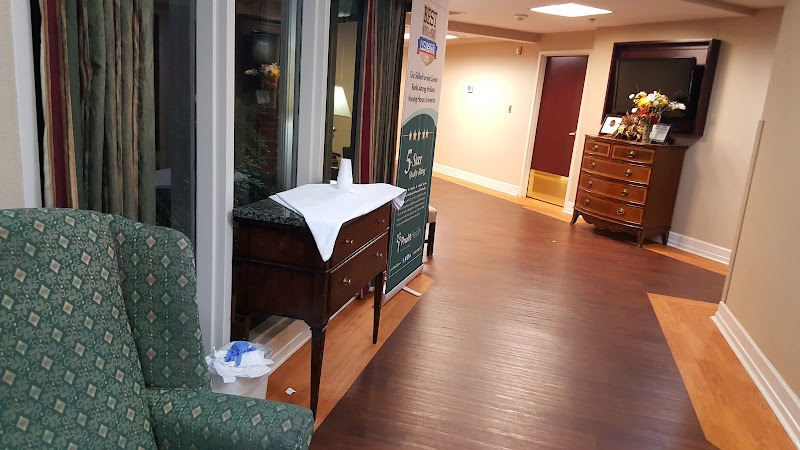
Who Owns and Operates Pruitthealth - Brookhaven?

PRUITTHEALTH - BROOKHAVEN is owned by a for-profit company. For-profit facilities operate as businesses with obligations to shareholders or private owners. The facility is operated by PRUITTHEALTH, a chain that manages multiple nursing homes. With 157 certified beds and approximately 116 residents (about 74% occupancy), it is a mid-sized facility located in ATLANTA, Georgia.
How Does Pruitthealth - Brookhaven Compare to Other Georgia Nursing Homes?

Compared to the 100 nursing homes in Georgia, PRUITTHEALTH - BROOKHAVEN's overall rating (2 stars) is below the state average of 2.6, staff turnover (37%) is near the state average of 46%, and health inspection rating (1 stars) is much below the national benchmark.

What Should Families Ask When Visiting Pruitthealth - Brookhaven?

Based on this facility's data, families visiting should ask: "What changes have been made since the serious inspection findings, and how are you preventing similar issues?" "Can you walk me through typical staffing levels on day, evening, and night shifts?" "Can I visit during a mealtime to observe dining assistance and food quality?" "How do you handle medical emergencies, and what is your hospital transfer rate?" These questions are particularly relevant given the facility's Immediate Jeopardy citations and the below-average staffing rating.

Is Pruitthealth - Brookhaven Safe?

Based on CMS inspection data, PRUITTHEALTH - BROOKHAVEN has documented safety concerns. Inspectors have issued 6 Immediate Jeopardy citations (the most serious violation level indicating risk of serious injury or death). The facility has a 2-star overall rating and ranks #100 of 100 nursing homes in Georgia. Families considering this facility should ask detailed questions about what corrective actions have been taken since these incidents.

Do Nurses at Pruitthealth - Brookhaven Stick Around?

PRUITTHEALTH - BROOKHAVEN has a staff turnover rate of 37%, which is about average for Georgia nursing homes (state average: 46%). Moderate turnover is common in nursing homes, but families should still ask about staff tenure and how the facility maintains care continuity when employees leave.

Was Pruitthealth - Brookhaven Ever Fined?

PRUITTHEALTH - BROOKHAVEN has been fined $15,268 across 2 penalty actions. This is below the Georgia average of $33,232. While any fine indicates a compliance issue, fines under $50,000 are relatively common and typically reflect isolated problems that were subsequently corrected. Families should ask what specific issues led to these fines and confirm they've been resolved.

Is Pruitthealth - Brookhaven on Any Federal Watch List?

PRUITTHEALTH - BROOKHAVEN is not on any federal watch list. The most significant is the Special Focus Facility (SFF) program, which identifies the bottom 1% of nursing homes nationally based on persistent, serious quality problems. Not being on this list means the facility has avoided the pattern of deficiencies that triggers enhanced federal oversight. This is a positive indicator, though families should still review the facility's inspection history directly.