APPLING NURSING AND REHABILITATION PAVILION
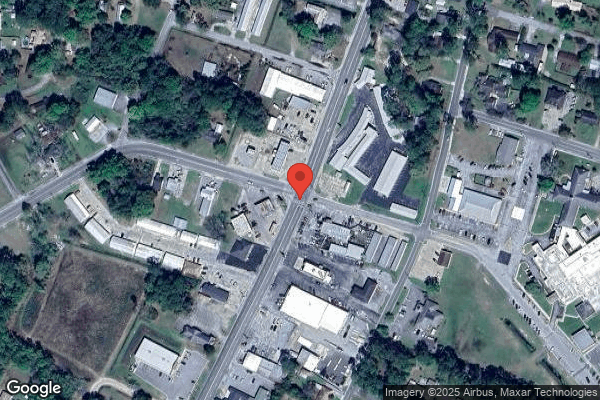
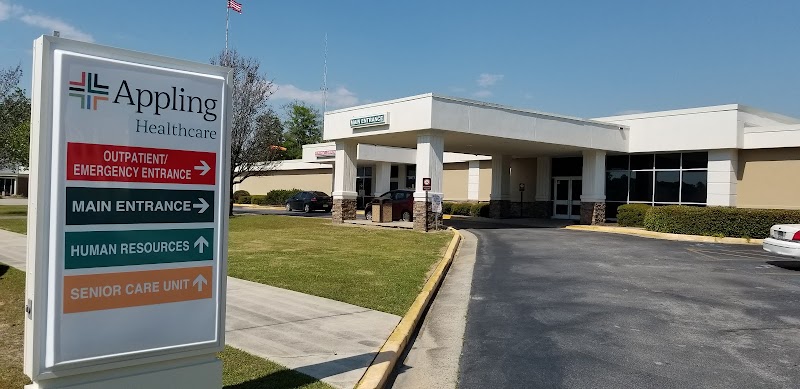
163 EAST TOLLISON STREET, BAXLEY, GA 31513 (912) 367-9841
Non profit - Corporation 101 Beds Independent Data: November 2025 3 Immediate Jeopardy citations
Trust Grade
0/100
#242 of 353 in GA
Last Inspection: March 2025

Within standard 12-15 month inspection cycle. Federal law requires annual inspections.

Overview

Appling Nursing and Rehabilitation Pavilion has received a Trust Grade of F, indicating significant concerns about its care quality and safety. It ranks #242 out of 353 nursing homes in Georgia, placing it in the bottom half, and is the only facility in Appling County, meaning families have no better local options. The facility's performance is worsening, with reported issues increasing from 3 in 2024 to 7 in 2025. Staffing is average with a rating of 3 out of 5 stars and a turnover rate of 36%, which is better than the state average, but RN coverage is concerning, as it is lower than 97% of Georgia facilities. The facility has incurred $28,679 in fines, which is higher than 87% of facilities in the state, indicating ongoing compliance issues. Specific incidents reported include a resident being transferred without the required assistance, resulting in a serious fracture, and another resident eloping from the facility twice due to inadequate supervision measures. While there are some positive aspects like staffing stability, the overall picture raises serious red flags for families considering this home for their loved ones.

Trust Score
F
0/100
In Georgia
#242/353
Bottom 32%
Safety Record
High Risk
Review needed
Inspections
Getting Worse
3 → 7 violations
Staff Stability
○ Average
36% turnover. Near Georgia's 48% average. Typical for the industry.
Penalties
✓ Good
$28,679 in fines. Lower than most Georgia facilities. Relatively clean record.
Skilled Nurses
⚠ Watch
Each resident gets only 14 minutes of Registered Nurse (RN) attention daily — below average for Georgia. Fewer RN minutes means fewer trained eyes watching for problems.
Violations
⚠ Watch
21 deficiencies on record. Higher than average. Multiple issues found across inspections.
★☆☆☆☆
1.0
Overall Rating
★★★☆☆
3.0
Staff Levels
★☆☆☆☆
1.0
Care Quality
★☆☆☆☆
1.0
Inspection Score
Stable
2024: 3 issues
2025: 7 issues

The Good

  • Full Sprinkler Coverage · Fire safety systems throughout facility
  • No fines on record
  • Staff turnover below average (36%)

    12 points below Georgia average of 48%

Facility shows strength in fire safety.

The Bad

1-Star Overall Rating

Below Georgia average (2.6)

Significant quality concerns identified by CMS

Staff Turnover: 36%

Near Georgia avg (46%)

Typical for the industry

Federal Fines: $28,679

Below median ($33,413)

Moderate penalties - review what triggered them

The Ugly 21 deficiencies on record

3 life-threatening 1 actual harm
May 2025 1 deficiency 1 Harm
SERIOUS (G) 📢 Someone Reported This

A family member, employee, or ombudsman was alarmed enough to file a formal complaint

Actual Harm - a resident was hurt due to facility failures

Accident Prevention (Tag F0689)

A resident was harmed · This affected 1 resident

**NOTE- TERMS IN BRACKETS HAVE BEEN EDITED TO PROTECT CONFIDENTIALITY** Based on observation, interviews, and record review, the facility failed to provide adequate supervision when offering hot bever...

Read full inspector narrative →
**NOTE- TERMS IN BRACKETS HAVE BEEN EDITED TO PROTECT CONFIDENTIALITY** Based on observation, interviews, and record review, the facility failed to provide adequate supervision when offering hot beverages for one resident (R) (1) of three sampled residents. Actual harm was identified on 4/11/2025 when R1 sustained 2nd degree burns when hot tea spilled on him when the beverage temperature was not checked prior to serving. Findings include: A policy was requested but the facility did not have one according to the Administrator. R1 was admitted to the facility on [DATE] with diagnoses including but not limited to cerebral infarction and later on 4/16/2025, unspecified dementia, unspecified severity. Review of the Quarterly Minimum Data Set (MDS) Assessment for R1 dated 4/22/2025 revealed a Brief Interview for Mental Status (BIMS) score of 13 indicating intact cognition. Section GG - Functional Status documented the resident requires set up or clean up assistance with eating or drinking. The facility reported an incident to the State Agency on 4/11/2025 indicating a Certified Nurse Assistant (CNA) gave R1 hot tea with his breakfast after resident requested. The CNA poured hot water from a coffee pot that is kept in the hall's pantry. After giving the tea to R1 she left the room to assist another resident. She went back to the resident's room after 8 minutes to see if the resident was done and noticed his tray was pushed away. The resident then said the hot tea fell on him. The CNA rolled him to his side and immediately removed the sheets from over him and told nurse what happened. The nurse assessed the resident and noted what seemed to be a 3rd degree burn on his right hip area. The nurse called the Director of Nursing (DON) and the wound care nurse to the resident's room for further assessment. The resident was sent to the emergency room for further evaluation and treatment per physician order's where the burn was noted to be a 2nd degree burn to the right buttock. R1 was transferred to a burn unit where he received a skin graft for the 2nd degree burn. The facility educated staff on handling hot beverages for residents. The education material revealed staff were told anything below 150 degrees Fahrenheit (F) was safe. There were attempts to contact the CNA involved in the incident, but attempts were unsuccessful. Interview and observation on 5/22/2025 at 11:55 am with CNA TT revealed that after the burn incident happened with the resident a training was held and all residents during day shift are to get drinks and snacks from the kitchen. At night, if residents request, staff are to take the temperature of the drink before giving it to the resident. She showed surveyor the A Hall pantry that has a thermometer and a posting of guidelines what a hot beverage temperature should be. CNA TT revealed all three halls have a thermometer and this posting in their hall pantry. The posting is timestamped 4/15/25 9:27 am and from a google search. It read the ideal coffee brewing temperature is generally considered to be between 91degree celsius and 96 degrees celsius (195 degrees Fahrenheit and 205 degrees Fahrenheit). Prior to the burning incident there was not a posting of temperatures and staff were not taking temps of hot beverages. Interview on 5/22/2025 at 12:13 pm with Licensed Practical Nurse (LPN) WW revealed that prior to the incident happening staff did not take temperatures of hot beverages before giving to a resident. She said thermometers were given to all three halls after the burning incident. Telephone interview on 5/22/2025 at 1:44 pm with the Interim DON at the time of incident, Registered Nurse (RN) HH revealed as soon as the incident was reported to her, she and the wound care nurse went to assess the resident. They then notified the doctor who had the resident sent to the emergency room. The emergency room had R1 sent to a burn unit. After the incident she had an in-service with staff. She ensured thermometers were placed in each hall pantry. She posted temperature parameters that she received from the dietary manager and told all staff that during the day, residents were to get all drinks and snacks from the kitchen. After hours staff were to take the temperatures of all hot drinks before giving them to residents. RN HH revealed that staff should have been taking temperatures of hot beverages before giving it to any resident but that the CNA who gave R1 the hot tea reported she could not find a thermometer and that she placed her hand over the cup and did not feel steam so thought it was okay to give. Observations on 5/22/2025 at 2:10 pm of B hall and C hall pantries revealed the posting identical to A Hall's posting, timestamped 4/15/25 9:27 am and from a google search. It read the ideal coffee brewing temperature is generally considered to be between 91degree celsius and 96 degrees celsius (195 degrees Fahrenheit and 205 degrees Fahrenheit Thermometers were present.) Interview on 5/22/2025 at 3pm with LPN XX revealed that she was present the day the resident received the burn. She said knowing what temperature to serve a hot drink is part of a CNAs training and education. She confirmed that there was no posting of temperature parameters on the three halls pantries, but staff knew they were supposed to be checking temperatures of hot beverages with a thermometer before giving to a resident. She verified training was held immediately after to prevent this from happening again. Interview on 5/22/2025 at 4:27 pm with CNA RR revealed that she heard about incident with R1 getting burned. She said she attended a training where they told her to take temperature of hot beverages before she gave them to a resident. Prior to the incident staff were not taking temperatures. Observation on 5/23/2025 at 12:07 pm revealed tray cart leaving the kitchen with a test beverage tray placed on the bottom. One resident receives coffee every day for lunch. At 12:14 pm the resident was served her lunch at the same time, this surveyor and previous Assistant Director of Nursing (ADON) took the test beverage to the C hall pantry. The previous ADON sanitized the thermometer and took the temperature of the coffee. It was 155 degrees. The previous ADON stated it was a little too hot and should be cooled before serving, but did not give a safe temperature range. On 5/23/2025 at 1:23 pm the Dietary Manager (DM) provided Cooking and Reheating Temperature Log from 5/7/2025-5/23/2025. She revealed the first temperature is when the Coffee was made, and the second temperature is when it was poured to be served. She revealed a safe temperature would be 145 degrees F to 175 degrees F. Review of the temperature logs (coffee identified) from 5/7/2025 through 5/23/2025 revealed temperatures when made from 160 degrees F to 201 degrees F temperature when poured to be served ranging from 160 degrees F to 184 degrees F for breakfast, temperatures when made ranging from 162 degrees F to 186 degrees F and temperature when poured to be served ranging from 160 degrees to 186 degrees for lunch. There were no ot beverage temperatures documented on the logs for breakfast on 5/9/2025. There were no hot beverage temperatures documented on the logs for lunch on 5/13/2025, 5/19/2025, and 5/21/2025 for lunch. Interview on 5/23/2025 at 2:30 pm with Activities Director revealed they have Coffee and Conversation as an activity often. She keeps a pot of coffee in her office. She does not take the temperature of the coffee before serving. Surveyor received three months of activity calendars, March, April, and May 2025 and verified coffee and conversation is an activity that occurs frequently. For March and April, it was offered daily Monday through Friday. The activity was not on the calendar for May. Interview on 5/23/2025 at 2:45 pm with the Administrator revealed that all hot beverages should have a temperature before serving. She stated a safe range would be whatever the facility provided during their inservice. She could not remember the exact temperatures but thought 110-degrees F to 125 degrees F would be safe.
Mar 2025 6 deficiencies 3 IJ
CRITICAL (J)

Immediate Jeopardy (IJ) - the most serious Medicare violation

Comprehensive Care Plan (Tag F0656)

Someone could have died · This affected 1 resident

**NOTE- TERMS IN BRACKETS HAVE BEEN EDITED TO PROTECT CONFIDENTIALITY** Based on interviews, record review and review of the facility policy, the facility staff failed to implement care plan intervent...

Read full inspector narrative →
**NOTE- TERMS IN BRACKETS HAVE BEEN EDITED TO PROTECT CONFIDENTIALITY** Based on interviews, record review and review of the facility policy, the facility staff failed to implement care plan interventions for two residents ((R) #33 and R#34) of 30 residents reviewed. Specifically, the care plan was not followed for R#34 resulting in elopement from the facility on two occasions. Additionally, on 12/30/24 R#33 sustained fractures of the distal left femur with mild comminution when staff transferred her without using appropriate number of staff and equipment. On March 11, 2025, a determination was made that a situation in which the facility's noncompliance with one or more requirements of participation had caused or had the likelihood to cause serious injury, harm, impairment or death to residents. The facility's Administrator and Director of Nursing were informed of the Immediate Jeopardy on March 11, 2025, at 9:55 am. The noncompliance related to the Immediate Jeopardy was identified to have existed on February 2, 2025. At the time of exit on March 13, 2025, the Immediate Jeopardy remained ongoing. Findings include: 1. Record review indicated R#34 was admitted [DATE] and had diagnoses of Alzheimer's disease, generalized anxiety disorder, other depressive episodes, and generalized weakness. The quarterly Minimum Data Set (MDS) with an Assessment Reference Date (ARD) of 12/5/24, revealed R#34 had a Brief Interview for Mental Status (BIMS) score of three, which indicated the resident had a severe cognitive impairment. Review of records indicated R #34 had two facility reportable incidents for elopement that occurred on 5/20/24 and 2/2/25. Review of R #34's care plan documented a risk for elopement and wandering that was initiated 7/9/21. Care plan interventions initiated on 7/9/21 included, Staff to supervise resident as she moves on and off the unit. Following the 2/2/25 elopement, care plan interventions were updated as follows: 2/3/25 Resident in view of staff at all times within the facility for 3 days as ordered, Date Initiated 2/3/25 .Daily check on locked doors, Date Initiated 2/4/25, Staff education/Inservice as needed, Date Initiated 2/4/25. During an interview, on 3/6/25 at 12:17 p.m., the Director of Nursing (DON) reported that the resident had not had an elopement risk assessment since admission. The DON further stated that she did not know why the resident had not been escorted from the activity department to their unit per the care plan intervention of 2021. The DON stated they initiated door lock checks, but this was not placed on the care plan after the first elopement. During an interview, on 3/11/25 at 1:23 p.m., the DON stated that facility-wide changes were implemented to include census checks performed at 8:00 p.m. for all units and that the glass doors were locked after the first elopement. The DON further stated that care plan decisions are made during Interdisciplinary Team (IDT) meetings held daily at 9:00 a.m . 2. Review of the facility policy titled, IDT [Interdisciplinary Team]/Care Plan Activities, last revised 5/1/19 revealed Purpose: To evaluate, implement and maintain a thorough plan of care for each resident ensuring that he/she maintains the highest quality of life possible. Review of R#33's face sheet revealed the resident was admitted to the facility on [DATE] with diagnoses including, but not limited to, Alzheimer's Disease (admitting diagnosis), encounter for other orthopedic aftercare, fracture of lower end of left femur (12/31/24). Review of R#33's significant change in status Minimum Data Set (MDS) with an Assessment Reference Date (ARD) of 12/11/24 revealed the resident had a Brief Interview for Mental Status (BIMS) score of 99, which indicated the resident was severely cognitively impaired and rarely/never understood. Further review of the MDS revealed the resident was dependent of staff and required two persons' physical assistance with transfers. Review of R#33's comprehensive care plan, initiated on 12/18/23, revealed Resident has a self-care deficit r/t [related to] impaired mobility and cognition. Care plan approaches included resident is dependent on staff for chair/bed transfers and resident is dependent on staff for transfers and a mechanical lift [Hoyer] is used by 2 [two] staff (initiated 2/28/25). Review of R#33's Monthly Nursing Summary, dated 12/4/24, revealed Resident required assistance of 2 [two] or more staff and Hoyer lift used for transfers .care needed for positioning required assistance of 1 [one] staff . Review of R#33's Progress Note dated 12/31/24 at 1:32 a.m. revealed At 2200 [10:00 p.m.] CNA [Certified Nursing Assistant] called nurse into room to see resident's leg. When CNA attempted to reposition resident, her left thigh was deformed and touching the leg it made a crunching sound and moved. Put the leg on the pillow to support it and notify the nurse manager. Sent resident to ER [Emergency Room] to be evaluated and treated. Notified family of situation . Review of the R#33's Hospital Discharge Summary revealed an x-ray that concluded R#33 had sustained fractures of the distal left femur with mild comminution and a few degrees of posterior angulation (a broken femur). Review of the facility's Investigation Report dated 1/7/25 revealed R#33 sustained a broken femur. Further review of the report revealed the facility was unable to substantiate the exact cause of the injury, however, it likely occurred during transfer to or from the shower chair due to age, immobility, contractures, and malnutrition. During an interview with R#33's Responsible Party (RP) on 3/5/25 at 10:10 a.m. via telephone, the RP revealed she was notified via telephone on 12/31/24 by facility staff that R#33 was transferred to the hospital and had sustained a broken femur. The RP revealed she was confused due to R#33 being incapable of moving without assistance from nurses. The RP revealed she had asked facility staff how it happened, and facility staff revealed they were unsure of how it occurred. The RP revealed she had spoken with the Administrator and Director of Nursing a couple of days later (was unsure of the exact date) and revealed the injury may have occurred during transferring the resident to the shower room. An interview with Certified Medication Aide (CMA)/CNA AA on 3/5/25 at 12:49 p.m. revealed on 12/30/24 she was passing medications during the day shift. CMA/CNA AA stated another CNA requested assistance with transferring R#33 from the bed to the shower chair. CMA/CNA AA revealed she was in the middle of passing medications to another resident and had to put away several items on the medication cart prior to assisting CNA DD with transferring R#33 to the shower chair. CMA/CNA AA revealed that when she entered R#33's room, R#33 was positioned on the edge of the bed with her legs crossed at the ankles. CMA/CNA AA revealed CNA DD was behind R#33 and held her up with both arms under the resident's arm for support. CMA/CNA AA revealed R#33 was unable to hold themselves up without assistance from staff. CMA/CNA AA revealed she assisted CNA DD with transferring R#33 from the bed to the shower chair. CMA/CNA AA revealed they did not use any equipment (gait belt or mechanical lift) to transfer the resident to the shower chair. CMA/CNA AA revealed she did not witness CNA DD assisting the resident to the edge of the bed. However, due to prior occasions, R#33 required more than one person to be transferred due to her physical and medical conditions. During an interview with CNA BB on 3/5/25 at 1:01 p.m., it was revealed that on 12/30/24, CNA DD assisted R#33 to the shower room. CNA BB revealed she showered the resident and during this time, CNA BB revealed she observed an open area on R#33's bottom (referring to the resident's buttocks). CNA BB revealed she reported the open area to the Nurse Manager. CNA BB revealed that after she showered R#33, she assisted the resident back to their room and put her in bed. CNA BB revealed that even though she was aware the resident required two staff with transfers, she did not request assistance from another staff member prior to transferring the resident back to bed. During an interview with CNA CC on 3/5/25 at 1:59 p.m., it was revealed she was working the day shift on 12/30/24. CNA CC revealed she was to the shower room to assess R#33 because another staff member revealed the resident's toes were bleeding. CNA CC revealed when she went to assess R#33, her toes were dry and she did not observe any blood. CNA CC revealed he/she left the shower room and did not provide any care to R#33 for the rest of the shift. An interview with CNA DD via telephone on 3/5/25 at 2:06 p.m. revealed on 12/30/24 she was assigned to provide care for R#33. CNA DD revealed she went to R#33's room to get the resident up for a shower. CNA DD revealed she requested assistance from another CNA to transfer the resident. CNA DD revealed she did not move the resident until CMA/CNA AA entered the room. CNA DD revealed they did not use any equipment to transfer the resident from the bed to the shower chair. CNA DD revealed R#33 was showered by another staff member, and when she went back to R#33's room, the resident was in bed resting. CNA DD revealed R#33 required two staff members for transfers due to the resident's immobility During an interview with the Director of Nurses (DON) on 3/6/25 at 11:56 a.m., the DON revealed the facility concluded that R#33 was transferred improperly. The DON revealed she expected staff to use a lift or gait belt when transferring residents. The DON also revealed she expected staff to follow care plan approaches with transfers and that R#33 should have been transferred by two staff members due to resident's condition. (Cross refer F689)
CRITICAL (J) 📢 Someone Reported This

A family member, employee, or ombudsman was alarmed enough to file a formal complaint

Immediate Jeopardy (IJ) - the most serious Medicare violation

Accident Prevention (Tag F0689)

Someone could have died · This affected 1 resident

**NOTE- TERMS IN BRACKETS HAVE BEEN EDITED TO PROTECT CONFIDENTIALITY** 2. Review of the facility policy titled, Safe Transfers - Hoyer Lift, last revised on 8/29/22, revealed All residents require ha...

Read full inspector narrative →
**NOTE- TERMS IN BRACKETS HAVE BEEN EDITED TO PROTECT CONFIDENTIALITY** 2. Review of the facility policy titled, Safe Transfers - Hoyer Lift, last revised on 8/29/22, revealed All residents require handling when transferred to prevent or minimize the risk for injury to themselves and the employees that assist them. While manual lifting techniques may be utilized dependent upon the resident's condition and mobility, the use of mechanical lifts are a safer alternative and should be used. Review of R#33's face sheet revealed the resident was admitted to the facility on [DATE] with diagnoses including but not limited to, Alzheimer's Disease (admitting diagnosis), encounter for other orthopedic aftercare, fracture of lower end of left femur (12/31/24). Review of R#33's significant change in status the Minimum Data Set (MDS) with an Assessment Reference Date (ARD) of 12/11/24 revealed the resident had a Brief Interview for Mental Status (BIMS) score of 99, which indicated the resident was severely cognitively impaired and rarely/never understood. Further review of the MDS revealed the resident was dependent of staff and required two persons for physical assistance with transfers. Review of R#33's comprehensive care plan, initiated on 12/18/23, revealed Resident has a self-care deficit r/t [related to] impaired mobility and cognition. Care plan approaches included resident is dependent on staff for chair/bed transfers and resident is dependent on staff for transfers and a mechanical lift [Hoyer] is used by 2 staff (initiated 2/28/25). Review of R#33's Monthly Nursing Summary, dated 12/4/24, revealed Resident required assistance of 2 [two] or more staff and Hoyer lift used for transfers .care needed for positioning required assistance of 1 [one] staff . Review of R#33's Progress Note dated 12/31/24 at 1:32 a.m. revealed At 2200 [10:00 p.m.] CNA (Certified Nursing Assistant) called nurse into room to see resident's leg. When CNA attempted to reposition the resident, her left thigh was deformed, and when touching the leg, it made a crunching sound and moved. Put the leg on the pillow to support it and notify the nurse manager. Sent resident to ER [Emergency Room] to be evaluated and treated. Notified family of the situation . Review of the R#33's Hospital Discharge Summary revealed an x-ray that concluded R#33 had sustained fractures of the distal left femur with mild comminution and a few degrees of posterior angulation [a broken femur]. Review of the facility's Investigation Report dated 1/7/25 revealed that R#33 sustained a broken femur. Further review of the report revealed that the facility was unable to substantiate the exact cause of the injury; however, it likely occurred during transfer to or from the shower chair due to age, immobility, contractures, and malnutrition. During an interview with R#33's responsible party (RP) on 3/5/25 at 10:10 a.m. via telephone, the RP revealed he was notified via telephone on 12/31/24 by facility staff that R#33 was transferred to the hospital and had sustained a broken femur. The RP revealed he was confused due to Resident #33 being incapable of moving without assistance from the nurses. The RP revealed he/she asked facility staff how it happened, and the facility staff revealed they were unsure of how it occurred. The RP revealed he/she spoke with the Administrator and Director of Nursing a couple of days later (was unsure of the exact date) and revealed the injury may have occurred during transferring the resident to the shower room. An interview with Certified Medication Aide (CMA)/CNA AA on 3/5/25 at 12:49 p.m., revealed on 12/30/24 she was passing medications during the day shift. CMA/CNA AA stated another CNA requested assistance with transferring R#33 from the bed to the shower chair. CMA/CNA AA revealed she was in the middle of passing medications to another resident and had to put away several items on the medication cart prior to assisting CNA DD with transferring R#33 to the shower chair. CNA AA revealed when she entered R#33's room, R#33 was positioned on the edge of the bed with her legs crossed at the ankles. CNA AA revealed CNA DD was behind R#33 and holding her up with both arms under the resident's arms for support. CNA AA revealed R#33 was unable to hold themselves up without assistance from staff. CNA AA revealed she assisted CNA DD with transferring R#33 from the bed to the shower chair. CNA AA revealed they did not use any equipment (gait belt or mechanical lift) to transfer the resident to the shower chair. CNA AA revealed she did not witness CNA DD assisting the resident to the edge of the bed. However, based on prior occasions, R#33 required more than one person to be transferred due to her physical and medical conditions. An interview with CNA BB on 3/5/25 at 1:01 p.m., revealed on 12/30/24, CNA DD assisted R#33 to the shower room. CNA BB revealed she showered the resident and during this time, CNA BB revealed she observed an open area on R#33's bottom (referring to the resident's buttocks). CNA BB revealed he/she reported the open area to the nurse manager. CNA BB revealed after she showered R#33 she assisted the resident back to their room and put her in bed. CNA BB revealed that even though she was aware the resident required two (2) staff with transfers, he/she did not request assistance from another staff member prior to transferring the resident back to bed. During an interview with CNA CC on 3/5/25 at 1:59 p.m. it was revealed she was working the day shift on 12/30/24. CNA CC revealed she went to the shower room to assess R#33 because another staff member revealed the resident's toes were bleeding. CNA CC revealed when she went to assess R#33, R#33's toes were dry, and she did not observe any blood. CNA CC revealed she left the shower room and did not provide any care to R#33 for the rest of the shift. During an interview with CNA DD via telephone on 3/5/25 at 2:06 p.m. it was revealed on 12/30/24 she was assigned to provide care for R#33. CNA DD revealed she went to R#33's room to get the resident up for a shower. CNA DD revealed she requested assistance from another CNA with transferring the resident. CNA DD stated she did not move the resident until CNA AA entered the room. CNA DD revealed they did not use any equipment to transfer the resident from the bed to the shower chair. CNA DD revealed R#33 was showered by another staff member and when she went back to R#33's room, the resident was in bed resting. CNA DD revealed R#33 required two staff members for transfers due to the resident's immobility. During an interview with the Director of Nursing (DON) on 3/6/25 at 11:56 a.m., the DON revealed the facility concluded that R#33 was transferred improperly. The DON revealed she expected staff to use a lift or gait belt when transferring residents. The DON also revealed she expected staff to follow care plan approaches with transfers and that R#33 should have been transferred by two staff members due to resident's condition. (Cross refer F656) Based on interviews, record review, and review of the facility policy titled Elopement and Wandering Residents and Safe Transfers - Hoyer Lift, the facility failed to ensure one resident (Resident #34) of two residents reviewed for elopement, did not leave the facility without the nursing staff being aware. This failure led to Resident (R) #34 eloping on 2/2/25 for a second time, which could have caused harm or death. The facility also failed to provide one of two residents reviewed the appropriate interventions when transferring (Resident (R) #33). Additionally, on 12/20/24, actual harm was experienced when R#33 sustained fractures of the distal left femur with mild comminution and was transferred to the hospital for further medical treatment. The failure to use appropriate facility equipment and follow care plan approaches resulted in the resident sustaining an avoidable injury. On March 11, 2025, a determination was made that a situation in which the facility's noncompliance with one or more requirements of participation had caused or had the likelihood to cause serious injury, harm, impairment or death to residents. The facility's Administrator and Director of Nursing were informed of the Immediate Jeopardy on March 11, 2025, at 9:55 am. The noncompliance related to the Immediate Jeopardy was identified to have existed on February 2, 2025. At the time of exit on March 13, 2025, the Immediate Jeopardy remained ongoing. Findings include: 1. Review of the facility's policy titled, Elopement and Wandering Residents, dated 2/27/19, specified, .ensure residents who exhibit wandering behavior and/or are at risk for elopement receive adequate supervision to prevent accidents .PROCEDURE: .c. Interventions to increase staff awareness of the resident's risk, modify the resident's behavior, or minimize risks associated with hazards will be added to the resident's care plan and communicated to appropriate staff. d. Adequate supervision will be provided to help prevent accidents or elopements. PROCEDURE POST ELOPMENT: . g. Documentation in the medical record will include findings from social and nursing service assessments, physician/family notification, care plan discussions, and consultant notes as applicable. A record review indicated R #34 was admitted to the facility on [DATE] and had diagnoses of Alzheimer's disease, generalized anxiety disorder, other depressive episodes, and generalized weakness. The quarterly Minimum Data Set (MDS), with an Assessment Reference Date (ARD) of 12/5/24, revealed R #34 had a Brief Interview for Mental Status (BIMS) score of three, which indicated severe cognitive impairment. The resident utilized a wheelchair independently for locomotion. Review of a nursing progress note, dated 5/20/24 at 2:34 a.m., documented that R #34 was found outside, had sustained a small skin tear to the top of the left foot, and was unable to answer questions. A review of R#34's In-service for Elopement and Reportable Incidents, held 5/20/24 through 5/27/24, documented that an elopement occurred on 5/20/24 at 1:30 a.m. The in-service documented, CONCLUSION: R #34 exited the facility without staff knowledge through a door that had not been reset to alarm. Review of R #34's care plan documented a risk for elopement and wandering, initiated on 7/9/21, with an intervention for Staff to supervise resident as she moves on and off the unit. Further record review documented that R #34 had a second elopement, which occurred on 2/2/25. A review of a facility incident report, dated 2/2/25, indicated R#34 was observed outside the building by a staff member at approximately 3:10 p.m. rolling down the sidewalk in her wheelchair. The report documented, INTERVENTIONS: Exit doors checked for locked/secured. The final report documented a review of inside and outside cameras determined the resident exited the dining area door at approximately 3:05 p.m. The surveyor requested to view the inside and outside cameras but was denied access. Review of R#34's care plan following the second elopement, documented the following approaches: 2/3/25 Resident in view of staff at all times within the facility for 3 days as ordered, Date initiated 2/3/25 .Daily check on locked doors, Date initiated 2/4/25, Staff education/inservice as needed, Date initiated 2/4/25. A review of the Emergency Door Log Checks for A, B, and C halls initiated on 2/4/25 following the 2/2/25 elopement revealed the log had been signed daily from 2/1/25 through 2/28/25 for Units A and B, and signed from 3/1/25 through 3/27/25 for Unit C. The facility was not able to provide logs prior to February 2025. During an interview, on 3/6/25 at 12:17 p.m., the Director of Nursing (DON) reported that the resident had not had an elopement risk assessment completed since admission. The DON further stated that she did not know why the resident had not been escorted from the activity department to their unit per the care plan intervention of 2021. The DON stated they initiated door lock checks, but this was not placed on the care plan after the first elopement. On 3/7/25, at approximately 12:15 p.m., the DON provided documentation to indicate staff had participated in training and discussion of elopement. The DON provided a Daily Stand-up Meeting Sign-in Sheet, dated 1/4/25. Handwritten in the left margin revealed, QAPI committee met and discussed elopement event on 2/2/25 RE: R #34. During an interview, on 3/11/25 at 1:24 p.m., the DON stated she did not know why the resident's care plan was not updated following the May 2024 incident, but that facility-wide changes were implemented to include census checks performed at 8:00 p.m. for all units and that the glass doors were locked. The DON further stated that care plan decisions are made during Interdisciplinary Team (IDT) meetings held daily at 9:00 a.m.
CRITICAL (J) 📢 Someone Reported This

A family member, employee, or ombudsman was alarmed enough to file a formal complaint

Immediate Jeopardy (IJ) - the most serious Medicare violation

Administration (Tag F0835)

Someone could have died · This affected 1 resident

Based on interviews and record reviews, the facility's Administration failed to ensure it administered in a manner that enabled it to use its resources effectively and efficiently to prevent residents...

Read full inspector narrative →
Based on interviews and record reviews, the facility's Administration failed to ensure it administered in a manner that enabled it to use its resources effectively and efficiently to prevent residents from elopement. This resulted in a lack of supervision and processes, which placed residents at risk for multiple elopements and at risk for serious adverse outcomes. This failure resulted in resident (R)#34 eloping from the facility twice. The census was 81. On March 11, 2025, a determination was made that a situation in which the facility's noncompliance with one or more requirements of participation had caused or had the likelihood to cause serious injury, harm, impairment or death to residents. The facility's Administrator and Director of Nursing were informed of the Immediate Jeopardy on March 11, 2025, at 9:55 am. The noncompliance related to the Immediate Jeopardy was identified to have existed on February 2, 2025. At the time of exit on March 13, 2025, the Immediate Jeopardy remained ongoing. Findings include: Review of a nursing progress note, dated 5/20/24 at 2:34 a.m., documented that R #34 was found outside, had sustained a small skin tear to the top of the left foot, and was unable to answer questions. A review of R#34's In-service for Elopement and Reportable Incidents, held 5/20/24 through 5/27/24, documented an elopement occurred on 5/20/24 at 1:30 a.m. The in-service documented, CONCLUSION: R #34 exited the facility without staff knowledge through a door that had not been reset to alarm. Review of a facility reported incident revealed a resident eloped from the facility on 2/2/25. The investigation concluded that the exit door, which the resident went out of, did not alarm and staff were not notified that the resident left the building unattended, without staff knowledge. During an interview with the Administrator on 3/13/25 at 11:49 a.m., the Administrator revealed she was aware of the resident's elopement on 2/2/25. The Administrator revealed after the resident's elopement; the Interdisciplinary Team (IDT) met the next day to discuss additional interventions for the resident who eloped. The Administrator revealed the IDT did not discuss any other residents who had the potential to elope. The Administrator revealed at the time, all of the residents were at risk for elopement and the facility should have conducted risk assessments on the residents who were at high risk for elopement. The Administrator revealed door checks were also implemented, however; they were not implemented on all shifts and were implemented just on the day shift. The Administrator revealed a resident could have eloped at any time of the day and that the facility failed to implement door checks on every shift to hold staff accountable and residents safe. The Administrator revealed there were several key areas of concern the facility staff had addressed, however, they failed to implement those interventions until the situation resulted in an IJ. The Administrator revealed moving forward she expected IDT members to discuss any areas of concern in QAPI (Quality Assurance Performance Improvement) meetings to identify care areas of concern and initiate appropriate interventions immediately.
CONCERN (D)

Potential for Harm - no one hurt, but risky conditions existed

Report Alleged Abuse (Tag F0609)

Could have caused harm · This affected 1 resident

**NOTE- TERMS IN BRACKETS HAVE BEEN EDITED TO PROTECT CONFIDENTIALITY** Based on interviews, record review and review of the facility policy, titled Abuse, Neglect, and Exploitation Prevention and Rep...

Read full inspector narrative →
**NOTE- TERMS IN BRACKETS HAVE BEEN EDITED TO PROTECT CONFIDENTIALITY** Based on interviews, record review and review of the facility policy, titled Abuse, Neglect, and Exploitation Prevention and Reporting, the facility staff failed to timely report an allegation of staff to resident abuse for one of two residents reviewed (Resident (R) #50). Findings include: Review of the facility titled Abuse, Neglect and Exploitation Prevention and Reporting, last reviewed 1/9/2020, revealed VII. Reporting/Response A. The facility will have written procedures that include: 1. Reporting of all alleged violations to the Administrator, state agency, adult protective services and to all other required agencies (e.g., law enforcement when applicable) within specified timeframes: a. Immediately, but not later than 2 hours after the allegation is made, if the events that cause the allegation involve abuse or result in serious bodily injury or b. Not later than 24 hours if the events the allegation do not involve abuse and do not result in serious bodily . During an interview on 3/5/25 at 9:39 a.m., R#50 revealed he had an incident with a male aide (referring to Certified Nursing Assistant (CNA) EE) and that he revealed to staff the male aide was very rough with him and also man handled him while transferring him from his bed. R#50 revealed he reported his concerns to a female nurse and revealed he told facility staff, I don't want him coming into my room anymore. R#50 revealed after he reported the incident to nursing staff and told them what happened he was okay. R#50 revealed CNA EE raised his voice and yelled at him repeatedly. R#50 could not recall the exact day or time this incident occurred; however, he did reveal it occurred a few weeks back (Record review determined the incident occurred on 2/21/25). Review of R#50's face sheet revealed the resident was admitted to the facility on [DATE] with diagnoses including but not limited to, heart disease (admitting diagnosis), anxiety disorder, and dementia. Review of R#50's quarterly Minimum Data Set (MDS) with an Assessment Reference Date (ARD) of 1/7/25 revealed the resident had a Brief Interview for Mental Status score of 11, which indicated the resident had moderate cognition. Further review of the MDS revealed the resident had not exhibited any physical or verbal behaviors towards staff, rejection of care and required moderate/partial assistance of staff with activities of daily living (to include transfers from bed to wheelchair, personal hygiene, eating, toileting, etc.). Review of the facility's reported incident dated 3/4/25 revealed on 2/22/25 R#50 reported to Registered Nurse (RN) VV of an incident that took place on 2/21/25. R#50 initially complained of pain during incontinent care then revealed the day prior (2/21/25) CNA EE was rough with him and man handled him while transferring him from his bed to wheelchair. R#50 further revealed to RN VV that he was experiencing pain, and that CNA EE yelled at him. Further review of the investigation concluded that the Administrator did not report the incident to the state and local authorities until 2/24/25. Interview on 3/6/25 at 10:31 a.m., with CNA EE who returned phone call and revealed he was assigned to R#50 as a CNA on 2/21/25. CNA EE revealed R#50 had a scheduled haircut appointment at the facility and was told to get the resident up and dressed. CNA EE revealed he entered R#50's room and provided assistance with a gait belt to transfer the resident to his wheelchair. CNA EE revealed he had worked with R#50 and that he was noncompliant with getting out of his bed. CNA EE revealed he assisted the resident into his wheelchair and back to his room. CNA EE revealed he was suspended pending the facility's investigation, was asked by staff to write a witness statement on the events that occurred, and did not return to the facility until 3/3/25. Review of CNA EE's timecard revealed the CNA was out of the building from 2/23/25 - 3/3/25. During an interview with the Administrator on 3/6/25 at 10:42 a.m., the Administrator revealed she was the facility's Abuse Coordinator. The Administrator confirmed the alleged abuse occurred on 2/21/25, was reported to RN VV on 2/22/25, and reported to state and local officials on 2/24/25. The Administrator confirmed all allegations of abuse were to be investigated immediately and should be reported to the state agency within 24 hours. During an interview on 3/6/25 at 12:01 p.m., revealed on 2/22/25 the Director of Nurses (DON) was notified by RN VV of an incident that occurred on 2/21/25. The DON revealed RN VV reported that R#50 revealed during care he was yelled at, man handled and bearhugged by CNA EE. The DON revealed she contacted several nursing staff to provide witness statements regarding the incident. The DON revealed that all alleged reports of abuse and neglect should be reported to the appropriate agencies within 24 hours of receiving a complaint. During an interview on 3/6/2025 at 2:20 p.m., RN VV returned the phone call and revealed she worked on 2/22/25 and R#50 reported to her that a male CNA (CNA EE) was rough with him on 2/21/25. RN VV revealed R#50 complained of pain and revealed CNA EE yelled at him, man handled him, and bearhugged him while transferring him to his wheelchair for a haircut. RN VV revealed she reported the incident immediately to the DON and was told to complete a witness statement with the details provided by R#50.
CONCERN (D) 📢 Someone Reported This

A family member, employee, or ombudsman was alarmed enough to file a formal complaint

Potential for Harm - no one hurt, but risky conditions existed

Quality of Care (Tag F0684)

Could have caused harm · This affected 1 resident

**NOTE- TERMS IN BRACKETS HAVE BEEN EDITED TO PROTECT CONFIDENTIALITY** Based on interview and record review, the facility failed to follow physician's orders to ensure that residents receive treatmen...

Read full inspector narrative →
**NOTE- TERMS IN BRACKETS HAVE BEEN EDITED TO PROTECT CONFIDENTIALITY** Based on interview and record review, the facility failed to follow physician's orders to ensure that residents receive treatment and care in accordance with professional standards of practice for one resident (R) #290 of one resident reviewed for quality of care. Findings include: A review of the facility's policy titled, Physician Orders, with a reviewed date of 2/20/23, stated the facility policy was established to ensure physician orders were implemented. R#290 was a [AGE] year-old resident who was admitted to the facility on [DATE], with diagnoses including diabetes, history of heart attack, and high blood pressure. The resident had a Brief Interview for Mental Status (BIMS) score of 13 on the quarterly Minimum Data Set (MDS) with an Assessment Review Date (ARD) of 10/16/24, which indicated the resident was cognitively intact. Record review of the physician orders revealed that the resident had an order for administration of sliding scale insulin of Humalog that specified if the blood sugar (BS) was over 400 mg/dL (milligrams per deciliter) two hours after insulin administration, send the resident to the ER (Emergency Room) and the MD (Medical Doctor) must be notified. In addition, there was another order which stated, Accu-Check twice a day if results were less than 40 mg/dL or greater than 400 mg/dL; repeat finger stick in other hand. If confirmed same, get STAT lab confirmation of Serum BS. Do not give insulin until lab confirmation results are received. MD must be notified if BS was greater than 400 mg/dL. This was ordered four times daily and as needed. On 10/7/24 at 3:14 p.m., the resident had a BS of 465 mg/dL, then at 5:46 p.m. the BS was 453 mg/dL, and at 6:15 p.m. the BS was 453 mg/dL according to the blood glucose section of the vitals in the medical record. A progress note at 10/7/24 at 6:15 p.m. said the nurse tried to reach the medical doctor (MD), non-emergency communication was given, and nine units of Humalog was administered. On 10/8/24 at 4:48 p.m., the resident had a BS of 464 mg/dL, then at 5:58 p.m., it was 505 mg/dL, and finally at 6:00 p.m. it was 505 mg/dL, and no further readings were documented according to the blood glucose section of the vitals in the medical record. The progress note 10/8/24 at 6:15 p.m. stated that nine units of insulin was given, staff attempted to reach the MD, and faxed MD. Increased agitation was documented that night and an as needed sedative was administered. There were no negative outcomes documented for R#290 as a result of not being sent out to the ER when her BS was greater 400 mg/dL. In an interview, on 3/11/25 at 1:23 p.m., the Director of Nursing (DON) stated it was expected that staff follow the orders of the physician and if there was a question, the physician should be contacted for verification.
CONCERN (F)

Potential for Harm - no one hurt, but risky conditions existed

Infection Control (Tag F0880)

Could have caused harm · This affected most or all residents

**NOTE- TERMS IN BRACKETS HAVE BEEN EDITED TO PROTECT CONFIDENTIALITY** Based on observation, interview, record review, and review of the facility policy titled, Infection Prevention and Control Progr...

Read full inspector narrative →
**NOTE- TERMS IN BRACKETS HAVE BEEN EDITED TO PROTECT CONFIDENTIALITY** Based on observation, interview, record review, and review of the facility policy titled, Infection Prevention and Control Program, the facility failed to establish and maintain an infection prevention and control program designed to provide a safe, sanitary and comfortable environment, and to help prevent the development and transmission of communicable diseases and infections, which affected all 81 residents in the facility. Findings include: Record review of the facility's policy titled, Infection Prevention and Control Program, last revised 4/30/2020, directed that the Infection Preventionist would consult on infectious diseases, resident room placement, implementation of isolation precautions, and other related tasks. The policy further indicated that a system of surveillance was created for preventing, identifying, reporting, and investigating communicable diseases for all residents, staff, volunteers, visitors, and other individuals. In an interview on 3/4/25 at 9:37 a.m., during the entrance conference, the Director of Nursing (DON) stated that she also acted as the Infection Preventionist for the facility. The DON revealed that the facility currently had an outbreak of Influenza A with nine residents on the 100 hall (A Hall) that were positive, and six residents on the 300 hall (C Hall) that were positive. When asked to provide a line list of Influenza A positive for residents and staff, the DON stated that they would have to go and re-read text messages from staff to create a line list. Record review of the line list of positive residents dated 3/5/25 revealed that eight residents were listed from A Hall, and seven residents were positive from C Hall. A review of the facility's Resident Matrix (Form 802), provided on 3/4/25, identified three residents that were Influenza A positive but were not on the line list of positive residents provided on 3/5/25, including Resident (R) #36, (R) #2 and (R) #29. In an interview, on 3/5/25 at 10:21 a.m., with the DON, she stated that for staff, they only had the date they called out or a doctor's note, and that half of the staff were out last week for the flu. She further stated that she would need to type up a line list for flu positive residents as well. The DON stated that isolation for influenza was 10 days, with the start date being the diagnosed date and going until the day after the 10th day. The DON stated that someone accidentally typed in seven days of isolation for a resident, but that must be a mistake because the DON was typing in standing orders for influenza and put 10 days as what the isolation period should be. The DON stated that the facility had not reported the influenza A outbreak to any health authority or health department. In an interview on 3/5/25 at 1:23 p.m., with a Southeast Health District employee, with jurisdiction for the facility, the employee stated that Influenza A was reportable on the list of reportable diseases classified as an outbreak/cluster of infectious diseases, and the facility should have reported the Influenza A outbreak according to the Georgia Department of Health. In an interview, on 3/5/25 at 2:10 p.m., with the DON and Infection Preventionist, she stated that no one reports outbreaks to the health department, and they did not know that it was required. The DON stated she had to work three days on the floor last week due to call outs of staff who had the flu. When asked about proper isolation for influenza, the DON stated that Airborne Isolation and Droplet Isolation were pretty much the same thing according to the CDC [Centers for Disease Control and Prevention] and that residents should be on airborne isolation and contact isolation for influenza. An observation on 3/6/25 at 10:19 a.m., outside of room [ROOM NUMBER], revealed three isolation signs for (R) #49, who was listed as positive for Influenza A. The signs indicated the following requirement for R #49: Contact Precautions, Airborne Precautions, and Droplet Precautions. Record review of the Georgia Department of Health Notifiable Disease Condition Reporting list revealed, all outbreaks/clusters (including infectious and non-infectious causes, toxic substance and drug-related, and any other outbreak) should be reported.
Jun 2024 3 deficiencies
CONCERN (D) 📢 Someone Reported This

A family member, employee, or ombudsman was alarmed enough to file a formal complaint

Potential for Harm - no one hurt, but risky conditions existed

Comprehensive Care Plan (Tag F0656)

Could have caused harm · This affected 1 resident

**NOTE- TERMS IN BRACKETS HAVE BEEN EDITED TO PROTECT CONFIDENTIALITY** Based on observation, staff interview, record review, and review of the facility policy titled, IDT/Care Plan Activities, the fa...

Read full inspector narrative →
**NOTE- TERMS IN BRACKETS HAVE BEEN EDITED TO PROTECT CONFIDENTIALITY** Based on observation, staff interview, record review, and review of the facility policy titled, IDT/Care Plan Activities, the facility failed to develop and implement a care plan for pressure ulcers for one of four residents (R) (R5). The deficient practice had the potential to prevent R5 from receiving care and services to maintain the highest quality of life possible. Findings include: Review of the facility policy titled, IDT/Care Plan Activities, with revision date of 5/1/2019, under Purpose: To evaluate, implement and maintain a thorough plan of care for each resident ensuring that he/she maintains the highest quality of life possible. Under Responsibilities: number 3. Nursing Services d. Update care plans as changes occur and communicate updates with MDS Coordinator and appropriate staff, f. Follows care plans specific to each resident. Review of R5's diagnoses included but not limited to pressure ulcer of left hip, stage 4, pressure ulcer of left heel, stage 2, pressure ulcer of right buttock, stage 4, and multiple sclerosis. Review of R5's quarterly Minimum Data Set (MDS) dated [DATE] revealed Section C-Cognitive Patterns: Brief Interview of Mental Status (BIMS) score of 9 indicating moderate cognitive impairment. Section M-Skin Conditions: Number of Stage 4 pressure ulcers (2), Number of these Stage 4 pressure ulcers that were present upon admission/entry or reentry (2). Review of R5's care plans dated with a completion date of 5/16/2024 revealed no care plan in place addressing R5's pressure ulcers. Interview with the Administrator, Director of Nursing (DON), and the Assistant Director of Nursing (ADON) on 6/27/2024 at 3:00 pm revealed the Administrator, DON, and ADON reviewed the care plans for R5 and confirmed that there was not a care plan developed to address R5 pressure areas. Interview on 6/27/2024 at 3:00 pm Administrator stated that R5 should have a care plan to address her pressure ulcers. She stated that her expectations are for R5 pressure ulcers to be care planned with interventions.
CONCERN (F) 📢 Someone Reported This

A family member, employee, or ombudsman was alarmed enough to file a formal complaint

Potential for Harm - no one hurt, but risky conditions existed

Deficiency F0568 (Tag F0568)

Could have caused harm · This affected most or all residents

**NOTE- TERMS IN BRACKETS HAVE BEEN EDITED TO PROTECT CONFIDENTIALITY** Based on record review, resident and staff interview, and review of the facility policy titled, Management and Protection of the...

Read full inspector narrative →
**NOTE- TERMS IN BRACKETS HAVE BEEN EDITED TO PROTECT CONFIDENTIALITY** Based on record review, resident and staff interview, and review of the facility policy titled, Management and Protection of the Resident Personal Fund Account, the facility failed to provide a quarterly financial statement to the resident and/or responsible party (RP) for 66 of 66 residents with trust fund accounts managed by the facility. Findings include: Review of the facility policy titled, Management and Protection of the Resident Personal Fund Account with revision date of June 2, 2021, revealed under Policy Procedure 5. The individual financial record must be available made available through quarterly statements and on request or his/her legal representative. Interview on 6/26/2024 at 7:45 am, with resident (R) R2, he stated that he had never received a quarterly statement for his trust fund account that the facility manages. He stated that if he asks for his balance staff will verbally tell him how much he has in his account, and he can get money whenever he asks. Review of R2 Quarterly Minimum Data Set (MDS) assessment dated [DATE], revealed that he had a Brief Interview for Mental Status (BIMS) score of 15 indicating little to no cognitive impairment. Interview on 6/26/2024 at 7:30 am, with R11 she stated that she has never received a statement of how much money she has in her trust fund account that the facility manages. She stated that social services will tell her how much she has in her account if she asks. She stated that she has never asked for a statement, but she was never given one. Review of R11 Annual MDS assessment dated [DATE], revealed that she had a BIMS score of 15 indicating little to no cognitive impairment. Review of a Trust Fund Account Balances report dated 6/26/2024 revealed that R2 and R 11 currently had a trust fund account being managed by the facility with a positive balance. No documentation was available to indicate that quarterly statements had been issued to R2, or R11 or their responsible parties. Interview on 6/25/2024 at 9:10 am with the Social Service Director (SSD), she stated that she was responsible for managing the resident trust fund accounts. SSD revealed that she does not have proof that the resident/family are receiving quarterly statements. She stated that residents receive their bank statements every six months. She stated that they can receive statements anytime that they ask for one, but if they do not ask for it, they receive statements every six months. Continued interview with the SSD on 6/26/2024 at 11:20 am revealed that she mails out bank statements every six months to families of residents that are not cognitive, but she does not have any proof that she mailed the statements or any way of knowing if the families received the statements. She stated that she hands the statement to the residents at the facility who are cognitive and she does not have proof of when she hands the statements to the residents at the facility, because she does not keep a list of the statements that she mails, and she does not keep a list of the statements that she hands to the residents. She stated that she delivers the mail early in the mornings and most of the time the residents are asleep, so she places the statements on their bedside tables because she does not want to wake them up. During a follow up interview with the SSD on 6/26/2024 at 12:51 pm, she printed a report from the facility computer system and stated that it shows that she printed the residents bank statements on 3/31/2024. She stated that she mailed most of the statements, and she delivered the rest of the statements to the resident's rooms. She stated that she does not know if the residents saw the statements on their bedside tables, but that is where she placed them. Interview with the administrator on 6/26/2024 at 12:07 pm She stated that bank statements should be issued every three months, quarterly. She stated that she was not aware that the SSD was not giving the statements out quarterly. She stated that she spoke to the SSD yesterday and that was when she was told by the SSD that she was giving the statements out every six months and that she had only given one out since October 2023. The administrator stated that her expectation is for quarterly statements be given out quarterly every three months to all residents and or their responsible parties.
CONCERN (F) 📢 Someone Reported This

A family member, employee, or ombudsman was alarmed enough to file a formal complaint

Potential for Harm - no one hurt, but risky conditions existed

Infection Control (Tag F0880)

Could have caused harm · This affected most or all residents

**NOTE- TERMS IN BRACKETS HAVE BEEN EDITED TO PROTECT CONFIDENTIALITY** Based on observations, interviews, and review of the facility policy titled, Infection Prevention and Control Program, the facil...

Read full inspector narrative →
**NOTE- TERMS IN BRACKETS HAVE BEEN EDITED TO PROTECT CONFIDENTIALITY** Based on observations, interviews, and review of the facility policy titled, Infection Prevention and Control Program, the facility failed to maintain sanitary and clean conditions related to cross contamination on three of three hallways (A Hall, B Hall, and C Hall). Specifically, the facility failed to ensure the Treatment Cart was cleaned and sanitized after being utilized in residents rooms during wound care treatment, failed to ensure residents foley catheter drainage bags were positioned below the bladder and not resting on the residents bed and linens, and the facility failed to ensure residents positioning equipment was not stored on the floor before use. Findings include: Review of the facility policy titled, Infection Prevention and Control Program, with a revision date of 4/30/2020, under Policy statement: it shall be the policy of Applying Nursing and Rehabilitation Pavilion and entity of Applying Healthcare System to establish and maintain an infection prevention and control program designed to provide a safe, sanitary, and comfortable environment and to help prevent the development and transmission of communicable diseases and infections. Observation on 6/26/2024 at 9:09 am revealed the treatment cart was noted outside of room [ROOM NUMBER] door. LPN AA sanitized her hands, donned gloves, and rolled the treatment cart into the room. LPN AA rolled the treatment cart to the right side of the residents' bed and pushed the cart close to the bed with the cart touching the foley catheter's dignity bag. LPN AA removed the blanket and top sheet from over the resident and placed them on a chair in the room. LPN AA then remove the wedge from behind the residents' back and placed it on the floor near the window. LPN AA removed the foley catheter from the dignity bag and placed it on top of the residents' bed. LPN AA proceeded with wound care, rolled the cart from the right side of the bed over to the left side of the bed with the cart touching the dresser and the left side of the bed. After completion of wound care, LPN AA placed the foley catheter back in the dignity bag, picked up the wedge from off the floor and positioned it behind the residents' left side. Observation on 6/26/2024 at 9:30 am LPN AA pushed the cart out of room [ROOM NUMBER] and pushed it down C Hall and pushed it up against the wall by another resident's room door. Interview on 6/26/2024 at 9:40 am with LPN AA, treatment nurse revealed she rolls the treatment cart from room to room because that is where her treatment supplies are. She stated that some of the residents do not have any room on their bedside table for her to set up supplies. She stated that she takes the treatment cart into every resident's room that she provides treatments for. She stated that she rolls the cart throughout the facility from hall to hall without sanitizing the cart after going in and coming out of resident's rooms. LPN AA stated that she placed the foley catheter on the residents' bed because it is a neutral place for it to be while she is doing her treatments. When asked how the foley catheter should be positioned, LPN AA could not verbalize the position of foley catheters, or that foley catheters should be positioned below the level of the bladder. When asked why she placed the wedge on the floor, LPN AA had no answer. Interview on 6/26/2024 at 10:05 am with the Director of Nursing (DON) revealed the treatment nurse did not have any training on wound care prior to her transition into the position. DON stated that the treatment nurse had as much education on infection control and wound care as any of the other nurses. She stated that her expectation is that she will get the treatment nurse her own bedside table that she can wipe down and sanitize before and after use. She stated that she would provide LPN AA with some education. DON stated that she assumes that the treatment nurse knows that the foley catheter should be positioned below the level of the hip.
Oct 2022 8 deficiencies
CONCERN (D)

Potential for Harm - no one hurt, but risky conditions existed

Deficiency F0604 (Tag F0604)

Could have caused harm · This affected 1 resident

**NOTE- TERMS IN BRACKETS HAVE BEEN EDITED TO PROTECT CONFIDENTIALITY** Based on observation, interview, and review of the policy titled Restraint Free Environment, the facility failed to ensure that ...

Read full inspector narrative →
**NOTE- TERMS IN BRACKETS HAVE BEEN EDITED TO PROTECT CONFIDENTIALITY** Based on observation, interview, and review of the policy titled Restraint Free Environment, the facility failed to ensure that one resident (R) (#50) was free from restraint use out of nine residents reviewed for restraints. Findings include: Review of the policy titled Restraint Free Environment reviewed 4/3/19, revealed each resident shall attain and maintain his/her highest practicable well-being in an environment that prohibits the use of restraints for discipline or convenience and limits restraint use to circumstances in which the resident has medical symptoms that warrant the use of restraints. Physical restraints may include, but not limited to: d. Using devices in conjunction with a chair, such as trays, tables, cushions, bars, or belts, that the resident cannot remove and prevents the resident from rising. e. Placing a resident in a chair that prevents the resident from rising independently. j. Using a position change alarm to monitor resident movement, and the resident is afraid to move to avoid setting off the alarm. Review of the clinical record revealed R#50 was admitted to the facility on [DATE] with diagnoses including but not limited to irritable bowel syndrome (IBS), diabetes, depression, history of falls, polyneuropathy, and hypertensive heart disease. Review of the quarterly Minimum Data Set (MDS) dated [DATE] revealed a Brief Interview for Mental Status (BIMS) score of two, indicating severe cognitive impairment. Section P revealed no restraints, but chair and bed alarms used daily. Observation on 10/7/22 at 9:36 a.m. revealed R#50 sitting in a recliner (upright) at the nurse's station. Resident noted to have a chair pad alarm in her chair with a bedside table crossed in front of resident. Resident is not engaged in any activity with the use of the table at the time of observation. Observation on 10/8/ 22 at 8:24 a.m. revealed R#50 sitting in the recliner across from the nurse's station. Chair Alarm pad is in the recliner and activated. Resident observed with both eyes closed and arms folded at the time of the observation. Observation on 10/8/22 at 8:33 a.m., Certified Nursing Assistant (CNA) FF deactivated the chair pad alarm and assisted R#50 from the recliner chair to wheelchair with one person assist, to take for a shower. Observation on 10/8/22 at 8:54 a.m., CNA FF assisted R#50 back to the recliner chair. She reactivated the chair pad alarm and reclined the recliner. The resident remained in the reclined position from 8:54 a.m. to 11:45 a.m., with the chair pad alarm activated. Observation on 10/8/22 at 11:45 a.m., CNA JJ asked resident if she was ready to go to lunch, lowered the footrest of the recliner, and R#50 used the handrail and self-transferred to the wheelchair with stand by assist of CNA JJ. Continued observation revealed R#50 began to self-propel her wheelchair up the hall using her feet. Observation on 10/8/22 at 1:23 p.m., R#50 was observed self-propelling herself from the dining room in wheelchair using her feet. CNA JJ assisted R#50 from wheelchair back into the recliner, reactivated the chair pad alarm and reclined the recliner. Observation on 10/9/22 at 8:41 a.m., R#50 was observed sitting in the recliner with chair pad alarm activated. Review of the care plan revised on 9/2/22 revealed resident is at risk for falls related to psychotropic medication use, unsteady gait, and history of falls. Approaches to care include avoid the use of restraints and bed/chair alarms on and working properly at all times. Review of the October 2022 Physician Orders Summary Report for R#50 revealed an order for bed alarm on and working at all times every shift and chair alarm on and working at all times every shift, with start date of 10/21/21. There is no indication for the use of bed/chair alarms. Review of the Occupational Therapy Screening dated 8/29/22 has comments that reads therapist completed inter-disciplinary quarterly therapy screen. Nursing reports no change. Requires minimal assist for transfers, toileting secondary to cognition/vision. Mod Independent wheelchair mobility and set up self-feeding. Interview on 10/9/22 on at 8:36 a.m. with CNA JJ, stated resident sits in the recliner chair instead of the wheelchair. She stated she does not why, but that's what she was told to do upon hire. She stated resident can propel herself in the wheelchair with the use of her feet. During further interview, she stated she is not sure if resident can walk, but stated she is able to transfer with the use of the handrail with stand by assist from the staff. She stated the chair pad alarm is used in case she gets up unassisted, it will alarm. Interview on 10/9/22 at 8:44 a.m. with CNA FF, stated that resident is placed in the recliner because she wanders off the hall when she's in the wheelchair. CNA FF further stated that resident has the chair alarm because she will get up out the recliner, get her wheelchair and leave off the hall; the alarms alert us that she is up. Interview on 10/9/22 at 8:55 a.m. with Licensed Practical Nurse (LPN) DD, revealed that resident tries to get up by herself, so she is placed in the recliner to keep her from falling. LPN DD also stated that is why there is a chair pad alarm in the recliner. During further interview, Nurse DD stated that if the resident is in her wheelchair, she will get up by herself because she wanders all over the facility using her feet. LPN DD stated, we don't want her to stay in the w/c because she wanders in the wheelchair to other halls and to the dining room. LPN DD stated that all exit doors are locked upon entry and resident could not get outside the facility. Interview on 10/9/22 at 9:30 a.m. with LPN Nurse Supervisor BB, revealed resident has dementia that is getting worse and the reason for the alarm in her chair is to the falls. She stated the chair alarm lets us know she's getting up unassisted. LPN BB stated the facility has not completed an assessment related to the use of the chair alarm. During further interview, She was asked if R#50 being in the recliner with the chair alarm rather than in the self-propelled wheelchair has impeded residents' mobility, and she answered no, but did not elaborate on her response. Interview on 10/9/22 at 9:38 a.m. with Director of Nursing (DON), stated facility does not have an assessment for classifying restraints. She confirmed the facility utilizes bed and chair alarms; but stated facility does not use restraints in the facility. During further interview, she stated resident has had multiple falls in the past trying to get up from wheelchair, recliner, and bed unassisted, so the bed and chair alarms were implemented. The alarms alert the staff that she has gotten up unassisted. She stated that resident cannot get up out of the recliner without assistance.
CONCERN (D)

Potential for Harm - no one hurt, but risky conditions existed

Deficiency F0655 (Tag F0655)

Could have caused harm · This affected 1 resident

**NOTE- TERMS IN BRACKETS HAVE BEEN EDITED TO PROTECT CONFIDENTIALITY** Based on observation, record review, interviews, and review of the policy titled IDT/Care Plan Activities, the facility failed t...

Read full inspector narrative →
**NOTE- TERMS IN BRACKETS HAVE BEEN EDITED TO PROTECT CONFIDENTIALITY** Based on observation, record review, interviews, and review of the policy titled IDT/Care Plan Activities, the facility failed to ensure the baseline care plan for one newly admitted resident (R) (R#229) included goals and interventions for diagnosis of Influenza A. The sample size was 40 residents. Findings include: Review of the policy titled ADT/Care Plan Activities revised 5/1/19, revealed the policy is that each resident will have a baseline care plan within 48 hours of admission and an interdisciplinary plan of care within 14 days of admission. Upon admission, each resident's basic needs are recognized, and an interim plan of care is initiated by the Care plan Coordinator/Staff Nurse. The interim plan is used by staff to render care until the care plan is completed by the Care Plan team. admission record review includes an examination of assessments written within the first two weeks by Nursing Services, Activities/Social Services, Physical Therapy, and Nutrition Services. Review of the clinical record for R#229 revealed the resident was admitted to the facility on [DATE] with diagnoses including dementia, anxiety, depression, hypokalemia, and muscle weakness. Review of R#229's admission Minimum Data Set (MDS) revealed that it was in process, and not been completed yet. Review of R#229's baseline care plan revealed there was no evidence that interventions had not been developed for residents' diagnosis of Influenza A. Review of R#229's progress notes dated 10/5/2022 at 3:34 p.m. revealed R#229 nauseated and vomited x 3, temp elevated to 101.2. New orders received for a FLU Swab, CBC, CMP, and U/A. Isolate resident until results are in. Review of R#229's progress notes dated 10/5/2022 at 5:26 p.m. revealed received results from Flu Swab resident is positive for Influenza A. Interview on 10/9/22 at 8:14 a.m. with the Director of Nursing (DON), revealed baseline care plans are completed within 24 - 48 hours after admission and are updated with new medications and new diagnoses. Interview on 10/9/22 at 8:22 a.m. with Registered Nurse (RN) HH, MDS Coordinator, verified that a care plan addressing Influenza A had not been initiated. She stated she was not aware that updates for the baseline care plan were done. During further interview, she stated that the baseline care plan is generic and covers everything with the resident. Interview on 10/9/22 at 8:40 a.m. with Licensed Practical Nurse (LPN) BB, Nurse Manager revealed baseline care plans are completed within 48 hours. She further stated that baseline care plans are not updated with new orders or diagnoses. Interview on 10/9/22 at 11:38 a.m. with the Administrator revealed baseline care plans are placed on the charts within 24-48 hours after they are reviewed with the resident and their families when they come in. She stated if there are new orders or new diagnoses it should be updated on the baseline care plan. She stated the charge nurses and the MDS coordinators are responsible for updating care plans.
CONCERN (D)

Potential for Harm - no one hurt, but risky conditions existed

Deficiency F0661 (Tag F0661)

Could have caused harm · This affected 1 resident

**NOTE- TERMS IN BRACKETS HAVE BEEN EDITED TO PROTECT CONFIDENTIALITY** Based on record review, staff interviews, and review of the policy titled Transfer and Discharge including AMA of a Resident, th...

Read full inspector narrative →
**NOTE- TERMS IN BRACKETS HAVE BEEN EDITED TO PROTECT CONFIDENTIALITY** Based on record review, staff interviews, and review of the policy titled Transfer and Discharge including AMA of a Resident, the facility failed to complete a discharge summary that included a recapitulation of the resident's stay, a post discharge plan of care, or a final summary of the resident's status for one resident (R) (R#79) from a sample of three residents reviewed for discharge. Findings include: Review of policy titled Transfer and Discharge including AMA of a Resident dated 7/12/19, revealed that number 9 Anticipated Transfers and Discharges b. a member of the interdisciplinary team completes relevant sections of the Discharge Summary. The nurse caring for the resident at the time of discharge is responsible for ensuring the Discharge Summary is complete and includes, but not limited to, the following: 1. A recap of the resident's stay that includes diagnoses, course of illness/treatment or therapy, and pertinent lab, radiology, and consultation results. 2. A final summary of the resident's status. 3. A post discharge plan of care that is developed with the participation of the resident, and the resident's representative(s) which will assist the resident to adjust to his or her new living environment. Review of the clinical record revealed R#79 was admitted to the facility on [DATE] with diagnosis of Alzheimer's dementia. She was discharged on 9/7/22. Review of R#79's admission Minimum Data Set (MDS) dated [DATE] revealed a Brief Interview for Mental Status (BIMS) score of 11, indicating moderated cognitive deficit. Section Q revealed the resident participated in the assessment, and there was an active discharge plan in place for the resident to remain in facility. Review of progress note dated 9/7/22 revealed staff contacted the Family of R#79 regarding denial from Medicaid and payment. Family of R#79 became angry and stated, I don't have it. I'll just come get her, keep her at home and try to take care of her myself. Continued review revealed son declined to have the Social Services Director (SSD) set up home health services for R#79. Review of two Discharge Instructions forms for R#79 both dated 9/7/22 with the status of Incomplete and In Progress revealed both were blank. Interview on 10/9/22 at 8:30 a.m. with the SSD revealed when a resident discharges from the facility, she would initiate discharge instructions and set up home health if needed. She revealed nursing would complete the other sections, education, and notify the physician. SSD stated family refused her offer to set up home health services for R#79. Interview on 10/9/22 at 8:44 a.m. with Licensed Practical Nurse (LPN) LPN DD, revealed nurses complete discharge instructions and education with the resident and/or responsible party at the time of discharge. LPN DD revealed once the discharge instructions are completed and signed by resident/responsible party, they would scan it back into the system. Interview on 10/9/2022 at 9:05 a.m. with LPN Supervisor BB, revealed when a residents' payor source ends, the nurse would notify the doctor and receive orders from the physician to discharge the resident. She stated either the nurse or SSD would initiate the discharge instructions and complete the nursing sections if known ahead of time. She stated a copy of the discharge instructions, medication administration record (MAR) and medications are sent with residents at the time of discharge. LPN Supervisor BB stated that if the resident signs an Against Medical Advice (AMA) form, the facility would still complete the discharge instruction send with them. Interview on 10/9/22 at 9:10 a.m. with the MDS Coordinator stated the discharge instructions were not completed for R#79 because the family was very upset and there was no time to complete it before leaving the facility. Review of a Pharmacy Requisition provided by the MDS Coordinator revealed a list of R#79 medications and directions signed by Family of R#79. Interview conducted on 10/9/2022 at 10:45 a.m. with Director of Nursing (DON), revealed her expectation is that staff to follow through with the discharge process despite the circumstances.
CONCERN (D)

Potential for Harm - no one hurt, but risky conditions existed

Quality of Care (Tag F0684)

Could have caused harm · This affected 1 resident

**NOTE- TERMS IN BRACKETS HAVE BEEN EDITED TO PROTECT CONFIDENTIALITY** Based on observations, record review, and staff interviews, the facility failed to follow Physicians Orders (PO) for one of 40 s...

Read full inspector narrative →
**NOTE- TERMS IN BRACKETS HAVE BEEN EDITED TO PROTECT CONFIDENTIALITY** Based on observations, record review, and staff interviews, the facility failed to follow Physicians Orders (PO) for one of 40 sampled residents (R) (R#26) related to applying Geri sleeves to prevent skin tears. Findings include: Review of the clinical record revealed R#26 was admitted to the facility on [DATE] with diagnoses including but not limited to Alzheimer's disease, chronic kidney disease (CKD), diabetes, and localized edema. Review of R#26's annual Minimum Data Set (MDS) dated [DATE] revealed the Brief Interview for Mental Status (BIMS) was not coded, indicating cognitive status could not be determined. Section G revealed resident required total assistance of one person for bed mobility, eating, toileting, personal hygiene, and bathing. The resident had impairment on both sides to upper and lower extremities. Review of October 2022 Physician's Orders (PO) revealed an order dated 6/20/19 for Geri sleeves to bilateral arms and legs two at all times for skin tear prevention every shift. Observation on 10/7/22 at 9:30 a.m., 10/8/22 at 8:15 a.m., and 10/8/22 at 11:25 a.m. revealed resident lying in bed, with legs elevated and heels floating on pillows. There is no evidence of Geri-sleeves in use to bilateral arms. Interview on 10/9/22 at 10:30 a.m. with CNA EE, revealed she works at the facility through staffing agency. She stated it is the Restorative CNA responsibility to put the Geri-sleeves on R#26. Interview on 10/9/22 at 10:35 a.m. with Restorative CNA GG, stated it is the Floor CNA assigned to care for the resident responsibility to put the Geri-sleeves on R#26. During further interview, she stated if they are not on when she does restorative with her, she would put them on resident, but it would be after 10 a.m. Interview on 10/9/22 at 10:40 a.m. with Licensed Practical Nurse (LPN) Supervisor BB, revealed it is the nurse's responsibility for placing the Geri-sleeves on R#26 because it is ordered on the treatment administration record (TAR). Interview on 10/9/22 at 10:45 a.m. with Director of Nursing (DON), revealed her expectations for staff is that the CNAs make sure Geri sleeves are applied as ordered and for the nurses to follow up and sign off that it has been completed per physician's order.
CONCERN (D)

Potential for Harm - no one hurt, but risky conditions existed

Respiratory Care (Tag F0695)

Could have caused harm · This affected 1 resident

**NOTE- TERMS IN BRACKETS HAVE BEEN EDITED TO PROTECT CONFIDENTIALITY** Based on observations, record review, staff interviews, and review of the policy titled, Equipment Cleaning, the facility failed...

Read full inspector narrative →
**NOTE- TERMS IN BRACKETS HAVE BEEN EDITED TO PROTECT CONFIDENTIALITY** Based on observations, record review, staff interviews, and review of the policy titled, Equipment Cleaning, the facility failed to ensure oxygen concentrators were free from dust build up, had oxygen filters on the concentrators, and failed to ensure the CPAP and Trilogy masks were properly stored when not in use for three of 12 residents (R) (R#42, R#29, and R#46) receiving respiratory care. Findings include: Review of policy titled Equipment Cleaning effective date 10/25/19, revealed resident-care equipment can be a source of indirect transmission of pathogens. Reusable resident-care equipment will be cleaned and disinfected in accordance with current CDC recommendations in order to break the chain of infection. Policy Explanation and Compliance Guidelines 3. Care of the Concentrator - Document in the resident's clinical record. A. Wash filters weekly and as needed. Replace filter as needed. D. All cannulas, masks, tubing and HHN supplies are to be kept in a plastic bag at bedside when not in use. 1. Review of the clinical record revealed R#42 was admitted to the facility on [DATE] with diagnoses including but not limited to chronic respiratory failure with hypoxia, sleep apnea, and chronic respiratory failure with hypercapnia. Review of R#42's admission Minimum Data Set (MDS) dated [DATE] revealed a Brief Interview for Mental Status Score of 15, indicating no cognitive deficits. Section O revealed oxygen therapy. Review of the October 2022 Summary Report revealed an order for oxygen at three liters via nasal cannula (N/C) continuous. Change tubing and/or mask every two weeks on Sunday. Clean concentrators and filters weekly every Sunday night. Observations on 10/7/22 at 9:43 a.m., 10/8/22 at 8:41 a.m., and 10/9/22 at 8:27 a.m. revealed R#42 was wearing oxygen via nasal cannula. The oxygen concentrator did not have a filter in place. Further review revealed the Trilogy Ventilator's mask was observed lying across the top of the machine, not properly bagged when not in use. 2. Review of the clinical record revealed R#29 was admitted to the facility on [DATE] with diagnoses including but not limited to obstructive sleep apnea (OSA) and chronic obstructive pulmonary disease (COPD). Review of R#29's quarterly MDS dated [DATE] revealed a BIMS score of 11, indicating moderate cognitive impairment. Review of the October 2022 Order Summary revealed an order for C-Pap as needed (prn) while sleeping for shortness of breath related to chronic obstructive pulmonary disease (COPD). Clean C-Pap headgear/straps/tubing with damp cloth and soap and water. Dry well. Cover with a plastic bag every dayshift for prevention. Observations on10/7/22 at 9:19 a.m., 10/8/22 at 8:27 a.m., 10/8/22 at 1:22 p.m. and 10/9/22 at 8:52 a.m. revealed R#29's C-Pap mask was observed in the bed with resident not properly bagged or stored when not in use. The resident stated she uses the C-Pap each night and if she takes a nap during the day. 3. Review of the clinical record revealed R#46 was admitted to the facility on [DATE] with diagnoses including but not limited to chronic kidney disease (stage 3), hypertension (HTN), end stage renal disease (ESRD), hydronephrosis, chronic obstructive pulmonary disease (COPD)and heart failure. Review of R#46's quarterly MDS dated [DATE] revealed a Brief Interview for Mental Status Score of 15, indicating no cognitive deficits. Review of the October 2022 Order Summary Report revealed an order for oxygen at three liters via nasal cannula as needed if below 90%. Observations on 10/7/22 at 9:42 a.m., 10/8/22 at 12:43 p.m., and 10/9/22 at 8:31a.m. revealed R#46 was wearing oxygen via nasal cannula. The oxygen concentrator filter had a buildup of a light grey substance/dust on the filter all three days of the survey. Interview on 10/9/22 at 9:17 a.m. with Licensed Practical Nurse (LPN) BB, verified respiratory face masks for R#42 and R#29's were not properly bagged and stored while not in use. She verified that the oxygen concentrator filter for R#46 had a buildup of dust and R#42's oxygen contractor did not have a filter in place. During further interview, LPN BB stated that the nurses are responsible for ensuring the face masks are properly bagged/stored and that the concentrator filters are clean. Interview on 10/09/22 at 10:16 a.m., DON stated that the respiratory supplies should be stored in a drawstring bag when not in use. She further stated that the nurses and CNAs are responsible for ensuring that these things are taken care of and properly stored. The DON stated some residents will remove them but if this is a continued problem, that behavior should be care planned. During further interview, the DON stated the charge nurses change and/or wash the filters of the oxygen. The nurses are responsible for cleaning weekly. She stated periodic spot checks are done to ensure compliance.
CONCERN (D)

Potential for Harm - no one hurt, but risky conditions existed

Medication Errors (Tag F0758)

Could have caused harm · This affected 1 resident

**NOTE- TERMS IN BRACKETS HAVE BEEN EDITED TO PROTECT CONFIDENTIALITY** Based on record review, staff interview, and policy review, the facility failed to ensure that psychotropic medications were not...

Read full inspector narrative →
**NOTE- TERMS IN BRACKETS HAVE BEEN EDITED TO PROTECT CONFIDENTIALITY** Based on record review, staff interview, and policy review, the facility failed to ensure that psychotropic medications were not ordered as needed (PRN) beyond 14 days and failed to document the reason for the extension or the period during which the extended order should be in effect for two residents (R) (R#13 and R#42), of five residents reviewed for unnecessary medications. Findings include: Review of the policy titled Medication Orders, revised 1/14/20 revealed quantity or duration of therapy: if not specified by prescriber, the duration is limited by the stop order policy. PRN psychotropic medication orders will be written for a maximum of 14 days from order date with an automatic stop order date specified on the order. 1. Review of the clinical record revealed R#13 was admitted to the facility on [DATE] with diagnoses including but not limited to anxiety, dementia without behavioral disturbances, psychotic disturbances, mood disturbances and diabetes. Review of R#13's admission Minimum Data Set (MDS) dated [DATE] revealed a Brief Interview for Mental Status Score of 00, indicating severe cognitive impairment. Review of October 2022 Order Summary Report revealed an order for temazepam 15 milligrams (mg) every twenty-four hours as needed at bedtime for insomnia. The order does not have a stop date or reason for use beyond 14 days. Review of R#13's record revealed that the PRN temazepam had not been addressed by the medical provider or consultant pharmacist. 2. Review of the clinical record revealed R#42 was admitted to the facility on [DATE] with diagnoses including but not limited to anxiety disorder, chronic respiratory failure with hypoxia and chronic respiratory failure with hypercapnia. Review of R#42's admission Minimum Data Set (MDS) dated [DATE] revealed a Brief Interview for Mental Status Score of 15, indicating no cognitive impairment. Review of the October 22, 2022 Order Summary Report revealed an order for lorazepam 0.5 mg every four hours as needed for anxiety or agitation, with order date of 2/9/22. Review of the Consultant Pharmacist recommended Gradual Dose Reduction (GDR) dated 3/3/22, revealed the physician gave a rationale that reads: to decrease agitation during air hunger, resident with hospice. The physician signed the recommendation 3/3/22. The continuation of the medication does not include a duration of the extension of the medication. Interview on 10/9/22 at 10:16 a.m. with Director of Nursing (DON), revealed as needed psychotropic medications should have a 14 day stop date. She stated the nurses should be aware that all residents with as needed psychotropic medications should have a 14 day stop date or physician documentation for why it should be extended. She further stated that she is responsible for tracking the psychotropic medications. She verified the PRN Restoril for R#13 does not have a stop date, rationale for use, or duration for continuation. She stated that that one slipped passed her and has not been addressed. The DON stated the PRN lorazepam for R#42 does not have a duration because she read somewhere that the 14-day rule did not apply to residents who are on hospice services.
CONCERN (E)

Potential for Harm - no one hurt, but risky conditions existed

Resident Rights (Tag F0550)

Could have caused harm · This affected multiple residents

**NOTE- TERMS IN BRACKETS HAVE BEEN EDITED TO PROTECT CONFIDENTIALITY** 3. Review of the clinical record revealed R#46 was admitted to the facility on [DATE] with diagnoses including but not limited t...

Read full inspector narrative →
**NOTE- TERMS IN BRACKETS HAVE BEEN EDITED TO PROTECT CONFIDENTIALITY** 3. Review of the clinical record revealed R#46 was admitted to the facility on [DATE] with diagnoses including but not limited to chronic kidney disease (stage 3), hypertension (HTN), end stage renal disease (ESRD), hydronephrosis, and urinary retention. R#46 has catheter for treatment of urinary diagnoses. Review of R#46's quarterly MDS dated [DATE] revealed BIMS score of 15 indicating no cognitive impairment; Section G-Functional Status: dependent for toileting; Section H-Bowel and Bladder: catheter. Observation on 10/7/22 at 9:52 a.m. revealed resident lying in bed. The catheter drainage bag is touching the floor at the time of the observation and does not have a privacy bag. The catheter is on the left side of the bed and is facing the doorway as staff enters and exit the room. Observation on 10/8/22 at 12:43 p.m. revealed resident lying in the bed. Housekeeper II is observed cleaning the resident's room. The room door is open, and resident's catheter is visible from the hallway. The catheter does not have a privacy bag. Observation on 10/9/22 at 8:31 a.m. revealed resident lying in the bed. An unidentified staff member is in room with resident. Resident's room door is open, and catheter is not in privacy bag, and can be seen from the hallway. Interview on 10/9/22 at 8:55 a.m. with LPN DD, stated that she is aware that the catheter drainage bag should be covered with a privacy bag when residents are out of the room, but stated she is not sure if it must be covered while residents are in their rooms. Interview on 10/9/22 at 9:17 a.m. with LPN Supervisor BB, verified that resident's catheter drainage bag is not properly covered and is visible from the hall. LPN BB stated that the catheter's drainage bag should be covered, and that the CNA's are responsible for ensuring that the drainage bags are covered for privacy. Interview on 10/9/22 at 10:16 a.m. with DON, stated that residents with catheters should have their catheters contained in privacy bag if the resident allows it. DON further stated if resident does not allow the staff to cover the catheter drainage bag, that it is reflected on the resident's care plan. She stated that the facility uses privacy bags and pillowcases to cover the catheter drainage bags and stated the CNA's and nurses are responsible to make sure that this is being done. Based on observations, record review, staff interviews and review of the policy titled Appropriate Use of Indwelling Catheters, the facility failed to promote, maintain, and protect resident's dignity for three of six residents (R) (R#17, R#72, and R#46) with an indwelling urinary catheter. Findings include: Review of the policy titled Appropriate Use of Indwelling Catheters reviewed 6/15/19 revealed number 9. Indwelling catheters with bed side drainage (BSD) will be maintained as a closed system to maintain sterility. Efforts will be made to discretely conceal the bed side drainage (BSD) bag or leg bag to maintain resident's dignity. 1. Review of the clinical record revealed R#17 was admitted to the facility on [DATE] with diagnoses including but not limited to diabetes, benign prostatic hyperplasia (BPH), hydronephrosis, and urinary retention. Review of R#17's quarterly Minimum Data Set (MDS) dated [DATE] revealed a Brief Interview of Mental Status (BIMS) score of 10 indicating moderate cognitive deficit; Section G-Function Status: total dependent for toileting; Section H-resident has indwelling urinary catheter. Review of care plan initiated 3/29/22 revealed resident the resident has indwelling foley catheter related to BPH and bilateral hydronephrosis. Resident was readmitted to facility with foley in place. Interventions to care include position catheter bag and tubing below the level of the bladder and away from entrance room door. Observation on 10/7/22 at 10:55 a.m. R#17 lying in bed. Residents' urinary catheter drainage bag was not in a dignity bag and was visible from the door. 2. Review of the clinical record revealed R#72 was admitted to the facility on [DATE] with diagnoses including but not limited to Alzheimer's dementia, hypertension (HTN), and pressure ulcers. Review of R#72's admission MDS dated [DATE] revealed BIMS score of 99 indicating poor cognitive deficit; Section G-Functional Status: dependent for toileting; Section H-Bowel and Bladder: catheter. Review of care plans initiated on 9/21/22 revealed the resident has an indwelling catheter. The resident has seven stage two decubitus and two stage three decubitus that were present on admission. The resident has an indwelling Foley catheter. Interventions to care include position catheter bag and tubing below the level of the bladder and away from entrance room door. Observation on 10/7/22 at 10:40 a.m. revealed the resident had an indwelling urinary catheter. The urinary catheter drainage bag was not in a dignity bag and was visible from the door. Interview on 10/09/22 at 9:16 a.m. with Licensed Practical Nurse (LPN) CC revealed the resident had a dignity bag in place today, and a catheter strap in place. She indicated they don't always put the catheter bag in a dignity bag when they are in their room. Interview on 10/9/22 at 9:05 a.m. with LPN BB revealed dignity bags should be used for all residents who have a catheter when they are outside of their room, and in the room if the bag is visible from the door. During further interview, she stated the resident may refuse the catheter privacy bag or take it out themselves. Interview on 10/9/22 at 10:16 a.m. with the Director of Nursing (DON), revealed residents with catheters should have their catheters always contained in a privacy bag, if the resident allows it. The DON further stated that the facility uses privacy bags and pillowcases to cover the catheter drainage bags. The DON indicated the Certified Nursing Assistants (CNA) and nurses are responsible to make sure that this is being done.
CONCERN (E)

Potential for Harm - no one hurt, but risky conditions existed

Comprehensive Care Plan (Tag F0656)

Could have caused harm · This affected multiple residents

**NOTE- TERMS IN BRACKETS HAVE BEEN EDITED TO PROTECT CONFIDENTIALITY** 3. Review of the clinical record revealed R#46 was admitted to the facility on [DATE] with diagnoses including but not limited t...

Read full inspector narrative →
**NOTE- TERMS IN BRACKETS HAVE BEEN EDITED TO PROTECT CONFIDENTIALITY** 3. Review of the clinical record revealed R#46 was admitted to the facility on [DATE] with diagnoses including but not limited to chronic kidney disease (stage 3), hypertension (HTN), end stage renal disease (ESRD), hydronephrosis, and urinary retention. R#46 has catheter for treatment of urinary diagnoses. Review of R#46's quarterly MDS dated [DATE] revealed BIMS score of 15 indicating no cognitive impairment; Section G-Functional Status: dependent for toileting; Section H-Bowel and Bladder: catheter. Review of care plan initiated on 6/25/21 revealed the resident has an indwelling Foley catheter due to bilateral hydronephrosis, urinary retention and neurogenic bladder. Interventions to care include position catheter bag and tubing below the level of the bladder and away from entrance room door. Observation on 10/7/22 at 9:52 a.m. revealed resident lying in bed. The catheter drainage bag is touching the floor at the time of the observation and does not have a privacy bag. The catheter is on the left side of the bed and is facing the doorway as staff enters and exit the room. Interview on 10/9/22 at 9:17 a.m. with LPN Supervisor BB, verified that resident's catheter drainage bag is not properly covered and is visible from the hall. LPN BB stated that the catheter's drainage bag should be covered, and that the CNA's are responsible for ensuring that the drainage bags are covered for privacy. Interview on 10/9/22 at 10:16 a.m. with DON, stated that residents with catheters should have their catheters contained in privacy bag if the resident allows it. DON further stated if resident does not allow the staff to cover the catheter drainage bag, that it is reflected on the resident's care plan. She stated that the facility uses privacy bags and pillowcases to cover the catheter drainage bags and stated the CNA's and nurses are responsible to make sure that this is being done. 4. Review of the clinical record revealed R#26 was admitted to the facility on [DATE] with diagnoses including but not limited to Alzheimer's disease, chronic kidney disease (CKD), diabetes, and localized edema. Review of R#26's annual MDS dated [DATE] revealed BIMS was not coded, indicating cognitive status could not be determined. Section G-Functional Status: resident required total assistance of one staff person for bed mobility, toileting, personal hygiene, and bathing. The resident had impairment on both sides to upper and lower extremities. Review of care plan initiated on 10/17/19 revealed the resident is at risk for pressure ulcer development/skin tears related to immobility, bowel/bladder incontinence and fragile skin. Approaches to care include Geri-sleeves to bilateral arms and legs at all times. Observation on 10/7/22 at 9:30 a.m., 10/8/22 at 8:15 a.m., and 10/8/22 at 11:25 a.m. revealed resident lying in bed, with legs elevated and heels floating on pillows. There is no evidence of Geri-sleeves in use to bilateral arms. Interview on 10/9/22 at 9:05 a.m. with LPN Supervisor BB, revealed care plan interventions are reviewed during morning huddle with staff. She stated if a resident received a new intervention, they would update the care plan. LPN Supervisor BB revealed the facility utilizes agency staff and some of them are not familiar with the interventions in place for residents. Interview on 10/9/22 at 10:30 a.m. with CNA EE, revealed she works at the facility through Agency. CNA EE stated they do not have morning huddles or briefings to discuss resident's care. CNA EE stated she would review care needs of residents by looking in the kiosk or asking staff. During further interview, she stated it is the Restorative CNA responsibility to put R#26 Geri sleeves on. Interview conducted on 10/9/22 at 10:35 a.m. with Restorative CNA GG, revealed she has been employed with the facility for 14 years. She stated it is the Floor CNA that is assigned to R#26 responsibility to put Geri sleeves. Interview conducted on 10/9/22 at 10:45 a.m. with Director of Nursing (DON) revealed her expectations for staff is that the CNAs make sure Geri sleeves are applied per care plan and for the nurses to follow up and sign off that it has been completed per physician's order. Based on observations, record review, staff interviews, and review of the policy titled, IDT/Care Plan Activities, the facility failed to implement the care plans for four residents (R) (R#17, R#72, and R#46) related to privacy bags with an indwelling urinary catheter; and R#26 for use of Geri-sleeves to prevent skin tears. Findings include: Review of the facility policy titled, IDT/Care Plan Activities revised 5/1/19, revealed the purpose is to evaluate, implement, and maintain a thorough plan of care for each resident ensuring that he/she maintains the highest quality of life possible. 1. Review of the clinical record revealed R#17 was admitted to the facility on [DATE] with diagnoses including but not limited to diabetes, benign prostatic hyperplasia (BPH), hydronephrosis, and urinary retention. Review of R#17's quarterly Minimum Data Set (MDS) dated [DATE] revealed a Brief Interview of Mental Status (BIMS) score of 10 indicating moderate cognitive deficit; Section G-Function Status: total dependent for toileting; Section H-resident has indwelling urinary catheter. Review of care plan initiated 3/29/22 revealed resident the resident has indwelling foley catheter related to BPH and bilateral hydronephrosis. Resident was readmitted to facility with foley in place. Interventions to care include position catheter bag and tubing below the level of the bladder and away from entrance room door. Observation on 10/7/22 at 10:55 a.m. R#17 lying in bed. Residents' urinary catheter drainage bag was not in a dignity bag and was visible from the door. 2. Review of the clinical record revealed R#72 was admitted to the facility on [DATE] with diagnoses including but not limited to Alzheimer's dementia, hypertension (HTN), and pressure ulcers. Review of R#72's admission MDS dated [DATE] revealed BIMS score of 99 indicating poor cognitive deficit; Section G-Functional Status: dependent for toileting; Section H-Bowel and Bladder: catheter. Review of care plan initiated on 9/21/22 revealed the resident has seven stage two decubitus and two stage three decubitus that were present on admission. The resident has an indwelling Foley catheter. Interventions to care include position catheter bag and tubing below the level of the bladder and away from entrance room door. Observation on 10/7/22 at 10:40 a.m. revealed the resident had an indwelling urinary catheter. The urinary catheter drainage bag was not in a dignity bag and was visible from the door. Interview on 10/9/22 at 9:05 a.m. with LPN BB revealed dignity bags should be used for all residents who have a catheter when they are outside of their room, and in the room if the bag is visible from the door. During further interview, she stated the resident may refuse the catheter privacy bag or take it out themselves. Cross Refer F550
May 2021 3 deficiencies
CONCERN (D)

Potential for Harm - no one hurt, but risky conditions existed

Deficiency F0761 (Tag F0761)

Could have caused harm · This affected 1 resident

**NOTE- TERMS IN BRACKETS HAVE BEEN EDITED TO PROTECT CONFIDENTIALITY** Based on observation, interviews, and review of policy titled, Medication Expiration Pavilion and Bedside Medications and Self-A...

Read full inspector narrative →
**NOTE- TERMS IN BRACKETS HAVE BEEN EDITED TO PROTECT CONFIDENTIALITY** Based on observation, interviews, and review of policy titled, Medication Expiration Pavilion and Bedside Medications and Self-Administration of Medications, the facility failed to ensure medications were dated appropriately when opened to determine the discard date in two of five medication carts. The facility also failed to ensure that medications were not left at the bedside for one resident (R) #44. Findings include: Review of the facility document titled Medication Expiration Pavilion effective date: 3/15/2020 revealed the following: Any product dispensed by the pharmacy whose expiration dating is dependent on the date of opening shall bear a DATE OPENED sticker or a place on the label to accommodate the date opened. If nursing personnel fail to note the actual date of opening. The dispensing date will be considered the date of opening and will be so noted by the consultant pharmacist/consultant technician upon inspection. Insulin will expire 28 days after opening. Review of the facility document titled Medication labels effective date: 3/15/2020 revealed all prescription drug labels must include: b. Strength of drug. c. Quantity. d. Expiration date. e. Resident's name. f. Specific directions for use, inc. route. g. Physician's name f. Do not transfer medication contents from one container to another. 1. An observation and inspection made on 5/12/2021 at 2:07 p.m. of the 200 Hall Top Medication Cart revealed an opened unlabeled vial of Lantus Insulin that was not labeled with an open date. 2. An observation and inspection made on 5/12/2021 at 2:07 p.m. of the 300 Hall Bottom Medication Cart revealed pre-cut unopened Culturelle tablets that was not labeled with an expiration date. An interview on 5/12/21 at 2:07 p.m. with Licensed Practical Nurse (LPN) AA revealed she verified the insulin should have had an opened date on it. She stated once you open the insulin it should be dated with an open date. She stated insulin is usually kept on the cart for 28 days. An interview on 5/12/2021 at 2:40 p.m. with Licensed Practical Nurse (LPN) BB revealed Culturelle comes in a big box. She stated without the box you would not know when it expires. An interview on 5/12/2021 at 3:20 p.m. with the Director of Nursing (DON) revealed medications should be labeled with an open date. She stated insulin is discarded 28 days after it is opened. DON stated the process for insulin is to write the open date on the insulin vial and write the opened date on the insulin box once you pop the seal on the vial. DON further stated her expectation is once you pop the seal on the insulin vial it should be dated and labeled with an opened date. Further interview with the DON revealed the Culturelle sleeve should have been kept intact with expiration date on it. She stated the medication comes in a big box and nurses remove the medication from the box for convenience. She stated the medication should have been kept in the box. DON stated without the box you would not know when it expires. DON stated her expectation is for nurses to keep the Culturelle sleeves in the box. 3. Review of policy titled Bedside Medications and Self-Administration of Medications dated 2/19/2020 revealed It is the policy of [NAME] HealthCare System that certain medications are left at the bedside only on specific order from the physician. Medications left at the bedside may be administered via self-administration with proper instruction and guidelines. Review of R#44's medical record revealed diagnoses including zoster without complications, other seborrheic keratosis, and pruritus unspecified. Review of R#44s Minimum Data Set Quarterly assessment dated [DATE] revealed a Brief Interview for Mental Status score of 13. It further indicated under section M-Skin Conditions, that R#44 is at risk for pressure ulcer development, no actual pressure ulcer areas, pressure relieving device to bed, turning and repositioning program, ointments/medications other than to feet in place. An observation on 5/10/2021 at 11:45 a.m. of R#44 overbed table revealed a medicine cup with a white powder looking substance on the overbed table. Resident's name is written on the cup but faded. Resident is awake in the bed with overbed table within reach. An observation on 5/11/2021 10:52 a.m. of R#44's overbed revealed a medicine cup with a white powdery substance in the cup, open, and unlabeled. Resident's name is written on the cup but faded. Resident was asleep in bed with overbed table within reach. An observation on 5/12/2021 at 7:50 a.m. of R#44's overbed table during a medication pass observation, revealed a plastic 30cc medication cup noted on resident's bed side table. Contents in the cup was a whitish powdered substance. Review of the Physician Orders include but is not limited to Nystop Powder 100000 UNIT/GM (Nystatin)-Apply to under breasts and abdominal folds topically as needed (PRN) for raw areas and irritation twice daily. Review of R#44s Treatment Administration Record (TAR) revealed Nystop Powder 1000000 UNIT/GM, apply to under breasts and abdominal folds topically PRN for raw areas and irritation twice daily, start dated 4/29/2021 is signed off for 4/29 and 4/30/2021. Review of R#44's May 2021 TAR revealed Nystop Powder 100000 UNIT/GM, apply to under breast's' and abdominal folds topically PRN for raw areas and irritation twice is listed as a PRN order. An interview on 5/12/2021 at 7:50 a.m. with R#44 revealed she does not know what the white substance in the plastic 30cc medication cup is. Resident shook her head 'no' when asked if she was using the substance in the cup. She further was not aware the substance was on her over bed table. An interview on 5/12/2021 at 7:51 a.m. with Licensed Practical Nurse (LPN) CC revealed she does not know what the white powdered substance is in the medication cup. She stated it looks like powder. She further stated she should probably throw the cup away. An interview on 5/12/2021 at 9:52 a.m. with Registered Nurse/Treatment Nurse (RN DD) revealed, R#44 has an overlay mattress due to a past pressure wound. She indicated there have been no treatments since she has been at the facility (2017). She reported she does weekly skin assessments and has not noticed any conditions on her, her skin has been good. She indicated she was not aware of the rash under her breast, but a lot of residents have the nystatin order PRN. She reported the cart nurses will provide the treatments such as powders and creams. They keep the powders and creams on their carts as well. She reported the nurses are good about notifying her of skin conditions, but she was out last week so they may have missed telling her. She reported she is unsure of what was at her bedside. An interview on 5/12/2021 at 10:15 a.m. with Certified Nurse Assistant (CNA) EE revealed R#44's skin is in good shape. She reported some of the nurses will give the powder to them in a little cup and indicated she had observed the cup and told the resident that she could not have that on her overbed table. She further reported the white powdery substance was the Nystop powder they were using for the rash under her breasts. An interview on 5/12/2021 at 10:30 a.m. with CNA FF revealed R#44 at one time had a rash under her breasts, and we let the nurse know at that time. She reported they put a cream and powder on her. She reported the powder was given to them in a little medicine cup. She reported usually the nurses give them enough for that round and don't leave it. She reported she believes someone did not use it or forgot to use it. An interview on 5/12/21 at 3:20 p.m. with the Director of Nursing (DON) revealed medications should never be left at the bedside. DON stated she does not know what was inside the medicine cup that was on the resident's bedside table. DON further stated her expectation is there should never be anything left at the bedside.
MINOR (C)

Minor Issue - procedural, no safety impact

Deficiency F0570 (Tag F0570)

Minor procedural issue · This affected most or all residents

Based on record review and staff interview, and the policy titled, Management and Protection of the Resident Personal Fund Account, the facility failed to maintain a surety bond sufficient to cover th...

Read full inspector narrative →
Based on record review and staff interview, and the policy titled, Management and Protection of the Resident Personal Fund Account, the facility failed to maintain a surety bond sufficient to cover the current total funds in the resident trust account. The deficient practice had the potential to affect 50 residents with trust fund accounts managed by the facility. Findings include: Review of Policy titled, Management and Protection of the Resident Personal Fund Account, with the latest revision date 10/28/2019 revealed, the nursing facility will purchase and maintain a surety bond to ensure the security of all personal funds deposited with the facility. Review of form with bond details revealed term dates of 5/24/2020 to 5/24/2021 with a surety bond principal amount of $65,000.00. Review of the resident trust fund bank statements for the past six months revealed: In October 2020, the starting balance was $82,247.88 and the ending balance was $91,313.40. In November 2020, the starting balance was $91,313.40 and the ending balance was $100,351.33. In December 2020, the starting balance was $100,351.33 and the ending balance was $75,913.76. In January 2021, the starting balance was $75,913.76 and the ending balance was $83,210.65. In February 2021, the starting balance was $83,210.65 and the ending balance was $86,117.58. In March 2021, the starting balance was $86,117.58 and the ending balance was $66,155.13. Review of a list of residents with a patient fund revealed 50 residents had a trust fund account managed by the facility as of 5/12/2021. Interview on 5/13/2021 at 2:40 p.m. with the Business/Admissions Office Manager (BOM) confirmed the surety bond amount of $65,000.00 and revealed she thought the amount had been raised, or a rider had been added to increase the amount, to cover an increase due to stimulus checks and dental premiums that had not been paid out yet. The BOM confirmed the current $65,000.00 was not enough to cover the resident trust fund, and that the surety bond should cover the resident trust fund amount. Interview on 5/13/2021 at 3:45 p.m. with the Administrator revealed she had just been made aware that the current surety bond was not adequate to cover the resident trust fund. She also confirmed the balance of the resident fund exceeded the current surety bond amount and would need to be increased. The Administrator's expectation was that the surety bond should exceed the amount of the resident trust fund.
MINOR (C)

Minor Issue - procedural, no safety impact

Staffing Information (Tag F0732)

Minor procedural issue · This affected most or all residents

Based on observation and interviews, the facility failed to post daily and accurately report correct nurse staffing data. The facility census was 75. Findings include: An observation on 5/10/2021 at 2...

Read full inspector narrative →
Based on observation and interviews, the facility failed to post daily and accurately report correct nurse staffing data. The facility census was 75. Findings include: An observation on 5/10/2021 at 2:32 p.m. of the nurse staff posting on A Hall near the nurse station revealed a daily staff posting dated 4/19/2021. An observation on 5/10/2021 at 2:34 p.m. of the nurse staff posting on B Hall near the nurse station revealed a daily staff posting dated 5/10/2021. The form is dated and signed with no data entered for number of staff working of the number of hours worked. An observation at on 5/11/2021 at 11:12 a.m. on B Hall revealed a daily staff posting dated 5/10/2021. The form is dated and signed with no data entered for number of staff working of the number of hours worked. An observation on 5/11/2021 at 11:14 AM on A Hall revealed a daily staff posting dated 4/19/2021. An observation on 5/12/2021 at 8:15 a.m. on A Hall revealed a daily staff posting dated 4/19/2021. An observation on 5/12/2021 at 8:17 a.m. on B Hall revealed a daily staff posting dated 5/10/2021. The form is dated and signed with no data entered for number of staff working of the number of hours worked. An interview on 5/12/2021 at 11:05 a.m. with Registered Nurse (RN) Nurse Manager GG on the C Hall revealed the facility does not do a full facility daily staff posting anywhere in the building. She indicated if the posting is not getting done, she will ask about why this is not being completed and she will complete it herself if it is not done. An interview on 5/12/2021 at 11:51 a.m. with RN HH Nurse Manager on A Hall revealed, the night shift nurse completes this form and puts it up every morning. She reported she does not check this daily. She further reported if it is not getting done, they put up a new one, generally the night shift nurses are good about putting this up and they have had to teach the agency nurses this process. When she retrieved the form, she reported she did not realize it had not been checked. She confirmed the form was dated 4/19/2021 and she had not noticed that it had been up since that date. An interview on 5/12/2021 at 12:17 p.m. with RN Nurse Manager II on the B Hall revealed, she is responsible for posting the daily nurse staffing report. She reported she puts that in with the daily assignment sheet and she fills it out and the night shift pins it to the wall. She indicated she did not change the posting this week. She further reported she is not aware of a facility wide daily staff posting. RN Nurse Manager II reported that she was taught to put the date, census, and sign the form and 'they' would show her how to properly complete it later. An interview on 5/12/2021 at 12:59 p.m. with RN Staff Development Coordinator revealed the facility does not have a written policy on daily staff posting and confirmed that the posting dated 5/10/2021 was late. She revealed the DON reported the facility follows the federal guidelines for the daily staff posting and they post this on each unit. She further reported this facility has not been told that a facility wide posting needs to be completed for the entire facility, just that it is available, per the DON.
Understanding Severity Codes (click to expand)
Life-Threatening (Immediate Jeopardy)
J - Isolated K - Pattern L - Widespread
Actual Harm
G - Isolated H - Pattern I - Widespread
Potential for Harm
D - Isolated E - Pattern F - Widespread
No Harm (Minor)
A - Isolated B - Pattern C - Widespread

Questions to Ask on Your Visit

  • "What changes have you made since the serious inspection findings?"
  • "Can I speak with families of current residents?"
  • "What's your RN coverage like on weekends and overnight?"

Our Honest Assessment

Strengths
  • • 36% turnover. Below Georgia's 48% average. Good staff retention means consistent care.
Concerns
  • • Multiple safety concerns identified: 3 life-threatening violation(s), 1 harm violation(s), $28,679 in fines, Payment denial on record. Review inspection reports carefully.
  • • 21 deficiencies on record, including 3 critical (life-threatening) violations. These warrant careful review before choosing this facility.
  • • $28,679 in fines. Higher than 94% of Georgia facilities, suggesting repeated compliance issues.
  • • Grade F (0/100). Below average facility with significant concerns.
Bottom line: This facility has 3 Immediate Jeopardy findings. Serious concerns require careful evaluation.

About This Facility

What is Appling Nursing And Rehabilitation Pavilion's CMS Rating?

CMS assigns APPLING NURSING AND REHABILITATION PAVILION an overall rating of 1 out of 5 stars, which is considered much below average nationally. Within Georgia, this rating places the facility higher than 0% of the state's 100 nursing homes. A rating at this level reflects concerns identified through health inspections, staffing assessments, or quality measures that families should carefully consider.
How is Appling Nursing And Rehabilitation Pavilion Staffed?

CMS rates APPLING NURSING AND REHABILITATION PAVILION's staffing level at 3 out of 5 stars, which is average compared to other nursing homes. Staff turnover is 36%, compared to the Georgia average of 46%. This relatively stable workforce can support continuity of care. RN turnover specifically is 71%, which is notably high. RNs provide skilled clinical oversight, so turnover in this role can affect medical care quality.

What Have Inspectors Found at Appling Nursing And Rehabilitation Pavilion?

State health inspectors documented 21 deficiencies at APPLING NURSING AND REHABILITATION PAVILION during 2021 to 2025. These included: 3 Immediate Jeopardy (the most serious level, indicating potential for serious harm or death), 1 that caused actual resident harm, 15 with potential for harm, and 2 minor or isolated issues. Immediate Jeopardy findings are rare and represent the most serious regulatory concerns. They require immediate corrective action.
Who Owns and Operates Appling Nursing And Rehabilitation Pavilion?

APPLING NURSING AND REHABILITATION PAVILION is owned by a non-profit organization. Non-profit facilities reinvest revenue into operations rather than distributing to shareholders. The facility operates independently rather than as part of a larger chain. With 101 certified beds and approximately 84 residents (about 83% occupancy), it is a mid-sized facility located in BAXLEY, Georgia.
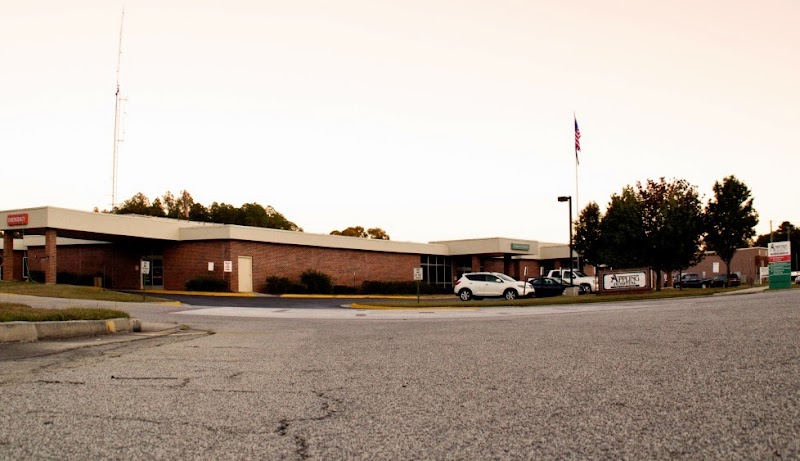
How Does Appling Nursing And Rehabilitation Pavilion Compare to Other Georgia Nursing Homes?

Compared to the 100 nursing homes in Georgia, APPLING NURSING AND REHABILITATION PAVILION's overall rating (1 stars) is below the state average of 2.6, staff turnover (36%) is near the state average of 46%, and health inspection rating (1 stars) is much below the national benchmark.

What Should Families Ask When Visiting Appling Nursing And Rehabilitation Pavilion?

Based on this facility's data, families visiting should ask: "What changes have been made since the serious inspection findings, and how are you preventing similar issues?" "Can I visit during a mealtime to observe dining assistance and food quality?" "How do you handle medical emergencies, and what is your hospital transfer rate?" "Can I speak with family members of current residents about their experience?" These questions are particularly relevant given the facility's Immediate Jeopardy citations.

Is Appling Nursing And Rehabilitation Pavilion Safe?

Based on CMS inspection data, APPLING NURSING AND REHABILITATION PAVILION has documented safety concerns. Inspectors have issued 3 Immediate Jeopardy citations (the most serious violation level indicating risk of serious injury or death). The facility has a 1-star overall rating and ranks #100 of 100 nursing homes in Georgia. Families considering this facility should ask detailed questions about what corrective actions have been taken since these incidents.

Do Nurses at Appling Nursing And Rehabilitation Pavilion Stick Around?

APPLING NURSING AND REHABILITATION PAVILION has a staff turnover rate of 36%, which is about average for Georgia nursing homes (state average: 46%). Moderate turnover is common in nursing homes, but families should still ask about staff tenure and how the facility maintains care continuity when employees leave.

Was Appling Nursing And Rehabilitation Pavilion Ever Fined?

APPLING NURSING AND REHABILITATION PAVILION has been fined $28,679 across 3 penalty actions. This is below the Georgia average of $33,366. While any fine indicates a compliance issue, fines under $50,000 are relatively common and typically reflect isolated problems that were subsequently corrected. Families should ask what specific issues led to these fines and confirm they've been resolved.

Is Appling Nursing And Rehabilitation Pavilion on Any Federal Watch List?

APPLING NURSING AND REHABILITATION PAVILION is not on any federal watch list. The most significant is the Special Focus Facility (SFF) program, which identifies the bottom 1% of nursing homes nationally based on persistent, serious quality problems. Not being on this list means the facility has avoided the pattern of deficiencies that triggers enhanced federal oversight. This is a positive indicator, though families should still review the facility's inspection history directly.