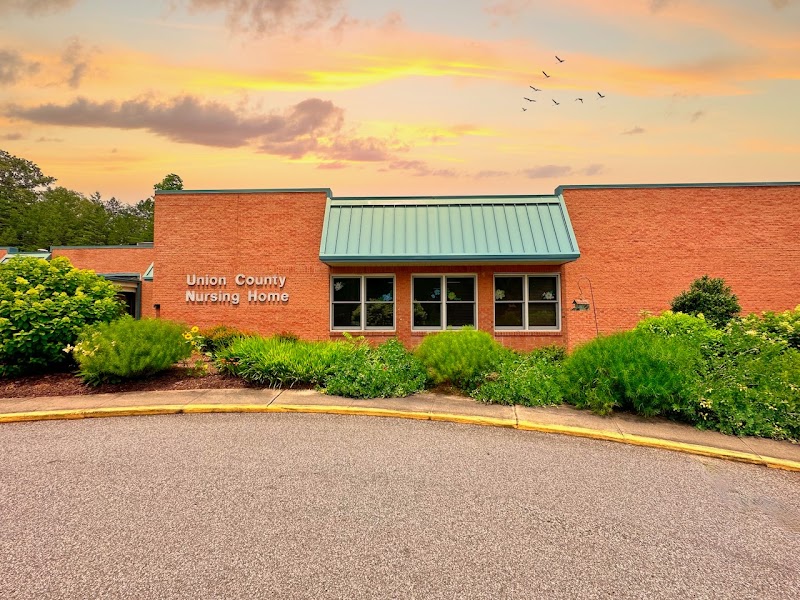
UNION COUNTY NURSING HOME

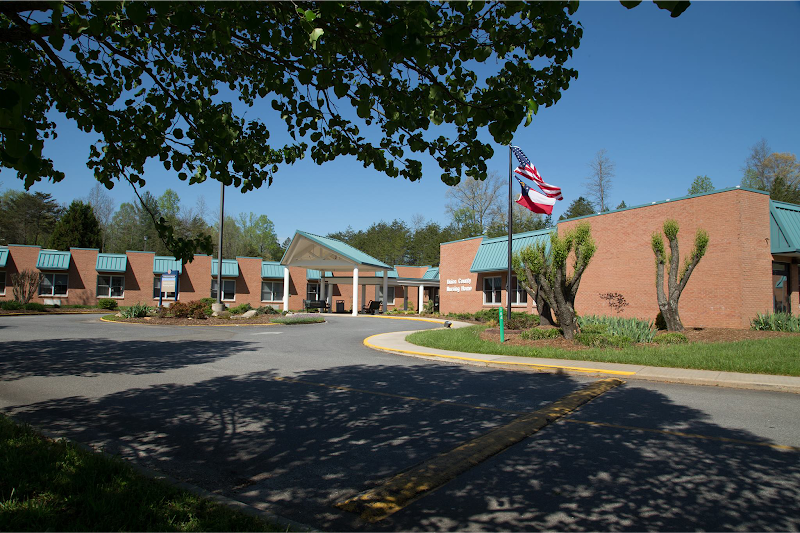
164 NURSING HOME CIRCLE, BLAIRSVILLE, GA 30512 (706) 745-4948
Non profit - Corporation 150 Beds Independent Data: November 2025
Trust Grade
60/100
#235 of 353 in GA
Last Inspection: July 2024

Within standard 12-15 month inspection cycle. Federal law requires annual inspections.

Overview

Union County Nursing Home in Blairsville, Georgia has a Trust Grade of C+, indicating it is slightly above average but still has room for improvement. It ranks #235 out of 353 facilities in Georgia, placing it in the bottom half, although it is the only nursing home in Union County. The facility's performance has worsened recently, increasing from five issues in 2023 to six in 2024, and it has accumulated 11 concerns related to care quality. Staffing is a strength here, with a rating of 4 out of 5 stars and a turnover rate of 36%, which is below the state average, but RN coverage is only average. Specific incidents include failures to properly prepare pureed diets, risking residents' nutritional intake, and inadequate labeling of food items, which could lead to foodborne illness for residents. While there are notable strengths in staffing, the facility's food handling and care practices raise valid concerns for families considering this home.

Trust Score
C+
60/100
In Georgia
#235/353
Bottom 34%
Safety Record
Low Risk
No red flags
Inspections
Getting Worse
5 → 6 violations
Staff Stability
○ Average
36% turnover. Near Georgia's 48% average. Typical for the industry.
Penalties
✓ Good
No fines on record. Clean compliance history, better than most Georgia facilities.
Skilled Nurses
○ Average
Each resident gets 32 minutes of Registered Nurse (RN) attention daily — about average for Georgia. RNs are the most trained staff who monitor for health changes.
Violations
⚠ Watch
11 deficiencies on record. Higher than average. Multiple issues found across inspections.
★★☆☆☆
2.0
Overall Rating
★★★★☆
4.0
Staff Levels
★★★★☆
4.0
Care Quality
★★☆☆☆
2.0
Inspection Score
Stable
2023: 5 issues
2024: 6 issues

The Good

  • 4-Star Staffing Rating · Above-average nurse staffing levels
  • 4-Star Quality Measures · Strong clinical quality outcomes
  • Full Sprinkler Coverage · Fire safety systems throughout facility
  • No fines on record
  • Staff turnover below average (36%)

    12 points below Georgia average of 48%

Facility shows strength in staffing levels, quality measures, fire safety.

The Bad

2-Star Overall Rating

Below Georgia average (2.6)

Below average - review inspection findings carefully

Staff Turnover: 36%

Near Georgia avg (46%)

Typical for the industry

The Ugly 11 deficiencies on record

Jul 2024 6 deficiencies
CONCERN (D) 📢 Someone Reported This

A family member, employee, or ombudsman was alarmed enough to file a formal complaint

Potential for Harm - no one hurt, but risky conditions existed

ADL Care (Tag F0677)

Could have caused harm · This affected 1 resident

**NOTE- TERMS IN BRACKETS HAVE BEEN EDITED TO PROTECT CONFIDENTIALITY** Based on observations, family and staff interviews, record review, and review of the facility policy titled, Mouth Care, the fac...

Read full inspector narrative →
**NOTE- TERMS IN BRACKETS HAVE BEEN EDITED TO PROTECT CONFIDENTIALITY** Based on observations, family and staff interviews, record review, and review of the facility policy titled, Mouth Care, the facility failed to provide denture care for two of 42 sampled residents (R) (R26 and R78). The deficient practice had the potential to cause mouth pain and discomfort, that could lead to decreased oral intake of nutrition and hydration for R26 and R78. Findings include: Review of the facility policy titled Mouth Care with a revision date of February 2018 revealed that the Purposes of this procedure are to keep the resident's lips and oral tissues moist, to cleanse and freshen the residents' mouth, and to prevent oral infections. 1. Review of the Electronic Medical Record (EMR) for R26 revealed that she was admitted to the facility with diagnoses that included but were not limited to a fracture of shaft of humerus and superior rim of left pubis. Review of the admission Minimum Data Set (MDS) with a completion date of 5/10/2024 revealed that R26 had a Basic Interview of Mental Status (BIMS) score of five, which indicated she was severely cognitively impaired. Review of Section GG: Functional Abilities revealed that she had impairment on one side for both upper and lower extremities and required substantial/maximal assistance with grooming. Review of the [NAME] (plan of care for ADLs (activities of daily living) revealed that the assistance that she needed with oral care was not addressed. Observation and interview on 6/25/2024 at 11:45 am revealed R26 was sitting up in her bed with a hospital gown on, visiting with a family member. The family member stated that she had no complaints with R26's care except for oral/denture care that she was not receiving. She stated that she and another family member come in often, as much as possible. She stated that she feels like R26 was not receiving oral care daily. She stated that staff kept leaving R26's dentures in her mouth and have not been taking them out to clean teeth or provide mouth care. She stated that at one point she came in and R26 was complaining of mouth pain. She stated that she and another family member now clean her teeth because they want to make sure R26's mouth does not hurt and that she will continue to eat some of her meals. Observation on 6/26/2024 at 12:50 pm, revealed R26 was sitting up in her wheelchair, dressed in her clothes. There was a sign noted next to the sink in the bedroom that read, Mom needs help with her dentures daily, to prevent mouth sores. Review of the Functional Abilities 31- day look back for June 2024 revealed that staff had charted for thirteen days that oral care was not attempted. For two of the days, nothing at all was charted, two days it was charted that she needed partial assistance, one day that she needed substantial assistance, seven days that she needed set up assistance only, seven days that she was totally dependent with oral care, and two days that she was independent with oral care. There was only one day out of twenty-five that had oral care completed twice on the same day. 2. Review of the EMR for R78 revealed that she was admitted to the facility with a diagnosis but not limited to Alzheimer's disease. Review of the Quarterly MDS with a completion date of 4/23/2024 revealed that R78's BIMS score was not completed related to the resident is rarely/never understood. Section GG-Functional abilities revealed that she had impairment on one side of upper extremity and that she required total assistance with oral care. Review of the [NAME] (plan of care for activities of daily living-ADLs) revealed that R78 was to brush teeth and wash face daily. Observation on 6/26/2024 at 4:01 pm revealed R78 laying in her bed with eyes closed. Observation on 6/27/2024 at 8:00 am revealed R78 sitting up in her bed with her meal sitting in front of her. Interview on 6/26/2024 at 3:32 pm with R78's family member revealed that he came to the facility every day to visit R26. He stated that her face does not get washed daily, and that oral care occurs maybe once a week. Review of the Functional Abilities 31-day lookback for R78 revealed that staff charted nothing for five days, was not attempted for five days, partial assistance on one day, and total assistance on 15 days. Interviews on 6/27/2024 at 3:29 pm with Certified Nursing Assistant (CNA) HH and CNA II revealed that when they were shown the Functional Abilities charted for R26 and R78, they stated that if they were to look at the charting and the days had a 9 charted, then they would think that it meant that it was not attempted. They then stated that if they did not see anything charted, just blanks, that it would mean that it was not done or not charted. They both said that denture care should be completed in the morning and at night. Interview on 6/27/2024 at 3:45 pm with Licensed Practical Nurse/Unit Manager (LPN/UM) JJ, she stated that if she looked at the functional abilities charting for oral care and there were blank boxes and a 9 charted, then she would have to assume that it was not completed. Interview on 6/27/2024 at 3:50 pm with CNA EE, she stated that oral care should be completed first thing in the morning. She stated that there are many times that she had come in to work her shift and dentures would still be in the resident's mouth from the night before. She then stated that if she were to look at the charting on the functional abilities for a resident and saw 9's and blanks, she would think that it was not done or not charted. Interview on 6/27/2024 at 3:55 pm with CNA FF, she stated that oral care should be completed when the resident wakes up and just before they go to bed. She then stated that if she looked at the chart for oral care and it says nothing but blanks and 9's, then she would think that it was not done. Interview on 6/27/2024 at 4:04 pm with the Director of Nursing (DON), she stated that oral care should be completed daily and as needed. She then stated that if oral care was not charted or there were 9's charted, that it must just be an oversite. She stated that oral care should always be offered or attempted.
CONCERN (D) 📢 Someone Reported This

A family member, employee, or ombudsman was alarmed enough to file a formal complaint

Potential for Harm - no one hurt, but risky conditions existed

Infection Control (Tag F0880)

Could have caused harm · This affected 1 resident

Based on observations, staff interviews, record review, and review of facility policies titled Hand Hygiene, Perineal Care, and Administering IV Medications, the facility failed to use proper hand hyg...

Read full inspector narrative →
Based on observations, staff interviews, record review, and review of facility policies titled Hand Hygiene, Perineal Care, and Administering IV Medications, the facility failed to use proper hand hygiene during perineal and catheter care for one resident (R) (R75), failed to properly close the door to a transmission-based precautions (TBP) room for one resident (R257), and to properly disinfect a needleless connector on a percutaneous intravenous central catheter (PICC) line after flushing and before connecting the intravenous antibiotic for one resident (R258). The deficient practices had the potential to place the residents at risk for serious infections. The sample size was 42 residents. Findings include: Review of the undated facility policy titled Hand Hygiene under Policy revealed, All staff will perform proper hand hygiene procedures to prevent the spread of infection to other personnel, residents, and visitors. This applies to all staff working in all locations within the facility. Under Policy Explanation and Compliance Guidelines revealed, Additional considerations: (a) The use of gloves does not replace hand hygiene. If your task requires gloves, perform hand hygiene prior to donning gloves, and immediately after removing gloves. Review of the facility policy titled Perineal Care revised February 2018 under Purpose revealed, The purpose of the procedure is to provide cleanliness and comfort to the resident, to prevent infections and skin irritation, and to observe the resident's skin condition. Under Steps in the Procedure revealed, 10. Remove gloves and discard them into designated containers. 11. Wash and dry your hands thoroughly. Review of the facility policy titled Administering IV Medications revised December 2012 under Purpose revealed, The purpose of this procedure is to provide guidelines for the aseptic administration of a medication bolus directly into the venous system through a vascular access device. Under Steps in the Procedure revealed, To Administer medication directly through an IV catheter: 1. Disinfect catheter port with alcohol pad or antiseptic caps; 2. Attach saline-filled syringe and flush the catheter; 3. Disinfect catheter connection device again; 4. Attach medication - filled syringe and administer medications according to prescribed rate. 1. Review of the Electronic Medical Record (EMR) for R75, revealed that he was admitted to the facility with diagnoses that included but were not limited to bladder-neck obstruction. Review of the physician orders for R75 revealed an order for staff to provide catheter care every shift that instructed staff to hold catheter near meatus and wipe tube downward, away from meatus opening and to rinse using the same technique. Review of the care plan for R75 revealed that resident required an indwelling catheter related to bladder-neck obstruction. Due to that requirement, he has an increased risk for urinary tract infection (UTI) related to having an indwelling catheter. Review of the quarterly Minimum Data Set (MDS) assessment for R75, dated 4/8/2024, revealed Section C (Cognitive Patterns), a Brief Interview of Mental Status (BIMS) score of three, indicating severe cognitive impairment. Section D (Behaviors), documented hallucinations and delusions. Section H (Bladder and Bowel) urinary catheter present and frequently incontinent of bowel. Observation on 6/25/2024 at 9:45 am. revealed, R75 asleep in his room on Enhanced Barrier Precautions related to having a urinary catheter. An observation of catheter care and perineal care was conducted on 6/27/2024 at 10:31 am for R75 with Certified Nursing Assistant (CNA) VV and the Registered Nurse (RN) Educator who both entered the room and provided privacy after donning personal protective equipment (PPE). They uncovered the resident and then recovered him with a sheet to expose just the perineal area and the catheter. The CNA provided perineal care, using a fresh wipe for each stroke of the penis. She then held the base of the catheter and then provided catheter care and used a fresh wipe for each swipe of the catheter and went from tip downwards towards the bag. The resident was then repositioned on to his side with the assistance of the RN Educator and then perineal care was provided, due to the resident having had a bowel movement (BM). R75 was cleaned from front to back until all feces were removed. The dirty brief and dirty wipes were removed, and the RN Educator went outside the room. The RN Educator returned with clean gloves however she did not perform hand hygiene before leaving the room. The RN Educator and CNA VV donned fresh gloves and resumed and completed the catheter care. CNA VV then applied barrier cream and a new brief to the resident. CNA VV removed her gloves, and then went to the door, to get more gloves however, she did not perform hand hygiene before leaving the room. CNA VV returned with a fresh pair of gloves, emptied the catheter bag and cleaned the drainage system with an alcohol wipe, after closing it. The trash and dirty linen were collected, and PPE was doffed. The Nurse Educator and CNA VV then performed hand hygiene upon leaving the resident's room. An interview on 6/27/2024 at 10:50 am with CNA VV confirmed hand hygiene was to be performed before entering a room, after finishing with resident when exiting, and when hands are soiled. In an interview on 6/27/2024 at 11:20 am with RN Nurse Educator confirmed hand hygiene should be performed before a procedure, when you change your gloves and after the procedure. She confirmed she did perform hand hygiene at the PPE cart outside of the room before returning to the room with gloves. She confirmed CNA VV did not perform HH after changing gloves in the room. In an interview with the RN Nurse Educator on 6/27/24 at 2:45 pm, she stated she started at the facility about four months ago. She then stated that she conducts annual competencies for peri care with return demonstration as well as upon hire and as needed (PRN). She then stated that nurses are to monitor the CNAs for compliance. She ended her interview by stating that she is currently reviewing old policies and competencies and conducts CNA training classes. 2. Review of the EMR for R257 revealed that he was admitted to the facility with diagnoses that included but were not limited to pneumonitis due to the inhalation of food and vomit, and dysphagia. Review of the physician orders for R257 revealed that he was to receive vancomycin liquid (an antibiotic) from 6/19/2024 until 6/24/2024. An observation of the resident was completed on 6/25/2024 at 10:35am. The resident was in his room, and there was an Enteric Contact isolation signage on his door. The door was completely open. An observation of a medication administration was conducted on 6/26/2024 at 8:25am. Licensed Practical Nurse (LPN) KK was observed preparing medication for R257. She prepared the medications and then placed medication on top of the electronic blood pressure cuff. She entered the room with the electronic blood pressure cuff and medications without donning personal protective equipment and then left the room to don PPE. Before entering the room, she donned (put on) personal protective equipment (PPE), to prepare for going into the transmission-based precaution room. The door to the room was completely open. After entering the room, she remembered that she did not have her stethoscope in the room to check for placement of the percutaneous endoscopic gastrostomy (PEG) tube. She then doffed (removed) her PPE and used hand sanitizer before leaving the room. After administering the medications and tube feeding, she doffed the PPE and then washed her hands at the sink. After leaving the room, she went back to the medication cart. At the cart she stated that she cleans the blood pressure cuff after using it with the purple topped wipes. She stated that R257 had a history of Clostridium difficile (c-diff). She stated that the door to his room needed to be closed. In an interview on 6/27/2024 at 3:35 pm with LPN/Unit Manager (UM) JJ, she confirmed R257 was on isolation precaution for a history of C-diff. 3. Review of the EMR for R258 revealed that she was admitted to the facility with diagnoses that included but were not limited to acute respiratory failure with sepsis. Review of physician orders revealed that R258 was to receive two grams of ceftriaxone intravenously (IV) once a day for a urinary tract infection until the date of the last dose to be administered on 6/27/2024. Observation on 6/27/2024 at 11:07 am of RN GG preparing to administer medications for R258 revealed, she verified the orders for the IV antibiotic and gathered her supplies. She donned PPE and then entered the room. She verified the resident, who was observed dressed and seated in her wheelchair. The peripherally inserted central catheter (PICC) line was observed with a change date of 6/25/2024, and dressing was clean, dry and intact. She removed the cap that was on the end of the connector and flushed the line with 10 milliliters (ml) normal saline (NS). She stated that she did not need to clean it because it had a cap on it. She left the syringe in place and clamped the port. She then mixed the antibiotic, primed the tubing, then programmed the pump to administer the antibiotic. She then removed the syringe and attached the primed tubing. She verified that the antibiotic was running and dripping before leaving the room. She removed the PPE and then washed hands and returned to the cart. In an interview on 6/27/2024 at 3:35 pm with LPN/UM JJ, she stated that even if a PICC line connector has a cap on it, the nurse should still disinfect the connector after removing the cap and before attaching the saline flush to flush the line, before attaching the antibiotic to administer it. In an interview on 6/27/2024 at 4:04 pm with the Director of Nurses (DON), she confirmed hand hygiene (HH) should be completed before entering the room, before donning gloves, after doffing gloves, and before leaving the resident's room. She confirmed that a PICC line connector should be disinfected with an alcohol wipe prior to attaching the flush or medication.
CONCERN (E) 📢 Someone Reported This

A family member, employee, or ombudsman was alarmed enough to file a formal complaint

Potential for Harm - no one hurt, but risky conditions existed

Pharmacy Services (Tag F0755)

Could have caused harm · This affected multiple residents

Based on observations, staff interviews, and review of the facility policy titled, Storage of Medication, the facility failed to properly maintain, and store three of six medication cart as evidenced ...

Read full inspector narrative →
Based on observations, staff interviews, and review of the facility policy titled, Storage of Medication, the facility failed to properly maintain, and store three of six medication cart as evidenced by missing end of shift controlled medication count signatures. Findings include: Review of the facility policy titled Storage of Medication revised April 2007 revealed under Policy Statement: The facility shall store all drugs and biologicals in a safe, secure, and orderly manner. Observation on 6/27/2024 at 9:45 am of three of six medication carts revealed each cart had a controlled substance book which had the current months End of Shift Controlled Drug Count sheet in each book. The Pink A Hall sheet was missing five signatures, the pink B Hall sheet was missing 10 signatures, and the blue C Hall was missing three signatures on their sheets. Interview on 6/27/2024 at 9:52 am with RN NN revealed that the Medication Room Pink B Hall had no issues and the medication cart - Pink B Hall cart had no storage issues. The interview revealed that the nurse who was coming on and the nurse who was going off shift was responsible to count their cart at the end/beginning of each shift. She stated if the nurse worked a partial shift, the medication cart was counted at the beginning and end of the partial shift as well and documented in the eight-hour shift column. She confirmed and verified there were multiple missing signatures from the Narcotic Shift Count Sheet. Observation and interview on 6/27/2024 at 9:58 am of the medication cart - Pink A Hall with Licensed Practical Nurse (LPN) LL revealed the Narcotic Count Sheet had five spaces not signed by the oncoming /off going nurse. She stated the document should be signed by both nurses at the start of each shift (on coming/off going nurse). She stated when nurses do not work a 12- hour shift due to a call out, they come in to fill in for four to eight hours that the nurse who called out would sign in the column indicated for partial shifts. She stated the Unit Manager removed the count sheet at the end of each month, but she was not sure what happened to them after they were removed from the narcotic book. Observation and interview on 6/27/2024 at 10:30 am of the medication cart on the Blue B and C Hall with LPN KK revealed that the count sheet was signed by the nurse as the count was completed at the beginning and end of each nurse's shift. She stated if the nurse was not working a full 12-hour shift, they have a column for partial shift staff to sign and validate the narcotic count was completed. She confirmed and verified that there were some days on the count sheet that did not have a nurse signature for end/beginning of shift counts. She confirmed the sheets were removed by the unit manager at the end of each month. Interview on 6/27/2024 at 10:59 am with the Director of Nurses (DON) revealed that she confirmed and verified the narcotic sheets for three carts were missing nurse's signatures. She verified and confirmed the End of Shift Controlled Drug Count sheet for the Pink B cart was missing 10 signatures, the Pink A cart was missing five signatures, and the Blue cart was missing three signatures. She stated the purpose of the narcotic count and signing the narcotic sheets was to validate the count of the controlled substances on each cart is correct. She stated if the count was not documented this could result in the count not being correct or staff not knowing the count was correct at the end/beginning of their shift. She stated she did not know why this had occurred except that it was an oversight of the nurse who was working on the indicated shifts without signatures. She stated they removed the narcotic sheet at the end of each month and reviewed them. She revealed that if there were any days missing signatures, she would find the nurse responsible for that shift and then she would provide education to the nurse.
CONCERN (E) 📢 Someone Reported This

A family member, employee, or ombudsman was alarmed enough to file a formal complaint

Potential for Harm - no one hurt, but risky conditions existed

Medication Errors (Tag F0758)

Could have caused harm · This affected multiple residents

**NOTE- TERMS IN BRACKETS HAVE BEEN EDITED TO PROTECT CONFIDENTIALITY** 2. Review of the clinical record revealed R64 was admitted to the facility on [DATE] with diagnoses including, but not limited t...

Read full inspector narrative →
**NOTE- TERMS IN BRACKETS HAVE BEEN EDITED TO PROTECT CONFIDENTIALITY** 2. Review of the clinical record revealed R64 was admitted to the facility on [DATE] with diagnoses including, but not limited to, major depressive disorder and mild pain. Review of R64's most recent Minimum Data Set (MDS), dated [DATE], revealed Section N (Medications) documented the resident received an antianxiety for seven of seven days. Review of the Physician Orders dated 12/8/2023 revealed an order for lorazepam (a medication used to treat anxiety) 0.5 milligrams (MG) tablet by mouth as needed every eight hours for agitation. Review of R64's December 2023 through June 2024 Medication Record revealed lorazepam 0.5 milligrams (MG) tablet by mouth as needed every eight hours for agitation with start date of 12/11/2023 and no stop date. In a telephone interview with the Consultant Pharmacist on 6/27/2024 at 6:00 pm, revealed when asked if he knew that Centers for Medicare and Medicaid (CMS) required some psychoactive medication physician orders required a stop date if ordered as needed (PRN), he stated he was aware of the regulation. He confirmed that trazodone, used to treat depression, and lorazepam, used to treat anxiety, were among those medications which required a stop date if ordered PRN. He stated when the pharmacy received a PRN order for trazodone or lorazepam, the pharmacist should contact the physician for an amended order. He confirmed the PRN physician orders for R18, and R64 should have included a stop date which he believed the pharmacy recommended but was unable to locate the documentation. He stated the pharmacy makes an effort to communicate with the provider, but he would still fulfill the order as written. In an interview on 6/27/2024 at 6:08 pm, Pharmacist OO revealed R64's lorazepam was prescribed for agitation. Pharmacist OO confirmed on 5/21/2024, they sent a change of order but were unable to find it. Pharmacist OO confirmed lorazepam required a stop date. Pharmacist OO revealed he didn't have proof of sending the communication to the facility. In an interview on 6/27/2024 at 6:53 pm, the Director of Nursing (DON) revealed the pharmacist reviewed resident's medications monthly and makes recommendations to the provider. She confirmed she was aware there were no stop dates or recommendations for PRN trazodone for R18 or PRN lorazepam for R64. She stated, going forward, she would alert the physician to PRN medications that require stop dates. Based on staff interviews, record review, and review of the facility policies titled, Antipsychotic Drug Use and PRN Medication, the facility failed to make recommendations to include stop dates for psychoactive medications lorazepam, used to treat anxiety, and trazodone, used to treat insomnia, which were prescribed as needed (PRN) for two of five sampled residents (R18 and R64). The deficiency had the potential to adversely affect the severity of the diagnoses for which they were prescribed. Findings include: Review of the undated facility policy titled, Antipsychotic Drug Use revealed under Policy Interpretation and Implementation: The need to continue PRN orders for psychotropic medications beyond 14 days requires that the practitioner document the rationale for the extended order. Review of the facility policy titled PRN Medication, revised 11/7/2022, revealed the Policy was The pharmacist is responsible for assuring appropriate and safe prescribing procedures are followed. The frequency with which PRN or as needed medications may be administered must be monitored to avoid interactions with other medications and to avoid exceeding maximum recommended dosing. The Procedure section stated: I. All physician medication orders which indicate a frequency for administration of PRN or as needed must state how often and for what indications the medication(s) may be administered. Exceptions to this include medications for which only one indication is approved. 1. Review of the Electronic Medical Record (EMR) for R18 revealed she was admitted to the facility with diagnoses to include spondylosis without myelopathy or radiculopathy, delusional disorder, and vascular dementia. Review of the Quarterly Minimum Data Set assessment for R18, dated 4/8/2024 revealed, Section C (Cognitive Patterns) a Brief Interview for Mental Status (BIMS) score of 10, indicating moderate cognitive impairment; Section D (Mood) revealed, a Mood score of zero, indicating no depression.; Section E (Behavior) revealed, she displayed verbal behaviors towards others and other behaviors not directed towards others; Section N (Medications) revealed, she received antipsychotic, antidepressant, and diuretic medications during the seven-day assessment period. Review of the care plan for R18 revealed a focus concern for insomnia diagnosis and risk for having trouble sleeping. Interventions included medicate as/if ordered and notify [physician] if medication is ineffective. Review of R18's Medication Administration Record (MAR) for June 2024 included an order for trazodone 100 milligrams (mg) tablet by mouth, dated 12/28/2023, to be given as needed (PRN) at bedtime for insomnia. Continued review of the MAR revealed it was given once in June 2024, not given in May 2024, and given once in April 2024. There was no stop date indicated. Review of the monthly Record of Medication Regimen and Chart Review from June 2023 through June 2024 revealed no recommendations related to the duration of the PRN medication, trazodone.
CONCERN (F) 📢 Someone Reported This

A family member, employee, or ombudsman was alarmed enough to file a formal complaint

Potential for Harm - no one hurt, but risky conditions existed

Deficiency F0804 (Tag F0804)

Could have caused harm · This affected most or all residents

Based on observation, staff interviews, and review of the facility-provided document titled Texture Modification Inservice, the facility failed to ensure a puree recipe was followed to conserve the nu...

Read full inspector narrative →
Based on observation, staff interviews, and review of the facility-provided document titled Texture Modification Inservice, the facility failed to ensure a puree recipe was followed to conserve the nutrient value of puree country-fried steak for six of six residents receiving a pureed diet. This deficient practice had the potential to cause residents receiving a pureed diet to have a decreased nutritional intake and a potential for weight loss. Findings include: Review of the undated facility-provided document titled Texture Modification Inservice revealed the section titled Guidelines for Texture Modification: Pureed Foods included Never free pour large amounts of liquids or thickeners into purees as it can impact the nutritional value and quality of the food item. Observation on 6/26/2024 at 10:45 am of the Dietary Manager in Training (DMIT) BB preparing pureed foods revealed she did not have or follow a recipe as she prepared the pureed country-fried steaks. DMIT BB prepared the pureed country-fried steak with broth and several cups of water. In an interview during the observation, she stated that she had been working at the facility for three days. DMIT BB stated she did not receive orientation but did receive on-the-job training. DMIT BB stated that the facility policy allows them to modify as needed when preparing pureed food. An interview on 6/26/2024 at 10:50 am with the Registered Dietitian (RD) revealed that he has been working at the facility for three years. The RD stated there was a recipe for pureed food, but it was not provided. An interview on 6/26/2024 at 11:45 am with the Dietary Manager (DM) revealed that water should not be used in preparing pureed food. The DM stated the use of water in preparing pureed food takes away from the nutritional value of the food. An interview on 6/26/2024 at 11:55 am with the District Manager confirmed that pureed food should not be prepared with water. He stated that he would be providing an in-service to staff today. An interview on 6/27/2024 at 3:43 pm with the Administrator revealed that kitchen staff should not use water when preparing pureed food.
CONCERN (F) 📢 Someone Reported This

A family member, employee, or ombudsman was alarmed enough to file a formal complaint

Potential for Harm - no one hurt, but risky conditions existed

Food Safety (Tag F0812)

Could have caused harm · This affected most or all residents

Based on observation, staff interviews, and review of the facility's policy titled Receiving, the facility failed to appropriately label and date food items stored in the kitchen's walk-in freezer. Th...

Read full inspector narrative →
Based on observation, staff interviews, and review of the facility's policy titled Receiving, the facility failed to appropriately label and date food items stored in the kitchen's walk-in freezer. The deficient practice(s) had the potential to place 96 residents who received an oral diet from the kitchen at risk of contracting a foodborne illness. The facility census was 101. Findings include: A review of the facility's policy titled Receiving revealed the Policy Statement of Safe food handling procedures for time and temperature control will be practiced in the transportation, delivery, and subsequent storage of all food items. The Procedures section documented 5. All food items will be appropriately labeled and dated either by manufacturer packaging or staff notation. An observation of the walk-in freezer in the kitchen with the Registered Dietitian (RD) and Dietary Manager (DM) on 6/25/2024 at 9:15 am revealed two open boxes of cookie dough with about 60 cookies in one box and 80 cookies in the other box. The RD confirmed the two boxes of cookie dough were opened and not labeled with an opened or discard date. In an interview on 6/26/2024 at 11:55 am, the District Manager confirmed all open foods should be labeled with a date before being placed in the freezer. He stated that he would be providing an in-service to staff today. In an interview on 6/27/2024 at 3:43 pm, the Administrator stated all open food items should be labeled with a date when opened.
Jan 2023 5 deficiencies
CONCERN (D) 📢 Someone Reported This

A family member, employee, or ombudsman was alarmed enough to file a formal complaint

Potential for Harm - no one hurt, but risky conditions existed

Safe Environment (Tag F0584)

Could have caused harm · This affected 1 resident

Based on observations, staff interviews, and review of the facility policy titled Bathrooms, the facility failed to maintain a safe, clean, comfortable, and homelike environment related to dust build ...

Read full inspector narrative →
Based on observations, staff interviews, and review of the facility policy titled Bathrooms, the facility failed to maintain a safe, clean, comfortable, and homelike environment related to dust build up on bathroom air vents on one of six resident halls, rooms 201 through 217. Findings include: Review of the facility policy titled Bathrooms revised 4/2006, revealed the policy statement is bathrooms shall be maintained in a clean and sanitary manner and shall be cleaned on a daily basis. Observation on 1/10/2023 at 11:57 a.m. and 1/11/2023 at 11:25 a.m. revealed the bathroom air vents in resident rooms 201 through 217 were noted to have dust buildup on and in them. Observation and interviews on 1/12/2023 at 11:26 a.m. with the Administrator, Engineering Supervisor, and the Housekeeping Supervisor, verified the dust buildup on the vents in the bathrooms of rooms 201 through 217. The Engineering Supervisor indicated they take the vents down yearly and clean them. The Administrator indicated that housekeeping should be cleaning them as needed when dust is visible. The Administrator indicated she would expect the vents to be clean. Interview on 1/12/2023 at 2:43 p.m. with Housekeeper (HK) GG revealed he cleans the bathrooms of the resident's rooms daily. He stated if he sees dust in the bathroom vents, he will clean the dust off as needed.
CONCERN (D) 📢 Someone Reported This

A family member, employee, or ombudsman was alarmed enough to file a formal complaint

Potential for Harm - no one hurt, but risky conditions existed

Accident Prevention (Tag F0689)

Could have caused harm · This affected 1 resident

**NOTE- TERMS IN BRACKETS HAVE BEEN EDITED TO PROTECT CONFIDENTIALITY** Based on observations, record review, interviews, and policy review, the facility failed to ensure the environment was free from...

Read full inspector narrative →
**NOTE- TERMS IN BRACKETS HAVE BEEN EDITED TO PROTECT CONFIDENTIALITY** Based on observations, record review, interviews, and policy review, the facility failed to ensure the environment was free from potential accident hazards by not ensuring that medications, biologicals, or other potentially harmful material was not left within the reach of one resident (R) (R#94). The sample size was 32. Findings include: Review of the policy titled Copy of 5.d Storage and Expiration of Medications, Biologicals, Syringes, and Needles dated 1/2023 revealed procedure: C. General storage procedures: 3. Facility should ensure that all medications and biologicals, including treatment items, are securely stored in a locked cabinet/cart or locked medication room that is inaccessible by residents and visitors. M: Bedside medication storage: 1. Facility should not administer/provide bedside medications or biologicals without a physician/prescriber order and approval by the interdisciplinary care team and facility administration. 2. Facility should store bedside medication or biologicals in a locked compartment within the resident's room. 3. Facility should ensure that only facility representatives and the appropriate resident maintains the keys, access cards, electronic codes, or combination which open the locked compartment. Review of the policy titled Safety and Supervision of Residents revised 7/2017, revealed the policy statement is our facility strives to make the environment as free from accident hazards as possible. Resident safety and supervision and assistance to prevent accidents are facility-wide priorities. Policy Interpretation and Implementation: 'Facility Oriented Approach to Safety' number 3 indicated: Employees shall be trained on potential accident hazards and demonstrate competency on how to identify and report accident hazards and try to prevent avoidable accidents. Review of the clinical record revealed R#94 was admitted to the facility on [DATE] with diagnoses including Parkinson's disease, weakness, and cognitive communication deficit. Review of the admission Minimum Data Set (MDS) dated [DATE] revealed a Brief Interview for Mental Status (BIMS) coded as 11, indicating moderately impaired cognition. She required assistance of one person for dressing, personal hygiene, and eating. Review of the physician's orders revealed an order dated 10/27/2022 for Nystatin 100,000 units (U) per one gram (GM) powder apply topically once a day for fungal infections. There is no order for resident to self-administer this medication. Review of the clinical record revealed no assessment for self-administration of medications. Review of R#94's current care plan revealed no evidence that resident was assessed to self-administer any medications. Review of the Nurses' Notes dated 11/9/2022 revealed nurse observed a red rash area to bottom and lower back. Treatment nurse notified of findings. Review of the Medication Administration Record (MAR) dated 11/1/2022 to 1/11/2023 revealed documentation that resident received Nystatin 100,000 U/1 GM powder one application topically once a day every day. Observations on 1/10/2023 at 10:22 a.m. and 1/11/2023 at 8:00 a.m. in R#94 room, revealed a 30 milliliter (ml) plastic cup containing approximately 15 ml of a white powdery substance sitting on R#94's bedside table. The cup was uncovered and within R#94's reach. R#94 was observed sitting in a wheelchair and propelling herself in her room unassisted. Interviews on 1/10/2023 at 10:22 a.m. and 1/11/2023 at 8:00 a.m. with R#94 revealed she did not know what the substance in the cup was, did not know who left it there and did not know what it was for. She further revealed staff sometimes applied it to her perineal areas for irritation but revealed she did not use or apply it herself. Interview on 1/11/2023 at 7:55 a.m. with Certified Nursing Assistant (CNA) AA revealed R#94 required two persons assist to be out of bed and that resident is out of bed daily. She further revealed while resident required assist with ADLS, she does propel herself in her wheelchair unassisted. Interview on 1/11/2023 at 8:30 a.m. with Licensed Practical Nurse (LPN) CC revealed R#94 is out of bed every day and propels herself in her wheelchair. LPN CC confirmed the 30 ml plastic medication cup containing a white powdery substance on R#94's bedside table, uncovered and within her reach. LPN CC stated she was unsure what the white powdery substance was and stated it might have been left by the treatment nurse. LPN CC did not offer to remove the cup of white powdery substance from the resident's room. Interview on 1/11/2023 at 8:35 a.m. with LPN DD, revealed she is one of the treatment nurses. Observation of the 30 ml plastic medication cup containing a white powdery substance sitting on R#94's bedside table with LPN DD revealed she is unsure what the substance is or who put it in the room. She removed the cup from the resident's room and confirmed it should not have been in the resident's room. Interview on 1/11/23 at 11:45 a.m. with the Director of Nursing (DON) revealed her expectation is that staff are not to leave anything in a resident's room in a medication type container. She revealed nursing staff had an in-service on 10/31/2022 to include survey preparedness and infection control. During further interview, she revealed she plans to meet with nursing staff to educate them of the importance of medication, biologicals, and other substance storage and accident prevention.
CONCERN (D) 📢 Someone Reported This

A family member, employee, or ombudsman was alarmed enough to file a formal complaint

Potential for Harm - no one hurt, but risky conditions existed

Infection Control (Tag F0880)

Could have caused harm · This affected 1 resident

**NOTE- TERMS IN BRACKETS HAVE BEEN EDITED TO PROTECT CONFIDENTIALITY** Based on observations, record review, interviews, and review of facility policies, the facility failed to clean and ensure prope...

Read full inspector narrative →
**NOTE- TERMS IN BRACKETS HAVE BEEN EDITED TO PROTECT CONFIDENTIALITY** Based on observations, record review, interviews, and review of facility policies, the facility failed to clean and ensure proper storage continuous positive airway pressure (CPAP) mask in a manner to prevent cross contamination for one of three residents (R) R#85, receiving CPAP administration. The census was 91. Findings include: 1. Review of the policy titled Cleaning and Disinfection of Resident-Care Items and Equipment revised 10/2018, revealed the Policy Interpretation and Implementation number 1. The following categories are used to distinguish the levels of sterilization/disinfection necessary for items in resident care: b.) Semi-critical items consists of items that may come in contact with mucus membranes or non-intact skin (e.g., respiratory therapy equipment). 2. Critical and semi-critical items will be sterilized/disinfected in a central processing location and stored appropriately until use. 2. Review of the policy titled CPAP/BiPAP Support revised 3/2015 revealed: General Guidelines section number 7. Masks, nasal pillows, and tubing: clean daily by placing in warm, soapy water and soaking/agitating for five minutes. Mild dish detergent is recommended. Rinse with warm water and allow to air dry between uses. Review of the clinical record revealed R#85 was admitted to the facility on [DATE] with diagnoses including obstructive sleep apnea (OSA), unspecified dementia, hemiplegia and hemiparesis following cerebral infarction, weakness, other specified arthritis. Review of the quarterly Minimum Data Set (MDS) dated [DATE] revealed a Brief Interview for Mental Status (BIMS) score of 15, indicating no cognitive impairment. Section G revealed resident was totally dependent of two persons for activities of daily living (ADLS) and required set-up assistance with meals. Section O revealed she received oxygen therapy. Review of the Active Orders Report revealed an order dated 11/14/2022 that resident wears CPAP, apply at night and remove in the morning. Review of the care plan initiated 4/21//2022 revealed resident used a CPAP related to the diagnoses of sleep apnea. The goal included the resident will not have complications related to the use of the machine. Interventions included to clean the mask daily. Review of the Nurses' Notes revealed no evidence or documentation that R#85's CPAP mask had been cleaned or the proper storage of the mask, when not in use. Review of Medication Administration Record (MARS) dated 6/1/2022 to 1/10/2023 revealed no evidence or documentation of cleaning or storage of the CPAP face mask. Observations on 1/10/2023 at 11:31 a.m. and 1/11/2023 at 8:40 a.m. in room [ROOM NUMBER], revealed R#85's CPAP mask lying on top of the CPAP machine, unbagged, and uncovered, exposed to the environment. Interviews on 1/10/2023 at 11:31 a.m. and 1/11/2023 at 8:40 a.m. with R#85, stated she uses the CPAP machine every night and was unsure if the mask was ever cleaned or placed into a protective bag when not in use. She revealed she is unable to use the CPAP machine independently and staff help her with placing the mask on her face and turning the machine on at bedtime and removes the mask and turns the machine off in the morning. Interview on 1/11/2023 at 7:55 a.m. with Certified Nursing Assistant (CNA) AA revealed resident requires two-person assist with most ADLS. She further revealed the nurses provide all oxygen related care and monitoring. Interview on 1/11/2023 at 8:40 a.m. with Licensed Practical Nurse (LPN) BB revealed residents that use CPAP machines have the CPAP applied at bedtime by the night shift nurse and it is removed before the dayshift nurse arrives. She revealed she does not assist with resident CPAPs and does not know how often CPAP masks are cleaned. During further interview, she stated the CPAP mask should be placed in a protective bag when not in use. LPN BB confirmed at this time that R#85's CPAP machine, tubing, and mask to be lying on top of the machine, uncovered and not in a protective bag. Interview on 1/11/2023 at 11:40 a.m. with the Director of Nursing (DON) revealed the night shift nurses are responsible for placing and removing the resident's CPAP masks. She revealed her expectation is for CPAP mask to be cleaned and placed in a protective bag when not in use. During further interview, she revealed she had met with nurses last week to educate them on survey preparedness and infection control practices.
CONCERN (F) 📢 Someone Reported This

A family member, employee, or ombudsman was alarmed enough to file a formal complaint

Potential for Harm - no one hurt, but risky conditions existed

Food Safety (Tag F0812)

Could have caused harm · This affected most or all residents

Based on observations, interviews, and review of policies titled Receiving, Food Storage: Dry Goods, and Food Storage: Cold Foods, the facility failed to ensure opened food items in the dry storage ar...

Read full inspector narrative →
Based on observations, interviews, and review of policies titled Receiving, Food Storage: Dry Goods, and Food Storage: Cold Foods, the facility failed to ensure opened food items in the dry storage area were labeled and dated; failed to discard expired food items in the walk-in freezer, two reach in freezers and two of two resident pantries. This deficiency had the potential to affect 90 of 91 residents receiving an oral diet. Findings include: 1. Review of the policy titled Receiving revised 9/2017, revealed the policy is that safe food handling procedures for time and temperature control will be practiced in the transportation, delivery, and subsequent storage of all food items. Procedure: 5. All food items will be appropriately labeled and dated either through manufacturer packaging or staff notation. 6. All food items will be stored in a manner that ensures appropriate and timely utilization based on the principals of first in-first out inventory management. Review of the policy titled Food Storage: Dry Goods revised 9/2017, revealed the policy is all dry goods will be appropriately stored in accordance with the Food and Drug Administration (FDA) Food Code. Procedure: 6. Storage areas will be neat, arranged for easy identification, and date marked as appropriate. Observation on 1/10/2023 from 8:45 a.m. to 9:20 a.m. during the initial kitchen tour with the Certified Dietary Manager (CDM) and the Registered Dietician (RD) revealed the following in the dry storage pantry: Four 6.38-pound cans of green beans without a storage date Three 99-ounce cans of pickle spears without a storage date 2. Review of the policy titled Food Storage: Cold Foods revised 4/2018, revealed the policy is all Time/Temperature Control for Safety (TCS) foods, frozen and refrigerated, will be appropriately stored in accordance with guidelines of the FDA Food Code. Procedure: 5. All foods will be stored wrapped or in covered containers, labeled and dated, and arranged in a manner to prevent cross contamination. Observation on 1/10/2023 from 8:45 a.m. to 9:20 a.m. during the initial kitchen tour with the Certified Dietary Manager (CDM) and the Registered Dietician (RD) revealed the following: a.) Walk-in freezer revealed the following items without an expiration date or storage date: Six five-pound bags of breaded chicken patties Two five-pound bags of raw chicken breast One two-pound bag of frozen ravioli Two five-pound bags of breaded chicken tenders Three five-pound bags of tater tots Four wrapped pound cakes b.) Reach-in freezer #1 located next to the walk-in refrigerator revealed the following: One three-pound bag of shredded mozzarella cheese with an expiration date of 12/22/22. Four 16-ounce containers of whipped topping without an expiration date or storage date. Six one-gallon size freezer bags containing sliced pepperoni without an expiration date or storage date. Two wrapped pound cakes without an expiration date or storage date. One three-pound bag of breaded fish patties without an expiration date or storage date. One five-pound bag of meatballs without an expiration date or storage date. Two two-pound bags of spinach without an expiration date or storage date. One one-pound bag of breaded sliced fried squash without an expiration date or storage date. One one-gallon bag of shredded parmesan cheese without an expiration date or storage date. One two-pound bag of cheese ravioli without an expiration date or storage date. c). The reach-in freezer #2 located next to reach-in freezer #1 revealed the following: Two five-pound bags of shredded mozzarella cheese without an expiration date or storage date. One five-pound bag of breaded chicken strips without an expiration date or storage date. Interview on 1/10/2023 at 9:25 a.m. with the CDM and the RD confirmed the above items during the initial tour, and stated all food items should be dated with a storage date when removed from the original package and all expired food items should be discard when expired. 3. Observation on 1/11/2023 at 2:30 p.m. the resident pantry located on the Pink Hall revealed the following items without expiration dates or storage dates: 20 individual oatmeal snack cakes 49 individual packaged cookies five packs of 4-pack peanut butter cheese crackers 37 packs of two per pack honey graham crackers Observation on 1/11/2023 at 2:40 p.m. the resident pantry located on the Blue Hall revealed the following items without expiration dates or storage dates: 10 individual packaged cookies 16 packs of 4-pack peanut butter cheese crackers The following items in the Blue Hall resident pantry were observed to be past expiration date: three one-ounce bags of Fritos corn chips with expiration date 11/15/2022 one one-ounce bag of Fritos corn chips with expiration date 12/13/2022 two containers of Ensure Vanilla pudding four-ounce cups with expiration date of 7/1/2022 Observation on 1/11/2023 at 3:00 p.m. the CDM and the RD verified the unlabeled and expired food products in the Pink Hall and the Blue Hall resident pantries. Interview on 1/11/2023 at 3:05 p.m. with the CDM and the RD revealed all food items in the resident pantries should be dated with a storage date and should be discarded when the expiration date is reached. The CDM revealed she will make sure all food items are labeled and expired food items are discarded. Interview on 1/11/2023 at 12:00 p.m. Administrator revealed her expectations were for all food items to have appropriate labeling and for expired food items to be discarded when expired.
CONCERN (F) 📢 Someone Reported This

A family member, employee, or ombudsman was alarmed enough to file a formal complaint

Potential for Harm - no one hurt, but risky conditions existed

Room Equipment (Tag F0908)

Could have caused harm · This affected most or all residents

**NOTE- TERMS IN BRACKETS HAVE BEEN EDITED TO PROTECT CONFIDENTIALITY** Based on observations, interviews, and policy review, the facility failed to ensure that essential equipment in the kitchen was ...

Read full inspector narrative →
**NOTE- TERMS IN BRACKETS HAVE BEEN EDITED TO PROTECT CONFIDENTIALITY** Based on observations, interviews, and policy review, the facility failed to ensure that essential equipment in the kitchen was in working order as evidenced by ice buildup inside the walk-in freezer on an air flow vent above the doorway, ice formation down the interior door frame, and across the floor. This deficiency had the potential to affect 90 of 91 residents receiving an oral diet. Findings include: Review of the policy titled Equipment revised 9/2017, revealed the policy statement is all foodservice equipment will be clean, sanitary, and in proper working order. Procedure: number 1. All equipment will be routinely cleaned and maintained in accordance with manufacturer's directions and training materials. Number 4. All non-food contact equipment will be clean and free of debris. During the initial tour of the kitchen on 1/10/2023 at 9:25 a.m. with the Certified Dietary Manager (CDM) and the Registered Dietician (RD), the walk-in freezer was observed to have ice formation measuring approximately four inches by four inches on the air flow vent located above the doorway, ice formation down the interior door frame underneath the air flow vent, and ice formation on the floor across the entrance. The CDM and RD verified the presence of the ice formations at this time. The CDM revealed maintenance was responsible for maintaining the kitchen equipment and was made aware of the ice formation. She further revealed maintenance had worked on the walk-in freezer sometime in the last few weeks. Observation on 1/11/2023 at 10:10 a.m. of the walk-in freezer with the CDM and RD revealed ice formation measuring approximately four inches by four inches on the air flow vent located above the doorway, ice formation down the interior door frame underneath the air flow vent, and ice formation on the floor across the entrance. Both the CDM and RD verified the presence of the ice formations remained present in the walk-in freezer. Interview on 1/11/2023 at 11:25 a.m. with the Director of Engineering stated that a refrigeration unit on the roof malfunctioned on 12/25/2022, causing the ice formation in the walk-in freezer. He revealed he contacted the [name] support system as soon as he was notified the walk-in refrigerator was not cooling adequately. During further interview, he stated the unit was repaired on 12/27/2022. When asked what the solution would be to fix the cause of the ice buildup, he revealed he would need to manually remove the ice and that should fix the problem. Interview on 1/11/2023 at 12:00 p.m. with the administrator revealed she was aware there was a malfunction of the refrigeration unit on 12/25/2022. She stated as far as she knew, repairs were made. During further interview, she stated she was unaware of the ice buildup in the walk-in freezer and would discuss this with the maintenance supervisor. She stated her expectations were for kitchen equipment to be maintained in working order. Interview on 1/12/2022 at 10:00 a.m. Director of Engineering revealed the ice in the freezer was removed on 1/11/2023. He further revealed he had consulted with the heating, ventilation, and air conditioning (HVAC) personnel with [name], and revealed the air flow vent had malfunctioned and needed to be replaced. He stated the part will be ordered and replaced when it is available. Interview on 1/12/22 at 11:40 a.m. with the Administrator revealed she had initiated daily checks of the freezer by the CDM and the maintenance department until the part is ordered and installed. She stated if the replacement of the air flow vent does not resolve the problem, she will get further evaluations from the HVAC company.
Understanding Severity Codes (click to expand)
Life-Threatening (Immediate Jeopardy)
J - Isolated K - Pattern L - Widespread
Actual Harm
G - Isolated H - Pattern I - Widespread
Potential for Harm
D - Isolated E - Pattern F - Widespread
No Harm (Minor)
A - Isolated B - Pattern C - Widespread

Questions to Ask on Your Visit

  • "Can I speak with families of current residents?"
  • "What's your RN coverage like on weekends and overnight?"

Our Honest Assessment

Strengths
  • • No major safety red flags. No abuse findings, life-threatening violations, or SFF status.
  • • No fines on record. Clean compliance history, better than most Georgia facilities.
  • • 36% turnover. Below Georgia's 48% average. Good staff retention means consistent care.
Concerns
  • • 11 deficiencies on record. Higher than average. Multiple issues found across inspections.
Bottom line: Mixed indicators with Trust Score of 60/100. Visit in person and ask pointed questions.

About This Facility

What is Union County's CMS Rating?

CMS assigns UNION COUNTY NURSING HOME an overall rating of 2 out of 5 stars, which is considered below average nationally. Within Georgia, this rating places the facility higher than 0% of the state's 100 nursing homes. A rating at this level reflects concerns identified through health inspections, staffing assessments, or quality measures that families should carefully consider.
How is Union County Staffed?

CMS rates UNION COUNTY NURSING HOME's staffing level at 4 out of 5 stars, which is above average compared to other nursing homes. Staff turnover is 36%, compared to the Georgia average of 46%. This relatively stable workforce can support continuity of care.

What Have Inspectors Found at Union County?

State health inspectors documented 11 deficiencies at UNION COUNTY NURSING HOME during 2023 to 2024. These included: 11 with potential for harm.

Who Owns and Operates Union County?

UNION COUNTY NURSING HOME is owned by a non-profit organization. Non-profit facilities reinvest revenue into operations rather than distributing to shareholders. The facility operates independently rather than as part of a larger chain. With 150 certified beds and approximately 103 residents (about 69% occupancy), it is a mid-sized facility located in BLAIRSVILLE, Georgia.

How Does Union County Compare to Other Georgia Nursing Homes?

Compared to the 100 nursing homes in Georgia, UNION COUNTY NURSING HOME's overall rating (2 stars) is below the state average of 2.6, staff turnover (36%) is near the state average of 46%, and health inspection rating (2 stars) is below the national benchmark.

What Should Families Ask When Visiting Union County?

Based on this facility's data, families visiting should ask: "Can I visit during a mealtime to observe dining assistance and food quality?" "How do you handle medical emergencies, and what is your hospital transfer rate?" "Can I speak with family members of current residents about their experience?"

Is Union County Safe?

Based on CMS inspection data, UNION COUNTY NURSING HOME has a clean safety record: no substantiated abuse findings (meaning no confirmed cases of resident harm), no Immediate Jeopardy citations (the most serious violation level indicating risk of serious injury or death), and is not on the Special Focus Facility watch list (a federal program monitoring the lowest-performing 1% of nursing homes). The facility has a 2-star overall rating and ranks #100 of 100 nursing homes in Georgia. While no facility is perfect, families should still ask about staff-to-resident ratios and recent inspection results during their visit.

Do Nurses at Union County Stick Around?

UNION COUNTY NURSING HOME has a staff turnover rate of 36%, which is about average for Georgia nursing homes (state average: 46%). Moderate turnover is common in nursing homes, but families should still ask about staff tenure and how the facility maintains care continuity when employees leave.

Was Union County Ever Fined?

UNION COUNTY NURSING HOME has no federal fines on record. CMS issues fines when nursing homes fail to meet care standards or don't correct problems found during inspections. The absence of fines suggests the facility has either maintained compliance or corrected any issues before penalties were assessed. This is a positive indicator, though families should still review recent inspection reports for the full picture.

Is Union County on Any Federal Watch List?

UNION COUNTY NURSING HOME is not on any federal watch list. The most significant is the Special Focus Facility (SFF) program, which identifies the bottom 1% of nursing homes nationally based on persistent, serious quality problems. Not being on this list means the facility has avoided the pattern of deficiencies that triggers enhanced federal oversight. This is a positive indicator, though families should still review the facility's inspection history directly.