EARLY MEMORIAL NURSING FACILITY
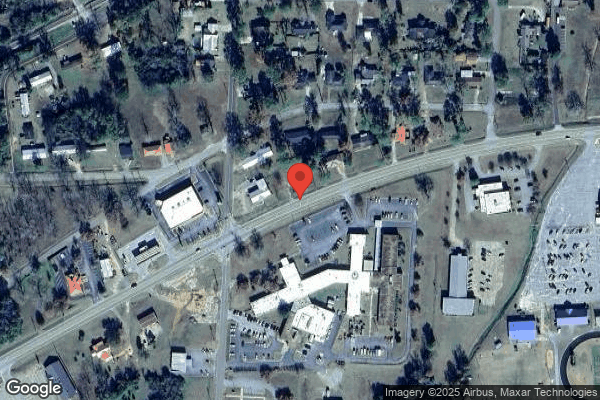

11740 COLUMBIA STREET, BLAKELY, GA 39823 (229) 723-3796
For profit - Limited Liability company 127 Beds LIFEBRITE HOSPITAL GROUP Data: November 2025 3 Immediate Jeopardy citations
Trust Grade
0/100
#187 of 353 in GA
Last Inspection: August 2024

Within standard 12-15 month inspection cycle. Federal law requires annual inspections.

Overview

Early Memorial Nursing Facility in Blakely, Georgia, has received a Trust Grade of F, which indicates significant concerns about the quality of care provided. Ranking #187 out of 353 facilities in Georgia places them in the bottom half, and they are the only nursing home in Early County, meaning families have no local alternatives that are better. The facility is worsening, with issues increasing from 1 in 2024 to 4 in 2025. Staffing is relatively strong, with a 4/5 star rating and only 39% turnover, which is better than the state average, suggesting that staff are more likely to stay and build relationships with residents. However, the $177,463 in fines is alarming, as it is higher than 97% of Georgia facilities, indicating ongoing compliance issues. Specific incidents have raised serious red flags: one resident did not receive proper monitoring after a significant change in their condition, which ultimately led to their death, and the facility failed to notify the necessary parties about this deterioration. Additionally, the administration has been criticized for not adequately overseeing care functions, contributing to this neglect. While there are some strengths in staffing, the critical incidents and overall poor ratings suggest families should proceed with caution when considering this facility.

Trust Score
F
0/100
In Georgia
#187/353
Bottom 48%
Safety Record
High Risk
Review needed
Inspections
Getting Worse
1 → 4 violations
Staff Stability
○ Average
39% turnover. Near Georgia's 48% average. Typical for the industry.
Penalties
✓ Good
$177,463 in fines. Lower than most Georgia facilities. Relatively clean record.
Skilled Nurses
○ Average
Each resident gets 32 minutes of Registered Nurse (RN) attention daily — about average for Georgia. RNs are the most trained staff who monitor for health changes.
Violations
⚠ Watch
29 deficiencies on record. Higher than average. Multiple issues found across inspections.
★★☆☆☆
2.0
Overall Rating
★★★★☆
4.0
Staff Levels
★★☆☆☆
2.0
Care Quality
★★☆☆☆
2.0
Inspection Score
Stable
2024: 1 issues
2025: 4 issues

The Good

  • 4-Star Staffing Rating · Above-average nurse staffing levels
  • Full Sprinkler Coverage · Fire safety systems throughout facility
  • No fines on record
  • Staff turnover below average (39%)

    9 points below Georgia average of 48%

Facility shows strength in staffing levels, fire safety.

The Bad

2-Star Overall Rating

Below Georgia average (2.6)

Below average - review inspection findings carefully

Staff Turnover: 39%

Near Georgia avg (46%)

Typical for the industry

Federal Fines: $177,463

Well above median ($33,413)

Significant penalties indicating serious issues

Chain: LIFEBRITE HOSPITAL GROUP

Part of a multi-facility chain

Ask about local staffing decisions and management

The Ugly 29 deficiencies on record

3 life-threatening
Jul 2025 4 deficiencies
CONCERN (D) 📢 Someone Reported This

A family member, employee, or ombudsman was alarmed enough to file a formal complaint

Potential for Harm - no one hurt, but risky conditions existed

Free from Abuse/Neglect (Tag F0600)

Could have caused harm · This affected 1 resident

Based on staff and resident interviews, record review, and review of the facility's policy titled, Abuse, Neglect and Exploitation, the facility failed to ensure residents were free from resident-to-r...

Read full inspector narrative →
Based on staff and resident interviews, record review, and review of the facility's policy titled, Abuse, Neglect and Exploitation, the facility failed to ensure residents were free from resident-to-resident abuse for two of 22 sampled Residents (R) (R6 and R7). Specifically, R7 was observed to hit R6 on the buttocks. Findings include:Review of the facility's policy titled, Abuse, Neglect and Exploitation, implemented on 10/25/2024 revealed, Policy: Each resident has the right to be free from abuse, neglect, misappropriation of resident property and exploitation. Residents must not be subject to abuse by anyone including, but limited to facility staff, other residents. 1. Review of R7's undated admission Record located in the resident's electronic medical record (EMR) under the Profile tab revealed R7 was admitted with diagnoses of peripheral vascular disease, mental disorder due to physiological condition, and irritability and anger.Review of R7's annual Minimum Data Set (MDS) with an Assessment Reference Date (ARD) of 8/1/2024 revealed a Brief Interview for Mental Status (BIMS) assessment score of 15 out of 15 which indicated a cognitively intact mental status.2. Review of R6's undated admission Record located in the EMR under the Profile tab revealed R6 was admitted with diagnoses dysphagia, epilepsy, and dementia.Review of R6's quarterly MDS with an ARD of 7/17/2024 revealed the facility assessed the resident to have a BIMS score of 0 out of 15 which indicated the resident was severely cognitively impaired.Review of the facility investigation provided by the facility revealed on 8/14/2024 at 10:45 am, this morning during prayer meeting service [R7] hit [R6] on the butt. [R6] was walking around the room when she stopped at the table by the window rearranging items on the table. At this time [R7] became upset telling [R6] to leave stuff alone and proceeded to hit [R6].During an interview on 7/16/2025 at 9:33 am, Activities Assistant (AA) recalled R6 would wander around the room during activities and R7 had some items that R6 was moving around the table. AA recalled R7 stated to R6 to move away and R7 hit R6 before anyone could reach them.During an interview on 7/16/2025 at 9:56 am, R6 was lying in the bed watching TV. R6 was asked about the incident. R6 did not respond and just watched the TV.During an interview on 7/16/2025 at 2:30 pm, R7 was seated in the dining room and scratching off cards. R7 was asked about the incident and stated that there had not been any problems with anybody in the facility.During an interview on 7/16/2025 at 3:35 pm, the Director of Nursing (DON) recalled the AA reported that R7 had popped R6 on the butt. The DON stated R7 was immediately placed on one-to-one supervision and sent to the hospital.During an interview on 7/16/2025 at 3:51 pm, the Administrator recalled the incident and stated the incident was substantiated due to contact being made by R7 to R6.
CONCERN (D) 📢 Someone Reported This

A family member, employee, or ombudsman was alarmed enough to file a formal complaint

Potential for Harm - no one hurt, but risky conditions existed

Report Alleged Abuse (Tag F0609)

Could have caused harm · This affected 1 resident

Based on staff interviews, record review, and review of the facility's policy titled, Abuse, Neglect, and Exploitation, the facility failed to implement policies and procedures for ensuring the report...

Read full inspector narrative →
Based on staff interviews, record review, and review of the facility's policy titled, Abuse, Neglect, and Exploitation, the facility failed to implement policies and procedures for ensuring the reporting of a reasonable suspicion of a crime and reporting of all alleged sexual abuse violations to the State Agency (SA) for one of three Residents (R) (R3) reviewed for abuse out of a total sample of 22 residents. The deficient practice had the potential for continued episodes of unreported abuse, which posed potential for physical harm and/or mental anguish for the victimized resident.Findings include:Review of the facility's policy titled, Abuse, Neglect, and Exploitation revised 10/25/2024, revealed Alleged violation is a situation or occurrence that is . reported by staff, resident, relative, visitor, or others but has not yet been investigated and, if verified, could be indication of noncompliance with the Federal requirements related to. abuse. All allegations of abuse must be reported immediately to the designated Abuse Coordinator. Anyone in the facility can report suspected abuse. When abuse . is suspected, staff should . notify the Abuse Coordinator and/or Director of Nursing. Abuse Coordinator should ensure that all alleged violations involving abuse. are reported to the State Survey Agency per State and Federal guidelines. If the allegation rises to the level of a crime, suspicion of a crime, or results in serious bodily injury ensure this is reported within 2 hours.Review of R3's Profile Screen located under the Profile tab of the electronic medical record (EMR) revealed the resident was admitted with diagnoses of Alzheimer's disease, psychosis, mood disorder, anxiety disorder, dementia, depression, delusional disorder, and adjustment disorder.Review of R3's quarterly Minimum Data Set (MDS) with an Assessment Reference Date (ARD) of 8/6/2024 located under the MDS tab of the EMR, revealed the resident had a Brief Interview of Mental Status (BIMS) score of nine out of 15, which indicated the resident had moderate cognitive impairment.Review of R3's Care Plan located under the Care Plan tab of the EMR, revealed the resident had a care plan for auditory and visual hallucinations dated 6/4/2024.Review of the intake form received from the SA revealed the SA received the report of the allegation of sexual abuse on 10/31/2024.Review of the facility provided investigative documentation dated 11/7/2024, revealed the facility was notified by family member (F) 3 on 10/13/2024 that R3 expressed that something sexually happened to her earlier in the month.Review of R3's Progress notes under the Prog notes tab of the EMR dated 10/13/2024, revealed F3 visited R3. There was no documentation of the allegation.Review of a written statement by Licensed Practical Nurse (LPN) 1, dated 10/31/2024, revealed, On 10/13/2024, I, [LPN3], was informed by [F3] that [R3] said or expressed that something sexually had happened to her. This nurse went to patient's room, CNA was present.Review of a written statement by Certified Nursing Aide (CNA) 3, dated 11/1/2024, revealed, On 10/13/2024, I witnessed [R3], when being asked if anyone had been inappropriate with her in any way. she answered no .During an interview on 7/16/2025 at 10:33 am, LPN3 confirmed she had been notified by F3 that R3 had expressed a sexual assault allegation and stated, It was not reported because [R3] denied that anything had happened to her and [F3] said that maybe [R3] was just dreaming and maybe it would be ok.During an interview on 7/15/2025 at 5:05 pm, the Administrator stated, Family reported the sexual abuse allegation to a staff member on 10/13/2024 but did not report to me. I became aware on 10/31/2024 through a grievance and reported to the [SA].
CONCERN (D) 📢 Someone Reported This

A family member, employee, or ombudsman was alarmed enough to file a formal complaint

Potential for Harm - no one hurt, but risky conditions existed

Quality of Care (Tag F0684)

Could have caused harm · This affected 1 resident

Based on interviews, record review, and review of the facility's policy titled, Verbal Orders, the facility failed to ensure medications were received from the pharmacy and available for administratio...

Read full inspector narrative →
Based on interviews, record review, and review of the facility's policy titled, Verbal Orders, the facility failed to ensure medications were received from the pharmacy and available for administration for one of six Residents (R) (R1) reviewed for medications out of a total sample of 22 residents. The deficient practice resulted in a resident not receiving prescribed anti-psychotic medication for 32 days.Findings include:Review of the facility's undated policy titled, Verbal Orders, indicated Follow through with orders by making appropriate contact or notification (e.g., lab or pharmacy). Review of R1's Profile Screen located under the Profile tab of the electronic medical record (EMR) revealed the resident was admitted with diagnoses of bipolar disorder, psychotic disorder with delusions, anxiety disorder, and major depressive disorder. Review of R1's quarterly Minimum Data Set (MDS) with an Assessment Reference Date(ARD) of 5/14/2025 located under the MDS tab of the EMR, revealed the resident had a Brief Interview of Mental Status (BIMS) score of 12 out of 15, which indicated the resident had moderate cognitive impairment. Review of R1's Care Plan located under the Care Plan tab of the EMR, revealed the resident had a care plan for psychotic disorder with hallucinations dated 9/10/2024 and used psychotropic medications related to psychosis with an intervention that psychotropic medications were to be administered as ordered and observed for effectiveness of medications. Review of R1's Physician's orders located under the Orders tab of the EMR, revealed a physician's order dated 9/4/2024, for quetiapine fumarate [an antipsychotic medication] tablet 200 milligrams [mg] give one tablet by mouth at bedtime for psychosis. A copy of the quetiapine pill card showed the medication was not filled by the pharmacy until 10/7/2024. R1 did not receive the quetiapine medication from 9/4/2024 until filled on 10/7/2024. During an interview on 7/14/2025 at 4:05 pm, the Administrator stated, The quetiapine [Seroquel] did not come from the pharmacy until 10/7/2024. During an interview on 7/15/2025 at 12:20 pm, the Director of Nursing stated, I can't recall exactly how the discrepancy was found. I believe one of the nurses was reviewing medications with the family. The resident's medications were filled by a community pharmacy per their request. The family had called the pharmacy to inquire about the medication. [UM1] spoke with the pharmacy. The process is that we send the order to the pharmacy and the pharmacy delivers the medication to our facility. We don't have a policy/procedure on ordering new medications. During an interview on 7/15/2025 at 12:32 pm, the Unit Manager (UM) 1 stated, A day shift nurse had reviewed medications with the family and discovered that the resident had not been receiving the medication [quetiapine]. Initially, I faxed the order to the community pharmacy on 9/4/2024 when the resident returned from the hospital. I resent the order to the community pharmacy on 10/7/2024 when it was discovered that the order had not been filled. Normally, I come to work at 6 am to communicate with night shift staff. No one communicated that the medication was not available.
CONCERN (D) 📢 Someone Reported This

A family member, employee, or ombudsman was alarmed enough to file a formal complaint

Potential for Harm - no one hurt, but risky conditions existed

Deficiency F0761 (Tag F0761)

Could have caused harm · This affected 1 resident

**NOTE- TERMS IN BRACKETS HAVE BEEN EDITED TO PROTECT CONFIDENTIALITY** Based on observations, interviews, and review of the facility's policy titled, Medication Storage Policy, the facility failed to...

Read full inspector narrative →
**NOTE- TERMS IN BRACKETS HAVE BEEN EDITED TO PROTECT CONFIDENTIALITY** Based on observations, interviews, and review of the facility's policy titled, Medication Storage Policy, the facility failed to ensure medications were stored securely for one of five medication carts (Wing 2-North). This had the potential for residents, visitors, or unlicensed staff to have access to the medications.Findings include:Review of the facility's policy titled, Medication Storage Policy, dated 6/20/2018 revealed, It is the policy of this facility to ensure all medications housed on our premises will be stored in the pharmacy and/or medication rooms according to manufacturer's recommendations and sufficient to ensure proper sanitation, temperature, light, ventilation, moisture control, segregation, and security.During an observation on 7/15/2025 at 9:02 am of the medication cart located in the hallway near room [ROOM NUMBER], an intravenous (IV) bag of vancomycin (an antibiotic) and a bottle of vitamin D3 were found sitting on top of the medication cart. A housekeeper was in the area near the medication cart. At 9:07 am, Licensed Practical Nurse (LPN) 1 came walking down the hallway from around the corner. The cart was not in sight of the nurse at this time. LPN1 then proceeded to unlock the medication cart and place the medications in the cart after the observation was made by the surveyor.During an interview on 7/15/2025 at 9:21 am, LPN1 stated, I left the medications on top of the cart by mistake. They should not be left on top of the cart.During an interview on 7/15/2025 at 12:20 pm, the Director of Nursing (DON) stated, The expectation is that medications should not be left sitting on top of the medication cart. Medications should be kept locked in the medication cart. We have a lot of dementia residents.
Aug 2024 1 deficiency
CONCERN (D) 📢 Someone Reported This

A family member, employee, or ombudsman was alarmed enough to file a formal complaint

Potential for Harm - no one hurt, but risky conditions existed

Deficiency F0582 (Tag F0582)

Could have caused harm · This affected 1 resident

**NOTE- TERMS IN BRACKETS HAVE BEEN EDITED TO PROTECT CONFIDENTIALITY** Based on interviews, record review, and review of the Centers for Medicare and Medicaid Services (CMS) reference instructions, t...

Read full inspector narrative →
**NOTE- TERMS IN BRACKETS HAVE BEEN EDITED TO PROTECT CONFIDENTIALITY** Based on interviews, record review, and review of the Centers for Medicare and Medicaid Services (CMS) reference instructions, the facility failed to ensure notifications of discontinuation of Medicare part A benefits was issued in a timely manner for two of four residents (R) (R2 and R1) reviewed for beneficiary notification out of a total sample of 26 residents. This failure had the potential to result in a lack of understanding of appeal rights and/or the termination of the current level of care against the resident's/representative's wishes. Findings include: Review of the Centers for Medicare and Medicaid Services (CMS), Form Instructions for the Notice of Medicare Non-Coverage (NOMNC) CMS-10123 accessed at https://www.cms.gov/medicare/medicare-general-information/bni/downloads/instructions-for-notice-of-medicare-non-coverage-nomnc.pdf on 06/04/24 revealed, The NOMNC must be delivered at least two calendar days before Medicare covered services end or the second to last day of service if care is not being provided daily. The provider must ensure that the beneficiary or representative signs and dates the NOMNC to demonstrate that the beneficiary or representative received the notice and understands that the termination decision can be disputed .CMS requires that notification of changes in coverage for an institutionalized beneficiary/enrollee who is not competent be made to a representative .If the provider is personally unable to deliver a NOMNC to a person acting on behalf of an enrollee, then the provider should telephone the representative to advise him or her when the enrollee's services are no longer covered. The date of the conversation is the date of the receipt of the notice. Confirm the telephone contact by written notice mailed on that same date. 1. Review of R2's undated Face Sheet revealed the resident admitted to the facility on [DATE] with a diagnosis of severe intellectual disabilities. Review of the Quarterly Minimum Data Set (MDS) with a Assessment Reference Date (ARD) of 7/26/2024 indicated R2 had a Brief Interview for Mental Status (BIMS) score of nine out of 15 which suggested the resident had moderately impaired cognition. Review of the SNF (Skilled Nursing Facility) Beneficiary Notification Review, completed by the facility, revealed services began on 4/8/2024 and ended on 4/18/2024. The form also indicated, This was the facility/provider-initiated discharge . Question 2- Was a NOMNC, Form CMS 10123 provided to the resident, was answered yes. Review of the NOMNC- CMS 10123 dated 4/19/2024 indicated, The effective date of coverage of your current skilled nursing services will end on 4/19/2024. The Additional Information section of the form stated Spoke with RP (representative/responsible party) about R2 and explained that NOMNC was being issued due to resident pacemaker site being healed and therapy ending today. The RP revealed that he understood and explained he could not appeal . The last day of covered services was 4/19/2024 and the RP was notified on 4/19/2024. 2. Interview on 8/7/2024 at 9:47 am R1 revealed he was unaware of losing his Medicare days. R1 stated he had no concerns regarding his care. Record review of R1's undated Face Sheet revealed the resident was admitted to the facility on [DATE] and re-admitted to the facility on [DATE] with a diagnosis of cauda equina syndrome urinary tract infection, site not specified. Review of the Quarterly MDS with an ARD date of 3/6/2024 reported the resident had a BIMS score of 15 out of 15 which indicated he was cognitively intact. Review of the SNF Beneficiary Notification Review Form, completed by the facility, revealed the last day of Part A covered services was on 8/5/2024. Review of the Additional Information portion of the form indicated on 8/5/2024 the resident NOMNC was explained to the resident, and he stated understanding and did not want to appeal. The verbal consent was signed by two staff members and dated 8/5/2024. The last day of covered services was 8/5/2024 and the form was dated as explained to the resident on 8/5/2024. Interview on 8/7/2024 at 10:02 am, the MDS Coordinator (MDSC) stated she was responsible for issuing the NOMNCs. The MDSC stated she had never issued a Skilled Nursing Facility Advance Beneficiary Notice (SNF/ABN) of Non-coverage form regardless of if Medicare Days had been exhausted. The MDSC indicated that due to the skilled care provided to the resident there was no way to issue the NOMNC two days prior to the end of treatment. For instance, R2 was receiving wound care after the insertion of a pacemaker. Once the physician stated the wound was healed, we then provided the NOMNC, but the care had already ended. In the case of R1, the resident was receiving intravenous (IV) antibiotics following a hospital stay. Once the medication was stopped, we then issued his NOMNC. The MDSC did confirm the forms were not issued in the required timeframe of two days prior to the discontinuation of services.
Aug 2023 10 deficiencies 3 IJ
CRITICAL (J) 📢 Someone Reported This

A family member, employee, or ombudsman was alarmed enough to file a formal complaint

Immediate Jeopardy (IJ) - the most serious Medicare violation

Notification of Changes (Tag F0580)

Someone could have died · This affected 1 resident

**NOTE- TERMS IN BRACKETS HAVE BEEN EDITED TO PROTECT CONFIDENTIALITY** Based on interviews, record reviews and facility policy Notification of Changes, the facility failed to ensure that one resident...

Read full inspector narrative →
**NOTE- TERMS IN BRACKETS HAVE BEEN EDITED TO PROTECT CONFIDENTIALITY** Based on interviews, record reviews and facility policy Notification of Changes, the facility failed to ensure that one resident (R#21), who was receiving oxygen, received adequate supervision and monitoring after a significant change in condition; facility failed to notify the physician and family of a significant change; and failed to ensure staff were following appropriate procedures for one of 21 sampled residents (R#21). On [DATE] a determination was made that a situation in which the facility's noncompliance with one or more requirements of participation had the likelihood to cause serious injury, harm, impairment, or death to residents. The hospital Chief Executive Officer (CEO) and the Director of Nursing (DON) were informed of the Immediate Jeopardy (IJ) on [DATE] at 4:30 p.m. The noncompliance related to the IJ was identified to have existed on [DATE]. The facility Administrator resigned prior to the IJ being called. An Acceptable IJ Removal Plan was received and approved on [DATE]. Based on observation, record reviews, review of facility policies as outlined in the Removal Plan, and staff interviews, it was validated that the corrective plans and the immediacy of the deficient practice was removed on [DATE]. Findings include: Review of facility policy titled, Notification of Changes, dated [DATE], revealed the following: Policy: The purpose of this policy is to ensure the facility promptly informs the resident, consults the resident's physician, and notifies consistent with his or her authority, the resident's representative when there is a change requiring notification. Circumstances requiring notification include. 2. Significant changed in the resident's physical, mental or psychosocial condition such as deterioration in health, mental or psychosocial status. This may include: a. Life-threatening conditions, or b. Clinical complications. Review of the closed medical record for R#21 revealed that R#21 was admitted to the facility on [DATE] with the following diagnoses that include but not limited to fracture of the upper end of left humerus, asthma, heart failure, chronic obstructive pulmonary disease, atherosclerotic heart disease, type 2 diabetes mellitus, hypertension, and gastro-esophageal reflux disease. Review of the Departmental Notes dated [DATE] through [DATE] revealed entry dated [DATE] at 1:30 a.m. (7P-7A night shift), Certified Nursing Assistant (CNA) MM reported to the charge nurse that something didn't look right with R#21. Upon entering the room, the Licensed Practical Nurse (LPN) TT noted that the patient was blue around the eyes and that she checked the resident's fingertips. LPN TT noted that the oxygen was bumped up to 3.5 liters (L) and the head of the bed was elevated. She noted that WE could not get resident to be still long enough to get an oxygen saturation reading. There was no evidence that LPN TT notified the physician of the significant change in condition, nor was there evidence that LPN TT had obtained an order to increase the oxygen on R#21. Review of another Departmental Note dated [DATE] indicated that R#21 was unresponsive to verbal stimuli with skin being pale gray/blue with oxygen as ordered. The Physician was notified at 7:45 a.m. of the change in status and an order was given to send to the emergency room (ER) for evaluation and treatment. R#21 expired on [DATE]. During an interview on [DATE] at 3:39 p.m. LPN TT (contract agency) revealed that the resident had blueness and that she did an emergency response by increasing the oxygen to 3.5 L. LPN TT acknowledged that she did not call the physician for the significant change identified with R#21. During an interview on [DATE] at 10:19 a.m. with Physician FFF it was revealed that the nurse should have called the Physician on call. The Physician on call would have given the orders to increase the oxygen and/or send R#21 to the emergency room. Physician FFF reported that he was not on call on [DATE]. During an interview on [DATE] at 10:30 a.m. with Physician GGG who confirmed that he was the Physician on call on the night R#21 experienced a significant change but stated that he had not been made aware of the significant change by LPN TT. Physician GGG further reported that the nursing supervisor should have also been notified if there was a significant change occurring. During an interview on [DATE] at 3:00 p.m. the Director of Nursing (DON) revealed that it was the Monday following the significant change of R#21 that she was notified of the change in condition. Cross refer F600 The facility implemented the following actions to remove the IJ: 1. Resident #21 (R#21) was a resident of Early Memorial Nursing home on the date of the incident [DATE]. R#21 expired on [DATE]. Chart was reviewed on [DATE] at 9 am by CEO, DON, QA nurse, intake coordinator, Hospital QA nurse, and education nurse. Chart review was done in order to gather information regarding the incident. As a result, a decision was made to review policies and educate staff. 2. On [DATE] this committee, listed above, reviewed the policy for notification of the physician with revisions made to Policy NOTIFICATION OF CHANGE. These revisions included adding the DON to list of notifications. Another revision was adding the critical access activation team (CAT CODE) when a patient has a change in condition. 3. On [DATE] @ 1230 pm, CEO notified Medical Director of the Immediate Jeopardy status. On [DATE], Medical Director reviewed policies of NOTIFICATION OF CHANGE, and reviewed parameters for when to notify physician on the standing order sheets. 4. The quality nurse and the unit manager assessed 95/96 residents in the nursing home beginning at 10 am on [DATE]. One resident is on a bed hold and out of the building. The purpose of the assessments was to determine if any resident has had a significant change in condition since the last assessment in the residents' medical record. The assessment included: General appearance, Physical assessment, skin assessment including discoloration of the residents' extremities/cyanotic areas, pain, ADLs. Vital signs included blood pressure, temperature, pulse, respirations, and oxygen saturation (if the patient was on oxygen.) These findings were compared to the patients most recent assessments on their medical record. The vital signs were compared to the most recent vital signs on the resident's chart. The parameters used for vital signs are BP systolic > 190 or < 90 mmhg; Diastolic >100 or <60 mmhg, Pulse >100 or <60 bpm, Respirations >24 or <14 bpm, Temperature >101 or <96 degrees F, Oxygen saturation <90%. Any measurement outside of these ranges would be cause for concern. These assessments were reviewed by the DON and CEO. There were no concerns regarding a significant change in condition that warranted notifying the physician and family. 5. The CEO held a corrective action interview with LPN TT. LPN TT is a travel nurse; her contracted agency was notified on [DATE] of the incident. LPN TT's contract was terminated, and she did not work her [DATE] night shift 7pm-7 am. 6. The Hospital QA nurse and the Nursing Home nurse educator conducted in-services on [DATE]-[DATE]. The education consisted of reviewing the change of condition which includes: a vital sign reading outside of the established parameters, (BP systolic > 190 or < 90 mmhg; Diastolic >100 or <60 mmhg, Pulse >100 or <60 bpm, Respirations >24 or <14 bpm, Temperature >101 or <96 degrees F, Oxygen saturation <90%), changes in skin coloration (bluish, gray, pale), loss or decreased level of consciousness, difficulty breathing. Educational in-service also included: The physician/Family/DON notification regulations and how to communicate with physicians using SBAR and CUS (I am Concerned, I am Uncomfortable, the Safety of resident is at risk). CAT (Critical Assessment Team) CODE policy was read and reviewed, CAT CODE is to be called with acute and persistent changes in heart rate or blood pressure, or respiratory rate, or oxygen saturation <90%, change in level of consciousness, or need for additional clinical opinion. The education also consisted of facility policy and procedures: NOTIFICATION OF CHANGE, OXYGEN ADMINISTRATION, and 24 hour Report log. If there is a change in condition identified, the nurse will document in the narrative section of the 24 hour report log to include changes in respiratory status. RNs 8 out of 9, LPNs 14 out of 16, and CNAs 32 out of 39 were educated on [DATE]- [DATE]. The staff that were off or out on leave will be educated upon return to work. 7. New RN, LPN, CNA hires, including agency nurses, will be educated on change of condition and physician notification regulations, as well as facility policy and procedure, accordingly by the DON, Nurse educator, and Human resources. 8. On [DATE] the quality nurse implemented a QAPI performance improvement project with a focus on physician notification of significant changes. On [DATE], DON initiated a 24 hour report log to be placed at both wings for the nurse to detail any admits, discharges, transfers, new wounds, new catheters, IV therapy, incidents, antibiotics, PRN laxatives, skilled Medicare, labs/rads, abnormal accuchecks, and a narrative portion. DON will review daily M-F mornings. Unit Manager/supervisor will review Sat/Sun mornings. DON will review the Sat/Sun logs on Monday morning. The DON will use an audit tool, Change of Condition/Oxygen Monitoring tool to audit those residents that are on the log. If there are discrepancies found (no notifications made of change in condition or an adverse event not compliant with education or policy), the DON will re-educate or do corrective action up to termination depending on the severity of the discrepancy. At morning huddle meetings, daily, CEO, will review the DONs audit. 9. All Corrections will be made by [DATE]. 10. The immediacy of the IJ removed on [DATE]. The State Survey Agency (SSA) validated the facility's written IJ Removal Plan as follows: 1. Review of documentation confirming that R#21 expired on [DATE] and confirmation of chart review by CEO, DON, QA nurse, intake coordinator, Hospital QA nurse, and the education nurse on [DATE]. 2. Review of the policy confirmed the revisions to the Notification of Change by adding the DON to the list of people notified and the addition of the CAT CODE on [DATE]. Review of policy indicated an update on [DATE]. 3. During an interview on [DATE] at 1:30 p.m. with Medical Director he confirmed notification of the IJ status from the CEO, review of the policy for Notification of Change, and review of the parameters for notifying him of a change in condition. 4. Review of the Physical Assessment sheet dated [DATE] was reviewed for each resident to confirm completion and no changes in condition identified. 5. A review of the corrective action for LPN TT was dated [DATE]. LPN TT did not work her shift, was discharged from her contract, and LPN TT was reported to the Board of Nursing on [DATE]. 6. Confirmed via review of in-service documentation dated [DATE] and [DATE] related to changes in condition and notification of the Physician, family, and DON. During interviews on [DATE] at 8:59 a.m. with LPN VVVV, [DATE] at 9:04 a.m. with CNA WWWW, [DATE] at 9:06 a.m. with CNA XXXX, [DATE] at 9:07 a.m. with CNA YYYY, [DATE] at 9:08 a.m. with CNA ZZZZ, [DATE] at 9:10 a.m. with AAAAA, [DATE] at 9:14 a.m. with LPN BBBBB, [DATE] at 9:26 a.m. with LPN DDDDD, [DATE] at 12:36 p.m. with RN TTTT, [DATE] at 1:58 p.m. with CNA HHHHH, [DATE] at 2:01 p.m. with CNA OO, [DATE] at 2:13 p.m. with RN SSSS, [DATE] at 2:23 p.m. with CNA JJJJJ, [DATE] at 2:41 p.m. with RN MDS AAA, [DATE] at 2:59 p.m. with CNA IIIII, [DATE] at 3:04 p.m. with RN WOUND NURSE CC, [DATE] at 3:06 p.m., [DATE] at 3:44 p.m. with LPN MDS, [DATE] at 3:49 p.m. with LPN, [DATE] at 3:58 p.m. with CNA KKKKK, [DATE] at 10:13 a.m. with LPN RRRR, [DATE] at 10:41 a.m. with CNA CCCC, [DATE] at 10:43 a.m. with CNA BB, [DATE] at 10:49 a.m. with CNA BBBB, [DATE] at 12:12 p.m. with CNA ZZZ (night shift), [DATE] at 1:16 p.m. with CNA YYY, [DATE] at 1:23 p.m. with CNA WWW, [DATE] at 1:25 p.m. with RN VVV, [DATE] at 1:44 p.m. with RN GG, [DATE] at 1:52 p.m. with RN SSS, [DATE] at 1:55 p.m. with RN RRR, [DATE] at 2:10 p.m. with LPN QQQ, [DATE] at 2:14 p.m. with CNA PPP (as needed), [DATE] at 2:15 p.m. with RN DDD, and [DATE] at 2:18 p.m. with LPN CCC who confirmed receiving education related to change in condition and an understanding of identifying when vitals, blood pressure, and oxygen are out of parameters. Each also expressed an understanding of checking for changes in skin coloration, breathing, and levels of consciousness. All confirmed knowledge of the update to the policy related Notification of Change and Oxygen Administration. 7. Review of new hires list indicated three new CNA staff effective [DATE] and review of education sheet confirmed the staff were educated. Interview on [DATE] at 12:12 p.m. with CNA ZZZ (new hire on night shift) who verified that she had been educated and was aware to report to nursing any changes in condition observed with a resident. 8. Confirmed via review of audit tools and the 24-hour report starting on [DATE]. As changes in condition occurred staff addressed the changes and notified the Physician. 9. All Corrections were made by [DATE]. 10. The immediacy of the IJ was removed on [DATE].
CRITICAL (J) 📢 Someone Reported This

A family member, employee, or ombudsman was alarmed enough to file a formal complaint

Immediate Jeopardy (IJ) - the most serious Medicare violation

Free from Abuse/Neglect (Tag F0600)

Someone could have died · This affected 1 resident

**NOTE- TERMS IN BRACKETS HAVE BEEN EDITED TO PROTECT CONFIDENTIALITY** Based on interviews, record reviews and the facility policy titled Abuse, Neglect and Exploitation, the facility neglected Resid...

Read full inspector narrative →
**NOTE- TERMS IN BRACKETS HAVE BEEN EDITED TO PROTECT CONFIDENTIALITY** Based on interviews, record reviews and the facility policy titled Abuse, Neglect and Exploitation, the facility neglected Resident (R)#21, by failing to provide adequate monitoring and care once a change in condition was identified. This failure affected one of 22 residents sampled. This failure resulted in R#21 expiring. On [DATE] a determination was made that a situation in which the facility's noncompliance with one or more requirements of participation had the likelihood to cause serious injury, harm, impairment, or death to residents. The hospital Chief Executive Officer (CEO) and the Director of Nursing (DON) were informed of the Immediate Jeopardy (IJ) on [DATE] at 4:30 p.m. The noncompliance related to the IJ was identified to have existed on [DATE]. The facility Administrator resigned prior to the IJ being called. An Acceptable IJ Removal Plan was received and approved on [DATE]. Based on observation, record reviews, review of facility policies as outlined in the Removal Plan, and staff interviews, it was validated that the corrective plans and the immediacy of the deficient practice was removed on [DATE]. Findings include: Review of the policy titled Abuse, Neglect and Exploitation dated [DATE] revealed the following: Policy. It is the policy of this facility to provided protection for the health, welfare, and rights of each resident by developing and implementing written policies and procedures that prohibit and prevent abuse, neglect, exploitation, and misappropriation of resident property. Review of the closed medical record for R#21 revealed that R#21 was admitted to the facility on [DATE] with diagnoses that include but were not limited to fracture of the upper end of left humerus, asthma, heart failure, chronic obstructive pulmonary disease, atherosclerotic heart disease, type 2 diabetes mellitus, hypertension, and gastro-esophageal reflux disease. Review of the care plan dated [DATE] revealed R#21 required oxygen therapy due to chronic obstructive pulmonary disease. The approaches were to administer resident's oxygen as ordered; monitor for changes in resident's symptoms that may indicate worsening respiratory status and report to physician. There were other approaches related to shortness of breath that include to obtain and record resident's saturation levels with all acute concerns; and assess resident resident's respiratory status. Review of the Departmental Notes dated [DATE] through [DATE] revealed entry dated [DATE] at 1:30 a.m. (7P-7A night shift), a Certified Nursing Aide (CNA) reported to the charge nurse that something didn't look right. Upon entering the room, the charge nurse noted that the patient was blue around the eyes and the resident's fingertips were checked. LPN TT noted that the oxygen for R#21 was bumped up to 3.5 liters (L) and the head of the bed was elevated. She noted that WE could not get resident to be still long enough to get an oxygen saturation reading. LPN TT documented that she continuously monitored the resident during the shift and R#21 was resting well. A second entry dated [DATE] (7A-7P day shift) revealed that LPN EEE documented the resident vital signs of blood pressure 73/43, heart rate 104, temperature 95.0 degrees Fahrenheit (F), respiration 26, fasting blood sugar 180, and oxygen saturation was unable to be obtained. Resident was semi-comatose and unresponsive to verbal stimuli. R#21 had labored respiratory. LPN EEE describe R#21 as having pale gray/blue look in skin color. LPN EEE notified the physician regarding resident decreased level of conscious at 7:45 a.m. And the physician gave verbal orders to send R#21 to the emergency room. Review of a CT (Computed Tomography) chest report dated [DATE] revealed that R#21 had mild to moderate bilateral pleural effusion with adjacent atelectasis - interval increase in effusion. Review of the hospital emergency room (ER) notes dated [DATE] revealed that R#21 arrived from the nursing home with decreased level of conscious. The ER was also unable to obtain oxygen saturation. The ER obtained vital signs of the following: blood pressure 88/43, pulse 106, respiration 14, temperature (axillary) 96 degrees Fahrenheit (F). R#21 was admitted to the hospital and on [DATE] at 3:45 a.m. R#21 had no active signs of life and was pronounced. Review of the death certificate dated [DATE] revealed resident cause of death was sepsis appropriate interval between onset and death was 24 hours. During an interview on [DATE] at 2:53 p.m. LPN EEE revealed that after receiving report from the night nurse (LPN TT) she went and assessed R#21. LPN EEE stated that the resident was unresponsive and pale grey. She could not obtain an oxygen saturation. LPN EEE reported that the vital signs were critically low for the blood pressure. She reported that the doctor was contacted, and he then gave her a verbal order to send R#21 to the ER. The family was then notified of the change in condition for R#21. During an interview on [DATE] at 3:39 p.m. LPN TT revealed that the R#21 had blueness around the face. She stated that she had increased R#21 oxygen to 3.5 L as an emergency response. She confirmed that she did not call the physician. LPN TT stated that she took R#21 vital signs but did not document them. LPN TT also confirmed that she did not document oxygen saturation. LPN TT reported that she assessed R#21 throughout the shift but did not document her findings. During an interview on [DATE] at 3:56 p.m. CNA MM revealed R#21's face looked different. She explained that R#21 had a purplish color around her lips and her skin was different. CNA MM stated she reported to the charge nurse about how the resident was not looking right. The resident didn't say much. The nurse (LPN TT) did not ask her to do vital signs and she never saw the nurse do vital signs. CNA MM reported that R#21 had an odor that she has smelled in the past with other residents that were dying. During an interview on [DATE] at 10:30 a.m. Physician GGG revealed that he was not notified by the night nurse therefore he was not aware of the significant change in R#21. The facility implemented the following actions to remove the IJ: 1. Resident #21 (R#21) was a resident of Early Memorial Nursing home on the date of the incident [DATE]. R#21 expired on [DATE]. R#21 was on oxygen therapy. 2. On [DATE], the Abuse/Neglect/Exploitation policy was reviewed by CEO, DON, Quality nurse, Social Worker, Medical Director, education nurse and admissions intake coordinator. No revisions were made. 3. The Social worker is the Abuse officer for the nursing home. Social worker will report an incident to DCH within a time frame of 2 hours of the abuse or neglect. Social Worker will follow up within 5 days for a final report. On [DATE], social worker educated 95 out of 96 residents (1 bed hold) of the abuse and neglect policy. Of the 95 residents in house, 32 had no cognitive impairments, 27 had some impairment, 33 had total cognitive impairment according to the residents BIMS scores. Letters of communication and abuse/neglect/exploitation policy were sent to families/responsible parties of each resident to accommodate for those residents that are some to totally cognitive impaired. Education consisted of detailing and defining what is considered abuse/neglect and who to report to: Social Worker, other officials in accordance with the law, State survey and certification agency through established procedures. 4. On [DATE], Housekeeping 8 out of 9, Dietary 13 out of 14, Engineering 4 out of 4, Admin staff 8 out of 8, Therapy 7 out of 7, and Nursing Services (RN 9 out of 9, LPN 11 out of 16, CNA 32 out of 39), Physicians 2 out of 2 were educated on the Abuse/Neglect policy, specifically what abuse/neglect definitions are with case examples and to report to: Social Worker, other officials in accordance with the law, State survey and certification agency through established procedures. 5. On [DATE] a Facility Incident Report Form was submitted to DCH by DON regarding the neglect of R#21. 6. The current oxygen policy OXYGEN ADMINISTRATION was reviewed on [DATE] by CEO, DON, Quality nurse nursing home, quality nurse hospital, intake coordinator, and education nurse. On [DATE], the Medical Director reviewed the OXYGEN ADMINISTRATION policy. The following revisions were made: a. A resident receiving oxygen therapy will have oxygen saturation taken every shift (every 12 hours) b. A resident showing a change in condition will have continuous oxygen saturation monitoring c. If oxygen saturation cannot be obtained, physician will be notified, and patient will be sent to the emergency room for assessment. d. The nurse will obtain a physician order before initiating oxygen or changing a patients oxygen setting- EXCEPTION in the case of an emergency. 7. On [DATE], the CEO interviewed LPN TT. She was questioned regarding neglect of monitoring oxygen status/not obtaining a MD order for changing oxygen settings and significant change of condition. LPN TT's contract was terminated on [DATE] by CEO and DON. LPN TT was reported to the State Board of Nursing on [DATE] in response to neglect of R#21. 8. On [DATE] and [DATE], mandatory in-services were held. In this education, oxygen monitoring and changes in the policy and procedure OXYGEN ADMINISTRATION were discussed. RNs 8 out of 9, LPNs 14 out of 16, and CNAs 32 out of 39 were educated on [DATE]- [DATE]. The staff that were off or out on leave will be educated upon return to work. 9. On [DATE], CEO placed an order with the purchasing department for 2 oxygen saturation monitors and probes (adult and infant). 10. QAPI PIP was initiated by the quality nurse regarding oxygen monitoring. The oxygen saturation space will be added to the Nursing MAR. On [DATE], DON initiated a 24 hour report log to be placed at both wings for the nurse to detail any admits, discharges, transfers, new wounds, new catheters, IV therapy, incidents, antibiotics, PRN laxatives, skilled Medicare, labs/rads, abnormal accuchecks, and a narrative portion. If there is a change in condition identified, the nurse will document in the narrative section of the 24 hour report log to include changes in respiratory status. DON will review MAR and 24 hour report log daily M-F mornings. Unit Manager/supervisor will review Sat/Sun mornings. DON will review the Sat/Sun logs on Monday morning. The DON will use an audit tool, Change of Condition/Oxygen Monitoring tool to audit those residents that are on the log and the residents on oxygen. If there are discrepancies found (no notifications made of change in condition or an adverse event not compliant with education or policy), the DON will re-educate and/or do corrective action up to termination depending on the severity of the discrepancy. At Morning huddle meetings, daily, CEO, will review the DONs audit. 11. New hires, including travel nurses, will be educated on the policies OXYGEN ADMINISTRATION and abuse/neglect by the DON and Nurse educator. 12. All Corrections were made by [DATE]. 13. The immediacy of the IJ was removed on [DATE]. The State Survey Agency (SSA) validated the facility's written IJ Removal Plan as follows: 1. Review of closed medical record for R# 21 confirmed resident status. 2. Confirmed of the policy review by CEO, DON, Quality Nurse, Social Worker, Medical Director, Education Nurse, and Admissions Intake Coordinator with a review/revised date of [DATE]. 3. Review of the letters and policy sent to family members/responsible parties dated [DATE] via mail. Review of resident signature sheet confirmed education of residents regarding the abuse, neglect, and exploitation policy dated [DATE] and [DATE]. 4. Confirmed via review of education sign in sheets dated [DATE] and [DATE] related to Abuse/Neglect policy and who to report to for facility staff (RNs, LPNs, CNAs, Dietary, Environmental Services (EVS), Housekeeping, Administrative staff, and Therapy Services). Interviews on [DATE] at 8:59 a.m. with LPN VVVV, [DATE] at 9:04 a.m. with CNA WWWW, [DATE] at 9:06 a.m. with CNA XXXX, [DATE] at 9:07 a.m. with CNA YYYY, [DATE] at 9:08 a.m. with CNA ZZZZ, [DATE] at 9:10 a.m. with LPN AAAAA, [DATE] at 9:14 a.m. with LPN BBBBB, [DATE] at 9:26 a.m. with LPN DDDDD, [DATE] at 12:36 p.m. with RN TTTT, [DATE] at 1:55 p.m. with EVS, [DATE] at 1:58 p.m. with CNA HHHHH, [DATE] at 1:59 p.m. with Activities Director EEEEE, [DATE] at 2:01 p.m. with CNA OO, [DATE] at 2:13 p.m. with RN SSSS, [DATE] at 2:17 p.m. with unit secretary GGGGG, [DATE] at 2:23 p.m. with CNA JJJJJ, [DATE] at 2:41 p.m. with RN MDS AAA, [DATE] at 2:42 p.m. with Social Worker, [DATE] at 2:59 p.m. with CNA IIIII, [DATE] at 3:00 p.m. with EVS QQQQQ, [DATE] at 3:03 p.m. with EVS PPPPP, [DATE] at 3:04 p.m. with RN WOUND NURSE CC, [DATE] at 3:06 p.m. with EVS MMMMM, [DATE] at 3:08 p.m. with EVS OOOOO, [DATE] at 3:11 p.m. with EVS LLLLL, [DATE] at 3:44 p.m. with LPN MDS, [DATE] at 3:49 p.m. with LPN, [DATE] at 3:58 p.m. with CNA KKKKK, [DATE] at 10:13 a.m. with LPN RRRR, [DATE] at 10:15 a.m. with Housekeeping SSSSS, [DATE] at 10:23 a.m. with Dietary Aide PPPP, [DATE] at 10:24 a.m. with Dietary Aide OOOO, [DATE] at 10:25 a.m. with Dietary Aide NNNN, [DATE] at 10:26 a.m. with Dietary Aide MMMM, [DATE] at 10:27 a.m. with Dietary Aide LLLL, [DATE] at 10:28 a.m. with [NAME] KKKK, [DATE] at 10:29 a.m. with [NAME] JJJJ, [DATE] at 10:30 a.m. with [NAME] IIII, [DATE] at 10:31 a.m. with [NAME] HHHH, [DATE] at 10:32 a.m. with Dietary Aide GGGG, [DATE] at 10:33 a.m. with [NAME] FFFF, [DATE] at 10:35 a.m. with Dietary Aide/Cook EEEE, [DATE] at 10:35 a.m. with Dietary Manager DDDD, [DATE] at 10:41 a.m. with CNA CCCC, [DATE] at 10:43 a.m. with CNA BB, [DATE] at 10:49 a.m. with CNA BBBB, [DATE] at 11:17 a.m. with Occupational Therapist (OT) AAAA (contract), [DATE] at 1:16 p.m. with CNA YYY, [DATE] at 1:23 p.m. with CNA WWW, [DATE] at 1:25 p.m. with RN VVV, [DATE] at 1:30 p.m. with Physician GGG, [DATE] at 1:31 p.m. with Physician FFF, [DATE] at 1:44 p.m. with RN GG, [DATE] at 1:49 p.m. with Physical Therapist (PT) TTT, [DATE] at 1:52 p.m. with RN SSS, [DATE] at 1:55 p.m. with RN RRR, [DATE] at 2:10 p.m. with LPN QQQ, [DATE] at 2:14 p.m. with CNA PPP (as needed), [DATE] at 2:15 p.m. with RN DDD, [DATE] at 2:18 p.m. with LPN CCC, [DATE] at 2:24 p.m. with Physical Therapy Assistant (PTA) OOO, [DATE] at 2:36 p.m. with PT NNN, and [DATE] at 2:47 p.m. with Administrative Assistant BBB who all acknowledged they had received the in-service and related to Abuse/Neglect policy and they were familiar with who to report issues to. 5. Confirmed by review of Facility Incident Report (FRI) form dated [DATE] for incident from [DATE]. 6. Confirmation and review of Oxygen Administration policy by CEO, DON, Quality nurse nursing home, quality nurse hospital, intake coordinator, education nurse, and the Medical Director. Review of the policy indicated revisions were made on [DATE]. 7. Confirmed via review of email from Board of Nursing acknowledging report about LPN TT and review of Employee Corrective Action Form dated [DATE]. 8. Review of in-service sign in sheet confirming education related to the policy and procedure for Oxygen Administration. During interviews on [DATE] at 8:59 a.m. with LPN VVVV, [DATE] at 9:04 a.m. with CNA WWWW, [DATE] at 9:06 a.m. with CNA XXXX, [DATE] at 9:07 a.m. with CNA YYYY, [DATE] at 9:08 a.m. with CNA ZZZZ, [DATE] at 9:10 a.m. with AAAAA, [DATE] at 9:14 a.m. with LPN BBBBB, [DATE] at 9:26 a.m. with LPN DDDDD, [DATE] at 12:36 p.m. with RN TTTT, [DATE] at 1:58 p.m. with CNA HHHHH, [DATE] at 2:01 p.m. with CNA OO, [DATE] at 2:13 p.m. with RN SSSS, [DATE] at 2:23 p.m. with CNA JJJJJ, [DATE] at 2:41 p.m. with RN MDS AAA, [DATE] at 2:59 p.m. with CNA IIIII, [DATE] at 3:04 p.m. with RN WOUND NURSE CC, [DATE] at 3:06 p.m., [DATE] at 3:44 p.m. with LPN MDS, [DATE] at 3:49 p.m. with LPN, [DATE] at 3:58 p.m. with CNA KKKKK, [DATE] at 10:13 a.m. with LPN RRRR, [DATE] at 10:41 a.m. with CNA CCCC, [DATE] at 10:43 a.m. with CNA BB, [DATE] at 10:49 a.m. with CNA BBBB, [DATE] at 12:12 p.m. with CNA ZZZ (night shift), [DATE] at 1:16 p.m. with CNA YYY, [DATE] at 1:23 p.m. with CNA WWW, [DATE] at 1:25 p.m. with RN VVV, [DATE] at 1:44 p.m. with RN GG, [DATE] at 1:52 p.m. with RN SSS, [DATE] at 1:55 p.m. with RN RRR, [DATE] at 2:10 p.m. with LPN QQQ, [DATE] at 2:14 p.m. with CNA PPP (PRN), [DATE] at 2:15 p.m. with RN DDD, and [DATE] at 2:18 p.m. with LPN CCC who confirmed receiving education related to the changes in the policy for Oxygen Administration to include oxygen monitoring. 9. Review of purchase order dated [DATE] to confirm oxygen saturation monitors and probes. 10. Review of the Medication Administration Record confirmed oxygen saturation was added to orders for checking each shift. The 24-hour report log was at each nursing station. Review of the 24-hour report log dated [DATE] indicated a resident became nonresponsive and was timely sent to the ER as a result. 11. Review of new hire list indicated three new hires on [DATE] and confirmation of education related to Oxygen Administration and Abuse/neglect. Interview on [DATE] at 12:12 p.m. with CNA ZZZ (new hire to night shift) who confirmed receiving education related to oxygen administration and abuse/neglect. 12. All Corrections were made by [DATE]. 13. The immediacy of the IJ was removed on [DATE].
CRITICAL (J) 📢 Someone Reported This

A family member, employee, or ombudsman was alarmed enough to file a formal complaint

Immediate Jeopardy (IJ) - the most serious Medicare violation

Administration (Tag F0835)

Someone could have died · This affected 1 resident

**NOTE- TERMS IN BRACKETS HAVE BEEN EDITED TO PROTECT CONFIDENTIALITY** Based on interviews, record reviews, and review of the job summaries for the Nursing Home Administrator and Director of Nursing ...

Read full inspector narrative →
**NOTE- TERMS IN BRACKETS HAVE BEEN EDITED TO PROTECT CONFIDENTIALITY** Based on interviews, record reviews, and review of the job summaries for the Nursing Home Administrator and Director of Nursing (DON), the facility Administration failed to effectively oversee clinical and nursing functions to prevent neglect of one resident (R#21). The facility census was 90 residents. On [DATE] a determination was made that a situation in which the facility's noncompliance with one or more requirements of participation had the likelihood to cause serious injury, harm, impairment, or death to residents. The hospital Chief Executive Officer (CEO) and the Director of Nursing (DON) were informed of the Immediate Jeopardy (IJ) on [DATE] at 4:30 p.m. The noncompliance related to the IJ was identified to have existed on [DATE]. The facility Administrator resigned prior to the IJ being called. An Acceptable IJ Removal Plan was received and approved on [DATE]. Based on observation, record reviews, review of facility policies as outlined in the Removal Plan, and staff interviews, it was validated that the corrective plans and the immediacy of the deficient practice was removed on [DATE]. Findings include: The facility had a job title for the Nursing Home Administrator. The job [NAME] Nursing Home Administrator included Specific Duties and Responsibilities; to establish safeguards for the rights and responsibilities of patients and their families; to see referral, consultation or contractual arrangements exist for the provision of needed services; that documentation and record safekeeping is maintained. The facility had a job title for the Director of Nursing-Nursing Home. The job title included a Job Purpose: The Director of Nursing is responsible for planning, directing, controlling and evaluating the activities, functions, and personnel of all nursing unites to ensure delivery of high-quality patient care. Proves patient care/services for all stages of the lifespan including pediatrics, adolescents, adults, and geriatrics. 1. Administration failed to ensure the responsible party was notified of a significant change for R#21 and failed to ensure the Physician was notified timely of the significant change for R#21who had blueness to her face area. Cross refer F580. 2. Administration failed to ensure staff thoroughly assessed and monitored for a change in condition for R#21 and failed to ensure a Physician order was obtained to increase the oxygen rate for R#21 who was receiving 3 Liters (L) of oxygen for chronic obstructive pulmonary disease. The facility night shift nurse neglected to send R#21 to the emergency room for evaluation and treatment after identifying that the resident had blueness around the eyes; failed to obtain and document vital signs and pulse oxygen saturation during the significant change of R#21. Cross refer F600. During an interview on [DATE] at 3:00 p.m. the DON revealed that she had not received a call from LPN TT on [DATE]. The DON further reported that she was not aware that R#21 had a significant change in condition until that Monday following the change in condition. She stated that she did review the medical records and asked why the physician was not notified but could not recall the response given. The Administrator was unavailable for interview related to her resignation. The facility implemented the following actions to remove the IJ: 1. Resident #21 (R#21) was a resident of Early Memorial Nursing home on the date of the incident [DATE]. R#21 expired on [DATE]. An incident occurred in which the nurse (TT) did not notify her supervisor, administration, physician, or R#21's family members that the patient had a change in condition. DON was told when she reported to work that patient had expired in the ER. No other investigation followed until now. 2. On [DATE], Licensed Nursing Home Administrator quit. In her absence, Social Worker is serving as abuse/neglect officer. A Facility Incident report was submitted by DON on [DATE]. Social worker will report an incident to DCH within a time frame of 2 hours of the abuse or neglect. Social Worker will follow up within 5 days for a final report. 3. CEO is actively searching for a licensed nursing home administrator or interim. Efforts include ads on Facebook, Indeed, Linked In, local paper. CEO is currently seeking a recruiter agency to contract with to find a licensed long term care administrator. CEO will cover Administrator duties until a licensed Administrator is hired. 4. On [DATE], a meeting was held with CEO, DON, Quality nurse nursing home, quality nurse hospital, intake coordinator, and education nurse. The policy NOTIFICATION OF CHANGES was reviewed and revised to include the DON when reporting to the physician and family member a change in a resident's condition. 5. On [DATE] and [DATE], mandatory in-service trainings were done on notifying changes in resident's condition. In this in-service, nurse educator and Hospital quality nurse educated Nursing staff regarding adding the DON to the list of notifications to be made when a resident experiences a change in condition. RNs 8 out of 9, LPNs 14 out of 16, and CNAs 32 out of 39 were educated on [DATE]- [DATE]. 6. On [DATE], CEO and DON reviewed the internal investigation form RESIDENT INCIDENT REPORT. As a result of reviewing the incident report, CEO, Medical Director, and DON decided to review policies and implement education for staff. 7. On [DATE], CEO and DON initiated a 24 hour report to be placed at both wings for the nurse to detail any admits, discharges, transfers, new wounds, new catheters, IV therapy, incidents, antibiotics, PRN laxatives, skilled Medicare, labs/rads, abnormal accuchecks, and a narrative portion. If there is a change in condition identified, the nurse will document in the narrative section of the 24 hour report log to include changes in respiratory status. DON will review M-F mornings. Unit Manager/supervisor will review Sat/Sun mornings. CEO will review in Morning huddle. 8. On [DATE], CEO and DON initiated a system in which CEO will review all Notification of significant changes daily at morning huddle. This process will be audited using COC/O2 Audit tool to provide general oversight and monitoring of the PIP. 9. On [DATE], CEO and DON initiated a system in which CEO will review all DON audits of oxygen saturation measurements on the MAR. This process will be audited using COC/O2 Audit Tool to provide general oversight and monitoring of the PIP. The DON will be monitoring daily M-F, the unit manager/supervisor will monitor sat/sun. DON will review the Sat/Sun logs on Monday. 10. On [DATE], CEO met with and educated DON regarding job description and duties. The DON attested to these duties by signing job description and having daily (M-F) meetings with the CEO. 11. All Corrections will be made by [DATE]. 12. The immediacy of the IJ removed on [DATE]. The State Survey Agency (SSA) validated the facility's written IJ Removal Plan as follows: 1.Resident #21 (R#21) was a resident of Early Memorial Nursing home on the date of the incident [DATE]. R#21 expired on [DATE]. During an interview on [DATE] at 3:39 p.m. LPN TT acknowledged that she did not notify the Physician when R#21 experienced a significant change in condition. 2. Review of Facility Incident Report Form dated [DATE] submitted to State Office regarding neglect. 3. Review of job postings on facility website and through other agencies to fill the Administrator position began on [DATE]. CEO continues to provide oversight to the facility in the absence of a Nursing Home Administrator. 4. Confirmed review by CEO, DON, QA nurse, intake coordinator, Hospital QA nurse, and the education nurse related to Notification of Change Policy as evidenced by [DATE] revision dated noted on the policy. This was further confirmed through signatures at QAPI meeting dated [DATE]. Review of the policy confirmed the revisions to the Notification of Change by adding the DON to the list of people notified and the addition of the CAT CODE. The policy effective date of revision dated [DATE]. 5. Confirmed via review of in-service documentation dated [DATE] and [DATE] related to changes in condition and notification of the Physician, family, and DON. This in-service included RNs, LPNs, and CNAs. During interviews on [DATE] at 8:59 a.m. with LPN VVVV, [DATE] at 9:04 a.m. with CNA WWWW, [DATE] at 9:06 a.m. with CNA XXXX, [DATE] at 9:07 a.m. with CNA YYYY, [DATE] at 9:08 a.m. with CNA ZZZZ, [DATE] at 9:10 a.m. with AAAAA, [DATE] at 9:14 a.m. with LPN BBBBB, [DATE] at 9:26 a.m. with LPN DDDDD, [DATE] at 12:36 p.m. with RN TTTT, [DATE] at 1:58 p.m. with CNA HHHHH, [DATE] at 2:01 p.m. with CNA OO, [DATE] at 2:13 p.m. with RN SSSS, [DATE] at 2:23 p.m. with CNA JJJJJ, [DATE] at 2:41 p.m. with RN MDS AAA, [DATE] at 2:59 p.m. with CNA IIIII, [DATE] at 3:04 p.m. with RN WOUND NURSE CC, [DATE] at 3:06 p.m., [DATE] at 3:44 p.m. with LPN MDS, [DATE] at 3:49 p.m. with LPN, [DATE] at 3:58 p.m. with CNA KKKKK, [DATE] at 10:13 a.m. with LPN RRRR, [DATE] at 10:41 a.m. with CNA CCCC, [DATE] at 10:43 a.m. with CNA BB, [DATE] at 10:49 a.m. with CNA BBBB, [DATE] at 12:12 p.m. with CNA ZZZ (night shift), [DATE] at 1:16 p.m. with CNA YYY, [DATE] at 1:23 p.m. with CNA WWW, [DATE] at 1:25 p.m. with RN VVV, [DATE] at 1:44 p.m. with RN GG, [DATE] at 1:52 p.m. with RN SSS, [DATE] at 1:55 p.m. with RN RRR, [DATE] at 2:10 p.m. with LPN QQQ, [DATE] at 2:14 p.m. with CNA PPP (as needed), [DATE] at 2:15 p.m. with RN DDD, and [DATE] at 2:18 p.m. with LPN CCC who confirmed receiving education related to change in condition and an understanding of identifying when vitals, blood pressure, and oxygen are out of parameters. Each also expressed an understanding of checking for changes in skin coloration, breathing, and levels of consciousness. All confirmed knowledge of the update to the policy related Notification of Change and Oxygen Administration. 6. Review of QAPI minutes dated [DATE] with signatures confirming review of incident report and internal investigation. Abuse policy has a review/revised date of [DATE]. The Notification of Change Policy has a revision date of [DATE]. 7. Review 24-hour report dated [DATE], [DATE], [DATE] and [DATE] revealed audit completed. 8. Review of Change of Condition (COC) Audit Tool revealed daily monitoring by CEO and DON as indicated by their initials. Interview with the DON on [DATE] at 2:48 p.m. who confirmed that she has been reviewing the COC audit tool daily with no concerns noted with the process. 9. Review of Oxygen Therapy Monitoring Audit Tool dated [DATE] and [DATE] revealed 11 residents were being monitored for oxygen use. Interview with the DON on [DATE] at 2:48 p.m. revealed that she is reviewing the Oxygen Audit tool daily. 10. Review of DON job description and signed statement by DON dated [DATE] indicating that job duties had been discussed with her on [DATE] by the CEO. During an interview with the DON on [DATE] at 2:48 p.m. she confirmed that the CEO reviewed her job responsibilities with her. 11. All Corrections were made by [DATE]. 12. The immediacy of the IJ was removed on [DATE].
CONCERN (D) 📢 Someone Reported This

A family member, employee, or ombudsman was alarmed enough to file a formal complaint

Potential for Harm - no one hurt, but risky conditions existed

Resident Rights (Tag F0550)

Could have caused harm · This affected 1 resident

Based on observations and interviews, the facility failed to ensure the dignity for one resident (R#4) related to facial hair being removed from chin and failed to ensure R#12 had a cover for drainage...

Read full inspector narrative →
Based on observations and interviews, the facility failed to ensure the dignity for one resident (R#4) related to facial hair being removed from chin and failed to ensure R#12 had a cover for drainage bag. This deficient practice impacted two of 21 sampled residents. Findings include: 1.Review of the medical records revealed that R#4 was admitted to the facility with the following diagnoses that include but not limited to morbid (severe) obesity due to excess calories, hypertension, and chronic obstructive pulmonary disease. During an observation on 7/25/23 at 11:06 a.m. R#4 was observed with facial hair under her chin. R#4 was observed on 7/26/23 at 2:25 p.m. and 7/27/23 at 1:06 p.m. lying in bed with facial hair under her chin. An observation on 8/1/23 at 3:27 p.m. with the Director of Nursing (DON), of R#4 and resident continued to have facial hairs under her chin. Review of the Minimum Data Set (MDS) Quarterly dated 8/4/23 revealed a Brief Interview for Mental Status (BIMS) score of 15, which indicated no cognitive impairment. R#4's functional status indicated limited assistance and one-person physical assist for personal hygiene. During an interview on 7/25/23 at 11:06 a.m. R#4 stated that she does not want facial hair. R#4 went on to express that she receives a bed bath every day, but no one has shaved the hair. During an interview on 8/1/23 at 3:28 p.m. Certified Nursing Aide (CNA) QQ revealed that she had given resident a bath and did see the facial hair under her chin. She stated that she will shave the facial hair today. 2. Review of the medical records revealed R#12 was admitted to the facility with the following diagnoses colostomy status, pressure ulcer stage IV, type 2 diabetes mellitus, and hypertension. An observation on 7/26/23 at 10:35 a.m. and 7/27/23 at 12:55 p.m. revealed R#12's foley catheter drainage bag was without a dignity cover and visible from the hall. An observation on 8/14/23 at 3:25 p.m. with the DON revealed R#12's catheter drainage bag was without a cover, was placed on the right side of the bed, and was visible from the hall. During an interview on 8/14/23 at 3:25 p.m. the DON revealed that the staff will be educated on catheter dignity covers. She then instructed a CNA to cover the resident catheter drainage bag.
CONCERN (E) 📢 Someone Reported This

A family member, employee, or ombudsman was alarmed enough to file a formal complaint

Potential for Harm - no one hurt, but risky conditions existed

Pressure Ulcer Prevention (Tag F0686)

Could have caused harm · This affected multiple residents

**NOTE- TERMS IN BRACKETS HAVE BEEN EDITED TO PROTECT CONFIDENTIALITY** Based on observation, record review, staff interviews, and the facility policy titled Management of Pressure Ulcers Policy, the ...

Read full inspector narrative →
**NOTE- TERMS IN BRACKETS HAVE BEEN EDITED TO PROTECT CONFIDENTIALITY** Based on observation, record review, staff interviews, and the facility policy titled Management of Pressure Ulcers Policy, the facility failed to ensure that weekly skin assessment, documentation of wound care, and weekly wound measurements were performed on four residents (R#1, R#10, R#11, and R#12) with wounds of 21 sampled residents. Findings include: Review of the policy titled Management of Pressure Ulcers Policy dated January 1, 2019. Policy. Purpose: to manage impaired skin integrity as it relates to pressure ulcers. Policy: Meticulous skin care and positioning should be provided for immobilized patients. Assess skin condition at least one time per week and document findings. Status and condition of pressure ulcers should be assed upon admission and at least weekly, (Location, stage, type of wound, width, length, depth, exudate, odor, presence of necrotic or granulation tissue, and condition of surrounding skin should be documented). Stage the ulcer using the National Pressure Ulcer Advisory Panel levels. 1. Close Record Review Review of the medical records revealed that R#1 was admitted to the facility on [DATE] with the following diagnoses that include but not limited to subacute osteomyelitis right ankle and foot, hypertension, dementia, gout, hypothyroidism, and rheumatoid arthritis. Review of the Physician's order dated 4/4/23 revealed to perform wound care to right anterior foot amputation site area as follows: cleanse with normal saline, dry with 4 x4 gauze, apply Santyl, dry 4x4 gauze, wrap with kerlix then secure with tape daily. 2. Perform wound care to left great toe at nail area and posterior toe area as follows: cleanse with normal saline, dray with 4x4 normal saline, dry with 4x4 gauze, pack with ¼ inch packing strip, apply dry gauze, wrap with kerlix, secure with tape daily. Review of the Treatment Authorization Record (TAR) dated April 2023 revealed that there was no evidence that the daily wound dressing was performed on 4/6/23 and 4/12/23 to the right anterior foot amputation. There was no evidence that the three times per week left buttock wound dressing was performed on 4/5/23 and 4/12/23. There was no evidence that a weekly skin assessment was completed for April 2023. Review of the Departmental Notes dated 4/3/23 through 4/13/23 revealed an entry dated 4/13/23 that resident right foot wound was very necrotic, and 3 sutures noted to wound. 100% of wound detached and yellow slough noted. Resident sent to emergency at a hospital out of the local area due to a change in condition not related to wounds. 2. Review of the medical records revealed that R#10 was admitted to the facility on [DATE] with a readmit on 1/25/23 with the following diagnoses that include but not limited to pressure ulcer of right hip stage 4, pressure of right ankle, pressure of right heel, gastrostomy status, depression, transient cerebral ischemic attack, pressure-induced deep tissue damage of left heel, hypertension and iron deficiency anemia. An observation on 7/26/23 at 1:22 p.m. Registered Nurse (RN) CC wound care nurse being assist by Certified Nursing Aide (CNA) III. RN CC washed and donned gloves. She removed the dressing from the right foot. The dressing had mild drainage and no odor. Resident #10 was noted with hammer toes. RN CC cleansed the foot wound with soap and water. The right ankle wound bed has 90% pinkish granulation, and 10% scattered whitish slough. She obtained measurement of 2.5 x 2.7. The right inner heel surrounding skin is dry. The wound bed is 95% pinkish granulation with 5% white slough. The measurements were 1.0 x 1.5. RN CC cleansed the right inner heel with soap and water; pat dry; applied xeroform to the wound bed and cover with an adhesive dressing that she dated 7/26/23. She removed gloves, washed hands and donned gloves. CNA III left the room and was replaced by the Director of Nursing (DON) to assist. The right hip was cleansed with soap and water and is 100% pinkish granulation. The measurements were 3.0 x 2.5. RN CC applied xeroform to the wound bed: a 4 x 4 gauze and cover by an adhesive dressing. The left outer thigh above the knee is 100% reddish granulation. RN CC cleaned with soap and water and pat dry. The measurements were 2.5 L x 3.0 W. She applied petroleum xeroform to wound bed; cover by 4 x 4 gauze and adhesive dressing. Review of the Physician's orders dated 7/14/23 revealed an order for the right posterior hip as follows: cleanse with soap and water; Apply xeroform and Allevyn daily; perform wound care to right medial ankle as follows, cleanse with soap and water apply xeroform and Allevyn daily; perform would care to right lateral ankle as follows, clean with soap and water. Apply xeroform and Allevyn daily; 4. Perform wound care to left lateral thigh as follows cleanse with soap and water apply xeroform and Allevyn daily. Reviewed TAR dated April 2023 the wound to the right posterior hip; the left outer ankle; left outer leg/thigh revealed no evidence that on 4/3/23, 4/12/23 and 4/19/23 that wound care was provide as indicated by blank boxes. The right inner ankle; right heel; revealed no evidence that the wound care was provided on 4/12/23, 4/19/23 as indicated by blank boxes. Also, there was no evidence that the facility performed weekly skin assessment for the month of April 2023. Review of the TAR dated May 2023 the wound to the right posterior hip; let outer ankle; left outer leg/thigh revealed no evidence that wound care was provide on 5/1/23, 5/15/23, 5/17/23, 5/29/23, and 5/31/23 as indicated by blank boxes or asterisk. There was no evidence that the facility performed weekly skin assessment for the month of May 2023. Review of the TAR dated June 2023 revealed that the three times a week wound care to the right posterior hip; left outer ankle; left outer leg/thigh; right inner ankle; right heel revealed no evidence that wound care was provided on 6/12/23, 6/14/23, 6/16/23, 6/19/23, 6/21/23, 6/23/23, 6/26/23, 6/28/23 and 6/30/23 as indicated by blank boxes. There was no evidence of that the facility performed weekly skin assessment for the month of June 2023. Review of the TAR dated July 2023 revealed that the daily wound care to the right hip wound care; right medial ankle, right lateral ankle, left lateral thigh revealed a blank box for 7/15/23, 7/16/23, 7/22/23 and 7/23/23 as indicating by blank boxes. There was no evidence that the facility performed weekly skin assessment for month of July 2023. The previous wound order (4/4/23) for three time a week was change on 7/14/23. However, on 7/10/23 there was no evidence that the wound care had been provided as indicated by blank box. Review of the Departmental Notes dated 4/4/23, 4/14/23, 6/9/23, 7/5/23 and 7/18/23 revealed wound description. There was no other evidence of weekly wound description and weekly measurements. 3. Review of the medical records revealed R#11 was admitted to the facility on [DATE] with a readmit on 3/5/23 with the following diagnoses that include but not limited to pressure ulcer stage 4, abnormal uterine and vaginal bleeding, rheumatoid arthritis, gastro-esophageal reflux disease, leiomyoma of uterus. An observation on 7/26/23 at 2:33 p.m. observed RN CC wound care nurse who is being assisted by CNA III. RN CC washed her hands and donned gloves and removed the dressing. The wound outer edges are white in color and resident has a healing stage IV. The wound bed is cleansed with normal saline. The measurement obtained were 3.2 L x 1.8 W x 1.7. She applied sorbact to the wound bed; cover with maxsorb with silver; 4x 4 gauze; ABD pad and brief pulled up to hold in place. Review of the Physician's orders dated July 2023 revealed a wound order pressure ulcer of sacral region stage 4, perform wound care as follows to sacral; cleanse with normal saline, dry with 4x4 gauze, apply Sorbact to wound bed, cover with maxsorb with silver or opticell with silver ag geling fiber followed by dry 4 x 4 gauze, Abd pad leave flush to brief three times weekly Monday, Wednesday and Friday (MWF) and as needed, if soiled. Review of the TAR dated April 2023 revealed that the wound to the sacral, that there was no evidence on 4/3/23, 4/5/23, 4/10/23, 4/17/23, 4/19/23, 4/26/23, and 4/28/23 that wound care was provide as indicated by blank boxes. There was no evidence that the facility performed weekly skin assessment for the month of April 2023. Review of the TAR dated May 2023 the wound to the sacral wound revealed that there was no evidence that wound care was provide on 5/1/23, 5/3/23, 5/15/23, 5/17/23, 5/29/23, and 5/31/23 as indicated by blank boxes. There was no evidence that the facility performed weekly skin assessment for the month of May 2023. Review of the TAR dated June 2023 the wound to the sacral left revealed that there was no evidence that wound care was provided on 6/12/23, 6/14/23, 6/16/23, 6/19/23, 6/21/23, 6/23/23, 6/26/23, 6/28/23 and 6/30/23 as indicated by blank boxes. There was no evidence that the facility performed weekly skin assessment for the month of June 2023. Review of the TAR dated July 2023 of the wound to the sacral revealed that there was no evidence that wound care was provided on 7/10/23, 7/15/23, 7/28/23 and 7/29/23 as indicated by blank boxes. There was no evidence that the facility performed weekly skin assessment for the month of July 2023. Review of the Departmental Notes dated 4/7/23 through 7/21/23 revealed wound description and measurements on 4/7/23 and 7/21/23. There was no evidence of any other wound measurements or wound description. 4. Review of the medical records revealed R#12 was admitted to the facility on [DATE] with the following diagnoses that include but not limited to colostomy, acquire absence of other specified parts of digestive, pressure ulcer of sacral stage IV, type 2 diabetes mellitus and hypertension. An observation on 7/26/23 at 10:35 a.m. RN CC is being assist by CNA III. CNA III cleansed the bedside table. RN CC removed the wound vaccum (vac)dressing. There is an open area (stage II) right upper buttock that is not part of the wound. There are two wounds the sacral and the right lower buttock. The resident has a XLR8 wound vacuum with a setting of 125. RN CC removed gloves and donned another set. RN CC obtained measurements on the lower right buttock 6.8 L x 2.4 W x 0.5. The wound bed is 85% red granulation and 15% white slough: the sacral wound measurements 5.0 L x 7.5 W x 2.2 D with tunneling at 12 O'clock 3.3 cm. RN CC was asked to measure the new opening on the upper right buttock and obtained measurements of 1.6 x 1.0 pinkish granulation 100%. The wound beds were clean with wound cleanser, pat dry; foam sponge, cover with clear adhesive covering, a small hole was cut for the new tubing. She replaced the cannister and replaced the wound vacuum cannister and checked for air leaks. Review of the Physician's order dated 7/20/23 revealed wound care order to right ischium as cleanse with wound cleanser dry with 4x4 gauze, skin prep to periwound; apply Santyl with adaptic to slough area and then bridge NWPT at 125 mm/hg continuous, change three times weekly (MWF). Review of the TAR dated April 2023 revealed a Physician's order for wet to dry dressing changes daily to sacral wound until wound vac is resumed with a start date of 4/5/23 (until antibiotic therapy was completed then resume wound vac). There was no evidence that the sacral wound wet to dry dressings were change on 5/6/23, 5/7/23, 5/8/23, 5/9/23, 5/10/23, 5/12/23, 5/13/23, 5/15/23, 5/16/23, 5/17/23, 5/18/23 and 5/19/23 as indicated by blank boxes. There was no evidence that the facility performed weekly skin assessment for the month of April 2023. Review of the TAR dated May 2023 revealed that there was no evidence that the sacral and right ischium wound vac dressing change was performed on 5/1/23 and 5/29/23. There was no evidence that the facility performed weekly skin assessment for the month of May 2023. Review of the TAR dated June 2023 revealed there was no evidence that the sacral and the right ischium wound wet to dry dressing was completed during the weekend of 6/3/23 and 6/4/23. There was no evidence that the facility performed weekly skin assessment for the month of June 2023. Review of the TAR dated July 2023 revealed there was no evidence that the right ischial daily wound dressing was changed on 7/1/23, 7/2/23, 7/4/23, 7/8/23, 7/9/23, 7/10/23, 7/15/23 and 7/16/23 as indicated by blank boxes. There was no evidence that the wound vac dressing to the sacral was completed on 7/10/23 as indicated by a slash in the box. There was no evidence that the facility performed weekly skin assessment for the month of July 2023. Review of the Departmental Notes dated 3/13/23 through 7/21/23 revealed wound descriptions for 4/5/23, 4/11/23, 4/13/23, 4/14/23, 4/16/23, 4/18/23, 4/22/23, 4/25/23 (debridement), 6/19/23 and wound measurements for 4/7/23, 4/14/23, 6/8/23, 6/9/23. A note dated 7/21/23 revealed late entries for 7/3/23, 7/12/23, 7/19/23 and 7/20/23 of wounds descriptions and measurements for the sacrum right ischium and on 7/20/23 for a new open area on top of the head. There was no evidence of any of weekly wound measurements or wound descriptions for the period of April 2023 through July 2023. The previous wound care nurse RN HHH was not available for interview. During an interview on 8/2/23 at 12:15 p.m. RN CC wound care nurse revealed that she began in her role as the wound care nurse in July 2023. During an interview on 8/3/23 at 1:33 p.m. LPN EE revealed that on the weekend the nurses are to do wound care on their assigned residents. During an interview on 8/10/23 at 10:01 a.m. DON revealed that the wound care nurses are to do the weekly skin assessment and on the weekend the nurses assigned to the resident will do skin assessments. It was also reported that the wound care nurse is responsible for weekly measurements. The previous wound care nurse RN HHH was the wound care nurse until April 2023 and there was no wound care nurse for a couple of weeks (about four weeks). LPN VV did wound care for about two months. On the weekend the nurses are to change the wound dressing. If the wound order is daily, the nurse should be following the order, if the nurses want to change the frequency of the order, they must contact the physician.
CONCERN (E) 📢 Someone Reported This

A family member, employee, or ombudsman was alarmed enough to file a formal complaint

Potential for Harm - no one hurt, but risky conditions existed

Respiratory Care (Tag F0695)

Could have caused harm · This affected multiple residents

**NOTE- TERMS IN BRACKETS HAVE BEEN EDITED TO PROTECT CONFIDENTIALITY** Based on observations, interviews and facility policy Oxygen Administration, the facility failed to ensure oxygen tubing was cha...

Read full inspector narrative →
**NOTE- TERMS IN BRACKETS HAVE BEEN EDITED TO PROTECT CONFIDENTIALITY** Based on observations, interviews and facility policy Oxygen Administration, the facility failed to ensure oxygen tubing was changed and failed to obtain pulse oxygen saturations for five residents (R#14, R#15, R#17, R#17, and R#18) of 21 sampled residents. Findings include, Review of the policy title Oxygen Administration revised date May 23, 2023. Policy: Oxygen is administered to resident who need it, consistent with professional standards of practice, the comprehensive person-centered care plans, and the resident's goals and preferences. 5. B. Change oxygen tubing and mask/cannula weekly and as needed if it becomes soiled or contaminated. 1. An observation on 8/2/23 at 2:27 p.m. of an oxygen concentrator sitting next to the bed with the oxygen tubing date of 7/23/23. R#14 was not in the room. During an observation on 8/3/23 at 1:26 p.m. with Licensed Practical Nurse (LPN) EE the oxygen tubing date was confirmed as 7/23/23. Review of the medical records revealed R#14 was admitted to the facility with the following diagnoses that include but not limited to chronic obstructive pulmonary disease, obstructive sleep apnea, hypertension, and major depressive disorder. Review of the Medication Administration Record (MAR) dated June 2023 revealed that on 6/11/23 and 6/18/23, there was no evidence that the oxygen tubing had been change as indicated by blank boxes. Review of the MAR dated July 2023 revealed that on 8/30/23 the oxygen tubing box was initial as to indicate that the oxygen tube had been changed. However, the date on oxygen tubing was 7/23/23. Review of the Departmental Notes dated 5/3/23 through 6/27/23 revealed an entry dated 6/23/23 that the oxygen was in place. There was no evidence of pulse oxygen saturation obtained to indicate for the use of oxygen. During an interview on 8/3/23 at 1:26 p.m. with Licensed Practical Nurse (LPN) EE, she verified that the oxygen tubing was dated 7/23/23. LPN EE stated that night nurses are responsible for changing the oxygen tubing. 2. An observation on 7/25/23 at 1:22 p.m. of R#15 lying in bed with oxygen tubing with a nasal cannula is draped over the bed foot board. The oxygen concentrator is off. An observation on 8/2/23 at 2:26 p.m. R#15 is not in his room. The oxygen concentrator is off, and the oxygen tubing date is illegible. Review of the medical records revealed Resident #15 was admitted to the facility on [DATE] with a readmit date of 1/24/23 with the following diagnoses that include but not limited to chronic obstructive pulmonary disease, hypertension, type 2 diabetes mellitus, seizures, renal osteodystrophy, and transient ischemia attacks. Review of the physician order revealed an order dated 1/24/23 for oxygen at 2 Liters (L) via nasal cannula for oxygen saturations <90 as needed. Review of the MAR dated June 2023 revealed oxygen at 2 L via nasal cannula for oxygen saturations <90%. There was no evidence that the pulse oxygen saturation was obtained as indicated by blank boxes. Review of the MAR dated July 2023 revealed oxygen at 2 L via nasal cannula for oxygen saturations <90%. There was no evidence that the pulse oxygen saturation was obtained as indicated by blank boxes. Review of the Departmental Notes dated 6/2/23 through 7/28/23 revealed an entry dated 6/11/23 oxygen saturation was 94%; an entry dated 6/16/23, 7/4/23, and 7/19/23 revealed resident was receiving oxygen via nasal cannula. There was no evidence that a pulse oxygen saturation was obtained. The entry dated 6/21/23 revealed a pulse oxygen saturation of 91% was taken on room air. There was no other documented pulse oxygen other than the two listed. During an interview on 8/3/23 at 1:30 p.m. LPN EE revealed that the tubing is undated and that she cannot say when it was change. A subsequent interview on 8/8/23 at 2:20 p.m. with LPN EE revealed that oxygen saturations are documented on the MAR and that pulse oxygen saturations are not taken daily unless there is an order, or the resident is having a change in condition. 3. Review of the medical records revealed R#16 admitted to the facility on [DATE] with the following diagnoses that include but not limited to syncope, anxiety disorders, depression and gastro-esophageal reflux disease. An observation on 8/2/23 at 2:24 p.m. R#16 was lying in her bed. Her oxygen was set at 2 L, and she was receiving oxygen via nasal cannula. The oxygen tubing was dated 7/23. An observation on 8/3/23 at 1:30 p.m. observed oxygen tubing with LPN EE. The oxygen tubing tape with 7/23 had been remove. The oxygen tubing was not dated. Review of the physician orders revealed an order dated 4/25/23 for oxygen at 2 L, nasal cannula, titrate for sats <92% twice a day. Review of the MAR dated June 2023 revealed oxygen 2 L, nasal cannula titrates for sats <92%, revealed there was no evidence of a numerical value for the pulse oxygen saturation. There were only initials. There was no evidence that the oxygen tubing was change as indicated by blank boxes. Review of the MAR dated July 2023 revealed oxygen 2 L, nasal cannula titrates for sats <92%, revealed there was no evidence of a numerical value for the pulse oxygen saturation. There were only initials. Review of the Departmental Notes dated 6/2/23 through 7/31/23 revealed an entry dated 6/30/23 that resident was resting, and oxygen was in place. There was no evidence of pulse oxygen saturations. During an interview on 8/3/23 at 1:28 p.m. LPN EE revealed that the tubing is undated and that she cannot say when it was changed. 4. Review of the medical records revealed R#17 admitted to the facility on [DATE] with the following diagnoses that include but not limited to end stage renal disease, dependence on renal dialysis, hypertension, heart failure, type 2 diabetes mellitus, depression, and chronic obstructive pulmonary disease. An observation on 8/2/23 at 2:21 p.m. of R #17 sitting in a chair in her room. The oxygen concentrator was off. Resident #17 was not receiving oxygen. Review of the physician order revealed an order for oxygen 2 L via nasal canula titrate Sats >92%. This order was not clarified for the frequency or as needed. Review of the Medication Administration Record (MAR) dated June 2023 revealed that there was no evidence that oxygen pulse saturations were obtained to monitor oxygen saturation. Review of the MAR dated July 2023 revealed that there was no evidence that oxygen pulse saturations were obtained to monitor oxygen saturation. Review of the Departmental Notes dated 6/14/23 through 7/31/23 revealed an entry dated 6/14/23, 6/16/23, 7/13/23 and 7/29/23 were the only documented use of oxygen. There was no other evidence that pulse oxygen saturation was obtained to support that oxygen was being administered. During an interview on 8/10/23 at 10:01 a.m. the Director of Nursing (DON) revealed that the oxygen orders need to be clarify for continuous or as needed. 5. Review of the medical records revealed that R#18 was admitted to the facility on [DATE] with the following diagnoses that include but not limited to chronic obstructive pulmonary disease, hypertension, dependence on oxygen, sleep apnea, and retention of urine. An observation on 8/2/23 at 2:28 p.m. the oxygen tubing in room for R#18 was not dated. R#18 was not in her room. Review of Physician order revealed an order dated 9/22/23 with a start date 9/30/22 for oxygen at 3 L via nasal cannula every day. Review of the MAR dated June 2023, oxygen at 3 L via nasal cannula, revealed that there was no evidence of a numerical value for the pulse oxygen saturation. There were only initials. Review of the MAR dated July 2023, the oxygen at 3 L via nasal cannula revealed that there was no evidence of a numerical value for the pulse oxygen saturation. There were only initials. Review of the Departmental Notes dated 6/1/23 through 7/31/23 revealed entries dated 6/13/23 and 6/26/23 that resident was receiving oxygen at 3 L. There was no evidence of pulse oxygen saturation being monitored or obtained with vital signs. During an interview on 8/9/23 at 1:20 p.m. the Nurse Practitioner (NP) ZZ revealed that oxygen saturation does not require an oxygen saturation order and the pulse oxygen saturations are part of the vital signs. During an interview on 8/10/23 at 10:01 a.m. the DON revealed that she will obtain oxygen saturations pulse orders and obtain clarify the oxygen orders for residents.
CONCERN (E) 📢 Someone Reported This

A family member, employee, or ombudsman was alarmed enough to file a formal complaint

Potential for Harm - no one hurt, but risky conditions existed

Deficiency F0761 (Tag F0761)

Could have caused harm · This affected multiple residents

Based on observation, interviews, and review of facility policy titled, Storage of Medications Requiring Refrigeration and the policy Medication Administration Policy and Procedure the facility failed...

Read full inspector narrative →
Based on observation, interviews, and review of facility policy titled, Storage of Medications Requiring Refrigeration and the policy Medication Administration Policy and Procedure the facility failed to ensure that two of four medication carts were free of expired medications and failed to ensure that two of two medication storage rooms were monitored to not have expired stock medications. This deficient practice led to one resident (R#8) being administered an expired stock medication. The facility census was 90. Findings include: Review of policy titled, Storage of Medication Requiring Refrigeration, dated 1/1/19, revealed the following: Policy Explanation and Compliance Guidelines: 2. The facility will ensure that all drugs and biologicals used will be labeled in accordance with professional standards, including expiations dates (when applicable and with appropriate accessary and precautionary instruction (such as shake well, take with meals, do not crust, special storage instructions). Review of the policy titled, Medication Administration Policy and Procedure, dated 1/1/19, revealed the following: Medication Administration Procedure: 12. Identify expiration date. If expired, notify nurse manager. 1.An observation on 8/9/23 at 9:45 a.m. with Registered Nurse (RN) WW revealed one opened bottle of Zinc 50 mg tablets with expiration date of 3/23. RN WW discarded the expired bottle of Zinc in the medication cart trash can. However, she did not remove the expired Zinc tablet from the medication cup, and thereby administered the expired Zinc tablet to R#8. However, there was not negative outcome as a result of R#8 taking the expired tablet. During an interview on 8/9/23 at 1:45 p.m. RN WW confirmed that the Zinc had expired on 3/23, she discarded the expired bottle, but she did not remove the expired tablet from the cup prior to administering to R#8. 2.An observation on 8/9/23 at 1:27 p.m. with License Practical Nurse (LPN) CCC in the Wing II medication storage room revealed one bottle of Zinc 50 mg with an expiration date of 4/23. There were two unopened bottles of D-10 mcg with an expiration date of 3/23 and one bottle with an expiration of 4/23. During an interview on 8/9/23 at 1:43 p.m. LPN CCC stated the medications were expired and that regular floor stock and prescription medications that are expired are placed in the box located in the medication storage room. The pharmacist and DON does the destructive narcotic. 3.An observation on 8/9/23 at 1:50 p.m. on Wing I North Hall medication cart with LPN VV revealed one opened bottle of B1 100 mg tablets bottle that had expired on 6/23. During an interview on 8/9/23 at 1:50 p.m. LPN VV revealed that the expired B1 100 mg tablets expired on 6/23 were to be discarded and that she did not have any residents that required any of the B1 tablets. 4.An observation on 8/9/23 at 2:00 p.m. of the Wing I medication storage closet with LPN XX revealed six unopened bottles of Zinc 50 mg tablets with an expiration date of 3/23; four unopened bottles of Zinc 50 mg tablets with an expiration of 4/23; one unopened bottle of vitamin D3 25 mcg (1000 units) with an expiration date of 5/23; and one unopened bottle of D10 mcg with an expiration date of 12/22. During an interview on 8/9/23 at 2:10 p.m. LPN XX revealed that the medications were expired and that they will be discarded in a drug blister destruction container. During an interview on 8/10/23 at 10:01 a.m. the Director of Nursing (DON) revealed that there was no assigned person to check for expired stock drugs. The DON further reported that the nurses are responsible for checking their stock medications for expiration dates and any expired medications are to be destroyed or returned to pharmacy. However, narcotics are to be destroyed with the pharmacy consultant.
CONCERN (F) 📢 Someone Reported This

A family member, employee, or ombudsman was alarmed enough to file a formal complaint

Potential for Harm - no one hurt, but risky conditions existed

Deficiency F0837 (Tag F0837)

Could have caused harm · This affected most or all residents

Based on interviews and review of the Job Title Nursing Home Administrator, the Governing Body failed to provide stable management in the position of an Administrator for the facility. This has the po...

Read full inspector narrative →
Based on interviews and review of the Job Title Nursing Home Administrator, the Governing Body failed to provide stable management in the position of an Administrator for the facility. This has the potential to impact the entire facility causing an interruption in the day-to-day operations of the facility. The census was 90. Findings include: Review of the Job Title Nursing Home Administrator. Position Summary: Responsible for overall operation and direction of (Named Facility) Nursing Home. Accountable for assisting with operating results, administering, and directing activities ot achieve goals and objectives as well as meeting the needs of the communities served. Works with the Hospital Board of Trustees and (named company) to establish objectives, policies, and long-range plans for the Nursing Home to ensure the best possible medical facilities, equipment and services are available at a reasonable cost. Specific Duties and Responsibilities To prescribe the duties, responsibilities and employment conditions of all heads of departments and of all other employees; to establish lines of authority, accountability, and responsibility inter and intra departmentally; to maintain complete personnel policies; to assure all personnel are licensed, certified and/or credentialed as required. Review of a resignation letter dated 8/13/23 revealed that the Hospital's Chief Executive Officer (CEO) and Human Resources were made aware of the Administrator resignation effective immediately on 8/14/23. During an interview on 8/14/23 at 4:20 p.m. with the CEO who revealed that the current Administrator had resigned and that she had begun looking for an Administrator for the facility. The CEO is not a licensed Nursing Home Administrator but is now overseeing the nursing home. The CEO reported that she has reached out to medical agencies for an interim administrator without any success. It was further reported that she has utilized other sources of advertising in search of an Administrator for the nursing home. An observation on 8/15/23 at 9:31 a.m. revealed the nursing home facility did not have a licensed Nursing Home Administrator. The facility continued to be without a licensed Administrator upon exit on 8/22/23.
MINOR (C) 📢 Someone Reported This

A family member, employee, or ombudsman was alarmed enough to file a formal complaint

Minor Issue - procedural, no safety impact

Deficiency F0727 (Tag F0727)

Minor procedural issue · This affected most or all residents

Based on record review and staff interview, it was determined that the facility failed to provide adequate staff coverage to prevent the Director of Nursing (DON) from working as a charge nurse when t...

Read full inspector narrative →
Based on record review and staff interview, it was determined that the facility failed to provide adequate staff coverage to prevent the Director of Nursing (DON) from working as a charge nurse when the census was greater than 60 residents for seven of the eight months in 2023. Findings include: Review of the facility Resident Census and Conditions of Residents Form CMS-672 dated 7/25/2023 revealed that the current facility census was 90 residents. Review of document Days working on the med-cart revealed the DON work as a medication and charge nurse on the following days 1/3/23, 1/4/23, 1/5/23, 2/1/23, 2/4/23, 2/5/23, 2/17/23, 2/20/23, 2/21/23, 3/3/23, 4/7/28, 4/9/23, 4/16/23, 5/8/23, 6/16/23, 6/20/23, 6/23/23, 7/14/23, 7/15/23, 7/16/23, 7/20,23, 7/23/23, 7/28/23 and 7/30/23. Review of the Payroll-Based Journal Quarterly Totals for the third quarter dated 4/1/23 - 6/20/23 revealed an average daily census of 92.7692. Review of the two-week staffing grid for 7/11/23 through 7/24/23 indicated the average census of the facility to be 88.85 residents daily. During an interview with the DON on 8/10/23 at 10:01 a.m., she acknowledged that she worked as a charge nurse on the dates listed because the facility did not have any other nurse to work those shifts. DON further reported that she was not aware that she was not to work as a charge nurse when the census was greater than 60 residents.
MINOR (C) 📢 Someone Reported This

A family member, employee, or ombudsman was alarmed enough to file a formal complaint

Minor Issue - procedural, no safety impact

Deficiency F0844 (Tag F0844)

Minor procedural issue · This affected most or all residents

Based on record review, staff interview, the facility policy title (1) Disclosure of Ownership and (2) Facility Closure-Administrator, the facility failed to notify the State Agency of an agreement of...

Read full inspector narrative →
Based on record review, staff interview, the facility policy title (1) Disclosure of Ownership and (2) Facility Closure-Administrator, the facility failed to notify the State Agency of an agreement of a person with an ownership or control interest in the nursing home. The facility census was 90 residents. Findings include: Review of the policy titled 1. Disclosure of ownership and 2. Facility Closure-Administrator dated July 15, 2018. Purpose Facility will comply with the disclosure requirements as well as written notification to State agency responsible for licensing this facility at the time of change if change should occur. Review of a local newspaper article dated 7/12/23 revealed New Owner LLL purchased the facility in February 2023. During an interview on 7/26/23 at 2:56 p.m. with the hospital Chief Executive Officer (CEO) it was revealed that New Owner LLL brought named hospital group as of 2/1/23. New Owner LLL did a membership purchase agreement from Previous Owner JJJ. The hospital CEO reported that the change in ownership was reported to Medicare as the result of a pharmacy audit and acknowledged that the State Agency had not been notified.
Nov 2022 4 deficiencies
CONCERN (D)

Potential for Harm - no one hurt, but risky conditions existed

Deficiency F0570 (Tag F0570)

Could have caused harm · This affected 1 resident

**NOTE- TERMS IN BRACKETS HAVE BEEN EDITED TO PROTECT CONFIDENTIALITY** Based on staff interviews and record reviews the facility failed to maintain a Surety Bond sufficient to cover the current total...

Read full inspector narrative →
**NOTE- TERMS IN BRACKETS HAVE BEEN EDITED TO PROTECT CONFIDENTIALITY** Based on staff interviews and record reviews the facility failed to maintain a Surety Bond sufficient to cover the current total funds in the resident trust account. The deficient practice had the potential to affect 91 residents with trust fund accounts managed by the facility. Findings include: Review of the State of Georgia, Department of Community Health, Long Term Care Facility Residents' Fund Bond dated 8/9/22 revealed a Surety Bond in the amount of $90,000.00 that was issued through the [NAME] River Insurance Company. The amount of the bank statements for the past 6 months ranged from $112,053.61 to $120,053.61. During an interview with the Medical Biller on 11/4/22 at 3:27 p.m. it was revealed she was aware that the Resident Account was well above $90,000.00. The Medical Biller revealed when she discovered this, she informed her higher up. The Medical Biller was then instructed to call the Resident Representatives and speak with them about putting the residents' funds into a special account. This has not happened and as a result the account balances exceeded the amount of the Surety Bond.
CONCERN (D)

Potential for Harm - no one hurt, but risky conditions existed

Safe Environment (Tag F0584)

Could have caused harm · This affected 1 resident

**NOTE- TERMS IN BRACKETS HAVE BEEN EDITED TO PROTECT CONFIDENTIALITY** Based on observations and staff interview, the facility failed to maintain a clean, sanitary environment related to dusty vent c...

Read full inspector narrative →
**NOTE- TERMS IN BRACKETS HAVE BEEN EDITED TO PROTECT CONFIDENTIALITY** Based on observations and staff interview, the facility failed to maintain a clean, sanitary environment related to dusty vent covers on one of three halls (100 hall in rooms 121, 123, 124, 125, 126, 127, 128, 129, 132, 133, 135, and 136). Findings included: Observations during initial tour and screening of residents on 11/1/22 starting at 9:40 a.m., and observations on 11/3/22 starting at 8:50 a.m., revealed a heavy build-up of dust on the ceiling vent cover in bathrooms for Room (Rm) 121, RM [ROOM NUMBER], RM [ROOM NUMBER], RM [ROOM NUMBER], RM [ROOM NUMBER], RM [ROOM NUMBER], RM [ROOM NUMBER], RM [ROOM NUMBER], RM [ROOM NUMBER], RM [ROOM NUMBER], RM [ROOM NUMBER], and RM [ROOM NUMBER] During a walk-through of 100 hall North on 11/4/22 starting at 2:00 p.m. and ending at 2:30 p.m., the interim Housekeeping Supervisor confirmed dusty vent covers in the bathrooms for RM [ROOM NUMBER], RM [ROOM NUMBER], RM [ROOM NUMBER], RM [ROOM NUMBER], RM [ROOM NUMBER], RM [ROOM NUMBER], RM [ROOM NUMBER], RM [ROOM NUMBER], RM [ROOM NUMBER], RM [ROOM NUMBER], RM [ROOM NUMBER], and RM [ROOM NUMBER]. Interview on 11/4/22 at 2:34 p.m. with the Housekeeping Supervisor, confirmed vents were very dusty and needed cleaning, revealed her expectation that the vent covers should not have a heavy build-up of dust, she didn't know why they were so dusty, and they would be cleaned right away.
CONCERN (D)

Potential for Harm - no one hurt, but risky conditions existed

Deficiency F0837 (Tag F0837)

Could have caused harm · This affected 1 resident

Based on interviews and record review of the Administrator's job description the Governing Body failed to provide stable management in the position of an Administrator for the facility. This has the p...

Read full inspector narrative →
Based on interviews and record review of the Administrator's job description the Governing Body failed to provide stable management in the position of an Administrator for the facility. This has the potential to impact the entire facility causing an interruption in the day-to-day operations of the facility. The census was 91. Findings include: Review of the Administrator's job description revealed the duties of this position included: preparation of an annual budget, oversee the selection, employment, control and discharge of all employees, supervise all business affairs such as records of financial transactions, collections of accounts, inventory levels, purchases and issuance of supplies and to ensure that all funds are collected and expended to the best possible advantage. During an interview on 11/2/22 at 9:00 a.m. with the Hospital Chief Executive Officer (CEO) who revealed she was actively looking for an Administrator for the facility. She reported that she had put ads in the paper, initiated phone calls to people who have been administrators in the past, and interviewed three potential candidates who did not accept the position. The CEO reported that she was previously in the Administrator in Training (AIT) program, but regular work hours does not count in this program, so she dropped out. Some of the duties of the Administrator include day to day activities, leadership rounding, corrective actions, executing and implementing patient care visions, community involvement. CEO does not think any area has been lacking since the previous Administrator left the position. The CEO reported that she has been carrying out the Administrator duties and she has used a staffing agency to assist with hiring an Administrator, but no one has shown interest in coming to work at this facility. CEO reported that she will continue to actively look for an Administrator. During a subsequent interview on 11/3/22 at 2:00 p.m. with the CEO it was revealed the last Administrator left the position on 8/30/22. During a phone interview on 11/4/22 at 11:00 a.m. with the CEO for the Management Company he stated the group meets quarterly and they bought the hospital in 2017 while they were in bankruptcy. This group pays the bills and manages the finances. CEO acknowledged that he is aware of efforts by the Hospital's CEO to get someone in the Administrator's position. CEO for the Management Company reported that the Hospital CEO has assumed the Administrator's role and he does not feel the facility has been lacking since the Administrator left. This is more of a managerial position and all things have been done.
CONCERN (F)

Potential for Harm - no one hurt, but risky conditions existed

Deficiency F0801 (Tag F0801)

Could have caused harm · This affected most or all residents

Based on observations, staff interviews, and review of job specifications for the Dietary Manager, the facility failed to ensure that the staff designated as Dietary Manager completed Dietary Manager ...

Read full inspector narrative →
Based on observations, staff interviews, and review of job specifications for the Dietary Manager, the facility failed to ensure that the staff designated as Dietary Manager completed Dietary Manager 90-hour training course in institutional food service. The deficient practice had the potential to affect 85 of 91 residents that received an oral diet. Findings include: Review of job description for the Dietary Manager, dated 1/1/12, job specifications revealed: Minimum Level Qualifications: 1. High school graduate or equivalent 2. A minimum of one-year managerial experience in institutional food services is required. 3. Completion of Dietary Manager 90-hour training course in institutional food service. 4. Walking, standing, sitting, and lifting. 5. Ability to read, write, ad communicate well. During an interview on 11/1/22 at 9:22 a.m. with the Dietary Manager (DM) who revealed she has been employed with the facility since December 2021. She reported she was not a Certified Dietary Manager or Food Service Manager. She reported it had been discussed when she was hired but she had not completed the course. During an interview on 11/3/22 at 2:00 p.m. with Chief Executive Officer of the Hospital (CEO) she revealed that she is over the Dietary Department. CEO confirmed the facility did not have a Certified Dietary or Food Service Manager. CEO revealed she requested DM get certification when hired and agreed to pay the cost. Her expectation of DM is to complete the Certified Dietary Manager course.
Aug 2019 10 deficiencies
CONCERN (D)

Potential for Harm - no one hurt, but risky conditions existed

Safe Environment (Tag F0584)

Could have caused harm · This affected 1 resident

Based on observation and staff interviews the facility failed to ensure the upkeep of resident wheelchairs related to dirt and debris build up for three of 41 residents (R) #26, R#30, R#80) that utili...

Read full inspector narrative →
Based on observation and staff interviews the facility failed to ensure the upkeep of resident wheelchairs related to dirt and debris build up for three of 41 residents (R) #26, R#30, R#80) that utilized wheelchairs in the facility, and the facility failed to ensure one of 41 wheelchairs was in good repair for one resident (R#34). Findings include: Observation on 8/13/19 at 8:22 a.m. revealed the left armrest on the wheelchair for R#34 had exposed cushioning. Observation on 8/13/19 during the 1:00 p.m. smoke break revealed dust and buildup on the wheelchair spokes and the undercarriage of the wheelchair for R#26. Observation on 8/13/19 at 1:39 p.m. revealed that dust and dirt buildup were observed on the undercarriage of the wheelchair for R#80. Observation on 8/13/19 at 1:41 p.m. revealed dust and dirt buildup on the spokes and undercarriage for the wheelchair for R#30. Interview on 8/16/19 at 12:57 p.m. with the Assistant Director of Nursing (ADON) revealed that housekeeping staff cleans wheelchairs during the day. Further interview with the ADON confirmed the dust and dirt buildup on the wheelchair spokes and undercarriage for R#26, R#30, and R#80. The ADON also confirmed the exposed cushioning on wheelchair of R#34.
CONCERN (D)

Potential for Harm - no one hurt, but risky conditions existed

Report Alleged Abuse (Tag F0609)

Could have caused harm · This affected 1 resident

Based on record review, staff interviews, and review of the facility policy titled, Abuse, neglect, Exploitation the facility failed to report an allegation of abuse for one of 39 residents reviewed f...

Read full inspector narrative →
Based on record review, staff interviews, and review of the facility policy titled, Abuse, neglect, Exploitation the facility failed to report an allegation of abuse for one of 39 residents reviewed for abuse (Resident (R) #291). Findings include: Abuse, neglect, exploitation 11/1/17 6. Identification of abuse, neglect, and exploitation - the facility will consider factors indication possible abuse, neglect, exploitation of residents, and /or misappropriation of resident property including but not limited to, the following possible indicators: a. resident, staff or family report of abuse 7. Investigations of alleged abuse, neglect, and exploitation - all allegations of abuse must be reported immediately, but no later than 2 hours after the allegation is made, allegations of neglect or exploitation to be reported to the Administrator of the facility immediately but no later than 2 hours after from the suspicion, if the events that cause the suspicion result in serious bodily injury or 24 hours if the events that cause the suspicion do not result in serious bodily injury. When suspicion of abuse, neglect, exploitation, mis app of resident property or reports of abuse, misappropriation of resident property occur, an investigation is immediately warranted. once the resident is cared for and initial reporting has occurred, an investigation should be conducted. Review of the medical record revealed that R#291 had diagnoses which included chronic pain due to trauma, muscle spasm, constipation, gastroesophageal reflux without esophagitis, anxiety disorder, and insomnia. Further review of documents supplied by the facility a revealed police incident report made by R#291 on 7/7/19 in which R#291 reported to law enforcement that a nurse tried to stab him with a pen. During an interview on 8/12/19 at 2:36 p.m. with R#291 revealed that Registered Nurse (RN) Supervisor II, tried to stab him with a pen. An exact time for when this incident took place was not expressed but it took place a few months ago. During an interview on 8/14/19 at 3:10 p.m. with the Director of Nurses (DON) revealed that that he was informed that there was an incident with R#291 so he left the morning meeting to assess the situation. The DON reported that R#291 was found to be holding RN Supervisor II's arm and once R#291 and RN Supervisor II were separated R# 291 was taken to his room. The DON acknowledged that at the time of the incident R#291 reported that the RN Supervisor II had stabbed him with a pen. The DON revealed that for an allegation of abuse that the process is an investigation is completed, and it is reported within 5 days to the State Agency. The DON further reported that he realized afterward the incident occurred that a report should have been made and that is why RN Supervisor II reported the incident to the police. Interview on 8/14/19 at 4:45 p.m. with RN Supervisor II confirmed that the incident with R#291 in June 2019 in which R#291 grabbed her arms and later made statements that she stabbed him with a pen occurred. RN Supervisor II revealed that the previous Administrator informed her to file a police report due to R# 291 continuing to say that she tried to stab him. During an interview on 8/16/19 at 5:39 p.m. with the DON revealed that he the Nurse Practitioner, and the former Administrator went into room with R#291 on the day of the incident in June to discuss what happened with the resident. The DON explained that while in the room R#291 took a blue pen and marked on his arm and then said that the RN Supervisor II had done that to him. The DON reported that he now understands that he should have reported it but at the time because R#291 marked on himself he did not think it was necessary to report. Interview on 8/16/19 at 7:08 p.m. with the Chief Executive Officer (CEO) revealed that her expectation is if abuse is alleged by a resident staff will report the incident to the state and investigate the incident. Review of the Police Department Incident Report dated 7/10/19 revealed the following: Incident occurred on 7/6/19. On 7/7/10 police officer responded to 911 call R#291 made. R#291 told the officer that a nurse tried to stab him with a pen. Continued review of the Police Report revealed that the officer conducted an investigation. The officer informed R#291 that there was no evidence or witnesses of any crime and charges could not be pressed. Further review of the Police Report revealed R#291 called 911 four additional times demanding the officer return to the facility while cursing and yelling at dispatchers. The officer went back to the facility and spoke with R#291 two additional times. The report revealed that the resident had called 911, 14 times from 7/9/19 through 7/10/19. The officer returned to the facility on 7/10/19 and spoke with R#291 regarding calling 911 for non-emergencies. The officer revealed while speaking with R#291, he became belligerent and would not calm down. The Police Report stated based on his erratic behavior and violence towards the staff a 1013 involuntary evaluation order was signed.
CONCERN (D)

Potential for Harm - no one hurt, but risky conditions existed

Deficiency F0625 (Tag F0625)

Could have caused harm · This affected 1 resident

Based on record review, staff interviews, and review of the facility Policy and Procedure titled, Resident Leave of Absence the facility failed to ensure that two of 20 residents, residents (R) (R#59,...

Read full inspector narrative →
Based on record review, staff interviews, and review of the facility Policy and Procedure titled, Resident Leave of Absence the facility failed to ensure that two of 20 residents, residents (R) (R#59, R#291) were made aware of the facility's bed-hold and reserve bed payment policy before and upon transfer to a hospital or when taking a therapeutic leave of absence from the facility. Findings include: A record review of the facility Policy and Procedure titled, Resident Leave of Absence date (developed) 8/14/19 revealed the policy does not address the residents right to have a bed hold notice provided to them or their responsible party when they are on a therapeutic leave of absence. A record review of the facility's Resident Leave of Absence Record revealed R#59 left the faciity on a therapeutic leave 7/4/19. A review of the nursing notes dated 7/4/19 at 5:29 p.m. revealed the resident signed the leave of absence (LOA) book for a two night stay out of the facility. A further review of the nursing notes revealed that the resident returned to the facility on July 6th, 2019. During an interview on 8/16/19 at 2:22 p.m. with the Business Office Manager (BOM) revealed that the bed-hold notice is given to residents after they have been discharged from the facility. A staff person will take it to them, or the notice will be mailed. She further stated if a resident is out on a therapeutic leave she has never issued a bed hold policy. During an interview on 8/16/19 at 7:11 p.m. with the Chief Executive Officer (CEO) she confirmed the bed hold policy had not been given prior to a therapeutic leave and/or hospital leave for any resident. 2. Review of the medical record for R#291 revealed resident was transferred from the facility to the hospital on the following dates: 6/9/19, 7/6/19. 7/7/19, 7/8/19, 8/2/19, 8/13/19, and on 8/15/19. Review of the hospitalizations during the past 90 days revealed that the only time a bed hold notice was provided to R#291 was when the resident was transferred to the hospital on 7/8/19. During an interview with the Business Office Manager (BOM) on 8/16/19 at 2:21 p.m. revealed that the Bed hold form is given to residents once admitted into the hospital. It was further revealed that the bed hold form is mailed or taken to the resident while in the hospital. The BOM reported that once she is notified of a hospitalization, she contacts the family, Power of Attorney, or resident to inform them of the bed hold policy. The BOM further disclosed that she has not issued a bed hold policy for any therapeutic leaves due to residents not being gone for 7 days when on leave. She further confirmed that the bed hold form was not provided to residents prior to leaving the facility when going to the hospital. Interview on 8/16/19 at 5:51 p.m. with the Director of Nursing (DON) revealed that the bed hold policy notifications are done through the business office. The DON further revealed that he thinks that prior to transfer someone is talking to the resident and then someone would go to the hospital to get residents to sign the form once admitted in the hospital. Interview on 8/16/19 at 7:09 p.m. with the Chief Executive Officer (CEO) revealed that financial services were responsible for bed hold notifications. The CEO reported not being aware that the bed hold notices should be provided prior to the transfer to the hospital.
CONCERN (D)

Potential for Harm - no one hurt, but risky conditions existed

PASARR Coordination (Tag F0644)

Could have caused harm · This affected 1 resident

**NOTE- TERMS IN BRACKETS HAVE BEEN EDITED TO PROTECT CONFIDENTIALITY** Based on observations, record review, and staff interviews the facility failed to have a resident re-evaluated for Level II Prea...

Read full inspector narrative →
**NOTE- TERMS IN BRACKETS HAVE BEEN EDITED TO PROTECT CONFIDENTIALITY** Based on observations, record review, and staff interviews the facility failed to have a resident re-evaluated for Level II Preadmission Screening and Resident Review (PASRR) by the appropriate state - designated authority for evaluation and determination of specialized services for one resident of 16 residents (R B) screened for PASRR). Findings include: Record review for R B revealed a PASRR Level II assessment dated [DATE] with the following recommendations: Given there is no known history of Severe Mental Illness, and current minimal symptoms of depression and anxiety, specialized psychiatric services are not recommended. In the event R B exhibits active symptoms of a Severe Mental Illness, the SNF may submit a Level I application for a status change to request specialized psychiatric services. R B has the current diagnosis of anxiety disorder. Further review of the medical record revealed care plan related to resident displays aggressive behavior and is verbally abusive towards staff members. Care plan review also revealed care plan for refusal of dressing changes. Further review revealed R B showed a picture of his genitals to staff on 6/7/19. On 6/12/19 R B was reported as grabbing the arm of Registered Nurse (RN) Supervisor II with another staff person having to assist before letting the arm go. On 6/27/19 R B was found to be recording staff and uploading it to social media. Review of police report revealed R B called 911 a total of 14 times from 6/9/19 to 7/7/19. Record review revealed that 911 was called a total of five times on 7/7/19. Review of the police incident report revealed that R 'B became belligerent with the officer and had erratic behavior and violence towards staff. As a result of this R B was sent out of the facility. Interview on 8/14/19 at 5:14 p.m. with the Social Services Director (SSD) revealed that behaviors with R B began after going on a home visit for 3 or 4 days and that after return to the facility the resident had an increase in behaviors. Interview on 8/15/19 at 11:09 a.m. with the Director of Nursing (DON) revealed that R B made statements of self-harm and a CNA is providing one on one with R B until transportation arrives to take him to the hospital to be reassessed. Interview on 8/15/19 at 12:15 p.m. with SSD revealed that R B received psych services at one time but often refused. The SSD was not sure if any Level II services were provided for R B. Interview on 8/16/19 at 5:34 p.m. with the DON revealed that based on the Level II recommendations the SSD should have resubmitted an application for a change of services due to resident's behavioral changes.
CONCERN (D)

Potential for Harm - no one hurt, but risky conditions existed

Comprehensive Care Plan (Tag F0656)

Could have caused harm · This affected 1 resident

**NOTE- TERMS IN BRACKETS HAVE BEEN EDITED TO PROTECT CONFIDENTIALITY** Based on record review and staff interviews, the facility failed to develop a care plan related to anticoagulant use for one res...

Read full inspector narrative →
**NOTE- TERMS IN BRACKETS HAVE BEEN EDITED TO PROTECT CONFIDENTIALITY** Based on record review and staff interviews, the facility failed to develop a care plan related to anticoagulant use for one resident of five residents (R) A) reviewed for care plans as related to medications. Findings include: Review of medical record for RA revealed diagnoses that included weak arterial pulse in right foot and Atrial Fibrillation (A-Fib). Further review of the medical record revealed RA was readmitted to the facility on [DATE] after being hospitalized for right leg revascularization. Discharge orders from the hospital included Xarelto 2.5mg by mouth twice a day. Further review of the medical record revealed that there was not any evidence of documentation that a care plan for anticoagulant drug usage had been developed for R A upon readmission to the facility on [DATE]. During an interview with Minimum Data Set (MDS) Licensed Practical Nurse (LPN) OO on 8/16/19 at 4:31 p.m., revealed that LPN OO confirmed that an anticoagulant care plan was not developed for RA after the resident was readmitted to the facility on [DATE]. During an interview on 8/16/19 at 6:14 p.m. with the Director of Nursing (DON) revealed that his expectations are that the care plans should be developed and updated to match the residents needed care. Cross-refer F684
CONCERN (D)

Potential for Harm - no one hurt, but risky conditions existed

Quality of Care (Tag F0684)

Could have caused harm · This affected 1 resident

**NOTE- TERMS IN BRACKETS HAVE BEEN EDITED TO PROTECT CONFIDENTIALITY** Based on record review, family and staff interviews, and review of the facility policy titled, Medication Administration Policy ...

Read full inspector narrative →
**NOTE- TERMS IN BRACKETS HAVE BEEN EDITED TO PROTECT CONFIDENTIALITY** Based on record review, family and staff interviews, and review of the facility policy titled, Medication Administration Policy and Procedure the facility failed to follow Physician's orders related to the administration of Xarelto 2.5 milligrams (mg) for one of five Resident (RA) reviewed for medications. Findings include: Medication Administration Policy and Procedure 11.Compare medication source (bubble pack, vial, etc.) with MAR {Medication Administration Record}to verify resident name, medication name, form, dose, route, and time. 13. Remove medication from source. 14. Administer medication as ordered with proper amount of food or liquid. 17. Sign MAR after administered. Review of medical record for RA revealed diagnoses that included weak arterial pulse in right foot and Atrial Fibrillation (A-Fib). Further review of the medical record revealed RA was re-admitted to the facility on [DATE] after being hospitalized for right leg revascularization. Discharge orders from the hospital included an order for Xarelto 2.5 mg by mouth twice a day. Review of a Summary of Incident report dated 12/27/18 documents, in pertinent part, that RA was not getting her Xarelto 2.5 mg as ordered by her doctor. Even though the Medication Administration Record documented that the medication had been administered, it was not. The medication was placed in the overstock drawer of the medication cart on 12/24/18 when the pharmacy delivered the medication; however, the medication was not found and administered to the resident until 12/26/18. During an interview on 8/14/19 at 1:15 p.m. with a Family of RA it was revealed that RA returned to the facility from the hospital with a new order for Xarelto 2.5 mg; however, the resident did not receive this medication when the resident was re-admitted to the facility on Friday (12/21/18) but the resident was informed that the medication was on order from the pharmacy. During an interview on 8/15/19 4:57 p.m. with Licensed Practical Nurse (LPN) HH, revealed that the Xarelto was not available for RA when the resident was admitted to the facility from the hospital on [DATE]. LPN HH could not recall when the medication was received. LPN HH reported that the Physician was notified that the Xarelto would not be available until the following Monday, 12/24/18. The Physician did not give any new orders when told the Xarelto would not be available until 12/24/18. During an interview on 8/16/19 at 6:14 p.m. with the Director of Nursing (DON) revealed that the Xarelto 2.5 mg was in the overflow cart and had been in the facility since 12/24/18. Further interview revealed that the nurse receiving the medication from the pharmacy put the medication in the bottom drawer of the medication cart when the medication was delivered and did not notify the oncoming nurse that the medication was available. The DON confirmed that RA missed receiving Xarelto 2.5 mg from 12/21/18 through 12/26/18.
CONCERN (D)

Potential for Harm - no one hurt, but risky conditions existed

Accident Prevention (Tag F0689)

Could have caused harm · This affected 1 resident

**NOTE- TERMS IN BRACKETS HAVE BEEN EDITED TO PROTECT CONFIDENTIALITY** Based on observation, resident and staff interviews, and a review of the facility's policy and procedure titled, Smoke Free Faci...

Read full inspector narrative →
**NOTE- TERMS IN BRACKETS HAVE BEEN EDITED TO PROTECT CONFIDENTIALITY** Based on observation, resident and staff interviews, and a review of the facility's policy and procedure titled, Smoke Free Facility it was determined that the facility failed to adequately monitor two of eight residents (R#59, R#291) reviewed for safe smoking. Findings include: Smoke Free Facility Policy: It is the policy of this facility to establish and maintain safe resident practices, while ensuring nonsmoking residents' alternate locations for activities/gatherings to prevent secondhand smoke. Tobacco products include cigarettes, cigars, pipes, smokeless tobacco, electronic cigarettes (vaping), etc. Procedure 4. Smoking restrictions shall be strictly enforced in all nonsmoking areas. 11. No resident may have or keep any types of smoking articles, including cigarettes, tobacco, etc., except under strict supervision. 12. They may not keep any smoking articles in their room. 1. Record review revealed a Quarterly Minimum Data Set, dated [DATE] that documented R#59 had a Brief Interview for Mental Status score of 15 indicating that the resident was cognitively intact. Section G revealed the resident did not have any impairments to his bilateral upper extremities but had impairment to his bilateral lower extremities. Review of a Smoking Evaluation dated 6/11/19 for R#59 revealed that a smoking evaluation will be completed on all new admission, readmission, and those residents undergoing a significant change in status. All residents will be reviewed quarterly. Evaluations may be completed by any member of the IDT (Interdisciplinary Team). Type of assessment was documented to be a quarterly review. A check mark is noted beside the question: Has the resident ever smoked without supervision before. The evaluation documented that the resident was able to light a cigarette safely, hold cigarette safely, extinguish cigarette safely, and that safety devices needed was an apron. Record review revealed a Nurses note dated 11/15/18 that the Director of Nursing had given R#59 a verbal warning about smoking. During an observation on 8/15/19 at 9:20 a.m. R#59 was observed to be outside under the breezeway/walkway that leads to the main doors of the nursing facility, a non-designated smoking area. The resident was observed lighting and smoking a cigarette without staff supervision and without a smoking apron During an observation on 8/15/19 at 9:28 a.m. R#59 was again observed to be outside under the breezeway/walkway that leads to the main doors of the nursing facility, a non-designated smoking area. The resident was observed lighting and smoking another cigarette without staff supervision and without a smoking apron. During an observation and interview on 8/15/19 at 9:43 a.m. R#59 was observed handing staff a blue lighter and a cigarette that had been lit and partially smoked. He confirmed he had been smoking without staff supervision in a non-designated smoking area. During an interview on 8/15/19 at 9:43 a.m. with Therapy Staff AA revealed that she did ask R#59 if he had a lighter and R#59 gave her a lighter and a partially smoked cigarette, which was given to the nursing staff. During an interview 8/15/19 at 10:48 a.m. with Licensed Practical Nurse (LPN) LPN MM, revealed R#59 is non-compliant and hides his smoking material. LPN MM further stated that the resident is hard to re-direct. During a telephone interview on 8/15/19 at 12:26 p.m. with the Ombudsman, she revealed there are two residents that smoke in front of the facility in the non-designated smoking area, she further stated she has seen them smoking without staff supervision and without aprons. The Ombudsman confirmed that she had reported it to the former Administrator and the Director of Nursing (DON). During an interview on 8/15/19 at 1:22 p.m. with the Director of Nursing (DON) concerning the smoking policy and procedures, he stated R#59 would go out and smoke, the DON further revealed the hospital Chief Operating Officer (CEO) has warned him. The DON stated he has spoken to R#59 but it's a pattern that has been going on for at least a year. The DON further revealed R#59 has not been issued any discharge notice due to his continued non-compliance with the smoking policy. The DON confirmed it is a problem if a resident keeps their smoking material. During an interview on 8/16/19 at 10:34 a.m. with the Administrator confirmed that he was aware that R#59 smoked in front of the facility without staff and in an area that is not designated for smoking. 2. Record review revealed a Quarterly Minimum Data Set, dated [DATE] that documented R#291 had a Brief Interview for Mental Status score of 15 indicating that the resident was cognitively intact. Section G revealed the resident did not have any impairments to his bilateral upper extremities but had impairment to his bilateral lower extremities. Review of a Smoking Evaluation dated 8/1/19 for R#291 revealed the type of assessment was a readmission assessment. A check was noted beside the question: Has the resident ever smoked without supervision before. The evaluation documented that the resident was able to light a cigarette safely, hold cigarette safely, extinguish cigarette safely and that the resident refused to follow the facility policy on location and time of smoking. Review of the medical record for R#291 revealed resident was non-compliant with the smoking policies of the facility as evidenced by not wearing smoking apron, not following the designated smoking times, and smoking along the entrance walk area. Further review of the medical record indicated a smoking assessment date 8/1/19 that also indicated that R#291 smoked without supervision. Observation on 8/14/19 at 4:20 p.m. revealed that R#291 had a vape pen in his possession in a non-designated smoking area (front walkway of the facility). Observation on 8/14/19 at 5:35 p.m. revealed that R#291 was sitting outside in a wheelchair with a vape pen in his possession. R#291 was also observed to have a water bottle with a cigarette butt in it. R#291 reported that someone had given him a cigarette and a light, but he denied having a lighter or cigarette at that time. During a smoking observation on 8/13/19 at 4 p.m. the staff person monitoring the smoke break reported that R#291 smokes by himself and signs himself out to smoke. Interview on 8/14/19 at 4:45 p.m. with Registered Nurse (RN) Supervisor II revealed that it was her understanding that the Administrator and DON informed R#291 that if he signs out, he can smoke on his own. Further interview with RN Supervisor II revealed that upon return to the building R#291 is to turn in his lighter. Review of the smoking materials box did not reveal any smoking materials for R#291. Interview on 8/14/19 at 4:58 with Unit Clerk JJ revealed that R#291 keeps his cigarettes and lighter on him. Unit Clerk JJ stated that R#291 does not always sign in or out to smoke but only when he leaves the premises. During an interview on 8/15/19 at 7:15 a.m. with Certified Nursing Assistant (CNA) KK revealed that R#291 keeps his smoking materials on him in his bookbag. During an interview with the Social Services Director on 8/15/19 at 11:37 a.m. revealed that residents are encouraged to follow the smoking policy. When questioned how the facility ensures the safety of residents who are not cognitively intact from getting cigarettes and lighter out or R#291's room the SSD reported that R#291 has been told several times to return his lighter and cigarettes when he returns from smoking. SSD acknowledged that she has observed R#291 with cigarettes and a lighter. Interview with the Ombudsman on 8/15/19 at 12:25 p.m. revealed that she has observed R#291 smoking and not wearing a smoke apron. Interview on 8/15/19 at 1:19 p.m. with the Director of Nursing (DON) revealed that R#291 will not follow rules and will not sign out when he wants to go smoke. R#291 had been told he could leave the premises to smoke, but it has gotten to the point now that R#291 does not leave the premises to smoke. The DON reported that he has not told R#291 that he could not have the vape pen in his possession because he has not seen him using it in the building. The DON was unsure of what the facility smoking policy said regarding vaping. Interview with Licensed Practical Nurse (LPN) BB on 8/15/19 at 4:23 p.m. revealed that she was aware that smoking should be in the designated smoking areas at the designated times per the smoking policy, but R#291 has never been observed smoking in the designated smoking areas. LPN BB reported that she has observed R#291 with a vape pen, lighter, and a cigarette and that R#291 likes to smoke under the breezeway, under the tree in the parking lot, or at the entrance door to the nursing home. Interview with the Administrator on 8/16/19 at 10:35 a.m. revealed that he has previously observed R# 291 smoking unsupervised and without a smoking apron.
CONCERN (D)

Potential for Harm - no one hurt, but risky conditions existed

Deficiency F0712 (Tag F0712)

Could have caused harm · This affected 1 resident

**NOTE- TERMS IN BRACKETS HAVE BEEN EDITED TO PROTECT CONFIDENTIALITY** Based on record review, staff interviews and review of the facility policy titled, Physician Visits and Physician Delegation Pol...

Read full inspector narrative →
**NOTE- TERMS IN BRACKETS HAVE BEEN EDITED TO PROTECT CONFIDENTIALITY** Based on record review, staff interviews and review of the facility policy titled, Physician Visits and Physician Delegation Policy revealed the facility failed to ensure residents were seen by a physician in the facility at least once every 30 days for the first 90 days after admission, and at least once every 60 days thereafter, for two of 20 residents (R#26 and R#1) reviewed for frequency of Physician visits. Findings include: A record review of the facility policy and procedure titled, Physician Visits and Physician Delegation Policy dated 2019 revealed under section: 2. The Physician should: a. See resident within 30 days of initial admission to the facility. b. The resident must be seen at least once every 30 calendar days for the first 90 calendar days after admission and at least every 60 days thereafter by physician or physician delegate as appropriate by State law. d. Date, write and sign a progress note for each visit. Record review revealed that R#26 was admitted to the facility on [DATE]. Further review revealed that there were only Physician progress notes dated 2/13/19 and 6/28/2019 with no Physician progress notes in between. During an interview on 8/16/19 12:25 p.m. with the Medical Director revealed that he visits his residents at least every other month. As for the newly admitted residents the Medical Director stated he has not been as good at that, I miss some of the newly admitted residents, but my Nurse Practitioner catches them. During an interview on 8/16/19 at 5:25 p.m. the Director of Nursing (DON) confirmed that the Physician visits in a timely manner was something the facility was having a problem with. The DON further stated he had a recent talk with the Medical Director, and the Medical Director agreed to visit every other month. The DON added they have had the same Medical Director for the last three years. 2. Review of the medical record for R#1 revealed the resident was admitted to the facility on [DATE]. Further review revealed that the first visit with the Physician was on 6/20/18 with the next visit occurring on 8/22/18. Record review also revealed that between 10/24/18 and 2/12/19 that there were not any documented physician visits. There were also no documented physician visits between 2/14/19 and 6/28/19. Review of the progress notes revealed only the following Physician visits: 6/20/18, 8/22/18, 10/24/18, 2/13/19, 6/28/19, and 7/31/19. Interview on 8/16/19 at 12:31 p.m. with the Medical Director revealed that he has been seeing residents at the facility at least every other month. However, the Medical Director reported that he has not been seeing new residents according to the guidelines of once a month for the first three months. Interview on 8/16/19 at 5:26 p.m. with the Director of Nurses (DON) confirmed that R#1 had not been seen monthly for the first 90 days after admission. The DON also confirmed that R#1 had not been seen every 60 days between October 2018 through February 2019 and from February 2019 through June 2019. The DON reported that he was aware that the Physician visits were a problem area and had recently spoken to the Medical Director related to the frequency of visits.
CONCERN (D)

Potential for Harm - no one hurt, but risky conditions existed

Medication Errors (Tag F0758)

Could have caused harm · This affected 1 resident

Based on staff interviews, and record review the facility failed to ensure psychotropic medication (med) was not ordered as needed (prn), beyond 14 days, without the intended duration of therapy, for ...

Read full inspector narrative →
Based on staff interviews, and record review the facility failed to ensure psychotropic medication (med) was not ordered as needed (prn), beyond 14 days, without the intended duration of therapy, for one of five residents (R#68) reviewed for unnecessary medications. Findings include: Record review revealed that R#68 was admitted to the facility with diagnoses of dementia with behavioral disturbance; and major depressive disorder, severe with psychotic features. Review of a physician Progress note dated 1/16/19, revealed documentation of dementia, insomnia, behavior disorder, and Ativan (an anti-anxiety medication) 1.0 milligram (mg) by mouth (po) twice a day (bid) as needed (prn) was prescribed. Review of a Physician Order dated 1/16/19, revealed Ativan 1.0 mg po bid prn (orally twice a day) for anxiety. Review of the order for this medication indicated a start date of 1/16/19, but the end date was indefinite. Review of the Medication Administration Record (MAR) revealed Ativan 1.0 mg po bid prn for anxiety, had been administered 15 times in 12 days during July 2019. R#68 was out of the facility between July 16-23, 2019 for behavioral evaluation. Review of a Consultant Pharmacy communication to the Physician dated 2/4/19, revealed a recommendation to decrease the use of Ativan on a prn basis, and that it required reevaluation by the Physician after 14 days. The Physician indicated that the medication improved the quality of the resident's life, the resident was responding to therapy, and was experiencing no adverse effects from this therapy, but he did not document a duration or stop date. The communication was signed by the physician on 2/6/19. Interview on 8/16/19 at 10:18 a.m. with Licensed Practical Nurse (LPN) MM, confirmed a current order for Ativan 1.0 mg bid prn, with a start date of 1/16/19, but no end date. LPN MM also verified R# 68's prn medication documentation sheet and confirmed Ativan prn was administered 15 times in July 2019. Interview on 8/16/19 at 10:24 a.m. with the education nurse, confirmed R#68 had a current order for Ativan 1.0 mg bid prn, and it had been ordered since 1/16/19 without a stop date. Interview on 8/16/19 at 10:28 a.m. with the Director of Nursing (DON) confirmed Ativan was ordered bid prn for R#68 and revealed if prn meds were not administered after seven days, they were discontinued. He verified a current order for Ativan prn, ordered since 1/16/19, with no stop or discontinue date. Interview on 8/16/19 at 10:50 a.m. with Registered Nurse (RN) NN, revealed that R#68 had a current order for Ativan 1.0 mg bid prn, it had been ordered since January 2019 with no documented duration, or end date.
CONCERN (D)

Potential for Harm - no one hurt, but risky conditions existed

Deficiency F0919 (Tag F0919)

Could have caused harm · This affected 1 resident

**NOTE- TERMS IN BRACKETS HAVE BEEN EDITED TO PROTECT CONFIDENTIALITY** Based on observation and staff interviews the facility failed to ensure that all components of the nurse call system in four of ...

Read full inspector narrative →
**NOTE- TERMS IN BRACKETS HAVE BEEN EDITED TO PROTECT CONFIDENTIALITY** Based on observation and staff interviews the facility failed to ensure that all components of the nurse call system in four of 49 resident shared bathrooms (bathrooms for rooms: 213 and 215, 209 and 211, 205 and 207, 229 and 231) were fully functional and the facility failed to ensure that there was a monitoring system in place to identify call light issues in resident bathrooms. Findings include: Observation on 8/13/19 at 8:40 a.m. revealed the call light string did not work when pulled in the shared bathroom for room [ROOM NUMBER] and 215. Observation on 8/13/19 at 8:49 a.m. revealed the call light did not work when the string was pulled in the shared bathroom for room [ROOM NUMBER] and 211. Observation on 8/13/19 at 8:51 a.m. revealed the call light did not work when the string was pulled in the shared bathroom for room [ROOM NUMBER] and 207. Observation on 8/13/19 at 9:09 a.m. revealed the call light did not work when pulled for the shared bathroom for room [ROOM NUMBER] and 231. During a tour of 200 hall north with the Maintenance Director on 8/13/19 from 2:10 p.m. until 2:33 p.m. revealed the following: 1. In the shared bathroom for room [ROOM NUMBER] and 207 the call light came but only when force was used to pull the string. 2. In the shared bathroom for room [ROOM NUMBER] and 211 call light came on but only after force was used to pull the string. 3. In the shared bathroom for room [ROOM NUMBER] and 231 the call light came on but only after force was used to pull the string. Interview on 8/13/19 at 2:33 p.m. with the Maintenance Director revealed that the call lights at the bedside are checked monthly to assure functionality but he reported that the call lights in the bathrooms are not checked on a monthly basis. The Maintenance Director revealed that the call lights in the bathroom are only checked when he or his staff are notified that there is an issue. He further reported that the bathroom call lights are not used much and have corroded over time. The Maintenance Director confirmed that the call lights in the bathrooms should come on with ease when string is pulled. Interview on 8/14/19 at 8:12 a.m. with the Maintenance Supervisor revealed that he checks all aspects of residents' rooms three times a year which includes checking the call lights at the bedside, but he has not been checking the functionality of the call lights in residents' bathrooms. Maintenance Supervisor reported that these checks are done quarterly; however, there was not any evidence of any documentation that these checks had been completed. Observation on 8/14/19 at 8:45 a.m. of R#341 in the shared bathroom for room [ROOM NUMBER] and 211 revealed that the resident was not able to pull the string to turn the call light on in the bathroom. Interview with the Administrator on 8/14/19 at 9:49 a.m. revealed that his staff had not indicated to him that there was a problem with the call lights in resident's bathrooms. He reported that his expectations are that call lights are checked weekly and the call lights in the bathroom are on the list of things that should be checked when staff perform rounds.
Understanding Severity Codes (click to expand)
Life-Threatening (Immediate Jeopardy)
J - Isolated K - Pattern L - Widespread
Actual Harm
G - Isolated H - Pattern I - Widespread
Potential for Harm
D - Isolated E - Pattern F - Widespread
No Harm (Minor)
A - Isolated B - Pattern C - Widespread

Questions to Ask on Your Visit

  • "What changes have you made since the serious inspection findings?"
  • "Can I speak with families of current residents?"
  • "What's your RN coverage like on weekends and overnight?"

Our Honest Assessment

Strengths
  • • 39% turnover. Below Georgia's 48% average. Good staff retention means consistent care.
Concerns
  • • Multiple safety concerns identified: 3 life-threatening violation(s), $177,463 in fines. Review inspection reports carefully.
  • • 29 deficiencies on record, including 3 critical (life-threatening) violations. These warrant careful review before choosing this facility.
  • • $177,463 in fines. Extremely high, among the most fined facilities in Georgia. Major compliance failures.
  • • Grade F (0/100). Below average facility with significant concerns.
Bottom line: This facility has 3 Immediate Jeopardy findings. Serious concerns require careful evaluation.

About This Facility

What is Early Memorial Nursing Facility's CMS Rating?

CMS assigns EARLY MEMORIAL NURSING FACILITY an overall rating of 2 out of 5 stars, which is considered below average nationally. Within Georgia, this rating places the facility higher than 0% of the state's 100 nursing homes. A rating at this level reflects concerns identified through health inspections, staffing assessments, or quality measures that families should carefully consider.

How is Early Memorial Nursing Facility Staffed?

CMS rates EARLY MEMORIAL NURSING FACILITY's staffing level at 4 out of 5 stars, which is above average compared to other nursing homes. Staff turnover is 39%, compared to the Georgia average of 46%. This relatively stable workforce can support continuity of care.

What Have Inspectors Found at Early Memorial Nursing Facility?

State health inspectors documented 29 deficiencies at EARLY MEMORIAL NURSING FACILITY during 2019 to 2025. These included: 3 Immediate Jeopardy (the most serious level, indicating potential for serious harm or death), 24 with potential for harm, and 2 minor or isolated issues. Immediate Jeopardy findings are rare and represent the most serious regulatory concerns. They require immediate corrective action.

Who Owns and Operates Early Memorial Nursing Facility?

EARLY MEMORIAL NURSING FACILITY is owned by a for-profit company. For-profit facilities operate as businesses with obligations to shareholders or private owners. The facility is operated by LIFEBRITE HOSPITAL GROUP, a chain that manages multiple nursing homes. With 127 certified beds and approximately 97 residents (about 76% occupancy), it is a mid-sized facility located in BLAKELY, Georgia.

How Does Early Memorial Nursing Facility Compare to Other Georgia Nursing Homes?

Compared to the 100 nursing homes in Georgia, EARLY MEMORIAL NURSING FACILITY's overall rating (2 stars) is below the state average of 2.6, staff turnover (39%) is near the state average of 46%, and health inspection rating (2 stars) is below the national benchmark.

What Should Families Ask When Visiting Early Memorial Nursing Facility?

Based on this facility's data, families visiting should ask: "What changes have been made since the serious inspection findings, and how are you preventing similar issues?" "Can I visit during a mealtime to observe dining assistance and food quality?" "How do you handle medical emergencies, and what is your hospital transfer rate?" "Can I speak with family members of current residents about their experience?" These questions are particularly relevant given the facility's Immediate Jeopardy citations.

Is Early Memorial Nursing Facility Safe?

Based on CMS inspection data, EARLY MEMORIAL NURSING FACILITY has documented safety concerns. Inspectors have issued 3 Immediate Jeopardy citations (the most serious violation level indicating risk of serious injury or death). The facility has a 2-star overall rating and ranks #100 of 100 nursing homes in Georgia. Families considering this facility should ask detailed questions about what corrective actions have been taken since these incidents.

Do Nurses at Early Memorial Nursing Facility Stick Around?

EARLY MEMORIAL NURSING FACILITY has a staff turnover rate of 39%, which is about average for Georgia nursing homes (state average: 46%). Moderate turnover is common in nursing homes, but families should still ask about staff tenure and how the facility maintains care continuity when employees leave.

Was Early Memorial Nursing Facility Ever Fined?

EARLY MEMORIAL NURSING FACILITY has been fined $177,463 across 1 penalty action. This is 5.1x the Georgia average of $34,854. Fines at this level are uncommon and typically indicate a pattern of serious deficiencies, repeated violations, or failure to correct problems promptly. CMS reserves penalties of this magnitude for facilities that pose significant, documented risk to resident health or safety. Families should request specific documentation of what issues led to these fines and what systemic changes have been implemented.

Is Early Memorial Nursing Facility on Any Federal Watch List?

EARLY MEMORIAL NURSING FACILITY is not on any federal watch list. The most significant is the Special Focus Facility (SFF) program, which identifies the bottom 1% of nursing homes nationally based on persistent, serious quality problems. Not being on this list means the facility has avoided the pattern of deficiencies that triggers enhanced federal oversight. This is a positive indicator, though families should still review the facility's inspection history directly.