MOUNTAIN VIEW HEALTH CARE
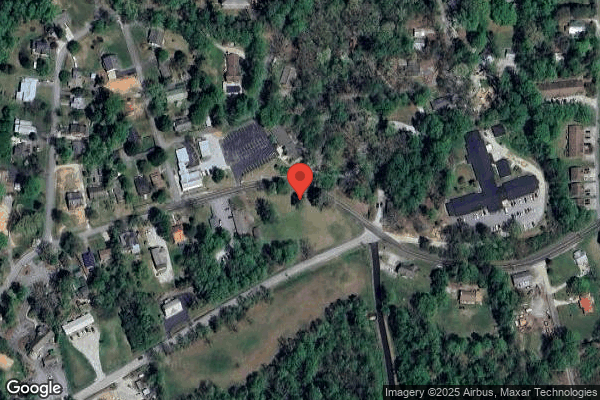

547 WARWOMAN ROAD, CLAYTON, GA 30525 (706) 782-4276
For profit - Corporation 117 Beds C. ROSS MANAGEMENT Data: November 2025
Trust Grade
25/100
#298 of 353 in GA
Last Inspection: October 2023

Over 2 years since last inspection. Current conditions may differ from available data.

Overview

Mountain View Health Care in Clayton, Georgia, has received a Trust Grade of F, indicating significant concerns about the facility's quality and care. Ranked #298 out of 353 in the state, it falls in the bottom half of Georgia facilities, though it is the only nursing home option in Rabun County. The facility's performance is worsening, with issues increasing from 10 in 2022 to 11 in 2023. Staffing is relatively stable, with a turnover rate of 35%, which is below the state average, but the facility has concerning RN coverage, being lower than 85% of other facilities in Georgia. Notably, there were serious incidents involving medication errors that harmed a resident, including a failure to notify a physician about a significant change in condition, which led to an emergency room visit for unresponsiveness. Overall, while there are some strengths in staffing stability, the numerous deficiencies and serious incidents raise significant red flags for families considering care for their loved ones.

Trust Score
F
25/100
In Georgia
#298/353
Bottom 16%
Safety Record
High Risk
Review needed
Inspections
Getting Worse
10 → 11 violations
Staff Stability
○ Average
35% turnover. Near Georgia's 48% average. Typical for the industry.
Penalties
✓ Good
No fines on record. Clean compliance history, better than most Georgia facilities.
Skilled Nurses
⚠ Watch
Each resident gets only 13 minutes of Registered Nurse (RN) attention daily — below average for Georgia. Fewer RN minutes means fewer trained eyes watching for problems.
Violations
⚠ Watch
24 deficiencies on record. Higher than average. Multiple issues found across inspections.
★☆☆☆☆
1.0
Overall Rating
★☆☆☆☆
1.0
Staff Levels
★☆☆☆☆
1.0
Care Quality
★★☆☆☆
2.0
Inspection Score
Stable
2022: 10 issues
2023: 11 issues

The Good

  • Full Sprinkler Coverage · Fire safety systems throughout facility
  • No fines on record
  • Staff turnover below average (35%)

    13 points below Georgia average of 48%

Facility shows strength in fire safety.

The Bad

1-Star Overall Rating

Below Georgia average (2.6)

Significant quality concerns identified by CMS

Staff Turnover: 35%

11pts below Georgia avg (46%)

Typical for the industry

Chain: C. ROSS MANAGEMENT

Part of a multi-facility chain

Ask about local staffing decisions and management

The Ugly 24 deficiencies on record

3 actual harm
Oct 2023 11 deficiencies
CONCERN (D) 📢 Someone Reported This

A family member, employee, or ombudsman was alarmed enough to file a formal complaint

Potential for Harm - no one hurt, but risky conditions existed

Free from Abuse/Neglect (Tag F0600)

Could have caused harm · This affected 1 resident

Based on staff interviews, record review, and review of the facility's policy titled, Abuse, Neglect and Exploitation, the facility failed to protect the resident's right to be free from verbal and se...

Read full inspector narrative →
Based on staff interviews, record review, and review of the facility's policy titled, Abuse, Neglect and Exploitation, the facility failed to protect the resident's right to be free from verbal and sexual abuse for one of five Residents (R) R52 by R219. Specifically, the facility failed to intervene after multiple incidents of verbal sexual abuse towards female residents by R219, that resulted in physical sexual touching towards R52, who was a target of prior verbal abuse by R219. Findings include: Review of the facility's policy titled Abuse, Neglect and Exploitation dated 2017, stated Each resident has the right to be free from abuse, neglect, misappropriation of resident property and exploitation .Residents must not be subject to abuse by anyone, including, but not limited to; .other residents .5. Prevention of Abuse, Neglect, and Exploitation-The facility will consider utilization of the following tips for prevention of abuse, neglect, and exploitation of residents: .b. Observe resident behavior and their reaction to other residents, roommates, and tablemates .m. Assess, monitor, and develop appropriate plans of care for residents with inappropriate sexual behavior, whether towards staff or other residents. Review of R52's undated Face Sheet provided by the facility, indicated R52 had diagnoses which included disorders of psychological development, difficulty in walking, and abnormal posture. Review of R52's quarterly Minimum Data Set (MDS) located in the Electronic Medical Record (EMR) under the MDS tab, with an Assessment Reference Date (ARD) of 10/17/2022 (MDS just prior to incident), revealed the facility assessed the resident to have a Brief Interview for Mental Status (BIMS) score of 99, indicating the resident could not complete the interview. The staff assessment for cognitive skills for daily decision making indicated R52 was severely cognitively impaired. Review of R219's undated Face Sheet provided by the facility, revealed R219 had diagnoses which included unspecified intellectual disabilities. Review of R219's quarterly MDS located in the EMR under the MDS tab, with an ARD of 7/14/2022, (MDS prior to incident on 12/5/2022) indicated the resident was severely cognitively impaired. R219 was independent with ambulation, and was assessed as having psychosis, but no behaviors. Review of R219's Interdisciplinary Team (IDT) documentation revealed on 1/14/2022 at 1:01 am several residents reported to writer that yesterday this resident [R219] was sitting in big dining room table with other residents and made a sexual remark 'wanting to put his penis in her vagina' towards another resident. Upon being told this I (sic) started q (every)15 min (minute) checks. On 1/27/2022 at 5:37 pm, Resident [R219] was overheard [by an unnamed resident] talking to another resident referring to R52 bed of she can't talk but her father gave me permission to see and talk with that(sic). This is same resident told me about child he molested(sic) years ago . On 2/09/2022, Resident [R219] continues with behaviors of speaking about situations that have a slightly sexual slant to them. Will see mental health on next visit. Continued review of IDT documentation revealed on 11/30/2022, Behavior PAR-Resident added this week D/T (due to) inappropriate sexual behaviors reported by staff and other residents . The facility placed R219 on thirty-minute visual monitoring after each incident. During an interview on 10/24/2023 at 4:34 pm, the Assistant Director of Nursing (ADON), who was the unit nurse at the time of incident, stated she was in the hall that day when R42 mentioned that R219 was touching R52 inappropriately. The ADON was asked what she did about the incident. The ADON stated she had interviewed R42, R52, and R219. The ADON further stated while interviewing R52, the resident would just cry when she asked where she had been touched. When questioned about her breast and privates the resident started screaming. The ADON stated she contacted the Administrator in Training (AIT), the Medical Director, Responsible Party, and Law Enforcement. When the deputy arrived R219 was arrested for breaking his probation. The ADON was questioned if R219 was being visually monitored by the ADON during the time of incident and why she had not witnessed it? The ADON stated she was doing medication pass during that time and was only doing spot checks on R219. During an interview on 10/25/2023 at 10:45 am, the Administrator stated that R219's admission referral did not indicate he was a registered sex offender, and they had not been made aware until law enforcement had told them shortly after admission, maybe six weeks. During a telephone interview on 10/25/2023 at 12:57 pm, the Medical Director reiterated he was onsite during the time of the alleged incident. The Medical Director stated after learning of the incident on 12/5/2022, he immediately went and examined R52 and there was no physical evidence of sexual contact. The Medical Director stated R219 was mentally slow, able to walk around, and had dementia. R219 never had any overt inappropriate sexual behaviors until January 2022. The Medical Director stated at that time he believed he placed R219 on Provera (hormone/contraceptive) and Depakote (anticonvulsant sometimes used to treat mood). The Medical Director stated the resident seemed to be stable, there had been no physical touching or anything. After the incident on 12/5/2022 the Medical Director stated he ordered R219 to be sent to the emergency room, and stated he was not appropriate to return to the facility.
CONCERN (D) 📢 Someone Reported This

A family member, employee, or ombudsman was alarmed enough to file a formal complaint

Potential for Harm - no one hurt, but risky conditions existed

Deficiency F0604 (Tag F0604)

Could have caused harm · This affected 1 resident

Based on observations, record review, staff interviews, and review of facility's policy titled, ''Restraint Free Environment Policy,'' the facility failed to ensure one of one Resident (R) (R4) review...

Read full inspector narrative →
Based on observations, record review, staff interviews, and review of facility's policy titled, ''Restraint Free Environment Policy,'' the facility failed to ensure one of one Resident (R) (R4) reviewed for physical restraints was free from an unnecessary physical restraint. Specifically, R4 did not have the necessary consent or an assessment in place for seatbelt to be applied and used with use of wheelchair. Findings include: The facility's ''Restraint Free Environment Policy'' dated 2/2023 read, ''It is the policy of this facility that each resident shall attain and maintain his/her highest practicable well-being in an environment that prohibits the use of restraints for discipline or convenience and limits restraint use to circumstances in which the resident has medical symptoms that warrant the use of restraints;'' and ''3.Behavioral interventions should be used and exhausted prior to the application of a physical restraint;'' and ''5.Before a resident is restrained, the facility will determine the presence of a specific medical symptom that would require the use of restraints, and determine: a. How the use of restraints would treat the medical symptoms, b. The length of time the restraint is anticipated to be used to treat the medical symptoms, who may apply the restraint, and the time and frequency that the restraint will be released, c. The type of direct monitoring and supervision that will be provided during use of the restraint, d. How the resident will request staff assistance and how his/her needs will be met while the restraint is in place, and e. How to assist the resident in attaining or maintaining his or her highest practicable level of physical and psychosocial well-being. R4's ''Face Sheet'' dated 10/26/2023 and found in the Electronic Medical Record (EMR) under the ''Basic Information'' tab, indicated R4 was admitted with diagnoses including cerebral palsy (a group of disorders that affect a person's ability to maintain balance and posture), epilepsy, and Angelman Syndrome (a genetic disorder which causes delayed development, problems with speech and balance, and intellectual disability). R4's quarterly ''Minimum Data Set (MDS)'' assessment with an Assessment Reference (ARD) date of 7/14/2023, found in the EMR under the ''MDS'' tab, indicated a Brief Interview for Mental Status (BIMS) score of 99 (the assessment was not able to be conducted due to the resident's poor cognition). The assessment indicated R4 was dependent upon staff for standing and for transferring from her bed to her wheelchair. The assessment indicated physical restraints of any kind were Not Used. R4's ''Fall Care Plan,'' dated 10/13/2023 and found in the EMR under the ''Care Plan'' tab, indicated R4 was at high risk for potential falls and due to abnormal posture and her lack of ability to ''make safe decisions for myself.'' Interventions included, 'I have a QRB [seatbelt] while up in the W/C [wheelchair] as an enabler, check me every 30 minutes and release every 2 hours for positioning.'' A ''Telephone Order'' dated 12/15/2003 was provided directly to the survey team and indicated, ''QRB while up in chair for poor safety awareness and define parameters-check q [every] 30 minutes and release q 2 hrs [hours].'' R4's most recent quarterly ''Interdisciplinary Therapy Screening,'' dated 9/25/2023 and provided directly to the survey team, revealed no indication R4's seatbelt was being monitored or assessed by the therapy team. Comprehensive review of R4's medical record lacked documentation that R4 had ever been assessed for the use of the seatbelt, for alternative interventions to the seatbelt, or ongoing application of the seatbelt. No documentation was found in R4's record to indicate informed consent had been obtained by the resident's Representative for the use of the seatbelt. No documentation was found in the record to indicate R4's seatbelt was being monitored every 30 minutes or released every two hours per physician's orders. R4 was observed up in her wheelchair on 10/23/2023 at 11:41 am on 10/24/2023 at 1:35 pm, on 10/25/2023 at 10:14 am and 5:30 pm, and on 10/26/2023 at 9:24 am. R4's wheelchair had a seatbelt affixed to it and the seatbelt was observed to be buckled around the resident's waist during each observation. During an interview on 10/23/2023 at 11:41 am, Certified Nursing Assistant (CNA2) confirmed she was very familiar with R4 and stated the seatbelt had been in place for a long time. CNA2 stated R4 was not able to release the seatbelt independently. R4 was observed with the Regional Nurse Consultant (RNC) on 10/24/2023 at 4:55 pm. The RNC confirmed the presence of the seatbelt on R4's wheelchair and indicated the seatbelt was most likely being used as a physical restraint. The RNC indicated her expectation was residents would not be physically restrained unless assessed for the specific need to be restrained. During an interview with the Director of Nursing (DON) and Assistant Director of Nursing (ADON) on 10/26/2023 at 9:38 am, both confirmed R4 was unable to remove her own seatbelt and stated if R4's seatbelt was not in place R4 was able to propel herself around the facility by scooting forward in her wheelchair and maneuvering the chair with her legs/feet. Both the DON and ADON indicated they were concerned the resident would ''face plant'' (fall face forward out of her wheelchair) while ambulating throughout the facility in her wheelchair if the seatbelt was not in place. The DON stated, ''When it [the seatbelt] is on her, it keeps her from scooting forward in her [wheel]chair.'' The DON and the ADON indicated they were not aware of any other interventions that had been tried prior to applying the seatbelt to R4's wheelchair, and both acknowledged the seatbelt was restraining the resident from being able to move around in the seat of the wheelchair and from being able to propel herself throughout the facility in her wheelchair.
CONCERN (D) 📢 Someone Reported This

A family member, employee, or ombudsman was alarmed enough to file a formal complaint

Potential for Harm - no one hurt, but risky conditions existed

Report Alleged Abuse (Tag F0609)

Could have caused harm · This affected 1 resident

Based on record reviews, staff interviews, and review of the facility's policy titled, Abuse, Neglect, and Exploitation,, the facility failed to ensure that an allegation of verbal abuse was reported ...

Read full inspector narrative →
Based on record reviews, staff interviews, and review of the facility's policy titled, Abuse, Neglect, and Exploitation,, the facility failed to ensure that an allegation of verbal abuse was reported immediately, but no later than two hours of the alleged verbal abuse for two of six Residents (R) (R31, and R218) reviewed for resident-to-resident abuse. Findings include: Review of the facility's policy titled, Abuse, Neglect, and Exploitation, dated 2017, stated .13. In response to allegations of abuse, neglect, exploitation, or mistreatment, the facility must: a. Ensure that all alleged violations involving abuse, neglect, exploitation, or mistreatment .are reported immediately, but not later than 2 hours after the allegation is made .to other officials (including State Survey Agency and adult protected services where the state law provides for jurisdiction in long-term care facilities) in accordance with State law. Review of R218's Departmental Notes, dated 9/22/2023 at 11:03 pm, provided by the facility, stated At or around 1800 [6:00 pm] it was reported to this nurse by hall aide, resident [R218] stated to roommate [R31], you're nasty as hell and if you don't get out of this damn room, I'll kill you! Per hall aide, contact was never made. This nurse immediately went to the resident's room at that time, upon entry resident [R218] was seated on side of bed w/no (with/no) pants on w/one foot on floor and one foot held in lap scraping the bottom of her foot w/a plastic butter knife. [The] Roommate [R31] was immediately removed from room (to another room) w/o (without) injury. During an interview on 10/24/2023 at 4:19 pm, the Assistant Director of Nursing (ADON), was asked to describe what had occurred involving R31 and R218. The ADON stated, Certified Nurse Aide (CNA) 1 had informed her that she had overheard R218 had threatened to kill R31. The ADON contacted the Administrator in training (AIT), who called the Administrator, and informed her of the incident. During an interview on 10/25/2023 at 10:45 am, the AIT stated she had reported the incident late to the State because at first, she didn't realize the comment had been made to R31 by R218, and not directly to staff, but was witnessed by staff. The AIT confirmed the incident should have been reported immediately or within two hours of the allegation. Review of the Facility's Reportable Incident (FRI) dated 9/29/2023, provided by the facility, documented the date and time of the alleged verbal abuse occurred on 9/22/2023 at 6:00 pm, indicating the FRI was reported seven days after the event.
CONCERN (D) 📢 Someone Reported This

A family member, employee, or ombudsman was alarmed enough to file a formal complaint

Potential for Harm - no one hurt, but risky conditions existed

Investigate Abuse (Tag F0610)

Could have caused harm · This affected 1 resident

Based on record reviews, staff interview, and review of the facility's policy titled, Abuse, Neglect, and Exploitation the facility failed to ensure a thorough and complete investigation was conducted...

Read full inspector narrative →
Based on record reviews, staff interview, and review of the facility's policy titled, Abuse, Neglect, and Exploitation the facility failed to ensure a thorough and complete investigation was conducted following a resident-to-resident altercation, involving two of six Residents (R) (R7 and R9) reviewed for alleged abuse. This failure not to conduct a thorough abuse investigation had the potential to result in other residents not being identified as potential victims of abuse. Findings Include: Review of the facility's policy titled Abuse, Neglect, and Exploitation dated 2017, stated .7. Investigation of Alleged Abuse, Neglect, and Exploitation- When suspicion of abuse, neglect, or exploitation, or reports of abuse, neglect, or exploitation occur, an investigation is immediately warranted. Once the resident is cared for and initial reporting has occurred, an investigation should be conducted. Components of an investigation may include .c. Interview all witnesses separately. Include roommates, residents in adjoining rooms, staff members in the area, and visitors in the area . Review of the Facility Reported Incident (FRI) revealed on 10/5/2023 at approximately 12:30 pm, R9 was propelling in his wheelchair and attempted to pass by R7, who was also in a wheelchair, and was parked at a table in the main dining room. R9 came too close to R7's wheelchair, and their wheels locked together. Staff witnessed both residents slap each other on each other's arm. The staff immediately separated R7 and R9. Review of R7's undated Face Sheet, provided by the facility, indicated R7 was admitted to the facility with diagnoses which included major depressive disorder and Alzheimer's disease. Review of R7's quarterly Minimum Data Set (MDS) located in the Electronic Medical Record (EMR) with an Assessment Reference Date (ARD) of 7/18/2023, revealed the facility assessed the resident to have a Brief Interview for Mental Status (BIMS) score of five out of 10, which indicated R7 was severely cognitively impaired. Review of R7's Care Plan, dated 8/17/2017, located in the EMR under the Care Plan tab, documented, the resident demonstrates potential for behaviors as I have a history of social issues, and I wander in facility appropriately . Interventions instructed staff Meds [medications] as ordered, Redirect/reassure and reorient PRN[as needed] .Provide and encourage activities for distraction, Observe behavior and try to determine cause, consult my MD [medical doctor], document behaviors, and provide consistent routines as much as possible. Review of R9's undated Face Sheet, provided by the facility, indicated the R9 admitted with diagnoses which included schizophrenia, schizoaffective disorder bipolar type, psychotic disorder with delusions due to physiological condition, and dementia with behavioral disturbance. Review of R9's annual MDS, located in the residents' EMR under the MDS tab, with an ARD of 9/4/2023, revealed the facility assessed the resident to have a Brief Interview for Mental Status (BIMS) score of nine out of 15 which indicated the resident was moderately cognitively impaired. Behaviors were not exhibited during this assessment. Review of R9's Care Plan, dated 1/2/2018, located in the resident's EMR under the Care Plan tab revealed the resident was care planned for: Adverse moods, s/s [signs/symptoms] of Depression and behaviors r/t [related to] dx [diagnosis] of Schizophrenia, psychosis, depression, anxiety, bipolar disorder. Sometimes I get angry and will lash out. I refuse care, restorative, and meals at times, throw items at others, verbal abuse to others/ delusions/hallucination/hits self in head with fist/choked staff member/spit at staff, scratches self, has h/o [history of] self-mutilation. Reviewed/revised on 6/4/2023 .Interventions included: Observe for adverse reactions to meds. Use diversional activity PRN [as needed], gently remove others from the area if I am agitated. Allow time to calm down before re-approaching, Praise for consistent acceptable behavior. Analyze my behavior for cause (fear, pain, etc.), Observe me for s/s of increased depression. Encourage involvement in activity. Administer my meds as ordered prn. Notify my MD PRN. Assess and document type of behavior to assess possible cause. Approach me calmly and speak softly. If I remain agitated, reapproach at a different time, or seek out alternative staff to attempt care. Responds better to some staff than others, Psych [psychiatric] consult prn. Offer me a blanket for comfort/decrease agitation (likes to put it over his head and shoulders). Disposable plastic silverware only for all meals. 1/30/2023-Med review new order Dronabinol 5mg BID [Twice daily]. Receives Care Now Services (Psych). Review of the Facility's Investigative Report dated 10/5/2023, revealed the facility had interviewed both R7, R9, and staff that witnessed the event. Continued review revealed there was no evidence that additional residents were interviewed to ascertain there were no additional incidents with other residents. During an interview on 10/25/2023 at 10:45 am, the Administrator in Training (AIT) who conducted the investigation stated that no other residents were interviewed during the investigation.
CONCERN (D) 📢 Someone Reported This

A family member, employee, or ombudsman was alarmed enough to file a formal complaint

Potential for Harm - no one hurt, but risky conditions existed

Comprehensive Care Plan (Tag F0656)

Could have caused harm · This affected 1 resident

Based on record reviews, staff interviews, and review of the facility's policy titled, ''Comprehensive Care Plans,'' the facility failed to ensure two of 26 Residents (R) (R11 and R219) reviewed for c...

Read full inspector narrative →
Based on record reviews, staff interviews, and review of the facility's policy titled, ''Comprehensive Care Plans,'' the facility failed to ensure two of 26 Residents (R) (R11 and R219) reviewed for care plans had a complete and comprehensive care plan. Specifically, R11 care plans did not address the resident's prescribed psychotropic medication problem area and/or interventions. Additionally, R219 known inappropriate sexual behaviors was not identified on the resident's care plan. Findings include: Review of the facility's undated policy titled, ''Comprehensive Care Plans,'' indicated, ''Policy: It is the policy of this facility to develop and implement a comprehensive person-centered care plan for each resident, consistent with resident rights, that includes measurable objectives and timeframes to meet a resident's medical, nursing, and mental and psychosocial needs that are identified in the resident's comprehensive assessment.'' 1. Review of R11's undated ''Face sheet'' located in the ''Basic Information'' tab of the Electronic Medical Record (EMR) revealed R11 admitted with a diagnosis of dementia with behavioral disturbance and major depressive disorder. Review of R11's quarterly ''Minimum Data Set (MDS)'' with an assessment reference date (ARD) of 9/14/2023, located in the ''MDS'' tab of the EMR, indicated R11 received an antipsychotic medication seven of the previous seven days and received an antipsychotic medication on a routine basis. Review of R11's Physician Orders'' located in the resident's EMR under the ''Orders'' tab of the EMR revealed an order for ''Risperidone [an antipsychotic medication] 0.25 MG [milligrams] tablet give one tablet by mouth twice a day.'' This order was initiated on 12/06/2022 and discontinued on 10/6/2023. On 10/6/2023, an order was written for R11 to receive 'Risperidone 0.25 MG tablet, one (1) tablet daily QHS [every bedtime]. Review of R11's October 2023 monthly ''Medication Administration Records (MAR),'' located in the ''Orders'' tab of the EMR, revealed R11 received Risperidone 0.25 mg every night at bedtime from 10/06/2023 to 10/25/2023. Review of R11's ''Care Plan'' located in the ''Care Plan'' tab of the EMR revealed R11's care plan did not include a ''problem'' that included resident centered goals and interventions that addressed the resident's use of Risperidone (an antipsychotic medication). During an interview on 10/26/2023 at 11:50 am, the Minimum Data Set Coordinator (MDSC) reviewed R11's EMR and confirmed R11 previously received Risperidone twice a day and since 10/6/2023 received Risperidone once a day at bedtime. The MDSC confirmed a care plan ''problem'' which included specific goals and interventions that addressed R11's use of Risperidone had not been developed. 2. Review of R219's undated Face Sheet, provided by the facility, indicated R219 with diagnoses which included intellectual disabilities. Review of R219's Interdisciplinary Team (IDT) documentation revealed on 1/14/2022 at 1:01 am several residents reported to writer that yesterday this resident [R219] was sitting in big dining room table with other residents and made a sexual remark 'wanting to put his penis in her vagina' towards another resident. Upon being told this I (sic) started q (every) 15 min (minute) checks. On 1/27/2022 at 5:37 pm, Resident [R219] was overheard talking to another resident referring to R52 bed of she can't talk but her father gave me permission to see and talk with that(sic). This is same resident told me about child he molested(sic) years ago . On 2/9/2022, Resident [R219] continues with behaviors of speaking about situations that have a slightly sexual slant to them. Will see mental health on next visit. Continued review of IDT documentation revealed on 11/30/2022, Behavior PAR-Resident added this week D/T (due to) inappropriate sexual behaviors reported by staff and other residents . The facility placed R219 on thirty-minute visual monitoring after each incident. Review of R219's Care Plan, dated from 11/13/2019 through 12/5/2022, located in the electronic medical record (EMR), under the Care Plan tab revealed although it was documented throughout R219's electronic medical record of inappropriate sexual behaviors, it was not part of his care plan as a problem, so there were no interventions put into place. Review of R219's complete EMR and physical chart, revealed R219 had expressed inappropriate verbal sexual behaviors on the following dates: 1/14/2022, 1/27/2022, 2/9/2022, and on 11/30/2022. During an interview on 10/25/2023 at approximately 3:23 pm with the Administrator and the Administer in Training (AIT), they concluded there was no rationale for not developing and implementing a care plan for history of sexual behaviors or after the resident displayed sexual verbal abusive behavior towards female residents, even after learning R219 was a registered sex offender shortly after admission in 2019.
CONCERN (D) 📢 Someone Reported This

A family member, employee, or ombudsman was alarmed enough to file a formal complaint

Potential for Harm - no one hurt, but risky conditions existed

ADL Care (Tag F0677)

Could have caused harm · This affected 1 resident

Based on observations, record review, staff and resident interviews, and review of the facility's policy titled, ''Activities of Daily Living (ADLs) Policy,'' the facility failed to ensure one of thre...

Read full inspector narrative →
Based on observations, record review, staff and resident interviews, and review of the facility's policy titled, ''Activities of Daily Living (ADLs) Policy,'' the facility failed to ensure one of three Residents(R) (R56) reviewed for Activities of Daily Living (ADLs) received ADL assistance according to his plan of care. Specifically, staff did not ensure the resident received consistent nail care. Findings include: The facility's ''Activities of Daily Living (ADLs) Policy'' dated 10/2022 read, in pertinent part, ''The facility will, based on the resident's comprehensive assessment and consistent with the resident's needs and choices, ensure a resident's abilities in ADLs do not deteriorate unless deterioration is unavoidable;'' and ''Care and services will be provided for the following activities of daily living: 1. Bathing, dressing, grooming and oral care.'' R56's ''Face Sheet'' dated 10/26/2023 and found in the Electronic Medical Record (EMR) under the ''Basic Information'' tab, indicated R56 was admitted with diagnoses including cardiomyopathy and chronic pain. R56's Significant Change Minimum Data Set (MDS) assessment with an Assessment Reference Date (ARD) of 8/22/2023, found in the EMR under the ''MDS'' tab, indicated a Brief Interview for Mental Status (BIMS) score of nine out of 15 (moderately cognitively impaired). The assessment indicated R56 required substantial/maximal assistance of staff for grooming/bathing/showering. R56's ''Activities of Daily Living (ADL) Care Plan,'' dated 08/22/2023 found in the EMR under the ''Care Plan'' tab, indicated R56 needed assistance with performing ADLs, including nail care. Interventions included, ''Keep my nails clean and trimmed.'' R56's ADL Records, dated 10/01/2023 through 10/26/2023 provided directly to the survey team, were reviewed, and indicated nothing specific to nail hygiene. The record indicated R56 was provided with grooming assistance daily. R56 was observed either in his room in bed or in his wheelchair on 10/24/2023 at 11:16 am, 1:38 pm, and 2:48 pm, on 10/25/2023 at 9:49 am, 12:15 pm, 2:49 pm, and 5:31 pm, and on 10/26/2023 at 9:25 am. R56 was observed to have long fingernails (approximately one-half inch past the end of his fingertips) with brown debris under each of his nails during each of the observations. During an interview on 10/24/2023 at 11:16 am, R56 stated, ''I like them [fingernails] trimmed. I need them trimmed. I've only had them trimmed twice since I've been here.'' R56 was observed along with the Director of Nursing (DON) on 10/26/2023 at 9:54 am. The DON confirmed R56's nails were too long and had brown debris under each of them and stated, her expectation was all residents should have their fingernails trimmed and cleaned regularly. During an interview on 10/26/2023 at 10:41 am, Certified Nursing Assistant (CNA) 4 stated residents were supposed to have their nails trimmed on shower days. CNA4 stated, I will get them [R56's fingernails] trimmed today.
CONCERN (D) 📢 Someone Reported This

A family member, employee, or ombudsman was alarmed enough to file a formal complaint

Potential for Harm - no one hurt, but risky conditions existed

Deficiency F0679 (Tag F0679)

Could have caused harm · This affected 1 resident

Based on observations, record reviews, staff interviews, and review of the facility's policy titled, ''Activities Policy the facility failed to ensure three of four Residents (R) (R17, R31, and R47) r...

Read full inspector narrative →
Based on observations, record reviews, staff interviews, and review of the facility's policy titled, ''Activities Policy the facility failed to ensure three of four Residents (R) (R17, R31, and R47) reviewed for activities were provided with an activities program to meet their individual needs. Specifically, staff did not ensure residents who were room and/or bed bound were provided with consistent activities. Findings include: Review of the facility's policy titled, ''Activities Policy dated 10/2022 read, in pertinent part, ''It is the policy of the facility to provide an ongoing program to support residents in their choices of activities based on their comprehensive assessment, care plan, and preferences. Facility sponsored group, individual, and independent activities will be designed to meet the interests of each resident, as well as support their physical, mental, and spiritual well-being. 1. Review of R17's ''Face Sheet'' dated 10/26/2023 and found in the Electronic Medical Record (EMR) under the ''Basic Information'' tab, indicated the R17 admitted to the facility with diagnoses which included seizures and severe intellectual disabilities. Review of R17's Significant Change Minimum Data Set (MDS) with an Assessment Reference Date (ARD) of 7/6/2023 and found in the EMR under the ''MDS'' tab, indicated a Brief Interview for Mental Status (BIMS) score of 99 (the assessment could not be completed due to the resident's poor cognition). The assessment also indicated R17 participated in recreational therapy activities on zero of seven days during the assessment reference period. Review of R17s Care Plan, dated 10/5/2023 and found in the EMR under the ''Care Plan'' tab indicated the resident was at risk for alteration in psychosocial well-being and indicated interventions including ''Provide me with 1:1 activities as desired'' and Offer me activities that I enjoy, listening to music and watching television and going outside when it is nice.'' Review of R17's ''Activity Progress Note (Assessment), dated 10/4/2023 and found in the EMR under the Progress Notes tab, indicated R17 was not able to structure his own activities and indicated the resident's ''Time involved in activities'' was ''None.'' The document indicated R17's preferred setting for activities was his own room, and that he enjoyed music and pet visits. Review of R17's ''Activities Log/Participation Records'' dated 10/1/2023 through 10/26/2023 and provided directly to the survey team, indicated the resident's participation in one-to-one activities on 10/3/2023 (pet visit and sensory stimulus) and on 10/24/2023 (pet visit and talking/conversation). There were no other documented activities for R17 between 10/1/2023 and 10/26/2023. R17 was observed in his room in bed on 10/24/2023 at 1:23 pm and 2:53 pm, on 10/25/2023 at 9:41 am, 12:15 pm, 2:52 pm, and 5:26 pm, and on 10/26/2023 at 9:21 am and 3:11 pm. R17 was not observed to be participating in any leisure activities during any of the observations. R17's roommate's television was observed to be on during all the observations; however, R17 was not observed to be engaged in watching the television. There was no music playing in R17's room, nor was there a radio or other music playing device in the resident's room during any of the observations. Activities staff were not observed in R17's room during the survey conducted between 10/23/2023 and 10/26/2023. Although the facility had a resident dog, the dog was not observed in R17's room during the survey. During an interview on 10/25/2023 at 3:11 pm, the Activities Director (AD) indicated R17 did not attend group activities and stated she tried to see bed bound residents for 1:1 activities once per week in their rooms. The AD stated she had a cassette player that she sometimes brought into R17's room during her visits, but stated R17 did not have his own radio or cassette player as far as she knew. The AD stated, He can't turn anything on himself and so he does not have access to music when I am not there. He naps a good bit and will look out at the birds. The AD confirmed the participation documentation indicated R17 had only received two 1:1 visits during the month of October and stated, He should have access to music and pets more than twice a month . I will definitely make more time with him [moving forward]. The AD stated she did have an assistant activities staff member, but stated the assistant was not comfortable going into resident rooms to provide 1:1 activities and so she was the only staff member who was providing those activities. 2. Review of R31's undated Face Sheet provided by the facility, indicated R31 admitted to the facility with diagnoses which included cognitive communication deficit. Review of R31's significant change Minimum Data Set (MDS), located in the EMR, under the MDS tab, with an ARD of 8/14/2023, revealed the facility assessed the resident to have a BIMS score of 99, which indicated the resident was unable to complete the interview. A staff assessment for cognitive skills for daily decision making indicated R31's cognition was severely impaired. The resident did not exhibit any rejection of care. R31 required extensive assistance of two people for bed mobility, and total dependance of one person for dressing, and personal hygiene. The staff assessment of daily and activity preferences stated the resident enjoyed participating in favorite activities, and spending time outdoors. Review of R31's Care Plan revised 8/15/2023, located in the EMR under the Care Plan tab stated I'm at risk for psychosocial isolation related to NHP (nursing home placement), decreased activity tolerance, or cognitive deficits. The staff were instructed to assist resident in planning leisure-time activities, schedule activities to allow for limited energy, provide resident with materials to start and finish projects, offer verbal praise to reinforce positive social behavior in group activities whenever possible and appropriate, one on one room visits whenever needed, assist resident with selecting appropriate activities by evaluating activity preferences, offer me activities I enjoy listening to someone read, listening to music, and talking about the past. Review of R31's Activity One to One Roster dated 10/1/2023 through 10/26/2023, provided by the facility, revealed activities were provided on 10/2/2023 at 1:06 pm, on 10/5/2023 at 3:19 pm, and on 10/24/2023 at 3:12 pm. During an interview conducted on 10/25/2023 at 3:28 pm, with the AD, when questioned about R31's activities, the AD responded, I wash/massage her hands, and brush her hair. The AD was asked where she documented R31's activities? The AD replied she had not been documenting activities in R31's chart. 3. Review of R47's undated Face Sheet provided by the facility indicated R47 readmitted to the facility with diagnoses which included dementia without behaviors/psychiatric/mood/anxiety. Review of R47's quarterly MDS, located in the EMR, under the MDS tab, with an ARD of 9/18/2023, revealed the facility assessed the resident to have a BIMS score of 99 which indicated the resident was unable to complete the interview. A staff assessment for cognitive skills for daily decision making indicated R47's cognition was severely impaired. The resident was assessed during the seven days look back period as rejecting care for four to six days but less than daily. R47 was totally dependent on staff for all activities of daily living including getting dressed. Preferences were not assessed during the quarterly assessment. Review of R47's Care Plan dated 9/18/2023, located in the EMR, under the Care Plan tab, revealed I am at risk for psychosocial isolation related to NHP, decreased activity tolerance, or cognitive deficits. The care plan instructed staff to assist resident in planning leisure-time activities, schedule activities to allow for limited energy, provide resident with materials to start and finish projects, offer verbal praise to reinforce positive social behavior in group activities, provide structured activity program for intellectual stimulation, engage resident in group activities whenever possible and appropriate, one on one visits whenever needed, assist resident with selecting appropriate activities by evaluating activity preferences, offer me activities I enjoy such as listening to music, listening to someone read and going outside. Review of R47's Activity One to One Roster dated 10/1/2023 through 10/26/2023, provided by the facility, revealed activities were provided on 10/9/2023 at 4:33 pm, on 10/10/2023 at 3:06 pm, on 10/17/2023 at 3:51 pm, and on 10/24/2023 at 11:19 am. During observations conducted on 10/23/2023, 10/24/2023, 10/25/2023, and 10/26/2023, R31 and R47 were observed in their bed during the entirety of each day. R31and R47 were not involved with any type of activities during the entire survey. During an interview conducted on 10/25/2023 at 3:32 pm, the AD was questioned concerning what types of activities she conducted with R47. The AD replied R47 liked the dog, and she did hand massaging with him. When asked how often she engaged in activities with R47, the AD stated she did activities two to three times a week but did not document the activities. During interviews conducted on 10/26/2023 at 10:40 am with Certified Nurse Aides (CNA) 1 and CNA3, both CNAs stated they had never seen either resident out of bed, and/or attend/participate in activities.
CONCERN (D) 📢 Someone Reported This

A family member, employee, or ombudsman was alarmed enough to file a formal complaint

Potential for Harm - no one hurt, but risky conditions existed

Infection Control (Tag F0880)

Could have caused harm · This affected 1 resident

Based on observations, record review, staff interviews, and review of the facility's policy titled, ''Catheter Care Policy,'' the facility failed to ensure consistent infection control for one of thre...

Read full inspector narrative →
Based on observations, record review, staff interviews, and review of the facility's policy titled, ''Catheter Care Policy,'' the facility failed to ensure consistent infection control for one of three Residents (R) (R56) reviewed for urinary catheters. Specifically, staff failed to ensure sanitary maintenance of the resident's catheter bag and tubing. Findings include: The facility's ''Catheter Care Policy'' dated 10/2022 read, in pertinent part, ''It is the policy of the facility to ensure that residents with indwelling catheters receive appropriate catheter care and maintain their dignity and privacy when indwelling catheters are in use.'' R56's ''Face Sheet'' dated 10/26/2023 and found in the Electronic Medical Record (EMR) under the ''Basic Information'' tab, indicated the R56 admitted to the facility with diagnoses including cardiomyopathy and obstructive uropathy. R56's Significant Change Minimum Data Set (MDS) assessment, with an Assessment Reference (ARD) date of 8/22/2023 and found in the EMR under the ''MDS'' tab, indicated a Brief Interview for Mental Status (BIMS) score of 9 out of 15 (moderately cognitively impaired). The assessment indicated the resident had an indwelling urinary catheter in place in his bladder. R56's ''Indwelling Foley (Urinary) Catheter Care Plan,'' dated 10/19/2023 and found in the EMR under the ''Care Plan'' tab, indicated R56 had an indwelling catheter due to obstructive and reflux uropathy. Interventions included, ''observe for and report signs of infection/complications.'' R56's ''Physician Orders,'' dated 10/26/2023 and found in the EMR under the ''Orders'' Tab, indicated an order to maintain Foley catheter 16 French (Fr)/10 milliliter (ML) Bulb. R56 was observed up in his wheelchair on 10/23/2023 at 12:02 pm and 12:17 pm, and again with the Director of Nursing (DON) on 10/26/2023 10:02 am. R56's catheter bag and tubing were observed dragging on the floor under the resident's wheelchair during all three observations. During the observation on 10/26/2023 at 10:02 am, the DON confirmed R56's catheter tubing and bag were dragging on the floor and stated her expectation was neither the catheter bag or tubing should ever be in contact with the floor for infection control purposes. During an interview on 10/26/2023 at 10:05 am, Certified Nursing Assistant (CNA) 2 and CNA4 stated they were very familiar with R56 and both stated the reason R56's catheter tubing and bag were often found dragging on the floor underneath his wheelchair was because the hook underneath the resident's wheelchair did not work well to keep the tubing and bag up off the floor, and because there was a cross bar underneath R56's wheelchair that prevented staff from securely attaching the resident's catheter bag and tubing to his chair to prevent slipping.
CONCERN (D) 📢 Someone Reported This

A family member, employee, or ombudsman was alarmed enough to file a formal complaint

Potential for Harm - no one hurt, but risky conditions existed

Room Equipment (Tag F0908)

Could have caused harm · This affected 1 resident

Based on observations, staff interviews, record review, and review of the facility's policy titled, ''Food Safety Requirements,'' the facility failed to maintain and ensure the kitchen's three door re...

Read full inspector narrative →
Based on observations, staff interviews, record review, and review of the facility's policy titled, ''Food Safety Requirements,'' the facility failed to maintain and ensure the kitchen's three door reach-in freezer operated at zero degrees Fahrenheit (F) or below for safe food storage for one of two freezers used to store food. Findings include: Review of the facility's undated policy entitled, ''Food Safety Requirements,'' indicated, ''Refrigerated storage - foods that require refrigeration shall be refrigerated immediately upon receipt or placed in the freezer, whichever is applicable. Practices to maintain safe refrigerated storage include i. Monitoring food temperatures and functioning of refrigeration equipment daily and at routine intervals during all hours of operation .'' Review of the facility's ''Maintenance Log'' revealed an entry dated 8/1/2023 which specified to measure gaskets for all coolers in kitchen and get replaced. The entry was not marked as completed. Review of the October 2023 ''Temperature Log'' for the kitchen's three door reach-in freezer revealed no temperatures were documented on the log on 10/20/2023, 10/21/2023, and 10/22/2023. On 10/23/2023, staff documented the freezer's morning temperature was 10 degrees F and the freezer's evening temperature was four degrees F. On 10/24/2023, staff documented the freezer's morning temperature was two degrees F and the evening temperature was 12 degrees F. On 10/25/2023, staff documented the freezer's morning temperature was seven degrees F and the evening temperature was six degrees F. Observation during the initial kitchen inspection on 10/23/2023 from 9:35 am to 10:15 am, revealed the kitchen's three door reach-in freezer was operating at 14 degrees Fahrenheit (F) as measured by the freezer's interior thermometer. Observation revealed the freezer's three interior door gaskets were worn, loose and did not provide a tight seal around their doors to prevent cold air from escaping from the freezer's interior storage compartment. Further observations revealed ice had formed on the top of the freezer's inner compartment and the ice was melting onto the boxes of food stored in the freezer and the water had pooled and refroze at the bottom of the freezer. Food observed stored in this freezer included meats, vegetables, hash browns, ice cream, and sherbet. A package of hash browns and eight four-ounce cartons of lime sherbet stored in this freezer appeared to have thawed and refrozen. The eight four-ounce cartons of lime sherbet stored in this freezer were soft and not completely frozen. During an interview on 10/23/2023 at 10:15 am, the Dietary Manager (DM) stated he informed the facility's maintenance staff in September 2023 the interior door gaskets on the kitchen's three door freezer were loose, worn and needed to be replaced, but the door gaskets were never replaced. The DM stated the three-door reach-in freezer should operate at zero degrees or lower to keep foods stored in the freezer frozen, but the freezer operates at temperatures above zero degrees F during working hours. The DM confirmed the package of hash browns and the eight four-ounce cartons of lime sherbet stored in this freezer looked like they had thawed and refrozen. Observation, on 10/24/2023 at 2:15 pm, revealed the interior temperature of the kitchen's three door reach-in freezer was 16 degrees F as measured by the freezer's interior thermometer. The freezer's three door gaskets were still worn, loose and not completely affixed around the interior of the doors. The lime sherbet stored in this freezer was soft and not completely frozen. Observation, on 10/25/2023 at 9:15 am, revealed the interior temperature of the kitchen's three door reach-in freezer was 15 degrees F as measured by the freezer's interior thermometer. The freezer's three door gaskets were still worn, loose and not completely affixed around the interior of the doors. The lime sherbet stored in this freezer was soft and not completely frozen. Observation, on 10/25/2023 at 11:50 am, revealed the interior temperature of the kitchen's three door reach-in freezer was 16 degrees F as measured by the freezer's interior thermometer. The freezer's three door gaskets were still worn, loose and not completely affixed around the interior of the doors. The lime sherbet stored in this freezer was soft and not completely frozen. During an interview on 10/25/2023 at 1:25 pm, the facility's Corporate Maintenance Manager (CMM) stated he was informed on 10/24/2023 the kitchen's three door reach-in freezer was operating at temperatures above zero degrees F and the freezer's door gaskets needed to be replaced. The CMM stated he ordered replacement door gaskets for the kitchen's reach-in freezer on 10/24/2023. During an interview on 10/25/2023 at 1:45 pm, the Administrator stated the facility's prior maintenance director resigned at the end of September 2023. The Administrator stated she was aware there was a delay in obtaining the replacement door gaskets for the kitchen's three door reach-in freezer and they were not ordered until the CMM ordered them on 10/24/2023. Observation, on 10/25/2023 at 2:15 pm, revealed the interior temperature of the kitchen's three door reach-in freezer was 15 degrees F as measured by the freezer's interior thermometer. The freezer's three door gaskets were still worn, loose and not completely affixed around the interior of the doors. Lime sherbet stored in this freezer was soft and not completely frozen. Upon request, the DM used a digital thermometer to monitor the internal temperature of one of the cartons of lime sherbets stored in this freezer and the sherbet's internal temperature was measured at 14 degrees F.
CONCERN (E) 📢 Someone Reported This

A family member, employee, or ombudsman was alarmed enough to file a formal complaint

Potential for Harm - no one hurt, but risky conditions existed

Resident Rights (Tag F0550)

Could have caused harm · This affected multiple residents

**NOTE- TERMS IN BRACKETS HAVE BEEN EDITED TO PROTECT CONFIDENTIALITY** Based on observation, resident and staff interview, record review, and review of the facility's policies titled, ''Resident Dini...

Read full inspector narrative →
**NOTE- TERMS IN BRACKETS HAVE BEEN EDITED TO PROTECT CONFIDENTIALITY** Based on observation, resident and staff interview, record review, and review of the facility's policies titled, ''Resident Dining, and Promoting/Maintaining Resident Dignity the facility failed to provide care and services in a manner to ensure a dignified existence for six of six residents (R) (R64, R118, R11, R50, R31, and R47) reviewed for dignity. Specifically, the facility failed to promote a dignified dining experience by serving desserts and beverages in disposable bowls and cups and serving disposable plastic eating utensils at meals for four of four residents (R64, R118, R11, and R50) reviewed for dignity while dining. Additionally, the facility failed to assist and encourage R31 and R47 to dress in clothes other than a hospital gown. Findings include: 1. Review of the facility's undated policy titled, ''Resident Dining,'' indicated, ''Resident dining should take place in an environment and in a manner that maintains or enhances each resident's dignity and respects his or her individuality . Provide napkins and non-disposable cutlery and dishware (including cups and glasses).'' Observation on 10/23/2023 from 12:45 pm to 1:25 pm of the resident lunch meal service in the facility's main dining room revealed eight of eight residents, who ate in the main dining, were served a plastic knife, fork and spoon, beverages in disposable Styrofoam cups and dessert in a disposable plastic cup at this meal. Observation on 10/25/2023 from 12:05 pm to 12:20 pm revealed [NAME] (C) 1 was serving resident lunch meals from the kitchen's tray line. Observation of resident meal trays being prepared revealed beverages were served in disposable Styrofoam cups, and desserts were served in disposable plastic cups. a. Review of R64's admission ''Minimum Data Set (MDS)'' assessment with an assessment reference date (ARD) of 9/28/2023, located in ''MDS'' tab of the Electronic Medical Record (EMR), revealed a ''Brief Interview for Mental Status (BIMS)'' score of 13 out of 15 which indicated R64 was cognitively intact. Observation on 10/23/2023 at 12:52 pm revealed R64 was served his lunch meal in the facility's main dining room. Observation of R64's lunch meal revealed he was served disposable eating utensils with his meal. R64's beverages were served in a Styrofoam cup and his dessert was served in a disposable plastic cup. During an interview on 10/23/2023 at 12:52 pm, R64 stated he preferred to receive regular eating utensils with his meals. Observation on 10/25/2023 at 12:30 pm revealed R64 was served his lunch meal in the facility's main dining room. Observations of the resident's lunch meal revealed beverages were served in a Styrofoam cup and his dessert was served in a disposable plastic cup. During an interview with R64 on 10/26/2023 at 12:25 pm, R64 stated he was served plastic eating utensils at some meals and was often served his dessert in a disposable plastic cup and his beverages in Styrofoam cups at meals. R64 stated he preferred to receive metal eating utensils with his meals to be able to cut his food easier and preferred his food and beverages to be served in regular bowls and cups. b. Review of R118's undated Face sheet'' located in the ''Basic Information'' tab of the EMR revealed R118 with diagnoses of diabetes mellitus and chronic obstructive pulmonary disease (COPD). Further review of R118's EMR revealed staff had not completed an MDS assessment. Observation on 10/24/2023 at 9:46 am revealed R118 received her breakfast meal in her room. Observations of R118's breakfast meal revealed she was served a disposable plastic spoon, knife, and fork with her meal. During an interview on 10/24/2023 at 9:46 am, R118 stated she received plastic eating utensils at some meals and preferred to eat with metal eating utensils. R118 stated she received beverages in Styrofoam cups and desserts in disposable plastic cups at meals and preferred to receive regular cups and bowls. Observation on 10/25/2023 at 12:55 pm of R118's lunch meal revealed her dessert was served in a disposable plastic cup and a beverage was served in a Styrofoam cup. c. Review of R11's quarterly MDS assessment with an ARD of 9/14/2023, located in the MDS'' tab of the EMR, revealed a ''BIMS'' score of four out of 15 which indicated R11 was severely cognitively impaired. Observation on 10/23/2023 at 1:08 pm revealed R11 was served his lunch meal in the facility's main dining room. Observation of R11's lunch meal revealed he was served a plastic knife, fork, and spoon with his meal. Two of R11's beverages were served in a Styrofoam cup and his dessert was served in a disposable plastic cup. Observation on 10/25/2023 at 12:46 pm revealed R11 was served his lunch meal in the facility's main dining room. Observations of R11's lunch meal revealed his tea was served in a Styrofoam cup and his dessert was served in a disposable plastic cup. d. Review of R50's admission MDS assessment with an ARD of 9/21/2023. located in the MDS tab of the EMR, revealed a BIMS score of nine out of 15 which indicated R50 was moderately cognitively impaired. Observation on 10/25/2023 at 1:00 pm revealed R50 was served his lunch meal in his room. Observation of R50's lunch meal revealed his dessert was served in a disposable plastic cup. Observation on 10/25/2023 at 5:35 pm of R50's evening meal revealed two beverages were served in a Styrofoam cup and his dessert was served in a disposable plastic cup. During an interview on 10/26/2023 at 10:40 am, the Dietary manager (DM) stated when the kitchen was short staffed, they served disposable plastic eating utensils with resident meals. The DM explained the kitchen staff normally served resident beverages in disposable Styrofoam cups and resident desserts in disposable plastic cups at each meal. During an interview on 10/25/2023 at 1:45 pm, the Administrator stated the kitchen staff should not serve plastic eating utensils or food and beverages in disposable Styrofoam cups and plastic bowls to residents at meals. 2. Review of the facility's policy titled Promoting/Maintaining Resident Dignity dated 10/2022, stated, It is the practice of this facility to protect and promote resident rights and treat each resident with respect and dignity as well as care for each resident in a manner and in an environment, that maintains or enhances resident's quality of life by recognizing each resident's individuality .1.All staff members are involved in providing care to residents to promote and maintain resident dignity and respect resident rights. 2. During interactions with residents, staff must report, document and act upon information regarding residents' preferences. 3. Interview results will be documented; the provision of care and care plans will be revised, if appropriate, based on information obtained from resident interviews .9. Groom and dress residents according to resident preference. a. Review of R31's undated Face Sheet provided by the facility, indicated R31 had diagnoses which included acute systolic (congestive) heart failure, cognitive communication deficit, and weakness. Review of R31's significant change MDS, located in the EMR under MDS tab, with an ARD of 8/14/2023, revealed the facility assessed the resident to have a BIMS score of 99, which indicated the resident was unable to complete the interview. A staff assessment for cognitive skills for daily decision making indicated R31's cognition was severely impaired. The resident did not exhibit any rejection of care. R31 required extensive assistance of two people for bed mobility, and total dependance of one person for dressing, and personal hygiene. The resident preferences were left blank. Review of R31's Care Plan revised 8/15/2023, located in the EMR under the Care Plan tab, revealed I have a self-care deficit(sic) related to debility, COPD (chronic obstructive pulmonary disease)/CHF (congestive heart failure), a fib (atrial fibrillation). Interventions instructed staff to staff to assist me with bathing, dressing, hygiene, and grooming needs as needed .Encourage me to choose clothing for the day and appropriate for the season as I will allow. During observation and interviews conducted on 10/26/2023 at 10:40 am with Certified Nurse Aides (CNA) 1 and CNA3, R31 was observed in a hospital gown. CNA1 and CNA3 both stated, they don't know why she wears a hospital gown. CNA1 added maybe it is because she has a sore on her backside. b. Review of R47's undated Face Sheet provided by the facility, indicated the resident was initially admitted on [DATE], with a readmission on [DATE], with diagnoses which included dementia without behaviors/psychiatric/mood/anxiety, heart failure, and hypertension. Review of R47's quarterly MDS, located in the EMR, under the MDS tab, with an ARD of 9/18/2023, revealed a BIMS score was 99 which indicated the resident was unable to complete the interview. A staff assessment for cognitive skills for daily decision making indicated R47's cognition was severely impaired. The resident was assessed during the seven days look back period as rejecting care for four to six days but less than daily. R47 was totally dependent of staff for all activities of daily living, including getting dressed. Preferences were not assessed during the quarterly assessment. Review of R47's Care Plan revised 9/18/2023, located in the EMR, under the Care Plan tab, revealed I have a self-care deficity (sic) related to dementia. Interventions instructed staff to Staff to assist me with bathing, dressing, hygiene, and grooming needs, as needed .encourage me to choose clothing for the day and appropriate for the season, as I will allow. Observations were conducted on 10/23/2023 at 11:37 am, and 3:52 pm. R47 was observed in bed with a hospital gown on. Observations were conducted on 10/24/2023 at 9:05 am, and 4:00 pm and R47 was observed lying in bed with a hospital gown on. During observation and interviews on 10/26/2023 at 10:37 am with CNA1 and CNA3, R47 was observed in a hospital gown. CNA1 and CNA3 both stated, they don't know why he wears a hospital gown. During an interview conducted on 10/24/2023 at 4:19 pm with the Assistant Director of Nursing (ADON), currently on the nursing unit where R31 and R47 were located, the ADON was questioned why R31 and R47 were dressed in hospital gowns? The ADON replied she didn't know why they wore hospital gowns. During an interview conducted on 10/26/2023 at 4:04 pm with the Administrator related to concerns of residents being in hospital gowns, the Administrator stated that it was her expectation the staff would have provided the residents with appropriate care and services, when residents allow staff to do so. Continued interview revealed if the residents did not allow the staff to assist them in dressing in clothing, then it should be documented and put in a care plan. Surveyor: [NAME], [NAME] M.
CONCERN (F) 📢 Someone Reported This

A family member, employee, or ombudsman was alarmed enough to file a formal complaint

Potential for Harm - no one hurt, but risky conditions existed

Food Safety (Tag F0812)

Could have caused harm · This affected most or all residents

**NOTE- TERMS IN BRACKETS HAVE BEEN EDITED TO PROTECT CONFIDENTIALITY** Based on observation, staff interviews, and review of the facility's policies titled, ''Date Marking for Food Safety'' and ''Foo...

Read full inspector narrative →
**NOTE- TERMS IN BRACKETS HAVE BEEN EDITED TO PROTECT CONFIDENTIALITY** Based on observation, staff interviews, and review of the facility's policies titled, ''Date Marking for Food Safety'' and ''Food Safety Requirements,'' the facility failed to date, label, and/or cover food, and discard food with expired expiration dates or signs of spoilage stored in the facility's kitchen and the facility's ''Diet Room.'' Additionally, the facility failed to serve [NAME] stew from the kitchen's tray line at an internal temperature of 135 degrees Fahrenheit (F) or higher. This failure had the potential to affect all 67 residents who consumed food prepared from the facility's kitchen. Findings include: Review of the facility's undated policy titled, ''Date Marking for Food Safety,'' indicated, ''Policy: The facility adheres to a date marking system to ensure the safety of ready-to-eat, time/temperature control for food safety . 2. The food shall be clearly marked to indicate the date or day by which the food shall be consumed or discarded. 3. The individual opening or preparing a food shall be responsible for date marking the food at the time the food is opened or prepared . 6. The Head Cook, or designee, shall be responsible for checking the refrigerator daily for food items that are expiring, and shall discard accordingly. 7. The Dietary Manager (DM), or designee, shall spot check refrigerators weekly for compliance, and document accordingly. Corrective action shall be taken as needed.'' Review of the facility's undated policy titled, ''Food Safety Requirements,'' indicated, ''Policy: . Food will also be stored, prepared, distributed, and served in accordance with professional standards for food service safety . Labeling, dating, and monitoring refrigerated food, including, but not limited to leftovers, so it is used by its use-by date, or frozen (where applicable)/discarded . Ready-to-eat foods that require heating before consumption must be heated to at least 135 [degrees] F.'' 1. Observation during the initial kitchen inspection on 10/23/2023 from 9:35 am to 10:15 am, revealed the following concerns with food storage: a. Observation of food stored in the kitchen's walk-in refrigerator revealed a five pound container of Ricotta cheese with an expired expiration date of 10/9/2023, three stalks of wilted and brownish colored celery, 28 undated and unlabeled plastic cups of leftover fruit with whipped topping, an opened and undated package of Swiss cheese, an opened and undated package of provolone cheese slices, an undated and unlabeled large container of leftover cooked macaroni, an undated and unlabeled large container of leftover tomato soup, an undated and unlabeled large container of jelly, two undated thawed four-ounce nutritional shakes, and two undated and unlabeled opened loaves of marble rye bread. b. Observation of food stored in the kitchen's reach-in refrigerator revealed an undated and unlabeled package of American cheese, an undated thawed four-ounce nutritional shake, two undated and unlabeled opened loaves of bread, eight undated and unlabeled plastic cups of leftover vanilla pudding. c. Observation of food stored in the kitchen's reach in freezer revealed an opened, undated, and uncovered large bag of carrot coins; and an opened, undated, and uncovered 18.75-pound box of wheat rolls. d. Observation of food stored in the kitchen's chest freezer revealed an opened, undated, and uncovered large bag of chicken nuggets. e. Observation of food stored in the kitchen's dry storage area revealed an opened and uncovered 25-pound bag of brown rice. During an interview on 10/23/2023 at 10:15 am, the Dietary Manager (DM) confirmed the undated, unlabeled, uncovered, expired, and spoiled food observed stored in the kitchen's walk-in refrigerator, reach-in refrigerator, reach-in freezer, chest freezer, and dry storage area. The DM stated staff were expected to date, label, and completely cover opened foods prior to storing them and to discard any food with an expired expiration date or signs of spoilage. 2. Observation of food stored in the facility's ''Diet Room'' refrigerator on 10/24/2023 at 2:45 pm, revealed eight undated thawed four-ounce nutritional shakes, and two undated plastic cups of pudding. During an interview on 10/24/2023 at 2:50 pm, the DM confirmed the eight thawed nutritional shakes, and the two containers of pudding stored in the Diet Room's refrigerator were not dated. The DM stated the eight thawed nutritional shakes, and two containers of pudding should have been dated by staff before they left the kitchen. 3. Observation on 10/25/2023 at 12:05 pm of kitchen staff preparing resident lunch meal trays from the kitchen's tray line revealed [NAME] (C) 1 was placing a pre-poured bowl of [NAME] stew on resident trays. Upon request, the DM monitored the temperature of a pre-poured bowl of [NAME] stew that was on the tray line, with a calibrated thermometer, and the internal temperature of the stew was measured at 123.8 degrees F. During an interview on 10/25/2023 at 12:05 pm, the DM stated the temperature of the [NAME] stew was monitored about a half hour before the lunch tray line began and at that time the internal temperature of the stew was 157 degrees F which was documented on the kitchen's ''Food Temperature Log.'' The DM stated no further temperature monitoring of the [NAME] stew was performed before it was served from the tray line. The DM confirmed the [NAME] stew needed to be maintained at a temperature of 135 degrees F or above when served from the kitchen's tray line.
Sept 2022 10 deficiencies 3 Harm
SERIOUS (G)

Actual Harm - a resident was hurt due to facility failures

Notification of Changes (Tag F0580)

A resident was harmed · This affected 1 resident

**NOTE- TERMS IN BRACKETS HAVE BEEN EDITED TO PROTECT CONFIDENTIALITY** Based on observations, record review, interviews, and policy review, the facility failed to notify the physician for a change in...

Read full inspector narrative →
**NOTE- TERMS IN BRACKETS HAVE BEEN EDITED TO PROTECT CONFIDENTIALITY** Based on observations, record review, interviews, and policy review, the facility failed to notify the physician for a change in condition for one of two residents (R) (R#41) reviewed for change in conditions. Specifically, R#41 suffered harm as result of staff administering insulin and medications with a sedative effect when resident was difficult to arouse, requiring treatment for unresponsiveness in the emergency room. The sample size was 31. Findings include: Review of the Change in a Resident's Condition or Status policy, revised May 2017, revealed number 1. The nurse will notify the resident's Attending Physician or physician on call when there has been a(an): c. adverse reaction to medication; d. significant change in the resident's physical/emotional/mental condition; e. need to alter the resident's medical treatment significantly. Review of the clinical record revealed R#41 was admitted to the facility on [DATE], with diagnoses of diabetes mellitus, anxiety disorder, and chronic pain. The resident's most recent quarterly Minimum Data Set (MDS) dated [DATE] revealed a Brief Interview for Mental Status (BIMS) was coded as 12, indicating moderate cognitive impairment. Section N revealed R#41 received insulin injections, antianxiety and opioid medications, seven of seven days. Review of R#41's September 2022 Physician Orders (PO) revealed an order for Novolog insulin 100 unit/ml (milliliter) give 15 units subcutaneously before meals. Hold if NPO (nothing by mouth) or not eating (ordered 4/28/22); Levemir insulin 100 unit/ml give 30 units subcutaneously twice daily (ordered 4/28/22); Baclofen (muscle relaxant) 20 mg (milligram) one tablet by mouth every six hours (ordered 2/6/18); Pregabalin (nerve pain medication) 150 mg capsule by mouth every six hours (ordered 4/25/22); Oxycodone (narcotic pain medication) 20 mg by mouth every six hours (ordered 4/5/2020); Xanax (anti-anxiety) 0.5 mg one tablet by mouth twice a day (ordered 3/8/22). Review of the September 2022 Medication Administration Record (MAR) documented that R#41 received the following medications on 9/6/22: Novolog insulin, 15 units subcutaneously at 6:00 a.m. and 11:00 a.m.; Levemir insulin 30 units subcutaneously at 6:30 a.m.; 20 mg of baclofen on 9/6/22 at 6:00 a.m. and 11:00 a.m.; 20 mg of oxycodone HCL on 9/6/22 at 6:00 a.m. and 11:00 a.m.; 150 mg of pregabalin on 9/6/22 at 6:00 a.m. and 11:00 a.m.; and 0.5 mg of Xanax on 9/6/22 at 9:00 a.m. Observation on 9/6/22 at 10:56 a.m. revealed R#41 was asleep in her bed. Observation on 9/6/22 at 12:19 p.m., Certified Nursing Assistant (CNA) A brought R#41's lunch tray into her room and then came right back out with the resident's tray, returning it to the hall cart. CNA A was asked about bringing R#41's tray out of the room, and she stated she couldn't arouse R#41. She revealed she would tell the nurse, stating the resident's blood sugar is low and continued to pass trays. At this time, CNA B stated R#41 has been that way [difficult to arouse] all morning. Observation on 9/6/22 at 12:20 p.m., R#41 was observed in bed with her eyes closed and with a yellow liquid substance on the sheets and a plastic basin next to R#41's left side of the head of the bed. Review of R#41's Progress Note, written by Licensed Practical Nurse (LPN) C, dated 9/6/22 at 8:29 a.m. revealed resident was unable to arouse enough to wake and eat breakfast, tried several times, VSS [vital sign stable]. Further review of the Progress Notes revealed no evidence that the physician was notified that R#41 had a change in condition and that staff was unable to arouse her. Review of the Progress Notes, written by LPN C, dated 9/6/22 at 11:58 a.m. revealed resident is alert and oriented watching table [sic] took meds as ordered, blood sugar was 112, scheduled insulin was given, no SSC (sliding scale coverage). Further review of the Progress Notes, dated 9/6/22, revealed an addendum to the 11:58 a.m. note written by LPN C that stated the blood sugar was 155 not 112. This addendum was time stamped for 2:17 p.m. on 9/6/22. Observation on 9/6/22 at 12:30 p.m., LPN C was observed to enter R#41's room and completed vitals that included blood pressure, pulse, oxygen saturations, and temporal artery temperature. LPN C was noted to have difficulty arousing R#41, using sternal rubs, and calling the resident's name and still, no response. LPN C then stated she was going to have to send R#41 out to the hospital. Review of R#41's Progress Note dated 9/6/22 at 12:31 p.m. revealed resident was found lethargic and had vomited x 1, emesis basin given. Resident alert but lethargic. VS [vitals] BP [blood pressure] 120/78, pulse 80, O2 [oxygen] SAT [saturation] 94% 2L [liter], TEMP [temperature] 97.5. Notified MD [physician] and was given ordered to send out to ER [emergency room] for further evaluation. Left via stretcher per EMS [emergency medical services]. Review of R#41's Telephone Order, dated 9/6/22 at 12:31 p.m., located on the hard chart, revealed an order to send resident to ER for evaluation. Review of the Emergency Medical System (EMS) documentation provided by the facility revealed R#41 was transported on 9/6/22 at 1:05 p.m. Review of R#41's hospital records, dated 9/6/22, provided by the Assistant Director of Nursing (ADON), revealed R#41 patient drowsy. the patient was given 0.4 mg of Narcan [opioid overdose treatment] and after approximately 10 minutes she was more arousable, blood pressure did improve into the 130's when patient became more alert and oriented. Suspect oversedation in addition to hyponatremia (low sodium) and UTI (urinary tract infection) . Medication administration- Narcan 0.4 mg/ml vial: 0.4 mg IV push. Further review of the hospital documentation, provided by the facility, revealed R#41 received Naloxone HCL [Narcan] 0.4mg/ml vial: 0.4 mg IV push three times for increased drowsiness/unresponsiveness. Naloxone is a medication used to reverse the effect of decreased breathing due to opioid overdose. Phone interview on 9/9/22 at 12:37 p.m. with the Medical Director (MD) stated he was aware of R#41's condition and being sent to the ER. He stated he did not remember discussing with the facility about R#41 not eating her breakfast and lunch meals that day. He stated her insulin was administered because her blood sugars were within parameters. The MD continued to say he didn't remember discussing R#41 receiving medications with sedative effects such as oxycodone when R#41 had been difficult to arouse earlier, as these medications would make her condition worse. During further interview, he stated his expectation is for the nurses to follow the orders. Cross Refer: F760, F658
SERIOUS (G)

Actual Harm - a resident was hurt due to facility failures

Deficiency F0658 (Tag F0658)

A resident was harmed · This affected 1 resident

**NOTE- TERMS IN BRACKETS HAVE BEEN EDITED TO PROTECT CONFIDENTIALITY** Based on observations, record review, interviews, review of job descriptions, policy review, and Rule 410-10-.02 Standards of Pr...

Read full inspector narrative →
**NOTE- TERMS IN BRACKETS HAVE BEEN EDITED TO PROTECT CONFIDENTIALITY** Based on observations, record review, interviews, review of job descriptions, policy review, and Rule 410-10-.02 Standards of Practice for Licensed Practical Nurses, the facility failed to maintain professional nursing standards of quality regarding medication administration. Specifically, Licensed Practical Nurse (LPN) C administered insulin and medications with sedative effects for one resident (R) (R#41) when resident didn't eat breakfast or lunch and was difficult to arouse. In addition, the facility failed to notify the physician for change in condition for R#41. Harm was identified on 9/6/22 when R#41 required treatment with Narcan for unresponsiveness and opioid overdose in the emergency room. Findings include: Review of the Charge Nurse- LPN (Licensed Practical Nurse]) job description for drug administration and documentation, undated, revealed prepare and administer medications under the direction of an RN (Registered Nurse) and as ordered by the physician in accordance with nursing standards and facility policies. Sign, dates and performs all charting and recordkeeping in accordance with established policies and procedures. Review of the undated policy titled Medication Administration, revealed medications are administered in accordance with orders of the attending physician. If a dose seems excessive considering the patient's age and condition, or a medication order seems to be unrelated to the patient's current diagnosis or condition, the physician is contacted for clarification prior to the administration of the medication. This interaction with the physician is documented in the nursing notes and elsewhere in the medical record as appropriate. Review of the Georgia Rule 410-10-.02 - Standards of Practice for Licensed Practical Nurses revealed that: The practice of licensed practical nursing means the provision of care for compensation, under the supervision of a physician practicing medicine, a dentist practicing dentistry, a podiatrist practicing podiatry, or a registered nurse practicing nursing in accordance with applicable provisions of law. Such care shall relate to the promotion of health, the prevention of illness and injury, and the restoration and maintenance of physical and mental health through acts authorized by the board, which shall include, but not be limited to the following: (a) Participating in patient assessment activities and the planning, implementation, and evaluation of the delivery of health care services and other specialized tasks when appropriately educated and consistent with board rules and regulations. (b) Providing direct personal patient observation, care, and assistance in hospitals, clinics, nursing homes, or emergency treatment facilities, or other health care facilities in areas of practice including, but not limited to coronary care, intensive care, emergency treatment, surgical care and recovery, obstetrics, pediatrics, outpatient services, dialysis, specialty labs, home health care, or other such areas of practice. (c) Performing comfort and safety measures. (d) Administering treatments and medications by various routes. Review of the clinical record revealed R#41 was admitted to the facility on [DATE], with diagnoses of diabetes mellitus, anxiety disorder, and chronic pain. The resident's most recent quarterly Minimum Data Set (MDS) dated [DATE] revealed a Brief Interview for Mental Status (BIMS) was coded as 12, indicating moderate cognitive impairment. Section N revealed R#41 received insulin injections, antianxiety and opioid medications, seven of seven days. Review of R#41's September 2022 Physician Orders (PO) revealed the following orders: -NovoLog [insulin] 100 unit/ml (Milliliter) vial give 15 units subcutaneously (subq) before meals. Hold if NPO [nothing by mouth] or not eating, order date 4/28/22. -Levemir [insulin] 100 unit/ml give 30 units subq twice daily, order date 4/28/22. -Baclofen [muscle relaxant] 20 mg [milligram] tablet, one tablet by mouth every six hours, order date 2/6/18. -Pregabalin [nerve pain medication] 150 mg capsule take one capsule by mouth every six hours scheduled, order date 4/25/22. -Oxycodone [narcotic] HCL [hydrochloride] 20 mg tablet, one tablet by mouth every 6 hours, order date 4/5/2020. -Xanax [sedative] 0.5 mg tablet give one tablet by mouth twice a day, order date 3/8/22. Review of the September 2022 Medication Administration Record (MAR) documentation revealed that R#41 received the following medications on 9/6/22: Novolog insulin, 15 units subcutaneously at 6:00 a.m. and 11:00 a.m.; Levemir insulin 30 units subcutaneously at 6:00 a.m.; 20 mg of baclofen on 9/6/22 at 6:00 a.m. and 11:00 a.m.; 20 mg of oxycodone HCL on 9/6/22 at 6:00 a.m. and 11:00 a.m.; 150 mg of pregabalin on 9/6/22 at 6:00 a.m. and 11:00 a.m.; and 0.5 mg of Xanax on 9/6/22 at 9:00 a.m. Observation on 9/6/22 at 10:56 a.m., revealed R#41 was asleep in bed. Observation on 9/6/22 at 12:19 p.m., Certified Nursing Assistant (CNA) A brought R#41's lunch tray into her room and then came right back out with the resident's tray, returning it to the hall cart. CNA A was asked about bringing R#41's tray out of the room, and she stated she couldn't arouse R#41 to eat. She revealed she would tell the nurse, stating the resident's blood sugar is low and continued to pass trays. At this time, CNA B stated R#41 has been that way [difficult to arouse] all morning. Observation on 9/6/22 at 12:20 p.m., R#41 was observed in bed with her eyes closed and with a yellow liquid substance on the sheets and a plastic basin next to her left side of the head of the bed. Review of Progress Note, written by Licensed Practical Nurse (LPN) C, dated 9/6/22 at 8:29 a.m. revealed resident was unable to arouse enough to wake and eat breakfast, tried several times, VSS [vital sign stable]. Further review of the Progress Notes revealed no evidence that the physician was notified that R#41 had a change in condition and that staff was unable to arouse her. Review of Meal Percentage Roster dated 9/4/22 through 9/7/22, revealed on 9/6/22 documented intake for breakfast was 0% and lunch was 0%. Review of the September 2022 MAR revealed R#41's blood sugar was 134 at 6:20 a.m. There is no evidence that any other blood sugars were documented to have been taken at the time R#41 was difficult to arouse on 9/6/22 at 8:29 a.m. Review of the Progress Notes, written by LPN C, dated 9/6/22 at 11:58 a.m. revealed resident is alert and oriented watching tablet and took meds as ordered meds, blood sugar was 112, scheduled insulin was given, no SSC. Further review of the Progress Notes, dated 9/6/22, revealed an addendum to the 11:58 a.m. note written by LPN C that stated the blood sugar was 155 not 112. This addendum was time stamped for 2:17 p.m. on 9/6/22. Observation on 9/6/22 at 12:30 p.m., LPN C was observed to enter R#41's room and completed vitals that included blood pressure, pulse, oxygen saturations, and temporal artery temperature. LPN C was noted to have difficulty arousing R#41, using sternal rubs, and calling the resident's name and still, no response. LPN C then stated she was going to have to send R#41 out to the hospital. Review of R#41's Progress Note dated 9/6/22 at 12:31 p.m. revealed resident was found lethargic and had vomited x 1, emesis basin given. Resident alert but lethargic. VS [vitals] BP [blood pressure] 120/78, pulse 80, O2 [oxygen] SAT [saturation] 94% 2L [liter], TEMP [temperature] 97.5. Notified MD [physician] and was given order to send out to ER [emergency room] for further evaluation. Left via stretcher per EMS [emergency medical services]. Review of Telephone Order, dated 9/6/22 at 12:31 p.m., located on the hard chart, revealed an order to send resident to ER for evaluation. Review of the Emergency Medical System (EMS) documentation provided by the facility revealed R#41 was transported on 9/6/22 at 1:05 p.m. Review of hospital records, dated 9/6/22, revealed R#41 patient drowsy. the patient was given 0.4 mg of Narcan [opioid overdose treatment] and after approximately 10 minutes she was more arousable, blood pressure did improve into the 130's when patient became more alert and oriented. Suspect oversedation in addition to hyponatremia (low sodium) and UTI (urinary tract infection) . Medication administration- Narcan 0.4 mg/ml vial: 0.4 mg IV push. Further review of the hospital documentation revealed R#41 had received Naloxone HCL [Narcan] 0.4mg/ml vial: 0.4 mg IV push three times for increased drowsiness/unresponsiveness. Naloxone is a medication used to reverse the effect of decreased breathing due to opioid overdose. Interview on 9/6/22 at 1:16 p.m. with LPN C with the Assistant Director of Nursing (ADON) present, LPN C confirmed she administered R#41 a dose of insulin at 11:00 a.m., not knowing if the resident ate breakfast or not. LPN C stated she checked residents blood sugar when the resident vomited earlier. LPN C stated she did not document the blood sugar on the electronic medical record (EMR). She walked to medication cart and pulled out a glucometer and showed the surveyor a blood sugar reading of 112. She stated she was unsure of the exact time the blood sugar was checked, because the glucometer had the incorrect time on it. She stated after finding resident difficult to arouse, she asked the two CNA's working on the hall (CNA A and CNA B) if R#41 had eaten her breakfast meal and they both confirmed the resident did not eat breakfast or lunch. She stated R#41 was sent to the emergency room (ER) for unresponsiveness. Interview on 9/7/22 at 1:44 p.m. with CNA B stated that she had informed LPN C that R#41 did not eat her breakfast meal. During further interview, CNA B went on to say she documented in residents medical record that she had not eaten breakfast or lunch meal on 9/6/22. On 9/8/22 at 2:54 p.m. and again at 4:28 p.m. attempts to call LPN C to obtain additional information were unsuccessful. Interview on 9/8/22 at 4:10 p.m., the ADON stated the hospital nurse told her they administered Narcan to R#41 because they felt she was over sedated. The ADON stated LPN C should not have administered R#41's anxiety med, oxycodone, and baclofen medications the morning of 9/6/22 due to her unresponsive status. During further interview, the ADON stated she was aware LPN C administered insulin to R#41 at lunch time on 9/6/22 even though she hadn't eaten breakfast or lunch meal. The ADON confirmed the physicians order instructed the nurse not to give insulin if resident had not eaten. She stated her expectation is for staff not to have administered these medications due to R#41 being difficult to arouse. Phone interview on 9/9/22 at 12:37 p.m. with the Medical Director (MD) stated he was aware of R#41's condition and being sent to the ER. He stated he did not remember discussing with the facility about R#41 not eating her breakfast and lunch meals that day, or that she had received medications with sedative effects, when she was difficult to arouse. He stated her insulin was administered because her blood sugar was within parameters. During further interview, he stated his expectation is for the nurses to follow the orders, and to use good nursing judgement. Cross Refer: F760
SERIOUS (G)

Actual Harm - a resident was hurt due to facility failures

Deficiency F0760 (Tag F0760)

A resident was harmed · This affected 1 resident

**NOTE- TERMS IN BRACKETS HAVE BEEN EDITED TO PROTECT CONFIDENTIALITY** Based on record review, interviews, and policy review, the facility failed to ensure that one resident (R) (R#41) was free from ...

Read full inspector narrative →
**NOTE- TERMS IN BRACKETS HAVE BEEN EDITED TO PROTECT CONFIDENTIALITY** Based on record review, interviews, and policy review, the facility failed to ensure that one resident (R) (R#41) was free from significant medication error. Actual harm occurred when insulin and medications with sedative effects were administered to R#41, who was lethargic and difficult to arouse, resulting in emergency room visit and treatment with Narcan for unresponsiveness and opioid overdose. The sample size was 31. Findings include: Review of the undated policy titled Medication Incidents and Adverse Reactions revealed 1. In the event of a medication discrepancy, medication error, or adverse medication reaction, immediate action is taken, as necessary, to protect the patient's safety and welfare. 2. Report the incident immediately to the director of nursing or acting supervisor. 3. The attending physician is notified promptly of the error or significant adverse medication reaction. 9. Significant medication errors and significant adverse drug reactions are defined as unintended, undesirable, and unexpected effects of prescribed medications. Significant medication errors require initial or prolonged hospitalization and require treatment with another prescription medication. Review of the clinical record revealed R#41 was admitted to the facility on [DATE], with diagnoses of diabetes mellitus, anxiety disorder, and chronic pain. The resident's most recent quarterly Minimum Data Set (MDS) dated [DATE] revealed a Brief Interview for Mental Status (BIMS) was coded as 12, indicating moderate cognitive impairment. Section N revealed R#41 received insulin injections, antianxiety and opioid medications, seven of seven days. Review of R#41's September 2022 Physician Orders (PO) revealed the following orders: -NovoLog [insulin] 100 unit/ml (Milliliter) vial give 15 units subcutaneously (subq) before meals. Hold if NPO [nothing by mouth] or not eating, order date 4/28/22. -Levemir [insulin] 100 unit/ml give 30 units subq twice daily, order date 4/28/22. -Baclofen [muscle relaxant] 20 mg [milligram] tablet, one tablet by mouth every six hours, order date 2/6/18. -Pregabalin [nerve pain medication] 150 mg capsule take one capsule by mouth every six hours scheduled, order date 4/25/22. -Oxycodone [narcotic] HCL [hydrochloride] 20 mg tablet, one tablet by mouth every 6 hours, order date 4/5/2020. -Xanax [sedative] 0.5 mg tablet give one tablet by mouth twice a day, order date 3/8/22. Review of the September 2022 Medication Administration Record (MAR) documentation revealed that R#41 received the following medications on 9/6/22: Novolog insulin, 15 units subcutaneously at 6:00 a.m. and 11:00 a.m.; Levemir insulin 30 units subcutaneously at 6:00 a.m.; 20 mg of baclofen on 9/6/22 at 6:00 a.m. and 11:00 a.m.; 20 mg of oxycodone HCL on 9/6/22 at 6:00 a.m. and 11:00 a.m.; 150 mg of pregabalin on 9/6/22 at 6:00 a.m. and 11:00 a.m.; and 0.5 mg of Xanax on 9/6/22 at 9:00 a.m. Review of Progress Note, written by Licensed Practical Nurse (LPN) C, dated 9/6/22 at 8:29 a.m. revealed resident was unable to arouse enough to wake and eat breakfast, tried several times, VSS [vital sign stable]. Further review of the Progress Notes revealed no evidence that the physician was notified that R#41 had a change in condition and that staff was unable to arouse her. Review of the September 2022 MAR revealed R#41's blood sugar was 134 at 6:20 a.m. There is no evidence that any other blood sugars were documented to have been taken at the time R#41 was difficult to arouse on 9/6/22 at 8:29 a.m. Review of the Progress Notes, written by LPN C, dated 9/6/22 at 11:58 a.m. revealed resident is alert and oriented watching tablet and took meds as ordered meds, blood sugar was 112, scheduled insulin was given, no SSC. Further review of the Progress Notes, dated 9/6/22, revealed an addendum to the 11:58 a.m. note written by LPN C that stated the blood sugar was 155 not 112. This addendum was time stamped for 2:17 p.m. on 9/6/22. Review of R#41's Progress Note dated 9/6/22 at 12:31 p.m. revealed resident was found lethargic and had vomited x 1, emesis basin given. Resident alert but lethargic. VS [vitals] BP [blood pressure] 120/78, pulse 80, O2 [oxygen] SAT [saturation] 94% 2L [liter], TEMP [temperature] 97.5. Notified MD [physician] and was given order to send out to ER [emergency room] for further evaluation. Left via stretcher per EMS [emergency medical services]. Review of hospital records, dated 9/6/22, revealed R#41 patient was drowsy. The patient was given 0.4 mg of Narcan [opioid overdose treatment] and after approximately 10 minutes she was more arousable, blood pressure did improve into the 130's when patient became more alert and oriented. Suspect oversedation in addition to hyponatremia (low sodium) and UTI (urinary tract infection). Medication administration - Narcan 0.4 mg/ml vial: 0.4 mg IV push three times for increased drowsiness/unresponsiveness. Interview on 9/6/22 at 1:16 p.m. with LPN C with the Assistant Director of Nursing (ADON) present. LPN C confirmed she administered R#41 a dose of insulin at 11:00 a.m., not knowing if the resident ate breakfast or not. She stated she checked residents blood sugar when the resident vomited earlier. LPN C stated she did not document the blood sugar on the electronic medical record (EMR). She walked to medication cart and pulled out a glucometer and showed the surveyor a blood sugar reading of 112. She stated she was unsure of the exact time the blood sugar was checked, because the glucometer had the incorrect time on it. She stated after finding resident difficult to arouse, she asked the two CNA's working on the hall (CNA A and CNA B) if R#41 had eaten her breakfast meal and they both confirmed the resident did not eat breakfast or lunch. She stated R#41 was sent to the emergency room (ER) for unresponsiveness. Interview on 9/8/22 at 4:10 p.m., the ADON stated the hospital nurse told her they administered Narcan to R#41 because they felt she was over sedated. The ADON stated LPN C should not have administered R#41's anxiety med, oxycodone, and baclofen medications the morning of 9/6/22 due to her unresponsive status. During further interview, the ADON stated she was aware LPN C administered insulin to R#41 at lunch time on 9/6/22 even though she hadn't eaten breakfast or lunch meal. The ADON confirmed the physicians order instructed the nurse not to give insulin if resident had not eaten. She stated her expectation is for staff not to have administered these medications due to R#41 being difficult to arouse. Phone interview on 9/9/22 at 12:37 p.m. with the Medical Director (MD) stated he was aware of R#41's condition and being sent to the ER. He stated he did not remember discussing with the facility about R#41 not eating her breakfast and lunch meals that day, or that she had received medications with sedative effects, when she was difficult to arouse. He stated her insulin was administered because her blood sugar was within parameters. During further interview, he stated his expectation is for the nurses to follow the orders, and to use good nursing judgement. Cross Refer F658, F580
CONCERN (D)

Potential for Harm - no one hurt, but risky conditions existed

Deficiency F0582 (Tag F0582)

Could have caused harm · This affected 1 resident

Based on record review and interviews, the facility failed to ensure the Skilled Nursing Facility Advanced Beneficiary Notices (SNFABN) were completed with the estimated potential liability for contin...

Read full inspector narrative →
Based on record review and interviews, the facility failed to ensure the Skilled Nursing Facility Advanced Beneficiary Notices (SNFABN) were completed with the estimated potential liability for continued services not covered by Medicare, for two of three residents (R) (R#18 and R#17) who were discharged off Medicare Part A services and remained in the facility. Findings include: A policy for beneficiary notices was requested but not provided during the survey. Review of a facility-completed worksheet Beneficiary Notice-Residents discharged Within the Last Six Months, revealed that R#18 and R#17 were discharged from a Medicare-covered Part A stay and remained in the facility after their last covered day. 1. Review of R#18 SNFABN dated 3/26/22, revealed that the effective date of coverage for Skilled Part A Nursing Services/Advanced Physical Therapies would end as of 3/29/22. The notice of a cut or change in services did not describe the estimated liability to the resident if services were continued. The form was verbally consented per phone conversation by resident's representative on 3/26/22. 2. Review of R#17 SNFABN dated 3/31/22, revealed that the effective date of coverage for Skilled Part A Nursing Services/Advanced Physical Therapies would end as of 4/3/22. The notice of a cut or change in services did not describe the estimated liability to the resident if services were continued. The form was signed by the resident on 3/31/22. Interview on 9/8/22 at 4:45 p.m. with the Administrator, confirmed the two SNFABN notices were not completed and the estimated liability for continued services was left blank. Interview on 9/9/22 at 1:00 p.m. with the Business Office Manager, verified the estimated liability to the resident for continued services was not on the original notice.
CONCERN (D)

Potential for Harm - no one hurt, but risky conditions existed

Deficiency F0604 (Tag F0604)

Could have caused harm · This affected 1 resident

**NOTE- TERMS IN BRACKETS HAVE BEEN EDITED TO PROTECT CONFIDENTIALITY** Based on observation, record review, interview, and policy review, the facility failed to ensure bilateral side rails were not u...

Read full inspector narrative →
**NOTE- TERMS IN BRACKETS HAVE BEEN EDITED TO PROTECT CONFIDENTIALITY** Based on observation, record review, interview, and policy review, the facility failed to ensure bilateral side rails were not used as a restraint for one resident (R) R#8 reviewed for physical restraints. The sample size was 31. Findings include: Review of the policy titled, Use of Restraints, revised April 2017, revealed restraints shall only be used for the safety and well-being of the resident(s) and only after other alternatives have been tried unsuccessfully. Restraints shall only be used to treat the resident's medical symptom(s) and never for discipline or staff convenience, or for the prevention of falls. Policy interpretation and implementation. Number 1. Physical Restraints are defined as any manual method or physical or mechanical device, material or equipment attached or adjacent to the resident's body that the individual cannot remove easily, which restricts freedom of movement or restricts normal access to one's body. Number 4. Practices that inappropriately utilize equipment to prevent resident mobility are considered restraints and are not permitted, including .using bed rails to keep a resident from voluntarily getting out of bed as opposed to enhancing mobility while in bed. Review of the clinical record revealed R#8 was admitted to the facility on [DATE] with a diagnosis of senile degeneration of the brain, hypothyroidism, and severe protein calorie malnutrition. Review of the admission Minimum Data Set (MDS) dated [DATE] revealed a Brief Interview of Mental Status (BIMS) of five out of 15 which indicated severe cognitive impairment. Section P revealed resident had bed alarm on the bed for seven out of seven days. The MDS indicated that bed rails were not in use. Review of the quarterly Bed Rail/Assist Bar Evaluation dated 8/31/22, revealed that R#8 was being assessed for half bed rails, and that resident expressed a desire to have bed rails for his own safety and/or comfort. The assessment further revealed, R#8 had fluctuations in his level of consciousness and/or a cognitive deficit but was able to get in/or out of bed, but not safely. R#8 had a history of falls, had problems with balance or poor trunk control and used the bars for positioning or support to help him to rise from a supine position to a sitting/standing position and that there was no possibility the resident would climb over the bed rails but there was reason to believe, or evidence to show, the resident had or may have a desire or reason to get out of bed and there was a risk to the resident if the bed rails/assist bars were used. The assessment indicated that R#8 would have ½ bilateral side rails at the head of his bed to enable or promote independence. Review of the care plan updated on 8/31/22 revealed resident was at risk for falls. Approaches to care include pressure pad alarm to bed. There is no evidence of interventions for the use of the side rails. Observation on 9/7/22 at 9:00 a.m., R#8 was lying in his bed. The bilateral side rails were in the up position; however, the side rails were in the middle of the bed with bolster pillows on each side. A bed alarm clip was connected to the resident's hospital gown. Interview on 9/7/22 at 12:44 p.m., Certified Nurse Assistant (CNA) B was observed sitting next to R#8 assisting him with his lunch meal. She stated the side rails were in the middle portion of the bed instead of the head of the bed to keep him in the bed and to keep him from falling. CNA B further stated, R#8 also has a pressure pad alarm as he is a fall risk and has tried to get up before. Observation on 9/8/22 at 9:48 a.m., R#8 was observed in bed, awake. The ½ side rails were in the middle portion of the bed and were in the up position. Bolster pillows were observed between the resident and the side rail. Interview on 9/8/22 at 10:22 a.m., Social Services Director (SSD) stated that R#8 could not get up on his own and needed staff assistance to get up. She stated that she assisted in doing the assessment, but nursing decides what was needed such as side rails, position alarms etc. During further interview, she stated the side rails were being used to prevent falls. She was asked if she was familiar with the policy on physical restraints which stated that using bed rails to prevent a resident from getting out of bed would be considered a restraint. She stated, Yes, I am aware of it. Interview on 9/9/22 at 2:15 p.m., the Assistant Director of Nursing (ADON) stated that R#8 was not able to get out of bed by himself and required a Hoyer lift for transfers. The ADON was asked if R#8 had requested the side rails be in the middle part of the bed as reflected on the Bed Rail Assessment. She stated, Well, no, not verbally. She was asked if he could use the side rails to go from a sitting to a standing position, as reflected on the Bed Rail Assessment. She stated, No, he cannot stand but does, on occasion, use them to hold onto when staff provided care. During further interview, the ADON stated, the side rails should have been care planned, and confirmed that having the side rails in the middle of the bed would be considered a physical restraint.
CONCERN (D)

Potential for Harm - no one hurt, but risky conditions existed

Unnecessary Medications (Tag F0759)

Could have caused harm · This affected 1 resident

Based on observations, record review, interviews, and policy review, the facility failed to ensure the medication error rate was not greater than five percent (5%). A total of 29 medication opportunit...

Read full inspector narrative →
Based on observations, record review, interviews, and policy review, the facility failed to ensure the medication error rate was not greater than five percent (5%). A total of 29 medication opportunities were observed, and there were two errors for one of five residents (R) (R#23), by one of two nurses observed giving medications, for a medication error rate of 6.9%. The sample size was 31. Findings include: Review of the undated policy titled Medication Administration revealed .Medications are administered as prescribed .using the six rights [right patient, right drug, right route, right times and right documentation] .Only the person who prepares the medication may administer it . Review of the undated policy titled ORAL INHALATION ADMININSTRATION revealed .To allow for safe, accurate, and effective administration of medication using .nebulizer .instruct the resident to take a deep breath .repeat the pattern throughout treatment .remain with resident throughout treatment .Approximately five minutes after treatment begins .obtain resident's pulse .Monitor for medication side effects .throughout the treatment .Administer therapy until medication is gone . 1. Observation on 9/8/22 at 10:09 a.m. Licensed Practical Nurse (LPN) D during R#23's medication administration, placed R#23's a.m. medications in a medication cup with vanilla pudding. LPN D prepared and administered the incorrect medication: Aspirin 81 milligram (mg) tablet chewable from the facility's stocked medication supply. The ordered medication was Aspirin Enteric Coated 81 mg daily, with order date of 6/6/19. LPN D did not follow the six rights of medication administration (right medication). Review of R#23's September 2022 Medication Administration Record (MAR) revealed Aspirin 81 mg EC tablet take one tablet by mouth daily, was initialed with LPN D initials, indicating LPN D administered R#23's 10:00 a.m. dose of Aspirin. Interview on 9/8/22 10:45 a.m., LPN D confirmed she administered a chewable aspirin 81 mg tablet to R#23 and verified the stock bottle of aspirin she removed the chewable aspirin tablet from. Interview on 9/8/22 at 2:52 p.m. with LPN D, she verified R#23's physician order was for enteric coated aspirin. She confirmed she administered the wrong medication, chewable aspirin 81 mg to R#23. She stated that she should have given R#23 Aspirin 81 mg Enteric Coated, instead of 81 mg chewable Aspirin. During an interview on 9/8/22 at 4:15 p.m., the Assistant Director of Nursing (ADON) stated the facility expected the clinical staff to follow resident's physician's orders. The ADON stated R#23's physician's order indicated aspirin enteric coated and not chewable aspirin and stated the two tablets were not the same. The ADON confirmed LPN D's administration of chewable aspirin for R#23 was a medication error. 2. Observation on 9/8/22 at 10:22 a.m., LPN D prepared R#23's nebulizer treatment as follows: IPRAT-ALBUT 0.5-3 (2.5) MG/ML (milliliter) one VIAL via NEUB [nebulizer] machine three times a day. LPN D inserted the medication into the reservoir and placed R#23's oxygen mask (connected to his nebulizer) over his nose and mouth and turned on the nebulizer. She exited R#23's room and returned to the medication cart on hall A. LPN D did not remain with R#23 during the administration of the nebulizer treatment. Observation on 9/8/22 at 10:42 a.m., LPN D entered room R#23's room, walked to his bedside, and removed the oxygen mask from his face and turned off the nebulizer machine. Review of R#23's September 2022 MAR revealed IPRAT-ALBUT 0.5-3 (2.5) MG/ML (milliliter) one VIAL via NEUB [nebulizer] machine three times a day, with an order date of 5/6/22, was initialed with LPN D initials, indicating LPN2 D administered R#23's inhalation medication. Interview on 9/8/22 at 2:52 p.m., LPN D confirmed she exited R#23's room after initiating the inhalation medication administration. She confirmed that she did not observe or monitor R#23's administration of his inhalation medication. During further interview, she stated the facility did not assess R#23 for self-administration of medications. LPN D confirmed she did not assess R#23's heart rate or lung sounds prior to or after inhalation treatment. She confirmed she should have assessed resident's lung sounds, oxygen saturation and heart rate after inhalation and during inhalation treatment. Interview on 9/8/22 at 4:15 p.m., the ADON confirmed the facility expected the clinical staff to stay with resident for of all routes of medication administration including nebulizer treatments. She further stated the clinical staff were expected to stay with the residents during nebulizer treatments to monitor resident's oxygen level, how long the treatment lasted, resident's heart rate and breath sounds.
CONCERN (D)

Potential for Harm - no one hurt, but risky conditions existed

Medical Records (Tag F0842)

Could have caused harm · This affected 1 resident

**NOTE- TERMS IN BRACKETS HAVE BEEN EDITED TO PROTECT CONFIDENTIALITY** Based on record review, interviews, and policy review, the facility failed to maintain accurate medical records for two of five ...

Read full inspector narrative →
**NOTE- TERMS IN BRACKETS HAVE BEEN EDITED TO PROTECT CONFIDENTIALITY** Based on record review, interviews, and policy review, the facility failed to maintain accurate medical records for two of five residents (R) (R#2 and R#45) reviewed regarding code status to ensure code status was consistent throughout the electronic medical record (EMR). The facility's deficient practice increased R#2 and R#45's risk for incorrect life sustaining treatment to be provided by the facility's clinical staff. Findings include: Review of the policy titled Advance Directive, revised 12/16, revealed .Information about whether or not a resident has executed an advance directive shall be displayed prominently in the medical record .Do Not Resuscitate-[DNR] indicates that, in the case of respiratory or cardiac failure .has directed that no cardiopulmonary resuscitation .or other life-sustaining treatments .are to be used . 1. Review of R#2's electronic medical record (EMR) revealed he was admitted to the facility on [DATE], with diagnose to include chronic obstructive pulmonary disease, diabetes, and kidney disease. Review of the most recent annual Minimum Data Set (MDS) dated [DATE], revealed a Brief Interview for Mental Status (BIMS) score coded as 15, indicating no cognitive impairment. R#2 required supervision with all care. Continued review of the EMR revealed under the Advanced Directive tab indicated perform Cardiopulmonary Resuscitation (CPR); while the [DATE] Medication Administration Record (MAR) indicated under Advance Directive Do Not Resuscitate (DNR). Review of R#2's hard chart kept at the nurse's station, under the Advance Directive tab revealed the residents code status as DNR. Interview on [DATE] at 3:16 p.m., Licensed Practical Nurse (LPN) D confirmed R#2's code status was DNR. She stated the code status of DNR was correct in the hard chart and on the MAR in the EMR. During further interview, she verified R#2's Advance Directive on his EMR revealed Perform CPR. LPN D confirmed R#2's code status information on his EMR was inconsistent. Interview on [DATE] at 4:30 p.m., the Assistant Director of Nursing (ADON) stated that residents' code status should be consistent throughout both their electronic medical record and their paper hard chart. The ADON stated in the event of an emergency the nursing staff verify residents' code status on EMAR and/or paper hard chart. The ADON verified R#2's Basic Information tab under the heading Advance Directive on his EMR had directive to perform CPR and was incorrect. 2. Review of R#45's EMR revealed he was admitted to the facility on [DATE], diagnoses to include ventricular tachycardia and rhabdomyolysis. Review of the most recent quarterly MDS dated [DATE], revealed a BIMS score coded as seven, indicating severe cognitive impairment. R#45 required extensive assistance with all care. Continued review of the EMR revealed under the Advanced Directive tab indicated perform Cardiopulmonary Resuscitation (CPR); while the [DATE] Medication Administration Record (MAR) indicated under Advance Directive Do Not Resuscitate (DNR). Further review revealed the [DATE] Physician Order (PO) indicated DNR, ordered [DATE], and the care plan reviewed [DATE] revealed resident was a Full Code. Review of R#45's hard chart located at the nurse's station, under the Advance Directive tab revealed R#45's code status as DNR. Interview on [DATE] at 2:39 p.m., LPN E stated in the event of a life sustaining emergency for a resident, she would verify their code status on their hard chart. Interview on [DATE] at 3:31 p.m., LPN D confirmed R#45's DNR code status was correct in the hard chart and in the EMR under the Advance Directives. LPN D verified R#45's code status of Perform CPR was inconsistent in the EMR. Interview on [DATE] at 4:40 p.m., ADON confirmed R#45's code status was DNR. She stated she knew R#45's code status because the family elected hospice and indicated R#45's code status to be DNR. During further interview, ADON verified R#45's Advance Directive revealed Perform CPR and was inconsistent with residents wishes to have a DNR code status. She stated R#45's code status should be consistent throughout his medical record.
CONCERN (D)

Potential for Harm - no one hurt, but risky conditions existed

Antibiotic Stewardship (Tag F0881)

Could have caused harm · This affected 1 resident

**NOTE- TERMS IN BRACKETS HAVE BEEN EDITED TO PROTECT CONFIDENTIALITY** Based on record review, interview, and policy review, the facility failed to follow and implement the antibiotic stewardship pro...

Read full inspector narrative →
**NOTE- TERMS IN BRACKETS HAVE BEEN EDITED TO PROTECT CONFIDENTIALITY** Based on record review, interview, and policy review, the facility failed to follow and implement the antibiotic stewardship program (ASP) by ensuring the appropriate use of antibiotics for two of three residents (R) (R#24 and R#63), who received antibiotics for a urinary tract infection (UTI) without having met the criteria for the use of an antibiotic. Findings include: Review of the policy titled, Infection Prevention/Antibiotic Stewardship Guide, dated 8/28/22, revealed the primary mission of antibiotic stewardship is to achieve the best possible improved antimicrobial resident outcomes by ensuring the optimal selection, dose, and duration of antimicrobials for treatment or prevention while minimizing the impact of possible side effects and antimicrobial resistance. Antibiotics are frequently over or inappropriately prescribed, a concerted effort to decrease or eliminate inappropriate use can make a big impact on resident safety and reduction of adverse events. Leadership will communicate annually with nursing staff and clinicians this commitment to antibiotic stewardship and the expectations of the nursing home regarding monitoring and enforcement of stewardship policies. 1. Review of the clinical record revealed R#63 was admitted to the facility on [DATE] with diagnoses that included heart disease, depression, and anxiety. Review of the McGeer Criteria worksheet titled, Signs/Symptoms of Urinary Tract Infection (UTI) without an Indwelling Urinary Catheter, dated 5/26/22, revealed R#63 had met one of two criteria required to have met criteria for a UTI and antibiotic use. The worksheet revealed that R#63 had leukocytosis [an increase in the number of white cells in the blood especially during an infection.] however, there was no further documentation of a second criteria having been met. Review of a handwritten physician telephone order, dated 5/26/22, revealed R#63 was sent to the hospital for evaluation and returned to the facility with an order for Keflex [an antibiotic] 500 mg [milligrams] every six hours times five days, for UTI. Review of a handwritten physician telephone order, dated 5/31/22, revealed an order to Discontinue the Keflex and start Rocephin [an antibiotic] one gram IM [intramuscular] daily for five days, for UTI. Review of the Laboratory-Comparative Report, dated 6/1/22, revealed no growth of bacteria in 48 hours and therefore, was not a positive UTI. 2. Review of the clinical record revealed R#24 was admitted to the facility on [DATE] with diagnoses that included Parkinson's disease. Review of the McGeer Criteria worksheet titled, Signs/Symptoms of Urinary Tract Infection (UTI) without an indwelling catheter, dated 6/10/22, revealed R#24 had met only one of two criteria required to meet criteria for a UTI. The worksheet revealed R#24 had experienced burning upon urination. Review of the 6/10/22 Urinalysis laboratory report, provided by the facility, revealed, R#24 had an abnormal urinalysis however, no culture was required. Review of a handwritten physician telephone order, dated 6/10/22, revealed the physician had ordered Rocephin [an antibiotic] one gram IM daily for seven days, despite not having a positive UTI or meeting the criteria required for the use of an antibiotic. Interview on 9/9/22 at 1:44 p.m., the Infection Control Preventionist (ICP) was asked why the physician ordered antibiotics for R#63 and R#24, despite not having met the criteria for a UTI. The ICP stated, That is definitely a problem, as the doctors start antibiotics before the culture comes back. The ICP stated there was no written rationale as to why the physician had ordered the antibiotics. The ICP stated, No, they just order them.
CONCERN (E)

Potential for Harm - no one hurt, but risky conditions existed

Safe Environment (Tag F0584)

Could have caused harm · This affected multiple residents

**NOTE- TERMS IN BRACKETS HAVE BEEN EDITED TO PROTECT CONFIDENTIALITY** Based on observations, review of maintenance records, interviews and policy review, the facility failed to ensure that it was ma...

Read full inspector narrative →
**NOTE- TERMS IN BRACKETS HAVE BEEN EDITED TO PROTECT CONFIDENTIALITY** Based on observations, review of maintenance records, interviews and policy review, the facility failed to ensure that it was maintained in a safe, clean, and comfortable home-like environment in six resident rooms (A2, A3, A5, A6, C11, C13). The census was 62. Findings include: Review of the undated policy titled Work Orders revealed the facility uses a clip board at the nursing station to document environmental problems. Policy Interpretation and Implementation number 1. In order to establish a priority of maintenance service, work orders must be fille out and forwarded to the Maintenance Director. Number 4. Work order requests should be placed in the appropriate basket at the nurse's station. Work orders are picked up daily. Number 5. Emergency requests will be given priority in making necessary repairs. Observation on 9/6/22 at 2:54 p.m. in room A2 revealed a hole under the window approximately one foot long by three inches high; the bedside table of bed-1 had large sections of paint/finish missing on the top and top drawer; splashes of unknown substance were noted on the corridor wall outside room. Observation on 9/7/22 at 9:32 a.m. in room A3 revealed peeling paint behind the sink in the bathroom measuring four inches long with layers of spackling; splashes of unknown substance on the wall in bathroom and in bedroom under the light switch. Observation 9/7/22 at 9:36 a.m. in room A5 revealed peeling paint behind the sink in the bathroom approximately three inches long; a crack on wall near the ceiling above bed 2 approximately three feet long; two sections of peeling paint under the window; the ceiling was partially painted with other sections not painted at all. Observation 9/7/22 at 9:20 a.m. in room A6 revealed cobwebs on the sprinkler heads and fan in the bathroom; wall across from bed 1 near the door had approximately three-foot-long scrape marks on wall with paint removed with black marks present. Observation 9/9/22 at 9:30 a.m. in room [ROOM NUMBER]C-3 revealed approximately two-foot-long scraped area on the wall behind the bed. Observation on 9/9/22 at 9:35 a.m. in room [ROOM NUMBER]C revealed multiple gouged areas on the wall under the window; the floor between beds two and three were black with gummy a substance on and between the tiles. Review of the maintenance log clip board located behind the nursing station revealed logged accounts of repairs needed and highlighted completions. None of the rooms noted above had documentation of damage or repair needed. Interview on 9/9/22 at 11:40 a.m. with Maintenance Director confirmed the concerns identified during the survey. He indicated there is a logbook for nursing staff to comment on needed repairs in the facility. He stated when he finishes or corrects the problem, he will initial the book and highlights the repairs on the date indicated.
CONCERN (F)

Potential for Harm - no one hurt, but risky conditions existed

Food Safety (Tag F0812)

Could have caused harm · This affected most or all residents

Based on observations, interviews, and policy review, the facility failed to maintain sanitary conditions of the kitchen to prevent cross contamination by ensuring the kitchen surfaces of shelving, ce...

Read full inspector narrative →
Based on observations, interviews, and policy review, the facility failed to maintain sanitary conditions of the kitchen to prevent cross contamination by ensuring the kitchen surfaces of shelving, ceiling, floors, and appliances were easily cleanable. This deficient practice had the potential to affect 60 of 61 residents who received meals prepared in the facility's only kitchen. Findings include: Review of the Kitchen Environment policy, revised 9/17, revealed All food preparation areas, food service areas, and dining areas will be maintained in a clean and sanitary condition. Review of the United States Federal Food & Drug Food Code 2017: http://www.fda.gov/Food/GuidanceRegulation/RetailFoodProtection/FoodCode/, revealed: 4-101.11 Characteristics. Materials that are used in the construction of utensils and food-contact surfaces of equipment may not allow the migration of deleterious substances or impart colors, odors, or tastes to food and under normal use conditions shall be: P (A) Safe; P (B) Durable, corrosion-resistant, and nonabsorbent. 4-101.19 Nonfood-Contact Surfaces. Nonfood-contact surfaces of equipment routinely exposed to splash or food debris are required to be constructed of nonabsorbent materials to facilitate cleaning. 4-202.11 Food-Contact Surfaces. The purpose of the requirements for multiuse food-contact surfaces is to ensure that such surfaces are capable of being easily cleaned and accessible for cleaning. Observations on 9/6/22 at 10:10 a.m. and 9/7/22 at 8:57 a.m. during kitchen tours with the Acting Dietary Manager (ADM) and the Corporate Certified Dietary Manager (CDM) revealed the following concerns: 1.The metal tray line station next to the steamtable was noted to have extensive rust on both interior shelves and the lower front exterior under the tray rack, making the surfaces difficult to clean and sanitize. 2. The microwave contained rust on the inside. 3. A two-by-two feet board, located next to the large ceiling air vent was noted to be loose on two sides, causing approximately two-inch gap. 4. The air conditioning unit located in the back window contained wood panels and a collection of debris below the unit on the window seal and on top of the unit. 5. The food storage room was observed with painted wooden shelves that lined two walls. One set of shelves extended along an entire wall and another set extended along a short wall. The shelves were noted to contain worn, heavily scuffed, scraped, and gouged paint, exposing raw wood, and making the surfaces difficult to clean and sanitize. 6. The walk-in refrigerator located in the food storage room was noted to have 16 of 16 metal shelves that were severely rusted and/or scraped paint, making the surfaces difficult to clean and sanitize. 7. The vinyl floor in the food storage room contained tiles that were stained, chipped, broken, and scuffed. Interview on 9/6/22 at 10:40 a.m. with the ADM, when asked about the identified concerns and if there were any plans for repairs and replacements, the ADM stated no as there was a process and its rough getting maintenance because he had a lot to do. Interview on 9/7/22 at 9:30 a.m. with the CDM, when asked about the damaged surfaces, the CDM confirmed there were no plans for replacement for the rusted and worn surfaces, but stated repairs were possible. When asked how these surfaces were sanitized, he stated the staff do the best they can, and they follow a cleaning schedule.
Mar 2019 3 deficiencies
CONCERN (D)

Potential for Harm - no one hurt, but risky conditions existed

Comprehensive Care Plan (Tag F0656)

Could have caused harm · This affected 1 resident

**NOTE- TERMS IN BRACKETS HAVE BEEN EDITED TO PROTECT CONFIDENTIALITY** Based on observation, record review, review of the facility policy titled Care Plans, Comprehensive Person Centered, and staff i...

Read full inspector narrative →
**NOTE- TERMS IN BRACKETS HAVE BEEN EDITED TO PROTECT CONFIDENTIALITY** Based on observation, record review, review of the facility policy titled Care Plans, Comprehensive Person Centered, and staff interview, the facility failed to follow a patient centered care plan for one resident (R) (#90) related to personal hygiene of the face and nails out of 40 sampled residents. Findings include: Review of the facility policy titled Care Plans, Comprehensive Person Centered, revised December 2016, revealed the policy statement as a comprehensive, person-centered care plan that includes measurable objectives and timetables to meet the resident's physical, psychosocial and functional needs is developed and implemented for each resident. 8. The comprehensive, person-centered care plan will: describe the services that are to be furnished to attain or maintain the resident's highest practicable physical, mental, and psychosocial well-being; and aid in preventing or reducing decline in the resident's functional status and/or functional levels. A review of the clinical record for R#90 revealed resident was admitted to the facility on [DATE] with diagnoses of but not limited to hyponatremia, Schizophrenia, polydipsia, seizure disorder, deaf/mute, lower extremity edema, vitamin D deficiency and hypertension (HTN). The resident's most recent Minimum Data Set (MDS) assessment dated [DATE], revealed a Brief Interview for Mental Status (BIMS) was coded as 4, which indicated severe cognitive impairment. Section G - Functional Status revealed that the resident was assessed for limited assistance for personal hygiene. Review of the care plan updated on 3/14/19, revealed that R#90 has self-care deficit related to decreased communication, weakness at times and mental disabilities. Approaches to care include: staff to assist with bathing, dressing, hygiene and grooming as needed; and assist with mouth care daily and as needed. Observation on 3/25/19 at 11:58 a.m., 3/26/19 at 1:05 p.m., 3/27/19 at 10:58 a.m. and 3/28/19 at 7:40 a.m. revealed that resident's face was dirty with dried food particles and/or dipping tobacco and fingernails on both hands had dark brown substance underneath them. Interview on 3/28/19 at 9:16 a.m., with Certified Nursing Assistant (CNA) BB, stated that R#90 requires total care, primarily because he cannot hear or talk. She stated that she washes his face and changes his clothes all day long, because he dips tobacco and spills it all over himself. She further stated that she cleans his nails once per week. When asked about cleaning them more often than once per week, she stated that she can't keep them clean because he gets tobacco dip underneath them. During an interview on 3/28/19 at 10:13 a.m., the Director of Nursing (DON) stated that all care should be rendered according to the resident's care plan. Cross Refer F677
CONCERN (D)

Potential for Harm - no one hurt, but risky conditions existed

ADL Care (Tag F0677)

Could have caused harm · This affected 1 resident

**NOTE- TERMS IN BRACKETS HAVE BEEN EDITED TO PROTECT CONFIDENTIALITY** Based on observation, record review, review of the facility policy titled Activities of Daily Living (ADLs) and staff interview,...

Read full inspector narrative →
**NOTE- TERMS IN BRACKETS HAVE BEEN EDITED TO PROTECT CONFIDENTIALITY** Based on observation, record review, review of the facility policy titled Activities of Daily Living (ADLs) and staff interview, the facility failed to ensure that face and nails were kept clean for one dependent resident (R) (#90) out of 40 sampled residents. Findings include: Review of the facility policy titled Activities of Daily Living (ADLs) revised March 2018, revealed it is the policy of the facility for residents who are unable to carry out activities of daily living independently will receive the services necessary to maintain good nutrition, grooming, and personal and oral hygiene. Policy interpretation and implementation number 2a. Appropriate care and services will be provided for residents who are unable to carry out ADLs independently, with the consent to the resident and in accordance with the plan of care, including appropriate support and assistance with hygiene (bathing, dressing, grooming and oral care). A review of the clinical record for R#90 revealed resident was admitted to the facility on [DATE] with diagnoses including but not limited to hyponatremia, Schizophrenia, polydipsia, seizure disorder, deaf/mute, lower extremity edema, vitamin D deficiency and hypertension (HTN). The resident's most recent Minimum Data Set (MDS) dated [DATE], revealed a Brief Interview for Mental Status (BIMS) was coded as 4, which indicated severe cognitive impairment. Section G - Functional Status revealed that the resident was assessed for limited assistance for personal hygiene. Observation on 3/25/19 at 11:58 a.m., 3/26/19 at 1:05 p.m., 3/27/19 at 10:58 a.m. and 3/28/19 at 7:40 a.m. revealed that resident face was dirty with dried food particles and/or dipping tobacco and fingernails on both hands had dark brown substance underneath them. Interview on 3/28/19 at 09:16 a.m., with Certified Nursing Assistant (CNA) BB, stated that R#90 requires total care, primarily because he cannot hear or talk. She stated that she washes his face and changes his clothes all day long, because he dips tobacco and spills it all over himself. She further stated that she cleans his nails once per week. When asked about cleaning them more often than once per week, she stated that she can't keep them clean because he gets tobacco dip underneath them. Interview on 3/28/19 at 10:13 a.m. with Director of Nursing (DON) stated that it is her expectation that if residents needed ADL care, then any nursing staff should be able to take care of the needs for the resident. She further stated that R#90 let her clean and trim his fingernails this morning.
CONCERN (D)

Potential for Harm - no one hurt, but risky conditions existed

Deficiency F0909 (Tag F0909)

Could have caused harm · This affected 1 resident

Based on observations, review of the facility policy titled Bed Safety, review of manufacturer's guidelines titled Bed Rail Entrapment Risk Notification Guide, and staff interviews, the facility faile...

Read full inspector narrative →
Based on observations, review of the facility policy titled Bed Safety, review of manufacturer's guidelines titled Bed Rail Entrapment Risk Notification Guide, and staff interviews, the facility failed to ensure that the side rails for eight resident's beds were installed per manufacturer's guidelines out of 100 residents. Findings include: Review of the facility's policy titled Bed Safety revised December 2007 revealed the Policy Statement - our facility shall strive to provide a safe sleeping environment for the resident. Further review of the Policy Interpretation and Implementation under section 2 revealed to try to prevent deaths/injuries from the beds and related equipment (including the frame, mattress, side rails, headboard, footboard and bed accessories), the facility shall promote the following approaches: a. Inspection by maintenance staff of all beds and related equipment as part of our regular bed safety program to identify risks and problems including potential entrapment risks; c. Ensure that when bed system components are worn and need to be replaced, components meet manufacturer specifications; d. Ensure that bed side rails are properly installed using the manufacturer's instructions and other pertinent safety guidance to ensure proper fit (e.g. avoid bowing, ensure proper distance from the headboard and footboard, etc.) Observation on 3/25/19 at 10:40 a.m. revealed a raised side rail on the right side of the bed in room A13 bed 2. The side rail was loose and able to be moved back and forth, side to side and lean inward when raised. Further observations starting on 3/25/19 at 11:30 a.m. of beds on the A hall revealed additional beds with side rails that were loose, could be moved back and forth or when raised leaned outward or inward over the bed: A1 bed 1, A5 bed 3, A7 bed 1 and 2, A9 bed 1, and A15 beds 2 and 3. The above beds were all beds that had manual cranks. During an interview on 3/26/19 at 4:50 p.m., the Maintenance Director stated that they do Plan of Correction (POC) rounds weekly. The Maintenance Director further stated that he does not distinguish between quarter, half or assist rails; and just calls them side rails. Further interview on 3/27/19 at 3:30 p.m., Maintenance Director revealed that he was glad he finally had some clarification on the use of side rails and whether the black side rails should be used with the crank beds. During an interview on 3/27/19 at 4:30 p.m., the Administrator stated that the rails in question have been on these beds since before Christ and she realized last night that the side rails were not compatible with the existing beds; and that's when they decided to re-assess the side rails and remove those that could be removed. Review of the manufacturer's guidelines regarding the manual beds revealed under the section entitled Bed Rail Entrapment Risk Notification Guide dated 2011 that homecare beds are specifically designed and manufactured for use in conjunction with own accessories, including bed rails use of other manufacturer's products in conjunction with this homecare bed may significantly increase the risk of entrapment; as such use is not recommended.
Understanding Severity Codes (click to expand)
Life-Threatening (Immediate Jeopardy)
J - Isolated K - Pattern L - Widespread
Actual Harm
G - Isolated H - Pattern I - Widespread
Potential for Harm
D - Isolated E - Pattern F - Widespread
No Harm (Minor)
A - Isolated B - Pattern C - Widespread

Questions to Ask on Your Visit

  • "Can I speak with families of current residents?"
  • "What's your RN coverage like on weekends and overnight?"

Our Honest Assessment

Strengths
  • • No fines on record. Clean compliance history, better than most Georgia facilities.
  • • 35% turnover. Below Georgia's 48% average. Good staff retention means consistent care.
Concerns
  • • Multiple safety concerns identified: 3 harm violation(s). Review inspection reports carefully.
  • • 24 deficiencies on record, including 3 serious (caused harm) violations. Ask about corrective actions taken.
  • • Grade F (25/100). Below average facility with significant concerns.
Bottom line: Trust Score of 25/100 indicates significant concerns. Thoroughly evaluate alternatives.

About This Facility

What is Mountain View Health Care's CMS Rating?

CMS assigns MOUNTAIN VIEW HEALTH CARE an overall rating of 1 out of 5 stars, which is considered much below average nationally. Within Georgia, this rating places the facility higher than 0% of the state's 100 nursing homes. A rating at this level reflects concerns identified through health inspections, staffing assessments, or quality measures that families should carefully consider.

How is Mountain View Health Care Staffed?

CMS rates MOUNTAIN VIEW HEALTH CARE's staffing level at 1 out of 5 stars, which is much below average compared to other nursing homes. Staff turnover is 35%, compared to the Georgia average of 46%. This relatively stable workforce can support continuity of care.

What Have Inspectors Found at Mountain View Health Care?

State health inspectors documented 24 deficiencies at MOUNTAIN VIEW HEALTH CARE during 2019 to 2023. These included: 3 that caused actual resident harm and 21 with potential for harm. Deficiencies causing actual harm indicate documented cases where residents experienced negative health consequences.

Who Owns and Operates Mountain View Health Care?

MOUNTAIN VIEW HEALTH CARE is owned by a for-profit company. For-profit facilities operate as businesses with obligations to shareholders or private owners. The facility is operated by C. ROSS MANAGEMENT, a chain that manages multiple nursing homes. With 117 certified beds and approximately 75 residents (about 64% occupancy), it is a mid-sized facility located in CLAYTON, Georgia.

How Does Mountain View Health Care Compare to Other Georgia Nursing Homes?

Compared to the 100 nursing homes in Georgia, MOUNTAIN VIEW HEALTH CARE's overall rating (1 stars) is below the state average of 2.6, staff turnover (35%) is significantly lower than the state average of 46%, and health inspection rating (2 stars) is below the national benchmark.

What Should Families Ask When Visiting Mountain View Health Care?

Based on this facility's data, families visiting should ask: "Can you walk me through typical staffing levels on day, evening, and night shifts?" "Can I visit during a mealtime to observe dining assistance and food quality?" "How do you handle medical emergencies, and what is your hospital transfer rate?" "Can I speak with family members of current residents about their experience?" These questions are particularly relevant given the below-average staffing rating.

Is Mountain View Health Care Safe?

Based on CMS inspection data, MOUNTAIN VIEW HEALTH CARE has a clean safety record: no substantiated abuse findings (meaning no confirmed cases of resident harm), no Immediate Jeopardy citations (the most serious violation level indicating risk of serious injury or death), and is not on the Special Focus Facility watch list (a federal program monitoring the lowest-performing 1% of nursing homes). The facility has a 1-star overall rating and ranks #100 of 100 nursing homes in Georgia. While no facility is perfect, families should still ask about staff-to-resident ratios and recent inspection results during their visit.

Do Nurses at Mountain View Health Care Stick Around?

MOUNTAIN VIEW HEALTH CARE has a staff turnover rate of 35%, which is about average for Georgia nursing homes (state average: 46%). Moderate turnover is common in nursing homes, but families should still ask about staff tenure and how the facility maintains care continuity when employees leave.

Was Mountain View Health Care Ever Fined?

MOUNTAIN VIEW HEALTH CARE has no federal fines on record. CMS issues fines when nursing homes fail to meet care standards or don't correct problems found during inspections. The absence of fines suggests the facility has either maintained compliance or corrected any issues before penalties were assessed. This is a positive indicator, though families should still review recent inspection reports for the full picture.

Is Mountain View Health Care on Any Federal Watch List?

MOUNTAIN VIEW HEALTH CARE is not on any federal watch list. The most significant is the Special Focus Facility (SFF) program, which identifies the bottom 1% of nursing homes nationally based on persistent, serious quality problems. Not being on this list means the facility has avoided the pattern of deficiencies that triggers enhanced federal oversight. This is a positive indicator, though families should still review the facility's inspection history directly.