GATEWAY HEALTH AND REHAB
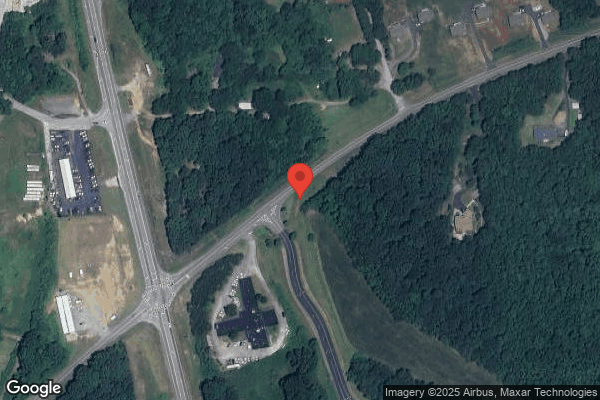
3201 WESTMORELAND ROAD, CLEVELAND, GA 30528 (706) 865-5686
For profit - Corporation 60 Beds RELIABLE HEALTH CARE MANAGEMENT Data: November 2025
Trust Grade
80/100
#62 of 353 in GA
Last Inspection: March 2025

Within standard 12-15 month inspection cycle. Federal law requires annual inspections.

Overview

Gateway Health and Rehab in Cleveland, Georgia, has a Trust Grade of B+, which means it is above average and recommended for families considering care options. It ranks #62 out of 353 facilities in Georgia, placing it in the top half, and is #2 of 2 in White County, indicating there is only one other local option. The facility's trend is stable, with one issue reported in both 2023 and 2025, suggesting consistent oversight. Staffing is a concern, receiving only 1 out of 5 stars, with a turnover rate of 40%, which is better than the state average but still reflects challenges in retaining staff. Notably, there have been no fines against the facility, which is a positive sign. However, there are issues to address, including a failure to ensure a resident's advance directive was properly documented and an incident where a resident's arm became stuck in a grab bar, indicating oversight in safety measures. Additionally, there was a lack of communication regarding a significant weight loss for another resident, which raises concerns about care coordination. Overall, while there are strengths, families should weigh these alongside the identified weaknesses.

Trust Score
B+
80/100
In Georgia
#62/353
Top 17%
Safety Record
Low Risk
No red flags
Inspections
Holding Steady
1 → 1 violations
Staff Stability
○ Average
40% turnover. Near Georgia's 48% average. Typical for the industry.
Penalties
✓ Good
No fines on record. Clean compliance history, better than most Georgia facilities.
Skilled Nurses
⚠ Watch
Each resident gets only 14 minutes of Registered Nurse (RN) attention daily — below average for Georgia. Fewer RN minutes means fewer trained eyes watching for problems.
Violations
✓ Good
Only 5 deficiencies on record. Cleaner than most facilities. Minor issues only.
★★★★☆
4.0
Overall Rating
★☆☆☆☆
1.0
Staff Levels
★★★☆☆
3.0
Care Quality
★★★★★
5.0
Inspection Score
Stable
2023: 1 issues
2025: 1 issues

The Good

  • Full Sprinkler Coverage · Fire safety systems throughout facility
  • No fines on record
  • Staff turnover below average (40%)

    8 points below Georgia average of 48%

Facility shows strength in fire safety.

The Bad

Staff Turnover: 40%

Near Georgia avg (46%)

Typical for the industry

Chain: RELIABLE HEALTH CARE MANAGEMENT

Part of a multi-facility chain

Ask about local staffing decisions and management

The Ugly 5 deficiencies on record

Mar 2025 1 deficiency
CONCERN (D) 📢 Someone Reported This

A family member, employee, or ombudsman was alarmed enough to file a formal complaint

Potential for Harm - no one hurt, but risky conditions existed

Deficiency F0578 (Tag F0578)

Could have caused harm · This affected 1 resident

**NOTE- TERMS IN BRACKETS HAVE BEEN EDITED TO PROTECT CONFIDENTIALITY** Based on staff interviews, record review, and review of the facility's policy titled, Advance Directives, the facility failed to...

Read full inspector narrative →
**NOTE- TERMS IN BRACKETS HAVE BEEN EDITED TO PROTECT CONFIDENTIALITY** Based on staff interviews, record review, and review of the facility's policy titled, Advance Directives, the facility failed to ensure that the electronic medical records, which included physician orders was consistent with the code status preference for one out of 25 sampled Residents (R) (R41). Findings include: Review of the facility's policy titled Advanced Directives dated November 2017 under the Policy Interpretation and Implementation section revealed, 10. The plan of care for each resident will be consistent with his or her documented treatments preferences and /or advance directive. Review of R41's Quarterly Minimum Data Sets (MDS) dated [DATE] revealed that the resident had a Brief Interview for Mental Status score of 15 indicating that the resident's cognition was intact. Review of R41's admission Packet revealed, an Advance Directives Checklist indicating a DNR (Do Not Resuscitate) order was selected, signed and dated on 6/11/2024 by the resident, the Resident's Representative, and the Facility's Representative. Further review revealed, the Do Not Resuscitate Order for Resident with Decision-Making Capacity form dated 6/11/2024 with a DNR order that was signed by the resident, a witness, and the attending physician. Review of R41's admission Record revealed, an admission date of 12/19/2024 with an advanced directive code status documented as Full Code. Review of the Physician Orders dated 12/19/2024 revealed that R41 had a code status of Full Code. Review of the care plan revealed, R41 had an Advance Directive code status of DNR (date initiated 6/19/2024 with a revision date of 1/17/2025). Further review revealed, the care plan goal was that the resident's wishes will be followed, and comfort, care and safety needs will be met at the skilled nursing facility through next review date. Interview on 3/23/2025 at 11:00 am with Registered Nurse (RN) BB revealed that if the resident stopped breathing and a heart stopped beating that he would check in electronic medical records, so he could verify the resident's code status. He confirmed that the resident's code status in electronic medical records was a Full Code. He also confirmed that the check list titled Advanced Directives and DNR Order form revealed a code status of DNR. Interview on 3/23/2025 at 11:05 am with Licensed Practical Nurse (LPN) AA revealed that when residents go to the hospital all previous orders were discharged , and new orders were put in the system upon returning from hospital. She continued stating that Advanced Directive should be confirmed with the checklist on file. She also confirmed that the wrong status was entered in the electronic medical records. Interview on 3/23/2025 at 11:08 am with the Director of Nursing revealed her expectation for Advanced Directive code status that it should match both on paper and in the electronic medical records. She confirmed that the checklist titled Advanced Directive has a code status of DNR and the resident's Physician Order in electronic medical records has a code status of Full code.
Feb 2023 1 deficiency
CONCERN (D)

Potential for Harm - no one hurt, but risky conditions existed

Accident Prevention (Tag F0689)

Could have caused harm · This affected 1 resident

Based on document observations, resident and staff interviews, record review, and a review of the facility's policy titled, Completion of Accident and Incident Form, the facility failed to identify ac...

Read full inspector narrative →
Based on document observations, resident and staff interviews, record review, and a review of the facility's policy titled, Completion of Accident and Incident Form, the facility failed to identify accident hazards and implement interventions to address/reduce hazards for 1of 3 sampled residents (R) (#25). Specifically, R#25's arm became stuck in the grab bar beside the toilet. The facility failed to identify the grab bar as an accident hazard for R#25 and failed to implement interventions that addressed the grab bar. Findings included: Review of the facility's policy titled, Completion of Accident and Incident Form, dated 07/20/2021, specified, 1. A & I (Accident and Incident) data collection will be completed on: a. Bruises. The policy further indicated 7. The Director of Nursing or designee will investigate and complete the follow-up investigation. 8. The follow-up investigation must include appropriate interventions to reduce the risk of reoccurrence. 9. The incident will be reviewed in the Administrator's morning meeting by all disciplines. Weekend incidents will be investigated by the RN (Registered Nurse) Supervisor. He/She will notify the Care Plan Coordinator and therapy staff as is appropriate Review of the most recent quarterly Minimum Data Set (MDS) for R#25, dated 01/05/2023, revealed that R#25 had a Brief Interview for Mental Status (BIMS) score of 15, which indicated the resident was cognitively intact. The MDS indicated the resident required extensive assistance with bed mobility, transfers, walking in room, locomotion on and off the unit, dressing, toilet use, personal hygiene, and bathing. The MDS revealed the resident had functional limitation in range of motion on one side in their lower extremity. Review of the care plan for R#25, initiated on 05/11/2022, revealed the resident had a self-care deficit related to activities of daily living (ADL). According to the care plan, the resident transferred independently, and staff could assist with transfers if needed. Further review revealed that the resident utilized the toilet and indicated that staff should check the resident for incontinent care and change the resident every two hours as needed. Review of Progress Notes for R#25, dated 01/31/2023 at 5:45 AM, revealed that the resident was in the restroom and turned on the emergency light. Upon entering the restroom, the resident was noted to have their left arm stuck in the grab bar beside the toilet. The resident stated they stood up to pull up their incontinent brief, and when the resident sat back down, somehow their arm got stuck. The note indicated that staff assisted the resident in removing their arm from the grab bar. The note indicated there was no apparent injury; however, the resident had burning to their upper arm. The note further revealed that the resident had good range of motion (ROM) and was assisted back to bed. Review of the Investigation Follow-up for R#25, dated 02/01/2023, revealed the date of the incident was 01/31/2023 at 5:45 a.m. The description of the incident indicated that R#25 was in the restroom and turned on the emergency light. The charge nurse entered the restroom, and the resident was noted to have their left arm stuck in the grab bar beside the toilet. The resident was assisted in removing their arm from the grab bar. According to the form, there was no apparent injury; however, the resident complained of 'burning' in the upper arm. The summary of the investigation did not show evidence that the facility identified the grab bar as a safety hazard for R#25 and implemented interventions to prevent further accidents. Review of the Progress Note for R#25, dated 02/02/2023 at 12:59 p.m., indicated the resident was reassessed after getting their arm stuck between the wall and grab bar on 01/31/2023 while toileting. The note indicated the resident had a hematoma on the left outer forearm, denied pain, and ROM was within normal limits. The note indicated that staff reiterated the importance of allowing staff to provide stand-by assistance while performing ADLs. The resident verbalized understanding and stated they would call for assistance. Interview and observation on 02/07/2023 at 8:23 a.m. with R#25 revealed that on the day of the incident, the resident was in the bathroom, and the resident's arm slipped between the grab bar and the wall. The resident was observed to have a brown bruise on the left arm just below the elbow. Observation on 02/07/2023 at 11:20 a.m. of R#25's bathroom revealed that the resident had changed rooms since the incident but continued to use the same bathroom. Observation revealed that the space between the grab bar and the wall measured four inches. Interview on 02/07/2023 at 9:00 a.m. with a Certified Nursing Assistant (CNA)1 identified the resident as being able to transfer themself to the toilet and would ask for assistance if needed. CNA 1 reported that a nurse told her about R25's 01/31/2023 incident. According to CNA 1, the nurse reported that the resident stood up, and the resident's left arm slipped behind the grab bar and got stuck. During a follow-up interview with CNA 1 on 02/07/2023 at 10:49 a.m., the CNA reported there was a risk of getting stuck in the rail for anyone. CNA 1 stated, maybe if the grab bar was closer to the wall, the resident might not have slipped and got their arm stuck in the rail. Interview on 02/07/2023 at 9:10 a.m. with a Licensed Practical Nurse (LPN) 2 revealed that R#25 transferred themselves to the bathroom and utilized the call light when the resident was finished using the bathroom. LPN 2 indicated she was not aware of any interventions to prevent recurrence but would review the incident report again. Interview on 02/27/2023 at 9:23 a.m. with the Director of Nursing (DON), she stated that staff reported R#25 was in the bathroom, the resident stood up, and when the resident held onto the grab bar to sit down, the resident's arm got caught. The DON reported that an incident report was completed, and the resident had a bruise the next day that was monitored. According to the DON, the CNA had left the bathroom to give the resident privacy. During a follow up interview with the DON on 02/07/2023 at 11:06 a.m., she indicated the root cause of R#25's injury was the older, larger grab bar. The DON reported that the grab bar had been discussed with the maintenance staff a while back. The DON stated that maintenance replaced the grab bar with a new type, and the CNA placed a walker in front of the resident to assist with standing and sitting while on the toilet. However, a review of R#25's care plan revealed no interventions to prevent reoccurrence. Interview on 02/07/2023 at 11:22 a.m. with the maintenance staff revealed he was not aware of R#25's grab bar incident until the morning meeting on Friday, 02/03/2023. The maintenance staff stated the problem was that there was a four to six inch gap between the wall and R#25's grab bar. He stated that the new grab bars were two inches off the wall. Interview on 02/08/2023 at 8:53 a.m. with the DON, indicating LPN 3 completed the incident report investigation for R#25. She stated that LPN 3 felt the root cause was the resident getting up unassisted, and the resident had been educated not to get up unassisted. Interview on 02/08/2023 at 9:32 a.m. with LPN 3 revealed she interviewed R#25, and the resident stated their hand slipped down into the grab bar, which caused a hematoma to the left forearm. According to LPN 3, the resident was encouraged to call for assistance. LPN 3 stated she guessed the resident's arm got caught in the grab bar because the bar was too far away from the wall. Interview on 02/08/2023 at 10:14 a.m., the Administrator stated that R#25's arm got stuck in the grab bar, and the charge nurse was able to pull it out, which resulted in a bruise. The Administrator reported that LPN 3 was currently responsible for the investigation, and the interdisciplinary team would determine the root cause. The Administrator reported that the grab bar in R#25's bathroom was not changed until yesterday (02/07/2023), and maybe it would be safer.
Jul 2021 3 deficiencies
CONCERN (D)

Potential for Harm - no one hurt, but risky conditions existed

Deficiency F0552 (Tag F0552)

Could have caused harm · This affected 1 resident

**NOTE- TERMS IN BRACKETS HAVE BEEN EDITED TO PROTECT CONFIDENTIALITY** Based on observations, record review, interviews, and facility policy, the facility failed to inform the resident's representati...

Read full inspector narrative →
**NOTE- TERMS IN BRACKETS HAVE BEEN EDITED TO PROTECT CONFIDENTIALITY** Based on observations, record review, interviews, and facility policy, the facility failed to inform the resident's representative of a significant weight loss for one Resident (R) #41 in accordance with the right to be informed. The sample size was 14. Findings include: Review of facility's policy entitled Residents Rights effective date 10/2017, noted the following Federal and State laws guarantee certain basic rights to all residents of this facility. These rights include the resident's right to: K. Appoint a legal representative of his or her choice, in accordance with state law. O. Be informed of his or her medical condition and of any changes in his or her condition. P. Be informed of and participate in his or her care planning and treatment. Policy Interpretation and Implementation: The Nurse will notify the resident's Representative of Any significant change of condition or major decline in the resident's status that will not normally resolve itself without interventions by staff or by implementing standard related clinical interventions (is not self-limiting). A review of the Resident's Face Sheet revealed, Resident #41 was admitted to the facility on [DATE] with diagnoses that included, other pulmonary embolism without cor pulmonale, other specified symptoms and signs involving the circulatory and respiratory systems, unspecified dementia without behavioral disturbance, essential primary hypertension, anxiety disorder, muscle weakness, heart failure, atherosclerotic heart disease, age related physical debility, abnormal gait, moderate protein-calorie malnutrition, encounter for respiratory tuberculosis, history of poliomyelitis, hypothyroidism, hyperlipidemia, hearing loss, gout, disorder of arteries, foot drop right, history of falling, presence of aortocoronary bypass graft and pleural effusion. The resident did have a Responsible Party (RP) listed on the admission Face Sheet. Review of the admission Minimum Data Set (MDS) dated [DATE] revealed the resident had a Brief Interview for Mental Status (BIMS) assessment of 11, indicating cognitively intact. Review of Nurse's Note dated 6/16/21 revealed, monthly weight triggered a significant weight loss for June 2021 for 90 and 180 days with the resident's weight checked twice. Resident was added to weekly weights and Patients at Risk (PAR), the Physician was notified and new order for Ready Care (RC) 2.0, 90 milliliters (ml) three times daily (tid) as a supplement. Further review of meal intakes revealed a poor appetite overall mostly 0-25% but some 26-50% documented as well, which was normal for R#41. Average meal intakes for past 7 days 11-36%. The resident had an admission weight of 110 pounds on 5/6/2020. Resident steadily gained through October 2020 which resulted in triggering a significant weight gain. The resident's weight then stabilized around 119 pounds but has slowly decreased each month since March 2021. Resident eats in her room and is on a high Protein diet with large protein portions but resident does not eat the large portions. The resident has a history of anxiety and will often get focused on random things like wanting her blood pressure checked repeatedly or walking to the nurse requesting an aspirin for a headache or complaining of (c/o) of nausea at mealtimes. Will monitor weights weekly and meal intakes and discuss during PAR. Review of the Registered Dietitian notes dated 6/16/21 revealed, recommendation to decrease RC 2.0 to twice (bid) daily and add ice cream with lunch and dinner meals. The doctor is in agreement with the dietary communication note completed to add ice cream with lunch and dinner trays. The resident and RP were notified. An interview on 7/21/21 at 6:04 p.m. with the family of R #41, revealed, I have never been contacted or informed of her significant weight loss, she would not drink Ensure at home or supplements. I have not heard a word about the weight loss and every time we call, they tell me that she is fine. The family further revealed that they have not seen her in two weeks and the facility calls when the resident is aggressive or problems, this is the first I've heard about her weight loss, I've even talked to the Physician, and he has never mention anything about weight loss or talked to us about an appetite stimulant to help. The family confirms that no one from the facility has contacted her with weight loss concerns. An interview with the Director of Nursing (DON) on 7/22/21 at 12:21 p.m. revealed that she is responsible for notifying the family of R#41 of weight loss. The DON revealed that she had spoken to the RP for the resident this morning about a new order and the RP stated that she was not aware of the resident's weight loss. The DON could not explain why she had not notified the family, as this is her responsiblity.
CONCERN (D)

Potential for Harm - no one hurt, but risky conditions existed

Accident Prevention (Tag F0689)

Could have caused harm · This affected 1 resident

**NOTE- TERMS IN BRACKETS HAVE BEEN EDITED TO PROTECT CONFIDENTIALITY** Based on observation, record reviews, interviews, and review of facility policy, it was determined for one of 13 sampled residen...

Read full inspector narrative →
**NOTE- TERMS IN BRACKETS HAVE BEEN EDITED TO PROTECT CONFIDENTIALITY** Based on observation, record reviews, interviews, and review of facility policy, it was determined for one of 13 sampled residents (Resident (R) #1) the facility failed to ensure that the resident's environment remained free of accident hazards as possible, and that the resident received adequate supervision as well as assistance to prevent accidents. Findings Include: Review of the policy entitled. Accidents and incidents investigating and Reporting, dated May 2009 revealed: SCOPE: This policy applies to the staff at the healthcare center. 1. Reporting of Accidents/Incidents: c. An employee witnessing an accident or incident should report the occurrence to his/her immediate supervisor as soon as practical and write a witness statement describing the accident/incident. Do not leave an accident victim unattended unless it's absolutely necessary to summon assistance. d. The nurse supervisor/charge nurse should be immediately informed of accidents/incidents so that medical attention can be provided. 2. Assisting Accident/Incident Victims: a. Should you witness an accident, or find it necessary to aid an accident victim, you should render immediate assistance. Do not move the victim until he/she has been examined for possible injuries. b. If possible, move the injured to the treatment room, or if it is a resident in his/her room move the resident to his or her bed. c. If assistance is needed, summon help. If you cannot leave the victim, ask someone to report to the nursing station that help is needed, or if possible, use the call system located in the resident's room to summon help. 3. Medical attention: The nurse supervisor and/or charge nurse will: a. Examine all resident (s) involved in the accident or incident. b. Notify the residents personal or attending physician and inform the physician of the accident or incident. Document clearly on the Accident/Incident Report form and in the nurses note form of notification that was used, for example if you faxed the report then document faxed report to MD, if placed in MD communication book then document in MD's communication book, if per phone then write MD notified per phone. c. If necessary, obtain a physician order to transfer the injured resident to the emergency room. d. If necessary, designate an employee to accompany the resident to the emergency room, medical treatment center or hospital. (This will be determined by a member of Nursing Management or Administrator.) e. A Neurological Assessment to include vital signs will be initiated on all residents with an un-witnessed fall, any unwitnessed fall or other incident with a blow to the head) with or without apparent injury), and/or suspected head injury. The [NAME] Neurological Assessment Flow Sheet CFS6-19.1 will be used to document this. Neurological Assessments will be performed by the licensed nurse every Fifteen (15) minutes times four, every one-hour times four, every two hours times four, then every four hours times four, then every eight hours times four -this frequency may not be reduced; however, the physician may order the neurological checks at more frequent intervals. Vital signs will be obtained hourly for the first five hours, then with each Neurological Assessment, and documented on the [NAME] Neurological Assessment flow sheet. Upon completion of the assessment period and if there are no issues identified the neurological assessments may be discontinued at this time unless otherwise ordered by the MD. 4. Investigative Action: a. The Nurse Supervisor/Charge Nurse and/or the department manager or supervisor must conduct an immediate investigation of the accident or incident. b. A completed Accident/Incident Report Form must be submitted to the Director or Nursing when completed. 5. Accident/Incident Report: a. The Nurse Supervisor/Charge Nurse and/or the department manager or supervisor will: 1. Complete an Accident/Incident Report form and submit it to the Director of Nursing. 2. The person completing a resident Accident/Incident report form will complete the A&I Review form and submit it with the Accident/Incident Report Form to the Director of Nursing. (A & I review form included in the Accident/Incident forms completion of policy.) 3. If method of MD notification is by fax please attach a copy of the fax confirmation sheet to the Accident/Incident Report form. 4. The Director of Nursing or designee will complete the follow up investigation. 5. Accidents and Incident Report forms, Investigate/Follow up forms, A&I review forms, and Neurological forms will be maintained at each nursing station. Review of the clinical record revealed Resident #1 was admitted to the facility on [DATE]. The resident was assessed on the Quarterly Minimum Data Set (MDS) assessment, dated 4/5/2021, to have diagnoses of repeated falls, age related physical debility, abnormal gait of mobility, essential (primary) hypertension, muscle weakness, difficulty walking, unspecified conjunctivitis, chronic pain, generalized edema, other symbolic dysfunctions, gastro reflux disease without esophagitis, conjunctival edema unspecified eye, polymyalgia rheumatica, non-surgical orthopedic/musculoskeletal, allergic rhinitis, constipation, cough, vitamin D deficiency. R#1 had a Brief Interview for Mental Status (BIMS) score of 7 indicating impaired cognition. The MDS revealed Resident #1 did not participate in skilled therapies but received restorative nursing programs during the assessment review period. Under Section G functional status, the resident was coded as requiring two-person assist from staff for activities of daily living including bed mobility, transfers, toileting, and the use of mobility devices such as wheelchair (manual or electric) Review of the Care Plan dated, 4/8/21, revealed R#1 has potential for injury and is at risk for fall, her most recent fall risk assessment score 55. Under the goals section, the resident will have no falls with injury requiring hospitalization from falls though next review. Under the approaches section, staff to apply non-skid socks, be sure the residents call light is within reach and encourage the resident to use it for assistance as needed, ensure bed is kept in lowest position, ensure bed/wheelchair is locked during transfer, ensure that the resident is wearing not skid shoes or socks when ambulating or mobilizing in wheelchair. Fall risk assessment upon admission, readmission and quarterly. Keep room and common areas free from clutter. Keep personal care items within easy reach. Place a star by the resident's name on the door to their room. Therapy to screen quarterly and prn. Watch for dizziness when changing position to sitting or standing and encourage resident to pause for a few. Review of the facility's Observation fall risk quarterly assessment score, dated 4/5/2021, revealed that R#1 had a total fall risk score of 55, indicating the resident was at high risk of falls. Review of the facility's Accident or Incident Investigation follow up Report dated 3/15/21, revealed R#1 had an un-witness fall and was observed in her wheelchair and had tipped her wheelchair backwards and hit her head on the ground. R#1 is alert with confusion and was in her wheelchair in her room, roommate is ambulatory and has dementia frequently tries to assist/take care of resident. It appears that resident may have attempted to stand up but fell back into wheelchair causing it to tip backward and falling and was found to have a hematoma to back of head. The resident was sent to emergency room (ER) for evaluation. Neuro-checks were instituted per protocol. Review of the facility's Accident or Incident Investigation follow up Report, dated 5/20/2021, revealed Certified Nursing Assistant (CNA) had assisted R#1 up to her wheelchair and was attempting to prop the resident's legs on her bed to help with swelling. CNA reported that wheelchair started tipping over and she could not catch the wheelchair before it fell. Upon arrival of nurse the resident was noted to be laying on her back while still in the wheelchair. On 5/21/21 R #1 sent to emergency room (ER). The facility could not provide'' the ER reports for the 5/21/21 ER visit for R#1. The facility could not provide any in-services related to ensuring staff were educated on safe transfers or interventions to prevent falls. Observation of R#1 on 7/21/21 at 9:40 a.m. revealed the resident was dressed, well-groomed, and sitting up in her room in the Broda chair with white socks on. Observation of R# 1 on 7/21/21 at 11:30 a.m. dressed, well- groomed and sitting up in her Broda chair in activities playing ball, with white socks on. Observation of R#1 on 7/22/21 at 11:30 a.m. resident sitting in her Broda chair in activities listening to music has on yellow non-skid socks. An interview was conducted on 7/21/21 at 7:13 p.m. with family of R#1 revealed that she was notified right away of the fall, we spent time in the ER, they ran tests, and everything was fine. It is hard with Covid-19 to know what's going on. We loved to come visit her during activities, eating and physical therapy, after the fall she complained of back pain for several weeks. An interview on 7/22/21 at 7:51 a.m. with License Practical Nurse (LPN) DD, revealed, R#1 is two- person assist with sit to stand and after transferring the resident to the wheelchair, Certified Nursing Assistant (CNA) AA was attempting to place the resident legs on the bed to help with leg swelling. The resident's wheelchair was not locked, and she fell backwards onto the floor hitting her head. LPN AA revealed that she had been off for several days after R#1 fell and was not working when the resident was sent to the hospital. An interview on 7/22/21 at 9:32 a.m. with CNA AA revealed, that she went to prop R#1's legs up on the bed due to her feet swelling and the resident pushed back. The resident's bed was low but she fell back in the wheelchair hitting her head. CNA AA revealed that she was not certain if the wheelchair was locked. The CAN revealed that no one was in the room with me when the resident fell. CNA AA stated, I am not sure if there was an order for propping the resident's feet up, but I was informed by the nurses to do that, we've always done it. An interview with the DON on 7/22/21 at 12:29 p.m. revealed that CNA AA had come in early to help get residents up for the day and was putting R#1 in her wheelchair. The resident requires a two person assist for transfers. She revealed that CNA AA was trying to elevate the resident's legs onto the bed which caused the wheelchair to tip backwards, and the resident hit her head on the floor. The only injury, at the time, was redness to the back of the head there was no indication that she was injured. The following day the resident threw up and complained of back pain and the Physician gave the order to send her to the ER. The DON revealed the wheelchair was not locked at the time of the incident which was a missed judgement by CNA AA. My expectation is that CNA AA should have kept the wheelchair locked or put the resident in the Broda Chair.
MINOR (C)

Minor Issue - procedural, no safety impact

Deficiency F0801 (Tag F0801)

Minor procedural issue · This affected most or all residents

Based on interview and record review the facility failed to ensure a Certified Dietary Manager with appropriate credentials was employed. This deficient practice had the potential to effect 45 of 45 r...

Read full inspector narrative →
Based on interview and record review the facility failed to ensure a Certified Dietary Manager with appropriate credentials was employed. This deficient practice had the potential to effect 45 of 45 residents who received meals in the facility. Findings include: During the initial tour of the kitchen on 7/20/21 at 1:23 p.m. the Dietary Manager (DM) was asked to provide her credentials for serving as the DM. She stated that she did not have the credentials yet but was enrolled in the course. She stated she had been employed in her position since December 2020, but had worked as a CNA at the facility since January 2020. She stated that the Registered Dietitian was not full-time and came to the facility once a month. In an interview with the Administrator on 7/22/21 at 3:36 p.m. she stated that she was aware the DM was not certified. She stated that she knew the DM needed to be certified but thought she had a year from hire to obtain her certification. She stated that she had been told by their regional office they had one year to obtain the certification. The Administrator was referred to the Association of Nutrition and Foodservice Professionals (ANFP) website. The following information on the website was documented; As of November 28, 2017, newly-hired Food Service Directors must meet the qualifications specified in the regulations and are no longer within the one-year window for obtaining certification. The Certified Dietary Manager, Certified Food Protection Professional (CDM, CFPP) credential is now listed as the primary qualification for the Director of Food and Nutrition Services in the absence of a full-time dietitian.
Understanding Severity Codes (click to expand)
Life-Threatening (Immediate Jeopardy)
J - Isolated K - Pattern L - Widespread
Actual Harm
G - Isolated H - Pattern I - Widespread
Potential for Harm
D - Isolated E - Pattern F - Widespread
No Harm (Minor)
A - Isolated B - Pattern C - Widespread

Questions to Ask on Your Visit

  • "Can I speak with families of current residents?"
  • "What's your RN coverage like on weekends and overnight?"

Our Honest Assessment

Strengths
  • • Grade B+ (80/100). Above average facility, better than most options in Georgia.
  • • No major safety red flags. No abuse findings, life-threatening violations, or SFF status.
  • • No fines on record. Clean compliance history, better than most Georgia facilities.
  • • Only 5 deficiencies on record. Cleaner than most facilities. Minor issues only.
Concerns
  • • No significant concerns identified. This facility shows no red flags across CMS ratings, staff turnover, or federal penalties.
Bottom line: Generally positive indicators. Standard due diligence and a personal visit recommended.

About This Facility

What is Gateway Health And Rehab's CMS Rating?

CMS assigns GATEWAY HEALTH AND REHAB an overall rating of 4 out of 5 stars, which is considered above average nationally. Within Georgia, this rating places the facility higher than 99% of the state's 100 nursing homes. This rating reflects solid performance across the metrics CMS uses to evaluate nursing home quality.

How is Gateway Health And Rehab Staffed?

CMS rates GATEWAY HEALTH AND REHAB's staffing level at 1 out of 5 stars, which is much below average compared to other nursing homes. Staff turnover is 40%, compared to the Georgia average of 46%. This relatively stable workforce can support continuity of care.

What Have Inspectors Found at Gateway Health And Rehab?

State health inspectors documented 5 deficiencies at GATEWAY HEALTH AND REHAB during 2021 to 2025. These included: 4 with potential for harm and 1 minor or isolated issues.

Who Owns and Operates Gateway Health And Rehab?

GATEWAY HEALTH AND REHAB is owned by a for-profit company. For-profit facilities operate as businesses with obligations to shareholders or private owners. The facility is operated by RELIABLE HEALTH CARE MANAGEMENT, a chain that manages multiple nursing homes. With 60 certified beds and approximately 53 residents (about 88% occupancy), it is a smaller facility located in CLEVELAND, Georgia.

How Does Gateway Health And Rehab Compare to Other Georgia Nursing Homes?

Compared to the 100 nursing homes in Georgia, GATEWAY HEALTH AND REHAB's overall rating (4 stars) is above the state average of 2.6, staff turnover (40%) is near the state average of 46%, and health inspection rating (5 stars) is much above the national benchmark.

What Should Families Ask When Visiting Gateway Health And Rehab?

Based on this facility's data, families visiting should ask: "Can you walk me through typical staffing levels on day, evening, and night shifts?" "Can I visit during a mealtime to observe dining assistance and food quality?" "How do you handle medical emergencies, and what is your hospital transfer rate?" "Can I speak with family members of current residents about their experience?" These questions are particularly relevant given the below-average staffing rating.

Is Gateway Health And Rehab Safe?

Based on CMS inspection data, GATEWAY HEALTH AND REHAB has a clean safety record: no substantiated abuse findings (meaning no confirmed cases of resident harm), no Immediate Jeopardy citations (the most serious violation level indicating risk of serious injury or death), and is not on the Special Focus Facility watch list (a federal program monitoring the lowest-performing 1% of nursing homes). The facility has a 4-star overall rating and ranks #1 of 100 nursing homes in Georgia. While no facility is perfect, families should still ask about staff-to-resident ratios and recent inspection results during their visit.

Do Nurses at Gateway Health And Rehab Stick Around?

GATEWAY HEALTH AND REHAB has a staff turnover rate of 40%, which is about average for Georgia nursing homes (state average: 46%). Moderate turnover is common in nursing homes, but families should still ask about staff tenure and how the facility maintains care continuity when employees leave.

Was Gateway Health And Rehab Ever Fined?

GATEWAY HEALTH AND REHAB has no federal fines on record. CMS issues fines when nursing homes fail to meet care standards or don't correct problems found during inspections. The absence of fines suggests the facility has either maintained compliance or corrected any issues before penalties were assessed. This is a positive indicator, though families should still review recent inspection reports for the full picture.

Is Gateway Health And Rehab on Any Federal Watch List?

GATEWAY HEALTH AND REHAB is not on any federal watch list. The most significant is the Special Focus Facility (SFF) program, which identifies the bottom 1% of nursing homes nationally based on persistent, serious quality problems. Not being on this list means the facility has avoided the pattern of deficiencies that triggers enhanced federal oversight. This is a positive indicator, though families should still review the facility's inspection history directly.