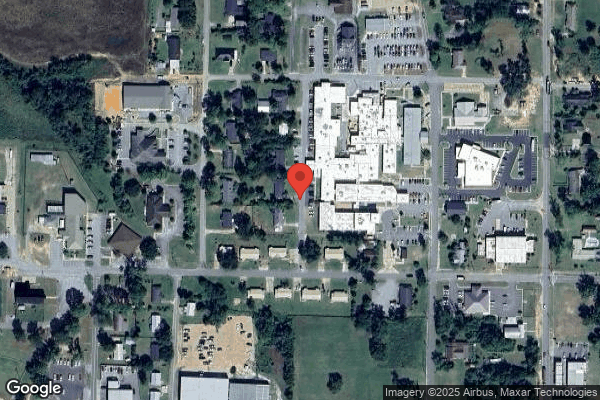
MILLER NURSING HOME

206 GRACE ST, COLQUITT, GA 39837 (229) 758-4270
Government - Hospital district 157 Beds Independent Data: November 2025
Trust Grade
90/100
#24 of 353 in GA
Last Inspection: February 2025

Within standard 12-15 month inspection cycle. Federal law requires annual inspections.

Overview

Miller Nursing Home in Colquitt, Georgia, has received a Trust Grade of A, indicating it is an excellent facility that is highly recommended. It ranks #24 out of 353 nursing homes in Georgia, placing it in the top half, and is the only option in Miller County. However, the facility is experiencing a worsening trend, with the number of reported issues increasing from 2 in 2019 to 4 in 2025. Staffing is a notable concern, as it received a below-average rating of 2 out of 5 stars, though the turnover rate of 32% is better than the state average. The home has no fines on record, which is positive, and benefits from more RN coverage than 94% of Georgia facilities, ensuring better oversight of resident care. Despite these strengths, there are specific incidents that raise concerns. For example, six residents did not receive responses to their grievances about call lights, potentially affecting their quality of life. Additionally, the dietary areas were found to be unsanitary, with improper food storage practices that could lead to foodborne illnesses. Lastly, there were issues with obtaining proper physician signatures for Do Not Resuscitate orders for some residents. Families should weigh these strengths and weaknesses carefully when considering this facility for their loved ones.

Trust Score
A
90/100
In Georgia
#24/353
Top 6%
Safety Record
Low Risk
No red flags
Inspections
Getting Worse
2 → 4 violations
Staff Stability
○ Average
32% turnover. Near Georgia's 48% average. Typical for the industry.
Penalties
✓ Good
No fines on record. Clean compliance history, better than most Georgia facilities.
Skilled Nurses
✓ Good
Each resident gets 74 minutes of Registered Nurse (RN) attention daily — more than 97% of Georgia nursing homes. RNs are the most trained staff who catch health problems before they become serious.
Violations
○ Average
6 deficiencies on record. Average for a facility this size. Mostly minor or procedural issues.
★★★★★
5.0
Overall Rating
★★☆☆☆
2.0
Staff Levels
★★★★★
5.0
Care Quality
★★★★☆
4.0
Inspection Score
Stable
2019: 2 issues
2025: 4 issues

The Good

  • 5-Star Quality Measures · Strong clinical quality outcomes
  • Full Sprinkler Coverage · Fire safety systems throughout facility
  • No fines on record
  • Staff turnover below average (32%)

    16 points below Georgia average of 48%

Facility shows strength in quality measures, fire safety.

The Bad

Staff Turnover: 32%

13pts below Georgia avg (46%)

Typical for the industry

The Ugly 6 deficiencies on record

Feb 2025 4 deficiencies
CONCERN (D)

Potential for Harm - no one hurt, but risky conditions existed

Grievances (Tag F0585)

Could have caused harm · This affected 1 resident

**NOTE- TERMS IN BRACKETS HAVE BEEN EDITED TO PROTECT CONFIDENTIALITY** Based on resident, family, and staff interviews, record review, and review of the facility's policy titled, Grievance Policy, th...

Read full inspector narrative →
**NOTE- TERMS IN BRACKETS HAVE BEEN EDITED TO PROTECT CONFIDENTIALITY** Based on resident, family, and staff interviews, record review, and review of the facility's policy titled, Grievance Policy, the facility failed to investigate and resolve grievances timely, and failed to report findings in writing to the complainant for one of 30 sampled residents (R) (R146). Specifically, there were two complaints filed for R146 with the same care allegation. The issue was not resolved until the second grievance was filed six months later and the complainants were not notified of findings and resolution. The deficit practice caused issues to be ongoing and the potential for unmet needs and dissatisfaction for R146. Findings include: Review of the facility's policy titled, Grievance Policy, revised 11/15/2016 revealed, Policy: To support each resident's right to voice grievances (e.g. those about treatment, care, management of funds, lost items, or violation of rights). A resident's representative, other family members of advocate may also voice grievance on the resident's behalf. The Nursing Home after receiving a complaint and/or grievance will actively seek a resolution and keep the resident/family member apprised of the progress toward resolution. The Grievance Official representative is Social Service . The person making the complaint must be informed of the results, and the form signed and dated at that time by the staff member informing the resident or family member of the resolution. The policy did not include provisions to provide anything in writing to the person making the complaint. Review of the electronic medical record (EMR) Face Sheet revealed R146 was admitted to the facility on [DATE] and was discharged to a different facility on 12/31/2024. admission diagnoses included dependence on ventilator and quadriplegia (paralysis affecting all four limbs). Review of the Annual Minimum Data Set (MDS) with an assessment reference date (ARD) of 11/14/2024 revealed a Brief Interview for Mental Status (BIMS) score of 15 out of 15 indicating little to no cognitive impairment. R146 was impaired in range of motion (ROM) to both sides of her upper and lower extremities. R146 required meal set up for eating and was dependent on staff for the remaining Activities of Daily Living (ADL). 1. Review of the Complaint Log for February 2024 provided by the facility revealed a complaint was filed on 2/19/2024 regarding R146 by Family Member (F) (F146) related to nursing care. Review of the Complaint Form dated 2/19/2024 revealed the complaint alleged Certified Nursing Assistant (CNA)1 did not round regularly and R146 was reported to be raw because of it (not having her brief changed timely). The second concern related to washcloths being used for perineal care. The findings revealed, No rawness noted to peri-area. - Interviewed CNA's - washcloths being used to provide cleanliness to perineal after post BM [bowel movement]/urinary episodes. CNA inconsistent in rounding Q [every 2 hrs [hours] Action taken included, CNA educated/counseled on Q2hr rounds and as needed by resident. Educated to use wipes due to resident's preferences. The individual investigating the incident was Registered Nurse (RN)/Critical Care Coordinator (CCC)1 and the grievance was completed on 2/24/2024. There was a check next to Person making complaint has been informed of results with a resolution dated 2/24/2024. Review of CNA1's personnel file did not include documentation of counseling related to this incident (grievance 1). Review of the care plan revealed it was not updated with her preference for staff not to use washcloths for peri-care following the the first grievance. 2. Review of the Complaint Log for August 2024 provided by the facility revealed a complaint was filed by R146 on 8/5/2024 regarding nursing care. Review of the Complaint Form dated 8/5/2024 revealed R146 reported on 8/3/2024 that CNA2 used rags to wash her when she has asked her not to use rags on her buttocks. Findings from the investigation revealed CNA2 used washcloths for cleaning an incontinent episode. Action taken included planning R146's preferences to use wipes versus washcloths, educating staff to honor her preferences, and explanation to R146 and F146 why the washcloth was used. SW1 was documented as informing the complainant of the results of the grievance as noted by a check mark on the form on 8/6/2024. Review of the care plan, last reviewed/revised on 12/23/2024, revealed, Resident refuses to be cleaned with wash cloth during incontinent [sic] due to discomfort/sensitivity. Approaches included: Clean resident with wipes only per resident preference, use washcloth for cleaning as last resort; explain procedure to resident with a start date of 8/6/2024. During an interview on 2/5/2025 at 1:58 pm, F146 revealed that she and R146 had expressed concerns, and filed formal complaints, about provision of incontinence care for R146's by two CNAs. CNA1 did not provide timely incontinence care, was rough with wiping during incontinence care, ignored and did not address R146's needs. An example was once F146 came into the facility and R146 had not been changed for an extensive period. F146 reported this grievance, and confirmed she had not heard anything back, or provided anything in writing in response to formal complaints. F146 also had concerns with the provision of incontinence care by CNA2. During an interview on 2/6/2025 at 7:44 am with CNA2 revealed R146 was alert and oriented, dependent for incontinence care and brief changes. CNA2 remembered R146 did not want her to use washcloths for peri care and preferred wipes be used. CNA2 stated she had used a washcloth for bowel incontinence to remove excess bowel movement as it was more effective than using a wipe. During an interview on 2/6/2025 at 1:29 pm with Social Worker (SW)1 revealed they did not provide anything in writing to complainants about grievances and notified complainants verbally of. SW1 revealed R146's initial grievance occurred on 2/24/2024 related to CNAs not rounding regularly. A second grievance occurred on 8/5/2024 when CNA2 used wash cloths for peri care after R146 requested they use wipes. During an interview on 2/6/2025 at 1:55 pm, RN/CCC1 verified she investigated the grievance filed on 2/19/2024 by F146. F146 complained that the CNAs were wiping R146 with a wash rag and not using wipes, the wash rags were too rough and irritated her peri area. RN CCC1 revealed the results of grievances were reported back to the complainant verbally; nothing was provided in writing. During an interview on 2/6/2025 at 3:06 pm with the Director of Nursing (DON) revealed the results were reported to the individual who made the complaint orally. The DON stated the complainant could have a copy of the written grievance if they asked for it.
CONCERN (D) 📢 Someone Reported This

A family member, employee, or ombudsman was alarmed enough to file a formal complaint

Potential for Harm - no one hurt, but risky conditions existed

Quality of Care (Tag F0684)

Could have caused harm · This affected 1 resident

Deficiency Text Not Available

Read full inspector narrative →
Deficiency Text Not Available
CONCERN (E)

Potential for Harm - no one hurt, but risky conditions existed

Deficiency F0565 (Tag F0565)

Could have caused harm · This affected multiple residents

Based on observations, resident and staff interviews, record review, and review of the facility's policy titled, Grievance Policy, the facility failed to ensure that six of 40 sampled residents (R) (R...

Read full inspector narrative →
Based on observations, resident and staff interviews, record review, and review of the facility's policy titled, Grievance Policy, the facility failed to ensure that six of 40 sampled residents (R) (R37, R59, R57, R62, R68 and R83) who participated in Resident Council (RC), received a response to their grievances. Specifically, the facility failed to provide a response to grievances and complaints about call lights over a six-month period. The deficient practice had the potential to negatively impact each resident's quality of life and/or dimmish feelings of self-worth for R37, R59, R57, R62, R68 and R83. Findings include: Review of the facility's policy titled, Grievance Policy, revised on 11/15/2016 revealed, Policy: To support each resident's right to voice grievances (e.g., those about treatment, care, management of funds, lost items, or violation of rights). A resident's representative, other family members or advocate may also voice grievances on the resident's behalf. The Nursing Home after receiving a complaint and /or grievance will actively seek a resolution and keep the resident/family member appraised of the progress toward resolution. Continued review revealed under, Procedure: 1) A resident/family may voice or write a complaint and/or grievance to any staff member at any time. 2) The staff member must report the complaint to their supervisor and the supervisor must complete the Complaint Form. The Complaint Form can be found at the Nursing Station, the Social Service Director's office, Director of Nurses' office, and the Administrator's office. 3) Information to be completed includes the person taking the complaint, date of complaint, name of person making complaint, discipline complaint referred to, and a specific description of the complaint. 4) The findings from the complaint investigation are also written, as well as the action taken. The person making the complaint must be informed of the results, and the form signed and dated at that time by the staff member informing the resident or family member of the resolution. Review of the RC meeting minutes showed that call lights had been identified as an on-going discussion at each meeting between June of 2024 through January 2025. The notes did not include any information about who or what problems or concerns were reported, nor did the meeting minutes identify that the facility acted on the grievances or responded to the resident council group. During a RC meeting held on 1/6/2025 at 11:54 am with six residents in attendance, R37, R59, R57, R62, R68, and R8 revealed they did not get a response from the facility about how their concerns with call lights would be addressed. R59 and R68 revealed that call lights had been an ongoing issue, and no one from the facility had responded to the groups concerns. 1. Review of the electronic medical record (EMR) revealed R37 was admitted to the facility with diagnoses of but not limited to Parkinson's disease and seizure disorder. Review of the Quarterly Minimum Data Set (MDS) assessment, with an Assessment Reference Date (ARD) of 11/26/2024 revealed R37 had a Brief Interview for Mental Status (BIMS) score of 15 out of 15, indicating little to no cognitive impairment. 2. Review of the EMR revealed R59 was admitted to the facility with diagnoses of but not limited to Parkinson's disease and depression. Review of the Annual MDS assessment, with an ARD date of 11/8/2024 revealed R59 had a BIMS score of 15, indicating little to no cognitive impairment. 3. Review of the EMR revealed R57 was admitted to the facility with diagnoses of but not limited to anxiety and depression. Review of the Quarterly MDS assessment, with an ARD date of 11/14/2024 revealed R57 had a BIMS score of 14, indicating little to no cognitive impairment. 4. Review of the Quarterly MDS assessment, with an ARD date of 12/16/2024 revealed R62 had a BIMS score of 14, indicating little to no cognitive impairment. 5. Review of the Quarterly MDS assessment, with an ARD date of 11/14/2024 revealed R68 had a BIMS score of 14, indicating little to no cognitive impairment. 6. Review of the Quarterly MDS assessment, with an ARD date of 10/14/2024 revealed R83 had a BIMS score of 15, indicating little to no cognitive impairment. During an interview on 2/6/2025 at 12:10 pm with the Administrator revealed how grievances voiced by residents who attend the RC meetings were addressed. When a resident identified a grievance, the information would be forwarded to the department head to be investigated, and verbal feedback would be provided to the RC group. She confirmed there was no documentation to identify what was discussed with the council members informing the residents of the resolution.
CONCERN (E)

Potential for Harm - no one hurt, but risky conditions existed

Food Safety (Tag F0812)

Could have caused harm · This affected multiple residents

Based on observations, staff interviews, record review, and review of the facility's policy titled, Dietary Procedure Manual, the facility failed to ensure dietary areas were maintained in a sanitary ...

Read full inspector narrative →
Based on observations, staff interviews, record review, and review of the facility's policy titled, Dietary Procedure Manual, the facility failed to ensure dietary areas were maintained in a sanitary manner. Specifically, food and supplements were not labeled properly, frozen meats were exposed to air, chemicals were stored with food, handwashing could not be completed without contamination of one's hands, floors were observed with built up substance, and the facility failed to use a sanitizer on kitchen surfaces. The deficient practice had the potential for transmission of food borne illness, and potential to affect 60 of 153 residents who received an oral diet served from the kitchen. (105 residents received partial to total nutrition needs via feeding tubes). Findings include: Review of the facility's policy titled, Dietary Procedure Manual, review date 3/31/2018, under Infection Control-Food Preparation revealed, B. Patient Service: 5. All foods stored in diet kitchen refrigerator should be covered and labeled, dated or in pre-packaged containers . 6. Covered food should be discarded after 72-hours if not consumed . Food Storage: 1. All foods in the refrigerators are covered, labeled, and dated if not in original container . 6. Proper storage techniques including containers, temperatures, coverings, and length of time should be known and practiced by all . Food Storage: 19. Cleaning supplies are stored separately from food supplies . Cleaning: 4. Equipment and work surfaces are cleaned and sanitized before and after each use . 5. Floors are swept and mopped daily . 8. The counters in serving and preparation areas are cleaned with germicidal solution at each workstation after each use . Perishable Food Item Storage-Procedure: Leftover food items are stored in covered containers. Each container is labeled as to the contents and dated. 1. Observation and interview on 2/4/2025 at 10:00 during the initial tour of the dietary department with the Food Service Supervisor (FSS), he revealed the main kitchen was in the process of being remodeled so the food service operation was spread out in several locations. Dietary staff were preparing meals in the physical therapy (PT) kitchen located a couple blocks away. There was a semi-truck freezer located next to the PT kitchen where frozen food was stored. The walk-in refrigerator located in the main kitchen in the hospital was still in use. There was also a makeshift kitchen set up in the facility with a steam table for tray line meal service, refrigerator/freezers and storage area. The following concerns were noted during the initial tour on 2/4/2025 from 10:00 am to 11:02 am: a. Observation and interview with the FSS of the walk-in freezer truck revealed there were two boxes of meat, one bacon and one of pork chops that were not closed. The boxes had been opened and the plastic bag within the box had not been sealed exposing the entire top contents of the meat in the boxes to air. The FSS verified the meat was exposed to air and stated it should be completely covered/sealed. b. Observation and interview in the PT kitchen revealed a small storage room that contained food items such as canned and boxed of food. There were 4 gallons of bleach stored in the room with the food. The FSS verified the bleach should not be stored with food. The only garbage can in the PT kitchen was a 55 gallon can with a lid on it which required touching the potentially soiled garbage can lid with clean hands, which was verified by the FSS. The FSS stated they had a foot operated can in the old kitchen which prevented staff from soiling their hands, but it had not made it over to this temporary kitchen. Also, in the PT kitchenwas a bag of opened and thawed chicken tenders in the refrigerator that was unlabeled and undated. The manufacturer's expiration date was 9/17/2024. The FSS revealed their system for labeling and dating was to go by the manufacturer's expiration date, and leftovers they would keep for no more than three days. The FSS verified the manufacturer's date on the chicken showed the food was expired, and revealed dietary staff were supposed to label foods with the name of the food and the date the food expired. There was a container of leftover chili dated 1/29/2025; the FSS verified it was more than three days old. There were two packages of turkey lunch meat (per the FSS) in the reach-in refrigerator, one package opened and the other one not. Neither were labeled with the food item or date. c. Observation and interview in the walk-in refrigerator in the hospital revealed there was black grime on the floor along the edge of the wall and floor and accumulated brown crusty debris in the corner. There was a box half full of individually packaged four ounce [brand name] nutritional shakes in the manufacturer's box which was dated 1/18/2025. The FSS verified the shakes were past the expiration date. On each carton instructions read, use thawed product within 14 days. The FSS stated they used the manufacturer's expiration dates for the shakes, and she was not aware of the 14-day shelf life once the product was pulled from the freezer and placed in the walk in. 2. Observation and interview on 2/6/2025 from 10:35 am to 11:48 am with the Food Service Manager (FSM) the following concerns were noted: a. Station Five snack area refrigerator contained approximately 20 cartons of [brand name] nutritional shakes. There were no dates to indicate when the shakes had been pulled out of the freezer and thawed. The FSM stated they received the [brand name] nutritional shakes frozen and pulled out what they needed and placed them in refrigeration. The FMS verified the label on the shakes indicated they should be used within 14 days of being thawed. b. The walk-in refrigerator in the hospital kitchen was in the same condition noted on 2/4/2025. There was black grime and brown crusty debris in the corners and along the walls. The FSM verified it needed to be cleaned. c. The PT kitchen had a bag of unidentified small pieces of meat dated 1/28/2025. The FSM verified it was a bag of bacon bits, it should be labeled with the food item and date, and it should be disposed of. The FSM stated their policy was to keep leftover food no more than three days, otherwise, they went by the expiration date on the box. The FSM stated staff should label foods with the date it was placed in refrigeration and the date it should be used by. During an interview, the FSM was asked what sanitizer they used for kitchen surfaces. The FSM showed the surveyor a spray bottle of the product [brand name of product]. The FSM stated that it was the product they used to clean the tray line and kitchen surfaces. Review of the label of the product and the Manufacturer's Safety Data Sheet for the product [brand named product] provided by facility revealed the product was a cleaning product and not a sanitizer. Ingredients included sodium dodecylbenzene sulfonate, sodium poly (oxyethylene) dodecyl ether sulfate, and organic sulfonic acid salt.
Nov 2019 2 deficiencies
CONCERN (D)

Potential for Harm - no one hurt, but risky conditions existed

Safe Environment (Tag F0584)

Could have caused harm · This affected 1 resident

**NOTE- TERMS IN BRACKETS HAVE BEEN EDITED TO PROTECT CONFIDENTIALITY** Based on observation and interviews the facility failed to ensure the resident fans on the vent unit were clean and free from du...

Read full inspector narrative →
**NOTE- TERMS IN BRACKETS HAVE BEEN EDITED TO PROTECT CONFIDENTIALITY** Based on observation and interviews the facility failed to ensure the resident fans on the vent unit were clean and free from dust build up for four of 15 rooms on Unit Two (Rooms: 20, 19, 22, 14). Findings include: The following observations were made: On 11/4/19 at 12:21 p.m. in room [ROOM NUMBER] there was a fan sitting on the table at the foot of Bed B that had a buildup of dust. On 11/4/19 at 1:13 p.m. in room [ROOM NUMBER] there was a fan at the end of Bed A with dust buildup. On 11/4/19 at 1:16 p.m. in room [ROOM NUMBER] at the end of bed A there was a fan with dust buildup On 11/5/19 at 8:09 a.m. in room [ROOM NUMBER] there was a fan with black dust buildup on the blades. On 11/5/19 at 3:10 p.m. in room [ROOM NUMBER] there was a fan with thick dust buildup. On 11/5/19 at 3:18 p.m. in room [ROOM NUMBER] there was dust noted on the fan. On 11/5/19 at 3:20 p.m. in room [ROOM NUMBER] there was dust noted on the fan. On 11/6/19 at 9:21 a.m. in room [ROOM NUMBER] there was dust noted on the fan by the sink. On 11/6/19 at 9:22 a.m. in room [ROOM NUMBER] there was dust noted on the fan. On 11/6/19 at 9:23 a.m. in room [ROOM NUMBER] there was dust build up on the fan. On 11/6/19 at 9:24 a.m. in room [ROOM NUMBER] there was dust noted on the fan. During a tour of Unit Two on 11/7/19 at 9:50 a.m. the Director of Nursing (DON) confirmed that in room [ROOM NUMBER] there was dust and buildup on the fan, in room [ROOM NUMBER] there was dust build up on the fan blade and the fan grille, in room [ROOM NUMBER] there was dust build up on the fan grille and, in room [ROOM NUMBER] there was dust build up on the fan and fan grille. During an interview with the DON on 11/7/19 at 9:58 a.m. revealed the Certified Nursing Assistants (CNAs) should clean fans when they are identified as having dust buildup. The DON further revealed that Maintenance should be notified when there is dust on the fan blades. The DON stated that CNAs should be wiping down the fans daily. There is no policy on personal fans and how often they should be cleaned.
CONCERN (E)

Potential for Harm - no one hurt, but risky conditions existed

Deficiency F0578 (Tag F0578)

Could have caused harm · This affected multiple residents

**NOTE- TERMS IN BRACKETS HAVE BEEN EDITED TO PROTECT CONFIDENTIALITY** Based on record review and staff interviews, and review of the facility's policy titled, Advance Directives the facility failed ...

Read full inspector narrative →
**NOTE- TERMS IN BRACKETS HAVE BEEN EDITED TO PROTECT CONFIDENTIALITY** Based on record review and staff interviews, and review of the facility's policy titled, Advance Directives the facility failed to obtain a Physician's signature and a concurring Physician's signature for a Physician Orders for Life Sustaining Treatment (POLST) for Do Not Resuscitate (DNR) consents for Residents (R) (R#55, R#42 and R#117). This deficient practice affected 3 of 7 residents reviewed for Do Not Resuscitate. Findings include: Review of Advance Directives Policy revealed: 2. Prior to or upon admission of a resident, the Social Services Director or designee will inquire of the resident, and/or his/her family members, about the existence of any written advance directives. POLST Additional Guidance for Health Care Professionals III. When a POLST form is signed by an Authorized Person (other than the patient's Health Care Agent) and Attending Physician: I. If Section A indicates Allow Natural Death - Do Not Attempt Resuscitation, this order may be implemented when the patient is a candidate for non-resuscitation as defined in Georgia Code Section 31-39-2(4). A concurring physician signature is Required per Georgia Code Section 31-39-4(c). 1. Review of the medical record for R#55 revealed a POLST with a verbal signature noted for Allow Natural Death with one Physician signature on 9/13/17. There was not any evidence of any documentation that R#55 had a power of attorney for healthcare nor was there a healthcare agent identified. During an interview on 11/5/19 at 4:00 p.m. with the facility's Long-Term Care (LTC) Director revealed that if a resident has a legal next of kin to sign the POLST only one Physician's signature has been gotten and was signed by an authorized person who is not the health care agent. The LTC Director further reported that if there was no legal next of kin two Physician signatures would be needed. The LTC Director reviewed the POLST for R#55 and she confirmed that there was only one Physician signature for R#55. Upon reading the POLST LTC Director acknowledged that a concurring physician's signature was needed when residents do not sign the form and there is not a health care agent. 2. A review of the Quarterly Minimum Data Sets dated 8/20/19 for R#42 revealed that the resident had both long-term and short-term memory problems and was unable to answer the assessment questions. A review of the medical record for R#42 revealed a Physician Order for Life Sustaining Treatment (POLST) form that was signed by one Physician and the resident's responsible party was called with phone consent obtained. Review also revealed that the resident did not have a legal healthcare agent or POA. An interview on 11/6/19 at 10:35 a.m. with the Assistant Director of Nursing confirmed that the resident did not have a healthcare agent and that only one Physician had signed his POLST form. An interview on 11/6/19 at 10:54 a.m. with Social Service CC confirmed that R#42 did not have a healthcare agent on file. Social Service CC brought a POLST in that was signed on 11/6/19 after surveyor inquiry by a second physician. She confirmed that prior to surveyor inquiry that the lack of appropriate signatures for the POLST to be legal had not been identified. 3. A review of the admission MDS assessment dated [DATE] for R#117 documented both long-term and short-term memory problems with the resident being unable to answer assessment questions. A review of the POLST form dated 4/18/19 for R#117 revealed it was signed by only one Physician, and the responsible party. The resident had no Power of Attorney (POA) or healthcare agent. A review of the Face Sheet identified that R#117 had an Advanced Directive of DNR. An interview on 11/5/19 at 4:06 p.m. with the facility's Long-Term Care (LTC) Director revealed if there was no responsible party or next of kin, we obtain two physician signatures, but if there was a responsible party or a next of kin that they had only been getting one physician signature and the signature of the responsible party. The LTC Director confirmed that based on what was written on the POLST form that there needed to be two concurring Physician signatures if there was no Power of Attorney with a legal healthcare agent. A review of the POLST with the LTC Director for R#117 confirmed that there was the signature of the next of kin and one physician signature and there was no legal healthcare agent for R#117. An interview on 11/6/19 at 11:29 a.m. with the LTC Director again confirmed that R#117 did not have a healthcare agent.
Understanding Severity Codes (click to expand)
Life-Threatening (Immediate Jeopardy)
J - Isolated K - Pattern L - Widespread
Actual Harm
G - Isolated H - Pattern I - Widespread
Potential for Harm
D - Isolated E - Pattern F - Widespread
No Harm (Minor)
A - Isolated B - Pattern C - Widespread

Questions to Ask on Your Visit

  • "Can I speak with families of current residents?"
  • "What's your RN coverage like on weekends and overnight?"

Our Honest Assessment

Strengths
  • • Grade A (90/100). Above average facility, better than most options in Georgia.
  • • No major safety red flags. No abuse findings, life-threatening violations, or SFF status.
  • • No fines on record. Clean compliance history, better than most Georgia facilities.
  • • 32% turnover. Below Georgia's 48% average. Good staff retention means consistent care.
Concerns
  • • No significant concerns identified. This facility shows no red flags across CMS ratings, staff turnover, or federal penalties.
Bottom line: Generally positive indicators. Standard due diligence and a personal visit recommended.

About This Facility

What is Miller's CMS Rating?

CMS assigns MILLER NURSING HOME an overall rating of 5 out of 5 stars, which is considered much above average nationally. Within Georgia, this rating places the facility higher than 99% of the state's 100 nursing homes. This rating reflects solid performance across the metrics CMS uses to evaluate nursing home quality.

How is Miller Staffed?

CMS rates MILLER NURSING HOME's staffing level at 2 out of 5 stars, which is below average compared to other nursing homes. Staff turnover is 32%, compared to the Georgia average of 46%. This relatively stable workforce can support continuity of care.

What Have Inspectors Found at Miller?

State health inspectors documented 6 deficiencies at MILLER NURSING HOME during 2019 to 2025. These included: 6 with potential for harm.

Who Owns and Operates Miller?

MILLER NURSING HOME is owned by a government entity. Government-operated facilities are typically run by state, county, or municipal agencies. The facility operates independently rather than as part of a larger chain. With 157 certified beds and approximately 152 residents (about 97% occupancy), it is a mid-sized facility located in COLQUITT, Georgia.

How Does Miller Compare to Other Georgia Nursing Homes?

Compared to the 100 nursing homes in Georgia, MILLER NURSING HOME's overall rating (5 stars) is above the state average of 2.6, staff turnover (32%) is significantly lower than the state average of 46%, and health inspection rating (4 stars) is above the national benchmark.

What Should Families Ask When Visiting Miller?

Based on this facility's data, families visiting should ask: "Can you walk me through typical staffing levels on day, evening, and night shifts?" "Can I visit during a mealtime to observe dining assistance and food quality?" "How do you handle medical emergencies, and what is your hospital transfer rate?" "Can I speak with family members of current residents about their experience?" These questions are particularly relevant given the below-average staffing rating.

Is Miller Safe?

Based on CMS inspection data, MILLER NURSING HOME has a clean safety record: no substantiated abuse findings (meaning no confirmed cases of resident harm), no Immediate Jeopardy citations (the most serious violation level indicating risk of serious injury or death), and is not on the Special Focus Facility watch list (a federal program monitoring the lowest-performing 1% of nursing homes). The facility has a 5-star overall rating and ranks #1 of 100 nursing homes in Georgia. While no facility is perfect, families should still ask about staff-to-resident ratios and recent inspection results during their visit.

Do Nurses at Miller Stick Around?

MILLER NURSING HOME has a staff turnover rate of 32%, which is about average for Georgia nursing homes (state average: 46%). Moderate turnover is common in nursing homes, but families should still ask about staff tenure and how the facility maintains care continuity when employees leave.

Was Miller Ever Fined?

MILLER NURSING HOME has no federal fines on record. CMS issues fines when nursing homes fail to meet care standards or don't correct problems found during inspections. The absence of fines suggests the facility has either maintained compliance or corrected any issues before penalties were assessed. This is a positive indicator, though families should still review recent inspection reports for the full picture.

Is Miller on Any Federal Watch List?

MILLER NURSING HOME is not on any federal watch list. The most significant is the Special Focus Facility (SFF) program, which identifies the bottom 1% of nursing homes nationally based on persistent, serious quality problems. Not being on this list means the facility has avoided the pattern of deficiencies that triggers enhanced federal oversight. This is a positive indicator, though families should still review the facility's inspection history directly.