QUINTON MEM HC & REHAB CENTER
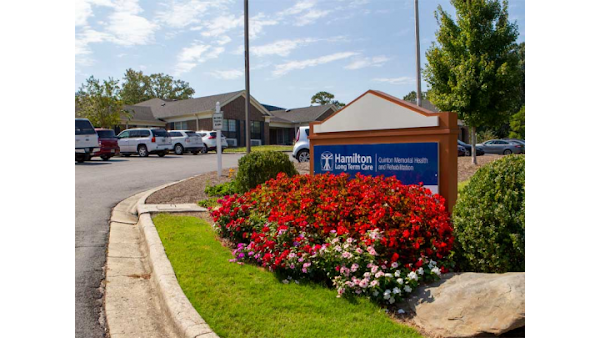
1115 PROFESSIONAL BLVD, DALTON, GA 30720 (706) 226-4642
Non profit - Corporation 120 Beds Independent Data: November 2025
Trust Grade
73/100
#103 of 353 in GA
Last Inspection: March 2025

Within standard 12-15 month inspection cycle. Federal law requires annual inspections.

Overview

Quinton Memorial Health and Rehabilitation Center in Dalton, Georgia, has a Trust Grade of B, indicating it is a good option for families looking for care. It ranks #103 out of 353 facilities in Georgia, placing it in the top half, and is the best choice among three local options in Whitfield County. The facility's performance is stable, with the number of issues remaining consistent over the past two years. Staffing is average with a 3 out of 5 rating, and the turnover rate is 41%, which is better than the state average. However, there are some concerning incidents, including a resident who suffered multiple falls due to inadequate supervision, and issues with food safety and medication storage that could jeopardize resident health. Overall, while there are strengths in staffing and rankings, families should be aware of these specific weaknesses when considering this facility.

Trust Score
B
73/100
In Georgia
#103/353
Top 29%
Safety Record
Moderate
Needs review
Inspections
Holding Steady
1 → 1 violations
Staff Stability
○ Average
41% turnover. Near Georgia's 48% average. Typical for the industry.
Penalties
✓ Good
$8,512 in fines. Lower than most Georgia facilities. Relatively clean record.
Skilled Nurses
⚠ Watch
Each resident gets only 27 minutes of Registered Nurse (RN) attention daily — below average for Georgia. Fewer RN minutes means fewer trained eyes watching for problems.
Violations
⚠ Watch
11 deficiencies on record. Higher than average. Multiple issues found across inspections.
★★★★☆
4.0
Overall Rating
★★★☆☆
3.0
Staff Levels
★★☆☆☆
2.0
Care Quality
★★★★☆
4.0
Inspection Score
Stable
2024: 1 issues
2025: 1 issues

The Good

  • Full Sprinkler Coverage · Fire safety systems throughout facility
  • No fines on record
  • Staff turnover below average (41%)

    7 points below Georgia average of 48%

Facility shows strength in fire safety.

The Bad

Staff Turnover: 41%

Near Georgia avg (46%)

Typical for the industry

Federal Fines: $8,512

Below median ($33,413)

Minor penalties assessed

The Ugly 11 deficiencies on record

1 actual harm
Mar 2025 1 deficiency
CONCERN (D) 📢 Someone Reported This

A family member, employee, or ombudsman was alarmed enough to file a formal complaint

Potential for Harm - no one hurt, but risky conditions existed

Infection Control (Tag F0880)

Could have caused harm · This affected 1 resident

Based on observations, resident and staff interviews, and review of the facility policies titled, HLTC Oxygen (O2) Administration and HTLC Administering Medications Through Nebulizer, the facility fai...

Read full inspector narrative →
Based on observations, resident and staff interviews, and review of the facility policies titled, HLTC Oxygen (O2) Administration and HTLC Administering Medications Through Nebulizer, the facility failed to bag and store unused O2 and nebulizer tubing, and cannulas/masks for four of 28 residents (R) (R52, R68, R39, and R287) receiving respiratory services . The deficient practice had the potential to allow unhealthy organisms to contact the equipment and of spreading infection in the facility. Findings include: Review of the facility policy titled HLTC Oxygen Administration revealed under Procedure: . 4. Maintenance, a. Replace oxygen tubing at least monthly and more often as needed for contamination, dysfunction, or visibly soiled tubing. Review of the facility policy titled HLTC Administering Medications Through Nebulizer revealed under Procedure: . 5. Cleaning, a. The facility will: i. Wipe machine with warm, soapy water and rinse or use an all-purpose disinfecting wipe according to the instructions on the label, and observing the appropriate kill time, at least once a week and as needed. ii. Clean humidifier weekly and air dry. iii. Rinse washable filter under running water once a week to remove dust and debris. Replace this filter at least once a year. iv. Clean masks, nasal pillows and tubing daily by cleaning with warm, soapy water. Rinse with warm water and allow it to dry between use. V. Clean headgear (strap) by washing with warm water and mild detergent as needed and allow to air dry. Review of the most recent quarterly Minimum Data Set (MDS) assessment for R52 dated 2/15/2025 Section I (Active Diagnoses) revealed but not limited to diabetes mellitus, malnutrition, Section C (Cognitive Patterns) revealed a Brief Interview for Mental Status (BIMS) score of 7, indicating severe cognitive decline. During observation and interview on 3/11/2025 at 12:07 pm with R52 revealed unbagged O2 tubing with O2 concentrator in the corner on the floor. R52 said she recently moved into this room and this equipment was hers. During observation on 3/11/2025 at 4:30 pm of R52 revealed the same unbagged O2 tubing on the floor, unbagged, along with the O2 concentrator on the floor in the corner. During observation on 3/12/2025 at 9:05 am of R52 revealed O2 tubing remained on floor, unbagged, next to the O2 concentrator. Review of the most recent quarterly MDS assessment for R68 dated 12/14/2024 revealed diagnoses including but not limited to coronary artery disease, heart failure, respiratory insufficiency, hypertension, and dementia, Section C revealed a BIMS score of 15, indicating intact cognition. During an observation on 3/12/2025 at 11:06 am of R68 revealed the O2 concentrator filter had brownish-gray substance coating the machine filter cover. Review of the most recent quarterly MDS assessment for R39 dated 1/11/2025 revealed diagnoses including but not limited to anemia, heart failure, hypertension, hip fracture, Section C revealed a BIMS score of 15, indicating intact cognition. During an observation on 3/12/2025 at 10:45 am of R39 revealed nebulizer (machine to deliver breathing treatments) tubing and mask were noted to be unbagged and uncovered at the bedside. Review of the most recent quarterly MDS assessment for R287 dated 1/28/2025 revealed diagnoses including but not limited to anemia, heart failure, hypertension, hip fracture, Section C revealed a BIMS score of 9, indicating moderate cognition decline. During an observation on 3/13/2025 at 3:45 pm of R287 revealed nebulizer tubing and mask were noted to be unbagged and uncovered at the bedside in a room under Enhanced Barrier Precautions (EBP). During an interview on 3/12/2025 at 9:15 am with Certified Nursing Assistant (CNA) BB revealed when asked about the O2 equipment of R52's on the floor, uncovered and unmarked. CNA BB stated she was unsure why it was there, and that the resident had recently moved into the room and the O2 equipment came over with her. CNA BB stated she has not seen R52 use the equipment. During an interview on 3/12/2025 9:19 am with LPN AA regarding R52 O2 tubing lying on floor in the corner of R52's and R287's rooms, LPN AA stated she believed the policy was that the O2 equipment in this room and the nebulizer in R287 room should be placed in a bag when not in use. She further stated it was the duty of the night shift to take care of this equipment cleaning and storage. During an interview on 3/12/2025 at 11:30 am with the Infection Preventionist (IP) regarding respiratory infection prevention practices, she revealed she completed periodic spot checks on respiratory and O2 equipment during walk-arounds in the facility. She further revealed that the policy states the tubing and face masks/cannulas should be bagged when not in use and cleaning was to be done weekly by the evening shift staff. Review of in-service documentation from 2024 did not reveal any specific training on the infection prevention task as it related to respiratory equipment and tubing. Interview on 3/13/2025 at 3:50 pm with the Director of Nursing (DON) revealed the evening shift handled respiratory sanitization administration and control of O2 and nebulizer equipment and tubing. The DON stated tubes and cups should be bagged and dated when not in use and that cleaning should be done monthly according to policy. The DON confirmed with Registered Nurse (RN) EE that no logging was done when scheduled cleaning was performed.
Jul 2024 1 deficiency 1 Harm
SERIOUS (G) 📢 Someone Reported This

A family member, employee, or ombudsman was alarmed enough to file a formal complaint

Actual Harm - a resident was hurt due to facility failures

Accident Prevention (Tag F0689)

A resident was harmed · This affected 1 resident

**NOTE- TERMS IN BRACKETS HAVE BEEN EDITED TO PROTECT CONFIDENTIALITY** Based on interviews, record review, and review of the facility policy titled Falls, the facility failed to provide the necessary...

Read full inspector narrative →
**NOTE- TERMS IN BRACKETS HAVE BEEN EDITED TO PROTECT CONFIDENTIALITY** Based on interviews, record review, and review of the facility policy titled Falls, the facility failed to provide the necessary supervision to prevent falls to the extent possible for one of three sampled residents (R) (R3) reviewed for falls. R3 sustained six falls at the facility from [DATE] through February 2024 when attempting to get out of bed unassisted and/or ambulating without assistance, with four of the first five falls resulting in injuries to the head. The facility documented contributing factors for the falls but failed to identify and address the need for increased supervision related to the resident's declining cognition and failed to conduct and document a root cause analysis for each fall to facilitate the ability to develop specific fall prevention interventions that would address the causative factors of the falls. Harm was identified to have occurred on [DATE], when R3 fell and was sent out to the hospital. The fall resulted in R3 sustaining a fractured ankle. The resident was hospitalized and diagnosed with a traumatic brain injury due to recurrent falls with multiple head injuries. Findings included: A facility policy titled Falls with a revised date of [DATE], revealed that the facility's management of falls focuses on resident-centered assessment to aid in the prevention of falls. The policy also specified that the care plan is used as the facility's resident-centered tool that lists the specific interventions that the IDT (interdisciplinary team) discussed and that adjustments can be made to interventions based on the effectiveness of these interventions. Interventions are based on each resident's needs. The policy indicated the facility interventions for fall risk or post-fall may include but were not limited to an IDT review and care plan review and revisions. A review of the Electronic Medical Record (EMR) revealed that R3 was admitted to the facility on [DATE] with diagnoses of mild cognitive impairment, insomnia, macular degeneration, peripheral vascular disease, age-related osteoporosis, an incomplete rotator cuff tear or rupture of an unspecified shoulder, and long-term use of anticoagulants. A review of the Significant Change Minimum Data Set (MDS) assessment, with an Assessment Reference Date (ARD) of [DATE], revealed that R3 presented with a Brief Interview for Mental Status (BIMS) score of 12, which indicated the resident had moderate cognitive impairment; that R3 used a walker and wheelchair for mobility in the last seven days; that R3 required substantial/maximal assistance to move from a sitting to lying position and to move from a lying position to sitting on side of the bed; that R3 required partial/moderate assistance to move from a sitting to standing position, chair/bed-to-chair transfers, and toilet transfers; that R3 required supervision or touching assistance to walk 10 feet and that walking 50 or 150 feet was not attempted due to a medical condition or safety concerns; that R3 was frequently incontinent of urine and bowel; and that R3 had fallen in the last month, had fallen in the last two to six months prior to admission/reentry, but had not experienced falls since the prior assessment/reentry. A review of a nursing Progress Note dated [DATE] revealed the nurse heard yelling from R3's room and that R3 was found lying on the floor against the air-conditioner. A review of the Fall Event report dated [DATE] revealed that R3 sustained a fall while ambulating and was found on the floor on [DATE] at 9:30 pm. The report documented that the resident stated they were reaching for the bathroom door but could not get it to open, lost their balance, and hit their head on the air conditioning unit. According to the report, the contributing factors for the fall were Distractions. The report revealed R3 sustained a small, soft-tissue injury to the top of the head and an ice pack was applied. A review of the nursing Progress Notes dated [DATE] at 10:00 am revealed R3 had blue/purple bruising to the eyes, forehead, and the back of the head from the fall on [DATE]. The note documented that, per the resident's family member, the resident was having episodes of confusion. The note revealed new physician orders were obtained for a computed tomography (CT) scan and laboratory testing. A review of the ED [Emergency Department] Note dated [DATE] revealed that R3 had fallen from the standing position on [DATE]. Per the note, the resident hit their head, had bruising to the face, and had confusion after the fall. The note revealed during the ED visit, the resident complained of visual disturbances in the left eye and decreased hearing in the left ear with a roaring sensation and pain. The note revealed, per the resident's family, the previous CT scan was normal. According to the note, R3 had purplish facial bruising surrounding both eyes, the forehead, and the posterior occipital areas (back of the head). The notes revealed the resident was diagnosed with facial contusions and was transferred back to the facility. A review of the Fall Event report dated [DATE] revealed R3 fell from bed on [DATE] at 5:05 am. According to the report, a Certified Nursing Assistant (CNA) was called to R3's room, and the resident was found on the floor beside the bed. The report revealed that R3 stated they hit their head, arm, leg, and hip. The report documented a large baseball-sized bruise on the left side of the resident's forehead and that R3 was transferred to the ED. The report revealed the contributing factor to the fall was Action by Patient/Resident. The report revealed immediate actions included the implementation of fall prevention strategies, neurological checks, a referral to the ED, and Risk for falls noted on chart/care plan. The report did not specify what fall prevention strategies were implemented after this fall. A review of the hospital ED History and Physical Report dated [DATE] at 12:33 pm revealed R3 was being seen for a post-fall evaluation after the resident fell out of bed and hit their head. The report documented the resident had a hematoma to the forehead, bruising to the upper left arm, and bruising and a skin tear to the right shin. According to the History and Physical, it was reported the resident's feet got caught underneath their blankets and the resident fell out of bed hitting their head on a side table. According to the report, R3's family member reported the resident hit their head when they fell in [DATE] and since that time, the resident had rapidly declined in function and mentation and was much more confused. The report revealed the resident had also had recent dizziness that the resident described as the room spinning. A hospital Discharge Documentation form, dated [DATE], revealed that R3's discharge diagnoses included frequent falls and a closed head injury without concussion. A Fall Event, report dated [DATE] revealed at approximately 6:50 am, the nurse heard R3 yelling for help. According to the report, the resident fell from the bed. The report revealed R3 was found lying flat on their back to the left side of the bed, barefoot. The report documneted that R3 stated, Help when asked what happened. According to the report, the resident had a 1.5-inch skin tear on the left elbow and had bruising and an indention to the left cheekbone and was transferred to the ED. According to the report, the contributing factors to the fall were, Action by Patient/Resident and Confused/Disoriented. A review of the ED After Visit Summary dated [DATE], revealed R3 was diagnosed with a closed head injury. A review of the nursing Progress Notes dated [DATE] at midnight revealed R3 was yelling, and when staff entered the room, the resident was on their knees at the door wearing no socks. The report documented that R3 stated he was going to the bathroom and was using the rollator walker when they fell. A review of the nursing Progress Notes, dated [DATE] at 11:00 am revealed staff were following up on R3 after the unwitnessed fall. According to the notes, R3 had been more confused in the last two days. The notes documented that staff instructed the resident to use the call light if needed, the bed was in the lowest position, and staff placed the call light and bedside table within the resident's reach. A review of the physician's Office Visit note dated [DATE] revealed the resident had been confused the entire weekend with increased delusions and on this date, the resident had increased speech difficulty and was unable to keep their eyes open. The note revealed the physician explained to the family that this could be the progression of underlying dementia, which was now rapidly progressing since the resident's head injury in [DATE]. A review of the Fall Event report dated [DATE] revealed that R3 sustained another fall on [DATE] at 12:30 am while standing. The report revealed staff found the resident on the floor at the foot of the bed with the rollator walker at the resident's feet. According to the report, contributing factors included confusion/disorientation, current diagnosis/condition, inability to understand, lost/impaired balance, and mental status/capacity. The immediate actions listed on the report indicated the care plan was reviewed/revised, equipment was removed, fall prevention strategies were implemented, neurological checks, that the resident was assessed, the resident's representative was notified, and that the risk for falls was noted on the chart/care plan. The report did not specify what revisions were made to the care plan, what equipment was removed, or what fall prevention strategies were implemented as a result of this fall. A review of the nursing Progress Notes dated [DATE] revealed the resident's family did not want to send R3 to the ED for an evaluation. A review of the Fall Event report dated [DATE] documented that on [DATE] at 7:45 pm, staff found R3 on the floor, yelling that they had broken their foot. The report revealed R3 was holding the right foot in the air and telling staff not to touch the foot. The report documented the right ankle was swollen and the resident had a dislocation/fracture to the right ankle. According to the report, the resident fell from the bed and the contributing factors included confusion/disorientation, inability to understand, inadequate/improper footwear, and lost/impaired balance. Per the report, immediate actions included a care plan review/revision, fall prevention strategies, a footwear review, neurological checks, and a resident assessment. A review of the hospital history and physical report dated [DATE] at 12:33 am revealed the resident had been having repeated falls since [DATE] (approximately five to six) and the majority resulted in head injuries. The report revealed anticoagulation medications were discontinued on Tuesday of the previous week as a precaution and hospice was initiated earlier in the week. The report documented the resident had a closed, right ankle fracture from the fall from a bed at the facility. According to the report, the fracture was reduced and splinted. In addition, the report revealed the resident had a history of traumatic brain injury due to recurrent falls with multiple head injuries since [DATE], likely secondary to dementia. A review of the Discharge Summary dated [DATE] revealed the resident was deceased and the preliminary cause of death was cardiopulmonary arrest. A review of the [state] Death Certificate, dated [DATE], revealed that R3 expired on [DATE] at 12:25 pm. The death certificate documented the immediate causes of death were cardiopulmonary arrest, acute kidney injury on chronic kidney disease, acute delirium, and an ankle fracture. During an interview on [DATE] at 5:09 pm, CNA4 stated that R3 had dementia, and got up unassisted, and tried to walk without the rollator walker. The CNA stated she checked on the resident frequently, usually every hour, and the resident's room was close to the nurses' station. CNA4 stated R3 did not sustain any falls while she was working. During an interview on [DATE] at 2:27 pm, CNA5 stated that R3's health declined and that toward the end, the resident would get up unassisted. During an interview on [DATE] at 2:56 pm, Licensed Practical Nurse (LPN)6 stated that R3 had a strong will and was independent before declining. LPN6 indicated that R3 would get up unassisted, and before their health declined, the resident was using a rollator. LPN6 revealed that the resident would frequently walk without the rollator walker and that after each fall, interventions were put in place to prevent falls. During an interview on [DATE] at 9:30 am, the Rehabilitation (Rehab) Director stated that falls were discussed in morning meetings. She indicated that depending on the fall, the nurse manager completed a screening for the rehab department. The Rehab Director stated that R3 was seen by the physical therapy (PT) department from [DATE] through [DATE] for muscle weakness and balance issues. The Rehab Director indicated that R3 also had cognitive decline and confusion. According to the Rehab Director, R3 initially used a rollator walker but was no longer safe to use one and began using a wheelchair. During a telephone interview on [DATE] at 11:55 am, the Director of Hospice stated that R3 started receiving hospice services 48 hours before going to the hospital. She indicated that R3 was admitted to hospice for heart failure, had poor safety awareness, and was known to get up unassisted. She stated that the family revoked hospice when the resident went to the hospital in February 2024 and the resident had surgery on the ankle. During a telephone interview on [DATE] at 4:24 pm, Medical Director (MD)3 stated that R3 frequently forgot to use the walker and fell. MD3 revealed that he did not think an ankle fracture would be the cause of the resident's death unless it was an open fracture that caused an embolism (blood clot). MD3 stated the family chose hospice care for end-stage dementia with delirium, he believed the facility implemented interventions that included moving the resident closer to the nurse's station, and the CNAs checked the resident frequently. During an interview on [DATE] at 3:35 pm, the Director of Nursing (DON) stated that she expected resident falls to be minimized/reduced with the appropriate interventions. The DON stated that she expected a root cause analysis to be completed and that interventions to address falls be added to the care plan. During an interview on [DATE] at 11:37 am, the Administrator stated falls were discussed during daily morning meetings, but there was no written/documented information regarding the root cause for falls. During a follow-up interview on [DATE] at 3:40 pm, the Administrator stated she expected staff to assess the resident after a fall, implement necessary interventions, and put them on the care plan. The Administrator indicated that she expected a root cause analysis to be documented and that interventions to address the falls be documented on the care plan. The Administrator stated that this was discussed during the IDT meetings every morning.
Feb 2023 6 deficiencies
CONCERN (D)

Potential for Harm - no one hurt, but risky conditions existed

Deficiency F0554 (Tag F0554)

Could have caused harm · This affected 1 resident

**NOTE- TERMS IN BRACKETS HAVE BEEN EDITED TO PROTECT CONFIDENTIALITY** Based on observations, resident and staff interviews, record review, and review of the facility's policies titled, Medication Se...

Read full inspector narrative →
**NOTE- TERMS IN BRACKETS HAVE BEEN EDITED TO PROTECT CONFIDENTIALITY** Based on observations, resident and staff interviews, record review, and review of the facility's policies titled, Medication Self-Administration Medications and Medication Administration-General, the facility failed to assess one resident (R) (R#51) of 31 sampled for the ability to self-administer medications prior to leaving medications at the bedside. This deficient practice had the potential to adversely affect the safety of R#51 and other residents in the facility. Findings include: Review of the policy titled, Resident Self-Administration Medications dated 10/1/2019 revealed: Policy: 1. Each resident who desires to self-administer medications is permitted to do so if the interdisciplinary team has determined that the practice would be safe for the resident and other residents in the facility. 2. The resident must be deemed competent to accurately self-administer medications prior to self-administering medications. 3. A physician's order is required for residents to self-administer medication and store medication at bedside. Review of the policy titled, Medication Administration-General dated 10/1/2019 and revised on 12/1/2019 and 6/23/2022 revealed policy and interpretation line numbered 5. Residents may self-administer their medications in accordance with the Resident Self-Administration Medication policy. Record review of the electronic medical record (EMR) for R#51 revealed diagnosis including anxiety disorder, end stage renal disease, heart failure, unspecified lack of coordination. Review of the quarterly minimum data set (MDS) dated [DATE] revealed a Brief Interview for Mental Status (BIMS) score of 15, indicating R#51 was cognitively intact, was independent with activities of daily living (ADLS), and received an antidepressant seven of seven days. Review of the physician's orders revealed medication orders to include: Sevelamer hydrochloride tablet 800 milligrams (mg) give three tablets by mouth with meals for phosphate binder, start date 7/21/2023 and revised 12/12/2022, trazodone hydrochloride 50 mg tablet give 0.5 tablet by mouth at bedtime for insomnia, start date 7/25/2022, duloxetine hydrochloride capsule delayed release particles 60 mg give one capsule by mouth one time a day for mood, start date 7/22/2022. There was not a physician's order for the Lidocaine 2.5% and Prilocaine 2.5% cream 30 grams (g). Review of the care plan dated 4/19/2022 and revised on 10/25/2022 revealed a focus area that resident was at risk for cognitive loss and dementia related to diagnoses of end stage renal disease, heart failure, and anxiety disorder. Interventions included: administer medications as ordered and monitor for side effects and effectiveness; cue, reorient, and supervise as needed; ask yes/no questions in order to determine needs. Review of the medication administration record (MAR) dated February 2023 revealed medications documented as given as ordered. Lidocaine 2.5% and Prilocaine 2.5% cream 30 g were not on the MAR. Review of the clinical record revealed there was no assessment for medication self-administration. Observation on 2/21/2023 at 10:45 a.m. of R#51's room revealed one 30 milliliter (ml) medication cup sitting on the bedside table and containing two white oblong shaped tablets. An interview with R#51 revealed the nurse normally leaves the medication for her to take when she desires. Observation on 2/22/2023 at 8:35 a.m. of R#51's room revealed one container of Lidocaine 2.5% and Prilocaine 2.5% cream 30 g lying on her bed. She revealed she applied it to her port site prior to going to dialysis three days per week. She revealed the nurses were aware she had it in her room. Interview on 2/22/2023 at 8:55 a.m. with Registered Nurse (RN) AA revealed she was aware of the medication cup containing two white tablets sitting on R#51's bedside table on 2/21/2022 and that the previous shift must have left them for her to take. She revealed she did not remove the medication from the resident's room and revealed she should have removed them. Observation on 2/22/2023 at 8:58 a.m. of R#51's room with RN AA verified the container of Lidocaine 2.5% and Prilocaine 2.5% cream 30 g lying on her bed. RN AA removed the medication and explained to R#51 the medication would be kept in the medication cart and given as ordered by her physician. She verified all medications should be kept in the medication cart and given as prescribed by the physician. RN AA verified there was not a physician's order for the Lidocaine 2.5% and Prilocaine 2.5% cream and revealed she would contact the physician about the medication and the resident should not have or receive the medication without a physician's order. She revealed a self-administration assessment must be completed prior to a resident being allowed to have medications at their bedside. On 2/22/2023 at 9:05 a.m. an interview with the Director of Nursing (DON) revealed her expectations are for medications to be kept secured in the medication carts and not be left in a resident's room unless the resident had been assessed for self-administration of the medication, approved by the interdisciplinary team, had a physician's order for self-administration of medication, and appropriate training was provided to the resident. She revealed her expectation is for medications to only be administered with a physician's order. She verified that R#51 did not have a medication self-administration assessment for any medications and did not have a physician's order for the Lidocaine 2.5% and Prilocaine 2.5% cream.
CONCERN (D)

Potential for Harm - no one hurt, but risky conditions existed

Deficiency F0578 (Tag F0578)

Could have caused harm · This affected 1 resident

**NOTE- TERMS IN BRACKETS HAVE BEEN EDITED TO PROTECT CONFIDENTIALITY** Based on record review, staff interviews, and review of the facility's policy Advanced Directives, the facility failed to ensure...

Read full inspector narrative →
**NOTE- TERMS IN BRACKETS HAVE BEEN EDITED TO PROTECT CONFIDENTIALITY** Based on record review, staff interviews, and review of the facility's policy Advanced Directives, the facility failed to ensure that the Do Not Resuscitate (DNR) document was signed by a physician for one resident (R) (R#52) of 31 sampled residents reviewed for advanced directives. Findings include: Review of the policy titled, Advanced Directives, date of issue 1/1/2019, revealed online item # 6. The facility will inform the Directive resident's physician of any advanced directives to ensure appropriate orders are obtained when indicated. Review of the electronic medical record (EMR) for (R) #52 revealed diagnoses that included but not limited to chronic obstructive pulmonary disease, anemia, dysphagia, paroxysmal atrial fibrillation, and hypertension. Review of the quarterly minimum data set (MDS) assessment dated [DATE] revealed R#52 had a Brief Interview for Mental Status (BIMS) of 15 which indicates resident was cognitively intact. Review of the EMR revealed R#52 signed a document titled Do Not Resuscitate Order for Resident with Decision Making Capacity on 12/22/2020 and the area that indicated a physicians signature had a blank line without a signature. Review of the physician's order dated 12/4/2021 revealed an order for do not resuscitate (DNR). Interview on 2/22/2023 at 10:48 a.m. with the Social Service Director (SSD) revealed R#52 had agreed to a DNR code status and had signed the form. The SSD stated she acknowledged that the form was not signed by a physician, and she would get the physician to sign the form today to prevent the form from being invalid. The SSD was unable to locate the DNR form that was signed by the physician. Interview with DON on 2/23/2023 at 9:34 a.m. revealed that all DNR forms should be signed by the physician as a part of the medical chart. The DON further revealed that the SSD had the responsibility of ensuring the DNR forms were signed by the physician upon placing in the resident's medical record.
CONCERN (D) 📢 Someone Reported This

A family member, employee, or ombudsman was alarmed enough to file a formal complaint

Potential for Harm - no one hurt, but risky conditions existed

Comprehensive Care Plan (Tag F0656)

Could have caused harm · This affected 1 resident

**NOTE- TERMS IN BRACKETS HAVE BEEN EDITED TO PROTECT CONFIDENTIALITY** Based on observations, staff interviews, record review, and review of the facility policy titled, HLTC [[NAME] Long Term Care] C...

Read full inspector narrative →
**NOTE- TERMS IN BRACKETS HAVE BEEN EDITED TO PROTECT CONFIDENTIALITY** Based on observations, staff interviews, record review, and review of the facility policy titled, HLTC [[NAME] Long Term Care] Care Planning, the facility failed to follow the care plan for splint application for one resident (R) (R#60), failed to develop a care plan for splint application and passive range of motion (PROM) for one resident (R#57), and failed to develop a care plan for splinting for one resident (R#73). This deficient practice had the potential to affect the delivery of the proper care and services provided to R#60, R#57, and R#73. The sample size was 31. Findings include: Review of the policy titled, HLTC Care Planning dated 11/1/2019 revealed the policy was for each resident to have a baseline and comprehensive care plan that reflects resident centered care and services and in effort to attain or maintain the resident's highest practicable physical, mental, and psychosocial well-being. The Baseline Care Plan section line numbered 7 revealed: The facility will develop and implement a comprehensive, resident centered care plan within Point Click Care (PCC) [electronic medical records system] for each resident that includes measurable objectives and timeframes to meet a resident's medical, nursing and mental and psychosocial needs that are identified in the resident's comprehensive assessment. 1. Review of the current care plan for R#60 revealed an intervention initiated on 9/5/2020 for restorative nursing as indicated. Interview on 2/22/2023 at 4:15 p.m. with the Director of Nursing (DON) revealed it was her expectation that care plans were followed. 2. Review of the care plan dated 11/30/2022 with revision 12/2/2022 for R#57 included intervention for daily range of motion exercises as tolerated. Interview on 2/22/2023 at 12:00 p.m. with Registered Nurse RN EE she confirmed that the restorative care for R#57 was not listed on her care plan. 3. Review of the care plan for R#73 that was initiated on 10/5/2022, revealed an intervention noted to provide ROM and a referral to restorative nursing as needed. An interview on 2/23/2023 at 10:29 a.m. with the DON revealed that there was no restorative program at this time. Cross reference F688
CONCERN (D)

Potential for Harm - no one hurt, but risky conditions existed

Deficiency F0688 (Tag F0688)

Could have caused harm · This affected 1 resident

**NOTE- TERMS IN BRACKETS HAVE BEEN EDITED TO PROTECT CONFIDENTIALITY** Based on observations, record review, staff interviews, and review of facility policy titled, HLTC [[NAME] Long Term Care] Resto...

Read full inspector narrative →
**NOTE- TERMS IN BRACKETS HAVE BEEN EDITED TO PROTECT CONFIDENTIALITY** Based on observations, record review, staff interviews, and review of facility policy titled, HLTC [[NAME] Long Term Care] Restorative Nursing Policy, the facility failed to provide restorative services as related to range of motion exercises for one resident (R) #13 of 31 sampled residents and related to splint use and contracture management for three residents (R#73, R#60, and R#57) of 31 sampled residents. These failures had the potential to cause a decline in R#13, R#73, R#60, and R#57's functional abilities. Findings: Review of the policy titled, HLTC Restorative Nursing Policy, dated 1/1/2019, revealed that the purpose of the program is that the facility shall provide a restorative program to ensure residents receive restorative nursing care as needed to promote the resident's ability to adapt and adjust to living as independently and safely as possible. The Restorative programs may include the following, but not limited to active range of motion (AROM), splint or brace assistance, transfer, walking, dressing, and grooming. 1. Review of the electronic medical record (EMR) for R#13 revealed that she had diagnoses that include but are not limited to depression, anxiety, need for assistance with personal care, history of transit ischemic attack (TIA) and a cerebral infarction, hemiplegia and hemiparesis following cerebral infarction affecting right dominant side, Alzheimer's disease with late onset. Review of the quarterly minimum data set (MDS) dated [DATE], revealed that R#13 had a brief interview of mental status (BIMS) score of 8, indicating moderate cognitive impairment. It also revealed that she needed some assistance with personal hygiene, ambulation, and transfers. Review of the care plan for R#13, initiated on 8/25/2020, and revised on 2/22/2023, revealed that R#13 fluctuates at times in the amount of assistance needed. She is independent most of the time with activities of daily living (ADL) but at times she does need some staff assistance. She had right sided hemiplegia following a cardiovascular accident and had contracture of her right upper extremity. She is at risk for decline in ADL status related to weakness, debility, dementia, and Alzheimer's disease. The care plan also revealed that R#13 preferred not wearing a splint on her left upper extremity that was initiated on 2/22/2023. Review of the functional program that was initiated on 7/25/2022, R#13 was to have active range of motion (AROM), seated knee extensions, marches, hip abduction, and sit to stand, 10 repetitions for 3 sets. Ambulation of 50 feet for 2 sets with use of quad cane and wheelchair to follow, was also recommended to be completed. During the last three months the AROM was documented that it was completed only eight times. Interview on 2/22/2023 at 10:00 a.m. with the Director of Rehabilitation revealed there is a restorative nursing program for the east and west wing nursing units. She confirmed there was a document titled, Functional Program located under the miscellaneous tab of R#57's EMR completed by OT with a start date of 1/9/2023 and a document titled, In-service Training Report located under the miscellaneous tab documenting training of six CNA's regarding R#57's restorative care. She confirmed the document titled, Restorative Intervention Plan only had documented restorative care done on 2/8/2023, 2/15/2023, and 2/18/2023 and stated that this was correct. An interview on 2/23/2023 at 10:29 a.m. with the Director of Nursing (DON) revealed there is no restorative program at this time. She stated that the previous DON had restorative in place but did not manage the program and due to staffing issues, it was not continued. 2. Review of the EMR for R#73 revealed diagnoses that include but are not limited to cerebral infarction, gastrostomy tube, dysphagia, hemiplegia affecting left non-dominant side, need for assistance with personal care, cognitive communication deficit, depression, and diastolic congestive heart failure. Review of the quarterly MDS dated [DATE] revealed that R#73 was totally dependent with transfers and dressing, required extensive assistance with toileting and personal care, and had impairment on both sides of his upper extremities and one side of his lower extremities. It also revealed that he had a BIMS score of 15, indicating he was cognitively intact. Review of the care plan initiated on 10/5/2022 revealed that he was at risk for ongoing changes, fluctuations, and decline in ADL's related to muscle weakness, decreased mobility, potential medication side effects, pain, CVA, left sided weakness, and contractures to fingers on left hand. The only intervention that was noted was to provide range of motion (ROM) and a referral to restorative nursing as needed. Review of the physician's orders for R#73 revealed an order on 2/23/2023 that a left functional hand splint was to be applied daily as clinically indicated and tolerated by the resident. Left shoulder brace was to be always worn when out of bed to prevent shoulder subluxation [dislocation]. Braces to be worn as clinically indicated and tolerated by the resident. Review of the document titled; HLTC Functional Program dated 1/16/2023 revealed that staff was to assist R#73 in wearing a left hand brace. It was also revealed that R#73 was to wear a left hand brace for 6 hours daily. There were only seven days of documentation for R#73 since the start of the program on 1/16/2023. 3. Review of the EMR for R#60 revealed diagnoses including muscle weakness, contracture of left hand, contracture of left knee, and unspecified dementia. Review of the quarterly MDS dated [DATE], revealed a BIMS score of 10, indicating that R#60 had moderate cognitive impairment. The MDS also revealed she required extensive assistance of two plus persons for bed mobility, transfers, dressing, toileting and required extensive assistance of one person for personal hygiene. Further review revealed R#60 did not receive restorative nursing during the assessment period. Review of the care plan updated 5/22/2021 and revised 12/29/2022 revealed ADL deficit due to weakness and left-hand contracture with interventions that include restorative nursing as ordered and splint to left lower arm. Review of the documentation book titled, Restorative located at the west wing nurse's unit revealed a functional program plan dated 12/20/2023 for R#60 to include: 1. Perform gentle passive range of motion exercise to left arm and hand on all planes. 2. Have patient wear left hand brace for six hours every day. There was no form for documentation of services being provided. Review of the documentation book titled, Education, located at the west wing nursing unit, revealed no documented education for restorative services or splinting for R#60. Review of the book titled, Restorative, located at the west wing nursing unit, revealed no functional program plan or documentation for restorative services including splints or braces for R#60. Observations on 2/21/2023 at 11:15 a.m. and 2/22/2023 at 8:15 a.m. of R#60, revealed her to be in bed without a splint on her left hand. Her left hand was observed to be contracted with her fingertips turned inward to the palm of her hand. A hand splint was observed lying on her bedside table. R#60 revealed she did not know when the left-hand splint had last been applied. R#60 further revealed she was unable to apply the splint without assistance. She revealed she exercises her left hand with her right hand and was unsure when staff had last exercised her left hand. Observation on 2/23/2023 at 9:30 a.m. of R#60 revealed a splint on her left hand. R#60 revealed her hand felt better while the splint was on and that she hoped it would be applied daily. Interview on 2/22/2023 at 9:40 a.m. with the Director of Rehabilitation verified that R#60 did not have a form for documentation in the Restorative book located at the [NAME] Wing and revealed she should have one. Interview on 2/22/2023 at 10:40 a.m. with RN AA revealed the therapy department and the CNA's are responsible for restorative nursing and splint applications. She revealed she was aware R#60 had a hand splint in her room. Interview on 2/22/2023 at 4:15 p.m. with the DON revealed it was her expectations for residents with splints to have the splints applied as ordered and to be documented as provided and verified there was no documentation for splint application for R#60. Interview on 2/23/2023 at 11:15 a.m. with MDS-RN EE verified that R#60's care plan included restorative nursing as indicated and splint to lower left arm. 4. Review of the EMR revealed R#57 with diagnoses of but not limited to dementia, type 2 diabetes mellitus (DM), depression, dysphagia, lack of coordination, muscle weakness, reduced mobility, needs assistance with personal care. Review of Physician's Orders revealed an order with no start date and a revision date of 2/22/2023 for a left hand brace to be applied daily. Review of the quarterly MDS assessment completed on 11/24/2022 revealed a BIMS of 99, indicating severe cognitive impairment and functional status of extensive assistance with ADL's with two or more person assistance required. Review of the care plan dated 11/30/2022 with revision 12/2/2022 included focus related to but not limited to risk for limited physical mobility with a goal to remain free of complications related to immobility and contractures, with interventions of gentle ROM as tolerated and PT and OT referrals as ordered and as needed. Review of the document titled, Restorative Intervention Plan for February 2023 revealed restorative care was documented only on 2/8/2023, 2/15/2023, and 2/18/2023. Review of document titled, [NAME] Long Term Care Functional Program revealed R#57 was to have PROM and assistance with brace placement to right hand starting on 1/9/2023. She was to receive this care seven times a week. Observation on 2/21/2023 at 12:58 p.m. revealed signage on R#57's wall above the head of her bed regarding application of right-hand brace. R#57 was in the common area in a Broda chair [adjustable reclining chair] without a brace/splint on her right hand. Observation on 2/22/2023 at 9:15 a.m. of R#57 in the common area sitting in a Broda chair without a brace/splint on her right hand. Interview on 2/22/2023 at 12:00 p.m. with RN EE confirmed that the restorative care for R#57 was not listed on her care plan. She stated that she did not believe there was a restorative program in the facility prior to 2/17/2023 when the facility re-started the program. Interview on 2/23/2023 at 11:02 a.m. with the DON revealed she started working in this facility five weeks ago and since taking this position she discovered the restorative nursing program was not running and was broken.
CONCERN (E)

Potential for Harm - no one hurt, but risky conditions existed

Deficiency F0761 (Tag F0761)

Could have caused harm · This affected multiple residents

**NOTE- TERMS IN BRACKETS HAVE BEEN EDITED TO PROTECT CONFIDENTIALITY** Based on observations, staff interviews, review of the facility policy titled, Hamilton Long Term Care [HLTC] Non-Controlled and...

Read full inspector narrative →
**NOTE- TERMS IN BRACKETS HAVE BEEN EDITED TO PROTECT CONFIDENTIALITY** Based on observations, staff interviews, review of the facility policy titled, Hamilton Long Term Care [HLTC] Non-Controlled and Controlled Medication Ordering, Receiving, and Storage, and review of the facility document titled, HLTC Medication Administration Competency Evaluation, the facility failed to ensure one of four medication carts were locked and secure when unattended that permitted only authorized personnel to have access on two occasions. The facility failed to ensure that narcotics were counted and documented at the beginning of each shift on two of four medications carts. In addition, the facility failed to ensure medications were stored with proper identification/labeling for three residents on one medication cart. These failures placed residents at risk of having their unsecured medications diverted and being administered incorrect medications. Findings include: Review of the policy titled, HLTC Non-Controlled and Controlled Medication Ordering, Receiving, and Storage, date of issue 10/1/2019 and revised on 7/7/2022, revealed that medications are dispensed by the pharmacy in unit dose packages, medications are required to be kept in secure location for storage, the licensed nurse will maintain keys to the medication cart and medication room during their assigned shift and the nursing staff will count controlled medications at the end of each shift. The nurse coming on duty and the nurse going off duty will conduct the count together and sign the Controlled Medication Shift Count form. Review of the document titled, HLTC Medication Administration Competency and Evaluation revealed medications are administered as scheduled but no more that one hour before or after the scheduled time and the nurse administers medications by adhering to the five rights of medication administration: administer to the right resident, select the right medication, administer the right dose, administer at the right time, and administer via the right route. Review of the Controlled Medication Shift Count sheets for the month of February 2023 on two carts, one from the west long hall and one from the west short hall, revealed multiple missing signatures and multiple dates the form was not completed. The west short hall had missing signatures and/or the form was not completed on 2/8/2023, 2/9/2023, 2/10/2023, 2/11/2023, 2/13/2023, 2/14/2023, 2/15/2023, 2/15/2023, 2/16/2023, 2/17/2023, 2/18/2023, 2/19/2023, and 2/20/2023 and the west short hall had missing signatures and/or the form was not completed on 2/1/2023, 2/2/2023, 2/3/2023, 2/4/2023, 2/6/2023, 2/7/2023, 2/8/2023, 2/9/2023, 2/10/2023/2023/2023, 2/11/2023, 2/12/2023, 2/13/2023, 2/15/2023, 2/16/2023, 2/17/2023, 2/18/2023, 2/19/2023, 2/20/2023, 2/21/2023, and 2/22/2023. Observation on 2/22/2023 at 8:10 a.m. revealed Registered Nurse (RN) MM had previously prepared medication in small medication cups and placed them in her cart without labeling or any identification of the medications in the cups for three residents on the east hall. She stated she knew what was in each cup and whom it was for because she had prepared them. Interview on 2/22/2023 at 8:20 a.m. with the Director of Nursing (DON) revealed pre pulling medications is not the policy of the facility. The practice should be to pull/prepare medications just prior to giving the medication to each resident. The nurse should not prepare more than one resident's medication at a time and the medication should be given directly after preparation. Observation on 2/22/2023 at 9:28 a.m. of one medication cart on the east wing revealed the medication cart to be unlocked and unattended. The medication cart was located in front of the doorway to room [ROOM NUMBER] with the drawers facing the door and the door slightly ajar. RN MM approached the cart at 9:29 a.m. and confirmed she was across the hall from the medication cart in room [ROOM NUMBER] with the medication cart located in front of the slightly ajar door of room [ROOM NUMBER], that the cart drawers were facing the doorway of 105, and that the medication cart was unlocked. Observation on 2/22/2023 at 1:30 p.m. revealed of one medication carts on the east wing was observed to be unlocked and unattended. The medication cart was located in a common area and there were two residents in the immediate area sitting in wheelchairs. At 1:40 p.m. RN MM approached the cart and verified the cart to be unlocked and unattended. She revealed she had left it unlocked and unattended and thought she had locked it. Interview on 2/23/2023 at 11:00 a.m. with the DON revealed that the medication cart should be locked at all times unless the nurse is pulling medications for a resident. She stated when walking away from the medication cart for any length of time the cart should be locked first. She went on to reveal that narcotic count sheets should be signed by the nurse from each shift at every shift change. She stated the form should be filled out and signed.
CONCERN (F)

Potential for Harm - no one hurt, but risky conditions existed

Food Safety (Tag F0812)

Could have caused harm · This affected most or all residents

**NOTE- TERMS IN BRACKETS HAVE BEEN EDITED TO PROTECT CONFIDENTIALITY** Based on observations, interviews, and review of the facility's policies titled, Food Receiving and Storage, Preventing Foodborn...

Read full inspector narrative →
**NOTE- TERMS IN BRACKETS HAVE BEEN EDITED TO PROTECT CONFIDENTIALITY** Based on observations, interviews, and review of the facility's policies titled, Food Receiving and Storage, Preventing Foodborne Illness-Food Handling, and Food Brought by Family/Visitors, the facility failed to ensure opened food items in the kitchen were labeled and dated; failed to discard expired food items, failed to monitor refrigerator temperatures in two of two resident pantries, and failed to properly date and store food left for a resident. These deficiencies had the potential to affect 74 residents receiving an oral diet. The census was 74. Findings include: Review of the policy titled, Food Receiving and Storage issued 1/1/2019 revealed the following: Purpose: Foods shall be received and stored in a manner that complies with safe food handling practices. 7. Dry foods that are stored in bins will be removed from original packaging, labeled, and dated (use by date). 8. All foods stored in the refrigerator or freezer will be covered, labeled, and dated (use by date). 12. Functioning of the refrigeration and food temperatures will be monitored at designated intervals throughout the day by the Dietary Manager or designee and documented. A review of the policy titled, Preventing Foodborne Illness-Food Handling Issued 1/1/2019 revealed the following: Purpose: Food will be stored, prepared, handled, and served so that the risk of foodborne illness is minimized. 5. Functioning of the refrigeration and food temperatures will be monitored at designated intervals throughout the day and documented according to state-specific requirements. Federal standards require that refrigerated food be stored below 41 degrees F. and that freezers keep frozen foods solid. 8. Food that has been served to residents without temperature controls (e.g., trays, snacks, etc.) will be discarded if not eaten within two hours. A review of the policy titled, Foods Brought by Family/Visitors Issued 1/1/2019 revealed the following: Purpose: Food brought to the facility by visitors and family is permitted. Facility staff will strive to balance resident choice and a homelike environment with the nutritional and safety needs of residents. 2. Family/Visitors will be encouraged to date and store food that is left with the resident. 3. Staff will discard perishable foods as indicated. During an initial tour of the kitchen on 2/21/2023 at 9:00 a.m. with the Assistant Dietary Manager (ADM) HH Storage issues were observed as follows: A bin of cornmeal labeled with expiration date of 12/30/2022. A bin of flour labeled with expiration of 12/30/2022. A bin of sugar labeled with expiration date of 12/30/2022. A bag of brown rice with no date opened or expiration date listed. A container of thickener with use by date of 11/15/2021. A container of parsley flakes without an open date. Interview 2/21/2023 at 9:00 a.m. with ADM HH revealed the pantry items should all have a date and should have a newer label when the containers of cornmeal, sugar and flour were replaced. ADM HH also confirmed the brown rice should have a label and the thickener discarded when expired. Observation 2/21/2023 at 9:22 a.m. revealed the snack refrigerators in the east and west wing pantries had temperature logs with missing temperature readings for several dates. There was a pizza box in the west wing pantry refrigerator with labeled [NAME] containing one slice of pizza with no date. Interview 2/21/2023 at 9:23 a.m. with Certified Nursing Assistant (CNA) KK confirmed the box of pizza labeled [NAME] was not dated with date received or date to be discarded. She revealed she had no idea when it arrived or how long it had been in the refrigerator. Continued interview revealed it should have been labeled with date of receipt and date to be discarded. Further interview revealed she did not know who was supposed to be checking the refrigerator temperatures or who removes unlabeled or expired foods. Interview 2/21/2023 at 9:25a.m. with Registered Nurse, (RN) II on the east wing revealed the night shift nursing staff was responsible for checking the pantry refrigerator temperatures and confirmed there were several missing dates on the log. Interview 2/21/2023 at 9:29 a.m. with CNA JJ revealed it was night shifts responsibility for checking the refrigerator temperatures and all foods brought in by family members should be labeled and dated. Interview 2/21/2023 at 9:31a.m. with RN II revealed it was the dietary department that is responsible for checking and recording the refrigerator temperature logs. Interview 2/22/2023 at 9:40 a.m. with RD FF and RD GG revealed nursing was responsible for checking temperatures from the pantry refrigerators and recording on the temperature logs. They also revealed any food items brought in by family members should be labeled with their name when the item was brought in and discarded as identified by the facility policy. The RD's confirmed they had observed the out-of-date items in the kitchen and the bins had been emptied and thoroughly cleaned. They further revealed the additional out- of -date items had been discarded. The RD's additionally revealed the items without open dates had been discarded. RD FF revealed it is her expectation that all foods be labeled with the open date and the date to be discarded. Interview 2/22/2023 at 9:47 a.m. with the Director of Nurses (DON) revealed the dietary department monitors the resident pantry refrigerator temperatures and items inside of them. Interview 2/22/2023 at 12:30 p.m. with the Administrator revealed he is aware there is an issue with the pantry refrigerator temperatures not being recorded. Further interview revealed it is the responsibility of the dietary department for monitoring and recording the refrigerator temperatures. Interview 2/22/2023 at 12:50 p.m. with RD FF revealed the policy regarding the monitoring of the pantry refrigerators had been changed recently and it had been pointed out to her that the dietary staff is responsible for monitoring the temperature logs and she was unaware of that change. Interview 2/23/2023 at 10:00 a.m. with ADM HH revealed it was the responsibility of the nursing staff to monitor food brought in and stored in the food pantry refrigerators. Continued interview revealed the dietary department supplies snacks but does not check dates of food from outside sources. An interview 2/23/2023 at 10:30 a.m. with the Administrator revealed foods brought in from outside by family should be labeled using supplied labels with the received date and date to be discarded. Continued interview revealed it is his expectation that all food items be labeled appropriately and discarded on discard date. Further interview revealed if a food item is found to be unlabeled it should be discarded by the person who discovers it.
Aug 2021 3 deficiencies
CONCERN (D)

Potential for Harm - no one hurt, but risky conditions existed

Transfer Notice (Tag F0623)

Could have caused harm · This affected 1 resident

Based on record review, interviews and review of the facility policy titled Discharge Summary, the facility failed to provide one resident (R) R A or his responsible party, written notification for di...

Read full inspector narrative →
Based on record review, interviews and review of the facility policy titled Discharge Summary, the facility failed to provide one resident (R) R A or his responsible party, written notification for discharge from the facility, failed to complete the Recapitulation of Residents Stay to include post discharge plans and instructions for who will be responsible for the resident and failed to notify Ombudsman of R A discharge. Findings include: Review of the facility policy titled Discharge Summary dated 11/1/2019, revealed the purpose is to ensure the facility communicates necessary information to the resident, continuing care provider and other authorized persons at the time of anticipated discharge. An anticipated discharge is defined as a discharge that is planned and not due to the resident's death, or an emergency. Further review of the policy revealed at the time the resident leaves the facility, the facility will provide a copy of the discharge summary, final summary of resident's status and post discharge plan to the continuing care provider. Review of the facility document titled Discharge Summary for R A dated 5/11/2021 revealed section V11. Post Discharge Plan and Instructions Provided, Section C lacked information for the caregiver responsible for the resident after discharge. Review of the facility document titled Transfer/Discharge Report for R A dated 5/14/2021 revealed the primary contact listed was R A son. There was no evidence on the report that the son was notified of the resident's discharge. Interview on 8/12/2021 at 1:10 p.m. with Social Worker (SW) revealed she informed R A he was being discharged from the facility because the facility could no longer meet his needs. She stated that R A informed her he could not afford to stay at the facility as private pay but had nowhere to live. She stated she called R A son, who agreed to pick him up and take him home. The SW continued to state she gave R A discharge instructions to him on 5/14/2021. She confirmed she did not discuss with R A or his family representative of their right to appeal the discharge. Phone interview on 8/12/2021 at 3:00 p.m. with the family of R A, revealed he spoke with the SW from the facility regarding R A stay. He stated he could not remember the date that he spoke with her, but stated he was told that he had until Friday, May 14, 2021, to pick R A up from the facility. Interview on 8/12/2021 at 4:15 p.m. with Licensed Practical Nurse (LPN) CC revealed that R A son never showed up to take resident home. During further interview, she stated R A called his brother, who came to take him home. She stated that she gave R A brother the discharge instructions and explained to his brother about his medications, the day he was discharged home. She stated that she got a verbal order from the on-call Physician to discharge R A but stated she could not locate the documentation in the EMR for the verbal order. On 8/12/2021, an attempt to obtain phone interview with on-call Physician KK, was unsuccessful, with the Physician stating they were on vacation and did not want to be disturbed.
CONCERN (D)

Potential for Harm - no one hurt, but risky conditions existed

Respiratory Care (Tag F0695)

Could have caused harm · This affected 1 resident

**NOTE- TERMS IN BRACKETS HAVE BEEN EDITED TO PROTECT CONFIDENTIALITY** Based on observations, record review, resident and staff interviews, and review of the facility policy titled Oxygen Administrat...

Read full inspector narrative →
**NOTE- TERMS IN BRACKETS HAVE BEEN EDITED TO PROTECT CONFIDENTIALITY** Based on observations, record review, resident and staff interviews, and review of the facility policy titled Oxygen Administration, the facility failed to ensure three of 11 sampled residents (R) R#172, R#8, and R#68 were administered Oxygen according to Physician orders. Specifically, R#8 and R#68 were observed with an incorrect Oxygen flow rate and R#172 was observed with no Oxygen use when ordered for continuous Oxygen therapy. Findings include: Review of the facility policy titled Oxygen Administration with issue date of 1/1/2019, revealed the purpose is to provide guidelines for safe Oxygen administration. Procedure A. 1. Review the physician's orders or facility protocol for oxygen administration. Procedure D. 4. Turn on the oxygen. Adjust flow to the ordered rate. Review of the Oxygen flowmeter User Manual No. ANA74100 001 Issue 2, page 6, section Adjust the Oxygen flow rate, revealed to turn the flowmeter control knob anti-clockwise until the center of the ball corresponds with the line indicating the required flow rate. 1. Review of the clinical record for R#172 revealed she was admitted to the facility on [DATE] with diagnoses to include cardiac arrhythmia, atherosclerotic heart disease, chronic obstructive pulmonary disease (COPD), and obstructive sleep apnea (OSA). Review of the most recent quarterly Minimum Data Set (MDS) dated [DATE], revealed a Brief Mental Status (BIMS) score of 14, which indicated no cognitive impairment. Section O revealed the use of Oxygen. Review of the care plan for R#172, initiated 8/11/2021, revealed resident has diagnosis of COPD with shortness of breath (SOB), is at risk for complications requiring Oxygen, but only wears at night. Interventions include Oxygen settings at 2 Liters Per Minute (LPM), continuously, via nasal cannula (NC). Review of Physician Orders (PO) for R#172 dated 4/13/2021 revealed an order for continuous Oxygen at 2 LPM via N/C related to acute respiratory failure with hypercapnia. Observation on 8/11/2021 at 1:20 p.m. revealed resident was alert and oriented and not wearing her Oxygen, as ordered. Observation on 8/12/2021 at 10:35 a.m. revealed resident was not wearing her Oxygen, as ordered. Interview on 8/12/2021 at 10:40 a.m. with Certified Nursing Assistant (CNA) JJ, stated she was taking R#172 for a shower. She stated she had not noted any signs of respiratory distress when caring for R#172. 2. Review of the clinical record for R#8 revealed she was admitted to the facility on [DATE] with diagnoses to include cerebral infarction, heart failure, atherosclerotic heart disease, and personal history of COVID-19. Review of the most recent quarterly MDS dated [DATE], revealed a BIMS score of 13, which indicated no cognitive impairment. Section G revealed she required extensive assistance for all activities of daily living (ADLs) except supervision for eating and total dependence for bathing. Section O did not reveal the use of Oxygen. Review of the care plan for R#8, revised 7/31/2021, revealed resident has potential for SOB, chest pain, edema, and high blood pressure (BP) due to congestive heart failure (CHF) with history of exacerbations. Interventions included notify Physician/Nurse Practitioner if edema, chest pain, elevated BP, or SOB occurs. There was no indication that resident had Oxygen use for hypoxia. Review of the PO for R#8 dated 11/20/2020 revealed an order for Oxygen at 2 LPM via NC as needed (PRN) for hypoxia. Observation on 8/11/2021 at 1:30 p.m. revealed the resident was using her Oxygen and the flow rate was set at 2.75 LPM. Observation on 8/12/2021 at 10:45 a.m. revealed the resident was using her Oxygen and the flow rate was set at 2.5 LPM. 3. Review of the clinical record for R#68 revealed she was admitted to the facility on [DATE] with diagnoses to include acute respiratory failure with hypoxia and chronic respiratory failure with hypercapnia. Review of the most recent MDS (PPS 5-day) dated 7/26/2021, revealed a BIMS score of 15, which indicated no cognitive impairment. Section G revealed she required extensive assistance to total dependence for all ADLs except supervision for eating and limited assistance for personal hygiene. Section O did not reveal the use of Oxygen. Review of the care plan for R#68 revised 6/14/2021, revealed resident was at risk for SOB, changes in respiratory status and/or re-hospitalization related to history of COVID-19, respiratory failure, and sleep apnea. Interventions included Oxygen as ordered and assist resident with replacing Oxygen tubing when/if she removes it. Review of the PO for R#68 dated 7/20/2021 revealed an order for Continuous Oxygen at 2 LPM via NC for acute respiratory failure with hypoxia. Observation on 8/11/2021 at 1:40 p.m. revealed the resident was using her Oxygen and the flow rate was set at 3 LPM. Observation on 8/12/2021 at 10:55 a.m. revealed the resident was using her Oxygen and the flow rate remained set at 3 LPM. Observation on 8/12/2021 beginning at 11:55 a.m. with the Director of Nursing (DON) confirmed R#172 was not wearing Oxygen as ordered, and the Oxygen flow rates for R#8 and R#68 were set at incorrect flow rates. During the observation, she adjusted the Oxygen flow rates to reflect the physician orders. Interview on 8/11/2021 at 1:50 p.m. with Licensed Practical Nurse (LPN) AA, stated the Oxygen flowmeter setting was determined by the position of the indicator ball below the desired flow rate. She stated the facility's respiratory education did not include instructions on how to determine accurate Oxygen flow rate. In an interview with LPN HH on 8/11/2021 at 2:00 p.m., she stated accurate Oxygen flow rate was determined by reading the center of the indicator ball. She further stated a person must look at the flowmeter at eye-level to set the ball correctly. She stated Oxygen in-services did not include instructions on how to accurately set Oxygen flow rate. In an interview with LPN GG on 8/11/2021 at 2:10 p.m., she stated the Oxygen indicator ball should be above the selected flow rate. She stated facility education on Oxygen administration did not include how to read the indicator ball. Interview on 8/12/2021 11:55 a.m. with the DON, stated she would contact the Physician for R#172 regarding her Oxygen orders. She stated she provided in-services and competency checks for nurses on Oxygen administration but was not certain how to accurately set the Oxygen flow rates was included in the in-service.
CONCERN (D)

Potential for Harm - no one hurt, but risky conditions existed

Infection Control (Tag F0880)

Could have caused harm · This affected 1 resident

**NOTE- TERMS IN BRACKETS HAVE BEEN EDITED TO PROTECT CONFIDENTIALITY** Based on observation, record review, staff interviews and review of the facility policies titled Skin, Wound and Pressure Ulcer ...

Read full inspector narrative →
**NOTE- TERMS IN BRACKETS HAVE BEEN EDITED TO PROTECT CONFIDENTIALITY** Based on observation, record review, staff interviews and review of the facility policies titled Skin, Wound and Pressure Ulcer Treatment-Overview and Skin Integrity Overview, the facility failed to maintain appropriate infection control practices during wound care observation for one Resident (R) R#271 of 38 sampled residents. Findings Include: Review of the facility policy titled Skin Integrity Overview dated March 1, 2020, revealed the purpose of the policy is to promote resident care and services in an environment where residents will not develop wounds and/or pressure ulcers, unless clinically unavoidable. 2. The facility will provide skin care and treatments consistent with professional standards of practice, to a resident who has wounds/pressure ulcers, to promote healing, prevent infection and prevent new wounds/pressure ulcers from developing, unless clinically unavoidable. Review of the facility policy titled Skin, Wound and Pressure Ulcer Treatment-Overview dated March 1, 2020, revealed the purpose of the policy is to promote skin, wound and pressure ulcer healing. 4. Application of treatments will follow professional standards of practice of wound care and infection control, as outlined in the Lippincott Manual of Nursing Practice. Review of the clinical record for R#271 revealed she was admitted to the facility on [DATE] with the diagnoses of heart failure, chronic obstructive pulmonary disease (COPD), obesity, hypertension (HTN), renal insufficiency, lymphedema, and diabetes. Review of the admission Minimum Data Set (MDS) dated [DATE], revealed a Brief Interview for Mental Status (BIMS) score of 15, which indicated no cognitive impairment. Section G revealed resident requires extensive 2+ person assist with all Activities of Daily Living (ADL). Section (M) Skin Conditions revealed she is at risk for pressure ulcers. Review of the Care Plan for R#271, dated 7/30/2021, revealed resident is at risk for pressure ulcers related to reduced mobility, incontinence, and obesity with open areas to inner knee folds, open areas to posterior left thigh, redness to bilateral breast folds, and redness to armpits, all present on admission. Interventions include avoid scratching and keep hands and body parts from excessive moisture; keep fingernails short; cleanse inner knee folds as needed and pat dry with gauze, place Dexamethasone/zinc cream to edges of open areas to inner folds behind knees every day shift; cleanse open areas to posterior left thigh as needed and pat peri-wound areas dry with gauze; Place Dexamethasone/zinc cream to edges of open areas; place collagen powder to wound bed, and cover with Abdominal (ABD) pad and secure with paper tape every day shift every Monday, Wednesday, and Friday for abrasions; cleanse reddened areas of armpits as needed and pat dry well, place antifungal powder to skin folds every day shift for redness/irritation; cleanse redness to bilateral breast folds as needed and pat dry well; place inter dry sheets in skin folds as needed for soilage/displacement; encourage good nutrition and hydration in order to promote healthier skin; follow facility protocols for treatment of injury; keep skin clean and dry; use lotion on dry skin; use caution during transfers and bed mobility to prevent striking arms, legs, and hands against any sharp or hard surface. Review of the Skin Evaluation dated 7/21/2021 revealed five open areas to posterior left thigh, creases to bilateral inner knees open; redness to bilateral breast folds, and redness to armpits observed. Review of Physician Order (PO) dated 7/22/2021 revealed a verbal order for treatment to open areas to posterior left thigh: cleanse areas as needed and pat peri-wound areas dry with gauze. Place Dexamethasone/zinc (ex. Triad) cream to edges of open areas, place collagen powder to wound bed, and cover with ABD pad and secure with paper tape every day shift every Monday, Wednesday, Friday for abrasions AND as needed for saturation/displacement. Review of the Wound Dressing Application Competency Evaluation dated 6/23/2021, for LPN AA, revealed competency skills include, but not limited to: Organize equipment and supplies on a clean surface, arranging them according to the order of use. Place a fluid-impermeable pad between the environment and equipment, if necessary. Place a waterproof trash bag within reach. Perform hand hygiene. Put on gloves and as needed, other personal protective equipment. Discard the soiled dressing in the waterproof trash bag. Remove and discard your soiled gloves. Perform hand hygiene. Put on new gloves. Clean the wound with prescribed cleanser or saline moistened gauze pads. Discard the soiled gauze in the sealable waterproof trash bag. Remove and discard your soiled gloves. Perform hand hygiene. Put on new gloves. Pat the surrounding skin dry with a gauze pad. Seal the waterproof trash bag, and discard used supplies in the appropriate receptacles. Remove and discard your gloves and, if worn, other personal protective equipment. Perform hand hygiene. Further review of the checklist revealed LPN AA was verified as competent by LPN LL. Observation on 8/10/2021 at 10:02 a.m. of Certified Nursing Assistant (CNA) EE and Temporary Nurse Aid (TNA) FF, with the assistance of the Physical Therapy Director, provide incontinence care to R#271 revealed a dressing on the back side of R#271's left upper leg with a brown substance on the dressing and the dressing was noted to be pulling away from the skin. There was red drainage observed coming from the underside of the bandage. Licensed Practical Nurse (LPN) AA entered R#271 room with a tray of supplies for a dressing change. LPN AA sat the tray with the dressing supplies on the bedside table without cleaning the table, placing a barrier, or removing residents' personal items. She washed her hands and donned gloves. R#271's left leg was lifted making the wound easily accessible. LPN AA removed the current dressing dated 8/10/2021 and placed it on the bedside table up against the resident's water cup. Without changing her gloves, LPN AA took a damp 4 x 4' s' from the tray of supplies and cleaned the wound area from the inside outward and discarded the soiled 4 x 4' s' on the bedside table next to the soiled bandage. She repeated the process one more time without changing her gloves or sanitizing her hands. Without removing her soiled gloves, LPN AA took a dry 4 x 4' s' and dried the area and discarded the soiled 4 x 4' s' on the bedside table with the other soiled supplies. LPN AA then doffed her gloves, washed her hands, donned clean gloves, and placed a new clean dressing over the wound area, labeled it with the date and her initials. LPN AA doffed her gloves and placed them on the bedside table, with the other soiled supplies. With her bare hands, LPN AA picked the soiled gloves and 4 x 4' s' from the bedside table and placed them on top of the discarded soiled dressing. She then washed her hands, donned gloves, and retrieved the soiled dressing change items from the bedside table and discarded them in the garbage. LPN AA did not clean the bedside table or place a barrier on the table before placing the tray with supplies on the table or after discarding the soiled items and removing the tray. Interview on 8/11/2021 at 9:55 a.m. with LPN AA, revealed she received training related to infection control practices on hire, which was approximately 8 months ago. She stated she cannot recall if she received education specifically as it relates to infection control practices during wound care. She revealed that on the morning of 8/10/2021, she observed the Wound Care Nurse (WCN) provide wound care for R#271 and was educated at that time on how to provide wound care. During further interview, LPN AA added that, on the weekends, it is the nurse caring for the resident responsibility to provide the wound care, and when the WCN is not available during the week, it is the responsibility of the nurse to do the wound care. Interview on 8/11/2021 at 10:10 a.m. with the WCN, revealed she has new nurses observe wound care to educate them on how to provide wound care. She revealed when a nurse is hired, they are trained on standard infection control practices that covers a lot of different areas and then are checked off on what they have learned. The WCN revealed there are certain infection control practices that are important to know and to do during wound care to prevent wound infections. Interview on 8/11/2021 at 11:30 a.m. with the Director of Nursing (DON) revealed there are competency checkoffs for all nursing staff related to wound care and infection control practices. During further interview, she stated standard infection control education is provided on hire and periodically throughout the year. The DON revealed she will begin education today related to infection control as it specifically relates to wound care.
Understanding Severity Codes (click to expand)
Life-Threatening (Immediate Jeopardy)
J - Isolated K - Pattern L - Widespread
Actual Harm
G - Isolated H - Pattern I - Widespread
Potential for Harm
D - Isolated E - Pattern F - Widespread
No Harm (Minor)
A - Isolated B - Pattern C - Widespread

Questions to Ask on Your Visit

  • "Can I speak with families of current residents?"
  • "What's your RN coverage like on weekends and overnight?"

Our Honest Assessment

Strengths
  • • 41% turnover. Below Georgia's 48% average. Good staff retention means consistent care.
Concerns
  • • 11 deficiencies on record, including 1 serious (caused harm) violation. Ask about corrective actions taken.
Bottom line: Mixed indicators with Trust Score of 73/100. Visit in person and ask pointed questions.

About This Facility

What is Quinton Mem Hc & Rehab Center's CMS Rating?

CMS assigns QUINTON MEM HC & REHAB CENTER an overall rating of 4 out of 5 stars, which is considered above average nationally. Within Georgia, this rating places the facility higher than 99% of the state's 100 nursing homes. This rating reflects solid performance across the metrics CMS uses to evaluate nursing home quality.

How is Quinton Mem Hc & Rehab Center Staffed?

CMS rates QUINTON MEM HC & REHAB CENTER's staffing level at 3 out of 5 stars, which is average compared to other nursing homes. Staff turnover is 41%, compared to the Georgia average of 46%. This relatively stable workforce can support continuity of care.

What Have Inspectors Found at Quinton Mem Hc & Rehab Center?

State health inspectors documented 11 deficiencies at QUINTON MEM HC & REHAB CENTER during 2021 to 2025. These included: 1 that caused actual resident harm and 10 with potential for harm. Deficiencies causing actual harm indicate documented cases where residents experienced negative health consequences.

Who Owns and Operates Quinton Mem Hc & Rehab Center?

QUINTON MEM HC & REHAB CENTER is owned by a non-profit organization. Non-profit facilities reinvest revenue into operations rather than distributing to shareholders. The facility operates independently rather than as part of a larger chain. With 120 certified beds and approximately 86 residents (about 72% occupancy), it is a mid-sized facility located in DALTON, Georgia.

How Does Quinton Mem Hc & Rehab Center Compare to Other Georgia Nursing Homes?

Compared to the 100 nursing homes in Georgia, QUINTON MEM HC & REHAB CENTER's overall rating (4 stars) is above the state average of 2.6, staff turnover (41%) is near the state average of 46%, and health inspection rating (4 stars) is above the national benchmark.

What Should Families Ask When Visiting Quinton Mem Hc & Rehab Center?

Based on this facility's data, families visiting should ask: "Can I visit during a mealtime to observe dining assistance and food quality?" "How do you handle medical emergencies, and what is your hospital transfer rate?" "Can I speak with family members of current residents about their experience?"

Is Quinton Mem Hc & Rehab Center Safe?

Based on CMS inspection data, QUINTON MEM HC & REHAB CENTER has a clean safety record: no substantiated abuse findings (meaning no confirmed cases of resident harm), no Immediate Jeopardy citations (the most serious violation level indicating risk of serious injury or death), and is not on the Special Focus Facility watch list (a federal program monitoring the lowest-performing 1% of nursing homes). The facility has a 4-star overall rating and ranks #1 of 100 nursing homes in Georgia. While no facility is perfect, families should still ask about staff-to-resident ratios and recent inspection results during their visit.

Do Nurses at Quinton Mem Hc & Rehab Center Stick Around?

QUINTON MEM HC & REHAB CENTER has a staff turnover rate of 41%, which is about average for Georgia nursing homes (state average: 46%). Moderate turnover is common in nursing homes, but families should still ask about staff tenure and how the facility maintains care continuity when employees leave.

Was Quinton Mem Hc & Rehab Center Ever Fined?

QUINTON MEM HC & REHAB CENTER has been fined $8,512 across 1 penalty action. This is below the Georgia average of $33,164. While any fine indicates a compliance issue, fines under $50,000 are relatively common and typically reflect isolated problems that were subsequently corrected. Families should ask what specific issues led to these fines and confirm they've been resolved.

Is Quinton Mem Hc & Rehab Center on Any Federal Watch List?

QUINTON MEM HC & REHAB CENTER is not on any federal watch list. The most significant is the Special Focus Facility (SFF) program, which identifies the bottom 1% of nursing homes nationally based on persistent, serious quality problems. Not being on this list means the facility has avoided the pattern of deficiencies that triggers enhanced federal oversight. This is a positive indicator, though families should still review the facility's inspection history directly.