CALHOUN NURSING HOME
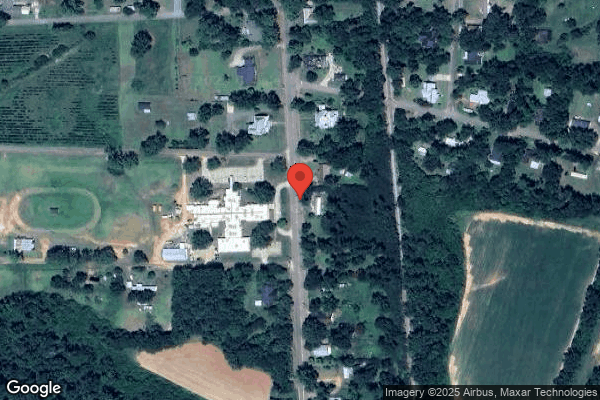
265 TURNER STREET, EDISON, GA 39846 (229) 835-2251
Government - Hospital district 60 Beds Independent Data: November 2025
Trust Grade
80/100
#5 of 353 in GA
Last Inspection: May 2025

Inspected within the last 6 months. Data reflects current conditions.

Overview

Calhoun Nursing Home in Edison, Georgia, has a Trust Grade of B+, which means it is above average and recommended for families considering care options. It ranks #5 out of 353 facilities in Georgia, placing it in the top half, and is the only nursing home in Calhoun County. The facility is improving, with the number of reported issues decreasing from 3 in 2023 to 2 in 2025. Staffing is rated as average, with a 43% turnover rate, slightly below the Georgia average, and there is good RN coverage, exceeding that of 76% of state facilities. However, there were serious concerns, including a failure to revise a resident's care plan, leading to the development of seven avoidable pressure ulcers, and issues with mail delivery that violated residents' rights. While the home shows strengths in general care and staffing, these specific incidents highlight areas that need attention.

Trust Score
B+
80/100
In Georgia
#5/353
Top 1%
Safety Record
Moderate
Needs review
Inspections
Getting Better
3 → 2 violations
Staff Stability
○ Average
43% turnover. Near Georgia's 48% average. Typical for the industry.
Penalties
✓ Good
No fines on record. Clean compliance history, better than most Georgia facilities.
Skilled Nurses
✓ Good
Each resident gets 43 minutes of Registered Nurse (RN) attention daily — more than average for Georgia. RNs are trained to catch health problems early.
Violations
○ Average
8 deficiencies on record. Average for a facility this size. Mostly minor or procedural issues.
★★★★★
5.0
Overall Rating
★★★☆☆
3.0
Staff Levels
★★★★★
5.0
Care Quality
★★★★☆
4.0
Inspection Score
Stable
2023: 3 issues
2025: 2 issues

The Good

  • 5-Star Quality Measures · Strong clinical quality outcomes
  • Full Sprinkler Coverage · Fire safety systems throughout facility
  • No fines on record
  • Staff turnover below average (43%)

    5 points below Georgia average of 48%

Facility shows strength in quality measures, fire safety.

The Bad

Staff Turnover: 43%

Near Georgia avg (46%)

Typical for the industry

The Ugly 8 deficiencies on record

2 actual harm
May 2025 2 deficiencies
CONCERN (D) 📢 Someone Reported This

A family member, employee, or ombudsman was alarmed enough to file a formal complaint

Potential for Harm - no one hurt, but risky conditions existed

Resident Rights (Tag F0550)

Could have caused harm · This affected 1 resident

Based on observations, staff and resident interviews, record review, and review of the facility policy titled, Quality of Life - Dignity, the facility failed to promote care in a manner that maintaine...

Read full inspector narrative →
Based on observations, staff and resident interviews, record review, and review of the facility policy titled, Quality of Life - Dignity, the facility failed to promote care in a manner that maintained the resident's dignity and respect for one of 28 sampled residents (R) (R9). Specifically, staff provided personal hygiene and bathing assistance to R9 without providing full visual privacy by ensuring window blinds were closed and the privacy curtains encircled the bed. This failure had the potential to diminish the resident's quality of life in an environment that promotes the maintenance or enhancement of each resident's quality of life. Findings include: Review of the facility policy titled, Quality of Life - Dignity, dated 2009, revealed the Policy Statement stated, Each resident shall be cared for in a manner that promotes and enhances quality of life, dignity, respect, and individuality. The Policy Interpretation and Implementation section included, 1. Resident shall be treated with dignity and respect at all times. Review of R9's electronic medical record (EMR) revealed diagnoses including, but not limited to, chronic kidney disease stage three, primary pulmonary hypertension, unspecified atrial fibrillation hypertension, and presence of cardiac pacemaker. Review of the admission Minimum Data Set (MDS) assessment, dated 3/31/2024, revealed Section C (Cognitive Patterns) documented a Brief Intensive Mental Status (BIMS) score of 11(indicating moderate cognitive impairment). Section GG (Functional Abilities and Goals) documented that R9 was assessed for total care dependence for personal hygiene care and shower/bath. Review of R9's care plan revealed a Problem created 3/24/2025, of the resident required assistance with activities of daily living (ADL). Approaches included staff to provide substantial/maximal dependent care for bathing. During an observation on 4/30/2025 at 9:40 am, Certified Nursing Assistant (CNA) FF was observed assisting R9 with a bed bath and personal hygiene care with the privacy curtains not pulled and the window blinds open. Observation revealed R9 resided in bed A of a two-bed room and another resident also resided in the same room. Further observation revealed R9 was lying in bed, unclothed except for a brief. The resident in the B bed was observed looking at R9. Continued observation revealed that the window faced the parking area for the facility. During the second observation on 4/30/2025 at 9:43 am of R9 with Licensed Practical Nurse (LPN) BB, observation revealed the privacy curtains had been pulled closed halfway on one side of the bed leaving the end of the bed open (resulting in the curtain not encircling the entire bed) and the window blinds remained open allowing a view of the resident's room from the parking area. Further observation revealed R9 was fully unclothed, and CNA FF was providing a bed bath. LPN BB informed CNA FF that the privacy curtain should have been pulled to encircle the bed, and the window blind should have been closed. LPN BB closed the window blinds and assisted with pulling the privacy curtains. CNA FF verified her failure to pull the privacy curtain and close the window blinds. CNA FF stated she was unaware that the curtain should be pulled around the resident and the window blinds should be closed. In an interview on 4/30/2025 at 1:10 pm, R9 stated CNA FF did not pull the privacy curtain or close the window blinds during her bath. She further stated she did not want other residents or anyone in the parking lot to see her unclothed, stating it was embarrassing to her. In an interview on 5/1/2025 at 4:00 pm, the Director of Nursing (DON) stated that her expectations were for staff to close privacy curtains and window blinds to ensure residents' privacy was maintained during ADL care.
CONCERN (D) 📢 Someone Reported This

A family member, employee, or ombudsman was alarmed enough to file a formal complaint

Potential for Harm - no one hurt, but risky conditions existed

Accident Prevention (Tag F0689)

Could have caused harm · This affected 1 resident

Based on observations, resident and staff interviews, and record review, the facility failed to ensure supervision was provided during resident showers for two of 28 sampled residents (R) (R39 and R57...

Read full inspector narrative →
Based on observations, resident and staff interviews, and record review, the facility failed to ensure supervision was provided during resident showers for two of 28 sampled residents (R) (R39 and R57). This deficient practice had the potential to place R39 and R57 at risk of avoidable injuries. Findings include: 1. Review of R39's electronic medical record (EMR) revealed diagnoses including, but not limited to, chronic kidney disease, hemiplegia and hemiparesis following cerebral infarction affecting right dominant side. Review of R39's Quarterly Minimum Data Set (MDS) assessment, dated 4/2/2025, revealed Section C (Cognitive Patterns) documented a Brief Interview Mental Status (BIMS) score of 15 (indicating little to no cognitive impairment). Section GG (Functional Abilities and Goals) documented R39 required partial to moderate assistance for a bath or shower. Review of R39's Fall Risk Assessment, dated 4/2/2025, revealed a score of 12 (indicating a high risk for fall) and a risk with balance while standing. Review of R39's care plan revealed a Problem area dated 6/7/2022, that R39 required independent to partial/moderate assistance with activities of daily living (ADLs) due to cerebral vascular accident (CVA) with right-sided hemiplegia (complete or partial paralysis) Approaches included staff to provide partial moderate assistance with bathing. A concurrent observation and interview on 4/29/2025 at 10:08 am revealed R39 sitting in a shower chair in the shower cubicle. R39 was unclothed, covered in soap suds, and water from the shower was spraying on her. Further observation revealed there was no staff in the shower room. Continued observation revealed that the call light was not within reach for the resident's use. During an interview, R39 stated that he was unable to transfer himself independently without falling in the shower due to limited mobility of his left hand. R39 reported being uncertain about how long he had been in the shower and unattended by staff. R39 stated that a Certified Nursing Assistant (CNA) had brought him into the shower and stated that she would be back, but the CNA never came back. R39 continued to state that the CNA often left him unattended in the shower room and normally returned once his shower was over. During a concurrent observation and interview on 4/29/2025 at 10:10 am, Licensed Practical Nurse (LPN) BB confirmed that R39 was left in the shower room unsupervised by staff. LPN BB verified that the resident required assistance/supervision with his shower and that a CNA should have been in the shower room with the resident. LPN BB then exited the shower room to look for the assigned CNA. In a concurrent observation and interview on 4/29/2025 at 10:14 am, LPN BB returned to the shower room and stated that CNA AA was assigned to the resident and was currently providing services to another resident. She further stated that CNA AA informed her that the normal routine was to leave R39 unsupervised in the shower to bathe independently, and once the resident was ready, the CNA would assist the resident back to his room. LPN BB then exited the shower room and returned to the hallway, leaving the resident alone in the shower. On 4/29/2025 at 10:16 am, CNA AA returned to the shower room to assist R39. CNA AA confirmed that she had left R39 in the shower by himself. She stated that R39's preference was to be left in the shower alone, and that she normally left him alone in the shower room. In an interview on 4/30/2025 at 10:18 am, R39 stated that his preference was for staff to remain in the shower room while he independently washed himself. He continued to describe his preference as having the privacy curtains pulled and the CNA remaining in the shower room to ensure his safety. He further stated that staff often told him they had other things to do and did not return to the shower room, and he felt unsafe being left alone in the shower room. In an interview on 5/1/2025 at 9:08 am, the Director of Nursing (DON) confirmed that R39 required partial to moderate assistance with bathing and showering. She described a partial to moderate assistant as staff helping the resident, and the resident doing partial care. She further stated R39 was at risk for falls, and she expected staff to remain in the shower room with him during his showers. 2. Review of R57's EMR revealed diagnoses including, but not limited to, type two. diabetes mellitus without complications, moderate intellectual disabilities, persistent atrial fibrillation, and hypertension. Review of R57's admission MDS assessment, dated 3/17/2024, revealed Section C (Cognitive Patterns) documented a Brief Interview Mental Status (BIMS) score of 8 (indicating moderate cognitive impairment). Section GG (Functional Abilities and Goals) documented R57 required supervision for a bath or shower. During a concurrent observation and interview on 4/29/2025 at 10:33 am with the DON, R57 was observed sitting in a shower chair in a shower cubicle, unsupervised, with the water running over the resident and soap suds covering the resident. The DON verified that the resident was in the shower room unattended and no staff were in the room. The DON stated that R57 should not have been left in the shower room unattended. The DON exited the shower room to locate R39's assigned CNA. In an interview on 4/29/2025 at 10:36 am, CNA EE confirmed that R57 had been left unattended in the shower room. In an interview on 4/29/2025 at 10:45 am, CNA DD confirmed that she had left R57 unattended in the shower room. In an interview on 4/30/2025 at 9:33 am, R57 stated he was left unattended in the shower room by the CNA. He stated he was left unattended for several minutes, and he was often left unattended in the shower room. He further stated he was afraid of fainting or falling in the shower. In an interview on 5/1/2025 at 9:06 am, the DON stated supervision for shower or bath meant that staff would not leave the resident unattended and would remain in the shower room at all times. In an interview on 5/1/2025 at 12:30 pm, the Administrator stated they were unaware of residents being left unattended while showering. A policy requested but was not provided.
Oct 2023 3 deficiencies
CONCERN (D)

Potential for Harm - no one hurt, but risky conditions existed

Respiratory Care (Tag F0695)

Could have caused harm · This affected 1 resident

Based on observations, staff interviews, record review, and review of the facility policy titled, Oxygen Administration, the facility failed to provide necessary respiratory care consistent with profe...

Read full inspector narrative →
Based on observations, staff interviews, record review, and review of the facility policy titled, Oxygen Administration, the facility failed to provide necessary respiratory care consistent with professional standards of practice by not ensuring the oxygen equipment gauge was set on a prescribed flow rate. This affected one of 10 Residents (R) R41 receiving oxygen therapy. The deficient practice had the potential to prevent R41 from maintaining adequate oxygenation greater that 90 percent. The census was 58. Findings include. Review of the facility policy titled, Oxygen Administration, revision date March 2004, Steps in the Procedure number 8, Turn on the oxygen. Unless otherwise ordered, start the flow of oxygen at the rate of 2 to 3 liters per minute. A review of the Minimum Data Set (MDS) revealed R41 has a Brief Interview for Mental Status (BIMS) of 00 (severe impairment); she is on oxygen therapy and the Resident has a condition or chronic disease that may result in a life expectancy of less than 6 months. Physician's orders include administer oxygen, titrate to maintain Saturation (sats) greater than 90%, Humidify oxygen, change external O2 filters every week, change internal O2 filter every month. Pertinent diagnoses include Chronic respiratory failure with hypercapnia, Chronic diastolic (congestive) heart failure, and Chronic pain syndrome. Care Plan goals and interventions include Resident requires oxygen therapy R/T chronic respiratory failure, Resident is on palliative care per family's wishes - Provide basic comfort measures (e.g., touch, oral care, etc.), Family has requested DNR status, and Resident has a potential for pain. Observation on 10/24/2023 at 9:30 am revealed R41 was sleeping with no respiratory distress noted. She had oxygen flowing by nasal cannula at 1.5 liters. Observation on 10/25/2023 at 9:15 am revealed R41 was awake with eyes open; she was non-verbal. There was no distress noted. Oxygen was on at 1.5 liters by nasal cannula. Observation on 10/26/2023 at 9:00 am of R41 in her room revealed she was sleeping in bed, no distress noted; oxygen on at 1.5 liters nasal cannula. Interview on 10/26/2023 at 9:15 am with Licensed Practical Nurse (LPN) CC; it was revealed the Resident is on Palliative Care and no longer on Hospice; the staff at the facility takes care of her needs including managing oxygen therapy. Interview on 10/26/2023 at 9:30 am with Registered Nurse (RN) MDS AA; the Resident's Oxygen therapy orders are to maintain O2 sat greater than 90%; the facility usually start the oxygen at 2 liters to obtain this goal. Since the Resident is on Palliative Care, they do not use Hospice orders. Observation and interview on 10/26/2023 at 9:45 am with LPN CC; the Resident was observed lying in bed, oxygen by nasal cannula on at 1.5 liters; the amount of oxygen flow was confirmed by the LPN. Interview on 10/26/23 at 11:00 am with the Director of Nursing (DON); it was revealed the facility uses the Oxygen Therapy policy to determine the amount of oxygen for the Resident. Interview on 10/26/2023 at 11:20 am with the Administrator and DON; it was revealed the order states to administer oxygen and titrate to greater than 90% saturation; the Resident has been on oxygen for a long time, and she is being maintained on 1.5 liters.
CONCERN (D)

Potential for Harm - no one hurt, but risky conditions existed

Infection Control (Tag F0880)

Could have caused harm · This affected 1 resident

Based on observations, staff interviews, and review of the facility policy titled, Departmental (Environmental Services)-Laundry and Linen, the facility failed to ensure clean linens were stored to pr...

Read full inspector narrative →
Based on observations, staff interviews, and review of the facility policy titled, Departmental (Environmental Services)-Laundry and Linen, the facility failed to ensure clean linens were stored to prevent contamination with debris and splash to prevent spread of infection. This had the potential to affect all residents in the facility. The sample size was 25 residents. Findings include: Review of the facility policy titled, Departmental (Environmental Services)-Laundry and Linen last revised April 2010, under Purpose: The purpose of this procedure is to provide a process for the safe and antiseptic handling, washing, and storage of linen. An interview on 10/26/2023 at 10:55 am with the Administrator and Laundry Aid revealed the facility only laundered resident clothing. All other linens were processed by a contracted company. An interview on 10/26/2023 at 10:56 am with the Laundry Aid confirmed she cleaned the washing machines, dryers, surfaces such as the clean linen folding table, floors daily, and cleaned the dryer lint filter after load of clothes but did not clean the walls or ceilings. Observation on 10/26/2023 at 10:55 am revealed multiple webs along the ceiling and wall space throughout the laundry department. The Administrator and Laundry Aid confirmed this observation and confirmed the laundry department had not been high cleaned recently. The Administrator did reveal that the Laundry Aid cleans the lower areas of the laundry area daily. Observation on 10/26/2023 at 10:55 am revealed a hole in the wall, located in the clean linen storage area, and open to the outdoors with the potential for dust and debris to enter and contaminate the stored clean linen. The Administrator and Laundry Aid confirmed this observation. Observation on 10/26/2023 at 10:59 am revealed the eye wash station sink located near clean linen storage with no splash barrier. The Administrator and Laundry Aid confirmed this observation and potential for contamination from splash. Observation on 10/26/2023 at 10:59 am revealed a staff coffee pot and radio stored on the designated clean linen folding table. The Administrator and Laundry Aid confirmed this observation. Observation on 10/26/2023 at 10:59 am revealed flaking paint on all walls and ceilings, including the clean linen storage area. Clean linen was stored on racks without a barrier to prevent risk of contamination by dust and debris. The Administrator and Laundry Aid confirmed this observation. An observation on 10/26/2023 at 11:02 am revealed clean linen was stored on a rack next to a wall with flaking paint, and linen on the cart was lying against the wall. The Administrator confirmed this observation. An interview with the Administrator 10/26/2023 at 3:44 pm revealed she manages the laundry department, and the facility has a contracted company for housekeeping services. She also revealed there was not a cleaning schedule for routine cleaning of the laundry department, but the area should be cleaned daily. She revealed she had spoken with housekeeping contract staff and the laundry would be cleaned by tonight. The contracted housekeeping staff person was not available for an interview.
CONCERN (E)

Potential for Harm - no one hurt, but risky conditions existed

Deficiency F0576 (Tag F0576)

Could have caused harm · This affected multiple residents

**NOTE- TERMS IN BRACKETS HAVE BEEN EDITED TO PROTECT CONFIDENTIALITY** Based on resident interview, staff interview, and review of the facility policy titled, Residents Rights, the facility failed to...

Read full inspector narrative →
**NOTE- TERMS IN BRACKETS HAVE BEEN EDITED TO PROTECT CONFIDENTIALITY** Based on resident interview, staff interview, and review of the facility policy titled, Residents Rights, the facility failed to ensure that the residents received mail delivery services to include Saturdays for 59 of 59 residents that resided in the facility. Findings: Review of the facility policy titled, Resident Rights, updated February 2020, under number 3. Privacy: You have the right to receive your mail unopened and within twenty-four (24) hours of delivery to the facility. Interview on 10/25/2023 at 2:21 pm with Resident Council members reveals that the mail is not delivered to the facility on Saturday. Residents revealed that they do not receive mail on Saturday's and the office staff that has the key to the post office box up town are here Monday through Friday. Interview on 10/25/2023 at 3:28 pm with Social Worker (SW) BB reveals the activities department gives out the mail Monday through Friday. We have a mailbox, and the business office goes and gets the mail Monday through Friday. They don't get mail on Saturday's. Interview on 10/26/2023 at 10:17 am with post office employee DD, reveals that they are open on Saturdays until 11:00 am. She also reveals that if an address is a post office box, they do not deliver their mail. Their mail will come to the post office box at the post office. The door to the locked boxes are available to patrons twenty four hours, seven days a week, using their key. No packages are delivered if the business or [NAME] has a locked post office box. A pink slip will be put in the box for the person opening the box to see and it designates they have a package to pick up at the front desk. Interview on 10/27/2023 at 4:30 pm with Administrator reveals that mail packages are delivered seven days a week to the front door. The mail in envelopes (non-packages) is delivered during the week but not on the weekend. When the Administrator was asked if there was a reason the mail was not delivered on the weekend, she stated there was not a reason.
Jan 2022 3 deficiencies 2 Harm
SERIOUS (G)

Actual Harm - a resident was hurt due to facility failures

Deficiency F0657 (Tag F0657)

A resident was harmed · This affected 1 resident

**NOTE- TERMS IN BRACKETS HAVE BEEN EDITED TO PROTECT CONFIDENTIALITY** Based on record review, staff interviews, and review of the facility policy titled, Care Plans-Comprehensive the facility failed...

Read full inspector narrative →
**NOTE- TERMS IN BRACKETS HAVE BEEN EDITED TO PROTECT CONFIDENTIALITY** Based on record review, staff interviews, and review of the facility policy titled, Care Plans-Comprehensive the facility failed to revise the comprehensive care plan for one of 21 residents (R# 31,) reviewed for care plans. Specifically, the facility failed to revise the care plan when R31 developed pressure ulcers after admission and did not include the current orders/approaches, such as the pillow and wedge, which were to be used in response to the resident's seven pressure ulcers. Actual harm was identified to have occurred when R31 developed seven avoidable pressure ulcers, which caused loss of multiple areas of healthy skin tissue/integrity as well as placed R31 at risk for pain, discomfort, and wound infection. Findings include: Review of the facility's Care Plans-Comprehensive policy, dated April 2010, revealed, An individualized comprehensive care plan that includes measurable objectives and timetables to meet the resident's medical, nursing, mental and psychological needs . the care planning team is responsible for the periodic review and updating of care plans at least quarterly .The resident's comprehensive care plans are revised as information about the resident and the resident's condition change . Revisions . The Care Planning/Interdisciplinary Team is responsible for the periodic review and updating of care plans: . a. When there has been a significant change in the resident's condition . b. When the desired outcome is not met. 1. Review of the Face Sheet for R31 located in the Electronic Medical Record (EMR) on the Face Sheet tab revealed that R31 was admitted to the facility on [DATE] with one pressure ulcer. Review of the Wound Assessments for R31 located in the Wound Management tab of the EMR revealed R31 was currently receiving wound care treatments three times a week for seven pressure ulcers. Review of initial wound assessments dated 6/19/2020, 7/14/2020, 7/23/2020, 8/14/2020, 9/01/2021 and 12/24/2021 revealed that R31 had developed facility-acquired pressure ulcers to the left buttock ischium, right trochanter, left anterior outer knee, right lateral thigh, left inner knee, and top of the left foot. In addition to these six facility-acquired pressure ulcers, interview on 1/20/2022 at 3:25 p.m. with Licensed Practical Nurse (LPN) 1, who served as the Wound Care Nurse, revealed that although the pressure ulcer on R31's sacrum that was present on admission healed, it then re-opened on 05/31/21. (Refer to F686 for additional details.) Review of the Physician Order Report, for R31 dated 1/1/2022 through 1/18/2022 located in the EMR Orders tab, revealed R31 's Orders included an order dated 10/25/2021 which documented, Pillow between knees and wedge under distal bilateral knees every shift. Review of the Care Plan for R31 located in the EMR (RAI) tab; initiated 3/2/2020, revealed the Care Plan was not revised to include the development of new pressure ulcers, and did not include the current orders/approaches, such as the pillow and wedge, which were to be used in response to the resident's seven pressure ulcers. The Care Plan goal dated 6/2/2020 documented, Resident's wound will show evidence of healing and other skin will remain intact through the next review. The approaches section of the Care Plan included, 12/4/2020-wound care clinic. The Care Plan did not reflect the pressure ulcers that developed on 6/19/2020, 7/14/2020, 7/23/2020, 8/14/2020, 9/1/2021 and 12/24/2021. Interview on 1/20/2022 at 3:25 p.m., with Licensed Practical Nurse (LPN) 1 revealed that the 12/4/2020 intervention of wound care clinic was not reflective of the resident's current care, as R31 was not being transported by the facility to a wound care clinic, and a wound care physician came to the facility and provided wound care on site. During an additional interview on 1/21/2022 at 12:59 p.m., LPN1 stated she was assigned to complete wound-related care plans. LPN1 confirmed that she had not revised R31's care plan to reflect the new pressure ulcers that developed after the resident's admission to the facility, including approaches identified/ordered to promote healing for each new pressure ulcer. Cross refer F686
SERIOUS (G)

Actual Harm - a resident was hurt due to facility failures

Pressure Ulcer Prevention (Tag F0686)

A resident was harmed · This affected 1 resident

**NOTE- TERMS IN BRACKETS HAVE BEEN EDITED TO PROTECT CONFIDENTIALITY** Based on observation, staff interviews, record review, review of the National Pressure Ulcer Advisory Panel (NPUAP) guidelines, ...

Read full inspector narrative →
**NOTE- TERMS IN BRACKETS HAVE BEEN EDITED TO PROTECT CONFIDENTIALITY** Based on observation, staff interviews, record review, review of the National Pressure Ulcer Advisory Panel (NPUAP) guidelines, and review of the facility policy titled, Pressure Ulcer Prevention the facility failed to provide pressure reduction interventions, which resulted in the development of avoidable pressure ulcers for one of three residents (R31) reviewed for pressure ulcers. Actual harm was identified to have occurred when R31 developed seven avoidable pressure ulcers, which caused loss of multiple areas of healthy skin tissue/integrity as well as placed R31 at risk for pain, discomfort, and wound infection. Findings include: Review of the NPUAP 2019 Clinical Practice Guideline, Pressure Ulcer Prevention, revealed, Avoidable means that the resident developed a pressure ulcer/injury, and that the facility did not do one or more of the following: . define and implement interventions that are consistent with resident needs . and professional standards of practice . monitor and evaluate the impact of the interventions; or revise the interventions as appropriate. Pressure Points and Tissue Tolerance . tissue closest to the bone may be the first tissue to undergo changes related to pressure. Pressure ulcers are usually located over a boney prominence, such as the sacrum, heel, trochanter, ischial tuberosity, fibular head, scapula, and ankle . due to the anatomy of mucous membranes, some ulcers cannot be staged. Pressure ulcers on the sacrum and heels are most common. Review of the NPUAP 2019 Clinical Practice Guideline, Pressure Ulcer Staging indicated, Unstageable-obscured full thickness skin and bone loss, obscured by slough or eschar. Stage II-Partial thickness skin loss with exposed dermis. Stage III-Full thickness skin loss. Stage IV-Full thickness, skin and tissue loss. Review of the facility policy titled, Pressure Ulcer Prevention revised 9/1/19, revealed, Any identified risks for breakdown will serve as a trigger for preventative measures. Pressure ulcer preventative measures will be implemented according to the identified level of risk on the Braden scale. Review of the facility policy titled, Pressure Ulcer Prevention Protocol revised 12/19/16, revealed staff were to, Position with pillows and support devices . avoid positioning on trochanter when in side-lying position. Review of the Owner's Manual for the Alternating Pressure Mattress (APM), indicated, Use flat sheets, knitted stretch-fit sheets, or deep-pocketed fitted sheets. Use as few layers of linens or under-pads beneath the patient as possible to allow the best possible pressure management performance. Review of the Face Sheet for R31 located in the electronic medical record (EMR) on the Face Sheet tab revealed that R31 was admitted to the facility on [DATE]. Diagnoses listed on the Face Sheet included traumatic hemorrhage of cerebrum [traumatic brain injury], chronic respiratory failure, obstructive uropathy [a condition in which the urine flow is blocked], pressure ulcer of sacral region Stage IV, gastrostomy [an opening into the stomach from the abdominal wall made surgically for introduction of food], and a tracheostomy [an opening surgically created through the neck into the trachea (windpipe) to allow direct access to a breathing tube]. Review of the quarterly Minimum Data Set (MDS), for R31 with an Assessment Reference Date (ARD) of 12/24/2021 located in the EMR on the RAI tab, indicated R31 had severely impaired cognitive status and was totally dependent on two staff for bed mobility, transfer, dressing and all activities of daily living. The MDS indicated R31 was unable to communicate verbally to make his needs known, had limited range of motion of upper and lower extremities, and received enteral feedings via a feeding tube [a medical device used to provide liquid nourishment, fluids, and medications by bypassing oral intake]. The MDS indicated R31 had a suprapubic urinary catheter [a catheter that is surgically inserted into the bladder through an incision above the pubis]. Review of the Physician Order Report, for R31 dated 1/1/2022 through 1/18/2022 and located in the EMR Orders tab, revealed R31 's Orders included an order dated 10/25/2021 which documented, Pillow between knees and wedge under distal bilateral knees every shift. Review of the Wound Assessments for R31 located in the Wound Management tab of the EMR, revealed R31 was currently receiving wound care treatments three times weekly for seven pressure ulcers. Review of R31's initial wound assessment dated [DATE], revealed the resident was admitted with one Stage IV pressure ulcer to the sacrum, 2.5 centimeters (cm) long by 2.9 cm wide. Review of the admission Braden Scale for Prediction of Pressure Sore Risk (Acuity), for R31 located in the EMR under the Reports tab and dated 3/2/2020; revealed R31's total Braden Scale Score was determined to be 9-very high risk, for pressure ulcer development. Further initial wound assessments dated 6/19/2020, 7/14/2020, 7/23/2020, 8/14/2020, 9/1/2021 and 12/24/2021 revealed that while a resident of this facility, R31 developed additional, facility-acquired, pressure ulcers. Review of the initial wound assessments provided by Licensed Practical Nurse (LPN) 1 revealed the following information about these facility-acquired pressure ulcers: 6/19/2020: in-house acquired Stage II pressure ulcer left buttock ischium, 1.9 cm long by 2.6 cm wide. 7/14/2020: in-house acquired unstageable pressure ulcer right trochanter with slough, 6 cm long by 6.5 cm wide with necrotic tissue [dead tissue]. 7/23/2020: in-house acquired unstageable pressure ulcer left anterior outer knee, 2.3 cm long by 1.7 cm wide with slough [dead tissue]. 8/14/2020: in-house acquired unstageable pressure ulcer right lateral thigh, 2 cm long by 3.8 cm wide with necrotic tissue. 9/1/2021: in-house acquired Stage III pressure ulcer left inner knee, 1.5 cm long by 1.7 cm wide serosanguineous with granulation tissue [tissue that will fill in a wound where there has been tissue loss]. 12/24/2021: in-house acquired Stage IV pressure ulcer lateral top of left foot 2.1 cm long by 0.5 cm wide by 0.1 deep with granulation tissue. Observation on 1/18/2022 at 2:23 p.m., R31 was observed in bed, positioned on his left side. Both legs were observed with the knees up toward his upper body. There was no pressure reduction wedge supporting his legs. His knees were touching skin to skin against the boney prominence. There was no pillow between the boney prominences of his knees. R31 was lying on an alternating air mattress and there were two thick cloth incontinent pads placed under his buttocks and upper trunk. R31 was observed with an adult disposable brief under his buttocks. Observation on 1/20/2022 at 2:30 p.m., R31 was observed in bed, positioned partially on his back and right side. There was no pillow between his knees and the inside of his knees were touching skin to skin on the boney prominences. During an interview on 1/20/2022 at 3:25 p.m., Licensed Practical Nurse (LPN) 1 stated she had been the facility wound care nurse for approximately six months. LPN1 stated that when she first started as the wound care nurse, staff were not turning and positioning residents a minimum of every two hours or when needed. The interview with LPN1 confirmed R31's current pressure ulcers were all developed in the facility. She stated that in addition to the six new facility-acquired pressure ulcers, the pressure ulcer on R31's sacrum that was present on admission healed, and then re-opened on 05/31/21. LPN1 confirmed that the resident's pressure ulcers were avoidable due to the facility's failure to provide pressure reduction interventions. LPN1 was unable to provide an initial wound assessment for the sacral pressure ulcer that re-opened during R31's stay on 5/31/2021. Observation on 1/21/2022 at 8:15 a.m., R31 was observed with no pillow between his knees and his knees were skin to skin against the boney prominences. R31 was observed lying on two thick cloth incontinent pads placed under his buttocks and upper trunk. R31 had a urinary catheter preventing any urine from contaminating his skin and he was lying on an adult disposable incontinent brief. R31 was lying on an alternating air mattress. During a continuous observation on 1/21/2022 between 8:20 a.m. and 9:30 a.m., LPN1 was observed providing pressure ulcer wound care to R31. The Infection Preventionist (IP) assisted LPN1 with the wound care. LPN1 measured, staged, and verbally described each wound during the observation with the following information: Right lateral thigh-Stage III developed in-house, 3.4 cm long by 1.7 cm wide. The wound bed is flat, serosanguineous drainage, wound bed is red. This pressure ulcer developed in the facility. Right trochanter-closed pressure wound with protective dressing. Left inner knee- 1.8 cm long by 1.4 cm wide Stage II pressure ulcer developed in the facility. Sacrum- This was an admitted pressure ulcer that was healed but it re-opened. The area is the right upper buttock, but the doctor calls it the sacrum, this is 0.2 cm long by 0.6 cm wide and 0.4 cm deep. Left outer knee is 1.7 cm long by 2.8 cm wide, this started as an unstageable pressure ulcer in the facility. Left ischium area on boney prominence is 0.9 cm long by 1.2 cm wide. This is a healing Stage IV that healed and then reopened in the facility. Left lateral foot, the doctor calls it the top of the foot. This is a healing Stage III developed in the facility. 0.1 cm long by 0.7 cm wide. Following the wound care observation on 1/21/2022 at 9:40 a.m., the IP stated the staff used the cloth incontinent pads under R31's buttocks and upper body to catch respiratory secretions and to lift the resident in bed. The IP agreed that due to the presence of the urinary catheter, R31's skin was not moist from urine. An interview on 1/21/2022 at 11:10 a.m. with the Director of Nursing (DON) and the Administrator. The Administrator denied that R31's pressure ulcers were avoidable, due to his comorbidities. The Administrator provided a copy of R31's Long Term Care Physician Progress Note dated 7/26/2021 which documented, Resident is at risk for further impaired skin integrity, wounds are not likely to improve or heal related to condition and comorbidities. The Administrator was unable to provide documentation from R31's physician that the pressure ulcers developed in the facility were unavoidable. During this interview, the DON provided no information about the development of the facility-acquired pressure ulcers. During an interview on 1/21/2022 at 1:33 p.m., the Registered Dietitian (RD) stated, I have known the resident [referring to R31] since he was admitted . He had a Stage IV pressure ulcer on admission and nutritional interventions have been consistent and evaluated every month. He has received adequate protein supplements since admission and his albumin and protein levels have been consistent every month. His nutritional status is not a factor in the development of pressure ulcers. He is nutritionally sound. Review of R31's Physician Order Report dated 1/1/2022 through 1/18/2022 located in the EMR Orders tab, confirmed R31 was receiving nutritional supplements including folic acid, Juven 1.5 grams of protein powder twice daily, Pro-stat amino acids daily, vitamin-B-1 100 milligrams (mg) daily, calcium 500 mg twice daily, and Benecalorie nutritional supplement three times daily for pressure ulcers. During a telephone interview on 1/21/2022 at 6:15 p.m. , R31's attending physician (MD) 1 who was also the facility Medical Director, stated, Yes, I know this resident [R31] well; they may not be providing the special care those residents with trachs [tracheostomies] and feeding tubes require. The resident needs special attention due to his condition. I would expect the staff to ensure each resident is positioned based on their individual needs to prevent pressure ulcers. Of course, they would say they (the pressure ulcers) are unavoidable. I agree that he (R31) is nutritionally sound, and he is receiving full protein needs with enteral feedings. The dietitian follows him very closely. They (facility staff) need to ensure the resident has tissue off-loading to ensure pressure ulcers don't develop. There is no medical reason this resident has seven pressure ulcers. If they are on boney prominences, they have not reduced pressure. They will take a long time to heal.
CONCERN (D)

Potential for Harm - no one hurt, but risky conditions existed

Menu Adequacy (Tag F0803)

Could have caused harm · This affected 1 resident

**NOTE- TERMS IN BRACKETS HAVE BEEN EDITED TO PROTECT CONFIDENTIALITY** Based on observation, interview, menu review, and review of facility policy titled, Miller County Hospital [NAME] Nursing Home-T...

Read full inspector narrative →
**NOTE- TERMS IN BRACKETS HAVE BEEN EDITED TO PROTECT CONFIDENTIALITY** Based on observation, interview, menu review, and review of facility policy titled, Miller County Hospital [NAME] Nursing Home-Type of Menus the facility failed to ensure that menus were followed, with all food provided per the planned menu. The failure had the potential to affect two residents (R40 and R42) who receive a pureed diet, out of 44 residents who received food intake by mouth. Findings include: Review of the facility policy titled Miller County Hospital [NAME] Nursing Home-Type of Menus, dated 3/1/2008, revealed that, All therapeutic menus (soft, bland, diabetic, full liquid, clear liquid, etc.) are modified from the regular house diet for that day. Review of the Orders tab in the electronic medical record (EMR) for R40 and R42 revealed their January 2022 physician orders were for a pureed diet. Review of the facility's menu/spreadsheet revealed the pureed meal planned for lunch on 1/19/2022 included four ounces of fried chicken, a half cup of mashed potatoes, one half cup of turnips, one piece of corn bread, margarine, and milk. The menu/spreadsheet stated that the two pureed meals processed were to be served one piece of corn bread per person. Observation of the lunch meal preparation in the kitchen on 1/19/2022 at 11:40 .m. revealed turnips were processed into puree without adding bread. The pureed turnips were then placed on the steam table. The instant mashed potatoes were observed being removed from the steamer and placed in the steam table shortly before the turnips. No bread was added to the mashed potatoes. Interview with the [NAME] on 1/19/2022 at 11:50 a.m. who was at the steam table at service time, indicated all the pureed food was now on the steam table, ready for temperatures prior to service. At this time, observation of the steam table revealed it contained the following items for the pureed diets: mashed potatoes for the potato salad, pureed chicken, and turnips. At this time, the Food Service Supervisor, who was present, stated that the facility purchases pureed meats in bulk. Per the cook, the container of pureed chicken was processed and heated and positioned on the steam table earlier that morning. Review of the ingredients label on the side of the bulk pureed chicken container on 1/19/2022 at 11:55 a.m. revealed the pureed chicken product did not contain bread in its contents. Further interview on 1/19/2022 at 12:05 p.m. with the cook after food service began at the steam table confirmed the corn bread listed on the pureed menu for the meal was not processed or pureed in its original form. When interviewed, the cook stated she did not realize the corn bread was not included in the final food distribution. Interview with the Administrator on 01/21/2022 at 3:30 p.m. revealed it was her expectation that the menus are to be followed at all times.
Understanding Severity Codes (click to expand)
Life-Threatening (Immediate Jeopardy)
J - Isolated K - Pattern L - Widespread
Actual Harm
G - Isolated H - Pattern I - Widespread
Potential for Harm
D - Isolated E - Pattern F - Widespread
No Harm (Minor)
A - Isolated B - Pattern C - Widespread

Questions to Ask on Your Visit

  • "Can I speak with families of current residents?"
  • "What's your RN coverage like on weekends and overnight?"

Our Honest Assessment

Strengths
  • • Grade B+ (80/100). Above average facility, better than most options in Georgia.
  • • No fines on record. Clean compliance history, better than most Georgia facilities.
  • • 43% turnover. Below Georgia's 48% average. Good staff retention means consistent care.
Concerns
  • • 8 deficiencies on record, including 2 serious (caused harm) violations. Ask about corrective actions taken.
Bottom line: Generally positive indicators. Standard due diligence and a personal visit recommended.

About This Facility

What is Calhoun's CMS Rating?

CMS assigns CALHOUN NURSING HOME an overall rating of 5 out of 5 stars, which is considered much above average nationally. Within Georgia, this rating places the facility higher than 99% of the state's 100 nursing homes. This rating reflects solid performance across the metrics CMS uses to evaluate nursing home quality.

How is Calhoun Staffed?

CMS rates CALHOUN NURSING HOME's staffing level at 3 out of 5 stars, which is average compared to other nursing homes. Staff turnover is 43%, compared to the Georgia average of 46%. This relatively stable workforce can support continuity of care.

What Have Inspectors Found at Calhoun?

State health inspectors documented 8 deficiencies at CALHOUN NURSING HOME during 2022 to 2025. These included: 2 that caused actual resident harm and 6 with potential for harm. Deficiencies causing actual harm indicate documented cases where residents experienced negative health consequences.

Who Owns and Operates Calhoun?

CALHOUN NURSING HOME is owned by a government entity. Government-operated facilities are typically run by state, county, or municipal agencies. The facility operates independently rather than as part of a larger chain. With 60 certified beds and approximately 56 residents (about 93% occupancy), it is a smaller facility located in EDISON, Georgia.

How Does Calhoun Compare to Other Georgia Nursing Homes?

Compared to the 100 nursing homes in Georgia, CALHOUN NURSING HOME's overall rating (5 stars) is above the state average of 2.6, staff turnover (43%) is near the state average of 46%, and health inspection rating (4 stars) is above the national benchmark.

What Should Families Ask When Visiting Calhoun?

Based on this facility's data, families visiting should ask: "Can I visit during a mealtime to observe dining assistance and food quality?" "How do you handle medical emergencies, and what is your hospital transfer rate?" "Can I speak with family members of current residents about their experience?"

Is Calhoun Safe?

Based on CMS inspection data, CALHOUN NURSING HOME has a clean safety record: no substantiated abuse findings (meaning no confirmed cases of resident harm), no Immediate Jeopardy citations (the most serious violation level indicating risk of serious injury or death), and is not on the Special Focus Facility watch list (a federal program monitoring the lowest-performing 1% of nursing homes). The facility has a 5-star overall rating and ranks #1 of 100 nursing homes in Georgia. While no facility is perfect, families should still ask about staff-to-resident ratios and recent inspection results during their visit.

Do Nurses at Calhoun Stick Around?

CALHOUN NURSING HOME has a staff turnover rate of 43%, which is about average for Georgia nursing homes (state average: 46%). Moderate turnover is common in nursing homes, but families should still ask about staff tenure and how the facility maintains care continuity when employees leave.

Was Calhoun Ever Fined?

CALHOUN NURSING HOME has no federal fines on record. CMS issues fines when nursing homes fail to meet care standards or don't correct problems found during inspections. The absence of fines suggests the facility has either maintained compliance or corrected any issues before penalties were assessed. This is a positive indicator, though families should still review recent inspection reports for the full picture.

Is Calhoun on Any Federal Watch List?

CALHOUN NURSING HOME is not on any federal watch list. The most significant is the Special Focus Facility (SFF) program, which identifies the bottom 1% of nursing homes nationally based on persistent, serious quality problems. Not being on this list means the facility has avoided the pattern of deficiencies that triggers enhanced federal oversight. This is a positive indicator, though families should still review the facility's inspection history directly.