PRUITTHEALTH - FRANKLIN
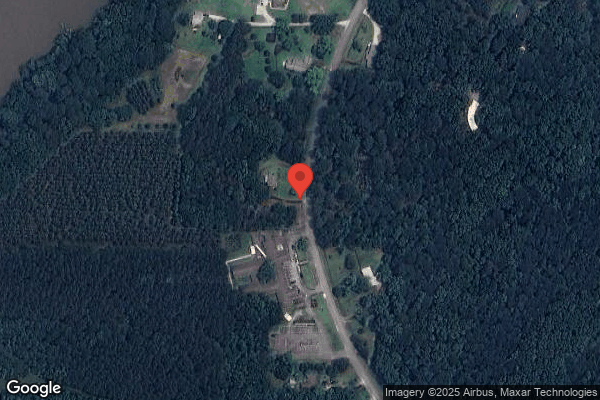
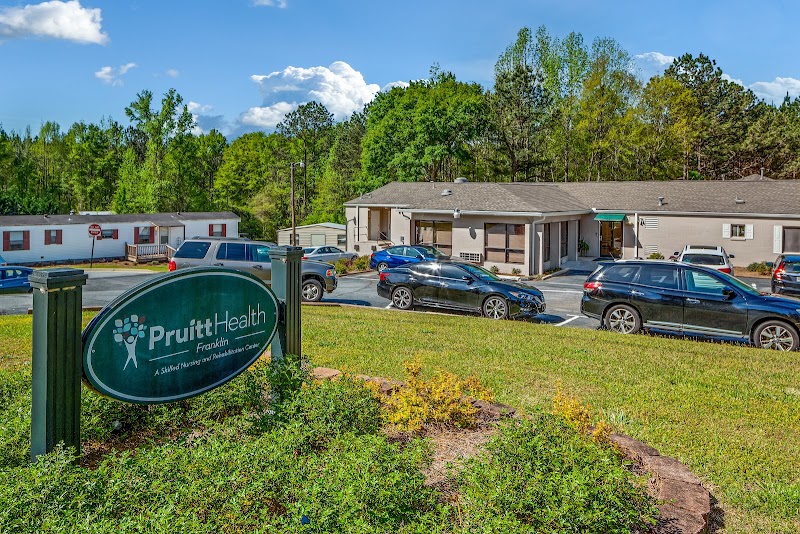
360 SOUTH RIVER ROAD, FRANKLIN, GA 30217 (706) 675-6674
For profit - Corporation 78 Beds PRUITTHEALTH Data: November 2025
Trust Grade
90/100
#29 of 353 in GA
Last Inspection: March 2025

Within standard 12-15 month inspection cycle. Federal law requires annual inspections.

Overview

PruittHealth - Franklin in Georgia has an excellent Trust Grade of A, indicating a high level of quality and care, and ranks #29 out of 353 facilities in the state, placing it in the top half for overall performance. However, the facility's trend is worsening; it has gone from 2 issues in 2022 to 3 in 2025, which raises some concerns. Staffing is a strong point, with a rating of 4 out of 5 stars and a turnover rate of 33%, lower than the state average, meaning staff tend to stay and are familiar with the residents. Notably, there have been no fines reported, which is a positive sign of compliance. Specific incidents include a failure to develop a care plan that included physical therapy recommendations for a resident at risk of falling, as well as not providing necessary equipment to maintain mobility for another resident, which could potentially impact their well-being. While the facility has solid strengths, these compliance issues highlight areas needing improvement.

Trust Score
A
90/100
In Georgia
#29/353
Top 8%
Safety Record
Low Risk
No red flags
Inspections
Getting Worse
2 → 3 violations
Staff Stability
○ Average
33% turnover. Near Georgia's 48% average. Typical for the industry.
Penalties
✓ Good
No fines on record. Clean compliance history, better than most Georgia facilities.
Skilled Nurses
⚠ Watch
Each resident gets only 26 minutes of Registered Nurse (RN) attention daily — below average for Georgia. Fewer RN minutes means fewer trained eyes watching for problems.
Violations
○ Average
6 deficiencies on record. Average for a facility this size. Mostly minor or procedural issues.
★★★★★
5.0
Overall Rating
★★★★☆
4.0
Staff Levels
★★★★★
5.0
Care Quality
★★★★☆
4.0
Inspection Score
Stable
2022: 2 issues
2025: 3 issues

The Good

  • 4-Star Staffing Rating · Above-average nurse staffing levels
  • 5-Star Quality Measures · Strong clinical quality outcomes
  • Full Sprinkler Coverage · Fire safety systems throughout facility
  • No fines on record
  • Staff turnover below average (33%)

    15 points below Georgia average of 48%

Facility shows strength in staffing levels, quality measures, fire safety.

The Bad

Staff Turnover: 33%

13pts below Georgia avg (46%)

Typical for the industry

Chain: PRUITTHEALTH

Part of a multi-facility chain

Ask about local staffing decisions and management

The Ugly 6 deficiencies on record

Mar 2025 3 deficiencies
CONCERN (D) 📢 Someone Reported This

A family member, employee, or ombudsman was alarmed enough to file a formal complaint

Potential for Harm - no one hurt, but risky conditions existed

Comprehensive Care Plan (Tag F0656)

Could have caused harm · This affected 1 resident

Based on record review and review of the facility policy titled, Care Plans, the facility failed to develop a care plan for one of 35 sampled residents (R) (R14) to include physical therapy discharge ...

Read full inspector narrative →
Based on record review and review of the facility policy titled, Care Plans, the facility failed to develop a care plan for one of 35 sampled residents (R) (R14) to include physical therapy discharge recommendations. Findings include: A review of the facility policy titled, Care plans revealed under Care Plan Review and Update . 2. Updates to the care plans should be made with any changes in condition at the time the change in condition occurred. For MatrixCare users, all updates are made electronically. Review of R14 care plan dated 12/26/2024 indicated a problem of R14 at risk for falling R/T Cerebral Palsey(sic)/impaired mobility. Goals include R14 will remain free from injury. Approach(s) include keep call light in reach while in bed, observe changes in resident's condition that may warrant increased supervision, observe frquently (sic) when OOB in chiar (sic). There was nothing found in the care plan regarding Physical Therapy's (PT) recommendations. Review of the PT discharge evaluation dated 8/21/2019 documented the following, GOAL MET - on 8/21/2019. The patient tolerates upright sitting in personal custom tilt manual wheelchair maintaining proper midline body alignment for 180 minutes or greater daily without negative skin changes. The following documented discharge plans and instructions, Discharge planned for this patient. Recommendations discussed with Nursing caregivers include continued OOB (out of bed) daily to pt's (patient's) personal seating/positioning system tilt manual w/c (wheelchair) with checks every hour for any seating needs and for tilting w/c to various angles for pressure reliefs. Cross reference to F688
CONCERN (D) 📢 Someone Reported This

A family member, employee, or ombudsman was alarmed enough to file a formal complaint

Potential for Harm - no one hurt, but risky conditions existed

Deficiency F0688 (Tag F0688)

Could have caused harm · This affected 1 resident

**NOTE- TERMS IN BRACKETS HAVE BEEN EDITED TO PROTECT CONFIDENTIALITY** Based on observations, staff interviews, record review, and review of the facility policy titled, Restorative Nursing Program, t...

Read full inspector narrative →
**NOTE- TERMS IN BRACKETS HAVE BEEN EDITED TO PROTECT CONFIDENTIALITY** Based on observations, staff interviews, record review, and review of the facility policy titled, Restorative Nursing Program, the facility failed to ensure one of 35 sampled residents (R) (R14) did not have a reduction in range of motion due to the facility not providing custom equipment post discharge from physical therapy services. Findings include: A review of the facility policy titled Restorative Nursing Program revised 11/4/2021 documented under Policy, It is the policy of this healthcare center to provide restorative nursing which actively focuses on achieving and maintain optimal physical, mental and psychological functioning and well-being of patient/resident. Review of the electronic medical record (EMR) revealed R14 was admitted to the facility with diagnoses including but not limited to cerebral palsy (primary admission contracture, left wrist, contracture, left hand, contracture, right hand, contracture, right wrist, abnormal posture, pain, unspecified, and muscle weakness (generalized). Review of R14's annual Minimum Data Set (MDS) assessment dated [DATE] revealed a Brief Interview for Mental Status (BIMS) score of 99, which indicates R14 was unable to finish the assessment due to being unable to respond. Section GG, functional status, revealed R14 was dependent on staff due to upper extremities impairment on both sides, lower extremities impairment on one side and benefits from the use of a wheelchair (manual). R14 is dependent on staff in all areas. Review of R14's care plan dated 12/26/2024 indicated a problem of requires total assist with ADL's (activities of daily living) R/T (related to) Cerebral Palsey (sic). Goals included but not limited to [R14] will be kept clean/dry with neat appearance. Approach included but not limited to 1/4 side rails for turning and positioning, 2 person assist (sic) with mechanical lift, Call light within reach while in bed, NPO receives Tube feeding, Total care needed with ADL's, uses geri-chair when OOB ( out of bed). (Activities) Problem of has limited participation in activities r/t impaired mobility/speech. Goal R14 will participate in activities of his liking. Approach(s) of assit (sic) resident to activities when he is OOB, provide setting in which activities are preferred own room, day room, likes to watch cartoons, visit in room [ROOM NUMBER]:1 when resident is not oob. Problem of R14 at risk for falling R/T Cerebral Palsey (sic)/impaired mobility. Goal includes R14 will remain free from injury. Approach(s) include keep call light in reach while in bed, observe changes in resident's condition that may warrant increased supervision, observe frquently (sic) when OOB in chiar (sic). Review of the physical therapy discharge evaluation dated 8/21/2019 documented the following, GOAL MET - on 8/21/2019. The patient tolerates upright sitting in personal custom tilt manual wheelchair maintaining proper midline body alignment for 180 minutes or greater daily without negative skin changes. The following documented discharge plans and instructions, Discharge planned for this patient. Recommendations discussed with Nursing caregivers include continued OOB daily to pt's personal seating/positioning system tilt manual w/c (wheelchair) with checks every hour for any seating needs and for tilting w/c to various angles for pressure reliefs. Observation on 3/4/2025 at 2:32 pm of R14 in his room in the bed revealed he had a cushion that was on the side dresser near the bed. There was no w/c in room at the time. Observation on 3/5/2025 at 11:30 am, observed R14 in their room, in bed watching tv. Observed no w/c in the room. Observation on 3/6/2025 at 1:53 pm, observed R14 in their room, in bed sleeping. Observed no w/c in the room. Interview on 3/6/2025 at 10:30 am with Certified Nursing Assistant (CNA) FF revealed she made sure to check on R14 at least every hour to every hour and a half to make sure he was dry and that his feeding was going. She revealed he did have a wedge, but he did not get up and get in his chair unless he was going to the doctor or the shower. Interview on 3/6/2025 at 1:49 pm with CNA FF revealed R14's w/c was in his closet. Observation on 3/6/2025 at 1:53 pm revealed a manual [facility name] w/c in R14's closet. Interview on 3/6/2025 at 11:33 am with Licensed Practical Nurse (LPN) DD revealed R14 did not get out of bed, but there was no particular reason why at the moment. LPN DD went on to reveal R14 got out of bed to get a shower and that was it. At 1:42 pm LPN DD revealed she did not know where R14's w/c was. Interview on 3/6/2024 at 12:09 pm with CNA II and CNA JJ revealed they were restorative CNA's, and therapy would assign to them what they needed to do daily. The therapist would then show them what to do that was resident specific. The CNA's revealed R14 did not do anything with therapy because he was not on restorative, but he had soft splints for his hands. Interview on 3/6/2025 at 12:15 pm with the Physical Therapist (PT) KK revealed she had worked with R14 regarding positioning so he could safely transfer to the geri-chair (medical recliner) and or shower as well as getting out of bed. She further revealed even though R14 was discharged from physical therapy, the recommendations were implemented immediately and expected to be put in place indefinitely unless a licensed nurse deemed the recommendations to be inappropriate or the recommendations caused harm, at which point the licensed nurse would recommend the resident get an assessment for services again. Interview on 3/6/2025 at 1:32 pm with LPN Unit Manager (AA) revealed R14 did not have a w/c but if they got him up they would get him up in his geri-chair. She revealed she had never seen a w/c for him and that the geri-chair was not in the room and they were not sure where the geri-chair was. Interview on 3/6/2025 at 2:33 pm with the Administrator and DON interview revealed they were unaware of the w/c and revealed R14 did not have a tilt w/c but has had one in the past when he was smaller, but he outgrew it. The DON was not sure if R14 was using that (custom) w/c at that time. The DON further revealed there was no way for R14 to be in the w/c due to his hip. Interview on 3/6/2025 at 4:00 pm with the DON revealed he was able to go into the system and print out documents where R14 did go back to therapy for an OT (occupational therapy) referral where there were no other recommendations at that time.
CONCERN (D) 📢 Someone Reported This

A family member, employee, or ombudsman was alarmed enough to file a formal complaint

Potential for Harm - no one hurt, but risky conditions existed

Infection Control (Tag F0880)

Could have caused harm · This affected 1 resident

Based on observations, record review, staff interviews, and review of the facility's policies titled, Handwashing/Hand Hygiene and Enhanced Barrier Precaution (EBP), the facility failed to comply with...

Read full inspector narrative →
Based on observations, record review, staff interviews, and review of the facility's policies titled, Handwashing/Hand Hygiene and Enhanced Barrier Precaution (EBP), the facility failed to comply with infection control protocols for three of 25 sampled residents (R) (R38, R34, and R2) by inconsistently practicing hand hygiene and not using personal protective equipment (PPE) as required. The deficient practice had the potential to expose residents to harmful pathogens, increasing the risk of infection and compromising their overall health and safety. Findings include: Review of the facility policy titled Handwashing/Hand Hygiene revised 10/15/2024 revealed under the Policy section D. Indications requiring Hand Wash or Hand Rub. 1. Before and after contact with the resident . 6. When hands move from a contaminated-body site to a clean -body site during resident care. G. Other Aspects of Hand Hygiene. 4. Perform hand hygiene and change gloves during resident care if moving from contaminated body site to a clean body site. Review of the facility policy titled Enhanced Barrier Precaution (EBP) revised 4/3/2024 revealed under the Policy section, 2. Initiation of Enhanced Barrier Precaution: . b. An order for enhanced barrier precautions will be obtained for residents with any of the following: . i. indwelling medical devices ( .urinary catheters .) . 3. Implementation of Enhanced Barrier Precautions: . b. PPE for enhanced barrier precautions is only necessary when performing high-contact care activities . 4. High-contact resident care activities include: . b. bathing . d. providing hygiene . f. changing briefs or assisting with toileting. G. device care or use: .urinary catheters . 1. An observation of catheter care for R38 was conducted on 3/5/2025 at 2:36 pm by Certified Nursing Assistant (CNA) BB revealed the CNA introduced herself to the resident, explained the procedure, performed hand hygiene, but did not use PPE (a gown) for the care. Privacy was ensured before she gathered the necessary supplies and assisted the resident into a comfortable position. The CNA filled a basin with warm water and had the resident check the water temperature by placing their hand in the basin. The CNA emptied the full catheter drainage bag into a urinal and then disposed of the urine by flushing it down the toilet. After completing this task, she removed her gloves but did not perform hand hygiene before donning (putting on) a new pair of gloves. She then continued with the catheter care as follows: She placed a protective barrier under the resident's buttocks, used the first washcloth with soap and water to carefully clean around the catheter insertion site where it exits the penis. Using a new, clean section of the washcloth for each stroke, she cleaned the catheter tubing from the insertion site downward toward the drainage bag, ensuring there were no kinks and that the tubing remained at a lower level than the bladder. CNA BB used another clean, moistened washcloth with soap to gently clean the penis and scrotum, ensuring proper hygiene. She used a new washcloth to thoroughly rinse the catheter tubing and the cleaned area, avoiding any soap residue. She dried the catheter tubing and surrounding area with a clean, dry cloth, ensuring no moisture remained. Then CNA BB changed the resident's brief, repositioned them for comfort, and sanitized her hands before leaving the room. During an interview immediately after the procedure, the surveyor asked CNA BB whether she should have worn a gown during catheter care and sanitized her hands after disposing of the urine and changing gloves. She acknowledged the oversight, agreeing it was a fair observation, and admitted that she had failed to wear a gown for a resident on EBP)and should have re-washed her hands after removing her gloves and before putting on a new pair during the procedure. In an interview on 3/5/2025 at 1:50 pm with the Director of Health Services (DHS), he stated that his expectation was for staff to perform hand hygiene immediately after removing gloves and before donning a new pair. In an interview on 3/6/2025 at 2:45 pm with the DHS, he also revealed his expectation for staff was to follow the facility policies and procedure when using PPE for high-contact care of residents on EBP. 2. A. During an observation of a medication pass on 3/6/2025 at 8:40 am for R34, Licensed Practical Nurse (LPN) CC approached the medication cart, logged into her laptop, and began preparing medications without sanitizing her hands. After preparing the medications, she proceeded to the resident's room and administered them. However, she again failed to sanitize her hands upon entering the room, doing so only upon leaving. When interviewed immediately following the medication pass, the surveyor asked LPN CC why she had not sanitized her hands before beginning the task and upon entering the room. LPN CC admitted that she was nervous and had forgotten to do so. In an interview on 3/5/2025 at 1:50 pm with the DHS, he stated he expected staff to follow their policies and sanitize their hands before and after each resident interaction. 2. B. The surveyor observed a medication pass on 3/5/2025 at 5:00 pm for R2 by LPN DD. R2 received medications via a percutaneous endoscopic gastrostomy (PEG) tube and was on EBP precautions for that. The nurse was observed preparing the resident's medications. Upon entering the room, the nurse donned a gown and performed hand hygiene. The PEG site was clean with a clean gauze pad placed underneath. The nurse confirmed PEG tube placement by auscultation (listening with a stethoscope) and checked the residual volume, which measured 10 mL milliliters). LPN DD administered R2's medications per the doctor's orders, one by one, flushing with water before and after each medication administration. After completing the PEG tube medication administration, the nurse changed gloves but did not perform hand hygiene before donning a new pair for administering medication via a different route. The nurse then proceeded to apply topical ointment rubbing it on to the affected area on the resident's right lower extremity. The nurse then changed gloves, performed hand hygiene, and administered insulin as per doctor's order with no observational concerns. When the surveyor questioned the nurse immediately after observing a medication pass about not sanitizing her hands after removing dirty gloves and before putting on a new pair to administer medication via a different route, she acknowledged that she should have performed hand hygiene at that time. In an interview on 3/6/2025 at 2:45 pm with the DHS, he revealed that staff were expected to follow facility policies and procedures when using PPE for high-contact resident care on EBP. Additionally, they must sanitize their hands according to facility guidelines immediately after removing gloves and before putting on a new pair.
Oct 2022 2 deficiencies
CONCERN (D)

Potential for Harm - no one hurt, but risky conditions existed

Deficiency F0655 (Tag F0655)

Could have caused harm · This affected 1 resident

**NOTE- TERMS IN BRACKETS HAVE BEEN EDITED TO PROTECT CONFIDENTIALITY** Based on interviews and record review, the facility failed to develop a baseline care plan for one of 22 sampled residents (R) (...

Read full inspector narrative →
**NOTE- TERMS IN BRACKETS HAVE BEEN EDITED TO PROTECT CONFIDENTIALITY** Based on interviews and record review, the facility failed to develop a baseline care plan for one of 22 sampled residents (R) (R#154). The baseline care plan did not include the minimum healthcare information necessary to properly care for the resident related to advance directives. Findings include: A review of the facilities policy titled Care Plans last revised on 7/21/21 indicated, Baseline care plans must include minimum healthcare information necessary to properly care for each resident immediately upon their admission, which would address specific health and safety concerns to prevent decline or injury. A review of the clinical record revealed R#154 was admitted to the facility on [DATE] with diagnoses including, but not limited to, Chronic obstructive pulmonary disease, Emphysema, Chronic respiratory failure with hypoxia, and Atherosclerotic heart disease. A review of R#154 baseline care plan did not address advance directives or code status. During an interview on 10/15/22 at 10:00 a.m. with the Director of Health Services revealed his expectations of staff to complete the baseline care plan for residents within 24 hours of admission. During an interview on 10/16/22 at 8:30 a.m. with the Case Mix Director confirmed residents baseline care plan did not address advance directives or code status. She states a code status should be reflected on all resident's care plan and should have been completed within 48 hours of admission. During further interview, she revealed she is responsible for care plans.
CONCERN (D)

Potential for Harm - no one hurt, but risky conditions existed

Infection Control (Tag F0880)

Could have caused harm · This affected 1 resident

Based on observation, resident interviews, and staff interviews, the facility failed to ensure that resident basins were labeled and stored in a sanitary manner in four bathrooms on the 100 halls affe...

Read full inspector narrative →
Based on observation, resident interviews, and staff interviews, the facility failed to ensure that resident basins were labeled and stored in a sanitary manner in four bathrooms on the 100 halls affecting ten of 22 samples residents (R) (R#43, R#46, R#10, R#9, R#30, R#25, R#117, R#49, R#102, and R#101). Findings include: An interview with the Nurse Consultant on 10/14/22 at 12:56 p.m. revealed there was no specific policy regarding the labeling of bathroom items, including resident basins. The Nurse Consultant added that their policy was their practice, and the facility's practice was that the staff labeled the resident's basins. All unlabeled basins were supposed to be discarded. An observation of resident bathroom shared by R#43, R#46, R#10 and R#9) on 10/14/22 at 8:40 a.m. revealed six unlabeled basins in the bathroom. During an interview with R#10 on 10/14/22 at 8:23 a.m., she stated that she was able to ambulate to the restroom. She indicated the staff used the basins to help clean up R#9. She confirmed the bathroom was shared with the residents in the adjacent room. An observation of resident bathroom shared by R#30 and R#25 on 10/14/22 at 9:00 a.m. revealed two unlabeled basins. An observation of resident bathroom shared by R#102, R#101, R#117, and R#49 on 10/14/22 at 9:16 a.m. revealed four unlabeled basins. During an interview with the Certified Nursing Assistant (CNA) AA on 10/14/22 at 9:49 a.m., she stated that the basins in the bathrooms were supposed to be labeled with the resident's names. She noted that staff is supposed to throw unlabeled basins away. CNA AA confirmed that she would not know which basin belonged to each resident as they were not labeled. During an interview with the Infection Control Preventionist on 10/14/22 at 9:55 a.m., he confirmed that the basins in the bathrooms were not labeled. He added his expectation of staff was that they label each resident basin in the bathrooms. He stated that if the basins were not labeled, the staff was supposed to throw them away. During an interview with R#46 on 10/16/22 at 9:50 a.m., she stated that she was able to use the bathroom independently. She noted the basins in the bathroom were never labeled with a resident's name or room number. She said the CNAs and nurses used the basins from the bathroom to clean her roommate, R#43. During an interview with R#43 on 10/16/22 at 9:55 a.m., she stated that she was dependent on staff to bathe her and was incontinent of bowel and bladder. She said that her roommate could use the bathroom independently and confirmed the bathroom was shared with the residents in the adjacent room. Additionally, she reported that the staff used the basins in the bathroom to help her clean up in between her shower days.
Jan 2020 1 deficiency
CONCERN (F)

Potential for Harm - no one hurt, but risky conditions existed

Food Safety (Tag F0812)

Could have caused harm · This affected most or all residents

Based on observations, interviews and review of facility policies, the facility failed to dispose of expired food in the walk-in refrigerator and failed to maintain a clean and sanitary environment to...

Read full inspector narrative →
Based on observations, interviews and review of facility policies, the facility failed to dispose of expired food in the walk-in refrigerator and failed to maintain a clean and sanitary environment to prepare resident meals. This practice had the potential to affect 65 of 68 residents receiving an oral diet. Findings include: An initial tour of the kitchen was conducted on 1/26/2020 at 11:10 a.m. The kitchen floor and mat sitting in front of the three-compartment sink had food debris on top of the mat and in the open holes of the floor mat. The shelf and floor next to the fryer was dirty with food debris. An observation of the walk-in refrigerator revealed a container of leftover cooked sweet potatoes with a label on it which read expires on 1/24/2020. On 1/27/2020 at 8:05 a.m., a second observation of the kitchen was conducted along with the Dietary Manager (DM). The kitchen floor and mat sitting in front of the three-compartment sink was dirty with food debris on the mat and between the holes of the mat, the mat was sticky when walked on. The shelf and floor next to the fryer was dirty with food debris. The DM identified the mat and the floor under the mat was dirty, and the shelf and floor next to the fryer were dirty with debris. A review of the policy titled Cleaning Procedures: Kitchen Area revised 4/14/16 revealed the policy statement: It is the policy of the facility to maintain a clean and sanitary environment to prepare resident meals. Page two under Kitchen Floors Daily: Sweep and mop daily. Page three under Floor Mats Daily: remove floor mats to cart areas or outside wash area, scrub with hot, soapy solution and rinse by spraying with power hose or spray nozzle attachment on hose. An interview with DM on 1/29/2020 at 8:30 a.m. was conducted. DM revealed kitchen staff who work second shift are to sweep, mop, wipe off shelves, and clean the equipment before leaving for the evening. DM stated he is the only one who removes the floor mats and power washes them outside. He stated the mats are supposed to be cleaned daily, but he just could not get to them in a few days. An interview was conducted with [NAME] EE on 1/28/2020 at 11:30 a.m. [NAME] EE revealed she works all shifts as a cook at the facility and she works every other weekend. [NAME] EE stated the second shift ends at around 7:30 p.m. and the kitchen is closed after that. She revealed the kitchen staff are responsible for sweeping and mopping the floors before closing the kitchen in the evening. [NAME] EE stated the floor mats are cleaned during the week by the DM, but on weekends or whenever the DM is not at the facility, the mats do not go outside to be cleaned. She stated she lifts the ends of the mats up to sweep and mop as best she can. A second observation of the walk-in refrigerator was conducted with the DM on 1/27/2020 at 8:10 a.m. The walk-in refrigerator revealed a container of sweet potatoes with a label on it which read expires on 1/24/2020, which was identified by the DM. Interview with DM on 1/27/2020 at 8:10 a.m. revealed the sweet potatoes in the container should have been used by 1/24/2020 and been thrown out after that date. A review of the policy titled Labeling, Dating, and Storage revised 10/18/17 revealed the policy is to follow the proper procedures for labeling, dating, and storage to ensure proper food safety. The procedure under number three revealed prepared food items will be discarded according to the USDA Quick Reference Shelf Life List. Further interview with DM on 1/29/2020 at 8:30 a.m. revealed the cooks are expected to check for expired food and dispose any expired food daily.
Understanding Severity Codes (click to expand)
Life-Threatening (Immediate Jeopardy)
J - Isolated K - Pattern L - Widespread
Actual Harm
G - Isolated H - Pattern I - Widespread
Potential for Harm
D - Isolated E - Pattern F - Widespread
No Harm (Minor)
A - Isolated B - Pattern C - Widespread

Questions to Ask on Your Visit

  • "Can I speak with families of current residents?"
  • "What's your RN coverage like on weekends and overnight?"

Our Honest Assessment

Strengths
  • • Grade A (90/100). Above average facility, better than most options in Georgia.
  • • No major safety red flags. No abuse findings, life-threatening violations, or SFF status.
  • • No fines on record. Clean compliance history, better than most Georgia facilities.
  • • 33% turnover. Below Georgia's 48% average. Good staff retention means consistent care.
Concerns
  • • No significant concerns identified. This facility shows no red flags across CMS ratings, staff turnover, or federal penalties.
Bottom line: Generally positive indicators. Standard due diligence and a personal visit recommended.

About This Facility

What is Pruitthealth - Franklin's CMS Rating?

CMS assigns PRUITTHEALTH - FRANKLIN an overall rating of 5 out of 5 stars, which is considered much above average nationally. Within Georgia, this rating places the facility higher than 99% of the state's 100 nursing homes. This rating reflects solid performance across the metrics CMS uses to evaluate nursing home quality.
How is Pruitthealth - Franklin Staffed?

CMS rates PRUITTHEALTH - FRANKLIN's staffing level at 4 out of 5 stars, which is above average compared to other nursing homes. Staff turnover is 33%, compared to the Georgia average of 46%. This relatively stable workforce can support continuity of care.

What Have Inspectors Found at Pruitthealth - Franklin?

State health inspectors documented 6 deficiencies at PRUITTHEALTH - FRANKLIN during 2020 to 2025. These included: 6 with potential for harm.
Who Owns and Operates Pruitthealth - Franklin?

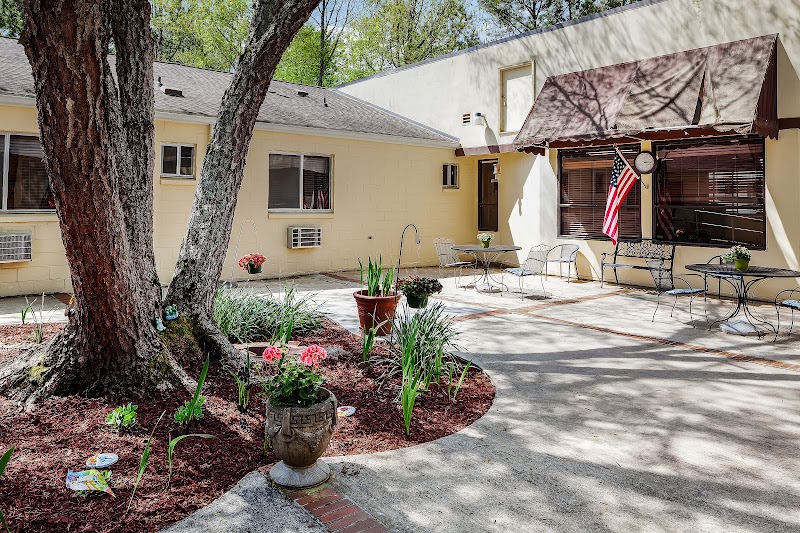
PRUITTHEALTH - FRANKLIN is owned by a for-profit company. For-profit facilities operate as businesses with obligations to shareholders or private owners. The facility is operated by PRUITTHEALTH, a chain that manages multiple nursing homes. With 78 certified beds and approximately 50 residents (about 64% occupancy), it is a smaller facility located in FRANKLIN, Georgia.
How Does Pruitthealth - Franklin Compare to Other Georgia Nursing Homes?

Compared to the 100 nursing homes in Georgia, PRUITTHEALTH - FRANKLIN's overall rating (5 stars) is above the state average of 2.6, staff turnover (33%) is significantly lower than the state average of 46%, and health inspection rating (4 stars) is above the national benchmark.

What Should Families Ask When Visiting Pruitthealth - Franklin?

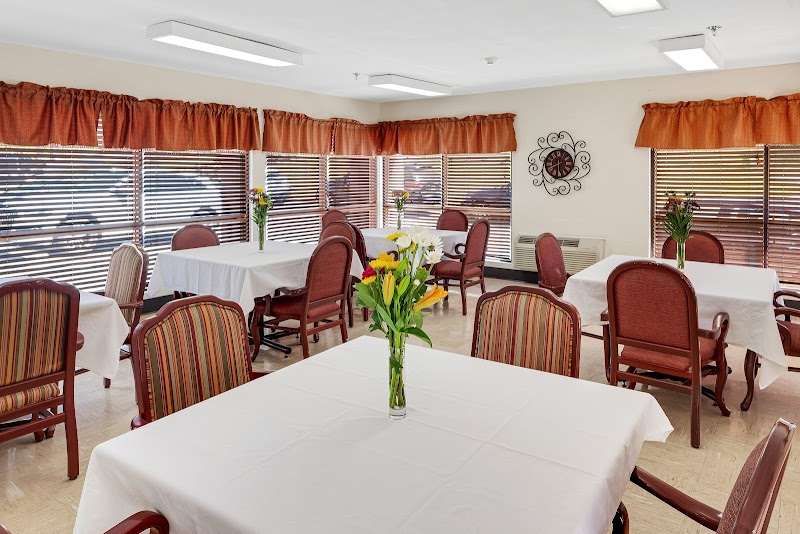
Based on this facility's data, families visiting should ask: "Can I visit during a mealtime to observe dining assistance and food quality?" "How do you handle medical emergencies, and what is your hospital transfer rate?" "Can I speak with family members of current residents about their experience?"

Is Pruitthealth - Franklin Safe?

Based on CMS inspection data, PRUITTHEALTH - FRANKLIN has a clean safety record: no substantiated abuse findings (meaning no confirmed cases of resident harm), no Immediate Jeopardy citations (the most serious violation level indicating risk of serious injury or death), and is not on the Special Focus Facility watch list (a federal program monitoring the lowest-performing 1% of nursing homes). The facility has a 5-star overall rating and ranks #1 of 100 nursing homes in Georgia. While no facility is perfect, families should still ask about staff-to-resident ratios and recent inspection results during their visit.

Do Nurses at Pruitthealth - Franklin Stick Around?

PRUITTHEALTH - FRANKLIN has a staff turnover rate of 33%, which is about average for Georgia nursing homes (state average: 46%). Moderate turnover is common in nursing homes, but families should still ask about staff tenure and how the facility maintains care continuity when employees leave.

Was Pruitthealth - Franklin Ever Fined?

PRUITTHEALTH - FRANKLIN has no federal fines on record. CMS issues fines when nursing homes fail to meet care standards or don't correct problems found during inspections. The absence of fines suggests the facility has either maintained compliance or corrected any issues before penalties were assessed. This is a positive indicator, though families should still review recent inspection reports for the full picture.

Is Pruitthealth - Franklin on Any Federal Watch List?

PRUITTHEALTH - FRANKLIN is not on any federal watch list. The most significant is the Special Focus Facility (SFF) program, which identifies the bottom 1% of nursing homes nationally based on persistent, serious quality problems. Not being on this list means the facility has avoided the pattern of deficiencies that triggers enhanced federal oversight. This is a positive indicator, though families should still review the facility's inspection history directly.