RIVER BROOK HEALTHCARE CENTER
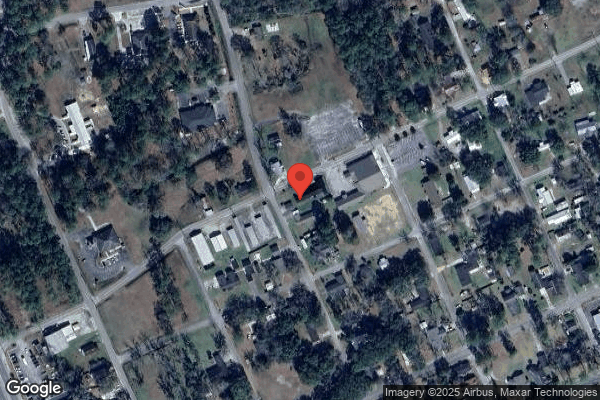

390 SWEAT STREET, HOMERVILLE, GA 31634 (912) 487-5328
For profit - Limited Liability company 92 Beds BEACON HEALTH MANAGEMENT Data: November 2025
Trust Grade
30/100
#324 of 353 in GA
Last Inspection: February 2024

Within standard 12-15 month inspection cycle. Federal law requires annual inspections.

Overview

River Brook Healthcare Center in Homerville, Georgia, has received a Trust Grade of F, indicating significant concerns about the quality of care provided. Ranking #324 out of 353 facilities in the state places it in the bottom half, while being the only option in Clinch County means there are no local alternatives. The facility is currently improving, with the number of issues reported decreasing from 9 in 2024 to 5 in 2025. Staffing is a relative strength, with a turnover rate of 37%, which is better than the state average of 47%, but the facility has less RN coverage than 88% of Georgia facilities, raising concerns about adequate supervision. Notably, there were serious incidents where a resident fell from their bed, resulting in significant injuries due to the failure to follow care plans, and there were also concerns regarding the proper disposal of expired medications, indicating a need for better adherence to safety protocols.

Trust Score
F
30/100
In Georgia
#324/353
Bottom 9%
Safety Record
Moderate
Needs review
Inspections
Getting Better
9 → 5 violations
Staff Stability
○ Average
37% turnover. Near Georgia's 48% average. Typical for the industry.
Penalties
✓ Good
No fines on record. Clean compliance history, better than most Georgia facilities.
Skilled Nurses
⚠ Watch
Each resident gets only 14 minutes of Registered Nurse (RN) attention daily — below average for Georgia. Fewer RN minutes means fewer trained eyes watching for problems.
Violations
⚠ Watch
31 deficiencies on record. Higher than average. Multiple issues found across inspections.
★☆☆☆☆
1.0
Overall Rating
★★☆☆☆
2.0
Staff Levels
★☆☆☆☆
1.0
Care Quality
★☆☆☆☆
1.0
Inspection Score
Stable
2024: 9 issues
2025: 5 issues

The Good

  • Full Sprinkler Coverage · Fire safety systems throughout facility
  • No fines on record
  • Staff turnover below average (37%)

    11 points below Georgia average of 48%

Facility shows strength in fire safety.

The Bad

1-Star Overall Rating

Below Georgia average (2.6)

Significant quality concerns identified by CMS

Staff Turnover: 37%

Near Georgia avg (46%)

Typical for the industry

Chain: BEACON HEALTH MANAGEMENT

Part of a multi-facility chain

Ask about local staffing decisions and management

The Ugly 31 deficiencies on record

2 actual harm
Sept 2025 5 deficiencies 2 Harm
SERIOUS (G) 📢 Someone Reported This

A family member, employee, or ombudsman was alarmed enough to file a formal complaint

Actual Harm - a resident was hurt due to facility failures

Comprehensive Care Plan (Tag F0656)

A resident was harmed · This affected 1 resident

Based on staff interview, record review, and review of the facility policy titled The Care Plan, the facility failed to implement the care plan interventions related to falls for one of five residents...

Read full inspector narrative →
Based on staff interview, record review, and review of the facility policy titled The Care Plan, the facility failed to implement the care plan interventions related to falls for one of five residents (R) (R12). This failure resulted in actual harm on 9/19/2025, when R12 had a fall from her bed, resulting in two fractured ribs, a hematoma to the right side of her head, and a laceration to her upper lip.Findings included:Review of the facility policy titled, The Care Plan, dated January 2025, under Standard: Care plans are to be accessible for clinical staff in order to facilitate care plan interventions or to update as indicated due to resident condition change.Record review for R12 revealed the resident was admitted to the facility with the diagnoses of, but not limited to, seizures, anxiety disorder, major depressive disorder, and generalized muscle weakness.Review of the residents' care plan indicated a focus of R12 was at risk for falls related to (r/t) history of falls, poor safety awareness, chairfast, totally dependent upon staff, restlessness and agitation, contracture of multiple muscle sites, muscle weakness, seizures, sacrococcygeal disorders, and spastic mobility. Goal: R12 will be free from fall-related injuries through nursing/therapy interventions by the next review. Target Date: 10/13/2025. She will have pain r/t fracture (fx) secondary to a fall, managed through the next review date. Interventions included: Bilateral Fall mat at bedside, Certified Nursing Assistant (CNA) to assure proper positioning in bed, utilizing appropriate wedges, and keep bed in lowest position.Review of the Post Fall Evaluation documentation located in the Electronic Health Record (EHR) under progress notes dated 9/19/2025 in the contributing factors section revealed Recent change in environment: Yes. Was fluid spilled on the floor: No. Clutter present on the floor: No. Floor mat was on the floor: Yes. Poor lighting in the area: No. The bed was at an improper height: Yes.An interview on 9/28/2025 at 8:15 am with the Director of Nursing (DON) revealed R12 had a fall on 9/19/2025 from the bed after the CNA moved the resident to a different room and did not ensure the resident's bed was in the lowest position, causing the resident to sustain a cut lip, hematoma, and fractured ribs. Continued interview also revealed that the nursing staff is expected to ensure that the residents' plan of care is followed at all times.
SERIOUS (G) 📢 Someone Reported This

A family member, employee, or ombudsman was alarmed enough to file a formal complaint

Actual Harm - a resident was hurt due to facility failures

Accident Prevention (Tag F0689)

A resident was harmed · This affected 1 resident

**NOTE- TERMS IN BRACKETS HAVE BEEN EDITED TO PROTECT CONFIDENTIALITY** Based on staff interview and record review, the facility failed to ensure one of five residents (R) (R12) was free from falls wi...

Read full inspector narrative →
**NOTE- TERMS IN BRACKETS HAVE BEEN EDITED TO PROTECT CONFIDENTIALITY** Based on staff interview and record review, the facility failed to ensure one of five residents (R) (R12) was free from falls with major injury. This failure resulted in actual harm on 9/19/2025 when R12 had a fall from her bed, resulting in two fractured ribs, a hematoma to the right side of her head, and a laceration to her upper lip. Findings included:Record review for R12 revealed the resident was admitted to the facility with the diagnoses of, but not limited to, seizures, anxiety disorder, major depressive disorder, and generalized muscle weakness. Review of the Quarterly Minimum Data Set, dated [DATE], Section C (Cognitive Patterns) revealed a Brief Interview for Mental Status (BIMS) score not assessed due to the resident rarely/never understood. Section GG (Functional Abilities) indicated the resident was dependent on staff for dressing, bathing, transfers, and toileting.A review of the residents' care plan indicated that R12 was at risk for falls r/t a history of falls, poor safety awareness. It was noted that R12 would be free from fall-related injuries through the nursing/therapy interventions by the next review. Interventions included, but were not limited to, keeping the bed in the lowest position.A review of the Post Fall Evaluation documentation located in the Electronic Health Record (EHR) under progress notes dated 9/19/2025 in the contributing factors section revealed: The bed was at an improper height: Yes.A review of the documentation of the fall incident that occurred on 9/19/2025 in the EHR under Progress Notes revealed 9/19/2025 15:43 Incident Note: This nurse was notified @ 1515 by a CNA walking by the room that the resident was on the floor. The resident was lying on the left side of her bed on the floor. The resident had a small laceration to her upper lip, a hematoma to the right side of her forehead, and redness to her right side of her abdomen. Resident unable to voice pain/description of fall. Upon head-to-toe assessment resident was placed back into bed with the bed positioned in the lowest position. Neuros were initiated @ time of fall. MD notified and ordered to send to ER for eval. 911 called @ 1519. {sic} 9/19/2025 21:54 Health Status Note: Note Text: returned to Facility via EMS. Right temple abrasion noted. 4th and 5th rib fx noted. Abrasion to the right side of lip noted. The hospital reports no bleeding in the brain. Respirations are even and non-labored. {sic}Review of R12's hospital records dated 9/19/2025 revealed under Emergency Department (ED) Course statement: Patient has a contusion to her right temporal region and right rib fractures X 2. CT brain and CT c spine show no acute process. X-ray of the right ribs shows minimally displaced fractures involving the right fourth and fifth ribs. {sic}An interview on 9/28/2025 at 8:15 am with the Director of Nursing (DON) revealed R12 had a fall on 9/19/2025 from the bed after the Certified Nurse Aide (CNA) moved the resident to a different room and did not ensure the resident's bed was in the lowest position, causing the resident to sustain a cut lip, hematoma, and fractured ribs. Continued interview also revealed that the nursing staff is expected to ensure that residents who are at risk for falls have all interventions in place and utilized at all times.
CONCERN (D) 📢 Someone Reported This

A family member, employee, or ombudsman was alarmed enough to file a formal complaint

Potential for Harm - no one hurt, but risky conditions existed

Deficiency F0604 (Tag F0604)

Could have caused harm · This affected 1 resident

**NOTE- TERMS IN BRACKETS HAVE BEEN EDITED TO PROTECT CONFIDENTIALITY** Based on observations, interviews, and review of the facility policy titled Restraint Policy, the facility failed to assess the ...

Read full inspector narrative →
**NOTE- TERMS IN BRACKETS HAVE BEEN EDITED TO PROTECT CONFIDENTIALITY** Based on observations, interviews, and review of the facility policy titled Restraint Policy, the facility failed to assess the use of a Geri chair as a potential restraint device for one of three sampled residents (R) (R49) reviewed for potential restraint use.Findings included:A review of the facility policy titled Restraint Policy, dated January 2025, revealed that the goal of this facility is to ensure that each resident attains and maintains his/her highest practical level of function and well-being in an environment that limits restraint use to circumstances in which the medical symptoms of the resident warrant the use of the least restrictive restraint. Physical Restraint options include but are not limited to: Wheelchair lap belts or buddies, Chairs that prevent rising, wedge cushions, and side rails. Physical restraints that may not be used in the facility include: Placing a resident so close to a wall that the resident is restricted from movement or rising for restraint purposes.A review of the electronic medical record (EMR) revealed that R49 was admitted to the facility with the diagnoses of, but not limited to, Alzheimer's disease, schizoaffective disorder, and dementia with behavioral disturbance.A review of the Quarterly Minimum Data Set (MDS) assessment dated [DATE] revealed that R49 presented with no Brief Interview for Mental Status (BIMS) score, which indicated the resident was rarely/never understood, and the interview was not conducted; that R49 had no impairment in Range of Motion (ROM); and that R49 was independent in moving from side to side, transfers, and walking 150 feet once standing in the room, corridor, and similar places. A review of Section P (Restraints and Alarms) indicated that the resident did not utilize a chair that prevented rising.A review of the care plan for R49 indicated a focus of resident was at risk for falls related to (r/t) confusion, gait/balance problems, incontinence, poor communication/comprehension, psychoactive drug use, unaware of safety needs, vision/hearing problems. The goal was documented that R49 will not sustain serious injury through the review date, with a target date of 12/11/2025. Interventions included, but were not limited to, ensuring that the resident is wearing appropriate footwear when ambulating or mobilizing in a wheelchair (w/c). There was no indication of the resident using a Geri-chair for mobility.During an observation on 9/26/2025 at 8:30 am, R49 was in the day room on the 100 Hall, sitting in a reclined Geri-chair. The resident was attempting to get out of the chair and was unable to ambulate due to the chair being reclined and locked.During an observation on 9/26/2025 at 11:30 am, R49 was in the day room on the 100 Hall, sitting in a reclined Geri-chair. The resident was attempting to get out of the chair and was unable to ambulate due to the chair being reclined and locked.During an observation on 9/27/2025 from 8:00 am to 11:00 am, R49 was noted sitting at the dining room table against the wall in the day room of the 100 hall. The resident was in a Geri-chair that was positioned in the sitting position, and the dining table was pushed directly in front of the resident. The resident was observed attempting to rise from the chair and was unable to due to the positioning of the chair between the table and the wall.During an observation on 9/27/2025 at 3:15 pm, R49 was sitting up in the Geri-chair with the dining room table in front of her, and the wall was noted to the other side of the resident. The position of the Geri-chair prevented the resident from ambulating freely.During an interview on 9/27/2025 at 3:30 pm, Licensed Practical Nurse (LPN) CC revealed that R49 is currently using the Geri-chair due to the resident having an unsteady gait and having had several falls. Continued interview also revealed that R49 was recently admitted to hospice services, who ordered the Geri-chair for the resident.During an interview on 9/28/2025 at 8:20 am, the Director of Nursing (DON) revealed that residents in Geri-chairs should not be reclined back so that their movement is restricted. Continued interview revealed that the expectation is for staff to ensure residents are in the least restrictive and safest environment.
CONCERN (F) 📢 Someone Reported This

A family member, employee, or ombudsman was alarmed enough to file a formal complaint

Potential for Harm - no one hurt, but risky conditions existed

Deficiency F0761 (Tag F0761)

Could have caused harm · This affected most or all residents

Based on observations, staff interviews, and review of the facility policy titled Medication Administration, the facility failed to ensure the disposal of expired and discharged medications in one of ...

Read full inspector narrative →
Based on observations, staff interviews, and review of the facility policy titled Medication Administration, the facility failed to ensure the disposal of expired and discharged medications in one of one drug storage rooms. Findings included:A review of the facility's policy titled Medication Administration, dated January 2025, documented that medication destruction is per pharmacy policy. The Consultant Pharmacist and the Director of Nursing (DON) follow the policy for destruction of medications. See Pharmacy Policy Manual.A review of the Pharmacy Policy Manual, with a revision date of 7/1/2024, revealed that the facility should destroy discontinued or outdated medications by one of three (3) methods:11.1 Prior to destruction, an authorized facility staff member should remove medications, including pills, capsules, liquids, creams, etc., from their dispensing containers and pour the medications into a container or plastic bag. An authorized facility staff member may add a substance that renders the medications unusable to the plastic container or bag.11.2 An authorized Facility staff member should place medication containers in a container or box. The facility staff member should then seal the box with strong tape and label the box as MEDICATION FOR DESTRUCTION. The container or box should be secured in a locked cabinet or room until it is disposed of or picked up by a licensed waste disposal company. If the facility chooses to dispose of the box by using a licensed waste disposal company. The facility should call the waste disposal company to pick up the waste and accept responsibility for the proper destruction by incineration.11.3 Facility-approved commercially available drug disposal kits.During an observation of the medication room on 9/27/2025 at 9:05 am, a large box was observed filled to the top with medication packs and vials. There was no lid on the box of medications, there was no description of what the medications were, and there was no quantity of medications in the box. During an interview on 9/27/2025 at 9:12 am, Registered Nurse (RN) AA stated that the box of medications in the medication room was discharged , and the expired medications were removed. She stated that she empties the box of medications in the medication room monthly by putting the medications into smaller boxes, and she then gives the smaller boxes to the DON. RN AA stated that she does not log or label what is in the small boxes. She stated that the DON gives the boxes of discharged and expired medications to the pharmacist when they come into the facility. RN AA stated that the pharmacist comes in monthly and takes the boxes and destroys the medicines, but she is not part of that process.During an interview on 9/27/2025 at 9:35 am, the DON stated that the pharmacist comes in and scans the medications and does a return slip. She stated that the pharmacist comes in and scans the discharged and expired medications, but she does not take them with her. She stated that someone else would come in within one to two weeks or sooner and pick the meds up. The DON stated that the medications in the box in the med room are not narcotics. She stated that she does not log the discharge or expired medications that are in the box. She stated that there is no account for what is in the box until the pharmacist comes in and scans the medications. She stated that the facility does not log discharged or expired medications anywhere. She stated that it sits in the box in the medication room until the pharmacist comes in monthly.During an interview on 9/28/2025 at 7:59 am, Licensed Practical Nurse (LPN) BB stated that when she has an expired or discontinued medication, she removes it from the medication cart and puts it in a box in the medication room. She stated that she does not log the medications anywhere; she just puts them in the box. LPN BB stated that the DON scans the medications, but she does not know when it is scanned.
CONCERN (F) 📢 Someone Reported This

A family member, employee, or ombudsman was alarmed enough to file a formal complaint

Potential for Harm - no one hurt, but risky conditions existed

Safe Environment (Tag F0921)

Could have caused harm · This affected most or all residents

**NOTE- TERMS IN BRACKETS HAVE BEEN EDITED TO PROTECT CONFIDENTIALITY** Based on observations, staff interview, and review of facility documentation, the facility failed to ensure a safe/clean and com...

Read full inspector narrative →
**NOTE- TERMS IN BRACKETS HAVE BEEN EDITED TO PROTECT CONFIDENTIALITY** Based on observations, staff interview, and review of facility documentation, the facility failed to ensure a safe/clean and comfortable environment by not initiating roof repairs required after known damage following most recent hurricane activity in 2024. The facility also failed to ensure air condition units in residents' rooms (2B and 3B)on one of three halls (200 Hall) were maintained to include cleaning and repair. Findings included:1. Review of the roof replacement proposal revealed estimate was prepared on 6/2/2025 for the facility to include the following: The labor, material, and equipment required to finish this job will be for the total of: 1)System Plus/2 year workmanship- $99,455.00, Silver Pledge/10 year workmanship -$102, 125.00, and Golden Pledge/25 year workmanship - $104,795.00.Observation on 9/26/2025 at 8:00 am revealed that the eaves and gutters can be seen hanging down from the roof in room [ROOM NUMBER] and room [ROOM NUMBER] on the A Hall through the resident's window.Observation on 9/27/2025 at 8:15 am in the courtyard outside of the 100 Hall revealed that the eaves and gutters were detached from the roof and hanging down over the window of room [ROOM NUMBER] in the 100 Hall. There were also gutters and eaves scattered around on the ground under the window into the shrubbery. There were gaps in the roof that allowed access to vermin. Interview on 9/27/2025 at 8:30 am with Licensed Practical Nurse (LPN) CC revealed that there is one room on the 100 Hall that leaks after it has been a hard rain, room [ROOM NUMBER] by the window. During the interview, it was disclosed that the area had been leaking for approximately two months, and maintenance had placed a piece of wood over the area; however, the area still leaks when it rains. Continued interview also revealed that the resident who was in that room by the window was moved to another room; however, there is still a resident in the room in bed A.An interview on 9/27/2025 at 9:00 am with the Maintenance Director revealed that his responsibilities included doing minor repairs within the facility, ensuring that there is no trash on the grounds around the facility, and that the dumpster area is clean. The grass is cut by a company that he could not recall the name of, and the gutters were to be cleaned by this company as well. Continued interview also revealed that the area on the roof by the 100 Hall was damaged in June 2025 or July 2025 after it had been raining for several days in a row. During the interview, the Maintenance Director indicated that corporate was aware of the damage and had been to the facility to assess, and an estimate had been sent for repairs. There was no indication that the staff member had knowledge of who or when the estimated damage had occurred. The staff member did state that there is one room that leaks when it rains, room [ROOM NUMBER] on the 100 hall, and a piece of plywood was put over the area inside the room to prevent the water from leaking into the room; however, it still leaks.An interview on 9/27/2025 at 10:12 am with the Administrator revealed that the damage to the roof happened after the last hurricane came through in November of 2024. The corporate office is aware of the damage, but since the air conditioning in the dining area had gone out, portable air conditioning had to be brought in. The company opted to fix the air conditioning first, and a check was issued for that, which should be replaced within the next couple of days. Continued interview also revealed that there was a quote obtained from two local companies on 6/2/2025, and there was no indication of when the roof would be repaired. The administrator stated he would contact the corporate office to see when the estimated time of repair will be completed.Follow-up Interview on 9/27/2025 at 3:00 pm with the Administrator revealed that the anticipated repair for the damage to the roof will be at the end of the current year 2025.2. A tour on 9/26/2025, at 8:00 am, revealed that two rooms in B Hall have air conditioning filters that were clogged with dust and had not been replaced (room [ROOM NUMBER]B and room [ROOM NUMBER]B).A record review revealed that the facility lacks a policy for environmental management. An interview on 9/27/2025, at 9:00 am, with the Maintenance Director revealed that his responsibilities included performing minor repairs within the facility. He confirmed that the air conditioning filters should be checked weekly by maintenance housekeeping. He stated that he will ensure regular monitoring of the filters, changing them when needed to ensure that staff check and change them as needed. An interview on 9/27/2025, at 9:05 am with the Director of Nursing (DON) revealed that maintenance is responsible for ensuring the air conditioning unit filters are monitored by both housekeeping and maintenance. DON confirmed that the filters will be changed immediately.
Jul 2024 2 deficiencies
CONCERN (E) 📢 Someone Reported This

A family member, employee, or ombudsman was alarmed enough to file a formal complaint

Potential for Harm - no one hurt, but risky conditions existed

Infection Control (Tag F0880)

Could have caused harm · This affected multiple residents

Based on observation, record review and staff interview, the facility failed to ensure enhanced barrier precautions (EBP) were implemented for three residents (R) (R2, R3, and R4) who had pressure ulc...

Read full inspector narrative →
Based on observation, record review and staff interview, the facility failed to ensure enhanced barrier precautions (EBP) were implemented for three residents (R) (R2, R3, and R4) who had pressure ulcers from a total sample of seven residents. Findings include: Review of an undated document titled Implementation of Personal Protective Equipment (PPE) Use In Nursing Homes to Prevent Spread of Multidrug-resistant Organisms (MDROs) revealed EBP may be indicated (when Contact Precautions do not otherwise apply) for residents with any of the following: Wounds or indwelling medical devices, regardless of MDRO colonization status and Infection or colonization with an MDRO. Effective implementation of EBP requires staff training on the proper use of PPE and the availability of PPE and hand hygiene supplies at the point of care. EBP expands the use of PPE and refer to the use of gown and gloves during high-contact resident care activities that provide opportunities for transfer of MDROs to staff hands and clothing. Examples of high-contact resident care activities requiring gown and glove use for EBPs include: dressing, bathing/showering, transferring, providing hygiene, changing linens, changing briefs or assisting with toileting, device care or use: central line, urinary catheter, feeding tube, tracheostomy/ventilator and wound care- any skin opening requiring a dressing. Post clear signage on the door or wall outside of the resident room indicating the type of Precautions and required PPE (e.g., gown and gloves) . Make PPE, including gowns and gloves, available immediately outside of the resident room .Ensure access to alcohol-based hand rub in every resident room and near the exit for discarding PPE after removal, prior to exit of the room or before providing care for another resident in the same room .Provide education to residents and visitors. During observations of pressure ulcer treatment for R2, R3 and R4 on 7/10/2024 at 11:10 am, 7/11/2024 at 11:10 am and on 7/11/2024 at 10:55 am the wound care nurse was not wearing a gown. There was also no signage on these resident's doors to indicate EBPs were to be implemented for these residents. During an interview with the Wound Nurse on 7/11/2024 at 11:10 am, she stated she had not been instructed to use EBPs. She stated they do that when a resident has something such as ESBL (extended-spectrum beta lactamases). During an interview with Registered Nurse (RN) AA on 7/11/2024 at 11:35 am, she stated they received an email about a week ago regarding EBPs and they were working on implementing that now and educating the staff.
CONCERN (F) 📢 Someone Reported This

A family member, employee, or ombudsman was alarmed enough to file a formal complaint

Potential for Harm - no one hurt, but risky conditions existed

Deficiency F0882 (Tag F0882)

Could have caused harm · This affected most or all residents

Based on record review and staff interview, the facility failed to ensure that the person in the role of the Infection Preventionist (IP) completed specialized training in Infection Prevention and Con...

Read full inspector narrative →
Based on record review and staff interview, the facility failed to ensure that the person in the role of the Infection Preventionist (IP) completed specialized training in Infection Prevention and Control. This failure placed all residents at risk for the potential transmission of infections and communicable diseases. The facility had a census of 68 residents. Findings include: Review of the job description for the Infection Control Preventionist dated 2020, noted a requirement of certification in Infection Control Preventionist training. During an interview with Unit Manager AA on 7/11/2024 at 11:35 am, she stated she started working at the facility about a week ago as the Unit Manager and was filling in as the IP until the position was filled. During an interview with the Administrator on 7/11/2024 at 1:25 pm, he stated RN AA and the Director of Nursing currently do not have IP certification, but they were enrolled in the IP certification course to be done online.
Feb 2024 7 deficiencies
CONCERN (D)

Potential for Harm - no one hurt, but risky conditions existed

Deficiency F0578 (Tag F0578)

Could have caused harm · This affected 1 resident

**NOTE- TERMS IN BRACKETS HAVE BEEN EDITED TO PROTECT CONFIDENTIALITY** Based on staff interviews, and record review, the facility failed to ensure that three Resident (R) 27, R16 and R19) of 24 sampl...

Read full inspector narrative →
**NOTE- TERMS IN BRACKETS HAVE BEEN EDITED TO PROTECT CONFIDENTIALITY** Based on staff interviews, and record review, the facility failed to ensure that three Resident (R) 27, R16 and R19) of 24 sampled residents and/or their representatives were informed and provided written information to formulate an advanced directive. Findings include: 1. Review of R27's Face Sheet found in R27's Electronic Medical Record (EMR) under the Admission tab revealed R27 was admitted to the facility on [DATE]. Further review of the Face Sheet revealed the resident was listed as a Full Code. There was no evidence in the EMR that the resident had been provided information regarding advance directives or had the opportunity to formulate any. 2.Review of R16's Face Sheet found in R16's EMR under the Admission tab revealed R16 was admitted to the facility on [DATE]. Further review of the Face Sheet revealed the resident was listed a Do not Resuscitate (DNR). There was no evidence in the EMR that the resident had been provided information regarding advance directives or had the opportunity to formulate any. 3.Review of R19's Face Sheet: found in R19's EMR under the Admission tab revealed R19 was admitted to the facility on [DATE]. Further review of the Face Sheet revealed the resident was a Full Code. During an interview on 2/29/2024 at 9:20 AM the Admissions employee stated that the facility did not have documentation to support that the facility had informed or given R27, R16 and R19 an opportunity to formulate an advance directive. During an interview on 2/29/2024 at 11:15 AM the Administrator stated that his expectations going forward would be to develop a new policy for advanced directives utilizing corporate assistance and the state of Georgia guidelines. The Administrator stated that there needed to be form for the resident to acknowledge receipt of the information and indicate that they have an advanced directive, or they want an advanced directive, or they need assistance to formulate an advanced directive including a place for the resident's signature.
CONCERN (D)

Potential for Harm - no one hurt, but risky conditions existed

Free from Abuse/Neglect (Tag F0600)

Could have caused harm · This affected 1 resident

**NOTE- TERMS IN BRACKETS HAVE BEEN EDITED TO PROTECT CONFIDENTIALITY** Based on observation, resident interview, staff interview, record review, and review of the facility policy titled, Freedom of A...

Read full inspector narrative →
**NOTE- TERMS IN BRACKETS HAVE BEEN EDITED TO PROTECT CONFIDENTIALITY** Based on observation, resident interview, staff interview, record review, and review of the facility policy titled, Freedom of Abuse, Neglect and Exploitation; Abuse Prevention: Fast Alerts, the facility failed to protect the resident's right to be free from physical abuse by another resident for one of two residents reviewed for abuse (Resident (R) 41). Findings include: Review of the facility's policy titled Freedom of Abuse, Neglect and Exploitation; Abuse Prevention: Fast Alerts, revised January 2019, revealed . It is the policy of this facility to take all steps reasonable and necessary to protect the residents from harm at all times, including protection from any type of abuse listed from other residents. Procedures: 1. If a resident-to-resident altercation occurs, staff should intervene immediately. Separate the residents and take them to areas away from each other until the situation has diffused. 1:1 [one to one] supervision may be needed if resident behaviors are harmful . 3. If the resident(s) has been injured, provide immediate first aid. If necessary, pursue physician's orders and send the resident to the hospital. 4. If the resident(s) is cognitively alert, counsel the resident on proper behavior. 5. Notify the Director of Nursing and the Administrator immediately. Notify the physician and family/guardian. Notify the Regional Nurse Consultant for guidance Review of R41's admission Record, undated, located in the electronic medical record (EMR) under the Profile tab, revealed the resident was admitted to the facility on [DATE] with diagnoses that included unspecified mood (affective) disorder, Alzheimer's disease, and cognitive communication deficit. Review of R41's quarterly Minimum Data Set (MDS), with an Assessment Reference Date (ARD) of 7/22/2023, located in the EMR under the MDS tab, revealed R41 had a Brief Interview for Mental Status (BIMS) score of 10 out of 15 which indicated the resident was moderately cognitively impaired. The MDS revealed R41 did not exhibit any behaviors during the look back period. R41 was administered antipsychotics during the last seven days. R41 still resided in the facility. Review of R41's Care Plan, dated 8/02/2023, located in the EMR under the Care Plan tab revealed R41 received physical aggression and was involved in a resident-to-resident altercation and appeared to be the victim on 8/02/2023. The Care Plan also revealed the interventions as 15-minute checks until aggressor leaves the facility (discontinued 8/02/2023), notify the Medical Director and family as needed, observe resident for injury, refer to mental health provider as needed, report to appropriate agencies, residents separated, social services director to visit as needed, pain and skin assessment completed, and safety/comfort maintained. Review of R53's admission Record, undated, located in the EMR under the Profile tab, revealed the resident was admitted to the facility on [DATE] with multiple diagnoses of depression, anxiety disorder, and bipolar disorder. Review of R53's quarterly MDS with an ARD of 7/05/2023, located in the EMR under the MDS tab, revealed a BIMS of 12 out of 15 which indicated he was moderately cognitively impaired. The MDS revealed R53 exhibited verbal behaviors directed toward others and other behavioral symptoms not directed toward others one to three days during the look back period. R53 also rejected evaluation or care one to three days during the look back period. R53 received seven antipsychotics, and antidepressants during the look back period. Review of R53's Nursing Progress Note, dated 8/02/2023 at 4:03 PM, located in the EMR under the Prog Note tab, revealed This writer notified by nurse on hall r/t [related to] altercation between residents. This writer interviewed resident r/t incident. Resident reports he was moving items that were not his, that belonged to roommate to [sic] the second drawer. When he was approached by roommate who was standing to [sic] close to him, and hovering. Resident then states he punched him in the mouth knocking him to the floor. He then kicked him while he was on the floor. He said that when the other resident attempted to get up, he tried to knock him down again, and he was grabbed in the arms. This writer assisted nurse on hall to complete skin assessment on resident. Resident noted to have open area/scratches to right shin, right thumb, left inner wrist, and left inner elbow. Wound care nurse notified to complete tx [treatment]. All appropriate parties were notified. Residents are separated and on 15 min [minute] checks until seen by [behavioral health provider] tomorrow. New order form [behavioral health provider] to obtain UA [urinalysis] and send referral to [behavioral health unit]. Review of R53's Nursing Progress Note, dated 8/02/2023 at 7:02 PM, revealed [Behavioral health unit] contacted for bed availability. Referral sent to [behavioral health unit] for acceptance . 911 called for EMS transport at 7:10 PM . Family and MD [physician] aware . Resident left facility at 7:30 PM via stretcher without incident. Review of R53's Census located in the EMR under the Census tab, revealed R53 resided on the 100 hall (secure unit) in room A 11-C on 8/02/2023 then returned to the 100 hall in room A 2-B on 8/09/2023. Review of R53's Physician's Orders, dated 8/09/2023, revealed an order for Quetiapine Fumarate [an antipsychotic] Oral Tablet 200 MG [milligrams] give 200 mg by mouth at bedtime related to bipolar disorder. Review of R53's Care Plan, dated 8/02/2023, indicated R53 has physically aggressive behaviors related to depression and poor impulse control with interventions of 8/02/2023 residents separated, notify physician and family as needed, one on one observation until sent out, refer to [behavioral health unit] as indicated, and sent out on 8/02/2023. Review of a Facility Reported Incident (FRI), dated 8/02/2023, provided by the facility, revealed that, . CNAs were alerted to commotion within these residents room upon a investigation discovered that [R53] and [R41] were face to face with [R53's] hand drawn back in a fist. Residents were immediately separated and placed on one-to-one observation period [15-minute checks] nursing staff and supervision staff were immediately notified. Upon further investigation it was revealed that [R53] had punched [R41] in the nose because [R41] was hovering over him while he was in his dresser drawer, once [R41] fell to the floor [R41] continued to attempt to kick [R41] in the abdomen before [R41] got up. Skin assessments were conducted for both residents and revealed that both residents had minor scratches however no other injuries occurred. No witnesses to the incident, however when both residents were asked what occurred their stories were cohesive. When asked why, [R53] stated that he just punched [R41] due to him hovering over him. [R41] stated he just walked over to [R53] while he was in his dresser and was punched in the nose and then fell to the floor. MD & [and] [behavioral health provider] immediately notified regarding incident [sic]. [behavioral health provider] completed follow-up with [R41] post incident, [R53] was already discharged to behavioral at this time. Abuse and De-escalation of resident behaviors educations provided to all staff. Police notified. Conclusion of investigation: The allegation of resident-to-resident abuse is substantiated as evident that [R53] did assault [R41]. [R53] remains in the senior behavioral unit at this time for stabilization with no estimated discharge date back to facility, as [R53] is still getting medications adjusted. SSD [Social Services Director] & [behavior health provider] to continue to follow up with [R41] for ongoing Wellness. Action Plan To Address: RP [Responsible Party], MD, [behavioral health provider], Police notifications, [behavioral health unit] admission for aggressor, 1:1 until aggressor discharged to [behavioral health unit], [behavioral health provider] followup, SSD follow-up, Abuse and De-escalation of resident behaviors education, Care Plans/[NAME] Updated. During an interview on 2/26/2024 at 3:59 PM, R53 stated he hit a resident in the face last year but was not sure why and did not know the resident's name. Observation on 2/27/2024 at 12:29 PM revealed R41 had a white mesh STOP sign across the doorway held by Velcro and the resident was sitting on the side of his bed. During an interview with R41 at this time, R41 stated a male resident hit him on his head last year and he did not know why. R41 indicated the male resident had not bothered him since then and he was not sure if he had sustained any injuries. During an interview on 2/27/2024 at 12:38 PM, the Unit Manager (UM) confirmed that a nursing assistant reported to her that R53 hit R41 in their shared room on 8/02/2023. The UM stated R41 had moved things out of R53's dresser and R53 was putting them back in the drawer while R41 was hovering over him. R53 told him that he felt threatened, so he hit him in the face, and he fell to the floor. R41 had a scrape on his knee and cut on the left side of his lip. R53 was provided 15-minute checks by staff on 8/02/2023 from 3:15 PM until 7:15 PM then he was sent out to the hospital on 8/02/2023 at 7:20 PM. The UM indicated that R53 had not been in further altercations with R41 or any other residents since readmission to the facility on 8/02/2023.
CONCERN (D)

Potential for Harm - no one hurt, but risky conditions existed

Comprehensive Care Plan (Tag F0656)

Could have caused harm · This affected 1 resident

**NOTE- TERMS IN BRACKETS HAVE BEEN EDITED TO PROTECT CONFIDENTIALITY** 2. Review of an admission Record, found in R9's EMR under the Profile tab indicated R9 was admitted to the facility on [DATE]. T...

Read full inspector narrative →
**NOTE- TERMS IN BRACKETS HAVE BEEN EDITED TO PROTECT CONFIDENTIALITY** 2. Review of an admission Record, found in R9's EMR under the Profile tab indicated R9 was admitted to the facility on [DATE]. The admission Record indicated that as of 10/01/2015, R9's diagnoses included other psychotic disorder not due to a substance or known physiological condition. Review of the quarterly MDS with an ARD of 1/03/2024, in R9's EMR, under Behaviors, indicated R9 exhibited no hallucinations, delusions, or behaviors during the 7-day assessment period. The MDS, under Cognitive Patterns, indicated R9 had short- and long-term memory deficits and was severely impaired for decision making. The MDS under Active Diagnosis indicated R9 had a diagnosis of psychotic disorder and under Medications, indicated R9 received no antipsychotic medications. Review of the Clinical Physician Orders, in R9's EMR, dated February 2024 indicated that R9 was receiving services from a Psychiatric provider. Review of Physician Orders, dated 3/30/2021, indicated the following behaviors were being monitored: depression, itching, picking at skin, restlessness, agitation, hitting, biting, kicking, spitting, cursing, racial slurs, hallucinations, psychosis, aggression, and refusing care. Review of R9's Care Plan located in the Care Plan tab of the EMR, did not indicate that a Care Plan was developed to address the new diagnosis, behavioral symptoms, or any necessary interventions. During an interview with the DON on 2/29/2024 at 9:30 AM, the DON reviewed R9's Care Plan and agreed it did not address the new diagnosis of psychotic disorder. Based on staff interview and record review, the facility failed to develop a comprehensive care plan directing measurable goals and interventions for two of 24 residents (Resident (R) 9 and R42) reviewed for care planning. This failure placed residents at risk for unmet care needs and the inability to meet their maximum practicable level of functioning. Findings include: 1. Review of R42's undated admission Record located in the Profile tab of the electronic medical record (EMR), revealed R42 was admitted to the facility on [DATE]. R42's diagnoses included seizures, chronic obstructive pulmonary disease (COPD), chronic kidney disease, acute and chronic respiratory failure, and anxiety disorder. Review of a quarterly Minimum Data Set (MDS) with an Assessment Reference Date (ARD) of 1/12/2024, located in R42's EMR under the MDS tab, indicated R42 had a Brief Interview for Mental Status (BIMS) score of 10 out of 15, which indicated R42 was moderately cognitive impaired. Review of the Smoking and Safety form dated 1/10/2024 and located in R 42's EMR under the Assessments tab, indicated R42 dipped tobacco. R42 was not deemed to have any concerns related to safety such as poor vision, balance problems while sitting/standing, or falling asleep easily during tasks. Review of R42's Comprehensive Care Plan, located in the EMR under the Care Plan tab, last revised 2/08/2024, revealed no focused area, measurable goals, or interventions addressing tobacco use. During an interview on 2/28/2024 at 1:24 PM, Licensed Practical Nurse (LPN) 4 stated they treat those residents who used chewing tobacco as smokers, so those residents also attended smoke breaks with typical smokers. The facility maintained the tobacco for the residents. During an interview on 2/27/2024 at 12:20 PM, the Director of Nursing (DON) reviewed R42's Smoking and Safety evaluation, dated 01/10/24, and confirmed R42 was noted as a tobacco user. The DON reviewed R42's Care Plan, last revised 2/08/2024, and confirmed it did not address tobacco use. The DON stated R42 should have care-planned interventions for tobacco use in the formal care plan. During an interview on 2/28/2024 at 1:12 PM, the Administrator stated R42's tobacco use should be addressed in the formal Care Plan.
CONCERN (D)

Potential for Harm - no one hurt, but risky conditions existed

Deficiency F0699 (Tag F0699)

Could have caused harm · This affected 1 resident

**NOTE- TERMS IN BRACKETS HAVE BEEN EDITED TO PROTECT CONFIDENTIALITY** Based on resident interviews, staff interviews, record review, and review of the facility policy titled, Trauma Informed Care th...

Read full inspector narrative →
**NOTE- TERMS IN BRACKETS HAVE BEEN EDITED TO PROTECT CONFIDENTIALITY** Based on resident interviews, staff interviews, record review, and review of the facility policy titled, Trauma Informed Care the facility failed to ensure that one resident (Resident (R) 19) of one reviewed for trauma received trauma-informed care. The facility failed to ensure a behavioral health consult occurred after the resident triggered 10 of 10 indicators on a trauma screen conducted by the facility. Findings include: Review of the facility policy titled Trauma Informed Care dated October 2023 revealed, When a resident verbalizes trauma or during an interview, or documented history trauma is identified, the Trauma Screening Tool should be conducted with the resident. lf determined that trauma has occurred and the resident is in need of additional support and services, psychiatric services is notified for a consultation and treatment plan if indicated. Review of R19's Face Sheet found in R19's Electronic Medical Record (EMR) under the Admission tab revealed R19 was admitted to the facility on [DATE] with diagnoses of major depressive disorder, bipolar disorder, and generalized anxiety disorder. Review of R19's Quarterly Minimum Data Set (MDS), with an Assessment Reference Date (ARD) of 1/05/2024, found in R19's EMR under the MDS tab revealed the resident had a Brief Interview for Mental Status (BIMS) score of 15 out of 15 which indicted the resident was cognitively intact. Review of an undated Trauma Screening Questionnaire located in R19's EMR revealed the following 10 questions: Have you recently experienced any of the following, 1. Resident was experiencing : upsetting thoughts or memories, 2. Upsetting dreams about the event, 3. Acting or feeling as though the event were happening again, 4. Feeling upset by reminders of the event, 5. Bodily reactions, 6. Difficulty falling or staying asleep, 7. Irritability or outbursts of anger, 8. Difficulty concentrating, 9. Heightened awareness of potential dangers to yourself and others, 10. Feeling jumpy or being startled by something unexpected. R19 indicated yes to all 10 questions. There was a handwritten note on form that revealed, Behavioral Health seeing R19 today. During an interview on 2/26/2024 at 11:50 AM R19 stated that she had been sexually assaulted in her younger life and currently is experiencing nightmares and difficulty sleeping. R19 stated that she had spoken to the Social Service Director (SSD) in the past, but nothing had happened since that conversation. R19 stated she takes antidepressants, antianxiety medication, and medication to help her sleep; however, the medications do not stop the nightmares. R19 stated that she would like to speak to someone who could help her. During an interview on 2/27/2024 at 3:05 PM with the Administrator and the SSD, the SSD stated that she had spoken to R19 and made a referral to the facility's behavioral health psychiatric group. The SSD stated a notation had been made on the trauma screening form. The Administrator stated that there had been a change in the assigned behavioral/psychiatric representative to the facility and wondered if that was where the ball was dropped. In a follow up interview on 2/29/2024 at 10:00 AM the SSD stated that the undated trauma screening for R19 occurred on 10/10/2023 and was uploaded into the EMR on that date. The SSD stated that a call was made to the behavioral health group on 10/10/2023, but a progress note was not written. The SSD could not provide any documentation to show R19 had ever been seen by the behavior health group. In an interview on 2/29/2024 at 10:45 AM the Administrator stated that his expectations going forward would be that trauma screening results will be reported to the Director of Nursing (DON), Medical Director and himself.
CONCERN (D)

Potential for Harm - no one hurt, but risky conditions existed

Medical Records (Tag F0842)

Could have caused harm · This affected 1 resident

**NOTE- TERMS IN BRACKETS HAVE BEEN EDITED TO PROTECT CONFIDENTIALITY** Based on staff interview, and record review, the facility failed to maintain an accurate medical record for one of 29 residents ...

Read full inspector narrative →
**NOTE- TERMS IN BRACKETS HAVE BEEN EDITED TO PROTECT CONFIDENTIALITY** Based on staff interview, and record review, the facility failed to maintain an accurate medical record for one of 29 residents (Resident (R)38). Specifically, R38's code status was not accurately documented throughout the electronic medical record (EMR). The failure to document a resident's code status accurately in the EMR had the potential to result in a resident not receiving cardiopulmonary resuscitation (CPR) or receiving CPR when they should not, according to their documented wishes. Findings include: Review of the admission Record in R38's EMR indicated R38 was admitted to the facility on [DATE] with re-admission on [DATE]. R38's diagnoses included adult failure to thrive and malignant neoplasm (cancer) of the prostate. Review of the admission Record, under other information indicated R38's code status was listed as Full Code (R38 would receive CPR in the event of a cardiac arrest). At the bottom of the admission Record, under Advance Directive for R38, documentation indicated DNR (Do Not Resuscitate), allow natural death. Review of the POLST (Physician Orders for Life Sustaining Treatment), dated [DATE], indicated R38 chose to be a Full Code. Review of the updated POLST, dated [DATE], indicated R38 chose to have a natural death with no CPR given (DNR). Review of R38's Resident Profile section of the EMR indicated R38's code status was listed as Full Code. Review of the Medication Administration Record, dated February 2024 indicated R38's code status was listed as DNR. During an interview with the Social Service Director (SSD) on [DATE] at 9:41 AM, the SSD reviewed R38's EMR and confirmed that the code status for R38 did not match R38's admission Record and Profile. During an interview with Licensed Practical Nurse (LPN) 1 on [DATE] at 9:00 AM, LPN 1 stated that if she were looking for the code status of a resident, she would check the POLST, the computer Medication Administration Record (MAR), or the admission Record. During an interview with the Director of Nursing (DON) on [DATE] at 9:20 AM, the DON said she would expect the nurses would check a resident's Care Profile within the Dashboard of the EMR if they needed to find a resident's code status. The DON reviewed the sources for R38 and verified that not all the sources of the information for R 38's code status were correct. The DON stated it was her expectation was that the code status documentation in a resident record was accurate and consistent, according to resident wishes.
CONCERN (E)

Potential for Harm - no one hurt, but risky conditions existed

Medication Errors (Tag F0758)

Could have caused harm · This affected multiple residents

**NOTE- TERMS IN BRACKETS HAVE BEEN EDITED TO PROTECT CONFIDENTIALITY** Based on staff interview, record review and review of the facility policy titled, Behavior Management Standard, the facility fai...

Read full inspector narrative →
**NOTE- TERMS IN BRACKETS HAVE BEEN EDITED TO PROTECT CONFIDENTIALITY** Based on staff interview, record review and review of the facility policy titled, Behavior Management Standard, the facility failed to ensure the resident, his or her family, and/or the resident representative (RR) was provided information related to the risks and benefits for psychotropic medications (any drug that affects brain activities associated with mental processes and behavior) for four of five residents reviewed for unnecessary medications (Resident (R) 10, R53, R59, and R19). Findings include: Review of the facility's policy titled Behavior Management Standard, dated October 2023, provided by the facility, revealed .Guidelines The Interdisciplinary Team [IDT], the resident and the resident's responsible party will be involved in the assessment and decision to include psychoactive medications into the resident plan of core. The IDT will also be responsible to ensure a comprehensive assessment and review of the resident has occurred before psychoactive medications are introduced. Residents in specialty units will have behavior intervention plans to improve life skills and quality of life. The IDT will ensure the resident or the resident's responsible party will be apprised of the risks and benefits of the medication being considered 1.Review of R10's admission Record, undated, located in the Electronic Medical Record (EMR) under the Profile tab, revealed the resident was admitted to the facility on [DATE] with diagnoses that included major depressive disorder and anxiety disorder. Review of R10's quarterly Minimum Data Set (MDS), with an Assessment Reference Date (ARD) of 2/29/2024, located in the EMR under the MDS tab revealed the resident had a Brief Interview for Mental Status (BIMS) score of eight out of 15, which indicated the resident was moderately impaired in cognition. The MDS also indicated that R10 received an antidepressant medication during the seven days of the look back period. Review of R10's Physician's Orders located in the EMR under the Orders tab, revealed an order for escitalopram oxalate (an antidepressant) oral tablet 20 milligrams (MG) give one tablet by mouth one time a day (dated 1/06/2024), Remeron (an antidepressant) oral tablet 15 MG give one tablet by mouth at bedtime (dated 1/13/2024), sertraline (an antidepressant) tablet 50 MG give one tablet by mouth one time a day (dated 2/29/2024) and lorazepam (an antianxiety medication) oral tablet 0.5 MG give 0.5 tablet by mount two times a day (dated 2/28/2024). Review of the R10's EMR revealed there was no documented evidence that the risks and benefits for the above ordered medications were provided to R10 or his RR. 2. Review of R53's admission Record, undated, located in the EMR under the Profile tab, revealed the resident was admitted to the facility on [DATE] with multiple diagnoses of depression, anxiety disorder, and bipolar disorder. Review of R53's quarterly MDS with an ARD of 7/05/2023, located in the EMR under the MDS tab, revealed a BIMS of 12 out of 15 which indicated he was moderately cognitively impaired. The MDS revealed R53 exhibited verbal behaviors directed toward others and other behavioral symptoms not directed toward others one to three days during the look back period. R53 also rejected evaluation or care one to three days during the look back period. R53 received antidepressants during the seven days of the look back period. Review of R53's Physician's Orders, dated 2/16/2024, located in the EMR under the Orders tab, revealed an order for sertraline tablet 25 MG give one tablet by mouth one time a day. Review of the R53's EMR revealed there was no documented evidence that the risks and benefits for the antidepressant medication was provided to R53 or his RR. 3. Review of R59's admission Record, undated, located in the EMR under the Profile tab, revealed the resident was admitted to the facility on [DATE] with diagnoses that included major depressive disorder and generalized anxiety disorder. Review of R59's quarterly MDS, with an ARD of 2/29/2024, located in the EMR under the MDS tab, revealed the resident had a BIMS score of 15 out of 15 which indicated the resident was cognitively intact. The MDS also indicated that R59 received an antidepressant during the seven days of the look back period. Review of R59's Physician's Orders, dated 11/18/2023, located in the EMR under the Orders tab, revealed an order for escitalopram oxalate oral tablet 20 MG give one tablet by mouth one time a day. Review of the R59's EMR revealed there was no documented evidence that the risks and benefits for the antidepressant medication was provided to R59 or her RR. During an interview on 2/29/2024 at 9:02 AM, the Unit Manager (UM) acknowledged the admission nurse would explain the risks and benefits of the antipsychotic medications to the resident and RR and would have them sign the psychoactive medication informed consent form for the ordered antipsychotic medications but not for the antianxiety or the antidepressant medications. During an interview on 2/29/2024 at 9:06 AM, the Director of Nursing (DON) stated the nurses should get consents for all psychoactive medications, which included antidepressants, antipsychotics, and antianxiety medications, so the family and resident know the risks and benefits of taking the medications. 4. Review of R19's Face Sheet found in R19's EMR under the Admission tab revealed R19 was admitted to the facility on [DATE] with diagnoses of major depressive disorder and generalized anxiety disorder. Review of R19's Quarterly MDS with an ARD of 1/05/2024, found in R19's EMR under the MDS tab revealed the resident had a BIMS score of 15 out of 15 which indicated the resident was cognitively intact. The MDS also indicated that R19 received an antidepressant and antianxiety medication for seven days of the look back period. Review of R19's Physician's Order found in R19's EMR under the Orders tab, dated 11/06/2023 revealed an order for buspirone HCL (an antianxiety) 7.5 milligrams (mg) oral three times a day. An order dated 10/19/2023 for mirtazapine (an antidepressant) 7.5 mg oral at bedtime and, an order dated 2/28/2024 revealed an order for sertraline HCL (an antidepressant) 75 mg oral at bedtime. There was no documented evidence that the facility had provided R19 information regarding the relative benefits and risks of the antidepressant, or the antianxiety medication ordered.
CONCERN (F)

Potential for Harm - no one hurt, but risky conditions existed

Deficiency F0848 (Tag F0848)

Could have caused harm · This affected most or all residents

Based on staff interview, record review, and review of the Arbitration Agreement, the facility failed to ensure that the Arbitration Agreement presented to Residents (Rs) and Resident Representatives ...

Read full inspector narrative →
Based on staff interview, record review, and review of the Arbitration Agreement, the facility failed to ensure that the Arbitration Agreement presented to Residents (Rs) and Resident Representatives (RRs) during admission included a clause that a mutually convenient venue for the Arbitration would be selected. This failure affected all 73 residents of the facility who had signed the Arbitration Agreement and any future residents who might sign the agreement. Findings include: Review of the facility's Arbitration Agreement, undated, provided by the facility, revealed the agreement did not provide for the selection of a venue that is convenient to both parties. During an interview on 2/29/2024 at 1:15 PM, the Administrator confirmed he had reviewed the Arbitration Agreement, and it did not include the clause that a mutually convenient venue for the arbitration would be selected for both parties. The Administrator stated a sister facility was cited for this deficiency last week, so the agreement was updated and emailed to him today. During an interview on 2/29/2024 at 3:30 PM, the Business Director confirmed all 73 Rs and/or RRs had signed an arbitration agreement with the facility.
Jan 2023 5 deficiencies
CONCERN (D) 📢 Someone Reported This

A family member, employee, or ombudsman was alarmed enough to file a formal complaint

Potential for Harm - no one hurt, but risky conditions existed

Quality of Care (Tag F0684)

Could have caused harm · This affected 1 resident

Based on record review, resident interview, staff interview, and review of the facility policy titled, LTC Facility's Pharmacy Services and Manual the facility failed to ensure that one of six Residen...

Read full inspector narrative →
Based on record review, resident interview, staff interview, and review of the facility policy titled, LTC Facility's Pharmacy Services and Manual the facility failed to ensure that one of six Residents (R) (R#4) had Methadone available for administration as ordered by the physician. The deficient practice had to the potential to affect the residents pain management regime that was set forth by the residents' physician. Findings include: Review of the LTC Facility's Pharmacy Services and Procedures Manual dated 12/1/2007 revised 1/1/2022. Procedure. 1. Upon discovery that Facility has an inadequate supply of medication to administer to a resident, Facility staff should immediately initiate action to obtain the medication from Pharmacy. If the medication shortage is discovered at the time of medication administration, Facility staff should immediately take action to notify the Pharmacy. Review of the admission Record revealed Resident #4 was admitted to the facility with the following diagnoses that include but not limited to multiple sclerosis, hypertension, atherosclerotic heart disease, major depressive disorder, diabetes mellitus, sedative, hypnotic or anxiolytic dependence, opioid dependence, and retention of urine and anxiety disorder. Review of the order summary report dated 1/24/2023 revealed an order for Methadone HCL oral tablet 10 (milligrams) mg by mouth every six hours related to chronic pain syndrome. The time prescribed was 6:00 a.m., 12:00 noon, 6:00 p.m. and 12:00 midnight. The order to give Percocet oral table 10-325 mg (oxycodone with acetaminophen) by mouth every four hours related to opioid dependence. The prescribe time was 12 a.m., 4:00 a.m. 8:00 a.m. and 12:00 p.m. Review of the Medication Administration Record (MAR) dated 1/1/2023 through 1/31/2023 revealed no evidence that the Methadone HCl 10 mg was administered as ordered on 1/18/2023 at 12:00 p.m., 6:00 p.m., for 1/19/2023, 1/20/2023 at 12;00 a.m., 6:00 a.m., 12:00 p.m., 6:00 p.m.; for 1/21/2023 at 12:00 a.m. and 6:00 a.m. Review of the Controlled Substances Proof of Use dated 12/21/22 through 1/25/2023 revealed that the oxycodone-acetaminophen 10-325 mg every four hours had a two-hour interval between dosages on 1/18/2023, 1/23/2023 and 1/24/2023. There was a three-hour interval between dosage on 1/14/2023, 1/15/2023, 1/19/2023, and 1/22/2023. Review of the Progress notes dated 12/29/22 through 1/21/2023 revealed entry dated 1/21/2023 that the Methadone was not available. During an interview on 1/25/2023 at 3:38 p.m. the Director of Nursing (DON) revealed the nurses should have followed the procedure for the E-kit and notified the physician. The agency nurse could not have administered the Methadone on 1/19/2023 because the methadone was delivered to the facility on 1/21/2023. And that there was no record that the E-kit had been opened.
CONCERN (D) 📢 Someone Reported This

A family member, employee, or ombudsman was alarmed enough to file a formal complaint

Potential for Harm - no one hurt, but risky conditions existed

Accident Prevention (Tag F0689)

Could have caused harm · This affected 1 resident

**NOTE- TERMS IN BRACKETS HAVE BEEN EDITED TO PROTECT CONFIDENTIALITY** Based on record review, staff and local police officer interviews, and review of the facility policy titled, Elopement Managemen...

Read full inspector narrative →
**NOTE- TERMS IN BRACKETS HAVE BEEN EDITED TO PROTECT CONFIDENTIALITY** Based on record review, staff and local police officer interviews, and review of the facility policy titled, Elopement Management, the facility failed to assess and provide supervision to prevent an elopement for one of six residents (R) #2. Specifically, the facility failed to ensure R#2 who was known for leaving the facility unsupervised was monitored by staff. Findings include: Review of facility policy titled Elopement Management revealed: Step 3: The Elopement Risk Identified and Reporting Risk of Elopement.3. When a behavior has been validated, the Licensed Nurse immediately initiates new interventions or changes existing interventions and communicates the changes to the direct care staff via shift-to-shift report. This information is also communicated to the residents' physician/responsible party as indicated and documented in the Progress Notes and the 24-hour report as well as the care plan. Identifying and reporting of an Actual Elopement. If the search of the facility and the grounds/external buildings do not present the resident, then notifications of the following: MD, Family/Responsible Party, Police department within 20-30 minutes of notification, according to your facility location. Review of the admission Record revealed R#2 was admitted to the facility with the following diagnoses that include but not limited to Alzheimer's disease, schizophrenia, dementia, delusional disorders, vascular dementia with behaviors, psychotic disorder, bipolar disorder, and hallucinations. Review of the care plan no date revealed R#2 is an elopement risk/wander related to Alzheimer's disease. Resident has a history of elopement from previous homes and has eloped from this facility with intention of getting on a bus for [NAME]. He will pace the halls at times. An entry dated 11/1/2022 and 1/14/2023 revealed actual elopement from the secure unit. Review of the Minimum Data Set (MDS) Quarterly assessment dated [DATE] revealed the resident had the behavior of wandering and a Brief Interview of Mental Status (BIMS) score of 15 which indicated cognitive intact. Review of the Elopement Evaluation form dated 9/23/2022 revealed that resident did not have a score which indicated no risk. The form dated 11/1/2022 and 11/4/2022 revealed a score to indicate the resident was at risk. Review of the progress notes dated 10/1/2022 through 1/17/2023 revealed entry dated 11/1/2022 that Resident #2 was discovered to be missing around 5:37 a.m. during morning rounds. The resident had jumped out of the window. The resident was found at the store. An entry dated 1/14/2023 revealed that at 4:00 a.m. the facility received a phone call to alert the nurse that a resident was at the hospital. The law enforcement had found the resident walking down the highway. Upon return to the facility, the resident was placed on 1:1. Review of a consultant behavioral notes dated 11/3/2022 revealed Resident #2 jumped out of his window over the weekend and went to the gas station. The consultant notes dated 1/14/2023 revealed resident burst the window in his room and left the facility. The police brought him back a few hours later. Review of the law enforcement report dated 11/1/2022 revealed that the law enforcement responded to a call at the nursing facility in reference to a missing resident. The resident appears to have left the facility through a window that was open in his room. Resident was located walking along the highway around a convenient gas store. Law enforcement assist the resident to the patrol car and took resident back to the facility. The law enforcement report dated 1/14/2023 revealed the resident was seen walking down the highway. When speaking with the resident, he was unable to determine where the resident lived and took the resident to the hospital. A nurse at the hospital informed the deputy that the resident was from the nursing home. Resident was taken to the nursing home. Review of facility documentation revealed all residents in the facility were assessed for elopement risk on 11/1/2022. The facility identified 17 residents as elopement risk. R#2 has been the only resident who actual eloped. Resident has a past compliance of elopement in 2018. During an interview on 1/19/2023 at 10:21 a.m. LPN AA revealed that the night of the elopement, she came on day shift for 1/14/2023. The night shift nurse had given her report that Resident #2 had escape. Resident #2 had pushed the window out. The night nurse had given report that the hospital had called and informed her that R#2 was at the hospital. And that the police had picked him up and taken him to the hospital. When the resident returned to the facility, he was placed on 1:1. During an interview on 1/19/2023 at 11:44 a.m. the Maintenance Director revealed that in room A15, the window was not broken in November 2022, and that the resident had removed the screws from the window. The resident did break the window in January 2023. He stated he received a call from the facility about 3:50 a.m. and he got to the facility about 4:15 a.m. He initially had put sheet rock to cover the hole for the missing windowpane. He removed the sheetrock and put in a plywood that was screwed into the frame. The plywood was removed, and the plexiglass was put in place. The larger screws were put in place in November in all the windows. And that the sliding window has an opening of 5.5 inches. During an interview on 1/19/2023 at 2:41 p.m. LPN AA revealed that the window in room A15 bonding material was not holding the Plexiglas. The glue was being stretched from the frame when the plexiglass was push. During an interview on 1/19/2023 at 2:57 p.m. with Resident #2 revealed that he had escaped a few days ago. Resident stated that it was very easy and that the window was made of plastic, He stated he just pushed out the plastic window and jumped out the window. He stated he tried to find his house in the dark and got lost. Someone from the sheriff department saw him walking around and picked him up about 4:00 a.m. and took him to the hospital. Resident stated he left the facility about 11:00 p.m. The staff was watching television when he left. During an interview1/2023/2023 at 11:27 a.m. with RN DD (hospital) revealed that when he saw the resident in the emergency room, he did not have any visible trauma. The resident had on a white dirty blazer. The resident was confused and denied any need for medical care. During an interview on 1/23/2023 at 2:55 p.m. with CNA HH revealed that the last time she saw R#2 was about 2:45 a.m. and he was in his bed. She had gone in the room to give his roommate some water. The resident always sleeps fully clothed. She stated that the next time she went into the room was between three and four because the resident in bed A was complaining about the room being cold. The blinds were closed. During an interview on 1/23/2023 at 4:04 p.m. with LPN BB revealed that the resident will look at the clock and see what everybody was doing. R#2 was standing in the doorway around 12 -12:30 midnight, he told her that he was going to bed. Around 2:30 a.m. to 2:45 a.m., CNAs started their rounds. She left the hall (secure unit) to go get ice and taking boxes to the trash. About 4 a.m. the CNAs told her that the hospital was on the phone. She stated that the hospital told her that R#2 was there at the hospital with the sheriff and that the sheriff would be bringing him back to the facility. When the resident came back to the facility, he was laughing. And that she did a complete body assessment. The night resident left the window was a plexiglass. During an interview on 1/24/2023 at 3:59 p.m. with Human Resource/Medial Records revealed that she remembered when R#2 first elopement. She stated it was before the facility had the mag locks and key code pads. The A Hall has always been the lock unit. She continued to state that R#2 caught the door on A Hall after a staff had exit. Resident first elopement was in August 2018. During an interview on 1/25/2023 at 3:54 p.m. with the Administrator revealed that the facility is waiting to transfer R#2 to one of their affiliated facilities that has a more secure unit.
CONCERN (E) 📢 Someone Reported This

A family member, employee, or ombudsman was alarmed enough to file a formal complaint

Potential for Harm - no one hurt, but risky conditions existed

Comprehensive Care Plan (Tag F0656)

Could have caused harm · This affected multiple residents

**NOTE- TERMS IN BRACKETS HAVE BEEN EDITED TO PROTECT CONFIDENTIALITY** Based on record reviews, staff interviews, and review of the facility policy titled, RAI/Care Planning Management, the facility ...

Read full inspector narrative →
**NOTE- TERMS IN BRACKETS HAVE BEEN EDITED TO PROTECT CONFIDENTIALITY** Based on record reviews, staff interviews, and review of the facility policy titled, RAI/Care Planning Management, the facility failed to implement the plan of care for baths and/or personal hygiene for four of six residents (R) (R#1, R#2, R#3, and R#4). The deficient practice had the potential to affect the quality of care provided for each dependent resident. Findings include: Review of the RAI/Care Planning Management revised August 2021under Standard. It is the practice of this facility to conduct a comprehensive, accurate, standardized, reproducible assessment of each resident's functional capacity. Objective. 1. To identify resident's individual needs and care requirements. 1.Review of the admission Record revealed that R#1 was admitted to the facility with diagnoses that include but not limited to morbid (severe) obesity, hypothyroidism, hypertension, schizoaffective disorder, and anxiety disorder. Review of the Minimum Data Set (MDS) Annual assessment dated [DATE] revealed in Section G (Functional Status) that R#1 is total dependent on staff for personal hygiene and baths. Review of the care plan no date revealed R#1 has limited physical mobility and is at risk for a decline in ADLs related to obesity and non-weight bearing. Resident has limited range of motion bilateral upper extremity. Resident is dependent for showers/baths and requires a geriatric shower chair for bathing, Review of the bath schedule revealed that R#1 shower days were Monday, Wednesday, and Friday on the night shift. Review of the MDS [NAME] report dated 11/16/2022 revealed Resident #1 is total dependent for baths with a two-person physical assist. And for personal hygiene, she is total dependent with one-person physical assist. Review of the Documentation Survey Report Dec-22 (December 1,2022 through December 31,2022) revealed no evidence that a bath was given. On 12/12/2022, 12/19/2022 and 12/26/2022 were coded 97 indicating not applicable. The other dates for December 2022 were marked with a X and there were no staff initials to indicate baths were given or refused. The personal hygiene section revealed no evidence that personal hygiene was performed for 12/5/2022, 12/6/2022, 12/14/2022, 12/23/2022, and 12/25/2022 on 7a-7p shift and 12/25/2022. 12/27/2022 for 7p-7a shift as indicated by a blank box. The monitor section-rejection of care revealed no evidence of refusal of care for 12/5/2022, 12/6/2022, 12/14/2022, 12/23/2022, and 12/25/2022 on 7a-7p shift and for 12/25/2023, and 12/27/2022 on 7p-7a shift as indicated by a blank box. Review of the documentation Survey Report Jan-23 (January 1, 2022, through January 31, 2022) revealed one bath was given on 1/16/2023. On 1/23/2023 coded 97 to indicate not applicable. The personal hygiene section revealed no evidence that personal hygiene was performed for 7a-7p shift on 1/1/2023, 1/2/2023, 1/6/2023, 1/9/2023, 1/12/2023, 1/21/2023, 1/22/2023 and for 7p-7a on 1/19/2023. The monitor- rejection of care revealed no evidence of rejection or refusal of care for 7a-7p shift on 1/1/2023, 1/2/2023, 1/6/2023, 1/9/2023, 1/12/2023, 1/21/2023, 1/22/2023 and for 7p-7a on 1/19/2023. 2. admission Record revealed R#2 was admitted to the facility with diagnoses that include but not limited to Alzheimer's disease, schizophrenia, dementia, delusional disorders, vascular dementia with behaviors, psychotic disorder, bipolar disorder, and hallucinations. Review of the bath schedule revealed that R#2 shower days were Tuesday, Thursday, and Saturday on the night shift. Review of the MDS Quarterly assessment dated [DATE] revealed Section G (Functional Status) that resident is total dependent for baths and personal hygiene. He requires a two-person assist for baths, and one-person assist for personal hygiene. Review of the care plan no date revealed resident requires assistances with ADLs related to tremors and altered mental status. The resident can perform personal hygiene/oral care with limited assistance of supervision and cueing. Review of the bedside [NAME] (CNAs) report dated 1/24/2023 revealed Bathing/Showering and Personal Hygiene/Oral Care that the resident can provide his own care with limited assistance of supervision and cueing. Staff is to encourage resident to change clothes as warranted related to excessive drooling. Review of the Documentation Survey Report Dec-22 (December 1, 2022, through December 31, 2022) revealed evidence that one bath was given on 12/1/2022 on 7p-7a shift. Review of the Documentation Survey Report Jan-23 (January 1/2023 through January 31,2023) revealed no evidence that the scheduled bath was given on 7p-7a shift for 1/3/2023 1/5/2023, 1/7/2023, 1/10/2023,1/12/2023, 1/14/2023, 1/17/2023, 1/19/2023, and 1/21/2023 as indicate of blank boxes. The monitor- rejection of care revealed no evidence that the resident refused on 1/3/2023, 1/5/2023, 1/12/2023, 1/17/2023, 1/19/2023 and 1/21/2023 for the 7p-7a shift. 3. Review of the admission Record revealed R #3 was admitted to the facility with the following diagnoses that include but not limited to chronic obstructive pulmonary disease, convulsions, cardiac pacemaker, major depressive disorder, gastro-esophageal reflux disease, and colostomy. Review of the bath schedule revealed that R#3 shower days were Tuesday, Thursday, and Saturday on the day shift. Review of the MDS Annual assessment dated [DATE] revealed Section G (Functional Status) that resident requires supervision and oversight. Review of the care plan no date revealed resident has self-care deficit related to needs assist with bathing, grooming and personal hygiene related to weakness, inattention and easily distracted. Resident has interventions to be bath per bath schedule via staff and to shave daily and as needed. Review of the bedside [NAME] report dated 1/24/2023 revealed that the ADLs/Bathing/Personal hygiene/oral care section that R #3 was to have assistance with oral care as need. And to attempt to educate resident in proper oral hygiene technique. The MDS [NAME] report dated 1/24/2023 revealed that resident requires supervision for bathing and personal hygiene. Review of the progress noted dated 12 /25/2022 through 1/18/2023 revealed that Resident #3 did not have any refusal of baths or personal hygiene. Review of the Documentation Survey Report Dec-22 (December 1,2022 through December 31,2022) revealed no evidence that a bath was given on 12/3/2022, 12/6/2022, 12/8/2022, 12/10/2022, 12/13/2022, 12/15/2022, 12/17/2022, 12/20/2022 12/22/2022, 12/24/2022, 12/27/2022, 12/29/2022, and 12/31/2022. There was one bath noted on 12/12/2022. The personal hygiene section revealed no evidence that personal hygiene was performed for 7p-7a shift on 1/14/2022, 1/24/2022 and 1/27/2022 as indicated by a blank box. The monitor section-rejection of care revealed no evidence of refusal of care for 12/14/2022, 12/24/2023, and 12/27/2202 on 7p-7a shift as indicated by a blank box. Review of the Documentation Survey Report Jan-23 (January 1/2023 through January 31,2023) revealed no evidence that the scheduled bath was given on 7p-7a shift for 1/3/2023 1/5/2023, 1/7/2023, 1/10/2023,1/12/2023, 1/14/2023, 1/17/2023, 1/19/2023, and 1/21/2023 as indicated by blank boxes. The personal hygiene section revealed no evidence that personal hygiene was performed for 7p-7a shift on 1/19/2022 as indicated by a blank box. The monitor- rejection of care revealed no evidence that the resident refused on 1/3/2023, 1/5/2023, 1/7/2023, 1/12/2023, 1/10/2023, 1/12/2023 1/14/2023, 1/17/2023, and 1/21/2023 for the 7p-7a shift. 4. Review of the admission Record revealed R#4 was admitted to the facility with the following diagnoses that include but not limited to multiple sclerosis, hypertension, atherosclerotic heart disease, major depressive disorder, diabetes mellitus, sedative, hypnotic or anxiolytic dependence, opioid dependence, and retention of urine and anxiety disorder. Review of the bath schedule revealed that R#4 shower days were Tuesday, Thursday, and Saturday on the night shift. Review of the MDS Quarterly assessment dated [DATE] revealed Section G (Functional Status) that resident is total dependent for baths and personal hygiene. He requires one-person to physical assist with ADLs. Review of the care plan no date revealed resident requires assistance with ADLs related to resident is not ambulatory, diagnosis of multiple sclerosis. He has an intervention to provide bathing/showerers on scheduled bath days and as needed. Review of the bedside [NAME] report dated 1/24/2023 revealed ADLs/Bathing/Personal hygiene/oral care to provide bathing/showers on scheduled bath days and prn; provide oral care supplies and assist as needed. The Bathing section note provide sponge bath when a full bath or shower cannot be tolerated. Review the MDS [NAME] report dated 1/24/2023 revealed resident is total dependent for bathing with two persons assist and personal hygiene total dependent with one-person physical assist. Review of the progress notes dated 12 /25/2022 through 1/21/2023 revealed no refusal of baths or personal hygiene. Review of the Documentation Survey Report Dec-22 (December 1,2022 through December 31,2022) revealed no evidence that a bath was given on 12/3/2022, 12/6/2022, 12/8/2022, 12/10/2022, 12/13/2022, 12/15/2022, 12/17/2022, 12/20/2022 12/22/2022, 12/24/2022, 12/27/2022, 12/29/2022, and 12/31/2022 for the 7p-7a shift. There was one bath noted on 12/19/2022. The personal hygiene section revealed no evidence that personal hygiene was performed for 7p-7a shift on 1/14/2022, 1/24/2022 and 1/27/2022 as indicated by a blank box. The monitor section-rejection of care revealed no evidence of refusal of care for 12/14/2022, 12/24/2023, and 12/27/2022 on 7p-7a shift as indicated by a blank box. Review of the Documentation Survey Report Jan-23 (January 1,2023 through January 31,2023) revealed no evidence that the scheduled bath was given on 7p-7a shift for 1/3/2023 1/5/2023, 1/7/2023, 1/10/2023,1/12/2023, 1/14/2023, 1/17/2023, and 1/21/2023 as indicated by blank boxes. The personal hygiene section revealed no evidence that personal hygiene was performed for 7p-7a shift on 1/19/2022 as indicated by a blank box. The monitor- rejection of care revealed no evidence that the resident refused on 1/3/2023, 1/5/2023, 1/7/2023, 1/12/2023, 1/10/2023, 1/12/2023 1/14/2023, 1/17/2023, and 1/21/2023 for the 7p-7a shift. Interview on 1/23/2023 at 12:57 p.m. Licensed Practical Nurse (LPN) GG revealed that if a resident refuses a bath the Certified Nurse Aide (CNA)s will tell her, and she will try to encourage the resident to bathe. Otherwise, she will just assume the bath was done. An interview on 1/25/2023 at 3:54 p.m. with the Administrator revealed that the facility does not currently have a MDS Coordinator and that the corporate is doing the MDS until a person is hired. Cross reference F677
CONCERN (E) 📢 Someone Reported This

A family member, employee, or ombudsman was alarmed enough to file a formal complaint

Potential for Harm - no one hurt, but risky conditions existed

ADL Care (Tag F0677)

Could have caused harm · This affected multiple residents

**NOTE- TERMS IN BRACKETS HAVE BEEN EDITED TO PROTECT CONFIDENTIALITY** Based on observations, record reviews, resident and staff interviews, and review of the facility policy titled, Resident Hygiene...

Read full inspector narrative →
**NOTE- TERMS IN BRACKETS HAVE BEEN EDITED TO PROTECT CONFIDENTIALITY** Based on observations, record reviews, resident and staff interviews, and review of the facility policy titled, Resident Hygiene the facility failed to ensure that one of two female residents (R) (R#1) hair was combed; the facility also failed to ensure four of six residents (R#1, R#2., R#3 and R#4) were provide baths and/or shaved. The deficient practice had the potential to affect the quality of care provided for each dependent resident as evidence by residents not receiving bathes/showers as scheduled according to the facility documentation records. Findings include: Review of the facility policy titled, Resident Hygiene dated August 2021revealed under Standard; Bathe each resident daily, to include a sponge and/or bed bath five times weekly (or more often, if needed) including a tube bath, whirlpool bath or shower at least twice weekly. Tub and whirlpool baths or showers are scheduled for each resident and are given at various times of the day, modified according to the resident's condition, preferences, and desires, whenever possible. Bathing includes cleaning and trimming fingernails, shaving facial hair, washing the entire body, and shampooing resident's hair. Procedure 8. Each resident will have his or her nails cleaned and trimmed, (unless medically contraindicated), facial hair shaved or trimmed, and hair shampooed on each bath/shower day. 1. Review of the admission Record revealed that Resident #1 (R#1) was admitted to the facility with the following diagnoses that include but not limited to morbid (severe) obesity, hypothyroidism, hypertension, schizoaffective disorder, and anxiety disorder. An observation on 1/18/2023 at 11:12 p.m. observed Resident #1 is lying in bed, and she is wearing a hospital gown. Her hair has plaits that need to be redone. She is on a bariatric bed. An observation on 1/19/2023 at 10:04 a.m. observed resident lying in bed. She has a wig that is sitting on her bedside table. Her hair braids are frizzy and unkept. An observation on 1/24/2023 at 11:33 a.m. observed resident sitting in a Geri-chair in the solarium. Her hair is frizzy and unkept. An observation on 1/25/2023 at 12:01 p.m. resident sitting semi upright in bed, her hair is frizzy and unkept. Review of the bath schedule revealed that R#1 shower days were Monday, Wednesday, and Friday on the night shift. Review of the MDS [NAME] report dated 11/16/2022 revealed Resident #1 is total dependent for baths with a two-person physical assist. And for personal hygiene, she is total dependent with one-person physical assist. Review of the Documentation Survey Report Dec-22 (December 1,2022 through December 31,2022) revealed no evidence that a bath was given. On 12/12/2022, 12/19/2022 and 12/26/2022 were coded 97 indicating not applicable. The other dates for December 2022 were marked with a X and there were no staff initials to indicate baths were given or refused. The personal hygiene section revealed no evidence that personal hygiene was performed for 12/5/2022, 12/6/2022, 12/14/2022, 12/2023/2022, and 12/25/2022 on 7a-7p shift and 12/25/2022,12/27/2022 for 7p-7a shift as indicated by a blank box. The monitor section-rejection of care revealed no evidence of refusal of care for 12/5/2022, 12/6/2022, 12/14/2022, 12/23/2022, and 12/25/2022 on 7a-7p shift and for12/25/2023, and 12/27/2022 on 7p-7a shift as indicated by a blank box. Review of the documentation Survey Report Jan-23 (January 1, 2022, through January 31, 2022) revealed one bath was given on 1/16/2023. On 1/23/2023 coded 97 to indicate not applicable. The personal hygiene section revealed that no evidence that personal hygiene was performed for 7a-7p shift on 1/1/2023, 1/2/2023, 1/6/2023, 1/9/2023, 1/12/2023, 1/21/2023, 1/22/2023 and for 7p-7a on 1/19/2023. The monitor- rejection of care revealed no evidence of rejection or refusal of care for 7a-7p shift on 1/1/2023, 1/2/2023, 1/6/2023, 1/9/2023, 1/12/2023, 1/21/2023, 1/22/2023 and for 7p-7a on 1/19/2023. During an interview on 1/23/2023 at 11:36 a.m. with Certified Nurse Aide (CNA) FF revealed that she does not know how to plait or do hair. And that the resident does have a wig. Continued to state that the resident is scheduled three times a week for a bath and confirmed that resident had not received a bath today. During an interview on 1/23/2023 at 12:57 p.m. with Licensed Practical Nurse (LPN) GG revealed that if a resident refuses a bath the CNAs will let her know and she will try to encourage the resident to bathe. Otherwise, she will just assume the bath was done. 2. admission Record revealed R#2 was admitted to the facility with the following diagnoses that include but not limited to Alzheimer's disease, schizophrenia, dementia, delusional disorders, vascular dementia with behaviors, psychotic disorder, bipolar disorder, and hallucinations. Review of the bath schedule revealed that R#2 shower days were Tuesday, Thursday, and Saturday on the night shift. An observation on 1/19/2023 at 2:57 p.m. observed resident with drool coming from his mouth, his shirt was wet from the drool. His clothes were dirty, facial hairs. During this observation/interview, the resident stated that facility did not have any razors for about 2 weeks, and he had not had a shower for about 2 weeks. An observation on 1/25/2023 at 12:53 p.m. observed resident lying in bed, looking toward the window. He is fully dressed and wearing shoes. Shirt is wet from drooling. Review of the bedside [NAME] (CNAs) report dated 1/24/2023 revealed Bathing/Showering and Personal Hygiene/Oral Care that the resident is able to provide his own care with limited assistance of supervision and cueing. Staff is to encourage resident to change clothes as warranted related to excessive drooling. Review of the progress notes dated 12 /25/2022 through 1/18/2023 revealed no refusal of baths or personal hygiene. Review of the Documentation Survey Report Dec-22 (December 1, 2022, through December 31, 2022) revealed evidence that one bath was given on 12/1/2022 on 7p-7a shift. There was no other evidence that the resident had a bath. The monitor section-rejection of care revealed no evidence of refusal of care for 12/3/2022, 12/6/2022, 12/8/2022, 12/10/2022, 12/13/2022, 12/15/2022, 12/17/2022, 12/20/2022, 12/22/2022, 12/24/2022, 12/27/2022, 12/29/2022, and 12/31/2022 on 7p-7a shift as indicated by a blank box. Review of the Documentation Survey Report Jan-23 (January 1, 2023 through January 31,2023) revealed no evidence that the scheduled bath was given on 7p-7a shift for 1/3/2023 1/5/2023, 1/7/2023, 1/10/2023,1/12/2023, 1/14/2023, 1/17/2023, 1/19/2023, and 1/21/2023 as indicate of blank boxes. The monitor- rejection of care revealed no evidence that the resident refused care on 1/3/2023, 1/5/2023, 1/12/2023, 1/17/2023, 1/19/2023 and 1/21/2023 for the 7p-7a shift. 3. Review of the admission Record revealed Resident #3 was admitted to the facility with the following diagnoses that include but not limited to chronic obstructive pulmonary disease, convulsions, cardiac pacemaker, major depressive disorder, gastro-esophageal reflux disease, and colostomy. Review of the bath schedule revealed that R#3 shower days were Tuesday, Thursday, and Saturday on the day shift. An observation on 1/18/2023 at 11:14 a.m. observed resident in his room, he has facial hairs. An observation on 1/19 /2023 at 10:11 a.m. observed resident lying in bed, he has facial hairs. An observation on 1/25/2023 at 11:31 a.m. observed resident in room, sitting on side on his bed, he has facial hairs. Review of the bedside [NAME] report dated 1/24/2023 revealed that the ADLs/Bathing/Personal hygiene/oral care section that Resident #3 was to have assistance with oral care as need. And to attempt to educate resident in proper oral hygiene technique. The MDS [NAME] report dated 1/24/2023 revealed that resident requires supervision for bathing and personal hygiene. Review of the progress noted dated 12 /25/2022 through 1/18/2023 revealed that Resident #3 did not have any refusal of baths or personal hygiene. Review of the Documentation Survey Report Dec-22 (December 1,2022 through December 31,2022) revealed no evidence that a bath was given on 12/3/2022, 12/6/2022, 12/8/2022, 12/10/2022, 12/13/2022, 12/15/2022, 12/17/2022, 12/20/2022 12/22/2022, 12/24/2022, 12/27/2022, 12/29/2022, and 12/31/2022. There was one bath noted on 12/12/2022. The personal hygiene section revealed no evidence that personal hygiene was performed for 7p-7a shift on 1/14/2022, 1/24/2022 and 1/27/2022 as indicated by a blank box. The monitor section-rejection of care revealed no evidence of refusal of care for 12/14/2022, 12/24/2023, and 12/27/2022 on 7p-7a shift as indicated by a blank box. Review of the Documentation Survey Report Jan-23 (January 1, 2023 through January 31,2023) revealed no evidence that the scheduled bath was given on 7p-7a shift for 1/3/2023 1/5/2023, 1/7/2023, 1/10/2023,1/12/2023, 1/14/2023, 1/17/2023, 1/19/2023, and 1/21/2023 as indicated by blank boxes. The personal hygiene section revealed no evidence that personal hygiene was performed for 7p-7a shift on 1/19/2022 as indicated by a blank box. The monitor- rejection of care revealed no evidence that the resident refused on 1/3/2023, 1/5/2023, 1/7/2023, 1/12/2023, 1/10/2023, 1/12/2023 1/14/2023, 1/17/2023, and 1/21/2023 for the 7p-7a shift. An interview on 1/25/2023 at 1:43 p.m. with CNA RR revealed that on Sunday the men will get shaved. When they are to get a bath she will take them to the shower. Most of her residents, she will take to the shower. When she can't get help to transfer residents to the shower bed, she will do a bed bath. 4. Review of the admission Record revealed Resident #4 was admitted to the facility with the following diagnoses that include but not limited to multiple sclerosis, hypertension, atherosclerotic heart disease, major depressive disorder, diabetes mellitus, sedative, hypnotic or anxiolytic dependence, opioid dependence, and retention of urine and anxiety disorder Review of the bath schedule revealed that R#4 shower days were Tuesday, Thursday, and Saturday on the night shift. An observation on 1/18/2023 at 11:16 a.m. observed resident on an air flow mattress he has facial hairs. An observation on 1/19 /2023 at 10:00 a.m. observed resident lying in bed, he continues to have facial hairs. An observation on 1/24/2023 at 11:31 a.m. observed resident lying in bed, he continues have facial hairs. Review of the bedside [NAME] report dated 1/24/2023 revealed ADLs/Bathing/Personal hygiene/oral care to provide bathing/showers on scheduled bath days and prn; provide oral care supplies and assist as needed. The Bathing section note provide sponge bath when a full bath or shower cannot be tolerated. Review the MDS [NAME] report dated 1/24/2023 revealed resident is total dependent for bathing with two persons assist and personal hygiene total dependent with one-person physical assist. Review of the progress notes dated 12 /25/2022 through 1/21/2023 revealed no refusal of baths or personal hygiene. Review of the Documentation Survey Report Dec-22 (December 1,2022 through December 31,2022) revealed no evidence that a bath was given on 12/3/2022, 12/6/2022, 12/8/2022, 12/10/2022, 12/13/2022, 12/15/2022, 12/17/2022, 12/20/2022 12/22/2022, 12/24/2022, 12/27/2022, 12/29/2022, and 12/31/2022 for the 7p-7a shift. There was one bath noted on 12/19/2022. The personal hygiene section revealed no evidence that personal hygiene was performed for 7p-7a shift on 1/14/2022, 1/24/2022 and 1/27/2022 as indicated by a blank box. The monitor section-rejection of care revealed no evidence of refusal of care for 12/14/2022, 12/24/2023, and 12/27/2022 on 7p-7a shift as indicated by a blank box. Review of the Documentation Survey Report Jan-23 (January 1, 2023 through January 31,2023) revealed no evidence that the scheduled bath was given on 7p-7a shift for 1/3/2023 1/5/2023, 1/7/2023, 1/10/2023,1/12/2023, 1/14/2023, 1/17/2023, and 1/21/2023 as indicated by blank boxes. The personal hygiene section revealed no evidence that personal hygiene was performed for 7p-7a shift on 1/19/2022 as indicated by a blank box. The monitor- rejection of care revealed no evidence that the resident refused on 1/3/2023, 1/5/2023, 1/7/2023, 1/12/2023, 1/10/2023, 1/12/2023 1/14/2023, 1/17/2023, and 1/21/2023 for the 7p-7a shift. An interview on 1/25/2023 at 1:06 p.m. with LPN PP revealed that on bath days, the male residents are to be shaved. An interview on 1/25/2023 at 3:54 p.m. the Administrator revealed that male residents should be shaved during their bath day. Sunday should not be the only day men get shaved. She continued to state that a CNA had attempted to braid the residents' hair. And that the facility has a CNA who just graduated from cosmetology school and will be coming in on her off days to do the residents hair. Cross reference F656
CONCERN (E) 📢 Someone Reported This

A family member, employee, or ombudsman was alarmed enough to file a formal complaint

Potential for Harm - no one hurt, but risky conditions existed

Medical Records (Tag F0842)

Could have caused harm · This affected multiple residents

Based on record review and staff interviews the facility failed to ensure Activity of Daily Living (ADL) documentation of care was complete and accurate for four of six residents (R) (R1, R2, R3, and ...

Read full inspector narrative →
Based on record review and staff interviews the facility failed to ensure Activity of Daily Living (ADL) documentation of care was complete and accurate for four of six residents (R) (R1, R2, R3, and R4). The deficient practice had the potential to affect the care provided by facility staff for each dependent resident. Findings include: 1. Review of the admission Record revealed that R#1 was admitted to the facility with the following diagnoses that include but not limited to morbid (severe) obesity, hypothyroidism, hypertension, schizoaffective disorder, and anxiety disorder. Review of the Documentation Survey Report Dec-22 (December 1, 2022 through December 31, 2022) revealed no evidence that a bath was given as indicated by X. The personal hygiene section revealed no evidence that personal hygiene was performed for 12/5/2022, 12/6/2022, 12/14/2022, 12/23/2022, and 12/25/2022 on 7a-7p shift and 12/25/2022. 12/27/2022 for 7p-7a shift as indicated by a blank box. The monitor section-rejection of care revealed no evidence of refusal of care for 12/5/2022, 12/6/2022, 12/14/2022, 12/23/2022, and 12/25/2022 on 7a-7p shift and for12/25/2023, and 12/27/2022 on 7p-7a shift as indicated by a blank box. Review of the Documentation Survey Report Jan-23 revealed one bath was given on 1/16/2023. On 1/2023/2023 coded 97 to indicate not applicable. There was no other evidence to in the bathing section that the resident received a bath. The personal hygiene section revealed that no evidence that personal was performed for 7a-7p shift on 1/2/2023, 1/3/2023, 1/6/2023, 1/9/2023, 1/12/2023, 1/21/2023, 1/2022/2023 and for 7p-7a on 1/19/2023 as indicated by blank boxes. The monitor- rejection of care revealed no evidence of rejection or refusal of care for 7a-7p shift on 1/2/2023, 1/3/2023, 1/6/2023, 1/9/2023, 1/12/2023, 1/21/2023, 1/2022/2023 and for 7p-7a on 1/19/2023 as indicated by blank boxes. 2. admission Record revealed R#2 was admitted to the facility with the following diagnoses that include but not limited to Alzheimer's disease, schizophrenia, dementia, delusional disorders, vascular dementia with behaviors, psychotic disorder, bipolar disorder, and hallucinations. Review of the Documentation Survey Report Dec-22 (December 1, 2022 through December 31, 2022) revealed evidence that one bath was given on 12/1/2022 on 7p-7a shift. The dates 12/1/2022 through 12/31/2022 for 7a-7p shift and the 7p-7a shift on 12/3/2022, 12/4/2022, 12/5/2022, 12/11/2022, 12/17/2022, 12/18/2022, 12/2023/2022, 12/30/2022, and 12/31/2022 were coded 97 to indicate not applicable. The bath dates for 7p-7a shift on 12/2/2022, 12/6/2022, 12/8/2022, 12/10/2022, 12/12/2022, 12/13/2022, 12/14/2022, 12/15/2022, 12/16/2022, 12/19/2022 12/20/2022,12/21/2022, 12/22/2022, 12/24/2022 12/26/2022, 12/27/2022, 12/28/2022, 12/29/2022 were blank. The monitor section-rejection of care revealed no evidence of refusal of care for 12/2/2022, 12/6/2022, 12/8/2022, 12/10/2022, 112/12/2022, 2/13/2022, 12/14/2022,12/15/2022, 12/16/2022, 12/19/2022, 12/20/2022, 12/22/2022, 12/24/2022, 12/27/2022, 12/29/2022, and 12/31/2022 on 7p-7a shift as indicated by a blank box. Review of the Documentation Survey Report Jan-23 (January 1/2023 through January 31,2023) revealed no evidence that baths were given on 7p-7a shift for 1/1/2023, 1/2/2023, 1/3/2023, 1/4/2023, 1/5/2023, 1/6/2023, 1/8/2023, 1/10/2023, 1/11/2023, 1/12/2023, 1/13/2023, 1/15/2023, 1/16/2023,1/17/2023, 1/19/2023, 1/20/2023, 1/21/2023, 1/22/2022 and 1/23/2023 as indicate by blank boxes. The monitor- rejection of care revealed no evidence that the resident refused care on 1/1/2023, 1/2/2023, 1/3/2023, 1/4/2023, 1/5/2023, 1/6/2023, 1/8/2023, 1/10/2023, 1/11/2023, 1/12/2023, 1/13/2023, 1/15/2023, 1/16/2023, 1/17/2023, 1/19/2023, 1/20/2023, 1/21/2023, 1/2022/2023, and 1/2023/2023 for the 7p-7a shift as indicated by blank boxes. 3. Review of the admission Record revealed Resident #3 was admitted to the facility with the following diagnoses that include but not limited to chronic obstructive pulmonary disease, convulsions, cardiac pacemaker, major depressive disorder, gastro-esophageal reflux disease, and colostomy. Review of the Documentation Survey Report Dec-22 (December 1,2022 through December 31,2022) revealed no evidence that a bath was given on 12/3/2022, 12/6/2022, 12/8/2022, 12/10/2022, 12/13/2022, 12/15/2022, 12/17/2022, 12/20/2022 12/2022/2022, 12/24/2022, 12/27/2022, 12/29/2022, and 12/31/2022. There was one bath noted on 12/12/2022. The personal hygiene section revealed no evidence that personal hygiene was performed for 7p-7a shift on 1/14/2022, 1/24/2022 and 1/27/2022 as indicated by a blank box. The monitor section-rejection of care revealed no evidence of refusal of care for 12/14/2022, 12/24/2023, and 12/27/2022 on 7p-7a shift as indicated by a blank box. Review of the Documentation Survey Report Jan-23 (January 1/2023 through January 31,2023) revealed no evidence that the scheduled bath was given on 7p-7a shift for 1/3/2023 1/5/2023, 1/7/2023, 1/10/2023,1/12/2023, 1/14/2023, 1/17/2023, 1/19/2023, and 1/21/2023 as indicate of blank boxes. The personal hygiene section revealed no evidence that personal hygiene was performed for 7p-7a shift on 1/19/2022 as indicated by a blank box. The monitor- rejection of care revealed no evidence that the resident refused on 1/3/2023, 1/5/2023, 1/7/2023, 1/12/2023, 1/10/2023, 1/12/2023 1/14/2023, 1/17/2023, and 1/21/2023 for the 7p-7a shift. 4. Review of the admission Record revealed Resident #4 was admitted to the facility with the following diagnoses that include but not limited to multiple sclerosis, hypertension, atherosclerotic heart disease, major depressive disorder, diabetes mellitus, sedative, hypnotic or anxiolytic dependence, opioid dependence, and retention of urine and anxiety disorder Review of the progress noted dated 12 /25/2022 through 1/21/2023 revealed no refusal of baths or personal hygiene. Review of the Documentation Survey Report Dec-22 (December 1,2022 through December 31,2022) revealed no evidence that a bath was given on 12/3/2022, 12/6/2022, 12/8/2022, 12/10/2022, 12/13/2022, 12/15/2022, 12/17/2022, 12/20/2022 12/2022/2022, 12/24/2022, 12/27/2022, 12/29/2022, and 12/31/2022 for the 7p-7a shift. There was one bath noted on 12/19/2022. The personal hygiene section revealed no evidence that personal hygiene was performed for 7p-7a shift on 1/14/2022, 1/24/2022 and 1/27/2022 as indicated by a blank box. The monitor section-rejection of care revealed no evidence of refusal of care for 12/14/2022, 12/24/2023, and 12/27/2022 on 7p-7a shift as indicated by a blank box. Review of the Documentation Survey Report Jan-23 (January 1/2023 through January 31,2023) revealed no evidence that the scheduled bath was given on 7p-7a shift for 1/3/2023 1/5/2023, 1/7/2023, 1/10/2023,1/12/2023, 1/14/2023, 1/17/2023, and 1/21/2023 as indicate of blank boxes. The personal hygiene section revealed no evidence that personal hygiene was performed for 7p-7a shift on 1/19/2022 as indicated by a blank box. The monitor- rejection of care revealed no evidence that the resident refused on 1/3/2023, 1/5/2023, 1/7/2023, 1/12/2023, 1/10/2023, 1/12/2023 1/14/2023, 1/17/2023, and 1/21/2023 for the 7p-7a shift. During an interview on 1/25/2023 at 2:29 p.m. with CNA SS revealed that all ADL care is documented in electronic health records which include each residents meal consumption and their bowel and bladder function. Further interview also revealed that the documentation on each resident should be completed before the end of each shift. During an interview on 1/25/2023 at 3:38 p.m. with interim DON revealed that the staff are expected to document the care provided to each resident they are assigned before the end of their shift. The documentation should be completed through out the day that includes the residents' meal intake, bowel and bladder function, and any baths or showers provided. During an interview on 1/25/2023 at 3:54 p.m. with the Administrator revealed that the CNAs documentation has been a problem. And will have to keep a watch on it.
Apr 2022 12 deficiencies
CONCERN (D)

Potential for Harm - no one hurt, but risky conditions existed

Deficiency F0552 (Tag F0552)

Could have caused harm · This affected 1 resident

**NOTE- TERMS IN BRACKETS HAVE BEEN EDITED TO PROTECT CONFIDENTIALITY** Based on interview, record review, and policy review, the facility failed to ensure a resident was informed of and had the right...

Read full inspector narrative →
**NOTE- TERMS IN BRACKETS HAVE BEEN EDITED TO PROTECT CONFIDENTIALITY** Based on interview, record review, and policy review, the facility failed to ensure a resident was informed of and had the right to participate in her treatment for one resident (Resident (R) 58) reviewed in a total sample of 27 residents. Findings include: Review of facility's policy titled, Resident Rights and Dignity Management, dated 08/21, indicated, Each resident admitted to our facility will be informed of his/her total health status and medical condition, including diagnosis, treatment recommendations and prognosis unless otherwise instructed by the resident's legal surrogate. The policy further indicated, Each resident is encouraged to participate in his/her assessment and core planning program, including the discussion of his/her diagnosis, treatment options, risks, and prognosis. Review of R58's admission Record, located in the electronic medical record (EMR) under the Profile tab, revealed an admission date of [DATE] with medical diagnoses that included bipolar disorder, major depressive disorder, and generalized anxiety disorder. Review of R58's quarterly Minimum Data Set (MDS) located in the EMR under the MDS tab with an Assessment Reference Date (ARD) of [DATE], revealed R58's Brief Interview for Mental Status (BIMS) score was 15 out of 15, indicating R58 was cognitively intact. During an interview on [DATE] at 8:26 AM, R58 stated the facility started her on Geodon (an antipsychotic used to treat schizophrenia and bipolar disorder), but she was unsure on the exact date the medication started. R58 stated she asked the nurses about the Geodon and told the nurses she had been on Geodon prior, but her psychiatrist had taken her off that medication due to a negative reaction to the Geodon. R58 stated, They keep giving me this pill and I don't want it. Review of R58's Order Recap Report, located in the EMR under the Orders tab, revealed a Physician order dated [DATE] for Geodon 20 milligram (mg) for bipolar disorder. Review of R58's Psychoactive Medication Informed Consent, dated [DATE], provided to the survey team by the facility, showed a signature on the consent form for Geodon. Review of R58's Medication Administration Record, located in the EMR under the Orders tab, revealed R58 refused Geodon three times in March and one time in April. The record showed no evidence of notes indicating the reasons for the refusals. Review of R58's Progress Note, dated [DATE], located in the EMR under the Notes tab, revealed, Refused to take scheduled Geodon and insulins stating she almost died and doesn't need them and she's not crazy and is not supposed to be on Geodon. During a follow up interview on [DATE] at 9:40 AM, R58 stated she did not know the exact date she was started on the medication, but it was all of the sudden about a month or so ago. R58 stated, I told them over and over that I don't want it. R58 stated she did not sign the medication consent and stated the signature on the consent did not belong to her. R58 stated, I would never sign for that medication. I don't want it. During an interview on [DATE] at 10:36 AM, the Social Services Director (SSD) stated that she and the nursing staff were responsible for psychoactive medication consents. The SSD stated she completed the consent for R58's Geodon but she could not remember who obtained R58's signature. The SSD stated she was usually the one responsible for obtaining residents' signatures. When the SSD was presented with the psychoactive medication consent signature and the signature on the receipts obtained from the business office, the SSD stated the signature on the psychoactive medication consent form did not appear to be R58's signature. During an interview on [DATE] at 3:07 PM, the Psychiatric Nurse Practitioner stated that R58 had been seen by CHE Behavioral Health Services in 2021. The Psychiatric Nurse Practitioner stated she started R58 on Geodon because R58 had reported that she was not sleeping and due to review of R58's history of being on Geodon in [DATE] when R58 was followed by CHE Behavioral Health Services. The Psychiatric Nurse Practitioner stated she did not know how long R58 was on Geodon due to there being no notes in [DATE]. The Psychiatric Nurse Practitioner stated when R58 was seen by CHE Behavioral Health Service in [DATE], R58 was no longer on Geodon. The Psychiatric Nurse Practitioner stated when she met with R58 on [DATE], she asked R58 to try the medication that she was on previously. The Psychiatric Nurse Practitioner stated R58 first refused the new medication but agreed to try the medication after R58 was asked again. The Psychiatric Nurse Practitioner stated R58 had been on several other psychotropic medications, and she did not tell R58 the medication was Geodon. The Psychiatric Nurse Practitioner stated she had just spoken with R58 and when she asked R58 did she remember being asked about going back on R58's previous medication, R58 stated she did remember but that the Psychiatric Nurse Practitioner never stated the medication was Geodon. The Psychiatric Nurse Practitioner confirmed she had never told R58 that she would be placed on Geodon. The Psychiatric Nurse Practitioner further stated the facility never informed her of R58's refusal of the Geodon.
CONCERN (D)

Potential for Harm - no one hurt, but risky conditions existed

Deficiency F0578 (Tag F0578)

Could have caused harm · This affected 1 resident

**NOTE- TERMS IN BRACKETS HAVE BEEN EDITED TO PROTECT CONFIDENTIALITY** Based on record review, staff interview, and facility policy review, the facility failed to provide two of three residents revie...

Read full inspector narrative →
**NOTE- TERMS IN BRACKETS HAVE BEEN EDITED TO PROTECT CONFIDENTIALITY** Based on record review, staff interview, and facility policy review, the facility failed to provide two of three residents reviewed (Resident (R) 12 and R16) and/or their representative with information on formulating an advance directive. Findings include: Review of the facility's policy titled, Resident Rights & Dignity Management, dated 08/2021, indicated, Each resident is encouraged to participate in his/her assessment and care planning program including the discussion of his/her diagnosis, treatment options, risks, and prognosis. Resident Advance Directives will be followed as per resident directives. If [sic] resident is unable to make decisions due to cognitive conditions or medical condition [sic], the resident responsible party/Guardian/POA [Power of Attorney] or healthcare representative will be contacted for condition changes and Advance Directive determinations. 1. Review of R12's quarterly Minimum Data Set (MDS), with an Assessment Reference Date (ARD) of 01/06/22, found in the Electronic Medical Record (EMR) under the MDS tab revealed the resident was admitted to the facility from an acute care hospital on [DATE]. R12's pertinent diagnosis included dementia with behavioral disturbances. R12 was moderately cognitively (memory) impaired, as evidenced by a Brief Interview for Mental Status (BIMS) score of seven out of 15. Review of R12's EMR under the Advance Directive tab, revealed a Physician Orders for Life-Sustaining Treatment (POLST), dated 10/20/20, which indicated R12 was a full code (provide cardiopulmonary resuscitation in the event R12 stopped breathing or R12's heart stopped.) The form listed R12's brother as the resident's responsible party. Further review of the documents under the Advance Directive tab failed to reveal that R12 had an advance directive on file. Review of R12's EMR under the Documents tab, revealed a copy of R12's POLST dated 10/20/20. Further review of the documents available under the Documents tab failed to reveal that R12 had an advance directive on file. On 04/05/22 at 12:17 PM, an attempt to reach R12's responsible party was unsuccessful. 2. Review of R16's quarterly MDS, with an ARD of 01/28/22, in the EMR under the MDS tab revealed the facility re-admitted the resident to the facility from an acute care hospital on [DATE]. R16's pertinent diagnoses included COVID-19, cancer, dementia, and schizophrenia. R16 had severe cognitive impairments, as evidenced by a BIMS score of four out of 15. Review of R16's EMR under the Advance Directive tab, revealed a Physician Orders for Life-Sustaining Treatment (POLST) dated 04/16/21, which indicated R16 was a full code. Further review failed to reveal an advance directive on file. The form listed R16's daughter as the resident's responsible party. Further review of the documents under the Advance Directive tab failed to reveal that R12 had an advance directive on file. A review of R16's EMR, under the Documents tab, revealed a copy of R16's POLST dated 04/16/21. Further review of the documents maintained under the Documents tab failed to reveal an advance directive on file. On 04/05/2022 at 12:19 PM, an attempt to reach R16's responsible party was unsuccessful. During an interview with the Social Services Director (SSD) on 04/05/21 at 9:54 AM, the SSD stated that the previous Administrator asked her to contact families regarding their POAs. The SSD stated that she reached out (not recently) to the resident representatives of those residents who did not have a POA on file; however, the SSD could not recall the date(s). The SSD stated that most of the families indicated that after contacting the clerk of courts, it seemed like an expensive process and that they did not want to pursue it any further. The SSD was unable to provide any documentation to support her actions. During a second interview with the SSD on 04/07/22 at 01:36 PM, the SSD stated that the previous MDS nurse was responsible for following up on residents' advance directives and obtaining the residents POA documentation. However, when the MDS nurse resigned, she (the SSD) did not know what an advance directive was.
CONCERN (D)

Potential for Harm - no one hurt, but risky conditions existed

Transfer Notice (Tag F0623)

Could have caused harm · This affected 1 resident

**NOTE- TERMS IN BRACKETS HAVE BEEN EDITED TO PROTECT CONFIDENTIALITY** Based on record review and interview, the facility failed to ensure one of two residents and their representatives (Residents (R...

Read full inspector narrative →
**NOTE- TERMS IN BRACKETS HAVE BEEN EDITED TO PROTECT CONFIDENTIALITY** Based on record review and interview, the facility failed to ensure one of two residents and their representatives (Residents (R) 223) reviewed for transfer to the hospital were provided with written transfer notice Findings include: Review of R223's admission Record, located in the electronic medical record (EMR) under the Profile tab, revealed an admission date of 11/09/21 with medical diagnoses that included paraplegia, major depressive disorder, anxiety disorder, and auditory hallucinations. Review of R223's Progress Note, dated 03/14/22, located in the EMR under the Progress Note tab, revealed R223 was transferred to the hospital on [DATE] for threatening to kill staff. Resident had a history of violent action toward medical staff. Review of R223's EMR revealed no evidence of a notice of transfer to the resident and their resident's representative. During an interview on 04/08/22 at 8:13 AM, the Social Services Director (SSD) stated a transfer notice had not been given to R223 or R223's representative. She stated that she was only told by the facility to give a bed-hold notice. During an interview on 04/08/22 at 8:43 AM the Unit Manager (UM) stated the facility had not provided a transfer notice to the resident or resident's representative. This citation was cited based on complaint #: GA00222464
CONCERN (D)

Potential for Harm - no one hurt, but risky conditions existed

Deficiency F0625 (Tag F0625)

Could have caused harm · This affected 1 resident

**NOTE- TERMS IN BRACKETS HAVE BEEN EDITED TO PROTECT CONFIDENTIALITY** Based on record review, interview, and policy review, the facility failed to ensure one of two residents and/or their representa...

Read full inspector narrative →
**NOTE- TERMS IN BRACKETS HAVE BEEN EDITED TO PROTECT CONFIDENTIALITY** Based on record review, interview, and policy review, the facility failed to ensure one of two residents and/or their representatives (Residents (R) 223) reviewed for transfer to the hospital was provided with a written bed hold policy. Findings include: Review of R223's admission Record, located in the electronic medical record (EMR) under the Profile tab, revealed an admission date of 11/09/21 with medical diagnoses that included paraplegia, major depressive disorder, anxiety disorder, and auditory hallucinations. Review of R223's Progress Note, dated 03/14/22, located in the EMR under the Progress Note tab, revealed R223 was transferred to the hospital on [DATE] for threatening to kill staff. Resident had a history of violent action toward medical staff. Review of R223's EMR revealed no evidence that a bed hold policy was provided to the resident and/or the resident's representative. During an interview on 04/08/22 at 8:13 AM, the Social Services Director (SSD) stated a bed hold policy had not been given to R223 or R223's representative. During an interview on 04/08/22 at 8:43 AM the Unit Manager (UM) stated the facility had not provided a bed hold notice to the resident or resident's representative. Review of facility's policy titled, Bed Hold, dated 12/01/14, indicated, All residents/responsible parties are given a copy of the State Specific Bed Hold Policy and Bed Hold Authorization Form upon admission. In the case of emergency transfer the resident or responsible party is provided with written notification within 24 hours of the transfer. The requirement is met if the resident's copy of the notice is sent with other papers accompanying the resident to the Dr. This citation was cited based on complaint#: GA00222464
CONCERN (D)

Potential for Harm - no one hurt, but risky conditions existed

Safe Transfer (Tag F0626)

Could have caused harm · This affected 1 resident

**NOTE- TERMS IN BRACKETS HAVE BEEN EDITED TO PROTECT CONFIDENTIALITY** Based on record review and interview, the facility failed to ensure one of two residents (Residents (R) 223) reviewed for transf...

Read full inspector narrative →
**NOTE- TERMS IN BRACKETS HAVE BEEN EDITED TO PROTECT CONFIDENTIALITY** Based on record review and interview, the facility failed to ensure one of two residents (Residents (R) 223) reviewed for transfer to the hospital was permitted to return to the facility. In addition, R223's Electronic Medical Record (EMR) lacked a valid basis for discharge, which shows why the facility can no longer care for the resident. Findings include: Review of R223's admission Record, located in the EMR under the Profile tab, revealed an admission date of 11/09/21 with medical diagnoses that included paraplegia, major depressive disorder, anxiety disorder, and auditory hallucinations. Review of R223's Progress Note, dated 03/14/22, located in the EMR under the Progress Note tab, revealed R223 was transferred to the hospital on [DATE]. R223 was transferred to the hospital on a 1013 (certificate authorizing transport to emergency receiving facility & report of transportation), signed 03/13/22, which indicated R223 was delusional and threatening to kill staff. Review of R223's Progress Note, dated 03/14/22, located in the EMR under the Progress Note tab, revealed R223 was transferred to the hospital on [DATE] for threatening to kill staff. Resident had a history of violent action toward medical staff. Review of R223's hospital records, provided to the survey team by the facility, revealed a note dated 03/14/22: Patient continues to display aggressive behavior including numerous, intermittent outbursts of anger; for example, screaming at ED [emergency department] staff randomly, throwing meal trays at the door, disturbing ED patient's and requiring multiple doses of oral sedation in addition to his maintenance psychiatric medication for oppositional defiant behavior. The patient requires chronic wound/ colostomy bag/suprapubic catheter care and will need a higher level of chronic care. The patient's skilled nursing facility has refused to admit him back to the facility. Case management has been unable to contact his family for further guidance. case management, ED director and on-call psychiatrists are aware of the situation and are seeking a solution for placement. Further review of the hospital records also revealed a note dated 03/15/22: He is currently calm and cooperative. His vitals are stable. He was seen by Psychiatry who advises that he is stable so the 1013 was lifted. Review of R223's EMR revealed no evidence of a discharge summary or valid basis for discharge, which shows why the facility can no longer care for the resident. During an interview on 04/08/22 at 8:13 AM, Social Services Director (SSD) stated the facility did not allow R223 to return because he was threatening to kill staff and staff was afraid of R223. The SSD stated the hospital stated R223 was stable, but the facility refused the return of R223 and did not discharge R223 appropriately. The SSD stated an appropriate discharge consisted of the following: discharge summary, departments evaluating the resident, medications, and transportation arrangements. The SSD stated R223 was transferred to the hospital and nothing further was done for R223 because once R223 was transferred to the hospital, the facility had no intention of R223 returning. During an interview on 04/08/22 at 8:43 AM the Unit Manager (UM) stated the facility refused to allow R223 to return to the facility and had not discharged R223 appropriately. This citation was cited based on complaint#: GA00222464
CONCERN (D)

Potential for Harm - no one hurt, but risky conditions existed

Deficiency F0679 (Tag F0679)

Could have caused harm · This affected 1 resident

**NOTE- TERMS IN BRACKETS HAVE BEEN EDITED TO PROTECT CONFIDENTIALITY** Based on observation, interview, record review, and policy review, the facility failed to ensure activities met the needs and in...

Read full inspector narrative →
**NOTE- TERMS IN BRACKETS HAVE BEEN EDITED TO PROTECT CONFIDENTIALITY** Based on observation, interview, record review, and policy review, the facility failed to ensure activities met the needs and interests of two (Resident (R) 47 and R60) of four residents sampled for activities in a total sample of 27 residents. Findings include: Review of facility's policy titled, Attendance Record, dated 05/16 indicated, Accurate Activity Attendance/Participation Records shall be maintained quarterly/annually through the Participation Review in PCC for all residents. These records will document that activities are being carried out according to the Comprehensive Assessments and Care Plans. During an observation on 04/03/22 at 9:45 AM, R47 was observed in bed awake, with the lights and television off. During an observation on 04/04/22 at 11:35 AM, R47 was observed in bed awake, with the lights and television off. During an observation on 04/04/22 at 3:21 PM, R47 was observed in bed awake, with the lights and television off. During an observation on 04/05/22 at 1:37 PM, R47 was observed in bed awake, with the lights and television off. Review of R47's admission Record, located in the electronic medical record (EMR) under the Profile tab, revealed an admission date of 10/27/07 with medical diagnoses that included sacrococcygeal disorders, aphasia, and profound intellectual disabilities. Review of R47's quarterly Minimum Data Set (MDS) located in the EMR under the MDS tab with an Assessment Reference Date (ARD) of 02/03/22, revealed R47's Brief Interview for Mental Status (BIMS) could not be assessed. Review of R47's Activities - Quarterly/Annual Participation Review, dated 03/11/22, revealed the following: The resident prefers to be a 1:1 and enjoys listening to old country music and for staff to talk with her. Review of R47's Activities/Recreation: One to One Program, located in the paper chart under the Activities tab, revealed a log on R47's 1:1 activity being last completed in March 2021. During an interview on 04/05/22 at 8:30 AM, the Unit Manager (UM) stated that Certified Nursing Assistant (CNA) 4 completed 1:1 activity with R47. During an interview on 04/05/22 at 1:51 PM, CNA2 stated she had worked at the facility for about six months and R47 is always her scheduled resident. CNA2 stated she works first shift and had never completed any 1:1 activity with R47. During an interview on 04/05/22 at 1:59 PM, CNA3 stated she had worked at the facility for five years and she was the main caregiver for R47. CNA3 stated R47 had some toys in the bedside table drawer for 1:1 activity, but CNA3 had not used the toys or completed 1:1 activity with R47 in a while. CNA3 stated that R47 did not really understand how to interact with the toys. During an interview on 04/05/22 at 2:18 PM, CNA4 stated he had worked at the facility for two month and had not completed any 1:1 activity with R47. During an observation and interview on 04/05/22 at 3:13 PM, R47 was observed in her geri chair, being propelled throughout the facility by CNA1. CNA1 stated that R47 loved being in her geri chair. CNA1 stated that R47 had not been out of bed since Thursday and did not know what activities had been completed for R47. During an interview on 04/05/22 at 3:38 PM, Licensed Practical Nurse (LPN) 3 stated she could not remember the last time R47 was out of bed. LPN3 stated she was unsure if any activities were completed with R47. During a follow up interview on 04/05/22 at 3:40 PM, CNA4 stated the had not completed any activities with R47 and had not seen R47 in any group activities. During an interview on 04/05/22 at 3:49 PM, when asked for an activity log for R47, the Administrator stated there was no activity log for R47. The Administrator stated she believed the previous activity director had taken the activity log. The Administrator further stated activity logs had not been completed for R47 since the previous activity director resigned on 03/31/22. During an interview on 04/07/22 at 9:18 AM, the Administrator stated the previous activity staff were going room to room to complete activities with the resident. The Administrator stated she had instructed the current staff to complete activity logs and she would check to see if they had. The Administrator stated it was her expectation that the residents should receive activities, even if they are unable to leave their room. On 04/07/22 at 9:55 AM the facility provided 1:1 activity log to survey team, which included an activity log for R47 that began on 04/01/22. Upon review of the activity log, it showed 1:1 activity from 04/01/22 through 04/05/22 were completed by the Interim Activity Director (AD) 1 from a sister facility and 1:1 activity on 04/06/22 were completed by CNA1. During an interview on 04/07/22 at 10:01 AM, the Administrator stated she was unsure of the origin of the activity log and that one of the staff brought the log to her. During an interview on 04/07/22 at 10:03 AM, LPN1 stated she was unsure of the origin of the activity log. LPN1 stated she was at the facility daily and had not seen AD1 at the facility prior to 04/05/22. During an interview on 04/07/22 at 10:12 AM, CNA1 confirmed that she completed a 1:1 music activity with R47 on 04/06/22. During an interview on 04/07/22 at 10:25 AM, AD1 stated on 03/31/22 she was contacted by the facility and was requested to help with activities on 04/05/22. AD1 stated she had not come to the facility prior to 04/05/22. AD1 stated she signed that she completed the activities with R47 because she was told to by corporate staff at the facility that, State had asked about an activity log and for me to catch the log up from when they didn't have a director. AD1 stated she had not completed any activities with R47 from 04/01/22 through 04/04/22. 2. Review of R60's quarterly MDS, with an ARD of 03/08/2022, revealed the facility readmitted the resident to the facility from an acute care hospital on [DATE]. R60's pertinent diagnoses included aphasia, dementia, and psychotic disorder (other than schizophrenia). R60 was rarely or never understood. R60 had little interest or pleasure in doing things and had trouble concentrating on things, such as reading the newspaper or watching television. R60 did not display any behaviors or reject care during the lookback period. A review of R60's care plan, last revised on 02/13/22, revealed R60 had cognitive deficits and physical limitations and was dependent on staff for meeting emotional, intellectual, physical, and social needs related to activities. The goal of the care plan indicated R60 would attended/participate in 1-1 [one-to-one] activities of choice twice a week by the next review date. The pertinent care plan interventions directed staff to converse with R60 while providing care. Ensure that the activities R60 is attending are: Compatible with physical and mental capabilities, Compatible with known interests and preferences, Compatible with individual needs and abilities, and Age appropriate. Invite R60 to the scheduled activities. R60 needs 1:1 bedside/in-room visits and activities if unable to attend out-of-room events. Continuous observations of R60 on 04/03/2022 from 09:15 AM through 12:06 PM revealed that R60 was asleep in his room. At 12:09 PM, R60 wheeled his wheelchair into the dining room and watched the other residents eat lunch. Continuous observations of R60 on 04/04/22 at 9:03 AM through 11:30 AM revealed R60 was asleep in his room. At 11:37 AM, staff conducted a reading activity in the dining room; R60 was not in attendance. Observations of R60 on 04/05/2022 at 11:45 AM and 12:15 PM revealed R60 was asleep in his room. The staff was conducting a music activity in the dining room. The staff did not encourage R60 to attend the activity. On 04/05/2022 at approximately 1:00 PM, the facility was asked to provide a copy of R60's activity participation records. On 04/05/2022 at 3:30 PM, the Administrator stated that when she started, they started asking the Activity Director (AD) about the activity program. On 03/31/2022, the activities director and her assistant walked out. The Administrator stated that she searched the activities director's office for the activity books and could not find them. During an interview with the Administrator on 04/07/22 at 9:20 AM, the Administrator stated she expected everyone (residents) to get up and participate in something. She noted that the activities director was good at doing one-on-one activities with the residents every day, even with the residents that went to activities. The Administrator stated that hey identified AD staff were not completing documentation regarding activity participation. They identified this in a QAPI plan. On 04/06/2022 at approximately 9:55 AM, the facility provided one-to-one activity logs titled Activities/Recreation: One to One Program for 04/01/2022 through 04/06/2022. Review of the Activities/Recreation: One to One Program indicated R60 participated in one-to-one activities as follows: 04/01/2022 [no time noted] - 15 [minutes] - went outside for fresh air. 04/02/2022 [no time noted] - 15 [minutes] - Fiddle [NAME]. 04/03/2022 [no time noted] - 15 [minutes] - Watched a movie. 04/04/2022 [no time noted] - 15 [minutes] - Read daily chronicles. 04/05/2022 [no time noted] - 15 [minutes] - went on a stroll outside. 04/06/2022 [no time noted] - 15 [minutes] - outside. During an interview with the Administrator on 04/07/2022 at 10:01 AM, the Administrator indicated she did not know where the activity logs came from; someone just brought them to her. During an interview with Licensed Practical Nurse (LPN) 1 at 10:03 AM, LPN1 stated she was unsure where the activity logs came from and that she signed for the activity that she completed with R60 on 04/06/2022. The interim Activity Director (AD) 1 signed the one-to-one activities documented on 04/01/2022 through 04/05/2022. During an interview with interim AD 1 on 04/07/22 at 10:25 AM, she stated she found the 1:1 activity book in the activity's office, but all it had were blank pages. She showed this to the corporate consultant, who asked her to catch the log up from when they didn't have an activities director. So, she caught the book up for eight residents for whom she did not provide activities from 04/01/2022 through 04/04/2022. She confirmed that 04/05/2022 was her first day at the facility.
CONCERN (D)

Potential for Harm - no one hurt, but risky conditions existed

Deficiency F0688 (Tag F0688)

Could have caused harm · This affected 1 resident

**NOTE- TERMS IN BRACKETS HAVE BEEN EDITED TO PROTECT CONFIDENTIALITY** Based on observation, interview, record review and review of the Quality Assurance and Performance Improvement Plan (QAPI), the ...

Read full inspector narrative →
**NOTE- TERMS IN BRACKETS HAVE BEEN EDITED TO PROTECT CONFIDENTIALITY** Based on observation, interview, record review and review of the Quality Assurance and Performance Improvement Plan (QAPI), the facility failed to ensure two of four (Resident (R) 44 and R5) sampled residents reviewed for contracture management from a sample size of 27 residents received the orthotic devices as ordered by the residents' attending physician. This failure has the potential for these residents to be at risk for decreased range of motion and/or worsening of their contracture. Findings include: During interview on 04/05/22 at 9:05 AM, Certified Nurse Aide (CNA)1 stated each month she completed a new monthly Restorative Nursing Program Flow Sheet for R44 and R5 that contained the information regarding their range of motion (ROM) and splint application. She stated the information only documented whether the splint was to be applied to the right or left upper or lower extremity and did not specify the amount of time the splint was to be worn. 1 Review of R44's admission Record found in the Electronic Medical Record (EMR) under the Profile tab documented R44 was admitted to the facility on [DATE] with diagnoses of history of a stroke and contracture of the left wrist. Review of R44's Physician Orders found in the EMR under the Orders tab dated 04/03/22 documented continue restorative care, left hand splint up to 8 hours daily as tolerated, passive range of motion (PROM) to left hand daily. Review of the Quarterly Minimum Data Set (MDS) with an assessment reference date (ARD) of 02/11/22 found in R44's EMR under the MDS tab documented R44's Brief Interview for Mental Status (BIMS) score of 4 of 15 which indicated severely cognitively impaired, was assessed to have functional limitation of range of motion (ROM) on one side of upper extremities. Review of R44's Care Plan dated 03/26/22 found in the EMR under the Care Plan tab documented R44 had a left upper extremity contracture due to her stroke and the goal was to have no additional or worsening of the contracture. The interventions included: therapy to screen for proper splinting and passive range of motion (PROM)/Splinting application as tolerated. Observations on 04/03/21 at 9:15 AM and again on 04/03/21 at 3:49 PM revealed R44 was lying in bed with left hand closed into a fist, and not wearing a splint. Observations on 04/04/22 at 11:00 AM, 1:35 PM and 04/04/22 at 4:20 PM revealed R44 lying in bed with left hand closed into a fist and not wearing a splint. Review of the Restorative Nursing Program Flow Record provided by the Restorative Certified Nurse Aide (CNA)1 documented R44 was to have a splint applied to the left upper extremity once a day. There was no information as to how long the splint was to be applied and that the splint was to be applied to the hand. The Restorative Nursing Program Flow Record documented no splint was applied to R44's left hand between 02/01/22 to 02/08/22, 02/12/22, 02/13/22, 02/19/22, 02/20/22, 03/05/22, 03/12/22, 03/19/22, 03/23/22, 03/27/22, 04/02/22, and 04/03/22, and for only two hours on 04/04/22. The [NAME] provided by the Unit Manager (UM) documented R44 required splint assistance. There was no specific information regarding where the splint was to be applied and the duration of the splint. During an interview on 04/05/22 at 9:42 AM the UM stated R44 had a left-hand contracture and was to have a splint applied daily. The UM stated CNA1 was the restorative CNA, who worked during the week and provided the residents restorative therapy. The UM stated if the restorative CNA was not working as a restorative aide, the responsibility was for the assigned CNAs to apply splints as ordered to those residents requiring splints and they were to document their care in the restorative therapy book located on the B unit. The UM confirmed the Restorative Therapy Flow Sheet indicated that R44's was not applied daily to the left hand as ordered by the physician. During interview on 04/05/22 at 9:05 AM, CNA1 stated she worked during the day shift during the week as restorative CNA. She stated the assigned CNAs were to provide the restorative services, which included hand splints, when she was not available. CNA1 stated R44 wore her left-hand splint for four to six hours a day during the day shift. She stated on 04/03/22, she had a resident assignment that did not include R44, and she did not apply the splint to R44's left hand. CNA1 stated that on 04/04/22, she applied R44's splint for two hours, took the splint off for a rest period, and was to reapply the splint for another two to four hours, but was pulled to do other duties and did not return to R44 and apply the splints. During an interview with CNA8 on 04/05/22 at 10:02 AM, she stated CNA1 applied the splints to residents requiring a splint and when assigned R44, she was never told to apply a splint to her. During an interview with CNA3 on 04/05/22 at 10:05 AM, she stated she did not usually work on R44's unit. She stated CNA1 often worked on the weekend. CNA3 stated if she saw CNA1 in the facility, she assumed she applied the splint to residents requiring splints. CNA3 stated if CNA1 were not at the facility, she would obtain information about the splint from the [NAME] or nurse and apply the splint. During an interview on 04/04/22 at 11:35 AM, Agency CNA9 stated she received report from the off going CNAs and the day shift CNAs gave her report on her assigned residents. CNA9 stated specific information regarding residents was located in the [NAME]. 2 Review of R5's admission Record found in the EMR under the Profile tab documented R5 was admitted to the facility on [DATE] with diagnoses of a contracture of the elbows and the left hand and wrist. Review of R5's Care Plan revised on 03/25/22 related to R5's contractures included: functional maintenance splinting as tolerated. Review of R5's Quarterly MDS found in the EMR under the MDS tab with an ARD of 01/01/22 documented R5 had severely impaired cognition and was assessed to have functional limitation of ROM one side of her upper extremities. Review of the R5's Physician Orders dated 03/29/22 found in the EMR under the Orders tab documented, continue restorative care and apply elbow splints to right and left elbows and left-hand splint daily up to 8 hours as tolerated. Observation during the initial tour on 04/03/21 at 11:09 AM revealed R5 was lying in bed with the left hand was closed into a fist and her arms were at her side. R5 was not wearing any splints. Observation on 04/03/22 at 3:49 PM revealed R5 was lying in bed with the left hand in a closed fist position, and she was not wearing a left-hand splint or bilateral elbow splints. Observation on 04/04/22 at 8:44 AM, on 04/04/22 at 1:24 PM, and on 04/04/22 at 4:25 PM revealed R5 was lying in bed, with hands closed in a fist position, and she was not wearing a left-hand splint or elbow splints. Review of the Restorative Nursing Program Flow Record provided by CNA1 documented R5 was to have a splint applied to the left and right upper extremities once a day. There was no information as to how long the splints were to be applied. The Restorative Nursing Program documented no splint was applied to R5's left and right elbows or a left hand between 02/03/22 and 02/0822, 02/12/22, 02/13/22, 02/18/22, 02/20/22, 03/05/22, 03/12/22, 03/19/22, 03/23/22, 03/27/22, and 04/02/22 to 04/04/22. Review of the [NAME] provided by the UM documented R5 required splint assistance. There was no specific information regarding where the splint was to be applied and the duration of the splint. During an interview with the UM on 04/05/22 at 9:22 AM, the UM stated the above documentation did not indicate R5 always received a splint to the left hand and bilateral elbows as ordered by the physician. The UM stated the facility did not have a specific policy for splint use and that staff were to follow the physician's orders for applying splints. During interview with CNA1 on 04/05/22 at 9:05 AM, she stated on 04/03/22 and 04/04/22, she did not apply R5's splints. During an interview on 04/05/22 at 10:10 AM, Licensed Practical Nurse (LPN)3 stated that when CNA1 was not working or had other assignments, the assigned CNAs were to provide the restorative services.
CONCERN (D)

Potential for Harm - no one hurt, but risky conditions existed

Deficiency F0698 (Tag F0698)

Could have caused harm · This affected 1 resident

Based on interview, record review, and policy review, the facility failed to ensure transportation was provided for scheduled treatments three time per week at a dialysis facility (Resident (R) 58). S...

Read full inspector narrative →
Based on interview, record review, and policy review, the facility failed to ensure transportation was provided for scheduled treatments three time per week at a dialysis facility (Resident (R) 58). Specifically, the facility failed to provide R58 transportation services three time per week to and from the dialysis facility. Findings include: The facility's policy titled, Referral Services: Transportation, dated 02/15, indicated, The facility staff assists residents/patients in arranging transportation to physician appointments and for diagnostic services. Review of R58's admission Record, located in the electronic medical record (EMR) under the Profile tab, revealed an admission date of 11/20/21 with medical diagnosis that included end stage renal disease. Review of R58's quarterly Minimum Data Set (MDS) located in the EMR under the MDS tab with an Assessment Reference Date (ARD) of 02/21/22, revealed R58's Brief Interview for Mental Status (BIMS) score was 15 out of 15, indicating R58 was cognitively intact. Review of R58's Order Recap Report, located in the EMR under the Orders tab, revealed an order dated 03/16/22, Resident to be transported to US Renal Care Tuesday, Thursday and Friday for dialysis. During an interview on 04/03/22 at 10:14 AM, R58 stated she had missed two dialysis appointments for two Saturdays in March due to not having transportation. R58 stated after she missed those days, the dialysis facility changed her chair time to Friday instead of Saturday. Review of R58's Progress Note, dated 03/25/22, located in the EMR under the Notes tab, revealed Transport did not arrive today to pick up resident for dialysis. Transport states they did not have her on the list to be picked up. Social worker @ [at] US Renal aware and states that she was, but there is no driver for her. MD [Medical Doctor] aware. States to observe for fluid overload. Will cont. [continue] to observe. Further review of R58's March Progress Notes showed no evidence of documentation of the missed dialysis appointments on 03/05/22 or 03/12/22. During an interview on 04/05/22 at 2:19 PM, the Social Services Director (SSD) stated the facility was having issues with the transportation company picking up R58. The SSD stated R58 had missed dialysis due to the transportation company not arriving at the facility. The SSD stated R58 was originally scheduled to attend dialysis on Tuesday, Thursday, and Saturday but was recently changed to Tuesday, Thursday, and Friday. During an interview on 04/05/22 at 2:28 PM the Social Worker (SW) at US Renal Care stated R58's originally scheduled dialysis days were Tuesday, Thursday, and Saturday but those days were changed when there were issues with transportation. SW stated R58 missed dialysis appointments on 03/05/22, 03/12/222, and 03/25/22 due to transportation. SW stated the dialysis facility changed R58's dialysis days to Tuesday, Thursday, and Friday due to transportation issues. During an interview on 04/05/22 at 2:39 PM, the SSD stated it was the facility's responsibility to ensure R58 was transported to dialysis. The SSD stated social services was responsible for scheduling transportation and any transportation issues. The SSD stated that the facility did not have a van and if resident's primary transportation did not show, the facility had a back up transportation company that could be called. During a follow up interview on 04/06/22 at 8:26 AM, R58 stated she had missed three dialysis appointments in March, two appointments scheduled on Saturdays and one appointment scheduled on Friday. During a follow up interview on 04/06/22 at 10:36 AM, the SSD stated R58 missed three dialysis appointments in March. The SSD stated the two appointments that R58 missed were on Saturdays and she was not notified until Monday. The SSD stated that she was not notified when R58 missed the Friday dialysis appointment. The SSD stated she nor any staff at the facility attempted to find R58 alternative transportation for the missed dialysis appointments. The SSD stated the staff are to notify her when a resident has transportation issues. During an interview on 04/06/22 at 11:28 AM, Registered Nurse (RN) 1 at US Renal Care stated R58 had missed three dialysis days during the month of March due to transportation issues. RN1 stated she did not know what the facility had done to ensure R58 made it to her dialysis appointments, but US Renal Care had changed her dialysis days to fit the transportation company's schedule. During an interview 04/07/22 at 9:58 AM, the Unit Manager (UM) stated the facility is responsible for getting the resident to their appointment, which include arranging for transportation. During an interview on 04/07/22 at 9:59 AM, the Administrator stated the facility was responsible for ensuring the residents made it their appointments, which includes arranging for transportation.
CONCERN (D)

Potential for Harm - no one hurt, but risky conditions existed

Drug Regimen Review (Tag F0756)

Could have caused harm · This affected 1 resident

**NOTE- TERMS IN BRACKETS HAVE BEEN EDITED TO PROTECT CONFIDENTIALITY** Based on record review, interview and review of facility policy, the facility failed to respond to the Consulting Pharmacist Con...

Read full inspector narrative →
**NOTE- TERMS IN BRACKETS HAVE BEEN EDITED TO PROTECT CONFIDENTIALITY** Based on record review, interview and review of facility policy, the facility failed to respond to the Consulting Pharmacist Consultation Report for February 2022 and March 2022 for one resident (R)39 out of five residents reviewed for unnecessary medication review. This practice has the potential to place other residents at risk for not having the pharmacist's recommendations acted upon, which could affect the residents' medication regime. Findings include: Review of the facility's policy Behavior Management Standard dated September 2021 documented .the Behavior Management Program will consist of thoroughly assessing the need for inclusion of psychoactive medications into the resident's medication regime . Tapering and Gradual Dose Reduction (GDR) is indicated when the resident's clinical condition has improved or stabilized or the underlying causes of symptoms have resolved and the type of medication requires gradual reduction of the dosage .Evaluation and consideration of the resident's medication to continue, reduce, or discontinue must also take place monthly by a medication regime review by consulting pharmacist .During the first six months of receiving an antipsychotic, anxiolytics, or other psychopharmacologic medication, at least one attempt at GDR or dose tapering; the consulting pharmacist as well as the psychiatric services provided can recommend GDRs along with the healthcare provider assigned to the resident .GDR or tapering may be considered clinically contraindicated if the resident's targeted symptoms worsened or returned during the reduction. If this occurs, the physician must document the clinical rational why further GDR attempts should not be done . Review of R39's Face Sheet in the Electronic Medical Record (EMR) under the Profile tab documented the resident was admitted to the facility on [DATE] with diagnoses including dementia with behavioral disturbance and major depression. Review of R39's Physician's Order located in the EMR under the Orders tab dated 08/03/21 documented aripiprazole (antipsychotic medication) 10 milligrams (mg) daily. Review of the Consulting Pharmacist 's Consultation Report dated 02/22/22 provided by the Unit Manager (UM) documented R39 received aripiprazole 10 mg by mouth at bedtime for expressions or indications of distress related to dementia. The report documented please attempt a GDR to aripiprazole 5 mg at bedtime .The rational for recommendations: CMS requires that antipsychotics, being used to treat expressions or indications of distress related to dementia, be evaluated at least quarterly with documentation regarding continued clinical appropriateness. A GDR should be attempted in two separate quarters, with at least one month between attempts within the first year after the facility has initiated an antipsychotic medication. Review of the Consulting Pharmacist's Consultation Report dated 03/29/22 documented R39's medical record lists potentially inappropriate supporting diagnoses or indication for the following: aripiprazole. Please clarify the appropriate supporting diagnosis. A review of the Physician and/or Psychiatric Mental Health Nurse Practitioner's (NP) notes located in the hard copy of R39's clinical record dated 02/22/22 through 04/06/22 and/or on the February and March 2022 Consultation Reports did not document the recommendations were responded to or acted upon by the Physician or Psychiatric NP. Review of R39's EMR Physician Order under the Orders tab revealed that there that there was no reduction (resident still getting the same dosage of the psychoactive medication at the time of the survey) and no additional diagnosis or diagnoses were added. During an interview on 04/05/22 at 1:30 PM and on 04/07/22 at 11:30 AM, the Unit Manager (UM) stated the former Director of Nurses (DON) reviewed the pharmacy recommendations monthly, which she gave to the Psychiatric NP to review and address. The UM stated there was no evidence in the clinical record that the Psychiatric NP or the Physician addressed R39's February and March 2022 Pharmacist Recommendations. During an interview on 04/06/22 at 2:35 PM, the Psychiatric NP stated she reviewed all of the pharmacist recommendations given to her by the former DON. The Psychiatric NP stated she was not aware of the February 2022 and March 2022 Pharmacy Recommendations and therefore, had not addressed the Pharmacist's recommendations. During an interview with the Administrator on 04/07/22 at 10:35 AM: the Administrator confirmed R39's February and March 2022 Pharmacist Recommendations were not acted upon timely.
CONCERN (D)

Potential for Harm - no one hurt, but risky conditions existed

Medication Errors (Tag F0758)

Could have caused harm · This affected 1 resident

Based on interview, record review, and facility policy review, the facility failed to ensure the resident, his or her family, and/or the resident representative was provided information related to the...

Read full inspector narrative →
Based on interview, record review, and facility policy review, the facility failed to ensure the resident, his or her family, and/or the resident representative was provided information related to the benefits and risks to the residents for psychotropic medications (any drug that affects brain activities associated with mental processes and behavior), provide appropriate diagnosis for psychotropic medication use, and attempt gradual dose reduction as required for one of five residents (Resident (R) 65) reviewed for unnecessary medication use. Findings include: Review of R65's admission Record, located in the electronic medical record (EMR) under the Profile tab, revealed an admission date of 07/21/16 with medical diagnoses that included dementia without behavioral disturbance and cerebral infarction. Review of R65's quarterly Minimum Data Set (MDS) located in the EMR under the MDS tab with an Assessment Reference Date (ARD) of 02/15/22, revealed R65's Brief Interview for Mental Status (BIMS) score was three out of 15, indicating R65 was severely cognitively impaired. Review of R65's Order Recap Report, located in the EMR under the Orders tab, revealed the following orders: 11/10/21 Quetiapine tablet 25 milligram (mg) - give 0.5 tablet (12.5mg) by mouth at bedtime for dementia; 6/29/21 Paroxetine tablet 20 mg - give 1 tablet by mouth in the morning for depression; Mirtazapine 15 mg tablet - give one tablet orally at bedtime for weight management. Further review of R65's medical record revealed the following: Quetiapine diagnosis for use was listed as dementia; Paroxetine was originally started on 03/31/21 at 30 mg a day for depression. On 06/29/21, there was a gradual dose reduction (GDR) to 20 mg a day. A GDR was not attempted twice in the first year as required. Additionally, depression was not listed as one of R65's diagnosis; Mirtazapine was started on 03/10/21 and there was no evidence of any GDR attempts. Review of R65's medical record revealed no evidence the resident nor the resident's representative had been notified of the potential risks and benefits of receiving the prescribed medication, nor had the responsible party been given the opportunity to consent or refuse the drugs' use. During an interview on 04/06/22 at 3:33 PM, the Psychiatric Nurse Practitioner stated the last GDR for Paroxetine was on June 2021 and there had been no GDR attempts for the Mirtazapine. During an interview on 04/07/22 at 1:16 PM, the Unit Manager (UM) stated that there was only one GDR attempt for Paroxetine and no GDR attempt for Mirtazapine Review of the facility's policy titled, Behavior Management Standard dated 09/21 indicated, During the first 6 months of receiving an antipsychotic, anxiolytics, or other psychopharmacologic medication, at least one attempt to GDR or dose tapering; the consulting pharmacist as well as the psychiatric services provider can recommend GDRs along with the healthcare provider assigned to the resident. The policy further indicated, The resident or their responsible party has the right to be informed about the resident's condition; treatment options; risks/benefits and expected outcomes of treatment for the purpose of making informed choices about the use of medications including the right to refuse care and treatment.
CONCERN (D)

Potential for Harm - no one hurt, but risky conditions existed

Deficiency F0888 (Tag F0888)

Could have caused harm · This affected 1 resident

Based on observation, record review, interview, and the Centers for Medicare and Medicaid Services (CMS), Clinical Standards and Quality/Quality, Safety and Oversight Group (QSO) Memorandum (i.e., QSO...

Read full inspector narrative →
Based on observation, record review, interview, and the Centers for Medicare and Medicaid Services (CMS), Clinical Standards and Quality/Quality, Safety and Oversight Group (QSO) Memorandum (i.e., QSO-22-09-ALL) and review of the Code of Federal Regulations, the facility failed to meet the requirement for staff to be vaccinated; and one or more components of the policies and procedures were not developed and implemented. One-hundred and two out of 105 staff were up to date on their COVID-19 vaccination or was granted an exemption. The facility's unvaccinated staff vaccination rate was 3%. This failure placed facility residents and staff at risk of contracting COVID-19. Findings include: According to the CMS, QSO, Memorandum (i.e., QSO-22-09-ALL), dated 01/14/22, Within 60 days after the issuance of this memorandum, if the facility demonstrates that: -Policies and procedures are developed and implemented for ensuring all facility staff, regardless of clinical responsibility or patient or resident contact are vaccinated for COVID-19; and -100% of staff have received the necessary doses to complete the vaccine series (i.e., one dose of a single-dose vaccine or all doses of a multiple-dose vaccine series), or have been granted a qualifying exemption, or identified as having a temporary delay as recommended by the Centers for Disease Control (CDC), the facility is compliant under the rule; or -Less than 100% of all staff have received at least one dose of a single-dose vaccine, or all doses of a multiple-dose vaccine series, or have been granted a qualifying exemption, or identified as having a temporary delay as recommended by the CDC, the facility is non-compliant under the rule. During an observation on 04/07/22 at 3:41 PM, Licensed Practice Nurse (LPN) 3 wore a surgical mask at the A/C nurses' station. During an observation of 04/07/22 at 3:50 PM, the Dietary Manager (DM) (unvaccinated staff) walked from the C hallway, through the dining room, and into the kitchen wearing a surgical mask. No residents were present in the hallway or dining room at the time. During an observation on 04/07/22 at 3:50 PM, Dietary Aide (DA)2 (unvaccinated staff) was in the main kitchen wearing a surgical mask. Review of the facility's undated COVID-19 Staff Vaccination Status for Providers Report revealed 97 staff members were up to date with their COVID-19 vaccinations, one staff member was granted a non-medical exemption, and four staff members were on a temporary delay. Therefore, the facility's vaccination rate was 97%. Review of the facility's undated COVID-19 Staff Vaccination Status for Providers report revealed one staff member (LPN 3, who was also the facility's wound treatment nurse, was granted a non-medical exemption. Four staff members (DM, Training Nursing Aide (TNA) 1, TNA2, and DA 3 were on a temporary delay. Three staff members (DA 1, DA2, and Environmental Staff (ES) 1) were partially vaccinated (received one dose of a two dose vaccination series) for COVID-19. Further review of the report revealed DA1 and DA2 were previously on a temporary delay. During an interview with LPN3 on 04/07/22 at 3:11 PM, LPN3 indicated she wore a surgical mask all day when in the facility. LPN3 indicated she had a non-medical exemption and was tested for COVID-19 twice a week. She stated that she is only required to wear a surgical mask while in the facility. During an interview with the DM on 04/07/22 at 3:50 PM, the DM stated that she was on a temporary delay because she was previously diagnosed with COVID. She said she would receive her first COVID-19 vaccination on 04/17/22. She indicated that she wears a surgical mask whenever she is in the facility and only requires staff to wear an N95 mask if they come back to work after being positive for COVID-19. During an interview with DA2, on 04/07/22 at 3:50 PM, in the presence of the DM, DA2 stated that she was previously on a temporary delay due to being previously diagnosed with COVID-19. DA2 noted that she recently received the COVID-19 vaccination but could not state the date and/or when she was due for her next dose. DA2 was unsure if she provided the facility with a copy of her vaccination record. During a concurrent record review of staff COVID-19 Vaccination Records and interview with the Infection Preventionist (IP) on 04/07/22 at 4:11 PM, the facility did not have a copy of DA1's, DA2's, and ES1's COVID-19 vaccination records showing the manufacturer and/or date they received their COVID-19 vaccinations. The IP indicated she would follow up with staff regarding their vaccination records. When advised of the observations of staff who are not fully vaccinated only wearing a surgical mask and asked if the facility implemented additional precautions for staff not fully vaccinated, granted a waiver, or on a temporary delay, the IP indicated that she was not aware the facility needed to implement additional precautions to mitigate the transmission and spread of COVID-19. She stated that the facility tests employees for COVID-19 twice a week, following CDC and the CMS guidance for testing, regardless of the county's positivity rate. The Code of Federal Regulations at §483.80(i)(3)(iii) requires facilities to ensure those staff who are not yet fully vaccinated, or who have a pending or been granted an exemption, or who have a temporary delay as recommended by the CDC, adhere to additional precautions that are intended to mitigate the spread of COVID-19. There are a variety of actions or job modifications a facility can implement to potentially reduce the risk of COVID-19 transmission including, examples include but are not limited to: Reassigning staff who have not completed their primary vaccination series to non-patient care areas, to duties that can be performed remotely (i.e., telework), or to duties which limit exposure to those most at risk (e.g., assigning to residents who are not immunocompromised, unvaccinated). Requiring staff who have not completed their primary vaccination series to follow additional CDC-recommended precautions, such as adhering to universal source control and physical distancing measures in areas that are restricted from patient access (e.g., staff meeting rooms, kitchen), even if the facility or service site is located in a county with low to moderate community transmission. Requiring at least weekly testing for exempted staff, and staff who have not completed their primary vaccination series for until the regulatory requirement is met, regardless of whether the facility or service site is located in a county with low to moderate community transmission, in addition to following CDC recommendations for testing unvaccinated staff in facilities located in counties with substantial to high community transmission. Requiring staff who have not completed their primary vaccination series to use a NIOSH- approved N95 or equivalent or higher-level respirator for source control, regardless of whether they are providing direct care to or otherwise interacting with patients.
CONCERN (E)

Potential for Harm - no one hurt, but risky conditions existed

Free from Abuse/Neglect (Tag F0600)

Could have caused harm · This affected multiple residents

**NOTE- TERMS IN BRACKETS HAVE BEEN EDITED TO PROTECT CONFIDENTIALITY** Based on record review, interview, and facility policy review, the facility failed to ensure that six of 16 residents (Resident ...

Read full inspector narrative →
**NOTE- TERMS IN BRACKETS HAVE BEEN EDITED TO PROTECT CONFIDENTIALITY** Based on record review, interview, and facility policy review, the facility failed to ensure that six of 16 residents (Resident (R) 8, R9, R46, R28, R60, and R52) sampled for abuse, neglect, and exploitation were free from resident-to-resident abuse. Specifically, R225 tried to choke R46 by wrapping a call light cord around her neck; R224 punched R8 in the chest; R224 pushed R28, causing her to fall; and R224 punched R60, R9, and R52 in the face/head. Findings include: Review of the facility's policy titled Freedom of Abuse, Neglect, and Exploitation; Abuse Prevention Standard, dated 06/2017, It is the standard of this facility to take all steps reasonable and necessary to protect the residents from harm at all times, including protection from any type of abuse listed from other residents . Nursing homes have diverse populations, including residents who have conditions such as dementia, mental illness, or intellectual disabilities. When a nursing home accepts a resident for admission, the facility has assumed the responsibility to 1. Adequately assess the resident's condition. 2. Develop an individualized care plan. 3. Provide interventions or services to meet the resident's needs from the time of admission. 4. Determine if the risk is evident regarding resident behaviors. 1. Review of R225's admission Minimum Data Set (MDS), with an Assessment Reference Date (ARD) of 10/25/21, in the Electronic Medical Record (EMR) under the MDS tab, revealed the facility admitted R225 on 10/14/21 from the community. R225's pertinent diagnoses included non-traumatic brain dysfunction, dementia with behavioral disturbances, and psychotic disorder (other than schizophrenia). R225 was moderately cognitively impaired, as evidenced by a Brief Interview for Mental Status (BIMS) score of 10 out of 15. The MDS indicated that R225 displayed verbal and behavioral symptoms directed toward others one to three days during the review period. Review of R225's discharge assessment with an ARD of 02/19/22 in the EMR under the MDS tab revealed R225 was discharged to an acute care hospital and return anticipated. The EMR indicated that R225 did not return to the facility upon discharge from the hospital. Review of R225's care plan, last revised on 03/03/22 (13 days after a resident-to-resident altercation), revealed the resident is/has the potential to be physically aggressive related to dementia. On 02/21/22, R225 was involved in a resident-to-resident event. R225 was the aggressor. 1a. Review of R225's Progress Notes dated 02/18/22 at 7:00 PM revealed R225 was cussing and yelling in the hall and swinging at staff. Staff spoke to R225's physician, who ordered Haldol (an antipsychotic medication) 0.5mg [milligram] via intramuscular injection. Staff redirected R225 to his room. Staff administered the Haldol as ordered. The resident calmed down, and the staff left the bedside. At 7:15 PM, staff found R225 in another resident's [R46] room wrapping the call light cord around her neck. Staff immediately intervened and called for the nurse. The nurse arrived at the room along with another nurse. Staff removed the call light cord from R225's hands, and he was safely removed from the situation and taken back to his room. 1b. Review of R46's quarterly MDS with an ARD of 02/16/22 in the EMR under the MDS tab revealed R46 was moderately cognitively impaired, as evidenced by a BIMS score of six out of 15. Resident 46's pertinent diagnoses included non-traumatic brain dysfunction, dementia with behavioral disturbances, and psychotic disorder (other than schizophrenia). Review of R46's Progress Notes dated 02/18/22 at 7:15 PM revealed another resident [R225] came into R46's room and was found placing a call light cord around her neck. Staff removed the cord from around R46's neck and R225's hands. Both residents were immediately separated. Staff immediately assessed R46, and staff noted no injuries. The resident denied pain, slightly elevated vital signs due to agitation and nervousness. Staff sent R46 to the emergency room for an evaluation. R46 returned to the facility at 11:28 PM. No noted concerns or new orders. During an interview with Certified Nurse Aide (CNA) 6 on 04/07/22 at 11:00 AM, CNA 6 stated that at the time of the incident, R225 was in the hallway at the time of the incident, and R46 was in the doorway to her room. R225 started getting loud with R46. So, the staff went down to redirect R225 and took him to the day room. R225 seemed to calm down, and the staff went to finish their rounds, at which time CNA6 and CNA5 heard R46 yelling out. CNA6 ran down to see what was going on, and R225 had taken the call light cord out of the wall and wrapped it around her neck, but not tightly. CNA6 immediately assisted R46 and called out for help. The nurse came into the room to assist. Staff got the call light cord away from R225 and around R46's neck. The staff took R225 back to his room, and the nurse gave him an injection. CNA6 denied receiving any behavioral health training. During an interview with CNA5 on 04/07/22 at 1:07 PM, CNA5 stated that at the time of the incident, they (her and CNA6) were in another resident's room assisting a resident when they heard R46 yelling. When we got into the room, we noted R225 had the call light cord wrapped around R46's neck. CNA5 and CNA6 assisted R46 and called for the nurse. Staff removed the call light cord from around R46's neck and removed R225 from the room. Staff placed R46 on one-to-one and documented on the form until discharged . CNA 5 denied receiving any behavioral health training but felt prepared to work with behavioral residents. 2. Review of R224's quarterly MDS, with an ARD of 02/14/22, in the EMR under the MDS tab, revealed the facility readmitted R224 from an acute care hospital on [DATE]. R224's pertinent diagnoses included non-traumatic brain dysfunction, dementia with behavioral disturbances, and schizophrenia. R224 was moderately cognitively (memory) impaired, as evidenced by a BIMS score of five out of 15. The MDS documented that R224 had delusions but did not display any behaviors during the review period. R224 required supervision for locomotion on/off the unit. Review of R224's care plan, last revised on 02/13/22, revealed R224 was at risk for verbally, physically, and socially inappropriate behavior related to dementia. R224 has had previous altercations with residents (04/08/21 and 09/05/21). Further review revealed that R224 was the aggressor in three other resident-to-resident altercations (10/30/21, 12/10/21, and 02/13/22). The pertinent care plan interventions included the following: -08/27/18: Avoid power struggles, be clear with expectations/limits, evaluate effectiveness and side effects of medications, if needed, seat the resident away from close reach of other residents -04/09/21: Educate staff related to freedom of abuse and counterproductive behaviors. -09/05/21: Remove the resident from the situation when verbally inappropriate. -10/28/21: 1:1 supervision as ordered. -10/30/21: refer to behavior health for evaluation as needed. -11/01/21: Assist resident out of residents' doorway. -12/28/21: Look for a more appropriate placement. -02/13/22: Provide redirection; 1013 [psych hold] to [name of facility] behavioral health unit. 2a. Review of R224's Progress Notes dated 10/30/21 revealed R224 hit a female [R8] in her chest area as she was walking by him. R224 was sitting in R8's doorway, she was trying to get into her room, and he hit at her. Review of R8's quarterly MDS with an ARD of 01/01/22 in the EMR under the MDS tab revealed R8 was moderately cognitively impaired, as evidenced by a BIMS score of six out of 15. Resident 8's pertinent diagnoses included dementia, depression, and schizophrenia. Review of R8's Progress Notes dated 10/30/21 revealed R8 was hit by another resident [R224] in her chest area at 11:00 AM. R8 denied pain, and there was no visible bruise noted to R8's chest area. During an interview with CNA6 on 04/07/22 at 10:45 AM, CNA6 stated that at the time of the incident, R8 was walking back to her room from the dining room. R224 was sitting on one side of the hallway, and R8 was walking on the other side of the hallway. When R8 walked by, R224 moved his wheelchair forward and hit R8 in the chest. The incident was unprovoked. R8 did not say anything to R224 During an interview with CNA5 on 04/07/22 at 11:30 AM, CNA5 stated that at the time of the incident, R8 left the dining room to walk back to her room. R224 was in the hallway on one side, and R8 walked by on the other side of the hallway. R8 walked by, and R224 moved his wheelchair forward and hit her in the chest. The incident was unprovoked; R8 did not say anything to R224. CNA5 could not recall if any staff were with R8 at the time of the incident. R224 was placed on 1:1 until the psych nurse saw him. Upon the resident's return to the facility on [DATE], from the behavioral health facility, staff continued the same care plan interventions (i.e., keeping him in his room or in the day room where a staff member was at all times). 2b. Review of R224's Progress Notes dated 12/10/21 revealed R224 was seated in the hallway in his wheelchair outside of his room (back of the chair against the wall). R28 passed by to walk to her room. R224 (seated in his chair) lunged forward and shoved R28, causing her to hit the wall on the opposite side of the hall, stumble, and fall to the floor. R28 was visibly upset; however, she did not appear to have any physical injuries at the time of the incident. R224 was placed on one-to-one and encouraged to stay distanced from others. Review of R28's quarterly MDS with an ARD of 01/24/22 in the EMR under the MDS tab revealed R28 was cognitively intact, as evidenced by a BIMS score of 13 out of 15. Resident 8's pertinent diagnoses included dementia, anxiety, manic depression, and schizophrenia. Review of R28's Progress Notes dated 12/10/21 revealed R28 was ambulating with her walker in the hallway heading to her room. R224 was seated in his wheelchair in the hallway next to his room, chair back against the wall. While R28 walked by, R224, still seated in his chair, lunged forward, shoving R28. R28 fell into the wall, losing her balance and sliding to the floor R28 was visibly upset; however, staff noted that there were no physical injuries. During the survey 04/03/22 through 04/08/22, R28 was hospitalized (unrelated to the aforementioned incident) and was unavailable for an interview. During an interview with CNA6 on 04/07/22 at 10:55 AM, CNA6 stated that at the time of the incident, R28 left the dining room to walk back to her room. R224 was in the hallway on one side, and R8 walked by on the other side of the hallway. R28 walked by, and R224 moved his wheelchair forward and shoved R28 into the wall. The incident was unprovoked; R28 did not say anything to R224. The residents were separated, and R224 was placed on 1:1 until his discharge to the behavioral health facility, related to his behaviors. Upon his return to the facility on [DATE], staff continued the same care plan interventions (i.e., keeping him in his room or in the day room where a staff member was at all times). During an interview with CNA5 on 04/07/22 at 11:50 AM, CNA5 stated R28 was walking back to her room after meals, and R224 was sitting in his wheelchair outside of his room. R28 walked by R224, who was on the other side of the hallway. As R28 passed by, R224 moved his chair forward and pushed her against the wall, and she fell. According to CNA5, the incident was unprovoked. R28 did not say anything to R224. Not sure if any staff were with R28 at the time, and there was no staff with R224 at the time; everyone was in the dining room assisting residents. 2c. Review of R224's Progress Notes dated 02/13/22 revealed R224 was sitting calmly in his wheelchair in the solarium. A male [R60] bumped his wheelchair into R224's wheelchair multiple times. Staff redirected R60, and R224 propelled his wheelchair to R60, reached his arm out, and punched R60 on the left side of his head. Staff noted R224 had increased psychotic and agitated behaviors with episodic anger before staff could remove him from the situation. R224 then punched a female resident [R9] on the right side of her face. Staff separated R224 away from the other residents and took him to his room, where he deescalated from the outburst. R224 became combative again with staff and then lashed out at his roommate [R52], who was lying in his bed. R224 punched R52 in the right side of his face. Resident currently on one-on-ones in-room, with continuous monitoring. Review of R224's discharge assessment, with and ARD of 02/14/2022, R224 discharged to an acute care hospital and was anticipated to return to the facility. R224 did not return to the facility upon his discharge from the hospital. Review of R60's quarterly MDS, with an ARD of 03/08/22, in the EMR under the MDS tab revealed R60 was rarely or never understood. R60's pertinent diagnoses included aphasia, dementia, and psychotic disorder (other than schizophrenia). Review of R60's Progress Notes dated 02/13/22 revealed no documentation regarding the resident-to-resident incident. Review of R9's quarterly MDS, with an ARD of 01/07/22, in the EMR under the MDS tab, revealed R9 was moderately cognitively impaired, as evidenced by a BIMS score of nine out of 15. R9's pertinent diagnoses included non-traumatic brain dysfunction, anxiety, depression, psychotic disorder (other than schizophrenia), and schizophrenia. Review of R9's Progress Notes dated 02/13/22 R9 was sitting in her wheelchair, alert, and oriented times two (person and place). R9 was calm and pleasant. R224 punched R9 on the right side of her face. Staff noted that R224 had increased psychotic episodic agitation noted. Staff quickly responded and removed the resident to a safe area. During an interview with R9 on 04/08/22 at 1:00 PM, R9 could not recall the incident. Review of R52's quarterly MDS, with and ARD of 11/22/01, R52 was moderately cognitively impaired, as evidenced by a BIMS score of 10 out of 15. R52's pertinent diagnoses included dementia, persistent mood [affective] disorders, and personality disorder. Review of R52's Progress Notes dated 02/13/22 revealed R52 was lying in bed calmly and pleasant with his eyes closed. Staff entered the room with increased psychotic episodic agitated male resident [R224] deescalated from an outburst. R224 became combative and punched R52 on the right side of his face. During an interview with CNA7 on 04/07/22 at 1:20 PM, CNA7 stated she was sitting outside in the smoking area taking a break and heard a CNA call for help. The CNA stated that R224 hit R60 and CNA7 went to get the nurse. R60 was looking at the TV and tried to get by R224. Staff separated the residents, and she went to get the charge nurse. She was not present when R224 hit the other residents (i.e., R9 and R52). CNA7 stated that the facility provides abuse training frequently; they place the documents in a binder. Staff is supposed to read the material and sign the form indicating that they completed the training. Sometimes, they will have in-person training in the dining room. She stated that it had been a couple of years since staff received an in-service regarding behavior management. During an interview with R52 on 04/08/22 at 1:05 PM, R52 stated he was lying in bed sleeping. He woke up to R224 punching him in the face. He said R224 had no right to hit him like that.R52 stated the incident startled him, but R224 did not hurt him because R224 did not put much weight behind his punch.
Understanding Severity Codes (click to expand)
Life-Threatening (Immediate Jeopardy)
J - Isolated K - Pattern L - Widespread
Actual Harm
G - Isolated H - Pattern I - Widespread
Potential for Harm
D - Isolated E - Pattern F - Widespread
No Harm (Minor)
A - Isolated B - Pattern C - Widespread

Questions to Ask on Your Visit

  • "Can I speak with families of current residents?"
  • "What's your RN coverage like on weekends and overnight?"

Our Honest Assessment

Strengths
  • • No fines on record. Clean compliance history, better than most Georgia facilities.
  • • 37% turnover. Below Georgia's 48% average. Good staff retention means consistent care.
Concerns
  • • 31 deficiencies on record, including 2 serious (caused harm) violations. Ask about corrective actions taken.
  • • Grade F (30/100). Below average facility with significant concerns.
Bottom line: Trust Score of 30/100 indicates significant concerns. Thoroughly evaluate alternatives.

About This Facility

What is River Brook Healthcare Center's CMS Rating?

CMS assigns RIVER BROOK HEALTHCARE CENTER an overall rating of 1 out of 5 stars, which is considered much below average nationally. Within Georgia, this rating places the facility higher than 0% of the state's 100 nursing homes. A rating at this level reflects concerns identified through health inspections, staffing assessments, or quality measures that families should carefully consider.

How is River Brook Healthcare Center Staffed?

CMS rates RIVER BROOK HEALTHCARE CENTER's staffing level at 2 out of 5 stars, which is below average compared to other nursing homes. Staff turnover is 37%, compared to the Georgia average of 46%. This relatively stable workforce can support continuity of care. RN turnover specifically is 60%, which is notably high. RNs provide skilled clinical oversight, so turnover in this role can affect medical care quality.

What Have Inspectors Found at River Brook Healthcare Center?

State health inspectors documented 31 deficiencies at RIVER BROOK HEALTHCARE CENTER during 2022 to 2025. These included: 2 that caused actual resident harm and 29 with potential for harm. Deficiencies causing actual harm indicate documented cases where residents experienced negative health consequences.

Who Owns and Operates River Brook Healthcare Center?

RIVER BROOK HEALTHCARE CENTER is owned by a for-profit company. For-profit facilities operate as businesses with obligations to shareholders or private owners. The facility is operated by BEACON HEALTH MANAGEMENT, a chain that manages multiple nursing homes. With 92 certified beds and approximately 71 residents (about 77% occupancy), it is a smaller facility located in HOMERVILLE, Georgia.

How Does River Brook Healthcare Center Compare to Other Georgia Nursing Homes?

Compared to the 100 nursing homes in Georgia, RIVER BROOK HEALTHCARE CENTER's overall rating (1 stars) is below the state average of 2.6, staff turnover (37%) is near the state average of 46%, and health inspection rating (1 stars) is much below the national benchmark.

What Should Families Ask When Visiting River Brook Healthcare Center?

Based on this facility's data, families visiting should ask: "Can you walk me through typical staffing levels on day, evening, and night shifts?" "Can I visit during a mealtime to observe dining assistance and food quality?" "How do you handle medical emergencies, and what is your hospital transfer rate?" "Can I speak with family members of current residents about their experience?" These questions are particularly relevant given the below-average staffing rating.

Is River Brook Healthcare Center Safe?

Based on CMS inspection data, RIVER BROOK HEALTHCARE CENTER has a clean safety record: no substantiated abuse findings (meaning no confirmed cases of resident harm), no Immediate Jeopardy citations (the most serious violation level indicating risk of serious injury or death), and is not on the Special Focus Facility watch list (a federal program monitoring the lowest-performing 1% of nursing homes). The facility has a 1-star overall rating and ranks #100 of 100 nursing homes in Georgia. While no facility is perfect, families should still ask about staff-to-resident ratios and recent inspection results during their visit.

Do Nurses at River Brook Healthcare Center Stick Around?

RIVER BROOK HEALTHCARE CENTER has a staff turnover rate of 37%, which is about average for Georgia nursing homes (state average: 46%). Moderate turnover is common in nursing homes, but families should still ask about staff tenure and how the facility maintains care continuity when employees leave.

Was River Brook Healthcare Center Ever Fined?

RIVER BROOK HEALTHCARE CENTER has no federal fines on record. CMS issues fines when nursing homes fail to meet care standards or don't correct problems found during inspections. The absence of fines suggests the facility has either maintained compliance or corrected any issues before penalties were assessed. This is a positive indicator, though families should still review recent inspection reports for the full picture.

Is River Brook Healthcare Center on Any Federal Watch List?

RIVER BROOK HEALTHCARE CENTER is not on any federal watch list. The most significant is the Special Focus Facility (SFF) program, which identifies the bottom 1% of nursing homes nationally based on persistent, serious quality problems. Not being on this list means the facility has avoided the pattern of deficiencies that triggers enhanced federal oversight. This is a positive indicator, though families should still review the facility's inspection history directly.