HARBORVIEW HEALTH SYSTEMS JESUP
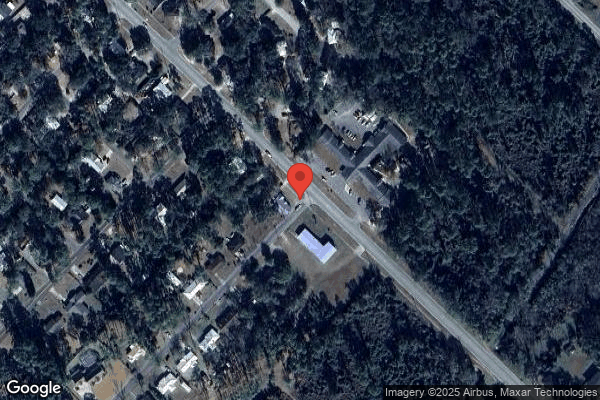
1090 W ORANGE ST, JESUP, GA 31545 (912) 427-6858
For profit - Limited Liability company 90 Beds Independent Data: November 2025
Trust Grade
90/100
#13 of 353 in GA
Last Inspection: April 2025

Within standard 12-15 month inspection cycle. Federal law requires annual inspections.

Overview

Harborview Health Systems in Jesup, Georgia, has earned a Trust Grade of A, which indicates it is excellent and highly recommended for families seeking care. It ranks #13 out of 353 nursing homes in Georgia and is the best option among the three facilities in Wayne County, placing it in the top half of state facilities. The facility is improving, having reduced issues from one in 2023 to zero by 2025. Staffing is a relative strength, with a 3 out of 5 star rating and a turnover rate of 37%, which is lower than the state average. Notably, there have been no fines, and the RN coverage is better than 82% of Georgia facilities, ensuring skilled oversight of care. However, there are some areas of concern. Recent inspections revealed issues such as a failure to follow proper infection control protocols, including not wearing appropriate PPE and reminders for residents to wear masks. Additionally, there were deficiencies in medication administration, with a medication error rate of 7.4%, exceeding the acceptable limit. Lastly, the facility did not provide adequate information on how to appeal Medicare decisions for some residents, which could lead to confusion regarding their care options.

Trust Score
A
90/100
In Georgia
#13/353
Top 3%
Safety Record
Low Risk
No red flags
Inspections
Getting Better
1 → 0 violations
Staff Stability
○ Average
37% turnover. Near Georgia's 48% average. Typical for the industry.
Penalties
✓ Good
No fines on record. Clean compliance history, better than most Georgia facilities.
Skilled Nurses
✓ Good
Each resident gets 42 minutes of Registered Nurse (RN) attention daily — more than average for Georgia. RNs are trained to catch health problems early.
Violations
✓ Good
Only 5 deficiencies on record. Cleaner than most facilities. Minor issues only.
★★★★★
5.0
Overall Rating
★★★☆☆
3.0
Staff Levels
★★☆☆☆
2.0
Care Quality
★★★★★
5.0
Inspection Score
Stable
2023: 1 issues
2025: 0 issues

The Good

  • Full Sprinkler Coverage · Fire safety systems throughout facility
  • No fines on record
  • Staff turnover below average (37%)

    11 points below Georgia average of 48%

Facility shows strength in fire safety.

The Bad

Staff Turnover: 37%

Near Georgia avg (46%)

Typical for the industry

The Ugly 5 deficiencies on record

Apr 2023 1 deficiency
CONCERN (D)

Potential for Harm - no one hurt, but risky conditions existed

Unnecessary Medications (Tag F0759)

Could have caused harm · This affected 1 resident

**NOTE- TERMS IN BRACKETS HAVE BEEN EDITED TO PROTECT CONFIDENTIALITY** Based on observations, interviews, review of facility policy, and record review, the facility failed to maintain a medication er...

Read full inspector narrative →
**NOTE- TERMS IN BRACKETS HAVE BEEN EDITED TO PROTECT CONFIDENTIALITY** Based on observations, interviews, review of facility policy, and record review, the facility failed to maintain a medication error rate of less than 5 percent (%). There were 2 errors made in 27 opportunities, resulting in a medication error rate of 7.40%. These errors affected 1 (Resident #79) out of 4 residents observed during medication pass. Findings included: A review of the facility's policy titled, Medication Administration, with an implementation date of 1/1/2023, indicated, Medications are administered by licensed nurses, or other staff who are legally authorized to do so in this state, as ordered by the physician and in accordance with professional standards of practice, in a manner to prevent contamination or infection. The policy further indicated the nurse should Review the MAR [Medication Administration Record] to identify medication to be administered and Compare medication source (bubble pack, vial, etc.) with MAR to verify resident name, medication name, form, dose, route, and time. The policy also indicated, Do not crush medications with do not crush instructions. A review of the admission Record for Resident #79 revealed the facility admitted Resident #79 with diagnoses that included constipation and hypokalemia (low potassium level). A review of the quarterly Minimum Data Set (MDS), dated [DATE], indicated Resident #79 was unable to complete the Brief Interview for Mental Status (BIMS). The Staff Assessment for Mental Status revealed the resident had short-term and long-term memory impairment with severely impaired cognitive skills for daily decision making. Active diagnoses included hypokalemia and constipation. A review of Resident #79's comprehensive care plans revealed a care plan, revised on 11/18/2022, that indicated the resident was at risk for alteration in elimination of bowel/bladder r/t [related to] functional incontinence and constipation. This care plan directed staff to administer bowel medication as ordered. A review of Resident #79's Medication Review Report revealed an order, dated 9/13/2022, for docusate sodium capsule (a capsule used to soften stool) 50 milligrams (mg), one capsule twice a day for constipation. An observation was made on 4/26/2023 at 8:10 AM of Licensed Practical Nurse (LPN) #1 preparing morning medications for Resident #79. LPN #1 administered one 100 mg tablet of docusate sodium, instead of 50 mg as ordered by the physician. LPN #1 was also observed to crush, and then administer extended-release potassium chloride to Resident #79. On 4/26/2023 at 9:50 AM, LPN #1 was interviewed. LPN #1 reviewed the packages of medications given to Resident #79 and stated the bottle she used contained docusate sodium 100 mg. The nurse then reviewed Resident #79's docusate sodium order and confirmed the order was for 50 mg. LPN #1 also reviewed the information on the potassium chloride extended-release package, including information that indicated the medication should not be crushed. LPN #1 stated she crushed the medication because Resident #79 would not take the whole pills. The nurse confirmed she had not notified the physician the resident refused the whole pills and had not requested a different form of potassium. LPN #1 stated she considered both incidents as medication errors and would tell the Director of Nursing (DON) about the errors. An interview was held with the Director of Nursing (DON) on 4/27/2023 at 1:38 PM. The DON stated that when medications were given, the expectations included the nurse giving the right drug to the right resident in the right dose at the right time by the right route. The DON stated she expected the nurse to write a medication error report and notify the physician and Resident #79's family. The DON stated she expected the nurses to read the orders carefully and compare the order to the name and dosage of the medication in the medication cart. The DON stated LPN #1 should have double checked the docusate order. The DON stated she expected LPN #1 to inform her if the resident refused whole pills or to call the physician herself and have the form of potassium changed. The Assistant Administrator was interviewed on 4/27/2023 at 1:44 PM. He stated he expected nurses to check to make sure the medication was the right dosage, and the nurse was giving the medication to the right resident. The Assistant Administrator added if the nurse was sure the resident would not take the medication whole, the expectation would be to communicate with the DON and/or charge nurse to have the medication changed.
May 2021 4 deficiencies
CONCERN (D)

Potential for Harm - no one hurt, but risky conditions existed

Resident Rights (Tag F0550)

Could have caused harm · This affected 1 resident

**NOTE- TERMS IN BRACKETS HAVE BEEN EDITED TO PROTECT CONFIDENTIALITY** Based on observation, staff interviews, record review, and review of the facility's policy titled, Promoting/Maintaining Residen...

Read full inspector narrative →
**NOTE- TERMS IN BRACKETS HAVE BEEN EDITED TO PROTECT CONFIDENTIALITY** Based on observation, staff interviews, record review, and review of the facility's policy titled, Promoting/Maintaining Resident Dignity, the facility failed to promote care that maintains or enhances dignity and respect for one of two sampled residents (R31). Specifically, staff did not always have a cover over R31's indwelling urinary catheter collection bag, which was visible from the doorway to his room and when he was in his wheelchair. Findings include: Review of the facility's policy titled, Promoting/Maintaining Resident Dignity, dated 10/27/19, documented, It is the practice of this facility to care for a resident in a manner and in an environment that maintains or enhances resident quality of life.maintain resident privacy. Review of the undated Face Sheet, for R33 located in the resident's electronic medical record (EMR), under the face sheet tab, revealed the resident was admitted to the facility on [DATE]. Review of the Diagnoses, for R33 located in the resident's EMR under the admissions tab, revealed the resident's diagnoses included urinary retention and obstructive uropathy (prolonged and/or progressive blockage of urine flow from both kidneys due to urethral obstruction). Review of the quarterly Minimum Data Set (MDS) assessment for R33 found under the MDS tab of the EMR with an assessment reference date (ARD) of 03/23/21, revealed a Brief Interview Mental Status (BIMS) of 9, which indicated moderately impaired cognition, no behaviors, and an indwelling catheter. Review of Physician Orders, for R33 dated 05/08/21, located under the orders tab in the resident's EMR included an order for a Foley Cath 18 French with 10 cubic centimeter bulb. Observations in R33's room between 05/24/21 and 05/27/21 included the following: Observation on 5/24/21 at 8:50 AM, R33 was lying in bed and the urine in his urinary collection catheter bag was visible from the doorway and was not concealed in a bag. Observation on 5/26/21 at 10:40 AM and 3:52 PM, R33 was sitting in his wheelchair in his room and the urinary collection bag was not concealed inside of another bag. Observation on 05/27/21 at 8:52 AM, with Certified Nurse Aide (CNA) 1 revealed R33 lying in bed. CNA1 confirmed that the urine in the urinary collection bag was visible from the doorway and there was no bag covering the catheter bag. CNA1 stated catheter bags were to be placed in a bag to prevent other people from observing urine in a resident's catheter bag. Interview on 05/27/21 at 12:45 PM, Licensed Practical Nurse (LPN) 4 stated there was no bag covering R33's urinary collection bag, which was a dignity concern. Interview on 05/27/21 at 9:00 AM the Director of Nurses (DON) stated urinary catheter bags were to be placed in another bag to maintain a resident's dignity.
CONCERN (D)

Potential for Harm - no one hurt, but risky conditions existed

Assessment Accuracy (Tag F0641)

Could have caused harm · This affected 1 resident

**NOTE- TERMS IN BRACKETS HAVE BEEN EDITED TO PROTECT CONFIDENTIALITY** Based on record review, staff interviews, and review of the facility policy titled, Certifying Accuracy of the Resident Assessme...

Read full inspector narrative →
**NOTE- TERMS IN BRACKETS HAVE BEEN EDITED TO PROTECT CONFIDENTIALITY** Based on record review, staff interviews, and review of the facility policy titled, Certifying Accuracy of the Resident Assessment the facility coded the Minimum Data Set (MDS) a formal assessment used for reimbursement incorrectly for one of 19 residents (R18) related to a physician ordered weight loss program. Findings include: Review of facility policy titled, Certifying Accuracy of the Resident Assessment last revised 11/2019, revealed, .The Resident Assessment Coordinator is responsible for ensuring that an MDS assessment has been completed for each resident. Each assessment is coordinated and certified as complete by the Resident Assessment Coordinator, who is a registered nurse. Review of the admission Record for R18 in the electronic medical record (EMR) revealed she was admitted to the facility on [DATE]. The admission Record indicated she had diagnoses including end stage renal dialysis, diabetes mellitus type two, essential hypertension and a recent right below the knee (BKA) amputation. Review of the 5-Day MDS with an Assessment Review Date (ARD) of 05/07/21, Significant Change MDS with an ARD of 03/22/21, and a 5-Day MDS with an ARD of 03/15/21 revealed she was coded in .Section K Swallowing/Nutritional Status. in the section for weight loss it indicated she was .on a physician-prescribed weight-loss regimen. Interview with the Medical Director/Attending Physician on 05/26/21 at 12:10 PM revealed he had not written an order for the resident to be on a weight loss regimen. Interview with the MDS Coordinator (MDSC) on 05/26/21 at 12:25 PM revealed she did not know how to code that the resident had an amputation, so she coded the resident as being on a weight loss regimen to offset the resident's low weight. She stated she would submit a correction to all three MDS assessments.
CONCERN (E)

Potential for Harm - no one hurt, but risky conditions existed

Deficiency F0582 (Tag F0582)

Could have caused harm · This affected multiple residents

**NOTE- TERMS IN BRACKETS HAVE BEEN EDITED TO PROTECT CONFIDENTIALITY** Based on interview and record review, the facility failed to issue a Skilled Nursing Facility Advance Beneficiary Notice (SNF AB...

Read full inspector narrative →
**NOTE- TERMS IN BRACKETS HAVE BEEN EDITED TO PROTECT CONFIDENTIALITY** Based on interview and record review, the facility failed to issue a Skilled Nursing Facility Advance Beneficiary Notice (SNF ABN) that was completed accurately for two of three residents (R61, R73) when their Medicare Part A stay was ending. The facility did not include information on how to appeal the decision made by the facility. Findings include: 1. Review of the admission Record located in the Profile tab of the electronic medical record (EMR) revealed R61 was admitted on [DATE] to the facility. She received Part A Medicare services until 05/21/2021. Further review revealed she was issued a SNF ABN on 05/18/2021 and chose to remain in the facility. Review of the SNF ABD revealed it was lacking the information on how to appeal the decision made by the facility and did not fully explain the options available to a resident. The form only included two of the three available options to choose from. 2. Review of the admission Record located in the Profile tab of the EMR revealed R73 was admitted on [DATE] for a Medicare Part A services. She elected to remain in the facility and was issued a SNF ABN on 03/22/21. Review of the SNF ABN revealed it was lacking the information on appealing the decision by the facility about ending the Part A services. An interview was conducted with the Business Office Manager (BOM) on 05/27/21 at 9:32 AM. The BOM stated she was responsible for completing the SNF ABN and agreed the form provided to residents did not include all the required information related to the appeal rights of residents. The policy for completion of beneficiary notices was requested on 05/26/21 at 3:30 PM from the DON. At the time of exit the facility had not provided a policy for review.
CONCERN (F)

Potential for Harm - no one hurt, but risky conditions existed

Infection Control (Tag F0880)

Could have caused harm · This affected most or all residents

**NOTE- TERMS IN BRACKETS HAVE BEEN EDITED TO PROTECT CONFIDENTIALITY** Based on observations, staff interviews, and facility policy review, the facility failed to follow transmission-based precaution...

Read full inspector narrative →
**NOTE- TERMS IN BRACKETS HAVE BEEN EDITED TO PROTECT CONFIDENTIALITY** Based on observations, staff interviews, and facility policy review, the facility failed to follow transmission-based precautions related to wearing appropriate Personal Protective Equipment (PPE) for infection control measures for residents on isolation precaution in rooms 103, 105, 117) and failed to doff PPE when exiting a resident's room. The facility failed to remind residents to wear a mask when out of their rooms. In addition, the facility failed to ensure the indwelling catheter bag was not touching the floor for one of two sampled residents (R33). Findings include: 1. Observation on 05/24/21 at 9:02 AM, of the 100-hall during the initial tour of the facility revealed three resident rooms (Room103, 105, and117) had a clear plastic covering over the doors leading into the rooms. An isolation cart which had gloves and gowns sat outside and within proximity to the room doors. There was a sign posted by each of the rooms entrance indicating that the room had resident(s) on isolation precaution and advised staff to don full personal protective equipment (PPE-gloves, mask, gown and eye protection) before entering the room. Observation on 05/24/21 at 9:12 AM, revealed Licensed Practical Nurse (LPN)1 passed medication in rooms [ROOM NUMBERS]. LPN1 wore only a surgical mask going into the rooms. LPN1 failed to don gloves or wear a gown or an eye protection. Observation on 05/24/21 at 9:27 AM, revealed Certified Nurse Aide (CNA)5 donned appropriate PPE when she went into room [ROOM NUMBER], however, she exited the resident's room into the hallway while still wearing the full PPE. The CNA was redirected by an unidentified staff to take off her PPE. Observation on 5/24/21 at 10:15 AM, revealed CNA2 entered room [ROOM NUMBER] only wearing a surgical mask. CNA2 was in the room for approximately 25 minutes. CNA2 failed to wear the appropriate PPE recommended for use in the resident's room. Observation on 5/24/21 at 10:17 AM, revealed CNA4 exited room [ROOM NUMBER] and walked down the 100-hall towards the unit's double door while still wearing full PPE. During an interview on 5/24/21 at 9:36 AM, LPN1 stated the residents in those rooms (103, 105, 117) were on droplet and contact precautions and staff were to wear a mask, gloves, and gown when they provided care for the resident(s) in the room. LPN1 stated she thought she had donned PPE when she went to the rooms to provide care. She however acknowledged that she did not wear full PPE going into the rooms. During an interview on 5/27/21 at 8:54 AM, CNA4 said that she always struggled to remind herself of when to doff her PPE. She said she completely forgot to take off her gloves and gown when she exited the above isolated resident's room. Interview on 5/13/21 at 9:05 AM, the Infection Preventionist (IP) stated that if a newly admitted resident was vaccinated against COVID-19, or not, the resident was first admitted into an isolation room. She stated that the resident would have to be in the room by themselves, and staff would have to wear full PPE going into the Person Under Investigation (PUI) rooms, including a gown, gloves, and surgical mask. She verified that the identified residents' rooms were PUI rooms. She said staff are expected to put on PPE before they entered the rooms with PUI residents and take it off before they exited the room. The IP said that if staff came out of the room which had a PUI resident after they have been in contact with the resident or the resident's items, there was the potential for cross-contamination with whatever contaminant that was picked up in the course of being in the PUI resident's room. 2. Observation on 5/26/21 at 10:59 AM revealed resident R18 was observed on a stretcher with two ambulance attendants transporting her to dialysis treatment. R18 was not wearing a mask at the time of observation. Interview with LPN2 at that time confirmed the resident should have had a mask on before leaving her room. On 05/26/21 at 11:42 AM, the Medical Director was observed visiting residents. The Medical Director was observed to be wearing a surgical mask when he entered room [ROOM NUMBER]. room [ROOM NUMBER] was on quarantine status as the resident was newly admitted to the facility. The Medical Director was observed to enter and exit the room without donning and doffing proper personal protective equipment (PPE.). He did not perform hand hygiene with hand sanitizer after exiting the room. Interview with LPN2 on 05/26/21 at 11:44 AM revealed the Medical Director should have donned a gown and gloves prior to entering the room. Upon exiting the room, the Medical Director should have removed the PPE in the doorway and then completed hand hygiene with hand sanitizer. Interview with the Director of Nursing (DON) on 05/26/21 at 11:47 AM confirmed the Medical Director should have followed the facility's policy for full PPE in a quarantine room. During an interview with the Medical Director on 05/26/21 at 12:20 PM he agreed he should have donned a gown and gloves before entering the room. He stated he would try to do better in the future. On 05/26/21 at 1:15 PM, R180 was observed exiting the facility on a stretcher to return home after respite services in the facility. R180 was not wearing a mask, but the two ambulance attendants with her were wearing masks. Interview at that time of observation with LPN3 confirmed the resident should have a mask on as she was transported out of the facility. The facility did not have a policy for donning and doffing PPE. On 05/26/21 at 3:30 PM, the DON stated they had adopted the Centers for Disease Control and Prevention (CDC) as their policy for PPE. He provided the poster for proper PPE to be used with confirmed or suspected COVID-19 residents which documented that a N95 or higher or a surgical mask, shield or goggles, gloves, and a gown should be worn. 3. Review of the facility's policy titled, Catheter Care, Urinary, dated September 2014, stated, .Infection Control, be sure catheter tubing and drainage bag are kept off the floor. Review of an undated Face Sheet, for R33 located in the resident's electronic medical record (EMR), under the face sheet tab, revealed the resident was admitted to the facility on [DATE]. Review of the Diagnoses, for R33 located in the resident's EMR under the admissions tab, revealed the resident's diagnoses included urinary retention and obstructive uropathy (prolonged and/or progressive blockage of urine flow from both kidneys due to urethral obstruction). Review of the quarterly Minimum Data Set (MDS) assessment for R33 found under the MDS tab of the EMR with an assessment reference date (ARD) of 03/23/21, revealed a Brief Interview Mental Status (BIMS) of 9, which indicated moderately impaired cognition no behaviors, and an indwelling catheter. Review of the Physician Orders, for R33 dated 05/08/21, located under the orders tab in the resident's EMR included Foley Cath (catheter) 18 French with 10 cubic centimeter bulb. Observations in R33's room and the hallway between 05/24/21 and 05/27/21 included the following: Observation on 5/24/21 at 12:20 PM and 4:45 PM, revealed the outside of R#33's catheter bag was touching the floor. Observation on 5/26/21 at 10:40 AM and 3:52 PM, revealed R33 was sitting in his wheelchair in his room and the urinary collection bag was touching the floor. Observation on 5/27/21 at 8:50 AM, R33 was lying in bed and the urinary catheter collection bag was lying on the floor. Observation on 05/27/21 at 8:52 AM, with CNA1 revealed R33 was lying in bed with the urinary catheter bag lying on the floor. CNA1 stated that urinary catheter bags were not to touch the floor. Interview on 5/27/21 at 12:45 PM, LPN4 stated she observed R33's urinary collection bag lying on the floor, which was an infection control concern. Interview with the IP Nurse on 05/27/21 at 9:11 AM revealed that indwelling catheter bags were to be kept off the floor related to infection control issues.
Understanding Severity Codes (click to expand)
Life-Threatening (Immediate Jeopardy)
J - Isolated K - Pattern L - Widespread
Actual Harm
G - Isolated H - Pattern I - Widespread
Potential for Harm
D - Isolated E - Pattern F - Widespread
No Harm (Minor)
A - Isolated B - Pattern C - Widespread

Questions to Ask on Your Visit

  • "Can I speak with families of current residents?"
  • "What's your RN coverage like on weekends and overnight?"

Our Honest Assessment

Strengths
  • • Grade A (90/100). Above average facility, better than most options in Georgia.
  • • No major safety red flags. No abuse findings, life-threatening violations, or SFF status.
  • • No fines on record. Clean compliance history, better than most Georgia facilities.
  • • Only 5 deficiencies on record. Cleaner than most facilities. Minor issues only.
Concerns
  • • No significant concerns identified. This facility shows no red flags across CMS ratings, staff turnover, or federal penalties.
Bottom line: Generally positive indicators. Standard due diligence and a personal visit recommended.

About This Facility

What is Harborview Health Systems Jesup's CMS Rating?

CMS assigns HARBORVIEW HEALTH SYSTEMS JESUP an overall rating of 5 out of 5 stars, which is considered much above average nationally. Within Georgia, this rating places the facility higher than 99% of the state's 100 nursing homes. This rating reflects solid performance across the metrics CMS uses to evaluate nursing home quality.

How is Harborview Health Systems Jesup Staffed?

CMS rates HARBORVIEW HEALTH SYSTEMS JESUP's staffing level at 3 out of 5 stars, which is average compared to other nursing homes. Staff turnover is 37%, compared to the Georgia average of 46%. This relatively stable workforce can support continuity of care.

What Have Inspectors Found at Harborview Health Systems Jesup?

State health inspectors documented 5 deficiencies at HARBORVIEW HEALTH SYSTEMS JESUP during 2021 to 2023. These included: 5 with potential for harm.

Who Owns and Operates Harborview Health Systems Jesup?

HARBORVIEW HEALTH SYSTEMS JESUP is owned by a for-profit company. For-profit facilities operate as businesses with obligations to shareholders or private owners. The facility operates independently rather than as part of a larger chain. With 90 certified beds and approximately 85 residents (about 94% occupancy), it is a smaller facility located in JESUP, Georgia.

How Does Harborview Health Systems Jesup Compare to Other Georgia Nursing Homes?

Compared to the 100 nursing homes in Georgia, HARBORVIEW HEALTH SYSTEMS JESUP's overall rating (5 stars) is above the state average of 2.6, staff turnover (37%) is near the state average of 46%, and health inspection rating (5 stars) is much above the national benchmark.

What Should Families Ask When Visiting Harborview Health Systems Jesup?

Based on this facility's data, families visiting should ask: "Can I visit during a mealtime to observe dining assistance and food quality?" "How do you handle medical emergencies, and what is your hospital transfer rate?" "Can I speak with family members of current residents about their experience?"

Is Harborview Health Systems Jesup Safe?

Based on CMS inspection data, HARBORVIEW HEALTH SYSTEMS JESUP has a clean safety record: no substantiated abuse findings (meaning no confirmed cases of resident harm), no Immediate Jeopardy citations (the most serious violation level indicating risk of serious injury or death), and is not on the Special Focus Facility watch list (a federal program monitoring the lowest-performing 1% of nursing homes). The facility has a 5-star overall rating and ranks #1 of 100 nursing homes in Georgia. While no facility is perfect, families should still ask about staff-to-resident ratios and recent inspection results during their visit.

Do Nurses at Harborview Health Systems Jesup Stick Around?

HARBORVIEW HEALTH SYSTEMS JESUP has a staff turnover rate of 37%, which is about average for Georgia nursing homes (state average: 46%). Moderate turnover is common in nursing homes, but families should still ask about staff tenure and how the facility maintains care continuity when employees leave.

Was Harborview Health Systems Jesup Ever Fined?

HARBORVIEW HEALTH SYSTEMS JESUP has no federal fines on record. CMS issues fines when nursing homes fail to meet care standards or don't correct problems found during inspections. The absence of fines suggests the facility has either maintained compliance or corrected any issues before penalties were assessed. This is a positive indicator, though families should still review recent inspection reports for the full picture.

Is Harborview Health Systems Jesup on Any Federal Watch List?

HARBORVIEW HEALTH SYSTEMS JESUP is not on any federal watch list. The most significant is the Special Focus Facility (SFF) program, which identifies the bottom 1% of nursing homes nationally based on persistent, serious quality problems. Not being on this list means the facility has avoided the pattern of deficiencies that triggers enhanced federal oversight. This is a positive indicator, though families should still review the facility's inspection history directly.