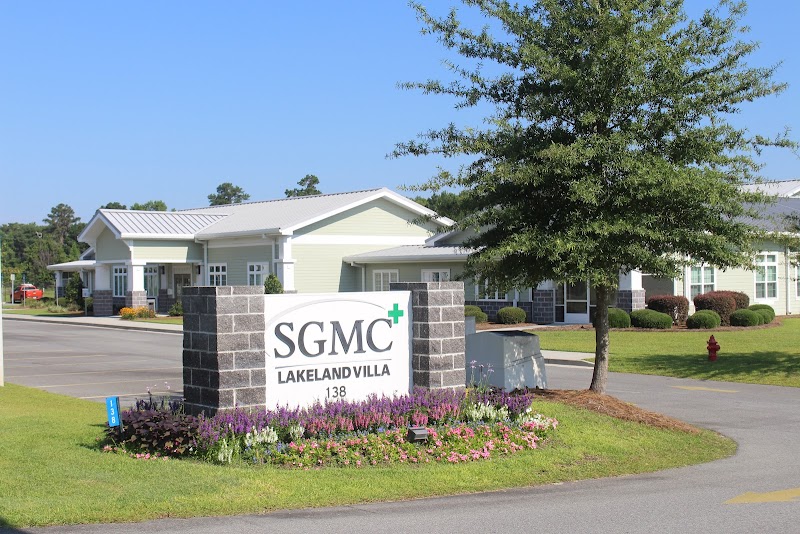
SGMC HEALTH VILLA

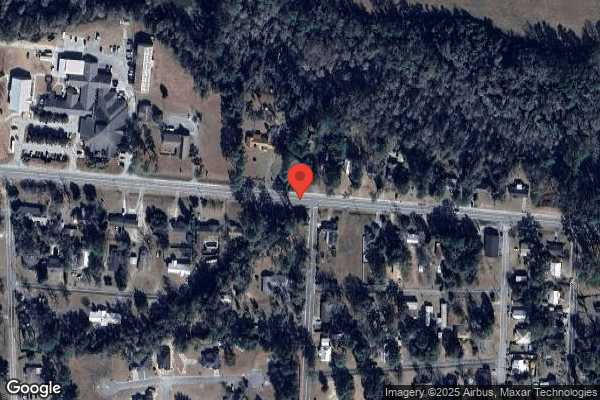
138 WEST THIGPEN AVE, LAKELAND, GA 31635 (229) 433-8425
Government - Hospital district 62 Beds Independent Data: November 2025
Trust Grade
55/100
#106 of 353 in GA
Last Inspection: June 2025

Inspected within the last 6 months. Data reflects current conditions.

Overview

SGMC Health Villa in Lakeland, Georgia, has a Trust Grade of C, which means it is average compared to other facilities. It ranks #106 out of 353 nursing homes in Georgia, placing it in the top half of state facilities, and is the only option in Lanier County. However, the facility's condition is worsening, with reported issues increasing from 2 in 2024 to 5 in 2025. Staffing is a strength, with a rating of 4 out of 5 stars and a turnover rate of 34%, which is lower than the state average. There have been no fines reported, indicating good compliance. On the downside, there have been serious incidents, including a failure to properly transfer a resident, leading to a major hip injury that required surgery. Additionally, the staff did not revise care plans adequately, leaving them unaware of residents' current statuses. While the nursing coverage is stronger than 76% of state facilities, the overall quality measures are below average, highlighting areas for improvement.

Trust Score
C
55/100
In Georgia
#106/353
Top 30%
Safety Record
High Risk
Review needed
Inspections
Getting Worse
2 → 5 violations
Staff Stability
○ Average
34% turnover. Near Georgia's 48% average. Typical for the industry.
Penalties
✓ Good
No fines on record. Clean compliance history, better than most Georgia facilities.
Skilled Nurses
○ Average
Each resident gets 39 minutes of Registered Nurse (RN) attention daily — about average for Georgia. RNs are the most trained staff who monitor for health changes.
Violations
⚠ Watch
26 deficiencies on record. Higher than average. Multiple issues found across inspections.
★★★★☆
4.0
Overall Rating
★★★★☆
4.0
Staff Levels
★★☆☆☆
2.0
Care Quality
★★★★☆
4.0
Inspection Score
Stable
2024: 2 issues
2025: 5 issues

The Good

  • 4-Star Staffing Rating · Above-average nurse staffing levels
  • Full Sprinkler Coverage · Fire safety systems throughout facility
  • No fines on record
  • Staff turnover below average (34%)

    14 points below Georgia average of 48%

Facility shows strength in staffing levels, fire safety.

The Bad

Staff Turnover: 34%

12pts below Georgia avg (46%)

Typical for the industry

The Ugly 26 deficiencies on record

3 actual harm
Jun 2025 5 deficiencies
CONCERN (D) 📢 Someone Reported This

A family member, employee, or ombudsman was alarmed enough to file a formal complaint

Potential for Harm - no one hurt, but risky conditions existed

Deficiency F0554 (Tag F0554)

Could have caused harm · This affected 1 resident

**NOTE- TERMS IN BRACKETS HAVE BEEN EDITED TO PROTECT CONFIDENTIALITY** 2. Review of R2's EMR revealed diagnoses including, but not limited to, age-related nuclear cataract, primary open-angle glaucom...

Read full inspector narrative →
**NOTE- TERMS IN BRACKETS HAVE BEEN EDITED TO PROTECT CONFIDENTIALITY** 2. Review of R2's EMR revealed diagnoses including, but not limited to, age-related nuclear cataract, primary open-angle glaucoma, and hemiplegia and hemiparesis of the right side. Review of R2 's Quarterly MDS, dated [DATE], revealed Section C (Cognitive Patterns) documented a BIMS score of 15 (indicating little to no cognitive impairment). Review of R2's clinical record revealed no assessment for self-administration of medications. Review of R2's Clinical Physician Orders revealed no orders for self-administration of medications. Observation on 6/2/2025 at 12:18 pm of R2 's room revealed a package of throat lozenges in a clear storage container on the floor, visible to anyone entering the room, one three-ounce container of Resinol medicated ointment, and one bottle of hydrogen peroxide on the resident's overbed table. During an interview, at the time of the observation, R2 reported using the throat lozenges occasionally. She further stated that a certified nursing assistant (CNA) applied the peroxide and cream during resident care services. During a concurrent observation of R2's room and interview on 6/3/2025 at 3:57 pm, the DON confirmed the medications in R2's room. 3. Review of R37's EMR revealed diagnoses including, but not limited to, chronic obstructive pulmonary disease, tremor, and weakness. Review of R37's Quarterly MDS, dated [DATE], revealed Section C (Cognitive Patterns) documented a BIMS score of 14 (indicating little to no cognitive impairment). Review of R37's clinical record revealed no assessment for self-administration of medications. Review of R37's Clinical Physician Orders revealed no orders for self-administration of medications. Observation on 6/2/2025 at 12:00 pm in R37 's bathroom revealed a container of cherry-flavored sore throat spray. During an interview, at the time of the observation, R37 stated she used the medication occasionally. During a concurrent observation of R37's bathroom and interview on 6/3/2025 at 4:10 pm, the DON confirmed the sore throat spray in R37's bathroom. She stated R37 was not assessed to self-administer medications, and the medication should not be in the room. Based on observations, resident and staff interviews, and record review, the facility failed to ensure three of 31 sampled residents (R) (R10, R2, R37) did not have unsecured and unauthorized medications at the bedside. This deficient practice had the potential to place R10, R2, and R37 at risk of administering the medications in an unsafe manner. Findings included: 1. Review of R10's electronic medical record (EMR) revealed diagnoses including, but not limited to, dementia with agitation, type 2 diabetes mellitus with proliferative diabetic retinopathy, chronic obstructive pulmonary disease with acute exacerbation, and muscle weakness. Review of R10's Quarterly Minimum Data Set (MDS) assessment, dated 4/26/2025, revealed Section C (Cognitive Patterns) documented a Brief Interview for Mental Status (BIMS) score of 9 (indicating moderate cognitive impairment). Review of R10's Care Plan Report, revised date 6/4/2025, revealed no care plan for self-administration of medications. Review of R10's Clinical Physician Orders revealed no orders for self-administration of medications. Observations on 6/3/2025 at 9:41 am, 6/3/2025 at 10:06 am, and 6/3/2025 at 11:59 am revealed a bottle of Aspercreme four percent lidocaine cream, a bottle of hydrocortisone one percent otic solution, and a bottle of Neomycin and Polymyxin B sulfates ophthalmic drops on the overbed table. During a concurrent observation and interview on 6/3/2025 at 3:57 pm, the DON (Director of Nursing) stated she was unaware of medications at R10's bedside. She further stated there were no residents who self-administered medications. The DON confirmed the medications at R10's bedside and stated R10 was not assessed or approved for self-medication administration. She stated the medications should not be at the resident's bedside.
CONCERN (D) 📢 Someone Reported This

A family member, employee, or ombudsman was alarmed enough to file a formal complaint

Potential for Harm - no one hurt, but risky conditions existed

MDS Data Transmission (Tag F0640)

Could have caused harm · This affected 1 resident

Based on staff interviews, record review, and review of the Resident Assessment Instrument 3.0 (RAI) Manual, the facility failed to ensure Minimum Data Set (MDS) assessments were transmitted within 14...

Read full inspector narrative →
Based on staff interviews, record review, and review of the Resident Assessment Instrument 3.0 (RAI) Manual, the facility failed to ensure Minimum Data Set (MDS) assessments were transmitted within 14 days of completion to the Centers for Medicare and Medicaid Services (CMS) Quality Improvement Evaluation System (QIES) Assessment Submission and Processing (ASAP) System for eight of 31 sampled residents (R) (R27, R38, R25, R44, R14, R12, R4, and R23). Findings include: Review of the RAI Manual revealed Section 5.2 Timeliness Criteria included, For all non-admission OBRA (Omnibus Budget Reconciliation Act of 1987) and PPS (Prospective Payment System) assessments, the MDS Completion Date must be no later than 14 days after the Assessment Reference Date (ARD). 1. Review of R27's MDS assessment revealed that a Quarterly assessment with an assessment reference date (ARD) of 4/2/2025 was submitted on 6/3/2025. 2. Review of R38's MDS assessment revealed that a Quarterly assessment with an ARD of 3/10/2025 was submitted on 6/2/2025. 3. Review of R25's MDS assessments revealed that an Annual assessment with an ARD of 1/17/2025 was submitted on 6/3/2025, and a Quarterly assessment with an ARD of 4/21/2025 was submitted on 6/3/2025. 4. Review of R44's MDS assessments revealed that a Quarterly assessment with an ARD of 3/20/2025 was submitted on 6/2/2025. 5. Review of R14's MDS assessments revealed that an Annual assessment with an ARD date of 3/26/2025 was submitted on 6/3/2025. 6. Review of R12's MDS assessments revealed that an Annual assessment with an ARD date of 3/8/2025 was submitted on 6/3/2025. 7. Review of R4's MDS assessments revealed that an Annual assessment with an ARD date of 3/20/2025 was submitted on 6/2/2025. 8. Review of R23's MDS assessments revealed that a Quarterly assessment with an ARD of 3/26/2025 was submitted on 6/3/2025. During an interview on 6/3/2025 at 10:54 am, the MDS Coordinator confirmed that the identified MDS assessments for R27, R38, R25, R44, R14, R12, R4, and R23 were submitted later than the required submission dates. She stated she was unaware the assessments were late.
CONCERN (D) 📢 Someone Reported This

A family member, employee, or ombudsman was alarmed enough to file a formal complaint

Potential for Harm - no one hurt, but risky conditions existed

Comprehensive Care Plan (Tag F0656)

Could have caused harm · This affected 1 resident

**NOTE- TERMS IN BRACKETS HAVE BEEN EDITED TO PROTECT CONFIDENTIALITY** 3. Review of R2 's EMR revealed diagnoses including, but not limited to, unspecified asthma and morbid (severe) obesity due to e...

Read full inspector narrative →
**NOTE- TERMS IN BRACKETS HAVE BEEN EDITED TO PROTECT CONFIDENTIALITY** 3. Review of R2 's EMR revealed diagnoses including, but not limited to, unspecified asthma and morbid (severe) obesity due to excess calories. Review of R2 's Quarterly MDS, dated [DATE], revealed Section N (Medications) documented R2 received an anticoagulant, and Section O (Special Treatments, Procedures, and Programs) documented that R2 received oxygen. Review of R2's Clinical Physician's Orders revealed an order dated 9/30/2022 for oxygen via a NC at two LPM as needed (PRN) and an order dated 9/29/2023 for Eliquis oral tablet 5 mg (a medication used to prevent and treat blood clots), one tablet by mouth two times a day. Review of R2's Care Plan Report revealed no care plan for oxygen use or anticoagulant medication use. Observations on 6/2/2025 at 12:18 pm and 6/3/2025 at 10:00 am revealed R2 receiving oxygen via a NC at two LPM. In an interview on 6/4/2025 at 10:45 am, the MDS Coordinator confirmed there were no care plan areas for oxygen or anticoagulant use on R2's care plan and confirmed the physician orders and MDS documentation. Based on observations, resident and staff interviews, and record review, the facility failed to develop a person-centered, comprehensive care plan for three of 31 sampled residents (R) (R10, R44, and R2). Specifically, the facility did not develop a care plan for R10 for oxygen therapy, psychotropic medications, and Activities of Daily Living (ADL) care, for R44 for post-traumatic stress disorder (PTSD), and for R2 for oxygen therapy and anticoagulant medication. The deficit practice had the potential to place R10, R44, and R2 at risk for medical complications, unmet needs, and a diminished quality of life. Findings included: 1. Review of R10's electronic medical record (EMR) revealed R10 had diagnoses including, but not limited to, dementia with agitation, type 2 diabetes mellitus with proliferative diabetic retinopathy, chronic obstructive pulmonary disease with acute exacerbation, and muscle weakness. Review of R10's Quarterly MDS (Minimum Data Set) assessment, dated 4/26/2025, revealed Section C documented a Brief Interview for Mental Status (BIMS) score of 9 (indicating moderate cognitive impairment). Section GG (Physical Abilities and Goals) documented R10 required supervision to partial assistance with ADLS. Section N (Medications) documented that R10 received antipsychotic and antidepressant medications in the seven-day look-back period, and antipsychotics were received on a routine basis only. Section O (Special Treatments, Procedures, and Programs) documented that the resident did not receive oxygen. Review of R10's Clinical Physician Orders revealed an order dated 1/18/2025 for oxygen at two liters per minute (LPM) via a nasal cannula (NC). Further review revealed orders dated 1/14/2025 for quetiapine fumarate oral tablet 25 milligram (mg) two times a day (BID) for mood disorders, 1/14/2025 for trazodone hydrochloride oral tablet 50 mg every day (QD) for depression, and 1/15/2025 for duloxetine hydrochloride oral capsule delayed release particles 30 mg QD for depression. Review of R10's Care Plan Report, dated 1/14/2025, revealed no care plan for oxygen use, ADL care, or psychotropic medication use. Observation on 6/3/2025 at 9:41 am revealed R10 receiving oxygen at two LPM via a NC. Observation on 6/3/2025 at 10:02 am revealed R10 receiving oxygen at two LPM via a NC. Further observation revealed that staff were assisting R10 with ADL care. Observation on 6/3/2025 at 11:59 am revealed R10 receiving oxygen at two LPM via a NC. Observation on 6/4/2025 at 11:00 am revealed R10 receiving oxygen at two LPM via a NC. In an interview on 6/4/2025 at 10:23 am, the MDS Coordinator stated that many comprehensive care plans were not completed. She stated she had taken over the MDS Coordinator position in February and was still trying to catch up. She confirmed R10 did not have a care plan for ADL care, oxygen use, or the use of psychotropic medications. In an interview on 6/4/2025 at 12:35 pm, the Administrator stated that the care plan care areas were populated from the MDS assessments and resident needs, and confirmed R10's care plan did not include oxygen use, ADL care, or psychotropic medications. 2. Review of R44's EMR revealed diagnoses including, but not limited to, PTSD. Review of R44's Quarterly MDS assessment, dated 3/20/2025, revealed Section D (Mood) documented R44 exhibited little interest or pleasure in doing things and feeling down, depressed, or hopeless for two to six of the seven-day look-back period. Section I (Active Diagnoses) documented a diagnosis of PTSD. Review of R44's Care Plan Report revealed no care plan for PTSD. In an interview on 6/3/2025 at 2:57 pm, the Assistant Director of Nursing (ADON) stated that if a resident had a diagnosis of PTSD, it should be on the care plan. In an interview on 6/4/2025 at 10:23 am, the MDS Coordinator stated that many comprehensive care plans were not completed and confirmed R44's care plan did not address PTSD.
CONCERN (D) 📢 Someone Reported This

A family member, employee, or ombudsman was alarmed enough to file a formal complaint

Potential for Harm - no one hurt, but risky conditions existed

Accident Prevention (Tag F0689)

Could have caused harm · This affected 1 resident

Based on staff interviews, record review, and review of the facility policy titled Falls Assessments/ Falls Risk Policy, the facility failed to ensure post-fall assessments were conducted for one of 1...

Read full inspector narrative →
Based on staff interviews, record review, and review of the facility policy titled Falls Assessments/ Falls Risk Policy, the facility failed to ensure post-fall assessments were conducted for one of 10 residents (R) (R39) with falls. This deficient practice had the potential to place R39 at risk of falls, medical complications, and a diminished quality of life. Findings: Review of the facility policy titled Falls Assessments/ Falls Risk Policy, dated 2/20/2024, revealed the Purpose section stated, The purpose of this Policy is to provide guidelines for identifying patients at risk for falling and implementing safeguards to minimize patient falls. The Procedure section included . C. Interventions . 2. Any resident who experiences a fall will receive an assessment weekly for a period of twelve weeks. If the resident experiences no additional falls, they will be placed into the appropriate Fall Risk category, and assessments will be performed as required. If the resident experiences an additional fall during this period, the twelve 12 weeks assessment period will reset and weekly assessments will continue. Review of R39's clinical record revealed diagnoses including, but not limited to, muscle weakness, essential hypertension, primary osteoarthritis, and other malaise. Review of R39's admission Minimum Data Set (MDS) Assessment, dated 5/7/2025, revealed Section C (Cognitive Patterns) documented a Brief Interview for Mental Status (BIMS) of 00 (indicating severe cognitive impairment). Section GG (Functional Abilities and Goals) documented that the resident required partial to moderate assistance with transfers. Section J (Health Conditions) documented the resident had a fall history upon admission and had one fall without injury since admission. Review of R39's Progress Notes revealed an entry dated 5/11/2025 documenting that a Certified Nursing Assistant (CNA) witnessed the resident sliding to the floor from the side of the bed. An assessment was completed, and the daughter, Director of Nursing (DON), and the physician were notified. Review of R39's fall assessments revealed that a fall assessment was completed on 4/25/2025, 5/9/2025, and 6/2/2025. Further review revealed there were no other fall risk assessments completed after R39's fall on 5/11/2025. In an interview on 6/3/2025, the DON stated she was aware that R39 had a fall on 5/11/2025. In an interview on 6/4/2025 at 9:30 am, the MDS Coordinator stated that a fall assessment was completed when a resident fell. She confirmed the only fall assessment completed for R39 after the fall on 5/11/2025 was dated 6/2/2025 and stated an assessment should have been completed the same week as the fall occurred to determine if changes to the care plan were needed. In an interview on 6/4/2025 at 4:00 pm, the Administrator confirmed R39 had a fall on 5/11/2025, and the only fall assessment completed was on 6/2/2025. The Administrator further stated that fall assessments should have been completed weekly after the fall.
MINOR (C) 📢 Someone Reported This

A family member, employee, or ombudsman was alarmed enough to file a formal complaint

Minor Issue - procedural, no safety impact

Deficiency F0576 (Tag F0576)

Minor procedural issue · This affected most or all residents

Based on resident and staff interviews and review of the facility policy titled Individual Rights and Responsibilities, the facility failed to ensure mail delivery service was provided to residents on...

Read full inspector narrative →
Based on resident and staff interviews and review of the facility policy titled Individual Rights and Responsibilities, the facility failed to ensure mail delivery service was provided to residents on Saturdays. This deficient practice had the potential to affect all residents in the facility. The facility census was 55. Findings include: Review of the facility policy titled Individual Rights and Responsibilities, dated 12/6/2019, revealed the Residents' Rights section included, . I. Mail and Electronic Mail: 1. Residents have the right to privacy in written communications, including the right to send and promptly receive unopened mail. During an interview on 6/4/2025 at 10:30 am with members of the resident council, the resident council members stated that residents did not receive mail on Saturdays and had not done so for a while. During an interview on 6/4/2025 at 10:30 am, the Activities Director (AD) confirmed that mail was not delivered to the residents on Saturdays. The AD stated she was responsible for delivering mail, did not work on Saturdays, and delivered the mail once she came in on Monday. During an interview on 6/4/2025 at 3:10 pm, the Administrator confirmed that mail was not delivered to the facility on Saturdays. He stated that a sign would be placed on the front door to inform the mail delivery person to go to the side door to deliver the mail on Saturday.
Oct 2024 2 deficiencies
CONCERN (D) 📢 Someone Reported This

A family member, employee, or ombudsman was alarmed enough to file a formal complaint

Potential for Harm - no one hurt, but risky conditions existed

Report Alleged Abuse (Tag F0609)

Could have caused harm · This affected 1 resident

**NOTE- TERMS IN BRACKETS HAVE BEEN EDITED TO PROTECT CONFIDENTIALITY** Based on resident and staff interviews, record reviews, and review of the facility's policy titled, Villa Abuse, Neglect, Exploi...

Read full inspector narrative →
**NOTE- TERMS IN BRACKETS HAVE BEEN EDITED TO PROTECT CONFIDENTIALITY** Based on resident and staff interviews, record reviews, and review of the facility's policy titled, Villa Abuse, Neglect, Exploitation, Mistreatment of Individuals, the facility failed to ensure that an allegation and suspicion of abuse was reported to the State Survey Agency (SSA) within the required time frame for one of 14 sampled residents (R) (R A). Findings include: Review of the facility's policy titled Villa Abuse, Neglect, Exploitation, Mistreatment of Individuals dated 8/1/2022, under the Policy section revealed, 8. In response to allegations of abuse, neglect, exploitation, or mistreatment of an individual, [facility name] ensures that the allegations are immediately reported to the [facility name] Administrator. If the event(s) that caused suspicion result in serious bodily injury, it must be reported to The Georgia Department of Community Health no later than (2) hours after forming the suspicion. If the event(s) causing suspicion did not result in serious bodily injury, it must be reported to The Georgia Department of Community Health no later than (24) hours after the suspicion is formed. Review of the clinical record revealed that RA was admitted to the facility on [DATE] and had diagnoses that included, but were not limited to, cerebral infarction, left non-dominant side hemiplegia and hemiparesis, and major depressive disorder. Review of the Quarterly Minimum Data Set (MDS) assessment dated [DATE] revealed that RA was assessed as being cognitively intact with a Brief Interview for Mental Status (BIMS) score of 15 out of 15. She was also assessed on the MDS assessment as needing staff assistance for Activities of Daily Living (ADL) care. Review of personnel information for Certified Nursing Assistant (CNA) BB revealed she was hired on 5/6/2024. Review of a Corrective Action Form dated 8/22/2024, and signed by the Assistant Director of Nursing (ADON), revealed that several complaints were made about CNA BB's work performance. The form also documented that education was given to CNA BB, and a verbal warning was explained. Review of written statements by facility staff, collected by the ADON in response to the allegation against CNA BB, revealed a statement dated 8/19/2024 from an unnamed Licensed Practical Nurse (LPN), that documented the LPN had heard CNA BB make a comment to RA about taking her bra off and lying in bed with RA. Review of facility documentation revealed there was no evidence that the initial allegation of an inappropriate and/or sexual relationship or behavior, that involved CNA BB and RA was reported to the State Survey Agency. Interview on 10/7/2024 at 1:33 pm, the ADON revealed that a CNA reported to her that CNA BB was spending a lot of time in RA's room, that CNA BB had shaved RA's private area (pubic area), and that CNA BB had been seen hanging out in RA's room, lying across the bottom of the bed watching television with RA. The ADON revealed she spoke with CNA BB about boundaries. The ADON also revealed that CNA BB was educated that staff do not shave resident's private areas. When asked if the concerns raised about CNA BB and RA were of an inappropriate sexual relationship or behavior, the ADON's response was no, not sexual, just that CNA BB was hanging out with RA and spending all of her free time in RA's room. Interview on 10/7/2024 at 3:30 pm with the Administrator, when asked about the facility's abuse coordinator, the Administrator revealed it would be the Social Services Director (SSD) or himself. The Administrator confirmed that the allegation involving CNA BB and RA was not reported to the State Survey Agency. Interview on 10/8/2024 at 4:14 pm, the SSD revealed that she, the ADON, and the Director of Nursing (DON) spoke with CNA BB on 8/22/2024 and explained that shaving of the private area was not a task staff performed. The SSD revealed that she and the ADON also spoke with RA on 8/22/2024, and the resident had no concerns about CNA BB. RA, stated that she and CNA BB had a friendly relationship, that they always talked, and watched television. Interview on 10/22/2024 at 12:58 pm with CNA BB, when asked about the nature of her relationship with RA, CNA BB responded that she was friendly with RA and described herself as a people-person. CNA BB denied any type of inappropriate or sexual relationship with RA. CNA BB confirmed that she did shave RA's private area and that it was at RA's request, and she was not aware that she could not. CNA BB confirmed that she had received education from the ADON on 8/22/2024. Telephone interview on 10/30/2024 at 1:30 pm with the Administrator revealed he also had concerns with the wording of the abuse policy related to the time frame for reporting abuse with or without injury, and within two-hours or 24-hours. He revealed the policy was written by the previous Administrator, and he thought the policy and regulation were awkward to read, and he felt it could be clearer. He expected staff to use the two-hour guideline for reporting abuse. Any incident of abuse, actual, suspected, or alleged, injury or no injury, neglect, exploitation, mistreatment, misappropriation should be reported immediately to the Administrator and no later than two hours to the state agency.
CONCERN (D) 📢 Someone Reported This

A family member, employee, or ombudsman was alarmed enough to file a formal complaint

Potential for Harm - no one hurt, but risky conditions existed

Investigate Abuse (Tag F0610)

Could have caused harm · This affected 1 resident

**NOTE- TERMS IN BRACKETS HAVE BEEN EDITED TO PROTECT CONFIDENTIALITY** Based on resident and staff interviews, record review, and review of the facility's policy titled, Villa Abuse, Neglect, Exploit...

Read full inspector narrative →
**NOTE- TERMS IN BRACKETS HAVE BEEN EDITED TO PROTECT CONFIDENTIALITY** Based on resident and staff interviews, record review, and review of the facility's policy titled, Villa Abuse, Neglect, Exploitation, Mistreatment of Individuals, the facility failed to implement thorough protective measures following an allegation of staff to resident abuse. Specifically, the facility failed to remove a staff member from the schedule and allowed the staff member to work in the area where the resident/victim resided during the investigation of abuse, for one of 14 sampled residents (R) (R A). Findings include: Review of the facility's policy Villa Abuse, Neglect, Exploitation, Mistreatment of Individuals dated 8/1/2022, revealed the Procedure portion of the policy included a section on Protection and documented that the facility would take all necessary steps to protect individuals from harm during an investigation and steps may include, but are not limited to the following: suspension of the suspected abuser, reassignment of staff member to another section, reassignment of the individual to another section, transfer of the individual to another facility, and heightened aware of staff. Review of the clinical record revealed that RA admitted to the facility on [DATE] and had diagnoses that included, but were not limited to, cerebral infarction, left non-dominant side hemiplegia and hemiparesis, and major depressive disorder. Review of the Quarterly Minimum Data Set (MDS) assessment dated [DATE] revealed that RA was assessed as being cognitively intact with a Brief Interview for Mental Status (BIMS) score of 15 out of 15. RA was also assessed on the MDS as needing staff assistance for Activities of Daily Living (ADL) care. Review of personnel information for Certified Nursing Assistant (CNA) BB revealed she was hired on 5/6/2024. Review of a Corrective Action Form dated 8/22/2024, which was signed by the Assistant Director of Nursing (ADON), revealed that several complaints were made about CNA BB's work performance. The form documented that education was given to CNA BB and a verbal warning was explained. Review of written statements by facility staff with a date range of 8/19/2024 through 8/21/2024, and collected by the ADON in response to the allegation of inappropriate conduct against CNA BB and RA, revealed a statement dated 8/19/2024 from an unnamed Licensed Practical Nurse (LPN). The statement documented that the LPN overheard CNA BB make a comment to RA about taking her bra off and lying in bed with RA. Review of the Daily Assignment Sheets forms from 8/15/2024 through 8/22/2024, revealed that CNA BB worked the 3:00 pm to 11:00 pm shift on 8/15/2024, 8/16/2024, 8/19/2024, 8/202024, 8/212024, and 8/22/2024, although the facility staff were aware of an allegation of an inappropriate relationship between CNA BB and R A, and they had collected statements starting on 8/19/2024. CNA BB was assigned to RA's hall on 8/16/2024 8/19/2024, 8/20/2024 and 8/22/2024. Review of facility documentation revealed there was no documented evidence CNA BB was reassigned, suspended, or limited access to RA during the facility's investigation. Interview on 10/7/2024 at 1:33 pm, the ADON revealed that a CNA reported to her that CNA BB was spending a lot of time in RA's room, that CNA BB had shaved RA's private area (pubic area), that CNA BB had been seen hanging out in RA's room, and lying across the bottom of the bed watching television with RA. The ADON revealed she spoke with CNA BB about boundaries and that CNA BB was educated on 8/22/2024 that staff do not provide shaving of resident's private areas. When asked if the concerns raised about CNA BB and RA were of an inappropriate sexual relationship or behavior, the ADON's response was no, not sexual, just that CNA BB was hanging out with RA and spending all her free time in RA's room. Interview on 10/8/2024 at 4:14 pm, the Social Services Director (SSD) revealed that she, the ADON, and the Director of Nursing (DON) spoke with CNA BB on 8/22/2024 and explained that shaving of the private area was not a task staff performed. The SSD also revealed that she and the ADON spoke with R A on 8/22/2024, and RA had no concerns about CNA BB. RA said they had a friendly relationship and that they always talked and watched television. Interview on 10/22/24 at 12:35 pm, and review of the staff's written statements with a date range of 8/19/2024 to 8/21/2024, the ADON was asked what date she was first notified of a concern with CNA BB and R A. The ADON responded that she did not recall the exact date she was notified initially but confirmed it would have been within a few days prior to the staff's written statements dated 8/19/2024. The ADON revealed that when this incident was first reported to her, she went to the DON that same day to ask if she was aware of anything. The next day she (the ADON) was told by Human Resources to get statements in writing, so she began telling staff to write down and submit their statements. During the interview the ADON confirmed that CNA BB still worked but was not assigned to RA for those first few days. The ADON stated she told staff to switch out RA's room if CNA BB had that hall. Interview on 10/22/2024 at 12:58 pm, when asked about the nature of her relationship with RA, CNA BB responded that she was friendly with RA and described herself as a people-person. CNA BB denied any type of inappropriate relationship or sexual relationship with RA. CNA BB confirmed that she did shave RA's private area and that it was at RA's request, and that she was not aware she could not. CNA BB confirmed that she received education from the ADON on 8/22/2024. When CNA BB was asked if she was taken off the schedule or had a schedule change during the time frame prior to receiving the education from the ADON on 8/22/2024, she responded no.
Feb 2023 7 deficiencies
CONCERN (D)

Potential for Harm - no one hurt, but risky conditions existed

Notification of Changes (Tag F0580)

Could have caused harm · This affected 1 resident

**NOTE- TERMS IN BRACKETS HAVE BEEN EDITED TO PROTECT CONFIDENTIALITY** Based on observation, interview and record review, the facility failed to notify the physician and responsible party timely of a...

Read full inspector narrative →
**NOTE- TERMS IN BRACKETS HAVE BEEN EDITED TO PROTECT CONFIDENTIALITY** Based on observation, interview and record review, the facility failed to notify the physician and responsible party timely of a newly developed pressure ulcer for one resident (R) (R A) of two residents reviewed for pressure ulcers. Findings include: Review of the Minimum Data Set (MDS) Annual assessment dated [DATE] revealed R A had a Brief Interview of Mental Status (BIMS) score of 10 indicating moderate cognitive impairment. The resident had diagnoses including Diabetes Mellitus, Hypertension, and Cognitive Communication Deficit. The resident required two-person total dependance with Activities of Daily Living (ADL's) and had no pressure ulcers but was care planned for risk for pressure ulcers. Review of Progress Notes dated 12/21/2022 revealed resident had a stage 1 pressure ulcer to the coccyx (non-blanchable erythema of intact skin). There was no documented evidence that the responsible party or physician were notified. Review of Progress Note dated 12/28/2022 revealed R A had an unstageable pressure ulcer to the coccyx (back of body above buttocks) - obscured full thickness skin and tissue loss. There was no documented evidence that the responsible party or physician were notified until 1/11/2023. Observation of wound care on 2/12/2023 at 8:39 a.m. revealed Licensed Practical Nurse (LPN) GG provided the wound care per the physician's order. The resident was on a pressure relieving mattress and was repositioned after the treatment. The resident had a stage 4 pressure ulcer to the coccyx that was healing with edges well approximated and no signs of infection. Interview with the family of R A on 2/12/2023 at 12:25 p.m. revealed they were not notified of the resident's wound until they were told while visiting on 1/13/2023 that she needed to see the wound specialist. He was able to go into the resident's my chart and see that she had an appointment that following Tuesday, which he attended. Interview with LPN GG on 2/12/2023 at 1:48 p.m. revealed she works on the weekend. She stated the regular wound nurse works during the week and notifies the physician and responsible party when needed. Interview on 2/12/2023 at 2:52 p.m. with the Director of Nursing (DON) revealed the resident's physician was not notified because he was out of town. The on-call physician should have been notified. The DON reviewed the record and confirmed that the Physician was not notified of the wound until 1/11/2023. Observation and interview with the Physician on 2/12/2023 at 3:41 p.m. revealed he was on vacation at that time and was notified on 1/10/2023 (record indicates 1/11/2023, but he was notified on 1/10/2023). He stated the wound center was also closed for the holidays. After observing the wound, he stated the wound is healing and the previous treatment schedule was being followed. He does not believe that notifying the on-call physician would have made a difference with the deterioration of the wound. From what he sees, he believes the residents are being turned and treatments are being done.
CONCERN (D)

Potential for Harm - no one hurt, but risky conditions existed

Pressure Ulcer Prevention (Tag F0686)

Could have caused harm · This affected 1 resident

**NOTE- TERMS IN BRACKETS HAVE BEEN EDITED TO PROTECT CONFIDENTIALITY** Based on observation, interview, record review, and review of facility policy, the facility failed to ensure weekly wound measur...

Read full inspector narrative →
**NOTE- TERMS IN BRACKETS HAVE BEEN EDITED TO PROTECT CONFIDENTIALITY** Based on observation, interview, record review, and review of facility policy, the facility failed to ensure weekly wound measurements were obtained for one of two residents (R) (R A) reviewed for pressure ulcers. Findings include: Review of the Minimum Data Set (MDS) Annual assessment dated [DATE] revealed R A had a Brief Interview of Mental Status (BIMS) score of 10 indicating moderate cognitive impairment. The resident required two-person total dependance with Activities of Daily Living (ADL's) and had no pressure ulcers but was care planned for risk for pressure ulcers. Review of Progress Notes dated 12/21/2022 revealed resident had a stage 1 pressure ulcer to the coccyx (non-blanchable erythema of intact skin). There were no measurements documented. Review of Progress Note dated 12/28/2022 revealed R A had an unstageable pressure ulcer to the coccyx (back of body above buttocks) - obscured full thickness skin and tissue loss. There were no measurements documented. Review of Progress Note dated 1/10/2023 revealed open unstageable pressure ulcer that is larger than a fifty-cent piece, but no actual measurements were documented. The area was cleaned with wound cleanser and patted dry. Aquacel Ag applied to area with ABD pad and medipore tape. Review of the Treatment Administration Records (TAR) revealed the resident was receiving wound care for the buttocks since 10/24/2022 through 1/12/2023 to cleanse with normal saline, pat dry, apply Resinol/Z-guard and cover with Allevyn once a day every other day. Further review of the medical record revealed the resident was seen at the wound center on 1/17/2023 after which measurements were obtained and documented weekly. Skin assessments were documented weekly from 11/30/2022 through current. Observation of wound care on 2/12/2023 at 8:39 a.m. revealed Licensed Practical Nurse (LPN) GG provided the wound care per the physician's order. The resident was on a pressure relieving mattress and was repositioned after the treatment. The resident had a stage 4 pressure ulcer to the coccyx that was healing with edges well approximated and no signs of infection. LPN GG did not measure the wound. Interview with LPN GG on 2/12/2023 at 1:48 p.m. revealed she works on the weekend and does wound treatments but does not measure wounds. She stated the regular wound nurse works during the week and completes all skin assessments and wound measurements. Interview on 2/12/2023 at 2:52 p.m. with the Director of Nursing (DON) revealed the regular wound nurse normally does the measurements. She stated the regular wound nurse gets pulled to the cart most of the time due to lack of staff. An LPN comes in during the week Monday through Friday and assists with completing wound treatments and labs but does not measure the wounds. Review of facility policy titled Villa Wound Care revised 11/1/2019 revealed the wound care team will meet weekly to make rounds for visual assessment of wound care issues, including pressure injuries of all individuals . The wound care team will document findings of rounds and make recommendations as needed. The RN (Registered Nurse) or LPN on the wound care team will discuss the need for order changes with the provider as needed. Obtaining wound measurements is not included in the facility policy for wound care.
CONCERN (D)

Potential for Harm - no one hurt, but risky conditions existed

Dental Services (Tag F0791)

Could have caused harm · This affected 1 resident

**NOTE- TERMS IN BRACKETS HAVE BEEN EDITED TO PROTECT CONFIDENTIALITY** Based on observation, interviews and record review, the facility failed to ensure that one of 30 sampled residents (R) (R#57) re...

Read full inspector narrative →
**NOTE- TERMS IN BRACKETS HAVE BEEN EDITED TO PROTECT CONFIDENTIALITY** Based on observation, interviews and record review, the facility failed to ensure that one of 30 sampled residents (R) (R#57) received routine dental services as needed. Findings included: Review of the clinical record revealed that R#57 was admitted to the facility on [DATE] with diagnosis of, but not limited to, Alzheimer's Disease and cognitive communication deficit. Review of the quarterly Minimum Data Set (MDS) assessment dated [DATE] noted that R#57 presented with a Brief Interview for Mental Status (BIMS) score of three, indicating severe cognitive deficit and presented with obvious likely cavity or broken teeth. Review of the Dental Care Plan revealed that R#57 had oral/dental health problems related to poor oral hygiene. It noted that the facility would coordinate arrangements for dental care, transportation as needed/as ordered; will monitor/document/report as needed signs and symptoms of oral/dental problems needing attention: pain (gums, toothache, palate), abscess, debris in mouth, lips cracked or bleeding, teeth missing, loose, broken, eroded, decayed, tongue (black, coated, inflamed, white, smooth), ulcers in mouth, and/or lesions. Observation on 2/10/2023 at 12:12 p.m. resident was noted with discolored bottom teeth with buildup and/or food and was missing all top teeth. Interview on 2/12/2023 at 12:18 p.m. the Administrator stated that they have a contract with a dental company. Interview on 2/12/2023 at 1:59 p.m. the Business Manager (BM) stated that she is responsible for enrolling residents in the dental program. She stated that if the resident or the family has signed up for the program and the physician sees a need, he will make a referral but not every resident receives routine services. She stated that the information is given to residents and families in the admission packet upon admission. After a review of the admission packet, she confirmed that the information related to the dental program was not found and was not in the packet. She confirmed that she looked it up and she could not find that the resident had a dental assessment and that there was no note related to the resident or her family refusing dental care. Interview on 2/12/2023 at 2:02 p.m. the Social Worker (SW) stated that they have a form to notify residents and family to get on the dental plan to receive routine services and that to resident with medication liability. have had an assessment. If the family declines services, it should be documented that it was discussed with the family, and they declined services. Interview on 2/12/2023 at 3:27 p.m., the MDS coordinator stated that the doctor said she had no acute concerns when she was admitted to the facility. He provided a physician note dated 10/26/2021. He stated that she was edentulous. When explained that the resident has bottom teeth, he did not say anything. On 2/12/2023 at 3:42 p.m. the SW confirmed, thru observation at this time, that R#57 had missing top teeth and had obvious cavities on bottom teeth. Interview on 2/12/2023 at 4:31 p.m., the Administrator stated that the facility did not have a policy related to routine dental services. On 2/12/2023 at 3:46 p.m. the MDS Coordinator brought in the first admission MDC assessment completed for R#57 on 10/25/2021. The assessment noted that R#57 was admitted with cavities/broken teeth.
CONCERN (E) 📢 Someone Reported This

A family member, employee, or ombudsman was alarmed enough to file a formal complaint

Potential for Harm - no one hurt, but risky conditions existed

Comprehensive Care Plan (Tag F0656)

Could have caused harm · This affected multiple residents

**NOTE- TERMS IN BRACKETS HAVE BEEN EDITED TO PROTECT CONFIDENTIALITY** 3. Review of resident medical record revealed R#12 was admitted to the facility with the diagnoses of Parkinson's Disease, type ...

Read full inspector narrative →
**NOTE- TERMS IN BRACKETS HAVE BEEN EDITED TO PROTECT CONFIDENTIALITY** 3. Review of resident medical record revealed R#12 was admitted to the facility with the diagnoses of Parkinson's Disease, type 2 diabetes mellitus, hypertensive retinopathy, ventricular tachycardia, depression, gastroesophageal reflux disease (GERD), osteoarthritis of the knee, and gout. Review of Minimum Data set (MDS) Quarterly assessment dated [DATE] revealed a BIMS score of 15 indicating resident is cognitively intact. Section G revealed resident is total dependent with one-person physical assistance for bed mobility, transfer, dressing, toilet use, personal hygiene, and bathing. Review of R#12 care plan did not reveal indications of ADL impairment noted in document. Observation on 2/11/23 at 11:29 a.m. revealed resident lying in bed noted to have facial hair present and in hospital gown. Interview on 2/11/2023 at11:30 a.m. with R#12 revealed he wanted to get shaved but the staff don't have time to shave him because they are always short of staff. Interview on 1/12/2023 at 11:00 a.m. with MDS Coordinator revealed that residents that need assistance with Activities of Daily Living (ADL's) should have a care plan in place. She revealed that the care plans are reviewed quarterly along with MDS assessments and annually. During further interview, she confirmed that R#12 did not have and ADL care plan in the plan of care and should have. 4. Review of R#48 medical record revealed that resident was admitted to the facility with diagnoses of hemiplegia and hemiparesis, age related nuclear cataract, type 2 diabetes mellitus, chronic pain syndrome, essential hypertension, major depressive disorder, anxiety disorder, dementia, severe morbid obesity, and hypothyroidism. Review of MDS Quarterly assessment dated [DATE] revealed a BIMS score of 15 indicating resident is cognitively intact. Section G revealed resident is total dependent with two-person physical assistance for bed mobility, transfer, dressing, toilet use, personal hygiene, and bathing. Review of R#48 care plan did not reveal indications of ADL impairment noted in document. Interview on 1/12/2023 at 11:00 a.m., MDS Coordinator confirmed that R#48 did not have and ADL care plan in the plan of care and should have. 5. Review of the medical record for R#58 revealed resident was admitted to the facility with the diagnoses of neurologic neglect syndrome, nontraumatic intracerebral hemorrhage, dysphagia, cognitive communication deficit, pressure ulcer sacral region, quadriplegia, and gastrostomy status. Review of MDS quarterly assessment dated [DATE] revealed a BIMS score of 7 indicating resident had cognitive impairment. Section G indicated resident was totally dependent with two-person assistance for bed mobility, transfer, and total dependence with one person assistance for dressing, eating, toilet use, personal hygiene, and total dependence for bathing. Section M indicated resident is at risk for developing pressure ulcers and documented resident had one stage 4 pressure ulcer that was present upon admission to the facility. Review of R#58 care plan did not reveal indications of ADL impairment noted in document. Interview on 1/12/2023 at 11:00 a.m. MDS Coordinator confirmed that R#58 did not have and ADL care plan in the plan of care and should have. 6. A review of the clinical medical record revealed that R#41 was admitted to the facility on [DATE]. Review of the quarterly MDS dated [DATE] revealed a BIMS score of five, indicating severe cognitive deficit. The assessment indicated no concerns with mood or behaviors; the resident requires extensive assistance of staff for dressing, limited assistance with eating, and total assistance with toiletings, bathing, and hygiene. The assessment indicated that the resident is receiving Passive ROM and splint/brace management. Review of the care plan for R#41, revealed that the resident had ADL self-care performance deficit related to confusion and limited mobility. The resident will maintain current level of function in ADLs through the review date. Encourage the resident to participate to the fullest extent possible with each interaction. Encourage the resident to use bell to call for assistance. Monitor/document/report PRN any changes, any potential for improvement, reasons for self-care deficit, expected course, declines in function. Praise all efforts at selfcare. PT/OT evaluation and treatment as per MD orders. Review of the February 2023 Restorative Notes revealed that the resident was supposed to be receiving RESTORATIVE - Passive ROM Program and RESTORATIVE - Splint/Brace Assistance Program. Observation on 2/10/2023 at 11:32 a.m., R#41 was lying in his room in bed. He had left hand contracture with no splint. Legs were under sheets but appeared contracted at the knees. Resident was alert with confusion. Observation on 2/11/2023 at 1:47 p.m. resident was in room talking on the phone. No splints observed. Interview on 2/12/2023 at 9:26 a.m. the Assistant Director of Nursing (ADON) stated that the facility does have a restorative nursing program: Nurse over that program is Restorative Nurse PP with the assistance of two CNA's who works with the residents in the restorative program. She confirmed that R#41 was on that list to receive restorative services and that the CNA should document the minutes on the flow sheet. He is on the program for passive ROM and splinting but could not provide documentation related to splinting and contracture management for R#41. Interview on 2/12/2023 at 9:36 a.m. MDS Assistant and Restorative Nurse PP, stated R#41 was on the program before he took over. R#41 was on therapy and as soon as they discharged him, he was on RP. She has been working with the RP for about 6 months. She is on the floor. Meetings as needed. They are part of the monthly meeting. They work the floor as well and have been working the program at least 2-3 years. Physical therapy assists with training for the program. The facility could not provide documentation for contracture management or splinting for R#41. Based on observation, staff and resident interviews, record review, and review of facility policy, the facility failed to develop a care plan for five dependent residents (R) (#31, #40, #12, #48, #58) reviewed for Activities of Daily Living (ADLs); and failed to implement the care plan related to providing contracture management/braces/range of motion (ROM) services for one resident (R#41) of 30 sampled residents. Findings include: Review of facility policy titled Villa Interdisciplinary Plan of Care revised 11/1/2019 revealed the facility develops and implements a comprehensive interdisciplinary plan of care for each individual with seven days after the completion of the individual's comprehensive assessment and that includes measurable objective and timeframes to meet an individual's medical, nursing, and mental and psychosocial needs that are identified in the comprehensive assessment . The interdisciplinary plan of care should be reviewed after the comprehensive and quarterly resident assessment. 1. Review of Quarterly Minimum Data Set (MDS) assessment dated [DATE] revealed R#31 with a Brief Interview of Mental Status (BIMS) score of 12 indicting moderate cognitive impairment. The resident required two person extensive assistance with transfer, one person total dependance with bathing and personal hygiene. On the 7/10/2022 Annual MDS Assessment, R#31 triggered for ADL Functional/Rehabilitation Potential and was marked as included on the care plan. Review of the care plan revised 12/1/2022 revealed no care plan for ADLs. Observations and interviews on 2/10/2023 at 9:58 a.m., 2/11/2023 at 1:55 p.m., and 2/12/2023 at 9:47 a.m. revealed the resident had long jagged fingernails and had not had a shower. 2. Review of the Quarterly MDS assessment dated [DATE] revealed R#40 with a BIMS score of 15 indicating cognitively intact. She required two person total dependance for transfer and on person total dependance with personal hygiene and bathing. On the 9/29/2022 Annual MDS Assessment, R#40 triggered for ADL Functional/Rehabilitation Potential and was marked as included on the care plan. Review of the care plan revised 12/29/2022 revealed no care plan for ADLs. Observations and interviews on 2/10/2023 at 10:23 a.m., 2/11/2023 at 2:19 p.m., and 2/12/2023 at 9:50 a.m. revealed R#40 had long facial hair and had not received a shower. Cross refer to F677.
CONCERN (E) 📢 Someone Reported This

A family member, employee, or ombudsman was alarmed enough to file a formal complaint

Potential for Harm - no one hurt, but risky conditions existed

ADL Care (Tag F0677)

Could have caused harm · This affected multiple residents

**NOTE- TERMS IN BRACKETS HAVE BEEN EDITED TO PROTECT CONFIDENTIALITY** 3. Review of Minimum Data set (MDS) Quarterly assessment dated [DATE] revealed a BIMS score of 15 indicating resident is cogniti...

Read full inspector narrative →
**NOTE- TERMS IN BRACKETS HAVE BEEN EDITED TO PROTECT CONFIDENTIALITY** 3. Review of Minimum Data set (MDS) Quarterly assessment dated [DATE] revealed a BIMS score of 15 indicating resident is cognitively intact. Section G revealed resident is total dependent with one-person physical assistance for bed mobility, transfer, dressing, toilet use, personal hygiene, and bathing. Review of facility document titled, Bathing Schedule revealed R#12 shower days are on 3-11 on Tuesday/Thursday/Saturday. Review of ADL- Bathing revealed there was no evidence documented that resident received a bath/shower during month of February 2023. For January 2023, bath/shower given on 1/3, 1/17, 1/21, 1/24, and 1/31, all other scheduled days were blank. For December 2022, bath/showers given 12/6 and 12/15, all other scheduled days were blank. Observation on 2/11/2023 at 11:29 a.m. revealed resident lying in bed noted to have facial hair present and in hospital gown. Interview on 2/11/2023 at11:30 a.m. R#12 revealed that he wanted to get shaved but the staff doesn't have time to shave him because they are always short of staff. 4. Review of MDS Quarterly assessment dated [DATE] revealed a BIMS score of 15 indicating resident is cognitively intact. Section G revealed resident is total dependent with two-person physical assistance for bed mobility, transfer, dressing, toilet use, personal hygiene, and bathing. Review of facility document titled, Bathing Schedule revealed R#48 shower days are on 7-3 on Tuesday/Thursday/Saturday. Review of ADL- Bathing revealed there was no evidence documented that resident received a bath/shower during month of February 2023. For January 2023, bath/shower given on 1/5, 1/7, 1/10, 1/17, and 1/31, all other scheduled days were blank. For December 2022, bath/showers given 12/8 and 12/13, all other scheduled days were blank. Interview om 2/11/2023 at 10:00 a.m. resident revealed that she only gets a bed bath once a week and there had been times when she did not get a bath for the week at all. Resident continued to reveal that because the staff is so short especially on the evening shift with only one nurse aide working, that she cannot get the assistance that she needs. 5. Review of MDS Annual assessment dated [DATE] revealed a BIMS score of three indicating severe cognitive impairment. Section G revealed resident is total dependent for bed mobility, transfer, dressing, toilet use, personal hygiene, and bathing due to contractures. Review of facility document titled, Bathing Schedule revealed R#54 shower days are on 3-11 shift on Monday/Wednesday/Friday. Review of ADL- Bathing revealed there was no evidence documented that resident received a bath/shower during month of February 2023. For January 2023, bath/shower given on 1/9, 1/13, and 1/27, 1/24, all other scheduled days were blank. For December 2022, bath/showers given 12/12, 12/16, and 12/21, all other scheduled days were blank. Observation on 2/11/2023 at 12:21 p.m. R#54 lying in bed with eyes closed. Resident does appear unshaved. Observation on 2/12/2023 at 12:42 p.m. of R#54 revealed resident lying in bed with hospital gown on and continued to be unshaved. 6. Review of MDS Annual assessment dated [DATE] revealed a BIMS score of seven indicating severe cognitive impairment. Section G revealed resident is total dependent with two-[NAME] assistance for bed mobility, transfer, dressing, toilet use, personal hygiene, and bathing. Review of facility document titled, Bathing Schedule revealed R#58 shower days are on 11-7 shift on Monday/Wednesday/Friday. Review of ADL- Bathing revealed only bath/shower given for February 2023 was 2/8, all other scheduled days were blank. For January 2023, bath/shower given on 1/16, 1/18, and 1/27, all other scheduled days were blank. For December 2022, bath/showers given 12/12, 12/16, and 12/21, all other scheduled days were blank. Based on observation, staff and resident interviews, record review and review of facility policy, the facility failed to ensure six residents (R) (R#31, R#40, R#12, R#48, R#54, and R#58) received showers and personal hygiene needs of 30 sampled residents. Findings include: Review of the facility policy titled Villa Activities of Daily Living revised 11/1/2019 revealed the facility provides an individual who is unable to carry out ADLs with the necessary services to maintain good nutrition, grooming, and personal and oral hygiene. Activities of daily living include a) bathing c) grooming. 1. Review of Quarterly Minimum Data Set (MDS) assessment dated [DATE] revealed R#31 with a Brief Interview of Mental Status (BIMS) score of 12 indicting moderate cognitive impairment. The resident required two person extensive assistance with transfer, one person total dependance with bathing and personal hygiene. Review of the bathing schedule revealed R#31 is scheduled for Tuesday/Thursday/Saturday on the 3 p.m. - 11 p.m. shift. Review of the ADL-Bathing sheet for February 2023 revealed no documented showers on 2/2, 2/7, and 2/11. For January 2023, bath/shower given on 1/5, 1/7, and 1/12, all other scheduled days were blank. For December 2022, bath/shower given on 12/3, 12/10, 12/13, 12/15, 12/20, all other scheduled days were blank. Type of bathing was not indicated. Observation and interview on 2/10/2023 at 9:58 a.m. revealed R#31 flicking her nails. Her nails are long with some slightly jagged. She stated staff will give her a shower and cut her nails, but they do not have time to do everything they need to do. Resident has slight matting in her eyes and a piece of skin hanging off her lip. Observation and interview on 2/11/2023 at 1:55 p.m. revealed resident in room with fingernails the same. She stated she still had no shower, but staff came in to trim fingernails but she refused because they cut them too short. Observation and interview on 2/12/2023 at 9:47 a.m. revealed resident still had long jagged fingernails and stated she still did not get a shower. She stated they do not want to get her up to shower because they don't have enough people to do so. 2. Review of the Quarterly MDS assessment dated [DATE] revealed R#40 with a BIMS score of 15 indicating cognitively intact. She required two person total dependance for transfer and on person total dependance with personal hygiene and bathing. Review of the bathing schedule revealed resident is scheduled for Tuesday/Thursday/Saturday on 11 p.m. - 7 p.m. shift. Review of ADL- Bathing revealed only bath/shower given for February 2023 was 2/10, all other scheduled days were blank. For January 2023, bath/shower given on 1/4, 1/8, 1/13, 1/18, and 1/27, all other scheduled days were blank. For December 2022, bath/showers given 12/2, 12/7, 12/9, 12/11, and 12/16, all other scheduled days were blank. Type of bathing was not indicated. Observation and interview on 2/10/2023 at 10:23 a.m. revealed R#40 had long facial hair on the mustache area and chin. She stated her biggest complaint is that she does not get a shower. They will give her a bed bath but not a shower. She stated they will help her get her facial hair cleaned up when she goes to the shower, but she hasn't had a shower in so long. Observation on 2/10/2023 at 10:31 a.m. revealed R#40 was dressed and assisted up to the wheelchair but was not provided a shower. Observation and interview on 2/11/2023 at 2:19 p.m. revealed resident up in wheelchair and out in the common area. Resident's hair looks disheveled and flat on one side. The chin hair was still present on the mustache area and chin. Resident stated she did not get a shower. Observation on 2/12/2023 at 9:50 a.m. revealed resident in bed sleeping. Hair continues to look disheveled and facial hair still present on mustache area and chin. Interview with the Certified Nursing Assistant (CNA) HH on 2/12/2023 at 4:20 p.m. revealed she works 7 a.m. - 3 p.m. but is staying over because they needed help. She stated that facial hair for women is addressed during showers. She confirmed that some showers are not being done due to not enough staff. She stated that if a shower is not done, a bed bath is given, and the CNA should address the facial hair at that time.
CONCERN (E) 📢 Someone Reported This

A family member, employee, or ombudsman was alarmed enough to file a formal complaint

Potential for Harm - no one hurt, but risky conditions existed

Deficiency F0725 (Tag F0725)

Could have caused harm · This affected multiple residents

**NOTE- TERMS IN BRACKETS HAVE BEEN EDITED TO PROTECT CONFIDENTIALITY** Based on observations, resident interviews, staff interviews, family interviews, and review of facility document titled, SGMC La...

Read full inspector narrative →
**NOTE- TERMS IN BRACKETS HAVE BEEN EDITED TO PROTECT CONFIDENTIALITY** Based on observations, resident interviews, staff interviews, family interviews, and review of facility document titled, SGMC Lakeland Villa Facility Assessment 2022, the facility failed to ensure that the facility had adequate nursing staff. The deficient practice affected the care provided to the 58 residents that resided in the facility. Findings include: Observation on 2/11/2023 at 9:30 a.m. revealed there were four Certified Nursing Assistant (CNAs) and three licensed nurses working in the facility at time of observation for the 7-3 p.m. shift, with a census of 58. Observation on 2/11/2023 at 3:10 p.m. revealed there were two CNAs and two licensed nurses working in the facility for the 3-11 p.m. shift, with a census of 58. Observation on 2/12/2023 at 8:40 a.m. revealed for 7- 3p.m. there were two licensed nurses, and four CNAs for the entire facility with a census of 58. Review of facility document titled, Adequate Staff to Meet needs dated 12/18/2022 revealed (Per Patient Day) PPD of 1.8, 12/24/2022 PPD was 1.8, 12/25/2022 PPD 1.6, 1/28/2023 PPD was1.8 Review of facility schedule titled, SGMC Lakeland Villa LPN & RN schedule- February 2023 revealed on 2/10/2023 there were three CNAs scheduled to work 7 a.m. to 3 p.m., two CNAs' for 3 p.m. to 11 p.m., and two CNAs' scheduled for 11 p.m. to 7 a.m. shift with the facility census of 58 residents. On 2/11/2023 there were four CNAs scheduled to work 7 a.m. to 3 p.m., two CNAs' for 3 p.m. to 11p.m., two CNAs' for 11 p.m. to 7 a.m., facility census was 58 residents, for 2/12/2023 there were three CNAs' scheduled to work 7 a.m. to 3 p.m., two CNAs' for 3 p.m. to 11p.m., two CNAs' for 11 p.m. to 7 a.m., facility census was 58 residents. Interview on 2/11/2023 at 10:00 a.m. with R#48 revealed sufficient nurse staffing has been a major concern. She stated that she is not getting changed or checked every two hours, maybe just once per shift. The facility only has one nursing assistant that works the evening shift most days and it takes a long time for her to be changed. During interview with resident it was disclosed that after she is changed by the day shift staff after lunch her brief is not changed again until 11:00 p.m. at night and sometimes later. Further interview with R#48 also revealed that she only gets a bed bath once a week and there had been times when she did not get a bath for the week at all. Resident continued revealed because there is not enough staff, especially on the evening shift with only one nurse aide working, she cannot get the assistance that she needs. Review of Minimum Data Set (MDS) Quarterly assessment dated [DATE] revealedR#48 had a Brief Interview for Mental Status (BIMS) score of 15 indicating resident is cognitively intact and able to answer questions appropriately. Interview on 2/11/2023 at 10:30 a.m. with the Director of Nursing (DON) confirmed that the facility is currently having some staffing issues when it comes to nursing scheduling. During the interview it was disclosed that there should be six CNAs' scheduled for the 7 a.m.-3 p.m. shift, six CNAs' for 3 p.m. - 11 p.m. and four CNAs' for the 11 p.m. - 7 a.m. shift. During interview, the DON disclosed that the designated staffing numbers for each shift is not being met. The DON further stated complaints have been made about residents not receiving their scheduled showers and bathes. Continued interview also revealed she is responsible for scheduling the licensed nursing staff and the Assistant Director of Nursing (ADON) is responsible for scheduling the CNAs. Interview on 2/11/2023 at 10:30 a.m. with CNA FF revealed that she often has to work overtime because there is nobody to work the shift during the day. Further interview revealed there are days when the residents cannot get their shower because there is not enough help during the day to complete them. Interview on 2/10/2023 at 10:49 a.m. with R#27 revealed that he has been at the facility for 8 years and there is not enough staff on 3-11 or 11-7 shifts to turn him every two hours at night. Further interview revealed that the CNA's are tired and cannot do it all by themselves. Review of MDS Quarterly assessment dated [DATE] revealed a BIMS score of 15 indicating resident is cognitively intact and able to answer questions appropriately. Interview on 2/10/2023 at 12:19 p.m. with R#51 stated that there isn't enough help. She must wait hours for staff to come assist her, an example was last night at 9:00 p.m. she asked for ice it was 1:00 a.m. before they brought her ice. Resident stated that she wears a brief and that she will call them when she needs to be changed but sometimes it is hours before they can change her. She confirmed that they do not check or change her every two hours. She stated that she does not get showers like she is supposed to. Resident stated that there are some weeks she only gets one shower. Review of MDS Quarterly assessment dated [DATE]Section C0500 revealed a BIMS score of 15 indicating resident is cognitively intact and able to answer questions appropriately. Interview on 2/11/2023 at 12:59 p.m. with family member of R#4 revealed that the biggest issue is they don't have enough help to take care of the residents. When the call light is activated, it takes the staff along time to come to the room. Interview on 2/11/2023 at 4:00 p.m. with CNA EE revealed that she was the only CNA scheduled for the 3- 11 p.m. shift today and that they called in another CNA from night shift to come in and help her. Further interview revealed that there is usually only two CNAs' that work the second shift most of the time. During further interview, CNA EE stated that there are six to eight resident showers that are scheduled on the 3 - 11 shift that cannot get done because it is only two CNAs working in the whole building. She stated that she has worked overtime multiple days throughout the week just to help the other CNAs. During interview staff member also confirmed that there have been days when there was only one CNA working on 3- 11 p.m. shift for the whole building. Staff member also revealed that the care of the residents had declined because of the staffing shortages. Interview on 2/11/2023 at 4:05 p.m. with CNA DD revealed she usually works the 11- 7 a.m. shift and she came in to help on 3 p.m. - 11p.m. shift and will be getting off at 3:00 a.m. Further interview revealed that staff member came in to help so that the CNA working 3- 11p.m. would not have to work the whole building by themselves. Interview on 2/11/2023 at 4:15 p.m. with Licensed Practical Nurse (LPN) CC revealed there were 28 residents on the hall that she was responsible for and there was only one CNA working that unit. Interview on 2/11/2023 at 4:20 p.m. with Unit Clerk BB revealed there were 30 residents on the unit with one CNA working the 3-11 p.m. shift and one nurse that would be leaving at 7 p.m. and anther nurse coming in at 7 p.m. Review of facility grievance log revealed a grievance was submitted by a family member of a facility resident on 1/3/2023 of the resident not receiving their scheduled showers, oral care, and the decline of the overall care the resident receives at the facility. Further review of facility grievances revealed there were care concerns voiced by residents' family and residents on the following dates: 8/9/2022, two on 8/22/2022, two on 8/31/2022. Review of facility document titled, SGMC Lakeland Villa Facility Assessment 2022 updated June 14, 2022 revealed under staffing plan ; Total number needed or average or range for nurse Aides- 21. Review of facility list of currently employed nurse aide staff revealed the facility currently have 14 nurse aides employed at the facility. Interview on 2/12/2023 at 8:16 a.m. with the family member of R#3, revealed that the facility has issues with not enough staff. Her care is not affected because the ones who are here give the best care that they can but like last night, there was only two CNA's in the building. It burns the ones that are here out. We have been here 18 years. Interview on 2/12/2023 at 8:40 a.m. with LPN AA revealed there is not enough staff especially on the evening shift to take care of the residents. There have been times when there is only one CNA that is assigned to the shift and is responsible for the entire building. Residents do not get their showers on a regular basis because there is not enough staff to complete the task. Further interview also revealed that due to this shortage of staff the residents cannot get the care that they need. Interview on 2/12/2023 at 11:25 a.m. with Assistant Director of Nursing (ADON) revealed that staffing has been an issue for the facility for the past six months and has gotten worse within the last three months. The ADON disclosed there have been times when she has had to work the floor as a CNA on the 3 - 11 shift at least three to four times per week and on the weekends as well. During further interview, she stated agency nursing staff was coming to the facility, but they all quit because of the shortage of staff on the floor and did not return. The ADON stated that the facility has been advertising for CNAs but has not gotten the response that was anticipated. ADON stated the Administrator is the one who makes the schedule for the nurse and the CNAs and if there are any needs that must be filled then that is done by herself and the DON. Interview on 2/12/2023 at 11:30 a.m. with the Administrator revealed that the staffing shortage at the facility has been ongoing for quite some time and has progressively gotten worse over the past six months. Administrator acknowledged that staffing for the licensed nurses and CNAs was a concern and could have a negative impact on the care of the residents. Further interview also revealed that there are two nursing agency that are in the progress of coming on board to help with the staffing issue. During interview Administrator confirmed that the greatest shortage is on the evening and night shift and that there have been times when there are only two CNAs scheduled to work that shift and administrative staff will stay and help including herself when this shortage arises. Cross Reference F677
CONCERN (E)

Potential for Harm - no one hurt, but risky conditions existed

Infection Control (Tag F0880)

Could have caused harm · This affected multiple residents

**NOTE- TERMS IN BRACKETS HAVE BEEN EDITED TO PROTECT CONFIDENTIALITY** Based on observations, interviews, and review of facility documents titled Daily Patient Room Cleaning Steps, Housekeeping Orien...

Read full inspector narrative →
**NOTE- TERMS IN BRACKETS HAVE BEEN EDITED TO PROTECT CONFIDENTIALITY** Based on observations, interviews, and review of facility documents titled Daily Patient Room Cleaning Steps, Housekeeping Orientation Skills Validation Form, and Tray Presentation Standards the facility failed to maintain sanitary and clean conditions related to cross contamination when mopping resident rooms and bathrooms. In addition, the facility failed to ensure food items on meal trays were covered when delivered. This deficient practice impacted two of four hallways. Findings include: Review of document titled Daily Patient Room Cleaning Steps (undated) revealed 12 steps listed under instructions which included the following: 8. Dust Mop 9. Damp Mop Restroom 10. Damp Mop Patient Area using New Mop Head 1.Review of the Housekeeping Orientation Skills Validation Form dated 10/12/2022 for Housekeeper (HSK) JJ revealed a verbalization of the process for duties but the form did not indicate that there was observation of duties. Observation on 2/11/2023 at 10:56 a.m. Housekeeper (HSK) JJ was observed mopping the bathroom floor in room [ROOM NUMBER] and then mopping the room floor with the same mop without changing the mop head. Observation on 2 /11/2023 at 11:04 a.m. HSK JJ was observed mopping the bathroom floor in room [ROOM NUMBER] and then mopping the room floor with the same mop without changing the mop head. Observation on 2/11/2023 at 11:28 a.m. HSK KK was observed to use the dry broom to sweep trash from the bathroom into room [ROOM NUMBER] and continued sweeping the room with the same broom. After sweeping HSK KK was observed to mop the bathroom floor and then the room floor without changing the mop head. Interview on 2/12/2023 at 12:55 p.m. with Infection Preventionist (IP) and IP LL (back up to IP) reported that best practice would be for housekeeping staff to mop the room first and then mop the bathroom last. Observation and interview on 2/12/23 at 1:03 p.m. with HSK JJ who was observed to clean the toilet with a green rag and then rewet the green rag in the clean mop head solution. HSK JJ then removed a mop head from the solution and began to mop the bathroom floor and then the room floor without getting a new mop head. HSK JJ reported that she was taught the process of mopping the bathroom and then the room by the Housekeeper that trained her for the position. IP and IP LL also observed the cleaning and mopping of the room by HSK JJ. Interview on 2/12/2023 at 1:19 p.m. with HSK KK reported that HSK II taught her the process to mop the bathroom floor first and then to mop the room floor with the same mop. Interview on 2/12/2023 at 3:10 p.m. with the Director of Housekeeping and Housekeeping Supervisor reported that mopping should start from clean to dirty. It was explained that mopping should start first in the room and then a second mop head should be used to clean the bathroom. It was further reported that a 12-step process is used for cleaning. 2. Review of Tray Presentation Standards (updated 7/2020) revealed a picture of a meal tray and how items should be arranged on the tray. All items on the tray had a cover to include the hot/cold entrée, tea/juice, hot tea/coffee, soup/salad, and dessert. Observation on 2/11/2023 at 12:32 p.m. revealed multiple Certified Nursing Assistants (CNA) delivering lunch trays at the top of 200 hall. The trays were removed from the meal cart and carried more than four room lengths away with the bowl of oranges and bowl of pasta salad on the trays not being covered. Observation on 2/12/2023 at 12:22 p.m. of CNA FF who took a tray off the meal cart that was near room [ROOM NUMBER] and delivered to room [ROOM NUMBER] with the desert on the tray uncovered. Observation on 2/12/2023 at 12:23 p.m. of CNA NN who took a tray off the meal cart that was near room [ROOM NUMBER] and delivered to room [ROOM NUMBER] (opposite end of hall) with the desert uncovered. Observation on 2/12/2023 at 12:27 p.m. of CNA MM who took a tray off the meal cart that was near room [ROOM NUMBER] and delivered it to room [ROOM NUMBER] with the desert uncovered. Observation on 2/12/2023 at 12:29 p.m. of CNA NN who removed a tray from sitting on top of the meal cart near room [ROOM NUMBER] and delivered it to room [ROOM NUMBER]. It is noted that this meal tray had been sitting on top of the meal cart since 12:22 p.m. with the desert uncovered. Interview on 2/12/2023 at 12:38 p.m. with CNA MM acknowledged that the desert that was delivered at the top of 200 hall was not covered. It was reported that the food items on the meal cart are delivered however they come from the kitchen. CNA MM further reported that they do not have anything to cover the meal tray with, so the meal tray is delivered as is. Interview on 2/12/2023 at 3:07 p.m. with the Director of Nursing (DON) reported that foods should be covered when being delivered down the hallways. She reported that typically they are covered when she has helped deliver meals. She further reported that whenever CNAs see an uncovered item, they should notify someone. Interview on 2/12/2023 at 4:32 p.m. with the Dietary Manager (DM) reported that dining associates should be making sure that the items on the meal tray are covered, but ultimately as the Dietary Manager she is responsible. During a subsequent interview on 2/12/2023 at 4:53 p.m. with DM reported that the meal cart should be pushed up and down the hall during meal service and meal trays should not be walked the distance of the hallway.
Aug 2021 12 deficiencies 3 Harm
SERIOUS (G)

Actual Harm - a resident was hurt due to facility failures

Deficiency F0657 (Tag F0657)

A resident was harmed · This affected 1 resident

**NOTE- TERMS IN BRACKETS HAVE BEEN EDITED TO PROTECT CONFIDENTIALITY** Based on record review and staff interviews the facility failed to review and revise the Comprehensive Care Plan for four of 24 ...

Read full inspector narrative →
**NOTE- TERMS IN BRACKETS HAVE BEEN EDITED TO PROTECT CONFIDENTIALITY** Based on record review and staff interviews the facility failed to review and revise the Comprehensive Care Plan for four of 24 residents (R#210, #49, #2 and #28) whose care plans were reviewed. Failure to revise the Care Plan for each resident resulted in the nursing staff being unaware of the current status of each resident, which resulted in a fall with a major injury for R#210. Actual harm was identified to have occurred on 6/29/2021 when R#1 fell, while being transferred with a mechanical lift, and sustained an intertrochanteric fracture of the right hip that required surgery. The findings include: Review of the facility policy titled, Villa Interdisciplinary Plan of Care dated 11/13/19 revealed documentation that stated: Procedure Section B 2 The interdisciplinary plan of care includes, but is not limited to, the following. a. Services and activities to be furnished to attain or maintain the individuals highest practical physical, mental, and psychosocial well-being as well as such services offered but not provided due to the individuals exercising his/her rights, including his/her right to refuse treatment; b. Any specialized services or specialized rehabilitation services to be provided based on the results of the PASRR recommendations; c. the frequency in which services are to be provided; d. individual problems which cause or create or may cause or create distress for the individual or interferes with the individual's adjustment or involvement with others; or e. individual needs which require some sort of supply or relief; individual goals and desired outcomes developed in consultation with the individual and the individual's representative(s) which is realistic and measurable. f. Individual goals and desired outcomes developed in consultation with the Individual and the Individual's representative which is realistic and measurable; g. Approaches or actions to be used to help the individual achieve his/her goals; h. Specification of the interdisciplinary team member(s) responsible for each approach; i. The expected date of the achievement of goals; j. The individual's preference and potential for future discharge including assessment of individuals desire to return to the community in any referrals for this purpose; and k. The plan of discharge developed in consultation with the individual and the individual's representative if the potential for discharge exists. Section B 5 the interdisciplinary plan of care should be reviewed: a. after the comprehensive and quarterly resident assessment . b. after a significant change in the individuals mental and physical; or c. when there is a change in the individual plan of care. 1. A review of the medical record for R#210 revealed that the resident was admitted to the facility on [DATE] with diagnoses that included weakness, hemiplegia, hemiparesis following cerebral infarction affecting right dominant side, unspecified macular degeneration, and history of neuropathy. Review of the Quarterly Minimum Data Set (MDS) for R#210 dated 4/30/21 revealed a Brief Interview for Mental Status (BIMS) of five, indicating the Resident had severely impaired cognition. Further review revealed that R #210 required total assistance for transfers requiring two person physical assist. Review of R#210's Care Plan titled ADL (Activities of Daily Living) Maintenance dated 10/18/17 revealed, R#210 has an ADL self-care performance deficit related to (r/t) recent cerebrovascular accident (CVA) with(w/) right hemiparesis Interventions included The resident requires extensive to total assistance by one-two (1-2) staff to move between surfaces and as needed (PRN) with a start date of 10/18/17. Review of the facility Investigation (not dated) for R#210's fall on 6/29/21 revealed, .A root cause analysis (RCA) was held on Friday July 2, 2021 to fully investigate the incident. During the RCA, it was identified that when Nursing Assistant (NA) AA went to assist [R#210] back to bed, the other Certified Nursing Assistant (CNA) she was working with had gone to take out a bag of trash. NA AA attempted to transfer R#210 using a manual lift by herself and the lift became unstable, tipping over. Cross refer F689 2. Review of the medical record for R#49's revealed R#49 was admitted to the facility on 1/15/ 19 with diagnoses that included dementia in Alzheimer's disease with early-onset and cognitive-communication deficit. Review of R#49's Care Plan titled Cognitive Loss/Dementia with a start date of 1/16/19 reflected Goals: Patient will return to previous cognitive status, demonstrate orientation times three (x3) (person, place, and time) consistently, participate in decisions/actions of ADL, be able to communicate needs to staff/family and participate in unit activities. Interventions included: Assess and re-assess patient's level of orientation, daily (completed), Assess decision making ability (completed) Provide a consistent daily routine (completed), Environmental precautions (confusion) (Completed), Provide patient/family information on diagnosis (Completed), Assess for mood/affect changes (Completed), Assess level of sensory function (Completed), Reality orientation as needed (PRN) (Completed). All interventions had a start date of 1/16/19 and an end date of 11/1/19. Further review revealed no active interventions for the Cognitive Loss/Dementia Care Plan for R#49. 3. Review of the medical record for R#2 revealed she was admitted to the facility on [DATE]. Diagnoses included severe, possible major vascular neurocognitive disorder, hypertension, seizure disorder, gastroesophageal reflux disease (GERD) cerebrovascular accident (CVA), percutaneous endoscopic gastrostomy (PEG) tube placement, anoxic brain injury, tremors, chronic anxiety, unspecified mental disorder due to known physiological condition, chronic anemia, post traumatic subdural hematoma, hypoxia, tachycardia, seizures, epistaxis, congestive heart failure (CHF), aphasia, and dysphagia. Review of Physician's Orders for R#2 revealed an order for tube feeding of Jevity 1.5 via PEG for bolus amount of 236 milliliters (ml) every six (6) hours with water flush of 50 ml before and after each bolus. An order for nothing by mouth (NPO) is dated 3/9/21. An additional water flush order to give 30ml before and after each medication administration. Other orders included but not limited to: cetirizine 10mg per PEG tube daily; carvedilol 3.125mg per PEG tube two (2) times daily; lorazepam 1mg per PEG tube three (3) times daily; propranolol 10mg per PEG tube three (3) times daily; apixaban 5mg per PEG tube two (2) times daily; quetiapine 200mg per PEG tube daily; oxcarbazepine 150mg per PEG tube two (2) times daily; quetiapine 100mg per PEG tube two (2) times daily; and amlodipine 5mg per PEG tube nightly. Orders to clean PEG site with normal saline (NS) or wound cleanser then apply drain sponge daily is dated 3/23/21. Nursing orders included check bed alarm activation every two (2) hours, oral suction as needed and change suction set-up weekly on Thursdays. Review of the Care Plan for R#2 revealed an identified potential problem description that the resident requires tube feeding related (r/t) to CVA. The Care Plan had a start date of 10/9/18. A goal to maintain adequate nutritional and hydration status and weight stable, no signs/symptoms (s/sx) of malnutrition or dehydration through review date (8/10/21). Interventions are identified and in place. The Care Plan was scheduled to be reviewed and updated on 8/10/2021 but as of 8/11/21 had not been completed. 4. Review of the Face Sheet in the medical record for R#28 revealed he was admitted to the facility on [DATE]. Diagnoses included CVA, benign prostatic hypertrophy (BPH), coronary arteriosclerosis, deep vein thrombosis (DVT), hyperlipidemia, hypokalemia, insomnia, shoulder joint pain, diabetes mellitus type two (2), visual impairment, dyspnea on exertion, heart failure, aphasia, GERD, rosacea, chronic alcohol abuse, major depression, anxiety disorder, and a history of falls. Review of the tab titled Notes in the electronic medical record for R#28 revealed he had a witnessed fall in the outside courtyard on 5/25/2021. R#28 was assessed and complained of right hip pain. Physician was notified and R#28 was sent to the emergency room for evaluation. Review of the root cause analysis (RCA) completed during the fall investigation for the fall that occurred on 5/25/2021, revealed there were no physical items identified that contributed to the fall. Nursing indicated that while he did require on-going redirection to utilize his assistive device, he did not require a safety sitter or one-on-one care. The RCA team did not identify any specific interventions that could have helped to prevent this incident. Review of the Morse Fall Assessment for R#28 dated 5/25/21 after the fall, revealed a score of 100, indicating R#28 was at a high risk for falls. At the time of the fall, R#28 had a fall assessment score of 85, indicating he was high risk for falls. There were no fall risk assessments in the medical record for R#28 prior to the fall. Review of the Care Plan for R#28 revealed a care plan with the identified problem of Potential for Falls. A goal was for patient to remain free of falls with a start date of 9/9/2020 and an expected end date of 8/24/21. The description documented Assess and monitor vital signs, neurological status including level of consciousness and orientation. Reassess fall risk per hospital policy. Ensure arm band on, uncluttered walking paths in room, adequate room lighting, call light and overbed table within reach, bed in low position, wheels locked, side rails up per policy and non-skid footwear provided. Interventions identified were to utilize fall response kit with a description to place identification (ID) band indicating fall risk, Place Fall Risk signs in room and on door frame. Place double treaded slipper socks on patient. Additional interventions included gait belt for transfers, stay near patient while in bathroom, offer toileting every two hours, visual checks per hospital policy, chirper alarm, low bed utilized, patient near nurses' station, camera monitoring, collaborate with physical therapy as needed, assess and monitor medications that may increase fall risk and enclosure bed used. All interventions are dated 9/9/2020. The Care Plan did not identify the fall that occurred on 5/24/21. The Care Plan for R#28 for fall potential does not identify the fall that occurred on 5/25/21. Interventions listed in the plan of care for fall prevention, contains interventions which are not used by the facility such as visual checks per hospital policy, camera monitoring, enclosure bed, arms bands to identify fall risk patients and signs by the bed and on the door frame. The Care Plan was not updated as required to reflect the current status of R#28. During an interview with the Minimum Data Set (MDS)/Care Plan Coordinator on 8/11/21 at 11:25 a.m., he stated the care plan conferences that were scheduled for 8/10/2021 were cancelled and would be rescheduled for the next week. He confirmed the care plan for R#2 had not been updated as scheduled. During a follow up interview with the MDS/Care Plan Coordinator on 8/11/21 at 1:55 p.m., he stated he had changed the expected end dates on the care plan to reflect the new date of the Care Plan meeting. He stated he had not reviewed or revised the Care Plan for R#2 but had only changed the date the Care Plans were due to expire to 8/17/21. During an interview on 8/11/21 at 1:28 p.m. with Registered Nurse (RN) EE, he stated that he is the MDS/Care Plan Coordinator. RN EE stated that he is behind on updating Resident care plans and verified that R#49's interventions for Cognitive Loss/Dementia had ended on 11/1/19 and no new interventions were put in place. RN EE verified that R#210's Care Plan for ADL Maintenance was not updated when R#210 fell on 6/29/2021. During an interview with the ADON on 8/11/21 at 2:45 p.m., she stated the facility uses hospital policies when they don't have one of their own. She acknowledged the care plan for R#28 had not been updated since 9/9/2020 but stated it was reviewed during the IDT meeting after the fall in May 2021. She could not provide documentation the care plan was reviewed or revised after a fall with major injury on 5/25/21. On 8/11/21 at 3:39 p.m. during interviews with the Director of Nursing (DON), the ADON and the MDS Coordinator, the MDS coordinator stated he was new to his position and took over the Care Plans last week. He stated even though the hospital and skilled nursing facility (SNF) records are intermingled the care plans are not integrated. He stated they use the same terminology and have the same options because the same program is used. He stated each Care Plan should be individualized for each person and the check all box should not be used for interventions. He stated the facility does not use arm bands for fall risk, but the hospital does. He stated R#28 would not have had an arm band in the SNF. The ADON stated the fall response kit should not have been include as an intervention as the SNF does not use arm bands to identify fall risk residents nor do they place signs in the room or on the door frame. The ADON was not able to identify interventions put into place after R#28's fall on 5/25/21. The ADON confirmed the Care Plan was not updated to reflect the fall that occurred on 5/25/21. The DON confirmed the facility does not have camera monitoring, but they do in the hospital. The MDS Coordinator added he had changed the expected end date of 8/5/21 to reflect the new date of 8/24/21 since the Care Plan meeting scheduled for 8/5/21 was cancelled. He stated he had only changed the expected end date but had not reviewed or revised the Care Plan or interventions. During an interview on 8/13/21 at 1:49 p.m. with the ADON, she stated that each department is responsible for monitoring care plan interventions to ensure that they are up to date and effective. She stated that all nurses and CNAs have the ability to make changes to the care plans if needed. The ADON verified that R#210 and R#49's care plan interventions were not updated to reflect the resident's current status.
SERIOUS (G)

Actual Harm - a resident was hurt due to facility failures

Accident Prevention (Tag F0689)

A resident was harmed · This affected 1 resident

**NOTE- TERMS IN BRACKETS HAVE BEEN EDITED TO PROTECT CONFIDENTIALITY** Based on observations, record reviews, and resident and staff interviews the facility failed to use a two-person transfer for on...

Read full inspector narrative →
**NOTE- TERMS IN BRACKETS HAVE BEEN EDITED TO PROTECT CONFIDENTIALITY** Based on observations, record reviews, and resident and staff interviews the facility failed to use a two-person transfer for one of four residents (R#210) transferred with a Hoyer lift. Actual harm was identified to have occurred on 6/29/2021 when R#1 fell, while being transferred with a mechanical lift, and sustained an intertrochanteric fracture of the right hip that required surgery. The findings include: Review of the facility Job Aid titled, Mechanical Lift dated 11/1/2019 revealed Purpose: To provide direction on the proper and safe use of mechanical lifts at SGMC Lakeland villa. Mechanical lifts include but are not limited to Hoyer, car extractor, and stander. At least two nursing staff members are needed to transfer an individual when using any lift. Record review revealed that R#210 was admitted to the facility on [DATE]. A review of the Resident's medical record revealed diagnoses that included weakness, other specified hypothyroidism, essential (primary) hypertension, gastroesophageal reflux disease without esophagitis, major depressive disorder, type 2 (two) diabetes mellitus, hemiplegia, and hemiparesis following cerebral infarction affecting right dominant side, unspecified macular degeneration, shortness of breath, urinary tract infection, history of neuropathy, history of hyperlipidemia. Review of the Quarterly Minimum Data Set (MDS) for R#210 dated 4/30/21 revealed a Brief Interview for Mental Status (BIMS) of 5, indicating the Resident had severely impaired cognition. Further review revealed that the Resident required total dependence for transfers requiring two (2) persons' physical assist. Review of the facility Investigation (undated) for R#210's fall on 6/29/21 revealed, .A root cause analysis (RCA) was held on Friday July 2, 2021, to fully investigate the incident. During the RCA, it was identified that when Nursing Assistant (NA) AA went to assist [R#210] back to bed, the other CNA [Certified Nursing Assistant] was working with had gone to take out a bag of trash. [NA AA] attempted to transfer [R#210] using a manual lift by herself and the lift became unstable, tipping over. Conclusion upon review of the incident, we are unable to identify any willful abuse or neglect occurred. An opportunity for staff re-education on 2 [two] person transfer assist was identified. Formal re-education will take place the week of July 5 - July 9 for all CNA, LPN [Licensed Practical Nurses], and RN [Registered Nurses] staff. [NA AA] was working with the intention of satisfying the residents request as efficiently as possible as she had been up in the wheelchair all day and was wanting to be returned to bed quickly. [R#210] underwent successful surgery for an internal fixation of the hip on 6/30/21 and returned to the facility is scheduled for 7/2/21. Review of a Nursing Note dated 6/29/21 for R#210 revealed, Resident was being transferred to bed from wheelchair by lift and the lift flipped over with Resident. Resident landed on coccyx and hip areas. Resident complains of pain all over body. ADON [Assistant Director of Nursing] called 911 and Resident being transferred to ED [Emergency Department] via stretcher per ambulance. Son was called and notified of incident and transfer. Review of Resident the ED (Emergency Department) Triage Note for R#210 dated 6/29/21 revealed, Patient brought in via EMS [Emergency Medical Services] due to falling out of Hoyer lift from waist high at [Name of facility]. Per EMS she is complaining of R [right] hip pain. Review of an ED Provider Note for R#210 dated 6/29/21 revealed [AGE] year-old female history of diabetes prior CVA [cerebrovascular accident] and hemiparesis presenting for fall and right hip pain she fell about 5 (five) feet from a Hoyer lift. Right hip pain since the fall. Patient has had a stroke with right sided weakness. Trauma: Mechanism of injury: fall, injury location: pelvis, injury location detail: R (right) hip Fall: Fall occurred: from Hoyer, impact surface: hard floor, point of impact: hip. Conclusion, intertrochanteric fracture with mild displacement and mild varus angulation. De-mineralization may be a sequela of limited mobility due to stroke. AP [anterior-posterior] pelvis. The intertrochanteric fracture at the right hip is again demonstrated. Again, there is external rotation of the distal fragment with mild varus angulation. No additional fractures are demonstrated. Review of R#210's Physical Orthopedics Consult Note dated 6/29/21 revealed, She will require internal fixation to stabilize the right intertrochanteric hip fracture. She should remain n.p.o. [nothing by mouth] overnight and she will be scheduled to follow other cases in the OR [operating room] tomorrow. During an interview on 8/10/21 at 10:13 a.m. with R#210, she stated that NA AA was transferring her from her wheelchair to her bed with a manual lift. The NA left her in the lift to straighten up her bed when the lift tipped over, and she fell and was injured. The Resident stated that the lift was removed, and they have not used that lift on her since her fall. During an interview on 8/11/21 at 12:51 p.m. with the ADON, she stated that after the incident occurred, she took disciplinary actions on NA AA. The ADON did not describe the disciplinary actions that were taken. The ADON stated that NA AA is still employed at the facility and providing care to the residents. At 2:22 p.m., the ADON stated that the lift that was used on R#210 was a manual lift, and it was rented, the lift was sent back, and they had the company come and inspect the other lifts that were in the facility. The ADON stated that no issues were found with the function of the lifts. During an interview on 8/12/21 at 9:00 a.m. with NA AA, she stated she is not a certified nursing assistant and had not received formal training on how to perform transfers using the lifts in the facility. NA AA stated the only training she had was on-the-job training, where she watched other CNAs perform transfers and use the lift, then performed using the lift herself and being checked off by staff. NA AA stated that the lift would not fit around the wheelchair in the position that R#210 was in, so she put the Hoyer legs in between the wheelchair wheels, placed the resident in the sling, and raised the resident from the wheelchair. NA AA stated that when she moved the wheelchair, she did not realize that some of the resident's weight was still leaning on the wheelchair and when the wheelchair was removed, the right leg of the lift began to lift off the floor, causing the resident and the lift to tip over. R#210 fell to the floor on her butt and hip area. Review of the facility's Root Cause Analysis (RCA) dated 6/29/21 revealed Opportunities identified. It was unclear when or if staff had received adequate training on transferring patients utilizing a mechanical lift. Start date 7/1/21 estimated completion date 7/30/21. Action Plan educate all staff involved with utilizing a mechanical lift.
SERIOUS (G)

Actual Harm - a resident was hurt due to facility failures

Deficiency F0726 (Tag F0726)

A resident was harmed · This affected 1 resident

**NOTE- TERMS IN BRACKETS HAVE BEEN EDITED TO PROTECT CONFIDENTIALITY** Based on observations, record reviews, and interviews, the facility failed to provide staff with the necessary education and ski...

Read full inspector narrative →
**NOTE- TERMS IN BRACKETS HAVE BEEN EDITED TO PROTECT CONFIDENTIALITY** Based on observations, record reviews, and interviews, the facility failed to provide staff with the necessary education and skill set to perform resident transfers; the facility staff improperly transferred one of four residents (R#210). This resulted in actual harm that required surgery. The findings include: Review of the facility policy titled Villa Safe Lifting dated 11/13/2019 revealed, 2. Evaluation of nursing staff use of lifting equipment is accomplished through in-service post-test, return demonstration, as well as on-the-job performance reports. R#210 was admitted to the facility on [DATE]. A review of the resident's medical record revealed diagnosis of weakness, other specified hypothyroidism, essential (primary) hypertension, gastroesophageal reflux disease without esophagitis, major depressive disorder, type 2 (two) diabetes mellitus, hemiplegia, and hemiparesis following cerebral infarction affecting right dominant side, unspecified macular degeneration, shortness of breath, urinary tract infection, history of neuropathy, history of hyperlipidemia. Review of R#210's Quarterly Minimum Data Set (MDS) dated 4/30/21 revealed a Brief Interview for Mental Status (BIMS) of 5, indicating the resident had severely impaired cognition. Further review revealed that the resident required total dependence for transfers requiring two (2) persons' physical assist. Review of the facility Investigation note dated for R#210's fall on 6/29/21 revealed, .A root cause analysis (RCA) was held on Friday July 2, 2021, to fully investigate the incident. During the RCA, it was identified that when [Nursing Assistant (NA) AA] went to assist [R#210] back to bed, the other CNA [Certified Nursing Assistant] she was working with had gone to take out a bag of trash. [NA AA] attempted to transfer [R#210] using a manual lift by herself and the lift became unstable, tipping over . Review of R#210's ED (Emergency Department) Provider Note dated 6/29/21 revealed [AGE] year-old female history of diabetes prior CVA [cerebrovascular accident] and hemiparesis presenting for fall and right hip pain she fell about 5 (five) feet from a Hoyer lift. Right hip pain since the fall. Patient has had a stroke with right sided weakness. Trauma: Mechanism of injury: fall, injury location: pelvis, injury location detail: R (right) hip Fall: Fall occurred: from Hoyer, impact surface: hard floor, point of impact: hip. Conclusion, intertrochanteric fracture with mild displacement and mild varus angulation. De-mineralization may be a sequela of limited mobility due to stroke. AP [anterior-posterior] pelvis. The intertrochanteric fracture at the right hip is again demonstrated. Again, there is external rotation of the distal fragment with mild varus angulation. No additional fractures are demonstrated. During an interview on 8/10/21 at 10:13 a.m. with R#210, she stated that NA AA was transferring her from her wheelchair to her bed with a manual lift. The NA left her in the lift to straighten up her bed when the lift tipped over, and she fell and was injured. The resident stated that the lift was removed, and they have not used that lift on her since her fall. During an interview on 8/11/21 at 12:51 p.m. with the Assistant Director of Nursing (ADON), she stated that after the incident occurred, she took disciplinary actions on NA AA. The ADON did not describe the disciplinary actions that were taken. The ADON stated that NA AA is still employed at the facility and providing care to the residents. During an interview on 8/12/21 at 9:00 a.m. with NA AA, she stated she is not a certified nursing assistant and had not received formal training on how to perform transfers using the lifts in the facility. NA AA stated the only training she had was on-the-job training, where she watched other CNAs perform transfers and use the lift, then performed using the lift herself and being checked off by staff. NA AA stated on 6/29/21, R#210 wanted to go to bed and required transfer with a Hoyer lift and that it was not unusual for the CNAs and NAs to transfer the residents using the lifts by themselves. NA AA stated that the lift would not fit around the wheelchair in the position that R#210 was in, so she put the Hoyer legs in between the wheelchair wheels, placed the resident in the sling, and raised the resident from the wheelchair. NA AA stated that when she moved the wheelchair, she did not realize that some of the resident's weight was still leaning on the wheelchair and when the wheelchair was removed, the right leg of the lift began to lift off the floor, causing the resident and the lift to tip over. R#210 fell to the floor on her butt and hip area. NA AA stated that since the incident, she had not received education on how to use the lift or how to transfer residents and on 7/27/21 and 8/3/21 when the facility had in-services on lifts and transfers, she was not working. NA AA stated that she had continued to work with R#210 and other resident's that required the use of lifts since the incident on 6/29/21. Review of the facility's Root Cause Analysis (RCA) dated 6/29/21 revealed Opportunities identified. It was unclear when or if staff had received adequate training on transferring patients utilizing a mechanical lift. Start date 7/1/21 estimated completion date 7/30/21. Action Plan educate all staff involved with utilizing a mechanical lift. Review of the facility Education Attendance Roster titled Mechanical Lift dated 8/3/21 revealed training was provided to only two staff members. NA AA was not included in this training. Review of the facility Education Attendance Roster titled Hoyer lift dated 7/27/21 revealed training was provided to nine staff members; NA AA was not included in this training. During an interview on 8/12/21 at 12:50 p.m. with the Director of Nursing (DON), she stated that NA AA had not been retrained on the lifts since the incident on 6/29/21 with R#210. The DON stated that NA AA is still working in the facility, providing care to the residents, and using the lifts. Review of the facility report titled Residents Requiring Mechanical Lift revealed that 31 residents out of 58 residents required the use of the mechanical lift for transfer. Observation and interview on 8/12/21 at 2:12 p.m. NA AA observed using the sit-to-stand lift on R#31. NA AA took R#31 to the restroom and placed him on the toilet with the lift and did not have another staff member present to assist her. When asked if the sit-to-stand lift requires one or two persons, she stated one. When the resident was on the toilet, she unbuckled the straps and stated, I don't know if I'm supposed to do that, but I like to give the residents room to move their arms when asked if she had training on the sit-to-stand lift, she stated she had not had formal training, but watched other CNA's use the lift, and had a staff member watched her use the lift and checked her off on the skills sheet. NA AA stated that she was not instructed on the step-by-step process for using the lift. During an interview on 8/12/21 at 4:16 p.m. with NA BB, she stated that she is not certified and has worked for the facility as an NA since April 2021. NA BB stated she had hands-on training while on the job for transfers and lifts with a skill check off. NA BB stated that she did not attend the in-services on 7/27/2021 and 8/3/2021 for lifts and transfers and was not aware that the facility had jobs aids available for the step-by-step process for using the lifts to transfer residents, or aware of the facility's policy on transfers and lifts. During an interview on 8/12/21 at 4:28 p.m. NA CC stated that she is not certified and started as an NA in April 2021. NA CC stated that the only training for transfers and lifts that she has received is on-the-job training. NA CC stated that she did not attend the in-service on 7/27/2021 and 8/3/2021 for lifts and transfers. During an interview on 8/12/21 at 5:35 p.m. Registered Nurse (RN) JJ, stated that she could not remember if she received training on lifts and transfers and that she did not attend the in-service on 7/27/2021 and 8/3/2021 for lifts and transfers. During an interview on 8/12/21 at 4:36 p.m. CNA AA, stated that she could not remember if she had training on lifts and transfers, and that she did not attend the in-service on 7/27/2021 and 8/3/2021 for lifts and transfers. During an interview on 8/12/21 at 4:39 p.m. CNA BB, stated that she had on-the-job training for lifts and transfers but cannot remember when and that she did not attend the in-service on 7/27/2021 and 8/3/2021 for lifts and transfers. During an observation on 8/13/21 at 1:43 p.m. CNA CC and CNA DD transferred R#9 using the sit-to-stand lift. The CNAs placed the resident in the lift in the hallway in front of the resident's room and maneuvered the lift with the resident in the lift through the resident's doorway, his room, and into the bathroom. When asked if the CNAs had been trained on the sit-to-stand lift, CNA CC stated that she had no formal training and did not take part in the in-services that took place on 7/27/21 and 8/3/21 for transfers and lifts. CNA DD stated that she is new and is job shadowing CNA CC who is training her and will check her off on her skills. CNA DD stated that she had not received formal lift or transfer training. When asked why CNA CC placed the resident in the lift in the hallway before transferring him to the toilet in his room, she stated that his room is too cluttered and the lift would not fit in the room, so she has to put him in the lift in the hallway. During an interview on 8/13/21 at 1:49 p.m. with the ADON, she stated that during transfer and lift training, staff had been taught not to push the lift with residents in the lift for long distances. She stated that the resident is to be placed in the lift close to where they are transferring the resident to and expects staff to move the clutter in the resident's room to ensure there is access for the lift. She stated that the sit-to-stand lift requires two people for transfer, one person for a transfer with any lift is not acceptable. Review of staff training transcripts and skills check sheets for nurses and certified nursing assistants revealed no documentation of lift or transfer training. During an interview on 8/13/21 at 4:21 p.m. with the ADON, she stated that training on transfers and lifts are completed during orientation, but the facility does not have documentation to validate the training. Training is done with a preceptor, and when the staff member is comfortable performing tasks, they no longer need to have a preceptor. She stated that there are no skills check for lifts or transfers for nurses or CNAs. When asked if CNA CC had training on how to transfer and use the lifts the ADON stated that she had been trained but there is no documentation to prove it. When asked if CNA CC used the lift incorrectly while transferring R#9, the ADON stated yes. The ADON stated that the resident should have been placed in the lift in his room close to where the resident was being transferred to. When asked if CNA CC should be training and precepting CNA DD on how to perform transfers and use of the lift, she stated no. Cross refer F689
CONCERN (D)

Potential for Harm - no one hurt, but risky conditions existed

Deficiency F0637 (Tag F0637)

Could have caused harm · This affected 1 resident

**NOTE- TERMS IN BRACKETS HAVE BEEN EDITED TO PROTECT CONFIDENTIALITY** Based on record review and staff interview, the facility failed to complete a significant change assessment for one of 24 reside...

Read full inspector narrative →
**NOTE- TERMS IN BRACKETS HAVE BEEN EDITED TO PROTECT CONFIDENTIALITY** Based on record review and staff interview, the facility failed to complete a significant change assessment for one of 24 residents (R#59) reviewed. The findings include: Record review revealed that R#59 was admitted to the facility on [DATE] with the diagnoses that included dementia hypertension subdermal hematoma rhabdomyolysis, traumatic rhabdomyolysis, hemi-neglect of left side, hyperglycemia, moderate protein-calorie malnutrition, macrocytic anemia, sacral decubitus ulcer stage IV (4). Review of R#59 Physician Orders revealed and order end of life care, comfort measures with the start date of [DATE]. Review of the Physician Progress Note for R#59 dated [DATE] revealed the following documentation: briefly this very pleasant a demented [AGE] year-old female was (sic) to the nursing home and placed on Hospice. Patient had multiple reasons to be placed on Hospice including CVA (cerebrovascular accident) and old subdermal hematoma protein calorie malnutrition and dementia. Patient had a stage IV decubitus ulcer on her sacrum on admission as well. Really had gradual decline in her whole stay on Hospice and patient expired on [DATE]. Patient was on Hospice at time of death. Review of the medical record for R#59 revealed no significant change minimum data set (MDS) after the physician ordered Hospice services on [DATE]. During an interview on [DATE] at 6:41 p.m. with the Assistant Director of Nursing (ADON) revealed that R#59 was not on Hospice when she was admitted . She stated that the resident was put on Hospice in January (2021). The ADON stated that a significant change assessment was not completed when R#59 was put on Hospice. She stated that it is her expectation that when a resident has a significant change, a significant change assessment is completed.
CONCERN (D)

Potential for Harm - no one hurt, but risky conditions existed

Assessment Accuracy (Tag F0641)

Could have caused harm · This affected 1 resident

**NOTE- TERMS IN BRACKETS HAVE BEEN EDITED TO PROTECT CONFIDENTIALITY** Based on record review and staff interviews the facility failed to ensure the comprehensive assessment accurately reflected the ...

Read full inspector narrative →
**NOTE- TERMS IN BRACKETS HAVE BEEN EDITED TO PROTECT CONFIDENTIALITY** Based on record review and staff interviews the facility failed to ensure the comprehensive assessment accurately reflected the status of each resident for two of 24 residents (R#28, R#43). Findings include: Interview with the Assistant Director of Nursing (ADON) on 8/11/2021 at 2:30 p.m. revealed the facility does not have a policy to address Minimum Data Set (MDS) accuracy and completion. 1. Review of the Face Sheet in the medical record for R#28 revealed he was admitted to the facility on [DATE]. Diagnoses included but were not limited to cerebrovascular accident (CVA), benign prostatic hypertrophy (BPH), coronary arteriosclerosis, deep vein thrombosis (DVT), hyperlipidemia, hypokalemia, insomnia, shoulder joint pain, diabetes mellitus type two (2), visual impairment, dyspnea on exertion, heart failure, aphasia, gastroesophageal reflux disease (GERD), rosacea, chronic alcohol abuse, major depression, anxiety disorder, and a history of falls. Review of the Physician's Orders for R#28 revealed an order for dulaglutide (Trulicity) solution pen injector 1.5 milligrams (mg)-give 1.5mg subcutaneous (SQ), weekly. There was no order for insulin. Review of the medication history for R#28 revealed no orders for insulin since admission to the facility. Review of the website Trulicity.com noted Trulicity may start lowering blood sugar from the first dose, it is taken once weekly, you may lose up to 10 pounds (lbs.), is not insulin and lowers the risk of cardiovascular events, such as heart attack and stroke. Review of the admission MDS completed 8/26/2020 noted in section N, R #28 had not received insulin. The Quarterly MDS dated [DATE] noted in section N, R #28 had not received insulin. An MDS assessment dated [DATE] was a Discharge Assessment with return to the facility anticipated. A Reentry MDS was dated 5/28/2021. The Quarterly MDS Assessment completed 6/3/2021 noted in section N, Resident #28 had received insulin for three (3) days during the lookback period. During the interview with the Assistant Director of Nursing (ADON) on 8/11/2021 at 2:30 p.m., she stated the facility uses the Resident Assessment Instrument (RAI) Manual to determine how to complete the MDS and what information to include. The ADON stated the MDS coordinator who completed the MDSs for R#28 no longer works at the facility. She stated she phoned the former MDS Coordinator, who said when she did the seven (7) day look back for medications, the resident had received Humalog insulin while in the hospital. The ADON stated, since the facility records and the hospital records are intertwined, the former MDS Coordinator coded R #28 for receiving insulin during the look back period. She confirmed R #28 had not received insulin while in the facility and only received insulin while he was in the hospital. 2. Review of the medical record for R#43 revealed he was admitted to the facility on [DATE]. Diagnoses included above the knee amputation (AKA) right lower extremity, anemia, hypertension, alcoholic liver disease, hepatic steatosis, peripheral vascular disease (PVD), anxiety, phantom pain, depression, insomnia, right shoulder pain, postural kyphosis, and venous stasis dermatitis of left lower extremity. Review of the Pre-admission Screening/Resident Review (PASRR) Level one (1) Assessment revealed a completion date of 2/4/19. The PASRR noted no diagnosis of dementia and no diagnosis of mental illness. No follow up services were recommended by the screening team who completed the Level one (1) PASRR. Review of the Quarterly MDS dated [DATE] revealed a diagnosis of depression. The Quarterly MDS completed 10/9/2020 also noted a diagnosis of depression. The next Quarterly MDS completed 1/9/2021, noted diagnoses of depression and anxiety. An Annual MDS completed 4/9/2021 noted diagnoses of depression and bipolar disorder. The most recent Quarterly MDS dated [DATE], noted diagnoses of depression and bipolar disorder. During an interview with the ADON on 8/12/2021 at 2:30 p.m., she stated the MDS Coordinator who completed the MDS Assessments for R#43, no longer works at the facility but now works at the hospital next door. She stated she made a call to her and the previous MDS coordinator stated the diagnosis of bipolar disorder was a mistake and a correction would have done. The ADON confirmed Resident #43 did not have a diagnosis of bipolar disorder. She stated R#43 should have been coded for diagnoses of depression and anxiety the same as he was on the 1/9/2021 assessment since the medical record contains diagnoses of depression and anxiety but not bipolar disorder.
CONCERN (D)

Potential for Harm - no one hurt, but risky conditions existed

Comprehensive Care Plan (Tag F0656)

Could have caused harm · This affected 1 resident

**NOTE- TERMS IN BRACKETS HAVE BEEN EDITED TO PROTECT CONFIDENTIALITY** Based on record review, staff interview, and review of facility policy, the facility failed to develop and implement a comprehen...

Read full inspector narrative →
**NOTE- TERMS IN BRACKETS HAVE BEEN EDITED TO PROTECT CONFIDENTIALITY** Based on record review, staff interview, and review of facility policy, the facility failed to develop and implement a comprehensive person-centered care plan for one of one residents (R#49) admitted to Hospice. The findings include: Review of the facility policy titled, [Name of Facility] Interdisciplinary Plan of Care dated 11/13/19 revealed, The interdisciplinary plan of care includes, but is not limited to, the following: a. Services and activities to be furnished to attain or maintain the individual's highest practical physical, mental, and psychosocial well-being as well as such services offered but not provided due to the individuals exercising his/her rights, including his/her right to refuse treatment; .c. the frequency in which services are to be provided; d. individual problems which cause or create or may cause or create distress for the individual or interferes with the individual's adjustment or involvement with others; or e. individual needs which require some sort of supply or relief; individual goals and desired outcomes developed in consultation with the individual and the individual's representative(s) which is realistic and measurable. g. Approaches or actions to be used to help the individual achieve his/her goals; h. Specification of the interdisciplinary team member(s) responsible for each approach; i. The expected date of the achievement of goals; j. the individual's preference and potential for future discharge including assessment of individuals desire to return to the community in any referrals for this purpose; and k. The plan of discharge developed in consultation with the individual and the individual's representative if the potential for discharge exists. Additionally, the interdisciplinary plan of care should be reviewed: a. after the comprehensive and quarterly resident assessment .b. after a significant change in the individuals mental and physical; or c. when there is a change in the individual plan of care. Record review revealed R#49 was admitted to the facility on [DATE] with diagnoses that included dementia in Alzheimer's disease with early-onset, chronic obstructive pulmonary disease (COPD), essential primary hypertension, congestive heart failure, muscle weakness, presence of colostomy, anxiety disorder, arthritis, and cognitive-communication deficit. Review of the Physician Orders for R#49 revealed end of life care, comfort measures with the start date of 7/8/2021. Review of R#49's medical record revealed a Significant Change Minimum Data Set (MDS) was completed on 8/1/2021. Under Special Treatments and Programs while a resident Hospice was marked. Review of R#49's care plan revealed no documentation to address the resident's Hospice admission and end-of-life care, comfort measures. During an interview on 8/11/2021 at 1:28 p.m. with Registered Nurse (RN) EE, he stated that he is the MDS/Care Plan Coordinator. RN EE stated that he is behind on updating Resident care plans and verified that R#49 did not have a care plan for end of life or comfort measures. During an interview on 8/13/2021 at 1:49 p.m. with the ADON, she stated that each department is responsible for monitoring care plan interventions to ensure that they are up to date and effective. She stated that all nurses and Certified Nursing Assistants (CNAs) have the ability to make changes to the care plans if needed. The ADON verified that R#49's care plan was not updated to address end of life care and comfort measures.
CONCERN (D)

Potential for Harm - no one hurt, but risky conditions existed

Deficiency F0698 (Tag F0698)

Could have caused harm · This affected 1 resident

**NOTE- TERMS IN BRACKETS HAVE BEEN EDITED TO PROTECT CONFIDENTIALITY** Based on record review and interview with facility staff, the facility failed to ensure one of one residents (R#15) reviewed for...

Read full inspector narrative →
**NOTE- TERMS IN BRACKETS HAVE BEEN EDITED TO PROTECT CONFIDENTIALITY** Based on record review and interview with facility staff, the facility failed to ensure one of one residents (R#15) reviewed for End Stage Renal Disease with Hemodialysis received services consistent with professional standards of practice by failing to have ongoing communication and collaboration with the dialysis facility regarding dialysis care and services. Findings included: Review of the dialysis contract between the facility and the dialysis center dated 2/26/14 and renewed annually, noted 7. Center will notify Nursing Facility of changes in resident's condition, while at the dialysis center, and will transport to the nearest hospital, as the resident's medical needs dictate. 8. Center will notify Nursing Facility of changes in doctor's orders and/or issues related to resident's care and related care planning issues. The contract does not address communication from the facility to the dialysis center. On 8/12/21 at 1:30 p.m. the Assistant Director of Nursing (ADON) stated the facility does not have a policy for dialysis. She stated in the absence of a facility policy, the hospital guidelines would be used. After several requests, the guidelines the facility uses for dialysis patients was not received for review. Review of the Face Sheet for R#15 revealed he was admitted to the facility on [DATE]. Diagnoses included hypertension, constipation, chronic pain, anemia, end stage renal disease (ESRD) requiring hemodialysis, gastroesophageal reflux disease (GERD), and diabetes mellitus type two (2). Review of Physician's Orders for August 2021 revealed R#15 attends dialysis at an offsite facility on Monday, Wednesday, and Friday of each week. Review of the medical record for R#15 for the last six (6) months, revealed no communication between the facility and the dialysis center of R#15's status/condition before, during or after dialysis. Interview with the ADON on 8/12/21 at 5:15 p.m. revealed the facility does not have documentation of pre and post dialysis communication with the dialysis center. She said the only time they would send anything would be if there had been a change in medications. She was not able to provide documentation that any information had been sent to the dialysis center on a routine or intermittent basis. She also stated the dialysis center does not send any information to the facility on a routine basis to inform the facility of how the resident did during dialysis treatment, if there were any concerns or issues, any new orders or if any medications were given during dialysis or if any labs were completed during dialysis. She said pre and post dialysis weight, vital signs and information regarding new orders, lab results and changes in condition were not routinely shared between the dialysis center and the facility. The ADON stated the only time this information was shared would be if the results were abnormal for R#15. She stated the facility does not send a communication sheet to the dialysis center routinely, each time R#15 goes to dialysis nor does the facility receive communication from the dialysis center routinely each time R#15 attends dialysis.
CONCERN (D)

Potential for Harm - no one hurt, but risky conditions existed

Medication Errors (Tag F0758)

Could have caused harm · This affected 1 resident

**NOTE- TERMS IN BRACKETS HAVE BEEN EDITED TO PROTECT CONFIDENTIALITY** Based on record review and staff interview, the facility failed to ensure that PRN [as needed] orders for psychotropic drugs wer...

Read full inspector narrative →
**NOTE- TERMS IN BRACKETS HAVE BEEN EDITED TO PROTECT CONFIDENTIALITY** Based on record review and staff interview, the facility failed to ensure that PRN [as needed] orders for psychotropic drugs were limited to 14 days and failed to document the rationale for the extended duration for the PRN order for one of five residents (R) #49) reviewed for medication management. The findings include: Multiple requests were made during the survey for the facility policy on unnecessary medications, but a policy was not provided. Resident (R)#49 was admitted to the facility on [DATE] with diagnosis that included dementia in Alzheimer's disease with early-onset, chronic obstructive pulmonary disease (COPD), essential primary hypertension, congestive heart failure, muscle weakness, presence of colostomy, anxiety disorder, arthritis, cognitive-communication deficit. Review of R#49's Physician Orders revealed end of life care, comfort measures with the start date of 7/8/21. Further review of R#49's Physician Orders revealed haloperidol 2 (two) mg/ml [milligrams/milliliters] solution 1 (one) mg oral, every 4 (four) hours PRN, start date 7/14/21. Review of R#49's July 2021 and August 2021 Medication Administration Record (MAR) revealed that the resident did not receive haloperidol 2 (two) mg/ml solution 1 (one) mg oral, every 4 (four) hours PRN. During an interview on 8/13/21 at 11:47 a.m. with Registered Nurse (RN) II, he stated that he is the Executive Director of Hospice. RN II stated that PRN haloperidol is part of the Hospice standing orders, and every resident admitted to Hospice was placed on a Hospice Comfort Care Kit, which includes PRN haloperidol. RN II stated that neither the hospice Physician nor the facility Physician reevaluated R#49 for PRN psychotropic drugs after the 14 days. During an interview on 8/13/21 at 1:07 p.m. with the Medical Director, he stated that there is a standing order for Hospice comfort medications. When asked if he had reviewed R#49's PRN medications for psychotropic drugs prescribed for more than 14 days, he stated that he did not and that it fell through he stated that the facility electronic charting system is supposed to flag PRN psychotropic drugs and they are supposed to fall off after 14 days. He stated that the system usually prompts them, but it did not this time.
CONCERN (F)

Potential for Harm - no one hurt, but risky conditions existed

Drug Regimen Review (Tag F0756)

Could have caused harm · This affected most or all residents

**NOTE- TERMS IN BRACKETS HAVE BEEN EDITED TO PROTECT CONFIDENTIALITY** Based on interviews, record review, and review of policy titled, Villa Drug Regiment the facility failed to ensure the pharmacis...

Read full inspector narrative →
**NOTE- TERMS IN BRACKETS HAVE BEEN EDITED TO PROTECT CONFIDENTIALITY** Based on interviews, record review, and review of policy titled, Villa Drug Regiment the facility failed to ensure the pharmacist provided documentation to the attending Physician, the facility's Medical Director and the Director of Nursing (DON) regarding any irregularity (including excessive dose, duplicate therapy, excessive duration, without adequate monitoring, without adequate indications for its use, the presence of adverse consequences or any combinations of the previous reasons) identified during the pharmacist's review of the drug regimen and medical chart for each resident for five of five residents reviewed (Resident (R) #2, R#28, R#43, R#48 and R#49). Findings included: Review of the facility policy titled Villa Drug Regimen Review, dated 11/13/19, revealed the following: Procedure: A. Drug Regimen Review 3. The Consultant Pharmacist documents the date each drug regimen review is completed in the Individual's healthcare record on the appropriate form and briefly notes the findings. B. Results 1. Findings, Irregularities and recommendations are reported to the Administrator, Director of Nursing (DON), Assistant Director of Nursing (ADON) and the attending provider and the Medical Director. 2. The Consultant Pharmacist documents potential or actual Irregularities and communicates the Irregularities to the attending provider, the Director of Nursing (DON), Assistant Director of Nursing (ADON) and the Medical Director. a. The Consultant Pharmacist provides a written note to the provider and sends a copy of the note to the SGMC Lakeland Villa Director of Nursing (DON), Assistant Director of Nursing (ADON) and Medical Director. The note should include: i. The Individual's name; ii. The Individual's drug and iii. The Irregularity identified. 3. The attending provider documents in the Individual's healthcare record that he/she reviewed the Irregularity and any action taken. If there is no change in medication, the attending provider should document his/her rationale. 4. The Consultant Pharmacist documents all potential or actual significant nursing documentation problems found relating to medications and communicates them to the Director of Nursing (DON) and Assistant Director of Nursing (ADON) or the nurse caring for the Individual, and the Director of Nursing (DON) and/or the Assistant Director of Nursing (ADON) response should be documented on the Consultant Pharmacist review record or elsewhere in the Individual's healthcare record. 1. Review of the Face Sheet in the medical record for R#2 revealed admission to the facility on 1/17/18 with diagnoses that included but were not limited to severe, possible major vascular neurocognitive disorder, hypertension, seizure disorder, gastroesophageal reflux disease (GERD) cerebrovascular accident (CVA), percutaneous endoscopic gastrostomy (PEG) tube placement, anoxic brain injury, tremors, chronic anxiety, unspecified mental disorder due to known physiological condition, chronic anemia, post traumatic subdural hematoma, hypoxia, tachycardia, seizures, epistaxis, congestive heart failure (CHF), aphasia, and dysphagia. 2. Review of the Face Sheet in the medical record for R#28 revealed he was admitted to the facility on [DATE]. Diagnoses included but were not limited to CVA, benign prostatic hypertrophy (BPH), coronary arteriosclerosis, deep vein thrombosis (DVT), hyperlipidemia, hypokalemia, insomnia, shoulder joint pain, diabetes mellitus type two (2), visual impairment, dyspnea on exertion, heart failure, aphasia, GERD, rosacea, chronic alcohol abuse, major depression, anxiety disorder, and a history of falls. 3. Review of the Face Sheet in the medical record for R#43 revealed he was admitted to the facility on [DATE]. Diagnoses included but were not limited to above the knee amputation (AKA) right lower extremity, anemia, hypertension, alcoholic liver disease, hepatic steatosis, peripheral vascular disease (PVD), anxiety, phantom pain, depression, insomnia, right shoulder pain, postural kyphosis, and venous stasis dermatitis of left lower extremity. 4. Review of the Face Sheet in the medical record for R#48 revealed she was admitted to the facility 4/1/09. Diagnoses included but were not limited to diabetes mellitus type two (2), macular degeneration, auditory hallucinations, bipolar disorder, mood disorder, chronic obstructive pulmonary disease (COPD), GERD, dry eye syndrome, arthritis, hypertension, heart failure, peripheral neuropathy, schizophrenia, obesity and bifascicular bundle branch block. 5. Review of the Face Sheet in the medical record for R#49 revealed she was admitted to the facility on [DATE] with a readmission date of 10/5/2020. Diagnoses included but were not limited to heart failure, hypertension, urinary tract infection (UTI), arthritis, Alzheimer's disease, dementia, anxiety, depression, progressive neurological conditions, and COPD. Review of documentation for the past 12 months, from the Consultant Pharmacist revealed she had conducted monthly reviews of the medical records of R#2, R#28, R#43, R#48 and R#49. The documentation reflected that no recommendations were noted, and no irregularities were identified for the entire 12 months prior to the survey. On 8/12/21 during an interview with the DON at 2:30 p.m. she stated she was not able to locate the monthly pharmacy reviews. She stated she had contacted the pharmacy consultant who stated she had placed the reports in a notebook in the facility. The DON stated she was not able to locate the notebook. The DON returned to the conference room at 3:15 p.m. and presented a report from the pharmacist for July 2021. No recommendations were identified, and no recommendations were made for irregularities for all 59 residents identified on the monthly review papers. The DON provided a blank form the Consultant Pharmacist should use to document recommendation and irregularities for review; however, she stated the blank pharmacy recommendation form provided for review was not used by the facility. She stated she had not seen any pharmacy recommendations on this form since she had been in her position as the DON. On 8/13/21 at 9:15 a.m. during an interview with the Consultant Pharmacist, she presented the previous 12 month of monthly pharmacy medication regimen reviews. She stated she completed the monthly pharmacy reviews and printed the list of charts she reviewed and put them in a notebook in the facility. She stated she does not complete the graduated dose reduction (GDR) recommendations for antipsychotic medications, antianxiety medications, or antidepressant medications. She stated she refers to the Psychiatric Nurse Practitioner to make those recommendations since she reviews the psychiatric medications on a regular basis. When asked where she would document any irregularities discovered during her review, she stated she would note them on the Record of Medication Regimen and Chart Review that she provided to the facility every month. She stated any other irregularities she noted would be addressed with the physician and taken care of. She was unable to provide documentation of any identified irregularities which she had addressed with the physician. When reviewing the results of her monthly reviews with her, she confirmed she had no recommendations in the last 12 months for Residents #2, #28, #43, #48, and #49. She provided documentation of recommendations for two (2) other residents, one in January 2021 and one in October 2020. She stated again all recommendations for psychiatric medications would come from the psychiatric nurse practitioner. The Consultant Pharmacist stated when an irregularity is discovered, she would contact the physician and address the concern with him directly. She stated she does not document those findings on the pharmacy communication sheets but would enter the orders directly into the electronic medical record. She stated she did not report these changes verbally or in writing to the DON or ADON or Medical Director per facility policy. She stated the two (2) recommendations she made in the past 12 months were for residents who were not currently being seen by the Psychiatric Nurse Practitioner. During an interview on 8/13/21 at 12:55 p.m. with the facility's Medical Director, he stated for mandatory graduated dose reductions (GDRs), he would receive a notice from the pharmacist for him to address whether he should decrease the dose or justify continuing as is. He stated the recommendations do not come from the Psychiatric Nurse Practitioner but will come from the consultant pharmacist. He stated he did not know if the Consultant Pharmacist provided monthly reports to the DON and ADON per policy. He confirmed he received the monthly reports from the Consultant Pharmacist but was not able to confirm if any recommendations had been made or if irregularities had been identified. After reviewing the Consultant Pharmacist reports for the last 12 months, he confirmed no recommendations were made and no irregularities were identified in the report. He stated he did remember speaking to the Consultant Pharmacist about medications throughout the year for different residents, but he was not able to state specific times, dates, residents, or medications. He did not have documentation related to conversations with the Consultant Pharmacist.
CONCERN (F)

Potential for Harm - no one hurt, but risky conditions existed

Food Safety (Tag F0812)

Could have caused harm · This affected most or all residents

Based on observation and interview, the facility failed to ensure that foods were used by the expiration date and failed to ensure kitchen equipment was clean and sanitary. This deficient practice aff...

Read full inspector narrative →
Based on observation and interview, the facility failed to ensure that foods were used by the expiration date and failed to ensure kitchen equipment was clean and sanitary. This deficient practice affected 53 of 58 residents that received an oral diet. The findings include: A review of the policy received to address expired foods was entitled Villa Food Brought in By Visitors revised on 11/1/19. The policy stated that food brought in by visitors should not be stored in common areas or served by SGMC Lakeland Villa Food and Nutrition Services. Storage the policy: All foods that require refrigeration will be stored in the designated refrigerator closed tightly and properly, be clearly labeled with the date. Disposal: SGMC Lakeland Villa nursing staff monitors Individual's rooms and designated refrigerators for food and beverage disposal. During the initial tour of the kitchen with Dietary Manager (DM) on 8/10/21 at 10:04 a.m. the following was observed: 1. In the walk-in cooler there were three containers with molded strawberries. 2. In the walk-in cooler there was one half withered cantaloupe. 3. In the walk-in cooler there was one yogurt container that had a use by date of 8/06/2021. 4. In the walk-in cooler there was one bag of opened mozzarella cheese that had an expiration date of 7/28/2021. 5. The warmer on the stove was noted to have buildup. 6. The flat grill/char grill was noted to have grease and debris. 7. The top convection oven and bottom convection ovens were noted to have grease and debris buildup. A second observation of the kitchen on 8/12/21 at 4:48 p.m. revealed that the warmer, flat grill/char, top and bottom convection ovens were still unclean. The Warmer, Flat grill/Char grill and Top and Bottom convection ovens were observed to have grease and debris. Per review of the weekly cleaning schedule dated 8/12/2021 revealed that the Warmer, Flat grill /char grill, and top and bottom convection ovens were scheduled to be cleaned on 8/12/21 and should have been cleaned on a weekly basis. During an interview with DM AA on 8/10/21 at 10:04 a.m., she reported that she did not know that the items were molded or that the cheese and yogurt were out of date. DM AA stated that the staff that stocks the produce was out for the day and produce is received on Fridays. It was further reported she could not recall when the warmer, flat grill/char grill, and top and bottom convection ovens had been cleaned but there was a cleaning schedule. The DM stated that that kitchen cleaning schedule was followed, but ultimately, she and the main Chef were responsible for ensuring that the cleaning schedule had been followed. No other policies were received.
CONCERN (F)

Potential for Harm - no one hurt, but risky conditions existed

Garbage Disposal (Tag F0814)

Could have caused harm · This affected most or all residents

Based on observation and staff interview the facility failed to ensure that the area around the garbage dump was clean and free of debris. This deficient practice had the potential to affect all 58 re...

Read full inspector narrative →
Based on observation and staff interview the facility failed to ensure that the area around the garbage dump was clean and free of debris. This deficient practice had the potential to affect all 58 residents at the facility. The findings include: During observation of the garbage dumpster area with Dietary Manager (DM) AA the following was revealed: 1. On 8/10/21 at 10:30 a.m., debris and broken carts were observed around the dumpster area. 2. On 8/13/21 at 12:33 p.m. revealed the same debris and broken carts around the dumpster in addition to disposable gloves and paper being present. During an interview on 8/10/21 at 10:30 a.m. with DM AA she reported that she did not know who was responsible for cleaning around the dumpster. During the Quality Assurance (QA) meeting on 8/13/2021 5:04 p.m. with the Administrator it was reported that he was not aware of the dumpster area not being cleaned.
CONCERN (F)

Potential for Harm - no one hurt, but risky conditions existed

Deficiency F0849 (Tag F0849)

Could have caused harm · This affected most or all residents

**NOTE- TERMS IN BRACKETS HAVE BEEN EDITED TO PROTECT CONFIDENTIALITY** Based on record review, staff interviews, and review of the Hospice Services Agreement the facility failed to meet components of...

Read full inspector narrative →
**NOTE- TERMS IN BRACKETS HAVE BEEN EDITED TO PROTECT CONFIDENTIALITY** Based on record review, staff interviews, and review of the Hospice Services Agreement the facility failed to meet components of the written agreement with hospice for four of four residents receiving hospice services. The findings include: Review of the facility's Hospice Services Agreement dated 8/25/2017 revealed Article I: Definitions Hospice plan of care means the written plan of care developed for a resident who has elected Hospice care by the Hospice interdisciplinary team in cooperation with the Resident, the resident's family members or individuals designated by the Resident to participate in such activities, and the facility. Article II: Services Provided by hospice 2. Design and Maintenance of the Plan of Care a. Plan of Care: In accordance with applicable federal and state laws and regulations, Hospice shall coordinate with the Resident, the Resident's family members or individuals designated by the Resident to participate in developing a plan of care for each new residential Hospice patient for the management and palliation of the Resident's terminal illness. The Hospice plan of care will identify the care and services that are needed and specifically identify which of their respective functions (sic) facility will provide and which will be provided by Hospice to best meet the Resident's needs. Hospice will be responsible for the development, review, and revision of the Plan of Care, including discharge planning. Hospice shall furnish facility with a copy of the Plan of Care. 7. Hospice Communication Binders: Hospice will provide facility. With a communication binder. This binder will be marked on front and on sides with (hospice provider name) and with relevant phone numbers for assessing the 24-hour on-call service. Hospice will provide the facility the following information to be kept in the binder in divided labeled sections for each hospice patient and will update binder accordingly: (i) the most recent hospice plan of care; (ii) signed hospice election form; (iii) any advanced directives specific to the patient; (iv) physician certification and recertification of terminal illness (v) names and contact information for hospice personnel involved in the hospice care of the; (vi) hospice medication profile; and (vii) hospice physician and attending physician (if any) orders. Article IV: Personnel Responsibilities 3. Use of Facility Personnel. d. Hospice certified nursing assistants shall; (i) provide assigned visits to the Hospice patient in order to supplement, but not duplicate, the care provided by the facility health aide(s) as indicated on the plan of care; (ii) complete assignments received from the Hospice registered nurse and provide a copy of the completed assignment form to facility; (iii) notify the hospice registered nurse of any perceived change in the hospice patient's condition, and (iv) communicate the care provided in any change in scheduled visits to the facility personnel. Record review revealed R#49 was admitted to the facility on [DATE] with the diagnoses that included dementia in Alzheimer's disease with early-onset, chronic obstructive pulmonary disease (COPD), essential primary hypertension, congestive heart failure, muscle weakness, presence of colostomy, anxiety disorder, arthritis, and cognitive-communication deficit. Review of the Quarterly Minimum Data Set (MDS) for R#49 assessment dated [DATE] revealed the Resident had a brief interview for mental status (BIMS) of four, which indicated severely impaired cognition. Review of the Physician Order R#49 revealed end of life care, comfort measures with a start date of 7/8/21. During an interview on 8/12/21 at 1:11 p.m. with the Licensed Practical Nurse (LPN) DD, she stated that Hospice does their own charting in a separate system that she does not have access to. LPN DD stated that Hospice is available 24-hours a day, and she can call hospice when needed. LPN DD stated that when the hospice Registered Nurse (RN) visits with R#49, she would meet with the facility nurses to ask if there are any concerns and to give a report on the resident. LPN DD stated that there is no hospice communication binder for R#49, and the hospice RN does not leave behind communication notes or the hospice plan of care. During an interview on 8/12/21 at 1:16 p.m. with the Assistant Director of Nursing (ADON), she stated that Hospice documents were in a different system that she does not have access to. The ADON stated that she is unsure as to where the hospice plan of care is located. The ADON stated hospice does not leave the documentation at the facility after each visit. The ADON stated she contacted the hospice RN and is waiting to hear back from her for access to the hospice documentation. During an interview on 8/12/21 at 4:16 p.m. with Nursing Assistant (NA) BB, she stated that interventions performed by Certified Nursing Assistants (CNA) and NAs would be in the resident's care plan. She stated that she would review the care plan for the level of care and any specific interventions she is to provide to the patient. She stated she is not aware of a hospice communication binder or hospice plan of care for R#49. Interview on 8/12/21 at 4:28 p.m. with NA CC, who reported that she knows what to do for a resident by looking at the resident's care plan. She further reported that she is not aware of a hospice binder or hospice plan of care for R#49. NA CC stated that if hospice and end-of-life comfort measures are not on the care plan in the resident's Electronic Medical Record (EMR), then she does not know about it. During a subsequent interview with the ADON on 8/12/21 at 5:13 p.m. The ADON stated that the hospice agency is short-staffed and cannot provide the facility with aides. It was also reported that the facility's CNAs would not know what care to provide to the resident if there was no hospice plan of care available at the facility with the end of life, comfort measure interventions. During an interview on 8/12/21 at 5:35 p.m. with Registered Nursing (RN) JJ she stated that she is not aware of the hospice binder or hospice plan of care for R#49. During an interview on 8/13/21 at 11:47 a.m. with RN II, he stated that he is the Executive Director of Hospice and the hospice RN who comes to the facility is in constant communication with the ADON and the Charge Nurses. RN II stated that facility staff knows how to get in contact with the hospice RNs during and after hours if needed. RN II reported that in the past, the hospice agency has provided a hospice plan of care to the facility, and he does not know why they stopped. He confirmed that there were no hospice binders at the facility. He stated that he talked with the hospice RN, and she did not have a good understanding that the hospice plan of care and documentation of her visits is something that was provided to the facility on a routine basis. RN II reported that when COVID first started, the facility asked the agency to discontinue CNA services. He stated that the hospice agency had the staff to provide the facility with hospice CNA's. RN II stated that the facility told the agency that they would manage the care for the resident, and the agency did not provide training to facility staff for hospice care. He stated that the hospice RN does not take part in facility care plan meetings. During an interview on 8/13/21 at 1:49 p.m. with the ADON, she stated that she is responsible for the coordination of care with the hospice agency. She stated that the Director of Nursing (DON) is also responsible, but the DON was fairly new and was learning.
Understanding Severity Codes (click to expand)
Life-Threatening (Immediate Jeopardy)
J - Isolated K - Pattern L - Widespread
Actual Harm
G - Isolated H - Pattern I - Widespread
Potential for Harm
D - Isolated E - Pattern F - Widespread
No Harm (Minor)
A - Isolated B - Pattern C - Widespread

Questions to Ask on Your Visit

  • "Can I speak with families of current residents?"
  • "What's your RN coverage like on weekends and overnight?"

Our Honest Assessment

Strengths
  • • No fines on record. Clean compliance history, better than most Georgia facilities.
  • • 34% turnover. Below Georgia's 48% average. Good staff retention means consistent care.
Concerns
  • • Multiple safety concerns identified: 3 harm violation(s). Review inspection reports carefully.
  • • 26 deficiencies on record, including 3 serious (caused harm) violations. Ask about corrective actions taken.
  • • Grade C (55/100). Below average facility with significant concerns.
Bottom line: Mixed indicators with Trust Score of 55/100. Visit in person and ask pointed questions.

About This Facility

What is Sgmc Health Villa's CMS Rating?

CMS assigns SGMC HEALTH VILLA an overall rating of 4 out of 5 stars, which is considered above average nationally. Within Georgia, this rating places the facility higher than 99% of the state's 100 nursing homes. This rating reflects solid performance across the metrics CMS uses to evaluate nursing home quality.

How is Sgmc Health Villa Staffed?

CMS rates SGMC HEALTH VILLA's staffing level at 4 out of 5 stars, which is above average compared to other nursing homes. Staff turnover is 34%, compared to the Georgia average of 46%. This relatively stable workforce can support continuity of care.

What Have Inspectors Found at Sgmc Health Villa?

State health inspectors documented 26 deficiencies at SGMC HEALTH VILLA during 2021 to 2025. These included: 3 that caused actual resident harm, 22 with potential for harm, and 1 minor or isolated issues. Deficiencies causing actual harm indicate documented cases where residents experienced negative health consequences.

Who Owns and Operates Sgmc Health Villa?

SGMC HEALTH VILLA is owned by a government entity. Government-operated facilities are typically run by state, county, or municipal agencies. The facility operates independently rather than as part of a larger chain. With 62 certified beds and approximately 55 residents (about 89% occupancy), it is a smaller facility located in LAKELAND, Georgia.

How Does Sgmc Health Villa Compare to Other Georgia Nursing Homes?

Compared to the 100 nursing homes in Georgia, SGMC HEALTH VILLA's overall rating (4 stars) is above the state average of 2.6, staff turnover (34%) is significantly lower than the state average of 46%, and health inspection rating (4 stars) is above the national benchmark.

What Should Families Ask When Visiting Sgmc Health Villa?

Based on this facility's data, families visiting should ask: "Can I visit during a mealtime to observe dining assistance and food quality?" "How do you handle medical emergencies, and what is your hospital transfer rate?" "Can I speak with family members of current residents about their experience?"

Is Sgmc Health Villa Safe?

Based on CMS inspection data, SGMC HEALTH VILLA has a clean safety record: no substantiated abuse findings (meaning no confirmed cases of resident harm), no Immediate Jeopardy citations (the most serious violation level indicating risk of serious injury or death), and is not on the Special Focus Facility watch list (a federal program monitoring the lowest-performing 1% of nursing homes). The facility has a 4-star overall rating and ranks #1 of 100 nursing homes in Georgia. While no facility is perfect, families should still ask about staff-to-resident ratios and recent inspection results during their visit.

Do Nurses at Sgmc Health Villa Stick Around?

SGMC HEALTH VILLA has a staff turnover rate of 34%, which is about average for Georgia nursing homes (state average: 46%). Moderate turnover is common in nursing homes, but families should still ask about staff tenure and how the facility maintains care continuity when employees leave.

Was Sgmc Health Villa Ever Fined?

SGMC HEALTH VILLA has no federal fines on record. CMS issues fines when nursing homes fail to meet care standards or don't correct problems found during inspections. The absence of fines suggests the facility has either maintained compliance or corrected any issues before penalties were assessed. This is a positive indicator, though families should still review recent inspection reports for the full picture.

Is Sgmc Health Villa on Any Federal Watch List?

SGMC HEALTH VILLA is not on any federal watch list. The most significant is the Special Focus Facility (SFF) program, which identifies the bottom 1% of nursing homes nationally based on persistent, serious quality problems. Not being on this list means the facility has avoided the pattern of deficiencies that triggers enhanced federal oversight. This is a positive indicator, though families should still review the facility's inspection history directly.