TRADITIONS HEALTH AND REHABILITATION
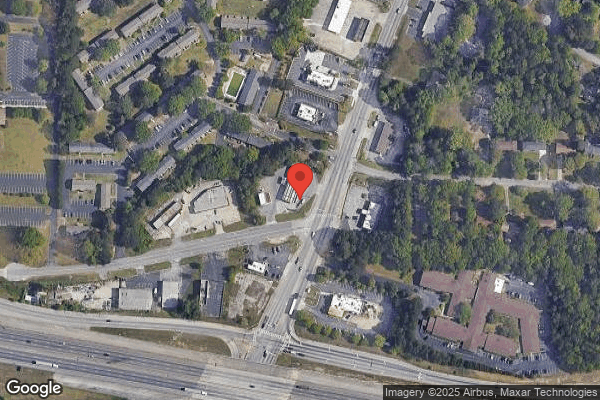
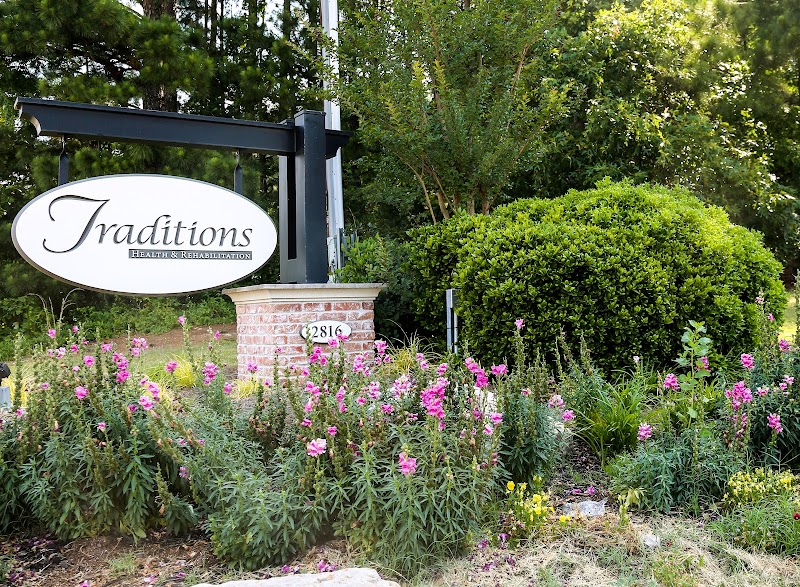
2816 EVANS MILL ROAD, LITHONIA, GA 30058 (770) 482-2961
Non profit - Other 150 Beds CLINICAL SERVICES, INC. Data: November 2025
Trust Grade
75/100
#170 of 353 in GA
Last Inspection: September 2024

Within standard 12-15 month inspection cycle. Federal law requires annual inspections.

Overview

Traditions Health and Rehabilitation in Lithonia, Georgia, has a Trust Grade of B, indicating it's a good choice and generally solid in quality. It ranks #170 out of 353 facilities statewide, placing it in the top half, and #9 out of 18 in DeKalb County, meaning only eight local options are better. However, the facility's trend is concerning as it has worsened, with issues increasing from 1 in 2022 to 8 in 2024. Staffing is a relative strength with a turnover rate of 24%, significantly lower than the Georgia average of 47%, but the overall staffing rating is only 2 out of 5 stars, which is below average. On the positive side, there have been no fines reported, but there have been multiple concerns, including failure to properly store food items and inadequate resolution of resident grievances related to lost personal items, indicating areas needing improvement.

Trust Score
B
75/100
In Georgia
#170/353
Top 48%
Safety Record
Low Risk
No red flags
Inspections
Getting Worse
1 → 8 violations
Staff Stability
✓ Good
24% annual turnover. Excellent stability, 24 points below Georgia's 48% average. Staff who stay learn residents' needs.
Penalties
✓ Good
No fines on record. Clean compliance history, better than most Georgia facilities.
Skilled Nurses
⚠ Watch
Each resident gets only 24 minutes of Registered Nurse (RN) attention daily — below average for Georgia. Fewer RN minutes means fewer trained eyes watching for problems.
Violations
⚠ Watch
11 deficiencies on record. Higher than average. Multiple issues found across inspections.
★★★☆☆
3.0
Overall Rating
★★☆☆☆
2.0
Staff Levels
★★★☆☆
3.0
Care Quality
★★★☆☆
3.0
Inspection Score
Stable
2022: 1 issues
2024: 8 issues

The Good

  • Low Staff Turnover (24%) · Staff stability means consistent care
  • Full Sprinkler Coverage · Fire safety systems throughout facility
  • No fines on record
  • Staff turnover is low (24%)

    24 points below Georgia average of 48%

Facility shows strength in staff retention, fire safety.

The Bad

3-Star Overall Rating

Near Georgia average (2.6)

Meets federal standards, typical of most facilities

Chain: CLINICAL SERVICES, INC.

Part of a multi-facility chain

Ask about local staffing decisions and management

The Ugly 11 deficiencies on record

Sept 2024 4 deficiencies
CONCERN (D) 📢 Someone Reported This

A family member, employee, or ombudsman was alarmed enough to file a formal complaint

Potential for Harm - no one hurt, but risky conditions existed

Deficiency F0554 (Tag F0554)

Could have caused harm · This affected 1 resident

**NOTE- TERMS IN BRACKETS HAVE BEEN EDITED TO PROTECT CONFIDENTIALITY** 2. Review of the Electronic Medical Records (EMR) revealed R43 was admitted to the facility with diagnosis including but not lim...

Read full inspector narrative →
**NOTE- TERMS IN BRACKETS HAVE BEEN EDITED TO PROTECT CONFIDENTIALITY** 2. Review of the Electronic Medical Records (EMR) revealed R43 was admitted to the facility with diagnosis including but not limited to obesity, lower abdominal dermatitis, vaginitis and diabetes mellitus. Review of the Annual MDS dated [DATE] documented in Section C R43 has a BIMS score of 15 which indicated intact cognition. Review of care plan dated 6/21/2024 revealed no focus area for medications to be left at R43's bedside. Review of the Physician Orders revealed there was no order for R43 to have medications left at bedside. Observation and interview on 9/03/2024 at 12:04 pm with R43 in her room revealed there were three medication cups on the bedside table. One cup had a powdery substance, one cup had a white gel substance, and the other cup had a clear gel substance. The resident stated one ointment was for her face, another was for her abdominal fold and the third was for the bottom of her feet since she has diabetic neuropathy, and her feet has tingling sensation. She stated the nurse leaves the ointments on the table for the CNAs to put them on after she has her bath. Interview on 9/4/2024 at 1:18 pm with CNA CC revealed, the nurse gives the ointments to the CNAs to apply on the resident. Interview on 9/4/2024 at 2:01pm with Registered Nurse Supervisor (RNS) DD stated medications of any sort should not be left unattended in the residents' rooms. She stated the nurses should not be leaving ointments or powders in the resident's room for the CNA to administer. She stated her expectations were for the nurses to administer the resident's medications themselves and not leave medications at the resident's bedside unattended. Interview on 9/4/2024 at 2:23 pm with CNA EE, she stated she was on duty on 9/3/2024 and was assigned to R43. She stated she saw the three medication cups on the table beside the resident's bed. She stated medications are left at R43's bedside sometimes at least twice per week and with different nurses. She stated the nurses usually give the ointments to the CNAs to apply on the resident or they leave it at the R43's bedside. Interview on 9/4/2024 at 2:28 pm with DON, she stated that medications should not be left at the resident's bedside. She stated her expectations were for nurses not to leave medications at the resident's bedside and if they cannot administer the medications themselves, they should keep them instead of leaving the medications at the resident's bedside. Based on observations, resident and staff interviews, and review of the facility's policy titled, Bedside Storage of Medications, the facility failed to assess one of eight residents (R) (R88) for self-administration of medication and failed to maintain medication in a secure location for one of three residents (R43). The deficient practice had the potential to allow unauthorized access to unsecured medications to residents and visitors at the facility. Findings Include: 1. A review of the undated facility policy titled, Bedside Storage of Medications revealed under section titled Intent, To support self-administration of medication by appropriate patients within the nursing center while facilitating medication security. Under section titled GUIDELINE revealed, The Pharmacy supports bedside medication storage for patients who are able to self-administer medications upon the written order of the prescriber and when it is deemed appropriate in the judgment of the nursing center's interdisciplinary patient assessment team. Under section titled PROCEDURE, revealed, A medication-specific order is required from the prescriber for bedside medication storage (e.g., add May keep at bedside to each applicable medication order). Bedside medications may be labeled May keep at bedside by the provider pharmacy upon request. An assessment for self-administration of medications is completed and kept in patients care plan in the medical records.The manner of storage must prevent access by other patients. Lockable drawers or cabinets are REQUIRED. A review of clinical record for R88 revealed diagnoses including, but not limited to, Alzheimer's disease with early onset and Dementia. A review of the Annual Minimum Data Set (MDS) dated [DATE] revealed section C (Cognitive Patterns) documented a Brief Interview for Mental Status (BIMS) of 09, indicating moderate cognitive impairment. A review of the care plan for R88 dated 7/1/2024 revealed a focus area of risk for communication difficulties related to diagnosis of dementia and Alzheimer's. Further review of care plan revealed a focus area of risk for cognitive deficit related to dementia and Alzheimer's. Observation on 9/3/2024 at 1:41 pm revealed R88 bed side table contained the following medications: Tiger Balm; Pain Relieving Ointment 0.63 ounces (oz.) and Asper creme Lidocaine (2 in 1 pain relief + moisturization) 4 oz. An interview on 9/3/2024 at 1:41 pm with R88 revealed resident stated he has a bad knee, and he puts pain reliving ointment for the pain and that the facility was aware he had the pain-relieving ointment. An interview on 9/4/2024 at 10:55 am with Certified Nursing Assistant (CNA) EE revealed she was familiar with R88 care, but she was not aware if R88 is supposed to be self-administering pain relieving ointment. An interview on 9/4/2024 at 11:03 am with Licensed Practical Nurse (LPN) BB revealed that if residents are self-administering medications they are supposed to be care planned and will need a physicians' order. LPN BB was not aware that R88 was self-administering pain-relieving ointment, and states she checks in on residents as frequent as she can, but never realized he had ointments on his bedside table. LPN BB stated the possible outcome of residents self-administering medication without physicians' orders or proper care planning is that residents can over medicate. An interview on 9/4/2024 at 11:16 am with Assistant Director of Nursing (ADON) revealed that residents who self-administer medications are given an assessment and residents must demonstrate that they are able to self-administer medication on their own. ADON further stated the Nurse Practitioner will then write an order and fill out an inform care consent form. She further states depending on the medication it is kept in medication cart and sometimes it is kept in the resident's room, locked away in a safe box. ADON revealed she visits residents every day and was not aware that R88 had pain relieving ointment on his bedside table. ADON further revealed it is her expectations that all CNA's should be aware of residents who self-administer medication and if they see medication in a resident room, they should inform a nurse. ADON revealed that a possible negative outcome would be medication interactions.
CONCERN (D) 📢 Someone Reported This

A family member, employee, or ombudsman was alarmed enough to file a formal complaint

Potential for Harm - no one hurt, but risky conditions existed

Deficiency F0645 (Tag F0645)

Could have caused harm · This affected 1 resident

**NOTE- TERMS IN BRACKETS HAVE BEEN EDITED TO PROTECT CONFIDENTIALITY** Based on staff and resident interviews, record reviews, and review of the facility's policy titled, Best Practice for PASRR, the...

Read full inspector narrative →
**NOTE- TERMS IN BRACKETS HAVE BEEN EDITED TO PROTECT CONFIDENTIALITY** Based on staff and resident interviews, record reviews, and review of the facility's policy titled, Best Practice for PASRR, the facility failed to screen one of five residents (R) R43 for Pre-admission Screening and Record Review (PASRR) level two. The deficient practice had the potential to cause R43 not to receive care and services in the most integrated setting appropriate to her needs. Findings include: Review of the facility's undated policy titled, Best Practice for PASRR documented There are two areas a person can be a PASRR patient: Significant Mental Illness (SMI) or Intellectual Disability/Developmental Disability (ID/DD) To be included in the PASARR population, a patient must have a SMI, or an ID/DD as determined on their level two assessment. Review of the Electronic Medical Record (EMR) revealed R43 was admitted to the facility with diagnosis that included but not limited to paranoid schizophrenia. Review of the Annual Minimum Data Set (MDS) assessment dated [DATE] documented in Section C (Cognitive Patterns) R43 had a Brief Interview for Mental Status (BIMS) score of 15 which indicated little to no cognitive impairment, and Section N (Medication) reported, takes anti-psychotropic and anti-depressant medications. Review of care plan dated 6/21/2024 revealed no focus area for R43 screening for PASARR level two. The care plan included but not limited to, Focus: Paranoid schizophrenia, Trazodone (3/29/2024) Intervention: CARENOW services, labs as ordered, monitor closely for worsening of depression and/or suicidal behavior or thinking, especially during initiation of therapy and during any change in dosage. Focus: Resident requires psychotropic medication for dx of paranoid Schizophrenia (6/21/2024) Has period of anxiety, with risk for adverse reactions relating to medication Lithium. Intervention: Administer medication as ordered. Focus: Behavior easily annoyed/angered (6/18/2023). Patient will demonstrate effective coping skills through the review period. Intervention: Encourage patient to verbalize feelings and provide reassurance as needed. Review of Physician Orders dated 8/18/2023 revealed orders which included, Lithium carbonate 300 mg (milligram) capsule (Lithium Carbonate) for diagnosis (Dx): bipolar disorder. Interview on 9/4/2024 at 1:04 pm revealed R43 was diagnosed with bipolar 10 years ago. She revealed being previously diagnosed with manic depressive disorder, but her diagnosis was changed to bipolar. R43 revealed she takes Lithium medication for the bipolar disorder. Interview on 9/4/2024 at 2:01 pm with the Registered Nurse (RN) Supervisor RN DD revealed residents are screened prior to admission for psychiatric conditions and the Social Workers refer the residents to CARENOW for further evaluation. She revealed if a resident had behaviors the Nurse Practitioner (NP) or Medical Doctor (MD) is informed, and they will assess the resident and make the referral for further assessment. She revealed R43 had no behaviors, and the NP was not informed of any behavior for her to make a referral. Interview on 9/4/2024 at 2:28 pm the Director of Nursing (DON) revealed residents are admitted to the facility with a PASRR level one and if they have a major mental disorder they are referred for PASRR level two. If the resident is triggered for further evaluation, the Social Services Director (SSD) or his assistant will send referral information to GAMMIS which is the government service that determines the PASRR level services. Interview on 9/4/2024 at 5:22 pm with the SSD revealed residents come to the facility at PASRR level one but if they have a psychiatric disorder, they are PASARR level two and are referred for specialized services. He stated referrals are sent to GAMMIS by the Social Services Assistant. The SSD confirmed R43 was not referred for PASRR two. The SSD revealed that whatever length of time the resident is in the facility, if there were no behaviors, there was no need for PASRR level two screening.
CONCERN (D) 📢 Someone Reported This

A family member, employee, or ombudsman was alarmed enough to file a formal complaint

Potential for Harm - no one hurt, but risky conditions existed

Infection Control (Tag F0880)

Could have caused harm · This affected 1 resident

Based on observations, staff interviews, and review of the policy titled, Cleaning of Shared Equipment, the facility failed to clean and disinfect a shared blood pressure cuff before and after use bet...

Read full inspector narrative →
Based on observations, staff interviews, and review of the policy titled, Cleaning of Shared Equipment, the facility failed to clean and disinfect a shared blood pressure cuff before and after use between residents. The deficient practice had the potential to increase the probability of cross transmission of bacteria that could cause infections for residents that the equipment was utilized for. Findings: Review of the facility policy titled, Cleaning of Shared Equipment with a review date of 12/29/2023, revealed that the purpose was to decrease the risk of cross transmission of bacteria that could colonize or infected patients. It was revealed that medical equipment which is shared between patients shall be cleaned with soap and water or other appropriate cleaner and then disinfected prior to and again after its use on another patient. Sharded equipment include but are not limited to blood pressure cuffs and pulse oximeters. An observation on 9/4/2024 at 9:20 am revealed that Certified Nurses Aid (CNA) JJ, removed an electronic blood pressure cuff out of a room and went across the room, into another room. In the room, she took the vital signs, which include blood pressure, heart rate and pulse oximetry, of one of the residents in the room. While in that room, she was observed, going to the roommate and taking the vital signs of the other resident in the room. Observation of CNA JJ, on 9/4/2024 at 9:26 am, revealed CNA left the room with the electronic blood pressure machine and cuff. At that time, she was asked by this surveyor, when does the cuff get cleaned, and she stated, they are supposed to be cleaned in between residents. She then stated that she did clean it. She was then asked where the cleaning and disinfected wipes were that are used, and she stated that they are found and kept at the nurse's station. She then stated that she had completed all her vitals and was going to clean it now and headed to the nurse's station. At the nurse's station, she was observed looking for the disinfecting wipes, and then asked someone where they were kept, so that she could clean and disinfect them. She then was observed going to a medication cart, to remove a purple topped disinfecting wipe. An interview on 9/4/2024 at 11:25am with the Assistant Director of Nurses (ADON) revealed that blood pressure cuffs and other shared equipment is to be cleaned before and after use and in between each resident. CNA JJ, revealed at 9/5/2024 at 2:55 pm, that she was nervous, and should not have told me that she had cleaned and disinfected the blood pressure cuff in between use, as observed the shift prior.
CONCERN (F)

Potential for Harm - no one hurt, but risky conditions existed

Food Safety (Tag F0812)

Could have caused harm · This affected most or all residents

Based on observation, staff interview, and review of the facility's policies titled, Skilled Nursing Services Storage Areas and Skilled Nursing Services Cleaning and Sanitizing, the facility failed to...

Read full inspector narrative →
Based on observation, staff interview, and review of the facility's policies titled, Skilled Nursing Services Storage Areas and Skilled Nursing Services Cleaning and Sanitizing, the facility failed to ensure opened food items in the dry storage and the walk-in refrigerator area were securely wrapped, labeled, dated, and discarded by the expiration date. In addition, the facility failed to maintain sanitary cleanliness of the ice maker and prevent wet nesting by ensuring clean pots, pans and baking trays were properly stacked and stored to dry. The facility census was 147 residents. Findings Include: Review of facility's policy titled, Skilled Nursing Services Storage Areas dated 12/29/2023 under the section titled Guidelines revealed, items should be covered, sealed, labeled, and dated appropriately. Under the subsection titled, Ice machines, revealed, ice chest should be cleaned on a routine basis and as needed. Review of facility's policy titled Skilled Nursing Services Cleaning and Sanitizing, dated 12/29/2023 under the section titled Guidelines revealed, All small ware equipment should be stored in self-draining position that allows it to air dry. Observation on 9/3/2024 at 10:00 am with the Dietary Manager (DM) revealed in the dry food storage pantry one 46 fluid (fl) ounces (oz) thickened orange juice dated 4/18/2024, four vanilla 32 fl oz nutritional drink dated 5/22/2024, and 1 pound (lb) traditional stuffing mix dated 3/22/2024 were all expired. The DM confirmed it was everyone responsibility to check for expiration dates, past use and/or out of date foods. The DM discarded expired items and revealed he had new staff and was still conducting in-services on storage, labeling, and dates. The DM revealed, he moved the older items to the front. Further observation revealed, the walk-in refrigerator had four boxes of 100 count 1 oz single serve packets of sour cream with expiration date of 9/2/2024, one 5 lb. cottage cheese with expiration date of 8/5/2024, two 16 lb cream cheese icing with expiration date of 7/10/2024, one cabbage and carrot mix with expiration date of 8/31/2024. One clear wrapped head of lettuce was observed with no label or date. The DM revealed they use open food items only for three days then discard. The DM confirmed all dietary staff clean the ice machine daily, weekly, as needed, and the maintenance contact provider would deep clean the ice machine quarterly or as needed. Review of the work order revealed the last service date the ice machine was deep cleaned was on 8/29/2024. The DM confirmed the observation of the reddish- black substance on the inner/outer side of the white casing and on the white paper towel. Observation on 9/4/2024 at 10:05 am with the DM confirmed the sanitizing process was being performed by rewashing dishes through the low temperature dishwasher. During this time, wet nesting was observed. Interview on 9/4/2024 at 3:00 pm with the Registered Dietitian (RD) revealed, the kitchen audit consists of equipment base, label/dating, and cleanliness once a month. The RD confirmed she did not physically label, and date food items and that she conducted observation and generate monthly reports. The RD emphasized when the truck come on Tuesday or Friday, she informs the staff to label and date food items. The RD revealed she review opened, received, and used by dates and if she found anything expired, she would pull the items and notify staff. The RD revealed that she would emphasize the three day rule for open foods to staff if its passed the date to be thrown out. The RD revealed she put on last month report for the ice machine to be cleaned. The RD confirmed staff was responsible for spot cleaning ice machine daily. Interview and Observation on 9/4/2024 at 3:10 pm confirmed wet nesting with DM and RD. The DM revealed he would complete an in-service today and ongoing for new staff. The DM shared he would ensure the dietary aid spread pots out to dry and rearrange another drying rack to open more space. The DM revealed he was working with maintenance in utilizing limited space and racks.
Apr 2024 4 deficiencies
CONCERN (D) 📢 Someone Reported This

A family member, employee, or ombudsman was alarmed enough to file a formal complaint

Potential for Harm - no one hurt, but risky conditions existed

Deficiency F0561 (Tag F0561)

Could have caused harm · This affected 1 resident

**NOTE- TERMS IN BRACKETS HAVE BEEN EDITED TO PROTECT CONFIDENTIALITY** Based on observation, record review, resident and staff interviews, the facility failed to offer one of 13 sampled residents (R)...

Read full inspector narrative →
**NOTE- TERMS IN BRACKETS HAVE BEEN EDITED TO PROTECT CONFIDENTIALITY** Based on observation, record review, resident and staff interviews, the facility failed to offer one of 13 sampled residents (R) (R2) the choice for showers and to facilitate scheduled shower times that would accommodate the needs of the resident. This failure had the potential to affect the resident's comfort, body image and increase the risk for infections. Findings include: Review of R2's face sheet revealed she admitted with the following diagnoses that included bilateral amputee, end stage renal disease on hemodialysis. Review R2's admission Minimum Data Set (MDS) dated [DATE] revealed Section C-Cognitive Pattern, a Brief Interview of Mental Status (BIMS) score of 13 which indicated she was cognitively intact; Section F-Preferences for Customary Routine and Activities indicated it was somewhat important to her to choose what clothes to wear and choose between a tub bath, shower, bed bath or sponge bath. Section GG-Functional Abilities and Goals revealed she was dependent on ADL care needs; Section H-Bladder and Bowel indicated no toileting program, frequent urinary and bowel incontinence. Review of the facility's shower sheets revealed that R2's shower days were scheduled for Mondays and Thursdays. Further review of the facility provided shower sheets dated 3/25/2024 revealed she received a bed bath; on 3/28/2024 she refused shower, and on 4/1/2024 refused shower times three and a bed bath was given; R2 stated she was tired after being dialyzed. No other shower sheets were provided. Interview on 3/25/2024 at 3:36 pm with Dialysis Social Worker (DSW) NNN revealed R2 was scheduled dialysis on Monday, Wednesday, and Saturdays. DSW NNN revealed that she was at the clinic once a week and in January and it was reported to her that the resident arrived for treatment in the same clothing, she had on from the previous Friday to the following Monday session. DSW NNN reported, R2 smelled like feces and her hair appeared matted and greasy at that visit. DSW NNN reported that the resident told her she had only one shower since she had been admitted to the facility. Observation and Interview on 3/25/2024 at 4:35vpm revealed R2 returned from dialysis and staff was providing her a bed bath. R2 revealed it was her shower day, but staff did not offer her a shower and she was unsure why. She verified that she only had one shower since she had been admitted in November 2023 and had been given bed/sponge baths instead. Interview on 3/25/2024 at 4:35pm with CNA AAA, who was providing R2 a bed bath revealed that she was not sure if the resident should be getting a shower instead of bed bath. CNA AAA reported she did not offer R2 a shower and had not ever given her a shower. R2 revealed that she was not aware that she could have a shower but would like to have a shower. R2 reported she was never offered a shower since she had been at the facility. CNA AAA who was at R2's bedside then proceeded to offer the resident a shower. Interview on 3/26/2024 at 12:02 pm with CNA AAA revealed that R2 had never been given a shower and did not recall offering her shower until yesterday although resident had been on the shower schedule for Monday and Wednesday. CNA AAA reported she had not offered her a shower and gave her sponge baths because she thought the resident would not like showers because of her foot and legs not being there. CNA AAA revealed she agreed that the resident should still be offered a shower. Interview on 3/26/2024 at 12:15 pm with CNA ZZ, revealed that she had been assigned to R2 often but had not offered R2 a shower. Interview on 4/2/2024 at 2:40 pm with R2 revealed that she finally got a shower recently and stated that it felt so good to have the water running on me. She revealed that she wasn't aware that she could have a shower. Interview on 4/2/2024 at 5:45 pm with the Director of Nursing (DON) revealed that R2 was care planned for showers on Wednesday and Saturday evenings. DON confirmed that R2 was not on the Daily Showers list although care planned for showers twice per week. DON was not sure why the resident had not been given a shower and confirmed there was no documentation of refusals or that resident had been given a shower. She further revealed that the resident shower days were on her dialysis days which did not accommodate the residents' needs. Cross Reference F656
CONCERN (D) 📢 Someone Reported This

A family member, employee, or ombudsman was alarmed enough to file a formal complaint

Potential for Harm - no one hurt, but risky conditions existed

Comprehensive Care Plan (Tag F0656)

Could have caused harm · This affected 1 resident

Based on staff and resident interviews, record review and review of the facility's policy titled, Activity of Daily living (ADL) Plan of Care, the facility failed to develop a person-centered care pla...

Read full inspector narrative →
Based on staff and resident interviews, record review and review of the facility's policy titled, Activity of Daily living (ADL) Plan of Care, the facility failed to develop a person-centered care plan for one of 13 sampled residents (R) (R2) related to bath/shower preferences. Findings Include: Review of facility policy for ADL Plan of Care dated 12/29/2023 Intent statement revealed, Develop and communicate patient needs for assistance with an ADLs. Record review of R2's face sheet revealed diagnoses that included bilateral amputee, end stage renal disease on hemodialysis. Review of the admission Minimum Data Set (MDS) for R2's dated 12/4/2023 revealed Section C-Cognitive Pattern, a Brief Interview of Mental Status (BIMS) score of 13 which indicated she was cognitively intact; Section F-Preferences for Customary Routine and Activities indicated it was somewhat important to her to choose what clothes to wear and choose between a tub bath, shower, bed bath or sponge bath. Section GG-Functional Abilities and Goals revealed she was dependent on ADL care needs. Review of facility's ADL Care Plans revealed that the CNA documented the resident's needs on the ADL care plan; however, the ADL care failed to include R2's shower and bathing preferences. Review of R2's care plans dated 3/13/2024 revealed there were no care area/problem, goals or interventions related to showers and bathing preferences. Observation and Interview on 3/25/2024 at 4:35pm revealed R2 returned from dialysis and staff was providing her a bed bath. R2 revealed it was her shower day, but staff did not offer her a shower and she was unsure why. She verified that she only had one shower since she had been admitted in November 2023 and had been given bed/sponge baths instead. Interview on 3/25/2024 at 11:16 pm with the Director of Nursing (DON) revealed that ADL care needs are documented on the resident's ADL care plans. Interview on 3/25/2024 at 4:35 pm with CNA AAA, who was providing R2 a bed bath revealed that she was not sure if the resident should be getting a shower instead of bed bath. CNA AAA reported she did not offer R2 a shower and had not ever given her a shower. R2 revealed that she was not aware that she could have a shower but would like to have a shower. R2 reported she was never offered a shower since she had been at the facility. Interview on 4/2/2024 at 5:45 pm with the DON revealed that R2 was care planned for showers on Wednesday and Saturday evenings. DON confirmed that R2 was not on the Daily Showers list although care planned for showers twice per week. Cross Reference F561
CONCERN (D) 📢 Someone Reported This

A family member, employee, or ombudsman was alarmed enough to file a formal complaint

Potential for Harm - no one hurt, but risky conditions existed

Room Equipment (Tag F0908)

Could have caused harm · This affected 1 resident

**NOTE- TERMS IN BRACKETS HAVE BEEN EDITED TO PROTECT CONFIDENTIALITY** Based on observations, interviews, and record review, the facility failed to have operating mechanical lifts readily available f...

Read full inspector narrative →
**NOTE- TERMS IN BRACKETS HAVE BEEN EDITED TO PROTECT CONFIDENTIALITY** Based on observations, interviews, and record review, the facility failed to have operating mechanical lifts readily available for use to provide care for one of 13 sampled residents (R) (R13) reviewed. Findings include: Review of R13's Annual Minimum Data Set, dated [DATE] revealed a Brief Interview of Mental Status (BIMS) score of nine which indicated moderate cognitive impairment, and dependent for all Activities of Daily Living (ADL) needs with use of a mechanical lift; diagnoses included but not limited to arthritis, Alzheimer's Disease, Cerebrovascular Accident, dementia and hemiplegia or hemiparesis. Observation on 3/20/2024 at 9:40 am revealed multiple items on both sides of hallways on all five halls consisting of mechanical lifts not in use at that time with most of them not plugged into the power socket to keep them charged and readily available for use. Observation and Interview on 3/27/2024 at 12:30 pm on hallway B revealed one mechanical lift near R13's room, who was sitting in his wheelchair in his room and called out to the surveyor asking to be put back in his bed. Interview with R13 revealed his butt was hurting him, and he needed to lay down. He stated he had been waiting long enough to watch a show. This surveyor informed Certified Nurse Assistant CNA (BBB) that R13 needed help. CNA BBB responded that the resident would need a mechanical lift and the one near his room was not charged for use and therefore resident would need to wait. She also revealed that there were 13 working mechanical lifts. Interview on 3/27/2024 at 3:45 pm with the Director of Nursing (DON) revealed that there was an issue with the mechanical lifts, but the issue should be resolved because the facility bought new mechanical lifts and they had approval to purchase two more mechanical lifts. She further revealed that an in service was completed and that if a resident needed use of a mechanical lift, staff should get another working lift to assist the resident. DON further revealed that all mechanical lifts should always be charged for immediate use.
CONCERN (E) 📢 Someone Reported This

A family member, employee, or ombudsman was alarmed enough to file a formal complaint

Potential for Harm - no one hurt, but risky conditions existed

Grievances (Tag F0585)

Could have caused harm · This affected multiple residents

Based on interviews, record review and review of the facility's policies Skilled Nursing Services Grievance/Concern Guidelines for Patients and Missing Items, the facility failed to appropriately reso...

Read full inspector narrative →
Based on interviews, record review and review of the facility's policies Skilled Nursing Services Grievance/Concern Guidelines for Patients and Missing Items, the facility failed to appropriately resolve grievances and provide a reasonable expected time frame for completing the review of the grievances related to lost personal items for three of 13 sampled residents (R) (R1, R2, and R8). Findings include: Review of facility's policy titled, Skilled Nursing Services Grievance/Concern Guidelines for Patients dated 12/29/2023, under the Policy Statement revealed, It is also the intent of the center to support each patient's right to voice concerns and to assure that after receiving a concern/grievance, we will actively seek a resolution and keep the patient (or representative) apprised of our progress toward resolution . Under the section titled, Guidelines revealed, Patients will be provided with reasonable expected time frames for completion. lf the concern is not resolved within three business days, the administrator /designee should give a written response to the complainant. Review of the facility's policy titled, Missing Items dated 12/29/2023 under the section Guideline revealed, A complaint of missing items will be investigated through an established procedure. Under the section titled, Additional Instructions revealed, Department staff should actively search for the missing item as soon as it is identified as missing .Within 24 hours or the next business day, if the item is not located the Social/Patient Services Director (or designee) will meet or talk with the person making the complaint to get any further applicable information. The Social/Patient Services Director should be responsible for adding items that have been lost or reported stolen to the tracking system. Results of the investigation should be documented in the investigation portion of the tracking system. 1. Review of facilities grievance logs one year from March 2023 to March 2024 revealed only one grievance form from R1's family, who had multiple complaints and allegations. Interview on 3/21/2024 at 2:33 pm with R1's family revealed that resident had multiple clothing items that went missing and were never found, or reimbursed back in April 2023 when the facility did her laundry. Interview on 3/25/2024 at 6:00 pm with Social Service Specialist HH regarding grievances revealed she was not sure why only one grievance dated 12/19/2023 was documented for R1 (which was not related to lost items) that the family reported back in April 2023. Interview on 4/2/2024 at 4:00 pm with R1 family revealed that the family had bought more clothes for the resident and that the family would try to lock them up in her room because they did not trust that the facility would keep them safe. 2. Review of a grievance dated 2/7/2024 filed by R2 for missing dresses, jogging outfits, t-shirt, and a black jacket revealed there was no evidence that a follow up was completed by the social service department until 3/25/2024 during the survey investigation. 3. Review of facility grievance logs revealed a grievance dated 9/28/2022 filed by R8 for missing a large amount of her clothes including half of all her dresses. There was no resolution of these missing items was documented as being resolved. Interview on 3/25/2024 at 12:45 pm with Administrator revealed they did not have a policy or guidelines for laundry services for the residents. She also revealed that the laundry supervisor's last day was March 2024 and that she was actively looking for a new supervisor. She acknowledged that their lost and found process needed improvement. She stated that they needed to work on it and put a better process in place based on timeliness. Interview 3/25/2024 at 1:00 pm with Laundry Staff LLL revealed there was a backup of linen and towels for residents on all halls. She also revealed resident laundry was picked up two times in the mornings and two times in the evening. She reported that when morning laundry was completed, they would return the laundry that afternoon and the evening laundry would be returned the next day. She reported if an item was lost or did not have a label on it, it would be placed on the lost and found rack if no one claimed them. She stated the unclaimed lost and found was kept for an unknown period in a container in the conference room, however she was not sure what happened to them after that. Interview on 3/25/2024 at 1:50 pm with the Administrator revealed that grievances are reported to the social service department and within two to three business days the expectations were to get back with the family for residents who had lost items such as clothing. The Administrator reported the labeling should be done by the family. She reported if the items were not labeled and got lost, they would put them in the lost and found. Interview on 3/25/2024 at 2:40 pm with Social Service Specialist HH revealed that the process for grievances was once a grievance is filed, it would be sent to the proper department about the lost items to investigate the grievance. Social Service Specialist HH stated after the investigation, a follow-up should be done within 14 days.
Jun 2022 1 deficiency
CONCERN (D)

Potential for Harm - no one hurt, but risky conditions existed

Deficiency F0558 (Tag F0558)

Could have caused harm · This affected 1 resident

**NOTE- TERMS IN BRACKETS HAVE BEEN EDITED TO PROTECT CONFIDENTIALITY** Based on record review, observations, and interviews, the facility failed to ensure that the call light was kept within reach fo...

Read full inspector narrative →
**NOTE- TERMS IN BRACKETS HAVE BEEN EDITED TO PROTECT CONFIDENTIALITY** Based on record review, observations, and interviews, the facility failed to ensure that the call light was kept within reach for one resident (R) (R #114), of 23 sampled residents. Findings include: A policy related to call light use was requested from the facility, but the facility did not have a policy. A review of R#114's clinical record revealed the resident was admitted to the facility on [DATE] with diagnoses which included hemiplegia and hemiparesis following cerebral infarction affecting right dominant side and muscle weakness. The admission Minimum Data Set (MDS), dated [DATE], revealed the resident's Brief Interview for Mental Status (BIMS) score was 3 out of 15, which indicated the resident had severe cognitive impairment. The resident required extensive assistance by two staff for bed mobility. The resident was totally dependent on two staff for transfers, dressing, and toilet use. The resident required extensive assistance by one staff member for personal hygiene. The care plan dated 5/25/22, revealed the resident was at risk for falls related to a history of falls, and impaired mobility. The interventions included to keep the call light and most frequently used personal items within reach and to remind the patient to call when needing assistance. Observation on 6/7/22 at 12:25 p.m., the call light in R#114's room was observed to be pinned to the bedsheet on the right side of the bed. R#114 was unable to reach the call light because he could not use his right hand. He attempted to reach the call light with his left hand but was unable to reach it. Observation on 6/8/22 at 3:34 p.m., R#114 was in the room, sitting up in bed watching television. The call light was clipped to the sheet on the right side of the bed. R#114 was not able to reach the call light when he attempted. Observation and concurrent interview on 6/9/22 at 8:52 a.m., R#114 was in his room, sitting in bed, and finishing up breakfast. The call light was clipped to the sheet on the upper right side of the bed. He said he could not see or reach the call light. Interview on 6/9/22 at 8:53 a.m., Certified Nurse Aide (CNA) NN stated the call light should be in reach of the residents so they could let staff know if they needed something. She explained if a resident was paralyzed on the left side, then the call light should be on the right side or if the resident was paralyzed on the right side the call light should be on the left side. CNA NN said R#114 was paralyzed on the right side and the call light should be on left side of the resident. CNA NN confirmed the call light was clipped to the sheet on the upper right side of the bed. R#114 told the CNA he could not see the call light or reach it. CNA NN repositioned the resident and placed the call light on the bedside table on the left side of the bed within reach of the resident. Interview on 6/9/22 at 9:06 a.m., Licensed Practical Nurse (LPN) OO said the call lights should be within reach of all residents to access easily. She said the call light was the way for residents to communicate their needs. LPN OO said if residents were weak on one side, then the call light needed to be on the side the resident could use. She said most residents had the call light clipped on the bedsheet or near their hand. LPN OO explained because R#114 had a stroke with right-side weakness, the call light should be on the left side, near the residents' hand. She said the resident could not use the call light if it was on the right side. LPN OO said it was important for the call light to be near the resident in case they needed something and added the resident had to be able to reach it. She stated the resident could be hurt or something and would not be able to get her attention without it in reach. Interview on 6/10/22 at 1:09 p.m., with the Director of Nursing (DON) and Administrator, the DON stated the call lights should be accessible to the residents. She stated if they were in bed then the call light needed to be on the bed, and if the residents were in the wheelchair the call light needed to be within reach. The DON stated it was important to have the call lights within reach in case the residents needed anything, and the call light was used to alert the staff. The DON stated a possible negative outcome could be in the event of an emergency the resident would not have access to a call light. The Administrator stated the call light must be within reach as well as knowing the residents' barriers and strengths. She also stated if the call light was not in reach, it could affect the resident's quality of life and care, and not having the call light within reach could be detrimental to the resident's wellbeing.
Aug 2019 2 deficiencies
CONCERN (D)

Potential for Harm - no one hurt, but risky conditions existed

Comprehensive Care Plan (Tag F0656)

Could have caused harm · This affected 1 resident

**NOTE- TERMS IN BRACKETS HAVE BEEN EDITED TO PROTECT CONFIDENTIALITY** 2. Resident (R)#65 was a [AGE] year-old tracheostomy/ventilator-dependent (trach/vent) male admitted to the facility on [DATE] w...

Read full inspector narrative →
**NOTE- TERMS IN BRACKETS HAVE BEEN EDITED TO PROTECT CONFIDENTIALITY** 2. Resident (R)#65 was a [AGE] year-old tracheostomy/ventilator-dependent (trach/vent) male admitted to the facility on [DATE] with diagnoses to include chronic respiratory failure, muscular dystrophy, right hand contracture with pain, anxiety disorder, major depressive disorder, and gastroesophageal reflux disease. The advanced directives documented full code status. The Annual Minimum Data Set assessment dated [DATE] documented the Brief Interview for Mental Status (BIMS) score as 13, indicating he was cognitively intact. The functional status was documented as total dependent/two-person assist for bed mobility, dressing, toilet use, personal hygiene, and bathing. The Activities of Daily Living (ADL) plan of care documented R#65's self-performance as Total Dependence requiring the support of two people for bed mobility, dressing, toilet use, personal hygiene, and bathing. During an interview with R#65 in his room on 8/12/19 at 2:34 p.m., he stated in the last month or so, only one Certified Nursing Assistant (CNA) has assisted him with his routine ADLs, particularly on the night shift (11 p.m.-7:00 p.m.) but he feels it is faster and safer to use two caregivers consistently due to his tracheostomy and his inability to assist his caregivers. He stated he gets very anxious when there's only one caregiver. He stated the one-person assist was not the care he was used to and would like to go back to routinely using two caregivers to support him. Review of the clinical record for ADLs from 6/1/19 through 8/11/19 documented ADL tasks completed by one CNA for identified tasks assessed for two-person assist on the following dates: 1. Bed Mobility: 6/9/19 (2:46 a.m.), 6/14/19 (1:51 a.m.), 6/23/19 (3:24 a.m.), 6/25/19 (6:32 a.m.), 6/28/19 (1:47 a.m.), 7/6/19 (1:13 a.m.), 7/18/19 (6:26 a.m.), 7/22/19 (9:55 p.m.), 7/28/19 (12:38 p.m.), 7/31/19 (6:36 a.m.), 8/2/19 (3:15 a.m.), 8/3/19 (1:04 a.m.), 8/4/19 (3:28 a.m.), 8/5/19 (3:34 a.m.), 8/7/19 (7:00 a.m.), 8/8/19 (4:10 a.m.), 8/9/19 (1:59 a.m.) 2. Dressing: 6/8/19 (4:37 a.m.), 6/26/19 (8:13 p.m.), 7/22/19 (9:56 p.m.), 7/28/19 (12:38 p.m.) 3. Personal Hygiene: 6/4/19 (8:40 p.m.), 6/8/19 (4:37 p.m.), 6/9/19 (2:46 p.m.), 6/10/19 (1:26 p.m.), 6/14/19 (1:51 a.m.), 6/15/19 (8:56 p.m.), 6/16/19 (7:42 p.m.), 6/17/19 (12:22 a.m.), 6/18/19 (12:15 p.m., 7:26 p.m.), 6/19/19 (12:47 p.m.), 6/20/19 (12:16 p.m.), 6/23/19 (3:24 a.m.), 6/25/19 (6:34 a.m.), 6/26/19 (8:13 p.m.), 7/1/19 (5:43 p.m.), 7/1/19 (1:39 p.m.), 7/5/19 (2:47 p.m.), 7/6/19 (1:13 a.m.), 7/18/19 (6:26 a.m.), 7/22/19 (9:59 p.m.), 7/28/19 (12:38 p.m.), 7/31/19 (6:36 a.m.), 8/2/19 (3:15 a.m.), 8/3/19 (1:03 a.m.), 8/4/19 (3:28 a.m.), 8/5/19 (3:34 a.m.), 8/7/19 (11:40 p.m.), 8/8/19 (4:10 a.m.), 8/9/19 (1:57 a.m.), 8/10/19 (11:09 p.m.) 4. Toilet-bladder: 6/3/19 (5:27 a.m.), 6/8/19 (4:37 a.m.), 6/9/19 (2:46 a.m.), 6/14/19 (1:51 a.m.), 6/17/19 (12:22 p.m.), 6/22/19 (1:07 a.m.), 6/23/19 (3:24 a.m.), 6/25/19 (6:30 a.m.), 6/26/19 (5:17 a.m., 8:12 p.m.), 6/28/19 (1:47 a.m.), 7/1/19 (5:42 a.m.), 7/6/19 (1:13 a.m.), 7/7/19 (4:02 a.m.), 7/18/19 (6:25 a.m.) 5. Toilet-bowel: 6/1/19 (6:46 a.m.), 7/14/19 (11:40 a.m.) During an interview with the Ventilator Unit Manager on 8/15/19 at 3:15 p.m., she stated she educates and inservices respiratory therapists (RT), nurses and CNAs on hire, quarterly, and as needed to always use two-person assist when moving a trach/vent resident to prevent accidental dislodging of the trach tube. She stated she has observed staff nurses assisting and supporting CNAs in the vent unit for resident safety and customer service. She stated two-person assist for trach/vent residents was clinical standard as well as the facility's and the ventilator contractor's policy for trach/vent residents. During an interview on 8/15/19 at 3:28 p.m. with CNA CC, she stated had no problem getting help to assist her with a trach/vent resident. She stated she was trained to use two-person assist for ADLs with a trach/vent resident. She could offer no explanation for why she only documented one-person assist on some of the shifts she worked with R#65 except she probably couldn't get anyone to assist her at those times. She stated the vent unit usually schedules two CNAs to cover unless someone calls out or the vent unit census is low. She stated she did her best to keep R#65 safe in the process but, in the future, she would be sure to wait for another CNA or nurse to assist with ADLs for the trach/vent residents. During an interview on 8/15/19 at 3:40 p.m. with CNA DD, she stated she was trained to use two-person assist for all total-dependent, trach/vent residents. She stated she understood the danger of the trach tube dislodging and was careful to get help when moving R#65. She stated usually there is enough staff on the night shift to easily get help when she needs it. During an interview with Licensed Practical Nurse (LPN) EE on 8/15/19 at 3:50 p.m., she stated she was trained to follow the ADL care plan which calls for two-person assist for all ADLs for R#65. She stated staffing was adequate on night shift to provide appropriate care for the vent unit. During an interview with LPN FF on 8/15/19 at 4:05 p.m., she stated she always gets help when she needs to move a trach/vent resident. She stated there are enough CNAs on night shift to get help when they need it to care for and protect her residents. She stated she was educated about care for trach/vent residents when hired but inservices go on all the time. In an interview with the Staff Development Coordinator on 8/15/19 at 4:15 p.m., she stated she does not specifically educate staff for the vent unit but does provide support training after the RT manager does the orientation and ongoing training. In an interview with the Director of Nurses (DON) on 8/15/19 at 4:30 p.m., she stated she was not aware of individual CNAs performing ADL care on R#65 or any other trach/vent resident with only one-person assist. She stated she expected all clinical staff to follow the ADL Plan of Care at all times, which is available on electronic tablets that CNAs document in. In an interview with the Corporate Nurse Consultant on 8/15/19 at 4:40 p.m., she stated she expected the facility staff to follow the ADL POC for all residents and understood the significance of keeping R#65 and other residents safe and free from anxiety about their safety. She stated she would begin staff education immediately. Based on observation, record review, resident and staff interview, the facility failed to implement the care plan related to performing weekly skin assessments for one resident (R) (R#147), who developed a facility-acquired pressure ulcer. In addition, the facility failed to implement the care plan related to two-person assist for activities of daily living for one ventilator-dependent resident (R#65). The sample size was 56 residents. Findings include: 1. Review of R#147's Quarterly Minimum Data Set (MDS) dated [DATE] revealed that she had one unstageable pressure ulcer, and one venous or arterial ulcer. Review of R#147's high-risk for pressure ulcer development care plan reviewed on 8/2/19 revealed an intervention dated 7/1/18 for weekly skin inspections. Review of R#147's Skin Data assessments revealed: 11/2/18, 11/9/18, 11/16/18, 11/23/18, 11/30/18, 12/28/18: No wound. No heel discoloration. 11/27/18: Wound-yes. Right anterior thigh blister. No heel discoloration. Continued review of the Skin Data assessments revealed no evidence that a skin assessment was performed for R#147 between 11/30/19 and 12/28/18. Review of R#147's Wound Report revealed that a facility-acquired SDTI (suspected deep tissue injury) was identified to the right heel on 1/4/19, measuring 6.0 centimeters (cm) long by 6.0 cm wide. Further review of this Wound Report revealed that R#147 also had facility-acquired arterial ischemic ulcers identified on 1/4/19 to the left heel; right great toe; all five toes of the left foot; and left medial ankle. Observation of R#147's wound care performed by Licensed Practical Nurse (LPN) Treatment Nurse AA on 8/13/19 at 10:07 a.m. revealed that there was an circular-shaped open area over the right medial heel, measured by the nurse as 2.3 centimeters (cm) long by 2.0 cm wide. Further observation revealed the upper and lower edges of the wound contained tannish-colored slough, and the treatment nurse stated because of this she would not measure the depth of the pressure ulcer, and would consider the wound to be unstageable. During interview with LPN Treatment Nurse AA on 8/15/19 at 10:01 a.m., she stated that starting around March of this year, skin assessments were done by one of the three treatment nurses for all residents once a month, and that the charge nurses did skin assessments on all residents weekly on the weeks not done by a treatment nurse. She further stated that before this there was only one treatment nurse, so the charge nurses had to do all of the weekly skin assessments. She verified that there was no evidence that a skin assessment was done for R#147 between 11/30/18 and 12/28/18, and did not know why. During interview with the Director of Nursing on 8/15/19 at 3:33 p.m., she stated that skin assessments were done by a combination of the treatment nurses and charge nurses weekly. During interview with LPN Treatment Nurse BB at this time, she stated that the management team did skin sweeps of all the residents in the facility to obtain a baseline of any skin issues around November and December of 2018, because there was only one treatment nurse at that time, and they determined that the charge nurses were not doing the weekly skin assessments consistently. Review of the facility's wound Prevention Measures policy updated April 2019 revealed: 4. A skin assessment should be performed weekly for four weeks with admissions and readmissions. Ongoing weekly skin assessments should be performed on patients identified at high risk for pressure ulcers. Cross-refer to F 686.
CONCERN (D)

Potential for Harm - no one hurt, but risky conditions existed

Pressure Ulcer Prevention (Tag F0686)

Could have caused harm · This affected 1 resident

**NOTE- TERMS IN BRACKETS HAVE BEEN EDITED TO PROTECT CONFIDENTIALITY** Based on observation, record review, resident, Nurse Practitioner and staff interview, the facility failed to consistently perfo...

Read full inspector narrative →
**NOTE- TERMS IN BRACKETS HAVE BEEN EDITED TO PROTECT CONFIDENTIALITY** Based on observation, record review, resident, Nurse Practitioner and staff interview, the facility failed to consistently perform weekly skin assessments and/or perform accurate skin assessments, and failed to provide evidence that weekly wound measurements and descriptions were done for one resident(R) (R#147), who had a facility-acquired pressure ulcer. A total of four residents were reviewed for pressure ulcers. Findings include: Review of R#147's clinical record revealed that she had diagnoses including cerebral infarction (stroke); paraplegia; multiple sclerosis; anemia; and peripheral vascular disease (PVD). Review of R#147's Pressure Ulcer Risk assessment dated [DATE] revealed she was assessed as moderate risk for pressure ulcer development. Review of R#147's Quarterly Minimum Data Set (MDS) dated [DATE] revealed that she had a Brief Interview for Mental Status (BIMS) score of 15 (a BIMS score between 13 and 15 indicates that a resident has no cognitive deficits), that she needed extensive assistance for bed mobility, had one unstageable pressure ulcer, and one venous or arterial ulcer. Review of R#147's high-risk for pressure ulcer development care plan reviewed on 8/2/19 revealed an intervention dated 7/1/18 for weekly skin inspections. Review of an at risk for/actual skin breakdown care plan reviewed on 8/2/19 revealed that R#147 had a pressure ulcer and arterial disease, as evidenced by a DTI (deep tissue injury) to the right heel. Review of an In House Acquired Pressure Ulcers Report revealed that R#147 had a diagnosis of PVD, and that due to poor and lack of circulation to extremities, resident has developed unavoidable areas due to disease process. Review of the Plan of Care for Prevention of Pressure Wounds attached to this wound report revealed one of the interventions was for weekly skin checks. Review of an Initial COC (Change of Condition) Report to MD (Medical Doctor) for R#147 dated 1/3/19 revealed: Resident observed during a.m. (morning) care with swelling of right leg, +2 pitting edema, +3 of foot. A dime size open blister to back of lower leg, bruising/discoloration to tips of toes and large area of blister/discoloration to inner right heel. Drainage to top of 4th toe around nail bed. Also +1 swelling to left leg with +2 of foot. A dime size irregular shaped blister to outer ankle area. Partial nail evulsion of 4th toe nail with some bleeding around bed of nail. Also discoloration to tips of toes. Review of R#147's Skin Data assessments revealed: 11/2/18, 11/9/18, 11/16/18, 11/23/18, 11/30/18, 12/28/18: No wound. No heel discoloration. 11/27/18: Wound-yes. Right anterior thigh blister. No heel discoloration. Continued review of the Skin Data assessments revealed no evidence that a skin assessment was performed for R#147 between 11/30/19 and 12/28/18. Further review of the Skin Data assessments revealed that the staff nurse documented that R#147 had no wounds and no heel discoloration on 1/11/19 and 1/18/19 (see above COC report dated 1/3/19 listing multiple skin issues). Review of R#147's Physician's Telephone Order dated 1/10/19 revealed an order to clean the right heel with normal saline, and apply povidone iodine daily. During interview with R#147 on 8/13/19 at 9:48 a.m., she stated that earlier in the year both of her heels were hurting badly, and a test was done which revealed that she had vascular disease. R#147 further stated that she had no problems with her left heel now, but that she had a hole in her right heel which the nurse told her would take a month to heal. Observation of R#147's wound care performed by Licensed Practical Nurse (LPN) Treatment Nurse AA on 8/13/19 at 10:07 a.m. revealed that there was an circular-shaped open area over the right medial heel, measured by the nurse as 2.3 centimeters (cm) long by 2.0 cm wide. Further observation revealed the upper and lower edges of the wound contained tannish-colored slough, and the treatment nurse stated because of this she would not measure the depth of the pressure ulcer, and would consider the wound to be unstageable. Interview with LPN AA at this time revealed the right heel pressure ulcer started as a blister, and due possibly from the resident rubbing her heels on the mattress or chair. LPN AA further stated that multipodus boots were obtained for the resident to wear after the heel wound had developed. Review of R#147's Wound Report for the right heel revealed: 1/6/19: Facility acquired DTI to right heel, 6.0 cm x 6.0 cm x 0 cm. Wound base maroon/purple. Arterial doppler shows significant stenosis, vascular consult was ordered. (There were no right heel wound descriptions or measurements on this report between 1/6/19 and 3/5/19). 3/5/19: 6.0 cm x 6.0 cm x 0 cm, DTI, wound base maroon/purple. 3/12/19: 6.0 cm x 6.0 cm x 0 cm, DTI, wound base maroon/purple. Comments: eschar hard. (There were no right heel wound descriptions or measurements on this report between 3/12/19 and 4/18/19). 4/18/19: 8.4 cm x 6.0 cm x 0 cm, DTI, wound base maroon/purple. Eschar hard, 2.4 (cm) x 3.4 (cm). Medial portion of heel has white serous exudate, no odor, pain, or swelling noted, will monitor for changes. 4/26/19: 4.0 cm x 7.2 cm x 0 cm, DTI, wound base maroon/purple. Hard black eschar. 5/2/19: 4.0 cm x 7.2 cm x 0 cm, hard black eschar. 6/6/19: 4.8 cm x 3.6 cm x 0 cm, unstageable with eschar. (A left heel pressure ulcer was documented as resolved on this date). 7/4/19: 3.6 cm x 3.6 cm x 0 cm, with eschar. 8/1/19: 3.0 cm x 2.2 cm x 0.2 cm. During interview with LPN Treatment Nurse AA on 8/15/19 at 10:01 a.m., she stated that starting around March of this year, skin assessments were done by one of the three treatment nurses for all residents once a month, and that the charge nurses did skin assessments on all residents weekly on the weeks not done by a treatment nurse. She further stated that before this there was only one treatment nurse, so the charge nurses had to do all of the weekly skin assessments. She verified that there was no evidence that a skin assessment was done for R#147 between 11/30/18 and 12/28/18, and did not know why. LPN AA stated that wound measurements and descriptions were done by the treatment nurses weekly, and verified that there were no wound notes with measurements or descriptions done in February, none done between 3/12/19 and 4/18/19, and did not know how they were missed. She verified during continued interview that the right heel wound was larger when the wound assessment was done on 4/18/19 from the last assessment done on 3/12/19, but that the treatment was not changed as the wound still contained intact eschar. During interview with R#147's Nurse Practitioner on 8/15/19 at 1:32 p.m., she stated that once the facility went from having one to having three treatment nurses, that communication about resident wounds had gotten much better. She further stated that she could not recall if the treatment nurse had notified her that the right heel pressure ulcer had gotten larger and now had white serous exudate in April (on 4/18/19). During interview with LPN Treatment Nurse AA on 8/15/19 at 2:29 p.m., she stated that she was unable to find any documentation of measurements or description of R#147's right heel wound in February, or from 3/12/19 to 4/18/19. She further stated that she did not report to the physician or Nurse Practitioner when the wound was larger on 4/18/19, because the wound was not infected and felt the betadine (povidone iodine) treatment was still the appropriate treatment. During interview with the facility's Corporate Registered Nurse Consultant on 8/15/19 at 2:40 p.m., she stated that she would expect staff to use their clinical discretion on whether to notify the physician if a pressure ulcer had become larger. During interview with the Director of Nursing on 8/15/19 at 3:33 p.m., she stated that there was a PRN (as needed) treatment nurse that was called and remembered doing at least one of R#147's wound reports on paper instead of in the computer. The DON stated during continued interview that skin assessments were done by a combination of the treatment nurses and charge nurses weekly, and measurements of wounds were done by the treatment nurses weekly and recorded on the wound report in the computer. The DON further stated that the physician should have been notified when the wound assessment that was done on 4/18/19 revealed that R#147's right heel wound was larger than the previous measurement on 3/5/19. During interview with LPN Treatment Nurse BB at this time, she stated that the Wound Reports were printed weekly and given to the DON, Assistant DON, and Administrator, but that if a resident's wound was missing off that report for some reason, they would not know it. During further interview with LPN BB, she stated that the management team did skin sweeps of all the residents in the facility to obtain a baseline of any skin issues around November and December of 2018, because there was only one treatment nurse at that time, and they determined that the charge nurses were not doing the weekly skin assessments consistently. Review of the facility's Wound Measurements procedure updated October 2017 revealed: Measure (the wound) on admission/readmission, weekly and with any major change. Review of the facility's wound Prevention Measures policy updated April 2019 revealed: 3. At risk is defined according to the Pressure Ulcer Risk for predicting pressure ulcer risk (numerical rating of 18 and below), completion of the comprehensive MDS with the CAA (Care Area Assessment), presence of recent history of pressure ulcer or by clinical assessment and judgment. Consider advancing to the next level of risk if a comprehensive review of the patient warrants. 4. A skin assessment should be performed weekly for four weeks with admissions and readmissions. Ongoing weekly skin assessments should be performed on patients identified at high risk for pressure ulcers. Review of the facility's Treatment Of Pressure Ulcers policy updated February 2019 revealed: Intent: It is the intent of this center using a multidisciplinary approach to provide a comprehensive treatment plan designated to meet the individual patient's goal, as well as, provide necessary medical treatment to patients with pressure ulcers that prevents infection, deterioration of the ulcers and/or prevents the development of additional pressure ulcers in keeping with the patient's medical condition.
Understanding Severity Codes (click to expand)
Life-Threatening (Immediate Jeopardy)
J - Isolated K - Pattern L - Widespread
Actual Harm
G - Isolated H - Pattern I - Widespread
Potential for Harm
D - Isolated E - Pattern F - Widespread
No Harm (Minor)
A - Isolated B - Pattern C - Widespread

Questions to Ask on Your Visit

  • "Can I speak with families of current residents?"
  • "What's your RN coverage like on weekends and overnight?"

Our Honest Assessment

Strengths
  • • No major safety red flags. No abuse findings, life-threatening violations, or SFF status.
  • • No fines on record. Clean compliance history, better than most Georgia facilities.
  • • 24% annual turnover. Excellent stability, 24 points below Georgia's 48% average. Staff who stay learn residents' needs.
Concerns
  • • 11 deficiencies on record. Higher than average. Multiple issues found across inspections.
Bottom line: Generally positive indicators. Standard due diligence and a personal visit recommended.

About This Facility

What is Traditions's CMS Rating?

CMS assigns TRADITIONS HEALTH AND REHABILITATION an overall rating of 3 out of 5 stars, which is considered average nationally. Within Georgia, this rating places the facility higher than 99% of the state's 100 nursing homes. This mid-range rating indicates the facility meets federal standards but may have areas for improvement.
How is Traditions Staffed?

CMS rates TRADITIONS HEALTH AND REHABILITATION's staffing level at 2 out of 5 stars, which is below average compared to other nursing homes. Staff turnover is 24%, compared to the Georgia average of 46%. This relatively stable workforce can support continuity of care.

What Have Inspectors Found at Traditions?

State health inspectors documented 11 deficiencies at TRADITIONS HEALTH AND REHABILITATION during 2019 to 2024. These included: 11 with potential for harm.
Who Owns and Operates Traditions?

TRADITIONS HEALTH AND REHABILITATION is owned by a non-profit organization. Non-profit facilities reinvest revenue into operations rather than distributing to shareholders. The facility is operated by CLINICAL SERVICES, INC., a chain that manages multiple nursing homes. With 150 certified beds and approximately 143 residents (about 95% occupancy), it is a mid-sized facility located in LITHONIA, Georgia.
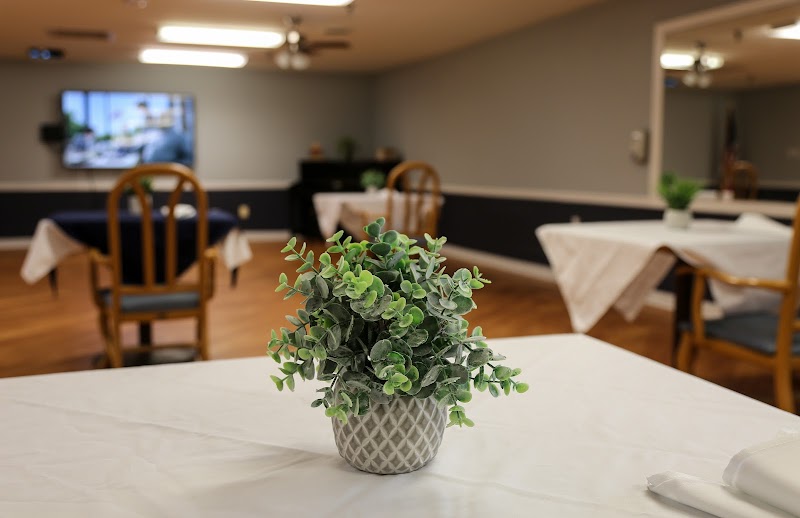
How Does Traditions Compare to Other Georgia Nursing Homes?

Compared to the 100 nursing homes in Georgia, TRADITIONS HEALTH AND REHABILITATION's overall rating (3 stars) is above the state average of 2.6, staff turnover (24%) is significantly lower than the state average of 46%, and health inspection rating (3 stars) is at the national benchmark.

What Should Families Ask When Visiting Traditions?

Based on this facility's data, families visiting should ask: "Can you walk me through typical staffing levels on day, evening, and night shifts?" "Can I visit during a mealtime to observe dining assistance and food quality?" "How do you handle medical emergencies, and what is your hospital transfer rate?" "Can I speak with family members of current residents about their experience?" These questions are particularly relevant given the below-average staffing rating.

Is Traditions Safe?

Based on CMS inspection data, TRADITIONS HEALTH AND REHABILITATION has a clean safety record: no substantiated abuse findings (meaning no confirmed cases of resident harm), no Immediate Jeopardy citations (the most serious violation level indicating risk of serious injury or death), and is not on the Special Focus Facility watch list (a federal program monitoring the lowest-performing 1% of nursing homes). The facility has a 3-star overall rating and ranks #1 of 100 nursing homes in Georgia. While no facility is perfect, families should still ask about staff-to-resident ratios and recent inspection results during their visit.

Do Nurses at Traditions Stick Around?

Staff at TRADITIONS HEALTH AND REHABILITATION tend to stick around. With a turnover rate of 24%, the facility is 21 percentage points below the Georgia average of 46%. Low turnover is a positive sign. It means caregivers have time to learn each resident's needs, medications, and personal preferences. Consistent staff also notice subtle changes in a resident's condition more quickly.

Was Traditions Ever Fined?

TRADITIONS HEALTH AND REHABILITATION has no federal fines on record. CMS issues fines when nursing homes fail to meet care standards or don't correct problems found during inspections. The absence of fines suggests the facility has either maintained compliance or corrected any issues before penalties were assessed. This is a positive indicator, though families should still review recent inspection reports for the full picture.

Is Traditions on Any Federal Watch List?

TRADITIONS HEALTH AND REHABILITATION is not on any federal watch list. The most significant is the Special Focus Facility (SFF) program, which identifies the bottom 1% of nursing homes nationally based on persistent, serious quality problems. Not being on this list means the facility has avoided the pattern of deficiencies that triggers enhanced federal oversight. This is a positive indicator, though families should still review the facility's inspection history directly.