ARCHWAY TRANSITIONAL CARE CENTER
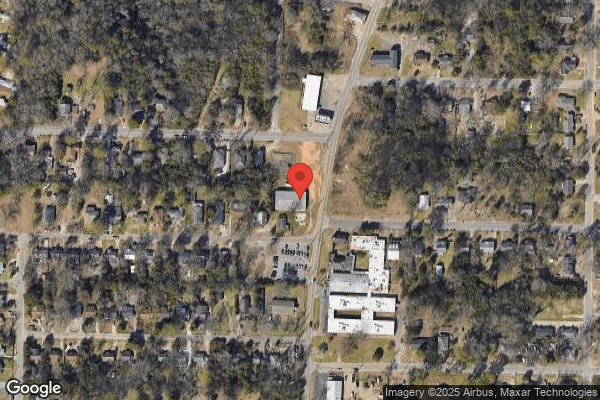
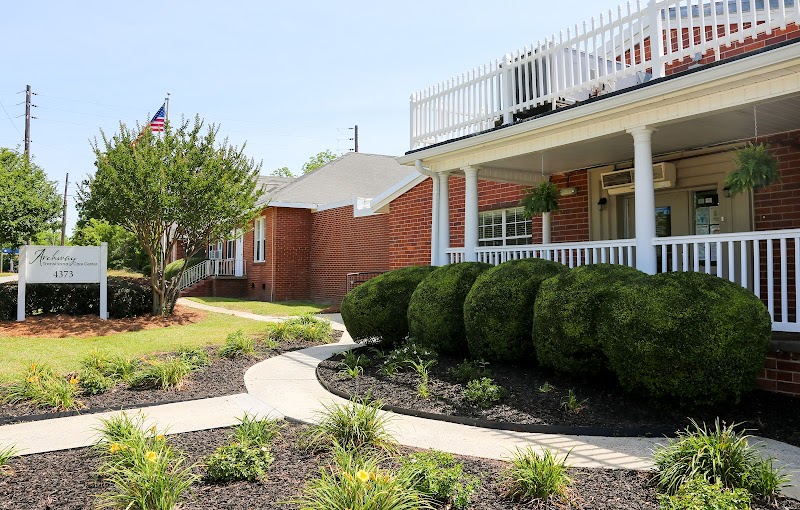
4373 HOUSTON AVENUE, MACON, GA 31206 (478) 216-5660
Non profit - Other 100 Beds CLINICAL SERVICES, INC. Data: November 2025
Trust Grade
70/100
#114 of 353 in GA
Last Inspection: August 2024

Within standard 12-15 month inspection cycle. Federal law requires annual inspections.

Overview

Archway Transitional Care Center has a Trust Grade of B, indicating it is a good choice for families seeking care. It ranks #114 out of 353 facilities in Georgia, placing it in the top half, and #3 out of 11 in Bibb County, meaning only two local options are rated higher. The facility is showing improvement, reducing its number of issues from two in 2024 to one in 2025. Staffing is average, with a 49% turnover rate, while RN coverage is also rated average, suggesting that while there is sufficient nursing support, there may be room for improvement in staff retention. Although there have been no fines, which is a positive sign, recent inspections revealed concerns such as unsanitary dumpster conditions and improper food storage practices, which could pose health risks. Overall, while there are strengths in the facility's grading and absence of fines, families should consider the specific incidents noted during inspections.

Trust Score
B
70/100
In Georgia
#114/353
Top 32%
Safety Record
Low Risk
No red flags
Inspections
Getting Better
2 → 1 violations
Staff Stability
⚠ Watch
49% turnover. Above average. Higher turnover means staff may not know residents' routines.
Penalties
✓ Good
No fines on record. Clean compliance history, better than most Georgia facilities.
Skilled Nurses
⚠ Watch
Each resident gets only 20 minutes of Registered Nurse (RN) attention daily — below average for Georgia. Fewer RN minutes means fewer trained eyes watching for problems.
Violations
○ Average
6 deficiencies on record. Average for a facility this size. Mostly minor or procedural issues.
★★★☆☆
3.0
Overall Rating
★★★☆☆
3.0
Staff Levels
★★★★☆
4.0
Care Quality
★★★☆☆
3.0
Inspection Score
Stable
2024: 2 issues
2025: 1 issues

The Good

  • 4-Star Quality Measures · Strong clinical quality outcomes
  • Full Sprinkler Coverage · Fire safety systems throughout facility
  • No fines on record

Facility shows strength in quality measures, fire safety.

The Bad

3-Star Overall Rating

Near Georgia average (2.6)

Meets federal standards, typical of most facilities

Staff Turnover: 49%

Near Georgia avg (46%)

Higher turnover may affect care consistency

Chain: CLINICAL SERVICES, INC.

Part of a multi-facility chain

Ask about local staffing decisions and management

The Ugly 6 deficiencies on record

Jun 2025 1 deficiency
CONCERN (D) 📢 Someone Reported This

A family member, employee, or ombudsman was alarmed enough to file a formal complaint

Potential for Harm - no one hurt, but risky conditions existed

Report Alleged Abuse (Tag F0609)

Could have caused harm · This affected 1 resident

**NOTE- TERMS IN BRACKETS HAVE BEEN EDITED TO PROTECT CONFIDENTIALITY** Based on staff interview, record review, and review of the facility policy titled Abuse Prohibition-Reporting and Investigating,...

Read full inspector narrative →
**NOTE- TERMS IN BRACKETS HAVE BEEN EDITED TO PROTECT CONFIDENTIALITY** Based on staff interview, record review, and review of the facility policy titled Abuse Prohibition-Reporting and Investigating, the facility failed to ensure that an allegation of abuse was reported to the state survey agency for one resident (R) (R8) from a total sample of nine residents. Findings include: Review of the facility policy titled Abuse Prohibition-Reporting and Investigating, review date 12/27/2024, revealed the policy included that all allegations of abuse must be reported immediately, but no later than two hours. The Administrator or designee will notify the Complaint Investigation Intake and Referral Unit of the incident and the pending investigation. Review of R8's clinical record revealed that she was admitted to the facility on [DATE] and had diagnoses that included, but were not limited to, paranoid schizophrenia, generalized anxiety disorder, and hallucinations. Review of the 5/16/2025 Quarterly Minimum Data Set (MDS) assessment revealed that R8 was assessed as being cognitively impaired with a Brief Interview of Mental Status (BIMS) score of 3 out of 15. Further review of R8's clinical record revealed a 4/3/2025 Event-Initial Note that documented R8 sustained a fall in her room and laceration to the lips and inner mouth with moderate bleeding. The actions taken following the fall included R8 being sent to the hospital emergency room. Review of nurses' notes revealed R8 was hospitalized from [DATE] through 4/5/2025 and returned to the facility. Review of R8's hospital emergency department provider notes, dated 4/3/2025, revealed that R8 alleged she was raped six weeks prior at the facility. R8 named the perpetrator as R9. Review of the 4/3/2025 genitourinary exam findings revealed no abnormalities documented. Review of hospital case management notes, dated 4/5/2025, revealed that R8 alleged that she was raped by R9 multiple times. Further review of the case management notes revealed that law enforcement was notified, along with R8's family and Registered Nurse (RN) AA at the facility. However, there was no evidence that the facility reported R8's allegation of rape to the State Survey Agency. During an interview on 6/9/2025 at 1:15 pm, the Director of Nursing (DON) confirmed that the facility did not submit an initial report to the State Survey Agency (SSA) for R8's rape allegation. During an interview on 6/12/2025 at 3:05 pm, RN AA confirmed she spoke with the hospital case manager on 4/5/2025 and was made aware of R8's rape allegation. RN AA stated she told the hospital case manager that R8 had made allegations in the past, and they had been looked into, but that R8 had not made any allegations prior to her going to the hospital on 4/3/2025. RN AA stated that she notified the DON and Administrator via text message on 4/5/2025. RN AA stated that on the following Monday, 4/7/2025, the allegation was discussed in the facility staff's morning meeting, and it was decided that it was not a true reportable to the SSA, and RN AA went ahead and made a note of the call from 4/5/2025.
Aug 2024 2 deficiencies
CONCERN (D)

Potential for Harm - no one hurt, but risky conditions existed

Respiratory Care (Tag F0695)

Could have caused harm · This affected 1 resident

Based on observations, staff interviews, record review, and review of the facility policy titled, Use of Oxygen Therapy, the facility failed to ensure one of 14 residents (R) (R27) receiving oxygen (O...

Read full inspector narrative →
Based on observations, staff interviews, record review, and review of the facility policy titled, Use of Oxygen Therapy, the facility failed to ensure one of 14 residents (R) (R27) receiving oxygen (O2) therapy was administered O2 in accordance with the physician order. The deficient practice had the potential to place R27 at risk of respiratory complications. Findings include: A review of the facility's policy titled Use of Oxygen Therapy, dated 7/1/2024, revealed the section titled Guideline included, Physician's order for oxygen should be obtained and include oxygen with liter flow as ordered. A review of R27's clinical record revealed a diagnosis of chronic obstructive pulmonary disease (COPD), unspecified. A review of R27's Physician Order Form revealed an order dated 10/2/2023 for O2 via a nasal cannula (NC) at two liters per minute (LPM) as needed for SOB (shortness of breath) or wheezing. Observations on 8/23/2024 at 1:30 pm and 8/24/2024 at 2:00 pm revealed R27 lying in bed receiving O2 via a NC at 2.5 LPM instead of 2.0 LPM. During observation and interview on 8/25/2024 at 11:45 am, the Administrator and Director of Nursing (DON) confirmed R27 was receiving O2 at 2.5 LPM instead of 2.0 LPM. The DON stated her expectation was for O2 to be administered per the physician's order. The Administrator reported staff will receive education on following physician's orders for O2.
CONCERN (F)

Potential for Harm - no one hurt, but risky conditions existed

Garbage Disposal (Tag F0814)

Could have caused harm · This affected most or all residents

Based on observations, staff interviews, and a review of the facility policy titled, Storage Areas, the facility failed to ensure the dumpster area was maintained in sanitary conditions. The deficient...

Read full inspector narrative →
Based on observations, staff interviews, and a review of the facility policy titled, Storage Areas, the facility failed to ensure the dumpster area was maintained in sanitary conditions. The deficient practice had the potential to promote the harboring of pests, insects, and other organisms. The facility census was 89 residents. Findings include: A review of the facility policy titled, Storage Areas, dated 12/29/2023, revealed the section titled Dumpster included, Area should be free of trash and debris. Containers should be kept in good condition and covered. Observations on 8/23/2024 at 8:45 am of the facility dumpster area with the Dietary Manager (DM) revealed two of the three dumpster lids were badly damaged and did not allow a secure closure. Further observation revealed broken pallet pieces and large pallets covered with dirt and debris on the ground between two of the dumpsters. During an interview on 8/23/2024 at 10:00 am, the Maintenance Director and DM confirmed the observations. The Maintenance Director reported their vendors deliver supplies, on pallets, to the facility every Tuesday and the last delivery was on 8/20/2024. He further stated the Housekeeping Staff usually unloaded the delivery truck and should place the pallets in the dumpsters. The Maintenance Director stated he would have the dumpsters replaced. In an interview on 8/24/2024 at 11:10 am, the Housekeeper Supervisor reported being unaware that her staff was assigned to place the pallets in the dumpster. In an interview on 8/25/2024 at 11:13 am, the Administrator reported she planned to have all staff monitor the dumpster area for cleanliness and trash. She reported being unaware of the lids being badly dented and that staff were leaving broken pallets on the ground. She stated that her expectation was for staff to maintain the dumpster in a sanitary manner. She further stated that all staff were responsible for reporting damages and any concerns about the dumpster area not being maintained in a sanitary manner.
Feb 2023 2 deficiencies
CONCERN (F) 📢 Someone Reported This

A family member, employee, or ombudsman was alarmed enough to file a formal complaint

Potential for Harm - no one hurt, but risky conditions existed

Food Safety (Tag F0812)

Could have caused harm · This affected most or all residents

Based on observations, staff interviews, and a review of the facilities policies titled, Labeling and Dating Guidelines, Skilled Nursing Services Food Preparation and Distribution, Ready 365 Best Prac...

Read full inspector narrative →
Based on observations, staff interviews, and a review of the facilities policies titled, Labeling and Dating Guidelines, Skilled Nursing Services Food Preparation and Distribution, Ready 365 Best Practice Standard of the Week: Thawing, and Skilled Inpatient Services Cleaning and Sanitizing the facility failed to label and date food in the walk-in freezer; failed to properly store stack pans to prevent wet-nesting; failed to properly thaw frozen food items to prevent foodborne illness; and failed to hold food items on the steam table above 135 degrees. The facility census was 77 with 73 residents consuming an oral diet. These failures had the potential of causing bacterial growth associated with foodborne illness. Findings include: 1. Review of the policy titled Labeling and Dating Guidelines revealed upon opening, all items should have an open date and a use by date. Observation on 2/24/2023 at 9:03 a.m. of the walk-in freezer revealed an opened bag of breaded squash with no label or date. Interview on 2/24/2023 at 9:30 a.m. the Certified Dietary Manager (CDM) confirmed that the opened bag of breaded squash did not have a label or date. The CDM expects staff to label and date opened items before storing in freezer. 2. Observation on 2/24/2023 at 9:10 a.m. of the pot and pan storage rack revealed multiple stacks of steam table pans of various shapes and sizes. A stack of four smaller rectangle shaped steam table pans were turned over and the second pan from the top, the inside was wet and had yellow orange food debris. The bottom of the pan third in the stack had food debris that was light tan in color. Interview on 2/24/2023 at 9:10 a.m. with the CDM confirmed that the steam table pan was wet inside and had food debris and confirmed that the bottom of the other pan had food debris. The CDM expects staff to stack pans dry and clean on the rack. Interview on 2/26/2023 at 11:40 a.m., the CDM stated that they do not have a specific policy regarding storage of pots and pans. 3. Review of the policy titled Skilled Nursing Services Food Preparation and Distribution revealed thawing methods, submerged under running water at a temperature no greater that 70 degrees. Review of the policy titled Ready 365 Best Practice Standard of the Week: Thawing revealed running water, fully submerge food under running, drinkable water at 70 degrees or below; the flow of the water must be strong enough to wash loose food bits into the drain. The container must be able to hold water in a manner that is consistently surrounding the food item and allowing fresh water to circulate. Observation on 2/24/2023 at 9:12 a.m., inside of the food preparation sink revealed three clear plastic vacuumed sealed bags containing a frozen meat product. The bags were set directly on the bottom of the sink, and cold water was running only touching the top corner of one bag of meat. The three bags of meat were not submerged in water with the cold water running into the container for thawing. Interview on 2/24/2023 at 9:12 a.m., the CDM revealed that she thought just having the running water on top of the frozen bags was sufficient for thawing the meat. The CDM was not aware that when thawing foods with running water the food items need to be submerged in the water and have the water flowing freely from the vessel containing the food item. 4. Review of the policy titled Skilled Inpatient Services Cleaning and Sanitizing revealed three-compartment sinks, and manufacturer guidelines should be followed. Review of the Eco Lab Product Specification Document for Multi Quat Sanitizer revealed to allow equipment to drain thoroughly and air dry. Observation on 2/25/2023 at 11:30 a.m. of Dietary Aide CC using the three-compartment sink revealed Dietary Aide CC was using a cloth towel to dry the inside of two small square steam table pans after the pans were in the sanitizing solution. Dietary Aide CC was also observed wiping dry the inside of a square shaped steam table pan. Continued observation revealed the facility was using Eco Lab Quat Sanitizing solution in the three-compartment sink. Interview on 2/25/2023 at 11:30 a.m. with Dietary Aide CC revealed that she was drying the inside of the steam table pans to make sure that they were dry inside. Interview on 2/25/2023 at 11:30 a.m. with the CDM revealed that she expects staff to let pans air dry and not wipe with a towel. 5. Review of the policy titled Skilled Nursing Services Food Preparation and Distribution revealed: tray line hot foods should be held at or greater than 135 degrees. Tray line temperatures were completed on 2/25/2023 at 12:40 p.m., Dietary Aide AA assisted with taking temperatures using the facility's calibrated thermometer. The chopped Philly steak meat had a temperature of 105 degrees, cooked cabbaged had a temperature of 106 degrees, and cooked white rice had a temperature of 105 degrees. Interview on 2/25/2023 at 12:40 p.m. with Dietary Aide AA confirmed that the temperatures of the chopped Philly steak meat, cooked cabbage, and cooked white rice were below 135 degrees. Dietary Aide AA revealed that foods on the steam table should be 135 degrees or higher. Continued interview with Dietary Aide AA revealed that the cooked cabbage is for residents receiving a mechanical soft chopped diet and renal diet. The Dietary Aide AA stated that the rice was for only renal diets and there is only one resident receiving a renal diet. Interview on 2/25/2023 at 12:45 p.m. with the CDM revealed that food items on the steam table should be 135 degrees or higher. The CDM stated that the residents on 200, 300, and 400 halls still needed to be served lunch meals and the items will be reheated.
CONCERN (F) 📢 Someone Reported This

A family member, employee, or ombudsman was alarmed enough to file a formal complaint

Potential for Harm - no one hurt, but risky conditions existed

Garbage Disposal (Tag F0814)

Could have caused harm · This affected most or all residents

Based on observations and staff interviews the facility failed to ensure the area behind the dumpsters was properly maintained and free from debris. This failure had the potential to attract pests and...

Read full inspector narrative →
Based on observations and staff interviews the facility failed to ensure the area behind the dumpsters was properly maintained and free from debris. This failure had the potential to attract pests and transfer microorganisms. Findings include: Observation on 2/25/2023 at 8:40 a.m. of the dumpster area revealed that the facility had three medium sized dumpsters located on the side of the building. The area behind the dumpsters had a wire fence separating the facility campus from a residential home. Between the dumpsters and the wire fence was brush. Continued observation revealed that the area behind the dumpsters in the brush on the ground were multiple Styrofoam cups, two-eight ounce cups, and two-12 ounce cups. The area also had three Styrofoam take-out containers. Further observation revealed paper cloth like trash items that were scattered in the area. Interview on 2/25/2023 at 8:40 a.m. the Certified Dietary Manager (CDM) confirmed that there were multiple trash items on the ground behind the dumpsters. The CDM stated that housekeeping is responsible for the area around the dumpsters. Interview on 2/26/2023 at 8:50 a.m. with Housekeeper BB revealed that housekeeping is responsible for the area around the dumpsters for cleanliness. The Housekeeper BB stated that it is not a daily task that is performed, and only cleans the outside when directed by their supervisor. Interview and observation on 2/26/2023 at 11:50 a.m. with the Administrator of the dumpster area revealed that housekeeping is responsible for the area around the dumpsters. The Administrator revealed that they are currently searching for a new housekeeping supervisor and the Maintenance Director has been appointed interim. The Administrator confirmed that there was trash on the ground behind the dumpsters and revealed that the trash should have been pick-up.
Sept 2021 1 deficiency
CONCERN (F)

Potential for Harm - no one hurt, but risky conditions existed

Deficiency F0761 (Tag F0761)

Could have caused harm · This affected most or all residents

Based on observations, interviews, and review of facility policy titled Medication Administration -General, the facility failed to ensure the proper disposal of expired medication for a centrally loca...

Read full inspector narrative →
Based on observations, interviews, and review of facility policy titled Medication Administration -General, the facility failed to ensure the proper disposal of expired medication for a centrally located medication storage room and four of five medication carts. Findings include: Observation of medication storage room on 9/1/21 at 1:50 p.m. revealed the following medications to be expired: calcium with vitamin D 500 milligrams (mg) 60 tabs (six bottles) expired 10/2020 and one of the six expired 7/2019; vitamin B-12 1000 mcg (micrograms) 130 tab (two bottles) expired 1/2021, aspirin enteric coated 325 mg 100 tabs expired 10/2020; diphenhydramine hydrochloride (HCL) 25 mg 24 capsules expired 6/2021, Mucinex (children's) stuffy nose and chest congestion 4 fluid ounces (two bottles) expired 10/2020; mineral oil lubricant laxative 16 fluid ounces (two bottles) expired 5/2021, cough syrup 473 milliliters (ml) expired 8/2021, super strength cranberry 450 mg 60 soft gels expired 6/2020, docusate liquid 473 ml (stool softener) (three bottles) expired 6/2021, and antacid (calcium carbonate) 750 mg 80 chewable tablets expired 8/2021. All medication expiration dates were confirmed by Licensed Practical Nurse (LPN) AA at the time of observation. Observation of the medication cart for the 400 Hall on 9/1/21 at 1:55 p.m. revealed the following medications were expired during observation: docusate liquid (stool Softener) 473 ml expired 6/2021. The expired medication was confirmed by LPN BB at the time of observation. Observation of the medication cart for the 300 Hall on 9/1/21 at 2:05 p.m. revealed the following medications were expired during observation: probiotic 30 capsules expired 3/2021, cough syrup 473 ml expired 8/2021, Robafen syrup 473 ml expired 10/2020, and Mucinex stuffy nose and cold 4 fluid ounces expired 5/2020. All expired medications were confirmed by LPN CC at the time of observation. Observation of the medication cart for the 200 Hall (cart one) on 9/1/21 at 2:15 p.m. revealed the following medications were expired during observation: docusate liquid 473 ml expired 6/2021, and ferrous sulfate elixir 473 ml expired 8/2021. Observation of medication cart for the 200 Hall (cart two) revealed the following medications were expired during observation: ferrous sulfate elixir 473 ml expired 8/2021. All expired medications were confirmed by LPN DD at the time of observation. Interview on 9/1/21 at 2:44 p.m. with the DON (Director of Nursing) revealed the expectation is that every nurse should be checking stock medications weekly and before administering medications to residents. The staff member over the central supply medication storage and ordering works Friday, Saturday, and Sunday and was supposed to be checking the medication regularly for expiration dates. Interview on 9/1/21 at 2:55 p.m. with the Administrator revealed that the previous central supply staff member has resigned, and the expectation is that all medication that is expired is to be discarded. Review of facility policy title Medication Administration - General dated 2019 revealed under Guidelines: prior to medication administration: check expiration date of the medication. Under no circumstances should an expired medication be administered to a patient.
Understanding Severity Codes (click to expand)
Life-Threatening (Immediate Jeopardy)
J - Isolated K - Pattern L - Widespread
Actual Harm
G - Isolated H - Pattern I - Widespread
Potential for Harm
D - Isolated E - Pattern F - Widespread
No Harm (Minor)
A - Isolated B - Pattern C - Widespread

Questions to Ask on Your Visit

  • "Can I speak with families of current residents?"
  • "What's your RN coverage like on weekends and overnight?"

Our Honest Assessment

Strengths
  • • No major safety red flags. No abuse findings, life-threatening violations, or SFF status.
  • • No fines on record. Clean compliance history, better than most Georgia facilities.
Concerns
  • • No major red flags. Standard due diligence and a personal visit recommended.
Bottom line: Mixed indicators with Trust Score of 70/100. Visit in person and ask pointed questions.

About This Facility

What is Archway Transitional's CMS Rating?

CMS assigns ARCHWAY TRANSITIONAL CARE CENTER an overall rating of 3 out of 5 stars, which is considered average nationally. Within Georgia, this rating places the facility higher than 99% of the state's 100 nursing homes. This mid-range rating indicates the facility meets federal standards but may have areas for improvement.
How is Archway Transitional Staffed?

CMS rates ARCHWAY TRANSITIONAL CARE CENTER's staffing level at 3 out of 5 stars, which is average compared to other nursing homes. Staff turnover is 49%, compared to the Georgia average of 46%.

What Have Inspectors Found at Archway Transitional?

State health inspectors documented 6 deficiencies at ARCHWAY TRANSITIONAL CARE CENTER during 2021 to 2025. These included: 6 with potential for harm.

Who Owns and Operates Archway Transitional?

ARCHWAY TRANSITIONAL CARE CENTER is owned by a non-profit organization. Non-profit facilities reinvest revenue into operations rather than distributing to shareholders. The facility is operated by CLINICAL SERVICES, INC., a chain that manages multiple nursing homes. With 100 certified beds and approximately 91 residents (about 91% occupancy), it is a mid-sized facility located in MACON, Georgia.
How Does Archway Transitional Compare to Other Georgia Nursing Homes?

Compared to the 100 nursing homes in Georgia, ARCHWAY TRANSITIONAL CARE CENTER's overall rating (3 stars) is above the state average of 2.6, staff turnover (49%) is near the state average of 46%, and health inspection rating (3 stars) is at the national benchmark.

What Should Families Ask When Visiting Archway Transitional?

Based on this facility's data, families visiting should ask: "Can I visit during a mealtime to observe dining assistance and food quality?" "How do you handle medical emergencies, and what is your hospital transfer rate?" "Can I speak with family members of current residents about their experience?"

Is Archway Transitional Safe?

Based on CMS inspection data, ARCHWAY TRANSITIONAL CARE CENTER has a clean safety record: no substantiated abuse findings (meaning no confirmed cases of resident harm), no Immediate Jeopardy citations (the most serious violation level indicating risk of serious injury or death), and is not on the Special Focus Facility watch list (a federal program monitoring the lowest-performing 1% of nursing homes). The facility has a 3-star overall rating and ranks #1 of 100 nursing homes in Georgia. While no facility is perfect, families should still ask about staff-to-resident ratios and recent inspection results during their visit.

Do Nurses at Archway Transitional Stick Around?

ARCHWAY TRANSITIONAL CARE CENTER has a staff turnover rate of 49%, which is about average for Georgia nursing homes (state average: 46%). Moderate turnover is common in nursing homes, but families should still ask about staff tenure and how the facility maintains care continuity when employees leave.

Was Archway Transitional Ever Fined?

ARCHWAY TRANSITIONAL CARE CENTER has no federal fines on record. CMS issues fines when nursing homes fail to meet care standards or don't correct problems found during inspections. The absence of fines suggests the facility has either maintained compliance or corrected any issues before penalties were assessed. This is a positive indicator, though families should still review recent inspection reports for the full picture.

Is Archway Transitional on Any Federal Watch List?

ARCHWAY TRANSITIONAL CARE CENTER is not on any federal watch list. The most significant is the Special Focus Facility (SFF) program, which identifies the bottom 1% of nursing homes nationally based on persistent, serious quality problems. Not being on this list means the facility has avoided the pattern of deficiencies that triggers enhanced federal oversight. This is a positive indicator, though families should still review the facility's inspection history directly.