OAKS NURSING HOME, INC, THE
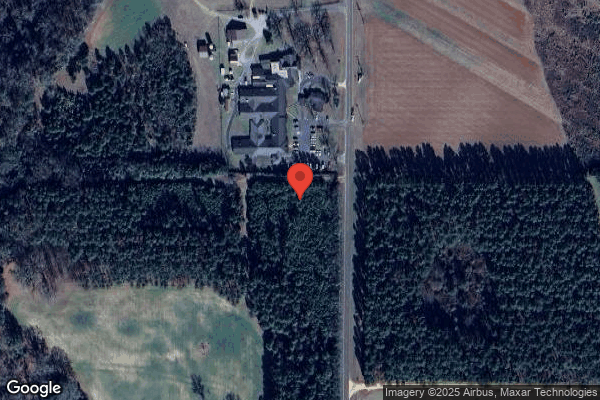
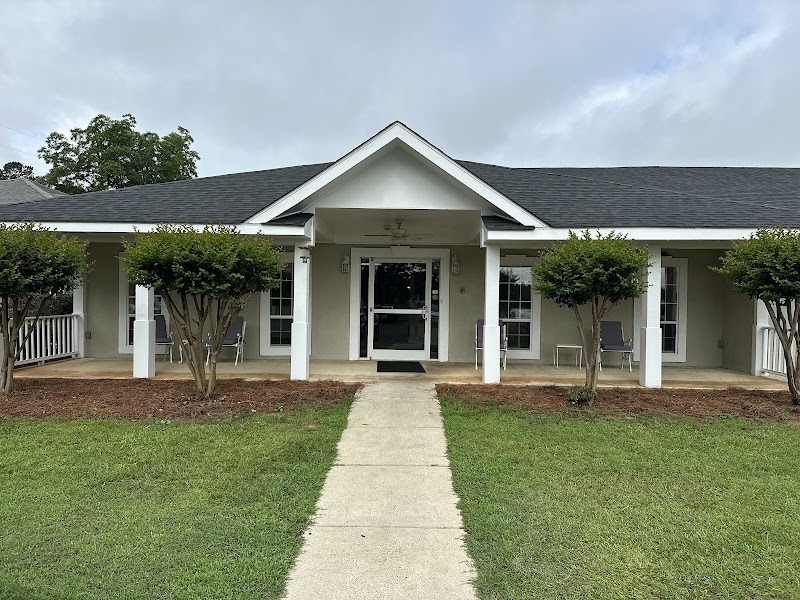
777 NURSING HOME ROAD, MARSHALLVILLE, GA 31057 (478) 967-2223
For profit - Corporation 60 Beds Independent Data: November 2025
Trust Grade
73/100
#143 of 353 in GA
Last Inspection: June 2025

Inspected within the last 6 months. Data reflects current conditions.

Overview

Oaks Nursing Home, Inc. in Marshallville, Georgia has a Trust Grade of B, indicating it is a good option for care, falling solidly in the middle range. It ranks #143 out of 353 facilities in Georgia, placing it in the top half, but it is #3 out of 3 in Macon County, suggesting limited local choices. The facility's trend is improving, with issues decreasing from three in 2024 to two in 2025. Staffing is average, rated at 3 out of 5 stars, with a 29% turnover rate, which is lower than the state average, indicating staff stability. However, RN coverage is concerning, as it is less than 86% of Georgia facilities, meaning there may be less direct nursing oversight. While there have been no fines, which is a positive sign, there are specific incidents of concern, such as a failure to label and date food items in storage, which could potentially affect all residents on an oral diet. Additionally, there were issues with inaccurate assessments for some residents, which could lead to improper care planning. Lastly, one resident's care plan was not updated to include necessary treatments, raising concerns about their risk for skin breakdown. Overall, while Oaks Nursing Home has strengths in staffing stability and a good trust rating, families should be aware of these specific care deficiencies.

Trust Score
B
73/100
In Georgia
#143/353
Top 40%
Safety Record
Low Risk
No red flags
Inspections
Getting Better
3 → 2 violations
Staff Stability
✓ Good
29% annual turnover. Excellent stability, 19 points below Georgia's 48% average. Staff who stay learn residents' needs.
Penalties
✓ Good
No fines on record. Clean compliance history, better than most Georgia facilities.
Skilled Nurses
⚠ Watch
Each resident gets only 16 minutes of Registered Nurse (RN) attention daily — below average for Georgia. Fewer RN minutes means fewer trained eyes watching for problems.
Violations
✓ Good
Only 5 deficiencies on record. Cleaner than most facilities. Minor issues only.
★★★☆☆
3.0
Overall Rating
★★★☆☆
3.0
Staff Levels
★☆☆☆☆
1.0
Care Quality
★★★★☆
4.0
Inspection Score
Stable
2024: 3 issues
2025: 2 issues

The Good

  • Low Staff Turnover (29%) · Staff stability means consistent care
  • Full Sprinkler Coverage · Fire safety systems throughout facility
  • No fines on record
  • Staff turnover is low (29%)

    19 points below Georgia average of 48%

Facility shows strength in staff retention, fire safety.

The Bad

3-Star Overall Rating

Near Georgia average (2.6)

Meets federal standards, typical of most facilities

The Ugly 5 deficiencies on record

Jun 2025 2 deficiencies
CONCERN (D)

Potential for Harm - no one hurt, but risky conditions existed

Assessment Accuracy (Tag F0641)

Could have caused harm · This affected 1 resident

**NOTE- TERMS IN BRACKETS HAVE BEEN EDITED TO PROTECT CONFIDENTIALITY** Based on observations, staff interviews, record review, and review of the Resident Assessment Instrument (RAI) Manual, the facil...

Read full inspector narrative →
**NOTE- TERMS IN BRACKETS HAVE BEEN EDITED TO PROTECT CONFIDENTIALITY** Based on observations, staff interviews, record review, and review of the Resident Assessment Instrument (RAI) Manual, the facility failed to ensure two of 26 sampled residents (R) (R7 and R25) had an accurate Minimum Data Set (MDS) assessment. Failure to code the MDS correctly could potentially lead to inaccurate assessment and care planning of the residents. Findings include: Review of the RAI Manual dated 10/01/2019 indicated, . information obtained should cover the same observation period as specified by the Minimum Data Set (MDS) items on the assessment and should be validated for accuracy (what the resident's actual status was during that observation period) by the IDT completing the assessment. 1. Review of R25's admission Record located in the electronic medical record (EMR) tab titled Profile revealed the resident was admitted to the facility on [DATE] with diagnoses that included anxiety disorder, metabolic encephalopathy, major depressive disorder, and dementia. Review R25's Care Plan, dated 5/13/2025, located in the EMR Care Plans tab, revealed the resident was at risk for falls related to impaired mobility as well as psychotropic drug use. The intervention dated 10/25/2023 indicated the use of a clip alarm to alert the staff if the resident attempted to stand up. Review of R25's Significant Change MDS with an Assessment Reference Date (ARD) of 2/14/2025, located in the EMR MDS tab, revealed that Section P did not reflect the residents' use of the clip alarm. In an interview on 6/19/2025 at 11:12 am, the MDS Coordinator (MDSC) acknowledged that R25's Significant Change MDS, dated [DATE], did not reflect the resident's use of clip alarms. The MDSC stated the resident had been using the clip alarm since 2023. 2. R7 was observed in a reclining geriatric chair in the common area with a personal tabs alarm in place on 6/17/2025 at 9:08 am; on 6/18/2025 at 9:03 am and 11:29 am; and on 6/19/2025 at 8:35 am. Review of R7's Significant Change MDS with an ARD of 4/28/2025 and located under the MDS tab in the EMR revealed that the chair alarm section in Section P was coded with a 0 (zero) for the use of a chair alarm (indicating there was no chair alarm used). Review of R7's care plan under the care plan tab of the EMR revealed a fall care plan stating she was at risk for falls due to impaired mobility with a revision date of 3/31/2025. The clip alarm was added as an intervention on 3/31/2025. In an interview on 6/19/2025 at 9:52 am, the MDSC verified she had inaccurately coded R7's MDS assessment dated [DATE].
CONCERN (D)

Potential for Harm - no one hurt, but risky conditions existed

Deficiency F0657 (Tag F0657)

Could have caused harm · This affected 1 resident

**NOTE- TERMS IN BRACKETS HAVE BEEN EDITED TO PROTECT CONFIDENTIALITY** Based on observation, staff interview, and record review, the facility failed to revise the care plan of one of 26 sampled resid...

Read full inspector narrative →
**NOTE- TERMS IN BRACKETS HAVE BEEN EDITED TO PROTECT CONFIDENTIALITY** Based on observation, staff interview, and record review, the facility failed to revise the care plan of one of 26 sampled residents (R) (R16) for the use of a bed cradle. This failure had the potential to place R16 at risk of not receiving treatment to prevent skin breakdown. Findings include: Review of R16's admission Record, located in the electronic medical records (EMR) Profile tab, revealed the resident was admitted to the facility on [DATE] with diagnoses that included Parkinsonism, diabetes mellitus type II, dementia, and contracture of other joints. Review of R16's Annual Minimum Data Set (MDS), with an Assessment Reference Date (ARD) of 3/10/2025, located in the EMR MDS tab, revealed the resident had impaired cognition. The resident was assessed to be dependent on staff for all activities of daily living (ADLs). The resident was assessed to be at risk for pressure ulcers. Review of R16's admission Assessment by the wound care nurse (WCN) on 3/16/2024 in the EMR Progress Notes tab revealed the resident was noted to have boggy heels with redness. Review of additional WCN notes dated 5/14/2024 revealed R16 had redness to the great toes. Treatment included skin prep and a bed cradle. Review of R16's Care Plans, with a revision date of 4/30/2025, located in the EMR Care Plans tab, revealed the resident was identified to be at risk for skin breakdown due to limited mobility. The care plan interventions did not reflect the use of the bed cradle to prevent pressure on the residents' feet. Observation on 6/16/2025 at 3:05 pm revealed R16 in bed position on her back with bilateral heel protective dressings and a bed cradle in place. In an interview on 6/18/2025 at 10:30 am, the WCN revealed the resident had boggy heels on admission to the facility, and then a few weeks later, the resident had redness to the big toe on both feet. The WCN stated the interventions included skin prep to the heels and great toes and use of a bed cradle to prevent pressure to the resident's toes. The WCN stated the interventions should be on the resident's care plan. The WCN stated that only the MDS Coordinator (MDSC) could revise the residents' care plans. In an interview on 6/19/2025 at 11:12 am, the MDSC revealed the WCN had asked her this morning about the bed cradle being added to the resident's care plan. The MDSC stated that she reviewed R16's care plan, and the intervention for the bed cradle had been omitted from the care plan. The MDSC confirmed that she was the only person allowed to revise the residents' care plans.
Jan 2024 3 deficiencies
CONCERN (D)

Potential for Harm - no one hurt, but risky conditions existed

Respiratory Care (Tag F0695)

Could have caused harm · This affected 1 resident

Based on observations, staff interviews, and record review, the facility failed to monitor and clean the respiratory equipment per medical doctor (MD) orders for one resident (R) (R26). The sample siz...

Read full inspector narrative →
Based on observations, staff interviews, and record review, the facility failed to monitor and clean the respiratory equipment per medical doctor (MD) orders for one resident (R) (R26). The sample size was 24 residents. Findings include: On 1/20/2024 at 3:31 pm, the facility Director of Nursing (DON) informed the survey team that the facility did not have policies related to cleaning oxygen concentrators or following MD orders. Observations on 1/19/2024 at 9:28 am and 2:41 pm and on 1/20/2024 at 7:55 am of R26's oxygen concentrator revealed the slated exterior vent cover on the back of the concentrator had obvious dust covering the slats. The interior filter was noted to be visibly dirty, with an accumulation of dust on the interior vent slats. The filter was dirty. R26 was wearing her oxygen and receiving the oxygen via nasal cannula (NC). A review of the MD orders dated 11/2/2023 revealed that R26's oxygen concentrator filter was to be cleaned during every night shift. During an observation of R26's oxygen concentrator and interview with the Registered Nurse Supervisor (RNS) AA on 1/20/2024 at 8:22 am, RNS AA acknowledged that R26's oxygen concentrator covers, slats, and filter were dirty. During a follow-up with the RNS AA, the Director of Nursing (DON), and the Assistant Director of Nursing (ADON) on 1/20/2024 at 8:39 am, they revealed staff were supposed to monitor the concentrator daily to ensure the oxygen filter was clean. They stated that the oxygen concentrator and filter should have been cleaned as ordered. During an interview with the DON on 1/21/24 at 8:50 am, she acknowledged the oxygen concentrator had not been cleaned daily per MD orders.
CONCERN (D) 📢 Someone Reported This

A family member, employee, or ombudsman was alarmed enough to file a formal complaint

Potential for Harm - no one hurt, but risky conditions existed

Menu Adequacy (Tag F0803)

Could have caused harm · This affected 1 resident

Based on observations, staff interviews, and a review of the dietary menu cycle, the facility failed to ensure staff followed food recipes for preparing pureed foods for four of four residents who rec...

Read full inspector narrative →
Based on observations, staff interviews, and a review of the dietary menu cycle, the facility failed to ensure staff followed food recipes for preparing pureed foods for four of four residents who received a puree diet. This failure had the potential to compromise the nutritive value of tuna sandwiches for four of the four residents who received a puree diet. Findings include: During an interview on 1/20/2024 at 11:25 am, Dietary Supervisor EE was informed that recipes would be needed when observing the puree meal later in the day. The Dietary Supervisor EE reported that recipes were not used by the dietary staff. She went on to report that she had been cooking for over 30 years and she knew how to prepare items. On 1/20/2024 at 3:10 pm Dietary Aide II was observed performing a puree of tuna salad for the dinner meal. At the time of the surveyor's arrival, Dietary Aide II had already pureed the bread. Observation revealed there was tuna in a can and thickener on the table. Dietary Aide II reported that she was using a four-ounce (oz) scoop to portion out the amount needed for the meal. Five scoops of tuna were put in the blender and an unmeasured amount of liquid from another can of tuna was poured into the blender. Dietary Aide II stated there were only four residents who received a puree meal. Once the tuna was blended, one four-oz scoop of thickener was added to the blended tuna, and the mixture was blended again. The tuna mixture was then placed into a container, covered, and placed in the refrigerator. Dietary Aide II stated that one four-oz scoop was the equivalent of one portion size for each resident. Dietary Aide II was not observed to follow a recipe while preparing the pureed tuna sandwich for residents who received a pureed meal. A review of the menu cycle for week number 3 did not specify portion sizes or a breakdown of meals per dietary needs. The menu indicated Tuna Sandwich for the supper meal on Saturday (1/20/2024). During an interview with the Administrator on 1/21/2024 at 9:03 am, she reported that the kitchen was discussed in the morning meetings and during quality assurance meetings, but there were no current Performance Improvement Plans (PIP) related to the kitchen. During an interview on 1/21/2024 at 9:39 am with the Certified Dietary Manager he/she reported that dietary staff typically cooked items prior to the puree process. CDM was informed of the surveyor's observation of the puree process on 1/20/2024 related to the pureed tuna sandwich, which consisted of tuna, liquid from a separate can of tuna, and food thickener. CDM reported that the tuna sandwich should have been prepared the regular way prior to blending/pureeing it. CDM went on to report that mayonnaise should have been added to the tuna during the blending of the puree. A tour of the kitchen with the CDM began on 1/21/2024 at 10:05 am and ended at 10:25 am. The CDM provided a book with recipes and menus that had been signed by a Registered Dietitian (RD). However, she reported that this book was not for the current menu cycle nor did the current RD sign off on these menus. She went on to explain that the recipes were not current, but they were used as a guide in determining portion sizes for the residents. A recipe was found for Tuna Salad but CMD and Dietary Supervisor DD both reported that it could not be used because it was not for the current meal cycle. The Dietary Supervisor DD reported that she notified someone in the office yesterday that they did not have current menus signed by the RD and the RD was supposed to send the signed menus to the facility.
CONCERN (F)

Potential for Harm - no one hurt, but risky conditions existed

Food Safety (Tag F0812)

Could have caused harm · This affected most or all residents

Based on observations, staff interviews, and a review of the facility documents titled, Infection Control for Dietary, and Leftovers, the facility failed to ensure that items in the dry storage area, ...

Read full inspector narrative →
Based on observations, staff interviews, and a review of the facility documents titled, Infection Control for Dietary, and Leftovers, the facility failed to ensure that items in the dry storage area, freezers, and refrigerators were labeled and dated with a use by or expiration date. The facility also failed to ensure that cell phones were not left in clean storage areas of the kitchen. This deficient practice had the potential to affect 57 of 58 residents receiving an oral diet. Findings: A review of an undated facility document titled Infection Control for Dietary, revealed, It is our practice to follow the following procedures: 4. Cover, label, and date all leftover foods stored in refrigerators. A review of an undated document titled Leftovers, revealed: Immediately after serving, leftover foods should be refrigerated in a covered container that is labeled and dated. All leftovers are to be thrown away after 48 hours (2 days). Any unlabeled food found in the refrigerator will be thrown away. The initial kitchen tour began on 1/19/2024 at 7:50 am with Dietary Supervisor DD. The Certified Dietary Manager (CDM) joined the tour while the surveyor was observing the dry food storage area. The following observations were confirmed at the time of observation via interview by either the Dietary Supervisor DD or the CDM: In the walk-in cooler, there were five large white containers containing tea with the dates ranging from 1/11/2024 to 1/16/2024. Dietary Supervisor DD reported that tea was made daily, and the staff may have forgotten to change the dates on the tops of the containers. Observation in the dry food storage area revealed: a large container that was labeled as sugar, but it did not have an in-date or a use-by date, and a large container that was a quarter full which contained flour and did not have an in-date or a use-by date. Dietary Supervisor DD reported the containers were cleaned every weekend and cleaned as needed. Observation revealed that there was buildup in the handles of the sugar and flour containers. Further observation revealed a box with multiple bags of gelatin in it sitting on a shelf, but there was no way to identify when the gelatin arrived or when the gelatin expired. The CDM reported that the gelatin was removed from its original box and placed into the current box and confirmed that there was no expiration or use-by date on the gelatin. Observation revealed pie crusts on a shelf, not in a box and there was no in-date or expiration date. CDM confirmed that there was no way to determine when the pie crusts expired. Further observation revealed a cart with several loaves of bread and only two of the loaves had an expiration date. CDM reported that the bread is delivered to the facility frozen and the bread is then removed from the original box and stored in the freezer. Once they are ready to use the bread it is defrosted. However, CDM was unable to identify how long the bread should be kept once defrosted. Observations in the stand-up freezer in the dry food storage area revealed a bag of potato wedges, a bag of sweet potato fries, a bag of breaded okra, two bags of fried rice, two bags of imitation crab meat, and a bag of corn nuggets that did not have received or expiration dates. Further observation in the stand-up freezer revealed three individual personal-size pepperoni pizzas that were not in the original container and did not have a received date or an expiration date. Observation in the reach-in refrigerator located near the ice machine revealed a bowl of chicken noodle soup dated 1/15/2024 without a use-by or expiration date, and a bowl of gravy dated 1/15/2024 and 1/16/2024 without a use-by or expiration date. In an interview at 8:36 am, the CDM reported that the second date was placed on the gravy probably because that is the date that it was warmed up and stated the items in the refrigerators should be used within three days of the storage date. Observations of the walk-in cooler during the kitchen tour on 1/20/2024 at 11:14 am revealed one 10-pound box of cucumbers with no in-date or use-by date. The cucumbers had a white fuzzy substance on them; one box of tomatoes without a received date or a use-by date; one 50-pound box of potatoes with no received date or no use-by date. When the lid was removed from the box of potatoes, observation revealed one potato sitting near the top had a white fuzzy substance on it. The CDM confirmed the observations. The CDM reported that the vegetables were delivered on Tuesday of this week and the items in the cooler should be checked daily. The CDM further reported the box of cucumbers and the potato had not been identified prior to observation with the surveyor. A further tour of the kitchen on 1/20/2024 at 3:20 pm with Dietary Supervisor DD of the dry food storage area revealed two loaves of bread on a cart, one plastic container labeled rice, and one plastic container labeled pasta, and all were without received or expiration dates. Observations in the stand-up freezer in the dry food storage area revealed three bags of sweet potato fries, two bags of fried rice, two bags of imitation crab meat, and three individual pepperoni pizzas that did not have received dates or expiration dates. Dietary Supervisor DD acknowledged that she had removed the bread from the freezer this morning and it will be used for breakfast tomorrow. Dietary Supervisor DD reported that the rice and pasta in the white containers will likely be used within a month. She confirmed that the items in the stand-up refrigerator in the dry storage area were not labeled with received dates or expiration dates. During an interview with the Administrator on 1/21/2024 at 9:03 am she reported that the kitchen was discussed in the morning meetings and during Quality Assurance meetings but there were no current Performance Improvement Plans (PIP) for the kitchen/dietary. During an interview on 1/21/2024 at 9:14 am, the Administrator provided blank documents of the morning QA sheet and Quality Assurance Meeting sheet. She again reported that there were no current (PIPs) for the kitchen. During an interview on 1/21/2024 at 9:39 am the CDM reported that all dietary staff were responsible for labeling food items and this process was discussed during orientation. During an interview on 1/21/2024 at 10:05 am with Dietary Aide BB in the dry storage area he reported that he was responsible for sweeping, mopping, stocking, and dishes. He reported that they clean daily but extra cleaning is done on Sundays. Dietary Aide BB reported that he had cleaned the large containers labeled flour and sugar, but the handles still had flour and other food buildup. Dietary Aide BB reported that he was not aware of having to put dates on items when putting them in the freezer or when stocking the shelves. During an observation and interview on 1/21/2024 at 10:14 am with the CDM she confirmed the presence of rust and cobwebs on the shelves holding the canned items. CDM denied that she had spoken to anyone about replacing the rusty shelves. Dietary Supervisor DD reported that they have never had to put dates on food items before. Interview with Dietary Aide CC on 1/21/2024 at 10:22 am revealed that leftovers can be stored in the refrigerator for three days and items should have an in-date and a use-by date. During an observation on 1/21/2024 at 10:25 am in the kitchen near the dishwasher area, there was a cart that typically holds cleaned dishes that had a soiled towel on it, and a cell phone was lying on it. The CDM removed the phone and towel and acknowledged it did not belong there.
Understanding Severity Codes (click to expand)
Life-Threatening (Immediate Jeopardy)
J - Isolated K - Pattern L - Widespread
Actual Harm
G - Isolated H - Pattern I - Widespread
Potential for Harm
D - Isolated E - Pattern F - Widespread
No Harm (Minor)
A - Isolated B - Pattern C - Widespread

Questions to Ask on Your Visit

  • "Can I speak with families of current residents?"
  • "What's your RN coverage like on weekends and overnight?"

Our Honest Assessment

Strengths
  • • No major safety red flags. No abuse findings, life-threatening violations, or SFF status.
  • • No fines on record. Clean compliance history, better than most Georgia facilities.
  • • Only 5 deficiencies on record. Cleaner than most facilities. Minor issues only.
  • • 29% annual turnover. Excellent stability, 19 points below Georgia's 48% average. Staff who stay learn residents' needs.
Concerns
  • • No major red flags. Standard due diligence and a personal visit recommended.
Bottom line: Mixed indicators with Trust Score of 73/100. Visit in person and ask pointed questions.

About This Facility

What is Oaks, Inc, The's CMS Rating?

CMS assigns OAKS NURSING HOME, INC, THE an overall rating of 3 out of 5 stars, which is considered average nationally. Within Georgia, this rating places the facility higher than 99% of the state's 100 nursing homes. This mid-range rating indicates the facility meets federal standards but may have areas for improvement.

How is Oaks, Inc, The Staffed?

CMS rates OAKS NURSING HOME, INC, THE's staffing level at 3 out of 5 stars, which is average compared to other nursing homes. Staff turnover is 29%, compared to the Georgia average of 46%. This relatively stable workforce can support continuity of care.

What Have Inspectors Found at Oaks, Inc, The?

State health inspectors documented 5 deficiencies at OAKS NURSING HOME, INC, THE during 2024 to 2025. These included: 5 with potential for harm.
Who Owns and Operates Oaks, Inc, The?

OAKS NURSING HOME, INC, THE is owned by a for-profit company. For-profit facilities operate as businesses with obligations to shareholders or private owners. The facility operates independently rather than as part of a larger chain. With 60 certified beds and approximately 56 residents (about 93% occupancy), it is a smaller facility located in MARSHALLVILLE, Georgia.
How Does Oaks, Inc, The Compare to Other Georgia Nursing Homes?

Compared to the 100 nursing homes in Georgia, OAKS NURSING HOME, INC, THE's overall rating (3 stars) is above the state average of 2.6, staff turnover (29%) is significantly lower than the state average of 46%, and health inspection rating (4 stars) is above the national benchmark.

What Should Families Ask When Visiting Oaks, Inc, The?

Based on this facility's data, families visiting should ask: "Can I visit during a mealtime to observe dining assistance and food quality?" "How do you handle medical emergencies, and what is your hospital transfer rate?" "Can I speak with family members of current residents about their experience?"

Is Oaks, Inc, The Safe?

Based on CMS inspection data, OAKS NURSING HOME, INC, THE has a clean safety record: no substantiated abuse findings (meaning no confirmed cases of resident harm), no Immediate Jeopardy citations (the most serious violation level indicating risk of serious injury or death), and is not on the Special Focus Facility watch list (a federal program monitoring the lowest-performing 1% of nursing homes). The facility has a 3-star overall rating and ranks #1 of 100 nursing homes in Georgia. While no facility is perfect, families should still ask about staff-to-resident ratios and recent inspection results during their visit.

Do Nurses at Oaks, Inc, The Stick Around?

Staff at OAKS NURSING HOME, INC, THE tend to stick around. With a turnover rate of 29%, the facility is 17 percentage points below the Georgia average of 46%. Low turnover is a positive sign. It means caregivers have time to learn each resident's needs, medications, and personal preferences. Consistent staff also notice subtle changes in a resident's condition more quickly. Registered Nurse turnover is also low at 20%, meaning experienced RNs are available to handle complex medical needs.

Was Oaks, Inc, The Ever Fined?

OAKS NURSING HOME, INC, THE has no federal fines on record. CMS issues fines when nursing homes fail to meet care standards or don't correct problems found during inspections. The absence of fines suggests the facility has either maintained compliance or corrected any issues before penalties were assessed. This is a positive indicator, though families should still review recent inspection reports for the full picture.

Is Oaks, Inc, The on Any Federal Watch List?

OAKS NURSING HOME, INC, THE is not on any federal watch list. The most significant is the Special Focus Facility (SFF) program, which identifies the bottom 1% of nursing homes nationally based on persistent, serious quality problems. Not being on this list means the facility has avoided the pattern of deficiencies that triggers enhanced federal oversight. This is a positive indicator, though families should still review the facility's inspection history directly.