MAGNOLIA MANOR OF MIDWAY
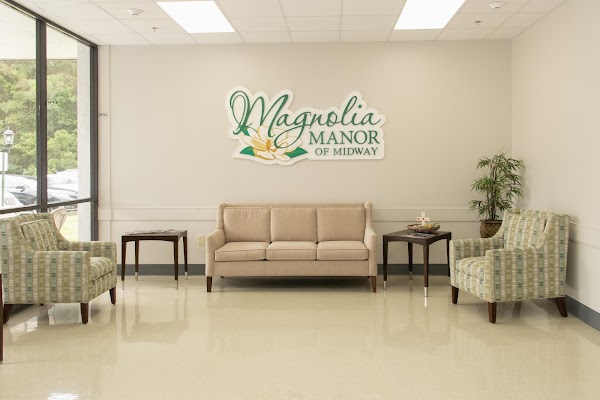
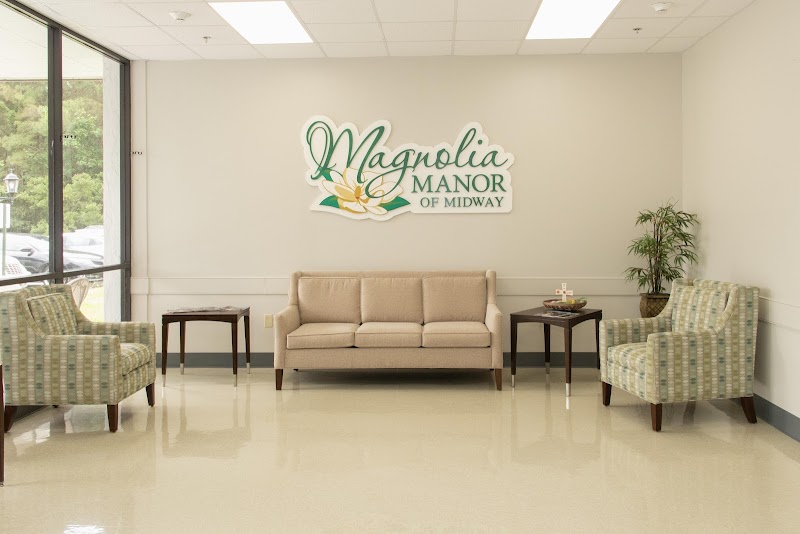
652 NORTH COASTAL HIGHWAY 17, MIDWAY, GA 31320 (912) 884-3361
Non profit - Corporation 169 Beds MAGNOLIA MANOR SENIOR LIVING Data: November 2025
Trust Grade
65/100
#136 of 353 in GA
Last Inspection: June 2024

Within standard 12-15 month inspection cycle. Federal law requires annual inspections.

Overview

Magnolia Manor of Midway has a Trust Grade of C+, indicating it is slightly above average but not without concerns. It ranks #136 out of 353 nursing homes in Georgia, placing it in the top half of facilities in the state, and is the only option in Liberty County. Unfortunately, the facility is trending worse, with issues increasing from 6 in 2019 to 7 in 2024. Staffing is a strength, rated at 4 out of 5 stars with a low turnover rate of 31%, which is significantly better than the state average. However, there have been some concerning incidents, such as the failure to properly label opened food items and expired foods in the kitchen, as well as not establishing a surveillance system for infections, which raises potential health risks for residents. Overall, while there are strengths in staffing, there are also notable weaknesses that families should consider.

Trust Score
C+
65/100
In Georgia
#136/353
Top 38%
Safety Record
Low Risk
No red flags
Inspections
Getting Worse
6 → 7 violations
Staff Stability
○ Average
31% turnover. Near Georgia's 48% average. Typical for the industry.
Penalties
✓ Good
No fines on record. Clean compliance history, better than most Georgia facilities.
Skilled Nurses
○ Average
Each resident gets 35 minutes of Registered Nurse (RN) attention daily — about average for Georgia. RNs are the most trained staff who monitor for health changes.
Violations
⚠ Watch
13 deficiencies on record. Higher than average. Multiple issues found across inspections.
★★★☆☆
3.0
Overall Rating
★★★★☆
4.0
Staff Levels
★★☆☆☆
2.0
Care Quality
★★★☆☆
3.0
Inspection Score
Stable
2019: 6 issues
2024: 7 issues

The Good

  • 4-Star Staffing Rating · Above-average nurse staffing levels
  • Full Sprinkler Coverage · Fire safety systems throughout facility
  • No fines on record
  • Staff turnover below average (31%)

    17 points below Georgia average of 48%

Facility shows strength in staffing levels, fire safety.

The Bad

3-Star Overall Rating

Near Georgia average (2.6)

Meets federal standards, typical of most facilities

Staff Turnover: 31%

15pts below Georgia avg (46%)

Typical for the industry

Chain: MAGNOLIA MANOR SENIOR LIVING

Part of a multi-facility chain

Ask about local staffing decisions and management

The Ugly 13 deficiencies on record

Jun 2024 7 deficiencies
CONCERN (D)

Potential for Harm - no one hurt, but risky conditions existed

Resident Rights (Tag F0550)

Could have caused harm · This affected 1 resident

**NOTE- TERMS IN BRACKETS HAVE BEEN EDITED TO PROTECT CONFIDENTIALITY** 2.Review of the Electronic Medical Record (EMR) revealed R7 was admitted with diagnoses of but not limited to type 2 diabetes me...

Read full inspector narrative →
**NOTE- TERMS IN BRACKETS HAVE BEEN EDITED TO PROTECT CONFIDENTIALITY** 2.Review of the Electronic Medical Record (EMR) revealed R7 was admitted with diagnoses of but not limited to type 2 diabetes mellitus with diabetic chronic kidney disease, end stage renal disease, and chronic diastolic (congestive) heart failure. Review of the Physician Orders revealed an order for suprapubic catheter care every shift. Observation on 6/11/2024 at 1:53 pm revealed R7 suprapubic catheter in place; catheter drainage bag was hanging on the side of the bed with a large amount of urine inside; there was no dignity bag observed covering the drainage bag. Observation on 6/12/2024 at 3:00 pm R7 suprapubic catheter in place catheter drainage bag hanging on side of bed there was no dignity cover observed covering the drainage bag. Observation on 6/13/2024 at 2:33 pm revealed R7 suprapubic catheter in place with drainage bag hanging on side of bed; drainage bag was not placed in a dignity bag. Interview on 6/13/2024 at 2:39 pm with CNA GG revealed she cleans around R7's catheter site to ensure it does not move, and empty's the drainage bag. CNA GG revealed R7's drainage bag should have been covered and placed inside a dignity bag. Interview on 6/13/2024 at 2:43 pm with Licensed Practical Nurse (LPN FF) revealed R7's drainage bag should be in a privacy bag when visible to the public but may have been left on his wheelchair. Interview on 6/13/2024 at 3:08 pm the Unit Manager revealed R7's drainage bag should always be covered. The CNAs and Nurses are responsible for making sure the dignity bag is always in place to promote dignity of residents that are utilizing catheters. Based on observations, staff interviews, record review, and a review of the facility policy titled Treatment of Residents, the facility failed to ensure privacy was provide during Activity of Daily Living (ADL) care for one of nine residents (R) (R23), the facility also failed to ensure a privacy bag was provided for one of three residents R7 that utilized a urinary catheter. Findings include: Review of the undated facility policy titled, Treatment of Residents under Intent: It is the intent of facility that all residents should be treated fairly and with kindness, respect, and dignity. Under Procedural Guidelines number (3). Residents should be examined and treated in a manner that maintains the privacy of their bodies. A closed door or drawn curtain shields the resident from passers-by. (4). Privacy of a resident body should be maintained during toileting, bathing and other activities of personal hygiene. 1.Record review for R23 revealed the following diagnoses but not limited to atrial fibrillation, malignant neoplasm of right breast, and rheumatoid arthritis. Quarterly Minimum Data Set (MDS) assessment dated [DATE] assessed a Brief Interview for Mental Status Score (BIMS) of six indicating severe cognitive impairment. Continued review of the assessment revealed that R23 was dependent for all ADL's and always incontinent for bladder and bowel. During an observation on 6/11/2024 at 12:07 pm revealed certified nursing assistant (CNA), CNA AA and CNA BB providing peri care services to the resident. Continued observation of the care services being provided to R23 revealed that privacy curtains were not pulled to provide full privacy (curtains were pulled to end of the bed board and did not enclose the bed) allowing view of the resident to anyone entering the room. In addition, the window blinds were open allowing outside view of the resident. During an interview at the time of the observation on 6/11/2024 at 12:08 pm with Assistant Director of Nursing (ADON) and CNA BB, both staff confirmed that resident was not provided full privacy while care was being rendered. The ADON reminded CNA BB to close the window blinds and ensure privacy curtains enclosed the residents' bed. Interview on 6/13/2024 at 11:52 am, CNA AA confirmed that she failed to provide full visual privacy by not pulling the privacy curtains and closing the window blinds while providing peri care/incontinent care for R23.
CONCERN (D)

Potential for Harm - no one hurt, but risky conditions existed

Deficiency F0558 (Tag F0558)

Could have caused harm · This affected 1 resident

**NOTE- TERMS IN BRACKETS HAVE BEEN EDITED TO PROTECT CONFIDENTIALITY** Based on observations, staff interviews, record review, review of facility documents, and review of the facility policy titled, ...

Read full inspector narrative →
**NOTE- TERMS IN BRACKETS HAVE BEEN EDITED TO PROTECT CONFIDENTIALITY** Based on observations, staff interviews, record review, review of facility documents, and review of the facility policy titled, Residents' Rights Protection, the facility failed to ensure one of nine residents (R) R18 was provided with a chair that accommodated his height and ensured body alignment. The facility also failed to ensure two of 28 residents, R16 and R51 were assessed for placement on the Secured Unit (Unit 3). The deficient practice had the potential to prevent R16, R18, and R51 from receiving care that accommodated their individual care needs. Findings include: Review of the undated facility policy titled, Residents' Rights Protection under Specific Rights: 1. Rights to Self-Determination the resident has the right: 1C.) to reside and receive services with reasonable accommodation by the facility of individual needs and preferences. A.Record review for R18 revealed diagnoses included but not limited to, dementia, benign prostatic hyperplasia, personal history of transient ischemic attack (TIA), and cerebral infarction without residual deficits. The Quarterly Minimum Data Set Assessment (MDS) dated [DATE] assessed a Brief Interview for Mental Status (BIMS) score of five indicating severe cognitive impairment, non-ambulatory, dependent for mobility and transfer. Resident was assessed for height of 73 inches (6 ft 1 inches) and weight of 266 lbs. (pounds). Observation on 6/11/2024 starting at 11:00 am to 2:07 pm, R18 was observed in the activity/common area sitting in a Geri-chair in a semi-reclining position. Ongoing observation revealed residents' upper torso and lower torso (buttock, thigh, leg) was positioned slouched and downward in the chair. Residents' arms and hands were observed hanging off the arm rest and draped down over the chair. Interview and observation on 6/12/2024 at 2:10 pm with the Activity Director (AD) confirmed R18 was slumped down and sliding downward in the chair during activities. Interview on 6/12/2024 at 2:11 pm, Certified Nursing Assistant (CNA) JJ, who served as an activity assistant, confirmed that R18 had been up in the activity area since 10 am and he was not in his regular chair. Interview on 6/12/2024 at 2:12 pm, CNA KK confirmed that R18 was not sitting in his assigned Geri-chair. Further interview also revealed resident was already up and dressed, by the night shift, and placed in the chair when she arrived to work today at 6:57 am. Interview on 6/12/2024 at 2:23 pm the Director of Nursing (DON) confirmed that R18 was not sitting in his assigned Geri-chair that was provided by Hospice. The DON also confirmed that the chair did not fit the height and body alignment for R18, and the residents Geri-chair was in the bathroom. Further interview also revealed residents chair was cleaned the night before and there was not an attempt by staff to put resident in the chair he was assigned. Observation and interview on 6/14/2024 at 11:13 am, R18 was observed receiving services from the Certified Occupation Therapy Assistant (COTA) the resident was noted not to be sitting upright and his body not aligned. During the observation the COTA revealed that based on her assessment of the resident, the chair provided by Hospice services did not accommodate the residents' needs and she would reach out to the nursing staff with her findings. B. Review of the facility document titled, Special Care Unit Criteria Review revealed a checklist used to determine placement in the Special Care Unit. The document questions included under number 1. Resident has Alzheimer's or related dementia diagnosis. 2. Resident habitually wanders or would wander out of the building and would not be able to find way back. 4. Resident is a serious danger to self or others. 5. Less restrictive alternatives have been unsuccessful. 6. Resident is able to ambulate independently. Review of the facility document titled,Resident Rights -Room Change revealed a section titled Room changes for medical or safety reasons: 1. A move for medical, or safety reasons will be determined by the physician, nursing staff, and the Social Service department. Record review for R16 revealed diagnoses including, but not limited to, schizoaffective disorder, bipolar type, mood disorder, and vascular dementia. Review of the Annual MDS assessment dated [DATE] and the Quarterly MDS assessment dated [DATE] documented the resident had no behaviors, was not ambulatory and was dependent on staff for Activities of Daily Living (ADL) care. Review of R16 's nursing progress note dated 7/4/2023 and a Facility Reported Incident dated 7/4/2023 documented that R16 would be evaluated to be taken off the Secured Unit. Review of a psychiatric consult dated 7/7/2023 by a Nurse Practitioner documented the resident has no wandering behaviors. Record review for R51 revealed diagnoses including, but not limited to Alzheimer's Disease. Further review revealed that R51 received hospice services. Review of the Annual MDS assessment dated [DATE] and the Quarterly MDS assessment dated [DATE] documented a BIMS score of 00 indicating severe cognitive impairment and was dependent on staff for care. Review of R51's care plan documented care areas of receiving hospice care and required assistance for all ADLs. Review of a form titled, Functional Abilities - During Stay dated 5/21/2024 documented R51 was dependent on staff for care, unable to transfer, was not ambulatory, and dependent for mobility with wheelchair. In an interview on 6/12/2024 at 2:48 pm, the Assistant Director of Nursing (ADON) reported that both R16 and R51 were non-ambulatory and had not exhibited behaviors and that R16 and R51 were dependent on staff for care. She further stated that residents with behaviors should not be placed with residents who have dementia and that she was unaware that R16 was supposed to be assessed to move off the Secured Unit. In an interview on 6/12/2024 at 3:48 pm, the DON reported that the Secure Unit is not a memory care unit, and it was for residents who have elopement tendencies. She could not explain why R16 remained in the Secure Unit and was unaware that the resident was supposed to be assessed to be moved. She also confirmed that R51 received hospice services and resided in the Secured Unit and did not have any wandering tendencies and was non ambulatory. In an interview on 6/13/2024 at 4:47 pm, the Administrator and DON reported that residents are placed in the Secure Unit for safety precautions, such as elopement risks. She reported she was unaware that R51 was dependent on staff for ADL care. The DON stated that the criteria or intent for placing the resident in the unit was to keep the resident safe. The DON stated that R16 displayed no behavior problems or had exit seeking tendencies.
CONCERN (D)

Potential for Harm - no one hurt, but risky conditions existed

Safe Environment (Tag F0584)

Could have caused harm · This affected 1 resident

**NOTE- TERMS IN BRACKETS HAVE BEEN EDITED TO PROTECT CONFIDENTIALITY** Based on observations and staff interview, the facility failed to maintain a clean sanitary environment free of odor, replacing ...

Read full inspector narrative →
**NOTE- TERMS IN BRACKETS HAVE BEEN EDITED TO PROTECT CONFIDENTIALITY** Based on observations and staff interview, the facility failed to maintain a clean sanitary environment free of odor, replacing missing floor tiles, and ensure resident's equipment was free from rust on two of three halls. Finding include: A policy for this specific issue was requested but not provided. 1. Observations on 6/11/2024 at 11:50 am, 6/12/2024 at 2:00 pm., and 6/13/2024 at 12:49 pm, in bathroom [ROOM NUMBER]-306 on Hall 3, a strong urine odor and missing floor tiles were noted. 2. Observation on 6/11/2024 at 12:02 pm and 6/13/2024 at 12:52 pm, in bathroom [ROOM NUMBER]-219 on Hall 2 revealed a raised toilet seat was positioned over the toilet. A closer observation revealed dark brown substances coating the frame of the raised toilet seat. 3. Observation on 6/11/2024 at 12:03 pm and 6/13/2024 at 12:23 pm, in bathroom [ROOM NUMBER]-223 on Hall 2 revealed a raised toilet seat positioned over the toilet. A closer observation revealed dark brown substances coating the frame of the raised toilet seat. During a tour of the bathrooms on 6/13/2024 between 12:49 pm and 12:53 pm, with the Maintenance Director and Director of Nursing (DON), both confirmed the urine odor, missing floor tiles, and they identified the brown substance on the toilet chairs as rust. They revealed that replacing the floor tiles and the raised toilet seat would eliminate the odor in bathroom. The Maintenance Director reported being unaware of the problem and reported staff are required to submit a work order for any repairs. Interview on 6/13/2024 at 1:09 pm, the Housekeeping Supervisor reported being unaware of strong urine odor in room [ROOM NUMBER]-306 and stated that staff had a log to address any issues.
CONCERN (D)

Potential for Harm - no one hurt, but risky conditions existed

Comprehensive Care Plan (Tag F0656)

Could have caused harm · This affected 1 resident

**NOTE- TERMS IN BRACKETS HAVE BEEN EDITED TO PROTECT CONFIDENTIALITY** 2.Review of the Electronic Medical Record (EMR) revealed that R40 was admitted to the facility with diagnoses of but not limited...

Read full inspector narrative →
**NOTE- TERMS IN BRACKETS HAVE BEEN EDITED TO PROTECT CONFIDENTIALITY** 2.Review of the Electronic Medical Record (EMR) revealed that R40 was admitted to the facility with diagnoses of but not limited to, hemiplegia/hemiparesis following cerebral infarction affecting left non-dominant side, unspecified dementia without behavioral disturbance, personal history of Transient Ischemic Attack (TIA), and cerebral infarction without residual deficits. Review of the Quarterly MDS dated [DATE] revealed that R40 had a BIMS score of nine (9), indicating moderate cognitive impairment. Further review of the Quarterly MDS revealed R40 required total assistance with bed mobility, transfer, bathing, dressing, and toileting. Precautions for contractures were noted on the Quarterly MDS. Review of the Plan of Care for R40 revealed no documentation of a plan of care for Restorative Nursing Services. Interview on 6/13/2024 at 3:33 pm the Restorative Care/Registered Nurse (RN) revealed she did not complete an assessment on R40 to receive Restorative Nursing Services for mobility. Based on staff interview ,record review, and review of the facility policy titled, Care Planning Policy, the facility failed to develop a plan of care for two of 14 residents (R) (R16 and R40). Specifically, the facility failed to create a plan of care to monitor and prevent future occurrences of abuse for R16 and failed to develope a care plan for restorative services for R40. Findings include: Review of the facility policy titled, Care Planning Policy dated October 2016 under Procedural Guidelines number 1. A comprehensive person-centered care plan shall be developed and implemented for each resident that includes measurable objectives and time frames that meet a resident 's medical, nursing, and mental and psychosocial needs that are identified in the comprehensive assessments. Record review of R16's medical record revealed the following diagnoses but not limited to cerebral infarction, vascular dementia moderate behavior disturbances, epilepsy, intermittent explosive disorder, and schizoaffective bipolar disorder. The Quarterly Minimum Data Set (MDS) dated [DATE] assessed a Brief Interview for Mental Status score (BIMS) of 99 indicating severe cognitive impairment. Record review of nurse progress note dated 7/4/2023 at 2:11 pm documented that R16 had a resident-to-resident altercation with another resident on his hall. R16 was assessed and noted to have an injured upper lip. Review of the Facility Reported Incident (FRI) dated 7/4/2023 documented the incident and included no care plan attached. Record review for R16 revealed no care plan was developed for abuse. Interview on 6/12/2024 at 4:06 pm, Unit Manager LL printed out and reviewed the resident care plan and confirmed no plan of care for abuse. During an interview with the MDS Coordinator on 6/13/2024 at 11:21 am, the MDS Coordinator reviewed the resident 's care plan with the surveyor and confirmed that R16's record did not contain a plan of care for abuse. She reported that she was unaware that the abuse care plan needed to be done on the victim and the abuser. The Director of Nursing (DON) entered the office during the time that the MDS was looking for the record. She was informed that the abuse care plan was missing. The DON explained to the MDS Coordinator that abuse care plan should have been completed for R16.
CONCERN (D)

Potential for Harm - no one hurt, but risky conditions existed

Deficiency F0688 (Tag F0688)

Could have caused harm · This affected 1 resident

**NOTE- TERMS IN BRACKETS HAVE BEEN EDITED TO PROTECT CONFIDENTIALITY** 3.Review of the Electronic Medical Record (EMR) revealed that R40 was admitted to the facility with diagnoses of but not limited...

Read full inspector narrative →
**NOTE- TERMS IN BRACKETS HAVE BEEN EDITED TO PROTECT CONFIDENTIALITY** 3.Review of the Electronic Medical Record (EMR) revealed that R40 was admitted to the facility with diagnoses of but not limited to, hemiplegia/hemiparesis following cerebral infarction affecting left non-dominant side, unspecified dementia without behavioral disturbance, personal history of Transient Ischemic Attack (TIA), and cerebral infarction without residual deficits. Review of the Quarterly MDS dated [DATE] revealed that R40 had a BIMS of nine (9), indicating moderate cognitive impairment. Further review of the Quarterly MDS revealed R40 required total assistance with bed mobility, transfer, bathing, dressing, and toileting. Precautions for contractures were noted on the Quarterly MDS. Review of the Physician Orders showed no documentation for Restorative Services. Observation on 6/12/2024 at 3:06 pm revealed R40 lying in bed alert with eyes open unable to move left hand or arm; no splint noted. Observation on 6/13/2024 at 2:28 pm revealed R40 sitting up in bed talking with roommate using one hand (right) to pull the covers back and attempt to move the bedside table; R40 was unable to move his left hand or arm to pull the covers back. Interview on 6/13/2024 at 3:24 pm the Director of Nursing (DON) revealed R40 was not receiving Restorative Care Services secondary to being on hospice care. The DON revealed a consultation for Restorative Care Services had not been completed. Interview on 6/13/2024 at 3:33 pm the Restorative Care Nurse/RN revealed she did not complete an assessment on R40 to receive Restorative Care Services for mobility or range of motion. The RN revealed that she was told if a resident was on hospice services they did not get restorative services, but later found that to be untrue. Interview on 6/13/2024 at 3:33 pm the Restorative Care Nurse/RN revealed she did not complete an assessment on R40 to receive Restorative Care Services for mobility or range of motion. The RN revealed that she was told if a resident was on hospice services they did not get restorative services, but later found that to be untrue. Based on observations, staff interviews, record review, and review of the facility policy titled, Restorative Nursing, the facility failed to ensure three of 18 residents (R), (R18, R26, and R40) received services required to maintain or improve their functional abilities. Specifically, the facility failed to ensure R18 was provided with a Geri-chair that was properly fitted to ensure adequate body alignment, failed to provide equipment (footrest) for R26 to prevent potential for foot drop, and failed to provide Range of Motion (ROM) for left hand contracture for R40. Findings include: Review of the undated facility policy titled, Restorative Nursing revealed It is the Intent of the facility to provide nursing interventions that promote the resident's ability to attain or maintain the highest level of functioning as possible. Procedural guidelines: number 2. The facility's rehabilitative/restorative nursing care program is designed to assist each resident to maintain their highest level of functioning. Number 3. The Interdisciplinary team determines restorative need of the resident through assessment, planning, implementation, and evaluation. 4. All personnel may identify a resident with a functional decline/deficit that may be referred to Restorative Nursing. 1. Record review for R18 revealed the following diagnoses but not limited to unspecified dementia, chronic obstructive pulmonary disease, cerebrovascular disease, and heart failure. The Annual Minimum Data Set (MDS) dated [DATE] assessed a Brief Interview for Mental Status (BIMS) score of five indicating severe cognitive impairment and extensive assistance with all Activities of Daily Living Skills (ADL) except eating. Observation on 6/11/2024 starting at 11:00 am to 2:07 pm, R18 was observed in the activity/common area sitting in a Geri-chair in a semi-reclining position. Ongoing observation revealed residents' upper torso and lower torso (buttock, thigh, leg) was positioned slouched and downward in the wheelchair. Residents' arms and hands were observed hanging off the arm rest and draped down over the chair. Interview on 6/12/2024 at 2:23 pm the Director of Nursing (DON) confirmed that R18 was not sitting in his assigned Geri-chair that was provided by Hospice. The DON also confirmed that the chair did not fit the height and body alignment for R18, and the residents Geri-chair was in the bathroom. A further interview also revealed the residents' chair was cleaned the night before and there was not an attempt by staff to put the resident in the chair he was assigned. 2. Record review for R26 revealed the following diagnoses but not limited to intellectual disabilities. The Quarterly MDS assessment dated [DATE] assessed the resident as having severe cognitive impairment and dependent for all ADLs. Observation on 6/12/2024 at 10:27 am until 2:27 pm revealed R26 sitting in his wheelchair in the activity/common area. R26 was observed sitting in a wheelchair with his feet dangling in the air and not touching the floor. Further observation revealed there was not a footrest attached to the wheelchair. Interview on 6/12/2024 at 2:48 pm with Unit Nurse Supervisor Licensed Practical Nurse (LPN) MM confirmed that R26 should have had a footrest attached to his chair. She reported that R26 is at risk for edema and foot drop. She stated the certified nursing assistants (CNAs) were responsible for ensuring that the footrests are attached to the residents' wheelchairs during ADL care. Interview on 6/14/2024 at 11:33 am with Occupational Therapist (OT) revealed that the residents' footrest and wheelchair can be lowered to prevent the resident foot from dangling in the air. She further stated that if the resident decides to remove his foot from the footrest the wheelchair being lowered will allow the resident to rest his foot on the floor.
CONCERN (D)

Potential for Harm - no one hurt, but risky conditions existed

Infection Control (Tag F0880)

Could have caused harm · This affected 1 resident

Based on observations, staff interviews, record review, and review of the facility policy titled Consideration for Use of Enhanced Barrier Precautions in Skilled Nursing Facilities, the facility faile...

Read full inspector narrative →
Based on observations, staff interviews, record review, and review of the facility policy titled Consideration for Use of Enhanced Barrier Precautions in Skilled Nursing Facilities, the facility failed to ensure staff used appropriate Personal Protective Equipment (PPE) for one of five residents (R) (R23) reviewed for Enhanced Barrier Precautions. This deficient practice had the potential to place R23 and other residents at risk for avoidable infections. Findings include: A review of the facility policy titled, Consideration for Use of Enhanced Barrier Precautions in Skilled Nursing Facilities, dated June 2021, under Executive Summary number 2. Enhanced Barrier Precautions (EBP) is an approach of target gown and glove use during high-contact resident care activities, designed to reduce transmission of S. aureus and MDRO (multidrug -resistant organism). 3. EBP may be applied when contact precautions do not otherwise apply to residents with any of the following: Wounds or indwelling medical devices, regardless of MDRO colonization status. Infection or colonization with an MDRO. 4. Effective implementation of EBP requires staff training on the proper use of personal protective equipment (PPE) and the availability of PPE with hand hygiene products at the point of care. Record review of R23 's medical record revealed the following diagnoses, but not limited to, malignant neoplasm of unspecified site of right female breast (wound). Record review of the Physician Order Form, dated June 2024, documented an order for Enhanced Barrier Precautions related to a wound. Observation on 6/11/2024 at 12:07 pm revealed Certified Nursing Assistants (CNA) KK and CNA BB providing incontinent care to R23. Continued observation revealed that CNA BB did not wear PPE while providing incontinent care. Further observation revealed there was no PPE readily available for staff use in the hallway or inside R23's room, nor a container for discarding PPE. Observation revealed there was Enhanced Barrier Precautions signage on R23's door. The sign did not provide private specific instructions about donning and doffing (putting on and removing) PPE. Observation on 6/11/2024 at 12:07 pm, revealed the Assistant Director of Nursing (ADON) provided instruction to the CNAs about providing privacy during care by using privacy curtains but did not mention the failure to wear PPE during high-contact resident care. In an interview on 6/13/2024 at 3:30 pm, the ADON stated that her focus was on the CNAs not pulling the privacy curtains and not the PPE. She reported that PPE is kept at the nurse station for CNAs to use during patient care. She confirmed that CNA KK and CNA BB did not wear PPE during high-contact resident care. In an interview on 6/14/2024 at 9:20 am, the Administrator reported being unaware of the issues regarding staff not wearing PPE while providing high-contact resident care. She reported that her expectations were that staff should wear PPE and that in-services would be provided to staff. In an interview with the Infection Control Preventionist (IPC) on 6/14/2024 at 11:00 am, she reported that her expectation is that staff wears PPE while providing high-contact resident care. She confirmed providing in-service to staff about PPE use. She stated that PPE was kept at the front desk and not at the resident rooms. She reported that her plans were to make changes and provide more specific instructions about PPE use. The IPC placed a second EBP sign on R23's door with instructions on donning and doffing PPE. In an interview on 6/14/2024 at 11:35 am, CNA BB confirmed not wearing PPE while providing incontinent care to R23. She reported that she just forgot to wear PPE and was more focused on resident care.
CONCERN (F)

Potential for Harm - no one hurt, but risky conditions existed

Food Safety (Tag F0812)

Could have caused harm · This affected most or all residents

**NOTE- TERMS IN BRACKETS HAVE BEEN EDITED TO PROTECT CONFIDENTIALITY** Based on observations and staff interviews, the facility failed to properly label opened food items in the walk-in refrigerator ...

Read full inspector narrative →
**NOTE- TERMS IN BRACKETS HAVE BEEN EDITED TO PROTECT CONFIDENTIALITY** Based on observations and staff interviews, the facility failed to properly label opened food items in the walk-in refrigerator and walk-in freezer, discard expired foods in the walk-in refrigerator, clean the ice machine, and ensure that kitchen staff wore beard guards while in the food preparation area. These deficient practices had the potential to adversely affect the 72 residents receiving an oral diet. Findings include: During a tour of the kitchen on 6/11/2024 from 11:00 am to 12:00 pm, observation of the ice machine, located next to the handwashing station, revealed dust and dirt around the inside of the ice machine in the top corners and the bottom interior of the lid. Observation of the walk-in cooler on 6/11/2024 at 11:09 am revealed two bags of romaine salad mix and one bag of [NAME] slaw mix with a use-by date of 6/2/2024. Continued observation of the walk-in cooler revealed three half-stacks of cheese not in the original packaging and undated and unlabeled, and one undated and unlabeled open box of liquid eggs. Observation of the walk-in freezer on 6/11/2024 at 11:18 am revealed three packs of waffles removed from the original package which were unlabeled and undated, and two packs of pancakes not in the original packaging unlabeled and undated. Observation on 6/11/2024 from 11:00 am to 12:00 pm, during the tour of the kitchen, revealed Dietary Cooks CC and EE were not wearing beard guards while in the kitchen. In an interview on 6/11/2024 at 11:30 am, Dietary [NAME] CC stated he was the acting Dietary Manager. Dietary [NAME] CC revealed the ice machine was cleaned weekly by the kitchen aides and the last cleaning was completed on 5/27/2024. During further interview, Dietary [NAME] CC revealed food items should be labeled and dated when opened and removed from the original packaging, and expired foods should be discarded. He confirmed staff with beards should always wear beard guards while in the kitchen. An interview on 6/13/2024 at 2:18 pm with the Administrator revealed her expectation was for the male dietary aides with facial hair to always wear a beard guard while in the kitchen. The Administrator revealed she expected the dietary staff to label and date food items out of the original package and opened food items, and the scheduled cleaning for the ice machine should be followed.
Mar 2019 6 deficiencies
CONCERN (D)

Potential for Harm - no one hurt, but risky conditions existed

Deficiency F0657 (Tag F0657)

Could have caused harm · This affected 1 resident

Based on observations, staff interviews, record review, and review of the facility policy titled, Care Plans, Comprehensive Person-Centered the facility failed to ensure that resident care plans were ...

Read full inspector narrative →
Based on observations, staff interviews, record review, and review of the facility policy titled, Care Plans, Comprehensive Person-Centered the facility failed to ensure that resident care plans were revised for one of 23 residents (R#32). Findings include: Review of the facility's policy titled Care Plans, Comprehensive Person-Centered revised December 2016 noted: A comprehensive care plan that includes measurable objectives and timetables to meet the resident's physical, psychosocial and functional needs is developed and implemented for each resident .13. Assessments of residents are ongoing and care plans are revised as information about the resident and the resident's conditions change. 14. The interdisciplinary team must review and update the care plan: a. When there has been a significant change in the resident's condition; b. When the desired outcome is not met; c. When the resident has been readmitted to the facility from a hospital stay; and d. At least quarterly, in conjunction with the required quarterly MDS [Minimum Data Set] assessment. Review of the clinical record for R#32 revealed that the resident was admitted with diagnoses that included: hypertension, Alzheimer's disease, non-Alzheimer's dementia and generalized muscle weakness. Review of the Annual Minimum Data Set (MDS) assessment for R#32 dated 12/11/18 revealed that the resident was severely cognitively impaired for decision making. Review of the facility's Fall Report dated 8/27/18 revealed that while in another resident's room, R#32 tripped over a bed and fell to the floor. The resident was sent to the emergency room for evaluation and treatment and was found to have a hematoma (bruise). Review of a Progress note for R#32 dated 10/17/18 at 5:04 p.m. documented the following: R#32 had an unwitnessed fall that resulted in a 1.5-inch gash along the left side of her forehead. The resident was sent to the emergency room for evaluation and treatment. Review of a Progress Note dated 10/25/18 at 3:18 a.m. documented the following: R#32 returned from the hospital after being transported out earlier in the shift after a fall with injury. Review of a Risk for Falls care plan for R#32 that was in place at the time of the resident's falls occurred documented the following: I am at risk for falls r/t (related to) psychotropic medication use. Goal: I will be free from fall related injuries through the next review date (3/21/17). Interventions: Encourage to wear non-skid socks/shoes when ambulating or using the wheelchair (initiated 2/6/17); Encourage resident to use call light and wait for assistance as needed (initiated 2/6/17). Further review revealed that the care plan for R#32 had not been updated or revised since 2017. Review of the Risk for Falls care plan dated 12/14/18, after the residents Annual Assessment on 12/11/18, documented the following: I am at risk for falls r/t psychotropic medication use. Goal: I will be free from fall r/t injuries through the next review date (5/23/19). Interventions: I had a fall on 12/18/17 - frequent checks (initiated 12/18/17); I had a fall on 10/17/18 - Staff to do frequent checks (initiated 10/17/18) Encourage to wear non-skid socks/shoes when ambulating or using the wheelchair (initiated 12/14/18). Encourage resident to use call light and wait for assistance as needed (initiated 12/14/18); Staff will encourage resident participation in unit activities and praise her when she walks at an appropriate pace (12/14/18). Review of the care plans revealed that the care plan did not reflect the actual falls that occurred on 8/27/18 or 10/24/18. Interview on 2/21/19 at 10:12 a.m. with the Administrator revealed that she had been employed at the facility since November 2018. She stated the facility's Director of Nursing (DON) and the Assistant DON had been at the facility for approximately one month. The Administrator said that Administrative nursing staff and the Minimum Data Set (MDS Coordinator) were responsible for the oversight in making sure resident care plans were revised, as needed. Interview on 2/22/19 at 5:20 p.m. in the conference room with the facility's MDS Coordinator revealed she was responsible for completing some of the care plans. The MDS Coordinator stated that because she sometimes had to work the floor, the duties of completing and updating resident care plans had been divided up between different departments. She said, for example, Therapy sometimes completed the fall care plans and that the Dietary Manager completed the nutrition care plans. The MDS Coordinator said some resident care plans should have been revised/updated but it was difficult to complete them because many nurses were working the floor. Post survey interview on 3/15/19 at 11:26 a.m. with the Administrator with the MDS Coordinator present, revealed that the care plans for R#32 were not updated or revised after the incidents that occurred on 8/27/18 and 10/24/18 and that the care plans should have been updated and revised. Cross reference F689
CONCERN (D)

Potential for Harm - no one hurt, but risky conditions existed

Quality of Care (Tag F0684)

Could have caused harm · This affected 1 resident

Based on observations, staff interviews and record reviews, the facility failed to administer nystatin cream twice a day as ordered by the Physician for one resident of 23 residents (R#21). Findings ...

Read full inspector narrative →
Based on observations, staff interviews and record reviews, the facility failed to administer nystatin cream twice a day as ordered by the Physician for one resident of 23 residents (R#21). Findings include: Review of the clinical record for R#21 revealed that the resident was admitted with diagnoses that included hemiplegia and renal insufficiency. According to the Quarterly Minimum Data Set (MDS) assessment for R#21 dated 11/29/18 the resident was severely cognitively impaired and was not able to answer the questions. This MDS also revealed that the resident required extensive to total assistance for bed mobility, toileting and bathing. Record review revealed a Physician's Order for R#21 dated 11/17/18 for Nystatin Cream 100000 unit/gm (gram) apply to penis topically every 12 hours for redness with white splotches. Review of the Treatment Administration Record (TAR) for February 2019 for R#21 revealed that the nystatin cream was administered six times from 2/1/19 through 2/21/19 and per the 11/17/18 Physician order the nystatin cream should have been administered 42 times. Interview with Licensed Practical Nurse (LPN) BB outside of the resident's room on 2/19/19 at 10:35 a.m. revealed that according to the resident's TAR, R#21 had an order for nystatin cream to administer every (q) 12 hours topically to the top of his penis and that the nystatin was last administered on 2/18/19 at 3:00 p.m. Interview on 2/20/19 at 1:50 p.m. with LPN Wound Nurse (WN) II revealed that R#21's order for nystatin was to be administered every day (q d). LPN/WN II said the nurses on duty (overnight and on the weekends) had access to the treatment cart by key when certain medications needed to be administered. Continued interview revealed that LPN/WN II said R#21's nystatin was administered only once each day, so the night shift did not have to administer the medication. Further interview with LPN WN II revealed that when asked to clarify and review the resident's order for nystatin and LPN WN II stated that the nystatin cream was ordered to be administered every 12 hours. Follow-up interview on 2/21/19 at 9:30 a.m. with LPN WN II revealed that during her shifts, she was the only nurse who completed wound treatments, and that when she was not in the building, the floor nurses were responsible for administering treatments. Further interview with LPN WW II revealed that R#21 did not receive the nystatin cream in accordance with the Physician's orders.
CONCERN (D)

Potential for Harm - no one hurt, but risky conditions existed

Accident Prevention (Tag F0689)

Could have caused harm · This affected 1 resident

**NOTE- TERMS IN BRACKETS HAVE BEEN EDITED TO PROTECT CONFIDENTIALITY** Based on observations, staff interviews, record review and review of the facility policy titled, Falls and Fall Risk, Managing t...

Read full inspector narrative →
**NOTE- TERMS IN BRACKETS HAVE BEEN EDITED TO PROTECT CONFIDENTIALITY** Based on observations, staff interviews, record review and review of the facility policy titled, Falls and Fall Risk, Managing the facility failed to evaluate the effectiveness of care planned interventions and failed to conduct a root cause of analysis of falls to determine the underlying cause of the resident's falls and failed to implement new interventions to prevent future falls for one resident of 23 residents. Findings include: Review of the facility's policy titled, Falls and Fall Risk, Managing revised December 2007 noted Based on previous evaluations and current data, the staff will identify interventions related to the resident's specific risks and causes to try to prevent the resident from falling and to try to minimize complications from falling .If falling recurs despite initial interventions, staff will implement additional or different interventions, or indicate why the current approach remains relevant. If underlying causes cannot be readily identified or corrected, staff will try various interventions, based on assessment of the nature or category of falling, until falling is reduced or stopped, or until the reason for the continuation of the falling is identified as unavoidable. Review of the clinical record for R#32 revealed that the resident was admitted into the facility on [DATE] with admitting diagnoses that included but were not limited to: hypertension, Alzheimer's disease, non-Alzheimer's dementia and generalized muscle weakness. Review of an Annual Minimum Data Set (MDS) assessment for R#32 dated 12/11/18 revealed that R#32 was severely cognitively impaired for decision making and that R#32 exhibited the behavior of wandering for one to three days during the assessment period. She was able to walk in the room and corridor with independence and had independence with locomotion on the unit. The resident had no impairment of upper and lower extremities and utilized no mobility devices. During the assessment period, R#32 had one fall with a major injury. Review of a Fall Risk Assessment, for R#32, dated 8/27/18 documented a score of 12 which indicated that the resident was assessed to be at moderate risk for falls Review of a Fall Risk assessment dated [DATE] documented a score of 17 indicating that R#32 was assessed to be at a high risk for falls Review of the fall care plan for R#32 dated 2/6/17, which was in place when the resident's fall occurred, documented the following: I am at risk for falls r/t (related to) psychotropic medication use. Review of the facility's Fall Report dated 8/27/18 revealed Resident (R#32) was noted lying on the floor of another resident's room and that a resident stated that R#32 tripped over a bed and fell to the floor. An assessment of R#32 was completed and revealed a hematoma to the right e forehead, bilateral knees were observed to have a reddish color and observed to have a small skin tear to left knee. A cold pack was applied to facial areas. R#32 was able to move all extremities and was alert with ongoing confusion via Alzthimiers [sic]. Resident is a wonderer [sic]. Very pleasant. Unable to voice pain. Received an order for R#32 to be sent to emergency room. Review of a Radiology report dated 8/27/18 documented that a CT (cat) scan of the resident's maxillofacial without contrast was obtained that revealed that the resident had a frontal scalp contusion (bruise). Record review revealed a progress note dated 10/17/18 at 5:04 p.m. that documented the following: R#32 was found on floor by (roommate) at approximately 4:45 p.m. [The writer] entered the room and found R#32 on her back beside the bed with a pool of blood under her head. A gash about 1 ½ [one and one half] inches long was observed on the resident's left side forehead area. Patient non-verbal but was awake and alert. A dressing was applied and EMS (Emergency Medical Services) was called to take R#32 to an acute care hospital. Record review revealed an Emergency Department Report dated 10/17/18 that documented the chief complaint was a fall that occurred just prior to arrival at the nursing home. A Radiology report of a CT of the resident's head without contrast dated 10/17/18 documents a left frontotemporal laceration. A Nurses Note dated 10/17/18 at 9:17 p.m. documents that, Resident arrived back from hospital with approx [sic] 8 [eight] sutures to lt [left] side of head .no acute intracranial abnormality with left frontotemporal scalp laceration. Record review revealed a Physician order dated 10/24/18 at 8:20 p.m. that documented the following: Send R#32 to (name of hospital) for evaluation r/t (related to) unwitnessed fall with injury. Record review of an Emergency Department report dated 10/24/18 documents chief complaint: injury to head and injury to face. The injuries occurred just prior to arrival. Clinical impression documents: head injury, laceration to forehead, fracture of the right index, long, and ring fingers. Review of a Radiology report dated 10/24/18 for a CT of the head without contrast documents the findings as: forehead scalp laceration. Review of a Radiology report dated 10/24/18 for three x-rays of R#32's right hand documents the following impression: fractures of the index, long, and ring fingers. Record review revealed a Progress note dated 10/25/18 at 3:18 a.m. Resident returned from acute care hospital after being transported out earlier in the shift at 8:50 p.m. for evaluation r/t (related to) a fall with injury. Res (sic) returned via stretcher x 2 [times two] EMS (Emergency Medical Staff) attendants, stable and alert. No visual signs of distress noted. Resident was evaluated for the head injury laceration to the forehead and laceration to the middle finger. R#32 sustained a fracture of the right index, long. and ring fingers as a result of the fall. Interview on 2/21/19 at 9:50 a.m. with the Administrator revealed that when a resident had a fall that resulted in major injury, a root cause analysis investigation should be completed and documented and that documentation of how the fall occurred should be noted in the resident's chart. The Administrator further stated that an investigation should be documented and should include whether the fall was witnessed; documentation of the full body assessment that occurred after the fall; and the investigation should also include information regarding how the fall occurred. Documentation received from the Administrator, for R#32, revealed that there was not any evidence that the residents falls, or injuries had been investigated. During a follow-up interview with the Administrator in the conference room on 2/21/19 at 10:12 a.m., the Administrator again confirmed a root cause analysis was to be completed for falls with injury and other falls in order to determine how they happened and how they can be prevented in the future. When asked how R#32 fell on [DATE], the Administrator was unable to say how the fall occurred and the Administrator confirmed that there was not any available documentation of how the fall occurred. The Administrator confirmed there was no documentation of any investigations regarding the falls that R#32 had on 8/27/18, 10/17/18 and 10/25/18. Continued interview with the Administrator revealed that the Administrator had been employed at the facility since November 2018 and that the Administrator stated that the facility's Director of Nursing (DON) and the Assistant DON had both been at the facility for approximately one month. The Administrator stated that while the Administrative nurses were responsible for completing fall investigations and root cause analysis, they were not employed on 8/27/18, 10/17/18, or 10/25/18 when R#32 fell. Post survey interview on 3/15/19 at 11:26 a.m. with the Administrator revealed that after investigating it was determined that the incident on 8/27/18 was unwitnessed. The Administrator confirmed that the incidents on 10/17/18 and 10/24/18 were unwitnessed and should have been considered to be injuries of unknown origin and that these incidents should have been investigated and reported but that they were not. Further interview with the Administrator revealed that on 8/27/18 the resident had a fall and obtained bruises to the forehead, right elbow, and left knee, on 10/17/18 R32 had an unwitnessed incident and received a laceration to her forehead that required nine sutures, and that on 10/24/18 the resident had an unwitnessed incident and received a laceration to the forehead that required sutures and three fingers were fractured. The Administrator revealed that what should have happened that did not happen is that a root cause analysis should have been conducted of the residents falls and new interventions should have been put in place to help to prevent future falls, such as moving the resident to Unit 3 (Memory Care unit) where there is more staffing in place that is able to provide more supervision. The Administrator stated that each incident should have been investigated and reported to the State Agency. Post Survey interview on 3/15/19 at 2:23 p.m. with the Medical Director (MD) revealed that he has been the MD approximately six years and that he was familiar with R#32 and that the resident has had a few falls. Further interview with the MD revealed that he would expect interventions to be assessed and he would expect staff to do everything possible to prevent falls.
CONCERN (E)

Potential for Harm - no one hurt, but risky conditions existed

Food Safety (Tag F0812)

Could have caused harm · This affected multiple residents

Based on observation, staff interview, and review of the facility policy titled, Sanitation the facility failed to ensure food was stored and prepared under sanitary conditions. Facility staff failed ...

Read full inspector narrative →
Based on observation, staff interview, and review of the facility policy titled, Sanitation the facility failed to ensure food was stored and prepared under sanitary conditions. Facility staff failed to keep kitchen equipment clean and in proper working condition. This failure had the potential to affect 108 of 112 residents receiving an oral diet. Findings include: A review of the facility policy titled, Sanitation dated 2001 and revised on October 2008 documented in paragraph two All utensils, counters, shelves, and equipment shall be kept clean, maintained in good repair and shall be free from breaks, corrosions, open seams, cracks, and chipped areas that may affect their use or proper cleaning. Seals, hinges, and fasteners will be kept in good repair. Paragraph 12 documents that Ice machines and ice storage containers will be drained, cleaned, and sanitized per manufacturer's instructions and facility policy. It also documented that Damaged or broken equipment that cannot be repaired shall be discarded. Paragraph 16 documented that Kitchen and dining room surfaces not in contact with food shall be cleaned on a regular scheduled and frequently enough to prevent accumulation of grime. During the initial tour on 2/19/19 at 1:10 pm with the Dietary Manger (DM) the ice machine located in the main dining room was observed to be dripping water from the inside ice dispenser. The walls on both sides of the inside of the machine were stained with a brown substance. The machine was observed to have a scant amount of watery ice at the bottom of the machine. The DM was asked if the machine was producing ice. She stated that it does not produce very much ice and that amount that is produced is used up very quickly. She also stated that the Maintenance Department was responsible for maintaining and cleaning the machine. Interview on 2/22/19 at 3:30 pm with the DM revealed the facility was unable to provide the maintenance or cleaning logs for the ice machine, she stated that maintenance did not keep any records. She produced two service invoices dated 11/19/18 for a diagnosis and inspection of the ice machine which documented a leak was present. It also documented that the repairs were not guaranteed due to the age and condition of the machine and a new machine was recommended. The second invoice dated 11/20/18 documented a repair of a clogged water feed and a refrigerant charge to the cooling system. A second observation of the ice machine on 2/22/19 at 4:55 pm revealed leaking water from the ice dispensing unit inside the machine with brown stains on the sides of the machine. An observation of the outside of the machine revealed that the seams were cracked and not sealed completely and that hard water deposits and a black substance was running along each seam and the outside of the machine. There was a small amount of watery ice in the bottom of the machine.
CONCERN (F)

Potential for Harm - no one hurt, but risky conditions existed

Infection Control (Tag F0880)

Could have caused harm · This affected most or all residents

Based on staff interviews and review of the policy titled, Surveillance for Infections the facility failed to establish a surveillance system for identifying possible communicable diseases. This could...

Read full inspector narrative →
Based on staff interviews and review of the policy titled, Surveillance for Infections the facility failed to establish a surveillance system for identifying possible communicable diseases. This could lead to transmission of infections throughout the facility. Findings include: Review of the policy titled, Surveillance for Infections (revised July 2016) documented the following: Policy Statement: The Infection Preventionist will conduct ongoing surveillance for Healthcare Associated Infections (HAIs) and other epidemiological significant infections that have substantial impact on potential resident outcomes and that may require transmission-based precautions and other preventive interventions. Data Collection and Recording: For residents with infections that meet the criteria of infection for surveillance, collect the following data as appropriate. a. Identifying information (i.e. resident's name, age, room number, unit, and Attending physician.) b. Diagnoses c. admission date, date of onset of infection, (may list onset of symptoms if known, or date of positive diagnostic test.) d. Infection site (be as specific as possible, e.g., cutaneous infections should be listed as pressure ulcer left foot, pneumonia as right upper lobe, etc.) e. Pathogens f. Invasive procedures or risk factors (i.e. surgery, indwelling tubes, Foley, etc., fractured hip, malnutrition, altered mental status, etc.) g. Pertinent remarks (additional relevant information, i.e., temperatures, other symptoms of specific infection, white blood cell count, etc.) Also record if the resident is admitted to the hospital or expires. h. Treatment measures and precautions (interventions and steps taken that may reduce risk.) Interview on 2/22/19 at 10:30 a.m. with the Director of Nursing (DON), who also functions as the Infection Prevention nurse, revealed that he has been at the facility for approximately one month but has been required to fill in for staffing on the medication cart. He also stated that he has not been able to initiate monitoring and trending infections or an antibiotic stewardship program. The DON revealed that he knows what he should do since he had been an Infection Control nurse at another facility; however, he has not been able to find any documentation of surveillance for 2018 and he has not documented any surveillance since his arrival. Further interview with the DON revealed that he had documentation from 2016 that indicated surveillance and tracking of infections had been conducted, at that time, and he stated that was all of the documentation for surveillance of infections that he had. Interview on 2/22/19 at 11:08 a.m., with the Administrator revealed that when she started working at the facility in November of 2018, that there was not a DON or an Infection Prevention nurse. The Administrator stated that she had been told that the previous DON was angry when she left the facility and had destroyed documents and that the Administrator had searched the offices and was unable to find any documentation indicating that any surveillance had been completed prior to her arrival to the facility in November of 2018.
CONCERN (F)

Potential for Harm - no one hurt, but risky conditions existed

Antibiotic Stewardship (Tag F0881)

Could have caused harm · This affected most or all residents

Based on staff interviews, review of the facility policy titled, Antibiotic Stewardship and review of the facility policy titled, Antibiotic Stewardship- Staff and Clinician Training and Roles the fac...

Read full inspector narrative →
Based on staff interviews, review of the facility policy titled, Antibiotic Stewardship and review of the facility policy titled, Antibiotic Stewardship- Staff and Clinician Training and Roles the facility failed to establish an antibiotic stewardship program that included antibiotic use protocols and a system to monitor antibiotic use. The facility failed to follow and implement its own policy requirements to ensure that oversight of antibiotic use and staff education. This had the potential to affect all residents in the facility. Findings include: Review of the policy titled, Antibiotic Stewardship (revised July 2016) documented the following requirements: Policy Interpretation and Implementation: 1.The purpose of our Antibiotic Stewardship Program is to monitor the use of antibiotics in our residents. 2. Orientation, training and education of staff will emphasize the importance of antibiotic stewardship and will include how inappropriate use of antibiotics affects the individual residents and overall community Review of the policy titled, Antibiotic Stewardship- Staff and Clinician Training and Roles (revised July 2016) revealed the following requirements: Policy Interpretation and Implementation: Director of Nursing (DON and Infection Preventionist (IP) 2. The DON will monitor individual resident antibiotic regimens including: a) Reviewing clinical documentation supporting antibiotic orders; and b) Compliance with start/stop dates and/or days or therapy 3. The IP will monitor over time and report: a) Measures of antibiotic use (new antibiotic starts/1000 resident days AND days of therapy /1000 resident days.) b) Antibiotic susceptibility patterns (antibiogram data for specific timeframe) and: c) Negative outcomes of events related to antibiotic use, for example 1. C. difficile infections, 2. Adverse drug events; and 3. Antibiotic resistance rates. During an interview with the Director of Nursing (DON) on 2/22/19 at 10:30 a.m., revealed that he has not been able to initiate an antibiotic stewardship program because he has been required to cover the staffing needs of the facility in the month since he has been employed. The DON stated he knows what needs to be done, because he was an Infection Control Nurse at another facility but has not been able to complete the Infection Control duties at this facility. Further interview with the DON revealed that he stated that he does not have any current documentation or information from the previous Infection Control nurse. Interview on 2/22/19 at 11:08 a.m. with the Administrator revealed that she was not able to locate any Infection Control/Antibiotic Stewardship material/data. The Administrator stated that she was told that the previous DON had destroyed documents when she left. In a subsequent interview on 2/22/19 at 5:45 p.m., with the Administrator stated that antibiotic use is monitored by the pharmacy. She provided a document titled Name of Pharmacy - Healthcare as of 2/22/19 Antibiotics. The document contained the names of residents receiving antibiotics, the type of antibiotic, and the prescribing physician; however, there was not any documentation of the types of infection, documentation of the culture results, any documentation of any adverse outcomes such as Clostridium Difficile (C. dif), or any documentation of the effectiveness of the antibiotic and whether the infection had been resolved. The Administrator confirmed that there had not been any education provided regarding antibiotic stewardship since she had been at the facility.
Understanding Severity Codes (click to expand)
Life-Threatening (Immediate Jeopardy)
J - Isolated K - Pattern L - Widespread
Actual Harm
G - Isolated H - Pattern I - Widespread
Potential for Harm
D - Isolated E - Pattern F - Widespread
No Harm (Minor)
A - Isolated B - Pattern C - Widespread

Questions to Ask on Your Visit

  • "Can I speak with families of current residents?"
  • "What's your RN coverage like on weekends and overnight?"

Our Honest Assessment

Strengths
  • • No major safety red flags. No abuse findings, life-threatening violations, or SFF status.
  • • No fines on record. Clean compliance history, better than most Georgia facilities.
  • • 31% turnover. Below Georgia's 48% average. Good staff retention means consistent care.
Concerns
  • • 13 deficiencies on record. Higher than average. Multiple issues found across inspections.
Bottom line: Mixed indicators with Trust Score of 65/100. Visit in person and ask pointed questions.

About This Facility

What is Magnolia Manor Of Midway's CMS Rating?

CMS assigns MAGNOLIA MANOR OF MIDWAY an overall rating of 3 out of 5 stars, which is considered average nationally. Within Georgia, this rating places the facility higher than 99% of the state's 100 nursing homes. This mid-range rating indicates the facility meets federal standards but may have areas for improvement.
How is Magnolia Manor Of Midway Staffed?

CMS rates MAGNOLIA MANOR OF MIDWAY's staffing level at 4 out of 5 stars, which is above average compared to other nursing homes. Staff turnover is 31%, compared to the Georgia average of 46%. This relatively stable workforce can support continuity of care.

What Have Inspectors Found at Magnolia Manor Of Midway?

State health inspectors documented 13 deficiencies at MAGNOLIA MANOR OF MIDWAY during 2019 to 2024. These included: 13 with potential for harm.
Who Owns and Operates Magnolia Manor Of Midway?

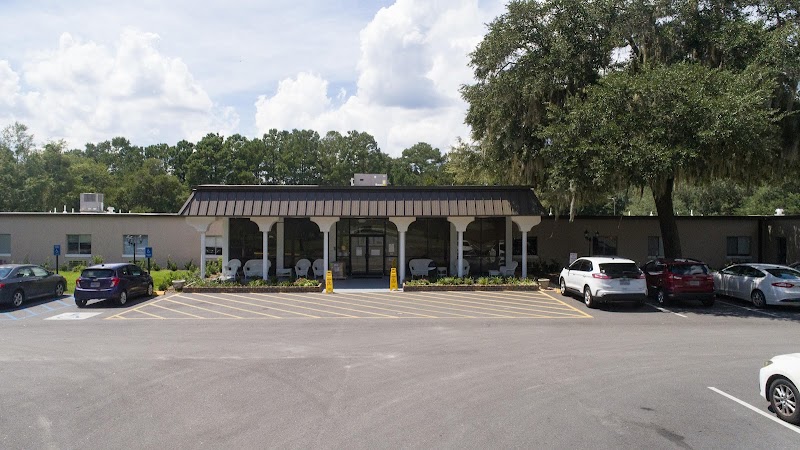
MAGNOLIA MANOR OF MIDWAY is owned by a non-profit organization. Non-profit facilities reinvest revenue into operations rather than distributing to shareholders. The facility is operated by MAGNOLIA MANOR SENIOR LIVING, a chain that manages multiple nursing homes. With 169 certified beds and approximately 74 residents (about 44% occupancy), it is a mid-sized facility located in MIDWAY, Georgia.
How Does Magnolia Manor Of Midway Compare to Other Georgia Nursing Homes?

Compared to the 100 nursing homes in Georgia, MAGNOLIA MANOR OF MIDWAY's overall rating (3 stars) is above the state average of 2.6, staff turnover (31%) is significantly lower than the state average of 46%, and health inspection rating (3 stars) is at the national benchmark.

What Should Families Ask When Visiting Magnolia Manor Of Midway?

Based on this facility's data, families visiting should ask: "Can I visit during a mealtime to observe dining assistance and food quality?" "How do you handle medical emergencies, and what is your hospital transfer rate?" "Can I speak with family members of current residents about their experience?"

Is Magnolia Manor Of Midway Safe?

Based on CMS inspection data, MAGNOLIA MANOR OF MIDWAY has a clean safety record: no substantiated abuse findings (meaning no confirmed cases of resident harm), no Immediate Jeopardy citations (the most serious violation level indicating risk of serious injury or death), and is not on the Special Focus Facility watch list (a federal program monitoring the lowest-performing 1% of nursing homes). The facility has a 3-star overall rating and ranks #1 of 100 nursing homes in Georgia. While no facility is perfect, families should still ask about staff-to-resident ratios and recent inspection results during their visit.

Do Nurses at Magnolia Manor Of Midway Stick Around?

MAGNOLIA MANOR OF MIDWAY has a staff turnover rate of 31%, which is about average for Georgia nursing homes (state average: 46%). Moderate turnover is common in nursing homes, but families should still ask about staff tenure and how the facility maintains care continuity when employees leave.

Was Magnolia Manor Of Midway Ever Fined?

MAGNOLIA MANOR OF MIDWAY has no federal fines on record. CMS issues fines when nursing homes fail to meet care standards or don't correct problems found during inspections. The absence of fines suggests the facility has either maintained compliance or corrected any issues before penalties were assessed. This is a positive indicator, though families should still review recent inspection reports for the full picture.

Is Magnolia Manor Of Midway on Any Federal Watch List?

MAGNOLIA MANOR OF MIDWAY is not on any federal watch list. The most significant is the Special Focus Facility (SFF) program, which identifies the bottom 1% of nursing homes nationally based on persistent, serious quality problems. Not being on this list means the facility has avoided the pattern of deficiencies that triggers enhanced federal oversight. This is a positive indicator, though families should still review the facility's inspection history directly.