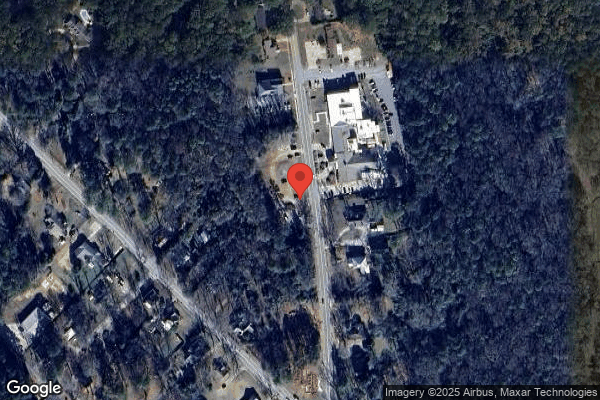

RETREAT, THE

898 COLLEGE ST, MONTICELLO, GA 31064 (706) 468-8826
Non profit - Corporation 55 Beds Independent Data: November 2025 1 Immediate Jeopardy citation
Trust Grade
56/100
#163 of 353 in GA
Last Inspection: March 2025

Within standard 12-15 month inspection cycle. Federal law requires annual inspections.

Overview

The Retreat nursing home in Monticello, Georgia has a Trust Grade of C, meaning it is average and falls in the middle of the pack compared to other facilities. It ranks #163 out of 353 facilities in Georgia, placing it in the top half, and is the only option in Jasper County. Unfortunately, the facility is experiencing a worsening trend, with the number of issues increasing from 2 in 2023 to 4 in 2025. Staffing is a positive aspect, with a rating of 4 out of 5 stars and a turnover rate of 42%, which is below the state average, indicating that staff members are generally stable and familiar with the residents. However, the facility has incurred fines of $15,269, which is concerning as it is higher than 87% of Georgia facilities, suggesting compliance issues. Recent inspections revealed critical issues, including a failure to provide CPR to a resident who had a full code order when they were found unresponsive, which could have serious implications for all residents with similar orders. Additionally, there were concerns about expired food not being discarded properly, which could risk foodborne illness, and a high medication error rate of 10%, putting three residents at risk of receiving incorrect dosages. While there are strengths in staffing, these significant weaknesses raise concerns about the overall quality of care at this facility.

Trust Score
C
56/100
In Georgia
#163/353
Top 46%
Safety Record
High Risk
Review needed
Inspections
Getting Worse
2 → 4 violations
Staff Stability
○ Average
42% turnover. Near Georgia's 48% average. Typical for the industry.
Penalties
⚠ Watch
$15,269 in fines. Higher than 83% of Georgia facilities, suggesting repeated compliance issues.
Skilled Nurses
○ Average
Each resident gets 34 minutes of Registered Nurse (RN) attention daily — about average for Georgia. RNs are the most trained staff who monitor for health changes.
Violations
○ Average
7 deficiencies on record. Average for a facility this size. Mostly minor or procedural issues.
★★★☆☆
3.0
Overall Rating
★★★★☆
4.0
Staff Levels
★★★☆☆
3.0
Care Quality
★★★☆☆
3.0
Inspection Score
Stable
2023: 2 issues
2025: 4 issues

The Good

  • 4-Star Staffing Rating · Above-average nurse staffing levels
  • Full Sprinkler Coverage · Fire safety systems throughout facility
  • No fines on record
  • Staff turnover below average (42%)

    6 points below Georgia average of 48%

Facility shows strength in staffing levels, fire safety.

The Bad

3-Star Overall Rating

Near Georgia average (2.6)

Meets federal standards, typical of most facilities

Staff Turnover: 42%

Near Georgia avg (46%)

Typical for the industry

Federal Fines: $15,269

Below median ($33,413)

Minor penalties assessed

The Ugly 7 deficiencies on record

1 life-threatening
Mar 2025 4 deficiencies
CONCERN (D)

Potential for Harm - no one hurt, but risky conditions existed

Unnecessary Medications (Tag F0759)

Could have caused harm · This affected 1 resident

Based on observations, staff interviews, record review, and review of the facility's policy titled Medication Administration, the facility failed to ensure a medication error rate of less than 5 perce...

Read full inspector narrative →
Based on observations, staff interviews, record review, and review of the facility's policy titled Medication Administration, the facility failed to ensure a medication error rate of less than 5 percent. There were 30 opportunities with three medication errors for three residents (R) (R13, R49, R6) observed for medication administration. The medication error rate was 10.0 percent. This deficient practice had the potential to place R13, R49, and R6 at risk of decreased or increased therapeutic effects from the medications administered. Findings include: Review of the facility's policy titled Medication Administration, revision date 6/2023, revealed the Policy section included, Medications shall be administered only upon the order of providers, dentists or podiatrists, who are members of the medical staff, are authorized members of the house staff or have been granted clinical privileges to write such orders and under the guidelines of their respective scopes of practice. The Medication Administration Record shall be compared with the patient's medical record prior to the preparation of any medication at least one (1) time each shift. The individual administering the medication shall verify the medication selected for administration is the correct medication based on the medication order and the medication product label. The medication nurse shall ensure that the correct medication is administered by checking the physician's order and the medication label. 1. Review of R13's medical record revealed diagnoses including, but not limited to, hypokalemia and gastro-esophageal reflux disease. Review of R13's Physician's Orders revealed an order dated 6/13/2024 for vitamin D3 125 micrograms (mcg) (5000 international units [IU]) one tablet daily. Observation of medication administration on 3/2/2025 beginning at 9:00 am revealed Registered Nurse (RN) CC administered Calcium 60 mg, 10 mcg (400 IU) to R13. 2. Review of R49's medical record revealed diagnoses including, but not limited to, anorexia and anemia in chronic kidney disease. Review of R49's Physician's Orders revealed an order dated 1/25/2025 for sodium bicarbonate 325 milligrams (mg) tablet, two tablets to equal 650 mg twice a day. Observation of medication administration on 3/2/2025 beginning at 9:00 am revealed RN CC administered sodium bicarbonate 325 mg, one tablet to R49. 3. Review of R6's medical record revealed a diagnosis of vitamin D deficiency. Review of R6s Physician's Orders revealed an order dated 2/5/2025 for vitamin D3 capsule 25 mcg (1,000 IU) one capsule daily. Observation of medication administration on 3/2/2025 beginning at 9:00 am revealed RN CC administered calcium 600 mg 10 mcg (400 IU) to R6. In an interview on 3/2/2025 at 4:30 pm, RN CC confirmed she administered calcium 600mg, 10mcg (400 IU) to R13, and the physician's order was for vitamin D3 125 mcg (5000 IU). She confirmed she administered sodium bicarbonate 325mg, one tablet, to R49, and the physician's order was for sodium bicarbonate 325mg, two tablets. She further confirmed she administered calcium 600 mg 10 mcg (400 IU) to R6, and the physician's order was for vitamin D3, 25 mcg (1000IU). In an interview on 3/2/2025 at 4:45 pm, the Director of Nursing (DON) reviewed and verified the medication errors. In an interview on 3/3/2025 at 2:09 pm, the Assistant Director of Nursing (ADON) stated the nurses should verify the medication being administered with the electronic medication administration record (eMAR) and ensure the correct medication dosage was being administered to the right resident at the right time.
CONCERN (D)

Potential for Harm - no one hurt, but risky conditions existed

Deficiency F0761 (Tag F0761)

Could have caused harm · This affected 1 resident

Based on observation, staff interviews, record review, and review of the facility's policy titled Floor Stock and Medication Administration, the facility failed to ensure no expired medications were s...

Read full inspector narrative →
Based on observation, staff interviews, record review, and review of the facility's policy titled Floor Stock and Medication Administration, the facility failed to ensure no expired medications were stored in one of one medication storage rooms. This deficient practice had the potential to place the residents at risk of receiving medications with altered effectiveness. The facility census was 51 residents. Findings include: Review of the facility's policy titled Floor Stock, revision date 9/2024, revealed the Policy section included The pharmacy department is responsible for controlling floor stock medications within this hospital. The Procedure section included, . Medications contained in floor stock are stored under the conditions listed by the manufacturer to ensure stability. Review of the facility's policy titled Medication Administration, revision date 6/2023, revealed the Policy section included, . The expiration date of all medications shall be checked before administration. During an observation of the medication storage room with the Director of Nurses (DON) on 3/2/2025 at 10:00 am, one container of naproxen 220 milligrams (mg) (a medication used to treat pain or fever) with an expiration date of 1/2025 and one container of vitamin B1 100 mg with an expiration date of 2/2025 were observed in the medication storage room. The DON confirmed that the expired medications were stored in the medication storage room. In an interview on 3/3/2025 at 2:12 pm, the DON stated the pharmacy stocked the medication storage room. The DON stated that the pharmacist and the nurses should review the medications to ensure that no expired medications were stocked in the medication storage room. In an interview on 3/3/2025 at 5:45 pm, the Administrator stated the nurses and the pharmacist should review the medication expiration dates.
CONCERN (D)

Potential for Harm - no one hurt, but risky conditions existed

Infection Control (Tag F0880)

Could have caused harm · This affected 1 resident

Based on observations, staff interviews, record reviews, and review of the facility's policies titled Hand Hygiene and Enhanced Barrier Precautions (EBP), the facility failed to ensure effective infec...

Read full inspector narrative →
Based on observations, staff interviews, record reviews, and review of the facility's policies titled Hand Hygiene and Enhanced Barrier Precautions (EBP), the facility failed to ensure effective infection control procedures were followed during wound care for one of three residents (R) (R34) with pressure ulcers. The deficient practice had the potential to place R34 at risk of an increased potential for cross-contamination and spread of infection. Findings include: Review of the facility's policy titled Hand Hygiene, revision date June 2024, revealed the Policy section included, All staff shall use the hand-hygiene techniques as recommended by the CDC (Center for Disease Control and Prevention). Always after removing PPE (Personal Protective Equipment). Review of the facility's policy titled Enhanced Barrier Precautions (EBP), effective date June 2024, revealed the Definition section stated, Enhanced Barrier Precautions: Infection control intervention designed to reduce transmission if multi-drug resistant organisms (MDROs), which employs targeted gown and glove use during high contact resident care activities. The Policy section included, EBP are indicated for residents with any of the following: . Wounds and/or indwelling medical devices even if the resident is not known to be infected or colonized with an MDRO. Wounds generally include chronic wounds, not shorter-lasting wounds, such as skin breaks or skin tears covered with an adhesive bandage. Examples of chronic wounds include, but are not limited to, pressure ulcers, diabetic foot ulcers, and unhealed surgical wounds . Review of R34's medical record revealed diagnoses including, but not limited to, pressure ulcer of sacral region stage 3. Review of R34's Physician Orders revealed an order dated 1/30/2025 for Clean stage 3 area to sacrum with normal saline, apply medi-honey gel and cover with sacrum dressing every other day and PRN (as needed) until healed. Observation of wound care on 3/2/2025 at 10:30 am revealed Registered Nurse (RN) AA and Licensed Practical Nurse (LPN) BB provided wound care to R34. Observations during the wound care procedure revealed that RN AA prepared the supplies by cleaning the resident's bedside table and the supply tray. She wore gloves during the cleaning of the equipment. Once she had cleaned the equipment, she removed the gloves and did not sanitize her hands before putting on another pair of gloves. During the procedure, RN AA removed the dirty wound dressing and changed gloves without sanitizing her hands before putting on the clean pair of gloves and providing treatment and dressing to the wound. Neither RN AA nor LPN BB wore a gown during the procedure. In an interview on 3/2/2025 at 11:15 am, RN AA stated that all residents on wound care did not need to be on EBP. She verified that neither she nor LPN BB had worn a gown during wound care for R34. She further verified she did not perform hand hygiene between removing dirty gloves and putting on clean gloves. In an interview on 3/3/2025 at 2:04 pm, the Assistant Director of Nursing (ADON) stated that EBP should be followed during wound care to prevent the spread of infections. She further stated that hand hygiene should be performed before and after resident care and between glove changes while providing care. In an interview on 3/2/2025 at 11:28 am, the Infection Control Coordinator stated that residents with pressure ulcers and chronic wounds were placed on EBP. She stated that staff was required to wear PPE, including gowns, during high-contact care. In an interview on 3/2/2025 at 11:59 am, the Director of Nursing (DON) stated that EBP was implemented when the resident had a wound or indwelling medical device. The DON stated PPE was readily available and staff had received education on EBP.
CONCERN (F)

Potential for Harm - no one hurt, but risky conditions existed

Food Safety (Tag F0812)

Could have caused harm · This affected most or all residents

Based on observations, staff interviews, and a review of the facility's policy titled Food Storage, the facility failed to ensure that expired food items were discarded in the refrigerator and dry foo...

Read full inspector narrative →
Based on observations, staff interviews, and a review of the facility's policy titled Food Storage, the facility failed to ensure that expired food items were discarded in the refrigerator and dry food storage pantry. The deficient practices had the potential to place 46 residents who received an oral diet from the kitchen at risk of contracting a foodborne illness. Findings Include: A review of the facility's undated policy titled Food Storage revealed the Procedure section included, . 7. b. Date marking should be visible on all high-risk food to indicate the date by which a ready-to-eat, TCS (temperature controlled food) food should be consumed, sold, or discarded. 12. Leftover food should be stored in covered containers or wrapped carefully and securely and clearly labeled and dated before being refrigerated. Leftover food must be used within 7 days or discarded as per the 2017 Federal Food Code. During a kitchen tour on 3/1/2025 at 7:42 am with the Assistant Dietary Manager (ADM), observations in the double refrigerator revealed one metal serving container labeled Tomato Slice with an expiration date of 2/27/2025, eight one-gallon containers labeled Lemonade with an expiration date of 2/28/2025, and six one-gallon containers labeled Tea with an expiration date of 2/28/2025. The ADM confirmed the findings in the refrigerator. Observations of the bread storage racks revealed seven loaves of sandwich white bread with expiration dates of 2/28/2025. Observations of the dry storage pantry revealed four 12-ounce cans of evaporated milk with an expiration date of 1/1/2025. The ADM confirmed the expired bread and cans of evaporated milk. In an interview on 3/3/2025 at 1:41 pm, the ADM stated she was responsible for the expired foods not being discarded. She further stated she was focused on serving food and managing multiple tasks. She stated that she, the Dietary Manager (DM), and a Dietary Aide were responsible for checking food dates. In an interview on 3/3/2025 at 1:58 pm, the DM stated that food items should be discarded on the expiration date.
Nov 2023 1 deficiency
CONCERN (D)

Potential for Harm - no one hurt, but risky conditions existed

Comprehensive Care Plan (Tag F0656)

Could have caused harm · This affected 1 resident

3. Record review of the Electronic Medical Record (EMR) for R11 revealed a diagnosis including but not limited to type 2 diabetes mellitus with diabetic chronic kidney disease Record review of the mos...

Read full inspector narrative →
3. Record review of the Electronic Medical Record (EMR) for R11 revealed a diagnosis including but not limited to type 2 diabetes mellitus with diabetic chronic kidney disease Record review of the most recent Annual MDS for R11 dated 9/27/2023 revealed insulin orders and received insulin injections 7 of 7 days during the lookback period. Record review of R11's physician order report revealed an order for Levemir (insulin detemir) solution 100 unit/ml (milliliters) 25 units subcutaneous at bedtime with a start date of 4/22/2019. Record review of R11's Medication Administration Record (MAR) for October and November 2023 revealed Levemir insulin 25 units subcutaneously was documented as administered nightly at 9 PM as ordered by the physician. Review of a progress note dated 10/30/2023 revealed the attending physician's assessment included resident had a diagnosis of type 2 diabetes with hyperglycemia and was on Levemir. Record review of R11's care plans with a revision date 10/3/2023 revealed there was not a care plan to address the diabetes diagnosis and insulin usage. Interview on 11/12/2023 at 8:10 am with RN MDS Coordinator confirmed that a care plan to address the resident diabetes diagnosis and insulin usage had not been developed. The RN MDS Coordinator revealed that a care plan with interventions probably should have been developed. She further stated because resident was on a Regular diet and did not have any complications related to her diabetes the care plan was not developed. Interview 11/12/2023 at 8:41 a.m. with the Director of Nursing (DON) revealed her expectations for care plans is that if there are any change in condition or new medications, or new diagnoses that require interventions such as medications or diet change the care plan coordinator updates the care plans. She further revealed R11 was a diabetic and receives insulin therapy therefore, she should have a care plan developed related to diabetes. Interview 11/12/2023 at 9:17 a.m. with Assistant Director of Nursing (ADON) revealed she participates in the care plan meetings. The ADON further revealed that during the meetings, residents problems, diagnoses and current medications are reviewed, and care plans are updated and added as deemed appropriate. The ADON stated if a resident has a diagnosis of diabetes and was receiving treatment such as insulin there should be a care plan developed for that. 2. Record review of Electronic Medical Record (EMR) for R15 revealed a diagnosis including but not limited to atrial fibrillation. Record review of R15's Physician orders revealed an order for apixaban (anticoagulant) 2.5 milligrams (mg) twice daily. Record review of R15's care plan revealed residents' diagnosis of atrial fibrillation and usage of anticoagulant therapy was not addressed on the comprehensive care plan. Interview on 11/12/23 at 10:15 a.m. with Registered Nurse (RN) MDS Coordinator revealed resident does not have a care plan in place to address diagnosis of atrial fibrillation or anticoagulant usage. She stated both should have a care plan. Interview on 11/12/23 at 10:19 a.m. with DON revealed R15 should have a care plan in place to address the residents diagnosis of atrial fibrillation and anticoagulant usage. The DON stated facility does not have a policy for comprehensive care plans. Based on record review and staff interviews, the facility failed to develop a comprehensive care plan for one resident with a diagnosis of urinary tract infection (R12), one resident with a diagnosis of atrial fibrillation receiving anticoagulant therapy (R15), and one resident (R11) with a diagnosis of diabetes mellutis receiving insulin from a sample of 16 residents. Findings Include: 1. Record review of the most recent Quarterly Minimum Data Set (MDS) for R12 dated 10/11/2023 revealed under section I - Active Diagnoses revealed a Urinary Tract Infection (UTI) within the last 30 days. Record review of the Electronic Medical Record (EMR) revealed R12 had an order for Cefuroxime Axetil 500mg (milligrams) twice a day for 10 days, and an order for Macrobid 100mg twice a day for seven days for UTI. Review of a progress note dated 09/20/2023 revealed the attending physician's assessment included a new order for Levaquin 500 mg by mouth daily for seven days for UTI. Review of R12's care plans with a revision date 10/23/2023 revealed there was not a care plan to address the UTI diagnosis and antibiotic usage. Interview on 11/12/2023 at 7:45 am with the MDS Coordinator revealed that R12 had a UTI, and she was on antibiotics. The MDS Coordinator stated that R12 was diagnosed with a UTI on 9/20/2023. She confirmed that a care plan to address the R12 diagnosis of UTI and antibiotic usage had not been developed. MDS Coordinator further revealed that a care plan with interventions should have been developed. She further stated that she is responsible for all care plans. The MDS Coordinator revealed that she has been in the position for a year and a half and that she is learning MDS. Interview on 11/12/2023 at 8:41 am with the Director of Nursing (DON) revealed that her expectations for care plans is that if there are any change in condition or new medications, or new diagnoses that require interventions such as medications or diet change the care plan coordinator should update the care plans. DON further stated that a care plan should have been developed related to R12 UTI and antibiotic usage.
May 2023 1 deficiency 1 IJ
CRITICAL (J) 📢 Someone Reported This

A family member, employee, or ombudsman was alarmed enough to file a formal complaint

Immediate Jeopardy (IJ) - the most serious Medicare violation

Deficiency F0678 (Tag F0678)

Someone could have died · This affected 1 resident

**NOTE- TERMS IN BRACKETS HAVE BEEN EDITED TO PROTECT CONFIDENTIALITY** Based on interviews, record review, and facility policy review, it was determined the facility failed to provide cardiopulmonary...

Read full inspector narrative →
**NOTE- TERMS IN BRACKETS HAVE BEEN EDITED TO PROTECT CONFIDENTIALITY** Based on interviews, record review, and facility policy review, it was determined the facility failed to provide cardiopulmonary resuscitation (CPR) for a resident who had an order for full code (all resuscitation procedures will be provided to keep a person alive if their heart stops beating or they stop breathing) for 1 (Resident #1) of 5 residents reviewed for CPR. Specifically, Resident #1 had an order for full code and was found unresponsive, without a pulse or respirations, on [DATE] and staff did not provide CPR. This had the potential to affect 12 of 44 residents who resided in the facility and had elected full code. It was determined the facility's non-compliance with one or more requirements of participation caused, or was likely to cause, serious injury, harm, impairment, or death to residents. The IJ began on [DATE] when CPR was not provided for Resident #1, who was a full code, when Resident #1 was found to be unresponsive. The Administrator, Director of Nursing (DON), Assistant Director of Nursing (ADON), and Hospital Administrator were notified of the IJ and provided the IJ template on [DATE] at 10:05 AM. A Removal Plan was requested. The Removal Plan was accepted by the State Survey Agency on [DATE] at 12:03 PM. The surveyor performed onsite verification that the Removal Plan had been implemented. Based on observation, record reviews, review of facility policies as outlined in the Removal Plan, and staff interviews, it was validated that the corrective plans and the immediacy of the deficient practice was removed on [DATE]. It was determined that the facility had completed implementation of the Removal Plan prior to the start of survey, and therefore, the IJ was considered past noncompliance. Findings included: Review of the facility's policy, titled, Code Blue, last revised in [DATE], indicated, Any signs of cardiac arrest or respiratory distress within The Retreat Nursing Home shall be treated according to the established standards of the American Heart Association except in those incidences where the physician has specific orders in place. Further review of the policy indicated, Procedure: The first person who responds shall assess the situation. If no pulse or respiration is found, initiate the first response procedures according to the American Heart Association BLS [Basic Life Support] guidelines. - Initiate CPR - Retreat [sic] over house page-CODE BLUE Rm # [room number] (Repeat Twice) - Activate the emergency alarm by removing the AED [automated external defibrillator] from the cabinet located [in] the central area of the facility. A review of Resident #1's Face Sheet revealed the facility admitted the resident on [DATE] with diagnoses that included congestive heart failure, type 2 diabetes mellitus, polyneuropathy, atherosclerotic heart disease, peripheral vascular disease, dysphagia, and seizures. The Face Sheet indicated the resident had an advance directive for full code. Review of an annual Minimum Data Set (MDS), with an Assessment Reference Date (ARD) of [DATE], revealed Resident #1 had a Brief Interview for Mental Status (BIMS) score of 15, which indicated the resident was cognitively intact. The MDS indicated Resident #1 participated in the assessment. Review of physician's orders indicated that Resident #1 had an order, dated [DATE], that indicated, Advance Directive/Code Status: Full Code. A review of Resident #1's Care Plan, revised on [DATE], indicated the resident's advance directive status was Full Code. The approaches instructed staff to start cardiopulmonary resuscitation (CPR) should cardiac arrest occur and send the resident to the emergency department (call 911). Review of a death in facility MDS, dated [DATE], revealed Resident #1 was discharged due to death in the facility. Review of a Progress Note, dated [DATE] and written by Registered Nurse (RN) #3, revealed that at approximately 6:00 PM, a certified nurse aide (CNA) reported Resident #1 was unresponsive. The progress note indicated that RN #3 assessed Resident #1 and found no respirations, no pulse, the resident's skin was cool to touch, and there were no signs of life. The progress note indicated that RN #3 immediately called the hospital emergency room (ER) Doctor who came to the bedside to assess the resident. (Note that the hospital is located next to the facility.) According to progress note, the ER Doctor assessed Resident #1 and pronounced the resident deceased at 6:02 PM. RN #3 notified the Director of Nursing (DON) at 6:11 PM. The medical director and family member were also notified by phone. Resident #1's body was released to the funeral home at 8:45 PM. Review of Physician's Progress Notes, dated [DATE] at 6:02 PM and written by the ER Doctor, revealed he was called at 5:57 PM to assess Resident #1 due to staff indicating the resident had no vital signs and was not breathing. The progress note indicated on exam, pupils are fixed and dilated. No corneal reflex. No breath sounds and heart sounds heard on auscultation. Pt [Patient] pronounced dead at 1802 [6:02 PM] on [DATE]. Review of a written statement, dated [DATE] and written by CNA #1, revealed CNA #1 found Resident #1 unresponsive and called Licensed Practical Nurse (LPN) #2, who alerted RN #3. Review of a written statement, dated [DATE] and written by LPN #2, revealed that just before 5:35 PM, CNA #1 notified her that Resident #1 was not responding. The statement indicated that LPN #2 went to Resident #1's room, called the resident's name and tapped on their arm, but got no response. According to the statement, LPN #2 went to retrieve the crash cart, found RN #3 in the hallway, and told RN #3 they needed to call a code. LPN #2's statement indicated that RN #3 said Resident #1 was already gone and was cold. RN #3 then phoned the ER Doctor. The statement indicated that when the ER Doctor arrived, LPN #2 restated that Resident #1 was a full code and asked if CPR should be started, and the ER Doctor said not to start CPR because the resident was already gone. Review of a written statement, dated [DATE] at 7:35 PM and written by RN #3, indicated that when she phoned the ER Doctor regarding Resident #1, she notified him that Resident #1 was a full code and asked if CPR should be started, the ER Doctor replied that he would come to see the resident immediately. The note indicated that once the ER Doctor arrived and assessed Resident #1, he said not to initiate CPR. Review of the 5-day investigation report, dated [DATE], revealed that CNA #1 found Resident #1 unresponsive on [DATE] around 5:50 PM. CNA #1 called for LPN #2 who was at the nurses' station. LPN #2 went to Resident #1's room to assess the resident and determined Resident #1 was unresponsive. LPN #2 called RN #3, who was assigned to provide care for Resident #1. RN #3 arrived at Resident #1's room at 5:53 PM and found Resident #1 unresponsive with no pulse, no respirations, and no verbal response. RN #3 phoned the hospital ER Doctor who immediately arrived at Resident #1's room. The ER Doctor found no respirations and no pulse, and the resident's pupils were fixed. The ER Doctor pronounced Resident #1 deceased at 6:02 PM. The Director of Nursing and the Administrator were notified shortly thereafter. Resident #1 had elected and had an order for full code and CPR was not initiated. RN #3 received basic life support (BLS) recertification on [DATE] and LPN #2 received BLS recertification on [DATE]. Both nurses were suspended pending the investigation and ultimately terminated. During an interview on [DATE] at 9:20 AM, the Director of Nursing (DON) described the incident on [DATE] that involved Resident #1. The DON stated CNA #1 was picking up meal trays from resident rooms and found Resident #1 unresponsive. CNA #1 called for LPN #2, who was at the nurses' station. LPN #2 arrived at Resident #1's room and tried to rouse Resident #1. At this time, the nurse assigned to Resident #1, RN #3, arrived at the resident's room. RN #3 called the hospital ER Doctor. The ER Doctor arrived, checked vitals, and pronounced Resident #1 expired. At 6:10 PM, RN #3 notified the DON that Resident #1 had expired. The DON said that she asked RN #3 if CPR had been conducted and RN #3 stated that CPR had not been initiated because the ER Doctor had pronounced Resident #1 expired. The DON stated that when she asked the nurses why CPR was not started, they did not have a real reason. The DON stated all the nursing staff were up to date on CPR training because they had just renewed training in [DATE]. The DON stated the facility had been running mock codes since 2021, so she could not understand what happened when the staff found the resident unresponsive and did not call code blue or start CPR. During an interview on [DATE] at 11:45 AM, CNA #1 stated she saw Resident #1 around 4:00 PM on [DATE] when Resident #1 was going down the hall with CNA #4 to take a shower. Later, CNA #1 reported she was picking up meal trays. Resident #1's room was the last room. CNA #1 stated she entered the room and was talking to Resident #1's roommate. CNA #1 picked up the roommate's meal tray, placed it on the tray cart in the hallway outside the room, then went back into the room to retrieve Resident #1's tray. CNA #1 stated she was looking at the tray, not Resident #1, as she walked around the privacy curtain. When she asked Resident #1 if the resident was finished eating, Resident #1 did not respond to her question. CNA #1 looked at Resident #1, who was sitting up in bed with their eyes closed. CNA #1 stated she ran out of the room to find RN #3. She did not see RN #3, so she returned to the room and tried rousing Resident #1. When Resident #1 did not respond, CNA #1 went to get LPN #2 who was at the nurses' station. LPN #2 told CNA #1 to get a cold washcloth and the CNA went to the whirlpool room to get the washcloth. When CNA #1 returned to Resident #1's room with the cold washcloth, LPN #2 was coming out of the room and told CNA #1 that Resident #1 had fully coded. LPN #2 left to get RN #3 while CNA #1 stayed in the resident's room. CNA #1 recalled an activities assistant was also in the resident's room, and the activities assistant stated Resident #1 was gone. CNA #1 stated that LPN #2 tried to page for a full code, but LPN #2 did not know how to use the intercom system. RN #3 entered the resident's room and then made a motion indicating that Resident #1 was gone. CNA #1 stated she recalled seeing the crash cart in the room beside the bed. CNA #1 stated the ER Doctor then arrived, and she saw him signing a paper. CNA #1 stated she did not see LPN #2 or RN #3 assessing Resident #1 because she was not in the room at the time. During an interview on [DATE] at 12:30 PM, the Assistant Director of Nursing (ADON), who also served as the staff education coordinator, stated they kept a code status list and the signed advanced directives at the nurses' station. The code status list was also maintained in the automated external defibrillator (AED) case and on the crash cart. The individual resident code status was also posted on the resident's closet door. The ADON stated she was not involved in this incident but stated that when a resident was found unresponsive and was designated full code, a staff member should announce Code Blue over the intercom system to alert staff to perform CPR; the intercom system also notified the hospital next door. Staff would then immediately start CPR and continue performing CPR until relieved by hospital staff. During an interview on [DATE] at 1:00 PM, the ER Doctor stated he was called on the ER phone from the facility and was told the resident was unresponsive with no vital signs. He immediately walked over to the facility and into the resident's room. He estimated it took him two to three minutes to get there. When he arrived and assessed Resident #1, Resident #1 was cold to the touch, pupils were dilated and nonreactive, and there were no heart sounds. The ER Doctor stated in his assessment that it was too late to administer CPR. He stated that normally when he was called to the facility the nursing home staff had already initiated CPR if the resident was designated full code. During an interview on [DATE] at 4:50 PM, the Administrator stated that before the evening meal on [DATE], RN #3 went to the resident's room to administer medications for Resident #1, but CNA #4 was helping Resident #1 to get dressed, so RN #3 planned to return later for medication administration. The Administrator said that at 5:30 PM, RN #3 returned to Resident #1's room for medication administration. Resident #1 was eating, and RN #3 did not notice anything unusual. The Administrator stated that based on staff statements and camera footage, no one else entered the room until CNA #1 went into the room to pick up Resident #1's meal tray and found Resident #1 unresponsive. During an interview on [DATE] at 1:30 PM, CNA #4 stated she worked 3:00 PM to 11:00 PM on [DATE]. CNA #4 said she assisted Resident #1 to bathe right before the 5:00 PM meal and Resident #1 seemed their normal self. While she was assisting Resident #1 with dressing, she recalled that RN #3 entered the resident's room to administer medications and then indicated she would return after Resident #1 was dressed. After assisting Resident #1 to dress, CNA #4 went to the dining room to help assist other residents with the evening meal. CNA #4 stated it would have been around 5:00 PM when she left Resident #1's room. On [DATE] at 2:00 PM, RN #3 was interviewed regarding the incident on [DATE] involving Resident #1. RN #3 stated that when she arrived at Resident #1's room, she shook the resident and called their name, trying to rouse the resident. RN #3 stated she checked Resident #1's carotid and radial pulses and did a sternum rub. RN #3 stated Resident #1 was cool to the touch and had no rigidity when she was checking the resident's vital signs. RN #3 stated that after she assessed the resident, she went to the nurses' station, called the ER Doctor, and told him Resident #1 was a full code and was unresponsive. RN #3 stated she asked the ER Doctor if staff should start CPR, and the ER Doctor responded that he would be right there. RN #3 said when the ER Doctor arrived, he checked Resident #1's pupils with a light, listened to Resident #1's heart with a stethoscope, and pronounced Resident #1 dead. RN #3 reiterated that when she called the ER Doctor on the phone and told him that Resident #1 was a full code and unresponsive, she asked if staff should start CPR, and the ER Doctor said he would be right over to see the resident. RN #3 stated she asked the ER Doctor again in the resident's room if they should start CPR, and the ER Doctor said, No. RN #3 stated she was terminated by the facility. During an interview on [DATE] at 3:37 PM, Activities Assistant #9 stated she was present shortly after Resident #1 was found unresponsive. She said she was the staff member who opened the closet door to check Resident #1's status and saw the resident was a full code. She said she checked Resident #1's carotid pulse and there was no pulse, and Resident #1 was cold and pale. Activity Assistant #9 stated she was there when the ER Doctor arrived. She stated the nurses asked the ER Doctor if they should start CPR, and he assessed Resident #1 for vital signs and checked the resident's pupils and pronounced Resident #1 deceased . She believed it was about eight to nine minutes between the time she was made aware of the resident being unresponsive and the ER Doctor's assessment of Resident #1. Removal Plan The following IJ Removal Plan was provided by the facility and accepted by the State Survey Agency on [DATE] at 12:03 PM: 1. On [DATE] at approximately 5:50 PM, a certified nursing assistant (CNA) went in Resident #1's room to pick up a dinner tray and found the resident was not responsive. The CNA reported to the licensed practical nurse (LPN) at the nurses' station that the resident was not responding. The LPN went to the resident's room to assess. After finding the resident unresponsive, the LPN notified the registered nurse (RN) assigned to the resident. The RN went into the resident's room at 5:53 PM and found the resident unresponsive with no pulse, no respirations, and no verbal response. The RN phoned the emergency room (ER) doctor at hospital who immediately came to the resident's room. The doctor found no respirations, no pulse, and pupils were fixed and dilated. The doctor pronounced the resident deceased at 6:02 PM. 2. The Director of Nursing (DON) and Administrator responded immediately to the facility. After interviews with staff, the DON immediately began re-education with staff on the date of the incident, [DATE], to include the code blue policy and procedure, location of resident's code status, call a code, and utilization of the overhead paging system. The facility conducted an ad hoc meeting to discuss the event on the evening of [DATE]. All licensed nurses and certified nursing assistants on duty attended, which included the two nurses involved in the incident. The two nurses involved were immediately removed from the schedule on [DATE] and subsequently terminated on [DATE]. 3. On [DATE], the DON and Assistant Director of Nursing (ADON) began code blue in-services for licensed nurses and certified nursing assistants which included what to do if a staff member finds a resident with signs of cardiac arrest or respiratory distress. The first person who responds shall assess the situation. If no pulse or respirations is found, immediately check resident's code status. If the resident is a full code, initiate CPR. CPR can be initiated by a RN or LPN, with a BLS certification. The nurse does not wait for the physician before initiating CPR. The staff is also trained on irreversible signs of death as outlined in our Code Blue policy. As of [DATE], there was a total of 24 full time licensed nurses and certified nursing assistants available for work. As of [DATE], 95.8% of full-time licensed nurses and certified nursing assistants received training. This included 5 of 5 registered nurses, 7 of 7 licensed practical nurses, and 11 of 12 certified nursing assistants. The remaining PRN (as needed) staff who have not received training will be re-educated prior to the next scheduled shift. Any licensed nurse or CNA (including agency staff) not receiving the code status education due to scheduled time off or FMLA (Family and Medical Leave Act) will be in-serviced prior to their next scheduled shift. New hire nurses and CNAs will be educated on the 1st shift of orientation. Prior to [DATE], code blue education with the mock codes were provided monthly by the ADON. 4. All staff have current Basic Life Support Certifications (BLS) on file. As of [DATE], 100% of licensed nurses and CNAs, which included 12 of 12 RNs, 10 of 10 LPNs, and 23 of 23 certified nursing assistants have BLS certification. In [DATE] and [DATE], we conducted on-site American Heart Association (AHA) BLS training by an AHA BLS instructor. 5. A mock code blue was conducted on [DATE]. Prior to the [DATE] incident, mock code blues were conducted monthly by the ADON. 6. On [DATE], the DON, following the Mortality Review Policy and Procedure, completed the mortality review form with the interdisciplinary team The Mortality Review is when the team provides a forum to identify adverse patient outcomes and their contributing factors, openly discuss the situation and disseminate information learned from the review to maximize patient safety. The team includes the Medical Director, DON, and three administrative nurses. 7. A root cause analysis was started on [DATE] and completed on [DATE]. This meeting was held as an executive session under the QAPI [quality assurance performance improvement] meeting. The following were involved: the DON, Retreat Administrator, [NAME] Health Services Administrator, [NAME] Health Services Assistant Administrator, ADON, MDS/Care Plan Coordinator and the Medical Director. The outcome was a failure of the staff to initiate basic life support and call a code, complying with established and policy and procedure. During the interviews, the LPN could not provide a reason, even though she admitted she knew to start CPR. The RN stated the resident was gone and it was too late. Follow up interviews did not identify changes in their statements. 8. Code status audits have been completed monthly and will continue monthly by the ADON and the MDS/Care Plan Coordinator. The DON, Administrator or designee will provide oversight. Code Status audits are done monthly and include verification that the resident code status is on the electronic health record (EHR) banner, on the code status list in the crash cart, on the signed documents scanned into the EHR, on the signed documents in the resident information notebooks at the nurse's station, in the resident's orders, in the resident care plan and posted on the sign in the resident's closet. It includes verification that code status is correct and matches in all these locations. The last Code Status audit was done [DATE]. 9. The Administrator or DON will conduct oversight of the education and the audits daily until 100% of licensed nurses and certified nursing assistants receive the training which started on [DATE]. Additional training includes education on the code blue policy using scenarios with participants performing return demonstration of basic life support measures following facility policy and procedure. This training is provided by the ADON. As part of this education, a code blue documentation form is completed during the mock code to record the real time events performed, which allows for immediate feedback and correction of participants. Following the mock codes, participants complete a participant self-evaluation. In addition, on-site basic life support courses are provided. 10. All corrective actions will be completed on [DATE]. 11. The immediacy of the IJ was removed on [DATE]. Onsite Verification of Removal Plan Onsite verification of the Removal Plan was completed on [DATE] and [DATE]. In an interview on [DATE] at 9:45 AM, the Administrator stated that as part of their 5-day investigation and plan of correction, they reeducated all CNAs and nurses, conducted mock codes, educated staff on how to use the paging system, audited the code status list, and audited the staff CPR training. Resident code status was posted inside each resident's closet door, a full list of residents and their code status was kept on the crash cart and inside the AED case, and a full list of residents and their code status was kept at the nurses' station. Code status was also in the electronic medical record. The surveyor verified this was completed during the survey. In an interview on [DATE] at 12:30 PM, the Assistant Director of Nursing (ADON) stated they kept a code status list and the signed advanced directives at the nurses' station. The code status list was also maintained in the AED case and on the crash cart. The ADON stated that all staff were in-serviced on use of the intercom system; where to find code status, the crash cart, and the AED; and all staff were provided training on the procedures for immediately initiating CPR. The instructions for using the intercom were also placed near the phone. The surveyor verified this was completed during the survey. Review of the code blue in-service log provided by the DON on [DATE] revealed 31 of 45 total facility staff had received re-in servicing. Three of the 45 staff were on medical leave and seven staff were scheduled to work in the next few days and were currently being in-serviced by phone before their next shift. Of the 45 staff, there were four as needed staff who were not scheduled to work in the near future. On [DATE] mock code blue training exercises were conducted. During an interview on [DATE] at 9:20 AM, the DON stated all the nursing staff were up to date on CPR training because they had just renewed training in [DATE]. BLS certification was verified for 100% of direct care staff. Staff interviews were conducted to verify that training occurred. The interviews included the following: - During an interview on [DATE] at 11:45 AM, CNA #1 stated that on [DATE] following the incident, she underwent training on how to use the intercom, the procedures for code blue, where to find resident code status, and where to find the crash carts. - During an interview on [DATE] at 1:22 PM, RN #11 stated she was provided training the week before the survey on how to call a code blue; the location of the crash cart, AED, and resident code status lists; and the procedure for initiating CPR immediately. - During an interview on [DATE] at 3:00 PM, LPN #6 stated she received CPR and code blue training, but it was not on [DATE]; it was a day or so later, because she had not worked on [DATE]. She explained where to find the code status posted in resident closets, identified the location of the crash cart, and stated she was trained on using the intercom system to call code blue. She verbalized that CPR was to be initiated as soon as possible. - During an interview on [DATE] at 3:17 PM, CNA #7 stated she was re-in serviced on where to find code status, code blue procedures, and how to call a code blue on the intercom system. CNA #7 stated she felt confident responding to an unresponsive resident. - During an interview on [DATE] at 3:25 PM, CNA #8 stated she had received training the week before the survey on code blue procedures. Training included the importance of starting CPR immediately, where to locate code status (closet, chart, nurses station, and crash cart) and where the crash cart was located. - During an interview on [DATE] at 8:15 AM, Activities Assistant #10 stated she received training about responding to a code blue and understood how to use the intercom system and where to find code status for residents. - During an interview on [DATE] at 12:36 PM, RN #12, who worked as needed, stated she received re-in servicing prior to her shift. She said the training included the location of resident code status lists and crash cart, and code blue policies/procedures including how to call a code blue. RN #12 stated she was instructed to initiate CPR immediately and not stop until back up arrived. - During an interview on [DATE] at 4:00 PM, LPN #15, who worked full time, stated she received code blue training last week right after the incident with Resident #1. She was able to describe where to locate resident code status, crash carts and the AED, and stated she was instructed to start CPR immediately and not wait. - During an interview on [DATE] at 4:10 PM, CNA #16 stated she received training the week before the survey. CNA #16 knew the location of the crash cart and resident code status, could explain the CPR process, and knew that she was responsible for initiating CPR right away. During an observation on [DATE] at 4:38 PM, a mock code blue exercise was in progress. Staff participated in calling and responding to the code and administering BLS measures and CPR. Feedback was provided following the mock code and staff completed self-assessments. Two emergency room staff arrived in response to the mock code blue. It was verified that the Mortality Review was completed on [DATE] and the root cause analysis was completed as part of a QAPI meeting with executive personnel on [DATE]. The code status audit conducted by the ADON, dated [DATE], was reviewed and verified. Identification of code status and posting for sampled residents was reviewed and verified. Administrative oversight of the above measures was reviewed and verified. In an interview on [DATE] at 10:30 AM, the Administrator stated that in terms of the Removal Plan, if the ADON was not available to complete code list audits and update the code list, the MDS Nurse was responsible for ensuring the code list and audits were done. If the DON was not available to provide staff education regarding code blue policy/procedures, then the ADON ensured the training was done prior to a staff member's shift. Regarding mock codes, the Administrator stated if a staff person or group of staff performed subpar or voiced they had concerns on the self-evaluation, then staff were retrained. All corrective action was completed on [DATE]. The IJ was removed on [DATE].
May 2022 1 deficiency
CONCERN (D)

Potential for Harm - no one hurt, but risky conditions existed

Infection Control (Tag F0880)

Could have caused harm · This affected 1 resident

Based on observation, record review, review of facility policy titled Cleaning and Disinfecting the Glucometer, and staff interviews, the facility failed to disinfect the glucometer between resident u...

Read full inspector narrative →
Based on observation, record review, review of facility policy titled Cleaning and Disinfecting the Glucometer, and staff interviews, the facility failed to disinfect the glucometer between resident use for three of seven residents (R) (R#32, R#30, and R#37) observed for blood glucose monitoring. Findings include: Review of facility policy titled Cleaning and Disinfecting the Glucometer revised September 2020 revealed that if dedicating blood glucose meters to a single patient is not possible, the meters must be properly cleaned and disinfected after every use. 1. Observation on 5/7/22 at 4:16 p.m. revealed Licensed Practical Nurse (LPN) AA was preparing the glucometer by scanning the label on the strips (unknown if cleaned prior to use) and went to obtain the blood glucose reading for R#32. LPN AA sanitized hands, used gloves, prepped the finger with alcohol and used an individual lancet. She then discarded the lancet in the sharp's container, removed gloves and sanitized hands. LPN AA returned to the medication cart, placed the glucometer on top of the medication cart and prepared one pill (Norco 10 mg) and three units of Novolog insulin to administered to R#32. LPN AA administered the medications and returned to the medication cart. LPN AA did not clean the glucometer. 2. Continued observation on 5/7/22 at 4:25 p.m. LPN AA prepared the glucometer without cleaning it and went to obtain a blood glucose reading for R#30. The blood sugar was checked in the same manner as the previous resident. LPN AA returned to the medication cart, placed the glucometer on the medication cart and prepared one pill (Gabapentin 800 mg) and two units of Novolog insulin to administered to R#30. LPN AA administered the medications and returned to the medication cart. LPN AA did not clean the glucometer. 3. Continued observation on 5/7/22 at 4:34 p.m. LPN AA prepared the glucometer without cleaning it and went to obtain a blood glucose reading for R#37. LPN AA was never observed to clean the glucometer. Review of the clinical record for R#32, R#30, R#37 and the additional five residents that received blood glucose monitoring revealed no residents with bloodborne pathogens. Observations on 5/8/22 at 11:30 a.m. and 11:50 a.m. revealed LPN CC and LPN BB completed blood glucose monitoring for four additional residents with no concerns for cleaning/disinfecting. The machine was disinfected with the appropriate Sani-wipe for three minutes and was allowed to air dry. Interview with LPN AA on 5/8/22 at 12:01 p.m. revealed she cleaned the machine prior to starting the blood sugar checks and then after completing all three. She stated she did use the glucometer on three residents without cleaning the machine in between use. LPN AA stated she does not normally work the cart. She is the treatment nurse. LPN AA confirmed the machine should have been cleaned between each resident use. During an interview on 5/8/22 at 12:10 p.m., the interim Director of Nursing (DON) stated that she expects staff to clean the machine between each resident use and she revealed that LPN AA does not normally work the cart. She also confirmed there were no residents in the facility with blood borne pathogens. Review of the training information titled (name) System Training Checklist revealed nurse checkoffs for use of the glucometer. Part of the checkoff under cleaning and disinfecting was to clean and disinfect between each patient use. There was no checkoff sheet for LPN AA.
Understanding Severity Codes (click to expand)
Life-Threatening (Immediate Jeopardy)
J - Isolated K - Pattern L - Widespread
Actual Harm
G - Isolated H - Pattern I - Widespread
Potential for Harm
D - Isolated E - Pattern F - Widespread
No Harm (Minor)
A - Isolated B - Pattern C - Widespread

Questions to Ask on Your Visit

  • "What changes have you made since the serious inspection findings?"
  • "Can I speak with families of current residents?"
  • "What's your RN coverage like on weekends and overnight?"

Our Honest Assessment

Strengths
  • • 42% turnover. Below Georgia's 48% average. Good staff retention means consistent care.
Concerns
  • • Multiple safety concerns identified: 1 life-threatening violation(s). Review inspection reports carefully.
  • • 7 deficiencies on record, including 1 critical (life-threatening) violation. These warrant careful review before choosing this facility.
  • • $15,269 in fines. Above average for Georgia. Some compliance problems on record.
  • • Grade C (56/100). Below average facility with significant concerns.
Bottom line: Mixed indicators with Trust Score of 56/100. Visit in person and ask pointed questions.

About This Facility

What is Retreat, The's CMS Rating?

CMS assigns RETREAT, THE an overall rating of 3 out of 5 stars, which is considered average nationally. Within Georgia, this rating places the facility higher than 99% of the state's 100 nursing homes. This mid-range rating indicates the facility meets federal standards but may have areas for improvement.

How is Retreat, The Staffed?

CMS rates RETREAT, THE's staffing level at 4 out of 5 stars, which is above average compared to other nursing homes. Staff turnover is 42%, compared to the Georgia average of 46%. This relatively stable workforce can support continuity of care.

What Have Inspectors Found at Retreat, The?

State health inspectors documented 7 deficiencies at RETREAT, THE during 2022 to 2025. These included: 1 Immediate Jeopardy (the most serious level, indicating potential for serious harm or death) and 6 with potential for harm. Immediate Jeopardy findings are rare and represent the most serious regulatory concerns. They require immediate corrective action.

Who Owns and Operates Retreat, The?

RETREAT, THE is owned by a non-profit organization. Non-profit facilities reinvest revenue into operations rather than distributing to shareholders. The facility operates independently rather than as part of a larger chain. With 55 certified beds and approximately 51 residents (about 93% occupancy), it is a smaller facility located in MONTICELLO, Georgia.

How Does Retreat, The Compare to Other Georgia Nursing Homes?

Compared to the 100 nursing homes in Georgia, RETREAT, THE's overall rating (3 stars) is above the state average of 2.6, staff turnover (42%) is near the state average of 46%, and health inspection rating (3 stars) is at the national benchmark.

What Should Families Ask When Visiting Retreat, The?

Based on this facility's data, families visiting should ask: "What changes have been made since the serious inspection findings, and how are you preventing similar issues?" "Can I visit during a mealtime to observe dining assistance and food quality?" "How do you handle medical emergencies, and what is your hospital transfer rate?" "Can I speak with family members of current residents about their experience?" These questions are particularly relevant given the facility's Immediate Jeopardy citations.

Is Retreat, The Safe?

Based on CMS inspection data, RETREAT, THE has documented safety concerns. Inspectors have issued 1 Immediate Jeopardy citation (the most serious violation level indicating risk of serious injury or death). The facility has a 3-star overall rating and ranks #1 of 100 nursing homes in Georgia. Families considering this facility should ask detailed questions about what corrective actions have been taken since these incidents.

Do Nurses at Retreat, The Stick Around?

RETREAT, THE has a staff turnover rate of 42%, which is about average for Georgia nursing homes (state average: 46%). Moderate turnover is common in nursing homes, but families should still ask about staff tenure and how the facility maintains care continuity when employees leave.

Was Retreat, The Ever Fined?

RETREAT, THE has been fined $15,269 across 1 penalty action. This is below the Georgia average of $33,232. While any fine indicates a compliance issue, fines under $50,000 are relatively common and typically reflect isolated problems that were subsequently corrected. Families should ask what specific issues led to these fines and confirm they've been resolved.

Is Retreat, The on Any Federal Watch List?

RETREAT, THE is not on any federal watch list. The most significant is the Special Focus Facility (SFF) program, which identifies the bottom 1% of nursing homes nationally based on persistent, serious quality problems. Not being on this list means the facility has avoided the pattern of deficiencies that triggers enhanced federal oversight. This is a positive indicator, though families should still review the facility's inspection history directly.