BERRIEN OAKS NURSING AND REHAB CENTER
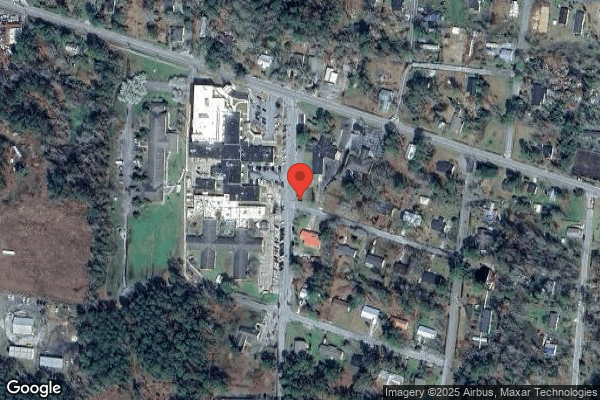

405 LAUREL STREET, NASHVILLE, GA 31639 (229) 543-7335
For profit - Limited Liability company 108 Beds ELIYAHU MIRLIS Data: November 2025
Trust Grade
40/100
#248 of 353 in GA
Last Inspection: April 2025

Within standard 12-15 month inspection cycle. Federal law requires annual inspections.

Overview

Berrien Oaks Nursing and Rehab Center has a Trust Grade of D, indicating below-average performance with several concerns. It ranks #248 out of 353 facilities in Georgia, placing it in the bottom half, but it is the only nursing home in Berrien County. The facility is worsening, with the number of reported issues increasing from 4 in 2024 to 5 in 2025. Staffing is a significant concern here, with a low rating of 1 out of 5 stars and a high turnover rate of 74%, far exceeding the state average of 47%. While the facility has no fines on record, which is good, there are serious issues with infection control and food safety, such as failing to properly sanitize food items and not following hand hygiene protocols during medication administration, which could impact residents' health.

Trust Score
D
40/100
In Georgia
#248/353
Bottom 30%
Safety Record
Low Risk
No red flags
Inspections
Getting Worse
4 → 5 violations
Staff Stability
⚠ Watch
74% turnover. Very high, 26 points above average. Constant new faces learning your loved one's needs.
Penalties
✓ Good
No fines on record. Clean compliance history, better than most Georgia facilities.
Skilled Nurses
○ Average
Each resident gets 31 minutes of Registered Nurse (RN) attention daily — about average for Georgia. RNs are the most trained staff who monitor for health changes.
Violations
○ Average
10 deficiencies on record. Average for a facility this size. Mostly minor or procedural issues.
★☆☆☆☆
1.0
Overall Rating
★☆☆☆☆
1.0
Staff Levels
★☆☆☆☆
1.0
Care Quality
★★★☆☆
3.0
Inspection Score
Stable
2024: 4 issues
2025: 5 issues

The Good

  • Full Sprinkler Coverage · Fire safety systems throughout facility
  • No fines on record

Facility shows strength in fire safety.

The Bad

1-Star Overall Rating

Below Georgia average (2.6)

Significant quality concerns identified by CMS

Staff Turnover: 74%

27pts above Georgia avg (46%)

Frequent staff changes - ask about care continuity

Chain: ELIYAHU MIRLIS

Part of a multi-facility chain

Ask about local staffing decisions and management

Staff turnover is very high (74%)

26 points above Georgia average of 48%

The Ugly 10 deficiencies on record

Apr 2025 5 deficiencies
CONCERN (D) 📢 Someone Reported This

A family member, employee, or ombudsman was alarmed enough to file a formal complaint

Potential for Harm - no one hurt, but risky conditions existed

Resident Rights (Tag F0550)

Could have caused harm · This affected 1 resident

**NOTE- TERMS IN BRACKETS HAVE BEEN EDITED TO PROTECT CONFIDENTIALITY** Based on observations, staff and resident interviews, record review, and review of the facility policy titled, Resident Rights, ...

Read full inspector narrative →
**NOTE- TERMS IN BRACKETS HAVE BEEN EDITED TO PROTECT CONFIDENTIALITY** Based on observations, staff and resident interviews, record review, and review of the facility policy titled, Resident Rights, the facility failed to promote care in a manner that maintained or enhanced each resident's dignity and respect for two of 48 sampled residents (R) (R50 and R40). Specifically, staff provided personal hygiene and bathing assistance to R50 without providing full visual privacy and failed to ensure proper placement of a dignity bag for R40's catheter bag. Findings include: Review of the facility policy titled Resident Rights dated 8/30/2017 stated under 5. Respect and dignity: The resident has a right to be treated with respect and dignity, including: . (8). Privacy and confidentiality. The resident has a right to personal privacy and confidentiality of his or her personal and medical records. 1. Review of R50's electronic medical record (EMR) revealed diagnoses of but not limited to chronic kidney disease, diabetes mellitus type 2, and absence of left leg. Review of the quarterly Minimum Data Set (MDS) dated [DATE] revealed a Brief Intensive Mental Status (BIMS) score of 15, indicates little to no cognitive impairment. During an observation on 4/14/2025 at 2:31 pm of R50, who resides in a two-bed room, Certified Nursing Assistant (CNA) GG was observed assisting R50 with a bed bath and personal hygiene care. R50 was observed naked sitting on the side of the bed. During the process CNA GG entered the room without completely pulling the privacy curtain and closing the window blinds to ensure R50, who was in Bed A, received privacy from anyone who entered the room and her roommate who resided in bed B. During an interview at the time of observation on 4/14/2025 at 2:31 pm, CNA GG verified failing to pull the privacy curtains to ensure privacy and close the window blinds. CNA GG reported not receiving training that privacy curtains should completely encircle the bed to provide full visual privacy. Interview on 4/14/2025 at 4:09 pm with Registered Nurse (RN) FF and R50, R50 verified that CNA GG failed to pull the privacy curtains or pull the window blinds while assisting her with her bath. R50 confirmed that she was completely naked. R50 reported that her preferences were to have full visual privacy without being exposed to anyone entering the room or visible to others who had open view from the parking lot (due to open window blinds). RN FF informed R50 and the Surveyor that privacy curtains and window blinds should have been pulled to ensure privacy during her bath. 2. Review of R40's EMR revealed diagnoses of but not limited to chronic kidney disease stage four (Stage 4). R40 had an order for a foley catheter dated 4/8/2025. Review of the quarterly MDS for R40 dated 12/27/2024 assessed a BIMS score of 10, which indicates moderate cognitive impairment. Observations on 4/14/2025 at 12:42 pm and 3:30 pm, 4/15/2025 at 10:01 am and 3:10 pm, and 4/16/2025 at 2:20 pm, revealed R40 lying in bed A (room door opened) with an attached catheter and drainage bag. Continued observation revealed the dignity bag was flipped to the opposite clear side and allowed open visual exposure to urine. During an interview on 4/16/2025 at 3:10 pm with RN FF, she verified that Certified Nursing Assistant (CNA) staff failed to reposition the dignity bag on the correct side facing the door to prevent the urine from being exposed to the doorway. She further stated that CNAs were trained on dignity. She could not pinpoint which CNA was working with on the dayshift. RN FF returned to the resident room and provided a different dignity bag that provided full coverage on each side. Interview with the Director of Nursing (DON) on 4/17/2025 at 3:55 pm, the DON reported that she just did an in-service and CNAs should be pulling privacy curtains during resident care services. She reported being unaware that this was happening. She further stated that her expectation was that any resident with a catheter should have a dignity bag.
CONCERN (D) 📢 Someone Reported This

A family member, employee, or ombudsman was alarmed enough to file a formal complaint

Potential for Harm - no one hurt, but risky conditions existed

Deficiency F0625 (Tag F0625)

Could have caused harm · This affected 1 resident

**NOTE- TERMS IN BRACKETS HAVE BEEN EDITED TO PROTECT CONFIDENTIALITY** Based on record review, staff interviews, and review of the facility policies titled, Bed Hold Policy and Facility Policy/Proced...

Read full inspector narrative →
**NOTE- TERMS IN BRACKETS HAVE BEEN EDITED TO PROTECT CONFIDENTIALITY** Based on record review, staff interviews, and review of the facility policies titled, Bed Hold Policy and Facility Policy/Procedures, the facility failed to ensure a bed hold notice was provided at the time of transfer to a hospital for one of three residents (R) (R40) reviewed for hospitalization. Findings include: Review of the undated facility policy titled Bed Hold Policy stated under Medicaid Rights, Hospital Stays: The Medicaid program will provide payment to hold the Resident's bed for a period of seven days, while the Resident is in the hospital. Review of the undated facility policy titled Facility Policy/Procedure stated under Policy: It is the policy of [NAME] Nursing Center to hold a bed for a Medicaid resident admitted to the hospitals for seven days. A copy of this policy will be given to the resident and the representative before a resident is transferred for hospitalization, except in an emergency situation; then written notice will be given as soon as possible. Review of the electronic medical record (EMR) revealed that R40 was admitted with diagnoses of but not limited to chronic kidney disease. Review of the Quarterly Minimum Data Set (MDS) for R40 dated 12/27/2024 listed a Brief Interview for Mental Status (BIMS) score of 10, which indicates moderate cognitive impairment. Review of a Nurse's Note dated 1/6/2025 documented that R40 was sent to the emergency room (ER) and was admitted to an acute care hospital on 1/6/2025 and returned to the facility on 1/10/2025. Further record review revealed there was no evidence of documentation that the bed hold policy was provided to the resident/resident's representative for the resident's discharge to the hospital on 1/11/2025. Review of R40's Census Report and Nurse's Note dated 3/27/2025 documented that R40 was sent to the ER and was admitted to an acute care hospital on 3/27/2025 and returned to the facility on 4/1/2025. Further review revealed there was no evidence of documentation that the bed hold policy was provided to the resident/resident's representative for the resident's discharge to hospital on 3/27/2025. Record review of Census Report and Nurse's Note dated 4/4/2025 documented that R40 was sent to the ER and was admitted to an acute care hospital on 4/4/2025 and returned to the facility on 4/7/2025. Further record review revealed there was no evidence of documentation that the bed hold policy was provided to the resident/resident's representative for the resident's discharge to hospital on 4/7/2025. During an interview on 4/17/2025 at 11:47 am, the Director of Nursing (DON) reported that the resident's Responsible Party (RP) would receive a copy of the behold policy form if they were present in the facility; otherwise, a copy of the form was sent out with the resident. She reported that licensed nursing staff were responsible for sending out the copy of the bed hold policy forms. Residents bed hold policy forms were not kept on file. The DON confirmed the facility did not have a copy of R40's bed hold forms on file for each hospitalization. The DON confirmed that without this documentation, there was no written evidence that R40 received notifications of the seven-day bed hold. Interview on 4/17/2025 at 12:41 pm, the Clinical Coordinator/Licensed Practical Nurse (LPN) DD verified the facility did not have copies of R40 's bed hold forms to provide evidence that the bed hold policy notice was given at the time of R40's hospital transfers. She further stated that the Bed Hold Policy should be given to the resident by the nurse at the time of a resident hospital transfer. LPN DD reported that staff were not required to keep copies of any bed hold policy forms which were given to the resident.
CONCERN (D) 📢 Someone Reported This

A family member, employee, or ombudsman was alarmed enough to file a formal complaint

Potential for Harm - no one hurt, but risky conditions existed

Comprehensive Care Plan (Tag F0656)

Could have caused harm · This affected 1 resident

**NOTE- TERMS IN BRACKETS HAVE BEEN EDITED TO PROTECT CONFIDENTIALITY** Based on staff interviews, record review, and review of the facility policy titled, Care Plan, the facility failed to ensure car...

Read full inspector narrative →
**NOTE- TERMS IN BRACKETS HAVE BEEN EDITED TO PROTECT CONFIDENTIALITY** Based on staff interviews, record review, and review of the facility policy titled, Care Plan, the facility failed to ensure care plan developement for one of 48 sampled residents (R) (R40) related to a foley catheter. The deficient practice had the potential for R40's needs and services to go unmet. Findings include: Review of the facility policy titled Care Plan with an effective date of 9/1/2022 stated under Policy: Our facility's Care Planning/Interdisciplinary Team, in coordination with the resident, his/her family or representative (sponsor), develops and maintains a comprehensive care plan for each resident that identifies the highest level of functioning the resident may be expected to attain. 1. Review of the Minimum Data Set (MDS) assessment dated [DATE] revealed in Section H (Bowel and Bladder) an assessment for catheter usage and oxygen therapy. Review of R40's physician orders revealed an order for a foley catheter. Review of R40's care plan revealed no plan of care for a foley catheter. Interview with the MDS Coordinator and Director of Nursing (DON) on 04/17/2025 at 3:50 pm, the MDS Coordinator verified that a care plan for the foley catheter was not created. The MDS Coordinator reported that the care plan was created on day four of the survey (which was 4/17/2025). The MDS and DON reported that any nurse could have created a care plan. The DON reported creating a care plan was important because it guided the patient care of the residents. Review of R40's Physician Order dated 8/16/202 stated O2 (oxygen) at 2 lpm (liters per minute) via NC (nasal cannula) as needed (PRN) for SOB (shortness of breath), low oxygen saturation (sat). Interview on 4/17/2025 at 3:50 pm, the MDS Coordinator reported that her expectation was that staff follow the care plan for oxygen therapy.
CONCERN (D) 📢 Someone Reported This

A family member, employee, or ombudsman was alarmed enough to file a formal complaint

Potential for Harm - no one hurt, but risky conditions existed

Respiratory Care (Tag F0695)

Could have caused harm · This affected 1 resident

**NOTE- TERMS IN BRACKETS HAVE BEEN EDITED TO PROTECT CONFIDENTIALITY** 3. Review of R40's EMR revealed diagnoses of but not limited to Alzheimer's disease, chronic obstructive pulmonary disease (COPD...

Read full inspector narrative →
**NOTE- TERMS IN BRACKETS HAVE BEEN EDITED TO PROTECT CONFIDENTIALITY** 3. Review of R40's EMR revealed diagnoses of but not limited to Alzheimer's disease, chronic obstructive pulmonary disease (COPD), and dependence on supplemental oxygen. Review of the MDS assessment revealed a BIMS score, of 10 which indicates moderate cognitive impairment. Section O (Special Treatments, Procedures, and Programs) resident was assessed for oxygen therapy usage. R40's care plan dated 7/23/2024 identified problem: My respiratory status is impaired due to Congestive Heart Failure, COPD, Obstructive Sleep Apnea; dependence on supplemental oxygen and listed an intervention to Administer oxygen as needed per order; observe oxygen saturations on room air and/or oxygen as ordered/indicated. Record review of R40's Physician Order and Medication Administration Record (MAR) dated April 2024 revealed an order dated 8/16/2023 that read O2 at 2lpm (liters per minute) via NC as needed for SOB, low oxygen saturation. Observation on 4/15/2025 at 2:00 pm to 3:37 pm. revealed R40 lying in bed receiving O2 by NC from her setting on 4 LPM. Signage posted on the doorway did not indicate O2 therapy was in use. During an observation at the time of an interview of R40 on 4/15/02025 at 3:37 pm, RN FF confirmed that R40's O2 setting was set on the wrong liter flow. She reported that R40 went out for a medical appointment and the O2 got set on the wrong liter flow. Signage posted on the doorway did not indicate O2 therapy was in use. Observation at the time of interview on 4/16/2025 at 1:20 pm of R40 with Licensed Practical Nurse (LPN) GG revealed resident lying in bed receiving O2 by O2 concentrator via NC on 3 LPM. LPN GG verified that R40 's O2 level was set on 3 LPM instead of 2 LPM. LPN GG adjusted the flow rate. Signage posted on the doorway did not indicate O2 therapy was in use. Interview on 4/17/2025 at 4:00 pm, The DON reported that her expectation was that nurses should have been making multiple rounds to monitor the resident 's O2 flow rate. She stated that prior to R40's fall, R40 had a history of adjusting her O2 flow rate. Since the fall, R40 was non-ambulatory and unable to get out of bed and adjust her O2 flow rate. 2. Review of R53's Face Sheet revealed diagnoses that included but not limited to urinary tract infection, site not specified, chronic obstructive pulmonary disease (COPD), unspecified. Review of R53's Quarterly MDS dated [DATE] revealed in Section C (Cognition) a Brief Interview for Mental Status (BIMS) score of 14, indicating no cognitive impairment; Section GG (Functional Status), resident requires minimal assistance with all Activities of Daily Living (ADL's); Section M (Skin), resident is at risk for pressure ulcers. Section O (Special Treatments, Procedures, Programs), resident receives Oxygen therapy. Review of R53's Physician's orders included but was not limited to NovoLOG FlexPen Solution Pen-injector 100 UNIT/ML (milliliter) (Insulin Aspart) Inject as per sliding scale: if 0 - 149 = 0 units, Insulin Degludec FlexTouch Subcutaneous Solution Pen-injector 100 UNIT/ML (Insulin Degludec) Inject 15 unit subcutaneously at bedtime, Oxygen 2L (liters). Review of R53's care plans revealed a plan in place that have interventions that include administer medications as ordered, and administer oxygen as needed per order; observe oxygen saturations (sats) on room air and/or oxygen as ordered/indicated. An observation of R53 on 4/14/2025 at 1:45 pm revealed R53 lying in bed receiving O2 via NC, the oxygen was observed to be on 3.5 LPM. An observation of R53 on 4/14/2025 at 9:20 am revealed R53 was asleep in her bed receiving O2 via NC, the O2 was observed to be on 3.5 LPM. An observation of R53 on 4/16/2025 at 11:05 am revealed R53 was up in her wheelchair watching television. She was receiving O2 via NC, the O2 was observed to be set on 3.5 LPM. Interview on 4/16/2025 at 11:50 am with the DON confirmed that R53's O2 should be set on 2 LPM and any resident on O2 should have an order for O2 and the orders should indicate the flow. A physician was the only person that could say if the resident should be on O2 and what the flow should be set on. The DON revealed that she expected the nurse to check the resident's O2, make sure they were not in distress, and if they felt that the residents needed more O2, they should call the physician. The DON stated that she was not sure why it wasn't on two, because all of the residents O2 was checked at the beginning of each shift to make sure it was correct. Based on observations, record review, staff interview, and review of the facility's policy titled, Oxygen Administration, the facility failed to properly administer oxygen (O2) and properly maintain the oxygen concentrator for three of 14 residents (R) (R59, R53, and R40) currently using oxygen. The deficient practice had the potential of decreased blood oxygen levels, an increased risk of infection for the residents, and the danger of not knowing oxygen was in use. Findings include: A review of the facility's undated policy titled Oxygen Administration under Compliance Guidelines, number 5, Section a: Follow manufacturer recommendations for the frequency of cleaning equipment filters. The policy also states, 6. Oxygen warning signs must be placed on the door of the resident's room where oxygen is in use. 7. Cleaning and care of equipment shall be in accordance with the facility's Oxygen Safety Policy. The Oxygen Safety policy was requested, but the Director of Nursing (DON) stated that the facility had no such policy. 1. Review of the electronic medical record (EMR) revealed that R59 was admitted to the facility with diagnoses of but not limited to chronic obstructive pulmonary disease (COPD), atrial fibrillation, and dependence on supplemental oxygen. Review of the Physician's Orders dated 10/4/2025 revealed and order for oxygen at 2 liters per minute (LPM) via nasal cannula (NC) as well as an order to change the oxygen tubing and humidifier bottle every Wednesday on night shift. Review of the Quarterly Minimum Data Set (MDS) assessment dated [DATE] revealed a Brief Interview for Mental Status (BIMS) score of 14, indicating little to no cognitive impairment. Section O (Special Treatments, Procedures, and Programs) revealed oxygen therapy. Review of the care plan, reviewed 1/28/2025, documented the problems/needs related to oxygen dependence included, risk for respiratory complications to include respiratory distress and infection. Interventions: Administer oxygen as needed per order; observe oxygen saturation and/or oxygen as ordered/indicated. Observation on 4/14/2025 at 1:11 pm of R59 revealed resident sitting up in bed with NC in their nose, O2 running at 2 LPM. The O2 tubing was noted to be crimped where the O2 tubing exited the humidification bottle, not allowing O2 to reach the resident. The filter was also noted to be caked with a thick layer of fluffy, white/gray substance resembling dust. The humidifier bottle was dated 4/9/25 [sic]. The resident denied shortness of breath (SOB). Observation on 4/14/2025 at 1:46 pm revealed the O2 tubing was still crimped. R59's nurse, Registered Nurse (RN) JJ was notified. RN JJ immediately checked and verified R59's tubing was crimped and she uncrimped it. Nurse JJ stated at that time that tubing should not be crimped. Observation on 4/15/2025 at 8:40 am, R59's O2 was checked. The tubing had been changed. R59's O2 was flowing freely, with no crimps noted in the tubing. The filter was still caked with a thick coating of fluffy, white/gray dusty substance. Observation on 4/17/2025 at 9:05 am, R59's O2 concentrator filter still noted to be dirty. Observation and interview on 4/17/2025 at 1:26 pm with the Administrator confirmed the dirty filter and he revealed that it should not be dirty and needed to be cleaned. The DON was also with the Administrator during the walking rounds and confirmed that the air filter to the O2 concentrator was dusty/dirty. The DON revealed that it was her expectation that the nurse on night shift (11:00 pm to 7:00 am) was to replace the O2 tubing and clean the air filter for the O2 concentrator weekly on Wednesday night. The facility had no smoking/no vaping signs outside of every resident room in the facility. There was no specific signage outside resident rooms indicating that O2 was in use. The Administrator stated, The no smoking or vaping signs should cover the Oxygen in Use sign rule. That was why we bought those stickers for every room.
CONCERN (E) 📢 Someone Reported This

A family member, employee, or ombudsman was alarmed enough to file a formal complaint

Potential for Harm - no one hurt, but risky conditions existed

Safe Environment (Tag F0584)

Could have caused harm · This affected multiple residents

**NOTE- TERMS IN BRACKETS HAVE BEEN EDITED TO PROTECT CONFIDENTIALITY** 2. Observation of the kitchen began on 4/14/2025 at 10:45 am and ended at 11:30 am. The following repairs needed were noted with...

Read full inspector narrative →
**NOTE- TERMS IN BRACKETS HAVE BEEN EDITED TO PROTECT CONFIDENTIALITY** 2. Observation of the kitchen began on 4/14/2025 at 10:45 am and ended at 11:30 am. The following repairs needed were noted with the Dietary Manager (DM). Observation of walls on 4/14/2024 at 10:46 am of the dishwasher room revealed dirty floor tiles built up with dirt and grease, debris, and dirty walls, specially underneath the three-compartment sink and below the drying rack counter. Observation of the dishwasher door revealed a thick coating of rust. Observation of the chemical storage area on 4/14/2025 at 10:48 am revealed a dirty floor, large holes in the wall, and dark brown spots on the ceiling area. Observation of the kitchen exit door on 4/14/2025 at 10:50 am revealed the door failed to have a secure tight shut. Observation of the deep fryer on 4/14/2025 at 11:01 am revealed grease build up and a thick coating of rust on the side frame panel. Continued observation revealed a small hole which resulted in oil leaking from the fryer to the floor. Observation of the air conditioner unit duct on 4/14/2025 at 11:02 am revealed peeling aluminum. Observation of the door frame and wall corner edges on 4/14/2025 at 11:15 am revealed rugged edges and missing a wall seal and door frame seal. Interview on 4/16/2025 at 2:02 pm with the Maintenance Supervisor confirmed the holes in the walls in the chemical area. He reported that he had already started repairs in the kitchen. Interview on 4/17/2025 at 11:05 am with the Administrator, he described the missing tiles and dark greyish tile color in the kitchen dishwash area as actually a thin layer of the cement. The Administrator confirmed all needed repairs in the kitchen and reported that his maintenance staff had been very active in completing most of the repairs this week. Based on observations, resident and staff interviews, and review of the facility's policy titled, Physical Environment-Room Repairs, the facility failed to ensure that resident's rooms were clean and in good repair in two of five halls, in rooms (Rm) RM [ROOM NUMBER], RM [ROOM NUMBER], RM [ROOM NUMBER], RM [ROOM NUMBER], and RM [ROOM NUMBER], and in the kitchen and laundry. Findings include: Review of the facility's policy titled Physical Environment-Room Repairs effective date 9/26/2023 stated under Policy: The center will ensure the residents have a safe, homelike, environment free from physical hazards. Under Procedure: 1. To ensure a safe, homelike environment. Findings from these rounds will be prioritized and the repairs made as indicated. 2. Apart from completing room rounds, a Maintenance Care App (application) for any repairs staff find need completed throughout the day. Any repairs requiring immediate attention are to be reported directly to the Maintenance Director or Administrator. 1. Observation on 4/14/2025 at 1:16 pm, on 4/15/2025 at 9:30 am and 3:05 pm, on 4/16/2025 at 12:16 pm, and on 4/17/2025 at 8:59 am inside resident RM [ROOM NUMBER] revealed behind the head of bed B and to the side of bed B next to the window, the green painted wall was gouged or scrapped. Observation on 4/14/2025 at 1:25 pm, on 4/15/2025 at 3:10 pm, on 4/16/2025 at 8:10 am and 12:20 pm, and on 4/17/2025 at 9:06 am inside resident RM [ROOM NUMBER] revealed broken sheetrock on the side and head of bed A. Observation on 4/14/2025 at 1:36 pm inside resident RM [ROOM NUMBER] revealed a heavily coated dusty and broken air filter in the unit under the window. Observation on 4/15/2025 at 1:21 pm and 3:15 pm and on 4/16/2025 at 12:25 pm inside resident RM [ROOM NUMBER] revealed the air filter had been cleaned but the filter was still broken and would not go all the way back down in the slot. R14 and her daughter who was visiting revealed the maintenance guy said that it needed repair. Observation on 4/17/2025 at 9:10 am inside resident RM [ROOM NUMBER] revealed the broken air filter had been removed from the unit under the window. R14 was in bed B and her daughter was visiting and both stated the maintenance guy had removed the filter a few minutes ago to replace it. Observation on 4/14/2025 at 12:45 pm and on 4/17/2025 at 8:56 am inside resident RM [ROOM NUMBER] revealed the top hinge to the bathroom door needed repair and the door leaned to one side causing it to rub and making it difficult to open and close the door. There was also broken sheetrock and broken tiles in the shower. Observation on 4/17/2025 at 1:25 pm inside RM [ROOM NUMBER] revealed broken sheetrock at the side of bed A, bed height, and on the side of bed B above the baseboard under the window. Observation and interview on 4/17/2025 starting at 1:10 pm with the Administrator during walking rounds confirmed the following identified concerns needed cleaning, maintenance, or repair: Observation on 4/17/2025 at 1:24 pm inside RM [ROOM NUMBER] of busted sheetrock at the side of bed A, bed height, and on the side of bed B above the baseboard under the window, confirmed by the Administrator who revealed it was from the bed being pushed against the wall and when they let the bed up and/or down it messed up the wall. He also confirmed the broken sheetrock by bed B below the window. Observation on 4/17/2025 at 1:26 pm in RM [ROOM NUMBER] revealed a gouged wall at the head of bed B and to the side of the window. The Administrator confirmed it was scratched up and revealed it was the plastic (protective) wallboard and stated the white wallboard was showing/coming through the green paint from where it had been scratched/scuffed/gouged. Observation on 4/17/2025 at 1:28 pm in RM [ROOM NUMBER] revealed the bathroom door top hinge needed repair, and broken tiles in the bathroom, confirmed by the Administrator. Observation on 4/17/2025 at 1:29 pm in RM [ROOM NUMBER] revealed the broken air filter had been cleaned and removed by maintenance to replace it. Observation on 4/17/2025 at 1:30 pm in RM [ROOM NUMBER] revealed broken sheetrock on two different walls, confirmed by the Administrator. 3. Observation of the kitchen began on 4/14/2025 at 10:45 am and ended at 11:30 am. The following repairs needed were noted with the Dietary Manager (DM). Observation of walls on 4/14/2024 at 10:46 am of the dishwasher room revealed dirty floor tiles built up with dirt and grease, debris, and dirty walls, specially underneath the three-compartment sink and below the drying rack counter. Observation of the dishwasher door revealed a thick coating of rust. Observation of the chemical storage area on 4/14/2025 at 10:48 am revealed a dirty floor, large holes in the wall, and dark brown spots on the ceiling area. Observation of the kitchen exit door on 4/14/2025 at 10:50 am revealed the door failed to have a secure tight shut. Observation of the deep fryer on 4/14/2025 at 11:01 am revealed grease build up and a thick coating of rust on the side frame panel. Continued observation revealed a small hole which resulted in oil leaking from the fryer to the floor. Observation of the air conditioner unit duct on 4/14/2025 at 11:02 am revealed peeling aluminum. Observation of the door frame and wall corner edges on 4/14/2025 at 11:15 am revealed rugged edges and missing a wall seal and door frame seal. Interview on 4/16/2025 at 2:02 pm with the Maintenance Supervisor confirmed the holes in the walls in the chemical area. He reported that he had already started repairs in the kitchen. Interview on 4/17/2025 at 11:05 am with the Administrator, he described the missing tiles and dark greyish tile color in the kitchen dishwash area as actually a thin layer of the cement. The Administrator confirmed all needed repairs in the kitchen and reported that his maintenance staff had been very active in completing most of the repairs this week.
Feb 2024 4 deficiencies
CONCERN (D)

Potential for Harm - no one hurt, but risky conditions existed

Respiratory Care (Tag F0695)

Could have caused harm · This affected 1 resident

Based on observations, staff interviews, record review, and review of the facility policy titled, Oxygen Administration, the facility failed to provide oxygen therapy as ordered for one of 27 Resident...

Read full inspector narrative →
Based on observations, staff interviews, record review, and review of the facility policy titled, Oxygen Administration, the facility failed to provide oxygen therapy as ordered for one of 27 Residents (R) (R17) that were receiving oxygen therapy. The deficient practice had the potential to increase the probability of R17 to have respiratory difficulties. Findings include: A review of the policy titled, Oxygen Administration, effective date 1/8/2024, under Policy: Oxygen is administered to residents who need it, consistent with professional standards of practice, the comprehensive person-centered care plans, and the resident's goals and preferences. During a review of the Electronic Medical Record (EMR), it was revealed in the Minimum Data Set (MDS) section C (Cognitive Pattern) C0500 a Brief Interview for Mental Status (BIMS) of 99 which indicates the individual gave a nonsensical or impractical response. Section J (Health Conditions) R17 has shortness of breath (SOB) or trouble breathing with exertion, shortness of breath or trouble breathing when sitting at rest, and shortness of breath or trouble breathing when lying flat. Review of the Physician's orders for R17 revealed resident was currently receiving Fluticasone-Salmeterol Inhalation Aerosol Powder Breath Activated 250-50 MCG/ACT 1 puff inhale orally one time a day related to Chronic Obstructive Pulmonary Disease (COPD), Ipratropium-Albuterol Solution 0.5-2.5 (3) MG/3ML 1 vial inhale orally every 6 hours for wheezing monitor breath sounds before and after treatment, Bilevel Positive Airway Pressure (BIPAP) at bedtime and as needed, Oxygen 2 liters per minute via nasal cannula while in bed and as needed, change oxygen tubing and humidifier bottle weekly and BIPAP tubing weekly. Pertinent diagnoses include COPD, Obstructive Sleep Apnea, Dependence on Supplemental Oxygen, Generalized Edema, and Shortness of breath. Review of residents plan of care revealed under focus: My respiratory status has the potential to become impaired due to COPD, dependence on supplemental oxygen; obstructive sleep apnea; SOB at times, Goal: I will remain free of exacerbation of COPD through next review. Interventions: Administer oxygen as needed per order; observe oxygen saturations on room air and/or oxygen as ordered/indicated, Observe for SOB upon exertion, while sitting at rest, and when lying flat. During observation on 1/30/2024 at 10:00 am the Resident was lying in bed with no distress noted; oxygen infusing at 3 ½ liters nasal cannula. During observation on 1/31/2024 at 2:45 pm the Resident was lying in bed with oxygen on at 3 ½ liters nasal cannula, no respiratory distress noted. During observation on 2/1/2024 at 9:24 am the Resident was sleeping in bed with no respiratory distress noted; oxygen infusing at 3 ½ liters nasal cannula. During an interview on 2/1/2024 at 9:30 am with CNA II it was revealed this CNA stated the Resident requires total care; the CNA will put the oxygen nasal cannula on the Resident, but she does not adjust the liters. During an interview on 2/1/2024 at 9:45 am with LPN JJ, she reviewed the oxygen orders on the Medication Administration Record (MAR) and the order section for 2 liters nasal cannula. LPN JJ accompanied surveyor to Resident room. The nurse verified the oxygen setting was at 3 1/2 liters. She adjusted the machine to 2 liters. The Resident was sitting up in the chair, no distress noted. During an interview on 2/1/2024 at 10:15 am with the Nurse Laison, she reviewed the orders; this Resident has an order for oxygen at 2 liters nasal cannula. During an interview on 2/1/2024 at 10:55 am with the DON she expects the nurses to check the machine's functionality and to make sure the Resident is wearing the nasal cannula. The nurse needs to check the oxygen level. The CNA gets the saturation levels. The nurse who took the orders from the physician should make sure it is on the order form.
CONCERN (E)

Potential for Harm - no one hurt, but risky conditions existed

Garbage Disposal (Tag F0814)

Could have caused harm · This affected multiple residents

Based on observations, staff interviews, and review of the facility policy titled, Disposal of Garbage and Refuse the facility failed to ensure that the dumpster area was maintained in sanitary condit...

Read full inspector narrative →
Based on observations, staff interviews, and review of the facility policy titled, Disposal of Garbage and Refuse the facility failed to ensure that the dumpster area was maintained in sanitary conditions as it relates to dumpster lids being secured/tightly fitted at all times. The deficient practice had the potential to promote the harboring of pest, insects, and other organisms. Findings include: Review of facility policy titled: Disposal of Garbage and Refuse effective date 12/21/2018 revealed The facility shall properly dispose of kitchen garbage and refuse. (7). Refuse containers and dumpsters kept outside the facility shall be designed and constructed to have tightly fitting lids, doors, or covers. Containers and dumpster shall be kept covered when not being loaded. Surrounding areas shall be kept clean so that accumulation of debris and insect/rodent attractions are minimized. (10). Storage areas, enclosures, and receptacles for refuse shall be maintained in good repair and cleaned at a frequency necessary to prevent them from developing a buildup of soil or becoming attractants for insects and rodents. An observation (that also included an interview) on 1/30/2024 at 9:31AM of the facility dumpster with Dietary Aide (DA) FF revealed two dumpsters positioned side by side. The first dumpster was opened and filled with trash (piled to the top) and not secured with the dumpster lid. The second dumpster was closed. Continued observation of the second dumpster revealed dumpster lid badly damaged (dents/bent) on both sides causing the lid to lift up leaving a large gap. The condition of the damage lid and facility staff not ensuring dumpster lids closure allowed garbage exposure to water, animals, and pest. DA FF confirmed the condition of the dumpsters. She reported that lid should be closed and confirmed kitchen staff are trained to ensure dumpster lids are closed. She stated that the second dumpster damaged lids have been that way for a while and She could not say exactly for how long. A observation (that also included an interview) on 1/31/2024 at 10:04 AM of the facility dumpsters with DA GG revealed continuous problems with the facility dumpsters. Dumpster one trash was emptied however, the dumpster lid remained open. An anonymous staff was observed putting trash in dumpster one and walking away without ensuring the lid was closed. DA GG confirmed that staff forgot to close the dumpster lid. Dumpster two lid remained in the same condition damaged on both sides and not tightly fitting. Interview on 2/1/2024 at 11:36 AM, the Housekeeping Supervisor (HKS) reviewed photos of the dumpsters with the surveyor. HKS Supervisor confirmed the deficient practice. He reported that his housekeeping staff have received education and training on keeping the dumpster lid closed at all times. The housekeeping and the dietary staff are responsible for ensuring the dumpster area is clean and lids closed. Staff are responsible for reporting any issues with the dumpster to him. Interview on 2/1/2024 at 11:39 AM, the Administrator reviewed photos of the dumpsters with the surveyor. The Administrator confirmed the deficient practice. The Administrator reported that his expectations are the dumpster lids should be closed at all times. He said the plan is to do training /in-services and that there will be some changes in the future with his staff (regarding the dumpster).
CONCERN (F)

Potential for Harm - no one hurt, but risky conditions existed

Food Safety (Tag F0812)

Could have caused harm · This affected most or all residents

Based on observations, staff interviews, and review of the facility's' policies titled, Date Marking for Food Safety and Food Nutrition Sanitation and Food Products, the facility failed to ensure ice ...

Read full inspector narrative →
Based on observations, staff interviews, and review of the facility's' policies titled, Date Marking for Food Safety and Food Nutrition Sanitation and Food Products, the facility failed to ensure ice was covered and transported in a sanitary manner, food items were properly stored, labeled, and dated, and expired food items disposed of in a timely manner. In addition, the facility failed to follow the manufacture guidelines for proper sanitation procedures with the 3-compartment sink and dishwasher for sanitation of washing cookware and dishes. The dietary equipment was maintained under sanitized conditions free from rust and a pedal push garbage container was accessible to staff. The flooring and walls of the facility were free from dirt and debris. The deficient practice had the potential to affect 83 of 87 residents receiving an oral diet. Findings include: The facility policy titled Date Marking for Food Safety Effective (undated): Food and Nutrition Policy stated . The facility adheres to a date marking system to ensure the safety of ready -to -eat, time /temperature control for safety food. The food shall be clearly marked to indicate the date or day by which the food shall be consumed or discarded. The Food nutrition Manager or designee shall spot check refrigerators weekly for compliance, and document according. Corrective action shall be taken as needed. The facility policy titled, Food and Nutrition Sanitation and Cleaning Procedures dated 1/11/19. All food service areas shall be kept clean, sanitary, free from litter, rubbish and protected from rodents, roaches, flies, and other insects. The sanitation program will provide for inspections to be conducted of the food service areas. The kitchen tour began on 1/30/2024 at 9:15AM and ended at 11:00AM. 1.Observation on 1/30/2024 at 10:58 AM revealed Dietary Aide (DA) HH transporting ice from the ice machine to the kitchen. Continuous observation revealed ice (uncovered) contained in two large buckets. Interview at the time of observation DA HH reported that no one ever told her to cover the ice. She has been working for only three months. DA FF confirmed that this was deficient practice once the ice reached the kitchen. DA FF reported that she was in charge due to Dietary Manager absences. 2. Observation of dietary staff operating the dish washer revealed an empty container of sanitizer chemical attached to the unit. DA GG was interviewed, and she reported being unaware of the empty container. She had run 3 crates filled with plates, lids, and cups. DA FF replaced the container with a full container and asked DA GG to rewash the dishes. 3. During an observation of the 3 -Compartment sink, DA II was observed washing stacks of pots and pans with little to no liquid coming out. Continuous observation revealed the container labeled as Sanitizer Quart chemical tattled J.512 Sanitizer with a thin coating of chemical in the container. DA II She reported not being aware that the container had only a thin layer of substance. She confirmed not checking the containers. She emptied the sink before a testing of ppm could be completed to determine the measures. DA FF replaced the chemical with a full chemical and stated that it should have been replaced with a full Sanitizer container. 4.The push petal trashcan positioned next to the wash sink (only sink in the kitchen) had two large containers of chemical containers sitting on the lid. This prevented the lid from opening and staff were observed using a large alternate trash can without a pedal forcing them to lift the lid with their hands. 5.The sink hand knob fixtures were covered with dark sticky brown substances. The walls above the sink are covered with peeling paint. 6. 3-Compartment sink legs were covered with thick layers of dark brown substances. There were waiter pans above the sink resting on racks covered with thick dark brown substances mixed with dirt and debris. Holes observed in the wall. On the floor was a dirty oven mitten, and built-up substances of dirt, grime, and debris. Above the 3-compartment sink was peeling paint, and the walls covered stained with dark brown substances. DA FF confirmed that the dark brown substances were rust. 7.A dirty cloth resting on the rack by the sink. Next to the dirty cloth on the rack was waiter pans and bowls -rack. A closer observation of the rack revealed thick dark brown substances coating the rack. A sign above the sink stated Sanitizer Test Station. DA FF confirmed that the dark brown substances were rust. 8. Observation of the walk-in-cooler revealed uncooked beef in a plastic bag filled with blood and surrounded by watery blood in a thin cookie sheet waiter pan lying on a 4-tier floor stand rolling rack cart. The beef was on the top and other items were placed below. DA FF reported that beef should have been discarded this weekend by Sunday dietary staff. The beef was not labeled. Directly below were other non-meat items on the 2nd and 3rd shelf and on the bottom shelf (4th shelf) was uncooked raw pork chops (in pan covered with foil paper dated 1/29/2024 to 2/1/2024). She stated that the pork chops were going to be cooked today. She confirmed a problem with the running pan of blood from the beef having the potential to affect the other items below. 9. Continuous observation of the walk-in-cooler revealed four heads of lettuce lying on top of a box uncovered and a box containing lettuce not completely sealed exposing the lettuce. There were plastic containers containing expired food all dated 1/25/2024 with discard date listed 1/28/24 (lettuce, onions, bell pepper. At the time of observation, DA FF reported that all the food items should have been discarded. 10. Observation of three large bins (flour, thickening, and meal) revealed lids not completely covered lid and allowing large gaps of exposure. Continuous observation of the thickening revealed a plastic cup resting in the meal. 11. Observation of the plate and lid warmer revealed rust inside the container. DA FF confirmed that the brown dark brown reddish substances were rust. Interview with Administrator on 2/1/2024 at 11:39 AM, the surveyor shared the photos of the kitchen concerns. Admin revealed that his expectations are that kitchen meets dietary sanitation standard and all dietary staff follow the dietary safety. He further reported that dietary staff are responsible for reporting rust. He described the kitchen equipment as being fairly new. The rust may be a result of dietary staff using cleaning products that causes rust. He confirmed that the substances were rust build up. He said the dish washer is a low-temp- high temp machine. He reported that if the chemicals was not attached per his Register Dietician, that the machine would automatically change over to high temp and dishes should be sanitized. The Administrator asked the surveyor to speak with the RD. He said the plan is to do training /in-services and that there will be some changes in the future with the staff. He stated that the problems in the kitchen were uncalled for. Interview and an observation of the dishwasher on 2/1/2024 at 12:20 PM with the RD revealed that the dishwasher did not automatically switch over to high-temp. The RD attempted several times. He stated that the dishwasher is a CMA Model EST -44 High Temperature- Low Temperature Conveyor Dish machine and able to switch. When operating as low temp the temp is 120F and requires the attachment of sanitizer without the sanitizer connected, the machine supposed to switch over to high temp. RD attempted to see if the machine would switch (and the wait time and tries lasted for 40 minutes) and the machine would not reach the 150-rinse temp. DA GG was on site and reported to RD and surveyor that she has never ran the dishwasher as a high temp dishwasher. She was not familiar with the process.
CONCERN (F)

Potential for Harm - no one hurt, but risky conditions existed

Infection Control (Tag F0880)

Could have caused harm · This affected most or all residents

**NOTE- TERMS IN BRACKETS HAVE BEEN EDITED TO PROTECT CONFIDENTIALITY** Based on observations, resident and staff interviews, and review of the facility's policies titled, Oxygen Administration, Medic...

Read full inspector narrative →
**NOTE- TERMS IN BRACKETS HAVE BEEN EDITED TO PROTECT CONFIDENTIALITY** Based on observations, resident and staff interviews, and review of the facility's policies titled, Oxygen Administration, Medication Administration, Medication Administration: Oral and Nasal Inhalations, Hand Hygiene, COVID-19 Prevention, Response and Reporting, and Water Management Policy the facility failed to ensure infection control measures were followed during the administration of nasal and oral inhalation medications for one of 29 residents (R) (R40), and hand hygiene was performed during medication administration for one of five residents (R40). The facility also failed to decrease the chance of COVID-19 spread by allowing two residents (R68 and R70) to cohort in the same rooms as positive tested COVID-19 residents (R64 and R65). The facility failed to develop and implement water management policy and procedures for testing, to reduce the risk of growth and spread of Legionella and other opportunistic pathogens in the building water system. Further, the facility failed to post signage at the entrance of the facility to notify/warn visitors that COVID positive residents were in the facility. These deficits had the potential to affect 87 residents who resided in the facility. Findings include: A review of the Facility policy titled Medication Administration: Oral and Nasal Inhalations last reviewed 10/17/2023 revealed 10.) Clean inhaler as directed in package, thoroughly and frequently. Facility policy titled Oxygen Administration revised 1/8/2024 revealed Keep delivery devices covered in plastic bag when not in use. Facility policy titled Medication Administration revised/reviewed 5/30/2023 revealed Policy Explanation and Compliance Guidelines: 14.) Administer medication as ordered in accordance with manufacturer specifications. 15.) Observe resident consumption of medication. 16.) wash hands using facility protocol and product. Review of facility policy titled, Hand Hygiene last reviewed/revised 6/14/2023 revealed Either soap and water or Alcohol Based Hand Rub is required before applying and after removing personal protective equipment (PPE), including gloves. And After handling items potentially contaminated with blood, body fluids, secretions or excretions. Review of facility policy COVID-19 Prevention, Response and Reporting dated revised/reviewed on 5/10/2023 revealed 15.) Resident placement considerations: a.) Residents with suspected or confirmed SARS-Co V-2 infection should be placed in a single-person room with the door kept closed, if safe to do so, and a dedicated bathroom if possible. i.) If cohorting, only residents with the same respiratory pathogen should be housed in the same room, MDRO colonization status and/or presence of other communicable diseases should also be taken into consideration during the cohorting process. ii.) If limited single-rooms are available, or if numerous residents are simultaneously identified to have known SARS-Co V-2 exposures or symptoms concerning COVID-19, residents should remain in their current location. Facility documentation titled January 2024 Empty Rooms Five Minute Flush Water Run revealed that on 1/19/2024, there were five empty rooms available in the facility, rooms 145, 146, 153, 156 and 158, and on 1/26/2024 there were five empty rooms available in the facility, rooms 160, 108, 116, 145 and 146. 1.) An observation on 1/31/2024 at 8:55 am. revealed Licensed Practical Nurse (LPN) CC coached and supervised R40 to administer her own ordered Brezrti Aerosphere 2 puffs via inhaler and Flonase 2 puffs nasally to both nares per residents request. LPN CC brought the nasal medication and inhaler out of R40's room after use and placed them directly on top of the medication administration cart without placing them on a barrier or cleaning the appliances. LPN CC then proceeded to place them in their respective boxes and placed them back in the medication cart. An interview on 1/31/2024 at 8:57 am with LPN CC revealed that she wasn't aware that inhalers and nasal medications needed to be cleaned after using on a resident before placing them back into the medication cart. Review of the Breztri Aerosphere medication insert revealed the mouthpiece should be cleaned on a weekly basis with running warm water for a total of 60 seconds. The actuator then is to be air dried before placing the canister back into the actuator. Review of the Flonase Nasal spray information retrieved on 2/1/2024 from https://www.flonase.com/products/flonase-allergy-relief/how-to-use/#:~:text=Adults%20should%20take%20two%20sprays,consult%20your%20doctor%20or%20pharmacist revealed instructions for cleaning after use included to wipe the nozzle clean with a tissue and replace the green cap. An interview on 1/31/2024 at 9:06 am with LPN BB revealed that after she uses an inhaler, she wipes the inhaler off with a tissue before placing it back on the medication cart. An interview on 2/1/2024 at 10:58 am with the Director of Nursing (DON) revealed it is her expectation that when residents receive inhaler or nasal medications, the device is cleaned prior to placing them back into the medication cart. She stated that she wasn't sure what the policy stated, but she usually cleaned the inhaler administration device and nasal probe for nasal medications before placing them back into the medication cart. She revealed that if resident desires administer inhaler, nasal or eye medications themselves while the nurse is present, she didn't consider that self-administration of medications since the nurse controls the medication and ensures they are administered correctly. 2.) Record review revealed R74 had a BIMS score of 12, suggesting moderate cognitive impairment, and had a diagnosis of cerebral palsy and chronic obstructive pulmonary disease (COPD). An observation on 1/30/24 at 9:42 am. revealed the continuous positive airway pressure (CPAP) mask for R74 was observed lying on her bedside dresser and not stored in a plastic bag. An interview with R74 revealed that she is supposed to wear her CPAP at night. An observation on 1/31/2024 at 9:35 am. revealed R74 revealed lying in bed with eyes closed and oxygen via nasal canula in place. CPAP mask was noted lying on the bedside table without a protective covering. An observation and confirmation on 1/31/2024 at 12:25 pm with LPN AA revealed R74's CPAP mask was not stored in a plastic bag but should have been placed in one when the CPAP wasn't in use. Review of medical records revealed R22 had a BIMS score of 11, suggesting moderate cognitive impairment, and a diagnosis of COPD and non-Alzheimer's dementia. AN observation on 1/30/24 at 9:36 am. revealed R22's nasal canula oxygen not in use, hanging over the oxygen concentrator and not covered. There was no label on the tubing as when changed and no date on the humidifier bottle. Record review revealed tubing and humidification bottle changed every Saturday in January 2024. An observation on 1/31/2024 at 9:33 am. of R22's oxygen, nasal canula, revealed the oxygen not currently in use with tubing lying over the oxygen concentrator without a protective covering. An observation and confirmation on 1/31/2024 at 12:25pm with LPN AA revealed R74's nasal canula was not in use and not being stored in a plastic bag but lying over the oxygen concentrator. 3.) An observation on 1/31/2024 at 8:55 am. revealed LPN CC handed R40 her inhaler and nasal spray, coached and supervised the resident to administer the medications per the residents' request. After the nasal spray and inhaler medication administration was completed, LPN CC was observed removing her gloves in the resident's room and brought the nasal medication and inhaler out of R40's room after use and placed them directly on top of the medication administration cart without placing them on a barrier or cleaning the appliances. LPN CC did not sanitize her hands after removing gloves in R40's room and proceeded to use the computer keyboard to document the medication administered. LPN CC then placed the inhaler and nasal spray in their respective boxes and placed them back in the medication cart without sanitizing the appliances, her hands, top of the medication cart top after the contaminated nasal and inhalation medication had been placed directly on it or the computer keyboard. An interview on 2/1/2024 at 10:58 am. with the Director of Nursing revealed that all staff were to sanitize their hands before and after removing gloves and before touching anything else. 4.) Review of medical records and facility documents revealed R64, who had a BIMS score 5 which suggests severe cognitive impairment, had obtained a positive COVID-19 test on 1/23/2024. R64 is and has been the roommate of R70 since before 1/23/2024 has a BIMS score of 13 suggesting he is cognitively intact and was found to have a negative COVID-19 test on 1/23/2024 and 1/29/2024. An observation on 1/30/2024 at 11:14 am. revealed R70 self-propelled his wheelchair in the hallway without a face mask conversating with staff and other residents. An observation on 1/30/2024 at 1:30 pm. revealed signage was present for the appropriate personal protection equipment (PPE) required to be donned prior to entering the resident room in which R64 and R70 resided along with COVID-19 precautions on the outside of the resident's room door. A cart with PPE readily available for use was observed outside of the resident's room. An observation on 1/31/2024 at 12:15 pm. revealed R70 being pushed by staff in his wheelchair back to his room. An interview with R70 revealed he had been at a doctor's appointment and was just returning to the facility. R70 was noted to not have a face mask in place or any other PPE. Review of R70's medical record revealed he was ordered Amoxicillin Capsule 500 mg, give one capsule by mouth three times a day for dysuria for seven days, with the first dose given on 1/26/2024. 5) observations and record review of R68, a resident who was cohort with a Covid -19 positive resident in a semi-private room revealed Resident 's roommate had tested positive on 1/23/2024. Observation on 1/30/2024 at 10:22 AM revealed R68 ambulating in hallway using his walker with no mask. Observation on 1/30/2024 at 12:00 PM revealed R68 (sitting at a table by himself) eating lunch in dining room with a total of 15 residents. The resident was observed leaving the dining room without a mask. Observation on 1/31/2024 at 12:00 PM R68 in dining room eating lunch and leaving dining room with no mask. Observation on 1/31/2024 at 3:30 PM in room with door closed with his roommate (a Covid -19 positive resident). Resident and his roommate did not have on a mask. Observation on 2/1/2024 at 10:00 AM in room, door closed with his roommate (a Covid-19 positive resident). Resident and his roommate did not have on a mask. Observation on 2/1/2024 at 12:50 PM R68 ambulating on hallway with his walker. Resident did not have a mask on. Record review of R68 record revealed the following diagnoses but not limited to psychotic disorder with delusions due to known physiological condition, chronic obstructive pulmonary disease, unspecified paroxysmal, atrial fibrillation, unspecified systolic (congestive) heart failure, and primary hypertension. The Quarterly Minimum Data Set (MDS) dated [DATE] assessed Brief Interview Mental Status Score as a 14 that indicates cognitive intact. Record review of R68 's immunization record revealed that resident has a history of refusal of completion Covid -19 vaccinations. He was known only to receive Covid 19 dosage 1 and refusal for SAR-COV-E (Covid -119) Dose 2. He refused Covid -19 Moderna Bivalent Booster. He has received influenza (10/11/2023) and Pneumovax Dose 1(3/11/2020). Record review of R68's vitals revealed the resident 's vitals within the normal limits. Record review revealed that R68 was care planned for restrictions to ensure his safety and safety of others. The care plan stated the identified problem as Should COVID-19 restrictions be put in place; I will have the potential for alteration in my mood state and psychosocial well-being secondary to the changes and restrictions on visitation imposed by the CDC guidelines because of the COVID-19 virus and risk of exposure. I am concerned that I will not be able to see and interact with persons who are important to me. The following interventions/approaches listed were to Avoid group situations such as communal dining and group activities. Encourage and support the resident via in-room activities that are important and vital to the resident. Include activities aided by technology as possible. During an interview on 1/31/2024 at 10:30 AM, R68 reported not wanting to move and not wanting to wear a mask. He further stated that he loves his room. He confirmed that the facility staff approached him about moving. Interview on 1/31/2024 at 11:20 AM, the Infection Control (IPC) revealed that R68 did not want to move. She confirmed speaking with the resident and family. She reported that this was not documented in the system that the resident refused to move. She reported that however, she will go back and put the late documentation in the electronic record. She further stated that R68 's brother is his Power of Attorney (POA). The brother is very involved in the resident care. Resident is being monitored for signs and symptoms. The resident has not shown any signs of Covid 19. Resident is very resistant and refused to stay in room. 6.) Review of the policy titled, Water Management Policy, dated 1/26/2022 Revealed under Policy: It is the policy of this facility to establish water management plans for reducing the risk of legionellosis and other opportunistic pathogens could grow and spread in the facility's water systems. During an interview on 1/31/2024 at 8:45 am with the Infection Preventionist (IP), she indicated the water was tested by the city annually and confirmed the testing result records that had been provided. Review of the testing records revealed they were for the period January 1 to December 31, 2022, was negative for findings, and no issues were reported. She further stated that she was not aware of the facility conducting testing of the water, but the Administrator would know about water testing. During an interview on 1/31/2024 at 4:40 pm with the Nursing Home Administrator (NHA), he revealed their water came from the city, they rely on testing by the city water department official, and the Annual Drinking Water Quality Report, because that is their water source. He revealed the water supply going into the building was checked by the city official, and his understanding was that the city testing was sufficient. He confirmed the city water department official had not educated the Maintenance Supervisor on water management testing of the water system because the current Maintenance Director was the third one that they had in the past six months. He tried to contact the city water department official by phone for further guidance but could not reach him. He stated he would continue to try to reach him and have an update in the morning. During a follow-up interview on 2/1/2024 at 3:24 pm with the NHA, he confirmed the water supply going into the building was checked by the city official, but no water inside the facility was tested. Interview further revealed his understanding was that testing the water source was sufficient, and did not realize it was not, or that the facility should be performing water testing in house. The Centers for Disease Control and Prevention website titled Legionella indicated, Legionella bacteria are typically found naturally in [NAME] environments but can become a health concern when they grow and spread in human-made water systems. Legionella can cause a serious type of pneumonia (lung infection) known as Legionnaires disease. Some water systems buildings have a higher risk for Legionella growth and spread than others. Legionella water management programs are now an industry standard for many buildings in the United States. (ASHRAE Standard 188: Legionellosis: Risk Management for Building Water Systems January 2018. ASHRAE: Atlanta 7.) Observation on 1/30/2024 at 8:32 am, observation at 1/31/2024 at 8:30 am, and on 2/1/2024 at 8:30 upon entry, to the facility's main entrance was noted to not have signage informing visitors of COVID-19 presence in the facility. Observation inside the lobby revealed masks and hand sanitizer were available, but again there was no signage posted in the lobby. Upon further entry through the double door into the hallway, posted on the door was a sign that informed staff of a return to N-95 mask usage, bi-weekly testing, and advised visitors with symptoms or sickness not to enter, but did not specify that residents inside had COVID. There was no signage posted, no sign-in and no screening in place for visitors. Observation on 2/1/2024 at 9:00 am, a visitor entered the facility. The receptionist at the front desk engaged the visitor, providing important information about the presence of COVID-19 within the building, advised the visitor to wear a mask, but there was no signage posted, and no sign-in or screening for COVID. An interview on 2/01/24 at 11:14 am with the Infection Preventionist (IP) revealed that signs directed at staff were also visible to visitors, and it was a deliberate choice not to post signs at the front entrance because they felt it fostered fear and/or discouraged visits, reflecting a sensitivity to past restrictions during the COVID-19 pandemic that they felt mentally and emotionally harmed the residents.
Apr 2022 1 deficiency
CONCERN (D)

Potential for Harm - no one hurt, but risky conditions existed

Comprehensive Care Plan (Tag F0656)

Could have caused harm · This affected 1 resident

**NOTE- TERMS IN BRACKETS HAVE BEEN EDITED TO PROTECT CONFIDENTIALITY** Based on record review, staff interviews, and review of facility policies Weight Monitoring Program, the facility failed to deve...

Read full inspector narrative →
**NOTE- TERMS IN BRACKETS HAVE BEEN EDITED TO PROTECT CONFIDENTIALITY** Based on record review, staff interviews, and review of facility policies Weight Monitoring Program, the facility failed to develop a comprehensive person-centered care plan for one resident (R #8) related to significant weight loss of 17 sampled residents. Findings include: Review of facility policy Weight Monitoring Program last revised 4/13/18, revealed 'Care Plans: Significant weight losses/gains will be addressed on the resident's care plan. The care plan will be updated upon identification of the SWC (significant weight change) during weight meetings. The WPC (weight program coordinator) will make available a copy of the weekly weight list to staff. Record review revealed R#8 was admitted to the facility on [DATE] with diagnoses including but not limited to pneumonitis due to inhalation of food and vomit, cerebral palsy, epilepsy, and autistic. Review of the Quarterly Minimum Data Set (MDS) assessment dated [DATE] for section K-Swallowing/Nutrition status indicated R#8 had a weight loss of 5% or more in the last month or a loss of 10% or more in six months and was not on a Physician prescribed weight loss program. Review of R#8's care plan did not address this weight loss. During interview on 4/7/22 at 2:17 p.m. with the MDS/Care Plan Coordinator confirmed R# 8 does not have a care plan to address his weight loss. Stated R#8 is talked about weekly in PAR (Performance Accountability Review) meeting. It was revealed care plans are updated at that time, but she is not sure why resident does not have a care plan addressing weight loss. During interview on 4/7/22 at 2:20 p.m. the Registered Nurse Resident Care Liaison revealed weight loss should be captured on the care plan.
Understanding Severity Codes (click to expand)
Life-Threatening (Immediate Jeopardy)
J - Isolated K - Pattern L - Widespread
Actual Harm
G - Isolated H - Pattern I - Widespread
Potential for Harm
D - Isolated E - Pattern F - Widespread
No Harm (Minor)
A - Isolated B - Pattern C - Widespread

Questions to Ask on Your Visit

  • "Why is there high staff turnover? How do you retain staff?"
  • "Can I speak with families of current residents?"
  • "What's your RN coverage like on weekends and overnight?"

Our Honest Assessment

Strengths
  • • No major safety red flags. No abuse findings, life-threatening violations, or SFF status.
  • • No fines on record. Clean compliance history, better than most Georgia facilities.
Concerns
  • • Grade D (40/100). Below average facility with significant concerns.
  • • 74% turnover. Very high, 26 points above average. Constant new faces learning your loved one's needs.
Bottom line: Trust Score of 40/100 indicates significant concerns. Thoroughly evaluate alternatives.

About This Facility

What is Berrien Oaks Nursing And Rehab Center's CMS Rating?

CMS assigns BERRIEN OAKS NURSING AND REHAB CENTER an overall rating of 1 out of 5 stars, which is considered much below average nationally. Within Georgia, this rating places the facility higher than 0% of the state's 100 nursing homes. A rating at this level reflects concerns identified through health inspections, staffing assessments, or quality measures that families should carefully consider.

How is Berrien Oaks Nursing And Rehab Center Staffed?

CMS rates BERRIEN OAKS NURSING AND REHAB CENTER's staffing level at 1 out of 5 stars, which is much below average compared to other nursing homes. Staff turnover is 74%, which is 27 percentage points above the Georgia average of 46%. High turnover can affect care consistency as new staff learn residents' individual needs.

What Have Inspectors Found at Berrien Oaks Nursing And Rehab Center?

State health inspectors documented 10 deficiencies at BERRIEN OAKS NURSING AND REHAB CENTER during 2022 to 2025. These included: 10 with potential for harm.

Who Owns and Operates Berrien Oaks Nursing And Rehab Center?

BERRIEN OAKS NURSING AND REHAB CENTER is owned by a for-profit company. For-profit facilities operate as businesses with obligations to shareholders or private owners. The facility is operated by ELIYAHU MIRLIS, a chain that manages multiple nursing homes. With 108 certified beds and approximately 95 residents (about 88% occupancy), it is a mid-sized facility located in NASHVILLE, Georgia.

How Does Berrien Oaks Nursing And Rehab Center Compare to Other Georgia Nursing Homes?

Compared to the 100 nursing homes in Georgia, BERRIEN OAKS NURSING AND REHAB CENTER's overall rating (1 stars) is below the state average of 2.6, staff turnover (74%) is significantly higher than the state average of 46%, and health inspection rating (3 stars) is at the national benchmark.

What Should Families Ask When Visiting Berrien Oaks Nursing And Rehab Center?

Based on this facility's data, families visiting should ask: "How do you ensure continuity of care given staff turnover, and what is your staff retention strategy?" "Can you walk me through typical staffing levels on day, evening, and night shifts?" "Can I visit during a mealtime to observe dining assistance and food quality?" "How do you handle medical emergencies, and what is your hospital transfer rate?" These questions are particularly relevant given the facility's high staff turnover rate and the below-average staffing rating.

Is Berrien Oaks Nursing And Rehab Center Safe?

Based on CMS inspection data, BERRIEN OAKS NURSING AND REHAB CENTER has a clean safety record: no substantiated abuse findings (meaning no confirmed cases of resident harm), no Immediate Jeopardy citations (the most serious violation level indicating risk of serious injury or death), and is not on the Special Focus Facility watch list (a federal program monitoring the lowest-performing 1% of nursing homes). The facility has a 1-star overall rating and ranks #100 of 100 nursing homes in Georgia. While no facility is perfect, families should still ask about staff-to-resident ratios and recent inspection results during their visit.

Do Nurses at Berrien Oaks Nursing And Rehab Center Stick Around?

Staff turnover at BERRIEN OAKS NURSING AND REHAB CENTER is high. At 74%, the facility is 27 percentage points above the Georgia average of 46%. High turnover means new staff may not know residents' individual needs, medications, or preferences. It can also be disorienting for residents, especially those with dementia who rely on familiar faces. Families should ask: What is causing the turnover? What retention programs are in place? How do you ensure care continuity during staff transitions?

Was Berrien Oaks Nursing And Rehab Center Ever Fined?

BERRIEN OAKS NURSING AND REHAB CENTER has no federal fines on record. CMS issues fines when nursing homes fail to meet care standards or don't correct problems found during inspections. The absence of fines suggests the facility has either maintained compliance or corrected any issues before penalties were assessed. This is a positive indicator, though families should still review recent inspection reports for the full picture.

Is Berrien Oaks Nursing And Rehab Center on Any Federal Watch List?

BERRIEN OAKS NURSING AND REHAB CENTER is not on any federal watch list. The most significant is the Special Focus Facility (SFF) program, which identifies the bottom 1% of nursing homes nationally based on persistent, serious quality problems. Not being on this list means the facility has avoided the pattern of deficiencies that triggers enhanced federal oversight. This is a positive indicator, though families should still review the facility's inspection history directly.