TATTNALL HEALTHCARE CENTER
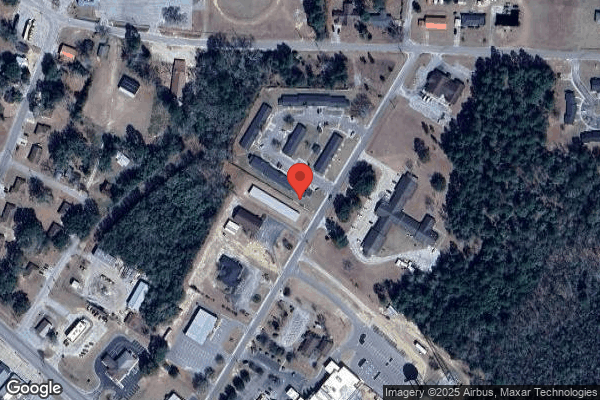
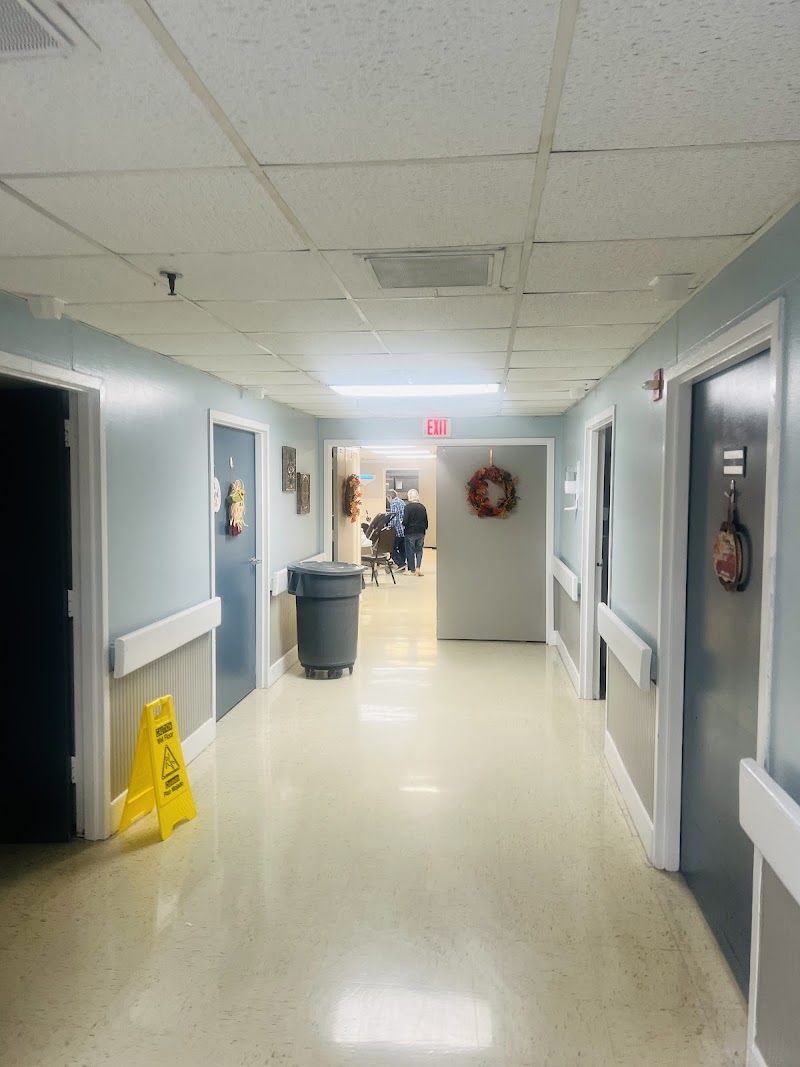
142 MEMORIAL DRIVE, REIDSVILLE, GA 30453 (912) 557-4345
For profit - Corporation 92 Beds BEACON HEALTH MANAGEMENT Data: November 2025
Trust Grade
40/100
#340 of 353 in GA
Last Inspection: March 2024

Within standard 12-15 month inspection cycle. Federal law requires annual inspections.

Overview

Tatnall Healthcare Center has received a Trust Grade of D, indicating below-average quality and some concerns about the facility. It ranks #340 out of 353 nursing homes in Georgia, placing it in the bottom half of facilities statewide, and #2 out of 2 in Tattnall County, meaning there is only one other local option that is better. While the facility is improving, having reduced its issues from 7 in 2024 to 3 in 2025, there are still significant concerns, particularly regarding staffing, which has a poor rating of 1 out of 5 stars, although turnover is a relatively good 37%. There are no fines reported, which is a positive sign, but the facility has less RN coverage than 92% of Georgia facilities, potentially impacting the quality of care. Recent inspections have revealed specific concerns, such as failures in maintaining kitchen sanitation, including improper handling of dishware and food storage that could lead to foodborne illnesses. Additionally, the dishwasher was not operating correctly, risking the cleanliness of the dishes used for meals, and there were issues with the proper thawing and storage of food items. Overall, while there are strengths in staffing stability and the lack of fines, the facility's serious sanitation concerns and low rankings warrant careful consideration for families looking at nursing home options.

Trust Score
D
40/100
In Georgia
#340/353
Bottom 4%
Safety Record
Low Risk
No red flags
Inspections
Getting Better
7 → 3 violations
Staff Stability
○ Average
37% turnover. Near Georgia's 48% average. Typical for the industry.
Penalties
✓ Good
No fines on record. Clean compliance history, better than most Georgia facilities.
Skilled Nurses
⚠ Watch
Each resident gets only 10 minutes of Registered Nurse (RN) attention daily — below average for Georgia. Fewer RN minutes means fewer trained eyes watching for problems.
Violations
⚠ Watch
28 deficiencies on record. Higher than average. Multiple issues found across inspections.
★☆☆☆☆
1.0
Overall Rating
★☆☆☆☆
1.0
Staff Levels
★★★☆☆
3.0
Care Quality
★★☆☆☆
2.0
Inspection Score
Stable
2024: 7 issues
2025: 3 issues

The Good

  • Full Sprinkler Coverage · Fire safety systems throughout facility
  • No fines on record
  • Staff turnover below average (37%)

    11 points below Georgia average of 48%

Facility shows strength in fire safety.

The Bad

1-Star Overall Rating

Below Georgia average (2.6)

Significant quality concerns identified by CMS

Staff Turnover: 37%

Near Georgia avg (46%)

Typical for the industry

Chain: BEACON HEALTH MANAGEMENT

Part of a multi-facility chain

Ask about local staffing decisions and management

The Ugly 28 deficiencies on record

Aug 2025 3 deficiencies
CONCERN (D) 📢 Someone Reported This

A family member, employee, or ombudsman was alarmed enough to file a formal complaint

Potential for Harm - no one hurt, but risky conditions existed

Free from Abuse/Neglect (Tag F0600)

Could have caused harm · This affected 1 resident

**NOTE- TERMS IN BRACKETS HAVE BEEN EDITED TO PROTECT CONFIDENTIALITY** Based on interview, record review, and review of the facility's policy titled Freedom of Abuse- Abuse Prevention: Fast Alerts, t...

Read full inspector narrative →
**NOTE- TERMS IN BRACKETS HAVE BEEN EDITED TO PROTECT CONFIDENTIALITY** Based on interview, record review, and review of the facility's policy titled Freedom of Abuse- Abuse Prevention: Fast Alerts, the facility failed to ensure two of four Residents (R) (R14 and R80) reviewed for abuse were free from resident-to-resident physical abuse. This failure had the potential to negatively impact all residents due to the facility's failure to prevent resident abuse.Findings included:A review of the facility's policy titled, Freedom of Abuse- Abuse Prevention: Fast Alerts, dated January 2025, indicated, Policy The purpose of this written Freedom of Abuse, Neglect, Exploitation: Abuse Prevention Standard is to outline the preventative and action steps taken to reduce the potential for abuse, mistreatment and neglect of residents and the misappropriation of resident property and to review practice and omissions which if allowed to go unchecked, could lead to abuse. This policy demonstrates a Zero Tolerance of Abuse of any type or manner and will address accordingly.A review of R14's admission Record, located in the Profile section of the electronic medical record (EMR), revealed R14 was admitted to the facility with diagnoses which included Alzheimer's disease, and anxiety disorder. A review of R14's care plan, dated 7/8/2024, located under the Care Plan tab of the EMR, contained the following Focus area, [R14's name] has a behavior problem R/T [related to] dementia. She can wander at times and intrude on others personal space. Can decide to sit in random chairs with no concern for who they belong to. The care plan's goal specified, She will be easily redirected without major complications through review date. A review of R14's quarterly Minimum Data Set (MDS) assessment with an assessment reference date (ARD) of 7/14/2024, located in the MDS tab of the EMR, revealed R14 scored zero of 15 on the Brief Interview Mental Status (BIMS) which indicated severe cognitive impairment. The MDS indicated R14 exhibited wandering behavior daily.A review of R14's Capacity for Sexual Consent Assessment, dated 7/15/2024 and completed by the Social Services Director (SSD), and provided by the facility, indicated, R14 was assessed as not having the capacity to consent to sexual intimacy. A review of R14's notes, located in the Progress Notes section of the EMR, revealed the following entries:8/23/2024 at 8:44 pm, . Nursing observations, evaluation, and recommendations are: During PM (evening) med pass and rounds resident got OOB [out of bed] and wandered into a male resident's room. Another resident seen her and went to get staff. When staff entered the room this Resident had a bowel movement and had taken her brief off and laid across his bed. The male resident had his hand touching her buttocks. This resident was immediately covered and removed from room and taken to her own room on another hall to be cleaned and examined.8/23/2024 at 8:45 pm, . Skin note Genital area examined with no redness, swelling or tearing or abnormalities noted. Resident showed no signs or symptoms of anxiety, pain or distress.8/23/2024 at 9:19 pm, Social Services Progress Note Late Entry Note Text: SSD [Social Service Director] was notified of the incident involving [R14's name] wandering into a male room and lying across the bed. It was reported [R14's name} had a bowel movement, took her brief off, and lay across the male's resident bed. The male resident had his hand touching her buttocks. [R14's name] was immediately covered, removed, and taken to her room in another hall to be cleaned and examined. SSD visited [R14's name] in her room. The resident showed no signs of distress or anxiety. She was lying in her bed, randomly talking calmly. SSD will visit as needed.An observation on 8/18/2025 at 12:23 pm, revealed R14 was in the facility's main dining room eating her lunch meal. No concerns were noted.A review of R80's admission Record, located in the Profile section of the EMR, revealed R180 was admitted to the facility on [DATE] with a diagnosis of chronic obstructive pulmonary disease (COPD). R80 was discharged from the facility on 10/11/2024.A review of R80's quarterly MDS assessment with an ARD of 7/1/2024, located in the MDS tab of the EMR, revealed R80 scored 13 of 15 on the BIMS which indicated he was cognitively intact and had not exhibited any physical, verbal, or other behavioral symptoms towards others.A review of R80's Capacity for Sexual Consent Assessment, dated 7/1/2024 and completed by the SSD, and provided by the facility, indicated, R80 was assessed as having the capacity to consent to sexual intimacy. A review of R80's notes, located in the Progress Notes section of the EMR, revealed the following entry: 8/23/2024 at 8:00 pm (noted as a late entry created on 8/26/2024 at 12:42 pm), . Nursing observations, evaluation, and recommendations are: A female resident wandered into his room, removed her soiled brief and laid across his bed and he proceeded to rub her buttocks with his hand .A review of the facility's investigation of the 8/23/2024 incident between R14 and R80, provided by the facility, revealed the facility substantiated resident to resident abuse. Included in the facility's investigation were witness statements from staff who witnessed the incident. A witness statement written by Certified Nursing Assistant (CNA) 1, who was still employed at the facility at the time of the survey, indicated, On Friday August 23 one of our patient was found in another resident room. She was laying across him with her bottom pants off. I remove her from his bed and walk her to her room. His part was out and he has his hand on her bottom.During an interview on 8/20/2025 at 6:50 am, CNA1 stated on 8/23/2024 between 8:00 PM and 9:00 pm she heard someone yelling in the hallway to come here and she responded. She observed R14 laying across R80 in his bed. CNA1 stated R14 did not have a brief on and she was laying cross ways on the bed with her head hanging off the side of the bed. CNA1 stated R14's was laying across R80's upper legs, but the resident's genitals were not touching and she did not recall R80 having his hand on R14's buttocks. CNA1 stated both residents were calm and were not exhibiting any distress. CNA1 explained she assisted R14 out of R80's bed, placed a gown on her, and removed her from the room. CNA1 stated at the time of the incident R14 ambulated independently and she did wander into other resident roomsDuring an interview on 8/19/2024 at 1:39 pm, the SSD stated she worked at the facility on 8/23/2024 when R14 wandered into R80's room. The SSD stated when the incident occurred R14 was able to ambulate independently, wandered constantly, and entered other resident rooms. The SSD explained that after the incident she went to see R14 and R80 and both residents were calm and in no distress. The SSD stated she spoke with R80 about the incident and he denied any wrongdoing.During an interview on 8/20/2025 at 10:20 am, the facility's Interim Administrator stated she did not work at the facility when R14 wandered into R80's room on 8/23/2024. The Administrator confirmed the facility's investigation of the incident between R14 and R80 substantiated resident abuse. The Administrator stated the expectation was for the facility to be free of abuse.
CONCERN (D) 📢 Someone Reported This

A family member, employee, or ombudsman was alarmed enough to file a formal complaint

Potential for Harm - no one hurt, but risky conditions existed

Accident Prevention (Tag F0689)

Could have caused harm · This affected 1 resident

**NOTE- TERMS IN BRACKETS HAVE BEEN EDITED TO PROTECT CONFIDENTIALITY** Based on observation, interview, record review, and review of the facility's policy titled Elopement Management, the facility fa...

Read full inspector narrative →
**NOTE- TERMS IN BRACKETS HAVE BEEN EDITED TO PROTECT CONFIDENTIALITY** Based on observation, interview, record review, and review of the facility's policy titled Elopement Management, the facility failed to provide adequate supervision for one of four Residents (R) (R81) reviewed for accidents. Specifically, R81 eloped from the facility and the facility grounds without staff knowing the resident was missing, which placed him at risk for the resident to be in harm's way or a possible injury.Findings included:A review of the facility's policy titled, Elopement Management, dated January 2025, indicated, Clinical process that addresses a resident's risk of elopement from the premises or a safe area without authorization and/or necessary supervision to do so. A review of R81's admission Record, located in the Profile section of the electronic medical record (EMR), revealed R81 was admitted to the facility with diagnoses that included mild dementia with agitation and major depressive disorder.A review of R81's Elopement Evaluation, dated 3/17/2024 and provided by the facility, indicated he was at risk for elopement.A review of R81's Care Plan located under the Care Plan tab of the EMR, contained the following Focus area which was created on 6/9/2017, At risk for elopement R/T [related to] history of attempts of elopement. Care plan Interventions/Tasks, also initiated on 6/9/2017 included Attempt to make resident feel safe/secure within facility, Distract from wandering by offering pleasant diversions such as food, conversations, television, books, music, and Redirect if [R81's name] attempts to elope.A review of R81's quarterly Minimum Data Set (MDS) assessment with an assessment reference date (ARD) of 6/26/2025, located in the MDS tab of the EMR, revealed R81 scored four of 15 on the Brief Interview Mental Status (BIMS) which indicated severe cognitive impairment. A review of R81's notes, located in the Progress Notes section of the EMR, revealed the following entries: 7/20/2025 at 10:00 am Progress Note: CNA [Certified Nursing Assistant/first name] returns the resident to the facility. She stated that We found him by the elementary school up the road. The resident is in NAD [no acute distress] and has no complaints. This nurse notified [name] LPN [Licensed Practical Nurse] immediately to notify her of the situation. This nurse last saw the resident at 8:50 am when I called his brother for him. The resident was sitting in the living room area. This is the last time this nurse saw the resident. 7/20/2025 at 10:30 am Elopement Evaluation: . resident has been hyperfocused on calling his brother since yesterday morning and this nurse observed hi [him] on 7/19/2025 tell his brother on the phone I want to go home come and get me. A review of the facility's investigation of R81's elopement from the facility provided by the facility, revealed, on 7/20/2025 [R81's name] was sitting outside on the porch while the smoking residents were on smoke break. When the other residents were escorted inside, he did not enter the building. Staff last saw him around 9:30 am. Once other residents were inside and staff members, he walked around building, through gate and down road. He was less than one eighth of a mile from the facility which is a five-minute walk when he was seen by someone. He was assisted to sit in the shade and the gentleman called a staff member from the facility to come get [R81's name] around 10 am. Staff member arrived and brought resident back to the facility. [R81's name] arrived back at the facility at 10:15 am. Upon return staff asked resident where he was going, he stated he was going home to get him some fried chicken on the bone. Staff performed a head-to-toe assessment with no injuries noted. Vital signs were taken and within normal limits. Resident denied pain or discomfort at that time. He was able to answer questions appropriately. Hydration was provided. After thorough investigation, the facility was able to substantiate the allegation of elopement as resident was outside of facility and facility grounds. During an observation on 8/20/2025 at 2:50 pm of the facility's doors which lead to the smoking patio area and the outside grounds, with the Director of Nursing (DON) present, revealed the doors to the outside smoking porch sounded an alarm when the doors were opened. Observations of the outside grounds around the smoking patio revealed the grounds were fenced and there were three outside gates. Observations of the three outside gates revealed they were unsecured and could be opened by moving the gate's latch to an upward position. The DON was showed which gate it was and thought that R81 exited the facility grounds from the gate on 7/20/2025. She confirmed that all three outside gates were currently not secured. During an interview on 8/20/2025 at 3:00 pm the DON confirmed R81 was an elopement risk and eloped from the facility on 7/20/2025. The DON stated R81 was found unsupervised approximately one eighth of a mile from the facility by a person who was not an employee of the facility.
CONCERN (E) 📢 Someone Reported This

A family member, employee, or ombudsman was alarmed enough to file a formal complaint

Potential for Harm - no one hurt, but risky conditions existed

Deficiency F0804 (Tag F0804)

Could have caused harm · This affected multiple residents

Based on observations, interviews, and record review, the facility failed to serve food that was palatable and hot for three of five residents (R) (R25, R26, and R47) reviewed for food palatability ou...

Read full inspector narrative →
Based on observations, interviews, and record review, the facility failed to serve food that was palatable and hot for three of five residents (R) (R25, R26, and R47) reviewed for food palatability out of a total sample of 33 residents. This failure had the potential for the residents to skip meals and potential for weight loss. Findings included:1. A review of R25's quarterly Minimum Data Set (MDS), with an Assessment Reference Date (ARD) of 8/6/2025 and located in the electronic medical record (EMR) under the MDS tab, revealed a Brief Interview for Mental Status (BIMS) score of 15 out of 15, which indicated the resident was cognitively intact.During an interview on 8/18/2025 at 11:21 am, R25 stated the food served at the facility did not always taste good. R25 stated the food lacked flavor and could be hotter when served at meals.2. A review of R26's Annual MDS, with an ARD of 7/17/2025 and located in the EMR under the MDS tab, revealed a BIMS score of 13 out of 15, which indicated the resident was cognitively intact.During an interview on 8/18/2025 at 1:40 pm, R26 stated the food was cold when served at meals. R26 specified the breakfast meal was the worst because her eggs, sausage, coffee, pancakes, and toast are cold when served. R26 stated that she had to soak her toast in milk or coffee because it is too hard for her to eat. R26 stated she wanted to be served hot food and hot coffee.3. A review of R47's quarterly MDS, with an ARD of 7/14/2025 and located in the EMR under the MDS tab, revealed a BIMS score of 15 out of 15, which indicated the resident was cognitively intact.During an interview on 8/18/2025 at 11:00 am, R47 stated she did not care for the food served at the facility. R47 specified she ate her meals in her room and her food was not always hot when served and did not always taste good to her.In response to resident complaints about food, a test tray was requested to be sent to the facility's C hallway during the breakfast meal on 8/20/2025. Observation revealed before the meal tray cart, which contained the test tray, left the kitchen at 8:34 am, resident meals were observed being served on heated plates. Food temperatures on the kitchen tray line were monitored by staff and were at acceptable levels of 140 degrees Fahrenheit (F) and above for the hot foods and below 40 degrees F on cold beverages being served. Toast was being served from a pan on the trayline. The test tray and other resident meal trays were placed on an enclosed tray cart that had no heating element and were delivered to the C hallway at 8:35 am. The last resident's breakfast tray was observed to be served on the C hallway on 8/20/2025 at 8:47 am. At this time, the food and beverages on the test tray were sampled in the presence of the Dietary Manager (DM). The DM utilized a calibrated facility thermometer to obtain temperatures of the food and beverages served on the test tray. The DM also tasted the food served on the requested test tray. Temperature checks and tasting of the food served on the test tray revealed the following: a. The scrambled eggs on the test tray registered 118 degrees F and were barely warm when tasted. The DM also tasted the scrambled eggs and confirmed the eggs tasted barely warm and needed to be hotter. b. The toast on the test tray registered 80 degrees F and was not warm and was very hard when tasted. The DM also tasted the toast and confirmed it was not warm and was very hard. c. The DM was unable to obtain an internal temperature on the slices of bacon served on the test tray. When the bacon was tasted it was barely warm. The DM also tasted the bacon and confirmed it was barely warm and needed to be hotter. During an interview on 8/20/2025 at 8:54 am, the DM stated the scrambled eggs, toast and bacon should be hot when served to residents.During an interview on 8/21/2025 at 7:15 pm, the Administrator stated the facility did not have a policy in relation to food palatability.
Mar 2024 6 deficiencies
CONCERN (D)

Potential for Harm - no one hurt, but risky conditions existed

Notification of Changes (Tag F0580)

Could have caused harm · This affected 1 resident

Based on staff interviews, record review, review of the facility policy titled, Change in Condition/Incident Reporting, and review of the American Heart Association website, the facility failed to not...

Read full inspector narrative →
Based on staff interviews, record review, review of the facility policy titled, Change in Condition/Incident Reporting, and review of the American Heart Association website, the facility failed to notify the physician of a change in condition for one of six Residents (R)63). Specifically, the facility failed to ensure the physician for R63 was notified of residents' significantly elevated blood pressure readings. Findings include: Review of the facility policy titled, Change in Condition/Incident Reporting dated August 2021 revealed, under procedure number 3. If there is an actual change in condition, the resident's physician is notified promptly and validated as to information 4. Document the date/time of contacts and with whom you spoke. Document any new physician orders if indicated. Review of High Blood Pressure from the American Heart Association online https://www.heart.org/en/health-topics/high-blood-pressure, on 3/30/2024 revealed a normal blood pressure is a systolic reading (upper number) of less than 120 and diastolic reading (lower number) of less than 80. A hypertensive crisis is a systolic reading of higher than 180 and a diastolic reading of higher than 120. A hypertensive crisis requires consultation with a physician immediately. The consequences of uncontrolled blood pressure in this range (greater than 180/120) can be severe and include: stroke, loss of consciousness, heart attack, loss of kidney function, angina (unstable chest pain), and pulmonary edema (fluid backup in the lungs). Review of the undated admission Record in the electronic medical record (EMR) under the Profile tab revealed R63 was admitted to the facility with diagnoses including essential primary hypertension (HTN) (high blood pressure). Review of the Orders dated 3/26/2024, under the EMR Clinical tab revealed R63 had physician's orders for three blood pressure medications all initiated on 2/21/2024 as follows: Isosorbide Dinitrate Oral Tablet 10 milligrams (mg), give one tablet by mouth three times a day, Metoprolol Succinate ER (Extended Release) Tablet, 25 mg, give one tablet by mouth two times a day, Hydralazine HCl Oral Tablet 25mg, give one tablet by mouth three times a day, None of the Orders, in the Clinical tab dated 2/21/2024 for Isosorbide Dinitrate, Metoprolol Succinate ER, or Hydralazine HCL, included parameters for notifying the physician when blood pressures were either too high or too low. Review of the Vitals tab from 12/04/2023 through 03/27/2024 in the EMR revealed, on 3/24/2024, R63's blood pressure was elevated at 187/114. Review of previous blood pressures showed three instances in which R63's systolic blood pressure was greater than 170 (187/101 on 1/23/2024, 172/95 on 2/22/2024, 174/83 on 2/25/2024). There were three instances in which R63's diastolic blood pressure was greater than 90 (164/91 on 12/17/2023, 187/101 on 1/23/2024, 172/95 on 2/11/2024). Review of the nursing and physician Progress Notes in the EMR from 3/24/2024 through 3/28/2024 under the Progress Notes tab revealed no documentation the physician had been notified of the elevated blood pressure of 187/114. Review of the Assessments tab in the EMR also revealed no evidence a change of condition assessment had been initiated (which would include a prompt for physician notification). During an interview on 3/27/2024 at 5:14 PM, Licensed Practical Nurse (LPN)2 stated she had worked as a Certified Nursing Assistant (CNA) on 3/24/2024 and had taken and entered the blood pressure reading of 187/114 into R63's medical record. LPN2 stated she was concerned about the high blood pressure and notified the nurse to whom R63 was assigned on that day. LPN2 stated the nurse on duty (LPN1) told her it was normal for R63 to have elevated blood pressure. LPN2 stated if she had been the assigned nurse for R63, she would have notified the physician and documented it in nurse's progress notes. During an interview on 3/28/2024 at 11:07 AM, the Director of Nursing (DON) stated she had not been aware of R63's blood pressure of 187/114 until 3/27/2024 (after the surveyor questioned staff). The DON stated LPN1 should have called the physician or Nurse Practitioner with a blood pressure that high. The DON stated a change in condition assessment should have been initiated for the elevated blood pressure and confirmed the physician had not been notified f reading. During an interview on 3/28/2024 at 12:32 PM, LPN1 stated she had not contacted the physician about the blood pressure reading of 187/114. Although there was no documentation under Vitals of R63's blood pressure being checked after the reading of 187/114, LPN1 stated she rechecked it on 3/24/2024 after the blood pressure medications were administered and it had decreased to 166/88. LPN1 stated that was why she did not notify the physician. During an interview on 3/28/2024 at 5:43 PM, the Medical Director (and Attending Physician for R63) stated he did not remember being notified of R63'selevated blood pressure. The Medical Director stated he relied on nursing judgement to be notified of a blood pressure that high. The Medical Director stated LPN1 should have realized R63's blood pressure was significantly elevated. The Medical Director stated he would want to be notified of a blood pressure that high and stated, Nurses should know the normal range and should know that it [187/114] was an abnormal level.
CONCERN (D)

Potential for Harm - no one hurt, but risky conditions existed

Deficiency F0625 (Tag F0625)

Could have caused harm · This affected 1 resident

**NOTE- TERMS IN BRACKETS HAVE BEEN EDITED TO PROTECT CONFIDENTIALITY** 2.Review of the undated admission Record in the EMR under the Profile tab revealed R25 was admitted to the facility with diagnos...

Read full inspector narrative →
**NOTE- TERMS IN BRACKETS HAVE BEEN EDITED TO PROTECT CONFIDENTIALITY** 2.Review of the undated admission Record in the EMR under the Profile tab revealed R25 was admitted to the facility with diagnoses including chronic obstructive pulmonary disease (COPD) and dementia. R25 had a family member (F25) designated as his responsible party. Review of the significant change Minimum Data Set (MDS) with an assessment reference date (ARD) of 1/22/2024 in the EMR under the MDS tab revealed R25 was severely cognitively impaired with a Brief Interview for Mental Status (BIMS) score of five out of 15 which indicated R25 was severely cognitively impaired. Review of the SNF [Skilled Nursing Facility]/NF [Nursing Facility] to Hospital Transfer Form dated 11/21/2023 revealed R25 was hospitalized on [DATE] due to being unresponsive. Review of the Bed Hold Notice dated 11/21/2023 provided by the facility revealed R25's bed would be held for seven days at no cost to the resident/responsible party. The Bed Hold Notice was not signed by R25 or F25 and the following was documented under the resident/responsible party signature line, Verbal Consent to Hold Bed . Sister POA [Power of Attorney]. Review of the SNF [Skilled Nursing Facility]/NF [Nursing Facility] to Hospital Transfer Form dated 1/10/2024 revealed R25 was hospitalized for, altered mental status. Review of the Bed Hold Notice dated 1/07/2024 provided by the facility revealed R25's bed would be held for seven days at no cost to the resident/responsible party. The Bed Hold Notice was documented under the signature line, Verbal Consent to Hold Bed . Sister POA [Power of Attorney]. During an interview on 3/28/2024 at 4:28 PM, the SSD stated she completed the Bed Hold Notice forms for R25 that were dated 11/21/2023 and 1/10/2023. The SSD stated when R25 was transferred emergently to the hospital, she called the responsible party/family and explained the bed hold notice and asked if the responsible party/family (F25) wanted to have the facility hold the resident's bed. The SSD stated her normal process was to contact the family/responsible party by phone and that she did not provide the Bed Hold Notice in writing to the resident or family. During an interview on 3/28/2024 at 5:58 PM, the [NAME] President of Operations stated the facility's practice for notification was to place the Bed Hold policy in the packet of papers that went with the resident to the hospital; it did not include providing the notice in writing to the resident and responsible party. During an interview on 3/28/2024 at 5:52 PM the Administrator stated he did not know if the staff provided the Bed Hold notice in writing when a resident was discharged to the hospital. He stated he did not know of the requirement to specifically provide a written notice. Based on staff interview, record review, and review of the facility policy titled, Bed-Hold, the facility failed to ensure two of two (Residents (R) 25 and R168) and their resident representatives had a written Bed-Hold Notice when the residents were transferred to the hospital. Findings include: Review of the facility's policy titled Bed-Hold, dated 3/03/2020, under Policy: All residents are given the option of reserving their bed when leaving the facility with the intent to return. This temporary absence may be for hospitalization or therapeutic leave. All residents or their responsible party are informed in writing about the facilities bed hold policy at the time of admission. A copy of the bed hold agreement is also provided to resident or responsible party prior to a resident's transfer to a hospital or start of a therapeutic leave. Under procedure number two 2. Bed hold Policy and Bed hold Authorization form: All residents/responsible parties are given a copy of the state specific bed hold policy and a bed hold authorization form upon admission. In the case of emergency transfer the resident or responsible party is provided with written notification within 24 hours of transfer. The requirement is met if the resident's copy of the notice is sent with other papers accompanying the resident in hospital. 1.Review of R168's admission Record, in the Profile section of the electronic medical record (EMR) indicated R168 was admitted to the facility with diagnosis of schizophrenia. Review of the Physician Order, dated 2/07/2024, under Orders in the EMR, indicated R168 was transferred to the Hospital for evaluation and treatment of behavioral related issues. Review of the Bed-Hold Notice under Documents in the EMR, indicated the Social Service Director (SSD) notified R168's resident representative on 2/06/2024 that R168 would be transferred to the hospital on 2/07/2024. The Bed-Hold Notice indicated the SSD obtained verbal consent to hold R168's bed while she was in the hospital. There was no documentation to indicate that a written Bed-Hold Notice was provided to the resident and the resident representative. Review of the Physician Order, dated 3/08/2024, under Orders in the EMR, indicated R168 was transferred to the Hospital for evaluation and treatment of behavioral related issues. Review of the Bed-Hold Notice under Documents in the EMR, indicated the SSD notified R168's responsible party on 3/07/2024 that R168 would be transferred to the hospital on 3/08/2024. The Bed-Hold Notice indicated the SSD obtained verbal consent to hold R168's bed while she was in the hospital. There was no documentation to indicate that a written Bed-Hold Notice was provided to the resident and the resident representative. During an interview with the SSD on 3/28/2024, at 4:28 PM, the SSD stated that she does not provide the residents or their responsible party with a written Bed-Hold Notice at the time of their transfer to the hospital.
CONCERN (D)

Potential for Harm - no one hurt, but risky conditions existed

Deficiency F0678 (Tag F0678)

Could have caused harm · This affected 1 resident

**NOTE- TERMS IN BRACKETS HAVE BEEN EDITED TO PROTECT CONFIDENTIALITY** Based on staff interview, record review, and review of the facility policy titled, Advance Directives, the facility failed to en...

Read full inspector narrative →
**NOTE- TERMS IN BRACKETS HAVE BEEN EDITED TO PROTECT CONFIDENTIALITY** Based on staff interview, record review, and review of the facility policy titled, Advance Directives, the facility failed to ensure one of 34 residents (Resident (R)25) had clear and consistent information available regarding whether to perform cardiopulmonary resuscitation (CPR). Specifically, R25's status changed to Do Not Resuscitate (DNR) following admission to hospice; this information was not consistently documented in the resident's record, creating the risk staff would not know whether to attempt to resuscitate him in the event he had no pulse or he stopped breathing. Findings include: Review of the facility's policy titled, Advance Directives dated [DATE] revealed, under Process: A POLST or IPOLST (Physician Orders for Life Sustaining Treatment or Iowa Physician Orders for Life Sustaining Treatment) is a form developed as a more specific and detailed DNR. Like a DNR the form is completed with the resident's doctor and based on end-of-life decisions. Once signed, doctors and other medical professional must honor the instructions on the POLST/IPOLST. Review of the significant change Minimum Data Set (MDS) with an assessment reference date (ARD) of [DATE] in the electronic medical record (EMR) under the MDS tab revealed R25 was severely cognitively impaired with a Brief Interview for Mental Status (BIMS) score of 5 out of 15. Review of the Orders tab dated [DATE] in the EMR under the Clinical tab revealed R25 was admitted to hospice services on [DATE]. The Orders did not specifically address resuscitation status, such as whether the resident was DNR or full code (attempt resuscitation in the event he had no pulse, or he stopped breathing). Review of the Physician Orders for Life-Sustaining Treatment (POLST) dated [DATE] in the EMR under the Misc tab revealed staff should perform cardiopulmonary resuscitation (CPR) if the resident had no pulse and was not breathing. This was the only POLST form in R25's EMR. Review of the Care Plan revealed conflicting information regarding whether to perform CPR. Review of the Care Plan dated [DATE] in the EMR under the Care Plan tab revealed a focus area of, [R25] has expressed desire for Advanced Care Planning intervention(s). Resident is a full code. The goal was, [R25's] wishes will be honored. Intervention in pertinent part included, Full Code-Attempt Resuscitation (CPR). Review of the Care Plan dated [DATE] in the EMR under the Care Plan tab revealed a focus area of, [R25] desires are to have a DNR status. He has a terminal illness. Is admitted to [name] Hospice Care. The goal was, Resident request will be honored through review date. Approaches included in pertinent part, DNR if indicated. During an interview on [DATE] at 4:46 PM, Licensed Practical Nurse (LPN)5 stated R25 experienced a change in condition, occurrence of seizures with falls and decreased cognition, which had resulted in admission to hospice in [DATE]. LPN5 stated R25 was full code prior to his hospitalization in [DATE] and when he returned to the facility and went onto hospice and his code status changed to DNR. LPN25 reviewed R25's EMR and found only one POLST form dated [DATE] which indicated his status was full code. LPN5 went to the hospice notebook at the nurses' station and inside the notebook was an updated POLST form dated [DATE] which indicated R25's status was DNR. LPN5 stated the POLST form dated [DATE] should have been uploaded into the EMR in addition to being in the hospice chart. LPN5 stated the banner in Point Click Care, in the EMR should also indicate code status, however, the banner in R25's EMR did not indicate R25's code status. LPN5 stated there was also a notebook on the medication cart which listed which residents were DNR and this was another place the nurses could check code status. LPN5 opened the notebook and R25's name was not on the document listing the residents on that hallway that were DNR. During an interview on [DATE] at 12:38 PM, LPN1 stated she looked at the banner in Point Click Care to check the code status for a resident if she was at the computer. LPN1 stated the second place she would look was in the notebook on the nurses' cart that had a list of residents who were DNR. During an interview on [DATE] at 1:46 PM, the Director of Nursing (DON) stated nurses should look in Point Click Care at the banner when determining whether to perform CPR. She stated the secondary place to look for a resident who was on hospice, was to go to the hospice record and look at the documents. The DON stated the information regarding code status should be accurate and consistent in all locations in the EMR and hospice chart, including on the care plan.
CONCERN (D)

Potential for Harm - no one hurt, but risky conditions existed

Respiratory Care (Tag F0695)

Could have caused harm · This affected 1 resident

Based on observation, staff interview, record review, and review of the facility policy titled, Respiratory System Management, Oxygen E-Tanks, the facility failed to ensure one of six residents (Resid...

Read full inspector narrative →
Based on observation, staff interview, record review, and review of the facility policy titled, Respiratory System Management, Oxygen E-Tanks, the facility failed to ensure one of six residents (Resident (R)44) portable oxygen tank was securely stored while in residents room. Findings include: Review of the facility's policy titled, Respiratory System Management, Oxygen E-Tanks dated August 2021 revealed, Under Procedure number one d. Cylinders must be secured in racks or by chains, e. Provision must be made so that tanks cannot be knocked over. Must be chained to wall or on safety stand for large cylinders and racks used for small cylinders. Stands and carriers must be used, f. Never allow cylinder to be dropped or strike each other violently. Review of the undated admission Record in the electronic medical record (EMR) under the Profile tab revealed R44 was admitted to the facility with diagnoses including chronic obstructive pulmonary disease (COPD) and dependence on supplemental oxygen. Review of Physician's Orders dated 8/01/2023 in the EMR under the Clinical tab revealed, Oxygen @ [at] 3LPM [liters per minute] per nasal cannula related to SOB [shortness of breath]/COPD. Observations on 3/25/2024 at 1:32 PM; 3/25/2024 at 2:20 PM; 3/25/2024 at 4:52 PM; on 3/26/2024 at 9:28 AM; on 3/27/2024 at 9:15 AM; 3/27/2024 at 12:06 PM; and on 3/27/2024 at 4:35 PM revealed the portable metal E-Tank (a narrow cylinder approximately three feet tall) was unsecured, in a fabric holster (that attached to the back of the wheelchair) and leaning against the wall with R44 in bed. On 3/27/2024 at 4:53 PM, Licensed Practical Nurse (LPN)5 entered R44's room and observed the portable E tank leaning against the wall. LPN5 stated the tank was not stored properly. LPN5 stated the tank should be stored in the rack or attached to the resident's wheelchair in a fabric sling. LPN5 stated the tank could tip over and if something happened to the nozzle, the tank had the possibility of acting as a projectile. During an interview on 3/28/2024 at 8:43 AM, the Maintenance Director stated the portable E-oxygen tanks should be stored in the oxygen room in a rack or in the resident's room attached to the wheelchair in a sling and in the upright position. The Maintenance Director stated if the tank tipped over, the hose could pop off and the oxygen would be released. He stated if the tank was full and the top part broke off, then it could act as a projectile, but this would occur only if there was a significant impact. The Maintenance Director stated R44 was bed bound and used an oxygen concentrator in her room and he did not know why the portable tank had been in her room. During an interview on 3/28/2024 at 8:50 AM, the Administrator stated the oxygen tanks should not be unsecured. During an interview on 3/28/2024 at 10:17 AM, the Oxygen Supplier Representative stated there was a safety requirement that portable tanks be secure and not free standing. He stated most facilities used racks for storing portable tanks. The Oxygen Supplier Representative stated the worst-case scenario was if the tank had a high amount of pressure and it fell and the valve was sheared, this would allow the pressure to escape rapidly, and the oxygen tank could propel rapidly.
CONCERN (E)

Potential for Harm - no one hurt, but risky conditions existed

Deficiency F0804 (Tag F0804)

Could have caused harm · This affected multiple residents

**NOTE- TERMS IN BRACKETS HAVE BEEN EDITED TO PROTECT CONFIDENTIALITY** Based on observations, resident and staff interviews, and record review, the facility failed to ensure four out of 64 residents ...

Read full inspector narrative →
**NOTE- TERMS IN BRACKETS HAVE BEEN EDITED TO PROTECT CONFIDENTIALITY** Based on observations, resident and staff interviews, and record review, the facility failed to ensure four out of 64 residents (Resident (R)34, R26, R13, R32) who received meals prepared by the dietary department were served palatable food, and approximately 35 residents in the dining room did not receive condiments of salt and pepper. Specifically, the food was not at the proper temperature when residents were served; the food lacked flavor; condiments were not provided; food presentation and texture were unappealing. Findings include: A policy on food palatability and temperatures was requested of the Administrator; however, it was not provided by the time the survey team exited the facility on 3/28/2024. During an interview on 3/25/2024 at 1:41 PM, R34 stated the food was unseasoned and cold when she was served meals in her room. Review of the quarterly Minimum Data Set (MDS) with an assessment reference date (ARD) of 12/14/2023 in the electronic medical record (EMR) under the MDS tab revealed a Brief Interview for Mental Status score of 15 out of 15 which indicated little to no cognitive impairment. During an interview on 3/25/2024 at 3:16 PM R26 stated the food was terrible, the chicken noodle soup tasted like raw onion, and he could not swallow it. Review of the quarterly MDS with an ARD of 1/11/2024 in the EMR under the MDS tab revealed R26 with a BIMS score of 15 out of 15 which indicated little to no cognitive impairment. During an interview on 3/26/2024 at 10:15 AM, R13 stated the food did not taste good, she did not like how it was prepared, and it was not always hot. R13 stated condiments were not served and that she had to ask for them. Review of the quarterly MDS with an ARD of 3/02/2024 in the EMR under the MDS tab revealed R13 was unimpaired in cognition with a BIMS score of 15 out of 15 which indicated little to no cognitive impairment. During an interview on 3/26/2024 at 9:06 AM, R32 was eating breakfast and had been served toast, a browned/overcooked sausage patty, scrambled eggs, and cheese grits on her plate. The grits were semi-liquid and spread out on the plate into the other foods. R32 stated she could not eat the sausage because it was too tough. Review of the annual MDS with an ARD of 1/13/2024 in the EMR under the MDS tab revealed R32 with a BIMS score of 13 out of 15 which indicated little to no cognitive impairment. Dining observations in the main dining room on 3/25/2024 from 12:07 PM through 12:21 PM revealed approximately 35 residents were served meat balls, mashed potatoes, carrots, and pudding for dessert. None of the residents in the main dining room were offered salt and pepper. Observations of the dining room meal service on 3/25/2024 and tray line on 3/27/2024 showed no salt and pepper were provided on the trays. Nothing was served before or after the trays were served. Tray line meal service was observed on 3/27/2024 at12:21 PM through 1:05 PM. The following concerns were noted: a. There were several trays on the counter with poured cold beverages including milk and sweet tea. The beverages were at room temperature during the entire meal service without any mechanism in place to keep the drinks cold. b. Residents were served pieces of white bread with the meal. No margarine/butter was served with the bread. No salt and pepper was served with the meal. During an interview on 3/27/2024 at 1:01 PM, the Dietary Manager (DM) stated butter/margarine was served with toast but not when bread was served at other meals. She stated residents could ask for salt and pepper and it would be served. c. There were three small steam table pans with hot foods for residents on pureed/mechanical soft diets (texture modified country fried steak, carrots, potatoes) that were placed on top of the steamtable and not placed into the steamtable wells (filled with heated water to keep the foods hot) during the tray line meal service. The steam table wells were full of other foods and there was no room for these three additional pans. On 3/27/2024 at 1:05 PM, two test trays were evaluated by the DM and the surveyor after the last resident on the C Hall received their meal. Concerns were as follows: a. Evaluation of the pureed diet test tray occurred at 1:05 PM. The mashed potatoes were semi-liquid and spread out and filled the respective section of the three sectioned plate. The DM stated the potatoes were, a little thin. The pureed meat (country fried steak) was thick, clumpy, and lukewarm to the palate with a temperature of 117 degrees Fahrenheit (F). The DM verified the meat texture was too thick. b. Evaluation of the regular diet test tray occurred at 1:07 PM. The steak patty was tough/chewy and cool to the palate at 110 degrees F. The vegetable was [NAME] slaw (the cook ran out of carrots near the end of the tray line), and it was warm to the palate at 55 degrees F. The temperature of the milk was 59 degrees F and lemonade was 62 degrees F. Both drinks were slightly cool, not cold. During an interview at 1:07 PM, the DM stated the holding temperatures for hot foods should be above 140 degrees. She further stated cold foods/beverages should be between 45 - 50 degrees when residents receive them. Continued interview on 3/27/2024 at 1:16 PM, the DM stated the residents in the main dining room (approximately 35 residents for lunch per the DM) did not have salt and pepper served with meals. The DM stated residents could ask for salt and pepper if they wanted it. The DM verified margarine/butter was not served with the bread for lunch on this date; residents were served a slice of plain white bread. The DM stated the three sectioned plates were used to serve residents who received pureed diets because the pureed food could be runny, and the sections kept the foods separate. During an interview on 3/27/2024 at 2:49 PM, the Administrator stated the texture for puree diets was for the foods not to be too runny or too thick. He stated the texture should approximate pudding. The Administrator stated he saw the pureed meat texture for lunch on this date and stated it was too thick.
CONCERN (F)

Potential for Harm - no one hurt, but risky conditions existed

Food Safety (Tag F0812)

Could have caused harm · This affected most or all residents

Based on observation, staff interview, record review, and review of the facility policies titled, Food Storage, and Sanitation & Food Production, the facility failed to ensure the kitchen was maintain...

Read full inspector narrative →
Based on observation, staff interview, record review, and review of the facility policies titled, Food Storage, and Sanitation & Food Production, the facility failed to ensure the kitchen was maintained in a sanitary manner for 64 out of 65 residents receiving an oral diet. Specifically, the facility failed to ensure dietary staff allow the clean dishware to air dry; change gloves after touching soiled dishes, removing clean dishware from dish washer without performing hand hygiene; label and date food stored in reach in cooler and freezer, bulk food item containers had a scoop properly stored; directly touching food items with contaminate gloves during meal service, chemicals were not labeled with the name of the product inside. This created the potential for the spread of foodborne illness. Findings include: Review of the facility's undated policy titled, Food Storage revealed, Chemicals must be clearly labeled . Scoops must be provided for flour, sugar, cereals, dried vegetables, and spices. Scoops are not to be stored in the food containers but are kept in covered in a protected area near the containers . Leftover food is stored in covered containers or wrapped carefully and securely. Each item is clearly labeled and dated before being refrigerated. Rewrap packages of frozen food which have been opened. This prevents freezer burns and spoilage . Review of the facility's undated policy titled, Sanitation & Food Production revealed, Label and date all food items with item name and date stored or opened. Rotate/use all leftover food items within 72 hours (or per state/local regulation) or of noted storage date on labels. Review of the facility's undated policy titled, Personal Hygiene revealed, The key to a safe and sanitary Dietary Department is healthy employees, properly trained in safe food handling . Hands must be washed after . handling any unsanitary items. Review of the facility's undated policy titled, Sanitation revealed, Gloves are to be used when handling PHF [potentially hazardous food], changed often once a task has been completed, remove gloves and wash hands before proceeding to the next task . Wash hands after the following activities, including, but not limited to: . After touching anything that may contaminate hands, such as un-sanitized equipment, work surfaces, or wash cloths. The initial kitchen inspection was completed on 3/25/2024 from 9:31 AM through 10:19 AM with the Dietary Manager (DM); the following concerns were observed: a. A spray bottle of with a chemical solution was observed on the counter. The spray bottle was not labeled with the name of the product that was in the spray bottle. The DM stated the product in the bottle was Pine Multi Surface Cleaner. The DM stated the spray bottle should be labeled with the name of the product and verified it was not. b. Dietary Aide (DA)1 was washing dishes using the commercial dishwasher. She placed dirty items in a rack, pushed the rack into the machine, then proceeded to unload the clean trays on the other side without performing hand hygiene in between. c. Observation in the reach in refrigerator revealed a container with cooked ground beef without a label identifying the contents and date it was placed into refrigeration. The DM stated she did not know when it had been placed into refrigeration. d. Observation in the reach in freezer revealed a bag of okra that was open to air and not sealed. e. Observation of the bulk food items revealed there was a scoop in the container of thickener; the scoop was lying horizontally, and the handle was touching the thickener. The DM stated she thought scoops could be stored in the containers if the handles were not touching the food. She removed the scoop from the container of thickener. There were three additional containers of bulk foods with scoops stored in the foods with the handles upright and not touching the foods. During tray line lunch service on 3/27/2024 from 12:21 PM through 12:56 PM, the following concerns were noted: a. Cook1 used a gloved hand to serve the meat patties and slices of bread while touching trays, lids, plates, scoops, the exterior surface of the bags of bread, a plate cover that dropped onto the floor, the counter, and a sanitizer wiping rag in between. Cook1 left the tray line several times to get things in the main kitchen such as additional bags of bread. She changed her gloves at these times; however, when she returned, she continued the procedure of touching everything on the tray line including the meat patties and slices of bread with the same gloves. There was a set of tongs in the steam table pan for serving the meat; however, Cook1 did not use them. The meat patties were served to all residents who did not receive texture modified diets (mechanical soft and pureed) and the bread was served to all residents except those on pureed diets. Meal service was observed for all areas including the dining room, Cart A, Cart B, and Cart C. b. The DM was observed washing dishes during the lunch tray line meal service. She repeatedly went from the dirty side of the dish machine to the clean without sanitizing her hands in between. Observations revealed the DM loading soiled plate covers into the machine. She proceeded to remove clean lids without washing her hands in between. The DM pre-washed plates and stacked them on the dirty side of the dish machine and then went to the clean side without performing hand hygiene and dried approximately ten wet trays with a rag and stacked them at the tray line to be used for lunch meal service. The DM completed the same procedure with the insulated bases for the plates (used to keep food hot), drying them with a rag and placing them on the tray line for use during lunch. The DM removed clean cups from the dish machine and stacked them on a tray without performing hand hygiene. The DM then went back to the dirty side and ran dishes through, proceeded to the clean side, and removed cups and bowls without performing hand hygiene. 3. During an interview on 3/27/2024 at 1:16 PM, the DM stated the staff typically used tongs to serve meat patties and she had not noticed Cook1 serving the meat patties with her gloved hands. The DM verified cross contamination could occur if gloved hands touched ready to eat food and other items that were not clean/sanitary. The DM stated there was usually only one staff washing dishes at a time. She stated the person washing dishes should wash their hands after touching soiled items and before removing clean items. The DM verified she did not consistently follow this procedure while washing dishes during the lunch meal. The DM stated she had washed her hands a couple times when she left the dishwashing area and went into the main kitchen. The DM verified she dried items such as the trays with a towel and stated she was not aware that air drying was required, and dishware/pots could not be dried with a towel. During an interview on 3/27/2024 at 1:30 PM Cook1 verified she touched multiple items including the meat patty and bread slices with same gloves and without handwashing or changing gloves in between. Cook1 verified cross contamination could occur with this technique. During an interview on 3/25/2024 at 2:15 PM, the Administrator stated he was a Certified Dietary Manager (CDM) and took responsibility for oversight of the kitchen. The Administrator stated the DM was new to the facility and did not have a long-term care food service background. Continued interview also revealed that the dietary staff should change gloves between tasks or cross contamination could occur. The Administrator stated staff should sanitize their hands in between touching soiled dishes/pots and prior to touching the clean items coming out of the dish machine. The Administrator stated staff were not supposed to dry things with towels; air drying should occur.
Feb 2024 1 deficiency
CONCERN (D) 📢 Someone Reported This

A family member, employee, or ombudsman was alarmed enough to file a formal complaint

Potential for Harm - no one hurt, but risky conditions existed

Infection Control (Tag F0880)

Could have caused harm · This affected 1 resident

**NOTE- TERMS IN BRACKETS HAVE BEEN EDITED TO PROTECT CONFIDENTIALITY** Based on observations, resident and staff interviews, review of facility documents, and review of facility policy titled COVID-1...

Read full inspector narrative →
**NOTE- TERMS IN BRACKETS HAVE BEEN EDITED TO PROTECT CONFIDENTIALITY** Based on observations, resident and staff interviews, review of facility documents, and review of facility policy titled COVID-19 Protocol Phase IV, the facility failed to ensure infection control practices were followed to prevent the transmission and spread of COVID-19 related to cohorting a COVID positive residents (R1) and COVID negative resident (R2) in the same room on one of three halls. Findings include: Review of the facility policy titled COVID-19 Protocol Phase IV, Patient Placement: Place a patient with suspected or confirmed SARS-CoV-2 infection in a single-person room. The door should be kept closed (if safe to do so). Ideally, the patient should have a dedicated bathroom. If cohorting, only patients with the same respiratory pathogen should be housed in the same room. MDRO colonization status and/or presence of other communicable disease should also be taken into consideration during the cohorting process. Review of the facility's line listing revealed that R1 tested positive on 1/28/2024. During the initial tour on 2/1/2024 at 10:00 am revealed outside room [ROOM NUMBER] door on the A hall, and outside room [ROOM NUMBER] door on the C hall, PPE supplies were observed to include a plastic bin with face shields, face masks, and gowns. There was also a large gray trash can outside the room doors. Observation revealed there were two residents in room [ROOM NUMBER] in the A hall that were COVID-19 positive. Resident (R)1 was observed in room [ROOM NUMBER] bed C on the C hall. An observation and interview on 2/1/2024 at 10:44 am of R1 revealed that she was COVID positive, and her roommate was COVID negative. She stated that she tested positive a couple of days ago on 1/28/2024 but remained in the room with her roommate. She stated that she does not have any symptoms. There was no signage or Personal Protective Equipment (PPE) supplies to indicate transmission-based precautions for R1. Interview with the Infection Control Preventionist (ICP) on 2/1/2024 at 10:00 am revealed there are four COVID-19 positive residents. She stated that one resident is in a private room in the C-hall in room [ROOM NUMBER]A, and three residents are in the A-hall in room [ROOM NUMBER]. ICP stated that R1's roommate, R2, was last tested on [DATE] and was negative, she stated that she told the Registered Nurse (RN) Supervisor on Sunday to move R1 to room [ROOM NUMBER] on A hall so she could cohort with the other two COVID positive residents. ICP stated that she was off on Sunday and Monday and returned to work on Tuesday, and she noticed that R1 had not been moved. She stated that she asked the staff to move her, but she did not go back to check to see if she had been moved on Wednesday, she stated that when she came in this morning 2/1/2024 she saw that R1 had not been moved. She stated that she called the doctor to see if he wanted R1 to be moved to A hall in a room with the two other COVID positive residents. She stated that R1 is supposed to be in room [ROOM NUMBER] in bed B. ICP confirmed that there were no PPE supplies set up outside room [ROOM NUMBER] in the C hall where R1 and R2 resided. An interview with the Administrator on 2/1/2024 at 10:15 a.m. revealed R1 should have been moved to A hall with the two other positive residents. He stated that her name was moved to A hall on the census, but the facility failed to move her into that room. Interview with the Director of Nursing (DON) on 2/1/2024 at 11:51 am revealed she has been at the facility for six months. DON stated that she was under the assumption that R1 had been moved. She stated that she thought that they had moved her on Monday. She stated that between the ICP and the Social Services Director (SSD), they would have been responsible for having R1 moved. DON stated that if someone tests positive the DON and administrator should be notified and start testing all residents and staff. She stated that she did not know that there were positive residents until she came in on Monday morning. She stated that she looked at the charts and tried to figure out if the doctor and family were notified. DON stated that she talked to the SSD, and they were working on moving residents but obviously it failed. DON stated that a positive resident should have the containers outside their room door with PPE supplies and there should also be a droplet precaution sign outside the door. DON stated that ultimately, she is responsible to make sure that the proper protocol is followed, she stated that she holds the team responsible, but she is ultimately responsible. DON stated that her expectations is to reeducate everyone to make sure protocols are followed. She stated that they try to do infection control in-services when there is an outbreak and at least once a month. Interview with the housekeeping supervisor on 2/1/2024 at 1:30 pm revealed she believes that there are three to four positive residents. She stated that she was informed that R1 was positive at least a week ago. She stated that there is supposed to be a box in the room with a red bag and use separate rags and wipe everything down, she stated that the housekeepers knows that the residents are positive because she told them, and the nurses are responsible for putting the PPE supplies outside the door and nurses are responsible for putting the red bag and box in the residents' rooms. She stated that the CNAs are responsible for removing the red bag and box from the room. The Administrator and the DON confirmed that a positive resident was being housed with a negative resident and that staff were caring for both positive and negative residents in the same room.
Mar 2023 2 deficiencies
CONCERN (E) 📢 Someone Reported This

A family member, employee, or ombudsman was alarmed enough to file a formal complaint

Potential for Harm - no one hurt, but risky conditions existed

Notification of Changes (Tag F0580)

Could have caused harm · This affected multiple residents

Based on record review, staff interview, family interview, and review of the facility policies titled, Skin Management Standard and Change in Condition/Incident Reporting, the facility failed to notif...

Read full inspector narrative →
Based on record review, staff interview, family interview, and review of the facility policies titled, Skin Management Standard and Change in Condition/Incident Reporting, the facility failed to notify the responsible party timely of newly developed pressure ulcer for two of three residents (R) (R A and R#5) reviewed for pressure ulcers. Specifically, the facility failed to notify the responsible party of R A and R#5 stage two pressure ulcers that were being treated by facility staff. Findings include: Review of the policy titled, Skin Management Standard dated August 2021 indicated the resident's family member or responsible party shall be notified of the presence of any wound or the worsening of any wound by the Wound Care Nurse/licensed nurse. Review of the facility policy titled, Change in Condition/Incident Reporting dated August 2021 indicated if there is an actual change in condition, the resident's physician is notified promptly and validated as to information. Family/Responsible Party notified promptly. 1. R A was admitted to the facility with the following but not limited to diagnoses: end stage renal disease, chronic kidney disease, atrial fibrillation, congestive heart failure, gout, muscle weakness, dysphagia, asthma, anemia. Review of the 2/9/2023 Skin Only Evaluation noted the resident was admitted from the hospital with two small areas on buttock and will continue to treat as ordered. It documented the areas as a Stage 2 pressure ulcer with no odor, tunneling or undermining. There was no documented evidence that the responsible party was notified. During an interview with the family of R A on 2/28/2023 at 4:45 p.m., she stated she did not know the resident had a sore on her bottom until the nurse at the hospital showed her the wound on 2/27/2023. Cross Refer to F686. 2. R#5 was admitted to the facility with the following but not limited to diagnoses: hemiplegia and hemiparesis following cerebral infarction, dementia with agitation, Parkinson's disease, diabetes, major depressive disorder, anemia, schizophrenia, and dysphagia. The resident had 1/30/2023 Skin Only Evaluation completed which identified a Stage 2 pressure ulcer to the coccyx. There was no documented evidence that the responsible party was notified. Review of the 2/10/2023 Skin Only Evaluation revealed the pressure ulcer had declined to an unstageable pressure ulcer but there was no documented evidence that the responsible party was notified of the decline in the status of the wound. During an interview with the Administrator on 3/6/2023 at 2:00 p.m., he was unable to provide documentation of the responsible party for R A and R#5 were notified of the wounds. Cross Refer to F686.
CONCERN (E) 📢 Someone Reported This

A family member, employee, or ombudsman was alarmed enough to file a formal complaint

Potential for Harm - no one hurt, but risky conditions existed

Pressure Ulcer Prevention (Tag F0686)

Could have caused harm · This affected multiple residents

**NOTE- TERMS IN BRACKETS HAVE BEEN EDITED TO PROTECT CONFIDENTIALITY** Based on observation, record review and staff interviews and review of a facility policy titled Skin Management Standard the fac...

Read full inspector narrative →
**NOTE- TERMS IN BRACKETS HAVE BEEN EDITED TO PROTECT CONFIDENTIALITY** Based on observation, record review and staff interviews and review of a facility policy titled Skin Management Standard the facility failed to thoroughly assess pressure sores for three of three sampled residents (R) (RA, R#4 and R#5) with pressure sores. The total sample was six residents. Findings include: Review of the policy titled, Skin Management Standard dated August 2021 indicated comprehensive assessment of wounds should focus on local wound bed to include the following: Location/etiology, dimensions/size(length,width, depth), tunneling/undermining, appearance of wound base, wound edges, periwound, exudate/drainage and staging/tissue involvement. 1. R A was admitted to the facility on [DATE] with the following but not limited to diagnoses: end stage renal disease, chronic kidney disease, atrial fibrillation, congestive heart failure, gout, muscle weakness, dysphagia, asthma, anemia. Review of the 2/9/23 Skin Only Evaluation noted the resident was admitted from the hospital with two small areas on buttock and will continue to treat as ordered. It documented the areas as a Stage 2 pressure ulcer with no odor, tunneling or undermining. However, there was no documentation that included measurements of the of the pressure ulcers. The 2/15/23 Skin/Wound note the resident had two small pressure sores on her sacrum, treatment order in place and will continue to treat as ordered. The 2/17/23 Skin Only Evaluation noted Stage 2 pressure ulcer to the buttocks with partial thickness skin loss with exposed dermis, no odor, tunneling or undermining. However, the documentation did not include measurements. The 2/28/23 skin Only Evaluation noted Stage 2 pressure ulcer to the buttocks and sacrum with partial thickness skin loss with exposed dermis, no odor, tunneling or undermining. However, the documentation did not include measurements. Further review of the record revealed that although the facility had identified the Stage 2 pressure ulcers on 2/9/23, the documentation on the February 2023 Treatment Record revealed treatment to the pressure ulcers were not started until 2/16/23. During an observation of the resident with the treatment nurse on 3/1/23 at 11:15 a.m., the resident had two Stage 2 pressure ulcers to the right buttock. Wound #1 measured 0.4 centimeters(cm) x 0.4 cm x 0.1 cm. Wound #2 measured 1 cm in diameter. Both pressure ulcers had 100% pink granulation in the wound bed. 2. R#4 was admitted to the facility on [DATE] with the following but not limited to diagnoses: nontraumatic subarachnoid hemorrhage, osteoarthritis, acute cerebrovascular insufficiency, diabetes, muscle weakness, pulmonary embolism with cor pulmonale, and abnormalities of gait and mobility. The resident was readmitted to the facility from the hospital on [DATE]. The 12/30/22 Skin Only Evaluation documented the resident had a Stage 3 pressure ulcer to the coccyx. The documentation did not include a measurement, description of the wound bed or if tunneling or undermining was present. The resident's pressure ulcer was assessed weekly from 1/6/23 to 1/27/23 by the wound care physician which included descriptive documentation. The resident was discontinued from the wound care physician services on 1/28/23 due to being admitted to Hospice care. The last assessment from the wound care physician on 1/20/23 documented the sacrum was unstageable and measured 13 cm x 8.5 cm x 2 cm estimate, 30% granulation tissue and 60% black>yellow necrotic tissue with no odor present. The 2/3/23 Skin Only Evaluation assessing the pressure ulcer did not include the stage or wound bed description. The 2/9/23 and 2/15/23 Skin Only Evaluations did not include a wound bed description. The 2/24/23 Skin Only Evaluation did not include a wound bed description and did not indicate if tunneling or undermining was present. 3. R#5 was admitted to the facility on [DATE] with the following but not limited to diagnoses: hemiplegia and hemiparesis following cerebral infarction, dementia with agitation, Parkinson's disease, diabetes, major depressive disorder, anemia, schizophrenia, and dysphagia. The resident had 1/30/23 Skin Only Evaluation completed which identified a Stage 2 pressure ulcer to the coccyx. The documentation did not include a measurement or a description of the wound bed. The 2/6/23 Skin Only Evaluation did not include a measurement or wound bed description. The Skin Only Evaluations dated 2/10/23, 2/17/23, 2/4/23, 2/28/23 and 3/1/23 did not include a wound bed description. During an interview with the Administrator on 3/6/23 at 2:00 p.m., he confirmed the treatment nurse did not include descriptive documentation of the wounds. He stated they will now have to include documentation in the progress notes to include the more descriptive documentation not just the measurements.
Jul 2022 9 deficiencies
CONCERN (D)

Potential for Harm - no one hurt, but risky conditions existed

Transfer Requirements (Tag F0622)

Could have caused harm · This affected 1 resident

**NOTE- TERMS IN BRACKETS HAVE BEEN EDITED TO PROTECT CONFIDENTIALITY** Based on interview, record review, and facility policy review, the facility failed to ensure the discharge planning process was ...

Read full inspector narrative →
**NOTE- TERMS IN BRACKETS HAVE BEEN EDITED TO PROTECT CONFIDENTIALITY** Based on interview, record review, and facility policy review, the facility failed to ensure the discharge planning process was documented in the medical record for one (Resident [R] #223) of two sampled residents reviewed for discharge planning. Findings include: A review of the facility's policy titled, admission and Discharge Process, dated 03/2016, revealed, The Discharge Management process is managed by the interdisciplinary team. Further review of the policy revealed Refer to the following policy and procedure manuals for Discharge related policies: Electronic Documentation - Progress Notes - Discharge Home Instructions - Recapitulation of Stay. A review of R #223's admission Record, revealed the facility admitted the resident on 01/14/2021 with diagnoses of cerebral infarction, circulatory surgical after care, chronic kidney disease, and chronic obstructive pulmonary disease. A review of R#223's Significant Change Minimum Data Set (MDS) dated [DATE] revealed R#223 was severely cognitively impaired, with a Brief Interview for Mental Status (BIMS) score of 3. Per the MDS, R#223 required extensive staff assistance for bed mobility, dressing and personal hygiene. Further review of the MDS revealed R#223 and family participated in goal setting and there was no discharge planning occurring to return to the community. The Return to Community section indicated No for the question regarding whether R#223 or the family wanted to talk to anyone about leaving the facility. A review of R#223's Care Plan, dated as initiated on 04/20/2021, revealed a long-term plan to discharge to the community. The goal was to honor and respect R#223's wishes for discharge to the community. Interventions included honoring R#223's wishes, notifying the social worker if the resident/family desired to discharge, and assistance from the social worker with discharge planning as needed. During an interview on 07/07/2022 at 3:05 PM, the Administrator revealed R#223's family text messaged on 03/14/2022 stating they did not want the resident to stay in the facility any longer and they would like R#223 to be closer to their home. A review of the Interdisciplinary Discharge Summary, dated 04/11/2022 in the electronic medical record, revealed the record was incomplete. Further review of the medical record, to include the Social Service notes and progress notes, revealed no documentation of discussions with the family/resident about the discharge process or transportation. Interviews with the family of R#223 on 07/07/2022 at 4:49 PM confirmed the Administrator's interview that the family stated in a text message on 03/14/2022 that they wanted R#223 discharged and transferred to another facility. In an interview on 07/08/2022 at 8:47 AM, the Administrator provided text messages that showed the communication back and forth with the family of R#223 from 03/14/2022 through 04/05/2022. There was a text message dated 03/14/2022 where the family of R#223 inquired about requesting a transfer to another facility. On 03/27/2022, there was a text message stating the family of R#223 had found another facility and requested R#223's medical record be sent to the new facility. On 03/29/2022, there was a text message stating the family of R#223 was inquiring about the status of R#223's transfer and admission to the new facility, and the Administrator replied to the text with a faxed confirmation that R#223's medical record had been sent to the new facility. The Administrator stated he had not documented in the medical record the discharge process of sending referrals or information to other facilities or the discussions regarding referring R#223 to other facilities because it was not standard of practice. In an interview on 07/08/2022 at 10:45 AM, Social Services Director (SSD) AA stated she had spoken with the family of R#223 about the discharge and transfer of R#223 to another facility. She stated when she got involved in the discharge process, the family of R#223 had already decided on a facility and had spoken with the new facility for admission approval. SSD AA stated since the family of R#223 had been in daily talks with the Administrator, she had not dealt with any of the information related to the referral to the new facility. SSD AA stated she would have normally started the discharge planning process, updated the care plan, and sent inquiries to other facilities or set up home services, but she had not done that for R#223 because the Administrator was dealing with it. SSD AA stated normally, she would document the discharge planning process in the resident's medical record and in her social services notes. During an interview on 07/08/2022 at 3:46 PM, the Administrator revealed he would expect the discharge planning to occur when a resident or family expressed a desire to discharge or transfer from the facility, and the process should be documented in the resident's EMR.
CONCERN (D)

Potential for Harm - no one hurt, but risky conditions existed

Comprehensive Care Plan (Tag F0656)

Could have caused harm · This affected 1 resident

**NOTE- TERMS IN BRACKETS HAVE BEEN EDITED TO PROTECT CONFIDENTIALITY** Based on observations, interviews, record review, and facility policy review, the facility failed to ensure that one [Resident (...

Read full inspector narrative →
**NOTE- TERMS IN BRACKETS HAVE BEEN EDITED TO PROTECT CONFIDENTIALITY** Based on observations, interviews, record review, and facility policy review, the facility failed to ensure that one [Resident (R) #15] of 21 residents whose care plans were reviewed had a person- centered care plan to address contractures. Findings include: A review of a facility policy titled, RAI [Resident Assessment Instrument; a standardized, minimal assessment and screening tool to assess key domains of function, mental and physical health, social support, and service use]/Care Planning Management, revised 7/2022, revealed Goals will be resident specific, measurable, and realistic. Interventions will be action verb directed and specific to each resident. A review of an admission Record for R#15 revealed the facility admitted the resident on 10/21/2021 with diagnoses that included cerebral palsy, persistent vegetative state, and contractures of the muscles of the right and left lower legs and right and left upper arms. A review of R#15's admission Minimum Data Set (MDS), dated [DATE], revealed a Staff Assessment for Mental Status (SAMS) identified the resident with severely impaired cognition. A review of R#15's most recent MDS, a quarterly assessment dated [DATE], indicated R#15 was totally dependent on two-persons for all activities of daily living (ADL) care. The assessment identified that the resident had functional limitations in range of motion with impairments on both sides for the upper and lower extremities. A review of the care plan for R#15, dated 11/21/2021 and last reviewed 04/20/2022, revealed R#15 had a history of skin impairment such as a pressure ulcer to the right ankle, a tracheostomy site, and a gastrointestinal tube site. The care plan indicated the resident remained at risk for skin impairment related to impaired mobility and bilateral contractures to the upper and lower extremities. The care plan revealed no person-centered interventions to address R#15's contractures. Observations of R#15 on 07/05/2022 at 9:00 AM, on 07/06/2022 at 9:01 AM and 2:08 PM, on 07/07/2022 at 11:05 AM and 2:10 PM, and on 07/08 2022 at 9:01 AM revealed R#15 rested in bed in a reclined position with contractures in the upper and lower extremities. In an interview on 07/08/2022 at 9:35 AM, Physical Therapist (PT) OO confirmed that R#15 was screened by occupational therapy on 10/22/2021 and 11/08/2022. She reported that an occupational therapy assessment deemed R#15 medically inappropriate for splint usage to address contractures. Per PT OO, the occupational therapy assessment report contained documentation indicating that the use of a splint or any attempts to try applying a splint to R#15's contractures would be extremely painful for the resident. In addition, PT OO noted a quarterly screening should be conducted to ensure the prevention of a functional decline. During an interview on 07/08/2022 at 11:48 AM, Licensed Practical Nurse (LPN) NN confirmed she was the MDS Coordinator and had been in the position for approximately one week. LPN NN verified that the interventions on the care plan for R#15 did not address R#15's contractures. She reported she was aware of R#15's care needs and contractures. During an interview on 07/08/2022 at 12:14 PM with the Regional MDS Coordinator, Registered Nurse (RN) PP, RN PP confirmed the goals and interventions on R#15's care plans failed to include appropriate interventions to address the care for a resident who had contractures. During an interview on 07/08/2022 at 12:28 PM, the Director of Nursing (DON) reported that her expectation was for a resident's care plan to address their care needs. The DON reported that if a resident had no braces or splints but had contractures, the care plan should include an intervention for therapy and/or restorative services to follow up. In addition, the DON noted the care plan should address the care services for contractures and direct staff to provide personal hygiene care in any contracture areas to prevent skin breakdown. In an interview on 07/08/2022 at 12:53 PM, the Administrator reported he identified that the previous MDS Coordinator failed to ensure care plans were specific to address residents' issues. After identifying the issue, the Administrator noted that an audit of care plans was initiated. The Administrator reported that his expectation going forward was for all care plans to be appropriate and person-centered.
CONCERN (D)

Potential for Harm - no one hurt, but risky conditions existed

Deficiency F0657 (Tag F0657)

Could have caused harm · This affected 1 resident

Based on record review, interviews, and facility policy review, the facility failed to revise the care plans for one [Residents (R) #223] of 21 sampled residents reviewed for care planning. Specifical...

Read full inspector narrative →
Based on record review, interviews, and facility policy review, the facility failed to revise the care plans for one [Residents (R) #223] of 21 sampled residents reviewed for care planning. Specifically, R#223's care plans were not revised to include a change in code status and discharge care planning. Findings include: A review of the facility's policy titled, RAI/Care Planning Management, dated July 2022, revealed Conferences are also held quarterly and annually with each review. In addition, care plan reviews are conducted when a resident has a change in condition. Care plans are to be updated in an acute situation when identified, such as falls with injury, new skin alterations, worsening skin conditions, behaviors, resident events, weight loss, infections, uncontrolled pain, allegations of abuse and other concerns that involve resident care/condition. A review of R#223's admission Record, revealed the facility admitted the resident on 01/14/2021 with diagnoses of cerebral infarction, circulatory surgical after care, chronic kidney disease, and chronic obstructive pulmonary disease. A review of a Significant Change Minimum Data Set (MDS) assessment, with an Assessment Reference Date (ARD) of 03/18/2022, revealed R#223 was considered severely cognitively impaired as evidenced by a Brief Interview for Mental Status (BIMS) score of three. Per the assessment, the resident had an acute hospital stay and had returned to the facility. The assessment indicated the resident had an active diagnosis for Do Not Resuscitate (DNR). Per the MDS, the resident had a life expectancy of less than six months due to R#223's condition. A review of R#223's Physician's Orders for Life Sustaining Treatment (POLST) form, dated 01/11/2022 and signed by the power of attorney (POA) and two medical doctors (MD), revealed R#223's code status was to allow a natural death and not to resuscitate. A review of R#223's hard chart care plan, with a focus area titled Full Code initiated on 04/20/2021, revealed the care plan was reviewed on 01/12/2022 with no changes made to the plan of care to reflect the change in code status until 03/21/2022, which was two months after the POLST order form was signed on 01/11/2022. The Full Code care plan initiated on 04/20/2021 was Resolved on 03/21/2022 and an Advanced Care Planning care plan was initiated on 03/21/2022 to reflect a Do Not Resuscitate (DNR) status. An interview on 07/07/2022 at 3:05 PM with the Administrator revealed R#223's family sent a text message on 03/14/2022 which stated they did not want the resident to stay in the facility any longer and they would like R#223 to be closer to their home. A review of R#223's hard chart care plan, with a focus area titled Long term plan is to discharge to the community initiated on 04/20/2021, revealed the care plan was reviewed on 04/18/2022 with no changes made to the plan of care to reflect the family's request made on 03/14/2022 to start the discharge planning process to transfer R#223 closer to their home. A review of R#223's hard chart Physician's Telephone Order, dated 04/11/2022, revealed an order to discharge R#223 with his/her personal belongings and medications. A review of R#223's hard chart Nurse's Notes, dated 04/11/2022, revealed R#223 was discharged to their family with personal belongings and medications. An interview on 07/08/2022 at 10:45 AM with Social Services Director (SSD) AA revealed she was responsible for initiating and updating the care plan for the discharge planning process. She stated normally she would have started the discharge planning process with the family of R#223 when they inquired about transferring R#223 to another facility, but because the family of R#223 had already been in discussions with the Administrator, she had not been involved. SSD AA stated she had discussed transportation services with the family of R#223 and provided price quotes, and the family decided against paying out of pocket for the transportation services. SSD AA stated she had not updated the discharge planning process care plan for R#223 but would have in a normal situation. An interview on 07/08/2022 at 1:41 PM with the Director of Nursing (DON) revealed she would expect the care plan to be updated when a resident's code status changed. On 07/08/2022 at 3:46 PM, an interview with the Administrator revealed he expected discharge planning to occur when a resident/responsible party expressed a desire to discharge or transfer, noting discharge planning efforts should be documented in the medical record.
CONCERN (D)

Potential for Harm - no one hurt, but risky conditions existed

Accident Prevention (Tag F0689)

Could have caused harm · This affected 1 resident

**NOTE- TERMS IN BRACKETS HAVE BEEN EDITED TO PROTECT CONFIDENTIALITY** Based on record review, interviews, and facility policy review, the facility failed to investigate to determine the causal facto...

Read full inspector narrative →
**NOTE- TERMS IN BRACKETS HAVE BEEN EDITED TO PROTECT CONFIDENTIALITY** Based on record review, interviews, and facility policy review, the facility failed to investigate to determine the causal factors of a fall for one (Resident [R]#49) of 3 sampled residents reviewed for falls. Findings include: A review of the facility policy, titled, Falls Standard, (undated), revealed, Procedure Post-Fall, 7. Nursing to complete: Fall Risk Assessment form. Incident report, to include vital signs, with lying and standing blood pressure. Incident report and accident/event management protocol to be completed per nurse. Start investigation process to determine root cause of the fall. FSI- Fall Scene Investigation Report (used to identify the root cause analysis ). A review of (R)#49's admission Record revealed the facility admitted the resident with diagnoses which included dementia with behaviors, generalized muscle weakness, and lack of coordination. A review of the Quarterly Minimum Data Set (MDS), dated [DATE], indicated R#49 had severely impaired cognition with a Brief Interview for Mental Status (BIMS) score of 00. The resident required extensive assistance to total assistance from staff for activities of daily living (ADLs). The resident required supervision with two staff physically assisting with walking in the room or corridor. R#49 required extensive assistance of two staff with transferring. A review of the resident's care plan for at risk for falls, initiated on 02/03/2021, revised 07/06/2022, indicated the resident had poor safety awareness, required assistance with ADLs, and had impaired cognition. The care plan further indicated the resident had to be redirected continuously related to getting in/out of the scoot chair and attempting to walk unassisted, bumping into furniture, walls, and other residents. Interventions included encourage and provide assistance with ADLs as needed and as tolerated (02/03/2021) and provide redirection when attempting to walk unassisted (02/23/2022). A review of an Incident Report, dated 07/02/2022 (no time included), revealed R#49 stood up from a chair and started trying to walk, using a dining chair as support. The nurse was trying to get to the resident when the resident lost their balance and fell onto their buttocks and the dining chair fell over with the resident. The resident had a skin tear noted to the right-hand thumb area. Further review revealed R#49 had intermittent confusion and had a fall risk score of seven. A Score 10 or higher indicated the resident is at a high risk for fall. Continued review revealed no evidence the facility investigated the fall to determine the causal factors of the fall. A review of the Progress Notes, dated 07/02/2022 at 5:24 PM, revealed Licensed Practical Nurse (LPN) CC witnessed R#49's fall. The fall occurred in the dayroom when the resident lost their balance. R#49 was attempting to walk around unassisted. R#49 had a skin tear to the back of the right hand thumb area. An interview with LPN CC on 07/06/2022 at 3:05 PM revealed R#49 got up from a geriatric (geri) chair. LPN CC went around the nursing station but did not get to the resident in time. The resident was using another chair and LPN CC did not witness the resident hit anything except the resident's butt on the floor. The resident had a skin tear to the back of the right hand around the thumb area. She stated she was not sure why the resident got up. An interview with the Director of Nursing (DON) on 07/08/2022 at 9:08 AM revealed she expected staff to complete an investigation to find the root cause of a resident's fall. She stated R#49's fall was discussed in a meeting and a physical therapy assessment was ordered. No other investigation was conducted. An interview with the Administrator on 07/08/2022 at 5:26 PM revealed that he expected staff to complete an investigation to get to the root cause when a resident had a fall. The Administrator indicated a physical therapy referral was entered for R#49; however, no investigation was completed.
CONCERN (D)

Potential for Harm - no one hurt, but risky conditions existed

Medical Records (Tag F0842)

Could have caused harm · This affected 1 resident

**NOTE- TERMS IN BRACKETS HAVE BEEN EDITED TO PROTECT CONFIDENTIALITY** Based on record review and interviews, the facility failed to maintain accurate medical records for two [Residents (R) #52 and #...

Read full inspector narrative →
**NOTE- TERMS IN BRACKETS HAVE BEEN EDITED TO PROTECT CONFIDENTIALITY** Based on record review and interviews, the facility failed to maintain accurate medical records for two [Residents (R) #52 and #223] of 21 residents whose medical records were reviewed regarding code status to denote if a resident desired life-saving measures, to include cardiopulmonary resuscitation (CPR). Findings include: A policy regarding complete and accurate medical records was requested on [DATE] at 9:11 AM but was not received by the end of the survey. 1. A review of R#223's admission Record revealed the resident had diagnoses of cerebral infarction (stroke), circulatory surgical aftercare, chronic kidney disease, and chronic obstructive pulmonary disease. A review of R#223's Discharge Minimum Data Set (MDS). dated [DATE], revealed R#223 had severe cognitive impairment as evidenced by a Brief Interview for Mental Status (BIMS) score of three out of 15. Per the MDS, R#223 required extensive staff assistance for activities of daily living (ADLs). A review of R#223's Physician's Telephone Orders, dated [DATE], revealed an order directing staff to change the resident's code status from Full Code status to a Do Not Resuscitate (DNR) code status. A review of R#223's Physician's Orders for Life Sustaining Treatment (POLST) form dated [DATE] and signed by the power of attorney (POA) and two medical doctors (MDs) revealed R#223's code status called for allowing a natural death with no resuscitative measures employed. However, review of R#223's admission Record, dated [DATE] and available in the resident's medical record, revealed R#223's code status was documented as Full Code. In addition, a review of R#223's electronic medical record (EMR) Profile demographics revealed R#223's code status was designated as Full Code. A review of R#223's physician orders for [DATE] revealed R#223's code status was designated as Full Code. A review of Physician's Telephone Orders dated [DATE] revealed an order to discharge Resident #223. On [DATE] at 3:46 PM, an interview with the Administrator revealed his expectation would be for nurses to look at the completed POLST form or at the actual physician's order when checking a resident's code status and not on the admission record or resident profile demographics. 2. A review of Resident #52's admission Record revealed the resident had diagnoses including atrial fibrillation, depressive episodes, dementia, hypertension, and personal history of COVID-19. A review of R#52's Quarterly Minimum Data Set (MDS), dated [DATE], revealed the resident had a Brief Interview for Mental Status (BIMS) score of 3 out of 15, indicating severely impaired cognition. A review of R#52's Care Plan, with a target date of [DATE], revealed the resident had expressed a desire for advanced care planning interventions. The goals were for R#52's wishes to be honored with an intervention for Do Not Attempt Resuscitation and Allow Natural Death. A review of R#52's Physician Orders for Life-Sustaining Treatment (POLST), dated [DATE], indicated the resident had a Do Not Resuscitate (DNR) status. A review of R#52's [DATE] Physician's Orders revealed the resident had a code status of Do Not Resuscitate. However, a review of R#52's computer Profile revealed the resident was a full code (indicating that CPR should be provided). In addition, continued review of R#52's admission Record, with a print date of [DATE], indicated the resident was to receive full code measures. During an interview on [DATE] at 1:00 PM, Staff BB, Licensed Practical Nurse (LPN), indicated staff checked POLST forms for residents' code statuses. During an interview on [DATE] at 3:43 PM, the Director of Nursing indicated that, moving forward, she expected documents to be updated to match a resident's POLST form. During an interview on [DATE] at 4:37 PM, the Administrator indicated that, going forward, he expected the clinical team to validate all residents' code statuses for accuracy by reviewing the care plan, face sheet, POLST form, and physician's orders so that all documents matched the POLST form.
CONCERN (E)

Potential for Harm - no one hurt, but risky conditions existed

Deficiency F0583 (Tag F0583)

Could have caused harm · This affected multiple residents

**NOTE- TERMS IN BRACKETS HAVE BEEN EDITED TO PROTECT CONFIDENTIALITY** Based on observations, interviews, and review of a facility policy titled, Resident Rights and Dignity Management, the facility ...

Read full inspector narrative →
**NOTE- TERMS IN BRACKETS HAVE BEEN EDITED TO PROTECT CONFIDENTIALITY** Based on observations, interviews, and review of a facility policy titled, Resident Rights and Dignity Management, the facility failed to ensure that residents were afforded the opportunity to use a telephone in a private setting on two (Hall A and Hall B).of three halls. Findings include: A review of a facility policy titled, Resident Rights and Dignity Management, dated August 2021, revealed, Employees shall treat all residents with kindness, respect and dignity. 1. Federal and state laws guarantee certain basic rights to all residents of the facility. These rights include: (j). use a telephone in privacy. During a Resident Council meeting on 07/07/2022 at 9:30 AM with the facility Resident Council President, Resident (R) #54, and the Resident Council Members, R#4, R#71, R#61, R#35, and R#28, the residents reported concerns with the facility not providing a private setting to afford them the opportunity to use the telephone in privacy. They further reported having to stand or sit at the nurses' station to use the nurses' station desk phone. When asked if the facility had a cordless phone at the nurse station which would allow the residents an opportunity to go into a private area, the residents reported that the facility did not have a cordless phone. R#28 reported that, on some occasions, the resident had to use the facility desk phone at the nurses' station. R#71 reported that, at times, they ran out of data minutes with their personal cell phone. When this occurred, they had to use the facility desk phone at the nurses' station. R#71 reported the facility desk phone should be in a private area. R#71 reported the facility did not have a cordless phone which would allow them to select a private area to have a private phone conversation. R#40 reported that, in the past, a cordless phone which allowed the residents to have access to a private area to have a private conversation was provided by the facility. The resident reported the facility no longer had the cordless phone. R#40 reported that they did not want to use the facility desk phone at the nurses' station. R#40 further reported that it was not private. An observation on 07/07/2022 at 10:05 AM revealed Restorative Aide (RA) GG pushed R#26 to the A-C Hall nurses' station to assist R#26 with using the telephone. Continued observation revealed R#26 was unable to speak in privacy due to staff and residents within close proximity of the nurses' station. In an interview on 07/07/2022 at 10:21 AM, R#26 reported that, within the past three months, they had to use the facility desk phone at the nurses' station. R#26 further reported using the telephone at least three times that day. In an interview on 07/07/2022 at 12:13 PM, RA GG confirmed being aware of the regulations that residents should be afforded the opportunity to have private telephone conversations. RA GG confirmed that since her employment within the last two years, the facility's cordless phone was no longer working. Per RA GG, the residents had used the facility desk phones located at the nurses' stations. She further reported that no resident had complained to her about having to use the facility nurses' station desk phones. She reported assisting R#71, a resident on Hall A, with using the nurses' station desk phone. She reported that R#53, a resident on Hall B, had used the nurses' station desk phone whenever the resident's computer tablet was out of data minutes. In an interview on 07/07/2022 at 12:20 PM, Certified Nursing Assistant (CNA) HH confirmed that she had assisted R#71 and R#64 with using the nurses' station desk phone. R#64 was a resident who resided on Hall A. In addition, CNA HH reported assisting several other residents with using the nurses' station desk phones. She reported that this usually occurred because either the residents did not have a phone or had run out of data minutes. CNA HH confirmed the issue with the residents having to use the nurses' station desk phone had existed for some months. In an interview on 07/07/2022 at 12:27 PM, CNA II confirmed working at the facility for years and assisting residents with using the phone at the nurses' stations. She confirmed being unaware of the regulations that residents should have access to a private area to use the telephone. She reported that it had been some months since the facility's cordless phone had stopped working. CNA II reported that, over the years at times, the residents had the use of a cordless phone that allowed access to a private area. However, whenever the cordless phone was not working, residents were assisted with using the nurses' station desk phone. She reported assisting R#64, R#71, and R#23 with using the nurses' station desk phone within the last months. She reported that R#64's family member always called R#64 on the nurses' station desk phone and that R#64 was always transported by her to the nurses' station. During an interview on 07/07/2022 at 2:00 PM, Ombudsman JJ reported that, within the last quarter, the facility residents had made a complaint regarding the lack of access to a private area for private telephone conversation. Per Ombudsman JJ, the main complaint was not having access to a cordless phone to take to a private area. The complaint was identified on her last visit to the facility on [DATE]. She reported that this complaint was not listed in the Ombudsman Report or routine visit notes. Ombudsman JJ reported that the Administrator acknowledged the concern and promised to alleviate the problem by getting a cordless phone for the residents to use which would allow the resident to take the phone to a private location. Ombudsman JJ reported that she had to speak with a resident on the phone at the nurses' station previously. Ombudsman JJ noted the issue had been an ongoing problem. During an interview on 07/08/2022 at 11:13 AM, R#44 reported being upset about having to use the desk phone at the nurses' station at times. R#44 reported that they used the desk phone at the nurses' station whenever they were out of data minutes on their personal cell phone. R#44 reported there was not privacy at the nurses' station for phone calls. In an interview on 07/08/2022 at 11:18 AM, CNA KK confirmed and verified that the residents on Hall B received assistance with using the desk phone at the nurses' station. She further confirmed that a portable phone was not available to allow the residents to move their phone calls to a private area. CNA KK reported that she was never informed that the residents must have a private area to use the phone. She confirmed that using the phone at the nurses' station did not ensure resident's privacy. In an interview on 07/08/2022 at 11:20 AM, Licensed Practical Nurse (LPN) LL confirmed and verified the lack of a cordless phone or a private area in the facility for the residents on Hall B to access. LPN LL reported that she had been working on the hall for three months. LPN LL reported that she tried to assist with ensuring privacy as much as possible. However, LPN LL noted that, most of the time, there were always residents sitting around since the nurses' station was in a common area. In an interview on 07/08/2022 at 12:36 PM, the Director of Nursing (DON) confirmed being aware of the regulation to ensure residents had an opportunity to have telephone calls in a private place. She was aware that the current Administrator was following up to ensure that a private area was being created in the facility. During an interview on 07/08/2022 at 12:37 PM, the Administrator confirmed the absence of a private area for the residents to use the phone. The Administrator reported that this issue was identified on 06/07/2022 during a Resident Council Mock Survey. The Administrator reported that this was an ongoing problem with the phone and that he was currently working on installing phone lines and setting up a private area in the facility. He reported that a couch was placed in the B Hall common area to begin the process of setting up a private area.
CONCERN (E)

Potential for Harm - no one hurt, but risky conditions existed

QAPI Program (Tag F0867)

Could have caused harm · This affected multiple residents

**NOTE- TERMS IN BRACKETS HAVE BEEN EDITED TO PROTECT CONFIDENTIALITY** Based on observations, interviews, and policy review, it was determined the facility failed to ensure an effective Quality Assur...

Read full inspector narrative →
**NOTE- TERMS IN BRACKETS HAVE BEEN EDITED TO PROTECT CONFIDENTIALITY** Based on observations, interviews, and policy review, it was determined the facility failed to ensure an effective Quality Assurance and Performance Improvement (QAPI) Program was in place. Specifically, the facility's QAPI Program failed to identify, implement, or monitor corrective interventions to ensure residents had a functioning call system. The facility census was 72 residents. (Cross refer to F919.) Findings included: A review of an undated facility policy, titled, QAPI Committee, revealed, The primary goals of the QAPI Committee are: To monitor and evaluate the appropriateness and quality of services provided within the framework of the QAPI Program. To provide a means whereby negative outcomes relative to resident care and facility services can be identified and resolved through an interdisciplinary approach, and positive outcomes can be reinforced through education and monitoring. Observations during the initial tour from 8:28 AM until 2:52 PM on 07/05/2022 revealed the facility's call system was not working in resident rooms There were 12 resident rooms identified with a non-functioning call bell (Rooms 4, 6, 7, 9, 11, 14, 16, 20, 21, 33, 35, and 39). Resident rooms 4, 9, 16, 20, 35 and 39 were noted with a round call disk that had temporarily been put in place to use for the call bell and were also found to be non-functional. In an interview with Maintenance Director OO on 07/05/2022 at 11:30 AM, he stated he had been employed at the facility for eight months and they were having problems with the call bell system when he started. He stated that all the residents in the affected rooms that received a call disk to use were also given a silver hand bell to ring. He stated that he checked the call bells every month and that he had documentation to show what rooms were checked. The last check was conducted in June. He stated he was not aware some of the disks would not function. In an interview with the Administrator on 07/05/2022 at 1:15 PM, he revealed that the call bell system was not functioning when he started working at the facility. He indicated that when he found out about the problem with the call system, he put hand bells in place for the residents to use, but the governing body determined that they were not efficient, so he instituted every-15-minute checks to be carried out for all the residents. He stated that when he arrived, the previous Maintenance Director had installed the smart system. This system was not efficient since it would not illuminate above the resident's door. He also stated they contacted three companies to come out in January and give them an estimate but because of COVID, they would not come to the facility. To keep aware of how the 15-minute checks were going, he stated he interviewed residents and asked the residents from the Resident Council if there were any concerns with the use of the hand bells, call disks, or fifteen-minute checks. He stated the residents on the C Hall should have call disks. An observation of room [ROOM NUMBER] was made with the Administrator during the interview. The resident did not have a call disk in the room to check for functioning. This room was located on the C Hall. The Administrator stated he had not been notified that some of the rooms did not have any hand bells or call disks that were not functioning. The hand bells should be available for the residents. During an interview on 07/08/2022 at 9:20 AM, the Administrator stated he began a QAPI process related to the call system on 12/28/2021, his first day at the facility, when he noticed there was more than one type of call system in use. The Administrator stated that on 01/18/2022, the facility experienced a storm with lightning and shortly afterward the call system was observed to function inconsistently. The Administrator stated the facility implemented staff visual checks on the residents every 15 minutes. The Administrator stated the call system was still under a QAPI plan while waiting for the installation of a new call system. During an interview on 07/08/2022 at 11:30 AM, the Administrator was asked what the surveyors should have observed on entry to the facility. He stated, Every handbell or pad [alarm] should have been available. The Administrator stated missing handbells or pad alarms should have been noticed during the daily Guardian Angel rounds. The Administrator stated, You [the survey team] got here right before we did them [the daily Guardian Angel rounds that day]. During an interview on 07/08/2022 at 5:15 PM, the Administrator stated he had made a good faith attempt to do a QAPI plan for call lights and asked what else could he have done.
CONCERN (E)

Potential for Harm - no one hurt, but risky conditions existed

Deficiency F0919 (Tag F0919)

Could have caused harm · This affected multiple residents

**NOTE- TERMS IN BRACKETS HAVE BEEN EDITED TO PROTECT CONFIDENTIALITY** Based on observations and interviews, the facility failed to maintain a functioning call bell system for 12 of 21 sampled reside...

Read full inspector narrative →
**NOTE- TERMS IN BRACKETS HAVE BEEN EDITED TO PROTECT CONFIDENTIALITY** Based on observations and interviews, the facility failed to maintain a functioning call bell system for 12 of 21 sampled resident . During the initial tour of facility on 07/05/2022, a concern was identified with the resident call bell system. There were 12 resident rooms identified with a non-functioning call bell (Rooms 4, 6, 7, 9, 11, 14, 16, 20, 21, 33, 35, and 39). Resident rooms 4, 9, 16, 20, 35 and 39 were noted with a round call disk that had temporarily been put in place to use for the call bell and were also found to be non-functional. Findings include: An observation of room [ROOM NUMBER] on 07/05/2022 at 8:28 AM revealed the call bell was non-functional. An observation of room [ROOM NUMBER] on 07/05/2022 at 9:25 AM revealed the call bell and call disk were non-functional. An observation on 07/05/2022 of room [ROOM NUMBER] at 9:30 AM revealed the call bell and call disks were observed to be non-functioning. An observation on 07/05/2022 of room [ROOM NUMBER] at 9:35 AM, revealed the call bell and call disks were both non-functional. During an observation of room [ROOM NUMBER] on 07/05/2022 at 9:45 AM, the call bell did not function and the call disk that was added was not functioning. An observation of room [ROOM NUMBER] on 07/05/2022 at 10:00 AM revealed the call bell was not functioning and a call disk was not observed. An observation on 07/05/2022 in room [ROOM NUMBER] at 10:15 AM revealed the call bell was noted to be non-functional and there were no call disks observed. During an observation on 07/05/2022 at 10:29 AM, room [ROOM NUMBER] did not have a functioning call light. There were no hand bells or doorbells. An observation of rooms [ROOM NUMBERS] on 07/05/2022 at 12:18 PM revealed the call bell did not function and a call disk was not observed. An observation of room [ROOM NUMBER] on 07/05/2022 at 2:29 PM revealed the call bell and call disk were both non-functional. An observation of room [ROOM NUMBER] on 07/05/2022 at 2:52 PM, revealed the call bell and the two call disks were non-functioning. An interview with Licensed Practical Nurse (LPN) DD, on 07/05/2022 at 9:30 AM, revealed the call light system was not working and the staff had increased the checks on the residents to every 15 minutes. In an interview with Maintenance Director OO on 07/05/2022 at 11:30 AM, he stated he had been employed at the facility for eight months and they were having problems with the call bell system when he started. Several months before he came, lightning hit the building and damaged the system. Another Maintenance Director at the time installed the call box system that was presently being used at the nurses' station and the white call button disks in the resident rooms. He stated they contacted several companies to come out and give a quote to repair the system but due to COVID in the building, they would not come. They had a quote now with a company which was being reviewed for approval. All rooms were not affected at the time when the lightning struck. Some rooms continued having call bells that worked and the A, C, and part of B Hallway were on a different system. Some rooms on the B Hall were not affected. He stated that all the residents in the affected rooms that received a call disk to use were also given a silver hand bell to ring. He stated that he checked the call bells every month and that he had documentation to show what rooms were checked. The last check was conducted in June. He stated he was not aware some of the disks would not function. In an interview with the Administrator on 07/05/2022 at 1:15 PM, he revealed that the call bell system was not functioning when he started working at the facility. He indicated that when he found out about the problem with the call system, he put hand bells in place for the residents to use, but the governing body determined that they were not efficient, so he instituted every-15-minute checks to be carried out for all the residents. He stated that when he arrived, the previous Maintenance Director had installed the smart system. This system was not efficient since it would not illuminate above the resident's door. He also stated they contacted three companies to come out in January and give them an estimate but because of COVID, they would not come to the facility. To keep aware of how the 15-minute checks were going, he stated he interviewed residents and asked the residents from the Resident Council if there were any concerns with the use of the hand bells, call disks, or fifteen-minute checks. He stated the residents on the C Hall should have call disks. An observation of room [ROOM NUMBER] was made with the Administrator during the interview. The resident did not have a call disk in the room to check for functioning. This room was located on the C Hall. The Administrator stated he had not been notified that some of the rooms did not have any hand bells or call disks that were not functioning. The hand bells should be available for the residents. In a follow-up interview regarding call bells on 07/08/2022 at 3:22 PM, the Administrator stated he would expect everything to be in place and visible for all residents to use. On 07/08/2022 at 3:54 PM, an interview with LPN DD revealed they had to fill out the forms for the 15-minute checks. The certified nursing assistants (CNA) check the rooms every 15 minutes on odd hours and the nurses check every fifteen minutes on the even hours. They filled out the forms throughout the day. On 07/08/2022 at 3:57 PM, an interview with CNA BB revealed that she conducted the 15-minute checks for the odd hours and the nurses check the even hours. She stated that she entered her initials on the form and put the form in the book that was kept at the station.
CONCERN (F)

Potential for Harm - no one hurt, but risky conditions existed

Food Safety (Tag F0812)

Could have caused harm · This affected most or all residents

Based on observations, document review, staff interviews, and review of the facility's dishwasher procedure, the facility failed to ensure the dishwasher was operating per manufacturer's requirements ...

Read full inspector narrative →
Based on observations, document review, staff interviews, and review of the facility's dishwasher procedure, the facility failed to ensure the dishwasher was operating per manufacturer's requirements to ensure dishes were sanitized and failed to ensure a fan was free of dust and debris while operating in one of one kitchen. The deficient practice affected 70 of 72 residents receiving an oral diet. Findings include: 1. A review of the facility's undated Dishwashing Temperature Procedure revealed, 1. If water is in machine lift drain plug, release all cold water. If there is no water in machine then run water until hot, then insert drain plug. 2. Fill hot water to correct level. 3. If water temp [temperature] is less than 120 degrees, repeat set 1 and 2. 4. If temp [temperature is 120 or above, sign temp [temperature] sheet and wash dishes normally. Note: If temp [temperature] is less than 120 degrees-call maintenance. A review of the National Sanitation Foundation (NSF) Machine Operational Requirements, revealed the wash and rinse temperature was required to be 120 degrees Fahrenheit (F) minimum and required 50 parts per million (ppm) available chlorine rinse (chlorine sanitizes dishes but too strong concentration may be toxic). Observation of the low temperature dishwasher on 07/05/2022 at 9:20 AM revealed the wash and rinse temperature was 98 degrees F on the dishwasher temperature dial and was 100 degrees F when tested with a digital thermometer. A test of the water revealed the chlorine level was 100 ppm. Observation revealed dishes had gone through the dishwasher; however, no dishes were going through the dishwasher during the observation. A review of the Dishwasher Temperature/Chemical Record for January, February, and March 2022 revealed the chlorine level was over 50 ppm, ranging from 110-200 ppm. Further review revealed the wash water temperature was not 120 degrees F for any meal service in January, February, or March 2022, and the rinse temperature was not 120 degrees F for each meal service in January 2022. The water temperatures ranged 110-123 degrees F. Further review revealed the dishwasher was out of service from 03/29/2022 through 03/31/2022. A review of the Dishwasher Temperature/Chemical Record for April, May, and June 2022 revealed the chorine level (ppm) was over 50, ranging from 110-200. Review of the water temperatures for the wash and rinse cycles revealed the temperature was not 120 degrees F for each meal. On 06/21/2022, the dishwasher was documented as being serviced by maintenance. A review of the Dishwasher Temperature/Chemical Record for 07/01/2022 through 07/05/2022 revealed the chlorine level was 200 ppm for each meal service. Further review revealed the wash temperature ranged from 101-110 degrees F and the rinse temperature was 101 degrees F on 07/05/2022. During an interview on 07/05/2022 at 9:25 AM, Food Service Supervisor (FSS) FF indicated the dishwasher water temperature had been under 120 degrees F for a while. She stated Maintenance Director OO was contacted in June 2022 regarding the dishwasher operating below the required temperature of 120 degrees F. She indicated the dietary staff had washed dishes in the three-compartment sink on several occasions when the dishwasher was not working properly but could not recall the dates. FSS FF stated the current staff in the kitchen were new and could have gotten confused and written down the temperatures and chlorine levels for the three-compartment sink, instead of the dishwasher. She indicated that they would use Styrofoam containers, cups, and cutlery until the dishwasher was fixed. During an interview on 07/08/2022 at 11:20 AM, Maintenance Director OO indicated the dishwasher had been an ongoing concern since January 2022. He stated when he adjusted the water temperature for the dishwasher, it caused the water in the resident rooms to be too hot. He indicated that he was currently installing a booster heater on the low-temperature dishwasher to solve the problem. According to Maintenance Director OO, there were no work orders on file for the dishwasher. During an interview on 07/08/2022 at 3:42 PM, the Director of Nursing (DON) indicated that moving forward, she expected the dishwasher to operate per the facility's policy. During an interview on 07/08/2022 at 3:52 PM, Food Service Supervisor FF revealed that it was her expectation that the dishwasher operated at the required temperature of 120 degrees F for the wash and rinse cycle and the chlorine level to be at 50 ppm. During an interview on 07/08/2022 at 4:37 PM, the Administrator indicated that going forward, he expected the dishwasher temperature and PPM to be checked after each meal service, and if there were any discrepancies, to notify him immediately. 2. Observations of the kitchen on 07/05/2022 at 9:28 AM revealed a dusty fan was blowing directly into the food preparation area. Further observation on 07/06/2022 at 11:20 AM and on 07/08/2022 at 11:42 AM revealed the dusty fan was blowing directly on clean dishes on the clean side of the dishwasher. During an interview on 07/08/2022 at 11:46 AM, Maintenance Director OO indicated the fan in kitchen was cleaned about three months prior. He stated Food Service Supervisor (FSS) FF had asked him to clean the fan, but he had not gotten to it. During an interview on 07/08/2022 at 3:42 PM, the Director of Nursing (DON) indicated that moving forward, she expected the fan would be cleaned routinely and upon request. During an interview on 07/08/2022 at 3:52 PM, Food Service Supervisor FF revealed that it was her expectation that the fan in the kitchen be kept clean and free of dust and debris while operating in the kitchen area. During an interview on 07/08/2022 at 4:37 PM, the Administrator indicated that going forward he expected Maintenance Director OO to clean the fan weekly.
Apr 2019 7 deficiencies
CONCERN (D)

Potential for Harm - no one hurt, but risky conditions existed

Notification of Changes (Tag F0580)

Could have caused harm · This affected 1 resident

**NOTE- TERMS IN BRACKETS HAVE BEEN EDITED TO PROTECT CONFIDENTIALITY** Based on staff interviews, record reviews and review of a facility policy titled, Nutrition and Weight Management Standards, the...

Read full inspector narrative →
**NOTE- TERMS IN BRACKETS HAVE BEEN EDITED TO PROTECT CONFIDENTIALITY** Based on staff interviews, record reviews and review of a facility policy titled, Nutrition and Weight Management Standards, the facility failed to notify the attending physician, the consulting Registered Dietitian and the legal responsible party of a significant weight loss for one of 29 Residents (R#66). Findings include: Review of a facility policy entitled Nutrition and Weight Management Standards including Recording Accurate Weights and Heights dated July 2017 documents the following: Weight Loss/Underweight: . 2. Significant unchanged weight loss of more than 5% in one month, 7-1/2% in three months, or 10% in six months or underweight status of more than 20% below IBW or UBW should be addressed on the care plan. The following approaches should also be taken: a. The resident's physician and the consultant dietitian are notified. Review of a facility policy titled, Nutrition and Weight Management Standards including Weight Change Investigation - QA Audit dated July 2017 documents the following: Special Instructions: . 6. Physician and resident's responsible party will be notified of any weight change of greater than or equal to 5%. 7. Weight Meeting notes will be recorded identifying the probable cause for the weight loss and physician and family response to the notification. Record review revealed taht R#66 was admitted [DATE] from an acute care hospital with diagnoses including but not limited to: Alzheimer's Disease; vascular dementia with behavioral disturbance; anemia; hypothyroidism; mild cognitive impairment; hypertension; gastro-esophageal reflux disease without esophagitis; constipation; generalized muscle weakness; dysphagia; abnormalities of gait and mobility; cognitive communication deficit; type 2 diabetes mellitus without complications. The hospital history and physical form documented a weight of 151 pounds (lbs) and a height of 64 inches. Review of the Physician's Progress Notes reflect that there was not any evidence of any documentation from 2/1/19 throught 3/1/19. Further review revealed a progress note dated 4/15/19 that documented weight loss: 154 pounds on admit and now 127 pounds. A review of physician's orders includes an order dated 3/26/19 for Megace 40 mg/ml, give 800 mg/day, give 20 milliters (mls) by mouth every morning for appetite stimulant; house supplement 90 cubic centimeters (cc) three times daily for weight loss; and ice cream twice a day with meals for weight loss. A review of Care Plan #15 for weight loss of 5% or greater dated 3/26/19, reflects interventions including but not limited to notify physician of weight loss, obtain weekly weights and report further weight loss to physician. A review of Care Management Progress Notes include a note dated 3/20/19 reflects a weight of 143 pounds and that his diet order had been changed from a regular consistency to a mechanical soft consistency because his dentures had been sent off for a repair. A note dated 4/3/19 reflects a weight of 127 pounds. There is no note or indication on the progress notes that the responsible party, the attending physician or the Registered Dietitian (RD) was notified. During an interview conducted on 4/10/19 at 10:00 a.m. with the Director of Nursing (DON) revealed that monthly weights are completed by the tenth of each month and that the individual performing the weights is to notify the DON or Unit Manager if they note a three to five pound weight difference from one month to the next. The DON also stated that a copy of the monthly and weekly weights are provided to the Dietary Manager. The DON also confirmed the weight loss reflected on the weight forms for R#66 and that he and the interdisciplinary team were not aware of the significant weight loss until 3/20/19; he also confirmed that no orders or interventions were added until 3/26/19 to address the weight loss. An interview was conducted on 4/11/19 at 12:12 PM with the Dietary Manager (DM) who confirmed she receives a copy of the monthly weights by the fifth of each month and inputs the information into the computer system. She also stated that she prints a report that lists any significant weight loss or gain. She sends any significant weight losses to the Registered Dietitian (RD) for evaluation. She confirmed that R#66 had lost weight but that he was above his IBW and the RD might not recommend any changes. She could not provide any documentation detailing an evaluation or referral to the RD related to the 3/1/19 weight loss. An interview was conducted on 4/11/19 at 1:15 pm with the Director of Nursing (DON) who confirmed that the physician was not notified about R#66's weight loss until 3/26/19. He also confirmed that the responsible party and Registered Dietitian were not notified to his knowledge. Cross refer F692.
CONCERN (D)

Potential for Harm - no one hurt, but risky conditions existed

Assessment Accuracy (Tag F0641)

Could have caused harm · This affected 1 resident

**NOTE- TERMS IN BRACKETS HAVE BEEN EDITED TO PROTECT CONFIDENTIALITY** 2. Record review revealed that R#43 is a 51-was admitted with diagnoses that included, but was not limited to: chronic pain synd...

Read full inspector narrative →
**NOTE- TERMS IN BRACKETS HAVE BEEN EDITED TO PROTECT CONFIDENTIALITY** 2. Record review revealed that R#43 is a 51-was admitted with diagnoses that included, but was not limited to: chronic pain syndrome, pressure ulcer, restlessness and agitation, hypothyroidism, convulsions, anemia, hypertension, major depression, schizophrenia, arthropathy, and flaccid hemiplegia to the right side. A review of the MDS for R#43 reveals a quarterly scheduled MDS with an assessment reference date (ARD) of 2/8/19 reflects an entry under section G-Functional Mobility: needs supervision with eating, section K-Nutrition: no weight loss. Section K specifically defines weight loss as a loss of 5% or more in the last month or a loss of 10% or more in the last six months, section M-Skin indicated resident was at risk for pressure ulcers but did not indicate an actual pressure ulcer. Weights recorded in the medical record included the following: 10/1/18=21 pounds 11/1/18=205 pounds 12/1/18=200.9 pounds 1/1/19=187 pounds 2/1/19=185 pounds 2/25/19=180 pounds 3/1/19=181 pounds, 3/4/19= 181 pounds, 3/11/19=180 pounds, 3/18/19=181 pounds, 3/25/19=180 pounds 4/1/19 (blank), 4/8/19=185 pounds The weights indicate a 15.8% weight loss in six months and a 9.5% weight loss in 90 days. R#43's Acute Care Plan dated 12/8/18 indicated the resident had an unstageable pressure ulcer and resident is at risk for altered nutrition related to a therapeutic diet and history of weight loss. She also has a history of a feeding tube. An interview conducted on 4/10/19 at 4:34 p.m. with the MDS Coordinator verified R#43's quarterly MDS dated [DATE] did not indicate the resident had a pressure ulcer. He revealed he indicated the pressure wound on the prior MDS and the following MDS. He knew it was not healed at the time. He stated it was an oversite. An interview conducted on 4/11/19 at 11:52 a.m. with the MDS Coordinator revealed R#43's weight loss should have been indicated on the resident Quarterly MDS dated [DATE]. He stated he gets the residents weights from the medical record and should have noted the weight loss and indicated it on the MDS. He stated he knows to indicate a 5% weight loss in 1 month and 10% weight loss in 6 months. He confirmed the residents 15.8% weight loss in six months and 9.5% weight loss in 90 days. He also verified the assessment did not indicate resident had a pressure wound or required dressing applications. An interview conducted on 4/10/19 at 4:39 p.m. with the DON revealed that he would expect the wound and weight loss to be indicated on the residents MDS. Based on staff interviews, record reviews and review of a facility policy titled RAI/Care Planning Management the facility failed to ensure the accuracy of the Minimum Data Set (MDS), a Resident Assessment Instrument (RAI) for two of 29 Residents (R#66 and R#43) related to weight loss and failed to ensure an accurate MDS assessment for one of 29 residents for wounds. Findings include: Review of a facility policy titled RAI/Care Planning Management, The Care Plan, Revised August 2017 states . If modification, deletions, additions are necessary, changes should be made at the time of the occurrence. Review of a facility policy titled RAI/Care Planning Management, MDS Completion, Revised August 2017 states . 3. The IDT members discuss and then document the most accurate, consistent coding information on the MDS. 4. Documentation is reviewed/validated by the facility nursing leadership. 1. Record review revealed that R#66 was admitted from an acute care hospital with diagnoses including but not limited to: Alzheimer's Disease; vascular dementia with behavioral disturbance; anemia; hypothyroidism; mild cognitive impairment; hypertension; gastro-esophageal reflux disease without esophagitis; constipation; generalized muscle weakness; dysphagia; abnormalities of gait and mobility; cognitive communication deficit; type 2 diabetes mellitus without complications. The hospital History and Physical notes weight of 151 pounds and height of 64 inches. Weights recorded in the chart included: 1/19/19 = 151 pounds 2/1/19 = 153 pounds 3/1/19 = 143 pounds 4/1/19 = 127 pounds These weights reflect a 6.54% weight loss in 30 days from 2/1/19 until 3/1/19. A 11.19% weight loss in 30 days from 3/1/19 until 4/1/19. A 16.99% weight loss in 60 days from 2/1/19 until 4/1/19. And a 15.89% weight loss in 90 days from 1/19/19 until 4/1/19. A review of R#66's MDS reveals a 60-day scheduled MDS with an assessment reference date (ARD) of 3/17/19 reflects an entry under section K0200B a weight of 143 pounds and an entry under section K0300 weight loss is answered no. Section K0300 specifically defines weight loss as a loss of 5% or more in the last month or a loss of 10% or more in the last six months Interview on 4/10/19 at 4:27 p.m. with the MDS Coordinator revealed that the MDS coordinator inputs the data into section K. Oral/Nutrition. The MDS Coordinator also stated that the computer system calculates the weight difference based on the weights entered into the system. The MDS Coordinator stated he gets weights from the Dietary Manager who calculates loss or gain for them. He confirmed the 6.54% weight loss in 30 days (from 2/1/19 to 3/1/19) for R#66. Cross reference F692.
CONCERN (D)

Potential for Harm - no one hurt, but risky conditions existed

Deficiency F0655 (Tag F0655)

Could have caused harm · This affected 1 resident

Based on record review, review of the policy titled RAI/Care Planning Management and staff interview the facility failed to ensure one of 29 residents (R#80) received a copy of her Base Line Care Plan...

Read full inspector narrative →
Based on record review, review of the policy titled RAI/Care Planning Management and staff interview the facility failed to ensure one of 29 residents (R#80) received a copy of her Base Line Care Plan prior to the completion of the Comprehensive Care Plan. Findings include: Review of the policy titled RAI/Care Planning Management revised August 2017 revealed: Based on the nursing admission assessment, the attending physician orders and other information, immediate resident needs are identified, effective interventions are implemented, and measurable goals are established. Clinical staff is updated as to interim care plan information. Resident/Responsible party are furnished a copy of the baseline care plan. The Interdisciplinary Team (IDT) will review the interim care plan on the first business day after admission to assure care areas are addressed and family/resident representative/and/or resident involvement is occurring. A Quarterly Minimum Data Set (MDS) for R#80 completed on 1/17/19 revealed a Brief Interview of Mental Status Score (BIMS) of 12 indicating that the resident was moderately cognitively impaired. Review of the resident's Baseline Care Plan revealed it was completed but that was not dated, and it did not have any staff, resident or family signatures, indicating that the resident or family was not given a copy before the comprehensive care plan was completed. R#80's Comprehensive Care Plan was completed on 12/20/18. A care plan meeting was held on 12/20/18 with no indication of family attended. An interview on 4/11/19 at 12:53 with the MDS Coordinator revealed the nurse on duty, when the resident is admitted , starts the Base Line Care Plan and it needs to be completed within 48 hours of admission. She stated the Base Line Care Plans are usually discussed with the resident or family at the 72-hour Care Meeting after admission. She has not been documenting if the resident/family receive a copy of the Base Line Care Plan by the completion of the Comprehensive Care Plan. She verified the Base Line Care Plan was not signed and dated by the nurse or by the resident or family. An interview held on 4/11/19 at 1:10 p.m. with the Director of Nursing (DON) revealed that her expectations are for the admitting nurse to complete as much of the Base Line Care Plan within the first 24 hours. She stated the Base Line Care Plan needs to be completed within 48 hours of admission. She also expects the nurse to sign and date the care plan. She verified the care plan was not signed by the nurse. She could not state if the resident received a copy of the care plan prior to the completion of the Comprehensive care Plans.
CONCERN (D)

Potential for Harm - no one hurt, but risky conditions existed

Deficiency F0661 (Tag F0661)

Could have caused harm · This affected 1 resident

Based on record review, staff interviews, and review of the policy titled, Resident/Family Care and Services the facility failed to complete a recapitulation of stay and discharge instructions for one...

Read full inspector narrative →
Based on record review, staff interviews, and review of the policy titled, Resident/Family Care and Services the facility failed to complete a recapitulation of stay and discharge instructions for one of three residents (R#80) who was discharged home. Findings include: Review of the facility policy titled Resident/Family Care and Services with an original date of April 2013 revealed the Social Worker initiates the Interdisciplinary Discharge Summary for an anticipated discharge. Initiate the discharge information and have members of the interdisciplinary team complete as indicated and provide a copy to the resident. Then complete the Interdisciplinary Discharge Summary and maintain complete documentation in the residents' medical record. A Quarterly MDS completed on 1/17/19 revealed a Brief Interview of Mental Status Score (BIMS) of 12 indicating minimal confusion. Review of the Care Plan dated 12/20/18 revealed a care plan for discharge whenever resident wishes to be discharged . A Nurses Note dated 3/11/19 revealed R#80's relative came in and requested to take the resident home. The facility called the physician and a discharge order was written. Review of the medical record for R#80 revealed a physician's telephone order dated 3/11/19, to discharge resident home with her belongings and medications. The resident was discharged home with family on 3/11/19. A recapitulation of the resident's stay and discharge instructions were not located in the resident's medical record. An interview conducted on 4/11/19 at 10:00 a.m. with the Unit Manager (UM) revealed a recapitulation of the residents stay and discharge instructions are to be completed prior to the resident's discharge. She verified the recapitulation was not in R#80's medical record. She stated the Social Worker usually starts the discharge process when a resident has a scheduled discharge. Each department has a section to fill out and the last two pages are copied and given to the resident and/or family with detailed discharge instructions. An interview on 4/10/19 at 4:24 p.m. with the Director of Nursing (DON) revealed a recapitulation of the residents stay should have been completed when the resident was discharged . The resident and/or the family should have received a copy of the discharge instructions.
CONCERN (D)

Potential for Harm - no one hurt, but risky conditions existed

Deficiency F0692 (Tag F0692)

Could have caused harm · This affected 1 resident

**NOTE- TERMS IN BRACKETS HAVE BEEN EDITED TO PROTECT CONFIDENTIALITY** Based on observations, staff interview, record reviews and review of a facility policy titled, Nutrition and Weight Management S...

Read full inspector narrative →
**NOTE- TERMS IN BRACKETS HAVE BEEN EDITED TO PROTECT CONFIDENTIALITY** Based on observations, staff interview, record reviews and review of a facility policy titled, Nutrition and Weight Management Standard the facility failed to maintain acceptable parameters of nutritional status as evidenced by significant weight loss that went unaddressed for 26 days for one of 29 residents (R#66). Findings include: Review of a facility policy titled, Nutrition & Weight Management Standard, revised July 2017, including Recording Accurate Weights and Heights states 3. If a discrepancy of five (5) pounds or more is noted, the resident is reweighed to determine the accuracy of the first weight. Deviations of more than five (5) pounds must be addressed. 5. Residents are weighed at least monthly by the weight team/person designated unless the need for more frequent weights is determined by the physician, nursing staff, or dietary manager. The results of the weights are to be documented in the medical record within 24 hours of the weight being obtained. 6. Weekly weights should be done on the following residents: Residents who have a 5% weight loss in 30 days; Residents who have a 7.5% weight loss in 90 days; Residents who have a 10% weight loss in 90 days; Residents with a physician order for weekly weights; New admissions X 4 weeks. 7. The facility should have a standard in place reflecting the facility protocol for weighing residents. (i.e., all residents will be weighed by the 5th of the month. A certain number of residents will be weighed weekly during the month until all weights are completed, etc.). 8. All weights will be entered into resident's medical record. Review of a facility policy titled, Nutrition & Weight Management Standard, revised July 2017, including Weight Change Investigation - QA Audit states Special Instructions: . 3. When there is a significant change in weight, (from one weight measurement to a subsequent measure), the resident is to be reweighed as soon as possible. 4. Weight Change Investigations may be completed by the RD, dietary manager, or by a licensed nurse. Input to complete the comprehensive investigation is to be obtained from involved parties, including, but not limited to: resident, family, dietary, therapists, physician, social, activities and nursing staff. 5. Weight investigative form will be used as a guideline in the clinical record. In addition, the care plan is to contain evidence of review and revisions related to the causative factors. 6. Physician and resident's responsible party will be notified of any weight change of greater than or equal to 5%. 7. Weight Meeting notes will be recorded identifying the probable cause for the weight loss and physician and family response to the notification. 8. A monthly summary of weight change investigations will be complied and submitted to the QAPI Committee for review and recommendation. Record review R#66 was admitted [DATE] from an acute care hospital with diagnoses that included but were not limited to: Alzheimer's Disease; vascular dementia with behavioral disturbance; anemia; hypothyroidism; mild cognitive impairment; hypertension; gastro-esophageal reflux disease without esophagitis; constipation; generalized muscle weakness; dysphagia; abnormalities of gait and mobility; cognitive communication deficit; type 2 diabetes mellitus without complications. The hospital History and Physical notes a weight of 151 pounds and a height of 64 inches. Weights recorded in the chart included: 1/19/19 = 151 pounds 2/1/19 = 153 pounds 3/1/19 = 143 pounds 4/1/19 = 127 pounds These weights reflect a 6.54% weight loss in 30 days from 2/1/19 until 3/1/19. A 11.19% weight loss in 30 days from 3/1/19 until 4/1/19. A 16.99% weight loss in 60 days from 2/1/19 until 4/1/19. And a 15.89% weight loss in 90 days from 1/19/19 until 4/1/19. Additional weight records provided by the facility included weekly weights for R#66 upon admission for four weeks and weekly weight restarted on 4/1/19. A review of nurses Skilled Daily Notes from 3/6/19 until 3/26/19 include five entries reflecting R#66 had a poor appetite and one entry reflecting a fair appetite. Review of a Nutrition Data Collection Tool dated 1/20/19 and completed by the Dietary Manager (DM) reflects orders for a regular diet with no concentrated sweets, good oral intake, height: 64 (inches) and weight: 151 pounds. Ideal body weight (IBW) for R#66 is 130 pounds and has a body mass index (BMI - a calculation based on height and weight) of 25.916 which indicates overweight. The tool also notes R#66 is a new admit on 1/19/19 and eats fair to good. It also documents we will continue to monitor his meals and weights. There was no evaluation or progress notes from the Registered Dietitian found in the resident's medical record. A review of Care Management Progress Notes include a note dated 3/20/19 reflects a weight of 143 pounds and that his diet order had been changed from a regular consistency to a mechanical soft consistency because his dentures had been sent off for a repair. A note dated 4/3/19 reflects a weight of 127 pounds. A review of Diet Intake Percentages forms for February 2019 reflect a total of six meals refused and 42 meals with less than 50% consumed (out of 84 meals in the month). A review of the March 2019 form reflects 14 refusals, no meal intake greater than 50% for the month, and no breakfast or lunch meal consumption greater than 20% (out of 93 meals in the month). Review of the Physician's Progress Notes from 2/1/19 through 3/1/19 revealed that there was no evidence of any documentation regarding the resident's weight loss. A progress note dated 4/15/19 documents weight loss: 154 pounds on admit and now 127 pounds. A review of Care Plans revealed Care Plan #15 dated 3/26/19 for weight loss. The comprehensive care plan documents a problem/focus area of at risk for alteration in nutrition related to therapeutic diet and altered thought process. The care plan problem was initiated 1/26/19. The interventions listed include assist with meals as/if warrants (family may assist w/meals as/if desired), document dietary non-compliance, document meal refusals, encourage resident to consume at least 75% or meals, and monitor and record food intake. During an interview on 4/10/19 at 10:00 a.m. with the Director of Nursing (DON) revealed that monthly weights are completed by the tenth of each month and that the individual performing the weights is to notify the DON or Unit Manager if they note a three to five-pound weight difference from one month to the next. The DON also stated that a copy of the monthly and weekly weights are provided to the Dietary Manager. The DON also confirmed the weight loss reflected on the weight forms for R#66 and that he and the interdisciplinary team were not aware of the significant weight loss until 3/20/19; he also confirmed that no orders or interventions were added until 3/26/19 to address the weight loss. During an interview on 4/10/19 at 2:00 p.m. with the Unit Manager revealed that she first became aware of the weight loss for R#66 on 3/20/19. She stated that a referral had been made to a gastroenterologist for testing to determine if R#66 has any gastric problems. An interview on 4/11/19 at 10:34 a.m. with Certified Nursing Assistant (CNA) CC who confirmed that monthly weights are completed between the first and fifteenth of each month, then turned into the DON, the Unit Manager and the Dietary Manager. She also stated that any resident with a three pound or more change (gain or loss) is reweighed on the same day. CNA CC also said that if a resident has a three pound or more weight change, she will notify the Unit Manager or DON and they will usually place the resident on weekly weights for anywhere from four to six weeks or until they are stable again. CNA CC confirmed that she notified the Unit Manager and the DON of R#66's weight loss on the first of April down to 127 pounds. She also stated that she calibrated her scales by using a ten-pound weight before she reweighed R#66 to confirm the weight of 127 pounds. CNA CC also confirmed that she is in the dining room for the lunch meal each day and documents the percentage consumed by the residents who eat in the dining room. At the end of the month, the meal consumption flow sheets are given to Medical Records who files them in the chart. She was not aware if the Unit Manager or DON reviewed the meal percentage consumption flow sheets. An interview on 4/11/19 at 12:12 p.m. with the Dietary Manager (DM) confirmed she receives a copy of the monthly weights by the fifth of each month and inputs the information into a computer system. The DM also stated that she prints a report that lists any significant weight loss or gain. She sends any significant weight losses to the Registered Dietitian (RD) for evaluation. She confirmed that R#66 had lost weight but that he was above his IBW and the RD might not recommend any changes. She could not provide any documentation detailing an evaluation or referral to the RD related to the 3/1/19 weight loss. .
CONCERN (E)

Potential for Harm - no one hurt, but risky conditions existed

Deficiency F0582 (Tag F0582)

Could have caused harm · This affected multiple residents

**NOTE- TERMS IN BRACKETS HAVE BEEN EDITED TO PROTECT CONFIDENTIALITY** Based on record review and staff interview, the facility failed to ensure that Skilled Nursing Facility Advance Beneficiary Noti...

Read full inspector narrative →
**NOTE- TERMS IN BRACKETS HAVE BEEN EDITED TO PROTECT CONFIDENTIALITY** Based on record review and staff interview, the facility failed to ensure that Skilled Nursing Facility Advance Beneficiary Notices (SNFABN) were completed with the resident's or responsible party's (RP) signature, designation of their choice of whether or not to continue to receive skilled services after discharge off Medicare Part A and provide documentation on the proper form for two of two residents reviewed (R#73 and R#28). In addition, the facility failed to obtain or document on the proper form the attempts to obtain the resident or RP signature on the Notice of Medicare Non-Coverage (NOMNC) for three of five residents (R#73, R#2, R#A). Findings include: 1. The Quarterly Minimum Data Set (MDS) dated [DATE] completed at the time of the completion of the form revealed that R#28 has a Brief Intensity Mental Status Score (BIMS) of 4 (four) which indicates severely cognitive impaired. R#28 has a diagnosis of dementia in other diseases classified elsewhere with behavioral disturbance, anxiety disorder, major depressive disorder, and schizophrenia. Record review of a Beneficiary Notice-Residents discharged Within the Last Six Months revealed that R#28's discharge date off Medicare Part A services was 2/6/19 and that she remained in the facility with Part A benefit days remaining. Record review of Physician Order Form (POF) revealed an order to discontinue skilled Occupational Therapy (OT) services on 2/6/19 and an order to begin Restorative Nursing Service (RNP) on 2/7/19. Further record review revealed that R#28's notification was documented on an incorrect SNFABN Form (Form 11055, an older version form) instead of documentation on SNFABN (Form10055). R#28 's signature was noted on CMS-Form 11055 with a signed date of 2/6/19. Record review revealed that resident has two POA's (Power of Attorney). Record review revealed that the NOMNC form was not completed. 2. The Quarterly Review Minimum Data Set (MDS) dated [DATE] completed at the time of the completion of the form revealed that R#73 has a Brief Intensity Mental Status Score (BIMS) of 3 (three) which indicates severely cognitive impaired. Record review revealed that resident has a Responsible Party. Record review of diagnosis revealed the following diagnosis cerebral palsy, unspecified, undifferentiated schizophrenia, unspecified intellectual disabilities, impulsive disorder and psychosis, anxiety disorder Record review of Beneficiary Notice-Residents discharged Within the Last Six Months form revealed that R#73's discharge date off Medicare Part A services was 3/4/19; and, she remained in the facility with Part A benefit days remaining. Record review of POF revealed an order to discontinue skilled OT services on 3/4/19 and an order to begin Restorative Nursing Service (RNP) on 3/2/19. Further review of record revealed that R#73's notification was documented on an incorrect SNFABN Form (Form11055, an older version form) instead of documentation on SNFABN (Form 10055). R#73 's signature was also noted on CMS- Form 11055. Record review revealed that the resident has a Responsible Party who acts on her behalf. Record review revealed that the NOMNC form was not completed. 3. Record review revealed that R#A was discharged [DATE] from SNF. Further review revealed that R#A nor his Responsible Party was given the CMS -10123 NOMNC but that an older version form, CMS- Form 11055 was mailed to resident on 3/20/19. Last day of treatment services would had been 3/20/19. Record review revealed that R#A was discharged home with family services. Interview with the Social Service Director (SSD) on 4/11/19 at 11:11 a.m. revealed that she has not received any former job training on ABN Notices and received minimum training from the Business Office Manager. SSD reported that the Business Manager informed her to use the form CMS -11055. She further stated that she was not aware that a resident who has a low BIMS score could not signed the form. She was not informed to follow up with the resident's POA or responsible party. Interview on 4/11/19 at 11:25 am., the Administrator reported that the former SSD left on 2/19/19 without giving notice and that the new SSD is waiting for training. The Administrator revealed that the Business Office Manager and the new SSD was providing notifications to the residents and the families. The Administrator further revealed that she was unaware that the forms were completed on the wrong forms and that families may have not received any notices.
CONCERN (F)

Potential for Harm - no one hurt, but risky conditions existed

Food Safety (Tag F0812)

Could have caused harm · This affected most or all residents

Based on observation, staff interview, review of the policy titled, Nutrition Services Manual Sanitation & Food Production Thawing the facility failed to ensure that the meat in the kitchen refrigerat...

Read full inspector narrative →
Based on observation, staff interview, review of the policy titled, Nutrition Services Manual Sanitation & Food Production Thawing the facility failed to ensure that the meat in the kitchen refrigerator was stored and thawed properly and the facility failed to store food items properly in resident nourishment refrigerator and failed to dispose of expired food items in a timely manner in resident nourishment pantry. This deficient practice had the potential to affect 77 of 77 residents receiving an oral diet. Findings include: Review of the policy titled Nutrition Services Manual Sanitation & Food Production Thawing revealed an effective date of 6/2015. The policy procedures stated that 1) Identify those food needing to be thawed prior to the cooking process. 2) Thaw frozen meats for 48-72 hours in advance to ensure the meats is completely thawed. Place frozen meats on the lowest shelves in the refrigerator/cooler to prevent juices from dripping onto other foods and causing cross-contamination. Review of the policy titled Nutrition Services Manual Sanitation Refrigerator Storage revealed an effective date of 6/2015. The policy #5 stated Store raw meat away from vegetables and cooked foods. Raw and/or thawing meat must be stored on the bottom shelves of the unit to prevent dripping on other foods. 1. During tour of the kitchen with the DM on April 9th, 2019 at 1:30 p.m. during check of the refrigerator the following items were observed: the top shelf was observed to have sandwich meats on a tray. The second shelf was observed to have a gray rubber pan with a roll of meat hanging out of it, the (DM) identified the meat as ground beef. The third shelf was observed to have a tray of meat sandwiches, and the bottom shelf was observed to have three boxes of pasteurized shelled eggs. 2. During the tour of the pantry with Unit Manager (UM) on 4/10/19 at 3:05 p.m. the nourishment refrigerator revealed three opened soft drink bottles, two Styrofoam cups with drinks, one Styrofoam cup without a lid, one bottle of salad dressing, and two lunch bags, all without a label or date recorded on them. The Unit Manager (UM) confirmed the bottles where not labeled or dated. Further observation of the pantry revealed a canister of a Lean Shake with an expiration date of 7/2018. The UM, at the time of this observation, stated that her staff should have discarded these items within a 3-day time frame. Interview on 4/09/19 at 1:30 p.m. with the Dietary Manager (DM) revealed that she acknowledged the pan on the second shelf above the sandwiches with a roll of meat hanging from end of pan. Further interview with the DM revealed she confirmed that the meat thawing in the pan above the sandwiches was a roll of ground beef. Interview with Dietary Aide on 4/10/19 at 9:05 a.m. revealed that she is knowledgeable about thawing meat, storing thawed meat and proper storage of food items but she does not work on that side often because she is the dietary aide. Dietary aide verbally explained the procedure for thawing meat and storing thawed meat. Dietary aide states frozen meat should be thawed in the sink under cold running water and then placed in a spill proof bin and put in the refrigerator on the bottom shelf if not used immediately. Interview on 4/10/19 at 3:22 p.m. with Director of Nursing (DON), revealed that he expects the nurse or CNA to label, date and store foods properly when opened and discard them after a week. DON stated that his expectation is that the nurses and CNAs Clean refrigerator out every week on Sunday. He stated the facility did not have a policy for cleaning out the refrigerator /pantry.
Understanding Severity Codes (click to expand)
Life-Threatening (Immediate Jeopardy)
J - Isolated K - Pattern L - Widespread
Actual Harm
G - Isolated H - Pattern I - Widespread
Potential for Harm
D - Isolated E - Pattern F - Widespread
No Harm (Minor)
A - Isolated B - Pattern C - Widespread

Questions to Ask on Your Visit

  • "Can I speak with families of current residents?"
  • "What's your RN coverage like on weekends and overnight?"

Our Honest Assessment

Strengths
  • • No major safety red flags. No abuse findings, life-threatening violations, or SFF status.
  • • No fines on record. Clean compliance history, better than most Georgia facilities.
  • • 37% turnover. Below Georgia's 48% average. Good staff retention means consistent care.
Concerns
  • • 28 deficiencies on record. Higher than average. Multiple issues found across inspections.
  • • Grade D (40/100). Below average facility with significant concerns.
Bottom line: Trust Score of 40/100 indicates significant concerns. Thoroughly evaluate alternatives.

About This Facility

What is Tattnall Healthcare Center's CMS Rating?

CMS assigns TATTNALL HEALTHCARE CENTER an overall rating of 1 out of 5 stars, which is considered much below average nationally. Within Georgia, this rating places the facility higher than 0% of the state's 100 nursing homes. A rating at this level reflects concerns identified through health inspections, staffing assessments, or quality measures that families should carefully consider.

How is Tattnall Healthcare Center Staffed?

CMS rates TATTNALL HEALTHCARE CENTER's staffing level at 1 out of 5 stars, which is much below average compared to other nursing homes. Staff turnover is 37%, compared to the Georgia average of 46%. This relatively stable workforce can support continuity of care.

What Have Inspectors Found at Tattnall Healthcare Center?

State health inspectors documented 28 deficiencies at TATTNALL HEALTHCARE CENTER during 2019 to 2025. These included: 28 with potential for harm.

Who Owns and Operates Tattnall Healthcare Center?

TATTNALL HEALTHCARE CENTER is owned by a for-profit company. For-profit facilities operate as businesses with obligations to shareholders or private owners. The facility is operated by BEACON HEALTH MANAGEMENT, a chain that manages multiple nursing homes. With 92 certified beds and approximately 73 residents (about 79% occupancy), it is a smaller facility located in REIDSVILLE, Georgia.

How Does Tattnall Healthcare Center Compare to Other Georgia Nursing Homes?

Compared to the 100 nursing homes in Georgia, TATTNALL HEALTHCARE CENTER's overall rating (1 stars) is below the state average of 2.6, staff turnover (37%) is near the state average of 46%, and health inspection rating (2 stars) is below the national benchmark.

What Should Families Ask When Visiting Tattnall Healthcare Center?

Based on this facility's data, families visiting should ask: "Can you walk me through typical staffing levels on day, evening, and night shifts?" "Can I visit during a mealtime to observe dining assistance and food quality?" "How do you handle medical emergencies, and what is your hospital transfer rate?" "Can I speak with family members of current residents about their experience?" These questions are particularly relevant given the below-average staffing rating.

Is Tattnall Healthcare Center Safe?

Based on CMS inspection data, TATTNALL HEALTHCARE CENTER has a clean safety record: no substantiated abuse findings (meaning no confirmed cases of resident harm), no Immediate Jeopardy citations (the most serious violation level indicating risk of serious injury or death), and is not on the Special Focus Facility watch list (a federal program monitoring the lowest-performing 1% of nursing homes). The facility has a 1-star overall rating and ranks #100 of 100 nursing homes in Georgia. While no facility is perfect, families should still ask about staff-to-resident ratios and recent inspection results during their visit.

Do Nurses at Tattnall Healthcare Center Stick Around?

TATTNALL HEALTHCARE CENTER has a staff turnover rate of 37%, which is about average for Georgia nursing homes (state average: 46%). Moderate turnover is common in nursing homes, but families should still ask about staff tenure and how the facility maintains care continuity when employees leave.

Was Tattnall Healthcare Center Ever Fined?

TATTNALL HEALTHCARE CENTER has no federal fines on record. CMS issues fines when nursing homes fail to meet care standards or don't correct problems found during inspections. The absence of fines suggests the facility has either maintained compliance or corrected any issues before penalties were assessed. This is a positive indicator, though families should still review recent inspection reports for the full picture.

Is Tattnall Healthcare Center on Any Federal Watch List?

TATTNALL HEALTHCARE CENTER is not on any federal watch list. The most significant is the Special Focus Facility (SFF) program, which identifies the bottom 1% of nursing homes nationally based on persistent, serious quality problems. Not being on this list means the facility has avoided the pattern of deficiencies that triggers enhanced federal oversight. This is a positive indicator, though families should still review the facility's inspection history directly.