WILDWOOD HEALTH AND REHAB
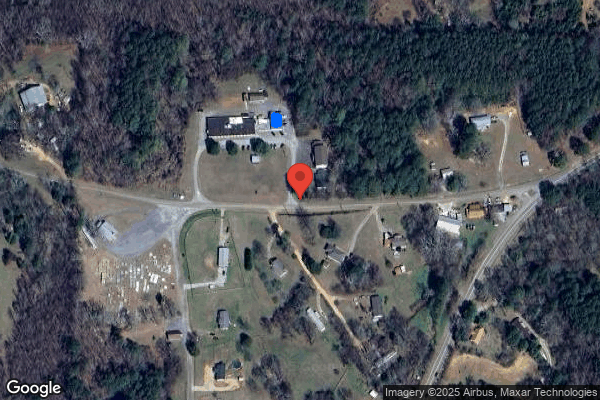

184 PIN HOOK ROAD, TALKING ROCK, GA 30175 (706) 692-6014
For profit - Corporation 44 Beds C. ROSS MANAGEMENT Data: November 2025
Trust Grade
58/100
#238 of 353 in GA
Last Inspection: December 2024

Within standard 12-15 month inspection cycle. Federal law requires annual inspections.

Overview

Wildwood Health and Rehab has a Trust Grade of F, which indicates significant concerns about the quality of care provided. They rank #238 out of 353 nursing homes in Georgia, placing them in the bottom half of facilities in the state and #2 out of 2 in Gilmer County, meaning only one other local option is available. The facility is currently worsening, with issues increasing from 1 in 2023 to 2 in 2024. Staffing is a mixed bag; while they have a staffing turnover rate of 37%, which is better than the state average, they received a low rating of 1 out of 5 stars for overall staffing. There are concerning fines totaling $8,736, which is higher than 82% of Georgia facilities, suggesting repeated compliance problems. They have average RN coverage, which is important because more RNs can help identify issues that might be missed by other staff. Specific incidents noted by inspectors include the failure to develop a water management program to prevent Legionella, which could affect all residents, and issues with the improper handling of medications, including expired medications and a lack of proper labeling. Overall, while there are some strengths in staffing stability, the facility has serious weaknesses that families should carefully consider.

Trust Score
C
58/100
In Georgia
#238/353
Bottom 33%
Safety Record
Low Risk
No red flags
Inspections
Getting Worse
1 → 2 violations
Staff Stability
○ Average
37% turnover. Near Georgia's 48% average. Typical for the industry.
Penalties
⚠ Watch
$8,736 in fines. Higher than 90% of Georgia facilities. Major compliance failures.
Skilled Nurses
⚠ Watch
Each resident gets only 16 minutes of Registered Nurse (RN) attention daily — below average for Georgia. Fewer RN minutes means fewer trained eyes watching for problems.
Violations
✓ Good
Only 4 deficiencies on record. Cleaner than most facilities. Minor issues only.
★★☆☆☆
2.0
Overall Rating
★☆☆☆☆
1.0
Staff Levels
★☆☆☆☆
1.0
Care Quality
★★★★☆
4.0
Inspection Score
Stable
2023: 1 issues
2024: 2 issues

The Good

  • Full Sprinkler Coverage · Fire safety systems throughout facility
  • No fines on record
  • Staff turnover below average (37%)

    11 points below Georgia average of 48%

Facility shows strength in fire safety.

The Bad

2-Star Overall Rating

Below Georgia average (2.6)

Below average - review inspection findings carefully

Staff Turnover: 37%

Near Georgia avg (46%)

Typical for the industry

Federal Fines: $8,736

Below median ($33,413)

Minor penalties assessed

Chain: C. ROSS MANAGEMENT

Part of a multi-facility chain

Ask about local staffing decisions and management

The Ugly 4 deficiencies on record

Dec 2024 2 deficiencies
CONCERN (D)

Potential for Harm - no one hurt, but risky conditions existed

Respiratory Care (Tag F0695)

Could have caused harm · This affected 1 resident

**NOTE- TERMS IN BRACKETS HAVE BEEN EDITED TO PROTECT CONFIDENTIALITY** Based on observations, staff and resident interviews, record review, review of the facility policy titled, Oxygen Administration...

Read full inspector narrative →
**NOTE- TERMS IN BRACKETS HAVE BEEN EDITED TO PROTECT CONFIDENTIALITY** Based on observations, staff and resident interviews, record review, review of the facility policy titled, Oxygen Administration, and review of the manufacturer recommendations titled, How to Change a Filter on a [brand name] Oxygen Concentrator, the facility failed to ensure an oxygen (O2) concentrator filter was in place for one of ten residents (R) (R32) who received O2 therapy. This deficient practice had the potential to place R32 at risk for medical complications, unmet needs, and a diminished quality of life. Findings include: Review of the facility policy titled, Oxygen Administration, copyright 2024, revealed the Policy Explanation and Compliance Guidelines section included . 5. Other infection control measures include: a. Follow manufacturer recommendations for the frequency of cleaning equipment filters. Review of the manufacturer recommendations titled, How to Change the Filter on a [brand name] Oxygen Concentrator, dated May 3, 2022, revealed clean filters provide a clean oxygen supply. The Tips to Properly Clean and Maintain [brand name] Oxygen Concentrators section stated the recommended cleaning interval of the air filter was seven days. The How to Clean [brand name] Oxygen Concentrator Filter section included .Remove the filter from the back of the device. Clean the filter with mild detergent and water. Rinse in water before reuse. You may notice if you do not clean your filter regularly that there may be reduced airflow and you may also not be receiving the prescribed oxygen you need. Review of the electronic medical record (EMR) revealed R32's diagnoses included, but were not limited to, chronic obstructive pulmonary disease (COPD) and asthma. Review of R32's Quarterly Minimum Data Set (MDS) assessment dated [DATE] revealed Section J (Health Conditions) documented R32 experienced difficulty breathing when lying flat, and Section O (Special Treatments and Programs) revealed R32 received O2 therapy while a resident. Review of R32's Physician Orders revealed an order dated 8/6/2024 for O2 at 2 liters per minute (LPM) continuous every shift. Review of the facility-provided document titled, Bi-Weekly Monday's Concentrator and Filter Cleaning, dated 12/9/2024, revealed R32's O2 concentrator and filter were cleaned on 12/9/2024. Observation on 12/20/2024 at 10:03 am revealed the O2 concentrator next to R32's bed did not have a filter in the cut-out located on the back of the concentrator, and the vented area was covered with a gray fuzzy substance. Observation on 12/21/2024 at 10:01 am revealed R32 sitting up in bed receiving O2 via a nasal cannula. Observation of the O2 concentrator revealed there was no filter located in the cut-out on the back of the concentrator, and the vented area was covered with a gray fuzzy substance. During a concurrent observation and interview on 12/21/2024 at 12:28 pm, Licensed Practical Nurse (LPN) AA confirmed there was not a filter located on the back of R32's O2 concentrator and verified there should be a filter in the cut-out on the back of the concentrator. She further confirmed there was a gray fuzzy substance covering the vent where the filter should be located. During a concurrent observation and interview on 12/21/2024 at 1:38 pm, the Central Supply Clerk/Medical Records Clerk CC stated R32 was on her list of residents who received O2 therapy. She further stated she cleaned the O2 concentrators and filters every two weeks. She stated R32's O2 concentrator filter was cleaned on 12/9/2024. She confirmed R32's O2 concentrator did not have a filter on it, and the vent was covered with a gray fuzzy substance. During a concurrent observation and interview on 12/21/2024 at 12:40 pm, the Director of Nursing (DON) stated the medical records clerk had a schedule to follow for cleaning the O2 concentrators and filters for residents who receive O2 therapy. She confirmed that the filter on R32's O2 concentrator was missing, and the vent inside the cut-out on the back of the concentrator was covered with a gray fuzzy substance. She stated she was not sure why there was no filter located on the back of the concentrator. She stated her expectation was that the concentrators should be cleaned according to the schedule. She further stated not having a filter on the back of the concentrator could cause the equipment to malfunction.
CONCERN (E)

Potential for Harm - no one hurt, but risky conditions existed

Medication Errors (Tag F0758)

Could have caused harm · This affected multiple residents

3. Review of R238's Physician Orders revealed an order dated 12/12/2024 for alprazolam (a psychotropic medication used to treat anxiety and panic disorders) tablet 0.25 mg, give one tablet every eight...

Read full inspector narrative →
3. Review of R238's Physician Orders revealed an order dated 12/12/2024 for alprazolam (a psychotropic medication used to treat anxiety and panic disorders) tablet 0.25 mg, give one tablet every eight hours PRN anxiety, with a stop date of indefinite. Review of R238's EMAR revealed alprazolam 0.25 mg was administered on 12/12/2024 at 2:37 pm and 10:40 pm, 12/13/2024 at 6:40 am and 4:27 pm, 12/14/2024 at 10:25 pm, 12/15/2024 at 11:37 pm, 12/16/2024 at 8:37 am, 12/17/2024 at 6:00 pm, 12/18/2024 at 2:02 am and 10:02 am, 12/19/2024 at 1:39 am, 9:52 am, and 6:27 pm, and 12/20/2024 at 3:08 am and 11:09 am. 4. Review of R239's Physician Orders revealed an order for alprazolam oral tablet 0.25 mg, give tablet by mouth every 12 hours as needed for anxiety related to anxiety disorder. The start date was documented as 10/25/2024 and the stop date was documented as indefinite. Review of R239's October 2024 EMAR revealed alprazolam 0.25 was documented as administered to R239 on 10/26/2024 at 3:06 pm, 10/27/2024 at 10:51 pm, 10/28/2024 at 8:56 pm, 10/29/2024 at 9:01 pm, 10/30/2024 at 10:53 am, and 10/31/2024 at 9:36 am and 9:13 pm. Review of R239's November 2024 EMAR revealed alprazolam 0.25 mg was documented as administered to R239 on 11/1/2024 at 3:02 pm, 11/2/2024 at 4:48 am, 11/3/2024 at 9:47 pm, 11/5/2024 at 3:00 am and 6:18 pm, 11/6/2024 at 1:00 pm, 11/7/2024 at 7:57 am, 11/8/2024 at 6:35 am and 9:20 pm, 11/9/2024 at 10:23 am, 11/10/2024 at 1:07 am and 1:24 pm, 11/11/2024 at 3:15 am and 7:02 pm, 11/12/2024 at 7:47 pm, 11/14/2024 at 9:31 am and 9:31 pm, 11/15/2024 at 7:03 pm, 11/16/2024 at 9:20 am, 11/19/2024 at 6:44 pm, 11/21/2024 at 8:39 am and 8:44 pm, 11/23/2024 at 9:50 am, 11/24/2024 at 10:43 am, 11/25/2024 at 7:31 pm, 11/28/2024 at 9:28 am, and 11/29/2024 at 8:07 am. Review of R239's December 2024 E-MAR revealed alprazolam 0.25 mg was documented as administered to R239 on 12/1/2024 at 12:00 pm, 12/2/2024 at 9:40 am, 12/4/2024 at 9:00 am, 12/8/2024 at 10:53 am, 12/9/2024 at 8:00 am and 8:03 pm, 12/10/2024 at 8:55 am and 7:29 pm, 12/12/2024 at 9:57 am and 10:02 pm, 12/14/2024 at 9:45 am, 12/15/2024 at 8:34 am, 12/16/2024 at 7:41 pm, 12/17/2024 at 8:00 am and 8:10 pm, 12/18/2024 at 1:23 pm, 12/19/2024 at 1:23 pm, and 12/20/2024 at 10:22 am. In an interview on 12/22/2024 at 12:37 pm, the DON revealed the normal process was for the physician to review and rewrite all prescriptions for scheduled drugs monthly. She stated once the prescriptions were written, the new orders were entered into the EMR, and there was a place to input a stop date for each order. She further stated each prescription was written for a specific number of tablets and not the number of days the prescription was good for. She confirmed the physician did not write a stop date or a rationale for the medication continuing past 14 days. She confirmed that R238 and R239's orders for alprazolam had a stop date of indefinite. Based on staff interviews, record review, and review of the facility's policy titled, Use of Psychotropic Medication, the facility failed to ensure that psychotropic medications were not ordered as needed (PRN) for more than 14 days unless clinically indicated for four of eight residents (R) (R16, R25, R238, and R239) reviewed for unnecessary medications. This deficient practice had the potential to adversely affect R16, R25, R238, and R239's highest practicable mental, physical, and psychosocial well-being. Findings include: Review of the facility's policy titled, Use of Psychotropic Medication, dated 8/28/2023, revealed the Policy Explanation and Compliance Guidelines section included .9. PRN orders for all psychotropic drugs shall be used only when the medication is necessary to treat a diagnosed specific condition that is documented in the clinical record and for a limited duration (i.e.14 days). a. If the attending physician or prescribing practitioner believes that it is appropriate for the PRN order to be extended beyond 14 days, he or she shall document their rationale in the resident's medical record and indicate the duration for the PRN order. 1. Review of R16's Physician's Orders revealed an order dated 7/17/2024 for lorazepam (a psychotropic medication used to treat anxiety) 0.5 milligrams (mg) oral tablet, one tablet by mouth every six hours as needed for anxiety. The order had a stop date of indefinite. Review of R16's Electronic Medication Administration Record (EMAR) revealed lorazepam 0.5 mg was administered on 12/2/2024 at 1:42 pm, 12/5/2024 at 1:02 pm, 12/8/2024 at 11:05 pm, 12/19/2024 at 10:26 pm, 11/1/2024 at 4:13 pm, 11/5/2024 at 12:34 pm, 11/7/2024 at 8:33 am, 11/12/2024 at 1:15 pm, 10/2/2024 at 12:02 am, 10/15/2024 at 3:50 pm, 10/18/2024 at 2:37 am, 10/23/2024 at 9:56 am and 4:11 pm, 10/25/2024 at 5:31 pm, 10/26/2024 at 11:31 pm, and 10/29/2024 at 1:20 pm and 8:01 pm. In an interview on 12/21/2024 at 9:33 am, Licensed Practical Nurse (LPN) BB confirmed R16's physician's order for lorazepam oral tablet 0.5 mg one tablet PRN anxiety and confirmed there was no stop date for the order. In an interview on 12/22/2204 at 11:45 am, LPN AA and LPN BB stated if a PRN medication was not administered in a 30-day period, the order would automatically be discontinued. They stated the nurses followed the physician's orders as they were written in the electronic medical record (EMR) and did not issue a medication stop date. In an interview on 12/22/2024 at 12:55 pm, the Director of Nursing (DON) verified R16's physician's order dated 7/17/2024 for lorazepam 0.5 mg oral tablet, one tablet by mouth every six hours as needed for anxiety. She verified the order was dated 7/17/2024 and had a stop date of indefinite. 2. Review of R25s Physician's Orders revealed an order dated 9/17/2024 for lorazepam 0.5 mg oral tablet, one tablet by mouth every six hours as needed for anxiety, and an order dated 6/10/2024 for haloperidol (a psychotropic medication used to treat nervous, mental, or emotional disorders) 1 mg tablet, one tablet by mouth every four hours as needed for agitation, hallucinations, aggression. The orders had stop dates of indefinite. Review of R25's EMAR revealed haloperidol 1 mg tablet was administered on 12/2/2024 at 2:48 am, 12/18/2024 at 5:37 pm, 10/4/2024 at 11:43 pm, and 10/21/2024 at 12:02 am. Further review revealed lorazepam 0.5 mg oral tablet was administered on 12/1/2024 at 11:16 am, 12/6/2024 at 9:46 am, 12/13/2024 at 9:39 am, 12/15/2024 at 7:20 pm, 12/17/2024 at 7:40 pm, 12/19/2024 at 9:36 am and 7:19 pm, 11/1/2024 at 7:20 pm, 11/4/2024 at 7:42 pm, 11/8/2024 at 10:37 am, 11/9/2024 at 11:47 am and 6:37 pm, 11/12/2024 at 6:51 pm, 11/20/2024 at 4:55 pm, 10/4/2024 at 11:44 pm, 10/7/2024 at 1:46 pm and 7:57 pm, 10/8/2024 at 7:13 pm, 10/9/2024 at 8:58 am, 10/10/2024 at 4:52 pm, 10/11/2024 at 9:55 am, 10/14/2024 7:29 pm, 10/21/2024 at 12:01 am, 9:41 am, 4:00 pm, and 9:48 pm, 10/24/2024 9:25 am, 10/25/2024 10:46 am, 10/26/2024 at 11:12 pm, and 10/31/2024 at 9:36 pm. In an interview on 12/21/2024 at 3:30 pm, Registered Nurse (RN) DD verified R25's physician order dated 9/17/2024 for lorazepam 0.5 mg oral tablet, one tablet by mouth every six hours as needed for anxiety, and an order dated 6/10/2024 for haloperidol 1 mg tablet, one tablet by mouth every four hours as needed for agitation, hallucinations, aggression. She verified the orders did not have stop dates. In an interview on 12/22/2024 at 12:55 pm, the Director of Nursing (DON) verified R25's physician order dated 9/17/2024 for lorazepam 0.5 mg oral tablet, one tablet by mouth every six hours as needed for anxiety, and an order dated 6/10/2024 for haloperidol 1 mg tablet, one tablet by mouth every four hours as needed for agitation, hallucinations, aggression. She verified the orders had stop dates of indefinite. She stated the physician was typically asked to review PRN psychotropic medications monthly and write a new prescription if he determined the need to continue the medication. She further stated PRN psychotropic medications should have a rational and definite stop date if the date was extended beyond 14 days.
Aug 2023 1 deficiency
CONCERN (F) 📢 Someone Reported This

A family member, employee, or ombudsman was alarmed enough to file a formal complaint

Potential for Harm - no one hurt, but risky conditions existed

Infection Control (Tag F0880)

Could have caused harm · This affected most or all residents

Based on staff interviews, record review, and review of the facility policies titled, Legionella Water Management Program and Legionella Surveillance and Detection, the facility failed to develop a wa...

Read full inspector narrative →
Based on staff interviews, record review, and review of the facility policies titled, Legionella Water Management Program and Legionella Surveillance and Detection, the facility failed to develop a water management program for the prevention of Legionella. The deficient practice had the potential to affect all residents in the facility. Findings Include: Review of the facility policy titled, Legionella Water Management Program dated July 2017 revealed: Under Policy Statement: Our facility is committed to the prevention, detection, and control of water-borne contaminants, including Legionella. Review of the facility policy titled, Legionella Surveillance and Detection dated July 2017 revealed: Legionnaire's disease will be included as part of our infection surveillance activities. The facility could not confirm they had a program in place to prevent the growth and development of Legionella and other opportunistic waterborne pathogens in the buildings water system that is based on nationally accepted standards (e.g., The American Society of Heating, Refrigerating, and Air-Conditioning Engineers, (ASHRAE), Environmental Protection Agency (EPA), Centers for Disease Control (CDC). Interview on 8/16/2023 at 12:20 p.m. with the Maintenance Director (MD) revealed he did not know anything about Legionella Water Management Program nor the EPA's nationally accepted standards. He reported he did not know about flushing the lines and other opportunistic waterborne pathogens. He presented the water temperature logs for the residents' rooms that consisted of four rooms. He confirmed that he only does rooms 101, 119, 120, and 121 once per week, and not the other residents' rooms. He stated that the form comes from Corporate, and he was instructed to follow it. The front of the log has a place for shower/whirlpool temperatures, and the space for the residents' rooms. He presented temperature logs dated from multiple years back. He reported that he did not have a process in place, nor has had any formal education. A tour of the facility with the MD revealed the water heaters appeared well kept and maintained, no rust, dents, or water leakage noted from the water heaters. Interview on 8/16/2023 at 2:10 p.m. with the Director of Nursing (DON) revealed she also served as the Infection Preventionist (IP) and revealed that she had been in this dual role for three weeks. She reported that she had never worked in an IP nurse role before. She stated she was not aware of the water management program at the facility, nor was she aware that she needed to make rounds with the MD to check water temperatures in the residents' rooms. She presented the facility policies titled Legionella Water Management Program and Legionella Surveillance and Detection. Interview on 8/17/2023 at 11:35 a.m. with the Administrator revealed there was a Legionella Water Management Program policy for the entire facility, but the MD was not aware of it, nor the program. She stated that the MD has been scheduled for an online course for a Legionella and Water Management Program. She also stated that she will schedule the MD for for a CDC online education course. She reported that the county Environmental Water Management Manager will be coming out to physically train the MD and teach him to test with a kit and flush the outside building lines. She reported that the corporate Director of Maintenance Management Environmental Service Consultant conducted over the phone training with the MD on 8/16/2023. When asked about her expectations for the water management program going forward, she reported the expectation was to implement the program which has already begun. She reported that the building's water system will be flushed yearly as instructed via the facility, and they will test with a water testing kit as recommended. We will keep all documentation to present to the State at the next recertification. The goal is to have the implementations completed by the end of the month.
Dec 2021 1 deficiency
CONCERN (E)

Potential for Harm - no one hurt, but risky conditions existed

Deficiency F0761 (Tag F0761)

Could have caused harm · This affected multiple residents

**NOTE- TERMS IN BRACKETS HAVE BEEN EDITED TO PROTECT CONFIDENTIALITY** Based on observations, interviews, and review of facility policies titled Storage of Medications and Administering Oral Medicati...

Read full inspector narrative →
**NOTE- TERMS IN BRACKETS HAVE BEEN EDITED TO PROTECT CONFIDENTIALITY** Based on observations, interviews, and review of facility policies titled Storage of Medications and Administering Oral Medications, the facility failed to ensure the proper disposal of expired medication, label open vials and bottles of medication, and monitor refrigerator temperatures daily for one of one medication storage rooms and two of two medication carts observed. Findings include: Observation on 12/7/21 at 9:00 a.m. of Medication Cart 2 revealed two medications were past expiration date and all dates were confirmed by Licensed Practical Nurse (LPN) AA: Ibuprofen 200mg tablets x 1 bottle expired 11/21 and Acetaminophen Extra strength x1 bottle expired 8/21. Medication Cart 2 also contained four medications that had been opened for use and were not labeled with open date or calculated expiration date: Latanoprost 0.005% eye drops x 4 bottles; Sustain complete 0.6% eye drops x 2 bottles; Artificial tears x 1 bottle; and Moxifloxacin 0.5% eye drops x 1 bottle. LPN AA verified the open dates were not on the open vials and bottles. During an interview with LPN AA 12/7/21 at 9:10 a.m., she stated that she was unaware vials of medication or eye drops had to be labeled when opened and stated that she goes by the expiration date or the dispensed date on pharmacy label. She further stated that the Pharmacy Nurse Consultant comes every other month to check cart and med room for expiring medications and confirmed that expired mediations should not be left in the cart. She further stated that every nurse on all the shifts should be checking the cart for expired medications. An observation on 12/7/21 at 10:00 a.m. of Medication Cart 1 revealed five medications were past expiration date and all dates were confirmed by LPN BB: Ibuprofen 200mg tablets x 1 bottle expired 11/21; Chloraseptic x 1 bottle 8/2021; Xopenex inhaler 9/20/2021; Preparation H suppository x1 8/21; and [NAME] Klenz dermal wound cleanser x1 bottle expired 2/2020. Medication Cart 1 also contained five medications that had been opened for use and not labeled with open date or calculated expiration date and were confirmed by LPN BB: Travatan 0,004% eye drops x 1 bottle; Alphagan P 1% ophthalmic solution x 1 bottle; Megestrol acetate susp 40mg/ml x 1 bottle; Azelastine Hydrochloride 0.1% nasal spray; and Fluticasone nasal spray x 3 bottles. During an interview with LPN BB on 12/7/21 at 10:10 a.m., he stated that he was unaware Medication Cart 1 had expired medications and that he did not know that opened eye drops and nasal sprays should have an open date. He stated that every nurse should check and remove out of date medications from the medication carts. On 12/7/2021 at 10:45a.m. an observation of Medication Room behind the nurses station was conducted with the Minimum Data Set (MDS) Coordinator. On the counter was a small stainless steel refrigerator unit containing vaccines and medications. The refrigerator was at 40 degrees Fahrenheit, a log with recorded temperatures was attached. Review of refrigerator temperature logs for the past 12 months revealed gaps in readings and the month of June 2021 was missing. A cabinet containing over the counter floor stock was inspected with two medications found to be expired: Vitamin D 50 mcg x 1 bottle expired 10/21 and Arnicare gel x 1 tube expired 5/2021. A drawer in the cabinet contained the following expired IV supplies: Magellan 3ml syringe 25gx1 expired 9/2020; Whin safe safety Huber Needle set x1exp. 8/31/2020; Replacement caps [NAME] male/female non vented luer lock exp. 7/2011; Normal Saline 0.9% Sodium Chloride flush syringe exp. 2/4/2021 x 19 syringes; and Normal Saline 0.9% Sodium Chloride flush syringe exp. 9/30/2021 x 19 syringes. During an interview with the MDS Coordinator on 12/7/2021 at 10:55a.m., she verified the medications and supplies were expired in the Medication Room. She stated that she was unaware of the expired medication and that there were not any staff members assigned to check the medication room. She stated that it is every nurses' responsibility to remove expired medications from the room and place in the med safe unit for pick up by the pharmacy. She further revealed that she was aware the refrigerator temperature was supposed to be recorded daily but that sometimes it gets missed. An interview with the Director of Nursing (DON) on 12/8/2021 at 8:58a.m. revealed she was unaware that expired medications were being left in carts and in the med room. Further interview revealed all medication nurses should be watching expiration dates and that medication expiration dates should be checked prior to administration. Continued interview revealed the facility was in the process of hiring a Certified Nursing Assistant (CNA) Manager and she would be assigning that employee to monitor the carts and the med room medications. Further interview revealed it is her expectation that there would be no expired meds available for use and that opened vials and bottles be dated. Continued interview revealed temperatures of the medication room refrigerator should be checked daily and upon reviewing the logs she had seen the had missed some. Continued interview revealed the contracted pharmacy, Consultants' Pharmacy has a book of policies that the facility uses and provided copies of pages 33-36 regarding medication storage at the facility. A telephone interview on 12/8/2021 at 10:30a.m. with the Consultants' Pharmacy Nurse Consultant revealed she comes to the facility approximately every other month. While at the facility she revealed the cart and med room are checked, and med passes are observed. Continued interview revealed she prints out her report of any F tags that she reviews with the staff. Further interview revealed the removal of medications is one of the issues she discusses with staff. Continued interview revealed if she notices a medication or supply going out of date, she removes it and sends it back to the Pharmacy. A review of the policy titled; Storage of Medications version 1.2(H5MAPL0851) indicated a Policy Statement that The Facility stores all drugs and biologicals in a safe, secure, and orderly manner. The Policy Interpretation and Implementation stated Discontinued, outdated, or deteriorated drugs or biologicals are returned to the dispensing pharmacy or destroyed. A review of the policy titled: Administering Oral Medications: version 1.2 (H5MAPR0005) revealed The purpose of this procedure is to provide guidelines for the safe administration or oral medications. Check expiration date on the medication. Return any expired medications to the pharmacy. Consultants' Pharmacy the contracted Pharmacy for the facility includes in the policy handbook the following. Medications and biologicals are stored safely, securely, and properly following manufacturer's recommendations or those of the supplier. Outdated, contaminated, or deteriorated medication and those in containers that are cracked, soiled or without secure closures are immediately removed from stock, disposed of according to procedures for medication destruction and reordered from the pharmacy if a current order exists.
Understanding Severity Codes (click to expand)
Life-Threatening (Immediate Jeopardy)
J - Isolated K - Pattern L - Widespread
Actual Harm
G - Isolated H - Pattern I - Widespread
Potential for Harm
D - Isolated E - Pattern F - Widespread
No Harm (Minor)
A - Isolated B - Pattern C - Widespread

Questions to Ask on Your Visit

  • "Can I speak with families of current residents?"
  • "What's your RN coverage like on weekends and overnight?"

Our Honest Assessment

Strengths
  • • No major safety red flags. No abuse findings, life-threatening violations, or SFF status.
  • • Only 4 deficiencies on record. Cleaner than most facilities. Minor issues only.
  • • 37% turnover. Below Georgia's 48% average. Good staff retention means consistent care.
Concerns
  • • Grade C (58/100). Below average facility with significant concerns.
Bottom line: Mixed indicators with Trust Score of 58/100. Visit in person and ask pointed questions.

About This Facility

What is Wildwood Health And Rehab's CMS Rating?

CMS assigns WILDWOOD HEALTH AND REHAB an overall rating of 2 out of 5 stars, which is considered below average nationally. Within Georgia, this rating places the facility higher than 0% of the state's 100 nursing homes. A rating at this level reflects concerns identified through health inspections, staffing assessments, or quality measures that families should carefully consider.

How is Wildwood Health And Rehab Staffed?

CMS rates WILDWOOD HEALTH AND REHAB's staffing level at 1 out of 5 stars, which is much below average compared to other nursing homes. Staff turnover is 37%, compared to the Georgia average of 46%. This relatively stable workforce can support continuity of care.

What Have Inspectors Found at Wildwood Health And Rehab?

State health inspectors documented 4 deficiencies at WILDWOOD HEALTH AND REHAB during 2021 to 2024. These included: 4 with potential for harm.

Who Owns and Operates Wildwood Health And Rehab?

WILDWOOD HEALTH AND REHAB is owned by a for-profit company. For-profit facilities operate as businesses with obligations to shareholders or private owners. The facility is operated by C. ROSS MANAGEMENT, a chain that manages multiple nursing homes. With 44 certified beds and approximately 41 residents (about 93% occupancy), it is a smaller facility located in TALKING ROCK, Georgia.

How Does Wildwood Health And Rehab Compare to Other Georgia Nursing Homes?

Compared to the 100 nursing homes in Georgia, WILDWOOD HEALTH AND REHAB's overall rating (2 stars) is below the state average of 2.6, staff turnover (37%) is near the state average of 46%, and health inspection rating (4 stars) is above the national benchmark.

What Should Families Ask When Visiting Wildwood Health And Rehab?

Based on this facility's data, families visiting should ask: "Can you walk me through typical staffing levels on day, evening, and night shifts?" "Can I visit during a mealtime to observe dining assistance and food quality?" "How do you handle medical emergencies, and what is your hospital transfer rate?" "Can I speak with family members of current residents about their experience?" These questions are particularly relevant given the below-average staffing rating.

Is Wildwood Health And Rehab Safe?

Based on CMS inspection data, WILDWOOD HEALTH AND REHAB has a clean safety record: no substantiated abuse findings (meaning no confirmed cases of resident harm), no Immediate Jeopardy citations (the most serious violation level indicating risk of serious injury or death), and is not on the Special Focus Facility watch list (a federal program monitoring the lowest-performing 1% of nursing homes). The facility has a 2-star overall rating and ranks #100 of 100 nursing homes in Georgia. While no facility is perfect, families should still ask about staff-to-resident ratios and recent inspection results during their visit.

Do Nurses at Wildwood Health And Rehab Stick Around?

WILDWOOD HEALTH AND REHAB has a staff turnover rate of 37%, which is about average for Georgia nursing homes (state average: 46%). Moderate turnover is common in nursing homes, but families should still ask about staff tenure and how the facility maintains care continuity when employees leave.

Was Wildwood Health And Rehab Ever Fined?

WILDWOOD HEALTH AND REHAB has been fined $8,736 across 3 penalty actions. This is below the Georgia average of $33,166. While any fine indicates a compliance issue, fines under $50,000 are relatively common and typically reflect isolated problems that were subsequently corrected. Families should ask what specific issues led to these fines and confirm they've been resolved.

Is Wildwood Health And Rehab on Any Federal Watch List?

WILDWOOD HEALTH AND REHAB is not on any federal watch list. The most significant is the Special Focus Facility (SFF) program, which identifies the bottom 1% of nursing homes nationally based on persistent, serious quality problems. Not being on this list means the facility has avoided the pattern of deficiencies that triggers enhanced federal oversight. This is a positive indicator, though families should still review the facility's inspection history directly.