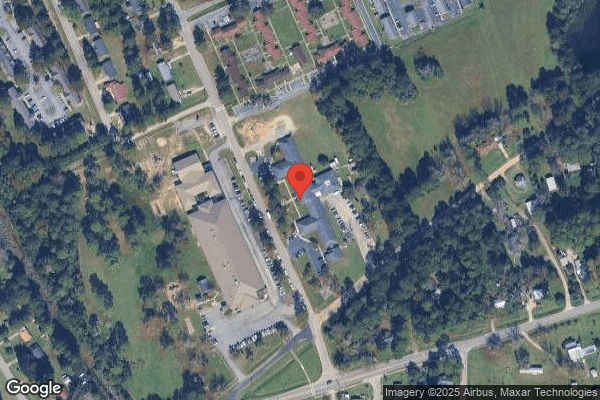

HARBORVIEW TIFTON

1451 NEWTON DRIVE, TIFTON, GA 31794 (229) 382-1665
For profit - Corporation 100 Beds HARBORVIEW HEALTH SYSTEMS Data: November 2025
Trust Grade
5/100
#286 of 353 in GA
Last Inspection: April 2024

Within standard 12-15 month inspection cycle. Federal law requires annual inspections.

Overview

Harborview Tifton has received a Trust Grade of F, indicating significant concerns about the quality of care provided. They rank #286 out of 353 nursing homes in Georgia, placing them in the bottom half of facilities statewide, although they are #1 of 2 in Tift County, meaning only one local option is worse. The facility is reportedly improving, with the number of issues decreasing from 10 in 2024 to 8 in 2025. However, staffing is a major concern, with a low rating of 1 out of 5 stars and a turnover rate of 59%, which is above the state average. Furthermore, the facility has incurred $40,143 in fines, higher than 89% of Georgia facilities, highlighting ongoing compliance problems. Specific incidents of concern include the failure to properly manage pain during wound care for two residents with severe wounds, resulting in untreated pain, and the lack of proper care plan interventions for a resident requiring a mechanical lift, which led to a serious injury requiring a blood transfusion. While there are some improvements in trends, the overall picture reflects serious quality issues that families should carefully consider.

Trust Score
F
5/100
In Georgia
#286/353
Bottom 19%
Safety Record
High Risk
Review needed
Inspections
Getting Better
10 → 8 violations
Staff Stability
⚠ Watch
59% turnover. Above average. Higher turnover means staff may not know residents' routines.
Penalties
✓ Good
$40,143 in fines. Lower than most Georgia facilities. Relatively clean record.
Skilled Nurses
○ Average
Each resident gets 30 minutes of Registered Nurse (RN) attention daily — about average for Georgia. RNs are the most trained staff who monitor for health changes.
Violations
⚠ Watch
34 deficiencies on record. Higher than average. Multiple issues found across inspections.
★☆☆☆☆
1.0
Overall Rating
★☆☆☆☆
1.0
Staff Levels
★★☆☆☆
2.0
Care Quality
★☆☆☆☆
1.0
Inspection Score
Stable
2024: 10 issues
2025: 8 issues

The Good

  • Full Sprinkler Coverage · Fire safety systems throughout facility
  • No fines on record

Facility shows strength in fire safety.

The Bad

1-Star Overall Rating

Below Georgia average (2.6)

Significant quality concerns identified by CMS

Staff Turnover: 59%

13pts above Georgia avg (46%)

Frequent staff changes - ask about care continuity

Federal Fines: $40,143

Above median ($33,413)

Moderate penalties - review what triggered them

Chain: HARBORVIEW HEALTH SYSTEMS

Part of a multi-facility chain

Ask about local staffing decisions and management

Staff turnover is elevated (59%)

11 points above Georgia average of 48%

The Ugly 34 deficiencies on record

5 actual harm
Aug 2025 5 deficiencies
CONCERN (D) 📢 Someone Reported This

A family member, employee, or ombudsman was alarmed enough to file a formal complaint

Potential for Harm - no one hurt, but risky conditions existed

Deficiency F0602 (Tag F0602)

Could have caused harm · This affected 1 resident

**NOTE- TERMS IN BRACKETS HAVE BEEN EDITED TO PROTECT CONFIDENTIALITY** Based on staff interviews, record review and review of the facility's policy titled Abuse, Neglect and Exploitation, the facilit...

Read full inspector narrative →
**NOTE- TERMS IN BRACKETS HAVE BEEN EDITED TO PROTECT CONFIDENTIALITY** Based on staff interviews, record review and review of the facility's policy titled Abuse, Neglect and Exploitation, the facility failed to obtain a consent to become the representative payee (someone who manages the resident's Social Security benefits to make sure the resident's basic needs were met) for one out of 15 sampled residents (R) (R9).Findings include:Review of the facility's policy titled Abuse, Neglect and Exploitation with a revision date of 7/1/2024 revealed the policy of this facility is to provide protections for the health, welfare and rights of each resident by developing and implementing written policies and procedures that prohibit and prevent abuse, neglect, exploitation and misappropriation of resident property. Definitions: Misappropriation of Resident Property means the deliberate misplacement, exploitation, or wrongful, temporary or permanent, use of a resident's belongings or money without the resident's consent.Review of medical records revealed R9 was admitted to the facility with the following but not limited to diagnoses of paraplegic, chronic pain syndrome, opioid dependence, osteoarthritis, insomnia, and urine retention.Review of R9's Annual Minimum Data Set (MDS) dated [DATE], Quarterly MDS dated [DATE], and Quarterly MDS dated [DATE], revealed for Section C (Cognitive Patterns) a Brief Interview of Mental Status (BIMS) score of 15 indicating the resident was cognitively intact.Review of the Medical Source Opinion of Patient's Capability to Manage Benefits form (Form SSA-787 Social Security Administration (SSA)), indicated the facility was applying for representative payee to manage the resident's SSA benefits. The form was completed and signed by a physician on 2/19/2025 who indicated the resident did not have a general understanding of his or her finances, did not have sufficient ability to handle a checking/savings account, and did not have sufficient ability to pay bills in a timely manner. It also indicated the resident could not successfully manage or direct the management of funds to meet basic needs (e.g. food, clothing, shelter). Further documentation on the form noted that the resident was a long-term care resident at [Name of Facility] due to being a paraplegic.During an interview with the Administrator on 7/28/2025 at 2:45 pm, she stated the resident did not pay his bill while he was a resident. The facility set up a payment plan for the resident on 11/1/2024 to make payments each month but he never made a payment. She also stated the facility did not issue a 30-day discharge notice due to nonpayment. She stated she was not the Administrator during that time, but they probably applied to be the Representative payee because the resident was not paying his bill. The Administrator did state the resident was alert and oriented and there was nothing to indicate otherwise.The Administrator provided a copy of a form titled [Name of facility] Payment Agreement Form signed by the resident on 11/1/2024 agreeing to pay an outstanding balance of $5,512.00 in monthly payments of $200.00 per month beginning on 12/3/2024.Review of the Resident Statement Landscape form revealed the facility received the resident's SSA deposit on 6/3/2025. The amount deposited was $718.00. The resident's care cost payment was $648.00 with $70.00 applied to his account.The resident discharged home on 7/1/2025 and on 7/3/2025, the $718.00 deposit to the facility was rejected. Therefore, the facility only received one payment on 6/3/2025.During an interview with the Business Office Manager (BOM) on 8/4/2025 at 3:10 pm, she stated that she started as the BOM on 3/17/2025 and was not involved in the application for representative payee for this resident. She stated apparently a regional person came in the facility to address the overage of one million dollars owed to the facility from several residents, most of which were Medicaid pending approval. Residents who owed money were placed on a payment plan. The regional person applied for representative payee for two other residents. However, consent was given for those two residents. The BOM did confirm that R9 was alert and oriented.
CONCERN (D) 📢 Someone Reported This

A family member, employee, or ombudsman was alarmed enough to file a formal complaint

Potential for Harm - no one hurt, but risky conditions existed

Abuse Prevention Policies (Tag F0607)

Could have caused harm · This affected 1 resident

**NOTE- TERMS IN BRACKETS HAVE BEEN EDITED TO PROTECT CONFIDENTIALITY** Based on record review, staff and resident interviews, and review of the facility policy titled, Abuse, Neglect and Exploitation...

Read full inspector narrative →
**NOTE- TERMS IN BRACKETS HAVE BEEN EDITED TO PROTECT CONFIDENTIALITY** Based on record review, staff and resident interviews, and review of the facility policy titled, Abuse, Neglect and Exploitation, the facility failed to implement the protection of resident and reporting/response components of their abuse policy when one resident (R) (R1) alleged R2 struck him five times on his left side. The total sample was 15. Findings include:Review of the facility's policy titled Abuse, Neglect and Exploitation, with a revision date of 7/1/2024 revealed component VI. Protection of Resident noted the facility will make efforts to ensure all residents are protected from physical and psychosocial harm, as well as additional abuse, during and after the investigation. Examples include but are not limited to : Examining the alleged victim for any sign of injury, including a physical examination or psychosocial assessment if needed. Providing emotional support and counseling to the resident during and after the investigation, as needed. Revision of the resident's care plan if the resident's medical, nursing, physical, mental, or psychosocial needs or preferences change as a result of an incident of abuse. Component VII Reporting/Response noted the facility will have written procedures that include: Reporting of all alleged violations to the Administrator, state agency, adult protective services and to all other required agencies (e.g., law enforcement when applicable) within specified timeframes. Review of medical records revealed that R1 was admitted to the facility with the following diagnoses but not limited to: morbid obesity, nontraumatic intracerebral hemorrhage, absence of right leg above knee, congestive heart failure and gout.Review of R1's Quarterly Minimum Data Set (MDS) dated [DATE], revealed Section C (Cognitive Patterns), a Brief Interview of Mental Status (BIMS) score of 15 indicating the resident was cognitively intact.During an interview with R1 on 7/22/2025 at 11:45 am, he revealed that on 5/5/2025 around 2:00 am, the resident (R2) across the hall came into his room and woke him up by sitting on the foot of his bed. He asked R2 What are you doing? and told him You got to go. He stated R2 got up and punched him in the chest a couple of times. He started hollering for help and five to ten minutes later a Certified Nursing Assistant (CNA) came in and took R2 back to his room. He stated he was emotionally upset, had flashbacks and did not feel safe in the facility. He stated nobody ever came to talk with him afterwards to ask him what happened or how he felt.Review of the nurses note dated 5/2/2025 at 4:20 am revealed, R1 reported being hit five times by an unwelcomed resident on left side while lying in bed. Both nurses reported to resident room and asked what side the incident happened. The resident stated, I was hit five times on left side. Both nurses assessed resident, no injuries, marks, bruises, cuts or scratched were visible at time of assessment.Review of the Nurse Practitioner (NP) Progress Note dated 5/5/2025 revealed the resident (R1) reported to her that another resident came into his room and was hitting him with his fists in the chest. He reported that he was scared to go to sleep last night because he was not sure if the other resident would come back. The NP further noted that she explained to him that what happened to him was not ok and would be handled by Administrator.Review of the NP progress note dated 5/7/2025 revealed that the resident (R1) reported that he does not feel safe here since being assaulted by another resident. It was reported that the resident had scissors under his pillow and would not give them to the staff last night. When NP saw the resident there was nothing on his bed except a sheet. The resident said he would protect himself at all cost.Further review of medical records revealed, although R1 had reported to the NP he did not feel safe in the facility, there was no documentation the NP had reported these findings to the staff or requested for the resident to be evaluated by the Social Worker for a psychological evaluation.During an interview with the Social Worker on 7/22/2025 at 2:57 pm, she stated that they usually discuss any allegations of abuse in the morning meetings and she would usually follow up with the residents after the allegation for several weeks just to observe for any behaviors and refer them to CHE Behavioral Health if needed. She confirmed she did not follow up with R1 after his allegation of abuse on 5/4/2025. She also stated that no one reported to her of the resident having scissors under his pillow because he was scared.
CONCERN (D) 📢 Someone Reported This

A family member, employee, or ombudsman was alarmed enough to file a formal complaint

Potential for Harm - no one hurt, but risky conditions existed

Report Alleged Abuse (Tag F0609)

Could have caused harm · This affected 1 resident

**NOTE- TERMS IN BRACKETS HAVE BEEN EDITED TO PROTECT CONFIDENTIALITY** Based on staff interviews, record review and review of the facility's policy titled, Abuse, Neglect and Exploitation, the facili...

Read full inspector narrative →
**NOTE- TERMS IN BRACKETS HAVE BEEN EDITED TO PROTECT CONFIDENTIALITY** Based on staff interviews, record review and review of the facility's policy titled, Abuse, Neglect and Exploitation, the facility failed to ensure that an allegation of abuse was reported to law enforcement for one out of 15 sampled residents (R) (R1).Findings include:Review of the facility's policy titled Abuse, Neglect and Exploitation, with a revision date of 7/1/2024 under Component VII - Reporting/Response revealed, the facility will have written procedures that include: Reporting of all alleged violations to the Administrator, state agency, adult protective services and to all other required agencies (e.g., law enforcement when applicable) within specified timeframes. Review of medical records revealed, R1 was admitted to the facility with the following diagnoses that included but not limited to: morbid obesity, nontraumatic intracerebral hemorrhage, absence of right leg above knee, congestive heart failure and gout.Review of R1's Quarterly Minimum Data Set (MDS) dated [DATE], revealed Section C (Cognitive Patterns), a Brief Interview of Mental Status (BIMS) score of 15 indicating the resident was cognitively intact.During an interview with R1 on 7/22/2025 at 11:45 am, he revealed that on 5/5/2025 around 2:00 am, the resident (R2) across the hall came into his room and woke him up by sitting on the foot of his bed. He asked R2 What are you doing? and told him You got to go. He stated R2 got up and punched him in the chest a couple of times. He started hollering for help and five to ten minutes later a Certified Nursing Assistant (CNA) came in and took R2 back to his room. He stated he was emotionally upset, had flashbacks and did not feel safe in the facility. He stated nobody ever came to talk with him afterwards to ask him what happened or how he felt.Review of the nurses note dated 5/2/2025 at 4:20 am revealed, R1 reported being hit five times by an unwelcomed resident on left side while lying in bed. Both nurses reported to resident room and asked what side the incident happened. The resident stated, I was hit five times on left side. Both nurses assessed resident, no injuries, marks, bruises, cuts or scratched were visible at time of assessment.Review of the Facility Incident Report Form dated 5/4/2025 revealed the facility reported an allegation of resident-to-resident abuse that had occurred on May 4, 2025, at approximately 2:50 am. The report revealed that R2 was disoriented and wandered into R1's room. R1 stated that R2 struck him on his left side before exiting the room. R2 stated he did not hit or strike R1 and thought he was in his own room. The report indicated that the Administrator and the Responsible Party were notified but it did not indicate that the police was notified.During an interview with the Administrator on 7/23/2025 at 12:40 pm, she stated she was not the Administrator at that time but stated in this case she would have definitely called the Sheriff department.Refer to F607
CONCERN (D) 📢 Someone Reported This

A family member, employee, or ombudsman was alarmed enough to file a formal complaint

Potential for Harm - no one hurt, but risky conditions existed

Comprehensive Care Plan (Tag F0656)

Could have caused harm · This affected 1 resident

**NOTE- TERMS IN BRACKETS HAVE BEEN EDITED TO PROTECT CONFIDENTIALITY** Based on resident and staff interviews, record review, and review of the facility's policy titled Comprehensive Care Plans, the ...

Read full inspector narrative →
**NOTE- TERMS IN BRACKETS HAVE BEEN EDITED TO PROTECT CONFIDENTIALITY** Based on resident and staff interviews, record review, and review of the facility's policy titled Comprehensive Care Plans, the facility failed to revise the care plan for one out of 15 sampled residents (R) (R1). Specifically, the facility failed to address R1's psychological needs related to an allegation of physical abuse.Findings include:Review of the facility's policy titled Comprehensive Care Plans with a revision date of 3/1/2025 revealed, it is the policy of this facility to develop and implement a comprehensive person-centered care plan for each resident, consistent with resident rights, that includes measurable objectives and timeframes to meet a resident's medical, nursing, and mental and psychological needs and ALL services that are identified in the resident's comprehensive assessment and meet professional standards of quality. Under the section titled Policy Explanation and Compliance Guidelines noted the comprehensive care plan will describe the services that are to be furnished to attain or maintain the resident's highest practicable physical, mental, and psychosocial well-being.Review of medical records revealed that R1 was admitted to the facility with the following diagnoses but not limited to: morbid obesity, nontraumatic intracerebral hemorrhage, absence of right leg above knee, congestive heart failure and gout.Review of R1's Quarterly Minimum Data Set (MDS) dated [DATE], revealed Section C (Cognitive Patterns), a Brief Interview of Mental Status (BIMS) score of 15 indicating the resident was cognitively intact.During an interview with R1 on 7/22/2025 at 11:45 am, he revealed that on 5/5/2025 around 2:00 am, the resident (R2) across the hall came into his room and woke him up by sitting on the foot of his bed. He asked R2 What are you doing? and told him You got to go. He stated R2 got up and punched him in the chest a couple of times. He started hollering for help and five to ten minutes later a Certified Nursing Assistant (CNA) came in and took R2 back to his room. He stated he was emotionally upset, had flashbacks and did not feel safe in the facility. He stated nobody ever came to talk with him afterwards to ask him what happened or how he felt.Review of the Nurse Practitioner (NP) Progress Note dated 5/5/2025 revealed the resident (R1) reported to her that another resident came into his room and was hitting him with his fists in the chest. He reported that he was scared to go to sleep last night because he was not sure if the other resident would come back. The NP further noted that she explained to him that what happened to him was not ok and would be handled by Administrator.Review of the NP progress note dated 5/7/2025 revealed that the resident (R1) reported that he does not feel safe here since being assaulted by another resident. It was reported that the resident had scissors under his pillow and would not give them to the staff last night. When NP saw the resident there was nothing on his bed except a sheet. The resident said he would protect himself at all cost.Review of R1's care plan revealed a focus area of the resident having a behavior problem by choosing to keep medications at bedside and will refuse his medications at times. Further review of R1's care plan revealed, there was no evidence that the facility had assessed the resident's psychosocial needs after the allegation of physical abuse on 5/4/2025. Therefore, the care plan was not revised to reflect the resident's fear of being in the facility and having flashbacks of the alleged incident.Refer to F607 and F745.
CONCERN (D) 📢 Someone Reported This

A family member, employee, or ombudsman was alarmed enough to file a formal complaint

Potential for Harm - no one hurt, but risky conditions existed

Deficiency F0745 (Tag F0745)

Could have caused harm · This affected 1 resident

**NOTE- TERMS IN BRACKETS HAVE BEEN EDITED TO PROTECT CONFIDENTIALITY** Based on resident and staff interviews, record review, and review of the Social Worker job description, the facility failed to a...

Read full inspector narrative →
**NOTE- TERMS IN BRACKETS HAVE BEEN EDITED TO PROTECT CONFIDENTIALITY** Based on resident and staff interviews, record review, and review of the Social Worker job description, the facility failed to assess the psychosocial status and provide medically related social services to one out of 15 sampled residents (R) (R1) after an allegation of physical abuse.Findings include:Review of the Social Worker job description revealed the Administrative Functions was to ensure that each resident receives necessary behavioral health care and services to obtain and maintain the highest practical physical, mental and psychosocial well-being in accordance with the comprehensive assessment and plan of care.Review of medical records revealed that R1 was admitted to the facility with the following diagnoses but not limited to: morbid obesity, nontraumatic intracerebral hemorrhage, absence of right leg above knee, congestive heart failure and gout.Review of R1's Quarterly Minimum Data Set (MDS) dated [DATE], revealed Section C (Cognitive Patterns), a Brief Interview of Mental Status (BIMS) score of 15 indicating the resident was cognitively intact.During an interview with R1 on 7/22/2025 at 11:45 am, he revealed that on 5/5/2025 around 2:00 am, the resident (R2) across the hall came into his room and woke him up by sitting on the foot of his bed. He asked R2 What are you doing? and told him You got to go. He stated R2 got up and punched him in the chest a couple of times. He started hollering for help and five to ten minutes later a Certified Nursing Assistant (CNA) came in and took R2 back to his room. He stated he was emotionally upset, had flashbacks and did not feel safe in the facility. He stated nobody ever came to talk with him afterwards to ask him what happened or how he felt.Review of the Nurse Practitioner (NP) Progress Note dated 5/5/2025 revealed the resident (R1) reported to her that another resident came into his room and was hitting him with his fists in the chest. He reported that he was scared to go to sleep last night because he was not sure if the other resident would come back. The NP further noted that she explained to him that what happened to him was not ok and would be handled by Administrator.Review of the NP progress note dated 5/7/2025 revealed that the resident (R1) reported that he does not feel safe here since being assaulted by another resident. It was reported that the resident had scissors under his pillow and would not give them to the staff last night. When NP saw the resident there was nothing on his bed except a sheet. The resident said he would protect himself at all cost.Further review of medical records revealed, although R1 had reported to the NP he did not feel safe in the facility, there was no documentation the NP had reported these findings to the staff or requested for the resident to be evaluated by the Social Worker for a psychological evaluation.During an interview with the Social Worker on 7/22/2025 at 2:57 pm, she stated that they usually discuss any allegations of abuse in the morning meetings and she would usually follow up with the residents after the allegation for several weeks just to observe for any behaviors and refer them to CHE Behavioral Health if needed. She confirmed she did not follow up with R1 after his allegation of abuse on 5/4/2025. She also stated that no one reported to her of the resident having scissors under his pillow because he was scared. During an interview with the Administrator on 7/22/25 at 4:20 pm, she confirmed that the Social Worker should have followed up with the resident after the allegation of abuse. She revealed that she would expect the Social Worker to follow up with residents to monitor for behaviors and to refer them to CHE Behavioral Health if needed.
Mar 2025 3 deficiencies 2 Harm
SERIOUS (G) 📢 Someone Reported This

A family member, employee, or ombudsman was alarmed enough to file a formal complaint

Actual Harm - a resident was hurt due to facility failures

Comprehensive Care Plan (Tag F0656)

A resident was harmed · This affected 1 resident

Based on observations, medical records, and staff interviews, the facility failed to implement the care plan related to wound treatment for two of three sampled residents (R1 and R3) who had stage IV ...

Read full inspector narrative →
Based on observations, medical records, and staff interviews, the facility failed to implement the care plan related to wound treatment for two of three sampled residents (R1 and R3) who had stage IV wounds. Harm was determined to have occurred on 3/5/2025 when R1 and R3 experienced pain that was not addressed during wound care treatment. Findings included: 1. A review of the electronic medical record (EMR) revealed R1 was admitted to the facility with the following diagnoses including but not limited to type 2 diabetes mellitus, chronic gout, metabolic encephalopathy, pressure ulcer, hypertensive heart disease, dementia, pain, and glaucoma. A review of the care plan dated 1/21/2025 revealed that R1 had a stage 4 pressure wound to her coccyx with the following interventions/tasks: conduct weekly skin inspections and treatments as ordered. Further, R1 had a pain care plan dated 1/21/2025 which revealed that R1 has chronic pain related to her disease process. The interventions included monitoring and documenting the probable cause of each pain episode, removing and limiting causes of pain where possible, and administering medications per orders. During an observation on 3/5/2025 at 10:39 pm, Licensed Practical Nurse (LPN) CC and LPN DD were observed providing wound care for R1. During this observation, R1 was moving her body away from the nurses' hands that were touching the wound. The resident was moaning and verbalizing, Oh, oh. However, during wound care, LPN CC and LPN DD did not acknowledge R1's pain and LPN CC continued to complete the dressing change. During an interview on 3/11/2025 at 2:11 pm, LPN DD revealed that when a resident has pain, the staff are supposed to stop and administer pain medication. During an interview on 3/11/2025 at 2:17 pm, LPN CC confirmed that she was a wound care nurse. She revealed that she should have stopped the treatment when R1 expressed pain and asked R1 if she had anything for the pain. 2. A review of the admission record revealed R3 was admitted to the facility with diagnoses including but not limited to chronic obstructive pulmonary disease, type 2 diabetes mellitus, cirrhosis of the liver, emphysema, atherosclerotic heart disease of native coronary, hypertensive heart disease, and fibromyalgia. A review of the care plan dated 11/27/2024 revealed that R3 had acute/chronic pain related to depression, postoperative discomfort, and wounds. The intervention/task was to administer analgesia as per orders; to give half an hour before treatment or care; anticipate her need for pain relief; and respond immediately to any complaint of pain. A review of the EMR revealed that R3 did not have an order for pain medication until she was enrolled in hospice services on 3/5/2025 after her wound treatment. During an observation on 3/5/2025 at 11:04 am, LPN CC removed the dressing from the coccyx area of R3. As the dressing was being removed, R3 was moaning and grimacing, and LPN DD continued to peel the dressing from the resident's lower buttock. The resident was swarming in bed, trying to move away from the removal of the dressings. The resident started complaining about her face on the bed rail and LPN DD told the resident that they (LPN CC and LPN DD) were just about done. During an interview on 3/12/2025 at 3:24 pm, the MDS Registered Nurse (RN) FF revealed that staff are supposed to follow the pain management care plan and that she did not know why it was not being followed. Cross Reference F697
SERIOUS (G) 📢 Someone Reported This

A family member, employee, or ombudsman was alarmed enough to file a formal complaint

Actual Harm - a resident was hurt due to facility failures

Deficiency F0697 (Tag F0697)

A resident was harmed · This affected 1 resident

Based on observations, record review, staff interviews, and a review of the facility policy titled Administering Pain Management, the facility failed to ensure that two of three sampled residents (R) ...

Read full inspector narrative →
Based on observations, record review, staff interviews, and a review of the facility policy titled Administering Pain Management, the facility failed to ensure that two of three sampled residents (R) (R1 and R3) were free from pain during wound care treatment. Harm was determined to have occurred on 3/5/2025 when R1 and R3 experienced pain that was not addressed during wound care treatment. Findings included: A review of the undated policy titled Administering Pain Management, it was documented that the pain management program was based on a facility-wide commitment to appropriate assessment and treatment of pain, based on professional standards of practice, the comprehensive care plan, and the resident's choices related to pain management. It was noted that Pain Management was defined as the process of alleviating the resident's pain based on his/her clinical condition and established treatment goals and that Pain Management was a multidisciplinary care process that included the following: assessing the potential for pain; recognizing the presence of pain; identifying the characteristics of pain; and addressing the underlying causes of the pain. 1. A review of the electronic medical record (EMR) revealed that R1 was admitted to the facility with diagnoses of type 2 diabetes mellitus, chronic gout, metabolic encephalopathy, pressure ulcer, hypertensive heart disease, dementia, pain, and glaucoma. During an observation on 3/5/2025 at 10:39 am, R1 was lying in bed on an airflow mattress with bilateral assistive rails in the upper position and had a wedge and a pillow for positioning. Wound Nurse/Licensed Practical Nurse (LPN) CC was being assisted by LPN DD and Certified Nurse Certified (CNA) SS to provide the resident with wound care treatment. LPN CC washed her hands, and CNA SS removed the resident brief and provided perineal care. The wound bed was 80% yellowish slough and 20% reddish granulation. LPN CC cleaned the wound with wound cleanser, and while cleaning the wound, R1 was observed voicing, Ouch, ouch, ouch. That hurts. LPN CC continued to obtain wound measurements of 8.5L x 3.1W x 4.7D. LPN CC began checking for undermining using her finger and again the resident began saying, Oh, oh and tried moving away from LPN CC's hand. LPN DD told R1 to take a deep breath and that it was almost over. LPN CC continued applying the Dakin solution on a kerlix and packing the Dakin-moistened kerlix into the wound bed. LPN CC then placed an adhesive border dressing over the moistened kerlix. R1 continued squirming on the bed throughout the dressing change (moving away from the nurse's hands). Further observation revealed a sign on R1's door documenting that enhanced barrier precautions were in place. LPN CC, LPN DD, and CNA SS were not wearing a gown as they performed wound care and/or perineal care. A review of the Order Summary Report dated 3/5/2025 revealed R1 had an order for Tylenol 325 milligrams (mg) tablet, to administer two tablets orally every six hours as needed for pain related to pressure ulcer of the sacral region with an order and start date of 3/4/2025. A review of the Medication Administration Record (MAR) dated 3/1/2025 through 3/31/2025 revealed no evidence that Tylenol was administered. 2. A review of the EMR revealed that R3 was admitted to the facility with diagnoses of chronic obstructive pulmonary disease, type 2 diabetes mellitus, cirrhosis of the liver, emphysema, atherosclerotic heart disease of native coronary, hypertensive heart disease, and fibromyalgia. During an observation on 3/5/2025 at 11:04 am, an enhanced barrier precaution sign was posted on R3's door. The resident was observed lying on an airflow mattress with bilateral quarter-side rails in the up position. R1's designated Power of Attorney (POA) was also in the room. LPN CC and LPN DD entered the room and neither nurse was wearing a protective gown. The nurses repositioned the resident turning her to face the door and R3's face was pressing against the quarter side rail. LPN CC removed the dressing from R3's coccyx area and as the dressing was being removed the resident was moaning and grimacing in pain. The resident wound bed was observed with red granulation. The nurse cleaned the wound bed with wound cleaner; obtained measurements 4.0L x 31W; and LPN DD began peeling an adhesive dressing from the right lower buttock. As she was peeling the dressing from the resident skin, the resident began squirming in bed, trying to move away from the removal of the dressing. LPN DD stated that the wound was not open yesterday and that she would call hospice to inform them of the opening of the lower right buttock wound. LPN CC measured the lower right buttock wound and obtained measurements (7.3L x 2.1). The upper part of the wound was red, and the lower half of the wound was dark red. The resident started complaining about her face being pressed against the bed rail, and LPN DD told the resident that they were just about done. The POA, who was standing at the head of the bed, put her hand between the rail and the resident's face. LPN CC began to skin-prep the outer skin surrounding the wound bed, placed calcium alginate on the wound bed, placed a 4x4 gauze over the wound, and covered the area with an adhesive dressing. A review of the order summary report dated 3/5/2025 revealed a wound order to clean R3's coccyx with normal saline, skin prep, alginate calcium, and dressing with border gauze once a day (every Tuesday, Thursday, and Saturday.) There was an order for pain medication of hydrocodone-acetaminophen tablet 10-300 mg that was discontinued on 11/6/2024; Tramadol 50 mg that was discontinued on 9/21/2023, and hydromorphone HCL tablet 4 mg that was discontinued on 10/21/02021. There was no active order for pain medication until R3 was admitted to hospice care on 3/5/2025 later in the afternoon after the wound care treatment. During an interview on 3/5/2025 at 11:33 am, R3 confirmed that she was uncomfortable and that the wound treatment hurt. During an interview on 3/11/2025 at 12:55 pm, the Nurse Practitioner (NP) revealed that staff should be educated on pre-medication and the stages of wounds and that she will follow up on residents with wounds for pain management. During an interview on 3/11/2025 at 2:11 pm, LPN DD revealed that when a resident has pain during wound care treatment, the staff are supposed to stop the treatment and administer pain medication; call the NP for an order for pain medication and send the order to the pharmacy; or if the physician sends a prescription in, the pharmacy will allow nurses to get the pain medication from the pixel as soon as the doctor signs the prescription. During an interview on 3/11/2025 at 2:17 pm, LPN CC revealed that she should have stopped and asked R1 if she needed anything for pain. LPN CC confirmed that she had not assessed R1 or R3 for pain. LPN CC stated that she was focused on the wound care treatment and that is why she did not administer pain medication to R1 or get an order for pain medication for R3. During an interview on 3/12/2025 at 1:26 pm, the Director of Nursing (DON) revealed that the staff should have assessed the residents for pain and determined the cause of the pain. Cross Reference F 656
CONCERN (E) 📢 Someone Reported This

A family member, employee, or ombudsman was alarmed enough to file a formal complaint

Potential for Harm - no one hurt, but risky conditions existed

Infection Control (Tag F0880)

Could have caused harm · This affected multiple residents

Based on observations, record review, staff interviews, and a review of the facility policy titled Infection Prevention and Control Program, the facility failed to ensure that the staff wore the appro...

Read full inspector narrative →
Based on observations, record review, staff interviews, and a review of the facility policy titled Infection Prevention and Control Program, the facility failed to ensure that the staff wore the appropriate personal protective equipment (PPE) while providing care for three of three sampled residents (R) (R1, R2, and R3) during wound care and perineal care. Findings included: A review of the Infection Prevention and Control Program dated 5/23/23 and last revised on 3/1/2024, revealed that it is standard precaution that all staff shall use PPE according to established facility policy governing the use of PPE. A review of the Enhanced Barrier Precautions (EBP)sign noted that doctors and staff must wear gloves and a gown for high-contact resident care activities such as dressing, bathing/showering, transferring, changing lines, providing hygiene, changing briefs, assisting with toileting, device care or use of a central line, urinary catheter, feeding tube, tracheostomy, wound care, and any skin opening requiring a dressing. It was further noted that staff are not to wear the same gown and gloves for the care of more than one person. 1. A review of the electronic medical record (EMR) revealed that R1 was admitted to the facility with diagnoses of type 2 diabetes mellitus, chronic gout, metabolic encephalopathy, pressure ulcer, hypertensive heart disease, dementia, pain, and glaucoma. During an observation on 3/5/2025 at 10:39 am, there was a sign on the outside of R1's door that read, Enhanced Barrier Precautions. R1 had a bowel movement and Certified Nurse Aide (CNA) SS performed perineal care. R1 had a stage IV coccyx pressure ulcer. Licensed Practical Nurse (LPN) CC and LPN DD provided wound care. CNA SS, LPN CC, and LPN DD did not wear a protective gown during the observations. During an observation on 3/11/2025 at 11:24 am, CNA GG was assisting CNA HH in providing perineal care to R1. During the observation, CNA HH and CNA GG were not wearing protective gowns. While CNA HH and CNA GG were providing perineal care, LPN CC came into the room and replaced the soiled dressing. LPN CC was not wearing a protective gown. During an interview on 3/11/2025 at 3:21 pm, CNA HH revealed she didn't have a gown because she didn't read the sign on the door and had not seen any PPE by the door. During an interview on 3/11/2025 at 12:47 pm, CNA GG revealed that she should have put on the protective gown but that she didn't think about it. 2. A review of the ERM revealed that R2 was admitted to the facility with diagnoses of type 2 diabetes mellitus, hypertension, pressure ulcer of sacral stage 4, and pleural effusion. It was revealed in the EMR that R2 was on EBP. During an observation on 3/5/2025 at 2:01 pm, LPN CC was providing wound care to R2 and was not wearing a protective gown. During an interview on 3/11/2025 at 2:17 pm, LPN CC revealed that she did not know why she didn't put on a gown. 3. A review of the EMR revealed that R3 was admitted to the facility with diagnoses of chronic obstructive pulmonary disease, type 2 diabetes mellitus, cirrhosis of the liver, emphysema, atherosclerotic heart disease of native coronary, hypertensive heart disease, and fibromyalgia. During an observation on 3/5/2025 at 11:04 am, there was an EBP sign on the door. The Wound Care Nurse/LPN CC was being assisted by LPN DD. They were providing wound care treatment to R3. Neither LPN CC nor LPN DD were wearing protective gowns during the observation of the wound care treatment. A review of the Order Summary Report dated 3/5/2025 revealed an order date and start date for Enhanced Barrier Precautions: Resident is placed on this precaution due to having a colostomy and a wound. The use of PPE when providing care in high-contact resident care activities where gowns and gloves are appropriate, two times a day. During an interview on 3/11/2025 at 2:11 pm, LPN DD revealed that she had no answer for why she didn't put on the protective gown and stated that she just forgot. During an interview on 3/11/2025 at 2:17 pm, LPN CC revealed she didn't know why she didn't put on a protective gown. During an observation on 3/3/2025 at 11:29 am, observed a staff (identified as AA) with a cart loaded with boxes of gloves. She went into the residents' room and brought out partially empty glove boxes to her cart took an open box of gloves on the cart took gloves out with her bare hand and stuffed gloves into the box brought from the residents. If the resident had an empty box, she would replace it with a full box. She continued to go into each resident's room either stuffing gloves with her bare hand into partially empty boxes or placing a box of gloves in the room in the absence of a box of gloves in the room. AA was observed going into each resident's room in the halls and annexes. During an interview on 3/12/2025 at 1:55 pm, Infection Control Preventionist/Registered Nurse (RN) QQ stated that they had one box containing 50 gowns in the outside shed. During an observation on 3/12/2025 at 1:58 pm, two boxes of 50 protective gowns were observed in the medication room. During an interview on 3/11/2025 at 3:38 pm, Central Supply/Medical Record AA revealed that if the glove boxes have four or five gloves, she will replace the entire box with a new box of gloves. If the box was half full and two boxes were the same size, she would take one box out and put the half-full box in another room. If the gloves box is less than half full, she would put the gloves from the box on the cart and put the gloves in the box that came from the room. She stated that she was not wearing gloves when transferring gloves into another glove box. She confirmed that the resident rooms had hand sanitizer, but she didn't use it. She continued to state that she normally does the glove boxes twice a week unless they (the staff) use a lot of gloves. She stated that she would order some, keep a few supplies in the medication room, and keep some in the shed. She had two or three cases of gown and had recently ordered two more cases. During an interview on 3/12/2025 at 2:47 pm, the Administrator revealed that the staff will be retrained on the use of PPE and keeping a clean cart.
Jul 2024 2 deficiencies 2 Harm
SERIOUS (G) 📢 Someone Reported This

A family member, employee, or ombudsman was alarmed enough to file a formal complaint

Actual Harm - a resident was hurt due to facility failures

Comprehensive Care Plan (Tag F0656)

A resident was harmed · This affected 1 resident

**NOTE- TERMS IN BRACKETS HAVE BEEN EDITED TO PROTECT CONFIDENTIALITY** Based on record review and staff interviews, the facility failed to develop care plan interventions to address the transfer need...

Read full inspector narrative →
**NOTE- TERMS IN BRACKETS HAVE BEEN EDITED TO PROTECT CONFIDENTIALITY** Based on record review and staff interviews, the facility failed to develop care plan interventions to address the transfer needs of one resident (R) (R1) who required the use of a mechanical swing lift during transfers from a sample of 11 residents. This failure resulted in actual harm on 6/13/2024 when R1 slid down in the sling of a stand lift causing a chest wall hematoma with subsequent anemia requiring a blood transfusion. Findings include: R1 was admitted to the facility on [DATE] with the following but not limited to diagnoses: intracranial injury, schizophrenia bipolar type, mood disorder, anxiety disorder, and morbid obesity. A review of the resident's annual Minimum Data Set (MDS) with an assessment reference date of 3/25/2024 indicated the resident had a Brief Interview for Mental Status (BIMS) score of 7 which indicated the resident was severely cognitively impaired, had fluctuating inattention, had impairments on both sides of the lower extremities, and was dependent on staff for chair/bed-to-chair transfer. Review of the care plan dated 3/1/2023 indicated the resident needed extensive to total assistance but the care plan did not specify that the resident required a mechanical swing lift for transfers. A review of the facility's investigation completed on 6/21/2024 revealed that on 6/16/2024 the Administrator was notified that the resident had bruising to the right breast with edema and bruising to the abdomen related to the stand lift sling pinching her during a transfer earlier that day. During a follow up body audit on 6/17/2024, the Director of Nursing (DON) notified the Administrator of worsening bruising and edema to the right breast, abdomen and chest wall. According to the 6/17/2024 Situation, Background, Assessment, Recommendation (SBAR) form, the resident was assessed by the Nurse Practitioner and gave an order to send the resident to the hospital for uncontrolled pain and bruising to the right side of the chest and abdomen. On 6/18/2024 the DON interviewed three certified nursing assistants (CNA) (CNA AA, CNA BB, and CNA CC) who were involved with the stand lift transfer. It was determined that during a transfer on 6/13/2024, as the CNA's began to lift the resident the sling belt slipped due to the resident being unable to bear any weight. According to the facility investigation, because the resident is obese with a weight of 342 pounds, the slip in the sling caused it to apply pressure to her right breast, chest wall, right shoulder, and right arm causing the bruising. The investigation revealed three CNA's had received stand lift training competencies prior to incident but failed to act appropriately when the resident slipped in the sling by continuing to transfer the resident. All three CNA's were terminated on 6/17/2024. During an interview with the DON on 6/26/2024 at 1:45 pm, she stated that through their investigation, it was determined that the incident happened on 6/13/2024 on the evening shift when three CNA's used the stand lift instead of the mechanical swing lift to transfer the resident. She stated the staff should have used the mechanical swing lift since the resident was not able to bear 50% of her weight while standing. She confirmed the care plan that was in place at the time of the incident did not specify that the resident required a mechanical swing lift for transfers. Review of the PIP form indicated a start date of 6/21/2024 for safe transfer technique using the mechanical swing lift and stand lift and revealed the following actions: 1. Re-education of CNA's regarding proper use of the stand/hoyer lift following the current plan of care which included education for the correct use of the mechanical swing lift and stand lift and what to do if the resident begins falling or slipping provided by the DON and the Director of Therapy starting on 6/18/2024 and is ongoing. The re-education included return demonstration. 2. All residents were assessed by therapy on 6/18/2024 for correct transfer types which included lift status with care plan revisions made as indicated. 3. Review of Active/Historical Risk Reports showing no injuries caused by the mechanical swing lift or stand lift. 4. The DON or Unit Manager to conduct twice per week transfer competencies for four weeks, then monthly for three months. 5. Quality Assurance and Performance Improvement (QAPI) meeting held on 6/25/2024 regarding risk review lift competencies. The DON to report to QAPI monthly effectiveness of plan and any revisions with the plan to achieve outcome of safe transfers. A review of the education provided to nurses and CNA's revealed 38 of 43 nursing staff had received re-education regarding the proper use of the stand lift and mechanical swing lift following the current care plan. A review of the therapy re-evaluation of transfer/lift status, random review of care plans for transfers, and observation of resident transfers revealed the facility's plan of correction was implemented with no additional deficient practice identified. Cross refer F689
SERIOUS (G) 📢 Someone Reported This

A family member, employee, or ombudsman was alarmed enough to file a formal complaint

Actual Harm - a resident was hurt due to facility failures

Accident Prevention (Tag F0689)

A resident was harmed · This affected 1 resident

**NOTE- TERMS IN BRACKETS HAVE BEEN EDITED TO PROTECT CONFIDENTIALITY** Based on record review, staff interviews, and review of policy titled Lifting Machine, Using a Mechanical and Accidents and Inci...

Read full inspector narrative →
**NOTE- TERMS IN BRACKETS HAVE BEEN EDITED TO PROTECT CONFIDENTIALITY** Based on record review, staff interviews, and review of policy titled Lifting Machine, Using a Mechanical and Accidents and Incidents-Investigating and Reporting, the facility failed to transfer a resident with the correct transfer lift for one of 11 sampled residents (R) (R1). This failure resulted in actual harm on 6/13/2024 when R1 slid down in the sling of a stand lift causing a chest wall hematoma with subsequent anemia requiring a blood transfusion. Findings include: Review of the facility policy titled Lifting Machine, Using a Mechanical with a revision date of July 2017 noted the purpose of the procedure is to establish the general principles of safe lifting using a mechanical lifting device. It is not a substitute for manufacturer's training or instructions. The policy noted the following Steps in the Procedure: 1. Before using a lifting device, assess the resident's current condition, including: a. Physical: (1) Can the resident assist with transfer? (2) Is the resident's weight and medical condition appropriate for the use of a lift? b. Cognitive/Emotional: (1) Can the resident understand and follow instructions? (2) Does the resident express fear or appear anxious about the use of a lift? (3) Is the resident agitated, resistant, or combative? Review of the facility policy titled Accidents and Incidents-Investigating and Reporting with a revision date of July 2017 had the following policy statement: All accidents or incidents involving residents, employees, visitors, vendors, etc., occurring on our premises shall be investigated and reported to the Administrator. R1 was admitted to the facility on [DATE] with the following but not limited to diagnoses: intracranial injury, schizophrenia bipolar type, mood disorder, anxiety disorder, and morbid obesity. A review of the resident's annual Minimum Data Set (MDS) with an assessment reference date of 3/25/2024 indicated the resident had a Brief Interview for Mental Status (BIMS) score of 7 which indicated the resident was severely cognitively impaired, had fluctuating inattention, had impairments on both sides of the lower extremities, and was dependent on staff for chair/bed-to-chair transfer. Review of the manufacturer's instructions for the standing lift indicated the stand lift is a mobile raising aid intended to be used on a horizontal surface for raising to a standing position and short transfer of residents (e.g. raising from bed and transit to wheelchair, or from wheelchair to toilet) in hospitals, nursing homes or other health care facilities where the resident has been clinically assessed to correspond to the following categories; Category C - Sits in a wheelchair - Is able to partially bear weight on at least one leg - Has some trunk stability - Dependent on carer in most situations - Physically demanding for carer - Stimulation of remaining abilities is important The safety instructions instructed that before attempting to use the stand lift, a full clinical assessment of the resident his/her condition, and suitability must be carried out by a qualified person. A review of the facility's investigation completed on 6/21/2024 revealed that on 6/16/2024 the Administrator was notified that the resident had bruising to the right breast with edema and bruising to the abdomen related to the stand lift sling pinching her during a transfer earlier that day. During a follow up body audit on 6/17/2024, the Director of Nursing (DON) notified the Administrator of worsening bruising and edema to the right breast, abdomen and chest wall. According to the 6/17/2024 Situation, Background, Assessment, Recommendation (SBAR) form, the resident was assessed by the Nurse Practitioner and given an order to send the resident to the hospital for uncontrolled pain and bruising to the right side of the chest and abdomen. On 6/18/2024 the DON interviewed three certified nursing assistants (CNA) (CNA AA, CNA BB and CNA CC) who were involved with the stand lift transfer. It was determined that during a transfer on 6/13/2024, as the CNA's began to lift the resident and the sling belt slipped due to the resident being unable to bear any weight. According to the facility investigation, because the resident is obese with a weight of 342 pounds, the slip in the sling caused it to apply pressure to her right breast, chest wall, right shoulder, and right arm causing the bruising. The investigation revealed three CNA's had received stand lift training competencies prior to incident but failed to act appropriately when the resident slipped in the sling by continuing to transfer the resident. All three CNA's were terminated on 6/17/2024. Review of documentation from local hospital indicated R1 admitted to the hospital on [DATE] due to bruising and swelling of right arm, shoulder, and abdomen. R1 was noted to have chest wall hematoma with subsequent anemia requiring the resident to receive a blood transfusion. During an interview with the DON on 6/26/2024 at 1:45 pm, she stated that through their investigation, it was determined that the incident happened on 6/13/2024 on the evening shift when three CNA's used the stand lift to transfer the resident. She stated the staff should have used a mechanical swing lift since the resident was not able to bear 50% of her weight while standing. She stated she had the CNA's come to the facility to demonstrate what happened on 6/13/2024. CNA BB did not show up but CNA's AA and CC both returned to demonstrate how the resident was transferred. CNA AA explained that the resident slipped in the sling and was in a hang glider position with her arms raised. When CNA AA put the sling on the DON for demonstration, the sling was placed on the DON wrong causing the sling to be up over her chest and put her in the hang glider position with her arms raised. CNA CC stated the resident slipped while in the sling. She stated when CNA CC put the sling on she put the sling on upside down. Both CNA's stated they should not have proceeded with the transfer once the resident slipped but they went ahead and transferred the resident to the bed. They also could not explain to the DON why they used the stand lift to transfer the resident. The DON stated the staff know if a resident can't bear 50% of their weight then the stand lift should not be used. She confirmed the care plan that was in place at the time of the incident did not specify that the resident required a mechanical swing lift for transfers. During an interview with the Administrator on 6/25/2024 at 3:15 pm, she stated the three CNA's never reported the incident that occurred on 6/13/2024. Once the bruising was identified on 6/16/2024 they immediately started an investigation and placed in a Project Improvement Plan (PIP). Review of the PIP form indicated a start date of 6/21/2024 for safe transfer technique using the mechanical swing lift and stand lift and revealed the following actions were initiated: 1. Re-education of CNA's regarding proper use of the stand lift and mechanical swing lift following the current plan of care which included education on the correct use of the mechanical swing lift and stand lift and what to do if the resident begins falling or slipping provided by the DON and the Director of Therapy starting on 6/18/2024. The re-education included return demonstration. 2. All residents were assessed by therapy on 6/18/2024 for correct transfer types which included lift status with care plan revisions made as indicated. 3. Review of active/historical risk reports showing no injuries caused by mechanical swing or stand lift. 4. The DON or Unit Manager to conduct twice per week transfer competencies for four weeks, then monthly for three months. 5. Quality Assurance and Performance Improvement (QAPI) meeting held on 6/25/2024 regarding risk review lift competencies. The DON to report to QAPI monthly effectiveness of plan and any revisions with the plan to achieve outcome of safe transfers. A review of the education provided to nurses and CNA's revealed 38 of 43 nursing staff had received re-education regarding the proper use of the stand/Hoyer lift following the current care plan. A review of the therapy re-evaluation of transfer/lift status, random review of care plans for transfers, and observation of resident transfers revealed the facility's plan of correction was implemented with no additional deficient practice identified.
Apr 2024 8 deficiencies
CONCERN (D) 📢 Someone Reported This

A family member, employee, or ombudsman was alarmed enough to file a formal complaint

Potential for Harm - no one hurt, but risky conditions existed

Deficiency F0554 (Tag F0554)

Could have caused harm · This affected 1 resident

**NOTE- TERMS IN BRACKETS HAVE BEEN EDITED TO PROTECT CONFIDENTIALITY** Based on observations, resident and staff interviews, record review, and review of the facility policy titled, Self-Administrati...

Read full inspector narrative →
**NOTE- TERMS IN BRACKETS HAVE BEEN EDITED TO PROTECT CONFIDENTIALITY** Based on observations, resident and staff interviews, record review, and review of the facility policy titled, Self-Administration of Medications by Patients/Residents, the facility failed to ensure one of 23 residents (R) R42 did not have unsecured unauthorized medications stored at the bedside. This deficient practice had the potential to allow unauthorized access of medications to other residents and visitors in the facility. Finding include: Review of facility policy titled Self-Administration of Medication dated 3/1/2022 (revised 3/1/2024) revealed under Policy: It is the policy of this facility to support each resident 's right to self -administer medication. A resident may only self-administer medications after the facility's interdisciplinary team has determined which medications may be self -administered safety. Record review of R42's clinical record revealed the following diagnoses but not limited to Type 2 diabetes mellitus, chronic obstructive pulmonary disease, hypertension, and open wound on left lower legs. The Quarterly Minimum Data Set (MDS) assessment dated [DATE] assessed a Brief Interview for Mental Status Score (BIMS) of 11 indicating resident had little to no cognitive impairment. Observation on 3/26/2024 at 10:57 AM of R42's room revealed prescription medication labeled with resident name (two tubes diclofenac sodium Topical gel 1%), and over the counter (OTC) medications a jar of vapor rub cream and one tube of Bio freeze (positioned on the bedside table) within view. At the time of observation, R42 reported using the medication daily with the assistance of the nursing staff. Review of R42's clinical record revealed an omission of a completed assessment to determine whether or not the resident was capable of Self-Administration of Medications. Record review of R42's Physician Order Form and Medication Administration Record (MAR) both dated for March 2024 documented that the resident had an order in place for the prescription med diclofenac sodium gel. The order read Diclofenac Sodium External Gel 1 % (Diclofenac Sodium (Topical)) Apply to Bilateral legs topically every 6 hours as needed for Pain Pharmacy Active 1/30/2024. Review of R42's nurse notes dated 3/26/2024 at 14:14 (4:00 PM) documented State surveyor called this nurse into resident's room to report that resident has prescriptions creams at bedside this nurse noted that cream where obtain from another pharmacy. Resident also admitted that family brings cream to her, creams were removed from resident's room and this nurse informed resident again that she could not keep medications at beside. Also informed resident that she has pain cream on the treatment cart if she needs pain cream, she can ask her nurse. Unit manager notified of findings. Unit manager stated she will notify responsible party and have RP to come pick up medication. During an observation of R42's rooms with Register Nurse (RN) OO at 2:18 PM, RN OO confirmed all medications (both prescription meds and over the counter meds) at the resident's bedside. She reported that the prescription meds were from an outside pharmacy. RN OO removed all the medications from the room. She reported entering the resident room earlier today and observing a bottle of Tylenol given to the resident by a family member. The resident and her family were counseled about bringing in unauthorized medications. The Tylenol was removed from the room. She reported being unaware of the other medications positioned on the bedside stand and overhead rolling bedside table. During the room visit (in the surveyor present), RN OO interviewed the resident about the medications., R42 reported to RN OO that an unidentified certified nursing assistant (CNA) assist her with applying the cream on her legs and back each night. She reported that all medications were brought in by her family.
CONCERN (D) 📢 Someone Reported This

A family member, employee, or ombudsman was alarmed enough to file a formal complaint

Potential for Harm - no one hurt, but risky conditions existed

Comprehensive Care Plan (Tag F0656)

Could have caused harm · This affected 1 resident

Based on observations, staff interviews, record review, and review of the facility policy titled, Comprehensive Care Plans, the facility failed to implement the care plan for two of five Residents (R)...

Read full inspector narrative →
Based on observations, staff interviews, record review, and review of the facility policy titled, Comprehensive Care Plans, the facility failed to implement the care plan for two of five Residents (R) (R3 and R64) receiving oxygen therapy. Specifically, the facility failed to ensure the care plans for R3 and R64 were followed in reference to the oxygen flow rate for each resident. Findings include: Review of the facility policy titled Care Plans revised 1/1/2023 documented under Policy Explanation and Compliance Guidelines the following . 3. The comprehensive care plan will describe, at a minimum, the following (a). The services that are to be furnished to attain or maintain the resident 's highest practicable physical mental, and psychosocial well-being. 8. Qualified staff responsible for carrying out interventions specified in the care plan will be notified of their roles and responsibilities for carrying out the interventions, initially and when changes are made. Record review for R3 revealed residents were admitted to the facility with diagnoses of but not limited to Chronic Obstructive pulmonary disease (COPD), acute and chronic respiratory failure with hypoxia and hypercapnia, and chronic atrial fibrillation. Resident had a physician order dated 3/7/2023 for oxygen via nasal cannula to be set at 3 liters continuously. Record review of the plan of care problem at risk of respiratory distress r/t (related to) cardiovascular status r/t arrythmia revision dated 12/15/2023 listed an intervention: O2 via n/c (by nasal cannula) continuously, see MD (physician) order. Observation on 3/26/2024 at 10:01 AM, 11:35 PM, and 1:30 PM revealed oxygen concentrator set on 5 liters via (by) nasal cannula (N/C) for R3 instead of 3 liters per physician order. Record review for R64 revealed resident was admitted to the facility with diagnoses of but not limited to paroxysmal atrial fibrillation, shortness of breath, pacemaker, and acute and chronic respiratory failure with hypoxia. Resident had a physician order dated1/4/2024 may apply oxygen via nasal cannula at 3 liters (as needed) two times a day related to shortness of breath. Record review of the plan of care problem at risk of respiratory distress r/t to I have oxygen therapy related to CHF (Chronic Heart Failure) revealed a problem created 2/16/2023 (revised 1/4/2024) listed an intervention oxygen as per MD order via N/C for SOB (Shortness of Breath). Observation on 3/26/2024 at 10:48 AM, 11:30 AM, and 4:00 PM, revealed oxygen concentrator set on 2 liters via N/C for R64 instead of 3 liters per physician order. No humidifier bottle attached to the oxygen concentrator. Interview on 3/21/2024 at 2:24 pm, with the Minimum Data Set (MDS) Coordinator reported that her expectations are that care plan interventions are followed pertaining to oxygen therapy. The process was for staff to set the SAT setting correctly and attached the humidifier bottle.
CONCERN (D) 📢 Someone Reported This

A family member, employee, or ombudsman was alarmed enough to file a formal complaint

Potential for Harm - no one hurt, but risky conditions existed

Respiratory Care (Tag F0695)

Could have caused harm · This affected 1 resident

F695 Based on observations, staff and resident interviews, record review, and review of the facility policy titled, Oxygen Administration , the facility failed to ensure two of twenty three residents ...

Read full inspector narrative →
F695 Based on observations, staff and resident interviews, record review, and review of the facility policy titled, Oxygen Administration , the facility failed to ensure two of twenty three residents (R)receiving oxygen therapy,, R3 and R64 were administered oxygen in accordance with the physician order. Specifically, that residents received oxygen at the rate as prescribed by the physician and ensured connection of a humidifer water bottle. to the oxygen concentrator for one resident, R64. Findings include: Review of facility policy titled Oxygen Administration dated 3/1/2022 (revised 3/1/2024) stated .Oxygen is administered to residents who need it , consistent with professional standards of practice, the comprehensive person-centered care plans , and the resident 's goals and preferences. 9. (a). The type of oxygen delivery system. (b). When to administer , such as continuous or intermittent and/or when to discontinue (c). Equipment setting for the prescribed flow rates (d). Monitoring for complications associated with the use of oxygen. 10. (a) Staff shall monitor for complications associated with the use of oxygen and take precautions to prevent them. (c). Oxygen toxicity (signs include vertigo, nausea, convulsions. 1.Record review for R3 revealed the following diagnoses but not limited to chronic atrial fibrillation ,acutr repiratory distress, acute and chronic repiratory failure unspecified whether with hypoixia or hypercapnia, and chronic obstructibe pulmony disesea .Review of R3 's Physician's Orders for March 2024 revealed an order written for the resident to receive continuous oxygen therapy. The orderr dated 3/7/2023 stated Oxygen 3L/ per min NC (3 liters per minute via nasal cannula ) continuous. every shift duet to shortness of breath. Observation on 3/26/2024 at 10:41 AM revealed R3 was receiving oxygen via oxygen concentrator and nasal cannula at 5 liters per minute. Observation on 3/26/2024 at 11:35 AM revealed R3 was receiving oxygen via oxygen concentrator and nasal cannula at 5 liters per minute. R3 is leaning more to the side of her wheelchair. Enter the room asked resident if she is okay. Resident stated that she is not feeling as well today, complain of no pain, just stated that she feels tired, reports that she uses oxygen continuously throughout the night and that she waiting on nurse to give her meds. Nuse is observed entering thr resident room as surveyor exited the room. Observation on 3/26/2024 at 2:07 PM revealed R3 was receiving oxygen via oxygen concentrator and nasal cannula at 5 liters per minute. R3 stated that she ate lunch and reports not feeling well. Survyeor observed resident face being flushed with a little pink color and her gown wet. R3 stated that her gown is wet from mucus from drooling from her mouth. She usually drools all the time.Surveyor checked the order and noted resident should be receiving 3 liters instead of 5 liters. Surveyor summoned the nurse. During an interview at the time of observation of R3 on 3/26/2024 on 2:07 PM, Licensed Practical Nurse (LPN) VV confirmed that oxgen liter was set incorrectly . She quickly change the O2 liter from 5 liters to 3 liters. She stated that this was an error. She reported that she was unaware of which nursing staff changed liter to 5 liter . She confirmed not checking the resident oxygen while giving meds earlier today. She stated that there's a possiblility that the resident could had received oxygen on wrong setting throughout the night or early morning. She assessed the resident for wellness. LPN VV continued to report that certified nursing assisting only get the resident up during the morning hours and nightshift nurse would be responsible for ensuring the oxgyen was set on right O2 sat. Interview on 3/27/2024 at 10: 02 AM, CNA WW reported conirmed assisting with getting the resident out of bed. She reported that resident appeared to be more confused than usual today. The resident drooling is a usual habit because the resident spits on her gown daily.She was unaware of the oxgyen setting for the resident. 2. Record review for R64 revealed the following diagnoses but not limited to acute respiratory failure unspecified whether with hypoixia, shortness of breath . paroxysmal atrial fibrillation, atrial fibrillation, presence of cardiac pacemaker, and congestive heart failure Review of R64 's Physician's Orders for March 2024 revealed an order written for the resident to receive continuous oxygen therapy. The order dated 3/7/2023 stated Oxygen 3L/ per min NC (3 liters per minute via nasal cannula ) continuous. every shift duet to shortness of breath. Observation on 3/26/2024 at 10:48 AM, 11:30 AM, and 4:00 PM, revealed oxygen concentrator set on 2 liters via N/C for R64 instead of 3 liters per physician order. No humidifier bottle attached to the oxygen concentrator Interview on 3/27/24 at 10:13 AM at the time of observation,, Register Nurse (RN) OO reported that she changed the 2 liters to 3 liters for R64. She was checking O2 this morning and realized setting was wrong. She confirmed no humidifier bottle connected to the machine and that there was an order for the water humidifier water bottle. When asked if there a possiblity of residrnt receiving dry oxygen. She offered no comment. She reported being unaware of missing oxygen signage sign earlier. RN OO could not identify which staff posted the signage sign on door. Interview on 3/27/2024 at 12:30 PM, the Medical Director reported no risk related to oxygen toxicity for R3 and no diaphoresis related to low oxygen for R64 He stated that his expectations are for staff to monitor the residents LPM setting and follow physician orders. Interview on 4/2/2024 at 4:28 PM Director of Nursing (DON) reported that her expectations are for staff to follow physician orders regarding oxygen. The licensed nursing staff was educate that day.
CONCERN (D) 📢 Someone Reported This

A family member, employee, or ombudsman was alarmed enough to file a formal complaint

Potential for Harm - no one hurt, but risky conditions existed

Unnecessary Medications (Tag F0759)

Could have caused harm · This affected 1 resident

Based on observations, staff interviews, record reviews, and a review of the policy titled, Documentation of Medication Administration, the facility failed to ensure a medication error rate of less th...

Read full inspector narrative →
Based on observations, staff interviews, record reviews, and a review of the policy titled, Documentation of Medication Administration, the facility failed to ensure a medication error rate of less than 5% for three residents, R69, R63, and R243. There were 32 opportunities observed resulting in three medication errors. The medication error rate was 9.38%. Findings include Review of the facility policy titled, Documentation of Medication Administration under Policy Statement, the facility shall maintain a medication administration record to document all medications administered. Review of the medical record for R69 revealed medical diagnosis of weakness, cerebral infarction, hypokalemia, Type 2 Diabetes Mellitus, and hypertensive urgency. Orders include Calcium Carbonate Tablet Chewable 500 MG (Milligrams) and Multivitamin with Minerals. Review of the medical record for R63 revealed medical diagnosis of cerebral infarction, hypertensive heart disease, chest pain, chronic kidney failure, and gastro-esophageal reflux disease. Orders include but are not limited to Nitroglycerin Tablet Sublingual 0.4 MG, and gabapentin 100mg - give 300mg by mouth two times a day for pain. Review of the medical record for R243 revealed medical diagnosis of protein-calorie malnutrition, vitamin deficiency, vitamin D deficiency, and dietary Vitamin B12 deficiency anemia. Orders include Folic Acid Oral Tablet 1 MG, Ferrous Sulfate Oral Tablet 325 (65 Fe) MG, and Vitamin B 12 5000 mcg (Micrograms) sublingual (under the tongue). During a medication administration observation on 3/27/2024 at 8:30 am with Medication Tech (MT) NN, revealed R69 was administered one Multivitamin. The order stated to give Multivitamin with Minerals. During a medication administration observation on 3/27/2024 at 8:35 am with MT NN, revealed R63 was administered one Gabapentin 100 mg tablet. The order stated to give 300mg by mouth two times a day. During a medication administration observation on 3/27/2024 at 8:45 am with MT NN, revealed R243 was administered Vitamin B 12 5000 mcg by mouth. The order indicated to give the Vitamin B 12 sublingual. During an interview on 3/27/2024 at 10:00 am with MT NN she confirmed she gave R69 Multivitamin without minerals, R63 Gabapentin 100 mg instead of Gabapentin 300 mg and R243 was given Vitamin B 12 5000 mcg by mouth instead of sublingual. MT NN states R243 takes Vitamin B 12 at home, and he is used to swallowing it instead of putting it under his tongue. The packet of medication indicates the medicine is SL(Sublingual). Medication order verified with MT NN. During an interview on 3/27/2024 at 11:45 with RN JJ; the medication errors were reviewed, and she verified the orders on the medical record. During an interview on 3/27/2024 at 12:35 pm with the DON and Nurse Consultant; only the Medical Technologists are on the cart. They are responsible for providing most of the medications for the Residents. The nurses will give insulin, medications through the feeding tube, and narcotics. During an interview on 4/2/2024 at 5:00 pm with the DON; she was asked about her expectations for nurses and CMTs as related to medications it was revealed the staff should give medications as directed; staff should monitor the drugs in the medication storage room and discard expired medications.
CONCERN (D) 📢 Someone Reported This

A family member, employee, or ombudsman was alarmed enough to file a formal complaint

Potential for Harm - no one hurt, but risky conditions existed

Infection Control (Tag F0880)

Could have caused harm · This affected 1 resident

**NOTE- TERMS IN BRACKETS HAVE BEEN EDITED TO PROTECT CONFIDENTIALITY** Based on observations, staff interviews, and a review of the facility's policy titled, Disinfection of Bedpans and Urinals,, the...

Read full inspector narrative →
**NOTE- TERMS IN BRACKETS HAVE BEEN EDITED TO PROTECT CONFIDENTIALITY** Based on observations, staff interviews, and a review of the facility's policy titled, Disinfection of Bedpans and Urinals,, the facility failed to ensure resident's personal care items were stored in a manner to prevent cross-contamination in two adjoining bathrooms room [ROOM NUMBER] and 126 and rooms [ROOM NUMBERS]. The deficient practice had the potential to increase the probability of the spread of infection in the residents living area. Findings include: A review of facility policy titled Disinfection of Bath pans and Urinals, dated 3/1/2022 stated the following: Bedpans and urinals are for single resident use only. [NAME] with the resident's name and discard upon discharge. Store bedpans and urinals in the resident's bedside cabinet or drawer after placing in a plastic bag or as per facility policy. Discard bedpans and urinals when damaged or so grossly soiled that disinfection process is not effective in rendering the item clean. Observations on 3/26/2024 at 10:02 am; 3/27/2024 at 10:55 am; and 3/28/2024 at 10:19 am revealed six bath basins not labeled or bagged, positioned above toilet and one urinal that was soiled with a yellow and brown substance, positioned on top of a biohazard container in a joining bathroom shared by residents in rooms [ROOM NUMBERS]. Observations on 3/26/2024 at 10:12 am; 3/27/2024 at 11:05 am; and 3/28/2024 at 10:29 am revealed two bath pans not labeled and bagged in a joining bathroom shared by residents in rooms [ROOM NUMBERS]. Observation on 3/28/24 at 1:06 pm during rounding, the Director of Nursing (DON) and Regional Nurse Consultant (RNC) confirmed that six bath pans were not labeled or bagged, and one urinal was soiled with a yellow-brown substance, was positioned on top of a biohazard container in a bathroom shared by residents in rooms [ROOM NUMBERS]. Observation on 3/28/24 at 1:05 pm during rounding with the DON and RNC confirmed that two bath pans were not labeled nor bagged in a bathroom shared by residents in rooms [ROOM NUMBERS]. Interview on 3/28/24 at 1:05 pm the RNC, revealed that Certified Nurses Assistant's (CNA's) should ensure bath pans and urinals were labeled and bagged when not in use, and further confirmed her expectations were that each bath pan and urinal should be labeled and bagged.
CONCERN (E) 📢 Someone Reported This

A family member, employee, or ombudsman was alarmed enough to file a formal complaint

Potential for Harm - no one hurt, but risky conditions existed

Accident Prevention (Tag F0689)

Could have caused harm · This affected multiple residents

**NOTE- TERMS IN BRACKETS HAVE BEEN EDITED TO PROTECT CONFIDENTIALITY** Based on observations, staff interviews, and review of the facility's policy titled, Oxygen Safety, the facility failed to provi...

Read full inspector narrative →
**NOTE- TERMS IN BRACKETS HAVE BEEN EDITED TO PROTECT CONFIDENTIALITY** Based on observations, staff interviews, and review of the facility's policy titled, Oxygen Safety, the facility failed to provide a safe environment by ensuring the storage of oxygen tanks for three of 52 residents rooms. Findings include: Review of the facility's policy titled, Oxygen Safety revised March 2024, revealed the policy explanation and compliance guidelines, number 4. Oxygen Storage: a. Oxygen storage locations shall be in an enclosure or within an enclosed interior space of noncombustible or limited-combustible construction, with doors or gates that can be secured against unauthorized entry. c. Cylinder's will be properly chained or supported in racks or other fastenings (i.e. sturdy portable carts, approved stands) to secure all cylinders from falling, whether connected, unconnected, full or empty. 5.Handling Oxygen Cylinders: c. Protect cylinders from damage by not storing in locations where heavy objects may strike them or fall on them, or where they can be tipped over by foot traffic or door movement. i. Turn off oxygen cylinders when not in use. 1. Observation on 3/26/2024 at 10:53 am and 2:05 pm in room [ROOM NUMBER] of unsecured free-standing oxygen tank surrounded by black cords between a three-drawer nightstand and hospital bed. 2. Observation on 3/26/2024 at 2:22 pm, and interview at that time with Licensed Practical Nurse VV confirmed an oxygen tank was left free-standing, not secured or in a caddy in room [ROOM NUMBER], and room [ROOM NUMBER]. LPN VV confirmed unsecured oxygen tanks were a hazard and should not be in the room unsecured. 3. Observation of a vacant resident room, room [ROOM NUMBER] on 3/26/2024 at 10:02 PM revealed an unsecured free-standing oxygen tank sitting on the floor. A closer observation revealed that the oxygen dial lever was turned on four. Interview on 3/26/2024 at 2:34 PM with Register Nurse Unit Manager JJ confirmed that the unsecured oxygen tank was unsecured and a hazard.
CONCERN (E) 📢 Someone Reported This

A family member, employee, or ombudsman was alarmed enough to file a formal complaint

Potential for Harm - no one hurt, but risky conditions existed

Deficiency F0761 (Tag F0761)

Could have caused harm · This affected multiple residents

Based on observations, staff interview, and record review the facility failed to ensure there were no expired medications in one of one facility Medication Storage Rooms. Specifically, the facility fa...

Read full inspector narrative →
Based on observations, staff interview, and record review the facility failed to ensure there were no expired medications in one of one facility Medication Storage Rooms. Specifically, the facility failed to ensure calcium 600 mg (Milligrams) aspirin 325mg, and liquid multivitamin were discarded before the expiration date. Findings include: During interview and observation of the Medication Storage Room on 3/27/2024 at 10:30 am with Registered Nurse (RN) OO revealed the following medications were expired calcium 600 mg (milligrams) three bottles with expiration dates of 1/2024, 3/2024, and 5/2023, aspirin 325 mg two bottles with expiration dates of 2/2024 and 5/2023, and liquid multivitamin with expiration date of 2/2024 all medications were confirmed by RN OO at time of observation. RN OO states, when expired medications are found they are discarded in the sharp's container. During an interview on 3/27/2024 at 10:45 am with Central Supply Clerk KK, it was revealed the Central supply Clerk checks medications daily and when she orders supplies. The supplies are ordered once a week. The Central Supply Clerk KK confirmed there were expired medications in the Medication Storage Room. During an interview on 4/2/2024 at 5:00 pm with the DON her expectations for the staff was to monitor the drugs in the Medication Storage Room and discard any expired medications.
CONCERN (F) 📢 Someone Reported This

A family member, employee, or ombudsman was alarmed enough to file a formal complaint

Potential for Harm - no one hurt, but risky conditions existed

Food Safety (Tag F0812)

Could have caused harm · This affected most or all residents

Based on observations, staff interviews, record review, and review of the facility's policy titled, Food Receiving and Storage the facility failed to label and date food items stored in the freezer, f...

Read full inspector narrative →
Based on observations, staff interviews, record review, and review of the facility's policy titled, Food Receiving and Storage the facility failed to label and date food items stored in the freezer, failed to ensure that uncooked raw meat is stored so that juices are not dripping onto other foods, failed to ensure food products are discarded on or before the expiration date. In addition, the facility also failed to maintain the appropriate concentration of sanitizing solution in the three-compartment sink. The deficient practice had the potential to affect 73 of 79 residents receiving an oral diet. Findings included: Review of the facility undated policy titled Food Receiving and Storage under Policy Statement revealed, Food shall be received and stored in a manner that complies with food and safe handling practices. Under Policy Interpretation and Implementation: revealed under number seven (7.) All foods stored in the refrigerator or freezer will be covered, labeled, and dated (used by date) and 12. Uncooked and raw animal products and fish will be stored separately in droop proof containers below fruit, vegetables, and other ready to eat food. Observation on 3/26/2024 at 8:57 am of the main kitchen revealed the following food items were not labeled or dated, a dozen chicken patties, ½ bag of fries, 25 pieces fish, 30 cinnamon roll dough, 10 orange ice cakes, 12 candied sweet potato patties. There was one bag of expired cabbage dated 3/12/2024 and a roll of Ground beef noted to be thawing in the outdoor walk- in refrigerator and there was liquid from the ground beef dripping on a box of chicken. Observation on 3/26/2024 at 8:57 am also revealed the sanitize strip test was negative. There was no sanitizing solution in the water of the three-compartment sink for sanitizing the dish ware; QAC space (Quaternary): 150 - 200 ppm concentration and contact time per manufacturer's instructions (Ammonium Compound) were not indicated during testing. Observation on 3/26/2024 at 9:20 am during walk-through of the freezer and refrigerator with Certified Dietary Manager (CDM) confirmed that the items listed above were not dated, labeled and the cabbage in the refrigerator was expired and the ground beef was dripping on a box of chicken. CDM also confirmed that there was no sanitizer in the three compartment sink as staff was washing and rinsing pots and pans and verified that there was no sanitizer available for use in the building. Interview on 3/26/2024 at 10:30 am with CDM revealed all open foods should be labeled and dated when opened. Interview on 4/02/2024 at 2:32 pm with the Administrator revealed that her expectation is that for all staff to follow the facility's policies and procedures.
Mar 2023 3 deficiencies 1 Harm
SERIOUS (G) 📢 Someone Reported This

A family member, employee, or ombudsman was alarmed enough to file a formal complaint

Actual Harm - a resident was hurt due to facility failures

Pressure Ulcer Prevention (Tag F0686)

A resident was harmed · This affected 1 resident

**NOTE- TERMS IN BRACKETS HAVE BEEN EDITED TO PROTECT CONFIDENTIALITY** Based on observations, staff interview, and review of the facility policy titled Wound Treatment Management, the facility failed...

Read full inspector narrative →
**NOTE- TERMS IN BRACKETS HAVE BEEN EDITED TO PROTECT CONFIDENTIALITY** Based on observations, staff interview, and review of the facility policy titled Wound Treatment Management, the facility failed to timely initiate wound treatment for one resident (R#4) and failed to ensure one resident (R#5) continued to receive wound treatment for two of four residents sampled. Actual harm was identified on 3/1/23 for R#4 when pressure ulcers to the left and right buttocks were noted to have slough after being untreated since 2/24/23. Findings include: Review of the facility policy Wound Treatment Management (dated 12/1/22) revealed the following: Policy - To promote wound healing of various types of wounds, it is the policy of this facility to provide evidenced-based treatments in accordance with current standards of practice and physician orders. Policy Explanation and Compliance Guidelines: 2. In the absence of treatment orders, the licensed nurse will notify physician to obtain treatment orders. This may be the treatment nurse, or the assigned licensed nurse in the absence of the treatment nurse. 7. Treatments will be documented on the Treatment Administration Record or in the electronic health record. 1. Review of the admission Record revealed R#4 was admitted to the facility on [DATE] with a readmit on 9/9/20 with the following diagnoses that include but not limited to paraplegia, neuromuscular dysfunction of bladder, major depression disorder, gastro-esophageal reflux disease and general anxiety disorder. During perineal care observation on 3/1/23 at 11:09 a.m. Certified Nurse Aide (CNA) DD removed feces from the resident buttocks. There was moderated skin breakdown surrounding bilateral buttocks wounds. The wound on the right buttock was 100% yellow slough and the left buttock had yellow slough with the surrounding skin macerated. During an observation on 3/1/23 at 11:40 a.m. Licensed Practical Nurse (LPN) GG (wound nurse) cleaned the wound on the sacral area with wound cleanser; applied skin prep to sacral intact skin, packed in a small opening calcium alginate and applied an adhesive dressing to the sacral wound. LPN GG measurements to the right buttock was 7.5 centimeters (cm) x 5.4 cm. The wound has yellow slough. The surrounding skin was macerated. The left buttock measurements were 9.5 cm x 8.0 cm x 0.1 cm. The wound has yellow slough. Review of the Order Summary Report revealed resident has an order to apply skin protection to left lateral foot every day shift with an order date 2/24/23 and start date 2/25/23. An order to apply skin protection to right later foot every day shift with an order date 2/24/23 and start 2/25/23. Physician Orders for wound care to the right and the left buttocks were entered after the above wound care observation, on 3/1/23, to clean with wound cleanser; pat dry; wipe periwound with skin protection; apply calcium alginate with silver; and cover with dry dressing every day shift Monday and Thursday. The sacral wound has an order date of 2/14/23 and a start date of 2/20/23 to clean sacral wound with wound cleanser, pat day, wipe periwound with skin protection, apply anasept gel, cover with Prisma, cover with dressing every shift Monday. Dressings to be change once weekly. May change dressing if soiled, dislodged, or missing. Review of NSG: WEEKLY SKIN CHECK dated 2/1/23, 2/7/23, 2/14/23, and 2/21/23 revealed no evidence that the left buttocks, right buttocks, and blisters on the bottom of both feet were documented. Review of the Treatment Administration Record (TAR) dated 2/1/23 through 2/28/23 revealed one time treatment on 2/24/23 to evaluate blisters on bottoms of both feet and breakdown on both buttocks. There was no evidence that the right buttock and left buttocks had treatment orders initiated for the breakdown until 3/1/23. Review of the WC: Weekly Wound Evaluation with an effective date of 2/24/23 only identified the sacrum as an identified wound. Review of Progress Notes dated 1/30/23 through 2/23/23 revealed a PAR NOTE dated 2/23/23 that the resident has a sacral wound and is being seen by (name) wound physician for treatment. There were no other wounds noted. During an observation and interview on 3/1/23 at 11:40 a.m. LPN GG (wound nurse) commented that R#4 did not have any wounds on his buttocks when she started working at the facility three weeks ago. She further expressed that on her second week R#4 had a reddish buttock and she used a barrier cream to treat the area. LPN GG confirmed that the sacral dressing was last done on 2/28/23 and the buttocks seemed worse today than it did on yesterday. There was no treatment done to either buttocks on yesterday when treatment was done to the sacrum. An interview on 3/2/23 at 3:47 p.m. LPN GG (wound nurse) revealed again that she began working in the facility 3 weeks ago and R#4 did not have any wounds on either buttock. It was reported that there was a sacral stage IV wound, and R#4 goes to a wound Physician on Mondays, but he did not go to the appointment this past Monday. She again stated that the first week she started working, R#4 only had the healing stage IV to the sacrum but during her second week she noticed his buttocks was red and she began using a barrier cream on it. LPN GG reported that on 2/28/23 R#4 only had treatment completed to the sacral wound. She acknowledged that on 3/1/23 R#4's buttock was noted with slough. She reported that weekend treatments are to be done by the charge nurse when she takes a day off. LPN GG reported that she did not know how to use the software to add additional wounds to the Weekly Wound Evaluation report. During an interview on 3/6/23 at 2:37 p.m. Registered Nurse (RN) AA revealed that the last time she did his dressing change was in January, he only had a sacral wound. There was nothing on his feet or buttocks. During an interview on 3/9/23 at 3:35 p.m. the Director of Nursing (DON) revealed that when a pressure ulcer is identified the treatment nurse is to do weekly skin assessment, meet with wound care doctors on Tuesdays, and follow any recommendations. DON further reported that if the treatment nurse identified blisters and buttocks breakdown on 2/24/23 she should have obtained orders and initiated wound care treatment. 2. Review of the admission record revealed R#5 was admitted to the facility on [DATE] with a readmit on 10/12/22 with the following diagnoses that include but not limited to cerebrovascular, hypertensive heart disease, bipolar disorder, hypothyroidism, gastro-esophageal reflux disease, anxiety disorder, seizures, syncope and collapse, and pressure ulcer of sacral. During an observation on 3/2/23 at 1:31 p.m., LPN GG (wound nurse) was being assist by LPN HH (unit manager), and CNA II. Resident is on an air flow bed. She has bilateral legs contraction, and a left arm splint. The right shoulder upper bony area has a red area. She has a sacral wound that is 95% red granulation with tunneling at 12 O'clock, and 5% yellow slough with the surrounding skin is dark brown. LPN GG cleaned the wound with wound cleanser. The wound measurement was 7.0 cm x 4.6 cm x 1.6 cm. She put honey on a Telfa pad and dry dressing. Skin prep was applied to the outer perimeter intact skin. Resident is constantly hollering but saying she is okay. Review of the Order Summary Report revealed resident had an order to clean sacral wound with wound cleanser, blot dry, apply honey Telfa and cover dry dressing every day shift every Tuesday and Friday with an order start date of 3/1/23. There also was an as needed (PRN) order with a start and order date of 3/1/23 for the same treatment. Review of the TAR dated 2/1/23 through 2/28/23 revealed the sacral wound order to cleanse with wound cleanser; blot dry; apply Honey Telfa; and cover dry dressing every day shift every Monday, Wednesday and Friday with a start date 12/5/22 and discontinued on 2/22/23. There was no evidence that wound care was completed on 2/1/23, 2/3/23, or 2/6/23. Review of the weekly skin check dated 2/3/23 revealed no new skin issues and the sacral pressure ulcer treatment was ongoing. The weekly skin check dated 2/20/23 revealed the sacrum wound was seen by the wound physician. Review of the (name) wound consult report dated 2/21/23 revealed a sacral stage IV pressure wound full thickness. The treatment was Dakin solution apply three times a week for 17 days. Leptospermum honey apply three times a week for 17 days. There was no evidence of the sacral wound care after 2/22/23 until a new order was written on 3/1/23. During an interview on 3/2/23 at 3:47 p.m. LPN GG revealed that she thinks the resident was admitted with the wound on admission. There was no explanation why the sacral wound order was discontinued on 2/22/23. LPN GG expressed difficulty in navigating the system for entering wound data.
CONCERN (D) 📢 Someone Reported This

A family member, employee, or ombudsman was alarmed enough to file a formal complaint

Potential for Harm - no one hurt, but risky conditions existed

Tube Feeding (Tag F0693)

Could have caused harm · This affected 1 resident

**NOTE- TERMS IN BRACKETS HAVE BEEN EDITED TO PROTECT CONFIDENTIALITY** Based on record review, staff interviews and facility policy titled Enteral Nutrition the facility failed to ensure that there w...

Read full inspector narrative →
**NOTE- TERMS IN BRACKETS HAVE BEEN EDITED TO PROTECT CONFIDENTIALITY** Based on record review, staff interviews and facility policy titled Enteral Nutrition the facility failed to ensure that there was documentation of water flushes and feeding formula being implemented as ordered for one of nine residents ((R) R#1) with feeding tube orders. Findings include: Review of the policy Enteral Nutrition (revised November 2018). Adequate nutritional support through enteral nutrition is provided to residents as ordered. Policy Interpretation and Implementation 11. The nurse confirms that orders for enteral nutrition are complete. Complete orders included a. the enteral nutrition product; b delivery site (tip placement); c. the specific enteral access device (nasogastric, gastric, jejunostomy tube, etc.; d. administration method (continuous, bolus, intermittent); e. volume and rate of administration; f. the volume/rate goals and recommendations for advancement toward these; and g. instructions for flushing (solution, volume, frequency, timing and 24-hour volume). Review of the medical record revealed R #1was admitted to the facility on [DATE] with the following diagnoses that include but not limited to anoxic brain damage, end stage renal disease, type 2 diabetes mellitus, antiphospholipid syndrome, obstructive sleep apnea, tinea unguium gastroparesis, gastrostomy and protein-calorie malnutrition. The Interim Care Plan dated 2/14/23 revealed resident is total care and dependent on staff for all Activities of Daily Living (ADL). The diet order was listed as g-tube Nepro via pump at 60/ml/hr (milliliters per hour) with 50 ml flush every six hours. Review of the care plan dated 2/15/23 revealed resident required tube feeding to meet nutritional and hydration needs and is at risk for complications associated with enteral feedings. The Interventions/Tasks included feedings and flushes as per physician's orders; to check tube placement prior to flushes, administration of medication; and assess for signs and symptoms of aspiration. Review of the Order Summary Report revealed R#1 had an order for Nepro via pump at 60 ml/hr with 50 ml of flush every six-hour continuous with an order date of 2/13/23 and no start date indicated. There was also an order for Novasource Renal via pump at 60 ml/hr with 50 ml of flush every six hours continuous with an order date of 2/16/23 and no start date indicated. There was also an order for water med flush 60 cc (cubic centimeter) before and after each med pass every shift with an order start date of 2/13/23. Review of the Medication Administration Record (MAR) dated 2/1/23 through 2/28/23 revealed no evidence of enteral formula feeding or flushes were documented or administered. Review of the Progress Notes with an entry date of 2/16/23 revealed a nurse requested an order due to the resident being on continuous feeding and Nepro not being available. However, it was noted that Novasource renal was available at this time. It was documented that the Physician gave the order for the nurse to continue with Novasource renal until Nepro is available. The nurse was to also follow up with a consult to the Registered Dietitian for further orders. Review of Progress Notes dated 2/13/23 through 3/1/23 did not indicate evidence of R#1 receiving his feeding formula via his gastrostomy and there was no evidence that the Registered Dietitian (RD) FF had completed an assessment on R#1. During an interview on 3/2/23 at 11:11 a.m. with Licensed Practical Nurse (LPN) EE revealed that R#1 had a peg tube for renal source and that she was documenting on the MAR. When LPN EE reviewed the MAR, she could not explain why the Novasource Renal was not indicated on the MAR. LPN EE reported that she thought that she had documented on the MAR for R#1's tube feeding. During an interview on 3/2/23 at 12:30 p.m. RD FF revealed that she never assessed the resident because she did not come to the facility that week due to a family emergency. During an interview on 3/6/22 at 2:32 p.m. with Registered Nurse (RN) AA who revealed that R#1 was on a continuous tube feeding. She stated that she may have hung Nova Renal after finding a bag at the nursing station after the order was changed on 2/16/23. RN AA could not recall if the order for the Nepro formula was hung on the days prior to the order change. During an interview on 3/8/23 at 1:07 p.m. Certified Nursing Assistant (CNA) CC revealed that she could not recall a feeding tube on 2/16/23 but could remember on 2/22/23 that R#1 was hooked to a feeding pump, because she put the pump on hold to obtain his weight. During an interview on 3/9/23 3:35 p.m. with the Director of Nursing (DON) who reported that she expected staff to start the tube feeding formula the same day ordered and if there was none available, it should be addressed the same day.
CONCERN (E) 📢 Someone Reported This

A family member, employee, or ombudsman was alarmed enough to file a formal complaint

Potential for Harm - no one hurt, but risky conditions existed

Safe Environment (Tag F0584)

Could have caused harm · This affected multiple residents

Based on observations and interviews the facility failed to ensure that one of two shower rooms (North Hall) had a functional drainage system to prevent water back up and slow water drainage. Findings...

Read full inspector narrative →
Based on observations and interviews the facility failed to ensure that one of two shower rooms (North Hall) had a functional drainage system to prevent water back up and slow water drainage. Findings include: An observation on 3/1/23 at 12:56 p.m. in the North Hall shower room consisted of observing the two shower stalls and the toilet. The water was allowed to run for 10 minutes in each shower and the toilet was flushed while each shower's water was running. The water in both shower stalls drained slowly. During an observation with the Administrator on 3/9/23 at 1:11 p.m. in the North Hall shower room water for both shower stalls were turned on and the water started draining but then it stopped. The water was noted to back up from the drain and spread outward toward the entrance of each stall. The water in the toilet across the room started bubbling. Review of facility work orders printed on 3/1/23, did not revealed evidence of work orders to replace/repair the North Hall shower stalls drains. During an interview on 3/1/23 at 11:09 a.m. Resident C revealed that the shower does not work and the last time he was in the shower, the water was backing up from the drains. During an interview on 3/2/23 at 10:12 a.m. the Maintenance Director revealed that the North Hall shower room has been backing up from the shower stalls in the past and he has had to use a plumbing snake to clear the blockage. During an interview on 3/2/23 at 11:11 a.m. Licensed Practical Nurse (LPN) EE revealed that she is aware of one incident in which a resident was taking a shower when the water backed-up. LPN EE also reported that she has witnessed the water backing up in the shower room on one occasion. LPN EE did not identify any dates for when these events took place. During an interview on 3/9/23 at 3:56 p.m. the Administrator revealed that he has reached out to a plumbing contractor. He reported that the Maintenance Director had to unclog the shower drains on 3/6/23 due to the shower drains not draining. The Administrator reported that he had reached out to a plumbing vendor for services and would provide documentation of this. The plumbing vendor documentation was not received by the time of exit.
Jan 2023 5 deficiencies
CONCERN (D) 📢 Someone Reported This

A family member, employee, or ombudsman was alarmed enough to file a formal complaint

Potential for Harm - no one hurt, but risky conditions existed

Deficiency F0645 (Tag F0645)

Could have caused harm · This affected 1 resident

**NOTE- TERMS IN BRACKETS HAVE BEEN EDITED TO PROTECT CONFIDENTIALITY** Based on record review and staff interviews, the facility failed to submit an application for Level II PASRR (Preadmission Scree...

Read full inspector narrative →
**NOTE- TERMS IN BRACKETS HAVE BEEN EDITED TO PROTECT CONFIDENTIALITY** Based on record review and staff interviews, the facility failed to submit an application for Level II PASRR (Preadmission Screening and Resident Review) for evaluation and determination of specialized services for two of two residents (R) #15, and R#51 that had a positive Level I PASRR for mental illness. Specifically, R#15 had a diagnosis of persistent mood affective disorder and, R#51 had a diagnosis of schizoaffective disorder prior to and on admission to the facility. Findings include: Record review for R#15 revealed a DMA-6 (Physician's Recommendation Concerning Nursing Facility Care or Intermediate Care for Mentally Retarded) form dated 10/2/2020 with diagnosis not checked however admission diagnosis of persistent mood affective disorder. Current diagnoses that include, but not limited to, Persistent mood affective disorder, unspecified. Review of the Physician Order's revealed the resident was currently receiving Fluoxetine HCl Capsule 20 Milligram (MG) Give 1 capsule by mouth one time a day related to persistent mood disorder due to known physiological condition, with depressive features, and Depakote Tablet Delayed Release 250 MG (Divalproex Sodium) Give 1 tablet by mouth two times a day related to unspecified psychosis not due to a substance or known physiological condition, persistent mood affective disorder specified. Review of the Quarterly Minimum Data Set (MDS) assessment dated [DATE] revealed in Section C (Cognitive Pattern) a Brief Interview for Mental Status (BIMS) summary score of six, indicating R#15 had cognitive impairments. Section D- Mood assessed that R#15 exhibited no mood problems. Section I- Active Diagnosis coded that the resident had psychiatric/mood disorders. Section N- Medications coded that R#15 received an antidepressant medication four days of the assessment look back period. Record review for R#51 revealed a DMA-6 (Physician's Recommendation Concerning Nursing Facility Care or Intermediate Care for Mentally Retarded) form dated 7/3/2018 with diagnosis not checked however admission diagnosis of schizoaffective disorder. Current diagnoses that include, but not limited to, schizoaffective disorder, bipolar type, and major depressive disorder. Review of the Physician Order's revealed the resident was currently receiving Citalopram Hydrobromide Tablet 20 MG Give 1 tablet by mouth one time a day for depression. Review of the Quarterly MDS assessment dated [DATE] revealed a Section C (Cognitive Pattern) BIMS summary score of nine, indicating R#51 had cognitive impairments. Section D- Mood assessed that R#51 exhibited no mood problems. Section I- Active Diagnosis coded that the resident had psychiatric/mood disorders, Depression (other than bipolar), and Schizophrenia. Section N- Medications coded that R#51 received an antidepressant medication all seven days of the assessment look back period. Interview on 1/14/2023 at 10:19 a.m. with Social Services Director (SSD) revealed she sent off for level II PASRR for Resident # 51 yesterday. Further interview with SSD on 1/15/2023 at 11:14 a.m. revealed R# 51 was admitted with a behavioral diagnosis. SSD stated that R# 51 did not have a level II coming from the hospital. She stated that she should have applied for one, but she did not. SSD stated that a level II was not completed because she just didn't do it. She stated that she did not have an answer as to why she did not apply for a level II. She again stated that she just didn't do it. Interview on 1/15/2023 at 10:44 a.m. with the Director of Nursing (DON) revealed she started at the facility in November of 2022. She stated that the SSD should have applied for a level II PASRR. She stated that Resident # 51 does have behaviors.
CONCERN (D) 📢 Someone Reported This

A family member, employee, or ombudsman was alarmed enough to file a formal complaint

Potential for Harm - no one hurt, but risky conditions existed

Comprehensive Care Plan (Tag F0656)

Could have caused harm · This affected 1 resident

Based on observation, interviews, record review, and review of the facility policy titled, Care Plans, Comprehensive Person-centered the facility failed to develop a comprehensive care plan related to...

Read full inspector narrative →
Based on observation, interviews, record review, and review of the facility policy titled, Care Plans, Comprehensive Person-centered the facility failed to develop a comprehensive care plan related to use of oxygen for one of 24 residents (R) (#66). The deficient practice had the potential to affect the plan of care for residents receiving oxygen therapy. Findings include: Review of the facility policy titled Care Plans, Comprehensive Person-centered revised December 2016 under policy statement revealed: The comprehensive, person-centered care plan that includes measurable objectives and timetables to meet the resident's physical, psychosocial and functional needs is developed and implemented for each resident. Review of the Annual Minimum Data Set (MDS) for R#66 dated 12/22/2022 revealed a Brief Interview for Mental Status (BIMS) score of 13, indicating the resident is cognitively intact. Diagnoses include but not limited to acute respiratory failure, malignant neoplasm of colon, and chronic ischemic heart disease. Section O - Special Treatments and Programs revealed oxygen therapy was documented/marked. Review of the Physician Orders for R#66 revealed an order dated 11/17/2022 for oxygen via NC (nasal canula) at 2 LPM (liters per minute) continuous. Review of the comprehensive care plan revised 6/30/2022 did not reveal a care plan for oxygen use. During an observation on 1/13/2023 at 9:17 a.m. and 2:25 p.m. R#66 was observed lying in bed with oxygen (O2) via nasal canula at 4 liters per minute from a concentrator located at the bedside. During an observation on 1/14/2023 at 11:37 a.m. and 12:55 p.m. R#66 was observed lying in bed with O2 via nasal canula at 4 liters per minute from a concentrator located at the bedside. Interview on 1/14/2023 at 3:25 p.m. conducted with Registered Nurse (RN)BB revealed that the charge nurses are responsible for developing comprehensive care plans and confirmed oxygen administration was not care planned for R#66 and should have been included. Interview on 1/14/2023 at 3:30 p.m. with Director of Nursing (DON) revealed her expectations of staff is to develop and implement a person-centered care plan based on the resident care needs. Interview on 1/15/2023 at 10:09 a.m. with RN BB revealed a care plan should be developed with all the medical diagnosis and medications of a resident. She reported care plans are revised to reflect new medications and treatments and was unsure why R#66 oxygen therapy was not care planned. She reported she was aware of her oxygen orders and confirmed oxygen administration should have been care planned because it's a medication.
CONCERN (D) 📢 Someone Reported This

A family member, employee, or ombudsman was alarmed enough to file a formal complaint

Potential for Harm - no one hurt, but risky conditions existed

Quality of Care (Tag F0684)

Could have caused harm · This affected 1 resident

**NOTE- TERMS IN BRACKETS HAVE BEEN EDITED TO PROTECT CONFIDENTIALITY** Based on observations, record review, staff and resident interviews, family interview, and facility policy review titled, Encour...

Read full inspector narrative →
**NOTE- TERMS IN BRACKETS HAVE BEEN EDITED TO PROTECT CONFIDENTIALITY** Based on observations, record review, staff and resident interviews, family interview, and facility policy review titled, Encouraging and Restricting Fluids the facility failed to ensure that fluid restriction guidelines were followed as ordered by physician for one of one resident (R) (R#62). Specifically, the facility failed to ensure that R#62 fluid restrictions were monitored, documented, and communicated as ordered by the physician. Findings include: Review of the policy titled Encouraging and Restricting Fluids revised October 2010, revealed the purpose of this procedure is to provide the resident with the amount of fluids necessary to maintain optimum health. This may include encouraging or restricting fluids. Under Restricting Fluids: 1. Remove the resident's water pitcher and cup from the room. Store in designated area. If the resident refuses to have the water pitcher removed, notify the supervisor and in turn, the physician. 6. Record the amount of fluid consumed on the intake side of the intake and output record. Record fluid intake in millimeters (ml). 8. Remove fluid container. Under Documentation: The following information should be recorded in the medical record: 6. The amount (in mls) of fluids consumed by the resident during the shift, 7. the type of liquid consumed (i.e., tea, milk, coffee, soup, etc.). Review of the clinical record for R#62 revealed resident was admitted to the facility with diagnoses including hypertensive heart disease with heart failure, acute combined systolic (congestive) and diastolic heart failure, edema, and chronic atrial fibrillation. Review of the quarterly Minimum Data Set (MDS) dated [DATE] revealed a Brief Interview for Mental Status (BIMS) score was coded as 15 indicating resident is cognitively intact. Section I (Active Diagnoses) revealed resident had heart failure. Section N (Medications) revealed diuretics were administered 7 out of 7 days during look back period. Review of R#62's current order summary report revealed current physician orders for Fluid Restriction 1500 milliliters (ml) per day; Nursing - 405 ml 7a-7p, 405ml; 7p-7a Dietary - 360 ml Breakfast, 240 ml Lunch, 240 ml Dinner every shift and bumetanide 2 milligram (mg) give 1 tablet by mouth two times a day related to acute combined systolic congestive and diastolic heart failure. Review of care plan for R#35, initiated on 8/5/2021, revealed resident has the potential nutritional problem: predicted complications of obesity due to energy intake greater needs as evidenced by BMI. At risk for malnutrition due to inadequate intake as evidenced by intake fluctuates, increased needs. Revision 8/24/2021 readmission review resident has predicted weight fluctuations due to fluid imbalances as evidenced by diagnosis Hepatitis C, congestive heart failure, edema with diuretic use. Resident needs constant encouragement to comply with fluid restrictions. Revision 11/11/2021 weight fluctuation noted. Review of Medication Administration Record (MAR) for month of November and December 2022, January 2023 revealed there was not any documentation of the amount of fluids resident consumed every shift. Review of Office Clinic Notes dated 11/9/2021 revealed that resident was seen by Cardiologist resident and was educated on the specific type of heart failure he has and how to recognize decompensation of heart failure. Fluid Restrictions - Patient will receive thorough education on specific fluid intake restrictions and ideas for measuring to make certain not to exceed the limits. Review of the resident record revealed that the facility did not provide education to R#62 regarding the risks and benefits of adherence to the fluid restrictions ordered by the physician. Observation during lunch on 1/13/2023 at 1:15 p.m. revealed resident drinking 240 ml of lemonade. The water pitcher on his bedside was empty. Interview on 1/14/2023 at 12:16 p.m. with Licensed Practical Nurse (LPN) EE revealed that she is aware that R#62 is on fluid restrictions. LPN EE further stated that she only gives resident enough water to swallow his medication and that is all he will drink because he does not like to drink water at all. LPN EE further stated that resident's family bring him in Pepsi, and she was told that they had no control over what the families bring in for the residents. She further stated that she has not spoken to R#62, his family or physician regarding resident's current orders for fluid restrictions. LPN EE further stated that she does not monitor or document the fluid intake. Observation on 1/14/2023 at 12:35 p.m. revealed R#62 with a 240 ml glass of water on his tray at lunch time. Interview on 1/15/2023 at 9:26 a.m. with Certified Nursing Assistant (CNA)DD revealed she works the unit all the time and R#62 is not on fluid restrictions. CNA DD stated that resident will drink a 12-pack of Pepsi in 3 days. CNA DD stated that she does not monitor resident's fluid intake because no one has informed her that he was on fluid restrictions. Further interview revealed that resident does ask for ice to be added to his water pitcher to pour his Pepsi over and she provides that to him when he asks. CNA DD further stated that resident does not usually ask for water because he drinks the Pepsi all the time. Observation 1/15/2023 at 9:29 a.m. revealed resident sitting up in his wheelchair drinking Pepsi from his water pitcher.
CONCERN (D) 📢 Someone Reported This

A family member, employee, or ombudsman was alarmed enough to file a formal complaint

Potential for Harm - no one hurt, but risky conditions existed

Deficiency F0688 (Tag F0688)

Could have caused harm · This affected 1 resident

**NOTE- TERMS IN BRACKETS HAVE BEEN EDITED TO PROTECT CONFIDENTIALITY** Based on observation, record review, staff interview, and review of the facility policy titled, Restorative Nursing Services the...

Read full inspector narrative →
**NOTE- TERMS IN BRACKETS HAVE BEEN EDITED TO PROTECT CONFIDENTIALITY** Based on observation, record review, staff interview, and review of the facility policy titled, Restorative Nursing Services the facility failed to provide left hand splint to prevent further contractures as recommended by the Occupational Therapist (OT) for one of two residents (R) (R#12) reviewed for limited range of motion. The deficient practice had the potential to inhibit optimal independence and safety for residents requiring splint use to prevent contractures. Findings include: Review of the facility policy titled, Restorative Nursing Services revised July 2017 revealed residents will receive restorative nursing care as needed to help promote optimal safety and independence. Record review revealed that R#12 was admitted to the facility with diagnoses of hemiplegia and hemiparesis following cerebral infarction affecting left non-dominant side. Review of the Quarterly Minimum Data Set (MDS) dated [DATE] revealed in Section C (Cognitive Pattern) that R#12 had a Brief Interview for Mental Status (BIMS) score of 13 which indicated resident was cognitively intact, section G (Functional Status) revealed resident required extensive assistance of staff for activities of daily living (ADLs) and had limitations in range of motion (ROM) on one side of his upper and lower extremities. Review of the OT Discharge summary dated [DATE] revealed that the resident had received OT services from 5/25/2022 to 7/21/2022 for contracture management. Continued review revealed that the resident was discharged on 7/21/2022 to the Restorative Nursing Program for Passive Range of Motion (PROM) and application of left-hand and left elbow extension splint. Review of the Transition to Therapy plan with an effective date of 7/21/2022 revealed: Restorative Plan - Current Functional Level: 1. Functional areas included in this restorative plan Splint/ brace Assistance: Identify/ Describe Function and Needs - Impaired Left Upper Extremity (L UE) extension ROM of elbow/digits and impaired ROM of left shoulder. Goal of Intervention: Maintain/improve current elbow extension/digit extension ROM. Activities to be completed: ROM stretching of L UE as tolerated by patient and don left elbow extension and left resting hand splint x 4 hours as tolerated by patient. Review of documentation of Passive Range of Motion (PROM) and splint application from 11/1/2022 through 1/14/2023 revealed that there is not consistent 6 day per week documentation of the services being provided. Observations on 1/13/2023 at 11:07 a.m., and 2:18 p.m., 1/14/2023 at 8:54 a.m. and 12:10 p.m. revealed R#12 was lying in the bed holding his contracted left hand with his right hand. R#12's left hand is clinched closed into a fist. The resident had a left-hand contracture with no devices in place to prevent further contractures. Interview on 1/14/2023 at 8:54 a.m. with R#12 revealed that he is supposed to receive exercises and a splint to his left hand every day, but no one has done this since Sunday (1/08/2023). Observation on 1/15/2023 at 9:32 a.m. revealed resident lying in bed. Resident is holding is left hand with his right hand at the time of the observation resident denies pain or discomfort to the left hand. Left hand is clinched in a closed fist at the time of observation. Interview on 1/14/2023 at 12:11 p.m. with Certified Nursing Assistant (CNA)DD revealed that she assists R#12 daily. CNA DD stated that the restorative aides are responsible for performing the range of motion exercises and applying R#12's splint to his left hand. CNA DD further stated that Sunday was the last time that she had observed R#12 wearing the splint. CNA DD told surveyor that the CNAs on the floor do not ever apply splints or assist the restorative nursing assistants with the restorative plan of care. CNA DD revealed R#12 does not complain of pain to left hand during Activities of Daily Living (ADL) care. Interview on 1/14/23 at 12:16 p.m. with Licensed Practical Nurse (LPN) EE revealed that she has worked at the facility for 2 months and during that time she had not ever seen R#12 wearing a splint to his left hand. LPN EE further stated that R#12 asked about the splint yesterday, she was told that the restorative aide would apply the splint. Interview on 1/14/23 at 12:23 p.m. with the Therapy Manager revealed that she oversees and manages the restorative nursing program and the restorative nursing assistants. She stated that she has 2 restorative aides that perform and carry out the restorative plan of care for the residents. Therapy manager informed surveyor that the CNAs on the floor have not been cross trained to conduct the restorative plan of care. She further stated that she would be the person responsible for that training and it has not been done. Therapy Manager further stated that the R#12's restorative programs are generally 6 days per week. Therapy Manager verified that R#12 was not wearing the left-hand splint. R#12 informed Therapy Manager he had not had the splint applied or exercises since Sunday. Interview on 1/14/23 at 12:36 p.m. with Director of Nursing (DON) revealed that she does not have anything to do with the restorative nursing program. DON stated that the restorative nursing assistants report to the Therapy Manager. DON further stated that she is unaware of which residents are currently on the restorative nursing program or what their current plan of care for restorative was at this time. DON stated, I can't speak on the restorative nursing program, I am aware that this is a nursing program, but I don't know anything about the program here. Interview on 1/15/2023 at 10:45 a.m. with restorative nursing assistant (RNA)FF revealed that she only works 1 day a week (Sunday), and she is responsible for R#12's restorative plan of care. RNA FF revealed that she performs the passive range of motion and applies the left-hand splint for R#12. She further stated that resident wears the splint for about three to four hours. RNA FF further revealed that there are times during the PROM exercises that his left hand is very tight, so she must really work with the stretching of his fingers. The Occupational Therapist was not available for an interview during this survey.
CONCERN (D) 📢 Someone Reported This

A family member, employee, or ombudsman was alarmed enough to file a formal complaint

Potential for Harm - no one hurt, but risky conditions existed

Respiratory Care (Tag F0695)

Could have caused harm · This affected 1 resident

**NOTE- TERMS IN BRACKETS HAVE BEEN EDITED TO PROTECT CONFIDENTIALITY** Based on observation, record review, review of the facility policy titled, Oxygen Administration, and staff interviews, the faci...

Read full inspector narrative →
**NOTE- TERMS IN BRACKETS HAVE BEEN EDITED TO PROTECT CONFIDENTIALITY** Based on observation, record review, review of the facility policy titled, Oxygen Administration, and staff interviews, the facility failed to follow a Physician's Order for one of 24 residents (R) (#66), the facility also failed to ensure one resident (R#83) of 24 residents reviewed had a physician order for oxygen use. Specifically, the facility failed to ensure oxygen was administered to R#66 as prescribed by the physician and that R#83 had a written order for oxygen use. Findings include: Review of the facility policy titled, Oxygen Administration revised October 2010 revealed: Preparation: 1. Verify that there is a physician's order for this procedure. Review the physician's orders for this procedure. Review the physician's orders or facility protocol for oxygen administration. 2. Review the resident's care plan to assess for any special needs of the resident. 3. Assemble the equipment and supplies as needed. 1. Review of the medical record for R#66 revealed a diagnosis not all inclusive of acute respiratory failure with hypoxia. Further review of the medical record revealed a Physician's Order for oxygen (O2) at 2 LPM (liters per minute) with a start date of 11/17/2022. Review of Minimum Data Set (MDS) Annual assessment dated [DATE] revealed in Section C (Cognitive Patterns) resident had a Brief Interview for Mental status (BIMS) score of 13 indicating resident was cognitive and able to answer questions appropriately. Section O (Special Treatments and Programs) revealed resident was receiving oxygen therapy during assessment look back period. Observations on 1/13/2023 at 9:17 a.m. and at 2:25 p.m., and observation on 1/14/2023 at 11:37 a.m. and at 12:55 p.m. revealed R#66 was lying in bed with oxygen via nasal canula at 4 LPM from a concentrator located at the bedside. Interview on 1/14/2023 at 12:55 p.m. with Licensed Practical Nurse (LPN) AA revealed the nurses are responsible for making sure O2 is on the correct settings. LPN AA reported she had not checked the O2 settings for R#66 and confirmed resident oxygen was infusing at 4 LPM and not at 2 LPM as ordered by the physician. Interview on 1/14/2023 at 12:58 a.m. with the Director of Nursing (DON) revealed the expectations of nurses is to ensure oxygen is administered per physicians' orders. Interview on 1/14/2023 at 3:20 p.m. with R#66 revealed that the oxygen settings are done by the nurses and that she nor her roommate had changed the settings. 2. Medical record review for R#83 revealed diagnoses not all inclusive of paroxysmal atrial fibrillation, combined systolic (congestive) and diastolic (congestive) heart failure, and hypertensive heart disease. A review of Physician's Orders for R#83 revealed no order for oxygen at 2LPM via nasal cannula. Observation conducted on 1/14/2023 at 9:33 a.m. revealed R#83 had finished her breakfast and had no complaints related to (r/t) her oxygen machine. O2 machine was set to 2 LPM. Observation conducted on 1/14/2023 at 2:52 p.m. revealed R#83 was sitting upright in her bed displayed no signs of pain or discomfort. O2 machine was set to 2LPM. Observation conducted on 1/15/2023 at 8:57 a.m. revealed R#83 had finished her breakfast and had no complaints r/t her oxygen machine. O2 machine was set to 2LPM. Interview on 1/13/2023 at 11:55 a.m. with Resident # 83 revealed the staff doesn't know what they are doing when it comes to operating her oxygen dispenser. Interview on 1/15/2023 at 9:45 a.m. with LPN CC revealed Resident # 83 was using oxygen at 2LPM via nasal cannula as needed (PRN). LPN CC acknowledged an order should have been written for the oxygen, but it was not done because Resident # 83 is not a frequent user of the oxygen. Interview on 1/15/2023 at 10:21a.m. with the DON revealed she was aware of Resident # 83 being on oxygen via nasal cannula at 2LPM. After a review of Resident # 83's Physician Orders the DON confirmed there was no order written for Resident # 83 to be administered oxygen via nasal cannula at 2LPM PRN. The DON revealed it is her expectation that all medications to include oxygen therapy have a written order prior to being administered to the resident.
Nov 2022 1 deficiency
CONCERN (D) 📢 Someone Reported This

A family member, employee, or ombudsman was alarmed enough to file a formal complaint

Potential for Harm - no one hurt, but risky conditions existed

Quality of Care (Tag F0684)

Could have caused harm · This affected 1 resident

**NOTE- TERMS IN BRACKETS HAVE BEEN EDITED TO PROTECT CONFIDENTIALITY** Based on observation, staff interviews, record review, and review of the facility policy titled, Administering Medications, the ...

Read full inspector narrative →
**NOTE- TERMS IN BRACKETS HAVE BEEN EDITED TO PROTECT CONFIDENTIALITY** Based on observation, staff interviews, record review, and review of the facility policy titled, Administering Medications, the facility failed to ensure that a medication was administered as ordered for one of 23 residents (R #18). Specifically, the facility failed to ensure that gabapentin 100 milligrams (mg) was available for administration for R#18 from the pharmacy as ordered by the physician. Findings include: Review of the facility policy titled, Administering Medications with revised date of April 2019, under Policy interpretation and Implementation number 4. Medications are administered in accordance with the prescribers' orders, including any required time frame. Review of the medical record for R#18 revealed the resident was admitted to the facility on [DATE] with diagnoses not all inclusive of disorder of bone density and structure. The Annual Minimum Data Set (MDS) assessment dated [DATE] Section C (Cognitive Pattern) C0500 revealed Brief Interview of Mental Status (BIMS) score of three indicating the resident was severly cognitivly impaired. Record review revealed R#18 had a physician's order, dated 10/16/2020, for two 100 mg capsules of gabapentin to be administered every morning. There was also a physician's order, dated 10/15/2020, for three 100 mg capsules of gabapentin to be administered at bedtime. During an observation on 11/16/2022 at 10:45 a.m. of a medication administration for R#18, with Licensed Practical Nurse (LPN) BB revealed, the gabapentin medication was not available on the medication cart. LPN BB stated that she had ordered it the other day and was waiting for it to come in. A review of the gabapentin medication order on the computer attached to the medication cart revealed that its status was listed as on order. Unit Manager EE obtained two 100 mg gabapentin capsules from the medication room, and LPN BB administered the medication at 11:04 a.m. However, prior to receiving the morning dose of gabapentin as ordered on 11/16/2022, there was no evidence in the clinical record that R#18 had received the ordered dose of gabapentin since 11/5/2022. Review of the clinical record, including physician's orders, revealed that the gabapentin was listed as being reordered on 11/7/2022. There was no evidence the facility nursing staff followed up with the pharmacy when the medication was not received. In addition, although the gabapentin was available in the medication room emergency medication supply, it was not obtained and administered prior to 11/16/2022. Review of the Medication Administration Record (MAR) for R#18 revealed the resident was not administered gabapentin 100 mg for the following dates 11/6/2022 through 11/15/2022. During interviews on 11/16/2022 at 4:45 p.m. and on 11/17/2022 at 3:10 p.m. with the Interim Director of Nursing (DON) CC confirmed that she did not see where the nurses had been pulling the gabapentin from the medication room emergency supply. She also stated that the pharmacy did not refill the gabapentin medication as requested on 11/7/2022 because they had the incorrect number of pills set to dispense in their system and thought it was too early to be refilled.
Aug 2019 7 deficiencies
CONCERN (D)

Potential for Harm - no one hurt, but risky conditions existed

Transfer Notice (Tag F0623)

Could have caused harm · This affected 1 resident

2. A review of the MDS listing for R#81 revealed a discharge tracking record dated 6/16/19, an entry tracking record dated 6/21/19; a discharge tracking record dated 7/20/19, and an entry tracking rec...

Read full inspector narrative →
2. A review of the MDS listing for R#81 revealed a discharge tracking record dated 6/16/19, an entry tracking record dated 6/21/19; a discharge tracking record dated 7/20/19, and an entry tracking record dated 7/26/19. A review of a Physician's Order dated 6/16/19 revealed an order to send R#81 to the hospital for evaluation and treatment with anticipation of return. Review of a Physician's Order dated 7/20/19 revealed an order to send to the emergency room for evaluation and treatment for altered mental status and decreased responsiveness. A review of the Nurse Progress Note dated 6/21/19 revealed R#81 returned to the facility with a diagnosis of a urinary tract infection (UTI) and an acute kidney injury. A review of Nurse Progress Note dated 7/26/19 revealed the resident returned to the facility with a diagnosis of an UTI. Review of the clinical record revealed R#81 is his own responsible party. There was no evidence of a written notice being provided to the resident. An interview on 8/22/19 at 9:21 a.m. with the Social Service Director (SSD) EE revealed the resident was notified of reason for transfer verbally or the resident's responsible party was notified by phone at the time of transfer. She stated that at no point in the process was the responsible party given a written copy of the reason for transfer. An interview on 8/22/19 at 11:14 a.m. with the Administrator revealed her expectation for notification of transfer was that the resident and/or family be verbally notified of reason for transfer either in person or by phone. Based on clinical record review and interviews, the facility failed to ensure residents or resident's representative were given written notice of transfer to the hospital for two of two residents (R) (#8, and #81) reviewed for hospitalization. Findings include: 1. A review of the Minimum Data Set (MDS) listing for R#8 revealed a discharge tracking record dated 6/6/19, and an entry tracking record dated 6/14/19. A review of Nurse Progress Note dated 6/6/19 revealed the resident was complaining with severe abdominal pain and vomiting. Physician was notified, and a new order received to send the resident to (name) hospital for evaluation and treatment. Upon return to the facility on 6/14/19 he had a new diagnosis of Cholecystitis status post removal of gallbladder dated 6/6/19 and sepsis that had resolved. An interview on 8/22/19 at 3:48 p.m. with the resident's responsible party revealed that she did receive a phone call notifying her of the reason for transfer, but she did not receive anything in writing.
CONCERN (D)

Potential for Harm - no one hurt, but risky conditions existed

Deficiency F0625 (Tag F0625)

Could have caused harm · This affected 1 resident

2. A review of the MDS listing for R#81 revealed a discharge tracking record dated 6/16/19, an entry tracking record dated 6/21/19; a discharge tracking record dated 7/20/19, and an entry tracking rec...

Read full inspector narrative →
2. A review of the MDS listing for R#81 revealed a discharge tracking record dated 6/16/19, an entry tracking record dated 6/21/19; a discharge tracking record dated 7/20/19, and an entry tracking record dated 7/26/19. A review of a Physician's Order dated 6/16/19 revealed an order to send R#81 to the hospital for evaluation and treatment with anticipation of return. Review of a Physician's Order dated 7/20/19 revealed an order to send to the emergency room for evaluation and treatment for altered mental status and decreased responsiveness. A review of a Nurse Progress Note dated 6/21/19 revealed the R#81 returned to the facility with a diagnosis of a urinary tract infection (UTI) and an acute kidney injury. A review of a Nurse Progress Note dated 7/26/19 revealed the resident returned to the facility with a diagnosis of an UTI. Review of the clinical record revealed R#81 is his own responsible party. There was no evidence that written notice of bed hold policy was provided to the resident. An interview on 8/22/19 at 9:21 a.m. with the Social Service Director (SSD) EE revealed she was responsible for giving bed hold notice to residents on discharge. She stated that when a resident was admitted to the hospital that she called the responsible party with bed-hold information either the day after hospitalization or on Monday. She stated that when a resident was transferred to the hospital, the nurse would send the bed hold policy with the resident information such as transfer form, but the SSD EE was unsure of who received the information. She was unsure of whether the hospital staff was given the form or whether the form was given to the resident. She also stated that at no point in the process was the responsible party given a written copy of the bed-hold policy. An interview on 8/22/19 at 11:14 a.m. with the Administrator revealed her expectation was that the resident receive written notice of bed-hold on transfer but she was unable to confirm that the residents were receiving the written bed-hold policy form. Based on clinical record review, review of the facility policy titled Bed-hold/Leave of Absence, and interviews, the facility failed to provide written bed hold information for two of two residents (R) (#8 and #81) reviewed for hospitalization. Findings include: Review of the undated facility policy titled Bed-hold/Leave of Absence revealed that written notification of the bed-hold was to be given to all residents and/or responsible parties at admission and at the time of leave of absence or transfer. 1. A review of the Minimum Data Set (MDS) listing for R#8 revealed a discharge tracking record dated 6/6/19, and an entry tracking record dated 6/14/19. A review of the Nurse Progress Note dated 6/6/19 revealed R#8 was sent to the hospital for evaluation due to severe abdominal pain and vomiting. Review of the Nurse Progress Note dated 6/14/19 revealed the resident was readmitted to the facility. Interview on 8/22/19 at 3:48 p.m. with the resident's responsible party revealed that she did receive phone calls notifying her about bed hold, but she did not receive anything in writing.
CONCERN (D)

Potential for Harm - no one hurt, but risky conditions existed

Assessment Accuracy (Tag F0641)

Could have caused harm · This affected 1 resident

**NOTE- TERMS IN BRACKETS HAVE BEEN EDITED TO PROTECT CONFIDENTIALITY** Based on record review and staff interview, the facility failed to accurately code the Minimum Data Set (MDS) to reflect Preadmi...

Read full inspector narrative →
**NOTE- TERMS IN BRACKETS HAVE BEEN EDITED TO PROTECT CONFIDENTIALITY** Based on record review and staff interview, the facility failed to accurately code the Minimum Data Set (MDS) to reflect Preadmission Screening and Resident Review (PASRR) Level 2 status for one resident (R) (#82) of 35 sampled residents. Findings include: A review of the Annual MDS assessment dated [DATE] documented that R#82 did not have a serious mental illness with no Preadmission Screening and Resident Review (PASSAR) level 2 documented on the MDS. A review of diagnoses for resident R#82 revealed the following diagnoses: major depression and schizoaffective disorder. The PASSAR level 2 for R#82 documented a patient assessment date of 9/20/18 and documented that the end date for services would be 12/31/2299 (sic). There were documented recommendations for behavioral health assessment, ongoing psychiatric care, and individual counseling. A review of the Physician Orders revealed an order for psychiatric and psychology services to evaluate and treat as needed. A review of the resident's care plan revealed that he was under PASAR level II related to a diagnosis of Schizoaffective Disorder, Bipolar Type. During an interview on 8/22/19 at 10:59 a.m., the Registered Nurse (RN), MDS Coordinator DD confirmed the Annual MDS assessment did not accurately reflect that the resident had a PASARR level two screening and was to receive mental health services. A review of the care plan revealed that the resident had a PASARR level two completed and was receiving services. She stated that this was a coding error by a previous MDS nurse who no longer works here.
CONCERN (D)

Potential for Harm - no one hurt, but risky conditions existed

Respiratory Care (Tag F0695)

Could have caused harm · This affected 1 resident

Based on observation, record review, review of the facility policy titled Oxygen Administration, and staff interviews, the facility failed to obtain a Physician's Order for one resident (R) (#78) of n...

Read full inspector narrative →
Based on observation, record review, review of the facility policy titled Oxygen Administration, and staff interviews, the facility failed to obtain a Physician's Order for one resident (R) (#78) of nineteen residents receiving oxygen. Findings include: Observations on 8/20/19 at 1:03 p.m. and 8/21/19 at 2:05 p.m. revealed R#78 in bed receiving oxygen therapy per nasal cannula at 2.5/LPM (liters per minute). The Quarterly Minimum Data Set (MDS) assessment for R#78 dated 7/30/19 documented a Brief Interview of Mental Status (BIMS) score of 10 indicating cognition moderately impaired. Section O - Special Treatments and Programs documented resident received oxygen therapy. Review of the Physician's Order dated 7/8/19 revealed to discontinue oxygen 2 LPM via NC (nasal cannula) every shift for O2 (oxygen) dependent. During an interview on 8/22/19 at 10:14 a.m. Licensed Practical Nurse (LPN) BB stated she did not see a Physician's Order for oxygen for R#78 and that somebody discontinued the order. During continued interview at 10:49 a.m., LPN BB confirmed the oxygen was set on 2.5/LPM and running without an order. During an interview on 8/22/19 at 11:13 a.m., Registered Nurse (RN) CC revealed an error was made in discontinuing the oxygen order for R#78. During an interview on 8/22/19 at 12:58 p.m., the Assistant Director of Nursing (ADON) stated she expects Physician Orders to be checked for accuracy and it is the responsibility of the unit manager and ADON to check orders that are brought forward in the morning meeting. Review of the facility policy titled Oxygen Administration dated 2010 revealed the following procedure: 3. Obtain physician orders for oxygen administration. Orders should include the following: a. Oxygen source to be used (concentrator, tank, etc.) b. Method of delivery (cannula, mask etc.) c. Flowrate of delivery. d. Oxygen saturation monitoring parameters, if indicated.
CONCERN (D)

Potential for Harm - no one hurt, but risky conditions existed

Deficiency F0924 (Tag F0924)

Could have caused harm · This affected 1 resident

**NOTE- TERMS IN BRACKETS HAVE BEEN EDITED TO PROTECT CONFIDENTIALITY** Based on observation and staff interview, the facility failed to ensure that three handrails were firmly and securely attached t...

Read full inspector narrative →
**NOTE- TERMS IN BRACKETS HAVE BEEN EDITED TO PROTECT CONFIDENTIALITY** Based on observation and staff interview, the facility failed to ensure that three handrails were firmly and securely attached to the wall on one of four halls. Findings include: An observation on 8/22/19 at 12:20 p.m. revealed a loose handrail and gap between the rail and end cap across from room [ROOM NUMBER], the handrail between room [ROOM NUMBER] and 140 was coming loose from the wall and the handrail between room [ROOM NUMBER] and the shower room was coming loose from the wall. An interview held on 8/22/19 at 1:03 p.m. with the Maintenance Director, verified the three loose handrails. He indicated he was not aware of the loose handrails in the facility until environmental rounds. An interview held on 8/22/19 at 2:25 p.m. with the Administrator revealed she has had the handrails in a Quality Assurance and Performance Improvement (QAPI) program and have been fixing the handrails a little at a time. She stated it started a few months ago and is ongoing but does not have a completion date. Review of the facility policy titled Safety Management Plan revised 2/17 revealed: 3. The facility maintains and supervises grounds, equipment, and systems through a preventative maintenance program that accomplishes routine inspection, maintenance and testing.
CONCERN (F)

Potential for Harm - no one hurt, but risky conditions existed

Food Safety (Tag F0812)

Could have caused harm · This affected most or all residents

Based on observations, interviews, and maintenance records, the facility failed to ensure the cleanliness of the ice machine in the kitchen. The deficient practice had the potential to affect 80 of 85...

Read full inspector narrative →
Based on observations, interviews, and maintenance records, the facility failed to ensure the cleanliness of the ice machine in the kitchen. The deficient practice had the potential to affect 80 of 85 residents receiving an oral diet. Findings include: During an observation and interview on 8/19/19 from 11:37 a.m. to 11:45 a.m., the Maintenance Supervisor entered the kitchen to perform a clean cloth test on the ice maker. During the interview, he stated he cleans the ice machine once a month by emptying out all of the ice and removing the front panel and deflector. The Maintenance Supervisor then demonstrated by removing the deflector to the ice machine and placed it on the floor. During an observation, the Maintenance Supervisor placed the deflector that was on the kitchen floor back in the ice machine without cleaning and/or wiping it down with any type of cleanser or chemical. During an interview on 8/19/19 at 2:43 p.m., the Maintenance Supervisor revealed the white, plastic cover is referred to as the panel (deflector) and explained the deflector panel/cover deflects the ice into the bin. He confirmed that he removed the ice deflector and returned it to the ice machine without cleaning it, after placing it on the kitchen floor. During an interview on 8/19/19 at 2:52 p.m. the Administrator revealed that the deflector should have been cleaned before placing it back into the ice machine. She stated her expectation is to remove all of the ice out of the machine and sanitize it. Review of the TELS Monthly Ice Machine Instructions with due date of 8/31/19 documented to sanitize interior: 1. Sanitize interior of ice machine per manufacturer's instructions. 2. Clean out and sanitize the ice bin.
CONCERN (F)

Potential for Harm - no one hurt, but risky conditions existed

Deficiency F0925 (Tag F0925)

Could have caused harm · This affected most or all residents

Based on observation, review of the facility policy titled Pest Control, and staff interviews, the facility failed to maintain an effective pest control program to control flies in the kitchen. The de...

Read full inspector narrative →
Based on observation, review of the facility policy titled Pest Control, and staff interviews, the facility failed to maintain an effective pest control program to control flies in the kitchen. The deficient practice had the potential to affect 80 of 85 residents receiving an oral diet. Findings include: During an observation on 8/22/19 at 12:25 p.m. it was observed that five flies were in the food serving area. Two flies were observed landing on the metal shelf above the steam table that was holding food being served for lunch. One fly was landing on a cart used to serve resident meals to the hallways. Two kitchen staff were observed waving the flies away from the food serving area and plates of prepared foods. During an interview on 8/22/19 at 12:29 p.m., the Certified Dietary Manager (CDM) revealed her food delivery truck was here today and left the back door open. She confirmed there is no fly killer located near the back door only the door fan blower to keep flies from entering the kitchen during a food delivery. During an interview on 8/22/19 at 1:20 p.m., the Administrator stated there should not be any flies in the kitchen area. Review of the facility policy titled Pest Control dated 9/2017 revealed: A program will be established for the control of insects and rodents for the Dining Services department. 1. The Dining Services Director coordinates with the Director of Maintenance to arrange pest control services on monthly basis, or as needed.
Understanding Severity Codes (click to expand)
Life-Threatening (Immediate Jeopardy)
J - Isolated K - Pattern L - Widespread
Actual Harm
G - Isolated H - Pattern I - Widespread
Potential for Harm
D - Isolated E - Pattern F - Widespread
No Harm (Minor)
A - Isolated B - Pattern C - Widespread

Questions to Ask on Your Visit

  • "Why is there high staff turnover? How do you retain staff?"
  • "Can I speak with families of current residents?"
  • "What's your RN coverage like on weekends and overnight?"

Our Honest Assessment

Strengths
  • • Licensed and certified facility. Meets minimum state requirements.
Concerns
  • • Multiple safety concerns identified: 5 harm violation(s), $40,143 in fines, Payment denial on record. Review inspection reports carefully.
  • • 34 deficiencies on record, including 5 serious (caused harm) violations. Ask about corrective actions taken.
  • • $40,143 in fines. Higher than 94% of Georgia facilities, suggesting repeated compliance issues.
  • • Grade F (5/100). Below average facility with significant concerns.
Bottom line: Trust Score of 5/100 indicates significant concerns. Thoroughly evaluate alternatives.

About This Facility

What is Harborview Tifton's CMS Rating?

CMS assigns HARBORVIEW TIFTON an overall rating of 1 out of 5 stars, which is considered much below average nationally. Within Georgia, this rating places the facility higher than 0% of the state's 100 nursing homes. A rating at this level reflects concerns identified through health inspections, staffing assessments, or quality measures that families should carefully consider.

How is Harborview Tifton Staffed?

CMS rates HARBORVIEW TIFTON's staffing level at 1 out of 5 stars, which is much below average compared to other nursing homes. Staff turnover is 59%, which is 13 percentage points above the Georgia average of 46%. High turnover can affect care consistency as new staff learn residents' individual needs. RN turnover specifically is 64%, which is notably high. RNs provide skilled clinical oversight, so turnover in this role can affect medical care quality.

What Have Inspectors Found at Harborview Tifton?

State health inspectors documented 34 deficiencies at HARBORVIEW TIFTON during 2019 to 2025. These included: 5 that caused actual resident harm and 29 with potential for harm. Deficiencies causing actual harm indicate documented cases where residents experienced negative health consequences.

Who Owns and Operates Harborview Tifton?

HARBORVIEW TIFTON is owned by a for-profit company. For-profit facilities operate as businesses with obligations to shareholders or private owners. The facility is operated by HARBORVIEW HEALTH SYSTEMS, a chain that manages multiple nursing homes. With 100 certified beds and approximately 77 residents (about 77% occupancy), it is a mid-sized facility located in TIFTON, Georgia.

How Does Harborview Tifton Compare to Other Georgia Nursing Homes?

Compared to the 100 nursing homes in Georgia, HARBORVIEW TIFTON's overall rating (1 stars) is below the state average of 2.6, staff turnover (59%) is significantly higher than the state average of 46%, and health inspection rating (1 stars) is much below the national benchmark.

What Should Families Ask When Visiting Harborview Tifton?

Based on this facility's data, families visiting should ask: "How do you ensure continuity of care given staff turnover, and what is your staff retention strategy?" "Can you walk me through typical staffing levels on day, evening, and night shifts?" "Can I visit during a mealtime to observe dining assistance and food quality?" "How do you handle medical emergencies, and what is your hospital transfer rate?" These questions are particularly relevant given the facility's high staff turnover rate and the below-average staffing rating.

Is Harborview Tifton Safe?

Based on CMS inspection data, HARBORVIEW TIFTON has a clean safety record: no substantiated abuse findings (meaning no confirmed cases of resident harm), no Immediate Jeopardy citations (the most serious violation level indicating risk of serious injury or death), and is not on the Special Focus Facility watch list (a federal program monitoring the lowest-performing 1% of nursing homes). The facility has a 1-star overall rating and ranks #100 of 100 nursing homes in Georgia. While no facility is perfect, families should still ask about staff-to-resident ratios and recent inspection results during their visit.

Do Nurses at Harborview Tifton Stick Around?

Staff turnover at HARBORVIEW TIFTON is high. At 59%, the facility is 13 percentage points above the Georgia average of 46%. Registered Nurse turnover is particularly concerning at 64%. RNs handle complex medical decisions and coordinate care — frequent RN changes can directly impact care quality. High turnover means new staff may not know residents' individual needs, medications, or preferences. It can also be disorienting for residents, especially those with dementia who rely on familiar faces. Families should ask: What is causing the turnover? What retention programs are in place? How do you ensure care continuity during staff transitions?

Was Harborview Tifton Ever Fined?

HARBORVIEW TIFTON has been fined $40,143 across 6 penalty actions. The Georgia average is $33,480. While any fine indicates a compliance issue, fines under $50,000 are relatively common and typically reflect isolated problems that were subsequently corrected. Families should ask what specific issues led to these fines and confirm they've been resolved.

Is Harborview Tifton on Any Federal Watch List?

HARBORVIEW TIFTON is not on any federal watch list. The most significant is the Special Focus Facility (SFF) program, which identifies the bottom 1% of nursing homes nationally based on persistent, serious quality problems. Not being on this list means the facility has avoided the pattern of deficiencies that triggers enhanced federal oversight. This is a positive indicator, though families should still review the facility's inspection history directly.