MEADOWBROOK HEALTH AND REHAB
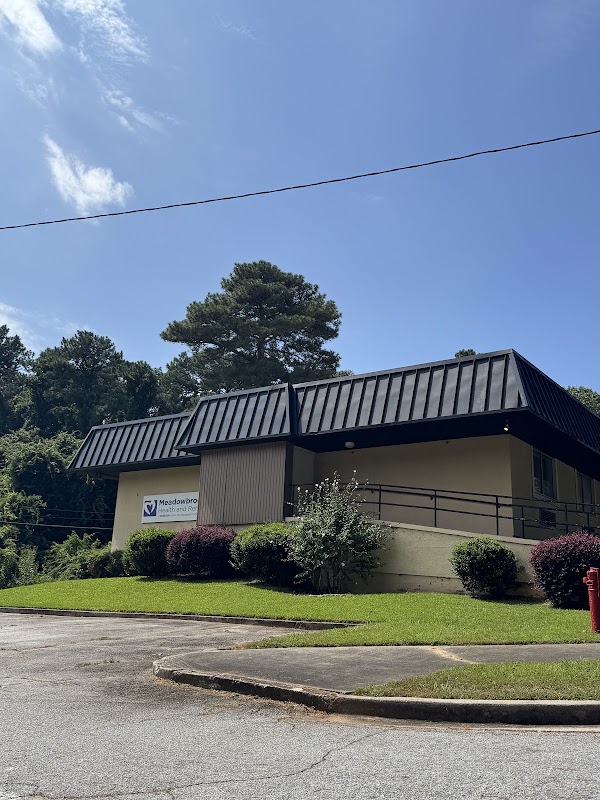
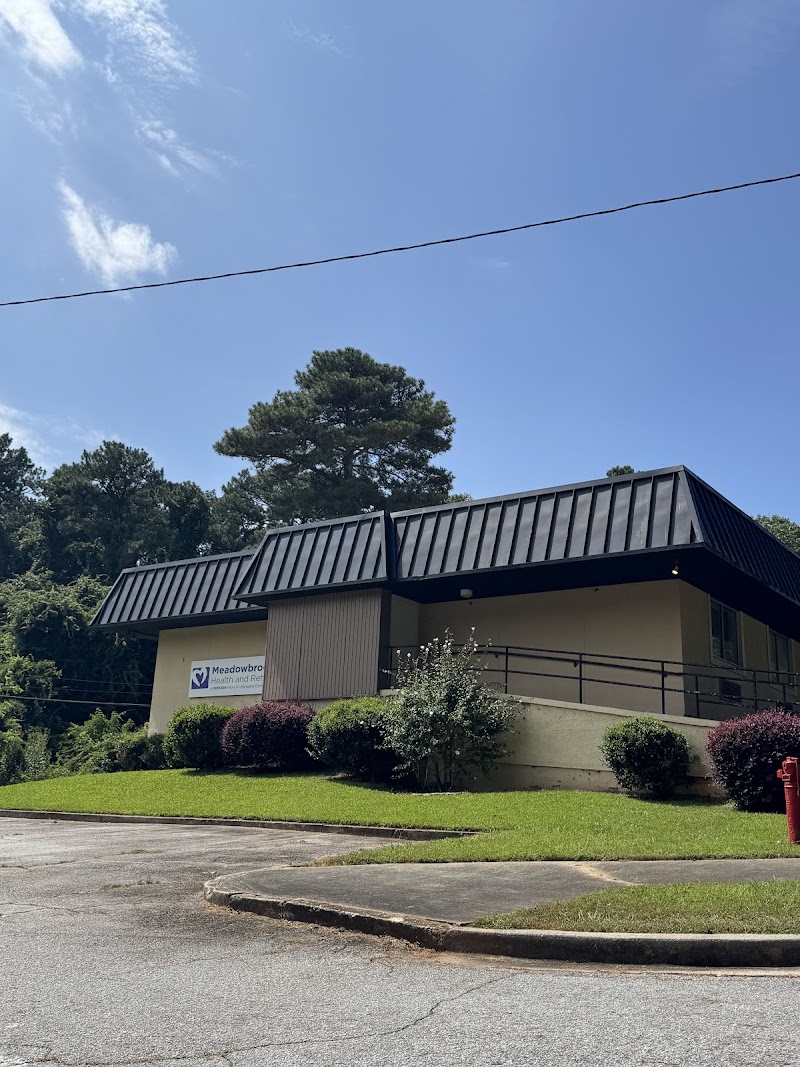
4608 LAWRENCEVILLE HIGHWAY, TUCKER, GA 30084 (770) 491-9444
For profit - Corporation 144 Beds MISSION HEALTH COMMUNITIES Data: November 2025 4 Immediate Jeopardy citations
Trust Grade
0/100
#296 of 353 in GA
Last Inspection: October 2024

Within standard 12-15 month inspection cycle. Federal law requires annual inspections.

Overview

Meadowbrook Health and Rehab has received a Trust Grade of F, indicating significant concerns about the facility's care quality. It ranks #296 out of 353 nursing homes in Georgia, placing it in the bottom half of state facilities, and #17 out of 18 in DeKalb County, suggesting only one local option is better. Although the facility's trend is improving, with a drop in issues from 17 in 2024 to 3 in 2025, it still faces serious challenges, including 42 deficiencies noted during inspections. Staffing is a weakness, with a turnover rate of 61%, significantly above the state average, and the facility has incurred $115,034 in fines, higher than 94% of Georgia facilities. Specific incidents include critical medication errors where residents received incorrect medications, leading to serious health complications, highlighting a need for better training and oversight of staff. While the quality measures score is good at 4 out of 5, the overall rating of 1 out of 5 and the concerning trends indicated by the findings mean families should carefully consider their options.

Trust Score
F
0/100
In Georgia
#296/353
Bottom 17%
Safety Record
High Risk
Review needed
Inspections
Getting Better
17 → 3 violations
Staff Stability
⚠ Watch
61% turnover. Above average. Higher turnover means staff may not know residents' routines.
Penalties
○ Average
$115,034 in fines. Higher than 59% of Georgia facilities. Some compliance issues.
Skilled Nurses
⚠ Watch
Each resident gets only 22 minutes of Registered Nurse (RN) attention daily — below average for Georgia. Fewer RN minutes means fewer trained eyes watching for problems.
Violations
⚠ Watch
42 deficiencies on record. Higher than average. Multiple issues found across inspections.
★☆☆☆☆
1.0
Overall Rating
★☆☆☆☆
1.0
Staff Levels
★★★★☆
4.0
Care Quality
★☆☆☆☆
1.0
Inspection Score
Stable
2024: 17 issues
2025: 3 issues

The Good

  • 4-Star Quality Measures · Strong clinical quality outcomes
  • Full Sprinkler Coverage · Fire safety systems throughout facility
  • No fines on record

Facility shows strength in quality measures, fire safety.

The Bad

1-Star Overall Rating

Below Georgia average (2.6)

Significant quality concerns identified by CMS

Staff Turnover: 61%

15pts above Georgia avg (46%)

Frequent staff changes - ask about care continuity

Federal Fines: $115,034

Well above median ($33,413)

Significant penalties indicating serious issues

Chain: MISSION HEALTH COMMUNITIES

Part of a multi-facility chain

Ask about local staffing decisions and management

Staff turnover is elevated (61%)

13 points above Georgia average of 48%

The Ugly 42 deficiencies on record

4 life-threatening
Jul 2025 3 deficiencies
CONCERN (D) 📢 Someone Reported This

A family member, employee, or ombudsman was alarmed enough to file a formal complaint

Potential for Harm - no one hurt, but risky conditions existed

Deficiency F0553 (Tag F0553)

Could have caused harm · This affected 1 resident

**NOTE- TERMS IN BRACKETS HAVE BEEN EDITED TO PROTECT CONFIDENTIALITY** Based on staff and family interviews, record review, and review of the facility policies titled Baseline Care Plans and Comprehe...

Read full inspector narrative →
**NOTE- TERMS IN BRACKETS HAVE BEEN EDITED TO PROTECT CONFIDENTIALITY** Based on staff and family interviews, record review, and review of the facility policies titled Baseline Care Plans and Comprehensive Care Plans, the facility failed to ensure that one R (R) (R7) out of eight reviewed for participation in care plan meetings, or R7's Power of Attorney (POA), were invited to participate in the care plan meetings to ensure that the care plan was individualized to meet R7's personal goals and preferences. Findings include: Review of facility policy titled Baseline Care Plan, revised 6/2025, revealed the Guidelines section included . 6. Within 48 hours, the summary of the baseline care plan should be presented to the resident and/or their representative in writing, in a manner and language they understand. 7. Document evidence of the summary given to the resident or their representative in the medical record. Review of facility policy titled Comprehensive Care Plans, revised 3/2025, revealed the Guidelines section included 1. The facility's Care Planning/Interdisciplinary Team, in coordination with the resident, his/her family or representative (sponsor), develops and maintains a comprehensive care plan for each resident that identifies the highest level of functioning the resident may be expected to attain. 12. Provide the resident and their representative a copy of the current care plan or a summary.Review of the admission Record for R7 revealed he was admitted to the facility on [DATE] and diagnoses included, but were not limited to, asthma and end-stage renal disease.Record review of the Minimum Data Set (MDS) Quarterly assessment, dated 8/21/2024, revealed Section C (Cognitive Patterns) documented a Brief Interview for Mental Status (BIMS) of 11 (indicating moderate cognitive impairment).Review of R7's electronic medical record (EMR) attached under the Miscellaneous Documents a document titled Care Plan Conference Summary, dated 1/30/2025, revealed there was no indication that the resident or POA were invited to or attended the care plan meeting.Review of R7's EMR attached under the Miscellaneous Documents a document titled [Resident's name] Baseline Care Plan dated 5/29/2025 Section Q Signatures and Acknowledgement revealed no indication that R7 or the family of R7 attended, signed, or was given a copy of the resident's care plan. In a telephone interview on 7/2/2025 at 2:31 pm with R7's POA, who is a family member, stated that the family was concerned about the care and services R7 was receiving. The POA stated the family wanted to participate in R7's plan of care. The POA further stated he had placed calls to the facility and left messages, requesting that someone return the call so that a care plan meeting could be scheduled. The POA stated the facility never returned any of the calls. In an interview on 7/2/2025 at 3:27 pm, the Clinical Reimbursement Coordinator (CRC) CC stated that the residents were invited to the care plan meeting via a letter that was delivered to the resident. CRC CC stated there was no need to invite the POA/Family to the care plan meeting for R7. The CRC stated that R7 was his own responsible party, and families were only invited if the resident requested it.In an interview on 7/2/2025 at 4:30 pm, the Administrator stated that the resident, as well as the family/Responsible Party (RP)/POA, should be invited to the care plan meetings. The Administrator stated he educated the Interdisciplinary Team (IDT) by reviewing the federal guidelines related to inviting the resident/families/RP/POA to the care plan meetings.
CONCERN (D) 📢 Someone Reported This

A family member, employee, or ombudsman was alarmed enough to file a formal complaint

Potential for Harm - no one hurt, but risky conditions existed

Notification of Changes (Tag F0580)

Could have caused harm · This affected 1 resident

**NOTE- TERMS IN BRACKETS HAVE BEEN EDITED TO PROTECT CONFIDENTIALITY** Based on family and staff interviews, and record reviews, the facility failed to notify the Power of Attorney (POA)/family of a ...

Read full inspector narrative →
**NOTE- TERMS IN BRACKETS HAVE BEEN EDITED TO PROTECT CONFIDENTIALITY** Based on family and staff interviews, and record reviews, the facility failed to notify the Power of Attorney (POA)/family of a change in condition of one resident (R) (R7) of eight residents reviewed for notification of change. Findings include:Review of the admission Record for R7 revealed he was admitted to the facility on [DATE] and diagnoses included, but were not limited to, asthma and end-stage renal disease. Further review of the admission Record revealed one person was listed as R7's POA and two people were listed as emergency contacts.Record review of R7's Minimum Data Set (MDS) Quarterly assessment, dated 8/21/2024, revealed that a Brief Interview for Mental Status (BIMS) was assessed at eleven (indicating moderate cognitive impairment).Review of a Nursing Skilled Note, dated 6/26/2025, revealed R7 was observed vomiting {sic} coffee ground- like emesis, in house nurse practitioner notified and assessed resident. Recommended that the resident be sent out to the hospital for further management. Emergency Medical Service (EMS) was contacted, and the resident was transferred to the hospital at 10:15 am, accompanied by EMS personnel. Resident was stable at the time of transfer. Family was contacted, however there was no answer.In a telephone interview on 7/2/2025 at 2:31 pm with R7's family member, who is the POA, the family member stated they were unaware that R7 had been sent out to the hospital on 6/26/2025 and remained in the hospital. In an interview on 7/2/2025 at 3:23 pm, the Unit Manager DD stated the nurse should have made a follow-up call to the family. She stated that if the nurse could not contact the family, it should have been passed to the next shift. In an interview on 7/8/2025 at 10:36 am, the Social Service Director (SSD) stated that R7 remained in the hospital.
CONCERN (D) 📢 Someone Reported This

A family member, employee, or ombudsman was alarmed enough to file a formal complaint

Potential for Harm - no one hurt, but risky conditions existed

Grievances (Tag F0585)

Could have caused harm · This affected 1 resident

**NOTE- TERMS IN BRACKETS HAVE BEEN EDITED TO PROTECT CONFIDENTIALITY** Based on staff interviews, record review, and review of the facility policies titled Grievance/Complaint Log and Lost and Found,...

Read full inspector narrative →
**NOTE- TERMS IN BRACKETS HAVE BEEN EDITED TO PROTECT CONFIDENTIALITY** Based on staff interviews, record review, and review of the facility policies titled Grievance/Complaint Log and Lost and Found, the facility failed to make a prompt effort to file a grievance for two of eight sampled residents (R) (R7 and R8) who verbally reported grievances. This deficient practice had the potential to place residents at risk of not having their grievances resolved in a timely manner. Findings include:Review of the facility policy titled Grievance/Complaint Log, with a review date of 10/2024, revealed Policy Statement: The disposition of all resident grievances and/or complaints will be recorded on our facility's Resident Grievance/Complaint Log. Policy Interpretation and Implementation: 1. The disposition of all written grievances and/or complaints must be recorded on the Resident Grievance/Complaint Log.Review of the policy titled Lost and Found, with a review date of 10/2024, revealed Policy Statement: Our facility shall assist all personnel and residents in safeguarding their personal property. Policy Interpretation and Implementation: Resident or family complaints of missing items should be reported by such staff member to the Social Services Director or, in their absence, Manager on Duty. An investigation of such will begin, and the resident or responsible party will be informed of the outcome in 5 days.1. Review of the admission Record for R7 revealed he was admitted to the facility on [DATE], and diagnoses included, but were not limited to, asthma and end-stage renal disease.Record review of the Minimum Data Set (MDS) Quarterly assessment, dated 8/21/2024, revealed a Brief Interview for Mental Status (BIMS) assessed at 11 (indicating moderate cognitive impairment).Review of a Nursing Skilled Note, dated 2/28/2025, revealed R7 dropped his pouch with his cellphone and wallet in it at some point during or after dialysis. Dialysis, maintenance, and nursing staff all looked for the pouch. The nurse placed a call to the family. The family provided R7 cell phone number to the facility. The family was informed the facility will call the cell number to locate the phone.Review of the Grievance Log from 1/23/2025 to 6/26/2025 revealed no documented grievances filed for R7. The surveyor requested any facility reportable incident (FRI) filed by the facility for R7. No FRI was provided to the surveyor.In an interview on 7/2/2025 at 2:31 pm, R7's family, who is also the Power of Attorney (POA), stated he spoke with R7 at least twice a week. The POA stated the last time R7 called from the cell phone was on 2/25/2025. The POA stated a call was received from R7 in February 2025, and the resident (R7) called from the nurse's station. The POA stated the resident stated he was missing a wallet and cell phone. The POA stated he/she spoke with a staff member who confirmed that the wallet and phone were missing, and the facility was trying to locate the phone and wallet. The POA stated that the family sent R7 a new wallet that included fifty dollars in one-dollar bills and a cell phone. He stated that soon after, R7 called again and stated the wallet, money, and cell phone that were sent were missing. The POA stated he did make calls to the facility and left messages that were not returned.2. Review of the admission Record for R8 revealed she was admitted to the facility on [DATE] and diagnoses included, but were not limited to, essential (primary) hypertension and chronic kidney disease.Record review of the MDS Quarterly assessment, dated 6/29/2025, revealed a BIMS assessed at 15 (indicating little to no cognitive impairment).Review of the Grievance Log from 1/23/2025 to 6/26/2025 revealed R8 filed one grievance on 1/27/2025, regarding being bathed with an undesirable water temperature. There were no other documented grievances for R8.During an interview and observation on 7/2/2025 at 11:16 am, R8 was lying in bed with two blankets pulled up to her chin. The resident stated she was cold, and the room's air conditioner was always on high. R8 stated that she has made many complaints to anyone who will listen about the temperature of the room. She stated the staff would adjust the temperature, but if the roommate complained, the temperature would be readjusted. She stated she had also complained of the slow response to answering the call light. R8 stated she had also verbalized the complaints to the Unit Manager.In an interview on 7/3/2025 at 12:08 pm, Social Service Director (SSD) AA stated she was responsible for tracking the grievances on the Grievance Log form. The SSD revealed anyone can complete a Complaint/Grievance Report form. She stated a grievance can be filed verbally or in writing. After the Complaint/Grievance Report form is completed, a copy of the grievance is given to the appropriate department to investigate. The department will return the grievance form to the Social Service Department, indicating if it was resolved and if the person filing the grievance is satisfied with the outcome. The grievances must be resolved within 5 to 7 days. The SSD stated the Administrator was not required to sign off on the grievances. The SSD stated she was not aware that R7 was missing a phone and wallet. She further stated she was not aware that R8 was having problems with the room temperature or the slow response to answering call lights. The SSD stated that she will speak to R8 regarding her concerns. In an interview on 7/8/2025 at 11:51 pm, Unit Manager (UM) BB confirmed that R8 had complained about the temperature in the room being cold and staff not answering the call light in a timely manner. UM BB stated she did not think she needed to file a grievance on behalf of R8 if she could resolve the issue.
Oct 2024 6 deficiencies
CONCERN (D) 📢 Someone Reported This

A family member, employee, or ombudsman was alarmed enough to file a formal complaint

Potential for Harm - no one hurt, but risky conditions existed

Deficiency F0583 (Tag F0583)

Could have caused harm · This affected 1 resident

**NOTE- TERMS IN BRACKETS HAVE BEEN EDITED TO PROTECT CONFIDENTIALITY** Based on observations, staff and resident interviews, record review, and review of the facility's policy titled, Confidentiality...

Read full inspector narrative →
**NOTE- TERMS IN BRACKETS HAVE BEEN EDITED TO PROTECT CONFIDENTIALITY** Based on observations, staff and resident interviews, record review, and review of the facility's policy titled, Confidentiality and Privacy Information, the facility failed to ensure the privacy for one of 30 residents (R) (R98) was maintained by displaying a sign on the bedroom wall disclosing protected personal information. Findings include: A review of the facility's policy titled Confidentiality and Privacy Information, effective date of 10/2023 under the Policy Statement revealed, Our facility shall treat all resident information confidentially. The resident has a right to personal privacy and confidentiality of his or her personal medical record. Review of R98's quarterly Minimum Data Set (MDS) dated [DATE] revealed, for Section B (Hearing, Speech, Vision), indicated the resident's vision was highly impaired; Section C (Cognitive Patterns), a Brief Interview of Mental Status (BIMS) of 15 which indicated little to no cognitive impairment. Observation on 10/27/2024 at 5:24 pm in the room of R98 revealed, a sign above the bed stating visually impaired. Interview on 10/27/2024 at 5:24 pm with R98 revealed, he was unaware of the sign above the bed when asked about it. Interview on 10/30/2024 at 4:21 pm with Certified Nursing Assistant (CNA) BB revealed most of the time the nurses would let them know of any diagnoses and tell them how to care for residents. CNA BB revealed she would ask the nurse or the unit manager if she forgot what to do for the resident and had access to the resident's Plan of Care (POC) on the computer. Interview on 10/30/2024 at 3:49 pm with Licensed Practical Nurse (LPN) FF revealed, she had received trainings related to dignity, privacy and how to treat residents with respect. LPN, FF revealed, if she saw the sign, she would have removed it. She further revealed, if the resident was alert enough, she would speak to them to let them know why she removed it. Interview on 10/30/2024 at 5:38 pm with the Administrator revealed they did not know the sign was there and it was not their expectation for anything with private information to be posted on the resident's wall.
CONCERN (D) 📢 Someone Reported This

A family member, employee, or ombudsman was alarmed enough to file a formal complaint

Potential for Harm - no one hurt, but risky conditions existed

Deficiency F0625 (Tag F0625)

Could have caused harm · This affected 1 resident

**NOTE- TERMS IN BRACKETS HAVE BEEN EDITED TO PROTECT CONFIDENTIALITY** Based on staff interviews, record review, and review of the facility's policy titled, F 625 Bed Hold, the facility failed to ens...

Read full inspector narrative →
**NOTE- TERMS IN BRACKETS HAVE BEEN EDITED TO PROTECT CONFIDENTIALITY** Based on staff interviews, record review, and review of the facility's policy titled, F 625 Bed Hold, the facility failed to ensure a bed-hold policy upon transfer to the hospital for one of two residents (R) (R27) reviewed for hospitalizations. Findings include: Review of the facility policy titled F 625 Bed Hold revised May 2023 revealed, 1. Upon admission and when a resident is transferred for a non-emergency hospitalization or for therapeutic leave, a representative of the business office will provide information concerning our bed-hold policy. 2. When emergency transfers are necessary, the facility will provide the resident and the resident representative with information concerning our bed-hold policy per state law as applicable. Review of R27 clinical records revealed, the resident admitted to the facility with diagnoses that included but not limited to chronic kidney disease, acute on chronic systolic (congestive) heart failure, chronic obstructive pulmonary disease, unspecified, acute respiratory failure, and diabetes mellitus. Review of R27's Physician orders revealed an order for torsemide oral tablet 40 milligrams (mg), ipratropium-albuterol inhalation solution 0.5-2.5 (3) (mg)/3 milliliter (ml), Trelegy Ellipta inhalation aerosol powder breath activated 200-62.5-25 micrograms/ante cibum (mcg/ac), and oxygen (O2) at 4 (four) liters per minute (L (liters)/min [minute]) via nasal cannula to maintain O2 at or above 92% continuously every shift. Review of R27's most recent quarterly Minimum Data Set (MDS) dated [DATE] revealed, Section C (Cognitive Patterns) a Brief Interview for Mental Status (BIMS) score of 15, indicating the resident had little to no cognitive impairment. Interview on 10/31/2024 at 11:10 am with Licensed Practical Nurse (LPN) AA revealed, Registered Nurse (RN) GG was the night supervisor in charge, and she sent R27 to the hospital on [DATE] due to edema. LPN AA confirmed that RN GG did not complete the proper paperwork for the Business Office Manager (BOM) to create a copy of the bed hold. Interview on 10/31/2024 at 11:20 am with the BOM revealed that a bed-hold policy was given upon admission in the admission packet. She indicated she was responsible for issuing the bed hold paperwork to the residents that were transferred to the hospital. She revealed normally the nurse put the transfer in a green folder at the nursing station for her to process the bed hold forms. She confirmed R27 did not receive any bed hold paperwork upon transfer to the hospital on 6/9/2024, 8/11/2024, and 10/27/2024. She stated, the main reason bed hold policies do not get issued to the residents was because it's a break in our process. Interview on 10/31/2024 at 11:30 am with the Administrator and Director of Nursing (DON) confirmed it was the responsibility of the nursing staff to get the information to the BOM in a timely matter to properly issue bed hold policy forms to all residents or their responsible party who were being transferred to the hospital. DON stated they also have an encrypted phone app that allows them to communicate over the weekends. Telephone Interview on 10/31/2024 at 1:30 pm with RN GG confirmed she did not give the bed hold paperwork to the BOM. She stated, I did not know to do a bed hold, and have not receive any training on the proper steps regarding bed holds. I only know about doing assessments and that is what I did for her.
CONCERN (D) 📢 Someone Reported This

A family member, employee, or ombudsman was alarmed enough to file a formal complaint

Potential for Harm - no one hurt, but risky conditions existed

Comprehensive Care Plan (Tag F0656)

Could have caused harm · This affected 1 resident

**NOTE- TERMS IN BRACKETS HAVE BEEN EDITED TO PROTECT CONFIDENTIALITY** Based on observations, resident and staff interviews, record review, and review of the facility's policy titled, Comprehensive C...

Read full inspector narrative →
**NOTE- TERMS IN BRACKETS HAVE BEEN EDITED TO PROTECT CONFIDENTIALITY** Based on observations, resident and staff interviews, record review, and review of the facility's policy titled, Comprehensive Care Plan, the facility failed to develop a care plan specific to the recommendations per the physician's order related to the pain scale for one resident (R) (R23), failed to develop a care plan for dialysis for R64, and failed to to follow and update the care plan for refusals on restorative care for R19. The sample size was 30 residents. Findings include: Review of the facility's policy titled, Comprehensive Care Plan dated August 2024 revealed, An individualized comprehensive person-centered care plan that includes measurable objective and time frames to meet the resident's medical, nursing, mental, cultural and psychological needs is developed for each resident. Further review of the policy revealed, (1) The facility's Care Planning/Interdisciplinary Team (IDT), in coordination with the resident, his/her family or representative (sponsor), develops and maintains a comprehensive care plan for each resident that identifies the highest level of functioning the resident maybe expected to attain. (2) The comprehensive care plan is based on a thorough assessment that includes but is not limited to Minimum Data Set (MDS) and physician's orders. Assessment of residents are ongoing, and care plans are revised as information about the resident and the resident's condition change. (3) The Care Planning/IDT is responsible for the periodic review and updating of care plans: (a) When there has been a significant change in the resident condition. 1. Review of clinical records revealed R23 was admitted to the facility on [DATE] with diagnoses that included fracture of left lower leg sequela, and displaced trimalleolar fracture of unspecified lower leg, initial encounter for closed fracture. Review of the most recent quarterly Minimum Data Set (MDS) dated [DATE] revealed for Section C (Cognitive Patterns) R23 had a Brief Interview of Mental Status (BIMS) score of 14 indicating little to no cognitive impairment. Review of R23's care plan dated for 10/9/2024 revealed there was not a care plan for opioid medication and management. Review of the physician's order dated 10/15/2024 documented tramadol (narcotic) hydrochloric (HCL) oral tablet (tab) 50 milligrams (MG). Directions: Give tablet mouth every eight hours as needed for severe pain (pain level 7-10.) Review of the Physicians order dated 10/15/2024 documented hydrocodone-acetaminophen (acet)(narcotic) 7.5-325 tab {100 each (ea)} Directions: Give one ablet by mouth every four hours as needed for moderate pain (pain level 4-6). Review of the Physicians order dated 8/22/2024 documented Fentanyl (opioid) patch 72 hours 23 (micrograms) MCG /hour (hr) Directions: apply one patch topically every 72 hours. During an observation and interview on 10/30/2024 at 1:24 pm, with R23 revealed she was aware and involved in her care plan meetings. She stated that her care plans should address the medication she has ordered. Interview on 10/30/2024 at 1:36 pm with Licensed Practical Nurse (LPN) AA revealed care plans were done on all residents quarterly related to their medication and treatment. She further stated if there were any concerns that needed to be addressed the staff should report this to her and she would report the concerns to the Nurse Practitioner (NP). After the concerns were reported she would assess the resident herself and a change of condition should take place. Interview on 10/30/2024 at 4:08 pm with LPN FF revealed she was able to update the care plan herself. She revealed, the MDS staff were involved in addressing concerns for the residents and would have a team meeting to implement interventions if needed. She continued to state if there was something incorrect, she would go to the MDS team to be corrected. Interview on 10/30/2024 at 4:21 pm with MDS CC and MDS DD staff both revealed, they were responsible for updating the care plan. They stated the care plan meetings involve the nurses and the IDT team, and they record the information that was being obtained in the meetings. MDS CC stated the medical part of the care plan was completed by the nurses. Further interview with MDS DD revealed the staff collaborate on the MDS part and the IDT team can do the medication portion of the MDS. They further stated the nurses should let them know if things need to be updated or have changed. Lastly, MDS CC and MDS DD both confirmed they do not look at any assessment as they are putting together the residents care plans. Interview on 10/30/2024 at 5:48 pm with the Director of Nursing (DON) confirmed the MDS team handles completing and updating the care plans. She stated they headline the care plan, and the nurses were able to update as needed. She continued to confirm the MDS staff were the ones who can input specific information into the care plans. 2. Record review of R64's admission MDS assessment dated [DATE] revealed, for Section C (Cognitive Patterns), a BIMS of 12 which indicated little to no cognitive impairment, Section I (Active Diagnosis) revealed, dependence on renal dialysis, acute kidney failure, unspecified and disorder of kidney and ureter, unspecified. Review of the comprehensive care plans for R64 revealed she did not care have a care plan for receiving dialysis. Observation on 10/27/2024 at 5:04 pm of R64 revealed, she had a port in her chest. Interview on 10/27/2024 with R64 revealed she received dialysis and went to dialysis in house on Mondays, Wednesday and Fridays during the mornings. Interview on 10/30/2024 at 5:08 pm with MDS DD revealed both coordinators were responsible for updating the care plans, but the nurses were able to as well or anyone on the IDT can update. She confirmed that R64 had not been care planned for dialysis and that it was an oversight. Interview on 10/30/2024 at 5:34 pm with the DON revealed it was the expectation for MDS to handle the updates of the care plan. 3. Review of the Electronic Medical Record (EMR) revealed R19 was admitted to the facility on [DATE] with the diagnoses of but not limited to hemiplegia and hemiparesis following cerebrovascular disease affecting the right dominant side. Review of R19's quarterly MDS assessment dated [DATE] revealed for Section C (Cognitive Patterns) a BIMS score of 5 (five) indicating severe cognitive impairment, Section GG (Functional Abilities and Goals) impaired upper extremity mobility on one side, and lower extremity impairment on one side, mobility by way of wheelchair, Section O (Special Treatments, Procedures, and Programs),Speech Language Pathologist (SLP) start 4/4/24-7/5/2024, Occupational Therapist (O/T) 6/10/2024-9/6/2024, Physical Therapy (P/T) 4/4/2024-6/20/2024. Review of R19's care plan dated 9/22/2024 revealed a focus: ROM or improve resident range of motion (ROM). Contracture to Right arm and hand. Goal: Resident will maintain or improve mobility through next assessment period. Interventions: Put towel or roll in R19's right hand to maintain skin integrity. Provide R19 with an active range of motion per therapy or nursing assessment. OT to evaluate and treat per order. Further review of care plans revealed, there was no care plan written for the resident's refusal to wear his splint. Review of the document titled Occupational Therapy Discharge Summary dated 6/10/2024 - 9/6/2024 revealed a discharge summary that patient will wear grip splint on right hand for up to 4.5 hours with minimal signs/symptoms of redness, swelling, discomfort or pain. Interview on 10/30/2024 at 10:50 am with LPN FF revealed, stated should apply the splint to the resident's hand if no restorative person was present to do it. She said sometimes he refuses to have his splint applied. Interview on 10/30/2024 at 5:08 pm with MDS CC and MDS DD revealed they are both responsible for updating the residents MDS's, but the nurses and the IDT update the care plans at the meetings. She revealed, the MDS Nurse was responsible for the assessment, and the care plan conferences, but the staff could modify or resolve anything on the care plan. She revealed they assist the CNAs to find things they may need related to the care plan. She said the staff can see the interventions as well. She said the nurse should let them know if things are to be updated or have been updated. She confirmed they were responsible for keeping the care plans updated.
CONCERN (D) 📢 Someone Reported This

A family member, employee, or ombudsman was alarmed enough to file a formal complaint

Potential for Harm - no one hurt, but risky conditions existed

Quality of Care (Tag F0684)

Could have caused harm · This affected 1 resident

**NOTE- TERMS IN BRACKETS HAVE BEEN EDITED TO PROTECT CONFIDENTIALITY** Based on observation, resident and staff interview, record review, and review of the facility's policy titled, Administering Med...

Read full inspector narrative →
**NOTE- TERMS IN BRACKETS HAVE BEEN EDITED TO PROTECT CONFIDENTIALITY** Based on observation, resident and staff interview, record review, and review of the facility's policy titled, Administering Medication the facility failed to follow the physician's orders as recommended for one of 30 residents (R)(R23). Findings include: Review of the facility's policy titled, Administering Medication dated October 2024 documented Medications shall be administered in a safe and timely manner, and as prescribed. (3) Medications must be administered in accordance with the orders, including required time frame. R23 was admitted to the facility on [DATE] with a diagnosis that includes fracture of left lower leg sequela, and displaced trimalleolar fracture of unspecified lower leg, initial encounter for closed fracture. Review of the most recent quarterly MDS dated [DATE] documented R23 had a Brief Minimum Data Set (BIMS) score of 14 indicating little to no cognitive impairment. Further review revealed R23 had no behavior exhibited and requires a four-person mechanical lift, and assistance with activities of daily living (ADLs). Review of the care plan dated for 10/9/2024 revealed there is not care plan for opioid medication and management. Review of the Physicians order dated 10/15/2024 documented tramadol (narcotic) hydrochloric (HCL) Oral Tablet (tab) 50 milligrams (MG). Directions: Give tablet mouth every eight hours as needed for severe pain (pain level 7-10). Review of the Physicians order dated 10/15/2024 documented hydrocodone-acetaminophen (acet)(narcotic) 7.5-325 tab {100 each (ea)}. Directions: Give one ablet by mouth every four hours as needed for moderate pain (pain level 4-6). Review of the Physicians order dated 8/22/2024 documented FentaNYL (opioid) patch 72 hours 23 (micrograms) MCG /hour (hr). Directions: apply one patch topically every 72 hours. Interview and observation on 10/20/2024 at 1:24 pm with R23 revealed she is aware on the three medications she is taking along with the pain scale for each medication. She stated she request her pain medication and tells the nurses what narcotics she wants and along with the pain level she is having. She confirmed she asked for hydrocodone often even though it is not within the pain scale that is recommended per her physicians. Review of the Medication Administration Record (MAR) dated for October documented: Hydrrocodone-acet given October 1 with a pain level of 8. Hydrrocodone-acet given October 2 with a pain level of 7. Hydrrocodone-acet given October 3 with a pain level of 8 and 7. Hydrrocodone-acet given October 4 with a pain level of 8. Hydrrocodone-acet given October 5 with a pain level of 8 and 7. Hydrrocodone-acet given October 6 with a pain level of 8. Hydrrocodone-acet given October 7 with a pain level of 7. Hydrrocodone-acet given October 8 with a pain level of 9. Hydrrocodone-acet given October 9 with a pain level of 8. Hydrrocodone-acet given October 10 with a pain level of 8. Hydrrocodone-acet given October 13 with a pain level of 7. Hydrrocodone-acet given October 14 with a pain level of 8. Hydrrocodone-acet given October 15 with a pain level of 7. Hydrrocodone-acet given October 16 with a pain level of 7. Hydrrocodone-acet given October 18 with a pain level of 7. Hydrrocodone-acet given October 22 with a pain level of 7. Hydrrocodone-acet given October 24 with a pain level of 8. Tramadol given on October 4 with a pain level of 4 and 5. Tramadol given on October 12 with a pain level of 5. Tramadol given on October 13 with a pain level of 6. Tramadol given on October 22 with a pain level of 6. Tramadol given on October 26 with a pain level of 6. Tramadol given on October 27 with a pain level of 6. Interview on 10/30/2024 at 1:36 pm with Licensed Practical Nurse (LPN) AA stated because R23 is aware of her pain ans she'll usually lets the staff know the pain level she is having and the medication she would like to take. LPN AA continued to state she does ask for pain medication often but is not a seeker. She stated she contacts the nurse practitioner (NP) and physicians if she believes R23 needs an adjustment to her medication. Interview on 10/30/2024 at 1:50 pm with the Director of Nursing (DON) revealed the staff are supposed to operate according to the physician's order. If there are any changed that need to be made the staff are expected to call the physician for specific orders that need to take place. She continued to confirm the physician's orders, and the Medication Administer Record (MAR) should align. Interview on 10/30/2024 at 5:45 pm with the Administration confirmed all nurses should follow the medical doctor orders as prescribed.
CONCERN (D) 📢 Someone Reported This

A family member, employee, or ombudsman was alarmed enough to file a formal complaint

Potential for Harm - no one hurt, but risky conditions existed

Deficiency F0688 (Tag F0688)

Could have caused harm · This affected 1 resident

**NOTE- TERMS IN BRACKETS HAVE BEEN EDITED TO PROTECT CONFIDENTIALITY** Based on observations, interviews, record review and review of the facility's policy titled Goals and Objectives, Restorative Se...

Read full inspector narrative →
**NOTE- TERMS IN BRACKETS HAVE BEEN EDITED TO PROTECT CONFIDENTIALITY** Based on observations, interviews, record review and review of the facility's policy titled Goals and Objectives, Restorative Services and Rehabilitative Nursing Care the facility failed to provide a right-hand grip splint for up to 4.5 hours for one of one Residents (R19) reviewed for rehab and restorative. Findings include: Review of the facility's policy titled Goals and Objectives, Restorative Services last reviewed 10/2024 revealed the policy was specialized rehabilitative service goals and objectives shall be developed for problems identified through resident assessments. Under the Policy's Guidelines section revealed, Rehabilitative goals and objectives are developed for each resident and are outlined in his/her plan of care relative to therapy services. 2. (b) Assisting the resident in developing and strengthening his/her physiological and psychological resources. 2. (c) Encouraging the residents to maintain his/her independence and self-esteem. Review of the facility's policy titled Rehabilitative Nursing Care last revised 10/2024 under the Policy's Interpretation and Implementation revealed, 1. General rehabilitative nursing care is that which does not require the use of Qualified Professional Therapist to render such care. 2. Nursing personnel are trained in rehabilitative nursing care, and our facility has an active program of rehabilitative nursing which is developed and coordinated through the residents' care plan. 3. The facility's rehabilitative nursing care program is designed to assist each resident to achieve and maintain an optimal level of self-care and independence. Review of the Electronic Medical Record (EMR) revealed R19 was admitted to the facility on [DATE] with the diagnoses of but not limited to hemiplegia and hemiparesis following cerebrovascular disease affecting the right dominant side. Review of R19's quarterly Minimum Data Set (MDS) assessment dated [DATE] revealed Section GG (Functional Abilities and Goals) impaired upper extremity mobility on one side, and lower extremity impairment on one side, mobility by way of wheelchair, Section O (Special Treatments, Procedures, and Programs),Speech Language Pathologist (SLP) start 4/4/24-7/5/2024, Occupational Therapist (O/T) 6/10/2024-9/6/2024, Physical Therapy (P/T) 4/4/2024-6/20/2024. Review of the document titled Occupational Therapy Discharge Summary dated 6/10/2024 - 9/6/2024 revealed a discharge summary that patient will wear grip splint on right hand for up to 4.5 hours with minimal signs/symptoms of redness, swelling, discomfort or pain. Review of the document titled [Name of Facility] Follow Up Question Report dated 10/23/2023-12/22/2023 Restorative Nursing revealed, Resident to tolerate Right grip splint 2 hours or better with minimal pain six/week for 12 weeks. There were no other weekly Restorative notes from the Restorative Certified Nursing Aide nor monthly notes from the Supervisors of Restorative Nursing Care. Review of the document titled Restorative Nursing Program Recommendations dated 9/29/2024 revealed OT recommendations for resident to tolerate right grip splint five hours to maintain current level of function (CLOF). Review of the document titled Plan of Care (POC) Response History dated 10/30/2024 revealed a mobility device task with all No responses checked from 10/17/2024- 10/30/2024. Observation on 10/27/2024 at 2:45 pm of R19 in the day area revealed, the resident's right hand was very contracted, and his fingernails were touching the inside of his hand. R19 was not wearing a splint on his right hand. Observation and Interview on 10/28/2024 at 4:56 pm with R19 revealed he did not have a splint on his right hand. R19 right hand was turned inward with his fingers touching his hand. When asked about his splint, R19 went to his drawer and opened it where the splint was observed inside his drawer. Observation on 10/29/2024 at 12:43 pm of R19 revealed, he was not wearing a splint on his right hand. Further observation revealed, the splint was in his drawer at bedside. Interview on 10/29/2024 at 1:15 pm with MDS, CC and MDS, DD revealed, they should document on the resident for 12 weeks six times per week. They said his order possibly fell off, and they stopped the documentation. They said they could ask PT/OT to pick him up or flag the order for restorative to do the task and document. When asked if there was any documentation to support the times that he wore the splint they said they would look through the system for it. During a follow up interview at 4:30 pm, they returned with documentation of the splint from 10/23/2023 to 12/4/2023 and confirmed there was no documentation for R19 wearing the splint this year. Interview on 10/30/2024 at 10:50 am with Licensed Practical Nurse (LPN), FF revealed that staff should apply the splint to the resident's hand if no restorative person was present to do it. She said sometimes he refused to have his splint applied. She went to ask the Certified Nursing Assistant (CNA) HH if she had applied the splint to the resident's right hand, and she returned and reported that the staff member had applied the splint. Interview on 10/30/2024 at 11:00 am with CNA, HH revealed she did apply the splint to the resident's right hand. She said she saw the splint lying on the resident's nightstand and applied it. Interview on 10/30/2024 at 11:10 am with LPN, Unit Manager (UM), II revealed she had educated the staff on yesterday 10/29/2024 regarding applying splints all shifts, on residents with orders. She said she informed them it was to be documented in the EMR under task, and document change of positions as well. She said she informed them that the task tab shows who gets it, where it was applied, and if they refuse it. She said they were to notify Therapy if it was applied or not, and if the resident refuses, it was to be documented. They should also document applying and removal times. Interview on 10/31/2024 at 10:35 am with the Director of Nursing (DON) revealed her expectations for the Supervisors overseeing the Restorative Team was to take care of the residents according to the orders, applying splints, walking, etc. She said she would follow through and make sure that each resident was receiving daily restorative care as ordered. She said she would ensure that information was gathered from Physical Therapy (PT) and is communicated with the Medical Doctor, Nurses and UMs. She said she expects the residents to receive the care that they deserve and ordered to receive. She said the MDS Nurse was over restorative, and each part of the nursing team was responsible for ensuring the resident on the unit receives restorative care even though there was a restorative team. She said they are to reach out and follow up if their residents have not received their restorative care. She said she expects the restorative Supervisors to communicate with PT to coordinate care of the residents receiving restorative care during therapy and at discharge to prevent omitting new orders.
CONCERN (D) 📢 Someone Reported This

A family member, employee, or ombudsman was alarmed enough to file a formal complaint

Potential for Harm - no one hurt, but risky conditions existed

Respiratory Care (Tag F0695)

Could have caused harm · This affected 1 resident

**NOTE- TERMS IN BRACKETS HAVE BEEN EDITED TO PROTECT CONFIDENTIALITY** Based on observations, staff interviews, record review, and review of the facility's policy titled Oxygen Administration, the fa...

Read full inspector narrative →
**NOTE- TERMS IN BRACKETS HAVE BEEN EDITED TO PROTECT CONFIDENTIALITY** Based on observations, staff interviews, record review, and review of the facility's policy titled Oxygen Administration, the facility failed to administer oxygen (O2) as ordered for one of two residents (R) (R9) reviewed for respiratory care. Findings include: Review of the facility's policy titled Oxygen Administration with effective date of 4/2024 under the section titled, Purpose revealed, The purpose of this procedure is to provide guidelines for safe oxygen administration. Under the section Preparation revealed, 1. Verify that there is a physician's order for this procedure. Review the physician's orders or facility protocol for oxygen administration. Under the section, Documentation revealed, After completing the oxygen setup or adjustment, the following information should be recorded in the resident's medical record:1. The date and time that the procedure was performed. 2. The name and title of the individual who performed the procedure. 3. The rate of oxygen flow, route, and rationale. Review of R9's Electronic Medical Records (EMR) revealed R9 had diagnoses that included but not limited to chronic systolic congested heart failure (CHF), pleural effusion, chronic obstructive pulmonary disease (COPD), and acute and chronic respiratory failure. Review of R9's Minimum Data Set (MDS) dated [DATE] revealed Section C - Cognitive Pattern-a Brief Interview of Mental Status (BIMS) score of 15, which indicated little to no cognitive impairment; Section I - Active Diagnoses -Anemia, Heart failure, Asthma (COPD) & Respiratory failure; and Section O - Special Treatments, Procedures, and Programs-Oxygen therapy. Review R9's physician orders dated 10/1/2024 revealed, O2 at 2 LPM (liters per minute) via nasal cannula. Observation on 10/27/2024 at 3:37 pm revealed, R9 oxygen was flowrate was set at 3 LPM via nasal cannula. Observation on 10/28/2024 at 1:40 pm revealed, R9 oxygen flow level was set at 3.5 LPM via nasal cannula. Interview on 10/28/2024 at 2:02 pm with License Practical Nurse (LPN) AA confirmed R9 oxygen orders were 2 LPM and the oxygen in R9 room was set at 3.5 LPM. Interview on 10/28/24 at 2:44 pm with Director of Nursing (DON) revealed her expectations of staff to follow orders recommended by the physician. DON stated if a resident the oxygen is set at a higher level there could be an adverse effect depending on the residents' medical condition.
May 2024 11 deficiencies
CONCERN (D) 📢 Someone Reported This

A family member, employee, or ombudsman was alarmed enough to file a formal complaint

Potential for Harm - no one hurt, but risky conditions existed

Deficiency F0645 (Tag F0645)

Could have caused harm · This affected 1 resident

**NOTE- TERMS IN BRACKETS HAVE BEEN EDITED TO PROTECT CONFIDENTIALITY** Based on staff interviews, record review, and review of the facility's policy titled, Pre-admission Screening and Resident Revie...

Read full inspector narrative →
**NOTE- TERMS IN BRACKETS HAVE BEEN EDITED TO PROTECT CONFIDENTIALITY** Based on staff interviews, record review, and review of the facility's policy titled, Pre-admission Screening and Resident Review (PASARR) Program, the facility failed to ensure a Level II PASARR was conducted for one of five sampled residents (R) (R40) reviewed for PASARR. Findings include: Review of the facility's policy titled, Pre-admission Screening and Resident Review (PASARR) Program dated 9/2023 under the Policy Statement revealed, This community will coordinate assessments with the preadmission screening and resident review (PASARR) program. Under Policy Interpretation and Implementation revealed, 1. Upon admission, the Social Worker or designee will, within the context of the established assessment process, the recommendations of the PASARR level II and the PASARR evaluation report with be incorporated into the resident's assessment, care planning and transition of care . 8. The Interdisciplinary Assessment Team must use the MDS from currently mandated by Federal and State regulations to conduct the resident assessment. Other assessment forms may be used in addition to the MDS form. 9. The assessment process will include: (a) Incorporating the recommendations from the PASARR level II determination and the PASARR evaluation report into the assessment, care planning and transitions of care. Review of R40's admission Record revealed he was admitted to the facility with diagnosis that included but not limited to schizoaffective disorder. Review of R40's Annual Minimum Data Set (MDS) dated [DATE] revealed Section A- Identification Information, the question was asked, had the resident been evaluated by Level II PASRR and determined to have a serious mental Illness, and/or Mental Retardation or related condition? No, indication of PASSAR was checked; Section C-Cognitive Patterns, a Brief Interview for Mental Status (BIMS) score of nine, indicating moderate cognitive impairment at time of assessment look back period; Section D-Mood, no mood exhibited; Section I-Active Diagnosis, revealed a diagnosis of Schizophrenia; Section N-Medications, received antidepressants and antipsychotics. Interview on 5/7/2024 at 3:15 pm with the Social Service Director (SSD) stated R40's Level I was to be completed prior to admission by the hospital. SSD revealed, Level I and Level II for all residents are completed on admission. She stated, if the residents had documented mental health issues, she would tell the MDS nurse to put in the diagnosis. She stated the business office manager was responsible for the referral and documentation in the electronic medical record. She revealed that she had not personally completed a PASARR. The SSD confirmed that the diagnosis of schizoaffective disorder and depression was not selected on the application.
CONCERN (D) 📢 Someone Reported This

A family member, employee, or ombudsman was alarmed enough to file a formal complaint

Potential for Harm - no one hurt, but risky conditions existed

Comprehensive Care Plan (Tag F0656)

Could have caused harm · This affected 1 resident

**NOTE- TERMS IN BRACKETS HAVE BEEN EDITED TO PROTECT CONFIDENTIALITY** Based on resident and staff interviews, record reviews, and review of the facility policy titled, F656, F657, F658 Comprehensive...

Read full inspector narrative →
**NOTE- TERMS IN BRACKETS HAVE BEEN EDITED TO PROTECT CONFIDENTIALITY** Based on resident and staff interviews, record reviews, and review of the facility policy titled, F656, F657, F658 Comprehensive Care Plans, the facility failed to implement the care plan for one of six residents (R) (R58). This failure had the potential for R58 to not receive treatment and/or care according to their needs. Findings include: A review of the facility policy titled, F656, F657, F658 Comprehensive Care Plans, last approved 9/2023, revealed the Policy stated, An individualized comprehensive person centered care plan that includes measurable objectives and time frames to meet the resident's medical, nursing, mental, cultural, and psychological needs is developed for each resident. The section titled Guidelines stated, 8. Each resident's comprehensive care plan is designed to: a. Incorporate identified problem areas, b. Incorporate risk factors associated with identified problems, c. Build on the resident's strengths, d. Reflect the resident's expressed wishes regarding care and treatment goals if applicable, e. Reflect treatment goals, timetables and objectives in measurable outcomes, f. Aid in preventing or reducing declines in the resident's functional status and/or functional levels, g. Enhance the optimal functioning of the resident. A review of R58's diagnoses included, but was not limited to, multiple sclerosis, depression, and insomnia. A review of the care plan revealed that R58 was at risk for falls and had gait/balance problems. Interventions included: Resident will be evaluated for assist bars to aid in positioning in bed. Review of the Quarterly Minimum Data Set (MDS) dated [DATE] revealed under section C (Cognitive Patterns) a Brief Interview for Mental Status (BIMS) score of 12 indicating moderate cognitive impairment. During an interview on 5/7/2024 at 10:40 am with R58, revealed the resident requested side rails for his bed to prevent falls. R58 stated he had talked to everyone about the side rails, including the Social Worker and the nurses but his siderails had not been installed. During an interview on 5/8/2024 at 2:25 pm, the Minimum Data Set (MDS) Coordinator reviewed R58's care plan and verified the care plan documented the resident was at risk for falls and had gait/balance problems. She further verified the interventions included for the residents to be evaluated for assist bars to aid in positioning in bed. The MDS Coordinator stated before the assist bars can be put on R58's bed, the rehabilitation staff must evaluate the resident, and there must be consent signed by the resident. During an interview on 5/8/2024 at 3:24 pm, the Director of Nursing (DON) revealed the MDS Coordinators initiate the care plan, the clinical team updates care plans as a team, and the nurse on the unit can update care plans as needed when changes occur. Further interview also revealed that the nursing staff is expected to follow the plan of care for each resident in the facility.
CONCERN (D) 📢 Someone Reported This

A family member, employee, or ombudsman was alarmed enough to file a formal complaint

Potential for Harm - no one hurt, but risky conditions existed

ADL Care (Tag F0677)

Could have caused harm · This affected 1 resident

**NOTE- TERMS IN BRACKETS HAVE BEEN EDITED TO PROTECT CONFIDENTIALITY** Based on observations, resident and staff interviews, record review, and review of facility policy titled, Quality of Life-Activ...

Read full inspector narrative →
**NOTE- TERMS IN BRACKETS HAVE BEEN EDITED TO PROTECT CONFIDENTIALITY** Based on observations, resident and staff interviews, record review, and review of facility policy titled, Quality of Life-Activities of Daily Living (ADL), the facility failed to provide ADL care for three of seven residents (R) (R23, R87, and R70). Specifically, the facility failed to provide nailcare for R23 and R87 and failed to provide showers as scheduled for R70. Findings included: Review of the facility policy titled Quality of Life-Activities of Daily Living with a last revised date of November 2017 revealed under Policy Statement Residents who are unable to carry out activities of daily living receive the necessary care and services to maintain good nutrition, grooming, and personal and oral hygiene. 1. Review of the electronic medical record (EMR) for R23 revealed that he was admitted to the facility with the following diagnoses but not limited to hemiplegia and hemiparesis following unspecified cerebrovascular disease affecting right dominant side, unspecified symbolic dysfunctions, psychosis, and vascular dementia. Review of the Annual Minimum Data Set (MDS) dated [DATE] revealed that R23 had a Brief Interview for Mental Status (BIMS) score of 5, indicating severe cognitive impairment. Section GG-Functional Abilities and Goals revealed that R23 had impairment on one side for upper and lower extremities and was dependent on staff for shower and personal hygiene. Review of the care plan for R23 with a last review date of 4/16/2024 revealed that he has diabetes mellitus. An intervention in place for this problem is to refer to podiatrist/foot care nurse to monitor/document foot care needs and to cut long nails. The care plan also revealed that he has an ADL self-care performance deficit related to dementia, hemiplegia, and sometimes refuses showers. An intervention in place for this problem is to assist him with ADLs as needed and he prefers showers on Tuesday, Thursday, and Saturdays on the evening shift after supper. Observation and interview on 5/5/2024 at 3:33 pm, R23 was observed sitting up in his wheelchair, and noted to have extremely long fingernails. R23 stated that no one had offered to cut or trim his fingernails. 2. Review of the EMR for R87 revealed that he was admitted to the facility with diagnoses that included but were not limited to acute kidney failure, anxiety disorder, depression, insomnia, and dementia. Review of the Quarterly MDS assessment dated [DATE] revealed that R87 had a BIMS score of 4, indicating severe cognitive impairment. Review of Section GG-Functional Abilities and Goals revealed that he required partial/moderate assistance with personal hygiene and was dependent on staff for showers and or bathing. Review of the care plan last reviewed on 3/28/2024 for R87 revealed that he was resistive to care related to dementia. An intervention in place for this problem was, if he resists with ADLS, reassure him, leave, and return 5 to 10 minutes later and try again. He also has an ADL self-care performance deficit related to dementia. An intervention included that he preferred shower days on Monday, Wednesday, and Fridays on day shift after breakfast. Staff is to check nail length and trim and clean on bath days and as necessary. Observation on 5/5/2024 at 3:22 pm, R87 was observed sitting on his bed, and noted to have extremely long fingernails. Interview on 5/8/2024 at 10:00 am with the Director of Nursing (DON), she stated that fingernail care should be done with ADL care and verified that R23 and R87 did have extremely long fingernails. Further interview also revealed that the CAN's are expected to perform all ADL care for each resident to include completing showers on the resident scheduled shower day. 3. Review of the EMR for R70 revealed that she was admitted to the facility with diagnoses that included but were not limited to activated protein C resistance, chronic kidney disease, type 2 diabetes, and adjustment disorder with depressed mood. Review of the 5-day MDS assessment dated [DATE] revealed that R70 had a BIMS score of 15, indicating little or no cognitive impairment. Section GG-Functional Abilities and Goals revealed that she had impairment on one side in upper and lower extremities. It also revealed that she needed substantial/maximal assistance with showers and personal hygiene. Review of the care plan for R70 revealed that she had an ADL self-care performance deficit. An intervention in place for bathing is that she is totally dependent on staff to provide a bath and that she requests to only have a bed bath 3 times a week on Monday, Wednesday and Fridays on the 3 to 11[3:00 pm to 11:00 pm] shift after supper. Review of the Shower Sheets for April 2024 and May 2024 for R70 revealed that she received a bed bath on 4/5/2024, 4/6/2024, 4/8/2024, and 4/16/2024. Observation and interview on 5/5/2024 at 2:55pm, R70 was noted sitting up in her bed. She stated that it had been two weeks since she had a bath. Interview on 5/8/2024 at 3:55 pm, R70 was asked about her shower. She stated that she had not had her shower, and then stated that she was told by staff that it would be at least Monday before she would get one. She then stated that staff did not give her a reason for not getting one all week.
CONCERN (D) 📢 Someone Reported This

A family member, employee, or ombudsman was alarmed enough to file a formal complaint

Potential for Harm - no one hurt, but risky conditions existed

Deficiency F0688 (Tag F0688)

Could have caused harm · This affected 1 resident

Based on observation, staff interviews, record review, and a review of the facility policies titled, Range of Motion Exercises and Goals and Objectives, Restorative Services, the facility failed to pr...

Read full inspector narrative →
Based on observation, staff interviews, record review, and a review of the facility policies titled, Range of Motion Exercises and Goals and Objectives, Restorative Services, the facility failed to provide appropriate treatment and services to prevent further decrease in range of motion for one of nine Residents (R) (R22) receiving restorative care. This deficient practice had the probability to cause a further decline in range of motion for R22. Findings include: Review of the facility policy titled, Range of Motion Exercises last revision date 11/2016, revealed, Residents with limited range of motion will receive appropriate treatment and services to increase range of motion and/or prevent further decrease in range of motion. Review of the policy titled, Goals and Objectives, Restorative Services last approved date 9/2023, revealed under Policy interpretation and implementation, Rehabilitative goals and objectives are developed for each resident and are outlined in his/her plan of care relative to therapy services. Review of the medical record for R22 revealed the Quarterly Minimum Data Set (MDS) section C, the Resident has short- and long-term memory problems. Section GG indicates the upper and lower extremity has an impairment on one side. R22 needs supervision with eating. The medical diagnosis includes Dementia, Altered Mental Status, Adult Failure to Thrive, and adjustment disorder with Depressed Mood. The Care plan includes the Resident has a communication problem r/t Hearing deficit and cognitive deficit; Resident has Alteration in musculoskeletal status r/t contracture (Right hand). During an observation on 5/6/2024 at 1:15 pm it was revealed R22 has contracture of her right hand; resident was asked to open her right hand but was unable to do so. During observation there was no splint noted being used for residents' contracture. During an interview on 5/8/2024 at 9:41 am with Restorative Certified Nursing Assistant CNA EE it was revealed R22 was not on her list for Restorative care. Further interview revealed when new residents come into the facility they are evaluated and the MDS and Care Plan Team will make the decision for rehabilitative therapy services. Restorative CNA EE confirmed R22 was unable to open her right hand and there was not a brace or towel in the residents' hand at time of confirmation. During an interview on 5/8/2024 at 9:55 am with Licensed Practical Nurse LPN DD, she revealed she was not sure if R22 receives restorative therapy; will need to ask the unit manager. During an interview on 5/8/2024 at 10:16 am with LPN FF, it was revealed R22 does not have a brace; she is not aware if she has therapy; she feeds herself with the opposite hand; they make sure her nails are clipped so they will not dig into her skin. During an interview on 5/8/2024 at 11:45 am with Certified Occupational Therapy Aide (COTA) GG; it was revealed the resident has not been on Therapy case load since 2022. The Resident was screened today 5/8/2024 because of a referral from nursing.
CONCERN (D) 📢 Someone Reported This

A family member, employee, or ombudsman was alarmed enough to file a formal complaint

Potential for Harm - no one hurt, but risky conditions existed

Accident Prevention (Tag F0689)

Could have caused harm · This affected 1 resident

**NOTE- TERMS IN BRACKETS HAVE BEEN EDITED TO PROTECT CONFIDENTIALITY** 2. Observation on 5/5/2024 at 1:15 pm revealed an unsecured oxygen cylinder sitting on the floor of R15's room. Observation reve...

Read full inspector narrative →
**NOTE- TERMS IN BRACKETS HAVE BEEN EDITED TO PROTECT CONFIDENTIALITY** 2. Observation on 5/5/2024 at 1:15 pm revealed an unsecured oxygen cylinder sitting on the floor of R15's room. Observation revealed R15 was receiving oxygen via a nasal cannula. A review of R15's Electronic Medical Record (EMR) revealed diagnoses included but were not limited to vascular dementia and generalized anxiety disorder. A review of R15's Physician Orders revealed a current order for oxygen at two liters per minute continuously via nasal cannula. In an interview on 5/8/2024 at 10:45 am, the Director of Nurses (DON) verified the unsecured oxygen cylinder and removed it. She stated that for the safety of residents, oxygen cylinders should not be left on the floor and should be secured in the oxygen cylinder cage. Based on observations, resident and staff interviews, record reviews, and a review of the facility policies titled Falls and Fall Risk, Managing F689 and Oxygen Administration, the facility failed to provide interventions to prevent falls for one of six residents (R) (R58) and failed to ensure an oxygen cylinder was stored and secured for one of 15 residents receiving oxygen (R15). Findings include: A review of the facility policy titled, Falls and Fall Risk, Managing F689, last approved 4/2024, revealed the Policy stated, Based on previous evaluations and current data, the staff will identify interventions related to the resident's specific risks and causes to try to prevent the resident from falling and to try to minimize complications from falling. A review of the facility policy titled Oxygen Administration, last approved 4/2023, revealed the section titled Equipment and Supplies documented 1. Portable oxygen cylinders should be strapped to the stand. 1. A review of R58s' Quarterly Minimum Data Set (MDS) dated [DATE] revealed section C (Cognitive Patterns) documented a Brief Interview for Mental Status (BIMS) of 12 indicating moderate cognitive impairment, section GG (Functional Abilities and Goals) documented upper and lower extremity impairment on both sides, section J (Health Conditions) documented two or more falls since prior assessment. A review of R58's diagnoses included, but was not limited to, multiple sclerosis, depression, and insomnia. A review of the Physician's Orders revealed there was not an order for assist rails prior to 5/8/2024. A review of the Progress Notes revealed documentation of falls: 8/24/2023 Note Text: Resident observed on the floor approximately 12:15 am. Resident stated that he was trying to perform turns as instructed by the physical therapy. 1/21/2023 Resident was found on floor next to bed. Stated he was trying to move over and fell. 3/3/2024 Note Text: Resident observed on floor in supine position on right side of bed resident stated he was reaching for his computer and slid from bed. 3/13/2024 Resident states he was trying to reach something from his nightstand and rolled onto his mat. 3/26/2024 Patient was found on the floor next to his bed. His bed was at the lowest position, with legs across the end of the bed. Patient stated he was not in any pain. The patient stated he was reaching for something and that is how he ended up on the floor. Patient Resident Representative (RP)/Nurse Practitioner (NP) notified. During an interview on 5/7/2024 at 10:40 am with R58, it was revealed the resident requested side rails for his bed to prevent falls. R58 stated he had talked to everyone about the side rails, including the Social Worker and the nurses. During an interview on 5/8/2024 at 1:35 pm, Licensed Practical Nurse (LPN) FF stated that R58 had not talked with her about his request for side rails and that the times he has fallen have been due to reaching for various items. She stated staff had moved the dresser and other items close to the bed and the bed was in the lowest position. During an interview on 5/8/2024 at 1:40 pm, the Social Service Director (SSD) stated R58 had not talked with her about his request for side rails. The SSD stated that R58 would have to be evaluated before the side rails could be put on. During an interview on 5/8/2024 at 2:15 pm, LPN CC revealed fall prevention interventions included checking the resident every two hours, positioning the resident, and placing fall mats in the room. During an interview on 5/8/2024 at 2:17 pm, LPN DD revealed that R58's safety awareness was poor, and if something fell on the floor, he would try to pick it up and slip out of the bed. LPN DD stated in order to keep R58 safe, staff should keep the bed in the lowest position and the bed locked, re-educate, keep the call light within reach, and provide a high back chair. Further interview confirmed R58 does not have fall mats at the bedside because his table and dresser are close to the bed so he can reach items and did not have assist bars on the bed. During an interview on 5/8/2024 at 4:00 pm, the Rehabilitation Director confirmed R58 did not have an evaluation for assist bars for his bed.
CONCERN (D) 📢 Someone Reported This

A family member, employee, or ombudsman was alarmed enough to file a formal complaint

Potential for Harm - no one hurt, but risky conditions existed

Tube Feeding (Tag F0693)

Could have caused harm · This affected 1 resident

**NOTE- TERMS IN BRACKETS HAVE BEEN EDITED TO PROTECT CONFIDENTIALITY** Based on observation, staff interviews, and record review, the facility failed to properly check for Gastric tube (G-tube) (tube...

Read full inspector narrative →
**NOTE- TERMS IN BRACKETS HAVE BEEN EDITED TO PROTECT CONFIDENTIALITY** Based on observation, staff interviews, and record review, the facility failed to properly check for Gastric tube (G-tube) (tube in the stomach for nutrition) placement for one of four Residents (R) (R33) receiving nutrition through a G-tube. Findings include: Review of the Electronic Medical Record (EMR) for R33, revealed that he was admitted with diagnoses that included, but were not limited to end stage renal disease, adult failure to thrive, and aphasia following other cerebrovascular disease. Review of the care plan for R33 dated [DATE] revealed that he requires tube feeding and is at risk for fluid balance fluctuation, alteration in nutrition and weight loss, and has a swallowing problem. An intervention that is in place for this problem is to check for tube placement and gastric contents/residual volume per facility protocol and record. Review of the Physician Orders dated [DATE] for R33 revealed that the resident was to have continuous feeding of Nepro at 78 milliliters (ml)/ hour via the G-tube: at 12 noon down at 6:00 am or when total volume of 1404 ml's/24 hours have been infused. Continued review of the residents' orders revealed an order dated [DATE] indicating that the nurses are to check residual prior to feeding/medications two times a day. Observation on [DATE] at 1:48 pm, Registered Nurse (RN) SS was initiating the tube feeding for R33. She primed the tubing using the feeding pump, after verifying that it was the correct feeding, and that bottle and bag were correctly labeled. She then opened a new syringe and listened for placement with her stethoscope by injecting air in the tube and proceeded to start the feeding. Interview on [DATE] at 2:10 pm, RN SS revealed the procedure of checking for placement of the G-tube before starting the feeding was to both inject air and listen, as well as check for residual. RN SS verified that the residual was not checked during the procedure. Interview on [DATE] at 10:05 am with the Director of Nursing (DON) revealed that the proper procedure for checking placement before starting a G-tube feeding was to verify orders, and make sure that the bottle of feeding has not expired. She further stated that the nurse was to listen to bowel sounds, inject air, listen to check for placement, and check residual.
CONCERN (D) 📢 Someone Reported This

A family member, employee, or ombudsman was alarmed enough to file a formal complaint

Potential for Harm - no one hurt, but risky conditions existed

Respiratory Care (Tag F0695)

Could have caused harm · This affected 1 resident

**NOTE- TERMS IN BRACKETS HAVE BEEN EDITED TO PROTECT CONFIDENTIALITY** Based on observations, resident and staff interviews, record review, and review of the facility's policy titled, Oxygen, Adminis...

Read full inspector narrative →
**NOTE- TERMS IN BRACKETS HAVE BEEN EDITED TO PROTECT CONFIDENTIALITY** Based on observations, resident and staff interviews, record review, and review of the facility's policy titled, Oxygen, Administration, the facility failed to obtain an order for oxygen therapy for one of 15 residents (R) (R32). Findings include: Review of the facility's policy titled, Oxygen Administration, dated April 2023 under the section titled, Purpose revealed, The purpose of this procedure is to provide guidelines for safe oxygen administration. Under section titled, Preparation revealed, 1. Verify that there is a physician order for this procedure. Review the physician orders or facility protocol for oxygen administration. Review of the clinical record revealed R32 was admitted to the facility with the diagnoses of but not limited to chronic obstructive pulmonary disease, unspecified, acute respiratory failure, unspecified whether with hypoxia or hypercapnia. Review of R32's Quarterly Minimum Data Set (MDS) dated [DATE] revealed Section C (Cognitive Patterns) revealed a Brief Interview for Mental Status (BIMS) score of 15, indicating no cognitive impairment; Section O (Special Treatments and Programs) indicated oxygen use. Review of R32's physicians order revealed there was no physician order for oxygen administration. Observation on 5/5/2024 at 9:47 am revealed R32 in bed receiving oxygen via nasal cannula at four liters per minute. Observation on 5/6/2024 at 9:37 am revealed R32 in bed receiving oxygen via nasal cannula at four liters per minute. Interview on 5/7/2024 at 1:08 pm with the Director of Nursing (DON), she acknowledged that R32 Oxygen order was entered in the system on 5/7/2024 at 1900 (7:00 pm) and thought it was odd. Continued interview revealed R32 had been using oxygen since re- admission on [DATE] and had always used oxygen as long as she had been in the facility, (initial admission 4/6/2023). When a resident is discharged the order is discontinued and when they return to the facility, the order is reactivated. During the interview it was revealed the unit manager completes audits on oxygen orders on Mondays and moving forward, she expects staff to continue with oxygen audits to ensure that the physician orders are entered into the system.
CONCERN (D) 📢 Someone Reported This

A family member, employee, or ombudsman was alarmed enough to file a formal complaint

Potential for Harm - no one hurt, but risky conditions existed

Deficiency F0914 (Tag F0914)

Could have caused harm · This affected 1 resident

Based on observations and staff interviews, the facility failed to ensure that privacy curtains provided full visual privacy for three (3) of 63 shared resident bedrooms: (B39, E 44, D5). Findings Inc...

Read full inspector narrative →
Based on observations and staff interviews, the facility failed to ensure that privacy curtains provided full visual privacy for three (3) of 63 shared resident bedrooms: (B39, E 44, D5). Findings Include: Observation on 5/5/2024 at 2:15 pm revealed that room E44 privacy curtain was missing several hooks causing the curtain to hang leaving a large gap in the curtain, and not providing full privacy for the resident in the B bed. Observation on 5/6/2024 at 9:58 pm revealed room D5 privacy curtain had missing hooks and was unable to be drawn for full privacy while providing care for the resident. Observation on 5/6/2024 at 8:46 am revealed that there were hooks noted on the curtain track, but no privacy curtain observed for room B39-1 to provide privacy for the resident during care. Interview on 5/8/2024 at 2:19 pm with LPN DD revealed they do not keep maintenance work order books at any of the nursing stations. She stated there is a more manageable tracking system for the nursing staff to use electronically. Interview walking rounds on 5/8/2024 at 9:15 am with the Maintenance Director (MD) confirmed and stated the conditions of the rooms were unacceptable and needed attention of repairs and removal of damaged/stained unrepairable items to include privacy curtains. He stated he will immediately correct and address the damaged items in each room.
CONCERN (E) 📢 Someone Reported This

A family member, employee, or ombudsman was alarmed enough to file a formal complaint

Potential for Harm - no one hurt, but risky conditions existed

Safe Environment (Tag F0584)

Could have caused harm · This affected multiple residents

4. Observation on 5/5/2024 at 12:52 pm in Room B-35 revealed a gap in ceiling by the sprinkler head in the bathroom, and paint missing from the wall behind the bed on the right side. Observation on 5/...

Read full inspector narrative →
4. Observation on 5/5/2024 at 12:52 pm in Room B-35 revealed a gap in ceiling by the sprinkler head in the bathroom, and paint missing from the wall behind the bed on the right side. Observation on 5/5/2024 at 2:00 pm in Room E-42 revealed three bath basins, rusty caulk around the toilet, and wheelchair leg rests in the bathroom. Observation on 5/5/2024 at 2:07 pm in Room E-43 revealed water damage to ceiling tiles and a broken handle on the dresser. Observation on 5/5/2024 at 2:15 pm in Room E-44-1 revealed missing hooks on the privacy curtain and a hole in the wall behind the door. Observation on 5/6/2024 at 8:46 am in Room B-39 revealed no privacy curtain in front of the bed. Observation on 5/6/2024 at 8:59 am in Room E-40 revealed scraped paint on the wall behind the bed, the toilet was running and did not flush, a missing grate on the PTAC unit, an electrical outlet out of the wall, a foot board hanging from Bed 1, and damage to the wall behind the head of the bed. Observation on 5/6/2024 at 11:57 am in Room B-27 revealed damage to the wall behind the head of the bed, and water damage to ceiling tiles. Observation on 5/6/2024 at 4:50 pm in Room B-39 revealed the privacy curtain for bed A was missing, scraped wall paint at the head of the bed, and the privacy curtain was off track for Bed B. Observation on 5/6/2024 at 5:40 pm in Room E-44-2 revealed wheels were off the bed near the footboard on the left side, and a hole in the wall. Observation on 5/7/2024 at 11:06 am in Room B-27 revealed damage to the wall at the head of the bed. Interview during walking rounds on 5/8/2024 at 9:15 am with the Maintenance Director (MD) confirmed and stated the conditions of the rooms were unacceptable and needed attention of repairs and removal of damaged/stained unrepairable items. The MD mentioned he managed and tracked all facility maintenance work orders through the TELS computer system. He stated he will immediately correct and address the damaged items in each room. The MD stated he was not aware of any Maintenance policy in place. The Administrator confirmed the facility does not have an Environmental Maintenance policy but provided the Maintenance Work Orders Maintenance policy. Interview on 5/8/2024 at 2:19 pm with Licensed Practical Nurse (LPN) DD revealed they do not keep maintenance work order books at any of the nursing stations. She stated the staff are required to report work orders on a (computer maintenance system). She stated this was more of a manageable tracking system for the nursing staff to use. She stated they have had issues in the past when they had to write work orders down in the nurse station's service requests binder. Based on observations and staff interviews, the facility failed to provide a safe, clean, and comfortable homelike environment for 27 rooms on five halls. These rooms contained dirty bathroom ceiling vent grills, oversized bathroom doors, damaged and missing drawer handles and doors on bedside nightstands and clothing chests, dirty damaged Packaged Terminal Air Conditioner (PTAC) units, damaged wall handrail, brown ceiling tiles, damaged bathtub, and damaged, unpainted walls. 1. Initial screening observation on 5/5/2024 at 1:23 pm and observation on 5/6/2024 at 9:58 am revealed room D-5's shared bathroom ceiling vent grill was dirty with gray substance. Further observation revealed the bathroom door was oversized and unable to be closed. Initial screening observation on 5/5/2024 at 1:36 pm and observation on 5/6/2024 at 10:05 am revealed room D-7's bedside chest missing drawer handles. Further observations of clothes cabinet chest located underneath sink with broken and damaged front drawer doors. Initial screening observation on 5/5/2024 at 2:07 pm and observation on 5/6/2024 at 10:07 am revealed room D-8's bathtub wall strip loose, ceiling tiles with brown stains, wall with two holes and exposed caulking and sheetrock material. Initial screening observation on 5/5/2024 at 2:37 pm in Room C-22 revealed bathroom ceiling tiles with brown stains and leaking water. Initial screening observation on 5/5/2024 at 3:15 pm and observation on 5/6/2024 at 10:11 am revealed room D-8's clothes cabinet chest located underneath the sink with broken front wooden drawers and chipped with sharp edges. The PTAC unit was unattached to the wall. Initial screening observation on 5/5/2024 at 3:20 pm and observation on 5/6/2024 at 10:15 am revealed wall handrails outside of the sitting area with exposed, chipped wood and was unattached to the wall. 3. Observation on 5/05/2024 at 1:07 pm in Room A-19 revealed a bath basin and a urinal that were unlabeled and unbagged. There was a large amount of spider webs with leaves on the outside part of the window. The wall behind the B bed had a large number of dark scuff marks. The base board in the corner of the bathroom was found coming off the wall. The personal refrigerator in the room was dirty. Observation on 5/5/2024 at 1:22pm in Room A-20 revealed scuff marks on the inside of the bathroom door and on the wall in front of B bed. There was also a hole in the wall plaster behind the towel rack in the bathroom. Observation on 5/5/2024 at 1:26 pm in Room E-51 revealed there were three bath basins on the floor under the sink in the bathroom. They were not labeled and not in a bag. There was paint chipped off on the bathroom wall, and there were spider webs with leaves on the outside of the window. Observation on 5/5/2024 at 1:36 pm in Room E-52 revealed the wall was dirty behind bed A. Observation on 5/5/2024 at 1:45 pm revealed E-50 the bathroom toilet had a rounded lid, and the tank was rectangular, and there was an emesis basin not labeled or bagged. There was missing paint and a hole noted in the bathroom, and dirt, spider webs, and leaves noted on the area between the window and the screen. Observation on 5/5/2024 at 1:58pm in Room E-45 revealed there was a bed pan and a urinal that were not labeled or bagged. The bathroom sink did not have any warm/hot water, and the sink was stopped up. A ceiling tile had a gap in it in the bathroom. Observation on 5/5/2024 at 3:22 pm in Room D-1 revealed a hole in the outside bathroom door. Observation on 5/5/2024 at 3:25 pm revealed the floor in the hallway between Rooms D-3 and D-1, D-2 and D-4 was noted to have chipped pieces from the floor tile. 2. During observation on 5/5/2024 at 1:15 pm in Room B-24 , it was revealed there was paint missing around the toilet paper holder in the bathroom. During observation on 5/5/2024 at 1:20 pm in Room B-30, the wall behind the bed had three holes in the sheet rock.
CONCERN (E) 📢 Someone Reported This

A family member, employee, or ombudsman was alarmed enough to file a formal complaint

Potential for Harm - no one hurt, but risky conditions existed

Unnecessary Medications (Tag F0759)

Could have caused harm · This affected multiple residents

**NOTE- TERMS IN BRACKETS HAVE BEEN EDITED TO PROTECT CONFIDENTIALITY** Based on observations, staff interviews, record reviews, and review of the facility's policy titled Administering Medications F7...

Read full inspector narrative →
**NOTE- TERMS IN BRACKETS HAVE BEEN EDITED TO PROTECT CONFIDENTIALITY** Based on observations, staff interviews, record reviews, and review of the facility's policy titled Administering Medications F760, the facility failed to ensure the medication error rate was less than five percent (5%). Specifically, the facility failed to obtain physician orders to crush medications prior to administration for two of four residents (R) (R37 and R90). There were 29 opportunities observed resulting in two medication errors. The medication error rate was 6.9%. Findings include: Review of the facility's policy titled, Administering Medications F760, last revised 10/2023 under the section titled, Guidelines revealed, 3. Medications must be administered in accordance with the orders, including any required time frame. 1. Review of R37's Quarterly Minimum Data Set (MDS) dated [DATE] revealed, Section C (Cognitive Pattern), a Brief Interview for Mental Status (BIMS) of six which indicated severe cognitive impairment; Section I (Active Diagnoses) revealed, acute kidney failure, altered mental status, seizures, dysphagia, and cerebral infarction. Observation on 5/6/2024 at 8:30 am revealed Licensed Practical Nurse (LPN) AA administering medications to R37. There was a total of nine medications crushed and given all together that included: hydralazine five milligrams (mg) three tablets, carbamazepine 200 mg one tablet, hydroxychloroquine 200 mg one tablet, levetiracetam 750 mg one tablet, amlodipine 10 mg one tablet, aspirin 81 mg enteric coated one tablet, buspirone five mg one tablet, multivitamin with minerals one tablet, and clonidine 0.1 mg one 1 tablet. Review of R37's physician orders with last order review date of 3/14/2024 revealed there were no physician's order to crush medications prior to administration. 2. Review of R90's Quarterly MDS dated [DATE] revealed, Section C (Cognitive Pattern), a Brief Interview for Mental Status (BIMS) of nine which indicated moderate cognitive impairment. Section I (Active Diagnoses) revealed type 2 diabetes mellitus, Alzheimer's disease, asthma, essential hypertension, and unspecified convulsions. Observation on 5/6/2024 at 9:30 am revealed LPN AA crushed R90 medications. There was a total of six medications crushed and given by mouth that included: zinc 50 mg four tablets, docusate 100 mg one tablet, senna 8.6 mg two tablets, quetiapine 25 mg one tablet, methadone five mg one tablet, and multivitamin with minerals one tablet. Review of R90's physician orders with last order review date or 4/17/2024 revealed there were no physician's order to crush medications prior to administration. During an interview on 5/6/2024 at 3:00 pm with LPN AA, the medical records for R90 and R37 were reviewed. LPN AA confirmed there was no order to crush the residents' medications. During an interview on 5/7/2024 at 12:41 pm with LPN BB revealed, the nurse would determine if the resident needed their medications crushed. LPN BB revealed, if there was a need to crush medications then the nurse would call the physician to get an order. LPN BB revealed, if the medication could not be crushed, an order for a liquid would be substituted for the oral medication. During an interview on 5/7/2024 at 1:19 pm with the Director of Nursing (DON) confirmed there must be an order to crush medications. The DON revealed, residents must be evaluated by speech therapy if they are having difficulty swallowing medications. Further interview also revealed that enteric coated medication and, methadone are medications that should not be crushed and administered without a physicians order.
CONCERN (E) 📢 Someone Reported This

A family member, employee, or ombudsman was alarmed enough to file a formal complaint

Potential for Harm - no one hurt, but risky conditions existed

Infection Control (Tag F0880)

Could have caused harm · This affected multiple residents

**NOTE- TERMS IN BRACKETS HAVE BEEN EDITED TO PROTECT CONFIDENTIALITY** Based on observations, staff interviews, record review, and review of the facility policies titled, Indwelling Urinary Catheters...

Read full inspector narrative →
**NOTE- TERMS IN BRACKETS HAVE BEEN EDITED TO PROTECT CONFIDENTIALITY** Based on observations, staff interviews, record review, and review of the facility policies titled, Indwelling Urinary Catheters F690 and Handwashing/Hand Hygiene F 880, the facility failed to follow standard infection control practices for one of four residents (R) (R15) during catheter care observation. The facility also failed to ensure hand hygiene was performed during meal tray distribution. The deficient practice had the potential to affect all residents. The facility census was 115 residents. Findings include: 1. Review of the facility policy titled Indwelling Urinary Catheters F690 with a revision date of 6/2022 revealed under Infection Control, 1. Use standard precautions when handling or manipulating the drainage system. 2. Maintain clean technique when handling or manipulating the catheter, tubing, or drainage bag. Review of the facility policy titled Handwashing/Hand Hygiene F 880 with a revision date of 10/2022 revealed under Guidelines, 5. Employees must wash their hands for at least twenty (20) seconds using antimicrobial soap and water or non-antimicrobial soap and water under the following conditions: . 7. Hand hygiene is always the final step after removing and disposing of personal protective equipment. 8. The use of gloves does not replace handwashing/hand hygiene . 10. Before performing an aseptic task (e.g. placing an indwelling device) or handling invasive medical devices, . immediately after glove removal. Review of the electronic medical record (EMR) for R15 revealed she was admitted to the facility with diagnoses that included but were not limited to type 2 diabetes, transient cerebral ischemic attack, vascular dementia, and hemiplegia affecting left nondominant side. Review of the Quarterly Minimum Data Set (MDS) assessment dated [DATE] revealed in Section H-Urinary and Bowel revealed R15 has an indwelling catheter. Section M-Skin Conditions revealed that the resident had a stage 4 pressure wound. Review of the care plan for R15 that was last reviewed on 3/5/2024 revealed that she has an indwelling catheter related to her stage 4 pressure wound on her sacrum. Observation on 5/7/2024 at 11:23 am, Certified Nursing Assistant (CNA) RR was observed performing catheter/incontinence care for R15. During observation CNA RR was observed not performing hand hygiene between glove changes while completing catheter care for R15. Interview on 5/7/2024 at 12:05 pm with CNA RR, she was asked when hand hygiene should be performed. She stated that she needed to perform hand hygiene before she comes into the resident's room, before placing PPE (personal protective equipment), before, after, and during care, and after removing gloves. She confirmed that she did not perform hand hygiene each time she removed her gloves during catheter/incontinence care. Observation and interview during meal tray pass on 5/8/2024 at 5:52 pm, CNA HH was observed passing meal trays to residents without sanitizing hands between eat meal tray distributed. During the interview CNA HH stated that she was not aware that hand hygiene was to be completed between each resident tray served. Interview on 5/8/2024 at 6:00 pm with the Director of Nursing (DON) revealed that hand hygiene should be conducted before resident contact, when you go to clean after unclean, and before and after applying gloves.
Aug 2023 13 deficiencies
CONCERN (D) 📢 Someone Reported This

A family member, employee, or ombudsman was alarmed enough to file a formal complaint

Potential for Harm - no one hurt, but risky conditions existed

Report Alleged Abuse (Tag F0609)

Could have caused harm · This affected 1 resident

Based on resident and staff interviews, and record review, the facility failed to protect the resident's right to be free from verbal and physical abuse by another resident by failing to report an all...

Read full inspector narrative →
Based on resident and staff interviews, and record review, the facility failed to protect the resident's right to be free from verbal and physical abuse by another resident by failing to report an allegation of verbal and physical abuse to the State agency between two of 27 sampled Residents (R) (R#11 and R#161) reviewed for abuse. Findings include: 1. Review of R#11's Face Sheet, located in the resident's electronic medical records (EMR) section titled admission Record, revealed R#11 was admitted to the facility with diagnoses that included chronic renal disease with dialysis, non-Alzheimer's dementia, acute respiratory failure, and acute pulmonary edema. Review of R#11's quarterly Minimum Data Set (MDS) with an Assessment Reference Date (ARD) of 6/26/2023 located in the EMR revealed a Brief Interview for Mental Status (BIMS) score of 15 out of 15 indicating R#11 was cognitively intact and able to make her own decisions. The MDS documented R#11 did not exhibit any behavior during the assessment period. 2. Review of R#161's Face Sheet, located in the EMR section titled admission Records, revealed R#161 was admitted to the facility with diagnoses that included bipolar disorder with current episode of moderate depression. Review of R#161's quarterly MDS with an ARD of 6/28/2023 located in the EMR section titled MDS revealed a BIMS score of 15 out of 15 indicating R#161 was cognitively capable of making their own decisions. The MDS documented the resident exhibited verbal behaviors towards others (such as threatening others, screaming at others, and cursing at others). Interview on 8/15/2023 at 9:20 a.m. with R#11 revealed there was an incident some time ago (she could not remember the date) that after the smoke break R#161 told her to mind your m .f .g d . business. R#11 also stated R#161 made a comment about R#11's mother. R#11 stated the Administrator was aware of the situation since he escorted R#161 to her room. Interview with the Administrator on 8/15/2023 at 11:30 a.m. revealed there was another incident involving R#11 and R#161. The Administrator could not remember the exact date. However, the incident occurred in the lobby. The Administrator stated he and the Receptionist could hear loud voices in the lobby. Upon investigation both residents were yelling at each other across the lobby. The Administrator stated that he intervened before any physical contact occurred between the residents. However, R#161 alleged that R#11 had kicked her leg. The Administrator stated R#161 had an above the knee amputation. The Administrator asked R#11 to raise their leg to determine if her leg could reach R#161. The Administrator determined no contact occurred. The Administrator returned R#161 to her room and advised her to avoid any contact with R#11. The Administrator acknowledged that he did not document or report the incident since it just mostly a verbal exchange between the residents and no physical contact during this incident.
CONCERN (D) 📢 Someone Reported This

A family member, employee, or ombudsman was alarmed enough to file a formal complaint

Potential for Harm - no one hurt, but risky conditions existed

Assessment Accuracy (Tag F0641)

Could have caused harm · This affected 1 resident

Based on staff interviews and record review, the facility failed to ensure the accuracy of a significant change Minimum Data Set (MDS) for one of 27 sampled residents (R) (R#42). This failure had the ...

Read full inspector narrative →
Based on staff interviews and record review, the facility failed to ensure the accuracy of a significant change Minimum Data Set (MDS) for one of 27 sampled residents (R) (R#42). This failure had the potential to affect the quality-of-care for R#42. Findings include: Review of R#42's Face Sheet, located in the electronic medical record (EMR) section titled admission Record, revealed the resident was admitted to the facility with diagnoses that included morbid obesity, kidney disease stage four, sepsis Escherichia coli, adult failure to thrive, sepsis shock, and dorsalgia (back pain). Review of R#42's significant change Minimum Data Set (MDS) with an Assessment Reference Date (ARD) of 6/28/2023 located in the EMR section titled MDS revealed a Brief Interview for Mental Status (BIMS) score of 15 out of 15 indicating R#42's cognition was intact. A significant change MDS was completed since the resident had developed several pressure ulcers (stages II, III, and IV) and loss of appetite. A review of the assessment of Behaviors revealed no documented behaviors during the assessment period for R#42 Review of R#42's Nursing Progress Notes, dated 6/19/2023 and located in the EMR section titled Progress Notes, revealed R#42 refused meals and a shower that day. Review of R#42's Nursing Progress Notes, dated 6/20/2023 and located in the EMR section titled Progress Notes, revealed a Change of Condition summary note for the Physician that R#42 was noted with a loss appetite and refusal of baths and cares. An additional review of the significant change MDS with the ARD of 6/28/2023 revealed R#42's refusal of cares and treatments was not reflected for behaviors and rejection of care. Interview on 8/17/2023 at 9:30 a.m. with Licensed Practical Nurse (LPN) 4 revealed R#42 had refused to let the staff bathe him or assist in transferring or repositioning him in bed. LPN 4 reviewed R#42's MDS and stated that his refusal of care should have been reflected in the MDS. Interview on 8/17/2023 at 2:00 p.m. with the Minimum Data Set Coordinator (MDSC) revealed behaviors were completed by the Social Services Department. The MDSC reviewed the documentation in the nurses' progress notes and agreed the behaviors should have been reflected on the significant change MDS.
CONCERN (D) 📢 Someone Reported This

A family member, employee, or ombudsman was alarmed enough to file a formal complaint

Potential for Harm - no one hurt, but risky conditions existed

Comprehensive Care Plan (Tag F0656)

Could have caused harm · This affected 1 resident

Based on record review, staff interviews, and review of the facility's policy titled, Comprehensive Care Plans, the facility failed to develop a comprehensive care plan for resisting care and wound ca...

Read full inspector narrative →
Based on record review, staff interviews, and review of the facility's policy titled, Comprehensive Care Plans, the facility failed to develop a comprehensive care plan for resisting care and wound care for one of 27 sampled residents (R) (R#42). Findings include: Review of the provider's, titled Comprehensive Care Plans, last revised August 2022 revealed: An individualized comprehensive person-centered care plan that includes measurable objectives and time frames to meet the resident's medical, mental, cultural and psychological needs is developed for each resident. 7. The care plan should describe the resident's nursing, medical, physical, mental and psychosocial preferences. They should include person specific, measurable objectives and time frames with a goal to measure their progress towards meeting such. 8. Each resident's comprehensive care plan is designed to: a. Incorporate identified problem areas; b. Incorporate risk factors associated with identified problems; c. Build of resident's strengths; d. Reflect the resident's expressed wishes regarding care and treatment goals if applicable; e. Reflect treatment goals, timetables and objectives in measurable outcomes; f. Aid in preventing or reducing declines in the resident's functional status and/or functional levels; g. Enhance the optimal functioning of the resident. Review of R#42's Face Sheet, located in the electronic medical record (EMR) section titled admission Record, revealed the resident was admitted to the facility with diagnoses that included morbid obesity, kidney disease stage four, sepsis Escherichia coli, adult failure to thrive, sepsis shock, and dorsalgia (back pain). Review of R#42's significant change Minimum Data Set (MDS) with an Assessment Reference Date (ARD) of 6/28/2023 located in the EMR section titled MDS revealed a Brief Interview for Mental Status (BIMS) score of 15 out of 15 indicating R#42's cognition was intact. A significant change MDS was completed since R#42 had developed several pressure ulcers (stages II, III, and IV) and loss of appetite. A review of the assessment of Behaviors revealed no documented behaviors during the assessment period for R#42. Review of R#42's Nursing Progress Notes, dated 6/19/2023 and located in the EMR section titled Progress Notes, revealed R#42 refused meals and a shower that day. Review of R4#2's Nursing Progress Notes, dated 6/20/2023 and located in the EMR section titled Progress Notes, revealed a Change of Condition summary note for the Physician that R#42 was noted with a loss appetite and refusal of baths and cares. Review of R#42's Care Plan, with a revision date of 7/19/2023, revealed the care plan did not address R#42's behavior of resisting care of the treatment for the newly developed pressure ulcers. An interview on 8/17/2023 at 9:30 a.m. with Licensed Practical Nurse (LPN) 4 revealed that any nurse could revise/update a resident's care as needed. LPN 4 acknowledged that R#42's care plan did not reflect the resident's refusal of care or the treatment plan for his pressure ulcers. An interview on 8/17/2023 at 2:00 p.m. with the Minimum Data Set Coordinator (MDSC) revealed that care plans are developed, reviewed, and revised by the interdisciplinary team with the admission, annual, and quarterly MDS. However, if the resident experiences a change in condition or incident, any nurse has the ability to make changes to resident's care plans.
CONCERN (D) 📢 Someone Reported This

A family member, employee, or ombudsman was alarmed enough to file a formal complaint

Potential for Harm - no one hurt, but risky conditions existed

ADL Care (Tag F0677)

Could have caused harm · This affected 1 resident

Based on observations, staff interviews, and record review, the facility failed to ensure that one of five residents (R) (R#21) reviewed for Activities of Daily Living (ADL) received incontinent care....

Read full inspector narrative →
Based on observations, staff interviews, and record review, the facility failed to ensure that one of five residents (R) (R#21) reviewed for Activities of Daily Living (ADL) received incontinent care. Sample size was 27 residents. The deficient practice had the potential for R#42 to develop pressure sores, and/or worsen ongoing pressure sores. Findings include: Review of R#21's Face Sheet, located in the electronic medical records (EMR) section titled admission Records, revealed R#21 was admitted to the facility with diagnoses that included major depressive disorder, unspecified psychosis, and cerebral infarct (stroke). Review of the annual Minimum Data Set (MDS) with an Assessment Reference Date (ARD) of 4/29/2023 located in the EMR section titled MDS revealed a Brief Interview for Mental Status (BIMS) score of 15 out of 15 indicating R#21's cognition was intact. R#21 was totally dependent on staff for all areas of ADLs with two plus persons for physical assistance. R#21 was incontinent of bowel and bladder. Review of R#21's care plan with revision date of 8/04/2023 and located in the resident's EMR section titled Care Plans, revealed R#21's problem of incontinence of bladder and bowel was identified with interventions to include checking and changing the resident as required for incontinence, wash, rinse and dry perineum, and change clothing as needed after incontinence episodes. Observation on 8/14/2023 at 10:23 a.m. revealed R#21 asleep in bed holding the call light. There was a large brown stain on the resident's top bed sheet; and there were smaller brown stains on the side of the bottom bed sheet. There was a strong fecal odor in the room. Observation on 8/14/2023 at 11:40 a.m. revealed R#21's call light was on. Certified Nursing Assistant (CNA) 1 stood in the doorway asking the resident what she needed. R#21 told CNA 1 that she needed to be changed; and CNA 1 told the resident that she would return. The strong fecal odor was emanating from R#21's room into the hallway. Observation on 8/14/2023 at 1:05 p.m. revealed R#21 in bed wearing a hospital gown. The top sheet had the same brown stains; and a strong fecal odor was still present in the room. R#21 was slumped in bed with her feet pressed against the foot board. R#21 asked to be repositioned in bed. The nursing staff sitting at the desk were notified of R#21's request to be repositioned. Observation on 8/14/2023 at 3:26 p.m. revealed R#21 still in bed in the same position as earlier. R#21 was complaining to an evening staff member coming on duty that no one from the day shift had assisted her today. There was still a strong fecal odor in the room with brown stains on the top and bottom sheets. Registered Nurse (RN) 3 was passing by the room and heard R#21's concerns. Closer observation revealed R#21 had dried stool between her legs and in the genital area. RN 3 and the evening staff member proceeded to performed incontinent care for R#21. Interview on 8/14/2023 at 4:10 p.m. with RN 3 revealed that it appeared the assigned CNA 1 had not provided any care to R#21. RN 3 stated if a resident refused incontinent care the CNA should have notified the nurse. RN 3 stated that if you reapproach R#21, she will let you provide the necessary care. However, there was no excuse for R#21 being left in stool all day. Interview on 8/17/2023 at 3:36 p.m. with CNA 1 revealed that she was assigned to R#21 on 8/14/2023 and stated that she did offer to give R#21 a bath, but the resident refused. She stated R#21 told her that the bed was moving, and she did not want to be cleaned. CNA 1 was asked if she notified the assigned nurse or the unit manager that R#21 was refusing care. CNA 1 stated that she did not notify the nurse. CNA 1 stated that she was not aware of R#21 needing incontinent care.
CONCERN (D) 📢 Someone Reported This

A family member, employee, or ombudsman was alarmed enough to file a formal complaint

Potential for Harm - no one hurt, but risky conditions existed

Accident Prevention (Tag F0689)

Could have caused harm · This affected 1 resident

Based on staff interviews, record review, and review of the facility policy titled, Accidents-Elopement, the facility failed to prevent elopement out of the building and into the parking lot of one of...

Read full inspector narrative →
Based on staff interviews, record review, and review of the facility policy titled, Accidents-Elopement, the facility failed to prevent elopement out of the building and into the parking lot of one of one resident (R) (R#311) reviewed for elopement out of a total sample of 27 residents. Findings include: Review of the facility's policy titled, Accidents-Elopement, dated August 2023, revealed Staff shall evaluate, investigate and report all cases of missing residents. Definitions-Wandering: Random or repetitive locomotion, which may be goal directed (e.g., the resident is searching for something) or non-goal oriented or aimless. Elopement: A situation in which a resident leaves the premises or a safe area without the facility's knowledge or supervision if necessary and this situation represents a risk to the resident's health and safety and places the resident at risk of heat or cold exposure, dehydration and/or other medical complications, drowning or being struck by a motor vehicle. Review of R#311's undated admission Record, located in R#311's electronic medical record (EMR), indicated the resident was admitted to the facility with diagnoses including Alzheimer's disease with early onset. Review of R#311's Nursing: Baseline Care Plan, dated 7/27/2023, located in the EMR under Care Plan tab, revealed 1. Based upon initial review, does the resident have a history of wandering or exit seeking? Marked yes. 2. Interventions: wander bracelet. Review of R#311's admission Nursing: Progress Notes, dated 7/26/2023 at 6:15 p.m., located in the EMR under Progress Notes tab, revealed .Resident is currently moving in the hallway. Review of R#311's Nursing: Progress Notes, dated 7/26/2023 at 7:19 p.m., located in the EMR under the Progress Notes tab, revealed .Resident is currently moving in the hallway. He started [sic] that he wants to go out. Review of R#311's Nursing: Progress Notes, dated 7/28/2023 at 4:30 p.m., located in the EMR under the Progress Notes tab, revealed .Wandered from the time he woke up and is currently wandering now. Review of R#311's Nursing: Progress Notes, dated 7/29/2023 at 5:00 a.m., located in the EMR under the Progress Notes tab, revealed Wandered from the time he woke up and is currently wandering now. Goes in and out of other rooms without announcing self or asking to enter. Review of R#311's Nursing: Progress Notes, dated 7/30/2023 at 6:20 p.m., located in the EMR under the Progress Notes tab revealed Wanders the unit most of shift .Does go in and out of other residence rooms . Review of R#311's Nursing Progress Notes, dated 7/31/2023 at 6:05 a.m., located in the EMR under the Progress Notes tab, revealed Resident wandered all shift. Found resident close to elevator . Review of the facility's reportable incident (FRI), dated 8/03/2023 and provided by the facility, revealed on 8/02/2023 at 3:30 p.m., resident [R#311] was observed outside the facility, approximately ten feet from a glass exit door by a Physical Therapist. The Physical Therapist gently redirected R#311 towards the main entrance of the facility. Other staff were immediately notified, and the resident was escorted back to his room. R#311 was never off the facility property. Upon return to his room, a compete skin assessment was completed. R#311 had no injuries and was not in any distress. Interview on 8/16/2023 at 4:45 p.m. with the Administrator, the Administrator was questioned why the facility's alarm did not go off when R#311 exited the facility. The Administrator stated the alarm did not go off because the door closed just enough for the alarm to not activate. The door frame was swollen and sticking due to the humidity. The root cause was determined to be that the maintenance man had given a contract plumber the door code on a previous job. The plumber had used the code to bring his equipment in/out of the facility. The plumber exited the facility on 8/02/2023 at 2:30 p.m. and did not realize the door had not shut all the way. Interview on 8/17/2023 at 8:48 a.m. with Physical Therapist Assistant (PTA) 1, PTA 1 was asked to recount R#311's elopement. PTA 1 stated he was going out to his vehicle to get something to drink when he saw R#311 walking toward the street. PTA 1 then saw a vehicle pull up, and who he assumed was an administrator or nurse. The nurse called into the facility, while directing R#311 back to the main entrance when staff intervened and took the resident back into the facility. Interview on 8/17/2023 at 9:11 a.m. with Licensed Practical Nurse (LPN) 4 (R#311's nurse when he was transferred to the secure unit), LPN 4 stated R#311 kept going to the elevator and into other resident's rooms. LPN 4 added she had called and got an order for R#311 to go to the secured unit, and that R#311 had been on the unit for 15 minutes before getting out. Interview on 8/17/2023 at 9:18 a.m. with the Regional Director of Clinical (RDC), the RDC stated she was leaving the facility and saw an elderly gentleman wearing a (surgical) mask standing next to a bush when she realized he (R#311) belonged to the facility. R#311 was standing still, looking around, then staff came out and took him back in.
CONCERN (D) 📢 Someone Reported This

A family member, employee, or ombudsman was alarmed enough to file a formal complaint

Potential for Harm - no one hurt, but risky conditions existed

Deficiency F0698 (Tag F0698)

Could have caused harm · This affected 1 resident

Based on resident and staff interviews, record review, and review of the facility's policy titled, Dialysis, Care for a Resident, the facility failed to be in communication and collaboration with the ...

Read full inspector narrative →
Based on resident and staff interviews, record review, and review of the facility's policy titled, Dialysis, Care for a Resident, the facility failed to be in communication and collaboration with the dialysis facility regarding dialysis care and services for one of 27 sampled residents (R) (R#211). Findings include: Review of facility's policy titled, Dialysis, Care for a Resident, revised May 2021, revealed Residents with end-stage renal disease (ESRD) [kidney failure requiring dialysis] will be cared for according to currently recognized standards of care. 1. The type of assessment data that is to be gathered about the resident's condition on a daily basis . 2. Signs and symptoms of worsening condition and/or complications of ESRD . Agreements between this facility and the contracted ESRD facility include all aspects of how the resident's care will be managed . 1. How information will be exchanged between the facility. Review of R#211's admission Record, located in the electronic medical record (EMR) under the Profile tab, revealed R#211 was admitted to the facility with medical diagnoses that included chronic diastolic (congestive) heart failure (compromised circulatory output the heart) and ESRD. Interview on 8/14/2023 at 11:15 a.m. with R#211, she revealed when she returns from dialysis no one comes to see if she is okay, sometimes for as long as three and a half hours. R#211 stated when she gets up, she gets dizzy (a symptom of orthostatic hypotension and side effect of dialysis), which she describes as a new symptom. Review of the facility's contract with the Dialysis Provider [The Company] revealed, [The Company] will provide to the Nursing Facility information on all aspects for the management of residents related to the provision of dialysis services . Interview on 8/17/2023 at 9:15 a.m. with Licensed Practical Nurse (LPN) 4 verified there was no documentation regarding blood pressure monitoring. LPN 4 also presented a Dialysis Communication Form, and explained the nurse completes the top of the form and sends with the resident to the dialysis facility to inform them of R#211's current health status. She further stated when R#211 returns from dialysis, the dialysis nurse should have completed information from the dialysis provider at the bottom of the form. Review of R#211's Dialysis Communication (Post), located in the EMR under the Assessment tab, revealed no vital signs such as blood pressure were documented pre/post dialysis for 8/11/2023, 8/15/2023, and 8/16/2023.
CONCERN (D) 📢 Someone Reported This

A family member, employee, or ombudsman was alarmed enough to file a formal complaint

Potential for Harm - no one hurt, but risky conditions existed

Medication Errors (Tag F0758)

Could have caused harm · This affected 1 resident

Based on staff interviews, record review, and review of the facility's policy titled, Psychotropic Drug Use, the facility failed to ensure staff monitored for side effects and/or behaviors while admin...

Read full inspector narrative →
Based on staff interviews, record review, and review of the facility's policy titled, Psychotropic Drug Use, the facility failed to ensure staff monitored for side effects and/or behaviors while administering antipsychotic medication for two of five residents (R) (R#4 and R#46) reviewed for unnecessary medications out of a total of 27 sampled residents. Findings include: Review of the facility's policy titled, Psychotropic Drug Use, dated January 2023, revealed through the on-going assessment process, monitoring should include a. potential side effects such as sedation, lethargy, agitation, mental status changes, or behavioral changes . 1. Review of R#4's undated admission Record, located in R#4's electronic medical record (EMR) under the Profile tab, indicated R#4 was admitted to the facility with diagnoses including Alzheimer's disease, major depressive disorder, and anxiety disorder. Review of R#4's Physician Orders, dated 6/01/2023, located in the EMR under the Orders tab, revealed an order for Seroquel 50 milligrams (mg) every morning and at bedtime. Further review of the Physician Orders, dated 4/26/2023, revealed Antipsychotic SE [side effect] monitoring every shift. Further review of the physician's order revealed behaviors were also to be monitored. Review of R#4's Electronic Medication Administration Record (eMAR), Treatment Administration Record (TAR), and Behavioral Monitoring Record for June, July, and August 2023, revealed the following: no SE or behavior monitoring for 6/01/2023, 6/07/2023, 6/08/2023 dayshift, 6/10/2023 nightshift, 6/12/2023, 6/13/2023 dayshift, 06/15/23 nightshift, 6/16/2023 dayshift, 6/17/2023 nightshift, 06/24/23 nightshift, and 6/25/2023 dayshift. There was no SE monitoring for 7/01/2023 and 7/02/2023 dayshift and nightshift, 7/06/2023, 7/10/2023, 7/11/2023, 7/14/2023 through 7/25/2023, and 7/28/2023 through 7/30/2023 for dayshift. There was no SE monitoring for 8/01/2023, 8/03/2023, 8/04/2023, 8/06/2023, 8/07/2023, 8/08/2023, 8/12/2023, and 8/13/2023 for dayshift. 2. Review of R#46's undated admission Record. located in the EMR under the Profile tab, indicated R#46 was admitted to the facility with diagnoses including dementia, major depressive disorder, and anxiety disorder. Review of R#46's Physician Orders, dated 7/05/2023, located in the EMR under the Orders tab, revealed quetiapine fumarate [Seroquel, anti-psychotic] 25 mg every morning and at bedtime. Further review of the Physician Orders revealed there were no orders for antipsychotic behavioral monitoring. Review of R#46's eMAR, TAR, and Behavioral Monitoring Record for July and August 2023, revealed there was no antipsychotic behavioral monitoring conducted for the use of Seroquel. Interview on 8/16/2023 at 1:22 p.m. with the Nurse Manager (NM), the NM confirmed the antipsychotic side effects and behavioral monitoring for R#4 and R#46 was not documented and should have been. Interview on 8/16/202 3 at 1:45 p.m. with the Interim Director of Nursing (IDON), the IDON stated that SEs and Behavioral monitoring was supposed to be completed and documented on every resident that is on antipsychotic medication.
CONCERN (D) 📢 Someone Reported This

A family member, employee, or ombudsman was alarmed enough to file a formal complaint

Potential for Harm - no one hurt, but risky conditions existed

Unnecessary Medications (Tag F0759)

Could have caused harm · This affected 1 resident

**NOTE- TERMS IN BRACKETS HAVE BEEN EDITED TO PROTECT CONFIDENTIALITY** Based on observation, staff interviews, record review, and review of facility policy titled, Administering Medication, the facil...

Read full inspector narrative →
**NOTE- TERMS IN BRACKETS HAVE BEEN EDITED TO PROTECT CONFIDENTIALITY** Based on observation, staff interviews, record review, and review of facility policy titled, Administering Medication, the facility failed to ensure a medication error rate below five percent. During medication administration five medication errors for resident (R) (R#71) were made from 30 opportunities. The medication error rate was 16.66 percent. Finding include: Review of a facility policy titled Administering Medication, with a review date May 2022, reads in part .Medications may not be prepared in advance and must be administered within one (1) hour of their prescribed time, unless otherwise specified (for example, before and after meal orders . Observation on 08/17/2023 at 10:48 a.m. revealed Licensed Practical Nurse (LPN) 2 setting up the following nine medications for R#71: Zyprexa (antipsychotic)10 milligram (mg) one tablet Seroquel (antipsychotic)100 mg one tablet valproic acid (anticonvulsant) 20 cubic centimeters (cc) ferrous sulfate (FeSO4) (iron supplement) 325 mg one tablet metoprolol (antihypertensive) 25 mg one tablet Tylenol (analgesic) 325 mg two tablets multivitamins one tablet fluphenazine (antipsychotic) five mg one tablet Review of R#71's Face Sheet, located in the electronic medical record (EMR) section titled admission Records, revealed the resident was admitted to the facility on [DATE] with diagnoses that included schizophrenia, hypertension, dementia, anemia, and vitamin D deficiency. Review of R#71's Medication Administration Record (MAR) located in the EMR section titled Orders, revealed R#71 was to receive the following medications at 09:00 a.m.: fluphenazine, multivitamins, valproic acid solution, Zyprexa, and Seroquel. R#71 was to receive the ferrous sulfate tablet at 7:00 a.m. Interview on 8/17/2023 at 11:00 a.m. with LPN 2 verified she was late administering R#71's morning medications.
CONCERN (D) 📢 Someone Reported This

A family member, employee, or ombudsman was alarmed enough to file a formal complaint

Potential for Harm - no one hurt, but risky conditions existed

Medical Records (Tag F0842)

Could have caused harm · This affected 1 resident

Based on staff interviews, record review, and review of the Physicians Orders for Life Sustaining Treatment (POLST), Guidance for Completing the POLST Form, the facility failed to ensure resident medi...

Read full inspector narrative →
Based on staff interviews, record review, and review of the Physicians Orders for Life Sustaining Treatment (POLST), Guidance for Completing the POLST Form, the facility failed to ensure resident medical records were complete for two of seven residents (R) (R#7 and R#39) related to POLST forms not signed by the resident/resident representative and/or the physician resulting in the POLST forms not being completed. Findings include: Review of the Guidance for Completing the POLST Form stated .5. If a patient lacks decision making capacity, The POLST form may be signed by an authorized person, which includes, the following order priority: a. the agent name on the patients durable power of attorney for health care or health care agent name on the patients advance directive for health care, b. a spouse c. a court-appointed guardian d. son or daughter (age 18 or older) e. parent f. brother or sister (age 18 or older). The POLST does not list facility staff as an authorized person to sign. Record review revealed R#7's POLST form, found in the Electronic Medical Record (EMR) under the Miscellaneous tab and dated 5/11/2023, was not signed by the physician and sections B, C, and D were not completed. Section B- indicated Medical Interventions .Comfort Measures .Limited Additional Interventions . Full Treatment. Section C- Antibiotics determination . Artificially Administered Nutrition/Fluids . the resident may want. In addition, the form was signed by the Social Worker and another staff member. Review of R#7's quarterly Minimum Data Set (MDS) with an Assessment Reference Date (ARD) of 3/22/2023 indicated a Brief Interview for Mental Status (BIMS) score of five out of 15 which indicated severe cognitive impairment. Record review revealed R#39's POLST form found in the EMR under the Miscellaneous tab and dated 5/11/2023, was not signed by the physician and sections B, C, and D were not completed. Review of R#39's quarterly MDS with an ARD of 3/22/2023 indicated a BIMS score of three out of 15 which indicated severe cognitive impairment. Further review of the POLST forms for R#7 and R#39, provided by the Administrator revealed Sections B, C, and D had been completed since initial surveyor review on 8/15/2023. The forms were still not signed by the physician or the resident/representative. Interview on 8/16/2023 at 11:57 a.m. with Licensed Practical Nurse (LPN) 4 revealed she would look in the EMR and go by what was on the banner on the Face Sheet or if the facility had paper charts, she would review the paper chart. LPN 4 revealed in an emergency when sending out the resident, the staff provides transportation services with a Face Sheet containing the code status and a medication sheet. LPN 4 was not aware of sending the POLST form during an emergency. Interview on 8/16/2023 at 12:01 p.m. with LPN 3 revealed when looking for code status, I look in the EMR on the banner. When we discharge a resident to the hospital, we send the face sheet with the code status and then send the medication sheet. Interview on 8/16/2023 at 12:06 p.m. with LPN2 , on the secure unit, she stated the code status is on a banner in the EMR. If the code status is changed Social Services will communicate it to us and they will update the binder. When we transfer the resident out of the facility, we send the face sheet with the code status on it along with the medication sheet. Interview on 8/16/2023 at 1:30 p.m. with the Social Services Director (SSD) and Social Worker revealed when residents are admitted to the facility, sometimes the hospital documentation has their code status. We complete the POLST form depending on that status. If they are a DNR [Do Not Resuscitate] the form is signed by the doctor and the resident and/or their family. If the resident is full code and cannot sign the form, and we can't speak to the family, we will get two nurses to sign it. When asked why all the POLSTs reviewed were signed in May 2023, the SSD stated that their corporate office instructed them to complete POLST forms for all Full Code residents. When asked why sections B, C, and D were completed on the printout and not the EMR, the SSD verified the facility just completed the forms after questions were asked by the survey team. Interview on 8/16/2023 at 2:45 p.m. the Administrator confirmed in May 2023 the facility completed the POLST for full code residents. Follow up interview on 8/16/2023 at 3:19 p.m. with the SSD revealed that since the POLST forms were not signed by the physician, the transportation service would not honor them and would treat the resident as a full code, which corresponded to their chosen code status in the EMR. The SSD stated, all the code statuses are invalid because the doctor did not sign them.
CONCERN (D) 📢 Someone Reported This

A family member, employee, or ombudsman was alarmed enough to file a formal complaint

Potential for Harm - no one hurt, but risky conditions existed

Safe Environment (Tag F0921)

Could have caused harm · This affected 1 resident

Based on observations, staff interview, and review of the facility's policy titled, Inspection of Heat/Air-conditioning Systems, the facility failed to ensure that heat/air-conditioning systems locate...

Read full inspector narrative →
Based on observations, staff interview, and review of the facility's policy titled, Inspection of Heat/Air-conditioning Systems, the facility failed to ensure that heat/air-conditioning systems located on one of four nursing units were in good repair. The deficient practice had the potential to affect the safety, functional, and sanitary conditions for residents on a secured unit. Findings include: Review of the facility's policy titled, Inspection of Heat/Air-conditioning Systems, dated May 2022, revealed The facility's heating and air-conditioning system shall be inspected at lease[sic] semi-annually. 1. Prior to the beginning of each heating/cooling season our facility's heating and air-conditioning systems shall be inspected for possible gas leaks, lines that have bust, etc. 2. The Maintenance Department shall be responsible for such inspections and shall have the authority to use local gas and/or approved repairmen to assist in making inspections when assistance is necessary. During the initial tour conducted on 8/14/2023 at 11:45 a.m., observations were conducted of the following heating/air-conditioning units: The unit in Room two was observed to be loose and appeared to be coming out of the wall. The plaster around the unit was broken and falling around it. Flex tape for the class one duct was applied to the cracks but was peeling off. The unit in Room three was taped with silver flex tape around the edges of the unit and the wall. There was tissue stuffed into a hole next to the control section of the unit. The unit in Room seven was taped with silver flex tape around the edges of the unit and the wall. The flex tape was peeling off and exposing the edges of the unit. During a concurrent observation and interview with the Maintenance Assistant (MA) on 8/15/2023 at 10:21 a.m., these observations were confirmed.
CONCERN (E) 📢 Someone Reported This

A family member, employee, or ombudsman was alarmed enough to file a formal complaint

Potential for Harm - no one hurt, but risky conditions existed

Respiratory Care (Tag F0695)

Could have caused harm · This affected multiple residents

Based on observations, staff interviews, record review, and review of facility policy titled, Oxygen Administration, the facility failed to provide safe oxygen (O2) administration for three of four re...

Read full inspector narrative →
Based on observations, staff interviews, record review, and review of facility policy titled, Oxygen Administration, the facility failed to provide safe oxygen (O2) administration for three of four residents (R) (R#11, R#14, and R#21) receiving O2 therapy from a total sample of 27 residents. The deficient practice had the potential of the residents receiving inadequate O2 therapy. Findings include: Review of the facility policy titled, Oxygen Administration, with a review date of April 2023, reads in part The purpose of this procedure is to provide guidelines for safe oxygen administration. Date the pieces of equipment as appropriate. Place the call light within easy reach of the resident . 1. Review of R#11's Face Sheet, located in the electronic medical records (EMR) section titled admission Records, revealed the resident was admitted to the facility with diagnoses that included acute respiratory failure and chronic obstructive pulmonary disease (COPD). Review of R#11's annual Minimum Data Set (MDS) with an Assessment Reference Date (ARD) 3/20/2023 located in the EMR section titled MDS revealed a Brief Interview for Mental Status (BIMS) score 15 out of 15, indicating R#11's cognition was intact. The resident required supervision with her activities of daily living (ADLs) with one-person physical assistance. R#11's MDS was triggered for O2 therapy. Review of R#11's Physician Orders, with start date of 6/02/2023 and located in the EMR section titled Orders, revealed R#11 required O2 at two liters (L) per nasal cannula (NC) every shift and change O2 tubing weekly. Observation on 8/14/2023 at 3:39 p.m. revealed R#11 sitting in a wheelchair (w/c) wearing a NC with an O2 tank on the back of her w/c. The O2 flow meter was set at two L/minute (min.). The O2 tubing was not dated. Review of the O2 concentrator in her room revealed there was no filter in the concentrator. Observation on 8/15/2023 at 9:20 a.m. revealed R#11 wearing a NC with the flow meter on the O2 concentrator set at two L/min. The O2 tubing remained undated and there was no filter in the O2 concentrator. 2. Review of R#14's Face Sheet, located in the EMR section titled admission Sheet, revealed R#14 was readmitted to the facility with diagnoses that included pneumonia. Review of R#14's annual MDS with an ARD of 6/23/2023 located in the EMR section titled MDS revealed a BIMS score of nine out of 15 indicating R#14 had moderately impaired cognition. R#14 was dependent on staff for all areas of ADLs with two plus persons for physical assistance. R#14's MDS was triggered for O2 therapy. Review of R#14's Physician Orders, signed for the month of July 2023, located in the resident's EMR section titled Orders, revealed R#14 was to receive O2 at two L/min. via NC to keep O2 saturation levels above 90 percent and to change the O2 tubing, and humidifier bottle weekly, and as needed (PRN). Observation on 8/14/2023 at 10:15 a.m. revealed R#14 in bed with the head of the bed (HOB) elevated. R#14 was wearing the O2 NC prongs on the side of her face. O2 flow setting was at two L/min. The O2 tubing was not dated. The O2 concentrator's filter was coated with heavy dust debris. Observation on 8/16/2023 at 12:28 p.m. revealed R#14 in bed in a slumped position leaning against the side rails. R#14 had her O2 NC prongs positioned on the side of her face. Her call light was out of reach, pinned to the HOB. R#14 asked the surveyor to call the nurse for her since she could not find her call light. The O2 setting was on two L/min. and the O2 concentrator filter was covered with heavy dust debris. The O2 tubing remains undated. 3. Review of R#21's Face Sheet, located in the EMR section titled admission Record, revealed R#21 was admitted to the facility with diagnoses that included acute respiratory failure, and COPD. Review of R#21's annual MDS with an ARD of 4/29/2023 located in the EMR section titled MDS revealed a BIMS score of 15 out 15 indicating R#21's cognition was intact. R#21 required extensive to total dependence on staff for all areas of ADLs with two plus persons for physical assistance. R#21's MDS was triggered for O2 therapy. Review of R#21's Physicians Orders, located in the resident's EMR section titled Orders, revealed R#21 was to receive O2 at two L/min. via NC; O2 as needed (PRN) for O2 saturation less than 90 percent. Change O2 tubing (NC); place tape around tubing. Date and time tubing. Observation on 8/14/2023 at 1:05 p.m. revealed R#21 in bed with HOB elevated 45 degrees; wearing an O2 NC with the flow meter setting at 3 L/min. The O2 tubing was undated and the filter on the O2 machine had heavy dust debris. Observation on 8/15/2023 at 9:16 a.m. revealed R#21 slumped in the bed with her feet touching the foot board. R#21 was wearing an O2 NC with the O2 flowmeter setting of two-point five L/min. The O2 tubing remained undated and the filter on the O2 machine had heavy dust debris. Interview on 8/17/2023 at 1:55 p.m. with Licensed Practical Nurse (LPN) 1 revealed it was an expectation that residents receiving O2 therapy would have the O2 tubing, and humidifier bottle (if used) changed weekly. The O2 tubing was to be labeled and dated. LPN 1 also stated the nurses are responsible for checking the filters on the O2 machines to ensure the filters are free of dust debris. LPN 1 further stated the filters provide the resident with clean air and must be maintained to ensure optimal device performance and resident safety. Observation on 8/17/2023 at 2:04 p.m. with LPN 1, LPN 1 verified that the O2 machines for R#14 and R#21 contained filters with heavy dust debris; and the O2 machine for R#11 did not have a filter.
CONCERN (E) 📢 Someone Reported This

A family member, employee, or ombudsman was alarmed enough to file a formal complaint

Potential for Harm - no one hurt, but risky conditions existed

Infection Control (Tag F0880)

Could have caused harm · This affected multiple residents

Based on observation, record review, staff interviews, review of the facility's policy Categories of Transmission-Based Precautions (aka Isolation), the facility failed to maintain an effective infect...

Read full inspector narrative →
Based on observation, record review, staff interviews, review of the facility's policy Categories of Transmission-Based Precautions (aka Isolation), the facility failed to maintain an effective infection prevention and control program when one staff member failed to follow contact precautions for one of one Resident (R) (R#42) reviewed for transmission-based precautions (TBP) out of a total sample of 27 residents. The deficient practice had the potential of exposing residents to infections due to cross contamination. Findings include: Review of facility's policy Categories of Transmission-Based Precautions (aka Isolation), revised on March 2023 stated, (d) 1. In addition to wearing a gown [as outlined under Standard 2 Precautions], wear a gown (clean, nonsterile) for all interactions that may involve contact with the resident or potentially contaminated items in the resident's environment. Review of the CDC's Prevent the spread of Clostridioides difficile (C. diff), updated on 7/20/2021, retrieved from https://www.cdc.gov/cdiff/prevent.html on 8/20/2023 stated, While caring for you and other patients with C. diff, healthcare professionals will use certain precautions, such as wearing a gown and gloves, to prevent the spread of C. diff to themselves and to other patients. An observation on 8/16/2023 at 2:30 p.m. revealed Contract Housekeeper (CH) 1 entered R#42's room who was diagnosed with C. diff and on contact isolation, without donning an isolation gown. CH 1 was cleaning the floor with a wet mop and was wearing gloves and a procedure mask. R#42's door had an isolation sign posted and an isolation cart outside the door. During an interview on 8/16/2023 at 2:30 p.m. with CH 1 stated she was aware R#42 was in contact isolation and pointed out the isolation sign on the door and the isolation cart outside the door in the hall. She stated she knew she should have donned a gown but didn't because she did not intend to get her scrubs close to the bed and near items used to care for R#42. CH 1 stated she washed her hands with soap and water because C. diff cannot be killed with alcohol-based hand rub (ABHR). CH 1 stated she was provided education regarding the cleaning of a resident room who was diagnosed with C. Diff. Review of an Inservice Attendance Record Signature Sheet, dated 8/14/2023, revealed the facility's Infection Preventionist (IP) provided infection control education to the staff, which included review of TBPs, and specifically TBP for Clostridioides difficile (C. Diff-infectious intestinal organism causing severe diarrhea). Review of the Inservice Attendance Record Signature Sheet revealed CH 1's name was not on the list to signify that she had attended the education program. Interview on 8/16/2023 at 2:45 p.m. with the Environmental Services Manager (ESM) revealed he knew CH 1 was provided with isolation precaution education. During an interview on 8/16/2023 at 2:45 p.m. with the Administrator confirmed CH 1 had received education regarding TBPs. The Administrator instructed CH 1 to leave for the remainder of the day, so she would not contaminate other residents/resident rooms.
CONCERN (F) 📢 Someone Reported This

A family member, employee, or ombudsman was alarmed enough to file a formal complaint

Potential for Harm - no one hurt, but risky conditions existed

Garbage Disposal (Tag F0814)

Could have caused harm · This affected most or all residents

Based on observations and staff interview, the facility failed to ensure trash was contained in dumpsters with closed lids for four of four outside trash dumpsters. Findings include: Upon arrival to t...

Read full inspector narrative →
Based on observations and staff interview, the facility failed to ensure trash was contained in dumpsters with closed lids for four of four outside trash dumpsters. Findings include: Upon arrival to the facility on 8/14/2023 at 9:00 a.m., two surveyors observed that the facilities four outside trash dumpsters were not covered by lids. Trash was observed in the dumpsters and on the ground around the four dumpsters. During the initial kitchen tour on 8/14/2023 at 9:53 a.m., accompanied by the Dietary Manager, an inspection of the four outside trash dumpsters was conducted. All four of the trash dumpsters were observed to have the lids open, with trash in the dumpsters, and on the ground outside of the dumpsters. The Dietary Manager confirmed the observations and promptly closed the lids. The facility did not have a policy related to the maintenance of the trash dumpsters.
May 2023 3 deficiencies
CONCERN (D) 📢 Someone Reported This

A family member, employee, or ombudsman was alarmed enough to file a formal complaint

Potential for Harm - no one hurt, but risky conditions existed

ADL Care (Tag F0677)

Could have caused harm · This affected 1 resident

**NOTE- TERMS IN BRACKETS HAVE BEEN EDITED TO PROTECT CONFIDENTIALITY** Based on observation, resident and staff interviews, review of clinical and facility data, and review of the facility policy tit...

Read full inspector narrative →
**NOTE- TERMS IN BRACKETS HAVE BEEN EDITED TO PROTECT CONFIDENTIALITY** Based on observation, resident and staff interviews, review of clinical and facility data, and review of the facility policy titled, Quality of Life, Activities of Daily Living, the facility failed to ensure that activities of daily living (ADL) was provided for one of three residents (R) (R#6) related to receiving showers. The sample size was 14. Review of the policy titled Quality of Life, Activities of Daily Living approved 5/2022, revealed the policy statement revealed residents who are unable to carry out activities of daily living receive the necessary care and services to maintain good nutrition, grooming, and personal and oral hygiene. Review of the electronic medical record (EMR) revealed R#6 was readmitted to the facility on [DATE] with diagnoses to include cerebral infarction with hemiparesis, encephalopathy, dysarthria, congestive heart failure (CHF), hypertension (HTN), and major depressive disorder. Review of the annual Minimum Data Set (MDS) assessment dated [DATE], revealed a Brief Interview for Mental Status (BIMS) score of 13, indicating little to no cognitive impairment. Section G revealed resident was total dependent of two-persons with ADL care. Section F revealed it was somewhat important for the resident to choose between a tub bath, shower, bed bath, or sponge bath. Review of the facility Shower Schedule revealed R#6 scheduled shower days are Thursday and Saturday on the 3:00 - 11:00 p.m. shift. Review of the care plan reviewed 4/26/2023 revealed resident has an ADL self-care performance deficit related to stroke. Interventions to care include resident is totally dependent on staff for toilet use, dressing, personal hygiene, check nail length and trim and clean on bath day and as necessary. Report any changes to the nurse. Observation and interview on 5/23/2023 at 12:25 p.m. resident lying in bed, no distress noted. She reported she did not remember the last time the staff had given her a shower. She revealed she receives bed baths but indicated to the surveyor that she preferred to get a shower more frequently. She stated she had not refused any showers offered to her. Review of the Skin Monitoring: Comprehensive Shower Review binder located at the nurse's station, revealed three forms which documented bed bath on 5/27/2023, refused shower/received bed bath on 5/29/2023, and refused shower and all service on 5/30/2023. Review of the EMR/Tasks/ADL-Bathing/Shower for a 30-day lookback period documented two showers were provided to resident, one on 5/18/2023 and one on 5/25/2023. It is documented that the resident refused shower on 5/11/2023. Review of the Progress Notes dated 4/4/2023 through 5/27/2023 revealed documented refusal of showers on 5/21/23 and 5/22/23. Interview on 5/25/2023 at 10:00 a.m., Director of Nursing (DON) stated baths were scheduled for twice weekly and should also be provided as needed in between. She stated she and the Assistant DON (ADON) were in the process of revising the shower schedule. She stated Certified Nursing Assistants (CNAs) should report to the nurse if they were unable to provide the scheduled shower or if the resident refused. She stated the nurse should confirm the refusal with the resident, notify the family, and document the refusal. During further interview, she stated CNAs complete a shower sheet for each resident when the showers are done. The Unit Manager reviews the shower sheets for care and skin assessment. She stated the shower sheets will ultimately be turned over to her for review as well. Interview on 5/31/2023 at 12:00 p.m., CNA RR stated R#6 was scheduled for showers on the 3:00 p.m.-11:00 p.m. (3-11) shift; however, resident asked for a shower this morning and he stated he gave her one. He stated showers were scheduled twice per week and as needed. Interview on 5/31/2023 at 12:10 p.m., CNA SS stated she had taken care of R#6 several times but had not offered her showers because she was scheduled for the 3-11 shift. She stated if a resident asked for additional showers during the week, staff were obligated to provide them. Interview on 5/31/2023 at 3:00 p.m., ADON stated as of 5/26/23, she became the Interim DON. She revealed if showers were not documented on the shower sheets or in the EMR, they were considered not done. She stated she would search for any outstanding shower sheets that may have been left in the previous DON's office. During continued interview, she stated her expectation was for all staff to perform their assigned duties, including showers. She stated CNAs should report all incomplete assignments to the resident's nurse who should confirm any refusals of care, determine why the resident refused, and address that concern. In addition, the nurse should notify the family or responsible party (RP) and document in the Progress Notes. Interview on 5/31/2023 at 3:30 p.m., Licensed Practical Nurse (LPN) QQ stated CNAs should report refusals of care to the nurse, who would then speak to the resident to see why he/she refused. She stated, if the nurse can't persuade the resident to allow the care, they should notify the responsible party (RP) and document in the EMR. Interview on 5/31/2023 at 6:00 p.m., CNA TT stated she would find out about a resident's care needs by checking the care plan, communicating with the resident, communicating with the nurse, and shift report from the previous CNA. She stated she usually comes in early to provide the evening shift showers to avoid falling behind in her duties. She stated when residents refuse care, she'll try again later, then report to the nurse and document the refusal on a shower sheet and in POC (Point of Care) in the EMR. CNA TT stated R#6 has never refused a shower from her because she takes the time to listen and understand and because R#6 loves taking showers. She had no explanation as to why R#6 had missed six of eight scheduled showers. Interview on 5/31/2023 at 6:15 p.m., CNA UU stated she checks the care plan in POC to determine what kind of care and assistance to provide each resident. She stated she communicates with residents who can determine what their preferences are. She stated when residents refuse care, particularly baths and showers, she reports to the nurse and documents in POC. She stated she had not provided showers for R#6 very often, but R#6 had never refused any care from her.
CONCERN (D) 📢 Someone Reported This

A family member, employee, or ombudsman was alarmed enough to file a formal complaint

Potential for Harm - no one hurt, but risky conditions existed

Laboratory Services (Tag F0770)

Could have caused harm · This affected 1 resident

**NOTE- TERMS IN BRACKETS HAVE BEEN EDITED TO PROTECT CONFIDENTIALITY** Based on observations, record review, staff and resident interviews, and review of policies titled Lab and Diagnostic Test Resul...

Read full inspector narrative →
**NOTE- TERMS IN BRACKETS HAVE BEEN EDITED TO PROTECT CONFIDENTIALITY** Based on observations, record review, staff and resident interviews, and review of policies titled Lab and Diagnostic Test Results - Clinical Guidelines and Laboratory services Agreement, the facility failed to meet the needs of the resident's laboratory services and timely reporting of laboratory results for three of 14 sampled residents (R) (R#13, R#7 and R#3). Findings include: Review of the policy titled Lab and Diagnostic Test Results - Clinical Guidelines dated 5/2023, revealed labs will be ordered by a physician and staff will process test requisition and arrange tests with the contracted lab. A nurse will review all results and the person who is to communicate the results to the physician should be prepared to discuss the resident's condition, major diagnoses, allergies, pertinent current medical conditions, why labs were obtained, and any concerns or issues the physician should address at the time of receiving the results. The nurse will identify the urgency of communicating with the physician based on the seriousness of the abnormality. Nursing staff will identify situations that require prompt physician notification including high or toxic drug levels. Review of the Laboratory Services Agreement dated 6/15/2022, Number 2. Laboratory Services: a. all tests shall be conducted on a quality and professional basis consistent with industry standards: b. the laboratory is responsible for transporting the facilities patients' specimens, Monday through Friday, except for holidays: c. laboratory will perform the services as required by facility upon the provider's order: d. laboratory will transmit the test results as tests are completed or at scheduled times agreed to by the laboratory and the facility: f. if a specimen cannot be analyzed the laboratory will notify the facility promptly. Number 7. Facility Responsibilities: b. if the facility collects specimens for submission to the laboratory, the facility shall ensure the specimens are obtained in an appropriate container, in adequate quantity, and properly packaged for transport in accordance with the laboratory policy and procedure. 1. Review of the clinical record revealed R#13 was admitted to the facility on [DATE] with diagnoses including intracranial hemorrhage, epilepsy, general anxiety disorder, hypertension (HTN), depression, end stage renal disease (ESRD) and Alzheimer's disease. Review of the quarterly Minimum Data Set (MDS) dated [DATE] revealed a Brief Interview Mental Status (BIMS) score of eight, indicating moderate cognitive impairment. Section G indicated the resident required extensive assistance of two-persons with activities of daily living. Review of the care plan dated 4/20/2023 revealed resident is at risk for complications due to medical diagnosis - history of seizures, hypertension, and cerebral vascular accident (CVA). Interventions to care include keeping the family abreast of changes in condition/treatment plan, labs per Medical Doctor (MD), medications per MD order and monitor for side effects, obtain, and monitor labs and report any subtherapeutic or toxic levels to MD, post seizure treatment, seizure precautions, and seizure documentation. Review of the Electronic Medical Record (EMR) revealed R#13 had been hospitalized in 2022 during the months of July, August, and December related to seizure activity. Review of hospital Discharge summary dated [DATE] revealed the resident presented with multiple seizures and sub-therapeutic dosing of antiepileptics. Review of electronic medical record (EMR) revealed the following orders for laboratory tests: 1. 1/26/2022 order for Keppra and Vimpat (both medications used to treat seizures) levels with next lab draw. Lab specimen was drawn on 1/27/2022 with results returned on 2/25/2022 (29 days later). The lab report indicated the Vimpat level was not able to be completed, with a request for a redraw. There was no evidence that the facility contacted the lab for results, and no evidence the lab was redrawn. 2. 2/21/2022 laboratory draw for lacosamide (Vimpat-medication to treat seizures) level. Results returned to facility on 3/1/2022 (eight days later). There was no evidence in the EMR where the facility contacted the laboratory for the delayed results. 3. 11/13/2022 order for Keppra, Vimpat, and Dilantin level to be drawn on 11/14/2022. Specimen was collected on 11/15/2022 with results reported on 11/29/2022(14 days later). There was no evidence the facility contacted the laboratory to inquire about the results being delayed. 4. 12/16/2022 order for Keppra and Vimpat level with CMP draw. Lab draw was completed on 12/20/2022. The lab reported on 12/23/2022 the specimen for Keppra and Vimpat was rejected as cancelled tests-no sample received. There was no documentation to indicate an attempt to recollect the Keppra or Vimpat nor documentation that the resident refused to have labs recollected. 5. 12/30/2022 order for CBC, CMP, Vimpat and Keppra levels. There is no evidence the labs were drawn, and no lab results located in the EMR. There is no evidence the laboratory was notified of the order, the physician notified that the lab was not done, and no documentation the resident refused the blood draw. 6. 8/5/2022 order for Keppra level today (8/5/2022). There is no evidence the labs were drawn, and no results located in the EMR. 7. 7/23/2022 order for levetiracetam and lacosamide level monthly. There is no evidence the labs were drawn, and no lab results located in the EMR. 8. 1/3/2023 order for Keppra and Vimpat levels. Lab was drawn on 1/3/2023, and results returned to facility on 1/11/2023 (eight days later). The lab report indicated the Vimpat level was cancelled due to insufficient volume to perform or complete analysis. The lab indicated they would send a lab technician to redraw the labs on 1/9/2023. 9. 2/3/2023 order for Keppra, Vimpat, and Valproic Acid level. Lab was drawn on 2/7/2023 and results returned on 2/15/2023 (eight days later). Results indicated that Keppra and Vimpat levels were cancelled due to volume not sufficient to perform test. 10. 2/16/2023 orders for Keppra, Valproic Acid, and Vimpat. Lab was drawn on 2/16/2023 and results to facility on 2/22/2023 (six days later). Critical lab results for Keppra level at 87.5 ug/ml and Vimpat level at 13.0 ug/ml. There is no evidence the facility contacted the laboratory for the delayed results. 11. 2/22/2023 order for repeat Keppra and Vimpat levels on 3/1/2023. There is no evidence the labs were drawn, and no results located in the EMR. There is no evidence the laboratory was notified of the order, the physician notified that the lab was not done, and no documentation the resident refused the blood draw. Interview on 5/30/2023 at 11:30 a.m., R#13 revealed he has had seizures for many years. He stated he does not know how often he has labs drawn to monitor seizure medications. He reported that he does not refuse his lab draws. He stated he went to the emergency room last week, because he thought he was having a seizure, but was not sure. 2. Review of the clinical record revealed R#3 was admitted to the facility on [DATE] with diagnoses including epilepsy, dementia, and acute kidney failure. Review of the quarterly MDS dated [DATE] revealed a BIMS score of five, indicating severe cognitive impairment. Section I indicated the resident has history of seizure disorder or epilepsy. Review of the care plan dated 3/13/2023 revealed resident has seizure disorder. Interventions to care include obtain and monitor labs and report any subtherapeutic or toxic levels to MD, monitor lab work as ordered, report results to MD and follow-up as indicated. Review of the Physician Orders (PO) revealed an order dated 10/7/2022 for Keppra and Valproic Acid levels to be drawn every October, January, April, and July. There is no evidence the labs were drawn in April 2023, and no results were located in the EMR. There is no evidence the laboratory was notified of the missing lab draw, the physician notified that the lab was not done, and no documentation the resident refused the blood draw. Interview on 5/26/2023 at 4:14 p.m., LPN JJ revealed she is a Unit Manager (UM). She stated the nurse practitioner/physician monitors labs ordered. She stated if the practitioner orders labs, she will follow up to verify the labs are completed and results received. She stated the charge nurse, or the nurse manager will follow up with lab if results are not received in timely manner. Interview on 5/30/2023 at 12:50 p.m. Medical Doctor (MD) KK stated his expectation is that lab results to be completed within twenty-four hours, and stated the lab should notify the facility of all critical values. He stated if the labs are rejected the lab should notify the facility, if the specimen needs to be redrawn, he expects the lab to redraw the specimen during the same shift it was to be collected. MD KK stated he was not aware of the issues related to R#13 labs being reported late, rejected, or not completed. Interview on 5/30/2023 at 1:40 p.m. with the Assistant Director of Nursing (ADON)/Interim Director of Nursing (DON) stated when the MD order reads next blood draw, it means it will be drawn the next day. She stated the lab phlebotomists are in the facility every morning, and labs that should be redrawn or need to be drawn on next lab draw would occur then. During further interview, she stated the lab should call the nurse if a specimen is rejected, to obtain their plan of how to proceed. She stated her expectation was for nursing staff to follow up on lab orders and results, ensure orders are followed as written, and ensure the physician is notified regarding critical lab values, missed venipunctures, and rejected specimens. On 5/30/23 at 2:00 p.m. follow-up interview with the ADON/Interim DON reviewed R#13's medical recorded and confirmed missing documentation related to labs needing to be redrawn. She confirmed missing documentation supporting labs that were rejected had been recollected. She confirmed there was no documentation of notification sent to the physician or the nurse practitioner when results needed to be recollected to obtain their plan of action related to the lab result in question. Interview on 5/30/2023 at 2:14 p.m., LPN JJ revealed when the lab has rejected a specimen, the lab must send another phlebotomist to redraw the lab. She stated the lab should let the facility know about all rejected specimens and the nurse who receives the call should notify the nurse practitioner or the physician to get their plan for labs to be redrawn. Interview on 5/30/2023 at 5:06 p.m., LPN JJ stated the charge nurse is responsible for checking for missed labs. She revealed all critical lab results received should be reported to the physician or the nurse practitioner as soon as possible. She revealed that lab results are generally resulted the next day, but stated some labs could take up to seven days for results. Interview on 5/30/2023 at 5:45 p.m., RN EE revealed that when a critical lab result is received the nurse should notify the physician of the result, document in the EMR who was notified, any orders received as result, and document care given if ordered at that time. She stated this should occur with every critical value reported by the lab. Interview on 5/30/2023 at 5:00 p.m., the administrator revealed that the facility changed lab provides in 2000. He stated when lab results are completed, they are automatically uploaded into the residents EMR via the lab. He stated the lab also reports critical values via fax and email. He stated he gets the emails and no matter time day or night; he will notify the clinical leader on call or the DON of the value to verify they have also received the report as part of their checks and balances. Interview on 5/31/2023 at 8:50 a.m., the [NAME] President of Business Development of Nursing Operations for [name] lab revealed if there is a problem with a specimen and the test cannot be completed or if the lab rejects the specimen, the lab will call the facility to notify them of the issue and the need to recollect. She stated the nurse notifies the physician of the need to recollect and obtains their plan for recollection and notifies the lab if it should be done right away or if it can wait until the next morning. She stated the turnaround for most lab testing is the same day. However, she stated Keppra levels are not done in their lab and must be sent to another lab for processing, and this creates a delayed turnaround time up to seven days. She further stated they also do STAT lab draws for the facility if requested. She stated the facility can call and they will send out a phlebotomist to obtain the specimen needed.
CONCERN (D) 📢 Someone Reported This

A family member, employee, or ombudsman was alarmed enough to file a formal complaint

Potential for Harm - no one hurt, but risky conditions existed

Deficiency F0773 (Tag F0773)

Could have caused harm · This affected 1 resident

**NOTE- TERMS IN BRACKETS HAVE BEEN EDITED TO PROTECT CONFIDENTIALITY** Based on observations, record review, staff and resident interviews, and review of policies titled Lab and Diagnostic Test Resul...

Read full inspector narrative →
**NOTE- TERMS IN BRACKETS HAVE BEEN EDITED TO PROTECT CONFIDENTIALITY** Based on observations, record review, staff and resident interviews, and review of policies titled Lab and Diagnostic Test Results - Clinical Guidelines and Laboratory Services Agreement, the facility failed to ensure labs that were ordered were obtained, failed to promptly notify the Physician of critical lab results, and failed to notify the ordering physician that labs needed to be recollected for two of 14 sampled residents (R) (R#13 and R#3). Findings include: Review of the policy titled Lab and Diagnostic Test Results - Clinical Guidelines dated 5/2023, revealed the nurse will review all results and the person who is to communicate the results to the physician should be prepared to discuss the resident's condition, major diagnoses, allergies, pertinent current medical conditions, why labs were obtained, and any concerns or issues the physician should address at the time of receiving the results. The nurse will identify the urgency of communicating with the physician based on the seriousness of the abnormality. Nursing staff will identify situations that require prompt physician notification including high or toxic drug levels. Review of the Laboratory Services Agreement dated 6/15/2022, Number 2. Laboratory Services: b. the laboratory is responsible for transporting the facilities patients' specimens, Monday through Friday, except for holidays: c. laboratory will perform the services as required by facility upon the provider's order: f. if a specimen cannot be analyzed the laboratory will notify the facility promptly. 1. Review of the clinical record revealed R#13 was admitted to the facility on [DATE] with diagnoses including intracranial hemorrhage, epilepsy, general anxiety disorder, hypertension (HTN), depression, end stage renal disease (ESRD) and Alzheimer's disease. Review of the quarterly Minimum Data Set (MDS) dated [DATE] revealed a Brief Interview Mental Status (BIMS) score of eight, indicating moderate cognitive impairment. Section I indicated the resident has history of seizure disorder or epilepsy. Review of the electronic medical record (EMR) revealed R#13 was hospitalized in July, August, and December 2022 related to seizure activity and has had multiple orders for laboratory testing that resulted in inadequate samples obtained and/or specimen was rejected. Review of the January 2022 Physician Order (PO) revealed an order for Keppra and Vimpat level (both medications to treat seizures) dated 1/26/2022. Lab specimen was collected on 1/27/2022. The results were returned to the facility on 2/25/2022 (29 days later). The results revealed Keppra level was 38.7 ug/ml (microgram per milliliter) and indicated the Vimpat level was not able to be completed, with a request for a redraw. There was no evidence the facility contacted the lab for the delayed results, notified the physician of the delayed results, or the need for the Vimpat level to be redrawn. Review of the February 2022 PO revealed an order dated 2/21/2022 for lacosamide (Vimpat) level. The results were returned to the facility on 3/1/2022 (eight days later). There was no evidence in the EMR where the facility contacted the laboratory for the delayed results, or that the physician was notified of the delay in the return of the results. Review of the July 2022 PO revealed an order dated 7/23/2022 for levetiracetam and lacosamide level monthly. There is no evidence the labs were drawn, and no lab results located in the EMR. There is no evidence the laboratory was notified of the order, the physician notified that the lab was not done, and no documentation the resident refused the blood draw. Review of the August 2022 PO revealed an order dated 8/5/2022 for Keppra level today (8/5/2022). There is no evidence the labs were drawn, and no results located in the EMR. There is no evidence the laboratory was notified of the order, the physician notified that the lab was not done, and no documentation the resident refused the blood draw. Review of the November 2022 PO revealed an order dated 11/13/2022 for Keppra, Vimpat, and Dilantin levels to be drawn on 11/14/2022. Specimen was collected on 11/15/2022 with results reported on 11/29/2022 (14 days later). Keppra result was critically high at 77.6 ug/ml. There was no evidence the facility contacted the laboratory to inquire about the results being delayed and no evidence the physician was notified of the critical Keppra level. Review of the December 2022 PO revealed an order dated 12/16/2022 for Keppra and Vimpat level with CMP draw. Lab draw was completed on 12/20/2022. The lab reported on 12/23/2022 the specimen for Keppra and Vimpat was rejected as cancelled tests-no sample received. There was no documentation the facility notified the physician the tests were rejected and no evidence to indicate an attempt to recollect the Keppra or Vimpat nor documentation that the resident refused to have labs recollected. Review of the December 2022 PO revealed an order for CBC, CMP, Vimpat and Keppra levels, dated 12/30/2022. There is no evidence the labs were drawn, and no lab results located in the EMR. There is no evidence the laboratory was notified of the order, the physician notified that the lab was not done, and no documentation the resident refused the blood draw. Review of the Nurses Note dated 1/2/2023 at 11:33 a.m. indicated nurse called lab to inquire about CBC, CMP, Vimpat, and Keppra results. The lab manager reported that the results were not available yet. Review of the Nurses Note dated 1/2/2023 at 1:20 p.m. spoke with lab manager who reported labs were rejected by the lab, and will redraw in the a.m. Review of January 2023 PO revealed order for Keppra and Vimpat levels, dated 1/3/2023. Lab was drawn on 1/3/2023, and results returned to facility on 1/11/2023 (8 days later). Keppra level was critically high greater than 100 ug/ml. There is no evidence the facility contacted the laboratory for the delayed results. The NP signed and dated the lab results on 1/13/2023. She indicated to repeat Keppra on Monday (1/9/2023) and to discontinue Keppra and remove it from the cart. The lab report indicated the Vimpat level was cancelled due to insufficient volume to perform or complete analysis. The lab indicated they would send a lab technician to redraw the labs on 1/9/2023. Review of the Nurses Note dated 1/4/2023 at 10:57 a.m. documented the Nurse Practitioner rounding, new orders. No new orders were entered into the EMR on this date. Review of January 2023 PO revealed an order to repeat Keppra level on 1/9/2023. Lab was drawn on 1/9/2023 and results reported on 1/9/2023. Critical Keppra level was 2.2 ug/ml. The NP notated on lab slip to resume Keppra-however, no dosage was indicated. There was no evidence in the EMR to indicate the resumption of Keppra. Review of pharmacy recommendation dated 1/30/2023 indicated the pharmacist requested to have Keppra level rechecked. There is no evidence the facility followed up on the pharmacists request to recheck Keppra, and no evidence the laboratory was notified to recheck the lab. Review of the February 2023 PO revealed an order for Keppra, Vimpat, and Valproic Acid level, dated 2/3/2023. Lab was drawn on 2/7/2023 and results returned on 2/15/2023 (eight days later). Results indicated that Keppra and Vimpat levels were cancelled due to volume not sufficient to perform test. There is no evidence the physician was notified that the test was unable to be done and no evidence the labs were redrawn. Review of the February 2023 PO revealed an order for Keppra, Vimpat, and Valproic Acid levels, dated 2/8/2023. Labs were collected on 2/16/2023, with results reported to facility on 2/22/2023 (six days later). The Keppra level was critically high at 87.5 ug/ml, Vimpat level was 13.0 ug/ml, and Valproic Acid level was 66. The Nurse Practitioner (NP) made a notation on the lab results to see new orders please and signed the results. She did not date or time her signature/note. There were no new orders entered into the EMR related to critical results. Review of the February 2023 PO revealed an order dated 2/22/2023, to repeat Keppra and Vimpat levels on 3/1/2023. There is no evidence the labs were drawn, and no results located in the EMR. There is no evidence the laboratory was notified of the order, the physician notified that the lab was not done, and no documentation the resident refused the blood draw. There were no lab orders or lab results for Keppra, Vimpat, or Valproic Acid in the EMR for the months of March, April, or May 2023. Review of the care plan dated 4/20/2023 revealed resident has seizure disorder related to disease process. Interventions to care include obtain and monitor labs and report any subtherapeutic or toxic levels to MD, monitor lab work as ordered, report results to MD and follow-up as indicated. Interview on 5/30/2023 at 11:30 a.m., R#13 revealed he has had seizures for many years. He stated he does not know how often he has labs drawn to monitor seizure medications. He reported that he does not refuse his lab draws. 2. Review of the clinical record revealed R#3 was admitted to the facility on [DATE] with diagnoses including epilepsy, dementia, and acute kidney failure. Review of the quarterly MDS dated [DATE] revealed a BIMS score of five, indicating severe cognitive impairment. Section I indicated the resident has history of seizure disorder or epilepsy. Review of the Physician Orders (PO) revealed an order dated 10/7/2022 for Keppra and Valproic Acid levels to be drawn every October, January, April, and July. There is no evidence the labs were drawn in April 2023, and no results were located in the EMR. There is no evidence the laboratory was notified of the missing lab draw, the physician notified that the lab was not done, and no documentation the resident refused the blood draw. Review of the February 2023 PO revealed an order dated 2/1/2023 for Valproic Acid level in a.m. The lab was collected on 2/2/2023 and results reported to the facility on 2/2/2023. The Valproic Acid level was critically low at 9 ug/ml. There was no documentation that the facility notified the physician of the critical lab results. There is no documentation in the EMR for adjustments in the Valproic Acid (Depakote) medication as a result of the lab results. Review of the care plan dated 3/13/2023 revealed resident has seizure disorder. Interventions to care include obtain and monitor labs and report any subtherapeutic or toxic levels to MD, monitor lab work as ordered, report results to MD and follow-up as indicated. Interview on 5/26/2023 at 2:30 p.m. Licensed Practical Nurse (LPN) FF revealed it is not her normal practice to review the chart for past lab results or for orders of when next labs are due. She stated the unit manager usually reviews charts for these type orders and they make sure the labs are completed as ordered and results are forwarded to the physician. Interview on 5/26/2023 at 2:50 p.m., LPN LL revealed he works through an agency and has only worked in this facility a few days. He reported that when caring for residents who take medications requiring lab monitoring, he would review the charts for lab results and check when the next labs are due. He stated if anything is out of the ordinary, he calls the physician for further direction. Interview on 5/26/2023 at 3:29 p.m., Registered Nurse (RN) EE revealed she reported residents who take anti-seizure medications should have routine monitoring of signs/symptoms of medication side effects and effectiveness. She stated any abnormalities should be reported to the physician. She stated lab results are usually received by fax on a specific fax machine at the nursing station between A-Hall and B-Hall. She stated the fax machine is checked every morning by the management team, who look at labs ordered and verify results were received. She stated all abnormal labs are reported to the physician. Interview on 5/26/2023 at 3:57 p.m. LPN MM revealed she is working in the facility as an agency nurse. She stated that antiseizure medications must be given on time. She stated that when she receives lab results during her shift, she faxes the result to the physician, and she calls the physician if the level is out of range. She stated if she receives an order for labs from a physician, she calls the lab the facility uses to have them come out and draw labs for the resident. Interview on 5/26/2023 at 4:14 p.m., LPN JJ revealed she is a Unit Manager (UM). She stated the nurse practitioner/physician monitors labs ordered. She stated if the practitioner orders labs, she follows up to verify the labs are completed and results received. She stated the charge nurse, or the nurse manager will follow up with lab if results are not received in timely manner. Interview on 5/30/2023 at 12:50 p.m. Medical Doctor (MD) KK stated that medication level labs are usually ordered and monitored by mid-level practitioners (Nurse Practitioners or Physician Assistants) and frequency is based upon the resident's response to medications. He stated the antiepileptic levels should be drawn regularly at minimum every four weeks. He stated he expected lab results to be completed within twenty-four hours, and stated the lab should notify the facility of all critical values. The nurse receiving the notification of critical labs should notify the mid-level practitioner of the results. The mid-level practitioner should order adjustments to medications as needed. He stated if the labs are rejected the lab should notify the facility, and the nurse should notify the physician or mid-level practitioners to determine when a lab redraw should be performed. He stated if the specimen needs to be redrawn, he expects the lab to redraw the specimen during the same shift that it was determined to be needed. During further interview, he stated a resident who is having breakthrough seizures should have labs checked at minimum every two weeks until the resident has been seizure free for 3-4 weeks, then routine monthly labs should be collected. MD KK stated he was not aware of the issues related to R#13 and labs reported late or not completed. He stated that the pharmacy should be monitoring these medications and their lab results to verify levels are collected and reported routinely and as ordered. Interview on 5/30/2023 at 1:40 p.m. with the Assistant Director of Nursing (ADON)/Interim Director of Nursing (DON) stated labs drawn to monitor medication levels are ordered by the physician at least every three months. She revealed when the order reads next blood draw, it means it will be drawn the next day. She stated the lab phlebotomists are in the facility every morning, and labs that should be redrawn or need to be drawn on next lab draw would occur then. During further interview, she stated the facility had problems getting lab reports, and they have recently changed lab providers. She stated the lab should call the nurse if a specimen is rejected, to obtain their plan of how to proceed. She stated the nurses should check and verify faxes received to verify ordered labs have been collected. She stated her expectation was for nursing staff to follow up on lab orders and results, ensure orders are followed as written, and ensure the physician is notified regarding critical lab values, missed venipunctures, and rejected specimens. On 5/30/23 at 2:00 p.m. follow-up interview with the ADON/Interim DON reviewed R#13's medical recorded and confirmed missing documentation related to labs needing to be redrawn. She confirmed missing documentation supporting labs that were rejected had been recollected. She confirmed there was no documentation of notification sent to the physician or the nurse practitioner when results needed to be recollected to obtain their plan of action related to the lab result in question. She stated she would look for lab results that were not located in the chart but did not provide any further information related to these. Interview on 5/30/2023 at 2:14 p.m., LPN JJ revealed when the lab has rejected a specimen, the lab must send another phlebotomist to redraw the lab. She stated the lab should let the facility know about all rejected specimens and the nurse who receives the call should notify the nurse practitioner or the physician to get their plan for labs to be redrawn. Interview on 5/30/2023 at 5:00 p.m., the administrator revealed that the facility changed lab provides in 2000. He stated when lab results are completed, they are automatically uploaded into the residents EMR via the lab. He stated the lab also reports critical values via fax and email. He stated he gets the emails and no matter time day or night; he will notify the clinical leader on call or the DON of the value to verify they have also received the report as part of their checks and balances. Interview on 5/30/2023 at 5:06 p.m., LPN JJ stated the charge nurse is responsible for checking for missed labs. She revealed all critical lab results received should be reported to the physician or the nurse practitioner as soon as possible. Then the nurse should document in the EMR the critical lab received, who was notified, and any new orders given in relation to the lab results. She revealed that lab results are generally resulted the next day, but stated some labs could take up to seven days for results. Interview on 5/30/2023 at 5:45 p.m., RN EE revealed that when a critical lab result is received the nurse should notify the physician of the result, document in the EMR who was notified, any orders received as result, and document care given if ordered at that time. She stated this should occur with every critical value reported by the lab. Interview on 5/31/2023 at 8:50 a.m., the [NAME] President of Business Development of Nursing Operations for [name] lab revealed the process for the phlebotomist to collect lab specimens. She stated the phlebotomists are in the facility every morning between midnight and 5:00 a.m. She stated when they enter the building, the phlebotomist retrieves orders and requisitions for the lab draws needed to be done each day. She stated the EMR creates the requisitions, and the staff print the orders from the system to place with the requisition. Once the staff finds the requisitions and orders, they check the log page to verify each order is logged and then they sign off on each specimen collected. If a resident refuses a lab draw, they will request the facility staff to assist with encouraging the resident to have the labs drawn. All refusals are logged in the book. She revealed if there is a problem with a specimen and the test cannot be completed or if the lab rejects the specimen, the lab will call the facility to notify them of the issue and the need to recollect. She stated the nurse notifies the physician of the need to recollect and obtains their plan for recollection and notifies the lab if it should be done right away or if it can wait until the next morning. She stated the turnaround for most lab testing is the same day. However, she stated Keppra levels are not done in their lab and must be sent to another lab for processing, and this creates a delayed turnaround time up to seven days. She further stated they also do STAT lab draws for the facility if requested. She stated the facility can call and they will send out a phlebotomist to obtain the specimen needed. Interview on 5/31/2023 at 10:20 a.m. Consultant Pharmacist with [name] Pharmacy revealed the monthly medication review (MMR) includes a look at all medications residents are taking. She revealed monitoring high risk medications, and the serum lab values are part of the MMR. She stated she looks at the labs related to the medications, checks the results, orders, when ordered last and reconciles this. She revealed there is an assessment she completes in the EMR which identifies if she found irregularities or not. If irregularities are found, she completes a recommendation for the provider. She follows up on her recommendations at the next visit. This document is a handwritten document which she revealed is kept in a notebook in the DON's office. She stated she made a recommendation on 1/30/2023 to recheck R#13's Keppra level since his last level was revealed to be a critical high and she reported it was rechecked in February of 2023.
Mar 2023 5 deficiencies 4 IJ
CRITICAL (J) 📢 Someone Reported This

A family member, employee, or ombudsman was alarmed enough to file a formal complaint

Immediate Jeopardy (IJ) - the most serious Medicare violation

Deficiency F0710 (Tag F0710)

Someone could have died · This affected 1 resident

**NOTE- TERMS IN BRACKETS HAVE BEEN EDITED TO PROTECT CONFIDENTIALITY** Based on record review, interviews, and policy review, the Medical Director (MD) failed to assess and review admission medicatio...

Read full inspector narrative →
**NOTE- TERMS IN BRACKETS HAVE BEEN EDITED TO PROTECT CONFIDENTIALITY** Based on record review, interviews, and policy review, the Medical Director (MD) failed to assess and review admission medication orders for one resident (R) (R#1) being admitted to facility under his care. Specifically, R#1 was a direct admission from a community setting with orders from her primary care physician. The orders contained medications for another patient, and the orders were electronically signed by the MD, resulting in R#1 being admitted to the hospital with a diagnosis of dehydration, acute metabolic encephalopathy, and low blood sugar. The sample size was 22. On 3/20/2023 a determination was made that a situation in which the facility's noncompliance with one or more requirements of participation had the likelihood to cause serious injury, harm, impairment, or death to residents. The facility's Administrator, Interim Director of Nursing, and Assistant Director of Nursing were informed of the Immediate Jeopardy (IJ) on 3/20/2023 at 3:09 p.m. The noncompliance related to the Immediate Jeopardy was identified to have existed on 2/3/2023. An Acceptable Removal Plan was received on 3/24/2023. The removal plan included in-service training for nursing staff on transcribing medication orders, medication administration, including competency checks for licensed staff, in-service training for medical staff on the policy of Physician Services and transcribing new residents' admission medication orders. Through observations, record review, and interviews the survey team verified all elements of the facility's IJ Removal Plan, and the immediacy of the deficient practice was removed on 3/22/2023. The facility remained out of compliance while the facility continues management level staff oversight as well as continues to develop and implement a Plan of Correction (POC). Findings include: Review of policy titled Physician Services F710 approved 5/2022, revealed each resident is under the supervision of a licensed physician. Policy Interpretation and Implementation number 1. The attending physician participates in the resident's assessment and care planning, monitoring changes in medical status, and provides consultation or treatment when called by the facility. Number 2. The physician is responsible for prescribing new therapy and ensures the resident receives quality care and medical treatment. Review of the Medical Director Agreement signed by MD CC on 10/30/2007 revealed Consulting Responsibilities number 1. Assume the administrative authority, responsibility, and accountability of implementing the medial services, policies, and procedures. Number 2. Coordinate medical care and implement methods to keep the quality of care under constant surveillance. Number 4. Ensure residents receive adequate services appropriate to their needs. Review of the clinical record revealed R#1 was admitted to the facility on [DATE] with diagnoses of Parkinson's Disease, hypertension, epilepsy, pressure ulcer, and pneumonia. The resident's Discharge Minimum Data Set (MDS) dated [DATE] revealed resident was rarely able to make herself be understood and rarely understood others. She was unable to complete the Brief Interview for Mental Status (BIMS). Review of admission paperwork from R#1 primary care physician (PCP) revealed an office note dated 10/22/2022, that documented active medications as clindamycin 300 milligrams (mg), ferrous gluconate 240 mg, hydrochlorothiazide-lisinopril 12.5 mg-10 mg, escitalopram 10 mg, Aricept 5 mg, Calcium 600 + D, and levetiracetam 500 mg. Included with R#1's active medication list was a list of medications belonging to another patient from the PCP's office, including atorvastatin 40 mg, cetirizine 10 mg, Plavix 75 mg, ergocalciferol 1.25 mg, Novolog 12 units three times a day, Lantus 24 units every night, Jardiance 10 mg, Cozaar 50 mg, metoprolol succinate ER 100 mg, Protonix 40 mg, torsemide 100 mg two times daily, and ferrous sulfate 325 mg. Review of Physician Note dated 2/6/2023 revealed that Nurse Practitioner (NP) BB saw R#1 at the facility on 2/6/2023. The note indicated medication reconciliation was done from a medication list from residents' primary physician from 2018/2019. She documented that Director of Nursing (DON) was to request current medication list from responsible party. The note revealed R#1's diagnoses include hypertension, osteoarthritis, and seizure disorder. The note was electronically signed by NP BB and dated 3/20/2023 at 12:26 p.m. Review of Physician Note dated 2/7/2023 labeled as admission History and Physical dictated by Medical Doctor VV, revealed medication reconciliation was done from a med list from a 2018/2019 medical clinic visit note. The DON was asked to request a current medication list from R#1's responsible party. Continued review of the admission History and Physical revealed past medical history included diagnoses listed but not limited to hypertension, osteoarthritis, and seizure disorders. The document indicated chronic medical problems, current documents, and current medications were reviewed. Continue medications and treatments as ordered. This note was electronically signed MD VV and dated 3/20/2023 at 12:26 p.m. Review of the orders transcribed in the EMR revealed the following medications were ordered and electronically signed by Medical Director CC. 1. losartan potassium 50 mg tablet, give 100 mg by mouth daily ordered on 2/3/2023. 2. Metoprolol Succinate ER 100 mg daily ordered on 2/3/2023. 3. Torsemide 20 mg give 100 mg twice a day ordered on 2/3/2023. 4. Hydrochlorothiazide (HCTZ) 12.5 mg ordered on 2/3/2023. 5. Jardiance 10 mg daily ordered on 2/3/2023. 6. Lantus 24 units subcutaneous at bedtime (hs) ordered on 2/3/2023. 7. Novolog 12 units subcutaneous before meals ordered on 2/3/2023. Interview on 3/17/2023 at 10:41 a.m., NP BB revealed the admission process at the facility is that nursing calls the NP when a resident arrives for admission. If the resident arrives after hours, nursing calls the NP on call or telehealth. The nurse reviews diagnosis, age, and medications with the provider they contact. She revealed she spoke to the previous DON regarding R#1's medication list obtained from her primary care physician. She asked the DON to have the family bring the residents' current medications to the facility. She stated if any changes are made during the initial conversation with the admitting nurse, the nurse will document changes and what provider made the changes. She revealed when a nurse calls her with a new admission, she wants them to tell her the medications the resident is taking and the diagnosis that the resident has for that medication before she approves the medication to be given in the facility. She stated medications are entered into the EMR by the nurse, then the orders go to the pharmacy, and then to the Physician/Nurse Practitioner for verification and signature. During further interview, she stated she is not sure if she reviewed the list of medications that were transcribed into the EMR with the facility staff. Interview on 3/21/2023 at 11:01 a.m., MD CC revealed he was aware of the incident with R#1 receiving insulin and oral diabetic medications which resulted in a low blood sugar and receiving a diuretic that resulted in the resident blood pressure dropping and subsequently transferred to an acute care hospital for treatment. He stated that he did not have any conversations with R#1's community primary care physician prior to or after her admission to the facility. He stated when a resident is admitted to the facility then he and the physicians in his group become the residents primary care physician. He stated he was aware that she did receive insulin in error without an order, diagnosis of diabetes, or an order to monitor blood glucose levels. He stated he himself had not seen R#1 but one of his colleges had but stated he was not sure of the date. During further interview, he stated he did not believe there was a specific policy or admission process related to a resident admission from home. He stated his expectation is nursing receives orders/medication list to review then they call the physician and read the orders to the physician verbally over the phone for them to confirm and verify continuance of medications and/or treatments. The facility implemented the following actions to remove the IJ: 1. On 2/9/2023, upon receiving notification of a medication error that resulted in the hospitalization of R#l, the Administrator initiated an investigation during which the resident's attending physician was called to discuss the mixed medical records of another individual that was not caught by our nurse, and the referring physician was notified of the HIPAA breach by his office. The attending physician who is also our Medical Director, received education on 3/20/2023 by the Administrator regarding the policy on Physician Services to include that a physician's personal approval of an admission recommendation must be in written form. The written recommendation for admission to the facility must be provided by a physician and cannot be provided by an NP. This may be accomplished through a hospital transfer summary written by a physician, paperwork completed by the resident's physician in the community, or other written form by a physician. 2. Starting on 3/20/2023 and ending on 3/21/2023, the Administrator and/or the Assistant DON, RN, provided education to the Physicians and Nurse Practitioners about receiving & transcribing new residents' admission medication orders by a physician. Additionally, education included a review of the policy for Physician Services. 3 of 3 Physicians and 3 of 3 Nurse Practitioners received this education. 3. On 2/10/2023, the Unit Manager(s) or ICP, LPN reviewed electronic medical records of current residents who were admitted to Meadowbrook H&R since 1/1/2023, to identify other residents with potentially incorrect admission medication orders, using the admission Order Review Tool. Results of this audit identified that of the 8 residents admitted during this timeframe, no medication errors were identified. 4. Since 2/10/2023 there were 2 new admissions noted with medication errors in which the MD was notified of the medication error. There have been no noted adverse events related to these medication errors being identified. 5. On 2/10/2023, the facility conducted an AD Hoc QAPI meeting in order to determine the root cause of this medication error. It was determined that new admission orders were not being reviewed timely by the Interdisciplinary Care Plan Team (IDT). IDT members include the Administrator, Business Office, Clinical Reimbursement Coordinators, Wound Nurse, Director of Nursing, Assistant Director of Nursing, Unit Manager(s), Rehab Manager, SDC/IP, and Activities. The facility initiated a new system and process to review newly admitted residents' admission orders during the Interdisciplinary Team Meeting that occurs daily (M-F) using the admission Order Review Tool. On weekends, the RN on duty will review new admission orders using the admission Order Review Tool and the IDT will conduct a secondary review of the orders on Monday. The QAPI Committee members who attended this Ad Hoc QAPI meeting were the Administrator, Medical Records, Rehab Manager, Admissions, Business Office, Clinical Reimbursement Coordinators (MDS), Wound Nurse, Maintenance, Environmental, SDC/IP, Activities, all in person and the Medical Director via telephone. 6. Upon admission of a new resident, the admitting nurse on duty will contact the physician and review the list of medications with the physician. This may be completed verbally via telephone, fax/email, virtual conference, or an in-person meeting with the physician, including electronic signatures by physician. 7. Starting on 3/16/2023 and ending on 3/21/2023, education was provided to current licensed nurses regarding the facility's policies related to medication administration, new and readmission medication orders, diagnosis for each medication and only physicians may write admission orders, by the SDC/IP, Unit Manager and/or Assistant Director of Nursing or Director of Nursing. As of 3/21/2023 there are 26 licensed nurses employed at Meadowbrook Health and Rehab. This education was provided to 1 of 1 RN DON 1 of 1 RN ADON, 1 of 1 LPN Unit Manager, 3 of 3 other RNs, 1 of 1 Staffing Coordinator LPN, and 18 of 19 other LPNs. 25 of 26 total Licensed Nurses have received education and the facility's percentage of completion is 96.15% as of 3/21/2023. The remaining nurse will receive this education prior to working her next scheduled shift. The Physicians and Nurse Practitioners received separate education provided by the Administrator to 3 of 3 physicians and 3 of 3 NPs on 3/20/2023 & 3/21/2023. 8. On 3/20/2023 the existing policies for Admissions to Facility and Physician Services were reviewed by facility Administrator and Director of Nursing. Policies are found to be adequate to achieve substantial compliance. Job Descriptions for licensed nurses were also reviewed and found to be adequate. 9. On 3/20/2023 the facility initiated an audit of the electronic medical records for current residents who were admitted since 1/1/2023, to ensure that the admission orders were written by a physician, using the Physician admission Audit Tool. This audit was completed by the Interim Director of Nursing on 3/21/2023. Results of this audit identified that of the 25 residents admitted , 2 were admitted from a nursing home, 2 were admitted from home and 21 were admitted from a hospital. Errors found included: 1 of 2 residents admitted from home was identified with errors. R#l was 1 of the 2 admissions from home. 10. On 3/20/2023, an Ad Hoc QAPI meeting was conducted to review and discuss the Immediate Jeopardy Deficiencies. In attendance were: the Administrator, Interim DON, Human Resources, Social Services, Business Office, MDS x's 2, Admissions, Environmental, Maintenance, Unit Manager, Staffing Coordinator, in person. The Medical Director participated by telephone and the Governing Body Members X2 joined virtually. A root cause analysis was conducted and determined the facility must ensure that a Physician is writing admission orders. The facility's Performance Improvement Plan was reviewed and revised to include the additional interventions. 11. To ensure compliance is maintained, an ongoing audit of new admissions' orders will be conducted using the admission Order Review Tool by the DON, ADON, and/or Unit Manager(s), to ensure that admission orders are correct, appropriate diagnosis is listed for medications present, and orders were written by a physician. The physician will be notified of any findings because of the audit. 12. Starting on 3/20/2023 and ending on 3/21/2023, the Administrator and/or the Assistant DON, RN, provided education to the Physicians and Nurse Practitioners about receiving new residents' admission medication orders by a physician. Additionally, education included a review of the policy for Physician Services. 3 of 3 Physicians and 3 of 3 Nurse Practitioners received this education. All corrective actions were completed on 3/21/2023. The facility alleges that the IJ is removed on 3/22/2023. Onsite Verification: The IJ was removed on 3/22/2023 after the survey team performed onsite verification that the Removal Plan had been implemented. Interviews were conducted with staff to ensure they demonstrated knowledge of the facility's policies and procedures. 1. Review of handwritten notes by the administrator dated 2/9/2023 at 3:00 p.m. revealed the former DON reported to the Administrator the events that occurred during transcription of orders that lead to medication errors resulted in the hospitalization of R#1. His notes indicated a plan to educate nursing staff regarding 5 rights of medication administration, proper transcription of orders, verify documents belonging to the resident. An addendum was noted on 2/17/2023 that the nurse reviewed the original medication list with the family and the former DON found additional orders and instructed the nurse to verify with the Nurse Practitioner (NP) and put orders in the electronic medical record (EMR). Review of document titled Facility Incident #202301442 dated 2/9/2023 at 5:34 p.m. revealed the facility incident report was received and a follow up report was due on 2/16/2023. The report contained details of the documents received by the facility from R#1's community Primary Care Physician (PCP) contained documents belonging to another patient and how the nurse had mistakenly entered this patient's information into R#1's EMR. Education provided to the nursing staff dated 2/13/2023 regarding chart checks, 5 medication administration rights, chart checks and re-checks on all new admission and new orders, verify all with tele-health and NP. Review of facility incident report revealed R#1's admission medications were verified with NP BB by the former DON. Action that was taken R#1 was sent to the ER for low blood pressure. Action taken by the facility was the suspension of LPN AA for 3 scheduled shifts. Review of the facilities Census List revealed R#1 was readmitted to the facility on [DATE] at 4:11 p.m. Review of the facility's Incident Audit Report dated 2/13/2023 revealed a description of the incident involving transcription of orders incorrectly and why R#1 was sent to the hospital. Review of a letter dated 2/10/2023 to R#1's community PCP from the facility's Administrator informing him of the HIPAA breach because of the office sending documents related to another patient in the admission packet intended for R#1. This letter also informed the community PCP of the medication error that occurred which resulted in low blood pressure and transfer to the hospital for treatment. Review of Documentation dated 2/9/2023 of notification of the transcription error which led to medication errors that resulted in the hospitalization of R#1 and the letter sent to the community physician regarding the HIPAA breach. Review of In-Service Attendance Record dated 2/13/2023 revealed that 22 nurses received inservice titled Admission/Documentation. Supporting documents revealed topics discussed included but not limited to changes in condition, skin tears, falls, hospital returns, 5 medication rights, new admission paperwork, check all new orders with a second nurse and the following day a third chart check will occur during the IDT meeting. 2. Review of documentation of education provided for the physicians and mid-level provider revealed education related to new admission orders written by a physician. NP's can review orders for new admissions but cannot write new admission orders. Two of the three physicians received educational information via a telephone call on 3/20/2023 and 3/21/2023 from the Administrator. The third physician received education in-person on 3/20/2023 by the Administrator. Three of the three nurse practitioners received educational information from ADON on 3/21/2023. Documents reviewed with each provider included a policy titled Physician Services F710 last approved 5/2022 and the document titled Authority for Non-Physician Practitioners to Preform Visits, Sign Orders and Sign Medicare Part A Certifications/ Re-certification when Permitted by the State. 3. Reviewed audit tool that revealed no orders were transcribed incorrectly for 6 of the 8 residents. Reviewed these charts to verify this was correct. 4. Reviewed audit tool and resident EMR to verify the two with noted medication errors and no adverse effects were documented in relation to the errors. 5. Reviewed notes from AD Hoc QAPI meeting on 2/10/2023 and verified all persons listed above signed in. Reviewed the admission Order Review Tool, policy titled QAPI Plan for Failure to Transcribe Orders and Complete Documentation last approved 1/2022, and the 5 Whys form. The plan was to review new admission and readmission orders utilizing the admission order review tool and re-educate staff. 6. Review of Inservice Attendance Record titled Medication order Transcription revealed 26 nurses received this education and policies reviewed during this in-service were Telephone Orders F711, F755 last approved 5/2022, Verbal Orders F711, F555 last approved 5/22/2022, and Writing Orders - General Principles last approved 5/2022. 7. Review of document titled Meadowbrook Staff Competency Audit Tool revealed competencies were completed for 20 of 21 LPN's on 3/20/2023 and 3/21/2023 and 5 RN's on 3/20/2023 and 3/21/2023. Competency check off completed for medication administration was completed on 3/20-3/21/23 for 20 of 21 LPN's and 5 of 5 RN's. 8. New employee checklist reviewed and includes training during orientation to include admission orders, medication administration, and transcription of orders provided by physician. 9. Reviewed audit tool and the EMR of each resident identified with the tool and verified each resident had admission orders that were signed by a physician. 10. Prior to the Ad Hoc meeting the Interim Director of Nursing (DON) and the Administrator received education related to ensuring proper oversight to ensure residents remain free for significant medication errors. This education was facilitated by the regional vice president and the [NAME] nurse consultant on 3/20/2023 at 4:00 p.m. Review of the Ad Hoc QAPI meeting held on 3/20/2023 at 6:30 p.m., revealed signature of each person listed above as in attendance of the meeting. Topic: reviewed IJ deficiencies and abatement plan. Review of the form titled 5 Whys revealed nursing staff failed to follow current policies and plan for re-education related to medications and orders. Policies reviewed were titled Admissions to the facility F620, F621, F710 last approved 5/2022, Physician Services F710 last approved 5/2022, and Staff Competency F726, F947, F941 last approved 5/2022. 11. Review of audit tool revealed the tool has been revised to include a place to acknowledge that the reviewer verified the admission orders are correct, appropriate diagnosis is listed for medications, and orders were written and signed by a physician. There is a place for notation of discrepancies and action taken to resolve the discrepancy found. 12. Review of documentation of education provided for the physicians and mid-level provider revealed education related to new admission orders written by a physician. NP's can review orders for new admissions but cannot write new admission orders. Two of the three physicians received educational information via a telephone call on 3/20/2023 and 3/21/2023 from the Administrator. The third physician received education in person on 3/20/23 by the Administrator. Three of the three nurse practitioners received educational information from ADON on 3/21/23. Documents reviewed with each provider included a policy titled Physician Services F710 last approved 5/2022 and the document titled Authority for Non-Physician Practitioners to Perform Visits, Sign Orders and Sign Medicare Part A Certifications/ Re-certification when Permitted by the State.
CRITICAL (J) 📢 Someone Reported This

A family member, employee, or ombudsman was alarmed enough to file a formal complaint

Immediate Jeopardy (IJ) - the most serious Medicare violation

Deficiency F0726 (Tag F0726)

Someone could have died · This affected 1 resident

Based on record review, interviews, and policy review, the facility failed to ensure direct care nursing staff were adequately trained and evaluated to provide competent nursing care for three residen...

Read full inspector narrative →
Based on record review, interviews, and policy review, the facility failed to ensure direct care nursing staff were adequately trained and evaluated to provide competent nursing care for three residents (R) (R#1, R#2, R #3) who were administered medications that were incorrectly transcribed into the electronic medical records (EMR). Specifically, R#1 was ordered and administered insulin, oral antidiabetic agents, and high dose diuretics that were ordered for another person; R#2 was ordered antihypertensive medication, but the incorrect medication type was transcribed and administered; and R#3 was ordered antidepressant medication, and the incorrect dosage was transcribed and administered. Sample size was 22. On 3/20/2023 a determination was made that a situation in which the facility's noncompliance with one or more requirements of participation had the likelihood to cause serious injury, harm, impairment, or death to residents. The facility's Administrator, Interim Director of Nursing, and Assistant Director of Nursing were informed of the Immediate Jeopardy (IJ) on 3/20/2023 at 3:09 p.m. The noncompliance related to the Immediate Jeopardy was identified to have existed on 2/3/2023. An Acceptable Removal Plan was received on 3/24/2023. The removal plan included in-service training for nursing staff on transcribing medication orders, medication administration, including competency checks for licensed staff, in-service training for medical staff on the policy of Physician Services and transcribing new residents' admission medication orders. Through observations, record review, and interviews the survey team verified all elements of the facility's IJ Removal Plan, and the immediacy of the deficient practice was removed on 3/22/2023. The facility remained out of compliance while the facility continues management level staff oversight as well as continues to develop and implement a Plan of Correction (POC). Findings include: Review of the policy titled Medication Orders reviewed 5/2022, revealed the section titled Recording Orders number 1. When recording orders, specify the type, route, dosage, frequency, and strength of the medication ordered. Review of the policy titled Reconciliation of Medications on Admission reviewed 5/2022, General Guidelines number 4. Medication reconciliation helps to ensure that medications, routes, and dosages have been communicated to the attending physician and care team accurately. Steps in the procedure step 1. The nurse should obtain a medication history from the resident/family. This information should include all prescription medications, over-the-counter medications, herbal or dietary supplements, patches, creams, eye drops, inhalers, shots, and sample medications. Each medication should have a dose, route, frequency, and last dose taken recorded. Step 2. Ask resident/family for all physicians and pharmacies from which they have obtained medications. Step 3. Using an approved medication reconciliation form, list all medication from the medication history, the discharge summary, the previous medication administration record (MAR) (if applicable), physician records, pharmacy records and/or the admitting orders. Step 4. List the dose, route, and frequency. Step 5. Review the list to determine discrepancies. Step 6. If discrepancies are identified take action to resolve the discrepancy. Review of the policy titled Administering Medications F 760 reviewed 5/2022, revealed policy is medications shall be administered in a safe and timely manner and as prescribed. Policy Interpretation and Implementation number 2. Director of Nursing Services will supervise and direct all nursing personnel who administer medications. Number 3. Medications must be administered, and in accordance with the orders. Number 7. The individual administering medication must check the medication label three times to verify the right medication, right dose, right time, and right route of administration before giving the medication . Review of a document titled Primary Nurse RN/LPN Job Description reviewed 6/2021, revealed the job summary is assists nursing supervisor in responsibility for total resident care and maintains quality resident care following facility policies and procedures, federal and state regulations, and the nursing standards of practice. Performs any and all professional nursing duties as determined by qualifications and training. Essential functions include coordination with the health care team to assess, plan, implement, or evaluate resident care plans, monitor, record, and report symptom changes in resident conditions, and maintain accurate, detailed reports and records. Review of a document titled Director of Nursing Job Description reviewed 6/2021, revealed the job summary is to coordinate all departments relating to nursing. The DON is accountable for all functions, activities, training, and education of all nursing employees. Essential functions include develop and maintain nursing service objectives, standards of nursing practice, and policy and procedure manuals; evaluation of resident records to assure accuracy, care plans are current and complete, and residents are receiving optimal nursing care; supervise the direction of resident care; and coordinates and delegates nursing orientations and ongoing education for all nursing staff . Review of the Course Completion History for LPN AA, revealed there was no evidence that a competency evaluation had been completed for medication administration, use of the electronic medical record (EMR), documentation, or transcribing medication orders. Interview on 3/16/2023 at 5:00 p.m., LPN AA stated she has been employed at the facility since November of 2022. She stated she completed an orientation period but doesn't remember any specifics regarding what training she had during the orientation period. Interview on 3/20/2023 at 5:40 p.m., LPN QQ revealed she usually orientates new nurses to the unit. During further interview, she stated she assists with checking off the competency checklist during the new nurse orientation . Interview on 3/21/2023 at 3:00 p.m., Administrator revealed that LPN AA's computer-based training is incomplete because she was marked as in-active in the system. He stated that there was not a competency check list done for LPN AA. He stated his expectation was that all nursing staff complete a competency check off during their orientation period and then yearly during the facilities skills fair . Interview on 3/25/2023 at 2:40 p.m., ADON revealed the orientation check list is completed for all new staff during a 3-day preceptorship. She stated if the checklist is not completed within the three days, the orientation period may be extended or further education will be completed with the new employee. The facility implemented the following actions to remove the IJ: 1. LPN AA, as identified in the Immediate Jeopardy template, was suspended, pending investigation, on 2/9/2023, related to identification of the medication error for resident R#l. LPN AA was educated about new admissions paperwork, physician orders, and having a second nurse review the orders, by the Staff Development Coordinator on 2/13/2023. This employee normally works every other weekend. She returned to work on 2/18/2023. 2. On 3/20/2023, the facility initiated an audit of current licensed nurses using the Staff Competency Audit Tool to identify other licensed nurses with potential lack of evidence of completed competency evaluations related to medication administration and Physician Order Transcription. The competency evaluation included verbal assessment and observation of the nurses' ability to provide care and services related to medication administration and physician order transcription with acknowledgment of understanding of the facility's policies and procedures. The audit revealed that 3 of 26 current licensed nurses had documentation of a competency evaluation. On 3/20/2023 and 3/21/2023,competency evaluations regarding Medication Administration and Physician Order Transcription was provided to 25 of 26 current licensed nurses, including the 3 nurses previously identified. The remaining nurse will receive her competency evaluation prior to returning to work. 3. Starting on 3/16/2023 and ending on 3/21/2023, education was provided to current licensed nurses regarding the facility's policies related to medication administration, new and readmission medication orders, diagnosis for each medication and only physicians may write admission orders, by the SDC/IP, Unit Manager and/or Assistant Director of Nursing or Interim Director of Nursing. As of 3/21/2023 there are 26 licensed nurses employed at Meadowbrook Health and Rehab. This education was provided to 1 of 1 RN DON 1 of 1 RN ADON, 1 of 1 LPN Unit Manager, 3 of 3 other RNs, 1 of 1 Staffing Coordinator LPN, and 18 of 19 other LPNs. 25 of 26 total Licensed Nurses have received education and the facility's percentage of completion is 96.15% as of 3/21/2023. The remaining nurse will receive this education prior to working her next scheduled shift. 4. Upon hire, or upon use of contract licensed nurses, facility will ensure that education is provided about admission orders, medication administration, and transcription of ordersprovided by a physician, during the new hire orientation process which will be completed by the Staff Development Coordinator (SDC), Unit Manager (UM) or the Assistant Director of Nursing (ADON). The New Employee Orientation Checklist was revised on 3/20/2023 to include this additional education. All corrective actions were completed on 3/21/23. The facility alleges that the IJ is removed on 3/22/23. Onsite Verification: The IJ was removed on 3/22/2023 after the survey team performed onsite verification that the Removal Plan had been implemented. Interviews were conducted with staff to ensure they demonstrated knowledge of the facility's policies and procedures. 1. Review of document titled Coaching/Progressive Disciplinary Action Form revealed LPN AA was suspended from employment on 2/9/23 related to identification of medication errors. On 2/13/23 LPN AA received training/education via telephone regarding protocol on new admission paperwork, readmission paperwork, physician orders, and second nurse review and check orders entered in EMR. On 2/18/23 employee returned to work with 1:1 education done on date of return. This document was signed by LPN AA and a supervisor on 2/9/23 and 2/10/23. Review of record of Inservice dated 2/13/23 titled Admission revealed 1:1 education completed regarding new admission, readmission paperwork, procedure, and verifying orders with physician, tele-health, or the attending. Review of admission order with a second nurse verifying the 6 patient rights and ensure all documents received have residents name identified. 2. Review of document titled Meadowbrook Staff Competency Audit Tool revealed competencies were completed for 20 of 21 LPN's on 3/20/2023 and 3/21/2023 and 5 RN's on 3/20/2023 and 3/21/2023. The competency check off completed for medication administration was completed on 3/20-3/21/2023 for 20 of 21 LPN's and 5 of 5 RN's. 3. Review of Inservice Attendance Record titled Medication Order Transcription revealed twenty-six nurses received education reviewing medication orders, telephone/verbal orders, admission process, admission medication verification, reconcile orders with physician, and perform audit of orders with second nurse at time orders are entered in the EMR. Policies reviewed during this in-service were Telephone Orders F711, F755 last approved 5/2022, Verbal Orders F711, F555 last approved 5/22/2022, and Writing Orders - General Principles last approved 5/2022. 4. Review of document titled New Employee Orientation Checklist updated 3/20/23, revealed line-item education new employees are provided during their orientation period which included but not limited to admission orders, medication administration, and transcription of orders provided by physician.
CRITICAL (J) 📢 Someone Reported This

A family member, employee, or ombudsman was alarmed enough to file a formal complaint

Immediate Jeopardy (IJ) - the most serious Medicare violation

Deficiency F0760 (Tag F0760)

Someone could have died · This affected 1 resident

**NOTE- TERMS IN BRACKETS HAVE BEEN EDITED TO PROTECT CONFIDENTIALITY** Based on record review, staff interviews, and review of facility policies, the facility failed to ensure that one resident (R) (...

Read full inspector narrative →
**NOTE- TERMS IN BRACKETS HAVE BEEN EDITED TO PROTECT CONFIDENTIALITY** Based on record review, staff interviews, and review of facility policies, the facility failed to ensure that one resident (R) (R#1) was free from significant medication errors, by failing to identify that admission medication orders for insulin, oral antidiabetic agents, and high dose diuretics were prescribed for another person. The orders were transcribed into R#1's electronic medical record (EMR), dispensed by the pharmacy and administered to the resident for three days, resulting in a change of condition and hospitalization for six days. In addition, the facility transcribed medication orders for R#2's metoprolol (antihypertensive medication) incorrectly and for R#3 trazadone (antidepressant medication) was transcribed incorrectly. The sample size was 22. On 3/20/2023 a determination was made that a situation in which the facility's noncompliance with one or more requirements of participation had the likelihood to cause serious injury, harm, impairment, or death to residents. The facility's Administrator, Interim Director of Nursing, and Assistant Director of Nursing were informed of the Immediate Jeopardy (IJ) on 3/20/2023 at 3:09 p.m. The noncompliance related to the Immediate Jeopardy was identified to have existed on 2/3/2023. An Acceptable Removal Plan was received on 3/24/2023. The removal plan included in-service training for nursing staff on transcribing medication orders, medication administration, including competency checks for licensed staff, in-service training for medical staff on the policy of Physician Services and transcribing new residents' admission medication orders. Through observations, record review, and interviews the survey team verified all elements of the facility's IJ Removal Plan, and the immediacy of the deficient practice was removed on 3/22/2023. The facility remained out of compliance while the facility continues management level staff oversight as well as continues to develop and implement a Plan of Correction (POC). Findings include: Review of the policy titled admission to facility F620, F621, F710 reviewed 5/2022, revealed policy interpretation and implementation number 2. Prior to admission of a resident the physician must provide the facility with information regarding the immediate care of the resident, including orders that state the type of diet, medications (including a medical condition or problem associated with each medication), and routine care orders. Review of policy titled admission Orders F635 reviewed 5/2022, revealed policy interpretation and implementation number 1. Residents may be admitted to the facility on ly upon the written order of the resident's attending physician. Number 2. Physician orders for immediate care, obtained either written or verbal (telephone) should at minimum contain dietary, medications, if necessary, and routine care to maintain or improve the residents' functional abilities until staff can conduct a comprehensive assessment and develop an interdisciplinary care plan. Review of the policy titled Reconciliation of Medications on Admission reviewed 5/2022, General Guidelines number 4. Medication reconciliation helps to ensure that medications, routes, and dosages have been communicated to the attending physician and care team accurately. Steps in the procedure step 2. Ask resident/family for all physicians and pharmacies from which they have obtained medications. Step 3. Using an approved medication reconciliation form, list all medications from the medication history, discharge summary, and the admitting orders. Step 5. Review the list to determine discrepancies. Step 6. If discrepancies are identified take action to resolve the discrepancy. Step 7. Document the findings and results of the action. Review of the policy titled Administering Medications F760 reviewed 5/2022, revealed policy is medications shall be administered in a safe and timely manner and as prescribed. Policy Interpretation and Implementation number 3. Medications must be administered, and in accordance with the orders. Number 18. Medications ordered for a particular resident may not be administered to another resident, unless permitted by State law and facility policy, and approved by the Director of Nursing Services. Review of policy titled QAPI Plan for Failure to Transcribe Orders and Complete Documentation revised 1/2022, Number 1. Immediate medical intervention for any issues, problems, or injury. Number 2. Notify physician (MD) and family and document. Number 3. Suspend the employee immediately that did not transcribe orders or chart issues that resulted in neglect. 1. Review of the clinical record revealed R#1 was admitted to the facility on [DATE] with diagnoses of Parkinson's Disease, hypertension, epilepsy, and pressure ulcer, and pneumonia. The resident's Discharge Minimum Data Set (MDS) dated [DATE] revealed resident was rarely able to make herself be understood and rarely understood others. She was unable to complete the Brief Interview for Mental Status (BIMS). Section G revealed she was dependent on two staff persons for activities of daily living (ADL). Section I had no evidence R#1 had a diagnosis of diabetes, heart failure, or kidney failure. Section N revealed R#1 received insulin injections and diuretics three of the seven days of the look back period. Review of admission paperwork from R#1 primary care physician (PCP) revealed an office note dated 10/22/2022, that documented active medications as clindamycin 300 milligrams (mg), ferrous gluconate 240 mg, hydrochlorothiazide-lisinopril 12.5 mg-10 mg, escitalopram 10 mg, Aricept 5 mg, Calcium 600 + D, and levetiracetam 500 mg. Included with R#1's active medication list was a list of medications belonging to another patient from the PCP's office, including atorvastatin 40 mg, cetirizine 10 mg, Plavix 75 mg, ergocalciferol 1.25 mg, Novolog 12 units three times a day, Lantus 24 units every night, Jardiance 10 mg, Cozaar 50 mg, metoprolol succinate ER 100 mg, Protonix 40 mg, torsemide 100 mg two times daily, and ferrous sulfate 325 mg. Review of February 2023 Order Audit Report revealed orders for R#1 dated 2/3/2023 for Jardiance 10 mg one tablet by mouth one time a day for diabetes; Insulin Glargine Solution 100 unit/milliliter (ml), inject 24 unit subcutaneously one time a day for diabetes; Novolog Solution 100 unit/ml inject 12 units subcutaneously before meals for diabetes; Torsemide Tablet 20 mg, give 100 mg by mouth two times a day for edema. The orders were transcribed by Licensed Practical Nurse (LPN) AA, and Jardiance, Lantus and Novolog were discontinued on 2/6/2023 and the Torsemide was discontinued on 2/8/2023, after they were identified to be prescribed for another patient. Review of the February 2023 Medication Administration Record (MAR) revealed Jardiance 10 mg was administered to R#1 on 2/4/2023 at 9: 00 a.m., Insulin Glargine 24 units subcutaneously at 9:00 p.m. on 2/3/2023 and 2/5/2023; Torsemide 100 mg at 9:00 a.m. and 5:00 p.m. on 2/4/2023, 2/5/2023, 2/6/2023, 2/7/2023, and 2/8/2023 at 9:00 a.m.; and Novolog 12 units subcutaneously on 2/5/2023 at 4:00 p.m. Review of Progress Note dated 2/6/2023 at 7:40 a.m. revealed resident blood sugar (BS) is at 49. Went in resident [sic] room at about 6:00 a.m. for routine accu-check. BS presented to be at 49. Tried to give resident a glucerna [sic], resident teeth were clinched. Administered glucagon at 6:30 a.m. Rechecked BS at 6:45 a.m. BS went up to 57. Rechecked BS at 7:00 a.m. BS went back down to 49. Notified MD via telehealth. Have not spoke [sic] with doctor (MD) as of yet. Notified niece via phone. Niece stated she's coming to see resident soon. Resident VSS (vital signs stable). B/P (blood pressure) 126/80, HR (heart rate) 82, T (temperature) 96.6, RR (respiratory rate) 18, SPO2 (spot oxygen) 97. Will continue to monitor. Review of Progress Note dated 2/6/2023 at 8:53 a.m. revealed resident BS is 51 after drinking a can of Glucerna and lost [sic] breakfast. Nurse Practitioner (NP) BB gave an order to give another glucagon and hold all insulin until further evaluation. Review of Progress Note dated 2/6/2023 at 9:00 a.m. revealed Glucagon given on RUQ (right upper quadrant). Resident BS recheck in 15 minutes. Review of Progress Note dated 2/6/2023 at 2:50 p.m. revealed resident received new orders from NP BB to discontinue (d/c) all her insulin, put her on accu-check before meals and at bedtime (AC/HS). Review of Progress Note dated 2/8/2023 at 11:01 a.m. revealed resident BP is 73/48, NP BB notified. Resident given an order for NS 0.9% at 100 ml/hr for one liter. Resident is lethargic, not waking up. NP BB order [sic] to send her out for further evaluation. 911 called waiting for transfer. Review of Progress Note dated 2/8/2023 at 11:23 a.m. revealed resident received new orders from NP BB to d/c Torsemide, Metoprolol, Losartan, cetirizine, and start NS 0.9% at 100 ml/hr for one liter. Review of Progress Note dated 2/8/2023 at 11:26 a.m. revealed resident is weak, resident is not waking up, she is lethargic. Review of Progress Note dated 2/8/2023 at 12:04 p.m. revealed 911 came and took resident to [facility name] per NP BB's order. Resident BP is 80/44. Review of Physician Note dated 2/7/2023 labeled as admission History and Physical dictated by MD VV, indicated he reconciled R#1's medications from a list from a 2018/2019 medical clinic visit note. The DON was asked to request a current medication list from R#1's responsible party. Continued review of the admission History and Physical revealed past medical history included diagnoses listed but not limited to hypertension, osteoarthritis, and seizure disorders. The document indicated chronic medical problems, current documents, and current medications were reviewed. Continue medications and treatments as ordered. This note was electronically signed by MD VV and dated 3/20/2023 at 12:26 p.m. Review of the situation, background, assessment, and recommendation (SBAR) form dated 2/8/2023 at 12:07 p.m. revealed there was a change in R#1 condition. Her vital signs (VS) were BP 73/48, pulse (P) 77, respirations (R) 18, pulse oximetry was 98% on room air, and blood glucose (BG) was 117. History listed diagnoses but not limited to Parkinson's disease, hypertension, epilepsy, weakness, and pressure ulcer. There were no medication changes listed for the past week. Mental status was listed as unresponsiveness. Nursing observations, evaluation, and recommendations were -R#1 was lethargic, not waking up, R#1 did not eat, and BP was 73/44. PCP responded with normal saline 0.9% at 100 ml/hr times one liter. Review of hospital records dated 2/8/2023 revealed R#1 had two days of confusion, poor oral intake, low blood sugar, and was minimally responsive. Chest X-ray revealed possible pneumonia and labs suggestive of dehydration. Admitting diagnoses was dehydration with acute metabolic encephalopathy, hypoglycemia, pneumonia, and seizure disorder. Interview on 3/15/2023 at 3:56 p.m., family of R#1 stated she was admitted to the facility from home. She stated that the facility called her to inform her that the resident was transferred to the hospital on 2/8/2023 because her blood pressure was low, and she was not eating. Interview on 3/16/2023 at 5:00 p.m., LPN AA stated she was the admitting nurse on duty 2/3/2023 when R#1 was admitted . She reported the resident's niece brought a packet of documents with her from resident's PCP, which included an office visit note with a list of active medications. She stated she reviewed the list of medications with NP BB, who verified the medications via verbal telephone conversation. During a further interview, she revealed the previous Director of Nursing (DON) double-checked the documents and informed her that there was an additional medication list. The DON instructed LPN AA to notify NP BB to review and verify the additional medications and then she entered the medications into the EMR. She stated she was suspended from work because of the error she made in transcribing R#1 orders into the EMR. Phone Interview on 3/16/2023 at 5:30 p.m. with Pharmacists MM and NN, revealed the orders received from the facility for R#1 on 2/3/2023 were electronically signed by Medical Doctor (MD) CC. The Pharmacists verified that R#1 orders included Novolog 12 units subcutaneous three times a day before meals, Jardiance 10 ml orally daily, torsemide 100 mg twice a day and Lantus 24 units subcutaneous at bedtime. Review of an email correspondence from Pharmacist NN dated 3/15/2023 at 5:40 p.m., revealed the potential side effects R#1, who was [AGE] years old and weighed 115 pounds, could have encountered because of the significant medication errors that occurred due to the transcription errors made when LPN AA transcribed the wrong orders into the EMR: Jardiance works by blocking the reabsorption of glucose and sodium by the kidney, which results in increased glucose excretion, reduced blood glucose concentrations. Jardiance is used to improve glycemic control in adults with type 2 diabetes mellitus (DM) and to reduce the risk of cardiovascular (CV) death in adults with type 2 DM and established CV disease. Adverse Reactions: increased risk of hypoglycemia when combined with insulin. Symptomatic hypotension can occur after initiating Jardiance. Novolog (Insulin aspart) is a rapid-acting insulin analog that is produced from a chemical modification of regular human insulin. Adverse Reactions: Hypoglycemia is the most common adverse reaction of insulin therapy. Severe hypoglycemia requiring emergency treatment is sometimes referred to as insulin shock. Torsemide is an oral loop diuretic used in the management of edema associated with heart failure, renal disease, or hepatic disease. Adverse Reactions: Torsemide can cause potentially symptomatic hypokalemia, hyponatremia, hypomagnesemia, hypocalcemia, and hypochloremia-associated metabolic alkalosis. Excessive diuresis may cause potentially symptomatic dehydration, hypovolemia, hypotension, and worsening renal function, including acute renal failure particularly in salt-depleted patients. Interview on 3/16/2023 at 12:10 p.m., Interim DON stated she was a travel nurse and has been working in the facility for about four weeks. She stated she was vaguely aware of the medication errors that occurred with R#1. She stated her expectation of the nursing staff was to check all paper orders and verify the resident's identity on each page. She further stated when transcribing orders, nurses should verify diagnosis with each medication and call the NP on call, physician, or telehealth to verify medication lists, prior to entering medications into the EMR. She further stated that a second nurse should verify that orders were entered correctly and if discrepancies are identified, they should be corrected immediately. 2. Review of the clinical record revealed R#2 was admitted to the facility on [DATE] with DM, hypertension (HTN), chronic kidney disease (CKD) stage 4, atrial fibrillation (A-fib). Review of admission MDS dated [DATE] revealed she had a BIMs of 15 indicating no cognitive impairment. Section G revealed she required limited assistance with ADLs. Review of hospital Discharge summary dated [DATE] revealed current medications to continue included Vitamin D 50,000 units weekly and metoprolol succinate XL (extended release) 50 mg every day in the morning. Review of the Pharmacy Consultation Report dated 3/3/2023, revealed a discrepancy on the admission orders as follows: 1. Vitamin D 50,000 units by mouth weekly for 90 days is ordered according to the hospital After Visit Summary, but it is not being administered according to the electronic medical record. 2. Metoprolol succinate 24-hour extended release is ordered, but the immediate release product metoprolol tartrate is being administered once daily. Recommendation from the Pharmacist is to clarify these medication orders and to communicate with the prescriber and pharmacy as appropriate. There is a handwritten notation by the Director of Nursing indicating that the orders have been corrected on 3/6/2023. Review of March 2023 Physician Orders revealed metoprolol tartrate 50 mg every day was ordered 3/2/2023 and discontinued on 3/6/2023; metoprolol succinate 50 mg every day was ordered on 3/7/2023; Vitamin D 50,000-unit one capsule every week on Friday was ordered 3/10/2023. Review of the March MAR revealed metoprolol tartrate (a short acting medication used to treat high blood pressure and usually administered two times daily) 50 mg daily was administered on 3/3/2023, 3/4/2023, 3/5/2023, and 3/6/2023 at 9:00 a.m. The order was discontinued after the 3/6/2023 dose and metoprolol succinate (a long-acting medication used to treat high blood pressure and usually administered once daily) XL 50 mg daily was ordered to start on 3/7/2023 at 9:00 a.m. Interview on 3/16/2023 at 1:10 p.m., R#2 revealed she was admitted to the facility for rehabilitation and was looking forward to getting to go home soon. She stated she was not aware that the blood pressure medication she was given was not the same as what she had been taking. During further interview, she stated no-one informed her that she was given the wrong blood pressure medicine. Interview on 3/16/2023 at 1:25 p.m., Interim DON verified that R#2 had a medication error that was a result of incorrect transcription of orders into the EMR. She stated the Physician order for R#2 was for metoprolol succinate 50 mg daily, but was transcribed into the EMR as metoprolol tartrate 50 mg daily. R#2 was administered the incorrect medication, metoprolol tartrate, for three days before the medication error was identified and corrected to metoprolol succinate. During further interview, she stated the consultant pharmacist identified the error on 3/3/2023, but she did not get the email message until 3/6/2023. 3. Review of the clinical record revealed R#3 was admitted to the facility on [DATE] with diagnoses of type 2 diabetes, HTN, ischemic heart disease, and bipolar disorder. Review of the admission MDS dated [DATE] revealed she had a BIMs of 15 indicating no cognitive impairment. Section G revealed the resident required extensive assistance of two people for ADL's. Review of the hospital Discharge summary dated [DATE] revealed discharge medications listed include trazodone (a medication used to treat depression) 100 mg, two tablets by mouth every day at bedtime and next dose due was documented to be 2/24/2023 at 9:00 p.m. Review of February 2023 Physician Orders revealed trazodone 100 mg, one tablet nightly by mouth was ordered on 2/24/2023 and discontinued on 2/27/2023; trazodone 100 mg, two tablets by mouth nightly were ordered on 2/27/2023. Review of the February 2023 MAR revealed trazodone 100 mg was administered at 7:00 p.m. on 2/24/2023, 2/25/2023, and 2/26/2023. The order was discontinued on 2/27/2023 and trazadone 100 mg, two tablets were ordered to start on 2/27/2023 at 7:00 p.m. Interview on 3/16/2023 at 1:26 p.m., Interim DON verified and confirmed that R#3's order for trazodone 100 mg, two tablets orally at bedtime, but the medication was transcribed incorrectly as trazodone 100 mg, one tablet at bedtime. She stated her expectation is that the nursing staff are to notify the NP or Physician on call, or telehealth to verify all medication orders. During further interview, she stated the nurse should transcribe the orders into the EMR, and a second nurse should verify that orders were entered correctly and if discrepancies are identified, they should be corrected immediately. Interview on 3/16/2023 at 2:00 p.m., R#3 revealed she was admitted to the facility about two weeks ago. She stated she was not informed of any issues regarding her medications, or not being given the correct dosages. The facility implemented the following actions to remove the IJ: 1. R#l, medical record reflects that on 2/6/2023 resident experienced a change of condition related to abnormal blood sugar readings, low blood sugar(s). On 2/6/2023 it is also noted that new orders were received from the Nurse Practitioner to discontinue existing medication orders for Insulin. After discontinuation, there were no further recorded low blood sugar readings on 2/6/2023. On 2/8/2023, R#l was noted with a change of condition related to low blood pressure and lethargy. The MD was notified, and R#l was subsequently transferred to the hospital on 2/8/2023. R#l returned to Meadowbrook Health and Rehab on 2/14/2023 from the hospital. R#l is receiving the correct medications per hospital discharge summary, noted that admission orders reviewed at time of return by NP. Since returning from the hospital, the resident has had no noted symptoms of hypotension or hypoglycemia. 2. On 2/9/2023, upon receiving notification of a medication error that resulted in the hospitalization of R#l, the Administrator initiated an investigation during which the resident's attending physician was called to discuss the mixed medical records of another individual that was not caught by our nurse, and the referring physician was notified of the HIPAA breach by his office. The attending physician who is also our Medical Director, received education on 3/20/2023 by the Administrator regarding the policy on Physician Services to include that physician's personal approval of an admission recommendation must be in written form. The written recommendation for admission to the facility must be provided by a physician and cannot be provided by an NPP. This may be accomplished through a hospital transfer summary written by a physician, paperwork completed by the resident's physician in the community, or other written form by a physician. 3. LPN AA, as identified in the Immediate Jeopardy template, was suspended, pending investigation, on 2/9/2023, related to identification of the medication error for resident R#l. LPN AA was educated about new admissions paperwork, physician orders, and having a second nurse review the orders, by the Staff Development Coordinator on 2/13/2023. This employee normally works every other weekend. She returned to work on 2/18/2023. 4. On 2/10/2023, the Unit Manager(s) or ICP, LPN reviewed electronic medical records of current residents who were admitted to Meadowbrook H&R since 1/1/2023, to identify other residents with potentially incorrect admission medication orders, using theadmission Order Review Tool. Results of this audit identified that of the 8 residents admitted , no medication errors were identified. 5. On 2/16/2023, the 5-day follow-up investigation report from the 2/9/2023 initial report was submitted by the Administrator to the Georgia Department of Community Health. 6. On 3/20/2023, LPN AA completed a competency evaluation by the Unit Manager regarding medication administration and physician order transcription to include preventing significant medication errors and the facility's policies and procedures related to admission orders. LPN AA successfully completed her competency evaluation. On 3/20/2023 and 3/21/2023, competency evaluations regarding Medication Administration and Physician Order transcription were provided to 25 of 26 current licensed nurses, including LPN AA. The remaining nurse will receive her competency evaluation prior to returning to work. 7. On 3/20/2023, the facility initiated an audit of current licensed nurses using the Staff Competency Audit Tool to identify other licensed nurses with potential lack of evidence of completed competency evaluations related to medication administration and Physician Order Transcription. The competency evaluation included verbal assessment and observation of the nurses' ability to provide care and services related to medication administration and physician order transcription with acknowledgment of understanding of the facility's policies and procedures. The audit revealed that 3 of 26 current licensed nurses had documentation of a competency evaluation. On 3/20/2023 and 3/21/2023, competency evaluations regarding Medication Administration and Physician Order Transcription was provided to 25 of 26 current licensed nurses, including the three nurses previously identified. The remaining nurse will receive her competency evaluation prior to returning to work. 8. Upon hire, or upon use of contract licensed nurses, facility will ensure that education is provided about admission orders, medication administration, and transcription of orders provided by a physician, during the new hire orientation process which will be completed by the Staff Development Coordinator (SDC), Unit Manager (UM) or the Assistant Director of Nursing (ADON). The New Employee Orientation Checklist was revised on 3/20/2023 to include this additional education. 9. Starting on 3/16/2023 and ending on 3/21/2023, education was provided to current licensed nurses regarding the facility's policies related to medication administration, new and readmission medication orders, diagnosis for each medication and only physicians may write admission orders, by the SDC/IP, Unit Manager and/or Assistant Director of Nursing or Interim Director of Nursing. As of 3/21/2023 there are 26 licensed nurses employed at Meadowbrook Health and Rehab. This education was provided to 1 of 1 RN DON 1 of 1 RN ADON, 1 of 1 LPN Unit Manager, 3 of 3 other RNs, 1 of 1 Staffing Coordinator LPN, and 18 of 19 other LPNs. 25 of 26 total Licensed Nurses have received education and the facility's percentage of completion is 96.15% as of 3/21/2023. The remaining nurse will receive this education prior to working her next scheduled shift. 10. Review of completed audits and new audit tools was incorporated by the Administrator into the facility's Ad Hoc QAPI meeting that was held on 3/20/2023 and into subsequent QAPI meetings to be held at least quarterly. The facility implemented the following actions to remove the IJ: 1. Confirmed by Progress Notes dated 2/6/2023 through 2/8/2023. 2. The Administrator filed a Facility Incident Report on 2/16/2023 related to the medication error for R#1. Confirmed correspondence to the referring physician regarding the HIPAA breach and medication error. 3. Confirmed suspension and re-education of LPN AA related to admission process, verification of physician orders with another nurse and the attending physician or telehealth physician, confirmation of name on all paperwork, and the 5 Rights of Medication +1 for Communication. 4. Review of the admission Order Review Tools for 6 residents revealed no errors in admission order transcription. 5. Results of the facility investigation of the medication error were sent to Department of Community Health (DCH) on 2/9/2023 at 5:43 p.m. 6. Clinical competencies completed for 26 nurses, including the CRC, DON, & ADON related to medication administration. 7. Staff competency audit tool and competencies completed on 3/21/2023. 8. New Employee Orientation Checklist was updated on 3/20/2023. 9. 3/20/2023 - 3/21/2023: education provided for nurses related to medication order transcription, telephone orders, verbal orders, new admission paperwork, & QAPI oversight. 10. Policy: QAPI for Failure to Transcribe Orders and Complete Documentation, reviewed 1/2023-no concerns.
CRITICAL (J) 📢 Someone Reported This

A family member, employee, or ombudsman was alarmed enough to file a formal complaint

Immediate Jeopardy (IJ) - the most serious Medicare violation

Administration (Tag F0835)

Someone could have died · This affected 1 resident

**NOTE- TERMS IN BRACKETS HAVE BEEN EDITED TO PROTECT CONFIDENTIALITY** Based on record review, staff interviews, and review of the job description for the Administrator and the Director of Nursing, t...

Read full inspector narrative →
**NOTE- TERMS IN BRACKETS HAVE BEEN EDITED TO PROTECT CONFIDENTIALITY** Based on record review, staff interviews, and review of the job description for the Administrator and the Director of Nursing, the facility administration failed to provide oversight and monitoring of the nursing staff to ensure medication orders were transcribed correctly to prevent the incidences of medication errors for three of 22 sampled residents (R) (R#1, R#2, R#3). On 3/20/2023 a determination was made that a situation in which the facility's noncompliance with one or more requirements of participation had the likelihood to cause serious injury, harm, impairment, or death to residents. The facility's Administrator, Interim Director of Nursing, and Assistant Director of Nursing were informed of the Immediate Jeopardy (IJ) on 3/20/2023 at 3:09 p.m. The noncompliance related to the Immediate Jeopardy was identified to have existed on 2/3/2023. An Acceptable Removal Plan was received on 3/24/2023. The removal plan included in-service training for nursing staff on transcribing medication orders, medication administration, including competency checks for licensed staff, in-service training for medical staff on the policy of Physician Services and transcribing new residents' admission medication orders. Through observations, record review, and interviews the survey team verified all elements of the facility's IJ Removal Plan, and the immediacy of the deficient practice was removed on 3/22/2023. The facility remained out of compliance while the facility continues management level staff oversight as well as continues to develop and implement a Plan of Correction (POC). Findings include: Review of the Administrator Job Description reviewed 3/20/2023, revealed the job summary is to supervise, plan, develop, monitor, and maintain appropriate standards of care throughout all departments in the nursing home. Manages staff at the facility. Essential Functions include supervise and provide guidance and support to department heads. Review of the Director of Nursing Job Description reviewed 6/2021, revealed the job summary is to coordinate all departments relating to nursing. The DON is accountable for all functions, activities, training, and education of all nursing employees. Essential functions include develop and maintain nursing service objectives, standards of nursing practice, and policy and procedure manuals; evaluation of resident records to assure accuracy, care plans are current and complete, and residents are receiving optimal nursing care; supervise the direction of resident care; and coordinates and delegates nursing orientations and ongoing education for all nursing staff. 1. R#1 was admitted to the facility on [DATE] with diagnoses of Parkinson's Disease, hypertension, epilepsy, pressure ulcer, and pneumonia. She was a direct admission from the community. She brought with her a packet of information from her primary care physician (PCP) with medication orders. Included in the packet was a list of medications that had another person's name on them. Licensed Practical Nurse (LPN) AA transcribed both medication lists into residents' electronic medical record, without identifying that the additional list of meds had another name on it. Resident was administered the wrong medications for five days including Jardiance, Lantus Insulin, Novolog Insulin, and Torsemide and had a decline in condition with lethargy and not waking up with a blood pressure of 73/48 and was hospitalized for six days. The resident did not have a diagnosis of diabetes, heart failure, or kidney disease. LPN AA was suspended on 2/9/2023 for three days. Upon her return on 2/18/2023, she was educated to the Five Rights of Medication Administration, transcribing admission orders, and confirming admission orders with a physician. The former Director of Nursing (DON) resigned her position on 2/13/2023 . 2. R#2 was admitted to the facility on [DATE] with DM, hypertension (HTN), stage 4 chronic kidney disease (CKD), and atrial fibrillation (A-fib). She was admitted from an acute care hospital. The hospital discharge summary indicated resident was to continue Vitamin D 50,000 units weekly and metoprolol succinate XL (extended release) 50 milligrams (mg) every day in the morning. Registered Nurse (RN) JJ transcribed the metoprolol succinate XL (a long-acting medication used to treat high blood pressure and usually administered once daily) as metoprolol tartrate (a short acting medication used to treat high blood pressure and usually administered two times daily). The Vitamin D 50,000 units was missed being transcribed until 3/10/2023, 9 days after admission. Multiple attempts to contact RN JJ for an interview were unsuccessful. 3. R#3 was admitted to the facility on [DATE] with diagnoses of type 2 diabetes, HTN, ischemic heart disease, and bipolar disorder. She was admitted from an acute care hospital. Review of the hospital discharge summary indicated discharge medications include trazodone (a medication to treat depression) 100 mg, two tablets by mouth every day at bedtime. Next dose due was documented to be 2/24/2023 at 9:00 p.m. RN HH transcribed the trazadone dosage incorrectly as 100 mg, instead of the prescribed 200 mg. Interview on 3/16/2023 at 8:20 a.m. with RN HH, when asked how she knew orders for a new resident were entered correctly, she replied she trusted the system and believes orders are entered correctly. Interview on 3/23/2023 at 4:15 p.m., Interim DON stated the Administrator should be kept informed of pertinent clinical matters when they are identified and should not be withheld . Interview on 3/25/2023 at 4:10 p.m., Administrator stated he should have been informed of the incident when nursing determined there was significant medication error. He stated usually does not participate in the clinical portion of the morning meetings but relied on the nursing management to keep him informed of important clinical concerns. Cross Refer F760 The facility implemented the following actions to remove the IJ: 1. The Director of Nursing at the time that the R#l medication error occurred, is no longer employed at Meadowbrook H&R. She resigned her position with her last day of employment being 2/13/2023. The Interim Director of Nursing was appointed on 2/13/2023. 2. On 3/17/2023, an initial audit was conducted by the Interim DON for current residents with medication orders for insulin and accu-checks to ensure that an appropriate diagnosis for medication was present in the residents' electronic medical records and in the physician order for the medication. No discrepancies were found. 3. On 3/20/2023, the Regional Nurse Consultant and Regional VP of Operations, via Zoom conference, provided education to the Administrator and the Interim Director of Nursing regarding providing oversight to ensure that admission medication orders are accurate & services provided by a physician, ensuring staff competencies on these topics are completed, and facility's job descriptions were also reviewed for the positions of Administrator and Director of Nursing and found adequate. The Administrator will provide weekly oversight and monitoring of the results of medication audits, and the audit tools to ensure that compliance is maintained and will incorporate any findings into the facility's QAPI meetings to develop additional Performance Improvement Plans or Root Cause Analysis that should be indicated. 4. On 3/21/2023, the IDT team was re-educated by the Interim DON and/or Administrator that newly admitted residents' orders must be reviewed in the daily meeting that occurs M-F, to ensure accuracy. Participants in the IDT are the DON, MDS, Dietary, Nursing Unit Manager, Social Services, and Activities. 5. Review of completed audits and new audit tools was incorporated by the Administrator into the facility's Ad Hoc QAPI meeting that was held on 3/20/2023 and into subsequent QAPI meetings that are held at least quarterly. All corrective actions were completed on 3/21/2023. The facility alleges that the IJ is removed on 3/22/2023. Onsite Verification: The IJ was removed on 3/22/2023 after the survey team performed onsite verification that the Removal Plan had been implemented. Interviews were conducted with staff to ensure they demonstrated knowledge of the facility's policies and procedures. 1. Confirmed by a Separation Notice for the former DON, dated 2/13/2023. In addition, correspondence with DCH, dated 2/16/2023, notified DCH of the appointment of the Interim DON on 2/13/2023. 2. Confirmed audit was conducted, dated 3/16/2023, and signed by the Interim DON. 3. The Administrator's Job Description was reviewed with the RVP & RNC on 3/20/2023. 4. Confirmed by in-service sign-in sheet including the CRC. 5. Audit tools include: a. admission Order Review Tool b. Competency: Medication Administration c. New Employee Orientation Checklist d. Physician admission Audit Tool e. Staff Competency Audit Tool
CONCERN (D) 📢 Someone Reported This

A family member, employee, or ombudsman was alarmed enough to file a formal complaint

Potential for Harm - no one hurt, but risky conditions existed

Deficiency F0655 (Tag F0655)

Could have caused harm · This affected 1 resident

**NOTE- TERMS IN BRACKETS HAVE BEEN EDITED TO PROTECT CONFIDENTIALITY** Based on record review, interviews, and review of the policy titled, F 655 Baseline Care Plans, the facility failed to complete ...

Read full inspector narrative →
**NOTE- TERMS IN BRACKETS HAVE BEEN EDITED TO PROTECT CONFIDENTIALITY** Based on record review, interviews, and review of the policy titled, F 655 Baseline Care Plans, the facility failed to complete a baseline care plan within 48 hours of admission for one of 22 sampled residents (R) (R#1). Findings include: Review of the policy titled 655 Baseline Care Plans revised 10/2022, revealed the policy is that a baseline care plan to meet the resident's needs shall be developed for each resident within forty-eight (48) hours of admission. Guideline number 4. The interdisciplinary team will review the attending physician's orders (e.g., dietary needs, medications, and routine treatments), and implement a baseline nursing care plan to meet the resident's immediate care needs. Number 6. Within 38 hours the summary of the baseline care plan should be presented to the resident and/or their representative in writing, in a manner and language they understand. The summary should include initial goals for the resident, a list of medications and dietary instructions, services and treatments to be administered by the facility. Number 7. Document evidence of the summary given to the resident or their representative in the medical record. R#1 was admitted to the facility on [DATE] with diagnoses to include but not limited to dehydration, pneumonia, altered mental status, Parkinson's Disease, and epilepsy. Review of the Discharge Minimum Data Set (MDS) assessment dated [DATE], documented adequate hearing and vision, unclear speech, rarely/never understands, and rarely/never understood. Staff were unable to complete the Brief Interview for Mental Status (BIMS) to numerically score the degree of cognitive impairment but documented long-term and short-term memory problem and severely impaired cognitive skills for daily decision-making. The assessment continued with a Mood score of 18, indicating severe depression, and noted no behaviors. R#1 was totally dependent on staff for activities of daily living (ADLs) except she required extensive assistance for eating. She received insulin, antibiotic, and diuretic medications. Review of the Baseline Care Plan for R#1 documented the admission date as 2/3/2023 and the effective date as 2/7/2023. Section Q. Signatures and Acknowledgment revealed there was no signature or date the base line care plan was discussed or provided to the resident and/or her representative. Interview on 3/23/2023 at 4:00 p.m., Licensed Practical Nurse (LPN) QQ stated the Effective Date represented the completion date for the baseline care plan. She confirmed the Effective Date for R#1's baseline care plan was 2/7/2023. During further interview, she stated it should have been completed within 48 hours of admission. Interview on 3/23/2023 at 4:15 p.m., Interim Director of Nursing (IDON) reviewed R31's base line care plan and confirmed the effective date was 2/7/2023. She stated the base line care plan should have been completed within 48 hours of the residents admission. Interview on 3/25/2023 at 4:10 p.m., Administrator stated he expected the nursing staff to complete baseline care plans within 48 hours of admission per facility policy.
Jan 2023 1 deficiency
CONCERN (D) 📢 Someone Reported This

A family member, employee, or ombudsman was alarmed enough to file a formal complaint

Potential for Harm - no one hurt, but risky conditions existed

Free from Abuse/Neglect (Tag F0600)

Could have caused harm · This affected 1 resident

**NOTE- TERMS IN BRACKETS HAVE BEEN EDITED TO PROTECT CONFIDENTIALITY** Based on record review and staff interviews, the facility failed to ensure one resident (R) (R #3) was protected from physical a...

Read full inspector narrative →
**NOTE- TERMS IN BRACKETS HAVE BEEN EDITED TO PROTECT CONFIDENTIALITY** Based on record review and staff interviews, the facility failed to ensure one resident (R) (R #3) was protected from physical abuse. Specifically, the facility failed to protect R#3 when his roommate hit him with a belt, causing a red mark to his left shoulder. The sample size was 15. This deficient practice had the potential to affect the safety of the residents in the facility. Findings include: Review of the record for R#3 revealed that the resident was admitted to the facility on [DATE] with diagnoses of but not limited to unspecified dementia, unspecified severity, without behavioral disturbance, psychotic disturbance, mood disturbance, and anxiety. Review of the most recent Minimum Data Set (MDS) dated [DATE], revealed that R#3 had a Brief Interview for Mental Status (BIMS) was coded as three, which indicated severe cognitive impairment. Section E revealed that R#3 exhibited behaviors. Facility Reported Incident (FRI) dated 1/13/2023 at 12:55 p.m. revealed that R#3's roommate was immediately placed on one on one until transport to the emergency room (ER) via 10-13 was available. It stated that R#3 had a red mark on his left shoulder, but the skin was not broken, and he did not require first aid. The treatment nurse and the Director of Nursing (DON) assessed him along with the nurse practitioner who is on site daily. Interview on 1/18/2023 at 12:50 p.m., the Social Service Director (SSD) revealed that R#3 was involved in an incident with his roommate resident last week. She stated that the roommate did not want him coming into his room, and that he hit R#3 with a belt resulting in a red mark on his shoulder. SSD stated that roommate was sent out and he has not returned. SSD stated there were prior incidents involving the roommate, and he was sent out. Interview on 1/18/2023 at 1:08 p.m., the DON revealed that R#3 was hit with a belt by his roommate on 1/13/2023. She stated that she was notified by the unit manager of the incident. The DON also stated that the wound care nurse assessed him and noted a red mark on his left shoulder. She revealed that R#3 could not tell her what happened. She stated that R#3's roommate stated that he hit him because he was laying in his daughter's bed, so he told him to get out. The DON stated the Administrator was notified and she called 911. She stated the police came to question the roommate. The DON stated that roommate was transferred from another facility due to elopement. She revealed that the roommate was placed on the memory care unit because it is a locked unit. The DON further stated that roommate had prior behavior issues not involving abuse of other residents. She stated he was sent to the hospital to be assessed and for him to be sent to a behavioral unit that would be better suited for him. The DON also stated that the roommate is currently at [NAME] Medical. She stated that they have a Psychiatric unit there. She stated that there was no witness inside the room of the incident. Interview on 1/18/2023 at 2:48 p.m. the Administrator revealed that the roommate of R#3 was an elopement risk admitted from another facility. He stated that they were not aware of the behaviors. He revealed that after the first incident of a rape allegation, R#3's roommate was immediately sent out 10-13 to ER but he was sent right back. R#3's roommate was placed on one- to one supervision for weeks and the female resident was put on one on one as well. The Administrator stated that the roommate had no other behaviors, so they lifted the one on one and checked on him every thirty minutes. He also stated at the time of the incident R#3's roommate was on thirty-minute checks. After the second incident when he punched a nurse in the face, he remained on every thirty-minute checks. The Administrator stated that it was probably three-week interval from the first allegation of rape, to punching the nurse in the face and hitting his roommate with his belt. He stated after the last incident the medical director does not want to readmit him under his services. He revealed that the medical director is the attending physician for all the residents. The Administrator also revealed that the police refuse to arrest R#3's roommate. He stated that he had to fire three employees on Friday , 1/13/2023. He also stated that they were disgruntled and that they were going to call the state.
Understanding Severity Codes (click to expand)
Life-Threatening (Immediate Jeopardy)
J - Isolated K - Pattern L - Widespread
Actual Harm
G - Isolated H - Pattern I - Widespread
Potential for Harm
D - Isolated E - Pattern F - Widespread
No Harm (Minor)
A - Isolated B - Pattern C - Widespread

Questions to Ask on Your Visit

  • "What changes have you made since the serious inspection findings?"
  • "Why is there high staff turnover? How do you retain staff?"
  • "Can I speak with families of current residents?"
  • "What's your RN coverage like on weekends and overnight?"

Our Honest Assessment

Strengths
  • • Licensed and certified facility. Meets minimum state requirements.
Concerns
  • • Multiple safety concerns identified: 4 life-threatening violation(s), $115,034 in fines, Payment denial on record. Review inspection reports carefully.
  • • 42 deficiencies on record, including 4 critical (life-threatening) violations. These warrant careful review before choosing this facility.
  • • $115,034 in fines. Extremely high, among the most fined facilities in Georgia. Major compliance failures.
  • • Grade F (0/100). Below average facility with significant concerns.
Bottom line: This facility has 4 Immediate Jeopardy findings. Serious concerns require careful evaluation.

About This Facility

What is Meadowbrook Health And Rehab's CMS Rating?

CMS assigns MEADOWBROOK HEALTH AND REHAB an overall rating of 1 out of 5 stars, which is considered much below average nationally. Within Georgia, this rating places the facility higher than 0% of the state's 100 nursing homes. A rating at this level reflects concerns identified through health inspections, staffing assessments, or quality measures that families should carefully consider.

How is Meadowbrook Health And Rehab Staffed?

CMS rates MEADOWBROOK HEALTH AND REHAB's staffing level at 1 out of 5 stars, which is much below average compared to other nursing homes. Staff turnover is 61%, which is 15 percentage points above the Georgia average of 46%. High turnover can affect care consistency as new staff learn residents' individual needs. RN turnover specifically is 62%, which is notably high. RNs provide skilled clinical oversight, so turnover in this role can affect medical care quality.

What Have Inspectors Found at Meadowbrook Health And Rehab?

State health inspectors documented 42 deficiencies at MEADOWBROOK HEALTH AND REHAB during 2023 to 2025. These included: 4 Immediate Jeopardy (the most serious level, indicating potential for serious harm or death) and 38 with potential for harm. Immediate Jeopardy findings are rare and represent the most serious regulatory concerns. They require immediate corrective action.

Who Owns and Operates Meadowbrook Health And Rehab?

MEADOWBROOK HEALTH AND REHAB is owned by a for-profit company. For-profit facilities operate as businesses with obligations to shareholders or private owners. The facility is operated by MISSION HEALTH COMMUNITIES, a chain that manages multiple nursing homes. With 144 certified beds and approximately 112 residents (about 78% occupancy), it is a mid-sized facility located in TUCKER, Georgia.

How Does Meadowbrook Health And Rehab Compare to Other Georgia Nursing Homes?

Compared to the 100 nursing homes in Georgia, MEADOWBROOK HEALTH AND REHAB's overall rating (1 stars) is below the state average of 2.6, staff turnover (61%) is significantly higher than the state average of 46%, and health inspection rating (1 stars) is much below the national benchmark.

What Should Families Ask When Visiting Meadowbrook Health And Rehab?

Based on this facility's data, families visiting should ask: "What changes have been made since the serious inspection findings, and how are you preventing similar issues?" "How do you ensure continuity of care given staff turnover, and what is your staff retention strategy?" "Can you walk me through typical staffing levels on day, evening, and night shifts?" "Can I visit during a mealtime to observe dining assistance and food quality?" These questions are particularly relevant given the facility's Immediate Jeopardy citations, the facility's high staff turnover rate, and the below-average staffing rating.

Is Meadowbrook Health And Rehab Safe?

Based on CMS inspection data, MEADOWBROOK HEALTH AND REHAB has documented safety concerns. Inspectors have issued 4 Immediate Jeopardy citations (the most serious violation level indicating risk of serious injury or death). The facility has a 1-star overall rating and ranks #100 of 100 nursing homes in Georgia. Families considering this facility should ask detailed questions about what corrective actions have been taken since these incidents.

Do Nurses at Meadowbrook Health And Rehab Stick Around?

Staff turnover at MEADOWBROOK HEALTH AND REHAB is high. At 61%, the facility is 15 percentage points above the Georgia average of 46%. Registered Nurse turnover is particularly concerning at 62%. RNs handle complex medical decisions and coordinate care — frequent RN changes can directly impact care quality. High turnover means new staff may not know residents' individual needs, medications, or preferences. It can also be disorienting for residents, especially those with dementia who rely on familiar faces. Families should ask: What is causing the turnover? What retention programs are in place? How do you ensure care continuity during staff transitions?

Was Meadowbrook Health And Rehab Ever Fined?

MEADOWBROOK HEALTH AND REHAB has been fined $115,034 across 2 penalty actions. This is 3.4x the Georgia average of $34,229. Fines at this level are uncommon and typically indicate a pattern of serious deficiencies, repeated violations, or failure to correct problems promptly. CMS reserves penalties of this magnitude for facilities that pose significant, documented risk to resident health or safety. Families should request specific documentation of what issues led to these fines and what systemic changes have been implemented.

Is Meadowbrook Health And Rehab on Any Federal Watch List?

MEADOWBROOK HEALTH AND REHAB is not on any federal watch list. The most significant is the Special Focus Facility (SFF) program, which identifies the bottom 1% of nursing homes nationally based on persistent, serious quality problems. Not being on this list means the facility has avoided the pattern of deficiencies that triggers enhanced federal oversight. This is a positive indicator, though families should still review the facility's inspection history directly.