TUCKER OPERATING COMPANY LLC
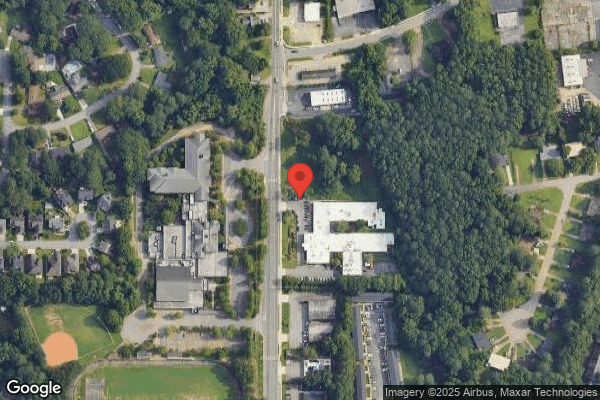

2165 IDLEWOOD ROAD, TUCKER, GA 30084 (770) 934-3172
For profit - Limited Liability company 136 Beds MICHAEL FEIST Data: November 2025
Trust Grade
45/100
#234 of 353 in GA
Last Inspection: June 2024

Within standard 12-15 month inspection cycle. Federal law requires annual inspections.

Overview

Tucker Operating Company LLC has received a Trust Grade of D, indicating below average performance with several concerns. Ranking #234 out of 353 facilities in Georgia places it in the bottom half of nursing homes in the state, and #12 out of 18 in DeKalb County means there are only a few local options that are better. While the facility is showing signs of improvement, having reduced issues from 7 in 2023 to 4 in 2024, it still has a concerning staffing turnover of 62%, which is higher than the state average. The facility also faces significant fines of $30,000, indicating compliance issues that are higher than 84% of Georgia facilities. Specific incidents include failing to keep emergency trach supplies at the bedside for a resident who needs them, not implementing a smoking policy in areas with propane tanks, and inaccuracies in reported staffing data to Medicare, which raises questions about safety and care quality. Overall, while there are strengths in quality measures, families should weigh these concerns carefully when considering this facility.

Trust Score
D
45/100
In Georgia
#234/353
Bottom 34%
Safety Record
Low Risk
No red flags
Inspections
Getting Better
7 → 4 violations
Staff Stability
⚠ Watch
62% turnover. Above average. Higher turnover means staff may not know residents' routines.
Penalties
○ Average
$30,000 in fines. Higher than 66% of Georgia facilities. Some compliance issues.
Skilled Nurses
○ Average
Each resident gets 33 minutes of Registered Nurse (RN) attention daily — about average for Georgia. RNs are the most trained staff who monitor for health changes.
Violations
⚠ Watch
17 deficiencies on record. Higher than average. Multiple issues found across inspections.
★★☆☆☆
2.0
Overall Rating
★★☆☆☆
2.0
Staff Levels
★★★★☆
4.0
Care Quality
★★☆☆☆
2.0
Inspection Score
Stable
2023: 7 issues
2024: 4 issues

The Good

  • 4-Star Quality Measures · Strong clinical quality outcomes
  • Full Sprinkler Coverage · Fire safety systems throughout facility
  • No fines on record

Facility shows strength in quality measures, fire safety.

The Bad

2-Star Overall Rating

Below Georgia average (2.6)

Below average - review inspection findings carefully

Staff Turnover: 62%

16pts above Georgia avg (46%)

Frequent staff changes - ask about care continuity

Federal Fines: $30,000

Below median ($33,413)

Moderate penalties - review what triggered them

Chain: MICHAEL FEIST

Part of a multi-facility chain

Ask about local staffing decisions and management

Staff turnover is elevated (62%)

14 points above Georgia average of 48%

The Ugly 17 deficiencies on record

Jun 2024 4 deficiencies
CONCERN (D) 📢 Someone Reported This

A family member, employee, or ombudsman was alarmed enough to file a formal complaint

Potential for Harm - no one hurt, but risky conditions existed

ADL Care (Tag F0677)

Could have caused harm · This affected 1 resident

**NOTE- TERMS IN BRACKETS HAVE BEEN EDITED TO PROTECT CONFIDENTIALITY** Based on observations, staff and resident interviews, record review, and review of the facility's policies titled Activities of ...

Read full inspector narrative →
**NOTE- TERMS IN BRACKETS HAVE BEEN EDITED TO PROTECT CONFIDENTIALITY** Based on observations, staff and resident interviews, record review, and review of the facility's policies titled Activities of Daily Living (ADLs), the facility failed to ensure ADL care was provided for one of five residents (R) R50 related to the removal of facial hair. The sample size was 45 residents. Findings include: Review of the facility's policy titled Activities of Daily Living (ADL's) dated 11/1/2023 under the section titled Policy revealed, The facility will, based on the resident's comprehensive assessment and consistent with the resident's needs and choices, ensure a resident's abilities in ADLs do not deteriorate unless deterioration is unavoidable. Care and services will be provided for the following activities of daily living: Number one, Bathing, dressing, grooming, and oral care . Under the section titled Policy explanation and Compliance Guidelines, revealed Number three A resident who is unable to carry out activities of daily living will receive the necessary services to maintain good nutrition, grooming, and personal and oral hygiene. Review of R50's Electronic Medical Record (EMR) revealed was admitted to the facility with diagnoses that included cerebral infarction, hemiplegia and hemiparesis, ataxia, contracture of left hand, and lack of coordination. Review of R50's Annual Minimum Data Set (MDS) assessment dated [DATE] revealed a Brief Interview for Mental Status (BIMS) score of 13, which indicated R50 was cognitively intact. Section GG (Functional Abilities and Goals) revealed that R50 required substantial/maximum assistance with personal hygiene which included the ability to comb hair, shave, apply makeup, wash/dry face and hands. Review of R50's care plan under Focus revealed, R50 required assistance with ADL's related to left sided hemiplegia, ataxia, contracture of left hand with the date initiated on 9/20/2021 and revision date of 9/27/2021. Under Goal revealed R50 will have ADL needs met daily with appropriate assistance, the date initiated was 9/20/2021 and last reviewed 6/2/2024. Under Interventions included but not limited to R50 needs (total) with one assist for personal hygiene, date initiated was 9/2021 and revised on 10/6/2021; staff to implement were listed as Certified Nursing Assistants (CNA), Licensed Practical Nurse (LPN), and Registered Nurse (RN). Review of R50's ADL-Bathing task sheet from April 2024 and May 2024 revealed there was no documentation related to the removal or presence of facial hair. Observation and interview on 6/2/2024 at 2:35 pm, with R50 who was observed with long facial hair located on her chin. She acknowledged she had hair on her chin and stated she used to cut it with scissors but no longer had a pair of scissors. She revealed that staff had not removed or offered to shave the hair from her chin. She stated that the facial hair did not bother her, but she would like it to be removed. Observation and interview on 6/4/2024 at 8:57 am and at 1:45 pm, with R50 who was observed sitting up in a wheelchair continued to have long facial hair located on her chin. She stated the CNA's did offer showers or bed baths but did not offer to remove the facial hair from her chin. Observation and interview on 6/4/2024 at 1:55 pm LPN AA confirmed and verified R50 had facial hair located on her chin. She stated the facial hair should have been removed during AM (morning) care and proceeded to ask R50 how she would like for her to remove the facial hair from her chin and R50 responded, could just cut it with a pair of scissors. Interview on 6/4/2024 at 1:50 pm with LPN AA revealed that staff perform ADL rounds every morning before breakfast. She stated that facial hair should be removed for both male and female residents with their permission. She stated this should be written on the bath sheet when it is completed. She revealed that residents who need to be shaved are usually shaved on Sundays. She stated she shaves the male residents on the South Unit each week. She stated if a female resident has facial hair, then she would remove the facial hair either by shaving or plucking the hair out whichever the resident prefers. Interview on 6/4/2024 at 1:50 pm with the Director of Nursing (DON), she confirmed R50 had facial hair and she stated her expectations of staff was to remove facial hair while performing ADL care.
CONCERN (D) 📢 Someone Reported This

A family member, employee, or ombudsman was alarmed enough to file a formal complaint

Potential for Harm - no one hurt, but risky conditions existed

Accident Prevention (Tag F0689)

Could have caused harm · This affected 1 resident

**NOTE- TERMS IN BRACKETS HAVE BEEN EDITED TO PROTECT CONFIDENTIALITY** Based on observations, staff interviews, record review, and review of the facility's policy titled Accidents and Supervision, th...

Read full inspector narrative →
**NOTE- TERMS IN BRACKETS HAVE BEEN EDITED TO PROTECT CONFIDENTIALITY** Based on observations, staff interviews, record review, and review of the facility's policy titled Accidents and Supervision, the facility failed to ensure hazardous chemicals were safely secured for two of three residents (R) (R6 and R21) reviewed for accidents. This deficient practice placed residents at risk for avoidable chemical incidents, injuries, and a diminished quality of life. The sample size was 45 residents. Findings include: Review of the facility's policy titled Accident and Supervision, undated, under the Policy Explanation and Compliance Guidelines: revealed, Number One (a) All staff are to be involved in observing and identifying potential hazards in the environment, while taking into consideration the unique characteristics and abilities of each resident. Number One (b)The facility should make a reasonable effort to identify the hazards and risk factors for each resident. 1. Review of R6's Electronic Health Record (EHR) revealed the resident had diagnoses that included carpal tunnel, contracture of the left hand and wrist, and cerebral infarction. Review of R6's Annual Minimum Data Set (MDS) dated [DATE] revealed Section C (Cognitive Patterns), a Brief Interview for Mental Status (BIMS) score of 15 which indicated intact cognition; Section E (Behaviors) revealed the resident did not exhibit any behavioral symptoms during the assessment period and Section GG (Functional Abilities and Goals) revealed the resident required the use of a wheelchair. Review of the Safety Data Sheet for [Name] ant and roach killer spray revealed the following: Number One, Hazard Identification: Causes serious eye damage, may cause an allergic skin reaction. Observations on 6/2/2024 at 2:30 pm, on 6/3/2024 at 11:39 am and on 6/4/2024 at 11:06 am of R6's room revealed one can of [Name] ant and roach killer spray inside a box placed in front of the Packaged Terminal Air Conditioner (PTAC) unit. 2. Review of R21's EHR revealed, the resident had diagnoses that included major mood disorder, contracture of the left hand and wrist, and anxiety. Review of R21's Annual MDS dated [DATE] revealed Section C (Cognitive Patterns), a BIMS score of 15 which indicated intact cognition. Section E (Behaviors) revealed the resident did not exhibit any behavioral symptoms during the assessment period and Section GG (Functional Abilities and Goals) revealed the resident required the use of a wheelchair. Review of the Safety Data Sheet for [Name] disinfectant spray revealed the following: Number One, Hazard Identification: Causes serious eye irritation, causes skin irritation. Observations on 6/3/2024 at 10:56 am, on 6/4/2024 at 10:17 am, and 6/4/2024 at 11:25 am of R21's room revealed, a can of [Name] disinfectant spray sitting on the resident's dresser. Observations and Interviews on 6/4/2024 at 11:25 am with the Administrator and the Director of Nursing (DON) confirmed and verified there was a can of [Name] ant and roach killer spray in a box placed in front of the PTAC unit in R6's room and a can of [Name] disinfectant spray on R21's dresser next to her bed. Interview with the Administrator and DON revealed staff complete room sweeps and that the Certified Nursing Assistants (CNA) were in the resident rooms' multiple times a day. The DON stated her expectation was that all staff complete room sweeps while in the resident rooms and that CNAs should report to the nurse any finding of chemicals in any residents' room. She revealed she expected the nurse to remove any chemicals found in a resident room, call the resident representative, and allow them to choose to pick up the item or allow the staff to discard the item found.
CONCERN (D) 📢 Someone Reported This

A family member, employee, or ombudsman was alarmed enough to file a formal complaint

Potential for Harm - no one hurt, but risky conditions existed

Deficiency F0761 (Tag F0761)

Could have caused harm · This affected 1 resident

**NOTE- TERMS IN BRACKETS HAVE BEEN EDITED TO PROTECT CONFIDENTIALITY** Based on observations, staff and resident interviews, record review, and review of the facility's policies titled Accident and S...

Read full inspector narrative →
**NOTE- TERMS IN BRACKETS HAVE BEEN EDITED TO PROTECT CONFIDENTIALITY** Based on observations, staff and resident interviews, record review, and review of the facility's policies titled Accident and Supervision, Medication Storage, and Resident Self-Administration of Medication, the facility failed to store one bottle of over the counter (OTC) liquid indigestion medication in a locked medication storage area for one of 45 sampled residents (R) (R50). The deficient practice had the potential to place the resident at risk for medical complications, unauthorized persons access to medications, and a diminished quality of life. Findings include: Review of the facility's policy titled Accident and Supervision copyright date of 2023, under the section titled Policy revealed, The resident environment will remain as free of accident hazards as possible. Under the section titled Policy Explanation and Compliance Guidelines revealed, Number one (a) All staff (e.g., professional, administrative, maintenance, etc.) are to be involved in observing and identifying potential hazards in the environment, while taking into consideration the unique characteristics and abilities of each resident. Review of the facility's policy titled Medication Storage dated 8/1/2023, under the section titled Policy revealed, It is the policy of this facility to ensure all medications housed on our premises will be stored in the pharmacy and/or medication rooms according to the manufacturer's recommendations and sufficient to ensure proper sanitation, temperature, light, ventilation, moisture control, segregation, and security. Under the section titled Policy Explanation and Compliance Guidelines revealed, Number one General Guidelines: (a) All drugs and biologicals will be stored in locked compartments (i.e., medication carts, cabinets, drawers, refrigerators, medication rooms) under proper temperature controls . (c) During a medication pass, medications must be under the direct observation of the person administering medications or locked in the medication storage area/cart. Review of the facility's policy titled Resident Self-Administration of Medication copyright date of 2023 under the section titled Policy revealed, It is the policy of this facility to support each resident's right to self-administer medication. A resident may only self-administer medications after the facilities interdisciplinary team has determined which medications may be self-administered safely. Under the section titled Policy Explanation and Compliance Guidelines revealed, Number eight All nurses and aides are required to report to the charge nurse on duty any medication found at the bedside not authorized for bedside storage. Unauthorized medications are given to the charge nurse for return to the family or responsible party. Families or responsible parties are reminded of policy and procedures regarding resident self-administration when necessary. Review of R50's Electronic Medical Record (EMR) revealed R50's was admitted to the facility with diagnoses that included cerebral infarction, hemiplegia and hemiparesis, ataxia, contracture of left hand, and lack of coordination. Review of R50's Annual Minimum Data Set (MDS) assessment dated [DATE] revealed Section C (Cognitive Patterns), a Brief Interview for Mental Status (BIMS) score of 13, which indicated R50 was cognitively intact. Section GG (Functional Abilities and Goals) revealed, R50 required substantial/maximal assistance for activities of daily living (ADLs). Review of R50's care plan revealed R50 did not have a focus area related to self-administration of medications. Review of R50's physician's orders revealed there were no orders for OTC [Name] liquid indigestion medication nor were there orders to self-administer any medications. Review of R50's EMR revealed there was no evidence of a nursing assessment for self-administration of medication had been completed or located. Observations and interview on 6/2/2024 at 1:29 pm with R50 revealed one bottle of OTC [Name] liquid indigestion medication sitting on R50's nightstand. R50 revealed the medication did not belong to her. Observation on 6/4/2024 at 8:47 am R50's room revealed one bottle of OTC [Name] liquid indigestion medication sitting on R50's nightstand. During an observational round on 6/4/2024 at 11:15 am with the Director of Nursing (DON) and the Administrator revealed one bottle of OTC [Name] liquid indigestion medication sitting on R50's nightstand. They both confirmed the OTC [Name] liquid indigestion medication was sitting on R50's nightstand beside her bed. Interview on 6/4/2024 at 11:25 am with the DON and the Administrator revealed that they do not encourage residents to self-administer medications. The DON in the presence of the Administrator stated if a resident were persistent and wants to self-administer medications, they would first meet with the physician, and educate the resident of the pro/cons of self-administration of a medication. The DON stated if the physician agreed and the resident met all requirements, the facility would then provide a lock box to be kept in the resident's room. She stated the resident must be able to demonstrate how to open, lock/unlock the box, and self-administer the medication. She revealed the care plan would be updated to reflect the resident could self-administer medications and what medications they could self-administer. She confirmed that R50 was not allowed to self-administer medications and the care plan did not reflect R50 had been assessed to self-administer medications. The DON confirmed there was no physician order for OTC [Name] liquid indigestion medication. She stated her expectation of staff was that during everyday care of residents the CNA's should observe the resident rooms each time they enter and notify the nurse when medications are found in the room un-secured. She stated the nurses are expected to remove unsecured medications from resident's rooms and call the resident representative/family to determine how they (the family) would like for the staff to proceed whether the family pick up the medication or staff to discard the medication. She further stated the nurse should also notify the physician of medications found at the residents' bedside. She further stated the nurse should also notify the physician of the possibility of the resident taking the medication and the pharmacy would review the resident's medications for possible adverse interactions as well as staff monitoring the resident for any symptoms of adverse reactions/interactions. She stated this practice could result in a resident taking a medication that may adversely interact with their prescribed medications and/or even overdose on a medication.
CONCERN (F) 📢 Someone Reported This

A family member, employee, or ombudsman was alarmed enough to file a formal complaint

Potential for Harm - no one hurt, but risky conditions existed

Staffing Data (Tag F0851)

Could have caused harm · This affected most or all residents

Based on staff interview and review of the PBJ (Payroll Based Journal) Staffing Data Report, [NAME] Report 1705D for the First Quarter (Q1) of fiscal year 2024 (October 1-December 31), the facility fa...

Read full inspector narrative →
Based on staff interview and review of the PBJ (Payroll Based Journal) Staffing Data Report, [NAME] Report 1705D for the First Quarter (Q1) of fiscal year 2024 (October 1-December 31), the facility failed to report accurate nurse staffing data to the Centers for Medicare and Medicaid (CMS) related to nursing staff coverage. The facility census was 113 residents. Findings include: Review of the PBJ Staffing Data Report, [NAME] Report 1750D for Q1 2024 (October 1 through December 31), revealed a One-Star Staffing rating indicating the facility failed to submit accurate and/or timely nurse staffing data to CMS. Interview on 6/5/2024 at 1:00 pm with the Administrator revealed she was not aware of the PBJ One-Star rating for Q1 2024. She stated since the new owners took over approximately last summer, they have made a concerted effort to increase the number of nursing staff, specifically registered nurses (RNs) and certified nursing assistants (CNAs) and have also added Certified Medication Aides (CMAs). She stated they have made other significant investments into the facility; however, sufficient and competent nurse staffing was a high priority.
Nov 2023 7 deficiencies
CONCERN (D) 📢 Someone Reported This

A family member, employee, or ombudsman was alarmed enough to file a formal complaint

Potential for Harm - no one hurt, but risky conditions existed

Deficiency F0658 (Tag F0658)

Could have caused harm · This affected 1 resident

**NOTE- TERMS IN BRACKETS HAVE BEEN EDITED TO PROTECT CONFIDENTIALITY** Based on observations, record review, resident and staff interviews, and the Georgia Comprehensive Rules and Regulations, r. 410...

Read full inspector narrative →
**NOTE- TERMS IN BRACKETS HAVE BEEN EDITED TO PROTECT CONFIDENTIALITY** Based on observations, record review, resident and staff interviews, and the Georgia Comprehensive Rules and Regulations, r. 410-10-.03, the facility failed to meet professional standards of quality by providing two non-pharmacist labeled prescription medications at time of discharge for one resident (R) R9 of three sampled residents. Findings include: Review of the Georgia Comprehensive Rules and Regulations, r. 410-10-.03 Definition of Unprofessional Conduct (Georgia Administrative Code). Department 410. Rules of Georgia Board of Nursing, Chapter 410-10. Standards of Practice and Unprofessional Conduct. https://rules.sos.ga.gov/[NAME]/410-10-.03 stated: (1) Nursing conduct failing to meet the minimal standards of acceptable and prevailing nursing practice, which could jeopardize the health, safety, and welfare of the public, shall constitute unprofessional conduct. This conduct shall include, but not be limited to, the following: (2) Practice * Using inappropriate or unsafe judgment, technical skills or interpersonal behaviors providing nursing care. * Performing any nursing technique or procedure for which the nurse is unprepared by education or experience. Review of the Clinical Physician Orders dated 8/8/2023 through 10/16/2023 revealed R9 was ordered, among other medications, Carvedilol 6.25 milligrams (mgs) by mouth (PO) daily and Lantus SoloStar 15 Units subcutaneous (subQ) at bedtime. Review of Progress Note dated 10/16/2023 at 12:36 pm revealed 'resident being discharged on this date and education given to sister and resident on the mechanical lift, peri care and insulin administration. Caregiver demonstrated understanding in the process.' Observation on 10/16/2023 at 10:00 am, R9 was resting in bed, awake, alert, and stated he was excited about getting to go home. Resident 9 stated he was not able to get up on his own, but he knew there were arrangements made for someone to come in and assist him. He stated he was unable to administer his own insulin, but his brother would help give it to him. On 10/17/2023 at 2:30 pm, R9's responsible party (RP) came back to the facility and reported to surveyor she had taken R9 home yesterday. The RP stated she was sent home with the remainder of what medication R9 had in his bubble packs (medication dispensing system), but R9 was not sent home with his insulin and one other medication, nor enough of the other medications until he sees his Primary Care Provider (PCP). Resident 9's RP stated she came by today to ask Registered Nurse (RN) MM if she could obtain enough of the medications he was missing until R9 could see his PCP. She stated RN MM found an insulin pen and a bubble pack of one medication to provide R9 with what he was missing in the medications sent home with him. Interview on 10/17/2023 at 2:45 pm, the Director of Nursing (DON) and RN MM were questioned about the medications in the brown paper bag brought in by R9's RP, including an insulin pen and a bubble pack containing nine pills. The DON examined the medications. The DON observed that the medications for R9 were not labeled and stated they should not have been dispensed to the resident. Interview on 10/17/2023 at 2:50 pm, RN MM stated she obtained the Carvedilol from the box of disposed medications from residents who had been discharged . She also stated that she found an unused Insulin pen of Lantus, which she gave to R9's RP. RN MM stated she did not know it was illegal or inappropriate to dispense medication to a patient that was not prepared by a pharmacist. Interview on 10/18/2023 at 10:45 am with Pharmacist CCC, stated she is aware of the situation with the nurse dispensing unlabeled medications. She acknowledged this action is illegal. She stated she notified RN DDD, Nurse Pharmacy Consultant from the facility and he is aware of the situation. She referred the surveyor to discuss this issue with RN DDD. Interview on 10/18/2023 at 12:26 pm, RN DDD, Nurse Consultant for the facility pharmacy confirmed it was illegal and inappropriate for nurses to label and/or dispense medication and give it to patients. He stated he is aware of RN MM action and will be in touch with the DON to assist her in any way she requires.
CONCERN (F) 📢 Someone Reported This

A family member, employee, or ombudsman was alarmed enough to file a formal complaint

Potential for Harm - no one hurt, but risky conditions existed

Comprehensive Care Plan (Tag F0656)

Could have caused harm · This affected most or all residents

**NOTE- TERMS IN BRACKETS HAVE BEEN EDITED TO PROTECT CONFIDENTIALITY** Based on observations, record review, resident and staff interviews, and review of the policy titled Comprehensive Care Plan, th...

Read full inspector narrative →
**NOTE- TERMS IN BRACKETS HAVE BEEN EDITED TO PROTECT CONFIDENTIALITY** Based on observations, record review, resident and staff interviews, and review of the policy titled Comprehensive Care Plan, the facility failed to implement the Comprehensive person-centered care plan for one resident (R) R2 with a tracheostomy (trach) by not having emergency trach supplies at the bedside in the event of decannulation. In addition, the facility failed to develop a Comprehensive person-centered care plan for smoking for one resident, R1. The facility's failures created potential risks for the safety and well-being of the residents. The sample size was 33 residents. Findings include: Review of the policy titled Comprehensive Care Plan revised 3/2023, indicated the policy of this facility is to develop and implement a comprehensive person-centered care plan for each resident, consistent with resident rights, that includes measurable objectives and timeframes to meet a resident's medical, nursing, and mental and psychosocial needs that are identified in the resident's comprehensive assessment.' 1. Review of the undated policy titled Tracheostomy Care indicated the facility will ensure that residents who need respiratory care, including tracheostomy care and tracheal suctioning, is provided such care consistent with professional standards of practice, the comprehensive person-centered care plan and resident goals and preferences. General considerations include b. Maintain a suction machine, a supply of suction catheters, correctly sized cannulas, and an Ambu bag easily accessible for immediate emergency care. Review of the clinical record revealed R2 was admitted to the facility on [DATE] with diagnoses including intracerebral hemorrhage, hypertension, chronic respiratory failure, and tracheostomy, Review of the quarterly Minimum Data Set (MDS) dated [DATE] revealed a Brief Interview Mental Status (BIMS) was not coded, indicating cognitive status was unable to be determined. Section O revealed that R2 had a tracheostomy. Observation on 10/11/2023 at 1:00 pm revealed no emergency trach supplies (trach tube, obturator, hemostats) were located at the bedside of R2. Review of care plan revised 1/26/2023 for R2 indicated the resident has a tracheostomy. Interventions for care indicated Tube Out Procedures: Keep extra trach tube and obturator at bedside. If the tube is coughed out, open stoma with hemostat. If tube cannot be reinserted, obtain medical help immediately. Review of Progress Note dated 5/9/2023 at 7:18 pm documented R2's trach was dislodged resulting in the resident being transferred to the emergency room and then to surgery to have the trach tube replaced. Review of Progress Note dated 10/10/2023 at 6:50 am documented R2 was observed on his bed with no apparent distress. Further review indicated while attempting to administer trach care, trach noted dislodged. Continued review of the Progress Note documentation on 10/10/2023 at 8:00 am revealed trach reinserted. On 10/11/2023 at 3:05 pm, an interview with Licensed Practical Nurse (LPN) EEE stated that she was unable to locate the trach supplies for R2. She stated that she gave the bag and the sign to LPN XX who took it to the Director of Nursing (DON) to find the supplies. On 10/11/2023 at 4:00 pm, an interview with the DON stated that her expectation is that trach supplies should be available at the bedside. She stated she would make sure the supplies were at R2 bedside. 2. Review of the clinical record revealed R1 was admitted to the facility on [DATE] with diagnoses including pulmonary hypertension, cerebral vascular accident (CVA) with left hemiparesis, seizures, depression, and diabetes. Review of the admission MDS dated [DATE] revealed BIMS coded as 14, indicating no cognitive impairment. Section J revealed that R1 did not smoke. Observation on 10/10/2023 at 2:10 pm revealed No Smoking. This is a Smoke Free Property. signs near the area of an active propane tank and on the facility front entrance door. Observation on 10/12/2023 at 2:50 pm of two individuals in the facility parking lot smoking, towards the side of the building. One was seated in a wheelchair and appeared to be R1, who was accompanied by a housekeeping staff member EE. Review of R1's smoking assessment dated [DATE], revealed no to the question, does resident smoke?' Review of R1's comprehensive care plan dated 5/1/2023 did not include a smoking care plan or interventions for smoking. On 10/18/2023 at 9:45 am, an interview with Social Service Director (SSD) II related to the smoking policy, stated that the facility is a Smoke Free Property. She stated that family and residents are made aware of this policy upon admission. She stated smoking assessments are part of the nursing assessment process, and no resident would have a smoking care plan, because the facility is Smoke Free. On 10/23/2023 at 2:10 pm, an interview with MDS LPN RR stated that MDS staff complete the baseline care plans for residents within 48 to 72 hours. She stated that they would not develop a smoking care plan for residents, because the facility is smoke-free. During further interview, she stated if the resident is signed out by a family member and goes to smoke, a care plan still would not be developed. If the resident smokes on the property, the Interdisciplinary Team (IDT) meets with the resident, provides additional education, and offers to get an order for nicotine patches from the MD. She stated that if the resident declines, then she would develop a care related to non-compliance.
CONCERN (F) 📢 Someone Reported This

A family member, employee, or ombudsman was alarmed enough to file a formal complaint

Potential for Harm - no one hurt, but risky conditions existed

Accident Prevention (Tag F0689)

Could have caused harm · This affected most or all residents

Based on observations, record review, resident and staff interview, review of the facility's admission Agreement and Employee Handbook and review of the policy titled Smoking Policy, the facility fail...

Read full inspector narrative →
Based on observations, record review, resident and staff interview, review of the facility's admission Agreement and Employee Handbook and review of the policy titled Smoking Policy, the facility failed to ensure that the environment and facility were free from potential accident hazards for residents and staff, by failing to enforce the facility's No Smoking Property guidelines in an area that has an active propane tank. The facility's failures created potential risks for the safety and well-being of the residents. The census was 118 residents. Findings include: Review of the undated policy titled Smoking Policy revealed the purpose is to facilitate the health and safety of our residents, this facility is a no smoking facility. The policy is to ensure compliance with regulatory guidelines and safety protocols, the facility prohibits smoking in its facility. Procedure: 1. Residents: a. Each resident should be individually assessed and notified as to the facility's policy. d. Residents or staff may not provide other residents with cigarettes and may not light a cigarette for another resident. II. Designated areas: a. outdoor areas may be designated as smoking areas. c. designated areas will have signage to indicate that smoking is allowed; easy access to fire extinguishers; ash trays on noncombustible material in sufficient numbers; metal containers with self-closing cover devices into which ashtrays can be emptied shall be available to all areas where smoking is permitted. Review of the facility's admission Agreement section titled Smoke Free Facility documented it is the policy of this facility to provide a safe and healthy environment for residents, visitors and employees. The facility has a facility-wide Smoke Free Facility Policy. Policy Explanation and Guidelines: 1. Residents who are admitted to the facility will be notified of this policy during the admission process and as needed. 2. Family members will be informed during the admission process and as needed, of the policy prohibiting smoking. Further review of the signed admission Agreement revealed that R1 and her responsible party acknowledged the policy by signing and dating the agreement on 4/18/2023. Housekeeper EE was not indicated as R1's responsible party. Review of the facility's undated Employee Handbook section titled Smoking and Use of Tobacco documented the objective of providing the highest quality resident care requires that we maintain a clean, odor free, and healthy environment for our residents and their families and guests. As a result, smoking is not allowed in the Community. Employees may smoke, vapor, or use tobacco only in outdoor areas designated by their Administrator, and only during authorized break periods. During further review of the Tobacco-Free Workplace Policy Acknowledgement from the Employee Handbook revealed that Housekeeper EE signed the document on 3/1/2023. Observation on 10/10/2023 at 9:00 am upon initial entrance to the facility revealed signage on front door indicating This is a tobacco free facility and No smoking. This is a smoke free property and No smoking. Medical gases in use. Observation on 10/12/2023 at 2:20 pm, Certified Nursing Assistant (CNA) DD was observed outside on the facility property talking on the phone. She was standing across from a fenced structure that has an unmarked cylindrical tank. There was a sign attached to the wooden fence that indicated No Smoking. This is a Smoke Free Property. The area surrounding the wooden fence and cylindrical tank was overgrown with kudzu. During continued observation, CNA DD was observed lighting a cigarette and began to smoke while standing in a grassy area of overgrown kudzu, right behind a metal sign that indicated, Please Park on the Grass. Thank you. Observation on 10/12/2023 at 2:27 pm, CNA DD was observed putting out the cigarette on the back of the sign that indicated, Please Park on the Grass. Thank you, before walking back into the facility. On 10/12/2023 at 2:50 pm, Housekeeper EE and R1 were observed smoking in the facility parking overflow area. Resident 1 was seated in a wheelchair and Housekeeper EE was standing next to her, on R1's left side. There were dried leaves and brush were under and around where they were observed to be smoking. Resident 1 and Housekeeper EE were using a white cup sitting on the ground as an ashtray. Observation on 10/12/2023 at 3:00 pm revealed there was no evidence of approved smoking receptacles, fire extinguishers, or fire blankets located in the area where R1, Housekeeper EE and CNA DD were observed smoking. Observation on 10/12/2023 at 4:00 pm the Maintenance Director measured the distance from the tank to sign that indicated Please Park on the Grass and two large white barrels labeled Liquid Sour Bright. The distance measured to be approximately 65 feet. The Maintenance Director stated the white barrels were empty and used to barricade the parking overflow when the area gets muddy from inclement weather. Observation on 10/13/2023 at 9:00 am revealed the two large white barrels were no longer in the area where CNA DD, Housekeeper EE and R1 were observed to be smoking at on 10/12/2034. Observation on 10/18/2023 at 9:15 am revealed the Maintenance Director measuring the distance from the edge of the paved parking area to the grassy overgrown kudzu area in which staff and R1 were observed to be smoking measured approximately nine feet. Interview on 10/12/2023 at 3:54 pm the Administrator stated the facility has always been a nonsmoking facility. When questioned about what is considered the facility property, she replied according to her knowledge, the paved areas are considered facility property, and denied the grassy vacant lot adjacent to the facility as facility property. During further interview, she stated that facility staff have been parking in that grassy area until they are told otherwise by the city. She stated her expectation is no-one is to have any smoking items on them while in the facility, and stated staff are educated about this during their orientation/onboarding and the residents are informed during the admission process. Interview on 10/12/2023 at 4:00 pm the Maintenance Director stated that the unmarked cylindrical tank contained propane that is used for the facility's emergency generator. He confirmed that the tank was active with propane in the tank. Interview on 10/18/2023 at 9:11 am the Maintenance Director stated staff were told smoking was prohibited on the property and that there were no designated smoking areas on the property. Interview on 10/18/23 at 9:45 am with Social Services Director II, confirmed the facility is a smoke free property. She stated residents and their families are informed upon admission of the facility's No Smoking policy. An attempt to interview Housekeeper EE was made on 10/25/2023 at 2:45 pm and at 6:18 pm via telephone. Both phone calls went unanswered. Voice recording indicated that the voicemail had not been set up. A Google earth search revealed that 2165 Idlewood Road and 2179 Idlewood Road, were adjacent properties. Review of the Property Appraisal with a run date of 10/19/2023 revealed the parcel number for the facility and the vacant lot parcel number are under the same property ownership. The adjacent vacant lot used by the facility for staff parking is where CNA DD, Housekeeper EE, and R1 were observed smoking.
CONCERN (F) 📢 Someone Reported This

A family member, employee, or ombudsman was alarmed enough to file a formal complaint

Potential for Harm - no one hurt, but risky conditions existed

Respiratory Care (Tag F0695)

Could have caused harm · This affected most or all residents

**NOTE- TERMS IN BRACKETS HAVE BEEN EDITED TO PROTECT CONFIDENTIALITY** Based on observations, record review, staff interviews, and review of the policy titled Tracheostomy Care, the facility failed t...

Read full inspector narrative →
**NOTE- TERMS IN BRACKETS HAVE BEEN EDITED TO PROTECT CONFIDENTIALITY** Based on observations, record review, staff interviews, and review of the policy titled Tracheostomy Care, the facility failed to provide respiratory/tracheostomy care by trained and competent nursing staff according to professional standards, failed to develop a policy/procedure for accidental dislodgement of trach tubes, and failed to have emergency tracheostomy supplies at the bedside for one resident (R2) of three residents receiving tracheostomy care. The facility's failures created potential risks for the safety and well-being of the residents. Findings include: Review of the policy titled Tracheostomy Care copyright 2022, indicated the facility will ensure that residents who need respiratory care, including tracheostomy care and tracheal suctioning, is provided such care with professional standards of practice, the comprehensive person-centered care plan and resident goals and preferences. Compliance Guidelines: Number 3. Tracheostomy care will be provided according to physician orders, comprehensive assessment and individualized care plan as monitoring resident specific risks for possible complications, psychosocial needs as well as suctioning as appropriate. General considerations include b. Maintain a suction machine, a supply of suction catheters, correctly sized cannulas, and an Ambu bag easily accessible for immediate emergency care. Number 5. The facility will ensure staff responsible for providing tracheostomy care, including suctioning, are trained and competent according to professional standards of practice. Review of the clinical record revealed R2 was admitted to the facility on [DATE] with diagnoses including intracerebral hemorrhage, hypertension, chronic respiratory failure, and tracheostomy, Review of the quarterly Minimum Data Set (MDS) dated [DATE] revealed a Brief Interview for mental Status (BIMS) was not coded, indicating cognitive status was unable to be determined. Section O revealed that R2 had a tracheostomy. Review of care plan revised 1/26/2023 for R2 indicated the resident has a tracheostomy. Interventions for care indicated Tube Out Procedures: Keep extra trach tube and obturator at bedside. If the tube is coughed out, open stoma with hemostat. If tube cannot be reinserted, monitor/document for signs of respiratory distress. If able to breathe spontaneously, elevate head of bed 45 degrees and stay with resident. Obtain medical help IMMEDIATELY. Review of Health Status Note dated 5/9/2023 at 7:18 pm revealed resident pulled out his trach. Alert and oriented. Not in any distress sating [sic] at 96%. NP (Nurse Practitioner) notified. Sent out to the ER (emergency room). Review of hospital record dated 5/13/2023 at 10:47 am documented patient presented to the Emergency Department (ED) with stridor and dyspnea after decannulated himself. After failure to re-insert tube in the ED, patient was taken to the Operating Room (OR) for replacement of his tracheostomy tube under anesthesia. Review of clinical record revealed Order Note dated 10/7/2023 at 9:26 am documented clinical staff spoke with the Nurse Practitioner (NP) regarding R2's trach. The trach is dislodged and not completely secured by sutures, the left side is secure by sutures and the right side is not secure. Resident was experiencing expiratory wheezing. The NP ordered to send R2 to the ED for respiratory distress, expiratory wheezing, and compromised tracheostomy. Review of the clinical record revealed a Move-In Note/New/Return note dated 10/7/2023 at 8:35 pm documented R2 returned to the facility via wheelchair from the hospital after trach dislodgement, requiring stoma dilation and placement of a 4-0 cuffless trach. Review of the clinical record revealed a Behavior Note dated 10/10/2023 at 6:50 am documented upon entering the room resident observed sitting on the side of the bed, no apparent distress noted. While attempting to administer trach care, trach noted dislodged, resident has behaviors of tampering with his trach. Review of the clinical record revealed a Behavior Note dated 10/10/2023 at 8:00 am documented trach reinserted. Observation on 10/11/2023 at 1:00 pm revealed in room [ROOM NUMBER] revealed a note on the wall above R2 bed with a transparent bag hanging from the wall. The sign had the words contains obturator, tracheostomy replacement kit and Ambu bag. Do Not Remove. Surveyor observed items in the bag at this time to note there was no obturator or replacement trach tubes in the transparent bag, only an Ambu bag was in the transparent bag. There was a suction machine and suction catheter sitting on bedside nightstand. Observation on 10/11/2023 at 1:00 pm, R2 was in the hallway in his wheelchair. Licensed Practical Nurse (LPN) Charge Nurse EEE instructed R2 to return to his room so he could get his medication. Observation of the room revealed a functioning suction machine in place on top of the bedside table with tubing connected to a suction tip. Sterile suction kits were lying next to the suction machine. On the wall, to the left was a semi-transparent bag hanging from the wall next to a sign, which indicated: Contains obturator, tracheostomy replacement kit and Ambu bag (device that provides breathing assistance). DO NOT REMOVE. Observation on 10/11/2023 at 1:15 pm LPN EEE was asked to locate the emergency tracheostomy supplies to use if R2 decannulated himself. She looked on the top of the chest of drawers, looked in all drawers in the chest, and looked in drawers in the bedside table. She was unable to locate any extra trach tubes, obturator, or hemostats. Licensed Practical Nurse removed the transparent bag with the Ambu bag off the wall with the sign and took them to the Unit Manager (UM). The UM took them to the DON. The DON assured the surveyor she would place the supplies at the bedside immediately. On 10/11/2023 at approximately 2:15 pm, the Administrator and the DON stated the supplies were at R2's bedside. The DON revealed they had plenty of trach supplies in the facility. Interview on 10/11/2023 at 2:30 pm, the Staff Development Coordinator (SDC) was asked about required education for licensed nursing staff, and she stated she assures staff have education regarding resident rights, behavior issues (especially regarding dementia) and infection control and early signs of sepsis. She stated she uses power point presentations and videos to teach in-services. She was asked if she teaches staff about caring for tracheostomies, and she indicated education is provided including suctioning and dressing changes. The SDC stated she didn't teach nurses about what to do if a patient decannulates his trach tube. Review of education documents provided by the SDC revealed two binders from 2022 and 2023 containing records of staff education. In addition, she provided a list of licensed staff who had completed programs via online education source utilized by the facility. Further review revealed only one licensed nurse completed two education programs on the care of residents with tracheostomies. There was no evidence of competency checks for emergency care for trach tube dislodgement. Interview on 10/31/2023 at 9:43 am, Medical Director BBB stated the standard of practice for a resident with a tracheostomy is to have extra trach tubes, either the same size or a size smaller, should be at the bedside for emergency care if the trach becomes dislodged.
CONCERN (F) 📢 Someone Reported This

A family member, employee, or ombudsman was alarmed enough to file a formal complaint

Potential for Harm - no one hurt, but risky conditions existed

Administration (Tag F0835)

Could have caused harm · This affected most or all residents

**NOTE- TERMS IN BRACKETS HAVE BEEN EDITED TO PROTECT CONFIDENTIALITY** Based on observations, record review, interviews, review of the Administrator and Director of Nursing job descriptions, and revi...

Read full inspector narrative →
**NOTE- TERMS IN BRACKETS HAVE BEEN EDITED TO PROTECT CONFIDENTIALITY** Based on observations, record review, interviews, review of the Administrator and Director of Nursing job descriptions, and review of the policy titled Smoling Policy, the facility administration failed to provide oversight and monitoring of the facility operations related to enforcement of its No Smoking Policy and failed to ensure that licensed nursing staff were knowledgeable and competent to act in emergency situations for decannulation of tracheostomy tubes. The facility's failures created potential risks for the safety and well-being of the residents. The census was 118 residents. Specifically 1. Facility Administrator and Director of Nursing failed to perform duties of their job descriptions that facilitated medical care to the residents of the facility. 2. Administration failed to enforce No Smoking Facility/Property by allowing staff and resident (R) R1 to smoke on facility property in close proximity to an active propane tank. Cross Refer F689 3. Facility administration failed to maintain emergency tracheostomy supplies in the event of accidental dislodgement of trach tube. Cross Refer F695 4. Administration failed to ensure that nursing staff are trained and competent to care for residents admitted with special needs such as emergency care for tracheostomy tube dislodgement. Cross Refer F940 5. Facility Administration failed to develop a care plan for smoking for R1 and failed to implement care plan interventions that addressed emergency care and supplies at bedside for R2 admitted with a tracheostomy. Cross Refer F656 Findings include: Review of the undated document titled Administrator Job Description, signed and dated 7/5/2022 by current Administrator, indicated the position purpose is to lead, guide, and directs the operations of the healthcare facility in accordance with local, state, and federal regulations, standards, and established facility policies and procedures to provide appropriate care and services to residents. Major duties and Responsibilities include: *Identifies, in conjunction with the Director of Nursing and selected department heads, the facility's key performance indicators and establishes an ongoing system to monitor key indicators through the Quality Assurance and Performance Improvement process. *Evaluates outcomes to determine the need for action from leadership and/or management such as re-education or revisions related to the outcomes. *Ensures delivery of compassionate quality care and services across an interdisciplinary team approach evidenced by adequate and competent facility staff, employee turnover, general cleanliness, physical plant conditions, and optimal resident functioning-physically and psychosocially. * Performs rounds to observe residents and ensure overall needs are being met. Knows residents by name and sight. Makes himself/herself available to employees at all levels by practicing an open-door policy. *Conducts periodic observations of in-service education to ensure staff members delivering education are competent with the knowledge and skill set required to accomplish employee learning. *Promotes safe work practices, safety rules, and accident prevention procedures to prevent injury. Review of the undated document titled Director of Nursing Job Description, signed and dated 3/2023 by current Director of Nursing, indicated the position purpose is planning, organizing, developing, and directing the overall operations of the Nursing Service Department in accordance with local, state, and federal regulations, standards, and established facility policies and procedures and as may be directed by the Administrator or Medical Director, to provide appropriate care and services to the residents. Major duties and Responsibilities include: *Interprets and communicates policies and procedures to nursing staff, and monitors staff practices and implementation. *Participates in QAPI or facility assessment activities as needed, such as carrying out duties assigned as part of a performance improvement committee. *Performs rounds to observe residents and ensure nursing needs are being met. *Conducts observations of nursing care and supervises development of in-service education to ensure nursing staff is competent in current knowledge and skills. *Promotes safe work practices, safety rules, and accident prevention procedures to prevent injury and illness. 1. Review of the undated policy titled Attachment J-Smoking Policy revealed the purpose is to facilitate the health and safety of our residents, this facility is a no smoking facility. The policy is to ensure compliance with regulatory guidelines and safety protocols, the facility prohibits smoking in its facility. Procedure: 1. Residents: a. Each resident should be individually assessed and notified as to the facility's policy. d. Residents or staff may not provide other residents with cigarettes and may not light a cigarette for another resident. II. Designated areas: a. outdoor areas may be designated as smoking areas. c. designated areas will have signage to indicate that smoking is allowed; easy access to fire extinguishers; ash trays on noncombustible material in sufficient numbers; metal containers with self-closing cover devices into which ashtrays can be emptied shall be available to all areas where smoking is permitted. 111. Responsible Party: a. The Compliance Officer is responsible for this policy. Review of the clinical record revealed R1 was admitted to the facility on [DATE] with diagnoses including pulmonary hypertension, cerebral vascular accident (CVA) with left hemiparesis, seizures, depression, and diabetes. Review of the admission Minimum Data Set (MDS) dated [DATE] revealed a Brief Interview Mental Status coded as 14, indicating no cognitive impairment. Section J revealed that R1 did not smoke. Review of smoking assessment for R1 dated 7/17/2023 activity Does resident smoke? was marked as 'no'. Review of the facility admission Agreement entered into agreement on 4/10/2023 and signed by R1 and her responsible party on 4/18/2023, agreeing to abide by the facility's smoke free facility policy. The Administrator signed the agreement on 4/18/2023. Review of the facility Tobacco-Free Workplace Policy Acknowledgement from the employee handbook, revealed employee understands the terms of the policy and that any violations of this smoking/tobacco policy will be subject to disciplinary action. Housekeeper EE signed the acknowledgement on 3/1/2023. Observation on 10/10/2023 at 9:00 am revealed signage on front door entrance indicating This is a tobacco free facility and No smoking. This is a smoke free property and No smoking. Medical gases in use. Observation on 10/12/2023 at 2:20 pm revealed Certified Nursing Assistant (CNA) DD was observed lighting a cigarette and began to smoke in the grass and overgrown kudzu area steps away from the paved parking lot. Observation on 10/12/2023 at 2:50 pm revealed Housekeeper EE and R1 were observed smoking in the same grass/kudzu area of the facility parking lot. RI was seated in a wheelchair and Housekeeper EE was standing beside her. Interview on 10/12/2023 at 3:54 pm the Administrator confirmed the facility is a smoke free property. She defined the facility property as the paved areas and denied the ownership of the overflow grass parking lot. During further interview, the Administrator stated residents and their families are educated about the nonsmoking policy during the admission process. She stated that employees are informed about the facility's nonsmoking policy during the onboarding process. 2. Review of the policy titled Tracheostomy Care copyright 2022, indicated the facility will ensure that residents who need respiratory care, including tracheostomy care and tracheal suctioning, is provided such care with professional standards of practice, the comprehensive person-centered care plan and resident goals and preferences. Compliance Guidelines: Number 3. Tracheostomy care will be provided according to physician orders, comprehensive assessment and individualized care plan as monitoring resident specific risks for possible complications, psychosocial needs as well as suctioning as appropriate. General considerations include b. Maintain a suction machine, a supply of suction catheters, correctly sized cannulas, and an Ambu bag easily accessible for immediate emergency care. Number 5. The facility will ensure staff responsible for providing tracheostomy care, including suctioning, are trained and competent according to professional standards of practice. Review of the clinical record revealed R2 was admitted to the facility on [DATE] with diagnoses including intracerebral hemorrhage, hypertension, chronic respiratory failure, and tracheostomy, Review of the quarterly MDS dated [DATE] revealed a BIMS was not coded, indicating cognitive status was unable to be determined. Section O revealed that R2 had a tracheostomy. Observation on 10/11/2023 at 1:00 pm revealed in room [ROOM NUMBER] revealed a note on the wall above R2 bed with a transparent bag hanging from the wall. The sign had the words contains obturator, tracheostomy replacement kit and Ambu bag. Do Not Remove. Surveyor observed items in the bag at this time to note there was no obturator or replacement trach tubes in the transparent bag, only an Ambu bag was in the transparent bag. There was a suction machine and suction catheter sitting on bedside nightstand. Observation on 10/11/2023 at 1:15 pm Licensed Practical Nurse (LPN) EEE arrives with resident to his room for medication administration. The surveyor asked LPN EEE to locate the emergency trach supplies to use in the event trach became dislodged. She looked on the top of the nightstand, in all drawers of the nightstand, and in the closet, and was unable to locate any emergency supplies. At this time, LPN EEE removed the transparent bag and the sign from the wall and exited residents room. Interview on 10/11/2023 at 2:15 pm the DON stated the facility has plenty of tracheostomy supplies in stock, and she would make sure the supplies were at R2 bedside.
CONCERN (F) 📢 Someone Reported This

A family member, employee, or ombudsman was alarmed enough to file a formal complaint

Potential for Harm - no one hurt, but risky conditions existed

Smoking Policies (Tag F0926)

Could have caused harm · This affected most or all residents

Based on observations, record review, interviews, review of facility's Employee Handbook, admission Packet, and policy titled Smoking Policy, the facility failed to ensure that there was a policy deve...

Read full inspector narrative →
Based on observations, record review, interviews, review of facility's Employee Handbook, admission Packet, and policy titled Smoking Policy, the facility failed to ensure that there was a policy developed outlining the procedures of a non-smoking facility and smoke free property, including the potential outcomes when individuals smoke on the facility property. Specifically, two facility staff and one resident (R) R1 were allowed to smoke on the facility property near an active propane tank. The facility's failures created potential risks for the safety and well-being of the residents. The census is 118 residents. Findings include: Review of the undated policy titled Attachment J-Smoking Policy revealed the purpose is to facilitate the health and safety of our residents, this facility is a no smoking facility. The policy is to ensure compliance with regulatory guidelines and safety protocols, the facility prohibits smoking in its facility. Procedure: 11. Designated Areas: a. Outdoor areas may be designated as smoking areas. Designated areas will have i. signage to indicate the smoking is allowed. There are no designated smoking areas on the property grounds. 111. Responsible Party: a. The Compliance Officer is responsible for this policy. Review of the facility's undated admission Agreement section titled Smoke Free Facility documented it is the policy of this facility to provide a safe and healthy environment for residents, visitors and employees. The facility has a facility-wide Smoke Free Facility Policy. Policy Explanation and Guidelines: 1. Residents who are admitted to the facility will be notified of this policy during the admission process and as needed. 2. Family members will be informed during the admission process and as needed, of the policy prohibiting smoking. Review of the facility's undated Employee Handbook section titled Smoking and Use of Tobacco documented the objective of providing the highest quality resident care requires that we maintain a clean, odor free, and healthy environment for our residents and their families and guests. As a result, smoking is not allowed in the Community. Employees may smoke, vapor, or use tobacco only in outdoor areas designated by their Administrator, and only during authorized break periods. Observation on 10/12/2023 at 2:20 pm, Certified Nursing Assistant (CNA) DD was observed smoking outside on the facility property, standing across from a fenced structure that has an unmarked cylindrical tank. There was a sign attached to the wooden fence that indicated No Smoking. This is a Smoke Free Property. Observation on 10/12/2023 at 2:50 pm, Housekeeper EE and R1 were observed smoking in the same area designated as No Smoking. This is a smoke Free Property. Interview on 10/12/2023 at 3:45 pm, Administrator stated that the non-smoking policy that the facility follows is found in the facility's Admissions Agreement and the Employee handbook and confirmed that is the only smoking policy available.
CONCERN (F) 📢 Someone Reported This

A family member, employee, or ombudsman was alarmed enough to file a formal complaint

Potential for Harm - no one hurt, but risky conditions existed

Deficiency F0940 (Tag F0940)

Could have caused harm · This affected most or all residents

**NOTE- TERMS IN BRACKETS HAVE BEEN EDITED TO PROTECT CONFIDENTIALITY** Based on record review, staff interviews, and review of the job description for the Director of Nursing, the facility failed to ...

Read full inspector narrative →
**NOTE- TERMS IN BRACKETS HAVE BEEN EDITED TO PROTECT CONFIDENTIALITY** Based on record review, staff interviews, and review of the job description for the Director of Nursing, the facility failed to ensure clinical staff were trained and competent to provide emergency care for accidental trach dislodgement for one of three residents (R) R2 reviewed for tracheotomy care. The facility's failure to properly train staff for complex care of tracheostomies and emergency airway maintenance resulted in R2 trach becoming dislodged, and R2 required surgical intervention to reinsert tracheostomy tube. The facility's failures created potential risks for the safety and well-being of the residents. Findings include: Review of the undated document titled Director of Nursing Job Description, signed and dated 3/2023 by current Director of Nursing, indicated the Major duties and Responsibilities include: *Conducts observations of nursing care and supervises development of in-service education to ensure nursing staff is competent in current knowledge and skills. *Promotes safe work practices, safety rules, and accident prevention procedures to prevent injury and illness. Review of education documents provided by the Staff Development Coordinator (SDC) revealed two binders from 2022 and 2023 containing records of staff education. In addition to the binders, she provided a list of licensed staff who had completed education programs via online education source utilized by the facility. Continued review revealed that only one licensed nurse completed two education programs on the care of residents with tracheostomies. There was no evidence of competency checks for any licensed staff regarding emergency care for trach tube dislodgement. Review of the clinical record revealed R2 was admitted to the facility on [DATE] with diagnoses including intracerebral hemorrhage, hypertension, chronic respiratory failure, and tracheostomy. Review of the quarterly Minimum Data Set (MDS) dated [DATE] revealed a Brief Interview for mental Status (BIMS) was not coded, indicating cognitive status was unable to be determined. Section O revealed that R2 had a tracheostomy. Review of October 2023 Clinical Physician Orders for R2 revealed an order to change disposable inner cannula (resident is using 6 Shiley disposable) one time per day for tracheostomy care with a start date of 6/7/2023 and perform trach care every 12 hours, with start date of 5/15/2023. The orders did not include orders for emergency trach management, trach style (cuffed or uncuffed), suctioning trach, and/or changing the trach dressing or collar. Review of Progress Note documentation revealed on 5/9/2023 at 7:18 pm, revealed R2's trach was dislodged resulting in the resident being transferred to the emergency room and then admitted for surgery to have the trach tube replaced, R2 was discharged back to the facility on 5/15/2023. Interview on 10/11/2023 at 2:30 pm with the Staff Development Coordinator (SDC), revealed she provides education and training for licensed staff regarding tracheostomy care and suctioning, but stated she does not provide training regarding replacing a dislodged tracheostomy tube.
Dec 2022 3 deficiencies
CONCERN (D) 📢 Someone Reported This

A family member, employee, or ombudsman was alarmed enough to file a formal complaint

Potential for Harm - no one hurt, but risky conditions existed

Safe Environment (Tag F0584)

Could have caused harm · This affected 1 resident

**NOTE- TERMS IN BRACKETS HAVE BEEN EDITED TO PROTECT CONFIDENTIALITY** 2. Observation on 12/20/2022 at 11:10 a.m. in room [ROOM NUMBER], revealed the wall behind bed A had peeled and missing paint. T...

Read full inspector narrative →
**NOTE- TERMS IN BRACKETS HAVE BEEN EDITED TO PROTECT CONFIDENTIALITY** 2. Observation on 12/20/2022 at 11:10 a.m. in room [ROOM NUMBER], revealed the wall behind bed A had peeled and missing paint. The windowsill was dirty and had dead bugs in it. Interview with the resident at this time, stated the wall had been missing the paint for a very long time. Observation on 12/20/2022 at 11:30 a.m. in room [ROOM NUMBER], resident was laying to the left side edge of the bed. Interview at this time with R#11, revealed she has an air mattress on her bed. She stated that the air mattress has a dip in the middle, and it causes her to lay sideway in the bed. She stated the facility was supposed to get her a new mattress, but she hasn't gotten one yet. Observation on 12/20/2022 at 11:40 a.m. in room [ROOM NUMBER], revealed multiple dead bugs in the windowsill. Observation on 12/20/2022 at 11:52 a.m. in room [ROOM NUMBER], revealed multiple dead bugs in the windowsill. The floor in the bathroom had dirty buildup on it. There was a hole on the inside of the bathroom door. Observation on 12/20/2022 at 12:10 p.m. in room [ROOM NUMBER] revealed the windowsill was dirty. Observation on 12/20/2022 at 12:30 p.m. in room [ROOM NUMBER], the tube feeding pole and pump was dirty. The floor behind the head of the bed was dirty. On 12/22/2022 at 5:30 p.m., the Administrator and the Director of Nursing verified the environmental concerns identified during the survey. Based on observations, facility documentation, resident and staff interviews, the facility failed to ensure that it maintained a clean and comfortable home-like environment for four residents (R), (R#37, R#31, R#51, R#62) related to dirty wheelchairs; and six resident rooms (217, 219, 220, 222, 224, 227) with dirty floors, dirty windowsills, damaged walls and doors, dirty equipment, and improper functioning air mattress. The facility census was 87 residents. Findings include: Review of a document provided by the facility titled Logbook Documentation-conduct wheelchair inspection, revealed to check wheelchairs for proper operation and check for cleanliness, and was as marked on dated 3/31/22, 1. Review of the electronic medical record (EMR) for R#37 revealed she was admitted to the facility 10/1/2018. Review of the Quarterly Minimum Data Set (MDS) assessment dated [DATE] documented a Brief Interview for Mental Status (BIMS) score of 13, which indicated no cognitive impairment. Observation on 12/20/2022 at 11:20 a.m. in R#37's room, resident was sitting in her wheelchair. The wheelchair was dirty with food crumbs, dirt, and layers of grime. Interview with resident at this time revealed her wheelchair had never been cleaned. Review of the EMR for R#31 revealed she was admitted to the facility on [DATE]. Review of the Annual MDS assessment dated [DATE] documented a Brief Interview for Mental Status (BIMS) score of 15, which indicated no cognitive impairment. Observation on 12/21/2022 at 2:30 p.m. in R#31 room revealed resident resting in her bed. Observation of the wheelchair at her bedside revealed it was dusty all over. She stated her wheelchair was dirty and asked if anybody was going to clean it. She stated she had never seen anyone clean her wheelchair. Observation on 12/22/2022 at 12:00 p.m. revealed R#31's wheelchair was still at her bedside, and remined dusty and dirty. Review of the EMR for R#51 revealed he was admitted to the facility on [DATE]. Review of the Quarterly MDS assessment dated [DATE] documented a BIMS score of 11, indicating moderate cognitive impairment. Observation on 12/21/2022 at 2:35 p.m. revealed R#51 was seated in his wheelchair in the hallway near the nurse's station. The wheelchair had dust on the back of the wheelchair and dirty wheels. During an interview at this time, R#51stated his wheelchair had never been cleaned since he was admitted , and stated it needed to be cleaned. He stated he hasn't seen anyone clean wheelchairs. Observation on 12/22/2022 at 12:05 p.m. R#51 seated in his wheelchair in hallway near South Unit nurse's station. He re-stated his wheelchair was dirty and had never been cleaned. Review of the EMR for R#62 revealed she was admitted to the facility on [DATE]. Review of the MDS PPS Interim Payment Assessment, dated 10/1/2022, documented a BIMS score of 12, indicating moderate cognitive impairment. Observation on 12/21/2022 at 2:40 p.m. revealed R#62 sitting in her wheelchair outside her room. The wheelchair had areas of the chair that were covered with dust, including the wheels. When asked if her wheelchair had ever been cleaned or washed, she stated she cannot remember staff ever cleaning her wheelchair. Observation on 12/22/2022 at 12:11 p.m. R#62 sitting in her wheelchair in the doorway of her room. Her wheelchair remained dirty. Interview on 12/22/2022 at 1:12 p.m. with the Maintenance Director, stated they use TELS electronic maintenance system which prompts his staff to perform certain tasks, including inspection/repair of wheelchairs. He stated there's no place to document the work completed. During further interview, he stated there was not a policy regarding washing the wheelchairs. He stated the housekeeping staff was responsible for washing the wheelchairs. Interview on 12/27/2022 at 6:15 p.m. with the Environmental Services Director, stated washing the wheelchairs was the responsibility of the Maintenance Department, although he assists the maintenance staff with that task. He stated he was not certain when the last time the wheelchairs were washed. During further interview, he stated he would meet with the Maintenance Director to determine the responsibility of cleaning the wheelchairs.
CONCERN (D) 📢 Someone Reported This

A family member, employee, or ombudsman was alarmed enough to file a formal complaint

Potential for Harm - no one hurt, but risky conditions existed

Deficiency F0655 (Tag F0655)

Could have caused harm · This affected 1 resident

**NOTE- TERMS IN BRACKETS HAVE BEEN EDITED TO PROTECT CONFIDENTIALITY** Based on observations, record review, staff interviews, and review of the policy titled Comprehensive Care Plans, the facility f...

Read full inspector narrative →
**NOTE- TERMS IN BRACKETS HAVE BEEN EDITED TO PROTECT CONFIDENTIALITY** Based on observations, record review, staff interviews, and review of the policy titled Comprehensive Care Plans, the facility failed to develop a baseline care plan for one newly admitted resident (R) (R#382) that included goals and interventions related to oxygen use, tracheostomy care, and gastrostomy tube feeding. The sample size was 43 residents. Findings include: Review of the undated facility policy titled Comprehensive Care Plans, revealed it is the policy of this facility to develop and implement a comprehensive person-centered care plan for each resident consistent with resident rights, that includes measurable objectives and timeframes to meet a resident's medical, nursing, and mental and psychosocial needs that are identified in the resident's comprehensive assessment. Policy Explanation: number 3.a. The comprehensive care plan will include the services that are to be furnished to attain or maintain the resident's highest practicable physical, mental, and psychosocial well-being. Review of the Electronic Medical Record (EMR) for R#382 revealed he was admitted to the facility on [DATE] with diagnoses to include anoxic brain damage, cerebral vascular accident (CVA), acute respiratory failure with hypoxia, and end-stage renal disease (ESRD). Review of the 5-Day Minimum Data Set (MDS) assessment dated [DATE] documented Special Procedures to include dialysis, tracheostomy care, oxygen use, and tube feedings. Review of the December 2022 Order Summary Report revealed Physician Orders for: a. dialysis, Mondays-Wednesdays-Fridays b. oxygen by trach PRN (as needed) for SOB (shortness of breath) c. oxygen sat (saturation) q-shift (every shift) d. gastrostomy tube feedings (g-tube) Review of the EMR revealed there was not a baseline care plan completed that included the goals and interventions needed to provide person-centered care for a resident to address dialysis, tracheostomy, oxygen use, and g-tube feedings. Observation on 12/21/2022 at 1:43 p.m. revealed R#382 lying in his bed with eyes closed, wearing oxygen (O2) at six (6) liters per minute (LPM) tracheostomy (trach) collar through a trach tube. He was in no apparent distress. Observation on 12/22/2022 at 11:30 a.m. revealed head of bed elevated and tube feeding infusing via pump, per physician orders. Observation on 12/27/2022 at 12:42 p.m. of revealed resident lying in bed wearing O2 via trach collar. Trach site was clean and dressed properly. Interview on 12/27/2022 at 6:00 p.m. with the Director of Nursing (DON) confirmed there was no baseline care plan in place for R#382 to address his care for dialysis, tracheostomy, oxygen, and tube feeding. She stated she was not aware of the omissions and would update the care plan.
CONCERN (D) 📢 Someone Reported This

A family member, employee, or ombudsman was alarmed enough to file a formal complaint

Potential for Harm - no one hurt, but risky conditions existed

Deficiency F0661 (Tag F0661)

Could have caused harm · This affected 1 resident

**NOTE- TERMS IN BRACKETS HAVE BEEN EDITED TO PROTECT CONFIDENTIALITY** Based on record review, staff interviews, and review of policy titled Transfer, Discharge, Return to Facility, the facility fail...

Read full inspector narrative →
**NOTE- TERMS IN BRACKETS HAVE BEEN EDITED TO PROTECT CONFIDENTIALITY** Based on record review, staff interviews, and review of policy titled Transfer, Discharge, Return to Facility, the facility failed to ensure the Discharge Summary was completed in its entirety, for one resident (R) (R#232). The sample size was 43 residents. Findings include: Review of the facility policy titled Transfer, Discharge, Return to Facility (including AMA), dated 10/18/2022, revealed Policy Explanation and Compliance Guidelines number 14 b. Anticipated Transfers or Discharges-resident-initiated discharges: a member of the interdisciplinary team completes relevant sections of the Discharge Summary. The nurse caring for the resident at the time of discharge is responsible for ensuring the Discharge Summary is complete and includes, but not limited to, the following: i. A recap of the resident's stay that includes diagnoses, course of illness/treatment or therapy, and pertinent lab, radiology, and consultation results. ii. A final summary of the resident's status. iii. Reconciliation of all pre-discharge medications with the residents' post discharge medications (both prescribed and over the counter). iv. A post discharge summary that is discussed with the participation of the resident, and the resident's representative(s) which will assist the resident to adjust to his or her new living environment. May include but not be limited to medication instructions, pending appointments, etc. Review of the electronic medical record (EMR) for R#232 revealed he was admitted to the facility on [DATE] with diagnoses to include cerebral vascular accident (CVA) with left hemiplegia, atrial fibrillation, hypertension, polyneuropathy, arthritis, abnormal posture, left shoulder stiffness, and depression. Review of the admission Minimum Data Set (MDS) assessment, dated 3/21/2022, documented a Brief Interview for Mental Status (BIMS) score of 14, indicating no cognitive impairment; Mood score of zero (0), indicating no depression and no behaviors. In addition, he required extensive assistance to total dependence for activities of daily living (ADLs) except for supervision for eating. Review of the MDS Discharge Assessment for R#232, dated 5/3/2022, documented he was discharged to the community. Review of the Care Plan, revised 3/25/2022, revealed no focus topic related to discharge. Review of the Social Services admission Note dated 3/17/2022 at 11:14 a.m. signed by the former Social Services Director (SSD), revealed the resident discharge plan is for resident to return home with spouse. Review of the General Nurse's Note dated 5/3/2022at 14:30 p.m. revealed resident was discharged to personal home via stretcher. All personal belongings take with resident. Review of the Discharge summary dated [DATE] revealed section A. Physician Discharge Summary, section B. Nutrition-Dietary Discharge Summary, section C. Activity Discharge Summary, and section E. Nursing Discharge Summary sections were incomplete with the recap of the residents stay. The Discharge Summary was not signed or dated by the Physician. Interview on 12/27/2022 at 5:53 p.m. with the Social Services Director (SSD), stated was not employed at the facility when resident raised concerns about his discharge. She stated the previous social worker was no longer employed at the facility. Interview on 12/27/2022 at 6:11 p.m. with the Director of Nursing (DON), stated she was not employed at the facility at the time of R#232's discharge. She stated that she was not sure what the facility policy was reagrding the discharge summary.
Sept 2019 3 deficiencies
CONCERN (E)

Potential for Harm - no one hurt, but risky conditions existed

Accident Prevention (Tag F0689)

Could have caused harm · This affected multiple residents

**NOTE- TERMS IN BRACKETS HAVE BEEN EDITED TO PROTECT CONFIDENTIALITY** An interview was conducted on 9/12/19 at 11:24 a. m. with interview with the EE Unit Manager (UM). She revealed it is the respon...

Read full inspector narrative →
**NOTE- TERMS IN BRACKETS HAVE BEEN EDITED TO PROTECT CONFIDENTIALITY** An interview was conducted on 9/12/19 at 11:24 a. m. with interview with the EE Unit Manager (UM). She revealed it is the responsibility of the nurses on the unit to check the sharp containers in the shower rooms, medication carts and treatment carts. The container should be replace with the a new container when sharps (needles, razor, lancet) are at the manufactures recommend fill to line. Based on observation and staff interview, the facility failed to ensure the environment was free from potential accident hazards, by ensuring that sharps containers, used for medical waste disposal, were not used past the manufactures recommended fill to line on the container, and not made available for use when full. This deficient practice involved the South and North Units in four of four shower rooms, on one of three treatment carts and on two of six medication carts. Findings include: 1. An observation was conducted on 9/11/19 at 1:08 p.m. with the Maintenance Director (MD), the Administrator, the Environmental Services Director (EDS), the Maintenance Supervisor (MS). During the observation of the South Shower room [ROOM NUMBER], it was confirmed that the wall mounted sharps disposal container was full to the top opening, past the recommended fill to line. An additional red razor sharps container was observed on the floor. Subsequent observation of the South Shower room [ROOM NUMBER] confirmed that the wall mounted sharps disposal container was full, past the recommended fill to line with used razors placed on top of the container. The Administrator confirmed he will close the South Shower #1 today related to multiple maintenance concerns. The Administrator then asked nursing staff at the nursing station to change out the sharps containers. The observation was continued 9/11/19 at 1:35 p.m. with the MD, the Administrator, the EDS and the MS to the North Unit Shower room [ROOM NUMBER] and #2. The sharps disposal containers were full, filled above the recommended fill to line. The Administrator asked the nursing staff to change out the sharps containers. A second observation on 9/11/19 at 3:40 p.m. of the North Unit resident showers was conducted with Licensed Practical Nurse (LPN) AA to confirm expected changes. The sharps containers were not changed out. The North Unit Shower room [ROOM NUMBER] had a universal wall mounted sharps container full to the top (over the full line) with used blue plastic razors stacked on top of the container. The sharps container in the North Unit Shower #1 had not been changed. Two of the three (2/3) North Unit Medication Charts, had sharps containers that were full, past the fill to line. A second observation on 9/11/19 at 4:10 p.m. of the South Unit resident showers was conducted with the Director of Nursing (DON). Shower #1 and Shower #2 had signs posted on the doors instructing Do Not Use placed by the Administrator, documenting they were closed, effective 9/11/19. The DON confirmed that two of the full sharps containers would not open to change out with the keys they had, stating they would be replaced. Observation confirmed one of the three (1/3) treatment carts located in the halls had sharps containers above the fill to line. A brief interview was conducted on 9/11/19 at 3:55 p.m. with the facility's Regional Nurse outside the observed South Unit shower rooms, where she confirmed that the expectation is for the universal sharps containers to be changed by nursing staff when at the manufacture indicated full line/fill to line. (The manufacture's recommendations are printed in black, visible on the front of each sharps container.) A review of facility policy titled, Medical Waste, Handling Of revised September 2010, documented the purpose of the procedure is to provide a definition of, and guidelines for, the safe and appropriate handling of medical waste. In the section titled General Guidelines, No. 1 documented, for purpose of this policy, medical waste includes human blood and blood-soiled articles, contaminated items (i.e., soiled dressings), items contaminated with feces from a person diagnosed as having a disease that is transmitted through feces, and disposable sharps (i.e. needles/scalpels). General Guidelines No. 2, documented that all sharps must be handled as medical waste, placed in approved sharps containers, and sent for eventual incineration. In section Equipment and Supplies the following equipment will be necessary when performing this procedure: sharps container, red plastic bag, bleach solution, biohazard label if red bags or containers are not used, and personal protective equipment (i.e. gowns, gloves, mask, etc. as needed).
CONCERN (F)

Potential for Harm - no one hurt, but risky conditions existed

Infection Control (Tag F0880)

Could have caused harm · This affected most or all residents

Based on record review, interviews and review of policies titled, Policies and Practices - Infection Control dated 2001 revised October 2018; Infection Prevention and Control Program dated 2001, revis...

Read full inspector narrative →
Based on record review, interviews and review of policies titled, Policies and Practices - Infection Control dated 2001 revised October 2018; Infection Prevention and Control Program dated 2001, revised October 2018; and Antibiotic Stewardship dated 2001 revised December 2016, revealed that the facility was not following these policies for an effective Infection Control (IC) program. All facility residents had the potential to be affected. Findings include: Review of the Infection Control book from September 2018 to August 2019 revealed the following: 1. no Infection Control monthly rates were calculated, 2. no monthly data analysis summaries related to trending infection control concerns were documented, 3. IC data for July 2019 was not done, 4. no antibiotic stewardship investigation or data analysis summaries were present. An interview on 09/12/19 at 2:05 p.m. with the Director of Nursing (DON) and Staff Development Coordinator (SDC) Registered Nurse revealed that the IC program included monitoring, reviewing infections by line listing, trends, mapping and data analysis summaries. The SDC stated that she started working at this facility about two weeks ago and upon review of previous months related to IC, she determined the program was not effective and developed a Performance Improvement Plan (PIP) on 8/28/19 that had not been presented to Quality Assurance Performance Improvement (QAPI) committee. The DON stated that they have had three different staff members in charge of IC in the past year. She stated that no IC data analysis summary information from month to month was done or presented in QAPI and no monthly IC meetings had been held. She stated that the IC program has not been consistent. When the DON was asked about January 2019 IC mapping and line listing related to eight skin infection concerns, she stated that no investigation was done. She stated that the skin concerns at the beginning of 2019 were not investigated to determine if any trends present. The DON stated that a meeting with the Medical Director was done regarding the Antibiotic Stewardship program and that he agreed with the program. However, no documentation was done to validate this meeting nor of the other Medical Doctors being notified. A review of the policy titled, Policies and Practices - Infection Control dated 2001 revised October 2018, indicated the following: -Policy interpretation and implementation 2. a. Prevent, detect, investigate and control infections in the facility. e. Maintain records of incidents and corrective actions related to infections A review of the policy titled, Infection Prevention and Control dated 2001, revised October 2018, indicated the following: -Policy Interpretation and Implementation 4. The elements of the infection prevention and control program consist of coordination/oversight, policies/procedures, surveillance, data analysis, antibiotic stewardship, outbreak management, prevention of infection and employee health and safety. 5. Coordination and Oversight c. The infection prevention and control committee is responsible for reviewing and providing feedback on the overall program. Surveillance data and reporting information is used to inform the committee of the potential issues and trends. 7. Surveillance a. Process surveillance (adherence to infection prevention and control practices) and outcome surveillance (incidence and prevalence of healthcare acquired infections) are used as measures of the IPCP effectiveness. 8. Antibiotic Stewardship c. Antibiotic usage is evaluated, and practitioners are provide feedback on reviews. 9. Data Analysis b. One method of data analysis is by manually calculating number of infections per 1000 resident days. Refer to F 881
CONCERN (F)

Potential for Harm - no one hurt, but risky conditions existed

Antibiotic Stewardship (Tag F0881)

Could have caused harm · This affected most or all residents

Based on record review, interviews and review of policies titled, Infection Prevention and Control Program dated 2001, revised October 2018; and Antibiotic Stewardship dated 2001 revised December 2016...

Read full inspector narrative →
Based on record review, interviews and review of policies titled, Infection Prevention and Control Program dated 2001, revised October 2018; and Antibiotic Stewardship dated 2001 revised December 2016, revealed that the facility was not following these policies for an effective Antibiotic Stewardship program. All facility residents receiving antibiotics had the potential to be affected. Findings include: A Review of the Infection Control book from September 2018 to August 2019 revealed that no antibiotic stewardship usage investigation was present. An interview on 09/12/19 at 2:05 p.m. with the Director of Nursing (DON) who stated that a meeting with the Medical Director was done regarding the Antibiotic Stewardship program and that he agreed with the program. However, no documentation was done to validate this meeting nor of the other Medical Doctors being notified. The Staff Development Coordinator (SDC) Registered Nurse stated that she started working at this facility about two weeks ago and upon review of previous months related to IC, she determined the program was not effective and developed a Performance Improvement Plan (PIP) on 8/28/19 that had not been presented to Quality Assurance Performance Improvement (QAPI) committee. A review of the PIP did not reveal a plan related implementation of the Antibiotic Stewardship program. A review of the policy titled, Infection Prevention and Control dated 2001, revised October 2018, indicated the following: -Policy Interpretation and Implementation 4. The elements of the infection prevention and control program consist of coordination/oversight, policies/procedures, surveillance, data analysis, antibiotic stewardship, outbreak management, prevention of infection and employee health and safety. 8. Antibiotic Stewardship a. Culture reports, sensitivity data, and antibiotic usage reviews are included in surveillance activities. b. Medical criteria and standardized definitions of infections are used to help recognize and manage infections. c. Antibiotic usage is evaluated, and practitioners are provided feedback on reviews. A review of the policy titled, Antibiotic Stewardship dated 2001 revised December 2016, indicated the following: -Policy Statement: Antibiotics will be prescribed and administered to residents under the guidance of the facility's Antibiotic Stewardship Program. -Policy Interpretation and Implementation 1. The purpose of our Antibiotic Stewardship Program is to monitor the use of antibiotics in our resident.
Understanding Severity Codes (click to expand)
Life-Threatening (Immediate Jeopardy)
J - Isolated K - Pattern L - Widespread
Actual Harm
G - Isolated H - Pattern I - Widespread
Potential for Harm
D - Isolated E - Pattern F - Widespread
No Harm (Minor)
A - Isolated B - Pattern C - Widespread

Questions to Ask on Your Visit

  • "Why is there high staff turnover? How do you retain staff?"
  • "Can I speak with families of current residents?"
  • "What's your RN coverage like on weekends and overnight?"

Our Honest Assessment

Strengths
  • • No major safety red flags. No abuse findings, life-threatening violations, or SFF status.
Concerns
  • • 17 deficiencies on record. Higher than average. Multiple issues found across inspections.
  • • $30,000 in fines. Higher than 94% of Georgia facilities, suggesting repeated compliance issues.
  • • Grade D (45/100). Below average facility with significant concerns.
  • • 62% turnover. Above average. Higher turnover means staff may not know residents' routines.
Bottom line: Trust Score of 45/100 indicates significant concerns. Thoroughly evaluate alternatives.

About This Facility

What is Tucker Operating Company Llc's CMS Rating?

CMS assigns TUCKER OPERATING COMPANY LLC an overall rating of 2 out of 5 stars, which is considered below average nationally. Within Georgia, this rating places the facility higher than 0% of the state's 100 nursing homes. A rating at this level reflects concerns identified through health inspections, staffing assessments, or quality measures that families should carefully consider.
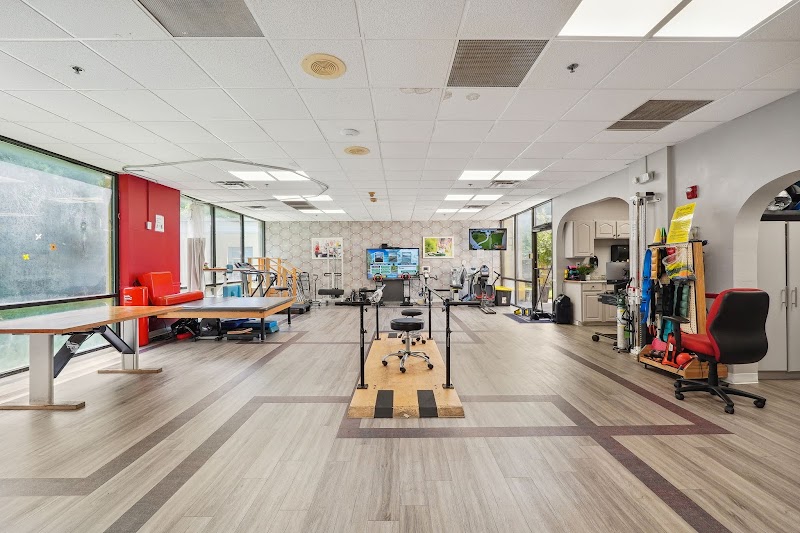
How is Tucker Operating Company Llc Staffed?

CMS rates TUCKER OPERATING COMPANY LLC's staffing level at 2 out of 5 stars, which is below average compared to other nursing homes. Staff turnover is 62%, which is 16 percentage points above the Georgia average of 46%. High turnover can affect care consistency as new staff learn residents' individual needs. RN turnover specifically is 79%, which is notably high. RNs provide skilled clinical oversight, so turnover in this role can affect medical care quality.

What Have Inspectors Found at Tucker Operating Company Llc?

State health inspectors documented 17 deficiencies at TUCKER OPERATING COMPANY LLC during 2019 to 2024. These included: 17 with potential for harm.
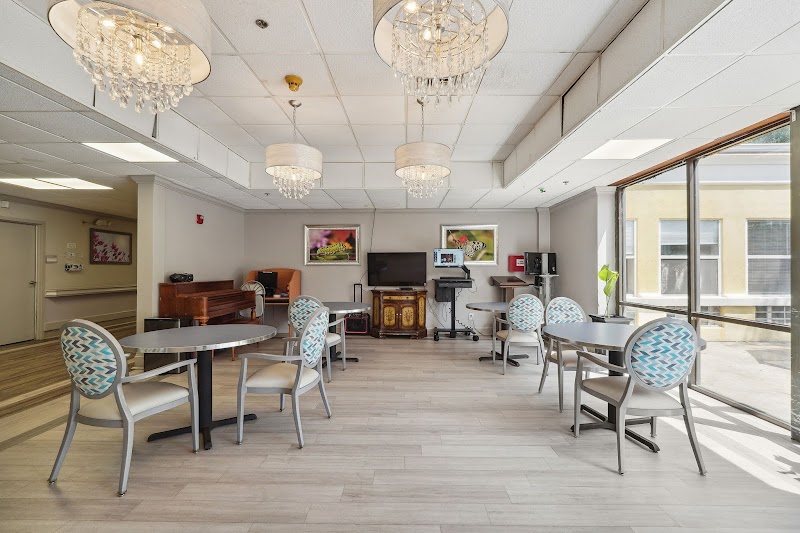
Who Owns and Operates Tucker Operating Company Llc?

TUCKER OPERATING COMPANY LLC is owned by a for-profit company. For-profit facilities operate as businesses with obligations to shareholders or private owners. The facility is operated by MICHAEL FEIST, a chain that manages multiple nursing homes. With 136 certified beds and approximately 120 residents (about 88% occupancy), it is a mid-sized facility located in TUCKER, Georgia.
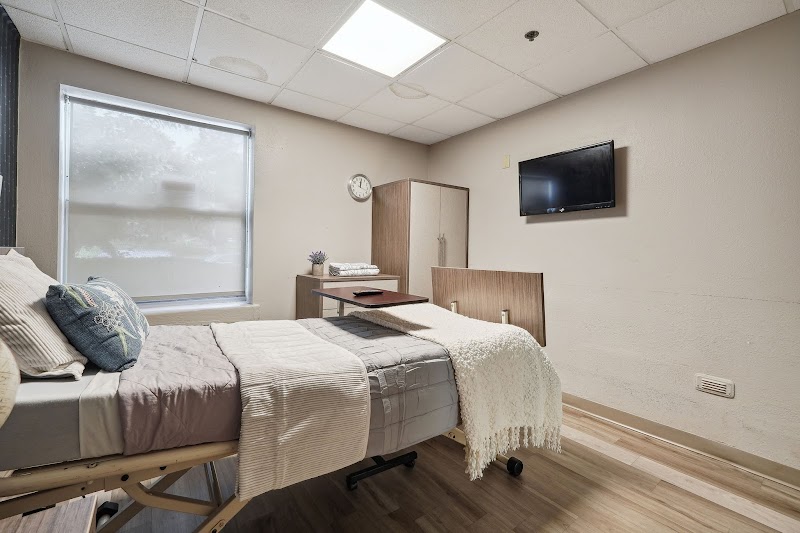
How Does Tucker Operating Company Llc Compare to Other Georgia Nursing Homes?

Compared to the 100 nursing homes in Georgia, TUCKER OPERATING COMPANY LLC's overall rating (2 stars) is below the state average of 2.6, staff turnover (62%) is significantly higher than the state average of 46%, and health inspection rating (2 stars) is below the national benchmark.

What Should Families Ask When Visiting Tucker Operating Company Llc?

Based on this facility's data, families visiting should ask: "How do you ensure continuity of care given staff turnover, and what is your staff retention strategy?" "Can you walk me through typical staffing levels on day, evening, and night shifts?" "Can I visit during a mealtime to observe dining assistance and food quality?" "How do you handle medical emergencies, and what is your hospital transfer rate?" These questions are particularly relevant given the facility's high staff turnover rate and the below-average staffing rating.

Is Tucker Operating Company Llc Safe?

Based on CMS inspection data, TUCKER OPERATING COMPANY LLC has a clean safety record: no substantiated abuse findings (meaning no confirmed cases of resident harm), no Immediate Jeopardy citations (the most serious violation level indicating risk of serious injury or death), and is not on the Special Focus Facility watch list (a federal program monitoring the lowest-performing 1% of nursing homes). The facility has a 2-star overall rating and ranks #100 of 100 nursing homes in Georgia. While no facility is perfect, families should still ask about staff-to-resident ratios and recent inspection results during their visit.

Do Nurses at Tucker Operating Company Llc Stick Around?

Staff turnover at TUCKER OPERATING COMPANY LLC is high. At 62%, the facility is 16 percentage points above the Georgia average of 46%. Registered Nurse turnover is particularly concerning at 79%. RNs handle complex medical decisions and coordinate care — frequent RN changes can directly impact care quality. High turnover means new staff may not know residents' individual needs, medications, or preferences. It can also be disorienting for residents, especially those with dementia who rely on familiar faces. Families should ask: What is causing the turnover? What retention programs are in place? How do you ensure care continuity during staff transitions?

Was Tucker Operating Company Llc Ever Fined?

TUCKER OPERATING COMPANY LLC has been fined $30,000 across 1 penalty action. This is below the Georgia average of $33,379. While any fine indicates a compliance issue, fines under $50,000 are relatively common and typically reflect isolated problems that were subsequently corrected. Families should ask what specific issues led to these fines and confirm they've been resolved.

Is Tucker Operating Company Llc on Any Federal Watch List?

TUCKER OPERATING COMPANY LLC is not on any federal watch list. The most significant is the Special Focus Facility (SFF) program, which identifies the bottom 1% of nursing homes nationally based on persistent, serious quality problems. Not being on this list means the facility has avoided the pattern of deficiencies that triggers enhanced federal oversight. This is a positive indicator, though families should still review the facility's inspection history directly.