PRUITTHEALTH - HOLLY HILL, LLC
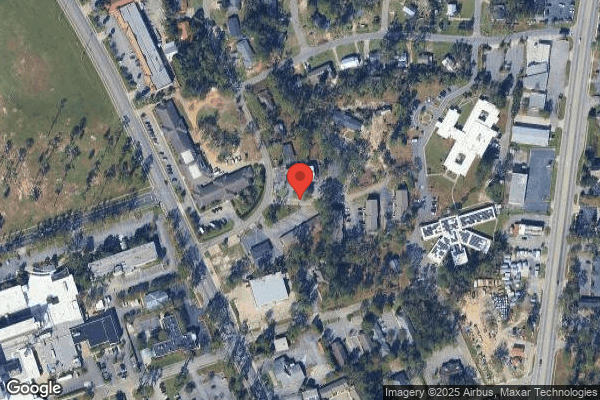
413 PENDLETON PLACE, VALDOSTA, GA 31602 (229) 244-6968
For profit - Limited Liability company 100 Beds PRUITTHEALTH Data: November 2025
Trust Grade
50/100
#218 of 353 in GA
Last Inspection: November 2024

Within standard 12-15 month inspection cycle. Federal law requires annual inspections.

Overview

PruittHealth - Holly Hill, located in Valdosta, Georgia, has a Trust Grade of C, indicating an average level of care that is neither great nor terrible. With a state ranking of #218 out of 353, they fall in the bottom half of Georgia nursing facilities, but they rank #2 out of 4 in Lowndes County, meaning only one local option is better. Unfortunately, the facility is experiencing a worsening trend, with issues increasing from 3 in 2023 to 14 in 2024. Staffing is a positive aspect here, rated at 3 out of 5 stars with a turnover rate of 32%, which is significantly lower than the state average. Additionally, there have been no fines recorded, and they have more RN coverage than 82% of facilities in Georgia, which helps catch potential issues. However, there have been concerning incidents, such as staff not using proper hand hygiene and gloves when handling food, and personal food items being stored in medication storage areas, which raises contamination risks. These findings highlight both strengths and weaknesses in the care provided at this facility.

Trust Score
C
50/100
In Georgia
#218/353
Bottom 39%
Safety Record
Low Risk
No red flags
Inspections
Getting Worse
3 → 14 violations
Staff Stability
○ Average
32% turnover. Near Georgia's 48% average. Typical for the industry.
Penalties
✓ Good
No fines on record. Clean compliance history, better than most Georgia facilities.
Skilled Nurses
○ Average
Each resident gets 35 minutes of Registered Nurse (RN) attention daily — about average for Georgia. RNs are the most trained staff who monitor for health changes.
Violations
⚠ Watch
25 deficiencies on record. Higher than average. Multiple issues found across inspections.
★★☆☆☆
2.0
Overall Rating
★★★☆☆
3.0
Staff Levels
★★☆☆☆
2.0
Care Quality
★★☆☆☆
2.0
Inspection Score
Stable
2023: 3 issues
2024: 14 issues

The Good

  • Full Sprinkler Coverage · Fire safety systems throughout facility
  • No fines on record
  • Staff turnover below average (32%)

    16 points below Georgia average of 48%

Facility shows strength in fire safety.

The Bad

2-Star Overall Rating

Below Georgia average (2.6)

Below average - review inspection findings carefully

Staff Turnover: 32%

14pts below Georgia avg (46%)

Typical for the industry

Chain: PRUITTHEALTH

Part of a multi-facility chain

Ask about local staffing decisions and management

The Ugly 25 deficiencies on record

Nov 2024 14 deficiencies
CONCERN (D) 📢 Someone Reported This

A family member, employee, or ombudsman was alarmed enough to file a formal complaint

Potential for Harm - no one hurt, but risky conditions existed

Resident Rights (Tag F0550)

Could have caused harm · This affected 1 resident

**NOTE- TERMS IN BRACKETS HAVE BEEN EDITED TO PROTECT CONFIDENTIALITY** Based on observations, resident and staff interviews, and record reviews, the facility failed to provide care in a manner that m...

Read full inspector narrative →
**NOTE- TERMS IN BRACKETS HAVE BEEN EDITED TO PROTECT CONFIDENTIALITY** Based on observations, resident and staff interviews, and record reviews, the facility failed to provide care in a manner that maintained or enhanced residents' rights, dignity, and respect. Specifically, the facility failed to ensure that dependent residents were cleaned promptly when needed after eating, and failed to ensure the call light was in reach, for one of 14 residents (R) (R70). Findings included: Record review revealed R70 was admitted with diagnoses of but not limited to unspecified injury of the head, aneurysm of the heart, muscle weakness, unsteadiness on feet, dysphagia oropharyngeal phase, abnormal posture, and other abnormalities of gait and mobility. Review of the Quarterly Minimum Data Set (MDS) assessment dated [DATE] revealed Section C-Brief Interview for Mental Status (BIMS) score of 13 indicating little to no cognitive impairment. Section GG-ADL assistance needed included but not limited to, showers/baths, transfers, assist with setting up for feeding and cleaning as needed. Review of the care plan revealed a goal that R70 will be free from the negative consequences of vision loss as evidenced by remaining physically safe and participating in social and self-care activities. Assist with toileting and transfers PRN (as needed). Place call light within reach. Problem: Impaired Physical Mobility/Deconditioning related to COPD (Chronic Obstructive Pulmonary Disease), convulsions, cerebral infarction, PE (pulmonary embolism), and low back pain. ADL (Activities of Daily Living) needs will be met, and his independence potential maximized within the constraints of his illnesses through the next review. Long-term target date 11/30/2024. Review of menus revealed that breakfast was scheduled to be served to all residents from 7:30 am to 8:00 am. Observation on 11/18/2024 at 10:30 am revealed R70 in bed asleep. He did not respond when surveyor knocked on the door. The call light was on the floor and out of reach for R70. Observation on 11/19/2024 from 9:57 am to 11:20 am revealed R70 was in bed, the call light was on the floor, and he had breakfast food on his face and clothes. CNA (Certified Nursing Assistant) CC walked by and spoke to R70 but did not clean him or check to see if his call light was in reach. Interview at that time with R70 revealed he was visually impaired. Observation at 11:20 am CNA CC cleaned the resident from the food on his face, picked up the call light from the floor, gave him a bed bath and changed his clothing. This observation revealed R70 had food on his face and clothing since breakfast earlier that morning. Resident revealed was unaware of food being all over him due to vision loss. Interview on 11/19/2024 at 4:08 pm, MDS Coordinator AA revealed that residents with vision or hearing loss should have a call light accessible and staff ensured the call light was accessible by checking on residents often. Interview further revealed that residents with vision loss should be assisted with eating, should be cleaned after eating because food is often everywhere and sometimes their clothes needed changing. Interview on 11/19/2024 at 4:12 pm Licensed Practical Nurse (LPN) ZZ revealed that when residents are visually impaired the CNA and nurses should follow the care plan and ensure interventions are being followed. Staff should check every hour or as needed to ensure the residents have their call light, assist with eating if needed, and clean the resident up after they finish eating. Interview on 11/19/2024 at 4:19 pm the Director of Health Services (DHS) revealed that nursing staff should follow interventions in the care plan for residents, especially for residents who are hearing and visually impaired and dependent for ADL. She also revealed that some interventions needed updating.
CONCERN (D)

Potential for Harm - no one hurt, but risky conditions existed

Deficiency F0554 (Tag F0554)

Could have caused harm · This affected 1 resident

**NOTE- TERMS IN BRACKETS HAVE BEEN EDITED TO PROTECT CONFIDENTIALITY** 2. Review of R19's Quarterly Minimum Data Set (MDS) assessment dated [DATE] revealed Section C (Cognition) BIMS score of 14 whic...

Read full inspector narrative →
**NOTE- TERMS IN BRACKETS HAVE BEEN EDITED TO PROTECT CONFIDENTIALITY** 2. Review of R19's Quarterly Minimum Data Set (MDS) assessment dated [DATE] revealed Section C (Cognition) BIMS score of 14 which indicated little to no cognitive impairment. Review of the facility's documents revealed no evidence of physician's orders for self-administration of medication for R19. Review of the facility's documents revealed no evidence of Self-Assessment for Medication Administration for R19. Observation and interview on 11/17/2024 at 2:11 pm revealed R19 lying in bed in his room. There were 23 bottles of medications on R19's bedside table. R19 revealed he took his own vitamins which were on the table next to his bed. R19 revealed he preferred the [specific name] brand, and he took the medications whenever he wanted to. He revealed the nurses and other staff were aware of the medications being on his bedside table and they were aware he took them. 3. Review of the Electronic Medical Records (EMR) revealed R67 was admitted with a diagnosis of but not limited to chest pain. Review of the Quarterly Minimum Data Set (MDS) assessment dated [DATE] revealed Section C (Cognition) BIMS score of 14 which indicated little to no cognitive impairment. Section I (Active Diagnoses) listed Cardiorespiratory Conditions. Review of the care plan dated 4/13/2023 documented, Category: Pain- has potential for pain related to (r/t): history of (h/o) chest pain. Goal: will be comfortable as measured by his/family goals through next review. Approach: Complete Pain Observation on admission and as needed (PRN), administer any pain medications/interventions per physician's orders, monitor effectiveness of pain medication/intervention, provide any comfort measures, report to physician if he does not experience reduction or relief of pain after receiving prescribed interventions. Review of Physician's Orders dated 4/12/2023 included nitroglycerin tablet, sublingual; 0.4 milligram (mg); sublingual, take 1 tablet sublingually every 5 minutes x (times) 3 as needed for chest pain. As Needed PRN 1, PRN 2, PRN 3. Review of facility's documents revealed no evidence of physician's orders for self-administration of medication for R67. Review of facility's documents revealed no evidence of Self-Assessment for Medication Administration for R67. Observation and interview on 11/18/2024 at 8:37 am revealed R67 sitting on his bed in his room. He revealed he had a bottle of nitroglycerin tablets on his bedside table, and he took the tablets whenever he had chest pain. He stated he had them there because the nurses took too long to come and give the tablet to him. He revealed the nurses knew he had the medication. R67 further revealed he would bring the medication with him outside whenever his family came to visit him, and he took the nitroglycerin tablet if he had chest pain. Interview on 11/18/2024 at 9:57 am Licensed Practical Nurse (LPN) KK confirmed the bottle of nitroglycerin was at resident's bedside. She confirmed there was no physician's orders for self-administration of medication for R67. She further stated R67 was not to have the nitroglycerin at his bedside to take on his own. Interview on 11/18/2024 at 11:35am with Director of Health Services (DHS) revealed R19 was not supposed to have medication at the bedside. She revealed if residents had medications at their bedside and were self-administering medications, they were to have a self-assessment done by the Interdisciplinary Team (IDT) to see if the resident was alert and mentally and physically able to self-administer medications. She also stated R19 needed an order to self-administer medication, and he did not have an order nor a self-assessment to self-administer medication. The DHS revealed staff needed to know if and when R19 was taking the medication in order to monitor it. She revealed the outcome if residents took their own medications without proper assessment and monitoring could result in medication adverse effects and harm to the residents. Interview on 11/19/2024 at 5:35 pm with Certified Nursing Assistant (CNA) HH revealed medications should not be at the resident's bedside and she would call the nurse to tell her that there was medication at the resident's bedside. Interview on 11/19/2024 at 5:45 pm with Licensed Practical Nurse (LPN) II revealed residents should not have medication at their bedside. She revealed the resident could overdose on the medications when they take it whenever they wanted to or took more than the prescribed dosage, and the nurse did not know about it. She revealed the medication could also interfere with medications the nurse was giving them and that could cause adverse reactions for the resident. Based on observations, resident and staff interviews, record reviews, and review of the facility's policies titled, Self-Administration of Medications by Patients/Residents and Bedside Storage of Medications, the facility failed to ensure unauthorized medications were not stored at the bedside for three of 32 residents (R) (R58, R19, and R67) reviewed. The deficient practice had the potential to allow unauthorized access of unsecured medications to residents and visitors. Findings included: Review of the facility's undated policy titled Self-Administration of Medications by Patients/Residents documented, .Each patient/resident who desires to self-administer medication is permitted to do so if the healthcare center's Licensed Nurse and physician have determined that the practice would be safe for the patient /resident and other patients/residents of the healthcare center. If the Licensed nurse determines the patient /resident or family member to be capable of self -administration of medications, the attending physician must write an order to that effect that includes the specific medications based off of the Self-Administration Medication Observation. Review of the facility's policy titled Bedside Storage of Medications reviewed 7/2/2024 documented, Policy Statement: It is the policy of (name of facility) Pharmacy Services that bedside medication storage is permitted for sublingual and inhaled emergency medications and other medications. For patients/residents who are able to self-administer medications upon the written order of the prescriber and when it is deemed appropriate in the judgment of the healthcare centers Interdisciplinary Patient/Resident Assessment team . Scope . Procedure: 1. A written order for the bedside storage of medication is placed in the patient/resident medical record. 1. Record review of R58's medical record revealed diagnoses of but not limited to chronic kidney disease stage 3, hypertension, cerebral infarction, and cognitive functions following cerebral infarction. Review of the Annual Minimum Data Set (MDS) assessment dated [DATE] documented a Brief Interview for Mental Status (BIMS) score of 15 indicating little to no cognitive impairment. Review of R58's self-administration evaluation/assessment form titled Self-Administration Assessment dated 11/4/2024 revealed R58 was assessed to administer only eyedrops and albuterol at the bedside. Observation on 11/17/2024 at 3:03 pm with Certified Med Tech VV revealed the following prescription medications labeled with the resident name inside R58's room: One bottle of nasal spray (mometasone furoate nasal spray 50 mcg (microgram) dosage) and Advair Diskus (fluticasone propionate-salmeterol) blister device 250-50 mcg/dose (micrograms per dose) amount. The CMA VV confirmed the unauthorized medications and removed the medications from R58's room. Review of R58's Physician Order Form dated November 2024 and November 2024 Medication Administration Record (MAR) listed Advair Diskus fluticasone propion-salmeterol blister device 250-50 mcg/dosage amount as one of the medications for the nurse to administer. Interview on 11/18/2024 at 11:33 am the Director of Health Services (DHS) and Unit Manager, both staff confirmed being unaware that R58 had unauthorized prescription medications in her room. They revealed that R58 was authorized to only self-administered albuterol and eye drops. The DHS revealed the risk would be that other residents could come in contact with the medications.
CONCERN (D)

Potential for Harm - no one hurt, but risky conditions existed

Deficiency F0558 (Tag F0558)

Could have caused harm · This affected 1 resident

**NOTE- TERMS IN BRACKETS HAVE BEEN EDITED TO PROTECT CONFIDENTIALITY** 2. Record review revealed R70 was admitted with diagnoses of but not limited to unspecified injury of the head, aneurysm of the ...

Read full inspector narrative →
**NOTE- TERMS IN BRACKETS HAVE BEEN EDITED TO PROTECT CONFIDENTIALITY** 2. Record review revealed R70 was admitted with diagnoses of but not limited to unspecified injury of the head, aneurysm of the heart, muscle weakness, unsteadiness on feet, dysphagia oropharyngeal phase, abnormal posture, and other abnormalities of gait and mobility. Review of the Quarterly MDS assessment dated [DATE] Section C assessed R70 a BIMS score of 13 indicating little to no cognitive impairment. Section GG ADL assistance-comb hair, showers/ baths, transfers, assist with setting up for feeding and cleaning as needed. Review of the care Plan revealed a goal that R70 will be free from the negative consequences of vision loss as evidenced by remaining physically safe and participating in social & self-care activities. Assist with toileting and transfers PRN (as needed). Place call light within reach. Problem: Impaired Physical Mobility/Deconditioning related to COPD (Chronic Obstructive Pulmonary Disease), convulsions, cerebral infarction, PE (pulmonary embolism), and low back pain. R70 ADL needs will be met, and his independence potential maximized within the constraints of his illnesses through the next review. Long-term target date 11/30/2024. Review of menus revealed that the facility had scheduled breakfast to be served to all residents from 7:30 am to 8:00 am. Observation on 11/18/2024 at 10:30 am revealed R70 in bed asleep. He did not respond when surveyor knocked on the door. The call light was on the floor and out of reach for R70. Observation on 11/19/2024 from 9:57 am to 11:20 am revealed R70 was in bed, the call light was on the floor, and he had breakfast food on his face and clothes. CNA (Certified Nursing Assistant) CC walked by and spoke to R70 but did not clean him or check to see if his call light was in reach. Interview at that time with R70 revealed he was visually impaired. Observation on 11/19/2024 at 11:20 am CNA CC cleaned the resident and picked the call light up from off the floor, gave him a bed bath and changed his clothing. Observation revealed it took over 60 minutes for staff to clean R70's face and clothing from food that he had from breakfast. Resident was unaware of food being all over him due to vision loss. Interview on 11/19/2024 at 4:08 pm, MDS Coordinator AA revealed that residents with vision or hearing loss should have a call light accessible and staff ensured the call light was accessible by checking on residents often. Interview further revealed that residents with vision loss should be assisted with eating, should be cleaned after eating because food is often everywhere and sometimes their clothes needed changing. Interview on 11/19/2024 at 4:12 pm, Licensed Practical Nurse (LPN) ZZ revealed that when residents are visually impaired the CNA and nurse staff should follow the care plan and ensure interventions are being followed. Staff should check every hour or as needed to ensure the residents have access to call lights, assist with eating if needed, and clean the resident up after they finish eating. Interview on 11/19/2024 at 4:19 pm the Director of Health Services (DHS) revealed that nursing staff should follow interventions in the care plan for residents, especially for residents who are hearing and visually impaired and dependent for ADL. She also revealed that some interventions needed updating. Based on observations, resident and staff interviews, and record reviews, the facility failed to accommodate the needs of two of 8 residents (R) (R66 and R70) reviewed for accommodation of needs. Specifically, the facility failed to provide a morbid obese resident (R) (R66) with a bed that would accommodate her size; and the facility failed to ensure (R70), who was visually impaired, had a call light within reach. Findings included: A facility policy on accommodation of needs was requested but not provided. 1. Record review of the medical record revealed R66 had diagnoses of but not limited to obesity class 3, vascular dementia, cerebral vascular accidents (CVA) with left side paralysis, hemiplegia and hemiparesis following cerebral infarction. Review of R66's Quarterly Minimum Data Set (MDS) assessment dated [DATE] assessed a Brief Interview for Mental Status (BIMS) score of 14 which indicated little to no cognitive impairment. R66's weight was assessed as 276 lbs (pounds), assessed as one-person assist with bed mobility and mechanical lift for transfer. Observation on 11/17/2024 at 1:56 pm revealed R66 lying centered in bed. Continued observation revealed the bed mattress was too narrow, not wide enough to provide space for turning on each side. Interview at that time, R66 revealed being afraid of falling on the floor when the Certified Nursing Assistant (CNA) staff rolled her on her side during incontinence care and bed baths. R66 revealed most of the time there was only one staff member assisting her. She revealed that the CNA's often tell her that she needed a bigger bed and would call another CNA to position themselves on the other side to prevent R66 from rolling off the bed. R66 revealed expressing her fears to the CNA's and a licensed nursing staff. Interview on 11/19/2024 at 2:00 pm (at the time of observation of R66's bed), the Therapy Director/Physical Therapist (PT) confirmed that based on observation of R66's body size/ measurement/alignment lying flat and centered in the bed, there was not enough space on both sides of the mattress. PT further revealed that without having guard from another staff on the opposite side of the bed, R66 was at risk of falling. She revealed she would do a referral for the facility Occupational Therapist to re-assess R66 for bed mobility because R66 was discharged from therapy. Interview on 11/18/2024 at 11:38 pm, the Director of Health Services (DHS) and Unit Manager both confirmed that R66 could use a larger bed. Both staff revealed that in the past R66 was in a larger bed. Unit Manager reported being unable to recall as to why the resident's bed was changed to a smaller bed. DHS reported that R66's bed could be extended, and a larger mattress could be provided. Interview on 11/19/2024 at 3:45 pm, the Administrator revealed that R66's bed was extended today and R66 had a wider mattress to fit the new bed extension width. The Administrator revealed being unaware that the bed was too small and recalled in the past R66 was in a larger bed due to her weight size.
CONCERN (D)

Potential for Harm - no one hurt, but risky conditions existed

Deficiency F0578 (Tag F0578)

Could have caused harm · This affected 1 resident

**NOTE- TERMS IN BRACKETS HAVE BEEN EDITED TO PROTECT CONFIDENTIALITY** 3. R4 was admitted to the facility with diagnoses of but not limited to viral pneumonia, cerebrovascular disease, unilateral pri...

Read full inspector narrative →
**NOTE- TERMS IN BRACKETS HAVE BEEN EDITED TO PROTECT CONFIDENTIALITY** 3. R4 was admitted to the facility with diagnoses of but not limited to viral pneumonia, cerebrovascular disease, unilateral primary osteoarthritis, muscle weakness (generalized), abnormal posture, rhinovirus, chronic encephalopathy, lack of coordination, abnormalities of gait and mobility, Type 2 diabetes mellitus without complications, atherosclerosis of native arteries of extremities, bilateral legs. Review of the Quarterly Minimum Data Set (MDS) dated [DATE] revealed a BIMS score of 15, indicating little to no cognitive impairment. Interview on 11/20/2024 at 11:27 am with the facility's Social Worker and Senior Nurse Consultant confirmed no evidence was found to support the residents, R45, R58, R4, and/or any other resident/representative had been provided written information related to their right to accept or refuse medical or surgical treatment, on or after admission to the facility. Interview on 11/20/2024 at 11:50 am with the Regional Corporate Admissions Coordinator revealed the facility used the documents that are included in the admission packet and admitted she was not familiar with an advanced directive checklist that included the right to consent or deny medical or surgical treatment. Based on resident and staff interviews, record review, review of the facility's admission Packet, and review of the facility's policy titled, Advance Directive policy, the facility failed to provide residents and or their representatives written information regarding the right to accept or refuse medical or surgical treatment for three of 33 residents (R) (R45, R58, and R4) reviewed. This failure denied the residents and/or representatives the opportunity to have choices and preferences with their health care and formulating an Advance Directive. Findings included: Review of the facility's Advance Directive policy dated 11/6/17 revealed, Prior to, or upon Admission, the patient/resident and/or their responsible party will be asked about the existence of any advance directives. The Advance Directive Checklist, which is in the Georgia admission Packet, will be completed. Review of the facility's admission Packet revealed it did not contain language that pertained to the facility's provision of written information about the resident/representative's right to accept or refuse medical or surgical treatment. 1. R45 was admitted to the facility with diagnoses of but not limited to Alzheimer's Disease with late onset, metabolic encephalopathy, and type two diabetes mellitus with diabetic neuropathy. Review of the Quarterly Minimum Data Set (MDS) assessment dated [DATE] revealed R45's cognition was undetermined due to a Brief Interview for Mental Status (BIMS) score of 99, indicating the interview was unable to be completed. 2. R58 was admitted to the facility with diagnoses of but not limited to chronic kidney disease stage 3 and cerebral infarction. Review of the Annual MDS assessment dated [DATE] assessed a BIMS score of 15 which indicated little to no cognitive impairment. Review of R58's November 2024 Physician Order Form dated November 2024 revealed an order for full code status. Review of R58's Advance Directive form dated 11/17/2021 documented that R58 signed the Advance Directive at the time of admission. Continued review of the Advance Directive form, and the resident's medical record revealed no written documentation or evidence to show a form, or discussion being provided to the resident/responsible party regarding a choice to accept or refuse surgical treatment.
CONCERN (D) 📢 Someone Reported This

A family member, employee, or ombudsman was alarmed enough to file a formal complaint

Potential for Harm - no one hurt, but risky conditions existed

Safe Environment (Tag F0584)

Could have caused harm · This affected 1 resident

**NOTE- TERMS IN BRACKETS HAVE BEEN EDITED TO PROTECT CONFIDENTIALITY** Based on observation and interview, the facility failed to maintain a safe, clean, comfortable, and homelike environment on one ...

Read full inspector narrative →
**NOTE- TERMS IN BRACKETS HAVE BEEN EDITED TO PROTECT CONFIDENTIALITY** Based on observation and interview, the facility failed to maintain a safe, clean, comfortable, and homelike environment on one of five halls (100 hall). Specifically, the facility failed to ensure the toilet base and caulking was not stained dark brown in one shared bathroom between rooms 102, 104, and in room [ROOM NUMBER] and room [ROOM NUMBER]; failed to ensure light fixtures above resident's beds were not rusty brown colored and wall trim was not sticking out toward residents' bed in room [ROOM NUMBER]. The deficient practice caused an unsafe and unsanitary environment and had the potential to place residents at risk for avoidable injury or illness, and a diminished quality of life. Findings included: Observations on 11/17/2024 at 3:42 pm, 11/18/2024 at 2:36 pm, and 11/19/2024 at 8:30 am revealed the bathroom toilet base and caulking that is shared between rooms [ROOM NUMBERS] to be stained dark brown. Observations on 11/17/2024 at 2:45 pm, 11/18/2024 at 2:36 pm, and 11/19/2024 at 11:07 am in room [ROOM NUMBER] revealed the light fixtures above residents beds to be white with rusty brown colored spots, the toilet caulking and base to be stained brown, and the plastic trim that is placed on the middle of the wall that is the length of the wall, was pulled off the wall and sticking out toward the resident's bed. Observations on 11/17/2024 at 1:15 pm, 11/18/2024 at 2:38 pm and 11/19/2024 at 11:12 am revealed the bathroom toilet base and caulking of room [ROOM NUMBER] to be stained brown. Observation and rounding on 11/20/2024 at 3:12 pm with the Maintenance Director confirmed the toilet bases and caulking to be stained dark brown in the bathroom shared between room [ROOM NUMBER] and 104 and the toilets in rooms [ROOM NUMBERS]. The light fixtures above the residents' rooms in room [ROOM NUMBER] were rust covered, and the plastic trim in room [ROOM NUMBER] is pulling away from the wall sticking out toward the resident's bed. The Maintenance Director revealed it was his intentions to fix, repair, or replace all the identified concerns.
CONCERN (D)

Potential for Harm - no one hurt, but risky conditions existed

Comprehensive Care Plan (Tag F0656)

Could have caused harm · This affected 1 resident

**NOTE- TERMS IN BRACKETS HAVE BEEN EDITED TO PROTECT CONFIDENTIALITY** 5. Review of the clinical record revealed R338 was admitted to the facility with diagnoses of but not limited to unspecified fra...

Read full inspector narrative →
**NOTE- TERMS IN BRACKETS HAVE BEEN EDITED TO PROTECT CONFIDENTIALITY** 5. Review of the clinical record revealed R338 was admitted to the facility with diagnoses of but not limited to unspecified fracture of T11-T12 collapsed vertebra, muscle weakness unsteadiness on feet, abnormal posture, pain, unspecified, reduced mobility, low back pain, neuromuscular dysfunction of bladder. Review of R338's most recent MDS assessment dated [DATE] revealed a BIMS score of 15, which indicated little to no cognitive impairment. Section O revealed the resident required oxygen therapy. Review of the Physician orders revealed an order for oxygen at 3 liters per minute (LPM) per nasal cannula (NC) at 9pm with a start date of 11/1/2024. Observation on 11/17/2024 at 2:12 pm revealed R338 lying in bed receiving oxygen therapy via NC set at 2.5/LPM. Observation on 11/18/2024 at 9:30 am revealed R338 lying in bed receiving oxygen therapy via NC set at 2/LPM. Rounding on 11/18/2024 at 3:16 pm with RN DD confirmed the LPM should be set on 3/LPM and not 2.5/LPM. She adjusted the rate to 3/LPM. LPN revealed her expectations were that she and other nurses follow physician orders. Interview on 11/20/2024 at 11:10 am with RN DD revealed that it was the nurse's responsibility, as well as the MDS Coordinator to make sure that the care plan was updated. Interview on 11/20/2024 at 1:25 pm with MDS Coordinator AA revealed different departments are responsible for completing the resident's care plan. He revealed that MDS would get an email from the hospital with resident changes and MDS checked the care plan as needed to make sure all information was entered or updated. MDS coordinator AA confirmed that R338 did not have a care plan for oxygen use and that the risk to a resident not being care planned correctly would be that the resident would not receive proper care. 3. Record review for R47 revealed an admission date of 10/21/2024 with diagnoses of but not limited to pneumonia, asthma, dysphagia oral phase, surgical aftercare, and cognitive communication deficit. Review of admission MDS assessment dated [DATE] revealed Section C-Cognition included BIMS score of 13 suggesting little to no cognitive impairment; Section O-Special treatments included oxygen. Review of physician orders included order dated 10/21/2024, Oxygen at 2 LPM via NC continuous. Every shift, days, nights; Change respiratory circuit/supplies weekly once a day on Monday nights; change respiratory circuit/supplies; as needed PRN. Record review revealed there was no care plan for oxygen use and no individualized interventions to address the monitoring. Review of R47's care plan created 8/6/2024 identified/documented, Problem: nutrition and/or hydration risk related to acute kidney failure and dysphagia. Interventions included weigh and monitor results on admission, then weekly x 4 weeks (for four weeks) or until stable. Record review revealed R47 was weighed on 10/21/2024 by facility staff. Continued review revealed no other weights were recorded consecutively for four weeks after admission to monitor R47's weight. Observation on 11/17/2024 at 5:07 pm, on 11/19/2024 at 9:35 am and at 12:37 pm revealed R47 was lying in bed receiving oxygen via nasal canula. Interview during observations R47 revealed she had received oxygen since she had been in the facility. Interview on 11/19/24 at 2:00 pm, the Registered Dietician (RD) revealed that weights should be completed weekly for four weeks after admission to monitor nutrition risks, and at least monthly to monitor for weight loss. The RD revealed being unaware that R47 was not being weighed and followed for the first four weeks after their admission to facility and admission weight. Interview on 11/20/2024 at 11:10 am Unit Manager DD revealed it was the nurses' responsibility, as well as the Minimum Data Set (MDS) Coordinator to make sure that care plans were updated. Interview on 11/20/2024 at 1:25 pm MDS Coordinator AA, revealed different departments are responsible for completing the resident's care plan and MDS checked as needed to make sure all information had been entered or updated. He confirmed that R47 did not have a care plan for oxygen and the risk to a resident not being care planned correctly would be that the resident would not receive the proper care. 4. Review of the medical record for R29 revealed she was admitted to the facility on [DATE] with acute kidney failure, type two diabetes mellitus with diabetic chronic kidney disease, and hypertensive heart disease with heart failure. Review of the Quarterly Minimum Data Set (MDS) assessment dated [DATE] revealed a BIMS score of 15, indicating little to no cognitive impairment. Section O, special treatment (included oxygen) reported none. Review of the physician orders revealed an order for oxygen dated 7/25/2024, oxygen at 2 LPM via nasal cannula continuous. Review of the care plan initiated revised on 9/9/2024, revealed that resident has diagnosis of acute respiratory failure with hypercapnia. Oxygen as needed and ordered. Oxygen saturations as needed and ordered. Observations on 11/17/2024 at 1:06 pm and 4:58 pm revealed R29 receiving oxygen at a rate of 3 liters. Interview on 11/18/2024 at 11:20 am with Registered Nurse (RN) DD verified the physician order for oxygen at a rate of 2 liters. She looked at picture the surveyor captured and verified the oxygen was set on the wrong oxygen rate. She stated it was the nurse's responsibility to check daily to make sure the flow rate is correct. Interview on 11/20/2024 at 10:05 am with the Director of Health Services (DHS) revealed her expectations were for nurses to follow orders and for charge nurses to check oxygen rates. She expected all oxygen rates to be set on the prescribed rate by the physician. Interview on 11/20/24 at 1:42 pm with MDS Coordinator AA revealed the Interdisciplinary team (IDT) oversaw development of the care plan. He revealed his expectations were that staff follow the care plan, update it accordingly, and administer oxygen per orders. He revealed all staff including Certified Nursing Assistants (CNA's) should review care plans and physician orders to ensure each resident who was on oxygen therapy had the correct flow rate. Based on observations, resident and staff interviews, record reviews, and review of the facility's policy titled, Care Plans, the facility failed to develop and implement a care plan for five residents (R) (R58, R77, R47, R29, and R338) out of 32 reviewed. Specifically, they failed to create and implement a care plan for R58 for self-administration of medication, and for R47 for oxygen use. The facility failed to follow the care plan for resident R47 reviewed for nutrition related to obtaining admission and weekly weights; and they failed to follow the care plan for three residents (R77, R29, R338) receiving oxygen therapy and ensure the oxygen flow rate for each resident was followed based on physician order. Findings included: Review of the facility's policy titled, Care Plan dated 7/27/2023 revealed, admission Comprehensive Plan of Care 2. A comprehensive person-centered care plan will be developed by the interdisciplinary team for each patient /resident within seven days after the completion of the comprehensive assessments. The care plan serves as instructions for the patient's care and provides continuity of care by all partners. Short and concise instructions, which can be understood by all partners. 1. Record review of the medical record revealed R58 had diagnoses of but not limited to chronic kidney disease stage 3, hypo-osmolality and hyponatremia, chronic kidney disease stage 3 and anemia in chronic kidney disease. Review of R58's Physician Order Form (POF) dated November 2024 listed an order for albuterol and eyedrops. Review of resident form titled Self-Administration Assessment dated 11/4/2024 revealed R58 was assessed to self-administer eyedrop and albuterol. Review of R58 's care plan revealed no care plan to support resident assessment and authorization to self-administer medications. 2. Record review of R77's medical record revealed an admission date of 7/9/2024 with diagnoses of but not limited to chronic respiratory failure and paroxysmal atrial fibrillation. Review of the admission MDS assessment dated [DATE] assessed a BIMS score of 11 which indicated moderate cognitive impairment and was assessed for oxygen use. Review of R77's orders included an order dated 10/15/2024 for administering oxygen therapy at 2 LPM (liters per minutes) via (by) nasal cannula continuous every shift. Review of R77's care plan created 7/31/2024 identified/documented a problem, Oxygen use related to asthma, chronic respiratory failure. Interventions included oxygen as ordered/needed. Observation on 11/17/24 from 2:05 pm until 3:33 pm, and again at 5:01 pm revealed R77 receiving oxygen therapy from an oxygen concentrator via nasal cannula (NC) at 3 liters with no humidifier bottle attached. Interview on 11/20/2024 at 1:49 pm, the MDS Coordinator AA confirmed his expectation that nursing staff follow the care plan for weights for R47. He reported being unaware that the care plan was not being followed. MDS Coordinator reported being unaware that R58 was assessed to self-administer medications. He stated that R58's medical record should include a care plan to address self-administering of medications. He reported being unaware that R77 was not receiving oxygen per physician order, and that his expectation that residents' care plans were being followed.
CONCERN (D) 📢 Someone Reported This

A family member, employee, or ombudsman was alarmed enough to file a formal complaint

Potential for Harm - no one hurt, but risky conditions existed

Deficiency F0688 (Tag F0688)

Could have caused harm · This affected 1 resident

**NOTE- TERMS IN BRACKETS HAVE BEEN EDITED TO PROTECT CONFIDENTIALITY** Based on observations, staff interviews, and record reviews, the facility failed to apply splints as ordered for one of 10 resid...

Read full inspector narrative →
**NOTE- TERMS IN BRACKETS HAVE BEEN EDITED TO PROTECT CONFIDENTIALITY** Based on observations, staff interviews, and record reviews, the facility failed to apply splints as ordered for one of 10 residents (R) (R56) receiving splints. This deficient practice had the potential to cause worsening of R56's contractures and a diminished quality of life. Findings included: Review of Electronic Medical Records (EMR) revealed R56 was admitted on [DATE] with diagnoses of but not limited to unilateral primary osteoarthritis, contractures of left hand, contracture of right hand, contracture of right elbow, contracture of left elbow, contracture of right shoulder, muscle weakness (generalized). Review of the Quarterly Minimum Data Set (MDS) assessment dated [DATE] documented Section C (Cognition) documented no Brief Interview for Mental Status (BIMS) score, as cognitive skills for daily decision making as severely impaired; Section I (Active Diagnosis) Muscle weakness (generalized); Section O (Special Treatments) range of motion (passive) and splint or brace assistance; Section GG (Functional Abilities) upper extremity impairment, lower extremity impairment. Review of the care plan dated 8/23/2024 included but not limited to, application of elbow extension, elbow orthosis, hand palm guard orthosis, hand cone orthosis, hand carrot orthosis, resting hand orthosis application for four-to-five-hour wear tolerance daily as tolerated with skin inspection following removal for redness, edema, and pain daily from 7:00 am to 11:00 pm, or twice a day from 7:00 am to 7:00 pm and 7:00 pm to 7:00 am; requires BUE PROM (bilateral upper extremity Passive Range of Motion) in all planes daily as tolerated to minimize risk of further contracture. Review of Orders dated 8/23/2024 included but not limited to Restorative: Apply R Elbow extension orthosis and B hand Palm Guard Orthosis to R (right) Elbow and B hand joints for four-to-five-hour wear tolerance daily as tolerated with skin inspection following removal for redness, edema, and pain. Observation on 11/17/2024 at 3:00 pm, on 11/18/2024 at 11:00 am and 4:00 pm, on 11/19/2024 at 10:00 am and 2:00 pm, and on 11/20/2024 at 9:00 am revealed R56 lying in bed. Resident had contractures of both hands. No splints were seen on resident at any observation. Interview on 11/20/2024 at 9:07 am with Certified Nursing Assistant (CNA) JJ revealed R56 was to have splints for his hand contractures and confirmed R56 was not wearing splints for his hands and right elbow. She looked for the splints in the drawers of the resident's bedside table and in the resident's dresser drawers, she was unable to locate R56's splints. Interview on 11/20/2024 at 9:10 am Licensed Practical Nurse (LPN) KK revealed R56 had a brace for each hand which were to be applied for four to five hours every day. She confirmed R56 did not have splints on since the survey dates 11/17/2024 through 11/20/2024. She revealed the Certified Nursing Assistants (CNA) was to apply the splints and check them off on their documentation. She revealed if the splints were not applied the contractures would get worse and also cause skin break down. Interview on 11/20/2024 at 9:14 am CNA LL revealed she had worked with the facility for three years and was assigned to R56 for this shift. She revealed she only had one resident this shift who had contractures and it was a resident on another hall. She confirmed R56 had contractures and she did not put the splints on this shift. Interview on 11/20/2024 at 9:48 am Director of Health Services (DHS) revealed her expectations were for the CNAs and nurses to apply the splints as ordered by the Physical Therapist (PT)/Occupational Therapist (OT) and doctor's orders. She revealed the outcome if the splints were not applied as ordered would be worsening of the contractures. Interview on 11/20/2024 at 9:59 pm with the PT Assistant MM and PT NN revealed R56 was discharged from therapy. They stated whenever a resident was to have a splint, they educated the CNAs about it because the CNAs were the ones to apply the splints. Interview on 11/20/2024 at 10:03 pm with the OT OO revealed R56 was discharged from therapy and the CNAs were to apply the splints as directed from the verbal education they received.
CONCERN (D)

Potential for Harm - no one hurt, but risky conditions existed

Accident Prevention (Tag F0689)

Could have caused harm · This affected 1 resident

**NOTE- TERMS IN BRACKETS HAVE BEEN EDITED TO PROTECT CONFIDENTIALITY** 2. Review of Electronic Medical Records (EMR) revealed R82 was admitted with a diagnosis of but not limited to chronic respirato...

Read full inspector narrative →
**NOTE- TERMS IN BRACKETS HAVE BEEN EDITED TO PROTECT CONFIDENTIALITY** 2. Review of Electronic Medical Records (EMR) revealed R82 was admitted with a diagnosis of but not limited to chronic respiratory failure with hypercapnia. Review of admission MDS assessment dated [DATE] documented Section C (Cognition) BIMS score of 15 which indicated little to no cognitive impairment, Section I (Active Diagnosis) debility, cardiorespiratory conditions, respiratory failure, Section J (Health Conditions) shortness of breath or trouble breathing with exertion. Shortness of breath or trouble breathing when sitting at rest, shortness of breath or trouble breathing when lying flat. Review of care plan dated 9/6/2024 included Oxygen, use related to morbid obesity, chronic resp (respiratory) failure. Goal: Maximize oxygen level and maintain optimal breathing. Approach: Oxygen as ordered. Review of Physician's orders dated 9/5/2024 included, but not limited to oxygen at 4 liters per minute (LPM) via (by) nasal cannula (NC) continuous every shift day, evenings, nights. Observation on 11/17/2024 at 2:01 pm revealed a free-standing oxygen tank in the corner of R82's room which was not in a rack or cart. Interview on 11/17/202 at 2:20 pm with R82 revealed the oxygen tank had been in the corner of his room for maybe a few weeks because no one had taken an oxygen tank in his room recently. Interview on 11/17/2024 at 5:11 pm the DHS confirmed the oxygen tank was in R82's room and was not in a cradle/caddy (cart or rack). She stated oxygen tanks should not be free-standing; they should be in a cradle because they can be dangerous if they fall over. She revealed her expectations were for the staff to ensure that the oxygen tanks were secured in a cradle. She stated the outcome if the oxygen tanks were not secured would be they could be projectiles and they could harm the resident and cause death. Interview on 11/17/2024 at 5:26 pm with Licensed Practical Nurse (LPN) PP revealed the oxygen tank needed to be in a holder. If it was not in a holder, it could explode if it fell over. She confirmed the resident could be hurt or get killed if the tank exploded. Interview on 11/19/2024 at 5:35 pm with Certified Nursing Assistant (CNA) HH revealed she worked at the facility for 30 years, oxygen tanks should be in a carrier or on the back of the wheelchair. She revealed the tank could fall and explode and harm the resident's if it was not secured in a holder. Interview on 11/19/2024 at 5:45 pm with LPN II revealed she worked at the facility for a year and a half. She revealed oxygen tanks should be kept in a roller carrier because they could fall over and hurt the resident if it is not secured. She revealed if the tank fell on the resident, it could damage the part of the body it falls on, or if it exploded it would hurt the resident even worse. Based on observations, resident and staff interviews, record review, and review of the facility's policy titled, Oxygen Administration, the facility failed to ensure two of 33 residents (R) (R59 and R82) reviewed were free from accident hazards. Specifically, the facility failed to ensure R59 was free from exposure to harmful chemicals and R82 was free from exposure to a free-standing oxygen tank. Findings included: A facility policy for accidents and hazards was requested, however, the facility advised they did not have a policy. Review of the facility's policy titled, Oxygen Administration revised 8/2/2023 documented, .8. Racks or cart is required for stabilization of E-tanks when in use or in storage. 1. Review of R59's medical record revealed the resident was admitted with diagnoses of but not limited to type two diabetes mellitus with diabetic neuropathy, anemia, muscle weakness (generalized). Review of the Quarterly Minimum Data Set (MDS) assessment dated [DATE] assessed a Brief Interview for Mental Status (BIMS) score of 15 which indicated little to no cognitive impairment. Observation on 11/17/2024 at 1:15 pm revealed a bottle of [brand name] bleach sitting above the bathroom sink. Interview and rounding on 11/17/2024 at 1:17 pm with Registered Nurse (RN) FF verified the Clorox bleach was in R59's bathroom and confirmed chemicals such as bleach should never be stored in a resident's bathroom. Interview on 11/20/2024 at 10:03 am with the Director of Health Services (DHS) revealed that bleach nor any other chemical should be in a resident's room. She revealed it is against the facility's policy for residents to have bleach or any other hazardous chemical in rooms. She revealed training and education will be completed.
CONCERN (D)

Potential for Harm - no one hurt, but risky conditions existed

Incontinence Care (Tag F0690)

Could have caused harm · This affected 1 resident

**NOTE- TERMS IN BRACKETS HAVE BEEN EDITED TO PROTECT CONFIDENTIALITY** Based on observations, staff interview, and record reviews, the facility failed to ensure that one of four residents' (R) (R39)'...

Read full inspector narrative →
**NOTE- TERMS IN BRACKETS HAVE BEEN EDITED TO PROTECT CONFIDENTIALITY** Based on observations, staff interview, and record reviews, the facility failed to ensure that one of four residents' (R) (R39)'s catheter tubing was not coiled and correctly positioned to prevent obstruction of urinary flow out of four residents with a catheter. This deficient practice had the potential to put residents at risk for complications related to their urinary health with the possibility of urinary tract infections. Findings included: Record review of the medical record revealed R39 admitted with diagnoses of but not limited to urinary retention and neurogenic bladder. Review of the Quarterly Minimum Data Set (MDS) assessment dated [DATE] assessed a Brief Interview for Mental Status (BIMS) score of 15 that indicated little to no cognitive impairment. MDS also assessed for catheter use. Review of the November 2024 Physician Order Form (POF) and Medication Administration Record (MAR) included the following order dated 6/23/2023, Suprapubic cath: 16Fr/10 bulb (16 French 10 bulb) every shift, every day, evening, night. R39's care plan created 2/28/2020 included instructions to keep drainage bag below level of bladder. Observations on 11/17/2024 at 1:34 pm to 2:55 pm, revealed R39 lying in bed with an attached catheter. Continued observation revealed the catheter tubing was coiled and hung on a dresser knob which was positioned directly across from the resident's bed. The positioning of the catheter and tubing resulted in the catheter being positioned at the height of the bed instead of positioned below the bladder. Interview with R39 at the time of the observation, R39 revealed that staff placed the bag there. Observation on 11/17/2024 at 2:58 pm with Certified Med Tech (CMA) VV and the Wound Nurse of R39 lying in bed with an attached catheter drainage bag revealed the bag was hanging on the resident's bedside drawer handle resulting in the drainage bag being at waist height. CMA VV placed a dignity bag on the catheter bag and hung the bag on the dresser knob. When asked why the bag was placed on the knob, CMA VV reported her reason for hanging the bag on the dresser knob was based on R39's preferences. CMA VV exited the room leaving the catheter drainage bag hung on the dresser knob. CMA VV reported that she was never instructed to how to hang the catheter bag. Interview at the time of observation inside R39's room with the Director of Health Services (DHS) and the Unit Manager, on 11/18/2024 at 1:30 pm, revealed R39's catheter bag and tubing were hung on dresser drawer knob above the level of the bladder and at the height of the resident bed. The DHS confirmed the drainage bag was too high and repositioned the bag below the bladder. She revealed her expectation was that staff positioned the bag correctly.
CONCERN (D)

Potential for Harm - no one hurt, but risky conditions existed

Deficiency F0692 (Tag F0692)

Could have caused harm · This affected 1 resident

**NOTE- TERMS IN BRACKETS HAVE BEEN EDITED TO PROTECT CONFIDENTIALITY** Based on staff interviews, record reviews, and review of the facility's policy titled, Nutritional Screening and Assessments/Foo...

Read full inspector narrative →
**NOTE- TERMS IN BRACKETS HAVE BEEN EDITED TO PROTECT CONFIDENTIALITY** Based on staff interviews, record reviews, and review of the facility's policy titled, Nutritional Screening and Assessments/Food Preferences, the facility failed to provide evidence that nutrition assessments were completed by the Registered Dietitian (RD) for two of 32 residents (R) (R47 and R77) reviewed. This deficient practice had the potential to place the residents at risk of nutrition problems and weight loss. Findings included: Review of the facility's policy titled Nutritional Screening and Assessments/Food Preferences dated 3/28/2024 documented, .It is the policy of the facility for each patient/resident to receive an initial nutritional screening and comprehensive nutritional assessment upon admission. Food preferences are obtained for each patients /resident upon admission and annually to assure food choices and preferences are granted. Assessments must be completed within 14 days of admission. 1. Record review for R47 revealed an admission date of 10/21/2024 with diagnoses of but not limited to dysphagia oral phase, hypertension, and acute kidney failure. Review of Physician orders revealed that R47 was prescribed a diet for NAS (No Added Sugar), mechanical soft with special instruction chopped meat in gravy. Review of the admission Minimum Data Set (MDS) assessment dated [DATE] revealed a Brief Interview for Mental Status (BIMS) score of 13 which indicated little to no cognitive impairment. Record review revealed that there was no nutrition assessment completed for R47 by the Registered Dietician until 11/18/2024. Review of R47's care plan created 8/6/2024 included, risk for nutrition and/or hydration risk related to acute kidney failure, dysphagia, and pneumonia. 2. Record review of R77's medical record revealed an admission date of 7/9/2024 with the following diagnoses but not limited atrial fibrillation, chronic obstructive pulmonary disease, and end stage renal disease (ESRD). Review of the admission MDS assessment dated [DATE] assessed a BIMS score of 11, which indicated moderate cognitive impairment, and was assessed for oxygen use. Review of R77's diet order consisted of CCHO/NAS (controlled carbohydrate/no added salt) special instructions no bananas, no tomatoes, no potatoes, no oranges 1000 ml/24 hr (1000 milliliters in 24 hours) fluid restriction, nursing 280 ml:7a-7p 160 ml 7p-7a 120 ml, Dietary 720 ml: Breakfast 240 ml, lunch 240 ml, dinner 240 ml. Record review revealed that R77's nutrition assessment was not completed by the Registered Dietician until 8/5/2024. Interview on 11/19/2024 at 2:15 pm with the Registered Dietician (RD) confirmed that R47's nutrition assessment was not completed until 11/18/2024 during the survey; and that R77's nutrition assessment was not completed until 8/5/2024. The RD reported having a system in place to keep track of all assessments, and that both residents' assessments were addressed after she identified the error. Interview on 11/10/2024 at 5:19 pm, the Administrator and Director of Health Services (DHS) revealed being unaware that R47 and R77's nutrition assessments were not completed in a timely manner based on the company policy. Administrator reported her expectation that all nutrition assessments were completed in a timely.
CONCERN (D)

Potential for Harm - no one hurt, but risky conditions existed

Respiratory Care (Tag F0695)

Could have caused harm · This affected 1 resident

**NOTE- TERMS IN BRACKETS HAVE BEEN EDITED TO PROTECT CONFIDENTIALITY** 4. Review of the EMR revealed R34 was admitted to the facility with diagnosis of but not limited to Chronic Obstructive Pulmonar...

Read full inspector narrative →
**NOTE- TERMS IN BRACKETS HAVE BEEN EDITED TO PROTECT CONFIDENTIALITY** 4. Review of the EMR revealed R34 was admitted to the facility with diagnosis of but not limited to Chronic Obstructive Pulmonary Disease (COPD). Review of the Annual MDS assessment dated [DATE] documented Section C (Cognition) BIMS score of 14 which indicated little to no cognitive impairment; Section I (Active Diagnoses) included asthma, COPD, respiratory failure; Section J (Health Conditions) included shortness of breath or trouble breathing when lying flat. Review of care plan dated 10/27/2023 included, Oxygen use related to aspiration, COPD, pneumonia, terminal illness. Goal: Maintain optimal breathing and oxygen level within constraints of terminal diagnosis through next 90 days. Approach: Notify medical doctor (MD) of any changes. Maximize oxygen level through next 90 days, oxygen as needed/ordered. Oxygen saturations as needed/ordered. Review of Physician's orders dated 03/12/2024 included but not limited to Oxygen: Change respiratory circuit/supplies weekly once a day on Sunday (Sun) nights. Oxygen: Oxygen at 2 LPM via nasal cannula to keep oxygen (O2) saturation (Sats) > (above) 95% (percent) every shift day, evening, night. Oxygen: Change respiratory circuit/supplies as needed (PRN), ipratropium-albuterol solution for nebulization; 0.5 milligram (mg)-3 mg (2.5 mg base)/3 milliliter (mL); amount (amt): 1 vial; inhalation every 6 hours PRN. Interview on 11/17/2024 at 11:25 am with the DHS revealed the oxygen masks were to be stored in bags when not in use. She revealed her expectations were for the staff to place oxygen masks in bags and the tubing changed and labelled weekly. She stated if this was not done the outcome would be an infection control issue where the residents could get infections from the masks being placed on dirty surfaces. Interview on 11/19/2024 at 5:35 pm with Certified Nursing Assistant (CNA) HH stated she worked at the facility for 30 years and confirmed oxygen face masks should be kept in bags when not in use. Interview on 11/19/2024 at 5:45pm with Licensed Practical Nurse (LPN) II she stated oxygen masks are to be covered in bags when they are not been used. If oxygen masks were not kept in bags or covered, they can cause infection to the residents. Interview on 11/21/2024 at 5:00 pm with the Infection Preventionist revealed she stated her expectations were for oxygen masks to be covered or placed in bags when not in use. She stated if oxygen equipment were placed on dirty surfaces when not in use and they are not in bags or covered, infection can be spread to the residents. Based on observation, staff interviews, record reviews, and review of the facility's policy titled, Oxygen Administration, the facility failed to follow Physician Order's for four of 11 residents (R) (R338, R77, R29, and R34) reviewed for receiving oxygen. The deficient practice increased the risk of respiratory complications and infections for the residents receiving respiratory care and treatment. Findings included: Review of the policy titled Oxygen Administration revised 8/2/2023 revealed, .Policy Statement: It is the policy of the facility to provide oxygen safely and accurately to appropriate patients/residents. Oxygen will be administered by licensed personnel only when ordered by the physician, PA or NP. The physician order may be written PRN for comfort/dyspnea or may specify the number of liters, method of administration and length of time the oxygen is to be administered. 1. Review of the Electronic Medical Record (EMR) revealed R338 admitted to the facility with diagnoses of but not limited to unspecified fracture of T11-T12 sequela, collapsed vertebra, muscle weakness (generalized), unsteadiness on feet, abnormal posture, pain, reduced mobility, low back pain, neuromuscular dysfunction of bladder. Review of the most recent Minimum Data Set (MDS) assessment dated [DATE], revealed a Brief Interview for Mental Status (BIMS) score of 15, which indicated little to no cognitive impairment. Section O revealed the resident required oxygen therapy. Review of the Physician orders revealed an order for oxygen at 3 liters per minute (LPM) per nasal cannula (NC) at 9pm with a start date of 11/1/2024. Observation on 11/17/2024 at 2:12 pm revealed R338 lying in bed receiving oxygen therapy via NC set at 2.5/LPM. Observation on 11/18/2024 at 9:30 am revealed R338 lying in bed receiving oxygen therapy via NC set at 2/LPM. Rounding on 11/18/2024 at 3:16 pm with Registered Nurse (RN) DD confirmed the LPM for R338 should be set on 3/LPM and not 2.5/LPM. She adjusted the rate to 3/LPM. RN DD revealed her expectations were that she and other nurses follow physician orders. Interview on 11/18/2024 at 4:15 pm with the Director of Health Services (DHS) revealed it was her expectation that nursing staff check oxygen concentrators every shift to ensure they are set on the prescribed rate of LPM. 3. Review of the EMR revealed R29 was admitted to the facility with diagnoses of but not limited to acute kidney failure, type two diabetes mellitus with diabetic chronic kidney disease, and hypertensive heart disease with heart failure. Review of the Quarterly MDS assessment dated [DATE] revealed a BIMS score of 15, indicating little to no cognitive impairment. Section O (Special treatments which included oxygen therapy) reported, none. Review of the physician orders revealed an order for oxygen dated 7/25/2024, oxygen at 2 LPM via nasal cannula continuous. Observations on 11/17/2024 at 1:06 pm and 4:58 pm revealed R29 received oxygen at a rate of 3 liters. The tubing nor the humidifier bottle was dated. Observations on 11/18/2024 at 2:36 pm and11/19/2024 at 11:07 am revealed R29 received oxygen with the humidifier bottle not dated. Interview on 11/18/2024 at 11:20 am with RN DD verified the physician order for oxygen at a rate of 2 liters. She looked at picture the surveyor captured and verified the oxygen was set on the wrong oxygen rate. She revealed it was the nurse's responsibility to check daily to make sure the flow rate was correct. Interview further revealed the facility did not date tubing or humidifiers, however the resident's tubing was dated for 11/17/2024 and she was unsure who dated the tubing. Interview on 11/20/2024 at 10:05 am with the DHS revealed her expectations were for nurses to follow orders and for charge nurses to check oxygen rates. She expected all oxygen rates to be set on the rate prescribed by the physician. The DHS revealed it was not the facility's policy to label or date tubing or the humidifiers for residents receiving oxygen therapy. 2. Review of the EMR revealed R77 had diagnoses of but not limited to chronic respiratory failure whether with hypoxia or hypercapnia, and paroxysmal atrial fibrillation. Review of the admission MDS assessment dated [DATE] assessed a BIMS score of 11 which indicated moderate cognitive impairment and was assessed for oxygen use. Review of November 2024 Physician Order Form (POF) revealed an order dated 10/15/2024 for Oxygen at 2 LPM via NC continuous daily. Observation on 11/17/202 starting at 2:05 pm until l3:33 pm, and again at 5:00 pm revealed R77 receiving oxygen therapy by NC at 3 liters from the oxygen concentrator. A closer observation revealed no humidifier bottle attached to the oxygen concentrator. Interview 11/19/2024 at 11:01 am, the DHS and Unit Manager were notified by photos that R77 was receiving oxygen therapy at 3 liters instead of 2 liters by nasal cannula from her oxygen concentrator. Both staff confirmed through photos that R77's oxygen setting was set on 3 liters instead of 2 liters and that this was a deficient practice. The DHS confirmed that R77's O2 should be set on 2 liters per physician order instead of 3 liters. Unit Manager revealed that R77 had no history of changing the oxygen setting on the oxygen concentrator. Both staff revealed that the licensed nursing staff were responsible for monitoring residents' O2 Sat (oxygen saturation).
CONCERN (D)

Potential for Harm - no one hurt, but risky conditions existed

Deficiency F0761 (Tag F0761)

Could have caused harm · This affected 1 resident

Based on observations and staff interviews, the facility failed to lock one of five medication carts when not in use, failed to remove expired medication from the medication cart, and failed to place ...

Read full inspector narrative →
Based on observations and staff interviews, the facility failed to lock one of five medication carts when not in use, failed to remove expired medication from the medication cart, and failed to place open dates on insulin and glucometer strips. This deficient practice had the potential to cause unauthorized persons to access medications and cause complications from expired and undated medication use. The facility's census was 83. Findings included: Review of facility's documents revealed no evidence of a policy for medication carts, expired or no open date for medications. The policy was requested from the facility related to medication carts, expired medication, and no open date for medications but no policy was provided. Observation on 11/17/2024 at 5:20 pm revealed medication cart was not locked on the 200 long hallway. Observation on 11/18/24 at 5:20 pm during review of medication cart 2 Short Hall cart revealed there was one bottle of Bisacodyl 5 mg (milligram) tablets which had expiration date 9/2024 on the bottle. Observation on 11/18/2024 at 5:39 pm during review of medication cart 300 Hall Cart revealed there were containers of medication which were not labelled with open dates and included one bottle of insulin, and one bottle of glucometer strips. Observation on 11/19/2024 at 4:30 pm during review of medication cart 2 Long Hall Cart revealed there were containers of medication which were not labelled with open dates including one bottle of eyedrops. Interview on 11/17/2024 at 5:22 pm with Licensed Practical Nurse (LPN) PP confirmed the medication cart was not locked. She revealed the cart could not be locked since the previous week. She revealed she was informed by the UM (Unit Manager) that she could place it against the wall with the drawers facing the wall when not in use because it could not be locked. She stated she placed it close to the nurses' station but agreed that she could not monitor it from the nurses' station because it was not in full sight. LPN PP further stated if a resident got to open the drawers and got access to the medications, it would be a risk to the resident for allergic reactions or death if they took the wrong medication and in excess quantity. Interview on 11/17/2024 at 5:42 pm the Director of Health Services (DHS) revealed she was not aware the medication cart was not closing since last week. She revealed nobody should leave medication carts unlocked, and her expectations were for the nurses to lock the medication carts when not administering medications or when leaving the cart unattended. She revealed the cart had narcotics and other medications and the outcome if the cart was left unattended would be that residents had access to the medications. She revealed this could cause harm to the residents and it could lead to the residents' death. Interview on 11/18/2024 at 5:18 pm with Registered Nurse (RN) QQ confirmed the bottle of Bisacodyl 5 mg tablets medication was expired. RN QQ revealed if the medications were expired, the medications would lose their effectiveness and would not be beneficial to the residents. Interview on 11/18/2024 at 5:25 pm with the DHS revealed her expectations were for staff to remove expired medications from the medication carts. She revealed the outcome to the residents if medications are expired would be the medications would not be effective in their treatment and the residents could have an adverse reaction from the medication. Interview on 11/18/2024 at 5:45 pm with the DHS revealed her expectation was for the nurses to put open dates on the medication containers. She revealed placing the open dates on glucometer strips and insulin was important for diabetic management, and the outcome would be, it would obscure diabetic readings if the staff were not efficiently managing the open dates on insulin and glucometer strips containers. Interview on 11/19/2024 at 11:56 am Licensed Practical Nurse (LPN) KK confirmed there were no open dates on medication containers in the medication cart. She revealed there should be open dates on the medication containers, and she also confirmed she did not write the open date on one of the medication bottles.
CONCERN (E)

Potential for Harm - no one hurt, but risky conditions existed

Food Safety (Tag F0812)

Could have caused harm · This affected multiple residents

**NOTE- TERMS IN BRACKETS HAVE BEEN EDITED TO PROTECT CONFIDENTIALITY** Based on observations, staff interviews, and review of the facility's policy titled, Dietary Partner Hygiene and Dress Code, the...

Read full inspector narrative →
**NOTE- TERMS IN BRACKETS HAVE BEEN EDITED TO PROTECT CONFIDENTIALITY** Based on observations, staff interviews, and review of the facility's policy titled, Dietary Partner Hygiene and Dress Code, the facility failed to ensure hair nets were worn by dietary staff. Specifically, beard guards were not used by male dietary staff during preparation of meals. This had the potential to affect 80 out of 83 residents who received an oral diet. Findings included: 1. Review of the facility's policy titled Dietary Partner Hygiene and Dress Code dated 11/10/2020 revealed, Scope: This applies to all dietary partners, and any person (s) who handles and serves food employed by [NAME] Health. Hygiene: 2. Hair is covered with hair net and or cap. Facial hair is completely covered with a hair net or beard guard. Dining observation on 11/19/2024 at 12:32 pm revealed the Dietary Manager (DM) prepping trays and serving trays to residents in the main dining room. He was not wearing a beard cover. Interview on 11/20/2024 at 4:25 pm the DM revealed hairnets and beard coverings should always be used while preparing food in the kitchen. He revealed he was unsure about the policy regarding wearing beard guards while prepping trays in the dining room or serving trays. He confirmed he did not wear a beard guard on 11/19/2024. Interview on 11/20/2024 at 4:53 pm with the Director of Health Services (DHS) revealed her expectations were that all staff including the DM wear hair nets and beard coverings while serving food. She revealed there was a risk of contamination of food if beard is not covered. Interview on 11/20/2024 at 5:00 pm with the Infection Preventionist (IP) revealed that all staff prepping or serving trays should have beard coverings and hair nets on. She revealed if staff fail to cover hair, it poses a threat of contamination.
CONCERN (E) 📢 Someone Reported This

A family member, employee, or ombudsman was alarmed enough to file a formal complaint

Potential for Harm - no one hurt, but risky conditions existed

Infection Control (Tag F0880)

Could have caused harm · This affected multiple residents

Based on observations and staff interviews, the facility failed to ensure that staff's personal food items were not stored in one of one medication storage rooms. The deficient practice had the potent...

Read full inspector narrative →
Based on observations and staff interviews, the facility failed to ensure that staff's personal food items were not stored in one of one medication storage rooms. The deficient practice had the potential to increase the probability of contamination of medication and storage supplies located in the storage room area. Findings included: Review of facility's documents revealed no evidence of policy regarding medication room and storage. The policy was requested from the facility, and none was provided. Observation on 11/18/2024 at 4:30 pm during review of the medication room revealed personal food items in the medication room. Foods observed on a shelf in a cupboard next to medical supplies included a pack of hot dog buns, mustard and ketchup. The DHS (Director of Health Services) was present throughout the review of the medication room. Interview on 11/18/2024 at 4:45 pm with the DHS confirmed the personal food items were in the medication room, and she revealed her expectations were for the staff not to put personal food items in the medication room. The DHS further revealed the medication room was for the residents' medication and supplies so when there were personal food items in the medication room, the outcome would be contamination and compromise of the medication and supplies. Interview on 11/18/2024 at 5:45 pm with Licensed Practical Nurse (LPN) II revealed food items must not be in the medication room, and the medication room was for the residents' medications and supplies. She further revealed if food items were in the medication room, it was unsanitary and it would cause contamination of the medications and supplies and possible infection to residents. Interview on 11/20/2024 at 5:00 pm with the Infection Preventionist (IP) revealed food items were not to be kept in the medication room because food items could cause bacterial growth that would contaminate the medications in the medication room.
Aug 2023 3 deficiencies
CONCERN (D)

Potential for Harm - no one hurt, but risky conditions existed

Comprehensive Care Plan (Tag F0656)

Could have caused harm · This affected 1 resident

**NOTE- TERMS IN BRACKETS HAVE BEEN EDITED TO PROTECT CONFIDENTIALITY** Based on observations, staff interviews, record review, and review of the facility policy titled, Care Plans, the facility faile...

Read full inspector narrative →
**NOTE- TERMS IN BRACKETS HAVE BEEN EDITED TO PROTECT CONFIDENTIALITY** Based on observations, staff interviews, record review, and review of the facility policy titled, Care Plans, the facility failed to ensure that the plan of care was implemented for one of four residents (R) R#68 receiving enteral tube feedings. Specifically, the facility failed to ensure that R#68 tube feedings were administered as ordered by the physician. Findings include: Review of the facility policy titled, Care plans dated 7/27/2023 Under admission Comprehensive Plan of Care: 3. The comprehensive person-centered care plan is developed to include measurable goals and timeframes to meet a patient/resident's medical, nursing, and psychosocial needs, the services that are to be furnished to attain or maintain the resident's highest practicable physical, mental, and psychosocial needs that are identified in the comprehensive assessment. Review of R#68 diagnoses included but not limited to morbid (severe) obesity due to excess calories, gastro-esophageal reflux disease without esophagitis and gastrostomy status. Review of the Minimum Data Set (MDS) dated [DATE] for R#68 revealed resident was total dependent with assistance with activities of daily living and received tube feeding as a sole source of nutrition. Review of the care plan for R#68 revealed resident is a risk for alteration/decline in nutritional/hydration due to high Body Mass Index (BMI)and tube feeding. Interventions include flush per physician orders and tube feeding per physician orders. Review of Physician Order Report Active Orders as of 8/12/2023 for R#68 consisted of, Glucerna 1.5 at 70 milliliters (ml)/ hour (hr.) x 20 hours (1400 milliliters (ml) 2100 kcal (kilocalories) - water flush: 65 ml every hour x 20 hrs. during feeding time (on 2p.m. off 10 a.m.) start date 5/12/2023. Observation on 8/11/2023 at 8:51 a.m. revealed that R#68 was lying in bed with tube feeding infusing at 70ml/hr. The bottle of tube feeding label had the following missing information on the label: resident's name, date, time, room number, formula, and rate. In addition, there was a clear liquid in the flush bag that was unlabeled and did not identify the contents, amount, date, or time it was hung. The piston syringe was not labeled with a name, date, or time. There was no indication of what tube the feeding rate or hydration type R#68 was receiving. Observation on 8/12/2023 at 8:34 a.m. and 9:14 a.m. revealed that R#68 was lying in bed with the tube feeding off. The tubing was positioned draped across the feeding pump. The bottle of tube feeding, the flush bag, and the piston syringe were unlabeled and undated. During an interview on 8/12/2023 at 9:53 a.m. with Director of Health Services (DHS) revealed that it is the expectation that nurses follow the process that is in place for change in conditions. DHS further stated that the night nurse should have assessed the resident, completed a Situation, Background, Assessment, Recommendation (SBAR), notified the provider and logged it on the 24-hour report. DHS verified that the feeding bottle, flush bag, and the feeding/piston syringe were not labeled or dated. DHS stated the night nurses are responsible for changing and labeling the syringes. DHS reported the flush bags are changed with each new bottle hung and it should be labeled and dated at that time.
CONCERN (D)

Potential for Harm - no one hurt, but risky conditions existed

Tube Feeding (Tag F0693)

Could have caused harm · This affected 1 resident

**NOTE- TERMS IN BRACKETS HAVE BEEN EDITED TO PROTECT CONFIDENTIALITY** Based on observations, staff interviews, record review, and review of the facility's policy titled, Enteral Nutrition (Tube Feed...

Read full inspector narrative →
**NOTE- TERMS IN BRACKETS HAVE BEEN EDITED TO PROTECT CONFIDENTIALITY** Based on observations, staff interviews, record review, and review of the facility's policy titled, Enteral Nutrition (Tube Feeding), the facility failed to change, date and time the nutritional enteral feedings, flush bag, and piston syringes. In addition, the facility failed to provide enteral nutrition and hydration according to current physician orders for one of four residents (R) (R#68) receiving tube feeding in the facility. The deficient practice had the potential for the tube feeding administered to R#68 to exceed the expiration date and time while being administered. Findings include: Review of the facility's policy titled, Enteral Nutrition (Tube Feeding), revised 3/23/2016 revealed under Policy Statement: It is the policy of PruittHealth to provide nutrition via enteral feeding tube when patients/residents are exhibiting clinical conditions demonstrating that nourishment by mouth is contraindicated. The goal is to provide enteral nutrition to the patient/resident in order to achieve and maintain optimal nutritional status. Record review for R#68 revealed the resident was admitted into the facility on 5/25/2021 with diagnoses that include, but not limited to morbid (severe) obesity due to excess calories, gastro-esophageal reflux disease without esophagitis and gastrostomy status. Review of the Minimum Data Set (MDS) dated [DATE] for R#68 revealed resident was total dependent with assistance for activities of daily living (ADL) and received tube feeding as a sole source of nutrition. Review of Physician Order Report Active Orders as of 8/12/2023 for R#68 consisted of, Glucerna 1.5 at 70 milliliters (ml)/ hour (hr.) x 20 hours (1400 milliliters (ml) 2100 kcal (kilocalories) - water flush: 65 ml every hour x 20 hrs. during feeding time (on 2 p.m. Off 10 a.m.) start date 5/12/2023. Review of the care plan for R#68 revealed resident is at risk for alteration/decline in nutritional/hydration due to high Body Mass Index (BMI)and tube feeding. Review of a Progress Note by the Registered Dietician dated 8/21/2023 at 3:40 p.m. revealed R#68 continued to receive 100% nutrition via G-tube (Gastrostomy Tube). No change in Dietary Tube Feeding (TF) order: Glucerna 1.5 cal 70 ml/hr. x 20 hrs. (1400 ml/2100 kcal, 116 gm (gram) pro, 1063 ml fluid, 140% RDI). Flush 65 ml/hr. x 20 hrs. (1300 ml). Weight 190# *8/12/23). Weight appears to be down 3% x 1 month. EST. needs are met. Meds include Lasix which can possibly affect weight. Review of a Nursing Progress Note dated 8/12/2023 at 8:45 a.m. revealed resident noted to be moaning and yelling out at this time. Abdomen noted to be slightly distended. Bowel sounds present x 4. BM noted on 8/11/2023. Continuous feed held at this time. Nurse Practitioner aware. Observation on 8/11/2023 at 8:51 a.m. revealed that R#68 was lying in bed with tube feeding infusing at 70ml/hr. The bottle of tube feeding label had the following missing information on the label: resident's name, date, time, room number, formula, and rate. In addition, there was a clear liquid in the flush bag that was unlabeled and did not identify the contents, amount, date, or time it was hung. The piston syringe was not labeled with a name, date, or time. There was no indication of what tube feeding rate or hydration type R#68 was receiving. Observation on 8/12/2023 at 8:34 a.m. and 9:14 a.m. revealed that R#68 was lying in bed with tube feeding off. The tubing was positioned draped across the feeding pump. The bottle of tube feeding, the flush bag and the piston syringe were unlabeled and undated. During an interview on 8/12/2023 at 9:16 a.m. with Certified Nurse Aide (CNA) EE revealed that she provides ADL care for R#68, but she does not touch the feeding pump. CNA EE further stated that the nurses are responsible for turning the pump off and on when needed. During an interview on 8/12/2023 at 9:23 a.m. with Licensed Practical Nurse (LPN) FF, stated that the nurse informed her in report at the change of shift this morning at 7:00 a.m. that R#68's feeding pump was turned off during the night, because the resident was agitated. LPN FF further stated that she thought the night nurse restarted the pump prior to her leaving the facility. LPN FF stated that she did not check to see if the pump was restarted, but the pump is usually on and goes off at 10:00 a.m. LPN FF verified that she did not see a progress note or an order in resident's electronic record to hold the tube feeding. During a telephone interview on 8/12/2023 at 9:30 a.m. with Nurse Practitioner (NP) GG revealed that he received a call this morning at 9:12 a.m. from LPN II concerning R#68's tube feeding. NP GG stated LPN II reported R#68 was moaning when tube feeding was on and that the feeding was scheduled to be off at 10:00 a.m. for four hours. NP GG stated he gave an order to turn the feeding off now and resume the feeding at 2:00 p.m. NP GG stated that he was never informed that the tube feeding was turned off during the night. During a telephone interview on 8/12/2023 at 9:39 a.m. with the night nurse, LPN HH, revealed that she turned R#68's feeding off at approximately 4:00 a.m. because resident was hollering out as though to be in pain like maybe gas pains. LPN HH stated she notified the NP GG about the pain but did not mention she had turned the feeding pump off. LPN HH further stated that she did not receive an order to hold the tube feeding or document resident's condition in the record. During an interview on 8/12/2023 at 9:49 a.m. with LPN II revealed that she was told that R#68 was moaning during the night, so she went in and assessed resident and called the NP GG a little after 9:00 a.m. LPN II further stated R#68's feeding pump was off at the time of her assessment. During an interview on 8/12/2023 at 9:53 a.m. with Director of Health Services (DHS) revealed that it is the expectation that nurses follow the process that is in place for change in conditions. DHS further stated that the night nurse should have assessed the resident, completed a Situation, Background, Assessment, Recommendation (SBAR), notified the provider and logged it on the 24-hour report. DHS verified that the feeding bottle, flush bag, and the feeding/piston syringe were not labeled or dated. DHS stated the night nurses are responsible for changing and labeling the syringes. DHS reported the flush bags are changed with each new bottle hung and it should be labeled and dated at that time.
CONCERN (D)

Potential for Harm - no one hurt, but risky conditions existed

Medication Errors (Tag F0758)

Could have caused harm · This affected 1 resident

**NOTE- TERMS IN BRACKETS HAVE BEEN EDITED TO PROTECT CONFIDENTIALITY** Based on observations, record review, staff interview, and review of the facility policy titled, Unnecessary Medications Use and...

Read full inspector narrative →
**NOTE- TERMS IN BRACKETS HAVE BEEN EDITED TO PROTECT CONFIDENTIALITY** Based on observations, record review, staff interview, and review of the facility policy titled, Unnecessary Medications Use and Monitoring, the facility failed to ensure that a psychotropic medication, antianxiety medication, was not ordered as needed (PRN) for more than 14 days unless clinically indicated for one of five residents (R) (R#50) reviewed for unnecessary medications. Findings include: Review of the facility policy titled Unnecessary Medications Use and Monitoring with a reviewed/revised dated of 12/6/2022 revealed: Procedure 2. Limiting the timeframe for PRN psychotropic medications, which are not antipsychotic medications to 14 days, unless a longer timeframe is deemed appropriate by the attending physician or prescribing practitioner. R#50 was admitted to the facility on [DATE] with diagnoses of but not limited to unspecified severe protein-calorie malnutrition, anemia, dementia with agitation, diabetes, and adult failure to thrive. Review of the significant change Minimum Data Set (MDS) dated [DATE] revealed Section C-Cognition: Brief Interview of Mental Status (BIMS) score of one (1) indicating severe cognitive impairment; Section G-Functional Status: resident requires extensive assistance with bed mobility, transfers, dressing, and personal hygiene, supervision with eating and total dependent for bathing and toileting; Section N-Medications: antianxiety medications; Section O-Special Procedures: Hospice. Review of R#50's Physicians orders revealed: Ativan (lorazepam) - Schedule IV tablet; Give 0.5 milligrams (MG) oral every six (6) hours PRN (as needed) Ordered on 7/20/2023 and the order did not indicate a stop order. Observation on 8/13/2023 at 8:28 a.m. of R#50 revealed resident sitting up in bed, feeding self-breakfast, eating very well. She indicated she is doing very well, and her breakfast was very good. The bed was slightly elevated off the floor and against the wall. Interview on 8/13/2023 at 8:28 a.m. with Registered Nurse (RN) RN BB revealed the resident is on Hospice services. She has good days and bad days. Today she is more alert. She takes her medications well. She indicated she does not usually have to give her PRN Ativan. Review of the Ativan narcotic sheet with RN BB revealed the resident's last dose was administered on 7/29/2023 at 9:00 p.m. Interview on 8/13/2023 at 9:37 a.m. with the Director of Health Services (DHS) revealed the resident was on Hospice. She verified the Ativan order did not have a stop date and would expect it to have a stop order. Interview on 8/13/2023 at 9:00 a.m. with the Administrator revealed they have been discussing pharmacy concerns with the Pharmacist. She would expect the Ativan to have a stop date according to the policy.
Apr 2022 8 deficiencies
CONCERN (D)

Potential for Harm - no one hurt, but risky conditions existed

Comprehensive Care Plan (Tag F0656)

Could have caused harm · This affected 1 resident

**NOTE- TERMS IN BRACKETS HAVE BEEN EDITED TO PROTECT CONFIDENTIALITY** Based on observations, record review, interviews, and facility policy review, the facility failed to ensure the comprehensive ca...

Read full inspector narrative →
**NOTE- TERMS IN BRACKETS HAVE BEEN EDITED TO PROTECT CONFIDENTIALITY** Based on observations, record review, interviews, and facility policy review, the facility failed to ensure the comprehensive care plan addressed activity needs for a resident who had impaired mobility, contractures, and spoke a primary language other than English for one of two (R#60) sampled residents reviewed for activity care plans. Findings include: Review of the facility's policy titled, Care Plans, dated 12/31/1996, indicated, It is the policy of the health care center for each patient/resident to have a person-centered baseline care plan followed by a comprehensive care plan developed. The comprehensive care plan should describe the following: the services to be furnished to attain or maintain the resident's highest practicable physical, mental, and psychosocial well-being. Care plans will be updated by nurses, Case Mix Directors, or any other interdisciplinary team member so that the care plan will reflect the patient/resident's needs at any given moment. Review of the Resident Face Sheet revealed R#60 had diagnoses which included hemiplegia (paralysis on one side of the body) and hemiparesis (weakness on one side of the body) following cerebral infarction (stroke) affecting right dominant side, contractures of the right hand, wrist, elbow, and shoulder, and essential hypertension. Review of the annual Minimum Data Set (MDS), dated [DATE], revealed R#60 was moderately impaired in cognitive skills for daily decision making, per a Staff Assessment for Mental Status. The resident had activity preferences which included listening to music and spending time outdoors. The Care Area Assessment (CAA) Summary indicated activities triggered as a care area for further assessment and would be addressed in the resident's care plan. Review of a Progress Note, dated 12/29/2021, indicated the note was a quarterly activities assessment. The note revealed R#60 was alert and oriented and was able to speak some English. The resident had Spanish music, a television, and a communication board and participated in video chat sessions and visits with family. The note indicated the resident cooperated very little with activities throughout the week and that verbal reminders and invitations were given 30 minutes prior to the start of activities, along with assistance to and from the activity. The note indicated staff would respect the resident's wishes and, proceed to care plan as indicated. Review of the quarterly Minimum Data Set (MDS), dated [DATE], revealed R#60 was moderately impaired in cognitive skills for daily decision making, per a Staff Assessment for Mental Status. The resident had unclear speech and rarely or never made him/herself understood but could sometimes understand others. The MDS indicated R#60 required extensive assistance of one person for bed mobility and dressing and was totally dependent on staff for eating. The MDS further indicated that transfer between two surfaces (such as from bed to chair) did not occur during the seven-day assessment period. The resident had functional limitation in range of motion in the upper extremity on one side and did not normally use a mobility device. On 04/25/2022 at 10:45 AM, R#60 was observed lying in bed with the sheet over his/her head. The television was playing an English-speaking channel. At 2:45 PM, R#60 was observed lying in bed. The television remained on an English-speaking channel. The resident was not observed out of bed on 04/25/2022. On 04/27/2022 at 10:53 AM, Certified Nursing Assistant (CNA) WW was asked if the resident attended activities. CNA WW reported R#60 went to activities every so often and would get up in the wheelchair twice a week if R#60 felt like it. On 04/27/2022 at 12:12 PM, Registered Nurse (UU), the facility's care plan coordinator, was interviewed. RN UU was asked about a care plan for activities for R#60. RN UU stated she could not locate a care plan for activities for R#60 but would, plug one in today. Review of the Care Plan History, revealed there was no care plan to address R#60's activity needs until 04/27/2022. On 04/28/2022 at 1:24 PM, Director of Healthcare Services (DHS) BB was interviewed and reported she would expect the activity director to make at least a monthly note, then the MDS/care plan nurses would care plan R#60 for activities. On 04/28/2022 at 1:33 PM, the Administrator was interviewed. The Administrator was informed of R#60 not having a care plan for activities. The Administrator indicated he would expect R#60 to have a care plan for activities and for the care plan to be updated daily, weekly, or monthly as needed.
CONCERN (D)

Potential for Harm - no one hurt, but risky conditions existed

Deficiency F0657 (Tag F0657)

Could have caused harm · This affected 1 resident

**NOTE- TERMS IN BRACKETS HAVE BEEN EDITED TO PROTECT CONFIDENTIALITY** Based on record review, interviews, and facility policy review, the facility failed to ensure the family/responsible party of a ...

Read full inspector narrative →
**NOTE- TERMS IN BRACKETS HAVE BEEN EDITED TO PROTECT CONFIDENTIALITY** Based on record review, interviews, and facility policy review, the facility failed to ensure the family/responsible party of a cognitively impaired resident was invited to participate in a care plan conference. The deficient practice affected R#21, one of three sampled residents reviewed for care planning. Findings include: Review of the facility's policy titled, Care Plans, dated 12/31/1996, indicated, The patient/resident and or the patient/resident's representative will participate to the extent practicable in the care planning process. An explanation must be included in a patient/resident's medical record if the participation of the patient/resident and their patient/resident representative is determined not practicable for the development of the patient/resident's care plan. Care plan meetings should be documented in [software] using the [care conference assessment] as evidence that the care conference has taken place and occurred with the multidisciplinary team, the patient/resident, and patient/resident representative. Review of a quarterly Minimum Data Set (MDS), dated [DATE], revealed R#21 had active diagnoses including paralytic syndrome (loss or impairment of ability to use voluntary muscles), type 2 diabetes mellitus, and major depressive disorder. The MDS indicated the resident was unable to complete the Brief Interview for Mental Status (BIMS) and was moderately impaired in cognitive skills for daily decision-making per a staff assessment for mental status. Per the MDS, the resident had unclear speech but was sometimes able to make him/herself understood and was sometimes able to understand others. The MDS indicated R#21 had short- and long-term memory problems and required extensive assistance of two or more people with bed mobility, transfers, dressing, eating, toilet use, and personal hygiene. The MDS indicated walking in the room or corridor and locomotion on or off the unit did not occur during the assessment period. The assessment revealed the resident was totally dependent on staff for bathing and had limited range of motion in one upper extremity. The MDS indicated the resident did not participate in the assessment; however, family or a significant other and the resident's guardian or legally authorized representative did participate. Review of R#21's Care Conference Information notes, dated 02/23/2022, indicated the resident was alert and oriented, with adequate hearing and clear vision. Per the notes, the resident had low-pitched speech. The notes indicated the resident had a potential for decline in psychosocial well-being due to COVID-19 safety precautions. The documented discharge goal was long term care. The notes revealed the resident exhibited behaviors, refused care at times, and required assistance with activities due to a short attention span. The notes indicated the resident received a chopped diet with nectar thickened liquids and had to be fed. The attendees for the conference were listed as Registered Nurse (RN) RR, RN UU (the care plan and MDS nurse), Activity Director (AD) GG, and Director of Healthcare Service (DHS) BB. The form did not indicate the resident's family or guardian attended the care plan conference. On 04/25/2022 at 1:53 PM, R#21's family/guardian stated that, prior to the COVID-19 pandemic, he/she was invited to and attended care plan conferences but, since the COVID-19 pandemic began, care plan conferences had not restarted. On 04/26/2022 at 1:26 PM, RN UU, the facility's care plan coordinator, was interviewed. RN UU was asked if R#21's guardian attended a care plan conference held for R#21 on 02/23/2022. RN UU stated R#21's guardian/family had not attended the care plan conference. RN UU was asked if the facility had any documentation that the guardian was invited to the care plan conference. RN UU reported that a conversation occurred with the guardian about the meeting but identified that the conversation was not documented. During a follow-up interview on 04/27/2022 at 8:26 AM, RN UU stated the facility was going to start sending a letter to families and residents to inform them about scheduled care plan conferences. On 04/27/2022 at 8:38 AM, Director of Healthcare Service (DHS) BB was interviewed. DHS BB stated staff should have documented efforts to make R#21's guardian/family aware of the care plan conference. On 04/28/2022 at 8:09 AM, the Administrator was interviewed. The Administrator stated that, going forward, his expectation would be that the care plan staff would document family/guardian notifications of care plan conferences.
CONCERN (D)

Potential for Harm - no one hurt, but risky conditions existed

Deficiency F0660 (Tag F0660)

Could have caused harm · This affected 1 resident

**NOTE- TERMS IN BRACKETS HAVE BEEN EDITED TO PROTECT CONFIDENTIALITY** Based on record review, interviews, and facility policy review, the facility failed to ensure discharge planning assistance was ...

Read full inspector narrative →
**NOTE- TERMS IN BRACKETS HAVE BEEN EDITED TO PROTECT CONFIDENTIALITY** Based on record review, interviews, and facility policy review, the facility failed to ensure discharge planning assistance was documented as provided for R#2, one of one sampled resident who expressed a desire to be discharged . Findings include: A review of a policy titled, Discharge of a Resident, revised 06/02/2017, revealed the policy was indicated for Assisted Living Centers and provided no information regarding what assistance was to be provided to residents who requested discharge assistance. A review of R#2's Resident Face Sheet revealed the facility admitted the resident on 07/19/2021 with diagnoses including acute respiratory failure, pneumonia, chronic obstructive pulmonary disease, Crohn's disease, and chronic kidney disease. A review of the Minimum Data Set (MDS), dated [DATE], revealed R#2 had a Brief Interview for Mental Status (BIMs) score of nine, indicating moderately impaired cognition. The MDS indicated the resident had no guardian or legal authorized representative and that active discharge planning was not occurring. A review of R#2's Care Plan, dated 11/02/2021 and revised on 04/21/2022, revealed a problem area regarding discharge planning. The discharge barriers listed on the plan were none. The care plan's long-term goal target date was 07/21/2022. The goal indicated discharge planning would begin upon admission. The approaches included: - Identify anticipated needs post discharge. - Identify caregiver. - Identify patient/resident representative. - Provide education to resident, family, and caregiver as needed. - Involve (resident), representative and the interdisciplinary team (IDT) in the discharge planning process. A review of R#2's Progress Notes, dated 03/16/2022 at 11:55 AM, indicated the resident was alert and oriented to person, place, time, and situation and had refused a bath and assistance with colostomy care. The note revealed the resident was able to eat, get dressed, ambulate, and perform bed mobility independently. In an interview on 04/25/2022 at 9:35 AM, R#2 revealed he/she did not want to be in the facility. R#2 stated the only reason he/she was still in the facility was because there was nowhere else to go. R#2 endorsed awareness that he/she could leave at any time but had no place to go. R#2 reported he/she thought there would be assistance with finding a new place to live once he/she was in the facility, but stated no one was helping. R#2 stated the police had brought him/her here because a roommate had kicked R#2 out on the street. The resident indicated that the facility had informed him/her that they would find a new place for the resident and that placement in the facility was temporary. R#2 stated no care assistance from staff was needed and that he/she was independent with self-care. A review of Progress Notes for the previous six months revealed two notes written by Social Service Coordinator (SSC) MM. Neither of the notes were regarding discharge plans or interventions. In an interview on 04/26/2022 at 2:40 PM, the surveyor asked SSC MM about discharge plans for R#2. SSC MM revealed that R#2 would, at times, change his/her mind about leaving the facility. SSC MM stated that no discharge plans had been initiated because of R#2's changing plans. SSC MM confirmed there was no documentation of discussions with R#2 or of the resident changing his/her mind about wanting to be discharged . SSC MM stated that R#2 had a niece in another state who did not think R#2 could live alone. SSC MM confirmed that R#2 did not have a guardian or power of attorney. In an interview on 04/28/2022 at 2:30 PM, Director of Health Services (DHS) BB revealed she was aware of R#2's desire to discharge from the facility. DHS BB stated when R#2 first came to the facility, the resident wanted to go home, but would then change his/her mind about leaving and express a desire to stay at the facility. DHS BB stated R#2 had now changed his/her mind again and wanted to be discharged . DHS BB stated the expectation was that if a resident wanted to be discharged , staff assisted the resident with discharge. In an interview on 04/28/2022 at 2:45 PM, the Administrator revealed that he and DHS BB were responsible for ensuring care plans were implemented. The Administrator stated the expectation was that a resident who wished to discharge was assisted with the process.
CONCERN (D)

Potential for Harm - no one hurt, but risky conditions existed

ADL Care (Tag F0677)

Could have caused harm · This affected 1 resident

Based on observations, record review, and interviews, the facility failed to provide nail care to R#58, one of three sampled residents reviewed for nail care for dependent residents. Findings include...

Read full inspector narrative →
Based on observations, record review, and interviews, the facility failed to provide nail care to R#58, one of three sampled residents reviewed for nail care for dependent residents. Findings include: A policy related to activities of daily living and/or nail care was requested but not received from the facility. Review of a Face Sheet revealed the facility admitted R#58 with diagnoses that included hemiplegia and cerebrovascular disease. Review of a quarterly Minimum Data Set (MDS) for R#58, dated 03/19/2022, revealed a Brief Interview for Mental Status (BIMS) score of 99, indicating the resident was unable to complete the interview. According to the Staff Assessment for Mental Status, R#58's cognitive skills were moderately impaired. Per the MDS, R#58 was totally dependent on one person for dressing and required extensive assistance of one person for personal hygiene. Review of R#58's Care Plan, last reviewed on 04/01/2022, revealed R#58 had a self-care deficit. The care plan instructed staff to provide nail care as needed. The care plan did not include any documentation indicating the resident had refused nail care. On 04/25/2022 at 9:36 AM, R#58's fingernails were observed to be approximately 3/4 inch long with a brown substance under the fingernails. On 04/26/2022 at 8:43 AM, R#58's fingernails were observed to be approximately 3/4 inch long and jagged with a brown substance under the nails on the left hand. The right hand only had one nail that was able to be observed due to the way the resident was lying. The observable fingernail on the right hand was noted to be approximately 3/4 inch long. On 04/27/2022 at 11:41 AM, R#58's fingernails were observed to be approximately 3/4 inch long and jagged with a dirty brown substance under the fingernails. Review of R#58's Point of Care [POC] ADL [activities of daily living] Report, dated 04/01/2022 through 04/28/2022, revealed staff documented no rendering of personal hygiene care from 04/26/2022 through 04/28/2022, indicated by blanks and an 8 (meaning the activity did not occur) on the report. The POC report lacked specificity regarding the provision or lack of provision of nail care. Review of R#58's Progress Notes, dated 02/04/2022 through 04/05/2022, revealed there was no documentation indicating the resident had refused nail care. During an interview on 04/27/2022 at 11:52 AM, Certified Nursing Assistant (CNA) PP stated she would cut residents' fingernails if she noticed the nails were long and dirty. CNA PP stated she did not know if residents were on a schedule for nail care. During an interview on 04/27/2022 at 12:31 PM, CNA QQ stated nail care was provided by activities staff, but noted CNAs could do nail care as well. CNA QQ stated residents' fingernails should be clean. CNA QQ stated the residents chose if their nails were long or short. CNA QQ stated she gave R#58 a bed bath that day, but did not provide nail care. CNA QQ was asked to observe R#58 fingernails. During the observation, CNA QQ scraped under R#58's fingernail. A crusty material came out from under the nails. CNA QQ stated the substance under the fingernails should not have been there. CNA QQ stated the nails were dirty, long, and jagged. CNA QQ stated bacteria could get up under fingernails and fingernails should not be long or jagged because the resident could scratch themselves in the eyes or face. CNA QQ stated the residents were not on a schedule for nail care and fingernail care was only provided as needed. When CNA QQ observed R#58's fingernails, she scraped under one nail, but did not cut R#58's nails. During an interview on 04/27/2022 at 3:32 PM, Licensed Practical Nurse (LPN) TT stated any staff member could conduct nail care unless a resident was diabetic. LPN TT stated the facility did not have a process for scheduled nail care. LPN TT stated she thought fingernail care was provided with ADL care when a resident was bathed. LPN TT observed R#58's fingernails during the interview. LPN TT stated R#58's fingernails were long and dirty and that R#58's fingernails should not be long and dirty. During an interview on 04/28/2022 at 8:21 AM, Activity Director GG stated fingernail care should be provided by CNAs or nurses. Activity Director GG stated when she worked on the floor, she did fingernail care during residents' showers. Activity Director GG stated activities staff provided fingernail care during certain activities, but there was no set schedule for each resident. During an interview on 04/28/2022 at 8:34 AM, CNA VV stated staff provided nail care during bathing or as needed. CNA VV stated R#58 needed regular fingernail care because R#58 played in their fecal material and the resident ate with their hands. CNA VV stated R#58 had never refused fingernail care. During an interview on 04/28/2022 at 9:55 AM, Director of Health Services (DHS) BB stated staff provided fingernail care during bathing. DHS BB stated some residents preferred not to have their nails trimmed. DHS BB stated fingernails should be cut weekly and R#58's fingernails should not be long, jagged, or dirty. DHS BB noted fingernails should be kept clean and trimmed for safety and to eliminate a possible microbe transfer. DHS BB confirmed R#58's care plan contained no documentation related to the resident refusing fingernail care. DHS BB stated fingernail care was included when personal hygiene was documented, noting staff did not specifically document nail care. DHS BB stated if personal hygiene was provided, then nail care should be provided. During an interview on 04/28/2022 at 10:06 AM, the Administrator stated CNAs and nursing staff should evaluate residents' nails and provide fingernail care. The Administrator noted fingernail care should also be provided at a resident's request. The Administrator stated residents should not have long, dirty, and jagged nails. The Administrator stated some residents refused fingernail care and any such refusal should be documented.
CONCERN (D)

Potential for Harm - no one hurt, but risky conditions existed

Deficiency F0679 (Tag F0679)

Could have caused harm · This affected 1 resident

**NOTE- TERMS IN BRACKETS HAVE BEEN EDITED TO PROTECT CONFIDENTIALITY** Based on observations, record review, interviews, and facility policy review, the facility failed to ensure activities were regu...

Read full inspector narrative →
**NOTE- TERMS IN BRACKETS HAVE BEEN EDITED TO PROTECT CONFIDENTIALITY** Based on observations, record review, interviews, and facility policy review, the facility failed to ensure activities were regularly provided to enhance the quality of life of two (Resident [R] #60 and R#81) of four sampled residents reviewed for activities. Specifically, the facility failed to ensure: R#60 and R#81, who required extensive or total assistance with mobility, were regularly invited and assisted to participate in activities of their choice; Findings include: Review of the facility's policy titled, Recreation Services, revised 10/20/2017, indicated, It is the policy of the Healthcare Center to provide recreation services for an ongoing program of activities designed to meet, in accordance with the comprehensive assessment, the resident's customary routines, interests, preferences and the physical, mental, and psychosocial well-being of each patient/resident. The policy further indicated, Department hours will be distributed so that activity programming occurs seven days per week and some evenings. All patients/residents will be encouraged to participate in recreation programs unless they choose not to, family requests they don't participate, or their health prohibits participation. The [Activity] Director will complete the activity assessment with input from the nursing staff. The patient/resident's recreation plan is incorporated into the Interdisciplinary Care Plan. The Director will record any changes in the patient/resident's ability or desire to be involved in a recreational activity of their choice in the recreation progress note and/or weekly monitoring note. Any change in the recreation plan for the patient/resident will also be noted. 1. Review of a Resident Face Sheet revealed R#60 had diagnoses which included hemiplegia (paralysis on one side of the body) and hemiparesis (weakness on one side of the body) following cerebral infarction (stroke) affecting the right dominant side, essential hypertension, and contractures of the right hand, wrist, elbow, and shoulder. Review of a Resident Progress Notes document revealed an activities progress note dated 12/29/2021. The documentation indicated the note was a quarterly activities assessment for R#60. The note revealed R#60 was alert oriented and was able to speak some English. Per the note, the resident had access to Spanish music, television, and a communication board and participated in video chat sessions and visits with family. The note indicated the resident cooperated very little with activities throughout the week and that verbal reminders and invitations were given 30 minutes prior to the start of activities, along with assistance to and from the activity. The note indicated staff would respect the resident's wishes and proceed to care plan as indicated. Review of an Activity Assessment, dated 01/26/2021, revealed R#60's recreational history, based on previous lifestyle or time since last assessment, included watching television and listening to music. The resident was involved in activities one-third to two-thirds of the time. The preferred activity setting was the resident's own room, and the preferred program style was one-to-one. The participation barriers were the resident's ability to understand, ambulation/mobility, communication, diet/nutritional status, and mental status. The diet indicated the resident received tube feedings. Activity preferences included cards/other games, crafts/arts, exercise/sports, music, reading/writing, spiritual/religious activities, trips/shopping, walking/wheeling outdoors, watching TV, gardening or plants, and talking or conversing. Review of a Resident Progress Notes document revealed the results of a quarterly assessment conducted by Activity Director (AD) GG on 02/22/2022. The results indicated the resident had a language barrier that prevented R#60 from participating in a variety of activities offered. The note indicated the resident could speak Spanish. Per the note, the resident had experienced significant changes in health status as well as activities and depended on staff for all activities of daily living (ADL) care. The note further indicated the resident refused activities and ADL care at times and that COVID-19 restrictions had affected the resident's ability to participate in various activities that were offered. The note revealed the resident had a communication board to express wants and needs and indicated that staff would provide as many activities as needed to build a positive response. Review of a quarterly Minimum Data Set (MDS), dated [DATE], revealed R#60 was moderately impaired in cognitive skills for daily decision-making per a staff assessment of mental status. The MDS indicated the resident had impaired vision, unclear speech, and rarely or never made him/herself understood, but could sometimes understand others. Per the MDS, the resident exhibited behavioral symptoms during one to three of the seven day lookback period, which included physical behaviors directed toward others, other behavioral symptoms not directed toward others, and rejection of care. The MDS indicated R#60 required extensive assistance of one person with bed mobility and dressing and was totally dependent on staff for eating. The MDS further indicated that transfers between two surfaces (such as from bed to chair) did not occur during the seven-day assessment period. The MDS noted the resident had functional limitations in range of motion in the upper extremity on one side and did not normally use a mobility device. On 04/25/2022 at 10:45 AM, R#60 was observed lying in bed with a sheet pulled up over the resident's head. The television (TV) was on, and the audio for the TV program was in English. At 2:45 PM, the resident was observed lying in bed. The TV remained on a channel with the audio in English. On 04/27/2022 at 10:52 AM, Certified Nursing Assistant (CNA) WW was interviewed. CNA WW stated R#60 attended an activity every so often and would get up in a wheelchair twice a week if the resident felt like it. During an interview on 04/27/2022 at 12:02 PM, Activity Director (AD) GG stated the resident would grab at you and was combative. On 04/27/2022 at 12:12 PM, Registered Nurse (UU), the facility's care plan coordinator, was interviewed. RN UU was asked about a care plan for activities for R#60. RN UU stated she could not locate a care plan for activities for R#60 but would plug one in today. On 04/28/2022 at 11:45 AM, RN (XX) was interviewed. RN XX reported she was familiar with the computer system containing activity-related documentation. RN XX assisted the surveyor to review all of the activity progress note entries that were available for review for R#60 from October 2021 through 04/28/2022, which consisted of the following: - An activity progress note, dated 10/13/2021 at 10:40 AM, indicated a 30-minute in-room activity of a visit with music was provided. - An activity progress note, dated 10/26/2021 at 11:53 AM, indicated a 30-minute activity of music therapy was provided in the resident's room. - An activity progress note, dated 02/24/2022 at 9:54 PM, indicated a 30-minute activity was provided, which included nail, foot care and a body massage. - An activity progress note, dated 04/04/2022 at 12:51 PM, indicated a 30-minute activity of Spanish music in the resident's room and sunlight through the window was provided. - An activity progress note dated 04/27/2022 at 2:00 PM, indicated R#60 sat on the patio and listened to Spanish music and played cards with staff. The note indicated R#60 rocked to the beat of the music, raised his/her hand, and enjoyed the visit. RN XX confirmed there were no activity progress notes available in the computer for R#60 for the months of November 2021, December 2021, January 2022, or March 2022. On 04/28/2022 at 11:38 AM, Activity Director (AD) GG was interviewed. AD GG stated R#60 does Spanish cards and staff played Spanish music on their phones for 30 minutes for the resident. She indicated R#60 used a communication board and had taken it outside yesterday, and AD GG had been unable to locate it since then. On 04/28/2022 at 1:24 PM, Director of Healthcare Services (DHS) BB was interviewed. DHS BB was asked what her expectation was for the activity department to document related to resident's activity services. DHS BB reported she would expect the activity director to make activity progress notes annually, quarterly, and at least document a monthly note. On 04/28/2022 at 1:33 PM, the Administrator was interviewed. The Administrator indicated he thought activity progress notes should be completed daily or weekly, but required them to be done monthly. 2. A review of a Resident Face Sheet revealed R#81 had diagnoses which included hemiplegia (paralysis on one side of the body) and hemiparesis (weakness on one side of the body) following cerebral infarction (stroke) affecting the left non-dominant side, contracture of the left hand, and cognitive communication deficit. A review of an annual Minimum Data Set (MDS), dated [DATE], revealed R#81 scored five on a Brief Interview for Mental Status (BIMS), which indicated the resident had severely impaired cognition. The interview for daily and activity preferences on the MDS indicated the resident considered having books, listening to music, being with groups of people, going outside for fresh air, and religious services as very important. Review of a quarterly MDS, dated [DATE], revealed R#81 had a BIMS score of 14, indicating the resident was cognitively intact. The quarterly MDS also indicated the resident required extensive assistance of one person for bed mobility and that transfers between surfaces (such as from bed to chair) did not occur during the assessment period. A review of a Care Plan, revised 04/21/2022, revealed R#81 had an alteration in leisure activities related to impaired mobility. The listed goals were for the resident to attend at least one group activity per week, as tolerated, and for the resident to be provided with in-room material and visits when low activity attendance was noted. The approaches included assisting the resident to and from events, providing activities that were appropriate for the resident's condition, and reinforcing participation in activities with verbal praise. In an interview on 04/25/2022 at 9:20 AM, R#81 revealed he/she had no plans to get out of bed that day. R#81 stated he/she stayed in bed due to an inability to walk. R#81 stated he/she did not participate in activities because staff no longer asked. R#81 stated that, occasionally, someone would come to the room and visit. R#81 stated it would be nice to go outside for a while when the weather was nice. In an interview on 04/28/2022 at 10:15 AM, Activity Director (AD) GG stated R#81 usually refused to participate in activities. AD GG stated the refusals were not documented, but when R#81 attended an activity, it was documented. AD GG stated quarterly activity assessments were completed and agreed to provide copies of completed assessments for the past year for R#81. The requested documents were not provided. During an interview on 04/28/2022 at 11:10 AM, Registered Nurse (RN) XX revealed there were records on the computer of activity participation. With RN XX's assistance, all of the documented activities for R#81 from November 2021 through 04/28/2022 were reviewed and revealed the following: - The documentation for November 2021 consisted of bingo lasting 60 minutes on 11/03/2021 and a snack activity lasting 30 minutes on 11/15/2021. - The documentation for December 2021 consisted of a music activity lasting 120 minutes on 12/04/2021, a hot dog social lasting 60 minutes on 12/20/2021, and a shave with facial massage lasting 30 minutes on 12/19/2021. - The documentation for January 2022 contained no activity entries for R#81. - The documentation for February 2022 consisted of a snack and conversation activity lasting 30 minutes on 02/23/2022. - The documentation for March 2022 consisted of a one-on-one television watching activity lasting 20 minutes on 03/17/2022, a morning bingo activity (duration not specified) on 03/22/2022, an outside time and hamburger social activity lasting 60 minutes on 03/22/2022, and music lasting 30 minutes on 03/28/2022. - The documentation for April 2022 consisted of listening to music in the resident's room for 30 minutes and eating a snack on 04/26/2022. In an interview on 04/28/2022 at 10:44 AM, Director of Health Services (DHS) BB revealed that part of the issue with R#81's activity participations was that the facility had completed a wheelchair audit at the beginning of the year and therapy had determined R#81 was not safe in a regular wheelchair. DHS BB stated therapy recommended the use of a geriatric chair. DHS BB stated they had a geriatric chair for R#81, but noted all staff must not have been aware of it. DHS BB stated R#81 frequently refused to get up. When asked if this had been addressed in R#81's care plan, DHS BB stated No, but that it needed to be updated to address R#81's refusals and how that affected the resident's activity attendance. During a follow-up interview on 04/28/2022 at 2:30 PM, DHS BB stated activity assessments and other activity documentation were not done as they should have been, and that part of the problem was with the system the facility was using. She stated the facility had recognized this as an issue today and planned to address and correct it. In an interview on 04/28/2022 at 2:45 PM, the Administrator revealed that the duty to ensure care plans were implemented fell to the Administrator and DHS BB.
CONCERN (D)

Potential for Harm - no one hurt, but risky conditions existed

Infection Control (Tag F0880)

Could have caused harm · This affected 1 resident

**NOTE- TERMS IN BRACKETS HAVE BEEN EDITED TO PROTECT CONFIDENTIALITY** Based on observations, record review, interviews, and facility policy and checklist review, the facility failed to ensure infect...

Read full inspector narrative →
**NOTE- TERMS IN BRACKETS HAVE BEEN EDITED TO PROTECT CONFIDENTIALITY** Based on observations, record review, interviews, and facility policy and checklist review, the facility failed to ensure infection control standards were followed during wound care for R#12, one of one sampled resident reviewed for pressure ulcer care. Specifically, the facility failed to ensure nursing staff: cleaned the bedside table surface and set up a clean field for wound care supplies for R#12's dressing changes; replaced a blood- and feces-soiled pad under the resident's buttocks after changing the dressing to R#12's left buttock wound; kept soiled wound care supplies separate from clean ones during R#12's wound care procedures; changed gloves and performed handwashing or used hand sanitizer between handling soiled and clean dressing supplies for R#12; and disinfected scissors that were removed from a staff member's pocket prior to using them during wound care for R#12. Findings include: A review of the facility policy titled, Standard Precautions, revised 03/05/2019, revealed, Standard Precautions is [sic] the basic level of infection prevention practices that are used to prevent transmission of diseases to health care personnel and patients that can be acquired by contact with blood, body fluids, non-intact skin (including rashes), and mucous membranes. These measures are to be used when providing care to all residents, whether or not they appear infectious or symptomatic all of time. Further review of the policy indicated, Wear gloves (clean non-sterile gloves are adequate) when it can be reasonably anticipated that contact with blood or other potentially infectious materials, mucous membrane, non-intact skin, or potentially contaminated intact skin (e.g. [exempli gratia; for example], incontinent of stool or urine) could occur. Remove gloves after contact with a patient and/or the surrounding environment (including medical equipment) using proper technique to prevent hand contamination. A review of an undated facility checklist titled, Dressing a Wound, indicated the proper steps for completing wound care included: - Gather supplies, which include: Gloves; Specified dressing and supplies per the healthcare provider's order; Trash bag. - Assemble supplies on a protective barrier on a bedside table. - Perform hand hygiene; Apply gloves. - Remove the old dressing while supporting the peri-wound (the tissue surrounding a wound); Dispose of the dressing in the trash bag. - Perform hand hygiene; Apply clean gloves. - Follow the healthcare provider's order and your organization's policy on cleansing the wound bed and surrounding peri-wound. - Perform hand hygiene; Apply a clean pair of gloves. - Apply the prescribed dressing to the wound. - Clean reusable equipment and return supplies to storage; Discard disposable supplies. - Clean and disinfect any contaminated surfaces. - Perform hand hygiene. A review of a quarterly Minimum Data Set (MDS), dated [DATE], revealed R#12 had active diagnoses which included paraplegia (paralysis on one side of the body), type 2 diabetes mellitus, and anemia. The resident scored 15 on a Brief Interview for Mental Status, which indicated the resident was cognitively intact. Per the MDS, the resident required extensive assistance of two or more people for bed mobility and was always incontinent of bowel. The MDS indicated the resident had two stage 3 pressure ulcers and received pressure ulcer/injury care. A review of a Care Plan, revised 03/15/2022, revealed R#12 was at risk for skin breakdown related to paralysis, a urine ostomy, incontinence of bowel, and a history of pressure ulcers. Review of the Care Plan, revised 04/19/2022, indicated the resident had pressure injuries to the left buttock, right lower-lateral leg, left lower leg, left medial heel, and left bunion (bony projection on the joint at the base of the great toe). A review of the Active Orders in R#12's electronic medical record revealed the following physician's orders: - An order dated 03/30/2022 indicated a treatment to the right lower leg wound was to be provided on Mondays, Wednesdays, and Fridays on the day shift (7:00 AM to 3:00 PM). - Orders dated 04/19/2022 indicated treatments to the left lower leg and left medial heel were to be provided on Mondays, Wednesdays, and Fridays on the day shift. - An order dated 04/22/2022 indicated a treatment to the left bunion was to be provided on Mondays, Wednesdays, and Fridays on the day shift. Observation on 04/27/2022 at 8:36 AM revealed RN RR provided wound care for R#12 as follows: - R#12 was observed to be lying on an incontinence pad that was soiled with a small amount of stool and blood. RN RR did not place a clean barrier or change the pad under the resident's buttocks before beginning wound care to the left buttock wound. - RN RR had a large, zipper-type plastic bag that contained clean four-inch by four-inch gauze pads (4x4s) and a bottle of wound cleanser, which she placed on the resident's bed. RN RR cleaned the wound with the wound cleanser and a 4x4 gauze pad, which became soiled with fresh blood. RN RR placed the blood-soiled 4x4 back into the plastic bag with the bottle of wound cleanser. RN RR removed the bottle of wound cleanser from the bag and, without disinfecting the bottle, placed it on the resident's bedside table without placing a clean barrier on the tabletop. - After applying a clean dressing to the buttock wound, RN RR rolled the resident back onto the blood- and feces-soiled pad that remained on the resident's bed. - At 8:41 AM, RN RR prepared to change the dressing to a wound on the resident's right calf. RN RR placed the contaminated wound cleanser bottle on the resident's bed, then used scissors to cut the Kerlix (woven gauze bandage roll) wrap from the soiled dressing on the resident's leg. RN RR placed the scissors into her uniform pocket without cleaning them. RN RR then used the wound cleanser from the contaminated wound cleanser bottle and placed the bottle back on the bed. - At 8:43 AM, RN RR finished removing the soiled dressing and, without changing gloves and washing her hands, picked up and folded a Xeroform (sterile, non-adherent dressing) medicated sheet over two calcium alginate dressings (topical wound dressing derived from seaweed), which she then placed on the wound bed. - At 8:47 AM, RN RR prepared to provide wound care to the resident's left heel and left bunion. RN RR used the scissors from her pocket to cut the Kerlix wrap from the soiled dressings. - At 8:49 AM, RN RR cleaned her hands, applied clean gloves, then picked up the contaminated bottle of wound cleanser. She cleaned and dried the left heel wound, then without changing gloves between wounds, RN RR cleaned the left bunion. - At 8:51 AM, after the wound care procedures were completed, RN RR placed the wound cleanser bottle on top of the treatment cart in the hall. She then cleaned the bottle with a bleach wipe and placed it into the cart drawer. RN RR did not clean the top of the treatment cart and did not return to R#12's room to disinfect the resident's bedside table. On 04/27/2022 at 1:28 PM, the resident was observed eating lunch from a tray on the same bedside table. During an interview on 04/27/2022 at 8:59 AM, RN RR acknowledged the contaminated wound cleanser bottle and the scissors from her uniform pocket were infection control risks and stated this was her mistake. During an interview on 04/27/2022 at 3:21 PM, the surveyor discussed the wound care observations with RN SS, the Infection Control Preventionist (ICP). RN SS stated that, during the buttock wound care, the newly applied dressing was clean, and the incontinence pad was soiled, which would contaminate the clean dressing. RN SS stated the wound cleanser being in the same bag as the bloody gauze contaminated the bottle and, subsequently, the bedside table. RN SS indicated the scissors posed a risk of cross-contamination of the wounds, as did the failure to change gloves between cleaning and dressing the left bunion and left heel wounds. She stated she expected staff to sanitize their hands and change gloves between wounds because different wounds could contain different microorganisms. RN SS stated RN RR's failure to wash hands and change gloves before handling the dressing on the right calf basically defeated the purpose of changing the wound dressing. During an interview on 04/27/2022 at 3:41 PM, Director of Health Services (DHS) BB stated she would have expected the soiled pad under the resident to be changed and for RN SS not to have put the soiled gauze into contact with the bottle of wound cleanser. DHS BB stated the nurse should have cleaned the scissors, cleaned her hands, and changed gloves between wounds to prevent the risk of transmission of microbes from one wound to another. During an interview on 04/28/2022 at 8:10 AM, the Administrator stated he would have expected RN RR to follow the proper protocol during wound care. He indicated the facility had good results with residents' wounds but that it sounded like in-servicing was needed.
CONCERN (E)

Potential for Harm - no one hurt, but risky conditions existed

Room Equipment (Tag F0908)

Could have caused harm · This affected multiple residents

**NOTE- TERMS IN BRACKETS HAVE BEEN EDITED TO PROTECT CONFIDENTIALITY** Based on observation, interview, and policy review, the facility failed to ensure over-toilet, raised commode seats and arm rest...

Read full inspector narrative →
**NOTE- TERMS IN BRACKETS HAVE BEEN EDITED TO PROTECT CONFIDENTIALITY** Based on observation, interview, and policy review, the facility failed to ensure over-toilet, raised commode seats and arm rests were routinely inspected for rust and safety. This affected 7 of 16 commodes observed during the environment tour. Findings include: The facility policy titled, Compliance Rounds, reviewed 10/25/2018, revealed, Procedure, 1. Compliance rounds are to be made once per shift of at the discretion of the Administrator by the House supervisor/Unit Manager/Charge Nurse/Department Head or designee utilizing the Compliance rounds form. 10. Maintenance issues identified should be entered into the building engines or work orders submitted per the healthcare policy. During environmental rounds of the facility, beginning at 10:02 AM on 04/27/2022 and ending at 10:45 AM, rusty over-toilet commode seats and a cracked arm rest were observed. The facility was configured in a manner that four resident rooms would share a small room that only had a commode. The following observations were made: - The over-toilet commode seat near room [ROOM NUMBER] was observed to have rust around the area that held the toilet seat and around all the screws. - The over-toilet commode seat near room [ROOM NUMBER] was observed to have a crack in the plastic arm rest. This was the left arm if sitting on the commode. The crack had sharp edges. - The over-toilet commode seat near room [ROOM NUMBER] was observed to have rust around the area that held the toilet seat. Rust was also observed on the support braces of the commode seat. - The over-toilet commode seat near room [ROOM NUMBER] was observed to have rust around the area that held the toilet seat and around all the screws. Rust was also on the support braces of the frame of the commode seat. - The over-toilet commode seat near room [ROOM NUMBER] was observed to have small amounts of rust starting near the screws. - The over-toilet commode seat near room [ROOM NUMBER] was a bariatric commode, with small amounts of rust at the joints of the frame. - The over-toilet commode seat near room [ROOM NUMBER] was observed to have rust around the screws in the frame of the commode. On 04/28/2022 at 9:22 AM, Director of Maintenance (DM) JJ was interviewed. DM JJ explained the facility had a work order system called Building Engines, and staff could enter a work order for him to see and fix. DM JJ stated employees frequently told him about maintenance issues when they saw him in the hallways. DM JJ stated he used the Building Engines system for the Preventative Maintenance (PM) schedules. He stated the PM schedules reminded him to complete audits on the medical equipment in the facility, and if he observed rust or wear on the equipment, it was to be replaced. DM JJ stated the facility had a Compliance Rounds Program and the facility's department heads were responsible to complete rounds on assigned rooms daily. Part of the compliance rounds included observing the equipment in the rooms for rust and safety. DM JJ stated he was responsible for the grounds outside the facility and different department heads had a group of rooms to inspect daily. He stated the sheets from the compliance rounds were filled out and turned into the administrator. DM JJ stated he would know rust if he saw it. During concurrent observations and interview, between 9:29 AM until 9:47 AM on 04/28/2022, DM JJ and this surveyor completed rounds and observed the following over-toilet commode seats. - Regarding the cracked plastic arm rest on the commode near room [ROOM NUMBER], DM JJ stated the arm rest should have been reported when the staff person was completing compliance rounds. - DM JJ stated due to rust, the commode near room [ROOM NUMBER] needed to be replaced. - DM JJ stated the commode near room [ROOM NUMBER] needed to be replaced due to the rust around the screws, and the screws helped to provide stability. - DM JJ stated he needed to replace the commode near room [ROOM NUMBER] due to the rust build up around the area of the frame that held the toilet seat. - DM JJ stated he needed to replace the commode near room [ROOM NUMBER] due to the rust build up around the area of the frame that held the toilet seat. - The commode seat near room [ROOM NUMBER] was a bariatric seat, with rust on the supports of the back of the chair. DM JJ stated he may watch that one or replace it, but he was not aware of the rust. - The commode near room [ROOM NUMBER] was observed to have the beginnings of rust. DM JJ stated he was going to go ahead and replace it, too. At 9:47 AM on 04/28/2022, DM JJ stated he did not feel as though the Compliance Program system was working properly since the commode/rust issue was not being caught. On 04/28/2022 at 9:49 AM, the Administrator was interviewed. The Administrator explained the facility Compliance Program had recently been re-introduced to the facility after they came out of COVID-19 outbreak. He indicated there was an assignment sheet for each wing, but he stated the program was inconsistent since it started back up at the beginning of April 2022. The Administrator reviewed the compliance checklist form the facility was using, and there was not a place that identified to look for equipment issues and report to maintenance. The Administrator stated the broken plastic arm rest near room [ROOM NUMBER] and the rusty commode seat near room [ROOM NUMBER] were the responsibility of Activities Director (AD) GG, and she was someone who needed to improve on completing her room checks. The Administrator stated anyone should be able to identify a rusty commode, report it through the Building Engines system, and maintenance should replace it. On 04/28/2022 at 10:01 AM, AD GG was interviewed. AD GG stated she was part of the Compliance Program, and when she did her compliance rounds, she looked at everything in the residents' rooms, including the paint, call bells, did the resident have ice water, did the bed linens need to be changed, did the commode flush properly, and was there rust on the commode seat or any other equipment. She stated anything found on the compliance rounds was turned into the Administrator. AD GG indicated she had completed her compliance rounds yesterday (04/27/2022). AD GG observed the broken arm rest on the commode near room [ROOM NUMBER] and stated the arm rest needed to be replaced, and she did not report it because she did not check the commode during her rounds. AD GG observed the rusty commode near room [ROOM NUMBER] and stated, This needs to come out, there is rust everywhere. She revealed she had been focusing her rounds on the resident rooms, and she should have been looking at everything. She stated, I should have caught that.
CONCERN (F)

Potential for Harm - no one hurt, but risky conditions existed

Food Safety (Tag F0812)

Could have caused harm · This affected most or all residents

Based on observation, interview, policy review, and document review failed to ensure proper handwashing, and failed to ensure proper glove use when handling ready-to-eat food. This failed practice had...

Read full inspector narrative →
Based on observation, interview, policy review, and document review failed to ensure proper handwashing, and failed to ensure proper glove use when handling ready-to-eat food. This failed practice had the potential to affect 76 of 81 residents who received a meal tray from the kitchen. Findings include: 1. The facility policy titled, Food Temperatures, reviewed 01/06/2021, revealed, It is the policy of PruittHealth that the Dietary Manager or designee be responsible for ensuring that all food has reached and continues to maintain proper temperature prior to tray assembly. Procedure: 2. All potentially hazardous cold foods must be held at 41 degrees or less. 3. Food temperatures will be taken before and after serving, temperatures will be logged directly on the Food Temperature Log Form. The recorded food temperatures should be kept in a file for six months. 11. Potentially hazardous cold food should be held on the line in an ice bath at 41 degrees or below. Temperature Maintenance Tips: 2. Cold food may be kept in the freezer 2-3 hours prior to serving. 3. Cold foods should not be set up on meal trays longer than 15 minutes prior to meal service and kept on ice or chilled during tray line/meal service. How to Take Temperatures: 7. If the food item is not at an acceptable temperature, the food item must be removed and heated/cooled to an appropriate temperature prior to serving. On 04/25/2022 at 9:20 AM, concurrent observations and interviews occurred during the initial tour of the kitchen. The facility had a serving kitchen and a dish room. The actual food preparation kitchen was located next door at the sister facility. During the initial tour, food temperature logs could not be found. Resident (R) #43 was interviewed on 04/25/2022 at 9:35 AM. R#43 stated the food was cold. Interview with Dietary Manager on 4/25/2022 (DM) CC at 11:54 AM revealed she was unable to find any food temperature logs. R#36 was interviewed on 04/26/2022 at 9:28 AM. R#36 stated the food was horrible and that morning the food was cold and tasted bad. During concurrent observations and interviews in the serving kitchen on 04/27/2022 at 10:17 AM, approximately 45 plated desserts were on a tray on top of the steam table. Dietary Aide (DA) FF was interviewed at 10:20 AM and stated she thought the dessert was sweet potato pie and did not know why the tray of sliced pie was sitting on top of the steam stable. She did not think the pie was supposed to be served warm and thought it was supposed to be served cold. She stated the plates felt as though they had just come out of the refrigerator. In the serving kitchen on 04/27/2022 at 11:34 AM, slices of pie were observed to have been placed on each tray. On 04/27/2022 at 11:50 AM, DM CC shared the packaging from the sweet potato pie. The packaging indicated the pie was to be thawed and hold in refrigerator until ready to serve. R#233 was interviewed on 04/27/2022 at 11:46 AM. R#233 stated the food was cold at times. During an observation in the serving kitchen on 04/27/2022 at 11:50 AM, the insulated food cart arrived, and the food was being placed on the steam table. As the food was being placed by DM CC, it was being unwrapped and left uncovered on the steam table. DM CC also returned with the packaging from the sweet potato pie. The packaging indicated the pie was to be thawed and served cold from the refrigerator. On 04/27/2022 at 12:05 PM, the food temperatures on the steam tables were as follows: - Tuna casserole: 142 degrees Fahrenheit (F) - [NAME] beans: 174 degrees F - Pureed tuna casserole: 160 degrees F - Pureed green beans: 158 degrees F - Peas: 170 degrees F - Carrots: 160 degrees F Due to complaints of cold food on the room trays, a test tray was requested on 04/27/2022 at 12:37 PM in the serving kitchen. DM CC plated the tuna casserole and green beans, and the temperatures were as follows: the tuna casserole was 129 degrees F, the green beans were 150 degrees F, and the sweet potato pie was 68 degrees F. The tuna casserole on the steam table was 140 degrees F. A second plate was assembled and the temperature of the tuna casserole was 124 degrees F and the temperature of the green beans were 149 degrees F. A third plate was assembled, and the temperature of the tuna casserole was 122 degrees F. During the plating of the three plates, DM CC was observed scooping food from the front of the tray of food and did not stir the pan. DM CC was asked what temperature she expected to serve the food. DM CC stated the tuna casserole should have been served at 140 degrees F or higher. DA II suggested DM CC stir the tuna casserole to see if that helped with the temperature. At 12:48 PM, a fourth test tray was assembled, and the temperature of the tuna casserole was 145 degrees F and the temperature of the green beans were 147 degrees F. The temperature of the sweet potato pie was not taken at that time. The tray was placed on the rack for the 100 long hallway at 12:50 PM. On 04/27/2022 at 1:07 PM, the temperature of the food on the test tray was taken. The sweet potato pie temperature was 74 degrees F. DM CC stated it was her expectation that cold food would be served at 40 degrees F or colder. DM CC stated it had not been her practice to take the temperature of cold foods being served. On 04/27/2022 at 1:18 PM, the Administrator was interviewed. The Administrator stated his expectation was that the cold food should be served at 40 degrees F or lower. On 04/27/2022 at 1:35 PM, Registered Dietician (RD) HH was interviewed. RD HH stated it was her expectation that the cold food should be served at 40 degrees or below. RD HH stated she was responsible for providing education to the staff, although she did not train the staff to test the temperature of the cold foods. RD HH also revealed that she did not keep any documentation of training she had provided to the kitchen staff. 2. The facility policy titled, Handwashing: Dietary Services, reviewed 01/08/2021, revealed, It is the policy of PruittHealth to prevent the spread of bacteria which may lead to foodborne illnesses by using proper hand washing techniques. Procedure: 1. Turn on water to desired warm water temperature, a minimum of 100 degrees Fahrenheit. 2. Wet hands, take a generous portion of soap from the dispenser and lather the soap thoroughly covering all parts of the hands and wrist areas. 3. Give particular attention to the areas under the fingernails, between fingers and finger tips, surfaces of the hands, and arms and scrub for at least 20 seconds. 4. Rinse hands thoroughly under running water. 5. Dry hands with paper towels and discard the paper towels in the foot operated trash can. 6. Kitchen sinks should have extended handles so that the faucets can be turned off by using the arms. If the faucets need to be turned off by hand, they should be turned off by using the paper towel. During an observation in the serving kitchen on 04/27/2022 at 11:42 AM, Activities Director (AD) GG, who also served as a dietary aide, was observed washing her hands and used her wet hand to turn off the water prior to getting a paper towel. She then placed gloves on her hands and proceeded to begin breaking apart the sweet potato pie that was pre-cut into 10 slices. AD GG stated she normally used a spatula, but it was being washed, the pie was sitting out of the refrigerator, and she needed to get the slices of pie plated. AD GG finished the task, removed her gloves, and placed another pair of gloves on without washing her hands. On 04/27/2022 at 11:53 AM, DM CC was observed washing her hands for approximately five seconds. When interviewed, she stated she knew she was supposed to wash her hands for 20 seconds. On 04/27/2022 at 12:10 PM, DA II was observed placing ready to eat rolls into individual bags. DA II was using her gloved hands. She was observed adjusting her hair net and her surgical mask and then went back to touching the rolls without washing her hands or changing her gloves. On 04/27/2022 at 12:12 PM, DA II was observed washing her hands. When interviewed, she stated she was taught that hands needed to be washed for 10 seconds. On 04/27/2022 at 1:18 PM, the Administrator was interviewed. He stated that all staff had gone through hand-washing training. Facility policies for glove use and handling of ready-to-eat food were requested at this time but were not provided. On 04/27/2022 at 1:35 PM, Registered Dietician (RD) HH was interviewed. RD HH stated she was responsible for providing education to the dietary staff. RD HH revealed that she did not keep any documentation of training she had provided to the kitchen staff.
Understanding Severity Codes (click to expand)
Life-Threatening (Immediate Jeopardy)
J - Isolated K - Pattern L - Widespread
Actual Harm
G - Isolated H - Pattern I - Widespread
Potential for Harm
D - Isolated E - Pattern F - Widespread
No Harm (Minor)
A - Isolated B - Pattern C - Widespread

Questions to Ask on Your Visit

  • "Can I speak with families of current residents?"
  • "What's your RN coverage like on weekends and overnight?"

Our Honest Assessment

Strengths
  • • No major safety red flags. No abuse findings, life-threatening violations, or SFF status.
  • • No fines on record. Clean compliance history, better than most Georgia facilities.
  • • 32% turnover. Below Georgia's 48% average. Good staff retention means consistent care.
Concerns
  • • 25 deficiencies on record. Higher than average. Multiple issues found across inspections.
  • • Grade C (50/100). Below average facility with significant concerns.
Bottom line: Mixed indicators with Trust Score of 50/100. Visit in person and ask pointed questions.

About This Facility

What is Pruitthealth - Holly Hill, Llc's CMS Rating?

CMS assigns PRUITTHEALTH - HOLLY HILL, LLC an overall rating of 2 out of 5 stars, which is considered below average nationally. Within Georgia, this rating places the facility higher than 0% of the state's 100 nursing homes. A rating at this level reflects concerns identified through health inspections, staffing assessments, or quality measures that families should carefully consider.
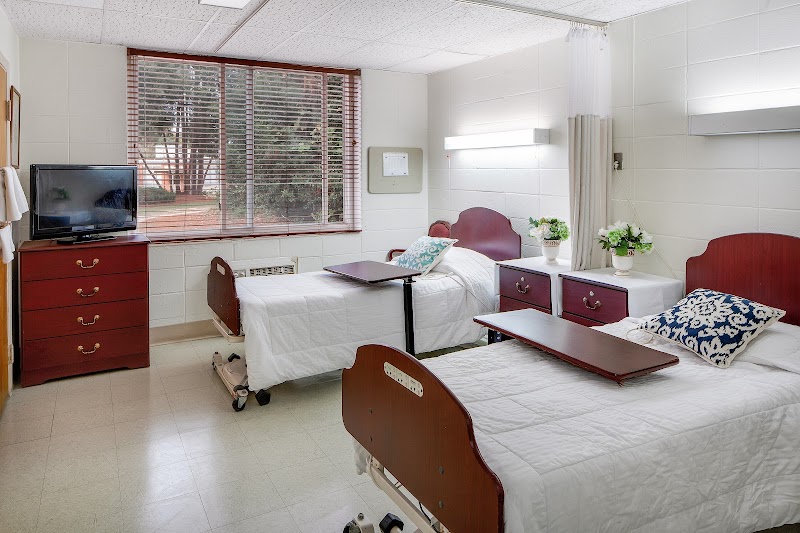
How is Pruitthealth - Holly Hill, Llc Staffed?

CMS rates PRUITTHEALTH - HOLLY HILL, LLC's staffing level at 3 out of 5 stars, which is average compared to other nursing homes. Staff turnover is 32%, compared to the Georgia average of 46%. This relatively stable workforce can support continuity of care.

What Have Inspectors Found at Pruitthealth - Holly Hill, Llc?

State health inspectors documented 25 deficiencies at PRUITTHEALTH - HOLLY HILL, LLC during 2022 to 2024. These included: 25 with potential for harm.
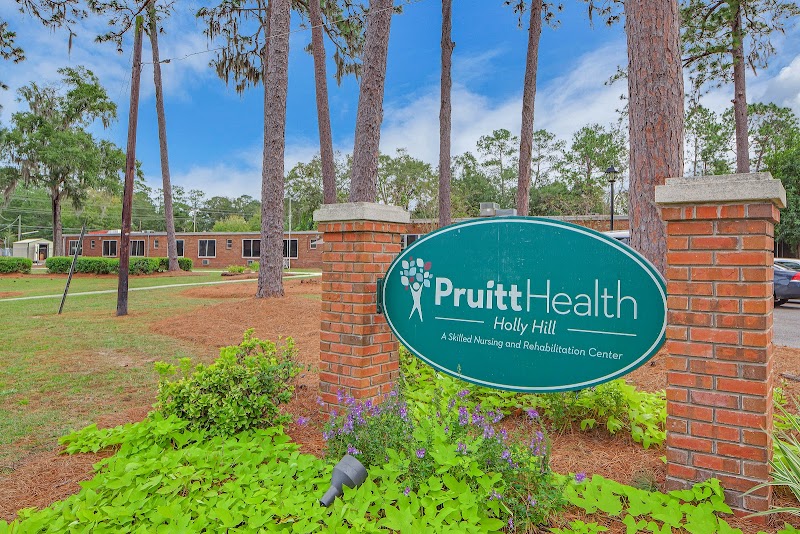
Who Owns and Operates Pruitthealth - Holly Hill, Llc?

PRUITTHEALTH - HOLLY HILL, LLC is owned by a for-profit company. For-profit facilities operate as businesses with obligations to shareholders or private owners. The facility is operated by PRUITTHEALTH, a chain that manages multiple nursing homes. With 100 certified beds and approximately 79 residents (about 79% occupancy), it is a mid-sized facility located in VALDOSTA, Georgia.
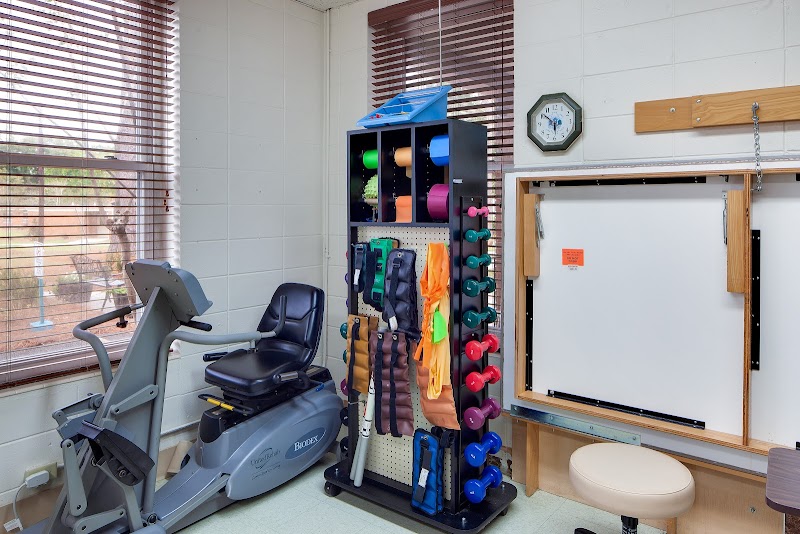
How Does Pruitthealth - Holly Hill, Llc Compare to Other Georgia Nursing Homes?

Compared to the 100 nursing homes in Georgia, PRUITTHEALTH - HOLLY HILL, LLC's overall rating (2 stars) is below the state average of 2.6, staff turnover (32%) is significantly lower than the state average of 46%, and health inspection rating (2 stars) is below the national benchmark.

What Should Families Ask When Visiting Pruitthealth - Holly Hill, Llc?

Based on this facility's data, families visiting should ask: "Can I visit during a mealtime to observe dining assistance and food quality?" "How do you handle medical emergencies, and what is your hospital transfer rate?" "Can I speak with family members of current residents about their experience?"

Is Pruitthealth - Holly Hill, Llc Safe?

Based on CMS inspection data, PRUITTHEALTH - HOLLY HILL, LLC has a clean safety record: no substantiated abuse findings (meaning no confirmed cases of resident harm), no Immediate Jeopardy citations (the most serious violation level indicating risk of serious injury or death), and is not on the Special Focus Facility watch list (a federal program monitoring the lowest-performing 1% of nursing homes). The facility has a 2-star overall rating and ranks #100 of 100 nursing homes in Georgia. While no facility is perfect, families should still ask about staff-to-resident ratios and recent inspection results during their visit.

Do Nurses at Pruitthealth - Holly Hill, Llc Stick Around?

PRUITTHEALTH - HOLLY HILL, LLC has a staff turnover rate of 32%, which is about average for Georgia nursing homes (state average: 46%). Moderate turnover is common in nursing homes, but families should still ask about staff tenure and how the facility maintains care continuity when employees leave.

Was Pruitthealth - Holly Hill, Llc Ever Fined?

PRUITTHEALTH - HOLLY HILL, LLC has no federal fines on record. CMS issues fines when nursing homes fail to meet care standards or don't correct problems found during inspections. The absence of fines suggests the facility has either maintained compliance or corrected any issues before penalties were assessed. This is a positive indicator, though families should still review recent inspection reports for the full picture.

Is Pruitthealth - Holly Hill, Llc on Any Federal Watch List?

PRUITTHEALTH - HOLLY HILL, LLC is not on any federal watch list. The most significant is the Special Focus Facility (SFF) program, which identifies the bottom 1% of nursing homes nationally based on persistent, serious quality problems. Not being on this list means the facility has avoided the pattern of deficiencies that triggers enhanced federal oversight. This is a positive indicator, though families should still review the facility's inspection history directly.