PRUITTHEALTH - WASHINGTON
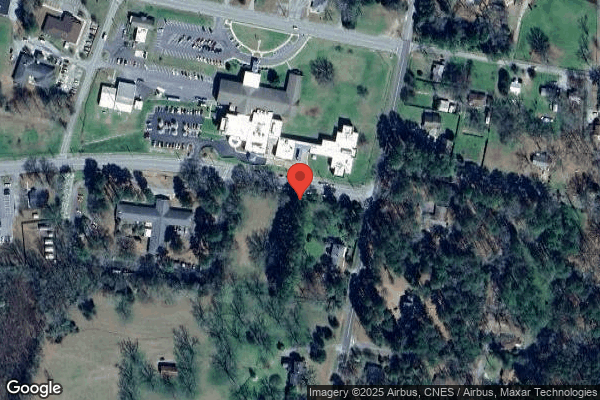
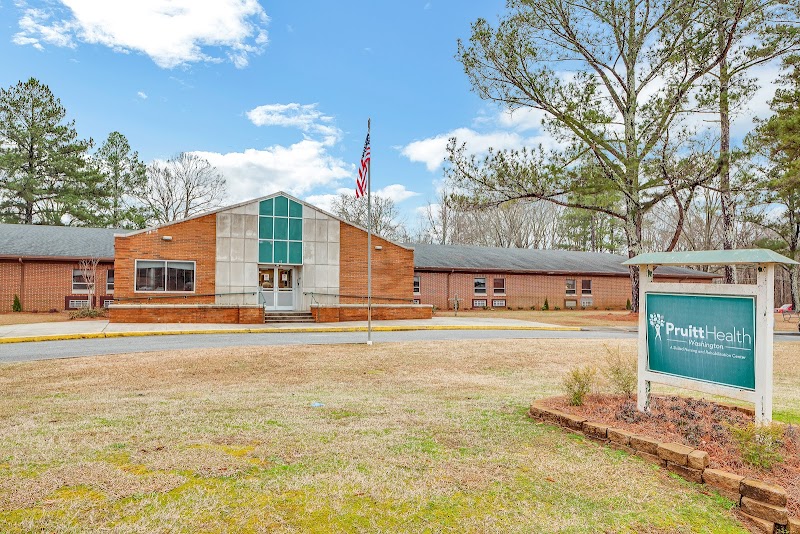
112 HOSPITAL DRIVE, WASHINGTON, GA 30673 (706) 678-7804
For profit - Corporation 47 Beds PRUITTHEALTH Data: November 2025
Trust Grade
70/100
#158 of 353 in GA
Last Inspection: November 2024

Within standard 12-15 month inspection cycle. Federal law requires annual inspections.

Overview

PruittHealth - Washington has a Trust Grade of B, indicating it is a good choice for families seeking care for their loved ones. It ranks #158 out of 353 facilities in Georgia, placing it in the top half of the state, and it is the only option in Wilkes County, ranked #1. The facility's inspection trend is new, with its first inspection showing four concerns, none of which were life-threatening but indicate potential harm. Staffing received a poor rating of 1 out of 5 stars, though the turnover rate is 44%, which is below the state average of 47%, meaning some staff do stay long-term. Notably, there were no fines reported, which is positive, but there are issues such as the ice machine not being cleaned properly, posing a risk of illness, and air conditioning units in some resident rooms not being maintained, which could affect comfort.

Trust Score
B
70/100
In Georgia
#158/353
Top 44%
Safety Record
Low Risk
No red flags
Inspections
Too New
0 → 4 violations
Staff Stability
○ Average
44% turnover. Near Georgia's 48% average. Typical for the industry.
Penalties
✓ Good
No fines on record. Clean compliance history, better than most Georgia facilities.
Skilled Nurses
⚠ Watch
Each resident gets only 21 minutes of Registered Nurse (RN) attention daily — below average for Georgia. Fewer RN minutes means fewer trained eyes watching for problems.
Violations
✓ Good
Only 4 deficiencies on record. Cleaner than most facilities. Minor issues only.
★★★☆☆
3.0
Overall Rating
★☆☆☆☆
1.0
Staff Levels
★★☆☆☆
2.0
Care Quality
★★★★☆
4.0
Inspection Score
Stable
: 0 issues
2024: 4 issues

The Good

  • Full Sprinkler Coverage · Fire safety systems throughout facility
  • No fines on record
  • Staff turnover below average (44%)

    4 points below Georgia average of 48%

Facility shows strength in fire safety.

The Bad

3-Star Overall Rating

Near Georgia average (2.6)

Meets federal standards, typical of most facilities

Staff Turnover: 44%

Near Georgia avg (46%)

Typical for the industry

Chain: PRUITTHEALTH

Part of a multi-facility chain

Ask about local staffing decisions and management

The Ugly 4 deficiencies on record

Nov 2024 4 deficiencies
CONCERN (D)

Potential for Harm - no one hurt, but risky conditions existed

Comprehensive Care Plan (Tag F0656)

Could have caused harm · This affected 1 resident

Based on observations, staff interviews, record review, and review of facility's policy titled Care Plans, the facility failed to follow a care plan for one of two residents (R) R42 reviewed for oxyge...

Read full inspector narrative →
Based on observations, staff interviews, record review, and review of facility's policy titled Care Plans, the facility failed to follow a care plan for one of two residents (R) R42 reviewed for oxygen. Findings include: Review of the facility's policy titled Care Plans with dated 7/27/2023 under the section titled Definitions revealed, Person-Centered Care Focus is on the patient/resident as the center of control. Supports each resident in making his or her own choices. Includes making an effort to understand what each patient/resident is communicating, verbally and nonverbally, to identify what is important to each resident with regards to daily routines and preferred activities and having and understanding of the resident's life before coming to reside in the health care center. Under the section titled admission Comprehensive Plan of Care revealed, number four The care plan approach serves as instructions for the patient/resident's care and provides continuity of care by all partners. Review of R42's Electronic Medical Record (EMR) revealed, she admitted with diagnoses that included but were not limited to Chronic Obstructive Pulmonary Disease (COPD), acute respiratory failure, and chronic pulmonary embolism. Review of R42's care plan revealed resident removes nasal canula, adjust settings and turns concentrator off with approaches that included but not limited to regularly check to see if tubing is properly worn with approach start date of 8/26/2024 and administer medication as ordered with approach start date of 7/15/2024; resident has episodes of shortness of breath and ineffective air exchange related to emphysema/COPD with approaches that included but not limited to administer oxygen at 2 (two) L/min (liters per minute) via nasal cannula, monitor and report signs of respiratory distress, monitor/document respiratory status every shift. (See Medication Administration Record), respiratory therapy: ipratropium-albuterol solution for nebulization; 0.5 mg (milligram)-3 mg (2.5 mg base)/3 mL (milliliters); amount: one vial with approach start date of 6/12/2024; resident has impaired gas exchange related to COPD, COPD exacerbation, and acute respiratory failure with approaches that included but not limited to administer oxygen at 2L/min via nasal cannula PRN (as needed), monitor oxygen saturation via pulse oximetry per protocol and prn, monitor/document respiratory status for changes, and provide respiratory care: nebulizer tx (treatment) per MD (medical doctor) order q (every) 12 hours, record response and time of length of time of treatment with approach start date of 6/1/2024. Review of R42's Medication Administration Record (MAR) dated 11/1/2024 through 11/20/2024 revealed, orders to monitor vital signs weekly on Wednesdays (3-11pm) once a day on Wednesday to administer oxygen at 2 LPM via nasal cannula as needed for shortness' of breath r/t (related to) COPD, check pulse ox check PRN as needed, and administer ipratropium-albuterol solution for nebulization; 0.5 mg-3 mg (2.5 mg base)/3 mL three times a day however there was no documentation on the MAR for monitoring respiratory status every shift, monitoring oxygen saturation or documentation of response and length of time for treatments. Observation on 11/17/2024 at 3:17 pm revealed, R42 receiving oxygen at 5 LPM via nasal cannula. Observation on 11/17/2024 at 5:04 pm revealed, R42 receiving oxygen at 5 LPM via nasal cannula. Observation on 11/17/2024 at 5:10 pm with Licensed Practical Nurse (LPN) DD, who was asked to R42's room confirmed the oxygen setting was at 5 LPM. Interview on 11/20/2024 at 1:50 pm with Registered Nurse (RN) EE revealed that he knew when R42 needed oxygen by checking her pulse oximetry and from signs and symptoms. He revealed that R42 did not have history of adjusting the flow rate. He revealed that he should be checking the flow rate to verify that it was correct every shift. He then stated that if a resident that receives a breathing treatment, they were supposed to be checking the vital signs before treatment and after treatment. He stated that it should be documented on the medication administration record (MAR) and/ or under the vital signs tab. He confirmed that they had not been documenting. Interview on 11/20/2024 at 1:59 pm with the Director of Health Services (DHS) revealed, breathing treatments documentation should include vital signs 15 minutes before treatment, 15 minutes post treatment and the duration of the treatment. She stated that the oxygen flow rate should be checked frequently at a regular basis, because she really does need her oxygen. Cross Reference F695
CONCERN (D)

Potential for Harm - no one hurt, but risky conditions existed

Respiratory Care (Tag F0695)

Could have caused harm · This affected 1 resident

**NOTE- TERMS IN BRACKETS HAVE BEEN EDITED TO PROTECT CONFIDENTIALITY** Based on observations, staff interviews, record review, and review of the facility's policy titled Oxygen Administration, the fa...

Read full inspector narrative →
**NOTE- TERMS IN BRACKETS HAVE BEEN EDITED TO PROTECT CONFIDENTIALITY** Based on observations, staff interviews, record review, and review of the facility's policy titled Oxygen Administration, the facility failed to ensure oxygen was administered, provide documentation of monitoring for respiratory status, and to record oxygen saturation and nebulization treatments as ordered for one of two residents (R) R42 reviewed for oxygen. The deficient practice had the potential to affect R42's quality of life. Findings include: Review of the facility's policy titled Oxygen Administration dated 8/2/2023 Policy Statement revealed, It is the policy of [Name] to provide oxygen safely and accurately to appropriate patients/residents. Under the section titled Procedure revealed, number four Regulate liter flow to ordered/desired flow rate; number six, Monitor patient/resident's vital signs as warranted by patient/resident's condition and physician's orders. Review of the Electronic Medical Record (EMR) for R42 revealed, she admitted with diagnoses that included but were not limited to Chronic Obstructive Pulmonary Disease (COPD), acute respiratory failure, and chronic pulmonary embolism. Review of the Medication Administration Record (MAR) for R42's dated 11/1/2024 through 11/20/2024 revealed, orders to monitor vital signs weekly on Wednesdays (3-11pm) once a day on Wednesday to administer oxygen at 2 LPM (liters per minute) via nasal cannula as needed for shortness' of breath r/t (related to) COPD, check pulse ox check PRN (as needed), and administer ipratropium-albuterol solution for nebulization; 0.5 mg (milligram)-3 mg (2.5 mg base)/3 mL (milliliter) three times a day however there was no documentation on the MAR for monitoring respiratory status every shift, monitoring oxygen saturation or documentation of response and length of time for treatments. Observation on 11/17/2024 at 3:17 pm revealed, R42 oxygen flow rate at 5 LPM via nasal cannula. Observation on 11/17/2024 at 5:04 pm revealed, R42 oxygen flow rate at 5 LPM via nasal cannula. Observation on 11/17/2024 at 5:10 pm with Licensed Practical Nurse (LPN) DD, who was asked to R42's room confirmed the oxygen flow rate was at 5 LPM. Interview on 11/20/2024 at 1:50 pm with Registered Nurse (RN) EE revealed that he knew when R42 needed oxygen by checking her pulse oximetry and from signs and symptoms. He revealed that R42 did not have history of adjusting the flow rate. He revealed that he should be checking the flow rate to verify that it was correct every shift. He then stated that if a resident that receives a breathing treatment, they were supposed to be checking the vital signs before treatment and after treatment. He stated that it should be documented on the medication administration record (MAR) and/ or under the vital signs tab. He confirmed that they had not been documenting. Interview on 11/20/2024 at 1:59 pm with the Director of Health Services (DHS) revealed, breathing treatments documentation should include vital signs 15 minutes before treatment, 15 minutes post treatment and the duration of the treatment. She stated that the oxygen flow rate should be checked frequently at a regular basis, because she really does need her oxygen. Cross Reference F656
CONCERN (E)

Potential for Harm - no one hurt, but risky conditions existed

Safe Environment (Tag F0584)

Could have caused harm · This affected multiple residents

**NOTE- TERMS IN BRACKETS HAVE BEEN EDITED TO PROTECT CONFIDENTIALITY** Based on observations and staff interview, the facility failed to ensure the Packaged Terminal Air Conditioners (PTAC) were main...

Read full inspector narrative →
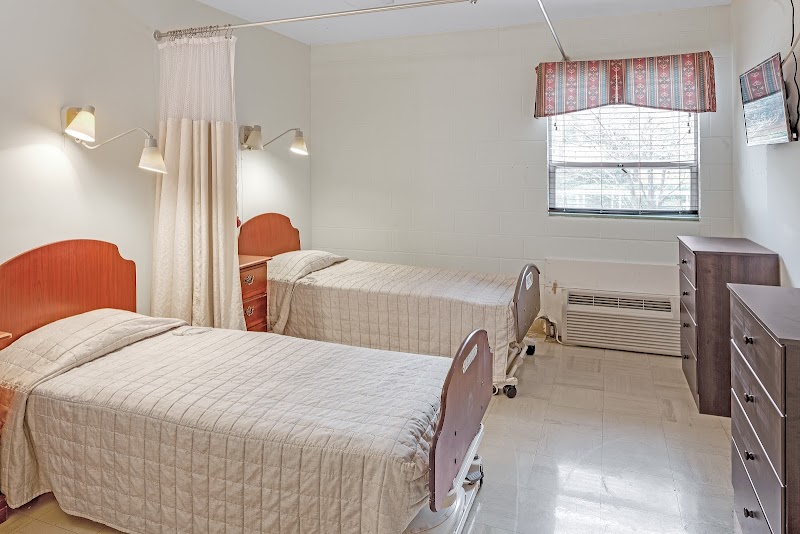
**NOTE- TERMS IN BRACKETS HAVE BEEN EDITED TO PROTECT CONFIDENTIALITY** Based on observations and staff interview, the facility failed to ensure the Packaged Terminal Air Conditioners (PTAC) were maintained to provide a clean and comfortable environment for 11 of 31 resident rooms (Rooms 11, 12, 13, 14, 15, 16, 17, 18, 19, 20, and 21). Findings include: Observation of the filtration system in the PTAC on 11/17/2024 at 2:27 pm in room [ROOM NUMBER] revealed a fuzzy, grayish brown substance in and on the filter surface. Upon pulling out the filter, debris was also noted down inside the PTAC unit where the filter was housed. Observation of the filtration system in the PTAC on 11/17/2024 at 2:36 pm in room [ROOM NUMBER] revealed a fuzzy, grayish brown substance in and on the filter surface. Upon pulling out the filter, debris was also noted down inside the PTAC unit where the filter was housed. Observation of the filtration system in the PTAC on 11/17/2024 at 2:55 pm in room [ROOM NUMBER] revealed a fuzzy, grayish brown substance in and on the filter surface. Upon pulling out the filter, debris was also noted down inside the PTAC unit where the filter was housed. Observation of the filtration system in the PTAC on 11/17/2024 at 3:12 pm in room [ROOM NUMBER] revealed a fuzzy, grayish brown substance in and on the filter surface. Observation of the filtration system in the PTAC on 11/17/2024 at 3:22 pm in room [ROOM NUMBER] revealed a fuzzy, grayish brown substance in and on the filter surface. Upon pulling out the filter, debris was also noted down inside the PTAC unit where the filter was housed. Observation of the filtration system in the PTAC on 11/17/2024 at 3:43 pm in room [ROOM NUMBER] revealed a fuzzy, grayish brown substance in and on the filter surface. Upon pulling out the filter, debris was also noted down inside the PTAC unit where the filter was housed. Observation of the filtration system in the PTAC on 11/17/2024 at 3:55 pm in room [ROOM NUMBER] revealed a fuzzy, grayish brown substance in and on the filter surface. Upon pulling out the filter, debris was also noted down inside the PTAC unit where the filter was housed. Observation of the filtration system in the PTAC on 11/17/2024 at 4:14 pm in room [ROOM NUMBER] revealed a fuzzy, grayish brown substance in and on the filter surface. Upon pulling out the filter, debris was also noted down inside the PTAC unit where the filter was housed. Observation of the filtration system in the PTAC on 11/17/2024 at 4:30 pm in room [ROOM NUMBER] revealed a fuzzy, grayish brown substance in and on the filter surface. Upon pulling out the filter, debris was also noted down inside the PTAC unit where the filter was housed. Observation of the filtration system in the PTAC on 11/17/2024 at 2:27 pm in room [ROOM NUMBER] revealed a fuzzy, grayish brown substance in and on the filter surface. Upon pulling out the filter, debris was also noted down inside the PTAC unit where the filter was housed. Interview on 11/20/2024 at 11:05 am with the Maintenance Manager revealed, that the TELS (a web-based platform/service records) Building Management System has a reminder and check off for these to be done quarterly. He stated that he has told management that he feels cleaning should be done more often especially with the construction and painting currently taking place in the facility. The Maintenance Manager stated that all filters were cleaned this week after concerns were identified by surveyors.
CONCERN (F)

Potential for Harm - no one hurt, but risky conditions existed

Food Safety (Tag F0812)

Could have caused harm · This affected most or all residents

**NOTE- TERMS IN BRACKETS HAVE BEEN EDITED TO PROTECT CONFIDENTIALITY** Based on observation, staff interview, record review, and review of the facility's policy titled Cleaning Schedule Policy, the f...

Read full inspector narrative →
**NOTE- TERMS IN BRACKETS HAVE BEEN EDITED TO PROTECT CONFIDENTIALITY** Based on observation, staff interview, record review, and review of the facility's policy titled Cleaning Schedule Policy, the facility failed to maintain the ice machine in a clean, sanitary manner. The deficient practice had the potential to cause illness to 43 out of 45 residents who consumed an oral diet. Findings include: Review of the facility's policy titled Cleaning Schedule Policy dated 9/29/2022 under the Policy Statement revealed, It is the policy of [Name] that the Dietary Manager prepares a list of all cleaning tasks and posts them in the Dietary Department. It is the Dietary Manager's responsibility to develop and enforce the cleaning schedules and to monitor the completion of assigned cleaning tasks to promote a sanitary environment. Review of the facility's Ice Machine Cleaning Schedule Form revealed the unit should be cleaned monthly and indicated that it had been cleaned on 10/4/2024. Review of the facility's Direct Supply TELS (a web-based platform/service records) Work History Report indicated the ice machine was cleaned on 10/4/2024. During an observation on 11/17/2024 at 1:16 pm of the kitchen with the Dietary Manager (DM) revealed, the ice machine in the dining room next to the kitchen. Observation of the interior side of the ice machine revealed a black substance at both hinges of the lid. Interview with the DM stated the Maintenance Director (MD) was responsible for cleaning the ice machine, but she was not sure how often the unit should be cleaned or the last time it was cleaned. Observation and interview on 11/17/2024 at 1:45 pm with the MD, confirmed the black film on the interior side of the ice machine. He stated he cleaned the unit monthly and as needed and that he last cleaned it a couple of weeks ago. The MD revealed he should look inside the unit more frequently to make sure it remained free of the filmy substance. Observation and interview on 11/17/2024 at 3:30 pm with the DM revealed, the unit was cleaned and that she would help monitor the unit more frequently for cleanliness.
Understanding Severity Codes (click to expand)
Life-Threatening (Immediate Jeopardy)
J - Isolated K - Pattern L - Widespread
Actual Harm
G - Isolated H - Pattern I - Widespread
Potential for Harm
D - Isolated E - Pattern F - Widespread
No Harm (Minor)
A - Isolated B - Pattern C - Widespread

Questions to Ask on Your Visit

  • "Can I speak with families of current residents?"
  • "What's your RN coverage like on weekends and overnight?"

Our Honest Assessment

Strengths
  • • No major safety red flags. No abuse findings, life-threatening violations, or SFF status.
  • • No fines on record. Clean compliance history, better than most Georgia facilities.
  • • Only 4 deficiencies on record. Cleaner than most facilities. Minor issues only.
  • • 44% turnover. Below Georgia's 48% average. Good staff retention means consistent care.
Concerns
  • • No major red flags. Standard due diligence and a personal visit recommended.
Bottom line: Mixed indicators with Trust Score of 70/100. Visit in person and ask pointed questions.

About This Facility

What is Pruitthealth - Washington's CMS Rating?

CMS assigns PRUITTHEALTH - WASHINGTON an overall rating of 3 out of 5 stars, which is considered average nationally. Within Georgia, this rating places the facility higher than 99% of the state's 100 nursing homes. This mid-range rating indicates the facility meets federal standards but may have areas for improvement.
How is Pruitthealth - Washington Staffed?

CMS rates PRUITTHEALTH - WASHINGTON's staffing level at 1 out of 5 stars, which is much below average compared to other nursing homes. Staff turnover is 44%, compared to the Georgia average of 46%. This relatively stable workforce can support continuity of care. RN turnover specifically is 67%, which is notably high. RNs provide skilled clinical oversight, so turnover in this role can affect medical care quality.

What Have Inspectors Found at Pruitthealth - Washington?

State health inspectors documented 4 deficiencies at PRUITTHEALTH - WASHINGTON during 2024. These included: 4 with potential for harm.
Who Owns and Operates Pruitthealth - Washington?

PRUITTHEALTH - WASHINGTON is owned by a for-profit company. For-profit facilities operate as businesses with obligations to shareholders or private owners. The facility is operated by PRUITTHEALTH, a chain that manages multiple nursing homes. With 47 certified beds and approximately 45 residents (about 96% occupancy), it is a smaller facility located in WASHINGTON, Georgia.
How Does Pruitthealth - Washington Compare to Other Georgia Nursing Homes?

Compared to the 100 nursing homes in Georgia, PRUITTHEALTH - WASHINGTON's overall rating (3 stars) is above the state average of 2.6, staff turnover (44%) is near the state average of 46%, and health inspection rating (4 stars) is above the national benchmark.

What Should Families Ask When Visiting Pruitthealth - Washington?

Based on this facility's data, families visiting should ask: "Can you walk me through typical staffing levels on day, evening, and night shifts?" "Can I visit during a mealtime to observe dining assistance and food quality?" "How do you handle medical emergencies, and what is your hospital transfer rate?" "Can I speak with family members of current residents about their experience?" These questions are particularly relevant given the below-average staffing rating.

Is Pruitthealth - Washington Safe?

Based on CMS inspection data, PRUITTHEALTH - WASHINGTON has a clean safety record: no substantiated abuse findings (meaning no confirmed cases of resident harm), no Immediate Jeopardy citations (the most serious violation level indicating risk of serious injury or death), and is not on the Special Focus Facility watch list (a federal program monitoring the lowest-performing 1% of nursing homes). The facility has a 3-star overall rating and ranks #1 of 100 nursing homes in Georgia. While no facility is perfect, families should still ask about staff-to-resident ratios and recent inspection results during their visit.

Do Nurses at Pruitthealth - Washington Stick Around?

PRUITTHEALTH - WASHINGTON has a staff turnover rate of 44%, which is about average for Georgia nursing homes (state average: 46%). Moderate turnover is common in nursing homes, but families should still ask about staff tenure and how the facility maintains care continuity when employees leave.

Was Pruitthealth - Washington Ever Fined?

PRUITTHEALTH - WASHINGTON has no federal fines on record. CMS issues fines when nursing homes fail to meet care standards or don't correct problems found during inspections. The absence of fines suggests the facility has either maintained compliance or corrected any issues before penalties were assessed. This is a positive indicator, though families should still review recent inspection reports for the full picture.

Is Pruitthealth - Washington on Any Federal Watch List?

PRUITTHEALTH - WASHINGTON is not on any federal watch list. The most significant is the Special Focus Facility (SFF) program, which identifies the bottom 1% of nursing homes nationally based on persistent, serious quality problems. Not being on this list means the facility has avoided the pattern of deficiencies that triggers enhanced federal oversight. This is a positive indicator, though families should still review the facility's inspection history directly.