Pinewood Health and Rehabilitation

433 NORTH MCGRIFF STREET, WHIGHAM, GA 39897 (229) 307-2004
For profit - Individual 142 Beds Independent Data: November 2025 7 Immediate Jeopardy citations
Trust Grade
0/100
#322 of 353 in GA
Last Inspection: February 2025

Within standard 12-15 month inspection cycle. Federal law requires annual inspections.

Overview

Pinewood Health and Rehabilitation has received an F grade for its trust score, indicating poor performance with significant concerns. It ranks #322 out of 353 nursing homes in Georgia, placing it in the bottom half of facilities statewide, although it is the only option available in Grady County. The facility's situation appears to be worsening, with the number of issues reported increasing from 9 in 2024 to 16 in 2025. While staffing turnover is remarkably low at 0%, which is a strength, the facility has alarming fines totaling $210,094, higher than 97% of Georgia facilities, indicating ongoing compliance problems. Additionally, there have been serious incidents, including failures to conduct proper neurological checks after falls, which led to critical injuries and even a resident's death, showing serious deficiencies in patient safety measures.
Trust Score
F
0/100
In Georgia
#322/353
Bottom 9%
Safety Record
High Risk
Review needed
Inspections
Getting Worse
9 → 16 violations
Staff Stability
○ Average
Turnover data not reported for this facility.
Penalties
○ Average
$210,094 in fines. Higher than 69% of Georgia facilities. Some compliance issues.
Skilled Nurses
⚠ Watch
Each resident gets only 27 minutes of Registered Nurse (RN) attention daily — below average for Georgia. Fewer RN minutes means fewer trained eyes watching for problems.
Violations
⚠ Watch
46 deficiencies on record. Higher than average. Multiple issues found across inspections.
★☆☆☆☆
1.0
Overall Rating
★☆☆☆☆
1.0
Staff Levels
★☆☆☆☆
1.0
Care Quality
★☆☆☆☆
1.0
Inspection Score
Stable
2024: 9 issues
2025: 16 issues

The Good

  • Full Sprinkler Coverage · Fire safety systems throughout facility
  • No fines on record

Facility shows strength in fire safety.

The Bad

1-Star Overall Rating

Below Georgia average (2.6)

Significant quality concerns identified by CMS

Federal Fines: $210,094

Well above median ($33,413)

Significant penalties indicating serious issues

The Ugly 46 deficiencies on record

7 life-threatening
Aug 2025 4 deficiencies 3 IJ
CRITICAL (J) 📢 Someone Reported This

A family member, employee, or ombudsman was alarmed enough to file a formal complaint

Immediate Jeopardy (IJ) - the most serious Medicare violation

Accident Prevention (Tag F0689)

Someone could have died · This affected 1 resident

**NOTE- TERMS IN BRACKETS HAVE BEEN EDITED TO PROTECT CONFIDENTIALITY** Based on records review, staff interviews, and the facility policy titled Fall Prevention Policy, the facility failed to ensure ...

Read full inspector narrative →
**NOTE- TERMS IN BRACKETS HAVE BEEN EDITED TO PROTECT CONFIDENTIALITY** Based on records review, staff interviews, and the facility policy titled Fall Prevention Policy, the facility failed to ensure that one Resident (R1) with a history of multiple falls and receiving Plavix daily had accurate and complete neurological checks for a head injury on [DATE] and a second fall on [DATE] resulting in an acute bilateral tentorial subdural hemorrhage to the left side of the head with a right-to-left midline shift. The resident expired on [DATE] with an immediate cause of death determined to be a subdural hematoma. The facility census was 60. On [DATE], a determination was made that a situation in which the facility's noncompliance with one or more requirements of participation caused or had the likelihood to cause serious injury, harm, impairment, or death to residents. The facility's Administrator, Interim Director of Nursing, Director of Nursing, MDS (Minimum Data Set) Coordinator, and Registered Nurse Wound Care were informed of the Immediate Jeopardy on [DATE], at 4:07 p.m. The noncompliance related to the Immediate Jeopardy was identified to have existed on [DATE]. An Acceptable IJ Removal Plan was received on [DATE]. Based on observation, record reviews, review of facility policies as outlined in the Removal Plan, and staff interviews, it was validated that the corrective plans and the immediacy of the deficient practice were removed on [DATE]. The facility remained out of compliance while the facility continues to develop and implement a Plan of Correction (POC). This oversight process includes analyzing the facility's staff's conformance with the facility's policies and procedures related to ensuring resident safety, including staff education, care plan review and interventions, fall risk assessments, resident neurological checks, and quality assurance. Findings include:Review of the policy Fall Prevention Policy dated [DATE]. Policy: Each resident will be assessed for fall risk and will receive care and services in accordance with their individualized level of risk to minimize the likelihood of falls.Policy Explanation and Compliance Guidelines: 9. When any resident experiences a fall, the facility will a. Assess the resident. b. Complete a post-fall assessment. f. Document all assessments and actions. h. Initiate neurological checks (if unwitnessed or witnessed and the resident hit their head).Review of the Electronic Medical Record (EMR) for R1 revealed the following diagnoses that included but were not limited to traumatic subdural hemorrhage with loss of consciousness of 30 minutes or less, type 2 diabetes mellitus, and hypertension.Review NBC (nonspecific tool by name)-Fall Risk Assessment dated [DATE] revealed a score of 16, indicating high risk.Review of progress notes dated [DATE] to [DATE] revealed a history of multiple falls. An entry dated [DATE] at 1:47 pm revealed R1 was found lying on the floor on his back with his walker rollator next to him. R1 sustained a hematoma to the top of his head. It was noted that the physician was notified of the fall, and neurological checks were started per fall protocol.Review of the Neurological Assessment Flowsheet dated [DATE] revealed the flowsheet was to be completed for each fall with a head injury or any unwitnessed fall. The parameters listed on the flowsheet are to Complete Every 15 minutes x 2 hours, Every 30 minutes x 2 hours. And the instructions: Document the date and time of each assessment, proceed as follows. Level of Consciousness, Pupil Response, Motor Functions - Hand grasp, extremities. Pain Response, Vitals and Observation.There was a discrepancy in time intervals between the last 15 minutes and the beginning of the 30-minute neurological checks for R1. There was no evidence that the neurological check assessments were completed for the [DATE] night shift (11:00 pm to 6:00 am), [DATE] for each of the three shifts, and [DATE] day shift (7:00 am to 3:00 pm).The progress note (nursing) dated [DATE] revealed R1 was noted to be on the floor in his room. R1 had discoloration from a previous fall ([DATE]). The nurse noted she attempted to notify the physician and the emergency contact. She returned to R1's room to do neurological checks, and R1 was not responding to commands. The resident was in a state of sleep, and she was unable to get the resident to respond. R1 was sent out via Emergency Medical Services (EMS) for an evaluation. The nurse noted that she had received a call from the hospital that his diagnosis was a brain bleed with a midline shift. On [DATE], R1 returned from the hospital on hospice care.Review of the Medication Administration Record (MAR) for R1, dated [DATE] through [DATE], revealed an order for clopidogrel bisulfate [generic Plavix (a medication used to prevent blood clotting)] oral tablet 75 milligrams (mg) by mouth one time a day related to essential primary hypertension. Further review revealed the medication was documented as administered daily as ordered. Review of the Medication Administration Record (MAR) dated [DATE] through [DATE] revealed R1 received clopidogrel bisulfate (Plavix) oral tablet 75 mg by mouth one time a day. He was administered Plavix on [DATE] through [DATE] as indicated by initials on the MAR.Review of the hospital emergency room (ER) documentation dated [DATE] revealed that R1 was sent to the closest hospital. The resident was noted to have an unwitnessed fall and was on Plavix. EMS stated the hematoma was on the back of the head. R1 received a Computed Tomography (CT) scan, which revealed a right-sided subdural and epidural bleed. R1 emergency contact reversed the DNR (Do Not Resuscitate) and requested that any intervention be done to the patient. R1 had a blunt fall epidural hemorrhage. R1 was unconscious. The CT dated [DATE] revealed there are acute bilateral tentorial subdural hemorrhages (a type of brain bleed located beneath the dura mater and adjacent to the tentorium cerebelli, a [NAME] fold in the brain) present, left greater than right, measuring up to 6 centimeters (cm). There is a 14 millimeter (mm) right-to-left midline shift. A chronic left subdural hematoma is present, measuring up to 1 cm in thickness. Right subdural hematoma, measuring up to 2.1 cm, with mass effect upon the right cerebral. The Emergency Department (ED) deposition dated [DATE] revealed that R1's trauma required a higher level of care. Resident 1 was transported via ALS (Advance Life Support) ambulance to another hospital in a different county. On [DATE], R1 returned to the facility in a state of unconsciousness and with hospice care. He remained in a state of unconsciousness until he expired on [DATE],Review of the Georgia Death Certificate revealed Immediate Cause of death was a Subdural Hematoma with a week's onset. date of death [DATE].An interview on [DATE] at 2:14 pm, Certified Nurse Aide (CNA) CC revealed that the day before R1 fell the first time ([DATE]), R1 was using his walker (rollator). On [DATE] at 10:22 am, CNA CC revealed resident could do for himself. He used his walker to walk. He was going to the dining room and participating in activities. He was not the type to lie in bed. He always came out of his room. When he returned from the hospital on [DATE], he was totally dependent and unresponsive.An interview on [DATE] at 9:52 am with CNA DD revealed that R1 was able to go to the shower, dress, feed himself, and ambulate before his fall with a walker on wheels (rollator). CNA DD stated that R1 would participate in activities and is not the type of person to be in bed. He would always come to the dining room before meals were served. She stated that R1 changed after the fall before he had the last fall. He started urinating on himself. He had to be encouraged to come to the dining room, start taking off his clothes, and would sleep a lot, which was not his usual routine. CNA DD revealed his normal routine was to move around following the CNAs. CNA DD stated that after the first fall ([DATE]), he had to be bathed. She stated that after the last fall on [DATE], when he came back from the hospital, he was not talking, could not open his eyes, and was not eating. An interview on [DATE] at 2:02 pm with Registered Nurse (RN) BB revealed that R1 fell on [DATE]. She stated that the resident stood and tumbled while going into his room and fell backward. RN BB stated that he hit his head on the door as he was falling. She talked to him to make sure his mental status was normal and revealed his mental status, face, and pupils were normal, but he did complain of pain. On [DATE] at 9:27 am, RN BB stated that R1 was assisted by CNA VV after the fall on [DATE]. She stated that CNA VV was in the hallway close to the resident's room. RN BB stated that she called the physician about the fall and told him R1 seemed fine and didn't have any changes. She continued to state that she initiated the neuro checks. RN BB confirmed that she did not inform the physician of R1's daily Plavix.An interview on [DATE] at 1:24 pm with LPN II revealed that after the fall on [DATE], R1 started needing some assistance with dressing, but was still walking using his walker (rollator). LPN II stated that R1 had some confusion, and she was going to get a urine sample because R1 had a history of urinary tract infection. She revealed that RN BB told her that she had done neurological checks and that R1 was fine. LPN II further revealed that when she saw the hematoma, it was like a goose egg but was the size of a pecan when she noticed the knot the first time. LPN II could not recall if she did the neurological checks if her initials were not on the form, and that LPN SS may have documented her neuro checks for the [DATE] day shift. An interview on [DATE] at 9:07 am with CNA VV revealed that she recalled that after the fall on [DATE], R1 was spending more time in bed. He would get up to go to his bathroom and get back in bed or sit in his chair.An interview on [DATE] at 1:14 pm with LPN AA revealed that she came to work and received a shift report stating that R1 had a previous fall on [DATE]. LPN AA stated that she noticed R1 had a knot on his head, which was getting larger, and his head looked warped. She revealed that the former Director of Nursing (DON) was aware of the knot. She stated that R1 was walking down the hall naked; he was somewhat disoriented. LPN AA further revealed that R1 had a fall ([DATE]) in his room and was placed in bed. He was unresponsive, and she called the physician, but did not wait for a return call to send R1 to the hospital. She called the hospital for an update and was told the resident had a brain bleed with a midline shift. An interview on [DATE] at 4:43 pm with LPN HH revealed R1 on [DATE] was coming down the hall naked from the waist down. Staff walked R1 to his room and put some pants on him. LPN HH stated that there was some confusion going on with him, and he has good and bad days. LPN HH further revealed that after the first fall ([DATE]), R1 started wanting to be in bed more, and his hematoma was the size of a lemon plus or minus on the left side near the front of the head. After the resident last fall, she went back and read the previous fall ([DATE]) note and felt that the resident should have been sent out and felt that the nurse who was assigned did not give the physician the extent of the resident's head injury.An interview on [DATE] at 10:19 am with the Physician revealed that he remembered RN BB calling him and stating that R1 had fallen, and he thought she had said that R1 refused to go to the ER. He gave instructions to watch R1 closely and was concerned that R1 would not go to the ER. The Physician stated that RN BB told him neurological checks were started, but she did not tell him about the resident being on Plavix. He stated that he was not called about the R1 showing signs of confusion, and he did not give an order for a urinalysis sample, nor did the Nurse Practitioner (NP). The Physician further revealed that he read the nurse's note for [DATE], and his expectation that residents on an anticoagulant with a visible head injury should be monitored and taken to the ER for evaluation. However, the investigation revealed that there was no evidence that R1 had refused to go to the ER. The physician was informed that there was no documentation of R1 refusal. The only refusal identified was R4, who declined a surgical repair for a fractured hip.
CRITICAL (J) 📢 Someone Reported This

A family member, employee, or ombudsman was alarmed enough to file a formal complaint

Immediate Jeopardy (IJ) - the most serious Medicare violation

Deficiency F0726 (Tag F0726)

Someone could have died · This affected 1 resident

**NOTE- TERMS IN BRACKETS HAVE BEEN EDITED TO PROTECT CONFIDENTIALITY** Based on record review, staff interviews, the facility failed to ensure that staff nurses assessed and completed neurological ch...

Read full inspector narrative →
**NOTE- TERMS IN BRACKETS HAVE BEEN EDITED TO PROTECT CONFIDENTIALITY** Based on record review, staff interviews, the facility failed to ensure that staff nurses assessed and completed neurological checks for one of 10 Residents (R1) who had a fall (5/15/2025) with a head injury and sustained a hematoma. The census was 60. On August 12, 2025, a determination was made that a situation in which the facility's noncompliance with one or more requirements of participation caused or had the likelihood to cause serious injury, harm, impairment, or death to residents. The facility's Administrator, Interim Director of Nursing, Director of Nursing, MDS (Minimum Data Set) Coordinator, and Registered Nurse Wound Care were informed of the Immediate Jeopardy on August 12, 2025, at 4:07 p.m. The noncompliance related to the Immediate Jeopardy was identified to have existed on May 15, 2025. An Acceptable IJ Removal Plan was received on 8/14/2025. Based on observation, record reviews, review of facility policies as outlined in the Removal Plan, and staff interviews, it was validated that the corrective plans and the immediacy of the deficient practice were removed on 8/15/2025. The facility remained out of compliance while the facility continues to develop and implement a Plan of Correction (POC). This oversight process includes analyzing the facility's staff's conformance with the facility's policies and procedures related to ensuring resident safety, including staff education, care plan review and interventions, fall risk assessments, resident neurological checks, and quality assurance. Findings include:Review of the medical record for R1 revealed diagnoses that included, but were not limited to, traumatic subdural hemorrhage with loss of consciousness of 30 minutes or less, dated 5/23/2025.Review of the Medication Administration Record (MAR) dated 5/1/2025 through 5/31/2025 revealed an order for clopidogrel bisulfate [generic Plavix (a medication used to prevent blood clotting)] oral tablet 75 milligrams (mg) by mouth one time a day related to essential primary hypertension. Further review revealed the medication was documented as administered daily as ordered. Review of the Progress Notes for R1 revealed an entry dated 5/15/2025 at 1:47 pm documented that R1 was found lying on the floor on his back with his walker (rollator) next to him. R1 had a hematoma [a localized collection of blood outside of a blood vessel caused by trauma or injury] to the top of his head. It was noted that the physician was notified of the fall, and neurological checks (neuro checks) were started per the facility's fall protocol. Continued review revealed an entry dated 5/21/2025 at 7:43 pm that R1 was noted to be on the floor in his room. The resident was unable to give a description of the incident and was assisted to a chair via a two-person assist. The nurse returned to the room, and the resident was not responding to commands. Staff were unable to get the resident to respond to any commands. The resident was sent out via Emergency Medical Services (EMS) for evaluation. Review of the facility-provided document titled Neurological Assessment Flow Sheet for R1 indicated the neuro checks were to be completed every 15 minutes for two hours, every 30 minutes for two hours, and every shift for 72 hours. Further review of the document revealed that the neuro checks were initiated on 5/15/2025 at 1:30 pm. Continued review revealed no evidence that the neurological checks were completed on the 5/17/2025 night shift (11:00 pm to 6:00 am), 5/18/2025 for each of the three shifts, and 5/19/2025 day shift (7:00 am to 3:00 pm). The Vitals section of the document revealed a blood pressure of 99/58 on 5/15/2025 at 2:30 pm, 104/58 at 3:30 pm, and 108/58 at 4:30 pm. There was no documented evidence that the physician was notified of the blood pressure readings. Review of the Georgia Death Certificate for R1 revealed the Immediate Cause of death was a Subdural Hematoma, and the approximate interval between onset and death was weeks. date of death [DATE].In an interview on 8/5/2025 at 1:14 pm, Licensed Practice Nurse (LPN) AA revealed that she came to work on 5/21/2025, and that she received a report that R1 had a previous fall on 5/15/2025. She noticed that the resident had a knot on his head that was getting larger, and his head looked warped. She stated that the Director of Nursing (DON) was aware of the knot. She further stated that R1 was more confused. He had a fall in his room and was placed in his bed. She stated she left the room to call the physician, returned to R1's room, saw him unresponsive, and sent him to the hospital via EMS services.In an interview on 8/5/2025 at 2:02 pm, Registered Nurse (RN) BB revealed the R1 fell on 5/15/2025. She stated that the resident stood and tumbled while going into his room and fell backward. His head hit the door as he was falling. In an interview on 8/6/2025 at 9:52 am, Certified Nurse Aide (CNA) DD revealed that before his fall with injury, R1 was able to go to the shower, dress, and feed himself. He was ambulatory with a walker and would place his clothes over the walker. He had a walker with wheels (rollator). She stated that he was still his usual self and was not a bed person. CNA DD further stated that R1 changed after the fall and before he had the last fall. She stated he started urinating on himself, had to be encouraged to come to the dining room, started taking off his clothes, and would sleep a lot, which were not his usual behaviors. She stated that after the last fall, when he came back from the hospital, he was not talking, could not open his eyes, and was not eating. He was pretty much a vegetable. In an interview on 8/7/2025 at 1:24 pm, LPN II revealed that after a fall on 5/15/2025, R1 started needing some assistance with dressing and had some confusion. LPN II stated she was unable to recall if she conducted the neuro checks for R1 after the fall. In an interview on 8/11/2025 at 9:27 am. RN BB revealed that she witnessed the fall on 5/15/2025. She stated she was in the hallway close to the resident's room. She stated she called the physician about the fall and told him the resident seemed fine. In an interview on 8/11/2025 at 10:19 am, the physician revealed that he recalled RN BB calling him and telling him the R1 had fallen and that R1 refused to go to the emergency room (ER). He gave instructions to watch closely and was concerned about the resident not going to the ER. The physician stated RN BB told him that neuro checks were started, but she did not tell him the resident was on Plavix. He stated he was not called about the resident showing signs of confusion. He stated his expectation was that residents are to go to the ER for a visible head injury, and if on an anticoagulant. He further stated that residents were to be monitored closely and that documentation was to be completed. In an interview on 8/11/2025 at 2:01 pm, RN WW, Interim DON, and RN XX, newly hired DON, confirmed R1 was on Plavix and sustained a head injury. The nurse should have informed the physician that the resident received Plavix, neurological checks should have been assessed for differences, and R1 monitored for changes.
CRITICAL (J) 📢 Someone Reported This

A family member, employee, or ombudsman was alarmed enough to file a formal complaint

Immediate Jeopardy (IJ) - the most serious Medicare violation

Administration (Tag F0835)

Someone could have died · This affected 1 resident

**NOTE- TERMS IN BRACKETS HAVE BEEN EDITED TO PROTECT CONFIDENTIALITY** Based on record review, staff interviews, and a review of the facility-provided Administrator and Director of Nursing (DON) Job ...

Read full inspector narrative →
**NOTE- TERMS IN BRACKETS HAVE BEEN EDITED TO PROTECT CONFIDENTIALITY** Based on record review, staff interviews, and a review of the facility-provided Administrator and Director of Nursing (DON) Job Description, the Administration failed to provide oversight and supervision related to assessments of post fall monitoring and neurological checks by licensed nurses and failed to ensure safety measures implemented were effective for R1, who suffered head trauma after a fall, resulting in death.On [DATE], a determination was made that a situation in which the facility's noncompliance with one or more requirements of participation caused or had the likelihood to cause serious injury, harm, impairment, or death to residents.The facility's Administrator, Interim Director of Nursing (DON), Director of Nursing, MDS (Minimum Data Set) Coordinator, and Registered Nurse Wound Care were informed of the Immediate Jeopardy on [DATE], at 4:07 p.m. The noncompliance related to the Immediate Jeopardy was identified to have existed on [DATE]. An Acceptable IJ Removal Plan was received on [DATE]. Based on observation, record reviews, review of facility policies as outlined in the Removal Plan, and staff interviews, it was validated that the corrective plans and the immediacy of the deficient practice were removed on [DATE]. The facility remained out of compliance while the facility continues to develop and implement a Plan of Correction (POC). This oversight process includes analyzing the facility's staff's conformance with the facility's policies and procedures related to ensuring resident safety, including staff education, care plan review and interventions, fall risk assessments, resident neurological checks, and quality assurance. Findings include: Review of the Administrator job description dated [DATE]. Purpose of Your Job Position. The primary purpose of your job position is to direct the day-to-day functions of the facility in accordance with current federal, state, and local standards, guidelines, and regulations that govern nursing facilities to ensure that the highest degree of quality care can be provided to our residents at all times. Duties and Responsibilities. Plan, develop, organize, implement, evaluate, and direct the facility's programs and activities in accordance with guidelines issued by the governing board. Develop and maintain written policies and procedures and professional standards of practice that govern the operation of the facility. Review of the Director of Nursing job description dated [DATE]. Position Purpose. Planning, organizing, developing, and directing the overall operations of the Nursing Service Department in accordance with local, state, and federal standards and regulations, established facility policies and procedures, and as may be directed by the Administrator and the Medical Director, to provide appropriate care to the residents. Major Duties and Responsibilities. Interprets and communicates policies and procedures to nursing staff, and monitors staff practices and implementation. Participates in daily or weekly management team meetings to discuss census changes, resident changes in status, complaints or concerns. Performs rounds to observe residents and ensure nursing needs are being met. Facility Administration, specifically the Administrator and DON, failed to ensure resident safety and effectively oversee areas of the facility that were included in their job descriptions. 1.The facility Administration failed to provide supervision and oversight of R1, who had a history of multiple falls; failed to ensure monitoring of R1, who was on Plavix and had a head trauma from a fall on [DATE] and a second fall on [DATE] with head trauma resulting in death on [DATE]. Cross-reference F689 2.The facility failed to ensure safety measures implemented were effective for R1 who had a head trauma from a fall on [DATE] and [DATE].Cross-reference F689, 726, F835 3.The facility failed to ensure R1 had accurate and completed neurological checks post-fall ([DATE]) protocol for head injury. R1 had a hematoma located on the left side of the head and was receiving Plavix daily.Cross-reference F835 4.The facility failed to ensure that staff nurses assessed and completed neurological checks for R1, who was on Plavix and had a fall ([DATE]), which resulted in a hematoma to the left side of the head.Cross-reference F689, F835 Review of R1's fall history for 2025 revealed he had had a total of 10 falls prior to his death. A previous fall on [DATE] resulted in a compressed fracture of the lumbar spine. R1 fell on [DATE], revealing a hematoma (nurse's note) to the top of his head. And on [DATE], a fall that put R1 in a state of unconsciousness and expired on [DATE]. A review of the progress note (nursing) dated [DATE] revealed R1 was noted to be on the floor in his room. R1 had discoloration from a previous fall ([DATE]). The nurse noted she attempted to notify the physician and the emergency contact. She returned to R1's room to do neurological checks, and R1 was not responding to commands. The resident was in a state of sleep, and she was unable to get the resident to respond. R1 was sent out via Emergency Medical Services (EMS) for an evaluation. The nurse noted that she had received a call from the hospital that his diagnosis was a brain bleed with a midline shift. On [DATE], R1 returned from the hospital on hospice care. R1 expired in the facility on [DATE]Review of the Georgia Death Certificate revealed Immediate Cause of death was a Subdural Hematoma with a week's onset. date of death [DATE].There was a discrepancy in time intervals between the last 15 minutes and the beginning of the 30-minute neurological checks for R1. There was no evidence that the neurological check assessments were completed for the [DATE] night shift (11:00 pm to 6:00 am), [DATE] for each of the three shifts, and [DATE] day shift (7:00 am to 3:00 pm).There was no evidence of Performance Assessment Review (PAR) meetings being held weekly. The facility was unable to provide documentation from the former Director of Nursing (DON) regarding PAR meetings. Review of the hospital emergency room (ER) documentation dated [DATE] revealed that R1 was sent to the closest hospital. The resident was noted to have an unwitnessed fall and was on Plavix. EMS stated the hematoma was on the back of the head. R1 received a Computed Tomography (CT) scan, which revealed a right-sided subdural and epidural bleed. R1 emergency contact reversed the DNR (Do Not Resuscitate) and requested that any intervention be done to the patient. R1 had a blunt fall epidural hemorrhage. R1 was unconscious. The CT dated [DATE] revealed there are acute bilateral tentorial subdural hemorrhages (a type of brain bleed located beneath the dura mater and adjacent to the tentorium cerebelli, a [NAME] fold in the brain) present, left greater than right, measuring up to 6 centimeters (cm). There is a 14 millimeter (mm) right-to-left midline shift. A chronic left subdural hematoma is present, measuring up to 1 cm in thickness. Right subdural hematoma, measuring up to 2.1 cm, with mass effect upon the right cerebral. An interview on [DATE] at 2:01 pm with the Interim DON and the newly hired DON ([DATE]) revealed that R1 was on Plavix and had a head injury. The nurse should have informed the physician of the Plavix; neurological checks should have been assessed for differences and monitored for changes. Both DONs stated that for the effectiveness of the care plan, the R1 should have undergone a re-evaluation by therapy, assessed for changes, had their shoes checked to ensure proper footwear, and documented that education was provided and the educational content taught. Re-educate, reiterate fall precautions, and evaluate equipment. When Resident 1 fell, the nurse needed to have a clear picture of what had happened, the resident's background, and pertinent medications. An interview on [DATE] at 2:59 pm with the Administrator revealed that for fall accidents, he expects nurses to assess the residents, deem them okay, document the incident, and implement selected interventions. The Administrator further stated that the physician and the party responsible are to be notified. The nurses were to provide supervision of R1, and the documentation should provide information on what took place and dispel what isn't there.An interview on [DATE] at 10:19 am with the Physician revealed that he remembered RN BB calling him and stating that R1 had fallen. The Physician stated that RN BB told him neurological checks were started, but she did not tell him about the resident being on Plavix. He stated that he was not called about the R1 showing signs of confusion. The Physician further revealed that he read the nurse's note for [DATE], and his expectation that residents on an anticoagulant with a visible head injury should be monitored and taken to the ER for evaluation.
CONCERN (D) 📢 Someone Reported This

A family member, employee, or ombudsman was alarmed enough to file a formal complaint

Potential for Harm - no one hurt, but risky conditions existed

Medical Records (Tag F0842)

Could have caused harm · This affected 1 resident

Based on record review, staff and resident interviews, and review of the facility policy titled Documentation in Medical Record, the facility failed to ensure the medical record documentation was comp...

Read full inspector narrative →
Based on record review, staff and resident interviews, and review of the facility policy titled Documentation in Medical Record, the facility failed to ensure the medical record documentation was complete and accurate for one of 10 sampled residents (R) (R5). Specifically, staff documented the presence of maggots between the left great toe and the second toe for R5.Findings include:Review of the facility policy titled Documentation in Medical Record, dated 1/13/2025, revealed: Policy Explanation and Compliance Guidelines: 4. Principles of documentation include, but are not limited to: a. Documentation shall be factual, objective, and resident-centered.Review of the admission record revealed that R5 was admitted to the facility with diagnoses including, but not limited to, type 2 diabetes mellitus, unspecified dementia, peripheral vascular disease, and severe morbid obesity.Review of the 6/30/2025 Wound Care Physician note indicated the resident had a wound to the left medial leg that was being treated with medical-grade honey and a two-layer compression wrap every Monday, Wednesday, and Thursday.Review of the 7/2/2025 Wound Care Physician note indicated the order was changed to cleanse with wound cleanser, pat dry, apply collagen, and cover with ABD [abdominal] pad every Monday, Wednesday, and Thursday.Review of the 7/17/2025 progress notes documented the Wound Care Nurse and the Wound Care Nurse Practitioner (NP) were in the resident's room for weekly rounds. It was noted the left foot was noted to have non-skin abnormalities. There was no redness or open areas noted. The Physician and the Director of Nursing were notified.Review of the Physician's Order for R5 revealed an order dated 7/17/2025 to cleanse the left foot with normal saline, pat dry, soak in Dakin's solution for five to ten minutes, pat dry, apply calcium alginate to left foot digits, and apply nystatin powder. Remove calcium alginate in the am. One-time, only for one day order.During an interview with Registered Nurse (RN) EE on 7/23/2025 at 3:37 pm, she stated that she had seen maggots between the resident's left foot toes. She stated that there was no open area between her toes. She stated there were about 10 maggots for about two to three days. She also stated she did not document the maggots on the resident's foot because she was instructed not to write maggots in her documentation.During an interview with the NP Wound Consultant on 8/5/2025 at 10:55 am, she stated the resident had maggots between the toes, and she did not document the maggots in her report because the maggots were not in the wounds. She stated she was seeing the resident for wounds.During an interview with RN BB on 8/5/2025 at 11:08 am, she stated that the Wound Care NP told her that the resident had maggots between her toes and feet. The Wound Care NP asked her if she had seen the maggots. She stated that if she had seen the maggots, she would have documented that in the resident's chart.During an interview with Licensed Practical Nurse (LPN) GG on 8/5/2025 at 12:39 pm, she stated the maggots were in the resident's left toes and that she was standing near RN BB and RN EE and overheard the conversation about the resident having maggots.
Feb 2025 12 deficiencies
CONCERN (D)

Potential for Harm - no one hurt, but risky conditions existed

Deficiency F0578 (Tag F0578)

Could have caused harm · This affected 1 resident

**NOTE- TERMS IN BRACKETS HAVE BEEN EDITED TO PROTECT CONFIDENTIALITY** Based on record review, interviews, and facility policy review, the facility failed to ensure a resident's wish for a Do Not Res...

Read full inspector narrative →
**NOTE- TERMS IN BRACKETS HAVE BEEN EDITED TO PROTECT CONFIDENTIALITY** Based on record review, interviews, and facility policy review, the facility failed to ensure a resident's wish for a Do Not Resuscitate (DNR) code status as specified in the resident's Physician Orders For Life-Sustaining Treatment (POLST, this is a Physician's Order guided by the patient's medical condition and based upon personal preferences verbalized to the physician or expressed in an Advanced Directive) was ordered and accurately documented in the resident's medical record for one of two residents (Resident (R) 54) reviewed for advanced directives in a total sample of 21 residents. This failure created the potential for residents not to have their wishes followed should they suffer a health emergency. Findings include: Review of the facility policy titled, Advanced Directives, revised on 12/2016, indicated, Policy Statement Advanced directives will be respected in accordance with state law and facility policy. 1. Upon Admission, the resident will be provided with written information concerning the right to refuse or accept medical treatment and to formulate an advanced directive if he or she chooses to do so . 3. If the resident is incapacitated and unable to receive information about his or her right to formulate an advanced directive, the information may be provided to the resident's legal representative . 6. Prior to or upon admission of a resident, the social services director or designee will inquire of the resident, his/her family members and/or his or her legal representative, about the existence of any written advanced directives. 7. Information about whether or not the resident has executed an advanced directive shall be displayed prominently in the medical record . 10. The plan of care for each resident will be consistent with his or her documented treatment preferences and/or advanced directive . 18. The interdisciplinary team will review annually with the resident his or her advanced directives to ensure that such directives are still the wishes of the resident. Such reviews will be made during the annual assessment process and recorded on the resident assessment instrument . 20. The director of nursing services or designee will notify the attending physician of advanced directives so that appropriate orders can be documented in the resident's medical record and plan of care. The attending physician will not be required to write orders for which he or she has an ethical or conscientious objection. Review of R54's admission Record, located in the front of the resident's hard medical record/chart, revealed R54 was admitted to the facility on [DATE] with diagnoses that included dementia, schizophrenia, major depression, and bipolar disorder. The resident was listed as her own responsible party and under the Advanced Directive section CPR [Cardiopulmonary Resuscitation] was listed. Review of R54's Dashboard, located under the Dash tab in the electronic medical record (EMR), revealed the resident's code status was noted as CPR. Review of R54's current care plan, located under the Care Plan tab in the EMR and with a creation date of [DATE] and a most recent review date of [DATE], contained a Focus which specified, Resident has a Full Code Status. The care plan's Goal indicated, Request to be honored thru review date. Target Date: [DATE]. Care plan Interventions, specified, Full Code status, Notify MD [physician] and Family as needed, and transfer to ER [emergency room] as needed. Review of R54's admission Minimum Data Set (MDS), with an Assessment Reference Date (ARD) of [DATE] and located under the MDS tab in the resident's EMR, indicated R54 had a Brief Interview for Mental Status (BIMS) score of 08 out of fifteen, which indicated R54 had moderate cognitive impairment. Review of 54's POLST form, located under the Miscellaneous tab of the EMR, indicated the document was signed by the resident on [DATE] and signed by a physician on [DATE]. Under section A Code Status Cardiopulmonary Resuscitation (CPR)/Patient has no pulse and is not breathing Allow Natural Death (AND)- Do Not Attempt Resuscitation was checked. Review of R54's significant change Minimum Data Set (MDS) with an Assessment Reference Date (ARD) of [DATE], located under the MDS tab in the residents EMR, indicated, R54 had a Brief Interview for Mental Status (BIMS) score of 04 out of fifteen, which indicated R54 was cognitively impaired. Review of R54's February 2025 physician orders, located under the Orders tab of the EMR, revealed an order for Full Code with a start date of [DATE]. During an interview on [DATE] at 1:06 PM, Licensed Practical Nurse (LPN)2 was asked what she would do if R54 coded. LPN 2 stated she would check the resident's EMR to see what her code status was on her face sheet. LPN2 then checked the resident's EMR and stated R54 was a Full Code, so, if R54 coded she would initiate CPR by starting compressions on the resident and she would continue compressions until the emergency medical transport (EMT) staff arrived at the facility. During an interview on [DATE] at 1:15 PM, the Director of Nursing (DON) reviewed R54's EMR and stated the resident was noted as being a Full Code which was on the resident's home page, so if the resident coded the staff would initiate CPR. The DON then reviewed the resident's [DATE] POLST information and confirmed it specified the resident had chosen Allow Natural Death (AND)- Do Not Attempt Resuscitation. The DON confirmed the resident's specified wishes on the POLST form were different from what was on the resident's face sheet and as ordered by the physician. The DON stated the facility's Social Services Director (SSD) was responsible for processing changes in a resident's code status. During an interview on [DATE] at 1:40 PM, the SSD stated she worked at the facility as the SSD when R54 was admitted to the facility on [DATE]. The SSD stated when R54's POLST was signed by the MD on [DATE], the MD would have faxed her the POLST form to the facility and she was responsible for notifying the nursing staff of the resident's choosing to Allow Natural Death (ARD)- Do Not Attempt Resuscitation on her POLST form and the nursing staff was responsible for writing the DNR order. The SSD stated there was a failure to communicate the change in the resident's code status, so the resident's code status was not changed from a Full Code to a DNR on [DATE]. The SSD also confirmed R54's current care plan also incorrectly specified the resident was a Full Code. The SSD stated the care plan team was expected to review the resident's code states at each quarterly care plan meeting and correctly update the care plan when needed, but the interdisciplinary team (IDT) failed to update R54's care plan from a Full Code to a DNR when her code status was changed on [DATE]. During an interview on [DATE] at 2:50 PM, one of R54's family members (F)54 stated she would have been surprised if R54 did not want to be resuscitated. F54 stated she attended R54's care plan meeting in February 2024 and R54's code status was not discussed during this meeting. F54 stated if it had been discussed she would have asked R54 if she wanted to be a DNR and abided by the residents' wishes. During an interview on [DATE] at 5:02 PM, R54 stated when she was admitted to the facility she did not recall staff going over any regarding whether she wanted to be resuscitated if she was unable to breathe. When R54 was asked if she would want to be revived or resuscitated the resident stated, I do not know if I would. During an interview on [DATE] at 5:20 PM, the SSD stated she was involved with R54's admission on [DATE] and she went over the admission paperwork with the resident. The SSD stated there was no family involved or present when R54 was admitted . The SSD stated she recalled when she discussed the resident's code status with R54, the resident stated, When I am dead I am dead and chose to select DNR as her code status. The SSD stated when R54 was admitted on [DATE], she was her own responsible party and was more cognizant and more capable of making her preferences known than she is currently. During an interview on [DATE] at 6:00 PM, the MDS Coordinator (MDSC) stated when R54 was admitted to the facility on [DATE] she was assessed as having moderately impaired cognition. The MDSC stated the care plan team will go over a resident's code status during the resident's care plan meetings. The MDSC explained R54's care plan was inaccurate because it reflected the resident was a Full Code instead of a DNR. The MDSC stated, I do not know what to tell you. It just fell through the cracks regarding R54's care plan inaccurately specifying the resident was a Full Code since [DATE].
CONCERN (D)

Potential for Harm - no one hurt, but risky conditions existed

Transfer Notice (Tag F0623)

Could have caused harm · This affected 1 resident

**NOTE- TERMS IN BRACKETS HAVE BEEN EDITED TO PROTECT CONFIDENTIALITY** Based on interview, record review, and facility policy review, the facility failed to provide written notification of a facility...

Read full inspector narrative →
**NOTE- TERMS IN BRACKETS HAVE BEEN EDITED TO PROTECT CONFIDENTIALITY** Based on interview, record review, and facility policy review, the facility failed to provide written notification of a facility-initiated transfer to the resident/responsible party (RP) for two of three residents (Resident (R) R7 and R41) reviewed for hospitalization. The failure had the potential to affect the residents and/or their representative concerning the resident's appeal rights. Findings include: Review of the facility's policy titled Transfer or Discharge, Facility-Initiated, dated 10/2022, revealed The resident and representative are notified in writing of the following information: .d. An explanation of the resident's rights to appeal the transfer or discharge to the state, including: (1) the name, address, email and telephone number of the entity which receives such appeal hearing requests; (2) information about how to obtain an appeal form; and (3) how to get assistance in completing and submitting the appeal hearing request; f. The name, address, and telephone number of the Office of the State Long-term Care Ombudsman; . 1. Review of R7's annual Minimum Data Set (MDS) with an Assessment Reference Date (ARD) date of 01/12/25, in the Electronic Medical Record (EMR) located in the MDS tab, revealed an admission date of 01/06/20. R7 had a Brief Interview for Mental Status (BIMS) score of 13 out of 15 indicating R7 was cognitively intact and had diagnoses of anxiety, depression, and schizophrenia. Review of R7's Behavior Note, dated 04/11/24, located in the EMR under the Progress Note tab revealed Resident walked to nurses' station and stated she busted her window out in her room with her table. Resident stated, the people on the 3rd floor keeps shaking my window, and I told them to stop but they wouldn't. Review of R7's Health Status note, dated 04/11/24 located in the EMR under the Progress Note tab revealed Resident transported via DON [Director of Nursing] and other staff member to [name] Hospital ER [emergency room] for labs [laboratory] to be admitted in Behavioral Health Center in [City, State]. RP [Responsible Party] is aware of transport. Review of R7's Assessment note, dated 04/18/24 located in the EMR under the Progress Note revealed . R7 was transferred to the hospital Sent To: [name] Behavior Unit Date: 4/11/2024 13:0 Sent From: [facility name] Unit: 2 Reason(s) for Transfer: Behavioral symptoms (e.g. agitation, psychosis). It was a Discharge. A Hospital Transfer Form (HTF) was completed in [EMR]. For further information please see the HTF. Review of R7's Hospital Transfer Form, dated 04/18/24, located in the EMR under the Assessment tab revealed no appeal information or that the resident/representative was provided with a written notice of transfer. The form included the Next of kin was telephoned with no telephone number listed. During an interview on 02/18/25 at 10:15 AM, the DON was asked about the R7's hospital transfer notice for 04/11/24. The DON stated notice of transfer was explained to the Resident Representative (RP). The DON stated a transfer form was in the EMR, but it did not include the appeals rights. The DON stated the notice was placed in the discharge packet to the hospital which was given to the EMT [emergency medical technician]. The DON stated the hospital staff would have given the notice to R7 but had no way of confirming it. On 02/19/25 at 4:20 PM, R7 was awake and dressed while lying in her bed. R7 was asked when she went to the hospital last year, did she receive any paperwork about her transfer. R7 stated she did not get any papers. 2. Review of R41's quarterly MDS with an ARD date of 12/02/24, in the EMR located in the MDS tab, revealed an admission date of 06/09/21, had no BIMS score and was severely impaired. R41 had diagnoses of cancer, Down syndrome, and anxiety. Review of R41's Health Status note, dated 05/16/24, located in the EMR under the Progress Note tab revealed During morning medication pass with writer observed resident in bed, noted cough with congestion, skin cool to touch, resident refused morning meal. V/S [vital signs] obtain BP [blood pressure]- 64/6, P [pulse]-76, R [respiration]-24, T [temperature]-98.0, 02 [oxygen] level 80% room air. [name] NP in facility, new order to apply 02 and to send resident out for eval [evaluation] obtain verbally. @ [at] 9:05 am 911 called and report giving for transport. @9:15am EMT in facility to transport resident via stretcher to [hospital] General. Bed hold policy and medication list, with face sheet given to EMT on arrival. This writer called and gave report to ER nurse at [hospital] General. RP [responsible party] was called and given detail on resident's condition and new orders. Review of R41's Health Status note, dated 05/16/24, located in the EMR under the Progress Note tab revealed Resident was also noted to have discoloration with small open area to left forehead. No bleeding noted. When asked what happened [the] resident stated, leave me alone [the] roommate stated [the] resident fell, got up, and went back to bed. [The] Nurse practitioner in facility and made aware. RP notified. Review of R41's Health Status note, dated 05/16/24, located in the EMR under the Progress Note tab revealed This writer spoke with [name] RN at [hospital] ER [emergency room] in [City, State]. Report was given that resident was transferred to [hospital] in [City, State] to ER for admission with DX [diagnosis]: Pneumonia and Septic, resident's RP made aware. Review of 41's hospital transfer form, dated 05/23/24, located in the EMR under the Assessment tab revealed no appeal information or that the resident/representative was provided with a written notice of transfer. The form included the Next of kin was telephoned. During an interview on 02/18/25 at 10:15 AM, the DON asked about R41's hospital transfer notice for 05/16/24. The DON stated notice of transfer was explained to the RP. The DON stated a transfer form was in the EMR but it didn't included the appeals rights. The DON stated the notice was placed in the discharge packet to the hospital which was given to the EMT. The DON stated the hospital staff would have given the notice to the RP but had no way of confirming it. During an interview on 02/18/25 at 10:35 AM, the Social Service Director (SSD) confirmed she sends the ombudsman monthly notice of transfers/discharges. However, a written transfer form that included the time, location, reason for the discharge/transfer and the appeal rights was not given to residents or their RP when transferred to the hospital.
CONCERN (D)

Potential for Harm - no one hurt, but risky conditions existed

Comprehensive Care Plan (Tag F0656)

Could have caused harm · This affected 1 resident

**NOTE- TERMS IN BRACKETS HAVE BEEN EDITED TO PROTECT CONFIDENTIALITY** Based on observation, interview, record review, and policy review, the facility failed to implement the comprehensive plan of ca...

Read full inspector narrative →
**NOTE- TERMS IN BRACKETS HAVE BEEN EDITED TO PROTECT CONFIDENTIALITY** Based on observation, interview, record review, and policy review, the facility failed to implement the comprehensive plan of care for one resident ((R) 29) of three residents reviewed for nutrition out of 21 sampled residents. The facility's failure to assist R29 with meals as indicated in the resident's plan of care placed R29 at risk for weight loss and nutritional complications. Findings include: Review of the facility's policy titled, Care Plans, Comprehensive Person-Centered, revised on 03/2022, indicated, Policy Statement A comprehensive person-centered care plan that includes measurable objectives and timetables to meet the resident's physical, psychosocial and nutritional needs is developed and implemented for each resident. Policy interpretation and Implementation 1. The interdisciplinary team (IDT) in conjunction with the resident and his/her family of legal representative, develops and implements a comprehensive, person-centered care plan for each resident. Review of R29's admission Record, located under the Profile tab of the electronic medical record (EMR), revealed R29 was admitted to the facility on [DATE] with diagnoses which included psychosis, Alzheimer's disease, other specified eating disorder, and anxiety disorder. Review of R29's quarterly Minimum Data Set (MDS), with an Assessment Reference Date (ARD) of 11/27/24 and located in the MDS tab of the EMR, revealed R29 had severely impaired cognitive skills for daily decision making, had short term and long-term memory impairment, and required set up or clean up assistance with eating. Review of R29's care plan dated 11/30/24, located in the Care Plan tab of the EMR, revealed a focus of Resident requires assistance with ADLs [Activities of Daily Living] related to impaired cognition. Resident is able to make her simple needs known at times, but her needs are predominantly anticipated and met per staff. Resident uses a wheelchair for locomotion. An Intervention directed staff to, Setup tray and assist resident as needed with meals. Observation on 02/16/25 at 12:58 PM revealed R29 was seated in her wheelchair at a table in the facility's assisted dining room eating her lunch meal with no staff at her table. Observation of the resident's meal tray revealed she was served a chopped fish sandwich, green beans, and French fries. Chewed foods were observed next to the resident's plate, on the table, and on the floor next to the resident. Continuous observations of R29 from 12:58 PM to 1:13 PM revealed R29 remained seated at the dining room table, and she used her fingers to bring food from her plate to her mouth. R29 was observed to place food in her mouth, chew it up, and throw it back onto her plate, onto the table next to her plate, or onto the floor. R29 was observed to repeatedly use her fingers to pick up food from her plate and table that she had previously chewed and spit out, place it back into her mouth, spit the food back into her fingers, and throw it back onto her plate, table or floor. During this continuous observation, a staff member was observed in the dining room seated at a table assisting another resident to eat, but this staff member, nor any other staff member, did not offer to assist R29 with her meal. On 02/16/24 at 1:13 PM staff was observed to roll R29 in her wheelchair from the dining room. Observation on 02/16/24 at 1:13 PM of the R29's finished lunch meal revealed there was a large accumulation of chewed up green beans, pieces of fish, French fries, and bun on the resident's plate, table and on the floor around her table. During an observation and interview on 02/16/25 at 1:15 PM, the Administrator confirmed the large amount of food spillage on the table and floor around where R29 ate her lunch meal. The Administrator stated R29 preferred to eat her meals with her fingers instead of using utensils. During an interview on 02/19/25 at 2:25 PM, the Regional Director (RDG) confirmed R29's care plan specified for staff to assist her at meals.
CONCERN (D)

Potential for Harm - no one hurt, but risky conditions existed

Deficiency F0657 (Tag F0657)

Could have caused harm · This affected 1 resident

**NOTE- TERMS IN BRACKETS HAVE BEEN EDITED TO PROTECT CONFIDENTIALITY** Based on interview, record review, and review of the facility's policy, the facility failed to review and revise the care plan f...

Read full inspector narrative →
**NOTE- TERMS IN BRACKETS HAVE BEEN EDITED TO PROTECT CONFIDENTIALITY** Based on interview, record review, and review of the facility's policy, the facility failed to review and revise the care plan for one of two residents reviewed for care plans (Resident (R) 48). R48's care plan was not revised to reflect repositioning and/or limiting the resident's time in her wheelchair per the physician's order. This failure placed the resident at risk for unmet care needs and worsening of a pressure ulcer. Findings include: Review of R48's annual Minimum Data Set (MDS) with an Assessment Reference Date (ARD) date of 11/13/24, located in the EMR under the MDS tab revealed an admission date of 12/19/22. R48 had a Brief Interview for Mental Status (BIMS) score of 15 out of 15 indicating R48 was cognitively intact. Continued review of the MDS revealed the facility assessed the resident to have impairment on both sides of the lower extremities, required supervision or touching assistance to roll left and right, required substantial/maximal assistance for chair/bed-to-chair transfer, always incontinent of bowel and bladder, had a stage four pressures ulcer, and had diagnoses of type 2 diabetes mellitus without complications, peripheral vascular disease, and a fracture of the tibia or fibula in the left leg after an orthopedic implant is inserted. Review of R48's Skin/Wound note, dated 08/27/24, located in the EMR under the Progress Note tab revealed [ Medical Doctor (MD) 1] in [the] facility and eval [evaluate] wounds, new order as following: .Wound to upper right buttocks, clean with wound cleanser, pat dry, apply medi honey to area, cover with island dressing secure with tape, change daily and as needed until resolved. Measurements: 5.2 x 4 x 0.2cm area is unstageable due to necrosis, resident is aware of new orders and measurements. Review of R48's Care Plan, dated 08/27/24 and located in the EMR under the Care Plan tab revealed Resident has potential/actual impairment to skin integrity r/t [related to] incontinence and impaired mobility. Interventions included In house wound care MD to follow weekly until healed, enablers placed on both sides of bed to assist with turning and repositioning, supplements per MD orders and Res. [resident] refused wound care Encouraged to allow nurse to change dressing. The care plan did not address repositioning or limiting time in the wheelchair. Review of R48's Wound Physician notes, dated 02/11/24, located in the EMR under the Miscellaneous tab revealed stage 4 pressure wound of the right buttock full thickness, wound size (L [length] x W [width] x D [depth]): 3.2 x 5.5 x 0.2 cm, Exudate: light serous, granulation tissue: 40 %, recommendations: Limit sitting to 60 minutes; Off-Load Wound; Reposition per facility protocol. Review of R48's [NAME] [system for organizing information], dated as of 02/19/25, located in the EMR under the Care Plan tab did not include positioning or limiting time in the wheelchair to 60 minutes. During an interview on 02/19/25 at 3:13 PM, the MDS Coordinator (MDSC) was asked who was responsible for updating R48's care plan. The MDSC stated was. The MDSC stated she obtained her information to update the care plan by reviewing notes, talking with staff and the Director of Nursing (DON) reviewing physician notes. The MDSC was asked why the care plan and [NAME] didn't include repositioning. The MDSC stated she didn't know as the [NAME] was automatically generated. The MDSC was asked why the [NAME] or care plan did not include the 60-minute time limit for R48 to be in his wheelchair according to the wound doctor's recommendations. The MDSC stated she was not aware of the 60 minutes limit.
CONCERN (D)

Potential for Harm - no one hurt, but risky conditions existed

ADL Care (Tag F0677)

Could have caused harm · This affected 1 resident

**NOTE- TERMS IN BRACKETS HAVE BEEN EDITED TO PROTECT CONFIDENTIALITY** Based on observation, interview, record review, and facility policy review, the facility failed to provide eating assistance for...

Read full inspector narrative →
**NOTE- TERMS IN BRACKETS HAVE BEEN EDITED TO PROTECT CONFIDENTIALITY** Based on observation, interview, record review, and facility policy review, the facility failed to provide eating assistance for one of three residents (Resident (R) 29) reviewed for nutrition out of 21 sampled residents. This failure had the potential to cause weight loss and/or nutritional complications for this resident. Findings include: Review of the facility's policy titled, Assistance with Meals, revised on 03/2022, indicated, Policy Statement Residents shall receive assistance with meals in a manner that meets the individual needs of each resident . Dining Room Residents: . 2. Facility staff will serve resident trays and will help residents who require assistance with eating . Review of R29's admission Record, located under the Profile tab of the electronic medical record (EMR), revealed R29 was admitted to the facility on [DATE] with diagnoses which included psychosis, Alzheimer's Disease, other specified eating disorder, and anxiety disorder. Review of R29's quarterly Minimum Data Set (MDS), with an Assessment Reference Date (ARD) of 11/27/24 and located in the MDS tab of the EMR, revealed R29 had severely impaired cognitive skills for daily decision making, had short term and long-term memory impairment, and required set up or clean up assistance with eating. Review of R29's care plan dated 11/30/24, located in the Care Plan tab of the EMR, revealed a focus of Resident requires assistance with ADLs [Activities of Daily Living] related to impaired cognition. Resident is able to make her simple needs known at times, but her needs are predominantly anticipated and met per staff. Resident uses a wheelchair for locomotion. A care plan Intervention directed staff to Setup tray and assist resident as needed with meals. Observation on 02/16/25 at 12:58 PM revealed R29 was seated in her wheelchair at a table in the facility's assisted dining room eating her lunch meal with no staff at her table. Observation of the resident's meal tray revealed she was served a chopped fish sandwich, green beans, and French fries. Chewed foods were observed next to the resident's plate, on the table, and on the floor next to the resident. Continuous observations of R29 from 12:58 PM to 1:13 PM revealed R29 remained seated at the dining room table, and she used her fingers to bring food from her plate to her mouth. R29 was observed to place food in her mouth, chew it up, and throw it back onto her plate, onto the table next to her plate, or onto the floor. R29 was observed to repeatedly use her fingers to pick up food from her plate and table that she had previously chewed and spit out, place it back into her mouth, spit the food back into her fingers and throw it back onto her plate, table, or floor. During this continuous observation, a staff member was observed in the dining room seated at a table assisting another resident to eat, but this staff member, or any other staff member, did not offer to assist R29 with her meal. On 02/16/24 at 1:13 PM staff was observed to roll R29 in her wheel chair from the dining room. Observation on 02/16/24 at 1:13 PM of the R29's finished lunch meal revealed there was a large accumulation of chewed up green beans, pieces of fish, French fries, and bun on the resident's plate, table, and on the floor around her table. During an observation and interview on 02/16/25 at 1:15 PM, the Administrator confirmed the large amount of food spillage on the table and floor around where R29 ate her lunch meal. The Administrator stated R29 preferred to eat her meals with her fingers instead of using utensils. Observation on 02/18/25 at 12:46 PM revealed R29 was seated at a dining room table being assisted by Certified Nurse Aide (CNA)1 to eat her lunch meal. Continuous observations on 02/18/25 from 12:46 PM to 1:03 PM revealed CNA1 assisted and prompted R29 to eat her lunch meal and redirected R29 when she used her fingers to eat food and spit them out. R29 was observed to readily accept the assistance provided by CNA1 during this meal. Observation on 02/18/25 at 1:03 PM revealed CNA1 assisted R29 from the dining room. Observation of R29's finished lunch meal revealed there was minimal food spillage which included only five partially chewed lima beans that were on the table where R29 ate her lunch meal. During an interview on 02/18/25 at 1:23 PM, CNA1 stated R29 needed staff assistance and redirection to eat her meals. CNA1 stated R29 would accept food and fluids when offered by staff at meals. During an interview on 02/18/25 at 1:32 PM, the Director of Nursing (DON) stated that R29 would eat food and spit it out at meals, and she required staff assistance with cueing and redirection at meals. The DON stated a staff member should be with R29 to assist her at meals and confirmed that during the 02/16/25 lunch meal R29 should have received staff assistance.
CONCERN (D)

Potential for Harm - no one hurt, but risky conditions existed

Deficiency F0773 (Tag F0773)

Could have caused harm · This affected 1 resident

Based on interview and record review, the facility failed to report abnormal blood sugar levels to the physician for one of two residents reviewed for laboratory services (Resident (R)32). This defici...

Read full inspector narrative →
Based on interview and record review, the facility failed to report abnormal blood sugar levels to the physician for one of two residents reviewed for laboratory services (Resident (R)32). This deficient practice could lead to serious health complications for R32 such as nerve damage, kidney disease, vision problems, heart disease, and even diabetic coma. Findings include: Review of the facility policy titled Obtaining a Fingerstick Glucose Level, dated 10/11, provided by the facility, revealed 1. Report results promptly to the supervisor and the Attending Physician. Review of the facility policy titled Lab and Diagnostic Test Results- Clinical Protocol, revised 11/18, provided by the facility revealed 3. A nurse will identify the urgency of communicating with the Attending Physician based on the physician request, the seriousness of any abnormality, and the individual's current condition. 1. Nursing staff will consider the following factors to help identify situations requiring prompt physician notification concerning lab or diagnostic test results: Whether the physician has requested to be notified as soon as a result is received. Whether the results should be conveyed to a physician regardless of other circumstances (that is, the abnormal result is problematic regardless of any other factors). Review of R32's quarterly Minimum Data Set (MDS) with an Assessment Reference Date (ARD) of 11/03/24 and located in the resident's Electronic Medical Record (EMR) under the MDS tab, revealed an admission date of 08/09/22. R32 had a Brief Interview for Mental Status (BIMS) score of nine out of 15 indicating R32's cognition was moderately impaired. The MDS also indicated the resident received insulin, and had diagnoses of type 2 diabetes mellitus with other specified complication and dementia. Review of R32's Care Plan, undated, located in the EMR under the Care Plan tab revealed Resident is at risk for alterations in FSBS [finger-stick blood sugar] due to DX [diagnosis] of DM [diabetes mellitus]. Resident is noncompliant with diet. Interventions included FSBS as indicated, medications as ordered, and notify MD [physician] as needed. Review of R32's Physician Order, dated 08/09/22, located in the EMR under the Order tab revealed Check blood sugar BID [twice daily] & as needed two times a day for DM and Notify MD for blood sugar less than 60 or greater than 500. Review of R32's Physician's Order, dated 10/29/23, located in the EMR under the Order tab revealed Gvoke Kit Subcutaneous Solution 1 MG [milligram]/0.2ML [milliliter] (Glucagon) Inject 1 mg subcutaneously every 6 hours as needed for Give for BS [blood sugar] 60 or less related to type 2 diabetes mellitus with other specified complication. Review of R32's Blood Sugar located in the EMR under the Weights & Vitals tab revealed R32's blood sugar was measured on 09/22/24 at 50.0 mg/dL[milligrams per deciliter], on 10/12/24 at 46.0 mg/dL, on 10/22/24 at 46.0 mg/dL, and on 02/11/24 at 561.0 mg/dL. Review of R32's Progress Notes, located in the EMR under the Progress Note tab revealed on 09/22/24, 10/12/24, 10/22/24, and 02/11/25, there was no entry or documentation notifying the physician of the abnormal blood sugar levels, whether R32 was displaying signs/symptoms of hyperglycemia/hypoglycemia, or if treatment was provided. Review of R32's September and October 2024 Medication Administration Record (MAR) located in the EMR under the Order tab revealed Glucagon was not administered on 09/22/24 for a blood sugar of 50.0 mg/dL, on 10/12/24 for blood sugar of 46.0 mg/dL, and on 10/22/24 for a blood sugar of 46.0 mg/dL. During an interview on 02/17/25 at 1:08 PM, the Director of Nursing (DON) was asked if the physician should have been notified for the blood sugar of 561 on 02/11/25. The DON checked the EMR and confirmed there was no note the physician was notified. The DON then stated, Yes, the doctor was most likely called. The DON went on to say Medical Director usually wants to know if R32 was symptomatic and R32 wasn't. Otherwise, it would be documented that the Medical Director was called. DON confirmed there was no documentation of signs/symptoms or that the physician was call/notified. During an interview on 02/18/25 at 8:36 AM, the DON was asked about the September and October 2024 MAR for R32's blood sugar. The DON acknowledged the nurse didn't document her interventions for the low blood sugars of 46 and 50.0 mg/dL. The DON reviewed the EMR and confirmed the glucagon should have been documented as given and acknowledged it wasn't. The DON was asked if the nurse didn't document the glucagon, how do you know the physician was notify of the abnormal BS. The DON stated, The nurse said she gave a snack but again it wasn't documented. The DON stated, The nurse called the physician, but she didn't document it. The DON was asked if the blood sugar was out of range, should the nurse have rechecked it. The DON said, Yes. The DON stated the nurse said she documented the blood sugar of 561 in error. During a telephone interview on 02/19/25 at 2:39 PM, LPN3 was asked about R32's blood sugar of 561 on 02/11/25. LPN3 stated she thought she tapped it in wrong as R32 doesn't normally get up that high. LPN3 was asked about the low blood sugars on 9/22/24 and 10/12/24. LPN3 stated she would have contacted the physician, but she forgot to document it. LPN3 was asked why the glucagon order wasn't utilized as there was no document in the September and October 2024 MAR. LPN3 stated because she gave R32 orange juice and chocolate pudding. LPN was asked if she rechecked R32's blood sugar after the orange juice and pudding. LPN3 stated, Yes, but she did not document it. LPN3 was asked when she would utilize the glucagon order if she gave food and beverage first. LPN3 stated, If the orange juice didn't work. During a telephone interview on 02/19/25 at 3:43 PM, MD1 was asked what his expectation was when R32's blood sugar was out of range and was he notified about R32's recent blood sugars. Medical Director stated staff should notify him and they have been good about that. The Medical Director stated he had only been the Medical Director since November 2024 and would have to review his notes. The Medical Director stated staff should document the physician had been notified.
CONCERN (D)

Potential for Harm - no one hurt, but risky conditions existed

Medical Records (Tag F0842)

Could have caused harm · This affected 1 resident

Based on observation, interview, and record review, the facility failed to accurately document in the medical record that insulin was not administered when blood sugars were 250 ml/dl (milligrams per ...

Read full inspector narrative →
Based on observation, interview, and record review, the facility failed to accurately document in the medical record that insulin was not administered when blood sugars were 250 ml/dl (milligrams per deciliter) or less for one (Resident (R)32) of one resident reviewed for resident records. The failure had the potential to result in overlooking proper care and diabetic complications. Findings include: Review of the facility policy titled Charting and Documentation, dated 07/2017, provided by the facility revealed All services provided to the resident, progress towards the care plan goals, or any changes in the resident's medical, physical, functional or psychosocial condition, shall be documented in the resident's medical record. The medical record should facilitate communication between the interdisciplinary team regarding the resident's condition and response to care. l. Documentation in the medical record may be electronic, manual or a combination 2. The following information is be documented in the resident medical record: Objective observations; Medications administered; Treatments or services performed; Changes in the resident's condition; . Review of the facility's policy titled Obtaining a Fingerstick Glucose Level, dated 10/2011, provided by the facility, revealed The person performing this procedure should record the following information in the resident's medical record: . 6. The blood sugar results. Follow facility policies and procedures for appropriate nursing interventions regarding blood sugar results (if resident is on sliding scale coverage and/or physician intervention is needed to adjust insulin or medication dosages), etc. Review of R32's quarterly Minimum Data Set (MDS) with an Assessment Reference Date (ARD) date of 11/03/24, in the Electronic Medical Record (EMR) under the MDS tab revealed an admission date of 08/09/22. R32 had a Brief Interview for Mental Status (BIMS) score of nine out of 15 indicating R32's cognition was moderately impaired. The MDS also indicated the resident received insulin, and had diagnoses of type 2 diabetes mellitus with other specified complication and dementia. Review of R32's Physician Order, dated 07/26/24, located in the EMR under the Order tab revealed Novolog Injection Solution 100 unit/ml [millimeter] (Insulin Aspart) Inject 10 unit subcutaneously in the morning for uncontrolled blood sugar related to type 2 diabetes mellitus with other specified complication (E11.69) Hold insulin if blood sugar is 250 or below. Review of R32's Care Plan, undated, located in the EMR under the Care Plan tab revealed Resident is at risk for alterations in FSBS [finger-stick blood sugar] due to DX [diagnosis] of DM [diabetes mellitus]. Resident is noncompliant with diet. Interventions included FSBS as indicated, medications as ordered, and notify MD [physician] as needed. Review of R32's January and February 2025 Medication Administration Record (MAR) located in the EMR under the Order tab revealed an order to hold the Novolog insulin if R32's blood sugar (BS) was 250 or below. Check marks were present that indicated 10 units was administered on 01/02/25 with a BS of 147, 01/05/25 with a BS of 116, on 01/08/25 with a BS of 121, 01/16/25 with a BS of 225, 01/18/25 with a BS of 162, 01/25/25 with a BS of 136, 01/27/25 with a BS of 168, on 02/01/25 with a BS of 196, on 02/08/25 with a BS of NA [not applicable], and on 02/13/25 with a BS of 102. During an interview and record review on 02/17/25 at 3:32 PM, Licensed Practical Nurse (LPN) 4 was asked if a check mark was present on the MAR for R32's Novolog insulin, did that indicate the insulin was administered. LPN4 stated she was not sure because the insulin should not be administered if his BS was 250 or below. LPN4 was shown the January 2025 MAR and that she had coded the 01/27/25 MAR with a check mark when the BS was 168. LPN4 reviewed the MAR ledger, and the check mark indicated the medication was administered. LPN4 was then asked if the check mark meant she administered the insulin. LPN4 stated she wasn't sure about the meaning of the check mark, but she did not administer the Novolog insulin, and the Director of Nursing (DON) would need to be asked about the codes. During an interview on 02/17/25 at 4:56 PM, the DON was asked about the February 2025 MAR that included check marks on 02/01/25, 02/02/25, 02/08/25, and 02/13/25, indicating Novolog was given and X marks on 02/15/25 and 02/16/25, in the spaces for BS. The DON stated the nurse probably checked it by mistake. The DON was asked if mistakes should occur multiple times. The DON had no comment. The DON was also asked about the X marks in the space instead of BS. The DON stated the check and X marks meant the BS was done. The DON was asked if the insulin was administered at these times that were checked. The DON stated, No but understands how it looks unclear. During an interview on 02/17/25 at 6:03 PM, the DON provided a detailed printout of the insulin administration for January and February 2025. The DON was asked about the 0coding that indicated 10 units of Novolog insulin were administered for blood sugars less than 250 for the days of 01/05/25, 01/08/25, 01/16/25, 01/18/25, 01/25/25, 01/27/25, 02/01/25, 02/02/25, 02/08/25, and 02/13/25. DON stated she did the blood sugar on 02/13/25 and she documented the wrong code indicating she administered insulin but she in fact did not. The DON was asked about the other days. DON stated, I can't dispute that it appears it was administered but it wasn't. During a follow up interview on 02/18/25 at 8:36 AM, the DON provided more clarification on the check marks on the January and February 2025 MAR. The DON stated the nurse checked, Yes, in the drop-down box so as to say, I see the order. The DON stated, there is confusion among the staff with the [EMR program] and they don't know what the 'yes or no' means. During an interview on 02/18/25 at 8:53 AM, LPN1 was asked about R32's morning order for Novolog and to hold if the BS was below 250. LPN1 was asked about the N/A [not applicable] she documented instead of listing a BS on 02/08/25 MAR and documented a check mark indicating 10 units of insulin was given. LPN1 reviewed the EMR and stated she used N/A because she didn't give the insulin. LPN1 stated she documented for the injection location/site also as N/A because she didn't give it. LPN1 then crossed checked the BS for 02/08/25 and confirmed it was 92 and she didn't give the insulin. LPN1 dropped down the menu in the EMR and confirmed there was confusion as how to code the MAR. During a telephone interview on 02/19/25 at 3:43 PM, the Medical Director stated he had only been the Medical Director since November 2024. The Medical Director was asked about his expectation in documenting in the EMR for R32's morning insulin order. The Medical Director stated if the order says to give the insulin, it should be documented according to the order.
CONCERN (D)

Potential for Harm - no one hurt, but risky conditions existed

Deficiency F0847 (Tag F0847)

Could have caused harm · This affected 1 resident

Based on observation, interview, and record review, the facility failed to include in the binding arbitration agreement that it was not a requirement to sign the agreement to continue to receive care ...

Read full inspector narrative →
Based on observation, interview, and record review, the facility failed to include in the binding arbitration agreement that it was not a requirement to sign the agreement to continue to receive care at the facility and be allowed to communicate with federal, state, local officials and the ombudsman for two of three residents (Resident (R)32 and R42) reviewed for arbitration out of 21 sampled residents. This placed residents at risk of unknowingly giving up their constitutional rights. Findings include: Review of the facility's arbitration agreement, undated, provided by the facility revealed no statement that it was not a requirement to sign the agreement to continue to receive care at the facility and residents and their representatives were allowed to communicate with federal, state, local officials and the ombudsman. 1. Review of R32's quarterly Minimum Data Set (MDS) with an Assessment Reference Date (ARD) date of 11/03/24, in the Electronic Medical Record (EMR) located in the MDS tab, revealed an admission date of 08/09/22. Review of R32's Binding Arbitration Agreement, provided by the facility, revealed R32's name and signature, dated 08/09/22. R32's arbitration agreement did not include in the agreement that it was not required to receive care by the facility and the resident, or their representative were allowed to communicate with federal, state, local officials, and the ombudsman. 2. Review of R42's quarterly MDS with an ARD date of 12/18/24, located in the MDS tab of the EMR, revealed an admission date of 09/09/22. Review of R42's Binding Arbitration Agreement, provided by the facility, revealed R42's name and signature, dated 09/07/22. R42's arbitration agreement did not include in the agreement that it was not required to receive care by the facility and the resident, or their representative were allowed to communicate with federal, state, local officials and the ombudsman. During an interview on 02/19/25 at 8:34 AM, the SSD stated she was aware of the items included in the agreement and explained the agreement as written. The SSD stated she had not received any education regarding the regulatory requirements related to arbitration agreements.
CONCERN (D)

Potential for Harm - no one hurt, but risky conditions existed

Deficiency F0848 (Tag F0848)

Could have caused harm · This affected 1 resident

Based on observation, interviews, and record review, the facility failed to ensure the arbitration agreement provided for the selection of a neutral arbitrator and a venue without stipulations for two...

Read full inspector narrative →
Based on observation, interviews, and record review, the facility failed to ensure the arbitration agreement provided for the selection of a neutral arbitrator and a venue without stipulations for two (Residents (R)32 and R42) of three residents in a sample of 21 reviewed for arbitration. This placed residents at risk of an unfair advantage in the selections of venues and arbitrators. Findings include: Review of the facility's undated arbitration agreement, provided by the facility, revealed . The parties shall agree upon an arbitrator who must either be a retired circuit court, [State] court of Appeals, [State] Supreme Court or Federal Judge or a member of the [State] State Bar with at least (20) years of experience as an attorney and or judge and The Arbitration will be conducted with seventy (70) miles of this facility and in accordance with the Federal Arbitration Act . 1. Review of R32's quarterly Minimum Data Set (MDS), with an Assessment Reference Date (ARD) date of 11/03/24 and located in the electronic medical record (EMR) located under the MDS tab, revealed an admission date of 08/09/22. It was recorded that R32 had a Brief Interview for Mental Status (BIMS) score of nine out of 15, which indicated R32' was moderately cognitively impaired. Review of R32's binding arbitration agreement, provided by the facility, revealed R32's name and signature, dated 08/09/22. R32's arbitration agreement included, The parties shall agree upon an arbitrator who must either be a retired circuit court, [State] court of Appeals, [State] Supreme Court or Federal Judge or a member of the [State] State Bar with at least (20) years of experience as an attorney and or judge and The Arbitration will be conducted with seventy (70) miles of this facility and in accordance with the Federal Arbitration Act. During an interview on 02/19/25 at 4:25 PM, R32 stated he did not know what arbitration was. During an interview on 02/19/25 at 12:09 PM, the Social Service Director (SSD) was asked about R32's BIMS of nine, which indicated he was cognitively impaired and that he signed the agreement. SSD confirmed R32's BIMS was nine. The SSD stated she broke down the explanation of the arbitration agreement and believed he understood what he was signing. The SSD stated R32 would not remember now and would not know how to utilize the process. The SSD stated that R32 did not have family. 2. Review of R42's quarterly MDS, with an ARD date of 12/18/24 and located under the MDS tab of the EMR, revealed an admission date of 09/09/22. It was recorded that R42 had a BIMS score of 15 out of 15, which indicated R42 was cognitively intact. Review of R42's binding arbitration agreement, provided by the facility, revealed R42's name and signature, dated 09/07/22. R42's arbitration agreement included, The parties shall agree upon an arbitrator who must either be a retired circuit court, [State] court of Appeals, [State] Supreme Court or Federal Judge or a member of the [State] State Bar with at least (20) years of experience as an attorney and or judge and The Arbitration will be conducted with seventy (70) miles of this facility and in accordance with the Federal Arbitration Act. During an interview on 02/16/25 at 9:01 AM, R42 stated he had no complaints and if he signed an arbitration agreement, he would be okay with it. During an interview on 02/19/25 at 8:34 AM, the SSD was asked if she was the person responsible for having residents sign the binding arbitration agreement. The SSD stated, Yes. She stated the agreement was in the admission packet. The SSD stated she explained to the residents or their representative if a dispute arises, the facility can use the arbitration process, by passing the court. The SSD stated she let them know it was voluntary to sign but all the residents have signed the agreement. The SSD stated she explained that no court would be involved. The SSD was asked about the stipulations placed on the arbitration location and the qualifications of the arbitrator. The SSD stated she was aware the agreement mentioned the arbitration had to be within 70 miles of this facility and that the qualification of the neutral arbitrator had to be a retired [State] judge with years of experience. The SSD stated she was aware of the items included in the agreement and explained the agreement as written. The SSD stated she had not received any education regarding the regulatory requirements related to arbitration agreements.
CONCERN (D)

Potential for Harm - no one hurt, but risky conditions existed

Deficiency F0883 (Tag F0883)

Could have caused harm · This affected 1 resident

**NOTE- TERMS IN BRACKETS HAVE BEEN EDITED TO PROTECT CONFIDENTIALITY** Based on interview, record review, policy review, and review of the Centers for Disease Control website, the facility failed to ...

Read full inspector narrative →
**NOTE- TERMS IN BRACKETS HAVE BEEN EDITED TO PROTECT CONFIDENTIALITY** Based on interview, record review, policy review, and review of the Centers for Disease Control website, the facility failed to offer pneumococcal vaccinations to two of five residents (Resident (R)1 and R45) reviewed for immunizations out of a total sample of 21. This placed the residents at risk of acquiring pneumonia/pneumococcal infections. Findings include: Review of the facility's policy titled, Pneumococcal Vaccine, dated March 2022, revealed, . All residents are offered pneumococcal vaccines to aid in preventing pneumonia/pneumococcal infections . Prior to or upon admission, residents are assessed for eligibility to receive the pneumococcal vaccine series and when indicated, are offered the vaccine within thirty (30) days of admission to the facility unless medically contraindicated or the resident has already been vaccinated. Pneumococcal vaccines [NAME] administered to residents (unless medically contraindicated, already given, or refused) per our facility's physician-approved pneumococcal vaccination protocol . Review of the CDC website revealed, . On October 23, 2024, the Advisory Committee on Immunization Practices recommended a single dose of PCV for all adults aged ?50 years who are PCV-naïve or who have unknown vaccination history . 1. Review of R1's Census tab of the electronic medical record revealed R1 was admitted to the facility on [DATE]. Review of R1's Immunizations tab of the EMR revealed no documentation of pneumococcal vaccinations. There was a note that recorded that she was not eligible. There was no reason listed why she was not eligible 2. Review of R45's Census tab of the electronic medical record revealed R1 was admitted to the facility on [DATE]. Review of R45's Immunizations tab of the EMR revealed no documentation of pneumococcal vaccinations. There was a note that recorded that he was not eligible. There was no reason listed why he was not eligible During an interview on 02/18/25 at 2:00 PM, the Infection Preventionist (IP) stated when a resident was admitted to the facility, she would check the state's data base to see if the resident had received a pneumococcal vaccination prior to admission. The IP confirmed she had not assessed the pneumococcal vaccine status for R1 and R45. The IP stated R1 and R45 were below the age of 65 when they had been admitted , and she was not aware of the residents' risk factors. The IP stated she was not aware of the pneumococcal recommendations by the CDC. During an interview on 02/18/25 at 4:00 PM, with the Director of Nursing confirmed the residents had not been offered the pneumococcal vaccination as indicated in the policy and CDC recommendations.
CONCERN (E)

Potential for Harm - no one hurt, but risky conditions existed

Pressure Ulcer Prevention (Tag F0686)

Could have caused harm · This affected multiple residents

**NOTE- TERMS IN BRACKETS HAVE BEEN EDITED TO PROTECT CONFIDENTIALITY** 2. Review of R48's annual MDS, with an ARD of 11/13/24 and located in the EMR under the MDS tab, revealed an admission date of 1...

Read full inspector narrative →
**NOTE- TERMS IN BRACKETS HAVE BEEN EDITED TO PROTECT CONFIDENTIALITY** 2. Review of R48's annual MDS, with an ARD of 11/13/24 and located in the EMR under the MDS tab, revealed an admission date of 12/19/22. R48 had a Brief Interview for Mental Status (BIMS) score of 15 out of 15, indicating R48 was cognitively intact. It was recorded R48 had impairment on both sides of the lower extremities, required supervision or touching assistance to roll left and right, required substantial/maximal assistance for chair/bed-to-chair transfer, was always incontinent of bowel and bladder, had a stage four pressures ulcer, and had diagnoses of type 2 diabetes mellitus without complications, peripheral vascular disease, and a fracture of the tibia or fibula in the left leg after an orthopedic implant is inserted. Review of R48's Health Status note, dated 08/08/24 and located in the EMR under the Progress Note tab, revealed, When applying zinc to areas noted active bright red bleeding. New order was received to D/C [discontinue] zinc to areas and do Vaseline dressing daily to area or as needed until healed. Measurements to right upper buttocks 1cm [centimeter] X 1cm x 0 . Resident is aware of areas and treatment orders. Review of R48's Skin/Wound note, dated 08/27/24 and located in the EMR under the Progress Note tab, revealed, . [Medical Doctor (MD) 2] in facility and eval [evaluated] wounds, new order as following . Wound to upper right buttocks, clean with wound cleanser, pat dry, apply medi honey to area, cover with island dressing secure with tape, change daily and as needed until resolved. Measurements: 5.2 x 4 x 0.2cm area is unstageable due to necrosis, resident is aware of new orders and measurements. Review of R48's Care Plan, dated 08/27/24 and located in the EMR under the Care Plan tab revealed, . Resident has potential/actual impairment to skin integrity r/t [related to] incontinence and impaired mobility . Interventions included, . In house wound care MD to follow weekly until healed, enablers placed on both sides of bed to assist with turning and repositioning, supplements per MD orders and . Res. [resident] refused wound care Encouraged to allow nurse to change dressing . The care plan did not address repositioning or limiting time in the wheelchair. Review of R48's Wound Physician notes, located in the EMR under the Miscellaneous tab revealed on 09/17/24, 12/17/24 01/21/25, and 02/11/25, the wound physician had recommended to limit sitting to 60 minutes, to off-load wound, and to reposition per facility protocol: Review of R48's Progress Notes, dated from 02/17/24 to 02/17/25 and located in the EMR under the Progress Note tab, revealed the only entry mentioning repositioning was on 11/01/24. Only four entries of R48 refusing wound care were on 09/02/24, 09/10/2024, 12/03/24, and 01/07/25. No entry was found encouraging R48 to limit his time in the wheelchair. During an interview on 02/18/25 at 3:50 PM, the Director of Nursing (DON) was asked about R48's pressure sore. The DON stated R48's wound was in-house acquired, and R48 was seen weekly by the wound doctor and measures were taken then. The DON stated R48 had a gel cushion in his wheelchair and a pressure-reducing mattress on his bed, but the mattress was not an air mattress. The DON stated the events that had led to R48's pressure sores began with R48 gaining weight after he fractured his foot in 2023. The DON stated R48 underwent surgery and had become less mobile. On 02/19/25 at 9:25 AM, R48 was awake in bed lying on his back playing a game on his cell phone. R48 was asked if his pressure sores hurt and R48 stated, No. R48 was asked if staff helped reposition him and he said, Yes sometimes but he could reposition himself. During an interview on 02/19/25 at 9:30 AM, Licensed Practical Nurse (LPN)2 was asked what interventions were in place for R48's pressure sores. LPN2 stated, We try to get [R48] to reposition, and he refuses, we try to use pillows and a cushion, but he takes them off. LPN2 stated R48 did not have any feeling in his lower extremities. During an interview on 02/19/25 at 10:23 AM, Certified Nurse Aide (CNA)2 was asked if R48 needed to be repositioned. CNA2 stated, No, he does that himself. CNA2 was asked if she had to remind him to reposition and CNA stated, No. During a follow up interview on 02/19/25 at 10:56 AM, the DON was asked what pressure sore interventions were in place since R48's mobility was reduced. The DON stated [R48] needed to be repositioned by staff and more staff help mostly because of his size. The DON was asked if R48 needed more help, why did his CNA say he did not need to be repositioned or reminded to change positions in bed. The DON stated, That's because [R48] knows already when he needs to be repositioned but R48 does refuse to be repositioned and wound treatments at times. The DON stated R48 did not need to be reminded because he knew when to be repositioned and had enablers on his bed. The DON was asked if R48 needed help, how does he get repositioned. The DON stated R48 needed to be encouraged to reposition. The DON stated R48 should be repositioned every two hours. The DON was asked how CNAs knew what kind of care R48 should receive as the care plan or the Kardex did not include repositioning. The DON stated she did not know what the Kardex was, and the CNAs did not have access to the care plan. The DON was asked if there were any recommendations from the wound doctor. The DON stated, To offload. The DON was asked if she was aware of the recommendation to limit time in the wheelchair. The DON stated, Yes but she was unaware of the time limit. The DON was informed that the recommendation was for 60 minutes. During a telephone interview on 02/19/25 at 2:51 PM, LPN3 was asked if R48 needed to be repositioned in bed. LPN3 stated, Yes, but [R48] can do it himself but he does need assistance. LPN3 went on to say [R48] will do it himself and he has not asked to be repositioned. LPN3 stated [R48] is always sitting up in his bed playing video games and he needs a donut to sit on. LPN3 stated she encourages him to get out of bed. LPN3 was asked if there was a time-limit for R48 to be in his wheelchair. LPN3 stated, No, [R48] will let someone know when he wants to get in bed. During a telephone interview on 02/19/25 at 3:37 PM, Medical Director (MD)1 was asked about R48's pressure sore. MD1 stated [R48] was up and about the home and is paraplegic. MD1 was asked what his expectation was for repositioning R48. MD1 stated that R48 could move about in his wheelchair and would be able to move in his bed but needed to be checked on. MD1 stated R48 was somewhat non-compliant. MD1 stated it was his right to refuse treatment, and he did refuse. MD1 stated R48 should not need to be in the wheelchair more than two hours at a time. MD1 stated R48 should be encouraged to get off his pressure sore and he needed to be encouraged to be off his back in bed and off his buttocks. During a telephone interview on 02/19/25 at 3:52 PM, Wound Care Physician (MD)2 was asked about R48's pressure sore interventions. MD2 stated, To offload but [R48] was non-compliant and wet constantly. MD2 stated he wanted [R48] to stay off his bottom but doesn't. MD2 stated he has tried stem cell and ultrasound treatment. MD2 was informed staff were not aware of the 60-minute limit in the wheelchair. MD2 stated R48 was cognitive intact, and he knew the 60-minute limit in his wheelchair. MD2 was asked if he expected staff to read his recommendations in his notes. MD2 stated he I think so, I have them for a reason. On 02/19/25 at 10:21 AM to 4:19 PM, R48 was observed in his wheelchair, dressed, and groomed and wheeling himself about the facility. Based on observation, interview, record review, and policy review, the facility failed to implement interventions to aid in the healing of pressure ulcers for two of two residents (Resident (R) 45 and R48) reviewed for pressure ulcers out of a total sample of 21. This had the potential to cause delay in the healing of the residents' pressure ulcers. Findings include: Review of the facility's policy Pressure Ulcers/Skin Breakdown - Clinical Protocol, dated April 2018, revealed, . The nursing staff and practitioner will assess and document an individual's significant risk factors for developing pressure ulcers, for example immobility, recent weight loss, and a history of pressure ulcer(s) . The nurse should describe, document, and report: a full assessment of the pressure ulcer, including stage, length, width, depth, presence of exudate (drainage) or necrotic (dead) tissue; pain assessment; resident's mobility status; current treatments, including support surfaces, and all active diagnoses. The physician would assist the staff to identify the type and characteristics (presence of necrotic tissue, status of wound bed, etc.) of an ulcer . The physician would help identify factors that contribute or predispose residents to skin breakdown; for example, medical comorbidities such as diabetes or congestive heart failure, overall medical instability, cancer, or sepsis causing a catabolic state, and macerated or friable skin . The physician would order pertinent wound treatments, including pressure reduction surfaces, wound cleansing, and debridement approaches, dressings, and application of topical agents . The physician guided the care plan as appropriate, especially when wounds are not healing as anticipated or new wounds develop despite existing interventions . Review of the facility's policy titled, Wound Care, dated October 2010, revealed clinical documentation should include, . Any change in the resident's condition, all assessment data, for example, wound bed color, size, and drainage, obtained when inspecting the wound . 1. Review of R45's Census tab of the electronic medication record (EMR) revealed R45 was admitted to the facility on [DATE]. Review of R45's Diagnosis tab of the EMR revealed R45 had diagnoses that type 2 diabetes with neuropathy (nerve pain) and left leg below the knee amputation. Review of R45's Care Plan, dated 11/26/24 and located under the Care Plan tab of the EMR, revealed, . Resident has potential/actual impairment to skin integrity related to fragile skin, impaired mobility causing sheering, and unstable DM [diabetes mellitus]. The goal was, Resident will maintain or develop clean and intact skin by the review. Review of R45's Braden Scale for Predicting Pressure Sore Risk, dated 12/10/24 and located under the Assessment tab in the EMR, revealed R45 scored an 18, which was indicative of being at low risk for the development of pressure ulcers. Review of R45's annual Minimum Data Set (MDS), with an Assessment Reference Date (ARD) of 12/21/24 and located under the MDS tab of the EMR, revealed R45 had a Brief Interview for Mental Status (BIMS) score of 15 out of 15, which indicated the resident was cognitively intact. It was recorded R45 required supervision or touching assistance for upper and lower body dressing and personal hygiene, was independent with repositioning in bed and from going from sitting to lying, lying to sitting, and transferring from his wheelchair to bed and to the toilet. It was recorded that R45 did not have pressure or stasis ulcers present. Review of R45's Progress Note, dated 02/11/25 at 8:23 PM, written by Licensed Practical Nurse (LPN)3, and located under the Progress Notes tab in his EMR revealed a Certified Nursing Assistant (CNA) had assisted R45 with his shower and noticed a red area to his right heel, and the CNA reported the area to LPN3. It was recorded LPN3 assessed, cleaned, and applied a dressing to his right heel. It was recorded that R45's physician had been notified at 8:30 PM. Review of the DON's logs of non-pressure wounds, dated 02/11/25 and provided by the DON, included R45's wound listed as diabetic. The wound to his right heel had initial measurements of 2.8 centimeters (cm) by 2.5 cm. The depth could not be measured. There was tissue present described as slough. The treatment was Medi-honey/Island ointment covered with a dressing to be changed daily. Review of R45's Care Plan, revised 02/12/25 and located under the Care Plan tab of the EMR, revealed, . Resident has open area noted to right lower extremity. MD notified with treatment in progress, float heel while in bed, in house wound care, MD to eval [evaluate] on next visit and treat till healed. Review of R45's clinical record, dated 02/11/25 through 02/16/25, revealed no documented evidence that R45 was encouraged to elevate his right foot while in bed. There was no documentation that pressure relieving devices for the foot were provided or used while the resident was up in his wheelchair. During an observation and interview on 02/16/25 at 3:00 PM, R45 was observed in his wheelchair in the dining room. His wheelchair only had one pedal on the right. His right foot rested on the pedal in a slanted way which put pressure on the outside area and bottom of his right heel. There was a surgical shoe protector on his right foot. There were areas on the shoe protector that had stains of what appeared to be light-colored blood. R45 stated he had a sore on his right heel, and he did not know how he got it. He stated he had been instructed to keep his foot on a pillow when he was in bed, but no one had helped him, and he did not have an extra pillow in his room. During an observation on 02/17/25 at 10:55 AM, Licensed Practical Nurse (LPN)2 completed a dressing change for R45's right heel wound. There were dried drainage spots on his sheets and on the surgical shoe cover he had over the dressing. The old dressing was wet with a bloody appearing drainage. The wound was open with a large amount of thick stringy tissue hanging out of the wound. There was a foul odor from the wound. A wound cleanser was used on a gauze pad and only the area around the wound was cleansed before the new dressing was applied. During the dressing change observation, there were no extra pillows observed in the room to elevate his right foot on, he had a regular mattress, and there were no heel protector boots noted in his room. When R45 laid down in bed so that his dressing change could be completed, his right foot was turned so that pressure was applied in the location of the room. R45 stated this was how his right foot rested on his mattress when he was sleeping. During an interview on 02/19/25 at 8:45 AM, the DON stated she did not think R45's wound was a pressure ulcer because he had a diagnosis of diabetes. She stated she had not thought of it as a pressure ulcer because of the diabetes diagnosis. The DON stated the wound had declined rapidly and the wound care doctor was supposed to see the resident on 02/18/25 but was unable to make it The DON confirmed she had not assessed whether R45 put pressure on the heel area when he was in bed or in the wheelchair. The DON stated she had provided R45 a Prevalon boot (padded knee high boot which provides pressure relief to the heel) last night. During an interview on 02/19/25 at 10:34 AM, CNA3 stated she did not have access to R45's care plan to see what interventions she was supposed to provide for the resident. She stated she was not aware of what assistance R45 needed to help with the healing of his right heel wound. She stated the CNAs documentation only focused on how much assistance a resident needed. During a phone interview on 02/19/25 at 2:40 PM, LPN3 stated the CNA had reported to her on the evening shift on 02/11/25 that R45 had a wound on his right heel. She stated when she assessed his right heel, it felt squishy to touch. LPN3 stated there was not a blister as it was not clear fluid but infection looking fluid. She stated it had a smell to it but no drainage. LPN3 stated she placed a non-stick gauze pad and a folded over ABD (thick abdominal dressing) pad on the wound and wrapped it in gauze. She stated she had let the staff on duty that evening know R45 should keep his right foot elevated, but she had not written it down so all the staff would know. She stated she had instructed R45 to elevate his leg, and she thought he had an extra pillow to put his leg on.
CONCERN (F)

Potential for Harm - no one hurt, but risky conditions existed

Food Safety (Tag F0812)

Could have caused harm · This affected most or all residents

Based on observation, interview, and facility policy review, the facility failed to date, label, and/or cover food in refrigeration and freezer storage, failed to discard food in refrigeration storage...

Read full inspector narrative →
Based on observation, interview, and facility policy review, the facility failed to date, label, and/or cover food in refrigeration and freezer storage, failed to discard food in refrigeration storage with expired use by dates or signs of spoilage, and ensure scoops were not stored in containers of sugar, flour, and corn meal. The facility also failed to keep the kitchen's oven, large manual can opener, and metal exhaust hood vents clean. This failure had the potential to create an environment for food-borne illnesses which could affect 57 of 57 residents who consumed food prepared from the facility's kitchen. Findings include: Review of the facility's policy titled, Food Receiving and Storage, with a revision date of 07/2014, indicated, . Food shall be received and stored in a manner that complies with safe food handling practices . 7. All food stored in the refrigerator or freezer will be covered, labeled, and dated (use by date) . Review of the facility's undated policy titled, Leftover Food, indicated, . 3. Leftover foods will be stored in approved containers and labeled with the name of the item and the date prepared. 4. Refrigerated leftover food items must be used within 48 hours of original preparation and frozen leftover food items must be used within two months. 5. All refrigerated or frozen leftover food items that are improperly stored, stored for a time period longer than allowed, or appear spoiled or of poor quality, will be discarded . Review of the facility's undated policy titled, Food Storage, indicated, . 6. Scoops must be provided for flour, sugar, cereals, dried vegetables, and spices. Scoops are not to be stored in the food containers, but are kept covered in a protected area near the containers . Review of the facility's undated policy titled, Sanitation/Infection Control, indicated, . 4. To maintain high environmental sanitation standards, the following practices are suggested, but are not all-inclusive: . d. Hoods and ducts are cleaned at least monthly to prevent grease build up, which creates a fire hazard as well as a sanitation problem. Ducts are professionally cleaned every six months . f. All cooking equipment, door seals, and surfaces of grills, burners, and ovens are wiped off daily and thoroughly cleaned regularly . 1. Observation of kitchen food storage areas on 02/16/25 from 8:15 AM to 8:45 AM, during the initial kitchen inspection, with Dietary [NAME] (DC)1 present, revealed the following concerns: a. Observation of food stored in the kitchen's walk-in refrigerator revealed three large packages of cole slaw mix, which contained cabbage, purple cabbage and carrots, with expired use by dates of 02/04/25, one undated opened 128 ounce container of buttermilk dressing, one unlabeled and undated plastic bag of Swiss cheese slices, 20 undated loaves of thawed bread, 27 half pint cartons of whole milk with expired use by dates of 02/13/25, 12 tomatoes stored in a box that were very mushy and appeared rotten, three undated and unlabeled wrapped peanut butter and jelly sandwiches that had very hard bread, and four undated and unlabeled dishes of left over peach crisp. b. Observation of food stored in the kitchen's walk-in freezer revealed one 9.75-pound box of dinner rolls, one 20-pound box of cookie dough, and one 13.5-pound box of French toast that were not closed, and the food stored inside each box was unprotected from possible contamination. c. Observation of food stored in the kitchen's dry storage room revealed three large plastic containers which contained sugar, flour, and corn meal that had scoops stored inside each of these containers. The scoops were in direct contact with the food and the handles of the scoops were embedded in the flour, sugar, and corn meal stored in these containers. During an interview on 02/16/25 at 8:45 AM, DC1 confirmed the above observed concerns with food stored in the kitchen's walk-in refrigerator, walk-in freezer, and dry storage room. DC1 stated scoops should not be stored in food bins, food should be dated and labeled when opened and completely covered when stored, and any food with expired use by dates or signs of spoilage should be discarded. During an interview on 02/18/25 at 11:15 AM the Dietary Manager (DM) stated bread products should be dated by staff when taken out of freezer storage and placed in refrigeration storage to thaw and should be discarded if not used within 14 days after they were thawed. 2. Observation on 02/16/25 from 8:15 AM to 8:45 AM, during the initial kitchen inspection, with DC1 present, revealed the kitchen's only oven was unclean with heavy accumulated blackened and dried food spills on its interior cooking compartment, the large manual can opener's blade and table base attachment were unclean with accumulated dried and sticky substances, and the kitchen's metal exhaust hood vents, located directly above the kitchen's stove top where food was prepared, were unclean with a greasy residue and black dust. During an interview on 02/16/25 at 8:45 AM, DC1 confirmed the kitchen's oven, manual can opener and its' base attachment, and the kitchen's exhaust hood vents were unclean. DC1 stated the kitchen's oven and manual can opener was on the kitchen's weekly cleaning schedule. DC1 was unsure when the kitchen's metal exhaust hood vents were last cleaned. During an interview on 02/19/25 at 2:15 PM, the DM stated the kitchen's metal exhaust hood vents should be cleaned weekly or as needed. The DM stated she had worked at the facility since the end of October 2024 and to her knowledge the kitchen's exhaust hood vents had not been cleaned since she started working at the facility.
Aug 2024 9 deficiencies 4 IJ
CRITICAL (J) 📢 Someone Reported This

A family member, employee, or ombudsman was alarmed enough to file a formal complaint

Immediate Jeopardy (IJ) - the most serious Medicare violation

Free from Abuse/Neglect (Tag F0600)

Someone could have died · This affected 1 resident

**NOTE- TERMS IN BRACKETS HAVE BEEN EDITED TO PROTECT CONFIDENTIALITY** Based on staff interviews, record reviews, and a review of the facility's policies titled Abuse Prevention Policy & Procedure an...

Read full inspector narrative →
**NOTE- TERMS IN BRACKETS HAVE BEEN EDITED TO PROTECT CONFIDENTIALITY** Based on staff interviews, record reviews, and a review of the facility's policies titled Abuse Prevention Policy & Procedure and Identifying Sexual Abuse and Capacity to Consent policy, the facility failed to protect Resident (R) 4's right to be free from sexual abuse by R5. The facility sample size was 21. On 8/8/2024, a determination was made that a situation in which the facility's noncompliance with one or more requirements of participation had the likelihood to cause serious injury, harm, impairment, or death to residents. The facility's Administrator, Minimum Data Set (MDS) Nurse, and Regional Director of Operations were informed of the Immediate Jeopardy (IJ) on 8/8/2024 at 11:25 am. The noncompliance related to the IJ was identified to have existed on 7/7/2024. An Acceptable IJ Removal Plan was received on 8/15/2024. Based on observation, record reviews, review of facility policies as outlined in the Removal Plan, and staff interviews, it was validated that the corrective plans and the immediacy of the deficient practice was removed on 8/12/2024. Findings include: The facility had an Abuse Prevention Policy & Procedure, with revision date of 2/26/2019. The policy included a definition of sexual abuse as any abuse that is of a sexual nature, including harassment, coercion or assault. The facility had an Identifying Sexual Abuse and Capacity to Consent policy, dated September 2022. The policy's statement documented that a resident's consent to sexual activity is not valid if obtained from a resident who lacks the capacity to consent, or if consent was obtained through intimidation, fear or coercion. Review of R4's clinical record revealed that she was admitted to the facility on [DATE] and had diagnoses that included, but were not limited to, Alzheimer's Disease, unspecified psychosis, and anxiety disorder. Review of the 6/17/2024 Brief Interview for Mental Status (BIMS) form revealed that R4 was assessed as having cognitive impairment, with a score of 0 out of 15, indicating severe cognitive impairment. Review of a 3/12/2024 social services quarterly review note revealed that R4 was alert with marked confusion and oriented to person only. The note also documented that R4 required assistance with activities of daily living (ADLs) and used a wheelchair for mobility. Review of R5's clinical record revealed that he was admitted to the facility on [DATE] had diagnoses that included, but were not limited to, hypertension, chronic obstructive pulmonary disease, bipolar disorder, and generalized anxiety disorder. Review of a 7/1/2024 social services quarterly review note revealed that R5 was alert and oriented x2, with a BIMS score of 13 (out of 15). The note further documented that R5 had no behaviors (during the review period), was supervised with ADLs and independent with ambulation. Review of a 7/8/2024 BIMS form revealed that R5 scored a 14 out of 15 on the cognitive assessment, indicating he was cognitively intact. Further review of R4's clinical record revealed a 7/7/2024 Medication Administration Note, made by Licensed Practical Nurse (LPN) DD, that documented R4 was observed in the dining area by a staff member having inappropriate sexual behavior with another resident. Further review of 5's clinical record revealed a 7/7/2024 Medication Administration Note, made by LPN DD, that documented R5 was observed in the dining area before breakfast by a staff member having inappropriate sexual behavior. A 7/7/2024 Behavior Note, made by the Director of Nursing (DON), documented that R5 was observed by LPN BB in the dining room involved in inappropriate sexual behavior with another resident. The note also included that LPN BB asked R5 what he was doing, and he stated nothing and went to sit down. LPN BB notified the DON. During an interview on 7/17/2024 at 2:05 pm, LPN BB recalled the incident that occurred between R4 and R5 on 7/7/2024. LPN BB stated that she was walking up the hallway and observed R5 on the left side of the dining room, and he is normally on the right side of the dining room. R5 was standing up close to R4's wheelchair, and LPN BB stepped in to get a closer look. R5's shirt was out of his pajama pants, and his penis was exposed. R5 pushed R4's head twice onto his penis. LPN BB stated she became really stern and called out R5's name and yelled What are you doing? You know you can't do that. R5 immediately stepped away (from R4) and said he was not doing anything. LPN BB stated she told LPN DD what had happened. LPN BB stated that R4 and R5 were LPN DD's residents that day. LPN BB stated that while LPN DD called the Administrator, she made sure the residents were separated. LPN BB stated that she also called the DON on 7/7/2024 and reported the incident to her, and also notified the physician. LPN BB stated she asked R5 if he knew what he had done was wrong and he said he did not remember. During a phone interview on 7/23/2024 at 11:18 am, LPN DD recalled the events of 7/7/2024. LPN DD stated that she did not witness the incident between R4 and R5, that she was at her medication cart getting it ready. She heard LPN BB say something like stop that and then LPN BB walked up to her and told her what had happened (between R4 and R5). LPN DD confirmed that she notified the Administrator and that he came to the facility. LPN DD also stated that she checked both residents out and that R4 remained in the dining room, and R5 was redirected back to his room. Following the 7/7/2024 sexual abuse occurrence, further review of R5's clinical record, including physician's orders, Medication Administration Records (MARs), and behavioral health notes revealed that R5 was started on Zoloft 50 milligrams (mg), one and a half tablets daily for hypersexuality, on 7/9/2024. The behavioral health Nurse Practitioner (NP) also visited on 7/9/2024 and assessed and counseled R5 on his behavior. Further review of R5's clinical record also revealed that the behavioral health NP assessed R4 on 7/9/2024 with no changes in mood or behavior noted at that time. During an interview on 8/8/2024 at 4:20 pm, the behavioral health NP confirmed that she saw R4 and R5 on 7/9/2024. She stated that R5 had no history of sexual behaviors prior. The facility implemented the following actions to remove the IJ: 1. Resident 5 put on one-on-one monitoring on 8/8/2024 to monitor behaviors. Resident 4 was moved to another room and the opposite hall away from Resident 5 on 7/26/2024. All Residents including R4 and R5 were assessed by the Medical Director's Nurse Practitioner on 8/8/2024. No negative outcomes were noted. Residents R4 and R5 were given a head-to-toe skin assessment on 8/8/2024 by nursing staff. The head-to-toe assessment revealed that R4 and R5 had no bruising, or signs of abuse. This was to ensure that no harm to the residents had occurred. Both R4 and R5 had been on behavior monitoring every shift since 6/2024. Mental Health services evaluated R4 and R5 on 7/9/2024 with no negative outcomes noted. Secondary to the mental health evaluation a pharmacological intervention, Zoloft 75mg daily was ordered for R5 on 7/8/2024. 2. The Social Worker provided Inservice on 8/8/2024 to 35 cognitively intact residents (Brief interview of Mental Statue (BIMS) score of 9 and above) including R5 that no one should touch others in any sexual manner without their permission. The Inservice also informed residents that if anyone makes you feel uncomfortable with unwanted touch report to any staff immediately. The Social Worker provided education on 8/8/2024 to all cognitively intact residents (Brief interview of Mental Statue (BIMS) score of 9 and above) that the facility Abuse Coordinator is the Administrator. The residents were also educated on the location of the bulletin boards where contact information is posted, which included: Facilities Abuse Coordinator, State Survey Agency, Local Police, State Ombudsman, and Adult Protective Service. A copy of all the facility policies titled Abuse and Neglect and Residents Rights was given to all cognitively intact residents. The resident's education included that no abuse of any kind would be acceptable. Residents are educated to tell staff immediately about abuse or neglect including mistreatment, exploitation, misappropriation of property, injury of unknown origin, resident to resident altercation, and suspicions of crime affecting them or other residents. On 8/8/2024 through 8/9/2024, the Social Worker, Registered Nurse (RN), Licensed Practical Nurse (LPN), interviewed all cognitively intact residents regarding abuse. The interview questions included: are you afraid to stay at this facility, if so, why? Do you feel safe here at the facility? Do you know who tell if someone scares you? Has anyone hurt you at this facility? The findings showed all cognitively intact residents felt free from abuse of any kind. On 8/8/2024 the Social Worker and Administrator interviewed all cognitive intact residents. The interview question consists of: Has anyone ever hurt you? Or have you ever seen anyone hurt someone else in the facility? Who would you tell if you saw someone hurting another resident or yourself? When would you tell if you saw someone hurting another resident or yourself? These interviews were given to reinforce with residents when to report allegations of abuse. What to report, who to report to and how to report. The facility has 25 cognitively impaired Residents with a Brief interview Mental Status (BIMS) score of below 9. On 8/8/2024 LPN nurse performed a head-to-toe assessment to assess for signs of abuse or neglect. No signs of abuse of any kind were observed. In addition, the Social Worker assessed (which included visual observation for negative facial expression, review of medical records for changes in behaviors, along with verbal conversation with each resident). The observation findings were that 25 of 25 cognitively impaired residents had no change in mood. The residents did not have negative facial expressions, or behaviors. On 8/9/2024 the business Officer Manager mailed 36 of 36 responsible parties and or guardian a copy of the facility policies titled Abused and Neglect and Resident Rights, In addition the responsible party or guardian were also provided a copy of the contact information for the facility Abuse Coordinator (Administrator), State Ombudsman, Adult Protective Services, Local Police, and State Survey Agency. On 8/9/2024 the Business Manager called the 36 responsible parties or guardian to inform them that they will receive the Policies mailed regarding Abuse and Neglect along with contact information for who to report abuse of any kind to. The responsible party or guardian were asked if they had any questions regarding Abuse of any kind, such as who to contact, how to contact, what to report. And when to report abuse. On 8/9/2024, Medical Records provided the 9 residents that are their own responsible party with a copy of the facility policies, Abuse and Neglect and Resident Rights. Each of the residents were educated and shown the location of the bulletin boards that have the contact information for the facility. Abuse Coordinator (Administrator), State Ombudsman, Adult Protective Services, Local Police. And State Survey Agency. The residents were questioned to confirm their understanding regarding Abuse and Neglect, location of contact information, who to contact, how to contact, and what abuse and neglect is, including abuse of any kind of other residents. On 8/9/2024, The Social Worker and Activity Director held an additional Residents Council meeting to reinforce the education, that Abuse of any kind including sexual, mistreatment, exploitation, misappropriation of property. Injury of unknown origin. Resident to resident altercation, and suspicions of crime. The education also included that the facility abuse coordinator is the Administrator and that the contact numbers the Administrator, State Survey Agency, Adult Protective Agency, Local Police, and State Ombudsman is located on the 300-hall dining room bulletin board and the bulletin board across from the front office. The Resident were educated to not only report allegations of abuse that occurs to them, but also to report allegation abuse to other resident, The resident was educated to immediately report abuse to Administrator, State Survey Agency, Adult Protective Agency, Local Police, and State Ombudsman. 3. The Administrator was educated by The Regional Director of operation on 8/8/2024 On Recognizing Signs and Symptoms of Abuse, including sexual exploitation and rape. Education on Abuse includes Mental, Physical, and sexual, and verbal abuse. He was also educated on Abuse Policy and Procedures. The Education on Abuse included Sexual abuse, Physical Abuse, and Verbal abuse. The administration was also educated that Allegation of any kind of sexual abuse, Injury of unknown Injury, Resident Falls with severe injury, Resident with missing money. The administrator was also educated that a full investigation must begin immediately after receiving knowledge of the incident. If the allegation is against employee-suspend immediately pending investigation. If resident to resident allegation, immediately separate residents. Obtain statements from all employees in facility at time of incident and 24 hours. The Administrator was also Inservice by the Chief Operating Officer on 8/8/2024 on Allegation of any kind of sexual abuse, Injury of unknown Injury, Resident Falls with severe injury, Resident with missing money. The administrator was also educated that a full investigation must begin immediately after receiving knowledge of the incident. If the allegation is against employee-suspend immediately pending investigation. If resident to resident allegation, immediately separate residents. Obtain statements from all employees in the facility at time of incident and 24 hours. the Chief Operating Officer also educated the Administrator on all residents must be free of Abuse of any kind. All residents with abusive behaviors, including physical, sexual, or verbal must have interventions implemented, all care plans must be reviewed to ensure appropriate intervention were updated, effectiveness of care plans for recognition of instances of abuse, as well as receive appropriate treatment and/or services, including. intervention was updated, effectiveness of care plans for recognition of instances of abuse, as well as receive appropriate treatment and/or services. The Administrator educated staff on 8/8/2024 - 8/9/2024 on the following education: that abuse, and neglect includes mistreatment, exploitation, misappropriation of property, injury of unknown origin, resident to resident altercation, suspicions of crime including sexual and physical abuse. The Staff were educated on recognizing and identifying abuse and neglect, The Staff was educated that the facility Abuse coordinator is the Administrator and all allegation of abuse must be reported immediately to Administrator. The following staff received this education: 1of 1 Director of Nursing, 1of 1 Social Worker, 1of 1 Maintenance Director, 2 of 2 Activity Directors, 8 of 8 Registered Nurses, 9 of 10 Licensed Practical Nurses, 27 of 27 Certified Nurse Assistants, 9 of 9 housekeeping staff, 11 of 12 Dietary Staff, 1 of 1 Business Office Manager, and 6 of 6 Therapists. The staff not present will be educated prior to returning to work by the Director of Nursing. No staff will be allowed to work until educated. As of 8/11/2024 no new staff hired. On 8/10/2024 the staff was given a screen test on sexual abuse to test knowledge of sexual abuse protocol. 76 of 78 staff (totaling 98%) were educated on abuse. 4. The process for when a resident displays aggressive abusive behavior is nursing staff will separate residents immediately. Residents will then be assessed for injury by nurse on duty. The resident's physician will be notified by the nurse on duty and nurse will follow MD orders. The responsible party will be notified by nurse on duty. The aggressor must be put on one-on-one observation immediately, meaning one staff member will be assigned to that resident at all times. The other resident involved will be placed on 15 minute observation. This is to continue until the environment is safe. The nurse on duty must then notify the Administrator immediately and will document in the residents' progress notes. The nurse will document the behavior along with all steps taken to protect all residents from abuse. The Administrator will then start the investigation process and follow through to ensure the safety of all residents. The Administrator will also notify the State Survey Agency of all allegations of abuse within 2 hour time requirement. As of 8/8/2024, the Social Worker, Director of Nursing, and Licensed Nurse Supervisor will audit progress notes daily of all residents displaying verbal and physical aggressive behaviors, sexual inappropriate behaviors, escalation in behavior, and resident to resident physical and verbal behaviors, to ensure that all residents are free from abuse. The Social Worker, Director of Nursing, Licensed Nurse and Supervisor will monitor daily using the audit tool titled, Behavior QAPI Tool, which identifies each aggressive behavior, new interventions, such as one on one observation, mental health services, activities, environmental changes, medications reviews, and pain assessment. This monitoring will occur daily. The monitoring tool will be discussed daily in morning meeting beginning 8/9/2024. The care plan will be revised during the meeting by Minimum Data Nurse (MDS). Any problems or concerns will be immediately addressed by DON and communicated to the Administrator. 5. On 8/8/2024 the Quality Assurance Committee, including Administrator, DON, MDS, Dietary Manager, Business Office Manager, Nurse Aide, Rehab Manager, Social Worker, Housekeeping Manager, Maintenance Director, and Activity Director reviewed the facility 4 Immediate jeopardy tags. The Medical Director was called by DON on 8/8/2024 and notified of 4 immediate jeopardy tags. The Quality Assurance Committee reviewed and determined the root cause of F600. The facility failed to ensure that R4 was free from sexual abuse from another resident. The facility failed to provide protection for R4 as she resides in the facility. The Quality Assurance Committee reviewed the policies titled, Abuse Policy and Procedure, (revised 05/2017) and Abuse Investigation and Reporting (revised 7/2017) with no further revisions to policies being made. Review of the police determined the need for 100% staff education on Abuse Policy including mistreatment, exploitation, misappropriation, injury of unknown origin, physical abuse, sexual abuse, and protecting residents from abuse. The Quality Assurance Committee implemented and added a tool titled, Behavior QAPI Tool. The tool will be brought to QA daily. 6. All Correction actions were completed on 8/11/2024. 7. The immediacy of the IJ was removed on 8/12/2024. The State Survey Agency (SSA) validated the facility's written IJ Removal Plan as follows: 1. Verified via review of an 8/8/2024 physician's order for R5 for 1:1 monitoring related to sexual behaviors and the accompanying Resident Location Check sheet. R4's room change was verified via review of a communication form, dated 7/26/2024, that documented a room change for R4. R4 was observed in the new room on 7/29/2024 at 4:20 pm. Nurse Practitioner (NP) assessments were verified via review of clinical records, including 8/8/2024 nurse's notes entries, made by the Director of Nursing (DON), in R4's and R5's clinical records that documented the Nurse Practitioner was at the facility doing rounds, with no issues or concerns noted and no new orders for R4 and R5. Review of the skin assessment forms for R4 and R5, dated 8/8/2024, verified they had been completed with no new areas noted. Per review of physician's orders and Medication Administration Records (MARs), R4 and R5 had been on behavior monitoring every shift since June 2023 (the entry of 6/2024 in the AOC is a typing error). Review of behavioral health NP notes from 7/9/2024 for R4 and R5 verified that she visited and assessed them. During an interview on 8/8/2024 at 3:56 pm, the NP confirmed that she saw R4 and R5 on 7/9/2024. Review of R5's physician's orders and July 2024 MAR confirmed that Zoloft 50 milligrams (mg), 1.5 tablets (75 mg) by mouth daily was started on 7/9/2024 to address hypersexual behavior. 2. Verified via review of the Concern and Comment form signed by the Social Services Director and Administrator. The form documented that on 8/8/2024, the Social Services Director educated residents with BIMS of 9 or greater on residents' rights, abuse and reporting, name of the abuse coordinator, and location of the bulletin boards with contact information for the ombudsman, abuse coordinator, law enforcement, and state regulatory agency. The form also documented that residents were given a copy of the residents' rights and abuse policy. Review of the following information: 35 Sexual Abuse Education for Resident forms, that included a signature for each of the 35 cognitively intact residents, the list of contact names and information on who to report abuse to, copy of the Residents' Rights policy, copy of the Abuse and Neglect- Clinical Protocol, an 8/8/2024 in-service education sign in sheet titled Abuse and Neglect and Residents Rights with 35 resident signatures or names (two residents refused to sign and one was blind), and review of the interview questionnaire forms, one for each resident with their documented answers, also confirmed the residents received the education and information. During an interview on 8/19/2024 at 1:14 pm, the Social Services Director confirmed she provided education and information to the 35 cognitively intact residents. Also, during an observation on 8/18/2024 at 12:52 pm and 12:57 pm, the bulletin boards near the dining room and at the end of the 300 halls were observed to include posted contact information on the state survey agency, law enforcement, state ombudsman, and the abuse coordinator, along with a copy of residents' rights. In addition, during an interview on 8/19/2024 at 2:55 pm the Administrator confirmed interviewing residents and stated, I was fully involved and commented that the resident interviews went well. Also, during interviews on 8/18/2024 at 12:57 pm with R15, at 1:04 pm with R2, and at 1:06 pm with R3 and on 8/19/2024 at 2:25 pm with R17, at 2:47 pm with R18, at 3:35 pm with R9, at 3:38 pm with R21, at 3:40 pm with R19, and at 3:45 pm with R20, the residents were able to verify being interviewed and educated about abuse by staff and who to report concerns to. None of the interviewed residents expressed concerns related to abuse. A review of skin assessment forms revealed that head-to-toe skin assessments were completed on all 60 residents from 8/8/2024 through 8/9/2024. Verified via review of a list identifying 25 residents with a BIMS score of less than 9, dated 8/8/2024, and review of the F557 Resident Dignity and Respect Audit Tool completed on the 25 residents. The audit tool documented that progress notes had been reviewed for moods and behaviors on 8/8/2024 by the Social Services Director. Verified via review of the individual forms that had pictures of facial expressions that were completed on each of the 25 residents and signed by the Minimum Data Set (MDS) Coordinator and dated 8/8/2024. During an interview on 8/19/2024 at 1:14 pm with the Social Services Director and on 8/19/2024 at 2:45 pm with the MDS Coordinator, both confirmed that the residents had been assessed for negative facial expressions/responses and records reviewed for changes in behaviors. Verified via review of copies of individually stamped and addressed envelopes to 35 resident responsible parties. There were 35 responsible parties for 36 residents because two residents (R3 and R20), who were related, had the same responsible party. During an interview on 8/19/2024 at 1:40 pm the Business Office Manager confirmed mailing information to residents' responsible parties. Verified via review of the list of 36 residents who have a responsible party along with the progress notes made on 8/9/2024 that documented calls or call attempts to the responsible parties to notify them of the information being mailed out. During an interview on 8/19/2024 at 1:40 pm the Business Office Manager confirmed calling the responsible parties to notify them of the information being mailed. She stated that she the ones she was able to speak to seemed appreciative of the call and did not have any abuse concerns or questions. Verified via review of the Abuse and Neglect-Clinical Protocol, Residents' Rights policy and list of contact information for the facility abuse coordinator, state contacts, and law enforcement. Review of the list of residents who are their own responsible party revealed there were 24 residents, not nine as listed in the AOC. During an interview on 8/16/2024 at 2:30 pm the Regional Director of Operations confirmed that the 9 was a typing error and that 24 residents had been provided with the information. During an interview on 8/19/2024 at 1:40 pm the Business Office Manager confirmed that she was also over medical records. She confirmed that she provided abuse information to the 24 residents who were their own responsible parties. During interviews with residents who were listed as their own responsible party on 8/18/2024 at 12:57 pm with R15, on 8/19/2024 at 2:25 pm with R17, at 3:35 pm with R9 and at 3:40 pm with R19, the residents verified they received information on abuse. During the interview on 8/19/2024 at 2:25 pm with R17, the paperwork she had received was visible on the nightstand in her room. During the interview on 8/19/2024 at 3:40 pm, R19 confirmed receiving paperwork from staff but stated she did not keep it. Verified via review of the resident council meeting notes, dated 8/9/2024 and signed by the Social Services Director. The meeting information included eight residents attended. In addition, 18 residents who were gathered outside for a smoke break, were also informed. During an interview on 8/19/2024 at 1:14 pm, the Activity Director and Social Services Director confirmed the resident council meeting was held, that the meeting went well, and the residents understood the information. During an interview on 8/19/2024 at 2:25 pm, the resident council president (R17) confirmed the meeting was held on 8/9/2024. During interviews on 8/18/2024 at 1:06 pm with R3 and on 8/19/2024 at 3:45 pm with R20, the residents (who were included in the list of 18 residents who were gathered for smoke break and educated on 8/9/2024) confirmed receiving information on abuse and resident's rights. 3. Verified via review of the in-service and training sign-in sheet titled Recognizing Signs and Symptoms of Abuse. The educator was listed as the Regional Director of Operations and the form was signed by the Administrator and dated 8/8/2024. Verified via review of the Recognizing Signs and Symptoms of Abuse/Neglect policy and accompanying information on the reporting timeline to the state survey agency and immediate action once notified of a reportable incident. Verified via review of the Event Management Abuse Policy and Procedure power point slide copies which were signed and dated 8/8/2024 by the Regional Director of Operations. Verified via review of the in-service and training sign-in sheet titled Abuse Investigation and Reporting which listed the educator as the Regional Director of Operations and was signed by the Administrator and dated 8/8/2024, along with the accompanying education information on abuse reporting and immediate interventions. Verified via review of the in-service education titled Abuse Policy and Procedure which was dated 8/8/2024 and sign by the Administrator and Regional Director of Operations. During an interview on 8/19/2024 at 2:45 pm, the Regional Director of Operations confirmed educating the Administrator on 8/8/2024. Review of the in-service education form titled Abuse Prevention Policy and Procedure and the accompanying abuse education information which was signed by the Administrator and Chief Operating Officer and dated 8/8/2024. Verified via review of the in-service education form titled Identifying Sexual Abuse and Capacity to Consent that was signed and dated 8/8/2024 by the Administrator and Chief Operation Officer, along with the Identifying Sexual Abuse and Capacity to Consent policy and Abuse Prevention Policy and Procedure. During an interview, via phone, on 8/19/2024 at 3:17 pm, the Chief Operation Officer confirmed providing in-service education to the Administrator and stressed the importance of the information. During an interview on 8/19/2024 at 2:55 pm the Administrator confirmed receiving in-service education from the Chief Operating Officer on 8/8/2024 related to abuse policy and procedures, investigations, and reporting. A master list of staff was cross-referenced with the sexual abuse screening quiz questions that were completed individually by staff to verify that they did receive the information. Verified via review of in-service education sign in sheets labeled with Abuse and Neglect, recognizing signs and symptoms of abuse, Abuse Coordinator, Reportables must be reported in 2 hours, along with the accompanying education information, dated 8/8/2024 and 8/9/2024. The staff signature sheets included a total of 79 staff were educated. During an interview with the Regional Director of Operations and MDS Coordinator on 8/19/2024 at 12:06 pm, it was clarified that 12 of 12 dietary staff were in-serviced and 5 of 6 therapy staff were in-serviced. They confirmed that one LPN and one therapy staff were out on leave and would be educated upon return to work. Staff interviews conducted on 8/18/2024 at 12:40 pm with LPN DD, at 12:49 pm with housekeeper BBB, at 12:55 pm with RN JJ, on 8/19/2024 at 11:30 am with the Housekeeping Manager, at 11:38 am with housekeepers SSS and CCC, at 12:15 pm with the Dietary Manager, at 12:20 pm with the Maintenance Director, at 1:02 pm with activity assistant MM, at 1:14 pm with the Social Services Director and Activity Director, at 1:32 pm with CNA DD, at 1:35 pm with dietary staff EEE and FFF, at 1:40 pm with the Business Office Manager, and at 2:45 pm with the MDS Coordinator confirmed they had received education that abuse and neglect and what it included, recognizing signs of abuse and neglect, that the Abuse Coordinator is the Administrator and that all allegations of abuse must be reported immediately. During an interview on 8/19/2024 at 2:55 pm the Administrator confirmed providing the in-service education information on 8/8/2024 and 8/9/2024. 4. Interviews conducted with nursing staff on 8/18/2024 at 12:40 pm with LPN DD, at 12:55 pm with RN JJ, and on 8/19/2024 at 1:32 pm with CNA DD, and at 2:45 pm with the MDS Coordinator confirmed they were knowledgeable of the process for when a resident displays aggressive abusive behavior. Verified via review of the Behavior Quality Assurance Performance Improvement (QAPI) Tool dated daily from 8/8/2024 through 8/25/2024 that documented all residents were audited with no aggressive behaviors noted. Interviews conducted on 8/19/2024 at 1:14 pm with the Social Service Director, at 2:35 pm with the DON, and at 2:45 pm with the MDS Coordinator and Regional Director of Operations confirmed that audits of resident progress notes were done daily to identify any residents displaying aggressive or inappropriate behaviors or an escalation in behaviors. Verified via interview on 8/19/2024 at 2:45 pm with the MDS Coordinator [NAME][TRUNCATED]
CRITICAL (J) 📢 Someone Reported This

A family member, employee, or ombudsman was alarmed enough to file a formal complaint

Immediate Jeopardy (IJ) - the most serious Medicare violation

Report Alleged Abuse (Tag F0609)

Someone could have died · This affected 1 resident

**NOTE- TERMS IN BRACKETS HAVE BEEN EDITED TO PROTECT CONFIDENTIALITY** Based on staff interviews, record reviews, and review of the policy titled Abuse Prevention Policy & Procedure, the facility fai...

Read full inspector narrative →
**NOTE- TERMS IN BRACKETS HAVE BEEN EDITED TO PROTECT CONFIDENTIALITY** Based on staff interviews, record reviews, and review of the policy titled Abuse Prevention Policy & Procedure, the facility failed to ensure that allegations of abuse or injury of unknown origin were reported to the State Survey Agency in a timely manner for four Residents (R) (R4, R5, R3, and R8), failed to ensure that an allegation of sexual abuse involving two residents (R4 and R5) was reported to law enforcement in a timely manner, and failed to ensure that the initial and follow up reports to the State Survey Agency, for an allegation of sexual abuse involving two residents (R4 and R5), contained complete and accurate information, from a total sample of 21 residents. On 8/8/2024 a determination was made that a situation in which the facility's noncompliance with one or more requirements of participation had the likelihood to cause serious injury, harm, impairment, or death to residents. The facility's Administrator, Minimum Data Set (MDS) Nurse, and Regional Director of Operations were informed of the Immediate Jeopardy (IJ) on 8/8/2024 at 11:25 am. The noncompliance related to the IJ was identified to have existed on 7/7/2024. An Acceptable IJ Removal Plan was received on 8/15/2024. Based on observation, record reviews, review of facility policies as outlined in the Removal Plan, and staff interviews, it was validated that the corrective plans and the immediacy of the deficient practice was removed on 8/12/2024. Findings include: The facility had an Abuse Prevention Policy & Procedure, with revision date of 2/26/2019. The policy's statement included that any allegation of abuse is reported immediately to the state agency and to all other agencies as required, per state and federal guidelines. The policy defined sexual abuse as any abuse that is of a sexual nature, including harassment, coercion, or assault. Verbal abuse was defined as any use of oral, written, or gestured language that willfully included the disparaging and derogatory terms to residents, their families or within hearing distance. An example of verbal abuse included saying or doing something with intent to frighten a resident or otherwise make him/her feel unsafe or insecure. Mental abuse included, but was not limited to, humiliation, harassment, threats of punishment or deprivation. Section 5 of the policy Reporting/Investigation/Response Policy included that the Administrator or designee shall call local police when sexual abuse is suspected and/or confirmed by investigation. 1. Review of R4's clinical record revealed that she was admitted to the facility on [DATE] and had diagnoses that included, but were not limited to, Alzheimer's Disease, unspecified psychosis, and anxiety disorder. Review of the 6/17/2024 Brief Interview for Mental Status (BIMS) form revealed that R4 was assessed as having cognitive impairment, with a score of 0 out of 15, indicating severe cognitive impairment. Review of a 3/12/2024 social services quarterly review note revealed that R4 was alert with marked confusion and oriented to person only. The note also documented that R4 required assistance with activities of daily living (ADLs) and used a wheelchair for mobility. Review of R5's clinical record revealed that he was admitted to the facility on [DATE] and had diagnoses that included, but were not limited to, hypertension, chronic obstructive pulmonary disease, bipolar disorder, and generalized anxiety disorder. Review of a 7/1/2024 social services quarterly review note revealed that R5 was alert and oriented x2, with a BIMS score of 13 (out of 15). The note further documented that R5 had no behaviors (during the review period), was supervised with ADLs and independent with ambulation. Review of a 7/8/2024 Brief Interview for Mental Status form revealed that R5 scored a 14 out of 15 on the cognitive assessment, indicating he was cognitively intact. Further review of R4's clinical record revealed a 7/7/2024 Medication Administration Note, made by Licensed Practical Nurse (LPN) DD, that documented R4 was observed in the dining area by a staff member having inappropriate sexual behavior with another resident. Further review of 5's clinical record revealed a 7/7/2024 Medication Administration Note, made by LPN DD, documented R5 was observed in the dining area before breakfast by a staff member having inappropriate sexual behavior. A 7/7/2024 Behavior Note, made by the Director of Nursing (DON), documented that R5 was observed by LPN BB in the dining room involved in inappropriate sexual behavior with another resident. The note also included that LPN BB asked R5 what he was doing, and he stated nothing and went to sit down. LPN BB notified the DON. During an interview on 7/17/2024 at 2:05 pm, LPN BB recalled the incident that occurred between R4 and R5 on 7/7/2024. LPN BB stated that she was walking up the hallway and observed R5 on the left side of the dining room, and he is normally on the right side of the dining room. R5 was standing up close to R4's wheelchair, and LPN BB stepped in to get a closer look. R5's shirt was out of his pajama pants and his penis was exposed. R5 pushed R4's head twice onto his penis. LPN BB stated she became really stern and called out R5's name and yelled What are you doing? You know you can't do that. R5 immediately stepped away (from R4) and said he was not doing anything. LPN BB stated she went and told LPN DD what had happened. LPN BB stated that R4 and R5 were LPN DD's residents that day. LPN BB stated that while LPN DD called the Administrator, she made sure the residents were separated. LPN BB stated that she also called the DON on 7/7/24 and reported the incident to her, and also notified the physician. LPN BB stated she asked R5 if he knew what he had done was wrong and he said he did not remember. During a phone interview on 7/23/2024 at 11:18 am, LPN DD recalled the events of 7/7/2024. LPN DD stated that she did not witness the incident between R4 and R5, that she was at her medication cart getting it ready. She heard LPN BB say something like stop that and then LPN BB walked up to her and told her what had happened (between R4 and R5). LPN DD confirmed that she notified the Administrator and that he came to the facility. LPN DD also stated that she checked both residents out, and R4 remained in the dining room, and R5 was redirected back to his room. Although the Director of Nursing and Administrator were both aware of the sexual abuse occurrence on the day that it occurred, on 7/7/2024, an initial report to the state survey agency was not submitted until 7/8/2024. In addition, the initial report to the state survey agency contained inaccurate information. Review of the Facility Incident Report Form, dated 7/8/2024 and submitted to the state survey agency by the DON, revealed that the sexual abuse occurrence between R4 and R5 was correctly documented as having occurred on 7/7/2024. However, the details of the incident included in the report incorrectly documented that the incident was reported to the DON and Administrator by staff on 7/8/2024 at 1:07 pm. During interviews on 7/16/2024 at 4:15 pm and 4:25 pm, the Administrator confirmed that he was made aware of the incident between R4 and R5 on 7/7/2024, and he then he reported that he came to the facility, and spoke with R4 and R5's nurse, LPN DD. During the interview on 7/16/2024 at 4:25 pm, the DON stated that she found out about the incident on 7/8/2024, when she was reviewing incident notes, which was something she did as part of risk management. However, during an additional interview on 7/17/2024 at 2:43 pm, when questioned about the nurse's note entry she made in R5's clinical record, dated 7/7/2024, the DON confirmed that LPN BB called her on 7/7/2024 and reported the inappropriate sexual act that had occurred between R4 and R5. The DON also stated that she spoke with the Administrator on 7/7/2024. During an interview on 7/31/2024 at 10:55 am, the DON was questioned as to why the initial report to the state survey agency included that she and the Administrator were made aware of the incident on 7/8/2024, but they both knew about it on 7/7/2024. The DON stated that when LPN BB called her on 7/7/2024 and told her about the incident, she called the Administrator. The Administrator then called her back and said that it turned out not to be what it was. However, when she pulled the report the next day and read it, it was inappropriate sexual behavior. Review of the facility's follow-up report, submitted to the state survey agency revealed that the result of the facility's investigation was inconclusive, even though it was witnessed by LPN BB. The follow- up report also omitted the information that the Administrator and DON were aware of the incident on the date it occurred, 7/7/2024. During an interview on 7/16/2024 at 4:25 pm, the Regional Director of Operations stated that she was not aware the Administrator knew of the incident on 7/7/2024 and that she was the person who completed the 5-day follow-up summary to the state survey agency. During a subsequent interview on 7/18/2024 at 3:25 pm, the Regional Director of Operations stated that not too long after the 7/7/2024 incident, the DON was out for a few days. The 5-day follow-up report to the state survey agency was coming due, so she did the report based off what was told to her at that time by staff. There was no evidence that the resident-to-resident sexual abuse incident involving R4 and R5 was reported to law enforcement. During the interview on 7/17/2024 at 2:43 pm, the DON stated no police were contacted. During an interview on 7/23/24 at 1:25 pm, when asked if law enforcement should have been notified, the Regional Director of Operations responded yes. After surveyor inquiry, the sexual abuse incident between R4 and R5 was reported to law enforcement. During an interview on 7/23/2024 at 2:15 pm the Regional Director of Operations reported the incident to Patrol Officer EE. 2. R3 was admitted to the facility on [DATE] and had diagnoses that included, but were not limited to, generalized anxiety disorder, type 2 diabetes, gout, low back pain, cerebral infarction, and hypertension. Review of the 6/22/2024 Quarterly Minimum Data Set (MDS) assessment revealed that R3 was assessed as being cognitively intact with a BIMS score of 15 out of 15. During an interview on 7/18/2024 at 10:28 am, Ombudsman CC stated that she spoke with R3 on 5/30/2024 at the facility, and R3 complained to her that Registered Nurse (RN) AA had threatened to give him an injection and would not let him go outside. R3 did not specify when the incident had occurred. Ombudsman CC stated that she reported the allegation to the Administrator on 5/30/2024. She made another in-person visit to the facility on 6/11/2024, and R3 told her that the Administrator had come to talk to him about his allegation (against RN AA) and asked him to report any concerns immediately. During an interview on 7/22/2024 at 2:05 pm, R3 stated that about three months ago, they (staff) kept bringing him food he said he was not going to eat. RN AA told him if he kept acting up, she would give him a shot. R3 said RN AA would not let him go back to his room or outside to cool down. He confirmed that he spoke with Ombudsman CC about it on 5/30/2024 but had not reported it to anyone prior to that. R3 also confirmed that the Administrator had talked to him about it, after the Ombudsman. However, there was no evidence that the allegation of RN AA's verbal threat to give R3 an injection was reported to the State Survey Agency. During an interview on 7/22/2024 at 3:05 pm, the Administrator confirmed he was aware of R3's allegation and stated that he went to talk to R3 on 5/30/2024, immediately after Ombudsman CC reported the allegation. However, R3 could not recall any information when they went to talk to him about it. 4. Review of the 7/13/2024 at 1:48 pm Health Status Note for R8 revealed documentation that a Certified Nursing Assistant (CNA) reported a large area of bruising to the resident's right side. The Licensed Practical Nurse (LPN) observed the area and asked the resident if she fell. The resident shook her head no. Although the LPN documented she notified the Director of Nursing (DON) on 7/13/2024, review of the 7/14/2024 Health Status Note revealed documentation the DON was notified of the bruising 7/14/2024, not on 7/13/2024. Review of the 7/13/2024 skin assessment noted bruising to the left and right iliac crest and under the right breast. Review of the 7/15/2024 Facility Incident Report Form revealed an incorrect date of the incident as 7/15/24 and indicated bruising was noted the resident's diaphragm and left breast area. During an interview with Licensed Practical Nurse (LPN) DD on 7/24/2024 at 12:05 pm, she stated although she observed the bruising to the resident on 7/13/2024 she did not report the bruising to the DON until 7/14/2024. During an interview with the DON on 7/24/2024 at 11:45 am, she confirmed although the LPN reported the bruising to her on 7/14/2024, the State Survey Agency was not notified until 7/15/2024. The facility implemented the following actions to remove the IJ: 1. Resident 8 was transferred to the hospital on 7/15/2024 then transferred from the hospital to another facility on 7/22/2024. Resident 5 was put on one-on-one monitoring on 8/8/2024 to monitor for sexual behaviors. R4 was moved to another room on the opposite hall away from R5 on 7/26/2024. Resident 4, 5, 8, 3 and all other residents were assessed by the Medical Director's Nurse Practitioner on 8/8/2024. No adverse effects were noted. All Residents were given a head-to-toe skin assessment on 8/8/2024 and 8/9/2024 by nursing staff. The head-to-head assessment revealed that 60 out of 60 residents had no bruising or signs of abuse. This was to ensure that no harm to the residents had occurred. Both R4 and R5 had been on behavior monitoring every shift since 6/2024. Mental Health services evaluated R4 and R5 on 7/9/2024 with no adverse effects noted. Secondary to the Mental Health evaluation a pharmacological intervention, Zoloft 75mg daily was ordered for R5 on 7/8/2024. 2. On 8/8/2024 the Administrator audited reportable events (abuse and neglect) which includes mistreatment, exploitation, misappropriation of property, injury of unknown origin, resident to resident altercations, and suspicions of sexual crimes) using the audit tool titled, New Reportable Audit for Events for the last 30 days. The audit identified 4 reportable events with 3 of the 4 initial reportable events were not reported within the 2 hour time requirement per federal guidelines. The 4 final summaries were completed on 7/12/2024, 7/19/2024, and 7/30/2024. The Administrator added a new QAPI tool titled, New Reportable Audit for Events, which audits reportable events with date and time, report to supervisor, employee involvement including suspension date, date investigation starts and ends, report to state initial date and time, report to state final date and time, and date of care plan revision. Effective use of QAPI tool will ensure that the facility reports reportable events within the federal guidelines. The Administrator will be notified of any allegations of abuse, mistreatment, exploitation, misappropriation of property, injury of unknow origin, resident to resident altercation, and suspicions of sexual crimes; by the licensed nurse, immediately, to ensure timely reporting to the state agencies. The result of the audit will be presented daily in morning meeting and any problems will be addressed immediately. 3. The Administrator educated staff on 8/8/2024 -8/9/2024 on the following education: abuse and neglect includes mistreatment, exploitation, misappropriation of property, injury of unknown origin, resident to resident altercation, suspicions of crime including sexual and physical abuse. The staff were educated on recognizing and identifying abuse and neglect. The staff was educated that the facility Abuse Coordinator is the Administrator and all allegations of abuse must be reported immediately to the Administrator. The staff was educated to report allegations immediate to the Administrator due to the 2 hour requirement for the Administrator to report to the State Agency of all allegations of abuse. The following staff received this education: 1of 1 Director of Nursing, 1of 1 Social Worker, 1 of 1 Maintenance Director, 2 of 2 Activity Directors, 8 of 8 Registered Nurses, 9 of 10 Licensed Practical Nurses, 27 of 27 Certified Nurse Assistants, 9 of 9 housekeeping staff, 11 of 12 Dietary Staff, 1of 1 Business Office Manager, and 6 of 6 Therapists. The staff not present will be educated prior to returning to work by the Director of Nursing. No staff will be allowed to work until educated. As of 8/11/2024 no new staff hired. 76 of 78 staff (totaling 98%) were educated on abuse. 4. The Administrator was educated on 8/8/2024 that all reportables must be reported within 2 hours which includes sexual abuse, injury of unknow origin, and any allegations of abuse. Immediate actions to be taken once notified of reported abuse are make sure residents are safe, if resident on resident abuse immediately separate, if allegations are against an employee suspend immediately pending investigation, obtain statements from all employees in facility at time of incident and 24 hours prior to incident occurrence. Notify physician of residents involved, call police, responsible party, and Ombudsman. 5. As of 8/9/2024 the Administrator will audit each new event to ensure timely reporting to the State Survey Agency with the tool titled New Reportable Audit for Events. The Administrator will bring the New Reportable Audit for Events tool to the morning meeting daily (Monday-Friday) for review beginning on 8/9/2024 and weekends will be reviewed on Monday in morning meeting through 8/11/2024 with no new negative findings. If the tool identifies that an event was not reported in a timely manner, the staff and Administrator will be reeducated on timely reporting by the Regional Director of Operations immediately. 6. On 8/9/2024 the Quality Assurance committee reviewed the facility's 4 cited immediate jeopardy (IJ) tags. The committee determined the root cause of F609. The root cause was the facility failed to ensure that allegations of abuse and injury of unknown origin were reported to the state survey agency in a timely manner for 4 residents (R4, R5, R3, and R8) and failed to identify that an allegation of sexual abuse involving R4 and R5 contained inaccurate information or omitted information. The facility failed to timely investigate allegations of abuse and failed to investigate resident to resident sexual abuse. The facility failed to recognize patterns in behaviors and failure to protect all residents. The Quality Assurance committee reviewed the facility policies titled, Investigating Injuries revised 2016 and Protection of Residents During Abuse Investigation revised April 2017. No further revisions to policies were made. The Medical Director viewed the policy on 8/9/2024 with no revisions suggested. Review of policy determined the need for 100% staff education for investigating allegations of abuse in a timely manner. 7. All corrections were completed 8/11/2024. 8. The immediacy of the IJ was removed on 8/12/2024. The State Survey Agency (SSA) validated the facility's written IJ Removal Plan as follows: 1. Verified transfer to hospital via review of R8's clinical record. Verified via review of the 8/8/24 physician's order for R5 and the accompanying monitoring forms. Review of R5's clinical record revealed that 75 mg of Zoloft was started on 7/9/2024. R4's room change was verified via review of a communication form, dated 7/26/2024, that documented a room change to a different hall. R4 was observed in the new room on 7/29/2024 at 4:20 pm. Review of R3, R4 and R5's clinical records revealed that the Nurse Practitioner visited and assessed them on 8/8/24. A review of skin assessment forms revealed that a skin assessment was completed on 60 residents from 8/8/24-8/9/24. 2. Verified via review of the Audit of Reportable Events form, dated 8/8/2024 and review of the New Reportable Audit for Events for July 2024, which included four events involving R4, R5, R8 and R16. The events involving R4, R5, and R8 were already known to surveyors. A record review on R16 for an injury of unknown origin was conducted which verified the information on the audit form was correct and the incident was reported to the state survey agency in a timely manner. During an interview on 8/15/2024 at 4:15 pm the Regional Director of Operations clarified that the QAPI tool titled New Reportable Audit for Events was a form that was already in use. The new tool developed is titled Daily Reportable Log and provided a copy to review. The Regional Director stated that the Administrator brings the tool to the daily morning meetings Monday through Friday. During an interview on 8/19/2024 at 2:55 pm the Administrator confirmed the use of the Daily Reportable Log tool during morning meetings. Verified the tool had been implemented via review of the Daily Reportable Log that included documentation of reviews 8/9/2024-8/15/2024. 3. Confirmation of in-service education sign in sheets labeled with Abuse and Neglect, Recognizing signs and symptoms of abuse, Abuse Coordinator, Reportables must be reported in 2 hours, along with the accompanying education information, dated 8/8/2024 and 8/9/2024. The staff signature sheets included a total of 79 staff were educated. During an interview with the Regional Director of Operations and MDS Coordinator on 8/19/2024 at 12:06 pm, it was clarified that 12 of 12 dietary staff were in-serviced and 5 of 6 therapy staff were in-serviced. They confirmed that one LPN and one therapy staff were out on leave and would be educated upon return to work. Staff interviews conducted on 8/18/2024 at 12:40 pm with LPN DD, at 12:49 pm with housekeeper BBB, at 12:55 pm with RN JJ, on 8/19/2024 at 11:30 am with the Housekeeping Manager, at 11:38 am with housekeepers SSS and CCC, at 12:15 pm with the Dietary Manager, at 12:20 pm with the Maintenance Director, at 1:02 pm with Activity Assistant MM, at 1:14 pm with the Social Services Director and Activity Director, at 1:32 pm with CNA DD, at 1:35 pm with dietary staff EEE and FFF, at 1:40 pm with the Business Office Manager, and at 2:45 pm with the MDS Coordinator confirmed they had received education that abuse and neglect and what it included, recognizing signs of abuse and neglect, that the Abuse Coordinator is the Administrator and that all allegations of abuse must be reported immediately. They were also knowledgeable about the 2-hour requirement for the Administrator to report to the state survey agency. During an interview on 8/19/2024 at 2:55 pm the Administrator confirmed provide the in-service education information on 8/8/2024 and 8/9/2024. 4. Verified via review of the in-service and training sign-in sheet titled Recognizing Signs and Symptoms of Abuse. The educator was listed as the Regional Director of Operations and the form was signed by the Administrator and dated 8/8/2024. Verified via review of the Recognizing Signs and Symptoms of Abuse/Neglect policy and accompanying information on the reporting timeline to the state survey agency and immediate action once notified of a reportable incident. Verified via review of the Event Management Abuse Policy and Procedure power point slide copies which were signed and dated 8/8/2024 by the Regional Director of Operations. Verified via review of the in-service and training sign-in sheet titled Abuse Investigation and Reporting which listed the educator as the Regional Director of Operations and was signed by the Administrator and dated 8/8/2024, along with the accompanying education information on abuse reporting and immediate interventions. Verified via review of the in-service education titled Abuse Policy and Procedure which was dated 8/8/2024 and signed by the Administrator and Regional Director of Operations. During an interview on 8/19/2024 at 2:45 pm, the Regional Director of Operations confirmed educating the Administrator on 8/8/2024. During an interview on 8/19/2024 at 2:55 pm the Administrator confirmed receiving in-service education from the Regional Director of Operations on 8/8/2024 and that he was aware of the requirements of reporting to the state survey agency and law enforcement. 5. During an interview on 8/15/2024 at 4:15 pm the Regional Director of Operations clarified that the QAPI tool titled New Reportable Audit for Events was a form that was already in use. The new tool developed is titled Daily Reportable Log and provided a copy to review. The Regional Director of Operations stated that the Administrator brings the tool to the daily morning meetings Monday through Friday. During an interview on 8/19/2024 at 2:55 pm the Administrator confirmed the use of the Daily Reportable Log tool during morning meetings. Verification that the tool had been implement via review of the Daily Reportable Log that included documentation of reviews from 8/9/2024 through 8/15/2024. During an interview on 8/19/2024 at 2:45 pm, the Regional Director of Operations confirmed that if concerns were identified related to events not reported in a timely manner, re-education would be provided. She stated that she would oversee the completion of the QA audit forms for accurate information. 6. Verified via review of the 3rd Quarterly Monthly QA/PI Meeting Agenda form, dated 8/8/2024 that documented an ad hoc meeting was held and the Immediate Jeopardy and abuse policies were reviewed. The signatures of the QA committee members were included along with copies of the completed Immediate Jeopardy Templates and copies of the Investigating Injuries policy and Protection of Residents During Abuse Investigations policy. Interviews conducted on 8/19/2024 at 11:30 am with the Housekeeping Supervisor, at 12:15 pm with the Dietary Manager, at 12:20 pm with the Maintenance Director, at 1:14 pm with the Activity Director and Social Services Director, at 1:40 pm with the Business Office Manager, at 2:35 with the DON, at 2:45 pm with the MDS Coordinator and Regional Director of Operations, and at 2:55 pm confirmed that they held a QA meeting on 8/8/2024, reviewed policies, and reviewed and determined the root cause of F609. During an interview on 8/12/2024 at 1:04 pm the Medical Director confirmed knowledge of the Immediate Jeopardy.
CRITICAL (J) 📢 Someone Reported This

A family member, employee, or ombudsman was alarmed enough to file a formal complaint

Immediate Jeopardy (IJ) - the most serious Medicare violation

Investigate Abuse (Tag F0610)

Someone could have died · This affected 1 resident

**NOTE- TERMS IN BRACKETS HAVE BEEN EDITED TO PROTECT CONFIDENTIALITY** Based on interviews, record reviews, and review of the Abuse Prevention Policy & Procedure, the facility failed to conduct an in...

Read full inspector narrative →
**NOTE- TERMS IN BRACKETS HAVE BEEN EDITED TO PROTECT CONFIDENTIALITY** Based on interviews, record reviews, and review of the Abuse Prevention Policy & Procedure, the facility failed to conduct an investigation and implement protective measures in a timely manner following an allegation of resident-to-resident sexual abuse involving two Residents (R) (R4 and R5) from a total sample of 21 residents. On 8/8/2024 a determination was made that a situation in which the facility's noncompliance with one or more requirements of participation had the likelihood to cause serious injury, harm, impairment, or death to residents. The facility's Administrator, Minimum Data Set (MDS) Nurse, and Regional Director of Operations were informed of the Immediate Jeopardy (IJ) on 8/8/2024 at 11:25 am. The noncompliance related to the IJ was identified to have existed on 7/7/2024. An Acceptable IJ Removal Plan was received on 8/15/2024. Based on observation, record reviews, review of facility policies as outlined in the Removal Plan, and staff interviews, it was validated that the corrective plans and the immediacy of the deficient practice was removed on 8/12/2024. Findings include: The facility had an Abuse Prevention Policy & Procedure, with revision date of 2/26/2019. Section 4 of the policy titled Resident-To-Resident Policy documented that it is the policy of the facility to take all steps reasonable and necessary to protect the residents from harm at all times, including protection from physical and verbal abuse from other residents. Number 8 of the Procedure portion of the Resident-to-Resident Policy documented all incidents are to be documented in the resident's medical record with intense monitoring to continue for at least 72 hours. Section 5 of the policy titled Reporting/Investigation/Response Policy documented that if the incident has resulted in an injury or a suspected sexual assault, the resident will be transferred to the hospital emergency room. Review of R4's clinical record revealed that she was admitted to the facility on [DATE] and had diagnoses that included, but were not limited to, Alzheimer's Disease, unspecified psychosis, and anxiety disorder. Review of the 6/17/2024 Brief Interview for Mental Status (BIMS) form revealed that R4 was assessed as having cognitive impairment, with a score of 0 out of 15, indicating severe cognitive impairment. Review of a 3/12/2024 social services quarterly review note revealed that R4 was alert with marked confusion and oriented to person only. The note also documented that R4 required assistance with activities of daily living (ADLs) and used a wheelchair for mobility. Review of R5's clinical record revealed that he was admitted to the facility on [DATE] had diagnoses that included, but were not limited to, hypertension, chronic obstructive pulmonary disease, bipolar disorder, and generalized anxiety disorder. Review of a 7/1/2024 social services quarterly review note revealed that R5 was alert and oriented x2, with a BIMS score of 13 (out of 15). The note further documented that R5 had no behaviors (during the review period), was supervised with ADLs and independent with ambulation. Review of a 7/8/2024 BIMS form revealed that R5 scored a 14 out of 15 on the cognitive assessment, indicating he was cognitively intact. Further review of R4's clinical record revealed a 7/7/2024 Medication Administration Note, made by Licensed Practical Nurse (LPN) DD, that documented R4 was observed in the dining area by a staff member having inappropriate sexual behavior with another resident. Further review of 5's clinical record revealed a 7/7/2024 Medication Administration Note, made by LPN DD, that documented R5 was observed in the dining area before breakfast by a staff member having inappropriate sexual behavior. A 7/7/2024 Behavior Note, made by the Director of Nursing (DON), documented that R5 was observed by LPN BB in the dining room involved in inappropriate sexual behavior with another resident. The note also included that LPN BB asked R5 what he was doing, and he stated nothing and went to sit down. LPN BB notified the DON. During an interview on 7/17/2024 at 2:05 pm, LPN BB recalled the incident that occurred between R4 and R5 on 7/7/2024. LPN BB stated that she was walking up the hallway and observed R5 on the left side of the dining room, and he is normally on the right side of the dining room. R5 was standing up close to R4's wheelchair, and LPN BB stepped in to get a closer look. R5's shirt was out of his pajama pants and his penis was exposed. R5 pushed R4's head twice onto his penis. LPN BB stated she became really stern and called out R5's name and yelled What are you doing? You know you can't do that. R5 immediately stepped away (from R4) and said he was not doing anything. LPN BB stated she went and told LPN DD what had happened. LPN BB stated that R4 and R5 were LPN DD's residents that day. LPN BB stated that while LPN DD called the Administrator, she made sure the residents were separated. LPN BB stated that she also called the DON on 7/7/2024 and reported the incident to her, and also notified the physician. LPN BB stated she asked R5 if he knew what he had done was wrong and he said he did not remember. During a phone interview on 7/23/2024 at 11:18 am, LPN DD recalled the events of 7/7/2024. LPN DD stated that she did not witness the incident between R4 and R5, that she was at her medication cart getting it ready. She heard LPN BB say something like stop that and then LPN BB walked up to her and told her what had happened (between R4 and R5). LPN DD confirmed that she notified the Administrator and that he came to the facility. LPN DD also stated that she checked both residents out and that R4 remained in the dining room and R5 was redirected back to his room. However, review of R4's clinical record revealed no skin assessment documented until 7/10/2024. Review of R5's clinical record revealed no skin assessment documented until 7/11/2024. R4 was also not sent to the hospital for an examination. In addition, although the DON and Administrator were both aware of the sexual abuse incident on the day that it occurred, on 7/7/2024, and the Administrator came to the facility, he failed to initiate a timely investigation and interview the only witness, LPN BB, or obtained a written statement from her until 7/8/2024. During interviews on 7/16/2024 at 4:15 pm and 4:25 pm, the Administrator confirmed that he was made aware of the incident between R4 and R5 on 7/7/2024, came to the facility, and spoke with R4 and R5's nurse, LPN DD. During the interview on 7/17/2024 at 2:26 pm, LPN BB stated that the Administrator did not talk with her on 7/7/2024, and she was not sure what LPN DD told him. Review of R4 and R5's clinical records revealed that both residents were already on behavior monitoring every shift, related to psychotropic medication use, since June 2023. The behavior monitoring was documented on the Medication Administration Records (MARS). After 7/7/2024, additional nurses' notes entries related to behavior monitoring were also documented on R4 and R5 one to two times daily in their clinical records through 7/12/2024. Review of R4's clinical record revealed nurses' notes entries on 7/8/2024 at 1:35 am and 9:29 pm, on 7/9/2024 at 1:05 am, on 7/10/2024 at 6:36 am and 8:26 pm, on 7/11/2024 at 3:19 am and 7:54 pm, and on 7/12/2024 at 1:48 am and 8:29 pm documented R4 continued on behavior charting and/or no behaviors noted at that time. Review of R5's clinical record revealed nurses' notes entries on 7/8/2024 at 1:34 and 9:28 pm, on 7/10/2024 at 6:29 am and 8:28 pm, on 7/11/2024 at 3:17 am and 7:53 pm, and on 7/12/2024 at 1:46 am and 8:34 pm documented R5 continued on behavior charting and/or no behaviors noted at that time. However, there was no evidence of intense monitoring until 7/29/2024. Review of R5's physician's orders revealed an order for one hour checks every shift for any inappropriate behaviors. In addition, both R4 and R5 continued to reside in rooms that were on the same end of the hall, in close proximity to each other until 7/26/2024. Review of R4's clinical record revealed a 7/28/2024 social services note that documented R4 was relocated to another room on a different hall on 7/26/2024. During an interview on 7/31/2024 at 10:55 am, when asked if any additional frequent checks/monitoring or intense monitoring was implemented on R4 or R5 after 7/7/2024 and prior to the one-hour checks were ordered on 7/29/2024 for R5, the DON stated no. The DON did say that the staff have made sure R4 and R5 were on different sides of the dining room. During an interview on 7/31/2024 at 11:25 am, when asked about R4 and R5 continuing to reside on the same hall with their rooms in close proximity to each other until 7/26/2024, the Administrator responded that there was no proof that R5 wandered into resident rooms. When asked if any intense monitoring or frequent monitoring was implemented and documented for R4 or R5 before the q1h was ordered on 7/29/2024, the Regional Director of Operations responded that she knew the staff were monitoring. The facility implemented the following actions to remove the IJ: 1. Resident 5 was put on one-on-one monitoring on 8/8/2024 to monitor behaviors. R4 was moved to another room on the opposite hall away from R5 on 7/26/2024. All Residents including R4 and R5 were assessed by the Medical Director's Nurse Practitioner on 8/8/2024. No negative outcomes were noted. Residents R4 and R5 were given a head-to-toe skin assessment on 8/8/2024 and 8/9/2024 by nursing staff. The head-to-toe assessment revealed that R4 and R5 had no bruising or signs of abuse. This was to ensure that no harm to the residents had occurred. Both R4 and R5 had been on behavior monitoring every shift since 6/2024. Mental Health services evaluated R4 and R5 on 7/9/2024 with no negative outcomes noted. Secondary to the Mental Health Evaluation a pharmacological intervention, Zoloft 75mg daily was ordered for R5 on 7/8/2024. 2. Because the facility failed to conduct an investigation, prevent, and correct alleged violations, the Administrator and DON were educated on abuse investigations to protect all residents. If an incident or suspected incident of abuse is reported, the administrator will assign the investigation to DON. The Administrator will provide any supporting documents related to the alleged incident to DON who's in charge of the investigation. The Administrator will keep the resident and responsible party informed of the progress of the investigation. The Administrator will suspend immediately any employee who has been accused of resident abuse pending the outcome of the investigation and interview other residents to whom the accused employee provided during the time of the alleged incident, this is to ensure safety and protection of the resident. If resident-to-resident abuse is reported, staff will immediately intervene and separate residents to protect and prevent them from further abuse. The DON will review the residents' medical records to determine events leading up to the incident. The DON will interview the person reporting the incident. The DON will interview any witnesses of the incident. The DON will interview the resident if medically appropriate. The DON will interview staff on all shifts who worked during the time of the alleged incident. The DON will interview the resident's roommate and any other resident whom the accused employee provided care for during the period of the alleged incident. The DON will obtain written witness statements. The DON will notify the Ombudsman that an abuse investigation is being conducted. Upon conclusion of the investigation, the results of the findings will be provided to the resident, responsible party, Ombudsman, and medical director. 8/8/2024, the Administrator audited reportable events (abuse and neglect which includes mistreatment, exploitation, misappropriation of property, injury of unknown origin, resident to resident altercation, and suspicions of sexual crimes) using the audit titled New Reportable Audit for Events daily and will bring to morning meeting daily. The audit identified 4 reportable events with 3 of 4 initial reportable that were not reported timely. The 3 reportables was reported and finalized 7/12/2024, 7/19/2024 and 7/30/2024. The administrator added a new QAPI tool titled New Reportable Audit for Events, which audits reportable events with date and time, report to supervisor, employee involvement including suspension date, date investigation starts and ends, report to state initial date and time, report to state final date and time and date of care plan revision. Effective use of QAPI tool will ensure that the facility reports reportable events within the federal guidelines. The Administrator will be notified of any allegations of abuse, mistreatment, exploitation, misappropriation of property, injury of unknown origin, resident to resident altercation, and suspicions of sexual crime by the licensed nurse immediately to ensure timely reporting to the state agencies. The result of the audit will be presented by the Administrator to the morning meeting daily. If any problems or issues are identified, they will be addressed immediately by the Administrator. 3. The Administrator in-serviced staff from 8/8/2024 through 8/9/2024. The staff was educated that the facility abuse coordinator is the Administrator and all allegations of abuse and neglect must be reported immediately to the administrator due to the 2 hour requirement for the administrator to notify the State Survey Agency of all allegations of abuse. The following staff received this education: 1 of 1 Director of Nursing, 1 of 1 Social Worker, 1 of 1 Maintenance Director, 2 of 2 Activity Directors, 8 of 8 Registered Nurses, 9 of 10 Licensed Practical Nurses, 27 of 27 Certified Nurse Assistants, 9 of 9 housekeeping staff, 11 of 12 Dietary Staff, 1 of 1 Business Office Manager, and 6 of 6 Therapists. The staff not present will be educated prior to returning to work by the Director of Nursing. No staff will be allowed to work until educated. As of 8/11/2024 no new staff hired. 76 of 78 staff (totaling 98%) were educated on abuse. 4. As of 8/9/2024 the Administrator will audit each new event to ensure timely reporting to the State Survey Agency with the tool titled New Reportable Audit for Events. The Administrator will bring the New Reportable Audit for Events tool to the morning meeting daily (Monday-Friday) and the weekends will be reported on Monday morning in our morning meeting for review beginning on 8/9/2024. The Administrator will continue to complete the New Reportable Audit for Event tool daily through 8/11/2024 with no new negative findings. If the tool identifies that an event was not reported in a timely manner, the staff and Administrator will be reeducated on timely reporting by the Regional Director of Operations immediately. 5. On 8/8/2024 the Quality Assurance committee which consist of Administrator, DON, MDS, Dietary Manager, Business Office Manager, Nurse Aide, Rehab Manager, Social Worker, Housekeeper Manager, Maintenance Director, and Activity Manager reviewed the facility 4 cited immediate jeopardy (IJ) tags. The committee determined the root cause of F610. The facility failed to conduct an investigation and provide protective measures in a timely manner following an incident of resident-to-resident sexual abuse involving R4 and R5 that occurred on 7/7/2024. The Quality Assurance committee reviewed the facility policies titled Investigation of Injuries revised 2016 and Protection of Residents during Abuse Investigation revised April 2017. No further revisions to policies were made. The Medical Director was notified of the policy on 8/9/2024 with no changes or suggestions. Review of policy determined the need for 100% staff education for investigating allegations of abuse in a timely manner. Quality Assurance committee implemented a new QAPI tool New Reportable Audit for Events. and Behavior QAPI tools will be brought to morning meeting daily (Monday-Friday) and the weekends will be addressed on Monday. The committee includes the Administrator, DON, MDS, Dietary Manager, Business Office Manager, Nurse Aide, Rehab Manager, Social Worker, Housekeeping Manager, Maintenance Director, and Activity Manager. 6. All corrections actions were completed on 8/11/2024. 7. The immediacy of the (IJ) tag was removed on 8/12/2024. The State Survey Agency (SSA) validated the facility's written IJ Removal Plan as follows: 1. Verified via review of an 8/8/2024 physician's order for R5 for 1:1 monitoring related to sexual behaviors and the accompanying Resident Location Checksheet(s). R4's room change was verified via review of a communication form, dated 7/26/2024, that documented a room change to a different hall. R4 was observed in the new room on 7/29/2024 at 4:20 pm. Nurse Practitioner (NP) assessments were verified via review of clinical records, including 8/8/2024 nurse's notes entries, made by the Director of Nursing (DON), in R4's and R5's clinical records that documented the Nurse Practitioner was at the facility doing rounds, with no issues or concerns noted and no new orders for R4 and R5. Review of the skin assessment forms for R4 and R5, verified completed with no new areas noted. Per review of physician's orders and Medication Administration Records (MARs), R4 and R5 had been on behavior monitoring every shift since June 2023 (the entry of 6/2024 in the AOC is a typing error). Review of behavioral health NP notes from 7/9/2024 for R4 and R5 verified that she visited and assessed them. During an interview on 8/8/2024 at 3:56 pm, the NP confirmed that she saw R4 and R5 on 7/9/2024. Review of R5's physician's orders and July 2024 MAR confirmed that Zoloft 50 milligrams (mg), 1.5 tablets (75 mg) by mouth daily was started on 7/9/2024 to address hypersexual behavior. 2. Verified via interview on 8/19/2024 at 2:35 pm with the DON and with the Administrator on 8/19/2024 at 2:55 pm. Verified via review of the Audit of Reportable Events form, dated 8/8/2024 and review of the New Reportable Audit for Events for July 2024, which included four events involving R4, R5, R8 and R16. The events involving R4, R5, and R8 were already known to surveyors. A record review on R16 for an injury of unknown origin was conducted which verified the information on the audit form was correct. During an interview on 8/15/2024 at 4:15 pm the Regional Director of Operations clarified that the QAPI tool titled New Reportable Audit for Events was a form that was already in use. The new tool developed is titled Daily Reportable Log and provided a copy to review. The Regional Director stated that the Administrator brings the tool to the daily morning meetings Monday through Friday. During an interview on 8/19/2024 at 2:55 pm the Administrator confirmed the use of the Daily Reportable Log tool during morning meetings. Verified the tool had been implemented via review of the Daily Reportable Log that included documentation of reviews 8/9/2024-8/15/2024. 3. Verified via review of in-service education sign in sheets labeled with Abuse and Neglect, recognizing signs and symptoms of abuse, Abuse Coordinator, Reportables must be reported in 2 hours, along with the accompanying education information, dated 8/8/2024 and 8/9/2024. The staff signature sheets included a total of 79 staff were educated. During an interview with the Regional Director of Operations and MDS Coordinator on 8/19/2024 at 12:06 pm, it was clarified that 12 of 12 dietary staff were in-serviced and 5 of 6 therapy staff were in-serviced. They confirmed that one LPN and one therapy staff were out on leave and would be educated upon return to work. Staff interviews conducted on 8/18/2024 at 12:40 pm with LPN DD, at 12:49 pm with housekeeper BBB, at 12:55 pm with RN JJ, on 8/19/2024 at 11:30 am with the Housekeeping Manager, at 11:38 am with housekeepers SSS and CCC, at 12:15 pm with the Dietary Manager, at 12:20 pm with the Maintenance Director, at 1:02 pm with activity assistant MM, at 1:14 pm with the Social Services Director and Activity Director, at 1:32 pm with CNA DD, at 1:35 pm with dietary staff EEE and FFF, at 1:40 pm with the Business Office Manager, and at 2:45 pm with the MDS Coordinator confirmed they had received education that abuse and neglect and what it included, recognizing signs of abuse and neglect, that the Abuse Coordinator is the Administrator and that all allegations of abuse must be reported immediately. They were also knowledgeable about the 2-hour requirement for the Administrator to report to the state survey agency. During an interview on 8/19/2024 at 2:55 pm the Administrator confirmed provide the in-service education information on 8/8/2024 and 8/9/2024. 4. During an interview on 8/15/2024 at 4:15 pm the Regional Director of Operations clarified that the QAPI tool titled New Reportable Audit for Events was a form that was already in use. The new tool developed is titled Daily Reportable Log and provided a copy to review. The Regional Director stated that the Administrator brings the tool to the daily morning meetings Monday through Friday. During an interview on 8/19/2024 at 2:55 pm the Administrator confirmed the use of the Daily Reportable Log tool during morning meetings and that new events will be audited to ensure timely reporting and investigation. Verified the tool had been implemented via review of the Daily Reportable Log that included documentation of reviews 8/9/2024-8/15/2024. 5. Verified via review of the 3rd Quarterly Monthly QA/PI Meeting Agenda form, dated 8/8/2024 that documented an ad hoc meeting was held and the Immediate Jeopardy and abuse policies were reviewed. The signatures of the QA committee members were included along with copies of the completed Immediate Jeopardy Templates and copies of the Investigating Injuries policy and Protection of Residents During Abuse Investigations policy. Interviews conducted on 8/19/2024 at 11:30 am with the Housekeeping Supervisor, at 12:15 pm with the Dietary Manager, at 12:20 pm with the Maintenance Director, at 1:14 pm with the Activity Director and Social Services Director, at 1:40 pm with the Business Office Manager, at 2:35 with the DON, at 2:45 pm with the MDS Coordinator and Regional Director of Operations, and at 2:55 pm confirmed that they held a QA meeting on 8/8/2024, reviewed policies, and reviewed and determined the root cause of F610. During an interview on 8/12/2024 at 1:04 pm the Medical Director confirmed knowledge of the Immediate Jeopardy.
CRITICAL (J) 📢 Someone Reported This

A family member, employee, or ombudsman was alarmed enough to file a formal complaint

Immediate Jeopardy (IJ) - the most serious Medicare violation

Administration (Tag F0835)

Someone could have died · This affected 1 resident

Based on interviews, record reviews, and review of the job descriptions for Nursing Home Administrator and Director of Nursing (DON), facility Administration failed to ensure that all components of th...

Read full inspector narrative →
Based on interviews, record reviews, and review of the job descriptions for Nursing Home Administrator and Director of Nursing (DON), facility Administration failed to ensure that all components of the facility's abuse prevention system were implemented in a thorough and timely manner to address allegations of abuse or injury of unknown origin for four Residents (R) (R4, R5, R3, and R8), from a total sample of 21 residents. On 8/8/2024, a determination was made that a situation in which the facility's noncompliance with one or more requirements of participation had the likelihood to cause serious injury, harm, impairment, or death to residents. The facility's Administrator, Minimum Data Set (MDS) Nurse, and Regional Director of Operations were informed of the Immediate Jeopardy (IJ) on 8/8/2024 at 11:25 am. The noncompliance related to the IJ was identified to have existed on 7/7/2024. An Acceptable IJ Removal Plan was received on 8/15/2024. Based on observation, record reviews, review of facility policies as outlined in the Removal Plan, and staff interviews, it was validated that the corrective plans and the immediacy of the deficient practice was removed on 8/12/2024. Findings include: The facility had a job description for the Nursing Home Administrator. The general purpose of the Administrator was to lead and direct the overall operations of the facility in accordance with customer needs, government regulations and company policies, with focus on maintaining excellent care for the residents while achieving the facility's business objectives. The description included job duties and responsibilities for the categories of facility management, compliance management, facility staff and retention, business management, marketing and revenue management, community relations, and other duties. The category of Compliance Management included to maintain a working knowledge of and confirm compliance with all governmental regulations. The category of Other Duties included to protect residents from neglect, mistreatment, and abuse. The facility had a job description for the Director of Nursing. The general purpose of the DON was to manage the overall operations of the nursing department in accordance with company policies, standards of nursing practices and governmental regulations so as to maintain excellent care of all residents' needs. The description included job duties and responsibilities included administrative functions, meeting functions, personnel functions, nursing care functions, safety and sanitation, equipment and supply functions, care plan and assessment functions, documentation, and budget and planning functions. The category of Administrative Functions included to organize, develop, and direct the administration and resident care of the nursing service department. The category of Nursing Care Functions included to perform nursing services and deliver resident care services in compliance with corporate policies and state and federal regulations. Also, inform state of any reportable incidents within appropriate time frames, and complete investigative analysis as required. Facility Administration failed to consistently and effectively oversee areas of the facility that were included in their job descriptions. 1. Administration failed to maintain an environment free from sexual abuse for one resident (R5). The sexual abuse was caused by another resident. Cross refer to F600 2. Administration failed to ensure that abuse allegations or injury of unknown origin were reported to the state survey agency in a timely manner for four residents (R3, R4, R5, and R8) Cross refer to F609 3. Administration failed to ensure that an allegation of sexual abuse involving two residents (R4 and R5) was reported to law enforcement in a timely manner. Cross refer to F609 4. Administration failed to ensure that the initial and follow-up reports to the state survey agency for an allegation of sexual abuse involving R4 and R5 contained accurate and complete information. Cross refer to F610 5. Administration failed to ensure that an allegation of sexual abuse involving two residents (R4 and R5) was thoroughly investigated, and corrective actions implemented, including protection of the resident, in a timely manner. Cross refer to F610 During an interview on 7/31/2024 at 10:55 am, the DON stated that she started working at the facility at the end of May 2024. When questioned about the sexual abuse incident that occurred between R4 and R5 on 7/7/2024, the DON responded that she had never dealt with that situation before. She stated that the training she had at the facility was minimal to none. When asked if she knew what her role was and what she was supposed to do when that situation occurred, she responded no. During an interview on 7/31/2024 at 11:25 am, the Administrator confirmed he was the facility's Abuse Coordinator. When questioned about what he does when there is an allegation of abuse, the Administrator left the interview and returned a short time later and stated that the first thing to do is to decode the information. He then provided a copy of a paper in-service titled In-Service Allegation of Abuse or Sexual Act, that included the protocol for staff to follow when a sexual act or abusive act was observed. The Administrator stated that he gave a copy to everyone in the building and would give a copy to new employees during orientation. The in-service information did not include what the Administrator's role was in the protocol. The facility implemented the following actions to remove the IJ: 1. R 8 was discharged to the hospital from our facility on 7/15/2024 and then was transferred from the hospital to another facility on 7/22/2024. Resident 5 put on one-on one monitoring on 8/8/2024 to monitor behaviors. R4 was moved to another room on the opposite hall away from R5 on 7/26/2024. Residents 3, 4, 5, and all other residents was assessed by the Medical Director's Nurse Practitioner on 8/8/2024. No adverse effects were noted. All residents were given head-to-toe skin assessments on 8/8/2024-8/9/2024 by nursing staff. The head-to-toe assessments revealed that 60 out 60 residents had no bruising or signs of abuse. This was to ensure that no harm to the residents had occurred. Mental Health services evaluated R4 and R5 on 7/9/2024 no adverse effects were noted. The regional Director of Operations reviewed job duties with the Administrator and the Director of Nursing on 8/10/2024. 2. The Administrator was in-service on 8/8/2024 by the Chief Operations Officer. The Director of Nursing was in-serviced on 8/9/2024 by the Regional Director of Operations, on protecting all residents from abuse and neglect. The education included that abuse and neglect includes mistreatment, exploitation, misappropriation of property, injury of unknown origin, resident to resident altercation, and sexual abuse. Recognizing and Identifying Abuse and Neglect, The Administrator and Director of Nursing, education included notification of all state agencies that consist of Police, State Ombudsman, State Survey Agency, and Adult Protective Services. The education included the importance of timely and effective investigation of events with final summary submitted to the State Agency within the five-day time frame. The Administrator's education included protecting all residents from abuse and neglect. Job duties were reviewed with the Administrator and DON in addition to the in-service that was provided. 3. The Administrator in-serviced staff from 8/8/2024 through 8/9/2024, the staff was educated that the facility abuse coordinator is the Administrator and all allegations of abuse and neglect must be reported immediately to the Administrator. Staff were educated to report allegations of abuse immediately to the Administrator due to the 2-hour requirement for the administrator to notify the State Agency of all allegations of abuse. The following staff received this education: 1 of 1 Director of Nursing, 1of 1 Social Worker, 1of 1 Maintenance Director, 2 of 2 Activity Directors, 8 of 8 Registered Nurse, 9 of 10 Licensed Practical Nurse, 27 of 27 Certified Nurse Assistants, 9 of 9 housekeeping staff, 11 of 12 Dietary Staff, 1 of 1 Business Office Manager, and 6 of 6 Therapists on protecting all residents from abuse and neglect. This includes all full-time, part-time and as needed staff. No contract or agency staff used. The staff not present will be educated prior to returning to work by the Director of Nursing. No staff will be allowed to work until educated. As of 8/11/2024 no new staff have been hired. A total of 98% of total staff were educated on abuse. 4. As of 8/9/2024 the Administrator will audit each new event to ensure timely reporting to the State Survey Agency with the tool titled New Reportable Audit for Events. The Administrator will bring the New Reportable Audit for Events tool to the morning meeting daily (Monday-Friday) for review beginning on 8/9/2024 and weekend will be reviewed on Monday in morning meeting. The Administrator will continue to complete the New Reportable Audit for Event tool daily through 8/11/2024 with no new negative findings. If the tool identifies that an event was not reported in a timely manner, the staff and Administrator will be reeducated on timely reporting by the Regional Director of Operations immediately. 5. 8/8/2024, the Quality Assurance committee reviewed the facility 4 cited immediate jeopardy (IJ) tags. The committee consists of the Administrator, DON, MDS, Dietary Manager, Business Office Manager, Nurse Aide, Rehab Manager, Social Worker, Housekeeper Manager, Maintenance Director, Activity Manager met to review and determine the root cause of F835. The findings were the Administrator failed to ensure that all components of the facility's abuse policy to address allegations of abuse and injuries of unknown origin for R4, 5, 3, and 8 were implemented in a thorough and timely manner. The committee determined the root cause of F835 also includes the facility's failure to timely investigate allegations of abuse and failed to investigate resident to resident sexual abuse. The facility also failed to recognize patterns and behaviors and failed to protect all residents. The administration failed to ensure that all components of the facility abuse policy addressed allegations of abuse of injury of unknown origin for 4 residents. The Quality Assurance Committee reviewed the facility's policies entitled Investigating Injuries revised 2016 and Protection of Residents during Abuse Investigations revised April 2017. No further revisions were made. Review of policy determined the need for 100% staff education for investigation allegations of abuse in a timely manner. The tool will be brought to daily morning meeting (Mon-Friday) and then the weekend days will be reviewed on Monday mornings. 6. Ala corrections actions were completed 8/11/2024. 7. The immediacy of the (IJ) was removed on 8/12/2024. The State Survey Agency (SSA) validated the facility's written IJ Removal Plan as follows: 1. Verified transfer to hospital via review of R8's clinical record. Verified via review of the 8/8/2024 physician's order for R5 and the accompanying monitoring forms. Verified via review of an 8/8/2024 physician's order for R5 for 1:1 monitoring related to sexual behaviors and the accompanying Resident Location Checksheet. R4's room change was verified via review of a communication form, dated 7/26/2024, that documented a room change to a different hall. R4 was observed in the new room on 7/29/2024 at 4:20 pm. Review of R3, R4 and R5's clinical records revealed that the Nurse Practitioner visited and assessed them on 8/8/2024. A review of skin assessment forms revealed that a skin assessment was completed on 60 residents from 8/8/2024-8/9/2024. Validated review of job duties via review of in-service education information and sign-in sheet, dated 8/10/2024 and titled Job Duties which was signed by the Administrator, DON, and Regional Director of Operations. Interviews on 8/19/2024 at 2:35 pm with the DON, 2:45 pm with the Regional Director of Operations, and at 2:55 with the Administrator confirmed that the Administrator and DON's job duties had been reviewed with them and they acknowledged understanding. 2. Also, verified via review of in-service education information provided by the Regional Director of Operations titled Abuse and Neglect, which was signed by the Administrator, DON, and dated 8/8/2024. During interviews on 8/19/2024 at 2:35 pm with the DON and at 2:55 pm with the Administrator, they confirmed receiving the in-service education information from the Regional Director of Operations. The Administrator also confirmed receiving inservice education from the Chief Operating Officer on 8/8/2024 related to abuse policy and procedures, investigations, and reporting. 3. Verified via review of in-service education sign in sheets labeled with Abuse and Neglect, Recognizing signs and symptoms of abuse, Abuse Coordinator, Reportables must be reported in 2 hours, along with the accompanying education information, dated 8/8/2024 and 8/9/2024. The staff signature sheets included a total of 79 staff were educated. During an interview with the Regional Director of Operations and MDS Coordinator on 8/19/2024 at 12:06 pm, it was clarified that 12 of 12 dietary staff were in-serviced and 5 of 6 therapy staff were in-serviced. They confirmed that one LPN and one therapy staff were out on leave and would be educated upon return to work. Staff interviews conducted on 8/18/2024 at 12:40 pm with LPN DD, at 12:49 pm with housekeeper BBB, at 12:55 pm with RN JJ, on 8/19/24 at 11:30 am with the Housekeeping Manager, at 11:38 am with housekeepers SSS and CCC, at 12:15 pm with the Dietary Manager, at 12:20 pm with the Maintenance Director, at 1:02 pm with activity assistant MM, at 1:14 pm with the Social Services Director and Activity Director/Manager, at 1:32 pm with CNA DD, at 1:35 pm with dietary staff EEE and FFF, at 1:40 pm with the Business Office Manager, and at 2:45 pm with the MDS Coordinator confirmed they had received education that abuse and neglect and what it included, recognizing signs of abuse and neglect, that the Abuse Coordinator is the Administrator and that all allegations of abuse must be reported immediately. 4. During an interview on 8/15/2024 at 4:15 pm the Regional Director of Operations clarified that the QAPI tool titled New Reportable Audit for Events was a form that was already in use. The new tool developed is titled Daily Reportable Log and provided a copy to review. The Regional Director stated that the Administrator brings the tool to the daily morning meetings Monday through Friday. During an interview on 8/19/2024 at 2:55 pm the Administrator confirmed the use of the Daily Reportable Log tool during morning meetings and that new events will be audited to ensure timely reporting and investigation. Verified the tool had been implemented via review of the Daily Reportable Log that included documentation of reviews 8/9/2024-8/15/2024. 5. Verified via review of the 3rd Quarterly Monthly QA/PI Meeting Agenda form, dated 8/8/2024 that documented an ad hoc meeting was held and the Immediate Jeopardy and abuse policies were reviewed. The signatures of the QA committee members were included along with copies of the completed Immediate Jeopardy Templates and copies of the Investigating Injuries policy and Protection of Residents During Abuse Investigations policy. Interviews conducted on 8/19/2024 at 11:30 am with the Housekeeping Supervisor, at 12:15 pm with the Dietary Manager, at 12:20 pm with the Maintenance Director, at 1:14 pm with the Activity Director/Manager and Social Services Director, at 1:40 pm with the Business Office Manager, at 2:35 with the DON, at 2:45 pm with the MDS Coordinator and Regional Director of Operations, and at 2:55 pm confirmed that they held a QA meeting on 8/8/2024, reviewed policies, and reviewed and determined the root cause of F835. During an interview on 8/12/2024 at 1:04 pm the Medical Director confirmed knowledge of the Immediate Jeopardy.
CONCERN (D) 📢 Someone Reported This

A family member, employee, or ombudsman was alarmed enough to file a formal complaint

Potential for Harm - no one hurt, but risky conditions existed

Notification of Changes (Tag F0580)

Could have caused harm · This affected 1 resident

**NOTE- TERMS IN BRACKETS HAVE BEEN EDITED TO PROTECT CONFIDENTIALITY** Based on record review and staff interviews, the facility failed to ensure the physician was notified timely of extensive bruisi...

Read full inspector narrative →
**NOTE- TERMS IN BRACKETS HAVE BEEN EDITED TO PROTECT CONFIDENTIALITY** Based on record review and staff interviews, the facility failed to ensure the physician was notified timely of extensive bruising to one resident (R) (R8) from a total sample of 21 residents. Findings include: Review of the facility protocol titled Acute Condition Changes-Clinical Protocol dated March 2018 revealed the following: Before contacting a physician about someone with an acute change of condition, the nursing staff will collect pertinent details to report to the physician; for example, the history of present illness and previous and recent test results for comparison. Phone calls to attending or on-call physicians should be made by an adequately prepared nurse who has collected and organized pertinent information, including the resident/patient's current symptoms and status. The nursing staff will contact the physician based on the urgency of the situation. Foe emergencies, they will call or page the physician and request a prompt response. The nurse and the physician will discuss and evaluate the situation. R8 was admitted to the facility on [DATE] with the following but not limited to diagnoses: hemiplegia and hemiparesis following cerebral infarction affecting right dominant side, aphasia, chronic pain, adult failure to thrive, and Parkinsons disease. Review of the July 2024 Physician's orders revealed the resident was receiving Eliquis (blood thinner) 5 milligrams twice a day. The 7/13/2024 at 1:48 pm Health Status Note documented a Certified Nursing Assistant (CNA) reported a large area of bruising to the resident's right side. The Licensed Practical Nurse (LPN) observed the area and asked the resident if she fell. The resident shook her head no. The LPN asked the Registered Nurse (RN) to look at the area. Although the LPN documented she notified the Director of Nursing (DON) on 7/13/2024, review of the 7/14/2024 Health Status Note revealed documentation the DON was notified of the bruising 7/14/2024, not on 7/13/2024 due to having an RN on staff 7/13/2024 to observe the situation. The 7/14/2024 Health Status Note by the DON indicated she was notified by the LPN over the phone in regard to the resident's skin being discolored to the right breast and right side. The DON texted the physician who gave orders for lab work and monitor for increase in discoloration or pain. The 7/15/2024 Health Status Note documented at 3:25 pm the physician was notified and gave orders to send the resident to the emergency room for X-ray and evaluation of bruising on the right side. Review of the hospital discharge summary indicated the resident was admitted to the hospital on [DATE] for significant bruising to her right chest. The resident was also transfused two units of packed red blood cells due to a low hemoglobin and hematocrit. The physician noted it was unclear if the contusions was from a fall or a spontaneous bleed that could have been brought on by coughing in the setting of anticoagulation. The resident was discharged from the hospital on 7/22/2024. During an interview with LPN DD on 7/24/2024 at 12:05 pm, she stated on 7/13/2024 a CNA reported the bruising to her. She assessed the resident and saw purple bruising from the resident's right breast down to the hip and tracking around to the resident's back. She stated the resident did not have a fall and did not complain of pain. She stated RN GG assessed the resident and thought the bleeding was under the skin. She stated the physician was not called that day because her vital signs were normal, and she had no complaints of pain. During an interview with RN GG on 7/25/2024 at 3:21 pm, he stated that when he looked at the resident on 7/13/2024 the resident had blue bruising to the upper right shoulder, down her back and her right breast. He stated there were no reports of the resident falling or having been dropped. He stated it was beyond anything he had ever seen. He confirmed they did not call the physician that day and felt they were doing the right thing for her care. He stated on 7/16/2024 the DON told them they should have called her, and she would have told them to send the resident out and start an investigation. During an interview with the DON on 7/24/2024 at 11:45 am, she stated when she saw the bruise on 7/15/2024, the black bruising covered the resident's right breast and went down her right side to her back. She decided to have the resident sent out due to the bruising. She confirmed she was the one who contacted the physician on 7/14/2024 and got the orders for labs. She stated the severity of the bruising was not relayed to her on 7/14/2024 when LPN DD called her. During an interview with the Physician on 7/30/2024 at 4:30 pm, he stated that staff definitely should have notified him of the bruising. He stated to his knowledge, the bruising was enough for staff to intervene, as it was more than a regular bruise. If he had been notified on 7/13/2024 he would have at least ordered some labs.
CONCERN (D) 📢 Someone Reported This

A family member, employee, or ombudsman was alarmed enough to file a formal complaint

Potential for Harm - no one hurt, but risky conditions existed

Medical Records (Tag F0842)

Could have caused harm · This affected 1 resident

**NOTE- TERMS IN BRACKETS HAVE BEEN EDITED TO PROTECT CONFIDENTIALITY** Based on staff interviews, record reviews, and review of the facility's policies titled Charting and Documentation and Telephone...

Read full inspector narrative →
**NOTE- TERMS IN BRACKETS HAVE BEEN EDITED TO PROTECT CONFIDENTIALITY** Based on staff interviews, record reviews, and review of the facility's policies titled Charting and Documentation and Telephone Orders, the facility failed to maintain a clinical record in accordance with accepted professional standards and practice by ensuring that licensed nursing staff did not falsify the physician's signature when completing telephone order forms for one Resident (R) (R14), from a total sample of 21 residents. Findings include: The facility had a Charting and Documentation policy, with revision date of July 2017. The Policy Interpretation and Implementation section included that documentation in the medical record may be electronic, manual or a combination. The policy also documented that documentation will be objective, complete, and accurate. The facility had a Telephone Orders policy, with revision date of February 2014. The Policy and Interpretation and Implementation section included the following information: 1) Verbal telephone orders may only be received by licensed personnel and orders must be reduced to writing, by the person receiving the order, and recorded in the resident's medical record. 2) The entry must contain the instructions from the physician, date, time, and the signature and title of the person transcribing the information. 3) Telephone orders must be countersigned by the physician during his or her next visit. R14 was admitted to the facility on [DATE] and had diagnoses that included, but were not limited to, schizophrenia and bipolar disorder. A review of the July 2024 electronic Medication Administration Record (MAR) revealed that R14 received Klonopin (clonazepam) 1 milligram (mg) twice daily from 4/15/2024 through 7/19/2024. Review of progress notes in the electronic portion of R14's clinical record revealed a 7/19/2024 behavior note, by Licensed Practical Nurse (LPN) II, that documented R14 was yelling out in the hallway and the dining room and cursing at the voices in her head. Behavioral health services and the physician were notified. The behavior notes further documented that orders obtained from the behavioral health practitioner included to increase the clonazepam medication to three times daily. Review of the July 2024 MAR revealed that the Klonopin order for 1 mg three times daily was carried out on 7/19/2024. During an interview on 8/8/2024 at 3:56 pm, the behavioral health Nurse Practitioner confirmed that she did recommend the increase in the Klonopin medication for R14 on 7/19/2024. She stated that the physician would order the medication, if he agreed with the recommendation, and sign the prescription. Review of the manual portion of R14's clinical record revealed a Physician's Interim/Telephone Orders form, dated 7/19/2024 that documented the new order of Klonopin 1 mg, one tablet by mouth three times daily for agitation, schizophrenia, and bipolar disorder. The form included the signature of the receiving nurse, LPN II. However, further review of the order form revealed two different signatures in the physician signature section, for the facility's medical director. Further review of the manual portion of R14's clinical record revealed another Physician's Interim/Telephone Orders form, dated 7/15/2024, that documented an order for 60 clonazepam 1 mg tablets, one tablet by mouth twice daily for schizophrenia. The form also included the signature of LPN II as the receiving nurse and a signature in the physician signature section, for the medical director. At the time of the complaint survey, LPN II was not available for interview. During an interview on 8/15/2024 at 11:00 am, the Medical Director reviewed the 7/15/2024 and 7/19/2024 prescriptions. For the 7/19/2024 Klonopin prescription, the Medical Director confirmed that one of the two signatures in the physician signature section was his and one was not. He stated that the signature (of his name) in the physician signature section of the 7/15/2024 prescription was not his signature. The Medical Director stated that no one should be signing his name, and it was concerning. He did confirm he was aware of the change in the Klonopin order on 7/19/2024 and that he received correspondence (via phone) from the nurse on duty and also the behavioral health Nurse Practitioner that day.
CONCERN (D) 📢 Someone Reported This

A family member, employee, or ombudsman was alarmed enough to file a formal complaint

Potential for Harm - no one hurt, but risky conditions existed

Infection Control (Tag F0880)

Could have caused harm · This affected 1 resident

2. During an observation of wound care for R4 on 7/29/2024 at 4:20 pm, Registered Nurse (RN) AA provided wound care treatment to the resident's right ankle pressure ulcer and right lateral calf non-pr...

Read full inspector narrative →
2. During an observation of wound care for R4 on 7/29/2024 at 4:20 pm, Registered Nurse (RN) AA provided wound care treatment to the resident's right ankle pressure ulcer and right lateral calf non-pressure ulcer without wearing a gown. There was no PPE available outside of the resident's room. During the interview on 7/30/2024 at 1:15 pm, the Infection Preventionist Nurse stated that R4 would most likely qualify for enhanced barrier precautions since she had wounds to her ankle. Based on observation, record review, and staff interview, the facility failed to ensure enhanced barrier precautions (EBP) were implemented for two residents (R) (R4 and R7) who had pressure ulcers from a total sample of 21 residents. Findings include: Review of the facility policy titled Enhanced Barrier Precautions, dated August 2022 revealed EBPs are indicated (when contact precautions do not otherwise apply) for residents with wounds and/or indwelling medical devices regardless of multi-drug resistant organisms (MDROs) colonization. EBPs employ targeted gown and glove use during high contact resident care activities when contact precautions do not otherwise apply. Gloves and gown are applied prior to performing the high contact resident care activity (as opposed to before entering the room). Examples of high-contact resident care activities requiring the use of gown and gloves for EBPs include wound care (any skin opening requiring a dressing). Signs are posted on the door or wall outside the resident room indicating the type of precautions and personal protective equipment (PPE) required. PPE is available outside of the resident rooms. 1. During an observation of pressure ulcer treatment for R7 on 7/22/2024 at 3:00 pm, Licensed Practical Nurse BB provided wound care to the resident's pressure ulcer to the left heel without wearing a gown. There was also no PPE available outside of the resident's room. During an interview with the Infection Prevention Nurse on 7/30/2024 at 1:15 pm, she stated that earlier in the year, around April or May 2024 the nurse consultant informed the previous Director of Nursing (DON) of the new EBP requirements. She stated that they currently do not have any residents on EBPs. She stated that either she or the DON would be responsible for setting up EBPs for residents, such as the signage and the PPE. When she was asked why R4 and R7 were not placed on EBPs she stated she and the DON have been pulled in many directions.
CONCERN (E) 📢 Someone Reported This

A family member, employee, or ombudsman was alarmed enough to file a formal complaint

Potential for Harm - no one hurt, but risky conditions existed

Pressure Ulcer Prevention (Tag F0686)

Could have caused harm · This affected multiple residents

**NOTE- TERMS IN BRACKETS HAVE BEEN EDITED TO PROTECT CONFIDENTIALITY** Based on observations, record review, staff interviews, and review of facility policy titled Pressure Ulcers/Skin Breakdown-Clin...

Read full inspector narrative →
**NOTE- TERMS IN BRACKETS HAVE BEEN EDITED TO PROTECT CONFIDENTIALITY** Based on observations, record review, staff interviews, and review of facility policy titled Pressure Ulcers/Skin Breakdown-Clinical Protocol, the facility failed to ensure pressure ulcer treatments were provided according to the wound physician's dressing treatment plans for two residents (R) (R1and R7) from a total sample of 21 residents. Findings include: Review of the facility policy and procedure titled Pressure Ulcers/Skin Breakdown-Clinical Protocol dated 2001 revealed the following Treatment/Management: 1. The physician will authorize pertinent orders related to wound treatments, including wound cleansing and debridement approaches, dressings and application of topical agents if indicated for type of skin alteration. 2. The physician will help identify medical interventions related to wound management: for example, treating soft tissue infection surrounding an ulcer, removing necrotic tissue, addressing comorbid medical conditions, managing pain related to the wound treatment, etc. 1. R1 was admitted to the facility on [DATE] with the following but not limited to diagnoses: cerebrovascular disease, atherosclerotic heart disease, morbid obesity and diabetes. Review of the 2/9/2024 Skin/Wound Note revealed the resident's heels were boggy with discoloration. New orders were obtained to treat both heels with skin prep every shift and as needed. On 2/13/2024 the resident had an Initial Wound Evaluation and management Summary by the wound care physician who noted the resident had an unstageable full thickness pressure ulcer to the left heel and right heels. The wound physician noted the wounds were unavoidable due to dementia, peripheral artery disease, uncontrolled diabetes so that can't feel feet, weak lower extremities that resident can hardly move legs and general noncompliance. The wound physician's dressing treatment plan for the left heel was to apply skin prep once daily and a secondary dressing of gauze island with border once daily for 30 days. The dressing treatment plan for the right heel was for Leptospermum honey with a secondary dressing of gauze island with border once daily for 30 days. Review of the February 2024 and March 2024 Treatment Administration Records revealed documentation of staff treating the right heel with skin prep through 3/5/2024 instead of Leptospermum honey and gauze island with border dressing as recommended by the wound physician. Review of the 3/19/2024 Wound Evaluation and Management Summary by the wound care physician indicated the dressing treatment plan was changed for the left heel from skin prep to Leptospermum honey and gauze island with border dressing once daily. However, review of the March 2024 Treatment Administration Record revealed staff started treating the left heel with the Leptospermum honey on 3/12/2024 although the wound physician did not make the change until 3/19/2024. 2. R7 was admitted to the facility on [DATE] with the following but not limited to diagnoses: schizophrenia, major depressive disorder, bipolar disorder, dementia and hypertension. Per review of the clinical record the resident developed a deep tissue injury to the left heel on 8/26/2023 and eventually declined to a Stage 4 pressure ulcer. Review of the 5/7/2024 Wound Evaluation and Management Summary the wound physician applied a skin substitute graft to the resident's left heel. According to the dressing treatment plan instructions were do not remove or disturb wound bed, change the secondary dressing, gauze island with border once daily for 30 days. This dressing treatment plan continued through 5/28/2024 when the treatment plan was changed to Leptospermum honey with gauze island border dressing once daily and continued through 7/23/2024. However, review of the 5/2024, 6/2024 and 7/2024 Treatment Administration Records revealed the left heel was treated with Xeroform gauze and covered with island dressing every day. During an observation of pressure ulcer treatment to the left heel on 7/22/2024 at 3:00 pm Licensed Practical Nurse BB applied Xeroform gauze to the wound and covered with an abdominal pad and wrapped with kling. During an interview with the Director of Nursing on 7/30/2024 at 2:40 pm, she stated she thought the treatment order was for Xeroform. After looking at the most recent wound physician treatment plan, she confirmed the treatment plan was Leptospermum honey and not Xeroform.
CONCERN (E) 📢 Someone Reported This

A family member, employee, or ombudsman was alarmed enough to file a formal complaint

Potential for Harm - no one hurt, but risky conditions existed

Deficiency F0730 (Tag F0730)

Could have caused harm · This affected multiple residents

Based on a staff interview and record reviews, the facility failed to ensure that annual performance reviews were completed, to enable in-service education based on the outcome of the reviews for 10 o...

Read full inspector narrative →
Based on a staff interview and record reviews, the facility failed to ensure that annual performance reviews were completed, to enable in-service education based on the outcome of the reviews for 10 of 27 Certified Nurse Assistants (CNAs) reviewed. Findings include: Review of Certified Nursing Assistant Skills Competency Checklist forms for 27 CNA's revealed that 10 of the 27 CNAs had not had a skills competency review completed annually. There was no evidence of any additional CNA performance reviews. During an interview on 8/16/2024 at 2:30 pm, the Regional Director of Operations stated that they were unable to find any additional CNA performance evaluations. She stated that they had contacted the former Director of Nursing (DON), who told them where she left them (the competency evaluations), but the evaluations were not there. When questioned about who was responsible for completing the annual CNA performance evaluations, the Minimum Data Set (MDS) Coordinator stated it would be the DON. When questioned about who sets up or schedules the skills competency evaluations for the CNAs, the MDS Coordinator stated that it would be the Staff Development Coordinator, but that she was only at the facility part time.
Dec 2023 1 deficiency
CONCERN (E) 📢 Someone Reported This

A family member, employee, or ombudsman was alarmed enough to file a formal complaint

Potential for Harm - no one hurt, but risky conditions existed

Safe Environment (Tag F0584)

Could have caused harm · This affected multiple residents

**NOTE- TERMS IN BRACKETS HAVE BEEN EDITED TO PROTECT CONFIDENTIALITY** Based on observations, staff interviews, and review of the facility policy titled, Of Life - Homelike Environment, the facility ...

Read full inspector narrative →
**NOTE- TERMS IN BRACKETS HAVE BEEN EDITED TO PROTECT CONFIDENTIALITY** Based on observations, staff interviews, and review of the facility policy titled, Of Life - Homelike Environment, the facility failed to provide a clean, comfortable homelike environment for the bathroom of residents residing on one hall (300 Hall) of three halls that include odors, torn floor coverings, stains, grime build up, and brown substances in some areas. The facility census was 64. Findings include: Review of the facility policy titled, Of Life - Homelike Environment reveals staff shall provide person-centered care that emphasizes the residents comfort, independence and personal needs and preferences. The facility staff and management shall maximize, to the extent possible, the characteristics of the facility that reflect a personalized, homelike setting. These characteristics include clean, sanitary, and orderly environment. The facility staff and management shall minimize, to the extent possible, the characteristics of the facility that reflect a depersonalized, institutionalized, institutional setting. The characteristics include institutional odors. Observation on 12/11/2023 at 10:44 am, reveals room [ROOM NUMBER], the bathroom floor has brown and yellow stains on the tiles around the base of the toilet. Observation 12/11/2023 at 10:47 am, reveals room [ROOM NUMBER], the bathroom has dark brown substances at base of the toilet. There was a foul urine odor. And the floor tiles under the sink are lifting up from the floor. Observation on 12/11/2023 at 10:48 am, reveals room [ROOM NUMBER] bathroom, the floor has missing tiles on the right side of toilet. There is a brown substance around the base edge of toilet and a foul odor. Observation on 12/12/2023 at 10:28 am reveals room [ROOM NUMBER] bathroom, has brown buildup substance around base of toilet, brown substance on call light panel on wall, and a rusty metal toilet paper holder, sealant around the toilet base is missing and cracked. Observation on 12/12/2023 at10:30 am reveals room [ROOM NUMBER] bathroom has brown stain/substance between the toilet and sink, a hole in the wall behind the right side of the toilet above baseboard, the caulking around the base of toilet needs to be replaced. Observation on 12/12/2023 at 10:34 am reveals room [ROOM NUMBER] bathroom has yellow stain with brown build up around toilet base, a wet dirty rag is on the floor under the sink, buildup of grime/rust on left side of door frame at the floor, tile is stained under the sink against the wall. Observation on 12/12/2023 at 10:36 am reveals room [ROOM NUMBER] bathroom the base of toilet has brown stain, brownish stain in the right corner under the sink. Observation on 12/12/2023 at 10:39 am reveals room [ROOM NUMBER] bathroom has a strong urine odor. Observation on 12/12/2023 at 10:40 am reveals room [ROOM NUMBER] bathroom has a strong urine odor; toilet base caulking is dirty and uneven in places. Observation on 12/12/2023 at 10:41 am reveals room [ROOM NUMBER] bathroom has strong odor, a brown built up around the toilet base, the floor is stained, the sink pipes underneath sink is dirty. Observation on 12/12/2023 at 10:55 am, reveals room [ROOM NUMBER] bathroom floor is dirty, has a urine odor, the toilet extender is over the commode. Some gray tiles has been laid on the right side of the toilet. Observation on 12/13/2023 at 10:42 am, room [ROOM NUMBER] bathroom, there were four stained floor tiles on the right side. There is an outline in front of the current toilet from the previous toilet, and the floor is dirty. Observation on 12/13/2023 at 10:44 am, reveals room [ROOM NUMBER] bathroom, the brown linoleum flooring is stained and dirty. There is a gaping space around the toilet base where the linoleum does not meet the toilet. Observation on 12/13/2023 at 10:47 am, reveals room [ROOM NUMBER] bathroom, the linoleum flooring is peeling away from the wall on back side of the toilet. Observation on 12/13/2023 at 10:50 am, reveals room [ROOM NUMBER] bathroom, the grab bar base has black substance building on leg base of the rail. Observation on 12/13/2023 at 10:53 am, reveals room [ROOM NUMBER] bathroom, there is a black substance build up around the toilet base. During an interview on 12/13/2023 at 12:15 pm, with the Administrator revealed that he will put the bathrooms repairs in Quality Assurance Improvement Performance (QAPI), and a Performance Improvement Plan (PIP), and the Maintenance Director will do the repairs. During an interview on 12/13/2023 at 12:48 pm, the Maintenance Director observed random selected rooms of three rooms (303, 302 and 315) from the identified room needing repairs. He stated that he will start next week, and that most of the bathrooms need cosmetic repairs.
Jul 2023 1 deficiency
CONCERN (D) 📢 Someone Reported This

A family member, employee, or ombudsman was alarmed enough to file a formal complaint

Potential for Harm - no one hurt, but risky conditions existed

Report Alleged Abuse (Tag F0609)

Could have caused harm · This affected 1 resident

Based on staff interviews, record review, and review of the facility policy titled, Abuse Prevention Policy and Procedure, the facility failed to ensure that an allegation of abuse was reported to the...

Read full inspector narrative →
Based on staff interviews, record review, and review of the facility policy titled, Abuse Prevention Policy and Procedure, the facility failed to ensure that an allegation of abuse was reported to the State Survey Agency (SSA) in a timely manner for two of five residents (R) (#1 and #6). Specifically, the facility failed to ensure that an allegation of abuse was reported to the facility Abuse Coordinator within the allotted time period. Findings include: Review of the facility policy titled, Abuse Prevention Policy and Procedure with a revision date of 4/19/2018, revealed the following policy statement: All reports of resident abuse, neglect, exploitation, misappropriation of resident property, mistreatment and/or injuries of unknown source shall be promptly reported to local, state, and federal agencies (as defined by current regulations) and thoroughly investigated by facility management. Findings of abuse investigations will also be reported. An alleged violation of abuse, neglect, exploitation, or mistreatment (including injuries of unknown source and misappropriation of resident property) will be reported immediately, but not later than: a. Two (2) hours if the alleged violation involves abuse or has resulted in serious bodily injury; or b. Twenty-four (24) hours if the alleged violation does not involve abuse and has not resulted in serious bodily injury. Further review of the policy revealed immediate action once notified of reportable incident- 1. If allegation against employee, suspend immediately pending investigation. 2. If resident to resident allegation, immediately separate residents. 3. Obtain statements from all employees in facility at time of incident and 24 hours prior to incident occurrence. 1. Review of the facility document titled Facility Incident Report Form dated 4/12/2023 revealed a staff to resident verbal altercation between R#1 and Licensed Practical Nurse (LPN) AA that occurred on 4/5/2023. Review of the facility follow up investigation noted that on Friday, 4/7/2023, the resident stated he wanted to file a grievance for the incident that occurred on 4/5/2023 because he was not satisfied with the reprimand of LPN AA, and he wanted her fired. On 4/12/2023 the resident contacted the Ombudsman and stated to her he felt threatened by the nurse. Initially the facility felt the concern had been addressed appropriately because the Administrator did not observe any verbal abuse from staff. However, after discussion with the Ombudsman, the social worker was informed that the resident told her he felt threatened by the nurse on 4/12/2023. The facility felt the need to report the alleged incident to the state. Review of the 4/12/2023 written statement from LPN BB noted on the date of the incident during lunch she and LPN AA were talking. The resident asked why LPN AA was pointing at him. She noted it started as joking then became loud and fussing. The resident called LPN AA an ugly bitch and she hated herself, that's why she wore wigs and makeup. LPN AA then got loud and was repeating she was happy with herself and told the resident she would flip him out of his chair. LPN BB had the resident go to the large dining room where the resident and LPN AA continued to yell and scream towards each other. She further noted that several staff members was holding LPN AA from approaching the resident. Then LPN AA yelled out That's why your momma don't even want you. She noted the Administrator and other staff members removed LPN AA from dining area. During an interview with LPN BB on 7/13/2023 at 3:37 p.m., she stated the resident and LPN AA had some animosity before the incident on 4/5/2023. They were in the dining room, and they threw words back and forth and it got loud. She stated the Administrator and everybody in the dining room heard it. She stated that LPN AA told the resident she would flip him out of the chair. She asked the resident to go to the other dining and calmed him down. LPN AA yelled out That's why your mother don't want you. The Administrator removed LPN AA from the dining room and took her to his office. LPN AA later returned to the floor. During an interview with the Administrator on 7/12/2023 at 4:00 p.m., he stated that he was in the dining room and heard a loud noise, so he got up from the table to see what was going on. He saw R#1 yelling at LPN AA and calling her names. LPN AA was standing at the table, so he grabbed her hand and told her to go with him to his office. He stated there was no staff holding back LPN AA and he did not hear LPN AA say she would turn the resident's wheelchair over. He and the Director of Nursing (DON) provided education to her on dealing with difficult residents. The resident stated he was fine. He stated at that time there was no evidence of abuse. On 4/12/2023 the resident called the Ombudsman and told her he felt threatened, so they went ahead and reported it to the SSA on 4/12/2023. In regard to the written statement from LPN BB, if he had known that LPN AA threatened to flip the resident out of his chair, he would have immediately sent home LPN AA because that is not tolerated and is considered abuse. He stated LPN BB never reported that LPN AA threatened to turn the resident's wheelchair over. During a subsequent interview with the Administrator on 7/13/2023 at 3:15 p.m., he stated the team that consisted of the Regional Director of Operations, Social Worker, Minimum Data Set Coordinator, DON, and himself, reviewed all of the written statements that were obtained from the staff. He stated since there was conflicting information from the staff and the fact that LPN AA gave them a resignation letter effective 4/20/2023 they decided to do nothing. Review of LPN AA's Timecard revealed the nurse continued to work in the facility on 4/5/2023, 4/6/2023, 4/7/2023, 4/10/2023, 4/11/2023, 4/12/2023, 4/13/2023, 4/14/2023, 4/18/2023, 4/19/2023 and 4/20/2023. 2. Review of the facility document titled Facility Incident Report Form dated 6/19/2023 revealed a resident-to-resident altercation between R#3 and R#6 that occurred on 6/17/2023. Review of the 6/17/2023 Nurse's Notes for R#3 revealed that R#6 was at the Nurses Station complaining he could not go to the shower by himself and became agitated and started cursing. R#6 was also at the Nurses Station and became verbally involved with R#3. Both were cursing and attempts were made to defuse the situation. R#3's hand connected to R#6 face and pushed him. The residents were separated. There were no complaints of pain and no injuries. The DON was notified of the situation. During an interview with the DON on 7/13/2023 at 2:50 p.m., she stated she reported the incident on 6/19/2023 because when the nurse called her on 6/17/2023, the nurse did not tell her that R#3 hit the other resident, even when she asked if a resident was hit or hurt. She stated when she returned to work on 6/19/2023 and was reading notes, she saw where R#6 was hit and immediately reported it to the SSA. She also did an Inservice for the staff on 6/28/2023.
Oct 2022 3 deficiencies
CONCERN (D)

Potential for Harm - no one hurt, but risky conditions existed

Safe Environment (Tag F0584)

Could have caused harm · This affected 1 resident

**NOTE- TERMS IN BRACKETS HAVE BEEN EDITED TO PROTECT CONFIDENTIALITY** Based on observations and staff interview, the facility failed to maintain a safe, clean, sanitary, and homelike environment as ...

Read full inspector narrative →
**NOTE- TERMS IN BRACKETS HAVE BEEN EDITED TO PROTECT CONFIDENTIALITY** Based on observations and staff interview, the facility failed to maintain a safe, clean, sanitary, and homelike environment as evidenced by stained and bowing ceiling tiles in resident rooms and bathrooms on two of three halls (rooms 220, 221, 222, 301, 302, 303), one bathroom light needing repair (room [ROOM NUMBER]), and one baseboard needing repair (bathroom [ROOM NUMBER]). Findings include: Observations during the initial tour of the facility on 10/18/22 starting at 8:50 a.m. revealed the following: 1. Stained and sagging/bowing ceiling tiles in six resident bathrooms (room [ROOM NUMBER], 221, 222, 301, 302, 303). 2. Bathroom ceiling light needing repair in room [ROOM NUMBER]. 3. Baseboard in disrepair in resident bathroom in room [ROOM NUMBER]. Observations on 10/20/22, starting at 1:00 p.m. and concluding at 1:10 p.m., during a walk-through with the Maintenance Supervisor confirmed stained and bowing ceiling tiles in rooms 220, 221, 222, 301, 302, and 303. The Maintenance Supervisor also confirmed needed repair of ceiling light in the bathroom for room [ROOM NUMBER] and the need of repair of the baseboard in room [ROOM NUMBER]. Interview on 10/20/22 at 2:30 p.m. with the Maintenance Supervisor revealed he had only been working at the facility since the middle of June and he was the only maintenance staff. He went on to report that he was not aware of the concerns identified during survey. He revealed he was in the process of doing some renovations and repairs but got calls to do other things, so his tasks didn't get completed. Maintenance Supervisor acknowledged that he has not had time to check the ceiling tiles yet. He felt the bowing of the ceiling tiles was related to moisture, and he expected all repairs to be completed timely, and the facility be clean and safe.
CONCERN (D)

Potential for Harm - no one hurt, but risky conditions existed

Incontinence Care (Tag F0690)

Could have caused harm · This affected 1 resident

**NOTE- TERMS IN BRACKETS HAVE BEEN EDITED TO PROTECT CONFIDENTIALITY** Based on record review, resident and staff interview, the facility failed to enter an order for in/out self-catheterization in t...

Read full inspector narrative →
**NOTE- TERMS IN BRACKETS HAVE BEEN EDITED TO PROTECT CONFIDENTIALITY** Based on record review, resident and staff interview, the facility failed to enter an order for in/out self-catheterization in the record for one resident ((R) R # 47) of one resident requiring self-catheterization. Findings include: Review of record revealed R#47 admitted to the facility on [DATE] and had primary admitting diagnosis Paraplegia unspecified; other diagnoses included but not limited to, neuropathic bladder, major depressive disorder, delusional disorder, and edema. Physician orders included but not limited to, cleanse area with wound cleanser, apply Medi-honey, and cover with dressing daily and prn until healed. Further review of orders did not reveal an order for in/out self-catheterization. Review of the Quarterly MDS assessment dated [DATE] revealed BIMS 15, limited assist for dressing, supervision for bed mobility, transfer, locomotion, extensive assist for toileting, one person assist for bathing. Section H-no indwelling catheter, occasional incontinence of B&B. Review of the care plan dated 8/2/22 included problem, goal and interventions that included but not limited to: 1. Risk for complications related to (r/t) self-catheterization secondary to neuropathic bladder caused by spinal cord injury, target date 10/31/22, and last reviewed 8/14/22. Observation on 10/18/22 at 9:54 a.m., and interview at that time, revealed Resident (R) R# 47 lying in bed with urinal full of urine at bedside, R#47 stated, I straight cath myself. Interview on 10/20/22 at 10:50 a.m. with the Director of Nursing (DON) provided for review a copy of the hospital discharge orders that included, Patient to continue intermittent in and out self-catheterization chronically. Interview further confirmed R#47 does self-catheterization. Review with the DON of the current physician orders revealed no order for self-catheterization. The DON revealed the nurses should ensure physician orders are entered, update care plan with appropriate interventions, and notify the MDS nurse so she will confirm the update in the electronic record. The DON's expectation was that there should be an order for self-catheterization, and it should be care planned.
CONCERN (F)

Potential for Harm - no one hurt, but risky conditions existed

Deficiency F0801 (Tag F0801)

Could have caused harm · This affected most or all residents

Based on staff interviews and record review of facility policy titled, Food Service Staffing, the facility failed to ensure that the staff designated as director of food and nutrition services was a c...

Read full inspector narrative →
Based on staff interviews and record review of facility policy titled, Food Service Staffing, the facility failed to ensure that the staff designated as director of food and nutrition services was a certified dietary or food service manager or had a similar food service management certification or degree. The deficient practice had the potential to affect 50 of 52 residents who received an oral diet. Findings include: Review of job description titled Dietary Manager (last revised 3/2012), revealed the Dietary Manager should meet the requirements established by the State Regulatory Agency. An interview conducted on 10/19/22 at 5:40 p.m. with the Dietary Manager (DM) revealed the DM was not certified. The DM revealed he was told he didn't have to have the certification when he was hired, and the facility would help him to obtain it as he worked. He was not aware he needed it when he was hired. An interview conducted on 10/19/22 at 5:51 p.m. with the Regional Area Consultant confirmed the facility did not have a Certified Dietary Manager and she did not know the DM needed to have a certificate at the time of his hiring. She was under the impression that there was a waiver in place that exempted this position from the certification and the DM could obtain their certification as they worked.
Nov 2019 16 deficiencies
CONCERN (D)

Potential for Harm - no one hurt, but risky conditions existed

Deficiency F0567 (Tag F0567)

Could have caused harm · This affected 1 resident

**NOTE- TERMS IN BRACKETS HAVE BEEN EDITED TO PROTECT CONFIDENTIALITY** Based on resident interview, staff interview, and review of the facility policy titled, Patient Trust Fund Facility Policy for D...

Read full inspector narrative →
**NOTE- TERMS IN BRACKETS HAVE BEEN EDITED TO PROTECT CONFIDENTIALITY** Based on resident interview, staff interview, and review of the facility policy titled, Patient Trust Fund Facility Policy for Distribution of Petty Cash the facility failed to have resident funds available for withdrawal afterhours and on weekends. The deficient practice had the potential to affect two of 75 residents with resident fund accounts. Findings include: Review of facility policy titled, Patient trust Fund facility Policy for Distribution of Petty Cash documented: Patient Trust Cash Funds are available to residents 24 hours per day 7 days a week. 1. Review of the Minimum Data Set (MDS) dated [DATE] revealed a Brief Interview of Mental Status (BIMS) score of 15 for R#16 which means that resident was cognitively intact. Interview on 10/29/19 at 8:48 a.m. with resident R#16 revealed that during the weekend funds are not available for use. Further interview revealed R#16 must tell the financial office on Wednesday in order to have funds for the weekend. 2. Review of the Minimum Data Set (MDS) dated [DATE] revealed a Brief Interview of Mental Status (BIMS) score of 14 for R#47 which means that resident was cognitively intact and was aware of when funds are requested or received. Interview on 10/29/19 at 10:44 a. m. with R#47 revealed that funds are not available on the weekends or after hours. Interview on 10/30/19 at 9:17 a.m. with the Business Office Manager who handles residents' funds for the facility revealed there is someone at the front office seven days a week 9 a.m. to 5 p.m. that residents can receive funds from but after 5:00 p.m. funds are not available. The Business Office Manager stated there are a total of 75 total residents with resident funds accounts in the facility. Interview on 10/30/19 at 5:02 p.m. with a 3 p.m. -11 p.m. shift Registered Nurse (RN) GG and Licensed Practical Nurse (LPN) HH revealed that RN GG stated after regular business hours the residents must wait until the following day for access to any personal funds. LPN HH confirmed that residents do not have access to personal funds after business hours and that to their knowledge there is no one listed on staff who can be contacted in the event any resident wanted to get any of their funds.
CONCERN (D)

Potential for Harm - no one hurt, but risky conditions existed

Deficiency F0583 (Tag F0583)

Could have caused harm · This affected 1 resident

**NOTE- TERMS IN BRACKETS HAVE BEEN EDITED TO PROTECT CONFIDENTIALITY** Based on observation, staff interviews, and record review, the facility failed to ensure visual privacy for one of 20 Residents ...

Read full inspector narrative →
**NOTE- TERMS IN BRACKETS HAVE BEEN EDITED TO PROTECT CONFIDENTIALITY** Based on observation, staff interviews, and record review, the facility failed to ensure visual privacy for one of 20 Residents (R) (R#469) reviewed for ADL (Activities of Daily Living) care. Findings include: Record review revealed that R#469 was admitted to the facility on [DATE]. Observation on 10/28/19 at 10:24 a.m. revealed that there was not a privacy curtain for bed A in room [ROOM NUMBER]. During the observation R#469 was observed sitting on the side of his bed (Bed A) in an upright position facing the doorway naked from the waist down allowing full visual exposure to others in the hallway and in his room. Observation on 10/29/19 at 10:46 a.m. with the facility Administrative staff (Administrator, Director of Nursing (DON), Maintenance Supervisor (MS), and Housekeeping Supervisor (HK)) revealed that R#469 was sitting in an upright position on side of the bed facing the hallway with room door open and the resident was naked from the waist down. The Administrator instructed the MS to close the door. Interview with R#469 on 10/29/19 at 11:00 a.m. revealed that R#469 although the resident did not have a completed Brief Interview for Mental Stability assessment he was able to answer questions (such as what happened with the privacy curtain, how long it has been missing) Interview with R#459 revealed that his privacy curtain fell on [DATE] and he would like for staff to replace his curtain. R#469 revealed his preference is that he doesn't want to be exposed to others when he is attempting to provide his own self-care or when staff are providing care for him. Interview on 10/30/19 at 12:45 p.m. with Licensed Practical Nurse (LPN) AA revealed that LPN AA was aware that the privacy curtain fell on [DATE]. LPN AA revealed that she did not inform the maintenance department about the privacy curtain being down. LPN AA revealed that R#469 required assistance with his care needs and a privacy curtain should be used. Interview on 10/31/19 at 10:28 a.m. with the Administrator and the DON revealed that they were unaware of the missing privacy curtain in R#469's room. The DON revealed that during care, staff are trained to ensure that privacy curtains are pulled to ensure that residents have full privacy. The DON revealed being upset that staff did not report the missing curtain. The DON revealed her expectations are for resident's are to have full privacy during patient care.
CONCERN (D)

Potential for Harm - no one hurt, but risky conditions existed

Accident Prevention (Tag F0689)

Could have caused harm · This affected 1 resident

**NOTE- TERMS IN BRACKETS HAVE BEEN EDITED TO PROTECT CONFIDENTIALITY** Based on observation, and interview, the facility failed to keep oxygen (O2) tanks secured, in one resident (R) room (R#369 in r...

Read full inspector narrative →
**NOTE- TERMS IN BRACKETS HAVE BEEN EDITED TO PROTECT CONFIDENTIALITY** Based on observation, and interview, the facility failed to keep oxygen (O2) tanks secured, in one resident (R) room (R#369 in room [ROOM NUMBER]) on one of three halls, and in one of two medication storage rooms, by allowing oxygen tanks to be left unsecured and free-standing. Findings include: Record review revealed that R#369 admitted from an acute care hospitalization on 10/23/19 with diagnoses of chronic obstructive pulmonary disease, unspecified; iron deficiency anemia, unspecified; essential primary hypertension; methicillin susceptible staphylococcus aureus infection; dementia; Parkinson's disease; and urinary retention requiring an indwelling catheter. Review of the plan of care revealed the oxygen care plan dated 10/29/19. The care plan revealed resident has continuous oxygen therapy infusing at two liters per minute (LPM) via nasal canula (N/C) related to respiratory illness chronic obstructive pulmonary disease (COPD). Observation on 10/29/19 at 4:42 p.m., revealed R#369 in room [ROOM NUMBER] was lying supine in the bed. Further observation revealed a free-standing oxygen tank in the corner of the room behind another oxygen tank in a caddy. Interview on 10/29/19 at 4:50 p.m. with the Director of Nursing (DON), revealed she was not aware of any oxygen tanks in the facility, they did not have tanks because they used concentrators. Upon arriving to R#369 room, and seeing the oxygen tank in the room, the DON confirmed there was a free-standing oxygen tank in the corner of the room. The DON stated that her expectation was that there would not be any oxygen tanks left unsecured and free-standing. Interview further revealed her expectation that the free-standing oxygen tank should not be there, she left the room without removing the tank leaving the oxygen tank free-standing and unsecured. Interview on 10/29/19 at 5:05 p.m. with Certified Nursing Assistant (CNA) II verified the free-standing oxygen tanks in R#369's room and revealed she did not recall when she was in room last, or if the oxygen tank was in there. Interview further revealed she did not recall having training on oxygen safety or storage. Interview on 10/29/19 at 5:11 p.m. with Licensed Practical Nurse (LPN) HH verified the free-standing oxygen tank in R#369's room and revealed that she did not usually work on this hall, and that she did not know when the oxygen tank was put in the room, or how long it had been in there. LPN HH removed both oxygen tanks from the room. Interview on 10/29/19 at 5:15 p.m. with CNA JJ verified the oxygen tanks were in the room and confirmed prior to LPN HH removing the oxygen tanks that she saw the oxygen tanks in the room yesterday (10/28/19). Interview on 10/29/19 at 5:17 p.m. with LPN KK revealed that when the transport company brought R#369 back from the hospital, they had oxygen tanks and that transport used tanks when they transported residents to and from the hospital, and sometimes switched out their tanks for one of the facilities. LPN KK said that these oxygen tanks probably came off the crash cart. During an observation on 10/31/19 at 10:30 a.m. in the room behind the nurses' station, two oxygen tanks were observed free-standing and not secured, in two different corners of the room. Observation and interview on 10/31/19 at 10:45 a.m. the DON confirmed there were two free standing oxygen tanks in the room behind the nurses' station. The DON said she was not aware they had been placed there, and her expectation was that the oxygen tanks should not have been put there.
CONCERN (D)

Potential for Harm - no one hurt, but risky conditions existed

Medication Errors (Tag F0758)

Could have caused harm · This affected 1 resident

**NOTE- TERMS IN BRACKETS HAVE BEEN EDITED TO PROTECT CONFIDENTIALITY** Based on record review and staff interview, the facility failed to ensure that a psychotropic medications/antianxiety medication...

Read full inspector narrative →
**NOTE- TERMS IN BRACKETS HAVE BEEN EDITED TO PROTECT CONFIDENTIALITY** Based on record review and staff interview, the facility failed to ensure that a psychotropic medications/antianxiety medication was not ordered as needed (prn) for more than 14 days unless clinically indicated for one of six residents (R) (R#68) reviewed for unnecessary medications. Findings include: R#68 was admitted to the facility on [DATE] with diagnoses that included: dementia, hypertension, hyperlipidemia, prostate cancer, benign prostatic hyperplasia. Review of R#68 entry Minimum Data Set (MDS) dated [DATE] documented a Brief Interview for Mental Status (BIMS) score of four indicating poor cognition. Section E900 indicated that wandering was present daily. Section I indicated a diagnosis of dementia. Section N-medications indicated resident receive an antianxiety two times in the seven day look back period. Review of the base line care plan for R#68 dated 10/11/19 documented that the resident required redirection to his room multiple times during first few hours of admission. Resident was admitted on a prn antipsychotic for anxiety. Review of R#68 hospital admission orders revealed a discharge order for Lorazepam one (1) milligram (mg) 1 tablet by mouth (po) every (q) four (4) hours prn for anxiety. The order did not indicate a stop date or duration. Review of the facility's Physician's Interim/Telephone Orders dated 10/11/19 revealed an order for Ativan (Lorazepam) 1mg po q4 hours prn (1 milligram orally every four hours as needed) for agitation. Interview on 10/31/19 at 9:31 a.m. with the Director of Nursing (DON) revealed R#68 was admitted to the facility on the Lorazepam 1 mg 1 tablet po q 4 hours prn for anxiety and that the order did not have a stop date. The DON stated that she has educated the nurses many times on putting a stop date on psychotropic medications. The DON stated she would expect the nurses to put a stop date on all prn antipsychotic's. The DON stated that the facility did not have a policy on the use of a prn antipsychotic.
CONCERN (D)

Potential for Harm - no one hurt, but risky conditions existed

Infection Control (Tag F0880)

Could have caused harm · This affected 1 resident

**NOTE- TERMS IN BRACKETS HAVE BEEN EDITED TO PROTECT CONFIDENTIALITY** 3. Interview on 10/31/19 at 7:40 a.m. with Housekeeping Aide LL revealed they change mop water every day when it gets dirty. Hou...

Read full inspector narrative →
**NOTE- TERMS IN BRACKETS HAVE BEEN EDITED TO PROTECT CONFIDENTIALITY** 3. Interview on 10/31/19 at 7:40 a.m. with Housekeeping Aide LL revealed they change mop water every day when it gets dirty. Housekeeping Aide LL stated that they didn't have any specific number of rooms they were supposed to mop before changing the mop water that they just changed the water when the water looked dirty. Further interview with Housekeeping Aide LL revealed they (housekeeping staff) mopped with Pine-Sol when the floor was dirty, but that they usually just mopped with plain water because the Pine-Sol made the floors sticky. Interview on 10/31/19 at 1:48 p.m. with Registered Nurse (MM), the Infection Control Nurse, revealed she was not aware HK mopped with plain water and that mopping with plain water was not a good practice and that it was not acceptable to mop with only water because it did not sanitize or clean. RN MM was not sure what environmental services used to mop with, but they should mop with something besides water. RN MM revealed she did not do training, or in-services on infection control. RN MM stated that residents in the facility were incontinent (urine and feces), and HK should be mopping with something to disinfect. RN MM stated she had never heard of anyone mopping with only water and confirmed she had noticed strong odors of urine and feces in the building. Interview on 10/31/19 at 2:10 p.m., with the DON, revealed she was not aware that housekeeping was mopping with just plain water. The DON stated that is not an acceptable practice because it does not sanitize or disinfect. Further interview with the DON revealed it was not acceptable to mop with just water for residents incontinent of urine and feces, and they should be mopping with something to disinfect. The DON confirmed she had smelled strong odors of urine and feces in the building. Interview on 10/31/19 at 3:10 p.m. with the Administrator revealed she was not aware that staff mopped the facility with plain water, and that was not a good practice because it does not sanitize or clean anything and can cause problems. The Administrator was not sure what chemicals environmental services used to mop with, but it should be in their policy. She revealed it is not acceptable to mop the facility with only water, for long term care residents who are incontinent of urine and feces and needed to use something to disinfect and sanitize. The Administrator confirmed she was aware of odors in the building. Based on observations and staff interviews, and review of the facility's policy titled, Handwashing/Hand Hygiene the facility failed to ensure that soap and sanitizer containers were filled for two of 39 resident rooms (room [ROOM NUMBER] and room [ROOM NUMBER]) and two of two hand sanitizer dispensers on the 200 Hall. The facility failed to serve ice to the residents in a sanitary manner on one of three halls. Findings include: Review of the facility's policy titled, Handwashing/Hand Hygiene documented the following, in pertinent part: 2. All personnel shall follow the handwashing/hand hygiene procedures to help prevent the spread of infections to other personnel, residents, and visitors. 7. Use an alcohol-based hand rub containing at least 62% alcohol; or, alternatively, soap (antimicrobial or non-antimicrobial) and water for the following situations: b. Before and after direct contact with residents; l. After contact with objects (e.g., medical equipment) in the immediate vicinity of the resident. p. Before and after assisting a resident with meals. 3. Hand hygiene products and supplies (sinks, soap, towels, alcohol-based hand rub, etc.) shall be readily accessible and convenient for staff use to encourage compliance with hand hygiene policies. 1. An observation on 10/28/19 at 1:45 p.m. revealed that there was not a soap dispenser and / or a hand sanitizer dispenser above or around the resident's sink in room [ROOM NUMBER]. An observation on 10/28/19 at 1:46 p.m. revealed that there was not a soap dispenser and / or a hand sanitizer dispenser above or around the resident sink in room [ROOM NUMBER]. An observation on 10/28/19 at 1:47 p.m. revealed that the wall hand sanitizer dispensers on the 200 Hall South and the 200 Hall North Hall did not contain any hand sanitizer. Interview with the Director of Nursing (DON) on 10/28/19 at 1:00 p.m. revealed that due to the possibility that some residents may eat the soap and/or sanitizer the plan is to remove and do away with the soap and /or hand sanitizer dispensers in the resident's rooms and the facility does not have any plans, at this time, to refill the sanitizer dispensers on the halls or in the resident's rooms or hallways. 2. An observation on 10/30/19 at 2:48 p.m. revealed Certified Nursing Assistant (CNA) QQ was not wearing any gloves and did not sanitize her hands prior to passing ice to residents. Further observations revealed that CNA QQ was going from room to room going in and out of resident rooms, knocking on doors, touching door knobs, picking up resident water pitchers as she was going in and out of the resident rooms all without washing and/or sanitizing her hands. Continued observation revealed that CNA QQ would use the ice scoop to fill the resident water pitchers, and after she filled each pitcher CNA QQ would fully immerse the scoop, including the handle, into the ice in the ice cooler. During an interview at the time of the observations on 10/30/19 at 2:48 p.m. with CNA QQ revealed that she was not aware that placing the scoop inside of the ice chest when passing ice was an infection control concern. During an interview on 10/31/19 at 10:27 a.m. with the Director of Nursing (DON), and the Administrator the DON stated that staff had been in-serviced on how to serve ice to residents.
CONCERN (D)

Potential for Harm - no one hurt, but risky conditions existed

Deficiency F0883 (Tag F0883)

Could have caused harm · This affected 1 resident

Based on record review, staff interviews and review of the facility policy titled, Pneumococcal Vaccine the facility failed to offer and/or document administration of the pneumonia vaccine for two of ...

Read full inspector narrative →
Based on record review, staff interviews and review of the facility policy titled, Pneumococcal Vaccine the facility failed to offer and/or document administration of the pneumonia vaccine for two of five residents (R) (R#26, R#320) reviewed for Pneumococcal immunizations. Findings include: Review of the facility policy titled, Pneumococcal Vaccine dated revised August 2016, revealed: All residents will be offered pneumococcal vaccines to aid in preventing pneumonia/pneumococcal infections. 2. Assessments of pneumococcal vaccination status will be conducted within five (5) working days of the resident's admission if not conducted prior to admission. 4. Pneumococcal vaccines will be administered to residents (unless medically contraindicated, already given, or refused) per the facility physicians-approved pneumococcal vaccination protocol. 1. Review of the Consent for Flu and Pneumococcal Vaccines: for R#26 revealed the resident signed the consent form on 10/8/19 indicating permission to receive the flu and pneumonia vaccine. The form indicated he received the flu vaccine on 10/8/19. A record review indicated he did not receive a pneumococcal vaccine. Review of R#26 Declination of Influenza or Pneumococcal Vaccination form revealed it was not completed. Review of R#26 electronic record, Medication Administration Record (MAR) and paper record did not indicate a pneumococcal vaccine was given. 2. Review of the Consent for Flu and Pneumococcal Vaccines for R#320 revealed the resident signed the consent form on 10/9/19 indicating permission to receive the flu and pneumonia vaccine. The form indicated she received the flu vaccine on 10/9/19. A record review indicated he did not receive a pneumococcal vaccine. Review of R#320 Declination of Influenza or Pneumococcal Vaccination form revealed it was not completed. Review of R#320 electronic record, MAR and paper record did not indicate a pneumococcal vaccine was given. An interview on 10/30/19 at 3:18 p.m. with the Director of Nursing (DON) revealed she would expect the Flu and the Pneumonia vaccine to be offered to all the residents. She would expect if the vaccines were given, they would be documented on the MAR or the Consent for Flu and Pneumonia Vaccine. She indicated the nurses ask the residents and/or representative of their vaccine history on admission. An interview on 10/30/19 at 3:21 p.m. with the Administrator revealed she would expect the residents to be offered both the Flu and Pneumonia vaccine.
CONCERN (E)

Potential for Harm - no one hurt, but risky conditions existed

Safe Environment (Tag F0584)

Could have caused harm · This affected multiple residents

**NOTE- TERMS IN BRACKETS HAVE BEEN EDITED TO PROTECT CONFIDENTIALITY** Based on observations, resident and staff interviews, and review of the facility policy titled, Maintenance Services and Houseke...

Read full inspector narrative →
**NOTE- TERMS IN BRACKETS HAVE BEEN EDITED TO PROTECT CONFIDENTIALITY** Based on observations, resident and staff interviews, and review of the facility policy titled, Maintenance Services and Housekeeping Supervisor the facility failed to ensure adequate housekeeping and maintenance services necessary to maintain a sanitary, orderly, and comfortable homelike interior/environment on two of three halls, two of three dining areas observed, and eight of 39 resident rooms (Rooms: 302, 304, 306, 312, 314, 316, 201, and 313), one of two shower rooms on the 300-hall. Findings include: Review of the facility policy titled Housekeeping Supervisor revised 6/2006, revealed: General Purpose: Establish systems for, direct, and oversee all aspects of housekeeping services for the facility. Develop and supervise a daily cleaning schedule. Maintain a facility that is neat in appearance and odor free at all times. Verify that the appropriate equipment, supplies and resources are available to staff as needed. Monitor the purchasing and usage of equipment and supplies in order to avoid improper use and eliminate unnecessary waste. Keep the Housekeeping Department functioning in a clean, safe, and sanitary manner at all times. Follow checklists to see that employees are carrying out their departmental duties. Review of the facility policy titled Maintenance Service, revised December 2009, revealed: 2.b. Maintaining the building in good repair and free from hazards. d. maintaining the heat/cooling system, plumbing fixtures, wiring, etc., in good working order. i. Providing routinely scheduled maintenance service to all areas. 3. The Maintenance Director is responsible for developing and maintaining a schedule of maintenance service to assure that the buildings, grounds, and equipment are maintained in a safe and operable manner. 1. Observations of the facility on 10/28/19 at 11:00 a.m.,10/29/19 at 9:00 a.m., and 10/30/19 at 9:33 a.m. revealed the following: In the main dining room, the tile flooring had multiple layers of flooring with some areas of the floor worn away that caused an uneven, irregular surface that was not smooth or level, that could be a trip hazard, and the walls and molding were stained with a brown substance. The tile floor between the main hallway and the dining/activity room had was multiple layers of flooring with some areas of the floor worn away that caused an uneven, irregular surface that was not smooth, level, and was uneven. The tile floor between the main hallway and the main dining room was uneven, with an irregular surface that was like multiple layers of flooring with some areas of the floor worn away that caused an uneven, irregular surface that was not smooth or level. The tile floor between the main hallway and the door going outside to smoking patio was uneven, with an irregular surface with multiple layers of flooring with some areas of the floor worn away that caused an uneven, irregular surface that was not smooth or level. There was one softball size hole and two golf ball size holes in the tile floor in front of the 200 hall nurses' desk. There was heavy grime and dirt buildup on the tile floor by the soda machines and by the double doors going to the 300-hall. There were uneven, irregular tile flooring that was not smooth or level, with multiple layers of flooring with some areas of the floor worn away that caused an uneven, throughout the 300-hall. There was missing chair rail molding in 300-hall dining room area with an exposed nail head. There was black colored build-up in window frame in the 300-hall dining room area. There were six cracked, loose, uneven and missing floor tiles by air conditioner unit in the 300-hall dining room and the air conditioner unit electrical cord was on the floor that was a potential trip hazard in the 300-hall dining room area. There was a four-inch hole in the tile flooring by door leading to outside in the 300-hall dining room area. There were approximately eight quarter size holes in ceiling tiles on the 300-hall and one hole approximately six inches by one inch in size. The 300-hall medication cart had multiple dark brown/black stains and spill marks on side above and next to cart trash can. The shower room on the 300-hall revealed: A toilet with yellow stains around the toilet on the floor, on the bottom of the toilet base and on the toilet lid, the toilet tank lid was cracked and broken with missing pieces, peeling paint on ceiling, and the shower hose not connected to handle (handle was on the floor) in the shower stall. Observations of the 300-hall resident rooms on 10/28/19 at 11:00 a.m.,10/29/19 at 9:00 a.m., and 10/30/19 at 9:33 a.m. revealed: room [ROOM NUMBER] bathroom had a rough and rusty doorframe, dirt and grime build-up on the floor, a rusty toilet paper holder, and it had a strong odor of urine present. room [ROOM NUMBER] had spackling on the wall behind main door to room, the room air conditioner vent cover as off and was placed on top of the unit and the control panel cover was off and lying on floor, one ceiling tile was stained brown in room, and the bathroom had dirt and grime build-up on the floor and a strong odor of urine was present. room [ROOM NUMBER] had a loose handrail behind toilet in the bathroom, a rough and rusty doorframe, and brown colored drip stains on the wall in the bathroom. room [ROOM NUMBER] had three quarter size holes in ceiling tile, dirt and grime build-up on the floor in the bathroom with strong odor of urine was present. room [ROOM NUMBER] had heavy dirt and grime build-up on the floor in the bathroom, a strong odor of urine was present, and brown colored drip stains on the bathroom wall. room [ROOM NUMBER] had heavy dirt and grime build-up on the floor in the bathroom. An interview on 10/31/19 at 8:31 a.m. with Housekeeper NN, revealed when she gets to the facility in the morning, she gets her cleaning cart ready and gets clean rags, towels and mop heads. She then gets her chemicals off the shelf in the housekeeping room on 300-hall. The chemicals are the store-bought type not commercial brand cleaners. The facility uses Pine Sol, Mr. Clean multipurpose cleaner, Clorox bleach spray, ByeBye odor eliminator, generic air freshener spray, and Clorox toilet bowel cleaner. Housekeeper NN stated that she fills her mop bucket with clean water and puts in Pine Sol or Mr. Clean cleaner to clean the floors throughout the facility, resident's rooms and bathrooms. Housekeeper NN stated she uses Clorox bleach spray and Clorox toilet bowl cleaner in the resident's bathroom. She indicated some of the resident's rooms and bathrooms are very hard to get odors out of the floors and beddings because they are old, and the odors are always there. Housekeeper NN stated she has reported the odors to the Housekeeping Supervisor. An interview on 10/31/19 at 8:44 a.m. with the Director of Nursing (DON) revealed if someone reports a housekeeping or maintenance problem to her she will report it to the Housekeeping or Maintenance Supervisor. The DON stated the facility does not have a maintenance book or report book. The DON further stated she would expect the housekeepers to use the correct chemicals to clean the floors throughout the facility. The DON stated she did not know what chemical company the facility uses for cleaning supplies. An interview on 10/31/19 at 9:48 a.m. with the Maintenance Supervisor revealed he is informed about things that need to be fixed by the staff putting a sticky note on his door. There is not a maintenance book. An interview on 10/31/19 at 10:20 a.m. with the Housekeeping Supervisor revealed the housekeepers are instructed to change the mop water after cleaning three (3) resident rooms. She has instructed them to use plain water, without any chemicals, in the mop bucket to clean the floors because the floors are so sticky. The Housekeeping Supervisor indicated she thought it was the chemicals that were making the floors sticky and that a chemical company does not supply the facility with industrial chemicals. She indicated she does not have a housekeeping policy. Environmental rounds were on 10/31/19 at 10:23 a.m. with the Administrator, DON, Housekeeping Supervisor and the Maintenance Supervisor. The rounds identified the concerns already identified as documented above on the 300 hallway, 300 hall shower room, and 300 hall dining area and the 300 hall resident rooms. Also, the identified concerns on the main hallways, main dining room, and the dining/activity room. An interview on 10/31/19 at 10:37 a.m. with the Administrator after the environmental rounds revealed she would expect the housekeepers to clean the rooms and to use chemicals in the mop water. The Administrator stated she did not know they were not using commercial strength cleaners. Post survey interview on 11/21/19 at 12:33 p.m. with the Administrator revealed that the main hallway between the main dining room and the Activity room has an area of tile that is cracked that is approximately six-foot-long and that the floor in front of the 200 Hall Nursing station is worn and needs to be replaced. Further interview with the Administrator revealed that the floor in front of the Nurses station and the floor on the main hallway, between the main dining room and the activity room, have been cracked and in this condition since she has been at the facility which will be six years as of 12/4/19. The Administrator stated that although she could not remember the name of the disinfecting chemicals that staff should be mopping with they should be mopping with the chemical stuff that the facility orders. 2. Interview and observations on 10/28/19 at 1:13 p.m., with R#4 in room [ROOM NUMBER], (per Quarterly Minimum Data Set, dated [DATE] had a Brief Interview for Mental Stability score of 15 indicating that the resident was cognitively intact) revealed the resident bed linens had a large, dried, yellowish brown stain that covered approximately 75% of the width of the bed. R#4 stated that housekeeping used to clean his room every day and change his linen, but not anymore and he didn't know why. Further observation revealed that the floor was dirty, crackers and crumbs were on the floor, the room was cluttered, and the privacy curtain was very dirty with a dark unknown substance. Interview and observation on 10/28/19 at 3:15 p.m. in room [ROOM NUMBER] with the DON revealed the DON confirmed the bottom bed sheet had a large yellow-brownish dried stain and confirmed that the privacy curtain was soiled with a dark unknown substance, and that the floor was very dirty. Further observations on: 10/30/19 at 8:00 a.m., on 10/30/19 at 8:52 a.m., on 10/30/19 at 12:55 p.m. on 10/30/19 at 3:30 p.m. in room [ROOM NUMBER], revealed that the bed linens continued to have a large dried, yellowish-brownish stain that covered approximately 75% of the width of the bed. Observation on 10/29/19 at 8:25 a.m., in room [ROOM NUMBER] revealed the floor was dirty and sticky, the over-the-bed table on the A side had the edging coming off and the bathroom floor had old tiles that were grimy and stained with a buildup of dirt and grime and the buildup of dirt and grime was not only on the floor but was also observed to be on the baseboards around the perimeter of the bathroom and the top drawer for bed A was observed to be brown and rust colored. Interview on 10/29/19 at 5:08 p.m. with the DON revealed that the DON confirmed the top drawer of A room [ROOM NUMBER] side bedside table was open, and it was filthy with what she first thought might be rust, but upon closer inspection, revealed it was chewing tobacco juice. The DON revealed that her expectation was that the drawer should be clean and that this was not acceptable. The DON confirmed that bathroom floor had old tiles that were grimy and stained with a buildup of dirt and grime and the buildup of dirt and grime was not only on the floor but was also observed to be on the baseboards around the perimeter of the bathroom. Interview on 10/31/19 at 7:40 a.m. with Housekeeping Aide LL revealed they change mop water every day when it gets dirty. Housekeeping Aide LL stated that they didn't have any specific number of rooms they were supposed to mop before changing the mop water that they just changed the water when the water looked dirty. Further interview with Housekeeping Aide LL revealed they (housekeeping staff) mopped with Pine-Sol when the floor was dirty, but that they usually just mopped with plain water because the Pine-Sol made the floors sticky. Interview on 10/31/19 at 1:48 p.m. with Registered Nurse (MM), the Infection Control Nurse, revealed she was not aware HK mopped with plain water and that mopping with plain water was not a good practice and that it was not acceptable to mop with only water because it did not sanitize or clean. RN MM was not sure what environmental services used to mop with, but they should mop with something besides water. RN MM revealed she did not do training, or in-services on infection control. RN MM stated that residents in the facility were incontinent (urine and feces), and HK should be mopping with something to disinfect. RN MM stated she had never heard of anyone mopping with only water and confirmed she had noticed strong odors of urine and feces in the building. Interview on 10/31/19 at 2:10 p.m., with the DON, revealed she was not aware that housekeeping was mopping with just plain water. The DON stated that is not an acceptable practice because it does not sanitize or disinfect. Further interview with the DON revealed it was not acceptable to mop with just water for residents incontinent of urine and feces, and they should be mopping with something to disinfect. The DON confirmed she had smelled strong odors of urine and feces in the building. Interview on 10/31/19 at 3:10 p.m. with the Administrator revealed she was not aware that staff mopped the facility with plain water, and that was not a good practice because it does not sanitize or clean anything and can cause problems. The Administrator was not sure what chemicals environmental services used to mop with, but it should be in their policy. She revealed it is not acceptable to mop the facility with only water, for long term care residents who are incontinent of urine and feces and needed to use something to disinfect and sanitize. The Administrator confirmed she was aware of odors in the building. 3. Observations on 10/28/19 at 1:00 p.m., 10/29/19 at 9:30 a.m., 10/30/19 at 9:02 a.m., and 10/31/19 at 10:47 a.m. revealed that the chairs in two of the three dining rooms had torn cushions and had holes in the upholstery (a total of 23 of 50 chairs). Further observation revealed that there were not any tablecloths on the dining room tables and that the dining rooms lacked decorations on the wall. At the same time an observation of the baseboard in the main dining room was torn. Interview with the Administrator on 10/31/19 at 10:47 a.m. revealed that there were no more tablecloths in the facility to put on the tables and that she had discarded all the tablecloths because some residents liked to take the tablecloths off of the tables. The Administrator agreed that the dining room was not homelike, and that the majority of the dining chairs needed repairs.
CONCERN (E)

Potential for Harm - no one hurt, but risky conditions existed

Transfer Notice (Tag F0623)

Could have caused harm · This affected multiple residents

**NOTE- TERMS IN BRACKETS HAVE BEEN EDITED TO PROTECT CONFIDENTIALITY** Based on record review and staff interview, the facility failed to notify the Ombudsman of a hospital transfer for one resident ...

Read full inspector narrative →
**NOTE- TERMS IN BRACKETS HAVE BEEN EDITED TO PROTECT CONFIDENTIALITY** Based on record review and staff interview, the facility failed to notify the Ombudsman of a hospital transfer for one resident (R) (R#2) reviewed of 82 residents discharged and / or transferred to the hospital since 7/13/18. Findings include: A review of a Health Status Note Text dated 4/30/19 for (R#2) revealed the resident was transferred an acute care hospital on 4/30/19 for increase swelling and redness to left lower leg. Further review revealed that R#2 was admitted to the hospital on [DATE]. Review of the clinical record for R#2 revealed that there was not any documentation related to the discharge/transfer information being provided to the Ombudsman for the resident's discharge to the hospital on 4/30/19. During an interview on 10/31/19 at 8:26 a.m. with the Social Services Director (SSD) revealed that she does not notify the Ombudsman of discharges to the hospital. The SSD stated she did not know that the Ombudsman should be notified. During an interview on 10/31/19 at 8:36 a.m. with the Director of Nursing (DON) revealed that she stated that she does not personally notify the Ombudsman of transfers/discharges and is not sure if the Social Services Director does. She stated she has the Ombudsman's phone number but does not call her for stuff like that. During an interview on 10/31/19 at 9:12 a.m. with the Administrator revealed that the Ombudsman is not notified of transfers/discharges to the hospital. During an interview on 10/31/19 at 9:30 a.m. with the Business Office Manager revealed that she was not aware that the Ombudsman should be notified of transfers/discharges to the hospital. Post survey interview on 11/19/19 at 10:04 a.m. with the Administrator revealed that the facility has had 82 transfers/discharges to the hospital since 7/13/18. The Administrator knew that the Ombudsman needed to be notified regarding resident transfers and/or discharges to the hospital; however, she assumed that the Social Worker was notifying the Ombudsman monthly, but the Social Worker was not.
CONCERN (E)

Potential for Harm - no one hurt, but risky conditions existed

Deficiency F0625 (Tag F0625)

Could have caused harm · This affected multiple residents

Based on record review and staff interviews, the facility failed to ensure that notice of the bed-hold policy was provided for one resident reviewed (R) (R#2) of 82 residents discharged and / or trans...

Read full inspector narrative →
Based on record review and staff interviews, the facility failed to ensure that notice of the bed-hold policy was provided for one resident reviewed (R) (R#2) of 82 residents discharged and / or transferred to the hospital since 7/13/18. Findings include: Review of the medical record for R#2 revealed the resident was transferred from the facility to an acute care hospital on 4/30/19. Review of the clinical record for R#2 revealed that there was not any documentation related to the discharge/transfer and bed-hold information being provided to the resident or the resident's responsible party for her discharge to the hospital on 4/30/19. During an interview on 10/31/19 at 8:26 a.m. with Social Services Director (SSD) revealed that she does not give bed hold form/policy to residents or their responsible party. The SSD stated she gives a bed hold form if they (resident) has a 30- day discharge. The SSD stated she could not provide a copy of the bed hold policy, but she could provide a copy of the Transfer or Discharge Notice. During an interview on 10/31/19 at 8:36 a.m. with the Director of Nursing (DON) revealed that she was not sure when they give out bed hold forms. The DON stated that most of the residents would not understand the form anyway, and the families do not accompany them to the hospital because they live pretty -far off. The DON stated they contact family by phone and let them know. She stated she never realized that they had to give the resident or responsible party a copy of the bed hold policy on transfer and /or discharge. During an interview on 10/31/19 at 9:12 a.m. with the Administrator revealed that the bed hold form is in the admission packet. She stated that the census has been low, and they hold their beds regardless. The Administrator further stated the Business Office Manager and or the Social Service Director will tell them (the residents), but it was not in writing or documented anywhere. The Administrator stated if a person goes out to the hospital and is admitted that when the family is notified of this that they should be told about the bed hold policy. During an interview on 10/31/19 at 9:30 a.m. with the Business Office Manager (BOM) revealed that she does not give bed hold forms. The BOM stated they do not communicate with the family, she stated they just hold the bed for them until they get back. The BOM further stated that she was not aware of having to send a bed hold form out with the residents. Post survey interview on 11/19/19 at 10:04 a.m. with the Administrator revealed that the facility has had 82 transfers and/or discharges to the hospital since 7/13/18. The Administrator stated that the bed hold policy is included in the admission packet and discussed with residents prior to admission to the facility but that the bed hold policy/notice has not been given out to the resident and/or responsible party's prior to residents being transferred and / or discharged to the hospital.
CONCERN (E)

Potential for Harm - no one hurt, but risky conditions existed

Comprehensive Care Plan (Tag F0656)

Could have caused harm · This affected multiple residents

**NOTE- TERMS IN BRACKETS HAVE BEEN EDITED TO PROTECT CONFIDENTIALITY** 5. Record review of the Quarterly MDS assessment dated [DATE] revealed R#47 had a BIMS of 14 indicating that the resident was co...

Read full inspector narrative →
**NOTE- TERMS IN BRACKETS HAVE BEEN EDITED TO PROTECT CONFIDENTIALITY** 5. Record review of the Quarterly MDS assessment dated [DATE] revealed R#47 had a BIMS of 14 indicating that the resident was cognitively intact. Record review revealed that a Smoking Evaluation Assessment was completed on 9/6/19. Observation on 10/30/19 at 10:48 a.m. revealed R#47 wearing an apron and smoking safely under the supervision of staff. Record review of R#47's care plan last reviewed on 10/9/19 (initiated 3/12/19) revealed that there was not a smoking care plan with interventions for R#47. 4. Observation on 10/28/19 at 10:33 a.m. and 10/29/19 at 1:36 p.m. revealed R#60 smoking safely with other residents under the supervision of staff. Record review of Quarterly MDS dated [DATE] revealed a BIMS score of 5 which indicated the resident was severely cognitively impaired. Section J for R#60 revealed an assessment for tobacco use. Record review revealed a Smoking Evaluation Assessment was completed on 9/22/19. Further record review of R#60's care plans dated 6/25/19 revealed that there was not any evidence of a care plan for smoking for R#60. Based on observation, record review, staff interviews, and review of the facility policy's titled, Smoking Policy and review of facility policy titled, Care Plan Policy the facility failed to develop a smoking care plan for five of 11 (R#30, R#32, R#64, R#60, R#47) residents reviewed for smoking. Findings include: Record review of the facility policy titled, Smoking Policy (revised date 4/4/17) revealed the following: b Procedure for assessment of resident safety while smoking: (5). Information regarding smoking privileges including restrictions, will be documented in the resident 's care plan, (6). All residents who smoke will be assessed upon admission, quarterly, and prn (as needed) as conditions warrants for safety equipment needs. Example of equipment include smoking aprons and assistive. Record review of policy titled, Care Plan Policy revealed the following: A comprehensive, person-centered care plan that include measurable objectives and time tables to meet the resident's physical, psychosocial and functional needs is developed and implemented for each resident, (8). The comprehensive, person centered care plan will (a) include measurable objectives and time frames (b). Describe the services that are to be furnished to attain or maintain the resident's highest practicable physical, mental, and psychosocial wellbeing. (g) Incorporate identified problems areas. (h) incorporate risk factors associated with identified problems. (13). Assessment of residents are ongoing and care plans are revised as information about the residents and the resident's condition change. 1. Record review of R#30's medical record revealed a diagnosis of schizophrenia. The admission Minimum Data Set (MDS) dated [DATE] revealed a Brief Interview for Mental Status (BIMS) score of 10 which indicated the resident was moderately cognitively impaired. Section J revealed an assessment for tobacco use. Record review revealed that a Smoking Evaluation Assessment was completed on 8/25/19. Record review of R#30's care plans dated 9/2/19 revealed that there was no care plan for smoking. Observation on 10/28/19 at 10:38 a.m., 10/31/19 at 10:33 a.m. and 1:30 p.m. revealed R#30 wearing an apron and smoking safely with the supervision of staff. 2. Record review of R#32 's medical record revealed diagnoses of: anxiety, schizophrenia, hypertension, hyperlipidemia. Record review of Annual Minimum Data Set (MDS) dated [DATE] revealed a BIMS score of 7 which indicated the resident was moderately cognitively impaired: section J shows coded as tobacco use. Record review revealed that a Smoking Evaluation assessment was completed on 9/13/19. Record review of care plans for R#32 that were last revised on 9/11/19 revealed that the resident did not have a care plan for smoking. Observation on 10/28/19 at 10:38 a.m., 10/31/19 a.m., and 1:30 p.m. revealed R#32 was wearing an apron and was smoking safely with supervision provided by staff. 3. Record review of R#64 revealed diagnoses of unspecified dementia without behaviors disturbance, schizophrenia unspecified, and Parkinson's Disease. The Annual MDS dated [DATE] revealed an assessment for tobacco use. Record review of care plan last revised 5/6/19 revealed that the resident did not have a care plan for smoking. Record review revealed that a Smoking Evaluation Assessment was completed on 9/18/19. Interview on 10/30/19 at 4:00 p.m., with the MDS Coordinator revealed that the former MDS Coordinator forgot to develop a smoking care plan for each resident who smoke. The MDS Coordinator further revealed her expectations are for the residents to have a smoking care plans and that this was an error which should have been addressed.
CONCERN (E)

Potential for Harm - no one hurt, but risky conditions existed

Deficiency F0761 (Tag F0761)

Could have caused harm · This affected multiple residents

**NOTE- TERMS IN BRACKETS HAVE BEEN EDITED TO PROTECT CONFIDENTIALITY** Based on observations, staff interviews, and review of the facility policy titled, Storage of Medication, the facility failed to...

Read full inspector narrative →
**NOTE- TERMS IN BRACKETS HAVE BEEN EDITED TO PROTECT CONFIDENTIALITY** Based on observations, staff interviews, and review of the facility policy titled, Storage of Medication, the facility failed to ensure the disposal of expired medications by the appropriate expiration date in one of two drug storage rooms. Findings include: Review of the facility policy review titled, Storage of Medication revealed under procedure number 16 revealed Medication storage conditions are monitored on a regular basis as a random quality assurance (QA) check. As problems are identified, recommendations are made for corrective action to be taken. Observation on 10/29/19 at 2:15 p.m. of the medication storage for 200 Hall revealed [NAME] Shell Calcium 250 milligrams (mg) two bottles with expiration date of August 2018. Vitamin E 400 IU with expiration date of August 2018, two 12 Fluid ounce (oz) bottles of Geri-Pectate peppermint flavor with expiration date of May 2019. All expired medications were confirmed to be out of date by Licensed Practical Nurse (LPN) BB whom was present at time of observation. Interview on 10/29/19 at 2:45 p.m. with the Director of Nursing (DON) revealed that the expectation is for all expired drugs are to be discarded when expiration date is reached.
CONCERN (E)

Potential for Harm - no one hurt, but risky conditions existed

Deficiency F0914 (Tag F0914)

Could have caused harm · This affected multiple residents

**NOTE- TERMS IN BRACKETS HAVE BEEN EDITED TO PROTECT CONFIDENTIALITY** Based on observations and staff interviews, the facility failed to ensure that the resident 's room had privacy curtains that pr...

Read full inspector narrative →
**NOTE- TERMS IN BRACKETS HAVE BEEN EDITED TO PROTECT CONFIDENTIALITY** Based on observations and staff interviews, the facility failed to ensure that the resident 's room had privacy curtains that provided full visual privacy for eight of 39 rooms (Rooms: 206, 210, 211, 304, 308, 309, 316, and 317) reviewed for privacy curtains. Findings include: 1. An observation during the initial tour on 10/28/19 at 10:24 a.m. revealed either short privacy curtains or missing privacy curtains in the following rooms: Rooms (Rm) 206 had one missing privacy curtain for A bed and rooms 210, 211, 304, 308, 309, 316, and 317 (had gaps between from either A bed to the middle curtain or the wall and/either between the B bed to the window or the middle curtain to the B bed). Observation and interview on 10/28/19 at 12:00 p.m., revealed that R#469, in room [ROOM NUMBER], was observed sitting on the side of his bed (Bed A) facing the doorway. R#469 was observed to be without clothes from the waist down and was exposed to others from the hallway. Observation revealed that there was not a privacy curtain for Bed A. Interview on 10/30/19 at 12:05 p.m. with R#469 in room [ROOM NUMBER] revealed that his privacy curtain fell due to him accidentally pulling it down about three days ago. R#469 stated he would prefer to have a privacy curtain. An observation of the resident 's privacy curtains on two of two halls (Hall 200 and Hall 300) was completed on 10/31/19 at 10:25 a.m. with the Administrator, Director of Nursing (DON), Housekeeping Supervisor (HK), and Maintenance Supervisor (MS). During the tour the MS completed measurements of the gaps that were identified above. The largest gap measured was 64 inches and the shortest gap measured was 30 inches. Post survey interview on 11/21/19 at 12:33 p.m. with the Administrator revealed that she was unaware the privacy curtains were too short. The Administrator stated that she depended on her Nursing Supervisors who make rounds every morning to let her know and that there had not been any mention regarding the length of the curtains.
CONCERN (F)

Potential for Harm - no one hurt, but risky conditions existed

Food Safety (Tag F0812)

Could have caused harm · This affected most or all residents

Based on observation, staff interview, and review of facility policies titled, Food Storage; and Sanitization, the facility failed to ensure food to residents were stored, prepared, and served in a sa...

Read full inspector narrative →
Based on observation, staff interview, and review of facility policies titled, Food Storage; and Sanitization, the facility failed to ensure food to residents were stored, prepared, and served in a sanitary method in the kitchen; specifically, failed to label foods in the freezer, the refrigerator, and the dry storage with a received by, open, expiration (exp), or use by date; failed to clean vents in the ceiling over the food; failed to discard food by the use by date; and failed to ensure equipment was kept clean and in a sanitary condition. This deficient practice had the potential to effect 74 of 77 residents receiving an oral diet. Findings include: Review of the policy titled, Food Storage, under Procedures revealed, (4.) All containers must be legibly and accurately labeled; (6.) Scoops are to be are kept covered in a protected area near the containers; (15.) Leftover food is stored in covered containers, each item is clearly labeled and dated, leftover food is used within 48 hours or discarded. Review if the policy titled, Sanitization, under policy interpretation and implementation revealed, (1.) All kitchen areas and dining areas shall be kept clean, free from litter and rubbish; (2.) All equipment shall be kept clean, maintained in good repair, and shall be free from breaks, corrosion, chipped areas that may affect use or proper cleaning; (4.) Sanitizing of environmental surfaces must be performed with one of the following solutions, including but not limited to, 150-200 ppm (parts per million) quaternary ammonium compound (QAC), Contact with QAC at approved concentration; (6.) Between uses, cloths and towels used to wipe kitchen surfaces will be soaked in containers filled with approved sanitizing solution. Sanitizing solution will be changed at least once per shift or if solution becomes cloudy or visibly dirty; (9.) Manual washing and sanitizing will employ a three-step process for washing, rinsing, and sanitizing. (9c.) Sanitize with hot water or chemical sanitizing solution; Chemical sanitizing solutions may consist of, including but not limited to, QAC 150-200 ppm for time designated by the manufacturer; (12.) Ice machines and ice storage containers will be drained, cleaned, and sanitized per manufacturer's instructions and facility policy. Damaged or broken equipment that cannot be repaired shall be discarded; (14.) Dumbwaiters (food delivery cart) may be used to transport food to dining areas and soiled dishes back to the dietary department provided that the compartment is sanitized between the transportation of soiled dishes and food; (16.) Kitchen and dining room surfaces not in contact with food shall be cleaned on a regular schedule and frequently enough to prevent accumulation of grime; (17.) The Food Services Manager will be responsible for scheduling staff for regular cleaning of kitchen and dining areas. Food service staff will be trained to maintain cleanliness throughout their work areas during all tasks, and to clean after each task before proceeding to the next assignment. During the initial tour of the kitchen on 10/28/19 between 11:04 a.m. and 11:50 a.m., with the Dietary Manager (DM), the following concerns were identified: 1. The Hydrion QT-40 Quaternary (QAC) strips, used to test sanitizing solution, were expired. The expiration date of July 1, 2019 was confirmed by the cook, and the DM at 11:15 a.m. The only other container of QAC strips on hand were expired, expiration date September 2019. Interview at that time with the DM revealed the 3-compartment sink sanitizing solution was tested three times a day at each meal and logged, after checking expiration dates, the DM confirmed all strips available were expired. Review of the QAC sanitizing sheet, posted over the 3-compartment sink, revealed it had been filled out for all three meals in advance of the lunch and dinner meal, on 10/28/19 by 11:04 a.m. The Sanitizing Temperature/Chemical Record had been logged 200ppm (parts per million) for breakfast and lunch, by dietary staff with initials MM. The dinner meal didn't have a QAC result recorded, had MM in the column where the QAC result number should be, and initials CB in the column for staff initials and was initialed by MM. The DM confirmed the sheet was filled out prior to lunch and dinner meal and said they would recheck the chemical levels. The left side of the two-compartment sink, that was butted up to the three-compartment sink, had what appeared to be suds residue in it. The Dietary [NAME] stated that this was dirty dishwater suds from when the three-compartment sink ran over into it. Interview with Dietary [NAME] SS, at this time, 11:20 a.m., revealed the right side of the two -compartment sink was supposed to be used only for thawing meat, and preparing food. Observation on 10/28/19 at 11:25 a.m. of a bucket of sudsy water with a rag in it, revealed that the water was visibly dirty. Interview at that time, 11:25 a.m., with Dietary [NAME] SS, confirmed the water in the bucket was used that morning to wipe down surfaces. Further interview and observation with Dietary [NAME] SS revealed that the water was tested and did not register any QAC chemical, it had no sanitizing chemical in it. Dietary [NAME] SS revealed the sanitizing chemical may not have been added and confirmed the water had been used for wiping down surfaces. Continued observations during the initial tour of the kitchen on 10/28/19 between 11:04 a.m. and 11:50 a.m. revealed the following: Observation of the emergency water that was set aside for oral consumption, revealed 34 gallons of water had expiration dates of 9/7/19 and 9/13/19. The DM confirmed the water was expired. Observation in the dry storage pantry revealed four large cans of pears, and two large cans of pineapple tidbits, that did not have any date stamped, or written, on them. The DM was not able to tell the received by date, the expiration date, or the use by date. The DM acknowledged that once the items were taken out of the box they came in, and the box was thrown away, she was not able to tell the received by date, expiration date, or the use by date. Observation of opened items in the dry storage pantry revealed the following: a. One large container of chili powder with no open or exp date. b. Two large vanilla flavoring with no open or exp date. c. Two large jugs of maple syrup with no open or exp date. Observation of meal delivery carts being used to transport meal trays to three dining rooms, and to resident rooms on three halls, also parked in the kitchen near the steam table, with meal trays were dirty with a heavy buildup of old food. The DM acknowledged and confirmed that the meal delivery carts were dirty, needed cleaning, and that the carts should not be that dirty. Observation of a large commercial oven, in the middle of the kitchen, to the left of the oven used to cook food, had a heavy buildup of sticky, grease, dust, and grime on the outside. The top had a large aluminum pipe with flakes and specks that were dark brown in color flaking off. The back side of the oven had buildup of brown rust colored material, and was sticky, greasy, grime buildup on the outside of the oven, on the pipes, tubes, and wiring connected to it. The DM confirmed it was dirty, had been sitting there not used for more than six months because the Administrator had not approved for it to be removed. Observation of an old electrical outlet box in the floor, in the middle of the kitchen, near the stove and food prep area. The box was approximately six inches tall and covered in a thick heavy buildup of sticky grease, dust, grime, and hair. Dietary [NAME] SS acknowledged the sticky, greasy electrical outlet. 2. Observation on 10/29/19 at 8:35 a.m. revealed dirty meal delivery carts parked in the kitchen that were being used to transport meal trays to three dining rooms, and three halls had a heavy buildup of grease and grime. During the second follow up visit to the kitchen, on 10/30/19 between 8:55 a.m. and 9:50 a.m., the following observations were made with the DM: 1. The hand washing sink knobs had a build-up of grease, grime, and dark colored material. 2. The hand washing sink was slow draining, and the water backed up from the drain line into the two-compartment sink. This was confirmed by the DM, and the maintenance supervisor. 3. Observation of the three-compartment sink revealed the dishwater, rinse water, and sanitizing solution compartments were stopped up with what appeared to be brown paper towels pushed down in the drain hole. 4. Review of the QAC sanitizing solution sheet revealed 200 ppm (parts per million), was recorded for breakfast and lunch on 10/29/19 at 8:55 a.m., initialed by Dietary Aide UU. The DM confirmed that the test strips were expired, and she did not know why Dietary Aide UU had documented the lunch meal in the morning time before lunch. 5. Review of the QAC sanitizing solution test sheet, on 10/30/19 at 9:00 a.m., revealed nothing had been recorded for breakfast. 6. Observation in the walk-in cooler/refrigerator revealed expired food that included: a. Carrot raisin salad with use by date 10-21-19, confirmed by DM. b. Large container of cottage cheese, no received or open date, best by date read July 18, no year, confirmed by DM. 7. Random check of food in the walk-in refrigerator, and freezer, revealed two labels, on two boxes of food, were not readable. The DM revealed she went by the Gordons Foods label on the boxes for her received date. The DM confirmed she was not able to read the delivery date on two boxes of frozen food randomly checked, therefore could not tell the received date of the food, or the expiration date. 8. Random check of cheese in the refrigerator revealed the Gordon Foods label had a delivery date of 10/21/19, and staff had written received date 10/27/19, there were no other labels or dates. The DM confirmed they used the delivery date as their received date, they should be the same, and did not know why these two dates were different. 9. Review of the sheet titled, Dishwasher Temperature/Chemical Record, posted on wall close to the dishwasher, revealed the dishwasher sanitizer log had been filled in for all three meals for 10/30/19, by 9:45 a.m. The DM revealed she put out new sheets this morning, confirmed the dishwasher sanitizing sheet was filled out/documented before the two meals were prepared, and should not have been. Interview on 10/30/19 at 9:05 a.m., with the DM and Dietary [NAME] (TT), confirmed the use of paper towels to stop up the sink, and revealed they used to have stoppers but did not know where they were. The DM had [NAME] TT, Dietary Aide UU, and Dietary Aide VV, looked for stoppers but were not able to locate any. Observations on 10/30/19 between 12:10 p.m. to 12:45 p.m. identified the following concerns: 1. Observation of the vents had a large buildup of dirty debris that appeared to be greasy, dusty debris, directly over the prep area and the serving line where one large pan of rolls, and one large pan of brownies was left uncovered. This was confirmed with the DM, and she instructed kitchen staff to cover the pans of food. Interview at that time revealed the vents were cleaned twice a month by maintenance, and the night shift cook, and the DM was not able to tell the last time the vents were cleaned. Interview on 10/30/19 at 9:30 a.m., with the DM, revealed further clarification of their system, food in the cooler and freezer were left in boxes, they used the delivery date on Gordons labels as their received date, they rotated stock, and referred to invoices. The DM did not provide any invoices for review. Interview on 10/31/19 at 9:36 a.m. with the Maintenance Director (MD) revealed the following: 1. Confirmation that drainage from the handwashing sink backed up into the two-compartment sink. The MD revealed the delivery truck ran over the grease trap, caused it to cave in and that caused the line to back up. The grease trap company must suck out the line before the septic people can fix the line. 2. The MD confirmed the ceiling vents in the kitchen were cleaned about two months ago and should not be that dirty. The DM could not provide any evidence of documentation that vents had been cleaned. 3. The MD confirmed the oven in the middle of the kitchen did not work, had been sitting there for a long time, and confirmed that it was very dirty, the Administrator would not let them move it because she wanted to try to repair it although she had been told it was not fixable. 4. The MD stated that he did not have a budget for repairs, he goes to the Administrator with request for items needed for repairs, and if she thinks it needs to be done she will send a notice or request to corporate office, if she doesn't think it needs to be done that's as far as it goes and his hands are tied. When questioned about how he kept track of repairs, or how he learned about things that needed his attention, he said staff came to him and told him, he fixed it, and logged everything he does. Interview on 10/31/19 at 11:55 a.m. with the Administrator confirmed the delivery truck ran over the grease trap, caving it in, and the line was not draining properly, causing drainage from the drain line to back up into the kitchen sink. Interview also confirmed the very dirty oven, was in the middle of the kitchen, did not work, and they were in the process of moving it this week.
CONCERN (F)

Potential for Harm - no one hurt, but risky conditions existed

Deficiency F0838 (Tag F0838)

Could have caused harm · This affected most or all residents

Based on record review and staff interview the facility failed to thoroughly complete a Facility Assessment to determine resources needed for the care of the residents and day-to-day operations of the...

Read full inspector narrative →
Based on record review and staff interview the facility failed to thoroughly complete a Facility Assessment to determine resources needed for the care of the residents and day-to-day operations of the facility and the facility failed to include the Governing Body, Medical Director, Director of Nursing, or other department head staff when evaluating the needs of the facility and when completing the Facility Assessment. This had the potential to affect 77 of 77 residents residing in the facility. Findings include: Post survey interview on 11/22/19 at 11:58 a.m. revealed that the Administrator would provide a copy of the Facility's Assessment. Record review of the facility assessment that was received on 11/22/19 revealed a seventeen-page document that included: Part 1: Our Resident Profile that included how many residents in the facility had psychiatric/mood disorders, heart/circulatory concerns, vision concerns, infectious diseases, etc. Section 3 documented how many residents require assistance with activities of daily living. Part 2: Documents Services and Care the Facility offers based on Resident Needs. Further review of the Facility Assessment revealed that there was not any evidence of documentation that the Facility Assessment included any information to address: The building and other physical structures; Equipment (medical and non-medical); Personnel, including managers, staff, as well as their education and /or training and any competencies related to resident care; Contracts or other agreements with third parties to provide services under contract. Health information technology resources. The Facility Assessment did not include or address the facility's resources for: the facility's operating budget, supplies, equipment or other services necessary to provide for the needs of the residents, the facility's training program, evaluation of the physical environment necessary to meet the needs of the residents, or evaluate the facility's ability to maintain continuity of operations and its ability to secure required supplies and resources during an emergency of natural disaster. Post survey interview on 12/6/19 at 2:12 p.m. with the Administrator revealed that the Facility Assessment that she provided on 11/22/19 was her completed assessment and that she had completed the assessment by herself. The Administrator confirmed that she did not have any assistance/input from the Governing body, Medical Director, Director of Nursing, Dietary Manger, etc. The Administrator stated that she did ask her Environmental Director if there were any cracks in the building and if the structure were sturdy and if it would stand up in bad weather and she asked her boss about where they would transfer residents to if they needed to evacuate. Other than that, the Administrator stated she has been at the facility for six years and she kind of knows what the facility needs.
CONCERN (F)

Potential for Harm - no one hurt, but risky conditions existed

QAPI Program (Tag F0867)

Could have caused harm · This affected most or all residents

Based on record review, staff interviews, and review of the facility policy titled, Quality Assurance and Performance Improvement (QAPI) the facility failed to maintain a Quality Assessment and Assura...

Read full inspector narrative →
Based on record review, staff interviews, and review of the facility policy titled, Quality Assurance and Performance Improvement (QAPI) the facility failed to maintain a Quality Assessment and Assurance (QAA) committee that effectively identified, developed, implemented corrective action plans that effectively addressed numerous and varied environmental issues concerns related to ensuring a Safe/Clean/Comfortable/Homelike Environment and Food Service Sanitation. The QAA committee also failed to follow their established policies for Housekeeping Supervisor, Maintenance Service, Food Storage, and Sanitization therefore failed to implement corrective actions to address the problems. The facility census was 77 Residents. Findings include: Review of the facility policy titled, Quality Assurance and Performance Improvement (QAPI) Program dated April 2014 revealed the following, in pertinent part: This facility shall develop, implement, and maintain ongoing, facility-wide Quality Assurance and Performance Improvement (QAPI) program that builds on the Quality Assurance and Performance Improvement Program to actively pursue quality of care and quality of life goals. The primary purpose of the Quality Assurance and Performance Improvement Program is to establish data-driven, facility-wide processes that improve the quality of care, quality of life and clinical outcomes of our residents. The QAPI program has been developed with five strategic elements (Design and scope, Governance and leadership, Feedback, data systems and monitoring, Performance improvement projects) 1. Design and scope: a. The program is ongoing and comprehensive, b. it involves the full range of services and departments in the facility. 2.) Governance and leadership: a. Input is sought from facility staff, residents, family members, and individuals who are involved in the care of residents. e. Staff are encouraged to identify and report quality concerns as well as opportunities for improvement. 3.) Feedback, data systems and monitoring: a. Systems are in place to monitor care and services, e. Action plans are implemented to prevent recurrence of adverse events. QAPI Action Steps: 17. Recognizing patterns in systems of care that can be associated with quality problems. Review of the Monthly QA/PI (Quality Assurance/Performance Improvement) Meeting agenda from 1/22/19 through 10/21/19 revealed that the environment, floors, odors, or food service sanitation was not discussed in the new or old business during the QA/PI meetings. Review of the 12/6/19 monthly QA/PI meeting agenda revealed that the environment, floors, odors, or food service sanitation was not discussed in the old business, but survey concerns was listed as new business. Further review of the information provided by the Administrator revealed that the minutes did not include a Performance Improvement Plan (PIP) that addressed specific issues related to the environment, floors, odors, or food service sanitation. Furthermore, there was no indication that the QAPI committee identified and developed corrective measures to address the environmental concerns such as the floors, buildup of dust and grime, odors, or food service sanitation. Post survey interview on 1/7/20 at 5:31 p.m. with the Administrator revealed that she agreed that the facility was cited numerous environmental and kitchen sanitation concerns during the Recertification survey. The Administrator stated that if she had any concerns or if they need anything that she sends that information to corporate. Further interview with the Administrator revealed that she took all survey tags from the Recert survey to QAPI but that she did not have a Performance Improvement Plan (PIP) for the environment, floors, odors, or food service sanitation, but she has a PIP for resident rooms.
MINOR (B)

Minor Issue - procedural, no safety impact

Deficiency F0582 (Tag F0582)

Minor procedural issue · This affected multiple residents

Based on record review and staff interview the facility failed to provide the Skilled Nursing Facility Advance Beneficiary Notice (SNF ABN-10055) for two of three residents (R) (R#27 and R#221) review...

Read full inspector narrative →
Based on record review and staff interview the facility failed to provide the Skilled Nursing Facility Advance Beneficiary Notice (SNF ABN-10055) for two of three residents (R) (R#27 and R#221) reviewed for ABN Notices that had been discharged from Medicare Part A coverage. Findings include: 1. Record review for R#27 revealed that skilled services were initiated on 7/26/19 and services ended on 8/9/19. Review of the documentation that was provided by the Business Office Manager (BOM) revealed that there was not any evidence that the SNF ABN CMS-10055 form was provided to R#27 or to R#27's Responsible Party. 2. Record review for R#221 revealed skilled services were initiated on 9/19/19 and services ended on 10/22/19. Review of documentation that was provided by the BOM revealed that there was not any evidence that the SNF ABN CMS-10055 form was provided to R#221 or R#221's Responsible Party. Interview on 10/31/19 at 11:13 a.m. with the BOM revealed that she confirmed that R#27 and R#221 remained in the facility after skilled services were discontinued and the SNF ABN-10055 was not given to the residents. The BOM revealed that she was unaware that residents should receive SNF ABN -10055 and she did not have a copy of a SNF ABN-10055 in her possession and she was not aware of this regulation.
Understanding Severity Codes (click to expand)
Life-Threatening (Immediate Jeopardy)
J - Isolated K - Pattern L - Widespread
Actual Harm
G - Isolated H - Pattern I - Widespread
Potential for Harm
D - Isolated E - Pattern F - Widespread
No Harm (Minor)
A - Isolated B - Pattern C - Widespread

Questions to Ask on Your Visit

  • "What changes have you made since the serious inspection findings?"
  • "Can I speak with families of current residents?"
  • "What's your RN coverage like on weekends and overnight?"

Our Honest Assessment

Strengths
  • • Licensed and certified facility. Meets minimum state requirements.
Concerns
  • • Multiple safety concerns identified: 7 life-threatening violation(s), $210,094 in fines. Review inspection reports carefully.
  • • 46 deficiencies on record, including 7 critical (life-threatening) violations. These warrant careful review before choosing this facility.
  • • $210,094 in fines. Extremely high, among the most fined facilities in Georgia. Major compliance failures.
  • • Grade F (0/100). Below average facility with significant concerns.
Bottom line: This facility has 7 Immediate Jeopardy findings. Serious concerns require careful evaluation.

About This Facility

What is Pinewood Health And Rehabilitation's CMS Rating?

CMS assigns Pinewood Health and Rehabilitation an overall rating of 1 out of 5 stars, which is considered much below average nationally. Within Georgia, this rating places the facility higher than 0% of the state's 100 nursing homes. A rating at this level reflects concerns identified through health inspections, staffing assessments, or quality measures that families should carefully consider.
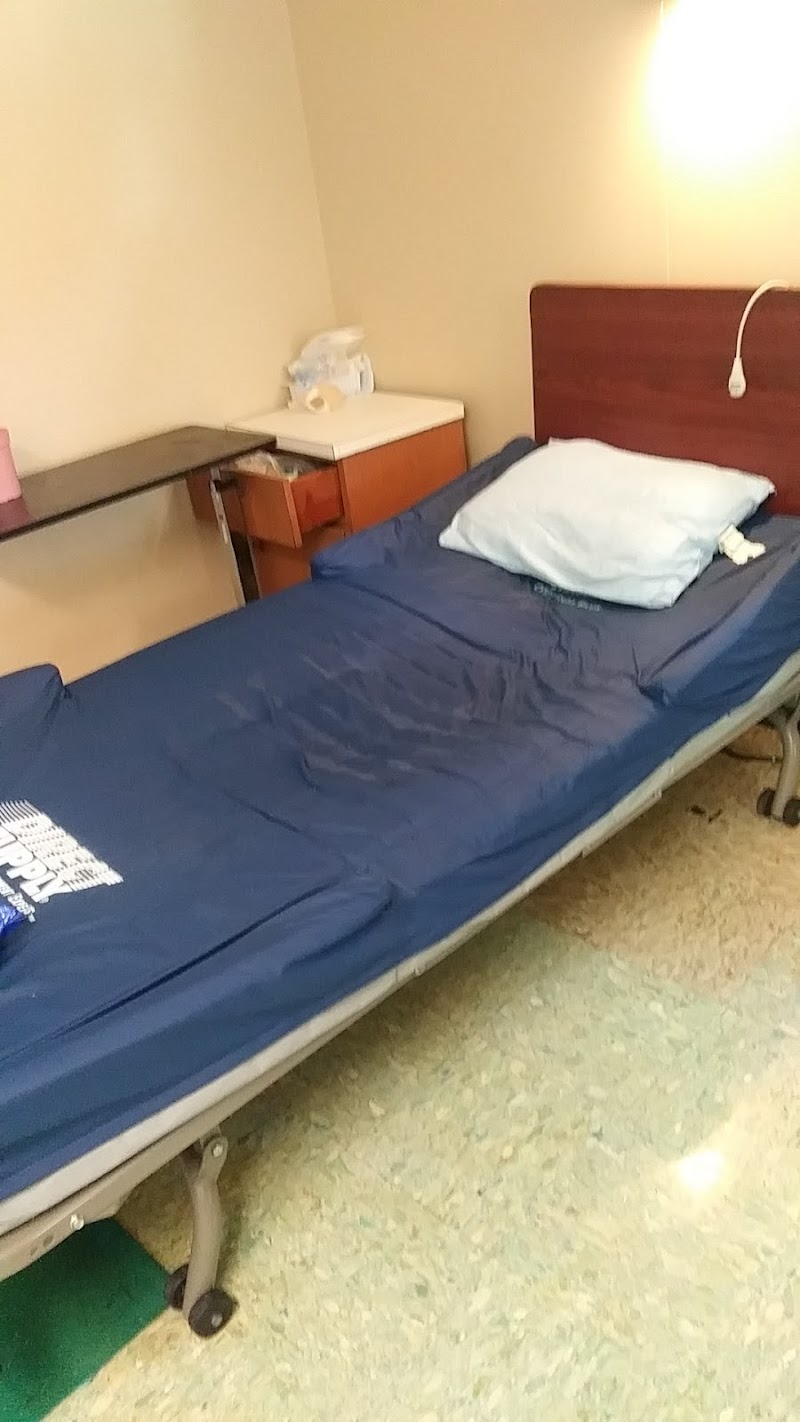
How is Pinewood Health And Rehabilitation Staffed?

CMS rates Pinewood Health and Rehabilitation's staffing level at 1 out of 5 stars, which is much below average compared to other nursing homes.

What Have Inspectors Found at Pinewood Health And Rehabilitation?

State health inspectors documented 46 deficiencies at Pinewood Health and Rehabilitation during 2019 to 2025. These included: 7 Immediate Jeopardy (the most serious level, indicating potential for serious harm or death), 38 with potential for harm, and 1 minor or isolated issues. Immediate Jeopardy findings are rare and represent the most serious regulatory concerns. They require immediate corrective action.
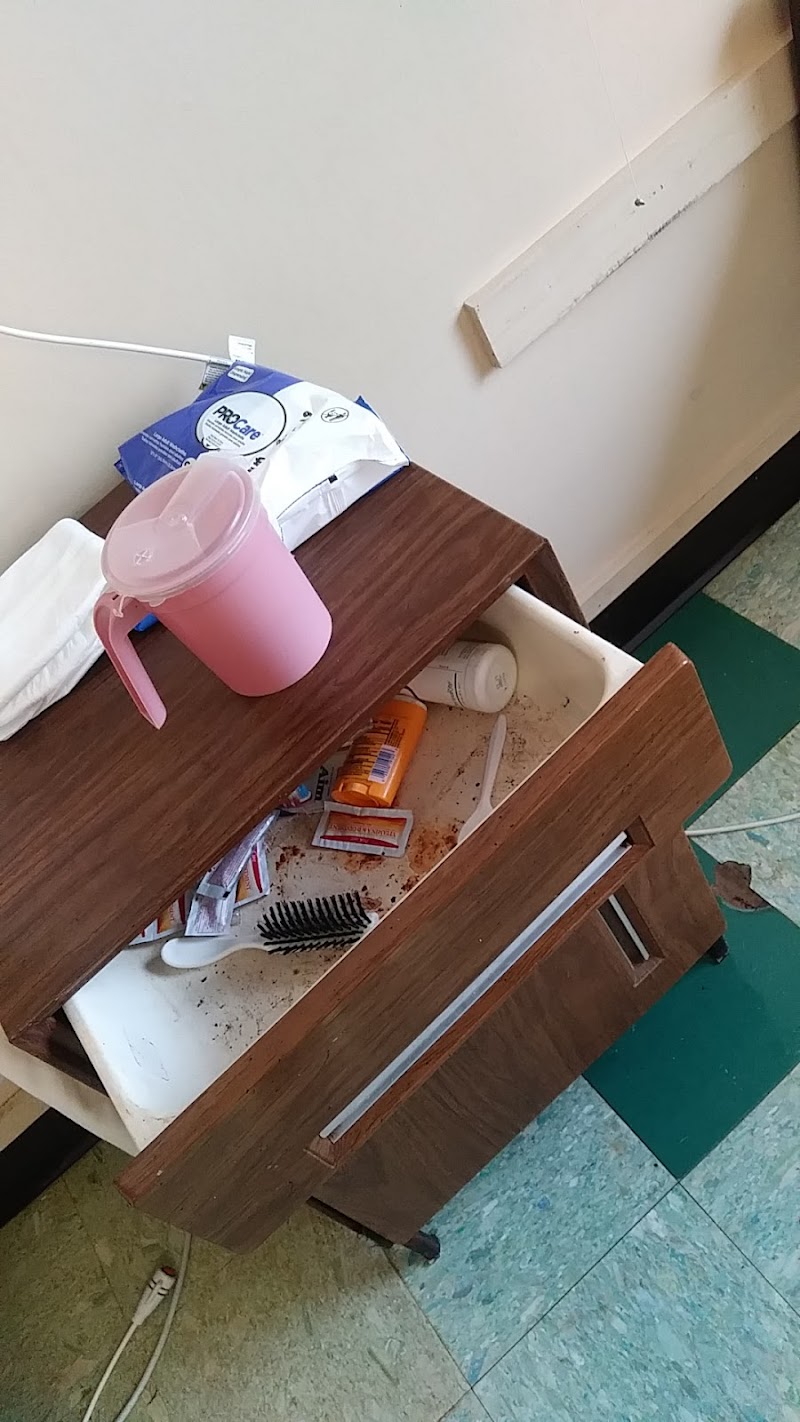
Who Owns and Operates Pinewood Health And Rehabilitation?

Pinewood Health and Rehabilitation is owned by a for-profit company. For-profit facilities operate as businesses with obligations to shareholders or private owners. The facility operates independently rather than as part of a larger chain. With 142 certified beds and approximately 58 residents (about 41% occupancy), it is a mid-sized facility located in WHIGHAM, Georgia.

How Does Pinewood Health And Rehabilitation Compare to Other Georgia Nursing Homes?

Compared to the 100 nursing homes in Georgia, Pinewood Health and Rehabilitation's overall rating (1 stars) is below the state average of 2.6 and health inspection rating (1 stars) is much below the national benchmark.

What Should Families Ask When Visiting Pinewood Health And Rehabilitation?

Based on this facility's data, families visiting should ask: "What changes have been made since the serious inspection findings, and how are you preventing similar issues?" "Can you walk me through typical staffing levels on day, evening, and night shifts?" "Can I visit during a mealtime to observe dining assistance and food quality?" "How do you handle medical emergencies, and what is your hospital transfer rate?" These questions are particularly relevant given the facility's Immediate Jeopardy citations and the below-average staffing rating.

Is Pinewood Health And Rehabilitation Safe?

Based on CMS inspection data, Pinewood Health and Rehabilitation has documented safety concerns. Inspectors have issued 7 Immediate Jeopardy citations (the most serious violation level indicating risk of serious injury or death). The facility has a 1-star overall rating and ranks #100 of 100 nursing homes in Georgia. Families considering this facility should ask detailed questions about what corrective actions have been taken since these incidents.

Do Nurses at Pinewood Health And Rehabilitation Stick Around?

Pinewood Health and Rehabilitation has not reported staff turnover data to CMS. Staff turnover matters because consistent caregivers learn residents' individual needs, medications, and preferences. When staff frequently change, this institutional knowledge is lost. Families should ask the facility directly about their staff retention rates and average employee tenure.

Was Pinewood Health And Rehabilitation Ever Fined?

Pinewood Health and Rehabilitation has been fined $210,094 across 2 penalty actions. This is 6.0x the Georgia average of $35,180. Fines at this level are uncommon and typically indicate a pattern of serious deficiencies, repeated violations, or failure to correct problems promptly. CMS reserves penalties of this magnitude for facilities that pose significant, documented risk to resident health or safety. Families should request specific documentation of what issues led to these fines and what systemic changes have been implemented.

Is Pinewood Health And Rehabilitation on Any Federal Watch List?

Pinewood Health and Rehabilitation is not on any federal watch list. The most significant is the Special Focus Facility (SFF) program, which identifies the bottom 1% of nursing homes nationally based on persistent, serious quality problems. Not being on this list means the facility has avoided the pattern of deficiencies that triggers enhanced federal oversight. This is a positive indicator, though families should still review the facility's inspection history directly.