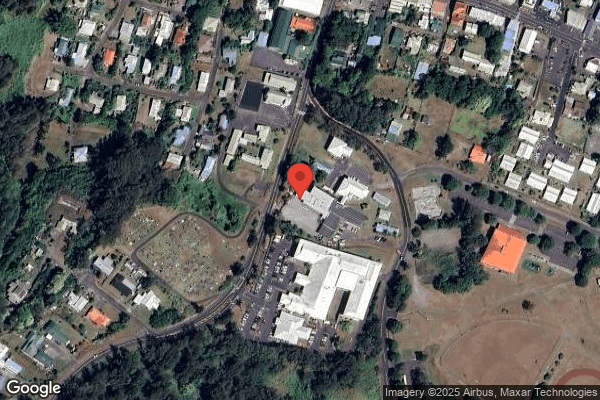
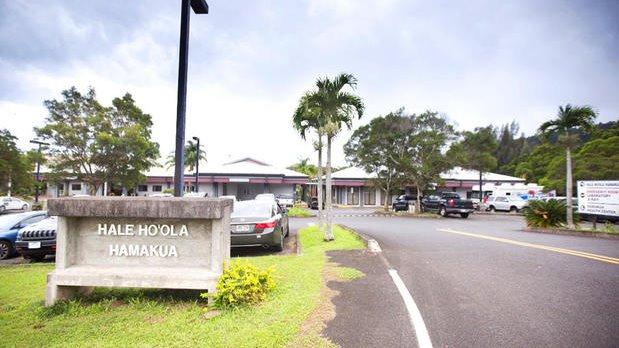
HALE HO'OLA HAMAKUA

45-547 PLUMERIA STREET, HONOKAA, HI 96727 (808) 932-4100
Government - State 66 Beds HAWAII HEALTH SYSTEMS CORPORATION Data: November 2025
Trust Grade
81/100
#3 of 41 in HI
Last Inspection: November 2024

Within standard 12-15 month inspection cycle. Federal law requires annual inspections.

Overview

Hale Ho'ola Hamakua has a Trust Grade of B+, indicating it is above average and recommended for families searching for nursing home care. It ranks #3 out of 41 facilities in Hawaii, placing it in the top tier, and #1 out of 7 in Hawaii County, meaning it is the best option locally. The facility is improving, with issues decreasing from 9 in 2023 to 5 in 2024. Staffing is a strong point, receiving 5 out of 5 stars and a turnover rate of 28%, lower than the state average of 36%, though it has less RN coverage than 90% of Hawaii facilities, which is concerning. There have been significant incidents, such as a serious failure to protect a resident from sexual abuse and concerns about infection control practices, highlighting important areas that need attention despite the facility's overall strengths.

Trust Score
B+
81/100
In Hawaii
#3/41
Top 7%
Safety Record
Moderate
Needs review
Inspections
Getting Better
9 → 5 violations
Staff Stability
✓ Good
28% annual turnover. Excellent stability, 20 points below Hawaii's 48% average. Staff who stay learn residents' needs.
Penalties
✓ Good
$17,111 in fines. Lower than most Hawaii facilities. Relatively clean record.
Skilled Nurses
✓ Good
Each resident gets 73 minutes of Registered Nurse (RN) attention daily — more than 97% of Hawaii nursing homes. RNs are the most trained staff who catch health problems before they become serious.
Violations
⚠ Watch
15 deficiencies on record. Higher than average. Multiple issues found across inspections.
★★★★★
5.0
Overall Rating
★★★★★
5.0
Staff Levels
★★★★★
5.0
Care Quality
★★★★☆
4.0
Inspection Score
Stable
2023: 9 issues
2024: 5 issues

The Good

  • 5-Star Staffing Rating · Excellent nurse staffing levels
  • 5-Star Quality Measures · Strong clinical quality outcomes
  • Low Staff Turnover (28%) · Staff stability means consistent care
  • Full Sprinkler Coverage · Fire safety systems throughout facility
  • No fines on record
  • Staff turnover is low (28%)

    20 points below Hawaii average of 48%

Facility shows strength in staffing levels, quality measures, staff retention, fire safety.

The Bad

Federal Fines: $17,111

Below median ($33,413)

Minor penalties assessed

Chain: HAWAII HEALTH SYSTEMS CORPORATION

Part of a multi-facility chain

Ask about local staffing decisions and management

The Ugly 15 deficiencies on record

1 actual harm
Nov 2024 5 deficiencies
CONCERN (D)

Potential for Harm - no one hurt, but risky conditions existed

Free from Abuse/Neglect (Tag F0600)

Could have caused harm · This affected 1 resident

**NOTE- TERMS IN BRACKETS HAVE BEEN EDITED TO PROTECT CONFIDENTIALITY** Based on observations, record reviews, and interview, the facility failed to protect a resident (Resident 310) from physical abu...

Read full inspector narrative →
**NOTE- TERMS IN BRACKETS HAVE BEEN EDITED TO PROTECT CONFIDENTIALITY** Based on observations, record reviews, and interview, the facility failed to protect a resident (Resident 310) from physical abuse. The facility did not de-escalate the situation between two roommates, resulting in Resident (R)50 going over and punching R310. This deficient practice has the potential to affect the residents' optimal physical and psychosocial well-being. Findings include: On 06/17/24, the facility submitted an Event Report regarding an allegation of abuse, resident to resident. On 05/18/24 at approximately 02:50 AM, Resident (R)310 alleged he was punched by his roommate, R50. The report documents at approximately 02:00 AM, Certified Nurse Aide (CNA)1 heard the residents yelling. R310 reportedly turned on the television and had the volume turned up, waking his roommate. R50 was heard telling R310 to go to sleep and turn off the television. Registered Nurse (RN)1 provided R310 with headphones to connect to his TV. After this, Licensed Practical Nurse (LPN)1 heard the television playing loudly again and entered the room to ask R310 why he wasn't using the headphones. R310 responded he could not hear the TV with the headphones on. Later R50 was again heard yelling for his roommate to go to sleep. LPN1 entered the room again and instructed R310 to use the headphones, but he did not. Shortly after that, LPN1 heard yelling from the room, He punched me! Upon entering the room, LPN1 saw R50 standing by R310's bed. Upon immediate assessment, RN1 found a small abrasion to R310's chin with minimal bleeding, and first aid was provided. R310 complained of pain to his jaw, a 9/10 upon pressing. R310 was provided with Tylenol and an ice pack. The facility documented in March 2024, R50 had a previous incident of punching and kicking a male CNA after accusing the staff member of being gay. The facility further indicated R50 becomes agitated when residents yell out and also had a conflict with a different roommate regarding his television being too loud, however, there had been no history of physical altercations. The facility developed interventions to address R50's agitation when other residents talk loudly, redirect me to where it is quiet and calm and do 15-minute checks. Observations on 11/19/24 at 11:46 AM, R50 was walking in the hall with staff, he was observed to constantly make verbal sounds. Subsequent observations saw staff members going in and out of resident's room. R50 refused lunch. On 11/21/24 at 08:47 AM, R50 was observed lying in bed, bed at lowest setting, and appeared to be asleep. On 11/21/24 at 12:16 PM, R50 observed in dining room waiting for lunch, dozing off in chair at table, seated next to female resident, and no yelling or behavior observed or overheard. At 12:24 PM, R50 was awake, and was moved next to a male resident. R50 was observed to display impulsivity and impatience, yelling out unintelligibly and looking around to get staff attention. Subsequent observation at 12:27 PM found R50 walking back to his room with a staff member. At 12:39 PM, three staff members were observed in the room with the resident, encouraging him to eat his lunch. One staff member remained behind to assist R50 with lunch, it was quiet, and the staff member was gentle and treated resident with respect and dignity. On the morning of 11/21/24 a record review was done. The alleged perpetrator, R50 was admitted to the facility from an acute hospital on [DATE] with diagnoses including dementia; schizoaffective disorder, behavior problem; and Alzheimer's disease. A review of his medication orders included buspirone, 5 mg twice a day (anxiolytic sedation); Lexapro, 20 mg daily (antidepressant); risperidone, 3 mg twice a day (antipsychotic); and trazodone 75 mg (antidepressant). A review of the Medication Administration Record (MAR) for the use of psychotropic medications identified the following behaviors related to the use of medication: trazodone and melatonin for sleeping; risperidone for auditory hallucinations, standing on bed, and talking to self and others; Lexapro for combative behavior, irritability and refusal of care; and buspirone for restlessness. A review of his admission Minimum Data Set (MDS) with an assessment reference date (ARD) of 01/29/24 notes R50 is cognitively impaired. R50 requires supervision for sit-to-stand and is able to walk 10 feet with supervision or touching assistance. There were no noted behaviors documented. Immediately following the May 2024 incident, R50 was moved to a single room and care plan revision was done on 05/18/24. Revised interventions included: providing visual supervision at all times when out of his room due to history of altercation with other residents who are loud and please redirect me to where it is quiet and calm. A review of the alleged victim's record was also done. R310 was admitted to the facility on [DATE] and discharged on 05/29/24. A review of the admission MDS with ARD of 05/17/24 noted R310 is cognitively intact. The social worker's note (dated: 05/21/24 at 11:02 AM) regarding R310's altercation with R50 noted R310 reported R50 became irritated because his television was too loud. R50 reportedly came over to grab the remote control, when R310 attempted to stop him, R50 punched him. R310 reportedly had pain to his jaw and informed the social worker that he feels safe in the facility and denied any concerns of anxiety. A review of the facility's policy and procedure, Freedom from Abuse/Neglect/Exploitation Long Term Care Residents was done. The definition of resident-to-resident abuse includes: A. Cognitive impairment or mental disorder does not preclude a resident from being abusive. B. In determining abuse, willful (deliberate) action (not inadvertent or accidental) will be considered regardless of whether the individual intended to inflict injury or harm . The definition of physical abuse includes, but is not limited to, hitting, slapping, punching, biting, and kicking. On 11/25/24 a telephone interview was conducted with the Director of Nursing (DON). DON reported that she led the investigation for the abuse allegation and confirmed that abuse had occurred. DON reported R50 was physically able to get out of bed and walk over to R310's bed. R50 could also stand on his bed and squat down and up. DON reported R50 becomes agitated when other residents yell out or become disruptive. Inquired how does R50 express agitation? DON provided the following example: in the past R50 would become agitated by a former resident and there was an incident of R50 approaching the resident and appeared to make gestures to hit him. Staff members were able to prevent an altercation between the residents at that time. DON reported staff members keep constant watch of R50 when he is out of his room; he is escorted to the dining room and wherever else he goes. R50 also reportedly stays in his room alone, watching football. R50's room is close to the facility's nursing station to provide continuous monitoring of the resident. The observations, record reviews and interview, found the facility met the criteria of past noncompliance: at the time of the incident, the facility was not in compliance with the regulatory requirements; the noncompliance occurred after the exit date of the last standard survey (12/08/23) and before the current recertification survey; and there was sufficient evidence that the facility corrected the noncompliance, the facility revised and observations during the current survey confirmed, staff members were implementing R50's plan of care. To date, the interventions are effective, as evidenced by no subsequent incidents or allegations. The facility continues to monitor R50's behaviors (sleeplessness, auditory hallucinations, standing on bed, talking to self and others, restlessness, combative behavior, irritability, and refusal of care) as it relates to the use of psychotropic medication. The facility communicates R50's care plan revisions to staff via huddles and communication report. The facility also provided an in-service to all staff on 05/21/24 regarding the facility's policy and procedures for abuse and neglect.
CONCERN (D)

Potential for Harm - no one hurt, but risky conditions existed

Quality of Care (Tag F0684)

Could have caused harm · This affected 1 resident

**NOTE- TERMS IN BRACKETS HAVE BEEN EDITED TO PROTECT CONFIDENTIALITY** Based on record review, staff interview, and policy review, the facility failed to monitor vital signs; blood pressure for one R...

Read full inspector narrative →
**NOTE- TERMS IN BRACKETS HAVE BEEN EDITED TO PROTECT CONFIDENTIALITY** Based on record review, staff interview, and policy review, the facility failed to monitor vital signs; blood pressure for one Resident (R) 57 of fourteen residents sampled. As a result of this deficiency, the facility put R57 at risk for further health complications. Findings include: Review of Electronic Health Record (EHR), on 11/21/24 at 08:25 AM, showed R57 admitted on [DATE] with diagnosis including recent Hip Fracture, Chronic Kidney Disease, Lymphedema, Paroxysmal Atrial Fibrillation, Hypertension, High Cholesterol, Venous Stasis. There was an active doctor order to take vital signs; blood pressure routine (monthly for this resident). Blood pressures were documented on the following dates: 11/12/24, 09/26/24, 09/13/24. During staff interview on 11/21/24 at 09:20 AM, Director of Nursing acknowledged that vital signs; blood pressures were not taken monthly as ordered. On 11/21/24 at 10:45 AM, review of policy for Extended Care Facility Vital Signs read Purpose, to assist in assessing resident's physiological parameters, early detection of disease process. Policy, Vital signs include temperature, pulse, respirations and blood pressure. Vital signs will be taken on all residents upon admission to Extended Care Facility. Thereafter, vital signs shall be taken as ordered by the physician, or as follows . Vital signs weekly on all skilled nursing facility patients and monthly for all intermediate care facility patients .
CONCERN (D)

Potential for Harm - no one hurt, but risky conditions existed

Accident Prevention (Tag F0689)

Could have caused harm · This affected 1 resident

**NOTE- TERMS IN BRACKETS HAVE BEEN EDITED TO PROTECT CONFIDENTIALITY** Based on observation, interview, and record review, the facility failed to ensure 1 of 14 residents sampled (Resident 11) was fr...

Read full inspector narrative →
**NOTE- TERMS IN BRACKETS HAVE BEEN EDITED TO PROTECT CONFIDENTIALITY** Based on observation, interview, and record review, the facility failed to ensure 1 of 14 residents sampled (Resident 11) was free from accident hazards. Resident 11 was transferred using a mechanical lift transfer in a manner that placed her at risk for an avoidable fall and/or injury. This deficient practice has the potential to affect all the residents at the facility who are dependent on mechanical lift transfers. Findings include: Resident (R)11 is an [AGE] year-old female admitted to the facility on [DATE]. On 11/19/24 at 12:02 PM, observations were made at the bedside of R11. Certified Nurse Aide (CNA)2 and CNA3 were transferring R11 from her bed to a standard wheelchair via a mechanical lift. Observed CNA3 positioned behind the wheelchair, tilting it up onto its back two wheels, leaving the front two wheels approximately a foot off the ground, while CNA2 operated the mechanical lift, lowering R11 into the tilted wheelchair. Interviewed both CNAs at the bedside as soon as the wheelchair with R11 in it had been lowered safely back down with all four wheels on the ground. CNA3 stated that they needed to tilt the wheelchair to lower R11 into it because she had a standard wheelchair that could not have the back lowered. Since R11 hung in a semi-reclined position on the mechanical lift, they felt they needed to ensure the wheelchair was in a semi-reclined position to receive her. On 11/21/24, a review of R11's comprehensive care plan (CP) for Potential for Decrease in ADL [Activities of Daily Living] noted that on 05/25/24, per PT [physical therapy] recommendation, . [mechanical] lift transfers . On 11/21/24 at 09:06 AM, an interview was done with the Assistant Administrator, who also served as the Regional Director of Nursing and the facility Infection Preventionist (IPC), in her office. When the observation was described to IPC, she agreed that it was not a safe transfer, either for the staff or the resident. IPC also agreed that she would have expected the CNAs to pull the sling of the mechanical lift to re-position the resident into the position required to lower her into the wheelchair, not the other way around. On 11/21/24 at 09:50 AM, a review of the Kwikpoint Patient Lifts Safety Guide, provided by the facility as training materials, noted that on page eleven (11), Lower the Patient instructs the mechanical lift user(s) to Slowly lower patient toward receiving surface. Move patient's body into correct position on receiving surface before releasing patient's weight. The Safety Guide includes an illustration where the staff member is repositioning a patient in the mechanical lift sling into an upright position as patient is being lowered into a standard wheelchair.
CONCERN (D)

Potential for Harm - no one hurt, but risky conditions existed

Deficiency F0887 (Tag F0887)

Could have caused harm · This affected 1 resident

Based on record review and interview with staff members, the facility failed to provide education regarding the benefits, risks, and potential side effects associated with COVID-19 immunization before...

Read full inspector narrative →
Based on record review and interview with staff members, the facility failed to provide education regarding the benefits, risks, and potential side effects associated with COVID-19 immunization before offering the vaccine to staff member(s). Findings include: On 11/21/24 at 11:30 AM an interview was conducted with the Infection Preventionist (IPC). IPC reported the facility offered staff members the COVID-19 vaccination in October. A staff member, Kitchen Staff (KS)1 was randomly selected to verify the requirements for education and offering of COVID-19 immunization. IPC reviewed the spread sheet and reported the immunization was refused. Further queried if KS1 was provided with education on risks and benefits of the immunization. IPC reported the facility will provide a Vaccine Information Sheet (VIS) which includes education when vaccines are offered and administered, however, as the COVID-19 immunization is no longer required for staff members, the facility had not been providing the VIS. On 11/21/24 at 12:15 PM, KS1 was interviewed in the kitchen. KS1 was not sure whether the facility offered the COVID-19 immunization. KS1 reported not opting for the most recent COVID-19 immunization. At 12:22 PM, KS1 came to the conference room and reported the COVID-19 immunization was offered and she did not take it. KS1 confirmed that she was not provided with education, risks, and benefits of the COVID-19 immunization.
CONCERN (F)

Potential for Harm - no one hurt, but risky conditions existed

Food Safety (Tag F0812)

Could have caused harm · This affected most or all residents

Based on observation and staff interview, the facility failed to record hot water temperatures for manual washing of dishes/pots/pans and failed to completely record hot water temperatures for the dis...

Read full inspector narrative →
Based on observation and staff interview, the facility failed to record hot water temperatures for manual washing of dishes/pots/pans and failed to completely record hot water temperatures for the dishwashing machine. Findings include: During observation of the kitchen on 11/19/24 at 10:25 AM, there were two different dishwashing sections; manual washing and dishwashing with machine. Review of hot water temperature logs showed no recording log for the manual washing, and missing temperature logs for the dishwashing machine. During staff interview on 11/21/24 at 08:20 AM, Kitchen Staff 1 revealed that the facility did not have temperature logs for manual washing and acknowledged that there were missing temperature logs for the dishwashing machine. The facility did not provide a related policy but said that they follow Hazard Analysis Critical Control Points (HACCP) which states temperature test logs should be maintained for each hot water sanitation dishwasher in the facility in order to follow HACCP-based record keeping standards.
Dec 2023 7 deficiencies
CONCERN (D)

Potential for Harm - no one hurt, but risky conditions existed

Resident Rights (Tag F0550)

Could have caused harm · This affected 1 resident

**NOTE- TERMS IN BRACKETS HAVE BEEN EDITED TO PROTECT CONFIDENTIALITY** Based on interview with a resident and record review, the facility failed to provide treatment and care in a manner that promote...

Read full inspector narrative →
**NOTE- TERMS IN BRACKETS HAVE BEEN EDITED TO PROTECT CONFIDENTIALITY** Based on interview with a resident and record review, the facility failed to provide treatment and care in a manner that promoted his or her quality of life for one of 17 residents (Resident (R) 25) in the active case sample. This deficient practice has the potential to affect the resident's psychosocial well-being. Findings include: Record review noted R25 was admitted to the facility on [DATE]. A review of her quarterly Minimum Data Set with an assessment reference date of 10/13/23 documents R25 is cognitively intact. R25 also requires substantial assistance to roll from left and right and is dependent on helper to transfer to and from a bed to a chair (or wheelchair). On 12/06/23 at approximately 11:30 AM an interview was conducted with R25. R25 reported sometimes staff members are rough during care, specifically while providing incontinence care and during transfer via mechanical lift. R25 explained staff members push or pull her side to side while cleaning her. She also explained during transfer, staff will put her back on the bed or lift her without warning, stating this action could snap my neck. R25 clarified if staff would explain to her what they will be doing, she can brace herself or be prepared for the movement. R25 also shared that she had to wait 45 minutes for call light response, and she gets frustrated when nobody responds. R25 reported she usually calls for assistance at night as she wants to have her personal brief changed before going to sleep. R25 further reported that it would be fine if staff respond and let her know that they are currently helping another resident and will be back. R25 expressed concern that the facility seems to have only one sling for the mechanical lift. R25 explained that if her sling becomes soiled and sent to the laundry, she stays in bed and can't go out to activities. She also questioned why some staff can find an extra sling and there are times when she is told there is no sling available.
CONCERN (D)

Potential for Harm - no one hurt, but risky conditions existed

Deficiency F0572 (Tag F0572)

Could have caused harm · This affected 1 resident

Based on interview with the resident council, the facility failed to ensure residents were provided ongoing communication regarding where to find the State Agency (SA) report with survey results and t...

Read full inspector narrative →
Based on interview with the resident council, the facility failed to ensure residents were provided ongoing communication regarding where to find the State Agency (SA) report with survey results and the facility's plans of correction, and information on how to file a complaint with the SA and Long-Term Care Ombudsman (LTCO) should they want to exercise these rights. Findings include: On 12/06/23 at 11:00 AM an interview was conducted with four resident council representatives. Asked the residents if the State inspection was available to read. The representatives were not aware of the location of the survey results, and that the report was available for them to review. Upon query, the representatives were not aware of where the LTCO's contact information was posted. Also, the representatives could not recall being provided with information on how to formally file a complaint with the SA. A review of the facility's hospitality book does not include information for reviewing the survey results, LTCO information, and how to file a complaint with the SA.
CONCERN (D)

Potential for Harm - no one hurt, but risky conditions existed

Deficiency F0583 (Tag F0583)

Could have caused harm · This affected 1 resident

Based on observation and interview with staff, the facility did not assure a resident was provided with personal privacy during incontinence care. Findings include: On 12/06/23 at 08:56 AM observed t...

Read full inspector narrative →
Based on observation and interview with staff, the facility did not assure a resident was provided with personal privacy during incontinence care. Findings include: On 12/06/23 at 08:56 AM observed the curtain was drawn to block view into the residents' room. Knocked at the door, peered around the curtain, and observed R48 lying on his right side with his left lower extremity exposed from the waist down. Further observed the curtain between the roommates was not fully drawn, R36 was sitting up in bed and could view his exposed roommate. Interview with Certified Nurse Aide (CNA)5 was done. CNA5 reported that she closed the curtain between the residents, however, R36 opened it. CNA5 reportedly told the resident not to open the curtain. Inquired whether R36 does this all the time, initially CNA5 responded yes. CNA5 then clarified, this was the first time she observed this behavior. Upon further query, CNA5 stated she would speak to the nurse. Subsequent observations on 12/06/23 at 10:08 AM and 01:02 PM found the curtain between the residents was fully closed.
CONCERN (D)

Potential for Harm - no one hurt, but risky conditions existed

Transfer Notice (Tag F0623)

Could have caused harm · This affected 1 resident

**NOTE- TERMS IN BRACKETS HAVE BEEN EDITED TO PROTECT CONFIDENTIALITY** Based on record review and interview with staff member, the facility did not ensure the notice of transfer/discharge contained t...

Read full inspector narrative →
**NOTE- TERMS IN BRACKETS HAVE BEEN EDITED TO PROTECT CONFIDENTIALITY** Based on record review and interview with staff member, the facility did not ensure the notice of transfer/discharge contained the required contents; a copy of the notice is sent to the Long-Term Care Ombudsman (LTCO); and a resident transferred from the facility's long-term care/nursing to the critical access hospital was not provided written notice of transfer for 2 (Residents 54 and 55) of 2 residents in the sample. Findings include: 1) Resident (R)54 was admitted to the facility on [DATE] and discharged to an acute hospital on [DATE]. R54 was readmitted on [DATE] and discharged on 09/07/23 to an acute hospital. On 12/07/23 at 01:29 PM the facility provided fax confirmation of notification to the LTCO of R54's discharges. The facility sent notice of the discharge log to the LTCO. Review of the discharge log documented the resident's admission date, discharge date , name of resident, and discharge disposition (discharge location) At approximately 02:15 PM, the facility provided copies of the transfer/discharge notices that were provided to R54. The LTC Transfer/Discharge Notice forms were reviewed. The content of the form did not include the following, a statement of the resident's appeal rights (including contact information and information on how to appeal); contact information for the LTCO; and for residents with intellectual and developmental disabilities and residents with a mental disorder the contact information of the state's protection and advocacy authorities. Also review of the notice dated 08/12/23 noted the form was incomplete. The effective date of transfer/discharge and transfer/discharge location were left blank. On 12/07/23 at 02:15 PM interviewed the Administrator. The Administrator reported notice is sent to the LTCO. Inquired whether the LTC Transfer/Discharge Notice with the required content is sent to the LTCO. Administrator was not sure whether the form was sent to the LTCO. Administrator deferred to the Social Worker (SW). On the morning of 12/08/23 SW was not available for interview. Left a message with the SW Assistant requesting to meet with the SW regarding transfer/discharge. Prior to exit, the SW was not available for interview. 2) R55 was admitted to the facility on [DATE]. R55 was transferred to the facility's critical access hospital for wound care. On 12/07/23 at 02:15 PM, the Administrator reported a written notification was not provided as the facility did not recognize the transfer from their long-term care facility to the critical access hospital as a transfer. A review of the facility's policy for Discharge/Transfer Notice does not include the required contents of the notice, specifically appeal rights, and contact information for both the LTCO and advocacy authorities for persons with developmental disabilities and/or mental disorder.
CONCERN (D)

Potential for Harm - no one hurt, but risky conditions existed

Incontinence Care (Tag F0690)

Could have caused harm · This affected 1 resident

**NOTE- TERMS IN BRACKETS HAVE BEEN EDITED TO PROTECT CONFIDENTIALITY** Based on observation, interviews and record reviews, the facility failed to provide appropriate services to prevent urinary trac...

Read full inspector narrative →
**NOTE- TERMS IN BRACKETS HAVE BEEN EDITED TO PROTECT CONFIDENTIALITY** Based on observation, interviews and record reviews, the facility failed to provide appropriate services to prevent urinary tract infections for one of the two residents (Resident (R) 34) in the sample. The deficient practice exposed the resident to contaminants that may cause preventable urinary tract infections. This has the potential to affect all residents with a urinary catheter. Findings include: On 12/05/23 at 02:38 PM, observed R34 sitting up in a wheelchair in his room. R34 had a urinary catheter tubing connected to a collection bag placed in a dignity cover that was hung under the wheelchair seat. Both the urinary catheter tubing and collection bag were touching the floor. On 12/06/23 at 11:19 AM, review of Electronic Health Record (EHR) for R34 conducted. R34 is a [AGE] year-old resident admitted to the facility on [DATE]. Diagnoses include hemiplegia and hemiparesis (paralysis and weakness on one side of the body), benign prostatic hyperplasia (noncancerous enlargement of the prostate gland), and neuromuscular dysfunction of bladder (lack of bladder control due to brain, spinal cord, or nerve problem). R34 was also taking Ciprofloxacin (oral antibiotic) for a urinary tract infection. On 12/07/23 at 09:43 AM, observed R34 sitting in a wheelchair in the [NAME] room watching television. Urinary catheter tubing and collection bag were touching the floor. At 09:52 AM, Registered Nurse (RN) 8 pushed R34 closer to the medication cart that was in the hallway outside of the [NAME] room to administer oral medications. As RN8 transported R34, both the urinary catheter tubing and the collection bag were dragging on the floor. On12/07/23 at 01:50 PM, interview with the Infection Preventionist (IP) was conducted in her office. IP confirmed that both the urinary catheter tubing and collection bag are not supposed to be touching the floor for infection control.
CONCERN (D)

Potential for Harm - no one hurt, but risky conditions existed

Pharmacy Services (Tag F0755)

Could have caused harm · This affected 1 resident

Based on observation, interview with staff, and review of the policy and procedures, the facility did not assure drug records for controlled drugs were maintained. This deficient practice has the pote...

Read full inspector narrative →
Based on observation, interview with staff, and review of the policy and procedures, the facility did not assure drug records for controlled drugs were maintained. This deficient practice has the potential for possible drug diversion. Findings include: On 12/07/23 at 02:02 PM concurrent observation was done with Licensed Practical Nurse (LPN)8 and LPN9. A review of the Narcotic Count Medication Room/Lock Cabinet form found missing nurse signatures. Concurrent review of the log with LPN8 noted there were no nurse signatures for the off duty and on duty nurse for 12/06/23 at 11PM and no off duty signature for 12/07/23 at 7AM (the on duty nurse for this shift signed the log). Further review found missing signatures for 11/20/23 (off duty at 7AM); 11/10/23 (off duty at 3PM); 11/06/23 (on duty at 7AM and off duty 3PM); 10/28/23 (off duty at 7AM); 10/23/23 (off duty at 7AM); 10/22/23 (on duty at 11 PM); and 10/08/23 (off duty at 7AM). Inquired why is it important for the licensed nurses to sign the log for narcotic counts/reconciliation. LPN8 responded to show that the medications were counted. LPN9 responded to ensure there is no diversion of the medications. The facility provided policy and procedure, titled, Medication Storage - Controlled Medication Storage with the following procedure: At each shift change or when keys are surrendered, a physical inventory of Schedule II, including refrigerated items, is conducted by two licensed nurses or per state regulation and is documented on the controlled substances accountability record or verification of controlled substances count report. The nursing care center may elect to count all controlled medication at shift change. Procedure also includes, Current controlled medication accountability records are kept in MAR or narcotic book. When completed, accountability records are submitted to the director of nursing and maintained on file at the nursing care center. On 12/08/23 AM at 09:37 AM interview with the Director of Nursing (DON) confirmed there are some missing signatures on the log. DON stated she attributes some of the missing signatures to nurses working doubles and only signing it once.
CONCERN (E)

Potential for Harm - no one hurt, but risky conditions existed

Infection Control (Tag F0880)

Could have caused harm · This affected multiple residents

**NOTE- TERMS IN BRACKETS HAVE BEEN EDITED TO PROTECT CONFIDENTIALITY** Based on observations, interviews, and record reviews, the facility failed to implement the facility's infection prevention and ...

Read full inspector narrative →
**NOTE- TERMS IN BRACKETS HAVE BEEN EDITED TO PROTECT CONFIDENTIALITY** Based on observations, interviews, and record reviews, the facility failed to implement the facility's infection prevention and control measures. Facility did not ensure that staff were wearing applicable personal protective equipment (PPE) when providing care to two residents (Resident (R) 41 and 12) on Transmission Based Precautions (TBP). This deficient practice placed the residents at risk for the potential spread of infections and communicable diseases. Findings include: 1) On 12/06/23 at 08:56 AM, observed signage next to R41's door indicating she was on Droplet Plus Precautions. R41 was sitting in a wheelchair with her breakfast tray on a table in front of her. R41 was not wearing a mask and was telling the staff that she wanted to come out of her room. Certified Nurse Aide (CNA) 3 entered the room to check on R41 without any PPE other than a surgical mask. CNA3 explained to R41 that she needed to stay in her room for now and asked her if she was done with her meal. R41 said she was done eating and CNA3 brought the tray to the cart that was out in the hallway. As CNA3 was walking out of the room, R41 tried to follow her out the room. As R41 approached the door, another CNA asked her to, Please stay in the room for now, we'll be right with you. At that time, Registered Nurse (RN) 3 was passing by the room and approached R41 by the door. RN3 was only wearing a surgical mask and was touching R41's shoulder to comfort her. Surveyor pointed out the sign by the door to RN3 and asked her if R41 was on TBP. RN3 replied, Yes. and started putting on gown, gloves, N95 mask and face shield. 2) On 12/07/23 at 12:52 AM, observed a Droplet Plus Precautions signage posted by R12's room. Restorative Nursing Assistant (RNA) 1 was helping distribute the lunch trays at the [NAME] Wing. RNA1 entered R12's room to bring her meal tray wearing only a surgical mask. RNA1 was in the room with R12 for approxiamtely three minutes as she set up her lunch on the bedside table. Review conducted of facility's infection prevention and control program last reviewed in June 2023. Stated under 10. Droplet Plus, . f. Perform Hand Hygiene and wear a N95 mask, face shield and gown upon entry into the resident room and when working within three feet of the resident. On 12/07/23 at 01:52 PM, interview with the Infection Preventionist (IP) was conducted in her office. IP confirmed that the staff entering any room where the resident is on TBP should be wearing N95 mask, gown, face shield and gloves.
Mar 2023 2 deficiencies 1 Harm
SERIOUS (G) 📢 Someone Reported This

A family member, employee, or ombudsman was alarmed enough to file a formal complaint

Actual Harm - a resident was hurt due to facility failures

Free from Abuse/Neglect (Tag F0600)

A resident was harmed · This affected 1 resident

**NOTE- TERMS IN BRACKETS HAVE BEEN EDITED TO PROTECT CONFIDENTIALITY** Based on observation, interview and record review, the facility failed to assure the protection and freedom from sexual abuse of...

Read full inspector narrative →
**NOTE- TERMS IN BRACKETS HAVE BEEN EDITED TO PROTECT CONFIDENTIALITY** Based on observation, interview and record review, the facility failed to assure the protection and freedom from sexual abuse of resident (R)1 who encountered several events of inappropriate touching and invasion of resident's privacy/room was witnessed by staff members on several occasions. Although suspicion of inappropriate sexual activity was perceived by staff, effective reporting and immediate action was not taken by the facility. This deficient practice has the potential to affect other vulnerable residents in the facility. Findings include. R1 was admitted to the facility on [DATE]. R1 has a diagnosis of advanced Alzheimer's dementia. R1 lacks the capacity to consent to a romantic or sexual relationship related to her diagnosis. Observation on [DATE] at 10:30 AM revealed R1 sitting up in wheelchair across from her room. Surveyor attempted an interview with R1. R1 was not able to answer questions. The name of the alleged perpetrator was mentioned, and no reaction or response was solicited from R1. During an interview and concurrent record review (RR) on [DATE] at 11:10 AM, staff member (SM)8 stated that on [DATE], S8 was working overtime and assigned to the dining area. R1 was in the dining area doing her activity of folding clothes. S8 stated that S10 came to dining area and asked S8 if she needed a break or needed to go to the bathroom. S10 started to help S8 fold clothes and was discouraged from doing R1's activities. S10 did not leave and turned his back to S8, blocking R1 from S8's view. I saw S10 grab R1's wrist and was trying to put her hand in S10's clothes. I don't know if it was S10's shirt or his pants. R1 pulled her arm back and stated no. S8 did this twice and has done this before and I felt something was wrong. S8 stated, I reported it to the team leader S7 on [DATE] and S7 instructed all of us to watch S10, keep him out of R1's room. My co-worker, S3 and myself noticed that S10 would show up all the time and be with R1. S10 was questioned on several occasions why he is in her room with the lights off and curtains drawn. S3 and I would get R1 up and S10 would come and put her back to bed, right after she was placed in the wheelchair for the day. After S10 put R1 back to bed, I stood outside of the curtain and looked under the curtain where S10 was standing over R1's bed with the curtain closed and light off. I heard him saying to R1 you feel good, you feel good? Interview on [DATE] at 11:51 AM was done with S2. I came in at 7:00 AM on the 16th of February 2023 and was doing a report with S7. After the report, when we were going to count, she said staff were watching S10 because he was spending too much time in R1's room. I told her if she felt that way, she needs to report it to the nurse manager. We went to report it to the nurse manager. S2 went on to say that S10 is slow and has a lot of health issues, his wife passed away and he must pay for his deceased wife's medical bills. S2 stated that she did a complete skin check on the 23rd but it did not involve a rape kit evaluation and/or a medical doctor or a trained professional to examine the resident for physical evidence of abuse on the 15th. An interview and concurrent RR on [DATE] at 12:00 PM was done with S3. S3 stated that she worked overtime on the 15th of February 2023 into the dayshift. The call light for 230B went on. She was requesting to be changed. I observed S10 in R1's room. S10 stated that he would be back to tend to R1. I decided to assist R1 with dressing and get her into the wheelchair into the hallway. I continued rounds and went into another room to assist S8. Upon finishing assisting S8, S8 and myself observed that S10 was taking R1 back to the room. As I walked past R1's room, I heard S10 asking R1 Is it good? or about something good. I reported this to team leader S7 and stated that it was uncomfortable and if team leader could check on S10. An interview on [DATE] at 12:20 PM with Assistant Director of Nursing (ADON) was done. ADON stated that when it was reported initially to me, it was not clear that there was sexual abuse involved. The report came in as S10 hiding in R1's room. Because S10 has a history of hiding and sitting in rooms because of his condition of being on light duty and health issues, I was not clued in that it was possibly sexual abuse. I talked with S10 on the 22nd of February 2023. S10 stated he was in R1s room because she was wheezing, and she needed support. I advised S10 that if he felt sick and/or needed a break, he should not be at work. Interview and concurrent RR was done on [DATE] at 01:00 PM with S7. S7 stated that on the morning of February 15, 2023, S3 came to me and asked me to check S10 who was in R1's room for a while. S3 stated she felt uncomfortable because S10 had taken R1 back to her room and this was not her normal routine of getting up in the wheelchair for the day. S7 went to the room and noticed the vital signs machine outside of R1's room. Upon entering R1's room, the curtain was closed, lights were off and S10 was holding both of R1's hands. S7 asked why R1 was taken back to the room because R1 had slept nine hours the night before. R1 was observed to be calm, smiling and holding S10's hands. S10 stated that R1 stated her eyes were sore and brought R1 back and turned the lights off. S7 stated she assessed R1's eyes and R1 stated that her eyes were not sore. S7 informed S10 that in the future, the nurse needed to know any complaints or concerns so that an assessment can be done by the nurse. S7 went on to state that on [DATE] after report , S8 informed S7 that she felt uncomfortable with S10's behavior the day before. There were two licensed on the nights and I had no idea what was going on the early AM of the 15th. I don't know if I told the supervisor the night of the 15th. When I returned on [DATE] , I went to talk to the supervisor S11. I informed S11 that S10 was spending a lot of time in R1's room and would close the curtain with the lights off. Even after instructing S10 to leave the room, do vitals on another wing, S10 would make his way back to R1's room. S10 seemed infatuated with R1. RR was done on [DATE] at 01:30 PM of the policy ID 4753018, dated 05/2019, named Allegations of Abuse/Neglect/Exploitation: Acute Inpatient, Outpatient & Long-Term Care (LTC); page 2 of 11, (D) indicates For Long Term Care, the reporting must take place immediately, but not later than two hours after forming the suspicion if there is a possibility of abuse and/or serious bodily injury. (F) If the abuse allegation occurs after hours, the Nursing Supervisor or LTC Director of Nursing (DON)/Administrator has the authority to issue a letter to the alleged employee perpetrator explaining his/her rights to union representation during the preliminary investigation and that the employee is being placed on administrative leave until the investigation is completed (see Appendix J, Notice of Investigation). Continued RR revealed that the initial incident occurred on [DATE] with S10. Report of sexual allegation investigation did not occur immediately but officially reported on [DATE] to the state agency. S10 was allowed to work four days after initial incident reported, i.e., February 18, 20, 22 and 23rd (4 days in addition to initial observation of sexual abuse). Continued RR of policy, page 3 of 11, (2) indicates The patient/resident will be evaluated for physical and/or emotional signs of abuse/neglect/exploitation. Interview and concurrent record review was done on [DATE] at 09:16 AM with S6. S6 stated that S8 reported to her that things were feeling uncomfortable and S10 was exhibiting strange behaviors towards R1. I returned to work on [DATE]. S10 was informed not to come down to R1's room to take vitals as R1 was in isolation for COVID. It was morning shift, and we were documenting and S10 came straight down to R1's room. He pretended to take the vitals for R1 and wedged his way to the side of R1. He would squeeze himself between the table and his crotch was close to where he placed her hand. I went to the room and when I came out, S10 was on the side of her, and I witnessed him fix his pants and saw her hand drop down. I got upset and grabbed briefs and went into R1's room. I told S10 to let me in the room and he stood in the doorway and did not want to budge. I moved the table so he couldn't go into the room anymore and he was still there. I went to tell S7 that there was no reason for S10 to take vitals. When S7, our team leader told him to go, he did not want to go. I ended up going to see the assistant director of nursing that day because we could not keep watching S10 because it was stressful, and we had work to do. S6 went on to say that he was on light duty and R1 was total assist, so he could not do the extensive care that is required for her. He is slower and older. He tended to disappear a lot. An interview on [DATE] at 10:37 with Director of Nursing (DON) was done. DON stated that the social worker notified agencies to investigate the case on [DATE]. Because R1 had advanced dementia and interviews were not reliable, SW was not substantially involved because of R1's cognitive status. There was an initial report made to the nurse manager, but I was not aware of it. Another report was made on the 21st of February 2023. Both times, the interpretation of the report was that it was not sexual abuse. S6 persisted with ADON and myself that further investigation needed to be done regarding S10 and R1. Staff were reporting that something was not right and there were observations of inappropriate touching and closeness with R1. On February 24th, 2023, I contacted the administrator and human resources. S10 was not working on the 24th and was placed on administrative leave pending investigation. During an interview on [DATE] at 11:00 AM with the administrator, the administrator stated that because it was a nursing employee, I did not talk to anyone, and I believe that DON made the report to the authorities. Record review (RR) on [DATE] at 11:15 AM of the facilities Code of Conduct (COC) provided by the Human Resources Officer was done. COC indicates on page 19 that relationships of romantic or sexual in nature are unethical, prohibited and a violation.
CONCERN (D) 📢 Someone Reported This

A family member, employee, or ombudsman was alarmed enough to file a formal complaint

Potential for Harm - no one hurt, but risky conditions existed

Report Alleged Abuse (Tag F0609)

Could have caused harm · This affected 1 resident

Based on interview and record review, the facility failed to report an alleged sexual abuse violation to the State Agency within two hours of receiving reports of inappropriate touching, invasion of p...

Read full inspector narrative →
Based on interview and record review, the facility failed to report an alleged sexual abuse violation to the State Agency within two hours of receiving reports of inappropriate touching, invasion of privacy and space from staff members for Resident (R)1. Allegations of sexual abuse were reported initially on 02/15/23. An official report was received at the SA on 02/24/23. The facility also failed to report to the designated representative within 5 working days of the incident. This deficient practice could place vulnerable residents at the facility at risk for jeopardy or harm due to untimely reporting process for abuse allegations. Findings include: During multiple interviews done during 03/14/23 through 03/15/23 by the state agency, staff members reported observations were made of inappropriate touching and behavior of staff (S)10 towards R1. The following observations were observed on the following dates: On 02/15/23, S8 and S3 observed inappropriate touching and behavior of S10. On 02/16/23, S7 reported to charge nurse inappropriate behavior of S10. On 2/22/23, S6 reported to lead charge nurse inappropriate touching and behavior of S10 towards R1. (REF F600) Record review (RR) on 03/15/23 at 09:50 AM revealed that the official report made to the State agency, resident representative and other agency were not made until 02/24/23. An interview on 03/15/23 at 10:37 AM with Director of Nursing (DON) was done. DON stated that the social worker notified agencies on 02/24/23. Because R1 had advanced dementia and interviews were not dependable, SW was not substantially involved because of R1's cognitive status. There was an initial report made to the nurse manager, but I was not aware of it. Another report was made on the 21st of February 2023. Both times, the interpretation of the report was that it was not sexual abuse. S6 persisted with ADON and myself that further investigation needed to be done regarding S10 and R1. Staff were reporting that something was not right and there were observations of inappropriate touching and closeness with R1. On February 24th, 2023, I contacted the administrator and human resources. S10 was not working on the 24th and was placed on administrative leave pending investigation. (REF F600)
Oct 2022 1 deficiency
CONCERN (D)

Potential for Harm - no one hurt, but risky conditions existed

Accident Prevention (Tag F0689)

Could have caused harm · This affected 1 resident

**NOTE- TERMS IN BRACKETS HAVE BEEN EDITED TO PROTECT CONFIDENTIALITY** Based on record review, interviews, and facility policy review, the facility failed to ensure planned fall prevention interventi...

Read full inspector narrative →
**NOTE- TERMS IN BRACKETS HAVE BEEN EDITED TO PROTECT CONFIDENTIALITY** Based on record review, interviews, and facility policy review, the facility failed to ensure planned fall prevention interventions were promptly and consistently implemented to minimize the risk of falls/fall-related injury for 1 (Resident #22) of 2 sampled residents reviewed for falls. Findings included: Review of a facility policy titled, Fall Prevention and Management, revised 03/2022, revealed the steps for post-fall management included, g. Complete post-fall huddle. h. First responder to complete First Responder Form. i. Clinical follow-up for care plan additions/changes as indicated through outcomes of daily stand-up and falls meetings discussions. Review of a quarterly Minimum Data Set (MDS), dated [DATE], revealed Resident #22 was severely impaired in cognitive skills for daily decision-making, per a staff assessment for mental status. According to the MDS, the resident had active diagnoses including hypertension, Alzheimer's disease, and a history of falling. The MDS indicated the resident required extensive assistance with bed mobility and transfer, did not walk during the assessment period, was totally dependent with locomotion on and off the unit, and used a wheelchair for mobility. Per the MDS, the resident had experienced two falls with no injury since admission, reentry, or prior assessment. A review of Current Orders revealed Resident #22 had a physician's order dated 07/22/2020 for, Precautions: Fall Prevention Protocol ACTIVE. Additionally, the resident had a physician's order dated 08/28/2020 for alarms to be on at all times. The order did not specify the type of alarms to be used. Review of a care plan, dated as initiated 07/22/2020, revealed Resident #22 was at high risk for falls related to a history of falls and a diagnosis of dementia. The care plan indicated the resident had experienced falls on 07/10/2021, 07/23/2021, 07/29/2021, 09/16/2021, 10/17/2021, 01/30/2022, 05/06/2022, 06/11/2022, 07/23/2022, and 09/12/2022. Interventions included monitoring the resident's sleep patterns (07/23/2021); having the physician complete a medication evaluation (07/29/2021); having a staff member stay with the resident during periods of restlessness (01/30/2022); replacing the wheelchair alarm due to a malfunction and checking the alarms every shift to ensure they are activated (02/10/2022); placing the resident next to staff, due to the resident's tendency to stand without asking for help (05/06/2022); checking on the resident every 15 minutes (06/11/2022); ensuring the bed alarm is secured with Velcro to ensure proper placement (07/23/2022). Review of a Nurse Note w/ [with] Vitals, dated 07/23/2021, revealed Resident #22 had an unattended, witnessed fall. The resident's alarm sounded, and staff saw the resident stand, attempt to sit down, and miss the wheelchair. The resident fell to the floor and landed on their buttocks. The wheelchair brakes were locked, the resident's shoes were on, and the floor was dry. The resident reported, I am looking for my companions. No injuries were noted. Review of an LTC [Long-Term Care] IDT [Interdisciplinary Team] Note, dated 07/23/2021, revealed a falls meeting was conducted, and an intervention to monitor the resident's sleep patterns was developed. Review of a Monitoring Sleeping Pattern form revealed the facility monitored Resident #22's sleep pattern from 07/23/2021 to 09/31/2021. There was no documentation in the resident's medical record of any conclusions or interventions that were developed as a result of the sleep pattern monitoring. Review of a Nurse Note, dated 07/29/2021, revealed the resident had an unattended fall. The note indicated a certified nursing assistant (CNA) heard the resident's bed alarm sound and upon entering Resident #22's room, found the resident on the floor between the bed and side drawer. The resident was supine (lying on back) with the right leg flexed upward and the left leg straight. The resident reported attempting to check the food that I'm cooking. No injury was noted. The note indicated the bed was in the low position and locked at the time of the fall. Review of an LTC IDT Note, dated 07/30/2021, revealed a falls meeting was conducted, and an intervention was developed to have the physician complete a medication evaluation and to assess the resident's medications during a psychotropic meeting. Review of a Psychotropic Committee Meeting note, dated 08/03/2021, incorrectly indicated Resident #22's last fall occurred on 04/13/2021. According to the note, Resident #22's physician did not attend the meeting. Review of a Nurse Note, dated 01/30/2022, revealed Resident #22 had an unattended fall from the wheelchair. The note indicated the resident was found on the floor in the hallway in front of the wheelchair. The resident reported wanting to go back to bed. According to the note, the wheelchair alarm was on but did not sound. No injury was noted. Review of an LTC IDT Note, dated 01/31/2022, revealed a falls meeting was conducted, and an intervention was developed to have a staff member stay with the resident during periods of restlessness if the assigned CNA had to attend to another resident; however, based on review of the Nurse Note below, the resident fell again 10 days later after exhibiting signs of restlessness. Review of a Nurse Note, dated 02/10/2022, revealed Resident #22 was found on the floor near the hallway, in front of the wheelchair. According to the note, the alarm was on but did not sound. The resident reported wanting to go home. Staff reported they had toileted the resident and placed the resident in bed, but the resident got up twice, so had been placed in the wheelchair. Review of an LTC IDT Note, dated 02/11/2022, revealed a falls meeting was conducted, and the wheelchair alarm was replaced due to malfunction. An intervention to check the alarms every shift was added. Review of a Nurse Note, dated 05/06/2022, revealed Resident #22 had an attended fall. According to the note, the resident slipped from the chair to the floor. CNAs attempted to catch the resident but were unsuccessful. The resident reported wanting to go home. No injury was noted. Review of a Nurse Note, dated 05/10/2022, revealed a falls meeting was conducted, and an intervention was developed to place the resident next to staff due to the resident's tendency to stand without asking for assistance. Review of a Nurse Note, dated 06/11/2022, revealed Resident #22 had an unattended witnessed fall. Staff heard the resident's alarm sounding and went out in the hall to see the resident sliding slowly to the floor, onto the buttocks. The wheelchair was at the resident's back, and the side table was upside down in front of the resident. The resident was unable to explain what they were attempting to do. No injury was noted. Review of an LTC IDT Note, dated 06/15/2022, revealed a falls meeting was conducted, and an intervention was developed to check on the resident every 15 minutes. Review of CNA documentation for close watch revealed 15-minute checks were initiated on 06/26/2022, eleven days after the intervention was developed. Review of a Nurse Note, dated 07/23/2022, revealed Resident #22 had an unattended fall. According to the note, the resident was found on the floor, facing the door to the room, with the slippers under the resident's right leg. The note indicated the bed alarm did not trigger. The nurse noted that the resident's doll was under the large body pillow on the resident's bed, and when the doll was removed, the alarm sounded; therefore, the nurse surmised the combined weight of the doll and the pillow prevented the alarm from triggering. Review of an LTC IDT Note, dated 07/26/2022, revealed a falls meeting was conducted and an intervention was added to check the resident's alarms every shift to ensure they were activated. Additionally, the bed alarm was secured with Velcro to ensure proper placement. The note indicated the body pillow weight was considered; however, it was determined the pillow was not heavy enough that removal of the pillow would trigger the alarm., Review of a Nurse Note, dated 09/12/2022, revealed Resident #22 had an unattended fall. According to the note, the resident was found in the bathroom, soiled with urine, and lying on the right side with legs extended. No injury was noted. The CNA stated the resident's alarm was delayed and was not sounding when the CNA entered the resident's room and found the resident's wheelchair unoccupied. The note indicated the alarm would be replaced. Review of a Fall Risk Assessment, dated 09/12/2022, revealed Resident #22 had fall risk factors including confusion/dementia, unsteady gait, frequent toileting needs, a history of falls in the past three months, a language barrier, and poor hearing. The resident's fall risk assessment total score was 75. The form indicated a score of 15 or greater indicated a fall risk. Observation on 10/11/2022 at 10:30 AM revealed Resident #22 in a wheelchair in their room, with an alarm in place. The resident's roommate stated the alarm sounded frequently. During an interview on 10/12/2022 at 2:44 PM, CNA #1 stated he checked on Resident #22 every 15 minutes. CNA #1 stated he also checked to ensure Resident #22's bed and chair alarm were functioning by checking the batteries. During an interview on 10/13/2022 at 8:50 PM, Licensed Practical Nurse (LPN) #1 stated the Director of Nursing could answer questions related to fall interventions for Resident #22. During an interview on 10/13/2022 at 9:43 AM, the Director of Nursing (DON) stated she did not see a physician's note to indicate a medication review was conducted as indicated after the 07/29/2021 fall. The DON acknowledged the date of the last fall listed on the 08/03/2021 psychotropic meeting notes was incorrect. The DON stated she could not find documentation regarding a discussion about Resident #22's sleep monitoring and did not know what was determined from the monitoring. The DON was asked about the planned intervention to place the resident next to staff and when that intervention was discontinued. She stated, What they do is they try to make sure [resident] is visible where staff can see [gender]. The DON stated for the 05/06/2022 fall, staff was facing a different direction and staff were told to keep the resident where they could see the resident. She stated if a staff member had to go in another resident's room, the resident might be left alone but as much as possible they preferred to have eyes on the resident. The DON was asked why, if staff were to keep the resident in sight, the 15-minute checks were put in place after the fall on 06/11/2022. She stated if the resident was with staff, they are just checking on the resident and, if staff had to go and help another resident, the expectation would be to do a visual check on the resident every 15 minutes. The DON stated this was documented on the close watch task. The DON stated close watch monitoring was only documented every 30 minutes until 06/26/2022 because, while the frequency had had been updated on the care plan, it also needed to be corrected in the task list. During an interview on 10/13/2022 at 10:57 AM, Registered Nurse (RN) #1 stated she did not recall the results of the sleep review for Resident #22. The RN stated in addition to the alarms, staff were also with the resident when the resident was in the hallways, and if the resident was in bed, then the 15-minute checks were done. During an interview on 10/13/2022 at 11:54 AM, the Administrator stated nurses on the floor were responsible for ensuring care planned interventions were carried out. The Administrator did not recall Resident #22's sleep pattern study and did not know the outcome. The Administrator did not know the details regarding the occasions when the resident's alarm failed to function. The Administrator stated there should be a fall meeting for each fall, during which the fall and the resident's chart were reviewed comprehensively. Based on this review, the team would gather data and look at the care plan to determine if new or different interventions were needed. Regarding the 15-minute checks, the Administrator indicated if staff were doing constant supervision of the resident and switched to 15-minute checks, there should have been clarification that the 15-minute checks were to be done while the resident was in bed. During an interview with the DON and Administrator on 10/13/2022 at 1:33 PM, the DON stated there was no fall meeting documented after the 10/17/2021 or 09/12/2022 falls. She stated the team talked about the falls in stand-up meetings but must have forgotten to document. The Administrator stated she was not aware there was not a fall meeting after those falls.
Understanding Severity Codes (click to expand)
Life-Threatening (Immediate Jeopardy)
J - Isolated K - Pattern L - Widespread
Actual Harm
G - Isolated H - Pattern I - Widespread
Potential for Harm
D - Isolated E - Pattern F - Widespread
No Harm (Minor)
A - Isolated B - Pattern C - Widespread

Questions to Ask on Your Visit

  • "Can I speak with families of current residents?"
  • "What's your RN coverage like on weekends and overnight?"

Our Honest Assessment

Strengths
  • • Grade B+ (81/100). Above average facility, better than most options in Hawaii.
  • • 28% annual turnover. Excellent stability, 20 points below Hawaii's 48% average. Staff who stay learn residents' needs.
Concerns
  • • 15 deficiencies on record, including 1 serious (caused harm) violation. Ask about corrective actions taken.
  • • $17,111 in fines. Above average for Hawaii. Some compliance problems on record.
Bottom line: Generally positive indicators. Standard due diligence and a personal visit recommended.

About This Facility

What is Hale Ho'Ola Hamakua's CMS Rating?

CMS assigns HALE HO'OLA HAMAKUA an overall rating of 5 out of 5 stars, which is considered much above average nationally. Within Hawaii, this rating places the facility higher than 99% of the state's 100 nursing homes. This rating reflects solid performance across the metrics CMS uses to evaluate nursing home quality.

How is Hale Ho'Ola Hamakua Staffed?

CMS rates HALE HO'OLA HAMAKUA's staffing level at 5 out of 5 stars, which is much above average compared to other nursing homes. Staff turnover is 28%, compared to the Hawaii average of 46%. This relatively stable workforce can support continuity of care.

What Have Inspectors Found at Hale Ho'Ola Hamakua?

State health inspectors documented 15 deficiencies at HALE HO'OLA HAMAKUA during 2022 to 2024. These included: 1 that caused actual resident harm and 14 with potential for harm. Deficiencies causing actual harm indicate documented cases where residents experienced negative health consequences.

Who Owns and Operates Hale Ho'Ola Hamakua?

HALE HO'OLA HAMAKUA is owned by a government entity. Government-operated facilities are typically run by state, county, or municipal agencies. The facility is operated by HAWAII HEALTH SYSTEMS CORPORATION, a chain that manages multiple nursing homes. With 66 certified beds and approximately 61 residents (about 92% occupancy), it is a smaller facility located in HONOKAA, Hawaii.

How Does Hale Ho'Ola Hamakua Compare to Other Hawaii Nursing Homes?

Compared to the 100 nursing homes in Hawaii, HALE HO'OLA HAMAKUA's overall rating (5 stars) is above the state average of 3.5, staff turnover (28%) is significantly lower than the state average of 46%, and health inspection rating (4 stars) is above the national benchmark.

What Should Families Ask When Visiting Hale Ho'Ola Hamakua?

Based on this facility's data, families visiting should ask: "Can I visit during a mealtime to observe dining assistance and food quality?" "How do you handle medical emergencies, and what is your hospital transfer rate?" "Can I speak with family members of current residents about their experience?"

Is Hale Ho'Ola Hamakua Safe?

Based on CMS inspection data, HALE HO'OLA HAMAKUA has a clean safety record: no substantiated abuse findings (meaning no confirmed cases of resident harm), no Immediate Jeopardy citations (the most serious violation level indicating risk of serious injury or death), and is not on the Special Focus Facility watch list (a federal program monitoring the lowest-performing 1% of nursing homes). The facility has a 5-star overall rating and ranks #1 of 100 nursing homes in Hawaii. While no facility is perfect, families should still ask about staff-to-resident ratios and recent inspection results during their visit.

Do Nurses at Hale Ho'Ola Hamakua Stick Around?

Staff at HALE HO'OLA HAMAKUA tend to stick around. With a turnover rate of 28%, the facility is 18 percentage points below the Hawaii average of 46%. Low turnover is a positive sign. It means caregivers have time to learn each resident's needs, medications, and personal preferences. Consistent staff also notice subtle changes in a resident's condition more quickly.

Was Hale Ho'Ola Hamakua Ever Fined?

HALE HO'OLA HAMAKUA has been fined $17,111 across 1 penalty action. This is below the Hawaii average of $33,250. While any fine indicates a compliance issue, fines under $50,000 are relatively common and typically reflect isolated problems that were subsequently corrected. Families should ask what specific issues led to these fines and confirm they've been resolved.

Is Hale Ho'Ola Hamakua on Any Federal Watch List?

HALE HO'OLA HAMAKUA is not on any federal watch list. The most significant is the Special Focus Facility (SFF) program, which identifies the bottom 1% of nursing homes nationally based on persistent, serious quality problems. Not being on this list means the facility has avoided the pattern of deficiencies that triggers enhanced federal oversight. This is a positive indicator, though families should still review the facility's inspection history directly.