HALE MAKUA HEALTH SERVICES
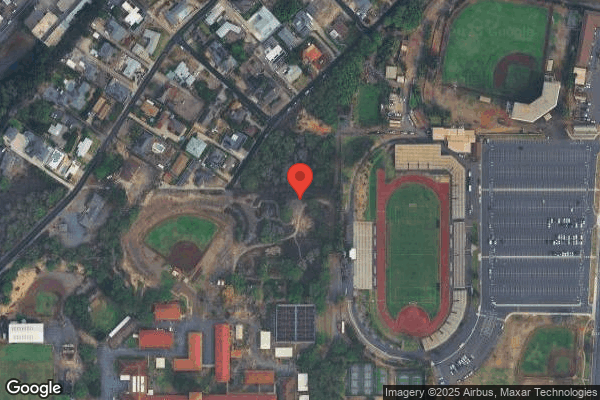
1540 LOWER MAIN STREET, WAILUKU, HI 96793 (808) 243-1722
Non profit - Corporation 90 Beds Independent Data: November 2025
Trust Grade
83/100
#4 of 41 in HI
Last Inspection: November 2024

Within standard 12-15 month inspection cycle. Federal law requires annual inspections.

Overview

Hale Makua Health Services has a Trust Grade of B+, which means it is recommended and above average in quality. It ranks #4 out of 41 nursing homes in Hawaii, placing it in the top half of facilities, and is the best option among three local facilities in Maui County. However, the facility is experiencing a worsening trend, with issues increasing from 8 in 2023 to 14 in 2024. Staffing is a strength here, with a 5/5 star rating and a low turnover rate of 19%, well below Hawaii's average. Nonetheless, there are some areas of concern, including a fine of $22,887, which is average for the state, and specific incidents where food safety protocols were not followed, such as improperly stored milk and juice without labeling, which could pose risks for residents.

Trust Score
B+
83/100
In Hawaii
#4/41
Top 9%
Safety Record
Low Risk
No red flags
Inspections
Getting Worse
8 → 14 violations
Staff Stability
✓ Good
19% annual turnover. Excellent stability, 29 points below Hawaii's 48% average. Staff who stay learn residents' needs.
Penalties
○ Average
$22,887 in fines. Higher than 74% of Hawaii facilities. Some compliance issues.
Skilled Nurses
✓ Good
Each resident gets 80 minutes of Registered Nurse (RN) attention daily — more than 97% of Hawaii nursing homes. RNs are the most trained staff who catch health problems before they become serious.
Violations
⚠ Watch
25 deficiencies on record. Higher than average. Multiple issues found across inspections.
★★★★★
5.0
Overall Rating
★★★★★
5.0
Staff Levels
★★★★★
5.0
Care Quality
★★★☆☆
3.0
Inspection Score
Stable
2023: 8 issues
2024: 14 issues

The Good

  • 5-Star Staffing Rating · Excellent nurse staffing levels
  • 5-Star Quality Measures · Strong clinical quality outcomes
  • Low Staff Turnover (19%) · Staff stability means consistent care
  • Full Sprinkler Coverage · Fire safety systems throughout facility
  • No fines on record
  • Staff turnover is low (19%)

    29 points below Hawaii average of 48%

Facility shows strength in staffing levels, quality measures, staff retention, fire safety.

The Bad

Federal Fines: $22,887

Below median ($33,413)

Minor penalties assessed

The Ugly 25 deficiencies on record

Nov 2024 5 deficiencies
CONCERN (D)

Potential for Harm - no one hurt, but risky conditions existed

Resident Rights (Tag F0550)

Could have caused harm · This affected 1 resident

Based on observations, interviews and policy review the facility failed to protect Resident (R)47's privacy while receiving peri-care (washing the genitals and anal area) exposing R47's naked body fro...

Read full inspector narrative →
Based on observations, interviews and policy review the facility failed to protect Resident (R)47's privacy while receiving peri-care (washing the genitals and anal area) exposing R47's naked body from the waist down to her roommate, R52. This deficient practice puts all residents who require assistance from staff, such as peri-care, at risk for being exposed to others causing psychological harm. Findings Include: On 11/12/24 at 11:40 AM surveyor walked into R47's room. The privacy curtain was pulled to block anyone from the outside walkway seeing R47 who at this time was having peri-care done by Certified Nurse Assistant (CNA)1. Surveyor walked further into the room and observed R47's roommate, R52, sitting in a recliner facing R47's bed. The privacy curtain was too short to go around R47's bed and R47's genitalia was exposed to R52. Inquired with CNA1 about the privacy curtain and she stated it was not big enough to go around the resident's bed and she showed surveyor how R52's privacy curtain goes around the bed. Surveyor pulled on R47's privacy curtain and found it was not big enough to cover all the areas around her bed to provide full privacy. On 11/13/24 at 08:40 AM interviewed Director of Nursing (DON) who confirmed the privacy curtain had been taken off and washed but had not been put up again. DON agreed this was a dignity issue for R47 and never should have happened. DON stated he had maintenance hang up the privacy curtain that was missing. On 11/13/24 at 03:15 PM went into R47's room to observe privacy curtain and found the privacy curtain was hung but still did not fully provide privacy for the resident. The resident could still be seen in her bed and would be exposed to anyone who was at or near the foot of her bed such as the roommate sitting in the reclining chair. On 11/13/24 at 03:30 PM met with DON to share findings. He confirmed staff had done as requested (hung up the privacy curtain) but it was not enough to provide privacy for the resident. Requested and received the facility policy pertaining to privacy curtain use. Review of facility policy Dignity and respect with an original and effective date 10/01/2021 states Policy It is the policy of this facility that all residents/guests be treated with kindness, dignity, and respect. Procedure . 3. Residents/guests shall be examined and treated in a manner that maintains the privacy of their bodies. A closed door or a drawn curtain shields the resident/guest from those who pass by.
CONCERN (D)

Potential for Harm - no one hurt, but risky conditions existed

Accident Prevention (Tag F0689)

Could have caused harm · This affected 1 resident

Based on observations and staff interview, the facility failed to store one oxygen cylinders (O2 tank) in a safe manner. As a result of this deficient practice, the facility put the safety and well-be...

Read full inspector narrative →
Based on observations and staff interview, the facility failed to store one oxygen cylinders (O2 tank) in a safe manner. As a result of this deficient practice, the facility put the safety and well-being of the residents, staff, as well as the public at risk for accident hazards. Findings include: During an observation of a resident's room in Lanai Nursing Neighborhood on 11/12/24 at 11:45 AM, one O2 tank was leaning upright and propped between the bedside drawer and wall. The O2 tank was not in a Oxygen Cylinder Cart and there was increase risk for the O2 tank falling over. Staff interview on 11/12/24 at 11:50 AM, Staff Nurse (Nurse) 2 acknowledged that the O2 tank was not stored properly and there was risk for it falling over. Nurse 2 then took the O2 tank to be properly stored in the Oxygen Cylinder Cart.
CONCERN (D)

Potential for Harm - no one hurt, but risky conditions existed

Infection Control (Tag F0880)

Could have caused harm · This affected 1 resident

Based on observations and staff interview, the facility failed to establish an infection prevention and control program relating to birds. As a result of this deficiency, there was increase risk of di...

Read full inspector narrative →
Based on observations and staff interview, the facility failed to establish an infection prevention and control program relating to birds. As a result of this deficiency, there was increase risk of disease outbreak in the facility. Findings include: During observation of the Lanai Nursing Neighborhood on 11/14/24 at 09:05 AM, three birds were seen in the resident's room. One bird was on the foot of the resident's bed and the other two birds were moving around on the floor. Other resident rooms had screen door barriers but this room did not. Staff interview on 11/15/24 at 10:15 AM, Director of Nursing (DON) said they were aware of the birds entering the resident rooms, but they did not have written standards, policies, procedures or a system of surveillance.
CONCERN (F)

Potential for Harm - no one hurt, but risky conditions existed

Food Safety (Tag F0812)

Could have caused harm · This affected most or all residents

Based on observation and interview the facility failed to store food kept in the freezer at 0 degrees Fahrenheit or less. This deficient practice puts all the residents at risk for foodborne illness, ...

Read full inspector narrative →
Based on observation and interview the facility failed to store food kept in the freezer at 0 degrees Fahrenheit or less. This deficient practice puts all the residents at risk for foodborne illness, Findings Include: On 11/12/24 at 09: 48 AM during initial tour of the kitchen interviewed kitchen staff (KS)1. Inquired about temperature log for the freezer that showed temperatures logged from 0 to 6 degrees Fahrenheit. Review of the Freeze Temp Record form has standard Freeze temperature less than or equal to 0. Review of this form found a row for re check temp and maintenance notified boxes which were left blank. The temperatures above 0 degrees (8) did not have re check temp and maintenance notified filled out. Inquired of KS1 if she is supposed to re-check the temperature of the freezer or notify maintenance and KS1 stated she rechecked the temperatures but did not document it. Continued review of this form found the following # temps in acceptable range:, # times temps to be taken, and % compliance. On 11/15/24 at 10:13 AM a phone interview was conducted with the Acting Director of Nutrition Services (ADNS). Inquired if she audits the freezer temperature logs from the facility and she confirmed she or another staff do the audits of the temperature logs for the refrigerators and freezers after they are sent to her. Inquired if anyone had spoken to her about the logs at the facility and she stated the Dietician and Food Service Director (FSD) had discussed the log with her. Inquired if she had seen temperatures above zero on the logs and what she would do. ADNS stated she has to look back at the logs she has and will let me know if she sees this on the logs. She stated she would ask the staff about the temperatures, if it was done later or after the door was open which might cause the temperature to rise. She stated the staff have not asked her for a work order in awhile for the freezer. ADNS stated she would call surveyor back with more information regarding this matter. On 11/25/24 at 12:35 PM surveyor called ADNS to follow up with freezer temperature log. Inquired with ADNS if she was able to follow up with the freezer temperature logs and she stated she did have KS1 look back at any work orders that were done for September. ADNS stated KS1 did fill out one work order for September. Inquired if she saw any above zero temperatures and she confirmed there were a couple of 5's and 2's. ADNS stated she is working with the facility maintenance to follow up with the freezer temperature to assure it is working properly. ADNS provided a copy of the work order
CONCERN (F)

Potential for Harm - no one hurt, but risky conditions existed

Deficiency F0925 (Tag F0925)

Could have caused harm · This affected most or all residents

Based on observations and interviews the facility failed to prevent flies and a bird from entering the dining room while residents were eating their lunch and lunch trays were being made. This deficie...

Read full inspector narrative →
Based on observations and interviews the facility failed to prevent flies and a bird from entering the dining room while residents were eating their lunch and lunch trays were being made. This deficient practice puts the residents at risk for foodborne illnesses. Findings Include: On 11/14/24 at 11:45 AM while observing kitchen staff put containers of uncovered hot food onto the trayline observed there were flies near the trayline flying above the open food. Food Service Director (FSD) shooed away the flies and covered the food with aluminum foil. FSD spoke with kitchen staff to remind her to cover the food with lids or foil as she is placing the containers on the trayline to prevent flies from going into the food. During this time a small bird was observed flying in the dining room and landed on the counter next to the microwave. On 11/14/24 at 01:00 PM interviewed FSD and inquired about the flies that were observed during the trayline. FSD stated she spoke with kitchen staff about covering the food with lids when it is on the trayline. FSD also stated she asked the facility to purchase the ECO Lab blue lights for the flies. On 11/14/24 at 01:58 PM interviewed Director of Nursing (DON) and inquired about bird that flew in the dining room/kitchen and landed on the counter, he confirmed he saw this. DON stated the dining room has screen doors that were left open. Inquired about problem with flies near the trayline flying above the food and DON stated FSD requested ECO blue lights for the kitchen which has been approved for order.
May 2024 9 deficiencies
CONCERN (D)

Potential for Harm - no one hurt, but risky conditions existed

Deficiency F0558 (Tag F0558)

Could have caused harm · This affected 1 resident

**NOTE- TERMS IN BRACKETS HAVE BEEN EDITED TO PROTECT CONFIDENTIALITY** Based on an interview with one Resident (R)42 of seven residents sampled, the facility failed to provide reasonable accommodatio...

Read full inspector narrative →
**NOTE- TERMS IN BRACKETS HAVE BEEN EDITED TO PROTECT CONFIDENTIALITY** Based on an interview with one Resident (R)42 of seven residents sampled, the facility failed to provide reasonable accommodations related to R42's showering and meals. As a result of this deficiency, there was risk for decline of R42's maintenance of independent functioning, dignity and well-being. Findings include: During resident interview on 05/02/24 at 09:30AM, R42 stated when facility staffing was short, it would take around thirty minutes to an hour for staff to respond to his call light. R42 said he needed assistance reaching for the soap when taking a shower. Also, it would take longer (around forty-five minutes) for staff to deliver meals to resident's rooms when short staffed. Review of Electronic Health Record showed that R42 was admitted on [DATE] with diagnoses including Respiratory Failure, Chronic Obstructive Pulmonary Disease, Pulmonary Edema, Congestive Heart Failure, Atrial Fibrillation, Pulmonary Arterial Hypertension, Atherosclerotic Heart Disease, Cardiomegaly, Abdominal Aortic Aneurysm, High Cholesterol.
CONCERN (D)

Potential for Harm - no one hurt, but risky conditions existed

Quality of Care (Tag F0684)

Could have caused harm · This affected 1 resident

**NOTE- TERMS IN BRACKETS HAVE BEEN EDITED TO PROTECT CONFIDENTIALITY** Based on interview and record review, the facility failed to appropriately perform diabetes management for 1 of 18 residents (Re...

Read full inspector narrative →
**NOTE- TERMS IN BRACKETS HAVE BEEN EDITED TO PROTECT CONFIDENTIALITY** Based on interview and record review, the facility failed to appropriately perform diabetes management for 1 of 18 residents (Resident 22) in the sample by failing to ensure his blood sugars were measured, and his sliding scale insulin was administered at the appropriate times. As a result of this deficient practice, Resident (R)22 was placed at risk for an avoidable decline and/or injury related to his diabetes. This deficient practice has the potential to affect all the residents at the facility with insulin-dependent diabetes. Findings include: 1) Resident (R)22 is a [AGE] year-old male admitted on [DATE] with diagnoses that include spondylosis, lumbosacral region (age-related change of the bones (vertebrae) and discs of the lower spine, causing pain), fusion of spine, thoracic region (a surgical procedure in which two or more bones (vertebrae) of the upper and middle part of the back are joined together), osteoarthritis, right shoulder (the wearing down of the protective tissue at the ends of bones), chronic pain, and diabetes with long-term use of insulin. On 05/01/24 at 08:51 AM, an interview was done with R22 at his bedside. When asked about his blood sugar checks and his sliding scale insulin, R22 reported that sometimes the nurses check his blood sugar and give him his sliding scale insulin after he has already begun eating his meal, or even after he has completed it. When R22 has commented on it, the nurses have told him, We have a one-hour grace period. A review of R22's provider orders noted an order for Insulin Lispro sliding scale (dosage is titrated based on blood sugar result) before meals, scheduled for 06:00 AM, 11:00 AM, and 04:00 PM, and started on 03/15/24. From 02/22/24 to 03/15/24, there was an order for Insulin Aspart sliding scale before meals, also scheduled for 06:00 AM, 11:00 AM, and 04:00 PM. A review of R22's Medication Administration Record (MAR) for March 2024 noted that the sliding scale insulin was documented as Late Administration: Charted Late [reflecting it was given more than one hour after it was due] 20 times. A review of R22's MAR for April 2024 noted late administration of his sliding scale insulin documented 11 times. On 05/03/24 at 09:36 AM, an interview was done with the Director of Nursing (DON) and the Administrative Nurse/Charge Nurse (CN)3 in the DON office. Both the DON and CN3 confirmed that sliding scale insulin should be administered immediately after the blood sugar is taken, and documented on the MAR immediately after it is given. They also agreed that since the insulin dose is dependent on the blood sugar result, which would be altered with food consumption, it is crucial that it is done before the resident begins eating to decrease the risk of a hypoglycemic (low blood sugar) episode. As a result, the DON and CN3 confirmed that there is no grace period for sliding scale insulin and late administration(s) should not be happening. Upon concurrent review of the late administrations documented on the MARs with CN3, she expressed surprise that there were so many and explained that the Unit Managers should be monitoring that daily. Review of Treatment of Type 2 Diabetes Mellitus in the Older Patient, last updated on 01/04/24, and found at https://sso.uptodate.com/contents/treatment-of-type-2-diabetes-mellitus-in-the-older-patient?search=slding%20scal%20insulin%20in%20an%20older%20adult§ionRank=1&usage_type=default&anchor=H33&source=machineLearning&selectedTitle=1%7E150&display_rank=1#H4 noted the following: Hypoglycemia should be avoided in older adults . Even a mild episode of hypoglycemia may lead to acute, adverse outcomes in frail older patients, including falls and fractures.
CONCERN (D)

Potential for Harm - no one hurt, but risky conditions existed

Accident Prevention (Tag F0689)

Could have caused harm · This affected 1 resident

**NOTE- TERMS IN BRACKETS HAVE BEEN EDITED TO PROTECT CONFIDENTIALITY** Based on observation, interview, and record review, the facility failed to ensure 2 of 7 residents (Residents 62 and 29) sampled...

Read full inspector narrative →
**NOTE- TERMS IN BRACKETS HAVE BEEN EDITED TO PROTECT CONFIDENTIALITY** Based on observation, interview, and record review, the facility failed to ensure 2 of 7 residents (Residents 62 and 29) sampled were free from accident hazards. The facility failed to develop effective interventions to prevent avoidable falls for Resident (R)62, and R29 was transferred from his bed to a shower chair using a mechanical lift device he had not been evaluated as safe to use. Placing residents at risk of avoidable accidents and injuries by not providing the appropriate assessments, planning, monitoring, and recommendations, and/or implementing the appropriate interventions is a deficient practice that has the potential to affect all the residents at the facility. Findings include: 1) R62 is a [AGE] year-old resident admitted to the facility on [DATE]. Diagnoses include but are not limited to traumatic brain injury following a motor vehicular accident; fractures to base of skull, maxilla (upper jawbone), orbit (eye socket), nasal bones, right clavicle (collar bone), and left carpal bone (wrist); and acute respiratory failure. On 04/30/24 at 12:50 PM, observed R62 lying supine in bed with his eyes closed. Height of bed was at the lowest setting and there was a fall mat on the right side of the bed. Review of R62's Electronic Health Record (EHR) conducted. Fall risk assessment was completed on 02/29/24 and R62 had a score of 10 indicating he is at a moderate fall risk. After his first fall on 03/08/24, another fall risk assessment was done and score increased to 17 indicating a high fall risk. The most recent fall risk assessment was done on 04/26/24 with a score of 25 indicating a high fall risk. Care plan interventions included offering snacks and activities, use of pommel cushion while on wheelchair to prevent sliding, frequent reminders to not attempt to stand up from wheelchair alone, use of a tab alarm, provide assistance with toileting, provide physical therapy as ordered, use padded fall mats around bed, increased staff supervision, setting bed at lowest position with wheels locked, and medication review to assess for medications that increase the risk of falls. Care plan also documented that the resident prefers not to use side rails while in bed and refused to use a helmet as recommended by the physician. Progress notes revealed that R62 had falls on the following dates: 03/08/24 at 10:30 AM, found on the floor in his room. 03/14/24 at 08:00 AM, found kneeling on the floor in his room after hearing tab alarm. 03/20/24 at 04:05 PM, staff witnessed R62 fall to the floor in front of the nurses' station while trying to stand up from wheelchair. 03/21/24 at 08:50 AM, found sitting on the floor in his room while responding to tab alarm. 03/23/24 at 09:55 AM, staff witnessed R62 fall to the floor in front of the Activities Department walkway while trying to stand up from wheelchair. 03/29/24 at 07:55 AM, staff witnessed R62 fall to the floor in front of the nurses' station while trying to stand up from wheelchair. 03/30/24 at 05:25 AM, found sitting on the floor in his room while responding to tab alarm. 04/02/24 at 07:15 AM, staff witnessed R62 trying to get up from the wheelchair and fell hitting his face on the frame of the door. Wheelchair was parked in front of the nurses' station. 04/20/24 at 11:00 AM, staff witnessed R62 fall to the floor in the common area near the nurses' station trying to stand up from wheelchair. 04/24/24 at 03:50 PM, staff witnessed R62 fall on the floor at the TV area in front of the nurses' station while trying to stand up from the wheelchair by pulling himself up using the railings. 04/26/24 at 11:15 AM, found sitting on the floor next to his wheelchair at the table area near the nurses' station. On 05/03/24 at 09:27 AM, an interview was conducted with Charge Nurse (CN) 1 at the nurses' station. Asked CN1 how often do the staff check on R62. CN1 said staff check on R62 every hour and document it on the log that is kept in the nurses' station. Reviewed log with CN1, hourly checks were initiated on 03/08/24 after the first fall. When asked if the hourly checks were effective given that R62 has had 10 more falls since it was implemented, CN1 said I think it is working, the falls happen on various times. CN1 also stated that the facility provides a sitter when R62 becomes restless, was prescribed an antianxiety medication on 03/28/24 to help him calm down and started on physical therapy on 03/13/24 to strengthen his legs. On 05/03/24 at 10:05 AM, an interview was conducted with the Director of Nursing (DON) by the Lanai wing nurses' station. Asked DON if the hourly checks are enough to prevent more falls for R62. DON said the facility is not able to provide one-on-one supervision for any residents 24 hours a day. DON also stated that they hired extra clerical staff that help monitor R62 in the afternoon and therapy was started to strengthen his legs to prevent him from falling when he attempts to stand up from the wheelchair. DON added that the facility does not want to implement the use of restraints on R62. 2) Resident (R)29 is an [AGE] year-old male admitted to the facility on [DATE] for long-term care following a stroke. A review of R29's Minimum Data Set (MDS) quarterly assessment with an assessment reference date (ARD) of 04/03/24, Section GG-Functional Abilities and Goals, noted that R29 is completely dependent on staff for all Activities of Daily Living (ADLs) such as eating, toileting, dressing, and bathing, as well as all mobility activities such as rolling from side to side in bed, sitting up in bed, and transferring in and out of bed. Of note is that on the last three MDS assessments documented, no weight-bearing activities were evaluated, and instead were documented as Not attempted due to medical condition or safety concerns. On 05/02/24 at 02:29 PM, observed Certified Nurse Aide (CNA)24 and CNA3 preparing to use a mechanical lift to transfer R29 from his bed to a shower chair. The mechanical lift used for the transfer was one that lifts the resident from the seated position at the edge of the bed to a standing position on the lift itself. Observed that R29 was unable to sit up or remain in the seated position at the edge of the bed on his own. CNA24 and CNA3 had difficulty manually lifting R29 to the seated position and holding him there as the lift harness was applied. R29 fell back onto the bed in a semi-reclined position at one point and had to be manually lifted to a seated position a second time. Observed CNA24 lift both R29's feet up and place them on the lift platform without his assistance. Then observed CNA24 lift R29's right hand and place it on the right handle of the lift. CNA24 was able to grip the handle once his hand was placed there. CNA3 then lifted R29's left hand to do the same on the left handle, however she had to open R29's left hand, place it on the handle, and manually close his fingers around the handle. R29 was unable to tighten his grip onto the left handle as he had done on the right. At no point during the transfer were the wheels on the mechanical lift placed in a locked position. When asked if the lift wheels should be locked for safety, CNA3 responded that they should have locked the wheels before lifting R29 from the seated position to standing. A review of the User Instruction Manual for the mechanical lift used revealed the following: The . [mechanical lift] is suitable for patients in the SITTING position only who have a degree of weight-bearing ability but require assistance to stand. A review of R29's comprehensive care plan for ADLs revealed no determination of weight-bearing ability, but does note the following: I [R29] am dependent on staff for all my ADLs. I [R29] am non-ambulatory. A review of the last Physical Therapy PT Evaluation & Plan of Treatment, dated 09/06/22, revealed that R29 had been referred for transfer and strength training. The therapist documented that he was unable to complete an assessment of R29's level of function due to his refusal to participate. Further review of the document notes that no plan of treatment had been developed, and no recommendations were made. On 05/03/24 at 08:55 AM, an interview was done with the Director of Rehab [rehabilitation] (DOR) in the Therapy Gym. DOR confirmed that she could not find a Physical Therapy Evaluation since 2022. Upon concurrent review of the 2022 Physical Therapy Evaluation, DOR agreed that she would expect to see recommendations made, especially if unable to complete an assessment, probably the highest safety recommendations. DOR stated that although she is not a Physical Therapist (PT) so she cannot speak for the PT that performed the 2022 evaluation, when she does an evaluation of her own as an Occupational Therapist (OT) or as the DOR, she would first ask the nursing staff what they are doing, then she would watch a transfer, and make recommendations based on that. If she were unable to do that (speak to nursing staff and watch a transfer), she would most likely recommend using the maximum level of safety for all transfers, meaning a mechanical lift used for fully dependent residents who are unable to participate or help in the transfer. Since the PT who conducted the 2022 evaluation was unavailable for interview, on 05/03/24 at 09:05 AM, a phone interview was done with PT5, who stated he was not familiar with R29. When asked what he would look for when assessing a resident for functional ability/mobility specifically to make a recommendation regarding the mechanical lift used with R29, PT5 responded that he would want to ensure the resident was able to place their feet on the floor/lift device, able to extend their knees, able to hold themselves up in a seated position, and able to tighten their grasp on the lift handles on both sides. On 05/03/24 at 09:08 AM, further questioning was done of DOR, who stated she was familiar with R29's occupational therapy function. DOR confirmed that R29 would not be able to tighten his grasp on the lift handle on the left side due to contractures in his left hand.
CONCERN (D)

Potential for Harm - no one hurt, but risky conditions existed

Respiratory Care (Tag F0695)

Could have caused harm · This affected 1 resident

Based on observations, staff interview and review of policy, the facility failed to label the humidified sterile water bottle for one Resident (R)177 of five residents sampled. As a result of this def...

Read full inspector narrative →
Based on observations, staff interview and review of policy, the facility failed to label the humidified sterile water bottle for one Resident (R)177 of five residents sampled. As a result of this deficiency, the facility put R177 at increase risk for sterile water contamination. Findings include: During observation of R177's oxygen delivery set up on 05/01/24 at 08:30 AM, the humidified Sterile Water Bottle was not labeled with the date and time opened. Staff interview on 05/01/24 at 08:40 AM, Charge Nurse (CN)2 acknowledged that the Sterile Water Bottle should have been labeled with the date and time opened and initials. CN2 subsequently replaced the oxygen delivery/sterile water bottle with new equipment. Review of facility policy on Oxygen Administration read Purpose; To deliver oxygen to the guest/resident when insufficient oxygen is being carried by the blood to the tissues. Procedure . c. Attach humidifier to flowmeter by screwing nut onto the flow meter if needed. If the humidifier has an audible alarm, check this by adjusting the flow rate and pinching the tubing until the alarm sounds . g. Label humidifier with date and time opened and your initials .
CONCERN (D)

Potential for Harm - no one hurt, but risky conditions existed

Deficiency F0697 (Tag F0697)

Could have caused harm · This affected 1 resident

**NOTE- TERMS IN BRACKETS HAVE BEEN EDITED TO PROTECT CONFIDENTIALITY** Based on observation, interview, and record review, the facility failed to manage pain adequately for 1 of 4 residents (Resident...

Read full inspector narrative →
**NOTE- TERMS IN BRACKETS HAVE BEEN EDITED TO PROTECT CONFIDENTIALITY** Based on observation, interview, and record review, the facility failed to manage pain adequately for 1 of 4 residents (Resident 22) sampled for pain. Specifically, the facility failed to ensure that Resident (R)22's pain regimen was implemented on a timely basis. As a result of this deficient practice, R22 was prevented from attaining or maintaining his highest practicable level of well-being. Findings include: Resident (R)22 is a [AGE] year-old male admitted on [DATE] with diagnoses that include but are not limited to, spondylosis, lumbosacral region (age-related change of the bones (vertebrae) and discs of the lower spine, causing pain), fusion of spine, thoracic region (a surgical procedure in which two or more bones (vertebrae) of the upper and middle part of the back are joined together), osteoarthritis, right shoulder (the wearing down of the protective tissue at the ends of bones), and chronic pain. On 05/01/24 at 08:55 AM, an interview was done with R22 at his bedside. R22 was sitting up in bed with a stiff posture, leaning awkwardly to the right, and appeared as if he did not want to move his head. When asked about pain, R22 stated I'm always in pain, it's so hard to get my pain managed. When they [nursing staff] constantly late [with his routine/scheduled pain medication] that's when I get upset. R22 complained that between 03:00 PM and 11:00 PM especially, his routine/scheduled pain medications are always late. When he complains to the nurses about his medication being late, he is told we have a 1-hour grace period. R22 rated his current pain level as a 7 out of 10, located to his neck and lower back. R22 repeated, I cannot handle when the meds [medications] come late. A review of R22's provider orders noted the following orders for routine/scheduled pain medications: Acetaminophen 1000 milligrams (mg) three times a day, scheduled for 08:00 AM, 02:00 PM, and 08:00 PM. Baclofen 10mg three times a day, scheduled for 08:00 AM, 02:00 PM, and 08:00 PM. Gabapentin 400mg (increased to 600mg on 04/25/24) three times a day, scheduled for 08:00 AM, 02:00 PM, and 08:00 PM. Marinol 10mg twice a day, scheduled for 08:00 AM and 04:00 PM. Oxycodone 20mg routine every six hours, scheduled for 08:00 AM, 02:00 PM, 08:00 PM, and 02:00 AM. A review of R22's Medication Administration Record (MAR) for March 2024 revealed the following: Acetaminophen documented as Late Administration: Charted Late [reflecting it was given more than one hour after it was due] 6 times. Baclofen and Gabapentin documented as given late 7 times. Marinol documented as given late 9 times. Oxycodone documented as given late 10 times. A review of R22's MAR for April 2024 revealed the following: Acetaminophen, Baclofen, and Gabapentin documented as given late 13 times. Marinol documented as given late 6 times. Oxycodone documented as given late 20 times. 4 of those times, the reason was documented as R22 was sleeping at the scheduled time, and the medication was documented as given between 1 hour, 21 minutes to 3 hours, 16 minutes late. On 05/01/24 at 10:17 AM, a follow-up interview was done with R22 at his bedside. When told that it was noted that his scheduled pain medications were sometimes documented as given late due to the resident sleeping, R22 became visibly upset and stated that he has told staff numerous times that he wants to be woken up to take his routine pain medication around-the-clock so that he can keep his pain at a tolerable level. That shouldn't matter if I am sleeping, they should still wake me up and give it to me! On 05/03/24 at 09:36 AM, an interview was done with the Director of Nursing (DON) and the Administrative Nurse/Charge Nurse (CN)3 in the DON office. Both the DON and CN3 agreed that every effort should be made to give scheduled pain medication on time and confirmed that all nurses should be documenting the administration of any medication on the MAR immediately after giving it. If the medication is a controlled substance (e.g., Marinol and Oxycodone), all nurses should be signing it out on the narcotic log, giving it immediately, then documenting it on the MAR as administered immediately after that. Surveyor confirmed with both that if a medication is documented as Late Administration, it means it was given an hour or more after it was scheduled.
CONCERN (D)

Potential for Harm - no one hurt, but risky conditions existed

Pharmacy Services (Tag F0755)

Could have caused harm · This affected 1 resident

**NOTE- TERMS IN BRACKETS HAVE BEEN EDITED TO PROTECT CONFIDENTIALITY** 2) On [DATE] at 11:48 AM, observed R33 lying in bed with head elevated. When asked how she was doing, R33 complained of back pai...

Read full inspector narrative →
**NOTE- TERMS IN BRACKETS HAVE BEEN EDITED TO PROTECT CONFIDENTIALITY** 2) On [DATE] at 11:48 AM, observed R33 lying in bed with head elevated. When asked how she was doing, R33 complained of back pain. Asked R33 if she takes medication for the pain. R33 said she did not get any pain medications yet and asked for the nurse. Notified Charge Nurse (CN) 1 of R33's complaint of back pain. CN1 said R33 has a routine pain medication scheduled and will administer it. Review of R33's Electronic Health Record (EHR) conducted. R33 is a [AGE] year-old resident admitted to the facility on [DATE]. Orders for pain medication were Gabapentin 300 mg (milligrams) at bedtime for low back pain, Morphine 2 mg every 4 hours PRN (as needed) for pain 8-10/10, and Tramadol 50 mg twice a day and every 4 hours PRN for pain. Documented under Progress Notes on [DATE] at 01:48 PM, Called pharmacy re: (regarding) gabapentin refill. Per pharmacy tech, this is being process [sic] for evening delivery. Another note was entered on [DATE] at 09:46 AM stated. Gabapentin was not delivered. LN (licensed nurse) again called pharmacy . On [DATE] at 09:48 AM, concurrent interview and record review conducted with CN1 at the nurses' station. Asked CN1 if the Gabapentin for R33 was delivered in time for her evening dose. CN1 checked the Medication Administration Record (MAR) to see if it was administered. A note on the MAR entered for [DATE] at 06:00 PM stated, Not Administered: Drug/Item Unavailable. Asked CN1 how early does the staff reorder routine medications. CN1 said they reorder seven days prior to the last available dose. Asked CN1 why R33's Gabapentin was not available if it was reordered 7 days prior to the last dose. CN1 said she will check the delivery records to see if it was delivered. After looking at the list of medications delivered on [DATE], CN1 said that Gabapentin for R33 was not included on the list for that day. CN1 also showed another document titled pending Orders Report from the contracted pharmacy stating Gabapentin was last filled on [DATE] with a handwritten note stating, need signed receipt by nurse that it was received on [DATE]. CN1 said that the nurse that received the medications delivered checked what was physically delivered against what is listed on the delivery record to make sure it matches. Delivered medications are not checked against a list of what was ordered so they are not able to tell if an ordered medication was missing. CN1 added that the Gabapentin for R33 was delivered on [DATE] so the resident only missed one dose and the attending physician was notified. 3) On [DATE] at 08:57 AM, inspection of the medication storage room was conducted with CN1. Five one-liter bags of 0.9% Sodium Chloride solution were found in one of the storage cabinets with an expiration date of [DATE]. One of the five bags did not have a protective plastic cover. CN1 confirmed that the five bags were past their expiration date and should have been discarded. Based on observation, interview, and record review, the facility failed to ensure pharmacy services included an effective process to provide routine drugs to meet the needs of the residents, and failed to dispose of medications past their expiration date. As a result of this deficient practice, 2 residents (Residents 33 and 14) had routine medications that were out of stock, and residents who needed intravenous fluid were placed at risk of receiving expired fluids. This deficient practice has the potential to affect any patient taking medication. Findings include: 1) On [DATE] at 08:43 AM, while observing medication pass with Registered Nurse (RN)8, it was noted that the Losartan (a medication for high blood pressure) 100 milligrams due at 09:00 AM for Resident (R)14 was out of stock. RN8 stated he would check the emergency kit (E-kit) for it. On [DATE] at 09:08 AM, RN8 confirmed that there was no Losartan in the E-kit. RN8 called the pharmacy to check on when it would be delivered and stated he would also call the doctor to inform him the medication was out of stock. RN8 explained that he ordered the medication refill on [DATE], but he also gave the last dose in the blister pack then. RN8 confirmed that it should have been ordered before it got down to the last dose. On [DATE] at 09:37 AM, an interview was done with Unit Manager/Charge Nurse (CN)1 at the nurses' station. CN1 stated that the expectation is when starting the last row of medications in the blister pack (meaning 7 days left of medications), nurses should start re-ordering the medication either through the electronic health record (EHR)/pharmacy interface or by faxing the refill sticker from the blister pack to the pharmacy. CN1 confirmed that since there is only one refill sticker per blister pack, the refill sticker method can only be done once. On [DATE] at 10:14 AM, CN1 provided documentation that the refill sticker for the Losartan was faxed to the pharmacy on [DATE]. CN1 confirmed that it appeared that the re-ordering process was not followed which led to the medication now being out of stock. Review of R14's EHR revealed that on [DATE] at 09:46 AM, RN8 documented the Losartan due at 09:00 AM as Not Administered: Drug/Item Unavailable. At 09:50 AM, RN8 entered a one-time order from the provider to administer the Losartan at 01:00 PM. A second order was entered changing the scheduled time due to 02:00 PM, and the medication was administered successfully between 02:00 PM and 03:00 PM.
CONCERN (D)

Potential for Harm - no one hurt, but risky conditions existed

Unnecessary Medications (Tag F0759)

Could have caused harm · This affected 1 resident

Based on observation, interview, and record review, the facility failed to ensure a medication error rate of less than 5%, as evidenced by 2 medication errors observed out of 28 opportunities for erro...

Read full inspector narrative →
Based on observation, interview, and record review, the facility failed to ensure a medication error rate of less than 5%, as evidenced by 2 medication errors observed out of 28 opportunities for errors, for an error rate of 7%. Safe and timely medication administration practices are essential for the health and well-being of the residents. As a result of this deficient practice, two residents were placed at risk of negative outcomes due to medication errors. This deficient practice has the potential to affect all residents in the facility taking medications administered by staff. Findings include: 1) On 05/02/24 at 08:43 AM, observed medication pass with Registered Nurse (RN)8 as he prepared and gave medications to Resident (R)14. Observed RN8 prepare R14's Polyethylene Glycol (a laxative) 17 grams (gm) using 8 ounces of water, split into two 4-ounce cups. One cup of prepared liquid was administered with R14's other oral medications. The second cup of prepared liquid (with half of the Polyethylene Glycol dose) was left at the bedside with R14 while RN8 left the room to prepare and administer medications to R31. On 05/02/24 at 09:51 AM, an interview was done with Unit Manager/Charge Nurse (CN)1 at the nurses' station. CN1 confirmed that medications should not be left at the bedside. When CN1 was asked specifically about Polyethylene Glycol, she responded, that is a medication so it should not be left at the bedside. Review of Section 7.5, Medication Administration Orals policy, dated 01/23, noted the following: Administer medication and remain with resident while medication is swallowed. Review of R14's provider orders revealed no orders for self-administration of any medications. 2) On 05/02/24 at 08:55 AM, observed RN8 prepare and administer medications to R31, among them was his Metformin 1000 milligrams, due at 09:00 AM. When RN8 entered R31's room with his medications, it was observed that there was no breakfast tray at his bedside. At 09:10 AM, confirmed with R31 that he had long since completed breakfast. During a review of R31's provider orders, the following was noted regarding his Metformin 1000mg: Special Instructions: give with meal.
CONCERN (D)

Potential for Harm - no one hurt, but risky conditions existed

Deficiency F0847 (Tag F0847)

Could have caused harm · This affected 1 resident

**NOTE- TERMS IN BRACKETS HAVE BEEN EDITED TO PROTECT CONFIDENTIALITY** Based on resident interviews, staff interviews, record reviews and review of policy, the facility failed to ensure that two Resi...

Read full inspector narrative →
**NOTE- TERMS IN BRACKETS HAVE BEEN EDITED TO PROTECT CONFIDENTIALITY** Based on resident interviews, staff interviews, record reviews and review of policy, the facility failed to ensure that two Residents (R)23, R25 of seven residents sampled understood the Binding Arbitration Agreement. As a result of this deficiency, R23, R25 did not fully understand the details of the Agreement. Findings include: R23 interviewed on 05/01/24 at 02:45 PM, stated that she did not remember signing the Binding Arbitration Agreement. Also, did not know what the Agreement was about. Review of Electronic Health Record (EHR) showed that R23 was admitted to the facility 05/22/23 and signed the Binding Arbitration Agreement 05/28/23. R25 interviewed on 05/01/24 at 03:10 PM, stated that she signed all admission papers but did not remember the discussion of the Binding Arbitration Agreement. Also, R25 was not familiar with any details of the Agreement when presented to her. Review of EHR showed that R25 was admitted to the facility on [DATE] and signed her own Binding Arbitration Agreement 05/28/23. Staff interview on 05/03/24 at 10:30 AM, Administrative (Admin) Assistant said the facility follows the Binding Arbitration Agreement policy during the admission process for all residents. Review of facility policy on Binding Arbitration Agreements read; Policy, This facility asks all residents to enter into an agreement for binding arbitration. We do not require binding arbitration as a condition of admission to, or as a requirement to continue to receive care at this facility . Policy explanation and compliance guidelines; When explaining the arbitration agreement, the facility shall: a. Explicitly inform the resident or his or her representative of his or her right not to sign the agreement as a condition of admission to, or as a requirement to continue to receive care at this facility. b. Explain to the resident and his or her representative in a form and manner that he or she understands, including in a language the resident and his or her representative understands. c. Ensure the resident or his or her representative acknowledges that he or she understands the agreement .
CONCERN (E)

Potential for Harm - no one hurt, but risky conditions existed

Food Safety (Tag F0812)

Could have caused harm · This affected multiple residents

Based on observations, interviews and record review, the facility failed to ensure food and drink items were stored in accordance with professional standards for food service safety. This deficient pr...

Read full inspector narrative →
Based on observations, interviews and record review, the facility failed to ensure food and drink items were stored in accordance with professional standards for food service safety. This deficient practice has the potential to affect all residents who have their meals served by the facility placing them at risk for food-borne illnesses. Findings include: On 04/30/24 at 10:03 AM, initial tour of the off-site kitchen conducted with the Nutrition Service Director (NSD). During the inspection of the walk-in refrigerator, an opened one-gallon jug of milk was found without an open and discard date. NSD confirmed that the opened jug of milk was not labeled properly. Another refrigerator was inspected just outside the walk-in refrigerator. Two opened bottles of juice and two opened jars of mayonnaise were found with no open and discard dates. NSD confirmed that the items were not labeled properly and said that the staff are usually good at making sure all food items are labeled as soon as they are opened. Inspected freezer near the food preparation area, found a partially covered box of cheesecake with no open and discard date. NSD confirmed that all opened food and drink items should be labeled with the open and discard dates, and all items stored in the refrigerator and freezer should be covered. On 05/02/24 at 09:59 AM, inspected nourishment refrigerator in the front wing of the facility with Certified Nurse Aide (CNA) 19. Found an open container of sports drink and a bowl of food covered with foil. Both items were labeled with the residents' names but there were no open and discard dates noted. Asked CNA19 how long are the food items good for if kept in the refrigerator. CNA19 said three days. When asked how he would know if three days have passed since there was no open date noted on the food items, CNA19 said he will ask the residents since both were verbally responsive. Review of the facility policy titled, Labeling and Dating Policy conducted. The policy stated, . If food is held for more than 24 hours, it shall be clearly marked to indicate the date or day by which the food item shall be consumed on the premises, sold or discarded. The policy included a table with a list of food and drink items and stated, Items with use by date, defer to that date UNLESS opened, then use the policy below. Under the 3 Days column, it included Hot or cold food leftover. Under the 7 Days column, it included Milk, Juices/Iced Tea. Under the 30 Days column, it included Mayonnaise.
Nov 2023 8 deficiencies
CONCERN (D)

Potential for Harm - no one hurt, but risky conditions existed

Resident Rights (Tag F0550)

Could have caused harm · This affected 1 resident

**NOTE- TERMS IN BRACKETS HAVE BEEN EDITED TO PROTECT CONFIDENTIALITY** Based on observation, interview and record review, the facility failed to maintain resident's (R)41's dignity when R41 was seen ...

Read full inspector narrative →
**NOTE- TERMS IN BRACKETS HAVE BEEN EDITED TO PROTECT CONFIDENTIALITY** Based on observation, interview and record review, the facility failed to maintain resident's (R)41's dignity when R41 was seen in the hallway with food drooling down the side of mouth onto neck. A fly was seen also flying around R41's face. This deficient practice hinders the right of residents for a dignified existence. Findings include: Observation on 11/06/2023 at 11:26 AM were done and R41 was noticed in wheelchair outside with food running down the side of his mouth onto his neck. A fly was seen flying around face. Interview and concurrent observation were done at 11/06/23 at 11:30 AM with Registered Nurse (RN)1 and RN2. RN1 stated that they would clean R41 up. Staff took resident to room. Observation at 11/06/23 at 2:00 PM showed R41 sleeping outside in wheelchair, relaxed and clean. Record Review (RR) of the Minimal Data Set (MDS) dated [DATE] under section GG reveals that the resident is dependent for personal hygiene: The ability to maintain personal hygiene, including combing hair, shaving, applying in makeup, washing/drying face, and hands.
CONCERN (D)

Potential for Harm - no one hurt, but risky conditions existed

Safe Environment (Tag F0584)

Could have caused harm · This affected 1 resident

**NOTE- TERMS IN BRACKETS HAVE BEEN EDITED TO PROTECT CONFIDENTIALITY** Based on observation and interview, the facility failed to ensure one Resident's room (Rm), 134 was clean and in good repair. ro...

Read full inspector narrative →
**NOTE- TERMS IN BRACKETS HAVE BEEN EDITED TO PROTECT CONFIDENTIALITY** Based on observation and interview, the facility failed to ensure one Resident's room (Rm), 134 was clean and in good repair. room [ROOM NUMBER] had cleaning needs, required several repairs, and furniture replacement. As a result of this deficiency, the rooms did not provide a homelike comfortable environment for the Residents residing in the room. Findings include: On 11/06/23 at 1:25 PM, conducted facility tour of the Resident physical living environment and identified the following issues: room [ROOM NUMBER]: - Entrance door to the room had large pieces of material broken off at the bottom. - Entrance door had several large white marks on the external side that appeared to be dry liquid. At that time, requested housekeeping staff (HK) to try to remove the marks. On 11/07/2023 at 3:21 PM, the marks were gone, and the door was clean. - Several pieces of resident furniture were in disrepair with obvious damage. - Large gouges in wall. - Commode chair in the bathroom shower noted to be dirty with brown/dark material in several areas of the seat. At that time, brought to the attention of HK, who confirmed it needed to be cleaned. - Pipe above the shower noted to have constant drip, 11/06/2023, 11/07/2023 and 11/08/2023. - Entrance to shower had missing pieces of baseboard and floor. - Wire with frayed ends hanging from ceiling outside by bathroom. On 11/08/2023 at approximately 08:15 AM, met with the Administrator and toured Rm. 134 to identify and confirm the items that needed attention.
CONCERN (D)

Potential for Harm - no one hurt, but risky conditions existed

Deficiency F0657 (Tag F0657)

Could have caused harm · This affected 1 resident

**NOTE- TERMS IN BRACKETS HAVE BEEN EDITED TO PROTECT CONFIDENTIALITY** Based on observations, interviews, and record review (RR), the facility failed to revise two Residents (R)40, and R225) of 17 re...

Read full inspector narrative →
**NOTE- TERMS IN BRACKETS HAVE BEEN EDITED TO PROTECT CONFIDENTIALITY** Based on observations, interviews, and record review (RR), the facility failed to revise two Residents (R)40, and R225) of 17 residents care plans. 1) R40's Care Plan (CP) revision was not revised to control, distribute, and monitor his alcohol intake as ordered by the physician. R40 had access to alcohol located at his bedside. As a result of this deficient practice, there was the potential R40 would consume more alcohol than allowed, which could cause an accident or interaction with his medications, resulting in an adverse outcome. 2) R225's care plan was not revised after an actual elopement to include interventions to prevent elopement. Findings include: 1) R40 was a [AGE] year-old male with a history of hemiplegia and hemiparesis following a stroke affecting his right dominant side. In addition, his medical history included, but not limited to localized edema of lower legs, major depressive disorder, hypertension, atherosclerotic heart disease, pulmonary embolism, generalized muscle weakness, difficulty in walking, right hip pain, lack of coordination, and urinary tract infection. R40 requires some assistance for activities of daily living. He was admitted to the facility on [DATE]. R40 has a BIMS (Brief Interview for Mental Status) of 15, which indicated he was cognitively intact. His medications included, but not limited to, Oxycodone and tramadol for pain, Gabapentin for nerve pain, and bupropion for depression. R40 requested to drink alcohol, so the facility obtained a physician order that allowed him to drink with restrictions. On 11/06/2023, attempted to interview R40, but he refused to participate. Observed him lying in bed with curtains drawn and lights out. Noted R40 had a cluttered environment with several large cardboard boxes stacked on a lounge chair next to his bed, outside the curtain. In addition, there were several other personal items stacked on a bedside table. On 11/07/2023 at approximately 11:30 AM, attempted to interview R40 again, but he refused to participate. At that time noted three cans of [NAME] Blue Ribbon beer on the bedside table. On 11/07/2023 at 11:45 AM, during an interview with Licensed Nurse (LN)13, she said R40 could have alcohol if he wanted, but thought he was no longer getting it. She went on to say, if he had any alcohol, it would be locked in the medication room, and given to him according to the physician order. On 11/07/2023 at 12:00 PM, during an interview with LN10, she said R40 was allowed alcohol and that it is kept in the medication room. Proceeded to go to R40's room with LN10, where she observed and removed the beer cans. When asked how R40 obtains the beer, she said she was not sure. RR of R40's Care Plan (CP) revealed the following entries: Problem (12/09/2022): Alcohol Use: I have an order for alcohol 1-2 standard drinks per night. Approach: Allow me to drink alcohol in accordance with my orders daily. Standard Drink refers to NIH (National Institute of Health) definition, equal to 12 oz (ounces) regular beer (5% ABV (alcohol by volume)) or 1.5 oz liquor (40% ABV). I have been educated about the risks of alcohol with my edema, heart disease, and narcotic use. Monitor for balance issues if I get OOB (out of bed). Goal: I will not experience adverse effects of alcohol while at I will be allowed to have the amount of alcohol that I desire (or as ordered). Reviewed R40's Geriatric Psychiatry Follow-up Note, dated 03/10/2023 by Psychiatrist (MD)10, which included: .Since Oct-Nov, pt has 2 beers or 2 oz liquor at night prn (as needed) to help anxiety and sleep and has requested it at 1-2 am. Pt refuses interview. Discussed management of mood. MD10's plan included . would decrease alcohol use and not give during late night which disrupts sleep. RR revealed the following Physician order dated 03/14/2023 for R40: Alcohol: pt (R40) may have 2 standard drinks (based on NIH standard drink). This equals to 2 beers, 3 oz liquor, or 1 beer + 1.5 oz liquor. This was a once-a-day order and special instructions included do not offer this to pt after 8 pm, and he must drink it prior to 9 pm nightly. On 11/08/2023, the Administrator said the facility does not have a written policy for alcohol use, but the practice is to follow the physician's order. He went on to say if a resident has an order, the alcohol is kept in a locked area, and distributed according to the specific order. 2) Cross Reference to F689 - Accidents. R225 was assessed as high risk for elopement on admission. On 10/24/23, R225 attempted to exit the facility and on had an actual elopement, he was found outside of the facility. Based on an assessment to identify possible contributing factors, the facility did not revise R225's care plan following the attempt to exit the facility on 10/24/23. Subsequently, the facility did not revise R225's care plan after he actually eloped.
CONCERN (D)

Potential for Harm - no one hurt, but risky conditions existed

ADL Care (Tag F0677)

Could have caused harm · This affected 1 resident

**NOTE- TERMS IN BRACKETS HAVE BEEN EDITED TO PROTECT CONFIDENTIALITY** Based on observations, interviews, and record review, for two of two sampled residents R)41 and R48 did not receive the necessar...

Read full inspector narrative →
**NOTE- TERMS IN BRACKETS HAVE BEEN EDITED TO PROTECT CONFIDENTIALITY** Based on observations, interviews, and record review, for two of two sampled residents R)41 and R48 did not receive the necessary services to maintain good grooming and personal care. R41 did not receive adequate mouth care, and R48 did not receive routine toenail care. This deficient practice could affect all residents who are not independent and rely on facility staff for assistance for activities of daily living. This deficient practice may potentially affect their quality of life. Findings include: 1) R48 is a [AGE] year-old male admitted to the facility on [DATE] for physical/occupational therapy and transitioned to long term care. He had a medical history that included but not limited to acute and chronic respiratory failure, chronic obstructive respiratory disease, chronic pulmonary edema, hypertension, depression, bilateral artificial hip joint, acquired absence of right leg above knee with no prosthesis, and phantom limb syndrome with pain. R48 uses continuous oxygen at 2 liters/minute by nasal cannula. He is able to self-transfer into an electric wheelchair and requires minimal assistance for other activities of daily living. R48's BIMS (brief interview for mental status) score is 15, which means he was cognitively intact. On 11/06/23 at 11:55 AM, observed R48 lying in bed. He had a sheet over his lower body with left leg exposed. R48 appeared well groomed with the exception of his left foot toenails, which were long in length and thick. He said he did not recall the last time he had his toenails trimmed. R48 is unable to perform this task by himself and needs the facility to assist with coordinating the care. RR of R48's Weekly Skin Assessment notes revealed inconsistent assessment and documentation of the condition of his left toenails. The entries included: 10/08/2023 at 12:14 PM, RN12: .Toenails brittle/yellow, short in length. 10/14/2023 at 11:54 AM, RN10: .Toenails brittle/yellow, thick and long in length need to see podiatrist to cut. 10/21/2023 at 12:41 PM, RN10: .Toenails brittle/yellow, thick and long in length need to see podiatrist to cut. 10/28/2023 at 03:57 PM. RN11: .Nails are short in length. 11/04/2023 at 01:31 PM. RN12: .Toenails brittle/yellow, short in length. On 11/06/2023, RR revealed there was a new order entered for R48, Consult podiatry for routine nail trimming. On 11/07/2023, at 01:29 PM, requested documentation podiatrist appointment had been made, and was informed the order had just been received the day before, so the appointment had not yet been made. The first documented need for podiatrist was on 10/14/2023. 2) Observation on 11/06/2023 at 11:26 AM noted R41 was in wheelchair outside, with food drooling down the side of mouth onto his neck. A fly was seen flying around face (Refer F550). Interview and concurrent observation were done at 11/06/23 at 11:30 AM with Registered Nurse (RN)1 and RN2. RN1 stated that they would clean R41 up. Staff took resident to room. Observation at 11/06/23 at 2:00 PM noted R41 sleeping outside in wheelchair, relaxed and clean. Record Review (RR) of the Minimal Data Set (MDS) dated [DATE] under section GG reveals that the resident is dependent for personal hygiene: The ability to maintain personal hygiene, including combing hair, shaving, applying in makeup, washing/drying face, and hands.
CONCERN (D)

Potential for Harm - no one hurt, but risky conditions existed

Deficiency F0688 (Tag F0688)

Could have caused harm · This affected 1 resident

**NOTE- TERMS IN BRACKETS HAVE BEEN EDITED TO PROTECT CONFIDENTIALITY** Based on observation, interviews and record reviews, the facility failed to provide treatment and care in accordance with profes...

Read full inspector narrative →
**NOTE- TERMS IN BRACKETS HAVE BEEN EDITED TO PROTECT CONFIDENTIALITY** Based on observation, interviews and record reviews, the facility failed to provide treatment and care in accordance with professional standards of practice when the staff did not consistently continue the functional mobility services and therapy as ordered and care planned for three of four residents sampled, Resident (R)5, R2, and R19. This deficient practice potentially decreases the resident's functional mobility which may result in a decreased range of motion. Findings include: Review of R5 face sheet revealed he was admitted on [DATE] with diagnoses including but not limited to cerebral infarction/ischemia (blood loss to the brain). Hemiplegia (weakness) and hemiparesis affecting left non-dominant side, hemiplegia and hemiparesis also affecting right dominant side. On 11/05/23, observed R 5 in bed: 08:30 AM 09:30 AM 10:30 AM 11:30 AM. On 11/06/23 at 12:38 PM R5 was in bed. Queried with R5 regarding his mobility and range of motion (ROM.) R5 stated I don't get out much. I would like to. They don't do range of motion. A review of R5's physical evaluation and plan of treatment from physical therapy (PT) done on 09/28/2023 states that Patient was referred for assessment and ordering of appropriate wheelchair. Patient is unable to effectively or safely perform functional mobility including weight shifting, repositioning and ambulation. Patient has left upper extremity and bilateral lower extremity spasticity and contractures of bilateral ankles. A review of R5's care plan dated 12/06/2023 revealed a goal for interventions to be implemented to decrease complications related to contractures. Provide passive range of motion to upper and lower extremities during ADL care. Monitor for s/s of pain or discomfort. Assist me with turning and repositioning every 2 hours and PRN. Check for skin breakdown during ADL care. If new contracture is noted, inform family and MD for OT eval if appropriate. During an interview on 11/07/23 at 11:02 AM with restorative nurse's aide (RNA)1, she explained I am under nursing. When I work with rehab, they will plan therapy for residents. Rehab will give me a care plan of what to do and I give it to nursing. Nursing can put it in the nursing care plan. The resident is then on restorative. If nursing is short, I will go and help nursing, like today, I am in dining helping with mealtime. An interview was done on 11/07/23 at 11:18 AM with physical therapy (PT). Queried regarding restorative ROM and mobility exercises. PT stated that R5 is not on restorative nursing program. They must do bed mobility strengthening and he is ineligible. He was ordered a wheelchair and it did not come. It's been a year. During an interview on 11/07/23 at 1:04 PM with certified nurse aide (CAN) 1, who stated I am floating between Molokai and Lanai. Sometimes I go to restorative. If I have time, I will do ROM. I try to do it if I have time. 2) Review of R2's face sheet revealed he was re-admitted on [DATE]. R2 has a diagnosis including but not limited to hemiplegia and hemiparesis following cerebral infarction. R2 presents with right arm contractures. Observation during initial tour of the facility on 11/05/23 revealed R2 was in bed at the following times: 09:40 AM 10:40 AM 11:40 AM. Interview with R2 was done on 11/05/23 at 1:00 PM. R2 was able to answer yes or no questions. R2 stated that he does not get exercises at all and was in bed all day. A review of R2's care plan dated 05/27/2021 revealed a problem of a preference to stay in bed and a goal approach of encourage or assist with active range of motion (AROM) and passive range of motion (PROM) to promote healthy Musculo-skeletal function. Further review for short term goal approach revealed exercise routinely to include PROM exercises to right lower extremity all joints all planes, AAROM to left lower hip flex/Abd/add, knee flexion/ext, and ankle dorsiflexion and plantar flexion. Refer to PT/OT as needed. A review of R2's physical therapy evaluation and plan of treatment dated 01/04/23 revealed that R2 is not able to sit unsupported x30 seconds with feet flat on floor and no back support, R2 is not able to sit at the edge of the bed, R2 is not able to stand with upper extremity support for 10 seconds. On 11/6/23 at 10:33 AM R2 observed in bed. Queried with R2 if the staff had done any exercises with him and he stated no. On 11/07/23 at 10:21 AM, R2 was in bed watching tv on his left side. Queried if he had received range of motion exercises and he stated no. On 11/07/23 11:56 AM and 12:11 PM, R2 was in bed. During an interview on 11/07/23 at 1:04 PM with CNA 1, who stated I am floating between Molokai and Lanai. Sometimes I go to restorative. If I have time, I will do ROM. I try to do it if I have time. On 11/07/23 at 1:27 PM, R2 was in wheelchair in hall. R2 expressed that he was happy, smiling and stated, it's been a while. Interview with CNA2 on 11/07/23 at 1:36 PM stated R2 only watches TV and Tuesdays and Thursdays - he has a certain time to shower before the bingo time. He gets up twice a week. Shower chair - two people, maxi lift. We try our best to do ROM in between but if they are restorative, we try and do it at the end of the shift. Sometimes, if we have time to do ROM, we will try to get to it. 3) Review of R19's face sheet revealed he was readmitted on [DATE]. R19 has a diagnosis of cerebral infarction with monoplegia of upper limb following cerebral infarction affecting left non-dominant side. It was observed that R19 was in bed at the following times on 11/05/13: 09:45 AM 10:45 AM 11:45 AM. A review of R19's occupational therapy evaluation and plan of treatment revealed that R19 is not able to sit unsupported x 30 seconds with feet flat on floor and no back support, not able to sit at the edge of the bed and not able to stand without upper extremity support. R19 is impaired to both left and right upper extremities. Interview was done on 11/06/23 at 10:44 AM with R19. R19 is a pleasant man who is nonverbal but can comprehend - aphasic. Queried if he is good? R 19 can answer with a thumbs up or down. Queried R19 if they were able to do ROM exercises and he gestured no, with a thumbs down. Interview on 11/07/23 at 10:12 AM was done with R19. Queried with R19 regarding any ROM exercises done and R19 gestured with a thumbs down. R19 was able to gesture yes that he was going to dialysis today. Interview with CNA2 on 11/07/23 at 1:36 PM stated R2 only watches TV and Tuesdays and Thursdays - he has a certain time to shower before the bingo time. He gets up twice a week. Shower chair - two people, maxi lift. We try our best to do ROM in between but if they are restorative, we try and do it at the end of the shift. Sometimes, if we have time to do ROM, we will try to get to it.
CONCERN (D)

Potential for Harm - no one hurt, but risky conditions existed

Accident Prevention (Tag F0689)

Could have caused harm · This affected 1 resident

**NOTE- TERMS IN BRACKETS HAVE BEEN EDITED TO PROTECT CONFIDENTIALITY** Based on observation, record review and interview with staff, the facility failed to monitor the efficacy and modify a resident'...

Read full inspector narrative →
**NOTE- TERMS IN BRACKETS HAVE BEEN EDITED TO PROTECT CONFIDENTIALITY** Based on observation, record review and interview with staff, the facility failed to monitor the efficacy and modify a resident's care plan interventions for one Resident (R)225 of one resident sampled for elopement. This deficient practice has the potential to put the resident at risk of harm as he may wander into areas that are not safe. Findings include: Cross Reference to F657 - Care Plan Timing and Revision. The facility did not assure based on an assessment (root cause analysis), the resident's care plan and interventions/approaches were revised to prevent elopements. On 11/05/23 during the initial screening of residents, observed R225 sitting up in bed. After lunch, R225 was observed standing at the medication cart requesting pain medication. R225 was independently ambulating with no use of a device. At 01:16 PM attempted to interview R225 in his room. Initially his answers to queries were appropriate then became tangential (train of thought started to wander and appeared to have a lack of focus). R225 was observed to be wearing a wander guard bracelet. R225's room is located at the end of the neighborhood (semi-circle) close to the care homes. There is a gate that separates the long-term care and care home rooms. There is an entrance/exit to the back parking lot two doors down from the resident's room. The main entrance/exit to the facility is located across the field from R225's room. On 11/06/23 at 07:54 AM, R225 was out of bed. A staff member was asked where he was, the staff member responded R225 was in the dining room. At 08:03 AM observed him in the dining room sitting at a table. R225 was observed at 10:41 AM and 12:30 PM in the dining room. On the morning of 11/07/23, R225 was observed ambulating in his neighborhood. One observation found him holding on to the side rail and making dance movements. On 11/07/23 at 12:20 PM while touring the facility with the Director of Nursing (DON), R225 followed along. R225 was admitted to the facility on [DATE]. Diagnoses include but not limited to unspecified fracture of skull, subsequently encounter for fracture with routine healing, traumatic cerebral edema with loss of consciousness, traumatic cerebral hemorrhage with loss of consciousness, metabolic encephalopathy, anxiety disorder, restlessness and agitation, alcohol dependence, and opioid dependence. Review of the admission Minimum Data Set with assessment 10/26/23. The Brief Interview for Mental Status was administered documented R225 yielded a score of 13 (cognitively intact). In Section E. Behavior, R225 was coded for exhibiting wandering behavior (occurred one to three days) with significant risk to of getting to a potentially dangerous place. In Section GG. Functional Abilities and Goals, R225 was coded as independent for sit to lying, lying to sitting on side of bed, sit to stand, chair/bed-to-chair transfer, walk 10 feet, walk 50 feet with two turns, and walk 150 feet. A review of the resident's Elopement Risk Evaluation dated 10/23/23 (admission) noted R225 was assessed at high risk for elopement. Interventions included elopement deterrent device implemented, elopement prevention care plan initiated or updated, and therapy referral for issues with activity and mobility requested. R225's baseline care plan developed 10/25/23 documented the use of alarms with approaches to monitor alarm that prevents resident from leaving area of safety over the next 48 hours and monitor for wheelchair safety over the next 48 hours, and wander guard initiated due to statements of being home. Also noted a plan for being at risk of exiting the facility without a responsible person. Approaches included redirect resident when he starts to express wanting to go home, monitor and evaluate necessary supervision if increase exit seeking behavior is observed, wander guard initiated (monitor daily for proper functioning), and notify Director of Nursing, physician, and Administrator if unable to locate R225. A review of the comprehensive care plan last reviewed/revised on 11/01/23 noted a care plan for the use of a wander guard due to elopement behaviors. The start date was 11/01/23 and the approach included: ensure that alarms are properly placed and functioning while in use, educate me on the need for alarms and allow me to discuss alternatives, interdisciplinary team to evaluate alarms quarter and as needed for falls, behaviors, attempts to get out of bed/chair without assistance, or signs of psychological distress related to the alarm. Review of the progress notes found an entry dated 10/24/23 at 3:30 PM documenting R225 was observed exiting the facility. Staff member was able to intervene and redirect resident back into the facility. Resident reported he was trying to get medicine as he had a sore throat. The wander guard noted to be in place and working properly. Staff implemented frequent checks of resident's whereabouts. Subsequent progress notes of 11/03/23 at 6:17 PM documented resident found on the sidewalk outside (standing outside the residential area in the roundabout). R225 was holding a plastic bag of wipes and other toiletries and stated he was going to [Name of Facility] as that is where he lives. The resident's neighborhood was called and there was a faint sound of the alarm at the door. Resident returned to his neighborhood. The facility provided copies of their incident reporting. Review of the event of 10/24/23 noted the resident's wander guard was in place and resident noted with poor mentation. The Nursing Supervisor (NS)2 noted it was not clear why the door did not lock when the resident was nearby. Maintenance inspected door to ensure safety of resident. The incident report for 11/03/23, NS2 noted R225 with high elopement risk and wander guard. Antipsychotic medication (Seroquel) was discontinued on 11/01/23 due to pending discharge from the facility. Resident noted with continued displaying signs of anxiety and hypervigilance about receiving medications. Interventions included use of wander guard, frequent orientation to location and monitoring every 30 minutes following elopement event. The doors and wander guard monitored daily to ensure they are functioning properly. On 11/07/23 at 12:30 PM an interview was conducted with the DON in the conference room. Inquired whether the facility reassessed R225 following the attempt to exit the facility on 10/24/23 and the elopement on 11/03/23 and based on the assessment revised the interventions to prevent elopement. DON reported R225 used to be his neighbor and thinks he exit seeks because the resident wants to leave with him. DON reviewed R225's care plan to identify care plan revisions. DON confirmed there were no care plan revisions (additional interventions) to deter R225 from eloping. DON reported the facility checks the wander guard system daily. There was no documentation the system was evaluated daily. A walk through the neighborhood was done with the DON and NS2. The DON and NS2 demonstrated the operations of the system. The DON also explained that if the system is set, an alarm will sound when the door is opened and there is a pager at the nurses' station that will also alert staff. The DON stated that the system for the front entrance is not activated until the evening (7:00 PM) as this is the entrance used for visitors.
CONCERN (D)

Potential for Harm - no one hurt, but risky conditions existed

Deficiency F0692 (Tag F0692)

Could have caused harm · This affected 1 resident

**NOTE- TERMS IN BRACKETS HAVE BEEN EDITED TO PROTECT CONFIDENTIALITY** Based on observation, interview and record review, the facility failed to offer, encourage, and assist Resident (R)5 in increasi...

Read full inspector narrative →
**NOTE- TERMS IN BRACKETS HAVE BEEN EDITED TO PROTECT CONFIDENTIALITY** Based on observation, interview and record review, the facility failed to offer, encourage, and assist Resident (R)5 in increasing his fluid intake. This deficient practice affect's R5's ability to maintain proper hydration and health. Findings include: Review of R5's face sheet revealed he was admitted on [DATE] with diagnoses including but not limited to cerebral infarction/ischemia. Hemiplegia and hemiparesis affecting left non-dominant side, hemiplegia and hemiparesis also affecting right dominant side. On 11/05/23 at 09:57 AM during an interview with R5, R5 asked for assistance to drink a sip of water. Observation of R5's right hand was not controllable and left hand could not follow command. Surveyor notified staff and R5 drank all the water. A review of R5's physical evaluation and plan of treatment dated on 09/28/2023 states that Patient was referred for assessment and ordering of appropriate wheelchair. Patient is unable to effectively or safely perform functional mobility including weight shifting, repositioning and ambulation. Patient has left upper extremity and bilateral lower extremity spasticity and contractures of bilateral ankles. (Refer F688) On 11/07/23 at 10:03 AM, surveyor noted a full water [NAME] of 900 ml at the bedside. Queried with R5 about his water. R5 stated that he only gets offered water at mealtimes. A review of dietary weekly at-risk meeting dated 09/15/2023 revealed Sig wt. gain/wk. (9/8/23) 208.6# BMI 26.07. He continues with excellent intake of meals (76-100%) and poor fluid intake. Encourage him to drink his fluid goal, change back to monthly weights. A review of dietary weekly at-risk meeting dated 09/12/23 revealed that R5 continues with low fluid intake. A review of dietary weekly at-risk meeting dated 09/05/23 revealed fluid intake average is 939 ml/d which meets 35% of estimated fluid goal of 2700-3150 ml/d. He was on weight gain trend in May 2023. Weight gain was beneficial d/t previous weight loss trends after his illness in 11/2022 (hypotension and UTI). No chewing, swallowing, skin, or BM issues reported in EMR. He is noted with low fluid intake. Dietician's recommendations for fluid intake were to encourage him to drink his fluid goal of 11-12 cups/d. A review of R5's care plan dated 05/27/21 for a problem of dehydration/fluid maintenance and a short-term goal to be adequately hydrated with a goal of 2730 ml fluid/day in the next 3 months (target date 12/06/2023), revised 09/12/23. I enjoy water, [NAME] beer. Monitor for signs or symptoms of dehydration. Observations were done on 11/07/23 at 12:39 PM, and 2:05 PM of the water [NAME] which was the same water [NAME] and at the same amount of 900 ml on bedside table. Queried of R5 if he was offered his water on the bedside table. R5 stated no. A review of R5's hydration intake for lunch dated 11/07/23 revealed a total of 150 ml fluid and lunch intake was documented at 26-50% intake.
CONCERN (D)

Potential for Harm - no one hurt, but risky conditions existed

Deficiency F0790 (Tag F0790)

Could have caused harm · This affected 1 resident

**NOTE- TERMS IN BRACKETS HAVE BEEN EDITED TO PROTECT CONFIDENTIALITY** Based on observation, interview, and record review (RR), the facility failed to provide or obtain from an outside resource, rout...

Read full inspector narrative →
**NOTE- TERMS IN BRACKETS HAVE BEEN EDITED TO PROTECT CONFIDENTIALITY** Based on observation, interview, and record review (RR), the facility failed to provide or obtain from an outside resource, routine dental services to meet the needs of one Resident (R)48. As a result of this deficiency, R48 did not get the required preventative care, or opportunity to investigate obtaining dentures. Findings include: R48 is a [AGE] year-old male admitted to the facility on [DATE] for physical and occupational therapy and transitioned to long term care. He had a medical history that included but not limited to acute and chronic respiratory failure, chronic obstructive respiratory disease, chronic pulmonary edema, hypertension, depression, bilateral artificial hip joint, acquired absence of right leg above knee, and phantom limb syndrome with pain. R48 uses continuous oxygen at 2 liters/minute by nasal cannula. He is cognitive and alert and oriented. His primary insurance is Medicare, with Medicaid coinsurance On 11/06/23 at 10:46 AM, interviewed R48. Observed he had one visible lower tooth. R48 said he did have some upper and lower teeth in the back of his mouth. He went on to say, he had not seen a dentist in years, and told the staff he wanted to see one. On 11/08/2023, during a second interview with R48, he said he would like to get dentures. On 11/08/2023, during an interview with the Unit Nurse Manager, he stated he asked R48 on Monday (11/06/2023), if he wanted to see dentist, and he (R48) said no, but then he changed his mind, and said yes today. RR revealed no documentation routine dental services were provided, offered, or refused since he had been admitted to the facility.
Nov 2022 3 deficiencies
CONCERN (D) 📢 Someone Reported This

A family member, employee, or ombudsman was alarmed enough to file a formal complaint

Potential for Harm - no one hurt, but risky conditions existed

Comprehensive Care Plan (Tag F0656)

Could have caused harm · This affected 1 resident

**NOTE- TERMS IN BRACKETS HAVE BEEN EDITED TO PROTECT CONFIDENTIALITY** Based on interviews and record review, the facility failed to implement a comprehensive person-centered care plan for one reside...

Read full inspector narrative →
**NOTE- TERMS IN BRACKETS HAVE BEEN EDITED TO PROTECT CONFIDENTIALITY** Based on interviews and record review, the facility failed to implement a comprehensive person-centered care plan for one resident (Resident (R)22) sampled. Findings include: (Cross Reference to F675- Care Plan Timing and Revision and F689- Accident Hazard/Supervision) The State Agency (SA) received a Facility Reported Incident (FRI) from the facility on 10/17/22 that documented at approximately 5:00 AM, Staff (S)1 noted the resident walking in the Lanai hallway and the door alarm sounded shortly after. Between 05:05 AM and 05:07 AM, Staff (S)2 noted R22 was walking outside in the parking lot near the doorway and the resident was brought back into the facility without incident. On 11/09/22 at 12:03 PM, conducted an interview and walk through of the facility retracing R22's elopement (on 10/17/22) with the Director of Nursing (DON). The DON stated R22 exited through the fire exit door (FED)2 located near room [ROOM NUMBER]. The facility has since installed a wander guard alarm at the fire exit because staff working on the floor did not hear the FED2 alarm, until after R22 was escorted back into the facility by staff report for the next shift. This surveyor and the DON walked the route R22 took to the lower parking lot. R22 walked down a grassy hill, approximately 15 feet, then along a well-traveled road for approximately 50-60 yards before reaching the lower parking lot, where staff reporting for the next shift (day shift) recognized R22 and escorted him back into the facility. On 11/09/22 at 1:42 PM, conducted a record review of R22's Electronic Medical Record (EMR). Review of R22's care plan documented R22's wandering/exit seeking/risk for elopement due to wandering behavior, impaired cognition, diagnosis of Bipolar 1 Disorder, and ability to ambulate independently was started on 05/15/22 and included an approach to monitor R22's where about and activity every 30 minutes for 24 hours after observed behaviors of exit seeking. Review of R22's progress notes documented R22 had exit seeking behaviors on 5/14/22, 06/18/22, 09/15/22, 09/19/22, 09/27/22 (two incidents), and on 10/17/22. There was no documentation supporting staff monitored R22 every 30 minutes for 24 hours after observed behaviors of exit seeking. On 11/10/22 at 2:25 PM, conducted a concurrent review of R22's EMR and interview the DON, Administrator (ADMIN), and the Regional Nurse ([NAME]). The DON and [NAME] reviewed R22's EMR and confirmed staff did not monitor R22 as indicated on the resident's care plan and should have.
CONCERN (D) 📢 Someone Reported This

A family member, employee, or ombudsman was alarmed enough to file a formal complaint

Potential for Harm - no one hurt, but risky conditions existed

Deficiency F0657 (Tag F0657)

Could have caused harm · This affected 1 resident

**NOTE- TERMS IN BRACKETS HAVE BEEN EDITED TO PROTECT CONFIDENTIALITY** Based on interviews and record review, the facility failed to ensure the comprehensive care plan was reviewed and/or revised by ...

Read full inspector narrative →
**NOTE- TERMS IN BRACKETS HAVE BEEN EDITED TO PROTECT CONFIDENTIALITY** Based on interviews and record review, the facility failed to ensure the comprehensive care plan was reviewed and/or revised by the interdisciplinary team after each assessment for one resident (Resident (R)22) sampled. Findings include: (Cross Reference to F656- Care Plan Implementation, F689- Free from Accident Hazard/Supervision) The State Agency (SA) received a Facility Reported Incident (FRI) from the facility on 10/17/22 that documented at approximately 5:00 AM, Staff (S)1 noted the resident walking in the Lanai hallway and the door alarm sounded shortly after. Between 05:05 AM and 05:07 AM, Staff (S)2 noted R22 was walking outside in the parking lot near the doorway and the resident was brought back into the facility without incident. On 11/09/22 at 12:03 PM, conducted an interview and walk through of the facility retracing R22's elopement (on 10/17/22) with the Director of Nursing (DON). The DON stated R22 exited through the fire exit door (FED)2 located near room [ROOM NUMBER]. The facility has since installed a wander guard alarm at the fire exit because staff working on the floor did not hear the FED2 alarm, until after R22 was escorted back into the facility by staff report for the next shift. This surveyor and the DON walked the route R22 took to the lower parking lot. R22 walked down a grassy hill, approximately 15 feet, then along a well-traveled road for approximately 50-60 yards before reaching the lower parking lot, where staff reporting for the next shift (day shift) recognized R22 and escorted him back into the facility. On 11/09/22 at 1:42 PM, conducted a record review of R22's Electronic Medical Record (EMR). Review of R22's progress notes documented R22 had seven (7) exit seeking incidents and managed to exited the facility on five (5) occasions: 1) On 5/14/22- R22 opened the fire exit door (FED)1 (fire exit door between activity and dining room) but the alarm did not function, it was not properly closed, and the alarm was not set. 2) On 06/18/22 - R22 exited the facility through FED1. 3) On 09/15/22 - R22 exited the facility through FED1. 4) On 09/19/22- R22 was found right outside the back, fire exit door (FED)2 located near room [ROOM NUMBER]. 5) On 09/27/22- R22 pushed FED2 triggering door alarm. R22 remained inside the unit. 6) On 09/27/22- R22 exited FED2 and was found approximately 10 feet outside the door. 7) On 10/17/22 at 7:46 AM, R22 exited the facility from FED2 and was found in back (lower) parking lot of the facility. Review of Point of Contact (POC) report did not have documentation that staff monitored R22's where about and activity every 30 minutes for 24 hours after observed behaviors of exit seeking on 05/14/22, 06/18/22, 09/15/22, 09/19/22, and 09/27/22. Staff documented 15 incidents of R22 wandering on 06/05/22, 07/04/22, 05:06 AM, 07/17/22 , 07/24/22, 07/26/22, 07/16/22, 07/04/22, 08/08/22 , 09/24/22 , 09/18/22 , 09/17/22 , 09/15/22 , 10/09/22, 10/16/22, and 11/11/22. Review of R22's care plan documented R22's wandering/exit seeking/risk for elopement due to wandering behavior, impaired cognition, diagnosis of Bipolar 1 Disorder, and ability to ambulate independently was started on 05/15/22. R22's care plan interventions were updated on 05/15/22 and 10/17/22, after two elopements. Review of R22's Care Conferences completed on 05/20/22 (admission), 06/22/22 (quarterly), and 09/09/22 (quarterly), did not address R22's multiple incidents of wandering and/or exit seeking behaviors or updating R22's care plan to include interventions related to the behavior. The only related documented identified an elopement device/wander guard was implemented for R22. On 11/10/22 at 2:25 PM, conducted a concurrent review of R22's EMR and interview the DON, Administrator (ADMIN), and the Regional Nurse ([NAME]). The DON and ADMIN reported they were only aware of R22's exist seeking/wandering behaviors that occurred on 05/14/22 and 10/17/22 and confirmed R22's care plan should have been updated after each elopement, elopement attempt, and/or wandering into another resident's room, but was not. Review of the facility's Unaccompanied Exit Checklist documented the facility's procedure is to assisted the resident back into the facility, the Administrator and DON should be notified during regular business hours, an incident report should be initiated, investigate the reason for unaccompanied exit and put an intervention in place: new admission and wants to go home, behavior prior to exit (pacing, agitated, wandering, recent exit seeking (red flag and this is where an intervention needs to occur- before they get out of the facility, and asking family), exit doors not closed properly, so alarm not triggered, alert system functioning- did it trigger appropriate staff response, and time and day of the week. Review and complete a new Elopement Assessment, then update care plan and [NAME] with interventions to keep resident safe.
CONCERN (D) 📢 Someone Reported This

A family member, employee, or ombudsman was alarmed enough to file a formal complaint

Potential for Harm - no one hurt, but risky conditions existed

Accident Prevention (Tag F0689)

Could have caused harm · This affected 1 resident

**NOTE- TERMS IN BRACKETS HAVE BEEN EDITED TO PROTECT CONFIDENTIALITY** Based on interviews and record review, the facility failed to ensure the resident's safety from accident hazards for one residen...

Read full inspector narrative →
**NOTE- TERMS IN BRACKETS HAVE BEEN EDITED TO PROTECT CONFIDENTIALITY** Based on interviews and record review, the facility failed to ensure the resident's safety from accident hazards for one resident (Resident (R)22) sampled. R22 had seven incidents of exit seeking behavior of which the resident exited through a fire exit door five times. On one occasion, R22 eloped from the facility without staff's knowledge and was found in the parking lot by staff reporting for work. R22 had incidents of wandering and has wandered into another resident's room. R22's care plan was not reviewed or revised to include appropriate interventions after each incident and Elopement Risk Evaluations were not conducted to ensure the resident's safety. As a result of this deficiency, the resident is at a potential risk of an altercation with another resident, an increase of for falls and injuries, and being struck by a motor vehicle. Findings include: (Cross Reference to F656- Care Plan Implementation and F657- Care Plan Revision) The State Agency (SA) received a Facility Reported Incident (FRI) from the facility on 10/17/22 that documented at approximately 5:00 AM, Staff (S)1 noted the resident walking in the Lanai hallway and the door alarm sounded shortly after. Between 05:05 AM and 05:07 AM, Staff (S)2 noted R22 was walking outside in the parking lot near the doorway and the resident was brought back into the facility without incident. On 11/09/22 at 12:03 PM, conducted an interview and walk through of the facility retracing R22's elopement (on 10/17/22) with the Director of Nursing (DON). The DON stated R22 exited through the fire exit door (FED)2 located near room [ROOM NUMBER]. The facility has since installed a wander guard alarm at the fire exit because staff working on the floor did not hear the FED2 alarm, until after R22 was escorted back into the facility by staff report for the next shift. This surveyor and the DON walked the route R22 took to the lower parking lot. R22 walked down a grassy hill, approximately 15 feet, then along a well-traveled road for approximately 50-60 yards before reaching the lower parking lot, where staff reporting for the next shift (day shift) recognized R22 and escorted him back into the facility. The DON confirmed there was the potential that R22 could have wandered into the road due to his impaired cognition and could have been hit by a motor vehicle. On 11/09/22 at 1:42 PM, conducted a record review of R22's Electronic Medical Record (EMR). Review of R22's care plan documented R22's wandering/exit seeking/risk for elopement due to wandering behavior, impaired cognition, diagnosis of Bipolar 1 Disorder, and ability to ambulate independently was started on 05/15/22 and included an approach to monitor R22's where about and activity every 30 minutes for 24 hours after observed behaviors of exit seeking. Review of R22's progress notes documented R22 had exit seeking behaviors on: - On 5/14/22 at 1:11 PM- R22 was informed brother came to pick him up for lunch and waiting for him outside, R22 immediately got up and looked for his brother which was waiting under the umbrella (in the facility). R22 was able to open the fire exit door (FED)1 (fire exit door between activity and dining room) but the alarm did not function, it was not properly closed, and the alarm was not wet. Another resident witnessed R22 exit the door, fortunately the screener on duty saw R22 outside and directed the resident to his brother. R22 was A/O (alert and oriented) x1 (to person) easy to redirect. - On 06/18/22 at 2:38 PM- R22 was observed wandering hall with belongings (watch/food/shoes), no shirt into the dining room. When confronted by staff resident stated he wanted to go to the bank, or just walk around. R22 was redirected back to the room, then exited room quickly towards the dining room and when out the FED1. Staff heard the alarm and was able to redirect R22 back into the facility. - On 07/01/202 at 10:25 PM, R22 frequently got out of bed to ambulate around the neighborhood (unit), Needs to be oriented to where his room is most of the time. R22 walked into the wrong room and another resident became verbal to R22 and told him this isn't you room, get out. - On 09/15/22 at 10:24 PM- R22 was agitated at the beginning of the shift and started walking out of room and up/down the neighborhood. R22 stated he was looking for the lady, sat outside room [ROOM NUMBER], and eventually exited the facility through FED1. Staff redirected the resident back into the facility. - On 09/19/22 at 4:59 PM, staff heard the back alarm (fire exit door (FED)2) located near room [ROOM NUMBER]. Staff spotted R22 right outside the door and staff redirected R22 back to his room. - On 09/27/22 at 9:54 PM, staff documented R22 pushed FED2 triggering door alarm. First time, R22 remained inside the unit. Staff redirected R22. - On 09/27/22 at 9:54 PM, R22 triggered the alarm on FED2. This time (second attempt) R22 walked out about 10 feet from the door. Staff was there to redirect R22 back into the facility. Staff observed R22 wandering throughout the unit before and after the event. - On 10/17/22 at 7:46 AM, R22 exited out the rear of the building (FED2), alarm activated but was very faint. Staffing was unable to hear very faint alarm. R22 was in back (lower) parking lot at another rear door and was brought back inside of the building by on-coming staff. R2 was seen in hallway approximately 10-15 minutes earlier by staff passing medications. R22's wander guard was verified and working at the beginning of the shift. Review of Point of Contact (POC) report staff documented 15 incidents of wandering: - 06/05/22 at 12:18 AM- walks to inside the room when wondering confused most of the time - 07/04/22 at 05:05 AM, wandering, redirected, offered food/fluid, toilet, provide calm environment, ensure resident safety - 07/04/22 at 05:06 AM, R22 entered another resident's room - 07/16/22 at 3:21 PM, 5 minutes of wandering, redirected intervention effective - 07/17/22 at 12:23 AM, R22 walks a lot back and forth to the bathroom. - 07/24/22 at 12:03 AM, R22 is confused - 07/26/22 at 11:31 AM, wandering; toilet intervention effective - 08/08/22 at 06:31 AM, R22 wandered entered another resident's room - 09/15/22 at 12:21 AM, wandering, redirected, offered food/fluid, toilet - 09/17/22 at 11:32 AM, wandering, redirected - 09/18/22 at 2:45 PM, 5 minutes of wandering, redirected, toilet, food - 09/24/22 at 9:02 PM, wandering, redirected - 10/09/22 at 11:29 AM, 5 minutes of wandering - 10/16/22 at 10:27 PM, wandering - 11/11/22 at 10:35 PM, wandering, redirected Review of R22's Care Conferences completed on 05/20/22 (admission), 06/22/22 (quarterly), and 09/09/22 (quarterly), did not address R22's multiple incidents of wandering and/or exit seeking behaviors. The only related documented identified an elopement device/wander guard was implemented for R22. There was no documentation indicating the facility was aware of the extent of R22 exit seeking and wandering behavior related to his cognitive impairment and the risk of potential harm to the resident. Review of R22's Elopement Risk Evaluation documented the assessment were done on 05/06/22 (admission), 05/11/22, 05/15/22 (exit seeking), 06/12/22 (quarterly), 09/11/22 (quarterly), and 10/17/22 (elopement). Elopement Risk Evaluations were not conducted after the incidents of exit-seeking behavior during which the resident got outside of the fire exit door(s) on 06/18/22, 09/15/22, 09/19/22, and 09/27/22. On 11/10/22 at 2:25 PM, conducted a concurrent review of R22's EMR and interview the DON, Administrator (ADMIN), and the Regional Nurse ([NAME]). Reviewed all seven incidents during which R22 had exit seeking behaviors and had managed to get out of the facility. The ADMIN and DON confirmed they were not aware of the extent of R22's behavior and was also unaware that the resident had incidents of wandering into other resident's rooms. Further review of R22's EMR with the DON and ADMIN confirmed root cause analysis were only conducted for the incidents on 05/14/22 and 10/17/22 but should have been done after each incident. Review of the facility's procedure for Unaccompanied Exit Checklist documented the facility's procedure is to assisted the resident back into the facility, the Administrator and DON should be notified during regular business hours, an incident report should be initiated, investigate the reason for unaccompanied exit and put an intervention in place: new admission and wants to go home, behavior prior to exit (pacing, agitated, wandering, recent exit seeking (red flag and this is where an intervention needs to occur- before they get out of the facility, and asking family), exit doors not closed properly, so alarm not triggered, alert system functioning- did it trigger appropriate staff response, and time and day of the week. Review and complete a new Elopement Assessment, then update care plan and [NAME] with interventions to keep resident safe.
Understanding Severity Codes (click to expand)
Life-Threatening (Immediate Jeopardy)
J - Isolated K - Pattern L - Widespread
Actual Harm
G - Isolated H - Pattern I - Widespread
Potential for Harm
D - Isolated E - Pattern F - Widespread
No Harm (Minor)
A - Isolated B - Pattern C - Widespread

Questions to Ask on Your Visit

  • "Can I speak with families of current residents?"
  • "What's your RN coverage like on weekends and overnight?"

Our Honest Assessment

Strengths
  • • Grade B+ (83/100). Above average facility, better than most options in Hawaii.
  • • No major safety red flags. No abuse findings, life-threatening violations, or SFF status.
  • • 19% annual turnover. Excellent stability, 29 points below Hawaii's 48% average. Staff who stay learn residents' needs.
Concerns
  • • 25 deficiencies on record. Higher than average. Multiple issues found across inspections.
  • • $22,887 in fines. Higher than 94% of Hawaii facilities, suggesting repeated compliance issues.
Bottom line: Generally positive indicators. Standard due diligence and a personal visit recommended.

About This Facility

What is Hale Makua Health Services's CMS Rating?

CMS assigns HALE MAKUA HEALTH SERVICES an overall rating of 5 out of 5 stars, which is considered much above average nationally. Within Hawaii, this rating places the facility higher than 99% of the state's 100 nursing homes. This rating reflects solid performance across the metrics CMS uses to evaluate nursing home quality.

How is Hale Makua Health Services Staffed?

CMS rates HALE MAKUA HEALTH SERVICES's staffing level at 5 out of 5 stars, which is much above average compared to other nursing homes. Staff turnover is 19%, compared to the Hawaii average of 46%. This relatively stable workforce can support continuity of care.

What Have Inspectors Found at Hale Makua Health Services?

State health inspectors documented 25 deficiencies at HALE MAKUA HEALTH SERVICES during 2022 to 2024. These included: 25 with potential for harm.

Who Owns and Operates Hale Makua Health Services?

HALE MAKUA HEALTH SERVICES is owned by a non-profit organization. Non-profit facilities reinvest revenue into operations rather than distributing to shareholders. The facility operates independently rather than as part of a larger chain. With 90 certified beds and approximately 74 residents (about 82% occupancy), it is a smaller facility located in WAILUKU, Hawaii.

How Does Hale Makua Health Services Compare to Other Hawaii Nursing Homes?

Compared to the 100 nursing homes in Hawaii, HALE MAKUA HEALTH SERVICES's overall rating (5 stars) is above the state average of 3.5, staff turnover (19%) is significantly lower than the state average of 46%, and health inspection rating (3 stars) is at the national benchmark.

What Should Families Ask When Visiting Hale Makua Health Services?

Based on this facility's data, families visiting should ask: "Can I visit during a mealtime to observe dining assistance and food quality?" "How do you handle medical emergencies, and what is your hospital transfer rate?" "Can I speak with family members of current residents about their experience?"

Is Hale Makua Health Services Safe?

Based on CMS inspection data, HALE MAKUA HEALTH SERVICES has a clean safety record: no substantiated abuse findings (meaning no confirmed cases of resident harm), no Immediate Jeopardy citations (the most serious violation level indicating risk of serious injury or death), and is not on the Special Focus Facility watch list (a federal program monitoring the lowest-performing 1% of nursing homes). The facility has a 5-star overall rating and ranks #1 of 100 nursing homes in Hawaii. While no facility is perfect, families should still ask about staff-to-resident ratios and recent inspection results during their visit.

Do Nurses at Hale Makua Health Services Stick Around?

Staff at HALE MAKUA HEALTH SERVICES tend to stick around. With a turnover rate of 19%, the facility is 27 percentage points below the Hawaii average of 46%. Low turnover is a positive sign. It means caregivers have time to learn each resident's needs, medications, and personal preferences. Consistent staff also notice subtle changes in a resident's condition more quickly. Registered Nurse turnover is also low at 13%, meaning experienced RNs are available to handle complex medical needs.

Was Hale Makua Health Services Ever Fined?

HALE MAKUA HEALTH SERVICES has been fined $22,887 across 2 penalty actions. This is below the Hawaii average of $33,308. While any fine indicates a compliance issue, fines under $50,000 are relatively common and typically reflect isolated problems that were subsequently corrected. Families should ask what specific issues led to these fines and confirm they've been resolved.

Is Hale Makua Health Services on Any Federal Watch List?

HALE MAKUA HEALTH SERVICES is not on any federal watch list. The most significant is the Special Focus Facility (SFF) program, which identifies the bottom 1% of nursing homes nationally based on persistent, serious quality problems. Not being on this list means the facility has avoided the pattern of deficiencies that triggers enhanced federal oversight. This is a positive indicator, though families should still review the facility's inspection history directly.