THRIVE OF FOX VALLEY

4020 E NEW YORK STREET, AURORA, IL 60504 (331) 301-5590
For profit - Corporation 68 Beds Independent Data: November 2025
Trust Grade
65/100
#189 of 665 in IL
Last Inspection: July 2024

Within standard 12-15 month inspection cycle. Federal law requires annual inspections.

Overview

Thrive of Fox Valley has a Trust Grade of C+, indicating it is slightly above average but not without issues. It ranks #189 out of 665 nursing homes in Illinois, placing it in the top half of facilities statewide, and #14 out of 38 in Du Page County, meaning there are only a few local options that are better. The facility shows an improving trend, reducing its issues from 10 in 2024 to just 1 in 2025. Although staffing is rated average with a turnover rate of 58%, which is concerning compared to the state average of 46%, it boasts more RN coverage than 98% of Illinois facilities, providing good oversight for residents. However, there are some significant concerns regarding food safety, including expired items in the kitchen and instances where residents did not receive the correct diet consistencies, highlighting areas that need improvement despite the lack of fines and a good overall health inspection rating.

Trust Score
C+
65/100
In Illinois
#189/665
Top 28%
Safety Record
Low Risk
No red flags
Inspections
Getting Better
10 → 1 violations
Staff Stability
⚠ Watch
58% turnover. Above average. Higher turnover means staff may not know residents' routines.
Penalties
✓ Good
No fines on record. Clean compliance history, better than most Illinois facilities.
Skilled Nurses
✓ Good
Each resident gets 101 minutes of Registered Nurse (RN) attention daily — more than 97% of Illinois nursing homes. RNs are the most trained staff who catch health problems before they become serious.
Violations
⚠ Watch
23 deficiencies on record. Higher than average. Multiple issues found across inspections.
★★★★☆
4.0
Overall Rating
★★★☆☆
3.0
Staff Levels
★★★★☆
4.0
Care Quality
★★★★☆
4.0
Inspection Score
Stable
2024: 10 issues
2025: 1 issues

The Good

  • 4-Star Quality Measures · Strong clinical quality outcomes
  • Full Sprinkler Coverage · Fire safety systems throughout facility
  • No fines on record

Facility shows strength in quality measures, fire safety.

The Bad

Staff Turnover: 58%

11pts above Illinois avg (46%)

Frequent staff changes - ask about care continuity

Staff turnover is elevated (58%)

10 points above Illinois average of 48%

The Ugly 23 deficiencies on record

Mar 2025 1 deficiency
CONCERN (D) 📢 Someone Reported This

A family member, employee, or ombudsman was alarmed enough to file a formal complaint

Potential for Harm - no one hurt, but risky conditions existed

Quality of Care (Tag F0684)

Could have caused harm · This affected 1 resident

**NOTE- TERMS IN BRACKETS HAVE BEEN EDITED TO PROTECT CONFIDENTIALITY** Based on observation, interview, and record review the facility failed to assess, monitor, document, and care plan a resident wi...

Read full inspector narrative →
**NOTE- TERMS IN BRACKETS HAVE BEEN EDITED TO PROTECT CONFIDENTIALITY** Based on observation, interview, and record review the facility failed to assess, monitor, document, and care plan a resident with a cholecystostomy drain and failed to provide care and services for a resident needing staff assistance for 2 of 4 residents (R2, R4) reviewed for quality of care in the sample of 4. The findings include: 1. On 3/18/25 at 11:06 AM, R4 was sitting up in a wheelchair in her room. R4 had a cholecystostomy drainage bag sitting next to her in the wheelchair. R4 stated she had a gallbladder attack in hospital and the bag is from that. R4 stated there is some drainage into the bag and the nurses drain it. R4 lifted her shirt and showed this surveyor the cholecystostomy incision site on the right side of her abdominal area. R4's incision site had gauze covering the insertion area with the drainage tube coming out. The gauze was covered with a transparent dressing. The gauze had a nickel size dried brownish red area of drainage around the drainage tube. There was no date on either dressing. R4 stated this dressing is from the hospital, no one here has changed it or looked underneath the dressing. V12 (R4's) son was sitting bedside and confirmed that the dressing around the insertion site of the cholecystostomy was the one the hospital put on. On 3/18/25 at 10:07 AM, V6 Licensed Practical Nurse stated R4 has a drain that needs to be emptied and documented once a shift. V6 stated R4's drain has a small amount of golden colored drainage usually. V6 stated she was not aware of dressing change orders or monitoring for the insertion site. On 3/18/25 at 11:31 AM, V2 Director of Nursing stated nurses should be looking and assessing R4's cholecystostomy insertion site to monitor for signs and symptoms of infection. V2 stated there should be orders for dressing changes to the site and if the hospital discharge orders did not contain orders the nurse should reach out to the doctor for orders. R4's face sheet shows R4 was admitted on [DATE] with a diagnosis of calculus of gallbladder with acute cholecystitis with obstruction. R4's admission assessment dated [DATE] shows Does the Resident have surgical drain? NO is marked. R4's Progress Note dated 3/9/25 shows the resident does not have a surgical drain. R4's Care Plan shows R4 is at risk for alteration in skin integrity related to fall, hematoma center forehead, acute displaced fractures of left and right nasal boned, calculus of gallbladder with acute cholecystitis, chole tube, acute kidney injury, respiratory failure. There are no interventions listed for monitoring or care of R4's cholecystostomy drain. R4's Physician Orders (POS) shows orders dated 3/9/25 to cleanse area with normal saline, apply clean dry split sponge to site and secure with tape, as needed (order does not address what area being cleansed). The same POS contains an order to empty drain, measure and record amount of drainage. Notify doctor of any abnormal drainage and color change. There are no orders to monitor the cholecystostomy site. On 3/18/25 at 1:25 PM, V13 Nurse Consultant stated she was not sure what the order to cleanse are with normal saline was for and would get the order clarified. R4's Infectious disease Nurse Practitioner note dated 3/10/25 shows routine cholecystostomy tube care per facility protocol and Needs follow up with Gastrointestinal/Surgery for drain management. The facility's Wound Policy and Procedure dated 5/23 shows Any resident with a wound receives treatment and services consistent with the resident's goals of treatment. Typically, the goal is one of promoting healing and preventing infection.2. R1's medical record indicated resident admitted to facility on 03/07/2025 with a past medical history not limited to: acute kidney failure, urinary tract infection, morbid obesity, gout, and bilateral primary osteoarthritis of the knee. R1's Brief Interview for Mental Status Evaluation dated 03/07/2025 documented score of 15 which indicated no cognitive impairment. R1's care plan report with date initiated of 03/07/2025 reads in part: activities of daily training (ADL's) self-care performance deficits and limitations in physical mobility, resident is incontinent with interventions to check every 2-3 hours and as needed for incontinence and is at risk for skin integrity and falls. R1's order summary report as of 03/18/2025 showed order for occupational therapy 3-4 times per week for 4 weeks to include but not limited to ADL's and bed mobility; and skilled physical therapy services 3-4 times per week for 4 weeks to include but not limited to therapeutic exercises and activities. On 03/18/2025 at 11:04 AM, R1 stated a few days after she came to the facility (couldn't recall date), she had spilled ice water on her bed at around 6:30 AM. R1 stated she pressed her call light for staff assistance and when someone finally came, she asked for her wet sheets to be changed but was told someone would be back to help her. R1's call light was turned off and the staff member left the room. R1 stated when her breakfast tray was brought in around 9:00 AM, she again asked the staff member to change her bed linens and was told it would be done after all trays were passed but no one came back. R1 then stated her son came in around lunch time and her cold and wet bed linens still had not been changed so her son went to the desk and informed staff that R1's bed linens needed to be changed. R1 added that she had pressed her call light multiple times for several hours to have the bed linens changed, but a staff member didn't come into the room to provide assistance until after 1:00 PM. R1 added that when staff did come, she asked them to assist her roommate (R2) first because she had an incontinence episode in her wheelchair. On 03/18/2025 at 11:46 AM, V2 (Director of Nursing) stated she expects for staff to answer all call lights within a timely manner, normally within 10-15 minutes. V2 added that staff should not turn off a call light without providing assistance, and the call light should remain on until all of the resident's needs are met. Call light policy last reviewed 01/2024 reads in part, the call light system is provided as a tool for residents to communicate with staff .Staff members will acknowledge and respond to the call light by entering the resident's room and determining and assisting with the resident's needs.
Nov 2024 1 deficiency
CONCERN (D) 📢 Someone Reported This

A family member, employee, or ombudsman was alarmed enough to file a formal complaint

Potential for Harm - no one hurt, but risky conditions existed

Quality of Care (Tag F0684)

Could have caused harm · This affected 1 resident

**NOTE- TERMS IN BRACKETS HAVE BEEN EDITED TO PROTECT CONFIDENTIALITY** Based on interview and record review, the facility failed to have clear resident care policies to ensure a resident's neurologic...

Read full inspector narrative →
**NOTE- TERMS IN BRACKETS HAVE BEEN EDITED TO PROTECT CONFIDENTIALITY** Based on interview and record review, the facility failed to have clear resident care policies to ensure a resident's neurological evaluations were completed and monitored after an unwitnessed fall. This applies to 1 of 3 residents (R1) reviewed for quality of care in a sample of 5. Findings include: R1's Face Sheet showed she was admitted on [DATE] with diagnoses that included personal history of pulmonary embolism, other pulmonary embolism with acute cor pulmonale, personal history of transient ischemic attack (TIA) and cerebral infarction without residual effects. R1's MDS (Minimum Data Set) showed moderate cognitive impairment. R1's 10/4/2024 progress note written by V13 (on-call Physician) from 9:00 PM showed she experienced an unwitnessed fall and was on a blood thinner. The Orders section showed Assess pain per protocol and Monitor with neuro-checks per protocol. The facility's Post-Fall policy (revised 5/2023) showed If the resident reports hitting head, if there is any indication of head injury, or if ANY incident is un-witnessed, the neuro check protocol will be implemented, and reported to the physician. The facility's Neurological Assessment policy (reviewed 9/2023) showed Neurological assessments are done upon physician order when indicated for a change of resident condition, unwitnessed fall, and head injuries. The policy continues to outline elements for neurological assessment as observations for pain, behaviors, level of consciousness, orientation, speech, strength, pupil size and reaction to light, and vital signs. The policy then showed 10. Determinations of how often to check above are based on physician or nurse practitioner order or change of resident condition. On 11/14/2024 at 4:00 PM, V13 (on -call MD/Medical Doctor) stated a resident with an unwitnessed fall has to have neuro-checks regularly. V13 stated R1's neuro-checks should have been completed all through the night with specific times, and he expects the facility protocol to be used to monitor for changes. V13 stated only checking once is not appropriate, as neuro-checks can show signs of a head injury, such as brain bleeding. Or intracranial pressure. R1's Electronic Medical Records (EMR) showed an initial Post-Fall Neurological Evaluation form was completed after her fall on 10/4/2024 at 8:40 PM. A progress note in R1's EMR showed neuro-checks (with notation of pupil size) were completed only one more time on 10/5/2024 at 2:00 PM.
Aug 2024 1 deficiency
CONCERN (D) 📢 Someone Reported This

A family member, employee, or ombudsman was alarmed enough to file a formal complaint

Potential for Harm - no one hurt, but risky conditions existed

Grievances (Tag F0585)

Could have caused harm · This affected 1 resident

**NOTE- TERMS IN BRACKETS HAVE BEEN EDITED TO PROTECT CONFIDENTIALITY** Based on interview and record review the facility failed to resolve Resident Council and individual resident's concerns regardin...

Read full inspector narrative →
**NOTE- TERMS IN BRACKETS HAVE BEEN EDITED TO PROTECT CONFIDENTIALITY** Based on interview and record review the facility failed to resolve Resident Council and individual resident's concerns regarding extended wait times for call light response. This applies to 3 of 3 residents (R1, R2, and R4) reviewed for improper nursing care related to call light response times, in the sample of 4. The findings include: The Resident Council Meeting Minutes dated May 23, 2024, showed . 7. Guests (residents) voiced they take a long-time answering call light. Resolution: This was communicated to Director of Nursing and Administration There were 6 patients (residents) in attendance at the meeting. The Resident Council Meeting Minutes dated June 26, 2024, attended by 5 patients (residents), showed under New (business) .1. Guest (resident) complained about the call lights not being answered quickly and voiced she understands the aides have a lot of people to take care of, but facility can get more help for CNAs and nursing would be great. The Resident Council Meeting Minutes dated July 24, 2024, attended by 5 patients (residents), showed . Old Items .1. Guest complained about call lights not being answered quickly and voiced she understands the aides have a lot of people to take care of, but if the facility can get more help for CNAs and Nurses then would be great. Resolution: This was addressed to all management team and to Nursing and in IDT. In resolution a training was given in to all Nursing staff and other department staff to be responsible to answer call lights as long as they are able to address concerns .and .New Items: .4. A couple guest (resident) addressed concerns on call light response time. They agreed that .they would like to have a quicker response time especially when needing help to use the restroom . V1 (General Manager/Administrator) provided documentation of an all staff in service regarding call lights was completed on July 11, 2024, prior to the July 24, 2024, Resident Council Meeting, where residents again voiced concern regarding the need for staff to respond to the call light more quickly. A review of the grievance log for the months of June, July, and August, showed R1's daughter filed a grievance with V9 (Rehab Director) that showed call lights are on too long and need to be answered quicker. On August 29, 2024, at 4:18 PM, when concern form was first reviewed, there was no response written on the concern form section Immediate Response Taken. On August 29, 2024`at 4:52 PM, V1 was asked about where grievance resolution would be documented. V1 stated the resolution would be under the Immediate Action Taken section on the concern form, and was unsure why R1's August 11, 2024, concern form regarding call lights did not have a resolution documented. R1 returned with the form at 5:15 PM that included an undated, documentation on R1's August 11, 2024, concern form regarding call lights, Immediate Action Taken. R1's concern regarding call lights dated August 11, 2024, now had undated documentation showed Ongoing education regarding call light response was conducted for all nursing staff in section 1000 (R1's nursing unit). V1 provided in service documentation dated August 12, 13, and 14, 2024. V1 stated what else can be done? regarding extended wait times for call light response. On August 29, 2024, at 2:42 PM, R1 stated she continues to have concerns with her call light not being answered timely especially on the night shift and weekends. R1 stated she hears the staff talking in the hallway while her call light is on but is unsure why staff don't come into her room. R1 stated she has waited so long, at least 30 minutes that she has urinated on herself because she couldn't hold it any longer waiting for her call light to be answered. R1 demonstrated she was able to activate her call light. R1's EMR (Electronic Medical Record) showed R1 was admitted to the facility on [DATE], with multiple diagnoses including nondisplaced condylar fracture of the humerus, chronic kidney disease, history of falls, osteoporosis, malignant neoplasm of the esophagus, and cognitive communication deficit. R1's MDS (Minimum Data Set) dated August 9, 2024, showed R1 had moderate cognitive impairment, and required assistance with ADLs including dependent on staff for transfer, bathing, toileting and lower body dressing, partial assistance with personal hygiene, and set up assistance with eating. On August 29, 2024, at 2:35 PM, R2 stated she has a concern regarding her call light being answered promptly especially on the night shift and weekend shifts. R2 stated she is unsure of the exact date, but she has waited for an hour for her call light to be answered during the night shift. R2's EMR showed R2 was admitted to the facility on [DATE], with multiple diagnoses including acute cystitis without hematuria, cellulitis of left upper limb, chronic pancreatitis, difficulty walking and vascular dementia. R2's MDS dated [DATE], showed R2 was cognitively intact, and required assistance with ADLs including dependent on staff for toileting, transfer and lower body dressing, partial assistance with oral and personal hygiene and upper body dressing, substantial assistance with bathing and bed mobility and set up assistance with eating. On August 29, 2024, at 2:47 PM, R4 stated she had concerns with her call light not being answered promptly, especially when she had a migraine headache and was waiting for her call light to be answered to ask for her medication. R4 stated she has waited for what seemed like 30 minutes but did not recall a specific date of when that occurred. R4 stated and her husband who was at her bedside agreed, since she first arrived at the facility, she has had a problem with her call light being responded to timely. R4's EMR showed R4 had admitted to the facility on [DATE], with multiple diagnoses including enterocolitis due to clostridium difficile infection, generalized weakness, protein calorie malnutrition, anxiety disorder, and migraine, unspecified. R4's MDS dated [DATE], showed R4 was cognitively intact, and required assistance with ADLs including partial assistance with toileting, bathing, lower body dressing, bed mobility and transfer, and set up assistance with personal hygiene and independent with eating. The Facility's policy titled Grievances dated April 2023, showed Purpose .and respond with prompt efforts to resolve while keeping the resident and/or resident representative appropriately apprised of progress toward resolution .Resident Council and filing a Grievance .All grievances identified during the Resident Council meeting will be submitted immediately to the Grievance Official for investigation and resolution .As necessary, the Grievance Official and facility leadership will take immediate action to prevent further potential continuations of any additional or like resident concerns while a grievance is being investigated .and .QAPI .Our facility will track and analyze the grievance process and findings for trends, performance gaps, and opportunities for individual education, system and systemic improvement. The facility will incorporate the Grievance process into the Quality Assurance and Performance Improvement program.
Aug 2024 1 deficiency
CONCERN (D) 📢 Someone Reported This

A family member, employee, or ombudsman was alarmed enough to file a formal complaint

Potential for Harm - no one hurt, but risky conditions existed

Pharmacy Services (Tag F0755)

Could have caused harm · This affected 1 resident

**NOTE- TERMS IN BRACKETS HAVE BEEN EDITED TO PROTECT CONFIDENTIALITY** Based on interview and record review the facility failed to administer medications timely in accordance with the facility policy...

Read full inspector narrative →
**NOTE- TERMS IN BRACKETS HAVE BEEN EDITED TO PROTECT CONFIDENTIALITY** Based on interview and record review the facility failed to administer medications timely in accordance with the facility policy. This applies to 2 of 3 (R2, R4,) in a sample of 3 reviewed for timely administration of medications. The findings include: R4's EMR (Electronic Medical Record) showed R1 was admitted to the facility on [DATE], with multiple diagnoses including [NAME] Barre Syndrome, [NAME] Nile virus, pulmonary embolism without acute cor pulmonale, And generalized muscle weakness. R4's MDS (Minimum Data Set) dated July 23, 2024, showed R4 was cognitively intact, and was dependent on staff assistance with ADLs including eating, oral hygiene, bed mobility, bathing, dressing, toilet hygiene, and transfer. R4's Medication Administration Audit report, dated July 26, 2024-July 27, 2024, showed R4 medication scheduled to be administered at 9:00 AM, included Amlodipine Besylate tablet 2.5 mg, (milligrams) daily, Metoprolol Tartrate tablet 25 mg, twice a day, Apixaban 5 mg. twice a day, Aspirin 81 mg. daily, Ferrous Sulfate tablet 325 mg, daily, Thiamine HCL tablet 100 mg daily, Folic Acid 1 mg daily and Megestrol Acetate suspension 400mg/10ml(milliliters) daily. The Medication Audit report showed the scheduled 9:00 AM medications on July 26, 2024, were administered as follows: Amlodipine Besylate at 10:58 AM, Metoprolol Tartrate at 10:58 AM, Apixaban at 10:57 AM, Aspirin at 11:00 AM, Ferrous Sulfate at 10:59 AM Thiamine at 11:00 AM, Folic Acid at 10 :59 AM and Megestrol Acetate at 11:01 AM. The Medication Audit report showed the scheduled 9:00 AM medications on July 27, 2024, were administered as follows: Amlodipine at 11:25 AM, Megestrol Acetate at 11:27 AM, Thiamine at 11:28 AM, Folic Acid at 11:27 AM, Aspirin 81 mg at 11:26 AM, Metoprolol Tartrate at 11:27 AM, Apixaban at 11:26 AM, and Ferrous Sulfate at 11:27 AM. Review of R4's progress notes of July 26 and 27, 2024, showed there was no notification to the prescriber regarding the late administration of scheduled medication. On August 6, 2024, at 11:05 AM R4's wife stated she is at R4's bedside every day, all day and she is concerned that R4's medications are administered late. R2's EMR (Electronic Medical Record) showed R2 was most recently admitted to the facility on [DATE], had previously been in the facility on January 6, 2023, and discharged [DATE]. R2 had multiple diagnoses including spinal stenosis lumbar region, other disorders of the peripheral nervous system, diabetes type 2, morbid obesity due to excess calories, malignant neoplasm of the colon, hidradenitis suppurativa, polyneuropathy and unspecified asthma. R2's MDS (Minimum Data Set) dated 8/2/2024 showed R2 to be cognitively intact. On August 3, 2024, at 2:20 PM, R2 stated she had a concern that sometimes her medication is given to her later than scheduled, especially her medication for pain. R2's Medication Administration Audit report, dated July 28, 2024, showed R2 scheduled medication for 9:00 AM included Tylenol Codeine tablet 300-30 mg give one tablet by mouth every 12 hours. R2's Medication Audit report showed R2's Tylenol codeine tablet scheduled to be given at 9:00 AM was administered at 1:25 PM. Review of R2's progress note showed there was no note indicating the prescriber had been notified of the medication being administered late nor guidance when to administer the next scheduled dose, as the order showed medication to be administered every 12 hours. On August 6, 2024, at 10:44 AM, V2 (Director of Nursing/DON) stated it is the expectation for nurses to contact the prescriber when medications are not available from the pharmacy or administered late. The Facility's policy titled Medication Pass Times, dated revision May 2023, showed Medications are administered according to a standard schedule, resident needs and physicians' orders .1. The following is a list of scheduled medication times .person centered liberalized medication pass windows .AM: 7AM - 10 AM .the medication pass times below will be utilized according to provider orders .a. QD (every day/daily) 9:00 AM.
Jul 2024 6 deficiencies
CONCERN (D)

Potential for Harm - no one hurt, but risky conditions existed

Deficiency F0558 (Tag F0558)

Could have caused harm · This affected 1 resident

**NOTE- TERMS IN BRACKETS HAVE BEEN EDITED TO PROTECT CONFIDENTIALITY** Based on observation, interview, and record review the facility failed to provide a resident with a functioning over bed light a...

Read full inspector narrative →
**NOTE- TERMS IN BRACKETS HAVE BEEN EDITED TO PROTECT CONFIDENTIALITY** Based on observation, interview, and record review the facility failed to provide a resident with a functioning over bed light and failed to provide an adaptive call/light button. This applies to 2 (R26, R31) of 2 residents reviewed for accommodation of needs in a sample of 19. Findings include: 1. R26 was admitted to the facility on [DATE] with diagnoses that include displace comminuted fracture of shaft of humerus of right arm, moderate protein calorie malnutrition, polyneuropathy, intrahepatic bile duct carcinoma, secondary neoplasm of right lung, hyperlipidemia, hypothyroidism, muscle weakness, depression, and anxiety. On 07/23/24 at 11:42 AM, R26's call light was hanging on the left side of her bed near the floor out of her reach. R26 stated her hands are paralyzed and she has macular degeneration. R26 stated she has difficulty pressing the call light button. R26 stated she requires assistance with everything, but she doesn't think the staff is completely aware of her care needs. R26 stated she has waited as long as three hours after pressing her call light but when staff come in the room, they say they did not hear her call light. On 07/23/24 at 12:24 PM, V15 Family Member stated R26's call button works but R26 does not have the dexterity to make it work. V15 stated he noticed a few days ago R26 was unable to activate the call light. V15 stated R26 has neuropathy in her hands and macular degeneration so R26 was unable to make the call button work. On 07/23/24 at 12:24 PM, V5 LPN (Licensed Practical Nurse) stated the facility did have another type of call device that would be accessible for R26's use. R26's MDS (Minimum Data Set) dated 7/9/24 shows she is cognitively intact with a BIMS (Brief Interview for Mental Status) scores of 15. R26's MDS documents she requires substantial / maximal staff assistance with toileting. R26's care plan dated 7/5/24 states R26 has an ADL self-care performance deficit and limitations in physical mobility. R26 requires assistance with ADL functioning related to impaired mobility, weakness, and debility secondary to hospitalization for a right humerus fracture and hyponatremia. R26 has impaired vision function intervention keep call light and other key items within reach. 2. R31 was admitted to the facility on [DATE] with diagnoses that includes displaced intertrochanteric fracture of left femur, pleural effusion, muscle weakness. Atrial fibrillation, osteoporosis, anxiety, chronic kidney disease, insomnia, history of liver transplant, immunodeficiency, and type 2 diabetes. R31's MDS (Minimum Data Set) dated 7/16/24 shows she is cognitively intact with a BIMS (Brief Interview for Mental Status) scores of 13. On 07/23/24 at 1:36 PM, R31 stated her over bed light was broken and would not turn off. There was no string or button to turn the light off. R31 stated the light fixture was covered with a sheet by staff so she could get rest. R31 stated the light fixture broke two days after her admission. On 07/23/24 at 2:25 PM, V6 RN (Registered Nurse) stated she did not realize R31's over bed light was broken and would not turn off. V6 RN stated there are no repair requisitions. If something is not working, she will try to trouble shoot herself or call maintenance to notify them of the repair need. On 07/24/24 at 11:10 AM, V3 EVS (Director of Environmental Services) stated staff verbally notify him of repair request but are encouraged to use the tells system to report repair requests. V3 EVS stated he was not notified of R31's light fixture needing repair until the morning of 7/24/24. The computer requisition system is available to all staff in the facility. V3 stated staff should not have place a sheet over the light fixture as it could cause a fire. Staff should have informed him of the repair need when they knew about it because it would take all of five minutes to repair. On 07/25/24 at 2:02 PM, V2 DON (Director of Nursing) stated the admitting nurse should assess what type of call light is appropriate for a resident. Sometimes we know what type of call device a resident will require before they arrive. Sometimes the resident will inform us they cannot activate the call light. The nursing staff should be doing an assessment to make sure the resident is able to activate the call light. We have enough pad type call devices if a resident was having difficulty activating the call light. If equipment is broken all staff are responsible for reporting it. Staff can either call repair request or enter the request in the computer. If something isn't working or breaks during their stay, we notify maintenance. If the light wasn't turning off and the resident couldn't sleep, we could have moved them to another room. The staff should not have placed a sheet over the light. The facility repair requisition for the broken overbed light was generated on 7/24/24 at 7:34 AM. The facility's policy Call Light -Ability to Use dated 01/2024 states the call light system is provided for the residents to communicate with staff. Resident will be evaluated for the ability to use the call light system on admission, quarterly and annually. If residents are determined to be physically unable to use call lights, alternative call buttons will be provided. Staff members will ensure call lights are within reach of a resident who is able to cognitively use a call light each time they leave the room. The facility's policy Reporting Maintenance Issues dated 04/2022 states all non-emergent maintenance related concerns will be logged into the requisition system in the electronic documentation system to add workorders. All emergency situations (electrical, flooding, alarms, structural damage) need to be reported immediately to the EVS director number posted at the nursing stations.
CONCERN (D)

Potential for Harm - no one hurt, but risky conditions existed

ADL Care (Tag F0677)

Could have caused harm · This affected 1 resident

**NOTE- TERMS IN BRACKETS HAVE BEEN EDITED TO PROTECT CONFIDENTIALITY** Based on observation and interview the facility failed to provide timely incontinence care. This applies to 1 (R26) of 3 residen...

Read full inspector narrative →
**NOTE- TERMS IN BRACKETS HAVE BEEN EDITED TO PROTECT CONFIDENTIALITY** Based on observation and interview the facility failed to provide timely incontinence care. This applies to 1 (R26) of 3 residents reviewed for assistance with ADLs (Activities of Daily Living) in a sample of 19. Findings include: R26 was admitted to the facility on [DATE] with diagnoses that include displace comminuted fracture of shaft of humerus of right arm, moderate protein calorie malnutrition, polyneuropathy, intrahepatic bile duct carcinoma, secondary neoplasm of right lung, hyperlipidemia, hypothyroidism, muscle weakness, depression, and anxiety. On 07/23/24 at 11:42 AM, R26 stated she requires assistance with everything, but she doesn't think the staff is completely aware of her care needs. R26 stated the first time she saw staff was at 10:40 AM and she was not provided incontinence care at that time. R26 stated she had been in the same soiled undergarment since the previous night. On 07/23/24 at 11:56 AM, after surveyor request V5 LPN (Licensed Practical Nurse) and V6 RN (Registered Nurse) assisted R26 with incontinence care. R26's gown, disposable undergarment, absorbent bed pad, transfer sheet and bottom sheet were saturated with urine. R26 had pink blanchable skin on her right elbow, left shoulder blade, right buttock, and bilateral heels. R26's left buttock was not blanchable. On 07/23/24 02:08 PM, V7 C.N.A. stated prior to entering R26's room during her incontinence care at 11:56 AM he last provided incontinence care at 7:15 AM. On 07/25/24 at 2:02 PM, V2 DON (Director of Nursing) stated incontinence care should be provided every two hours and as needed so residents are not soaking in urine. Urine causes your skin to break down and can contribute to the development of a urinary tract infection. If urine has soaked through the brief to the absorbent pad and sheet the resident had been left too long without being provided care. R26's MDS (Minimum Data Set) show she is cognitively intact with a BIMS (Brief Interview for Mental Status) scores of 15. R26's MDS documents she requires substantial / maximal staff assistance with toileting. R26's care plan dated 7/5/24 states R26 has an ADL self-care performance deficit and limitations in physical mobility. R26 requires assistance with ADL functioning related to impaired mobility, weakness, and debility secondary to hospitalization for a right humerus fracture and hyponatremia. R26 is incontinent related to impaired mobility, weakness, debility and requires assistance with toileting. Intervention for R26 includes assist with toileting, clean peri area with each incontinent episode and change disposable brief as needed. The facility's ADL policy dated 04/2023 states the facility will provide all residents with care, treatment, and services according to the resident's individualized care plan.
CONCERN (D)

Potential for Harm - no one hurt, but risky conditions existed

Quality of Care (Tag F0684)

Could have caused harm · This affected 1 resident

Based on observation, interview, and record review the facility failed to ensure the residents received their medications per physician's orders and resident's choices for 2 of 2 residents (R260 and R...

Read full inspector narrative →
Based on observation, interview, and record review the facility failed to ensure the residents received their medications per physician's orders and resident's choices for 2 of 2 residents (R260 and R262) reviewed for medication administration in the sample of 19. Findings include: 1. On 7/23/24 at 12:25 PM, R260 was sitting on her WC (wheelchair) next to her bed. R260 stated, she had not received her Trospium 20 mg since she was admitted to the facility, i.e. about eight days. R260 stated, she had been on Trospium for past one to two years and that she needed it for urinary incontinence. R260 stated, she ensured that the medicine was listed on the discharge documents from the hospital and hence the facility knew that she was on this medicine before she arrived at the facility. R260's face-sheet showed an admission date of 7/15/24 with multiple diagnoses including Multiple Sclerosis, Urge incontinence and Anxiety. R260's MDS (Minimum Data Set) dated 7/22/24 showed she was cognitively intact. R260's Progress Notes showed: 7/16/24 10:26 AM Trospium Chloride Oral Tablet 20 MG Give 1 tablet by mouth two times a day related to MULTIPLE SCLEROSIS (G35) take before meals On order 7/18/24 6:34 PM Trospium Chloride Tablet 20 MG Give 1 tablet by mouth two times a day for Urinary incontinence Not available 7/19/24 9:59 AM Trospium Chloride Tablet 20 MG Give 1 tablet by mouth two times a day for Urinary incontinence Not available 7/19/24 5:59 PM Trospium Chloride Tablet 20 MG Give 1 tablet by mouth two times a day for Urinary incontinence Not available 7/20/24 5:05 PM Trospium Chloride Tablet 20 MG Give 1 tablet by mouth two times a day for Urinary incontinence Pharmacy supplied Oxybutine (R260) wants tropsium. 7/21/24 4:08 PM Trospium Chloride Tablet 20 MG Give 1 tablet by mouth two times a day for Urinary incontinence On order 7/22/24 8:17 AM Trospium Chloride Tablet 20 MG Give 1 tablet by mouth two times a day for Urinary incontinence Would not take oxybutynin the therapeutic interchange pharmacy and MD(medical doctor) aware 7/23/2024 08:56 AM Trospium Chloride Tablet 20 MG Give 1 tablet by mouth two times a day for Urinary incontinence Not available 7/23/2024 1:11 PM Trospium Chloride Tablet 20 MG Give 1 tablet by mouth two times a day for Urinary incontinence Pharmacy sent interchange oxybutynin, (R260) refused. Pharmacy to send medication today 2. On 7/23/24 at 1:07 PM, R262 was sitting on his wheelchair in his room with his wife next to him. R262 and his wife stated, he had not received his eye drops for glaucoma for two days. R262's wife stated, she brought what they had at home to the facility & that is what the facility is using for the resident now. R262's face-sheet showed an admission date of 7/16/24. R260's MDS (Minimum Data Set) dated 7/23/24 showed he was cognitively intact. R262's Progress notes dated 7/17/24 at 10:13 PM showed: Latanoprost Solution 0.005 % Instill 1 drop in left eye at bedtime for Eye drop Not available R262's MAR (Medication Administration Record) for July 2024 showed Latanoprost Solution 0.005 % was not administered to the resident on 7/17/24. On 7/23/24 at 12:53 PM, V8 (RN-Registered Nurse) stated, R260 did not receive Trospium 20 mg BID (twice a day) for urinary incontinence, since admission as the medicine was not available in the cart. V8 (RN) stated, if any medicine is not available for any resident, the nurse on the unit has to follow up with the pharmacy. If they cannot get it, the DON gets it for them. On 7/25/24 at 12:37 PM, V2 (DON-Director of Nursing) stated, the medication for any new admission is made available as soon as possible, latest within less than 24 hours. V2 (DON) stated, facility also have pixies for commonly used medications as a back-up for new admissions. V2 (DON) stated, before the resident is discharged from the hospital, floor nurse gets report from the hospital and can check with the pharmacy if the medicine is available. If the resident is taking any specialty medicine, the nurse liaison, the admission director, the administrator, and the DON discuss the medicine required and make arrangements to make it available for the resident by the time resident arrives at the facility. V2 stated, she is not sure why the medicine got so delayed for R260. The floor nurse should have called the pharmacy & followed up as to why the medicine is not sent. If they have a hard time getting the medicine from the pharmacy, they should have reported and asked for help from any nursing managers. Also, the floor nurses should have informed the Physician sooner than what they did, which was 5 days later. On 7/25/24 at 12:55 PM, V2 (DON) stated, the fact that R262 did not get his eye drops is a mistake on the part of the nurse. It is not OK that R262 did not receive the medicine. It is a medication error and should not have happened. Facility policy on Medication Administration dated 04/2024 does not include the process of making the medications available to the residents on time.
CONCERN (D)

Potential for Harm - no one hurt, but risky conditions existed

Respiratory Care (Tag F0695)

Could have caused harm · This affected 1 resident

**NOTE- TERMS IN BRACKETS HAVE BEEN EDITED TO PROTECT CONFIDENTIALITY** Based on observation, interview, and record review the facility failed to ensure the resident received respiratory care services...

Read full inspector narrative →
**NOTE- TERMS IN BRACKETS HAVE BEEN EDITED TO PROTECT CONFIDENTIALITY** Based on observation, interview, and record review the facility failed to ensure the resident received respiratory care services that are in accordance with professional standards of practice for 3 of 3 residents (R15, R20 and R265) reviewed for respiratory therapy in the sample of 19. Findings include: 1. On 7/23/24 at 12:20 PM, R15 was sitting on his WC (wheelchair) next to his bed. Observed R15's CPAP (continuous positive airway pressure) mask with tubing not in use and not contained in a bag. On 7/24/24 at 10:00 AM, observed R15's CPAP mask with tubing not in use and not contained in a bag. R15's face sheet provided by the facility on 7/25/24 showed he was last admitted to the facility on [DATE] with diagnoses to include Chronic Obstructive Pulmonary Disease and Asthma. R15's Physician order report for July 2024 showed, CPAP/BiPAP (bilevel positive airway pressure) at bedtime and in the morning cleanse mask and allow to air dry after removal. 2. On 7/23/24 at 1:00 PM, R20 was in semi-Fowler's position in bed. Observed R20's nebulization mask with the container for the medication on the bedside table uncovered/not bagged. R20's face sheet provided by the facility on 7/25/24 showed she was last admitted to the facility on [DATE] with diagnoses to include asthma and anxiety. R20's Physician order report for July 2024 showed, ipratropium-albuterol solution 3 ml inhale every four hours as needed for wheezing. 3.On 7/23/24 at 1:20 PM, R265 was in semi-Fowler's position in bed. Observed R265's CPAP mask with tubing not in use and not contained in a bag. R265's nebulization mask with the container for the medication was on the nightstand uncovered/not bagged. R265's face sheet provided by the facility on 7/25/24 showed he was last admitted to the facility on [DATE] with diagnoses to include Chronic Obstructive Pulmonary Disease and Congestive Heart Failure. R265's Physician order report for July 2024 showed, ipratropium-albuterol solution 3 ml inhale every eight hours as needed for wheezing. R265's Physician order report for July 2024 showed, CPAP/BiPAP at bedtime and in the morning cleanse mask and allow to air dry after removal. On 07/25/24 at 12:28 PM V2 (DON - Director of Nursing) stated, after giving a nebulization treatment, the medicine container and the mask should be rinsed and placed on a clean surface either on a clean towel or paper towel to air dry until next treatment. When not in use, the nebulization mask and the medicine container is stored in a designated bag, to prevent collection of dust or dirt on the equipment and possible potential for infection. V2 (DON) stated, CPAP & BiPAP masks are also stored in a designated bag to prevent collection of dust and possible potential for infection. Facility policy on Nebulizers dated 01/23 showed, .23. When equipment is completely dry, store in a plastic bag with resident's name and the date on it.
CONCERN (D)

Potential for Harm - no one hurt, but risky conditions existed

Deficiency F0760 (Tag F0760)

Could have caused harm · This affected 1 resident

Based on interview and record review, the facility failed to administer ordered intravenous antibiotics for residents with infections. This applies to 2 of 4 residents (R3 and R44) reviewed for intrav...

Read full inspector narrative →
Based on interview and record review, the facility failed to administer ordered intravenous antibiotics for residents with infections. This applies to 2 of 4 residents (R3 and R44) reviewed for intravenous medications in a sample of 19. Findings include: 1. R3's EMR (Electronic Medical Record) showed R3 was to be receiving vancomycin IV (intravenous) antibiotic for MRSA (Methicillin-resistant Staphylococcus aureus) bacteremia infection. On 7/25/2024 at 2:29 PM, V12 (Pharmacist) stated she was dosing R3's vancomycin IV antibiotic medication as ordered by his provider. V12 stated patients receiving vancomycin IV require their medication therapeutic blood levels to be closely monitored because if too high the medication could be toxic or if too low it could be nontherapeutic. V12 stated she determines a patient's target tr (trough) blood medication level range based on the type of infection being treated to ensure the medication is effective. V12 stated vancomycin IV dosages and frequencies are then adjusted based on the patient's tr results. V12 stated R3 had an order to start vancomycin IV 1.5 G (grams) every 3 days on 7/13/2024. V12 stated R3's EMR was reviewed, and it was noted R3 had not started on his antibiotic as ordered. V12 stated the facility was notified on 7/13/2024 of the recommendation to continue with the current order and to obtain a tr lab draw on 7/17/2024 AM prior to the administration. V12 stated on 7/16/2024 she reviewed R3's EMR and noted R3 last received his vancomycin medication on 7/14/2024 AM and had a tr level of 4.8 (low) on 7/16/2024. V12 said she notified the facility on 7/16/2024 to change the dose and start R3 on 1 G every 24 hours on 7/17/2024, R3's target tr goal range level was 12-18, and a need for tr lab draw on 7/19/2024 AM prior to the administration. Then V12 stated she reviewed R3's EMR on 7/23/2024 and noticed R3's tr level on 7/19/2024 was less than 3 (too low) and the vancomycin recommendation from 7/16/2024 was not carried out. V12 stated she was concerned because R3 was nontherapeutic for the treatment of his blood infection. V12 stated she contacted the facility on 7/23/2024 to clarify R3's vancomycin administration doses, and V13 (Registered Nurse) confirmed R3's antibiotic order recommendation from 7/16/2024 was not carried out and R3 did not receive the correct doses and frequencies. V12 stated she then reinstructed the facility to start vancomycin 1 G every 24 hours on 7/23/2024 and repeat tr level on 7/26/2024. V12 stated the pharmacy dispenses the number of antibiotic infusion doses needed based on the order and they contact the facility daily to confirm if any change in the number of doses needed to ensure the facility has the medications available. V12 also stated the facility has access to a medication pyxis machine that has IV antibiotics available at all times, including vancomycin and cefazolin. On 7/25/2024 at 11:08 AM, V14 (Infectious Nurse Practitioner) stated she was managing R3's blood infection. V14 stated the pharmacist was to be dosing R3's vancomycin IV because the antibiotic required close monitoring and titrating of dosages to ensure R3 received a safe and effective therapeutic dose to treat his infection. V14 stated she expected the facility to follow the pharmacist's recommendations and administer antibiotics as ordered. On 7/25/2024 at 2:29 PM, V2 (Director of Nursing) stated she expects nurses to administer scheduled intravenous antibiotics as ordered and for them to document in patients' EMAR (Electronic Medical Administration Record) once administered. V2 stated she also expects nurses to follow pharmacy recommendations for the dosing and management of IV antibiotics as ordered to ensure the correct doses are being administered. R3's July 2024 EMAR showed R3 did not receive his ordered vancomycin IV 1.5 G on 7/13/2024. R3's EMAR showed R3 was also not started on vancomycin IV 1 G daily on 7/17/2024 and continued to receive the incorrect dose and frequency from 7/17/2024 through 7/22/2024. R3's Order Summary Report dated 7/25/2024 showed R3 was started on vancomycin IV 1 G daily on 7/23/2024, not on 7/17/2024. 2. R44's EMR showed R44 was to be receiving cefazolin IV (intravenous) medication for a right-hand infection. On 7/25/2024 at 1:00 PM, V4 (Nurse Manager) was asked to review R44's EMAR and said the EMAR showed R44 did not receive her scheduled cefazolin IV antibiotic doses on 7/03/2024 at 6 AM, 7/16/2024 at 2 PM, and 7/22/2024 at 6 AM. R44's EMAR showed R44 scheduled cefazolin IV 2 G was omitted on 7/03/2024 at 6 AM, 7/16/2024 at 2 PM, and 7/22/2024 at 6 AM. R44's Order Summary Report dated 7/25/2024 showed R44 was to start on cefazolin IV 2 G every 8 hours on 6/30/2024 until 8/11/2024 for an acute osteomyelitis (infection) of the right hand. The facility's policy titled Infusion Therapy Medication Administration with a revised date of 8/2014 showed Purpose: To provide for the safe, accurate, and effective administration of parenteral medications directly into the vascular system. The facility's policy titled Physician's Orders with a revision date of 06/2023 showed Policy: All medications will be administered as ordered by a health care professional. The facility's policy titled Medication Administration with a revision date of 05/2023 showed Procedures .Document medication taken, or refused by resident, including time and resident response to medication.
CONCERN (F)

Potential for Harm - no one hurt, but risky conditions existed

Food Safety (Tag F0812)

Could have caused harm · This affected most or all residents

Based on observation, interview, and record review, the facility failed to properly label, date, seal, and store food items in the kitchen. This applies to all residents that receive oral nutrition an...

Read full inspector narrative →
Based on observation, interview, and record review, the facility failed to properly label, date, seal, and store food items in the kitchen. This applies to all residents that receive oral nutrition and foods prepared in the facility kitchen. Findings include: The facility's Long-Term Care Facility Application for Medicare and Medicaid (Form CMS-Centers for Medicare and Medicaid Services-671) dated 7/23/24 documents that the total census was 57 residents. On 7/25/24 at 12:14 AM, V11 (Dietician) said there are zero NPO (Nothing by Mouth) residents that do not eat from the facility kitchen. On 7/23/24 starting at 9:55 AM, the facility kitchen was toured in the presence of V9 (Dietary Manager). V9 stated, frozen items can be used for six months from the date it is received. The following expired items were observed in the refrigerator/freezer: 1. Feta Cheese, crumbled, 2 bags of 5 lbs each with received date of 1/13/23. 2. Cheese Ravioli 2 bags of 5 lbs each with received date of 11/10/23. 3. Chopped Spinach 12 bags of 2 lbs each with received date of 11/14/23. 4. Eggo Frozen waffles: 5 packets of 12 waffles each with received date of 9/29/23. 5. One loaf of wheat bread with received date of 11/13/23. 6. One loaf of gluten free bread with received date of 10/24/23 7. Two loaves of gluten free bread with received date of 11/13/23 (Currently one resident on gluten free diet). 8. One open partially used bag of pepperoni with received date of 11/15/22 9. One open partially used bag of pizza sausage with expiry date of 06/23. 10. One Boston cream pie with no received date or expiry date. 11. One 5 lb bag of frozen cranberries with received date of 11/9/20 12. One 10 lb partially used bag of white corn grits with received date of 6/6/23 and with expiry date of 06/27/24 13. One 3 lb bag of chicken and herb stuffing with no received or expiry date. 14. One 10 lb bag of [NAME] Crumbs with received date of 6/2/23 15. Two 5 lb bags of [NAME] Crumbs with received date of 7/7/23 On 7/23/24 at 11:30 AM, V9 (Dietary Manager) stated, all expired items should be discarded so they are not accidentally given to the residents with the potential to make the residents sick. V9 stated, he does not have a policy on food storage.
May 2024 1 deficiency
CONCERN (D) 📢 Someone Reported This

A family member, employee, or ombudsman was alarmed enough to file a formal complaint

Potential for Harm - no one hurt, but risky conditions existed

Deficiency F0691 (Tag F0691)

Could have caused harm · This affected 1 resident

**NOTE- TERMS IN BRACKETS HAVE BEEN EDITED TO PROTECT CONFIDENTIALITY** Based on interview and record review the facility failed to ensure ostomy care was provided in a manner to prevent skin irritati...

Read full inspector narrative →
**NOTE- TERMS IN BRACKETS HAVE BEEN EDITED TO PROTECT CONFIDENTIALITY** Based on interview and record review the facility failed to ensure ostomy care was provided in a manner to prevent skin irritation. This applies to 1 of 2 residents (R1) reviewed for ostomies in the sample of 7. The findings include: R1's face sheet shows he is a [AGE] year-old male admitted to the facility on [DATE]. R1's diagnoses include end stage renal failure, dependence of renal dialysis, acute respiratory failure with hypoxia, orthostatic hypotension, ileostomy status, gout, pain in right foot and primary osteoarthritis in right foot and ankle. On 5/22/24 at 12:02 PM, V5 (RN) stated R1's ostomy would leak often, his appliance would have to be changed two to three times a shift. Sometimes we would use tape to reinforce it to the skin. There was skin irritation around R1's stoma site. R1 would report burning around the site. On 5/22/24 at 1:04 PM, V16 (Licensed Practical Nurse-LPN) stated R1's ostomy was leaking a lot, sometimes we would have to change it two to three times a shift. R1 report burning around the stoma area. We would use wipes around the stoma and sometimes apply the skin prep. On 5/22/24 at 1:27 PM, V17 (Certified Nursing Assistant-CNA) stated R1's ostomy would leak all the time, from the bottom of the appliance. Stool was leaking on his skin. R1's skin was raw he would say it was burning from the fecal matter. The nurse knew about the skin irritation. On 5/23/24 at 9:27 AM, V21 (RN-Registered Nurse) said R1's ostomy leaked quite often. R1 reported burning when it leaked. There was some irritation around the stoma site. I did not report to the wound nurse. On 5/23/24 at 9:41 AM, V20 (RN) stated R1's ostomy would leak, the appliance would have to be changed two to three times a shift because it was not adhering to the skin. There was skin irritation around the stoma. On 5/22/24 at 11:23 AM, V9 (Wound Nurse) stated nursing should notify me if there is any skin issues for residents who have ostomies. Ostomies should be changed as needed. You don't want to keep ripping them off because it could cause irritation to the skin. Most of the skin issues are from the ostomy leaking, because there is not a good seal to the skin. She saw R1's ostomy and at the time it was not leaking. I would expect nursing to notify me if the appliance continued to not adhere to skin so I could take a look at it and recommend treatment. On 5/22/24 at 2:46 PM, V2 (DON) stated she knew there was some issues with R1's ileostomy leaking at the time V9 was notified, but it was not leaking. Standard of care includes documentation of the skin around the stoma site and report any skin irritation. There should be ostomy orders and care for each resident with an ostomy. Nursing should notify the wound nurse if there is skin breakdown around the stoma site. V2 confirmed R1 did not have ostomy care orders. R1's nurses note dated 4/20/24 documents R1's ileostomy bag was leaking. R1's nurses note dated 4/25/24 documents excoriation skin around the bottom of the stoma site. R1's nurses note dated 4/25/24 documents ostomy leaking. R1's Physician Progress note dated 5/1/24 documents R1 has been having problems with leaking from the ileostomy as well as skin issues around his site .he should have his ostomy cut so that minimal skin is exposed. R1's Physician Orders, Medication/Treatment Orders dated May 2025 does not include ostomy care orders. R1's current care plan shows R1 has an ostomy with interventions include to monitor stoma color for any changes, provide ostomy care per protocol. The facility's Colostomy-Ileostomy Care revised 2023 states, wash around the colostomy site with appropriate skin cleansing preparation, evaluate resident skin noting, apply barrier cream, apply paste if needed, replace clean or new drainage bag, ensure bag is adhered to the skin .document in nursing noted any skin issued and condition of stoma, report these issues to physician, ostomy appliances are changed weekly and PRN as standard of care .
Nov 2023 1 deficiency
CONCERN (D) 📢 Someone Reported This

A family member, employee, or ombudsman was alarmed enough to file a formal complaint

Potential for Harm - no one hurt, but risky conditions existed

Respiratory Care (Tag F0695)

Could have caused harm · This affected 1 resident

**NOTE- TERMS IN BRACKETS HAVE BEEN EDITED TO PROTECT CONFIDENTIALITY** Based on interview and record review the facility failed to ensure a CPAP machine (continuous positive airway pressure machine) ...

Read full inspector narrative →
**NOTE- TERMS IN BRACKETS HAVE BEEN EDITED TO PROTECT CONFIDENTIALITY** Based on interview and record review the facility failed to ensure a CPAP machine (continuous positive airway pressure machine) was operated as ordered by the physician for 1 of 3 residents (R1) reviewed for CPAP machines in the sample of 3. The findings include: R1's face sheet printed on 11/2/23 showed an admission date of 10/25/23 and diagnoses including but not limited to atherosclerosis of left leg arteries, right side paralysis, heart disease, diabetes mellitus, aphasia (difficulty speaking), and need for assistance with personal care. R1's facility assessment dated [DATE] showed severe cognitive impairment and the use of a CPAP machine. R1's admission progress note dated 10/25/23 stated the physician was notified of the new admit, diagnoses of recent left femoral popliteal bypass surgery, left great toe ulcer, staples to surgical incision to left lower leg, and left groin incision. The note showed orders for lab work to be done in the morning. R1's order summary report showed an order start dated 10/25/23 for: Administer CPAP at night every night shift. R1's medication administration record showed the order was performed as ordered by the night nurse (V6). On 11/1/23 at 3:20 PM, V3 (R1's daughter) stated she arrived at the facility in the afternoon on 10/26 (day after admission). V3 said she noticed R1's CPAP machine on the nightstand and a large jug of fluid next to it. The jug was labeled as hemodialysis fluid (solution used to filter the blood during kidney treatments). V3 said it should have been distilled water. V3 said she opened the CPAP reservoir chamber, and it had an unusual odor similar to vinegar. The chamber had a strange, thick residue inside of it. V3 said she notified a floor nurse (V4) who came to the room and saw the jug. V3 said R1's physician was in the facility, and V4 went to notify him of the situation. On 11/2/23 at 10:15 AM, V4 (Wound Care Nurse) stated she was approached by V3 in the hallway sometime in the afternoon on 10/26 and told there was something not right with R1's CPAP machine. V4 said she looked at the machine with V3. It was half filled with a liquid and there were crystals near the top of the reservoir. V4 said a jug was next to it with a purple label and it was hemodialysis solution. V4 said she immediately notified R1's physician. On 11/2/23 at 10:32 AM, V5 (R1's physician) stated he was notified by V4 in the afternoon on 10/26 that hemodialysis fluid had been administered to R1 in the CPAP machine. V5 said he had been with R1 earlier in the day for the initial assessment and was familiar with him. V5 said he reassessed R1 after learning of the mistake with the breathing machine. R1's vital signs and oxygen saturation levels were baseline with earlier in the day, but he looked uncomfortable. V5 said the lab work from that morning showed elevated white blood cells which could be due to the recent surgery. V5 said he could not be sure if the dialysis solution was or was not a contributing factor to the lab results. V5 said he had never seen a dialysis solution inhaled before and was uncertain of the result. V5 said he researched it and found a potential side effect was pulmonary irritation. V5 said R1 was not a dialysis patient and there was no reason the jug should have even been in the room. V5 said it is never appropriate for a dialysis solution to be used in a CPAP machine. Distilled water is the normal standard of care. V5 said he ordered R1 to be sent immediately to the local emergency room for further evaluation. On 11/2/23 at 11:10 AM, V6 (Licensed Practical Nurse) stated she was R1's nurse the night of 10/26/23. V6 said she went to the central supply room to get supplies for his CPAP machine. V6 said she picked up a jug of fluid she thought was distilled water. V6 said she dashed in and out of the room. V6 said she typically sees dialysis fluid in a bag, and she did not bother to read the label on the jug. V6 said she filled R1's CPAP machine with the solution sometime between 9 and 11 PM and he wore the mask all night. V6 said he was still asleep and wearing the mask when her shift ended around 7:30 AM. The facility's CPAP/BiPAP Respiratory Care policy review dated May 2023 states under the use of humidifier section: Physician may order use of humidifier during CPAP or bi-level therapy to reduce nasal congestion as humidifier adds moisture to air delivered by unit. Use only distilled water in humidifier (reservoir). R1's progress noted dated 10/26/23 at 5:05 PM stated R1 was taken to the local emergency room by paramedics, report given to emergency room nurse that dialysis solution (Naturalyte) 1.K-2.5 CA (potassium and calcium solution) was put in the CPAP machine overnight and was inhaled by guest, with breathing discomfort. R1's emergency room notes dated 10/26/23 showed R1 presented with suspected use of dialysis fluid in his CPAP machine last night, discussed with poison control, repeat x-ray in the morning, monitoring for signs of acidosis, not wheezing, no respiratory complaints, vital signs are stable, elevated procalcitonin, negative lactate, elevated white count which is increasing as well, could be stress reactive and postoperative but is climbing, well-appearing and nontoxic, CT is stable, labs otherwise stable, given antibiotic coverage with cultures pending, daughter does not want him to go back to nursing facility after mishap last night, awaiting bed assignment. R1's progress noted dated 10/26/23 at 10:15 PM stated R1 was admitted to the local hospital for leukocytosis (elevated white blood cells), lethargy, low sodium level, and exposure to chemical inhalation.
Oct 2023 1 deficiency
CONCERN (D) 📢 Someone Reported This

A family member, employee, or ombudsman was alarmed enough to file a formal complaint

Potential for Harm - no one hurt, but risky conditions existed

Quality of Care (Tag F0684)

Could have caused harm · This affected 1 resident

**NOTE- TERMS IN BRACKETS HAVE BEEN EDITED TO PROTECT CONFIDENTIALITY** Based on interview and record review the facility failed to follow their policy for assessment of a resident's surgical wounds a...

Read full inspector narrative →
**NOTE- TERMS IN BRACKETS HAVE BEEN EDITED TO PROTECT CONFIDENTIALITY** Based on interview and record review the facility failed to follow their policy for assessment of a resident's surgical wounds and failed to follow physician orders for wound/incision care. This applies to 1 of 3 residents (R2) reviewed for wounds in the sample of 7. The findings include: The EMR (Electronic Medical Record) shows R2 was admitted to the facility on [DATE], and was discharged to the local hospital on April 10, 2023. R2 did not return to the facility. R2 had multiple diagnoses including, malignancy of the vulva, Sjogren syndrome (autoimmune disease), hypogammaglobulinemia (low antibody levels), diabetes, rheumatoid arthritis, polyneuropathy, muscle weakness, unsteadiness on feet, restless legs syndrome, and depression. R2's MDS (Minimum Data Set) dated April 10, 2023, shows R2 was cognitively intact, was able to eat with supervision, required limited assistance with walking, locomotion and personal hygiene, and extensive assistance with bed mobility, transfers between surfaces and toilet use. R2 was occasionally incontinent of bowel and bladder. R2's MDS continues to show R2 had surgical wounds present on admission requiring surgical wound care, and no other skin breakdown. The facility's admission Nursing Evaluation dated April 5, 2023, at 4:50 PM shows: Skin Integrity: Groin: Surgical incision to peri/groin area. Wound edges well approximated with no drainage. JP (Jackson Pratt) drain to right inner thigh. Other: Bruising to right lower abdomen. The facility does not have any further documentation to show the location of R2's surgical wounds/incisions. Furthermore, the facility does not have any documentation of the length, width, and depth measurements, direction, and length of any tunneling and undermining, the appearance of the wound base, any drainage amount or characteristics, or appearance of the wound edges. R2's hospital After Visit Summary dated April 5, 2023, at 12:47 PM shows: When to call your doctor: Temperature > (greater than) 100.4 (degrees Fahrenheit), vulvar/vaginal bleeding that soaks a sanitary napkin every 2-4 hours, yellow (pus-like), green or odorous discharge from vaginal or from the sutures . Additional instructions (daily weights, wound care): You have sutures over your vulva area that will dissolve in about 4-6 weeks. The sutures may open a little so do not be alarmed. If the incision opens, please call. You have small dissolvable sutures with glue over the right and left groin area. Do not scrub the glue off the glue. The glue will gradually crumble off with normal bathing. 1. Please keep your incisions clean and dry. Please check the incisions lines with a mirror a few times a day to ensure it's dry. You should let soapy water run over groin incisions and vulvar area, then thoroughly rinse and pat dry. The vulvar area gets moist and are places that infection can occur so please keep clean and dry. Some women use a hair dryer on cool setting holding it a foot away to get dry. Please check the incisions especially in the fold areas a few times a day to ensure it's dry. 2. Please use peri-bottle or spray bottle to clean the vulvar area after each urination or bowel movement. You can use one peri-bottle for soapy water to clean area and another peri-bottle with warm water to rinse area. Then pat dry with soft towel. You can use a hair dryer on cool to keep area dry. 3. Keep ice pack on vulva to decrease swelling. Please ice at least 2-3 times a day leaving on about 30 minutes or until ice has melted. 4. For right and left groin incisions: You have small incisions where the lymph nodes have been removed. The incisions will dissolve. You have glue over the incisions that will gradually crumble off with normal bathing. Do not scrub off the glue. You can let the soapy water run over this area, rinse thoroughly and then pat dry. The EMR shows the following order for R2 dated April 5, 2023: Use peri bottle for soapy water to clean vulvar area and another peri bottle with warm water to rinse are. Pat dry with soft towel after each urination or bowel movement. The facility does not have documentation to show R2's wounds were cleaned as ordered by the physician, with soapy water after each urination or bowel movement. The facility does not have documentation to show R2's incisions were assessed for drainage, or that the incisions were assessed several times a day to ensure the incisions were kept dry. The facility also does not have documentation to show an ice pack was applied to R2's vulva area two to three times a day to reduce swelling in the vulva area, as shown on the hospital discharge instructions. The EMR shows the facility did not initiate physician orders for monitoring the bilateral lower extremity and vulva surgical sites until April 8, 2023, three days after R2 was admitted to the facility. On October 19, 2023, at 1:58 PM, V1 (Administrator) said, We did not have a wound care nurse at the time of [R2's] admission. The admitting nurse did some of the wound assessment. I can show documentation that CNAs (Certified Nursing Assistants) were doing incontinence care, but I do not have documentation to show the physician's order was followed for cleaning with soap and water after each urination, bowel movement, or incontinence episode. Facility documentation shows R2 was assessed one time by V9 (Attending Physician) from April 5, 2023, to April 10, 2023. On April 6, 2023, at 10:21 AM, V9 (Attending Physician) documented, Chief Complaint: Paget's disease of the vulva. This is a [AGE] year-old female . who presented to outside hospital with chief complaint of persistent extramammary Paget's disease of the vulva. Patient is s/p (Status Post) full simple vulvectomy with complex closure per plastic surgery . Wound care evals are ongoing as appropriate . Skin: Please see nursing note for full skin exam . V9's (Attending Physician) documentation does not show he assessed R2's surgical wounds, including the vulva incisions, during his examination. Facility documentation shows R2 was assessed by V13 (Infectious Disease NP-Nurse Practitioner) on April 6, 2023, and April 10, 2023. V13's documentation does not show R2's vulva incisions were assessed by V13. On October 19, 2023, at 3:08 PM, V13 (Infectious Disease NP) said she did not assess R2's vulva incisions on April 6, 2023 or April 10, 2023. V13 continued to say, On April 10, 2023, I documented there was improvement, but I was only referring to the bilateral thigh areas of redness. The EMR shows V18 (LPN-Licensed Practical Nurse) documented the following on April 10, 2023, at 9:15 AM: As per patient, she does not feel well, and would like to transfer to [local] hospital which is part of the health system her surgeon is affiliated with. Nurse called provider, made aware with new orders to transfer to [local] hospital On October 19, 2023, at 11:42 AM, V9 (Attending Physician) said, It would be my expectation that the facility staff clean the incisions as ordered and they should have done an assessment of all incisions daily. There is no way to say if the care was ever done if the staff did not document it. They should have documented what the wounds looked like and followed their policy. There should have been more nursing documentation about those three incisions. I saw the resident one time, and I did not assess her incisions, including the vulva area during that visit on April 6, 2023. The facility's policy entitled Wound Policy and Procedure dated March 2020 and revised/reviewed 05/2023 shows: Policy: .Any resident with a wound receives treatment and services consistent with the resident's goals of treatment. Typically the goal is one of promoting healing and preventing infection unless a resident's preferences and medical condition necessitate palliative care as the primary focus . Procedure: admission Wound Assessment and Management: At the time of admission, the discharge records from the prior facility are reviewed for information relating to wounds or alteration in skin integrity. Staging from another facility is not adopted for use in the facility. Any wounds assessed will be captured in the [EMR software] nursing evaluation, in progress notes or by completing [wound round documentation] (within 2-6 hours of admission). The admission wound assessment should include at a minimum: Interview of resident or family about history of skin alterations, skin alterations present on admission, .recent surgical procedure . Comprehensive assessment of any wound to include: Location of wound, length, width, and depth measurements recorded in centimeters, direction and length of tunneling an undermining, appearance of the wound base, type and percentage of tissue in wound, drainage amount and characteristics including color, consistency, and odor, appearance of wound edges, description of the peri-wound condition or evaluation of the skin adjacent to the wound, presence or absence of new epithelium or wound rim.Orders are verified or obtained as needed, assessments and interventions implemented are documented in the clinical record. The facility's policy continues to show ongoing wound assessment should take place weekly or more frequently. The facility's ongoing assessments should include comprehensive wound assessments, wound complications including infection, and progress towards healing. The facility's policy entitled Post-Surgical Site Monitoring dated March 2020 and revised/reviewed May 2023 shows: Policy/Procedure: 1. Upon admission or readmission, a skin assessment will be completed by licensed nursing staff to identify the presence of any skin alterations, including but not limited to post-surgical incisions. 2. Incisional care will be provided as ordered by the provider. 3. Abnormal assessment findings, including but not limited to: surgical dehiscence, signs or symptoms of infection, increased pain at surgical site, decreased range of motion etc. will be reported to the provider.
Aug 2023 6 deficiencies
CONCERN (D)

Potential for Harm - no one hurt, but risky conditions existed

Deficiency F0558 (Tag F0558)

Could have caused harm · This affected 1 resident

**NOTE- TERMS IN BRACKETS HAVE BEEN EDITED TO PROTECT CONFIDENTIALITY** Based on observation and interview, the facility failed to provide a bed that could comfortably accommodate a resident. This ap...

Read full inspector narrative →
**NOTE- TERMS IN BRACKETS HAVE BEEN EDITED TO PROTECT CONFIDENTIALITY** Based on observation and interview, the facility failed to provide a bed that could comfortably accommodate a resident. This applies to 1 of 1 resident (R19) reviewed for accommodation of needs in the sample of 17. The findings include: R19's EMR (Electronic Medical Records) included that R19 was recently admitted on [DATE] and discharged to the hospital on August 15, 2023 and subsequently readmitted on [DATE]. R19's face sheet included diagnoses of malignant neoplasm of upper lobe, right bronchus or lung, secondary malignant neoplasm of brain, acute respiratory failure with hypoxia, chronic obstructive pulmonary disease,difficulty in walking, not elsewhere classified, cognitive communication deficit, pain in right ankle and joints of right foot, spinal stenosis, cervical region, cervicalgia. R19's admission MDS (Minimum Data Set) dated August 9, 2023 showed that R19 was moderately impaired in cognition and required extensive assistance of one person for bed mobility and transfers. R19's height recorded on admission August 3, 2023 in the weight and vitals section showed 73.0 inches. R19's care plan intervention dated August 3, 2023 included to anticipate and meet the resident's needs. On August 21, 2023 at 10:57 AM, R19 was resting in his bed with his legs placed sideways with feet extended out of bed. When asked, R19 stated that the bed was not big enough. V6 (R19's wife), who was present in the room, stated that R19 is 6 feet 1 inch in height and that the bed is too short for him. V6 stated that she requested for a longer bed right away on admission. V6 added He was here almost two weeks last time and when I asked for it they never did give it. On August 22, 2023 at 12:48 PM, R19 was sitting up in bed eating lunch with legs folded underneath him. R19 appeared uncomfortable in that position and shook his head when asked if he was able to straighten his legs. R19's wife was at bedside and stated They haven't done anything about the bed. This information was relayed to V1 (Administrator) who stated that she will look into it. On August 23, 2023 at 12:03 PM, on further enquiry, V1 (Administrator) stated that the facility does have extended beds and she will relay this information to maintenance.
CONCERN (D)

Potential for Harm - no one hurt, but risky conditions existed

Deficiency F0694 (Tag F0694)

Could have caused harm · This affected 1 resident

**NOTE- TERMS IN BRACKETS HAVE BEEN EDITED TO PROTECT CONFIDENTIALITY** Based on observation, interview, and record review, the facility failed to have a Physician's order for the care of a PICC (peri...

Read full inspector narrative →
**NOTE- TERMS IN BRACKETS HAVE BEEN EDITED TO PROTECT CONFIDENTIALITY** Based on observation, interview, and record review, the facility failed to have a Physician's order for the care of a PICC (peripherally inserted central venous catheter) and failed to provide PICC insertion site dressing changes and monitoring in accordance with facility policy. This applies to 1 of 3 residents (R24) reviewed for intravenous catheters in the sample of 17. The findings include: On August 21, 2023, at 10:45 AM, R24 was observed with a PICC on the right upper arm. There was a transparent dressing covering the site and the date on the label was unable to be read. R24 stated the PICC line was put in while he was in the hospital and the facility staff had never changed the dressing. R24's face sheet showed R24 was admitted to the facility on [DATE], with multiple diagnoses included osteomyelitis of right foot, cellulitis of the right lower limb, unspecified atrial fibrillation, atherosclerotic heart disease, and chronic kidney disease. R24's MDS (Minimum Data Set) dated August 3, 2023, showed R24 moderately impaired cognition and required extensive assistance with toileting, dressing and bed mobility and limited assistance for transfer, personal hygiene, and locomotion in the wheelchair. On August 21, 2023, at 11:01 AM, V13 (LPN, Licensed Practical Nurse, Wound Nurse) observed R24's right arm PICC line insertion site dressing and V13 stated that she was unable to read the date on the dressing. V12 (RN-Registered Nurse) observed R24's PICC line site on August 21, 2023, at 11:15 AM, and stated the date on the PICC site dressing was unable to be read. V12 stated the night shift usually changes the PICC line dressing weekly. V12 looked through R24's documentation in the EMR (electronic medical record) and stated there is no documentation the PICC line dressing has been changed since R24's admission. On August 22, 2023, at 8:57 AM, V2 (Director of Nursing) stated R24 had no orders for the PICC line dressing and maintenance since admission on [DATE]. R24's care plan dated July 29, 2023, did not include any interventions regarding the care and maintenance of R24's PICC line. R24's Physician order summary dated July 29, 2023, did not include any orders for the care and maintenance of R24's PICC line. The facility's policy for Central Line Care, dated April 2023, showed All PICC line treatments and dressings require a physician order and following the initial 24-hour dressing change an RN or LPN will change the injection cap and the dressing at a minimum weekly or any time the dressing becomes moist, loosened or soiled.
CONCERN (D)

Potential for Harm - no one hurt, but risky conditions existed

Respiratory Care (Tag F0695)

Could have caused harm · This affected 1 resident

Based on observation, interview and record review, the facility failed to ensure that oxygen was delivered to a resident at the prescribed dosage. This applied to 1 of 1 resident (R201) reviewed for o...

Read full inspector narrative →
Based on observation, interview and record review, the facility failed to ensure that oxygen was delivered to a resident at the prescribed dosage. This applied to 1 of 1 resident (R201) reviewed for oxygen in the sample of 17. The findings include: R201's face sheet included diagnoses of chronic obstructive pulmonary disease, unspecified, pulmonary hypertension, unspecified, difficulty in walking, not elsewhere classified, other reduced mobility, displaced fracture of base of neck of left femur, subsequent encounter for closed fracture with routine healing. R201's 5 day MDS (Minimum Data Set) dated August 8, 2023 showed that R201 was cognitively intact. R201's POS (Physician Order Sheet) included: May administer 2L (liters) supplemental Oxygen as needed (start date August 1, 2023). R201's care plan revised on August 21, 2023 included that R201 has altered respiratory status/difficulty breathing related to Congestive heart Failure, Chronic Obstructive Pulmonary Disease, Heart Failure. Interventions for the same included supplemental oxygen as ordered by Medical Doctor. On August 21, 2023 at 11:58 AM, R201 was seated in her private room in a wheelchair and was wearing a nasal cannula which was connected to continuous oxygen on the wall. The dial setting of the oxygen was noted at 4.5 L (liters). When asked, R201 stated It should be at 2 liters. R201's assigned nurse V7 (Licensed Practical nurse) was called into the room to view the setting and confirmed the reading. V7 stated I only work as needed here. They told me this morning it is at 3 liters. I wasn't the one who put her on oxygen this morning. She must have put it on herself. R201 then stated that it was a staff member who brought her into the room that put the oxygen on. V7 added that it could be the Therapist who put the oxygen on. On August 22, 2023 at 9:57 AM, V8 (Rehab Tech) wheeled R201 into the room and hooked up R201's nasal cannula to the continuous oxygen on the wall and left. When asked what level the oxygen was set at, V8 stated that he set it at 3 liters and added that he always sets it back at what it was set at prior to taking the resident to therapy. When checked, the oxygen was set at 3L. On August 22, 2023 at 10:02 AM, V9 (Registered Nurse) who was R201's assigned nurse for the day, stated that R201 is on 3L of oxygen. On review of orders, V9 acknowledged that orders showed 2L supplemental Oxygen. On August 23, 2023 at 11:30 AM, V2 (Director of Nursing) stated that the staff should follow Physician orders for oxygen therapy. V2 stated If it 2L then yes it should be 2L.
CONCERN (D)

Potential for Harm - no one hurt, but risky conditions existed

Deficiency F0697 (Tag F0697)

Could have caused harm · This affected 1 resident

**NOTE- TERMS IN BRACKETS HAVE BEEN EDITED TO PROTECT CONFIDENTIALITY** Based on observation, interview, and record review the facility failed to perform comprehensive pain assessment and develop an i...

Read full inspector narrative →
**NOTE- TERMS IN BRACKETS HAVE BEEN EDITED TO PROTECT CONFIDENTIALITY** Based on observation, interview, and record review the facility failed to perform comprehensive pain assessment and develop an individualized plan of care to manage the resident's pain. This applies to 1 of 3 residents (R300) reviewed for pain management in the sample of 17. The findings include: On August 21, 2023, at 11:03 AM, R300 was in bed, with facial grimacing, and stated she does not feel comfortable, stated her pain score was 7 out of 10. On August 22, 2023, at 10:13 AM, R300 stated her pain goal is 3 out of 10. R300's admission record showed R300 was admitted to the facility on [DATE], with multiple diagnoses including, aftercare following joint replacement surgery (right), presence of artificial left hip joint, diabetes mellitus, long term use of insulin, low back pain, unspecified, and essential hypertension. R300's nursing evaluation dated August 16, 2023, showed R300 is alert and oriented to person, place, time, and situation and requires assistance with ADLs (Activities of Daily Living). R300's care plan for potential for pain, dated August 16, 2023, does not include R300's pain goal, or non-pharmacological interventions. R300's EMR (Electronic Medical Record) does not contain a comprehensive pain evaluation after admission. R300's vital signs summary dated from August 16, 2023, through August 23, 2023, for pain scores showed: August 23, 2023, - 10:02 AM - 6 August 23, 2023, - 12:50 AM - 7 August 22, 2023, - 2:49 PM - 10 August 22, 2023, - 8:58 AM - 7 August 21, 2023, - 9:45 PM - 5 August 21, 2023, - 11:04 AM - 7 August 19, 2023, - 10:37 AM - 8 August 18, 2023, - 10: 52 PM - 7 August 18, 2023, - 2:33 PM - 8 August 18, 2023, - 11:27 AM - 8 August 17, 2023, - 7:00 AM - 7 On August 23, 2023, at 12:36 PM, V2 (Director of Nursing) reviewed R300's summary pain scores from August 16, 2023 to August 23, 2023. V2 stated while reviewing R300's pain scores, her pain is not well controlled, and they should contact the doctor to reassess pain medication. V2 further stated a comprehensive pain evaluation in the EMR should be completed any time pain is not controlled. The facility's Pain Management policy dated May 2023, showed should reassessment activities identify presence of pain as a new condition for the resident the comprehensive initial pain assessment form will be completed at that time and Strategies for pain management include but are not limited to: .Developing and implementing both non-pharmacological and pharmacological interventions/approaches to pain management, depending on factors such as if pain is episodic, continuous, or both .and .Identifying and using specific strategies for preventing or minimizing different levels or sources of pain .and resident goals .
CONCERN (D)

Potential for Harm - no one hurt, but risky conditions existed

Unnecessary Medications (Tag F0759)

Could have caused harm · This affected 1 resident

Based on observation, interview, and record review, the facility failed to administer medications as ordered by the physician. There were 25 opportunities with 2 errors, resulting in an 8% medication ...

Read full inspector narrative →
Based on observation, interview, and record review, the facility failed to administer medications as ordered by the physician. There were 25 opportunities with 2 errors, resulting in an 8% medication error rate. This applies to 1 of 6 residents (R300) observed during the medication pass in the sample of 17. The findings include: On August 22, 2023 at 9:11 AM, during medication pass, R300 complained of shortness of breath, feeling tired and wheezing. R300 requested to receive her inhaler. V12 (Registered Nurse) prepared and administered multiple medications to R300, including Albuterol AER HFA (aerosol hydrofluoroalkane) inhaler. V12 administered two puffs/inhalation of the Albuterol inhaler to R300 consecutively without waiting for at least one minute in between inhalations. On August 22, 2023 at 10:01 AM, during medication pass, V12 applied Erythromycin ophthalmic ointment on the skin around R300's eyes. V12 did not pull down R300's lower eye lid to apply the ophthalmic ointment. R300's active order summary report showed following orders dated August 16, 2023, Albuterol Sulfate HFA (hydrofluoroalkane) inhalation aerosol solution 108 (90 base) mcg/act (micrograms/actuation), 2 puff inhale orally every 4 hours as needed for wheezing and Erythromycin Ointment 5 mg/ml, 1 application intraocularly two times a day to apply to lesions thin ribbon. On August 23, 2023 at 10:05 AM, V2 (Director of Nursing) stated that based on the physician order to apply the Erythromycin ophthalmic ointment intraocularly, the nurse should apply the said ophthalmic ointment to R300's lower conjunctival sac by gently pulling down the lower eye lid to create a pocket like opening. According to V2, the physician order should be followed for proper absorption of the Erythromycin ophthalmic ointment. During the same interview, V2 stated that for the Albuterol inhaler, the nurse should wait one minute in between puffs to ensure that the medication settles in the lungs before giving the next puff/dose. On August 23, 2023 at 1:43 PM, V15 (Pharmacist) stated that for the Albuterol inhaler, the nurse should wait one minute in between puffs/inhalation to ensure that the first dose gets absorbed by the lungs. V15 stated that if the Albuterol inhaler was administered consecutively without waiting for at least one minute in between, it does not allow the lungs to fully absorb all the Albuterol medication.
CONCERN (E)

Potential for Harm - no one hurt, but risky conditions existed

Deficiency F0805 (Tag F0805)

Could have caused harm · This affected multiple residents

Based on observation, interview and record review, the facility failed to serve pureed and mechanical soft diet consistencies to residents with diet orders for the same. This applies to 5 of 5 reside...

Read full inspector narrative →
Based on observation, interview and record review, the facility failed to serve pureed and mechanical soft diet consistencies to residents with diet orders for the same. This applies to 5 of 5 residents (R1, R7, R11, R27, R99) reviewed for dining in the sample of 17. The findings include: On August 22, 2023 at 11:42 AM, V5 (Cook) was observed preparing pureed meals in the facility kitchen. V5 stated that he is pureeing the lunch meal consisting of Greek marinated chicken and green beans for 2 residents (R1 and R11) based on production sheet. V5 stated that he is serving cream of rice instead of pureeing the rice. During the pureeing process, V5 added three pieces of chicken (about 4 oz each piece) into a blender with minimal amount of broth and pureed the same. The final product appeared granular with uneven texture. V5 put two 4 oz scoops of cooked green beans into another blender and pureed the same with minimal broth and thickener. The final product had small pieces of green beans that were not able to be mashed in between the fingers. Prior to transferring into service bowls, V4 (Dietary Manager) was notified and V4 agreed that these items needed to be pureed more. On August 22, 2023 at 11:55 AM, during meal service in the facility kitchen, V5 (Cook) was noted to serve R7, R27 and R99 a mixture of white rice and wild rice. R7, R27 and R99 diet tickets showed mechanical soft, chopped [meat] consistency. The wild rice had hard pieces of rice grains with outer skins intact. V5 stated that the herbed rice did not come in and therefore he substituted it with the wild rice mixture. On August 22, 2023 at 11:57 AM, V3 (Dietitian) stated that the pureed consistency should be more like baby food with the consistency like apple sauce or mashed potato. V3 stated that she will look into the policy for mechanical soft and report back whether wild rice is allowed. V3 brought back an undated policy titled Dental Soft (Mechanical Soft) which included as follows: This consistency diet is for individuals with limited or difficulty in chewing regular textured food. Generally, the diet consists of food of nearly regular textures but eliminates very hard, sticky, crunchy or hard to chew foods. On testing the wild rice pieces, V3 agreed that the consistency was hard. V3 added that anytime a meal item is substituted, a form should be filled out and approval obtained from Dietitian for the substitute item. Policy titled Puree Diet (effective date 1/17/2016) included as follows: Policy: This diet may be used to help provide adequate nutrition to guests with swallowing problems, guest who have problems with chewing due to refusal or pain or guests who are transitioning back to solids following the removal of feeding tube. Procedure: The regular menu is followed and served in smooth puree with no lumps or whole particles. Recipe for both Pureed Greek Marinated Chicken and Pureed [NAME] Beans showed to add gradual amount of liquid or thickener to achieve a smooth, pudding or soft mashed potato consistency. Facility Diet Type Report printed on August 21, 2023 showed that R1 and R11 were on pureed diets and R7, R27 and R99 were on mechanical soft, chopped diets. Policy titled Making Menu Substitutions (taken from Dining Service Menu guide, 2022) included as follows: Please be aware that making changes on your menu, whether just one-time substitution or a permanent menu change, requires approval from your consultant Dietitian. A log of substitutions must be kept on file, including what food item(s) was/were substituted, the date, reason for the substitution(s) and what new food item(s) was/were served.
Jun 2023 1 deficiency
CONCERN (D) 📢 Someone Reported This

A family member, employee, or ombudsman was alarmed enough to file a formal complaint

Potential for Harm - no one hurt, but risky conditions existed

Deficiency F0825 (Tag F0825)

Could have caused harm · This affected 1 resident

**NOTE- TERMS IN BRACKETS HAVE BEEN EDITED TO PROTECT CONFIDENTIALITY** Based on interview and record review, the facility failed to provide physical therapy to a resident as ordered by the physician ...

Read full inspector narrative →
**NOTE- TERMS IN BRACKETS HAVE BEEN EDITED TO PROTECT CONFIDENTIALITY** Based on interview and record review, the facility failed to provide physical therapy to a resident as ordered by the physician and as shown in the resident's plan of care. This applies to 1 of 3 residents (R1) reviewed for physical therapy in the sample of 3. The findings include: The EMR (Electronic Medical Record) shows R1 was admitted to the facility on [DATE] and was discharged to home on June 20, 2023. R1 had multiple diagnoses including, iron deficiency anemia, dizziness and giddiness, hypertension, gout, polyneuropathy, morbid obesity, weakness, muscle weakness, reduced mobility, and difficulty walking. R1's MDS (Minimum Data Set) dated May 26, 2023, shows R1 had moderate cognitive impairment, required supervision with eating, was totally dependent on facility staff for bathing, and required extensive assistance for all other ADLs (Activities of Daily Living). R1 was always incontinent of bowel and bladder. R1's care plan, printed on June 21, 2023, shows R1 had a care plan for ADL self-care performance deficit and limited physical mobility, due to a decrease in strength and endurance. R1's care plan had multiple interventions, including PT/OT (Physical Therapy/Occupational Therapy) evaluation and treatment as per MD orders. The EMR shows the following order for R1 dated May 20, 2023: PT Clarification order: Skilled PT treatment 4-5x/week x 4 weeks for therapeutic exercises, therapeutic activities, gait training, wheelchair mobility training, group therapy and patient caregiver education, PRN (As Needed) modalities one time a day until 6/16/2023. R1's Service Log Matrix dated June 26, 2023, shows R1 received physical therapy from May 20, 2023, to June 9, 2023. The facility does not have documentation to show R1 received physical therapy after June 9, 2023. On May 23, 2023, at 2:02 PM, V14 (Social Worker) documented, Suite side rounds were scheduled and performed with [R1]. Those that attended were guest family member (V15) and social services. Recommendations are to continue with therapy. Follow up with primary care provider. Needs caregiver assistance, needs DME (Durable Medical Equipment). Continue with home health. Tentative discharge date is 6/20/2023 with plans to discharge to home with private duty caregiver, assisted living SNF (Skilled Nursing Facility)/Long term care. On June 14, 2023, at 4:56 PM, V6 (Therapy Director) documented, Spoke with son and daughter-in-law regarding payer source changes for therapy and continuation of services. DOR (Director of Rehab) explained services had been terminated 2* (secondary to) no valid payer source at this time. Family frustrated but verbalized understanding. All questions regarding therapy answered. On June 14, 2023, at 8:12 PM, V8 (SSD-Social Service Director) documented, Patient's son (V15), came to this this writer's office to express frustration that patient is not on therapy services. This writer asked patient's son if he has spoken with BOM (Business Office Manager) (V3) regarding payer source/concern. Patient's son reported that he has spoken with the BOM regarding this concern. This writer stated that since patient does not have a payer source, he would have to pay private pay to have therapy services and for room and board. Son expressed his frustration regarding patient not being covered by Medicare and/or insurance. Son had his wife on the phone and put her on speakerphone. The person on the phone was raising her voice and stated, You have to give a notice for therapy to end! This writer tried to explain that yes, normally you do have to issue a NOMNC (Notice of Medicare Non-Coverage); however, since patient did not have a qualifying stay for SAR (Sub-Acute Rehab) and does not have a payer source, patient would have to be private pay. Son stated they are choosing to discharge on 6/20 as that was the tentative date that the clinical team gave in the care plan meeting. This writer stated he can choose to discharge on that date; however, he will be billed for the stay. Son exclaimed Why did this take a month to figure out?! I find it ironic that I complained about nursing and now we have to leave! This writer stated that this writer and Social Services Coordinator (V14) handle the discharge planning and not the admissions process or billing process. This writer stated that we are only following what [V1] (Administrator) and BOM have informed us regarding patient not having a payer source. Son reported he wants to talk with the administrator. This writer informed [V1] that son would like to speak with her. On June 26, 2023, at 9:20 AM, V1 (Administrator) said, [R1] came to us from the [local hospital]. The hospital has a waiver program that allows residents to leave the hospital and receive care in a nursing home that is paid for by Medicare, without the qualifying 3-day hospital stay. They said he has the waiver, he is good to stay with you, so we took him. [R1] was here for a month and there was no payer. We go back to the [local hospital] and we say hey, where's the waiver. They said he did not qualify for the waiver. We called the family and said there was no payer source, and he had to pay privately for his whole stay. They said they would not pay for anything, and they said they were not taking him home. We stopped therapy because there was no payer source, everything switched to private pay, they said they would not pay, and they would not leave until his scheduled discharge date of June 20, 2023. [V3] (BOM) had to call the son and tell him everything. On June 26, 2023, at 12:15 PM, V3 (BOM) said, [R1] was admitted to the facility prior to me starting my job here. We were under the impression that he had a Medicare waiver from the hospital. He did not have a three midnight stay at the hospital, but we took him based on the waiver. We don't bill Medicare right away, and the next month when we did bill Medicare, it was denied. Unfortunately, I was the one who had to call the family and let them know. We went by what the hospital told us, that he had a waiver of the Medicare requirement for 3 midnight stays in the hospital. He came and talked to the administrator and I, and we explained it and went from there. I think they had the impression that we were kicking him out. We said the longer he stays the longer it will accumulate the balance. We had to stop therapy because there was no payer. Therapy would be a separate charge from the room and board rate because we did not have a payer source. If they were willing to pay privately, then we would have continued therapy. It was an unfortunate situation. On June 26, 2023, at 12:56 PM, V6 (Therapy Director) said, R1 started physical and occupational therapy on May 20, 2023. Physical therapy and occupational therapy were recommended four to five times a week for four weeks. V6 continued to say June 9, 2023, was the last day R1 received physical and occupational therapy. V6 said, [R1] was scheduled to be seen by therapy on June 12, but we were told he no longer had a payer source, so therapy stopped. His last therapy sessions were on June 9, 2023. On June 27, 2023, at 1:02 PM, V6 (Therapy Director) said, R1 was receiving therapy at the facility. V6 continued to say, We were going to plan a discharge date for [R1] at our meeting on June 14, 2023. He had reached his prior level of function, but we wanted him to show us he was consistent at these levels and not declining, so we were continuing with his physical and occupational therapy. He would have been seen on Monday, Tuesday, and Wednesday (June 12, 13, and 14, 2023) as well, at which time we would have evaluated the need for continued therapy, but we never got that opportunity because he had no payer source and therapy was discontinued.
Oct 2022 3 deficiencies
CONCERN (D)

Potential for Harm - no one hurt, but risky conditions existed

Incontinence Care (Tag F0690)

Could have caused harm · This affected 1 resident

Deficiency Text Not Available

Read full inspector narrative →
Deficiency Text Not Available
CONCERN (E)

Potential for Harm - no one hurt, but risky conditions existed

Quality of Care (Tag F0684)

Could have caused harm · This affected multiple residents

Based on interview and record review, the facility failed to obtain vital information regarding residents' pacemakers and ensure that it was readily available in the resident's medical record. This ap...

Read full inspector narrative →
Based on interview and record review, the facility failed to obtain vital information regarding residents' pacemakers and ensure that it was readily available in the resident's medical record. This applies to 4 out of 4 residents (R95, R244, R248, R250) reviewed for pacemakers in a sample of 16. Findings include: 1. R95's face sheet documents an admission date of 10/3/2022. R95's face sheet documents the following diagnoses: Hyperlipidemia, Hypertension, Nonrheumatic Aortic Valve Stenosis and Presence of cardiac pacemaker. R95's medical record was reviewed. There was no physician order documenting the pacemaker and how often it should be checked. There was nothing in the progress notes, admission assessment or care plans that document the manufacturer, model, and serial number of the pacemaker. It was also unknown as to when the pacemaker was last assessed. 2. R244's face sheet documents an admission date of 10/3/22. R244's face sheet document the following diagnoses: Chronic Diastolic (Congestive) Heart Failure, Personal History of other Venous Thrombosis and Embolism, Personal History of Transient Ischemic Attack (TIA), and cerebral infarction without residual deficits, and Presence of Cardiac Pacemaker. R244's medical record was reviewed. There was no physician order documenting the pacemaker and how often it should be checked. There was nothing in the progress notes, admission assessment or care plans that document the manufacturer, model, and serial number of the pacemaker. It was also unknown as to when the pacemaker was last assessed. 3. R248's face sheet documents an admission date of 9/30/22. R248's face sheet documents the following diagnoses: Acute on Chronic Diastolic (Congestive) Heart Failure, Atrioventricular block, complete, Renovascular Hypertension, Atherosclerotic Heart Disease of native coronary artery without angina pectoris, Cardiomyopathy, Essential Hypertension, and Presence of Cardiac Pacemaker. R248's medical record was reviewed. There was no physician order documenting the pacemaker and how often it should be checked. There was nothing in the progress notes, admission assessment or care plans that document the manufacturer, model, and serial number of the pacemaker. It was also unknown as to when the pacemaker was last assessed. 4. R250's face sheet documents an admission date of 10/9/22. R250's face sheet documents the following diagnoses: Chronic Diastolic (Congestive) Heart Failure, Atherosclerotic Heart Disease of Native Coronary Artery without Angina Pectoris, Nonrheumatic Aortic (Valve) Stenosis, Presence of Prosthetic Heart Valve, Other Specified Heart Block, Personal History of Transient Ischemic Attack (TIA), and Cerebral Infarction without residual deficits, Hypertension and Presence of Cardiac Pacemaker. R250's medical record was reviewed. There was no physician order documenting the pacemaker and how often it should be checked. There was nothing in the progress notes, admission assessment or care plans that document the manufacturer, model, and serial number of the pacemaker. It was also unknown as to when the pacemaker was last assessed. On 10/12/22 at 2:22pm, V2 (Director of Nursing) and surveyor reviewed R244's electronic medical record together and she was unable to find anything regarding his pacemaker information. V2 stated, For the residents with pacemakers, I don't know what company or when it was last checked. I don't know the model or serial number. We don't have the care plans. On 10/13/22 at 9:59 AM, V2 stated, I only just started getting this information on these resident's pacemakers yesterday when you brought it up. We are still working on when they were last checked. We just made these care plans regarding the pacemakers. Yes, the pacemaker information should have been obtained during the time of admission. I don't have time to get all this information after they are admitted . On 10/13/22 at 10:05am, V7 (RN-Registered Nurse/MDS (Minimum Data Set) Coordinator) stated, There is a program online where we can locate the hospital paperwork of the residents. I was able to find out the details of the pacemakers for these residents. I just created the care plans yesterday. Yes, I agree, the information should have been obtained during the time of admission. Facility's policy titled Pacemaker Policy Short-Stay Residents (January 2022) documents the following: Policy/Procedure: 1. Upon admission/re-admission licensed nursing staff will be notified of the presence of a pacemaker if applicable. 2. Pacemaker checks will be completed during the resident's stay in accordance with physician orders. 3. Follow-up appointments regarding the resident's pacemaker will be scheduled in accordance with physician orders.
CONCERN (F)

Potential for Harm - no one hurt, but risky conditions existed

Food Safety (Tag F0812)

Could have caused harm · This affected most or all residents

**NOTE- TERMS IN BRACKETS HAVE BEEN EDITED TO PROTECT CONFIDENTIALITY** Based on observation, interview, and record review, the facility failed to follow proper sanitation, complete required log sheet...

Read full inspector narrative →
**NOTE- TERMS IN BRACKETS HAVE BEEN EDITED TO PROTECT CONFIDENTIALITY** Based on observation, interview, and record review, the facility failed to follow proper sanitation, complete required log sheets, and remove expired items. This applies to all residents receiving oral nutrition and foods prepared in the facility kitchen. Findings include: Facility Resident Census and Condition of Residents (Form CMS--Centers for Medicare and Medicaid Services--672), dated 10/13/22, documents the total census was 58 residents. V2 (DON-Director of Nursing) stated there was only 1 resident with gastrostomy tube feeding. On 10/11/22 at 10:56 AM, surveyor entered the kitchen and washed his hands in the handwashing sink. There were no paper towels in the paper towel dispenser which was locked. V4 (Head Cook) stated, I don't know where the key is to the dispenser. I believe the previous manager has it. The kitchen tour was conducted with V4 and V3 (Dietician). V3 stated that the previous dietary manager quit a couple of weeks ago and that V4 is covering until the dietary manager starts on 10/24/22. At 11:00am, V5 (dietary aide) was observed to be not wearing a hair net. V3 stated, She needs to wear a hair net. The sanitation buckets were checked, and no concerns were noted. When asked for sanitation bucket log sheet, V3 brought a blank sanitation bucket log sheet and said that they have not been doing it and that she will be implementing it soon. V3 was unable to provide any log sheets before October. V3 stated that as per the sheet, the sanitation buckets should be checked several times in a shift and should be done during all 3 meals. At 11:07am, the ice cream freezer did not have any temperature logs. V4 stated, I honestly have not been logging the freezer temperatures. At 11:10am, the freezer in the kitchen did not have a thermometer inside. V4 stated, I don't know where the thermometer is. I thought I saw one earlier today. There should be one in here. We have an external one but there should always be one inside as well. I'll go get one. Inside the freezer, there were several containers of sherbet wrapped in plastic wrap. They were not labeled or dated. There was an open bag of oven baked pretzels that was not dated or labeled. V4 stated, These don't belong here. They belong to an employee. I will throw it out. There was an opened bag of hashbrowns, which was not dated. There was a bag of sausage pizza toppings that was not labeled or did not have an open date. There was a bag of pepperoni that was not labeled or dated. V4 stated, Once opened and/or prepared, all items should be labeled and dated. At 11:17am, there was garbage can with a cover on it. In the lid, there was a hole (medium sized circle) cut into it. V4 stated, Yes, I agree with you. The lid should be completely covering the garbage can. It should not have holes in them. I will get a new one. At 11:19am, the temperature log to the walk-in cooler was inspected. There were no temperatures recorded for 10/1, 10/2, and 10/3 on the log sheet. Inside the cooler, the following observations were made Half of a cut tomato wrapped in plastic wrap with no date. There were 2 large trays of Jell-O not labeled but dated 10/10/22. There was one (1/2 gallon) milk of Lactose Free Fat Skim milk that expired on 10/10/22. At 11:26am, the walk-in freezer did not have temperatures recorded for 10/1/22 and 10/2/22. V4 stated, Temperatures for the freezer and refrigerator should be logged every day and expired items should be thrown out. At 11:30am, V6 (dietary aide) was observed not to be wearing a hair net. At 11:35am, V4 was asked by surveyor to test the dishwashing machine. V4 stated, I personally have never tested the dishwashing machine. V4 started using strips to test the dishwashing machine, but it wasn't turning the appropriate color. Later, V4 stated that the dishwashing machine was a high temperature dishwashing machine with chlorine sanitizer. V4 stated that the dishwasher is checked to be functioning efficiently be reading the temperature gauges and test strips were not necessary. V3 provided a dishwashing temperature log for the month of October. The temperatures were recorded on the wrong sheet that said Dish Machine-Low Temp. It was recorded until 10/9/22. There were no recordings on 10/9 and 10/10. When asked for the previous months, V3 stated, We don't have the old ones because we just started checking the temperatures this month (October). At 11:40am, surveyor asked V4 for the food temperature log. V4 stated, We don't log food temperatures here, but we do take them. We never got any form for logging them. We also don't log cool down temperatures, because there is no need for it. We don't save food. It goes in the garbage anyway. V3 was unable to provide any food temperature log sheets since the previous annual survey. V3 stated she was unaware that it was necessary to log food temperatures. In the dishwashing area, there was A handwashing sink. There was no garbage can next to the sink. V4 stated he would order one. At 11:45am, V8 (Chef) was asked to take temperatures of the food items on the lunch menu. V8 stated, I always take the temperatures of the food items, but I don't log them. It's not necessary. If it doesn't reach the appropriate temperature, then I rewarm it. V8 took the temperatures of the [NAME] fish, soup, oatmeal and mango salsa V8 did not sanitize the probe of the thermometer with the thermometer probe wipes after taking the temperature of the food items. V4 stated that thermometers should be wiped down with thermometer probe wipes after taking temperatures of each food item. V4 showed surveyor where they were kept and stated he was running low. Facility's policy titled Sanitizing Food Thermometers (2021) documents the following: When taking food temperatures, use an alcohol swab to sanitize the thermometer in between taking the temperature of each food. Facility's policy titled Food Receiving and Storage (5/2020) documents the following: 7. All foods stored in the refrigerator or freezer will be covered, labeled, and dated (use by date). B. Refrigerators must have working thermometers and be monitored for temperature according to state-specific guidelines. C. Open containers of food and liquid must be dated and resealed/covered. Facility's policy titled Food Related Garbage (5/2020) documents the following: 2. All garbage and refuse containers are provided with tight-fitting lids or covers and must be kept covered when stored or not in continuous use. Facility's policy titled Food Preparation (5/2020) documents the following: Thermometers will be placed in hot and cold storage areas and temperatures recorded. The following internal cooking temperatures/times for specific foods must be reached to kill or sufficiently inactivate pathogenic microorganisms: a. Poultry and stuffed foods-165F (Fahrenheit) b. Ground meat, ground fish and eggs held for service-at least 115F c. Fish and other meats-145F for 15 seconds, and d. Fresh, frozen, or canned fruits/vegetables-135F. Food and nutrition services staff shall wear hair restraints (hair net) so that hair does not contact food. Facility's policy titled Food and Nutrition Services: Sanitation and Food Safety (2017) documents the following: The test strip results are recorded on the ppm (parts per million) log. Testing the sanitizing solution accounts for the many variables that can affect the concentration of the solution. Using an appropriate test strip, the strength of the sanitizing solution will be tested each time the sanitation buckets are changed.
Understanding Severity Codes (click to expand)
Life-Threatening (Immediate Jeopardy)
J - Isolated K - Pattern L - Widespread
Actual Harm
G - Isolated H - Pattern I - Widespread
Potential for Harm
D - Isolated E - Pattern F - Widespread
No Harm (Minor)
A - Isolated B - Pattern C - Widespread

Questions to Ask on Your Visit

  • "Why is there high staff turnover? How do you retain staff?"
  • "Can I speak with families of current residents?"
  • "What's your RN coverage like on weekends and overnight?"

Our Honest Assessment

Strengths
  • • No major safety red flags. No abuse findings, life-threatening violations, or SFF status.
  • • No fines on record. Clean compliance history, better than most Illinois facilities.
Concerns
  • • 23 deficiencies on record. Higher than average. Multiple issues found across inspections.
  • • 58% turnover. Above average. Higher turnover means staff may not know residents' routines.
Bottom line: Mixed indicators with Trust Score of 65/100. Visit in person and ask pointed questions.

About This Facility

What is Thrive Of Fox Valley's CMS Rating?

CMS assigns THRIVE OF FOX VALLEY an overall rating of 4 out of 5 stars, which is considered above average nationally. Within Illinois, this rating places the facility higher than 99% of the state's 100 nursing homes. This rating reflects solid performance across the metrics CMS uses to evaluate nursing home quality.

How is Thrive Of Fox Valley Staffed?

CMS rates THRIVE OF FOX VALLEY's staffing level at 3 out of 5 stars, which is average compared to other nursing homes. Staff turnover is 58%, which is 11 percentage points above the Illinois average of 46%. High turnover can affect care consistency as new staff learn residents' individual needs.

What Have Inspectors Found at Thrive Of Fox Valley?

State health inspectors documented 23 deficiencies at THRIVE OF FOX VALLEY during 2022 to 2025. These included: 23 with potential for harm.

Who Owns and Operates Thrive Of Fox Valley?

THRIVE OF FOX VALLEY is owned by a for-profit company. For-profit facilities operate as businesses with obligations to shareholders or private owners. The facility operates independently rather than as part of a larger chain. With 68 certified beds and approximately 63 residents (about 93% occupancy), it is a smaller facility located in AURORA, Illinois.
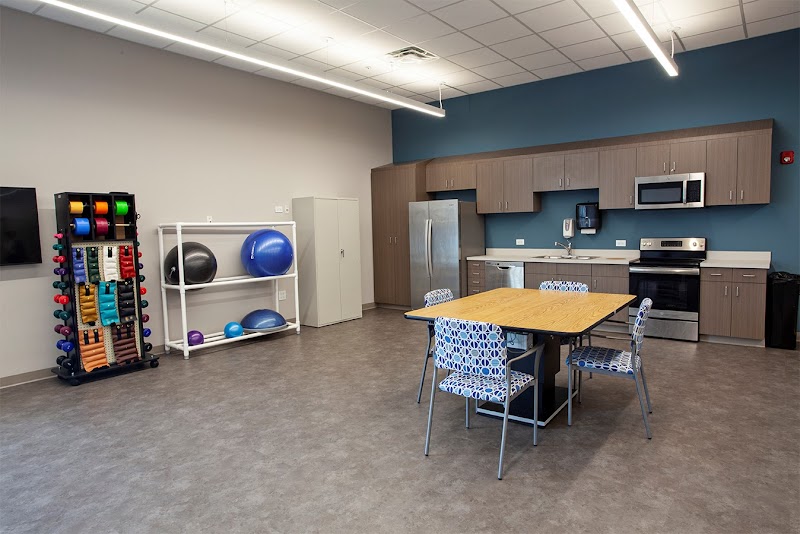
How Does Thrive Of Fox Valley Compare to Other Illinois Nursing Homes?

Compared to the 100 nursing homes in Illinois, THRIVE OF FOX VALLEY's overall rating (4 stars) is above the state average of 2.5, staff turnover (58%) is significantly higher than the state average of 46%, and health inspection rating (4 stars) is above the national benchmark.

What Should Families Ask When Visiting Thrive Of Fox Valley?

Based on this facility's data, families visiting should ask: "How do you ensure continuity of care given staff turnover, and what is your staff retention strategy?" "Can I visit during a mealtime to observe dining assistance and food quality?" "How do you handle medical emergencies, and what is your hospital transfer rate?" "Can I speak with family members of current residents about their experience?" These questions are particularly relevant given the facility's high staff turnover rate.

Is Thrive Of Fox Valley Safe?

Based on CMS inspection data, THRIVE OF FOX VALLEY has a clean safety record: no substantiated abuse findings (meaning no confirmed cases of resident harm), no Immediate Jeopardy citations (the most serious violation level indicating risk of serious injury or death), and is not on the Special Focus Facility watch list (a federal program monitoring the lowest-performing 1% of nursing homes). The facility has a 4-star overall rating and ranks #1 of 100 nursing homes in Illinois. While no facility is perfect, families should still ask about staff-to-resident ratios and recent inspection results during their visit.

Do Nurses at Thrive Of Fox Valley Stick Around?

Staff turnover at THRIVE OF FOX VALLEY is high. At 58%, the facility is 11 percentage points above the Illinois average of 46%. High turnover means new staff may not know residents' individual needs, medications, or preferences. It can also be disorienting for residents, especially those with dementia who rely on familiar faces. Families should ask: What is causing the turnover? What retention programs are in place? How do you ensure care continuity during staff transitions?

Was Thrive Of Fox Valley Ever Fined?

THRIVE OF FOX VALLEY has no federal fines on record. CMS issues fines when nursing homes fail to meet care standards or don't correct problems found during inspections. The absence of fines suggests the facility has either maintained compliance or corrected any issues before penalties were assessed. This is a positive indicator, though families should still review recent inspection reports for the full picture.

Is Thrive Of Fox Valley on Any Federal Watch List?

THRIVE OF FOX VALLEY is not on any federal watch list. The most significant is the Special Focus Facility (SFF) program, which identifies the bottom 1% of nursing homes nationally based on persistent, serious quality problems. Not being on this list means the facility has avoided the pattern of deficiencies that triggers enhanced federal oversight. This is a positive indicator, though families should still review the facility's inspection history directly.