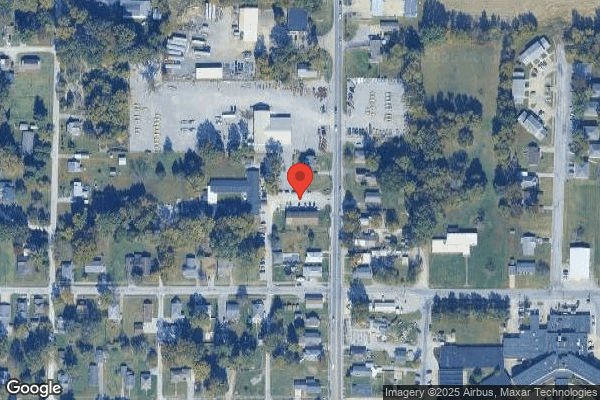
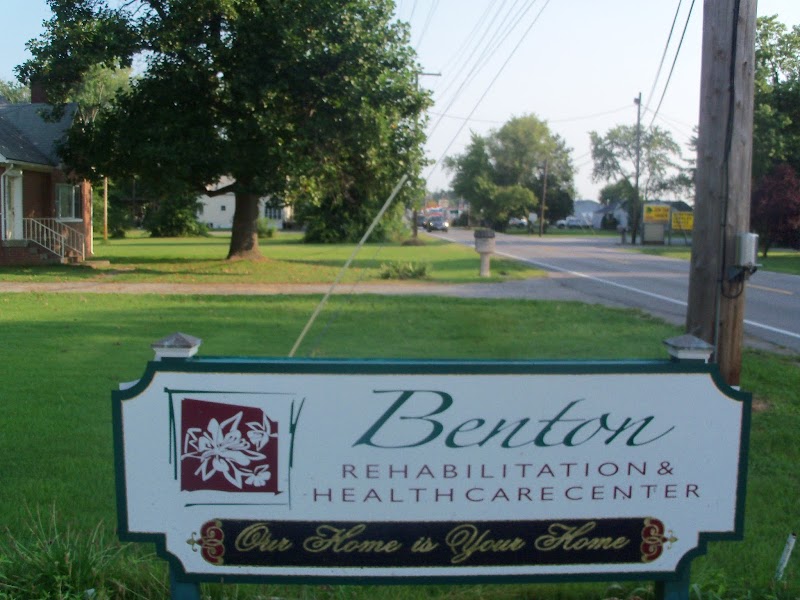
BENTON REHAB & HCC

1409 NORTH MAIN STREET, BENTON, IL 62812 (618) 435-2712
For profit - Corporation 67 Beds PETERSEN HEALTH CARE Data: November 2025
Trust Grade
15/100
#466 of 665 in IL
Last Inspection: April 2025

Within standard 12-15 month inspection cycle. Federal law requires annual inspections.

Overview

Benton Rehab & HCC has received a Trust Grade of F, indicating poor performance with significant concerns about care quality. It ranks #466 out of 665 facilities in Illinois, placing it in the bottom half, and #4 out of 4 in Franklin County, meaning there are no better local options available. While the facility is showing some improvement in issues reported, going from 11 in 2024 to 10 in 2025, it still has a concerning history, including serious failures to address pressure wounds and pain management for residents. Staffing is a notable strength, with a 0% turnover rate, meaning staff members are stable and likely familiar with residents, but the facility faces a troubling $148,460 in fines, higher than 89% of Illinois facilities, suggesting ongoing compliance issues. Additionally, RN coverage is average, but there have been gaps in required nurse staffing, which could affect resident care.

Trust Score
F
15/100
In Illinois
#466/665
Bottom 30%
Safety Record
High Risk
Review needed
Inspections
Getting Better
11 → 10 violations
Staff Stability
○ Average
Turnover data not reported for this facility.
Penalties
⚠ Watch
$148,460 in fines. Higher than 87% of Illinois facilities, suggesting repeated compliance issues.
Skilled Nurses
✓ Good
Each resident gets 53 minutes of Registered Nurse (RN) attention daily — more than average for Illinois. RNs are trained to catch health problems early.
Violations
⚠ Watch
44 deficiencies on record. Higher than average. Multiple issues found across inspections.
★☆☆☆☆
1.0
Overall Rating
★☆☆☆☆
1.0
Staff Levels
★☆☆☆☆
1.0
Care Quality
★★★☆☆
3.0
Inspection Score
Stable
2024: 11 issues
2025: 10 issues

The Good

  • Full Sprinkler Coverage · Fire safety systems throughout facility
  • No fines on record

Facility shows strength in fire safety.

The Bad

1-Star Overall Rating

Below Illinois average (2.5)

Significant quality concerns identified by CMS

Federal Fines: $148,460

Well above median ($33,413)

Significant penalties indicating serious issues

Chain: PETERSEN HEALTH CARE

Part of a multi-facility chain

Ask about local staffing decisions and management

The Ugly 44 deficiencies on record

2 actual harm
Apr 2025 10 deficiencies
CONCERN (D)

Potential for Harm - no one hurt, but risky conditions existed

Resident Rights (Tag F0550)

Could have caused harm · This affected 1 resident

**NOTE- TERMS IN BRACKETS HAVE BEEN EDITED TO PROTECT CONFIDENTIALITY** Based on observation, interview, and record review the facility failed to assist residents during meals to promote dignity for 2...

Read full inspector narrative →
**NOTE- TERMS IN BRACKETS HAVE BEEN EDITED TO PROTECT CONFIDENTIALITY** Based on observation, interview, and record review the facility failed to assist residents during meals to promote dignity for 2 of 12 residents (R1, R15) reviewed for dining in a sample of 32. Findings include: 1. R15's admission Record documents an admission date of 2/1/2024. R15's admission Record documents diagnosis in part hemiplegia and hemiparesis following cerebral infarction affecting left non-dominate side, dementia, and weakness. R15's Minimum Data Set (MDS) dated [DATE] documents a Brief Interview for Mental Status (BIMS) was unable to be completed due to resident is rarely or never understood and has short and long-term memory problems. Section GG of that same MDS under self-care documents R15 is partial or moderate assistance with eating. R15's most recent Care Plan documents an Activities of Daily Living (ADL) deficit and intervention for eating is supervision or assist. On 4/22/2025 at 12:16 PM, V11 (Regional Consultant MDS) was feeding R15 while standing beside him as R15 was sitting at the table in the dining room. On 4/23/2025 at 3:51 PM, V11 stated she will stand or sit while feeing residents and when she assisted R15 she stood because there wasn't another chair at the table. On 4/23/2025 at 12:05 PM, V8 (Certified Nurse Aide/CNA) was feeding R15 at the same time as she was assisting another resident at the same table in the dining room. 2. R1's admission Record documents an admission date of 1/1/2024. R2's admission Record documents diagnosis in part convulsions, pervasive developmental disorders, dysphagia, profound intellectual disability, and lack of coordination. R1's MDS dated [DATE] documents a BIMS of 00 indicating severe cognitive impairment. Section GG of that same MDS under self-care documents R1 is dependent with eating. R1's most recent Care Plan documents an ADL deficit and intervention for eating is total dependence. On 4/23/2025 at 12:05 PM, V8 was feeding R1 while standing beside him as R1 was sitting at the table in the dining room. V8 was also feeding R15 at the same time, at the same table in the dining room but would sit down when feeding R15. On 4/24/2025 at 10:10 AM, V8 stated she normally sits while assisting residents with meals but on 4/23/2025 she was assisting two residents at the same time, and she had to stand while feeding R1. On 4/24/2025 at 1:15 PM, V2 (Director of Nursing) stated staff should be sitting down when assisting residents with eating. The facilities undated policy titled Skills Checklist Feeding Assistance, documents residents are to be fed one at a time with staff sitting next to them at the table.
CONCERN (D)

Potential for Harm - no one hurt, but risky conditions existed

Notification of Changes (Tag F0580)

Could have caused harm · This affected 1 resident

**NOTE- TERMS IN BRACKETS HAVE BEEN EDITED TO PROTECT CONFIDENTIALITY** Based on interview and record review the facility failed to notify the physician and the resident's responsible party of a chang...

Read full inspector narrative →
**NOTE- TERMS IN BRACKETS HAVE BEEN EDITED TO PROTECT CONFIDENTIALITY** Based on interview and record review the facility failed to notify the physician and the resident's responsible party of a change of condition for 1 of 2 residents (R35) reviewed for notification of changes in the sample of 32. Findings include: R35's admission Record documents an admission date of 1/15/2025. R35's admission Record documents diagnosis including in part pressure ulcer of sacral region stage 4, unspecified severe protein-calorie malnutrition, type 2 diabetes, adult failure to thrive, dementia, cognitive communication deficit, and dysphagia. R35's Minimum Data Set (MDS) dated [DATE] documents a Brief Interview for Mental Status (BIMS) of 7 which indicates severely impaired cognition. R35's most recent Care Plan documents actual/at risk and/or potential for complications with nutrition and hydration. R35's admission Record documents V18 (Family) as R35's Power of Attorney (POA)-care substitute decision maker. R35's medical record, under weights/vitals tab documents R35 weighed 191.0 pounds on 3/4/2025, weighed via wheelchair and on 4/6/2025 R35 weighed 168.8 pounds, weighed via mechanical lift. This indicates a 22.2 pound, 11.62% weight loss in one month. There was no documentation in R35 electronic medical record that R35's physician or that R35's POA had been notified of R35's alleged 22.2 pound weight loss in a month. On 4/23/2025 at 02:20 PM, V18 stated she has not been notified of R35 experiencing weight loss. On 4/24/2025 at 12:15 PM, V9 (Physician) stated he has not been notified of any weight loss on R35. V9 stated he would expect to be notified by the facility of any significant or severe weight loss of a resident. On 4/24/2025 at 1:32 PM, V12 (Nurse Practitioner) stated he doesn't remember being notified of R35 having any weight loss. V12 stated if a resident is experiencing weight loss he would expect to be notified. 04/23/25 9:50 AM, V3 (Dietary Manager) stated she goes through the monthly weights either the day they weigh the residents or the next day. V3 stated she saw the significant weight loss for R35, and she requested a reweigh two times and the staff told her the same weight both times. On 4/24/2025 at 1:15 PM, V2 (Director of Nursing) stated the physician and responsible party should be notified of significant/severe weight loss. A facility Weight Assessment and Intervention Policy dated 12/2024 documents in part 1 month- 5% weight loss is significant; greater than 5% is severe. A Facility Significant Condition and Change and Notification Policy dated 12/2024 documents in part, Purpose: To ensure that the resident's family and/or representative and medical practitioner are notified of resident changes such as those listed below: . A significant change in the resident's physical, mental or psychosocial status . 5% weight loss or gain in 30 days .
CONCERN (D)

Potential for Harm - no one hurt, but risky conditions existed

Safe Environment (Tag F0584)

Could have caused harm · This affected 1 resident

Based on interview, observation, and record review, the facility failed to ensure that a resident's dresser was in a state of good repair for 1 of 1 resident (R31) reviewed for environment in the samp...

Read full inspector narrative →
Based on interview, observation, and record review, the facility failed to ensure that a resident's dresser was in a state of good repair for 1 of 1 resident (R31) reviewed for environment in the sample of 32 . Findings include: R31's admission Record dated 04/24/25 documents an admission date of 07/09/24 with diagnoses in part of hemiplegia and hemiparesis following cerebral infarction affecting left non-dominant side, and other paralytic syndrome following other cerebrovascular disease affecting non-dominant side. R31's MDS (Minimum Data Set) dated 03/28/25 documents in Section C a BIMS (Brief Interview for Mental Status) score of 12 which indicates moderately impaired. R31's current Care Plan documents a focus area Restorative/Functional Program bed mobility, dressing and grooming. On 04/21/25 at 9:38AM, R31 was lying in his bed in his room. His room was noted to have one dresser in the room. The dresser was noted to have the bottom drawer hanging out and not on track and the middle drawer of dresser appeared to not have a front part to the drawer. At that time R31 who was alert and oriented stated that his dresser in his room has been like that for a while. R31 said that he has been missing the middle drawer for a while and the bottom drawer keeps falling out. On 04/23/25 at 10:20AM, R31's bottom drawer to his dresser was on track and back inside the dresser. The middle drawer was still missing the front part of the dresser. On 04/23/25 at 10:40AM, R31 stated that he doesn't use his dresser often. R31 said that he does keep some stuff in the top drawer of his dresser. On 04/24/25 at 11:35AM reviewed Facility Maintenance tracking log for April, March, February and January document nothing regarding R31's dresser drawers. On 04/24/25 at 11:45AM, V7 (Maintenance Director) stated that he was not aware that R31's dresser was broken and that the drawer in the middle is missing the front. V7 stated that when staff notices that something is broken in a resident room that they should put it on a Maintenance repair form. V7 stated that he did not get anything on R31's dresser being broken or in need of repair. V7 stated that he was going to go down right away and look at R31's dresser. V7 stated he does not do routine room checks to check for things that needs repaired. V7 stated he doesn't have a lot of time and depends on the floor staff to let him know what needs repaired. The facility Policy titled Facility Maintenance and Prevention Service Policy undated documents under Policy, It is the policy of the facility that maintenance follow preventative maintenance procedures for routine service and ensure proper working condition of mechanical equipment within the facility, ensure building is maintained for safety of staff and residents, routine upkeep of facility rooms, hallways and shower rooms, and ensure life safety checks are completed as required. Maintenance supervisor should complete repairs and projects in a timely manner and give routine updates on repairs ongoing in the facility to ensure status of repairs are reported and completed.
CONCERN (D)

Potential for Harm - no one hurt, but risky conditions existed

Assessment Accuracy (Tag F0641)

Could have caused harm · This affected 1 resident

**NOTE- TERMS IN BRACKETS HAVE BEEN EDITED TO PROTECT CONFIDENTIALITY** Based on record review, observation and interview, the facility failed to ensure a resident's AIMS (Abnormal Involuntary Movemen...

Read full inspector narrative →
**NOTE- TERMS IN BRACKETS HAVE BEEN EDITED TO PROTECT CONFIDENTIALITY** Based on record review, observation and interview, the facility failed to ensure a resident's AIMS (Abnormal Involuntary Movement Scale) Assessment was accurately completed for 1 of 1 resident (R20) reviewed for accuracy of assessments in the sample of 32. Findings include: R20's admission Record dated 04/24/25 documents an admission Date of 02/01/24 with diagnoses of dementia mild with mood disturbance, anxiety, paranoid schizophrenia, agoraphobia with panic disorder, delusional disorder, and sleep disorder. R20's MDS (Minimum Data Set) dated 03/31/25 documents in Section C a BIMS (Brief Interview for Mental Status) score 13 which indicates that R20 is cognitively intact. Section GG documents eating as set-up and clean up assistance and personal hygiene as partial/moderate assistance. R20's current Care Plan documents a focus area of the resident (R20) uses antipsychotic medications r/t (related to) schizophrenia This focus area has a goal of the resident will be/remain free of psychotropic drug related complications, including movement disorder, discomfort, hypotension, gait disturbance, constipation/impaction or cognitive/behavioral impairment through review date. Interventions include 1. Administer psychotropic medication as order by physician monitor for side effects and effectiveness. 2. Consult with Pharmacy, MD (medical doctor) to consider dosage reduction when clinically appropriate at least quarterly. 3. Monitor/document/report PRN (As need) any adverse reactions of psychotropic medications: unsteady gait, tardive dyskinesia, EPS (Extrapyramidal Syndrome) (shuffling gait, rigid muscles, shaking), frequent falls, refusal to eat, difficulty swallowing, dry mouth, depression, suicidal ideations, social isolation, blurred vision, diarrhea, fatigue, insomnia, loss of appetite, weight loss, muscle cramps, nausea, vomiting, behavior symptoms not usual to the person. R20's AIMS assessment dated [DATE] documents under instructions, either before or after completing the examination procedure, observe the resident unobtrusively at rest (e.g., in the dining room). The chair to be used in this examination should be a hard, firm one without arms. Complete the examination procedure below, before scoring the resident movement. Ask patient whether there is anything in his/her mouth (ie, gum, candy, etc) and if there is, to remove it. Examination Procedure 2. Ask resident whether he/she notices any movement in mouth, face, hands, or feet. If yes, ask to describe and to what extent they currently bother resident or interfere with his/her activities. Under Extremity Movement #5 Upper (arms, wrists, hands, fingers) include movement that are Choreic (sic) (rapid, objectively purposeless, irregular, spontaneous) or athetoid (slow, irregular, complex, serpentine). Do not include tremor (repetitive, regular, rhythmic movements) this documents none. R20's Physicians order summary documents on 03/13/25 Risperidone 2mg (milligrams) give 2mg by mouth two times a day. On 04/24/25 at 10:15AM, R20 stated that he has had abnormal movement to his right arm for a while now. R20 said that the movement is irregular and that it bothers him a lot when he is eating. R20 said that it makes it hard for him to eat because his arm is shaking and jerking when he is trying to feed himself. R20 is unsure why his right arm is doing this. On 4/24/25 at 10:15AM observed R20 lying in bed. R20's right hand and arm shaking while he was talking. R20 was trying to stop his right hand and arm from shaking by holding it with his left arm during the conversation. On 04/24/25 at 9:35AM, V5 (Registered Nurse/RN) stated that she did do the AIMS assessment for R20 on 03/13/25. V5 stated R20 does have involuntary movement to his right arm. V5 stated she was probably in a hurry and did not check the correct box on the AIMS assessment for involuntary movement of arms and hands. V5 said that she did put none, and she should have put minimal to moderate. On 04/24/25 at 10:40AM, V2 (Director of Nursing/DON) stated that R20 does have involuntary movement to his right arm. V2 stated that R20's AIMS assessment was completed incorrectly if it is marked none. V2 stated that R20 has involuntary movement to his right arm that is moderate. V2 said that she would expect the AIMS assessments completed accurately. On 04/24/25 at 11:41AM, V1 (Administrator) stated that the facility does not have a policy on AIMS assessments.
CONCERN (D)

Potential for Harm - no one hurt, but risky conditions existed

Accident Prevention (Tag F0689)

Could have caused harm · This affected 1 resident

**NOTE- TERMS IN BRACKETS HAVE BEEN EDITED TO PROTECT CONFIDENTIALITY** Based on observation, interview, and record review the facility failed to provide supervision to a resident experiencing seizure...

Read full inspector narrative →
**NOTE- TERMS IN BRACKETS HAVE BEEN EDITED TO PROTECT CONFIDENTIALITY** Based on observation, interview, and record review the facility failed to provide supervision to a resident experiencing seizures and implement effective interventions to prevent falls for 1 of 1 resident (R33) reviewed for falls in the sample of 32. Findings include: R33's face sheet records an admission date of 8/12/2024. Related diagnosis recorded in electronic medical record (EMR) include but are not limited too chronic obstructive pulmonary disorder, other seizures, migraine, unspecified, not intractable, without status migrainosus, otitis media, unspecified left ear, other amnesia, personal history of transient ischemic attack, and cerebral infarction without residual effects. R33's current Physician's Orders document R33 has an order dated 3/3/25 for Keppra 750mg (milligram) tablet - take 1 tablet twice daily; Order for lacosamide 200mg table take 1 tablet twice daily for epilepsy was ordered 12/9/24. R33's Minimum data sheets (MDS) dated [DATE] records a brief interview for mental status (BIMS) score of 15 indicating R33 is alert, oriented, and able to answer questions appropriately. Section GG of MDS - Functional Abilities - records that R33 is supervision or touching assistance for walking 10 feet, walking 50 feet with two turns, and walking 150 feet. Section I of MDS - Active diagnosis - records a diagnosis of seizure disorder or epilepsy. Section N of MDS - Medications - records resident being prescribed an anticonvulsant. Care plan dated 3/21/25 states that R33 is at risk for potential complications with falls. Interventions listed for that problem is 2/14/2025 smoking policy to be gone over and explained with resident and for her to sign the policy that's in place; 1/21/2025 medication review to be completed; 11/19/2024 resident sent to the emergency room for evaluation, labs and CT (computed tomography) were done in ER (emergency room), med review to be completed; 12/21/2024 encourage resident to sit down in dining room chair or lay down for fifteen minutes after smoking; resident to wear non-skid shoes; encourage resident to not wear crocs; nurse practitioner med review completed; 12/8/2024 Sent to ER, safety checks upon return from emergency room for forty-eight hours after return; diagnosis of ear infection with antibiotics in place; Obtain Keppra levels as ordered. 2/26/2025 re-educated staff that resident needs to sit down in dining room and/or lay down after smoking; 4/18/2025 obtain labs to check levels due to diagnosis of seizures; bed in lowest position while in bed, call light positioned for easy access while in room, check for unmet needs, encourage/assist with non-skid shoes/socks, ensure environment is free of clutter, fall review per facility protocol, have commonly used articles within easy reach. Care plan focus for ADLs (activities of daily living) record R33 as independent with ambulation, independent with toilet use, independent with transfers. On 04/21/25 at 02:22 PM, R33 stated I fell twice on Saturday. I had two seizures. I've had seizures for about 10 yrs. The doctors don't know the cause of the seizures. R33 said that if she falls that it's usually related to a seizure. On 04/23/25 at 01:20 PM, R33 stated that her seizures began about 2014. The cause was never discovered. R33 stated she was unsure of what her current anti-seizure medications are. R33 stated she was unable to give an estimate how often she had seizures. She stated she doesn't know that she's had a seizure until someone tells her. R33 stated she remembers nothing about the event prior to or immediately after the seizure. R33 said she is unable to correlate her seizures to any activity or time. R33 stated that there is no warning of seizures. She said that the only interventions that the facility has put into place that she is aware of is to walk slow, to use the handrails, and to sit down if she feels strange in relation to falls caused by seizures. R33's EMR (electronic medical record) documents that R33 has had 7 falls while living in the facility. R33's Fall investigation dated for 2/17/25 documents that R33 had fallen on 2/14/25 due to smoking 2 cigarettes instead of her normal one cigarette. R33 walked into facility from smoking and fell to the floor. Intervention put in place was to have staff to go over the smoking policy with R33 again and have her sign it. R33's Nurse's progress note dated 2/26/25 documents that CNA (Certified Nurse Aide) observed R33 fall backwards and was unconscious. R33's Fall investigation dated 2/28/25 documents that cause of fall was determined to be falling after returning from smoking. Intervention was to re-educate staff that R33 needs to sit down or lie down immediately after returning from smoking. R33's Nurse's note dated 4/18/2025 at 5:00 PM documents, CNA witnessed resident walk out of her room stop and look up at ceiling and fall backwards. Resident didn't know what happened. No injuries noted. No bump on head. Neuro checks started. Denies pain. Assisted up without difficulty and taken back to her room. R33's Fall investigation dated for 4/22/25 documents that on 4/18/25 R33 looked up and then fell backwards. Intervention was to contact practitioner to order labs and verify anti-seizure medication levels were in therapeutic range. Nurses note dated 4/22/25 documents the following: 4/22/2025 10:12 NURSE PROGRESS NOTE Note Text: Call to (V12) regarding current falls, seizure like activity with new order: TSH (thyroid stimulating hormone, Free T4 (free thyroxine), D12 (vitamin B12 level), Keppra, Valporic, CBC (complete blood count), CMP (comprehensive metabolic panel), and folate next lab date. On 04/23/25 at 1:17 PM, R33 was noted coming into the facility from being outside smoking. There was no staff assisting her or encouraging her to sit or lie down. On 04/23/25 at 1:35 PM, V14 (Certified Nurse's Aide /CNA) stated that she is aware that R33 has seizure disorder but has never witnessed one. V14 stated the interventions she's aware of for R33 is to Make sure she's safe, check vitals, and watch where she's at. When asked if there were any interventions she was aware of to help reduce risk of injury prior to falls in general or those falls related to seizures. She said she wasn't aware of any. On 04/23/25 at 1:42 PM, V15 (CNA) stated that she is aware of R33 has a seizure diagnosis but has never witnessed one. V15 stated she didn't know anything about them. V15 stated that the only interventions she is aware of is to keep her room free of clutter and to monitor her. She said that she isn't aware of any interventions in place to prevent injury prior to falls in general or falls related to seizures. On 04/23/25 at 1:47 PM, V8 (CNA) stated that she is aware that R33 has a seizure disorder but has never witnessed one. She reports that the only interventions for falls or seizure activity for R33 is to keep her head protected, and afterwards they are supposed to check on her. V8 stated that she is not aware of any interventions in place to prevent injuries prior to falls in general or those related to seizures. On 04/23/25 at 1:51 PM, V5 (Registered Nurse/ RN) stated the only thing she knows about R33 that she has seizures, and they give her medicine for them. She reports that R33, Has them on occasion. V5 stated that it had been a long time since she witnessed a seizure. V5 said that she is not aware of any interventions in place to prevent injury prior to falls in general or falls related to seizures. On 4/24/25 at 9:09 AM, V2 (Director of Nurses) gave the following responses in relation to interventions reviewed with her after each of R33's falls. V2 stated that she thought that the fall intervention for the fall on 2/14/25 was appropriate because having R33 review the smoking policy and having her sign it would help to remind her of current policy and calm her down. V2 stated that R33 was upset at the time, and staff were concerned her agitation could cause a seizure and in turn, a fall. Related to fall interventions put in place for fall on 2/14/25, V2 said that she thought that the review of the policy and having her sign it, because of her agitation over not being able to smoke as often or as much due to extreme temperatures, would help to remind her and calm her down because staff were concerned that with increased agitation that it could cause a seizure and in turn a fall. Related to interventions put in place for fall on 2/26/25, V2 said that re-education of staff on having resident lay down or sit down was an appropriate intervention because R33 literally inhales two cigarettes as quickly as possible, and they thought that her blood pressure was bottoming out after she stood up. V2 said that having her sit down or lie down would help to bring her back to her normal baseline blood pressure and keep her from having a seizure or passing out. Related to 4/18/25's interventions put in place for fall, V2 said they thought that was an appropriate intervention because the facility wanted to draw levels to see if her therapeutic levels were too low, and if they could contact (MD) medical doctor and have Keppra increased which would decrease risk of seizure. V2 said that R33 is independent in all her activities of daily living (ADLs), so the only other intervention that she could think of would be to have R33 one on one with a staff member, and that is very difficult to have one to one staff/resident care.
CONCERN (D)

Potential for Harm - no one hurt, but risky conditions existed

Respiratory Care (Tag F0695)

Could have caused harm · This affected 1 resident

**NOTE- TERMS IN BRACKETS HAVE BEEN EDITED TO PROTECT CONFIDENTIALITY** Based on observation, interview, and record review the facility failed to date and secure oxygen tubing and a humidification bot...

Read full inspector narrative →
**NOTE- TERMS IN BRACKETS HAVE BEEN EDITED TO PROTECT CONFIDENTIALITY** Based on observation, interview, and record review the facility failed to date and secure oxygen tubing and a humidification bottle for one of one resident (R4) reviewed for oxygen in the sample of 32. Finding include R4's admission Record documents an admission date of 2/1/2024. R4's admission Record documents diagnosis including in part chronic combined systolic and diastolic heart failure, chronic obstructive pulmonary disease (COPD), and panlobular emphysema. R4's Minimum Data Set (MDS) dated [DATE] documents a Brief Interview for Mental Status of 15 which indicates intact cognition. Section O of that same MDS documents R4 is on oxygen therapy. R4's most recent Care Plan documents a diagnosis of COPD with an intervention of encourage/assist R4 with oxygen as orders/accepted/needed. R4's Physician Orders for April 2025 document oxygen at 2L (liters) via NC (nasal cannula) or 5L via oxygen mask and check oxygen saturation every shift, every day and night shift. There are no physician orders as to when or how often to change oxygen tubing. On 4/21/2025 at 2:39 PM, R4 was propelling himself down the hallway in his wheelchair and his oxygen tubing was dragging on the floor behind him. On 4/22/2025 at 10:30 AM, R4 was sitting in his wheelchair in room receiving oxygen via nasal cannula and the tubing was dated 4/7/2025. The humidifier bottle on the concentrator was undated. On 4/23/2025 at 10:41 AM, R4 was laying in bed receiving oxygen via nasal cannula and the tubing was dated 4/7/2025 and the humidifier bottle on the concentrator was undated. On 4/23/2025 at 10:44 AM, V2 (Director of Nursing/DON) stated oxygen tubing is to be changed every Sunday and it is documented in the Medication Administration Record (MAR). V2 stated if it is being changed it will be in the MAR. V2 stated all oxygen tubing and the humification bottle should be dated when changed. On 04/24/25 at 1:24PM V2 (DON) stated that she would prefer that the oxygen tubing change be on the MAR to be signed off completed because she could assess it faster, but it usually always goes on the TAR (Treatment Administration Record). R4's TAR for the month of April documents oxygen at 2L via NC or 5L via oxygen mask and check oxygen saturation every shift, every day and night shift. R4's TAR does not contain any documentation as to when or how often to change oxygen tubing, nor does it document R4's oxygen tubing has been changed.
CONCERN (D)

Potential for Harm - no one hurt, but risky conditions existed

Dental Services (Tag F0791)

Could have caused harm · This affected 1 resident

**NOTE- TERMS IN BRACKETS HAVE BEEN EDITED TO PROTECT CONFIDENTIALITY** Based on observation, interview and record review, the facility failed to offer and provide dental services for one of one resid...

Read full inspector narrative →
**NOTE- TERMS IN BRACKETS HAVE BEEN EDITED TO PROTECT CONFIDENTIALITY** Based on observation, interview and record review, the facility failed to offer and provide dental services for one of one resident (R28) reviewed for dental services in the sample of 32. Findings include: R28's electronic medical record (EMR) shows an admission date of 9/15/2024. In R28's EMR diagnoses includes but is not limited to dysarthria following cerebral infarction, anxiety disorder, other chronic pain, major depressive disorder, and alcohol abuse. R28 diagnoses did not contain any diagnosis related to dental/teeth issues. R28's MDS (Minimum Data Set) dated 3/19/25, section J documents no complaints of pain from R28. Section C of R28's MDS dated [DATE] indicates R28 had a (BIMS) brief interview for mental status score of 11, indicating moderate impaired cognition. R28's current care plan has no documentation of interventions for dental pain or a focus area of dental/teeth issues. R28's Physician's orders include a prescription for Oragel 20-0.26% 1 application dental every 6 hours as needed for oral pain with an original order date of 6/13/24. A review of R28's Medication Administration Records (MAR's) document that this medication was never administered since original order. On 04/21/25 at 1:43 PM, R28 who was alert to person, place and time stated that he has had a toothache for some time. R28 could not give this surveyor an approximation of how long his tooth had been aching. R28 stated that he takes Tylenol routinely for the pain. R28 stated that he has some teeth that are bad and need to be pulled. It is also noted that upon speaking with R28 that he has a communication deficit (stuttering and loss of words) that he said was caused by his history of a stroke. On 04/22/25 at 2:55 PM, R28 stated that he's had the toothache periodically for over the past year. When R28 was asked to show where his pain was R28 pointed to his right and left lower teeth and right upper teeth. R28 then stated that the pain is present on average 3 days a week. R28 said that he often asks the nursing staff for Tylenol, and they give it to him. He said that in the past the staff has told him that he couldn't see dental because his insurance didn't cover that. He could not remember who told him that regarding seeing the dentist due to his insurance. On 04/22/25 at 10:26 AM, R28's EHR (Electronic Health Record) was reviewed and under the miscellaneous tab was an (name of dental facility) note/referral dated 4/19/24 recommends evaluation and extraction for #32, #17, and #19. On 04/22/25 at 11:00 AM, R28's pain scale monitoring under vitals tab dated 12/09/24 through 4/24/25 reports that R28 has denied any pain every day except for 2/4/2025 at 20:37 (8:37pm) reports pain level of 5; and 2/8/2025 at 19:50 (7:50pm) reports pain level of 2; 2/28/2025 at 07:52 (am) pain level of 2; and 2/28/2025 at 07:53 (am) pain level of 2. R28's MAR documents R28 has a current order for acetaminophen 325mg tablets - take 2 tablets by mouth every four hours for pain. Also has current order for ibuprofen 200mg tablet - take 2 tablets by mouth every six hours for pain. R28's April 2025 MAR shows that R28 had not received nor requested any Tylenol or ibuprofen for pain. On 04/22/25 at 10:26 AM, reviewed progress notes dated 4/1/2025 - 4/22/2025 and no notes of dental pain or complaints mentioned in progress notes tab. On 04/22/25 at 10:40 AM, V4 (Certified Nurse Aide/CNA) stated R28 had not mentioned to her having a toothache. V4 stated facility has gotten a dental visit recently in last couple months, but doesn't remember who was seen. On 04/22/25 at 10:47 AM, V5 (Registered Nurse/RN) stated that R28 has mentioned a toothache and is supposed to see dentist next time they are on site. V5 stated dental services comes in house. V5 stated R28 has only mentioned dental pain once to her about one week ago. V5 stated when asked what she would do if someone complained of dental pain, V5 stated, I usually ask (V6, Social Services Director) in social services to put them on the list if they complain of dental pain. I don't remember if I called the doctor to order him something for pain or if I gave him anything for pain. On 04/22/25 at 10:52 AM, V2 (Director of Nurses/DON) stated that R28 had mentioned to her about 4-5 months ago that he had a toothache but has not heard about it since. On 04/22/25 at 10:54 AM, V6 stated (name of a dental provider) is who provides dental services. She said that they were just in at the end of the month, and they come in once every 3 months. V6 stated, I don't think they take Medicaid. I will call and ask them and get back to you. On 04/22/25 at 11:10 AM, V6 stated she had called and sent a voice mail to (name of a dental provider) dental services and asked them to return her call. On 04/22/25 at 2:05 PM, V6 stated that she had called (name of a dental provider) and they stated that they would pick up R28 up as a patient. She said that (name of a dental provider) would try and see R28 sooner than their next scheduled visit but did not give a specific date. She said that 4 months ago R28 told staff that he was experiencing tooth pain. He was then referred to (name of a dental provider) dental at that time. R28 had told (name of a dental provider) dental that he only made fifty-eight dollars a month, and they said that they couldn't take him. V6 stated that she wasn't in her current position in April 2024 when R28 had initially saw dental and been referred to oral surgery. She said she didn't know anything about resident's toothache at that time, but she agreed that the facility should have made the referral to oral surgery much sooner. On 04/22/25 at 2:17 PM, V2 stated she didn't know anything about the dental referral in April 2024. V2 stated, As far as the Oragel order for (R28) in December 2024 that's the first time I've heard of it, and I notified social services at that time. I would expect the dental referral made in April 2024 to have been made much sooner. On 04/22/25 at 2:21 PM, V1 (Administrator) stated she didn't start until August 2024. She doesn't know anything about the oral surgeon referral made in April 2024. She stated that it should have been followed up on sooner, though. The facility's dental policy dated 12/2024 states, Routine and emergency dental care is available. Should a resident need emergency dental care, the dental provider shall be notified so that arrangements for the emergency care can be made. Dental services include services needed to treat an episode of acute pain in teeth, gums, or palate; or any problem of the oral cavity appropriately treated by a dentist that requires attention.
CONCERN (D)

Potential for Harm - no one hurt, but risky conditions existed

Deficiency F0883 (Tag F0883)

Could have caused harm · This affected 1 resident

Based on interview and record review the facility failed to administer vaccinations resident previously had consented for, for 2 residents of 5 residents (R29 and R35) reviewed for immunizations in a ...

Read full inspector narrative →
Based on interview and record review the facility failed to administer vaccinations resident previously had consented for, for 2 residents of 5 residents (R29 and R35) reviewed for immunizations in a sample of 32. Findings include: 1. R29's admission record documents an admission date of 05/08/24 with diagnoses including: protein calorie malnutrition, deaf/nonspeaking, major depressive disorder, adult failure to thrive, anxiety disorder, anorexia nervosa, and vitamin D deficiency. R29's Physician Order Sheet documents an order for: immunization: may have annual flu vaccine with consent unless contraindicated with an ordered date of 05/09/24 and end date listed as 'indefinite.' On 04/24/25 at 3:00 PM R29 who was alert and oriented to person, place and time stated, he has never signed a consent for influenza. R29 stated that he wouldn't mind getting the influenza vaccine. R29 stated he has never received the influenza vaccine since he has been at the facility. R29's Patient Consent form or Seasonal Influenza Vaccination dated 03/18/24 signed by V20 (family) documents: a check mark in front of the statement, I consent to receive the Seasonal Influenza Vaccination. On 04/22/25 at 2:32 PM V1 (Administrator) stated, she does not know how or why R29 would have a consent form that was signed prior to his admission date. R29's electronic immunization record for influenza vaccination documents: a confirmation date of 10/17/24 with immunization status of pending listed. R29's Medication Administration record dated 10/01/24 - 10/31/24 does not document any influenza vaccination administered. On 04/23/25 at 9:28 AM, V1 (Administrator) stated, R29 did not get his influenza vaccination in November 2024 when the clinic was present due to his insurance denied the vaccination. She is not for sure what the facility's policy is to do if the insurance denies, and the resident has not received the vaccination. R29 has still not received the vaccination. The facility document dated 09/22 titled, Infection Prevention and Control Manual Resident Immunizations and Vaccinations documents: policy; 1. It is the policy of this facility that all residents will be offered immunization against influenza, 7. The timing of vaccination is in the fall and winter with only 1 dose required - the end of September and throughout October are ideal. Procedure: 4. Every new admission and existing resident are screened using the criteria contained within the standing protocol and based on the ACIP (advisory committee on immunization practice) and CDC (Center for Disease Control and Prevention) recommendations for influenza, 7. If the resident or resident representative elect to receive the influenza vaccine, the obtain informed consent with the respective form, 12. If the resident chooses to be immunized, then order the influenza vaccine, 14. If resident is afebrile and has no moderate to severe acute illness, then proceed with vaccination, 15. Administer the vaccine via the specified route, IM (intramuscularly) or intranasally, per manufacturer's recommendations, respectively, 16. Document in the resident's medical record and on the immunization record: a. education was provided b. specific medication or vaccine, c. manufacturer, lot number and expiration date d. route of administration e. site of injection f. date and time the vaccine was given g. who administered the vaccine h. any adverse reactions, 17. Complete vaccination billing log 18. Observe for side effects. 20. A record of vaccination will be placed in the resident's medical record and in their vaccination record. 2. R35's admission Record documents a admission date of 01/15/25 with diagnoses including: osteomyelitis of vertebra, severe protein calorie malnutrition, type 2 diabetes mellitus, dementia, and adult failure to thrive. R35's Pneumonia Vaccination Consent form dated 03/06/25 contains the statements: I consent to receive the Pneumococcal vaccine (PCV15), I consent to receive the Pneumococcal vaccine (PCV20), I consent to receive the Pneumococcal vaccine (PPSV23) checked. On 04/22/25 at 2:30 PM, R35's (PPSV23) pneumococcal vaccination vial was observed in the refrigerator in the medication room dated 03/10/25. On 04/23/25 at 10:15 AM, V5 (Registered Nurse) stated the date on R35's pneumococcal vaccination is the date it was received which was 03/10/25. On 04/23/25 at 9:28 AM, V1 (Administrator) stated R35 also had complications for her pneumococcal vaccination and insurance. V1 stated R35 has a consent for the pneumococcal vaccination signed on 03/06/25 and R35's pneumococcal vaccination is in the medication room dated 03/10/25. V1 stated she does not know why R35 has not received the vaccination she should have. On 04/24/25 on 1:47 PM, V2 (Director of Nursing) stated they do not have a policy for pneumococcal vaccinations, they just follow the CDC guidelines.
CONCERN (E)

Potential for Harm - no one hurt, but risky conditions existed

Menu Adequacy (Tag F0803)

Could have caused harm · This affected multiple residents

Based on interview, observation and record review the facility failed to provide the correct portion size of meat for altered textured diets for 9 (R1, R7, R12, R15, R16, R17, R25, R27, and R35) of 12...

Read full inspector narrative →
Based on interview, observation and record review the facility failed to provide the correct portion size of meat for altered textured diets for 9 (R1, R7, R12, R15, R16, R17, R25, R27, and R35) of 12 residents reviewed for altered textured diets in a sample of 32. Findings include: On 04/21/25 at 12:00 PM during lunch time V10 (Cook) served a #16 scoop (2 ounces) of pureed turkey and a #16 scoop (2 ounces) of mechanical soft turkey onto the trays for multiple residents that included R1, R7, R12, R15, R16, R17, R25, R27, and R35. The facility spreadsheet dated week 3 Monday documents the lunch meal should include: mechanical soft: 3 oz (ounces) and (ground) seasoned turkey pot roast, #8 scp (scoop) mashed potatoes, 2 oz L (liquid) gravy, 4 oz s (solid) green beans, 1 sq (square) cornbread, and 1 sq (square) frosted cake. The pureed diet documents: 1 pur (pureed) seasoned turkey pot roast, #8 scp mashed potatoes, 2 oz L gravy, #12 scp pur green beans, #16 scp pur cornbread, #12 scp pur frosted cake. The facility recipe for pureed seasoned turkey pot roast dated 2025-2025 Week 3 Monday- noon meal, documents: portion: #8 scp (3.75 ounces/1/2 cup). The untitled facility document dated 04/21/25 signed by V9 (Dietary Manager) documents: R1, R27, and R35 receive a puree texture diet and R7, R12, R15, R16, R17, and R25 receive a mechanical soft texture diet. On 04/24/25 at 10:33 AM, V9 stated on 04/21/25 the spreadsheet indicated 3 oz of turkey should have been served to the mechanical soft textured diet and the pureed diet should have received the #8 scoop which is 3.75 ounces or a half a cup. Serving 2 ounces of meat was incorrect and she does not know why she (V10) served that amount.
MINOR (B)

Minor Issue - procedural, no safety impact

Deficiency F0912 (Tag F0912)

Minor procedural issue · This affected multiple residents

Based on observation, interview and record review the facility failed to provide at least 80 square feet of living space for 4 of 4 resident (R10, R12, R27 and R30) reviewed for room size in a sample ...

Read full inspector narrative →
Based on observation, interview and record review the facility failed to provide at least 80 square feet of living space for 4 of 4 resident (R10, R12, R27 and R30) reviewed for room size in a sample of 32. Findings include: 1. On 4/23/25 at 11:25 AM, V7 (Maintenance) accompanied by this surveyor measured R12 and R27's room. The room measured 11 feet 9 inches by 12 feet 7 inches, total square feet = 151.13 (75.57 square feet per resident bed). The room contained 2 beds, 2 nightstands and 1 inset dresser. The measurements did not include the inset dresser area. On 4/23/25 at 11:47 AM, R27 who was alert to person, place and time stated her room size is ok and has no complaints. On 4/23/25 at 11:35 AM, R12 who was alert to person, place and time stated her room is ok and they have enough room. 2. On 4/23/25 at 11:30 AM, V7 accompanied by this surveyor measured R10 and R30's room. The room measured 12 feet 3 inches by 11 feet 9 inches, total square feet = 146.37 (73.19 square feet per resident bed). The room contained 2 beds, 2 nightstands, 1 inset dresser and 1 additional dresser. The measurement did not include the inset dresser area. On 4/23/25 at 11:32 AM, R30 who was alert to person, place and time, while in her room, stated she was ok with her room and had no complaints. On 4/23/25 at 11:32 AM, R10 who was alert to person, place and time, while in her room stated, They could use more room, but it's ok. When asked about the size of her room. On 4/23/25 at 11:56 AM, V1 (Administrator) stated rooms 1-18, 20-25, and rooms 30-33 were all waivered rooms that did not meet the 80 square feet per resident bed requirement. V1 stated these rooms were Medicaid certified. A facility Midnight Census Report provided by the facility on 4/21/23, documents that R10, R12, R27 and R30 reside in the rooms observed and measured by V7. Inquiries made regarding the size of the waivered rooms during the survey from 4/21/25 to 4/24/25, found no concerns or negative interviews from residents or families of residents who reside in the waivered rooms. Review of 6 months of Resident Council meeting minutes indicated no concerns related to the size of the waivered rooms.
Dec 2024 1 deficiency
CONCERN (E) 📢 Someone Reported This

A family member, employee, or ombudsman was alarmed enough to file a formal complaint

Potential for Harm - no one hurt, but risky conditions existed

Safe Environment (Tag F0584)

Could have caused harm · This affected multiple residents

Based on observation, interview and record review, the facility failed to maintain the shower room on the South Hall in a clean and sanitary condition. This has the potential to affect 23 residents re...

Read full inspector narrative →
Based on observation, interview and record review, the facility failed to maintain the shower room on the South Hall in a clean and sanitary condition. This has the potential to affect 23 residents residing on the South Hall. Findings include: On 12/02/24 at 10:19am, the shower room B on the South hall was observed to have an area in the corner behind the toilet where there was a significant buildup of an unknown black substance. On 12/02/24 at 10:32am, R2 who was alert to person, place, and time, stated that the shower rooms could be cleaner at times. On 12/02/24 at 10:53am, R13 who was alert to person, place, and time, stated the facility was pretty dingy before they started painting around here and the bathrooms are often dirty and damp. On 12/02/24 at 11:02am, R11 who was alert to person and place, stated the bathrooms could use a good cleaning. On 12/02/24 at 11:43am, V3 (Housekeeping) took a rag that was damp with cleaner and attempted to wipe an area of black buildup in the corner by the toilet of shower room B on the South hall, it did not wipe off after multiple swipes. It appeared that some of it was under a layer of clear sealant. On 12/04/24 at 10:00am, The buildup in the corner of shower room B was clean, there was no longer any clear sealant observed on the wall. On 12/04/24 at 12:00pm, V8 (Certified Nursing Assistant/CNA) stated everyone on this end of the South hallway uses shower room B. V8 stated it has a toilet and a shower and there is no one bed bound on the hallway, so it is possible that they all could use it at one time or another. On 12/04/24 at 12:00pm, V8 (CNA) confirmed that there were 23 residents on this end of the South hallway. On 12/04/24 at 1:40pm, V1 (Administrator) was asked about the spot in the corner of shower room B, she stated she did not know anything about it but assumed that housekeeping would have cleaned it. A review of the facility floor plan and census dated 12/03/24, documents there are 23 residents that reside in zone 3 of the south hallway where shower room B is located. A review of facility policy titled Physical Plant and Environmental Policy and Guidelines documents under the section titled Housekeeping that routine and daily cleaning and monthly schedules deep cleaning is to be performed in shower rooms.
Apr 2024 10 deficiencies
CONCERN (D)

Potential for Harm - no one hurt, but risky conditions existed

Deficiency F0582 (Tag F0582)

Could have caused harm · This affected 1 resident

Based on Interview and Record Review, the facility failed to provide Advanced Beneficiary Notice of Non-Coverage (Skilled Nursing Facility Advanced Beneficiary Notice of Non-Coverage/ SNFABN-CMS10055)...

Read full inspector narrative →
Based on Interview and Record Review, the facility failed to provide Advanced Beneficiary Notice of Non-Coverage (Skilled Nursing Facility Advanced Beneficiary Notice of Non-Coverage/ SNFABN-CMS10055) for 2 of 3 residents (R2 and R26) reviewed for Beneficiary Protection Notification in the sample of 28. The findings include: 1. R2's face sheet documents diagnoses including: Hypertension, Hyperlipidemia, Anxiety Disorder, Depression, and Asthma. R2's face sheet documents an admission date of 06/04/21. R2's SNF Beneficiary Protection Notification Review form documents a discharge from Medicare Part A services prior to exhaustion of his benefit day allotment and a last covered day of Part A Services of 12/15/23. This form documents that a written notice of the resident's potential liability for a non-covered stay (SNFABN - CMS10055) form was not provided to R2 to explain her right to appeal the decision of discharge from Medicare Part A services prior to exhaustion of her benefit days. On 04/10/24 at 1:45 PM, V3 (Regional Consultant) stated they do not have the form (SNFABN - CMS 10055) for R2, it must have been missed. R2's record review does not contain a ANFABN - CMS 10055 document. On 04/10/24 at 2:45 PM R2 stated, she does not remember if she received any forms about her therapy days. 2. R26's face sheet documents diagnoses including: left hip fracture, Duodenal ulcers, and Atherosclerosis. R26's face sheet documents an admission date of 11/29/23. R26's SNF Beneficiary Protection Notification Review form documents a discharge from Medicare Part A services prior to exhaustion of his benefit day allotment and last covered day of Part A Services of 1/19/24. This form documents that a written notice of the resident's potential liability for a non-covered stay (SNFABN - CMS10055) form was not provided to R26 to explain her right to appeal the decision of discharge from Medicare Part A services prior to exhaustion of her benefit days. On 04/10/24 at 1:45 PM, V3 (Regional Consultant) stated they do not have the form (SNFABN - CMS 10055) for R26, it must have been missed. R26's record review does not contain a SNFABN - CMS 10055 document. On 04/10/24 at 2:40 PM R26 stated, she does not remember if she received any forms about her therapy days.
CONCERN (D)

Potential for Harm - no one hurt, but risky conditions existed

Deficiency F0645 (Tag F0645)

Could have caused harm · This affected 1 resident

**NOTE- TERMS IN BRACKETS HAVE BEEN EDITED TO PROTECT CONFIDENTIALITY** Based on interview and record review, the facility failed to obtain the Pre-admission Screening and Resident Review (PASRR) docu...

Read full inspector narrative →
**NOTE- TERMS IN BRACKETS HAVE BEEN EDITED TO PROTECT CONFIDENTIALITY** Based on interview and record review, the facility failed to obtain the Pre-admission Screening and Resident Review (PASRR) document for 1 of 5 resident (R29) reviewed for PASRR screening in a sample of 28. Findings include: R29's New admission Information Sheet (undated) documents an admission date of 03/01/24 with diagnoses including Cerebral Vascular Accident (CVA), Acute right middle cerebral artery cerebral infarction, Left Hemiparesis, Hypertension, Left bundle Branch, Hyperlipidemia, Diabetes Mellitus type 2, Seizure disorder, Chronic Obstructive Pulmonary Disease (COPD), history of tobacco use, Chronic post traumatic headache, wasting syndrome, drug dependence, depression, anxiety, Post Traumatic Stress Syndrome, and occlusion of both carotid arteries. R29's Minimum Data Set (MDS) dated [DATE] documents in Section C, a Brief Interview for Mental Status (BIMS) score of 11, indicating that R29 has moderate cognitive impairment. Section GG of the same MDS documents eating as not attempted due to medical condition, R29 is dependent with toileting and positioning, and R29 requires substantial/ maximal assistance with bathing, and upper and lower body dressing. R29's Care Plan dated 03/08/24 documents problem of resident/family agree resident is not a candidate for discharge due to extensive nursing care required. The same Care Plan documents a Goal of resident/family will express dialogue for discharge, will be available with Social Service Director (SSD) and/or Director of Nursing if needed at least quarterly. Documented interventions include in part- review continued placement quarterly/annually per resident wishes and review discharge potential for changes quarterly. On 04/08/24 at 1:04PM, V22 (Business Office Manager/BOM) stated that she had not completed a PASRR screening on R29. V22 stated that R29 was admitted from out of state and she forgot about submitting a PASRR level 1 screening. V22 stated that she has submitted the request now. V22 stated that she knows that R29 was recently admitted on [DATE]. R29's Pre-admission Screening document obtained by surveyor on 04/08/24 from V22(Business Office Manager/BOM) and dated 04/08/24, documents that R29 has no mental health diagnoses, No substance related diagnoses, no dementia/neurocognitive disorders and documents PASRR Level I reviewer : Web-approved and PASRR level I determination: No level II required with a review date of 04/08/24. On 04/11/24 at 11:00AM, V3(Regional Consultant) stated that they do not have a policy on conducting PASRR's.
CONCERN (D)

Potential for Harm - no one hurt, but risky conditions existed

Pressure Ulcer Prevention (Tag F0686)

Could have caused harm · This affected 1 resident

**NOTE- TERMS IN BRACKETS HAVE BEEN EDITED TO PROTECT CONFIDENTIALITY** Based on interview, observation, and record review, the facility failed to implement interventions to prevent and treat a press...

Read full inspector narrative →
**NOTE- TERMS IN BRACKETS HAVE BEEN EDITED TO PROTECT CONFIDENTIALITY** Based on interview, observation, and record review, the facility failed to implement interventions to prevent and treat a pressure ulcer for 1 of 3 residents (R1) reviewed for pressure ulcers in a sample of 28. The findings include: R1's Profile Sheet documents that R1 was admitted to the facility on [DATE] with diagnoses including mixed receptive-expressive language disorder and unspecified intellectual disability. R1's Minimum Data Set (MDS) dated [DATE] documents Section C, Cognitive Skills for Decision Making, severely impaired-never/rarely/made decisions. Section GG, Functional Abilities and Goals, of the same MDS documents that R1 is dependent with eating, oral hygiene, toileting hygiene, showering, upper/lower body dressing, putting on/off footwear, personal hygiene, bed mobility, and transfers. R1's Care Plan undated, documents Problem/Need of: High Risk for Pressure Ulcer per Braden Risk Assessment, incontinence, limited mobility, dependent on staff for meeting all needs, prone to skin tears, and Braden Risk Score high; 10/4/2023 documents wThereound to coccyx daily see Physician's Order Sheet (POS). R1's Care Plan documents a Goal of: Will have no new open areas caused by pressure or friction through next review date 6/12/2024. R1's Care Plan documents an Approach/Intervention of: Skin risk assessment: Braden Scale weekly x 4 weeks upon admission or readmission and then quarterly; Braden scale score 11 (High Risk) - skin check daily with documentation and as needed with any new open area; pressure relieving device in wheelchair; pressure relief mattress in bed; apply house stock skin cleanser to peri-area with every after incontinent episode and as needed. Toilet/change brief when wet and upon rising, at bedtime and after meals; Lotion skin with cares and as needed, avoid friction over boney prominences; Maintain clean, dry, wrinkle free linens; Keep fluids at bedside (prepare at ordered consistency) and offer during cares unless contraindicated. Encourage fluid consumption at meals; Assess skin - if open or bruised areas noted, report to primary physician and responsible party; Prevent skin area from prolonged contact. Use pillows, place padding between legs, etc.; Wound physician to see as needed; treatments as needed with a start date of 6/21/2014; Treatment as ordered to area on sacrum; Wound physician to evaluate and treat with a start date of 10/4/2023. R1's Braden assessment dated [DATE] documents score is 13, indicating R1 is a High Risk for skin breakdown. There was no March 2023 Braden Assessment located in R1's medical record. On 4/9/2024, at 12:50 PM, R1 was observed lying in his bed on his right side with pillows positioned around him with bilateral heels not floated. On 4/9/2024, at intermittent observations at 1:15 PM, 1:50 PM, 2:15 PM, 3:00 PM, 3:15 PM, and 3:45 PM, R1 was observed lying in his bed on his right side with pillows positioned around him with bilateral heels not floated. On 4/10/2024, observations made at 7:30 AM and 8:30 AM, R1 was observed sitting upright in his geri-chair in the dining room in the same position. On 4/10/2024, intermittent observations made at 9:00 AM, 9:15 AM, 9:30 AM, 10:00 AM, 10:20 AM, 10:45 AM, and 11:00 AM, R1 was observed sitting upright in his geri-chair in his room in the same position. On 4/10/2024, intermittent observations made at 11:15 AM, 11:30 AM, 11:45 AM, 12:00 PM, and 12:15 PM, R1 was observed sitting upright in his geri-chair in the dining room in the same position. On 4/10/2024, at 12:30 PM, R1 was observed lying in his bed on his right side with pillows positioned around him and bilateral heels not floated off bed. On 4/10/2024, at 12:50 PM, V9 (Licensed Practical Nurse/LPN), with assistance by V10 (Certified Nurse Aide), was observed performing incontinence care on R1. R1's upper right sacrum area was observed to have a small open area, with redness and no drainage or signs and symptoms of infection noted. R1's bilateral heels were observed and both heels were intact. O 4/10/2024, at 12:55 PM, V9 (LPN) stated that area to R1's sacrum area is the same area that opens frequently and heals up. V9 stated that R1 does not currently have a treatment to his sacrum area. V9 stated that she will call R1's primary physician and get a treatment order for his open area and ask the primary physician if R1 can get a consult to see the wound physician for evaluation and treatment. On 4/10/2024, at 1:20 PM, V2 (Director of Nursing) stated that it is her expectation of her nursing staff to know what residents are at high risk for pressure ulcers or skin areas and she expects her nursing staff to utilize preventative measures of heel protectors, turn and reposition at least every two hours, offloading heels, etc. to help prevent pressure areas. V2 stated that if a nurse or CNA notices an open area on a resident, it is her expectation for her nursing staff to report it to the nurse and the nurse to report it to the primary physician and get an immediate order in place to treat the open area as soon as possible. V2 stated that it is the expectation that the nurse assesses the area and get measurements of the area. V2 stated that every wound is monitored weekly. V2 stated that wounds are discussed weekly with the other management staff. V2 stated that she reviews new physician's orders, any treatments, and keeps a wound log of current wounds. On 4/10/2024, at 2:00 PM, when asked how often R1 should be turned and repositioned, V14 (CNA) and V11 (CNA) both stated that R1 should be turned and repositioned every two hours. When asked if there was a reason that R1 was not turned and repositioned every two hours during the morning hours, V11 stated that she got busy and forgot about repositioning or laying R1 down and V14 (CNA) stated that R1 is supposed to lay down after meals. On 4/10/2024, at 3:00 PM, V23 (Wound Physician) stated that he saw R1's open area to his right upper sacral and it is caused by shearing, moisture-associated skin damage (MASD) and is a recurring area for him. V23 stated that R1 gets a treatment for it, and it heals up rather quickly for him. R1's Treatment Administration Record (TAR) for 2/01/2024 through 2/29/2024, documents treatment to coccyx discontinued on 2/21/2024. R1's TAR for 4/03/2024 documents weekly skin check with no new areas noted. The facility's Decubitus Care/Pressure Areas policy dated 1/2018 documents Policy - It is the policy of this facility to ensure a proper treatment program has been instituted and is being closely monitored to promote the healing of any pressure ulcer.
CONCERN (D)

Potential for Harm - no one hurt, but risky conditions existed

Deficiency F0692 (Tag F0692)

Could have caused harm · This affected 1 resident

**NOTE- TERMS IN BRACKETS HAVE BEEN EDITED TO PROTECT CONFIDENTIALITY** 2. R4's Profile Face Sheet dated 02/10/24 documents R4 has an admission date of 02/01/2022 Diagnosis documents Chronic Obstructi...

Read full inspector narrative →
**NOTE- TERMS IN BRACKETS HAVE BEEN EDITED TO PROTECT CONFIDENTIALITY** 2. R4's Profile Face Sheet dated 02/10/24 documents R4 has an admission date of 02/01/2022 Diagnosis documents Chronic Obstructive Pulmonary disease (COPD), History of cellulitis, Psychosis, depression, Gastroesophageal reflux disease (GERD), Pulmonary Artery Disease (PAD), Chronic Kidney Disease stage 2, Major Depression, Peripheral Vascular Disease (PVD), Coronary Artery Disease (CAD), panic attacks, obesity, seasonal allergies, History of COVID, History of shortness of breath, history of shortness of breath, history of tracheostomy, History of gastroesophageal tube, Insomnia, left leg venous ulcer, sleep apnea, inability to care for self. R4's Minimum Data Set (MDS) dated [DATE] documents under Section C that R4 has a BIMS (Brief Interview for mental status) score of 10 which indicates R4's cognition level is moderately impaired. Section GG documents R4 requires set-up and clean up assistance with eating. R4's undated Care Plan with a goal date of 06/12/24 documents a problem of potential risk for altered nutritional status and or weight loss related to diagnosis weakness. Goals is resident will not loose significant amount of weight times next 90 days. Intervention include in part- provide diet as ordered, encourage self-feeding, provide ample time to eat. R4's weight records document 01/2024 weight 156, 02/2024 169, 03/2024 166, 04/2024 167. R4's Physician Orders dated 04/01/24 to 04/30/24 documents an order for Nutritional Shake two times a day given by kitchen on tray ordered on 08/30/23. On 04/08/24 at 12:27 PM and on 04/09/24 at 11:58 AM during the lunch meal R4's was not noted to have a nutritional shake on R4's tray. On 04/10/24 at 2:10 PM, V7 (Dietary Manager) stated that they did not have nutritional shakes in the facility on 04/08/2024 or on 04/09/24 until after lunch meal was served. V7 stated that the truck with supplies such as the nutritional shakes did not come in until 04/09/24 after the 12:00 PM. V7 said that the nurses should of gave the R4 (name of nutritional supplement) instead of the nutritional shake since they didn't have any. V7 said that R4's nutritional shakes did get discontinued on 04/09/24 after 12:00 PM. V7 said that R4 said that he didn't want the nutritional shakes no more because he was gaining weight. V7 stated that the doctor discontinued the order per R4's request. On 04/10/24 at 2:15PM, V9 (Licensed Practical Nurse (LPN) stated that R4 is supposed to get his nutritional shake from the kitchen. V9 said that she was not aware if R4 got his nutritional shake on 04/08/2024 or 04/09/24 at lunch meal. V9 stated that R4 does not get (name of nutritional supplement) and that he has never received any supplement from her. V9 stated that she worked on 04/08/24 and 04/09/24 during lunch meal. The facility policy dated 10/13 documents: Nutrition Supplements and Nourishments: It is the policy of (facility name) to provide additional calories and/or to residents who cannot and/or are not capable of consuming adequate nutrients through their regular meals. It is also the policy of (facility name) to provide guidelines for the selection, ordering, use and monitoring of nutrition supplements and nourishments. Based on interview, observation, and record review the facility failed to provide physician ordered nutritional supplements to 2 of 5 (R1 and R4) residents reviewed for nutrition in a sample of 28. Findings include: 1. R1's Profile Sheet documents R1 was admitted to the facility on [DATE] with a diagnosis of mixed receptive-expressive language disorder, unspecified intellectual disabilities. R1's Minimum Data Set (MDS) dated [DATE] documents Section C, Cognitive Skills for Decision Making, severely impaired-never/rarely/made decisions. R1's Physician Order Sheet dated 04/01/24 documents nutritional shake TID (three times a day), 7:00 AM, 12:00 PM, and 5:00 PM with an order date of 03/23/23. On 04/08/24 between 11:15 AM and 1:00 PM, R1 did not receive a nutritional shake during lunch service. On 04/08/24 at 12:30 PM, V7 (Dietary Manager) stated everyone has been served. On 04/09/24 between 11:30 AM and 12:30 PM, R1 did not receive a nutritional shake during lunch service. On 09/09/24 at 12:30 PM, V7 stated everyone has been served. On 04/10/24 at 2:10 PM V7 stated they did not have the nutritional shakes on 04/08/24 and 04/09/24 but the residents should have received something in place of the shake. On 04/10/24 at 2:30 PM, V7 stated the nutritional supplements are given out by the dietary staff.
CONCERN (D)

Potential for Harm - no one hurt, but risky conditions existed

Tube Feeding (Tag F0693)

Could have caused harm · This affected 1 resident

**NOTE- TERMS IN BRACKETS HAVE BEEN EDITED TO PROTECT CONFIDENTIALITY** Based on interview and record review, the facility failed to ensure placement was checked to enteral feeding prior to administer...

Read full inspector narrative →
**NOTE- TERMS IN BRACKETS HAVE BEEN EDITED TO PROTECT CONFIDENTIALITY** Based on interview and record review, the facility failed to ensure placement was checked to enteral feeding prior to administering flush and feeding for 1 of 1 resident (R29) reviewed for enteral feedings in a sample of 28. Findings include: R29's New admission Information sheet, undated documents an admission date of 03/04/24 with diagnosis of Cerebral Vascular accident (CVA), Acute right middle cerebral artery cerebral infarction, Left Hemiparesis, Hypertension, Left bundle branch, Hyperlipidemia, diabetes mellitus type 2, seizure disorder, chronic obstructive pulmonary disease (COPD), history of tobacco use, Chronic post traumatic headache, wasting syndrome, drug dependence, depression, anxiety, Post Traumatic Stress syndrome, occlusion of both carotid arteries. R29's Minimum Data Set (MDS) dated [DATE] documents in Section C a Brief interview for mental status score of 11. Which indicated that R29 has some cognitive impairment. Section GG documents eating as not attempted due to medical condition, toileting and positioning as dependent. Bathing, upper and lower body dressing as substantial/maximal assistance. R29's Care Plan dated 03/08/24 documents problem of Peg tube with jevity with a goal of maintain weight and tolerates tube feeding. Interventions include in part. Enhanced barriers precautions dated 04/08/24, give Jevity per orders, consult with dietician, flush as ordered, clean site and dressing per orders. R29's Physician orders for 04/01/24 to 04/30/24 document Jevity 1.5 give 1 can 5 times daily, flush with 50ml (milliliters) water before and after each bolus ordered 03/12/24, Flush tube with 80ml water two times a day ordered on 03/12/24, Enhanced Barrier Precautions ordered on 04/08/24. Nothing By Mouth(NPO), tube feeding ordered on 03/01/24. On 04/10/24 at 10:31AM, V9 (Licensed Practical Nurse) went into R29's room to give feeding. V9 did not place any personal Protective Equipment on prior to entering R29's room. R29's room has sign that states Enhanced Barrier Precautions on door. V9 placed gloves on and administered 50ml of water via gastroesophageal tube (G-Tube) without checking placement of G-tube prior to administering water. V9 then administered the feeding without checking placement again. V9 then flushed after the feeding and no placement was checked. No personal protective equipment other then gloves were used during feeding. 04/10/24 at 1:15PM, V9 stated that she usually only checks G-tube placement once daily usually in the morning. V9 stated that she checks placement of the G-tube by putting 10-15cc of air into the tube via a syringe and she listens for a whooshing sound. V9 stated that if she didn't hear the whooshing sound she would call the doctor and not administer the feeding or flush. On 4/10/24 at 03:49 PM, V2 (Director of Nursing) stated that G-tube placement should be checked prior to feedings. V2 stated she didn't know how often R29's G-tube placement checks were ordered. V2 stated that if there was no order on how often it should be done on the Physician order sheets then V2 said it should be done anytime you do anything with the G-tube. V2 stated that she did not know the facility policy for checking placement of G-tube. V2 stated that the way she knows how to check placement is put water in the G-tube and listen to ensure placement. V2 stated that staff should probably be wearing Personal Protective Equipment (PPE) while administering a feeding via G-tube, but she wasn't sure. The facility's policy titled Enteral Feeding revised 02/08 documents, It Is the policy of (facility company) to provide commercially prepared products for enteral feedings via a nasogastric, G-tube, Jejunal Tube (J-Tube), or Percutaneous endoscopic gastrostomy (PEG) tube when it has been determined that oral feeding are not sufficient to meet physical requirements and the resident/responsible party and physician deem enteral nutritional support is appropriate. Purpose: To ensure a safe, nutritionally appropriate product which provides a source of complete nutrition in the form that will pass through a tube into the digestive system and which will maintain nutritional status as designated Procedures included in part Placement of tube will be confirmed via aspiration of residual. If unable to confirm placement via aspiration, air instillation method may be used, placement will be confirmed- prior to initiating a flush, prior to instillation of flush/medication administration, prior to initiating new feeding and/or adding product to an already infusing product, minimally every 6 hours if product infuses continuous, after episodes of vomiting or suctioning which may increase abdominal pressure or compromise tube placement, and as needed (PRN) when clinical indication of tube placement is suspect.
CONCERN (D)

Potential for Harm - no one hurt, but risky conditions existed

Menu Adequacy (Tag F0803)

Could have caused harm · This affected 1 resident

**NOTE- TERMS IN BRACKETS HAVE BEEN EDITED TO PROTECT CONFIDENTIALITY** Based on observation, interview, and record review the facility failed to provide a menu that met residents nutritional needs fo...

Read full inspector narrative →
**NOTE- TERMS IN BRACKETS HAVE BEEN EDITED TO PROTECT CONFIDENTIALITY** Based on observation, interview, and record review the facility failed to provide a menu that met residents nutritional needs for 1 of 1 (R16) residents reviewed for nutrition in the sample of 28. Findings Include: R16's Profile Face Sheet dated 8/3/23 documents R16 was admitted to the facility on [DATE]. R16's Cumulative Diagnosis Log documents diagnoses that include vitamin B and D deficiencies, atrial fibrillation, Alzheimer's disease, and congestive heart failure. R16's MDS (Minimum Data Set) dated 2/6/24 documents a BIMS (Brief Interview for Mental Status) score of 07, which indicates R16 has a moderate cognitive deficit. R16's Physician's Orders sheet dated 4/1/24 to 4/30/24 documents a diet order of Regular, Vegetarian. R16's Nutritional assessment dated [DATE] documents R16 is on a Regular, Vegetarian diet and documents R16's protein needs as 86 gm/day (grams/day). R16's undated current Care Plan documents a Problem/Need area of Potential risk for altered nutritional status and/or weight loss . This same Problem/Need area includes interventions of Provide diet as ordered Follow recommendations of RD/LDN (Registered Dietitian/Licensed Dietitian Nutritionist) . R16's laboratory (lab) results dated 8/16/23 documents a total protein of 5.6 with the normal range documented as 6.0 - 8.3 and an albumin level of 2.8 with normal range documented as 3.5-5.5. On 04/08/24 at 11:56 AM, an unknown staff member asked R16 what he wanted for lunch. R16 stated he wanted a burger with ketchup and onion. V21 (CNA/Certified Nursing Assistant) served R16 two boiled eggs, baked beans, and potato salad. When asked why he got eggs instead of the requested burger V21 stated R16 is a vegetarian. When this surveyor asked R16 why he got eggs instead of a burger, R16 stated he was a vegetarian. When asked why he asked for a burger if he was a vegetarian, R16 stated, Well, they have meatless burgers. R16 ate one egg and part of the rest of his meal. On 04/09/24 at 11:46 AM, R16 was served cooked broccoli, peanut butter and jelly sandwich, and a cupcake. R16 stated he didn't ask for peanut butter and jelly, they just gave it to him. On 04/09/24 at 12:07 PM, R16 asked staff to take him back to his room. When asked why he didn't eat the peanut butter sandwich, R16 stated he didn't want anything else. Week 2 menu's dated 10/23 provided to this surveyor by V7 (Dietary Manager) did not document a vegetarian menu. Week 2 Vegetarian menu dated 10/23 documents a blank line with a 0 next to it in place of the protein that is documented on the regular menu's. On 04/10/24 at 10:16 AM, when asked if she had any menus with R16's meal specific information on them, V7 (Dietary Manager) stated the menus she had provided this surveyor were all she had. V7 stated they have a list of items they have to serve R16 for protein. When asked how she ensured R16 was getting the recommended protein each day, V7 stated if the regular menu calls for four ounces of protein we try to give R16 four ounces of a protein substitute. V7 stated, Every so often I feel sorry for him and go buy him a veggie burger. This surveyor shared the observation of R16 asking for a burger and being served two boiled eggs, V7 stated sometimes we give him a veggie burger and he won't eat it. This surveyor shared the observation of R16 being served a peanut butter and jelly sandwich with cooked broccoli and not eating the sandwich. V7 stated R16 likes peanut butter. When asked how well peanut butter and broccoli went together, V7 stated she wouldn't want it. V7 stated R16 will usually tell them if he wants peanut butter or eggs. When asked how many ounces of protein was in an egg, V7 stated she didn't know without checking. When asked if it was documented somewhere for her to provide to this surveyor, V7 stated she didn't have it documented anywhere she would have to figure it up. When asked how much protein was in a peanut butter sandwich, V7 stated she wasn't sure and she didn't know what the dietary staff were doing. V7 stated R16's protein options were peanut butter, eggs, cottage cheese, and cheese. When asked if she had documentation of what protein V7 had been served the past month, V7 stated, Probably not. When asked if she didn't know the amount of protein in an egg or on a peanut butter sandwich how did she know R16 was getting the recommended daily amount of protein, V7 stated, I guess we don't. V7 stated the dietitian just told us to give him two boiled eggs so that is what we do. On 04/10/24 at 11:50 AM, V17 (Registered Dietitian) stated an egg has 5 or 6 grams of protein. when asked if two boiled eggs would be equivalent to a hamburger, V17 stated she couldn't answer that because it would depend on the product being used. V17 stated she hasn't been the dietitian at this facility long and isn't familiar with R16. V17 stated if the facility did not have a vegetarian spreadsheet she would check to see how much protein was served on a regular diet and then verify R16 was served the same amount of protein. When asked if he was assessed as needing 86 grams of protein a day would she expect that be what he was served, V7 stated that is estimated based on weight. V7 stated most menus provide for 90-100 grams of protein in their menu base. On 04/10/24 at 1:19 PM, when asked how much protein R16 was to have in a 24 hour period, V20 (Cook) stated,The way she explained it to me, he has to have what everyone else is getting. When asked who explained it to her and when they explained it to her, V20 stated, V7 (Dietary Manager) explained it today, (4/10/24). V7 (Dietary Manager) provided this surveyor with a handwritten menu for R16 for the week beginning 4/7/24. It documents R16 received the following protein options; Sunday, 4/7/24- breakfast- 2 eggs, lunch- cottage cheese, supper- grilled cheese; Monday, 4/8/24- breakfast- biscuits and gravy and egg, lunch -two eggs, supper- fish; Tuesday, 4/9/24- breakfast - two eggs, lunch- peanut butter and jelly sandwich, supper- grilled cheese; Wednesday- breakfast- hash brown, toast, and eggs, lunch- cottage cheese. The facility Vegetarian Diet policy dated 2022 documents, Indications for Use: the Vegetarian Diet is for individuals that desire to avoid animal products. This may be based on personal, religious or cultural beliefs. The Vegan or total Vegetarian diet if for those who desire to eliminate all animal products. The Ovo-Lacto Vegetarian Diet is a modification of the Vegetarian Diet that restricts all sources of animal protein except for dairy products .General Principles and Guidelines: 1. The Vegetarian Diet is planned using the menu components as outlined in Section 1 .2. An individual assessment and diet history is vital to assure that nutrient needs can be met with the Vegetarian Diet. 3. Depending on an individual's needs and food intake, it may be important to include mostly nutrient rich foods and only small amounts of low nutrient sweets and fats 10. Supplements should be considered based on individual needs: multivitamin or multivitamin with minerals, calcium, iron, vitamin D, and vitamin B12 in older adults and others as needed. The facility Cycle Menu policy dated 4/21 documents, It is the policy of (name of facility company) that a four-week cycle menu shall be used to 1. Ensure resident food preferences are considered. 2. Ensure nutritional needs of residents are met. 3. Eliminate need for constant menu planning. 4. Provide seasonal foods. 5. Control costs. Under Procedure the policy includes, .6. diets ordered which are not found on the modified spreadsheets shall be referenced using the Diet Manual and have posted instructions in the serving area.
CONCERN (D)

Potential for Harm - no one hurt, but risky conditions existed

Deficiency F0808 (Tag F0808)

Could have caused harm · This affected 1 resident

**NOTE- TERMS IN BRACKETS HAVE BEEN EDITED TO PROTECT CONFIDENTIALITY** Based on interview, observation, and record review the facility failed to provide the diet as ordered for 1 (R25) of 5 residents...

Read full inspector narrative →
**NOTE- TERMS IN BRACKETS HAVE BEEN EDITED TO PROTECT CONFIDENTIALITY** Based on interview, observation, and record review the facility failed to provide the diet as ordered for 1 (R25) of 5 residents reviewed for nutrition in a sample of 28. R25's Face sheet documents R25 is a male resident with a date of birth of [DATE] and an admission date of 08/16/23. R25's diagnosis in part: Hemiplegia following unspecified cerebvascular disease affecting right dominated, Essential hypertension, End stage renal disease, Hyperlipidemia, Type 2 diabetes with diabetic peripheral angiopathy, Unspecified sequelae of cerebral infarction, Unspecified systolic heart failure, Gastro-esophageal reflux disease without esophagitis, Peripheral vascular disease, Cerebral infarction, reduced mobility, Dysphagia, Muscle wasting and atrophy. R25's Minimum Data Set (MDS) dated [DATE] documents a Brief Interview of Mental Status (BIMS) of 14 indicating R25 is cognitively intact. R25's Physician Order Sheet dated 04/01/24 documents dietary orders to include: double protein serving and no tomato products. On 04/08/24 at 12:10 PM, R25 received one hamburger patty on a bun with tomato, potato salad, baked beans, and cheesecake with his lunch. On 04/09/24 at 12:00 PM, R25 received 4 ounces of scalloped potatoes and ham, 4 ounces of broccoli, 1 roll with margarine and a half a frosted cupcake. On 04/08/24 at 11:10 AM, V7 (Dietary Manager) stated they are not following the menu today, they are having a cookout due to the eclipse. They are having hamburgers, hotdogs, baked beans, potato salad and cheesecake, which is one hamburger patty or one hotdog. R25's Dietary Quarterly assessment dated [DATE] documents a category labeled, Diet/Tube Feeding Order with diet unchanged documented, the same category dated 11/20/23 documents: regular diet, CCD (consistent carbohydrate diet), no straws, no bananas, OJ (orange juice), tomato products, or baked potatoes. R25's Dietary Notes dated 03/08/24 documents: late entry for 2/24 weight 124# (pounds), diet order : regular CCD diet, with 1500cc (cubic centimeters) fluid restriction (no bananas, OJ (orange juice), tomato products, or baked potatoes, limit milk to 0.5 cup daily. R25's weight is stable over past month. His intake is reported as 75% - 100% of attended meals per intake log. R25 receives dialysis three times weekly. The facility document titled, week 2 Tuesday documents for the CCD diet documents: 4 ounces of scalloped potatoes and ham, 4 ounces of broccoli, 1 each bread/margarine, and 1 each frosted cupcake. On 04/11/24 at 1:20 PM, V3 (Regional Consultant) stated, if the resident is ordered to have double protein they should be receiving them and if they are directed to not receive items by V17 (Registered Dietician) they should not be receiving them. The facility policy dated 10/13 documents: Nutrition Supplements and Nourishments: It is the policy of (facility name) to provide additional calories and/or to residents who cannot and/or are not capable of consuming adequate nutrients through their regular meals. It is also the policy of (facility name) to provide guidelines for the selection, ordering, use and monitoring of nutrition supplements and nourishments.
CONCERN (E)

Potential for Harm - no one hurt, but risky conditions existed

Infection Control (Tag F0880)

Could have caused harm · This affected multiple residents

**NOTE- TERMS IN BRACKETS HAVE BEEN EDITED TO PROTECT CONFIDENTIALITY** 5. R6's Profile Sheet documents R6 was admitted to the facility on [DATE] with a diagnosis of Urinary Tract Infection, Major Dep...

Read full inspector narrative →
**NOTE- TERMS IN BRACKETS HAVE BEEN EDITED TO PROTECT CONFIDENTIALITY** 5. R6's Profile Sheet documents R6 was admitted to the facility on [DATE] with a diagnosis of Urinary Tract Infection, Major Depressive Disorder, Morbid Obesity, Diabetes Mellitus (DM). R6's Minimum Data Set (MDS) dated [DATE] documents Section C, Brief Interview for Mental Status (BIMS) score is 11, moderately, impaired cognition, Section H, Bladder and Bowel documents indwelling catheter. R6's Care Plan dated 6/19/2023 documents Problem/Need: Alteration in Bladder Elimination with indwelling catheter. Diagnosis: Neurogenic bladder (16-20 french with 5-30cc bulb size, drainage to either bedside bag or leg bag per her choice; 4/8/2024 documents Goal: Will be free of symptoms of UTI (urinary tract infection) x 90 days with goal date of 6/12/2024, R6's Physician's Order dated 6/18/2023 documents change foley catheter monthly and as needed (10 PM - 6 AM); 18 French (FR) with 30 cc bulb; foley catheter care every shift. On 4/9/24, 2:05 PM, V13, Certified Nurse Aide (CNA), assisted by V11 (CNA), were observed providing catheter care to R6. There was an enhanced precautions sign on the doorway neither staff member donned a gown. R6 was laying on her back in bed, covered with a blanket. V13 got a washcloth wet and applied no rinse peri wash to the rag. She washed down the center turned the washcloth and washed down one side, turned wash cloth again and washed down the other side, placed the dirty washcloth on her clean field next to the clean washcloths, got a clean wash cloth and wiped down the catheter tubing then washed up the tubing and repeated this process two more times. removed gloves did not do hand hygiene, put on new gloves and used a dry cloth to dry the area including the catheter tubing; gloves changed again with no hand hygiene performed. V13 stated she doesn't use hand sanitizer between glove changes. Stated she wouldn't be able to get gloves back on if she did. When asked why she placed the dirty washcloth in her clean field V13 stated she didn't remember. V11 and V13 both confirmed they only wear gloves when providing catheter care to R6. Surveyor: [NAME], [NAME] M. 6. R13's admission and Discharge Record , undated documents an admission date of 02/27/2019 with Diagnoses of Chronic Obstructive Pulmonary disease (COPD), History of cellulitis, Psychosis, depression, Gastroesophageal reflux disease (GERD), Pulmonary Artery Disease (PAD), Chronic Kidney Disease stage 2, Major Depression, Peripheral Vascular Disease (PVD), Coronary Artery Disease (CAD), panic attacks, obesity, seasonal allergies, History of COVID, History of shortness of breath, history of shortness of breath, history of tracheostomy, History of gastroesophageal tube, Insomnia, left leg venous ulcer, sleep apnea, inability to care for self. R13's Minimum Data Set(MDS) dated [DATE] documents in Section C a brief interview of mental status score of 14 which indicates that R13 is cognitively intact. R13's Care Plan undated current care plan with goal dated of 04/30/24 documents under problem: Wound on left lower leg: Shearing wound of left anterior lower leg, Arterial wound of left anterior lateral ankle, shearing wound of left upper lateral leg. Resident is at risk of unavoidable poor wound healing and unavoidable complications related to peripheral vascular disease (PVD), Peripheral Artery Disease (PAD), and her history of declining wound consultant services or wound care. Goal- wound will demonstrate progressive healing and will be free of acute infection by next review date. Interventions include in part- Keep legs clean and dry when treatment is refused. Notify doctor of refusals. Problem- at risk for skin breakdown related to PVD and PAD. Goal- will have no new open areas caused by pressure or friction. Interventions include in part- 01/03/24 Change wound care and start Bactrim for Methicillin Resistant Staphylococcus Aureus (MRSA) in Left lower Extremity (LLE) wound contact isolation, 04/08/24 enhanced barrier related(r/t) wound when not already on contact isolation. R13's Physician orders for 04/01/24 to 04/30/24 document under treatment orders gentamicin ointment 0.1% apply topically once daily to left lower extremity after normal saline cleanse apply calcium alginate and rolled gauze ordered date of 01/04/24 and Contact isolation Methicillin-Resistant staphylococcus wound ordered date of 04/08/24. On 04/08/24 at 9:05AM, contact precaution sign noted on R13's door. No Personal Protective Equipment noted outside of R13's door. No isolation disposal bins observed in R13's room. On 04/09/2024 at 8:52AM, a cart with personal protective equipment (PPE) was noted on the outside of R13's room with personal protective equipment in it. Contact isolation sign on door. Observed two red bins in R13's room. On 04/09/24 at 9:00AM, R13 stated that she did have red infection control bins in her room, she had them hid behind her wheelchair to give her room. R13 said that she also had the PPE bin in her room as well to give her more space. R13 said she put it behind her wheelchair in the corner of her room. R13 said that staff came in last night and told her that she needs to have disposal bins out in the room so that staff can see them. R13 said that staff also moved the the PPE bin outside of the door. R13 said that the staff told her that it needs to be on the outside of the room. R13 said that when they come in to change her dressings that they usually throw the old dressing in the red bin in her room. On 04/10/24 at 10:08AM, V9 (Licensed Practical Nurse/LPN) was noted walking into R13's room that has a contact precaution sign on door without putting on any Personal protective Equipment. V9 had supplies to do R13 treatment in her hands. V9 put on a pair of gloves and removed old dressing that was dated 04/09/24. V9 with her dirty gloves touched the privacy curtain to move it back out of the way, she then touched the light switch to turn on the lights with her dirty gloves on. V9 had a trash bag on R13's bed that she disposed of the old dressing in. V9 removed her dirty gloves and put them in the trash bag on the bed. V9 did not wash her hands or place hand sanitizer on her hands before putting new gloves on. Treatment was performed as ordered. V9 then took off her gloves and did not wash her hands nor sanitized them. V9 grabbed the trash bag with the soiled dressing and tied it up with her bare hands. V9 then took the soiled bag out of the room and entered the medication room with the bag. On 04/10/24 at 03:49 PM, V2 (DON) stated that in a contact isolation room she would expect the staff to don a gown and gloves. V2 stated she would expect V9 to change gloves and perform hand hygiene after doing the dressing. V2 stated that V9 should not of taken the bag with the soiled dressing in it out of the room. she said that was wrong, V2 said that V9 should have put the dirty dressing in the disposal bin in the resident room. On 04/11/24 at 12:55PM, V9 stated that she should of had a glove, gown and mask on before entering R13's room cause she was on contact isolation. V9 stated that she should of never took out the bag that contained the soiled dressing and place it in the trash can in the medication room. V9 said that she should of disposed of the soiled dressing and trash bag in the red bin in R13's room. 7. R29's New admission Information sheet, undated documents an admission date of 03/04/24 with diagnosis of Cerebral Vascular accident (CVA), Acute right middle cerebral artery cerebral infarction, Left Hemiparesis, Hypertension, Left bundle branch, Hyperlipidemia, diabetes mellitus type 2, seizure disorder, chronic obstructive pulmonary disease(COPD), history of tobacco use, Chronic post traumatic headache, wasting syndrome, drug dependence, depression, anxiety, Post Traumatic Stress syndrome, occlusion of both carotid arteries. R29's Minimum Data Set(MDS) dated [DATE] documents in Section C a Brief interview for mental status score of 11. Which indicated that R29 has some cognitive impairment. Section GG documents eating as not attempted due to medical condition, toileting and positioning as dependent. Bathing, upper and lower body dressing as substantial/maximal assistance. R29's Care Plan dated 03/08/24 documents problem of Peg tube with jevity with a goal of maintain weight and tolerates tube feeding. Interventions include in part. Enhanced barriers precautions dated 04/08/24, give Jevity per orders, consult with dietician, flush as ordered, clean site and dressing per orders. Problem urinary Catheter goal of catheter intact and urinary tract infection (UTI) free. Interventions include perform catheter care every shift, catheter change monthly and as needed (PRN), notify doctor of sediment or blood, monitor for pain and monitor output. R29's Physician orders for 04/01/24 to 04/30/24 document Jevity 1.5 give 1 can 5 times daily, flush with 50ml water before and after each bolus ordered 03/12/24, Flush tube with 80ml water two times a day ordered on 03/12/24, Enhanced Barrier Precautions ordered on 04/08/24. On 04/08/2024 at 9:10AM, there was a sign located on the door of R29's room that documents Enhanced Barrier precautions. There was a 3 drawer bin on the outside of R29's door with Personal Protective Equipment in it. On 04/09/2024 at 2:00PM, V11(Certified Nurse Assistant (CNA) and V12 (CNA) were noted in R29's room performing catheter care and peri care to R29. V11 and V12 did not don Personal Protective Equipment prior to performing Catheter care and peri care. V11 and V12 only had gloves on when performing care. Catheter care and peri care were performed per professional standard of practice. On 04/09/2024 at 2:15PM, V9 (Licensed Practical Nurse) was noted in R29's room where V9 performed a pressure ulcer treatment to R29's coccyx. V9 performed treatment per current orders and per professional standards of practice. V9 did not have any personal protective equipment on when performing treatment other then gloves. On 04/10/24 at 10:31AM, V9 went into R29's room to give feeding. V9 did not place any personal Protective Equipment on prior to entering R29's room. R29's room has sign that states Enhanced Barrier Precautions on door. V9 placed gloves on and administered 50ml of water via gastroesophageal tube(G-Tube) then V9 administered the feeding. No personal protective equipment other then gloves was used during feeding. On 4/10/24 at 03:49 PM, V2 (DON) stated that staff should probably be wearing Personal Protective Equipment while administering a feeding via G-tube, but she wasn't sure. The facility Hand Hygiene policy dated 12/7/18 documents, Policy: All staff will wash hands, as washing hands as promptly and thoroughly as possible after resident contact and after contact with blood, body fluids, secretions, excretions, and equipment or articles contaminated by them is an important component of the infection control and isolation precautions. The facility Enhanced Barrier Precautions policy dated 7/13/23 documents, Purpose: to reduce transmission of multidrug-resistant organisms (MDRO). Enhanced Barrier Precautions (EBP) should be used when contact precautions do not apply, for residents with any of the following: Open wounds that require a dressing change, Indwelling Medical Devices, Infection or colonized with a MDRO Enhanced Barrier Precautions require use of a gown and gloves during high-contact resident care activities that provide opportunities for the transfer of MDRO's to staff hands and clothing. EBP is primarily intended to use for care that occurs within a resident's room, EBP should be followed when performing transfers in the shower/assisting with shower and when assisting a resident with toileting in common restrooms. High-contact care activities include dressing, bathing/showering, transfers (when bundled with other high-contact resident care activities, hygiene, changing linens, changing briefs or toileting, caring for medical devices .wound care, skilled therapies Procedures: 1. Educate staff on EBP. 2. Identify resident with an infection or colonized with a MDRO, residents with medical devices or chronic wounds that do not require contact precautions. 3. Review Contact precautions to ensure that Enhanced Barrier Precautions are appropriate. 3. Post approved EBP signage that indicates high-contact activities. 4. Ensure that disposable or washable isolation gowns and gloves are available to HCP (Health Care Personnel), where high-contact resident care activities may be required. 5. Keep a container or hamper inside resident's room for HCP to dispose of PPE. 6. Track residents to determine potential removal of EBP The Facility policy Transmission Based Precautions, dated 10/2023 states under Policy, Transmission Based Precautions are designed for patients documented or suspected to be infected with highly transmissible or epidemiologically important pathogens for which additional precautions beyond Standard Precautions are needed to interrupt transmission. Notes document in part Contact Precautions: are designed to reduce the risk of transmission of epidemiologically important microorganisms by direct or indirect contact. Direct contact transmission involves skin to skin contact and physical transfer of microorganisms to a susceptible host from an infected or colonized person, such as occurs when personnel turn resident, bathe residents, or also can occur between two residents (e.g:by hand contact), with one serving as the source of infectious microorganisms and the other as a susceptible host. Indirect contact transmission involves contact of susceptible host with a contaminated intermediate object usually inanimate in the resident's environment. Contact precautions apply to specified residents known or suspected to be infected or colonized(presence of microorganism in or on a residents, but without clinical signs and symptoms of infection) with epidemiologically important microorganisms that can be transmitted by direct or indirect contact. Staff procedures for contact precautions include: Use of Personal Protective Equipment (PPE) including gloves and gowns for all interactions that may involve contact with the patient or the patients environment. Donning PPE upon room and entry and properly discarding before exiting the patient room is done to contain pathogens, use disposable or dedicated patient care equipment when accessible for things such as blood pressure cuffs, thermometers, etc, limit transportation or movement of the patient outside of the room to medically-necessary purpose, and patient should be in a single patient room if available, if unavailable then decision should be made balancing risks to the other patient. Based on observation, interview, and record review the facility failed to ensure the infection control program was followed using current standards of practice and per the facility policy for 7 of 8 (R6, R12, R13, R22, R24, R26, and R29) residents reviewed for infection control in the sample of 28. Findings Include: 1. On 04/08/24 at 12:50 PM, PPE (personal protective equipment) containers were noted sitting outside R2, R21, and R23's doors. There was no signage on these doors to indicate the type of transmission-based precautions these residents were on. V2 (DON/Director of Nurses) and V3 (Regional Consultant) stated there were no transmission-based precaution signs on those doors and they didn't know why the residents were on isolation precautions, or if they were. On 4/8/24 at 3:13 PM, V2 (DON/Director of Nursing) stated she wasn't sure why there were no signs posted on the door of R2, R21, and R23's rooms. V2 stated they are on enhanced precautions and the carts have been there since she started working at the facility in January, but she doesn't remember there ever being any signage on the doors. When asked if staff knew what PPE to wear in those rooms V2 stated she wasn't trained on Enhanced Precautions, and she doesn't know if staff were. On 4/8/24 at 3:30 PM, bins containing PPE were sitting outside R22, R24, and R26's rooms with enhanced precaution signs located on their doors. The containers were moved from in front of R2, R21, and R23's rooms. On 04/11/24 at 1:43 PM, V2 stated the PPE bins located in front of R2, R21, and R23's door were either in front of the wrong doors or those residents were no longer on precautions. V2 stated R2 used to have a catheter and the bin in front of R23's door should have been in front of R22's door and she wasn't sure why R21 had one in front of her door since R21 wasn't on precautions. On 04/08/24 at 3:18 PM, V18 (RN/Registered Nurse) stated the containers holding PPE have been in the hallway for a while. V18 stated there were signs on the doors but maybe they took them down when they painted. When asked when they painted, V18 stated she wasn't sure. When asked if staff knew what PPE to wear in those rooms without the signs, V18 stated, they should. On 04/08/24 at 03:35 PM, V10 (CNA/Certified Nursing Assistant) stated she remembered there being transmission-based precaution signs on some of the doors. V10 stated she would know what PPE to wear in each room without the signs, because they tell them in report. V10 stated they told her on 4/8/24 that she was to wear gloves in R24's room. This surveyor reviewed the Enhanced Barrier Precaution sign located on R24's door that documented to wear gown and gloves when providing care to R24, V10 stated she didn't remember them telling her to wear a gown. V10 stated she was trained on Enhanced Barrier Precautions. On 04/10/24 at 3:49 PM, V2 (DON) stated she would expect staff to wear gloves and probably a gown when providing care to residents on Enhanced Barrier Precautions. V2 stated she wasn't aware of Enhanced Barrier Precautions until yesterday 4/9/24. When asked if she trained staff after she became aware of it yesterday, V2 stated she had not but that she is going to. R24's Profile Face Sheet dated 8/2/23 documents R24 was admitted to the facility on [DATE]. R24's undated Cumulative Diagnosis Log documents diagnoses that include bladder obstruction and acute kidney injury. R24's Physician's Order sheet dated 4/1/24 to 4/30/24 documents an order dated 4/8/24 of enhanced barrier precautions r/t (related to) foley catheter. 2. R12's undated New admission Information sheet documents R12 was admitted to the facility on [DATE]. R12's MDS dated [DATE] documents R12 has a moderate cognitive impairment. This same MDS documents a Stage 4 pressure ulcer that was present on admission. R12's undated current Care Plan documents the following intervention under Patient Outcomes, 4/8/24 enhanced barrier precautions r/t (related to) wound. On 4/9/24 at 1:53 PM, this surveyor entered R12's room with V9 (LPN/Licensed Practical Nurse) and observed a sign on the door indicating R12 was on Enhanced Barrier Precautions. V12 (CNA) entered R12's room to assist V9. V9 and V12 were wearing gloves and neither V9 nor V12 donned any other PPE. V9 and V12 assisted R12 to reposition in bed and V9 (LPN) removed the dirty bandage from R12's coccyx. V9 removed the glove from her right hand and left the dirty glove on her left hand. V9 stated she didn't have two gloves to be able to replace both gloves. V9 did not perform hand hygiene on her right hand. V9 attempted to don a glove on her right hand without touching it with the dirty gloved, left hand. V9 was able to get the glove most of the way on her right hand by wiggling her fingers into place. V9 was not able to get the glove completely in place and pulled it the rest of the way onto her right hand using her left hand that still had the dirty glove on it. V9 cleaned the Stage 4 pressure ulcer located on R12's coccyx using her right hand. V9 applied the ordered treatment with a tongue depressor using her right hand. V9 attempted to take the sticky back off the dressing using her right hand only but was not able to get it completely off, so she used both hands to apply the dressing to the pressure ulcer. V9 removed both gloves, left the room, and washed her hands in the bathroom located across the hall from R12's room. This surveyor reviewed the Enhanced Precaution sign located on R12's door with V9. V9 stated R12 doesn't have any growth in her wound so it is probably in place just because R12 has a wound. V9 stated she never wears anything other than gloves when she administers the treatment to R12's pressure ulcer. On 04/10/24 at 3:49 PM, V2 (DON) stated hand hygiene should be performed after removing a dirty dressing. This surveyor reviewed the observation of V9 (LPN) attempting to change one glove to make a clean and dirty hand and asked V2 what her expectation would be in that situation. V2 stated V9 should have gotten more gloves. 3. R22's Profile Face Sheet dated 2/3/23 documents R22 was admitted to the facility on [DATE]. R22's MDS dated [DATE] documents a BIMS score of 07, which indicates a severe cognitive deficit. R22's current undated Care Plan documents a Problem/Need area of Alteration in Bladder Elimination with indwelling catheter . Interventions for this Problem/Need include 4/8/24 enhanced barrier precautions r/t (related to) cath (catheter). On 04/10/24 at 2:52 PM, this surveyor entered R22's room and observed a sign on the door that indicated R22 was on Enhanced Barrier Precautions. V15 (CNA) performed hand hygiene and donned gloves. V15 did not don any other PPE throughout the observation. V15 had a clean field set up on R22's bed side table that included a basin with soapy water, clean wash cloths, hand sanitizer, and a box of gloves. V15 took a washcloth and performed catheter care per current standards of practice. V15 then set the dirty washcloth down on her clean field next to a box of gloves and the stack of clean wash cloths. V15 then used a washcloth to dry R22's genital area. When asked if this was the PPE she normally wore when providing catheter care for R22, V15 stated it was. On 04/10/24 at 3:49 PM, V2 (DON) stated it was not standard practice to place dirty wash cloths on the clean barrier. 4. R26's undated New admission Information sheet documents R26 was admitted to the facility on [DATE]. R26's undated diagnosis list documents R26's diagnoses include hip fracture, pacemaker, dysphagia, atherosclerosis. R26's MDS (Minimum Data Set) dated 11/29/2023 documents a BIMS (Brief Interview for Mental Status) score of 10, which indicates a moderate cognitive deficit. R26's undated current Care Plan documents handwritten at the bottom of the Care Plan, 4/8/24 enhanced barrier precautions r/t (related to) wound. On 04/10/24 at 2:32 PM, this surveyor entered R26's room and observed a sign on the door indicating R26 was on Enhanced Barrier Precautions. V9 (LPN) donned gloves and removed the dirty bandage located on R26's left heel. V9 cleaned the area and performed wound care per physician orders. V9 didn't removed her gloves and perform hand hygiene after removing the dirty bandage and before administering the treatment. When asked if she changed her gloves at any point during the observation V9 stated she hadn't. When asked if she should have V9 stated yes. This surveyor reviewed the Enhanced Barrier Precautions sign located on R26's door and V9 stated she wears gloves and no other PPE when providing care to R26. On 04/10/24 at 3:49 PM, V2 (DON) stated she would expect gloves to be changed after removing a dirty dressing and hand hygiene to be performed after each glove change.
CONCERN (F)

Potential for Harm - no one hurt, but risky conditions existed

Deficiency F0727 (Tag F0727)

Could have caused harm · This affected most or all residents

Based on interview and record review, the facility failed to provide the services of a Registered Nurse for 8 consecutive hours per day/ 7 days a week. This failure has the potential to affect all 30 ...

Read full inspector narrative →
Based on interview and record review, the facility failed to provide the services of a Registered Nurse for 8 consecutive hours per day/ 7 days a week. This failure has the potential to affect all 30 residents residing in this facility. The findings include: On 4/10/2024, at 2:30 PM, V2 (Director of Nursing) confirmed that they only have 1 Registered Nurse on staff. V2 stated that there was another registered nurse working in the facility but resigned last week. V2 stated she does not work the floor. V2 stated that the facility is working on hiring more registered nurses. V2 stated that the facility utilizes an outside agency to help maintain Registered Nurse (RN) coverage for 8 consecutive hours per day. Review of the Nursing Schedules from October 1st, 2023 through April 11, 2024 documents no RN coverage was provided at the facility on 10/1/23, 10/6/23, 10/7/23, 10/8/23, 11/17/23, 11/18/23, 11/19/23, 12/29/2023, 2/29/24, and 4/04/2024. On 4/08/2024, at 8:30 AM, observed V2 (DON) working in the facility. On 4/09/2024, at 8:30 AM, observed V23 (Agency RN) working in the facility. On 4/10/2024, at 8:00 AM, observed V24 (Agency RN) working in the facility. On 4/11/2024, at 8:00 AM, observed V2 (DON) working in the facility. The Resident Census and Conditions of Residents, dated 4/08/2024, documents the current census is 30.
MINOR (B)

Minor Issue - procedural, no safety impact

Deficiency F0912 (Tag F0912)

Minor procedural issue · This affected multiple residents

Based on observation, interview, and record review the facility failed to provide at least 80 square feet of living space for 5 of 5 residents (R1, R16, R22, R26, R27) reviewed for room size in a samp...

Read full inspector narrative →
Based on observation, interview, and record review the facility failed to provide at least 80 square feet of living space for 5 of 5 residents (R1, R16, R22, R26, R27) reviewed for room size in a sample of 28. Findings include: On 4/10/24 at approximately 2:30 PM, R27 was sitting in her room. R27 was noted to have a roommate but the roommate was not in the room at the time. The room was a smaller sized bedroom with two beds, 2 night stands and an inset dresser inside the room. On 4/10/24 at 2:33 PM, R26's room was noted to be a smaller sized bedroom with two beds and two night stands and an inset dresser. On 04/10/24 at 10:10 AM, R26 who was alert to person, place and time stated she does not have concerns with her room size. On 4/10/24 at 2:35 PM, R1 was sitting in R1's room. R1 was noted to have a roommate but the roommate was not in the room at the time. It was a smaller sized bedroom with two beds, two night stands, one inset dresser, and one high back wheelchair. The room had limited area to move around inside. On 4/10/24 at 2:37 PM, R16 and R22 were in a room together. It was smaller sized bedroom with two beds and two night stands and one inset dresser. This room had limited area to move around inside. On 04/10/24 between 2:30 PM and 2:37 PM, V3 (regional consultant) measured R1, R16, R22, R26, R27's bedroom sizes. The rooms measured 12 feet 8 inches by 11 feet 11.5 inches, indicating that the rooms were 151.47 square (sq.) feet (ft.), or 75.74 sq. ft. per bed. The measurements did not include the closet or the inset dresser area. On 4/8/24 at 10:30 AM, V1 (Administrator) stated that both halls of the facility (where R1, R16, R22, R26, R27 reside) have a room size waiver. V1 stated currently most residents do not have a roommate but all rooms are still certified for two residents. V1 stated rooms 1 - 18, 20 - 25, and 30 - 33 are all waivered rooms and don't meet the proper room size. V1 stated they were all Medicare and Medicaid certified. A facility room roster provided by the facility on 4/8/24 and dated 4/4/24, documents that R1, R16, R22, R26, R27 reside in the rooms observed and measured by V3. Inquiries regarding the size of these rooms during the survey from 04/08/24 to 04/11/24, found no concerns or negative interviews from residents or families of residents who reside in the waivered rooms. During an interview, on 04/10/24 at 10:10 AM, R16, R22, R26, and R27 voiced no concerns with the size of their rooms. Review of 6 months of Resident Council meeting minutes indicated no concerns related to the size of the rooms.
Dec 2023 2 deficiencies
CONCERN (D) 📢 Someone Reported This

A family member, employee, or ombudsman was alarmed enough to file a formal complaint

Potential for Harm - no one hurt, but risky conditions existed

Report Alleged Abuse (Tag F0609)

Could have caused harm · This affected 1 resident

Based on interview and record review, the facility failed to report an allegation of abuse to the state survey agency for 1 of 3 residents (R4) reviewed for abuse in the sample of 11. The findings inc...

Read full inspector narrative →
Based on interview and record review, the facility failed to report an allegation of abuse to the state survey agency for 1 of 3 residents (R4) reviewed for abuse in the sample of 11. The findings include: On 12/8/23 at 10:00am V1 said she had not had any complaints of a staff member saying she hated a resident. On 12/8/23 at 1:00pm, V9 (Certified Nurse Assistant/CNA) said on 11/30/23 she did hear V10 (CNA) say that she hated R4 and refuse to change her one time when she was asked by V12 (former Activity Director). V9 said she reported it to the nurse on duty at that time. On 12/8/23 at 1:51pm, V12 said that V10 told her that she hated R4 and refused to change her when she asked her to. On 12/8/23 at 2:00pm, V1 (Administrator) said on or around 11/30/23, she did speak to V12 (former Activity Director) on the phone. V1 said that V12 was going on and on about policies and procedures and budgets and said she thinks V12 did tell her that V10 said she hated R4 and had refused to change her. V1 said that due to V12's erratic behavior, she did not believe it to be true. V1 said that she felt that V12 did not like R4 as she was wanting to put a baby gate up to keep R4 out of the activity room. V1 then said that she did get a call from V2 (ADON/Assistant Director of Nurses, ICP/Infection Control Preventionist, LPN/Licensed Practical Nurse) she thinks on or around Monday, 12/4/23 regarding V12's behavior that occurred on 11/30/23 and that V12 (former Activity Director) said that allegedly V10 had said she hated one of their residents (R4) and was refusing to change her. V1 said she was off Friday, 12/1/23, but on Monday, 12/4/23, V1 said she called V10 into her office to discuss the matter. V10 claimed that V12 was lying, and this did not happen, nor did she say she hated R4. V1 said that V10 was in her office crying over the situation, as she was positive V12 was lying, and she was able to tell me info about what V12 was saying to her during their conversation together. V1 said she did not do a complete investigation since she was told R4 was nowhere a round when the statement was allegedly made. V1 said that V10 said that V12 was telling a lie and she did not say that she hated R4. V1 also said that V12 was terminated due to her erratic behavior and felt that V10 was telling the truth. V1 said she did not conduct a thorough investigation since she was told R4 was not around when the incident occurred and did not report the incident to the Department of Public Health until 12/8/23 when it was brought to her attention by the state surveyor. A facility Incident Investigation Form for the incident that occurred on 11/30/23 and signed by V1 on 12/8/23, documents on Thursday (11/30/23) or Friday (12/1/23) afternoon, I (V1) received a call from V12 (former Activity Director) saying that allegedly a CNA (V12) had said she hated our resident (R4) refusing to change her. As I was off Friday (12/1/23), on Monday the 4th of December, I called V10 into my office to discuss the matter. V10 claimed that V12 was lying, and this did not happen, nor did she say she hated R4. She (V10) was in my office crying over the situation, as she was positive V12 was lying, and she was able to tell me info about what V12 was saying to her during their conversation together. As V12's behavior was erratic over the course of her employment with this, I believed her accusation against V10 to be false. Additionally, V12 stated a strong dislike towards R4 and wanted to put up a baby gate to keep her out of the activity room. R4's face sheet documents an admission date of 8/29/23. R4's Physician's Orders dated 12/1/23 to 12/31/23 document diagnoses including DM II (diabetes mellitus, type II), anxiety, dementia, depression, and right distal humerus fracture. R4's MDS (Minimum Data Set) dated 9/5/23, Section C, documents a BIMS (Brief Interview for Mental Status) score of 99 which indicates R4 was unable to complete the cognitive interview. Section GG of the same MDS documents that R4's self-care performance for toilet hygiene as Dependent-Helper does ALL of the effort. Resident does none of the effort to complete the activity. Or the assistance of 2 or more helpers is required for the resident to complete the activity. The facility policy titled Abuse Prevention Program (revised 11/28/16) documents that a written report shall be sent to the Department of Public Health.
CONCERN (D) 📢 Someone Reported This

A family member, employee, or ombudsman was alarmed enough to file a formal complaint

Potential for Harm - no one hurt, but risky conditions existed

Investigate Abuse (Tag F0610)

Could have caused harm · This affected 1 resident

Based on interview and record review, the facility failed to conduct a thorough investigation of an allegation of abuse for 1 of 3 residents (R4) reviewed for abuse in the sample of 11. The findings i...

Read full inspector narrative →
Based on interview and record review, the facility failed to conduct a thorough investigation of an allegation of abuse for 1 of 3 residents (R4) reviewed for abuse in the sample of 11. The findings include: On 12/8/23 at 1:00pm, V9 (Certified Nurse Assistant/ CNA) said on 11/30/23 she did hear V10 (Certified Nurse Assistant) say that she hated R4 and refuse to change her one time when she was asked by V12 (former Activity Director). V9 said she reported it to the nurse on duty at that time. On 12/8/23 at 1:51pm, V12 said that V10 told her that she hated R4 and refused to change her when she asked her to. On 12/8/23 at 2:00pm, V1 (Administrator) said on or around 11/30/23, she did speak to V12 (former Activity Director) on the phone. V1 said that V12 was going on and on about policies and procedures and budgets and said she thinks V12 did tell her that V10 said she hated R4 and had refused to change her. V1 said that due to V12's erratic behavior, she did not believe it to be true. V1 said that she felt that V12 did not like R4 as she was wanting to put a baby gate up to keep R4 out of the activity room. V1 then said that she did get a call from V2 (ADON/Assistant Director of Nurses, ICP/Infection Control Preventionist, LPN/Licensed Practical Nurse) she thinks on or around Monday, 12/4/23 regarding V12's behavior that occurred on 11/30/23 and that V12 said that allegedly V10 had said she hated one of their residents (R4) and was refusing to change her. V1 said she was off Friday, 12/1/23, but on Monday, 12/4/23, V1 said she called V10 into her office to discuss the matter. V10 claimed that V12 was lying, and this did not happen, nor did she say she hated R4. V1 said that V10 was in her office crying over the situation, as she was positive V12 was lying, and she was able to tell me info about what V12 was saying to her during their conversation together. V1 said she did not do a complete investigation since she was told R4 was nowhere a round when the statement was allegedly made. V1 said that V10 said that V12 was telling a lie and she did not say that she hated R4. V1 also said that V12 was terminated due to her erratic behavior and felt that V10 was telling the truth. V1 said she did not conduct a thorough investigation since she was told R4 was not around when the incident occurred and did not report the incident to the Department of Public Health until 12/8/23 when she began an investigation when it was brought to her attention by the state surveyor. A facility Incident Investigation Form for the incident that occurred on 11/30/23 and signed by V1 on 12/8/23, documents on Thursday (11/30/23) or Friday (12/1/23) afternoon, I (V1) received a call from V12 (former Activity Director) saying that allegedly a CNA (V12) had said she hated our resident (R4) refusing to change her. As I was off Friday (12/1/23), on Monday the 4th of December, I called V10 into my office to discuss the matter. V10 claimed that V12 was lying, and this did not happen, nor did she say she hated R4. She (V10) was in my office crying over the situation, as she was positive V12 was lying, and she was able to tell me info about what V12 was saying to her during their conversation together. As V12's behavior was erratic over the course of her employment with this, I believed her accusation against V10 to be false. Additionally, V12 stated a strong dislike towards R4 and wanted to put up a baby gate to keep her out of the activity room. R4's face sheet documents an admission date of 8/29/23. R4's Physician's Orders dated 12/1/23 to 12/31/23 document diagnoses including DM II (diabetes mellitus, type II), anxiety, dementia, depression, and right distal humerus fracture. R4's MDS (Minimum Data Set) dated 9/5/23, Section C, documents a BIMS (Brief Interview for Mental Status) score of 99 which indicates R4 was unable to complete the cognitive interview. Section GG of the same MDS documents that R4's self-care performance for toilet hygiene as Dependent-Helper does ALL of the effort. Resident does none of the effort to complete the activity. Or the assistance of 2 or more helpers is required for the resident to complete the activity. The facility policy titled Abuse Prevention Program (revised 11/28/16) documents The purpose of this policy is to assure that the facility is doing all that is within its control to prevent occurrences of mistreatment, exploitation, neglect or abuse of our residents. This will be done by: .Implementing systems to investigate all reports and allegations of mistreatment, exploitation, neglect, abuse of residents and misappropriation of resident property; promptly and aggressively, and making the necessary changes to prevent future occurrences; .
Sept 2023 1 deficiency
CONCERN (F) 📢 Someone Reported This

A family member, employee, or ombudsman was alarmed enough to file a formal complaint

Potential for Harm - no one hurt, but risky conditions existed

Deficiency F0761 (Tag F0761)

Could have caused harm · This affected most or all residents

Based on observation, interview, and record review, the facility failed to ensure a medication cart and enclosed narcotic box were kept locked and the keys remained with the nurse passing medications....

Read full inspector narrative →
Based on observation, interview, and record review, the facility failed to ensure a medication cart and enclosed narcotic box were kept locked and the keys remained with the nurse passing medications. This has the ability to affect all 30 residents living in the facility. Findings include: On 9/15/23 at 7:45am, V2 (Registered Nurse/RN) stated all the facility's residents are currently being housed on the South Hall due to renovations occurring on the North Hall. On 9/15/23 at 10:15am, V2 stated the only staff members who have keys to the medication room and the medication cart with enclosed narcotics box is the nurse who is passing medications that day. On 9/15/23 at 11:15am, V2 was observed passing medications on the South Hall. V2 prepared for administration of R2's medications. Afterward, V2 did not lock the medication cart or the narcotics box and walked into R2's room where the cart, still in the hallway, was not within V2's visual control. On 9/15/23 at 11:40am, V2 was observed preparing medications for administration to R7. V2 did not lock the cart or the narcotic box and walked into R7's room where the cart was not within V2's visual control. R11 was observed in a wheelchair self-propelling by the unlocked cart. On 9/15/23 at 12:00pm, V2 was observed preparing medications for administration to R6. V2 did not lock the medication cart or the narcotics box and left the key to the narcotic box on top of the cart. V2 went into R6's room, where the cart was not within V2's visual control. On 09/19/23 at 8:30am, V7 (Corporate Quality Assurance/RN), stated the medication cart and the narcotics box is to be locked when not in the nurse's visual control, and the keys are to remain with the nurse at all times. On 9/19/23 at 9:35am, the Surveyor attempted to interview R11 in the facility's Dining Room. R11 was alert only to self. A Controlled Substances Policy dated 11/2/17 documented, Schedule 2 drugs are to be kept under two separate locks requiring two separate keys. A permanently affixed locked cabinet within the locked medication cart may be used for safe keeping. The schedule 2 cabinet must remain locked, and the charge nurse shall have the key in her possession at all times. Only licensed nurses will have access to controlled substances. A Medication Administration Policy dated 7/3/13 documented,#5. Keep the medication cart in view at all times. If it is likely the medication cart will be out of visual control at any time, it must be locked. A Room Roster dated 9/15/23 documented a total of 30 residents living at the facility, all of whom are currently located on the South Hall.
May 2023 10 deficiencies
CONCERN (D)

Potential for Harm - no one hurt, but risky conditions existed

Deficiency F0578 (Tag F0578)

Could have caused harm · This affected 1 resident

Based on observation and interview, the facility failed to ensure that a resident's Physician's orders and POLST (Practitioner Orders for Life Sustaining Treatment) Forms match for 1 of 5 residents (R...

Read full inspector narrative →
Based on observation and interview, the facility failed to ensure that a resident's Physician's orders and POLST (Practitioner Orders for Life Sustaining Treatment) Forms match for 1 of 5 residents (R10) reviewed for Advance Directives in the sample of 29. The findings include: R10's Do Not Resuscitate (DNR) Practitioner Orders for Life Sustaining Treatment (POLST) Form note that R10 is a No Attempt Resuscitation. R10's Physician Orders dated 5/1/23-5/31/23 note an order for R10 being a FULL Code. On 5/24/23 at 9:36am, V10 (Regional Director of Operations) said that she would expect that the POLST Form and the physician's order would match. On 5/26/23 at 10:00 am, V6 (Quality Assurance Nurse) said that they go by the POLST and that they have a POLST book at the nursing station. V6 said that Social Service just updated the book.
CONCERN (D)

Potential for Harm - no one hurt, but risky conditions existed

Transfer Notice (Tag F0623)

Could have caused harm · This affected 1 resident

**NOTE- TERMS IN BRACKETS HAVE BEEN EDITED TO PROTECT CONFIDENTIALITY** Based on interview and record review, the facility failed to notify resident's representative in writing of hospital transfers f...

Read full inspector narrative →
**NOTE- TERMS IN BRACKETS HAVE BEEN EDITED TO PROTECT CONFIDENTIALITY** Based on interview and record review, the facility failed to notify resident's representative in writing of hospital transfers for 2 of 2 residents (R10, R18) reviewed for hospitalizations in a sample of 29. Findings Include: 1. R18's Profile Face Sheet note that R18 was admitted to the facility on [DATE]. Profile Face Sheet list some of R18's diagnoses as unspecified protein-calorie malnutrition, acute kidney failure with tubular necrosis, type 2 diabetes mellitus with diabetic polyneuropathy. R18's MDS (Minimum Data Set) dated 4/30/23 note that R18 has a BIMS (Brief Interview of Mental Status) of 13 which indicates R18 is cognitively intact. Nurse's Note dated 4/29/23 document that R18 was sent to local emergency room after experiencing a fall and complaining of pain in her tailbone. Nurse's Note dated 05/24/23 at 09:25 am, notes R18 was sent to a local hospital on 4/26/23 for severe malnutrition and refusal to eat/drink, rapid decline in condition. On 5/24/23 at 11:30am, R18 said to her knowledge she did not receive any paperwork on the bed hold policy or the transfer discharge information. There was no documentation found in R18's Clinical Records to indicate R18 or R18's representative was given written notice of R18's hospital transfers on 4/29/23 or 5/24/23. 2. R10's Profile Face Sheet note that R10 was admitted to the facility on [DATE]. R10's Profile Face Sheet note some of R10's diagnoses as Acute Cholecystitis, Acute on Chronic systolic (congestive) heart failure, essential (primary) hypertension. R10's MDS dated [DATE] note that R1 has a BIMS of 14 which indicates R1 is cognitively intact. Nurses note dated 03/20/23 at 09:11 AM note that R10 was sent to a local emergency room on 3/20/23 for unresponsiveness. On 5/24/23 at 11:05am, R10 said he did not receive any bed hold information or anything else when he was sent out to the hospital. There was no documentation found in R10's Clinical Records to indicate R10 or R10's representative was given written notice of R10's hospital transfer on 3/20/23. On 5/25/23 at 2:14pm, V6 (Regional Quality Assurance) nurse said she has looked and can't find anything as to where any bed hold, transfer/discharge letters were sent out for R10 or R18. The facility's undated Transfer and Discharge Policy and Procedure documents in part, the facility shall notify the resident and the resident's family member, surrogate or representative of the transfer and the reason for the transfer as stated in the clinical record.
CONCERN (D)

Potential for Harm - no one hurt, but risky conditions existed

Deficiency F0625 (Tag F0625)

Could have caused harm · This affected 1 resident

**NOTE- TERMS IN BRACKETS HAVE BEEN EDITED TO PROTECT CONFIDENTIALITY** Based on interview and record review, the facility failed to notify by mail the resident or resident's representative in writing...

Read full inspector narrative →
**NOTE- TERMS IN BRACKETS HAVE BEEN EDITED TO PROTECT CONFIDENTIALITY** Based on interview and record review, the facility failed to notify by mail the resident or resident's representative in writing of the notification of the facility bed hold policy for 2 of 2 residents (R10, R18) reviewed for hospitalizations in a sample of 29. Findings Include: 1. R18's Profile Face Sheet note that R18 was admitted to the facility on [DATE]. Profile Face Sheet list some of R18's diagnoses as unspecified protein-calorie malnutrition, acute kidney failure with tubular necrosis, type 2 diabetes mellitus with diabetic polyneuropathy. R18's MDS (Minimum Data Set) dated 4/30/23 note that R18 has a BIMS (Brief Interview of Mental Status) of 13 which indicates R18 is cognitively intact. Nurse's Note dated 4/29/23 document that R18 was sent to local emergency room after experiencing a fall and complaining of pain in her tailbone. Nurse's Note dated 05/24/23 at 09:25 am, notes R18 was sent to a local hospital on 4/26/23 for severe malnutrition and refusal to eat/drink, rapid decline in condition. On 5/24/23 at 11:30am, R18 said to her knowledge she did not receive any paperwork on the bed hold policy or the transfer discharge information. There was no documentation found in R18's Clinical Records to indicate R18 or R18's representative was given written notice of the facility's Bed Hold Policy when R18's was sent to the hospital on 4/29/23 or 5/24/23. 2. R10's Profile Face Sheet note that R10 was admitted to the facility on [DATE]. R10's Profile Face Sheet note some of R10's diagnoses as Acute Cholecystitis, Acute on Chronic systolic (congestive) heart failure, essential (primary) hypertension. R10's MDS dated [DATE] note that R1 has a BIMS of 14 which indicates R1 is cognitively intact. Nurse's note dated 3/20/23 at 09:11 AM note that R10 was sent to a local emergency room on 3/20/23 for unresponsiveness. On 5/24/23 at 11:05am, R10 said he did not receive any bed hold information or anything else when he was sent out to the hospital. There was no documentation found in R10's Clinical Records to indicate R10 or R10's representative was given written notice of the facility's Bed Hold Policy when R10's was sent to the hospital on 3/20/23. On 5/25/23 at 2:14pm, V6 (Regional Quality Assurance) nurse said she has looked and can't find anything as to where any bed hold, transfer/discharge letters were sent out for R10 or R18. The Facility Bed Hold Policy Revised 8/1/17 documents in part, The resident, resident family or legal representative will be given the appropriate Notice of Bed Hold Policy at the time of discharge or therapeutic leave, if possible, but notice will be given no longer than 24 hours after discharge or initiation of leave.
CONCERN (D)

Potential for Harm - no one hurt, but risky conditions existed

Accident Prevention (Tag F0689)

Could have caused harm · This affected 1 resident

**NOTE- TERMS IN BRACKETS HAVE BEEN EDITED TO PROTECT CONFIDENTIALITY** Based on interview and record review, the facility failed to add new fall prevention interventions for a resident at high risk f...

Read full inspector narrative →
**NOTE- TERMS IN BRACKETS HAVE BEEN EDITED TO PROTECT CONFIDENTIALITY** Based on interview and record review, the facility failed to add new fall prevention interventions for a resident at high risk for falls for 1 of 4 residents (R2) reviewed for falls in the sample of 29. Findings include: On 5/23/23 at 10:58am, R2 was in her room lying in bed. R2 was alert only to herself. R2's Face Sheet documented an admission date of 7/28/21, with diagnoses including Dementia without Behavior Disturbance, Osteoarthritis, Hypertension, and Muscle Weakness. A Fax Transmission Form dated 3/17/23 sent to R2's Physician on that date documented, Fell at 4:30am, no apparent injury. Slipped in urine going to the restroom. There was no corresponding Nursing Progress Note describing the fall. A Fall Investigation dated 3/17/23 at 4:29am documented, Resident was going into her room from the restroom, slipped in urine, had dribbled urine on floor prior to (going to the) restroom. (Found) resting on right buttock .on floor. What new intervention was implemented to prevent further falls? (Space left blank). R2's Minimum Data Set, dated [DATE] documented that R2 requires limited assistance for transfers and ambulation from at least one staff member, is unsteady in moving from a sitting to standing position and when moving on and off the toilet and has impairment on one side of the upper extremities. R2's Fall Risk assessment dated [DATE] documented a score of 17, with 10 points or higher indicating the resident is at high risk for falls. R2's Care Plan with a review date of 4/10/23 listed a problem area, Falls: Resident has risk factors that require monitoring and intervention to reduce potential for self-injury. All interventions under this problem area had a start date of 8/7/21, indicating no new fall interventions had been added after that date. On 05/26/23 at 10:28 am, V14 (Registered Nurse/Care Plan Coordinator) stated she has only been in the position two weeks, and she does not know why a fall intervention was not added to R2's Care Plan after her 3/17/23 fall but confirmed that a new intervention should be added after every fall. V14 stated V15 (former Director of Nurses) should have added a new intervention on the Fall Investigation report. A Comprehensive Care Planning (CCP) Policy dated 7/20/22 stated, It is the policy of (the facility) to comprehensively assess and periodically reassess each resident admitted to this facility. The CCP shall be reviewed after each Annual, Significant Change, and Quarterly MDS and revised as necessary to reflect the residents current medical, nursing, and mental and psychosocial needs as identified by the Interdisciplinary team. The Care Plan shall be revised as necessary when the needs/problems and care and services specified in the plan of care no longer reflect those of the resident.
CONCERN (D)

Potential for Harm - no one hurt, but risky conditions existed

Medication Errors (Tag F0758)

Could have caused harm · This affected 1 resident

**NOTE- TERMS IN BRACKETS HAVE BEEN EDITED TO PROTECT CONFIDENTIALITY** Based on interview and record review the facility failed to ensure that a resident was free from unnecessary psychotropic medica...

Read full inspector narrative →
**NOTE- TERMS IN BRACKETS HAVE BEEN EDITED TO PROTECT CONFIDENTIALITY** Based on interview and record review the facility failed to ensure that a resident was free from unnecessary psychotropic medications by not implement non-pharmacological interventions and behavior monitoring for 1 (R28) of 5 residents reviewed for unnecessary medication in a sample of 29. Findings include: R28's Profile Face Sheet documents R28 was admitted to the facility on [DATE]. R28's Diagnosis log (undated) documents diagnoses including panic disorder with Agoraphobia, Paranoid Schizophrenia, Generalized Anxiety disorder, Esophageal Dysphagia, Psychogenic Polydipsia, Vitamin D Deficiency, Sleep Disorder, Diabetes Mellitus Type 2, Transient Ischemic Attack (TIA), Suicidal Ideation, Anxiety, Depression and Neurocognitive Disorder. R28's Minimum Data Set (MDS) dated [DATE] documented the following: R28's admission date 2/1/23. R28's Brief interview for Mental Status Score was 14, indicating R28 is cognitively intact. R28 Mood Indicators document feeling down, depressed, or hopeless, trouble falling or staying asleep, or sleeping too much, feeling tired or having little energy, poor appetite or overeating, feeling bad about yourself-or that you are a failure or have let yourself or family down, trouble concentrating on things, such as reading the newspaper or watching television, moving or speaking so slowly that other people could have noticed or the opposite-being so fidgety or restless that you have been moving around a lot more the usual, and thoughts that you would be better off dead, or of hurting yourself in some way. These mood indicators were present 2-6 days in a 14 day look back. R28 displayed no behavior in the 7-day lookback period. R28's Care Plan (no revision date documented) documents under Problem/ Need that R28 has anxiety, depression, Hx (history) of suicidal ideations, paranoid schizophrenia, panic disorder, agoraphobia, and sleep disorder. Approaches/ Interventions with a documented start date of 3/4/23 include behavior monitoring: anxiety, refocus repetitive talk into positive reminiscing and focus on personal strengths, encourage resident to vent feelings through active listening, offer 1:1 visits for socialization and support. Additional Problem/ Need documented in R28's Care Plan has psychotropic medication in use to help manage symptoms of anxiety and is a candidate for gradual dose reduction. Approach/ Interventions with a documented start date of 3/4/23 include Perform Behavior management Program and behavior monitor tracking, monitor behaviors and document on behavior flowsheet. R28's May 2023 Physician's Order Sheet (POS) documents an order dated 2/3/23 for Diazepam (Anti-anxiety/ Benzodiazepine) 5 milligrams (mg) 1 tablet by mouth 4 times daily for anxiety, an order dated 5/1/23 for Risperdal (antipsychotic) 0.5 mg take 1 tablet PO (by mouth) Q (every) HS (hour of sleep) x 30 days, Pamelor 25 mg PO Q HS x 30 days (antidepressant), an order dated 5/8/23 to give Valium 5mg PO now 1x (one time) order for increase anxiety, and an order dated 3/27/23 for Zyprexa 2.5 mg 1 tablet by mouth twice daily has a line across the order with the date 5/1/23 and D/C, indicating the order was discontinued on 5/1/23. R28's Skilled Progress Note dated 5/8/23 at 5:00am documents (R28) complained of increased anxiety wants extra dose of Valium. V16 (Physician) notified. V16 called new order may give valium 5 mg orally times one for increased anxiety. There is no documentation of what symptoms of anxiety R28 was demonstrating or what non-pharmacological interventions were implemented. On 5/25/23 at 3:00pm, all psychiatric evaluations and notes for R28 were requested from V10 (Regional Director of Operations) and again on 5/26/23 from V1 (Administrator). There were no psychiatric evaluations or notes received for R28. There were no psychiatric evaluations or notes noted in R28's medical record. There was no behavior tracking logs or documentation of the targeted behavior each psychotropic medication is prescribed to treat noted in R28's medical record or provided by the facility when requested on 5/25/23. On 5/25/23 at 3:00pm, V17 (Social Service Director) said that there are no behavior tracking sheets for R28. V17 said the nurses will document in the progress notes if R28 has any suicidal thoughts, if he does, they will send him out to the emergency room. V17 said that she is responsible for ensuring that behavior tracking is completed on any of the residents that are on psychotropic medications. V17 said that she was unaware of R28 having any other behaviors or what medications R28 was on. On 5/25/23 at 3:25pm, V7 (Licensed Practical Nurse) said she thought R28 had a behavior sheet, but she wasn't for sure. V7 said the only time she documents his behavior is if R28 has one. V7 said he will get mad if he can't use the phone at times. V7 said she will try to calm R28 down, take him to a quiet place or listen to his concerns. V7 said this will usually help. On 5/25/23 at 3:30pm, when asked about R28's behavior tracking and monitoring, V11 (Registered Nurse) said R28 usually gets mad about the phone all the time. V11 said that R28 wants to call his son or ex-wife and doesn't have his own phone. On 5/25/23 at 4:00pm, V10 (Regional Director of Operations) said that each resident that is on psychotropic medication should have a behavior tracking sheet. V10 said that the staff are expected to document any behaviors on the tracking sheet. On 5/26/23 at 2:30pm, V16 (Physician) said that R28 should have behavior tracking in place to monitor targeted behaviors treated with psychotropic medications along with non-pharmacological interventions implemented. The facility policy titled Psychotropic Medication Policy (revision date 6/17/22) documents It is the policy of this facility that residents shall not be given unnecessary drugs. Unnecessary drug is any drug used: .3. Without adequate monitoring. Under the section titled Procedure of the same policy it documents in step 8 the Behavioral Tracking sheet of the facility will be implemented to ensure behaviors are being monitored.
CONCERN (D)

Potential for Harm - no one hurt, but risky conditions existed

Deficiency F0919 (Tag F0919)

Could have caused harm · This affected 1 resident

Based on interview and observation, the facility failed to maintain call lights in working order for 1 of 3 residents (R1) reviewed for functioning call lights in the sample of 29. The findings includ...

Read full inspector narrative →
Based on interview and observation, the facility failed to maintain call lights in working order for 1 of 3 residents (R1) reviewed for functioning call lights in the sample of 29. The findings include: On 5/23/23 at 2:18 PM, R1's call light appeared to be tied around the box on the wall. V3 (Speech Pathologist) reached for R1's call light to get it for him. V3 held up the call light button and said its broke. V3 said he is not sure how the call light button got broke. R1's call light was observed to not have the call light button on the end of the wire. There was nothing but wires on the end of the wire. On 5/23/23 at 2:18pm V4 (Maintenance Director) was observed replacing R1's call light button On 5/25/23 at 1:30pm, V10 (Regional Director of Operations) said that V4 checks all call lights every 6 months but she is going to change that to every month now. V10 said she cannot find a policy regarding call lights.
CONCERN (E)

Potential for Harm - no one hurt, but risky conditions existed

Safe Environment (Tag F0584)

Could have caused harm · This affected multiple residents

Based on observation, interview, and record review, the facility failed to maintain an environment free from urine odors on the South Hall. This has the potential to affect all 15 residents (R2, R3, R...

Read full inspector narrative →
Based on observation, interview, and record review, the facility failed to maintain an environment free from urine odors on the South Hall. This has the potential to affect all 15 residents (R2, R3, R4, R5, R7, R8, R11, R12, R13, R14, R15, R16, R21, R23, and R283) living on the South Hall. The Findings Include: On 5/23/23 at 8:30am, a strong odor of stagnant urine was noted on the South Hall. The odor was noted from room XX to the nurse's station, which is located at the end of the South Hall. On 5/23/23 at 10:58am, R2 was alert only to herself. R2 smelled of body odor and urine. On 5/23/23 at 12:30pm, the urine odor on South Hall was still prevalent. On 05/24/23 at 7:50am, a strong odor of urine was again noted on the South Hall from room XX to the nurse's station. On 5/24/23 at 8:55am, R11, who was alert and oriented to person, place, and time, stated for about the past week when she goes out into the South Hall hallway, she can smell a strong urine odor. On 5/24/23 at 10:49am, R14, who was alert and oriented to person, place, and time, stated when he leaves his room, he notices urine odors in the South Hall hallway. On 05/24/23 at 12:01 PM, V5 (Housekeeping Supervisor) approached this Surveyor unsolicited and stated she had located the source of the urine odor, as R21, who is confused, has been urinating in his nightstand, and her staff are cleaning it now. On 5/24/23 at 3:00pm on the South Hall, the smell of urine overlapping with deodorant spray was pervasive from room XX to the nurse's station. On 05/25/23 at 7:50am, the urine odor on the South Hall was primarily concentrated to the middle of the hall, from rooms AA to CC. On 05/25/23 at 10:18 AM, V5 stated she has not had any recent complaints from residents, families, or staff about urine odors. V5 stated she feels her staff are doing a good job of cleaning. V5 stated she is not sure why urine odor has been prevalent during the week of the survey, except for R21 urinating in the nightstand which has now been cleaned and deodorized. V5 stated stray cats urinate near the front entrance of the facility and the urine smell could be coming in from outside. V5 acknowledged the Housekeeping Department has been shorthanded but next week she will hopefully be hiring more staff. On 5/25/23 at 3:00pm, the South Hall smelled of urine with an overlay of deodorizing spray. On 5/26/23 at 7:50am, the South Hall smelled like stagnant urine primarily in the middle of the hall, from rooms AA to CC. On 5/26/23 at 8:01am, V12 (Certified Nursing Assistant) stated R21 has recently been urinating in his nightstand. V12 stated another issue possibly contributing to the odor is that R3 is confused and incontinent and is frequently resistant to allowing incontinence care. V12 stated R3's mattress is holding urine odors. On 5/26/23 at 8:11am, V11 (Registered Nurse) stated she believes the odor problem may be due to R13, who has been more confused lately and incontinent, and has been urinating on her fabric covered recliner. During the entirety of the survey, from 5/23/23 to 5/26/23, upon daily entering and exiting the front entrance, there was no urine odor noted either outside the front entrance or in the foyer. An undated Physical Plant and Environmental Policy and Guidelines document stated, It is of the utmost importance to provide a safe, hospitable, clean, and organized facility and grounds to ensure an environment that is conducive to providing the best care, comfort, and homelike surroundings for residents. A Room Roster dated 5/23/23 documented a total of 15 residents living on the South Hall.
CONCERN (E)

Potential for Harm - no one hurt, but risky conditions existed

ADL Care (Tag F0677)

Could have caused harm · This affected multiple residents

**NOTE- TERMS IN BRACKETS HAVE BEEN EDITED TO PROTECT CONFIDENTIALITY** 2. R1 was admitted to the facility on [DATE]. R1's Profile Face Sheet note some of R1's diagnoses as unspecified convulsions, pr...

Read full inspector narrative →
**NOTE- TERMS IN BRACKETS HAVE BEEN EDITED TO PROTECT CONFIDENTIALITY** 2. R1 was admitted to the facility on [DATE]. R1's Profile Face Sheet note some of R1's diagnoses as unspecified convulsions, profound intellectual disabilities, dysphagia. R1's MDS dated [DATE] note that R1 has a BIMS of 09 which indicates R1 has moderately impaired cognitive status. Section G of the same MDS note that for bathing self-performance, R1 requires total dependence and the support provided is limited assistance-resident highly involved in activity, staff provide guided maneuvering of limbs or other non-weight bearing assistance. On 5/23/23 at 2:15pm R1 was observed with disheveled hair. R1 was also noted to have 1-2 inches of facial hair. Review of Document labeled CNA shower sheets note that R1 is to receive a shower/bed bath on Wednesdays and Saturdays. R1's current care plan note a problem/need area of Dependent for ADL's (Activities of Daily Living)- unable to assist/assists only minimally with an approach/Intervention of Perform ADL's according to Resident needs. Maintain schedule as able for consistency. R1's Shower/Abnormal Skin Report documents the following: R1 received a bed bath and facial hair removed on 3/22/23 for the week of 3/19/23 to 3/25/23. R1 next bed bath and hair wash was on 4/1/23 for the week of 3/26/23 to 4/1/23 which is 10 days from R1's last bed bath. There was no documented shower/bed baths or refusals between these dates. R1 received a bed bath and facial hair removed on 4/15/23 for the week of 4/9/23 to 4/15/23 and a bed bath on 4/29/23 for the week of 4/23/23 to 4/29/23 which is 14 days in between. No documentation was provided that R1 received a bed bath or documented refusals between these dates. R1 received a bed bath on 4/29/23 for the week of 4/23/23 to 4/29/23. R1 received a bed bath on 5/12/23 for the week of 5/7/23 to 5/13/23 which is 13 days since last bed bath. There is no documentation of bed baths received or refusals between those days. 3. R10's Profile Face Sheet note that R10 was admitted to the facility on [DATE]. R10's Profile Face Sheet note some of R10's diagnoses as Acute Cholecystitis, Acute on Chronic systolic (congestive) heart failure, essential (primary) hypertension. R10's MDS dated [DATE] note that R1 has a BIMS of 14 which indicates R1 is cognitively intact. R1's current care plan notes a self-care deficit-needs supervision and/or assist to complete quality care and/or poorly motivated to complete ADL's with some interventions listed as assist with ADL's as necessary with staff assist of 1 or 2 as needed, will receive shower (shower/w/p [whirlpool] bath) 2 times per week. Provide bathing, hygiene, dressing and grooming per resident's preference. On 5/23/23 at 10:40am, R10 was noted to have 1-2 inches of facial hair on face and neck. His hair was greasy and had not been combed. No body odor was noticed. R10 said it had been a while since he had a bed bath. Review of document labeled CNA Shower Sheets note that R10 is to receive a shower/bed bath on Wednesdays and Fridays. R10's Shower/Abnormal Skin Report documents that R10 received a shower/bed bath on 3/19/23 for the week of 3/19/23 to 3/25/23 and then received a shower/bed bath on 4/5/23 for the week of 4/2/23 to 4/8/23 which is 16 days in between. There is no documentation noting any showers/bed baths were received or documented refusals between those dates. R10 received a shower/bed bath on 4/15/23 for the week of 4/9/23 to 4/15/23 and on 4/26/23 for the week of 4/23/23 to 4/29/23 which is 11 days in between and a shower/bed bath on 5/10/23 which is 14 days in between. There was no documentation that any showers/bed baths or refusals between those days. 4. R18's Profile Face Sheet note that R18 was admitted to the facility on [DATE]. R18's Profile Face Sheet list some of R18's diagnoses as unspecified protein-calorie malnutrition, acute kidney failure with tubular necrosis, type 2 diabetes mellitus with hypoxia. R18's MDS dated [DATE] note that R18 has a BIMS of 13 which indicates R18 is cognitively intact. Section GG of the same MDS note that R18 is dependent, helper does ALL of the effort. Resident does none of the effort to complete the activity. Or the assistance of 2 or more helpers is required for the resident to complete the activity for shower/bath self. 05/23/23 at 2:48 PM, R18 said she did not get a bath last Friday and it has been a while since she had one. R18 said today is her day to get one and she isn't sure if they will get it done. 5/24/23 at 10:30am, R18 said that she did not get her shower yesterday but did get it this morning. R18 said that staff told her that they only had 1 staff on the floor yesterday and that is why she did not get it yesterday. On 5/23/23 at 2:48pm, R18's hair was noted to be oily and needing washed. R18 did not have any body odor noted. R18's Shower/Abnormal Skin Report documents that R18 received a shower on 4/28/23 for the week of 4/23/23 to 4/29/23 and a shower on 5/16/23 for the week of 5/14/23 to 5/20/23 which is 18 days in between and a shower of 5/24/23 for the week of 5/21/23 to 5/27/23 which is 8 days in between. There was no documentation provided for any shower or refusals between these dates. On 5/25/23 at 1:42pm, V12 (CNA) said that R18 refused a lot when she first came but is a lot better now. V12 also said that R10 only really likes bed baths because she does not like to get up and does refuse a lot also. V12 said he is aware he should fill out a shower/bath sheet when a resident refuses. Based on observation and record review, the facility failed to provide dependent residents with twice weekly showers for four residents of five residents (R1, R2, R10, R18) reviewed for ADL's (Activities of Daily Living) in the sample of 29. Findings include: 1. On 5/23/23 at 10:58am, R2 was alert only to herself. R2 smelled of body odor and urine, and R2's hair appeared matted. R2's Minimum Data Set (MDS) dated [DATE] documented that R2 requires physical help from at least one staff member for bathing. The South Hall Shower Schedule documented that R2 is to be showered on Tuesdays and Saturdays each week. R2's April 2023 Shower Sheets documented that R2 received showers on 4/1/23, 4/4/23, 4/8/23, and 4/18/23. There was no documentation to indicate that R2 received showers on the weeks of 4/9/23 and 4/23/23. R2's May 2023 Shower Sheets documented that R2 received showers on 5/2/23, 5/6/23, 5/9/23, and 5/16/23. There was no documentation to indicate that R2 received two showers on the weeks of 5/7/23 and 5/14/23. On 05/25/23 at 09:11am, V12 (Certified Nursing Assistant/CNA), stated all residents are to be offered a shower or bed bath 2 to 3 times per week. V12 stated the facility does not employ shower aids, so the CNA assigned to that resident is responsible for their showers. V12 stated he is employed prn (as needed) by the facility. V12 stated he does not have difficulty getting all his showers in. V12 stated R2 will sometimes refuse a shower but will always accept a bed bath. V12 stated the Shower Sheets are to be completed for each shower or bed bath, and if the resident refuses, it is to be documented on that form. V12 stated there has been some CNA turnover and perhaps new staff don't realize they are to fill out the sheets.
CONCERN (F)

Potential for Harm - no one hurt, but risky conditions existed

Deficiency F0727 (Tag F0727)

Could have caused harm · This affected most or all residents

Based on interview and record review, the facility failed to provide a Director of Nursing for the facility and failed to have a Registered Nurse working 8 hours a day/7 day a week. This failure has t...

Read full inspector narrative →
Based on interview and record review, the facility failed to provide a Director of Nursing for the facility and failed to have a Registered Nurse working 8 hours a day/7 day a week. This failure has the potential to affect all 29 residents residing in the facility. Findings Include: On 05/23/23 at 10:20 AM, V1 (Administrator) stated the facility currently does not have a Director of Nursing (DON) and has not since May 2023. V1 states the facility has sought to hire a DON and has had a couple interviews. V1 verified the accuracy of nursing schedules provided and stated the facility does not have any nursing waivers. V1 stated that V9 (Registered Nurse/RN) is the RN that works Monday-Friday, but she was injured on May 9, 2023 and has not yet returned. The May 2023 schedule documents that there was no RN coverage on 5/9/23-5/11/23, 5/15/23-5/18/23 and 5/22/23-5/25/25. On 5/25/23 at 1:00 PM, V1 confirmed there was not a RN to cover these shifts. On 5/26/23 at 9:00 AM, V11 (Registered Nurse) stated that they do not currently have a DON on staff and while V9 (RN) is out on an injury she is the only RN working in the facility and her schedule is Friday-Sunday. On 5/25/23 at 1:00 PM, V10 (Regional Director of Operations) stated that they have not had a DON since early this month, but that they are interviewing for the position. V10 went on to state that V9 had an injury and has been off since early May. V10 is the other RN that worked during the week. During the survey from 5/23/23 to 5/26/23, there was no DON observed working at the facility. The Resident Census and Conditions of Residents form provided by the facility on 5/23/23 documents 29 residents reside at the facility.
MINOR (B)

Minor Issue - procedural, no safety impact

Deficiency F0912 (Tag F0912)

Minor procedural issue · This affected multiple residents

**NOTE- TERMS IN BRACKETS HAVE BEEN EDITED TO PROTECT CONFIDENTIALITY** Based on interviews, observation, and record review the facility failed to provide at least 80 square feet of living space per r...

Read full inspector narrative →
**NOTE- TERMS IN BRACKETS HAVE BEEN EDITED TO PROTECT CONFIDENTIALITY** Based on interviews, observation, and record review the facility failed to provide at least 80 square feet of living space per resident bed for 11 of 11 residents (R1, R2, R6, R8, R10, R11, R14, R15, R20, R23, and R333) reviewed for room size in a sample of 29. Findings include: On 5/26/23 at 9:20 AM, this surveyor accompanied V4 (Director of Maintenance) for the purpose of measuring the 9 resident rooms that are dually certified (Medicare and Medicaid) for 2 beds per room. The 9 rooms measured less than 80 square (sq.) feet (ft.) of living space per bed and all were the same size. The 9 rooms (1, 3, 5, 8, 13, 18, 30, 31, and 33) measured 11 feet 7 inches by 12 feet 7 inches which totaled 145.76 sq. ft. (square feet) or 72.3 sq. ft. per bed. A Daily Roster provided by the facility dated 5/23/23 documents that R1, R2, R6, R8, R10, R11, R14, R15, R20, R23, and R333 reside in the rooms 1, 3, 5, 8, 13, 18, 30, 31, and 33. There are currently no residents assigned to rooms [ROOM NUMBERS]. During the survey from 5/23/23 to 5/26/23, rooms [ROOM NUMBERS] were observed to be unoccupied. Rooms 1, 3, 5, 18, 30, 31 and 33 are equipped with 2 beds, bedside tables, and dressers. Observations of the undersized resident rooms found the rooms adequate to meet the medical and personal needs for the residents assigned to these rooms. Inquiries regarding the size of these rooms during the survey from 05/23/23 to 05/26/23, found no concerns or negative interviews from residents or families of residents who reside in those rooms. On 5/24/23 R1, R2, R6, R8, R10, R11, R14, R15, R20, R23, and R333 all voiced no concerns with the size of their rooms during interviews. Review of Resident Council meeting minutes from the past 6 months indicated no concerns related to the size of the rooms.
May 2023 2 deficiencies
CONCERN (D) 📢 Someone Reported This

A family member, employee, or ombudsman was alarmed enough to file a formal complaint

Potential for Harm - no one hurt, but risky conditions existed

Accident Prevention (Tag F0689)

Could have caused harm · This affected 1 resident

**NOTE- TERMS IN BRACKETS HAVE BEEN EDITED TO PROTECT CONFIDENTIALITY** Based on interview and record review, the facility failed to assess fall risk, implement fall interventions, and add new Care Pl...

Read full inspector narrative →
**NOTE- TERMS IN BRACKETS HAVE BEEN EDITED TO PROTECT CONFIDENTIALITY** Based on interview and record review, the facility failed to assess fall risk, implement fall interventions, and add new Care Plan interventions to prevent further falls for one resident at high risk for falls (R1) of three residents reviewed for falls in the sample of fourteen. Findings include: R1's Face Sheet documented an admission Date of 4/13/23. R1's Diagnosis List documented diagnoses including Chronic Obstructive Pulmonary Disease, End Stage Renal Disease on Hemodialysis, Atrial Fibrillation, and Congestive Heart Failure. R1's Minimum Data Set, dated [DATE] documented that R1 requires supervision and set up help from staff for transfers and is unsteady when walking and moving from a seated to standing position. A Fall Investigation Report, authored by V16 (Registered Nurse/RN) dated 4/22/23 documented that at 6:00am on that date, R1 was found in his room sitting on the floor in front of R1's wheelchair, and R1 stated he had slipped out of his wheelchair. The space titled, What fall interventions techniques were in use prior to the fall? had a corresponding entry, Couldn't reach call light, and What new intervention was implemented to prevent further falls? Educate staff on wheelchair safety and placement. Areas of concern for further analysis: Self transfers. R1's Care Plan dated 5/4/23 documented a problem area, Falls: Resident has risk factors that require monitoring and intervention to reduce the potential for self-injury. There were no corresponding interventions regarding having the call light within reach, educating staff about wheelchair placement, or R1 attempting self-transfers. On 5/4/23 at 1:45pm, V1 (Administrator) said that they put the intervention of educate staff on wheelchair safety on the Fall Investigation since R1's wheelchair was not close to his bed. V1 said that it was felt that if the resident's wheelchair would have been closer, it would remind him not to get up without calling. V1 said the call light was not in R1's reach when he fell. On 5/10/23 at 11:45am, R1 was alert and oriented to person and place but not time. R1 was sitting in his room in his wheelchair with his call light within reach. R1 was sitting upright in the wheelchair. R1 stated he does remember having fallen recently but could not remember the details. On 5/10/23 at 2:45pm, V16 stated R1's cognition varies from day to day. V16 stated R1 was found about 6:00am on 4/22/23 on the floor by his wheelchair after having slid out of his wheelchair. V16 stated R1 had no injuries. V16 stated R1 had a fall intervention for his call light to be within reach, and V16 stated at the time of the fall it was not. V16 stated V17 (Care Plan Coordinator) added the intervention about educating staff on wheelchair placement. V16 stated R1 has an issue with maintaining proper placement in his wheelchair and he frequently leans forward. V16 stated R1 needs interventions to address this issue, and as far as she knows, none have been considered. On 5/10/23 at 4:00pm, V1 (Administrator) stated she was unable to locate a Fall Risk Assessment for R1. V1 stated one had therefore been completed on 5/10/23. This Fall Risk Assessment documented a score of 21, with a result of over 10 indicating the resident is at high risk for falls. On 5/11/23 at 11:25am, V17 (Registered Nurse/Care Plan Coordinator) stated she has only been employed at the facility for a little over a week. V17 stated she was not the staff member who added the above referenced intervention, it was the former Director of Nurses. V17 stated the call light being within reach is a standard fall intervention which should be in place for all residents, regardless of whether it is listed on the Care Plan. A Fall Prevention Policy dated 11/10/18 documented, Policy: To provide for resident safety and to and to minimize injuries related to falls. Fall Prevention Interventions: .17. Call light within reach.
CONCERN (D) 📢 Someone Reported This

A family member, employee, or ombudsman was alarmed enough to file a formal complaint

Potential for Harm - no one hurt, but risky conditions existed

Pharmacy Services (Tag F0755)

Could have caused harm · This affected 1 resident

**NOTE- TERMS IN BRACKETS HAVE BEEN EDITED TO PROTECT CONFIDENTIALITY** Based on interview and record review, the facility failed to provide correct medications as ordered by the prescriber upon disch...

Read full inspector narrative →
**NOTE- TERMS IN BRACKETS HAVE BEEN EDITED TO PROTECT CONFIDENTIALITY** Based on interview and record review, the facility failed to provide correct medications as ordered by the prescriber upon discharge home for 1 (R14) of 5 residents reviewed for pharmacy services in the sample of 18. Findings include: R14's admission Record documented R14 was admitted to the facility on [DATE] with diagnoses including Seizure Disorder, Hypertension, Anxiety, Depression, Diabetes Type 2, and End Stage Renal Disease on Dialysis. R14's record did not contain a Minimum Data Set, or a Baseline Care Plan. R14's April 2023 Physicians Order Sheet documented orders for Reglan 5mg (milligrams) one tablet twice daily, Topamax 50mg one tablet twice daily, Atorvastatin 40mg one tablet daily, Carvedilol 12.5mg one tablet twice daily, Ergocalciferol 50,000 units one tablet weekly, Aspirin 81mg one tablet daily, Certrizine 10mg one tablet daily, Gabapentin 300mg one tablet daily, Lanthanum 500mg one tablet three times daily, Keppra 500mg one tablet twice daily, Lidocaine 5 percent patch apply one topically daily, Humalog insulin inject subcutaneously three times daily with meals and at bedtime per sliding scale, daily Vitamin with iron one tablet daily, Vitamin C 500mg one tablet daily, Albuterol 90 micrograms inhale one to two puffs every five hours as needed, and Hydralazine 50mg one tablet three times daily. R14's Nurses Note dated 4/8/23 at 10:00am documented, Resident complained of being dizzy .Dressed for dialysis .Complained of feeling confused .Called dialysis and told them what was going on, they said this (complaining of symptoms) happens every time she comes and so far, they have kept her (at dialysis). There were no further Nurses Notes, and no hospital admission Summary. An Incident Report dated 4/11/23 at 1:30pm, authored by V5 (Former Director of Nurses/DON) documented, Was informed by a staff member that V15 (R14's Significant Other) was at the facility last night, 4/10/23 to pick up (R14's) belongings and medications . (V7 Licensed Practical Nurse) gave (V15) a stack of medications. Unknowingly, there were five (medication) cards of another residents in that stack. (On 4/11/23 1:40pm at R14/V15's residence): V15 refused to take the medications from me (V5), stating, I do not want these and will not sign for these til I know they are the right medication. The report goes on to say that despite education and going over R14's physicians orders, V15 still would not take the medication, but V15 did return R15's medications. The report further stated that at 1:55pm on 4/11/23, V5 went to the dialysis center and spoke with V14 (Dialysis Center Social Worker) at the dialysis center, and V14 told V5 that R14 did not want to see V5 and would not accept the medications. On 5/9/23 at 9:55am, V14 stated R14 attends dialysis three times weekly. V14 stated on 4/8/23, R14 was at the dialysis center and complained of chest pain, dizziness, and feeling faint, and was sent to the local hospital's emergency room. V14 stated after R14 was discharged from the hospital on 4/10/23, R14 did not return to the facility. V14 stated she was told by R14 that when V15 went to the facility to get R14's medications, V15 was given another residents medications. V14 stated V5 (former DON) came to the dialysis center to give R14 the correct medications and R14 refused to accept them. On 5/9/23 1:25pm, R14 was interviewed on the phone, and R14 was alert and oriented to person, place, and time. R14 stated she was admitted to the facility on [DATE]. R14 stated on 4/8/23, she was transferred from dialysis to the local ER due to chest pain and feeling dizzy and was then transferred to a larger hospital for continued treatment. R14 stated the hospital made some changes to her insulin regimen and discharged her to home on 4/10/23, on the same oral medications that she was taking while at the facility. R14 stated V15 went to the facility to pick up her medications and belongings on 4/10/23 and was given a rubber banded stack of R14's blister pack card with Hydralazine and five cards of medications belonging to R15. R14 stated V15 called the facility on 4/11/23 to report the problem, and V5 came to their house on 4/11/23, where V5 took back R15's medications and tried to give V15 R14's medications, but V15 refused to accept them, stating he did not trust the facility based on them giving R14 another residents medications. R14 stated V5 then came to the dialysis center where R14 was and tried to get R14 to accept the medications, which R14 refused to do, stating lack of trust in the facility. R14 stated she did not take any of R15's medication. R14 stated she had the same medications on hand from prior to her admission to the facility, so there was no breach in taking her medications as ordered. R14 stated she had a new script from the hospital for the insulin, which V15 got filled for her. On 5/9/23 at 1:45pm, V15 was interviewed by phone, and he corroborated R14's above account of the medication issue. V15 stated R14's blister pack medication card of Hydralazine was given to him, and rubber banded to five medication cards with R15's name on them. V15 stated when V5 tried to give him R14's medication cards, he did not accept them as he felt he could not be sure they were the right medications as V15 is not a medical professional. On 5/10/23 at 8:10am, V7 (Licensed Practical Nurse/LPN) stated after the facility was notified R14 would not be returning and that V15 was going to come pick up R14's things on 4/10/23, she pulled R14's blister packed medications from the medication cart and placed them on top of the cart which was parked in the medication room. V7 stated she was passing medications when V15 came to pick them up, so she asked V10 (Former Registered Nurse/RN) to retrieve R14's cards and give them to V15. V7 stated the following day, V15 called to say he had been given another residents medications. V7 stated it was determined that V10 had picked up the wrong cards. V7 stated staff were re- educated by V5 about ensuring residents are given the right medications at discharge. On 5/10/23 at 9:10am, V10 (Former RN) corroborated V7's account of the incident. V10 stated she picked up the cards off the medication cart, rubber banded them and gave them to V15. V10 stated she did not realize she had given the wrong medications until the next day when V15 called to report this. V10 stated staff were re-educated by V5 about making sure residents get the correct medications at discharge. V10 stated she worked at the facility about a week and was still in orientation when the incident occurred. V10 stated when it was determined she had given V15 the wrong medications, she decided to terminate her employment, citing the work environment as being too chaotic and unorganized. On 5/10/23 at 12:35pm, V13 (Regional Director of Clinical Operations) stated staff had not yet done a Minimum Data Set nor Baseline Care Plan at the time of R14's discharge. On 5/10/23 at 3:40pm, V5 (Former DON) corroborated the above accounts of the incident. V5 stated it was determined that V10 gave V15 the wrong medications. V5 stated she did patient teaching with V15 about the importance of R14 continuing her medications, but both V15 and R14 refused to take the medications. V5 stated she further informed V15 that R14's insurance would most likely not cover an early refill of her medications. V5 stated after the incident, nursing staff were re-educated on making sure residents receive the correct medications upon discharge. On 5/11/23 at 3:45pm, V1 (Administrator) stated the facility had not been able to obtain the Hospital Discharge Summary from 4/10/23. V1 then produced an Ambulance Transport Form dated 4/8/23 which documented that on that date R14 was transferred from the local hospital's emergency room to a larger hospital, with symptoms of syncope, chest pain, and hypotension. A Medication Administration Policy dated 11/18/17 documented, Medications must be identified by using the seven rights of administration. #1. Right resident . An Adverse Drug Reactions and Medication Discrepancy Policy dated 11/6/18 documented, A medication discrepancy has been made when one of the following occurs: Medication is administered to the wrong resident.
Jan 2023 1 deficiency 1 Harm
SERIOUS (G) 📢 Someone Reported This

A family member, employee, or ombudsman was alarmed enough to file a formal complaint

Actual Harm - a resident was hurt due to facility failures

Pressure Ulcer Prevention (Tag F0686)

A resident was harmed · This affected 1 resident

**NOTE- TERMS IN BRACKETS HAVE BEEN EDITED TO PROTECT CONFIDENTIALITY** Based on observation, interview, and record review the facility failed to identify, monitor, and treat a pressure wound for 1 (R...

Read full inspector narrative →
**NOTE- TERMS IN BRACKETS HAVE BEEN EDITED TO PROTECT CONFIDENTIALITY** Based on observation, interview, and record review the facility failed to identify, monitor, and treat a pressure wound for 1 (R3) of 3 residents reviewed for wounds in the sample of 3. This failure resulted in R3 developing at minimum a Stage II pressure wound to the left buttock after admission with no consistent assessments or treatments documented to determine the actual wound onset. Findings Include: R3's Profile Face Sheet documents an Original admit date to the facility on [DATE]. R3's Braden Scale for Predicting Pressure Ulcer Risk dated 12/18/22 documents a total score of 15, indicating R3 was at high risk. The same document marks N for no to the questions of: Does the resident currently have any unresolved pressure ulcers? Have there been any resolved pressure ulcers in the last 90 days? Does the resident currently have any unresolved venous or arterial ulcers? This is the only Braden score documented as being complete during R3's admission at the facility. R3's current and active Plan of Care as provided by the facility documents a Problem/Need of, at risk for Pressure Ulcer per Braden Risk Assessment. The Goal for this area is for R3 to have no new open areas caused by pressure or friction for the next 90 days. Approach/Interventions listed for this problem area include, Skin risk assessment: Braden Scale weekly x 4 weeks upon admission or readmission and then quarterly. An additional Approach/Intervention listed for this same area is, Assess skin- If open or bruised areas noted, report to MD (medical doctor) and responsible party. R3's most recent comprehensive Minimum Data Set (MDS) dated [DATE] documents in section C0500 a Brief Interview for Mental Status (BIMS) score of 8, indicating moderate cognitive impairment. Section M0150 of the same MDS documents 1 indicating yes to the question, Is this resident at risk of developing pressure ulcers/injuries? R3's Physician Orders sheets dated for 12/16/22 - 12/31/22 document a treatment of Weekly Skin Assessments with Note on Tuesdays during the 2-10 PM shift. This same document has the answer of Yes circled by the question, High Skin Risk. Review of R3's Physician Order's in their entirety, as provided by the facility for December 2022 contain no wound treatment orders. R3's Treatment Administration Record (TAR) dated/labeled for 12/16/22 - 12/31/22 document that the 12/16/22 skin assessment (at the time of R3's original admission date to the facility) was the only skin assessment completed in December 2022. An additional entry noted on this same document under the area of Treatment dated 12/22/22 documents, SSD (Silver Sulfadiazine), Collagen, Cal (Calcium) Alginate & DD (dry dressing) to right inner buttock dly (daily) until healed. No nursing initials are present on this administration record to indicate this treatment was ever completed during December 2022. R3's Physician's Orders dated for 1/1/23 - 1/31/23, under the section labeled Treatment Orders document the order of weekly skin assessment with note. Review of R3's Physician Order's in their entirety as provided by the facility for January 2023 contain no wound treatment orders. R3's Treatment Administration Record for 1/1/23 - 1/31/23 documents weekly skin assessments were complete on the following days with the corresponding notes: 1/2/23- Skin good red on coccyx no open areas. 1/9/23- Red on coccyx tx. (treatment) done. 1/16/23- No open areas tx. To coccyx cream. 1/23/23- Red area cream to coccyx area. An additional entry noted on this same document under the area of Treatment, dated 12/22/22 documents, SSD, Collagen, Calc. (Calcium) Alg. (Alginate) to right inner buttock daily UH (until healed). The treatment is documented as being completed daily on the 2-10 PM shift, even on 1/18/23 when R3's Clinical Record reflects he was out of the facility due to being admitted to the local hospital that day. On 1/24/23 at 3:03 PM, V5 (Licensed Practical Nurse, LPN) was observed providing wound care to R3's left buttock, in which a Stage 2 pressure wound was observed. R3's bilateral buttocks were observed as being red in color with no wound observed to R3's right buttock. V5 removed the old dressing in place to the left buttock, and the area was cleansed with Normal Saline. V5 prepared the new dressing by using a bordered gauze placed on a barrier on R3's bed side table, placed a piece of a sheet of collagen directly on the gauze part of the bordered dressing, placed a piece of calcium alginate dressing on top of the collagen piece, and applied SSD cream on top of the calcium alginate. V5 was observed tearing the calcium alginate with her gloved hands and the collagen sheet was observed as crumbling into several pieces when V5 placed it on the gauze pad. The layered dressing was then put in place to R3's left buttock. The collagen and calcium alginate boxes were observed as not being labeled for R3, but rather stock use. On 1/26/23 at 12:15 PM, V3 (Licensed Practical Nurse/LPN) stated she had just inspected R3's buttocks. V3 confirmed the open area to R3's bottom was to his left buttock, and not his right as indicated on the treatment administration record. V3 also confirmed with the current treatment orders wrote on the TAR, she is unsure of the directions the order is giving and cannot verify where the SSD cream was to go, if the collagen was powder or a sheet, directions for dressing the wound, etc. On 1/26/23 at 12:32 PM, V3 confirmed the area to R3's left buttock was currently a stage 2 pressure wound. On 1/26/23 at 1:09 PM, V7 (Registered Nurse) stated that she recalls performing skin assessments on R3 in January. V7 stated at no time did she visualize any open areas. V7 stated the only treatment R3 was receiving was Silvadene cream to his buttocks where he was red. V7 cannot say when the dressing treatment was initiated. V7 stated she was not aware of any orders or treatments in place for R3 which utilized collagen, calcium alginate, or any type of dressing. On 1/26/23 at 2:05 PM, V4 (Certified Nurse Assistant) stated she frequently worked with R3. V4 stated she cannot say the exact date the wound to R3's buttock formed, but stated it had been a while ago, not like this week it had started or anything. V4 stated she knows this because of seeing a dressing in place when providing R3's care. On 1/26/23 at 2:35 PM, V14 (Physician) stated that he would expect skin assessments to be completed on residents as ordered. V14 acknowledged that performing skin assessments can help timely identify, treat, and possibly prevent wound formation. On 1/26/23 at 2:47 PM, V15 (Nurse Practitioner) stated that she works with V14 and saw R3 once while he was in the facility. V15 stated that V16 (Wound Physician) provides wound care at the facility, so any wounds that form she (V15) requests to be notified, then makes the referral to V16 for services. V15 stated she has no notes made that she was ever notified of any wounds to R3. V15 stated she was unaware of any SSD, Calcium Alginate, Collagen dressing order R3 had. R3's Clinical Record contains no documentation regarding any open wounds to R3. The left buttock wound onset date, initial size, staging, physician notification, physician wound orders, and R3's response to treatment cannot be determined due to lack of documentation. On 1/26/23 at 12:17 PM, V12 (Regional Quality Assurance Nurse) acknowledged that although requested, she is unable to provide a physician's order for wound treatment, progress note or any documentation indicating the onset date, measurements, or ongoing monitoring for improvement or decline of the wound to R3's buttock. On 1/27/23 8:40 AM, V1 (Administrator) confirmed the facility is unable to provide any reproducible evidence regarding the origination, monitoring, physician notification, physician orders for wound treatment, or description of R3's wound including initial measurements/staging. V1 stated that her expectations for staff would be to complete skin assessments as ordered and provide wound care per facility policies. V1 stated that the facility is going to start training with nursing staff today regarding skin assessments and wound care. The facility policy titled, Skin Condition Monitoring with a revised date of 1/18 stated, It is the policy of this facility to provide proper monitoring, treatment, and documentation of any resident with skin abnormalities 1. Upon notification of a skin lesion, or other skin abnormality, the Nurse will assess and document the findings in the nurses notes and complete the QA (Quality Assurance) form for Newly Acquired Skin Condition. The Nurse will them implement the following procedure: a. Notify the physician and obtain treatment order. B. The treatment order will include: 1. Type of treatment. 2. Location of area to be treated. 3. Frequency of how often treatment is to be performed. 4. How area is to be cleaned. 5. Stop date, if needed. 3. Any skin abnormality will have a specific treatment order until area is resolved 4. Documentation of the skin abnormality must occur upon identification and at least weekly thereafter until the area is healed. Documentation of the area must include the following: a. Characteristic 1. Size, 2. Shape, 3. Depth, 4. Odor, 5. Color, 6. Presence of granulation tissue or necrotic tissue. B. Treatment and response to treatment. Observe and measure pressure ulcers at regular intervals. The facility policy titled, Pressure Sore Prevention Guidelines with a revised date of 1/18 stated, It is the facility's policy to provide adequate interventions for the prevention of pressure ulcers for residents who are identified as HIGH or MODERATE risk for skin breakdown as determined by the Braden Scale .Any resident scoring a High or Moderate risk for skin breakdown will have scheduled skin checks on the Treatment Record. Skin checks will be completed and documented by the nurse.
Jan 2023 5 deficiencies 1 Harm
SERIOUS (G) 📢 Someone Reported This

A family member, employee, or ombudsman was alarmed enough to file a formal complaint

Actual Harm - a resident was hurt due to facility failures

Deficiency F0697 (Tag F0697)

A resident was harmed · This affected 1 resident

**NOTE- TERMS IN BRACKETS HAVE BEEN EDITED TO PROTECT CONFIDENTIALITY** Based on observation, interview, and record review, the facility failed to identify, assess, and treat potential symptoms of pai...

Read full inspector narrative →
**NOTE- TERMS IN BRACKETS HAVE BEEN EDITED TO PROTECT CONFIDENTIALITY** Based on observation, interview, and record review, the facility failed to identify, assess, and treat potential symptoms of pain for 1 of 3 residents (R2) reviewed for pain management in a sample of four. This failure resulted in R2 having unidentified and untreated pain care related to his diagnosis of Metastatic Neuroendocrine Carcinoma, as evidenced by outward physical signs of facial grimacing, eyes closed while deep breathing and holding lower left side/abdomen, and unable to answer questions. Findings Include: R2's Face Sheet documents an admission date of 11/25/22. R2's Diagnosis sheet documents a diagnosis of: Metastatic Neuroendocrine Carcinoma. R2's Minimum Data Set (MDS) dated [DATE] documents R2's Brief Interview of Mental Status as 09 (moderately impaired). R2's History of Present Illness with a transcription date of 12/02/2022 and a date of visit of 11/28/2022 from the healthcare clinic document diagnosis including Metastatic Neuroendocrine Carcinoma, UTI (Urinary Tract Infection), hyponatremia, anemia, type 2 diabetes, dizziness, hypertension, and Anxiety. R2's Physician Order Sheet dated 12/01/22 to 12/31/22 documents an order for Tylenol 325mg, 2 tablets, orally, every six hours prn (as needed). On 12/27/22 at 12:35 PM, R2 made grimacing faces and held his lower left side while speaking and trying to reposition himself. R2 was observed with his face scrunched up taking deep breaths through his mouth. R2 continued to do this for over a minute, then kept his face tightened and his eyes closed. R2 would no longer answer any questions. On 12/27/22 at 2:15 PM, R2 stated it doesn't hurt as bad with his eyes still closed. When R2 was asked if the staff ask him if he would like any medication for pain, R2 shook his head No. On 12/29/22 at 12:30 PM, R2 stated his left ankle gives him problems sometimes and hurts. R2 stated he fell out of a truck years ago and fractured something in his pelvis and hurt his ankle. He has also hurt his hip, it does give him problems and hurt sometimes. Sometimes he gets pain in his stomach. He is ok right now. On 12/27/22 at 12:45 PM, V3 (Registered Nurse) stated she has never given R2 any pain medication. She believes he has an order for prn (as needed) Tylenol, but he has never asked for any. V3 stated, she has never asked him if he has needed any. When asked if scrunching one's face and breathing deeply through their mouth would be a sign of pain, V3 stated, well, maybe, but R2 is just odd. On 12/27/22 at 2:00 PM, V4 (Licensed Practical Nurse/LPN) stated, she does not know if R2 has a tumor or cancer with a tumor. V4 (LPN) stated, she has never given R2 any pain medication and she has never asked R2 if he needed any pain medication. R2's Medication Administration Record for 12/01/22-12/31/22 does not document any Tylenol had been administered to R2. On 12/29/22 at 2:27 PM, V26 (Registered Nurse at the local cancer treatment center) stated, R2 has a type of tumor that causes a Carcinoid Syndrome. The Carcinoid Syndrome is caused by the chemicals secreted by the Carcinoid tumor. R2 could definitely have abdominal pain sometimes with his diagnosis. On 12/28/22 at 8:53 AM, V11 (LPN at the local cancer treatment center) stated, R2 has Metastatic Neuroendocrine Carcinoma which is a tumor in the pancreas. R2 has a well differentiated tumor at the pancreatic tail. The tumor has been progressing. R2 had a scan done on 11/15, which showed progression with the cancer increasing. R2 could feel pain sometimes, symptoms with this diagnosis can vary and come and go. On 12/28/22 R2's Nurse's note documents: 12/28/22 at 12:05 AM Resident (R2) complains of weakness, says he can't move. Send to ER (Emergency Room) for evaluation and treatment. R2's Hospital records dated 12/28/22 at 00:38 (12:38 AM) document: Diagnosis: weakness, UTI (Urinary tract infection, site not specified), and unspecified open wound on left lower leg. Exam: CT of the left lower extremity without contrast was performed. R2 has a history of Left hip pain. The CT exam was compared to left hip radiograph performed on 03/10/2022. The section titled Finding's document: Intact left hip arthroplasty hardware, no acute fracture or dislocation, degenerative changes are seen within the lower lumbar spine, and old healed mid sacral fracture with sclerosis. R2's Care plan with a start date of 12/02/22 documents: Problem/Need: Alteration in Comfort/Pain related to diagnosis of cancer that has Metastatic. The Goal documented will verbalize comfort with current pain regime times 90 days, with a goal date of 03/02/2023. The interventions document: Initiate pain flow sheet prn, complete pain assessment prn, administer pain medication as ordered, pace activities, and monitor lab work as ordered. R2's Pain Assessment Flow Sheet dated, [DATE], has the first date and time documented as 12/24/22 shifts; 6-2 with no pain noted, 2-10 with no pain noted, 10-6 nothing for pain is noted. The 2nd date listed is 12/25/22 which documents shift as 6-2 no pain, and the 2-10 and the 10-6 shifts have nothing documented in the boxes. The date 12/26/22 shift 6-2 has no documentation in the pain column and nothing documented in the 2-10 and the 10-6 timeframes. On 12/27/22 shift 6-2 box has nothing documented and the 2-10 and 10-6 shifts have nothing documented. On 12/28/22 no shift has anything documented in the pain category. The Urology Care Foundation website dated 11/2022, documents: Symptoms: when you have a UTI, the lining of the bladder and urethra become red and irritated, just like your throat does when you have a cold. The irritation can cause pain in your lower abdomen or your pelvic area and even lower back and will usually make you feel like urinating more often. WWW.urologyhealth.org The Mayo Clinic website (www.mayoclinic.org) dated January 11, 2022 documents; under the section: Neuroendocrine tumors - In general, neuroendocrine tumor signs and symptoms might include: pain from a growing tumor, a growing lump you can feel under the skin, feeling unusually tired, and losing weight without trying. Neuroendocrine tumors that produce excess hormones symptoms may include skin flushing, diarrhea, frequent urination, increased thirst, dizziness, shakiness, and a skin rash. The American Cancer Society website (www.cancer.org) dated [DATE] documents: under the section Neuroendocrine tumors. The signs and symptoms of carcinoid syndrome depend on which chemicals the carcinoid tumor secretes into your bloodstream. The most common signs and symptoms include Diarrhea - frequent, watery stools sometimes accompanied by abdominal cramps may occur These tumors often make serotonin or its precursor, 5HTP (5-Hydroxytryptophan). When these spread, they can start releasing hormones directly into the blood. This can cause the carcinoid syndrome. When pancreatic NETs (neuroendocrine tumors) spread, most often they go to the liver, this can enlarge the liver which can cause pain and loss of appetite. The facility policy dated 12/7/2017 titled, Pain Prevention & Treatment documents: Procedure: 1. Each resident will be assessed for pain using the Pain Assessment Form including an appropriate Pain Rating Scale upon admission. The MDS Coordinator will complete the Pain Assessment Form at least quarterly and with any significant change in resident condition. 2. Assessment of pain will be completed with changes in the resident's condition, self-reporting of pain or evidence of behavioral cues indicative of the presence of pain and documented in the nurses notes or on the Pain Management Flow Sheet. This will include, but is not limited to, date, rating, treatment intervention and resident response. 3. The Pain Management Flow Sheet will be initiated for those residents with but not limited to: routine pain medication, daily pain, diagnosis that may anticipate pain (i.e. arthritis, wounds, fractures, etc.). 4. Information collected on the Pain Assessment Form will be used to formulate and implement a resident specific Pain Treatment Plan documented in the resident's care plan.
CONCERN (D) 📢 Someone Reported This

A family member, employee, or ombudsman was alarmed enough to file a formal complaint

Potential for Harm - no one hurt, but risky conditions existed

Resident Rights (Tag F0550)

Could have caused harm · This affected 1 resident

**NOTE- TERMS IN BRACKETS HAVE BEEN EDITED TO PROTECT CONFIDENTIALITY** Based on observation, interview, and record review, the facility failed to allow a resident to come out of their room to partici...

Read full inspector narrative →
**NOTE- TERMS IN BRACKETS HAVE BEEN EDITED TO PROTECT CONFIDENTIALITY** Based on observation, interview, and record review, the facility failed to allow a resident to come out of their room to participate in social activities for 1 of 3 residents (R2) reviewed for resident rights in a sample of 4. Findings Include: R2's Face Sheet documents an admission date of 11/25/22. R2's Diagnosis sheet documents a diagnosis of: Metastatic Neuroendocrine Carcinoma. R2's Minimum Data Set (MDS) dated [DATE] documents R2's Brief Interview of Mental Status as 09 (moderately impaired), Section F. documents his activities of daily living (ADL) ability for: walk in room and walk in corridor- as supervision - oversight, encouragement, and cueing with set up help only. On 12/29/22 at 10:00 AM, R2 was observed in his room in his bed. R2 stated he can't get out of his bedroom, he can go to the bathroom and back, it's just across the hall. When asked why he couldn't get out of him room R2 closed his eyes and refused to answer. On 12/29/22, at 11:45 AM, V3 (Registered Nurse), stated that R2 is not allowed to come out of his room because he is a felon related to sexual abuse with a child. On 12/27/22 at 1:55 PM, V10 (Certified Nurse Aide) stated, R2 is not supposed to come out of his room. On 12/27/22 at 2:00 PM, V4 (Licensed Practical Nurse/LPN) stated V21 (previous DON) said R2 was not supposed to come out of his room but, she was not told why. On 12/27/22 at 3:50 PM, V1(Administrator) stated, she was told someone she couldn't remember that R2 was supposed to stay in his room unless closely monitored. R2 is a sexual offender. The facility did not find this out until after he was admitted because it did not show up on the original background check. She stated, she was able to get a police report, but it was missing pages. She does not know if he is a registered offender or not, she thinks he may have gone to jail but, she is not for sure. On 01/03/23 at 2:30 PM, V18 (Business Office Manager) stated, the first background check that was performed on R2 did not show anything. V18 stated, she did not know how the information was found out to look for more information on R2. On 01/04/23 at 10:10 AM, V1 (Administrator) stated, the original background check did not show anything for R2, V34 (Family) inferred something about it, therefore we looked further and was able to find the information we have. Illinois State Police Report dated 12/02/22 for R2 documents: criminal sexual abuse, date of offense: 04/18/1987, Decision date: 05/13/1987, Sentence: fine and/or costs $100,000.00 and 1 year probation with a date of 05/05/1988. On 12/27/22 at 9:30 AM - 11:00 AM, 11:15 AM - 11:25 AM, 11:30 AM - 1:30 PM, 2:00 PM - 2:35 PM, 2:50 PM - 3:15 PM and at 3:50 PM R2 was observed to be in his room. On 12/28/22 at 8:35 AM - 9:15 AM, 9:25 - 9:50 AM, 10:05 AM - 10:30 AM, 11:45 AM - 12:40 PM, 12:45 PM- 2:30 PM, 2:40 PM - 3:10 PM, 3:20 PM - 3:27 PM, 3:47 PM, 4:00 PM and 4:07 PM R2 was observed to be in his room. On 12/29/22 at 7:15 AM - 8:30 AM, 9:30 AM, 10:00 AM - 12:00 PM, 12:30 PM - 1:00 PM, 1:30 PM, 1:50 PM, 2:03 PM, 2:10 PM - 2:20 PM, 2:30 PM - 2:45 PM and 3:00 PM - 3:25 PM R2 was observed to be in his room. R2's care plan with a start date of 12/02/22 documents: Potential for altered pursuit pattern/social isolation as regarding the CHRI (Criminal history record information) precautions with a goal documented as: will continue to pursue independent leisure activities such as watches TV. With a goal date of 03/07/2023. Under Approach/Intervention documents the interventions of: Provide materials for independent leisure activities as desired, Praise leisure pursuit activities, keep family informed and updated, provide 1:1 visits for socialization as necessary with start dates of 12/07/22. The Illinois Long-Term Care Ombudsman Program brochure, Resident Right's for People in Long-Term Care Facilities, revised (11/18) documents in part, Your rights to dignity and respect: You have a right to make your own choices. Your facility must treat you with dignity and respect and must care for you in a manner that promotes your quality of life. Your facility must provide equal access to quality of care regardless of diagnosis, condition, or payment source.
CONCERN (D) 📢 Someone Reported This

A family member, employee, or ombudsman was alarmed enough to file a formal complaint

Potential for Harm - no one hurt, but risky conditions existed

Quality of Care (Tag F0684)

Could have caused harm · This affected 1 resident

**NOTE- TERMS IN BRACKETS HAVE BEEN EDITED TO PROTECT CONFIDENTIALITY** Based on interview, observation, and record review, the facility failed to administer medications as ordered by a physician to 2...

Read full inspector narrative →
**NOTE- TERMS IN BRACKETS HAVE BEEN EDITED TO PROTECT CONFIDENTIALITY** Based on interview, observation, and record review, the facility failed to administer medications as ordered by a physician to 2 of 3 (R1, R2) residents reviewed for medications in a sample of 4. Findings Include: 1. R2's medical record Physician's Orders documents R2 was admitted to facility on 11/25/2022 with a diagnosis of Metastatic Neuroendocrine Carcinoma. R2's Physician's Orders and Progress Notes dated 09/28/22 from V22 (Physician) documents: Sandostatin 30mg LAR IM (Intermuscular) monthly every 28 days. R2's medical chart contained a fax dated 12/09/22 from the cancer center documenting R2 will need to get monthly Sandostatin injections at the hospital outpatient center every 28 days. The injection schedule is documented with the first injection being due December 16 and changed to December 20th, January 18th, February 15th, March 15th, April 12th, May 10th, and June 7th. On 12/28/22 at 8:53 AM, V11 (Licensed Practical Nurse) stated R2 has Metastatic Neuroendocrine Carcinoma which is a tumor in the pancreas. R2 has a well differentiated tumor at the pancreatic tail. The tumor has been progressing and there seems to be a problem getting the injections he needs. The original suggestion for the appointment was the 12th, then the 16th, now it ended up going to the 20th of December, which he did not get. R2 does need that injection. The injection helps with the symptoms the tumor causes, so yes it can be very beneficial. This type of tumor can cause and issues including diarrhea, blood sugar issues, loss of appetite, and various symptoms. R2's last injection was 11/18/22. Afinitor is a by mouth chemotherapy pill. They decided to hold that medication because it was giving R2 symptoms. R2's brother is involved. R2 had a scan done on 11/15, which showed progression with the cancer increasing. They decided to keep his treatment with the Sandostatin and keep enverolimus on hold. On January 5, R2 has a follow up appointment with V22 (Physician). R2 could feel pain sometimes, symptoms with this diagnosis can vary and come and go. On 12/29/22 at 2:27 PM, V26 (Registered Nurse) stated, the medication Sandostatin, that R2 receives in the injection helps alleviate the symptoms of the Carcinoid Syndrome. The Carcinoid Syndrome is caused by the chemicals secreted by the Carcinoid tumor. R2 could definitely have abdominal pain sometimes with his diagnosis. V26 stated, R2 does have a follow up appointment with the Cancer center on January 12th. The Center does monitor all of his cancer care and prescribe his cancer medications. On 12/30/22 at 9:00 AM, V24 (Licensed Practical Nurse/Hospital) stated on Monday 12/26/22 the facility called and canceled the appointment for the injection for R2. They stated they had a problem with the transportation. She does not show the appointments for the 16th or the 20th. On 01/04/23 at 11:50 AM, V32 (Registered Nurse/Hospital) stated to schedule the appointments for R2's injections the facility calls the injection center and tells us when they need to come and we schedule a time that is available. The injection center is not that busy that we are unable to get R2 in for an injection when it is needed. The timeframe between the appointments that have been scheduled for R2 is due to those are the days that the facility has chosen. We can do the injection anytime; the facility tells us when they can bring him. V3 (Registered Nurse) has called and canceled his appointment before due to transportation issues on the facility's behalf. On 01/03/23 at 3:21 PM, V24 (Licensed Practical Nurse) stated the appointment on December 16th for the Sandostatin injection for R2 was not made due to the information verbally relayed to the pharmacy and the incorrect route of medication was ordered. The appointment on the 20th, she cannot see why that appointment was not made. The appointment on the 26th the facility canceled due to transportation issues. V24 stated, she can see that the appointment was rescheduled for [DATE]nd. On 12/30/22 at 9:20 AM, V25 (Pharmacist) stated he was originally given the order verbally for the Sandostatin on 11/29/22, when it was ordered it was the wrong form, the IV form was ordered. When he received the correct order, he was told it was needed on 12/20/22 so he called the pharmacy and they stated if the Sandostatin was ordered on the 19th they would have it on the 20th. V25 stated he has the invoice documenting the Sandostatin was ordered on the 19th and arrived on the 20th. On 01/04/23 at 1:11 PM, V24 (Licensed Practical Nurse) stated she does not think the medication arrived at the hospital in time for his appointment on 12/20/22. V24 stated, R2 could have come in later that day, or the next day. V24 stated, she would not know if R2 received his injection today or yesterday, she did not know he was admitted to the hospital. She does not know why the facility schedules R2's appointments with almost a week between them if R2 did not receive that injection. They could reschedule the injection for the next day. We are here 8:00 AM to 4:30 PM, 7 days a week. On 01/05/22 at 10:00 AM V25 (Pharmacist) stated he does not know what time the delivery arrived on 12/20/22. V25 stated he is more than happy to release the information of the time stamp, if the pharmacy company would return either his or the surveyor's phone calls. V25 stated he does not know if that is why R2 did not get the injection on the 20th. They have a lot of no shows for appointments and a lot that show up that are not scheduled, but they make it work. On 1/4/2023 at 9:05 AM, V29 (Social Services) stated that the person who was handling appointments no longer works at the facility. V29 stated she is currently filling in for appointments. V29 stated that she just recently took over helping out with appointments and that she is not fully aware of R2's monthly Sandostatin injections and stated that V1 ( Administrator) might be a better person to ask about R2's Sandostatin injections. On 1/4/2023 at 9:10 AM, V1 (Administrator) stated that R2's first scheduled Sandostatin injection on 12/16/2022, was rescheduled for 12/20/2022 because the local hospital did not have the medication. V1 stated that the 12/20/2022 scheduled date for the injection was canceled by the local hospital because the weather was too cold. V1 stated that R2's injection was rescheduled for 1/02/2023 and R2 was admitted to the local hospital on 1/02/2023. V1 stated that she does not have any documentation available for R2's monthly Sandostatin injection because he has not received any injection since his admission date of 11/25/2022. The article by the American Cancer Society dated, 10/30/2018 titled, Treating Pancreatic Neuroendocrine Tumors documents under the section Somatostatin analogs: Somatostatin analogs are related to somatostatin, a natural hormone in the body. They can help slow the growth of neuroendocrine tumor cells. They can be very helpful for some patients with pancreatic NETs because these drugs stop tumors from releasing hormones into the bloodstream, which can often relieve symptoms and help patients feel better. They also seem to help slow the growth of some tumors but cannot cure them. These drugs can help reduce diarrhea in patients with somatostatinomas. They are very useful in people who have carcinoid syndrome (facial flushing, diarrhea, wheezing, rapid heart rate). One drug of this type is Octreotide (Sandostatin). www.cancer.org/content/dam/CRC/PDF/Public/9363.00.pdf The Mayo Clinic website www.mayoclinic.org dated [DATE] documents under the section Neuroendocrine tumors - In general, neuroendocrine tumor signs and symptoms might include: pain from a growing tumor, a growing lump you can feel under the skin, feeling unusually tired, and losing weight without trying. Neuroendocrine tumors that produce excess hormones symptoms may include skin flushing, diarrhea, frequent urination, increased thirst, dizziness, shakiness, and a skin rash. American Cancer Society [DATE]. WWW.cancer.org Carcinoid syndrome occurs when a rare cancerous tumor called a carcinoid tumor secretes certain chemicals into your bloodstream, causing a variety of signs and symptoms. A carcinoid tumor, which is a type of neuroendocrine tumor, occurs most often in the gastrointestinal tract or the lungs. Carcinoid syndrome typically occurs in people who have carcinoid tumors that are advanced. Treatment for carcinoid syndrome usually involves treating the cancer. However, because most carcinoid tumors don't cause carcinoid syndrome until they're advanced, a cure may not be possible. Medications may be recommended to relieve your carcinoid syndrome symptoms and make you more comfortable. The signs and symptoms of carcinoid syndrome depend on which chemicals the carcinoid tumor secretes into your bloodstream. The most common signs and symptoms include: Skin flushing - the skin on your face and upper chest feels hot and changes color ranging from pink to purple, Flushing episodes may last from a few minutes to a few hours or longer, facial skin lesions - purplish areas of spiderlike veins may appear on your nose and upper lip, Diarrhea - frequent, watery stools sometimes accompanied by abdominal cramps may occur, Difficulty breathing - Asthma like signs and symptoms such as wheezing and shortness of breath, and rapid heartbeat. These tumors often make serotonin or its precursor, 5HTP. When these spread, they can start releasing hormones directly into the blood. This can cause the carcinoid syndrome. When pancreatic NETs (neuroendorcrine tumors) spread, most often they go to the liver, this can enlarge the liver which can cause pain and loss of appetite. International Neuroendocrine Cancer Alliance.2021 at rarediseases.org documents: Carcinoid syndrome is a disease consisting of a combination of symptoms, physical manifestations, and abnormal laboratory findings. Carcinoid syndrome is seen in individuals who have an underlying carcinoid tumor with spread to the liver. Carcinoid tumors are well differentiated neuroendocrine tumors with spread to the liver. Carcinoid tumors are well differentiated neuroendocrine tumors with secretory properties, releasing serotonin, along with a number of other active peptides. These tumors can arise anywhere along the primitive gut and are therefore found in the bronchial tree and along the gastrointestinal tract. The tumor cells can also migrate (metastasize) to the liver. Carcinoid tumors can occur the rectum, colon, pancreas, stomach, ovary, thymus, kidney, prostate, breast, and elsewhere. These slow-growing malignancies tend to spread to lymph nodes and the liver but can also metastasize to lung, bone, brain, and skin. Major symptoms of this syndrome include hot, red facial flushing, diarrhea and wheezing. Carcinoid syndrome occurs when the tumor produces excessive amounts of serotonin in an individual with liver metastases. The symptoms of carcinoid syndrome include episodes of warmth and redness of the face, head and upper chest, diarrhea, marked changes in blood pressure (usually hypotension, a decrease in blood pressure), asthmatic-like wheezing, weight loss or gain, malnutrition, dehydration, weakness, muscle and joint aching, and peptic ulcer. In later stages, carcinoid syndrome may have diarrhea may be so severe that vital nutrients of the body, such as potassium and water, are depleted creating life-threatening electrolyte imbalance. 2. On 12/28/2022 at 12:45 PM a medication cup full of medications was observed in R2's room on R2's bedside table. On 12/28/2022, at 2:33 PM, a medication cup full of medications was in R2's room on his bedside table. V12 (Licensed Practical Nurse) stated and verified the medications in the cup to be Meclizine 12.5mg, Calcium 600mg/Vitamin D 10mcg, Gabapentin 300mg, Sodium Chloride 1gram, Atorvastatin 20mg, and Seroquel 25mg. V12 stated, These are evening medications, I did not leave them here I did not get here until this morning. V12 stated that she did not notice them being there earlier when she was administering R2's medications. V12 stated that she did not leave those medications on R2's bedside table. V12 stated it is not the best practice to leave medications at a resident's bedside. V12 stated that she always observes the residents swallow their medications before leaving their room or sight. R2's Physician's Orders dated 12/1/2022 - 12/31/2022 documents Sodium Chloride 1 gram, 1 tablet by mouth twice daily with food was discontinued on 11/28/2022. R2's Medication Administration Record (MAR) dated 12/01/2022 - 12/31/2022 does not have Sodium Chloride 1 gram listed as an ordered medication to give. On 12/29/2022, at 12:00 PM, there was there was a card of tablets of Sodium Chloride 1 gram in the facility's medication cart under R2's name. On 12/29/2022, at 12:05 PM, V3 (Registered Nurse) stated that she has been giving R2 that (Sodium Chloride) medication even though it wasn't listed on the MAR. 3. R1's medical record Physician's Orders documents R1 was admitted to facility on 11/30/2022 with a diagnosis of Intraparenchymal Hemorrhage of Brain. R1's medical record document Physician's Orders dated 12/1/2022 - 12/31/2022, documents Famotidine 20mg, 1 tablet by mouth twice a day (8:00 AM & 5:00 PM), start date of 11/30/2022. R1's Medication Administration Record dated 12/1/2022 - 12/31/2022, documents Famotidine 20mg, 1 tablet by mouth twice a day. This document lists only 8:00 AM as a time the medication is to be given. This document shows R1 received Famotidine 20mg, 1 tablet at 8:00 AM only from 12/1/2022 - 12/28/2022. On 12/29/2022, at 12:15 PM, V3 (Registered Nurse) stated that it looks like R1's medication was not transcribed as ordered accurately to the medication administration record. V3 stated R1 should have received Famotidine 20mg, 1 tablet by mouth twice a day but only received it once a day from 12/1/2022 - 12/28/2022. The facility's policy Medication Administration revised date of 11/18/2017, documents Procedure: 6. Medications must be identified by using the seven (7) rights of administration: right resident, right drug, right dose, right consistency, right time, right route, and right documentation, 14. Observe the resident consume the medication to ensure the resident swallows the medication. Never leave prepared medications unattended. No medications should be left at the bedside, and 16. After a drug is given, record the date, time, name of drug, dose, and route on the resident's individual Medication Administration Record.
CONCERN (D) 📢 Someone Reported This

A family member, employee, or ombudsman was alarmed enough to file a formal complaint

Potential for Harm - no one hurt, but risky conditions existed

Deficiency F0712 (Tag F0712)

Could have caused harm · This affected 1 resident

**NOTE- TERMS IN BRACKETS HAVE BEEN EDITED TO PROTECT CONFIDENTIALITY** Based on interview and record review the facility failed to have a physician assess a resident within 30 days from admission for...

Read full inspector narrative →
**NOTE- TERMS IN BRACKETS HAVE BEEN EDITED TO PROTECT CONFIDENTIALITY** Based on interview and record review the facility failed to have a physician assess a resident within 30 days from admission for 1 of 3 resident (R2) reviewed for physician admission assessment in a sample of 4. Findings Include: R2's Face Sheet documents an admission date of 11/25/22. R2's Diagnosis sheet documents a diagnosis of: Metastatic Neuroendocrine Carcinoma. On 12/29/22 at 4:00 PM, V23 (Registered Nurse/Local Physician's Office) stated she only has documentation that V27 (Nurse Practitioner) was in the facility on 11/28/22, she does not show that V31 (Physician) has seen R2 since his admission on [DATE]. On 12/27/22 at 11:50 AM, V3 (Registered Nurse) stated she is not sure if V31 (Physician) has been here since R2 has been admitted . V3 stated V27 (Nurse Practitioner) has been at the facility. R2's Physician Order Sheets dated, 11/25/22 - 11/30/22 and 12/01/22 - 12/31/22 have not been signed by V31 (Physician). R2's Medical Chart does not document any notes from V31 (Physician). The undated facility document titled, Admissions Policy documents: Each resident shall be under the care of an attending physician of their choice. The attending physician must visit the resident at least once every thirty days for the first 90 days after admission, and at least every 60 days thereafter.
CONCERN (D) 📢 Someone Reported This

A family member, employee, or ombudsman was alarmed enough to file a formal complaint

Potential for Harm - no one hurt, but risky conditions existed

Pharmacy Services (Tag F0755)

Could have caused harm · This affected 1 resident

Based on interview, observation, and record review, the facility failed to transcribe ordered medications accurately to the medication administration record for 2 of 3 residents (R1, R2) reviewed for ...

Read full inspector narrative →
Based on interview, observation, and record review, the facility failed to transcribe ordered medications accurately to the medication administration record for 2 of 3 residents (R1, R2) reviewed for medications in a sample of 4. Findings Include: 1. R2's medical record Physician's Orders documents R2 was admitted to facility on 11/25/2022 with a diagnosis of Metastatic Neuroendocrine Carcinoma. R2's medical record document Diagnosis Sheet has Metastatic Neuroendocrine Carcinoma as the only diagnosis listed in his chart. On 12/29/2022, at 10:00 a.m., V3 (Registered Nurse) stated that is the only diagnosis she is aware of that R2 has at this time. On 11/28/2022, V27 (Nurse Practitioner) saw R2 at the facility and document Family Healthcare Clinic under section Diagnosis lists: Urinary Tract Infection, Hyponatremia, Hypertension, Type 2 Diabetes Mellitus, Hyperlipidemia, and Anxiety. On 12/28/2022 at 12:45 PM a medication cup full of medications was observed in R2's room on R2's bedside table. On 12/28/2022, at 2:33 PM, a medication cup full of medications was still in R2's room on his bedside table. V12 (Licensed Practical Nurse) stated and verified the medications in the cup to be Meclizine 12.5mg, Calcium 600mg/Vitamin D 10mcg, Gabapentin 300mg, Sodium Chloride 1gram, Atorvastatin 20mg, and Seroquel 25mg. V12 stated, these are evening medications, I did not leave them here I did not get here until this morning. V12 stated, that she did not notice them being there earlier when she was administering R2's medications. V12 stated that she did not leave those medications on R2's bedside table. V12 stated it is not the best practice to leave medications at a resident's bedside. V12 stated that she always observes the residents swallow their medications before leaving their room or sight. R2's medical record document Physician's Orders dated 12/1/2022 - 12/31/2022 documents Sodium Chloride 1 gram, 1 tablet by mouth twice daily with food was discontinued on 11/28/2022. R2's Medication Administration Record (MAR) dated 12/01/2022 - 12/31/2022 does not have Sodium Chloride 1 gram listed as an ordered medication to give. On 12/29/2022, at 12:00 p.m., there was a card of tablets of Sodium Chloride 1 gram in the facility's medication cart under R2's name. On 12/29/2022, at 12:05 p.m., V3 (Registered Nurse) stated that she has been giving R2 that (Sodium Chloride) medication even though it wasn't listed on the MAR. 2. R2's Physician's Orders dated 12/1/2022 - 12/31/2022 documents Meclizine 12.5mg, 1 tablet by mouth three time a day & Nifedipine 30mg, 1 tablet by mouth daily. R2's Medication Administration Record dated 12/1/2022 - 12/31/2022 does not have Meclizine or Nifedipine documented on the medication administration record as an ordered medication to give. On 12/29/2022, at 11:55 a.m., V3 (Registered Nurse) stated she has been giving R2 Meclizine and Nifedipine medications as they are in the medication cart. On 12/29/2022, at 12:00 p.m., observed V3 write the ordered Meclizine and Nifedipine medications on the medication administration record at this time when it was brought to her attention. 3. R1's medical record Physician's Orders documents R1 was admitted to facility on 11/30/2022 with a diagnosis of Intraparenchymal Hemorrhage of Brain. R1's medical record document Physician's Orders dated 12/1/2022 - 12/31/2022, documents Famotidine 20mg, 1 tablet by mouth twice a day (8:00 AM & 5:00 PM), start date of 11/30/2022. R1's Medication Administration Record dated 12/1/2022 - 12/31/2022, documents Famotidine 20mg, 1 tablet by mouth twice a day. This document lists only 8:00 AM as a time the medication is to be given. This document shows R1 received Famotidine 20mg, 1 tablet at 8:00 AM only from 12/1/2022 - 12/28/2022. On 12/29/2022, at 12:15 p.m., V3 (Registered Nurse) stated that it looks like R1's medication was not transcribed as ordered accurately to the medication administration record. V3 stated R1 should have received Famotidine 20mg, 1 tablet by mouth twice a day but only received it once a day from 12/1/2022 - 12/28/2022. The facility's policy Medication Administration revised date of 11/18/2017, documents Procedure: 6. Medications must be identified by using the seven (7) rights of administration: right resident, right drug, right dose, right consistency, right time, right route, and right documentation, 14. Observe the resident consume the medication to ensure the resident swallows the medication. Never leave prepared medications unattended. No medications should be left at the bedside, and 16. After a drug is given, record the date, time, name of drug, dose, and route on the resident's individual Medication Administration Record.
Dec 2022 2 deficiencies
CONCERN (D) 📢 Someone Reported This

A family member, employee, or ombudsman was alarmed enough to file a formal complaint

Potential for Harm - no one hurt, but risky conditions existed

Notification of Changes (Tag F0580)

Could have caused harm · This affected 1 resident

Based on interview and record review, the facility failed to notify a resident's family of a change in condition for 1 (R3) of 4 residents reviewed for notification in a sample of 14. Findings includ...

Read full inspector narrative →
Based on interview and record review, the facility failed to notify a resident's family of a change in condition for 1 (R3) of 4 residents reviewed for notification in a sample of 14. Findings include: R3's face sheet documented an admission date of 11/8/22 and discharge date of 11/12/22. R3's face sheet documented diagnoses including attention and concentration deficit following cerebral incident, dysphasia, cerebral infarction, muscle weakness, difficulty in walking, unsteadiness on feet, and need for assistance with personal care. The facility's November 2022 Fall Analysis Log documented R3 had a fall on 11/11/22 at 1:15 AM. R3's 11/11/22 1:15 AM Nurses Notes documented in part . found res (resident) laying on floor face down in lg (large) pool of blood .unable to provide reason why he fell .called ambulance .transferred to [hospital] . On 12/8/22 at 3:03 PM, V11 (Licensed Practical Nurse/LPN) said she was the nurse caring for R3 at the time of R3's fall on 11/11/22. V11 said R3 did have a fall with a laceration to the forehead and was transferred to the hospital. V11 said she did not notify R3's health care representative because she could not locate the phone number in the chart. On 12/15/22 at 9:35 AM, V3 (Minimum Data Set Coordinator/ Care Plan Coordinator/ LPN) said when a resident has any change of condition or fall a Situation, Background, Assessment, Recommendation (SBAR) form should be completed with documentation of the date and time the resident's family and medical provider was contacted. On 12/8/22 at 3:30PM, V1 (Administrator) said the facility was unable to produce a SBAR for R3's 11/11/22 fall. The facility's 7/1/12 Notification for Change in Resident Condition or Status policy documented in part .the nurse supervisor/charge nurse will notify .the resident's next of kin or representative when . a. the resident is involved in any accident or incident that results in an injury .
CONCERN (D) 📢 Someone Reported This

A family member, employee, or ombudsman was alarmed enough to file a formal complaint

Potential for Harm - no one hurt, but risky conditions existed

Accident Prevention (Tag F0689)

Could have caused harm · This affected 1 resident

Based on interview and record review, the facility failed to document completion of post fall neurological check assessments after resident falls with head injuries for 2 (R3 and R14) of 4 residents r...

Read full inspector narrative →
Based on interview and record review, the facility failed to document completion of post fall neurological check assessments after resident falls with head injuries for 2 (R3 and R14) of 4 residents reviewed for after fall care in the sample of 14. Findings include: 1. R3's face sheet documented an admission date of 11/8/22 and discharge date of 11/12/22. R3's face sheet documented diagnoses including attention and concentration deficit following cerebral incident, dysphasia, cerebral infarction, muscle weakness, difficulty in walking, unsteadiness on feet, and need for assistance with personal care. The facility's November 2022 Fall Analysis Log documented R3 had a fall on 11/11/22 at 1:15 AM. R3's 11/11/22 1:15 AM Nurses Notes documented in part .found res (resident) laying on floor face down in lg (large) pool of blood .unable to provide reason why he fell .called ambulance .transferred to [hospital] . R3's 11/11/22 neurological assessment form had vital signs documented but did not document a neurological assessment was completed for the two every 30 minute assessment times of 6:15 AM and 6:45 AM, two every hour assessment times of 7:45 AM and 8:45 AM, and two every hour assessment times of 11:45 AM and 12:45 AM (documenting there was a three hour time no assessment was completed between 8:45 AM and 11:45 AM.) On 12/15/22 at 2:46 PM, V6 (Registered Nurse/RN) said she was the nurse caring for R3 on 11/11/12 from 6 AM to 2 PM. V6 said she was unsure why she had not documented the neurological exams completed for R3. 2. R14's face sheet documented an admission date of 9/23/22. R14's face sheet documented diagnoses including anxiety, pneumonia, hypothyroidism, cardiomegaly, emphysema, pleural effusion, peripheral vascular disease, and bilateral leg edema. The facility's November 2022 Fall Analysis Log documented R14 had a fall on 11/20/22 at 7 AM. R14's 11/20/22 Situation, Background, Assessment, Recommendation (SBAR) form documented in part .resident was up in wheelchair by nurse's station wanting to go to dining room for breakfast. Then she dozed off and fell forward on the floor hitting her nose on the floor .Nose bruised and swollen no bleeding now . R14's medical record did not document any neurological exams. On 12/15/22 at 3:17 PM, V16 (Regional Director of Operations) verified there were no serial neurological exams conducted on 11/20/22 after R14's fall. On 12/15/22 at 10:45 AM, V13 (Director of Nursing/DON) said she expected staff to complete serial neurological exams for any resident that hits their head. V13 said any unwitnessed falls, falls the resident is alert enough to confirm they hit their head, or any witnessed falls confirming the resident hit their head should have serial neurological exams completed. The facility's 11/10/18 Fall Prevention policy documented in part . 5. Immediately after any resident fall the unit nurse will assess the resident and provide any care or treatment needed for the resident .
Understanding Severity Codes (click to expand)
Life-Threatening (Immediate Jeopardy)
J - Isolated K - Pattern L - Widespread
Actual Harm
G - Isolated H - Pattern I - Widespread
Potential for Harm
D - Isolated E - Pattern F - Widespread
No Harm (Minor)
A - Isolated B - Pattern C - Widespread

Questions to Ask on Your Visit

  • "Can I speak with families of current residents?"
  • "What's your RN coverage like on weekends and overnight?"

Our Honest Assessment

Strengths
  • • Licensed and certified facility. Meets minimum state requirements.
Concerns
  • • Multiple safety concerns identified: 2 harm violation(s), $148,460 in fines, Payment denial on record. Review inspection reports carefully.
  • • 44 deficiencies on record, including 2 serious (caused harm) violations. Ask about corrective actions taken.
  • • $148,460 in fines. Extremely high, among the most fined facilities in Illinois. Major compliance failures.
  • • Grade F (15/100). Below average facility with significant concerns.
Bottom line: Trust Score of 15/100 indicates significant concerns. Thoroughly evaluate alternatives.

About This Facility

What is Benton Rehab & Hcc's CMS Rating?

CMS assigns BENTON REHAB & HCC an overall rating of 1 out of 5 stars, which is considered much below average nationally. Within Illinois, this rating places the facility higher than 0% of the state's 100 nursing homes. A rating at this level reflects concerns identified through health inspections, staffing assessments, or quality measures that families should carefully consider.

How is Benton Rehab & Hcc Staffed?

CMS rates BENTON REHAB & HCC's staffing level at 1 out of 5 stars, which is much below average compared to other nursing homes.

What Have Inspectors Found at Benton Rehab & Hcc?

State health inspectors documented 44 deficiencies at BENTON REHAB & HCC during 2022 to 2025. These included: 2 that caused actual resident harm, 39 with potential for harm, and 3 minor or isolated issues. Deficiencies causing actual harm indicate documented cases where residents experienced negative health consequences.

Who Owns and Operates Benton Rehab & Hcc?

BENTON REHAB & HCC is owned by a for-profit company. For-profit facilities operate as businesses with obligations to shareholders or private owners. The facility is operated by PETERSEN HEALTH CARE, a chain that manages multiple nursing homes. With 67 certified beds and approximately 37 residents (about 55% occupancy), it is a smaller facility located in BENTON, Illinois.

How Does Benton Rehab & Hcc Compare to Other Illinois Nursing Homes?

Compared to the 100 nursing homes in Illinois, BENTON REHAB & HCC's overall rating (1 stars) is below the state average of 2.5 and health inspection rating (3 stars) is at the national benchmark.

What Should Families Ask When Visiting Benton Rehab & Hcc?

Based on this facility's data, families visiting should ask: "Can you walk me through typical staffing levels on day, evening, and night shifts?" "Can I visit during a mealtime to observe dining assistance and food quality?" "How do you handle medical emergencies, and what is your hospital transfer rate?" "Can I speak with family members of current residents about their experience?" These questions are particularly relevant given the below-average staffing rating.

Is Benton Rehab & Hcc Safe?

Based on CMS inspection data, BENTON REHAB & HCC has a clean safety record: no substantiated abuse findings (meaning no confirmed cases of resident harm), no Immediate Jeopardy citations (the most serious violation level indicating risk of serious injury or death), and is not on the Special Focus Facility watch list (a federal program monitoring the lowest-performing 1% of nursing homes). The facility has a 1-star overall rating and ranks #100 of 100 nursing homes in Illinois. While no facility is perfect, families should still ask about staff-to-resident ratios and recent inspection results during their visit.

Do Nurses at Benton Rehab & Hcc Stick Around?

BENTON REHAB & HCC has not reported staff turnover data to CMS. Staff turnover matters because consistent caregivers learn residents' individual needs, medications, and preferences. When staff frequently change, this institutional knowledge is lost. Families should ask the facility directly about their staff retention rates and average employee tenure.

Was Benton Rehab & Hcc Ever Fined?

BENTON REHAB & HCC has been fined $148,460 across 3 penalty actions. This is 4.3x the Illinois average of $34,563. Fines at this level are uncommon and typically indicate a pattern of serious deficiencies, repeated violations, or failure to correct problems promptly. CMS reserves penalties of this magnitude for facilities that pose significant, documented risk to resident health or safety. Families should request specific documentation of what issues led to these fines and what systemic changes have been implemented.

Is Benton Rehab & Hcc on Any Federal Watch List?

BENTON REHAB & HCC is not on any federal watch list. The most significant is the Special Focus Facility (SFF) program, which identifies the bottom 1% of nursing homes nationally based on persistent, serious quality problems. Not being on this list means the facility has avoided the pattern of deficiencies that triggers enhanced federal oversight. This is a positive indicator, though families should still review the facility's inspection history directly.