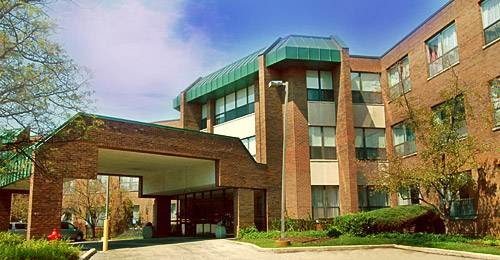
ALDEN VALLEY RIDGE REHAB & HCC

275 EAST ARMY TRAIL ROAD, BLOOMINGDALE, IL 60108 (630) 893-9616
For profit - Corporation 207 Beds THE ALDEN NETWORK Data: November 2025 2 Immediate Jeopardy citations
Trust Grade
0/100
#311 of 665 in IL
Last Inspection: August 2024

Within standard 12-15 month inspection cycle. Federal law requires annual inspections.

Overview

Alden Valley Ridge Rehab & HCC has received a Trust Grade of F, indicating significant concerns about the quality of care provided. Ranking #311 out of 665 in Illinois puts them in the top half of facilities, but the county ranking of #24 out of 38 suggests that there are better local options available. While the facility is improving, with the number of issues decreasing from 14 in 2023 to 10 in 2024, they still have serious staffing problems, rated only 1 out of 5 stars, and a troubling history of $182,443 in fines. Staffing is a relative strength, as they have lower turnover at 0% compared to the state average of 46%, and they provide more RN coverage than 83% of facilities in Illinois. However, critical issues include neglecting to meet residents' basic care needs, which resulted in physical and psychosocial harm, such as reopened pressure ulcers and a resident eloping from the facility, which presents serious safety concerns. Families should weigh these strengths against the serious weaknesses before making a decision.

Trust Score
F
0/100
In Illinois
#311/665
Top 46%
Safety Record
High Risk
Review needed
Inspections
Getting Better
14 → 10 violations
Staff Stability
○ Average
Turnover data not reported for this facility.
Penalties
✓ Good
$182,443 in fines. Lower than most Illinois facilities. Relatively clean record.
Skilled Nurses
✓ Good
Each resident gets 46 minutes of Registered Nurse (RN) attention daily — more than average for Illinois. RNs are trained to catch health problems early.
Violations
⚠ Watch
29 deficiencies on record. Higher than average. Multiple issues found across inspections.
★★☆☆☆
2.0
Overall Rating
★☆☆☆☆
1.0
Staff Levels
★★★★★
5.0
Care Quality
★★☆☆☆
2.0
Inspection Score
Stable
2023: 14 issues
2024: 10 issues

The Good

  • 5-Star Quality Measures · Strong clinical quality outcomes
  • Full Sprinkler Coverage · Fire safety systems throughout facility
  • No fines on record

Facility shows strength in quality measures, fire safety.

The Bad

2-Star Overall Rating

Below Illinois average (2.5)

Below average - review inspection findings carefully

Federal Fines: $182,443

Well above median ($33,413)

Significant penalties indicating serious issues

Chain: THE ALDEN NETWORK

Part of a multi-facility chain

Ask about local staffing decisions and management

The Ugly 29 deficiencies on record

2 life-threatening 4 actual harm
Dec 2024 1 deficiency
CONCERN (D) 📢 Someone Reported This

A family member, employee, or ombudsman was alarmed enough to file a formal complaint

Potential for Harm - no one hurt, but risky conditions existed

Report Alleged Abuse (Tag F0609)

Could have caused harm · This affected 1 resident

**NOTE- TERMS IN BRACKETS HAVE BEEN EDITED TO PROTECT CONFIDENTIALITY** Based on record review and interviews the facility failed to submit an initial resident abuse allegation to the Illinois Departm...

Read full inspector narrative →
**NOTE- TERMS IN BRACKETS HAVE BEEN EDITED TO PROTECT CONFIDENTIALITY** Based on record review and interviews the facility failed to submit an initial resident abuse allegation to the Illinois Department of Public Health (IDPH) for an allegation of sexual abuse. This applies to 1 of 2 residents (R2) reviewed for abuse reporting. The findings include: Review of the facility's Abuse Policy, dated 09/20, stated in part, Initial Reporting of Allegations shall be completed immediately upon notification of the allegation. The written report shall be sent to the Department of Public Health. The EMR (Electronic Medical Record) shows R2 was admitted to the facility on [DATE] with multiple diagnoses, including dementia, cardiac disorders with a pacemaker, venous thrombosis, type 2 dialysis, and chronic kidney disease, R3's MDS (Minimum Data Set) dated 09/11/2024 shows R3 is cognitively severely impaired requires two staff assistance for mobility and transfer. The facility investigation report dated 11/04/2024 showed R3 (R2's family member), who is on the second floor, reported to V4 (Director of Memory Care) that some man came to R2's room with his hot dog hanging in between his leg and showed it to her. V1 (Administrator) and V4 met with R2 and investigated the allegation. The allegation was unfounded. On 12/09/2024 at approximately 11:00 AM, V4 said she reported to V1 when R3 reported the allegation and they investigated the incident. V4 said R2 could not converse in person or over the phone, and there was no contact between R2 and R3 due to the infection control lockdown. V4 said the allegation was not substantiated, so they did not report the allegations to the State Agency. On 12/06/2024 at 3:00 PM, V3 (Director of Nursing) said R2 was in memory care, and R3 was on the second floor. V1 and V3 said R2 is unable to hold any conversation, and R3 is delusional and paranoid with multiple psychiatric problems. V3 said there was no contact between R3 and R2 during the allegation time since R3 was isolated due to COVID-19 and the second floor was on lockdown. V2 said that after a week, R3 reported the allegation to the police and the police investigated with no findings. V1 and V3 said it had slipped from their mind to report to IDPH and acknowledged that they should have reported it.
Aug 2024 9 deficiencies
CONCERN (D)

Potential for Harm - no one hurt, but risky conditions existed

Deficiency F0583 (Tag F0583)

Could have caused harm · This affected 1 resident

Based on observation, interview, and record review, the facility failed to provide a resident with privacy during activities of daily living (ADL) care for 1 of 33 residents (R17) reviewed for privacy...

Read full inspector narrative →
Based on observation, interview, and record review, the facility failed to provide a resident with privacy during activities of daily living (ADL) care for 1 of 33 residents (R17) reviewed for privacy in the sample of 33. The findings include: R17's admission Record shows he was admitted tot he facility on September 7, 2007 with diagnoses including dementia, non pressure chronic ulcer of skin, depressive episodes, and kidney disease. R17's Care Plan initiated on June 10, 2024 shows R17 is incontinent of bowel and bladder. On August 19, 2024 at 9:56 AM, V4 and V5 (Certified Nursing Assistants/CNA) were preparing to provide incontinence care for R17. V5 CNA folded R17's incontinence brief downward in between in legs while he was laying on his back. R17's curtain was not closed and R17's roommate was in his bed, facing R17, and talking with V4 and V5. R17's front peri area was exposed. On August 20, 2024 at 1:32 PM, V14 CNA said resident's curtains should be closed during incontinence care so the resident has privacy. The State of Illinois Residents' Rights revised November 2018 shows, You have a right to privacy and confidentiality of your personal and medical records. Your medical and personal care are private. Facility staff must respect your privacy when you are being examined or given care.
CONCERN (D)

Potential for Harm - no one hurt, but risky conditions existed

ADL Care (Tag F0677)

Could have caused harm · This affected 1 resident

Based on observation, interview and record review the facility failed to ensure staff-dependent residents were provided incontinence care for 2 of 33 residents (R34, R51) reviewed for activities of da...

Read full inspector narrative →
Based on observation, interview and record review the facility failed to ensure staff-dependent residents were provided incontinence care for 2 of 33 residents (R34, R51) reviewed for activities of daily living (ADL's) in the sample of 33. The findings include: 1. R34's current care plan showed R34 was dependent on staff for incontinence care and toileting. R34 was cognitively intact. On 8/19/24 at 9:32 AM, R34 was in bed, eating breakfast. R34 stated, They really treat me good here but, lately it seems like it's taking longer for someone to come change me. There have been times that I have waited over five hours for someone to come. I wear a brief. This last time someone changed me today was around 4 AM. At 9:38 AM, V12 (Certified Nursing Assistant/CNA) entered R34's room to provide cares. V12 stated this was her first time providing incontinence care to R34 for the day. V12 removed R34's brief which was saturated with urine. Urine had leaked out of R34's brief, onto R34's sheet and mattress. 2. R51's current care plan showed R51 was dependent on staff for incontinence care and incontinent of bowel and bladder related to his diagnoses of dementia, impaired cognition, and cerebral infarction (stroke) with left arm and leg hemiplegia (paralysis). The plan showed, Provide incontinence care after each incontinent episode. On 8/19/24 at 9:53 AM, R51 was in bed. A strong foul odor of urine and stool was noted in the room. At 9:55 AM, V13 (CNA) entered R51's room. V13 (CNA) was asked about the odor in R51's room, V13 stated, I don't know what that is. I last changed him at 7 AM. V13 repositioned R51 to check his incontinence brief. R51's brief was saturated with urine and stool. Urine and stool had leaked out of R51's brief, onto R51's bedding. R51's buttocks appeared bright pink. V13 stated incontinence care should be provided every two hours to resident's that require staff assistance or are dependent on staff for incontinence care.
CONCERN (D)

Potential for Harm - no one hurt, but risky conditions existed

Quality of Care (Tag F0684)

Could have caused harm · This affected 1 resident

**NOTE- TERMS IN BRACKETS HAVE BEEN EDITED TO PROTECT CONFIDENTIALITY** Based on observation, interview, and record review, the facility failed to have a physician ordered treatment in place for a res...

Read full inspector narrative →
**NOTE- TERMS IN BRACKETS HAVE BEEN EDITED TO PROTECT CONFIDENTIALITY** Based on observation, interview, and record review, the facility failed to have a physician ordered treatment in place for a resident with open areas to his buttocks for 1 of 33 residents (R17) reviewed for quality of care in the sample of 33. The findings include: R17's admission Record shows he was admitted to the facility on [DATE] with diagnoses including dementia, non pressure chronic ulcer of skin, depressive episodes, and kidney disease. R17's Care Plan that was provided by the facility did not include any skin issues on R17. On August 19, 2024 at 9:56 AM, V4 (Certified Nursing Assistant/CNA) and V5 (CNA) provided incontinence care to R17. When R17 was turned onto his side, there was multiple open areas noted to R17's buttocks. There was spots of dried blood on R17 incontinence brief. R17 said Ow! each time V5 wiped R17's buttocks. V5 said she was going to tell the nurse about R17's buttocks. There was no dressing or treatment in place to R17's buttocks. On August 20, 2024 at 1:07 PM, V14 (CNA) and V3 (CNA) transferred R17 back into his bed from his chair to perform incontinence care on him. R17's penis was raw and bright red. R17 said OW! as V3 wiped the tip of R17's penis. V3 turned R17 onto his side. There was no dressing to R17's buttocks. R17's buttocks area still had open areas. V3 got R17's nurse, V15 (Registered Nurse/RN). V15 came into R17's room and placed zinc to R17's buttocks. V3 showed V15 R17's penis. V15 said, Oh . V15 was not aware of the sores to R17's penis. V15 said she was going to contact the hospice nurse. On August 20, 2024 at 1:39 PM, V15 said she did not know that R17 had an order for a dressing to his buttocks. V15 said that night shift places the dressing onto R17's buttocks. V15 said a foam dressing is used for extra protection. R17's Order Summary Report dated August 19, 2024 shows an order dated August 5, 2024 for optifoam dressing apply to right buttocks every evening shift for skin condition and apply to left buttocks every evening shift for skin condition. There's an order dated May 30, 2024 optifoam adhesive island apply to left buttock topically as needed. R17's skin/wound progress note dated August 19, 2024 shows, right buttocks slightly red. R17's skin/wound progress note dated August 21, 2024 shows R17 has excoriation to his buttocks. The facility's Prevention and Treatment of Pressure Injury and Other Skin Alterations dated March 2, 2021 shows, Implement preventative measures and appropriate treatment modalities for pressure injuries and/or other skin alterations through individualized resident care plan. Revise Care Plan approaches as needed based on resident's response and outcomes.
CONCERN (D)

Potential for Harm - no one hurt, but risky conditions existed

Pressure Ulcer Prevention (Tag F0686)

Could have caused harm · This affected 1 resident

Based on observation, interview and record review the facility failed to ensure pressure injury treatments and pressure relieving interventions were in place for 1 of 7 residents (R9) reviewed for pre...

Read full inspector narrative →
Based on observation, interview and record review the facility failed to ensure pressure injury treatments and pressure relieving interventions were in place for 1 of 7 residents (R9) reviewed for pressure injuries in the sample of 33. The findings include: R9's care plan dated 10/19/2018 showed R9 was at risk for developing pressure injuries due to her history of a previous pressure injury to her left buttock, inability to reposition herself, and history of bowel incontinence. The care plan showed R9 had diagnoses of multiple sclerosis, spinal stenosis, and quadriplegia. The plan showed R9 was cognitively intact. R9's wound note dated 2/21/23 showed a Stage III pressure injury to R9's left buttock had resolved and was completely healed. R9's progress note dated 6/5/24 showed an open area and redness was identified to R9's left buttock. R9's wound note dated 6/11/24 showed R9 was seen by the facility's wound physician for a re-opened Stage III pressure injury, to her left buttock, that measured 9 centimeters (cm) x 9.5 cm x 0.2 cm. R9's wound note dated 8/6/24 showed R9's left buttock Stage III pressure injury measured 5.7 cm x 7 cm x 0.2 cm. The note showed to monitor R9 for incontinence and change after each episode. The note showed staff were to reposition R9 every two hours and offload R9's heels with a pillow or heel boots while in bed. The note showed facility staff were to apply treatment ointments and a foam dressing to R9's pressure injury once a day and as needed. On 8/19/24 at 10:03 AM, R9 was in bed, lying on her right side. R9's heels rested directly on mattress of her bed. R9 was alert and cognitively intact. R9 stated she could not lay on her left side in bed due to a wound on her left buttock. When asked about her wound, R9 stated, I got the wound here because they didn't reposition me. I can't move myself because I have MS (multiple sclerosis). On 8/20/24 at 8:45 AM, R9 was lying in bed. R9's heels rested directly on the mattress of her bed. R9 stated she was seen by the facility's wound physician around 7 AM that morning. R9 stated, I don't have a dressing on my wound. They never put one back on after the doctor looked at it. At 8:47 AM, V10 (Certified Nursing Assistant/CNA) and V11 (CNA) entered R9's room to provide cares. V10 removed R9's incontinence brief as R9 was incontinent of stool. No dressing was noted to the large, circular, open wound to R9's left buttock. Stool was noted in and around the wound. As V10 cleansed R9's buttocks, R9 complained of pain when V10 wiped R9's left buttock wound. V10 and V11 placed a clean incontinence brief on R9 with no dressing in place to her buttock wound. A scant amount of bleeding was noted from the wound. As R9 was repositioned in bed, she complained of pain to her left buttock. R9 stated, It just hurts because there is no dressing on there. V10 and V11 exited R9's room. On 8/20/24 at 8:54 AM, V9 (Registered Nurse/RN) stated if staff observe that a resident's wound does not have a dressing in place, staff are to report it to a nurse immediately to have a dressing put in place. On 8/20/24 at 10:47 AM, V8 (previous Wound Nurse/RN) stated R9 was at risk for developing pressure injuries due to her history of previous pressure injuries and her diagnosis of multiple sclerosis. V8 stated, (R9) can't reposition herself. She has very limited movement. She can only move her left hand to pick up a cup. She had Stage III pressure injury to her left buttock before. She has no wounds to her heels, but they should be offloaded with a pillow. When V8 was asked what caused R9's left buttock pressure injury to reopen, V8 stated, Her skin is fragile, but I would say it was also likely because of infrequent repositioning and not making sure peri-care isn't done right away. On 8/20/24 at 12:46 PM, R9 was in bed, being fed by staff. R9 stated staff placed a dressing on R9's left buttock pressure injury sometime after 10 AM that morning. When R9 was asked if she ever refused to allow staff to apply a dressing to her wound on the morning of 8/20/24, R9 stated, No I didn't. The facility's Prevention and Treatment of Pressure Injury and other Skin Alterations policy dated 3/2/21 showed it was the facility's policy to identify the presence of pressure injuries . implement preventative measures and appropriate treatment modalities for pressure injuries and/or other skin alterations through individualized resident care plan .
CONCERN (D)

Potential for Harm - no one hurt, but risky conditions existed

Incontinence Care (Tag F0690)

Could have caused harm · This affected 1 resident

**NOTE- TERMS IN BRACKETS HAVE BEEN EDITED TO PROTECT CONFIDENTIALITY** 3. R9's current care plan showed R9 required the use of a supra-pubic urinary catheter due to her diagnosis of obstructive and r...

Read full inspector narrative →
**NOTE- TERMS IN BRACKETS HAVE BEEN EDITED TO PROTECT CONFIDENTIALITY** 3. R9's current care plan showed R9 required the use of a supra-pubic urinary catheter due to her diagnosis of obstructive and reflux uropathy. The plan showed, keep (catheter) tubing free of kinks and monitor (tubing) for patency . On 8/20/24 at 8:45 AM, R9 was lying in bed, covered with a blanket. No urinary catheter collection bag was noted hanging off either side of R9's bed. At 8:47 AM, V10 (CNA) and V11 (CNA) entered R9's room to provide cares. As V10 (CNA) removed the blanket off R9, R9's urinary catheter collection bag lay next to R9's left leg, on the bed. Urine was noted in the tubing of R9's catheter tubing. As V10 and V11 repositioned R9 in bed, a back-flow of urine was noted in the tubing of R9's catheter. Once cares were completed on R9, V10 (CNA) hung R9's urinary catheter collection bag off the side of R9's bed, allowing the urine in the catheter tubing to drain into the collection bag. On 8/20/24 at 8:54 AM, V9 (Registered Nurse) stated a resident's urinary catheter collection bag should be hanging below the level of the resident's bladder to make sure the urine is able to drain out. If the urine can't drain out, it can cause pain or infection. Based on observation, interview, and record review, the facility failed to perform peri care in a manner to prevent urinary tract infection and failed to maintain the catheter bag below the level of the bladder to prevent infection for three of three residents (R33, R19, R9) reviewed for incontinence care and catheter care in the sample of 33. The findings include: 1. R19's admission Record shows she was admitted to the facility on [DATE] with diagnoses including hemiplegia, dementia, anxiety disorder, and heart failure. R19's Care Plan revised on July 8, 2024 shows R19 experiences bowel and bladder incontinence due to dementia, chronic kidney disease stage three, diabetes, atrial fibrillation, and anxiety. R19's Medication Administration Record shows she has been treated for a urinary tract infection in the past. On August 19, 2024 at 10:56 AM, V6 (Certified Nursing Assistant/CNA) and V4 (CNA) provided incontinence care on R19. R19 had a large amount of stool in her incontinence brief. R19 was turned on her side and V6 wiped the stool from R19's buttocks. R19 was then laid back onto her back. There was a moderate amount of stool noted to R19's front peri area. V6 wiped the stool from R19's peri area from back to front multiple times. 2. R33's admission Record shows she was admitted to the facility on [DATE] with diagnoses including malnutrition, palliative care, morbid obesity, depression, anxiety disorder, and dementia. R33's Medication Administration Record shows she has been treated with antibiotics for a urinary tract infection in the past. On August 19, 2024 at 10:11 AM, V4 (CNA) performed incontinence care on R33. There was stool noted in R33's buttocks. V4 wiped R33's buttocks then laid her onto her back to perform peri care to R33's front. There was a large amount of stool noted to R33 front peri area. R33 had an urinary catheter in place. V4 wiped the stool in R33's front peri area from back to front multiple times, using the same wet wipe. On August 20, 2024 at 1:32 PM, V14 (CNA) said stool should be wiped from front to back on residents to prevent infection. The facility's Perineal Care policy dated September 2020 shows, Purpose: To prevent infection and odor. Female Perineal Care: Separate the labia. Clean downward from front to back with one stroke.
CONCERN (D)

Potential for Harm - no one hurt, but risky conditions existed

Tube Feeding (Tag F0693)

Could have caused harm · This affected 1 resident

Based on observation and interview, the facility failed to ensure a resident's tube feeding bag was labeled with the time it was initiated for 1 of 4 residents (R60) reviewed for tube feeding in the s...

Read full inspector narrative →
Based on observation and interview, the facility failed to ensure a resident's tube feeding bag was labeled with the time it was initiated for 1 of 4 residents (R60) reviewed for tube feeding in the sample of 33. The findings include: On 8/19/24 at 9:49 AM, R60 was lying in bed with her tube feeding infusing. R60's tube feeding formula bag was dated 8/18/24, however, no time was documented. On 8/20/24 at 10:56 AM, V17, (Registered Nurse), said the G-tube bags should be labeled with the formula, dose, date and time since the bag and the tubing are good for 24 hours before they need to be changed. On 8/21/24 at 11:07 AM, V2, (Director of Nursing), said the tube feeding bag is good for 24 hours once hung; it needs to be labeled with the date and time it was started. R60's Order Summary Report dated 8/19/24 shows an order to infuse tube feeding at 60 ml (milliliters)/hour for 24 hours.
CONCERN (D)

Potential for Harm - no one hurt, but risky conditions existed

Pharmacy Services (Tag F0755)

Could have caused harm · This affected 1 resident

**NOTE- TERMS IN BRACKETS HAVE BEEN EDITED TO PROTECT CONFIDENTIALITY** Based on observation, interview and record review the facility failed to ensure medications were dispensed according to standard...

Read full inspector narrative →
**NOTE- TERMS IN BRACKETS HAVE BEEN EDITED TO PROTECT CONFIDENTIALITY** Based on observation, interview and record review the facility failed to ensure medications were dispensed according to standards of practice. The facility failed to ensure residents were assessed to self-administer medications. These failures apply to 3 of 33 residents (R9, R65, R158) reviewed for medication administration in the sample of 33. The findings include: 1 .On 8/20/24 at 8:45 AM, R9 was lying in bed. A medication cup, containing sixteen different pills of size and color, was on the table directly in front of R9. When R9 was asked about the pills, R9 stated, I think those are my morning medications. No nursing staff were noted in R9's room. On 8/20/24 at 8:54 AM, V9 (Registered Nurse/RN) stated, No residents on the second floor (R9's floor) can self-administer their medications or have meds in their room. We must watch them take their medications to make sure they take them or don't choke. We would need a physician order to let a resident administer their own medications. On 8/20/24 at 1:38 PM, V1 (Administrator) stated, R9 had never been assessed to self-administer her medications. R9's August 2024 Order Summary Report showed no physician order to allow R9 to self-administer her medications or to keep medications in her room. The facility's Medication Administration: General Guidelines policy dated 1/2022 showed, All medications shall be administered as prescribed by licensed personnel authorized to do so in accordance with standard nursing practice and current regulations. Residents are permitted to self-administer medications when specifically authorized by the physician and if determined able in accordance with policies and procedures for self-administration of medication. 2. R65's Facesheet printed on 8/21/24 showed R65 to be an [AGE] year old male resident readmitted to the facility on [DATE] with diagnoses which include: acute and chronic respiratory failure with hypoxia, chronic obstructive pulmonary disease with acute exacerbation, and pneumonitis due to inhalation of food and vomit. On 8/19/24 at 11:00 AM, R65 was in his room completing a nebulizer treatment. R65 had a mediation package with 2 DuoNeb doses, 1 dose of Budesonide suspension, and 1 Fluticasone aerosol dispenser which R65 placed in the middle drawer of his nightstand. R65 stated he had made a deal to take the medications himself since he takes 4 DuoNeb and 2 Budesonide treatments a day. R65 stated the nurse will sometimes listen to my lungs in the morning, but they don't do it with every treatment. I have been doing these myself just after I was in the hospital with pneumonia. R65's Order Summary printed on 8/21/24 showed an order for Budesonide Inhalation Suspension 1 milligram/milliliter (mg/ml) inhale orally two times daily, DuoNeb Solution 0.5-2.5 (3) mg/3ml inhale orally via nebulizer four times daily (and as needed), and Fluticasone Furoate Aerosol Powder Breath Activated 200 micrograms per activation inhaled orally one time a day. On 8/20/24 at 9:35 AM, V21 (RN) stated if a resident is able to give themselves medications they need to be assessed. R65 has been doing his own nebulizer treatments for a while. R65's medical record showed no Self Administration Assessments prior to 8/20/24, and no Care Plan entries for Self administration of medications prior to 8/21/24. 3. R158's Facility assessment dated [DATE] showed R158 is a cognitive [AGE] year old female who was readmitted to the facility on [DATE] with diagnoses which included: chronic obstructive pulmonary disease with acute exacerbation and acute and chronic respiratory failure with hypoxia. On 8/19/24 at 11:20 AM, R158 was sitting on her bed self administering a nebulizer treatment. R158 had 3 unopened nebulizer medication vials (Albuterol) on the night stand. R158 stated I am very independent. It is just easier to have a few of these (treatments) in my room to just do them instead of tracking down a nurse to get one. Since restarting them I usually need 3 or 4 treatments a day. I knew how to use a nebulizer from before, but no one has ever came to teach me how to use it or had me sign anything saying I knew how. R158's Order Summary printed on 8/21/24 showed R158 has an order for Albuterol Sulfate Inhalation Nebulization Solution 2.5mg/3ml. Inhale orally every 4 hours as needed for wheezing or shortness of breath. R158's medical record showed no Self Administration Assessments prior to 8/20/24, and no Care Plan entries for Self administration of medications prior to 8/21/24. On 8/21/24 at 1:20 PM, V2 (Director of Nursing) stated a resident needs to be assessed to be able to self administer medications. The facility's Self-Administration of Medications Policy dated 9/2020 showed a resident will not be permitted to administer or retain medications in their rooms unless so ordered by the attending physician, assessed for their cognitive, physical, and visual ability to self-medicate, and approved by the care planning team. This Policy also showed a resident able to self-administer medications will be placed on a training program which includes: Self-medication assessments completed initially and quarterly, a plan of care with quarterly documentation, and the completion of a Self-Medication Daily Flow Sheet.
CONCERN (E)

Potential for Harm - no one hurt, but risky conditions existed

Accident Prevention (Tag F0689)

Could have caused harm · This affected multiple residents

**NOTE- TERMS IN BRACKETS HAVE BEEN EDITED TO PROTECT CONFIDENTIALITY** Based on observation, interview, and record review, the facility failed to ensure residents were transferred and/or repositioned...

Read full inspector narrative →
**NOTE- TERMS IN BRACKETS HAVE BEEN EDITED TO PROTECT CONFIDENTIALITY** Based on observation, interview, and record review, the facility failed to ensure residents were transferred and/or repositioned in a safe manner for 4 of 33 residents (R69, R66, R114, and R130) reviewed for safety and supervision in the sample of 33. The findings include: 1. On 8/19/24 at 10:50 AM, V10 (Certified Nursing Assistant/CNA) and V11 (CNA) finished changing R69. V10 was on one side of R69's bed and V11 was on the other side. V10 and V11 each hooked their respective arms under R69's underarms and pulled R69 up in bed. Then, V10 and V11 proceeded to pull R69 forward by R69's underarms using the same method described above to reposition R69's pillow. On 8/19/24 at 11:24 AM, V16 (CNA) said when boosting a resident in bed there should be a person on each side of the bed and they should use the bed pad or flat sheet to pull the resident up in bed. V16 said it is not safe to pull a resident up by their arms. R69's admission Record shows she is a [AGE] year old female. R69's current care plan provided by the facility shows R69 has limitation in range of motion and is to receive passive range of motion to both upper and lower extremities. R69's current care plan provided by the facility shows R69 has the potential for hemorrhage or bruising and impaired skin integrity due to use of anticoagulant therapy and a history of decreased mobility. Staff are to instruct R69 to put her arms into a self-hugging position when being boosted up in bed and an assistive device is to be used to decrease friction to lift (do not slide) R69 for bed mobility. 2. On 8/19/24 at 11:02 AM, V16 was in the bathroom with R66. V16 assisted R66 off the commode and pulled up R66's pants and transferred R66 to her wheelchair without using a gait belt. R66's admission Record dated 8/21/24 shows R66's diagnoses include, but are not limited to, hemiplegia and hemiparesis following cerebral infarction affecting left non-dominant side. R66's Minimum Data Set, dated [DATE] shows R66 has limitation that interfered with daily functions or placed resident at risk of injury to an upper extremity and a lower extremity, is dependent on staff for toileting hygiene, and requires substantial/maximal assistance with lower body dressing, sit to stand, and toilet transfers. The facility's Incidents by Incident Type list dated 8/20/24 shows R66 fell on 5/18/24 and again on 8/7/24. The facility's Transfer Techniques Policy dated 2/2022 shows the purpose is to safely transfer the resident from one location to another and staff are to place a gait belt around the resident's waist during the transfer. 3. R114's admission Record shows he was admitted to the facility on [DATE] with diagnoses including legal blindness, major depressive disorder, and depression. R114's Care Plan revised January 8, 2024 shows, [R114] has potential for alteration in skin integrity related to frequent falls, syncope and collapse, muscle weakness, unsteadiness on feet, cognitive communication deficit and bowel and bladder incontinence. On August 19, 2024 at 9:56 AM, R114 was asleep in someone else bed. V4 (CNA) transferred R114 from the bed to his wheel chair with no gait belt. R114 was unsteady on his feet and was hunched over during the transfer. V4 held R114 by the back of his pants while transferring him. 4. R130's admission Record shows she was admitted to the facility on [DATE] with diagnoses including dementia, anxiety disorder, abnormalities of gait and mobility, and muscle weakness. R130's Care Plan revised on August 1, 2024 shows R130 is at risk for falls due to diagnoses of dementia, high blood pressure, depression, and benign paroxysmal vertigo. On August 19, 2024 at 11:42 AM, R130 let V3 (CNA) know that R130 had to go to the bathroom. V3 wheeled R130 to the bathroom via her wheel chair. V3 pulled R130 up via the back of R130's pants. V3 had a transfer belt around V3's waist. V3 sat R130 onto the toilet. When R130 was done using the bathroom, V3 stood R130 up and wiped R130's peri area. V3 pulled R130's incontinence brief and pants up and then transferred R130 back into her wheel chair. R130 was unsteady on her feet. On August 20, 2024 at 1:32 PM, V14 (CNA) said staff should use a gait belt when transferring resident for the resident and staff safety. The facility's Transfer Techniques dated February 2022 shows, Purpose: To safely transfer the resident from bed to chair or from one location to another. Transfer from bed to wheel chair: Have resident sit on the edge of the bed with feet uncrossed and resting on the floor. He/she may use this as an opportunity to practice sitting balance. Put on gait belt and shoes.
CONCERN (E)

Potential for Harm - no one hurt, but risky conditions existed

Infection Control (Tag F0880)

Could have caused harm · This affected multiple residents

**NOTE- TERMS IN BRACKETS HAVE BEEN EDITED TO PROTECT CONFIDENTIALITY** 4. R57's Order Summary Report dated 8/19/24 shows an active order for EBP for device care or use of feeding tube. On 8/19/24 at ...

Read full inspector narrative →
**NOTE- TERMS IN BRACKETS HAVE BEEN EDITED TO PROTECT CONFIDENTIALITY** 4. R57's Order Summary Report dated 8/19/24 shows an active order for EBP for device care or use of feeding tube. On 8/19/24 at 9:43 AM, R57 was lying in his bed with tube feeding infusing. There were no signs on his door or in his room regarding enhanced barrier precautions and no PPE was located outside of his room. R60's Order Summary Report dated 8/19/24 shows an active order for EBP for device care or use of feeding tube. On 8/19/24 at 9:53 AM, R60 was lying in her bed with tube feeding infusing. There were no signs on her door or in her room regarding enhanced barrier precautions and no PPE was located outside of her room. On 8/21/24 at 10:50 AM, V2, Director of Nursing, said they follow the CDC guidelines for infection prevention/isolation precautions. According to the CDC (Centers for Disease Control and Prevention) website dated 6/28/24 https://www.cdc.gov/long-term-care-facilities/hcp/prevent-mdro/faqs.html?CDC_AAref_Val=https://www.cdc.gov/hai/containment/faqs.html Signs are intended to signal to individuals entering the room the specific actions they should take to protect themselves and the resident. To do this effectively, the sign must contain information about the type of Precautions and the recommended PPE to be worn when caring for the resident. Generic signs that instruct individuals to speak to the nurse are not adequate to ensure Precautions are followed. According to the CDC website (updated 7/12/22) https://www.cdc.gov/hai/containment/PPE-Nursing-Homes.html, residents with an indwelling medical device (including a feeding tube) are to be placed on EBP, regardless of MDRO colonization status. 2. A facility roster dated 8/19/24 showed R40 and R91 resided in the same room in the facility. R40's Communication Form and physician orders dated 8/20/24 showed R40 was placed on strict contact/droplet isolation for possible COVID exposure as R40 had developed COVID-like symptoms of a congested, productive cough. The form showed R40 refused to be tested for COVID. On 8/20/24 at 9:11 AM, a droplet/contact isolation sign hung on the door of R40 and R91's room. V9 (Registered Nurse/RN) entered the room to administer medications to R91 but R91 was not in his room. R40 was in bed, actively coughing. When V9 was asked about R40's cough, V9 stated R40 had developed a cough and COVID-like symptoms overnight so was placed on droplet/contact isolation. V9 stated R40 had refused any COVID testing. At 9:14 AM, V9 (RN) found R91 seated in the second floor dining room, eating breakfast with thirteen other residents noted in the room. R91 wore no protective mask. V9 administered medications to R91. On 8/21/24 at 9:52 AM, V2 (Director of Nursing) stated, (R91) should be wearing a mask when he is out of his room. Any resident that has had close contact with someone exhibiting COVID symptoms are tested but don't need to be isolated if negative with no symptoms. They do need to wear a mask when out of their room for ten days post-exposure. The facility's COVID-19 policy (undated) showed residents who are not symptomatic but have had close contact with someone who has COVID-19 do not need to be isolated but do need to wear source control (masks) when out of their rooms for ten days post-exposure. 3. R9's physician order dated 8/22/23 showed R9 was on Enhanced Barrier Precautions (EBP) do to the placement of her urinary catheter. On 8/20/24 at 8:47 AM, an EBP isolation sign hung on the door to R9's room. V10 (Certified Nursing Assistant/CNA) and V11 (CNA) entered R9's room without donning protective gowns, only masks and gloves. V10 and V11 provided incontinence care to R9 which included cleansing R9's left buttock pressure injury and the handling of R9's urinary catheter. On 8/21/24 at 11:01 AM, V2 (Director of Nursing) stated any resident with a urinary catheter, gastrostomy tube, or wounds are to be placed on Enhanced Barrier Precautions (EBP). V2 stated staff are to wear gowns, gloves, and masks when providing cares to residents on EBP. Based on observation, interview, and record review the facility failed to ensure a COVID-19 positive resident remained in isolation, failed to ensure a resident identified as a close contact with COVID-19 symptoms was wearing a mask, failed to ensure staff donned personal protective equipment (PPE) when providing care for a resident on enhanced barrier precautions (EBP), failed to ensure residents with feeding tubes were placed on EBP, and failed to perform hand hygiene and change gloves during pericare to prevent cross contamination. These failures apply to 8 of 33 residents (R44, R91, R9, R60, R57, R33, R17, R19) reviewed for infection control in the sample of 33. The findings include: 1. R44's Facesheet printed on 8/21/24 showed R44 to be a [AGE] year old female resident readmitted to the facility on [DATE]. This document showed a new diagnosis of COVID-19 on 8/12/24. R44's COVID-19 Results Worksheet showed R44 being COVID-19 positive on 8/12/24. R44's Order Summary printed on 8/21/24 showed an order for Isolation: contact and droplet precautions due to positive COVID-19 times 10 days ending on 8/22/24. On 8/19/24 at 11:45 AM, R44's room doorway had a contact/droplet isolation sign on it and a PPE cart next to the doorway. R44's room is near the opposite end of the hallway from the nurses station. On 8/19/24 at 1:30 PM, R44 was in her wheelchair near the nurses station area raising her voice to the staff, she was looking for her ranch dressing. R44 had several staff members pass her while she was in the hallway waiting. None of the staff members attempted to redirect R44 back down the hall toward her room until they had found the salad dressing bottle. On 8/19/24 at 2:00 PM, R44 was in her room. During the interview, R44 had a repeated cough and congestion symptoms. On 8/20/24 at 1:40 PM, V2 (Director of Nursing) stated if a COVID-19 positive resident is out of their room the staff should attempt to redirect the resident back to their room as soon as possible. The first positive resident we had was on 7/21/24, and we had the 3 new positives on 8/4/24. The facility's undated COVID-19 policy showed residents COVID-19 transmission based precautions should have transport and movement outside their room limited to medically essential purposes. 5. R33's admission Record shows she was admitted to the facility on [DATE] with diagnoses including malnutrition, palliative care, morbid obesity, depression, anxiety disorder, and dementia. R33's Order Summary Report dated August 19, 2024 shows an order for indwelling urinary catheter and EBP (Enhanced Barrier Precautions) for device care or use of urinary catheter. R33's Care Plan initiated March 5, 2024 shows, Enhanced barrier Precautions will be implemented during high contact resident care activities. On August 19, 2024 at 10:11 AM, there was a sign outside of R33's door that showed, Enhanced Barrier Precautions Everyone Must: Wear gloves and a gown for the following High-Contact Resident Care Activities. Dressing, changing linens, providing hygiene, and changing briefs or assisting with toileting. V4 (Certified Nursing Assistant/CNA) provided incontinence care to R33. V4 did not wear a gown while she changed R33's linens or changing her incontinence brief. The facility's Enhanced Barrier Precautions dated December 14, 2023 shows, Enhanced Barrier Precautions are an infection control intervention designed to reduce transmission of multidrug-resistant organisms (MDRO) in nursing homes. As well as to prevent multi-drug resistant organism acquisition of those with an increased risk of acquiring MDROs including resident with a chronic wound or an indwelling medical device. 6. R17's admission Record shows he was admitted to the facility on [DATE] with diagnoses including dementia, non pressure chronic ulcer of skin, depressive episodes, and kidney disease. On August 19, 2024 at 9:56 AM, V4 (CNA) and V5 (CNA) provided incontinence care for R17. There was a large amount of urine and stool in R17's incontinence brief. V5 wiped R17's front peri area, then turned R17 onto his side. V5 then wiped R17's buttocks, applied cream to R17's buttocks. V5 turned R17 back onto his back and then touched R17's pillow under his head. V5 did not change her gloves or perform hand hygiene. 7. R19's admission Record shows she was admitted to the facility on [DATE] with diagnoses including hemiplegia, dementia, anxiety disorder, and heart failure. R19's Care Plan revised on July 8, 2024 shows R19 experiences bowel and bladder incontinence due to dementia, chronic kidney disease stage three, diabetes, atrial fibrillation, and anxiety. On August 19, 2024 at 10:56 AM, V6 (CNA) and V4 (CNA) provided incontinence care on R19. V6 folded down R19's incontinence brief in between R19's legs while she was laying on her back. V6 then helped R19 turn onto her left side. V6 wiped the stool from R19's buttocks, placed a new incontinence brief underneath R19, then turned R19 back onto her back. V6 then wiped the stool from R19's front peri area, removed R19's gown, placed clean pants and a clean blouse onto R19. V6 did not change her gloves or perform hand hygiene. On August 20, 2024 at 1:32 PM, V14 (CNA) said gloves should be changed after touching dirty items and before touching clean items to prevent infection. The facility's Hand Washing and Hand Hygiene policy dated June 4, 2020 shows, Appropriate hand hygiene is essential in preventing the spread of infectious organisms in healthcare settings. Hand hygiene must be performed after touching blood, body fluids, secretions, excretions, and contaminated items.
Sept 2023 7 deficiencies
CONCERN (D)

Potential for Harm - no one hurt, but risky conditions existed

Resident Rights (Tag F0550)

Could have caused harm · This affected 1 resident

Based on observation, interview, and record review the facility failed to treat residents in a dignified manner. This applies to 1 of 31 (R10) residents reviewed for dignity in the sample of 31. The ...

Read full inspector narrative →
Based on observation, interview, and record review the facility failed to treat residents in a dignified manner. This applies to 1 of 31 (R10) residents reviewed for dignity in the sample of 31. The findings include: On 9/11/2023 at 10:48 AM, two urinals were observed sitting by the window full of urine near R10's bed, unemptied. On 9/11/2023 at 10:48 AM, R10 said the urinals had been there since the previous day. R10 said facility staff don't empty his urinals when they come by. R10 said he is sick of this and it happens all the time. On 9/11/2023 at 12:22 PM and 1:41 PM, two urinals were observed still sitting by the window full of urine near R10's bed, unemptied. On 9/13/2023 at 9:30 AM, V4 Director of Nursing (DON) said facility staff are responsible for helping residents who use urinals, including set up and emptying the urinals for the residents. V4 said facility staff should be rounding on residents at least every two hours and should be addressing residents care needs during those times, unless the resident requests sooner. V4 said R10 is alert and oriented. R10's Minimum Data Set (MDS) section C dated 8/8/2023 lists R10's BIMS score as 13, cognitively intact. R10's MDS section G shows the resident as needing supervision and set up help while using a urinal. The facility provided Dignity policy dated 6/2023, states residents should be treated with dignity and respect.
CONCERN (D)

Potential for Harm - no one hurt, but risky conditions existed

Quality of Care (Tag F0684)

Could have caused harm · This affected 1 resident

**NOTE- TERMS IN BRACKETS HAVE BEEN EDITED TO PROTECT CONFIDENTIALITY** Based on observation, interview and record review the facility failed to ensure treatment orders were implemented for a resident...

Read full inspector narrative →
**NOTE- TERMS IN BRACKETS HAVE BEEN EDITED TO PROTECT CONFIDENTIALITY** Based on observation, interview and record review the facility failed to ensure treatment orders were implemented for a resident with a fungal infection and failed to ensure a resident's eye was assessed and treatments ordered in a timely manner for 2 of 31 residents (R83 and R100) reviewed for quality of care in the sample of 31. The findings include: 1. R83's Face Sheet shows that she was admitted to the facility on [DATE] with diagnoses of: cellulitis of buttock, local infection of the skin, dermatitis and non-pressure chronic ulcer of buttock. R83's Infectious Disease Hospital Consult Note dated 8/16/23 shows, Assessment/Plan: Probable fungal dermatitis/diaper rash of the buttocks .Recommend: Topical nystatin (antifungal) to the buttocks at least 3 weeks. R83's Medication List from the local hospital dated 8/16/23 shows nystatin topical to be applied three times a day. R83's Wound Physician Notes dated 8/22/23 shows, Assessment and Plan: Diaper dermatitis-Apply miconazole (antifungal) 2% cream bid (twice a day) and prn (as needed) Pressure ulcer of right buttock, stage 3 miconazole 2% cream in periwound area . R83's Wound Physician Notes from 9/5/23 and 9/12/23 document the same as above. On 9/11/23 at 12:32 PM, V22 (Wound Care Licensed Practical Nurse) performed a dressing change to R83's Stage 3 buttock pressure ulcer. R83's left and right buttock was bright red. V22 applied a dressing to the pressure wound and applied zinc ointment to R83's buttocks. On 9/13/23 at 12:08 PM, V22 said that she just started the miconazole cream on 9/12/23. V22 said that she had just been using zinc in the past. V22 said that miconazole cream is used for fungal infections. R83's August and September Medication Administration Record shows that she did not receive miconazole cream until 9/12/23. 2. On 9/11/23 at 9:30 AM, R100 was laying in bed. R100's left eye was red and had crusty discharge present. R100 stated, It hurts really bad and itches. On 9/11/23 at 9:30 AM, V17 (Certified Nursing Assistant) said that R100's eye was red yesterday (9/10/23) but it looked worse today. V17 said that she had told the nurse about his eye. On 9/12/23 at 1:23 PM, V17 said that both of R100's eyes were red and had drainage when she saw him in the morning. V17 said that she told the nurse after she cleaned them off. On 09/12/23 at 1:50 PM, V19 (Registered Nurse) said that she saw R100's red eyes when she was doing medication pass in the morning and called the physician to notify them. V19 said that the physician ordered antibiotic ointment for his eyes. V19 said that if a resident is complaining of discomfort, drainage or their eyes are red, they should be assessed right away and the physician should be notified. R100's Nursing Notes dated 9/12/23 at 11:01 AM shows, Resident both eyes have yellowish drainage, redness and verbalized discomfort in both eyes. Notified [Nurse Practitioner] order for ABT (antibiotic) ointment . R100's Nursing Notes from 9/10/23 to 9/12/23 does not document anything about R100's eyes.
CONCERN (D)

Potential for Harm - no one hurt, but risky conditions existed

Accident Prevention (Tag F0689)

Could have caused harm · This affected 1 resident

Based on observation, interview and record review the facility failed to ensure a resident was safely transferred using a gait belt for 1 of 31 residents (R100) reviewed for safety in the sample of 31...

Read full inspector narrative →
Based on observation, interview and record review the facility failed to ensure a resident was safely transferred using a gait belt for 1 of 31 residents (R100) reviewed for safety in the sample of 31. The findings include: On 9/11/23 at 9:30 AM, V17, Certified Nursing Assistant (CNA) assisted R100 to sit on the side of the bed. V17 stated, I know, you are weak and not feeling good today. V17 then assisted R100 to transfer to the wheelchair by holding onto the back of his pants and under his arm. R100 appeared very unsteady. V17 then assisted R100 back to bed by lifting him from under his arm to help him stand from the wheelchair. On 9/13/23 at 9:13 AM, V6 (Physical Therapist) said that they did not see R100 on 9/11/23 because he was not feeling good. V6 said that if R100 is sick and weak, a gait belt should be used when helping him transfer. The facility's Gait Belt/Transfer Belt Policy dated 9/2020 shows, To assist with a transfer or ambulation. A gait belt will be used with weight-bearing residents who require hands on assistance.
CONCERN (D)

Potential for Harm - no one hurt, but risky conditions existed

Safe Environment (Tag F0921)

Could have caused harm · This affected 1 resident

**NOTE- TERMS IN BRACKETS HAVE BEEN EDITED TO PROTECT CONFIDENTIALITY** Based on observation, interview and record review the facility failed to ensure the resident dining area was safe and free from ...

Read full inspector narrative →
**NOTE- TERMS IN BRACKETS HAVE BEEN EDITED TO PROTECT CONFIDENTIALITY** Based on observation, interview and record review the facility failed to ensure the resident dining area was safe and free from electrical hazards. This applies to 1 of 31 residents (R58) reviewed for safety hazards in the sample of 31. The findings include: On 9/11/23 at 12:45 PM, R58 was sitting in the dining room in her wheelchair. R58 had her back to the wall/window and her wheelchair was locked in place. R58's arms and legs are in constant motion (symptom of her diagnosis) and R58 constantly places her right hand in her mouth. On the wall behind R58 the plate covering the electrical outlet was broken and coming off of the wall. Two times R58 grabbed onto plate with her right hand and pulled at it, spinning it around with her wet fingers behind the plate. During the second time of holding onto the outlet V14 (MDS Coordinator) who was sitting at the table next to R58, saw what R58 was doing and removed her hand from the outlet cover. On 9/12/23 at 8:28 AM, V15 (Maintenance) stated, The staff usually text me when they need something fixed. I come up every morning about 6:30 AM and talk to the night shift and day shift and see if there is anything they need. There are also sheets in the folders at the nurse's station they can fill out and leave for me. The only thing on the third floor today is a toilet in room [ROOM NUMBER]. Surveyor walked with V15 to the dining room and showed him the broken cover on the electrical outlet. R58 was again sitting in front of the outlet. V15 stated, I can go downstairs and grab a new one right now. V15 was asked if there was any danger in the outlet cover being broken and R58 playing with it. V15 stated, I'm sure if she stuck a fork in it or something she could get shocked. On 9/12/23 at 8:35 AM, V15 asked V3 (Assistant Administrator) to stand by R58 while he went downstairs to get the new outlet cover. V3 stated that R58 has oral fixation and puts everything in her mouth. V3 stated that R58 grabs at everything around her and they have to be careful where they place her. R58's Face Sheet shows she was admitted to the facility on [DATE] with diagnoses including Alzheimer's Disease with early onset and Unspecified Psychosis not due to substance or known psychological condition. R58's Minimum Data Set Assessment of 6/14/23 shows that R58 has severe cognitive impairment.
CONCERN (E)

Potential for Harm - no one hurt, but risky conditions existed

ADL Care (Tag F0677)

Could have caused harm · This affected multiple residents

**NOTE- TERMS IN BRACKETS HAVE BEEN EDITED TO PROTECT CONFIDENTIALITY** Based on observation, interview and record review the facility failed to ensure Activities of Daily Living (ADL) cares including...

Read full inspector narrative →
**NOTE- TERMS IN BRACKETS HAVE BEEN EDITED TO PROTECT CONFIDENTIALITY** Based on observation, interview and record review the facility failed to ensure Activities of Daily Living (ADL) cares including showers and shaving were being completed for 4 of 31 residents (R123, R125, R52 and R35) reviewed for ADL's in the sample of 31. The findings include: 1.) On 9/11/23 at 10:43 AM, R123 said his biggest complaint about the facility is the fact he is not getting showered regularly, and also has not been shaved in 2-3 weeks. He said he is supposed to receive showers on Tuesday and Friday evenings. R123 had scruffy facial hair and a partial beard growing. He said, When I ask about a shower or shaving I get told they are too busy or short staffed and cannot do it but look at me I have never had a beard. R123's facility assessment completed on 7/3/23 shows his cognition is intact. R123's ADL care plan initiated on 9/13/22 shows he requires extensive staff assistance with his ADL's including grooming and showering. The facility shower schedule reviewed on 9/12/23, shows R123 should receive showers on Tuesday and Friday evenings. The shower book was also reviewed by this surveyor on 9/12/23 and it had 1 shower sheet in it for R123 dated 7/18/23. On 9/13/23 the facility provided shower sheets for R123. Those sheets dated between 8/17/23 and 9/11/23 show he had a shower on 8/17/23 and again on 8/31/23. The sheets indicate he either refused a shower, or was given bed baths on 8/21, 8/24, 8/28, 9/4, 9/7 and 9/11. On 9/12/23 at 1:34 PM, R123 was in his room visiting with V12 (R123's family member). V12 said she went out and bought R123 a electric razor and a hair trimmer in hopes that would help get someone to shave him and clip his hair. V12 said it is a big problem here, with R123 not being showered regularly. This surveyor asked R123 if he had in fact received a bed bath on Monday 9/11/23 (as the shower sheets indicated) and R123 said he did not receive a bed bath, and his shower days are Tuesdays and Fridays. On 9/12/23 at 1:51 PM, V11 (Certified Nursing Assistant/CNA) said R123 does complain a lot about not getting showered on the evening shift. She said they cannot do all of the showers on day shift but she tries to help out and do extra when she can. R123 said she did in fact shave R123 but it has been 2-3 weeks since she did. On 9/13/23 at 9:47 AM, V10 (Agency CNA) said residents can be shaved when they are showered but they also have shaving days where staff go around and shave residents. 2.) On 9/11/23 at 11:28 AM, V9 (R125's family member) was in the bathroom with R125 shaving him. V9 said there is a problem at the facility with showers and shaving. He said R125 is not getting showered or shaved regularly by the facility. V9 said he has mentioned it many times to staff when R125 does not receive his shower. V9 also said R125 is alert and with it and he knows if he had a shower or not. He said, today is supposed to be his (R125's) shower day but watch he won't end up getting one. On 9/12/23 at 1:49 PM, both V9 and R125 said that R125 did not receive his shower on 9/11/23. V9 said I reminded several staff before I left yesterday (9/11/23) that he (R125) still needed his shower. V9 said the only reason R125's hair is not greasy is because he took him down for a hair cut and they washed it. On 9/12/23 at 1:42 PM, V8 (CNA) said residents should be showered 2 times a week, and they document it is done on shower sheets that are then placed in the shower book and also in the computer in residents medical record. V8 was asked by the surveyor if R125 had received his shower on 9/11/23 and she confirmed he did not receive one due to time constraints. The facility shower sheets in the shower book shows R125 is scheduled for showers on Monday and Thursdays on day shift. The facility provided shower sheets to the surveyors on 9/13/23 (that were not in the book on 9/12/23). Those shower sheets have documented and signed off that R125 not only received a shower on 9/11/23 but also on 9/14/23, 9/18/23, and 9/21/23. The sheets appear to be already filled out and signed for his upcoming showers. R125's electronic medical record (EMR) task charting for showers show his last documented shower was 8/31/23. 3.) On 9/11/23 at 9:32 AM, R52 said he had a spinal cord injury and now requires a lift to transfer out of bed. He said when asks about getting a shower he is told that they have to use a lift to transfer him to the shower chair and don't have enough people to do that. R52 said he has been at the facility since February and has probably had 2-3 showers and 6 bed baths in total. He said he has refused a bed bath on one occasion due to them coming to his room very late in the evening. R52 said he is supposed to receive his showers on Tuesday and Friday evenings. On 9/12/23 at 1:51 PM, V11 (CNA) said R52 does complain that he is not receiving his showers on the evening shift. R52's 8/22/23 facility assessment show his cognition is intact and he requires extensive staff assistance with his ADL's including bathing and grooming. The facility shower book shows R52 should receive his showers on Tuesday and Friday evenings. On 9/12/23 the shower book had no shower sheets for R52 inside. The facility provided shower sheets to the surveyors on 9/13/23 that had documented R52 received bed baths on 8/22/23, 8/25/23, and 9/5/23. Those sheets also document that R52 refused showers on 9/1/23 and 9/8/23 and the sheet for 9/12/23 is pre-signed but not indicated if he had a shower or not. R52's (EMR) task charting for showers show his last documented shower was 9/9/23 and that shower documentation says he receives showers on Wednesdays and Saturdays. The dates in the computer and the documented bed baths/showers for R52 do not correspond with the sheets provided by the facility. On 9/13/23 at 9:51 AM, R52 said he did not receive his scheduled shower on 9/12/23. He said he even reminded several staff it was his shower day but still didn't get one. R52 said he has not recently refused any showers or bed baths and he last received a bed bath 3 weeks ago. R52's active care plan does not show any refusals of care documented. 4.) On 9/12/23 at 11:27 AM, R35 was in bed. Her hair appeared very messy and to have not been brushed in awhile. She had some dried food on her chin and gown. R35 said she has not been getting baths recently. She said when she asks about one the staff tell her the shower bed is broken. R35's facility assessment dated [DATE] shows her cognition is intact and she requires extensive staff assistance with her ADL's including bathing and grooming. The facility shower book shows that R35 should receive showers on Tuesday and Friday evenings. The shower book reviewed on 9/12/23 had 1 documented shower on 8/10/23 for R35. R35's EMR shower task charting shows 1 documented shower for R35 on 8/25/23. That charting has no documented refusals of showers. The facility provided shower sheets on 9/12/23 show R35 refused showers on 8/15/23, 8/18/23, 8/22/23, 8/29/23, 9/1/23 and 9/12/23. The sheets have documented that R35 received a bed bath on 8/18/23, 8/22/23, 9/5/23 and 9/8/23. On 9/13/23 at 9:45 AM, R35 said, I have not refused a shower. I want a shower but they tell me the shower bed is broken. It has been a month since I had a shower. R35's active care plan does not show any refusals of care documented. The facility provided ADL policy dated 9/20 for Bath,Tub or Shower, and Shaving the Resident says the purpose is to bring comfort and cleanliness to the resident. The policies do not address time frames that showers should be given or the required documentation. The policy does list shaving should also be completed for the residents.
CONCERN (E)

Potential for Harm - no one hurt, but risky conditions existed

Deficiency F0804 (Tag F0804)

Could have caused harm · This affected multiple residents

Based on observation, interview, and record review, the facility failed to ensure pureed rice was prepared and served in a smooth, palatable consistency for 4 of 14 (R105, R154, R68, and R64) resident...

Read full inspector narrative →
Based on observation, interview, and record review, the facility failed to ensure pureed rice was prepared and served in a smooth, palatable consistency for 4 of 14 (R105, R154, R68, and R64) residents reviewed for food palatability in the sample of 31. The findings include: The facility's Diet Type Report dated 9/11/23 shows R105, R68, R64, and R154 are all on a pureed diet. During the initial kitchen tour on 9/11/23 at 9:21 AM, V13, Cook, said they are having chicken, broccoli and rice for the lunch meal. On 9/11/23 at 10:58 AM, V13 said when making pureed foods he wants to make it to a smooth, pudding like consistency. V13 said he tastes the pureed foods to make sure they are very smooth. On 9/11/23 at 12:53 PM, a sample tray of the pureed lunch meal was obtained and tasted by the survey team. The pureed rice had an unappetizing, chunky texture which required chewing. The facility's Puree Prep Policy (revised 8/18) shows puree food will be palatable, attractive and prepared in a safe manner and will be puree to mashed potato or applesauce consistency.
CONCERN (E)

Potential for Harm - no one hurt, but risky conditions existed

Infection Control (Tag F0880)

Could have caused harm · This affected multiple residents

4. On 9/11/2023 at 10:48 AM, 12:22 PM, and 1:41 PM no isolation signs of any kind were observed outside of R10's room. No isolation cart or Personal Protective Equipment (PPE) was observed outside of ...

Read full inspector narrative →
4. On 9/11/2023 at 10:48 AM, 12:22 PM, and 1:41 PM no isolation signs of any kind were observed outside of R10's room. No isolation cart or Personal Protective Equipment (PPE) was observed outside of R10's room either. On 9/11/2023 at 12:36 PM, V5 Infection Control Preventionist (ICP) said R10 developed a cough on 9/9/2023. V5 said R10 was swabbed for COVID-19 and was placed on contract/droplet isolation. V5 said the testing used was a rapid test and no PCR tests were completed for any residents tested for COVID-19. V5 said R10 should have still been on isolation on 9/11/2023. V5 said staff members caring for residents with COVID-19 symptoms but negative test results should wear mask, gloves, gown, and face shield while caring for the resident. V5 said an isolation cart with PPE should be placed outside of the room for any resident on isolation. R10's Order Summary Report dated 9/11/2023 shows an order for isolation contact and droplet precautions with a start date of 9/9/2023 and end date of 9/19/2023. 5. On 9/11/2023 at 9:40 AM, R115's room was observed to have an enhanced barrier precautions (EBP) sign on the door, but no isolation supply cart or PPE outside of the door. On 9/11/2023 at 9:42 AM, R115 said he had a stuffed-up nose and was swabbed for COVID-19 last week but was never placed on the correct isolation. R115 said facility staff had not been wearing masks when coming into his room since he was swabbed. R115 said he had some medic training in the military and understands some level of infection control practices. On 9/11/2023 at 12:24 PM, R115's room was observed to have an EBP sign but no other isolation sings and no isolation cart outside of the resident's room. On 9/11/2023 at 12:30 PM, V24 Registered Nurse (RN) said she was assigned to R115's room. V24 said R115 should be on contact/droplet isolation for COVID-19 exposure or symptoms. On 9/13/2023 at 12:36 PM, V5 said R115 was swabbed using a rapid test for COVID-19 on 9/7/2023 due to occasional coughing and complaints of body aches. V5 said R115 should have remained on isolation until 9/12/2023, pending three negative COVID-19 testing results. R115's Physician Order's show an order for contact droplet isolation with a start date of 9/7/2023 and end date of 9/17/2023. R115's Minimum Data Set (MDS) section C dated 8/18/2023 shows a BIMs score of 15, cognitively intact. The facility provided COVID-19 testing plan policy states rapid antigen testing should be performed for staff and/or residents who develop symptoms consistent with COVID-19 (even mild symptoms), regardless of their vaccination status. Should an individual with symptoms consistent with COVID-19 have negative results from a rapid antigen test, they should remain excluded from work and/or isolated pending the results of confirmatory PCR testing. The facility provided Management of Resident with Confirmed or Suspected COVID-19 Infection or Identified as a Close Contact policy states the decision to discontinue empiric Transmission-Based Precautions by excluding the diagnosis of current COVID-19 infection for a resident with symptoms of COVID-19 can be made based upon having negative results from one PCR test. Based on observation, interview and record review the facility failed to ensure symptomatic residents were immediately isolated and tested for COVID-19 to prevent to spread of infection and failed to ensure appropriate personal protective equipment was used when entering a contact/droplet isolation room for 5 of 31 residents (R10, R83, R100, R115 and R121) reviewed for infection control in the sample of 31. The findings include: 1. On 9/11/23 at 9:30 AM, R100 was laying in bed coughing and had a hoarse voice. R100 said that he had been coughing since yesterday (9/10/23). V17 (Certified Nursing Assistant) provided incontinence care and a transfer for R100. R100 was not on isolation. On 9/12/23 at 1:23 PM, there was a sign outside of R100's room that showed that he was on contact droplet isolation. The sign showed, Droplet Precautions-Everyone must: .Make sure their eyes, nose and mouth are fully covered before room entry [picture of a person with a faceshield on and a picture of a person with goggles on] .Remove face protection before room exit. There was an isolation cart outside of R100's room. This cart did not contain any faceshields or goggles. V17 donned a surgical mask, gloves and gown before entering the room. V17 did not apply any eye protection. On 9/12/23 at 9:20 AM, V17 stated that she started getting sick last night with a cough and congestion. V17 stated, Everyone is sick. On 9/12/23 at 1:09 PM, V18 (CNA) said that when entering a contact/droplet isolation room staff should put on gloves, gown and a surgical mask. R100's Nursing Notes dated 9/7/23 at 7:13 AM shows, Resident w/ (with) on and off cough, runny nose .DON (Director of Nursing) updated. Will monitor. R100's Nursing Notes dated 9/11/23 at 1:45 PM shows, Resident noted with hoarse voice and occasional dry cough .Rapid COVID 19 test negative, place on contact/droplet isolation due to COVID-19 symptoms . On 9/12/23 at 11:53 AM, V5 (Infection Prevention Nurse) said that symptoms of COVID 19 include: sore throat, cough, runny nose, increased weakness, confusion, muscle aches and fever. V5 said that a resident should be immediately place on contact/droplet isolation if they have any COVID-19 symptoms. V5 said that the resident should then be tested for COVID-19. V5 said that the facility is only currently using rapid COVID tests and not doing PCR testing. V5 said that staff should wear a surgical mask, faceshield, gloves and gown when entering a contact/droplet isolation room. V5 said that it should be documented in the nursing notes if a COVID test was performed. On 9/13/23 at 12:48 PM, V5 said that in the evening of 9/12/23 (5 days after R100's documented symptoms) when he was working the floor, he tested R100 for COVID-19 and placed him on isolation. The only COVID-19 testing that was provided as being done for R100 was a rapid test that was performed on 9/12/23. 2. On 9/11/23 at 10:25 AM, R121 was walking down the hallway and coughing. R121 sat in a chair near the nurse's station. Two other residents were sitting in chairs on each side of R121. The residents were not 6 feet apart and did not have masks on. The other two residents were cough. On 9/12/23 at 9:00 AM, R121 was in his room. R121 said that he has been coughing and short of breath since Friday. R121 was not on isolation and R121 had a roommate. R121's Nursing Notes dated 9/11/23 at 1:23 PM shows, Resident complaining about coughing. [Nurse Practitioner] made aware, per NP received new order chest x-ray, and mucinex 600 mg twice a day R121's Electronic Medical Record from 9/8/23-9/12/23 does not document that the resident was placed on isolation or COVID-19 tested. On 9/13/23 at 12:48 PM, V5 (Infection Control Nurse) said that in the evening of 9/12/23 when he was working the floor, he tested R121 for COVID-19 and placed him on isolation. 3. On 9/12/23 at 9:09 AM, R83 was heard from the hallway coughing. R83 said, I wish I could quit hacking. R83 was not on isolation and had a roommate present in her room. R83 said that she has had a cough and sore throat for about 3 days. R83's Electronic Medical Record from 9/8/23 to 9/12/23 does not document that she has a cough or sore throat or that she was COVID-19 tested. On 9/12/23 at 1:38 PM, V20 (Licensed Practical Nurse) said that she was not aware that R83 had a cough or sore throat. On 9/13/23 at 12:48 PM, V5 (Infection Control Nurse) said that he is not aware that R83 has a cough or sore throat. V5 said that he is not sure how often the nurse's assess the resident for signs and symptoms of COVID-19 but he thinks it might be once a shift. The facility's Managing of Residents with Confirmed or Suspected COVID-19 Infection or Identified as a Close Contact Policy dated 7/2023 shows, Residents Suspected to have COVID-19-Test symptomatic residents regardless of vaccination status .Resident placement: Single room with door closed if safe to do so .If limited single rooms are available or if numerous resident are simultaneously identified to have COVID-19 exposure or symptoms draw a privacy curtain between the beds, and wait for test results Isolate empirically using Transmission-Based Precautions until results of tests are known .Monitor resident at least daily screen for signs and symptoms of COVID-19 Staff must wear full PPE (N95 respiratory, gown, gloves, eye protection) when providing care The decision to discontinue empiric Transmission-Based Precautions by excluding the diagnosis of current COVID-19 infection for a resident with symptoms of COVID-19 can be made based on having negative results from one PCR test.
May 2023 1 deficiency
CONCERN (D) 📢 Someone Reported This

A family member, employee, or ombudsman was alarmed enough to file a formal complaint

Potential for Harm - no one hurt, but risky conditions existed

Deficiency F0711 (Tag F0711)

Could have caused harm · This affected 1 resident

Based on interview and record review, the facility failed to ensure that a resident Physician or designee's progress notes are maintained in the facility records. This applies to 1 of 3 residents (R1)...

Read full inspector narrative →
Based on interview and record review, the facility failed to ensure that a resident Physician or designee's progress notes are maintained in the facility records. This applies to 1 of 3 residents (R1) reviewed for Improper Nursing Care in the sample of 6. The findings include: R1's EMR (Electronic Medical Records) included diagnoses of chronic venous hypertension (idiopathic) with ulcer and inflammation of bilateral lower extremity, peripheral vascular disease, morbid (severe) obesity due to excess calories, cellulitis of left lower limb, non-pressure chronic ulcer of other part of right lower leg with fat layer exposed, non-pressure chronic ulcer of other part of left lower leg with fat layer exposed, non-pressure chronic ulcer of right heel and midfoot with fat layer exposed, non-pressure chronic ulcer of left heel and midfoot with fat layer exposed. R1's Annual MDS (Minimum Data Set) dated 3/14/2023 showed that R1 was cognitively intact. On 5/26/23 at 9:40 AM, R1 stated that the residents are supposed to have visits from the PCP (Primary Care Physician) and hasn't seen one for over a year. R1 stated that he is seen by the Infectious Disease NP (Nurse Practitioner) one-two times a month or more often if he is fighting an infection. R1 stated that his Palliative Care NP sees him weekly routinely. R1 remarked that his PCP V8 and her team communicate with the nurse, and we are taken out of the loop and are in the dark. On 5/26/23 at 10:29 AM, V7 (Registered Nurse) stated that R1's PCP V8's practice has V9 NP and V10 (Physician Assistant) who come to see her patients. V7 added that V9 comes every Friday and sees patients that are on the list. On 05/26/23 at 2:58 PM, V6 ADON (Assistant Director of Nursing) stated that the facility follows the policy for residents to be seen routinely by PCP and NP or PA. V6 added that the NP's that are with Infectious Disease or Palliative Care are not under V8's Practice. Review of R1's EMR (on 05/26/23) for past six months did not show V8's or her support team's progress notes. Per request from facility V9's late entry (dated 05/26/23) progress notes and plan of care were obtained from V9 showing visits with R1 dated 12/05/22 and 05/05/22. On 5/27/23 at 10:17 AM, V3 (Assistant Administrator) stated that she has reached out to V8's office to obtain records of her visits. On 05/27/23 at 1:41 PM, V8's late entry (dated 5/27/23) progress notes and plan of care were obtained from V8 showing visits with R1 dated 1/5/23, 3/02/23 and 4/27/23. Facility Policy and Procedure titled Medical Care Services included as follows: Policy: Resident will receive medical care and services which meet their their individual needs and ensure adequate health care. Procedures: 1. All residents shall be under the care of a Physician. 5. After the initial physician visit in SNF (Skilled Nursing Facility) a qualified Nurse Practitioner NP or PA may make every other required visit. 9. The attending physician or designee will be notified of all emergencies and changes in resident condition. The facility staff will obtain and record the physician's plan of care and treatment in the resident's record.
May 2023 2 deficiencies 1 Harm
SERIOUS (G) 📢 Someone Reported This

A family member, employee, or ombudsman was alarmed enough to file a formal complaint

Actual Harm - a resident was hurt due to facility failures

Free from Abuse/Neglect (Tag F0600)

A resident was harmed · This affected 1 resident

**NOTE- TERMS IN BRACKETS HAVE BEEN EDITED TO PROTECT CONFIDENTIALITY** Based on observation, interview, and record review, the facility failed to ensure residents were free from physical and verbal a...

Read full inspector narrative →
**NOTE- TERMS IN BRACKETS HAVE BEEN EDITED TO PROTECT CONFIDENTIALITY** Based on observation, interview, and record review, the facility failed to ensure residents were free from physical and verbal abuse. This failure resulted in R1 experiencing a corneal abrasion following physical abuse by R2. This applies to 2 of 3 residents (R1 and R2) reviewed for abuse in the sample of 8. The findings include: 1. On May 8, 2023, at 3:37 PM, R1 was in his wheelchair in the dining room. R1 had an eyepatch over his right eye. R1 said, [R2] punched me and hurt my eye. R1's EMR (Electronic Medical Record) shows R1 was admitted to the facility on [DATE], with multiple diagnoses including: chronic obstructive pulmonary disease, Crohn's disease, heart failure, dementia, and anxiety. R1's MDS (Minimum Data Set) dated April 12, 2023, shows R1 has moderate cognitive impairment. The MDS continues to show R1 requires limited assistance from facility staff for bed mobility, transfers, dressing, toilet use, personal hygiene, and walking in room. R1's abuse care plan revised on May 12, 2022, shows, [R1] is at risk for abuse related to: has a history of dementia. The facility's final report to the State Agency dated May 5, 2023, shows, On 04/29/23 at approximately 6:00 PM, the nurse witnessed both resident's (R1 and R2) arguing and had physical contact . On April 30, 2023, at 9:58 AM, V12 (emergency room Physician) documented, Presenting status post being physically assaulted by another member of his nursing facility. Patient states that a gentleman came up and punched him in the face breaking his glasses yesterday, says he was also struck several times in the right shoulder. Denies any other injuries during the assault, denies fall, denies head strike loss of consciousness other than where he was punched. Primary reason for presenting today is that he has some mild pain in the right eye and says that his vision is slightly blurry. Says he had difficulty sleeping last night because the pain. The documentation continues to show R1 was diagnosed with a corneal abrasion on his right eye in the Emergency Room. On May 9, 2023, at 2:25 PM, V7 (RN/Registered Nurse) said, I was the nurse on April 29, 2023. I was in the dining room and I heard a commotion by the washroom, and I went over there. [R1] was in the doorway in the washroom, and the scene that I saw was [R2] hitting [R1]. [R1] was covering his face like a boxer and waving his head side to side. I saw [R2] hitting [R1]'s arms. [R2] was making contact with [R1]. It was really scary. On May 8, 2023, at 2:13 PM, R2 said, I have a problem with another resident, [R1]. He has yelled at me and called me an [expletive]. I had enough. I tried to talk to staff about it, but no one ever talked to me. [R1] and I got in an argument on Friday, I couldn't sleep all night because of it. The next day, [R1] was coming out of the bathroom and said, '[Expletive], you're going to jail.' So, I slapped him a few times. It hasn't gotten better since we changed rooms. On May 9, 2023, at 3:49 PM, V2 (DON/Director of Nursing) said physical abuse was substantiated for the incident on April 29, 2023. On May 9, 2023, at 3:18 PM, V11 (Physician) said R1's corneal abrasion happened due to the physical altercation when R2 hit R1. V11 continues to say his expectation is residents should be free from abuse. 2. R2's EMR shows R2 was admitted to the facility on [DATE] with multiple diagnoses including: chronic obstructive pulmonary disease, heart failure, chronic kidney disease, depression, and dementia. R2's MDS dated [DATE], shows R2 is cognitively intact. The MDS continues to show R2 requires supervision of facility staff for locomotion on and off the unit, toilet use, and eating. R2's abuse care plan revised on February 22, 2023, shows, [R2] is at risk for abuse related to: diagnosis of dementia, major depression, history of yelling at staff, making threatening statements and history of verbal abuse from another resident. On May 9, 2023, at 3:49 PM, V2 (DON/Director of Nursing) said, [R1] said, '[expletive] you, you are going to jail,' to [R2]. [R2] went to slap [R1] and [R1] covered his face. Verbal abuse was substantiated in this incident. There is not a separate reportable for [R1]'s verbal abuse to [R2]. On May 8, 2023, at 2:13 PM, R2 said, I have a problem with another resident, [R1]. He has yelled at me and called me an [expletive]. I had enough. I tried to talk to staff about it, but no one ever talked to me. [R1] and I got in an argument on Friday, I couldn't sleep all night because of it. The next day, [R1] was coming out of the bathroom and said, '[Expletive], you're going to jail.' So, I slapped him a few times. It hasn't gotten better since we changed rooms. On May 9, 2023, at 2:11 PM, V13 (Psychiatric Nurse Practitioner) said, [R1] is bullying [R2] and swearing at [R2] without provocation and [R2] gets agitated. [R2] told me yesterday, that [R1] came to [R2]'s floor and was bullying [R2]. I think [R1] is verbally aggressive and bullying [R2] and that is provoking [R2]. On May 8, 2023, at 1:59 PM, V10 (Social Services Director) said, I have seen [R1] stick his middle finger up at [R2], and I have seen [R1] be verbally aggressive towards [R2]. The facility's policy titled, Abuse Policy, dated 09/20, shows, Policy: This facility affirms the right of our residents to be free from abuse, neglect, misappropriation of resident property, corporal punishment and involuntary seclusion. The facility will report reasonable suspicion of a crime. This facility therefore prohibits mistreatment, neglect or abuse of its residents and has attempted to establish a resident sensitive and resident secure environment. The purpose of this policy is to assure that the facility is doing all that is within its control to prevent occurrences of mistreatment, neglect or abuse of our residents. This will be done by: . 3. Establishing an environment that promotes resident sensitivity, resident security and prevention of mistreatment; 4. Identifying occurrences and patterns of potential mistreatment; 5. Immediately protecting residents involved in identifying reports of possible abuse; 6. Implementing systems to investigate all reports and allegations of mistreatment promptly and aggressively, and making the necessary changes to prevent future occurrences; 7. Filing accurate and timely investigative reports; This facility is committed to protecting our residents from abuse by anyone including, but not limited to, facility staff, other residents, consultants, volunteers, and staff from other agencies providing services to the individual, family members or legal guardians, friends, or any other individuals who have been convicted of abusing, neglecting, or mistreating individuals. Definitions: . Abuse means any physical or mental injury or sexual assault inflicted upon a resident other than by accidental means in a facility. Abuse is the willful infliction of injury, unreasonable confinement, intimidation, or punishment with resulting physical harm, pain, or mental anguish. Willful means the individual acted deliberately, not that the individual must have intended the injury or harm . Physical abuse includes hitting, slapping, pinching, kicking and controlling behavior through corporal punishment . Verbal abuse is the use of oral, written or gestured language that willfully includes disparaging and derogatory terms to residents or families, or within their hearing distance, regardless of their age, ability to comprehend or disability .
CONCERN (D) 📢 Someone Reported This

A family member, employee, or ombudsman was alarmed enough to file a formal complaint

Potential for Harm - no one hurt, but risky conditions existed

Deficiency F0745 (Tag F0745)

Could have caused harm · This affected 1 resident

**NOTE- TERMS IN BRACKETS HAVE BEEN EDITED TO PROTECT CONFIDENTIALITY** Based on observation, interview, and record review, the facility failed to ensure residents who suffered from abuse received ser...

Read full inspector narrative →
**NOTE- TERMS IN BRACKETS HAVE BEEN EDITED TO PROTECT CONFIDENTIALITY** Based on observation, interview, and record review, the facility failed to ensure residents who suffered from abuse received services and interventions to promote psychosocial wellbeing. This applies to 2 of 3 residents (R1 and R2) reviewed for abuse in the sample of 8. The findings include: The facility's final report to the State Agency dated May 5, 2023, shows, On 04/29/23 at approximately 6:00 PM, the nurse witnessed both resident's (R1 and R2) arguing and had physical contact . On May 8, 2023, at 3:37 PM, R1 was in his wheelchair in the dining room. R1 had an eyepatch over his right eye. R1 said, [R2] punched me and hurt my eye. On May 8, 2023, at 2:13 PM, R2 said, I have a problem with another resident, [R1]. He's over there in the dining room right now (R2 gestured towards the dining room across from where he was sitting). [R1] has yelled at me and called me an [expletive]. I had enough. I tried to talk to staff about it, but no one ever talked to me. [R1] and I got in an argument on Friday, I couldn't sleep all night because of it. The next day, [R1] was coming out of the bathroom and said, '[Expletive], you're going to jail.' So, I slapped him a few times. It hasn't gotten better since we changed rooms. On May 8, 2023, at 1:59 PM, V10 (Social Services Director) said, The incident happened when [R1] was in the bathroom on the first floor and [R2] was trying to use the bathroom. We have told [R1] to use the bathroom on his floor. We have done behavioral contracts with [R1] and [R2]. We did a contract in March because there was a verbal incident. I have seen [R1] stick his middle finger up at [R2], and I have seen [R1] be verbally aggressive towards [R2]. We had to do a second behavioral contract since this was assault. The second contract is the same as the first contract, but with different consequences since it has gotten physical. The contracts are to monitor their behavior and make sure they are not engaging. Monitoring is the only thing we can do in this situation. [R1] doesn't come to [R2]'s floor usually, but he is up here now. I will have to talk to him about it. On May 8, 2023, at 1:01 PM, R2 was self-propelling in his wheelchair in the basement of the facility. R2 was unaccompanied by staff. On May 8, 2023, at 1:54 PM, R1 was propelling in his motorized wheelchair on the second floor (R1's floor), not escorted by staff. On May 10, 2023, at 10:47 AM, V10 said, Since the physical altercation the new behavior contract was put in place on May 1, 2023. Monitoring was put in place at that time and making sure a staff member is with [R1] or [R2] if they are leaving their floor. These are the only interventions we have put in place. On May 9, 2023, at 1:08 PM, V9 (RN) said, A couple of days ago, I was leaving work and [R2] was bringing a remote control to [R1]'s floor and [R1] started yelling at [R2]. [R1] was yelling 'You can't be down here, we have contracts.' At that time, I was unaware [R2] was not supposed to go downstairs. [R2] doesn't ask staff for help when he wants to go downstairs, we just have to watch for him and then send someone with him. [R2] likes to go downstairs and color. On May 9, 2023, at 2:11 PM, V13 (R2's Psychiatric Nurse Practitioner) said [R1] is bullying [R2] and swearing at [R2] without provocation and [R2] gets agitated. [R2] told me yesterday, that [R1] came to [R2]'s floor and was bullying [R2]. I think [R1] is verbally aggressive and bullying [R2] and that is provoking [R2]. I am not involved in [R1]'s care, I have never been consulted to see him. On May 9, 2023, at 12:33 PM, V8 (LCSW/Licensed Clinical Social Worker) said, I provide psychotherapy services to the residents in this facility. The facility will provide me with a list of who needs to seen. There does not need to be a physician order for me to see a resident, anyone can refer a resident to me. Meeting with residents about physical and verbal aggression is something I can be involved in. I have no idea who [R1] or [R2] are, I have not been asked to see either of those residents. I am able to see more residents in this facility. On May 9, 2023, at 3:18 PM, V11 (Physician) said he is R1 and R2's physician. V11 continues to say no one at the facility has spoken to V11 about additional services for either resident. R1's EMR (Electronic Medical Record) shows R1 was admitted to the facility on [DATE], with multiple diagnoses including: chronic obstructive pulmonary disease, Crohn's disease, heart failure, dementia, and anxiety. R1's MDS (Minimum Data Set) dated April 12, 2023, shows R1 has moderate cognitive impairment. The MDS continues to show R1 requires limited assistance from facility staff for bed mobility, transfers, dressing, toilet use, personal hygiene, and walking in room. R1's abuse care plan revised on May 3, 2023, shows, [R1] is at risk for abuse related to: has a history of dementia, allegation that he was struck by another resident. As of May 10, 2023, at 10:00 AM, The facility also does not have documentation to show interventions have been put in place to address R1's psychosocial needs or coping with physical abuse from other residents since the incident with R2 on April 29, 2023. As of May 10, 2023, at 10:00 AM, the facility does not have documentation to show interventions have been put in place to address R1's verbal aggression since the incident with R2 on April 29, 2023. As of May 10, 2023, at 10:00 AM, the facility does not have documentation to show R1 has been received psychiatric services since the incident with R2 on April 29, 2023. R2's EMR shows R2 was admitted to the facility on [DATE] with multiple diagnoses including: chronic obstructive pulmonary disease, heart failure, chronic kidney disease, depression, and dementia. R2's MDS dated [DATE], shows R2 is cognitively intact. The MDS continues to show R2 requires supervision of facility staff for locomotion on and off the unit, toilet use, and eating. R2's abuse care plan revised on February 22, 2023, shows, [R2] is at risk for abuse related to: diagnosis of dementia, major depression, history of yelling at staff, making threatening statements and history of verbal abuse from another resident. As of May 10, 2023, at 10:00 AM, R2's abuse care plan does not show additional interventions since the incident on April 29, 2023. As of May 10, 2023, at 10:00 AM, the facility did not have documentation to show R2 has a care plan to address R2's physical aggression. The facility also does not have documentation to show interventions have been put in place to address R2's psychosocial needs or coping with verbal abuse from other residents since the incident with R1 on April 29, 2023. As of May 10, 2023, at 10:00 AM, the facility does not have documentation to show R2 has received additional psychiatric services since the incident with R1 on April 29, 2023.
Feb 2023 4 deficiencies 1 IJ (1 affecting multiple)
CRITICAL (K) 📢 Someone Reported This

A family member, employee, or ombudsman was alarmed enough to file a formal complaint

Immediate Jeopardy (IJ) - the most serious Medicare violation

Free from Abuse/Neglect (Tag F0600)

Someone could have died · This affected multiple residents

**NOTE- TERMS IN BRACKETS HAVE BEEN EDITED TO PROTECT CONFIDENTIALITY** Based on observation, interview and record review the facility neglected to provide sufficient numbers of nursing staff to meet ...

Read full inspector narrative →
**NOTE- TERMS IN BRACKETS HAVE BEEN EDITED TO PROTECT CONFIDENTIALITY** Based on observation, interview and record review the facility neglected to provide sufficient numbers of nursing staff to meet the physical and psychosocial needs of residents in the facility. The facility failed to ensure facility residents were free of neglect resulting in the actual or potential physical and/or psychosocial harm to 18 of 18 residents in a sample of 23. This failure resulted in physical harm to R1 who was observed to have two re-opened, previously healed pressure ulcers and scratch marks on her skin from skin irritation, psychosocial harm to R1 after not receiving showering assistance from staff which caused her to become more depressed, physical harm to R16 after R16's previously healed pressure injury reopened, physical harm to R4 after development of a new pressure injury, as well as psychosocial harm to R3 and R10, as well as putting R2, R5-R9, R11, R12, R14, R15, R17, R19 and R20 at serious risk of physical/psychosocial harm. These failures resulted in Immediate Jeopardy. The Immediate Jeopardy began on 2/1/23 when a severe lack of facility staff caused the neglect of facility residents requiring assistance from facility staff. V1 (Administrator) was notified of the Immediate Jeopardy on 2/7/23 at 1:49 PM. The surveyor confirmed by observation, interview, and record review that the Immediate Jeopardy was removed on 2/9/23, but noncompliance remains at Level Two because additional time is needed to evaluate the implementation and effectiveness of the staffing interventions. The findings include: On 2/1/23 at 12:45 PM, V6 (C.N.A.-Certified Nursing Assistant) stated the third floor AM shift usually has only two CNAs scheduled on the floor for the 54 total residents. V6 stated each CNA was responsible for 27 residents on 2/1/23. V6 stated six of her residents require two staff to assist with mechanical lifts for transfers and four of her residents require two staff because of behaviors during care. At 12:55 PM, V6 stated when the CNAs have time, they toilet residents before and after breakfast and again before lunch. V6 stated when there are only two CNAs working on the third floor, they are unable to toilet residents after breakfast or before lunch because they need to get residents out of bed that remain in bed for breakfast. V6 stated she had five residents that remained in bed during breakfast. V6 stated the CNAs are unable to give residents showers/bed baths when only two CNAs are scheduled on the third floor. V6 stated they document in the computer when they perform resident showers. V6 stated if there are three CNAs on the floor and a Resident Assistant (RA), the RA helps transport residents and they are sometimes able to give showers. On 2/1/23 at 12:48 PM, V5 (CNA) stated he was caring for 24 residents - six of which required two staff for mechanical lift transfers. On 2/6/23 at 9:40 AM, V12 (Scheduler/CNA) stated there were only 2 CNAs working for a total of 62 residents residing on the second floor. Resident Council Minutes, dated 12/26/232, show, Staffing issues are still working progress and is getting better Resident Council minutes, dated 11/21/22, show, .CNA staffing is still being worked on On 2/1/23 at 1:43 PM with V16 (RN), V12 (CNA/Scheduler) stated the facility census had remained fairly stable for the last couple months and any census changes that did occur did not change staffing needs on the facility floors. V12 stated if she had sufficient staff, she would schedule 5 CNAs on the 2nd floor and 5 CNAs on the 3rd floor during both the AM and PM shifts. V12 stated those 5 CNAs scheduled would be in addition to any restorative staff working in the facility. V12 stated restorative staff only get pulled to help on the second or third floor if only 1 CNA shows up for a shift on a floor. V12 stated she was currently working as one of the two CNAs on the second floor and she alone was caring for 31 residents. V12 stated V10 (CNA) was the only other CNA working on the second floor during the AM shift on 2/1/23 and V12 alone was caring for 32 residents. V12 stated the second-floor census is higher than usual and is almost at capacity as they have 63/68 beds filled. V12 stated there were 24 residents requiring mechanical lifts for transfers in addition to several other residents requiring two staff's assistance for ADLs. V12 stated 2 CNAs on the floor of approximately 63 residents had been typical at the facility for a long time. V12 stated she is only allowed to call staff employed by the facility. V12 stated, We just do not have the staff to call. V12 stated she has been requesting for the use of agency staff to help fill in the schedule for some time. Facility Roster, dated 2/1/23, shows the facility census was 160 residents. The roster shows there were 43 residents residing on the first floor, 63 residents residing on the second floor, and 54 residents residing on the third floor. Review of schedules, dated 1/30/23 to 2/6/23, show on the AM or PM shifts on either the second or third floors of the facility: 1. 13/36 shifts had only 2 CNAs working on the entire floor. 2. 4/36 shifts had three CNAs but one CNA only worked part of the shift 3. 17/36 shifts had only three CNAs working on the entire floor Review of Facility Nurses and CNAs list, provided 2/8/23, shows the facility only employed 15 full time CNAs, 4 part time CNAs, and 7 casual CNAs. Facility Assessment, reviewed 11/22/22, shows the facility average census was 153 residents. The assessment shows the total number of CNA full time equivalents required at the facility were 34-37. The assessment shows, .Facility budgets are established to act as a general guideline for facilities to follow when determining staffing levels needed to provide care to residents being serviced. These budgets are established based on the average resident census along with their projected needs for care and support. Facility budgets are maintained by the Administrator and are flexible based on the actual acuity and unique individual care needs of the residents. To promote continuity of care, and consistent practices, we avoid the use of contract staff and agency staff for direct care positions Individual staffing assignments are determined at the facility level and take into consideration the current support/care needs of the residents that include, but are not limited to medical/physical conditions, acuity, physician orders, therapeutic needs, infection prevention and control needs, behavioral support as well as any other special care needs as identified, Consultation with [NAME] Management Services in customizing and revising individual staffing assignment is obtained, if necessary. On 2/1/23 at 3:03 PM, V1 (Administrator) stated she was aware of the schedule being short staffed and stated the facility was offering financial incentives for staff to work longer or extra shifts. V1 stated the facility was only able to rely on the staff on the facility payroll and the facility recently lost two CNAs to another facility. V1 stated she was not given permission to utilize agency nursing staff by her corporate supervisors. 1. Face sheet, printed 2/1/23, shows R1's diagnoses included multiple sclerosis, quadriplegia, spinal stenosis, overactive bladder, anxiety, and depression. MDS (Minimum Data Set), dated 1/30/23, shows R1 was cognitively intact, was totally dependent on staff for transfers, personal hygiene, eating and dressing, and required extensive assistance from two staff for bed mobility, R1 was always incontinent of bowel and bladder, and R1 had an indwelling urinary catheter. Braden scale, dated 1/28/23, shows R1 was at moderate risk for development of a pressure ulcer and R1 was not able to make even slight changes in body or extremity position without staff assistance. ADL Care Plan, initiated 8/7/22, shows R1 required a mechanical lift for transfers and requires staff assistance for bathing, toileting, and personal hygiene. Interventions include R1 refuses to take showers on non-scheduled dates. Skin integrity care plan, revised on 2/17/22, shows R1 had a history of skin injuries to her sacrum, had a reopened injury to sacrum and impaired mobility. Interventions include inspect skin with showers and as needed and turn and reposition every two hours and as needed. Depression care plan, revised 1/29/23, shows R1 had a diagnosis of depression and was observed of feeling down and tearful. Incontinence care plan, dated 10/18/21, shows R1 was incontinent of bowel related to multiple sclerosis and quadriplegia and interventions included offering toileting opportunities based on R1's pattern of elimination. Bed mobility care plan, revised 4/19/18, shows R1 was unable to turn and reposition herself in bed without assistance with staff. On 2/1/23 at 2:00 PM with V14 (Sister) on speaker phone, R1 stated the facility did not have enough staff to care for residents including providing showers, repositioning, and checking/changing incontinence briefs. R1 stated she had not received a shower for two weeks. R1 stated had not received her showers twice a week for a few months and that was when R1 began having skin irritation. R1 stated not having showers twice weekly caused her to itch and scratch her skin until she bled. R1 had visible, scabbed, scratch marks on her left upper thigh, right upper arm near her shoulder, and bright red scabs on her right breast. R1 stated, Once I start scratching, I can't stop! It started a couple months ago when it began to be one shower a week. I started itching more as it declined. R1 also stated, I feel terrible, wouldn't you!? Sometimes I can smell myself! V14 (Sister) stated, I have called her and she has been so depressed and feels so bad about herself. She has told me it is depressing. R1 also stated, They're not turning me. The other day I was not moved for 13 hours. R1 stated she had pressure ulcers and her repositioning schedule is never followed by staff. R1 stated, When I am left sitting in one position for so long my pressure ulcer starts burning and I call my sister and she calls and talks to nurses and gets them in here. R1 stated she has waited two hours for staff to answer her call light for ADL assistance. R1 had a repositioning schedule over her bed that showed R1 was to be turned every two hours on the even hours. On 2/6/23 at 3:35 PM, R1 was observed with V8 (Assistant Director of Nursing) and two open areas were noted during the observation - one area on the sacrum and one area on the left buttock. Per V8, these areas had been healed, were previously closed, and now were newly open. Facility's wound report, dated 2/2/23, shows R1's wounds were healed. On 2/7/23 V17 (Wound Physician) stated that he would expect that R1 be repositioned at least every two hours and that R1 has a history of skin breakdown. On 2/9/23 at 8:08 AM, V2 (Director of Nursing) stated R1 could not move her body and would not be able to scratch herself. At 9:20 AM, V2 stated she visited R1 and asked R1 to show her if she could reach the areas that were observed to have scratch marks on 2/1/23. V2 stated she bathed R1 on 2/3/23 and saw no scratch marks red marks, or skin irritation on R1. V2 stated the night nurse on 2/8/23-2/9/23 stated R1 was scratching all night and the nurse called the physician for cream the AM of 2/9/23. V2 stated she was unaware of any creams R1 was provided prior to 2/9/23 for her itching. At 10:09 AM, V2 stated R1 told V2 she could reach those areas R1 stated she had been scratching and had caused scratch marks. On 2/9/23 at 9:34 AM, V14 (Sister) stated she previously provided R1 with a back scratcher and creams because R1 became so itchy recently. V14 stated the staff previously gave her a tube of cream to put on her skin when she started itching. V14 stated I was just talking to her about the back scratcher. She just told me V2, and a nurse came in asking her about her scratch marks. You can't tell them anything because they deny it or downplay it. I told them not to do that to me. [R1] told them she could reach as far as the scratches are. Progress notes, dated 2/9/23, show, Prior to resident scratching no skin issues noted. Resident noted to scratch skin at times this shift with dry brownish scratch marks noted to both anterior thigh, right chest and pinkish discoloration noted to right arm, with complaint of itching and per resident she scratches her skin. Review of Bath/Shower Follow Up Question Report, printed 2/6/23, shows R1 received only 5 showers from 1/1/23 to 1/31/23 (showered on 1/6/23, 1/10/23, 1/13/23, 1/16/23, 1/20/23). The shower sheet shows R1 refused showers on 1/4/23, 1/25/23, and 2/1/23 all of which were documented as late entries by V9 (Restorative Nurse) on 2/2/23. On 2/6/34 at 3:50 PM, V9 (Restorative Nurse) stated the documentation entered on 2/2/23 on the Bath/Shower Follow Up Question report was not accurate and then provided hand-written shower sheets for R1 showing she provided R1 a shower on 1/16/23. V9 stated the hand-written shower sheets she provided were accurate documentation of showers she provided R1. V9 stated she filled out the shower sheet dated 1/20/23 for V12 (CNA/Scheduler) when V12 gave R1 a shower. V9 stated on 1/4/23 and 1/25/23 she offered R1 PM showers which she knew R1 did not prefer and R1 subsequently refused. V9 stated she only provided R1 one shower during January 2023 despite the documentation she recorded on 2/2/23 on the Bath/Shower Follow Up Question Report. On 2/6/23 at 9:40 AM, V12 (Scheduler/CNA) stated R1 only preferred her showers in the morning and all staff are aware of her preferences. V12 stated if you try to offer R1 showers in the afternoon/evening, she normally refuses. V12 stated the prior week was the second week in a row R1 had not received showers. V12 stated the last time she gave R1 a shower was on 1/20/23. V12 stated she was able to give R1 showers on 1/6/23, 1/10/23, 1/13/23, and 1/16/23 because they had more CNA staff. V12 stated the CNAs choose Not Applicable in the electronic record as a response when a resident's shower task appears during a day/shift that R1 was not scheduled for a shower. V12 stated residents are not offered showers when the response in the computer was marked Not Applicable. Second floor facility shower list, dated 11/22/22, shows all residents are scheduled to receive two showers each week. Third floor facility shower list, dated 6/20/19, show all residents are scheduled to receive two showers each week. On 2/1/23 at 2:14 PM, V2 (Director of Nursing) stated staff were expected to check resident's incontinence briefs in their rooms every two hours if the residents were incontinent. 2. On 2/6/23 at 10:18 AM on the third floor, there was a strong smell of concentrated urine throughout each of the two hallways. R16 was a [AGE] year-old resident with multiple diagnosis including: Diabetes, Heart Failure, Hypertension, Protein Calorie Malnutrition, Gout, Dysphagia, and Muscle Weakness. Per R16's MDS (Minimum Data Assessment) dated December 27, 2022, R16 was dependent on staff for personal hygiene, transfers, position change, and is always incontinent of bowel and bladder. R16's care plan dated January 11, 2023, shows R16 required a two-person mechanical lift to transfer and R16's interventions included turning and repositioning R16 every two hours and as needed. R16 was assessed as cognitively impaired per the MDS assessment. Facility wound list, dated 2/2/23, shows R16 as having a healed wound to the left buttock and open Stage III wound to right buttock. R16 also has a previous Stage III pressure injury to the right heel that was documented as closed on October 25, 2022. R16's wound to the left buttock was noted as healed on January 24, 2023. Braden Scale, dated 2/1/23, shows R16 was at mild risk for development of a pressure injury. On 2/6/23, V13 (CNA) stated between 7:30 AM and 8:30 AM on 2/6/23, there was only one CNA working on the floor providing direct care for all 54 residents. At 8:30, a second CNA began working on the floor. On 2/6/23, R16 was observed on the third floor in the dining room or directly outside the dining room near the nursing station from 9:10 AM until 1:40 PM. R16 was noted sitting directly on the sling for the mechanical lift in an adult reclining chair. During this time, R16 was not checked for incontinence nor was she repositioned. At 3:20 PM, R16's wounds were observed with V2 (Director of Nursing RN) and V8 (Assistant Director of Nursing RN) and the area on the left buttocks was noted to be open. Both V2 and V8 confirmed that this area was now reopened and V8 stated he would notify the wound doctor. V17 (Wound Physician) was notified about the re-opened wound, was interviewed on February 7, 2023, at 1:15 PM, and stated that R16 should be repositioned at least every two hours to remove pressure. V17 also stated that since he is not in the facility all of the time that he assumed the staff would change R16's position at least every two hours. V17 stated that not providing position changes leads to new skin issues. 3. Face sheet, printed 2/1/23, shows R3's diagnoses included hemiplegia and hemiparesis following cerebral infarction, chronic respiratory failure with hypoxia, morbid obesity, and depression. MDS, dated [DATE], shows R3 was cognitively intact, required total assistance from staff for transfers, required the extensive assistance from two staff for bed mobility, dressing, toilet use, bathing and personal hygiene, and was always incontinent of bowel and bladder. Braden scale, dated 12/5/22, shows R3 was at mild risk for the development of a pressure ulcer. On 2/1/23 at 2:29 PM, R3 stated during the day shifts she usually waits approximately 45 minutes for staff to answer her call light. R3 stated staff fail to turn her every two hours and fail to provide R3 showers. R3 stated she had not had a shower for weeks. R3 stated, It makes me feel horrible. R3 stated front office staff had to help last time she was bathed because she needed so much cleaning. On 2/6/23 at 9:40 AM, V12 (CNA) stated in early December 2022, R3 was seen by her Nurse Practitioner who told the facility to give R3 a shower because R3 was unclean, had foul odor, and R3's hair was matted. V12 stated she showered R3 at that time and had not given her a shower since. On 2/6/23 at 11:48 AM, V20 (Nurse Practitioner) stated she did ask staff to give R3 a shower because R3's hair was not able to be combed out, R3 had an odor, and R3 had a denuded area under her breasts. Review of facility Bath/Shower Follow Up Question report, printed 2/6/23, shows R3 received only 3 showers between 1/1/23 and 1/31/23 (showered on 1/20/23, 1/27/23, and 1/31/23). The report shows the staff marked Not Applicable on 1/3/23, 1/10/23, 1/17/23 and 1/24/23 indicating no shower was offered. Hand-written shower sheets provided by V9 (Restorative Nurse), showed she provided R3 showers on 1/20/23, 1/27/23, and 1/31/23. On 2/6/34 at 3:50 PM, V9 (Restorative Nurse) stated the documentation she entered on 2/2/23 on the Bath/Shower Follow Up Question report showing R3 was provided multiple showers by V9 (1/6/23, 1/13/23) was not accurate and provided hand-written shower sheets which accurately showed the showers she provided for R3. The shower sheets showed V9 only provided R3 showers on 1/20/23, 1/27/23, 1/27/23, and 1/31/23. On 2/6/23 at 9:40 AM, V12 (Scheduler/CNA) stated R3 did not receive showers on 1/6/23, 1/13/23, 1/17/23, 1/20/23 and 1/21/23. V12 stated the CNAs responded, Not Applicable in the computer when the task comes up in the computer and it is not the resident's shower/bath day. V12 stated no baths were provided to R3 on those days. ADL care plan, revised 2/6/23, shows R3 required two staff assistance with bed mobility, transfers, toileting, grooming and bathing. The revision shows, Often declines ADL cares - showers, repositioning then says she was not offered care. Intervention, revised 2/6/23, shows, Provide resident with a sponge bath when a full bath cannot be tolerated. If [R3] declines cares offer her a different time. Re-approach- re-attempt task. Alteration in skin integrity care plan, revised 1/6/22, shows R3 was at risk for an alteration in skin integrity and refuses to allow staff to provide incontinence care in a timely manner and to turn and reposition off a skin tear to thighs. Interventions include staff to provide toileting and incontinence care with care rounds and as needed as well as turn and reposition every two hours as needed. Transfer care plan, dated 12/13/22, shows R3 requires the use of a mechanical lift for transfers. On 2/8/23 at 2:43 PM, V12 stated the care plan for R3 was inaccurate that R3 declined ADL cares including repositioning, incontinence care and showers. V12 stated she had worked with R3 every day for a couple of years and R3 never refused her offers of showers, incontinence care, or turning/repositioning. On 2/8/23 at 12:24 PM, V1 (Administrator) stated V21 (Corporate Consultant) altered R3's care plan on 2/6/23. Attempts to reach V21 were unsuccessful. 4. Face sheet, printed 2/2/23, shows R10's diagnoses included pressure ulcer right heel, dementia, Alzheimer's disease, adult failure to thrive, restlessness and agitation, and legally blind. MDS, dated [DATE], shows R10 was severely cognitively impaired, was totally dependent on staff for bed mobility, transfers, dressing, toileting, required extensive assist from staff for bathing, eating, and personal hygiene, and was always incontinent of bowel and bladder. Braden scale, dated 12/26/22, shows R10 was at only mild risk for the development of pressure ulcers. Impaired skin integrity care plan, revised on 2/21/22, shows R10 was admitted with an alteration in skin integrity / pressure injury and interventions included R10 was to receive incontinence care with care rounds and as needed. Transfer care plan, initiated 12/29/22, shows R10 required the use of a mechanical lift for transfers and interventions included providing two staff assistance for transferring. Incontinence care plan, revised 12/29/22, shows R10 was incontinent related to dementia and interventions included provide assistance for toileting. On 2/1/23 at 9:30 AM, R10 was sitting reclined in her reclining wheelchair just outside the third floor dining room doorway. R10 yelled, I have to pee! What am I gonna do!? V7 (RN-Registered Nurse) responded to R10 and stated, Go ahead and pee. They will change your brief in a little bit. R10 responded to V7 and stated, That's embarrassing! Oh Lord! V7 then looked away from R10 and stated, She's a [mechanical] lift. R10 continued to ask to go to the bathroom and V7 left R10's vicinity. At 9:33 AM, V7 stated R10 was very demented and incontinent. R10 was observed sitting in her wheelchair on 2/6/23 from 9:47 AM-1:30 PM without being repositioned or having her incontinence brief checked/changed. R10 was noted with large amounts of facial hair, uncombed and matted hair, and strong body odor. R10's clothing was soiled with food and debris along with her chair. 5. Care plan, initiated 9/27/22, shows R4's diagnoses included dementia, cerebral infarction without residual deficits, muscle weakness, chronic obstructive pulmonary disease, non-pressure chronic ulcer of skin, chronic kidney disease, and diabetes. The ADL care plan, revised 9/27/22, shows R4 required assistance with transfer, bed mobility, hygiene, toileting and bathing. The care plan interventions included assisting R4 with ADLs and utilizing a mechanical lift for transfers. Skin integrity care plan, revised 9/27/22, shows R4 was at risk for alterations in skin integrity related to poor skin turgor, dementia, poor hygiene, dermatitis to scalp and feet, incontinence of bowels and bladders, and noncompliant with ADL care including turning, positioning, and incontinence care. The care plan shows R4 had chronic on and off redness to buttock and scrotum and a non-pressure wound to the right great toe and left second toe. Interventions included incontinence care with care rounds and as needed and turn and reposition as per schedule and as needed. Transfer care plan shows R4 required the use of a mechanical lift and two staff assisting R4 for transfers. Incontinence care plan shows R4 experienced bowel/bladder incontinence due to prostate enlargement and an inability to delay voiding. Interventions included checking R4 for incontinence. Repositioning care plan, revised 9/27/22, shows R4 required assistance from staff for bed mobility and was unable to turn/reposition himself in bed without physical assistance. Interventions included providing R4 weight bearing assistance as needed while sitting up, laying down, or turning side to side in bed. MDS, dated [DATE], shows R4 was severely cognitively impaired, required total assistance from staff for bathing, transfers and toileting, required extensive assistance from two staff for bed mobility, dressing, and required the extensive assistance of one staff for personal hygiene. The MDS shows R4 was always incontinent of bowel and bladder. Braden scale, dated 12/13/22, shows R4 was at mild risk for pressure ulcer development On 2/1/23 at 9:19 AM, R4 was sitting in the third-floor dining room slightly reclined in his wheelchair and finishing breakfast. On 2/1/23 during continuous observation between 9:19 AM and 12:19 AM, R4 sat in the same reclined position with no staff repositioning R4 and no staff checking/changing R4's incontinence brief. At 12:19 PM, R4 was taken to his room to have his incontinence brief checked/changed. On 2/6/23 R4 was again observed in his wheelchair from 9:15 AM until 1:36 PM and R4was not repositioned or checked for incontinence. R4 was noted with long jagged fingernails with a brownish substance underneath. R4 had food crumbs and debris on his clothing and face. R4 had dirty greasy hair, long facial hair, and strong body odor. At 1:36 PM, V13 (CNA) proceeded to provide personal care to R4. R4 was noted with saturated brief and hard dried fecal matter. R4's right buttock area was noted to be red and inflamed. V13 needed numerous wipes to clean the dried fecal matter from R4's buttock and anal area since the stool was dried. V13 stated that R4 will scratch his buttock and that is why R4 has fecal matter under his nails. V13 stated that this was the first time he had to change R4 since they only had 2 nurse aides on the floor. R4's skin assessment sheet dated February 7, 2023, documents that R4 has a pressure injury on the left buttock measuring 5.5 by 0.5 by 0.1 centimeters and another injury on the sacrum measuring 5.0 by 0.5 by 0.1 centimeters. 6. Face sheet, printed 2/1/23, shows R2's diagnoses included incontinence without sensory awareness, dementia, depression, and cervicalgia. MDS, dated [DATE], shows R2 was cognitively intact, was totally dependent on staff for transfers, required the extensive assistance of two staff for bed mobility and toileting, required the extensive assistance of one staff for bathing, dressing and personal hygiene, and was always incontinent of bowel and bladder. Braden scale, dated 11/11/22, shows R2 was at mild risk for development of a pressure ulcer. On 2/1/23 at 2:39 PM, R2 stated there were often only two CNA staff for the whole second floor of residents. R2 stated she sometimes waited 12-15 hours for her soiled briefs to be changed. R2 stated her last bed bath was 1/20/23 and before that she had not had a shower in a long time because there were not enough staff at the facility. R2 stated at times there is only one CNA working the entire second floor on a AM or PM shift. R2 stated the staff only reposition her when they change her incontinence brief. R2 stated the staff typically change her incontinence brief approximately three times a day - usually at 4:00 AM during the PM shift, at 10:00 AM after breakfast, and then at approximately 9:30 PM before she goes to sleep. On 2/8/23 at 2:43 PM, V12 (CNA/Scheduler) stated R2 preferred her showers on the AM shift per her shower schedule which had been followed for years. Review of Bath/Shower Follow Up Question Report, printed 2/6/23, shows R2 received only 4 showers from 1/1/23 to 1/31/23 (showered on 1/17/23, 1/24/23, 1/27/23, 1/31/23). The report shows on 1/6/23, 1/13/23, 1/20/23 and 1/21/23 the CNA responded, Not Applicable in the computer. Review of hand -written shower sheets, provided by V9 (Restorative Nurse), shows R2 received showers by V9 only on 1/17/23, 1/24/23, 1/27/23, and 1/31/23. No hand-written shower sheets were provided for 1/3/23 and 1/10/23. On 2/6/34 at 3:50 PM, V9 (Restorative Nurse) stated the documentation entered on 2/2/23 on the Bath/Shower Follow Up Question report showing R2 was provided multiple showers by V9 (1/3/23, 1/10/23) was not accurate and provided hand-written shower sheets which accurately showed the showers she provided for R2. The shower sheets showed V9 provided R2 showers on 1/17/23, 1/24/23, 1/27/23, and 1/31/23. On 2/6/23 at 9:40 AM, V12 (Scheduler/CNA) stated R2 did not receive showers on 1/6/23, 1/13/23, 1/20/23 and 1/21/23 because the CNAs responded, Not Applicable in the computer. V12 stated facility CNAs mark Not Applicable on the bath/shower task when the task comes up in the computer and it is not the resident's shower/bath day. ADL Care Plan, revised 11/18/22, shows R2 required staff assistance with ADLs related to weakness and pain. Interventions included one staff assistance for bed baths, assist with ADLs as needed, check for skin changes during bathing, Intervention, revised 7/24/18, shows R2 prefers bathing after dinner between 8:00 PM and 9:00 PM. On 2/8/23 at 2:31 PM, V12 (Scheduler/CNA) stated R2 prefers showers in the AM which had been her shower schedule for years. 7. Care plan, revised 9/22/21, shows R7's diagnoses included dementia, bipolar disorder, psychotic disorder, depression, and anxiety. Care plan, revised 9/21/21, shows R7 had a potential for impaired skin integrity and interventions included turning and repositioning every two hours as needed. MDS, dated [DATE], shows R7 was severely cognitively impaired, required the extensive assistance of staff for bathing, bed mobility, transfers, dressing, toileting, and personal hygiene, and was always incontinent of bowel and bladder. Braden scale, dated 9/30/22, shows R7 was at mild risk for the development of pressure ulcers. On 2/1/23 at 9:19 AM, R7 was sitting in her wheelchair finishing her breakfast in the third-floor main dining room. On 2/1/23, during continuous observation between 9:10 AM and 12:05 PM, R7 sat in her wheelchair without staff repositioning R7 or checking/changing R7's incontinence brief. At 2:05 PM, R7 was toileted by V5 (CNA). V5 stated he got R7 up from bed at approximately 8:00 AM and checked/changed R7's incontinence brief at that time. R7's incontinence brief had a very strong smell of urine. 8. Face sheet, printed 2/1/23, shows R9's diagnoses included dementia, anxiety, and depressive disorder. MDS, dated [DATE], shows R9 was severely cognitively impaired, was totally dependent on staff for bathing, required the extensive assistance of two staff for bed mobility and transfers, required the extensive assistance of one staff for dressing, eating, toileting and personal hygiene, and was always incontinent of bowel and bladder. Braden scale, dated 12/2/22, shows R9 was at mild risk for development of a pressure ulcer. On 2/1/23 at 9:24 AM, R9 was laying in her bed in her room on her back sleeping with a thick blanket covering her body from her toes to her neck. The room temperature was very warm. During continuous observation, R9 was laying in the same position without incontinence check/change or repositioning from 9:24 AM to 12:29 PM. As R9 laid in bed, R9's cheeks became more red and at 12:08 PM R9 pulled the blanket down from her chin to her chest. On 2/1/23 at 12:16 PM, V18 (Assistant Administrator) stated R9
SERIOUS (G) 📢 Someone Reported This

A family member, employee, or ombudsman was alarmed enough to file a formal complaint

Actual Harm - a resident was hurt due to facility failures

Pressure Ulcer Prevention (Tag F0686)

A resident was harmed · This affected 1 resident

**NOTE- TERMS IN BRACKETS HAVE BEEN EDITED TO PROTECT CONFIDENTIALITY** Based on observation, interview and record review the facility failed to follow a resident's care plan interventions for pressur...

Read full inspector narrative →
**NOTE- TERMS IN BRACKETS HAVE BEEN EDITED TO PROTECT CONFIDENTIALITY** Based on observation, interview and record review the facility failed to follow a resident's care plan interventions for pressure injury prevention and treatment for 5 (R16, R1, R2, R4, R3) of 5 residents reviewed for pressure injuries from a total sample of 23. This failure resulted in R16's healed pressure injury redeveloping and R1's healed pressure injury redeveloping. This failure also resulted in R4 developing a new pressure injury. Findings include the following: 1. R16 is a [AGE] year-old resident with multiple diagnosis including: Diabetes, Heart Failure, Hypertension, Protein Calorie Malnutrition, Gout, Dysphagia, and Muscle Weakness. The facility wound list of February 2, 2023, documents R16 as having a healed wound to the left buttock and open Stage III wound to right buttock. R16 also has a previous Stage III pressure injury to the right heel that was documented as closed on October 25, 2022. R16's wound to the left buttock was noted as healed on January 24, 2023. Per R16's MDS (Minimum Data Assessment) dated December 27, 2022, R16 is dependent on staff for personal hygiene, transfers, position change, and is always incontinent of bowel and bladder. R16's care plan dated January 11, 2023, documents to use a two-person mechanical lift to transfer R16 and to turn and reposition R16 every two hours and as needed for skin issues. R16 is also cognitively impaired per the MDS assessment. The facility's Braden Scale for R16 dated February 1, 2023, scores R16 at mild risk. Under section 1 Sensory Perception, R16 is scored to have no impairment, yet R16 is unable to verbalize pain or reposition herself. Under Section 2 Moisture, R16 is scored 4 meaning rarely moist, yet R16 uses adult incontinence pads and is totally incontinent of urine and stool. Under section 5 Nutrition, R16 is scored 4, meaning an excellent nutrition yet R16 was noted with weight loss of 15 pounds in four months (January 2023 weight was 146 pounds and September 2022 weight was 161. In addition, R16 has a history of protein calorie malnutrition and has orders for a Puree No Concentrated Sweets Diet with Fortified Pudding twice a day. The assessment does not accurately assess R16's risk for pressure injury. On February 6, 2023, R16 was observed on the third floor in the dining room or directly outside the dining room near the nursing station from 9:10 AM until 1:40 PM. R16 was noted sitting directly on the sling for the mechanical lift on an adult reclining chair. During this time, R16 was not removed to monitor for incontinence nor was her position altered or changed. At 3:20 PM, R16's wounds were observed with V2 (Director of Nursing RN) and V8 (Assistant Director of Nursing RN) and the area on the left buttocks was noted to be open. A third new area was identified on the right buttock area. Both V2 and V8 confirmed that this area was now reopened and V8 stated he would notify the wound doctor. The facility skin assessment documents R16 left buttock to measure 1.5 by 0.5 by 0.1 centimeters and the new wound on the right buttock measured 1.0 by 2.0 by 0.2 centimeters. V17 (wound physician) was notified about the re-opened wound and was interviewed on February 7, 2023, at 1:15 PM and stated that R16 should be repositioned at least every two hours to remove pressure. V17 also stated that since he is not in the facility all the time that he assumed the staff would change R16's position at least every two hours. V17 added that not providing position changes leads to new skin issues. The Unavoidable pressure injury or condition document was completed by V2, V8 and V17 documents under comorbidities: Immobility, Incontinence-urine, Incontinence-fecal, previous pressure injuries and under preventative measures: turning and repositioning in bed/wheelchair. 2. Face sheet, printed February 1, 2023, shows R1's diagnoses included multiple sclerosis, quadriplegia, spinal stenosis, overactive bladder, anxiety, and depression. MDS, dated [DATE], shows R1 was cognitively intact, was totally dependent on staff for transfers, personal hygiene, eating and dressing, and required extensive assistance from two staff for bed mobility, R1 was always incontinent of bowel and bladder, and R1 had an indwelling urinary catheter. Braden scale, dated 1/28/23, shows R1 was at moderate risk for development of a pressure ulcer and R1 was not able to make even slight changes in body or extremity position without staff assistance. ADL Care Plan, initiated 8/7/22, shows R1 required a mechanical lift for transfers and requires staff assistance for bathing, toileting, and personal hygiene. Interventions include R1 refuses to take showers on non-scheduled dates. Skin integrity care plan, revised on 2/17/22, shows R4 had a history of skin injuries to her sacrum, had a reopened injury to sacrum and impaired mobility. Interventions include inspect skin with showers and as needed and turn and reposition every two hours and as needed. Depression care plan, revised 1/29/23, shows R1 had a diagnosis of depression and was observed of feeling down and tearful. Incontinence care plan, dated 10/18/21, shows R1 was incontinent of bowel related to multiple sclerosis and quadriplegia and interventions included offering toileting opportunities based on R1's pattern of elimination. Bed mobility care plan, revised 4/19/18, shows R1 was unable to turn and reposition herself in bed without assistance with staff. On 2/1/23 at 2:00 PM with V14 (Sister) on speaker phone, R1 stated the facility did not have enough staff to care for residents including providing showers, repositioning, and checking/changing incontinence briefs. R1 stated she had not received a shower for two weeks. R1 stated had not received her showers twice a week for a few months and that was when R1 began having skin irritation. R1 stated not having showers twice weekly caused her to itch and scratch her skin until she bled. R1 had visible, scabbed, scratch marks on her left upper thigh, fight upper arm near her shoulder, and bright red cabs on her right breast. R1 stated, Once I start scratching, I can't stop! It started a couple months ago when it began to be one shower a week. I started itching more as it declined. R1 also stated, I feel terrible, wouldn't you!? Sometimes I can smell myself! V14 stated, I have called her, and she has been so depressed and feels so bad about herself. She has told me it is depressing. R1 also stated, They're not turning me. The other day I was not moved for 13 hours. R1 stated she had pressure ulcers and her repositioning schedule is never followed by staff. R1 stated, When I am left sitting in one position for so long my pressure ulcer starts burning and I call my sister and she calls and talks to nurses and gets them in here. R1 stated she has waited two hours for staff to answer her call light for ADL assistance. R1 had a repositioning scheduled over her bed that showed R1 was to be turned every two hours on the even hours. R1 was observed with V8 (Assistant Director of Nursing RN) on February 6, 2023, at 3:35 PM. Per the facility's wound report of February 2, 2023, R1's wounds were healed. Two open areas were noted during the observation, one area on the sacrum and one area on the left buttock. Per V8, these areas had been healed and were closed. V17 (wound physician) was interviewed on February 7, 2023 about R1 and stated that he would expect that R1 be repositioned at least every two hours and that R1 has a history of skin breakdown. R1's left buttock injury was a Stage III and was noted to be healed on January 10, 2023, and R1's sacral injury was also noted to be a Stage III and noted to be healed on November 29, 2023. R1's care plan revised on August 17, 2022, documents to turn and reposition every two hours and provide incontinent care. 3. R4 is an [AGE] year-old resident with the following diagnosis: Heart Failure, Dementia, Obstructive Pulmonary Disease, Dysphagia, Dementia and Peripheral Vascular Disease. R4's care plan dated October 7, 2022, documents that R4 requires staff assistance with grooming, bed mobility, transfers, and dressing. R4 was observed on February 6, 2023, in the third-floor dining room or area near nursing station directly outside of the dining area from 9:15 AM until 1:36 PM and during this time, R4 was not repositioned or monitored for incontinence. R4 was noted with long jagged fingernails with a brownish substance underneath. R4 had food crumbs and debris on his clothing and face. R4 had dirty greasy hair, long facial hair, and strong body odor. At 1:36 PM, V13 proceeded to provide personal care to R4. R4 was noted with saturated brief and hard dried fecal matter. R4's left buttock area was noted to be red and inflamed. V13 needed numerous wipes to clean the dried fecal matter from R4's buttock and anal area since the stool was dried. V13 stated that R4 will scratch his buttock and that is why R4 has fecal matter under his nails. V13 stated that this was the first time he had to change R4 since they only had 2 nurse aides on the floor. R4 has a history of pressure injuries and his care plan dated October 7, 2022, documents potential for alterations of skin and list as interventions: turn and reposition as per schedule and needed, incontinent care, and keep nails short and clean. R4's skin assessment sheet dated February 7, 2023, documents that R4 has a pressure injury on the left buttock measuring 5.5 by 0.5 by 0.1 centimeters and another injury on the sacrum measuring 5.0 by 0.5 by 0.1 centimeters. 4. R2's Face sheet, printed 2/1/23, shows R2's diagnoses included incontinence without sensory awareness, dementia, depression, and cervicalgia. Braden scale, dated 11/11/22, shows R2 was at mild risk for development of a pressure ulcer. MDS, dated [DATE], shows R2 was cognitively intact, was totally dependent on staff for transfers, required the extensive assistance of two staff for bed mobility and toileting, required the extensive assistance of one staff for bathing, dressing and personal hygiene, and was always incontinent of bowel and bladder. On 2/1/23 at 2:39 PM, R2 stated there were often only two CNA staff for the whole second floor of residents. R2 stated she sometimes waited 12-15 hours for her soiled briefs to be changed. R2 stated her last bed bath was 1/20/23 and before that she had not had a shower in a long time because there were not enough staff at the facility. R2 stated at times there is only one CNA working the entire second floor on a AM or PM shift. R2 stated the staff only reposition her when they change her incontinence brief. R2 stated the staff change her incontinence brief approximately three times a day - usually at 4 AM during the PM shift, at 10:00 AM after breakfast, and then at approximately 9:30 PM before she goes to sleep. 5. Face sheet, printed 2/1/23, shows R3's diagnoses included hemiplegia and hemiparesis following cerebral infarction, chronic respiratory failure with hypoxia, morbid obesity, and depression. MDS, dated [DATE], shows R3 was cognitively intact, required total assistance from staff for transfers, required the extensive assistance from two staff for bed mobility, dressing, toilet use, bathing and personal hygiene, and was always incontinent of bowel and bladder. Braden scale, dated 12/5/22, shows R3 was at mild risk for the development of a pressure ulcer. On 2/1/23 at 2:29 PM, R3 stated during the day shifts she usually waits approximately 45 minutes for staff to answer her call light. R3 stated staff fail to turn her every two hours and fail to provide R3 showers. R3 stated she had not had a shower in weeks. R3 stated, It makes me feel horrible. R3 stated front office staff had to help last time she was bathed because she needed so much cleaning. Facility clinical practice guidelines for prevention and treatment of pressure injury and other skin alterations documents, Implement preventative measures and appropriate treatment modalities for pressure injuries and/or other skin alterations through individualized resident care plan.
SERIOUS (H) 📢 Someone Reported This

A family member, employee, or ombudsman was alarmed enough to file a formal complaint

Actual Harm - a resident was hurt due to facility failures

ADL Care (Tag F0677)

A resident was harmed · This affected multiple residents

**NOTE- TERMS IN BRACKETS HAVE BEEN EDITED TO PROTECT CONFIDENTIALITY** Based on observation, interview and record review, the facility failed to ensure facility residents received ADL (Activities of ...

Read full inspector narrative →
**NOTE- TERMS IN BRACKETS HAVE BEEN EDITED TO PROTECT CONFIDENTIALITY** Based on observation, interview and record review, the facility failed to ensure facility residents received ADL (Activities of Daily Living) assistance per their plan of care. This failure resulted in the physical harm to R1 who was observed to have two re-opened, previously healed pressure ulcers and scratch marks on her skin from skin irritation. In addition, R1 also experienced psychosocial harm after not receiving showering assistance from staff which caused her to become more depressed. The failure also resulted in the development of a reopening of a previously healed pressure injuries on R16, development of a new pressure injury on R4, as well as psychosocial harm to R3 and R10. This applies to 18 of 18 residents (R1-R12, R14-R17, R19 and R20) reviewed for ADLS in a sample of 23. The findings include: 1. Face sheet, printed 2/1/23, shows R1's diagnoses included multiple sclerosis, quadriplegia, spinal stenosis, overactive bladder, anxiety, and depression. MDS (Minimum Data Set), dated 1/30/23, shows R1 was cognitively intact, was totally dependent on staff for transfers, personal hygiene, eating and dressing, and required extensive assistance from two staff for bed mobility, R1 was always incontinent of bowel and bladder, and R1 had an indwelling urinary catheter. Braden scale, dated 1/28/23, shows R1 was at moderate risk for development of a pressure ulcer and R1 was not able to make even slight changes in body or extremity position without staff assistance. ADL Care Plan, initiated 8/7/22, shows R1 required a mechanical lift for transfers and requires staff assistance for bathing, toileting, and personal hygiene. Interventions include R1 refuses to take showers on non-scheduled dates. Skin integrity care plan, revised on 2/17/22, shows R1 had a history of skin injuries to her sacrum, had a reopened injury to sacrum and impaired mobility. Interventions include inspect skin with showers and as needed and turn and reposition every two hours and as needed. Depression care plan, revised 1/29/23, shows R1 had a diagnosis of depression and was observed of feeling down and tearful. Incontinence care plan, dated 10/18/21, shows R1 was incontinent of bowel related to multiple sclerosis and quadriplegia and interventions included offering toileting opportunities based on R1's pattern of elimination. Bed mobility care plan, revised 4/19/18, shows R1 was unable to turn and reposition herself in bed without assistance with staff. On 2/1/23 at 2:00 PM with V14 (Sister) on speaker phone, R1 stated the facility did not have enough staff to care for residents including providing showers, repositioning, and checking/changing incontinence briefs. R1 stated she had not received a shower for two weeks. R1 stated had not received her showers twice a week for a few months and that was when R1 began having skin irritation. R1 stated not having showers twice weekly caused her to itch and scratch her skin until she bled. R1 had visible, scabbed, scratch marks on her left upper thigh, right upper arm near her shoulder, and bright red scabs on her right breast. R1 stated, Once I start scratching, I can't stop! It started a couple months ago when it began to be one shower a week. I started itching more as it declined. R1 also stated, I feel terrible, wouldn't you!? Sometimes I can smell myself! V14 (Sister) stated, I have called her and she has been so depressed and feels so bad about herself. She has told me it is depressing. R1 also stated, They're not turning me. The other day I was not moved for 13 hours. R1 stated she had pressure ulcers and her repositioning schedule is never followed by staff. R1 stated, When I am left sitting in one position for so long my pressure ulcer starts burning and I call my sister and she calls and talks to nurses and gets them in here. R1 stated she has waited two hours for staff to answer her call light for ADL assistance. R1 had a repositioning schedule over her bed that showed R1 was to be turned every two hours on the even hours. On 2/6/23 at 3:35 PM, R1 was observed with V8 (Assistant Director of Nursing RN) and two open areas were noted during the observation - one area on the sacrum and one area on the left buttock. Per V8, these areas had been healed and were previously closed. Facility's wound report, dated 2/2/23, shows R1's wounds were healed. On 2/7/23 V17 (Wound Physician) stated that he would expect that R1 be repositioned at least every two hours and that R1 has a history of skin breakdown. On 2/9/23 at 8:08 AM, V2 (Director of Nursing) stated R1 could not move her body and would not be able to scratch herself. At 9:20 AM, V2 stated she visited R1 and asked R1 to show her if she could reach the areas that were observed to have scratch marks on 2/1/23. V2 stated she bathed R1 on 2/3/23 and saw no scratch marks red marks, or skin irritation on R1. V2 stated the night nurse on 2/8/23-2/9/23 stated R1 was scratching all night and the nurse called the physician for cream the AM of 2/9/23. V2 stated she was unaware of any creams R1 was provided prior to 2/9/23 for her itching. At 10:09 AM, V2 stated R1 told V2 she could reach those areas R1 stated she had been scratching and had caused scratch marks. On 2/9/23 at 9:34 AM, V14 (Sister) stated she previously provided R1 with a back scratchier and creams because R1 became so itchy recently. V14 stated the staff gave her a tube of cream to put on her skin when she started itching. V14 stated I was just talking to her about the back scratchier. She just told me V2 and a nurse came in asking her about her scratch marks You can't tell them anything because they deny it or downplay it. I told them not to do that to me [R1] told them she could reach as far as the scratches are. Progress notes, dated 2/9/23, show, Prior to resident scratching no skin issues noted. Resident noted to scratch skin at times this shift with dry brownish scratch marks noted to both anterior thigh, right chest and pinkish discoloration noted to right arm, with complaint of itching and per resident she scratches her skin Review of Bath/Shower Follow Up Question Report, printed 2/6/23, shows R1 received only 5 showers from 1/1/23 to 1/31/23 (showered on 1/6/23, 1/10/23, 1/13/23, 1/16/23,1/20/23). The shower sheet shows R1 refused showers on 1/4/23, 1/25/23, and 2/1/23 all of which were documented by V9 (Restorative Nurse) on 2/2/23. On 2/6/34 at 3:50 PM, V9 (Restorative Nurse) stated the documentation entered on 2/2/23 on the Bath/Shower Follow Up Question report was not accurate and provided hand-written shower sheets for R1 showing she provided R1 a shower on 1/16/23. V9 stated the hand-written shower sheets were accurate documentation of showers she provided R1. V9 stated she filled out the shower sheet dated 1/20/23 for V12 (CNA/Scheduler) when V12 gave R1 a shower. V9 stated on 1/4/23 and 1/25/23 she offered R1 PM showers which she knew R1 did not prefer and R1 subsequently refused. V9 stated she only provided R1 one shower during January 2023 in spite of the documentation recorded on 2/2/23 on the Bath/Shower Follow Up Question Report. On 2/6/23 at 9:40 AM, V12 (Scheduler/CNA) stated R1 only preferred her showers in the morning and all staff are aware of her preferences. V12 stated if you try to offer R1 showers in the afternoon/evening, she normally refuses. V12 stated the prior week was the second week in a row R1 had not received showers. V12 stated the last time she gave R1 a shower was on 1/20/23. V12 stated she was able to give R1 showers on 1/6/23, 1/10/23, 1/13/23, and 1/16/23 because they had more CNA staff. V12 stated the CNAs choose Not Applicable as a response in the computer when a resident's shower task appears during a day/shift that R1 was not scheduled for a shower. V12 stated residents are not offered showers when the response in the computer was marked Not Applicable. Second floor facility shower list, dated 11/22/22, shows all residents are scheduled to receive two showers each week. Third floor facility shower list, dated 6/20/19, show all residents are scheduled to receive two showers each week. On 2/1/23 at 2:14 PM, V2 (Director of Nursing) stated staff were expected to check resident's incontinence briefs in their rooms every two hours if the residents were incontinent. 2. On 2/6/23 at 10:18 AM on the third floor, there was a strong smell of concentrated urine throughout each of the two hallways. R16 was a [AGE] year-old resident with multiple diagnosis including: Diabetes, Heart Failure, Hypertension, Protein Calorie Malnutrition, Gout, Dysphagia, and Muscle Weakness. Per R16's MDS (Minimum Data Assessment) dated December 27, 2022, R16 was dependent on staff for personal hygiene, transfers, position change, and is always incontinent of bowel and bladder. R16's care plan dated January 11, 2023, shows R16 required a two-person mechanical lift to transfer and R16's interventions included turning and repositioning R16 every two hours and as needed. R16 was assessed as cognitively impaired per the MDS assessment. The facility wound list of 2/2/23 shows R16 as having a healed wound to the left buttock and open Stage III wound to right buttock. R16 also has a previous Stage III pressure injury to the right heel that was documented as closed on October 25, 2022. R16's wound to the left buttock was noted as healed on January 24, 2023. Braden Scale, dated 2/1/23, shows R16 was at mild risk for development of a pressure injury. On 2/6/23, R16 was observed on the third floor in the dining room or directly outside the dining room near the nursing station from 9:10 AM until 1:40 PM. R16 was noted sitting directly on the sling for the mechanical lift in an adult reclining chair. During this time, R16 was not checked for incontinence nor was her position altered or changed. At 3:20 PM, R16's wounds were observed with V2 (Director of Nursing RN) and V8 (Assistant Director of Nursing RN) and the area on the left buttocks was noted to be open. Both V2 and V8 confirmed that this area was now reopened and V8 stated he would notify the wound doctor. V17 (Wound Physician) was notified about the re-opened wound and was interviewed on February 7, 2023, at 1:15 PM and stated that R16 should be repositioned at least every two hours to remove pressure. V17 also stated that since he is not in the facility all of the time that he assumed the staff would change R16's position at least every two hours. V17 added that not providing position changes leads to new skin issues. 3. Face sheet, printed 2/1/23, shows R3's diagnoses included hemiplegia and hemiparesis following cerebral infarction, chronic respiratory failure with hypoxia, morbid obesity, and depression. MDS, dated [DATE], shows R3 was cognitively intact, required total assistance from staff for transfers, required the extensive assistance from two staff for bed mobility, dressing, toilet use, bathing and personal hygiene, and was always incontinent of bowel and bladder. Braden scale, dated 12/5/22, shows R3 was at mild risk for the development of a pressure ulcer. On 2/1/23 at 2:29 PM, R3 stated during the day shifts she usually waits approximately 45 minutes for staff to answer her call light. R3 stated staff fail to turn her every two hours and fail to provide R3 showers. R3 stated she had not had a shower for weeks. R3 stated, It makes me feel horrible. R3 stated front office staff had to help last time she was bathed because she needed so much cleaning. On 2/6/23 at 9:40 AM, V12 (CNA) stated in early December 2022, R3 was seen by her Nurse Practitioner who told the facility to give R3 a shower because R3 was unclean, had foul odor, and R3's hair was matted. V12 stated she showered R3 at that time and had not given her a shower since. On 2/6/23 at 11:48 AM, V20 (Nurse Practitioner) stated she did ask staff to give R3 a shower because R3's hair was not able to be combed out, R3 had an odor, and R3 had a denuded area under her breasts. Review of facility Bath/Shower Follow Up Question report, printed 2/6/23, shows R3 received only 3 showers between 1/1/23 and 1/31/23 (showered on 1/20/23, 1/27/23, and 1/31/23). The report shows the staff marked Not Applicable on 1/3/23, 1/10/23, 1/17/23 and 1/24/23 indicating no shower was offered. Hand-written shower sheets provided by V9 (Restorative Nurse), showed she provided R3 showers on 1/20/23, 1/27/23, and 1/31/23. On 2/6/34 at 3:50 PM, V9 (Restorative Nurse) stated the documentation she entered on 2/2/23 on the Bath/Shower Follow Up Question report showing R3 was provided multiple showers by V9 (1/6/23, 1/13/23) was not accurate and provided hand-written shower sheets which accurately showed the showers she provided for R3. The shower sheets showed V9 provided R3 showers only on 1/20/23, 1/27/23, 1/27/23, and 1/31/23. On 2/6/23 at 9:40 AM, V12 (Scheduler/CNA) stated R2 did not receive showers on 1/6/23, 1/13/23, 1/17/23, 1/20/23 and 1/21/23. V12 stated the CNAs responded, Not Applicable in the computer when the task comes up in the computer and it is not the resident's shower/bath day. V12 stated no baths were provide to R2 on those days. ADL care plan, revised 2/6/23, shows R3 required two staff assistance with bed mobility, transfers, toileting, grooming and bathing. The revision shows, Often declines ADL cares - showers, repositioning then says she was not offered care. Intervention, revised 2/6/23, shows, Provide resident with a sponge bath when a full bath cannot be tolerated. If [R3] declines cares offer her a different time. Re-approach- re-attempt task. Alteration in skin integrity care plan, revised 1/6/22, shows R3 was at risk for an alteration in skin integrity and refuses to allow staff to provide incontinence care in a timely manner and to turn and reposition off a skin tear to thighs. Interventions include staff to provide toileting and incontinence care with care rounds and as needed as well as turn and reposition every two hours as needed. Transfer care plan, dated 12/13/22, shows R3 requires the use of a mechanical lift for transfers. On 2/8/23 at 2:43 PM, V12 stated the care plan for R3 was inaccurate that R3 declined ADL cares including repositioning, incontinence care and showers. V12 stated she had worked with R3 every day for a couple of years and R3 never refused a shower, incontinence care, or turning/repositioning. V12 stated R3 had never declined a shower V12 was offered. On 2/8/23 at 12:24 PM, V1 (Administrator) stated V21 (Corporate Consultant) altered R3's care plan on 2/6/23. Attempts to reach V21 were unsuccessful. 4. Face sheet, printed 2/2/23, shows R10's diagnoses included pressure ulcer right heel, dementia, Alzheimer's disease, adult failure to thrive, restlessness and agitation, and legally blind. MDS, dated [DATE], shows R10 was severely cognitively impaired, was totally dependent on staff for bed mobility, transfers, dressing, toileting, required extensive assist from staff for bathing, eating, and personal hygiene, and was always incontinent of bowel and bladder. Braden scale, dated 12/26/22, shows R10 was at only mild risk for the development of pressure ulcers. Impaired skin integrity care plan, revised on 2/21/22, shows R10 was admitted with an alteration in skin integrity / pressure injury and interventions included R10 was to receive incontinence care with care rounds and as needed. Transfer care plan, initiated 12/29/22, shows R10 required the use of a mechanical lift for transfers and interventions included providing two staff assistance for transferring. Incontinence care plan, revised 12/29/22, shows R10 was incontinent related to dementia and interventions included provide assistance for toileting. On 2/1/23 at 9:30 AM, R10 was sitting reclined in her reclining wheelchair just outside the third floor dining room doorway. R10 yelled, I have to pee! What am I gonna do!? V7 (RN-Registered Nurse) responded to R10 and stated, Go ahead and pee. They will change your brief in a little bit. R10 responded to V7 and stated, That's embarrassing! Oh Lord! V7 then looked away from R10 and stated, She's a [mechanical] lift. R10 continued to ask to go to the bathroom and V7 left R10's vicinity. On 2/1/23 at 9:33 AM, V7 stated R10 was very demented and incontinent. R10 was observed sitting in her wheelchair on 2/6/23 from 9:47 AM-1:30 PM without being repositioned or having her incontinence brief checked/changed. R10 was noted with large amounts of facial hair, uncombed and matted hair, and strong body odor. R10's clothing was soiled with food and debris along with her chair. 5. Care plan, initiated 9/27/22, shows R4's diagnoses included dementia, cerebral infarction without residual deficits, muscle weakness, chronic obstructive pulmonary disease, non-pressure chronic ulcer of skin, chronic kidney disease, and diabetes. The ADL care plan, revised 9/27/22, shows R4 required assistance with transfer, bed mobility, hygiene, toileting and bathing. The care plan interventions included assisting R4 with ADLs and utilizing a mechanical lift for transfers. Skin integrity care plan, revised 9/27/22, shows R4 was at risk for alterations in skin integrity related to poor skin turgor, dementia, poor hygiene, dermatitis to scalp and feet, incontinence of bowels and bladders, and noncompliant with ADL care including turning, positioning, and incontinence care. The care plan shows R4 had chronic on and off redness to buttock and scrotum and a non-pressure wound to the right great toe and left second toe. Interventions included incontinence care with care rounds and as needed and turn and reposition as per schedule and as needed. Transfer care plan shows R4 required the use of a mechanical lift and two staff assisting R4 for transfers. Incontinence care plan shows R4 experienced bowel/bladder incontinence due to prostate enlargement and an inability to delay voiding. Interventions included checking R4 for incontinence. Repositioning care plan, revised 9/27/22, shows R4 required assistance from staff for bed mobility and was unable to turn/reposition himself in bed without physical assistance. Interventions included providing R4 weight bearing assistance as needed while sitting up, laying down, or turning side to side in bed. MDS, dated [DATE], shows R4 was severely cognitively impaired, required total assistance from staff for bathing, transfers and toileting, required extensive assistance from two staff for bed mobility, dressing, and required the extensive assistance of one staff for personal hygiene. The MDS shows R4 was always incontinent of bowel and bladder. Braden scale, dated 12/13/22, shows R4 was at mild risk for pressure ulcer development On 2/1/23 at 9:19 AM, R4 was sitting in the third floor dining room slightly reclined in his wheelchair and finishing breakfast. On 2/1/23 during continuous observation between 9:19 AM and 12:19 AM, R4 sat in the same reclined position with no staff repositioning R4 and no staff checking/changing R4's incontinence brief. At 12:19 PM, R4 was taken to his room to have his incontinence brief checked/changed. On 2/6/23 R4 was observed in his wheelchair from 9:15 AM until 1:36 PM and during this time, R4 was not repositioned or monitored for incontinence. R4 was noted with long jagged fingernails with a brownish substance underneath. R4 had food crumbs and debris on his clothing and face. R4 had dirty greasy hair, long facial hair, and strong body odor. At 1:36 PM, V13 (CNA) proceeded to provide personal care to R4. R4 was noted with saturated brief and hard dried fecal matter. R4's right buttock area was noted to be red and inflamed. V13 needed numerous wipes to clean the dried fecal matter from R4's buttock and anal area since the stool was dried. V13 stated that R4 will scratch his buttock and that is why R4 has fecal matter under his nails. V13 stated that this was the first time he had to change R4 since they only had 2 nurse aides on the floor. R4's skin assessment sheet dated February 7, 2023, documents that R4 has a pressure injury on the left buttock measuring 5.5 by 0.5 by 0.1 centimeters and another injury on the sacrum measuring 5.0 by 0.5 by 0.1 centimeters. 6. Face sheet, printed 2/1/23, shows R2's diagnoses included incontinence without sensory awareness, dementia, depression, and cervicalgia. MDS, dated [DATE], shows R2 was cognitively intact, was totally dependent on staff for transfers, required the extensive assistance of two staff for bed mobility and toileting, required the extensive assistance of one staff for bathing, dressing and personal hygiene, and was always incontinent of bowel and bladder. Braden scale, dated 11/11/22, shows R2 was at mild risk for development of a pressure ulcer. On 2/1/23 at 2:39 PM, R2 stated there were often only two CNA staff for the whole second floor of residents. R2 stated she sometimes waited 12-15 hours for her soiled briefs to be changed. R2 stated her last bed bath was 1/20/23 and before that she had not had a shower in a long time because there were not enough staff at the facility. R2 stated at times there is only one CNA working the entire second floor on a AM or PM shift. R2 stated the staff only reposition her when they change her incontinence brief. R2 stated the staff typically change her incontinence brief approximately three times a day - usually at 4:00 AM during the PM shift, at 10:00 AM after breakfast, and then at approximately 9:30 PM before she goes to sleep. On 2/8/23 at 2:43 PM, V12 (CNA/Scheduler) stated R2 preferred her showers on the AM shift per her shower schedule which had been followed for years. Review of Bath/Shower Follow Up Question Report, printed 2/6/23, shows R2 received only 4 showers from 1/1/23 to 1/31/23 (showered on 1/17/23, 1/24/23, 1/27/23, 1/31/23). The report shows on 1/6/23, 1/13/23, 1/20/23 and 1/21/23 the CNA responded, Not Applicable in the computer. Review of hand -written shower sheets, provided by V9 (Restorative Nurse), shows R2 received showers by V9 only on 1/17/23, 1/24/23, 1/27/23, and 1/31/23. No hand-written shower sheets were provided for 1/3/23 and 1/10/23. On 2/6/34 at 3:50 PM, V9 (Restorative Nurse) stated the documentation entered on 2/2/23 on the Bath/Shower Follow Up Question report showing R2 was provided multiple showers by V9 (1/3/23, 1/10/23) was not accurate and provided hand-written shower sheets which accurately showed the showers she provided for R2. The shower sheets showed V9 provided R2 showers on 1/17/23, 1/24/23, 1/27/23, and 1/31/23. On 2/6/23 at 9:40 AM, V12 (Scheduler/CNA) stated R2 did not receive showers on 1/6/23, 1/13/23, 1/20/23 and 1/21/23 because the CNAs responded, Not Applicable in the computer. V12 stated facility CNAs mark Not Applicable on the bath/shower task when the task comes up in the computer and it is not the resident's shower/bath day. ADL Care Plan, revised 11/18/22, shows R2 required staff assistance with ADLs related to weakness and pain. Interventions included one staff assistance for bed baths, assist with ADLs as needed, check for skin changes during bathing, Intervention, revised 7/24/18, shows R2 prefers bathing after dinner between 8:00 PM and 9:00 PM. On 2/8/23 at 2:31 PM, V12 (Scheduler/CNA) stated R2 prefers showers in the AM which had been her shower schedule for years. 7. Care plan, revised 9/22/21, shows R7's diagnoses included dementia, bipolar disorder, psychotic disorder, depression, and anxiety. Care plan, revised 9/21/21, shows R7 had a potential for impaired skin integrity and interventions included turning and repositioning every two hours as needed. MDS, dated [DATE], shows R7 was severely cognitively impaired, required the extensive assistance of staff for bathing, bed mobility, transfers, dressing, toileting, and personal hygiene, and was always incontinent of bowel and bladder. Braden scale, dated 9/30/33, shows R7 was at mild risk for the development of pressure ulcers. On 2/1/23 at 9:19 AM, R7 was sitting in her wheelchair finishing her breakfast in the third-floor main dining room. On 2/1/23, during continuous observation between 9:10 AM and 12:05 PM, R7 sat in her wheelchair without staff repositioning R7 or checking/changing R7's incontinence brief. At 2:05 PM, R7 was toileted by V5 (CNA). V5 stated he got R7 up from bed at approximately 8:00 AM and checked/changed R7's incontinence brief at that time. R7's incontinence brief had a very strong smell of urine. 8. Face sheet, printed 2/1/23, shows R9's diagnoses included dementia, anxiety, and depressive disorder. MDS, dated [DATE], shows R9 was severely cognitively impaired, was totally dependent on staff for bathing, required the extensive assistance of two staff for bed mobility and transfers, required the extensive assistance of one staff for dressing, eating, toileting and personal hygiene, and was always incontinent of bowel and bladder. Braden scale, dated 12/2/22, shows R9 was at mild risk for development of a pressure ulcer. On 2/1/23 at 9:24 AM, R9 was laying in her bed in her room on her back sleeping with a thick blanket covering her body from her toes to her neck. The room temperature was very warm. During continuous observation, R9 was laying in the same position without incontinence check/change or repositioning from 9:24 AM to 12:29 PM. As R9 laid in bed, R9's cheeks became more red and at 12:08 PM R9 pulled the blanket down from her chin to her chest. On 2/1/23 at 12:16 PM, V18 (Assistant Administrator) stated R9 required assistance from staff to reposition in bed every two hours. On 2/1/23 at 12:29 PM, V5 (CNA) changed her incontinence brief which had bowel movement in the brief. V5 stated he last changed / repositioned R9 at 8:00 AM that morning. 9. Face sheet, printed 2/2/23, shows R12's diagnoses included dementia and palliative care. MDS, dated [DATE], shows R12 was severely cognitively impaired, was totally dependent on staff for bathing, toileting, transfers, bed mobility, dressing, eating, and personal hygiene. The MDS shows R12 was always incontinent of bladder and bowel. Skin integrity alteration care plan, revised 8/24/22, shows R12 had a history of pressure ulcers and interventions included incontinence care with care rounds and as needed as well as turning and repositioning every two hours and as needed. Transfer care plan, revised 7/6/22, shows R12 required the use of a mechanical lift for transfers and interventions included providing two staff assistance for transfers. ADL care plan, revised 7/6/22, shows R12's ADL interventions included 1-2 staff to assist R12 with her ADLs. Turning/Repositioning care plan, revised 7/6/22, shows R12 required assistance from staff for bed mobility and R12 could not reposition herself without physical assistance from staff due to dementia, impaired cognition, and weakness/deconditioning. Interventions included staff to provide weight bearing assistance as needed for resident while sitting up, laying down, or turning side to side in bed. On 2/1/23 at 9:19 AM, R12 was sitting in her recliner wheelchair finishing breakfast in the main dining room of the third floor. On 2/1/23 during continuous observation between 9:29 AM and 12:01 PM, R12 sat in her wheelchair in the dining room and no staff repositioned R12 or checked/changed R12's incontinence brief. On 2/1/23 at 12:55 PM, V6 (CNA) stated the last time she toileted R12 was approximately 7:45 AM before breakfast. 10. POS (Physician Order Sheet), as of 2/2/23, shows R11's diagnoses included quadriplegia. dementia, anxiety, and depression. MDS, dated [DATE], shows R11's cognition was severely compromised, R11 required was totally dependent on staff for transfers and bathing, R11 required the extensive assistance of two staff for bed mobility and toileting, R11 required the extensive assistance of one staff for personal hygiene, eating, and dressing, and R11 was always incontinent. Care plan, revised 5/10/22, shows R11 had a potential for skin integrity alteration and approaches included turn and reposition per schedule and as needed. Care plan, revised 8/10/22, shows R11 required a mechanical lift for transfers including the assistance of two staff. On 2/1/22 at 9:19 AM, R11 was sitting in her wheelchair finishing breakfast in the third floor dining room in her wheelchair. On 2/1/22 during continuous observation between 9:19 AM - 11:44 AM, R11 remained in the same position in her wheelchair without staff repositioning R11 or checking/changing R11's incontinence brief. At 11:44 AM, R11 was removed from the dining room to have her incontinence brief checked/changed. On 2/1/23 at 12:52 PM, V5 (CNA) stated the last time R11 was repositioned or had her incontinence brief checked/changed was approximately 8:00 AM - 8:30 AM before R11 ate breakfast. 11. Care plan, revised 11/22/21, shows R5's diagnoses included dementia, muscle weakness, adult failure to thrive, and protein-calorie malnutrition. The care plan, revised 2/1/22, shows R5 had a history of pressure ulcers and interventions included turn and reposition as per schedule and as needed. Care plan, revised 11/6/22, shows R5 required two staff assistance and the use of a mechanical lift for transfers. MDS, dated [DATE], shows R5 was severely cognitively impaired, was totally dependent on staff for bathing, transfers, dressing, toileting use, and personal hygiene, required the extensive assistance of two staff for bed mobility, and was always incontinent of bowel and bladder. Braden scale, dated 1/13/23, shows R5 was at mild risk for the development of a pressure ulcer. On 2/1/23 at 9:19 AM, R5 was sitting in her wheelchair in the third floor main dining room finishing her breakfast. On 2/1/23 during continuous observations between 9:19 AM and 11:36 AM, R5 was not repositioned and R5's incontinence brief was not checked/changed by staff. On 2/1/23 at 12:45 PM, V6 (CNA) stated R5 was incontinent of bowel/bladder and she last toileted R5 at approximately 8-8:30 AM. 12. Face sheet, printed 2/1/23, shows R6's diagnoses included dementia and overactive bladder. MDS, dated [DATE], shows R6 was severely cognitively impaired, was totally dependent on staff for bathing, required the extensive assistance of two staff for transfers, required the extensive assistance from one staff for bed mobility, dressing, toileting, and personal hygiene, and was totally incontinent of bowel and bladder. Braden scale, dated 1/2/23, shows R6 was at mild risk for the development of a pressure ulcer. On 2/1/23 at 9:19 AM, R6 was sitting in her reclining wheelchair in the third floor dining room finishing breakfast. On 2/1/23, during continuous observation between 9:19 AM and 11:54 AM, R6 sat in her wheelchair with no staff repositioning her and no check/change of her incontinence brief. On 2/1/23 at 11:54 AM, facility staff asked R6 if she wanted to be toileted. On 2/1/23 at 12:53 PM, V5 (CNA) stated R6 was last toileted before breakfast at approximately 8:00 AM. 13. Face sheet, printed 2/1/23, shows R8's diagnoses included dementia, and restlessness and agitation. MDS, dated [DATE], shows R8 was severely cognitively compromised, was totally dependent on staff for toileting, required the extensive assistance from staff for bathing, bed mobility, transfers, dressing, personal hygiene, and was always incontinent of bowel and bladder. Braden scale, dated 1/25/23, shows R8 was at moderate risk for the development of a pressure ulcer. On 2/2/23 at 9:37 AM, R8 was sitting at the nursing station in her wheelchair. At 11:55 AM, staff wheeled R8 into the dining room for lunch without checking/changing R8's incontinence brief or repositioning R8. At 12:18, R8 was toileted by V6 (CNA). On 2/2/23 at 12:13 PM, V6 (CNA) stated R8 was last changed at approximately 9:00 AM. 14. R19 is an [AGE] year-old resident with the following diagnosis: Dementia with Behaviors, Cognitive Communication Deficit, Agitation, Major Depression, and H[TRUNCATED]
SERIOUS (H) 📢 Someone Reported This

A family member, employee, or ombudsman was alarmed enough to file a formal complaint

Actual Harm - a resident was hurt due to facility failures

Deficiency F0725 (Tag F0725)

A resident was harmed · This affected multiple residents

**NOTE- TERMS IN BRACKETS HAVE BEEN EDITED TO PROTECT CONFIDENTIALITY** Based on observation, interview an record review, the facility failed to ensure facility provided sufficient staffing to meet th...

Read full inspector narrative →
**NOTE- TERMS IN BRACKETS HAVE BEEN EDITED TO PROTECT CONFIDENTIALITY** Based on observation, interview an record review, the facility failed to ensure facility provided sufficient staffing to meet the care needs of residents of the facility. This failure resulted in the physical harm to R1 who was observed to have two re-opened, previously healed pressure ulcers and scratch marks on her skin from skin irritation. In addition, R1 also experienced psychosocial harm after not receiving showering assistance from staff which she states caused her to become more depressed. The failure also resulted in the development of a reopening of a previously healed pressure injuries on R16, development of a new pressure injury on R4, as well as psychosocial harm to R3 and R10. This applies to 18 of 18 residents (R1-R12, R14-R17, R19 and R20) reviewed for staffing in a sample of 23. The findings include: On 2/1/23 at 1:43 PM with V16 (RN), V12 (CNA/Scheduler) stated the facility census had remained fairly stable for the last couple months and any census changes that did occur did not change staffing needs on the facility floors. V12 stated if she had sufficient staff, she would schedule 5 CNAs on the 2nd floor and 5 CNAs on the 3rd floor during both the AM and PM shifts. V12 stated those 5 CNAs scheduled would be in addition to any restorative staff working in the facility. V12 stated restorative staff only get pulled to help on the second or third floor if only 1 CNA shows up for a shift on a floor. V12 stated she was currently working as one of the two CNAs on the second floor and she alone was caring for 31 residents. V12 stated V10 (CNA) was the only other CNA working on the second floor during the AM shift on 2/1/23 and V12 alone was caring for 32 residents. V12 stated the second floor census is higher than usual and is almost at capacity as they have 63/68 beds filled. V12 stated there were 24 residents requiring mechanical lifts for transfers in addition to several other residents requiring two staff's assistance for ADLs. V12 stated 2 CNAs on the floor of approximately 63 residents had been typical at the facility for a long time. V12 stated she is only allowed to call staff employed by the facility. V12 stated, We just do not have the staff to call. V12 stated she has been requesting for the use of agency staff to help fill in the schedule for some time. Facility Roster, dated 2/1/23, shows the facility census was 160 residents. The roster shows there were 43 residents residing on the first floor, 63 residents residing on the second floor, and 54 residents residing on the third floor. Review of schedules, dated 1/30/23 to 2/6/23, show on the AM or PM shifts on either the second or third floors of the facility: 1. 13/36 shifts had only 2 CNAs working on the entire floor. 2. 4/36 shifts had three CNAs but one CNA only worked part of the shift 3. 17/36 shifts had only three CNAs working on the entire floor Review of Facility Nurses and CNAs list, provided 2/8/23, shows the facility only employed 15 full time CNAs, 4 part time CNAs, and 7 casual CNAs. On 2/1/23 at 12:48 PM, V5 (CNA) stated he was caring for 24 residents - six of which required two staff for mechanical lift transfers. On 2/1/23 at 12:45 PM, V6 (CNA) stated the third floor AM shift usually has only two CNAs scheduled on the floor for the 54 total residents. V6 stated each CNA was responsible for 27 residents on 2/1/23. V6 stated six of her residents require two staff to assist with mechanical lifts for transfers and four of her residents require two staff because of behaviors during care. At 12:55 PM, V6 stated when the CNAs have time they toilet residents before and after breakfast and again before lunch. V6 stated when there are only two CNAs working on the third floor, they are unable to toilet residents after breakfast or before lunch because they need to get residents out of bed that remain in bed for breakfast. V6 stated she had five residents that remained in bed during breakfast. V6 stated the CNAs are unable to give residents showers/bed baths when only two CNAs are scheduled on the third floor. V6 stated they document in the computer when they perform resident showers. V6 stated if there are three CNAs on the floor and a Resident Assistant (RA), the RA helps transport residents and they are sometimes able to give showers. Resident council Minutes, dated 12/26/22, show, Staffing issues are still working progress and is getting better Resident council minutes, dated 11/21/22, show, .CNA staffing is still being worked on Facility Assessment, reviewed 11/22/22, shows the facility average census was 153 residents. The assessment shows the total number of CNA full time equivalents required at the facility were 34-37. The assessment shows, .Facility budgets are established to act as a general guideline for facilities to follow when determining staffing levels needed to provide care to residents being serviced. These budgets are established based on the average resident census along with their projected needs for care and support. Facility budgets are maintained by the Administrator and are flexible based on the actual acuity and unique individual care needs of the residents. To promote continuity of care, and consistent practices, we avoid the use of contract staff and agency staff for direct care positions Individual staffing assignments are determined at the facility level and take into consideration the current support/care needs of the residents that include, but are not limited to medical/physical conditions, acuity, physician orders, therapeutic needs, infection prevention and control needs, behavioral support as well as any other special care needs as identified, Consultation with [NAME] Management Services in customizing and revising individual staffing assignment is obtained, if necessary. On 2/1/23 at 3:03 PM, V1 (Administrator) stated she was aware of the schedule being short staffed and stated the facility was offering financial incentives for staff to work longer or extra shifts. V1 stated the facility is only able to rely on the staff on the facility payroll and the facility recently lost two CNAs to another facility. V1 stated she was not given permission to utilize agency nursing staff by her corporate supervisors. Examples of residents directly impacted by the lack of staff include the following: 1. Face sheet, printed 2/1/23, shows R1's diagnoses included multiple sclerosis, quadriplegia, spinal stenosis, overactive bladder, anxiety, and depression. MDS (Minimum Data Set), dated 1/30/23, shows R1 was cognitively intact, was totally dependent on staff for transfers, personal hygiene, eating and dressing, and required extensive assistance from two staff for bed mobility, R1 was always incontinent of bowel and bladder, and R1 had an indwelling urinary catheter. Braden scale, dated 1/28/23, shows R1 was at moderate risk for development of a pressure ulcer and R1 was not able to make even slight changes in body or extremity position without staff assistance. ADL Care Plan, initiated 8/7/22, shows R1 required a mechanical lift for transfers and requires staff assistance for bathing, toileting, and personal hygiene. Interventions include R1 refuses to take showers on non-scheduled dates. Skin integrity care plan, revised on 2/17/22, shows R1 had a history of skin injuries to her sacrum, had a reopened injury to sacrum and impaired mobility. Interventions include inspect skin with showers and as needed and turn and reposition every two hours and as needed. Depression care plan, revised 1/29/23, shows R1 had a diagnosis of depression and was observed of feeling down and tearful. Incontinence care plan, dated 10/18/21, shows R1 was incontinent of bowel related to multiple sclerosis and quadriplegia and interventions included offering toileting opportunities based on R1's pattern of elimination. Bed mobility care plan, revised 4/19/18, shows R1 was unable to turn and reposition herself in bed without assistance with staff. On 2/1/23 at 2:00 PM with V14 (Sister) on speaker phone, R1 stated the facility did not have enough staff to care for residents including providing showers, repositioning, and checking/changing incontinence briefs. R1 stated she had not received a shower for two weeks. R1 stated had not received her showers twice a week for a few months and that was when R1 began having skin irritation. R1 stated not having showers twice weekly caused her to itch and scratch her skin until she bled. R1 had visible, scabbed, scratch marks on her left upper thigh, right upper arm near her shoulder, and bright red scabs on her right breast. R1 stated, Once I start scratching, I can't stop! It started a couple months ago when it began to be one shower a week. I started itching more as it declined. R1 also stated, I feel terrible, wouldn't you!? Sometimes I can smell myself! V14 (Sister) stated, I have called her and she has been so depressed and feels so bad about herself. She has told me it is depressing. R1 also stated, They're not turning me. The other day I was not moved for 13 hours. R1 stated she had pressure ulcers and her repositioning schedule is never followed by staff. R1 stated, When I am left sitting in one position for so long my pressure ulcer starts burning and I call my sister and she calls and talks to nurses and gets them in here. R1 stated she has waited two hours for staff to answer her call light for ADL assistance. R1 had a repositioning schedule over her bed that showed R1 was to be turned every two hours on the even hours. On 2/6/23 at 3:35 PM, R1 was observed with V8 (Assistant Director of Nursing RN) and two open areas were noted during the observation - one area on the sacrum and one area on the left buttock. Per V8, these areas had been healed and were previously closed. Facility's wound report, dated 2/2/23, shows R1's wounds were healed. On 2/7/23 V17 (Wound Physician) stated that he would expect that R1 be repositioned at least every two hours and that R1 has a history of skin breakdown. On 2/9/23 at 8:08 AM, V2 (Director of Nursing) stated R1 could not move her body and would not be able to scratch herself. At 9:20 AM, V2 stated she visited R1 and asked R1 to show her if she could reach the areas that were observed to have scratch marks on 2/1/23. V2 stated she bathed R1 on 2/3/23 and saw no scratch marks red marks, or skin irritation on R1. V2 stated the night nurse on 2/8/23-2/9/23 stated R1 was scratching all night and the nurse called the physician for cream the AM of 2/9/23. V2 stated she was unaware of any creams R1 was provided prior to 2/9/23 for her itching. At 10:09 AM, V2 stated R1 told V2 she could reach those areas R1 stated she had been scratching and had caused scratch marks. On 2/9/23 at 9:34 AM, V14 (Sister) stated she previously provided R1 with a back scratchier and creams because R1 became so itchy recently. V14 stated the staff gave her a tube of cream to put on her skin when she started itching. V14 stated I was just talking to her about the back scratchier. She just told me V2 and a nurse came in asking her about her scratch marks You can't tell them anything because they deny it or downplay it. I told them not to do that to me [R1] told them she could reach as far as the scratches are. Progress notes, dated 2/9/23, show, Prior to resident scratching no skin issues noted. Resident noted to scratch skin at times this shift with dry brownish scratch marks noted to both anterior thigh, right chest and pinkish discoloration noted to right arm, with complaint of itching and per resident she scratches her skin Review of Bath/Shower Follow Up Question Report, printed 2/6/23, shows R1 received only 5 showers from 1/1/23 to 1/31/23 (showered on 1/6/23, 1/10/23, 1/13/23, 1/16/23,1/20/23). The shower sheet shows R1 refused showers on 1/4/23, 1/25/23, and 2/1/23 all of which were documented by V9 (Restorative Nurse) on 2/2/23. On 2/6/34 at 3:50 PM, V9 (Restorative Nurse) stated the documentation entered on 2/2/23 on the Bath/Shower Follow Up Question report was not accurate and provided hand-written shower sheets for R1 showing she provided R1 a shower on 1/16/23. V9 stated the hand-written shower sheets were accurate documentation of showers she provided R1. V9 stated she filled out the shower sheet dated 1/20/23 for V12 (CNA/Scheduler) when V12 gave R1 a shower. V9 stated on 1/4/23 and 1/25/23 she offered R1 PM showers which she knew R1 did not prefer and R1 subsequently refused. V9 stated she only provided R1 one shower during January 2023 in spite of the documentation recorded on 2/2/23 on the Bath/Shower Follow Up Question Report. On 2/6/23 at 9:40 AM, V12 (Scheduler/CNA) stated R1 only preferred her showers in the morning and all staff are aware of her preferences. V12 stated if you try to offer R1 showers in the afternoon/evening, she normally refuses. V12 stated the prior week was the second week in a row R1 had not received showers. V12 stated the last time she gave R1 a shower was on 1/20/23. V12 stated she was able to give R1 showers on 1/6/23, 1/10/23, 1/13/23, and 1/16/23 because they had more CNA staff. V12 stated the CNAs choose Not Applicable as a response in the computer when a resident's shower task appears during a day/shift that R1 was not scheduled for a shower. V12 stated residents are not offered showers when the response in the computer was marked Not Applicable. Second floor facility shower list, dated 11/22/22, shows all residents are scheduled to receive two showers each week. Third floor facility shower list, dated 6/20/19, show all residents are scheduled to receive two showers each week. On 2/1/23 at 2:14 PM, V2 (Director of Nursing) stated staff were expected to check resident's incontinence briefs in their rooms every two hours if the residents were incontinent. 2. On 2/6/23 at 10:18 AM on the third floor, there was a strong smell of concentrated urine throughout each of the two hallways. R16 was a [AGE] year-old resident with multiple diagnosis including: Diabetes, Heart Failure, Hypertension, Protein Calorie Malnutrition, Gout, Dysphagia, and Muscle Weakness. Per R16's MDS (Minimum Data Assessment) dated December 27, 2022, R16 was dependent on staff for personal hygiene, transfers, position change, and is always incontinent of bowel and bladder. R16's care plan dated January 11, 2023, shows R16 required a two-person mechanical lift to transfer and R16's interventions included turning and repositioning R16 every two hours and as needed. R16 was assessed as cognitively impaired per the MDS assessment. The facility wound list of 2/2/23 shows R16 as having a healed wound to the left buttock and open Stage III wound to right buttock. R16 also has a previous Stage III pressure injury to the right heel that was documented as closed on October 25, 2022. R16's wound to the left buttock was noted as healed on January 24, 2023. Braden Scale, dated 2/1/23, shows R16 was at mild risk for development of a pressure injury. On 2/6/23, V13 (CNA) stated between 6:30 AM and 8:30 AM on 2/6/23, there was only one CNA working on the floor providing direct care for all 54 residents. At 8:30, a second CNA began working on the floor. On 2/6/23, R16 was observed on the third floor in the dining room or directly outside the dining room near the nursing station from 9:10 AM until 1:40 PM. R16 was noted sitting directly on the sling for the mechanical lift in an adult reclining chair. During this time, R16 was not checked for incontinence nor was her position altered or changed. At 3:20 PM, R16's wounds were observed with V2 (Director of Nursing RN) and V8 (Assistant Director of Nursing RN) and the area on the left buttocks was noted to be open. Both V2 and V8 confirmed that this area was now reopened and V8 stated he would notify the wound doctor. V17 (Wound Physician) was notified about the re-opened wound and was interviewed on February 7, 2023, at 1:15 PM and stated that R16 should be repositioned at least every two hours to remove pressure. V17 also stated that since he is not in the facility all of the time that he assumed the staff would change R16's position at least every two hours. V17 added that not providing position changes leads to new skin issues. 3. Face sheet, printed 2/1/23, shows R3's diagnoses included hemiplegia and hemiparesis following cerebral infarction, chronic respiratory failure with hypoxia, morbid obesity, and depression. MDS, dated [DATE], shows R3 was cognitively intact, required total assistance from staff for transfers, required the extensive assistance from two staff for bed mobility, dressing, toilet use, bathing and personal hygiene, and was always incontinent of bowel and bladder. Braden scale, dated 12/5/22, shows R3 was at mild risk for the development of a pressure ulcer. On 2/1/23 at 2:29 PM, R3 stated during the day shifts she usually waits approximately 45 minutes for staff to answer her call light. R3 stated staff fail to turn her every two hours and fail to provide R3 showers. R3 stated she had not had a shower for weeks. R3 stated, It makes me feel horrible. R3 stated front office staff had to help last time she was bathed because she needed so much cleaning. On 2/6/23 at 9:40 AM, V12 (CNA) stated in early December 2022, R3 was seen by her Nurse Practitioner who told the facility to give R3 a shower because R3 was unclean, had foul odor, and R3's hair was matted. V12 stated she showered R3 at that time and had not given her a shower since. On 2/6/23 at 11:48 AM, V20 (Nurse Practitioner) stated she did ask staff to give R3 a shower because R3's hair was not able to be combed out, R3 had an odor, and R3 had a denuded area under her breasts. Review of facility Bath/Shower Follow Up Question report, printed 2/6/23, shows R3 received only 3 showers between 1/1/23 and 1/31/23 (showered on 1/20/23, 1/27/23, and 1/31/23). The report shows the staff marked Not Applicable on 1/3/23, 1/10/23, 1/17/23 and 1/24/23 indicating no shower was offered. Hand-written shower sheets provided by V9 (Restorative Nurse), showed she provided R3 showers on 1/20/23, 1/27/23, and 1/31/23. On 2/6/34 at 3:50 PM, V9 (Restorative Nurse) stated the documentation she entered on 2/2/23 on the Bath/Shower Follow Up Question report showing R3 was provided multiple showers by V9 (1/6/23, 1/13/23) was not accurate and provided hand-written shower sheets which accurately showed the showers she provided for R3. The shower sheets showed V9 provided R3 showers only on 1/20/23, 1/27/23, 1/27/23, and 1/31/23. On 2/6/23 at 9:40 AM, V12 (Scheduler/CNA) stated R3 didnt receive showers on 1/6/23, 1/13/23, 1/17/23, 1/20/23 and 1/21/23. V12 stated the CNAs responded, Not Applicable in the computer when the task comes up in the computer and it is not the resident's shower/bath day. V12 stated no baths were provide to R3 on those days. ADL care plan, revised 2/6/23, shows R3 required two staff assistance with bed mobility, transfers, toileting, grooming and bathing. The revision shows, Often declines ADL cares - showers, repositioning then says she was not offered care. Intervention, revised 2/6/23, shows, Provide resident with a sponge bath when a full bath cannot be tolerated. If [R3] declines cares offer her a different time. Re-approach- re-attempt task. Alteration in skin integrity care plan, revised 1/6/22, shows R3 was at risk for an alteration in skin integrity and refuses to allow staff to provide incontinence care in a timely manner and to turn and reposition off a skin tear to thighs. Interventions include staff to provide toileting and incontinence care with care rounds and as needed as well as turn and reposition every two hours as needed. Transfer care plan, dated 12/13/22, shows R3 requires the use of a mechanical lift for transfers. On 2/8/23 at 2:43 PM, V12 stated the care plan for R3 was inaccurate that R3 declined ADL cares including repositioning, incontinence care and showers. V12 stated she had worked with R3 every day for a couple of years and R3 never refused a shower, incontinence care, or turning/repositioning. V12 stated R3 had never declined a shower V12 was offered. On 2/8/23 at 12:24 PM, V1 (Administrator) stated V21 (Corporate Consultant) altered R3's care plan on 2/6/23. Attempts to reach V21 were unsuccessful. 4. Face sheet, printed 2/2/23, shows R10's diagnoses included pressure ulcer right heel, dementia, Alzheimer's disease, adult failure to thrive, restlessness and agitation, and legally blind. MDS, dated [DATE], shows R10 was severely cognitively impaired, was totally dependent on staff for bed mobility, transfers, dressing, toileting, required extensive assist from staff for bathing, eating, and personal hygiene, and was always incontinent of bowel and bladder. Braden scale, dated 12/26/22, shows R10 was at only mild risk for the development of pressure ulcers. Impaired skin integrity care plan, revised on 2/21/22, shows R10 was admitted with an alteration in skin integrity / pressure injury and interventions included R10 was to receive incontinence care with care rounds and as needed. Transfer care plan, initiated 12/29/22, shows R10 required the use of a mechanical lift for transfers and interventions included providing two staff assistance for transferring. Incontinence care plan, revised 12/29/22, shows R10 was incontinent related to dementia and interventions included provide assistance for toileting. On 2/1/23 at 9:30 AM, R10 was sitting reclined in her reclining wheelchair just outside the third floor dining room doorway. R10 yelled, I have to pee! What am I gonna do!? V7 (RN-Registered Nurse) responded to R10 and stated, Go ahead and pee. They will change your brief in a little bit. R10 responded to V7 and stated, That's embarrassing! Oh Lord! V7 then looked away from R10 and stated, She's a [mechanical] lift. R10 continued to ask to go to the bathroom and V7 left R10's vicinity. On 2/1/23 at 9:33 AM, V7 stated R10 was very demented and incontinent. R10 was observed sitting in her wheelchair on 2/6/23 from 9:47 AM-1:30 PM without being repositioned or having her incontinence brief checked/changed. R10 was noted with large amounts of facial hair, uncombed and matted hair, and strong body odor. R10's clothing was soiled with food and debris along with her chair. 5. Care plan, initiated 9/27/22, shows R4's diagnoses included dementia, cerebral infarction without residual deficits, muscle weakness, chronic obstructive pulmonary disease, non-pressure chronic ulcer of skin, chronic kidney disease, and diabetes. The ADL care plan, revised 9/27/22, shows R4 required assistance with transfer, bed mobility, hygiene, toileting and bathing. The care plan interventions included assisting R4 with ADLs and utilizing a mechanical lift for transfers. Skin integrity care plan, revised 9/27/22, shows R4 was at risk for alterations in skin integrity related to poor skin turgor, dementia, poor hygiene, dermatitis to scalp and feet, incontinence of bowels and bladders, and noncompliant with ADL care including turning, positioning, and incontinence care. The care plan shows R4 had chronic on and off redness to buttock and scrotum and a non-pressure wound to the right great toe and left second toe. Interventions included incontinence care with care rounds and as needed and turn and reposition as per schedule and as needed. Transfer care plan shows R4 required the use of a mechanical lift and two staff assisting R4 for transfers. Incontinence care plan shows R4 experienced bowel/bladder incontinence due to prostate enlargement and an inability to delay voiding. Interventions included checking R4 for incontinence. Repositioning care plan, revised 9/27/22, shows R4 required assistance from staff for bed mobility and was unable to turn/reposition himself in bed without physical assistance. Interventions included providing R4 weight bearing assistance as needed while sitting up, laying down, or turning side to side in bed. MDS, dated [DATE], shows R4 was severely cognitively impaired, required total assistance from staff for bathing, transfers and toileting, required extensive assistance from two staff for bed mobility, dressing, and required the extensive assistance of one staff for personal hygiene. The MDS shows R4 was always incontinent of bowel and bladder. Braden scale, dated 12/13/22, shows R4 was at mild risk for pressure ulcer development On 2/1/23 at 9:19 AM, R4 was sitting in the third floor dining room slightly reclined in his wheelchair and finishing breakfast. On 2/1/23 during continuous observation between 9:19 AM and 12:19 AM, R4 sat in the same reclined position with no staff repositioning R4 and no staff checking/changing R4's incontinence brief. At 12:19 PM, R4 was taken to his room to have his incontinence brief checked/changed. On 2/6/23 R4 was observed in his wheelchair from 9:15 AM until 1:36 PM and during this time, R4 was not repositioned or monitored for incontinence. R4 was noted with long jagged fingernails with a brownish substance underneath. R4 had food crumbs and debris on his clothing and face. R4 had dirty greasy hair, long facial hair, and strong body odor. At 1:36 PM, V13 (CNA) proceeded to provide personal care to R4. R4 was noted with saturated brief and hard dried fecal matter. R4's right buttock area was noted to be red and inflamed. V13 needed numerous wipes to clean the dried fecal matter from R4's buttock and anal area since the stool was dried. V13 stated that R4 will scratch his buttock and that is why R4 has fecal matter under his nails. V13 stated that this was the first time he had to change R4 since they only had 2 nurse aides on the floor. R4's skin assessment sheet dated February 7, 2023, documents that R4 has a pressure injury on the left buttock measuring 5.5 by 0.5 by 0.1 centimeters and another injury on the sacrum measuring 5.0 by 0.5 by 0.1 centimeters. 6. Face sheet, printed 2/1/23, shows R2's diagnoses included incontinence without sensory awareness, dementia, depression, and cervicalgia. MDS, dated [DATE], shows R2 was cognitively intact, was totally dependent on staff for transfers, required the extensive assistance of two staff for bed mobility and toileting, required the extensive assistance of one staff for bathing, dressing and personal hygiene, and was always incontinent of bowel and bladder. Braden scale, dated 11/11/22, shows R2 was at mild risk for development of a pressure ulcer. On 2/1/23 at 2:39 PM, R2 stated there were often only two CNA staff for the whole second floor of residents. R2 stated she sometimes waited 12-15 hours for her soiled briefs to be changed. R2 stated her last bed bath was 1/20/23 and before that she had not had a shower in a long time because there were not enough staff at the facility. R2 stated at times there is only one CNA working the entire second floor on a AM or PM shift. R2 stated the staff only reposition her when they change her incontinence brief. R2 stated the staff typically change her incontinence brief approximately three times a day - usually at 4:00 AM during the PM shift, at 10:00 AM after breakfast, and then at approximately 9:30 PM before she goes to sleep. On 2/8/23 at 2:43 PM, V12 (CNA/Scheduler) stated R2 preferred her showers on the AM shift per her shower schedule which had been followed for years. Review of Bath/Shower Follow Up Question Report, printed 2/6/23, shows R2 received only 4 showers from 1/1/23 to 1/31/23 (showered on 1/17/23, 1/24/23, 1/27/23, 1/31/23). The report shows on 1/6/23, 1/13/23, 1/20/23 and 1/21/23 the CNA responded, Not Applicable in the computer. Review of hand -written shower sheets, provided by V9 (Restorative Nurse), shows R2 received showers by V9 only on 1/17/23, 1/24/23, 1/27/23, and 1/31/23. No hand-written shower sheets were provided for 1/3/23 and 1/10/23. On 2/6/23 at 3:50 PM, V9 (Restorative Nurse) stated the documentation entered on 2/2/23 on the Bath/Shower Follow Up Question report showing R2 was provided multiple showers by V9 (1/3/23, 1/10/23) was not accurate and provided hand-written shower sheets which accurately showed the showers she provided for R2. The shower sheets showed V9 provided R2 showers on 1/17/23, 1/24/23, 1/27/23, and 1/31/23. On 2/6/23 at 9:40 AM, V12 (Scheduler/CNA) stated R2 did not receive showers on 1/6/23, 1/13/23, 1/20/23 and 1/21/23 because the CNAs responded, Not Applicable in the computer. V12 stated facility CNAs mark Not Applicable on the bath/shower task when the task comes up in the computer and it is not the resident's shower/bath day. ADL Care Plan, revised 11/18/22, shows R2 required staff assistance with ADLs related to weakness and pain. Interventions included one staff assistance for bed baths, assist with ADLs as needed, check for skin changes during bathing, Intervention, revised 7/24/18, shows R2 prefers bathing after dinner between 8:00 PM and 9:00 PM. On 2/8/23 at 2:31 PM, V12 (Scheduler/CNA) stated R2 prefers showers in the AM which had been her shower schedule for years. 7. Care plan, revised 9/22/21, shows R7's diagnoses included dementia, bipolar disorder, psychotic disorder, depression, and anxiety. Care plan, revised 9/21/21, shows R7 had a potential for impaired skin integrity and interventions included turning and repositioning every two hours as needed. MDS, dated [DATE], shows R7 was severely cognitively impaired, required the extensive assistance of staff for bathing, bed mobility, transfers, dressing, toileting, and personal hygiene, and was always incontinent of bowel and bladder. Braden scale, dated 9/30/22, shows R7 was at mild risk for the development of pressure ulcers. On 2/1/23 at 9:19 AM, R7 was sitting in her wheelchair finishing her breakfast in the third-floor main dining room. On 2/1/23, during continuous observation between 9:10 AM and 12:05 PM, R7 sat in her wheelchair without staff repositioning R7 or checking/changing R7's incontinence brief. At 2:05 PM, R7 was toileted by V5 (CNA). V5 stated he got R7 up from bed at approximately 8:00 AM and checked/changed R7's incontinence brief at that time. R7's incontinence brief had a very strong smell of urine. 8. Face sheet, printed 2/1/23, shows R9's diagnoses included dementia, anxiety, and depressive disorder. MDS, dated [DATE], shows R9 was severely cognitively impaired, was totally dependent on staff for bathing, required the extensive assistance of two staff for bed mobility and transfers, required the extensive assistance of one staff for dressing, eating, toileting and personal hygiene, and was always incontinent of bowel and bladder. Braden scale, dated 12/2/22, shows R9 was at mild risk for development of a pressure ulcer. On 2/1/23 at 9:24 AM, R9 was laying in her bed in her room on her back sleeping with a thick blanket covering her body from her toes to her neck. The room temperature was very warm. During continuous observation, R9 was laying in the same position without incontinence check/change or repositioning from 9:24 AM to 12:29 PM. As R9 laid in bed, R9's cheeks became more red and at 12:08 PM, R 9 pulled the blanket down from her chin to her chest. On 2/1/23 at 12:16 PM, V18 (Assistant Administrator) stated R9 required assistance from staff to reposition in bed every two hours. On 2/1/23 at 12:29 PM, V5 (CNA) changed her incontinence brief which had bowel movement in the brief. V5 stated he last changed / repositioned R9 at 8:00 AM that morning. 9. Face sheet, printed 2/2/23, shows R12's diagnoses included dementia and palliative care. MDS, dated [DATE], shows R12 was severely cognitively impaired, was totally dependent on staff for bathing, toileting, transfers, bed mobility, dressing, eating, and personal hygiene. The MDS shows R12 was always incontinent of bladder and bowel. Skin integrity alteration care plan, revised 8/24/22, shows R12 had a history of pressure ulcers and interventions included incontinence care with care rounds and as
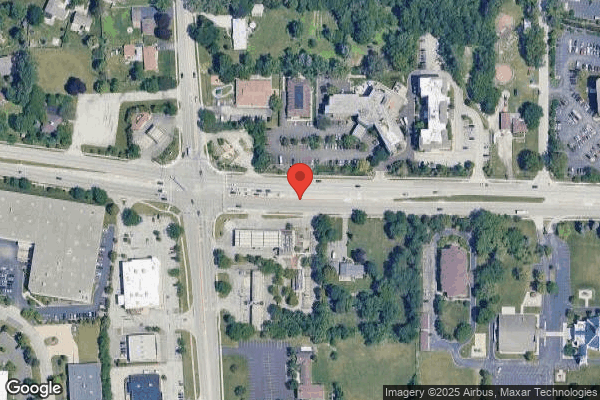
Dec 2022 2 deficiencies 1 IJ (1 affecting multiple)
CRITICAL (K) 📢 Someone Reported This

A family member, employee, or ombudsman was alarmed enough to file a formal complaint

Immediate Jeopardy (IJ) - the most serious Medicare violation

Accident Prevention (Tag F0689)

Someone could have died · This affected multiple residents

**NOTE- TERMS IN BRACKETS HAVE BEEN EDITED TO PROTECT CONFIDENTIALITY** Based on observation, interview, and record review, the facility failed to ensure a resident identified as a high risk for elope...

Read full inspector narrative →
**NOTE- TERMS IN BRACKETS HAVE BEEN EDITED TO PROTECT CONFIDENTIALITY** Based on observation, interview, and record review, the facility failed to ensure a resident identified as a high risk for elopement was provided adequate supervision to prevent elopement from the facility. This failure resulted in R1 eloping from the facility without being witnessed on December 8, 2022. R1 was found across a six lane busy road at a gas station and required warming with blankets from emergency medical services. R1 was found at approximately 4:57 AM. At the time of R1's elopement, V9 (RN/Registered Nurse) and V10 (CNA/Certified Nursing Assistant) were the staff members working on the unit R1 resided. V9 and V10 were responsible for monitoring 44 residents, and of the 44 residents, 16 residents required every 30 minute observations. This failure resulted in Immediate Jeopardy. This applies to 5 of 5 residents (R1-R5) reviewed for safety and supervision from the total sample of 16. The Immediate Jeopardy began on December 8, 2022, when R1 eloped from the facility without being witnessed by facility staff. R1 was found at a gas station, across a six lane, busy road. V1 (Administrator) and V2 (DON/Director of Nursing) were notified of the Immediate Jeopardy on December 12, 2022, at 11:47 AM. The surveyor confirmed by observation, interview, and record review that the Immediate Jeopardy was removed on December 9, 2022, but noncompliance remains at Level Two because additional time is needed to evaluate the implementation and effectiveness of the removal plan. The findings include: On December 9, 2022, at 10:47 AM, the facility provided an undated list entitled At Risk of Elopement. The list identified R2-R16 as residents at risk of elopement who were residing on the first floor. On December 9, 2022, at 10:20 AM, V2 (DON) said staff are to perform every 30 minute observations on residents who's BIMS (Brief Interview for Mental Status) Score decreases and if the resident is not residing on the third floor of the facility. 1. The EMR (Electronic Medical Record) showed R1 was admitted to the facility on [DATE], with diagnoses including: chronic kidney disease, dementia, and atrial fibrillation. R1's MDS (Minimum Data Set) dated October 4, 2022, showed R1 was moderately cognitively impaired and required supervision of facility staff for locomotion on and off the unit. R1's elopement care plan revised on December 8, 2022, showed [R1] is noted to have short term memory deficits and having difficulty in recall. [R1] is sometimes/often exploring/elopement/exit seeking as evidenced by: can't find place he wants to go. Attempts to get on elevator. Attempts to use alarmed, fire exit doors. The care plan continued to show multiple interventions date February 17, 2022, including, Orient resident to surroundings and situation as needed. Facility documentation titled, Exit Seeking/Wandering/Elopement Risk Assessment, dated October 4, 2022, showed R1 was at risk for elopement. On December 9, 2022, at 10:20 AM, V2 said R1 eloped from the facility using a side exit door. V2 continued to say R1 said he left the facility to go buy a soda. On December 9, 2022, at 1:40 PM, V9 (RN) said she was working when R1 eloped. V9 said the last time she saw R1 was around 4:25 AM and R1 was sleeping in his bed. V9 continued to say around 4:55 AM, V9 was on the opposite side of the unit where R1 resided. V9 said she was returning to the nurse's station and heard the exit door alarm sounding. V9 continued to say she did not hear the alarm until she was closer to the nurse's station. V9 said she was unsure how long the alarm was sounding for. V9 said emergency services dispatch called the facility and told V9 that R1 was across the street at the gas station. On December 12, 2022, at 9:40 AM, V10 (CNA) said she was working when R1 eloped from the facility. V10 continued to say she was providing care to a resident on the opposite side of the unit from where R1 resided. V10 said she did not hear the door exit alarm when R1 eloped from the facility. V10 continued to say emergency services dispatch called the facility and asked if the facility had a resident named [R1]. V10 said her and another facility staff member went to the gas station where R1 had eloped to and when V10 arrived, R1 was receiving care by emergency services inside of an ambulance. On December 9, 2022, at 1:07 PM, V11 (Fireman) said he was working on December 8, 2022, and responded to the gas station where R1 was found. V11 continued to say eye witnesses at the gas station said R1 was at the gas station for about an hour. V11 said when emergency services arrived at the gas station it was cold outside and R1 was very cold, requiring blankets to help warm him. V11 continued to say the street R1 crossed is a busy street and R1 had to cross six lanes to get to the gas station. On December 9, 2022, at 12:32 PM, R1 was standing near the elevator on the third floor of the facility. R1 said Why would I leave the facility to get a soda when I can just go in the basement? On December 9, 2022 at 1:30 PM, V7 (CNA) was completing documentation in the facility's elopement risk binder. V7 said the monitoring is for fall risk residents. V7 continued to say he completes hourly observations for residents at risk for falls. On December 9, 2022, at 10:54 AM, exit door alarms were checked with V3 (Building Director). The alarm on the exit door stops alarming once the door is closed. V3 said the alarm on the exit door stops once the door is closed, but there is a separate alarm at the nurse's station that sounds. V3 continued to say that staff can reset the door exit alarm at the nurse's station. Facility documentation titled Post Occurrence Documentation dated December 9, 2022, at 11:30 PM, by V2 showed, Report was received from [local] police that resident was noted lying on the ground from a gasoline station . 2. The EMR showed R2 was admitted to the facility on [DATE], with multiple diagnoses including: chronic kidney disease, malnutrition, and dementia. R2's MDS dated [DATE], showed R2 had moderate cognitive impairment and required supervision for locomotion off the unit. R2's elopement care plan dated September 6, 2022, showed, [R2] can be considered an elopement risk related to current cognitive status. The care plan continued to show multiple interventions dated September 7 2022, including Will be on 30 minute monitoring. On December 9, 2022, V2 (DON) said nurses and CNAs are to complete the 30 minute observation tool located in the Elopement Binder. V2 continued to say the purpose of the 30 minute observation is for residents at risk for elopement, and staff should be documenting the location of the resident every 30 minutes. On December 9, 2022, at 11:59 AM, V1 (Administrator) provided copies of the 30 minute observation tools from the elopement binder for the dates of December 8, 2022 and December 9, 2022. On December 9, 2022, at 12:30 PM, V2 provided the 30 minute observation tools from October 13, 2022 to December 6, 2022. The facility did not have documentation to show R2's 30 minute observations were completed on December 8, 2022, from 12:00 AM to 5:30 AM and from 3:30 PM to 10:30 PM. 3. The EMR showed R3 was admitted to the facility on [DATE], with multiple diagnoses including: heart failure, pacemaker, and cerebrovascular disease. R3's MDS dated [DATE], showed R3 had moderate cognitive impairment and required supervision for locomotion on and off the unit. R3's elopement care plan revised on September 2, 2022, showed [R3] is noted to have short term memory deficits. Resident can be considered an elopement risk related to current cognitive status. The care plan continued to show multiple interventions including the following intervention dated September 7, 2022, Will be on 30 minute monitoring. The facility does not have documentation to show R3's 30 minute observations were completed on December 5, 2022, from 3:30 PM to 11:30 PM and December 6, 2022 from 3:30 PM to 10:30 PM. 4. The EMR showed R4 was admitted to the facility on [DATE], with multiple diagnoses including Alzheimer's disease and dementia. R4's MDS dated [DATE], showed R4 had severe cognitive impairment and required supervision from facility staff for locomotion on and off the unit. R4's elopement care plan dated September 6, 2022, [R4] can be considered an elopement risk related to current cognitive status. The care plan continued to show the following intervention dated December 7, 2022, Will be on 30 minute monitoring. On December 12, 2022, at 3:13 PM, R4 was standing in the hallway and said an old woman is walking around wanting to take his hair. R4 was able to ambulate independently into his room. The facility does not have documentation to show R4's 30 minute observations were completed on December 5, 2022, from 3:30 PM to 11:30 PM and December 6, 2022 from 3:30 PM to 10:30 PM. 5. The EMR showed R5 was admitted to the facility on [DATE], with multiple diagnoses including Parkinson's disease, alcohol dependence, and psychosis. R5's MDS dated [DATE], showed R5 had moderate cognitive impairment and required supervision from facility staff for locomotion on and off the unit. The MDS continued to show R5 was steady at all times when walking. R5's elopement care plan revised on December 12, 2022, showed, [R5] is at risk for impaired mobility with diagnosis of Parkinson's disease or other movement disorder. [R5] is at risk for elopement due to diagnosis of Parkinson's with impaired cognition. The care plan continued to show the following intervention dated, December 12, 2022, Complete 30 minute checks. On December 9, 2022, at 10:47 AM, the facility provided an undated list entitled At Risk of Elopement. R5 was included on the At Risk of Elopement list. On December 9, 2022, at 1:01 PM, V2 said staff are to complete the 30 minute observation tool for the residents on the At Risk of Elopement list. The facility does not have documentation to show R5 had 30 minute observations prior to December 9, 2022. The facility policy titled, EXIT SEEKING/ELOPEMENT VS. AN UNPLANNED DISCHARGE POLICY AND PROCEDURE, revised on 11/2017 showed, POLICY: Staff of [facility] will strive to respect the independence and dignity of all residents, as well as their right to self-determination by honoring all requests to be discharged , as most residents are voluntarily admitted to the facility. This will be done in a manner that also respects the facility's legal responsibility as well as the responsibility to maintain resident safety. An unplanned discharge incident is classified as a resident who is alert, oriented to at least three, is his/her own decision-maker, is not an immediate threat to him/herself or others and is making the decision to leave the facility. This includes not returning to the facility while out on pass and/or not returning from day program/community appointments without a proper discharge order. An exit seeking attempt/elopement incident is classified as a resident who is not alert, not oriented to at least thee, has a resident representative and/or is an immediate threat to him/herself or others and attempts/is successful in fleeing from the facility. PROCEDURE: . For an Elopement: Any resident who leaves under the following conditions will be considered to have eloped, and all elopement procedures will be followed: Resident is not considered to be alert and/or oriented times three. Resident has a legal/state guardian, Healthcare Surrogate, or active Power of Attorney and leaves without the permission of the responsible party. Resident is deemed to be an immediate risk to him/herself or others (e.g., suicidal, homicidal, etc.). Resident has been assessed at admission, quarterly, annually and episodically for elopement risk and is currently assessed as being 'At-Risk' for elopement . If a resident is evaluated at being 'At-Risk' for elopement, the following procedures will be implemented: 1. The resident's picture will be taken and provided to the nursing station of the unit the resident resides on and to the front office for monitoring of the front door to the facility. 2. Increased monitoring will be initiated if there is a change in condition for an elevated concern of elopement. 3. The resident will be re-assessed quarterly and/or as needed to continue monitoring the resident's behavior as it relates to elopement risk. The Immediate Jeopardy that began on December 8, 2022 was removed on December 9, 2022 when the facility took the following actions to remove the immediacy: Corrective Action Taken: Resident identified was placed on the third floor (locked unit) immediately on 12/08/2022 when the incident happened. Elopement risk assessment was performed on 12/08/22. Care plan was updated pertaining to elopement on 12/08/2022. Designated employee is assigned for door watch starting 12/09/22 every night, designated employee's job description is to watch the exit door for night shift. Emergency QA (Quality Assurance) meeting was held on 12/09/2022 with medical director pertaining to elopement and intervention in place. Identifying other residents having the potential to be affected by the same deficient practice: All resident's elopement risk were re-assessed on 12/08/22 and ongoing. All residents that are identified as at risk and high risk were care planned and pictures were placed in a binder on all floors on 12/08/2022 and ongoing. All residents with an active exit seeking behavior will be assigned on the third floor to keep resident away from the entrance door. Reassessments were performed on 12/08/2022. Exit doors were checked by building manager for patency of the alarms on 12/08/2022. Measures taken to ensure that the problem is corrected and will not recur: A review of Policy and procedure regarding elopement, in-service provided on 12/09/22 and ongoing. A designated employee started door watch on 12/09/2022. Measures or systems the facility will alter to ensure that the problem will be corrected and will not recur: A review of compliance using Quality Assurance Audit tool for elopement risk. A review of Quality improvement data collection pertaining to elopement risk. A review of compliance regarding patency of alarms on all exit doors using quality assurance audit tool. A review of quality improvement data collection pertaining to patency of exit doors. A review of results of audit regarding elopement and patency of exit doors with the facility's interdisciplinary team. Quality Assurance Plans to monitor facility performance: Audits on all residents requiring elopement risk and patency of exit doors will be reviewed to make sure that elopement risk was performed by the facility in a timely manner and identified residents were moved to designated floor either on second or third floor to keep residents away from the exit doors. Audits will be done weekly for four weeks, monthly times three months, and randomly by Administrator/designee. All audits will be reviewed by QA committee with evaluation of trends/patterns and corrective action implemented as indicated. Ongoing audit frequency will be based up goal attainment. Interdisciplinary team will review compliance weekly times four weeks, then monthly times three months, and randomly. Frequency will be based upon goal attainment. Compliance will be monitor using Quality Assurance tool for elopement risk by Administrator designee once a week for four weeks then monthly for three months and randomly, until concern with elopement is resolved. Administrator/designee will report the result of audits with the facility interdisciplinary team during the Quality Assurance and Performance improvement meeting.
CONCERN (E) 📢 Someone Reported This

A family member, employee, or ombudsman was alarmed enough to file a formal complaint

Potential for Harm - no one hurt, but risky conditions existed

Deficiency F0725 (Tag F0725)

Could have caused harm · This affected multiple residents

**NOTE- TERMS IN BRACKETS HAVE BEEN EDITED TO PROTECT CONFIDENTIALITY** Based on interview and record review, the facility failed to provide adequate staffing to supervise residents identified as elop...

Read full inspector narrative →
**NOTE- TERMS IN BRACKETS HAVE BEEN EDITED TO PROTECT CONFIDENTIALITY** Based on interview and record review, the facility failed to provide adequate staffing to supervise residents identified as elopement risks. This applies to 16 of 16 residents (R1-R16) identified by the facility as at risk for elopement in a sample of 16. The findings include: On December 9, 2022, at 10:47 AM, the facility provided an undated list entitled At Risk of Elopement. The list identified R1-R16 as residents at risk of elopement. On December 9, 2022, at 10:20 AM, V2 (DON/Director of Nursing) said due to a previous elopement, the facility had a procedure in place for staff to perform every 30 minute observations on residents who's BIMS (Brief Interview for Mental Status) Score decreased and the resident is not residing on the third floor of the facility. V2 said on December 8, 2022, during the night shift, R1 eloped from the facility out of a side exit door while he was residing on the first floor. V2 continued to say R1 had gone to the gas station across the street from the facility. V2 said V9 (RN/Registered Nurse) and V10 (CNA/Certified Nursing Assistant) were the facility staff working on the unit where R1 was residing at the time of R1's elopement. The EMR (Electronic Medical Record) showed R1 was admitted to the facility on [DATE], and resided on the first floor until December 8, 2022. On December 12, 2022, at 9:40 AM, V10 (CNA) said there is one nurse and one CNA assigned to work on the first floor during the night shift. V10 continued to say when R1 eloped from the facility on December 8, 2022, there were approximately 45 residents for V10 and V9 (RN) to care for, and 16 of those residents required every 30 minute observation monitoring. V10 said on December 8, 2022, she was only able to check on the elopement risk residents every 90 minutes. V10 continued to say at the time R1 eloped from the facility V10 was providing care to a resident on the other side of the unit away from R1's room. V10 said it is not possible for her to complete the every 30 minute observations on the residents at risk for elopement because the unit is busy and there are a lot of call lights to be answered throughout the night. On December 9, 2022, at 11:59 AM, V1 (Administrator) provided copies of the 30 minute observation tools from the first floor elopement binder. On December 9, 2022, at 12:30 PM, V2 provided the 30 minute observation tools for the period October 13, 2022 to December 6, 2022. The facility does not have documentation to show R5, R8, R13, R14, and R16 had 30 minute observations completed for December 8, 2022. The facility does not have documentation to show R2, R3, R4, R6, R7, R9, R10, R12, and R15 had 30 minute observations competed for December 5, 2022, from 3:30 PM to 11:30 PM. The facility does not have documentation to show R5, R8, R13, R14, and R16 had 30 minute observations completed on December 5, 2022. The facility does not have documentation to show R1, R5, R8, R11, R13, R14, and R16 had 30 minute observations completed on November 30, 2022. The facility's actual worked schedules for the period of November 1, 2022 to December 8, 2022, showed two staff members worked on the first floor on the following days: November 1, November 2, November 3, November 5, November 6, November 8, November 9, November 10, November 11, November 12, November 13, November 14, November 15, November 16, November 17, November 18, November 19, November 20, November 21, November 22, November 24, November 25, November 26, November 27, November 28, November 29, November 30, December 1, December 2, December 3, December 4, December 5, December 6, December 7, and December 8.
Nov 2022 3 deficiencies
CONCERN (D)

Potential for Harm - no one hurt, but risky conditions existed

Deficiency F0725 (Tag F0725)

Could have caused harm · This affected 1 resident

**NOTE- TERMS IN BRACKETS HAVE BEEN EDITED TO PROTECT CONFIDENTIALITY** Based on observation, interview, and record review the facility failed to provide sufficient staffing to assist residents with A...

Read full inspector narrative →
**NOTE- TERMS IN BRACKETS HAVE BEEN EDITED TO PROTECT CONFIDENTIALITY** Based on observation, interview, and record review the facility failed to provide sufficient staffing to assist residents with ADLs (activities of daily living), for 3 of 6 residents (R40, R48, R80) reviewed for sufficient staffing in the sample of 32. The findings include: 1. R40 was admitted to the facility on [DATE], with a primary diagnosis of spinal stenosis. R40's recent comprehensive assessment, dated September 14, 2022, shows R40 is cognitively intact and requires the extensive assistance of 2 persons for transfers to and from the bed and R40 needs the extensive assistance of 1 person for showers or bed baths. On November 16, 2022 at 10:22 am, R40 stated she was scheduled to have a shower on Tuesday (November 15, 2022) but none was offered and she did not get one. R40 stated she rarely receives the 2 showers she is scheduled for each week. R40 stated as well, she used to get up to her chair daily, but is only able to stay up for 4 or 5 hours comfortably. R40 stated she stopped getting up daily primarily because she found that it was often the case that staff would not transfer her back to bed for much longer than she could stand to be up. R40 stated she spends most of her days in bed. The CNA (Certified Nurse Assistant) shower schedule showed R40 is scheduled to receive a shower or bath on Tuesdays and Fridays. 2. R48 was admitted to the facility October 2, 2017 with primary diagnosis of quadriplegia. R48's most recent comprehensive assessment shows R48 is cognitively intact and is completely dependent on assistance from 2 persons for transfers to or from the bed or chair. R48 is also completely dependent on the assistance of 2 persons for bathing. On November 14, 2022 at 12:40 pm, R48 stated she waited 1 hour and 40 minutes for an answer to her call light last evening. R48 stated she has waited up to 2 hours in the recent past. R48 stated she is rarely gotten up to her motorized chair and believes she was assisted today because the State Surveyors are in the building. On November 16, 2022 at 9:51 am, R48 stated she was scheduled to have a bath on Monday (November 14, 2022) and did not receive a bath until the next day. 3. R80 was admitted to the facility June 24, 2016 with a primary diagnosis of mononeuropathy of bilateral lower limbs. R80's MDS dated [DATE], showed R80 was cognitively intact and required one staff's extensive assistance for dressing and personal hygiene. Two staff's extensive assistance for bed mobility and toilet use. R80 was dependent on two staff and use of a mechanical lift for transfers. R80's care plan showed R80 had a self-care performance deficit related to weakness, pain, and peripheral vascular disease. Interventions included one staff assist for bed bath, assist with ADL care as needed, [R80's] preferred bathing routine is to have a shower after dinner between 8PM and 9PM. On November 14, 2022, at 11:38 AM, R80 reported she is given a bed bath when staff are available. R80 stated my scheduled shower days are Tuesday and Friday. R80 reported she has only had one bed bath on a Friday over the last six months. R80 reported she goes to the beauty salon every Tuesday and they wash her hair. R80's skin was very dry, white flakes were noted on her shirt that fell from resident's face when she scratched her forehead. On November 15, 2022 at 12:45 PM, R80 was sitting up in her wheelchair after returning from the beauty salon. R80 reported she was not given a bed bath before going to the salon. The resident census provided by the facility showed on November 14, 2022 there were 57 residents on the 2nd floor. On November 15, 2022 at 2:15 pm, referring to the staffing on the 2nd floor, V2 (Director of Nurses) stated 2 CNAs are not enough to take care of the residents on the 2nd floor. On November 16, 2022 at 9:43 am, V9 (CNA) stated its difficult with 3 CNAs but when there are only 2 CNAs we cannot get everyone up and we can't do baths. On November 16, 2022 at 9:44 am, V13 (Registered Nurse) stated cannot do scheduled baths when there are 2 CNAs and its difficult with 3. You saw there were only 2 CNAs yesterday [Tuesday] and Monday. On November 16, 2022 at 10:14 AM, V9 (CNA/Certified Nurse Assistant) and V10 (CNA) reported staffing is awful. There are only 2 CNAs working most days taking care of 57 residents. V9 stated, we should have 4-5 CNAs. We cannot get showers done or get everyone up out of bed with just 2 CNAs. The workload here is very demanding and physically back breaking because of the number of residents we have to care for. On November 16, 2022 at 10:29 am, V12 (CNA) stated, there were only 2 CNAs yesterday. We can't do baths when there are 2 CNAs. V12 stated it is hard to get everything done when there are 3 CNAs. According to the Resident Roster provided by the facility for November 14, 2022, there were 57 residents on the 2nd Floor. The actual working schedule for Nursing staff was provided by the facility and it shows for Monday, November 14, 2022 there were 3 CNAs on the 1st shift and 2 CNAs on the 2nd shift. And for November 15, 2022 there were 2 CNAs on the 1st shift with an additional CNA joining halfway through and 3 CNAs on the 2nd shift. According to the working schedule for Nursing, provided by the facility, in the period between October 14, 2022 and November 14, 2022, there were twenty 8-hour shifts on the 2nd floor staffed with less than 3 CNAs.
CONCERN (E) 📢 Someone Reported This

A family member, employee, or ombudsman was alarmed enough to file a formal complaint

Potential for Harm - no one hurt, but risky conditions existed

ADL Care (Tag F0677)

Could have caused harm · This affected multiple residents

**NOTE- TERMS IN BRACKETS HAVE BEEN EDITED TO PROTECT CONFIDENTIALITY** 3. R28's EMR showed R28 was admitted to the facility on [DATE] with diagnoses that included hemiplegia and hemiparesis following...

Read full inspector narrative →
**NOTE- TERMS IN BRACKETS HAVE BEEN EDITED TO PROTECT CONFIDENTIALITY** 3. R28's EMR showed R28 was admitted to the facility on [DATE] with diagnoses that included hemiplegia and hemiparesis following cerebral infarction affecting his left non-dominant side, gout, muscle weakness, dementia, and major depressive disorder. R28's MDS dated [DATE] showed R28 had severe cognitive impairment and required one staff extensive assistance for bed mobility, dressing, toilet use, and personal hygiene. R28 required two staff extensive assistance for transfers and was dependent on staff for shower/bath. R28's care plan showed showed R28 had a self-care performance deficit due to his history of CVA (Cerebral Vascular Accident), decreased mobility, and pain. Interventions included 1-2 staff assist for bed bath and assist with ADL (Activities of daily living) tasks as needed. On November 14, 2022 at 11:26 AM, R28 was in bed. There was a foul odor noted when standing near his bed, he was unshaven and had thick whiskers on his face and chin. R28 was unable to say when he was last given a shower or bed bath. On November 15, 2022 at 4:39 PM, R28 shook his head no when asked if he had been given a bed bath. R28's face was still unshaven. On November 16, 2022 at 11:51 AM, R28's face was unshaven. 4. R35's EMR showed R35 was admitted to the facility on [DATE] with diagnoses that included hemiplegia and hemiparesis following cerebral infarction affecting left non-dominant side, apraxia following cerebral infarction, chronic respiratory failure, morbid obesity, muscle weakness, and other symptoms and signs involving cognitive functions age related osteoporosis, major depressive disorder, and awareness. R35's MDS dated [DATE] showed R35 was cognitively intact and required extensive one staff assistance for personal hygiene, two staff extensive assistance for bed mobility, dressing, and toilet use. R35 was dependent on two staff and use of mechanical lift for transfers. R35's care plan showed R35 had a self-care performance deficit related to hemiplegia of the left side, chronic obstructive pulmonary disease, and morbid obesity. Interventions included provide resident with a sponge bath when a full bath cannot be tolerated. On November 15, 2022 at 12:52 PM, R35 was in bed, with her hair standing straight up and out on the top and sides of her head. R35 reported she doesn't get a shower because she cannot stand, and staff cannot get her in a shower chair. On November 16, 2022 at 10:02 AM, R35 reported she was not given a bed bath this week. R35's hair was uncombed and standing up all over her hair. 5. R80's EMR showed R80 was admitted to the facility on [DATE] with diagnoses that included unspecified mononeuropathy of bilateral lower extremities, muscle weakness, peripheral vascular disease, dementia, and other recurrent depressive disorders. R80's MDS dated [DATE] showed R80 was cognitively intact and required one staff extensive assistance for dressing and personal hygiene. Two staff extensive assistance for bed mobility and toilet use. R80 was dependent on two staff and use of a mechanical lift for transfers. R80's care plan showed R80 had a self-care performance deficit related to weakness, pain, and peripheral vascular disease. Interventions included one staff assist for bed bath, assist with ADL care as needed, [R80's] preferred bathing routine is to have a shower after dinner between 8PM and 9PM. On November 14, 2022 at 11:38 AM, R80 reported she is given a bed bath when staff are available. R80 stated my scheduled shower days are Tuesday and Friday. R80 reported she has only had one bed bath on a Friday over the last six months. R80 reported she goes to the beauty salon every Tuesday and they wash her hair. R80's skin was very dry, white flakes were noted on her shirt that fell from resident's face when she scratched her forehead. On November 15, 2022 at 12:45 PM R80 was sitting up in her wheelchair after returning from the beauty salon. R80 reported she was not given a bed bath before going to the salon. 6. R127's EMR showed R127 was admitted to the facility on [DATE] with diagnoses that included syncope and collapse, unspecified injury of head, muscle weakness, cognitive communication disorder, abnormalities of gait and transfer, and depression. R127's MDS dated [DATE] showed R127 has moderately impaired cognition and required one staff extensive assistance for all ADLs. R127's care plan showed R127 had an ADL self-care performance deficit related to muscle weakness, decreased mobility, and unsteady gait and balance. Interventions included provide needed level of assistance and support to complete ADLs. On November 14, 2022 at 11:57 AM, R127 had long facial hair and reported he would like to be shaved, he would also like his nails cut. R127 reported he does not like his nails as long as they are. R127 reported he gets a shower every week and a half. On November 16, 2022 at 10:30 AM, R127 was lying in bed, he was not shaved and his nails were still long, jagged, and with brown substance underneath them. Facility provided policy titled Showers dated May 2021. The policy showed, Showers to be completed daily for all residents . Facility provided policy titled, Dressing/Grooming dated March 10, 2022 showed, Dressing/grooming refers to activities provided to improve or maintain the resident's self-performance in bathing and washing, and performing other personal hygiene tasks. General dressing/grooming guidelines: Bathing, dressing, and grooming techniques and interventions may include, but are not limited to .c. Grooming .vii shaving .x. trimming nails. Based on observation, interview, and record review, the facility failed to provide needed assistance with ADLs (activities of daily living), for 6 of 6 residents (R28, R35, R40, R48, R80, and R127) reviewed for ADLs in the sample of 32. The findings include: 1. R40 was admitted to the facility on [DATE], with a primary diagnosis of spinal stenosis. R40's recent comprehensive assessment, dated September 14, 2022, shows R40 is cognitively intact and requires the extensive assistance of 2 persons for transfers to and from the bed and R40 needs the extensive assistance of 1 person for showers or bed baths. On November 16, 2022 at 10:22 am, R40 stated she was scheduled to have a shower on Tuesday (November 15, 2022) but none was offered and she did not get one. R40 stated she rarely receives the 2 showers she is scheduled for each week. R40 stated as well, she used to get up to her chair daily, but is only able to stay up for 4 or 5 hours comfortably. R40 stated she stopped getting up daily primarily because she found that it was often the case that staff would not transfer her back to bed for much longer than she could stand to be up. R40 stated she spends most of her days in bed. The CNA (Certified Nurse Assistant) shower schedule showed R40 is scheduled to receive a shower or bath on Tuesdays and Fridays. 2. R48 was admitted to the facility October 2, 2017 with primary diagnosis of quadriplegia. R48's most recent comprehensive assessment shows R48 is cognitively intact and is completely dependent on assistance from 2 persons for transfers to or from the bed or chair. R48 is also completely dependent on the assistance of 2 persons for bathing. On November 14, 2022 at 12:40 pm, R48 stated she is rarely gotten up to her motorized chair and believes she was assisted today because the State Surveyors are in the building. On November 16, 2022 at 9:51 am, R48 stated she was scheduled to have a bath on Monday (November 14, 2022) and did not receive a bath until the next day. On November 16, 2022 at 10:29 am, V12 (Certified Nursing Assistant, CNA) stated, there were only 2 CNAs yesterday. We can't do baths when there are 2 CNAs. V12 stated it is difficult to get everything done when there are 3 CNAs. On November 16, 2022 at 9:43 am, V9 (CNA) stated its difficult with 3 CNAs but when there are only 2 CNAs we cannot get everyone up and we can't do baths.
CONCERN (F) 📢 Someone Reported This

A family member, employee, or ombudsman was alarmed enough to file a formal complaint

Potential for Harm - no one hurt, but risky conditions existed

Food Safety (Tag F0812)

Could have caused harm · This affected most or all residents

Based on observation, interview, and record review the facility failed to perform hand hygiene per facility policy after handling soiled dishes and before touching clean dishes. This applies to all 15...

Read full inspector narrative →
Based on observation, interview, and record review the facility failed to perform hand hygiene per facility policy after handling soiled dishes and before touching clean dishes. This applies to all 150 residents at the facility receiving an oral diet. The findings include: Facility roster, dated 11/14/22, shows the facility census was 153 residents. Facility Order listing Report, dated 11/16/22, shows three residents had physician orders for NPO (nothing by mouth.) On 11/14/22 at 9:30 AM, V4 (Food Service Worker) was wearing disposable gloves while scraping and rinsing soiled pots/pans at the soiled side of the dish machine. Without removing/changing her gloves or washing her hands, V4 then walked to the clean side of the dish machine and began removing clean/sanitized pans from the dish racks and placing them on the clean pot/pan shelving rack wearing her soiled gloves. V4 then walked back to the soiled side of the dish machine and again began scraping dirty pots/ pans and placing them into the dish machine. Without removing/changing her gloves or washing her hands, V4 again walked to the clean side of the dish machine and began placing clean pots/pans on the clean shelving rack wearing her soiled gloves. On 11/14/22 at 11:45 AM, V5 (Dietary Coordinator) stated dietary staff were expected to change their gloves and wash their hands after handling soiled dishes and before touching clean dishes. Facility policy Hand Washing, dated 3/2018, shows, 8. Hands should be washed . after handling dirty dishes . Facility policy Storing Clean Dishwares, dated 8/2018, shows Clean dishwares will be stored in a manner to decrease the risk of cross contamination 2. Clean dishwares will be handled by employees with clean hands
Understanding Severity Codes (click to expand)
Life-Threatening (Immediate Jeopardy)
J - Isolated K - Pattern L - Widespread
Actual Harm
G - Isolated H - Pattern I - Widespread
Potential for Harm
D - Isolated E - Pattern F - Widespread
No Harm (Minor)
A - Isolated B - Pattern C - Widespread

Questions to Ask on Your Visit

  • "What changes have you made since the serious inspection findings?"
  • "Can I speak with families of current residents?"
  • "What's your RN coverage like on weekends and overnight?"

Our Honest Assessment

Strengths
  • • Licensed and certified facility. Meets minimum state requirements.
Concerns
  • • Multiple safety concerns identified: 2 life-threatening violation(s), 4 harm violation(s), $182,443 in fines, Payment denial on record. Review inspection reports carefully.
  • • 29 deficiencies on record, including 2 critical (life-threatening) violations. These warrant careful review before choosing this facility.
  • • $182,443 in fines. Extremely high, among the most fined facilities in Illinois. Major compliance failures.
  • • Grade F (0/100). Below average facility with significant concerns.
Bottom line: Trust Score of 0/100 indicates significant concerns. Thoroughly evaluate alternatives.

About This Facility

What is Alden Valley Ridge Rehab & Hcc's CMS Rating?

CMS assigns ALDEN VALLEY RIDGE REHAB & HCC an overall rating of 2 out of 5 stars, which is considered below average nationally. Within Illinois, this rating places the facility higher than 0% of the state's 100 nursing homes. A rating at this level reflects concerns identified through health inspections, staffing assessments, or quality measures that families should carefully consider.

How is Alden Valley Ridge Rehab & Hcc Staffed?

CMS rates ALDEN VALLEY RIDGE REHAB & HCC's staffing level at 1 out of 5 stars, which is much below average compared to other nursing homes.

What Have Inspectors Found at Alden Valley Ridge Rehab & Hcc?

State health inspectors documented 29 deficiencies at ALDEN VALLEY RIDGE REHAB & HCC during 2022 to 2024. These included: 2 Immediate Jeopardy (the most serious level, indicating potential for serious harm or death), 4 that caused actual resident harm, and 23 with potential for harm. Immediate Jeopardy findings are rare and represent the most serious regulatory concerns. They require immediate corrective action.

Who Owns and Operates Alden Valley Ridge Rehab & Hcc?

ALDEN VALLEY RIDGE REHAB & HCC is owned by a for-profit company. For-profit facilities operate as businesses with obligations to shareholders or private owners. The facility is operated by THE ALDEN NETWORK, a chain that manages multiple nursing homes. With 207 certified beds and approximately 165 residents (about 80% occupancy), it is a large facility located in BLOOMINGDALE, Illinois.

How Does Alden Valley Ridge Rehab & Hcc Compare to Other Illinois Nursing Homes?

Compared to the 100 nursing homes in Illinois, ALDEN VALLEY RIDGE REHAB & HCC's overall rating (2 stars) is below the state average of 2.5 and health inspection rating (2 stars) is below the national benchmark.

What Should Families Ask When Visiting Alden Valley Ridge Rehab & Hcc?

Based on this facility's data, families visiting should ask: "What changes have been made since the serious inspection findings, and how are you preventing similar issues?" "Can you walk me through typical staffing levels on day, evening, and night shifts?" "Can I visit during a mealtime to observe dining assistance and food quality?" "How do you handle medical emergencies, and what is your hospital transfer rate?" These questions are particularly relevant given the facility's Immediate Jeopardy citations and the below-average staffing rating.

Is Alden Valley Ridge Rehab & Hcc Safe?

Based on CMS inspection data, ALDEN VALLEY RIDGE REHAB & HCC has documented safety concerns. Inspectors have issued 2 Immediate Jeopardy citations (the most serious violation level indicating risk of serious injury or death). The facility has a 2-star overall rating and ranks #100 of 100 nursing homes in Illinois. Families considering this facility should ask detailed questions about what corrective actions have been taken since these incidents.

Do Nurses at Alden Valley Ridge Rehab & Hcc Stick Around?

ALDEN VALLEY RIDGE REHAB & HCC has not reported staff turnover data to CMS. Staff turnover matters because consistent caregivers learn residents' individual needs, medications, and preferences. When staff frequently change, this institutional knowledge is lost. Families should ask the facility directly about their staff retention rates and average employee tenure.

Was Alden Valley Ridge Rehab & Hcc Ever Fined?

ALDEN VALLEY RIDGE REHAB & HCC has been fined $182,443 across 3 penalty actions. This is 5.2x the Illinois average of $34,903. Fines at this level are uncommon and typically indicate a pattern of serious deficiencies, repeated violations, or failure to correct problems promptly. CMS reserves penalties of this magnitude for facilities that pose significant, documented risk to resident health or safety. Families should request specific documentation of what issues led to these fines and what systemic changes have been implemented.

Is Alden Valley Ridge Rehab & Hcc on Any Federal Watch List?

ALDEN VALLEY RIDGE REHAB & HCC is not on any federal watch list. The most significant is the Special Focus Facility (SFF) program, which identifies the bottom 1% of nursing homes nationally based on persistent, serious quality problems. Not being on this list means the facility has avoided the pattern of deficiencies that triggers enhanced federal oversight. This is a positive indicator, though families should still review the facility's inspection history directly.