BELLA TERRA BLOOMINGDALE

165 SOUTH BLOOMINGDALE ROAD, BLOOMINGDALE, IL 60108 (630) 980-8700
For profit - Limited Liability company 166 Beds LEGACY HEALTHCARE Data: November 2025
Trust Grade
15/100
#335 of 665 in IL
Last Inspection: February 2025

Within standard 12-15 month inspection cycle. Federal law requires annual inspections.

Overview

Bella Terra Bloomingdale has received a Trust Grade of F, which means the facility has significant concerns and is performing poorly compared to others. It ranks #335 out of 665 nursing homes in Illinois, placing it in the bottom half, and is #27 out of 38 in Du Page County, indicating limited local competition. The facility is worsening, with issues increasing from 12 in 2024 to 13 in 2025. Staffing is a relative strength, rated 3 out of 5 stars, with a turnover rate of 41% that is below the state average, and it has better RN coverage than 79% of Illinois facilities. However, the facility faces concerning fines totaling $57,932, which is average but still suggests compliance problems. Specific incidents highlight serious concerns: one resident was transferred improperly, resulting in a fractured femur and surgery, while another resident received stitches for a leg laceration due to unsafe transfer practices. Additionally, a cognitively impaired resident experienced a delay in pain treatment for over 24 hours after a fall, which could have serious health implications. Overall, while there are some strengths in staffing, the facility's safety and care practices raise significant red flags for families considering this home.

Trust Score
F
15/100
In Illinois
#335/665
Top 50%
Safety Record
High Risk
Review needed
Inspections
Getting Worse
12 → 13 violations
Staff Stability
○ Average
41% turnover. Near Illinois's 48% average. Typical for the industry.
Penalties
✓ Good
$57,932 in fines. Lower than most Illinois facilities. Relatively clean record.
Skilled Nurses
✓ Good
Each resident gets 56 minutes of Registered Nurse (RN) attention daily — more than average for Illinois. RNs are trained to catch health problems early.
Violations
⚠ Watch
49 deficiencies on record. Higher than average. Multiple issues found across inspections.
★★☆☆☆
2.0
Overall Rating
★★★☆☆
3.0
Staff Levels
★★★☆☆
3.0
Care Quality
★★☆☆☆
2.0
Inspection Score
Stable
2024: 12 issues
2025: 13 issues

The Good

  • Full Sprinkler Coverage · Fire safety systems throughout facility
  • No fines on record
  • Staff turnover below average (41%)

    7 points below Illinois average of 48%

Facility shows strength in fire safety.

The Bad

2-Star Overall Rating

Below Illinois average (2.5)

Below average - review inspection findings carefully

Staff Turnover: 41%

Near Illinois avg (46%)

Typical for the industry

Federal Fines: $57,932

Above median ($33,413)

Moderate penalties - review what triggered them

Chain: LEGACY HEALTHCARE

Part of a multi-facility chain

Ask about local staffing decisions and management

The Ugly 49 deficiencies on record

5 actual harm
Aug 2025 1 deficiency 1 Harm
SERIOUS (G) 📢 Someone Reported This

A family member, employee, or ombudsman was alarmed enough to file a formal complaint

Actual Harm - a resident was hurt due to facility failures

Accident Prevention (Tag F0689)

A resident was harmed · This affected 1 resident

**NOTE- TERMS IN BRACKETS HAVE BEEN EDITED TO PROTECT CONFIDENTIALITY** Based on interview and record review, the facility failed to safely transfer a resident with a mechanical lift. This failure res...

Read full inspector narrative →
**NOTE- TERMS IN BRACKETS HAVE BEEN EDITED TO PROTECT CONFIDENTIALITY** Based on interview and record review, the facility failed to safely transfer a resident with a mechanical lift. This failure resulted in R1 sustaining a closed fracture of the distal end of his right femur and requiring surgery.This applies to 1 of 4 residents (R1) reviewed for transfers.The findings include: R1's EMR (Electronic Medical Record) showed R1 admitted to the facility on [DATE] with multiple diagnoses, including hemiplegia and hemiparesis related to cerebral infarction affecting his left side, spinal stenosis, general weakness, decreased mobility, polyneuropathy, and contractures to his lower extremities. R1's care plan with a review date of 6/18/2025 said R1 had a self-care deficit with his activities of daily living and required physical assistance of two-staff members. R1's care plan said he was dependent on bed mobility and transfers and required the use of a mechanical lift.On 8/02/2025 at 10:20 AM, R1 was in bed. R1's legs were severely contracted. R1's left lower leg was hyperextended in a fixed flexed position towards his pelvic area, and the right lower leg was in a straight fixed position. R1's right lower leg had surgical scars. R1 was unable to move his lower body. R1's memory was impaired and was he unable to provide details regarding the right femur fracture that occurred on 5/27/2025. On 8/04/2025 at 8 AM, V20 and V21 (R1's Family Members) said they had concerns regarding R1's assisted mechanical lift transfer on 5/27/2025. They said R1 informed them he had acute pain in his right lower leg after he was transferred by V4 and V5 (Certified Nurse Assistants/CNAs). V21 said she accompanied R1 to his medical urology appointment on 5/27/2025, and R1 did not have any injury or vocalized pain in his right lower leg. V21 said R1 had to be assisted back to his bed from his wheelchair after he returned to the facility. V20 said the facility called her later that evening, informing her R1 was having acute pain and swelling to his right lower leg and was going to have x-rays done at the facility. V20 said she was then informed R1 had a fracture to his right leg and had to be transferred to the hospital. V20 said she informed V1 (Administrator) about R1's transfer concern on 5/27/2025 because they were concerned about his safety. On 8/04/2025 at 2:50 PM, V5 (CNA) said V4 assisted her with R1's mechanical lift transfer when he returned from his appointment at approximately 1 PM. V5 said R1's legs were severely contracted. V5 said she maneuvered the lift machine while V4 placed his hands behind R1's back to direct him into the bed. V5 said no one was supporting or guiding R1's legs to safely position them onto the bed. V5 said R1 was complaining of pain, and she informed the nurse on duty. On 8/04/2025 at 12:30 PM, V4 (CNA) said he assisted V5 with R1's mechanical lift transfer after his appointment on 5/27/2025. V4 said he was behind R1 while V5 started to operate the machine. V4 said R1's legs went on the bed first and then his upper body. V4 said he was unable to visually see R1's legs during the transfer. V4 said R1 was severely contracted, and his legs were not supported during the transfer.On 8/04/2025 at 9 AM, V11 (CNA) said on 5/27/2025 at 3:30 PM during rounds R1 declined care, and at approximately 6 PM she attempted to provide care again. V11 said R1 reported they hurt me and was complaining of severe right leg pain. V11 said she then removed R1's sheet to assess, and his right leg was abnormally positioned and deformed. V11 said she informed the nurse on duty immediately.On 8/04/2025 at 12 PM, V23 (Restorative Nurse) said staff were expected to follow the facility's mechanical lift transfer policy to ensure the safety of residents during transfers. V23 said two staff members were required for mechanical lift transfers. V23 said one staff member was required to operate the machine while the second staff member safely guided the resident during the transfer. V23 said for residents with limited mobility in their legs, the second staff member had to safely hold their legs for support to prevent an injury during the transfer. V23 said staff were expected to report any injury or incident during transfers to ensure the safety of residents.On 8/04/2025 at 4 PM, V22 (Physician) said she was notified of R1's abnormal right lower leg x-ray results on 5/28/2025. V22 said R1 had to be transferred to the hospital and had surgical nailing of his femur. V22 said R1 was severely contracted and required staff assistance with his care. V22 said she expected facility staff to transfer residents safely as per their policy to ensure resident safety. R1's hospital records dated 5/28/2025 said R1 started to complain of acute pain and swelling in his right leg after he was transferred with a mechanical lift when he returned from a medical appointment. The records said R1 had a closed fracture of the distal end of his right femur and required an orthopedic surgical procedure on 5/29/2025.R1's progress note dated 5/28/2025 at 3 AM said R1's STAT (immediate) x-ray results were pending and was still having .right knee pain, swelling, and warmth also observed on right knee area. Immobilized right lower extremity as much as possible. R1's follow-up note at 6 AM said R1's x-ray .revealed right distal femoral fracture and R1 was transferred to the hospital for further management.R1's incident statement dated 5/29/2025 said R1 was reinterviewed regarding his statement of his injury being caused during his mechanical lift transfer on 5/27/2025 and said, It hurts.[V4] was messing with my legs in the lift. The statement said R1 was unable to provide further details regarding his statement. The facility's policy titled Mechanical Lift Transfers dated 7/02/2025, said 11. Lift resident up from the chair using lift with 1 person operating the machine while the other staff removes the resident's wheelchair/recliner.Then 2nd staff will guide resident and sling as resident is transferred and lowered back to bed. 13. Check resident's comfort after the task is completed.
Jul 2025 1 deficiency 1 Harm
SERIOUS (G) 📢 Someone Reported This

A family member, employee, or ombudsman was alarmed enough to file a formal complaint

Actual Harm - a resident was hurt due to facility failures

Accident Prevention (Tag F0689)

A resident was harmed · This affected 1 resident

**NOTE- TERMS IN BRACKETS HAVE BEEN EDITED TO PROTECT CONFIDENTIALITY** Based on observation, interview, and record review the facility failed to ensure a resident was transferred in a safe manner for...

Read full inspector narrative →
**NOTE- TERMS IN BRACKETS HAVE BEEN EDITED TO PROTECT CONFIDENTIALITY** Based on observation, interview, and record review the facility failed to ensure a resident was transferred in a safe manner for 1 of 3 residents (R1) reviewed for accidents in the sample of 9. This failure resulted in R1 receiving stitches to a left leg laceration. This past noncompliance occurred from 6/3/25 to 6/9/25.The findings include: The facility's initial incident report sent to IDPH (Illinois Department of Public Health) showed R1 sustained a laceration to her left lower extremity on 6/3/25 at approximately 11:15 AM. The report showed R1 was provided first aid and orders were obtained to send R1 to the local hospital emergency department. The report showed R1 left the facility with paramedics at around 1:06 PM the same day. R1's face sheet printed on 7/10/25 showed a [AGE] year-old female admitted on [DATE]. The face sheet showed diagnoses including but not limited to heart failure, cataracts, left foot drop, hypertension, venous insufficiency, and polyneuropathy. R1's facility assessment dated [DATE] showed moderate cognitive impairment and total staff assistance for chair to bed transfers. R1's care plan showed a focus area related to ADLs (activities of daily living). Interventions included: TRANSFER: (R1) requires weight bearing physical assist (full body lift) of 2 staff participation in moving between surfaces to and from bed, chair, wheelchair, standing position. Date initiated 12/05/2023. On 7/10/25 at 9:50 AM, R1 was lying in bed and covered with a light sheet. R1 was pleasantly confused and had no recall of a leg injury or emergency room visit. V3 (Registered Nurse) entered the room and removed the sheet. R1's left lower leg was wrapped in white gauze from the mid-calf to the foot and elevated on a pillow. V3 stated she had a leg injury while being transferred from her chair to the bed. Her left leg hit the side rail of the bed. She has been a mechanical lift transfer since she was admitted . The aide called me in right away after it happened. R1 was already on the bed and her leg was bleeding. The aide was in the room alone and no one else was helping him. He was very shaken up and so sorry. I applied pressure and cleansed the open wound. The wound care nurse was notified and came right in to assess it. R1 was sent to the emergency room the same day. She had to get stitches and came back the same day. V3 said all residents requiring a mechanical lift should be done with two people. The aide (V4) is a big, tall guy and he did it by himself. V4 likely thought since R1 is so small that it wouldn't be a problem. On 7/10/25 at 10:18 AM, V4 (CNA-Certified Nurse Aide) stated he was assigned to give R1 a shower on 6/3/25. V4 said resident transfer status is posted inside the closet doors and in the care plans. V4 said R1 has always been a two person assist using a mechanical lift. V4 said he wheeled R1 into her room after the shower and got her dressed in day clothes. V4 was attempting to get the lift sling under R1 while seated in her wheelchair. V4 said he pulled on the sling to get her closer to the bed and her left leg hit the side rail. V4 said he saw it bleeding and continued to transfer her by himself onto the bed. V4 said he should have done the transfer preparation and actual transfer itself with another staff member. V4 said he was in a hurry and thought he could do it alone. V4 said it is safer with two people and ensures the resident does not hit their body on anything. It is a bad idea to do it alone. On 7/10/25 at 10:50 AM, V5 and V6 (CNAs) stated R1 has been a mechanical lift since she came here. Mechanical lifts are always done with two staff members. It is for resident safety and it's the right thing to do. It helps keep residents safe. One aide guides the legs and back while the other aide works the lift. One person can't do both if they are alone. On 7/10/25 at 12:01 PM, V2 (Director of Nurses) stated she interviewed V4 after the incident of 6/3/25. V2 said V4 was preparing R1 for a mechanical lift transfer from the chair to the bed. V4 was alone and moving R1 around to get the sling underneath her buttocks. R1's leg hit the bed side rail and was cut open. V2 said V4 did transfer R1 to the bed without another staff member. V2 stated residents should never be injured during staff cares. The correct procedure would have been to follow her care plan. R1 is a two person assist for all transfers. It is facility policy to use two staff members for every mechanical lift transfer. There is the potential for the lift to fail, injury, or dropping a resident when the policy is not followed. R1's local emergency room after visit summary report dated 6/3/25 showed a left, lower leg laceration 20 centimeters in length with blunt trauma. The report showed R1 received five internal sutures and 24 external sutures to the left leg. The facility's Mechanical Lift Transfers policy revision dated 8/16/24 states: 5. There will always be 2 staff to assist resident. 1 staff will control the lift as the other will guide resident and support back and neck to transfer surface. 15.It is also a safety issue putting back the sling under a resident who is sitting on a wheelchair or a recliner. Prior to the survey date of 7/15/25, the facility had taken the following action to correct the noncompliance:On June 3, 2025, V4 received formal one on one training on mechanical lift transfers, one-person transfers, and sit to stand transfers. On June 3, 2025, a facility wide audit was done on all [NAME] brand beds for damage. On June 3 to June 9, 2025, all certified nurse aides were in-serviced on sit to stand transfers, two person transfers, and one person transfers with competency return demonstrations. The Director of Nursing or designee will conduct randoms audits for three residents to identify any issues with staff to resident transfers. The audits will continue three times per week for 12 weeks. Any identified issues or concerns be immediately addressed. Audits started 6/5/2025, ongoing for 12 weeks. A QA meeting was held with the facility Medical Director, Facility Administrator, and Director of Nursing to review the plan of correction of 6/5/2025.
May 2025 3 deficiencies
CONCERN (E) 📢 Someone Reported This

A family member, employee, or ombudsman was alarmed enough to file a formal complaint

Potential for Harm - no one hurt, but risky conditions existed

Quality of Care (Tag F0684)

Could have caused harm · This affected multiple residents

**NOTE- TERMS IN BRACKETS HAVE BEEN EDITED TO PROTECT CONFIDENTIALITY** Based on interview and record review, the facility failed to administer medications as ordered by the physician and as scheduled...

Read full inspector narrative →
**NOTE- TERMS IN BRACKETS HAVE BEEN EDITED TO PROTECT CONFIDENTIALITY** Based on interview and record review, the facility failed to administer medications as ordered by the physician and as scheduled in the EMR (Electronic Medical Record). This applies to 5 of 16 residents (R1, R2, R3, R13, R15) reviewed for quality of care in the sample of 16. The findings include: 1. On May 21, 2025 at 11:26 AM, R1 was sitting in his room. R1 said on May 17, 2025 the day shift nurse left at approximately 3:00 PM, and the evening shift nurse did not arrive at the facility until 5:45 PM. R1 said he was upset because he did not receive his Velphoro (Phosphorous binder) or his carvedilol (cardiac medication) at 5:00 PM. R1 said, I receive dialysis, and I need to take the Velphoro when I eat to absorb any extra phosphorous. If I don't receive it with my meal, then it doesn't do any good. We were served dinner at 5:00 PM that night and I didn't get my Velphoro. It is just upsetting because management knew [V6] (RN-Registered Nurse) was going to be late, and they didn't bother to get anyone else to cover for her to get us our medications on time. The EMR shows R1 was admitted to the facility on [DATE] with multiple diagnoses including, COPD (Chronic Obstructive Pulmonary Disease), dependence on renal dialysis, chronic kidney disease, type 2 diabetes, bilateral vitreous hemorrhage, heart failure, hypertension, and heart disease. R1's MDS (Minimum Data Set) dated April 1, 2025 shows R1 is cognitively intact, requires setup assistance with eating, oral and personal hygiene, and supervision with all other ADLs (Activities of Daily Living). R1 is always continent of bowel and bladder. R1's care plan for congestive heart failure, initiated on September 6, 2022 shows multiple interventions initiated on September 6, 2022, including, give cardiac medications as ordered. The EMR shows the following order for R1 dated February 4, 2025: Velphoro oral tablet chewable 500 mg. Give 2 tablets by mouth three times a day to control phosphorous level. R1's May 2025 MAR (Medication Administration Record) shows R1's Velphoro is scheduled to be given at 9:00 AM, 12:00 PM, and 5:00 PM daily. V1 (Administrator) provided EMR documentation to show R1's Velphoro medication, scheduled to be administered at 5:00 PM on May 17, 2025, was administered by V6 (RN) at 21:14 (9:14 PM), more than four hours after dinner was served, and the scheduled administration time. The EMR shows the following order for R1 dated February 4, 2025: Coreg 25 mg. (milligrams) orally, twice a day for hypertension. R1's May 2025 MAR shows R1's Coreg is scheduled to be given at 9:00 AM and 5:00 PM daily. V1 (Administrator) provided EMR documentation to show R1's Coreg medication, scheduled to be administered at 5:00 PM on May 17, 2025, was administered by V6 (RN) at 21:14 (9:14 PM), more than four hours after the scheduled administration time. 2. On May 21, 2025 at 11:12 AM, R2 was lying in bed in her room. R2 said V6 (RN) arrived at the facility at approximately 5:45 PM on May 17, 2025. R2 said, She got here and just sat at the desk and didn't even bother to check on us. I had to go up to her at the desk and tell her I needed my blood sugar checked. I had to go to the desk to get my Gabapentin (pain medication) because she hadn't passed medications, and no one had filled in for her when she was late getting here. I was not having a lot of pain, but it's just the idea that we like to get our medications on time, and that was not happening. The EMR shows R2 was admitted to the facility on [DATE] with multiple diagnoses including, Type 2 diabetes, abnormal gait and mobility, sciatica, atrial fibrillation, chronic kidney disease, left eye cataract, pressure ulcer of the left heel, presence of cardiac pacemaker, depression, heart failure, pulmonary hypertension, anemia, morbid obesity, and PVD (Peripheral Vascular Disease). R2's MDS dated [DATE] shows R2 is cognitively intact, requires setup assistance with eating, oral hygiene, dressing, and personal hygiene, supervision with toilet hygiene, bed mobility, and transfers between surfaces, and partial/moderate assistance with showering. R2 is occasionally incontinent of bowel and bladder. R2's care plan for pain/discomfort initiated on July 22, 2024 shows multiple interventions initiated on April 4, 2023 including, provide analgesic as ordered. The EMR shows the following order for R2 dated September 14, 2024: Gabapentin 100 mg. Give 2 capsules by mouth three times a day for pain. R2's May 2025 MAR shows R2's Gabapentin is scheduled to be given at 9:00 AM, 1:00 PM, and 5:00 PM daily. V1 (Administrator) provided EMR documentation to show R2's Gabapentin medication, scheduled to be administered at 5:00 PM on May 17, 2025, was administered by V6 (RN) at 18:50 (6:50 PM), almost two hours after the scheduled administration time. 3. On May 21, 2025 at 11:20 AM, R3 was walking in her room with a walker. R3 was not able to recall concerns regarding medications being given late due to her cognitive status. The EMR shows R3 was admitted to the facility on [DATE]. R3 has multiple diagnoses including, Type 2 diabetes, abnormal gait and mobility, asthma, vascular dementia, obstructive uropathy, chronic diastolic heart failure, low potassium, major depressive disorder, chronic kidney disease, atrial fibrillation, and psychosis. R3's MDS dated [DATE] shows R3 has moderate cognitive impairment, requires setup assistance with eating and oral hygiene, substantial/maximal assistance with lower body dressing, and partial/moderate assistance with all other ADLs. R3 is occasionally incontinent of bowel and bladder. R3's care plan entitled chronic back pain, joint/knee pain, initiated October 4, 2023 shows R3 receives lidocaine to lower back, and gabapentin as ordered. The EMR shows the following order for R3 dated November 19, 2024: Gabapentin Capsule 100 mg. Give 1 capsule by mouth three times a day for nerve pain. R3's May 2025 MAR shows R3's Gabapentin is scheduled to be given at 9:00 AM, 1:00 PM, and 5:00 PM daily. V1 (Administrator) provided EMR documentation to show R3's Gabapentin medication, scheduled to be administered at 5:00 PM on May 17, 2025, was administered by V6 (RN) at 21:09 (9:09 PM), over four hours after the scheduled administration time. 4. The EMR shows R13 was admitted to the facility on [DATE] with multiple diagnoses including, COPD with exacerbation, polyneuropathy, spinal stenosis, Type 2 diabetes, and heart disease. R13's MDS dated [DATE] shows R13 is cognitively intact and requires setup assistance with all ADLs. The EMR shows the following order for R13 dated July 19, 2024: Gabapentin capsule 100 mg. Give 2 capsules by mouth three times a day for nerve pain. R13's May 2025 MAR shows his Gabapentin is scheduled to be given at 9:00 AM, 1:00 PM, and 5:00 PM daily. V1 (Administrator) provided EMR documentation to show R13's Gabapentin, scheduled to be administered at 5:00 PM on May 17, 2025, was administered at 20:54 (8:54 PM), almost four hours after the scheduled administration time. 5. The EMR shows R15 was admitted to the facility on [DATE] with multiple diagnoses including, acute and chronic respiratory failure with hypercapnia, COPD, atrial fibrillation, pulmonary fibrosis, hypertension, Type 2 diabetes, asthma, heart failure, and abnormal gait and mobility. The EMR continues to show R15 has an order for continuous oxygen dated March 6, 2025. R15's MDS dated [DATE] shows R15 is cognitively intact, requires partial/moderate assistance with showering, and setup and/or supervision with all other ADLs. The EMR shows the following order for R15 dated February 20, 2025: Budesonide-Formoterol Fumarate Inhalation Aerosol. Two puffs, inhale orally two times a day for COPD. R15's May 2025 MAR shows R15's Budesonide-Formoterol Fumarate inhaler is scheduled to be given at 9:00 AM and 5:00 PM daily. V1 (Administrator) provided EMR documentation to show R15's Budesonide-Formoterol Fumarate inhaler, scheduled to be administered at 5:00 PM on May 17, 2025, was administered by V6 (RN) at 21:02 (9:02 PM), four hours after the scheduled administration time. On May 21, 2025 at 3:45 PM, V8 (Pharmacist) said, Velphoro has to be given with meals. If you take the medication three hours after the meal, it will decrease the effectiveness of the medication. The manufacturer recommends it should be given with the meal. If Coreg is given an hour before or after the scheduled time, I wouldn't expect a huge change. When you go three, four, or five hours, you might experience some symptomatic results, like fluctuations in blood pressure. Gabapentin is administered for nerve pain. As compared to an opioid, it works differently. All the medications should be administered as ordered. The facility's policy entitled Physician Orders, revised on 8/16/24 shows: Policy Statement: It is the policy of this facility to ensure that all resident/patient medications, treatment, and plan of care must be in accordance with the licensed physician's orders. The facility shall ensure to follow physician orders as it is written in the POS (Physician Order Sheet). The facility's policy entitled Medication Pass, revised on 8/16/24 shows: Policy Statement: It is the policy of the facility to adhere to all Federal and State regulations with medication pass procedures.7. PO (Oral) Meds: .e. After medication is administered to each resident, sign MAR that it was given. The facility's policy entitled Oral Medication Administration, revised on 08-2020 shows: 9. Chart medication administration on the MAR (or eMAR-Electronic MAR) immediately following each resident's medication administration.
CONCERN (E) 📢 Someone Reported This

A family member, employee, or ombudsman was alarmed enough to file a formal complaint

Potential for Harm - no one hurt, but risky conditions existed

Deficiency F0760 (Tag F0760)

Could have caused harm · This affected multiple residents

**NOTE- TERMS IN BRACKETS HAVE BEEN EDITED TO PROTECT CONFIDENTIALITY** Based on interview and record review, the facility failed to administer insulin as ordered by the physician. This applies to 4 ...

Read full inspector narrative →
**NOTE- TERMS IN BRACKETS HAVE BEEN EDITED TO PROTECT CONFIDENTIALITY** Based on interview and record review, the facility failed to administer insulin as ordered by the physician. This applies to 4 of 16 residents (R1, R2, R3, R4) reviewed for quality of care in the sample of 16. The findings include: 1. On May 21, 2025 at 11:26 AM, R1 was sitting in his room. R1 said on May 17, 2025 the day shift nurse left at approximately 3:00 PM, and the evening shift nurse did not arrive at the facility until 5:45 PM. R1 said he was upset because he did not receive his medications on time and no facility staff were asked to fill the void left by V6's (RN-Registered Nurse) [NAME] arrival. R1 said dinner was served at 5:00 PM on May 17, 2025. The EMR (Electronic Medical Record) shows R1 was admitted to the facility on [DATE] with multiple diagnoses including, COPD (Chronic Obstructive Pulmonary Disease), dependence on renal dialysis, chronic kidney disease, type 2 diabetes, bilateral vitreous hemorrhage, heart failure, hypertension, and heart disease. R1's MDS (Minimum Data Set) dated April 1, 2025 shows R1 is cognitively intact, requires setup assistance with eating, oral and personal hygiene, and supervision with all other ADLs (Activities of Daily Living). R1 is always continent of bowel and bladder. The EMR shows the following order for R1 dated February 5, 2025: Lyumjev KwikPen Solution pen-injector. Inject 24 units subcutaneously with meals for DM (Diabetes Mellitus). R1's May 2025 MAR (Medication Administration Record) shows R1's Lyumjev insulin is scheduled to be given at 8:00 AM, 12:00 PM, and 5:00 PM daily. V1 (Administrator) provided EMR documentation to show R1's Lyumjev insulin, scheduled to be administered at 5:00 PM on May 17, 2025, was administered by V6 (RN) at 21:14 (9:14 PM), more than four hours after dinner was served, and the scheduled administration time. 2. On May 21, 2025 at 11:12 AM, R2 was lying in bed in her room. R2 said V6 (RN) arrived at the facility at approximately 5:45 PM on May 17, 2025. R2 said, She got here and just sat at the desk and didn't even bother to check on us. R2 said dinner was served at 5:00 PM on May 17, 2025. The EMR shows R2 was admitted to the facility on [DATE] with multiple diagnoses including, Type 2 diabetes, abnormal gait and mobility, sciatica, atrial fibrillation, chronic kidney disease, left eye cataract, pressure ulcer of the left heel, presence of cardiac pacemaker, depression, heart failure, pulmonary hypertension, anemia, morbid obesity, and PVD (Peripheral Vascular Disease). R2's MDS dated [DATE] shows R2 is cognitively intact, requires setup assistance with eating, oral hygiene, dressing, and personal hygiene, supervision with toilet hygiene, bed mobility, and transfers between surfaces, and partial/moderate assistance with showering. R2 is occasionally incontinent of bowel and bladder. R2's care plan for being at risk for fluctuating blood sugars due to diabetes, initiated July 22, 2024 shows multiple interventions, including administer medications as ordered, and administer sliding scale per physician's order. The EMR shows the following order for R2 dated July 25, 2024: Lyumjev KwikPen subcutaneous solution pen-injector. Inject 25 units subcutaneously three times a day for antidiabetics. R2's May 2025 MAR shows R2's Lyumjev insulin is scheduled to be given at 9:00 AM, 1:00 PM, and 5:00 PM daily. V1 (Administrator) provided EMR documentation to show R2's Lyumjev insulin, scheduled to be administered at 5:00 PM on May 17, 2025, was administered by V6 (RN) at 18:50 (6:50 PM), almost two hours after the scheduled administration time. The EMR shows the following order for R2 dated July 22, 2024: Humalog KwikPen subcutaneous solution pen-injector. Inject as per sliding scale before meals and at bedtime for diabetes. R2's May 2025 MAR shows R2's Humalog insulin is scheduled to be given at 8:00 AM, 11:00 AM, 4:00 PM, and 9:00 PM daily. V1 (Administrator) provided EMR documentation to show R2's Humalog insulin, scheduled to be administered at 4:00 PM on May 17, 2025, was administered by V6 (RN) at 18:50 (6:50 PM), almost three hours after the scheduled administration time, and two hours after dinner was served. 3. On May 21, 2025 at 11:20 AM, R3 was walking in her room with a walker. R3 was not able to recall concerns regarding medications being given late due to her cognitive status. The EMR shows R3 was admitted to the facility on [DATE]. R3 has multiple diagnoses including, Type 2 diabetes, abnormal gait and mobility, asthma, vascular dementia, obstructive uropathy, chronic diastolic heart failure, low potassium, major depressive disorder, chronic kidney disease, atrial fibrillation, and psychosis. R3's MDS dated [DATE] shows R3 has moderate cognitive impairment, requires setup assistance with eating and oral hygiene, substantial/maximal assistance with lower body dressing, and partial/moderate assistance with all other ADLs. R3 is occasionally incontinent of bowel and bladder. The EMR shows the following order for R3 dated November 19, 2024: Lyumjev KwikPen solution pen-injector. Inject 6 units subcutaneously with meals for DM II (Type 2 Diabetes). R3's May 2025 MAR shows R3's Lyumjev is scheduled to be given at 8:00 AM, 12:00 PM, and 5:00 PM daily. V1 (Administrator) provided EMR documentation to show R3's Lyumjev insulin medication, scheduled to be administered at 5:00 PM on May 17, 2025, was administered by V6 (RN) at 21:09 (9:09 PM), over four hours after the scheduled administration time and the dinner meal was served. 4. The EMR shows R4 was admitted to the facility on [DATE] with multiple diagnoses including, cerebral infarction, unsteadiness on feet, lack of coordination, cognitive communication deficit, constipation, hemiplegia affecting left non-dominant side, Type 2 diabetes, mood disorder, atrial fibrillation, emphysema, heart failure, bilateral hearing loss, depression, and heart disease. R4's MDS was not completed at the time of this investigation. The EMR shows the following order for R4 dated May 16, 2024: Novolog FlexPen subcutaneous with meals as per sliding scale. R4's MAR shows R4's Novolog insulin is scheduled at 8:00 AM, 12:00 PM, and 5:00 PM, and R4's blood sugar reading was 150 on May 17, 2025 at 5:00 PM. V1 (Administrator) provided EMR documentation to show R4's Novolog insulin, 2 units, scheduled for 5:00 PM on May 17, 2025 was administered at 20:42 (8:42 PM), over three and a half hours after the scheduled administration time. On May 21, 2025 at 3:45 PM, V8 (Pharmacist) said, the Lyumjev insulin is a short acting insulin. V8 said, It is to be given with meals. There is a possibility of blood sugar fluctuations and symptoms when it is not given correctly. It is not meant to be given four hours late or after a meal. The sliding scale Humalog should be done before the meals is eaten, because the sliding scale is tailored to pre-meal blood sugar levels. The idea with all the insulin regimens is to keep the blood sugar stable at the level you want. Any sort of variation in timing, that is going to potentially cause more fluctuations in the blood sugar. The facility's policy entitled Physician Orders, revised on 8/16/24 shows: Policy Statement: It is the policy of this facility to ensure that all resident/patient medications, treatment, and plan of care must be in accordance with the licensed physician's orders. The facility shall ensure to follow physician orders as it is written in the POS (Physician Order Sheet). The facility's policy entitled Medication Pass, revised on 8/16/24 shows: Policy Statement: It is the policy of the facility to adhere to all Federal and State regulations with medication pass procedures. The facility's policy entitled Diabetes Management, revised on 7/26/24 shows: Policy Statement: It is the policy of this facility to provide optimal nursing care for diabetic patients to: Assist in establishing a balance between diet, exercise, oral medications, and insulin therapy. Prevent episodes of hyperglycemia/hypoglycemia and prevent recurrence. Recognize, assist, and document the treatment of complications commonly associated with diabetes. Individualize teaching according to carefully assessed resident and family needs. Procedure: .5. Blood Glucose Check: Verify physician's order for this procedure.7. Complete the MAR or the Blood Sugar Monitoring Log as per policy. 8. If resident is on a sliding scale, administer insulin as ordered.
CONCERN (E) 📢 Someone Reported This

A family member, employee, or ombudsman was alarmed enough to file a formal complaint

Potential for Harm - no one hurt, but risky conditions existed

Administration (Tag F0835)

Could have caused harm · This affected multiple residents

**NOTE- TERMS IN BRACKETS HAVE BEEN EDITED TO PROTECT CONFIDENTIALITY** Based on interview and record review, the administration failed to provide oversight and leadership to ensure resident nursing c...

Read full inspector narrative →
**NOTE- TERMS IN BRACKETS HAVE BEEN EDITED TO PROTECT CONFIDENTIALITY** Based on interview and record review, the administration failed to provide oversight and leadership to ensure resident nursing care assignments were revised due to a change in staffing to ensure residents received nursing care and medications as ordered by the physician. This applies to 16 of 16 residents (R1- R16) reviewed for quality of care and administration in the sample of 16. The findings include: On May 21, 2025 at 9:52 AM, V4 (Staffing Coordinator) reviewed the facility's Daily Schedule dated Saturday, May 17, 2025 and the resident room assignments for that day. V4 said day shift nurses and CNAs (Certified Nursing Assistants) work the day shift from 7:00 AM to 3:00 PM, evening shift from 3:00 PM to 11:00 PM, and night shift from 11:00 PM to 7:00 AM. V4 continued to say five nurses (V7, V9, V10, V13, and V14) worked on the day shift on May 17, 2025. V4 said V7 (LPN-Licensed Practical Nurse) worked a double shift that day and continued to work the entirety of the evening shift until 11:20 PM. V4 said any other day shift nurses who worked after 3:00 PM were not providing resident care after 3:00 PM, but were performing administrative tasks, such as charting. V4 said five nurses (V6, V7, V11, V12, V15) were scheduled to work on the evening shift on May 17, 2025. V4 said V6 (Agency RN-Registered Nurse) came to the facility late and no staff were assigned to fill the void of her absence until she was able to get to the facility. V4 reviewed the resident assignments for May 17, 2025 and said V6 (Agency RN) was assigned to care for the rooms occupied by R1 through R16. V4 provided the staffing agency invoice for V6 (Agency RN) dated May 17, 2025. The invoice shows V6 (Agency RN) worked at the facility on May 17, 2025 from 17:45 (5:45 PM) to 00:30 (12:30 AM) on May 18, 2025. The Resident Listing Report dated May 21, 2025 shows R1-R16 resided on the unit assigned to V6 (Agency RN) on May 17, 2025 from 3:00 PM to 11:00 PM. On May 21, 2025 at 8:38 AM, V7 (LPN) said he was working at the facility on May 17, 2025 from 7:00 AM to 11:20 PM. V7 said, I worked a double shift that day. One of the nurses (V6) came in late on the afternoon shift so there were two of us working the unit. No one asked us to cover her assignment (V6's residents) or administer medications to them because she was late. On May 21, 2025 at 12:24 PM, V1 (Administrator) said, We knew [V6] (Agency RN) was going to be late on May 17. We thought she would be here around 3:45 PM. At 4:15 PM she still had not shown up, and we found out she had more car trouble and was arriving later. We did not have a manager on duty at the facility on that weekend that was clinical (a nurse). We were going to call our ADON (Assistant Director of Nursing) in, but she would have gotten here about the same time as [V6] thought she would get here. [V6] didn't end up getting here until about 5:45 PM. V1 (Administrator) was unable to say why the nursing assignments were not revised or why the nursing staff present in the facility were not instructed to absorb V6's assignment until her arrival to ensure residents received any necessary nursing care or their medications as ordered by the physician. 1. On May 21, 2025 at 11:26 AM, R1 was sitting in his room. R1 said on May 17, 2025 the day shift nurse left at approximately 3:00 PM, and the evening shift nurse did not arrive at the facility until 5:45 PM. R1 said he was upset because he did not receive his Velphoro (Phosphorous binder) or his carvedilol (cardiac medication) at 5:00 PM. R1 said, I receive dialysis, and I need to take the Velphoro when I eat to absorb any extra phosphorous. If I don't receive it with my meal, then it doesn't do any good. We were served dinner at 5:00 PM that night. It is just upsetting because management knew [V6] (RN-Registered Nurse) was going to be late, and they didn't bother to get anyone else to cover for her to get us our medications on time. R1 said dinner was served at 5:00 PM on May 17, 2025. The EMR (Electronic Medical Record) shows R1 was admitted to the facility on [DATE] with multiple diagnoses including, COPD (Chronic Obstructive Pulmonary Disease), dependence on renal dialysis, chronic kidney disease, type 2 diabetes, bilateral vitreous hemorrhage, heart failure, hypertension, and heart disease. R1's MDS (Minimum Data Set) dated April 1, 2025 shows R1 is cognitively intact, requires setup assistance with eating, oral and personal hygiene, and supervision with all other ADLs (Activities of Daily Living). R1 is always continent of bowel and bladder. The EMR shows the following order for R1 dated February 4, 2025: Coreg 25 mg. (milligrams) orally, twice a day for hypertension. R1's May 2025 MAR (Medication Administration Record) shows R1's Coreg is scheduled to be given at 9:00 AM and 5:00 PM daily. V1 (Administrator) provided EMR documentation to show R1's Coreg medication, scheduled to be administered at 5:00 PM on May 17, 2025, was administered by V6 (Agency RN) at 2114 (9:14 PM), more than four hours after the scheduled administration time. The EMR shows the following order for R1 dated February 4, 2025: Velphoro oral tablet chewable 500 mg. Give 2 tablets by mouth three times a day to control phosphorous level. R1's May 2025 MAR shows R1's Velphoro is scheduled to be given at 9:00 AM, 12:00 PM, and 5:00 PM daily. V1 (Administrator) provided EMR documentation to show R1's Velphoro medication, scheduled to be administered at 5:00 PM on May 17, 2025, was administered by V6 (Agency RN) at 21:14 (9:14 PM), more than four hours after the scheduled administration time. The EMR shows the following order for R1 dated February 5, 2025: Lyumjev KwikPen Solution pen-injector. Inject 24 units subcutaneously with meals for DM (Diabetes Mellitus). R1's May 2025 MAR (Medication Administration Record) shows R1's Lyumjev insulin is scheduled to be given at 8:00 AM, 12:00 PM, and 5:00 PM daily. V1 (Administrator) provided EMR documentation to show R1's Lyumjev insulin, scheduled to be administered at 5:00 PM on May 17, 2025, was administered by V6 (Agency RN) at 21:14 (9:14 PM), more than four hours after dinner was served, and the scheduled administration time. 2. On May 21, 2025 at 11:12 AM, R2 was lying in bed in her room. R2 said V6 (Agency RN) arrived at the facility at approximately 5:45 PM on May 17, 2025. R2 said, She got here and just sat and the desk and didn't even bother to check on us. I told her I needed my blood sugar checked. I had to go to the desk to get my Gabapentin (pain medication) because she hadn't passed medications, and no one had filled in for her when she was late getting here. I was not having a lot of pain, but it's just the idea that we like to get our medications on time, and that was not happening. She got here and just sat at the desk and didn't even bother to check on us. R2 said dinner was served at 5:00 PM on May 17, 2025. The EMR shows R2 was admitted to the facility on [DATE] with multiple diagnoses including, Type 2 diabetes, abnormal gait and mobility, sciatica, atrial fibrillation, chronic kidney disease, left eye cataract, pressure ulcer of the left heel, presence of cardiac pacemaker, depression, heart failure, pulmonary hypertension, anemia, morbid obesity, and PVD (Peripheral Vascular Disease). R2's MDS dated [DATE] shows R2 is cognitively intact, requires setup assistance with eating, oral hygiene, dressing, and personal hygiene, supervision with toilet hygiene, bed mobility, and transfers between surfaces, and partial/moderate assistance with showering. R2 is occasionally incontinent of bowel and bladder. The EMR shows the following order for R2 dated September 14, 2024: Gabapentin 100 mg. Give 2 capsules by mouth three times a day for pain. R2's May 2025 MAR shows R2's Gabapentin is scheduled to be given at 9:00 AM, 1:00 PM, and 5:00 PM daily. V1 (Administrator) provided EMR documentation to show R2's Gabapentin medication, scheduled to be administered at 5:00 PM on May 17, 2025, was administered by V6 (Agency RN) at 18:50 (6:50 PM), almost two hours after the scheduled administration time. The EMR shows the following order for R2 dated July 25, 2024: Lyumjev KwikPen subcutaneous solution pen-injector. Inject 25 units subcutaneously three times a day for antidiabetics. R2's May 2025 MAR shows R2's Lyumjev insulin is scheduled to be given at 9:00 AM, 1:00 PM, and 5:00 PM daily. V1 (Administrator) provided EMR documentation to show R2's Lyumjev insulin, scheduled to be administered at 5:00 PM on May 17, 2025, was administered by V6 (Agency RN) at 18:50 (6:50 PM), almost two hours after the scheduled administration time. 3. On May 21, 2025 at 11:20 AM, R3 was walking in her room with a walker. R3 was not able to recall concerns regarding medications being given late due to her cognitive status. The EMR shows R3 was admitted to the facility on [DATE]. R3 has multiple diagnoses including, Type 2 diabetes, abnormal gait and mobility, asthma, vascular dementia, obstructive uropathy, chronic diastolic heart failure, low potassium, major depressive disorder, chronic kidney disease, atrial fibrillation, and psychosis. R3's MDS dated [DATE] shows R3 has moderate cognitive impairment, requires setup assistance with eating and oral hygiene, substantial/maximal assistance with lower body dressing, and partial/moderate assistance with all other ADLs. R3 is occasionally incontinent of bowel and bladder. The EMR shows the following order for R3 dated November 19, 2024: Gabapentin Capsule 100 mg. Give 1 capsule by mouth three times a day for nerve pain. R3's May 2025 MAR shows R3's Gabapentin is scheduled to be given at 9:00 AM, 1:00 PM, and 5:00 PM daily. V1 (Administrator) provided EMR documentation to show R3's Gabapentin medication, scheduled to be administered at 5:00 PM on May 17, 2025, was administered by V6 (Agency RN) at 21:09 (9:09 PM), over four hours after the scheduled administration time. The EMR shows the following order for R3 dated November 19, 2024: Lyumjev KwikPen solution pen-injector. Inject 6 units subcutaneously with meals for DM II (Type 2 Diabetes). R3's May 2025 MAR shows R3's Lyumjev is scheduled to be given at 8:00 AM, 12:00 PM, and 5:00 PM daily. V1 (Administrator) provided EMR documentation to show R3's Lyumjev insulin medication, scheduled to be administered at 5:00 PM on May 17, 2025, was administered by V6 (Agency RN) at 21:09 (9:09 PM), over four hours after the scheduled administration time and the dinner meal was served. 4. The EMR shows R4 was admitted to the facility on [DATE] with multiple diagnoses including, cerebral infarction, unsteadiness on feet, lack of coordination, cognitive communication deficit, constipation, hemiplegia affecting left non-dominant side, Type 2 diabetes, mood disorder, atrial fibrillation, emphysema, heart failure, bilateral hearing loss, depression, and heart disease. R4's MDS was not completed at the time of this investigation. The EMR shows the following order for R4 dated May 16, 2024: Novolog FlexPen subcutaneous with meals as per sliding scale. R4's MAR shows R4's Novolog insulin is scheduled at 8:00 AM, 12:00 PM, and 5:00 PM, and R4's blood sugar reading was 150 on May 17, 2025 at 5:00 PM. V1 (Administrator) provided EMR documentation to show R4's Novolog insulin, 2 units, scheduled for 5:00 PM on May 17, 2025 was administered at 20:42 (8:42 PM), over three and a half hours after the scheduled administration time. 5. The EMR shows R13 was admitted to the facility on [DATE] with multiple diagnoses including, COPD with exacerbation, polyneuropathy, spinal stenosis, Type 2 diabetes, and heart disease. R13's MDS dated [DATE] shows R13 is cognitively intact and requires setup assistance with all ADLs. The EMR shows the following order for R13 dated July 19, 2024: Gabapentin capsule 100 mg. Give 2 capsules by mouth three times a day for nerve pain. R13's May 2025 MAR shows his Gabapentin is scheduled to be given at 9:00 AM, 1:00 PM, and 5:00 PM daily. V1 (Administrator) provided EMR documentation to show R13's Gabapentin, scheduled to be administered at 5:00 PM on May 17, 2025, was administered at 20:54 (8:54 PM), almost four hours after the scheduled administration time. 6. The EMR shows R15 was admitted to the facility on [DATE] with multiple diagnoses including, acute and chronic respiratory failure with hypercapnia, COPD, atrial fibrillation, pulmonary fibrosis, hypertension, Type 2 diabetes, asthma, heart failure, and abnormal gait and mobility. The EMR continues to show R15 has an order for continuous oxygen dated March 6, 2025. R15's MDS dated [DATE] shows R15 is cognitively intact, requires partial/moderate assistance with showering, and setup and/or supervision with all other ADLs. The EMR shows the following order for R15 dated February 20, 2025: Budesonide-Formoterol Fumarate Inhalation Aerosol. Two puffs, inhale orally two times a day for COPD. R15's May 2025 MAR shows R15's Budesonide-Formoterol Fumarate inhaler is scheduled to be given at 9:00 AM and 5:00 PM daily. V1 (Administrator) provided EMR documentation to show R15's Budesonide-Formoterol Fumarate inhaler, scheduled to be administered at 5:00 PM on May 17, 2025, was administered by V6 (Agency RN) at 21:02 (9:02 PM), four hours after the scheduled administration time.
Feb 2025 8 deficiencies
CONCERN (D)

Potential for Harm - no one hurt, but risky conditions existed

Safe Environment (Tag F0584)

Could have caused harm · This affected 1 resident

Based on observation, interview, and record review, the facility failed to repair a resident's bed. This applies to 1 out of 3 (R103) residents reviewed for environment in a sample of 31. The finding...

Read full inspector narrative →
Based on observation, interview, and record review, the facility failed to repair a resident's bed. This applies to 1 out of 3 (R103) residents reviewed for environment in a sample of 31. The findings include: On 2/25/2025 at 10:50 AM, R103 was in bed. R103 said her bed's footbard was broken. R103 said an unidentified male staff member assessed her bed in the morning and showed her that the inner side (facing her feet) of the footboard's plastic cover was detached and broken. R103 said she asked the staff member to fix it but was unsure when it would be fixed. The loose plastic cover remained hanging on the footboard. Then V9 (Agency Certified Nurse Assistant/CNA) entered R103's room and assessed the footboard's broken plastic cover. V9 said she would complete a maintenance work order request. On 2/26/2025 at 9:00 AM, R103 said her bed was still not fixed and she was unsure why. On 2/27/2025 at 8:20 AM, R103 was in bed. R103's footboard had an exposed electric connector. R103 said the plastic cover fell off completely overnight and the staff placed it up against the wall. R103 said she was still not sure when her bed was going to be fixed. On 2/27/2025 at 1:00 PM, V1 (Administrator) said she reviewed the maintenance work orders and was unable to find a work request form for R103's broken bed. V1 said she assessed the bed and the facility decided to provide R103 with a new bed. The facility's policy titled Maintenance dated 8/16/2024 said It is the facility's policy to maintain equipment and the building environment. Procedures 1. All resident care equipment and the building environment will be maintained by the maintenance department. 2. Any staff who is made aware of a malfunctioning equipment or any part of the building that is in disrepair will report the issue to the maintenance department. ===
CONCERN (D)

Potential for Harm - no one hurt, but risky conditions existed

ADL Care (Tag F0677)

Could have caused harm · This affected 1 resident

**NOTE- TERMS IN BRACKETS HAVE BEEN EDITED TO PROTECT CONFIDENTIALITY** Based on observations, interviews, and record reviews, the facility failed to provide residents with grooming and incontinent/hy...

Read full inspector narrative →
**NOTE- TERMS IN BRACKETS HAVE BEEN EDITED TO PROTECT CONFIDENTIALITY** Based on observations, interviews, and record reviews, the facility failed to provide residents with grooming and incontinent/hygeine care for residents who require assistance with ADLs (Activities of Daily Living) This applies to 3 of 3 residents (R14, R43, and R46) reviewed for ADL cares in a sample of 31. The Findings include: 1. R14 is a [AGE] year-old male admitted with severe cognitive impairment as per the Minimum Data Set (MDS) dated [DATE]. The MDS also documents that R14 is dependent on shower/bath and toileting hygiene and requires substantial/maximal assistance with personal hygiene. On 02/25/25 at 10:24 AM, R14 was observed in his bed with long, dirty fingernails with a black substance underneath the nail tip and a broken right middle fingernail. On 02/25/25 at 10:29 AM, V17 (Staffing Coordinator/Certified Nursing Assistant/CNA) stated that the CNAs are supposed to clean and trim R14's fingernails. On 2/26/25 at 12:20 PM, V2 (Director of Nursing/DON) stated that the CNAs or nurses can provide nail care/trimming. V2 also stated that they could check and offer nail trimming and grooming during shower days. A review of the facility presented Nail Care policy revised on 8/16/24 documents: 1.Nursing staff shall check the residents for nail care, which includes cleaning and regular trimming 4.Trimmed and smooth nails prevent the resident from accidentally scratching and injuring their skin . 2. R43 is a [AGE] year-old male with mild cognitive impairment as per MDS dated [DATE]. The MDS also documents that R43 is dependent on shower/bath and toileting hygiene. On 2/25/25 at 11:56 AM, R43 was observed in his bed with a strong odor of urine. On 2/25/25 at 12:00 PM, V18 (Registered Nurse/RN) checked on R43 for incontinence. R43 was observed with a urine-soaked incontinent brief and an intense urine smell. On 2/26/25 at 12:20 PM, V2 (DON) added that incontinent care should be offered at least every two hours. A review of R43's Activities of Daily Living (ADL) care plan documents that R43 is dependent on staff for toileting hygiene and requires 1-2 staff assistance for all toileting needs, including adjusting clothes, providing appropriate cleaning, and providing perineal care. A review of the facility presented incontinent and perineal care policy revised on 7/31/24 documents: 1.Do rounds at least every 2 hours to check for incontinence during the shift 3. On 02/25/25 at 12:00 PM, observed R46 sitting on her bed with her nightgown on. Alert and oriented. Observed R46 had stubbles on her chin area, about half cm long and thick. On 02/26/25 at 10:08 AM, observed R46 had stubbles on her chin. R46 stated, CNA (Certified Nursing Assistant) will shave her today. V25 (RN - Registered Nurse) stated, R46 can shave on her own. On 02/27/25 at 12:45 PM, observed R46 sitting on her bed and eating lunch. Observed that there is a lot of hair on her chin area, about ½ to ¾ cm long. R46 stated, facility staff will shave it today. On 02/27/25 at 12:55 PM, V22 (LPN-Licensed Practical Nurse) stated, anytime the CNAs (Certified Nursing Assistant) shower the residents, they will take care of their nails, facial hair etc. It is supposed to be done during their shower. V22 (LPN) stated, sometimes when agency staff is working, they do not pay attention to such details. On 02/27/25 at 12:59 PM, V21 (LPN) stated, it is undignified for females to be left with facial hair. It should be shaved during shower. If resident refuses, the CNAs inform the nurse & it is documented in the progress notes and care-plan. On 2/27/25 at 2:00 PM, V2 (DON) stated, facial hair, whether for males or females, should be shaved /trimmed during their shower. It is part of the resident's ADL (activities of daily living) care. If the resident refuses to be groomed regarding their facial hair, the nurse would document it in the progress notes. V2 stated, facility do not have a policy specific to the facial hair grooming. R46's Care Plan dated 1/13/25 showed R46 needed assist with ADLs. R46's MDS (Minimum Data Set) dated 1/21/25 GG showed R46 needed substantial assist for upper body dressing & shower & bathing. R46's Progress Notes did not include any note stating that R46 refused to be groomed.
CONCERN (D)

Potential for Harm - no one hurt, but risky conditions existed

Quality of Care (Tag F0684)

Could have caused harm · This affected 1 resident

**NOTE- TERMS IN BRACKETS HAVE BEEN EDITED TO PROTECT CONFIDENTIALITY** Based on observation, interview, and record review, the facility failed to ensure blood glucose testing was performed as accurat...

Read full inspector narrative →
**NOTE- TERMS IN BRACKETS HAVE BEEN EDITED TO PROTECT CONFIDENTIALITY** Based on observation, interview, and record review, the facility failed to ensure blood glucose testing was performed as accurately as possible and failed to follow up on resident concerns with characteristics of urinary output. This applies to 4 of 4 residents (R26, R96, R98, R157) reviewed for quality of nursing care in a sample of 31. The findings include: 1. On 2/26/25 at 11:47 AM, V16 (Agency RN) wiped R26's index finger her right hand with an alcohol pad and pricked the finger with a lancet and squeezed R26's finger. Instead of using a gauze, V16 wiped away the first drop of blood with an alcohol wipe without it letting it dry. Then she squeezed R26's finger a second time and tested the second drop of blood. The glucometer machine read R26's blood glucose as 583 MG/DL. On 2/26/25 at 12:30 PM, V16 went back to R26 and rechecked her blood sugar. V16 again wiped R26's ring finger of her left hand with an alcohol pad and pricked the finger with a lancet and squeezed it. V16 wiped away the first drop of blood with the alcohol pad, and again without letting it air-dry, squeezed the finger and tested the second drop of blood. R26's blood glucose read 495 MG/DL. On 2/26/25 at 2:05 PM, V2 stated she was unaware that by wiping away the first drop of blood with an alcohol wipe that hasn't air-dried, the alcohol can affect blood glucose readings. R26's face sheet shows a diagnosis of type 2 diabetes mellitus with hyperglycemia. R26's POS shows an order: Blood glucose check 4 times a day before meals and at bedtime. Call MD if blood sugar is below 75 or above 400. R26's care plan (1/13/2025) shows: Focus: (R26) is at risk for fluctuating blood sugars due to diabetes mellitus, receives glucose monitoring, insulin and Metformin. Under the Procedures section of the facility's Diabetes management policy (revised 7/26/2024), it showed 5. Blood Glucose Check clean the selected fingertip with alcohol pad and allow it to dry completely obtain a blood sample using a lancet 2. On 2/26/25 at 11:22 AM, V14 (Agency RN/Registered Nurse) wiped R157's right middle finger with an alcohol pad and pricked it with a lancet. V14 wiped away the first drop of blood with an alcohol pad and without letting it air-dry, V14 took the second drop of blood and tested it. R157's blood glucose reading was 129 MG/DL (Milligrams/Deciliter). R157's face sheet shows a diagnosis of type 2 diabetes mellitus with moderate nonproliferative diabetic retinopathy with macular edema, right eye. R157's POS (Physician Order Sheet) shows an order: Blood glucose 3 times a day before meals. Call MD (Medical Doctor) if blood sugar is below (70) or above (400). R157's care plan (2/14/25) shows: Focus: (R157) is at risk for fluctuating blood sugars due to diabetes mellitus. Interventions: Blood sugar check per physician's order. 3. On 2/26/25 at 11:28 AM, V14 wiped R96's right middle finger with an alcohol pad, pricked it with a lancet, then squeezed R96's finger. V14 wiped away the first drop of blood with an alcohol pad and instead of waiting for the alcohol to air-dry, She squeezed R96's finger ad tested the second drop of blood. The machine read R96's blood glucose as 155 MG/DL. R96's face sheet shows a diagnosis of type 2 diabetes mellitus without complications. R96's POS shows an order: Blood glucose check 4 times a day before meals and at bedtime. Call MD if blood sugar is below 70 or above 350. R96's care plan (2/11/25) shows: Focus: (R96) is at risk for fluctuating blood sugars due to diabetes mellitus. Interventions: Blood sugar check per physician's order. 4. On 02/26/2025 at 10:00 AM, R98 said he was in pain and had discomfort in his penis, especially when his urine passed through, and he was scared to drink any water so as to avoid the discomfort. R98 said this has been happening for a few days and he reported it already to some staff members but nothing had been done. R98 repeatedly said that he thinks he is going to die. A review of the urinary catheter output nursing document showed that R98 had decreased urinary output ranging from 300 ml (milliliters) to 450 ml for the whole day from 02/24/2025 to 02/26/2025. On 02/26/2024 at 10:40 AM, V7 (Certified Nursing Assistant) emptied R98's indwelling urinary Foley catheter (IFC) drainage bag and nephrostomy drainage bag. R98's IFC drainage totaled approximately 50 ml of concentrated, cloudy, and foul-smelling urine that had blood in it. The 100 ml of drainage from the nephrostomy tube was a muddy brown color, and it was also cloudy and foul-smelling. V7 checked R98's temperature at 09:50 AM, which showed his temperature was elevated at 99.7 degrees Fahrenheit. V7 said R98's urinary drainage was cloudy the day before on 02/25/2025, and she reported to V21 (Licensed Practical Nurse). On 02/26/25 at 11:25 AM, V24 (Fall Nurse) said she called R98's Nurse Practitioner and received an order for a urine culture and blood lab work. V24 then changed R98's indwelling catheter tubing. V24 said she was covering the unit and did not realize she needed to assess R98 completely. R98's urinalysis with culture and sensitivities was not collected until the next day on 2/27/25, and the nephrostomy drainage sample was not collected until the day after that on 2/28/2025. R98's preliminary urinalysis report showed abnormal results of turbid urine of orange color, with the presence of protein (300 milligram/deciliter), a large amount of blood, and positive for nitrites, leukocyte large, and bacteria many (reference ranges are negative); also with red blood cells more than 900 (reference range is 0-5), white blood cells 15 (reference range 0-5), and hyaline casts 6 (reference range is 0-3). The final urine cultures/sensitivities were not ready by the end of the survey. On 02/27/2024 at 10:00 AM, V21 said the staff should monitor, document, and follow up with the physician regarding any change in the resident's conditions. The EMR (Electronic Medical Record) showed R98 was a [AGE] year-old male admitted to the facility on [DATE] with diagnoses including hydronephrosis with renal and ureteral calculous obstruction, calculous of kidney, hematuria, obstructive and reflex uropathy, covid 19, diabetes type 2, acute and chronic respiratory failure with hypoxia and with a foley catheter and nephrostomy drainage tubing. R98's Minimum Data Set, dated [DATE] showed R98 cognitively moderately intact, and the care plan dated 01/18/2025 showed R98 needed monitoring for signs of elevated temperature, raised inflammatory markers, purulent urine output, pain, and burning and stinging when passing urine. On 02/28/2025 at 9:26 AM, V28 (R98's Physician) said he was unaware of R98's issue and the facility might be following up with the nurse practitioner. V28 said that if R98 has a low-grade fever, decreased urinary output, and other symptoms, the best practice is to do bloodwork and urine labs and expedite his appointment with the urologist. V28 said R98 was admitted with a indwelling catheter and nephrostomy tube. V28 said that, to his best knowledge, R98 had both tubes because of an obstruction and didn't know the details, so the urologist might decide to keep or remove at least one of the tubes when R98 goes for the follow-up. The facility's Urinary Catheter Care revised policy dated 08/24/2025, in part, stated check the urine for unusual appearances, report the complaints of residents may have tenderness or pain in the urethral area, observe for the signs and symptoms of urinary tract infection or urinary retention and report to the physician or supervisor immediately .
CONCERN (D)

Potential for Harm - no one hurt, but risky conditions existed

Accident Prevention (Tag F0689)

Could have caused harm · This affected 1 resident

**NOTE- TERMS IN BRACKETS HAVE BEEN EDITED TO PROTECT CONFIDENTIALITY** 2. On 2/26/25 at 9:27 AM, R14 was observed in his bed with a call light on the floor, floor paddings folded and leaned towards t...

Read full inspector narrative →
**NOTE- TERMS IN BRACKETS HAVE BEEN EDITED TO PROTECT CONFIDENTIALITY** 2. On 2/26/25 at 9:27 AM, R14 was observed in his bed with a call light on the floor, floor paddings folded and leaned towards the wall (not on the floor at bedside), and an entry door name tag with no yellow star with the resident's name (indicative of a fall risk). R14 has severe cognitive impairment as per the Minimum Data Set (MDS) dated [DATE]. On 2/26/25 at 9:27 AM, V29 (Certified Nursing Assistant/CNA) stated that R14 is on fall precautions and floor padding should be on the side of the bed, and the call light should be accessible to the resident. On 2/26/25 at 12:20 PM, V2 (Director of Nursing/DON) stated the floor padding should be in place, and the call light should be accessible to the resident to call. The resident's name board should have a yellow star to reflect his high risk for falls. A review of the fall risk assessment dated [DATE] documented that R14 is at high risk for falls and the fall incident log documented that R14 had a fall he sustained on 1/26/25 with no injury. A review of the fall care plan interventions includes: providing floor mats/floor pads at my bedside, applying a yellow star sign that indicates high fall risk in his name tag by the door, and a call light within reach. A review of the facility presented Fall Occurrence policy revised on 7/26/24 documents: 1. Those identified as high risk for falls will be provided with fall interventions . Based on observation, interview, and record review, the facility failed to implement care plan interventions to prevent falls for residents with recent histories of falls. This applies to 2 of 2 residents reviewed (R14, R100) for fall and injury in a sample of 31. The findings include: 1. R100's admission Record showed he admitted to the facility on [DATE] with multiple diagnoses including nontraumatic intracerebral hemorrhage, hemiplegia and hemiparesis afftecting the left side, adjustment disorder, insominia, encephalitis, encephalomyelitis, impaired cognition, and muscle weakness. R100's fall care plan said he was at high risk for falls. The care plan included the following interventions Bed/Chair alarm to alert staff when resident attempts to get out of bed unassisted so staff can assist resident and prevent fall initiated on 12/14/2025 and Please provide me with wing mattress whenever available initiated on 1/17/2025. On 2/25/2025 at 10:05 AM, R100 was in bed on a regular mattress. R100 did not have a wing mattress (a fall prevention mattress with a boundary perimeter) in place. R100's sensory fall alarm pad was hanging on the left side bedrail, not underneath him. R100's wife said she was concerned for his safety because he had recently fallen out of bed twice. On 2/27/2025 at 9:30 AM, V2 (DON) said she expected R100's fall interventions to be obtained and implemented, including his fall sensory alarm pad and specialty fall mattress. V2 said wing mattresses are ordered from an outside equipment company and delivered within two days. On 2/27/2025 at 10:30 AM, V24 (Fall Nurse) said she followed up regarding R100's specialty mattress and the facility was now putting it in place. R100's Fall Incident report dated 12/20/2024 said R100 had an unwitnessed fall from his bed, and a second Fall Incident report dated 1/13/2025 said R100 had another unwitnessed fall from his bed.
CONCERN (D)

Potential for Harm - no one hurt, but risky conditions existed

Incontinence Care (Tag F0690)

Could have caused harm · This affected 1 resident

Based on observation, interview, and record review, the facility failed to to ensure urinary catheter tubing and drainage bags were positiond in a manner to prevent infection. This applies to 3 out o...

Read full inspector narrative →
Based on observation, interview, and record review, the facility failed to to ensure urinary catheter tubing and drainage bags were positiond in a manner to prevent infection. This applies to 3 out of 4 (R358, R96, and R95) residents reviewed for urinary catheters in a sample of 31. The findings include: 1. On 2/26/2025 at 10:40 AM, R358 was in bed and he was wearing pants. R358's urinary catheter drainage tubing came out from underneath the waistband of his pants, and then was over his pants (above the level of his bladder). R358's catheter drainage bag had been placed on top of his bed and the tubing and drainage bag contained urine. V7 (Certified Nurse Assistant/CNA) said she would provide catheter care to R358. R358's catheter tubing securement device was ripped and detached from the tubing and the tubing was not secured. After V7 completed R358's care, she again brought his catheter tubing up from his front waistband and then over his pants. R358's care plan said he required the use of a Foley catheter for acute urinary retention related to hydronephrosis and benign prostatic hyperplasia with lower urinary tract symptoms. R358's care plan interventions included catheter care every shift per facility policy protocol. On 2/27/2025 at 9:50 AM, V2 (Director of Nursing/DON) said residents with urinary catheters should be checked every shift to ensure securement devices are properly in place securing the tubing. V2 said catheter tubing should never be positioned underneath and over a resident's pants waistband, it should go underneath their pant leg. V2 said drainage bags should be placed below the bladder to prevent urine backflow into the bladder. The facility's policy titled Urinary Catheteter Care dated 8/19/2024, said The purpose of this procedure is to prevent catheter-associated urinary tract infections. b. Maintain Unobstructed Urine Flow i. Check the resident frequently to be sure he or she is not lying on the catheter and to keep the catheter and tubing free of kinks .iii. The urinary drainage bag must be held or positioned lower than the bladder at all times to prevent the urine in the tubing and drainage bag from flowing back into the urinary bladder .Ensure that the catheter remains secured with a leg strap to reduce friction and movement at the insertion site. (Note: Catheter tubing should be strapped to the resident's inner thigh) . 2. On 2/26/2025 at 10:05 AM, R96 was in bed. V6 (CNA) said he would provide catheter care to R96. R96's urinary catheter tubing was looped underneath his right upper leg. R96's catheter tubing was not secured because the securement device was wrapped around the tubing and not attached to his leg. R96's urinary catheter tubing and drainage bag contained urine. R96's care plan said he required the use of an indwelling catheter for obstructive uropathy. R96's care plan interventions included positioning the catheter bag and tubing below the level of the bladder and for staff to check the catheter tubing for kinks. 3. On 2/26/2025 at 10:25 AM, R95 was in bed. V6 (CNA) said he would provide catheter care to R95. R95's urinary catheter tubing was not secured because the securement device was not attached to her right upper leg. R95's urinary catheter's tubing and drainage bag contained urine with sediment. R95's Order Summary Report dated 2/27/2025 said she required the use of an indwelling catheter for obstructive uropathy. R95's report included orders for catheter care every shift and to monitor urinary tract infections.
CONCERN (D)

Potential for Harm - no one hurt, but risky conditions existed

Tube Feeding (Tag F0693)

Could have caused harm · This affected 1 resident

Deficiency Text Not Available

Read full inspector narrative →
Deficiency Text Not Available
CONCERN (E) 📢 Someone Reported This

A family member, employee, or ombudsman was alarmed enough to file a formal complaint

Potential for Harm - no one hurt, but risky conditions existed

Menu Adequacy (Tag F0803)

Could have caused harm · This affected multiple residents

Based on observation, interview, and record review, the facility failed to follow and serve the posted menu for residents. This applies to all 18 residents (R8, R11, R18, R14, R41, R54, R55, R57, R59,...

Read full inspector narrative →
Based on observation, interview, and record review, the facility failed to follow and serve the posted menu for residents. This applies to all 18 residents (R8, R11, R18, R14, R41, R54, R55, R57, R59, R62, R70, R76, R82, R96, R357, R360, R361, R362) who receive non-vegetarian mechanical soft and puree regular diets, and 1 resident (R22) who receives a vegetarian pureed diet from the facility kitchen. The findings include: The facility's Week-At-A-Glance menu provided on 2/25/2025 showed a roasted pork loin was to be served for lunch on Tuesday (2/25/2025). On 2/25/2025 at 12:00 PM, V11 (Dietary Server) said the menu's main entree for lunch was roasted pork loin. At 12:30 PM R14 was served mechanical soft beef, not pork. V11 said residents with a mechanical soft diet were being served beef but could have pork. V11 said she was unsure why mechanical beef was prepared instead of pork. V11 said the pork loin was soft enough to be served for residents with a mechanical soft diet. V26 (Dietary Server) said the dietary department was not provided with the facility's updated list of residents receiving mechanical soft diets to ensure enough food could be prepared in advance. The facility's posted Menu on 2/26/2025 for breakfast also said a sausage patty was to be served. On 2/26/2025 at 8:15 AM, V11 said the breakfast menu included sausage patties. At 8:20 AM, R360 was served mechanical soft ham, not a sausage patty. V11 said she was unsure why mechanical ham was prepared but possibly because there was not enough sausage patties available. V11 said the sausage patty could be cut up into small cube sizes and be served to residents with a mechanical soft diet. At 8:35 AM, R361 was served a pureed meal, which had pureed eggs, bread, and a light whitish-tan colored meal item. V11 was asked what the unidentified puree item was served. V11 said it was not sausage but was unsure what was prepared because the container was not labeled. V11 was asked to serve the surveyor a puree sample tasting plate. The unidentified light whitish-tan item tasted like poultry and not sausage or ham. At 8:45 AM, breakfast observation was continued on the other unit. R54 and R41 were also served mechanical soft ham and not a sausage patty. R18 was served a pureed meal, which also included the same light whitish-tan puree meal item. V12 (Dietary Server) was asked to serve the surveyor a pureed sample for tasting. The served sample meal had the same poultry item and no sausage. V12 was asked about the served item but was unable to say what was being served. On 2/26/2025 at 12:05 PM, R22 was served a puree meal for lunch. R22's lunch meal ticket dated 2/26/2025 said R22 was to be served a Puree Vegetarian Burger. R22's served meal did not have a puree vegetarian burger as indicated in his meal ticket. V11 (Dietary Server) said she served a puree meal as requested by the CNA (Certified Nurse Assistant). V11 said she was not informed the meal was a puree vegetarian meal. V11 also said she was not provided with a puree vegetarian burger to serve R22. Then R361 was served a puree meal, which had puree bread, mashed potatoes, and green peas. R361's lunch meal ticket dated 2/26/2025 said R361 was to be served a double portion of Puree Crispy Chicken Thigh. R361's meal did not have a puree crispy chicken thigh as indicated in his meal ticket. V11 was asked to serve the surveyor a pureed tasting sample. The served sample meal had puree bread, mashed potatoes, and green peas. The sample meal did not have puree chicken. V4 (Dietary Manager) was present during the observations for R22, R361, and the puree meal taste sampling . V4 said R22 was supposed to receive a puree vegetarian burger and R361 a puree crispy chicken thigh. On 2/27/2025 at 11:10 AM, V4 (Dietary Manager) was interviewed regarding menus. V4 said menus should be followed but at times he makes the decision to substitute items. V4 said the facility had enough pork loin, sausage patties, and crispy chicken to serve residents. V4 said the puree sausage patty was substituted because he felt the quality and appearance was poor. V4 said he was unsure what was served on 2/26/2025 as a substitute for the puree sausage patty. V4 was unable to say why the sausage patty was also a substitute for residents receiving mechanical soft diets. V4 said dietary servers serve what is requested from the staff and if a resident has specific food items, they need to be made aware to ensure the resident receives it. On 2/28/2025 at 9:00 AM, V23 (Registered Dietician) said menu substitutions needed to be done prior to meal preparation to ensure the items are of equal nutrition. V23 said on 2/25/2025 residents with mechanical soft diets were to be served mechanical roasted pork loin for lunch. V23 said she did not approve any substitutions for the pork loin and was unsure what was served for residents with mechanical soft diets. V23 said on 2/26/2025 residents with mechanical soft diets were to be served a mechanical ground sausage patty for breakfast. V23 said she was unsure why it was changed to mechanical ham. V23 said V4 (Dietary Manager) informed her during the meal service that the puree sausage was changed to puree ham because of the poor quality appearance of puree sausage. V23 said she was unsure what the served unidentified light whitish-tan puree meal item was that was served for breakfast. V23 said sausage patties can be pureed and mechanically chopped. V23 said she was unsure why R22 did not receive his vegetarian burger which was selected for his lunch menu in advance. V23 said she was also unsure why R361 did not receive his double portion of puree chicken. V23 said she was unsure if the puree food containers were labeled with the food items to ensure servers were serving all the menu items. V23 said residents should be served what is indicated in their meal tickets. The facility's Diet Type Report dated 2/27/2025 said R54, R70, R41, R59, R82, R360, R357, R96, R362, R57, R14, and R76 were receiving non-vegetarian regular mechanical soft diets. The report also said R361, R62, R55, R11, R8, and R18 were receiving non-vegetarian regular puree diets. The facility's policy titled Menus dated 10/2019, said Policy Statement It is the center policy that menus are planned in advanced, and to meet the nutritional needs of the residents/patients, will be developed utilizing an established national guideline .6. Menus are served as written, unless changed in response to preference, unavailability of an item, or a special meal .8. Menus will be posted in the Dining Services department, dining rooms and resident/patient care areas. The facility's policy titled Kitchen dated 8/16/2024, said 8. Menu a. All food items in the menu and recipe will be followed. In the event that change is needed, the dietician may be consulted first to approve the change and ensure that the change is appropriate .
CONCERN (E)

Potential for Harm - no one hurt, but risky conditions existed

Infection Control (Tag F0880)

Could have caused harm · This affected multiple residents

**NOTE- TERMS IN BRACKETS HAVE BEEN EDITED TO PROTECT CONFIDENTIALITY** 6. On 2/26/25 at 11:47 AM, V16 (Agency RN) took R26's blood sugar with a glucometer in her room. She then brought the glucometer...

Read full inspector narrative →
**NOTE- TERMS IN BRACKETS HAVE BEEN EDITED TO PROTECT CONFIDENTIALITY** 6. On 2/26/25 at 11:47 AM, V16 (Agency RN) took R26's blood sugar with a glucometer in her room. She then brought the glucometer to her medication cart. Instead of wiping down the surface of the glucometer and disinfecting it, she simply wrapped it in a bleach wipe and left it to air dry. At 12:30 PM, V16 went back to R26 and rechecked her blood sugar. Again V16 brought the glucometer to her medication cart and just wrapped it with a bleach wipe. R26's face sheet shows a diagnosis of type 2 diabetes mellitus with hyperglycemia. R26's POS (Physician Order Sheet) shows an order: Blood glucose check 4 times a day before meals and at bedtime. On 2/26/25 at 2:10 PM, V2 (DON) said, the nurse should wipe the surface first, then either wrap it with the bleach wipe or keep it wet continuously for however long the manufacturer's recommendations says. Facility's policy titled: Glucose Meter Cleaning (7/30/24) shows: Policy Statement-To ensure safe, convenient and proper cleaning and disinfection of blood glucose meters in accordance to CDC (Centers for Disease Control and Prevention) guidelines and manufacturer's instructions to help prevent device exposure to blood borne pathogens. Procedures: 3. Place equipment on a clean surface. 4. Clean and disinfect glucose meter with EPA-approved disinfectant including Clorox Healthcare Bleach Germicidal Wipes/Microkill Wipes/ Microdot Wipes/Avert Wipes before after each resident use. 5. Staff must keep glucometer with the disinfectant wipe for a minimum of 60 seconds The label on the back of the container and manufactures guidelines for the Clorox Healthcare Bleach Germicidal Wipes showed: Cleaning Procedure: Blood and other body fluids must be thoroughly cleaned from surfaces and other objects before applying this product. Contact Time: Allow surfaces to remain wet for 1 minute, let air dry. For all other organisms, see directions for contact times. 7. On 2/26/25 at 11:22 AM, V14 (Agency RN/Registered Nurse) took R157's blood sugar in her room with a glucometer that is used for all residents. She then brought the glucometer to her medication cart. Instead of wiping the surface of the glucometer first, she wrapped it in a Clorox Healhcare Bleach Germicidal Wipe and left it to air dry. R157's face sheet shows a diagnosis of type 2 diabetes mellitus with moderate nonproliferative diabetic retinopathy with macular edema, right eye. R157's POS shows an order: Blood glucose 3 times a day before meals. 8. On 2/26/25 at 11:28 AM, V14 stated that R96 was Covid positive. V14 took R96's blood sugar in his room with a glucometer. She then brought the glucometer back out of the room and to her medication cart. Instead of wiping down the surface of the glucometer, she wrapped it in a bleach wipe and left it to air dry. R96's face sheet shows a diagnosis of type 2 diabetes mellitus without complications. R96's POS shows an order: Blood glucose check 4 times a day before meals and at bedtime. 9. On 2/26/25 at 11:34 AM, V15 (LPN-Licensed Practical Nurse) took R48's blood sugar with a glucometer. She then brought the glucometer to her medication cart. Instead of thoroughly wiping down the surface of the glucometer, she wrapped it in a bleach wipe and left it to air dry. R48's face sheet shows a diagnosis of type 2 diabetes mellitus without complications. R48's POS shows an order: Blood glucose check 4 times a day before meals and at bedtime. 10. R98 is a [AGE] year-old male with diagnoses including hydronephrosis with renal and ureteral calculous obstruction, and hematuria with nephrostomy drainage tubing and foley catheter. On 02/26/2025, at 10:40 AM, observed not having enhanced barrier precaution (EBP) signage on R98's door, and V7 (Certified Nursing Assistant) drained R98's nephrostomy and urinary catheter bag. At 11:25 AM, V24 (Registered Nurse) changed R98's indwelling urinary catheter drainage bag. V7 and V24 provided direct care to R98 without using gowns per their enhanced barrier precaution policy. 11. R21 is a [AGE] year-old male with diagnoses including stenosis of the anus and rectum with a colostomy bag, anemia, and protein-calorie malnutrition. On 02/26/2025 at 10:10 AM, observed not having enhanced precaution signage on R98's door, and V7 (Certified Nursing Assistant) provided incontinence care to R98. V7 provided direct care to R21 without wearing a gown. On 02/26/2025 at 11:40 AM, V7 and V24 said they should have worn full PPEs (Personal Protective Equipment) while providing direct care to R98 and R21. 12. R359 is a [AGE] year-old female on isolation for Covid 19 positive result with diagnoses including acute gastroenteropathy due to other small round viruses, infectious gastroenteritis, and colitis. On 02/27/2025 at 10:30 AM, observed V21(Licensed Practical Nurse) administering medications without using a facial shield. R359's care plan, dated 02/25/2025, states that staff will wear a mask and face shield or goggles while providing care while in close contact with the resident. 13. R53 is a [AGE] year-old female on isolation for Covid 19 positive result with diagnoses including end-stage renal disease and chronic obstructive pulmonary disease. On 02/27/2025 at 10:30 AM, V21(Licensed Practical Nurse) was observed administering medications without a facial shield. On 02/27/2025, at 10:55 AM, V21 said she forgot to wear a face shield, which she should have. On 02/27/2025 at 2:30 PM, V5 (Infection Control Nurse) said, All staff should adhere to infection control protocol and policies. Based on observation, interview, and record review, the facility failed to follow its respiratory testing policy for the management of its COVID-19 outbreak. The facility also failed to follow infection control practices for residents on transmission-based and enhanced-barrier precautions and failed to thoroughly disinfect glucometers. This applies to 13 of 13 residents (R23, R53, R307, R96, R32, R359, R103, R358, R48, R157, R26, R21, and R98) reviewed for infection control in a sample of 31. The findings include: 1. On 2/25/2025 at 9:30 AM, the facility's main entrance had signage indicating that the facility had a COVID-19 outbreak and the transmission rate for respiratory infections was high in the facility's county. On 2/25/2025 at 11:25 AM, V5 (Infection Preventionist/IP Nurse) said the facility's COVID-19 outbreak started on 2/22/2025. V5 said the facility had three cases of confirmed facility COVID-19 cases. V5 said R96 and R307 tested positive on 2/22/2025, and R23 had just now tested positive. On 2/25/2025 at 11:55 AM, R32 was wearing a hospital gown in the dining room with other residents. R32 said she felt ill because she had a sore throat. R32 said she asked the nurse to test her for COVID-19 early in the morning. R32 said her rapid COVID test was negative but she still felt ill. R32 said the facility then tested her roommate (R23) because she was also having respiratory symptoms. R32 said she was then removed from her room because R23 tested positive for COVID. R32 said that the staff had not returned to explain to her what was going to occur with her room situation. On 2/26/2024 at 8:50 AM, R32 was in bed and said her throat was still sore. 2. On 2/25/2025 at 11:45 AM, R23 was in her room receiving 3 liters of oxygen via nasal cannula. R23 said she had been feeling ill and was without an appetite for a few days and thought she had a sinus infection. R23 said overnight she felt short of breath and was placed on oxygen. R23 said the nurse tested R32 and then her for COVID-19 early in the morning. R23 said she tested positive for COVID-19. On 2/26/2025 at 12:40 PM, V5 (IP Nurse) said the facility now had two additional confirmed resident cases (R359 and R53) and one staff member V8 (Registered Nurse/RN). V5 said the facility was only testing symptomatic residents for COVID-19. V5 said she had informed V13 (IP Local Health Department) and received guidance, including a link for Preventing and Controlling ARI [Acute Respiratory Infection] Outbreaks in Skilled Nursing Facilities and Other Facilities Providing Nursing Care. On 2/26/2025 at 2:50 PM, V13 (IP Local Health Department) confirmed that the facility received guidance resources on managing respiratory outbreaks, including COVID-19, on 2/06/2025. V13 said that based on the current transmission rates in the county, facilities are to be testing for both COVID-19 and Influenza for residents showing respiratory symptoms. On 2/27/2025 at 9:50 AM, V3 (Regional Nurse Consultant) said the facility should be following their COVID-19 policies. V3 said infection control policies are developed based on CDC (Centers for Disease Control and Prevention) and Health Department regulations and guidelines. V3 said V5 has now retested R32 for both COVID and Influenza. V3 said she has also instructed V5 to now test R23, R359, R53, R96, and R307 for influenza. R32's Order for Respiratory nasal swab panel showed it was obtained on 2/26/2025 at 5:55 PM. The facility's document titled COVID-19 Residents Cases Tracker showed R307 and R96 were tested on [DATE]; and R23, R359, and R53 were tested on [DATE] only for COVID-19. The document titled Preventing and Controlling ARI Outbreaks in Skilled Nursing Facilities and Other Facilities Providing Nursing Care from IDPH (Illinois Department of Public Health), showed This guidance replaces previous COVID-19 disease-specific guidance. It is based on the CDC's guidance for the control of respiratory illnesses, including COVID-19, influenza, and other respiratory illnesses, in healthcare settings . Testing COVID-19, influenza, RSV, and other viral respiratory illnesses all have similar and overlapping symptoms. When an outbreak of acute respiratory illness is suspected, testing to determine the etiology of the disease is essential to determine the appropriate precautions needed to control the outbreak and if indicated, to implement timely treatment and chemoprophylaxis .Specimens for acute respiratory outbreaks should be collected immediately after the onset of illness .Test any resident with symptoms of COVID-19 or influenza for both viruses. The facility's policy titled Covid 19 and Influenza Virus Cocirculation policy dated 7/16/2024, said The following practices recommended by CDC should be considered when COVID 19 and Influenza viruses are found to be co-circulation based upon local public health surveillance data and testing at local healthcare facilities .2. Test any symptomatic resident for both Covid and Influenza viruses. Obtain respiratory specimens for influenza and Covid 19 testing .Test for COVID 19 by nucleic acid detection OR by COVID 19 antigen detection assay .Because antigen detection assay have lower sensitivity than nucleic acid detection assays for detecting Covid 19 in upper respiratory tract specimen, a negative Covid 19 antigen detection assay result in a symptomatic person does not exclude Covid 19 infection and should be confirmed . 3. On 2/25/2025 at 10:50 AM, R96's room door had signage for transmission-based precautions instructing everyone entering the room that N95 PLUS EYE PROTECTION AND CONTACT PRECAUTIONS were required. V10 (Physical Therapist) was observed exiting R96's room without eye protection. V10 said she just finished providing therapy services to R96. V10 said she did not don a face shield because she used her personal prescription eyeglasses as PPE (personal protective equipment). On 2/26/2025 at 9:15 AM, V6 (Certified Nurse Assistant/CNA) was observed exiting R96's room with a surgical mask, not an N95 mask. V6 said he forgot to don an N95 mask before entering R96's room. R96's Order Summary report had an order for Isolation- Droplet/Contact Reason: Active COVID initiated on 2/22/2025. 4. On 2/26/2025 at 9:20 AM, R103's room door had signage for enhanced-barrier precautions (EBP) instructing providers are required to don gloves and a gown when providing high-contact activities. V6 (CNA) transferred R103 from her wheelchair to her bed by supporting her right upper arm. V6 was not wearing a gown. R103 had a right upper arm intravenous midline and sacral wounds. R103's care plan said she was on EBP because of the potential spread of infection (initiated on 2/14/2025). The care plan said EBP interventions were required because high-contact activities provided the opportunities for transfer of [multi-drug resistant organisms] to staff hands and clothing. 5. On 2/25/2025 at 10:40 AM, R358's room door had a signage for EBP. V7 (CNA) entered R358's room with gloves and proceeded to provide him with urinary catheter care. V7 did not don a gown. R358's care plan said she was on EBP because of the potential spread of infection (initiated on 2/25/2025). The care plan interventions said precautions should be taken when being provided with high-contact activities including device care such as urinary catheters. On 2/26/2025 at 12:40 PM, V5 (IP Nurse) said staff were expected to don proper PPE when providing care to residents under transmission-base and enhanced-barrier precautions to prevent the spread of infections and protect other residents and staff. The facility's policy titled Enhanced Barrier Precautions dated 7/26/2024, said The facility will use Enhanced Barrier Precautions (EBP) to reduce transmission of multi-drug resistant organisms in the nursing homes.
Dec 2024 1 deficiency
CONCERN (E) 📢 Someone Reported This

A family member, employee, or ombudsman was alarmed enough to file a formal complaint

Potential for Harm - no one hurt, but risky conditions existed

Accident Prevention (Tag F0689)

Could have caused harm · This affected multiple residents

**NOTE- TERMS IN BRACKETS HAVE BEEN EDITED TO PROTECT CONFIDENTIALITY** Based on observation, interview, and record review, the facility failed to report a Resident fall (caused by an improper transfe...

Read full inspector narrative →
**NOTE- TERMS IN BRACKETS HAVE BEEN EDITED TO PROTECT CONFIDENTIALITY** Based on observation, interview, and record review, the facility failed to report a Resident fall (caused by an improper transfer) to licensed staff before assisting the Resident up from the floor, failed to transfer residents using gait belts, and failed to ensure resident tranfer status was clearly communicated. This applies to 5 out of 5 residents (R1-R5) reviewed for accidents. The findings include: 1. R1's EMR (Electronic Medical Record) showed R1 was admitted to the facility on [DATE] with multiple diagnoses including post-operative care for a lumbar L3-5 transforaminal spinal fusion surgery with complications of wound infection and dehiscence, spinal stenosis of the lumbar region with neurogenic claudication, neuropathy, abnormalities of gait and mobility, difficulty walking, and unsteadiness on feet. R1's MDS (Minimum Data Set) dated 11/30/2024 showed R1 was dependent on staff for toilet transfers. R1's hospital records dated 12/12/2024 said The patient .presents with right leg pain and numbness which has worsened since she was dropped while being assisted to the toilet at the SNF [facility] on 12/11/2024. Since then, she has had worsening back pain and radiculopathy to the bottom of her right foot. The sensation is diminished to the right leg from L3 down. R1's hospital records said R1 received treatment for acute on chronic pain. On 12/17/2024 V3 (Agency Certified Nurse Assistant/CNA) was unable to be reached for an interview. V3's facility witness statement dated 12/12/2024 regarding R1's fall said CNA stated that she was transferring Resident in the bathroom sometime after dinner and Resident lost her balance, so she lowered her to the floor. Transferred via 1 person assist. CNA doesn't remember if she notified the nurse .Requested help from another CNA to assist patient off the floor. On 12/17/2024 at 2:30 PM, V13 (CNA) said on 12/11/2024 after dinner, V3 called him into R1's bathroom for assistance. V13 said R1 was on the floor in a sitting position in front of the toilet with one leg extended forward and another with her knee bent underneath her buttocks. V13 said they then proceeded to lift R1 by placing their arms underneath her armpits to transfer her onto the toilet. V13 said he couldn't recall if a gait belt was used. V13 said he informed V3 that R1's transfer status was a sit-to-stand machine with a 2-person assist. On 12/17/2024 at 2:35 PM, V4 (Agency Registered Nurse/RN) said she took care of R1 on 12/11/2024 on the evening shift (3 PM-11 PM) and night shift (11 PM-7 AM). V4 said she did not assess R1 after her fall because V3 (Agency CNA) did not inform her of the incident. V4 said R1 started to complain of knee pain at 3 AM (12/12/2024). V4 said R1 then informed her she had fallen on the prior shift because V3 had failed to use the sit-to-stand equipment when transferring R1 to the toilet. V4 said she administered pain medication to R1 and tried to notify R1's physician. V4's Progress Note dated 12/12/2024 at 2:32 AM said, I was told that the patient fell in the pm shift, and the incident was not reported to me until now. No one was informed about the fall. The patient stated that her knee hurt and rated her pain 8 on a scale of 0-10. R1's EMR shows on 12/12/2024 at 4:23 AM she received Oxycodone HCI 5 mg (milligrams) by mouth for severe pain. On 12/17/2024 at 12:45 PM, V9 (RN) said she then re-assessed R1 on 12/12/2024 at 9 AM because R1 was now having acute pain in her back and legs, which was unrelieved with her pain medication. V9 said she notified R1's physician, and R1 was transferred to the hospital. V9's Progress Note dated 12/12/2024 at 9:57 AM showed, Resident complaining of back pain and bilateral leg pain, as needed pain medication was given but still ineffective. Resident verbalized that she would want to be sent to ER. On 12/17/2024 at 11:00 AM, V10 (Therapy Director) said R1 was receiving therapy services because she was very weak after undergoing a complex surgery on her lumbar spine. V10 said therapy had recommended R1's transfer status to be a sit-to-stand machine with a 2-person assist. V10 said therapy notifies nursing of transfer recommendations to ensure they are followed and updated in the residents' plan of care. V10 said transfer status are recommended to ensure the safety of residents and prevention of falls. On 12/17/2024 at 11:20 AM, V11 (Restorative Nurse) said restorative and therapy assess residents' transfer status during admission, quarterly, annually, or if there is a significant change. V11 said restorative nursing completes Resident's Care Profiles document when a resident is admitted and if there is a change in transfer status. V11 said Resident Care Profiles are located in each Resident's room to ensure nursing staff is aware of how to safely transfer residents. R1's Physical Therapy notes dated 12/12/2024 said R1 was at risk for falls. The notes said R1 was dependent for toilet transfers. R1's Restorative Section GG: admission form dated 11/25/2024 showed R1's toilet transfer (the ability to get on and off a toilet or commode) was also dependent. R1's Restorative UDAs form dated 11/23/2024 showed Transfer Status a. Mechanical sit to stand lift with 2 or more person assist. R1's undated Resident's Care Profile said, R1's transfers were substantial/maximal and number of staff to assist: 1. The Resident's Care Profile did not show the transfer device of sit-to-stand was selected for R1. On 12/17/2024 at 1:50 AM, V2 (Director of Nursing/DON) said she was still investigating R1's 12/11/2024 fall incident because her fall was not reported and an incident report was not completed. V2 said she expected all fall incidents to be reported immediately to ensure the Resident is being properly assessed and safely transferred after a fall incident. V2 also said she expects Resident's Care Profile transfers to be updated and followed to ensure safe residents' transfers. V2 said she was unsure why R1's Resident's Care Profile transfer was not accurate to include R1's need for a sit-to-stand machine with a 2-person assist. The facility's policy titled Restorative Nursing Program dated 8/19/2024, said It is the policy of this facility to assess for comprehensive nursing and restorative needs upon admission .may include .b. Transfer .Nursing and restorative services shall be reflected in the resident's individualized care plan consistent to the completion of the resident comprehensive assessment .Resident assistance with ADLs will be based on the above functional assessment. The facility's 8/16/2024 Notification for Change of Condition policy showed The facility will provide care to Resident and provide notification of resident change in status .a. An accident involving the Resident which results in injury and has the potential for requiring physician intervention . b. A significant change in the Resident's physical, mental, or psychosocial status . 2. On 12/17/2024 at 9:35 AM, R2 was using the toilet. At 9:44 AM, R2 called for assistance, and V8 (RN) responded and said she would assist R2 in getting off the toilet. V8 did not use a transfer gait belt and instead pushed up on R2's mid-lower back to assist her to a standing position. R2 was able to only use her left hand to hold on to the rail for support because her right arm was flaccid and her fingers were contracted. V8 stood behind R2 while providing pericare, then R2 started to slightly squat back, and V8 used her upper leg to help support R2 to maintain her balance. V8 then pulled up R2's pants and used the back waist of her pants to guide her into a sitting position in her wheelchair. On 12/17/2024 at 11:00 AM, V10 (Therapy Director) said gait belts should be always used for residents who require 1 or 2-person transfer assistance with transfers. V10 said gait belts are used for safety to help provide residents with standing support during transfers and help prevent falls. R2's care plan reviewed on 12/17/2024, said [R2] is high risk for falls related to Gait problem, such as unsteady gait, even with mobility aide or personal assistance, slow gait, takes small steps, takes rapid steps or lurching gait. The care plan had multiple interventions including I would like staff to provide me a safe environment. R2's undated Resident's Care Profile said, R2's transfers were substantial/maximal and required the device use of a gait belt. On 12/17/2024 at 1:50 AM, V2 (Director of Nursing/DON) said she expected nursing staff to use gait belts when performing transfers to help residents maintain balance and guide them during the transfer process. V2 said staff should not be pulling on Resident's pants or pushing up on their backs to bring them to a standing or sitting position. The facility's policy titled Gait Belt dated 7/26/2024, said The facility will use gait or transfer belts to assist residents needing limited to total assistance during transfers and walking. 3. On 12/17/2024 at 9:50 AM, R3 self-transferred to the toilet without supervision. V7 (CNA) was not supervising R3 because she was stripping R3's bed linen. V7 then went to assist R3 with dressing while she was sitting on the toilet. V7 said she had stepped out of the room to get wash towels and left R3 unsupervised sitting on the toilet. V7 then returned and instructed R3 to stand and pushed up on R3's mid-lower back to assist her in a standing position. V7 did not use a transfer gait belt. V7 stood behind R3 to provide pericare and then pulled up her pants. V7 then used the back waist of R3's pants to guide her into a sitting position in her wheelchair. V7 said she reviews the Resident's Care Profiles in the residents' closets to know their transfer status. R3's care plan reviewed on 12/17/2024, [R3] is at risk for falls related to: Specific: Current medication use, Poor safety awareness, Unsteady gait . The care plan had multiple interventions including Provide DME (durable medical equipment) if needed. R3's undated Resident's Care Profile showed R3's transfers were substantial/maximal and required the device use of a gait belt. 4. On 12/17/2024 at 10:15 AM, R4 called for assistance to be transferred from the bed to the toilet. R4 said she required the use of a sit-to-stand machine for transfers. At 10:45 AM, V5 (CNA) and V6 (CNA) used the sit-to-stand machine to transfer R4 out of bed into the toilet. They said they review the Resident's Care Profiles in the residents' closets to know their transfer status. They then reviewed R4's Resident's Care Profile and said it did not indicate R4 was a sit-to-stand transfer. They said R4 had been declining and was at risk for falls and that's why they had been using a sit-to-stand machine to transfer her. R4's undated Resident's Care Profile said, R4's transfers were substantial/maximal and number of staff to assist: 1. The Resident's Care Profile did not show the transfer device of sit-to-stand was selected for R4. 5. On 12/17/2024 at 10:50 AM, R5 said she just received a shower and was transferred back into bed with the use of a sit-to-stand machine. R5 continued to say that sometimes nursing staff also uses the sliding board to transfer her out of bed. V7 (CNA) said she had just transferred R5 using a sit-to-stand because she was transferred into the shower chair, but they also transferred her using a sliding board when assisting her out of bed. R5's undated Resident's Care Profile said, R5's transfers were substantial/maximal and number of staff to assist: 2 with the use of a sliding board device. The Resident's Care Profile did not show the transfer device of sit-to-stand was selected for R5. On 12/17/2024 at 11:00 AM, V10 (Therapy Director) said she was familiar with R4 and R5 because they had recently received therapy services. V10 said R4 was treated after a fall and was discharged with a 1-staff assist transfer status recommendation on 11/8/2024. V10 said R5 was also treated and discharged last week with a recommended transfer status of a sliding board with a 2-staff assist. V10 said therapy did not make any recommendations for sit-to-stand transfers for R4 and R5. On 12/18/2024 at 12:40 PM, V2 (DON) confirmed that nursing staff had been transferring R4 into her recliner geriatric chair with the use of the sit-to-stand machine and R5 also when transferring into the shower chair. V2 said she was unsure why R4 and R5's specific transfer instructions of when to use the sit-to-stand device were not indicated in their Resident's Care Profiles. The facility said they did not have a Transfer policy or a Resident's Care Profile policy.
Oct 2024 2 deficiencies
CONCERN (D) 📢 Someone Reported This

A family member, employee, or ombudsman was alarmed enough to file a formal complaint

Potential for Harm - no one hurt, but risky conditions existed

Incontinence Care (Tag F0690)

Could have caused harm · This affected 1 resident

**NOTE- TERMS IN BRACKETS HAVE BEEN EDITED TO PROTECT CONFIDENTIALITY** Based on interview and record review the facility did not follow their policy for Urinary Catheter Care and failed to document t...

Read full inspector narrative →
**NOTE- TERMS IN BRACKETS HAVE BEEN EDITED TO PROTECT CONFIDENTIALITY** Based on interview and record review the facility did not follow their policy for Urinary Catheter Care and failed to document the assessment of symptoms for residents with indwelling urinary catheters who developed UTIs (Urinary Tract Infections) This applies to 3 of 4 residents (R1, R2 and R8) reviewed for indwelling urinary catheter care and UTI in the sample of 8. The findings include: 1. R2's EMR (Electronic Medical Record) showed R2 was admitted to the facility on [DATE], and discharged from the facility on October 8, 2024. R2 was admitted with multiple diagnoses: metabolic encephalopathy, unspecified psychosis, type 2 diabetes with chronic kidney disease, neuromuscular dysfunction of the bladder, unspecified dementia, pressure ulcer to the ankle, and acute and chronic respiratory failure. R2's MDS (Minimum Data Set) dated September 24, 2024, showed R2 was moderately cognitively impaired, and required assistance with ADLs (Activities of daily Living) including substantial assistance with eating, oral hygiene, personal hygiene, dressing, and bed mobility and dependent on staff for bathing and toileting. R2 had an indwelling urinary catheter and was incontinent of bowel. R2's hospital record dated October 8, 2024, showed R2 arrived at the local hospital emergency department from the facility at 7:35 PM. R2's emergency department record showed R2 arrived lethargic, altered mental status with possible UTI. R2's laboratory reports dated October 8, 2024, at 9:05 PM, showed R2's urine was orange in color, extra turbid, with blood and many bacteria present. R2's symptoms documented in the emergency room note showed that R2 was lethargic and non-verbal, skin was slightly warm, clammy, and shaky. R2's hospital admitting diagnosis was a urinary tract infection with indwelling urethral catheter. On October 19, 2024, at 5:54 PM, V14 (RN) stated he was the regular evening shift nurse assigned to R2 and had been the nurse who sent R2 to the hospital on October 8, 2024. V14 stated that R2 was sent to the hospital after R2's daughter insisted that R2 be transferred. V14 stated that R2 was very lethargic and not taking in oral fluids. V14 stated he told R2's daughter he would contact R2's physician and obtain an order for IV (Intravenous fluids) and obtain a urine sample. V14 stated the daughter was told it may take a day for the initial urine results and the culture would take an additional 48-72 hours for results and the daughter insisted R2 to be sent to the hospital for evaluation and treatment. V14 stated he did not recall what the urine output in the drainage bag looked like, but there was not much in the drainage bag. There was no description of R2's urinary output, color, clarity, or unusual appearance in R2's EMR. 2. R8's EMR (Electronic Medical Record) showed R8 was admitted to the facility on [DATE], with multiple diagnoses including unspecified atrial fibrillation, vascular dementia, obstructive and reflux uropathy and cognitive communication deficit. R8's MDS (Minimum Data Set) dated September 4, 2024, showed R8 was severely cognitively impaired, and required assistance with ADLs including supervision with eating and oral hygiene, partial assistance with upper body dressing and bed mobility, and substantial assistance with lower body dressing, bathing, and transfer. R8's progress note of October 14, 2024, showed R8 had urine lab results called to the physician for notification due to the presence of bacteria noted in the urine lab result. R8's EMR showed there was no assessment of symptoms, including urine color, turbidity, or presence of pain, or evaluation for fever in R8's progress notes. R8's physician ordered Cipro 500 mg twice daily for 7 days as an antibiotic to treat UTI. R8's progress notes did not contain a description of R8's urine output except for the amount drained from the bag. R8's progress notes do not contain an assessment of R8's response to treatment of the UTI. R8's urine lab results dated October 10, 2024, showed urine described as cloudy. 3. R1's EMR showed R1 was admitted to the facility on [DATE], with multiple diagnoses including chronic diastolic congestive heart failure, chronic kidney disease stage 3B, dry eye syndrome, type 2 diabetes without complication, malignant neoplasm of the prostrate, other obstructive and reflux uropathy and dementia, unspecified. R1's MDS, dated [DATE], showed R1 with moderate cognitive impairment and required assistance with ADLs, including substantial assistance with oral hygiene, upper body dressing and bed mobility, set up assistance with eating, and dependent on staff for toileting, bathing, lower body dressing and transfer. R1 had a suprapubic indwelling urinary catheter in place. On September 3, 2024, the hospice NP (Nurse Practitioner) wrote a progress note with orders to change the antibiotic order from Macrobid to Cipro for 14 days for a UTI. R1's progress notes did not include an assessment by facility staff and no lab results indicative of a UTI to indicate why the medication was changed or what symptoms of UTI R1 was exhibiting. R1's progress notes did not contain documentation of R1's response to treatment for a UTI. On October 19, 2024, at 3:19 PM, V2 (Director of Nursing) stated it is the expectation for nursing staff to monitor urinary output from indwelling urinary catheters and document color, clarity or any unusual appearance or change in the output. The facility policy titled Urinary Catheter Care, dated August 19, 2024, showed Purpose: The purpose of this procedure is to prevent catheter associated urinary tract infections .General Guidelines . 2a. Input/output i. Observe the resident's urine level for noticeable increases or decreases .ii. Maintain an accurate record of the resident's daily output .Complications .1b Check the urine for unusual appearance (i.e. color, blood, etc.) .e. Observe for other signs and symptoms of urinary tract infection or urinary retention. Report findings to the physician or supervisor immediately .Documentation .4. Character of urine such as color (straw colored, dark, or red), clarity (cloudy, solid particles, or blood) and odor .
CONCERN (E) 📢 Someone Reported This

A family member, employee, or ombudsman was alarmed enough to file a formal complaint

Potential for Harm - no one hurt, but risky conditions existed

ADL Care (Tag F0677)

Could have caused harm · This affected multiple residents

**NOTE- TERMS IN BRACKETS HAVE BEEN EDITED TO PROTECT CONFIDENTIALITY** Based on interview and record review the facility failed to provide showers in accordance with the facility schedule and policy ...

Read full inspector narrative →
**NOTE- TERMS IN BRACKETS HAVE BEEN EDITED TO PROTECT CONFIDENTIALITY** Based on interview and record review the facility failed to provide showers in accordance with the facility schedule and policy for residents identified as needing assistance with showers. This applies to 5 of 5 residents (R1, R2, R3, R7, R8) reviewed for showers/baths in the sample of 8. The findings include: V1 (Administrator) and V2 (Director of Nursing) were requested to provide all shower documentation for the past 30 days for R1, R2, R3, R7, and R8. 1. The EMR (Electronic Medical Record) showed R1 was admitted to the facility on [DATE], with multiple diagnoses, including chronic diastolic congestive heart failure, chronic kidney disease stage 3B, dry eye syndrome, type 2 diabetes without complication, malignant neoplasm of the prostrate, other obstructive and reflux uropathy and dementia, unspecified. R1's MDS (Minimum Data Set), dated August 1, 2024, showed moderate cognitive impairment and required assistance with ADLs (Activities of Daily Living), including substantial assistance with oral hygiene, upper body dressing, and bed mobility. The set-up assistance with eating was also required, and R1 was dependent on staff for toileting, bathing lower body dressing, and transfer. The facility's shower documentation showed that R1 received a shower and complete bed bath on September 26 and 30, 2024, and October 3 and 10, 2024. However, R1 did not receive the shower scheduled from 9/16/24 until 9/26/2024 and did not receive a shower between October 10 and October 21, 2024. Each time frame exceeded 7 days. 2. R2's EMR showed that R2 was admitted to the facility on [DATE], and discharged from the facility on October 8, 2024. R2 was admitted with multiple diagnoses: metabolic encephalopathy, unspecified psychosis, type 2 diabetes with chronic kidney disease, neuromuscular dysfunction of the bladder, unspecified dementia, pressure ulcer to the ankle, and acute and chronic respiratory failure. R2's MDS, dated [DATE], showed R2 was moderately cognitively impaired and required assistance with ADLs, including substantial assistance with eating, oral hygiene, personal hygiene, dressing, and bed mobility, and dependent on staff for bathing and toileting. Per R2's POC (Point of Care) task documentation, the facility did not give R2 a shower or complete bed bath during his stay from September 21, 2024, to October 8, 2024. 3. R3's EMR showed R3 was admitted to the facility on [DATE], with multiple diagnoses, including chronic congestive heart failure, chronic kidney disease stage 3, diabetes type 2, legal blindness, and urinary tract infection. R3's MDS, dated [DATE], showed R3 had moderately impaired cognition and required assistance with ADLs, including substantial assistance with eating, oral hygiene, and personal hygiene and supervision with bathing and sitting up in bed, dependent on staff assistance for toileting, dressing and transfer. According to the facility's schedule, R3 was scheduled to receive a shower on September 17, 20, 24, 26, and October 1, 4, 8, 11, 15, and 18. However, R3 received a shower per POC documentation on September 27 and 28 and October 4, 8, and 13, 2024, not as often as scheduled, twice per week. On October 19, 2024, at 3:00 PM, R3's daughter stated she wanted R3 to receive her bathes twice per week as scheduled. 4. R7's EMR showed R7 was admitted to the facility on [DATE], with multiple diagnoses, including nontraumatic intracerebral hemorrhage, unsteadiness on feet, diabetes type 2, depression, ischemic cardiomyopathy, and chronic kidney disease stage 3. R7's MDS dated [DATE], showed R7 had moderate cognitive impairment, and required assistance with ADLs including set up assistance with eating, oral hygiene, upper body dressing, Supervision/light touch with bed mobility, personal hygiene, toilet hygiene, and lower body dressing, and partial assistance with bathing. Per R7's POC documentation for the past 30 days, R7 received a shower on September 27, and October 13, 2024, less than the minimum of 7 days apart. 5. R8's EMR showed R8 was admitted to the facility on [DATE], with multiple diagnoses, including unspecified atrial fibrillation, vascular dementia, obstructive and reflux uropathy, and cognitive communication deficit. R8's MDS, dated [DATE], showed R8 was severely cognitively impaired and required assistance with ADLs, including supervision with eating and oral hygiene, partial assistance with upper body dressing and bed mobility, and substantial assistance with lower body dressing, bathing, and transfer. R8's shower documentation from September 22, 2024, through October 20, 2024, showed R8 received a shower on October 10, 17, and 18, 2024. There was no documented shower given from September 22, 2024, until October 10, 2024. On October 19, 2024, at 5:36 PM, V2 (Director of Nursing) stated residents are scheduled to receive a shower twice per week and if the resident refuses the shower, staff is to document the refusal. The Facility's policy title Shower and Hygiene dated August 19, 2024, showed It is the policy of the facility to ensure that resident shower/hygienic care is provided by the nursing staff to promote cleanliness, provide comfort to the resident, and observe the condition of the resident's skin.Procedures .1 Administer the shower once weekly and/or as often as necessary. Any resident who needs hygienic care will be provided to promote hygiene.
Oct 2024 2 deficiencies
CONCERN (D) 📢 Someone Reported This

A family member, employee, or ombudsman was alarmed enough to file a formal complaint

Potential for Harm - no one hurt, but risky conditions existed

Accident Prevention (Tag F0689)

Could have caused harm · This affected 1 resident

Based on observation, interview, and record review the facility failed to provide feeding assistance for a resident with a dysphagia diagnosis, requiring 1 to 1 feeding assistance. This applies to 1 o...

Read full inspector narrative →
Based on observation, interview, and record review the facility failed to provide feeding assistance for a resident with a dysphagia diagnosis, requiring 1 to 1 feeding assistance. This applies to 1 of 4 (R1) residents reviewed for feeding assistance reviewed for safety supervision in the sample of 7. The findings include: On 10/2/2024 at 12:18PM, R1 was observed at lunch with a mechanical soft tray and thickened liquids in front of him. R1 was observed reaching for and drinking the thickened liquids on the tray. V6 Activity Director was observed sitting at the end of the lunch table R1 was eating at. On 10/2/2024 at 12:20PM, V6 said she was not qualified to feed residents. On 10/2/2024 at 12:15PM, V5 Certified Nursing Assistant (CNA) said R1 had refused lunch. V5 said she left [R1's] tray in front of him at the lunch table. On 10/2/2024 at 1:39PM, V2 Director of Nursing (DON) said resident's requiring 1:1 feeding assistance should be helped by a CNA, nurse, or speech therapy. V2 said a tray should not be left in front of a resident requiring 1:1 feeding assistance without staff present. R1's admission Record dated 10/2/2024 lists a medical diagnosis of Dysphagia, Oropharyngeal Phase. R1's Order Summary Report dated 10/2/2024 lists Regular Diet Mechanical Soft texture, Nectar Thick Liquid Consistency, allow thin water and ice chips between meals. 1:1 assistance, active as of 9/27/2024.
CONCERN (D) 📢 Someone Reported This

A family member, employee, or ombudsman was alarmed enough to file a formal complaint

Potential for Harm - no one hurt, but risky conditions existed

Menu Adequacy (Tag F0803)

Could have caused harm · This affected 1 resident

Based on observation, interview, and record review the facility failed to follow dietary orders for a resident. This applies to 1 of 4 (R1) residents reviewed for special diets in the sample of 7. Th...

Read full inspector narrative →
Based on observation, interview, and record review the facility failed to follow dietary orders for a resident. This applies to 1 of 4 (R1) residents reviewed for special diets in the sample of 7. The findings include: On 10/2/2024 at 10:49AM, R1 was observed sitting up in his chair near the nursing station with thickened water in his hand taking sips. R1 was alert awake and looking around the hallway. R1 took a couple small sips of the water and asked his nurse V4 Licensed Practical Nurse (LPN) for cold water. V4 returned with cold water for the resident and handed him what appeared to be thickened water. V4 took a couple sips from the new cup. No thin liquids were observed. On 10/2/2024 at 10:49AM, V4 stated she gave [R1] thickened liquids. On 10/2/2024 at 11:11PM, V11 Speech Therapist (ST) said [R1] was evaluated by him on 9/24/2024. V11 said [R1's] hospital video swallow from the week prior (9/16/2024) did not show aspiration, however, [R1] was coughing on honey thick liquids during his evaluation of the resident at the facility. V11 said [R1] was kept on thickened liquids due to possible aspiration risk. V11 said there was a care conference with [R1's] family this past Friday (9/27/2024) and they expressed concerns over the thickened liquids. V11 said they agreed on thin liquids and ice chips between meals for R1 to promote hydration due to him being at risk for dehydration. On 10/2/2024 at 2:45PM, V1 Administrator said she was at [R1's] care conference on Friday with his family. V1 said they did agree on water and ice chips between meals with supervision if the resident was awake and alert. On 10/2/2024 at 1:39PM, V2 Director of Nursing (DON) said speech therapies recommendations should be followed. R1's Order Summary Report dated 10/2/2024 lists Regular Diet Mechanical Soft texture, Nectar Thick Liquid Consistency, allow thin water and ice chips between meals. 1:1 assistance, active as of 9/27/2024.
Apr 2024 1 deficiency
CONCERN (D) 📢 Someone Reported This

A family member, employee, or ombudsman was alarmed enough to file a formal complaint

Potential for Harm - no one hurt, but risky conditions existed

Deficiency F0552 (Tag F0552)

Could have caused harm · This affected 1 resident

**NOTE- TERMS IN BRACKETS HAVE BEEN EDITED TO PROTECT CONFIDENTIALITY** Based on observation, interview, and record review, the facility failed to ensure the legal representative of a cognitively impa...

Read full inspector narrative →
**NOTE- TERMS IN BRACKETS HAVE BEEN EDITED TO PROTECT CONFIDENTIALITY** Based on observation, interview, and record review, the facility failed to ensure the legal representative of a cognitively impaired resident was fully informed regarding the use of psychotropic medications. This applies to 1 of 4 residents (R1) reviewed for psychotropic medications. The findings include: The EMR (Electronic Medical Record) showed R1 is [AGE] years old, with diagnoses that included but not limited to unspecified focal traumatic brain injury, insomnia, major depressive disorder, recurrent severe without psychotic features, anxiety disorder, epileptic seizures related to external causes, not intractable, without status epilepticus, encounter for gastrostomy, catatonic disorder, spondylosis with myelopathy to the cervical region, Vitamin D deficiency, Parkinsonism, quadriplegia, hypertension, and unspecified tremor. The MDS (Minimum Data Set), dated 3/12/2024, showed R1 was moderately impaired with cognition with a BIMS (Brief Interview Mental Status) score of 12/15. The neuropsychology consultation notes, dated 12/20/2021, showed, (R1) neurocognitive profile indicate profound to severe decline in working memory, memory and executive functioning . The consultation notes also showed R1 was identified with diagnoses of major depressive disorder. severe, and major neurocognitive impairment exacerbated by depression. The POA (Power of Attorney) Form, dated 8/30/2021, showed V7 (R1's father) was the designated legal representative/POA of R1. The EMR (Electronic Medical Record) including the POS (Physician Order Sheet) was reviewed with V4 (Psychotropic Nurse). The following psychotropic medications that R1 was administered were identified. V4 also provided copies of psychotropic consents forms for R1. The timeline of psychotropic and antiseizure medications were the following: -Lorazepam 1 mg twice a day; with original order dated 5/6/2022 and with latest order dated 10/5/2023, with same dose. The consent for Ativan was taken on 5/6/2022. The Psychotropic Medication Consent dated 5/6/2022 did not reflect the whether Ativan was anti-anxiety, antidepressant, anti-manic, antipsychotic, hypnotic /sedative. The consent also showed no documentation what specific behaviors that Ativan was used for. The consent form showed whether the consent was obtained via verbal or written and if the POA had agreed with the medications or not. V7 not fully informed for the use of this psychotropic medication since the form were not filled up. The consent form also required the nurse who provided the information; however, the nurse name/signature was blank and did not identify who provided the information. -Aripiprazole (Abilify) 2 mg daily, ordered on 5/6/2022 following inpatient stay from an acute hospital There was no consent presented regarding the Abilify when started on 5/6/2022. -Increased dosage of Aripiprazole 5 mg daily on 6/25/2022; verbal consent given on 6/25/2022. The psychotropic consent form dated 6/25/2022 showed it was a verbal consent. Again, the consent did not reflect what the specification of this medication, the targeted behavior to justify the use, the side effects, and whether V7 agreed or not with the antipsychotic medication. -Escitalopram 5 mg- ordered on 5/6/2022 following inpatient stay from acute hospital. The consent was not completely filled to ensure V7 was fully informed regarding the drug classification, targeted behavior to justify its medication its use, side effects and whether V7 had agreed or not. -Trileptal 150 mg- started on 7/1/2022 by in house psychiatrist for behavioral outburst and seizure like activity. There was no consent for this mood stabilizer. The current EMAR (Electronic Medical Administration Record) for the month of April 2024 showed R1 was administered the following psychotropic medications: -Aripiprazole (Abilify/antipsychotic) 5 mg. one tablet daily -Ativan 1 mg. (antianxiety medication) two times a day -Escitalopram Oxalate 5 mg. (anit-depressant) daily -Trileptal 150 mg. (mood stabilizer) one tablet daily On 4/22/2024 at 9:48 A.M., V7 was observed next to R1's bedside. V7 stated R1 was given antiepileptic drug before (Keppra) and was discontinued but was given another mood stabilizer/antiepileptic medication which was Trileptal. (R1) does not have epilepsy and seizure disorder diagnosis, and it was a PNES (pseudo non-epileptic seizure). I would like (R1) to be wean from these anti-seizure and psychotropic medications so I can transfer (R1) to another facility that specialize care of patients with TBI (traumatic brain injury) diagnosis like him (R1). This facility does not know how to monitor a TBI patients who have been administered with these medications for prolonged period. The thing about it, was that I was not notified with these medications, the psychotropic and the seizure medication. This Trileptal could cause a detrimental side effect when a patient was weaned off from it. I was not fully informed when these medications. V7 showed copies of consent forms which were issued to him by the facility. The copies were reviewed, and the consents did not show drug classification, what were the targeted behaviors to justify its use, its side effects, and whether V7 had approved of these medications or not. R1 was observed to be non-verbal, but does follow commands by nodding his head, with closed ended simple questions. On 4/22/2024 at 2:00 P.M., V6 (Attending Physician) said R1 had PNES, and Trileptal could be used as a mood stabilizer and anti-seizure medication. On 4/23/2024 at 1:30 P.M., V4 said consent for psychotropic medications should include information of the classification of the drug if it was antianxiety, antipsychotic, hypnotic, or antidepressant. V4 also said the consent should also identify the targeted behaviors to justify the use of the medications and side effects. V4 also stated the consent form should indicate whether the POA had agreed with the use of psychotropic medications. V4 added consent form for the use of psychotropic medications should be completely filled out to ensure the POA was fully informed, and either agreed with these medications or not. The facility's policy psychotropic medication, dated 5/30/2016, showed it is the facility's policy to adhere to federal regulation in use of psychotropic medications . 2. Obtain consent for each psychotropic medication.
Mar 2024 6 deficiencies
CONCERN (D)

Potential for Harm - no one hurt, but risky conditions existed

ADL Care (Tag F0677)

Could have caused harm · This affected 1 resident

Based on observation, interview, and record review, the facility failed to provide incontinence care to a resident that needs extensive assistance for activities of daily of livings (ADL's) for 1 of 9...

Read full inspector narrative →
Based on observation, interview, and record review, the facility failed to provide incontinence care to a resident that needs extensive assistance for activities of daily of livings (ADL's) for 1 of 9 residents (R17) reviewed for ADL's in the sample of 19. The findings include: R17's facility assessment, dated 1/12/24, shows R17 is cognitively intact (answer questions with nodding). The same assessment shows R17 is dependent with staff with ADL care, and is always incontinent of bowel and bladder functions. On 3/18/24 at 10:23 am, a strong urine odor was coming from R17. When asked if he was wet, R17 nodded- (yes). V8 (Certified Nursing Assistant- CNA) said she has not provided care with R17 since 7AM because she does not know how to care for R17. V8 stated, (R17) was supposed to be checked and changed and he is soaked now. V7 (CNA) came to the room and assisted V8 to provide incontinence care. R17's incontinent pad was heavily saturated with urine that soaked through to the bed linens. On 3/18/24 at 1 PM, V2 (Director of Nursing) said R17 is check and change, due to him being a heavy wetter. (R17) should be changed every 2 hours to make sure (R17) is clean and dry. The facility policy entitled Incontinent and Perineal Care, dated 7/28/23, shows, it is the policy of the facility to provide perineal care to ensure cleanliness and comfort to the resident, to prevent infection and skin irritations and to observe the residents's skin condition.
CONCERN (D)

Potential for Harm - no one hurt, but risky conditions existed

Deficiency F0685 (Tag F0685)

Could have caused harm · This affected 1 resident

Based on observation, interview, and record review, the facility failed to provide prescription glasses to a resident to maintain vision for 1 of 1 resident (R35) reviewed for vision services in the s...

Read full inspector narrative →
Based on observation, interview, and record review, the facility failed to provide prescription glasses to a resident to maintain vision for 1 of 1 resident (R35) reviewed for vision services in the sample of 19. The findings include: R35's resident assessment, dated 2/29/24, shows R35 has no cognitive impairments. R35's vision is adequate with glasses. A document entitled Patient Encounter, dated 9/13/23, shows, NH (nursing home) requested comprehensive exam for (R35's) eye. The same document included eye examination results with eye glasses prescription showing R35 was in need of glasses. On 3/18/24 at 9:57 AM, R35 said she has been waiting for her prescription glasses. R35 said she had her eye exam last year (September 2023) to replace her missing glasses. R35 said she needed her glasses when reading, watching TV, or to just be able to see. R35 said no one has updated her regarding her glasses. On 3/19/24 at 10:10 AM, V9 (Social Services) said he just started last month. On 2/7/24, a careplan meeting was done with R35 and her family. V9 stated Right away, (R35's) family informed me that (R35) had been waiting for her glasses. V9 said he sent an email to the vision company to follow up 2/29/24 for R35's glasses with response - (R35's) glasses wanting for them to finish V9 said up to now, R35's glasses have not been delivered. V9 said glasses are important for R35 to see better. On 3/19/24 11:30 AM, V1 (Administrator) said she called the vision office herself and said the glasses should be here tomorrow. V1 said 6 months wait was too long to wait for prescription glasses.
CONCERN (D)

Potential for Harm - no one hurt, but risky conditions existed

Pressure Ulcer Prevention (Tag F0686)

Could have caused harm · This affected 1 resident

**NOTE- TERMS IN BRACKETS HAVE BEEN EDITED TO PROTECT CONFIDENTIALITY** The facility Wound Care Guidelines Policy revised on 1/24/24 states, Evaluate and utilize appropriate pressure redistribution su...

Read full inspector narrative →
**NOTE- TERMS IN BRACKETS HAVE BEEN EDITED TO PROTECT CONFIDENTIALITY** The facility Wound Care Guidelines Policy revised on 1/24/24 states, Evaluate and utilize appropriate pressure redistribution surface modalities while in bed and/ or up in the wheelchair. Pressure redistribution surfaces for all high risk residents and as clinically indicated. Low Air Loss Mattress:alternating or static. Based on interview and record review, the facility failed to treat pressure injuries by not ensuring pressure relieving devices/ interventions were in place for a resident with a pressure injury. This applies to 1 of 6 residents (R63) reviewed for pressure injuries in a sample of 19. The findings include: 1. R63's Care Plan, date 11/13/23, states (R63) has a Stage 3 pressure ulcer (injury) to her sacrum related to Dehydration, Disease Process, history of ulcers and immobility. The interventions include: Apply gel chair cushion to wheelchair and check air mattress is functioning properly every shift and PRN (as needed). R63's Progress Notes, dated 11/13/23, state, The patient has a pressure injury. Recommend ongoing pressure reduction and turning/repositioning precautions per protocol, including pressure reduction to the heels and all bony prominences. All prevention measures were discussed with the staff at the time of the visit. The resident is incontinent of bowel and bladder. Use appropriate moisture barrier creams per approved list to provide thorough skin care for each incontinence episode. Use approved briefs when indicated to manage moisture and assess often. R63's (Initial) Wound Assessment Report, dated 11/13/23, shows R63 had a Stage 3 pressure injury to her Sacrum measuring 1.0 cm x .80 cm x .20 cm. The wound is described as 75-99% granulation and 1-24% slough (devitalized tissue) with a moderate amount of serosanguineous exudate (drainage). R63's (Current) Wound Assessment Report, dated 3/13/24, shows R63 continues to have a Stage 3 pressure injury to her sacrum measuring .40 cm x .20 cm x .20 cm. The wound status is reported as improving with delayed wound closure, 100% granulation and with a scant amount of serosanguineous exudate. R63's Braden Scale Assessment, dated 12/22/23, shows she scored a 12 (indicating High risk for pressure injuries). On 3/18/24 and 3/20/24, R63 was in the dining room eating her meal. R63 was alert and pleasant, with some confusion. R63 did not have a pressure relieving cushion on her wheelchair. On 3/18/24 to 3/20/24, R63's bed did not have a low air loss (pressure relieving) mattress. On 3/20/24 at 9:10 AM, V10 (Wound RN/Registered Nurse) stated, It is so tiny and right at the slit of the buttocks. I keep saying, 'Why won't it close?' (R63) had a wound initially on admission, and then she discharged to assisted living. (R63 readmitted [DATE]) This reopened in November (2023) in the same place. She has an air mattress and is on a turning and repositioning schedule. She has a cushion in her wheelchair and the Dietician is seeing her and following her. On 3/20/24 at 9:20 AM, V10 was informed R63 does not have a cushion in her wheelchair or a low air loss mattress. V10 stated, She transferred rooms and I don't know what happened with that. We did have a cushion in her wheelchair. Not sure what happened to that. R63's Census Report reviewed on 3/20/24 shows she was moved to a new room on 3/13/24.
CONCERN (D)

Potential for Harm - no one hurt, but risky conditions existed

Accident Prevention (Tag F0689)

Could have caused harm · This affected 1 resident

**NOTE- TERMS IN BRACKETS HAVE BEEN EDITED TO PROTECT CONFIDENTIALITY** Based on observation, interview, and record review, the facility failed to ensure fall interventions were in place for a residen...

Read full inspector narrative →
**NOTE- TERMS IN BRACKETS HAVE BEEN EDITED TO PROTECT CONFIDENTIALITY** Based on observation, interview, and record review, the facility failed to ensure fall interventions were in place for a resident with a history of falls. This applies to 1 of 19 residents (R7) reviewed for safety in the sample of 19. The findings include: R7's face sheet shows she is a [AGE] year old female, with diagnoses including spinal stenosis, weakness, history of falling, osteoporosis, history of left femur fracture, and abnormalities of gait and mobility. R7's current care plan, dated through March 2024, documents she is a high risk for falls related to generalized weakness, cognitively impaired, and poor safety awareness R7's interventions include a low bed, red star sign located outside of her room and please make sure that my call light is within reach. On 3/18/24 at 9:44 AM, a red star was on located outside of R7's room. She was lying in a low bed. She said she had some falls. Her call light cord was wrapped under the right upper side of the metal bed frame. This surveyor asked, Where's your call light? R7 said, I don't have a call light. I'll have to call out for help. On 3/19/24 at 11:21 AM, R7's call light cord remained wrapped under the metal bed frame. On 3/19/24 at 11:24 AM, V5 (Licensed Practical Nurse-LPN) said R7 is impulsive, a fall risk, and needs her call light attached to her, because she tries to get out of bed without assistance. On 3/19/24 at 1:39 PM, V6 (Certified Nursing Assistant-CNA) said, (R7) is alert to self with some confusion. She is a fall risk, she should have a low bed, and have her call light, sometimes she screams out for help. On 3/20/24 at 11:15 AM, V12 (Registered Nurse) said she is the falls nurse, she reviews the falls and identifies the root cause and implements fall interventions. (R7) has had two falls in the past five months. (R7) is confused, both times she tried to get out of bed by herself. Her call light should be attached or in reach. The facility's Fall Occurrence Policy, dated 2023, states, It is the policy of the facility to ensure that residents are assessed for risk for fall, that interventions are put in place, and interventions are reevaluated and revised as necessary.
CONCERN (D)

Potential for Harm - no one hurt, but risky conditions existed

Deficiency F0692 (Tag F0692)

Could have caused harm · This affected 1 resident

**NOTE- TERMS IN BRACKETS HAVE BEEN EDITED TO PROTECT CONFIDENTIALITY** Based on observation, interview, and record review, the facility failed to provide fortified supplements for a resident with sig...

Read full inspector narrative →
**NOTE- TERMS IN BRACKETS HAVE BEEN EDITED TO PROTECT CONFIDENTIALITY** Based on observation, interview, and record review, the facility failed to provide fortified supplements for a resident with significant weight loss. This applies to 1 of 8 residents (R47) reviewed for weight loss in the sample of 19. The findings include: R47's Physician Order Sheets dated through March 2024, shows orders for house supplement three times a day, fortified cereal with breakfast, fortified pudding with lunch, and fortified pudding with dinner. R47's Dietary Progress note, dated 2/15/24, documents she is a [AGE] year old female with diagnoses including Parkinson's, dementia, depression, and hemiplegia and hemiparesis following cerebral infarction affecting right dominant side. R47's current weight of 104.6 lb (pounds), BMI (Body Mass Index) classified as underweight for height and age. R47 with 13.8 pound weight loss in one month and 25.8 lb since 9/1/23 .POA (Power of Attorney) notified and nursing of significant weight loss. Started on appetite stimulant on 2/9/24, resident continue to note she is a picky eater and does not eat much as she is getting older. Supplements include house supplement three times a day, fortified foods three times a day magic cup added to meal ticket. On 3/18/24 at 9:54 AM, R47 was observed lying in her bed. She appeared thin with sunken temporals. She said she has lost a lot of weight since she's been at the facility. She said she is a picky eater and she receives (dietary supplement) as a supplement. On 3/19/24 at 12:14 PM, during the noon meal plating service, a list of diet cards were spread out on a table. Approximately ten to eleven staff were assisting during the noon meal service. Staff picked a diet card and went to the steam table and verbally listed the food items to be served to the resident. On 3/19/24 at 12:47 PM, R47 was observed eating the noon meal in her room. She was served a beef sandwich. There was no fortified pudding on her noon tray. On 3/19/24 at 8:48 AM, R47 was in her room eating her breakfast meal. She was served toast with jelly and a banana. There was no fortified supplement on her tray. R47's diet card listed fortified oatmeal. On 3/19/24 at 1:21 PM, V3 (Dietitian) said, (R47) has had weight loss, she is a picky eater, and she was placed her on an appetite stimulant in February. In addition, she should be receiving house supplements three times a day, fortified cereal for breakfast, fortified pudding at lunch, and fortified potatoes at dinner. All supplements should be listed on her diet card, fortified food items should be served from the kitchen staff. All fortified food items should be served to the resident. During the meal service, the Dietary staff do not look at the meal tickets, the direct care staff verbally tell the dietary staff what type of diet and food items to be provided. On 3/19/24 at 1:34 PM, V6 (Certified Nursing Assistant-CNA) said, (R47) likes to stay in her room, she is alert and gets confused at times. She used to be more particular of certain foods, but has more of a appetite now. Today for lunch she had a sherbet, cookie, and tuna sandwich. She likes the potatoes with no gravy, she did not receive the potatoes for lunch. We usually bring the residents the supplements and offer it to them. R47's undated diet card lists for breakfast lists frozen dessert cup and fortified cereal, lunch fortified mashed potatoes, fortified pudding and frozen dessert cup. Dinner lists the frozen dessert cup.
CONCERN (D)

Potential for Harm - no one hurt, but risky conditions existed

Unnecessary Medications (Tag F0759)

Could have caused harm · This affected 1 resident

Based on observation, interview, and record review, the facility failed to administer medications as ordered (at ordered times) There were 32 opportunities with 3 errors resulting in a 9.32% error rat...

Read full inspector narrative →
Based on observation, interview, and record review, the facility failed to administer medications as ordered (at ordered times) There were 32 opportunities with 3 errors resulting in a 9.32% error rate. This applies to 2 of 4 residents (R66, R7) observed in the medication pass. The findings include: 1. On 3/18/24 at 10:40 AM, V4 (Registered Nurse-RN) was preparing R66's morning medications. R66's medications included gabapentin 100 mg three times a day (milligrams) and sertraline 100 mg twice a day. R66's Medication Administration Record, dated March 2024, shows orders to administer at 9:00 AM, gabepentin 100 mg three times a day for neuropathy pain, and Sertraline 100 mg every morning and at bedtime for mood stabilization. 2. On 3/18/24 at 10:48 AM, V4 was preparing R7's morning medications. R7's medications included metoprolol 50 mg. R7's Medication Administration Record, dated March 2024, shows orders to administer at 9:00 AM, metoprolol 25 mg twice at day for hypertension. On 3/19/24 at 11:24 AM, V5 (Licensed Practical Nurse/LPN) said medications should be given at the scheduled time, up to one hour before and one hour after. The Medication Pass Policy, dated 2023, states, It is the policy of the facility to adhere to all Federal and State Regulations with medication pass procedures.
Nov 2023 1 deficiency
CONCERN (E) 📢 Someone Reported This

A family member, employee, or ombudsman was alarmed enough to file a formal complaint

Potential for Harm - no one hurt, but risky conditions existed

Infection Control (Tag F0880)

Could have caused harm · This affected multiple residents

**NOTE- TERMS IN BRACKETS HAVE BEEN EDITED TO PROTECT CONFIDENTIALITY** Based on observation, interview, and record review, the facility failed to separate COVID-19 positive and COVID-19 negative resi...

Read full inspector narrative →
**NOTE- TERMS IN BRACKETS HAVE BEEN EDITED TO PROTECT CONFIDENTIALITY** Based on observation, interview, and record review, the facility failed to separate COVID-19 positive and COVID-19 negative residents to prevent the transmission of COVID-19 when the residents shared the same room, and failed to ensure staff wear PPE (Personal Protective Equipment) when entering a COVID-19 positive room. This applies to 6 of 27 residents (R1, R2, R8- R11) reviewed for COVID-19 infection. The findings include: 1. R2's face sheet (11/7/23) showed the following diagnoses of COVID-19, Type 2 Diabetes Mellitus, and unspecified systolic congestive heart failure. R2's MDS (Minimum Data Set), dated 9/28/23, shows R2's cognition is intact. R2 tested positive for COVID-19 on 10/30/23. On 11/7/23 at 12:06 PM, R2's room door had a contact and droplet sign and a PPE (Protective Personal Equipment) bin with surgical masks, N95 masks, face shields, and gowns outside the room. R2 was in bed and her call light was on. V6 (Certified Nurse Assistant/CNA) entered the room without full PPE; she had a mask covering only to assist R2 with her request. R2 said she was COVID positive and was started on antibiotics as of last week. She continued to say she had history of COVID. 2. R8's face sheet (11/7/23) shows the following diagnoses of chronic diastolic congestive heart failure, pneumonia, and acute cough. R8's MDS (Minimum Data Set), dated 9/7/23, shows R8's cognition is intact. On 11/7/23 at 2:53 PM, R8 was in bed in her room. The privacy curtains in R6-R8's room were open; R7 was in her wheelchair, which was positioned close to R8's bed. R6 was in bed resting. R6, R7, and R8 had contact and droplet isolation sign on their door, with PPE supply bin outside the door. R8 said she was aware there was COVID in the facility, and she had tested negative for COVID-19 yesterday (11/6/23). R6 and R7 (R8's roommates) tested positive for COVID-19 on 11/6/23. R8 said she was not aware if her roommates were positive for COVID-19. R8 said R7 was always close to her side of the bed. 3. R1's face sheet (11/7/23) showed the following diagnoses of unspecified diastolic congestive heart failure, zoster without complications, and atrial fibrillation. R1's MDS, dated [DATE], showed R1's cognition was intact. On 11/8/23 at 1:23 PM, R1 was in her room sitting up in the wheelchair eating her lunch. R1 said she tested negative for COVID-19, but was aware her roommate, R16, tested positive. R1 said, I don't want to get it. R1 said R16 went to the hospital yesterday. R1 tested negative for COVID-19 on 11/6/23, and R16 tested positive for COVID on 11/6/23. 4. R9's face sheet (11/7/23) showed the following diagnoses of Type 2 diabetes mellitus with other circulatory complications, peripheral vascular disease, dysarthria, and anarthria. R9's MDS, dated [DATE], showed R9's cognition is intact. On 11/8/23 at 1:29 PM, R9 was sitting in the wheelchair by her bedside, coloring. R9 stated she tested negative for COVID-19, and was aware her roommate, R17, tested positive two days ago. R9 said R17 was transferred out of the room to another room today (two days later). R9 tested negative for COVID-19 on 11/6/23. R17 tested positive for COVID-19 on 11/6/23. 5. R10's face sheet (11/7/23) showed the following diagnoses of schizophrenia, essential hypertension, cerebral infarction due to unspecified occlusion or stenosis of left middle cerebral artery, and aphasia following cerebral infarction. R10's MDS, dated [DATE], showed R10's cognition interview was not conducted. On 11/8/23 at 1:43 PM, R10 was observed in bed watching TV in her room. R10 was not interviewable. R10 tested negative for COVID-19 on 11/6/23. R10 is the roommate of R15, and R15 tested positive for COVID-19 on 11/6/23. 6. R11's face sheet (11/8/23) showed the following diagnoses of personal history of COVID-19, functional quadriplegia, encounter for palliative care, and cerebral vascular disease. R11's MDS, dated [DATE], showed R11's cognition interview was not conducted. On 11/8/23 at 1:48 PM, R11 was observed in bed watching TV. R11 said she was moved from her previous room earlier in the day. R11 said she was not aware of the reason for the move, and her roommate, R14, had COVID-19. R11 said she did not want to get sick. R11 tested negative for COVID- 19 on 11/6/23. R14 tested positive for COVID-19 on 11/6/23. On 11/7/23 at 11/8/23, V4 (Infection Preventionist Nurse) said staff should be wearing full PPE, N95 masks, gloves, gowns, and face shields when entering a COVID-19 positive room. V4 said the facility had the first COVID-19 positive cases last week on 10/30/23; two residents tested positive. V4 said they began to test the rest of the residents, and they had one positive case on 10/31/23, two positive cases on 11/2/23, six positive residents on 11/3/23, and last test date was 11/6/23, when they had nine positive residents. V4 said the facility has a total of 20 positive residents as of 11/7/23. V4 said last week, when their residents initially tested positive, they separated the COVID-19 positive residents from the COVID-19 negative residents. V4 said on 11/6/23, they decided not to separate the COVID-19 positive and negative residents and had them shelter in place since majority of the COVID-19 positive residents were in their long term unit and those residents have dementia and are cognitively impaired, it would be hard to redirect them. V4 said the facility did not have enough rooms in the long term care units to move the residents. On 11/8/23 at 10:36 AM, V1 (Administrator) said she was aware COVID-19 positive residents were cohorting with COVID-19 negative /PUI (Person Under Investigation) in the same room. V1 said most of the positive cases are on the long term care unit, and they were trying to minimize movements because most of those residents have dementia, are confused, and have maladaptive behaviors. V1 said the facility has 16 empty beds in the long term care unit, and 52 empty beds in the short term care unit. V1 said they have available beds/rooms to separate COVID-19 positive resident from COVID-19 negative residents and PUI residents. V1 said the facility uses the COVID-19 policy has a guide when making decisions. V1 stated the facilty does not have a policy that defines the meaning of cohorting for infection control purposes. The facility's policy titled, COVID 19 Testing and Response Strategy, revised 9/27/23, showed, A. Cohorting and managing care for resident with COVID 19 Residents who are positive for COVID 19 will be placed in private rooms with individual toilet. However, if this is not possible, positive residents may be cohorted in the same room. Residents who exhibit signs and symptoms of COVID-19 will be tested. Pending the arrival of test results, PUI will be placed in quarantine in a private room. The facility's policy titled, Infection Prevention and Control, revised 10/23/23, showed, Droplet Precautions intended to prevent transmission through close respiratory or mucous membrane contact with respiratory secretions. Examples of infectious organisms requiring Droplet precaution includes Covid 19, Flu, Rubella, Monkey Pox, Single room is required. If not available, cohorting with a resident with the same organism may be done. The facility's COVID-19 Guidelines and Emergency Preparedness Plan policy, revised 10/23/23, showed PUI maybe placed in a private room in an observation unit if the facility has one. If the facility has no observation unit, PUIs may shelter in place per IDPH Infectious Disease Department recommendation. The PUI and his/her roommates will be tested immediately for COVID-19. When sheltering in place, only if the PUI and/or the roommates turn positive, that the positive resident/s will be moved to the COVID unit. The facility's COVID 19 Testing Plan and Response Strategy policy, revised 9/27/23, showed PPE to be used for residents on Contact and Droplet Isolation and quaratine includes a pair of gloves, gown, eye protection, and N95 mask. The Illinois Department of Public Health document- Updated Interim Guidance for Nursing Homes Following the End of the Public Health Emergency (updated 5/25/23), shows residents should not be cohorted with residents with confirmed SARS-CoV-2 infection unless they are confirmed to have SAR-CoV-2 infection through testing.
Nov 2023 2 deficiencies
CONCERN (D) 📢 Someone Reported This

A family member, employee, or ombudsman was alarmed enough to file a formal complaint

Potential for Harm - no one hurt, but risky conditions existed

Accident Prevention (Tag F0689)

Could have caused harm · This affected 1 resident

**NOTE- TERMS IN BRACKETS HAVE BEEN EDITED TO PROTECT CONFIDENTIALITY** Based on interview and record review, the facility failed to assess, supervise, and implement safety measures for a resident who...

Read full inspector narrative →
**NOTE- TERMS IN BRACKETS HAVE BEEN EDITED TO PROTECT CONFIDENTIALITY** Based on interview and record review, the facility failed to assess, supervise, and implement safety measures for a resident who voiced homicidal and suicidal threats for 1 of 1 resident (R2) reviewed for safety and supervison in the sample of 6. The findings include: R2's Face Sheet shows she admitted to the facility on [DATE], with diagnoses of: dementia, anxiety, and depression, and discharged from the facility on 10/19/23. R2's Medication Administration Record shows since admission, she was refusing to take her ordered medication of: Mirtazapine (anti-depressant), buspirone (anti-anxiety), sertraline (anti-depressant) and divalproex (bi-polar). R2's Nursing Notes, dated 10/17/23 at 8:23 PM, shows, This writer was informed by assigned nurse aide that the patient that she was taking care of hit her with the tv remote control, hitting her on her left lower jaw DON (Director of Nursing)/ADON (Assistant Director of Nursing) made aware On 11/1/23 at 10:00 AM, R1 said he was walking down the hallway and heard yelling from R2's room. R1 said he heard R2 say she was going to wrap a cord around her neck and kill herself. R1 said she also said something about hurting whoever was in the room with her, but he does not remember exactly what she said. R1 said he then saw V7 (Certified Nursing Assistant/CNA) come out of the room and talk to V8 (Registered Nurse/RN) and V9 (RN). On 11/1/23 at 11:00 AM, V7 (CNA) said she was providing care to R2 when she threw the corded remote at her and hit her in the face and stated, I am going to kill you with the remote cord and then do it to myself. V7 said she immediately left the room and told a nurse what had happened. V7 stated, I told the nurse the exact same thing I just told you. On 11/1/23 at 11:04 AM, V8 (RN) said he was doing medication pass on his wing (R2 was a resident on another wing), and saw V7 was crying so he asked her what happened. V8 said V7 told her R2 hit her with the remote and told her to hurry up. V8 said he thinks V7 said R2 told her that she was going to choke her (V7) with the remote. On 11/1/23 at 11:08 AM, V9 (RN) said he was doing medication pass when he saw V7 crying, and asked her what happened. V9 said V7 said R2 had hit her with the remote on her lower jaw. V9 said he does not remember if V7 had told him about R2 saying that she was going to kill V7 and then herself. V9 said, If a resident did say those type of things, it should be reported to me right away, and I would immediately inform the Director of Nursing or Administrator. V9 said he did report the hitting of V7 to V2 (Director of Nursing). On 11/1/23 at 11:31 AM, V2 (Director of Nursing) said V9 reported to her R2 hit V7 with the corded remote. V2 said she directed V9 to just monitor the resident since she had calmed down. V2 said she did not speak to V7 or R2 about the incident. V2 said she was not made aware R2 had threatened to kill V7 and herself. V2 said, If she did make those threats, she would have been immediately put on 1:1 supervision until she was sent out to the hospital for a psychiatric evaluation. R2's Care Plan shows she is on anti-depressants and frequently refuses her medication. Interventions in place include: Monitor/report to nurse to notify the physician as needed for ongoing signs/symptoms of depression, irritability, anger, suicidal ideation, negative mood, agitation. R2's Nursing Notes do not document anything regarding the homicidal/suicidal comments R2 made on 10/17/23 to V7. R2's nursing notes do not document R2 was placed on 1:1 supervision nor sent for an evaluation. R2's Nursing Notes show she discharged to another long-term care facility on 10/19/23. The facility's Resident Behavior Watch-Suicide Prevention Policy revised on 6/2019 shows, If a resident of the facility makes a statement alleging harm of any sort, i.e., self-harm or harm directed at another person(s): .The staff member(s) involved will inform the charge nurse on the floor of the resident making the statement. A staff member will remain with the resident to speak with him or her and monitor his/her behavior. The charge/supervising nurse will make a referral for evaluation to an appropriate mental health representative
CONCERN (D) 📢 Someone Reported This

A family member, employee, or ombudsman was alarmed enough to file a formal complaint

Potential for Harm - no one hurt, but risky conditions existed

Pharmacy Services (Tag F0755)

Could have caused harm · This affected 1 resident

Based on interview and record review, the facility failed to ensure a resident was administered the correct medication for 1 of 4 residents (R1) reviewed for medication administration in the sample of...

Read full inspector narrative →
Based on interview and record review, the facility failed to ensure a resident was administered the correct medication for 1 of 4 residents (R1) reviewed for medication administration in the sample of 5. The findings include: On 11/1/23 at 10:00 AM, R1 said the other day, he received a yellow capsule around lunch time that was given to him by V6 (Licensed Practical Nurse). R1 said he usually takes hydralazine (pink tablet) around lunch time. R1 said he brought the medication back to V6, and told her it was not his. On 11/1/23 at 10:42 AM, V6 said she prepared R1 and R6's medication at the same time, since they both were in the dining room for lunch. V6 said she prepared a hydralazine (pink tablet) for R1 and a gabapentin (yellow capsule) for R6. V6 said she set R1's medication on the table next to him, and when she was walking to give R6 his medication, R1 came up to her and said the medication given to him was not his. V6 said she accidentally gave R1 R6's medication. On 11/1/23 at 11:30 AM, V2 (Director of Nursing) said nurses should always verify who the resident is before giving medications. V2 said nurses should not prepare two residents' medications at one time, because it could create confusion and an error. R1's October Medication Administration Record shows he is to receive hydralazine 10 milligrams at 1:00 PM for hypertension. R6's October Medication Administration Record shows he is to receive gabapentin 300 milligrams at 1:00 PM for diabetic neuropathy. A form titled, Teachable Moment shows, Issue: Identification of Resident. On 10/31/23, above nurse (V6) prepared medications for two residents (R1 and R6) .lesson to be learned/ways to improve: Identify patient/resident using 2 identifiers .
Jul 2023 1 deficiency 1 Harm
SERIOUS (G) 📢 Someone Reported This

A family member, employee, or ombudsman was alarmed enough to file a formal complaint

Actual Harm - a resident was hurt due to facility failures

Quality of Care (Tag F0684)

A resident was harmed · This affected 1 resident

**NOTE- TERMS IN BRACKETS HAVE BEEN EDITED TO PROTECT CONFIDENTIALITY** Based on interview and record review, the facility failed to thoroughly assess and consistently monitor pain for a resident (R1...

Read full inspector narrative →
**NOTE- TERMS IN BRACKETS HAVE BEEN EDITED TO PROTECT CONFIDENTIALITY** Based on interview and record review, the facility failed to thoroughly assess and consistently monitor pain for a resident (R1) who was cognitively impaired and had verbalized had a recent fall incident. The facility also failed to follow physician order for pain medication administration and failed to notify the physician of severe pain. This failure resulted in R1 waiting more than 24 hours experiencing pain and a delay in treatment for the right hip fracture. This applies to 1 of 3 residents (R1) reviewed for injuries of unknown origin. The findings include: The EHR (Electronic Health Record) shows R1 was admitted to the facility on [DATE] at 2:20 P.M. R1 came from another facility. R1's diagnoses include NPH (Normal Pressure Hydrocephalus), with s/p (status post insertion of VP shunt (Ventricular-Peritoneal), UTI (urinary tract infection), diabetes mellitus type 2, adjustment disorder, anxiety, syncope, collapse, and ataxia. The EHR also showed that R1 was sent to the hospital on 4/16/2023 at 2:52 P.M. for further evaluation and treatment due to pain to hips and knees. R1 was admitted to the hospital with right hip fracture. The facility's incident report dated 4/16/2023 shows that on 4/15/2023, upon admission, R1 was alert and oriented with bouts of confusion and forgetfulness. The report showed that V11(R1's spouse) informed V3 (Licensed Practical Nurse) that R1 fell 2 days ago at previous nursing facility. V11 stated that V3 was told that the previous facility was unaware of the fall. The report also shows that R1 had complained of pain to the left rib cage area. A portable X-ray to the left rib cage was done at the facility on 4/15/2023 with result of negative for fracture. The incident report also showed that on 04/16/2023, R1 was sent to the hospital due to pain to his hips and knees and was admitted with right hip fracture. The left rib cage X-ray report showed it was done on 4/16/2023 at 12:00 MN and the report was reported to the facility on 6:48 A.M. R1 continued to verbalize pain, yet the EHR shows that there was no assessment to determine cause of continued pain. The progress notes for the night shift show no entries documenting R1's condition and assessment of pain. R1's progress notes document: -4/15/2023 documented at 4:42 P.M. by V3 shows that R1 admitted to facility. Upon assessment resident reported to his family (V11) that he fell at (previous nursing facility) but did not report it to the staff. R1 reported right rib pain. Family would like X-ray. Writer called (Attending Physician) requesting an order for an Xray. Waiting for orders.'' -4/15/2023 documented at 8:23 P.M. by V4 (Licensed Practical Nurse/LPN) shows that (R1) admitted ., alert and oriented x 1-2 with bouts of confusion and forgetfulness. Resident told the spouse at bedside who reported to this nurse that he fell at (previous nursing facility) 2 days ago and did not tell the staff and now is c/o left rib pain. This writer assessed resident, upon touching the left rib cage, resident grimaced of pain. (Attending Physician) was paged, received call back .with an order for X-Ray of left rib cage. -4/16/2023 documented at 11:51 A.M. by V5 (Registered Nurse/RN) shows that Results: Left Ribs, Unilateral 2 Views; Relayed Results to (Attending Physician); Follow up: R hip X-ray due to complaints of pain. -4/16/2023 documented at 1:31 P.M. by V5 shows that: (R1) alert responsive, forgetful, and confused. (R1) is not on any form of distress, complains of pain to Left leg. (R1) is inconsistent with pain site. At times he points to hip area, and sometimes to above the knee. No redness, no swelling, no bruising noted. Per wife, resident fell about 3,4 days ago at (previous facility) X-Ray relayed to MD with no findings and (V11) was updated. New orders for X-ray of R hip and R leg due to pain. (V11) refuses to wait for X-ray to be done at the facility as explained by this writer. (V11) insists that she wants (R1) resident to be sent out to the ER for X-ray (Attending Physician) is made aware that (R1) is being transferred to ER (Emergency Room) at (hospital) per (V11's) request . -4/16/2023 documented at 2:12 P.M. by V5 that: (R1) is being sent out to (hospital) per family request. (V11) at bedside and refusing to wait for X-ray be done at the facility. (V11) expressed that she does not trust portable X-ray results and wants (R1) to go out to ER. (R1) continues to be inconsistent with pain site, at times points to R hip, then R knee, and then at times he starts pointing at opposite extremity. -4/16/2023 documented at 2:51 P.M., by V5 shows: (R1) left the facility via stretcher at 2:52 P.M. Wife left with resident. -4/16/2023 documented at 8:43 P.M. by V4 shows that This writer called (hospital) ER for an update. Report received that (R1) is admitted with closed right hip fracture. The facility admission Evaluation notes dated 4/15/2023 shows that R1 had verbalized pain at a numeric scale rate of 6/10, which indicated a moderate pain (numerate rating scale as 0/10 for no pain; 1-3/10 for mild pain; 4-6/10 for moderate pain; 7-9/10 for severe pain and 10/10 as excruciating pain). However, the same pain evaluation shows that R1 had verbalized that he was on severe pain. The pain was also described as on and off pain. The Physician Order Sheet (POS) for the month of April 2023 shows a physician order dated 4/15/2023 for Tylenol 325 mg. 2 tabs every 6 hours as needed for mild pain; Seroquel 1 tablet every 24 hours as needed for agitation for 14 days, monitor pain every shift. The EMAR (Electronic Medical Administration Record) for the month of April 2023 shows that on the evening shift of 4/15/2023 (time unspecified), R1 had a pain of 4/10. The EMAR shows that Tylenol was not administered as ordered. Furthermore, when the admission Evaluation was done dated 4/15/2023, R1 verbalized that he has a severe pain. There was no documentation that shows a physician was notified for R1's severe pain. The EHR that included the progress notes, assessments, and EMAR for month of April 2023 shows that R1 was not consistently monitored for pain to determine its cause and location. The EMAR shows there was only one documented entry that R1's pain complaint with mild pain on 4/15/2023. On 7/13/2023 at intermittent times from 11:39 A.M. through 2:40 P.M., staff that took care of R1 were interviewed: V3 (Admitting nurse for R1) was interviewed on 7/13/2023 at 11:39AM said that she just did not assess R1 upon admission. V3 added that R1 had verbalized generalized pain but mostly pointing to the left rib cage area. V3 said she just listened of what R1, and spouse told her and failed to conduct a head-to-toe assessment on R1. On 7/13/2023 at 2:40 P.M., V4 (LPN/took care of R1 for 3-11 P.M. shift of 4/11/2023) said that she did not do head-to-toe assessment on R1 to determine possible site of pain. V4 said that R1 and V11 said that R1 has pain all over his body. On 7/13/2023 at 2:13 P.M., V5(RN-Registered Nurse) said that V11 was upset because R1 was in pain from the time of admission and up to the time when she visited around afternoon of 4/16/2023. V5 also said that there was no way that V11 would wait for portable x-ray and insisted for R1 be sent to the hospital for immediate evaluation and determine what was causing R1's pain. On 7/13/2023 at 2:33 P.M., V8 (CNA/Certified Nurse Aide) said that R1 was in constant pain and complained of body pain throughout the time he was on duty. V8 said he had informed the assigned nurse (V10/LPN). Review of the EMR documented no pain assessment or evaluation for R1 during the night shift. This was verified by V2 (Director of Nursing/DON) on 7/23/2023. V2 also stated that there was no comprehensive assessment done during the time R1 was at the facility. V2 also stated that thorough assessment should be done upon admission and for three consecutive days/every shift post-admission. V2 explained that pain assessment should be done every shift and as needed to determine pain management was effective. V2 had also verified that R1 was assessed with pain the evening of 4/15/2023, and pain level was 4/10 (mild pain) and was not medicated with Tylenol as ordered. V2 also said that after R1 was assessed with 4/10, time not indicated when it was done, there was no follow up with pain assessment after that. V2 also said that the admission Evaluation assessment dated 415/2023 showed that R1 had verbalized severe pain. V2 said there was no follow up with physician for a stronger pain medication since there was only one order for pain, which was the Tylenol for mild pain. On 7/13/2023 at 9:11 A.M., V11 said that R1 was complaining of pain and having changes in behavior such as clinching, grabbing to rails, and holding bars upon R1's admission to the facility. V11 also stated that if she did not insist on sending R1 to the hospital, R1 would have to wait for portable X-ray again. V11 added that R1 had already waited long enough since the day he arrives at the facility. V11 added that R1 had hip surgery because of the fracture to the right hip and was done the same day he was admitted to the hospital. The facility's policy for admission, dated 7/27/2022, shows the policy was to ensure the facility complies with federal regulations in terms of admission and readmission of resident. The facility also shows to Assess the resident . The facility's pain policy dated 7/28/2023 shows It is the policy of the facility that all residents as assessed for pain in every situation where there is potential for pain. For pain complaints and for situations/incidents that might result to pain (fall incident, altercation, cuts, bruises, wound care etc.), the nursing staff may document it in any part of the resident's medical records that includes Nurses Notes, Incident Report, and Medication Administration Record . The policy also shows that the nurse should assess the resident for pain, and when pain was identified, to call physician for pain order, administer medication and reassess for effectiveness and call physician for lack for relief. On 7/13/2023 at 12:31 P.M., V7 (Nurse Practitioner for V12, R1's Attending Physician) said that as a clinician, the acceptable standard of practice was to assess the resident comprehensively and thoroughly upon admission and when there was identified pain. If a resident was confused, then the more, we must do thorough assessment from head-to-toe including touching/palpate parts of the body to identify any injury, such as fracture. A resident that is confused and had verbalized pain might be displacing pain so a head-to-toe thorough assessment is a must. When palpated, the confused resident will show grimaces, might even jump from pain. Also, must check for any limitation with range of motion to see misalignment of limbs such as rotation or shortening. The pain assessment should be continued to be monitored, as this is an indication that something was going on. It was also expected that facility should have called when the pain was described as severe when Tylenol was only ordered for mild pain, then a stronger pain medication, maybe Tramadol could have been ordered. We only order what the nurse had relayed to us, if the assessment was done thoroughly, the nurse would have seen sign of fracture/injury/abnormality and the resident would have been sent to the hospital sooner for further evaluation and treatment, such as imaging or surgical intervention as appropriate.
Jun 2023 1 deficiency
CONCERN (D) 📢 Someone Reported This

A family member, employee, or ombudsman was alarmed enough to file a formal complaint

Potential for Harm - no one hurt, but risky conditions existed

ADL Care (Tag F0677)

Could have caused harm · This affected 1 resident

**NOTE- TERMS IN BRACKETS HAVE BEEN EDITED TO PROTECT CONFIDENTIALITY** Based on interview and record review, the facility failed to ensure assistance for dressing and incontinence care were provided ...

Read full inspector narrative →
**NOTE- TERMS IN BRACKETS HAVE BEEN EDITED TO PROTECT CONFIDENTIALITY** Based on interview and record review, the facility failed to ensure assistance for dressing and incontinence care were provided to a resident that required assistance for ADL (Activities of Daily Living). This applies to 1 of 3 (R1) residents reviewed for ADLs. The findings include: The EMR (Electronic Medical Record) shows that R1, an [AGE] year-old with diagnoses of cognitive communication deficit, type 2 diabetes mellitus with diabetic chronic kidney disease, acute on chronic systolic (congestive) heart failure, and presence of aortocoronary bypass graft. R1 was originally admitted to the facility on [DATE]. The MDS (Minimum Data Set) dated 5/26/23 shows that R1's BIMS (Brief Interview for Mental Status) score was 12/15, a moderately impaired in cognition. The MDS also shows that R1 requires extensive assistance with 1-2 person assist from staff for ADLs (Activities of Daily Living) including bed mobility, transfers, dressing (how resident puts on, fasten, and takes off all items of clothing, includes putting on and changing pajamas and housedresses), toilet use (how resident cleanses after elimination, and changes incontinence pads), and hygiene. The MDS also shows that R1 is always incontinent of urinary and bowel elimination. On 6/20/2023 at 9:33 A.M., V16 (R1's son) said that on 5/28/2023 around 11:00 A.M., he entered R1's room and found R1, naked, only wearing an incontinence brief. V16 added that R1 was soaked with urine and urine had leaked through the bed sheet. V16 also said that he had informed V3 (ADON) on the same day about what he saw. V16 also said that he took a picture of R1 with what he saw upon entering R1's room and sent it to V3 via the facility's on call phone. On 6/20/2023 at 1:30 P.M., V3 said that on 5/28/2023 around 1:15 P.M., V16 called him and that V16 was upset that R1 was naked and was soaked with urine. V3 said that V16 had sent R1's picture of the condition how R1 was when seen by V16. V3 also showed to surveyor R1's picture that V16 had sent on 5/28/2023. The picture shows that R1, was lying in bed, turned to side, facing window and R1's face was not shown. The picture also shows that R1 was noted with no clothing and was wearing an ill-fitting incontinence brief. R1's back was exposed. V3 said that he followed up with V5 (RN/assigned nurse). V3 added that V5 informed him that V16 was mad that R1 was with no clothing and was soaked with urine. V3 also said that V5 had cleaned and put R1's clothing on. V3 further said that he had informed V16, and no further concerns was voiced by V16. The concern log for the month of May 2023, shows that on 5/28/2023, V16 had complained about R1 being naked and soaked with urine. The resolution was made to make rounds every 2 hour in order to keep R1 clean and dry. On 6/21/2023 at 3:02 P.M., V5 (Registered Nurse) said that on 5/28/2023 between the hours of 10:30 A.M. through 11:00 A.M., V16 came to R1's room. V5 said that V16 found R1's partially clothed, back exposed and R1 was soaked with urine. V5 said she immediately washed, provided incontinence care and dressed R1. V5 said that R1 was wearing a gown, however, it was tucked into her right side as R1 was positioned sideways. V5 also said that R1 was alert, with bouts of confusion and needed assistance with ADLs (Activities of Daily Living) such as incontinence care and dressing. V5 said she informed the V6 (CNA/Certified Nurse Assistant, assigned to R1) to ensure R1 was kept clean and dry, and properly clothed. On 6/21/2023 at 3:19 P.M., V8 (Nurse for the evening shift on 5/28/2023) said I remembered that day (5/28/2023) because (R1's) family was upset because (R1) was naked but not sure if she was soaked with urine. The care plan dated 5/30/2023 shows that R1 should be kept clean and dry to prevent skin breakdown. The care plan dated 5/21/2023 shows that R1 has an alteration of bowel and bladder functioning and that R1 be assisted with toileting/incontinence care after each incontinence episode. The care plan also shows that R1 has an ADL (Activities of Daily Living) performance deficit and should be assisted with dressing. The care plan assessed R1 as requiring extensive assistance from staff for dressing, toilet use, and hygiene. The facility's policy dated 7/28/2022 for incontinence care and perineal care shows perineal care to ensure cleanliness and comfort to the resident, prevent infection, skin irritation .
Jun 2023 1 deficiency
CONCERN (D) 📢 Someone Reported This

A family member, employee, or ombudsman was alarmed enough to file a formal complaint

Potential for Harm - no one hurt, but risky conditions existed

Deficiency F0558 (Tag F0558)

Could have caused harm · This affected 1 resident

Based on observation, interview and record review, the facility failed to ensure call lights were kept within reach and residents received services within reasonable timeframe. This applies to 3 of 5...

Read full inspector narrative →
Based on observation, interview and record review, the facility failed to ensure call lights were kept within reach and residents received services within reasonable timeframe. This applies to 3 of 5 (R1, R5 and R6) residents reviewed for call lights in the sample of 6. Findings include: 1. On 6/2/23 at 11:30 AM, R1 was sitting on his wheelchair (WC) on the right side of his bed. R1 had limited range of motion (ROM) in both upper extremities and weakness in both lower extremities. R1 requested this Surveyor help to use the toilet. R1's call light was lying across the nightstand on the left side of his bed. R1 did not have his call light within his reach. R1's nursing admission notes dated 5/26/23 showed, he is alert and oriented X 3 and able to verbalize his needs. R1's call light evaluation dated 5/26/23 showed he is cognitively and physically able to use his call light. 2. On 6/2/23 at 10:55 AM, R6 is lying in bed. R6 verbalized she is waiting for someone to help her get into her wheelchair. R6's call light is on the floor behind the nightstand. 3. On 6/2/23 at 11:21, R5 is sitting on his wheelchair with V10 (wife of R5) at the bedside. V10 stated, she pulls the call light for R5 when she is with him, and it usually takes about 45 minutes for call lights to be answered. R5's nursing daily evaluation notes dated 5/31/23 showed, he is alert and oriented to person and time. R5's call light evaluation dated 5/26/23 showed due to cognitive deficits, resident will be unable to use the call light system effectively. On 6/2/23 at 4:10 PM, V2 (DON-Director of Nursing) stated, a reasonable timeframe for call lights to be answered is less than 20 minutes. V2 stated, when anyone answers the call light, they must provide the service requested by the resident and if they cannot, they should notify the appropriate staff. The facility's Call Light Policy (reviewed 7/27/22) showed 5. Be sure call lights are placed within reach of residents who can always use it. There is no reason to place the call light within the reach of a resident who is physically and cognitively unable to use the call light.
Apr 2023 14 deficiencies 1 Harm
SERIOUS (G)

Actual Harm - a resident was hurt due to facility failures

Accident Prevention (Tag F0689)

A resident was harmed · This affected 1 resident

**NOTE- TERMS IN BRACKETS HAVE BEEN EDITED TO PROTECT CONFIDENTIALITY** Based on observation, interview, and record review, the facility failed to safely transfer a resident in a mechanical lift, fai...

Read full inspector narrative →
**NOTE- TERMS IN BRACKETS HAVE BEEN EDITED TO PROTECT CONFIDENTIALITY** Based on observation, interview, and record review, the facility failed to safely transfer a resident in a mechanical lift, failed to safely reposition a resident in bed, and failed to safely position a resident in bed to prevent from sliding out of bed for two of 22 residents (R21, R6) reviewed for safety and supervision in the sample of 22. This failure resulted in R21 obtaining an extensive hematoma to her forehead. The findings include: 1. R21's Order Summary report dated 4/25/23 shows R21 was admitted to the facility on [DATE] with diagnoses including hemiplegia, cerebral infarction, diabetes mellitus 2, aphasia, gastrostomy status, dysphagia, major depressive disorder, and contracture. R21's Care Plan initiated 9/13/22 shows R21 has an ADL (Activities of daily living) self-care performance deficit and impaired mobility related to stroke. Interventions initiated 9/13/22 shows R21 requires total assistance of two staff participation to reposition and turn in bed. R21 requires total assistance of two staff participation with transfers. R21's MDS (Minimum Data Set) dated 2/9/23 shows R21 is not cognitively intact. R21 requires two-person physical assistance with bed mobility and transferring. The facility's Post Fall Investigation/RCA (Root Cause Analysis) Investigation report dated 2/12/23 shows Root Cause analysis: Upon investigation, resident was transferred with one assist resulting resident (R21) to fall. Resident is a full body lift with transfer with a minimum 2 assist. Patient was sent to the (local hospital) via 911. Interventions to address incident: I would like staff to make sure that they transfer me at least 2 persons assist using full body lift properly for my safety. R21's cat scan final report from the local hospital dated 2/11/23 shows, There is a large frontal scalp hematoma measuring 1.4 cm in depth and up to 10 cm across. On 4/24/23 at 2:07 PM, V33 (Fall Prevention Nurse) said the agency CNA transferred the resident with one assist. R21 was a full body transfer (mechanical lift for transfer). V33 said R21 was transferred with one staff member when it should have been two staff members. V33 said R21 went to the local hospital with a hematoma on her face. V33 said both of R21's eyes were bruised. On 4/24/23 at 11:37 AM, V4 (Certified Nursing Assistant/CNA) repositioned R21 in bed multiple times during incontinence care. R21 was not able to assist V4 in her repositioning. The facility's Mechanical Lift Transfers policy revised 7/28/22 shows, There will always be two staff to assist resident. One staff will control the lift as the other will guide the resident and support back and neck to transfer surface. 2. On 4/24/23 at 12:51 PM, R6 stated, Last Tuesday I fell out of bed. The CNA (V19-Cerified Nursing Assistant/CNA) went to change me, and she rolled me to the right- I have MS (Multiple Sclerosis) and I am weak on my right side. V19 said to me, 'Why didn't you tell me you peed and pooped?' and she walked out of the room to go get a diaper. My legs fell off the bed, and my knees hit the ground. My arm was all wrapped up in the rail. Then the CNA (V19) came back in the room and said, 'R6 what are you doing?' and she went to get help. (V19 and V17-CNA) came back in and they decided they couldn't get me up by themselves so V19 went to get more help. I told them I can't hold on anymore, so can you please put my head on the floor. Then I let go and (V17) put her hand under my head so I wouldn't hit my head. She told them that they laid me on the floor. (V19) went and got 4 other people and they turned me around and got the sling under me and lifted me into bed. I got a bruise on my foot, a cut on left foot and right knee. My left knee hurts when they touch it. My Left hip hurts really bad and they took X-rays, but they were negative. R6's Incident Report dated 4/18/23 states, Staff called nurse to room. Resident noted on her right side on the floor near her bed. Staff reported resident was holding onto rail and they lowered her to the floor. Resident stated before she knew anything she was sliding down to the floor. Resident stated she was holding on until the girls came in. Then they lowered her to the ground. Resident noted with a small skin abrasion to her right knee. Resident began to complain of pain to her right knee. This same document states, Skin tear to right (knee) cleansed dressing applied. X-ray ordered for both knees. R6's X-ray Reports show that R6 had X-rays to right and left knee of 4/18/23 and X-rays to her left hip and right ribs on 4/19/23. All x-rays were negative of fractures. On 4/25/23 at 1:51 PM, V19 (CNA) stated, I had just finished changing someone else. I went in to check her and she didn't have a diaper on. I left to get her a diaper and when I came back her feet were falling off the bed. Her head and torso were still on the bed. Her original bed was not working- PM shift put her wrong bed -B, she is supposed to be in A. V17 (CNA) came and her and I decided we could not get her off the floor, so I ran to the back to get some help. (V17) stayed with R6. When we came back with everyone her knees were on the floor and she was lying on the floor. I do a lot of things for her- she can't move her legs. She always moves her torso to the right, and then her legs slide to the left. One of her knees got hurt- had a scab and was bleeding a little bit. Complained of pain to her knee when she was on the floor. Wanted to go to activities afterwards. On 4/25/23 at 1:41 PM, V17 (CNA) stated, I was in the process of doing a room transfer with another resident. When I was in the hallway, the other CNA yelled for me to come in here. R6's top half of her body was still in the bed; she was sliding to the right. Her knees are on the floor. R6 requested that we put her on the floor, so I put my arms under her head, and she let go of the rail. I didn't want her to hit her head. She had a skin tear on her right knee. We got the (mechanical lift) pad under her and put her back in the bed- with the help of a few other people. She was in a normal bed, not on the air mattress she is usually on. She was laying in B bed- she was in the incorrect bed. R6's Progress Notes dated 4/18/23 state, Patient was hanging from her bed with the torso on the bed and knees on the floor. Staff had to Lower resident to the floor. Staff then had to assist her to the bed. Resident has a skin tear to the left knee by 1 cm. Area cleansed dressing applied. Resident has pain to her right knee . and At 11:15 AM, Aides noted resident with her knees on the floor. Resident was holding herself up by holding the bed rail. Staff could not lift her up. Staff lowered her to the floor. Resident suffered an abrasion/skin tear to the right knee. Treatment done to right knee. X-ray done to both knees due to pain. R6's Minimum Data Set assessment dated [DATE] shows that R6 has no cognitive impairment and requires extensive assist of 2 staff for bed mobility. R6's Care Plan dated 3/10/23 states, R6 is extensive assistance of staff for repositioning and turning in bed. This Care Plan also states, R6 is at risk for falls related to . Disease Process (Multiple Sclerosis). Neither of these care plans were updated with interventions following R6's fall out of bed on 4/18/23.
CONCERN (D)

Potential for Harm - no one hurt, but risky conditions existed

Resident Rights (Tag F0550)

Could have caused harm · This affected 1 resident

**NOTE- TERMS IN BRACKETS HAVE BEEN EDITED TO PROTECT CONFIDENTIALITY** Based on interview and record review, the facility failed to ensure residents were treated in a dignified manner. This applies t...

Read full inspector narrative →
**NOTE- TERMS IN BRACKETS HAVE BEEN EDITED TO PROTECT CONFIDENTIALITY** Based on interview and record review, the facility failed to ensure residents were treated in a dignified manner. This applies to 2 of 22 (R63, R76) residents reviewed for dignity in the sample of 22. The findings include: 1. R63 is a [AGE] year-old female resident who resides at the facility. R63's Minimum Data Set (MDS) section C shows R63 with a BIMS score of 15, cognitively intact. On 4/24/2023 at 11:21 AM, R63 said on 4/22/2023 from approximately 5:30 PM until 8:45 PM she was left in her stool and urine while sitting up in her chair. R63 said she asked staff to change her, but staff were too busy to get to her in a timely manner. R63 said when she was finally changed, R63 had urine and feces on her shirt and her shirt needed to be changed. R63 said she was upset by having to wait to get her brief changed and didn't like being left in feces and urine. On 4/25/2023 at 1:54PM, V17 (Certified Nursing Assistant/CNA) said residents should be toileted or changed every two hours. V17 said if a resident is soiled the resident should be changed immediately. On 4/25/2023 at 1:44PM, V16 (Registered Nurse/RN) said incontinent residents should be checked every two hours. V16 said residents should be changed immediately when they are soiled. R63's care plan dated 4/11/2023 shows R63 requires assistance with ADLs, including toileting. 2. On 4/24/23 at 9:45 AM,R76 stated, Last night was terrible. I waited 3 1/2 hours after having a bowel movement to get someone to change me! I put my call light on at 6:00PM and no one came in here until 9:30 PM. I was told they were short staffed. The problem is a management issue because someone had to go home early and they didn't replace the person, the whole problem at this facility is poor management. It is ridiculous that I had to sit in my own mess for 3.5 hours! R76's Minimum Data Set assessment dated [DATE] shows that R76 has no cognitive impairment and requires extensive assist of one staff for bed mobility and toilet use. The facility policy entitled Privacy and Dignity dated 7/28/22 states, It is the facility's policy to ensure that resident's privacy and dignity is respected by the staff at all times.
CONCERN (D)

Potential for Harm - no one hurt, but risky conditions existed

Deficiency F0578 (Tag F0578)

Could have caused harm · This affected 1 resident

**NOTE- TERMS IN BRACKETS HAVE BEEN EDITED TO PROTECT CONFIDENTIALITY** Based on observation, interview, and record review, the facility failed to obtain and clarify a resident's advance directives. T...

Read full inspector narrative →
**NOTE- TERMS IN BRACKETS HAVE BEEN EDITED TO PROTECT CONFIDENTIALITY** Based on observation, interview, and record review, the facility failed to obtain and clarify a resident's advance directives. This applies to 1 of 22 (R9) reviewed for advanced directives in the sample of 22. The findings include: R9's admission Record form shows R9 being admitted to the facility on [DATE]. On 4/25/2023 at 12:43 PM, R9's code status was not listed in the facility's computer charting system. On 4/25/2023 at 1:52 PM, V19 (Director of Social Services) said a resident's advance directives and power of attorney should be addressed upon admission by nursing or social services. On 4/25/2023 R9's Order Summary Report dated 4/25/2023 did not show an active code status order. On 4/26/2023 at 1:44 PM, V16 (Registered Nurse/RN) said R9's code status was not listed in the computer. V16 said there was no POLST form for R9 scanned into the computer. On 4/26/2023 at 9:00 AM, V1 (Administrator) said R9's code status was not clarified with R9's family until the evening of 4/25/2023. V1 said a resident's code status should be listed in the computer. The facility was unable to provide documentation of R9's advance directives being obtained or clarified by the facility with the resident or resident's representative prior to 4/25/2023. The facility's Advance Directives policy, revised 1/18/2022, states, An Advance Directive form (as provided by the healthcare facility) shall be completed with resident and/or legal representative to verify treatment options as well as code status.
CONCERN (D)

Potential for Harm - no one hurt, but risky conditions existed

Deficiency F0583 (Tag F0583)

Could have caused harm · This affected 1 resident

**NOTE- TERMS IN BRACKETS HAVE BEEN EDITED TO PROTECT CONFIDENTIALITY** Based on observation, interview, record reviewed, the facility failed to provide a resident with privacy by not closing the win...

Read full inspector narrative →
**NOTE- TERMS IN BRACKETS HAVE BEEN EDITED TO PROTECT CONFIDENTIALITY** Based on observation, interview, record reviewed, the facility failed to provide a resident with privacy by not closing the window curtain during cares for 1 of 22 residents (R71) reviewed for privacy in the sample of 22. The findings include: R71's Order Summary Report shows he was admitted to the facility on [DATE] with diagnoses including Gilbert Syndrome, unspecified intellectual disabilities, malignant neoplasm of thyroid gland, depression, pressure injuries, dementia, osteomyelitis, and anxiety disorder. On 4/24/23 at 1:41 PM, V7 (Wound Care Nurse) provided wound care for R71 with the assistance of V8 (Certified Nursing Assistant/CNA). R71 was lying on his left side. R71's buttocks was exposed to his window. There was a white truck outside of R71's window. There was a gentleman sitting in his white truck outside of R71's window. R71's buttocks was visible through the window. On 4/25/23 at 11:32 AM, V6 (CNA) said curtains in residents' room should be closed to provided privacy for the residents. The facility's Privacy and Dignity policy, revised 7/28/22, shows, It is the facility policy to ensure that resident's privacy and dignity is respected by the staff at all times. During care that requires privacy such as incontinence care, the resident will be placed in bed and the privacy curtain will be drawn to provide full visual privacy.
CONCERN (D)

Potential for Harm - no one hurt, but risky conditions existed

Incontinence Care (Tag F0690)

Could have caused harm · This affected 1 resident

**NOTE- TERMS IN BRACKETS HAVE BEEN EDITED TO PROTECT CONFIDENTIALITY** Based on observation, interview, and record review, the facility failed to cleanse a resident's perineal area in a manner to pre...

Read full inspector narrative →
**NOTE- TERMS IN BRACKETS HAVE BEEN EDITED TO PROTECT CONFIDENTIALITY** Based on observation, interview, and record review, the facility failed to cleanse a resident's perineal area in a manner to prevent urinary tract infections for one of ten residents (R60) reviewed for urinary tract infections in the sample of 22. The findings include: R60's Order Summary Report dated 4/25/23 shows R60 was admitted to the facility on [DATE] with diagnoses including heart disease, major depressive disorder, macular degeneration, chronic kidney disease, dementia, excoriation disorder, and congestive heart failure. R60's MDS (Minimum Data Set) dated 1/31/23 shows R60 is always incontinent of bowel and bladder and requires total assistance in toilet use and personal hygiene. R60's Care Plan intitiated 3/26/23 shows R60 has a urinary tract infection: Clean peri area well. Females to wipe and cleanse from front to back. On 4/24/23 at 10:38 AM, V5 (Certified Nursing Assistant/CNA) removed R60's incontinence brief. R60's incontinence brief was saturated with urine. V5 cleansed R60 buttocks area but did not clean R60's front peri area. V5 placed a new incontinence brief on R60. On 4/25/23 at 11:32 AM, V6 (CNA) said residents front peri area and back peri area should be cleansed to prevent cross contamination. The facility's Incontinent and Perineal Care Policy, revised 7/28/22, shows, It is the policy of the facility to provide perineal care to ensure cleanliness and comfort to the resident, to prevent infection and skin irritation, and to observe the resident's skin condition.
CONCERN (D)

Potential for Harm - no one hurt, but risky conditions existed

Deficiency F0692 (Tag F0692)

Could have caused harm · This affected 1 resident

**NOTE- TERMS IN BRACKETS HAVE BEEN EDITED TO PROTECT CONFIDENTIALITY** 2. R2's electronic face sheet printed 4/26/23 showed diagnoses to include but not limited to encounter of orthopedic aftercare f...

Read full inspector narrative →
**NOTE- TERMS IN BRACKETS HAVE BEEN EDITED TO PROTECT CONFIDENTIALITY** 2. R2's electronic face sheet printed 4/26/23 showed diagnoses to include but not limited to encounter of orthopedic aftercare following surgical amputation, absence of left foot, diabetes mellitus, and dementia. R2's Physicians Order Sheet printed 4/26/23 showed the order written on 1/2/23 for weight upon admission/readmission, weekly times 4, then monthly every day shift starting on the 28th and ending on the 28th every month monthly. (Weekly weights should have been completed on 1/7/23, 1/14/23, 1/21/23 and 1/28/23.) R2's Admission/readmission record dated 12/31/22 showed most recent admission: [DATE] at 12:30 PM, entered from acute hospital. R2's Dietary evaluation dated 1/4/23 showed plan: to monitor weight . R2's Dietary evaluation dated 2/20/23 showed most recent weight of 121.6 on 2/10/23 via wheel chair. R2's MDS (Minimum Data Set) dated 2/23/23 showed R2 as being cognitively intact and requires extensive assist for bed mobility and transfers with two-person physical assist. R2 is total dependence with transfers with two-person physical assist. R2's Care Plan, dated 3/5/23 as last reviewed date, showed to obtain weight as ordered. R2's Monthly Weight Report dated August 2022 to April 2023 showed no weight for January 2023. R2's Weights and Vitals Summary dated 10/1/22 - 4/30/23 showed no admission weight for 12/31/22, no weight for 01/01/23 through 1/31/23. This summary did not show a weight until 2/2023. On 4/24/23 at 12:38 PM, R2 was in his room in bed head of bed elevated. On 4/26/23 at 9:30 AM, V2 (Director of Nursing/DON) said, On 12/20/22, he (R2) went to the foot doctor and was admitted to the hospital from there for an amputation. V2 said R2's weight on 12/15/22 was 133.6 per wheel chair, and no weight was recorded again until 2/10/23. His weight on 2/10/23 was 121.6. V2 said, The orders on admission back to the facility on [DATE] and on the care plan is to weigh weekly times four when a resident returns. 04/26/23 at 10:58 AM, V29 (Registered Dietician/RD) said, He (R2) returned on 12/31/22 and we did not get a readmission weight until 2/10/23. (R2 weighed) 121.6. We don't know the amputation weight. He was not weighed in January, so we don't know the actual weight loss after the amputation. readmission weights should be done with in three days of admission. We don't know how much the below-the-knee weighed. The facility's weight policy showed it is the facility's policy to obtain resident's monthly weight unless otherwise ordered differently by the physician . 1. During the first week of the month, the restorative staff or designee will weigh each resident to fulfill the monthly weight requirement . 2. Monthly weights will be reflected on the resident's individual chart. Based on observation, interview, and record review, the facility failed to monitor residents for weight loss for two of seven residents (R21, R2) reviewed for weight loss in the sample of 22. The findings include: 1. R21's Order Summary Report dated 10/22/19 shows she was admitted to the facility on [DATE] with diagnoses including hemiplegia, diabetes mellitus 2, aphasia, dysphasia, gastrostomy status, and major depressive disorder. An order to weigh four times weekly for weight loss every Monday, Wednesday, Friday, and Sunday was ordered on 3/2/23. R21's Care Plan initiated 8/9/21 shows R21 has enteral feedings as the primary source of nutrition due to the following conditions and risk factors: stroke, dysphagia, malnutrition, and weight loss. Monitor weights weekly. R21's Point of Care History for the last 30 days shows no weight were obtained. R21's Weights and Vitals Summary dated 4/25/23 shows R21 was weighed on 9/8/22, 10/14/22, 12/15/22, 1/18/23, and 2/21/23. R21's Nutrition Progress Notes dated 4/4/23 shows R21 was being seen for weight loss. Resident due for updated weight, requested from nursing. RD (Registered Dietitian) spoke with resident's nurse. Nurse notes no changes or concerns with resident and tube feeding. Nurse aware of updated weight stating resident is due for shower today and will request resident be weighed. The facility's Weights Policy, revised on 5/19/22, shows, It is the facility's policy to obtain resident's monthly weight unless otherwise ordered differently by the physician.
CONCERN (D)

Potential for Harm - no one hurt, but risky conditions existed

Unnecessary Medications (Tag F0759)

Could have caused harm · This affected 1 resident

**NOTE- TERMS IN BRACKETS HAVE BEEN EDITED TO PROTECT CONFIDENTIALITY** Based on observation, interview and record review, the facility failed to administer medication as ordered. There were 33 opport...

Read full inspector narrative →
**NOTE- TERMS IN BRACKETS HAVE BEEN EDITED TO PROTECT CONFIDENTIALITY** Based on observation, interview and record review, the facility failed to administer medication as ordered. There were 33 opportunities and 3 errors resulting in a 9.09% medications error rate. This applies to 1 of 5 residents (R301) reviewed for medication errors in the sample of 22. The findings include: On 4/25/23 at 8:15 AM, V22 (Registered Nurse/RN) administered medications to R301. V22 stated that the ordered Cod Liver Oil, Vitamin D 10 mcg and Vitamin C 100 mg were not available to be administered to R301. R301's Medication Administration Record (MAR) dated April 2023 shows that R301 has orders for Cholecalciferol (Vitamin D)10 mcg (2) tablets by mouth daily. R301 was admitted to the facility on [DATE](4 days prior). Since admission, this medication is marked as Unavailable 2x and administered 2 times. The MAR shows an order for Vitamin C 100 mg daily. This medication is marked as administered 4 times. Finally the MAR shows an order for Cod Liver Oil 1 capsule daily. This medication is marked as Unavailable for everyday since R301 was admitted to the facility. There is another order for Fish Oil 500 mg dated 4/25/23 that was initiated after the morning medication pass on 4/25/23. On 4/26/23 at 9:28 AM, V21 (Licensed Practicaal Nurse/LPN) stated, The order for the Vitamin D is a lower dose than what we carry. I will call the MD and see if we can change it. We have the Vitamin C here in the cart. It was delivered on 4/21/23. (V21 showed Surveyor a small prescription bottle containing Vitamin C 100 mg tablets. ) We don't have Cod Liver Oil. We have the Fish Oil 500 mg here in the cart. Review of R301's Progress Notes since admission shows no documentation of notification of the physician that the Vitamin D and Cod Liver Oil were not available. The facility policy entitled Medication Pass, dated 3/28/23, states, It is the policy of the facility to adhere to all Federal and State regulations with medication pass procedures.
CONCERN (E)

Potential for Harm - no one hurt, but risky conditions existed

ADL Care (Tag F0677)

Could have caused harm · This affected multiple residents

**NOTE- TERMS IN BRACKETS HAVE BEEN EDITED TO PROTECT CONFIDENTIALITY** 3. R26's electronic face sheet printed on 4/24/23 showed diagnoses to include but not limited to diabetes type 2, chronic kidney...

Read full inspector narrative →
**NOTE- TERMS IN BRACKETS HAVE BEEN EDITED TO PROTECT CONFIDENTIALITY** 3. R26's electronic face sheet printed on 4/24/23 showed diagnoses to include but not limited to diabetes type 2, chronic kidney disease stage 3, essential hypertension, venous thrombosis and embolism, dementia, polyosteoarthritis, malignant neoplasm of unspecified kidney, and major depressive disorder. R26's MDS (Minimum Data Set) dated 3/31/23 showed R26 has moderately impaired cognition. He requires extensive physical assistance of two persons with bed mobility. He is total dependence for transfers with two persons physical assist and requires extensive physical assistance of one person for toileting. R26 is always incontinent of bowel and has a suprapubic catheter. R26's care plan dated 4/11/23 showed R26 requires total assistance of one person for toileting needs and has a potential for pressure ulcer related to incontinence. On 4/24/23 at 10:38 AM, R26 was lying in bed with the head of bed elevated, a foul smell of bowel was noted on entering R26's room. R26 said I have a catheter, but I need to be changed now. I had a bowel movement about a half-hour ago. I can't find my call light. On 4/24/23 at 10:50 AM, V26 and V27 (Certified Nursing Assistants/CNAs) entered R26's room to provide incontinent care. R26 was noted to have a large loose brown foul-smelling stool. V23 (Registered Nurse/RN) entered the room and informed V26 and V27 that she needed a stool specimen and left the room to get a specimen container. At 11:06 AM, V23 (RN) returned to collect the stool specimen. V26 and V27 provided incontinence care. On 4/24/23 at 12:19 PM, V26 (CNA) stated she got R26 cleaned up before breakfast at about 7:40 AM. V26 stated she did not return to R26's room until 11:00 AM. She stated R26 is to be turned/repositioned, checked, and changed every two hours, and if R26 is not checked or repositioned every two hours, he could develop a pressure sore. V26 stated that R26 already has a red area. On 4/26/23 at 8:39 AM, V23 (RN) said when R26 is in bed, he should be checked every two to three hours because he could get redness to his back and front areas and could develop a pressure sore from being soiled with stool. V23 stated that R26 does have a history of pressure ulcers. On 4/26/23 at 9:23 AM, V2 (Director of Nursing/DON) said R26 should be checked for stool incontinence every two hours. He could develop skin irritation, or skin break down, and/or pressure ulcers. The CNAs should be checking, changing, turning, and repositioning R26 every two hours. The facility's revised incontinent care policy for incontinence care, dated 7/28/22, documents it is the policy of the facility to provide perineal care to ensure cleanliness and comfort to the residents, to prevent infection and skin irritation, and to observe the resident's skin condition. 1. Do rounds at least every 2 hours to check for incontinence during the shift. 4. R90's electronic face sheet printed on 4/24/23 showed diagnoses to include but not limited to hemiplegia and hemiparesis, cerebrovascular disease affecting the right dominant side, schizophrenia, essential hypertension, aphasia, and dysphagia. R90's MDS (Minimum Data Set) dated 4/3/23 showed R90 has severe cognitive impairment and requires extensive assist with bed mobility and transfers. R90 is a one-person physical assist with bed mobility and two-person physical assist with transfers. R90 is totally dependent for toileting and personal hygiene with one-person physical assist. R90's Physician Order Sheet dated 4/24/23 showed R90 is on a mechanical soft texture regular diet and receives tube feedings. R90's Care Plan dated 4/11/23 showed R90 receives tube feeding with pleasure feedings and to maintain moist mucous membranes. R90 requires total assistance of one staff with oral care. On 4/24/23 at 8:57 AM, R90 was sitting up in bed eating breakfast. On 4/24/23 at 1:43 PM, V32 (R90's Power of Attorney POA) said during a phone interview, I am concerned about R90's oral hygiene. On 4/26/23 at 9:02 AM, V23 (RN) said, Oral care should be done in the morning, after lunch, and at night. She could get tooth decay and gum irritation. It should be part of the care plan, but I am not sure if it is on the care plan. On 4/26/23 at 9:10 AM, V31 (Certified Nursing Assistant/CNA) said, I did not give her R90 oral care. V31 said if R90 does not get oral care it could cause her to have an infection or tooth decay. On 4/26/23 at 10:28 AM, V2 (Director of Nursing/DON) said oral care should be done in the morning and after eating. R90 could get tooth decay or an infection when oral care is not provided. The facility's mouth care revised policy dated 1/14/2023, showed the facility shall administer proper oral care to its residents in order to keep the lips and oral tissues moist, to cleanse and freshen the resident's mouth and to prevent mouth infection. 3. Priority residents/patients b. patient on enteral feeding e. patient dependent in ADLs. Based on observation, interview, and record review, the facility failed to provide ADL (Activities of Daily Living) assistance for residents' requiring extensive assistance for seven of 22 residents (R21, R50, R26, R90, R8, R37, R356) reviewed for ADL assistance in the sample of 22. The findings include: 1. R21's Order Summary Report dated 4/25/23 shows she was admitted to the facility on [DATE] with diagnoses including hemiplegia, aphasia, gastrostomy status, dysphagia, contracture, and major depressive disorder. R21's MDS (Minimum Data Set) dated 2/9/23 shows R21 requires total assistance for bed mobility, toilet use, and personal hygiene. R21 is always incontinent of bowel and bladder. R21's Care Plan initiated on 7/2/21 shows R21 is at risk of oral/dental health problems related to poor oral hygiene. Inability to care for self, needs assistance with oral hygiene. Interventions initiated on 12/16/21 include R21 will be provided mouth care as per ADL (Activities of Daily Living) personal hygiene and provided good oral hygiene. Intervention initiated 9/13/22 shows R21 requires total staff participation with personal hygiene and oral care. On 4/24/23 at 9:58 AM, R21 was lying in bed. R21 was nonverbal. There was saliva coming out of R21's left side of her mouth. R21's mouth had thick secretions in it. There was thick tan substance to R21's bottom teeth. On 4/24/23 at 11:37 AM, V4 (Certified Nursing Assistant/CNA) wiped the outside of R21's lips. V4 did not perform oral care to R21. V4 performed incontinence care to R21. V4 unfastened R21's incontinence brief. There was dark stool noted to R21's front peri area. V4 performed peri care to R21. There was urine and a moderate amount of dark stool noted to R21's incontinence brief. V4 said that this is the first time that V4 has performed incontinence care for R21 since she came in for the day shift. 2. R50's Order Summary Report dated 4/25/23 shows R50 was admitted to the facility on [DATE] with diagnoses including hemiplegia, psychosis, depressive episodes, contracture of right knee, Parkinson's disease, and dementia. R50's MDS dated [DATE] shows R50 is always incontinent of bowel and bladder. R50 requires extensive assistance with toilet use and personal hygiene. On 4/24/23 at 10:55 AM, V4 (CNA) provided incontinence care to R50. R50's incontinence brief was soaked with urine from the front of the brief to the back. The blanket and sheet that R50 was lying on was wet with urine. V4 said this was the first time that V4 performed incontinence care to R50 since she came to work at about 7:00 AM. On 4/25/23 at 11:32 AM, V6 (Certified Nursing Assistant/CNA) said incontinence care should be perform at least every two hours or more. Incontinence care is done to help prevent skin breakdown. 5. On 4/24/23 at 10:14 AM, R8 stated, We are not changed often enough. I sit in my pee and poop all the time. No one has been in here to change me since after dinner last night. At 10:30 AM, V17 (Certified Nursing Assistant/CNA) entered the room to provide care for R8. V17 stated, I am not her CNA but her CNA is giving a shower so I can change her. R8 turned onto her left side, and a completely saturated brief was removed from under her. R8's draw sheet and the bottom sheet were also soaked with urine, and there was a very strong ammonia odor. Peri care was provided using only wet wipes, and then barrier cream was applied to R8's buttocks per her request. V17 removed the draw sheet from under R8, and V17 explained to R8 that she would come back in a little bit as she needed help to change R8's sheet. R8's Minimum Data Set assessment dated [DATE] shows that she has no cognitive impairment and requires extensive assist of 1-2 for bed mobility and toilet use. 6. On 4/24/23 at 10:01 AM, R37 stated she had not been changed since about 4:00 AM this morning. At 10:22 AM, V17 (CNA) entered the room and stated that she could change R37. Before V17 started R37 stated, I wear 2 briefs because I go a lot. V17 stated, I was just instructed by the V2 (Director of Nursing/DON) not to put two briefs on you so I will only be using one. With assistance from V17, R37 turned slightly onto her left side and two urine-saturated briefs were removed from under her. R37's draw sheet and sheet were also wet. V17 struggled to clean R37's skin using only wet wipes, then struggled to apply a clean brief. As R37 turned slightly to her right side, V17 attempted to pull the brief through. [NAME] feces was observed on the edge of the brief where the fastening tapes are located. V17 pulled hard and accidentally ripped that section off of the brief (making the brief impossible to fasten on the left side.) V17 stated to R37 that she would come back and apply a new brief as soon as she could get some help. R37's Minimum Data Set assessment dated [DATE] shows that R37 has no cognitive impairment and shows that R37 is totally dependent on 2 staff for bed mobility and toileting. ON 4/24/23 at 10:35 AM, Surveyor asked R37 and R8 if they ever get out of bed. Both residents replied that sometimes they do, but not very often because once they are up, they can't get anyone to put them back to bed and they end up sitting in their wheelchairs for hours. R37 then stated, I would like to know why they are not giving us our bed baths. We have not had even a washcloth to wash our face or hands in a couple of weeks. On 4/25/23 documentation of showers/ bed baths for March and April was requested for R8 and R37. On 4/26/23 at 11:35 AM, V25 (RN) stated that she looked in the computer under the shower task for R8 and R37 but there was nothing there so maybe the CNAs are just doing the shower sheets. V25 stated she would continue looking for the shower sheets. At 1:30 PM, V25 provided 3 shower sheets for R8. Two of the sheets are dated 4/18/23, both state a bed bath was given. These sheets are signed by the same CNA, but each is signed by a different nurse. Another shower sheet dated 4/25/23 shows a bed bath was given. No sheets were provided for March or the first 2 weeks of April. Two shower sheets were provided for R37, one dated 4/17/23 and one dated 4/20/23. The facility shower/bed bath schedule shows that R8 and R37 should receive showers/bed baths twice a week. 7. On 4/25/23 at 9:00 AM, R356 stated to Surveyor, Can you help me? They put the food in front of me, but I can't get to it. They never help me with breakfast. R356 was sitting up in her bed with her breakfast tray in front of her. R356's left hand appeared contracted in a tight fist, and she had limited range of motion to her right arm. R356 stated, I have lost so much weight. They bring in plates of food, and I take a few bites, and the rest of it ends up all over me. The food is good, but I can't get to it. I spilled my coffee all over my napkin and I need a new napkin. At 9:20 AM, Surveyor found V20 (Admissions) and asked if she could provide R356 with another napkin and some assistance to eat her breakfast. At 9:30 AM, Surveyor spoke to R356 again. R356 was in the same position in bed. R356 stated, I have so much pain in my right arm, and I can feed myself if I am set up right. It is hard in the morning. R356 stated, They brought me a napkin, but they put it over here and I can't get to it. Surveyor found V17 (CNA) and asked if she could assist R356. V17 stated, It doesn't say she needs help on her ticket. V17 then went to assist R356. R356's EMR (Electronic Medical Record) shows that R356 was admitted to the facility on [DATE]. R356's EMR also shows that she has diagnoses including Hemiplegia and Hemiparesis affecting her left side and Dysphagia, oropharyngeal phase. R356's Physician's Progress Notes dated 4/21/23 states, This is an [AGE] year-old female with past medical history significant for Cerebrovascular Accident with left sided weakness . Presented to emergency department status post mechanical fall at home, right sided temporal laceration, right shoulder pain. R356's Nutrition Note also dated 4/21/23 states, Resident states her arms are in a lot of pain and weak. Resident needs assistance with meal set up, RD to note on meal ticket. R356's Care Plan dated 4/21/23 states, Provide assistance for meals if indicated.
CONCERN (E)

Potential for Harm - no one hurt, but risky conditions existed

Deficiency F0761 (Tag F0761)

Could have caused harm · This affected multiple residents

Based on observation, interview, and record review, the facility failed to ensure medications requiring refrigeration were stored in a refrigerator with a working thermometer. This applies to 4 of 4 (...

Read full inspector narrative →
Based on observation, interview, and record review, the facility failed to ensure medications requiring refrigeration were stored in a refrigerator with a working thermometer. This applies to 4 of 4 (R46, R44, R84, R41) residents reviewed for pharmacy services in the sample of 22. The findings include: On 4/26/2023 at 10:15AM, the medication room on the old town unit was observed with V22 (Registered Nurse/RN). The medium-sized medication refrigerator sitting on the floor labeled B had no thermometer inside of it. The small medication storage refrigerator above refrigerator B had a thermometer inside of it, reading 58 degrees. On 4/26/2023 at 10:15AM, V22 said she did not see a thermometer inside of the refrigerator. V22 said the night nurse checks the refrigerator temperatures and documents them on the temperature log. On 4/26/2023 at 10:17AM, V3 (Assistant Director of Nursing/ADON) said he did not see a thermometer in the lower medication refrigerator labeled B. V3 said there should be a thermometer in the refrigerator. V3 said the night nurse should be checking the refrigerator temps daily. V3 found a thermometer in the small medication storage refrigerator above refrigerator B. V3 said the temperature reading in the small refrigerator was 58 and probably not working correctly. On 4/26/2023 at 10:17AM, R41's Glargine 100u/mL insulin pen was stored in the medication storage refrigerator B. R41's Order Summary Report Dated 4/26/2023 shows R41 has an active order for Insulin Glargine Subcutaneous Solution 100UNIT/ML On 4/26/2023 at 10:17AM, R84's Insulin Lispro insulin pen was stored in the medication storage refrigerator B. R84's Order Summary Report dated 4/26/2023 shows R84 has an active order for Insulin Lispro Subcutaneous Solution Pen-Injector 200UNIT/ML On 4/26/2023 at 10:17AM, R44's Basaglar KwikPen 100u/mL insulin pen was stored in the medication storage refrigerator B. R44's Order Summary Report dated 4/26/2023 shows R44 has an active order for Basaglar KwikPen Subcutaneous Solution Pen-Injector 100UNIT/ML On 4/26/2023 at 10:17AM, R46's Daptomycin 500mg in 0.9% was stored in the medication storage refrigerator B. R46's Order Summary Report dated 4/26/2023 shows R46 has an active order for Deptomycin Intravenous Solution Reconstituted 500mg The facility's Medication Storage, Labeling, and Disposal policy, revised 10/24/2022, shows . Medications will be stored safely under appropriate environmental controls.
CONCERN (E)

Potential for Harm - no one hurt, but risky conditions existed

Deficiency F0804 (Tag F0804)

Could have caused harm · This affected multiple residents

Based on observation, interview, and record review, the facility failed to follow recipes when preparing pureed foods to ensure food palatability and nutritive value for 5 of 5 residents (R17, R64, R7...

Read full inspector narrative →
Based on observation, interview, and record review, the facility failed to follow recipes when preparing pureed foods to ensure food palatability and nutritive value for 5 of 5 residents (R17, R64, R73, R74, R202) reviewed for pureed diets in the sample of 22. The findings include: The facility's pureed diet list dated April 24, 2023, showed R17, R64, R73, R74, and R202 received pureed diets. The facility's lunch menu dated April 24, 2023, showed pot roast, buttered egg noodles, green peas, dinner rolls, and chocolate brownies were to be served for lunch. On April 24, 2023, at 9:55 AM, V13 (Cook) was preparing to pureed foods lunch. V13 stated she was preparing purees for eleven residents. The facility's pureed peas recipe printed April 24, 2023, showed peas and powdered thickener were to be pureed together to make pureed peas. The recipe showed no documentation of water being added to the mixture to make the puree. On April 24, 2023, at 10:00 AM, V13 (Cook) added 11, 4-ounce scoops of cooked peas to the food processor and began to puree the peas. V13 stopped the food processor and added an unknown amount of water to the peas. V13 pureed the mixture again and stopped. V13 then added about a scoop of powdered thickener to the peas and finished pureeing the mixture. The facility's pureed buttered dinner roll recipe, printed April 24, 2023, showed dinner rolls, salted butter, and milk were to be pureed together to make the puree. On April 24, 2023 at 10:05 AM, V13 (Cook) added 11 cooked dinner rolls and 4 cups of water to the food processor and pureed the mixture. V13 stopped the processor and stated, This is too thin. V13 then added 2 cups of powder thickener to the mixture and finished pureeing the dinner rolls. At no time did V13 add milk or butter to the mixture. On April 24, 2023, at 10:10 AM, when V13 (Cook) was asked about pureed food recipes, V13 stated, We do have recipes in a book here in the kitchen. I have been working here a long time. I don't need a recipe. I just know in my mind how to make the purees. On April 24, 2023, at 11:35 AM, V15 (Corporate Food Service Director) stated, Pureed dinner rolls should be made with milk and butter. If fluids needed to be added to the pureed peas, broth should have been added. If you add water instead of broth, I would think it would change the nutritive value of the puree. On April 24, 2023, at 11:50 AM, V12 (Facility Food Service Director) stated, Cooks should be following the recipes when making purees. We don't usually add a lot of water to the purees because it can affect the flavor and consistency of the puree. If the recipe says to add broth or milk, you follow the recipe to ensure the flavor.
CONCERN (E)

Potential for Harm - no one hurt, but risky conditions existed

Infection Control (Tag F0880)

Could have caused harm · This affected multiple residents

**NOTE- TERMS IN BRACKETS HAVE BEEN EDITED TO PROTECT CONFIDENTIALITY** Based on observation, interview, and record review, the facility failed to change gloves and perform hand hygiene during inconti...

Read full inspector narrative →
**NOTE- TERMS IN BRACKETS HAVE BEEN EDITED TO PROTECT CONFIDENTIALITY** Based on observation, interview, and record review, the facility failed to change gloves and perform hand hygiene during incontinence care for two of 22 residents (R50, R21) reviewed for infection control in the sample of 22. The findings include: 1. R21's Order Summary Report dated 4/25/23 shows she was admitted to the facility on [DATE] with diagnoses including hemiplegia, aphasia, gastrotomy status, dysphagia, major depressive disorder, and left knee contracture. R21's MDS (Minimum Data Set) dated 2/9/23 shows R21 is always incontinent of bowel and bladder. On 4/24/23 at 11:37 AM, V4 (Certified Nursing Assistant/CNA) performed incontinence care to R21. V4 unfastened R21's incontinence brief. There was dark stool noted to R21's front peri area.V4 wiped R21's front peri area, touched R21's pillows, and R21's body to help her roll to her side. V4 began wiping the stool from R21's buttocks. R21's nurse came into her room to place a dressing onto R21's abdomen. V4 touched R21's body to lay her back on her back so the nurse can put a bandage to R21's abdomen. V4 then turned R21 again onto her side to finish cleaning R21's buttocks. R21's blanket that R21 was laying down on was soiled with stool. V4 then placed a new incontinence brief onto R21 and turned R21 onto her back. V4 wiped R21's front peri area again, touched R21's hand and bed controls. V4 did not change her gloves or perform hand hygiene. 2. R50's Order Summary Report dated 4/25/23 shows R50 was admitted to the facility on [DATE] with diagnoses including hemiplegia, psychosis, depressive episodes, contracture of right knee, parkinson's disease, and dementia. R50's MDS dated [DATE] shows R50 is always incontinent of bowel and bladder. On 4/24/23 at 10:55 AM, V4 (CNA) provided incontinence care to R50. R50's incontinence brief was soaked with urine from the front of the brief to the back. V4 wiped R50's front peri area, touched R50's body to help her turn, wiped R50's buttocks, and placed cream to R50's buttocks. V4 changed the incontinence pad underneath R50 and then laid R50 back down. V4 did not change her gloves or perform hand hygiene. On 4/25/23 at 11:32 AM, V6 (Certified Nursing Assistant/CNA) said gloves should be changed and hand hygiene should be performed when taking off soil items off and before clean items are touched. The facility's hand hygiene policy, revised 7/28/22 shows, Hand hygiene is important in controlling infections. Hand Hygiene consists of either hand washing or the use of alcohol gel. Hand hygiene using alcohol-based hand rub is recommended during the following situations: before and after assisting a resident with toileting, before moving from work on soiled body site to a clean body site on the same resident, and after contact with blood, body fluids or surfaces contaminated with blood and body fluids. The facility's Gloves Usage Policy, revised 3/23/20 shows gloves are used to prevent the spread of infection, to protect hands from potentially infectious material, and to prevent exposure to viruses from blood or body fluids.
CONCERN (E)

Potential for Harm - no one hurt, but risky conditions existed

Deficiency F0887 (Tag F0887)

Could have caused harm · This affected multiple residents

**NOTE- TERMS IN BRACKETS HAVE BEEN EDITED TO PROTECT CONFIDENTIALITY** Based on interview and record review, the facility failed to screen and offer COVID-19 vaccines/boosters to 4 of 5 residents (R1...

Read full inspector narrative →
**NOTE- TERMS IN BRACKETS HAVE BEEN EDITED TO PROTECT CONFIDENTIALITY** Based on interview and record review, the facility failed to screen and offer COVID-19 vaccines/boosters to 4 of 5 residents (R18, R27, R47, R84) reviewed for immunizations in the sample of 22. The findings include: 1. R18's admission Record showed R18 was admitted to the facility on [DATE]. R18's Immunization Record printed April 25, 2023, showed R18 received her last COVID booster vaccine on May 20, 2022. R18's record showed no documentation that R18 was screened for or offered a COVID-19 booster while in the facility. 2. R27's admission Record showed R27 was admitted to the facility on [DATE]. R27's Immunization Record printed April 25, 2023, showed R27 received her last COVID vaccine on August 18, 2021. R27's record showed R27 was not screened for or offered a COVID-19 booster until April 25, 2023. 3. R47's admission Record showed R47 was admitted to the facility on [DATE]. R47's Immunization Record printed April 25, 2023, showed R47 received her last COVID vaccine on May 8, 2021. R47's record showed R47 was not screened for or offered a COVID-19 booster until April 25, 2023. 4. R84's admission Record showed R84 was admitted to the facility on [DATE]. R84's Immunization Record printed April 25, 2023, showed R84 received his last COVID vaccine on June 19, 2021. R84's record showed R84 was not screened for or offered a COVID-19 booster until April 25, 2023. On April 25, 2023, at 12:05 PM, V11 (Infection Preventionist) stated, Residents should be screened for and offered the Bivalent COVID booster shot upon admission to the facility. The admitting nurse is responsible for screening the resident. V11 stated, It doesn't appear R18 was ever screened for the COVID booster. R27, R47, and R84 were screened for the COVID booster today. The facility's Vaccination Policy, dated April 13, 2023, showed, Ensuring that all staff and residents are vaccinated to protect against COVID-19 infection is crucial for preventing outbreaks in LTC (long term care) facilities . The CDC (Centers for Disease Control)-recommended booster shot (currently Pfizer or Moderna bivalent vaccine) will be provided to residents and staff members who gave their consents and are eligible to receive the vaccine .
CONCERN (F)

Potential for Harm - no one hurt, but risky conditions existed

Deficiency F0725 (Tag F0725)

Could have caused harm · This affected most or all residents

**NOTE- TERMS IN BRACKETS HAVE BEEN EDITED TO PROTECT CONFIDENTIALITY** Based on observation, interview and record review, the facility failed to provide sufficient staff to meet the care needs of the...

Read full inspector narrative →
**NOTE- TERMS IN BRACKETS HAVE BEEN EDITED TO PROTECT CONFIDENTIALITY** Based on observation, interview and record review, the facility failed to provide sufficient staff to meet the care needs of the residents. This failure has the potential to affect all 100 residents in the facility. The findings include: The Resident Census and Conditions of Residents form dated April 24, 2023, showed the facility census as 100 residents. 1. R21's Order Summary Report dated 4/25/23 shows she was admitted to the facility on [DATE] with diagnoses including hemiplegia, aphasia, gastrostomy status, dysphagia, contracture, and major depressive disorder. R21's MDS dated [DATE] shows R21 requires total assistance for bed mobility, toilet use, and personal hygiene. R21 is always incontinent of bowel and bladder. R21's Care Plan initiated on 7/2/21 shows R21 is at risk of oral/dental health problems related to poor oral hygiene. Inability to care for self, needs assistance with oral hygiene. On 4/24/23 at 9:58 AM, R21 was lying in bed. R21 was nonverbal. There was saliva coming out of R21's left side of her mouth. R21's mouth had thick secretions in it. There was thick tan substance to R21's bottom teeth. On 4/24/23 at 11:37 AM, V4 (Certified Nursing Assistant/CNA) wiped the outside of R21's lips. V4 did not perform oral care to R21. V4 performed incontinence care to R21. V4 unfastened R21's incontinence brief. There was dark stool noted to R21's front peri area. V4 performed peri care to R21. There was urine and a moderate amount of dark stool noted to R21's incontinence brief. V4 said that this is the first time that V4 has performed incontinence care for R21 since she came in for the day shift. 2. R50's Order Summary Report dated 4/25/23 shows R50 was admitted to the facility on [DATE] with diagnoses including hemiplegia, psychosis, depressive episodes, contracture of right knee, Parkinson's disease, and dementia. R50's MDS dated [DATE] shows R50 is always incontinent of bowel and bladder. R50 requires extensive assistance with toilet use and personal hygiene. On 4/24/23 at 10:55 AM, V4 (CNA) provided incontinence care to R50. R50's incontinence brief was soaked with urine from the front of the brief to the back. The blanket and sheet that R50 was laying on was wet with urine. V4 said this was the first time that V4 performed incontinence care to R50 since she came to work at about 7:00 AM. On 4/25/23 at 11:32 AM, V6 (Certified Nursing Assistant/CNA) said incontinence care should be performed at least every two hours or more. 3. On 4/24/23 at 9:45 AM, R76 stated, Last night was terrible. I waited 3 1/2 hours after having a bowel movement to get someone to change me! I put my call light on at 6:00PM and no one came in here until 9:30 PM. I was told they were short staffed. The problem is a management issue because someone had to go home early and they didn't replace the person, the whole problem at this facility is poor management. It is ridiculous that I had to sit in my own mess for 3.5 hours! 4. On 4/24/2023 at 11:21 AM, R63 said on 4/22/2023 from approximately 5:30 PM until 8:45 PM she was left in her stool and urine while sitting up in her chair. R63 said she asked staff to change her, but staff were too busy to get to her in a timely manner. R63 said when she was finally changed, R63 had urine and feces on her shirt, and her shirt needed to be changed. R63 said she was upset by having to wait to get her brief changed and didn't like being left in feces and urine. 5. On 4/24/23 at 10:14 AM, R8 stated, We are not changed often enough. I sit in my pee and poop all the time. No one has been in here to change me since after dinner last night. At 10:30 AM, V17 (Certified Nursing Assistant/CNA) entered the room to provide care for R8. V17 stated, I am not her CNA but her CNA is giving a shower so I can change her. R8 turned onto her left side and a completely saturated brief was removed from under her. R8's draw sheet and the bottom sheet were also soaked with urine and there was a very strong ammonia odor. Peri care was provided using only wet wipes, and then barrier cream was applied to R8's buttocks per her request. V17 removed the draw sheet from under R8, and V17 explained to R8 that she would come back in a little bit as she needed help to change R8's sheet. 6. On 4/24/23 at 10:01 AM, R37 stated she had not been changed since about 4:00 AM this morning. At 10:22 AM, V17 (CNA) entered the room and stated that she could change R37. Before V17 started, R37 stated, I wear 2 briefs because I go a lot. V17 stated, I was just instructed by V2 (Director of Nursing/DON) not to put 2 briefs on you so I will only be using one. With assistance from V17, R37 turned slightly onto her left side, and two urine-saturated briefs were removed from under her. R37's draw sheet and sheet were also wet. V17 struggled to clean R37's skin using only wet wipes, then struggled to apply a clean brief. As R37 turned slightly to her right side, V17 attempted to pull the brief through. [NAME] feces was observed on the edge of the brief where the fastening tapes are located. V17 pulled hard and accidentally ripped that section off of the brief (making the brief impossible to fasten on the left side.) V17 stated to R37 that she would come back and apply a new brief as soon as she could get some help. 7. On 4/25/23 at 9:00 AM, R356 stated to Surveyor, Can you help me? They put the food in front of me but I can't get to it. They never help me with breakfast. R356 was sitting up in her bed with her breakfast tray in front of her. R356's left hand appeared contracted in a tight fist and she had limited range of motion to her right arm. R356 stated, I have lost so much weight. They bring in plates of food and I take a few bites and the rest of it ends up all over me. The food is good but I can't get to it. I spilled my coffee all over my napkin and I need a new napkin. On April 25, 2023, at 9:30 AM, a resident group meeting was held with R38, R5, and R30 in attendance. R38 stated, There is never enought staff, especially at night. I wear a brief. I have to lay in a wet brief because they won't answer my call light or even check to change me. This has happened at least three times in the past week. R5 stated, I waited 30 minutes yesterday to go to the bathroom. My call light was on the entire time. Someone eventually came. I am always afraid that once they get me on the toilet, they won't come back to get me off. That's happened before. R30 stated, There have been times when they put me on the toilet and didn't come back. One time I had my call light on for over a half an hour before someone came back to get me off the toilet. I wait to have someone put me on the toilet and wait for someone to get me off. On April 25, 2023, at 1:50 PM, the facility's nursing schedules dated April 12-26, 2023, were reviewed with V9 (Scheduler) and V10 (Scheduler). V9 stated, The goal is to have enough staff to meet the needs of the residents. The building is divided up into two units, Old Town and New Town . Our staffing goal is to have 3-4 CNAs, from 11pm-7am, on each unit. The facility's nursing schedule dated 4/15/23 showed the New Town unit had only 2 CNAs working from 11pm-7am. The facility's nursing schedule dated 4/16/23 showed both the New Town and Old Town units had only 2 CNA's each, from 11pm-7am. The facility's nursing schedule dated 4/23/23 showed New Town had only 1 CNA from 11pm-7am and Old Town had only 2 CNAs from 11pm-7am. When asked about the low staffing levels, V10 Scheduler stated, We had call-offs those days . The Facility Assessment Tool dated April 1, 2023, showed, To determine staffing and resource needs, a wholistic approach towards meeting the needs of the residents must be taken into account. Specific needs such as but not limited to acuity based on medical and clinical needs, Activities of Daily Living based on physical functions and personal choice or preferences and Psychosocial needs based on cognitive skills and behaviors are basis of staffing.
CONCERN (F)

Potential for Harm - no one hurt, but risky conditions existed

Food Safety (Tag F0812)

Could have caused harm · This affected most or all residents

Based on observation, interview, and record review, the facility failed to sanitize and store dish ware to prevent cross contamination. This failure has the potential to affect all 100 residents in th...

Read full inspector narrative →
Based on observation, interview, and record review, the facility failed to sanitize and store dish ware to prevent cross contamination. This failure has the potential to affect all 100 residents in the facility. The findings include: The Resident Census and Conditions of Residents form dated April 24, 2023, showed the facility census as 100 residents. On April 24, 2023, at 9:30 AM, V14 (Kitchen Aide) unloaded a tray of clean dishware from the dishwasher. V14 was not wearing gloves. V14 immediately walked over to the sink, rinsed off a tray of dirty pans, and loaded the tray off dirty pans into the dishwasher. While the tray of pans was in the dishwasher, V14 unloaded dirty dishes from a cart by the sink. V14 wore no gloves. Without washing his hands or wearing gloves, V14 then emptied the clean pans from the dishwasher. On April 24, 2023, at 9:34 AM, a large metal scoop was lying in a container of dried oatmeal. On April 24, 2023, at 9:35 AM, V14 (Kitchen Aide) placed a tray of dirty dishes into the dishwasher. V14 wore no gloves. Once the dishwasher stopped, V14 emptied the dishwasher. V14 wore no gloves. At no time did V14 wash his hands prior to touching the tray of clean dishes. On April 24, 2023, at 11:34 AM, the metal scoop was still lying in the container of dried oatmeal. On April 24, 2023, at 11:45 AM, V12 (Food Service Director) stated, We usually have 1 person loading and 1 person unloading the dishwasher to prevent cross-contamination. Kitchen staff must wear gloves and wash their hands after touching any dirty dishes. Any type of scoop should not be kept in dried foods to prevent cross-contamination. The facility's Kitchen policy dated January 23, 2023, showed, Scoop handles in bulk items stored in such a way they do not touch the bulk item . The facility's Ware Washing policy dated October 2019 showed, The Dining Services Director insures that the nutrition service staff is knowledgeable in proper technique for processing dirty dish ware to clean through the dish machine and proper handling of sanitized dish ware .
Mar 2023 1 deficiency
CONCERN (D) 📢 Someone Reported This

A family member, employee, or ombudsman was alarmed enough to file a formal complaint

Potential for Harm - no one hurt, but risky conditions existed

Deficiency F0660 (Tag F0660)

Could have caused harm · This affected 1 resident

**NOTE- TERMS IN BRACKETS HAVE BEEN EDITED TO PROTECT CONFIDENTIALITY** Based on interview and record review, the facility failed to follow their policy to conduct proper discharge planning for a res...

Read full inspector narrative →
**NOTE- TERMS IN BRACKETS HAVE BEEN EDITED TO PROTECT CONFIDENTIALITY** Based on interview and record review, the facility failed to follow their policy to conduct proper discharge planning for a resident with a Stage 3 pressure ulcer and physical and occupational therapy needs. This applies to 1 of 3 residents (R1) reviewed for resident rights in the sample of 3. The findings include: The EMR (Electronic Medical Record) shows R1 was admitted to the facility on [DATE] and discharged to home on March 13, 2023. R1 had multiple diagnoses including, gastroenteritis and colitis, depression, weakness, anxiety disorder, unsteadiness on feet, and pressure ulcer of the sacrum. R1's MDS (Minimum Data Set) dated February 20, 2023, shows R1 was cognitively intact, was able to eat and transfer between surfaces with limited assistance, was totally dependent on facility staff for toilet use, personal hygiene, and bathing, and required extensive assistance with all other ADLs (Activities of Daily Living). R1 was always continent of urine and always incontinent of stool. On March 7, 2023, V5 (Wound Care Physician) documented R1 had a Stage 3 pressure ulcer of her sacrum measuring 2.5 x 2.2 x 0.1 cm (Centimeters). V5 continued to document R1 required daily dressing treatments of Santyl and foam silicone border dressing, and a low air loss mattress. R1's Physical Therapy Discharge summary dated [DATE], shows R1 was discharged from therapy services on March 12, 2023. The discharge summary continues to show, Discharge Recommendations: Home health OT (Occupational Therapy) and PT (Physical Therapy). The EMR shows the following order dated March 13, 2023: For discharge 3/13/23 with PT/OT and RN (Registered Nurse). On March 23, 2023, at 12:00 PM, V6 (Daughter of R1) said, I was told on March 9, 2023, that my mom had to be discharged from the facility on March 13, 2023, because her insurance would not let her stay there anymore. I was told we would get equipment at home to help take care of her. I was never given any discharge paperwork with the name of the medical equipment company or the home health company. The discharge paperwork I signed and received from the nurse is blank in all the areas under home health, equipment, and doctor appointments. She was home for days before I heard anything about a bed. Finally, I heard from the equipment company on Friday, March 17 that they were delivering the equipment on Monday, March 21. The hospital bed, commode, walker, wheelchair, and shower chair were not delivered until March 21, at 4:30 PM. All that time she had to sleep in one of our beds and I had to lift her up to try to get her to the bathroom because she cannot walk. I am doing all her wound care, and the wound on her buttocks seems like it is getting really bad and has a bad odor. No one has ever come here to give her therapy or to look at her wound or change her dressings. I never refused to keep my mom at the facility long term. I was never told that was an option. I was told her insurance would not pay for her to stay there anymore. I do not understand that because she has Medicaid. The Instructions for Discharge form signed by V6 (Daughter of R1) shows instructions for wound care. The discharge form signed by V6 is blank in the areas of home health care services, medical equipment arrangements, and follow up appointments with physicians. On March 22, 2023, at 11:04 AM, V4 (Social Worker) said, I arrange for all DME (Durable Medical Equipment). I ask what they have at home, then I order it if they do not have what they will need. A hospital bed would be an example of that type of equipment. I did not order R1's DME until the day she was discharged to home (March 13, 2023). On March 23, 2023, at 9:23 AM, V4 (Social Worker) said, R1 was supposed to receive home health, OT, and PT. I gave that information to the daughter. We had the care plan meeting and we talked about what the resident needed at home at the meeting. V6 (Daughter of R1) kept telling me she was going to be R1's caregiver. She said she wanted to take her home. We recommended long-term care for her. I did not document that the family refused to keep her in the facility after we recommended long-term care for her. The facility does not have documentation to show V6 (Daughter of R1) was adamant about taking R1 home despite medical advice to the contrary. The facility does not have documentation to show V6 was educated by the nurse practitioner, the physician, the Director of Nursing, the nursing staff, the therapy staff, or social work regarding the risks of taking R1 home to care for her without medical or therapy intervention. On March 23, 2023, at 10:56 AM, V7 (Intake Supervisor Home Health Agency) said, We did not receive a referral for home health for R1 from the facility. We never received this referral. A family member cannot set up home health once the resident is at home. There has to be a certifying physician to do that from the facility. The family cannot set up home health, the facility has to do that. It is possible we would not have even been able to accept the resident due to staffing issues. That needs to be determined before the resident is discharged from the facility, otherwise, it is not a safe discharge. On March 23, 2023, at 11:19 AM, V8 (Supervisor DME Company) said, The request for DME for R1 was not uploaded into our system until March 14, 2023. We did not receive insurance approval until March 17, 2023, and everything was delivered on March 21, 2023. There is no note from the facility showing deliver ASAP. Typically, we can deliver DME up to 48 hours before the resident discharges from the facility. When the facility knows they are going to be discharging, that's when orders are typically entered. If we know this is urgent, we can deliver sooner, however, most facilities do not wait until the date of discharge to order the equipment. On March 23, 2023, at 11:44 AM, V1 (Administrator) said it is not the family's responsibility to contact home health for a referral. It is the facility's responsibility to send a home health referral. The facility's Discharge Planning and Instructions Policy revised 1/6/23 shows: Policy Statement: It is the policy of this facility to conduct proper discharge planning for all residents and provide appropriate discharge instructions in preparation for discharge on ce a discharge order is obtained from the resident's attending physician. Procedure: 1. Discharge planning shall be initiated by the facility on resident admission and reevaluated quarterly . 3. Social services shall evaluate each resident's discharge planning potential in collaboration with the facility's interdisciplinary team e.g., nursing, therapy, dietary and attending physician. 4. Social services shall help coordinate resident discharge potential and appropriateness taking into consideration the following but not limited to key factors: .c. Setting where the facility will be discharged e.g., home; another nursing facility; assisted/supportive living facility. d. Adequate family and/or responsible party support system.f. Health support needed and available e.g., home health services.8. Social services shall facilitate referrals to appropriate community agencies e.g., home health services, meals on wheels, etc.
Feb 2023 2 deficiencies 1 Harm
SERIOUS (G) 📢 Someone Reported This

A family member, employee, or ombudsman was alarmed enough to file a formal complaint

Actual Harm - a resident was hurt due to facility failures

Free from Abuse/Neglect (Tag F0600)

A resident was harmed · This affected 1 resident

**NOTE- TERMS IN BRACKETS HAVE BEEN EDITED TO PROTECT CONFIDENTIALITY** Based on interview and record review, the facility failed to protect a cognitively impaired resident from sexual abuse by anothe...

Read full inspector narrative →
**NOTE- TERMS IN BRACKETS HAVE BEEN EDITED TO PROTECT CONFIDENTIALITY** Based on interview and record review, the facility failed to protect a cognitively impaired resident from sexual abuse by another resident. This failure resulted in R8 experiencing sexual abuse at the facility when R9 provided a bed bath to R8, and R8 displaying psycho-social symptoms of emotional upset when discussing the incident. R8's medical diagnosis makes assessing the effects of sexual abuse difficult. A reasonable person would not want to be bathed by another facility resident. This applies to 1 of 3 residents (R8) reviewed for resident-to-resident abuse in the sample of 9. The findings include: The facility's Abuse Report Final Form dated February 6, 2023, shows an allegation of sexual abuse occurred at the facility on January 31, 2023. The alleged victim was R8 (female resident), and the alleged perpetrator was R9 (male resident). The form continues to show, On 1/31/2023, V13 (RN-Registered Nurse) reported that R9 was seen in R8's room and R9 stated he was in her room to assist her with a bed bath. The EMR (Electronic Medical Record) shows R8 is a [AGE] year-old female resident. R8 was admitted to the facility on [DATE], with multiple diagnoses, including hemiplegia and hemiparesis following cerebral infarction affecting left non-dominant side, hypertension, anemia, depression, chronic respiratory failure, and cerebrovascular disease. R8's MDS (Minimum Data Set), dated December 15, 2022, shows R8 has severe cognitive impairment, requires limited assistance by one facility staff member with eating, extensive assistance with bed mobility, transfers between surfaces, dressing, and toilet use, and is totally dependent on facility staff for locomotion off the unit, personal hygiene, and bathing. R8 is always incontinent of bowel and bladder. R8's MDS continues to show R8 has a functional limitation in range of motion of her upper and lower extremities on one side of her body. The EMR shows R9 is a [AGE] year-old male resident. R9 was admitted to the facility on [DATE]. R9 went on therapeutic leave on September 22, 2022 and returned to the facility on September 26, 2022. R9 has multiple diagnoses including COPD (Chronic Obstructive Pulmonary Disease), opioid dependence, alcohol abuse, anxiety, seizures, and depression. R9's MDS dated [DATE], shows R9 is cognitively intact, requires physical help limited to transfer only for bathing, is independent with eating, and requires supervision with all other ADLs (Activities of Daily Living). R9 is occasionally incontinent of urine and always continent of stool. R9's Illinois State Police criminal background check, dated June 8, 2022, shows R9 has a criminal history of disorderly conduct, bad checks/obtain control of property, and attempted forgery/make/alter document. On February 1, 2023, at 12:57 PM, V1 (Administrator) said she received an allegation of sexual abuse regarding R8 and R9 on January 31, 2023. V1 said, The CNA (Certified Nursing Assistant) went into R8's room and noticed that she was unclothed, and her hair was wet. R9 gave her a bed bath. I reported it to IDPH (Illinois Department of Public Health) because R8 is not decisional. On February 1, 2023, at 2:18 PM, R8 said, R9 and I are engaged. It happened last week. We stay at the same place (resident could not name the facility). He tells me he loves me. He hugs me. On shower days we get a bed bath. He decided to clean me up and it was my shower day. He gave me a new gown. R8 was tearful while discussing the incident. On February 1, 2023, at 1:44 PM, R9 was sitting in his room. R9 said, I proposed to the girl down the hall (R8) and gave her a ring. She complained she did not get a bath. I helped wash her up. She was wearing a hospital gown and had food all over her chest. I was able to get the food off. She wears an [incontinence brief] or pull-up type of underwear. On February 1, 2023, at 2:18 PM, V16 (Certified Nursing Assistant/CNA) said, After dinner last night, R9 came to get me to tell me [R8] needed a clean brief. I noticed R8's hair was wet. She was lying in bed, covered by a blanket. I asked the other CNA (V15) if she gave R8 a bed bath, and she said no. I lifted the blanket off of R8 and she was completely naked underneath the blanket. No gown and no incontinence brief, and she was wet all over her body from head to toe. She had been washed everywhere. When I asked her why her hair was wet, she told me it was because the male resident had helped her with a bed bath. On February 1, 2023, at 4:02 PM, V1 (Administrator) said, We will be doing the investigation for the abuse allegation from last night. I asked R8 who disrobed her, and she said she did that herself. On February 2, 2023, at 10:46 AM, V11 (SSD-Social Service Director) said, I am currently working on finding placement for R9 at another facility. He said his daughter has a plane ticket for him to move to Massachusetts, and I sent two more referrals out there, but he is on the wait list. I was never aware he and R8 had a relationship. He never talked about it. He never requested to share a room with her. I have never seen him speak to other residents. He did not tell me he gave her a ring. He has never asked me to make plans to transfer his fiancé (R8) with him when he leaves the facility. On February 7, 2023, at 11:43 AM, V16 (CNA) said, That night, just after dinner, R9 walked out of R8's room. R8 was wet everywhere. R8 said, My husband gave me a bath. I was assigned to R8 that night. I worked from 3:00 PM to 7:00 AM the next morning. It was not her night to receive a shower. R8 cannot remove her own clothes or her incontinence brief by herself. Her left arm does not work, and her left leg does not work. She is not able to cover herself with a blanket. She is able to feed herself with her right hand, but she will make a mess. When I saw her naked and all wet in the bed, I asked her who gave her a bath, and she said R9 gave her a bath. R8 was wet on her breasts, her genital area, and from her head down to her toes. I never removed her clothes that evening, and I did not give her a bed bath. No one ever told me the two residents were married or engaged. On February 7, 2023, at 12:10 PM, V14 (RN) said, I regularly care for R9. No one has ever told me he and R8 were engaged or married. That night (1/31/2023), he started saying that she was his wife and then later, he said she was his fiancé. I told him he was not allowed to go in R8's room. He said he was just trying to help her, and then he started swearing and went in the room and threw a garbage bag at a CNA in the other hallway. On February 7, 2023, at 12:20 PM, V13 (RN) said, I was taking care of R8 that night (1/31/2023). The CNA came and told me the resident received a bed bath from a resident. I was passing medication, and the CNA came up to my cart and said the patient was naked. R8 said, I just received a bed bath by R9. She had a stroke, and she is unable to move her left side and is not able to remove her clothes by herself. I did not remove her clothes or give her a bed bath that night. After the bed bath situation, she said they were engaged. On February 7, 2023, at 1:48 PM, V19 (CNA) said, I was not taking care of R8 that night. I was at the nurse's station. I was doing my charting. V16 asked me to follow her into R8's room. R8 was lying in the bed completely naked. The bedding was wet. The resident used her right arm to cover her breasts, and her left arm was lying on top of her body, with her left hand resting on her genital area. The resident was not able to move her left hand or arm. R8 said R9 cleaned her up. There was a disposable razor on the table. The resident had a small cut on her hip between her waist and her hip. She kept rubbing it. R9 came into the room and I asked him why would he give a bath to a resident? He said he shaved her legs. When I finished dressing her, she showed me a ring on her right hand and said he proposed to her. I was never aware they had any type of relationship going on. This resident cannot remove her own clothes by herself. She is fully dependent. None of us were aware there was any type of relationship between these two residents at the time. On February 7, 2023, at 1:25 PM, R8 was lying in her bed. R8 had a brace on her left forearm. R8 said, I had a stroke, and I am completely paralyzed on my left side. R8 was wearing a long-sleeved shirt and elastic waist pants. R8's shirt had a dried, white substance in the middle of her chest area. R8 said she spilled yogurt on her shirt, and she was unable to change her shirt by herself. V16 (CNA) came to R8's room to provide incontinence care to the resident. V16 asked R8 to try to remove her pants without assistance. R8 was unable to move her left arm or leg and used her right arm to attempt to remove her pants. R8 tried for approximately five minutes to remove her pants, without staff assistance, but was unable to do so. V16 assisted R8 to remove her pants and then asked R8 to remove her soiled incontinence brief. R8 was able to unfasten the tabs of the incontinence brief from her right hip area but was unable to unfasten the tabs securing the left side of the brief. V16 continued to encourage R8 to remove the incontinence brief, but R8 was unable to remove the brief without assistance, stating, I cannot do it. V16 encouraged R8 to remove her long-sleeved shirt without assistance. R8 was unable to remove the shirt. V16 assisted with removing R8's shirt. V16 provided a hospital gown for R8 to wear. R8 was unable to put the hospital gown on without assistance. V16 then asked R8 to reach the top sheet on the bed and cover herself with the sheet. R8 was unable to sit up and bend at the waist to reach the top sheet. R8 used her right foot to bring the top sheet closer to herself but was unable to reach the top sheet and cover herself completely without the staff assisting her. R8 said, On the evening R9 gave me the bed bath (1/31/2023), R9 covered my body with the sheet. On February 2, 2023, at 11:00 AM, V17 (Nurse Practitioner/NP) documented she did a head-to-toe assessment on R8 on February 1, 2023, at 12:00 PM, following the allegation of sexual abuse on January 31, 2023. V17's examination included a vaginal exam. V17 documented, Vaginal area with no erythema, bruising present . On December 30, 2022, V18 (Psychiatrist) documented the following regarding R8: Mental Status Examination: Orientation: Alert and oriented to self only. Patient is not oriented to specific day, date, or location. Speech: Dysarthric. Volume: Normal. Rate: Normal but sparse. Thought Process: Confabulatory with expressive word finding deficits. Insight: Poor. Patient cannot describe the patient's current conditions or treatments. Judgment: Poor. Patient is unable to describe what to do with a stamped addressed envelope. Recent Memory: Patient cannot describe how the patient came about to be at [the facility] or what she did this morning. Intellectual Capacity: Impaired. Patient has cognitive impairments with deficits in memory, orientation, calculation, and language, and is unable to care for self. On February 3, 2023, V18 (Psychiatrist) documented the following regarding R8: Mental Status Examination: Orientation: Alert and oriented to self only. Patient is not oriented to specific day, date, or location. Speech: Dysarthric. Volume: Normal. Rate: Normal but sparse. Thought Process: Confabulatory with expressive word finding deficits. Insight: Poor. Patient cannot describe the patient's current conditions or treatments. Judgment: Poor. Patient is unable to describe what to do with unpaid bills. Recent Memory: Patient cannot describe how the patient came about to be at [the facility] or what she ate yesterday. Intellectual Capacity: Impaired. Patient has cognitive impairments with deficits in memory, orientation, calculation, and language, and is unable to care for self. On February 1, 2023, at 4:13 PM, V18 (Psychiatrist) said that R8 has been under his care, and he is familiar with the resident. V18 continued to say, In general, R8 has cognitive impairments, and she would need a family member or POA (Power of Attorney) to make important decisions for her. She has cognitive impairment, and we do not want anyone to take advantage of her. In general, she is not capable of making decisions on her own. I do not think she is capable of making decisions on her own. On February 7, 2023, at 4:15 PM, V1 (Administrator) said, R8 and R9 are not married, and the facility does not allow non-married residents to reside in the same room. V1 continued to say male residents are not allowed to provide bed baths to female residents. The facility's Abuse and Neglect policy, effective 10/24/22 shows: Policy Statement: It is the policy of the facility to provide professional care and services in an environment that is free from any type of abuse, corporal punishment, misappropriation of property, exploitation, neglect, or mistreatment. The facility follows the federal guidelines dedicated to prevention of abuse and timely and thorough investigations of allegations. These guidelines include compliance with the seven (7) federal components of prevention and investigation.5. Sexual: Sexual abuse is defined as non-consensual sexual contact of any type with a resident. Even if there is capacity to give consent, consent obtained through intimidation, coercion, or fear is considered sexual abuse .Sexual abuse also includes non-consensual sexual relationship between residents or a consensual relationship involving a resident/s who wants the sexual relationship but has no cognitive ability to make a consent.
CONCERN (D) 📢 Someone Reported This

A family member, employee, or ombudsman was alarmed enough to file a formal complaint

Potential for Harm - no one hurt, but risky conditions existed

ADL Care (Tag F0677)

Could have caused harm · This affected 1 resident

**NOTE- TERMS IN BRACKETS HAVE BEEN EDITED TO PROTECT CONFIDENTIALITY** Based on observation, interview, and record review, the facility failed to follow their policy for checking a resident for inco...

Read full inspector narrative →
**NOTE- TERMS IN BRACKETS HAVE BEEN EDITED TO PROTECT CONFIDENTIALITY** Based on observation, interview, and record review, the facility failed to follow their policy for checking a resident for incontinence every two hours and failed to provide timely incontinence care to residents identified as requiring extensive to total assistance with toileting. This applies to 2 of 3 residents (R3, R4) reviewed for timely incontinence care in the sample of 9. The findings include: 1. On February 1, 2023 at 10:18 AM, R3 was lying in bed. A strong urine odor was present in the room. R3 said, My [incontinence brief] was last changed at 5:00 AM this morning by the night shift staff. They had to change my nightgown and all of my bedding because I had soaked through everything. I am wet right now. On February 1, 2023 at 10:50 AM, V7 (Certified Nursing Assistant/CNA) and V8 (Certified Nursing Assistant/CNA) provided incontinence care to R3. V7 said she was the CNA assigned to R3 and R4 for the day shift and had not provided incontinence care to R3 since she started her shift at 7:00 AM. V7 and V8 removed R3's incontinence brief. R3's brief was soaked with urine, and stool was present in R3's front perineal area. A strong urine odor was present. The EMR (Electronic Medical Record) shows R3 was admitted to the facility on [DATE], with multiple diagnoses including atrial fibrillation, kidney stones, neuromuscular bladder dysfunction, hypertension, chronic kidney disease, obesity, cerebrovascular disease, and GERD (Gastro-Esophageal Reflux Disease). R3's MDS (Minimum Data Set) dated November 22, 2022, shows R3 is cognitively intact, requires supervision with eating, limited assistance with personal hygiene, and extensive assistance with all other ADLs (Activities of Daily Living), including toileting. R3 is always incontinent of bowel and bladder. 2. On February 1, 2023 at 10:18 AM, R4 was lying in bed. R4 and R3 are roommates. R4 said her incontinence brief felt wet and she had not had her incontinence brief changed since 5:00 AM. On February 1, 2023 at 10:42 AM, V7 (CNA) and V8 (CNA) provided incontinence care to R4. V7 removed the incontinence brief. V7 said the brief was soaked with urine. A strong urine odor was present. Two open areas were visible on R4's bilateral buttocks. V7 denied providing incontinence care to R4 since she started her shift at 7:00 AM. The EMR shows R4 was admitted to the facility on [DATE] with multiple diagnoses including hemiplegia and hemiparesis following cerebral infarction affecting her left non-dominant side, chronic kidney disease, anemia, major depressive disorder, and anxiety. R4's MDS dated [DATE], shows R4 is cognitively intact, is able to eat with supervision, and is totally dependent on facility staff for all ADLs including toileting. R4 is always incontinent of bowel and bladder. R4 has a functional limitation in range of motion of the upper and lower extremities on one side. On February 1, 2023 at 4:30 PM, V2 (Director of Nursing/DON) said, Ideally, it would be good to check residents for incontinence and change the residents every two to four hours. The facility's policy entitled Incontinent and Perineal Care, revised 7/28/22 shows: Policy Statement: It is the policy of the facility to provide perineal care to ensure cleanliness and comfort to the resident to prevent infection and skin irritation, and to observe the resident's skin condition. Procedures: 1. Do rounds at least every 2 hours to check for incontinence during shift.
Feb 2023 1 deficiency
CONCERN (D) 📢 Someone Reported This

A family member, employee, or ombudsman was alarmed enough to file a formal complaint

Potential for Harm - no one hurt, but risky conditions existed

Pressure Ulcer Prevention (Tag F0686)

Could have caused harm · This affected 1 resident

**NOTE- TERMS IN BRACKETS HAVE BEEN EDITED TO PROTECT CONFIDENTIALITY** Based on interview and record review, the facility failed to assess and initiate treatment for a resident (R3) with a Stage 3 p...

Read full inspector narrative →
**NOTE- TERMS IN BRACKETS HAVE BEEN EDITED TO PROTECT CONFIDENTIALITY** Based on interview and record review, the facility failed to assess and initiate treatment for a resident (R3) with a Stage 3 pressure ulcer. This applies to 1 of 3 residents reviewed for pressure ulcers in the sample of 7. The findings include: R3's electronic face sheet printed on 2/11/23 showed R3 has diagnoses including but not limited to Parkinson's disease, developmental disorder, dysphagia, type 2 diabetes, chronic kidney disease stage 3, pneumonitis, and depression. R3's facility assessment dated [DATE] showed R3 has moderate cognitive impairment and has one Stage 3 pressure ulcer that was present upon admission to the facility. R3's nursing care plan dated 2/4/23 showed, (R3) has a stage 3 pressure ulcer to sacrum related to dehydration, disease process, history of ulcer, and immobility. Assess/record/monitor wound healing weekly. Measure length, width, and depth where possible. Assess and document status of wound perimeter, wound bed, and healing progress. Follow facility policies/protocols for the prevention/treatment of skin breakdown. R3's nursing progress notes dated 2/6/23 showed, Noted with open area to sacrum. Treatment initiated with (Brand) topical wound ointment and covered with foam silicone dressing. husband at bedside and updated and okayed for the wound physician to see resident. (R3's wound assessment and treatment orders for her Stage 3 pressure ulcer were initiated 3 days after her admission to the facility). R3's physician's orders dated 2/7/23 showed, Site: Sacrum every day shift every Tue, Thu, Sat for wound care: Cleanse with normal saline and pat dry then cover with foam silicone border dressing three times weekly and as needed. (4 days after admission to facility). On 2/11/23 at 1:58PM, V3 (Restorative Nurse) stated, We do have a wound care nurse that is here Monday thru Friday and some Saturdays. When she is here, she performs all of the wound care, and when she is unavailable, the floor nurses are to do it. Wound assessments should be completed upon admission for any resident identified with a wound. Orders should be obtained the same day from the resident's physician and then the wound nurse will do her own assessment and obtain new treatment orders if needed. On 2/12/23 at 11:15AM, V4 (Wound Care Nurse) stated, Usually we do our wound treatment and assessments immediately upon identification of a wound. I assessed R3's wound on 2/5/23 but the wound physician did not see her until 2/6/23. I did not document my assessment. I was not aware that she had a Stage 3 until I saw her. I have 48 hours after admission to do my assessment, but if there is a wound present upon admission, then the floor nurses are supposed to be doing that initial assessment and initiating treatment. It is a concern that her assessment and treatment were not initiated upon admission as this could have led to worsening of her wound. The facility's policy titled, Skin Care Treatment Regimen with a revision date of 7/28/22 showed, It is the policy of this facility to ensure prompt identification, documentation, and to obtain appropriate topical treatment for residents with skin breakdown .1. Charge nurses must document in the nurse's notes and/or the wound report form any skin breakdown upon assessment and identification. Furthermore, topical skin treatment must be obtained from the patient's physician.
Understanding Severity Codes (click to expand)
Life-Threatening (Immediate Jeopardy)
J - Isolated K - Pattern L - Widespread
Actual Harm
G - Isolated H - Pattern I - Widespread
Potential for Harm
D - Isolated E - Pattern F - Widespread
No Harm (Minor)
A - Isolated B - Pattern C - Widespread

Questions to Ask on Your Visit

  • "Can I speak with families of current residents?"
  • "What's your RN coverage like on weekends and overnight?"

Our Honest Assessment

Strengths
  • • 41% turnover. Below Illinois's 48% average. Good staff retention means consistent care.
Concerns
  • • Multiple safety concerns identified: 5 harm violation(s), $57,932 in fines, Payment denial on record. Review inspection reports carefully.
  • • 49 deficiencies on record, including 5 serious (caused harm) violations. Ask about corrective actions taken.
  • • $57,932 in fines. Extremely high, among the most fined facilities in Illinois. Major compliance failures.
  • • Grade F (15/100). Below average facility with significant concerns.
Bottom line: Trust Score of 15/100 indicates significant concerns. Thoroughly evaluate alternatives.

About This Facility

What is Bella Terra Bloomingdale's CMS Rating?

CMS assigns BELLA TERRA BLOOMINGDALE an overall rating of 2 out of 5 stars, which is considered below average nationally. Within Illinois, this rating places the facility higher than 0% of the state's 100 nursing homes. A rating at this level reflects concerns identified through health inspections, staffing assessments, or quality measures that families should carefully consider.

How is Bella Terra Bloomingdale Staffed?

CMS rates BELLA TERRA BLOOMINGDALE's staffing level at 3 out of 5 stars, which is average compared to other nursing homes. Staff turnover is 41%, compared to the Illinois average of 46%. This relatively stable workforce can support continuity of care.

What Have Inspectors Found at Bella Terra Bloomingdale?

State health inspectors documented 49 deficiencies at BELLA TERRA BLOOMINGDALE during 2023 to 2025. These included: 5 that caused actual resident harm and 44 with potential for harm. Deficiencies causing actual harm indicate documented cases where residents experienced negative health consequences.
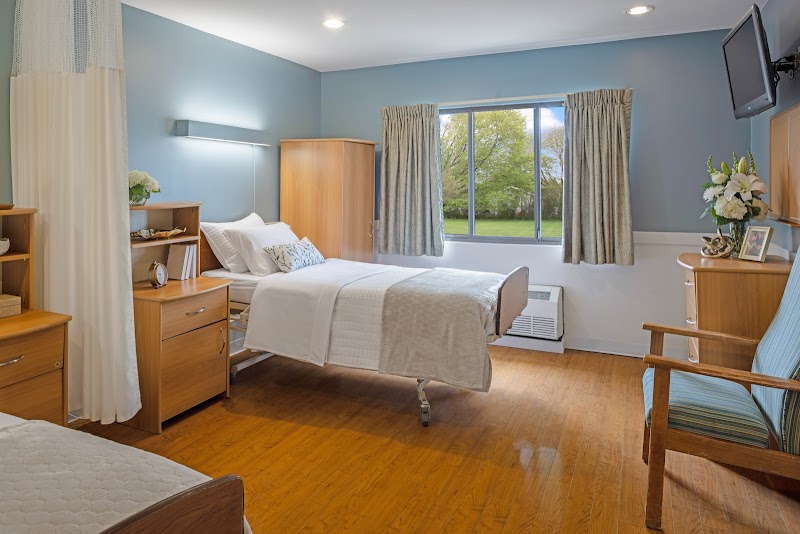
Who Owns and Operates Bella Terra Bloomingdale?

BELLA TERRA BLOOMINGDALE is owned by a for-profit company. For-profit facilities operate as businesses with obligations to shareholders or private owners. The facility is operated by LEGACY HEALTHCARE, a chain that manages multiple nursing homes. With 166 certified beds and approximately 100 residents (about 60% occupancy), it is a mid-sized facility located in BLOOMINGDALE, Illinois.
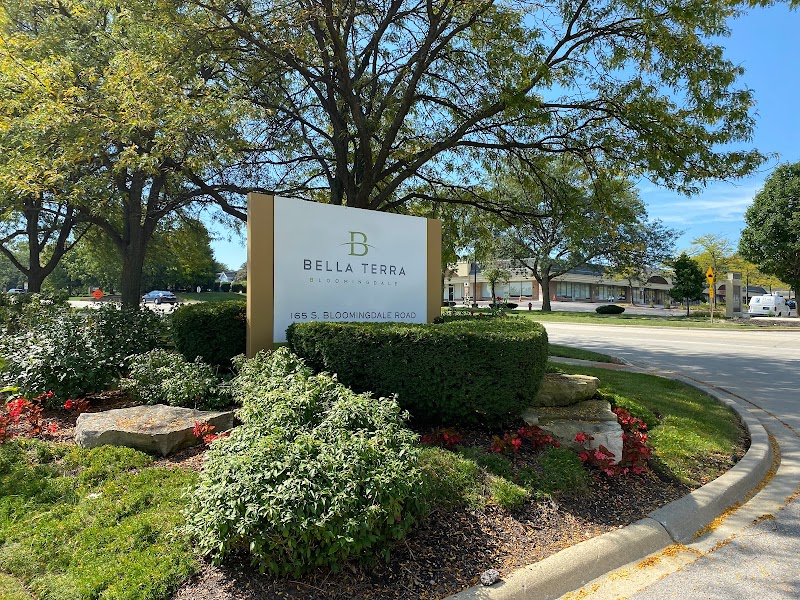
How Does Bella Terra Bloomingdale Compare to Other Illinois Nursing Homes?

Compared to the 100 nursing homes in Illinois, BELLA TERRA BLOOMINGDALE's overall rating (2 stars) is below the state average of 2.5, staff turnover (41%) is near the state average of 46%, and health inspection rating (2 stars) is below the national benchmark.

What Should Families Ask When Visiting Bella Terra Bloomingdale?

Based on this facility's data, families visiting should ask: "Can I visit during a mealtime to observe dining assistance and food quality?" "How do you handle medical emergencies, and what is your hospital transfer rate?" "Can I speak with family members of current residents about their experience?"

Is Bella Terra Bloomingdale Safe?

Based on CMS inspection data, BELLA TERRA BLOOMINGDALE has a clean safety record: no substantiated abuse findings (meaning no confirmed cases of resident harm), no Immediate Jeopardy citations (the most serious violation level indicating risk of serious injury or death), and is not on the Special Focus Facility watch list (a federal program monitoring the lowest-performing 1% of nursing homes). The facility has a 2-star overall rating and ranks #100 of 100 nursing homes in Illinois. While no facility is perfect, families should still ask about staff-to-resident ratios and recent inspection results during their visit.

Do Nurses at Bella Terra Bloomingdale Stick Around?

BELLA TERRA BLOOMINGDALE has a staff turnover rate of 41%, which is about average for Illinois nursing homes (state average: 46%). Moderate turnover is common in nursing homes, but families should still ask about staff tenure and how the facility maintains care continuity when employees leave.

Was Bella Terra Bloomingdale Ever Fined?

BELLA TERRA BLOOMINGDALE has been fined $57,932 across 2 penalty actions. This is above the Illinois average of $33,658. Fines in this range indicate compliance issues significant enough for CMS to impose meaningful financial consequences. Common causes include delayed correction of deficiencies, repeat violations, or care failures affecting resident safety. Families should ask facility leadership what changes have been made since these penalties.

Is Bella Terra Bloomingdale on Any Federal Watch List?

BELLA TERRA BLOOMINGDALE is not on any federal watch list. The most significant is the Special Focus Facility (SFF) program, which identifies the bottom 1% of nursing homes nationally based on persistent, serious quality problems. Not being on this list means the facility has avoided the pattern of deficiencies that triggers enhanced federal oversight. This is a positive indicator, though families should still review the facility's inspection history directly.