WEST SUBURBAN NURSING & REHAB CENTER
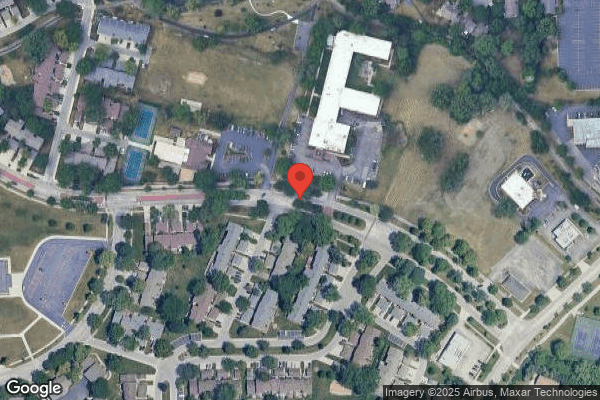
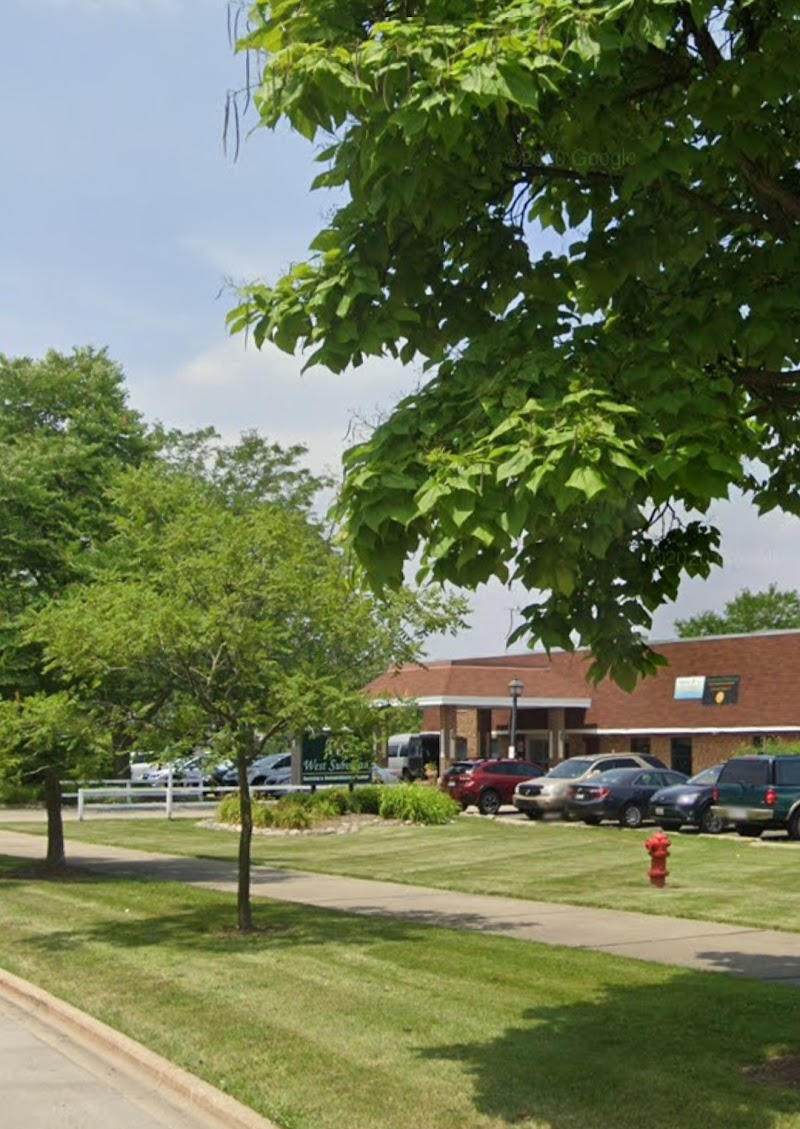
311 EDGEWATER DRIVE, BLOOMINGDALE, IL 60108 (630) 894-7400
For profit - Partnership 259 Beds INFINITY HEALTHCARE CONSULTING Data: November 2025
Trust Grade
50/100
#301 of 665 in IL
Last Inspection: October 2024

Within standard 12-15 month inspection cycle. Federal law requires annual inspections.

Overview

West Suburban Nursing & Rehab Center has a Trust Grade of C, indicating it is average and falls in the middle of the pack for nursing homes. Ranked #301 out of 665 in Illinois, it is in the top half of facilities statewide, but at #22 out of 38 in Du Page County, it has some local competition. Unfortunately, the facility is experiencing a worsening trend, with issues increasing from 9 to 11 between 2024 and 2025. Staffing is a concern, receiving a below-average rating of 2 out of 5, though the turnover rate of 37% is better than the state average; however, the RN coverage is only average. While there have been no fines, there are serious issues, including a failure to communicate changes in Medicare plans to residents, causing distress, and a delay in dental care that resulted in a resident needing a tooth extraction. Overall, while the facility has some strengths, like good staffing turnover and no fines, the rising number of issues and specific incidents raise concerns for families considering this nursing home.

Trust Score
C
50/100
In Illinois
#301/665
Top 45%
Safety Record
Moderate
Needs review
Inspections
Getting Worse
9 → 11 violations
Staff Stability
○ Average
37% turnover. Near Illinois's 48% average. Typical for the industry.
Penalties
✓ Good
No fines on record. Clean compliance history, better than most Illinois facilities.
Skilled Nurses
○ Average
Each resident gets 33 minutes of Registered Nurse (RN) attention daily — about average for Illinois. RNs are the most trained staff who monitor for health changes.
Violations
⚠ Watch
35 deficiencies on record. Higher than average. Multiple issues found across inspections.
★★★☆☆
3.0
Overall Rating
★★☆☆☆
2.0
Staff Levels
★★☆☆☆
2.0
Care Quality
★★★☆☆
3.0
Inspection Score
Stable
2024: 9 issues
2025: 11 issues

The Good

  • Full Sprinkler Coverage · Fire safety systems throughout facility
  • No fines on record
  • Staff turnover below average (37%)

    11 points below Illinois average of 48%

Facility shows strength in fire safety.

The Bad

3-Star Overall Rating

Near Illinois average (2.5)

Meets federal standards, typical of most facilities

Staff Turnover: 37%

Near Illinois avg (46%)

Typical for the industry

Chain: INFINITY HEALTHCARE CONSULTING

Part of a multi-facility chain

Ask about local staffing decisions and management

The Ugly 35 deficiencies on record

2 actual harm
Sept 2025 6 deficiencies 2 Harm
SERIOUS (G) 📢 Someone Reported This

A family member, employee, or ombudsman was alarmed enough to file a formal complaint

Actual Harm - a resident was hurt due to facility failures

Deficiency F0552 (Tag F0552)

A resident was harmed · This affected 1 resident

**NOTE- TERMS IN BRACKETS HAVE BEEN EDITED TO PROTECT CONFIDENTIALITY** Based on observation, interview, and record review, the facility failed to ensure residents were informed in a language and term...

Read full inspector narrative →
**NOTE- TERMS IN BRACKETS HAVE BEEN EDITED TO PROTECT CONFIDENTIALITY** Based on observation, interview, and record review, the facility failed to ensure residents were informed in a language and terminology they understood when a third-party vendor enrolled residents in a new Medicare Advantage plan at the facility. This situation resulted in R23 displaying psycho-social symptoms including emotional upset and crying when discussing the changes to his insurance he was not aware of. This applies to 3 of 17 residents (R1, R19, and R23) reviewed for changes to Medicare Advantage plans in the sample of 23. The findings include: 1. On September 2, 2025, at 12:36 PM, R1 was sitting in his room. R1 said several weeks ago he signed up for a new insurance plan. R1 said, I didn't understand what I was signing up for. [V3] (SSD-Social Service Director) talked me into it. Then after I signed up for it, I found out I wouldn't be able to get my cancer medication and I was panicking because I need my medication. I didn't understand the new insurance would change what was covered. Then I had to just keep begging them to change my insurance back to what I had. I've been very upset about this situation. The EMR (Electronic Medical Record) shows R1 was admitted to the facility on [DATE] with multiple diagnoses including, COPD (Chronic Obstructive Pulmonary Disease), dementia, generalized anxiety disorder, hypertension, anemia, insomnia, history of skin cancer, major depressive disorder, epilepsy, cognitive communication deficit, lack of coordination, leukemia, toxic encephalopathy, urine retention, bipolar disorder, and psychosis. R1's MDS (Minimum Data Set) dated June 19, 2025 shows R1 has moderate cognitive impairment, is independent with bed mobility, requires setup assistance with eating, and supervision with all other ADLs (Activities of Daily Living). R1 is always continent of bowel and bladder. On September 2, 2025, at 10:02 AM, V2 (DON-Director of Nursing) said, Our facility is working with [outside insurance vendor] Managed Care plan and they take over Medicare and Medicaid. [R1] is no longer part of the new plan. He signed up for the new plan, and there was a window of time where we couldn't do much with it. His doctor was able to get [R1's] cancer medications through his old insurance plan. They did not think they would be able to get the cancer medications through the new Managed Care plan at the facility. [R1] wanted his old insurance plan reinstated, and so we had to help with that. There were a few days of time for that transition to occur. 2. On September 9, 2025 at 10:35 AM, R19 was lying in bed in his room. R19 was speaking with a very thick accent and said his first language is Polish. R19 said Signing up for that new [Medicare Advantage plan] was a joke. [V3] (SSD) brought an insurance guy around, and asked if I would meet him. The insurance guy told me if I signed up, I would get a visit from a nurse practitioner every other week. The guy cheated me and didn't tell me everything, like the fact that I don't get to keep my doctor. He made it sound like we were going to get more services, not less. I don't want to be signed up for that insurance. I didn't understand what I was signing. The EMR (Electronic Medical Record) shows R19 was admitted to the facility on [DATE] with multiple diagnoses including, mononeuropathy of left lower limb, PVD (Peripheral Vascular Disease), hypertension, heart disease, spleen infarction, depression, anemia, spinal stenosis of the cervical region, post-laminectomy syndrome, low back pain, thoracic aortic aneurysm, anxiety disorder, adjustment disorder, and presence of prosthetic heart valve. R19's MDS (Minimum Data Set) dated July 8, 2025 shows R19 is cognitively intact, requires setup assistance with eating and lower body dressing, supervision with oral and personal hygiene, substantial/maximal assistance with showering and personal hygiene, and is dependent on facility staff for all other ADLs. R19 is frequently incontinent of urine, and always incontinent of stool. R19's Medicare Advantage Plan Enrollment Form dated August 20, 2025 shows, Select the plan you want to join: The box is checked next to: [outside insurance vendor] (HMO I-SNP- Health Maintenance Organization Institutional Special Needs Plan). The Enrollment Form continues to show R19's name, date of birth , gender, permanent address as the facility, and R19's Medicare Number. R19's signature is typed in a cursive font as the signature on the Enrollment Form acknowledging R19 read and understood the Enrollment Form. The Enrollment Form continues to show V15 (Agent) as the individual helping enrollee with completing this form only. On September 4, 2025 at 12:15 PM, V9 (Son of R19) said, I did not know [R19's] Medicare Advantage plan was changed. No one ever called me. I have Power of Attorney for [R19]. I do not trust that my father could make a decision for changing his health plan. English is not his first language, and I would not be confident he understood what he was signing. He speaks Polish.The facility does not have the documentation to show R19 has a Power of Attorney or Healthcare Surrogate form, or that V9 (Son of R19) was contacted regarding R19's Medicare Advantage plan. 3. On September 9, 2025, at 1052 AM, R23 was sitting in a wheelchair in the hallway outside of his room. R23 said, I signed some papers the other day, but they didn't tell me it meant I was getting a new doctor and a new nurse practitioner. I didn't understand it. I want to go back, but I have to wait. They lied to us. R23 became tearful and started crying out loud, saying he has many health problems including Parkinson's disease and depression and this insurance change was causing him to feel sadder and more depressed. The EMR shows R23 was admitted to the facility on [DATE] with multiple diagnoses including, degenerative disease of the basal ganglia, Parkinsonism, Type 2 diabetes, anxiety disorder, depression, repeated falls, abnormalities of gait and mobility, and Parkinson's disease. R23's MDS dated [DATE] shows R23 is cognitively intact. R23's Medicare Advantage Plan Enrollment Form dated August 19, 2025 shows, Select the plan you want to join: The box is checked next to: [outside insurance vendor] (HMO I-SNP). The Enrollment Form continues to show R23's name, date of birth , gender, permanent address as the facility, and R23's Medicare Number. R23's signature is typed in a cursive font as the signature on the Enrollment Form acknowledging R23 read and understood the Enrollment Form. The Enrollment Form continues to show V15 (Agent) as the individual helping enrollee with completing this form only. On September 3, 2025 at 9:41 AM, R3 was sitting in the hallway in his wheelchair. R3 said he was approached by V3 (SSD) to ask if R3 wanted to hear a presentation regarding insurance. R3 said he would gladly hear about it, but decided not to do it because he didn't like the sound of it. R3 said he has had the same insurance company his whole life and he did not want to change from that. R3 said, Then when I said no, [V3] came back to my room and was asking me why I didn't want the new insurance. I felt like he was pressuring me to change to their preferred insurance, which seemed unethical and makes me not trust [V3] anymore. R3's MDS dated [DATE] shows R3 is cognitively intact. On September 4, 2025 at 11:57 AM, V1 (Administrator) said the facility does not have a policy regarding obtaining consents. V1 provided the undated Illinois Long-Term Care Ombudsman Program Residents' Rights for People in Long-Term Care Facilities brochure provided to every resident upon admission. The brochure shows, Your rights to participate in your own care: You have a right to complete information about your medical condition and treatment in a language that you can understand. Your rights as a citizen and a facility resident: If a court of law has appointed a legal guardian for you, your guardian may exercise your rights for you. If you have named an agent under a Power of Attorney for Health Care, our agent may exercise your rights for you.
SERIOUS (G) 📢 Someone Reported This

A family member, employee, or ombudsman was alarmed enough to file a formal complaint

Actual Harm - a resident was hurt due to facility failures

Dental Services (Tag F0791)

A resident was harmed · This affected 1 resident

**NOTE- TERMS IN BRACKETS HAVE BEEN EDITED TO PROTECT CONFIDENTIALITY** Based on observation, interview, and record review, the facility failed to follow their policy to ensure a resident received rou...

Read full inspector narrative →
**NOTE- TERMS IN BRACKETS HAVE BEEN EDITED TO PROTECT CONFIDENTIALITY** Based on observation, interview, and record review, the facility failed to follow their policy to ensure a resident received routine and emergency dental services in a timely manner. This failure resulted in R1 experiencing severe pain and requiring a tooth extraction. This applies to 1 of 3 residents (R1) reviewed for dental services in the sample of 23.The findings include:On September 2, 2025, at 12:36 PM, R1 was sitting in his room. R1 had a piece of rolled up gauze in his mouth and said he had a tooth pulled on August 30, 2025. R1 said, I lost the filling back in May (2025) and have been telling so many people here that I needed to see the dentist, including [V3] (SSD-Social Service Director). I even called [V7] (Ombudsman) to help me because the pain has been so bad. When they finally got me to see the dentist, he wasn't able to replace the filling and my only choice was to have the tooth pulled. If only they would have let me see him sooner. The EMR (Electronic Medical Record) shows R1 was admitted to the facility on [DATE] with multiple diagnoses including, COPD (Chronic Obstructive Pulmonary Disease), dementia, generalized anxiety disorder, hypertension, anemia, insomnia, history of skin cancer, major depressive disorder, epilepsy, cognitive communication deficit, lack of coordination, leukemia, toxic encephalopathy, urine retention, bipolar disorder, and psychosis. R1's MDS (Minimum Data Set) dated June 19, 2025 shows R1 has moderate cognitive impairment, is independent with bed mobility, requires setup assistance with eating, and supervision with all other ADLs (Activities of Daily Living). R1 is always continent of bowel and bladder. The facility's Concern Form dated May 16, 2025 completed by V7 (Ombudsman) shows multiple concerns including, .3. Needs to see a dentist. On September 8, 2025, at 3:37 PM, V7 (Ombudsman) said she completed the grievance form for R1 on May 16, 2025 but did not submit R1's grievances to V1 (Administrator) until May 19, 2025 at 8:45 AM via email. V7 provided documentation to show V1 received her grievance on behalf of R1 on May 19, 2025 at 11:25 AM. V7 said she spoke to V11 (RN-Registered Nurse) regarding referrals to the dentist in mid-June 2025. On June 16, 2025 at 1:59 PM, V11 (RN) documented, Writer called [V12] (Insurance Case Manager) to fax doctor list for urologist, eye doctor, dental, audiologist doctor. He said he will fax the doctor list for urologist, eye doctor, dental, audiologist doctor. Will f/u (Follow up). Writer provided the fax number for the facility. On September 2, 2025 at 11:04 AM, V3 (SSD) said, Anytime a resident, nurse, or anybody asks, I will reach out to the dentist. He comes every Tuesday. Last week, he wasn't able to make it, so he came this past Saturday. I email the dentist if someone needs to be seen. On September 9, 2025 at 11:05 AM, V11 (RN) said, I notified the social worker back in June that [R1] needed to see a dentist. I used the communication tool in our EMR to communicate with him. I can tell you the exact date I communicated the request to see the dentist and audiologist to [V5] (SSD). It was June 16, 2025. I can tell by looking at my documentation in the medical record. V11 continued to show the process of using the communication feature in the EMR and showed her nursing progress note dated June 16, 2025. The facility's Admission/re-admission Screener for R1 dated July 2, 2025, signed by V10 (RN-Registered Nurse) shows 12. Teeth/Dentures: 1. Own teeth - yes.4. Broken or carious teeth? Yes. The facility does not have documentation to show facility staff followed up on the list of providers for R1 from his insurance provider. The facility does not have documentation to show R1 was seen by the dentist following the grievance dated May 16, 2025, or following the communication by V11 to social services on June 16, 2025, or following the assessment of dental concerns on the nursing assessment documentation dated July 2, 2025. The undated dental list provided by the facility does not show R1 was seen by the dentist during the dental visits at the facility from January 2025 through July 2025. Facility documentation shows R1's last dental visit at the facility was April 26, 2024. The Dental Consult form, dated April 26, 2024, shows V13 (Dentist) documented R1 received a dental exam and needed extractions of teeth number 8 and 9, asap (as soon as possible). The facility does not have documentation to show R1 was seen by the dentist following the dental exam on April 26, 2024, or that R1 refused to have the two teeth extracted as recommended by V13. The Dental Consult form dated August 27, 2025 shows R1 received a dental exam by V13, and R1 had red, puffy tissue, lost a filling in tooth number 19, and had continuing pain. V13 ordered an antibiotic for R1 and recommended an extraction of the tooth at the next visit. The Dental Consult form dated August 30, 2025 shows R1 had an extraction of tooth number 19, and recommended extractions of two teeth, number 9 and 10 at the next visit. On September 9, 2025 at 9:28 AM, V13 (Dentist) provided a timeline of his dental visits with R1, beginning on August 27, 2025. V13 said he visits the facility weekly. V13 said he sees residents routinely who are signed up for the dental program, and will see any resident in the facility, upon request, including residents who are not enrolled in the dental program. V13 said the last time he examined R1 prior to August 27, 2025 was on April 26, 2024, when V13 recommended extraction of two different teeth (8 and 9). V13 said, when he examined R1 on August 27, 2025, R1 had a lot of pain, swelling, and infection present due to a lost filling in tooth number 19. V13 was not able to extract the tooth on August 27, 2025 due to the swelling and infection and prescribed antibiotics with the plan to return to the facility in a few days to extract the tooth. V13 said he returned on August 30, 2025 to extract tooth number 19, and returned to the facility on August 31, 2025 for a post-operative follow-up and found R1 was experiencing a condition called dry socket. V13 said he again returned to the facility on September 2, and 7, 2025 due to R1 experiencing pain, and again on September 8, 2025 due to pain. V13 said if R1 had received prompt dental care when he voiced concerns regarding the lost filling, the tooth pain and infectious process R1 experienced could have been prevented. The facility's undated policy entitled Dental Services shows: Policy: it is the policy of the facility to provide medically related social services to attain or maintain the highest practicable physical, mental, and psychosocial well-being of each resident. This includes meeting any need for dental/denture care to include routine as well as emergency indicated services. Procedure: 1. A licensed nurse will conduct a comprehensive, accurate, standardized assessment of each resident's functional capacity to include dental status. Note: Dental condition status refers to the condition of the teeth, gums, and other structures of the oral cavity that may affect the resident's nutritional status, communication abilities or quality of life. The assessment should include the need for and use of dentures or other dental appliance(s). 2. These assessments will be conducted initially upon admission, quarterly, annually, and when there is a significant change in the resident's condition that affects the oral cavity.6. The assessing nurse will physically inspect the resident's mouth (oral cavity) for any abnormalities. 7. The assessing nurse will monitor for: .Darkness on a tooth (likely decay) or broken natural teeth, bleeding or loose teeth, mouth, or facial pain - discomfort or pain when chewing. Note: Negative findings will be immediately addressed. The attending physician will be notified as well as the facility's dental provider. The DON (Director of Nursing), MDS (Minimum Data Set) Coordinator, and SSD will also be notified as well as the resident or their responsible party. 8. SSD will work with the resident, family, physician, and the dental provider to coordinate timely care. This includes arranging transportation and staff accompaniment as needed.
CONCERN (D) 📢 Someone Reported This

A family member, employee, or ombudsman was alarmed enough to file a formal complaint

Potential for Harm - no one hurt, but risky conditions existed

Deficiency F0602 (Tag F0602)

Could have caused harm · This affected 1 resident

**NOTE- TERMS IN BRACKETS HAVE BEEN EDITED TO PROTECT CONFIDENTIALITY** Based on observation, interview and record review, the facility failed to protect the residents' right to be free from exploitat...

Read full inspector narrative →
**NOTE- TERMS IN BRACKETS HAVE BEEN EDITED TO PROTECT CONFIDENTIALITY** Based on observation, interview and record review, the facility failed to protect the residents' right to be free from exploitation when the facility allowed an outside vendor to come into the facility and make unauthorized changes to cognitively impaired residents' Medicare Advantage plans. This applies to 3 of 17 residents (R5, R9, and R17) reviewed for changes to Medicare Advantage plans in the sample of 23.The findings include:On September 2, 2025 at 10:02 AM, V1 (Administrator) said, Our company is working with [outside insurance vendor] and that vendor takes over Medicare and Medicaid. On September 2, 2025, at 11:04 AM, V3 (SSD-Social Service Director) said, The [outside insurance vendor] chosen by our company, goes into the long-term care buildings owned by our company and offers residents to change their Medicare coverage to the [outside insurance vendor's] Medicare Advantage Plan. The SSD has to do the first point of contact between the residents and the insurance representative. My role was to say this is a new thing coming to our building. I took the rep around and introduced him to the residents. I called the POA (Power of Attorney)/guardians of the non-responsive people and had the same conversation. We, the staff, were told they were coming into our facility, and we are offering the residents this plan. I had to identify who was cognitively intact. The decision was based on the BIMS score (Brief Interview for Mental Status) score, and I used a BIMS score of 12 or higher to say the resident is decisional. They needed to be oriented to person, time, and place. [V15] was the representative from the [outside insurance vendor] who spoke to the residents and got the consents to change the residents' Medicare Advantage plans. V3 continued to say he was not present in the room when V15 (Insurance Agent) presented the Medicare Advantage information to the residents or to witness the residents signing the enrollment forms. V3 also could not say why he provided the names of R5, R9 and R17 to the insurance agent when they have a BIMS score of less than 12. The facility provided a list of residents whose Medicare Advantage Plan has been changed to an I-SNP (Institutional Special Needs Plan) Medicare Advantage Plan with the new insurance vendor. The undated list shows R5, R9, and R17 with an effective date in the I-SNP Medicare Advantage plan as September 1, 2025. 1. On September 9, 2025, at 10:49 AM, R5 was lying in bed in his room. R5 was not able to say what year it is, what day of the week it was, what time it was, or how long he had lived at the facility. R5 said he believed he had lived at the facility for two weeks, and asked if this surveyor was here to take him to his Alcohol Anonymous meeting. R5 said he did not know anything about signing papers to change his Medicare Advantage plan and could not recall if anyone had explained a new Medicare Advantage plan to him. R5 said, I'm on Medicaid, that's all I know. The EMR (Electronic Medical Record) shows R5 was admitted to the facility on [DATE] with multiple diagnoses including trans-cerebral attack, hemiplegia and hemiparesis of the left side, bipolar disorder, lack of coordination, weakness, and major depressive disorder. The EMR shows multiple MDS (Minimum Data Set) assessments for the period of December 2024 to July 2025 with documentation of R5's cognitive impairment, including: R5's MDS dated [DATE] shows R5 has severe cognitive impairment. R5's MDS dated [DATE] shows R5 was rarely/never understood, and therefore unable to complete the brief interview for mental status. The MDS shows R5 had moderate cognitive impairment at the time of the MDS assessment. R5's MDS dated [DATE] shows R5 had moderate cognitive impairment. R5's MDS dated [DATE] shows R5 had severe cognitive impairment at the time of his MDS assessment. R5's care plan, revised July 7, 2025 shows: My comprehensive assessment reveals a history of suspected abuse, neglect, exploitation, past trauma and/or other factors that may increase my susceptibility to abuse/neglect. The resident demonstrates: depression, diagnosis of mental illness, high level of hostility or irritability, history of drug and/or alcohol abuse, difficulty in adjustment and generalized mood distress. Symptoms may be manifested by behavioral symptoms. The facility does not have documentation to show R5 has a POA (Power of Attorney) or a legal healthcare surrogate decision maker. The facility does not have documentation to show R5's family members/emergency contacts were contacted regarding the changes to R5's Medicare Advantage plan or that the insurance agent would be speaking to R5. R5's Medicare Advantage Plan Enrollment Form dated August 19, 2025 shows, Select the plan you want to join: The box is checked next to: [outside insurance vendor] (HMO-Health Maintenance Organization I-SNP). The Enrollment Form shows R5's name, date of birth , gender, permanent address as the facility, and R5's Medicare Number. The Enrollment Form shows: Important: Read and sign below: I must keep both Hospital (Part A) and Medical (Part B) to stay in the [outside insurance vendor's] Health Plan. By joining this Medicare Advantage Plan, I acknowledge that [outside insurance vendor] will share my information with Medicare, who may use it to track my enrollment, to make payments, and for other purposes allowed by Federal law that authorize the collection of this information (see Privacy Act Statement blow). Your response to this form is voluntary. However, failure to respond may affect enrollment in the plan. I understand that I can be enrolled in only one MA (Medicare Advantage) plan at a time - and that enrollment in this plan will automatically end my enrollment in another MA plan. I understand that when my [outside insurance vendor] coverage begins, I must get all of my medical and prescription drug benefits from [outside insurance vendor] plan. Benefits and services provided by [outside insurance vendor] and contained in my [outside insurance vendor] Evidence of Coverage document (also known as a member contract or subscriber agreement) will be covered. Neither Medicare nor [outside insurance vendor] Health Plan will pay for benefits or services that are not covered. The information on this enrollment form is correct to the best of my knowledge. I understand that if I intentionally provide false information on this form, I will be disenrolled from the plan. I understand that my signature (or the signature of the person legally authorized to act on my behalf on this application means that I have read and understand the contents of this application. If signed by an authorized representative (as described above), the signature certifies that: 1. This person s authorized under State law to complete this enrollment, and 2. Documentation of this authority is available upon request by Medicare. R5's signature is typed in a cursive font as the signature on the Enrollment Form acknowledging R5 read and understood the Enrollment Form. The Enrollment Form shows V15 (Agent) as the individual helping enrollee with completing this form only. On September 8, 2025 at 12:56 PM, V16 (Physician) said he is the primary care physician for R5 and R5 has severe cognitive impairment and would not be able to read and understand a consent form. 2. On September 4, 2025 at 11:18 AM, R9 was sitting in his room. R9 said, Some people came in and talked to me. I don't know what they were doing! I didn't understand it at all. Something about insurance, I think. Did I want my insurance to change? No. I don't know why I signed the papers or what they said. The EMR shows R9 was admitted to the facility on [DATE] with multiple diagnoses including, prostate cancer, recurrent major depressive disorder, bipolar disorder, cocaine abuse in remission, and hypertension. R9's MDS dated [DATE] shows R9 has moderate cognitive impairment. R9's care plan revised on April 20, 2025 shows: My comprehensive assessment reveals a history of suspected abuse, neglect, exploitation, past trauma and/or other factors that may increase my susceptibility to abuse/neglect. The resident demonstrates: delusions/hallucinations, difficulty in adjustment and generalized mood distress. Symptoms may be manifested by behavioral symptoms. The facility does not have documentation to show R9 has a POA or a legal healthcare surrogate decision maker. The facility does not have documentation to show R9's family member/emergency contact was notified regarding the change of R9's Medicare Advantage plan or that the insurance agent would be speaking to R9. R9's Medicare Advantage Plan Enrollment Form dated August 15, 2025 shows, Select the plan you want to join: The box is checked next to: [outside insurance vendor] (HMO I-SNP). The Enrollment Form shows R9's name, date of birth , gender, permanent address as the facility, and his Medicare Number. R9's signature is typed in a cursive font as the signature on the Enrollment Form, acknowledging R9 read and understood the Enrollment Form and signed the form. The Enrollment Form shows V15 (Agent) as the individual helping enrollee with completing this form only. 3. On September 4, 2025, at 1:58 PM, R17 was lying in bed in his room. R17 was not able to say what year it is, what day of the week it was, what time it was, where he currently lives, or how long he has lived at the facility. The EMR shows R17 was admitted to the facility on [DATE] with multiple diagnoses including, dementia, convulsions, repeated falls, alcohol abuse, schizoaffective disorder, bipolar disorder, and major depressive disorder. R17's MDS dated [DATE] shows R17 has severe cognitive impairment. R17's care plan, revised January 25, 2023 shows: Potential Abuse Neglect: My comprehensive assessment reveals factors that may increase my susceptibility to abuse/neglect related to diagnosis of dementia, mental illness (bipolar disorder, schizoaffective disorder and depression), current or history of conflict between/with co peer. Given [R17's] poor and compromised health status, cognitive issues, physical decline and need for 24-hour care, the IDT (Interdisciplinary Team) recognizes that he is considered a vulnerable adult. R17's Medicare Advantage Plan Enrollment Form dated August 20, 2025 shows, Select the plan you want to join: The box is checked next to: [outside insurance vendor] (HMO I-SNP). The Enrollment Form shows R17's name, date of birth , gender, permanent address as the facility, and his Medicare Number. R17's signature is typed in a cursive font as the signature on the Enrollment Form, acknowledging R17 read and understood the Enrollment Form and signed the form. The Enrollment Form shows V15 (Agent) as the individual helping enrollee with completing this form only. R17's Power of Attorney for Health Care dated June 30, 2022 shows the POA for R17 as V17. The facility does not have documentation to show V17 (POA for R17) was contacted regarding the change of R17's Medicare Advantage plan or that the insurance agent spoke to R17. On September 11, 2025 at 9:13 AM, V17 (Son/POA for R17) said, I am the POA for [R17]. We set that up because my dad (R17) is not able to make his own decisions. I was not aware he (R17) consented to changing his insurance on August 20, 2025. I was not present for the presentation by the insurance agent, and I did not give my consent for that change to the new Medicare Advantage plan he is now enrolled in. Yesterday, [V3] (SSD) contacted me and told me they signed my dad up for a wellness program. It was not presented to me as a whole new insurance plan during the conversation; it was presented as a wellness plan. It is upsetting to think the consent for that insurance change happened on August 20, 2025 and yesterday is the first time the facility contacted me about it. How did [R17] even sign the paperwork? He can't even sign his own name. On September 8, 2025 at 12:56 PM, V16 (Physician) said he is the primary care physician for R17 and R17 has severe cognitive impairment and would not be able to read and understand a consent form. V16 continued to say he is the Medical Director of the building and, I was just told about the [outside insurance vendor] process and Medicare Advantage enrollment changes. I have no clue what they are doing. On September 4, 2025 at 9:51 AM, V18 (Compliance Officer Outside Insurance Vendor) said, the sales process for the Medicare Advantage plan from the outside insurance vendor starts with a designated person in the facility, in this case V3 (SSD), obtaining permission to contact the residents residing in the facility or the resident's POA/Healthcare Surrogate. Once the insurance agent receives permission to contact someone, the sales agent in the building does a presentation. V18 said the insurance company is not allowed, by law, to receive any information regarding any medical diagnosis or cognitive status of the resident. If the insurance agent is given permission to contact by the facility, then the resident is considered to be a self-signer and that information cannot be validated against any medical record until the insurance plan is in place. V18 continued to say a sales agent would not know if a resident had any cognitive deficit and relies solely on the facility to ensure the residents the insurance agent is talking to are cognitively intact and able to understand and sign the paperwork. V18 said, there are financial incentives, and the outside insurance vendor does quality bonuses. We reward quality care. When [outside insurance vendor] contracts with anyone, there are metrics of quality. For example, if the [outside insurance vendor's] member (resident) has hypertension, and it is controlled in the building over time; I cannot speak of a dollar amount but is a shared savings program. The money does not come back to the residents. The money is dispersed to the ownership. On September 9, 2025 at 4:43 PM, V1 (Administrator) said, The [outside insurance vendor] asked us for a list of who is conversational, and we gave it to them. We weren't there to hear what they presented to the residents or who signed what. The facility's Abuse Prevention Program Policy revised 3/1/21 shows: It is the policy of this facility to prohibit and prevent resident abuse, neglect, exploitation, mistreatment, and misappropriation of resident property and a crime against a resident in the facility. The following Procedures shall be implemented when an employee or agent becomes aware of abuse or neglect of a resident, or of an allegation of suspected abuse or neglect of a resident by a 3rd party.VII. Prevention: The facility desires to prevent abuse, neglect, exploitation, misappropriation, and a crime against a resident by establishing a resident-sensitive and resident-secure environment. This will be accomplished by a comprehensive Quality Assurance Performance Improvement approach. As part of the social history evaluation and MDS assessments, staff will identify residents with increased vulnerability for abuse, neglect, exploitation, mistreatment, or who have needs and behaviors that might lead to conflict. Through the care planning process, staff will identify any problems, goals, and approaches which would reduce the chances of mistreatment for these residents. Staff will continue to monitor the goals and approaches on a regular basis.
CONCERN (D) 📢 Someone Reported This

A family member, employee, or ombudsman was alarmed enough to file a formal complaint

Potential for Harm - no one hurt, but risky conditions existed

Quality of Care (Tag F0684)

Could have caused harm · This affected 1 resident

**NOTE- TERMS IN BRACKETS HAVE BEEN EDITED TO PROTECT CONFIDENTIALITY** Based on interview and record review, the facility failed to follow physician orders to obtain an appointment for a neurology co...

Read full inspector narrative →
**NOTE- TERMS IN BRACKETS HAVE BEEN EDITED TO PROTECT CONFIDENTIALITY** Based on interview and record review, the facility failed to follow physician orders to obtain an appointment for a neurology consult. This applies to 1 of 3 residents (R19) reviewed for appointments in the sample of 23. The findings include:On September 9, 2025 at 10:35 AM, R19 was lying in bed in his room. R19 said he went to see his neurologist about leg weakness a few months ago and the physician said R19 should get a second opinion from another neurologist. R19 said he is still waiting to see the neurologist and facility staff said it could be as long as February 2026 before the facility staff can find R19 an appointment. R19 said, Maybe I'll just give up and not go by the time they find me someone to go to. I can't wait this long. My legs won't work by that time. The EMR (Electronic Medical Record) shows R19 was admitted to the facility on [DATE] with multiple diagnoses including, mononeuropathy of left lower limb, PVD (Peripheral Vascular Disease), hypertension, heart disease, spleen infarction, depression, anemia, spinal stenosis of the cervical region, post-laminectomy syndrome, low back pain, thoracic aortic aneurysm, anxiety disorder, adjustment disorder, and presence of prosthetic heart valve. R19's MDS (Minimum Data Set) dated July 8, 2025 shows R19 is cognitively intact, requires setup assistance with eating and lower body dressing, supervision with oral and personal hygiene, substantial/maximal assistance with showering and personal hygiene, and is dependent on facility staff for all other ADLs (Activities of Daily Living). R19 is frequently incontinent of urine, and always incontinent of stool. The EMR shows the following order for R19 dated June 18, 2025 at 12:13 PM and signed by V14 (Physician): Order summary: Neurologist order: 2nd opinion for spine consultation at tertiary care center. On September 4, 2025 at 12:57 PM, V8 (Scheduler) demonstrated how she makes appointments for residents and sets up transportation to and from the appointments. V8 opened the facility's appointment calendar on the computer for the period of September 4, 2025 through February 28, 2026. V8 was unable to show a scheduled appointment for R19 to see the neurologist. R19 did not have a system in place to keep track of resident appointments, and went through many papers in her office, including sticky notes, scratch paper, and binders full of notebook paper, and was unable to find the appointment scheduled for R19. V8 said, Maybe the paper is in my backpack out in my car. The facility's policy dated 5/14/23 shows: Guidelines for Resident Appointments Outside the Facility shows: Purpose: While the facility has in-house physician visits to residents per policy and State/Federal regulatory mandates, there are times when the resident may need to be seen outside of the facility by a provider that does not physically travel to the nursing home. Procedure: Procedure: Upon receiving a physician's order for a situation or event that will require the resident to need transport services, the nurse who processes the order will notify the staff member who coordinates transport orders so that appropriate transport can be scheduled. The transport will be secured according to medical necessity-such as a medical emergency or an acutely ill resident requiring an ambulance, while a routine non-emergency situation could require the transport services of a local or facility provider. The nursing staff will be aware of the appointments that require residents to be transported from the facility. There will be a calendar/log to inform them of this. Residents who will be transporting on a given day/date will have their personal care done and their medications given in accordance with the time they will be away from the facility for the appointment. Dialysis residents will have a meal sent with them as indicated. If for any reason an ordered/scheduled appointment is missed, it will be re-scheduled as appropriate, unless there has been some change, and the order is cancelled. All parties to include the ordering physician, transport provider, resident and resident's responsible party/POA (Power of Attorney) will be notified of the re-scheduling or the cancellation of an appointment.
CONCERN (D) 📢 Someone Reported This

A family member, employee, or ombudsman was alarmed enough to file a formal complaint

Potential for Harm - no one hurt, but risky conditions existed

Deficiency F0685 (Tag F0685)

Could have caused harm · This affected 1 resident

**NOTE- TERMS IN BRACKETS HAVE BEEN EDITED TO PROTECT CONFIDENTIALITY** Based on interview and record review, the facility failed to ensure a resident requesting to see an audiologist, received assist...

Read full inspector narrative →
**NOTE- TERMS IN BRACKETS HAVE BEEN EDITED TO PROTECT CONFIDENTIALITY** Based on interview and record review, the facility failed to ensure a resident requesting to see an audiologist, received assistance to make an appointment to see an audiologist. This applies to 1 of 3 residents (R1) reviewed for audiology services in the sample of 23. The findings include:On September 2, 2025, at 12:36 PM, R1 was sitting in his room. R1 said he has been having a difficult time hearing and has been asking to see an audiologist for a long time. R1 continued to say he would be happy to go out in the community if he could see an audiologist sooner, but facility staff have not assisted him with making an appointment to see an audiologist. The EMR (Electronic Medical Record) shows R1 was admitted to the facility on [DATE] with multiple diagnoses including, COPD (Chronic Obstructive Pulmonary Disease), dementia, generalized anxiety disorder, hypertension, anemia, insomnia, history of skin cancer, major depressive disorder, epilepsy, cognitive communication deficit, lack of coordination, leukemia, toxic encephalopathy, urine retention, bipolar disorder, and psychosis. R1's MDS (Minimum Data Set) dated June 19, 2025 shows R1 has moderate cognitive impairment, is independent with bed mobility, requires setup assistance with eating, and supervision with all other ADLs (Activities of Daily Living). R1 is always continent of bowel and bladder. The facility's Concern Form dated May 16, 2025 completed by V7 (Ombudsman) shows multiple concerns including, Needs to be seen by an audiologist. Has been asking since January 2025 and hasn't seen one. On September 8, 2025, at 3:37 PM, V7 (Ombudsman) said she completed the grievance form for R1 on May 16, 2025 but did not submit R1's grievances to V1 (Administrator) until May 19, 2025 at 8:45 AM via email. V7 provided documentation to show V1 received her grievance on behalf of R1 on May 19, 2025 at 11:25 AM. V7 continued to say she spoke to V11 (RN-Registered Nurse) regarding referrals to the audiologist in mid-June 2025. On June 16, 2025 at 1:59 PM, V11 (RN) documented, Writer called [V12] (Insurance Case Manager) to fax doctor list for urologist, eye doctor, dental, audiologist doctor. He said he will fax the doctor list for urologist, eye doctor, dental, audiologist doctor. Will f/u (Follow up). Writer provided the fax number for the facility. On September 9, 2025 at 11:05 AM, V11 (RN) said, I notified the social worker back in June that [R1] needed to see an audiologist. I used the communication tool in our EMR to communicate with him. I can tell you the exact date I communicated the request to see the dentist and audiologist to [V5] (SSD-Social Services Director). It was June 16, 2025. I can tell by looking at my documentation in the medical record. V11 continued to show the process of using the communication feature in the EMR and also showed her nursing progress note dated June 16, 2025. The facility does not have documentation to show facility staff followed up on the list of providers from R1's insurance company. As of September 2, 2025, the facility did not have documentation to show R1 was assisted with making an appointment to see an audiologist or had seen an audiologist.
CONCERN (E) 📢 Someone Reported This

A family member, employee, or ombudsman was alarmed enough to file a formal complaint

Potential for Harm - no one hurt, but risky conditions existed

Deficiency F0551 (Tag F0551)

Could have caused harm · This affected multiple residents

**NOTE- TERMS IN BRACKETS HAVE BEEN EDITED TO PROTECT CONFIDENTIALITY** Based on interview and record review the failed to have documentation to show a resident's representative could legally make dec...

Read full inspector narrative →
**NOTE- TERMS IN BRACKETS HAVE BEEN EDITED TO PROTECT CONFIDENTIALITY** Based on interview and record review the failed to have documentation to show a resident's representative could legally make decisions regarding a resident's enrollment in a Medicare Advantage plan when a third-party vendor enrolled residents in a new Medicare Advantage plan at the facility.This applies to 8 of 17 residents (R6, R7, R10, R11, R12, R15, R16, and R18) reviewed for changes to Medicare Advantage plans in the sample of 23. Findings include: On September 2, 2025 at 10:02 AM, V1 (Administrator) said, Our company is working with [outside insurance vendor] and that vendor takes over Medicare and Medicaid. On September 2, 2025, at 11:04 AM, V3 (SSD-Social Service Director) said, The [outside insurance vendor] chosen by our company, goes into the long-term care buildings owned by our company and offers residents to change their Medicare coverage to the [outside insurance vendor's] Medicare Advantage Plan. The SSD has to do the first point of contact between the residents and the insurance representative. My role was to say this is a new thing coming to our building. I took the rep around and introduced him to the residents. I called the POA (Power of Attorney)/guardians of the non-responsive people and had the same conversation. We, the staff, were told they were coming into our facility, and we are offering the residents this plan. I had to identify who was cognitively intact. The decision was based on the BIMS score (Brief Interview for Mental Status) score, and I used a BIMS score of 12 or higher to say the resident is decisional. They needed to be oriented to person, time, and place. [V15] was the representative from the [outside insurance vendor] who spoke to the residents and got the consents to change the residents' Medicare Advantage plans. V3 continued to say he was not present in the room when V15 (Insurance Agent) presented the Medicare Advantage plan information to the residents or to witness the signing of the enrollment forms. The facility provided a list of residents whose Medicare Advantage Plan has been changed to an I-SNP (Institutional Special Needs Plan) Medicare Advantage Plan with the new insurance vendor. The undated list shows R6, R7, R10, R11, R12, R15, R16, and R18 with an effective date in the I-SNP Medicare Advantage plan of September 1, 2025. 1. R6's Medicare Advantage Plan Enrollment Form dated August 4, 2025 shows, Select the plan you want to join: The box is checked next to: [outside insurance vendor] (HMO-Health Maintenance Organization I-SNP). The Enrollment Form shows R6's name, date of birth , gender, permanent address as the facility, and R6's Medicare Number. The Enrollment Form shows: Important: Read and sign below: I must keep both Hospital (Part A) and Medical (Part B) to stay in the [outside insurance vendor's] Health Plan. By joining this Medicare Advantage Plan, I acknowledge that [outside insurance vendor] will share my information with Medicare, who may use it to track my enrollment, to make payments, and for other purposes allowed by Federal law that authorize the collection of this information (see Privacy Act Statement blow). Your response to this form is voluntary. However, failure to respond may affect enrollment in the plan. I understand that I can be enrolled in only one MA (Medicare Advantage) plan at a time - and that enrollment in this plan will automatically end my enrollment in another MA plan. I understand that when my [outside insurance vendor] coverage begins, I must get all of my medical and prescription drug benefits from [outside insurance vendor] plan. Benefits and services provided by [outside insurance vendor] and contained in my [outside insurance vendor] Evidence of Coverage document (also known as a member contract or subscriber agreement) will be covered. Neither Medicare nor [outside insurance vendor] Health Plan will pay for benefits or services that are not covered. The information on this enrollment form is correct to the best of my knowledge. I understand that if I intentionally provide false information on this form, I will be disenrolled from the plan. I understand that my signature (or the signature of the person legally authorized to act on my behalf on this application means that I have read and understand the contents of this application. If signed by an authorized representative (as described above), the signature certifies that: 1. This person s authorized under State law to complete this enrollment, and 2. Documentation of this authority is available upon request by Medicare. V19's (Significant Other) signature is typed in a cursive font as the signature on the Enrollment Form acknowledging V19 read and understood the Enrollment Form for R6. The Enrollment Form shows V15 (Agent) as the individual helping enrollee with completing this form only.The undated roster provided by the facility of all residents enrolled in the new Medicare Advantage plan shows R6 has severe cognitive impairment, with a BIMS score of 5, on July 8, 2025. The facility does not have completed POA paperwork for R6. The POA paperwork in R6's medical record shows a Power of Attorney for Health Care form, signed by V19 on May 19, 2025. The paperwork does not show R6's name anywhere on the paperwork to indicate the POA paperwork belongs to R6. The POA paperwork was witnessed by V3 (SSD) on May 19, 2025.2. R7's Medicare Advantage Plan Enrollment Form dated August 20, 2025 shows, Select the plan you want to join: The box is checked next to: [outside insurance vendor] (HMO I-SNP). The Enrollment Form shows R7's name, date of birth , gender, permanent address as the facility, and her Medicare Number. V20's (Daughter of R7) signature is typed in a cursive font as the signature on the Enrollment Form, acknowledging V20 read and understood the Enrollment Form and signed the form. The Enrollment Form shows V15 (Agent) as the individual helping enrollee with completing this form only.The facility did not have POA paperwork in the medical record for R7 on August 20, 2025, the date the Medicare Advantage plan paperwork was signed by V20. Facility documentation shows POA paperwork was completed for R7, with R7's signature, on August 22, 2025, two days after the consent for enrollment in the Medicare Advantage plan was signed. The undated roster provided by the facility of all residents enrolled in the new Medicare Advantage plan shows R7 has severe cognitive impairment, with a BIMS score of 7, on August 14, 2025. 3. R10's Medicare Advantage Plan Enrollment Form dated August 1, 2025 shows, Select the plan you want to join: The box is checked next to: [outside insurance vendor] (HMO I-SNP). The Enrollment Form shows R10's name, date of birth , gender, permanent address as the facility, and his Medicare Number. V21's (Spouse of R10) electronic signature on the Enrollment Form, acknowledges V21 read and understood the Enrollment Form and signed the form. The Enrollment Form shows V15 (Agent) as the individual helping enrollee with completing this form only. The facility does not have legal paperwork in the medical record shows V21 is the POA or health care surrogate for V21. The undated roster provided by the facility of all residents enrolled in the new Medicare Advantage plan shows R10 has moderate cognitive impairment, with a BIMS score of 10, on July 21, 2025. 4. R11's Medicare Advantage Plan Enrollment Form dated August 6, 2025 shows, Select the plan you want to join: The box is checked next to: [outside insurance vendor] (HMO I-SNP). The Enrollment Form shows R11's name, date of birth , gender, permanent address as the facility, and his Medicare Number. V22's (Brother of R11) electronic signature on the Enrollment Form, acknowledges V22 read and understood the Enrollment Form and signed the form. The Enrollment Form shows V15 (Agent) as the individual helping enrollee with completing this form only. The facility does not have legal paperwork in the medical record shows V22 is the POA or health care surrogate for R11. The undated roster provided by the facility of all residents enrolled in the new Medicare Advantage plan shows R11 has moderate cognitive impairment, with a BIMS score of 11, on June 18, 2025. 5. R12's Medicare Advantage Plan Enrollment Form dated August 11, 2025 shows, Select the plan you want to join: The box is checked next to: [outside insurance vendor] (HMO I-SNP). The Enrollment Form shows R12's name, date of birth , gender, permanent address as the facility, and her Medicare Number. V23's (Son of R12) electronic signature is typed in a cursive font as the signature on the Enrollment Form, acknowledging V23 read and understood the Enrollment Form and signed the form. The Enrollment Form shows V15 (Agent) as the individual helping enrollee with completing this form only. The facility does not have legal paperwork in the medical record shows V23 is the POA or health care surrogate for R12.R12's MDS dated [DATE] shows R12 has moderate cognitive impairment, with a BIMS score of 8. 6. R15's Medicare Advantage Plan Enrollment Form dated August 28, 2025 shows, Select the plan you want to join: The box is checked next to: [outside insurance vendor] (HMO I-SNP). The Enrollment Form shows R15's name, date of birth , gender, permanent address as the facility, and his Medicare Number. V24's (Brother of R15) electronic signature on the Enrollment Form, acknowledges V24 read and understood the Enrollment Form and signed the form. The Enrollment Form shows V15 (Agent) as the individual helping enrollee with completing this form only. The facility does not have legal paperwork in the medical record shows V24 is the POA or health care surrogate for V24. R15's MDS dated [DATE] shows R15 has severe cognitive impairment, with a BIMS score of 7. 7. R16's Medicare Advantage Plan Enrollment Form dated August 19, 2025 shows, Select the plan you want to join: The box is checked next to: [outside insurance vendor] (HMO I-SNP). The Enrollment Form shows R16's name, date of birth , gender, permanent address as the facility, and his Medicare Number. V25's (Sister of R16) electronic signature on the Enrollment Form, acknowledges V25 read and understood the Enrollment Form and signed the form. The Enrollment Form shows V15 (Agent) as the individual helping enrollee with completing this form only. The facility does not have legal paperwork in the medical record shows V25 is the POA or health care surrogate for R16. The undated roster provided by the facility of all residents enrolled in the new Medicare Advantage plan shows R16 has moderate cognitive impairment, with a BIMS score of 8, on June 23, 2025. 8. R18's Medicare Advantage Plan Enrollment Form dated August 20, 2025 shows, Select the plan you want to join: The box is checked next to: [outside insurance vendor] (HMO I-SNP). The Enrollment Form shows R18's name, date of birth , gender, permanent address as the facility, and her Medicare Number. R19's (Father of R18) signature is typed in a cursive font as the signature on the Enrollment Form, acknowledging R19 read and understood the Enrollment Form and signed the form. The Enrollment Form shows V15 (Agent) as the individual helping enrollee with completing this form only. The facility does not have legal paperwork in the medical record shows R19 is the POA or health care surrogate for R18. The undated roster provided by the facility of all residents enrolled in the new Medicare Advantage plan shows R18 has moderate cognitive impairment, with a BIMS score of 8, on August 15, 2025. On September 4, 2025 at 12:15 PM, V9 (Son of R19) said, V9 is not the POA for R18, did not sign the consent form for the change to R18's Medicare Advantage plan, and does not trust R19 could make an informed decision for changing R18's health plan. V9 said, English is not [R19's] first language, and I would not be confident he understood what he was signing. He speaks Polish. Guidance from CMS (Centers for Medicare and Medicaid) entitled, Medicare Advantage and Part D Enrollment and disenrollment Guidance Updated: 2024 shows: This guidance update is effective beginning with contract year 2025. All enrollments with an effective date on or after January 1, 2025, must be processed in accordance with the revised requirements. Plans are expected to use the updated model enrollment form for enrollment requests received on or after January 1, 2025. Organizations may, at their option, implement any new requirement consistent with this guidance prior to the required implementation date. 10.1 - Definitions: The following definitions relate to topics addressed in this guidance. Authorized Representative - An individual who is legally able to act on behalf of the beneficiary, as allowed by applicable state laws, in order to execute an enrollment or disenrollment request. A representative may be appointed by the individual (consistent with the standards under applicable law) or may be authorized under law without a specific or explicit appointment. 50 - Enrollment processing: The following should also be considered when processing an enrollment: .E. Signature and Date - The individual must sign the enrollment form or complete the enrollment request mechanism. If the individual is unable to do so, an authorized representative must sign the enrollment form or complete the enrollment request mechanism. If an authorized representative enrolls an individual, the authorized representative must attest to having the authority under State law to do so, and confirm that a copy of the proof of court-appointed legal guardian, durable power of attorney, or proof of other authorization required by State law that empowers the individual to effectuate an enrollment request on behalf of the applicant is available and can be presented upon request by the plan or CMS. On September 4, 2025 at 11:57 AM, V1 (Administrator) said the facility does not have a policy regarding obtaining consents. V1 provided the undated Illinois Long-Term Care Ombudsman Program Residents' Rights for People in Long-Term Care Facilities brochure provided to every resident upon admission. The brochure shows, Your rights to participate in your own care: You have a right to complete information about your medical condition and treatment in a language that you can understand. Your rights as a citizen and a facility resident: If a court of law has appointed a legal guardian for you, your guardian may exercise your rights for you. If you have named an agent under a Power of Attorney for Health Care, our agent may exercise your rights for you.
Apr 2025 2 deficiencies
CONCERN (D) 📢 Someone Reported This

A family member, employee, or ombudsman was alarmed enough to file a formal complaint

Potential for Harm - no one hurt, but risky conditions existed

Deficiency F0627 (Tag F0627)

Could have caused harm · This affected 1 resident

**NOTE- TERMS IN BRACKETS HAVE BEEN EDITED TO PROTECT CONFIDENTIALITY** Based on observation, interview and record review the facility failed to assist a resident in discharge planning. This applies t...

Read full inspector narrative →
**NOTE- TERMS IN BRACKETS HAVE BEEN EDITED TO PROTECT CONFIDENTIALITY** Based on observation, interview and record review the facility failed to assist a resident in discharge planning. This applies to 1 of 3 residents (R1) reviewed for discharge planning in the sample of 9. The findings include: On April 28, 2025 at 11:28 AM, R1 was sitting up in his wheelchair in his room. R1 stated he wants to move to a different facility to be closer to his family. R1 has talked with V11 Ombudsman and V4 Social Services (SS) about it, and nothing has been done. On April 28, 2025 at 8:51 AM, V11 Ombudsman stated, R1 wants to go to a different facility to be closer to his family. R1 has provided a list to the facility of facilities that are closer, and they still haven't done anything. R1 has asked about the progress and V4 SS told R1 that V4 has sent the referral packet but V4's not actually reaching out to the facilities. On April 28, 2025 at 10:06 AM, V4 SS stated, he did not have anyone actively discharging at the moment. V4 had sent a referral to another local skilled nursing facility (SNF) for R1 a couple of weeks ago but that was it. At 12:56 PM, V4 SS stated, he was aware that R1 wanted to go to another SNF to be closer to his family. V4 said he has sent a lot over a year to get R1 moved but no one would accept R1. At 1:28 PM, V4 SS brought the referrals he had sent for R1. V4 had one referral dated January 31, 2025 that he sent to a local SNF. There was no fax transmittal that showed it was sent and/or received. V4 stated, he never heard anything back about it. V4 stated, he has called to follow up but they never tell him anything. There is nothing documented in R1's chart from December 2024- current about any referrals being sent or followed up on. On April 28, 2025 at 2:23 PM, V12 local facility Administrator stated, they have never received a referral for R1. The facility's email thread between V4 SS and V11 Ombudsman shows: an email dated January 31, 2025 from V11 Ombudsman to V4 SS showing, Good morning! So, I looked on Medicare.gov for SNFs that accept Medicaid near the location R1 wants to go to. Attached is a PDF of that list. I looked up a few (#1, #3, #5) since those were the closet to the location R1 wants to go to. Out of those 3, from the website I could only tell #1 for sure has onsite dialysis R1 actually mentioned by location. They have onsite dialysis. Could you apply him there? .As a start, though, could you guys apply R1 to the location he wants to go to and let him, and I know if he is or is not accepted once you hear back? Thank you! V4 SS replied on January 31, 2025 showing, Hey, no problem, I'll send to that location. It sounds familiar I believe I've sent in one there before, but enough time has passed to send another. Thanks for your help and research! V11 Ombudsman sent another email to V4 SS and CC'd V1 Administrator on March 14, 2025 (over a month later) showing, Hi! .I wanted to follow-up about how things went referring R1 to SNFs that have onsite dialysis. I know R1 himself mentioned the local facility he wanted to go to. Do you know if he was applied there since February? What was said about his referral? If he was applied there and denied, can you share with me (and R1) what places he was applied to and when? She continues to add more facilities they could referred R1 too that may take him. She ends the email with, Thanks for helping R1 out with this. He just wants to be back up north closer to his family so they could potentially visit him (or visit him more frequently). There is no reply to that email. V11 Ombudsman sends another email to V4 SS and V1 Administrator on March 19, 2025 showing, Hello! I was following back up from my email on Friday about R1 and his desire to transfer to another SNF further north by the location he wants to go too. Please see the original email below If anyone could shed some light on any progress in applying R1 to other SNFs since the beginning of February, I'd greatly appreciate it! There is no reply after that. On April 28, 2025 at 8:51 AM, V11 Ombudsman stated she last talked with the facility about R1's transfer/referrals on April 11, 2025 that started with emails back in January 2025 and still had not gotten anywhere in the process. R1's Minimum Data Set, dated [DATE] shows, he is cognitively intact. R1's care plan dated March 25, 2022 shows, Focus: Discharge potential-long term, R1 been evaluated for discharge potential and, at present, placement for him is identified as long-term secondary to medical, cognitive, mental health and behavioral challenges. Interventions: Assessment of d/c (discharge) potential quarterly. Document in the plan of care accordingly. Available options will continue to be identified. Referrals will be made to appropriate resources and services, as indicated. Goals will continue to be discussed with the resident/representative, clarified . The facility's discharge planning policy, protocol and procedure dated March 2025 shows, Purpose: To identify appropriate candidates for inclusion in active discharge planning facilitating the transition to a less structured environment and to coordinate adequate supportive community care services. This nursing facility strongly emphasizes preparation and preparedness.
CONCERN (D) 📢 Someone Reported This

A family member, employee, or ombudsman was alarmed enough to file a formal complaint

Potential for Harm - no one hurt, but risky conditions existed

Accident Prevention (Tag F0689)

Could have caused harm · This affected 1 resident

Based on interview and record review the facility failed to ensure residents were supervised in the dining area to prevent a resident to resident incident resulting in a fall for 2 of 4 residents (R3,...

Read full inspector narrative →
Based on interview and record review the facility failed to ensure residents were supervised in the dining area to prevent a resident to resident incident resulting in a fall for 2 of 4 residents (R3, R4) reviewed for supervision in the sample of 9. The findings include: The facility provided roster shows R3 and R4 reside in the memory care unit of the facility. R3's Care Plan shows she has a diagnosis of dementia and has a cognitive deficit with periods of disorientation. R3's 4/17/25 Minimum Data Set (MDS) assessment shows she has a cognitive impairment and has periods of confusion and forgetfulness. R4's Care Plan shows she has a diagnosis of dementia and has a cognitive deficit with periods of disorientation. R4's 2/6/25 MDS assessment shows she has a cognitive impairment and has periods of confusion and forgetfulness. A facility Resident to Resident Altercation reported completed by V7 (Registered Nurse/ RN) on 4/19/25, shows during the noon meal on 4/19/25, R3 was found lying on the floor of the dining room. The report shows when V7 spoke with R3, R3 indicated that another resident (R4) had been trying to move R3 out of her way and it caused R3 to fall to the floor. R3 said that she had been trying to move in by R4 to get a spot at the table. A facility reportable incident completed by V1 (Administrator) on 4/19/25 shows R3 and R4 were in the common area of the facilities dementia unit when R3 was found on the floor and claimed R4 and made contact with her to move her. The report also shows that there were no staff witnesses to the incident. On 4/28/25 at 10:05 AM, R7 said she was sitting at the table when R3 and R4 had the incident. R7 said R3 was trying to move in by R4 because she wanted the same chair. R3 was sort of nudging R4 and R4 raised her arm up and this caused R3 to lose her balance and fall to the floor. R7 could not recall where staff were at the time of this incident. On 4/28/25 at 11:24 AM, V7 said on the day of the incident between R3 and R4 she was the only staff watching the dining room. V7 said the other activity staff had gone on lunch break and the CNA's (Certified Nursing Assistants) were passing meal trays. V7 said she was called away from the dining room to answer a telephone call and no one replaced her to monitor the dining room. V7 said she had been paged twice about the call, so she decided she had to go answer it. V7 said while on the phone she heard what sounded like a resident falling so she went to the dining room and found R3 lying on her side on the floor. V7 said when she asked what happened R3 reported that R4 had caused her to fall. V7 said R7 explained to her how R3 ended up on the floor, that it was due to R3 nudging and trying to move R4 out of her way for her to get a certain chair at the table. V7 said there should always be 2 staff present to monitor the dining room but that day there was not due to a staff on break and her leaving to answer a phone call. On 4/8/25 at 2:01 PM, V2 (Director of Nursing) said generally there is 3-4 CNA's, 1 nurse and 1-2 activity staff to monitor the resident dining area but that day the CNA's were passing trays and V7 had left to take a phone call. V2 said R3 was sent to the hospital emergency room due to complaints of hip pain and per facility protocol since no staff witnessed the incident. V2 said R3 did develop some bruising to her buttocks. R3's nursing progress notes show on 4/27/25 there is a purplish discoloration to her left buttock relative to the fall. The facility provided Standard Supervision and Monitoring policy dated 5/17/23 shows the facility will provide adequate supervision and guidance to meet the needs of the residents including meal times.
Jan 2025 3 deficiencies
CONCERN (D) 📢 Someone Reported This

A family member, employee, or ombudsman was alarmed enough to file a formal complaint

Potential for Harm - no one hurt, but risky conditions existed

Free from Abuse/Neglect (Tag F0600)

Could have caused harm · This affected 1 resident

**NOTE- TERMS IN BRACKETS HAVE BEEN EDITED TO PROTECT CONFIDENTIALITY** Based on interview and record review, the facility failed to protect residents from facility abuse. This applies to 2 of 7 resi...

Read full inspector narrative →
**NOTE- TERMS IN BRACKETS HAVE BEEN EDITED TO PROTECT CONFIDENTIALITY** Based on interview and record review, the facility failed to protect residents from facility abuse. This applies to 2 of 7 residents (R5 and R7) reviewed for abuse in a sample of 11. The findings include: 1. Review of R7's care plan showed R7's diagnoses include anxiety disorder, dementia, depression, psychosis, cognitive communication disorder, bipolar disorder, toxic encephalopathy, and insomnia. Care plan, initiated [DATE] and revised [DATE], shows R7 hoards items related to his diagnoses of dementia including entering other resident rooms in search of items to hoard, rummaging through drawers/closets, and becoming angry and defensive when asked to remove items. The care plan also shows R7 had a history of abuse/neglect/exploitation/past trauma that may increase his susceptibility to abuse and neglect. MDS (Minimum Data Set), dated [DATE], shows R7's cognition was moderately impaired. Review of R6's care plan show R6's diagnoses include depression, anxiety, alcohol use, cannabis use, suicidal ideation, and injury of the head. Care plan, dated [DATE], shows R6 had a history of manipulative behavior and intimidating behaviors. Care plan, dated [DATE], shows R6 has a history of placing blame on others and projects anger onto others including excessively arguing and challenging views of authority figures, refusing to comply with requests without reason, expressing resentment toward care providers and seeking revenge towards those he feels wronged him. The care plan shows R6 distorts information to his favor, exhibits a sense of entitlement and beliefs he should receive special privileges, presents with self-defeating behaviors, does not learn from past mistakes and repetitive negative consequences, does not acknowledge personal responsibility, and identifies as a victim. Care plan, dated [DATE], shows R6 exhibits threatening physical violence, verbal abuse, and destroys property. Care plan, dated [DATE], shows R6 had a history of possessing prohibited/unauthorized items in his room including alcohol and illicit drugs. MDS, dated [DATE], shows R6's cognition was intact. On [DATE] at 12:44 PM, R7 stated on the day of the incident he was sleeping in his bed when R6 came into R7's room yelling. R7 stated R6 was good friends with R7's roommate and R6 yelled, I don't want you to mess with my buddy! R7 stated he told R6 he had not messed with the roommate and R6 replied, I want to kill you! R7 stated R6 made a fist and walked toward R7 and attempted to punch R7 in the face when R7 blocked the blow. R7 stated R6 would not leave and R6 was trying to protect himself and push R6 out of the room when R6 pushed R7 to the ground. R7 stated he hit the back of his head on the bathroom door and showed a lump on the back right of his head, a reddened knuckle of his left thumb, and a broken fingernail. R7 stated he started yelling for help and R6 walked out of the room yelling for staff and saying that R7 was attacking R6. On [DATE] at 12:27 PM, R6 was very agitated, speaking in a loud voice, and showed threatening body posture when speaking to staff and the state surveyor. R6 stated he witnessed R7 going through other residents' belongings several times over the last several months. R6 stated he was walking in the hall and walked inside the door of R7's room. R6 stated he told R7 not to mess with other people's stuff. R6 stated he did not inform staff of his concerns regarding R7 because he felt staff would not believe him. R6 stated he utilized a jiu-jitsu move to make R7 fall to the ground. R6 stated R7 then began hitting R6 but R6 denied any injuries. R6 stated R7 previously walked into R6's room but not at that time. R6 stated, He's lucky I didn't break his neck when he walked into my room. Progress note, dated [DATE], shows after R7 returned from the hospital he complained of discomfort of his left hand and a red/bluish area was noted on his left hand near his thumb. On [DATE] at 12:07 PM, V7 (Police Officer) stated two days prior R6 and R7 were involved in an altercation in which R7 told R6 to leave his room and R6 tripped R7 and pushed him to the floor where R7 hit his head. V7 stated R7 had a bump on his head, a swollen left finger, and a cut on his hand. V7 stated the facility revived the cameras which showed R7 had not left his room for at least 45 minutes prior to the incident. V7 stated she cited R6 with a ticket referencing a local ordinance. Initial police report, dated [DATE], shows V7 (Police Officer) was informed R7 had dementia but found him coherent and able to relate details about the incident accurately. The report shows at about 8:30 AM on [DATE], R6 began yelling at R7 and R7 did not know why. R7 told V7 he was smaller than R6 and tried to tell R6 to leave the room but R6 continued to approach R7 and continued to yell at R7. The report shows R6 then grabbed R7 and threw him to the ground and into the bathroom door. R7 stated R6 then began to exit the room and threatened R7 stating he would punch him and would kill him. The report shows there was a witness who heard R6 threaten to punch R7 out and kill R7. The report shows R7 had a small cut on his left thumb and the top of his head was sore. The report shows R6 was interviewed and claimed R7 was chronically entering other residents' rooms and going through their belongings without permission. The report shows R6 alleged that morning R7 entered R6's room and began looking through R6's roommate's belongings and R6 decided to take a stand and confront R7. The report shows R6 entered R7's room and R7 charged at R6 telling him to leave the room. The report shows R7 attempted to push R6 away and R6 then threw R7 to the ground. Police report, dated [DATE], shows V7 returned to the facility because R7 wished to press charges for battery. The report shows the facility reviewed video surveillance showing R6's claim that he followed R7 from R6's room and confronted him was false and showed R7 was in his room no less than 45 minutes prior to the altercation. The report shows V8 (Social Services) and R7 both felt R6's aggression was unprovoked. The report showed R7 had a lump and some discoloration on the top of his head as well as a small laceration on his left thumb. The report showed R7's thumb nail was broken and there was bruising where the laceration had been. The report shows V7 interviewed R6 who also made a threat to a nurse that morning which included shooting someone, which R6 denied. The report shows R6 was issued a local ordinance citation for assault/fights for the incident which occurred [DATE] between R6 and R7. Final facility Incident report, dated [DATE], shows R6 and R7 were separated at the time of the altercation and the police were called. The report shows R7 complained of pain, but no injuries were identified and both residents were sent to the hospital. The report shows R7 confronted R6 in his room about rummaging through R7's personal items and the police were called and left without further action. The report shows R6's room was moved to the other side of the facility and R7 was placed on continuous monitoring. Progress note, dated [DATE], shows, Staff observed a verbal altercation between this resident and a co-peer. Staff separated the resident and co-peer. Resident placed on 1:1 [supervision] pending a transfer to the ER (Emergency Room) for evaluations. Behavior progress note, dated [DATE], shows R6 was demonstrating physical and verbal conflicts with peers, made idle threats and expressing intentions of violence when faced with challenges or inconveniences, and R6 required immediate hospitalization. Facility Abuse Prevention Program policy and procedure, revised 1/2019, shows, It is the policy of this facility to prohibit and prevent resident abuse, neglect, exploitation, mistreatment, and misappropriation of resident property and a crime against a resident in the facility. Facility Abuse and Crime Reporting Policy and Procedure, revised 1/2019, shows, 1. Abuse: The willful infliction of injury, unreasonable confinement, intimidation, or punishment with resulting physical harm or pain or mental anguish Willful, as used in this definition of abuse, means the individual must have acted deliberately, not that the individual must have intended to inflict injury or harm 4. Physical Abuse: Hitting, slapping, pinching, kicking, etc 2. Review of R4's care plan shows R4's diagnoses include bipolar disorder, depression, anxiety, schizophrenia, and cerebral infarction. Care plan, dated [DATE], shows R4 had a history of misinterpreting interactions/situations and responding with verbal and physical aggression toward others. MDS, dated [DATE], shows R4's cognition was severely impaired. Review of R5's care plan shows R5's diagnoses included depression, heart failure, epilepsy, and chronic kidney disease. The care plan, dated [DATE], shows R5 had poor frustration tolerance and maladaptive coping as manifested by aggression when agitated and/or conflicts/altercations with others. R5's behaviors included verbal aggression when challenged or redirected. MDS, dated [DATE], shows R5's cognition was moderately compromised. On [DATE] at 1:51 PM, R5 stated R4 approached him as they were both attempting to take pizza from a pizza box in the dining room. R5 stated R4 became upset with R5, pulled R4's arms back in attempt to keep him from the pizza, swung at R4 several times causing a scratch on his right cheek, and then pulled R5's sweatshirt hood back trying to pull him away from the pizza. MDS, dated [DATE], shows R2's cognition was intact. On [DATE] at 1:37 PM, R2 stated she was sitting in the dining room when she heard a commotion and saw R4 slap R5 in the face. R2 stated R4 then pulled backward on R5's sweatshirt hood trying to keep him away from a box of pizza on a table. R2 stated the altercation between R4 and R5 was traumatic and scary to watch. On [DATE] at 12:35 PM, V9 (Psychologist) stated she was in the dining room with a client when she saw a resident in a wheelchair move toward a box of pizza and R4 began to approach the resident. V9 stated she tried to redirect R4 away from the resident but R4 grabbed the resident by the shirt neck. V9 stated the residents were slapping at each other but V9 was unclear how much physical contact occurred. V9 stated she saw R4 grab the resident but the collar and pull him backwards in his wheelchair. V9 stated she was the only non-resident in the room when the altercation began and when left the room to retrieve staff to help. V9 stated when she returned to the room R4 again moved aggressively toward the resident in the wheelchair bur V9 stood between the two residents to de-escalate the conflict. V9 stated another resident witnessed the altercation and was screaming. Psychologists note, dated [DATE], shows V9 (Psychologist) witnessed R4 exhibiting physical and verbal aggression towards another resident, alerted staff, and attempted to assist in de-escalation and redirection. On [DATE] at 12:07 PM, V10 (Licensed Practical Nurse) stated she heard R2 screaming in the dining room and when she arrived at the dining room R5 was sitting in motorized wheelchair and R4 was pulling R5 backwards from a box of pizza. V10 stated the side of R5's cheek had a small laceration and there was blood on his cheek. Progress note, dated [DATE], shows R4 was witnessed pulling/tugging and attempting to strike at a resident. The note shows R4 expressed the other resident was taking someone's pizza and R4 felt it was not right. The note shows R4 held R5's hand which initiated an altercation and R4 then attempted to pull R5 away from the table using R5's sweatshirt. Progress notes, dated [DATE], shows R5 stated R4 came toward him when he wanted to see what was in the box. R5 reported R4 began striking R5 out of nowhere. R4 was noted to have a small abrasion (0.5 centimeters) near his right bilateral nose with oozing. The note shows the area was cleaned and treated. Final Incident Report, dated [DATE], shows R5 approached a pizza box in the dining room and R4 thought R5 was stealing pizza and R4 attempted to pull R5 away from the table by pulling R4's sweatshirt. The report shows R4 scratched R5, and staff witnessed the incident and separated the residents. The report shows small scratch was noted on R5's cheek and right wrist, the police were notified, investigated and a report filed. The report shows R4 was sent to the hospital and did not return to the facility.
CONCERN (D) 📢 Someone Reported This

A family member, employee, or ombudsman was alarmed enough to file a formal complaint

Potential for Harm - no one hurt, but risky conditions existed

ADL Care (Tag F0677)

Could have caused harm · This affected 1 resident

**NOTE- TERMS IN BRACKETS HAVE BEEN EDITED TO PROTECT CONFIDENTIALITY** Based on interviews and record reviews, the facility failed to provide timely assistance with transfers to bed and showers as sc...

Read full inspector narrative →
**NOTE- TERMS IN BRACKETS HAVE BEEN EDITED TO PROTECT CONFIDENTIALITY** Based on interviews and record reviews, the facility failed to provide timely assistance with transfers to bed and showers as scheduled for residents who require staff assistance for transfers and bathing. This applies to 3 of 3 residents (R2, R3 and R8) reviewed for staffing in a sample of 11. The findings include: 1. Face sheet, dated 1/10/25, shows R2's diagnoses included multiple sclerosis, neuromuscular dysfunction of bladder, congestive heart failure, osteoarthritis, and muscle wasting. MDS (Minimum Data Set), dated 1/1/25, shows R2's cognition was intact and R2 was dependent on staff for bathing. Care plan, dated 5/27/22, shows R2 required extensive assistance and one person support from staff for bathing. On 1/9/25 at 11:58 AM, R2 stated, It's not fair! I deserve my shower! It's all I have. I don't get my shower if there isn't enough staff. I didn't have a shower last week. I don't know the last time I had a shower. I am a very clean person. Shower sheets, dated 11/1/24 to 1/10/25, showed R2 was only offered 9 showers (11/8/24, 11/12/24 refused, 11/19/24, 11/22/24 refused, 11/26/24, 12/10/24 refused, 12/17/24 refused, 12/27/24, and 1/7/25 requested bath next day) during the 10 weeks reviewed. On 1/13/25 at 12:32 PM, V2 (Director of Nursing) stated the facility schedules two showers a week for each resident and staff are expected to offer residents showers twice weekly. Facility first floor shower schedule, provided 1/13/25, shows each resident was scheduled to receive two showers each week. 2. Face sheet, dated 1/10/25, shows R3's diagnoses included multiple sclerosis, neuromuscular dysfunction of bladder, muscle wasting, paraplegia, seborrheic dermatitis, depression, and dependence on wheelchair. MDS, dated [DATE], shows R3's cognition was intact and R3 was dependent on staff for bathing. On 1/9/25 at 12:03 PM, R3 stated the facility did not have enough CNAs (Certified Nursing Assistants) to provide her scheduled showers. R3 stated she was supposed to receive two showers a week on Mondays and Thursdays but there were not enough staff to provide her showers twice weekly. Shower sheets, dated 11/1/24 to 1/10/25, showed R3 was offered only 9 showers (11/7/24, 11/14/24, 11/18/24, 11/21/24, 11/25/24, 11/28/24, 12/9/24, 12/30/24 refused and 1/3/25) during the 10 weeks reviewed. 3. Review of R8's care plan showed R8's diagnoses included heart failure, muscle wasting and atrophy, osteoarthritis, and lymphatic disorder. MDS, dated [DATE], shows R8's cognition was intact and R8 required substantial/maximum assistance from staff for transfers from chair to bed. Care plan, dated 11/14/24, shows R8 required extensive assistance from staff for bathing and dressing. Resident Council Meeting minutes, dated 11/13/24, shows residents stated, We feel ignored when we are asking them to do something. The residents also expressed concern that call lights were not answered in a timely manner especially on the second shift. On 1/9/25 at 11:57 AM, R8 stated two weeks prior she waited four hours for staff to transfer her to bed because there were not enough staff to help residents. R8 stated a CNA (Certified Nursing Assistant) came in and told R8 she needed to give a shower to another resident and would return to put R8 back in bed but the CNA left at the end of her shift and did not return to R8. R8 stated when the new CNA came in R8 asked if she could be transferred to her bed but the CNA never came back to transfer her because that CNA was having a problem with another resident. R8 stated after four hours she called the nurse on the phone and asked the nurse to transfer her to bed. R8 stated I was stuck there! R8 stated she gets very dizzy when she sits up to long and stated she was very dizzy when she became stuck in her chair and had to wait to be transferred to bed. Shower sheets dated 11/1/24 - 1/20/25, show R8 was offered only 7 showers (11/3/24, 12/7/24, 12/11/24, 12/25/24 refused, 12/28/24, 1/1/25 refused, 1/4/25) during the 10 weeks reviewed.
CONCERN (D) 📢 Someone Reported This

A family member, employee, or ombudsman was alarmed enough to file a formal complaint

Potential for Harm - no one hurt, but risky conditions existed

Deficiency F0725 (Tag F0725)

Could have caused harm · This affected 1 resident

**NOTE- TERMS IN BRACKETS HAVE BEEN EDITED TO PROTECT CONFIDENTIALITY** Based on interviews and record reviews, the facility failed to provide timely assistance with transfers to bed and showers as sc...

Read full inspector narrative →
**NOTE- TERMS IN BRACKETS HAVE BEEN EDITED TO PROTECT CONFIDENTIALITY** Based on interviews and record reviews, the facility failed to provide timely assistance with transfers to bed and showers as scheduled for residents who require staff assistance for transfers and bathing. This applies to 3 of 3 residents (R2, R3 and R8) reviewed for staffing in a sample of 11. The findings include: 1. Face sheet, dated 1/10/25, shows R2's diagnoses included multiple sclerosis, neuromuscular dysfunction of bladder, congestive heart failure, osteoarthritis, and muscle wasting. MDS (Minimum Data Set), dated 1/1/25, shows R2's cognition was intact and R2 was dependent on staff for bathing. On 1/9/25 at 11:58 AM, R2 stated, It's not fair! I deserve my shower! It's all I have. I don't get my shower if there isn't enough staff. I didn't have a shower last week. I don't know the last time I had a shower. I am a very clean person. Shower sheets, dated 11/1/24 to 1/10/25, showed R2 was only offered 9 showers (11/8/24, 11/12/24 refused, 11/19/24, 11/22/24 refused, 11/26/24, 12/10/24 refused, 12/17/24 refused, 12/27/24, and 1/7/25 requested bath next day) during the 10 weeks reviewed. On 1/13/25 at 12:32 PM, V2 (Director of Nursing) stated the facility schedules two showers a week for each resident and staff are expected to offer residents showers twice weekly. Facility first floor shower schedule, provided 1/13/25, shows each resident was scheduled to receive two showers each week. 2. Face sheet, dated 1/10/25, shows R3's diagnoses included multiple sclerosis, neuromuscular dysfunction of bladder, muscle wasting, paraplegia, seborrheic dermatitis, depression, and dependence on wheelchair. MDS, dated [DATE], shows R3's cognition was intact and R3 was dependent on staff for bathing. On 1/9/25 at 12:03 PM, R3 stated the facility did not have enough CNAs (Certified Nursing Assistants) to provide her scheduled showers. R3 stated she was supposed to receive two showers a week on Mondays and Thursdays but there were not enough staff to provide her showers twice weekly. Shower sheets, dated 11/1/24 to 1/10/25, showed R3 was offered only 9 showers (11/7/24, 11/14/24, 11/18/24, 11/21/24, 11/25/24, 11/28/24, 12/9/24, 12/30/24 refused and 1/3/25) during the 10 weeks reviewed. 3. Review of R8's care plan showed R8's diagnoses included heart failure, muscle wasting and atrophy, osteoarthritis, and lymphatic disorder. MDS, dated [DATE], shows R8's cognition was intact and R8 required substantial/maximum assistance from staff for transfers from chair to bed. Care plan, dated 11/14/24, shows R8 required extensive assistance from staff for bathing and dressing. Resident Council Meeting minutes, dated 11/13/24, shows residents stated, We feel ignored when we are asking them to do something. The residents also expressed concern that call lights were not answered in a timely manner especially on the second shift. On 1/9/25 at 11:57 AM, R8 stated two weeks prior she waited four hours for staff to transfer her to bed because there were not enough staff to help residents. R8 stated a CNA (Certified Nursing Assistant) came in and told R8 she needed to give a shower to another resident and would return to put R8 back in bed, but the CNA left at the end of her shift and did not return to R8. R8 stated when the new CNA came in R8 asked if she could be transferred to her bed, but the CNA never came back to transfer her because that CNA was having a problem with another resident. R8 stated after four hours she called the nurse on the phone and asked the nurse to transfer her to bed. R8 stated I was stuck there! R8 stated she gets very dizzy when she sits up to long and stated she was very dizzy when she became stuck in her chair and had to wait to be transferred to bed. Shower sheets dated 11/1/24 - 1/20/25, show R8 was offered only 7 showers (11/3/24, 12/7/24, 12/11/24, 12/25/24 refused, 12/28/24, 1/1/25 refused, 1/4/25) during the 10 weeks reviewed. On 1/9/25 at 11:34 AM, V3 (CNA - Certified Nursing Assistant) and V4 (CNA) both stated they were often working short of staff on the first floor with only four CNAs (Certified Nursing Assistants) assisting approximately 88 residents. V3 stated she had eight residents requiring two staff for transfers and five residents who required feeding assistance. On 1/9/25, V5 (CNA) stated the facility was sometimes short of staff and had only four CNAs for the first floor and the staff are not able to give showers or turn and reposition residents in a timely manner. On 1/9/25, V6 (Licensed Practical Nurse) stated the first floor sometimes only had four CNAs for approximately 85 residents and they were sometimes not able to give residents showers. On 1/9/25 at 3:00 PM, V1 (Administrator) stated the average census for the first floor December 1, 2024 to January 9, 2025 was approximately 86 residents. Review of facility schedules, dated 12/13/24 to 1/8/24, show 14 (28%) of the 50 AM/PM first floor shifts reviewed had only 4 CNAs working on the first floor (1 CNA caring for 21 residents). On 1/13/25 at 10:00 AM, V2 (Director of Nursing) stated the facility was not allowed to use agency staff and the facility was experiencing resident/staff illnesses mid-December which resulted in many call-offs at the facility. V2 stated the facility goal was to staff the first floor with 6 CNAs (1 CNA caring for 14 residents) but 5 CNAs was the minimum the first floor should have working for an average census of 86 residents.
Oct 2024 9 deficiencies
CONCERN (D)

Potential for Harm - no one hurt, but risky conditions existed

Free from Abuse/Neglect (Tag F0600)

Could have caused harm · This affected 1 resident

**NOTE- TERMS IN BRACKETS HAVE BEEN EDITED TO PROTECT CONFIDENTIALITY** Based on interview and record review, the facility failed to ensure a resident was free from abuse for one of 35 residents (R146...

Read full inspector narrative →
**NOTE- TERMS IN BRACKETS HAVE BEEN EDITED TO PROTECT CONFIDENTIALITY** Based on interview and record review, the facility failed to ensure a resident was free from abuse for one of 35 residents (R146) reviewed for abuse in the sample of 35. The findings include: R146's admission Record dated October 28, 2024 shows she was admitted to the facility on [DATE] with diagnoses including Alzheimer's disease, dementia, adult failure to thrive, history of falling, weakness, difficulty in walking, and depression. On October 28, 2024 at 9:23 AM, R146 was observed in bed. R146 had a large lemon sized bump to her right forehead. The right side of R146's face was discolored from bruising. R146 was not able to reposition herself in bed and was nonverbal. R146's Care Plan initiated on July 4, 2024 shows R146 has poor sitting balance can cannot maintain and upright position when she is in a wheel chair. R146's Care Plan initiated on August 24, 2022 shows R146 requires an extensive assist of one person for bed mobility and is non ambulatory. R146's Fall Incident Report dated October 14, 2024 entered by V19 RN (Registered Nurse) shows, This nurse at the nursing station heard a loud thud sound in the hallway and immediately checked all the rooms. While entering [R146's room] observed bed B [R72] sitting on [R146's] bed. R72 said, 'It's my bed, I push her away.' Observed [R146] laying on the floor on her right side. Upon assessment observed a big bump golf size on the right forehead without external bleeding. A statement entered by V19 on this same document shows R72 said, I pushed her [R146] and she fell. It's my bed. R146's Physician Progress Note dated October 16, 2024 shows R146 experienced a traumatic fall on October 14, 2024 close to midnight and was brought to the local emergency room. Per nurse report, R146's roommate [R72] was confused and demonstrated aggressive behavior, pulling R146 out of bed which caused the fall. R146's local hospital records dated October 15, 2024 at 3:14 AM shows R146 had a large softball sized hematoma to her forehead. R146's Cat-scan results showed, Scalp hematoma superficial to the right frontal bone. Possibility of a small focus of subarachnoid hemorrhage along the left frontal lobe cannot be excluded. Scalp hematoma and subcutaneous emphysema is noted superficial to the right frontal bone. On October 30, 2024 at 10:56 AM, V18 CNA (Certified Nursing Assistant) said she saw V19 RN running to R146's room. V18 said she went into R146's room and saw R146 on the floor and saw R72 sitting in R146's bed. V18 said R146 did not say anything and R72 kept saying, she's in my bed. V18 said that prior to this incident, R146 was quiet and doesn't move around much. V18 said R146 could be resistive to care at times. V18 said that R72 can get agitated at times and her agitation is unpredictable. V18 said that R72 has never refused care but has been combative to staff before. On October 30, 2024 at 11:03 AM, V19 RN said he was at the nurses' station when he heard a loud thud. V19 said he checked all the rooms and saw R146 on the floor and her roommate (R72) was sitting on R146's bed. V19 said that R146 was laying on her right side with her head down on the ground. V19 said there were no fall mats under R146. V19 said he asked R72 was happened and R72 to him that R146 was in R72's bed so R72 moved R146 out of R72's bed. V19 said that R146 was in the correct bed and R72 was confused. R146's Nursing Progress Note dated October 15, 2024 at 5:49 AM shows, R146 came back from the emergency room at 4:30 AM. R146 had a softball size traumatic hematoma to the forehead, purple in color running down to her right eye. R72's admission Record dated October 29, 2024 shows R72 was admitted to the facility on [DATE] with diagnoses including alcohol use unspecified with alcohol induced persisting dementia, bipolar disorder, history of falling, alcohol dependence with alcohol induced persisting amnestic disorder, alcoholic liver disease, anxiety disorder, major depressive disorder, and paranoid personality disorder. R72's Care Plan dated July 7, 2024 shows frequent rounding when in room . R72's Mood/Behavior note dated January 26, 2024 shows she was on daily monitoring due to behavioral issues of being delusional, paranoia, and hallucinations with aggression, agitation, and anxiety. Noted also with episodes of combativeness when redirected. R72's Screening Assessment for Indicators of Aggressive and/or Harmful Behavior dated July 15, 2024 shows general awareness, insight, judgement, reasoning, memory, concentration and orientation is a significant problem for R72. It shows R72 has a history or recent episode of aggressive/agitated behavior and/or noncompliance with medications, treatment regimen, and resisting care. It also shows R72 has a history of criminal behavior. The facility's Memory Care policy not dated shows, [Name of Unit] is a secured neighborhood and a program specifically designed to provide a safe and home-like environment that promotes independence and socialization. Our Social Services and clinical teams will continue to observe all residents. This will foster further assessment opportunities to ensure proper placement and services are provided.
CONCERN (D)

Potential for Harm - no one hurt, but risky conditions existed

Quality of Care (Tag F0684)

Could have caused harm · This affected 1 resident

**NOTE- TERMS IN BRACKETS HAVE BEEN EDITED TO PROTECT CONFIDENTIALITY** Based on observation, interview, and record review the facility failed to clarify orders following a missed appointment for a re...

Read full inspector narrative →
**NOTE- TERMS IN BRACKETS HAVE BEEN EDITED TO PROTECT CONFIDENTIALITY** Based on observation, interview, and record review the facility failed to clarify orders following a missed appointment for a residents treatment of rheumatoid arthritis. This applies to 1 of 35 residents (R58) reviewed for quality of care in the sample of 35. The findings include: R58's face sheet shows she is a [AGE] year old female admitted on [DATE] with diagnosis including rheumatoid arthritis, COPD, anxiety, major depressive disorder and low back pain. On 10/28/24 at 9:30 AM, R58 was observed lying in bed. R58 said she was not doing well. R58 has Rheumatoid Arthritis (RA) and has pain in her hands, shoulder, and arms and she is not receiving treatment for her RA. R58 was taking injections and steroids for her RA. R58 missed her appointment in September due to transportation not showing up and she is supposed to have another appointment in November. R58 is receiving hydrocodone (pain medication) but still having pain. On 10/29/24 at 11:21 AM, V15 (RN-Registered Nurse) said R58 is alert and oriented, she requests pain medication for generalized pain and arthritic pain. R58 does not have steroid medication ordered. On 10/29/24 at 11:34 AM, V14 (Licensed Practical Nurse-LPN) said she was R58's nurse on 9/5/24 when she received new orders for her corticosteroid medication (treatment for RA). R58's physician ordered to increase her steroid medication to a tapering dose and made an appointment for her to follow up with her Rheumatologist. After the tapering dose was completed, the order was to see if V22 (Physician) was okay to increase her steroid dose from 5 mg (milligrams) to 10 mg daily. V14 did not know R58 missed her appointment because she is not the regular nurse. R58's steroid medication should have been clarified after her appointment was missed. On 10/29/24 at 12:33 PM, V2 (Director of Nursing) said R58 had an appointment to see V22 (Physician). Transportation did not show up and she missed her appointment. It was re-scheduled for November. V14 who took the order from V21 (Physician Assistant) is a float nurse and would not know if she made it to her appointment. Nursing should have followed up to clarify the order regarding the prednisone. R58's nurses note dated 9/5/24 documents received new orders from V21 (Physician Assistant) Rheumatologist appointment scheduled 09/13/2024. Start Prednisone (steroid) 60 mg X 3 days, Prednisone 50 mg X 3 days, Prednisone 40 mg X 3 days. Prednisone 30 mg X 3 days, Prednisone 20 mg X 3 days, Prednisone 10 mg X 3 days (Please inform V22 (Physician) about this order and see if he is okay with daily Prednisone 10 mg (increased from 5 mg per V21). V21's Progress note dated 9/5/24 documents (R58) has pain in right shoulder and right sided sciatic pain .Prednisone taper dose and follow up made with V22 on 9/13/24 .plan rheumatoid arthritis acetaminophen and hydrocodone as needed Prednisone taper as below: Prednisone 60 mg x 3 days Prednisone 50 mg x 3 days Prednisone 40 mg x 3 days Prednisone 30 mg x 3 days Prednisone 20 mg x 3 days Prednisone 10 mg daily. R58's Physician Orders dated October 2024 did not show orders for Prednisone until 10/30/24.
CONCERN (D)

Potential for Harm - no one hurt, but risky conditions existed

Deficiency F0685 (Tag F0685)

Could have caused harm · This affected 1 resident

Based on observation, interview, and record review, the facility failed to ensure 1 of 35 residents (R118) reviewed for vision aids received a pair of corrective eyeglasses, as prescribed, in the samp...

Read full inspector narrative →
Based on observation, interview, and record review, the facility failed to ensure 1 of 35 residents (R118) reviewed for vision aids received a pair of corrective eyeglasses, as prescribed, in the sample of 35. The findings include: On 10/28/24 at 10:39 AM, R118 said she saw the eye doctor and needs glasses, but she has not gotten them. R118 was not wearing eyeglasses. On 10/29/24 at 12:51 PM, V20, Social Services, said R118 saw the eye doctor on 6/17/24 and she has a prescription for eyeglasses. V20 said he has not given R118 a pair of glasses; they probably have not come in yet. V20 said they should follow up with the eye doctor to check on the status. On 10/30/24 at 10:53 AM, R118 said she still wants her eyeglasses, but she was never given the option to order glasses and she had an eye exam in June. R118 said no one has ever followed up with her, so she is not sure if her glasses were ordered. R118's Patient Encounter with the Doctor of Optometry dated 6/10/24 shows R118 received a prescription for eyeglasses. R118's current care plan provided by the facility shows, The resident is alert & oriented & able to express her needs, desires, & opinion.
CONCERN (D)

Potential for Harm - no one hurt, but risky conditions existed

Pressure Ulcer Prevention (Tag F0686)

Could have caused harm · This affected 1 resident

**NOTE- TERMS IN BRACKETS HAVE BEEN EDITED TO PROTECT CONFIDENTIALITY** Based on observation, interview, and record review the facility failed to ensure a protective dressing was in place for a reside...

Read full inspector narrative →
**NOTE- TERMS IN BRACKETS HAVE BEEN EDITED TO PROTECT CONFIDENTIALITY** Based on observation, interview, and record review the facility failed to ensure a protective dressing was in place for a resident with stage 3 sacral pressure ulcer. This applies to 1 of 9 residents (R152) reviewed for pressure ulcers in the sample of 35. The findings include: R152's face sheet shows he is a [AGE] year old male with diagnoses including orthopedic aftercare following surgical amputation, acquired absence of right leg above knee amputee, type 2 diabetes, PVD (peripheral vascular disease), end stage renal disease, dependence on renal dialysis, and hypertensive heart disease. On 10/28/24 at 9:49 AM, R152 was observed lying in bed, his oatmeal spilled over his bedsheets. R152 has a right leg amputation and a gauze dressing to his left foot. V17 (Certified Nursing Assistant-CNA) came in to the room to provide assistance. V17 pulled down R152 incontinent brief, an open area was observed to R152's sacrum without a dressing in place. R152's Braden Scale for Predicting Pressure Sore Risk shows he is a low risk for developing pressure. R152's Physician Progress note dated 10/24/24 documents a stage 3 sacral pressure measuring 0.5 cm (centimeters) x 0.5 cm x 0.1 cm with treatment orders including to cleanse with normal saline, apply triad cream (medicated cream), oil emulsion and foam dressing daily. On 10/29/24 at 12:24 PM, V13 (Wound Nurse) said R152 has a stage 3 sacral pressure wound and if the dressing comes off, staff should notify nursing. Nursing should re-apply the dressing. No one told me yesterday that R152's dressing was not on. She has in-serviced the staff about notifying nursing and nursing to re-apply treatment dressings when they fall off. The facility's undated Guidelines for Prevention/Treatment of Pressure Injuries states, It is the intent of the facility to recognize the following information and to act on it is such a way as to practice evidenced-based recommendations for the prevention/treatment of pressure injuries to the resides who reside in the facility.
CONCERN (D)

Potential for Harm - no one hurt, but risky conditions existed

Accident Prevention (Tag F0689)

Could have caused harm · This affected 1 resident

**NOTE- TERMS IN BRACKETS HAVE BEEN EDITED TO PROTECT CONFIDENTIALITY** 1. On 10/28/24 at 10:09 AM, R30 was up in her electric wheelchair. R30's left arm was in a splint and resting on her upper abdom...

Read full inspector narrative →
**NOTE- TERMS IN BRACKETS HAVE BEEN EDITED TO PROTECT CONFIDENTIALITY** 1. On 10/28/24 at 10:09 AM, R30 was up in her electric wheelchair. R30's left arm was in a splint and resting on her upper abdominal area. R30 said she goes outside to smoke. R30 said staff pass out the cigarettes at the door before you go out. R30 had cigarette ashes on lap, a burn hole in towel that was around her shoulders and cigarette ash on towel by her neck. R30 said staff light the cigarettes and she is able to use her right hand only to smoke. On 10/28/24 at 01:41 PM, R30 was outside smoking out on the patio. R30 had a cigarette in her mouth while talking to other residents and this surveyor. R30 did not have an apron on, only a bath blanket on her lap. On 10/29/24 at 09:40 AM, R30 was outside smoking with an apron in place. R30 said she calls the apron her party dress. R30 had cigarette ashes on chest above apron. R30 said she has to wear it because she drops ashes on herself, but sometimes they forget to put it on her, and she doesn't' remind them. On 10/29/24 at 09:42 AM, V12 Activity Aid said activity monitors the am smoking session. V12 said there is a list of residents who need aprons for safety. V12 said the activity person should make sure everyone on the list has their aprons on. R30's Smoking Evaluation dated 9/30/24 shows R30, ability to independently hold and handle smoking product- No, Ability to dispose of ashes in the ashtray and extinguish cigarette- No, [R30] requires a smoking apron to smoke. R30's Care Plan shows I require a smoking apron to safely smoke due to my need for assistance while smoking my cigarette. The facility's Residents who are active smokers list dated 10/14/24 shows R30, Must wear smoking apron. The facility's Smoking Policy dated 6/10/23 shows, Residents will be assessed for safe smoking behavior prior to smoking at the facility. Based on the results of the smoking assessment education will be documented for the resident, their representative as well as any appropriates staff. The care plan and CNA assignment sheets will be reflective of the resident's needs as far as safe smoking. Based on observations, interview, and record review, the facility failed to have smoking precautions in place and failed to have fall prevention interventions in place for two of 35 residents (R30, R152) reviewed for safety and supervision in the sample of 35. The findings include: 2. R152's face sheet shows he is a [AGE] year-old male with diagnoses including orthopedic aftercare following surgical amputation, acquired absence of right leg above knee amputee, type 2 diabetes, PVD (peripheral vascular disease), end stage renal disease, dependence on renal dialysis, hypertensive heart disease. On 10/28/24 at 9:49 AM, R152 was observed lying in bed, his oatmeal spilled over his bed sheets. R152 pressed his call light for assistance. R152 said it takes a while for staff to answer his call light. At 9:58 AM, this surveyor looked outside of R152's room, his call light was not alarming. R152 pressed his call light again and the light did not alarm outside of his room. This surveyor pressed the call light from bed 1, it alarmed outside. V17 (Certified Nursing Assistant-CNA) entered the room and was notified R152's call light was not working. She said she will put in the book about his call light is not working. On 10/29/24 at 12:28 PM, R152 was lying in bed, he said no one has come to fix his call light. R152 pressed the call light button, and it did not alarm. At 1:00 PM, this surveyor notified V2 (DON) about R152's call light not alarming. V2 went to the nurses station and pulled the maintenance book. V2 said R152's call light was not written in the book for repair. R152 definitely needs his call light for staff assistance. R152's current care plan shows he is at risk for falls related to general weakness with interventions to place my call light within reach. His care plan shows he has self-care deficit and it total dependent on staff for transfers, extensive assist with bed mobility, and toileting.
CONCERN (D)

Potential for Harm - no one hurt, but risky conditions existed

Incontinence Care (Tag F0690)

Could have caused harm · This affected 1 resident

Based on observation, interview, and record review the facility failed to ensure a urinary catheter collection bag and tubing was positioned in a manner to prevent infection for 2 of 5 residents (R30 ...

Read full inspector narrative →
Based on observation, interview, and record review the facility failed to ensure a urinary catheter collection bag and tubing was positioned in a manner to prevent infection for 2 of 5 residents (R30 and R49) reviewed for urinary catheters in the sample of 35. The findings include: 1. On 10/28/24 at 09:58 AM, R30 was up in her electric wheelchair by the nurses station. R30's urinary catheter collection bag was hung on back of chair even with bladder. The catheter tubing went down from the resident and then back up into the collection bag. There was yellow cloudy urine in downward area of the tubing, unable to go up into the collection bag. R30 said she has had a perpetual urinary tract infection for years. R30's Care Plan shows R30 is at risk for complications related to suprapubic catheter use related to urogenic bladder with intervention of monitor position of drainage bag and keep below waist to ensure proper drainage. 2. On 10/28/24 at 11:52 AM, R49 was propelling himself in his wheelchair down the hallway towards his room. R49's urinary catheter tubing was dragging on the floor. Bloody urine was observed in the tubing. On 10/28/24 at 12:12 PM, R49 was in room sitting in his wheelchair. R49's urinary catheter tubing was resting on the floor under the wheelchair. Bloody urine remained visible in the tubing. On 10/28/24 at 12:26 PM, R49 was in the dining room, sitting in his wheelchair. R49's urinary catheter tubing was resting on the ground under his wheelchair. On 10/30/24 at 09:04 AM, V11 Licensed Practical Nurse said urinary catheter bags need to hang on the bed frame or low on the wheelchair, so the urine drains into the bag and bacteria in urine doesn't back up into bladder. V11 said the urinary catheter tubing should not be on floor due to risk for bacteria. R49's Care Plan shows R49 has a diagnosis of neuromuscular dysfunction of the bladder and is at risk to develop urinary tract infections related to use of catheter, diagnosis of benign prostatic hypertrophy and history of urinary tract infection. The facility Guidelines for Indwelling Foley Catheter Care Policy dated 10/16/24 shows The main purpose of proper indwelling foley catheter care is to prevent catheter associated urinary tract infections. Always keep the urinary drainage bag below the level of the bladder in the body.
CONCERN (E)

Potential for Harm - no one hurt, but risky conditions existed

Deficiency F0761 (Tag F0761)

Could have caused harm · This affected multiple residents

Based on observation, interview, and record review, the facility failed to dispose of expired medications and failed to ensure the medication was refrigerated at the correct temperature for 9 of 35 re...

Read full inspector narrative →
Based on observation, interview, and record review, the facility failed to dispose of expired medications and failed to ensure the medication was refrigerated at the correct temperature for 9 of 35 residents (R175, R105, R152, R169, R46, R167, R156, R37 and R29) reviewed for medication storage in the sample of 35. The findings include: On 10/29/24 at 9:24 AM, while checking the medication cart on the second floor of the facility with V14, Licensed Practical Nurse, a glucagon injection labeled for R105 with an expiration date of 5/2024, eye drops labeled for R167 with 8/11/24 written on it, artificial tears labeled for R156 with 7/22/24 written on it, artificial tears labeled for R37 with 5/28/24 written on it, and eye drops labeled for R29 with 8/1/24 written on it were found. V14 said the nurse writes the date eye drops are opened on the box and they are good for 30 days after being opened. On 10/29/24 at 09:31 AM, the medication refrigerator in the second-floor medication room was checked with V14. The temperature was confirmed with V14 to be 50 degrees Fahrenheit (F). The refrigerator contained insulin (Lantus) for R175, (Lantus) R105, (Humalog) R152, and (Humalog) R169, eye drops (Latanoprost) for R46 and a multidose vial of Tuberculin. On 10/29/24 at 9:35 AM, V15, Registered Nurse, said the medication refrigerator temperature should be between 36- and 40-degrees F. The facility's Medication Storage in the Facility Policy (undated) shows medications and biologicals are stored safely, securely, and properly following the manufacturer or supplier recommendations. Medications requiring storage between 36- and 46-degrees F are kept in the refrigerator. Outdated medications will be immediately withdrawn and disposed of according to drug disposal procedures. The facility was unable to provide manufacturer's recommendations for the artificial tears/eye drops. The facility's United RX Long Term Care Pharmacy policy dated September 2022 shows Lantus, Humalog, and Latanoprost should be refrigerated until opened. Latanoprost should be stored between 2 to 8 degrees Celsius (C) (35.6- and 46.4-degrees F.) Tuberculin should be stored between 35- and 46-degrees F.
CONCERN (E)

Potential for Harm - no one hurt, but risky conditions existed

Deficiency F0805 (Tag F0805)

Could have caused harm · This affected multiple residents

Based on observation, interview, and record review the facility failed to ensure pureed broccoli and pureed ham were free of particles and at a smooth consistency. This applies to 4 of 4 residents (R1...

Read full inspector narrative →
Based on observation, interview, and record review the facility failed to ensure pureed broccoli and pureed ham were free of particles and at a smooth consistency. This applies to 4 of 4 residents (R172, R179, R155, R129) reviewed for pureed diets in the sample of 35. The findings include: Facility provided list of residents on a pureed diet shows that R172, R179, R155, and R129 received a pureed diet. On 10/28/24 at 10:01 AM, V7 (Cook) was pureeing the broccoli for the noon meal. At 10:08 AM, V7 finished the pureed broccoli and it appeared to have some small chunks when finished. V7 did not test the pureed broccoli before placing it into a steam table pan to use at service. V7 was already finished pureeing the ham before this surveyor watched. On 10/28/24 at 1:12 PM, the facility provided test tray of pureed ham, pureed broccoli, and pureed stuffing was reviewed. The pureed ham had small chunks in it, prompting and requiring chewing. The pureed broccoli also had small chunks in it, prompting and requiring chewing. On 10/28/24 at 1:21 PM, V9 (Cook) said the ham could be a little smoother and that the ham and broccoli should not have small chunks in the finished product. Facility Pureed Food Preparation dated 10/25/23 states, . 3. Pureed food will be the consistency of pudding or mashed potatoes.
CONCERN (F)

Potential for Harm - no one hurt, but risky conditions existed

Food Safety (Tag F0812)

Could have caused harm · This affected most or all residents

Based on observation, interview, and record review the facility failed to ensure food service pans, trays, and utensils were handled in a way to prevent cross-contamination. This applies to all 183 re...

Read full inspector narrative →
Based on observation, interview, and record review the facility failed to ensure food service pans, trays, and utensils were handled in a way to prevent cross-contamination. This applies to all 183 residents receiving food from the kitchen. The findings include: The Centers for Medicare and Medicaid form 671 dated 10/28/24 shows there are 188 residents residing in the facility. Facility provided list of residents who receive nutrition strictly via tube feedings dated 10/29/24 shows there are 5 residents that do not receive food from the kitchen. On 10/28/24 at 9:33 AM, V5 (Dietary Aide) said V10 (Food Service Director) was on vacation this week and would not be on site. On 10/28/24 at 9:35 AM, V4 (Dietary Aide) was wearing teal rubber gloves that extended up to his elbows. V4 was draining the water from the three-compartment sink. V4 was clearing food debris from the first sink which was a yellowish color from being soiled. As V4 removed food debris from the sink, V4 would transfer the food debris to the garbage can located next to the three-compartment sink. V4 continued to drain the water from each sink in the three-compartment sink, cleaned the sink, then refilled the sinks with the corresponding detergent and chemical sanitizer solution. At 9:43 AM, V4 was still wearing the same gloves used to clean and drain food debris from the three-compartment sink and placed two full size four-inch steam table pans onto a black roll cart that was in the dish pit area. At 9:45 AM, V4 ran the two full size four-inch steam table pans through the dish machine on dish racks, while still wearing the same gloves. At 9:46 AM, when the dishes came out the sanitized side of the dish machine, V4 removed the pans from the dish racks while still wet, stacked one inside of the other, and placed them onto the drying rack atop clean, sanitized, and dry pans. At 9:47 AM, V4 was still wearing the same gloves and took the clean and sanitized trays that were on the drying rack, stacked them on a different black rolling cart, and wheeled the cart in front of the rack between the two steam tables. V4 removed the gloves and returned to the dish pit to break down meal trays from the morning meal. On 10/28/24 at 9:54 AM, V6 (Dietary Aide) started to place dirty dishes received from V4 into dish racks and running them through the dish machine. At this time, V6 was handling plate lids and running them through the dish machine. After running two racks through the machine, at 9:56 AM, V6 left the dish pit area and grabbed the drying rack for the plate lids and returned to the dish pit area. V6 did not wash her hands before leaving or after returning to the dish pit area. When V6 returned with the drying rack, V6 placed the clean, sanitized plate lids into the drying rack. At 9:58 AM, V6 returned to the dirty side of the dish machine and continued to go between clean and dirty dishes without washing her hands. On 10/28/24 at 11:24 AM, V8 (Dietitian) said the standard of practice to wash hands includes before serving, before touching food, if they throw something in the garbage, or if they drop something on the floor, staff should wash their hands immediately after. V8 also said hands should be washed between handling dirty dishes and clean dishes. If a staff member's glove becomes soiled, the glove should be removed before handling clean dishes. V8 also said that pots, pans, plates, or trays should not be stacked unless dry to prevent bacteria growth and contamination. Facility Handwashing policy dated 4/2017 states, The facility will practice safe food handling and avoid cross contamination through proper and adequate handwashing techniques. Facility Machine Dishwashing policy dated 4/2017 states, . Once clean, pots and pans will be dried on a rack and will not be stacked until they are completely dry.
Dec 2023 7 deficiencies
CONCERN (D)

Potential for Harm - no one hurt, but risky conditions existed

Deficiency F0578 (Tag F0578)

Could have caused harm · This affected 1 resident

Based on interview and record review the facility failed to ensure a resident's code status was assessed and accurately documented in the medical record upon readmission to the facility. This applies...

Read full inspector narrative →
Based on interview and record review the facility failed to ensure a resident's code status was assessed and accurately documented in the medical record upon readmission to the facility. This applies to 1 of 35 residents (R37) reviewed for advanced directives in the sample of 35. The findings include: R37's Face Sheet shows R37 was last admitted to the facility after hospitalization on 11/11/23 (original admission date 12/5/19) with diagnoses including Dementia, Sepsis and Metabolic Encephalopathy. This same document shows R37 has a code status of Full Code. R37's Physician's Order Sheet printed on 12/5/23 shows an order dated 11/11/23 states, Full Code. R37's EMR (Electronic Medical Record) shows a copy of R37's Do Not Resuscitate (DNR)/ POLST (Practitioner's Orders for Life Sustaining Treatment) dated 11/26/2019, this form shows a marked box of Do Not Resuscitate. R37's undated care plan showing her last admission date of 11/11/23 states, I have requested to be a DNR with selective measures. On 12/6/23 at 9:05 AM V10 (Social Worker) stated, I know her DNR is in her chart- I don't know why it says she is a Full Code. I will try to figure out. On 12/06/23 at 11:59 AM V10 stated, The last time she went to the hospital and came back the admitting nurse did not have the physical copy of the DNR in front of her so she coded her wrong. We have called the doctor and called the family and we are rectifying it now. The facility policy entitled Advance Directives Policy and Procedure dated 11/28/16 states, Determine upon admission whether the resident/legal representative has an advanced directive and if not, determine whether the resident/legal representative wishes to formulate an advance directive.
CONCERN (D)

Potential for Harm - no one hurt, but risky conditions existed

Quality of Care (Tag F0684)

Could have caused harm · This affected 1 resident

**NOTE- TERMS IN BRACKETS HAVE BEEN EDITED TO PROTECT CONFIDENTIALITY** Based on observation, interview and record review the facility failed to ensure wound treatments were completed and wound interv...

Read full inspector narrative →
**NOTE- TERMS IN BRACKETS HAVE BEEN EDITED TO PROTECT CONFIDENTIALITY** Based on observation, interview and record review the facility failed to ensure wound treatments were completed and wound interventions were in place for residents with non-pressure wounds and failed to schedule transportation for a residents physician appointments for 3 of 35 (R24) (102) (R116) reviewed for quality of care. Findings include: 1. R24's electronic face sheet printed on 12/6/23 showed R24 was admitted to the facility on [DATE] with diagnoses to include but not limited to non-pressure chronic ulcer of skin of other sites with necrosis of muscle, unspecified open wound, left hip, infection following a procedure, other surgical site, Sequela. R24's physicians order sheet (POS) printed on 12/6/23 showed left hip lateral /distal cleanse with Hibiclens loose packing, iodoform calcium alginate foam dressing BID (twice daily) and prn (as needed) two times a day for wound care. Left hip distal cleanse with Hibiclens irrigate/ calcium alginate over wound, cover with super absorbent pad dressing daily BID and PRN as needed for wound care. R24's minimum date set (MDS) printed on 12/6/23 showed R24 to be moderately cognitively impaired. R24's care plan printed 12/6/23 showed administer wound care (Treatment) per MD orders (See POS/TAR) for current orders. R24's treatment administration record (TAR) printed on 12/6/23 showed for the month of November R24's dressings were changed for the left hip distal and left hip lateral. For the distal hip it showed dressing was changed twice a day for two days out of thirty and three days out of thirty the dressings were not changed at all. The month of December showed R24's dressings were changed twice a day for one day out of five days. On 12/05/23 at 9:58 AM, V23 (Wound Care Nurse) WCN said R24 had a post-surgical wound for a left hip implant. V25 said, the wound is surgical and it is open. We are using a super absorbent pad because it is draining. On 12/06/23 at 10:02 AM, V23 (WC) said the anterior wound is closed and the left hip proximal and distal hip has two openings. V23 said, The left proximal hip in-depth is deep, the surrounding area is ok. We are doing protective dressings anterior because it is chronic. On the lateral we have iodoform packing and calcium alginate covered with super-absorbent pad. The distal we are doing clean with Hibiclens and calcium alginate and super absorbent pad. On 12/06/23 at 12:09 PM, V24 (Certified Nursing Assistant) CNA said, I would tell the nurse if I saw a dressing coming off so they could come and put another one on to protect the wound. On 2/06/23 at 12:10 PM, V17 (License Practical Nurse) LPN said R24's left lateral and distal hip areas are to be changed twice a day. V17 said, If it is not done, R24 could get an infection. It could infect the wound even more. It could start another wound as well if it is not cleaned and it could lead to even more damage. It could cause delay in healing and cause bacteria to build up. On 12/06/23 at 12:13 PM, V23 (Wound Care Nurse) stated R24's dressings are to be changed twice a day. R24 has two areas to be changed twice a day. The left hip lateral distal and left hip distal. V23 said there will be a lot of drainage and it will get more infected and be hard to heal if dressings not changed. It also would delay healing. The facility's guidelines, policy, procedure for non-sterile dressings dated 5/23 showed verify there is a physician's order for the procedure by reviewing the resident's treatment administration record . The facility's wound management policy 05/1917 showed a wound is a disruption in skin integrity and may include a break in the skin or damage to the underlying tissue. Wounds cause significant morbidity and mortality . It is cost effective to prevent wounds rather than heal wounds . this facility will have an ongoing organized approach to wound care. 2. On 12/5/23 at 9:07 AM, R102 was lying in bed on her back with both heels resting directly on a pillow. R102's heels were not floated and a pair of heel protectors were on the floor in the corner of the room. On 12/5/23 V4, Licensed Practical Nurse (LPN), removed R102's non-skid socks to visualize the dressings she had to each heel. After replacing R102's socks, V4 placed R102's heels back onto the pillow without floating/offloading her heels. On 12/5/23 at 9:51 AM, V23, Wound Care Registered Nurse (RN), said R102 needs to always wear her padded booties to both heels. V23 said R102's heels should not be resting directly on the mattress or on a pillow. R102's Order Summary Report printed 12/5/23 shows R102's heel protectors should be used to offload her heels while R102 is in bed and as needed. R102's wound care provider notes from 10/16/23 show under Preventive Measures in Place the following: General- Avoid bony prominence under direct pressure and Heels-Offload with heel protectors or pillow. R102's admission Record dated 12/5/23 shows her diagnoses include, but not limited to, diabetes, osteomyelitis of the right ankle and foot, need for assistance with personal care, end stage renal disease, and dependence on renal dialysis. R102's Minimum Data Set (MDS) dated [DATE] shows R102 requires substantial/maximal assistance with her ability to roll from lying on back to left and right side and return to lying on back. The facility's Wound Management Program Policy, not dated, shows the facility will employ pertinent aspects of wound care including management of tissue loads, prevention of wound development and support for the healing of wounds that are present. 3. On 12/4/23 at 11:51 AM, R116 said he has many appointments and the facility does not provide transportation so the appointments must be rescheduled. On 12/5/23 at 1:18 PM, V18, Transportation Coordinator, said it is the facility's responsibility to provide transportation to the resident's appointments. V18 said R116 missed his appointment last week because his transportation did not show up. The reception told R116 he did not go out to his wound care appointment but she got busy and did not reschedule it. V18 said there was no way to find transportation for R116's appointment for tomorrow (12/6/23). V18 was not informed of the appointment in time, so V18 had to reschedule it. V18 said R116 needs transportation with a lift because he has an electric wheelchair. V18 said they have a transportation van but sometimes the van lift is not working. V18 said the lift of the van has been broken for two to three weeks now. On 12/5/23 at 1:49 PM, R116 said the nurse made his appointment scheduled for tomorrow. On 12/06/23 at 08:56 AM, V14, LPN, said wound care wants to see R116 weekly in their clinic. V14 said she had scheduled R116's wound care appointment for today, but it was rescheduled because there was not enough notice to set up his transportation. R116's MDS dated [DATE] shows he is cognitively intact. The facility's Scheduling Transports Policy (undated) shows the facility is responsible to make other transport arrangements if facility transport is not available.
CONCERN (D)

Potential for Harm - no one hurt, but risky conditions existed

Accident Prevention (Tag F0689)

Could have caused harm · This affected 1 resident

**NOTE- TERMS IN BRACKETS HAVE BEEN EDITED TO PROTECT CONFIDENTIALITY** 2. R28's Facility assessment dated [DATE] showed R28 to be a ninety-three-year-old male with moderate cognitive impairment and n...

Read full inspector narrative →
**NOTE- TERMS IN BRACKETS HAVE BEEN EDITED TO PROTECT CONFIDENTIALITY** 2. R28's Facility assessment dated [DATE] showed R28 to be a ninety-three-year-old male with moderate cognitive impairment and needing partial to moderate assistance with toileting and transfers. On 12/4/23 at 2:00 PM, R28 was in bed resting with the television on. When R28 was asked if he used the call light to call staff, R28 responded yes. R28 then started looking for his call light and said, I don't see it at the moment. R28's call light was on the arm rest of the recliner chair opposite to the bed approximately 3-4 feet away. R28 stated he got back into bed before lunchtime so he could eat and rest. On 12/5/23 at 10:10 AM V3 Licensed Practical Nurse stated before leaving the room call lights should be placed within reach of the residents to try and reduce possible falls. On 12/5/23 at 10:15 AM V16 CNA stated R28 will use the call light to get a hold of us when he needs anything or needs help with toileting/getting cleaned up. The call light needs to be in reach so a resident does not attempt to get up by themselves if they need assistance. R28's Fall Risk Review dated 10/30/23 showed R28 is at high risk for falls. The facility's undated Call Light Policy showed .Always place the call light in an accessible location to where the resident is located in their room. Based on observation, interview, and record review the facility failed to ensure a resident with dysphagia was supervised during meals. The facility also failed to ensure a resident's call light was placed within his reach. This applies to 2 of 35 residents (R57, R28) reviewed for safety and supervision in the sample of 35. 1. On 12/5/23 at 8:48 AM R57 was sitting up in bed in his room at the end of the hall, feeding himself breakfast. R57 had food particles all over his face, chest, and bedding. R57 stated he did not need any help and confirmed he was able to feed himself. No staff was present in R57's room or in the hallway. On 12/6/23 at 9:00 AM R57 was again seen feeding himself breakfast. R57 had scrambled eggs on his chest and chin and some on the floor next to his bed. V12 (CNA) was in another resident's room in the middle of the hall assisting that resident to eat. No other staff were present in the hallway. On 12/6/23 at 8:40 AM V12 stated, (R57) can feed himself , he needs a little set up but he feeds himself. He makes a mess too but he can feed himself. On 12/06/23 at 9:11 AM V11 (RN) stated, He is one of those persons that won't let you feed him. I have never received any reports of him coughing or choking. He was on Hospice but his family took him off. His wife comes and sits with him about every other day. He doesn't want to come out here to the dining room, we have tried. There is always a CNA in the hallway, looking out and watching him. On 12/6/23 at 9:45 AM V9 (Speech Therapist) stated, He is on a mechanical soft, thin liquids diet. He is a challenging gentleman, he refuses everything. I have not worked with him since May 2023. He is missing a lot of teeth and has a cognitive decline so that is causing some of the dysphagia. We are just trying to keep him safe. When I was seeing him, he would refuse supervision. He needed to have the tray set up and then would kick everyone out of the room. At that time, he would not need direct supervision but just someone checking in on him from the hallway. V9 was shown the order on R57's current Physician's Order Sheet that states, 1:1 Feeding Supervision every shift for monitoring reminder dated 9/12/23. V9 stated, That was a nurse who put that order in and I don't know why. I have not seen him since May. R57's Physician's Order Sheet shows he was last admitted to the facility on [DATE] with diagnoses including Bipolar Disorder, Schizophrenia, Degenerative Basal Ganglia, Parkinsonism and Dysphagia. R57's current care plan shows a Focus area dated 4/13/23 and states, I demonstrate some or high risk to potentially choke, aspire foods or liquids. This problem is related to: Diagnosis of Dysphasia. This care plan was revised on 9/16/23 with a target date of 10/3/23. One of the Interventions for this Focus area is : Observe the resident during mealtimes for any signs/symptoms of aspiration or difficulty swallowing.
CONCERN (D)

Potential for Harm - no one hurt, but risky conditions existed

Deficiency F0692 (Tag F0692)

Could have caused harm · This affected 1 resident

Based on interview and record review the facility failed to monitor and record weights for a resident at risk for weight loss for 1 of 9 residents (R146) reviewed for weight loss in the sample of 35. ...

Read full inspector narrative →
Based on interview and record review the facility failed to monitor and record weights for a resident at risk for weight loss for 1 of 9 residents (R146) reviewed for weight loss in the sample of 35. The findings include: R146's current care plan showed R146 was at risk for weight loss due to her diagnoses of dementia and depression. The plan showed R146's weight loss care plan/focus area was initiated on 8/12/22. The plan showed, Weigh the resident monthly or per facility protocol. The care plan showed no documentation of R146 refusing monthly weights prior to 11/17/23. R146's Weights and Vitals Summary record printed 12/5/23 showed R146 weighed 114 pounds (lbs.) on 7/2/23 and 101 lbs. on 8/26/23. The record showed no weight for R146 in August 2023 prior, to the weight documented on 8/26/23. This record showed R146 sustained a significant weight loss of 11.4% in 7 weeks. R146's discharge hospital record dated 8/21/23 showed R146 weighed 47.6 kilograms (104.7 lbs.). The record showed R146 was admitted to a local hospital, on 8/20/23, with diagnoses of diarrhea, syncope, and low blood pressure. R146's weights of 114 lbs. (on 7/2/23) and 104.7 lbs. (on 8/21/23) showed R146 sustained a significant weight loss of 8.2% in 6 weeks. On 12/5/23 at 1:00 PM, V7 Registered Dietician (RD) stated, (R146) was at risk for weight loss. Nutritional assessments were completed on (R146), by the dietary techs, in April 2023 and July 2023 that showed no significant weight loss. Those assessments showed the only interventions in place for her were for staff to monitor her intake and do monthly weights. As of July 2023, she wasn't on any supplements. I did not see her until 8/26/23, after her significant weight loss. We started her on supplements at that time. I can't tell you exactly what caused her weight loss or when it happened, because she was hospitalized the end of August (2023) . On 12/5/23 at 1:57 PM, V8 Dietary Technician stated R146 was at risk for weight loss. V8 stated, She should have been weighed by August 5th (2023). I am not sure why she wasn't weighed in August until after she got back from the hospital. R146's progress notes and assessments dated 7/2/23-8/20/23 were reviewed and showed no documentation R146 refused to be weighed by staff. The facility's Clinical Nutrition Documentation policy dated 4/2017 showed, Weights will be obtained upon admission, readmission to facility, then weekly x 4 weeks, then monthly unless otherwise ordered .Monthly weights are to be obtained no later than the 5th of each month with re-weights obtained by the 7th. The policy defined significant weight loss as a 5% loss in one month, 7.5% in three months, and 10% loss in six months.
CONCERN (D)

Potential for Harm - no one hurt, but risky conditions existed

Tube Feeding (Tag F0693)

Could have caused harm · This affected 1 resident

Based on observation, interview and record review the facility failed to ensure unqualified staff did not operate a resident's enteral (tube) feeding pump for 1 of 6 residents (R154) reviewed for tube...

Read full inspector narrative →
Based on observation, interview and record review the facility failed to ensure unqualified staff did not operate a resident's enteral (tube) feeding pump for 1 of 6 residents (R154) reviewed for tube feeding management in the sample of 35. The findings include: R154's current care plan showed R154 had a gastrostomy tube in place and required enteral (tube) feedings for adequate nutrition and hydration. The care plan showed a nurse was responsible for turning the feeding pump off prior to resuming the infusion once cares were completed. The plan showed, The feeding tube will be utilized in compliance with current clinical standards of practice and services provided to prevent complications to the extent possible for the resident. On 12/4/23 at 9:46 AM, R154 was in bed. An enteral feeding pump was noted on a pole next to her bed. The pump was on, infusing enteral feeding via R154's gastrostomy tube, at 60 ml (milliliters) per hour. On 12/4/23 at 10:26 AM, V5 and V6 Certified Nursing Assistants (CNA) entered R154's room to provide cares. V5 CNA walked over to R154's feeding pump and stopped R154's enteral feeding infusion. V5 and V6 CNA provided incontinence care to R154. Upon completion of cares, V5 CNA restarted R154's enteral feeding infusion via the feeding pump. On 12/4/23 at 12:35 PM, V4 Licensed Practical Nurse stated CNA's are not allowed to operate a resident's enteral feeding pump because they don't know how to run the pump. On 12/5/23 at 10:40 AM, V2 Director of Nursing stated, CNA's can't operate feeding pumps. They are not licensed to do so. They don't know how to run the pump. They don't know the settings of the pump.
CONCERN (D)

Potential for Harm - no one hurt, but risky conditions existed

Infection Control (Tag F0880)

Could have caused harm · This affected 1 resident

Based on observation, interview, and record review, the facility failed to perform hand hygiene and change gloves during incontinence care to prevent cross contamination for 1 of 35 residents (R163) r...

Read full inspector narrative →
Based on observation, interview, and record review, the facility failed to perform hand hygiene and change gloves during incontinence care to prevent cross contamination for 1 of 35 residents (R163) reviewed for infection control in the sample of 35. The findings include: On 12/04/23 at 10:31 AM, V15, Certified Nursing Assistant (CNA), was providing incontinence care to R163. V15 used gloved hands to wipe stool from R163's frontal peri area then V15 rolled R163 to his right side and wiped his backside. V15 took the bottle of peri wash and sprayed R163's behind, removed his gloves and left the room (presumably to get more wipes). V15 did not perform hand hygiene before leaving or reentering R163's room. When V15 returned, he applied clean gloves and finished wiping the stool from R163's back side. Then using the same gloves, V15 rolled a clean pad and brief under R163. V15 removed the soiled pad and set it on the floor. V15 took the sheet and put it in a plastic bag with the pad then put a clean sheet over R163, adjusted his pillow and pulled him up in bed all with the same gloved hands. On 12/6/23 at 10:32 AM, V13, CNA, said when changing an incontinent resident she uses gloved hands, wipes the front area, changes gloves, wipes the back area, changes gloves, then puts the new brief and pad in place to prevent cross contamination. The facility's Guidelines for Incontinence Care Policy (dated 9/21/23) shows if feces are present, remove with a disposable wipe, discard the soiled materials and gloves, perform hand hygiene, apply clean gloves, remove linen or under pad and discard properly, remove and discard gloves, perform hand hygiene, apply clean linen/brief, then reposition the resident for comfort.
CONCERN (F)

Potential for Harm - no one hurt, but risky conditions existed

Deficiency F0729 (Tag F0729)

Could have caused harm · This affected most or all residents

Based on interview and record review the facility failed to ensure the Health Care Worker Registry was checked prior to hire to determine work eligibility for Certified Nursing Assistants (CNAs). This...

Read full inspector narrative →
Based on interview and record review the facility failed to ensure the Health Care Worker Registry was checked prior to hire to determine work eligibility for Certified Nursing Assistants (CNAs). This failure has the potential to affect all 183 residents residing in the facility. The findings include: The Center for Medicaid and Medicare Services (CMS-671) form completed by the facility on 12/4/23 shows the facility census was 183. On 12/6/23 at 8:32 AM, V19 (HR Director) said she was off work for a couple weeks recently and was not able to do the background checks which included the Healthcare worker registry check prior to hire for V21 and V22. V19 said the registry check for CNAs should be completed prior to hire as this determines work eligibility. Facility provided background checks for new hires show: V22 (CNA) was hired on 11/13/23 and the Healthcare Worker Registry was not checked until 11/21/23. V21 (CNA) was hired on 11/16/23 and the Healthcare Worker Registry was not checked until 11/21/23. On 12/6/23 at 10:30 AM, V19 checked in the computer system and verified that V22 started employment and worked her first day as a CNA on 11/13/23. V21 started employment and worked her first day as a CNA on 11/6/23 not 11/16/23 as her employee file had indicated. On 12/6/23 at 11:10 AM, V20 (HR Consultant) said Healthcare Worker Registry checks for CNAs have to be conducted prior to hire and then printed out to show a stamped date when the check was run. The facility provided not date Employee Background Checks policy says an individual employment is contingent on the successful passing of a background check.
Oct 2023 1 deficiency
CONCERN (D) 📢 Someone Reported This

A family member, employee, or ombudsman was alarmed enough to file a formal complaint

Potential for Harm - no one hurt, but risky conditions existed

Notification of Changes (Tag F0580)

Could have caused harm · This affected 1 resident

**NOTE- TERMS IN BRACKETS HAVE BEEN EDITED TO PROTECT CONFIDENTIALITY** Based on the interview and record review, the facility failed to follow its change in condition policy by not reporting the psyc...

Read full inspector narrative →
**NOTE- TERMS IN BRACKETS HAVE BEEN EDITED TO PROTECT CONFIDENTIALITY** Based on the interview and record review, the facility failed to follow its change in condition policy by not reporting the psychotropic medication adverse effect (drowsiness) to the provider. This applies to 1 of 6 residents reviewed (R1) for psychotropic medications/overdose/adverse effects in a sample of 6. The findings include: R1 was an [AGE] year-old female admitted on [DATE] with severe cognitive impairment per the Minimum Data Set (MDS) dated [DATE]. Record review on Physician Order sheet (POS) and Medication Administration Record (MAR) for 09/2023 document R1 was receiving Lasix 20 milligram (mg) daily, Mirtazapine 7.5 mg at bedtime, Sertraline 100 mg daily at 0900, Depakote 125 mg two times per day (0600 and 1800), Risperidone 2 mg two times per day (0800 and 2000, started on 5/18/23 and discontinued on 9/26/23), and Vistaril 25 mg two times per day (0900 and 1700). A review of the nursing Progress note dated 9/26/23, documented R1 was noted with a decline in condition, having episodes of lethargy. The documentation indicates the facility notified the Psychiatric Nurse Practitioner (Psych NP/V13), and the NP decreased the dose of the mood stabilizer and antipsychotic and ordered to continue to monitor the resident. Record review on POS documented the order for Risperidone was decreased on 9/26/23 from 2 mg to 1 mg twice daily. No other changes to R1's anti-psych medications. Record review on POS and MAR for 10/2023 document R1 was receiving Lasix 20 milligram (mg) daily, Mirtazapine 7.5 mg at bedtime (2100), Sertraline 100 mg daily at 0900, Depakote 125 mg two times per day (0600 and 1800), Risperidone 1 mg two times per day (0800 and 2000, started on 9/26/23 and discontinued on 10/07/23), and Vistaril 25 mg two times per day (0900 and 1700). A review of the nursing progress note dated 10/01/23 documents the facility held a Risperidone dose today due to sleepiness. Record review on MAR for 10/2023 document R1 was given Risperidone dose at 0800 and 2000 on 10/01/23. Record review on nursing progress note dated 10/02/23 and MAR for 10/2023 document R1 was drowsy, and the facility administered Risperidone dose along with other anti-depressants and mood stabilizers. On 10/25/23 at 12:20 PM, V13 (Psychiatric Nurse Practitioner / NP) stated, The facility should monitor for adverse effects of psychotropic medications and report to the provider. They reported to me on 9/26/23, and I decreased the Risperidone dose from 2 mg to 1 mg. If R1 was still drowsy, the staff should have reported to me or the primary care physician. Record review on nursing progress note and POS indicates the facility didn't notify the primary care physician/NP about R1's adverse effect (drowsiness) after 9/26/23, while R1 remains drowsy with multiple psychotropic medication regimens. On 10/25/23 at 12:45 PM, V14 (Wound Care Nurse Practitioner) stated, A drowsy/lethargic patient is more vulnerable to develop pressure ulcer due to their decreased mobility and poor nutritional intakes. On 10/25/23 at 1:20 PM, V15 (Psychotropic Nurse / RN) stated, The floor nurses are supposed to notify me or V13 regarding the change in condition/adverse effects of psychotropic medications. They should have notified the provider if the patient continues to have the same adverse effects. The facility presented a Change of Condition Guidelines (reviewed on 02/03/2016) document: The process for identification of change of condition includes gathering objective data and documenting assessment findings, resident/patient response, and physician and family notification. A review of the facility presented Psychotropic Drug Usage Policy (dated 11/17) documents: 1. Each resident receiving an antipsychotic medication for organic brain disorders (dementia) is observed for adverse reactions and side effects.
Jun 2023 6 deficiencies
CONCERN (D)

Potential for Harm - no one hurt, but risky conditions existed

Resident Rights (Tag F0550)

Could have caused harm · This affected 1 resident

Based on observation, interview, and record review the facility failed to treat residents in a dignified manner by not sitting down to feed residents for two of 34 residents (R45, R105) reviewed for d...

Read full inspector narrative →
Based on observation, interview, and record review the facility failed to treat residents in a dignified manner by not sitting down to feed residents for two of 34 residents (R45, R105) reviewed for dignity in the sample of 34. The findings include: On 6/12/23 at 12:02 PM, V7 (Escort) was standing in between R45 and R105. R45 and R105 were sitting in their chairs. V7 was feeding R45 and R105 while standing between them. On 6/14/23 at 9:45 AM, V8 CNA (Certified Nursing Assistant) said staff should always sit down while feeding a resident so it makes the resident comfortable and so the resident feels like they are getting the care they deserve. The facility's Dignity policy not dated shows, Staff will not stand to feed a resident. Residents are to have all aspects of their dignity maintained by staff regardless of the resident's cognitive level or ability to realize or understand what is being said or done by others.
CONCERN (D)

Potential for Harm - no one hurt, but risky conditions existed

Deficiency F0558 (Tag F0558)

Could have caused harm · This affected 1 resident

Based on observation, interview, and record review the facility failed to ensure the call light system was within reach for a resident when needing assist of staff for 1 resident (R42) reviewed for ca...

Read full inspector narrative →
Based on observation, interview, and record review the facility failed to ensure the call light system was within reach for a resident when needing assist of staff for 1 resident (R42) reviewed for call lights within reach in a sample of 34. Findings include: R42's Face sheet printed on 6/12/23 showed R43's diagnoses which include: proximal atrial fibrillation, hypertension, chronic pain, weakness, difficulty in walking and unsteadiness on feet. R42's MDS (Minimum Data Set) dated 5/15/23 showed R42 is cognitively impaired, requires extensive two-person assistance for bed mobility and toileting, and is totally dependence needing two-person physical assist with transfers. On 06/12/23 at 10:44 AM, R42s's call light was not within her reach. It was instead tied on the left side bed rail. R42 lifted her left arm, bent it upward to reach the call cord but was unable to reach it. R42 said, Where is it? I can't reach it. 06/12/23 at 10:55 AM, V11 (Certified Nursing Assistant) CNA said if the call light is not in reach, she might need something and we can't help her if her call light is not in reach. V11 said, Her call light should be on the bed or lower on the rail where she can reach it. On 6/12/23 at 10:56, V12 (Certified Nursing Assistant) CNA said, It can be on the rail but it should be within her reach. V11 and V12 both agreed, R42 could try getting up and then R42 could fall. 06/14/23 11:58 AM, V11 (CNA) The resident's call light should be within reach so they don't try to get out of bed and fall, or they may need help and we wouldn't know need us. They (residents) could fall or must wait for a while for assistant since and we would not know the call light was needed. 06/14/23 12:05 PM, V13 (License Practical Nurse) LPN if the call light is not within reach R42 may need help and that is the way R42 can get staff assistance. V13 said, Residents can't get their needs met if they cannot get in touch with the staff. Also, R42 may get up and fall and get injured. R42's Care Plan showed R42 will have call light within reach, more frequent rounding, anticipate residents' needs. Place call light within reach and encourage R42 to use it for assistance as needed. The facility's undated call light policy showed it is the policy of the facility to have a call system in place to allow the staff to respond promptly to a resident's call for assistance . 9) .always place the call light in an accessible location to where the resident is located in their room .
CONCERN (D)

Potential for Harm - no one hurt, but risky conditions existed

ADL Care (Tag F0677)

Could have caused harm · This affected 1 resident

**NOTE- TERMS IN BRACKETS HAVE BEEN EDITED TO PROTECT CONFIDENTIALITY** Based on observation, interview, and record review the facility failed to provide ADL (Activities of Daily Living) assistance fo...

Read full inspector narrative →
**NOTE- TERMS IN BRACKETS HAVE BEEN EDITED TO PROTECT CONFIDENTIALITY** Based on observation, interview, and record review the facility failed to provide ADL (Activities of Daily Living) assistance for two of nine residents (R106, R21) who require extensive assistance with ADL care in the sample of 34. The findings include: 1. R106's admission Record shows he was admitted to the facility on [DATE] with diagnoses including dysphagia, history of falling, traumatic brain injury, muscle weakness, need for assistance with personal care, and dementia. R106's MDS (Minimum Data Set) dated 4/4/23 shows he is not cognitively intact, requires extensive assistance with bed mobility, toilet use and personal hygiene, and is frequently incontinent of bowel and bladder. On 6/12/23 R106 was observed in the same spot in the dining room/activity room at various times from 10:23 AM-12:15 PM. At 12:15 PM, R106 was moved to the table for lunch. At 12:28 PM, R106 was done being fed lunch. R106 remained in the dining room/activity room until 1:40 PM. At 1:42 PM, V3 and V6 CNA (Certified Nursing Assistants) transferred R106 from his wheeled recliner to his bed to provide incontinence care. R106 had two incontinence briefs on and both were saturated with urine. V3 and V6 said they did not know why R106 had two incontinence briefs on and that night shift must have put them on R106. V3 said the night shift staff got R106 up from bed. R106's Care Plan initiated 3/29/22 shows, The resident is incontinent of bladder and bowel. Toilet at regular intervals, such as following meals, as indicated. Remind the resident to use the toilet at regular intervals, e.g., every two hours. 2. R21's admission Record shows she was admitted to the facility on [DATE] with diagnoses including metabolic encephalopathy, anorexia, Alzheimer's disease, history of falling, urinary tract infection, dementia, and need for assistance with personal care. R21's MDS dated [DATE] shows she is not cognitively intact, requires extensive assistance with bed mobility, transferring, toilet use, and personal hygiene. R21 is always incontinent of urine and frequently incontinent of stool. On 6/12/23, R21 was observed in the same position/spot in the dining room at various times from 10:30 AM-1:24 PM. At 11:58 AM, R21 was being fed lunch. At 1:24 PM, V3 and V4 CNA transferred R21 from her wheeled recliner into bed. R21's incontinence brief was saturated with urine. V3 CNA said that R21 has been up in her wheeled recliner since night shift, before 7:00 AM. R21's Care Plan initiated on 3/30/22 shows R21 has functional incontinence of bladder and bowel. Toilet at regular intervals, such as following meals, remind the resident to use the toilet at regular intervals, e.g., every two hours, and administer appropriate cleansing and peri are after each incontinent episode. On 6/14/23 at 9:45 AM, V8 CNA said residents should be checked every 30 minutes depending on the resident. The residents incontinence briefs should be changed at least every one-two hours. Their skin can break down if they are sitting too long or if they are not changed. The facility's Incontinence Care policy not dated, shows, It is the policy of the facility to ensure that resident's receive as much assistance as needed for cleansing the perineum and buttocks after an incontinent episode or with routing daily care. Frequency depends on bladder diary results and/or routine minimal every two hour checks as well as care planning.
CONCERN (D)

Potential for Harm - no one hurt, but risky conditions existed

Accident Prevention (Tag F0689)

Could have caused harm · This affected 1 resident

**NOTE- TERMS IN BRACKETS HAVE BEEN EDITED TO PROTECT CONFIDENTIALITY** Based on observation, interview, and record review the facility failed to safely transfer and reposition a resident for two of s...

Read full inspector narrative →
**NOTE- TERMS IN BRACKETS HAVE BEEN EDITED TO PROTECT CONFIDENTIALITY** Based on observation, interview, and record review the facility failed to safely transfer and reposition a resident for two of six residents (R144, R21) reviewed for safety in the sample of 34. The findings include: 1. R144's admission Record shows she was admitted to the facility on [DATE] with diagnoses including dementia, schizoaffective disorder, cognitive communication deficit, history of falling, unsteadiness on feet, weakness, and need for assistance with personal care. R144 MDS (Minimum Data Set) dated 4/20/23 shows she is not cognitively intact and requires extensive assistance with bed mobility and transferring. R144's Fall Risk Review dated 4/18/23 shows she is a high risk for falls. R144's Care Plan initiated 7/31/22 shows, I may have fluctuations in my normal day to day ADL assistance and staff support needs due to my chronic disease process and/or any acute exacerbations. I may occasionally receive a two person assist with bed mobility, transfers, and toileting. I am at risk for falls. Gait belt to be used during all assisted transfers. On 6/12/23 at 10:18 AM, V5 (Orientee CNA-Certified Nursing Assistant) transferred R144 back into bed from her wheel chair. V5 placed her arms underneath R144's armpits and picked R144 up to pivot into bed. V5 did not have a gait belt around R144's waist. On 6/14/23 at 12:40 PM V2 DON (Director of Nursing) said V5 should have had a gait belt on R144 prior to her transferring into bed. 2. R21's admission Record shows she was admitted to the facility on [DATE] with diagnoses including metabolic encephalopathy, anorexia, Alzheimer's disease, history of falling, urinary tract infection, dementia, and need for assistance with personal care. R21's MDS dated [DATE] shows she is not cognitively intact, requires extensive assistance with bed mobility, transferring, toilet use, and personal hygiene. R21 is always incontinent of urine and frequently incontinent of stool. On 6/12/23 at 1:24 PM, V3 and V4 CNAs transferred R21 from her bed to her high back wheeled recliner. R21 needed to be boosted/slid back in the recliner. V3 and V4 took each arm and leg of R21 and pulled R21 up in the recliner. Neither V3 nor V4 had a gait belt around R21. On 6/14/23 at 9:45 AM, V8 CNA said staff need to use a gait belt when transferred residents or boosting them. V8 said the gait belt is placed right below the breast and make sure it is tight. Residents are lifted using the gait belt. V8 said staff always put a gait belt on no matter what. V8 said, the gait belt is used to hold the resident. If a gait belt is not used, then the resident could break bones, get hurt or staff can hurt themselves. On 6/14/23 at 12:40 PM V2 DON (Director of Nursing) said residents should be boosted in chairs using a gait belt. The facility's Bed Mobility and Transfers policy not dated shows, Utilize safety equipment such as gait belts/lift sheets whenever possible. By using safety equipment appropriately, the assistant and the resident will be safer and less likely to be injured. Such equipment often decreases the amount of stress on the body and provides an effective way to maintain control of a resident while lifting or transferring.
CONCERN (D)

Potential for Harm - no one hurt, but risky conditions existed

Deficiency F0692 (Tag F0692)

Could have caused harm · This affected 1 resident

Based on observation, interview, and record review the facility failed to ensure a resident at risk for weight loss received double portions as ordered for 1 of 34 residents (R373) reviewed for therap...

Read full inspector narrative →
Based on observation, interview, and record review the facility failed to ensure a resident at risk for weight loss received double portions as ordered for 1 of 34 residents (R373) reviewed for therapeutic diets in the sample of 34. The findings include: On 06/12/23 (Monday) at 12:20 PM, R373 was sitting at the dining room table. R373's dietary card showed double portions for breakfast, lunch, and dinner. R373's plate contained two separate portions of rice (about 1 cup) on the plate, one regular serving of pork (about 1/2 cup) with gravy, and a single portion size of vegetables (about 1/2 cup). R373 stated What's this? (Pointing to the pork) I'm not eating it. R373 ate all the rice, vegetables, and bread on the plate, but did not eat the pork. On 06/13/23 (Tuesday) at 12:16 PM, R373 was at lunch in the dining room. R373's dietary card showed double portions. R373 was served 2 chicken fried steaks, about 1/2 cup of cabbage, 3 small slices of potatoes, 2 pieces of bread, and one container of applesauce. R373's portions of cabbage and potatoes were noted to be same size as residents without double portions marked on their dietary card. At 12:28 PM, R373 had eaten all the cabbage, potatoes, bread with butter and, the applesauce. R373 did not touch any of the chicken fried steak. At 12:30 PM, R373 stated, It was good, I really liked the potatoes and cabbage. Can I get more and more butter too please? V10 Restorative Aid got R373 more cabbage and potatoes. R373 ate all the cabbage, a bite of potato, and 3 butters before getting up and leaving the dining room. On 06/14/23 at 9:20 AM, V9 Dietary Manager double portions should be double the serving size of all items on the menu for the meal, meat, starch, vegetable, bread, and dessert. R373's Physician Orders dated 6/1/23 shows on order for double portions diet regular texture, thin liquids consistency. R373's Diet Card shows double portions for breakfast, lunch, and dinner. The facility's Daily Spreadsheet Week 4 Monday shows, Lunch: Diced pork in gravy 4-ounce, steamed rice 1/2 cup, capri mixed vegetables 1/2 cup. The facility's Daily Spreadsheet Week 4 Tuesday shows, Lunch: Country fried steak, parslied potatoes 1/2 cup, buttered cabbage 1/2 cup, 1 slice bread, 1/2 cup applesauce. R373's Care Plan dated 6/4/23 shows, at risk for weight loss related to: history of rectal cancer with chemotherapy and to prepare/serve the resident's nutritional diet as ordered. Prescribed diet is double portions. The facility's Therapeutic and Modified Diets Policy dated 5/15/20 shows, Therapeutic diets will be prepared and served according to the physician's orders with standardized recipes utilized.
CONCERN (D)

Potential for Harm - no one hurt, but risky conditions existed

Infection Control (Tag F0880)

Could have caused harm · This affected 1 resident

**NOTE- TERMS IN BRACKETS HAVE BEEN EDITED TO PROTECT CONFIDENTIALITY** Based on observation, interview, and record review the facility failed to perform hand hygiene and change gloves in a manner to ...

Read full inspector narrative →
**NOTE- TERMS IN BRACKETS HAVE BEEN EDITED TO PROTECT CONFIDENTIALITY** Based on observation, interview, and record review the facility failed to perform hand hygiene and change gloves in a manner to prevent cross contamination for three of 34 residents (R21, R32, R106) reviewed for infection control in the sample of 34. The findings include: 1. R21's admission Record shows she was admitted to the facility on [DATE] with diagnoses including metabolic encephalopathy, anorexia, Alzheimer's disease, history of falling, urinary tract infection, dementia, and need for assistance with personal care. R21's MDS dated [DATE] shows R21 is not cognitively intact, requires extensive assistance with bed mobility, transferring, toilet use, and personal hygiene. R21 is always incontinent of urine and frequently incontinent of stool. On 6/12/23 at 1:24 PM, V3 and V4 CNAs (Certified Nursing Assistants) provided incontinence care to R21. There was urine in R21's incontinence brief. V3 wiped R21's front peri area, touched R21's body to turn her, placed a clean brief on, touched the bed control and R21's clean pants. V3 did not change her gloves or perform hand hygiene. 2. R32's admission Record shows R32 was admitted to the facility on [DATE] with diagnoses including dementia, anxiety disorder, and need for assistance with personal care. R32's MDS dated [DATE] shows she is frequently incontinent of bowel and bladder. On 6/12/23 at 11:03 AM V4 CNA sat R32 onto the toilet. There was urine in R32's incontinence brief. V4 removed R32's soiled incontinence brief, wiped R32's front and back peri area, placed a new incontinence brief on R32, and pulled up R32's pants. V4 did not change her gloves or perform hand hygiene. 3. R106's admission Record shows R106 was admitted to the facility on [DATE] with diagnoses including dysphagia, history of falling, traumatic brain injury, muscle weakness, need for assistance with personal care, and dementia. R106's MDS (Minimum Data Set) dated 4/4/23 shows R106 is not cognitively intact, requires extensive assistance with bed mobility, toilet use and personal hygiene, and is frequently incontinent of bowel and bladder. On 6/12/22 at 1:24 PM, V3 and V6 CNA provided incontinence care to R106. R106 had two incontinence briefs on that were both saturated with urine. V3 and V6 both wiped R106's buttocks. V3 obtained a clean incontinence brief and touched R106's body to help him turn onto his back. V3 and V6 both wiped R106's front peri area. Both V3 and V6 touched R106's body, touched the clean incontinence brief, and R106's pants. V3 and V6 did not change their gloves or perform hand hygiene. On 6/14/23 at 9:45 AM, V8 CNA said gloves should be changed after removing soiled briefs and before proceeding with cares. The facility's Gloves policy not dated shows, Purpose: To protect staff/residents when directly touching or handling items or surfaces soiled by blood, body fluids containing blood, semen, vaginal secretions, mucous membranes or non-intact skin and to protect staff/residents from infection. If for any reason there is a need to removes the gloves and reapply new gloves, hand hygiene must occur between the removal of the used pair of gloves and the application of the new pair of gloves.
Dec 2022 1 deficiency
CONCERN (D) 📢 Someone Reported This

A family member, employee, or ombudsman was alarmed enough to file a formal complaint

Potential for Harm - no one hurt, but risky conditions existed

Deficiency F0578 (Tag F0578)

Could have caused harm · This affected 1 resident

**NOTE- TERMS IN BRACKETS HAVE BEEN EDITED TO PROTECT CONFIDENTIALITY** Based on interview and record review the facility failed to honor the decision of the resident's representative to refuse a urol...

Read full inspector narrative →
**NOTE- TERMS IN BRACKETS HAVE BEEN EDITED TO PROTECT CONFIDENTIALITY** Based on interview and record review the facility failed to honor the decision of the resident's representative to refuse a urology appointment. This applies to 1 of 3 residents (R1) reviewed for medical appointments in the sample of 8. The findings include: R1 was admitted to the facility on [DATE]. R1 has multiple diagnoses which includes sepsis, UTI (urinary tract infection), Klebsiella pneumoniae, Alzheimer's disease, dementia with other behavioral disturbance, cognitive communication deficit, chronic kidney disease (stage 3), benign prostatic hyperplasia with lower urinary tract symptoms, obstructive and reflux uropathy and retention of urine, based on the face sheet. R1's admission MDS (minimum data set) dated November 28, 2022 showed that the resident is moderately impaired with cognition. The same MDS showed that R1 required extensive assistance with most of his ADLs (activities of daily living). On December 16, 2022 at 12:24 PM, R1 was in bed, alert, verbally responsive and was able to answer questions appropriately. R1 stated that he is [AGE] years old. According to R1, V4 (daughter) is responsible for making decisions with regards to his health care. R1 stated, She [referring to V4] visits every so often and she talks to the staff here. R1 does not remember going out for a urology appointment. R1's order summary report showed an order dated November 23, 2022 to admit the resident to hospice care with diagnosis of senile degeneration of the brain. R1's progress notes dated December 5, 2022 (1:24 PM) showed in-part, Spoke with POA [Power of Attorney] daughter on [December 4, 2022] when she came to visit, she stated he [R1] does not need to [follow- up] with urologist, as ordered from hospital discharge. R1's progress notes dated December 6, 2022 (3:26 PM) showed, Resident scheduled for Urology follow up on [December 9, 2022] with [urology doctor]. POA [V4] made aware of the appointment but declined the Urology referral. POA said 'my father is hospice why he has to follow up'. Education provided to family on the importance of follow up but insist not to take him to the appointment. Endorsed to supervisor to follow up with family. R1's progress notes dated December 8, 2022 (12:03 PM) created by V6 (MDS coordinator) showed, Care plan meeting held today with interdisciplinary team. Resident's daughter and Tradition's hospice nurse were present for the meeting. Resident care goals discussed and reviewed. Resident's daughter verbalized understanding and agreement. Discussed resident's current condition, advance directives, activity preferences, and discharge plans and goals. Current discharge plan is for resident to discharge to another skilled nursing facility. List of medications provided to resident's daughter. Resident is alert and oriented times one, confusion noted. Resident requires extensive assistance for activities of daily living. Will continue with agreed plan of care. R1's progress notes dated December 9, 2022 (12:29 PM) showed, resident came back from Urologist appointment. NNO (no new order) given and will continue to monitor. follow up appointment on [January 2023] and will coordinate with hospice. The facility's appointment list showed that R1 was scheduled for a urology appointment on December 9, 2022 at 9:00 AM. R1's order audit report dated November 21, 2022 showed an order for the resident to see a urologist. The same order audit report showed that on December 5, 2022, R1's urology appointment was canceled. Review of the facility concern form dated December 11, 2022 showed, [V4] (daughter/POA (Power of Attorney)) expressed concerns regarding a urology appointment that patient was scheduled for. [V4] wanted the appointment canceled but patient ended up going still. The same concern form showed under follow-up action taken showed, investigation completed. Staff educated and follow-up was made with daughter. On December 17, 2022 at 10:38 AM, V6 (MDS Coordinator) stated that on December 8, 2022, a care plan meeting was held at the facility for R1. According to V6, V4, hospice nurse and the facility's IDT (interdisciplinary team) attended the care plan conference. V6 stated that during the care plan meeting, V4 and hospice informed the facility's IDT that R1 will not be going to the urology appointment and that the urology appointment scheduled for December 9, 2022 should be canceled. On December 17, 2022 at 10:24 AM, V7 (Transportation Coordinator) stated that she was informed by V2 (Director of Nursing) on December 8, 2022 to cancel the transportation request for R1's urology appointment scheduled on December 9, 2022. V7 admitted that she did not cancel the transportation. On December 17, 2022 at 10:29 AM, V2 (Director of Nursing) stated that on December 11, 2022 between 5:00 PM and 6:00 PM, she received a call from V4 (daughter) complaining about the urology appointment. V2 stated that V4 was very upset that R1 went to the urology appointment after she had requested the facility to cancel. According to V2, V4 stated, I did not want him to go to the appointment. I don't want him to have pain. V2 stated that based on her investigation, no one from the facility, including the nursing department, or V7 (Transportation Coordinator) canceled the urology appointment. According to V2, due to staff's failure to cancel the appointment and the transportation, R1 was sent out to an appointment that the POA did not want to happen. Review of the facility's undated policy regarding resident rights showed in-part, The preferences and goals of the resident should be honored as much as possible and the resident's comfort, safety and overall welfare must be promoted, protected and enhanced at all times.
Understanding Severity Codes (click to expand)
Life-Threatening (Immediate Jeopardy)
J - Isolated K - Pattern L - Widespread
Actual Harm
G - Isolated H - Pattern I - Widespread
Potential for Harm
D - Isolated E - Pattern F - Widespread
No Harm (Minor)
A - Isolated B - Pattern C - Widespread

Questions to Ask on Your Visit

  • "Can I speak with families of current residents?"
  • "What's your RN coverage like on weekends and overnight?"

Our Honest Assessment

Strengths
  • • No fines on record. Clean compliance history, better than most Illinois facilities.
  • • 37% turnover. Below Illinois's 48% average. Good staff retention means consistent care.
Concerns
  • • 35 deficiencies on record, including 2 serious (caused harm) violations. Ask about corrective actions taken.
  • • Grade C (50/100). Below average facility with significant concerns.
Bottom line: Mixed indicators with Trust Score of 50/100. Visit in person and ask pointed questions.

About This Facility

What is West Suburban Nursing & Rehab Center's CMS Rating?

CMS assigns WEST SUBURBAN NURSING & REHAB CENTER an overall rating of 3 out of 5 stars, which is considered average nationally. Within Illinois, this rating places the facility higher than 99% of the state's 100 nursing homes. This mid-range rating indicates the facility meets federal standards but may have areas for improvement.
How is West Suburban Nursing & Rehab Center Staffed?

CMS rates WEST SUBURBAN NURSING & REHAB CENTER's staffing level at 2 out of 5 stars, which is below average compared to other nursing homes. Staff turnover is 37%, compared to the Illinois average of 46%. This relatively stable workforce can support continuity of care.

What Have Inspectors Found at West Suburban Nursing & Rehab Center?

State health inspectors documented 35 deficiencies at WEST SUBURBAN NURSING & REHAB CENTER during 2022 to 2025. These included: 2 that caused actual resident harm and 33 with potential for harm. Deficiencies causing actual harm indicate documented cases where residents experienced negative health consequences.
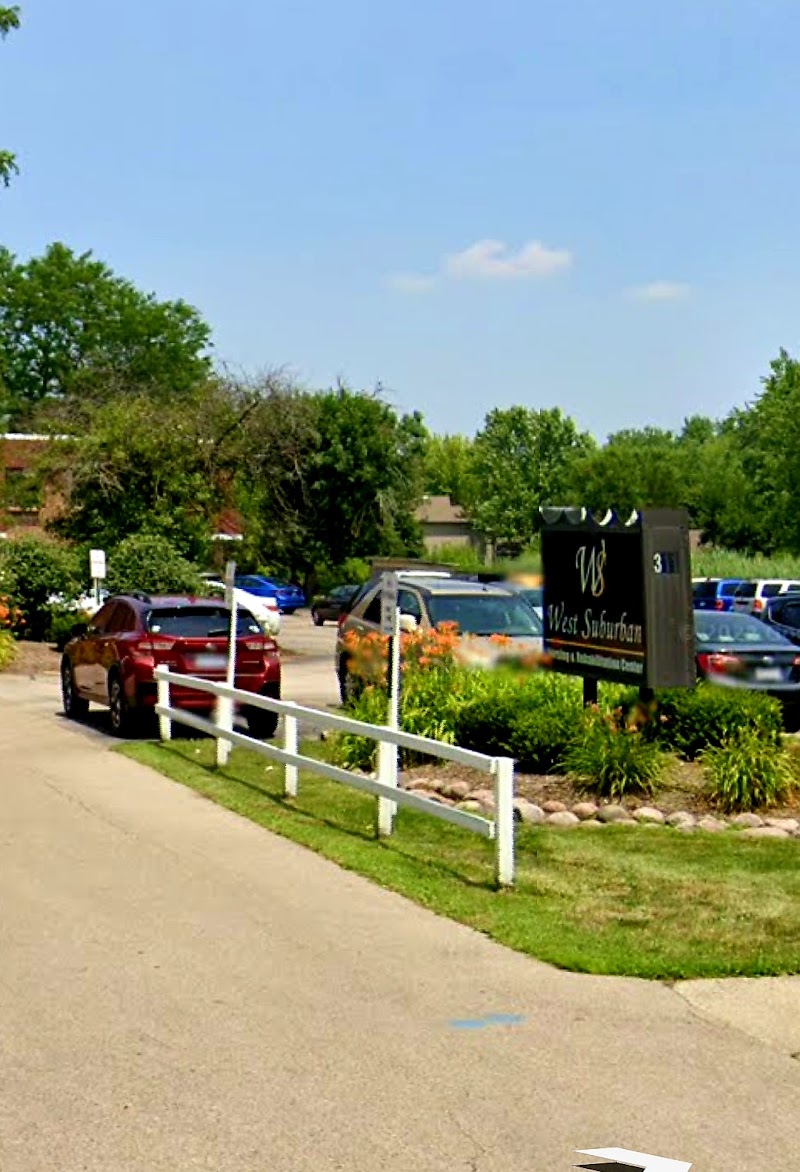
Who Owns and Operates West Suburban Nursing & Rehab Center?

WEST SUBURBAN NURSING & REHAB CENTER is owned by a for-profit company. For-profit facilities operate as businesses with obligations to shareholders or private owners. The facility is operated by INFINITY HEALTHCARE CONSULTING, a chain that manages multiple nursing homes. With 259 certified beds and approximately 188 residents (about 73% occupancy), it is a large facility located in BLOOMINGDALE, Illinois.
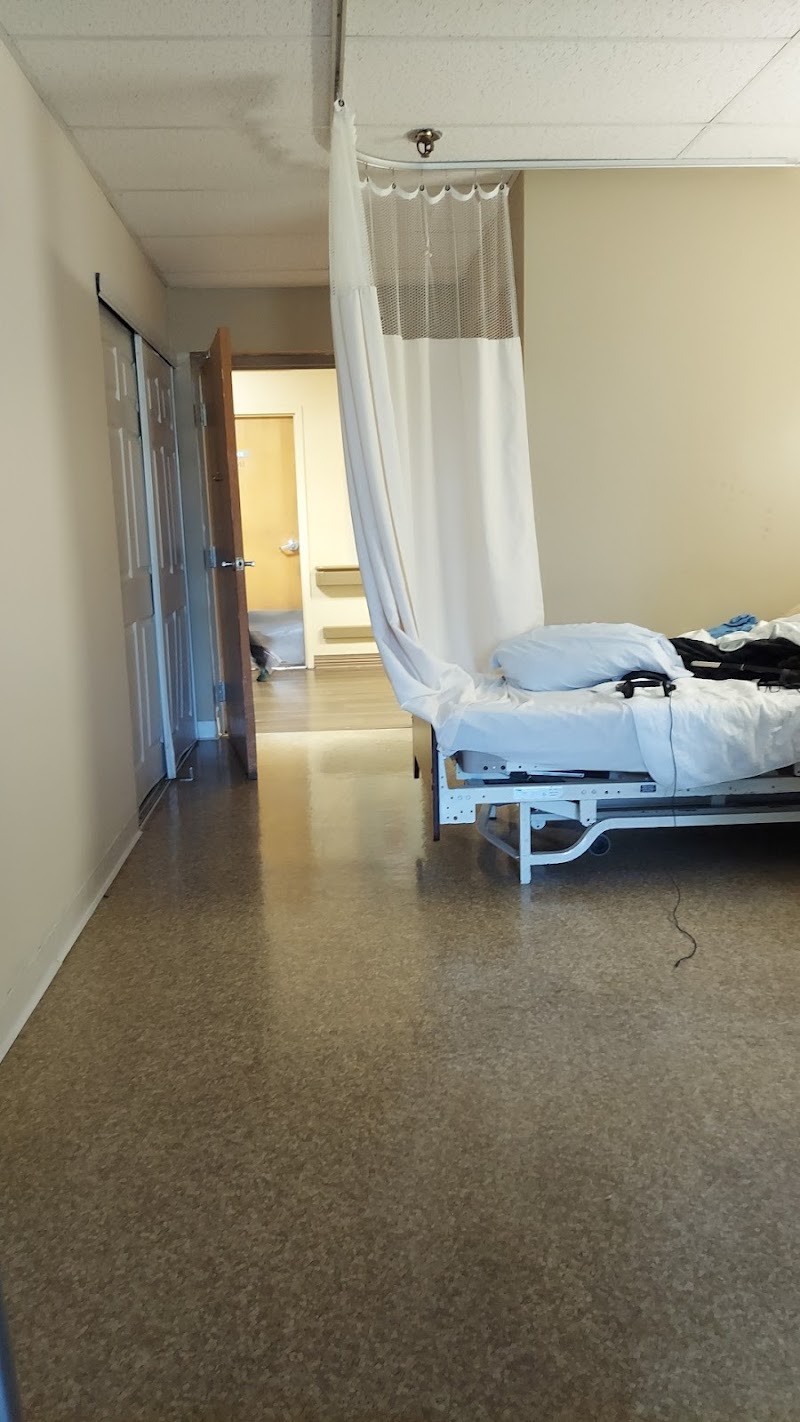
How Does West Suburban Nursing & Rehab Center Compare to Other Illinois Nursing Homes?

Compared to the 100 nursing homes in Illinois, WEST SUBURBAN NURSING & REHAB CENTER's overall rating (3 stars) is above the state average of 2.5, staff turnover (37%) is near the state average of 46%, and health inspection rating (3 stars) is at the national benchmark.

What Should Families Ask When Visiting West Suburban Nursing & Rehab Center?

Based on this facility's data, families visiting should ask: "Can you walk me through typical staffing levels on day, evening, and night shifts?" "Can I visit during a mealtime to observe dining assistance and food quality?" "How do you handle medical emergencies, and what is your hospital transfer rate?" "Can I speak with family members of current residents about their experience?" These questions are particularly relevant given the below-average staffing rating.

Is West Suburban Nursing & Rehab Center Safe?

Based on CMS inspection data, WEST SUBURBAN NURSING & REHAB CENTER has a clean safety record: no substantiated abuse findings (meaning no confirmed cases of resident harm), no Immediate Jeopardy citations (the most serious violation level indicating risk of serious injury or death), and is not on the Special Focus Facility watch list (a federal program monitoring the lowest-performing 1% of nursing homes). The facility has a 3-star overall rating and ranks #1 of 100 nursing homes in Illinois. While no facility is perfect, families should still ask about staff-to-resident ratios and recent inspection results during their visit.

Do Nurses at West Suburban Nursing & Rehab Center Stick Around?

WEST SUBURBAN NURSING & REHAB CENTER has a staff turnover rate of 37%, which is about average for Illinois nursing homes (state average: 46%). Moderate turnover is common in nursing homes, but families should still ask about staff tenure and how the facility maintains care continuity when employees leave.

Was West Suburban Nursing & Rehab Center Ever Fined?

WEST SUBURBAN NURSING & REHAB CENTER has no federal fines on record. CMS issues fines when nursing homes fail to meet care standards or don't correct problems found during inspections. The absence of fines suggests the facility has either maintained compliance or corrected any issues before penalties were assessed. This is a positive indicator, though families should still review recent inspection reports for the full picture.

Is West Suburban Nursing & Rehab Center on Any Federal Watch List?

WEST SUBURBAN NURSING & REHAB CENTER is not on any federal watch list. The most significant is the Special Focus Facility (SFF) program, which identifies the bottom 1% of nursing homes nationally based on persistent, serious quality problems. Not being on this list means the facility has avoided the pattern of deficiencies that triggers enhanced federal oversight. This is a positive indicator, though families should still review the facility's inspection history directly.