HALLMARK HC OF CARLINVILLE
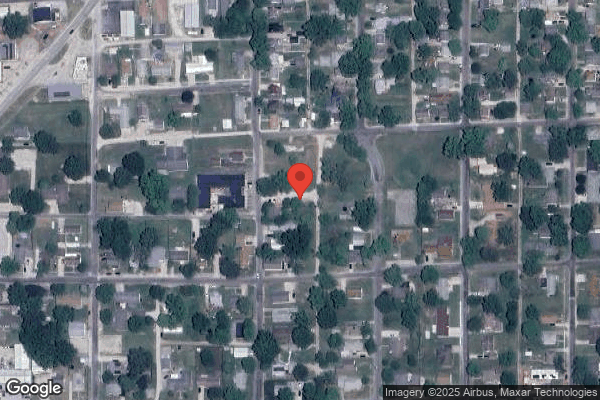
826 NORTH HIGH, CARLINVILLE, IL 62626 (217) 854-9606
Government - City 49 Beds CREST HEALTHCARE CONSULTING Data: November 2025
Trust Grade
15/100
#538 of 665 in IL
Last Inspection: February 2025

Within standard 12-15 month inspection cycle. Federal law requires annual inspections.

Overview

Hallmark HC of Carlinville has received a Trust Grade of F, indicating significant concerns about care quality and safety. Ranking #538 out of 665 facilities in Illinois places it in the bottom half, while being #4 of 6 in Macoupin County suggests only one local option is better. The facility's trend is stable, maintaining 9 issues over the last two years, which indicates ongoing problems rather than improvement. Staffing is a concern, with a low 1-star rating and a 55% turnover rate, which is close to the state average but still suggests instability among staff. Additionally, the facility has accumulated $39,220 in fines, which is average but indicates potential compliance issues. Specific incidents highlight serious deficiencies; for example, one resident did not receive pain medication for nine hours, resulting in undue suffering, and another resident developed a wound due to a failure to monitor and treat properly. While the facility has some average quality measures, the lack of proper RN coverage-less than 78% of other Illinois facilities-raises further concerns about the ability to provide adequate care. Overall, families should weigh these significant weaknesses against any potential strengths when considering this nursing home for their loved ones.

Trust Score
F
15/100
In Illinois
#538/665
Bottom 20%
Safety Record
High Risk
Review needed
Inspections
Holding Steady
9 → 9 violations
Staff Stability
⚠ Watch
55% turnover. Above average. Higher turnover means staff may not know residents' routines.
Penalties
✓ Good
$39,220 in fines. Lower than most Illinois facilities. Relatively clean record.
Skilled Nurses
⚠ Watch
Each resident gets only 25 minutes of Registered Nurse (RN) attention daily — below average for Illinois. Fewer RN minutes means fewer trained eyes watching for problems.
Violations
⚠ Watch
24 deficiencies on record. Higher than average. Multiple issues found across inspections.
★☆☆☆☆
1.0
Overall Rating
★☆☆☆☆
1.0
Staff Levels
★★★☆☆
3.0
Care Quality
★★☆☆☆
2.0
Inspection Score
Stable
2024: 9 issues
2025: 9 issues

The Good

  • Full Sprinkler Coverage · Fire safety systems throughout facility
  • No fines on record

Facility shows strength in fire safety.

The Bad

1-Star Overall Rating

Below Illinois average (2.5)

Significant quality concerns identified by CMS

Staff Turnover: 55%

Near Illinois avg (46%)

Frequent staff changes - ask about care continuity

Federal Fines: $39,220

Above median ($33,413)

Moderate penalties - review what triggered them

Chain: CREST HEALTHCARE CONSULTING

Part of a multi-facility chain

Ask about local staffing decisions and management

Staff turnover is elevated (55%)

7 points above Illinois average of 48%

The Ugly 24 deficiencies on record

3 actual harm
Apr 2025 1 deficiency
CONCERN (F) 📢 Someone Reported This

A family member, employee, or ombudsman was alarmed enough to file a formal complaint

Potential for Harm - no one hurt, but risky conditions existed

Deficiency F0925 (Tag F0925)

Could have caused harm · This affected most or all residents

**NOTE- TERMS IN BRACKETS HAVE BEEN EDITED TO PROTECT CONFIDENTIALITY** Based on interview, observation, and record review, the facility failed to maintain an effective pest control program. This has ...

Read full inspector narrative →
**NOTE- TERMS IN BRACKETS HAVE BEEN EDITED TO PROTECT CONFIDENTIALITY** Based on interview, observation, and record review, the facility failed to maintain an effective pest control program. This has the potential to affect all 38 residents living in the facility. Findings include: 1. On 4/7/25 at 11:45 AM, the medication room was observed; mouse droppings were found around the baseboards. 2. On 4/7/25 at 11:50 AM, the laundry room was observed; mouse droppings were found around the baseboards in the dirty room. 3. R2's Face Sheet, print date of 4/7/25, documents R2 was admitted on [DATE] and has a diagnosis of Diabetes. R2's Minimum Data Set (MDS), dated [DATE], documents R2 is cognitively intact. On 4/7/25 at 8:46 AM, R2 stated, I did see mice last week. They caught two in the room and 1 in the bathroom. On 4/7/25 at 8:50 AM, under R2's window, mouse droppings are observed. 4. R3's Face sheet, print date of 4/7/25, documents R3 was admitted on [DATE] and has diagnoses of a History of Heart Attack and Dependence on Renal Dialysis. R3's General Note, dated 4/2/2025, documents, Resident arrived by hospital transport in w/c (wheelchair) accompanied by wife and daughter, pleasant. Alert and oriented. On 4/7/25 at 8:35 AM, R3 stated, I saw 2 (mice) on the floor and one jumped up and ran across my chest while I was sleeping. I did let someone know. I don't remember their name. They put a mouse trap in here. On 4/7/25 at 8:38 AM, R3's room was observed; mouse droppings were in the closest and in the bathroom. 5. R4's Face Sheet, print date of 4/7/25, documents R4 was admitted on [DATE] and has a diagnosis of Bipolar Disorder. R4's MDS, dated [DATE], documents R4 is cognitively intact. On 4/7/25 at 8:50 AM, mouse droppings were observed in R4's closet. R4's room and bathroom had no mouse traps in it. On 4/7/25 at 9:05 AM, R4 stated, I did have mice in the room, but they came in and put traps down. 6. R5's Face Sheet, print date of 4/7/25, documents R5 was admitted on [DATE], and has a diagnosis of Dementia. R5's MDS, dated [DATE], documents R5 is severely cognitively impaired. On 4/7/25 at 8:59 AM, R5 stated she does see mice on the floor of her room. On 4/7/25 at 9:00 AM, R5's closet has mouse droppings in it. In the closet, there is a laundry basket with 3 items of clothing. The clothing has mouse droppings on them. On 4/7/25 at 8:20 AM, V1, Administrator, stated, Today is my first day. I am unsure about a mouse problem. The Maintenance Director recently quit. On 4/7/25 at 8:53 AM, V3, Housekeeping stated,About a week ago, I saw a mouse in the laundry room. We put glue traps out. On 4/7/25 at 8:56 AM, V4, Housekeeping, stated, I have noticed mice. We keep putting traps down. On 4/7/25, V6, Certified Nurse Aide, stated, Mice have been around or a couple of months. We were putting out traps and we caught quite a few, but then we stopped catching them, so we switched to glue traps. On 4/7/25 at 9:22 AM, V9, Exterminator, stated he visits the facility 2 times a month. One visit is for the outside and the other is for the inside. When I do the inside, I do the kitchen, common areas, and the offices. I don't go into residents' rooms because usually they are asleep. I was aware of a mouse problem and I put out 4 new bait boxes outside and looked for holes to seal up. I do not remember if the facility let me know they had an active problem or not. I will walk around with (V1) today when I come. At 1:04 PM, V9 stated he is adding 5 more bait boxes to the outside, and will come back next week to check on the progress and effectiveness of the new bait boxes. The policy Pest Control, dated 7/1/24, documents, It is the policy of this faciilty to maintain an effective pest ontrol program so that it remains free of pests and rodents. The Long Term Care Facility Application for Medicare and Medicaid, dated 4/7/25, documents the facility has 38 residents residing in the facility.
Feb 2025 8 deficiencies 2 Harm
SERIOUS (G)

Actual Harm - a resident was hurt due to facility failures

Deficiency F0697 (Tag F0697)

A resident was harmed · This affected 1 resident

Based on interview, observation, and record review, the facility failed to provide pain relief for 1 of 1 resident (R34) reviewed for pain in the sample of 43. This failure resulted in R34 not having ...

Read full inspector narrative →
Based on interview, observation, and record review, the facility failed to provide pain relief for 1 of 1 resident (R34) reviewed for pain in the sample of 43. This failure resulted in R34 not having R34's pain controlled. Findings include: R34's Face Sheet, print date of 2/25/25, documents R34 was admitted in 10/3/23 and has diagnoses of Hyperkalemia and Dementia. R34's Physician Order, dated 2/24/2025 at1:15 PM, documents, Lorazepam Oral Tablet 0.5 MG (Lorazepam) Give 0.5 mg by mouth every 2 hours as needed for restlessness and agitation. R34's Physician Order, dated 2/24/2025 at 1:15 PM, documents, Morphine Sulfate (Concentrate) Solution 20 MG/ML (milliliter) Give 0.25 milliliter by mouth every 2 hours as needed for pain and shortness of breath. R34's Hospice Notes, dated 2/24/2025 11:30 PM, documents, Resident cont (continued) with hospice care. Respirations labored with gurgling noted. Breath sounds wet, not moving secretions out. Skin cool & clammy to the touch. Afebrile. Occasional moan noted. SPO2 (oxygen saturation) 94% 4L (liters) O2 (oxygen) via mask. Residents eyes open & resting in bed with HOB (head of bed) elevated. PRN (as needed) morphine et (and) ativan not yet delivered from pharm (pharmacy). Unable to pull from backup. Hospice notified. NOR (new order received) to start Hyoscyamine (used for secretions) 0.125 SL (sublingual) q (every) 4 hrs (hours) PRN et 650 mg (milligram) acetaminophen rectal suppositories q 4 PRN. Hospice to f/u (follow up) on Rx (prescription) that was sent last week to pharmscripts to get delivered asap (as soon as possible). R34's MAR documents R34 received Tylenol on 2/24/25 at 11:20 PM for pain of a 4 on a 0 - 10 scale. No other doses of Tylenol given. On 2/25/5 at 9:08 AM, R34 is lying in bed, eyes closed and open mouth breathing. R34 has a nonrebreather oxygen mask on. R34 is twitching his left arm and hand. R34 has twitching of his bilateral feet. On 2/25/25 at 9:11 AM, V10, Licensed Practical Nurse, stated, (R34's) Morphine and Ativan are not in from pharmacy yet. They got a prescription sent into the local pharmacy that just opened up. (Pharmacy) is our regular pharmacy but they haven't delivered it yet. I checked on (R34) earlier I think he is comfortable. He does have the Tylenol and Hyoscyamine if he needs it. R34's MAR documents R34 received Morphine on 2/25/25 at 9:35 AM for pain of a 4 on a 0 - 10 scale. On 2/25/25 at 12:12 PM, R34 is lying in his bed, eyes closed, and open mouth breathing. R34 has a nonrebreather oxygen mask on. R34 is lying still, no twitching observed. On 2/25/25 at 12:14 PM, V10, stated, The facility was able to get the morphine and ativan. I gave it to him about 20 minutes after I talked to you this morning. He is more comfortable now. On 2/25/25 at 2:49 PM, V1, Administrator, stated, We sent the order to pharmacy. They have cut off times. At night when we didn't have it, the nurse tried to get into (facility medication dispensing machine) to get the medication, and she was unable to. (V2) even came up and she was not able to get into it either. There was a problem with the (medication dispensing machine) which is fixed now. We called again this morning and the pharmacy was able to get it to us. We did end up getting the medication from our pharmacy and not the local one because our pharmacy was on the way before the in town pharmacy opened. On 2/25/25 at 2:52 PM, V2, stated she did come up the night before and try to get the Morphine and Ativan out of the (medication dispensing machine), but she was unable to. The policy Management of Pain, dated 5/16/22, documents, Our mission is to facilitate resident independence, promote resident comfort and preserve resident dignity.
SERIOUS (G)

Actual Harm - a resident was hurt due to facility failures

Pharmacy Services (Tag F0755)

A resident was harmed · This affected 1 resident

Based on interview, observation, and record review, the facility failed to provide pain medication for 1 of 1 resident (R34) reviewed for pain in the sample of 43. This failure resulted in R34 not hav...

Read full inspector narrative →
Based on interview, observation, and record review, the facility failed to provide pain medication for 1 of 1 resident (R34) reviewed for pain in the sample of 43. This failure resulted in R34 not having Morphine available for 9 hours, which resulting in undue pain. Findings include: R34's Face Sheet, print date of 2/25/25, documents R34 was admitted in 10/3/23 and has diagnoses of Hyperkalemia and Dementia. R34's Physician Order, dated 2/24/2025 at 1:15 PM, documents, Lorazepam Oral Tablet 0.5 MG (Lorazepam) Give 0.5 mg by mouth every 2 hours as needed for restlessness and agitation. R34's Physician Order, dated 2/24/2025 at 1:15 PM, documents, Morphine Sulfate (Concentrate) Solution 20 MG/ML (milliliter) Give 0.25 milliliter by mouth every 2 hours as needed for pain and shortness of breath. R34's Hospice Notes, dated 2/24/2025 11:30 PM, documents, Resident cont (continued) with hospice care. Respirations labored with gurgling noted. Breath sounds wet, not moving secretions out. Skin cool & clammy to the touch. Afebrile. Occasional moan noted. SPO2 (oxygen saturation) 94% 4L (liters) O2 (oxygen) via mask. Residents eyes open & resting in bed with HOB (head of bed) elevated. PRN (as needed) morphine et (and) ativan not yet delivered from pharm (pharmacy). Unable to pull from backup. Hospice notified. NOR (new order received) to start Hyoscyamine (used for secretions) 0.125 SL (sublingual) q (every) 4 hrs (hours) PRN et 650 mg (milligram) acetaminophen rectal suppositories q 4 PRN. Hospice to f/u (follow up) on Rx (prescription) that was sent last week to (pharmacy) to get delivered asap (as soon as possible). On 2/25/25 at 9:11 AM, V10, Licensed Practical Nurse, stated, (R34's) Morphine and Ativan are not in from pharmacy yet. They got a prescription sent into the local pharmacy that just opened up. (Pharmacy) is our regular pharmacy but they haven't delivered it yet. I checked on (R34) earlier; I think he is comfortable. He does have the Tylenol and Hyoscyamine if he needs it. R34's Medication Administration Record (MAR) documents R34 received Morphine on 2/25/25 at 9:35 AM for pain of a 4 on a 0 - 10 scale. On 2/25/25 at 12:14 PM, V10, stated, The facility was able to get the morphine and ativan. I gave it to him about 20 minutes after I talked to you this morning. He is more comfortable now. On 2/25/25 at 2:49 PM, V1, Administrator, stated, We sent the order to pharmacy. They have cut off times. At night when we didn't have it, the nurse tried to get into (facility medication dispensing machine) to get the medication and she was unable to. (V2) even came up and she was not able to get into it either. There was a problem with the (medication dispensing machine) which is fixed now. We called again this morning and the pharmacy was able to get it to us. We did end up getting the medication from our pharmacy and not the local one, because our pharmacy was on the way before the in-town pharmacy opened. On 2/25/25 at 2:52 PM, V2, stated she did come up the night before and try to get the Morphine and Ativan out of the (medication dispensing machine), but she was unable to. (Pharmacy) Illinois Pharmacy Information, undated, documents, for new orders on Monday - Friday the cutoff Time is 11:00 AM and 11:00 PM. Medication Ordering Reminders. If a medication is needed before the next delivery will arrive, call the pharmacy to request a STAT delivery.
CONCERN (D)

Potential for Harm - no one hurt, but risky conditions existed

Transfer Notice (Tag F0623)

Could have caused harm · This affected 1 resident

**NOTE- TERMS IN BRACKETS HAVE BEEN EDITED TO PROTECT CONFIDENTIALITY** Based on interview and record review, the facility failed to provide residents with a written explanation as to why they are bei...

Read full inspector narrative →
**NOTE- TERMS IN BRACKETS HAVE BEEN EDITED TO PROTECT CONFIDENTIALITY** Based on interview and record review, the facility failed to provide residents with a written explanation as to why they are being transferred to the hospital for 3 of 3 residents (R28, R29, R34) reviewed for hospitalization in the sample of 43. Findings include: 1. R28's Face Sheet, print date of 2/25/25, documents that R28 was admitted on [DATE] and has a diagnosis of Dementia. R28's Progress Note, dated 2/22/25, documents, Resident has been transported to (local hospital) d/t (due to) fall per orders from On-call DR. R28's Notice of Transfer of Discharge, dated 2/22/25, fails to document the reason R28 was sent out to the hospital. 2. R29's Face Sheet, print date of 2/24/25, documents R29 was admitted on [DATE] and has diagnoses of Severe Protein - Calorie malnutrition, Type 2 Diabetes Mellitus, and Dementia. R29's General Note, dated 2/22/2025 01:30, documents, Resident has been transported to ER (Emergency Room) d/t (a fall and c/o (complaint of) hip and lower back pain. R29's Notice of Transfer or Discharge fails to document the reason R29 was sent to the hospital. 3. R34's Face Sheet, print date of 2/25/25, documents R34 was admitted on [DATE] and has a diagnosis of Alzheimer's. R34's Change of Condition / Transfer, dated 2/17/2025 10:49, documents, (R34) was transferred on a gurney via ambulance to acute care hospital Sent To: OTHER ACUTE CARE HOSPITAL Date: 02/17/2025 10:55 Sent From: (facility) Unit: Station B Reason(s) for Transfer: Other -- Critical Potassium level 6.8. R34's Notice of Transfer or Discharge, dated 2/27/25, fails to document the reason for transfer. On 2/24/25 at 10:41 AM, V10, Licensed Practical Nurse, stated when she sends someone to the hospital, she does not give them a written notice as to why they are going to the hospital. On 2/24/25 at 10:45 AM, V2, Director of Nurses, stated she did not believe the residents are given anything in writing as to why they are going to the hospital. The policy Bed Hold Notification, undated, fails to address the need to provide a written explanation as to why a resident is being sent to the hospital to the resident.
CONCERN (D)

Potential for Harm - no one hurt, but risky conditions existed

Pressure Ulcer Prevention (Tag F0686)

Could have caused harm · This affected 1 resident

**NOTE- TERMS IN BRACKETS HAVE BEEN EDITED TO PROTECT CONFIDENTIALITY** Based on interview, observation, and record review, the facility failed to provide the prescribed pressure ulcer treatment for 1...

Read full inspector narrative →
**NOTE- TERMS IN BRACKETS HAVE BEEN EDITED TO PROTECT CONFIDENTIALITY** Based on interview, observation, and record review, the facility failed to provide the prescribed pressure ulcer treatment for 1 of 2 residents (R29) reviewed for pressure ulcers in the sample of 43. Findings include: R29's Face Sheet, print date of 2/24/25, documents R29 was admitted on [DATE] and has diagnoses of Severe Protein - Calorie malnutrition, Type 2 Diabetes Mellitus, and Dementia. R29's Minimum Data Set, dated [DATE], documents R29 is severely cognitively impaired and has 1 Stage 3 pressure ulcer. R29's Treatment Administration Record, start date of 1/11/25 with a discontinue date of 2/25/25, documents, Silver sulfadiazine External Cream 1 % (Silver Sulfadiazine) Apply to Sacrum topically every night shift for wound care Cleanse area with WC (wound cleanser), pat dry, apply SSD (Silver Sulfadiazine), Hydrogel, collagen, calcium alginate, cover with ABD (abdominal pad) pad, secure with retention tape daily and PRN (as needed). This treatment was signed off on night shift on 2/23/25. R29's Treatment Administration Record, start date of 1/31/25, documents, Sacrum: cleanse with wound cleanser, apply calcium alginate, collagen particles, SSD (Silver Sulfadiazine) and iodoform packing strip and apply ABD daily and PRN until healed. This treatment was signed off on night shift on 2/23/25. The Wound Assessment Report, dated 2/20/25, documents R29 has a Sacrum Pressure Ulcer Stage 3 measuring 2.0 cm x 0.70 cm x 0.50 cm undermining from 9 o'clock to 3' o'clock 2 cm. On 2/24/25 at 2:16 PM, V2, Director of Nurses, removed the sacrum dressing dated 2/24/25. The dressing had brown yellowish drainage. There was no iodoform packing strip in the tunneling of the wound. V2 cleansed the pressure ulcer with wound cleanser, measured the pressure ulcer at 3 centimeters (cm) x 0.7 cm. V2 did not measure the depth. The pressure ulcer tunnels up toward 12 o'clock. On 2/24/25 at 3:10 PM, V2 stated there was no iodoform packing strip in the pressure ulcer tunnel. V2 acknowledged the two conflicting wound orders in place for R29. On 2/25/25 at 3:01 PM, V21, Wound Nurse Practitioner, stated, They should have been following the orders the way they were written. It is hard to say if it caused him harm because he has so many other contributing factors. The policy Pressure ulcer Prevention, Identification, & Treatment, dated 10/16/23, documents, It is the responsibility of the charge Nurse / designee to care for pressure areas, and provide treatments as ordered.
CONCERN (D)

Potential for Harm - no one hurt, but risky conditions existed

Infection Control (Tag F0880)

Could have caused harm · This affected 1 resident

**NOTE- TERMS IN BRACKETS HAVE BEEN EDITED TO PROTECT CONFIDENTIALITY** Based on observation, record review, and interview, the facility failed to clean soiled surfaces for 2 of 8 residents (R21,R31) ...

Read full inspector narrative →
**NOTE- TERMS IN BRACKETS HAVE BEEN EDITED TO PROTECT CONFIDENTIALITY** Based on observation, record review, and interview, the facility failed to clean soiled surfaces for 2 of 8 residents (R21,R31) reviewed for infection control in the sample of 43. Findings include: 1. On 2/23/2025 at 10:53AM during incontinent care, V5, Certified Nursing Assistant (CNA), and V9, CNA, transferred R21 from wheelchair to bed. R21 had dark blue sweat pants on that had visible wet area on seat of pants. R21was incontinent of a large amount of loose watery stool. After incontinent care provided to R21, V5 and V9 did not sanitize R21's wheelchair. On 2/25/2025 at 2:48PM V13, CNA, stated if during incontinent care a resident is soiled through clothing onto chair, the chair should be cleansed. 2. On 2/23/25 at 12:48 PM, V5 and V19, CNA, transferred R31 from the bed to the wheelchair. The wheelchair seat had a soiled napkin and a large spot of dried food in the seat. Neither CNA cleaned off the seat before sitting R31 down. On 2/25/25 at 2:50 PM, V1, Administrator, stated, The wheelchair should have been cleaned before they (R31) down. I will look for a policy. R31's Face Sheet, print date of 2/25/25, documents R31 was admitted on [DATE] with a diagnosis of Dementia. As of 2/26/2025 at 10:38 AM, no policy has been provided.
CONCERN (F)

Potential for Harm - no one hurt, but risky conditions existed

Deficiency F0761 (Tag F0761)

Could have caused harm · This affected most or all residents

**NOTE- TERMS IN BRACKETS HAVE BEEN EDITED TO PROTECT CONFIDENTIALITY** Based on interview, observation, and record review, the facility to dispose of expired stock medications used by all residents. ...

Read full inspector narrative →
**NOTE- TERMS IN BRACKETS HAVE BEEN EDITED TO PROTECT CONFIDENTIALITY** Based on interview, observation, and record review, the facility to dispose of expired stock medications used by all residents. This failure has the potential to affect all 37 residents in the facility. The Findings Include: On [DATE] at 8:40 AM, the Unit Med Cart was reviewed with V4, Registered Nurse (RN), with the following medications expired: Fiber Laxative 625 MG (milligram) caplets that expired on 12/2024. A resident (R28) had a bottle of Atropine 1% ophthalmic solution that expired on 1/2025. On [DATE] at 8:45 AM, the Main Floor Med Cart was reviewed with the following medications expired: Mucus Relief 400 MG expired on 12/2024, Acidophilus 200 million cells/dose expired on 11/2024, Vitamin C 500 MG expired on 11/2024, and Cetirizine 10 MG that expired on 1/2025. On [DATE] at 8:55 AM, the Medication Room reviewed with the following expirations: Mucus Relief 400 MG bottles with 300 caplets - three bottles total, and all had expired on 12/2024. Benadryl 12.5 MG 8 OZ (ounce) bottle expired on 1/2025. Tylenol Suppositories 650 MG expired on 10/2024. Influenza Vaccines, 2023-2024 formula, with 39 syringes expired on [DATE], 10 syringes that expired on [DATE], and Influenza Quadrivalent vaccination with 18 syringes that expired on [DATE]. On [DATE] at 9:15 AM, V4, stated, We had a clinic come in and provide all vaccinations to the residents and they brought their own vaccinations, so the facility did not use ours, that is why they are all expired. All the medications that were expired in the med cart, and the influenza vaccines, were stock meds and can be and are used by all residents when needed. On [DATE] at 8:20 AM, when asked who is responsible for checking expirations on medications, V10, Licensed Practical Nurse (LPN), stated I don't know, (V2, Director of Nursing) who is responsible for checking expirations on medications? On [DATE] at 8:22 AM, V2, Director of Nursing (DON), stated, Everyone is responsible for checking the expirations on medications. They really should be checking them when they have the bottle out to give that medication. The Facility's Medication Storage policy, dated [DATE], documents, The facility stores all drugs and biologicals in a safe, secure, and orderly manner and in accordance with state and federal regulations. 3. The nursing staff is responsible for maintaining medication storage and preparation areas in a clean, safe, and sanitary manner. 4. Drug containers that have missing, incomplete, improper, or incorrect labels shall be returned to the pharmacy for proper labeling before storing. Discontinued, outdated, or deteriorated drugs or biologicals shall be returned to the dispensing pharmacy or destroyed. 5. Medications shall be administered prior to the manufacturer's expiration date. The Resident Census and Conditions of Residents, CMS 671, dated [DATE], documents the facility has 37 residents living in the facility.
CONCERN (F)

Potential for Harm - no one hurt, but risky conditions existed

Food Safety (Tag F0812)

Could have caused harm · This affected most or all residents

Based on interview, observation, and record review, the facility failed to store food at the needed temperature and discard expired food to prevent food borne illness. This failure has the potential t...

Read full inspector narrative →
Based on interview, observation, and record review, the facility failed to store food at the needed temperature and discard expired food to prevent food borne illness. This failure has the potential to affect all 37 residents living in the facility. Findings include: On 2/23/25 at 8:21 AM, the stand up freeze had a temperature of 33 degrees. This freezer contained: large bag of carrots, bag of mix vegetables, and a bag of mixed onions and peppers that were thawed and mushy, a box of popsicles that were liquid, 16 precooked chicken patties that were thawed, 21 magic cup ice cream that were liquid, a large box of sausage patties that were completely thawed, a large box of hamburger patties that were partially thawed, 3 loaves of garlic bread that were thawed, and a box of multiple bags of whip cream that is liquid. The stand up refrigerator had a precooked ham that was dated 2/11, a carton of ready care thickened water dated 12/9, a carton of prune juice dated 11/4, and a carton of orange juice dated 2/14. On 2/23/25 at 8:25 AM, V15, Cook, stated the freezer stopped freezing at the beginning of the week and they were told they could keep using it as long as it stayed at 32 degrees or lower. Most of our frozen food is across town at our sister facility. We just bring over what we need for a few days. On 2/23/25 at 8:30 AM, V16, Dietary Aide, stated the beverage cartons are dated when they are opened. On 2/23/25 at 10:02 AM, V17, Dietary Manager, stated, The freezer has been out since Friday. We moved most of our product to (sister facility). Friday I brought over just enough food for the weekend. I have thrown all the food out now. Leftovers are only good for 4 days. I don't believe the ham was from 2/11; I think it was dated wrong. The date on the beverage cartons is when it came in not when it was opened. On 2/23/25 at 3:00 PM, V1, Administrator, stated, We went a bought a new freezer. The policy All time/ Temperature control for Safety ((TSC) foods, frozen and refrigerated, will be appropriately stored in accordance with guidelines of the FDA Food Code, dated 9/1/21, documents, Freezer temperatures will be maintained at a temperature of 0 F (Fahrenheit). This policy fails to address how long left overs and open cartons of beverages are to be kept. The Resident Census and Conditions of Residents, CMS 671, dated 2/23/25, documents the facility has 37 residents living in the facility.
MINOR (C)

Minor Issue - procedural, no safety impact

Deficiency F0912 (Tag F0912)

Minor procedural issue · This affected most or all residents

**NOTE- TERMS IN BRACKETS HAVE BEEN EDITED TO PROTECT CONFIDENTIALITY** Based on observation, interview, and record review, the facility failed to provide 80 square feet of floor space per resident in...

Read full inspector narrative →
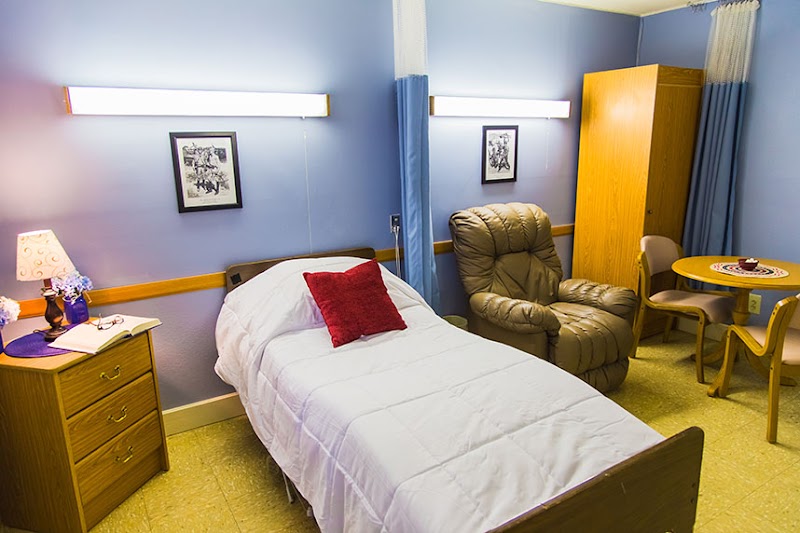
**NOTE- TERMS IN BRACKETS HAVE BEEN EDITED TO PROTECT CONFIDENTIALITY** Based on observation, interview, and record review, the facility failed to provide 80 square feet of floor space per resident in all resident bedrooms. This has the potential to affect all 37 residents living in the facility. Findings include: The facility has a total of 25 resident rooms. Each of these two-bed resident rooms have less than 80 square feet of floor space for each resident. The residents residing in these rooms are R1, R2, R3, R4, R5, R6, R7, R8, R9, R10, R11, R12, R13, R14, R15, R16, R17, R18, R19, R20, R21, R22, R23, R24, R25, R27, R28, R29, R30, R31, R32, R33, 34, R35, R37, R38, and R40. Two rooms, rooms [ROOM NUMBERS], are currently being used as a dining room on the Dementia Unit. On 2/23/25 at 10:30 AM, all resident rooms measured, were less than 80 square foot per resident. On 2/23/25 at 11:00 AM, V1, Administrator, stated, All of our rooms are less than 80 square foot per resident. We have a room waiver for this. On 2/23/25 at 11:05 AM, V6, Maintenance Director, stated, I don't have a list of the rooms with their sizes, I just know they are all less than 80 square foot per resident. The facility's Resident Census and Conditions of Residents, CMS 671, dated 2/23/25, documents there are 37 residents residing in the facility.
Jan 2024 9 deficiencies 1 Harm
SERIOUS (G)

Actual Harm - a resident was hurt due to facility failures

Quality of Care (Tag F0684)

A resident was harmed · This affected 1 resident

**NOTE- TERMS IN BRACKETS HAVE BEEN EDITED TO PROTECT CONFIDENTIALITY** Based on observation, interview, and record review, the facility failed to identify, monitor, and treat a wound for 1 of 4 (R9) ...

Read full inspector narrative →
**NOTE- TERMS IN BRACKETS HAVE BEEN EDITED TO PROTECT CONFIDENTIALITY** Based on observation, interview, and record review, the facility failed to identify, monitor, and treat a wound for 1 of 4 (R9) residents, reviewed for repositioning, in a sample of 45. This failure resulted in R9 obtaining a wound to her coccyx, buttocks, and causing R9 to experience pain. Findings include: R9's admission Profile, print date of 1/22/4, documented R9 was admitted on [DATE], with diagnosis of Unspecified Fracture of Third Lumbar Vertebra, Subsequent Encounter for Fracture with Routine Healing, Displaced Fracture of greater Trochanter of Left Femur, subsequent encounter for closed fracture with routine healing, Chronic Obstructive Pulmonary Disease. R9's Care Plan, dated 1/9/24, documented, (R9) has the potential for impaired skin integrity related to incontinence, limited mobility. It continues Pressure redistribution mattress to bed. Provide diet as ordered. Labs as ordered. Evaluate Skin at least Weekly. Medications as ordered. R9's Minimum Data Set, dated [DATE], documented R9 is severely cognitively impaired, frequently incontinent of bowel and bladder, and requires moderate assist of staff to reposition in bed and no skin impairment. On 1/16/2024 from 9:50 AM to 12:50 PM, with 15-to-30-minute intervals, R9 was lying in the bed on her back. On 1/16/2024 at 9:40 AM, V17, Certified Nurse's Assistant (CNA), stated R9 has not been doing well. V17 also stated R9 has been weak and was not feeding herself. On 1/16/2024 at 9:50 AM, R9 stated she has a sore on her bottom, and it hurts. On 1/17/2024 at 9:10 AM, R9 was lying in bed on her back, with a partially eaten tray on bedside table, out of R9's reach. On 1/17/2024 at 9:12 AM, R9 had facial grimacing, and stated her bottom hurts. R9 attempted to shift weight, unsuccessfully. R9 stated she was not able to turn herself. R9 stated, I can't get off my butt. It hurts really bad. On 1/17/2024 at 9:17 AM, V17, CNA, informed R9 after she finishes with her food, she would reposition her. On 1/17/2024 at 9:21 AM, V17, CNA, and V18, CNA, performed incontinent care. R13 was incontinent of urine and bowel. V18 cleansed R9's peri area. V17 and V18 then turned R9 onto her left side exposing R9's bottom. R9's buttock was fire engine red, with deep linear indentations. A pressure ulcer measuring approximately 0.5cmx1cm x0.2cm (centimeters) was observed to the coccyx area. On 1/17/2024 at 9:21 AM, V17, CNA, stated the pressure ulcer was not there yesterday. V17 stated R9's buttocks have been red, but not open. On 1/18/2024 at approximately 10:00 AM, R9 was lying on her left side with buttocks exposed. R9's sacrum, coccyx, and buttocks, were red in color, and no treatment in place to the pressure ulcer. On 1/18/2024 at approximately 2:15 PM, R9 stated she was still having pain to her buttocks. R9 stated she could not give a number on a scale, but that it hurt a lot. On 1/18/2024 at 3:00 PM, when asked what they were doing about R9's pressure ulcer, V1, Administrator, and V3, Regional Clinical Nurse, both stated they were not aware of R9 having a wound. On 1/22/24 at 1:02 PM, V13, Licensed Practical Nurse/LPN, stated she was not notified of R9 having the open area until Friday. V13 stated the process when finding a new wound is that the aide will notify the nurse immediately. V13 stated she would then assess the resident. V13 stated she would notify the doctor and hospice nurse. V13 stated R9 now has a treatment to her area, and that it's changed every 72 hours. On 1/23/2024 at 1:05 PM V23, Nurse Practitioner, stated she was made aware of R9 having an open wound on Friday. V23 stated she saw the area on Friday and today. V23 stated she believes the area was due to R9 overall decline related to bronchitis. V23 stated she believes the area was caused by moisture, related to R9 being incontinent of both bowel and bladder, which is a change for R9. V23 stated she would expect to be notified of the wound when first identified. V23 stated the treatment would start then. V23 stated R9 knows when she is in pain and can verbalize it. V23 stated not treating the wound would contribute to R9's pain. The Skin Protocol policy provided by the facility, not titled nor dated, documented, PURPOSE: To provide guidance to facility staff on the proactive approach to maintaining resident's skin integrity and the prevention/treatment of pressure ulcers. It also documents Preventative Measures: 1.Turning, positioning and pressure redistribution (off-loading) will be utilized for all residents who have been identified of being at risk for developing pressure ulcers. 3. Minimizing exposure to moisture.
CONCERN (D)

Potential for Harm - no one hurt, but risky conditions existed

Incontinence Care (Tag F0690)

Could have caused harm · This affected 1 resident

**NOTE- TERMS IN BRACKETS HAVE BEEN EDITED TO PROTECT CONFIDENTIALITY** 2. R13's MDS, dated [DATE], documented her cognition was severely impaired and that she was frequently incontinent of urine and ...

Read full inspector narrative →
**NOTE- TERMS IN BRACKETS HAVE BEEN EDITED TO PROTECT CONFIDENTIALITY** 2. R13's MDS, dated [DATE], documented her cognition was severely impaired and that she was frequently incontinent of urine and feces. R13's Care Plan, dated 11/21/22, documented, One person physical assist required. On 1/17/2024 at 9:21 AM, V17, Certified Nurses Assistant (CNA), and V18, CNA, performed incontinent care. R13 was incontinent of urine. V17 and V18 assisted R13 into the bed using a standing mechanical lift. Using a wet washcloth and spray soap, V18 cleansed R13's peri area. V17 and V18 then assisted R13 onto her right side. V18, using a wet wash cloth, cleansed R13's entire left buttock and partial right buttock V18 then placed an incontinent brief partially behind R13 and assisted R13 onto her back. V17 and V18 then turned R13 onto her left side and pulled the incontinent brief completely behind R13. V17 and V18 then turned R13 onto her back and fastened the brief. V17 and V18 did not cleanse R13's entire right buttock. The facility' policy and procedure, entitled, Incontinence Care, dated, 9/15/19, documented, provide proper incontinence are in order to clean skin clean, dry. wash all soiled skin areas and dry very well, especially between skin folds. Based on observation, interview, and record review, the facility failed to provide complete incontinent care for 2 of 4 residents (R4, R13) reviewed for incontinent care, in a sample of 45. Findings include: 1. R4's, Care Plan, dated 11/23/22, documented, (R4) requires extensive care assistance, due to a medical diagnosis of dementia, impaired mobility, weakness with incontinence of bowel and bladder. R4's, Physician Orders, dated 1/17/2024, documented R4 receives iron supplement tablet, 325 milligrams (mg) every morning and evening for Anemia. On 1/17/24 at 3:37 PM, R4 was transferred from her position in a wheelchair into her bed, with assistance of two nursing staff, V14 and V15, both Certified Nurse Aides, (CNA's), using a full mechanical lift. After laid flat on her back in bed and left pant leg up, R4's left lower ankle was exposed, revealing dark black dried streaks. V14 and V15 washed their hands, and placed on clean gloves. V14 was on R4's on left side of bed, and V15 on R4's right side of bed. They removed R4's pants and soiled incontinent brief. R4 was heavily soiled with black, thick bowel from her front perineum area, inner lateral thighs, and streaks of black stool down her inner left thigh to her ankle and in between her toes. V14 and V15 positioned R4 to her left side, as V14 cleansed R4's perianal area. During R4's cleansing, V14 had stool on her gloves; V14 folded the wet wash cloth and continued to clean R4's buttock. Then V14 changed her soiled gloves, placed on clean gloves, and placed R4 on her back to clean R4's front side. At this time, V14 and V15 stated they needed more wash cloths to clean R4. V15 changed her gloves, washed her hands, and left the room to get more clean wash cloths, and V15 re-entered the room. During this time, V14 and V15 discussed who is now dirty and who was clean to complete R4's incontinent bowel care. V14 then cleansed R4's front perineum area. R4 was heavily soiled with bowel movement from her perineum. V14 continued to use a wash cloth, folded cloth, and continued to cleanse; R4's inner labia folds were not cleansed, only partial. R4 was then positioned to her right side. V14 and V15 then placed a clean incontinent brief to R4. On 1/17/24 at 4:05PM, V14,CNA, and V15, CNA, both stated, they knew they did not do R4's incontinent care correctly. They both stated they came on their shift at 2:00PM, and they were immediately involved caring for another resident that was heavily incontinent of bowel, and they were only two CNA's to attend to these resident on this hall on the evening shift.
CONCERN (E)

Potential for Harm - no one hurt, but risky conditions existed

Resident Rights (Tag F0550)

Could have caused harm · This affected multiple residents

**NOTE- TERMS IN BRACKETS HAVE BEEN EDITED TO PROTECT CONFIDENTIALITY** Based on observation, interview, and record review, the facility failed to provide privacy and dignity for 4 of 9 (R4, R18, R31,...

Read full inspector narrative →
**NOTE- TERMS IN BRACKETS HAVE BEEN EDITED TO PROTECT CONFIDENTIALITY** Based on observation, interview, and record review, the facility failed to provide privacy and dignity for 4 of 9 (R4, R18, R31, R33) residents, reviewed for resident rights, in a sample of 45. Findings include: 1. R31's face sheet, dated 1/18/24, documented R31 was admitted to the facility on [DATE], with diagnosis of dementia, type 2 diabetes, dysphagia, hemiplegia, and hemiparesis following cerebral infarction affecting right dominant side, aphasia, osteoarthritis, hypertension, atherosclerosis, peripheral vascular disease, cardiomyopathy, and atherosclerosis. R31's Minimum Data Set (MDS), dated [DATE], documented R31 is severely cognitively impaired. R31's Care Plan, dated 3/21/23, documented R31 requires extensive assistance with Activities of Daily Living (ADLS) and requires one-person physical assistance with eating. On 1/16/24 at 12:15 PM, R31's lunch was served to her in the dementia unit. At 12:57 PM, R31 had not taken any bites of her lunch, and V9, Certified Nurse Assistant (CNA), fed R31 a few bites of food, while V9 was standing beside R31. The dementia unit did not have any additional chairs for the facility staff to sit in when assisting residents with eating. 2. R33's face sheet, dated 1/18/24, documented \R33 was admitted to the facility on [DATE], with diagnosis of dementia, Alzheimer's disease, atherosclerosis, congestive heart failure, chronic kidney disease, and osteoarthritis. R33's MDS, dated [DATE], documented R33 is severely cognitively impaired. R33's care plan, dated 11/26/22, documented R33 requires extensive assist with all ADLS and requires one-person physical assistance with eating. On 1/16/24 at 12:46 PM, R33 was sitting in his wheelchair in the dementia unit dining room. R33 was not feeding himself. V9, CNA, verbally cued R33 to eat. R33 did not respond to the verbal cues. V9 then fed R33 some of his lunch. V9 was standing while feeding R33. The dementia unit dining room did not have any additional chairs for the facility staff to sit in when assisting residents with eating. On 1/22/24 at 8:30 AM, V1, Administrator, stated she would expect the CNA's to be sitting while feeding residents. The facility policy for feeding the dependent resident, dated 9/15/19, documents 4. When feeding in dining room: A. Identify resident. B. Ensure that proper diet is being served. Check tray card to content of plate. C. Ensure proper consistency. D. Position resident for comfort. E. Protect clothing with clothing protector. F. If the resident cannot see the tray, tell him/her the position of each item on the tray. G. Cut or divide food into small portions and give resident a small amount at a time. Do not force the resident to eat. H. Do not discuss unpleasant subjects while the resident is eating. I. Never make the resident feel that the meal must be hurried, but that the procedure is pleasant. Give him/her your complete attention. Sit so you are at the same level as the resident when possible. 4. R18's, Minimum Data Set (MDS), dated [DATE], documented R18 is cognitively intact. On 1/16/2024 at 10:25 AM, V12, CNA, was repositioning R18 to her left side. R18's bare buttocks were exposed towards the door of R18's room, facing the hallway. At this time, another unknown staff member knocked on R18's door and opened it, requesting the mechanical lift. At this time,V11, CNA stated R18 should have a curtain to provide privacy, and she would let maintenance know. On 1/17/2024 at 9:30 AM, R18 still did not have a privacy curtain. On 1/17/2024 at 11:53 AM, R18 stated, I would like a curtain. It does bother me. That is my only complaint about my care, especially since there is a man across the hall. On 1/17/2024 at 2:14 PM, V7, Licensed Practical Nurse (LPN), stated her and V11, CNA, discussed R18's need for a privacy curtain and added, especially since there are men across the hall. V7 continued to state, If we open the door and she is on her side, she is exposed. We try to cover her but if the person outside the door doesn't know . On 1/18/2024 at 1:32 PM, V1, Administrator, stated R18 should have a curtain for privacy. The Facility's Dignity Policy, dated 9/15/2019, documents, All residents will be treated with dignity and respect. Federal and State laws guarantee certain basic rights to all residents of this facility. It continues to document residents have the right to privacy and confidentiality. 3. On 1/17/24 at 3:37PM, R4 was transferred from her wheelchair into her bed, with assistance of two nursing staff, V14 and V15, both Certified Nurse Aides (CNA's) using a full mechanical lift, removed R4's soiled pants, and bowel movement soiled incontient brief. R4's was placed at the window side, with window blinds open, and multiple plants in the windowsill, and a divided curtain from R4's roommate was not closed to provide privacy. On 1/18/24, V4 CNA/Business office Manager, stated she would expect privacy be provided to any resident during care services.
CONCERN (E)

Potential for Harm - no one hurt, but risky conditions existed

Safe Environment (Tag F0584)

Could have caused harm · This affected multiple residents

Based on observation, interview, and record review, the facility failed to maintain the building in good repair for 11 of 13 (R2, R6, R10, R14, R19, R19, R26, R29, R31, R33, R36, and R37) of 13 reside...

Read full inspector narrative →
Based on observation, interview, and record review, the facility failed to maintain the building in good repair for 11 of 13 (R2, R6, R10, R14, R19, R19, R26, R29, R31, R33, R36, and R37) of 13 residents, reviewed for a homelike environment, in a sample of 46 reviewed for a homelike environment. Findings include: On 1/16/24 at 10:00 AM, during the facility tour of the dementia unit, the following maintenance concerns were observed: 1. R19 and R31's had multiple missing floor tiles in room. 2. R14 and R29's room had multiple missing floor tiles, the closet door was off the track, and the peach-colored painted walls were covered with white dry wall patches throughout the entire room. 3. R2 and R26's room hadroom had multiple missing floor tiles, the wall paint was chipped in multiple areas throughout the room, and the closet doors were off the track. 4. R37's room was missing the closet doors. 5. R33 and R36's room had multiple areas of wall damage with torn and missing wallpaper, the trim on the middle of the wall was missing revealing damaged drywall, the bathroom door and door jamb had multiple areas with rust coming through the white paint; the bathroom had missing floor tiles, the base of the bathroom vanity cabinet was rusty and coming apart, the closet doors were off the track and the track was damaged and the bedside table was stained and chipped. 6. R6 and R10's room had base board off the wall, there was broken sheet rock at the base of the wall, multiple damaged and missing floor tiles, the closet door was missing on one side of the closet and the bathroom door jamb and bathroom door had multiple areas of rust coming through the paint. On 1/16/24 at 11:55 AM, V9, Certified Nurse Assistant (CNA), stated the facility has an app (application) they are supposed to use to notify the maintenance department of repairs needed, but no one ever uses the app. V9 continued to state she just lets the new maintenance man know if something needs fixed. On 1/18/24 at 9:40 AM, V19, Maintenance Director, stated the staff tell him or leave him a note if something needs fixed. V19 continued to state he does not having any ongoing maintenance plans for the dementia unit, other than he might remodel the shower. The Maintenance Guarding Angel Rounds documents, dated 12/1/23 through 1/22/24, did not document any of the needed repairs on the dementia unit. The facility's General Maintenance and Monitoring Policy, undated, documented, The purpose of the policy is to provide guidelines on maintenance rounds for facility upkeep to maintain a safe and hazard free environment. The guidelines are to: 1. The Maintenance Director is responsible for upkeep and repair of facility equipment. 2. Staff are to notify Maintenance verbally or using a work order maintenance request concerning any equipment, furniture, general maintenance concerns. Maintenance needs to follow up with the repairs based on the priority in a timely manner. 3. The Maintenance Director will complete daily environmental rounds of the facility to observe any needed repairs. 4. The Administrator and the Maintenance Director will complete monthly rounds to further observe for any environmental or equipment issues. 5. Department Heads will also be responsible for monitoring and reporting any concerns related to the equipment and environment at the daily morning meeting. 6. The Administrator will monitor that repairs are completed in a timely manner.
CONCERN (E)

Potential for Harm - no one hurt, but risky conditions existed

Infection Control (Tag F0880)

Could have caused harm · This affected multiple residents

**NOTE- TERMS IN BRACKETS HAVE BEEN EDITED TO PROTECT CONFIDENTIALITY** 3. R14's face sheet, dated 1/18/24, documented R14 was admitted to the facility on [DATE] with diagnoses of Alzheimer's disease,...

Read full inspector narrative →
**NOTE- TERMS IN BRACKETS HAVE BEEN EDITED TO PROTECT CONFIDENTIALITY** 3. R14's face sheet, dated 1/18/24, documented R14 was admitted to the facility on [DATE] with diagnoses of Alzheimer's disease, dementia, osteoporosis, major depressive disorder, and macular degeneration. R14's MDS (Minimum Data Set), dated 1/9/24, documented R14 is severely cognitively impaired. On 1/16/24 at 9:10 AM, V9, CNA, entered R14's room and assisted R14 to the restroom. V9 donned gloves, without the benefit of hand hygiene, and then assisted R14 onto the toilet. V9 removed R14's clothing and disposable brief. V9 changed gloves, without the benefit of hand hygiene, and assisted V9 with perineal hygiene. V9 then placed a new disposable brief on R14 and dressed R14. V9 removed the gloves and donned new gloves, no hand hygiene performed. V9 then assisted R14 into bed. V9 removed the gloves and did not perform hand hygiene before leaving the room or after leaving R14's room. V9 then returned to the dementia unit dining room and assisted other residents. 4. R33's face sheet, dated 1/18/24, documented R33 was admitted to the facility on [DATE], with diagnoses of dementia, Alzheimer's disease, atherosclerosis, congestive heart failure, chronic kidney disease, and osteoarthritis. R33's MDS, dated [DATE], documented R33 is severely cognitively impaired. R33's care plan, dated 11/26/22, documented R33 requires extensive assist with all ADLS (activities of daily living). On 1/16/24 at 9:40 AM, V9, CNA, and V10, CNA, entered R33's room with a mechanical lift. V9 and V10 donned gloves without the benefit of hand hygiene. V9 and V10 transferred R33 onto the bed with the mechanical lift. V9 and V10 repositioned R33 and checked R33's disposable brief for incontinence. R33 was not incontinent at this time. V9 and V10 removed their gloves and left R33's room. V9 and V10 did not perform hand hygiene. On 1/22/24 at 8:31 AM, V1, Administrator. stated she would expect the CNA's to be completing hand hygiene before and after resident care, and before and after changing gloves. 2. R9's admission Profile, print date of 1/22/4, documents R9 was admitted on [DATE], with diagnoses of Unspecified Fracture of Third Lumbar Vertebra, Subsequent Encounter for Fracture with Routine Healing, Displaced Fracture of greater Trochanter of Left Femur, subsequent encounter for closed fracture with routine healing, and Chronic Obstructive Pulmonary Disease. On 1/17/2024 at 9:21 AM, V17, CNA, and V18, CNA, provided incontinent care to R9. R9 was incontinent of urine and feces. V17 and V18 washed their hands and applied gloves. V17 then cleansed urine and feces from R9's peri area. V17 and V18 rolled R9 onto her right side exposing R9's bottom. V17 then cleansed urine and feces from R9's bottom. V17 then, using the same urine and feces soiled gloves, placed R9's clean undergarment beneath R9 and manipulated R9's clothing and gloves, with the same urine and feces soiled gloves. 5. R18's Care Plan, dated 7/26/2024, documented R18 has an actual pressure ulcer to her sacrum, right and left buttocks, and requires assistance with turning and repositioning. R18's Minimum Data Set (MDS), dated [DATE], documented R18 is cognitively intact and has 3 stage four pressure ulcers. R18's, Culture Report of sacrum, right and left buttock, dated 10/29/2023, documented R18 has Methicillin-resistant Staphylococcus aureus (MRSA). R18's, Progress Notes, dated 1/15/2024, documented R18 remains on isolation precautions for MRSA of the wounds to buttocks and sacrum. On 1/16/2024 at 10:30 AM, there was a Contact Precautions sign outside R18's room. At this time, V12, Certified Nursing Assistant (CNA) was observed assisting R18 with repositioning in bed. R18's bed linens were visibly soiled with a moderate amount of serosanguinous (clear/yellow) drainage. R18 had 3 open areas of skin on her backside. V12 did not have a Personal Protective Equipment (PPE) gown on. On 1/17/2024 at 2:14 PM, V7, Licensed Practical Nurse (LPN), stated R18 was on isolation for an infection of her wounds. V7 continued to state staff should be wearing a gown while providing direct care to R18. On 1/18/2024 at 1:31 PM, V1, Administrator, stated R18 is on contact precautions for MRSA of her wounds and she would expect staff to wear a gown and gloves while providing direct care, such as turning and repositioning, especially when there is drainage present. The Facility's Transmission Based Precautions Policy, dated 3/22/2023, documents, Purpose: To provide staff guidelines for transmission-based precautions to protect resident and themselves while providing cares. Policy: Transmission based precautions are initiated when a resident develops signs and symptoms of a transmission able infection, arrives for admission with symptoms of an infection; or has a laboratory confirmed infection; and is at risk of transmitting the infection to other residents. Responsibility: It is the responsibility of all staff and agents of the facility to adhere to the transmission-based precaution guidelines. It further documents when a resident is on contact precautions, Staff are to wear a disposable gown upon entering the room and remove before leaving the room and avoid touching potentially contaminated surfaces with clothing after gown is removed. Based on observation, interview, and record review, the facility failed to wear appropriate personal protective equipment (PPE) as identified in Infection Control procedures, and failed to cleanse hands after removing gloves following resident incontinence care, to prevent/control spread of infection for 4 of 5 residents (R4, R9. R18 and R33) reviewed for Infection Control in a sample of 45. Findings include: 1. R4's, Physician Orders, dated 1/17/2024, documented R4 receives iron supplement tablet, 325 milligrams (mg) every morning and evening for Anemia. R4's Care Plan, last revision date of 11/23/22, documented R4 requires extensive care assistance due to a medical diagnosis of dementia, impaired mobility, weakness; behavioral disturbance of screams and yelling; also, documented R4 receives only one assistance from staff with transfers, which was last reviewed/revised on date of 2/16/2017. R4's Impaired skin integrity Focus area was last reviewed/revised on 11/23/22, for interventions to monitor R4's incontinence. On 1/17/24 at 3:37PM, R4 was transferred from her position in a wheelchair into her bed, with assistance of two nursing staff, V14 and V15, both Certified Nurse Aides (CNA's), using a full mechanical lift. R4's was laid flat on her back in bed and R4's left pant leg was up, leaving R4's left lower ankle exposed, and revealing dark black dried streaks. V14 and V15 washed their hands, and placed on clean gloves. V14 was on R4's on left side of bed and V15 on R4's right side of bed. They removed R4's pants and soiled incontinent brief. R4 was heavily soiled with black, thick bowel movement from her front perineum area, inner lateral thighs, and streaks of black stool were down her inner left thigh to her ankle, and in between her toes. V14 and V15 positioned R4 to her left side, as V14 cleansed R4's perianal area. During R4's cleansing, V14 had stool on her gloves, folded the wet wash cloth, and continued to clean R4's buttock. V14 changed her soiled gloves, put on clean gloves, and placed R4 on her back to clean R4's front side. At this time, V14 and V15 stated they needed more wash cloths to clean R4. V15 changed her gloves, washed her hands, and left the room to get more clean wash cloths, and V15 re-entered the room. During this time, V14 and V15 discussed who was now dirty and who was clean to complete R4's incontinent bowel care. V14 then cleansed R4's front perineum area. R4 was heavily soiled with bowel movement from her perineum. V14 continued to use a clean wash cloth, folded cloth, and continued to cleanse R4's inner labia folds were not cleansed, only partially. R4 was then positioned to her right side, and V15 stated to V14, Am I clean or dirty now? V15 then cleaned R4's left side of perianal area and placed on a clean incontinent brief. R4 again rolled over to her left side, V14 and V15 fastened the incontinent brief. V14 then wiped the black dried stool from R4's inner left leg and between toes. On 1/17/24 at 4:05PM, both V14 and V15 stated they knew they did not do R4's incontinent care correctly. They both stated they came on thier shift at 2:00PM, and were immediately involved caring for another resident that was heavily incontinent of bowel movement, and they are the only two CNA's to attend to these resident on this hall on the evening shift. The facility's' policy and procedure, entitled, Hand Washing, dated, 9/4/2020, documented, this facility considers hand hygiene the primary means to prevent the spread of infections. All staff will properly wash hands after direct contact with contaminate substance, and continues to document the following: when hands are visibley dirty or soiled with body fluids, after removing gloves, hand hygiene is always the final step after removing and disposing of personal protective equipment.
CONCERN (F)

Potential for Harm - no one hurt, but risky conditions existed

Deficiency F0727 (Tag F0727)

Could have caused harm · This affected most or all residents

Based on interview, observation, and record review, the facility failed to employ a Registered Nurse (RN) in the role of full time Director of Nursing (DON), and to provide consecutive 8 hour Register...

Read full inspector narrative →
Based on interview, observation, and record review, the facility failed to employ a Registered Nurse (RN) in the role of full time Director of Nursing (DON), and to provide consecutive 8 hour Registered Nurse (RN) coverage in the facility. This has the potential to affect all 43 residents residing in the facility. Finding includes: There was no consecutive 8-hour RN coverage in 24 hours for the entire Month of October 2023, 11/1, 11/2, 11/4 to 11/30, the entire month of December 2023 and 1/1/2024 to 1/15/2024. On 01/16/24 at 1:38 PM, V9, Certified Nursing Assistant (CNA), stated \V1, Administrator, is also the DON (Director of Nursing). On 1/16/2024 at 11:40 AM, V10, CNA, stated V1 is also the facility DON. On 1/16/2024 at 1:40 PM, V1, Administrator, stated they do not have RN coverage. V1 stated they are actively recruiting for RNs. V1 stated V3, Regional Nurse, comes to the building once or twice a week. On 1/16/2024 at 12:20 PM, V3, Regional Nurse, stated they are actively recruiting for the Director of Nursing position. V3 stated they did have a DON for a short time and she was not willing to perform the required duties of that facility and quit. On 1/16/2023 at 3:06 PM, V3, Regional Nurse, stated the facility does not have a staffing policy. V3 stated she follows the staffing guidelines. The facility's Resident Census and Conditions of Residents, CMS 672, dated 1/17/24, documents there are 43 residents residing in the facility.
CONCERN (F)

Potential for Harm - no one hurt, but risky conditions existed

Deficiency F0761 (Tag F0761)

Could have caused harm · This affected most or all residents

Based on observation, interview, and record review, the facility failed to properly store medication, and label tuberculin and insulin vials. This has the potential to affect all 43 residents living i...

Read full inspector narrative →
Based on observation, interview, and record review, the facility failed to properly store medication, and label tuberculin and insulin vials. This has the potential to affect all 43 residents living in the facility. Findings include: On 01/16/2024 at 10:07 AM, the facility's Medication Storage Room was inspected. The refrigerator located in the medication room contained the following: 1. 1- 5 ml open and partially used multi dose vial of Apisol. No open date on the box or the vial. The Apisol package insert, dated 3/2016, documents Vials in use more than 30 days should be discarded due to possible oxidation and degradation which may affect potency. On 1/16/2024 at 10:15 AM, the medication cart was inspected. The cart contained the following: 2. R2's open and partially used multi dose vial of Lantus. No open date. 3. R1's open and partially used multi dose vial of Lantus. No open date. On 1/2/2024 at 9:55 AM, V7, Licensed Practical Nurse (LPN), stated, The Apisol medication is a stock medication and used for all residents in the facility. Unless they have an allergy, all residents get an Apisol shot at least yearly. This would be the medication that would be used. V7 verified the multi dose vial was open and in use. V7 stated she had not used the insulin pen, as it is scheduled for evenings. V7 stated the pen, once put in use, should have the resident name on it and the open date. V7 stated the multi dose vial and the insulin pen have different expiration days once open. V7 stated the expiration date decreases. V7 stated the open date lets them know when that date is. V7 stated the Apisol and Lantus vials expire in thirty days after opening. On 1/17/2024 at 2:06 PM, V13, LPN, stated when opening the multi dose TB (tuberculin) and insulin vials, the open date is put on the box and the vial. V13 stated she is not sure of the exact date for the TB, but knows it is shorter than the manufacture. V13 stated the insulin vials are only good for 30 days. V13 stated the open date is placed to let them know when the medication has to used by. The facility's Storage of Medication, dated 1/1/21, documents the facility stores all drugs and biologicals in a safe, secure, and orderly manner. The facility's Medication Administration Policy/Procedure Insulin Administration via vial Procedure, dated 9/27/22, documents General Guidelines Characteristics and Types of insulin 4. Check the expiration date, if drawing from an opened multi-dose vial. If opening a new vial, record expiration date on the vial (follow manufacturer recommendations for expiration after opening.) The facility's Resident Census and Conditions of Residents, CMS 672, dated 1/17/24, documents there are 43 residents residing in the facility.
CONCERN (F)

Potential for Harm - no one hurt, but risky conditions existed

Deficiency F0868 (Tag F0868)

Could have caused harm · This affected most or all residents

Based on interview and record review, the Facility failed to ensure the minimum required staff were present at the Monthly Quality Assurance Meetings. The failure has the potential to affect all 43 re...

Read full inspector narrative →
Based on interview and record review, the Facility failed to ensure the minimum required staff were present at the Monthly Quality Assurance Meetings. The failure has the potential to affect all 43 residents residing in the Facility. Findings include: On 1/16/2024 at 12:20 PM, V3, Regional Nurse, stated they are actively recruiting for the Director of Nursing position. V3 stated they did have a DON for a short time, and she was not willing to perform the required duties of the facility and quit. On 1/22/2024 at 8:14 AM, V1, Administrator, stated the Quality Assurance team meets monthly and should include every department head. V1 added, When I get a DON (Director of Nursing), she'll be there. The Facility's Quality Management Program Meeting Verification Forms, dated 10/18/2023, 11/15/2023, and 12/20/2023, were reviewed, and did not include a signature/title for the DON position. The Resident Census and Conditions of Residents, CMS 671, dated 1/16/24, documents the facility has 43 residents living in the facility.
MINOR (C)

Minor Issue - procedural, no safety impact

Deficiency F0912 (Tag F0912)

Minor procedural issue · This affected most or all residents

**NOTE- TERMS IN BRACKETS HAVE BEEN EDITED TO PROTECT CONFIDENTIALITY** Based on observation, interview, and record review, the facility failed to provide 80 square feet of floor space per resident in...

Read full inspector narrative →
**NOTE- TERMS IN BRACKETS HAVE BEEN EDITED TO PROTECT CONFIDENTIALITY** Based on observation, interview, and record review, the facility failed to provide 80 square feet of floor space per resident in multiple resident bedrooms. This has the potential to affect all 43 residents living in the facility. Findings include: The facility has a total of 25 resident rooms. Each of these two-bed resident rooms have less than 80 square feet of floor space for each resident, according to the facility document, Resident Room Square Footage, dated 2/21/20. Two rooms, rooms [ROOM NUMBERS], are currently being used as a dining room. On 1/16/24 at 10:30 AM, 1 of these two-bed resident's rooms, measures 72 square feet. The resident residing in this room is R24. On 1/16/24 at 10:30 AM, 2 of these two-bedroom resident's rooms, measure 77 square feet per resident's bed. The residents residing in these rooms are R19, R23, R31 and R32. On 1/16/24 at 10:30 AM, 6 of these two-bed resident's rooms, room [ROOM NUMBER], 5, 7, 21, 22, and 23 measure 78 square feet per resident's bed. The residents residing in these rooms are R5, R11, R17, R18, R25, R26, R28, R37, R32, and R38. On 1/16/24 at 10:30 AM, 14 of these two-bed resident's rooms, measure 79 square feet per resident's bed. The residents residing in these rooms are R1, R2, R3, R4, R6, R7, R8, R9, R10, R12, R13, R14, R15, R16, R21, R22, R23, R27, R29, R30, R32, R33, R34, R35, R36, R141, R142, and R143. On 1/18/24 at 9:45 AM, V1, Administrator, stated there have been no changes to the room sizes, and all the rooms have been covered by a room waiver the facility requested the previous year. The facility's Resident Census and Conditions of Residents, CMS 672, dated 1/17/24, documents there are 43 residents residing in the facility.
Feb 2023 6 deficiencies
CONCERN (D)

Potential for Harm - no one hurt, but risky conditions existed

Notification of Changes (Tag F0580)

Could have caused harm · This affected 1 resident

**NOTE- TERMS IN BRACKETS HAVE BEEN EDITED TO PROTECT CONFIDENTIALITY** Based on interview and record review, the facility failed to notify the physician for a neurological change in condition for one...

Read full inspector narrative →
**NOTE- TERMS IN BRACKETS HAVE BEEN EDITED TO PROTECT CONFIDENTIALITY** Based on interview and record review, the facility failed to notify the physician for a neurological change in condition for one of 1 residents (R39) reviewed for notification in the sample of 46. Findings Include: R39's Electronic Medical Record documents diagnoses included: Chronic Myeloid Leukemia, BCR/ABL - Positive, not having achieved remission [The presence of the BCR-ABL1 abnormality confirms the clinical diagnosis of CML, a type of ALL, and rarely acute myeloid leukemia (AML)], chronic diastolic (congestive) heart failure, hypertension, and heart failure. R39's admission Minimum Data Set (MDS), dated [DATE], documents she was alert. R39's Nurses Note, dated 12/10/2022 at 3:22 PM, documents CNA (Certified Nursing Assistant) picked up a blue pill from the resident's room laying on her bed. CNA brought the pill to the nurse, who went through resident's medications to identify which medication R39 had missed. R39 did not have any medication like the one CNA had brought. Writer asked R39 where she got the medicine. R39 stated, It's from my cousin and it's just Tylenol. R39 appeared very confused and lethargic; alert and oriented x2 (baseline x4). R39 apologized and writer told her all medications should be approved by her provider before taking the medication, and disposed of medicine. Will continue to monitor. There was no documentation R39's physician was notified regarding the blue pill being found in R39's bed, that R39 admitted to taking medication that was brought in by family, or the change in R39's orientation. R39's Nurses Note, dated 12/10/2022 at 6:15 PM, documents MD (physician) was notified via fax about 1+ pitting edema and open lesions to bilateral left extremity (BLE). R39's Nurses Note, dated 12/12/22 at 10:06 AM, documents the resident was very groggy this AM, and admitted to taking three Tylenol PM with Melatonin. Room was searched and multiple bottles of medication were found and taken to DON. Resident has been ordering medications online and having them delivered to facility. Family is aware, physician and DON aware. Will continue to monitor. R39's Medication Error Form, dated 12/12/22, documents resident admitted to taking three Tylenol PM with melatonin by mouth. She is unable to state what time she took the medications but said it was late last night. Resident admitted to ordering medications online that were not ordered from a physician. R39's Nurses Note, dated 12/13/2022 at 12:57 AM, documents writer paged 911 after noting R39 with yellow eyes and pale skin. Resident has a slurred speech and appears lethargic, oriented to self, vital signs 105/80, Pulse 78, Spo2 (oxygen saturation level) 78% on room air, DON, POA (Power of Attorney), and MD notified. R39 left the facility at 1:00 AM with two assists On 2/23/23 2:52 PM, V2, Director of Nursing (DON), stated on 12/10/2022, CNA found a blue pill on resident's bed and the blue pill was compared to resident's current medications and did not match any other medications. On 2/23/23 2:45 PM, V1, Administrator, stated family was bringing in Tylenol PM in a baggie. The facility was not aware until a CNA (name not documented) found a blue pill on resident's bed that did not match any of her medications. The facility did a room search on 12/12/2022, and found the Tylenol PM tablets. V1 stated (R39) had a package delivered and V5, Social Service Director, told V1 she thought medications were in the package, because the package was making a rattling sound. V5 went to resident's room and (R39) was in the therapy room. V5 went to the therapy room and asked (R39) to open the package. (R39) opened the package and said, I ordered the melatonin. V5 told R39 she could not have medications or order medications without a doctor's order. R39 told V5 she did not know she needed an order from the doctor. V5 took the medications to the nurse, and the nurse locked the medications in the med room. V1 stated the facility got a physician's order for the melatonin. The Facility's Change of Condition Notification Policy, revised 10/7/2022, documents the resident's physician will be notified of any changes that occur in the resident's condition by licensed personnel as warranted. These changes are to include change in level of consciousness.
CONCERN (D)

Potential for Harm - no one hurt, but risky conditions existed

Infection Control (Tag F0880)

Could have caused harm · This affected 1 resident

Based on observation, interview, and record review, the facility failed to perform hand hygiene and maintain adequate infection control practices to prevent cross contamination for 2 of 41 residents (...

Read full inspector narrative →
Based on observation, interview, and record review, the facility failed to perform hand hygiene and maintain adequate infection control practices to prevent cross contamination for 2 of 41 residents (R33, R34) reviewed for infection control in the sample of 46. Findings include: On 2/23/ 23 at 9:50 AM, V8, Licensed Practical Nurse (LPN), provided wound care treatment to R34. V8 placed a disposable pad under R R34's feet. V8 removed the wound dressing and observed blood and green drainage on the bandage. Blood dripped from wound onto the disposable pad. V8 placed scissors and wound cleanser bottle on the pad where blood was dripping from R R34's wound. V8 did not wash her hands or use hand sanitizer going from the dirty to clean wound dressing. V8 did not clean wound cleanser bottle after providing treatment care. V8 placed the contaminated wound cleanser on roommate's (R33's) nightstand. V8 did not clean roommate's table after placing the contaminated wound care cleanser bottle on roommate's table. V8 placed the contaminated wound care cleanser bottle in the bottom of the treatment cart, exposing the other items in drawer. V8 did not wash hands or use hand sanitizer before leaving R34's room. On 2/23/23 at 9:42 AM, V8 stated R34 is on Isolation for Methicillin resistant Staphylococcus aureus (MRSA). On 2/24/23 at 11:22 AM, V2, Director of Nursing (DON), stated she expects the staff, and nursing staff, to wash hands, and not to cross contaminate. She expects the nurse to cleanse the wound cleanser bottle and not place the dirty bottle in the treatment cart. V2 stated V8, LPN, should not have placed the dirty wound cleanser bottle on R34's roommate nightstand. R34's Lab Report, dated 12/8/22, documents culture results in aerobic blood culture Methicillin Resistant Staphylococcus Aureus (MRSA). The Hand Hygiene policy, dated 9/4/2020, documents to provide guidelines for adequate hand washing in order to reduce the transmission of organisms from resident to resident, staff to resident, and from resident to staff. The facility considers hand hygiene the primary means to prevent the spread of infections. All staff will properly wash hands after direct contact with any contaminated substance, after direct resident care, and as instructed. Employees must wash their hand for twenty (20) full seconds using antimicrobial or non-antimicrobial soap and water under the following conditions: Before and after direct contact with residents, when hands are visibly dirty or soiled with blood or other body fluids, after contact with blood, body fluids, secretions, mucous membranes, or non-intact skin, after removing gloves, after handling items potentially contaminated with blood, body fluids, or secretions. Hand hygiene is always the final step after removing and disposing of personal protective equipment. The Infection Control policy, dated 5/21/2022, documents to provide guidelines for all staff regarding the facility established infection control program that investigates, controls and prevents infections. Surveillance for nosocomial infections will be done to provide a format for the surveillance of infections of infections occurring within facility. The facility will establish and maintain the program to provide a safe and sanitary environment, and to help prevent the development and transmission of disease and infection. Infections will be investigated, controlled, and prevented, and isolation precautions will be determined on an individual basis. The Infection Report Form will be kept on those residents who are receiving antibiotics or have an infection. It is the responsibility of the Licensed Nurse/nursing staff to follow the policy to ensure proper identification and containment of infections.
CONCERN (E)

Potential for Harm - no one hurt, but risky conditions existed

Antibiotic Stewardship (Tag F0881)

Could have caused harm · This affected multiple residents

Based on interview and record review, the facility failed to provide adequate tracking for antibiotic stewardship surveillance to monitor for patterns and trends in infections and antibiotic use for 4...

Read full inspector narrative →
Based on interview and record review, the facility failed to provide adequate tracking for antibiotic stewardship surveillance to monitor for patterns and trends in infections and antibiotic use for 4 of 4 residents (R12, R13, R20, R94) reviewed for antibiotic stewardship in the sample of 46. Findings include: 1. The facility's document, Monthly Infection Control Log (Line List), dated July (No year), documented; had requested Infection Control Log for past year) documents R12 was diagnosed with a Urinary Tract Infection (UTI) and Colitis, but does not document the date of the onset of the infection, or identify the organism/pathogen causing the infection. The Infection Control Log documents R12 was ordered Levaquin on 7/28/22. R12's Urine Culture and Sensitivity Report, dated 7/27/22, documents the causative pathogen as Klebsiella oxytoca ESBL (Extended Spectrum betalactamase). R12's Physician Order Summary (POS), dated 2/24/23, documents the order, dated 7/29/22: Levaquin 500 milligrams (mg) daily for 5 days for infection. 2. The facility's document, Monthly Infection Control Log (Line List), dated November 2022, documents R13 was diagnosed with a UTI, with the date of onset of 11/9/22, but it did not document the organism/pathogen causing the infection. It documents R13 was ordered Levaquin to be started on 11/11/22. R13's Urine Culture Report, dated 11/10/22, documents the causative organism/pathogen for his UTI as Citrobacter freundii and Streptococcus agalactiae. R13's POS, dated 2/24/23, documents the order, dated 11/11/22: Levofloxacin 750 mg every 48 hours for kidney injury until 11/29/22. 3. The facility's document, Monthly Infection Control Log (Line List), dated September 2022 documents R20 was diagnosed with a UTI on 9/30/22, but it did not document the organism/pathogen that caused the infection. According to the log, R20 was ordered Bactrim on 10/1/22. R20's Microbiology Report, dated 9/30/22, documents the source as urine and the pathogen for R20's UTI as Klebsiella pneumoniae. R20's Medication Administrator Record (MAR), dated October 2022, documents the order dated 9/30/22 : Bactrim 800-160 mg one every 12 hours for bacterial infection. R20's September and October MARs does not document R20 received her dose of antibiotics on 9/30/22 or 10/4/22. 4. The facility's document, Monthly Infection Control Log (Line List) dated October 2022 documents R94 was diagnosed with a UTI, with the onset date of 10/19/22, but the log does not identify the organism/pathogen that caused the infection. The log documents R94 was ordered Keflex on 10/19/22 to treat the UTI. R94's Microbiology Report, dated 10/20/22, documents the pathogen causing her UTI was Escherichia coli. R94's Physician Order Summary, dated 2/24/23, documents the order, dated 10/19/22: Keflex 500 mg three times a day for UTI until 10/25/22. On 2/24/23 at 10:15 AM, V2, Director of Nursing (DON), stated, Since I took over, I am making sure we have the culture and sensitivity report to ensure the residents with UTIs or other infections are receiving the appropriate treatment, but I know the Infection Control Log did not have all the required information on it before I took over. I make sure all the information is on the Infection Control Log each month and use this to track and trend infections in the facility. On 2/24/23 at 1:20 PM, V2 provided a facility floor plan with UTIs, respiratory infections and skin infections identified, but no causative organism/pathogen identified for any of these infections; therefore no information available for tracking and trending of like organisms being identified . The facility's policy, Antibiotic Stewardship-Review and Surveillance of Antibiotic Use and Outcomes undated, documents, Antibiotic usage and outcome data will be collected and documented using a facility approved antibiotic surveillance tracking form. The data will be used to guide decisions for improvement of individual resident antibiotic prescribing practices and facility wide antibiotic stewardship. It continues, 4. All resident antibiotic regimens will be documented on the facility-approved antibiotic surveillance tracking form. The information gathered will include: a. Resident name and medical record number; b. Unit and room number; c. Date symptoms appeared; d. Name of antibiotic (see approved surveillance list); e. Start date of antibiotic; f. Pathogen identified (see approved surveillance list); g. Site of infection; h. Date of culture; i. Stop date; j. Total days of therapy; k. Outcome; and l. Adverse events.
CONCERN (F)

Potential for Harm - no one hurt, but risky conditions existed

Deficiency F0727 (Tag F0727)

Could have caused harm · This affected most or all residents

Based on interview and record review, the facility failed to have a Registered Nurse working 8 hours a day, 7 days a week. This failure has the potential to affect all residents in the facility. Findi...

Read full inspector narrative →
Based on interview and record review, the facility failed to have a Registered Nurse working 8 hours a day, 7 days a week. This failure has the potential to affect all residents in the facility. Findings include: On 2/21/2023 at 10:36 AM, V1, Administrator, stated (V2) Director of Nursing (DON) is the only Registered Nurse (RN) on the schedule. V2 works 8-10 hours a day Monday through Friday. They do not have RNs 8 hours a day that work Saturdays or Sundays. They are actively looking for a weekend RN, but they haven't had any luck. On 2/22/2023 at 2:25 PM, V2, DON, stated she works Monday through Friday, from 8:00 AM to 6:00 PM; she doesn't work Saturday or Sunday. The facility's daily staffing sheets from 2/7/2023 through 2/24/2022 document no RN worked on the weekends. On 2/24/2023 at 12:38 PM, V1 stated the facility doesn't have a policy for an RN 8 hours a day 7 days a week; they follow state guidelines on RN staffing.
CONCERN (F)

Potential for Harm - no one hurt, but risky conditions existed

Food Safety (Tag F0812)

Could have caused harm · This affected most or all residents

Based on observation, interview, and record review, the facility failed to ensure there was an air gap in the ice machine between the ice storage bin and floor sewage drain in the kitchen to prevent c...

Read full inspector narrative →
Based on observation, interview, and record review, the facility failed to ensure there was an air gap in the ice machine between the ice storage bin and floor sewage drain in the kitchen to prevent contamination of the ice. This has the potential to affect all 41 residents living in this facility. Findings include: On 2/22/23 at 8:00 AM, the drain hose from the ice machine was down inside the drain hole in the kitchen floor, along with the hose coming off the furnace. There was no air gap between the drain hole and the drain hose from the ice machine. On 2/22/23 at 10:45 AM, V3, Dietary Manager, stated the ice machine in the kitchen is the only ice machine in the facility, and is used for all the residents in the facility. On 2/22/23 at 10:48 AM, V6, Maintenance Supervisor, stated he is not really sure how much of an air gap there is supposed to be between the drain and the drainage hose from the ice machine, but he thinks it's about 3 or 4 inches. V6 stated he doesn't know how long the drainage hose has been down inside the drain, but they just replaced the ice machine a couple of months ago, so they may have set it up that way at the time they put it in. V6 stated he did not have a specific routine for checking proper placement of the drainage hose coming from the ice machine to make sure there is an air gap. V6 stated the facility does not have a policy regarding what the air gap for the ice machine drain hose should be. Section 890.1040 of the 77 Illinois Administrative Code 890 Air Gaps documents: The air gap between an indirect waste and the drainage system shall be at least two (2) times the diameter of the fixture drain or drainage pipe served, but shall never be less than (1) one inch. The facility's Resident Census and Conditions of Residents form 672, dated 2/21/23, documents there are 41 residents residing in the facility.
MINOR (C)

Minor Issue - procedural, no safety impact

Deficiency F0912 (Tag F0912)

Minor procedural issue · This affected most or all residents

**NOTE- TERMS IN BRACKETS HAVE BEEN EDITED TO PROTECT CONFIDENTIALITY** Based on observation, interview, and record review, the facility failed to provide 80 square feet of floor space per resident in...

Read full inspector narrative →
**NOTE- TERMS IN BRACKETS HAVE BEEN EDITED TO PROTECT CONFIDENTIALITY** Based on observation, interview, and record review, the facility failed to provide 80 square feet of floor space per resident in multiple resident bedrooms. This has the potential to affect all 41 residents living in the facility. Findings include: The facility has a total of 25 resident rooms. Each of these two-bed resident rooms have less than 80 square feet of floor space for each resident, according to the facility document, Resident Room Square Footage, dated 2/21/20. Two rooms, rooms [ROOM NUMBERS], are currently being used as a dining room. On 2/23/23 at 10:30 AM, 1 of these two-bed resident's rooms, measures 72 square feet. The resident residing in this room is R22. On 2/23/23 at 10:30 AM, 2 of these two-bedroom resident's rooms, measure 77 square feet per resident's bed. The residents residing in these rooms are R9, R25, and R30. On 2/23/23 at 10:30 AM, 6 of these two-bed resident's rooms, room [ROOM NUMBER], 5, 7, 21, 22, and 23 measure 78 square feet per resident's bed. The residents residing in these rooms are R6, R14, R24, R27, R28, R29, R31, R32, R37, R141, and R142. On 2/23/23 at 10:30 AM, 14 of these two-bed resident's rooms, measure 79 square feet per resident's bed. The residents residing in these rooms are R1, R2, R3, R4, R5, R7, R8, R10, R11, R12, R13, R15, R16, R17, R18, R19, R21, R26, R33, R34, R35, R90, R91, R92, R93, R140, and R190. On 2/23/23 at 9:30 AM, V1, Administrator, stated there have been no changes to the room sizes, and all the rooms have been covered by a room waiver the facility requested the previous year. The facility's Resident Census and Conditions of Residents, CMS 672, dated 2/21/23, documents there are 41 residents residing in the facility.
Understanding Severity Codes (click to expand)
Life-Threatening (Immediate Jeopardy)
J - Isolated K - Pattern L - Widespread
Actual Harm
G - Isolated H - Pattern I - Widespread
Potential for Harm
D - Isolated E - Pattern F - Widespread
No Harm (Minor)
A - Isolated B - Pattern C - Widespread

Questions to Ask on Your Visit

  • "Why is there high staff turnover? How do you retain staff?"
  • "Can I speak with families of current residents?"
  • "What's your RN coverage like on weekends and overnight?"

Our Honest Assessment

Strengths
  • • Licensed and certified facility. Meets minimum state requirements.
Concerns
  • • Multiple safety concerns identified: 3 harm violation(s), $39,220 in fines, Payment denial on record. Review inspection reports carefully.
  • • 24 deficiencies on record, including 3 serious (caused harm) violations. Ask about corrective actions taken.
  • • $39,220 in fines. Higher than 94% of Illinois facilities, suggesting repeated compliance issues.
  • • Grade F (15/100). Below average facility with significant concerns.
Bottom line: Trust Score of 15/100 indicates significant concerns. Thoroughly evaluate alternatives.

About This Facility

What is Hallmark Hc Of Carlinville's CMS Rating?

CMS assigns HALLMARK HC OF CARLINVILLE an overall rating of 1 out of 5 stars, which is considered much below average nationally. Within Illinois, this rating places the facility higher than 0% of the state's 100 nursing homes. A rating at this level reflects concerns identified through health inspections, staffing assessments, or quality measures that families should carefully consider.
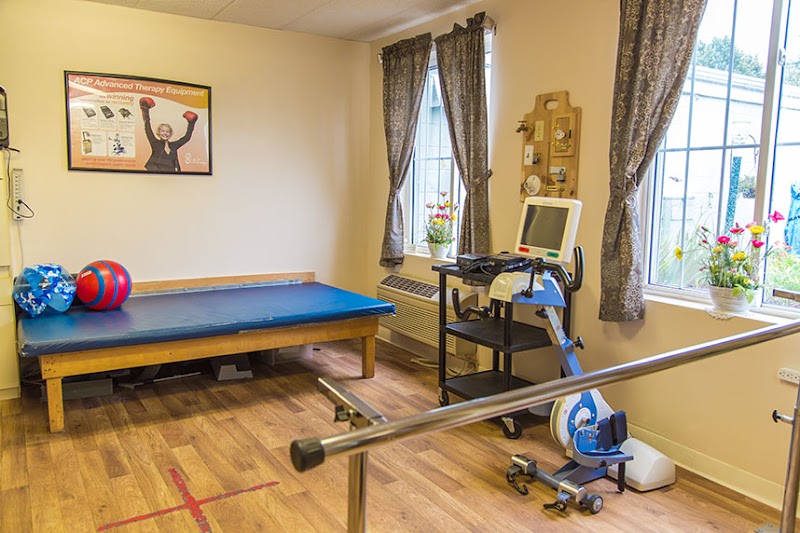
How is Hallmark Hc Of Carlinville Staffed?

CMS rates HALLMARK HC OF CARLINVILLE's staffing level at 1 out of 5 stars, which is much below average compared to other nursing homes. Staff turnover is 55%, which is 9 percentage points above the Illinois average of 46%. High turnover can affect care consistency as new staff learn residents' individual needs.

What Have Inspectors Found at Hallmark Hc Of Carlinville?

State health inspectors documented 24 deficiencies at HALLMARK HC OF CARLINVILLE during 2023 to 2025. These included: 3 that caused actual resident harm, 18 with potential for harm, and 3 minor or isolated issues. Deficiencies causing actual harm indicate documented cases where residents experienced negative health consequences.
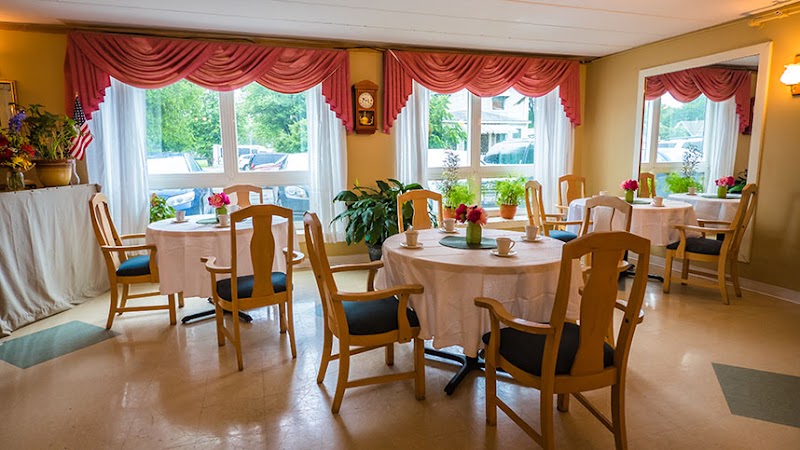
Who Owns and Operates Hallmark Hc Of Carlinville?

HALLMARK HC OF CARLINVILLE is owned by a government entity. Government-operated facilities are typically run by state, county, or municipal agencies. The facility is operated by CREST HEALTHCARE CONSULTING, a chain that manages multiple nursing homes. With 49 certified beds and approximately 40 residents (about 82% occupancy), it is a smaller facility located in CARLINVILLE, Illinois.
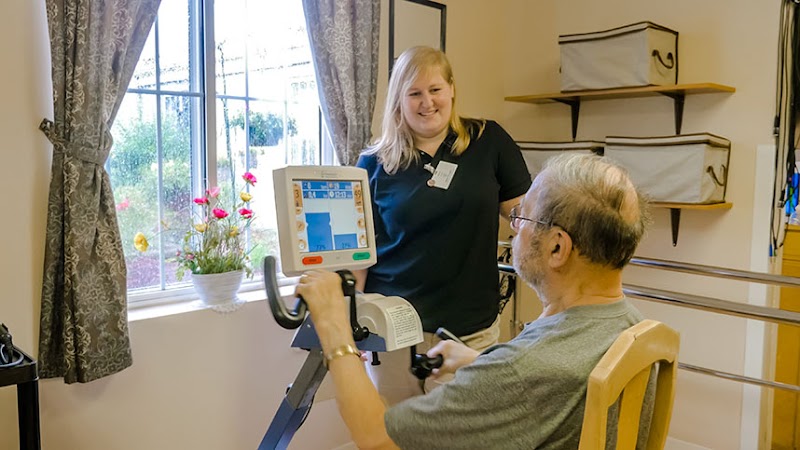
How Does Hallmark Hc Of Carlinville Compare to Other Illinois Nursing Homes?

Compared to the 100 nursing homes in Illinois, HALLMARK HC OF CARLINVILLE's overall rating (1 stars) is below the state average of 2.5, staff turnover (55%) is near the state average of 46%, and health inspection rating (2 stars) is below the national benchmark.

What Should Families Ask When Visiting Hallmark Hc Of Carlinville?

Based on this facility's data, families visiting should ask: "How do you ensure continuity of care given staff turnover, and what is your staff retention strategy?" "Can you walk me through typical staffing levels on day, evening, and night shifts?" "Can I visit during a mealtime to observe dining assistance and food quality?" "How do you handle medical emergencies, and what is your hospital transfer rate?" These questions are particularly relevant given the facility's high staff turnover rate and the below-average staffing rating.

Is Hallmark Hc Of Carlinville Safe?

Based on CMS inspection data, HALLMARK HC OF CARLINVILLE has a clean safety record: no substantiated abuse findings (meaning no confirmed cases of resident harm), no Immediate Jeopardy citations (the most serious violation level indicating risk of serious injury or death), and is not on the Special Focus Facility watch list (a federal program monitoring the lowest-performing 1% of nursing homes). The facility has a 1-star overall rating and ranks #100 of 100 nursing homes in Illinois. While no facility is perfect, families should still ask about staff-to-resident ratios and recent inspection results during their visit.

Do Nurses at Hallmark Hc Of Carlinville Stick Around?

Staff turnover at HALLMARK HC OF CARLINVILLE is high. At 55%, the facility is 9 percentage points above the Illinois average of 46%. High turnover means new staff may not know residents' individual needs, medications, or preferences. It can also be disorienting for residents, especially those with dementia who rely on familiar faces. Families should ask: What is causing the turnover? What retention programs are in place? How do you ensure care continuity during staff transitions?

Was Hallmark Hc Of Carlinville Ever Fined?

HALLMARK HC OF CARLINVILLE has been fined $39,220 across 1 penalty action. The Illinois average is $33,471. While any fine indicates a compliance issue, fines under $50,000 are relatively common and typically reflect isolated problems that were subsequently corrected. Families should ask what specific issues led to these fines and confirm they've been resolved.

Is Hallmark Hc Of Carlinville on Any Federal Watch List?

HALLMARK HC OF CARLINVILLE is not on any federal watch list. The most significant is the Special Focus Facility (SFF) program, which identifies the bottom 1% of nursing homes nationally based on persistent, serious quality problems. Not being on this list means the facility has avoided the pattern of deficiencies that triggers enhanced federal oversight. This is a positive indicator, though families should still review the facility's inspection history directly.