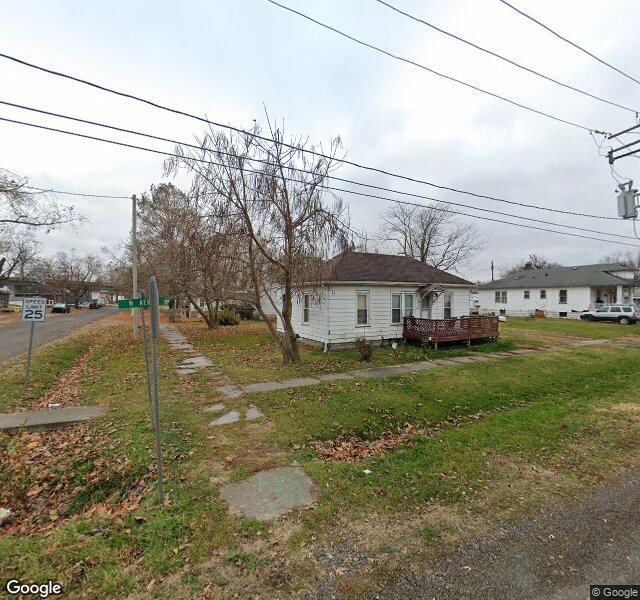
FIRESIDE HOUSE OF CENTRALIA

1030 MARTIN LUTHER KING BLVD, CENTRALIA, IL 62801 (618) 532-1833
For profit - Limited Liability company 98 Beds Independent Data: November 2025 3 Immediate Jeopardy citations
Trust Grade
0/100
#523 of 665 in IL
Last Inspection: December 2024

Within standard 12-15 month inspection cycle. Federal law requires annual inspections.

Overview

Fireside House of Centralia has received a Trust Grade of F, indicating a poor performance with significant concerns regarding care. Ranking #523 out of 665 facilities in Illinois places it in the bottom half, and #4 out of 5 in Marion County suggests limited local options for better care. Although the facility is improving, with issues decreasing from 6 in 2024 to 5 in 2025, it still reported 18 total deficiencies, including three critical incidents that resulted in immediate jeopardy. While the staffing turnover is impressively low at 0%, indicating stability among staff, the facility's overall health inspection rating is just 2 out of 5 stars, and it has accrued $61,618 in fines, which is concerning. Specific incidents include a resident with dementia exiting the facility unnoticed, and critical failures in responding to a medical emergency that led to a resident's death from a gastrointestinal bleed, highlighting serious deficiencies in supervision and emergency response.

Trust Score
F
0/100
In Illinois
#523/665
Bottom 22%
Safety Record
High Risk
Review needed
Inspections
Getting Better
6 → 5 violations
Staff Stability
○ Average
Turnover data not reported for this facility.
Penalties
○ Average
$61,618 in fines. Higher than 52% of Illinois facilities. Some compliance issues.
Skilled Nurses
○ Average
Each resident gets 32 minutes of Registered Nurse (RN) attention daily — about average for Illinois. RNs are the most trained staff who monitor for health changes.
Violations
⚠ Watch
18 deficiencies on record. Higher than average. Multiple issues found across inspections.
★☆☆☆☆
1.0
Overall Rating
★★☆☆☆
2.0
Staff Levels
★☆☆☆☆
1.0
Care Quality
★★☆☆☆
2.0
Inspection Score
Stable
2024: 6 issues
2025: 5 issues

The Good

  • Full Sprinkler Coverage · Fire safety systems throughout facility
  • No fines on record

Facility shows strength in fire safety.

The Bad

1-Star Overall Rating

Below Illinois average (2.5)

Significant quality concerns identified by CMS

Federal Fines: $61,618

Above median ($33,413)

Moderate penalties - review what triggered them

The Ugly 18 deficiencies on record

3 life-threatening 1 actual harm
Jul 2025 3 deficiencies
CONCERN (D) 📢 Someone Reported This

A family member, employee, or ombudsman was alarmed enough to file a formal complaint

Potential for Harm - no one hurt, but risky conditions existed

Accident Prevention (Tag F0689)

Could have caused harm · This affected 1 resident

**NOTE- TERMS IN BRACKETS HAVE BEEN EDITED TO PROTECT CONFIDENTIALITY** Based on observation, interview, and record review the facility failed to ensure two staff were available when using a mechanica...

Read full inspector narrative →
**NOTE- TERMS IN BRACKETS HAVE BEEN EDITED TO PROTECT CONFIDENTIALITY** Based on observation, interview, and record review the facility failed to ensure two staff were available when using a mechanical lift for 1 of 3 (R8) residents reviewed for accidents in the sample of 14. Findings Include: R8's admission Record with a print date of 7/9/25 documents R8 was admitted to the facility on [DATE] with diagnoses that include dementia, muscle weakness, and vision loss. R8's Minimum Data Set (MDS) dated [DATE] documents R8 has a BIMS score of 09, indicating a moderate cognitive deficit. This same MDS documents R8 is dependent on staff for transfers. R8's current Care Plan documents a Focus area of Risk for falls. This Focus area includes the intervention mechanical lift for transfers. There are no dates documented on this Care Plan. R8's Order Summary Report dated 7/9/25 includes the following physician order, Mechanical Lift for transfers every shift, with a start date of 10/05/2019. On 7/8/25 at 7:05 PM, V4 (Certified Nursing Assistant/CNA) was in R8's room transferring R8 from chair to bed using a mechanical lift. V4 was attempting the transfer without assistance of another staff. V4 had R8 in the lift and in the air when this surveyor started the observation. V4 wheeled the lift to the bed and started to lower R8 onto the bed. V4 had to stop and raise R8 up again because she was high enough her head was too close to the head of the bed. V4 adjusted the lift and began lowering R8 to the bed again. V4 stopped the lift and had to adjust R8 to the center of the bed because she was too close to the edge. V4 then lowered R8 to the bed. V20 (Licensed Practical Nurse/LPN) was in the hallway preparing medications to administer to other residents, throughout this observation. On 7/8/25 at 7:16 PM, V4 (CNA) stated she came to work at 6 am and was supposed to leave at 6 PM. V4 stated they had other CNA's not show up for work tonight and she would be leaving as soon as she got the residents settled for the night. V4 stated there were two other CNA's working on her hall and one CNA working on the other hall. V4 stated three CNA's is enough to meet the needs of the residents after they are all in bed. V4 stated she transferred R8 using a mechanical lift without the assistance of another CNA. V4 stated she did that because the other CNA's were providing care to other residents and they didn't have enough staff to meet the needs of the residents right now. On 7/8/25 at 7:08 PM, V20 (LPN) stated she had three CNA's working with her. V20 stated that is enough to meet the needs of the residents, sometimes. On 7/9/25 at 2:58 PM, R8 stated she guessed they used a mechanical lift to transfer her. R8 stated she wasn't sure how many staff were present when they did it. R8 stated she had never been hurt or fallen during a transfer. On 7/9/25 at 3:05 PM, V3 (Assistant Director of Nursing) stated they have enough staff as long as they don't call in. After this surveyor reviewed the observation of V4 transferring R8 without assistance of another staff, V3 stated she would expect the nurse to stop administering medications and assist with the transfer. The facility Safe Lifting and Movement of Residents policy dated July 2017 documents, In order to protect the safety and well-being of staff and residents, and to promote quality care, this facility uses appropriate techniques and devices to lift and move residents.
CONCERN (E) 📢 Someone Reported This

A family member, employee, or ombudsman was alarmed enough to file a formal complaint

Potential for Harm - no one hurt, but risky conditions existed

Deficiency F0692 (Tag F0692)

Could have caused harm · This affected multiple residents

**NOTE- TERMS IN BRACKETS HAVE BEEN EDITED TO PROTECT CONFIDENTIALITY** Based on interview and record review the facility failed to ensure supplements were available for 4 of 6 (R1, R2, R10, and R14) ...

Read full inspector narrative →
**NOTE- TERMS IN BRACKETS HAVE BEEN EDITED TO PROTECT CONFIDENTIALITY** Based on interview and record review the facility failed to ensure supplements were available for 4 of 6 (R1, R2, R10, and R14) residents reviewed for nutrition in the sample of 14. Findings Include: 1. R1's admission Record with a print date of 7/9/25 documents R1 was admitted to the facility on [DATE] with diagnoses that include diabetes, dementia, and vitamin deficiency. R1's MDS (Minimum Data Set) dated 3/26/25 documents a BIMS score of 05, indicating R1 has a severe cognitive deficit. R1's current Care Plan documents a Focus area of, Actual alteration in nutrition or hydration status r/t (related to) Vitamin D deficiency, hypomagnesium, n/v (nausea/vomiting), GERD (gastroesophageal reflux disease). 3/2025 weight loss. This same Focus area include the intervention of, Supplements as ordered: 7/4/2025- Boost 90 ml (milliliters) TID (three times daily). R1's Order Summary Report dated 7/9/25 includes a physician order for, Boost three times a day for weight loss give 90 cc (cubic centimeters), with a start date of 7/4/25. R1's Medication Administration Record (MAR) dated 6/1/25 to 6/30/25 documents a physician order for Boost three times a day for weight loss give 90 cc Start Date 04/08/2025. This same MAR indicates the Boost was not administered as ordered on 6/15, 6/16, 6/17, 6/23, and 6/24/25. 2. R2's admission Record with a print date of 7/9/25 documents R2 was admitted to the facility on [DATE] with diagnoses that include diabetes, dementia, vitamin deficiency, and GERD. R2's current undated Care Plan documents a Focus area of, Potential for/actual alteration in nutrition or hydration status r/t (related to) COPD (chronic obstructive pulmonary disease), dehydration risk, low protein, magnesium deficit, heartburn, vitamin deficiency, hyperlipidemia, GERD. This same Focus area includes the intervention, Supplements as ordered 5/19/25 House supplement 2.0 4 x (times) day for weight loss, give 120 cc QID (4 times daily). R2's Order Audit Report dated 7/10/25 documents a physician order for, House 2.0 Supplement four times a day for weight loss give 120 cc qid, with a start date of 5/19/25. R2's MAR dated 6/1/25 to 6/30/25 includes a physician order for House 2.0 Supplement four times a day for weight loss give 120 cc qid (four times daily). This same MAR indicates the house supplement was not administered three times on 6/14 and 6/15, four times on 6/16, 6/23, and 6/24 and twice on 6/17 and 6/26/25. 3. R10's admission Record with a print date of 7/9/25 documents R10 was admitted to the facility on [DATE] with diagnoses that include muscle weakness, vitamin deficiency, GERD, and major depressive disorder. R10's Order Summary Report dated 7/9/25 documents a physician order for, House 2.0 Supplement four times a day for wt (weight) loss give 120 cc po (by mouth) qid, with a start date of 8/6/24. R10's MAR dated 6/1/25 to 6/30/25 documents a physician order for, House 2.0 Supplement four times a day for wt loss give 120 cc po qid. Start Date 08/08/2024. This same MAR indicates R10 was not administered the house supplement four times on 6/15, 6/16, 6/23, 6/24, twice on 6/17, 6/26, and once on 6/25/25. 4. R14's admission Record with a print date of 7/9/25 documents R14 was admitted to the facility on [DATE] with diagnoses that include diabetes, heart disease, muscle weakness, and vitamin deficiency. R14's Order Summary Report dated 7/9/25 documents a physician order for, House 2.0 Supplement two times a day for Weight loss Give 120 cc, with a start date of 3/8/25. R14's MAR dated 6/1/25 to 6/30/25 documents a physician order for House 2.0 supplement two times a day for Weight loss Give 120 cc. Start Date 03/09/2025. This MAR indicates R14 was not administered the supplement on 6/14, 6/15, 6/16, 6/23, and 6/24/25; and was only administered the supplement once on 6/17 and 6/26/25. On 7/8/25 at 2:52 PM, V9 (LPN/Licensed Practical Nurse) stated they have dietary supplements right now but they were out of them a while back. V9 stated the MAR's will reflect when the residents didn't get the supplements as ordered. V9 stated she wasn't aware of any significant weight loss. On 7/8/25 at 6:27 PM, V29 (anonymous) stated they didn't have dietary supplements a few weeks ago for about a week. V29 stated there were no significant weight loss issues related to not having the supplements. On 7/9/25 at 3:17 PM, V24 (LPN) stated she was the interim Assistant Director until this week. V24 stated in June she made an order for the supplements and it didn't get delivered. V24 stated she called the supplier and they said it didn't get shipped due to a billing issue and they were dealing with the owner on it. V24 stated they bought the boost at a local store but couldn't get the House Supplement locally. V24 stated it was resolved at this time. On 7/9/25 at 3:31 PM, V1 (Administrator) stated she knew they were out of the supplement but it was only a short time.
CONCERN (F) 📢 Someone Reported This

A family member, employee, or ombudsman was alarmed enough to file a formal complaint

Potential for Harm - no one hurt, but risky conditions existed

Deficiency F0725 (Tag F0725)

Could have caused harm · This affected most or all residents

**NOTE- TERMS IN BRACKETS HAVE BEEN EDITED TO PROTECT CONFIDENTIALITY** Based on observation, interview, and record review the facility failed to ensure sufficient staff to meet the needs of the resid...

Read full inspector narrative →
**NOTE- TERMS IN BRACKETS HAVE BEEN EDITED TO PROTECT CONFIDENTIALITY** Based on observation, interview, and record review the facility failed to ensure sufficient staff to meet the needs of the residents timely. This has the potential to affect all 54 residents currently residing at the facility. Findings Include: The Midnight Census Report dated 7/2/25 documents there are 54 residents residing at the facility. R8's admission Record with a print date of 7/9/25 documents R8 was admitted to the facility on [DATE] with diagnoses that include dementia, muscle weakness, and vision loss. R8's Minimum Data Set (MDS) dated [DATE] documents R8 has a BIMS score of 09, indicating a moderate cognitive deficit. This same MDS documents R8 is dependent on staff for transfers. R8's current Care Plan documents a Focus area of Risk for falls. This Focus area includes the intervention mechanical lift for transfers. There are no dates documented on this Care Plan. R8's Order Summary Report dated 7/9/25 includes the following physician order, Mechanical Lift for transfers every shift, with a start date of 10/05/2019. On 7/8/25 at 7:05 PM, V4 (Certified Nursing Assistant/CNA) was in R8's room transferring R8 from chair to bed using a mechanical lift. V4 was attempting the transfer without assistance of another staff. V4 had R8 in the lift and in the air when this surveyor started the observation. V4 wheeled the lift to the bed and started to lower R8 onto the bed. V4 had to stop and raise R8 up again because she was high enough her head was too close to the head of the bed. V4 adjusted the lift and began lowering R8 to the bed again. V4 stopped the lift and had to adjust R8 to the center of the bed because she was too close to the edge. V4 then lowered R8 to the bed. V20 (Licensed Practical Nurse/LPN) was in the hallway preparing medications to administer to other residents, throughout this observation. On 7/8/25 at 7:16 PM, V4 (CNA) stated she came to work at 6 am and was supposed to leave at 6 PM. V4 stated they had other CNA's not show up for work tonight and she would be leaving as soon as she got the residents settled for the night. V4 stated there were two other CNA's working on her hall and one CNA working on the other hall. V4 stated three CNA's is enough to meet the needs of the residents after they are all in bed. V4 stated she transferred R8 using a mechanical lift without the assistance of another CNA. V4 stated she did that because the other CNA's were providing care to other residents and they didn't have enough staff to meet the needs of the residents right now. On 7/9/25 at 2:58 PM, R8 stated she guessed they used a mechanical lift to transfer her. R8 stated she wasn't sure how many staff were present when they did it. R8 stated she had never been [NAME] or fallen during a transfer. On 7/8/25 at 7:08 PM, V20 (LPN) stated she had three CNA's working with her. V20 stated that is enough to meet the needs of the residents, sometimes. On 7/8/25 at 6:27 PM, V29 (Anonymous) stated three CNA's didn't show up for work for evening/night shift on 7/8/25. V29 stated they have two CNA's and a nurse on one unit with 35 residents and two CNA's and a nurse on the other unit with 17 residents. V29 stated they typically have three to four CNA's on the unit with 35 residents. On 7/9/25 at 11:29 AM, V23 (CNA) stated she worked on the evening of 7/8/25 from 2 to 10 PM. V23 stated they had three people who didn't show up for work. V23 stated they pulled a CNA off the side she works on to cover the other side. V23 stated that left one nurse and one CNA for her side. When asked if that was enough to meet the needs of the residents, V23 stated it wasn't. V23 stated call lights didn't get answered timely, incontinence care wasn't provided timely, and behavior monitoring is also affected. On 7/9/25 at 3:05 PM, V3 (Assistant Director of Nursing) stated they have enough staff as long as they don't call in. After this surveyor reviewed the observation of V4 transferring R8 without assistance of another staff, V3 stated she would expect the nurse to stop administering medications and assist with the transfer. On 7/9/25 at 3:31 PM, V1 (Administrator) stated she was not made aware they were short staffed last night. V1 stated three to four CNA's in the facility on night shift is enough to meet the needs of the residents. The facility Staffing Policy dated October 2017 documents, Our facility provides sufficient numbers of staff with the skills and competency necessary to provide care and services for all residents in accordance with resident care plans and the facility assessment.
May 2025 1 deficiency 1 IJ
CRITICAL (J) 📢 Someone Reported This

A family member, employee, or ombudsman was alarmed enough to file a formal complaint

Immediate Jeopardy (IJ) - the most serious Medicare violation

Accident Prevention (Tag F0689)

Someone could have died · This affected 1 resident

Based on observation, interview, and record review the facility failed to ensure a cognitively impaired resident was adequately supervised to prevent her exiting the facility without staff knowledge f...

Read full inspector narrative →
Based on observation, interview, and record review the facility failed to ensure a cognitively impaired resident was adequately supervised to prevent her exiting the facility without staff knowledge for 1 (R1) of 3 residents reviewed for accidents and supervision in the sample of 3. This failure resulted in R1, who has a diagnosis of dementia and was already on 15-minute visual checks for previous exit seeking behavior, exiting the facility at an unknown time without staff knowledge or supervision, walking approximately 1.3 miles away from the facility and was found by two unknown teenage female citizens who took R1 to the local emergency room. This failure resulted in an Immediate Jeopardy, which was identified to have begun on 5/15/2025 at approximately 7:45pm when R1 exited the facility and was found by two teenage girls approximately 1.3 miles from the facility. V1 (Administrator) was notified of the Immediate Jeopardy on 5/21/2025 at 4:30pm. The surveyor confirmed by observation, record review and interview that the immediacy was removed on 5/22/2025. Findings include: R1's Facility admission Record documented R1 was admitted to this facility on 4/13/2025 with diagnoses of Parkinsonism and unspecified dementia among others. R1's MDS (minimum data set) dated 4/19/2025 documented R1 with a BIMS (brief interview for mental status) score of 6 out of 15 total which indicates R1 has severe cognitive impairment. R1's admission elopement evaluation (dated 4/13/2025) documented R1 with an elopement risk score of 0.0 which indicated no elopement risk. A progress note dated 5/13/2025 in R1's electronic health record documented R1 had attempted to leave the facility multiple times and was placed on 15-minute visual checks. On 5/21/2025, V18 (Licensed Practical Nurse/LPN) said she was the nurse caring for R1 on 5/13/2025 when R1 attempted to leave the facility without staff. V18 said R1 may use a wheelchair to get about the facility but R1 can walk well. V18 said R1 was attempting to leave the facility via the front door and was spotted by V17 (LPN) and brought back inside the facility and placed on 15-minute visual checks. V18 said at this facility the nurses are responsible for performing and documenting the 15-minute visual checks. On 5/13/2025, R1 was re-evaluated for elopement risk and scored a 3 which indicates R1 is an elopement risk. R1's care plan was updated 5/13/2025, to include 15-minute visual checks for attempted elopements from the facility. A form titled Long Term Care Facility Serious Injury Incident and Communicable Disease Report dated 5/16/2025 documented on 5/15/2025 at 8:15pm, R1 had exited the facility without staff knowledge even though R1 was on 15-minute visual checks. The report documented R1 became upset with another resident and decided to go home, left the facility, and was assisted by two juveniles and taken to the local hospital. On 5/16/2025 at 12:05pm, V13 (Hospital Registered Nurse) said on 5/15/2025 around 8:00pm, two unknown teenage females brought R1 into the local emergency room for help. V13 said the teenagers found R1 lying in the ditch next to the cemetery. V13 said the teenagers did not know R1 and she did not get the teenagers names. V13 said R1 was not injured and thus was not actually registered as a patient that evening. V13 said the local police were called to assist in identifying where R1 belonged but a policeman did not come to the hospital and a report was not completed as far as she knew. V13 said R1 eventually told them her name and birthday and they were able to look R1 up in the hospital's computer system. V13 said she was able to find R1 in the computer system and located a working phone number for R1's son (V15/Family). V13 said she called V15 around 9:15pm and learned R1 lived at the local nursing home. V13 said she called the nursing home at 9:20pm and requested them to come pick up R1. V13 said when R1 was brought into the hospital that evening, R1 was wearing a turtleneck sweater, jeans, and a coat, but the weather was very warm that night. On 5/21/2025 at 10:15am, V15 (Family) said on 5/15/2025 at 9:15pm, he received a call from V13 (Hospital Registered Nurse) to report R1 had been brought into the local hospital by two teenage girls after being found in a ditch near the local cemetery about a mile away from the nursing home. V15 said R1 was not hurt. V15 said R1's previous home is next to the cemetery where she was found. V15 said he told V13 that R1 lived at the nursing home. V15 said V13 called the nursing home, and the nursing home staff came to the hospital and picked up R1. On 5/21/2025 at 10:00am, V14 (Licensed Practical Nurse/LPN) said she was the nurse providing care for R1 during the day on 5/15/2025. V14 said she did not know R1 had previously attempted to leave the facility without staff on 5/13/2025 and was placed on 15-minute visual checks. V14 said this information was not passed on to her in shift report and she had been off for a few days. V14 said since she did not know R1 was on 15-minute visual checks, she did not perform the checks and did not pass this information on to the next nurse on duty which was V3 (Registered Nurse/RN). On 5/21/2025 at 10:30am, V3 said she, V6 (Certified Nursing Assistant/CNA) and V8 (CNA) were the staff providing care for R1 on the evening of 5/15/2025. V3 said she did not know R1 was on 15-minute visual checks as this information was not passed on to her in shift report. V3 said since she did not know R1 was on 15-minute visual checks, she was not performing the checks on the evening of 5/15/2025 when R1 left the facility without staff knowledge. V3 said she last remembered seeing R1 in her room around 7:30pm. V3 said she did not know R1 was missing from the facility until the hospital called the nursing home about 9:15pm to report R1 was at the hospital, needed picked up and was not injured. V3 said she sent V6 over to the hospital to pick up R1 and return her to the nursing home. V3 said after R1 returned to the facility she discovered R1 was already supposed to be on 15-minute visual checks and completed the 15-minute visual check sheet at that time. On 5/21/2025 at 2:15pm, V6 said she worked on R1's unit the evening of 5/15/2025. V6 said she had not worked for a few days and did not know R1 had attempted to leave the facility without staff on 5/13/2025 and was placed on 15-minute visual checks. V6 said this information was not passed on to her in shift report. V6 said the nurses are responsible for performing and documenting the 15-minute visual checks so she did not know anything about it. V6 said on 5/15/2025 the last time she remembered seeing R1 at the facility was around 7:30pm and R1 was in her room. V6 said she did not know R1 was missing from the facility until V3 (RN) received a call from the hospital around 9:15pm. V6 said she was sent to the hospital to get R1 and bring her back to the facility. On 5/21/2025 at 2:45pm, V8 said she worked R1's unit the evening of 5/15/2025. V8 said she had been off for a few days and did not know R1 had attempted to leave the facility without staff on 5/13/2025 and was placed on 15-minute visual checks. V8 said the nurses perform the 15-minute checks so she had no knowledge of R1 being on 15-minute visual checks. V8 said on 5/15/2025, she returned from her lunch break around 7:45pm and she seen R1 in her room. V8 said she did not know R1 was missing from the facility until 9:15pm when V3 (RN) received a phone call from the hospital reporting R1 was there without staff. On 5/21/2025 at 2:20pm, V5 (CNA) said she was working the evening of 5/15/2025 but was not on R1's unit. V5 said she did not know R1 was on 15-minute visual checks for elopement attempts. V5 said every evening between 6:00pm and 8:30pm the facility's door alarm is constantly alarming due to family members coming in and out of the facility. V5 said on 5/15/2025 around 7:30pm, she noticed the facility's front door alarm sounding and no one was around. V5 said she looked outside of the front door and did not see anyone. V5 said she reset the alarm and returned to work without telling any other staff about the alarming door. V5 said she feels this could be when R1 left the facility. V5 said she found out later that night around 9:30pm that R1 was missing from the facility after the hospital called to report R1 was at the hospital without staff. On 5/22/2025 at 1:45pm, R1 was observed walking with a wheeled walker with V16 (Physical Therapy Assistant) around the facility. R1 easily walked with a steady gait and lifted up and carried the wheeled walker when going over thresholds without losing her balance. V16 said R1 can walk very well and doesn't really need to use a wheelchair. V16 said on good days, R1 walks me instead of me walking R1. The facility's 24-Hour Report sheet for R1's unit dated 5/13/2025 documented R1 was started on 15-minute visual checks and the dressing to R1's left thumb was changed. The facility's 24-Hour Report sheet for R1's unit dated 5/14/2025 documented R1's dressing to the left thumb was changed and did not include any information about R1 being on 15-minute visual checks. The facility's 24-Hour Report sheet for R1's unit dated 5/15/2025 documented R1 had a new medication order and did not include any information about R1 being on 15-minute visual checks. R1's 15-minute visual check sheets dated 5/15/2025 documented V3 observed R1 in her room at 8:00pm. At 8:15pm, a question mark was documented for R1's location by V3. At 8:30pm, hosp (hospital) was documented for R1's location by V3. At 8:45pm, hosp was documented for R1's location by V3. At 9:00pm, hosp was documented for R1's location by V3. At 9:15pm, hosp was documented for R1's location by V3. At 9:30pm, R1 was documented in her room by V3. An undated facility policy titled Facility Door Alarms under the section titled Procedure For Response To Sounding Door Alarm documented Nurse or designee will identify the location of the door alarm triggered. The nurse or designee will notify the appropriate nursing station. The nurse or designee will go to identify the exit and verify reason for the triggered alarm. If the reason for the sounding alarm is not identified, the location of all residents known as a Wander/Elopement Risk will be verified. At no time will the sounding door alarm be canceled before verification is confirmed. An undated facility policy titled Wandering and Elopements documented the facility will identify residents who are at risk of unsafe wandering and strive to prevent harm while maintaining the least restrictive environment for the resident and if on 15-minute visual (checks) put on 24-hour report (sheet) until d/c'd (discontinued). The Immediate Jeopardy that began on 5/15/2025 was removed on 5/22/2025 when the facility took the following actions to remove the immediacy and correct the noncompliance. On 5/15/2025 at 9:30pm, R1 returned to the facility and was placed on 1:1 monitoring which continued until 5/16/2025 at 7:45am when an exiting alarm device was placed on R1's wrist. R1 continues on 15-minute visual checks. All staff, including department heads, have been educated to ensure that they are aware of policy related to resident elopement, wandering and 15-minute visual checks. Education was provided by V11 (Assistant Director of Nursing) and was completed on 5/15/2025 and 5/22/2025, with education on-going. On 5/22/2025 a Quality Assurance and Performance Improvement meeting was held and the plan of correction and implementation was documented as follows: 1. The facility reviewed the policy and procedures for door alarms, 15-minute visual checks. Missing residents, and elopements. (Staff) to make sure anyone on 15-minute visual checks is placed on the 24-hour report sheets daily. All reviewed with staff. 2. All residents at risk for elopement were reassessed. 3. All residents who are elopement risk will be reassessed as necessary. 4. Monitor door alarms for staff properly following protocol. 5. V1 (Administrator) in-serviced staff, Assistant Director of Nursing, and all department managers. 6. V1 ensured residents, who are identified as high elopement risk, have updated and correct information about them in the facility's elopement book at both nurses' stations. 7. Monitor staff for compliance with door alarm procedure. 8. Review nursing for completing assessments on high elopement risk residents. 9. Director of Nursing or Designee to monitor all for compliance weekly for two weeks.
Mar 2025 1 deficiency
CONCERN (F) 📢 Someone Reported This

A family member, employee, or ombudsman was alarmed enough to file a formal complaint

Potential for Harm - no one hurt, but risky conditions existed

Deficiency F0725 (Tag F0725)

Could have caused harm · This affected most or all residents

Based on, interview, observation and record review, the facility failed to provide a sufficient number of staff to ensure residents timely and safe assistance with care and transfers. The failure has ...

Read full inspector narrative →
Based on, interview, observation and record review, the facility failed to provide a sufficient number of staff to ensure residents timely and safe assistance with care and transfers. The failure has the potential to affect all 60 residents living in the facility. Findings include: On 03/04/25 at 9:56am, V1 (Administrator) stated the facility is short of staff, but that she could assure that everyone pitches in to help. V1 stated that they haven't had agency in the building for about 6 weeks or more. On 03/04/25 at 10:38am, R4 who was alert to person, place and time, stated her care here is fair, there aren't enough girls here to take care of everyone all at once. R4 stated there are times when there is just one girl taking care of everyone in the building. On 03/04/25 at 10:55am, R5 who was alert to person, place and time, stated she felt there's mostly enough staff, but that people do call in all the time and they do need more help. On 03/04/25 at 10:57am, R2 who was alert to person, place and time, stated her care here is all right. Sometimes they don't get to me for a long time. On 03/04/25 at 10:58am, R6 who was alert to person, place and time, stated he does not think they have enough staff to operate this facility period. R6 stated he does not think he always gets his shower on time, but they do their best to keep him clean. R6 stated sometimes there just aren't enough staff to get you taken care of quick enough, but the ones that are here try to get it done best they can. On 03/04/25 at 11:00am, R7 who was alert to person, place and time, stated they don't have enough staff here, but he does well taking care of himself and doesn't need much assistance. On 03/04/25 at 02:23pm, V4 (Licensed Practical Nurse/LPN) stated staffing is not great, but it really depends on the day of the week how bad it is. V4 stated the weekends are terrible. V4 stated some of the management are helpful and some are not. V4 stated she feels like the CNA's (Certified Nursing Assistants) work very hard to prioritize and tend to their resident's needs the best they can. V4 stated she knows showers are not able to be done timely. V4 stated nursing staff tries to help as much they can, sometimes medications are late because the nurses are trying to help the CNA's get everyone up and cleaned up. V4 stated none of the management staff on call on the weekends will answer their phones, sometimes they will go as far as turning them off. V4 stated V1 (Administrator) will come in and help, she's even left her groceries in the middle of the store to come in and assist with breakfast. V4 stated there are only 4 CNA's on the floor right now. On 03/04/25 at 2:26pm, V5 (LPN) stated most of the management will not help, there are very few who will. V5 stated and if they help, it's the nurse duties, they wouldn't dare be caught doing CNA work. V5 stated V1 (Administrator) is the only one who will answer her phone on the weekends, and will come in. V5 stated sometimes there is one CNA for both sides. V5 stated there are times when things are not done timely because everyone is trying to pitch in and make sure the residents are getting taken care of, med passes and Meals are a few of the things that run late. On 03/05/25 at 10:16am, V10 (CNA) stated staffing for CNAs is terrible, especially on the weekend that she works. V10 stated there have been weekends recently that it is just two CNAs for the whole building, herself and one other person. V10 stated there is a fair amount of people who require the assistance of two people. V10 stated it's a lot to expect of two people to do. V10 stated it takes them working constantly all day to get everyone up, changed and cleaned up and then to keep them clean and repositioned all day. V10 stated showers do not get done as they are supposed to, but we work very hard to keep everyone clean. V10 stated breakfast is supposed to start around 7:45am, sometimes it's 8:30am or later before they can get dependent residents to breakfast, and even then, they don't have anyone to assist with feeding. On 03/05/25 at 10:21am, V8 (Registered Nurse/RN) stated staffing is terrible, especially for the CNAs, weekends, evenings and nights are the worst. V8 stated too many times there are only 2 CNAs for the entire building, occasionally there is only one. V8 stated management will not answer their phones or turn it off on weekends, even if they are on call. V8 stated management will help with medication pass and nursing duties, but wouldn't do CNA work, beyond helping in the dining room. V8 stated she tries to help the best that she can, but sometimes that means her work is not completed timely, and everyone gets behind. On 03/05/25 at 12:25pm, V10 (CNA) stated she had worked the weekend of February 22 and remembered it was just herself and one other CNA. V10 stated showers were not able to be given as scheduled, but everyone who should have been showered received a bed bath. V10 stated that transfers and care requiring 2 staff members could not always be done with 2 staff members, so they must prioritize the things that they can do safely with one. V10 stated most nurses will step in when they can, but they have their own job duties and just barely enough of them to complete them. V10 stated management does not come in to assist, they won't even answer their phones. On 03/05/25 at 12:32pm, V11 (CNA) stated she specifically remembered Monday February 17, she was on the east side by herself and there were two CNAs on the west side. V11 stated the working schedule is not always an accurate representation of how staffing went for the day. V11 stated not all nurses are helpful on those days, but there are some that are. V11 stated she also understands they have their own tasks they have to complete as well and it's not like there is a bunch of them either. V11 stated management is not helpful at all. V11 stated on really short days, showers do not get done as scheduled, but we do try to give them a thorough bed bath when getting them up. V11 stated they have to make sure everyone stays clean enough and fed. V11 stated when there are only 2-3 CNAs total in the building, they have to figure out what 2 assists they can manage alone so that they can get residents taken care of until someone is available to assist with the others. V11 stated they do have discipline in place for calling in, but it only applies to certain people and a lot of times everyone gets in trouble, not just the people who are the problem. On 03/05/25 at 2:23pm, V12 (CNA) confirmed today there were only two CNAs on west hallway for 2-10 shift. V12 stated it happens this way sometimes, more staff would be ideal, but they manage the best that they can. On 03/05/25 at 2:25pm, R8 who was alert to person, place and time, stated she used to be the president of resident council and still participates. R8 stated they do not ask anything about staffing at resident council other than if they have a problem with any of the CNAs. R8 stated there would be enough staff to go around if they would just show up. R8 stated there are ones that frequently do not show up and no one replaces them. R8 stated her care is pretty good but she doesn't ask for much. R8 stated she feels sorry for the ones who need assistance, not that staff don't try, but they can only be expected to do so much. On 03/05/25 at 2:28pm, R9 who was alert to person, place and time, stated they do not discuss staffing issues at resident council much. R9 stated they do not have enough people on the floor to get things done for sure. R9 stated her care is fine, but sometimes it takes the girls a while to get to her. On 03/05/25 at 2:32pm, V13 (CNA) confirmed today there was only 3 CNA staff present on east hallway for 2-10 shift. V13 stated rarely does she feel they have enough staff to safely and effectively complete their jobs timely. V13 stated they can't keep people; they hire people, and they see what they have to deal with and quit. V13 stated they will ask people that are off if they want to work when they are short, but people can't always work, they are tired and have their own lives. V13 stated there are some nurses that will help, and then there are some that will come get you in the middle of a transfer to get someone ice water. V13 stated management will help the nurses at times and maybe assist with the dining room. V13 stated they just do not have enough staff with everyone who is a 2 assist or a mechanical lift, to always do it with two people. V13 stated over half of the people in the building require assistance and there are a lot of residents on both sides that use mechanical lifts. V13 stated they have to figure out how they can safely manage to do as much as they can with one person, otherwise they would not be able to get everything done. V13 stated sometimes they are not able to get everyone up for supper, they may have 15 people eating on the hall, especially when they only have one person for each side. On 03/05/25 at 3:38pm, V1 stated she did not have a specific plan in place for times when they may have had only 1-3 CNAs that were scheduled show up, but she can assure that everyone that isn't scheduled on the floor pitches in, but they don't count for the numbers. V1 stated she will always answer her phone on the weekends, because no one else does, and she will come in if she can. On 03/04/25 at 10:56am, it was observed that there were 2 CNA staff on west hallway. On 03/04/25 at 10:59am, it was observed that there were 2 CNA staff on east hallway. On 03/05/25 at 2:22pm, it was observed that there were 2 CNA staff on the west hallway. On 03/05/25 at 2:24pm, it was observed that there were 3 CNA staff on east hallway. A document titled Facility assessment tool with an assessment date of 08/06/25 was provided by V1 as the facility's current assessment tool. This document states on page 6 in Example 3, there are 32 residents that require an assist of 1-2 staff and 26 residents that are dependent for Assistance with Activities of Daily Living. On page 9 of this document under staffing plan example 1; it documents that licensed nurse providing direct care work 12-hour shift and the total number needed is 4 for 6a-6p and 2 for 6p-6a. Also documented in this section is Nurse aides work 8 hour shifts and the total number needed for first shift is 7, second shift is 7, and third shift is 4. Undated facility document titled, February 2025 1st shift, documents on Monday 02/17 there were 4 CNAs scheduled to work the first shift. On Saturday 02/22 there were 3 CNAs scheduled to work the first shift and two worked 6a-2p and one worked 5a-9a. Undated facility document titled, February 2025 3rd shift, documents on Wednesday 02/05 there were 4 CNAs scheduled to work and 3 called in, leaving one to work. Undated facility document titled, March 2025 1st shift, documents on 03/04 there were 4 CNAs scheduled for the whole shift and 1 scheduled for 5-9. Undated facility document titled, March 2025 2nd shift, documents on 03/05 there are 7/6 CNAs scheduled. On 03/05/25 at 10:33am, V1 stated they do not have a policy specific to staffing, they follow federal guidelines. Resident Room Roster dated 3/3/25 documents there are currently 60 residents living in the facility. According to the Food and Drug Administration (FDA) guide, found on their website at www.fda.gov/files/medical%20devices/published/Patient-Lifts-Safety-Guide.pdf, it documents under preparing environment, Most lifts require two or more caregivers to safely operate lift and handle patient. Facility Policy titled Safe Lifting and moving of Residents with a revision date of July 2017, documents under policy statement, In order to promote safety and well-being of staff and residents, and to promote quality of care, this facility uses appropriate techniques and devices to lift and move residents.
Dec 2024 5 deficiencies
CONCERN (D)

Potential for Harm - no one hurt, but risky conditions existed

Resident Rights (Tag F0550)

Could have caused harm · This affected 1 resident

**NOTE- TERMS IN BRACKETS HAVE BEEN EDITED TO PROTECT CONFIDENTIALITY** Based on observation, interview and record review the facility failed to provide feeding assistance for dependent residents in a...

Read full inspector narrative →
**NOTE- TERMS IN BRACKETS HAVE BEEN EDITED TO PROTECT CONFIDENTIALITY** Based on observation, interview and record review the facility failed to provide feeding assistance for dependent residents in a way that promoted dignity for 2 out of 2 residents (R11, R23) reviewed for dignity in a sample of 35. Findings include: 1. R11's admission record documents an admission date of 12/04/23 with the following diagnoses in part; Alzheimer's disease, unspecified and dysphagia, oropharyngeal stage. R11's Minimum Data Set (MDS) dated [DATE] documents a Brief Interview for Mental Status (BIMS) score of 04, indicating R11 is severely cognitively impaired. Section GG- functional abilities documents that R11 requires assistance with eating. On 12/09/24 at 12:31pm, V16 (Certified Nurse Aide/CNA) was observed standing over R11 while providing eating assistance. On 12/09/24 at 12:37pm, V16 was observed using R11's clothing protector to clean food off R11's mouth. On 12/10/24 at 12:28pm, V16 was observed standing over R11 while providing eating assistance. 2. R23's admission record documents an admission date of 07/17/24 with the following diagnosis in part; vascular dementia, unspecified severity, without behavioral disturbance, psychotic disturbance, mood disturbance and anxiety. R23's Minimum Data Set (MDS) dated [DATE] documents a BIMS was not completed, because resident is rarely/never understood. Section GG- functional abilities documents that R23 is dependent on staff for eating. On 12/09/24 at 12:30pm, V7 (CNA) was observed standing over R23 while trying to provide eating assistance. On 12/09/24 at 12:37am, V7, V15, V16, V17 (CNA's) were assisting residents with their meals, and were talking amongst themselves and not engaging residents. V7 (CNA) had earbuds in. On 12/12/24 1:34pm, V2 (DON) stated she would expect CNA's to be seated next to residents they are providing assistance for meals, not standing. V2 also stated it was her expectation that staff would be engaging residents in conversation, not other staff.
CONCERN (D)

Potential for Harm - no one hurt, but risky conditions existed

PASARR Coordination (Tag F0644)

Could have caused harm · This affected 1 resident

**NOTE- TERMS IN BRACKETS HAVE BEEN EDITED TO PROTECT CONFIDENTIALITY** Based on interview and record review, the facility failed to ensure an individual admitted with a mental illness diagnosis was r...

Read full inspector narrative →
**NOTE- TERMS IN BRACKETS HAVE BEEN EDITED TO PROTECT CONFIDENTIALITY** Based on interview and record review, the facility failed to ensure an individual admitted with a mental illness diagnosis was referred to the appropriate state-designated authority for a Level II PASARR (Preadmission Screening and Resident Review) evaluation and determination of need for any specialized service for 2 of 3 residents (R32 and R35) reviewed for PASARR requirements in a sample of 35. Findings include: 1. R32's admission Record dated 12/11/24 documents an admission date of 11/22/24. R32's diagnosis report dated 12/12/24 documents Bipolar II disorder with a onset date 07/15/20 and Major Depressive Disorder recurrent with a onset of 07/15/20. R32's Minimum Data Set (MDS) dated [DATE] documents in Section C a Brief Interview for Mental Status (BIMS) score of 13 which indicates that R32 is cognitively intact. Section I under Active diagnoses list anxiety disorder, depression, and bipolar disorder. R32'S OBRA (Omnibus Budget Reconciliation Act) I Initial Screen/Interagency Certification of Screening Results, dated 03/29/2021, documents the following under Reasonable Basis to Suspect a Mental Illness The individual has been formally diagnosed with a mental illness which substantially impairs the person's cognitive, emotional and/or behavioral functioning is checked No. The individual has a history of psychiatric hospitalization is checked No The individual has a history of outpatient mental health services No There are other indicators of mental illness No. Specify other indication is blank. On 12/11/2024 at 3:30pm, V8 (Business Office Manager) said he reached out to the agency that performs PASARR (pre-admission screening and resident review) assessments and requested the agency perform another assessment on R32 since the previous one was incorrect. V8 said R32 does have qualifying diagnosis of bipolar, however the screening agency was not aware of this information. V8 said the facility missed notifying the screening agency but should have. 2. R35's admission Record documents an original admission date of 05/01/22. R35's Minimum Data Set (MDS) dated [DATE] documents: an active diagnosis of schizophrenia. R35's medical record contains no documentation of a Level II PASARR. R35's Preadmission Screening and Resident Review dated 04/28/22 documents: screening indicated nursing facility services are appropriate. This document does not contain a diagnosis of schizophrenia. On 12/12/24 at 10:45 V8 (Business Office Manger) stated the PASSAR Level 1 is all they have for R35, he has not been in this position long, so R35 does not have a Level II PASARR. The Facility policy titled admission Criteria with a revision date of December 2016 documents under policy interpretation and implementations 8. Nursing and medical needs of individuals with mental disorders or intellectual disabilities will be determined by coordinator with the Medicaid Pre-admission Screening and Resident Review program (PASARR) to the extent practicable. 9. Potential residents with mental disorders or intellectual disabilities will only be admitted if the State mental health agency has determined (through the preadmission screening program) that the individual has a physical or mental condition that requires the level of services provided by the facility.
CONCERN (E)

Potential for Harm - no one hurt, but risky conditions existed

Menu Adequacy (Tag F0803)

Could have caused harm · This affected multiple residents

**NOTE- TERMS IN BRACKETS HAVE BEEN EDITED TO PROTECT CONFIDENTIALITY** Based on interview, observation and record review the facility failed to provide the correct textured diet as ordered for 4 of 1...

Read full inspector narrative →
**NOTE- TERMS IN BRACKETS HAVE BEEN EDITED TO PROTECT CONFIDENTIALITY** Based on interview, observation and record review the facility failed to provide the correct textured diet as ordered for 4 of 17 residents (R8, R20, R41, and R47) reviewed for meal texture in the sample of 35. Findings include: The facility document titled, Daily Spreadsheet dated Monday 12/09/2024 documents: regular diet: spaghetti with meat sauce 1/2 cup/6 oz (ounces), Caesar salad 1 cup, garlic bread 1 slice, and ambrosia #8 scoop. The easy to chew diet documents: spaghetti with meat sauce 1/2 cup/6 oz (ounces), chilled steamed vegetables 1/2 cup, soft and buttered bread, and mandarin oranges #8 scoop. 1. R47's admission record documents: an admission date of 10/17/2019 with diagnoses including: chronic kidney disease, vitamin D deficiency, Vitamin B12 deficiency, anemia, and muscle weakness. R47's MDS dated [DATE] documents a BIMS score of 10 indicating R47 is moderately impaired. R47's Physicians order sheet documents a dietary order of: regular diet, easy to chew (mechanical soft) texture, regular/thin liquids consistency, no straws, HFBP (high fiber bowel program) 8 oz (ounces) extra fluids TID (three times a day) with meals, ice cream 1 x (time) daily with meal with an active date of 07/11/2024 at 12:28 PM. On 12/09/24 at 11:40 AM, R47 received spaghetti with meat sauce 1/2 cup/6 oz (ounces), beets ½ cup, toasted garlic bread 1 slice and ambrosia #8 scoop. 2. R8's admission sheet documents an admission date of 09/23/22 and diagnoses including: type 2 diabetes mellitus, dementia, vitamin D deficiency, magnesium deficiency, muscle wasting and atrophy, and muscle weakness. R8's Physicians order sheet documents a diet order of: regular diet, easy to chew (mech soft) texture, regular/thin liquids consistency, 8 oz extra fluids TID (three times a day)with meals, HS (evening) snack, High Fiber, double protein with meals for nutrition with an active date of 07/11/2024 at 2:30 PM. On 12/09/24 at 11:40 AM, R8 received spaghetti with meat sauce 1/2 cup/6 oz (ounces), beets ½ cup, toasted garlic bread 1 slice and ambrosia #8 scoop. 3. R20's admission Sheet documents an admission date of 04/06/21 with diagnoses including: Parkinson's disease, multiple fractures of ribs, vitamin B12 deficiency, anemia, muscle weakness and dysphagia. R20's Physician's order sheet documents an dietary order dated 08/06/24 for regular diet, easy to chew (mech soft) texture with regular/thin liquid consistency. On 12/09/24 at 11:40 AM, R20 received spaghetti with meat sauce 1/2 cup/6 oz (ounces), beets ½ cup, toasted garlic bread 1 slice and ambrosia #8 scoop. 4. R41's admission Record documents an admission date of 05/23/24 with diagnoses including: muscle wasting and atrophy, dysphagia, and Parkinsonism. R41's Physicians order sheet documents a dietary order dated 10/01/24 for regular diet, easy to chew texture, regular/thin liquid consistency with double protein at meals. On 12/09/24 at 11:40 AM, R41 received spaghetti with meat sauce 1/2 cup/6 oz (ounces), beets ½ cup, toasted garlic bread 1 slice and ambrosia #8 scoop. On 12/12/24 at 1:05 PM, V14 (Dietary Manager) V14 stated the diets should be followed as directed by the spreadsheet. The mechanical soft diets should not have received the ambrosia salad or the toasted garlic bread. The facility policy titled, Diet Descriptions dated 04/26/2023 documents 3. Texture modified diets and thickened liquids - texture modified diets are prepared and served as prescribed by the physician or community speech language pathologist when a resident has difficulty chewing and/ or swallowing.
CONCERN (E)

Potential for Harm - no one hurt, but risky conditions existed

Deficiency F0808 (Tag F0808)

Could have caused harm · This affected multiple residents

**NOTE- TERMS IN BRACKETS HAVE BEEN EDITED TO PROTECT CONFIDENTIALITY** Based on interview, observation, and record review the facility failed to provide extra supplementation as ordered for 4 of 17 r...

Read full inspector narrative →
**NOTE- TERMS IN BRACKETS HAVE BEEN EDITED TO PROTECT CONFIDENTIALITY** Based on interview, observation, and record review the facility failed to provide extra supplementation as ordered for 4 of 17 residents (R8, R45, R47, and R56) reviewed for dietary supplementation in the sample of 35. Findings include: 1. R47's admission record documents: an admission date of 10/17/2019 with diagnoses including: chronic kidney disease, vitamin D deficiency, Vitamin B12 deficiency, anemia, and muscle weakness. R47's minimum data set (MDS) dated [DATE] documents a brief interview of mental status (BIMS) score of 10 indicating R47 is moderately impaired. R47's Physician's order sheet documents a dietary order with an active date of 07/11/2024 at 12:28 PM of: regular diet, easy to chew (mechanical soft) texture, regular/thin liquids consistency, no straws, HFBP (high fiber bowel program) 8 oz (ounces) extra fluids TID (tree times a day) with meals, ice cream 1 x (time) daily with meal. On 12/09/24 at 11:40 AM, R47 received her lunch in her room with no ice cream given. On 12/10/24 at 11:45 AM, R47 received her lunch in her room with no ice cream given. On 12/11/24 at 11:48 AM, R47 received her lunch in her room with no ice cream given. On 12/11/24 at 12:20 PM, R47 stated, she receives ice cream a few times a week but not every day. R47's care plan documents a focus area documenting in part: R47 has actual/potential alteration in nutritional or hydration status with an intervention listed as ice cream one time daily with meal dated 04/22/24. 2. R56's admission record documents an admission date of 03/20/23 with diagnoses including: muscle weakness, dementia, and dysphagia. R56's MDS dated [DATE] documents no BIMS assessment was performed due to resident is rarely to never understood. R56's Physician order sheet documents a dietary order with an active date of 07/11/24 at 12:43 PM of: regular diet, pureed texture, mildly thick (nectar) consistency, HFBP, nutritional ice cream with lunch, 8 oz. cranberry juice with all meals, and prune juice with breakfast. On 12/09/24 at 11:40 AM, R56 received her lunch in the dining room with no nutritional ice cream given. On 12/10/24 at 11:45 AM, R56 received her lunch in the dining room with no nutritional ice cream given. On 12/11/24 at 11:48 AM, R56 received her lunch in the dining room with no nutritional ice cream given. R56's care plan documents a focus area documenting in part: R56 has actual/potential alteration in nutritional or hydration status with an intervention listed as nutritional ice cream with lunch dated 04/01/24. 3. R45's admission Record documents an admission date of 01/26/23 with diagnoses including: type 2 diabetes mellitus with diabetic neuropathy, muscle weakness, and dementia. R45's MDS dated [DATE] documents a BIMS score of 07, indicating resident's cognition is severely impaired. R45's Physician order sheet documents a dietary order of: regular diet, regular texture, regular/thin liquids consistency with juice and milk at all meals and ice cream daily with active date of 03/20/2024. On 12/09/24 at 11:40 AM, R45 received his lunch in the dining room with no ice cream given. On 12/10/24 at 11:45 AM, R45 received his lunch in the dining room with no ice cream given. On 12/11/24 at 11:48 AM, R45 received his lunch in the dining room with no ice cream given. On 12/11/24 at 1:15 PM, R45 stated he gets ice cream sometimes. 4. R8's admission sheet documents an admission date of 09/23/22 and diagnoses including: type 2 diabetes mellitus, dementia, vitamin D deficiency, magnesium deficiency, muscle wasting and atrophy, and muscle weakness. R8's MDS dated [DATE] documents a BIMS score of 09 indicating moderately impaired. R8's Physician order sheet documents a diet order of: regular diet, easy to chew (mech soft) texture, regular/thin liquids consistency, 8 oz extra fluids TID (three times a day) with meals, HS (evening) snack, High Fiber, double protein with meals for nutrition with an active date of 07/11/2024 at 2:30 PM. R8's care plan documents a focus area documenting in part: R8 has actual/potential alteration in nutritional or hydration status with an intervention listed as double protein with meals dated 04/04/24. The facility document titled, Daily Spreadsheet dated Monday 12/09/2024 documents: regular diet: spaghetti with meat sauce 1/2 cup/6 oz (ounces), Caesar salad 1 cup, garlic bread 1 slice, and ambrosia #8 scoop, the easy to chew diet documents: spaghetti with meat sauce 1/2 cup/6 oz (ounces), chilled steamed vegetables 1/2 cup, soft and buttered bread, and mandarin oranges #8 scoop. On 12/09/24 at 11:40 AM, while in the dining room R8 received spaghetti with meat sauce 1/2 cup/6 oz (ounces), beets ½ cup, toasted garlic bread 1 slice, and ambrosia #8 scoop. There was no double protein placed on R8's lunch tray. The facility document titled, Daily Spreadsheet dated Tuesday 12/10/2024 documents: easy to chew diet: breaded pork chop 3oz, au gratin potatoes #8 scoop, honey glazed baby carrots (soft) #8 scoop, bread or roll with butter or margarine 1 each (soft and buttered), and frosted brownie 3x2 soft. On 12/10/24 at 11:45 AM, R8 received breaded pork chop 3oz, au gratin potatoes #8 scoop, honey glazed baby carrots (soft) #8 scoop, bread or roll with butter or margarine 1 each (soft and buttered), and frosted brownie 3x2 soft. R8 received his lunch without a double protein given. The facility document titled, Daily Spreadsheet dated Wednesday 12/11/2024 documents: easy to chew diet: fried chicken (remove bone) 3oz, mashed potatoes #8 scoop, gravy 1 oz, chilled steamed vegetables soft #8 scoop, bread or roll with butter or margarine 1 each (soft and buttered), vanilla butter cake 3x2. On 12/11/24 at 11:48 AM, R8 received fried chicken (remove bone) 3oz, mashed potatoes #8 scoop, gravy 1 oz, chilled steamed vegetables soft #8 scoop, bread or roll with butter or margarine 1 each (soft and buttered), vanilla butter cake 3x2. R8 received his lunch without a double protein given. On 12/11/24 at 1:05 PM, R8 stated he does not know if he receives double protein. On 12/12/24 at 1:05 PM, V14 (Dietary Manager) stated R47 is supposed to receive ice cream with lunch as a supplement for weight, she does have a BMI below normal limits and she does not remember when her last intervention was. R56 is supposed to receive a nutritional ice cream with lunch, R45 is suppose to receive ice cream with lunch. R8 is supposed to receive double protein and he should have received it. V14 stated she does not know why they did not receive those items. All residents that have an order for additional protein, food item, or supplement should receive it. The facility policy dated 09/16/2018 titled, Nourishments documents: policy: nourishments or additional snacks should be provided to offer therapeutic nutritional support.
CONCERN (E)

Potential for Harm - no one hurt, but risky conditions existed

Infection Control (Tag F0880)

Could have caused harm · This affected multiple residents

**NOTE- TERMS IN BRACKETS HAVE BEEN EDITED TO PROTECT CONFIDENTIALITY** 2. R28's admission record documents an admission date of 11/29/23 with the following diagnoses in part; hemiplegia and hemipares...

Read full inspector narrative →
**NOTE- TERMS IN BRACKETS HAVE BEEN EDITED TO PROTECT CONFIDENTIALITY** 2. R28's admission record documents an admission date of 11/29/23 with the following diagnoses in part; hemiplegia and hemiparesis following cerebral infarction affecting left non-dominant side and Neuromuscular dysfunction of the bladder. R28's Minimum Data Set (MDS) dated [DATE] documents a Brief Interview for Mental Status (BIMS) score of 08, indicating R28 is moderately cognitively impaired. Section H-bladder and bowel documents that R28 has an indwelling catheter. R28's current care plan documents that R28 is at risk for urinary tract infection (UTI) with a history of UTI with extended-spectrum beta-lactamase (ESBL). On 12/11/24 at 1:13pm, peritoneal care and catheter care was performed on R28 by V12 (CNA/Certified Nursing Assistant). V12 donned a gown for enhanced barrier precautions. V12 closed the door and pulled the curtain to provide privacy, she washed her hands and applied gloves. V12's supplies were already placed on the resident's bedside table with a clean barrier. V12 uncovered part of R28 and positioned legs, she then pulled the string for the light above R28's bed and then moved the biohazard container from one side of the bed to the other. V12 did not change gloves or perform hand hygiene prior providing peri care/catheter care. V12 Performed peritoneal care and catheter care on R28. No gloves changes or hand hygiene was observed throughout the course of the care. V12 completed care and removed soiled gloves. V12 did not perform hand hygiene and then applied a new pair of gloves to reposition R28. V12 did not clean bedside table after providing care. Facility policy titled Catheter Care, Urinary with a revision date of October 2010 was reviewed. In the section titled Steps in the procedure it documents in part that gloves should be removed, and hand hygiene performed before moving between internal and external areas of the genitalia. This document further states that the bedside table should be cleaned after providing care. 3. R8's admission record documents an admission date of 11/25/24 with the following diagnoses in part; generalized muscle weakness and cognitive communication deficit. R8's Minimum Data Set (MDS) dated [DATE] documents a Brief Interview for Mental Status (BIMS) score of 09, indicating R8 is moderately cognitively impaired. R8's Order Summary Report documents an active order to Cleanse area to scrotum with soap and water pat dry, apply skin protectant with cooling menthol to area q (once a shift) shift, every shift for excoriation. On 12/12/24 at 1:36pm, V13 (Licensed Practical Nurse/LPN) was observed administering a treatment to R8 and was assisted by V12 (CNA). V13 had supplies set up on R8's bed side table with a clean barrier in place. V13 and V12 both washed their hands and applied gloves. V12 assisted in positioning R18, V13 began cleansing R8's scrotum with a clean washcloth with soap and water. V13 noted that R8 had a bowel movement but continued to clean R8's scrotum only. V13 then removed her soiled gloves, did not perform hand hygiene before applying new gloves. V13 applied skin protectant cream to area of excoriation. V13 removed soiled gloves, no hand hygiene was observed before applying new gloves. V13 then began cleaning resident's buttocks where bowel movement was. V13 then changed gloves, repositioned resident with V12's assistance and then cleaned up her workspace. 4. R16's admission record dated 12/11/24 documents an admission date of 05/01/24 with a diagnosis of hemiplegia and hemiparesis, gastrostomy status, dysphagia, and heart failure. R16's Minimum Data Set (MDS) dated [DATE] documents in Section C a Brief Interview for Mental status (BIMS) score of 03 which indicates that R16 has severely impaired cognition. Section GG documents that R16 is dependent with toileting, eating, and transfers. R16's Care Plan with a revision date of 11/08/24 documents under focus: Potential for alteration in nutrition r/t (related to) requires tube feeding, dehydration risk, GERD (Gastroesophageal reflux disease), dyslipidemia, dysphagia, NPO (Nothing by mouth), Enhanced Barrier Precautions with a date initiated 09/05/24. Another focus area is potential for alteration in skin integrity r/t decreased mobility, fragile skin, gastrostomy site, edema, skin lesion, split behind ear, incontinence, re-occurring rash to neck fold, end of life process with comfort care measures. On 12/11/24 at 1:15PM, V9 (Registered Nurse) walked into R16's room which had enhanced barrier precaution signage on door along with PPE (Personal Protective Equipment) hanging on door which was easily accessible to staff. V9 had used hand sanitizer prior to walking into room. V9 did place gloves on prior to cleaning area around g-tube (gastrostomy) and then did hand hygiene prior to doing treatment to g-tube. V9 never donned a gown before or during care. 5. R41's admission record dated 12/12/24 documents an admission date of 05/23/24 with a diagnoses of pressure ulcer of sacral region stage III, pressure ulcer of left buttock stage II and personal history of other diseases of the respiratory system. R41's Minimum Data Set (MDS) dated [DATE] documents in Section C a Brief Interview for Mental status (BIMS) score of 13 which indicates that R41 is cognitively intact. Section GG documents that R41 is dependent with toileting. R41 requires set-up and clean up assistance with personal hygiene. R65 requires partial/moderate assistance with transfers. R41's Care Plan with a revision date of 10/17/24 documents under focus Potential for/actual alteration in skin integrity decreased mobility, edema, wound, incontinence enhanced Barrier Precautions 05/23/24 stage III coccyx, 05/23/24 SDTI (Suspected deep tissue injury) to right buttock, stage II. R41's interventions for this focus include enhanced barrier precautions with a date initiated 09/16/24. On 12/11/24 at 2:11PM, V9 and V3 (Assistant Director of Nursing/ADON) went into R41's room to perform a treatment on R41's. There was enhanced barrier precaution signage on door along with PPE (Personal Protective Equipment) which was easily accessible to staff. V9 (Registered Nurse) was observed providing wound care to R41 assisted by V3. R41's wounds were located to the coccyx and right buttock. V9 and V3 performed hand hygiene prior to treatment. R41's old dressing was removed by V3 and both wounds were cleansed by V3 who only had gloves on at the time care was performed. V3 never donned a gown before cleaning R41's coccyx and right buttock. V9 performed hand hygiene then donned new gloves, but never donned a gown while applying the new treatment to R41. On 12/12/24 at 10:44AM, V3 (ADON) stated that she should of donned a gown and gloves when she removed and cleaned R41's wound. V3 stated that she doesn't know why she didn't do it, she said that the enhanced barrier precautions is so new and she just forgets what all they are suppose to do. 6. R65's admission record documents an admission date of 06/25/24 with a diagnosis of acute infarction of intestine, perforation of esophagus, and encounter for surgical aftercare following surgery on the digestive tract, R65's Minimum Data Set (MDS) dated [DATE] documents in Section C a Brief Interview for Mental status (BIMS) score of 15 which indicates that R65 is cognitively intact. Section GG documents that R65 is dependent with toileting. R65 requires substantial/Maximal assistance with transfers. R65's Care Plan with a revision date of 07/11/2024 documents under focus R65 requires tube feeding r/t (related to) cervical esophagostomy G-tube (gastrostomy tube) for drainage, J-tube (Jejunostomy tube) for feeding proximal gastrectomy and reduction of abdominal content form chest surgical incision neck ostomy with ostomy bag for drainage interventions include in part Enhanced Barrier Precautions initiated on 09/05/2024. On 12/11/24 at 12:42PM, V9 (Registered Nurse) walked into R65's room which had enhanced barrier precaution signage on door along with PPE (Personal Protective Equipment) hanging on door which was easily accessible to staff. V9 washed her hands while in the room. V9 applied gloves and cleaned area around J-tube and G-tube. V9 then changed gloved and performed hand hygiene and placed a new pair of gloves on and then performed treatment to J-tube and G-tube. V9 never donned a gown during cleaning or when performing treatment to J-tube or G-tube. On 12/12/24 at 9:45AM, R65 stated when nursing staff comes in to do her treatments they don't wear a gown they only wear gloves when performing her treatment to J-tube and G-tube. On 12/11/24 at 3:20PM, V10 (Infection Preventionist) stated that any staff that does treatments or direct care activities to a resident that is on a enhanced barrier precautions should always don a gown and gloves before providing care. V10 said that staff should especially don gloves and gowns with working on open wound areas such as g-tube and j-tube. V10 said they do education on the enhance barrier precautions for all staff. V10 did not know that last time they had training on enhanced barrier precautions, but she does know that staff has had training on the enhanced barrier precautions. On 12/11/24 at 3:26PM, V9 stated she does not know if she is supposed to wear a gown or not when doing treatments on resident who are on enhanced barrier precautions. V9 stated that she knows that staff that are caring for the resident who provide direct care such as the certified nurse assistants should wear a gown and gloves on any resident that is on enhanced barrier precautions, but she doesn't think that she had to when doing treatment. V9 said that she might be wrong and she might need to be wearing a gown, but she hasn't been. V9 said that she does remember getting some training on enhanced barrier precautions but can't remember what all she was suppose to do. On 12/12/24 at 1:35PM, V2 (Director of Nursing/DON) stated that V9 and V3 should have donned gloves and a gown while performing treatments on R16, R41, and R65 along with all resident who are on enhanced barrier precautions. V2 said that staff was just educated on the enhanced barrier precautions, but that they are still confused on what all they need to have on while providing care to a resident that is on a enhanced barrier precautions. V2 said they will be doing more education on the EBP. The facilities policy titled Enhanced Barrier Precautions with a revision date of August 2022, documents under policy statement Enhanced barrier precautions are utilized to prevent the spread of multi-drug resistant organism (MDRO's) to residents. The policy interpretation and implementation documents in part under 2. EBP (enhanced barrier precautions) employ targeted gown and gloves use during high contact resident care activities when contact precautions do not otherwise apply. A. Gloves and gown are applied prior to performing the high contact resident care activity (as opposed to before entering the room). Section 3 documents in part Examples of high contact resident care activities requiring the use of gown and gloves for EBP's Include H. wound care (any skin opening requiring a dressing). Based on observation, interview and record review, the facility failed to maintain infection control practices in accordance with current standards of practice during patient care for 8 of 8 residents (R8, R16, R24, R28, R32, R41, R64, R65) reviewed for infection control in the sample of 35. Findings include: 1. On 12/10/2024 at 7:40am, V4 (Registered Nurse) was observed sanitizing her hands before preparing R64's morning medications. V4 placed R64's pills in pudding and fed them to R64. R64 spit out the pills and V4 collected them in a drinking cup. V4 returned to the medication cart and began preparing R64's medications again. V4 did not wash her hands or perform hand sanitation. After administering R64's pills a second time, V4 went to the medication cart to prepare medications for R32 and did not wash her hands or perform hand sanitation. V4 administered R32's medications. V4 returned to her medication cart to prepare the next resident's medications and did not wash her hands or perform hand sanitation. V4 noticed the bandage to R64's left elbow needed to be changed and was hanging half off. V4 gathered the needed supplies from the nearby treatment cart and laid them on a bedside table located next to the medication cart and near R64. V4 did not wash her hands or perform hand sanitation and did not sanitize the table or place a clean barrier on the table before laying her supplies down. V4 donned gloves, removed R64's old dressing, cleansed the wound and applied the clean dressing. V4 then placed the bedside table in front of R64. At 8:15am, R64 was served his breakfast tray on the same bedside table that had not been cleansed since being used for the dressing change. V4 returned to the medication cart, did not wash her hands or perform hand sanitation and prepared R24's morning medications. V4 administered R24's medications, returned to the medication cart and did not wash her hands or perform hand sanitation. On 12/12/2024 at 7:45am, V2 (Director of Nursing) said V4 should have washed her hands or performed hand sanitation before and after administering medications. V2 said V4 should have cleansed the bedside table or placed a clean barrier down before using the table for dressing change purposes. V2 said the bedside table should have been cleansed and sanitized before R64 was served his breakfast on it. On 12/12/2024 at 8:00am, V6 (Licensed Practical Nurse) said hand sanitation before and after patient medication administration is not only the facility's policy she considered it to be standard of care for all healthcare workers. Facility policy titled Administering Medications, revision date of December 2012, documented the follow: Staff shall follow established facility infection control procedures of handwashing, antiseptic technique, gloves, isolation precautions for the administration of medications. Facility policy titled Dressings, Dry/Clean, revision date of February 2014, documented the following: The purpose of this procedure is to provide guidelines for the application of dry, clean dressings. Under steps in procedure: Clean bedside table. Establish a clean field. Place clean equipment on the clean field. Wash and dry your hands thoroughly. Put on clean gloves and remove soiled dressing. Remove gloves and wash and dry your hands thoroughly. Put on clean gloves. Cleanse wound and apply clean dressing. Remove gloves and wash your hands thoroughly. Facility policy titled Handwashing/Hand Hygiene, revision date of August 2015, documented the following: This facility considers hand hygiene the primary means to prevent the spread of infections. All personnel shall follow the handwashing/hand hygiene procedures to help prevent the spread of infections to other personnel, residents and visitors. Use an alcohol-based hand rub or soap and water . before preparing or handling medications, before handling clean or soiled dressings, After handling used dressings or contaminated equipment, before and after entering isolation precaution settings. The use of gloves does not replace hand washing/hand hygiene.
Feb 2024 1 deficiency 1 Harm
SERIOUS (G)

Actual Harm - a resident was hurt due to facility failures

Accident Prevention (Tag F0689)

A resident was harmed · This affected 1 resident

**NOTE- TERMS IN BRACKETS HAVE BEEN EDITED TO PROTECT CONFIDENTIALITY** 4. R54's Face sheet documents diagnosis including: Dementia, History of falling, Muscle wasting and Atrophy, Unspecified lack of...

Read full inspector narrative →
**NOTE- TERMS IN BRACKETS HAVE BEEN EDITED TO PROTECT CONFIDENTIALITY** 4. R54's Face sheet documents diagnosis including: Dementia, History of falling, Muscle wasting and Atrophy, Unspecified lack of Coordination, and Cognitive Communication Deficit. R54's MDS dated [DATE] documents a BIMS of 4 indicating severe impairment. Section GG documents: substantial/maximal assistance is needed for transfers. R54's Care plan with a revision date of 02/08/24 documents: Focus: Risk for falls Dementia: document falls on 10/16/23 and 02/07/24. R54's Care plan does not document any intervention for the fall documented on 10/16/23. R54's Care plan documents a fall on 12/20/22 with an intervention of: Reeducate on importance of call light utilization and waiting for assistance PRN (as needed). R54's Fall Investigation dated 10/16/23 documents: Immediate action taken: Patient (R54) education to wait for staff for assistance with transfers. R54's Progress notes dated 10/16/23 at 5:15 PM document: R54 was on floor in an empty room. R54 was assisted back to her wheelchair. R54's wheelchair was unlocked pointing toward bathroom. R54 had shoes on and her clothing dry. R54 stated she was trying to sit in room chair. R54's Post Fall Evaluation with an Effective date of 02/07/24 at 3:14 PM documents: date of fall: 02/07/24 at 2:33 PM, Fall was not witnessed with the location of the fall as R54's room. Pre-Fall: Fall Risk Score: 10. (The facility document titled, Fall Risk Assessment documents a 10 or higher as high risk.) Did injury occur as a result of the fall: yes, bruise to left hand and pain to right hip. Did ER visit/hospitalization occur as a result of the fall: Yes. Has there been a recent change in resident's medications: No. Pain: Indicators of Pain: Vocal complaints of pain - New Issue. R54's progress notes dated 02/07/24 documents: Fall Details: Date/Time of Fall: 02/07/2024 at 2:33 PM. The fall was not witnessed. R54's fall occurred in the resident's room. R54 was reaching for item(s) at time of the fall. Reason for the fall was evident. Reason for the fall: Messing with stuff in her closet. R54 stated she was trying to get something out of her closet. R54's Fall Risk Score is documented as 10, (The facility document titled, Fall Risk Assessment documents a 10 or higher as high risk.) Did an injury occur as a result of the fall: Yes. Injury details: bruise to left hand and pain to right hip. Did fall result in an ER visit/hospitalization: Yes. R54's Physician Order Sheet dated 02/01/24 documents an order for Methocarbamol 500 mg with a start date of 02/07/24. R54's X-ray report dated 02/07/24 documents: minimally displaced fractures anterior aspect of right 9th, 10th, and 11th ribs. R54's Care plan documents an intervention for the fall on 02/07/24 as: Medication changes made. On 02/28/24 at 1:50 PM when R54 was asked about the fall, she pointed to her rib area, when asked if they hurt, she nodded yes. R54 was verbally unable to be understood. On 02/29/24 at 2:00 PM, V2 (Director of Nursing) stated, adding a muscle relaxer would not help prevent with future falls and R54 did not have any other medication changes. V2 stated interventions should not be duplicated. 5. R3's Care plan documents an admission date of 12/22/22 with diagnosis including: Legal Blindness, Dementia, Unspecified Psychosis not due to a substance or known Physiological condition, Restless leg syndrome, Morbid Obesity, History of Falling, Repeated Falls, Unsteadiness on feet, Abnormalities of Gait and Mobility, Muscle Wasting and Atrophy, and Lack of Coordination. R3's MDS dated [DATE] documents a BIMS of 8 indicating R3 is moderately impaired. Section GG documents: substantial/maximal assistance is needed for transfers. R3's Care plan with a revision date of 01/25/24 documents: Risk for Falls Decreased safety awareness, Dementia, incontinence, Vision/hearing problems/ Non-compliant with fall interventions. R3's Care Plan documents R3 has had multiple falls with many interventions. R3's progress notes dated 01/24/2024 at 10:06 AM Post Fall Evaluation, Fall Details: Fall was witnessed. The fall location: shower room. The activity at the time of fall: R3 was transferring to shower chair without assistance. The reason for the fall was evident. The reason for fall: Transferring without assistance. Did an injury occur as a result of the fall: Yes. Injury details: 1.0 x 0.1 abrasion to left forearm below elbow. Did fall result in an ER visit/hospitalization: No. Fall Details Note: There was a loud noise coming from and shower room and help needed in shower room, R3 was sitting on the floor in shower stall. Contributing Factors: Was fluid spilled on floor: Yes. Clutter present on the floor: Yes. Contributing factors note: R3 was transferring self without assistance. R3 went into shower room for shower was told not to transfer until assistance got in there was another resident showering with staff in the stall next to R3 and R3 transferred herself to shower chair wheels not locked on shower chair and chair moved and resident went down onto the floor on her buttocks hitting her head on shower stall wall. There were no new fall interventions documented in R3's Clinical Records for this fall. R3's Fall Report dated 11/25/23 documents in part, CNA yelled for this nurse to come down the hall and assess resident due to her being on the floor. No witness for this fall. This nurse and second nurse went in to evaluate condition and resident was laying on her left side with legs extended. Left arm was underneath resident on the floor .Resident denies any pain and denies hitting her head or body .Resident wheelchair was in front of her and noted to be unlocked. Resident has had confusion throughout the day and is upset about current condition of having to stay in room due to being on isolation .Resident is confused and unable to state what happened . There were no new fall interventions documented in R3's Clinical Records for this fall. 6. R41's Face sheet documents an admission date of 02/02/21 and diagnosis including: Parkinson's Disease, Dementia, Muscle Wasting and Atrophy, Lack of Coordination, and Cognitive Communication Deficit. R41's MDS dated [DATE] documents a BIMS of 04 indicating cogitation is severely impaired. Section GG documents: dependent for: roll left and right, sit to lying, lying to sitting on side of bed, chair/bed to chair transfer, and toilet transfer. R41's Care Plan with a revision date of 02/14/24 documents: Risk for falls: with falls documented: on 08/25/23 and 02/13/24. R41's care plan does not document any intervention for the fall on 08/25/23. R41's Care plan documents an intervention of MD evaluation for the fall on 02/13/24. R41's Fall investigation dated 08/25/23 at 9:45 PM documents: Nursing Description - R41 laying on left side on floor mat beside bed, R41 is in a gown and barefoot incontinent of bowel bed in low position no clutter noted R41 assisted to bed per staff no red or bruised area noted. Immediate Action Taken - R41 was assisted to bed, floor mats to side of bed continued, bed in low position continued. Resident taken to the Hospital - No: Injuries Observed at Time of Incident - No injuries observed at time of incident. Level of Pain: Facial Expression - smiling or Inexpressive: body language - Relaxed; Consolability - no need to console. Mental status - oriented to person: Injuries Report Post Incident - no injuries observed post incident. Level of Pain: with nothing documented: Mental Status - with nothing checked: Predisposing Environmental Factors - with nothing checked: Predisposing Physiological Factors: with incontinent checked: Predisposing Situation Factors - with recent room change checked: Other info - with nothing documented: Witnesses - no witnesses found. No intervention was documented on this investigation report. R41's Nurse's notes dated 08/25/23 at 10:01 PM document: R41 laying on left side on floor mat beside bed, R41 is in a gown and barefoot incontinent of bowel bed in low position no clutter noted R41 assisted to bed per staff no red or bruised area noted. R41's Fall investigation dated 02/13/24 at 7:40 PM documents: Nursing Description: Staff called to hallway by nurse's station R41 laying on floor on right side in pajamas and nonskid socks hall lights on floor dry free of clutter asked res what happened with no response voiced R41 moves all extremities without difficulty. Immediate action taken assessment completed, sent to ER for evaluation. Resident taken to hospital: No. Level of Pain: Facial Expression - sad, frightened, frown: body language - tensed, distressed pacing; Consolability - no need to console. Mental status - oriented to person, Injuries Report Post Incident - no injuries observed post incident. Level of Pain: with nothing documented: Mental Status - with nothing checked: Predisposing Environmental Factors - with nothing checked: Predisposing Physiological Factors: with nothing checked: Predisposing Situation Factors - with nothing checked: Other info - fall from wheelchair: Witnesses - no witnesses found. No intervention was documented on this investigation report. R41's Nurse's note dated 02/13/24 at 9:53 PM document: Staff called to hallway by nurse's station R41 laying on floor on right side in pajamas and nonskid socks hall lights on floor dry free of clutter asked res what happened with no response voiced R41 moves all extremities without difficulty. R41's Nurse's note dated 02/13/24 at 9:55 PM document: Fall Details: Fall was not witnessed. Fall occurred in the hallway. Activity at the time of fall: unknown. The reason for the fall was not evident. Did fall result in an ER visit/hospitalization: Yes. R41's Nurse's notes dated 02/16/24 at 1:23 PM document: Resident resting quietly in recliner at nurse's station at this time. Alert, pleasant and cooperative with staff. No further injuries noted r/t fall 2/13/24. Bruising continues to right front and back of shoulder, dark purple in appearance to back of shoulder and yellow in front. On 02/29/24 at 1:50 PM V2 (Director of Nursing) stated, she does not know why the fall investigation for R41's fall on 02/13/24 documents that she was not sent to the hospital, because she was sent out for X-rays, she does not know why it documents no need to console, because she was obviously in pain and was being consoled and she does not know why it documents she was pacing because she does not walk. She did have bruising, but the X-rays were negative. V2 stated she has talked to the nurses about correct documentation. On 02/29/24 at 2:00 PM, V2 (Director of Nursing) stated, sending to the emergency room does not help prevent future falls. 7. R49's Face sheet documents an admission date of 04/11/2023 with diagnosis including: Dementia, Muscle wasting and atrophy, Abnormalities of gait and mobility, and lack of Coordination. R49's MDS dated [DATE] documents a BIMS score of 09 indicating moderately impaired. Section GG documents Partial to Moderate Assistance is needed for: sit to lying, lying to sitting on side of bed, sit to stand, chair /bed to chair transfer, and toilet transfer and walk 10 feet - not attempted and resident did not perform this activity prior to the current illness, exacerbation, or injury. On 02/26/24 R49 stated he had falls, R49 would not give any further information. R49's Care plan dated 05/16/23 documents falls on: 10/10/23, 11/15/23, 11/25/23, 12/19/23, and 01/25/24 with no interventions documented. R49's fall investigation dated 10/10/23 documents: Immediate action taken - encouraged resident (R49) to use call light and ask for help. R49's Care plan documents an intervention dated 05/16/23 as: be sure R49's call light is within reach and encourage the resident to use it for assistance as needed. R49's fall investigation dated 11/15/23 at 11:20 AM documents: R49 was noted laying on the floor on his left side with his head rested against right wheelchair wheel. R49 was holding himself up on his left arm. Both lower extremities were extended but slightly bent. Right slipper noted to be hanging off foot. Wheelchair noted to be unlocked. The floor was dry, adequate lighting was noted. R49's roommate was attempting to help him get up, he stated R49 was walking back from the sink and lost his footing and he fell. Immediate Action Taken: assessment completed, neurological check initiated, R49 was assisted back into his wheelchair via two assist and gait belt and encouraged resident to use call light for assistance. R49's fall investigation dated 11/15/23 does not document any new intervention for this fall. R49's fall investigation dated 11/25/23 at 4:15 AM documents: R49 was found lying on the floor on his right side facing the recliner. R49 stated, he was sitting on the side of his bed and fell asleep and fell forward and hit his head on bedside table. Neurological assessments were done and within normal limits, R49 was able to more all extremities. R49 has a hematoma noted to top of head with minimal bleeding, skin tear to right knee measuring 0.3 x 0.3 cm (centimeter), small skin tear to left hand measuring 0.1 x 0.1 cm, small skin tear to left elbow measuring 0.2 x 0.1 cm. Small skin tear to left third knuckle. R49 stated he is just sore. R49 was re-educated on putting light on when needing help. R49's fall investigation dated 12/19/23 at 5:19 PM documents: R49 was found on his hands and knees. R49 moved to sitting on his buttocks, feet facing the bathroom door. When R49 was asked what he was doing, he stated, I don't know, trying to get out of bed. Immediate action taken - assessments done, no new areas to knees or hands. His shoes were on, the floor was dry and free of clutter. R49's wheelchair was locked. R49 has been very tired today. R49 denies any pain from the fall. R49's Fall Investigation dated 12/19/23 at 5:19 PM does not document any intervention for this fall. R49's fall investigation dated 01/25/24 at 4:50 PM documents: Nursing Description: R49 was sitting on his buttocks on the floor in his room facing his recliner with his wheelchair noted behind him in the unlocked position. R49 has his left leg extended and his right leg bent at the knee. The water pitcher was noted to be on the floor and the floor was wet. R49 stated I slid out on the floor and R49 stated he spilled his water and was trying to get up and he slipped out of wheelchair. R49 was brought to the nurse's station to finish his supper with supervision. Neurological checks were initiated. Immediate Action Taken - assessment and investigation completed, neurological checks initiated, R49 was brought to the nurse's station to be supervised while eating. R49's fall investigation dated 01/25/24 at 4:50 PM does not document any intervention for this fall. On 2/28/2024 at 2:19pm, V8 (LPN/CPC) said she does not normally do fall interventions and that is usually done by V17 (RN) but V17 has been out on medical leave. Facility policy titled Falls-Clinical Protocol (revision date of March 2018) documents in part, based on assessment the staff and physician will identify pertinent interventions to try to prevent subsequent falls and to address the risks of clinically significant consequences of falling, and if underlying causes cannot be readily identified or corrected, staff will try various relevant interventions based on assessment of the nature of category of falling, until falling is reduced or stops. Based on interview and record review the facility failed to keep a resident's environment free of accident hazards and failed to implement new interventions to reduce falls for 7 of 10 residents (R2, R3, R9, R41, R49, R51, R54) reviewed for falls in a sample of 40. This failure resulted in R2 falling out of bed on 11/29/2023 due to a loose bed enabler and suffering a fractured left acetabular medial wall, a fractured iliopubic junction fracture and a fractured pubic rami. Findings include: 1. According to R2's face sheet, R2 was admitted on [DATE] with diagnosis of Parkinson's, Muscle Weakness, Muscle wasting and Atrophy, Alzheimer's, Osteoporosis and Convulsions among others. R2's MDS (Minimum Data Set) assessment dated [DATE] documents R2 needs substantial assistance for dressing, showering and bed mobility. This same MDS documents R2 is dependent on staff for toileting and transferring. R2's MDS dated [DATE] documents R2 was assessed with the BIMS (Brief Interview for Mental Status) in which R2 scored 7 out of 15 indicating R2 has severe cognitive impairment. R2's care plan documents R2 is high risk for falls and planned interventions to prevent falls include anticipate R2's needs, call light within reach, encourage R2 to use call light and staff to promptly respond to R2's call light. This same care plan documents R2 uses bilateral bed enabler bars on her bed for bed mobility and due to seizure disorder. R2's Fall Risk Evaluation, dated 11/29/2023, documented R2 requires the use of assistive devices for gait/balance, has had a change in condition within the past 14 days, is chair bound with incontinence, has had medication changes within the past 5 days, and is a high risk for falls. On 12/3/2023, the state agency was notified of R2 having a fall with serious injury in which R2 fell out of bed on 11/29/23. This Long-Term Care Facility-Serious Injury Incident Report dated 12/3/2023 documented R2 fell out of bed on 11/29/23 at 2:30am due to loose bed enabler and was sent to the ER (emergency room) for evaluation of left hip pain. This report documented R2's X-rays were negative at the time of her fall, but R2 continued to have left hip pain and was sent to the ER again on 12/3/23 and CT scan (computed tomography) revealed R2 had fracture of the left medial acetabular wall and admitted to the hospital for treatment. Hospital records for R2 dated 12/3/2023 documented R2 was admitted due to multiple fractures found after falling at the nursing home on [DATE]. The multiple fractures were documented as a fractured left acetabular medial wall, iliopubic junction fracture and pubic rami Fracture. The Long Term Care Facility-Serious Injury Report (dated 12/3/2023) documented R2 returned to the nursing home on [DATE], was non-weight bearing on her left lower leg and R2's bed enabler was re-secured to her bed for bed mobility. R2's hospital discharge records dated 12/4/2023 documents the following in part, (R2) who is mostly wheelchair bound presented with hip pain after fall at NH (nursing home). She was found to have multiple fractures. She was evaluated by orthopedics and recommended to be managed conservatively given predominately non ambulatory status. She was discharged back to skilled nursing facility one pain controlled. She was recommended to be non-weight bearing and following up with orthopedics. On 2/28/2024 at 12:51pm, V11 (Registered Nurse/RN) said she, V9 and V10 (both Certified Nursing Assistants/CNA) were providing care for R2 on 11/29/23 at 2:30am when R2 fell out of bed. V11(RN) said V10 (CNA) yelled for her to come to R2's room where she saw R2 sitting on the floor by her bed. V11 said R2 is very difficult to understand verbally but was able to indicate that she was reaching for her call light and fell out of bed. V11 said one of R2's bed enabler bars were not attached to the bed and was laying on the floor by R2. V11 said R2 had just returned from the hospital on [DATE] and staff removed R2's bed enablers for the ambulance to transfer R2 from her bed to their gurney because the bed enablers are in the way. V11 said she feels R2's bed enabler was not securely re-attached when R2 returned for the hospital on [DATE]. V11 said she had no knowledge of the facility having a protocol/policy for ensuring resident's bed enablers are re-attached securely after being removed for ambulance transferring purposes. On 2/29/2024 at 9:00am, V10 (CNA) said she went to answer R2's call light and found R2 sitting on the floor next to her bed. V10 said she did not remember if R2's bed enabler was attached to the bed or on the floor as reported by V11. V10 said R2 had returned from a hospital admission on [DATE] due to seizure disorder. V10 said staff have to remove the bed enablers from the resident's bed when the ambulance comes to get the residents for transfer to the hospital because the enablers are in the way of transferring the resident from the bed to the gurney. V10 said she feels R2's enabler was not securely re-attached when R2 returned from the hospital on [DATE]. V10 said she has no knowledge of the facility having a protocol/policy for ensuring resident's bed enablers are reattached securely after being removed for ambulance transferring purposes. On 2/27/2024 at 12:06pm, V6 (Maintenance) said he applies bed enablers when he is told to do it. V6 said after he attaches the bed enablers, he does not perform any routine checks or maintenance on the enablers. V6 said staff will complete a work order ticket if they notice anything broken or in need of repair about the facility and this included bed enablers. V6 said after R2 fell on [DATE], he re-secured R2's bed enabler, but has not re-checked the bed enabler since that time. On 2/27/2024 at 12:50pm, V1 (Administrator) said V6 is supposed to do quarterly checks of resident's beds. V1 said R2's bed enabler had been rechecked since being re-secured by maintenance, but she could not produce any documentation of them being checked. V1 said she could not produce any documentation of any other resident's bed enablers being checked for looseness since R2 fell on [DATE]. On 2/28/2024 at 8:00am, V1 said on the evening of 2/27/2024 she personally checked all residents bed enablers and can ensure all were securely attached. R2's care plan documents R2 had a fall on 11/29/2023 but did not have any new interventions in place to prevent R2 from having future falls until 2/27/2024 and was added by V8 (Licensed Practical Nurse/LPN Care Plan Coordinator/CPC). R2's care plan documented the intervention of Enabler re-secured to bed by maintenance staff to assist with bed mobility initiated on 11/29/2023 but was created on 2/27/2024. On 2/27/2024 at 10:30am, V8 said no interventions were developed and put into place for R2's fall on 11/29/2023 until the morning of 2/27/2024 when V2 (Director of Nursing) approached her and told her to update R2's care plan with the intervention of re-securing the bed enabler with the initiation date of 11/29/2024. On 2/28/2024 at 2:30pm, V2 (Director of Nursing/DON) said R2 fell on Wednesday, 11/29/2023, but R2's fall was not investigated until Sunday, 12/3/2023 after R2 was found to have multiple fractures from falling in 11/29/2023. V2 said V17 (RN) is the one who investigates incidents, but she has been on medical leave and no other staff member was assigned to investigate incidences in her absence. On 2/28/2024 at 2:19pm, V8 (LPN/CPC) said she does not normally do fall interventions and that is usually done by V17 (RN) but V17 has been out on medical leave. 2. R51's Face Sheet documents R51 was admitted to this facility on 9/3/2021 with diagnosis of Congestive Heart Failure, Chronic Kidney Disease, Dementia, Unsteady on Feet, Muscle Wasting and Muscle Atrophy among others. R51's MDS assessment dated [DATE] documents R2 needs substantial/maximum assistance with toileting, showers, dressing and transferring. This same MDS documents R51 was assessed with the BIMS in which R51 scored a 10 out of 15 total, indicating R51 has moderate cognitive impairment. R51's care plan documents R51 is at risk for falls due to Dementia, Gait and balance problems and incontinence and was initiated on 9/20/2021. R51's Fall Risk Evaluation, dated 12/9/2023 documents R51 is chair bound with incontinence, has problems with balance while standing and walking, has decreased muscular coordination, requires use of assistive devices and is a high fall risk. A facility incident report dated 1/16/2024 documented at approximately 8:30am R51 had a witnessed fall that resulted in injury. According to the incident report, R51 was walking with V12 (Certified Nursing assistant/CNA) to his recliner, V12 (CNA) let go of R51 to grab R51's wheelchair when R51 lost his balance and fell backwards hitting his head on his dresser causing laceration and was sent to the local ER for evaluation. ER discharge report dated 1/16/2024 documented R51 had a laceration to the back of his head and received 6 staples and returned to the facility. On 2/26/2024 at 2:00pm, R51 was interviewed about his recent fall. R51 said, I was walking with a girl and fell backwards and hit my head. R51 could not remember much else about the fall. On 2/26/2024, R51's care plan was reviewed for his fall on 1/16/2024 and no interventions were found in place to prevent R51 from future falls. On 2/27/2024, R51's care plan had been updated by V8 (LPN/CPC) with the intervention of CNA verbally warned not to turn back on resident when resident is in an upright position. On 2/27/2024 at 10:30am, V8 said no interventions were developed or put into place after R51 fell on 1/16/2024 and R51's care plan was not updated with a new intervention for falling on 1/16/2024 until 2/27/2024 when V2 (DON) had instructed her to update the care plan. 3. R9's face sheet documents R9 was admitted to this facility on 1/30/2024 with diagnosis of Orthostatic Hypotension, Acute Osteomyelitis of right foot and ankle, Gangrene of right leg with surgical amputation or right toes, Diabetes Mellitus type 2 and Peripheral Vascular Disease among others. R9's MDS dated [DATE] document R9 needs Substantial/Maximum assistance for toileting and dressing and is dependent on staff for transferring. This same MDS documents R9 was assessed with the BIMS and scored 4 out of 15 which indicates R9 has severe cognitive impairment. R9's care plan, with revision date of 2/13/2024, documents R9 is at risk for falls due to gait and balance problems, amputation of right toes and history of falls and R9 had an actual fall on 2/10/2024, however no fall interventions were put into place to prevent future falls according to the care plan. Fall interventions documented on R9's care plan are as follows: Initiated dated on 9/1/2023 anticipate resident's needs, assess fall risk and provide appropriate interventions to reduce fall related injuries, assess level of need for ambulation and transfers and assist as necessary, ensure call light and frequently used items are within reach and educate on importance of call light utilization, fall risk assessment upon admission, quarterly and with significant changes, keep room free of clutter, notify doctor as needed and therapy to evaluate as needed. R9's Fall Risk Assessment, dated 8/28/2023 and done prior to his re-admission date of 1/30/2024, documented R9 is alert and oriented to person, place, and time, has had no falls in the past 3 months, requires the use of assistive devices and is a low fall risk. R9's incident report, dated 2/10/2024 documented R9 was found sitting on the floor in front of the toilet, Floor was dry. Lights were on. Pants were down. ROM WNL (range of motion were within normal limits) R9 noted with abrasion to left shoulder. No other signs or symptoms of injuries. Assisted up to toilet per 2 staff. Stated (he) was trying to wipe himself and slid to the floor. On 2/28/2024 at 2:19pm V8 (LPN/CPC) said she could not find any documented interventions developed and put into place to prevent R9 from future falls for R9's fall on 2/10/2024. V8 said she does not usually do the care plans for falls and that V17 (RN) does, but V17 has been out on medical leave. On 2/28/2024 at 2:23pm, V2 (DON) said V17 (RN) usually does the investigating for incidents, but she has been out for a long time due to medical reasons and no other employee was assigned to perform these duties in her absence and the facility definitely needs to revamp how they do things.
Oct 2023 2 deficiencies 2 IJ
CRITICAL (J) 📢 Someone Reported This

A family member, employee, or ombudsman was alarmed enough to file a formal complaint

Immediate Jeopardy (IJ) - the most serious Medicare violation

Free from Abuse/Neglect (Tag F0600)

Someone could have died · This affected 1 resident

**NOTE- TERMS IN BRACKETS HAVE BEEN EDITED TO PROTECT CONFIDENTIALITY** Based on interview and record review the facility failed to protect a resident's right to be free from neglect when they failed ...

Read full inspector narrative →
**NOTE- TERMS IN BRACKETS HAVE BEEN EDITED TO PROTECT CONFIDENTIALITY** Based on interview and record review the facility failed to protect a resident's right to be free from neglect when they failed identify a change in condition as emergent and to ensure a system was in place to obtain timely emergency transport for 1 of 3 (R1) residents reviewed for neglect in the sample of 9. This failure resulted in R1 not being transported to the hospital emergency room for an hour while experiencing worsening symptoms of sluggish dilated pupils, temperature of 95.7, difficulty with speech, slow response time, and facility staff were unable to obtain an oxygen saturation. R1 expired in the hospital emergency room and cause of death is documented as a massive gastrointestinal bleed. This failure has the potential to affect all 37 residents residing at the facility. These failures resulted in an Immediate Jeopardy, which was identified to have begun on 10/04/23 when the facility failed to ensure R1 received timely medical care when they failed to recognize an emergent situation and call 911 after the ambulance provider they called was delayed. This failure resulted in R1 remaining at the facility from 6:39 AM until the ambulance arrived at 7:35 AM with worsening symptoms. R1 was subsequently transferred to the local hospital, went into cardiac arrest during transfer, and expired in the hospital emergency room on [DATE]. R1's cause of death is documented as a massive gastrointestinal (GI) bleed. V1 (Administrator) was notified of the Immediate Jeopardy on 10/17/23 at 9:14 AM. The surveyor confirmed by record review and interview, that the Immediate Jeopardy was removed on 10/17/23 but non-compliance remains at Level Two because additional time is needed to evaluate the implementation and effectiveness of In-service training. Findings Include: R1's admission Record with a print date of 10/12/23 documents R1 was admitted to the facility on [DATE] with diagnoses that include multiple sclerosis, malignant neoplasm of pancreas, atrial fibrillation, restless leg syndrome, neuromuscular dysfunction of bladder, major depressive disorder, cognitive communication deficit, and weakness. R1's MDS (Minimum Data Set) dated 7/3/23 documents a BIMS (Brief Interview for Mental Status) score of 15, which indicates R1 was cognitively intact. R1's Order Summary Report with active orders as of 9/30/23 documents a physician order that R1 was a full code and a physician order for Xarelto 20 milligrams (mg) one every afternoon. R1's Care Plan documents a Focus area with a created date of 6/30/23 documents, Usage of black box medications: .Xarelto . The interventions documented for this Focus area include, Monitor and assess for side effects of medications that contain black box warning PRN (as needed). R1's Care Plan documents a Focus area with a created date of 6/27/23 of, (R1) wishes to return home with (name of home health agencies). The intervention documented for this Focus area is, Evaluate and discuss with the (R1) and (V19) the prognosis for independent or assisted living. Identify, discuss and address limitations, risks, benefits, and needs for maximum independence. R1's Power of Attorney for Health Care dated 6/27/23 documents V19 (family member/spouse) was R1's agent to make decisions for her when she was not able to make them for herself. The form documents a check mark next to the following statement, Staying alive is more important to me, no matter how sick I am, how much I am suffering, the cost of the procedures, or how unlikely my chances for recovery are. I want my life to be prolonged to the greatest extent possible in accordance with reasonable medical standards. R1's Social Services Assessment and Note dated 6/27/23 documents under Social Service Note, (R1) was admitted to (name of facility) for a short-term therapy stay following a long hospitalization. POLST (Physician Orders for Life Sustaining Treatment) FULL CODE per choice. HCPOA (Health Care Power of Attorney) husband (V19) 6/26/23 . R1's Progress Notes document the following: 10/03/23 2:20 PM, resident (R1) is alert, verbal, oriented x 2, sleeps well at night. 10/04/23 6:50 AM, AM ADL's (activities of daily living) to go get chemo (chemotherapy) port placement this am. Res (R1) has been NPO (nothing by mouth). CNA (Certified Nursing Assistant) called this writer (V14) to room. (R1) having difficulty with speech et (and) slow to respond. CNAs stated at oncome of shift at 0600 (6:00 AM) was talking fine. Pupils sluggish to response, dilated. Bilat (bilateral) upper ext. (extremity) edema. Unable to get O2 sat (saturation), pale but no discoloration. Blanches pink nail beds, flaccid strength per her norm, total assist, blankets applied to increase temp (temperature) skin cool, 95.7 122/88, 84, 20 room air. Called (V24/NP-Nurse Practitioner) send to ER (emergency room) for evaluation r/t (related to) condition change. (Name of ambulance service) called at 0655 (6:55 AM) called husband and made aware of. This writer staying by room to monitor. This progress note was signed by V14 (LPN/Licensed Practical Nurse). 10/04/23 7:35 AM, (ambulance service) here. 0745 (7:45 AM) Exit with (R1) per transfer of 4 to stretcher. 10/04/23 10:15 AM, husband here et made aware of wife expiring. Hugged this nurse et stated thank you for taking good care of her. Belongings taken at this time. Administrators present with facilities (sic) condolences. Called (V24) et made aware of (R1) expiring per notification from husband. R1's Ambulance Patient Care Report dated 10/04/2023 documents under Response Information the Nature of Call as Medical Emergency and documents, Caller (Uncooperative) No EMS (Emergency Medical Service) Vehicles (Units) Available. Under Times the report documents, Injury: 0659 (AM) .Recvd (received) 06:59 (AM) .Dispatch: 07:35 (AM) . The Patient Care Report documents Altered Consciousness-Unresponsive as the chief complaint. Under Narrative the report documents, Responded emergent for a direct call to (name of facility) report of a female with flaccid, decline in responsiveness, and uneven pupils. Per dispatch nursing home refused to call 911 and wanted to wait for (name of ambulance service) ambulance knowing it (sic) we don't have any units available and will be a while. Delay to scene due to no units available. AOS (arrived on scene) to find pt (patient/R1) laying in nursing home bed. Per nursing home staff, staff noticed a change in (R1's) condition around 0600 (6:00 AM) this morning when they started their shift. Further, nurse states (R1's) temperature is 95.4 and they are attempting to warm her. (R1) is unresponsive, pale, cool, and clammy. (R1) moved to cot, secured, and loaded into ambulance. (R1) has a PICC (peripherally inserted central catheter) line to her left upper arm. (R1) placed on cardiac monitor showing sinus bradycardia, (R1) went into cardiac arrest. CPR (Cardiopulmonary Resuscitation) immediately started by (names of paramedics and emergency medical technician) contacted (name of local hospital) ED (Emergency Department) to given (sic) (R1) update upon arrival. Pads placed on (R1) showing asystole. ER (Emergency Room) staff met this unit outside and assisted in taking (R1) into emergency room .(R1) care left with ER nursing staff R1's local hospital emergency department record dated 10/04/23 documents under History, Chief Complaint Patient (R1) presents with Cardiac Arrest. Pt (R1) per EMS (emergency medical services) has been told by NH (nursing home) staff unresponsive since 0600 (6:00 AM) . they were called just pta (prior to arrival) and found (R1) unresponsive hr (heart rate) 30's in route just across street full arrest they started CPR (cardiopulmonary resuscitation) large amt (amount) of black vomit on arrival asystole on arrival accu (sic) done by us 84 on arrival, CPR continued going thru epi (epinephrine) x (times) 3, attempted intubations very large vomit in airway clogging up many yankars with blood clots difficult to get clear site, unable to pass 7 tube ? (question) mass beyond tried 6.5 still unable getting video stylet unable to see, anesthesia called but placed lma (laryngeal mask airway) and b/l (bilateral) bs (breath sounds) after still asystole and (R1) pupils fixed dilated on arrival pale waxy color entire time and US (ultrasound) cardiac no activity no pulse called TOD (time of death) at 0808 (8:08 AM). Under Physical Exam R1's hospital record documents, BP (blood pressure) 56/38, SpO2 85% .fixed and dilated pupils .pulse with CPR then nothing .bagging after lma b/l bs. R1's hospital record documents Cardiac Arrest under ED (Emergency Department) Course, Clinical Impressions. R1's Certificate of Death Worksheet documents R1 expired on 10/04/23 and Cause of Death is documented as Massive Gastrointestinal Bleed. On 10/11/23 at 4:17 PM, V12 (CNA) stated she provided care to R1 on 10/02, 10/3, and 10/04/23. V12 stated on 10/2 and 10/3/23, R1 refused to eat and didn't want to get out of bed on those days. V12 stated R1 wasn't talking as loud, she was kind of quiet and mumbly (sic). V12 stated she came to work on 10/04/23 and it was reported to her by night shift, R1 had complained of not feeling well through the night. V12 stated she went straight to R1's room after she got report at 6:00 AM. V12 stated she told V14 (LPN/Licensed Practical Nurse) to assess R1. V12 stated V14 first said she was going to send R1 out to the hospital for evaluation and then changed her mind and had them get R1 up to go to the appointment she had. V12 stated they got R1 up and took her to the nurse's station. V12 stated they took R1's temperature and it was around 95.0. V12 stated, V14 told them to put R1 back to bed they were calling the ambulance. V12 stated V14 told them it was going to be a little bit before the ambulance could get there because they had someone going out on a helicopter. V12 stated at that point R1 was cold and was still speaking and told them she was hurting all over. V12 stated then R1 was kind of hollering and yelling. V12 stated, V25 (PTA/Physical Therapy Assistant) went in to check on R1 and R1 told V25 she was hurting all over. V12 stated she checked on R1 around 7:00 AM and at that time R1 was not able to verbally communicate with words. V12 stated the ambulance got to the facility around 7:30 AM. V12 stated R1 was alert but they couldn't get her to speak at that point. V12 stated the ambulance crew asked V14 as soon they got in the room why she refused to call 911. V12 said V14 told the ambulance crew as far as she knew there were no ambulances. On 10/16/23 at 11:28 AM, V25 (PTA) stated she was walking another resident down the hall when she heard R1 screaming and yelling, help me, help me. V25 stated she finished walking the resident down the hall and went back to check on R1. V25 stated she asked R1 if she was ok and R1 didn't respond. V25 stated R1 was looking up at the ceiling so she asked R1 if she was hurting. V25 stated R1 said yes and when she asked her where she was hurting R1 screamed, everywhere. When asked if that was normal behavior for R1, V25 stated, no. V25 stated she had never heard R1 scream out like that. V25 stated R1 was definitely not a screamer. V25 stated R1 was hollering and V25 mimicked a continuous holler. V25 stated at first there were no words and then R1 yelled the word, everywhere. V25 stated she thought this was around 6:30 AM then stated it was between 7:15 and 7:30 AM. V25 stated she reported it to the V14 (LPN). V27 stated an unknown CNA told her they had already contacted the ambulance and they were just waiting on the ambulance to get free to come get R1. On 10/11/23 at 3:27 PM, V9 (CNA) stated she provided care to R1 in the days leading up to 10/04/23 and was working when R1 was sent to the hospital. V9 stated R1 had progressively gotten worse in the three days prior to 10/04/23. V9 stated she got to work on the morning of 10/04/23 around 5:50 AM. V9 stated R1 had an appointment scheduled for that morning so she and another CNA (V12) went to R1's room around 6:10 AM. V9 stated R1 was really out of it. V9 stated they reported it to the nurse (V14). V9 stated V14 told them to get R1 up so she could go to her appointment, so they did. V9 stated they took R1 to the nurse's station and R1 was very cold. V9 stated V14 told them to put R1 back to bed and they were sending R1 to the hospital. When asked how long it took the ambulance to arrive, V9 stated she knew it was a whole big ordeal. V9 stated she knew they called the ambulance, and they said it was going to be awhile before they could get to the facility. V9 was not able to say when the ambulance arrived. V9 stated she remembered R1 yelling and just trying to talk while V9 was trying to get other residents up. V9 stated she kept going in R1's room to check on her. V9 stated R1 was trying to talk but couldn't get her words out, but she was yelling and mumbling. V9 stated R1 worsened because she was able to say her name when she first saw her around 6:10 AM. When asked if a nurse was with R1 during this time frame, V9 stated, not the whole time but she was in the room multiple times. On 10/12/23 at 9:38 AM, V14 (LPN) stated she provided care to R1 on 10/04/23. V14 stated she started her shift at 6:00 AM and went to R1's room around 6:05 AM. V14 stated right after that V9 and V12 (CNAs) reported to her R1 was acting different. V14 stated she assessed R1 including checking her vital signs and R1's blood pressure was 122/88. V14 stated R1 was sluggish to respond but was vocal at that time. V14 stated R1's temperature was 95.7 Fahrenheit and hypothermic measures were implemented such as extra blankets. V14 stated R1 was full of fluid but blanched pink when she blanched her. V14 stated she called the ambulance service direct around 6:15 AM and told them R1 was sluggish to respond and slurring her words, a change from 10 minutes prior. V14 stated the ambulance service told her they would send someone out. V14 stated she then went to R1's room and stayed with her. V14 then stated she passed medications to other residents on the same hallway. When asked if that meant she wasn't with R1 the whole time, V14 stated, No, not the whole time. V14 stated R1 looked as though she was resting. When asked when the ambulance service arrived, V14 stated, V20 (RN/Registered Nurse) hollered down and told her there were two helicopters and all the ambulance crews were tied up, so that delayed them from arriving at the facility. V14 stated she would guess they arrived at the facility around 7:15 or 7:20 AM. V14 stated she didn't call 911. V14 stated she didn't realize she had an emergent situation. V14 stated R1 had a condition change and she wanted her out of the facility as fast as she could go but didn't think she was going to pass away. V14 stated the normal procedure for sending a resident to the hospital is to call the ambulance service direct. V14 stated she thought calling them would be her fastest response. On 10/11/23 at 4:31 PM, V13 (EMT/Emergency Medical Technician, Basic) stated she transported R1 from the facility to the local hospital on [DATE]. V13 stated it was unusual because R1's call came while she was on another call. V13 stated she was on the helipad and the patient she was working with had a soft blood pressure so the helicopter couldn't leave. V13 stated when that happens the ground crew can't leave the helipad. V13 stated she got the call around 6:39 AM from the night shift dispatcher (V27) that there was a resident (R1) at the facility with uneven pupils, flaccid, unresponsive, and sitting at the nurse's station. V13 stated she responded to dispatch to call the facility and tell them to call another service because with those symptoms they needed immediate transport, and the other crew was in another city on a different transport. V13 stated she returned to the helipad, and she got another call from dispatch at around 7:00 AM. V13 stated dispatch told her the resident (R1) was still waiting for transport. V13 stated she explained to dispatch R1 couldn't wait. V13 stated they finished at the helipad around 7:35 AM and when they called in that the call, they were on was complete, they were told the resident (R1) was still waiting for transport at the facility. V13 stated they went in route to the facility and arrived within less than two minutes. V13 stated the nurse (V14) told them R1 was in bed, and they were trying to warm her since her temperature was 95.4. V13 stated they asked her why she didn't call 911 and V14 told them she was busy on the hall. V13 stated when they got to R1's room she was in bed laying under a blanket. V13 stated R1 was diaphoretic, cold to touch gray/blue around her lips and outside her mouth, both pupils were dilated, and the left pupil measured a 6 while the right pupil was an 8. V13 stated facility staff helped transfer R1 to the cot and they started oxygen immediately. V13 couldn't remember if oxygen had been applied by the facility staff prior to their arrival. V13 stated once in the ambulance her partner attempted to start an IV (intravenous access) and they were unable to get a blood pressure. V13 stated then R1 went loose and lost her pulse. V13 stated they started CPR and R1 was spewing coffee ground emesis with compressions. V13 stated they were in route to the hospital which is less than two minutes away and they turned her care over to the ER staff when they arrived. On 10/13/23 at 4:04 PM, V27 (Dispatcher, Ambulance Service) stated she works at the ambulance service as a dispatcher on the 11 PM to 7 AM shift. V27 stated she received a call from the facility around 6:39 AM on 10/04/23 and the nurse (V14) gave her the information on R1. V27 stated she told V14 there was no crew available because they had a crew going to a regional hospital and one on the helipad. V27 stated V14 said she guessed she would wait for them. V27 stated she called the crew to get an established time frame and they said it would be 30-40 minutes. V27 stated she called the facility back around 7:00 AM to make them aware of the time frame. V27 stated she didn't get the name of the nurse who answered the phone, but she told them the time frame and they said they would let the nurse know. V27 stated it took the crew approximately 30 minutes after that to get to the facility. On 10/11/23 at 12:02 PM, V5 (Ambulance Dispatcher) stated he came on duty on 10/04/23 at 7:00 AM. V5 stated the original call came from the facility at 6:39 AM. V5 stated they had one ambulance crew out of town doing a run and a second crew working on the helipad with a stroke victim. V5 stated the night shift dispatcher (V27) called the facility back at 7:02 AM and told them it was still going to be thirty minutes before they could arrive to the facility to transport R1 to the local hospital. V5 stated the facility said they would wait. V5 stated the crew arrived at the facility at 7:35 AM. On 10/18/23 at 11:22 AM, when asked why the time on R1's ambulance report is documented as 6:59 AM when all the interviews say the first call came from the facility at 6:39 AM, V5 (ambulance dispatcher) stated the original call came in at 6:39 AM but they didn't create the call in the system because they didn't know if they would be taking the call. V5 stated they didn't create the call in the system until they talked to the crew and called the facility back. V5 stated he took a picture of the time the calls came in and the original call's picture shows it was 6:3*, with the last number not visible. V5 stated the time stamp on the call logs shows the ambulance service called the facility back at 7:02 AM. On 10/12/23 at 11:19 AM, V17 (LPN) stated she was working the day R1 was sent to the hospital. V17 stated they were getting ready to start morning medication pass and the CNAs brought R1 up for breakfast. V17 stated V14 (LPN) said she was going to send R1 out to the hospital. V17 stated they took R1 to her room and V17 started passing medications. V17 stated the ambulance service called back and said they were 20-30 minutes out. V17 stated she remembered calling that information down to V14. V17 stated she talked to R1 on her way out the door and told her goodbye. When asked if R1 responded to her, V17 stated she couldn't remember. On 10/12/23 at 1:37 PM, V20 (RN) stated she works night shift and on the morning of 10/04/23 she gave report to the oncoming nurse (V14) at approximately 6:00 AM. V20 stated V14 brought R1 to the nurse's desk and V14 said something was wrong with R1. V20 stated it was a change in condition from when she had seen R1 around 2:30 AM, when R1 was talking and asking to be repositioned. V20 stated V14 was having trouble getting R1's vital signs so she helped her and V14 called the ambulance. V20 stated she was working on paperwork when the ambulance called back, and she answered the phone. V20 stated they told her they were going to be about 30 minutes. V20 stated she told the other nurse (V17) and V17 told V14. V20 stated she finished her work and left, and the ambulance had not arrived at the facility when she left. When asked if it was typical for the ambulance to take an extra 30 minutes, V20 stated, At times they do, When asked what they normally do in those situations V20 stated she would either call another ambulance service or call 911. On 10/12/23 at 2:33 PM, V23 (CNA) stated she worked the night before R1 was sent to the hospital. V23 stated R1 was talking to her when she left the facility the morning of 10/04/23 at 6:00 AM. V23 stated R1 was very restless through the night shift and said she just didn't feel good and couldn't get comfortable. V23 stated R1's hands were very swollen and R1 couldn't use them. On 10/12/23 at 3:24 PM, V26 (CNA) stated she worked night shift beginning on 10/03/23 and leaving on the morning of 10/04/23. V26 stated R1 was very uncomfortable, R1's hands were swollen, and R1 seemed really nervous like she was scared or something. V26 stated R1 complained of a stomachache and so they gave her some tums and it helped. When asked how R1 was when she left the facility at 6:00 AM, V26 stated R1 had been up all night and was sleeping so she let her sleep. On 10/12/23 at 1:14 PM, V19 (family member) stated he saw R1 on 9/30/23 and 10/01/23. V19 stated R1 couldn't swallow and seemed kind of groggy. V19 stated the facility called him on 10/04/23 and told him they were transferring R1 to the hospital and then the hospital called him a lot later with an update. When asked what time the facility called him V19 stated he told V22 (family member). On 10/10/23 at 1:22 PM, V22 (family member) stated the facility called V19 on 10/04/23 at 6:30 AM and told V19, R1 was not acting right. V22 stated around 7:45 AM, R1 arrived at the hospital in cardiac arrest. On 10/11/23 at 3:01 PM, V6 (LPN) stated the typical time to transfer a resident to the hospital is thirty minutes or so if the ambulance is backed up. V6 stated it has taken longer. V6 stated it has taken up to an hour. When asked if there was another option for an ambulance service V6 stated the name of another ambulance service provider and stated but sometimes they don't come this way. V6 then stated, Honestly, if it came down to it, I would push them to the hospital. It is right next door. When asked who she calls when they need an ambulance V6 stated, if they are unresponsive, I call 911. When asked if she was providing care to R1 when she was transferred to the hospital on [DATE], V6 stated she was not. V6 stated, She (R1) wasn't one to give up. I was kind of shocked when I found out she had passed away. On 10/11/23 at 3:39 PM, V10 (LPN) stated she didn't provide care for R1. When asked what the process was to send a resident to the hospital V10 stated, they assess the resident, call the physician, get the orders, call the power of attorney, ambulance, and hospital. When asked how long this process takes V10 stated 15-20 minutes or less if there are two nurses working on it. V10 stated it usually takes the ambulance 5-10 minutes to arrive. On 10/12/23 at 10:07 AM, V15 (RN) stated the normal procedure for sending a resident to the hospital would be to assess the resident, call the doctor, if emergent she would get another nurse to get the paperwork started and call the ambulance. V15 stated if not emergent she would call the doctor, get the paperwork printed and get them sent out. V15 stated unless there is a delay with the ambulance it is a pretty speedy process. When asked what would cause a delay V15 stated the ambulance service sometimes says they don't have any crews available. V15 stated they have more than one ambulance service they can call if that happens. When asked if she ever called 911, V15 stated she had many times. V15 stated she would call 911 if it was an emergent situation. When asked what the difference was in calling an ambulance service direct and calling 911, V15 stated she wasn't sure what it meant to them but to the facility it meant they needed someone at the facility now. On 10/12/23 at 3:35 PM, this surveyor reviewed R1's progress notes dated 10/04/23 with V3 (Assistant Director of Nursing/ADON). At that time V3 stated she would have called the doctor to see what they wanted her to do. On 10/16/23 at 10:36 AM, V3 (ADON) stated she worked the night shift beginning on 10/03/23 and didn't come to the facility on [DATE] until around 9:00 AM. V3 stated she was told R1 had died at that time. V3 stated she was told they couldn't get R1's body temperature up and they called the doctor and were told to send R1 to the hospital. V3 stated they told her R1 was talking to them when she left the facility. This surveyor reviewed the symptoms documented in R1's progress notes and asked V3 if she would consider them emergent. V3 stated, Yes, that could be signs of stroke. This surveyor reviewed with V3 the delay in an ambulance arriving to the facility and asked what her expectation would be and V3 stated she would have called all the ambulance services and if they weren't available, she would have called 911. On 10/16/23 at 10:24 AM, V2 (DON/Director of Nurses) stated it was not the facility's normal procedure to wait for an ambulance. V2 stated she would have called 911 if she had been at the facility. V2 stated it isn't uncommon for the ambulance service to say they don't have a crew available. V2 stated most people they send to the hospital are not in emergent situations. When asked what the normal process is, V2 stated the facility staff should call the ambulance listed on the resident chart and then call other services if the residents preference provider is not available. When asked why they didn't just call 911, V2 stated most of the time it is non-emergent, so she thinks staff are just used to calling the ambulance service direct. V2 stated she was not aware of the delay for R1. On 10/16/23 at 11:08 AM, V1 (Administrator) stated she wasn't involved in R1's transfer to the hospital on [DATE]. V1 stated she knew R1 was supposed to go out for a new chemotherapy line and had been without food and drink through the night for the procedure. V1 stated she knew R1 wasn't doing well and had been in a slow decline. V1 stated they wondered why the physician was putting her through the treatment when the outcome wasn't going to be good. V1 stated but she knew R1 wanted to fight. V1 stated she read the hospital medical records and that R1 had coded on her way to the hospital. V1 stated she got statements from V12 (CNA) and V25 (PTA) who was working. V1 stated V25 was walking another resident when she heard R1 holler out and said she was hurting everywhere. V1 stated this happened at 7:00 AM so she knew R1 was talking at that time. V1 stated she called the ambulance supervisor and talked with him. V1 stated she thought that ambulance service was their 911 ambulance. V1 stated the ambulance supervisor said they were the 911 ambulance service but there was also one in another nearby town. V1's investigation provided to this surveyor, included statements from V12 and V25, a copy of R1's hospital record that documented, From NH (nursing home) EMS states she was down since 6am when EMS arrived her pupils were fixed and dilated. CPR in process when EMS arrived (to hospital). This hospital record had handwritten at the bottom, Talked with (name of person) at (name of ambulance service) stated EMS denied statement that she was down since 06:00 (6:00 AM)- Last well time was 06 (6:00 AM). V1's investigation also included a copy of R1's progress notes from 10/04/23. There was no outcome or interventions documented in investigation. On 10/19/23 at 10:19 AM, V1 (Administrator) was asked via email if she had provided this surveyor with her full investigation and if there were any interventions implemented after her investigation. V1 responded, That was my investigation at that time. V1 stated she also called the manager at the ambulance service and discussed R1's transfer and asked him if they were other 911 ambulance services and the manager replied they were. V1 stated in the email she asked him if they were not available who should they call, and the manager named another local ambulance service, and she asked if that service was unavailable who should they call. V1 stated he said if they called 911 it would be another close town's ambulance if no one else was available. V1 stated she shared the information with the team and plans were made to review charts. V1 stated they completed that review on 10/11/23. V1 stated V2 (DON) scheduled a meeting with the nurses on 10/17/23 to explain to call 911 for emergencies and to call the resident ambulance choice for non-emergencies. On 10/18/23 at 11:49 AM, V5 (ambulance dispatcher) stated they notify the facility 100% of the time if they don't have a crew available. V5 stated they tell them they need to call for mutual aid. V5 stated they have two other options in the town that would be immediate responses. When asked what the difference was for someone to call 911 versus calling the ambulance direct, V5 stated if someone calls 911 that call goes to the police department dispatch and then they tone out this ambulance service. V5 stated if this ambulance service doesn't have a crew available, they tone out the next ambulance service and if they don't have a crew available, they tone out the next ambulance service. On 10/16/23 at 9:49 AM, V24 (Nurse Practitioner) stated she remembered getting the call on 10/04/23 related to R1's symptoms and she told them to send her to the emergency room for evaluation and treatment. V24 stated she got the call in the early morning but didn't have the time documented anywhere. This surveyor reviewed R1's progress notes and the staff interviews with V24 including the time frames. V24 stated she wasn't aware of the delay in treatment. V24 stated even if V14 didn't think it was emergent when the symptoms first started, she should have quickly realized it was. V24 stated based on what she read in R1's record it was a significant bleed that appeared to be spontaneous. V24 stated based on that she couldn't say the outcome for R1 would have been different if she had received timely care. V24 stated R1's symptoms were emergent, and she would have expected the facility to call 911. On 10/16/23 at 9:03 AM, V18 (Cancer Specialist) stated R1 had pancreatic cancer and her cancer treatment was palliative in nature, to help prevent pain and discomfort. V18 stated R1 was on Xarelto and that could increase her risk of bleeding. When asked if R1 had received treatment quicker if the outcome could have been different V18 stated, with a GI bleed the quicker the treatment the better. V18 stated he couldn't guarantee it would have made a difference in the outcome. V18 stated she couldn't be off the Xarelto due to her diagnosis, and he couldn't judge if quicker treatment
CRITICAL (J) 📢 Someone Reported This

A family member, employee, or ombudsman was alarmed enough to file a formal complaint

Immediate Jeopardy (IJ) - the most serious Medicare violation

Quality of Care (Tag F0684)

Someone could have died · This affected 1 resident

**NOTE- TERMS IN BRACKETS HAVE BEEN EDITED TO PROTECT CONFIDENTIALITY** Based on interview and record review the facility failed to identify a decline in condition as an emergent situation and ensure ...

Read full inspector narrative →
**NOTE- TERMS IN BRACKETS HAVE BEEN EDITED TO PROTECT CONFIDENTIALITY** Based on interview and record review the facility failed to identify a decline in condition as an emergent situation and ensure a system was in place to obtain timely emergency transport for 3 of 6 (R1, R8, and R9) residents reviewed for hospital transfers in the sample of 9. This failure resulted in R1 not being transported to the hospital emergency room for an hour while experiencing worsening symptoms of sluggish dilated pupils, temperature of 95.7, difficulty with speech, slow response time, and facility staff were unable to obtain an oxygen saturation. R1 expired in the hospital emergency room and cause of death is documented as a massive gastrointestinal bleed. This failure has the potential to affect all 37 residents residing at the facility. These failures resulted in an Immediate Jeopardy, which was identified to have begun on 10/04/23 when the facility failed to ensure R1 received timely medical care when they failed to recognize an emergent situation and call 911 after the ambulance provider they called was delayed. This failure resulted in R1 remaining at the facility from 6:39 AM until the ambulance arrived at 7:35 AM with worsening symptoms. R1 was subsequently transferred to the local hospital, went into cardiac arrest during transfer, and expired in the hospital emergency room on [DATE]. R1's cause of death is documented as a massive gastrointestinal (GI) bleed. V1 (Administrator) was notified of the Immediate Jeopardy on 10/17/23 at 9:14 AM. The surveyor confirmed by record review and interview, that the Immediate Jeopardy was removed on 10/17/23 but non-compliance remains at Level Two because additional time is needed to evaluate the implementation and effectiveness of In-service training. Findings Include: 1. R1's admission Record with a print date of 10/12/23 documents R1 was admitted to the facility on [DATE] with diagnoses that include multiple sclerosis, malignant neoplasm of pancreas, atrial fibrillation, restless leg syndrome, neuromuscular dysfunction of bladder, major depressive disorder, cognitive communication deficit, and weakness. R1's MDS (Minimum Data Set) dated 7/3/23 documents a BIMS (Brief Interview for Mental Status) score of 15, which indicates R1 was cognitively intact. R1's Order Summary Report with active orders as of 9/30/23 documents a physician order that R1 was a full code and a physician order for Xarelto 20 milligrams (mg) one every afternoon. R1's Care Plan documents a Focus area with a created date of 6/30/23 documents, Usage of black box medications: .Xarelto . The interventions documented for this Focus area include, Monitor and assess for side effects of medications that contain black box warning PRN (as needed). R1's Care Plan documents a Focus area with a created date of 6/27/23 of, (R1) wishes to return home with (name of home health agencies). The intervention documented for this Focus area is, Evaluate and discuss with the (R1) and (V19) the prognosis for independent or assisted living. Identify, discuss and address limitations, risks, benefits, and needs for maximum independence. R1's Power of Attorney for Health Care dated 6/27/23 documents V19 (family member/spouse) was R1's agent to make decisions for her when she was not able to make them for herself. The form documents a check mark next to the following statement, Staying alive is more important to me, no matter how sick I am, how much I am suffering, the cost of the procedures, or how unlikely my chances for recovery are. I want my life to be prolonged to the greatest extent possible in accordance with reasonable medical standards. R1's Social Services Assessment and Note dated 6/27/23 documents under Social Service Note, (R1) was admitted to (name of facility) for a short-term therapy stay following a long hospitalization. POLST (Physician Orders for Life Sustaining Treatment) FULL CODE per choice. HCPOA (Health Care Power of Attorney) husband (V19) 6/26/23 . R1's Progress Notes document the following: 10/03/23 2:20 PM, resident (R1) is alert, verbal, oriented x 2, sleeps well at night. 10/04/23 6:50 AM, AM ADL's (activities of daily living) to go get chemo (chemotherapy) port placement this am. Res (R1) has been NPO (nothing by mouth). CNA (Certified Nursing Assistant) called this writer (V14) to room. (R1) having difficulty with speech et (and) slow to respond. CNAs stated at oncome of shift at 0600 (6:00 AM) was talking fine. Pupils sluggish to response, dilated. Bilat (bilateral) upper ext. (extremity) edema. Unable to get O2 sat (saturation), pale but no discoloration. Blanches pink nail beds, flaccid strength per her norm, total assist, blankets applied to increase temp (temperature) skin cool, 95.7 122/88, 84, 20 room air. Called (V24/NP-Nurse Practitioner) send to ER (emergency room) for evaluation r/t (related to) condition change. (Name of ambulance service) called at 0655 (6:55 AM) called husband and made aware of. This writer staying by room to monitor. This progress note was signed by V14 (LPN/Licensed Practical Nurse). 10/04/23 7:35 AM, (ambulance service) here. 0745 (7:45 AM) Exit with (R1) per transfer of 4 to stretcher. 10/04/23 10:15 AM, husband here et made aware of wife expiring. Hugged this nurse et stated thank you for taking good care of her. Belongings taken at this time. Administrators present with facilities (sic) condolences. Called (V24) et made aware of (R1) expiring per notification from husband. R1's Ambulance Patient Care Report dated 10/04/2023 documents under Response Information the Nature of Call as Medical Emergency and documents, Caller (Uncooperative) No EMS (Emergency Medical Service) Vehicles (Units) Available. Under Times the report documents, Injury: 0659 (AM) .Recvd (received) 06:59 (AM) .Dispatch: 07:35 (AM) . The Patient Care Report documents Altered Consciousness-Unresponsive as the chief complaint. Under Narrative the report documents, Responded emergent for a direct call to (name of facility) report of a female with flaccid, decline in responsiveness, and uneven pupils. Per dispatch nursing home refused to call 911 and wanted to wait for (name of ambulance service) ambulance knowing it (sic) we don't have any units available and will be a while. Delay to scene due to no units available. AOS (arrived on scene) to find pt (patient/R1) laying in nursing home bed. Per nursing home staff, staff noticed a change in (R1's) condition around 0600 (6:00 AM) this morning when they started their shift. Further, nurse states (R1's) temperature is 95.4 and they are attempting to warm her. (R1) is unresponsive, pale, cool, and clammy. (R1) moved to cot, secured, and loaded into ambulance. (R1) has a PICC (peripherally inserted central catheter) line to her left upper arm. (R1) placed on cardiac monitor showing sinus bradycardia, (R1) went into cardiac arrest. CPR (Cardiopulmonary Resuscitation) immediately started by (names of paramedics and emergency medical technician) contacted (name of local hospital) ED (Emergency Department) to given (sic) (R1) update upon arrival. Pads placed on (R1) showing asystole. ER (Emergency Room) staff met this unit outside and assisted in taking (R1) into emergency room .(R1) care left with ER nursing staff R1's local hospital emergency department record dated 10/04/23 documents under History, Chief Complaint Patient (R1) presents with Cardiac Arrest. Pt (R1) per EMS (emergency medical services) has been told by NH (nursing home) staff unresponsive since 0600 (6:00 AM) . they were called just pta (prior to arrival) and found (R1) unresponsive hr (heart rate) 30's in route just across street full arrest they started cpr (cardiopulmonary resuscitation) large amt (amount) of black vomit on arrival asystole on arrival accu (sic) done by us 84 on arrival, cpr continued going thru epi (epinephrine) x (times) 3, attempted intubations very large vomit in airway clogging up many yankars with blood clots difficult to get clear site, unable to pass 7 tube ? (question) mass beyond tried 6.5 still unable getting video stylet unable to see, anesthesia called but placed lma (laryngeal mask airway) and b/l (bilateral) bs (breath sounds) after still asystole and (R1) pupils fixed dilated on arrival pale waxy color entire time and US (ultrasound) cardiac no activity no pulse called tod (time of death) at 0808 (8:08 AM). Under Physical Exam R1's hospital record documents, BP (blood pressure) 56/38, SpO2 85% .fixed and dilated pupils .pulse with cpr then nothing .bagging after lma b/l bs. R1's hospital record documents Cardiac Arrest under ED (Emergency Department) Course, Clinical Impressions. R1's Certificate of Death Worksheet documents R1 expired on 10/04/23 and Cause of Death is documented as Massive Gastrointestinal Bleed. On 10/11/23 at 4:17 PM, V12 (CNA) stated she provided care to R1 on 10/02, 10/3, and 10/04/23. V12 stated on 10/2 and 10/3/23, R1 refused to eat and didn't want to get out of bed on those days. V12 stated R1 wasn't talking as loud, she was kind of quiet and mumbly (sic). V12 stated she came to work on 10/04/23 and it was reported to her by night shift, R1 had complained of not feeling well through the night. V12 stated she went straight to R1's room after she got report at 6:00 AM. V12 stated she told V14 (LPN/Licensed Practical Nurse) to assess R1. V12 stated V14 first said she was going to send R1 out to the hospital for evaluation and then changed her mind and had them get R1 up to go to the appointment she had. V12 stated they got R1 up and took her to the nurse's station. V12 stated they took R1's temperature and it was around 95.0. V12 stated, V14 told them to put R1 back to bed they were calling the ambulance. V12 stated V14 told them it was going to be a little bit before the ambulance could get there because they had someone going out on a helicopter. V12 stated at that point R1 was cold and was still speaking and told them she was hurting all over. V12 stated then R1 was kind of hollering and yelling. V12 stated, V25 (PTA/Physical Therapy Assistant) went in to check on R1 and R1 told V25 she was hurting all over. V12 stated she checked on R1 around 7:00 AM and at that time R1 was not able to verbally communicate with words. V12 stated the ambulance got to the facility around 7:30 AM. V12 stated R1 was alert but they couldn't get her to speak at that point. V12 stated the ambulance crew asked V14 as soon they got in the room why she refused to call 911. V12 said V14 told the ambulance crew as far as she knew there were no ambulances. On 10/16/23 at 11:28 AM, V25 (PTA) stated she was walking another resident down the hall when she heard R1 screaming and yelling, help me, help me. V25 stated she finished walking the resident down the hall and went back to check on R1. V25 stated she asked R1 if she was ok and R1 didn't respond. V25 stated R1 was looking up at the ceiling so she asked R1 if she was hurting. V25 stated R1 said yes and when she asked her where she was hurting R1 screamed, everywhere. When asked if that was normal behavior for R1, V25 stated, no. V25 stated she had never heard R1 scream out like that. V25 stated R1 was definitely not a screamer. V25 stated R1 was hollering and V25 mimicked a continuous holler. V25 stated at first there were no words and then R1 yelled the word, everywhere. V25 stated she thought this was around 6:30 AM then stated it was between 7:15 and 7:30 AM. V25 stated she reported it to the V14 (LPN). V27 stated an unknown CNA told her they had already contacted the ambulance and they were just waiting on the ambulance to get free to come get R1. On 10/11/23 at 3:27 PM, V9 (CNA) stated she provided care to R1 in the days leading up to 10/04/23 and was working when R1 was sent to the hospital. V9 stated R1 had progressively gotten worse in the three days prior to 10/04/23. V9 stated she got to work on the morning of 10/04/23 around 5:50 AM. V9 stated R1 had an appointment scheduled for that morning so she and another CNA (V12) went to R1's room around 6:10 AM. V9 stated R1 was really out of it. V9 stated they reported it to the nurse (V14). V9 stated V14 told them to get R1 up so she could go to her appointment, so they did. V9 stated they took R1 to the nurse's station and R1 was very cold. V9 stated V14 told them to put R1 back to bed and they were sending R1 to the hospital. When asked how long it took the ambulance to arrive, V9 stated she knew it was a whole big ordeal. V9 stated she knew they called the ambulance, and they said it was going to be awhile before they could get to the facility. V9 was not able to say when the ambulance arrived. V9 stated she remembered R1 yelling and just trying to talk while V9 was trying to get other residents up. V9 stated she kept going in R1's room to check on her. V9 stated R1 was trying to talk but couldn't get her words out, but she was yelling and mumbling. V9 stated R1 worsened because she was able to say her name when she first saw her around 6:10 AM. When asked if a nurse was with R1 during this time frame, V9 stated, not the whole time but she was in the room multiple times. On 10/12/23 at 9:38 AM, V14 (LPN) stated she provided care to R1 on 10/04/23. V14 stated she started her shift at 6:00 AM and went to R1's room around 6:05 AM. V14 stated right after that V9 and V12 (CNA's) reported to her R1 was acting different. V14 stated she assessed R1 including checking her vital signs and R1's blood pressure was 122/88. V14 stated R1 was sluggish to respond but was vocal at that time. V14 stated R1's temperature was 95.7 Fahrenheit and hypothermic measures were implemented such as extra blankets. V14 stated R1 was full of fluid but blanched pink when she blanched her. V14 stated she called the ambulance service direct around 6:15 AM and told them R1 was sluggish to respond and slurring her words, a change from 10 minutes prior. V14 stated the ambulance service told her they would send someone out. V14 stated she then went to R1's room and stayed with her. V14 then stated she passed medications to other residents on the same hallway. When asked if that meant she wasn't with R1 the whole time, V14 stated, No, not the whole time. V14 stated R1 looked as though she was resting. When asked when the ambulance service arrived, V14 stated, V20 (RN/Registered Nurse) hollered down and told her there were two helicopters and all the ambulance crews were tied up, so that delayed them from arriving at the facility. V14 stated she would guess they arrived at the facility around 7:15 or 7:20 AM. V14 stated she didn't call 911. V14 stated she didn't realize she had an emergent situation. V14 stated R1 had a condition change and she wanted her out of the facility as fast as she could go but didn't think she was going to pass away. V14 stated the normal procedure for sending a resident to the hospital is to call the ambulance service direct. V14 stated she thought calling them would be her fastest response. On 10/11/23 at 4:31 PM, V13 (EMT/Emergency Medical Technician, Basic) stated she transported R1 from the facility to the local hospital on [DATE]. V13 stated it was unusual because R1's call came while she was on another call. V13 stated she was on the helipad and the patient she was working with had a soft blood pressure so the helicopter couldn't leave. V13 stated when that happens the ground crew can't leave the helipad. V13 stated she got the call around 6:39 AM from the night shift dispatcher (V27) that there was a resident (R1) at the facility with uneven pupils, flaccid, unresponsive, and sitting at the nurse's station. V13 stated she responded to dispatch to call the facility and tell them to call another service because with those symptoms they needed immediate transport, and the other crew was in another city on a different transport. V13 stated she returned to the helipad, and she got another call from dispatch at around 7:00 AM. V13 stated dispatch told her the resident (R1) was still waiting for transport. V13 stated she explained to dispatch R1 couldn't wait. V13 stated they finished at the helipad around 7:35 AM and when they called in that the call, they were on was complete, they were told the resident (R1) was still waiting for transport at the facility. V13 stated they went in route to the facility and arrived within less than two minutes. V13 stated the nurse (V14) told them R1 was in bed, and they were trying to warm her since her temperature was 95.4. V13 stated they asked her why she didn't call 911 and V14 told them she was busy on the hall. V13 stated when they got to R1's room she was in bed laying under a blanket. V13 stated R1 was diaphoretic, cold to touch gray/blue around her lips and outside her mouth, both pupils were dilated, and the left pupil measured a 6 while the right pupil was an 8. V13 stated facility staff helped transfer R1 to the cot and they started oxygen immediately. V13 couldn't remember if oxygen had been applied by the facility staff prior to their arrival. V13 stated once in the ambulance her partner attempted to start an IV (intravenous access) and they were unable to get a blood pressure. V13 stated then R1 went loose and lost her pulse. V13 stated they started CPR and R1 was spewing coffee ground emesis with compressions. V13 stated they were in route to the hospital which is less than two minutes away and they turned her care over to the ER staff when they arrived. On 10/13/23 at 4:04 PM, V27 (Dispatcher, Ambulance Service) stated she works at the ambulance service as a dispatcher on the 11 PM to 7 AM shift. V27 stated she received a call from the facility around 6:39 AM on 10/04/23 and the nurse (V14) gave her the information on R1. V27 stated she told V14 there was no crew available because they had a crew going to a regional hospital and one on the helipad. V27 stated V14 said she guessed she would wait for them. V27 stated she called the crew to get an established time frame and they said it would be 30-40 minutes. V27 stated she called the facility back around 7:00 AM to make them aware of the time frame. V27 stated she didn't get the name of the nurse who answered the phone, but she told them the time frame and they said they would let the nurse know. V27 stated it took the crew approximately 30 minutes after that to get to the facility. On 10/11/23 at 12:02 PM, V5 (Ambulance Dispatcher) stated he came on duty on 10/04/23 at 7:00 AM. V5 stated the original call came from the facility at 6:39 AM. V5 stated they had one ambulance crew out of town doing a run and a second crew working on the helipad with a stroke victim. V5 stated the night shift dispatcher (V27) called the facility back at 7:02 AM and told them it was still going to be thirty minutes before they could arrive to the facility to transport R1 to the local hospital. V5 stated the facility said they would wait. V5 stated the crew arrived at the facility at 7:35 AM. On 10/18/23 at 11:22 AM, when asked why the time on R1's ambulance report is documented as 6:59 AM when all the interviews say the first call came from the facility at 6:39 AM, V5 (ambulance dispatcher) stated the original call came in at 6:39 AM but they didn't create the call in the system because they didn't know if they would be taking the call. V5 stated they didn't create the call in the system until they talked to the crew and called the facility back. V5 stated he took a picture of the time the calls came in and the original call's picture shows it was 6:3*, with the last number not visible. V5 stated the time stamp on the call logs shows the ambulance service called the facility back at 7:02 AM. On 10/12/23 at 11:19 AM, V17 (LPN) stated she was working the day R1 was sent to the hospital. V17 stated they were getting ready to start morning medication pass, and the CNA's brought R1 up for breakfast. V17 stated V14 (LPN) said she was going to send R1 out to the hospital. V17 stated they took R1 to her room and V17 started passing medications. V17 stated the ambulance service called back and said they were 20-30 minutes out. V17 stated she remembered calling that information down to V14. V17 stated she talked to R1 on her way out the door and told her goodbye. When asked if R1 responded to her, V17 stated she couldn't remember. On 10/12/23 at 1:37 PM, V20 (RN) stated she works night shift and on the morning of 10/04/23 she gave report to the oncoming nurse (V14) at approximately 6:00 AM. V20 stated V14 brought R1 to the nurse's desk and V14 said something was wrong with R1. V20 stated it was a change in condition from when she had seen R1 around 2:30 AM, when R1 was talking and asking to be repositioned. V20 stated V14 was having trouble getting R1's vital signs so she helped her and V14 called the ambulance. V20 stated she was working on paperwork when the ambulance called back, and she answered the phone. V20 stated they told her they were going to be about 30 minutes. V20 stated she told the other nurse (V17) and V17 told V14. V20 stated she finished her work and left, and the ambulance had not arrived at the facility when she left. When asked if it was typical for the ambulance to take an extra 30 minutes, V20 stated, At times they do, When asked what they normally do in those situations V20 stated she would either call another ambulance service or call 911. On 10/12/23 at 2:33 PM, V23 (CNA) stated she worked the night before R1 was sent to the hospital. V23 stated R1 was talking to her when she left the facility the morning of 10/04/23 at 6:00 AM. V23 stated R1 was very restless through the night shift and said she just didn't feel good and couldn't get comfortable. V23 stated R1's hands were very swollen and R1 couldn't use them. On 10/12/23 at 3:24 PM, V26 (CNA) stated she worked night shift beginning on 10/03/23 and leaving on the morning of 10/04/23. V26 stated R1 was very uncomfortable, R1's hands were swollen, and R1 seemed really nervous like she was scared or something. V26 stated R1 complained of a stomachache and so they gave her some tums and it helped. When asked how R1 was when she left the facility at 6:00 AM, V26 stated R1 had been up all night and was sleeping so she let her sleep. On 10/12/23 at 1:14 PM, V19 (family member) stated he saw R1 on 9/30/23 and 10/01/23. V19 stated R1 couldn't swallow and seemed kind of groggy. V19 stated the facility called him on 10/04/23 and told him they were transferring R1 to the hospital and then the hospital called him a lot later with an update. When asked what time the facility called him V19 stated he told V22 (family member). On 10/10/23 at 1:22 PM, V22 (family member) stated the facility called V19 on 10/04/23 at 6:30 AM and told V19, R1 was not acting right. V22 stated around 7:45 AM, R1 arrived at the hospital in cardiac arrest. On 10/11/23 at 3:01 PM, V6 (LPN) stated the typical time to transfer a resident to the hospital is thirty minutes or so if the ambulance is backed up. V6 stated it has taken longer. V6 stated it has taken up to an hour. When asked if there was another option for an ambulance service V6 stated the name of another ambulance service provider and stated but sometimes they don't come this way. V6 then stated, Honestly, if it came down to it, I would push them to the hospital. It is right next door. When asked who she calls when they need an ambulance V6 stated, if they are unresponsive, I call 911. When asked if she was providing care to R1 when she was transferred to the hospital on [DATE], V6 stated she was not. V6 stated, She (R1) wasn't one to give up. I was kind of shocked when I found out she had passed away. On 10/11/23 at 3:39 PM, V10 (LPN) stated she didn't provide care for R1. When asked what the process was to send a resident to the hospital V10 stated, they assess the resident, call the physician, get the orders, call the power of attorney, ambulance, and hospital. When asked how long this process takes V10 stated 15-20 minutes or less if there are two nurses working on it. V10 stated it usually takes the ambulance 5-10 minutes to arrive. On 10/12/23 at 10:07 AM, V15 (RN) stated the normal procedure for sending a resident to the hospital would be to assess the resident, call the doctor, if emergent she would get another nurse to get the paperwork started and call the ambulance. V15 stated if not emergent she would call the doctor, get the paperwork printed and get them sent out. V15 stated unless there is a delay with the ambulance it is a pretty speedy process. When asked what would cause a delay V15 stated the ambulance service sometimes says they don't have any crews available. V15 stated they have more than one ambulance service they can call if that happens. When asked if she ever called 911, V15 stated she had many times. V15 stated she would call 911 if it was an emergent situation. When asked what the difference was in calling an ambulance service direct and calling 911, V15 stated she wasn't sure what it meant to them but to the facility it meant they needed someone at the facility now. On 10/12/23 at 3:35 PM, this surveyor reviewed R1's progress notes dated 10/04/23 with V3 (Assistant Director or Nurses/ADON). At that time V3 stated she would have called the doctor to see what they wanted her to do. On 10/16/23 at 10:36 AM, V3 (ADON) stated she worked the night shift beginning on 10/03/23 and didn't come to the facility on [DATE] until around 9:00 AM. V3 stated she was told R1 had died at that time. V3 stated she was told they couldn't get R1's body temperature up and they called the doctor and were told to send R1 to the hospital. V3 stated they told her R1 was talking to them when she left the facility. This surveyor reviewed the symptoms documented in R1's progress notes and asked V3 if she would consider them emergent. V3 stated, Yes, that could be signs of stroke. This surveyor reviewed with V3 the delay in an ambulance arriving to the facility and asked what her expectation would be and V3 stated she would have called all the ambulance services and if they weren't available, she would have called 911. On 10/16/23 at 10:24 AM, V2 (DON/Director of Nurses) stated it was not the facility's normal procedure to wait for an ambulance. V2 stated she would have called 911 if she had been at the facility. V2 stated it isn't uncommon for the ambulance service to say they don't have a crew available. V2 stated most people they send to the hospital are not in emergent situations. When asked what the normal process is, V2 stated the facility staff should call the ambulance listed on the resident chart and then call other services if the residents preference provider is not available. When asked why they didn't just call 911, V2 stated most of the time it is non-emergent, so she thinks staff are just used to calling the ambulance service direct. V2 stated she was not aware of the delay for R1. On 10/16/23 at 11:08 AM, V1 (Administrator) stated she wasn't involved in R1's transfer to the hospital on [DATE]. V1 stated she knew R1 was supposed to go out for a new chemotherapy line and had been without food and drink through the night for the procedure. V1 stated she knew R1 wasn't doing well and had been in a slow decline. V1 stated they wondered why the physician was putting her through the treatment when the outcome wasn't going to be good. V1 stated but she knew R1 wanted to fight. V1 stated she read the hospital medical records and that R1 had coded on her way to the hospital. V1 stated she got statements from V12 (CNA) and V25 (PTA) who was working. V1 stated V25 was walking another resident when she heard R1 holler out and said she was hurting everywhere. V1 stated this happened at 7:00 AM so she knew R1 was talking at that time. V1 stated she called the ambulance supervisor and talked with him. V1 stated she thought that ambulance service was their 911 ambulance. V1 stated the ambulance supervisor said they were the 911 ambulance service but there was also one in another nearby town. V1's investigation provided to this surveyor, included statements from V12 and V25, a copy of R1's hospital record that documented, From NH (nursing home) EMS states she was down since 6am when EMS arrived her pupils were fixed and dilated. CPR in process when EMS arrived (to hospital). This hospital record had handwritten at the bottom, Talked with (name of person) at (name of ambulance service) stated EMS denied statement that she was down since 06:00 (6:00 AM)- 'Last well time was 06 (6:00 AM). V1's investigation also included a copy of R1's progress notes from 10/04/23. There was no outcome or interventions documented in investigation. On 10/19/23 at 10:19 AM, V1 (Administrator) was asked via email if she had provided this surveyor with her full investigation and if there were any interventions implemented after her investigation. V1 responded, That was my investigation at that time. V1 stated she also called the manager at the ambulance service and discussed R1's transfer and asked him if they were other 911 ambulance services and the manager replied they were. V1 stated in the email she asked him if they were not available who should they call, and the manager named another local ambulance service, and she asked if that service was unavailable who should they call. V1 stated he said if they called 911 it would be another close town's ambulance if no one else was available. V1 stated she shared the information with the team and plans were made to review charts. V1 stated they completed that review on 10/11/23. V1 stated V2 (DON) scheduled a meeting with the nurses on 10/17/23 to explain to call 911 for emergencies and to call the resident ambulance choice for non-emergencies. On 10/18/23 at 11:49 AM, V5 (ambulance dispatcher) stated they notify the facility 100% of the time if they don't have a crew available. V5 stated they tell them they need to call for mutual aid. V5 stated they have two other options in the town that would be immediate responses. When asked what the difference was for someone to call 911 versus calling the ambulance direct, V5 stated if someone calls 911 that call goes to the police department dispatch and then they tone out this ambulance service. V5 stated if this ambulance service doesn't have a crew available, they tone out the next ambulance service and if they don't have a crew available, they tone out the next ambulance service. On 10/16/23 at 9:49 AM, V24 (Nurse Practitioner) stated she remembered getting the call on 10/04/23 related to R1's symptoms and she told them to send her to the emergency room for evaluation and treatment. V24 stated she got the call in the early morning but didn't have the time documented anywhere. This surveyor reviewed R1's progress notes and the staff interviews with V24 including the time frames. V24 stated she wasn't aware of the delay in treatment. V24 stated even if V14 didn't think it was emergent when the symptoms first started, she should have quickly realized it was. V24 stated based on what she read in R1's record it was a significant bleed that appeared to be spontaneous. V24 stated based on that she couldn't say the outcome for R1 would have been different if she had received timely care. V24 stated R1's symptoms were emergent, and she would have expected the facility to call 911. On 10/16/23 at 9:03 AM, V18 (Cancer Specialist) stated R1 had pancreatic cancer and her cancer treatment was palliative in nature, to help prevent pain and discomfort. V18 stated R1 was on Xarelto and that could increase her risk of bleeding. When asked if R1 had received treatment quicker if the outcome could have been different V18 stated, with a GI bleed the quicker the treatment the better. V18 stated he couldn't guarantee it would have made a difference in the outcome. V18 stated she couldn't be off the Xarelto due to her diagnosis, and he couldn't judge if quicker treatment would have altered the ou[TRUNCATED]
Apr 2023 5 deficiencies
CONCERN (D)

Potential for Harm - no one hurt, but risky conditions existed

Deficiency F0558 (Tag F0558)

Could have caused harm · This affected 1 resident

**NOTE- TERMS IN BRACKETS HAVE BEEN EDITED TO PROTECT CONFIDENTIALITY** Based on observation, interview, and record review, the facility failed to ensure a call light was accessible and in reach to no...

Read full inspector narrative →
**NOTE- TERMS IN BRACKETS HAVE BEEN EDITED TO PROTECT CONFIDENTIALITY** Based on observation, interview, and record review, the facility failed to ensure a call light was accessible and in reach to notify staff when assistance was needed for one (R15) of one resident reviewed for accommodation of needs in a sample of 37. Findings include: R15's Face sheet documents an admission date of 01/08/23 with diagnoses including: Hepatic failure, Chronic obstructive pulmonary disease, Major Depressive Disorder, Seizures, Disorder of urea cycle metabolism, Type 2 Diabetes Mellitus with Diabetic Nephropathy, Heart Failure, Peripheral Vascular Disease, Anemia in other chronic Disease, Essential Hypertension, Hypothyroidism, Contracture of right and left hand, and Abnormal posture. R15's Minimum Data Set (MDS) dated [DATE], documents a Brief Interview for Mental Status (BIMS) score of 8, indicating R15 has moderate cognitive impairment. On 04/24/23 at 10:10 AM, R15 was yelling for assistance and her call light was not on. R15's call light was approximately 6 inches from her arm. She was in her wheelchair which was positioned alongside on her bed, the call light was on the bed. On this same date and time, R15 was asked if she could reach her call light and she stated, No. On 04/26/23 at 1:05 PM, V17 and V18 (Certified Nurse Aide (CNA) stated, R15 could reach her call light and utilize it if it is right next to her right hand. If she cannot reach it, she will yell. Sometimes she can use it if it is near her left hand, and she can hold the button up against herself and push the button with the heal of her left hand because of her contracture. On 04/26/23 at 1:10 PM, R15 was laying in bed with her call light hanging over the edge of the bed/mattress about 4 inches on her left side. On this same date and time, V18 (CNA) stated the call light right now is not in R15's reach. On 04/26/23 at 1:45 PM, R15 was in her room laying in her bed. The call light was hanging over the outside of her bed rail on her left side by approximately 6 inches. R15 was asked if she could reach her call light and she stated no, not really. R15 used one hand to grab her enabler and turn herself slightly, then pull the call light up by the cord where she still could not reach the button to push it. R15 stated if she needs assistance she will just yell or wait until someone comes by. On 04/26/23 at 1:12 PM, V18 (CNA) stated when they put her to bed, the staff are supposed to put it (the call light) over her and clip it to her so she can reach the call light when she needs it. On 04/27/23 at 11:10 AM, R15 stated, there are times she struggles with the call light and cannot reach it. On 04/27/23 at 1:45 PM, V2 (Assistant Administrator) stated R15's left hand is contracted worse than her right hand and she has more ability with her right hand than her left hand. The call light should be in the vicinity of the hand that she can utilize it best with. R15's Minimum Data Set (MDS) dated [DATE] documents: R15 has a bed mobility of extensive with a two-person assistance, a transfer ability of total dependance with a two-person assistance, and toilet use of did not occur.
CONCERN (D)

Potential for Harm - no one hurt, but risky conditions existed

Safe Environment (Tag F0584)

Could have caused harm · This affected 1 resident

**NOTE- TERMS IN BRACKETS HAVE BEEN EDITED TO PROTECT CONFIDENTIALITY** Based on observation, interview, and record review the facility failed to ensure the facility was maintained for 3 of 3 (R27, R4...

Read full inspector narrative →
**NOTE- TERMS IN BRACKETS HAVE BEEN EDITED TO PROTECT CONFIDENTIALITY** Based on observation, interview, and record review the facility failed to ensure the facility was maintained for 3 of 3 (R27, R46, and R112) resident reviewed for resident rights in the sample of 38. Findings Include: 1. R27's facility admission Record with a print date of 4/27/23 documents R27 was admitted to the facility on [DATE] with diagnoses that include Parkinson's Disease, Chronic Obstructive Pulmonary Disease (COPD), kidney disease, and hypertension. R27's MDS (Minimum Data Set) dated 1/17/23 documents R27 has a BIMS (Brief Interview for Mental Status) score of 12, which indicates R27 has a moderate cognitive impairment. On 04/24/23 at 1:11 PM, the wall air conditioning unit in R27's room was observed. The trim around the unit did not cover the area. The wall/trim did not meet the edge of the air conditioning unit. This surveyor was able to see outside while looking at the edge of the air conditioning unit that should have been covered with either the wall or the trim. On this same day and time R27 stated it had been that way since they had put the unit in but she wasn't able to recall when that was. R27 stated she had her bed moved further from the unit because the outside air came in to her room. 2. R46's facility admission Record with a print date of 4/27/23 documents R46 was admitted to the facility on [DATE] with diagnoses that include metabolic encephalopathy, COPD, osteoarthritis and heart failure. R46's MDS dated [DATE] documents a BIMS score of 10, which indicates R46 has a moderate cognitive deficit. On 04/24/23 at 1:56 PM, the wall air conditioning unit in R46's room was observed to be sitting crooked in the wall. This surveyor could see outside around the unit. The dry wall was peeling in the corner behind R46's bed and the wall board located on the wall behind R46's bed was coming loose from the wall causing a bowed area where the wall underneath the wall board could be seen. On this same day and time R46 stated when the wind is blowing outside you can feel it around the edges of the air conditioning unit. 3. R112's facility admission Record with a print date of 4/27/23 documents R112 was admitted to the facility on [DATE] with diagnoses that include heart failure, peripheral vascular disease, diabetes, and hypertension. R112's MDS dated [DATE] documents a BIMS score of 15, which indicates R112 is cognitively intact. On 04/24/23 at 10:42 AM, the wall behind R112's bed was observed and had multiple areas that appeared like gouges and/or scrapes where the top of the dry wall was missing. On 4/27/23 at 12:53 PM, this surveyor observed the air conditioning unit in R27's room with V23 (Maintenance Director). V23 stated it looked like someone had hit the trim around the unit and busted it off. V23 stated he had not been told about it or received a work order for it. R112's room was observed with V23 present and V23 stated he thought the gouges in the wall came from R112's bed and V23 had not been made aware of it. On this same day and time that R46's room was observed with V23, V23 stated the air conditioning unit is supposed to be straight in the wall and confirmed the gap between the unit and the wall. V23 stated he wasn't aware of it prior to this observation. V23 stated the wall panel behind R46's bed have been pulled away from the wall and that he will have to repair it. The facility Work Orders, Maintenance policy dated 4/2010 documents, Maintenance work orders shall be completed in order to establish a priority of maintenance services. 1. In order to establish a priority of maintenance service, work orders must be filled out and forwarded to the Maintenance Director. 2. It shall be the responsibility of the department directors to fill out and forward such work orders to the Maintenance Director.
CONCERN (D)

Potential for Harm - no one hurt, but risky conditions existed

Pressure Ulcer Prevention (Tag F0686)

Could have caused harm · This affected 1 resident

**NOTE- TERMS IN BRACKETS HAVE BEEN EDITED TO PROTECT CONFIDENTIALITY** Based on observation, interview, and record review the facility failed to identify and treat a pressure ulcer for 1 of 3 (R112) ...

Read full inspector narrative →
**NOTE- TERMS IN BRACKETS HAVE BEEN EDITED TO PROTECT CONFIDENTIALITY** Based on observation, interview, and record review the facility failed to identify and treat a pressure ulcer for 1 of 3 (R112) residents reviewed for pressure ulcers in the sample of 38. Findings Include: R112's facility admission Record with a print date of 4/27/23 documents R112 was admitted to the facility on [DATE] with diagnoses that include pathological fracture, malignant neoplasm of left lung, peripheral vascular disease, diabetes, and hypertension. R112's MDS (Minimum Data Set) dated 4/12/23 documents a BIMS (Brief Interview for Mental Status) score of 15, which indicates R112 is cognitively intact. R112's Braden Scale for Predicting Pressure Ulcer Risk dated 4/26/23 documents a score of 15, which indicates R112 is at risk for skin breakdown. On 4/24/23 at 10:42 AM, R112 stated he had a pressure ulcer on his buttocks and the facility staff try to treat it every day but sometimes they don't get it done. R112's Skin Observation Tool dated dated 4/5/23 documents, Head to toe assessment completed with no open or red areas noted. R112's Order Summary Report dated active orders as of 4/27/23 does not document a treatment order for a pressure ulcer on R112's buttocks. On 4/27/23 at 9:10 AM, R112 was observed to have an open area on his inner left buttock, a white barrier cream was noted covering the buttock area. On this same day and time, V20 (LPN/Licensed Practical Nurse) stated she had not provided care to R112 the past few days and the skin breakdown was not present the last time she assessed R112's skin. On this same day and time the area was reported to V6 (Wound Nurse/ADON-Assistant Director of Nurses) and V6 stated she was not aware of the area. V6 measured the area as 0.9 centimeters (cm) by 2.0 cm. V6 applied a foam dressing and assessed both of R112's heels. V6 stated R112's right heel was soft and applied skin prep and a foam bandage to R112's right heel. On 04/27/23 at 10:25 AM, V24 (CNA/Certified Nursing Assistant) stated she had assisted R112 with a bed bath on the evening of 4/26/23 and noted the pressure ulcer to R112's buttocks had worsened. V24 stated she wasn't aware of any treatments being administered to the area and that she had not reported the area to anyone since she didn't always work with R112 and wasn't sure when the area worsened. On 04/27/23 at 10:35 AM, V10 (CNA) stated she was aware of an open area (pressure ulcer) on R112's buttocks and first noticed it in the first few days R112 was at the facility. V10 stated she wasn't aware of the nursing staff providing treatment to the pressure ulcer but the CNA's put zinc cream on it. When asked if she reported the area to the nurses, V10 stated she thought they were aware of it. On 04/27/23 at 2:46 PM, V3 (Director of Nurse) stated she was not aware of the pressure ulcer to R112's buttocks prior to the observation with the surveyor on 4/27/23. V3 stated she would expect the CNA's to notify the nurses when they find a pressure area on a resident and would expect the nurse to get an order and notify V6 (wound nurse) of the area. On this same day and time, V6 stated she assessed the area on R112's buttocks and identified it as a Stage 2 pressure ulcer measuring 0.9 cm x 2.0 cm. R112's progress notes dated 4/27/23 at 2:26 PM documents, Skin assessment completed. Stage 2 pressure area noted to left buttock and bilateral heels soft. Foam dressing was applied to left buttock and skin prep was applied to bilateral heels. R112's progress notes do not document assessment or treatment of the pressure ulcer prior to 4/27/23. R112's active care plan documents a Focus Area date initiated 4/27/23 of, Alteration in skin integrity Decreased mobility, wound #1 - left buttock- pressure #2, boggy heels. Interventions documented for this Focus Area include: Braden scale assessments upon admission, quarterly, and with significant changes, Dietary Consult as needed, Encourage good nutrition, Heels up cushion while in bed, identify potential causative factors and eliminate/resolve when possible, monitor bony prominence's for redness and blanching, notify physician as needed, pressure relieving devices as ordered. The facility Pressure Ulcer Risk Assessment policy dated 9/2013 documents, The purpose of this procedure is to provide guidelines for the assessment and identification of residents at risk of developing pressure ulcers. 4. If pressure ulcers are not treated when discovered, they have the potential to become larger, painful, and infected. 10. Routinely assess and document the condition of the resident's skin per facility wound and skin care program for any signs and symptoms of irritation or breakdown. Immediately report any sings of a developing pressure ulcer to the supervisor. 3. Monitoring: a. Staff will perform routine skin inspections (with daily care). b. Nurses are to be notified to inspect the skin if skin changes are identified. c. Nurses will conduct skin assessments weekly to identify changes.
CONCERN (D)

Potential for Harm - no one hurt, but risky conditions existed

Deficiency F0886 (Tag F0886)

Could have caused harm · This affected 1 resident

**NOTE- TERMS IN BRACKETS HAVE BEEN EDITED TO PROTECT CONFIDENTIALITY** Based on observation, interview, and record review the facility failed to ensure symptomatic residents were tested for Covid 19 ...

Read full inspector narrative →
**NOTE- TERMS IN BRACKETS HAVE BEEN EDITED TO PROTECT CONFIDENTIALITY** Based on observation, interview, and record review the facility failed to ensure symptomatic residents were tested for Covid 19 for 1 of 1 (R112) resident who was reviewed for Covid testing in the sample of 38. Findings Include: R112's facility admission Record with a print date of 4/27/23 documents R112 was admitted to the facility on [DATE] with diagnoses that include pathological fracture, heart failure, peripheral vascular disease, diabetes, and hypertension. R112's MDS (Minimum Data Set) dated 4/12/23 documents a BIMS (Brief Interview for Mental Status) score of 15, which indicates R112 is cognitively intact. On 4/24/23 at 10:42 AM, R112 was laying in bed in his room and was coughing. R112 stated he has had a cough but it is worse now. R112's progress notes document the following, 4/24/23 1:15 PM Resident c/o (complains of) freq (frequent) dry nonproductive cough. (name of physician) office called and will return call if new orders. 4/24/23 3:15 PM To appointment with (name of physician) per staff and facility van. 4/24/23 4:05 PM Returned to facility with new orders for oxygen and Z-pack. O2 (oxygen) applied at 2L(liters)/min(minute)/NC(nasal cannula). POA (power of attorney) aware of new orders. 4/25/23 2:15 PM Resident was covid tested r/t (related to) dry cough. Results negative. Resident also recently diagnosed with lung cancer. On 4/25/23 at 1:59 PM, V6 (Assistant Director of Nurses/DON) stated a Covid test was not done on R112 when symptoms developed. V6 stated R112 had a non-productive cough and was sent to his physician office and prescribed a Z-pack. V6 stated a Covid test should have been done and they will do one now. On 4/25/23 at 2:23 PM, V6 (Assistant DON) stated R112's covid test was negative. V6 stated the nurse didn't do a Covid test yesterday due to R112 having a diagnosis of lung cancer and R112 being evaluated at his doctors office. 04/26/23 at 9:47 AM, V13 (Infection Preventionist) stated If someone has symptoms of Covid 19, they test them. This surveyor reviewed R112 developing symptoms of cough and being sent for an evaluation by his physician with no Covid-19 test administered. V13 stated she would expect staff to test a symptomatic resident for Covid-19. The facility In-Service Training Report dated 4/4/23 documents Covid-19 guidelines that include; Symptomatic residents or HCP (Healthcare Professionals), even those with mild symptoms of Covid-19, regardless of vaccination status, should receive a viral test for SARS-Cov-2 as soon as possible .
CONCERN (F)

Potential for Harm - no one hurt, but risky conditions existed

Infection Control (Tag F0880)

Could have caused harm · This affected most or all residents

**NOTE- TERMS IN BRACKETS HAVE BEEN EDITED TO PROTECT CONFIDENTIALITY** Based on observation, interview, and record review the facility failed to ensure staff donned PPE (personal protective equipment...

Read full inspector narrative →
**NOTE- TERMS IN BRACKETS HAVE BEEN EDITED TO PROTECT CONFIDENTIALITY** Based on observation, interview, and record review the facility failed to ensure staff donned PPE (personal protective equipment) per current standards of practice when entering a room with a Covid positive resident. This has the potential to effect all 55 residents who reside at the facility. Findings Include: R9's facility admission Record with a print date of 4/27/23 documents R9 was admitted to the facility on [DATE] with diagnoses that include atrial fibrillation, diabetes, hypertension, and muscle wasting. R9's MDS (Minimum Data Set) dated 3/28/23 documents a BIMS (Brief Interview for Mental Status) score of 08, which indicates R9 has a moderate cognitive impairment. R9's progress notes dated 4/17/23 documents, readmitted to (facility room number) with Dx (diagnosis) of pneumonia et (and) Covid positive with Droplet isolation started. R9's progress notes dated 4/27/23 documents, Res (resident) remains on Droplet precautions for Covid positive. Today is resident last day of isolation. On 4/24/23 at 2:04 PM, V10 (CNA) was observed entering R9's room after donning a gown, gloves, eye protection, and surgical mask. At 2:21 PM, V11 (CNA) was observed entering R9's room after donning a gown, gloves, eye protection, and surgical mask. V10 and V11 assisted R9 to transfer from the bed to a chair using a mechanical lift. Upon exiting R9's room V10 and V11 doffed all PPE per current standards of practice. On 4/25/23 at 4:10 PM, V1 (Administrator) stated staff should wear full PPE when entering rooms with residents who have tested positive for Covid-19. V1 stated PPE should include a N95 grade mask. 04/26/23 at 9:47 AM, V13 (Infection Preventionist) stated staff should wear an N95, eye protection, gown, and gloves when entering a room with a Covid positive resident. The facility In-Service Training Report dated 4/4/23 documents Covid 19 guidelines that documents, If a resident is suspected or confirmed to have Covid-19, HCP (health care professional) must wear an N95 respirator, eye protection, gown, and gloves. The Centers for Disease Control and Prevention website (https://www.cdc.gov/coronavirus/2019-ncov/hcp/infection-control-recommendations.html) guidelines titled Recommended infection prevention and control (IPC) practices when caring for a patient with suspected or confirmed SARS-CoV-2 infection (updated 9/27/22) documents under the section titled Personal Protective Equipment that HCP who enter the room of a patient with suspected or confirmed SARS-CoV-2 infection should adhere to Standard Precautions and use a NIOSH (National Institute for Occupational Safety and Health)-approved particulate respirator with N95 filters or higher , gown, gloves, and eye protection (i.e., goggles or a face shield that covers the front and sides of the face).
Understanding Severity Codes (click to expand)
Life-Threatening (Immediate Jeopardy)
J - Isolated K - Pattern L - Widespread
Actual Harm
G - Isolated H - Pattern I - Widespread
Potential for Harm
D - Isolated E - Pattern F - Widespread
No Harm (Minor)
A - Isolated B - Pattern C - Widespread

Questions to Ask on Your Visit

  • "What changes have you made since the serious inspection findings?"
  • "Can I speak with families of current residents?"
  • "What's your RN coverage like on weekends and overnight?"

Our Honest Assessment

Strengths
  • • Licensed and certified facility. Meets minimum state requirements.
Concerns
  • • Multiple safety concerns identified: 3 life-threatening violation(s), 1 harm violation(s), $61,618 in fines. Review inspection reports carefully.
  • • 18 deficiencies on record, including 3 critical (life-threatening) violations. These warrant careful review before choosing this facility.
  • • $61,618 in fines. Extremely high, among the most fined facilities in Illinois. Major compliance failures.
  • • Grade F (0/100). Below average facility with significant concerns.
Bottom line: This facility has 3 Immediate Jeopardy findings. Serious concerns require careful evaluation.

About This Facility

What is Fireside House Of Centralia's CMS Rating?

CMS assigns FIRESIDE HOUSE OF CENTRALIA an overall rating of 1 out of 5 stars, which is considered much below average nationally. Within Illinois, this rating places the facility higher than 0% of the state's 100 nursing homes. A rating at this level reflects concerns identified through health inspections, staffing assessments, or quality measures that families should carefully consider.

How is Fireside House Of Centralia Staffed?

CMS rates FIRESIDE HOUSE OF CENTRALIA's staffing level at 2 out of 5 stars, which is below average compared to other nursing homes.

What Have Inspectors Found at Fireside House Of Centralia?

State health inspectors documented 18 deficiencies at FIRESIDE HOUSE OF CENTRALIA during 2023 to 2025. These included: 3 Immediate Jeopardy (the most serious level, indicating potential for serious harm or death), 1 that caused actual resident harm, and 14 with potential for harm. Immediate Jeopardy findings are rare and represent the most serious regulatory concerns. They require immediate corrective action.

Who Owns and Operates Fireside House Of Centralia?

FIRESIDE HOUSE OF CENTRALIA is owned by a for-profit company. For-profit facilities operate as businesses with obligations to shareholders or private owners. The facility operates independently rather than as part of a larger chain. With 98 certified beds and approximately 59 residents (about 60% occupancy), it is a smaller facility located in CENTRALIA, Illinois.

How Does Fireside House Of Centralia Compare to Other Illinois Nursing Homes?

Compared to the 100 nursing homes in Illinois, FIRESIDE HOUSE OF CENTRALIA's overall rating (1 stars) is below the state average of 2.5 and health inspection rating (2 stars) is below the national benchmark.

What Should Families Ask When Visiting Fireside House Of Centralia?

Based on this facility's data, families visiting should ask: "What changes have been made since the serious inspection findings, and how are you preventing similar issues?" "Can you walk me through typical staffing levels on day, evening, and night shifts?" "Can I visit during a mealtime to observe dining assistance and food quality?" "How do you handle medical emergencies, and what is your hospital transfer rate?" These questions are particularly relevant given the facility's Immediate Jeopardy citations and the below-average staffing rating.

Is Fireside House Of Centralia Safe?

Based on CMS inspection data, FIRESIDE HOUSE OF CENTRALIA has documented safety concerns. Inspectors have issued 3 Immediate Jeopardy citations (the most serious violation level indicating risk of serious injury or death). The facility has a 1-star overall rating and ranks #100 of 100 nursing homes in Illinois. Families considering this facility should ask detailed questions about what corrective actions have been taken since these incidents.

Do Nurses at Fireside House Of Centralia Stick Around?

FIRESIDE HOUSE OF CENTRALIA has not reported staff turnover data to CMS. Staff turnover matters because consistent caregivers learn residents' individual needs, medications, and preferences. When staff frequently change, this institutional knowledge is lost. Families should ask the facility directly about their staff retention rates and average employee tenure.

Was Fireside House Of Centralia Ever Fined?

FIRESIDE HOUSE OF CENTRALIA has been fined $61,618 across 2 penalty actions. This is above the Illinois average of $33,695. Fines in this range indicate compliance issues significant enough for CMS to impose meaningful financial consequences. Common causes include delayed correction of deficiencies, repeat violations, or care failures affecting resident safety. Families should ask facility leadership what changes have been made since these penalties.

Is Fireside House Of Centralia on Any Federal Watch List?

FIRESIDE HOUSE OF CENTRALIA is not on any federal watch list. The most significant is the Special Focus Facility (SFF) program, which identifies the bottom 1% of nursing homes nationally based on persistent, serious quality problems. Not being on this list means the facility has avoided the pattern of deficiencies that triggers enhanced federal oversight. This is a positive indicator, though families should still review the facility's inspection history directly.