PLEASANT MEADOWS SENIOR LIVING
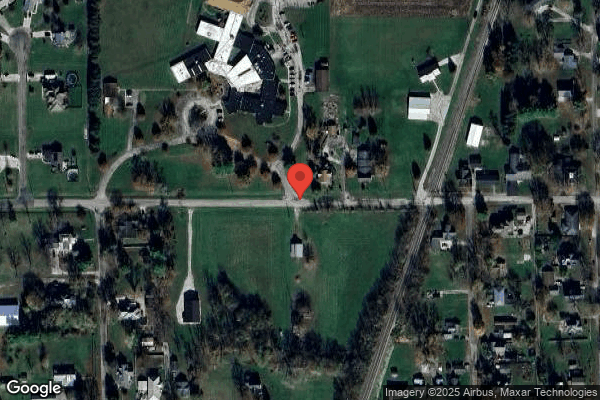

400 WEST WASHINGTON, CHRISMAN, IL 61924 (217) 269-2396
For profit - Limited Liability company 109 Beds Independent Data: November 2025 3 Immediate Jeopardy citations
Trust Grade
0/100
#612 of 665 in IL
Last Inspection: October 2024

Within standard 12-15 month inspection cycle. Federal law requires annual inspections.

Overview

Pleasant Meadows Senior Living has received a Trust Grade of F, indicating poor performance and significant concerns about the care provided. It ranks #612 out of 665 nursing homes in Illinois, placing it in the bottom half of facilities statewide, and #2 out of 3 in Edgar County, meaning there is only one local option considered better. While the facility has shown improvement over time, decreasing from 37 issues in 2024 to 2 in 2025, it still faces serious challenges, including a staffing turnover rate of 60%, which exceeds the state average and suggests instability among caregivers. In terms of specific incidents, a cognitively impaired resident was allowed to leave the facility unnoticed, resulting in them being found alone on a road, and another resident suffered a critical fall due to improper transfer procedures, which ultimately led to their death. Additionally, the facility has incurred $692,153 in fines, indicating compliance issues, and has less RN coverage than 84% of state facilities, which can impact the quality of care provided.

Trust Score
F
0/100
In Illinois
#612/665
Bottom 8%
Safety Record
High Risk
Review needed
Inspections
Getting Better
37 → 2 violations
Staff Stability
⚠ Watch
60% turnover. Above average. Higher turnover means staff may not know residents' routines.
Penalties
⚠ Watch
$692,153 in fines. Higher than 77% of Illinois facilities, suggesting repeated compliance issues.
Skilled Nurses
⚠ Watch
Each resident gets only 20 minutes of Registered Nurse (RN) attention daily — below average for Illinois. Fewer RN minutes means fewer trained eyes watching for problems.
Violations
⚠ Watch
93 deficiencies on record. Higher than average. Multiple issues found across inspections.
★☆☆☆☆
1.0
Overall Rating
★☆☆☆☆
1.0
Staff Levels
★★☆☆☆
2.0
Care Quality
★☆☆☆☆
1.0
Inspection Score
Stable
2024: 37 issues
2025: 2 issues

The Good

  • Full Sprinkler Coverage · Fire safety systems throughout facility
  • No fines on record

Facility shows strength in fire safety.

The Bad

1-Star Overall Rating

Below Illinois average (2.5)

Significant quality concerns identified by CMS

Staff Turnover: 60%

14pts above Illinois avg (46%)

Frequent staff changes - ask about care continuity

Federal Fines: $692,153

Well above median ($33,413)

Significant penalties indicating serious issues

Staff turnover is elevated (60%)

12 points above Illinois average of 48%

The Ugly 93 deficiencies on record

3 life-threatening 12 actual harm
Oct 2025 2 deficiencies 1 IJ
CRITICAL (J) 📢 Someone Reported This

A family member, employee, or ombudsman was alarmed enough to file a formal complaint

Immediate Jeopardy (IJ) - the most serious Medicare violation

Accident Prevention (Tag F0689)

Someone could have died · This affected 1 resident

**NOTE- TERMS IN BRACKETS HAVE BEEN EDITED TO PROTECT CONFIDENTIALITY** Based on observation, interview, and record review the facility failed to prevent resident elopement by failing to ensure an exi...

Read full inspector narrative →
**NOTE- TERMS IN BRACKETS HAVE BEEN EDITED TO PROTECT CONFIDENTIALITY** Based on observation, interview, and record review the facility failed to prevent resident elopement by failing to ensure an exit door was alarmed/monitored to prevent residents from exiting unnoticed and failed to develop and implement a care plan for a resident at risk for elopement for one of three residents (R1) reviewed for elopement on a sample list of five. These failures resulted in R1, a cognitively impaired resident at risk for falls, leaving the facility unsupervised in a wheelchair in the dark. R1 was found three tenths of a mile from the facility in the middle of a country road near railroad tracks by a local citizen who alerted facility staff of R1's location. Findings include:The immediate jeopardy began on 9/05/25 at approximately 9:00 p.m. when R1 left the facility in a wheelchair unnoticed, after staff disable the door alarm, and traveled unsupervised down a country road approximately three tenths of a mile away from the facility. V1, Administrator was notified of the Immediate Jeopardy on 9/25/25 at 3:20PM. The surveyor confirmed by observation, interview, and record review that the Immediate Jeopardy was removed on 9/25/25, but noncompliance remains at Level Two because additional time is needed to evaluate the implementation and effectiveness of the in-service training. R1's admission Record dated 9/23/25 documents R1 admitted to facility 8/28/2019. The admission Record documents R1's medical diagnoses include Congestive Heart Failure with presence of Cardiac Pacemaker, Age-Related Cognitive Decline, Major Depressive Disorder, Chronic Obstructive Pulmonary Disease, Abnormalities of Gait and Mobility, Lack of Coordination, Parkinson's Disease Without Dyskinesia, Need for Assistance with Personal Care, Unsteadiness on Feet, and Insomnia.R1's Minimum Data Set (MDS) Section C dated 8/15/25 documents R1 has moderate cognitive impairment.R1's Elopement Risk assessment dated [DATE] identifies R1 at risk for elopement.R1's undated Care Plan documents R1 has confusion and a cognitive communication deficit, R1 is high risk for falls, has a history of falls with major injury, and staff have observed R1 turning off safety alarms. The Care Plan documents R1 has psychosocial well-being issues with reported feelings of isolation, has diagnoses of Major Depressive disorder and Insomnia, is at moderate risk for abuse related to dependence on others, displays inappropriate behaviors, has impaired cognitive function, and has suicidal ideations. R1's undated Care Plan documents Elopement risk was added on 9/6/25 by V4 Social Services Director (SSD) with a goal of R1 will not leave the facility without being escorted by family or staff. The Nurse Practitioner Visit Note dated 8/20/25 documents R1 is a high fall risk, impulsive, needs safety reminders and lists diagnoses of confusional arousals and Altered Mental Status (AMS).R1's Nursing Progress Notes dated 8/26/25 document R1 was found unresponsive with decreased respirations.R1's Physician Visit Note dated 8/27/25 documents R1 had a transient unresponsive episode with bradypnea (abnormally slow breathing) and pallor, which resolved spontaneously. The Note documents to continue to monitor neurological and cardiopulmonary status closely, including level of consciousness, respiratory rate, and skin color, and maintain fall and safety precautions, especially during toileting and transfers.The Psychiatric Nurse Practitioner Visit Notes dated 8/29/25, document R1 reports feeling more depressed for one week. The Notes document staff suspect it could be due to family and staff talking to him about his behaviors. His appetite and sleep are so-so. Reports ongoing suicidal ideations. When asked if he had a plan, he stated That's my business, not yours. When educated on notifying staff of any worsening thoughts or development of plan, he stated I told you it's my business. If l want to do it, I'll figure it out somehow. The Notes document R1 denies homicidal ideations or audio-visual hallucinations and staff are aware of his statements and will continue to monitor closely.R1's Psychiatry Visit Notes dated 9/15/25 document staff reported R1 has new behavior of exit seeking with multiple attempts over previous week and R1 confirmed to practitioner that he would continue to exit seek as he does not want to be at facility.On 9/23/25 at 11:41 AM, V6, R1's friend, stated that on Friday night of 9/5/25, he received a phone call from the facility stating they believed R1 had gotten out of the facility and someone in the community had called reporting they had seen him. V6 could not recall the exact time of the call but stated it was dark outside and he was already in bed. V6 stated that approximately an hour after he received the first call, R1 called from facility stating he was back. V6 stated that R1 stated to V6, R1 had to go home to feed the dog, and he didn't want to be in the facility anymore. V6 stated R1's residence prior to living at the facility was an apartment approximately 45 miles north that was right behind the railroad tracks. V6 stated R1 has stated to V6 previously that he would just follow the tracks home. V6 stated R1 knew the exit code because it had been posted on the door for years. V6 stated staff (Unknown) told him where R1 had been found indicating R1 had to travel over uneven, bumpy, railroad tracks to get to the location R1 was found. V6 stated if R1 fell out of the wheelchair he would not have the strength to pull himself back in. On 9/23/25 at 1:15 PM near the area R1 was found there was an audible sound of a railroad train traveling down railroad tracks and a train was observed traveling through the crossing at moderate speed. No warning lights or barriers were present at the crossing. On 9/24/25 at 11:20 AM, R1 was at the front entrance of the facility demanding to be let out to go home. At 3:00 PM on 9/24/25, R1 stated he does not remember much about the night of 9/5/25. R1 stated he knew he wanted to go home to feed his dog [NAME] and stated it was very dark, and it was getting cold.On 9/25/25 at 12:10 PM, V12, Certified Nurse Aide (CNA), stated on Friday September 5th at 10:05 PM she received a call from V14, Registered Nurse (RN), to initiate a head count with suspicion of a missing resident. V12, CNA, stated V12 completed the head count on the skilled side and ran up to the front entryway where V15 CNA stated someone called to report that there was a person rolling around in the street in a wheelchair that may live here and that R1 was missing. V12 CNA stated at that time the two nurses on duty, V14 RN, and V16 RN, pulled up in parking lot. One was in a car, and the other was pushing R1 in his wheelchair. V12 CNA stated that one nurse pushed him back in the wheelchair, while the other used the car headlights to see due to no lights on the road, and it was very dark that night. When R1 was inside facility he stated to V12 CNA that he was going home to feed his dog, but it got cold outside. V12 stated R1 was wearing grey sweatpants, and a thin long sleeve zip up jacket. V12 stated R1 stated no one let him out, he just held the handle down for a few seconds and door opened but R1 was unable to recall when he left or how long he had been outside. V12 CNA stated R1 was found near railroad tracks approximately 0.3 miles from the facility and one tenth of a mile away from the highway. V12 CNA stated she began her shift at 6:00 PM that night and doesn't remember hearing any alarms that evening. V12 CNA stated staff should be able to hear the front door alarm. V12 CNA stated R1 has often made statements to her that he doesn't want to be here, and he wants to go home.On 9/24/25 at 11:05 AM V5, Maintenance Director stated all doors have alarms if opened and the alarm sounds in the area of open door as well as sends a notification to the alarm panel. V5 demonstrated doors/hallways that wander guards would trigger an alarm which included the front entrance (door #9). V5 stated the facility added a mag lock about 2 weeks ago which is essentially a video doorbell that can be opened remotely. V5 stated that he recoded the front door about a week ago.On 9/24/25 at 11:29 AM, V11 CNA stated that on 9/5/25 she was the only aide working on R1's hallway. R1 was very restless that evening so she got him up from bed and watched him roll toward the front hallway around 9:00 PM. V11 denied hearing any alarm but stated that another staff member (unknown) had turned the front door alarm off due to multiple visitors coming in that evening and not enough staff to monitor front area. V11 stated at approximately 9:40 PM, the nurse received a phone call from a local resident stating R1 was in her area. V11 stated no one had known R1 left the facility and without the call from the town resident, she is unclear when they would have noticed.The Timecard Report dated 9/5/25 documents between the hours of 9:00 PM and 10:00 PM there was one CNA and one nurse for 37 residents on R1's unit.On 9/24/25 at 11:53 AM V9 RN stated that on 9/5/25 she worked 2:00 PM to 6:00 PM until V14 RN arrived and took over. V9 stated R1 received medication from her at 5:30 PM in his room. V9 stated she noticed over the last week R1's behavior had changed notably. V9 stated R1 usually stayed to his room, but lately she noticed R1 sitting in the chapel near the front entrance staring outside. V9 stated when she returned on 9/7/25, the codes to the front door had been changed and the sign on the door with code had been removed.The Facility Investigation File dated 9/6/25 includes one written statement from V14 RN. V14's undated written statement documents that at 9:55PM she received a call from a local town resident stating she had observed someone in a wheelchair in the road near her home that she believed was a resident of the facility. A head count was initiated and R1 was found to be missing. R1 was last been seen heading toward the front hallway in a wheelchair around 9:00 pm. Upon R1's return, no injury was found, and a wander guard was placed on R1's right ankle. The statement documents notifications were made to V1 Administrator, V16 Supervisor, and V6 R1's Representative.At 3:15 PM on 9/24/25, V1 Administrator, stated that she did investigate the incident and that R1 previously had been assessed to go outside on R1's own and the night of 9/5/25, R1 was just checking things out so he did not elope.No assessment or physician order documented in R1's Medical Record documents R1 is able to leave the facility unattended.On 9/25/25 at 10:22AM V8, Nurse Practitioner, stated R1's Parkinson's Disease affects his cognition and safety awareness. V8 stated R1 has intermittent moments of clear speech and memory recall, however his baseline is confused and R1 has no safety awareness. V8, stated R1 is impulsive and has stated on many occasions that he wants to go home. V8 stated R1 has advanced cardiac disease and recently had an internal defibrillator replaced. V8 stated R1 had an unresponsive episode on 8/27/25 due to cardiac issues and has high potential for another. V8, stated R1 would sit outside facility at times but always had staff supervision and should not have ever been outside alone. V8, stated the potential for R1 to have been harmed or have succumbed to the elements during his elopement was highly likely. V8 stated V8 was not notified of the elopement.The facility document entitled Elopement and Search Policy dated 02/2014 documents all nursing personnel are responsible for knowing whereabouts of assigned residents, residents are not permitted to leave the building alone unless a physician order is present, and all personnel are responsible for promptly responding to the location of an alarm to determine the cause. The policy states if elopement occurs, the physician and resident representative are to be notified, and a report is to be sent to the Illinois Department of Public Health (IDPH).The Immediate Jeopardy that began on 9/5/25 was removed on 9/25/25 when the facility took the following actions to remove the immediacy:On 9/5/25, an alert band was placed on R1 to ensure his safety. On 9/6/25, a new elopement evaluation was completed for R1, and R1 was placed on 15-minute monitoring checks for 3 days to monitor exit-seeking behavior. On 9/7/25, V4 Social Service Director completed an audit of all wandering residents, and no issues were identified.Training for all staff was initiated on 9/25/2025 by V2 Director of Nursing and V5 Maintenance Director. Training included identifying exit-seeking behaviors, placing wander alert band immediately when identified at risk, physician orders, and where to locate the wander guard bands. The training also included the location of wander guard exit doors, and alarm panels, immediate response to a door alarm or wander guard alarm and completing safety checks indoors and outdoors to ensure that all residents are safe. The training included The Door Alarm and Missing Person and Elopement Policy and Procedures. The Missing Person and Elopement Policy and Procedures were reviewed 9/25/2025 by the Corporate Clinical Director. Care Plans were reviewed and revised as necessary by V4 Social Services Director to update interventions as appropriate on 9/25/2025.On 9/25/25, V5 Maintenance Director began audits of all exit doors with plans to conduct audits five days a week for six weeks, and then weekly to ensure proper function of all door alarms. On 9/25/25, V2 started audits of all residents at risk for wandering and will continue the audits on a weekly basis for six weeks to be sure Elopement Assessments and Care Plans are up to date with accurate information and interventions are in place. On 9/30/25 at 2:00 PM V2 stated V5 and V2 will bring the audits to the Quality Assurance meetings to be reviewed by the interdisciplinary team weekly, monthly, and quarterly. This was also confirmed with V1 and V5.The facility presented an abatement plan to remove the immediacy on 9/26/25 at 2:29 PM. The survey team reviewed the abatement plan and was unable to accept the plan to remove the immediacy. The abatement plan was returned 9/26/25 at 3:51 PM. The facility presented a revised abatement plan to remove the immediacy on 9/26/25 at 4:51 PM. The survey team reviewed the abatement plan and was unable to accept the plan to remove the immediacy. The abatement plan was returned 9/29/25 at 9:27 AM. The facility presented a revised abatement plan to remove the immediacy on 9/29/25 at 10:40AM. The survey team reviewed the abatement plan and was able to accept the plan to remove the immediacy. The abatement plan was approved on 9/29/25 at 11:01 AM.
CONCERN (D) 📢 Someone Reported This

A family member, employee, or ombudsman was alarmed enough to file a formal complaint

Potential for Harm - no one hurt, but risky conditions existed

Medical Records (Tag F0842)

Could have caused harm · This affected 1 resident

Based on interview and record review, the facility failed to ensure a resident's medical record included an elopement event for one of three residents (R1) reviewed for elopement in the sample list of...

Read full inspector narrative →
Based on interview and record review, the facility failed to ensure a resident's medical record included an elopement event for one of three residents (R1) reviewed for elopement in the sample list of five. R1's admission Record dated 9/23/25 documents R1 admitted to facility 8/28/2019. The admission Record documents R1's medical diagnoses include Congestive Heart Failure with presence of Cardiac Pacemaker, Age-Related Cognitive Decline, Major Depressive Disorder, Chronic Obstructive Pulmonary Disease, Abnormalities of Gait and Mobility, Lack of Coordination, Parkinson's Disease Without Dyskinesia, Need for Assistance with Personal Care, Unsteadiness on Feet, and Insomnia.R1's Minimum Data Sheet (MDS) Section C dated 8/15/25 documents R1 has moderate cognitive impairment.R1's undated Care Plan documents R1 has confusion and a cognitive communication deficit, R1 is high risk for falls, has a history of falls with major injury, and staff have observed R1 turning off safety alarms. The Care Plan documents R1 has psychosocial well-being issues with reported feelings of isolation, has diagnoses of Major Depressive Disorder, and Insomnia, is at moderate risk for abuse related to dependence on others, displays inappropriate behaviors, has impaired cognitive function, and has suicidal ideations.On 9/23/25 at 11:41 AM, V6, R1's friend, stated that on that Friday night of 9/5/25, he received a phone call from the facility stating that they believed R1 had gotten out of the facility and that someone in the community had called reporting they had seen him. V6 could not recall the exact time of the call but stated it was dark outside and he was already in bed. V6 stated that approximately an hour after he received the first call, R1 called from the facility stating he was back. R1 stated to V6 that he had to go home to feed the dog and that he didn't want to be in facility anymore. V6 stated R1's residence prior to living at the facility was an apartment approximately 45 miles north that was right behind the railroad tracks. V6 stated R1 has stated to V6 previously that he would just follow the tracks home. V6 stated R1 knew the exit code because it had been posted on the door for years. V6 stated staff (Unkown) told him where R1 had been found indicating R1 had to travel over uneven, bumpy, railroad tracks to get to the location R1 was found. V6 stated if R1 fell out of the wheelchair he would not have the strength to pull himself back in. R1's medical record does not document notification to V6 on 9/5/25.The Facility Investigation File dated 9/6/25 includes one written statement from V14 RN. V14's undated written statement documents that at 9:55PM she received a call from a local town resident stating she had observed someone in a wheelchair in the road near her home that she believed was a resident of the facility. A head count was initiated and R1 was found to be missing. The statement documents R1 was last seen heading toward the front hallway in a wheelchair around 9:00 pm. The statement documents upon R1's return, no injury was found, and a wander guard was placed on R1's right ankle. The statement documents notifications were made to V1 Administrator, V16 Supervisor, and V6 R1's Representative.R1's undated Care Plan documents Elopement risk was added on 9/6/25 by V4 Social Services Director (SSD) with a goal of R1 will not leave facility without being escorted by family or staff. R1's Physican Order Sheet dated 9/23/25 documents a new order for monitoring wander guard functioning started on 9/8/25.R1's Psychiatry Visit Notes dated 9/15/25 document staff reported R1 has new behavior of exit seeking with multiple attempts over previous week and R1 confirmed to practitioner that he would continue to exit seek as he does not want to be at facility.R1's medical record does not document any incident on the night of 9/5/25. On 9/24/25 at 3:20 PM V2 Director of Nurses, stated she was not aware there was no documentation for R1 on the event on 9/5/25. The Facility Medical Record Policy, undated documents physicians, nursing staff, and other healthcare professionals are responsible for making timely and accurate entries. Nursing documentation shall include notations of incidents including notification to medical doctor and resident representative.The Facility policy titled Accidents & Incidents dated 6/1/2007 documents staff must document in the clinical record a descriptive summary of an incident and any associated interventions including resident response to interventions, as well as complete incident report by end of shift.
Oct 2024 23 deficiencies 3 Harm
SERIOUS (G)

Actual Harm - a resident was hurt due to facility failures

Deficiency F0602 (Tag F0602)

A resident was harmed · This affected 1 resident

**NOTE- TERMS IN BRACKETS HAVE BEEN EDITED TO PROTECT CONFIDENTIALITY** 3.) The facility's grievance log dated 10/25/2024 documents: R25 reported to manager (V10 Restorative Registered Nurse) that (R2...

Read full inspector narrative →
**NOTE- TERMS IN BRACKETS HAVE BEEN EDITED TO PROTECT CONFIDENTIALITY** 3.) The facility's grievance log dated 10/25/2024 documents: R25 reported to manager (V10 Restorative Registered Nurse) that (R25) had money missing. V29 SSD (Social Service Director) followed up and R25 explained that last week (R25) had $100 missing and then on October 22nd (R25) had another $20 missing. He stated the money was in his wallet in his top drawer. V29 reported R25's missing money to V1 Administrator to follow up. R25's MDS (Minimum Data Set) dated 8/19/24 documents R25 is alert and oriented. On 10/27/24 at 9:58 AM, R25 stated I have had money missing twice. R25 explained, two weeks ago R25 had $170 in cash in R25's wallet, which was in the top drawer of R25's nightstand. R25 left his room to attend therapy, leaving the wallet in the nightstand drawer, and upon returning to R25's room, R25 found that the $100 bill was gone leaving $70 in the wallet. R25 stated he reported the theft to the unidentified Certified Nurses Assistant (CNA) and Registered Nurse (RN), but doesn't remember who it was. R25 stated again on 10/23/24, R25 had money stolen. R25 explained that R25 left the facility for a physicians appointment and while en route, realized he had forgotten his wallet. Upon returning to the facility, R25 noticed that the top drawer of the nightstand was open a couple inches and another $20 was missing, leaving $50 in the wallet. R25 reported this theft to the unidentified RN on duty. R25 stated that V29 SSD informed R25 that four to five people have been hit in the last couple of weeks and that the facility is looking into the thefts. On 10/28/24 at 10:39 AM, V29 SSD confirmed that R25 had reported having money stolen but that V29 was not made aware of the allegation until 10/25/24 On 10/28/24 at 10:45 AM, V1 Administrator confirmed V1 was aware of R25's missing/stolen money. On 10/28/24 at 11:29AM, V10 Restorative Registered Nurse stated R25's missing money was reported to her by V6 Certified Nurses Assistant (CNA) on 10/23/24. V10 explained that V10 reported the missing/stolen money to V1 Administrator and V2 Director of Nursing (DON) on 10/24/24. On 10/28/24 at 11:40 AM, V6 CNA stated R25 came to the nurses' station and stated loudly this is the second time someone stole from me! On 10/30/24 at 10:00 AM, V25 LPN (Licensed Practical Nurse) stated V25 is familiar with R25 and has seen cash in a money clip on R25's wallet. On 10/30/24 at 10:10 AM, R25 stated R25 had been given the money by his family explaining his son or daughter will bring him cash whenever he needs it. 4.) The facility's grievance log dated 10/25/24 documents R46 had money stolen on 10/1/24. On 10/27/24 at 9:50 AM, R46 stated R46 had cash stolen from R46 during a room move. R46 explained R46 had $100 in cash in R46's dresser drawer and after moving rooms, the $100 was missing. R46 stated an unidentified housekeeper saw the cash in R46's drawer while assisting R46 with the room move. R46's MDS (Minimum Data Set) dated 9/11/24 documents R46 is alert and oriented. R46's ongoing Census Sheet documents R46 changed rooms on 10/01/24. On 10/28/24 at 10:39 AM, V29 SSD confirmed R46 reported having money stolen and reported it to V29 on 10/25/24. V29 reported that V29 completed a Grievance Form and that V1 Administrator was handling the investigation. On 10/28/24 at 10:45 AM, V1 Administrator confirmed V1 was made aware of R46 having money stolen and that the facility was handling it internally. On 10/28/24 at 11:40 AM, V6 CNA (Certified Nursing Assistant) stated on 10/23/24, R46 reported to V6 that R46 had money stolen. On 10/29/24 at 11:40 AM, V16 LPN (Licensed Practical Nurse) stated R46 reported to V16 that R46 had money stolen from him. On 10/30/24 at 10:15 AM, R46 stated that R46 gets cash out of the ATM (Automated Teller Machine) using a debit card from his Social Security Card, therefore he does not have any bank statements. Based on observation, interview and record review the facility failed to protect the resident's right to be free of misappropriation of money and personal property for four of five residents (R13, R130, R25 and R46) reviewed for misappropriation in a sample list of 40 residents. Failing to prevent the misappropriation of R13's commemorative coin set, which is not replaceable, resulted in R13 being tearful and experiencing feelings of sadness and loss due to the sentimental value of the coins. Findings Include: The facility Abuse Prevention Program dated October 2022 documents this facility affirms the right of our residents to be free from abuse, neglect, exploitation, misappropriation of property, deprivation of goods and services by staff or mistreatment. Misappropriation of Resident Property means the deliberate misplacement, exploitation, or wrongful temporary, or permanent use of a resident's belongings or money without the resident's consent. 1. R13's Care Plan updated 10/27/24 documents: (R13) has an alteration in neurological status related to: Major Depressive Disorder Recurrent, Agoraphobia, Anxiety, and PTSD (Posttraumatic Shock Disorder). R13's Minimum Data Set (MDS) dated [DATE] documents R13 is cognitively intact. On 10/29/24 at 9:00AM R13 was seated in a wheelchair in R13's room with a family member visiting. R57 (R13's) roommate was in bed in the room. R13 stated I can talk to you in front of my roommate and my (family member) I trust them. I had $100.00 and eight double struck commemorative coins taken from my lock box. It had to be staff because they might have known I was keeping my key beside my bed in my pencil box. It is bad enough I lost the money, but I used to carve the casts and strike the coins. Those I had here were in silver and bronze. I am losing my sight and my fingers don't work well because I have neuropathy. Those coins meant a lot to me. I kept them here because I like to look at them and remember what I used to do. I can't remember the exact date, but my (family member) can tell you. I reported it to (V1) Administrator and (V29), Social Services. They did not offer to call the police, but I wish they had. R13 looked upset and bit his bottom lip as he talked. Tears started to well up in R13's eyes. V33, R13's family member stated (R13) had the coins and his $100.00 on the evening of 10/16/24. I saw them. I came back on 10/17/24 and he did not have them. R57 stated I did not see (R13's) coins that day before, but I have seen that (R13) had the coins he made. On 10/29/24 at 11:00AM V1, Administrator stated there is really no documented investigation. I do not believe the money has been returned to (R13). 2.) The facility's Grievance Log for the three months prior to the survey documents R130 withdrew money from the bank on 9/1/24 and stored it in her purse. On 9/2/24 (R130) noticed money was missing around noon. (R130) was interviewed and family confirms money was withdrawn from the bank. Facility will replace the money. R130's MDS dated [DATE] documents R130 is cognitively intact. R130's Progress Note documents R130 was discharged home with home care services 10/28/24. On 9/30/24 R130 stated I took $140.00 out of the bank and put it in my purse. I went to therapy and when I came back I was going to address cards to my family and put in the money but the money was gone. I never got the money back. I told (V34) Care Plan Nurse the money was missing. I never heard anything so I just thought I would still be getting it. I have been sick and that was quite a bit of money to me. Now that I am home, I will be a little short at the end of the month and it was for my family. I save that up. You know I think whoever took it must really need it, but I would have just given it to them if they asked. On 10/30/24 at 12:00PM V34 verified R130's account of the allegation. V34 stated I really thought (R130) had the money replaced. on 10/30/24 at 12:15PM V29, Social Service also verified R130's account of the allegation. V29 also stated she was under the impression R130 was reimbursed for this loss.
SERIOUS (G)

Actual Harm - a resident was hurt due to facility failures

Pressure Ulcer Prevention (Tag F0686)

A resident was harmed · This affected 1 resident

**NOTE- TERMS IN BRACKETS HAVE BEEN EDITED TO PROTECT CONFIDENTIALITY** Based on observation, interview, and record review the facility failed to complete weekly pressure ulcer assessments, implement ...

Read full inspector narrative →
**NOTE- TERMS IN BRACKETS HAVE BEEN EDITED TO PROTECT CONFIDENTIALITY** Based on observation, interview, and record review the facility failed to complete weekly pressure ulcer assessments, implement treatment orders timely, administer treatments as ordered, maintain wound dressings, accurately complete skin and wound assessments, and implement interventions to prevent the development and worsening of pressure ulcers for four (R8, R32, R52, R44) of four residents reviewed for pressure ulcers in the sample list of 46. These failures resulted in R8 developing stage three pressure ulcer and R32 developing an unstageable pressure ulcer. Findings include: The facility's Measurement of Alterations in Skin Integrity policy dated January 2017 documents wound type, stage, measurements and characteristics should be assessed and documented upon identification and weekly thereafter, record refusal of treatment or pressure relieving interventions and the resident's care plan should also reflect this. The facility's Braden- Pressure Risk Assessment Tool policy dated January 2017 documents the Braden scale determines pressure ulcer risk and this assessment should be completed upon admission, then weekly for the first month, and then at least quarterly and with changes in condition. This policy documents appropriate individualized interventions should be implemented and documented on the resident's care plan. The facility's Pressure/Skin Breakdown- Clinical Protocol dated January 2017 documents to determine a resident's significant risk factors for developing pressure ulcers, such as immobility, recent weight loss, and a history of pressure ulcers; assess skin condition, pain, mobility, treatments, support surfaces, and diagnoses; and the physician will give orders for wound care including pressure redistribution surfaces. The facility's Prevention of Pressure Wounds policy dated January 2017 documents pressure injuries are usually due to sitting in the same position for an extended period of time causing increased pressure, decreased circulation, and subsequent tissue destruction; and can also be related to irritating substances on the skin such as urine and feces. This policy documents there should be a system or procedure in place to assure assessments are completed timely, changes in condition are identified, evaluated, reported to the physician, and addressed. This policy documents preventative measures include repositioning at least every two hours, determining if a special mattress is needed, use of pressure relieving cushions for chairs, avoiding donut shaped or waffle cushions, routinely assessing skin condition, using moisture barrier creams, using pillows to float heels when in bed, immediately reporting any signs of pressure injuries, administering vitamins and supplements per physician's orders, and having the dietitian assess nutrition and make recommendations. 1.) R8's Minimum Data Set (MDS) dated [DATE] documents R8 is cognitively intact, requires partial/moderate staff assistance for rolling in bed, requires substantial/maximal staff assistance for transfers, and is occasionally incontinent of urine. R8's Braden assessment dated [DATE] (after R8's pressure ulcers developed) document R8 is low risk. The last Braden Assessment recorded for R8 was on 10/13/23. R8's Care Plan dated 5/26/23 documents R8 is at risk for impaired skin integrity, and includes interventions to apply barrier cream three times daily as needed, Braden Assessments weekly for four weeks then quarterly, and to encourage good nutrition and hydration to promote healthier skin. There is no documentation that R8 refuses turning/repositioning. This care plan has not been updated to include R8's pressure ulcers or any new pressure relieving interventions after 5/26/23. R8's Physician Order dated 6/19/23 May use Pressure relieving mattress and/or cushion on w/c (wheelchair) if Needed. There is no documentation that R8 requires a pressure relieving cushion in R8's wheelchair. R8's ongoing weight log documents R8 had a significant weight loss between August 2024 and September 2024, and continued weight loss as of 10/30/24. R8's October 2024 Treatment Administration Record (TAR) documents an order dated 10/6/24 to cleanse right buttock wound with wound cleanser, apply collagen and bordered foam every shift for Stage Two pressure ulcer, and an order dated 10/10/24-10/28/24 to clean right buttock wound, apply Santyl, apply Calcium Alginate, and cover with a bordered foam dressing daily. This TAR documents to complete skin assessments on Mondays and Thursdays, and inaccurately documents R8's skin as intact and without wounds 10/7-10/14/24. This TAR documents to apply barrier cream to the left buttock three times daily as of 10/7/24, and there is no documentation that barrier cream was applied prior to 10/7/24. R8's Nursing Note dated 10/6/24 at 12:12 AM documents R8 had a new Stage Two Pressure Ulcer to the right buttock, the Wound Nurse (V12) was notified, the area was cleansed, Collagen was applied, and the wound was covered with a bordered foam dressing. There is no documentation of wound characteristics and measurements prior to evaluation by V7 Wound Physician on 10/7/24. R8's Wound Care Telemedicine Follow Up Evaluation dated 10/7/24, recorded by V7, documents R8 has a Group 1 mattress and a foam cushion in R8's chair. This note documents R8 has a right buttock Stage Three Pressure Wound of greater than three days duration that measured 1.5 centimeters (cm) long by 1.7 cm wide by 0.2 cm deep and had 90% slough (dead cells). This note includes recommendations to off-load wound, reposition per facility protocol, Group 2 Mattress (air mattress), Multivitamin once daily, Vitamin C 500 milligrams (mg) twice daily, Zinc Sulphate 220 mg once daily for 14 days. There is no documentation in R8's medical record that the recommended vitamins were implemented. R8's Wound Care Telemedicine Follow Up Evaluation dated 10/18/24 documents R8's right buttock wound resolved and R8 had a left hip Stage Three Pressure Wound of greater than two days duration that measured 1.3 cm by 1 cm by 0.2 cm and had 50% slough. This note documents R8 now has a Group 2 mattress as of today (11 days after V7's order) and recommends to off-load wound and repositioning. R8's Wound Care Telemedicine Follow Up Evaluation dated 10/25/24 documents R8's left hip Stage Three Pressure Wound measured 1.2 x 1 x 0.2 cm, and R8's right buttock Stage Three Pressure Wound reopened over three days ago and measured 2.0 x 2.0 x 0.3 cm. There is no documentation in R8's medical record that R8 has been evaluated by a dietitian since March 2024, prior to R8's weight loss and wounds. On 10/27/24 at 8:30 AM and 11:58 AM R8 was sitting in a wheelchair near the nurses' station with a soft lap cushion looped through the armrests of R8's chair. at 10:18 AM R8 was sitting in a wheelchair in the dining room. At 11:58 AM R8 was sitting in her wheelchair. R8 stated R8 has wounds on R8's bottom, but was unsure how long the wounds had been there or how often treatments are administered. On 10/28/24 at 9:21 AM R8 was sitting in a wheelchair by the nurses' station. At 10:38 AM R8 was sitting in a wheelchair in the dining room. At 11:13 AM staff transported R8 in a wheelchair from the dining room to the 100 hall nurses' station. Continuous observations were made from 11:13 AM until 11:39 AM of R8 sitting in a wheelchair near the nurses' station. The lap cushion remained in place during all of these observations. On 10/28/24 12:02 PM V4 and V6 Certified Nursing Assistants (CNAs) transferred R8 from her wheelchair into bed. There was a foam horseshoe shaped cushion, that was approximately one inch thick, in R8's wheelchair. R8 was incontinent of urine and V6 provided incontinence cares. R8 had open pink wounds to the right buttock and left hip that were not covered with dressings. V6 stated V6 had not provided any cares for R8 yet today and was unsure how long the wounds were without dressings. V6 stated V6 will notify the nurse so the wounds can be covered. On 10/28/24 at 12:16 PM V3 Licensed Practical Nurse stated R8's wounds started with the right buttock that was a thin layer of skin that had sheered off, and then a few days later the left hip wound developed. V3 entered R8's room, administered R8's pressure ulcer treatment, and used pillows to position R8 on her right side before leaving the room. V3 stated no staff had reported that R8's dressings came off, prior to V6. On 10/28/24 at 2:34 PM V11 CNA stated V11 R8 was transferred out of bed around 7:30 AM and V11 provided no other transfer or toileting cares for R8 prior to leaving at 10:00 AM. V11 stated V4 was the only other CNA working on R8's hall at that time. On 10/28/24 at 3:04 PM V4 CNA stated V4 did not provide any cares for R8 besides the transfer observed at 12:02 PM. On 10/28/24 at 3:23 PM V12 Wound Nurse stated V12 has been the facility's wound nurse for approximately three weeks. V12 stated V12 has not yet updated resident care plans to include wounds, but they should be updated to reflect wounds and new interventions. V12 stated V12 and V7 Wound Physician complete weekly wound assessments which are documented in the assessment section of the resident's electronic medical record (EMR) or in V7's notes. V12 stated there can't be a delay in starting treatment, and the nurses should notify the physician and document an assessment of the wound when found. V12 confirmed Braden assessments are documented in the assessments section of the EMR, and should be done on admission, then weekly for four weeks, and then quarterly. V12 stated residents at high risk for pressure ulcers should have weight monitored weekly, placed on a turning and repositioning schedule, and skin checks more than weekly. V12 stated turning/repositioning should be documented on the care plan and in tasks in the EMR. V12 stated residents with wounds should be referred to the dietitian. At 4:00 PM V12 Wound Nurse stated V12 rounds with V7 Wound Physician, and V12 is responsible for entering V7's orders/recommendations. V12 stated R8 used to walk and then recently declined requiring total assistance for cares. V12 stated staff should reposition R8 at least every two hours and offload pressure from R8's wounds. V12 stated That is way too long for (R8) to be in her wheelchair, when told R8 had not been repositioned from 7:30 AM until 12:00 PM. V12 stated R8's air mattress was installed on 10/18/24. V12 stated V12 was unsure when R8's wheelchair cushion was implemented. V12 was unaware of V7's recommendations for Vitamin C, Zinc and Multivitamin, and confirmed these recommendations were never implemented. On 10/29/24 at 12:18 V12 confirmed V12 had not notified the dietitian of residents with wounds, and confirmed all of V7's wound notes were uploaded into R32's electronic medical record. On 10/30/24 at 11:05 AM V12 stated V12 was unable to determine the type and brand of R8's cushion, so the cushion was replaced today. On 10/29/24 at 11:57 AM V2 Director of Nursing stated V2 used to oversee wounds until June 2024. V2 stated the wound nurse is responsible for sending a wound list to the dietitian. On 10/29/24 at 12:34 PM V19 Registered Dietitian stated R8's last nutritional assessment was completed in March 2024. V19 stated the facility does not notify or request for V19 to evaluate residents with wounds. V19 stated V19 runs reports to determine which residents need to be evaluated, but there is no report that identifies wounds. V19 stated V19 has to ask staff to determine if residents have wounds. V19 stated no one had requested to evaluate R8's nutritional status and V19 was unaware that R8 had developed pressure ulcers. V19 stated if V19 had evaluated R8, V19 would have recommended Zinc, Vitamin C, a multivitamin, and liquid protein; and possibly would have recommended a nutritional supplement if R8 had lost weight, but R8 does not have a documented weight for October. On 10/29/24 from 1:00 PM-1:15 PM V7 stated V7 has been the facility's wound physician for the last few months and V7 conducts her visits virtually, not in person. V7 stated Prealbumin is ordered to evaluate nutrition and protein levels and should be implemented by the next month's laboratory draw. V7 stated vitamins aid with wound healing and should be implemented by the next day. V7 stated Group 1 mattresses are foam mattresses that are good for up to Stage Two Pressure Ulcers and a Group 2 mattress is a low air loss mattress used for Stage Three Pressure Ulcers and higher, or if the resident has a low Body Mass Index. V7 stated residents at high risk for pressure ulcers should have preventative interventions implemented based on the facility's protocol, which generally includes frequent repositioning and offloading and use of pressure relieving surfaces. V7 stated V7 avoids using horseshoe or donut cushions since they cause skin to spread and can cause wounds to worsen. V7 stated generally foam cushions with approximately three inch thickness are used. V7 stated there was a period of time where the facility didn't have a wound nurse due to staffing issues; V7 worked closely with V2 when V2 was the Assistant Director of Nursing, but then V2 changed positions and there were several weeks where no one was assessing wounds. V7 confirmed not implementing pressure relieving interventions, physician recommendations, nutritional evaluations, wound and skin assessments/monitoring, and treatments timely and as ordered, can contribute to the development and worsening of pressure ulcers. 2.) R32's MDS dated [DATE] is inaccurate and documents R32 did not have pressure ulcers. R32's MDS dated [DATE] documents the following: R32 has sever cognitive impairment, R32 requires supervision/touch assistance from staff for bed mobility, and partial/moderate staff assistance with transfers. R32 is occasionally incontinent of urine and requires dependence on staff for toileting hygiene. R32 had an unplanned significant weight loss within the last six months. R32 has two facility acquired pressure ulcers, one stage three and one unstageable. R32's Braden assessment dated [DATE] documents R32 scored low risk for developing pressure ulcers. There are no other documented Braden Assessments in R32's medical record until 10/8/24, after R32 developed unstageable and stage three pressure ulcers. R32's Care Plan dated 7/9/24 documents R32 has potential for impaired skin integrity and includes interventions to apply barrier cream three times daily as needed, Braden scale weekly for four weeks then quarterly, encourage good nutrition and hydration, follow physician's orders for treatment. This care plan has not been updated to include R32's pressure ulcers or any new pressure relieving interventions after 7/9/24. There is no documentation that R32 refuses pressure relieving interventions. R32's Physician's Order dated 7/11/24 documents to give Pro Stat (protein supplement) 30 milliliters once daily. R32's Physician Order dated 7/9/24 documents to apply pressure relieving boots or offload heels when in bed. R32's Physician Order dated 7/31/24 documents air mattress to bed. R32's Physician Order dated 7/12/24 documents May use pressure relieving mattress and/or cushion on w/c if Needed. There is no documentation that barrier cream, air mattress, or wheelchair cushion was applied prior to these orders. R32's admission Evaluation dated 7/3/24 documents R32 admitted with a Stage Two Pressure Ulcer of sacrum/coccyx. There is no documentation that a treatment order was initiated for this wound until 7/9/24 and there are no documented assessments of this wound until 7/31/24 when the wound had deteriorated to a Stage Three. There is no documentation that R32 admitted with any foot wounds. R32's Shower Sheet dated 7/7/24 documents R32 had a blister to the left heel and left big toe. There are no documented measurements or wound descriptions, and no documentation that the physician was notified and a treatment was initiated prior to 7/9/24. R32's Nursing Note dated 7/9/2024 at 12:34 PM documents R32 had a blister to the left heel that measured 3.5 cm by 7 cm, a skin protectant and dry dressing was applied, R32's buttocks was red/excoriated with no open areas. An antifungal cream and zinc oxide cream was applied. R32's Nursing Note dated 8/4/2024 at 5:29 PM documents R32's coccyx had a 6 cm by 3 cm maroon spot with a small open area. Triple antibiotic ointment and a bordered foam dressing was applied and education was provided on timely depend changes and cream application. R32's Registered Dietitian Note dated 8/29/24 at 8:07 AM documents R32's weight has decreased over the past month and there were no new interventions. This note does not document that the dietitian was aware of R32's stage three pressure ulcers and there is no documentation that R32 was evaluated by a dietitian in September. There are no weekly wound assessments in R32's EMR prior to October 2024, besides V7's assessments on 7/31/24, 8/9/24, 8/15/24, 9/5/24, and 9/12/24. R32's Wound Care Telemedicine Initial Evaluation dated 7/31/24, recorded by V7, documents R32's unstageable Deep Tissue Injury of the Left Heel measured 6.9 cm by 4.4 cm and no measurable depth. and R32's Stage Three Pressure Ulcer of the coccyx measured 1.9 cm by 1 cm by 1.2 cm. V7 recommended to off-load wound, reposition per facility protocol, float heels in bed, pressure relieving boot, dietitian consult, and Prealbumin level. There is no documentation that R32's Prealbumin level was obtained as recommended and V7 documents Prealbumin results pending on V7's Evaluations from July-October 2024. R32's Wound Care Telemedicine Evaluation dated 10/25/24 documents R32's unstageable heel ulcer measured 1.0 x 0.7 x 0.2 cm, the wound was macerated (moisture related damage), and the treatment was changed to Calcium Alginate with bordered foam dressing applied three times weekly. R32's Stage Three Pressure Ulcer of the coccyx measured 1.0 x 0.5 x 0.5 cm. R32's August and September 2024 TAR documents R32's left heel treatment scheduled three times per week was not administered three times in August and five times in September. R32's daily coccyx treatment was not administered eight times in August and eight times in September. On 10/27/24 at 11:44 AM R32 stated R32 has sores on her feet/heel and her bottom that R32 did not admit with. R32 was lying in bed on her back and was not wearing heel protectors. R32's heels were in direct contact with R32's air mattress. R32's wheelchair pressure relieving cushion decompressed with applied hand pressure and the wheelchair seat could be felt through the cushion, indicating the cushion was not fully inflated with air. On 10/27/24 at V8 CNA stated V8 was unsure if R32 has any foot wounds, but R32 has a wound on R32's bottom. V8 stated R32 wears pressure relieving boots at night. V8 tested R32's wheelchair cushion with hand pressure and confirmed the cushion decompressed. V8 stated I believe that is how it (cushion) is suppose to be. On 10/28/24 at 9:03 AM R32 was sitting in her wheelchair in her room. At 11:20 AM staff brought R32 to her room and R32 was still in her wheelchair. R32 remained sitting in her wheelchair in her room until 11:45 AM when V4 CNA transferred R32 onto the toilet. At 11:54 AM V5 CNA responded to R32's bathroom call light. V5 confirmed R32's wheelchair cushion was not fully inflated by testing it with applied hand pressure. V5 stated that is how much it has been inflated since R32 started using it. V5 transferred R32 off of the toilet and into R32's wheelchair containing the cushion. On 10/28/24 at 11:59 AM V4 stated V4 transferred R32 out of bed and into her wheelchair between 8:00 AM and 9:00 AM. At 12:01 PM V4 and V5 transferred R32 into the stationary chair in R32's room and the chair did not contain a pressure relieving cushion. At 12:31 PM and 1:20 PM R32 was still sitting in the stationary chair. On 10/28/24 at 12:31 PM V3 Licensed Practical Nurse stated V3 already completed R32's heel treatment earlier this morning and V3 had applied a medicated honey treatment. V3 stated V3 wasn't aware that R3's heel treatment had changed to calcium alginate, so V3 will need to do R32's heel treatment again. At 1:36 PM V3 stated skin assessments are documented on the Medication Administration Records, the nurse documents if skin is intact, or if there is a wound or new wound. V3 stated there should be wound descriptions in the progress notes. V3 confirmed CNAs should use the care plan to determine pressure relieving interventions. V3 entered R32's room, transferred R32 from the stationary chair into bed, and administered R32's left heel and coccyx wound treatments. R32's stationary chair did not contain a pressure relieving cushion. R32's left outer heel had a small superficial wound and there was a deep marble sized wound to R32's coccyx. V3 raised the head of R32's bed, applied R32's covers, and left R32 lying on her back with the head of the bed elevated approximately 45 degrees (causing pressure to R32's coccyx). V3 did not offer or encourage R32 to off-load pressure from her coccyx and lay on her side prior to leaving R32's room. On 10/28/24 at 1:57 PM V3 confirmed V3 did not offer or encourage R32 to lay on her side prior to leaving the room. V3 stated V3 just didn't think of it (off-loading), and confirmed off-loading pressure from the coccyx would aide in wound healing. On 10/28/24 at 3:23 PM V12 Wound Nurse stated R32's wounds are pressure related and interventions include repositioning, off-loading, and pressure relieving boots. V12 confirmed R32 requires staff assistance to reposition or off-load, R32 should be repositioned at least every two hours and pillows should be used to off-load coccyx and heel pressure, unless pressure relieving boots are in place. V12 stated R32 should use a pressure relieving cushion in the wheelchair and stationary chair in her room. V12 confirmed R32's wheelchair cushion should be inflated and you should not be able to feel the seat of the wheelchair when pressure is applied V12 stated the CNAs should be checking that. V12 confirmed nurses should look at the TAR for treatment orders prior to administration and treatment administrations are documented on the TAR. V12 confirmed a blister is a stage two pressure ulcer and not implementing pressure ulcer interventions could contribute to a decline in wounds. V12 confirmed R32 admitted with a stage two pressure ulcer of the sacrum, there is no documentation of left heel wound on admission, and there are no assessments or measurements of this wound prior to being seen by V7. V12 confirmed there are no documented Braden Assessments in R32's EMR after 7/3/24 until 10/8/24. V12 stated a Braden score of 15 is considered high risk and that was R32's score on admission. V12 confirmed Prealbumin was never ordered for R32 and V12 stated she will follow up on this. On 10/29/24 at 9:38 AM V34 MDS Coordinator reviewed R32's admission and nursing notes and MDS, and confirmed R32's July MDS does not accurately reflect R32's skin status at that time. V34 stated V34 was told by staff at that time that R32 did not have any wounds, the wound nurse is suppose to enter wounds into the wound rounds tracking system, but there was no information entered for R32 at that time. V34 stated V34 consulted with corporate and will need to submit a modification for this MDS. V34 stated the wound nurse is responsible for adding wounds and new interventions on the care plan, and pressure relieving boots are documented in physician orders and on the care plan. On 10/29/24 at 12:34 PM V19 Registered Dietitian stated R32 was evaluated in July and August with no new recommendations, but V19 was not aware that R32's wounds had declined when R32 was evaluated in August. V19 stated if V32 was aware, V19 may have increased liquid protein to be given twice daily. V19 stated R32 should have been evaluated again in September, but V19 does not see where that was done. The manufacturer's instructions for R32's pressure relieving cushion dated 5/3/24 documents to inflate air until all of the air cells feel firm, remove the hand pump,allow air to escape from the valve until the air deflation is no longer felt or heard, and then close the inflation valve. Perform a hand check to evaluate sufficient air between the person and the base of the cushion, and adjust as needed. 3.) R44's Minimum Data Set (MDS) dated [DATE] documents R44 is at risk for pressure ulcers and was admitted with no pressure ulcers. R44's Wound Care Telemedicine initial evaluation dated 10/18/24 by V7, Wound Physician documents R44 developed a facility acquired Stage III Pressure Ulcer of greater than 10 days duration on the coccyx measuring 1.6 cm (centimeters) by 1.0 cm by 0.3 cm deep. At that time V7 ordered the following wound dressing: Calcium Alginate with silver covered with gauze island dressing with border. R44's Treatment Administration Record documents this treatment was initiated. R44's Wound Care Telemedicine Follow-up evaluation dated 10/25/24 by V7, Wound Physician documents the wound has increased in size to 3.0 cm (centimeters) by 1.5 cm by 0.5 cm deep. At that time V7 ordered the following wound dressing: medicated honey Calcium Alginate with silver covered with gauze island dressing with border. R44's Treatment Administration Record documents this treatment was not initiated. The treatment ordered 10/18/24 was continued. On 10/29/24 at 1:00PM V12 Licensed Practical Nurse (wound Nurse) applied R44's treatment. V12 removed the old dressing, removed gloves, performed hand hygiene, cleansed R44's wound with normal saline, removed gloves, performed hand hygiene, applied calcium alginate with silver to clean wound bed and covered with a bordered foam dressing. V12 did not apply medicated honey to wound as ordered. When asked why she did not apply the medicated honey V12 stated I don't think that is ordered on the TAR. At this time it was observed R44 had a new Stage III pressure ulcer on her left ischium approximately the size of a quarter. There is no documentation R44 has been evaluated by a dietitian for the facility acquired pressure ulcers. On 10/29/24 at 12:34PM V19 Registered Dietitian stated, When a resident develops a facility acquired pressure ulcer, the facility should reach out to me and I should evaluate and make recommendations to enhance healing. This facility does not do so. I usually pick up on issues like this when I do the periodic visits. I have not evaluated (R44). 4.) R52's Minimum Data Set (MDS) dated [DATE] documents R52 is at risk for pressure ulcers and was admitted with no pressure ulcers. R52's Treatment Administration Record (TAR) for October 2024 documents a new treatment dated 10/26/24 for Clean area to left buttock with normal saline. Apply calcium alginate to wound bed & cover with gauze foam daily every day shift for wound care. On 10/29/24 at 10:00 AM V12 Licensed Practical Nurse (wound Nurse) stated (R52) developed a new facility acquired Stage II pressure ulcer 10/25/24. We are treating it. On 10/29/24 at 1:15PM V12 Licensed Practical Nurse (wound Nurse) applied R52's treatment. V12 removed the old dressing, removed gloves, performed hand hygiene, cleansed R52's wound with normal saline, removed gloves, performed hand hygiene, applied calcium alginate with silver to clean wound bed and covered with a bordered foam dressing. At this time V12 verified R52's wound is now a Stage III because it has visible slough of tissue. V12 also verified R52 has developed an additional dime sized stage III pressure ulcer to her right buttock. R52 was sitting in the bed with the head elevated to sitting position. R52's bed did not have a pressure relieving mattress in place. There is no documentation R52 has been evaluated by a dietitian for the facility acquired pressure ulcers. On 10/29/24 at 12:34PM V19 Registered Dietitian stated, When a resident develops a facility acquired pressure ulcer, the facility should reach out to me and I should evaluate and make recommendations to enhance healing. This facility does not do so. I usually pick up on issues like this when I do the periodic visits. I have not evaluated (R52). There is no documentation to support R52 has been evaluated by the wound care Physician. On 10/29/24 at 1:15PM V12 verified this.
SERIOUS (H)

Actual Harm - a resident was hurt due to facility failures

Deficiency F0692 (Tag F0692)

A resident was harmed · This affected multiple residents

**NOTE- TERMS IN BRACKETS HAVE BEEN EDITED TO PROTECT CONFIDENTIALITY** 4.) R25's ongoing weight logs document R25's weight as 229.6 pounds on 08/01/24 and 216 pounds on 09/02/24, demonstrating a 5.92...

Read full inspector narrative →
**NOTE- TERMS IN BRACKETS HAVE BEEN EDITED TO PROTECT CONFIDENTIALITY** 4.) R25's ongoing weight logs document R25's weight as 229.6 pounds on 08/01/24 and 216 pounds on 09/02/24, demonstrating a 5.92% weight loss in one month. This log documents R25's October 2024 weight as 215.4 pounds. R25's Nursing Progress Notes dated 9/1/24 - 9/30/24 does not document that V35 R25's Nurse Practitioner or V19 RD (Registered Dietician) were notified of R25's significant weight loss. R25's September and October 2024 Physician Order Sheets do not document any new orders for nutritional supplements following R25's significant weight loss. On 10/29/24 at 11:10 AM, V2 DON (Director of Nursing) stated V2 was unaware of R25's weight loss. V2 stated the expectation is that V19 RD (Registered Dietitian) would report the weight loss to nursing services with their recommendations. On 10/29/24 at 12:31 PM, V19 RD stated that the weight loss from 08/01/24 through 09/02/24 would be considered a significant weight loss. V19 explained the facility should have reached out to V19 so that V19 could have evaluated R25's weight loss and ordered nutritional supplements due to R25's weight loss but the facility does not do that. Based on observation, interview, and record review the facility failed to monitor weights and implement nutritional interventions for significant weight loss for four (R8, R52, R25, R44) of five residents reviewed for nutrition in the sample list of 46. These failures resulted in ongoing weight loss following a significant weight loss for R8, R52, R25, and R44. Findings include: The facility's Nutrition (Impaired)/Unplanned Weight Loss - Clinical Protocol dated August 2008 documents to assess for recent weight loss and the physician will review for possible causes of weight loss with the nursing staff and/or dietitian before ordering interventions. This policy documents the physician and/or designee will authorize appropriate interventions as indicated, reconsider dietary restrictions and altered diet consistency, and consider diagnostic testing. The facility's Routine Nutritional Documentation and assessment dated 2020 documents residents are assessed and monitored for nutrition in accordance with the Minimum Data Set (MDS) schedule, and residents who are considered with nutritional risk or concerns are referred to the Registered Dietitian for a comprehensive nutritional assessment. This policy documents the Dining Services Manager and Registered Dietitian will document quarterly progress notes for observations, progress of nutritional goals, and nutritional care information. 1.) R8's MDS dated [DATE] documents R8 is cognitively intact, R8's weight was 156 pounds (lb), and R8 had no significant weight loss within the last six months. The last documented nutritional assessment in R8's medical record is dated as 3/2/24 and there is no documentation that R8's significant weight loss in September was evaluated by a dietitian. R8's ongoing weight log documents R8's weight as follows: 4/4/24 150.4 lbs, 7/1/24 156.4 lbs, 8/2/24 156 lbs, 9/2/24 146 lbs (6.41% loss in one month), and 10/30/24 143 lbs (8.3% loss in three months). There were no documented weights in R8's medical record after 9/2/24 until 10/30/24. R8's Care Plan dated 5/26/23 documents R8 has a nutritional problem related to abnormal weight loss and interventions include to provide supplements as ordered, dietitian to evaluate and make dietary changes as needed. This care plan does not document any nutritional interventions were developed/implemented after 5/26/23 to address R8's significant weight loss. R8's active October 2024 physician's orders documents R8's diet as Regular/Mechanical Soft. There are no documented orders for nutritional supplements. R8's Wound Care Telemedicine Follow Up Evaluation dated 10/25/24 documents R8 has stage three pressure ulcers to the right buttock and left hip. On 10/27/24 at 10:23 AM R8 was in the dining room eating. R8's meal consisted of waffles, banana, and sausage, and did not include any nutritional supplements. On 10/29/24 at 12:34 PM V19 Registered Dietitian stated R8 was due for an annual nutritional evaluation in June 2024, but one was not done because the electronic software program did not trigger for one to be done with R8's annual MDS. V19 stated R8's last nutritional assessment was completed in March 2024. V19 stated no one had requested to evaluate R8's nutritional status and V19 was unaware that R8 had developed pressure ulcers. V19 stated residents with wounds should be evaluated by the dietitian monthly. If V19 had evaluated R8, V19 would have recommended Zinc, Vitamin C, a multivitamin, liquid protein. V19 stated V19 possibly would have recommended a nutritional supplement if R8 had lost weight, but R8 does not have a documented weight for October. On 10/29/24 at 2:00 PM V2 Director of Nursing stated weights are recorded under the weight section of the resident's electronic medical record. R8's weight was requested to be obtained at this time. On 10/30/24 at 11:02 AM V10 Restorative Nurse/Registered Nurse stated R8's weight today was 143 lbs. 2.) R44's weight flow sheet documents on 05/12/2024, (R44) weighed 125.8 lbs. On 10/04/2024, R44 weighed 101.2 pounds which is a 19.55 % Loss. R44's Wound Care Telemedicine initial evaluation dated 10/18/24 by V7, Wound Physician documents R44 developed a facility acquired Stage III Pressure Ulcer of greater than 10 days duration on the coccyx. 10/29/24 12:39 PM V19 Registered Dietitian stated The facility does not reach out to me when a resident has a wound or a significant weight loss. Yes I should be notified of a significant weight loss and/or a wound and I should evaluate these residents. V19 verified V19 has not evaluated R44. 3.) R52's weight flow sheet documents on 09/03/2024, R52 weighed 131.2 lbs. on 10/15/2024, R52 weighed 123.6 pounds which is a 5.79 % loss. R52's Treatment Administration Record (TAR) for October 2024 documents a new treatment dated 10/26/24 for Clean area to left buttock with normal saline. Apply calcium alginate to wound bed & cover with gauze foam daily every day shift for wound care. On 10/29/24 at 10:00 AM V12 Licensed Practical Nurse (wound Nurse) stated (R52) developed a new facility acquired Stage II pressure ulcer on 10/25/24. We are treating it. 10/29/24 12:39 PM V19 Registered Dietitian stated The facility does not reach out to me when a resident has a wound or a significant weight loss. Yes I should be notified of a significant weight loss and/or a wound and I should evaluate these residents. V19 verified V19 has not evaluated R52.
CONCERN (D)

Potential for Harm - no one hurt, but risky conditions existed

Deficiency F0552 (Tag F0552)

Could have caused harm · This affected 1 resident

Based on interview and record review the facility failed to obtain consents for psychotropic medication use for two (R8, R37) of five residents reviewed for unnecessary medications in the sample list ...

Read full inspector narrative →
Based on interview and record review the facility failed to obtain consents for psychotropic medication use for two (R8, R37) of five residents reviewed for unnecessary medications in the sample list of 46. Findings include: The facility's Psychotropic Medication Policy revised November 2017 documents Psychotropic medication shall not be prescribed without the informed consent of the resident, the resident's guardian, or other authorized representative. Side effects of medications shall be described during the informed consent process. 1.) R8's October 2024 Medication Administration Record documents R8 received Depakote (anticonvulsant/mood stabilizer) Delayed Release 500 milligrams by mouth four times daily since 7/12/24. R8's Psychiatry Note dated 9/5/24 at 3:23 PM documents R8 receives Depakote for Bipolar Disorder. There is no documented consent for Depakote in R8's electronic medical record. On 10/30/24 at 1:05 PM V10 Restorative Nurse/Registered Nurse confirmed all of R8's psychotropic medication consents were provided, and there was no consent for Depakote. V10 was asked about assessing for R8's Depakote use. V10 stated R8 has a psychiatric diagnosis and seizure disorder, so it is a dual medication treatment. 2.) R37's Physician Orders (printed 10/31/2024) and Medication Administration Record (October, 2024) document R37 receives the psychotropic medications trazodone hydrochloride (50 milligrams, half a tab by mouth, each day at bedtime) and fluoxetine hydrochloride (60 milligrams by mouth once a day). On 10/30/2024 at 1:15PM, R37's electronic medical record (undated) did not document R37's informed consents for trazodone and fluoxetine use. On 10/30/2024 at 11:00AM, V1 (Administrator) was asked if the facility had obtained R37's consent for the above medications. V1 replied being uncertain if consents were obtained. V1 did not provide any records documenting R37's consent for the above medications prior to the conclusion of the survey on 10/31/2024.
CONCERN (D)

Potential for Harm - no one hurt, but risky conditions existed

Deficiency F0604 (Tag F0604)

Could have caused harm · This affected 1 resident

**NOTE- TERMS IN BRACKETS HAVE BEEN EDITED TO PROTECT CONFIDENTIALITY** Based on observation, interview, and record review the facility failed to have a physician's order and care plan for restraint u...

Read full inspector narrative →
**NOTE- TERMS IN BRACKETS HAVE BEEN EDITED TO PROTECT CONFIDENTIALITY** Based on observation, interview, and record review the facility failed to have a physician's order and care plan for restraint use for one (R8) of two residents reviewed for restraints in the sample list of 46. Findings include: The facility's Physical Restraint Policy dated February 2014 documents A physician order for a restraint will be valid for thirty (30) days. After 30 days, the Restraint Observation must be completed to determine if the restraint is required further. Physician orders for restraint shall be complete and specifically define the type, reason, duration, and justification for use. Residents who are restrained will be temporarily released from the restraint at least every two (2) hours and more often as necessary such as for ADL (Activities of Daily Living) care, activities, and meals. The care plan will reflect specific circumstances and medical symptoms for restraint use and time frames. The resident's response to the use of the restraint and goals identified in the plan of care will be documented at least quarterly and with significant change in condition. Documentation will reflect attempts towards restraint reduction and least restrictive restraint utilization. On 10/27/24 at 8:30 AM and 11:50 AM R8 was sitting in a wheelchair near the nurse's station with a lap cushion threaded through the armrests of the wheelchair. From 10:18-10:23 AM R8 was sitting at a dining room table eating, and the lap cushion was in place. At 11:50 AM R8 stated the lap cushion is used because R8 likes to lean forward and it gives R8 something to lean on. On 10/27/24 at 12:03 PM V9 Certified Nursing Assistant (CNA) stated R8 is unable to remove the lap cushion herself. V9 asked R8 to remove the lap cushion. R8 attempted, but was unable to release the lap cushion from R8's wheelchair. V8 CNA stated R8 has had falls within the last few weeks and the lap cushion was one of the fall interventions. On 10/28/24 at 9:21 AM R8 was near the nurse's station, in her wheelchair with the lap cushion in place. At 10:38 AM R8 was sitting at the dining room table eating, with the lap cushion in place. From 11:13 AM - 11:39 AM R8 was sitting near the nurses' station with the lap cushion in place. R8's ongoing diagnoses list includes Dementia, Anxiety Disorder, Conversion Disorder with Seizures/Convulsions, Post Traumatic Stress Disorder, and Bipolar Disorder. R8's Minimum Data Set (MDS) dated [DATE] documents R8 is cognitively intact, requires substantial/maximal staff assistance for transfers and toileting, and is occasionally incontinent of urine. R8's Restraint Evaluation and Consent dated 10/8/24 documents an evaluation for the lap cushion and lists this device as both an enabler and a restraint for R8. This evaluation documents unsteady gait, frequent falls, and attempts to self transfer with inability to do so safely, are the reasons the restraint is used. R8's October 2024 Physician Orders do not include an order for the lap cushion restraint and how often it should be released. R8's Care Plan dated 5/20/24 documents R8 is at risk for falls and includes an intervention dated 10/8/24 (lap cushion) restraint/enabler to help assist (R8) in upright position while in w/c (wheelchair), to help avoid leaning forward in w/c. R8's Care Plan does not include a problem, goals, and interventions for R8's lap cushion restraint. On 10/29/24 at 9:42 AM V2 Director of Nursing stated a lap cushion would be considered a restraint if the resident is unable to release on command and there should be a physician's order for use. V2 stated R8's lap cushion is included in R8's care plan as a fall intervention. V2 confirmed the care plan should have problem, goals, and interventions to address R8's restraint use and reduction plan.
CONCERN (D)

Potential for Harm - no one hurt, but risky conditions existed

Comprehensive Care Plan (Tag F0656)

Could have caused harm · This affected 1 resident

Based on interview and record review the facility failed to develop a comprehensive care plan for weight loss for one of 19 residents (R66) reviewed for care plans in the sample list of 46. Findings i...

Read full inspector narrative →
Based on interview and record review the facility failed to develop a comprehensive care plan for weight loss for one of 19 residents (R66) reviewed for care plans in the sample list of 46. Findings include: The Facility's Care Plan policy with a revised date of August, 2007 documents, Our facility develops a comprehensive care plan for each resident that includes measurable objectives and timetables to meet the resident's medical, nursing, and psychological needs. R66's Care Plan dated 5/7/24 documents a diagnosis of Alzheimer's Disease. This Care Plan documents to encourage adequate nutrition and to offer small, frequent feedings. R66's weight record documents on 5/28/24 R66 weighed 143.2 pounds and on 9/2/24 R66 weighed 118 pounds. That is a 17.6% weight loss in a little over three months. V19 Dietician documents on 6/15/24 that R66 has had weight loss and recommended adding 60 cc (cubic centimeters) of (nutritional supplement) two times a day. V19 then documents on 9/13/24 that R66 has had continued weight loss and recommended increasing (nutritional supplement) to 90 cc two times a day. R66's Care Plan does not document the significant weight loss that has been ongoing since June, 2024. On 10/30/24 at 2:00 PM, V34 Care Plan Coordinator confirmed R66's weight loss is not on the care plan.
CONCERN (D) 📢 Someone Reported This

A family member, employee, or ombudsman was alarmed enough to file a formal complaint

Potential for Harm - no one hurt, but risky conditions existed

Quality of Care (Tag F0684)

Could have caused harm · This affected 1 resident

Based on observation, interview and record review the facility failed to ensure wound dressing changes were completed as ordered by the Physician for one of one resident (R59) reviewed for skin condit...

Read full inspector narrative →
Based on observation, interview and record review the facility failed to ensure wound dressing changes were completed as ordered by the Physician for one of one resident (R59) reviewed for skin conditions in the sample list of 46. Findings include: R59's diagnosis list documents diagnoses including Congestive Heart Failure, Need for Assistance with Personal Care, Cellulitis of Right Lower Limb, Morbid Obesity and Mild Intellectual Disabilities. R59's Nurse's Notes dated 10/18/24 by V12 Wound Nurse documents R59 has bilateral lower leg edema and has an open area on her right lower leg measuring 2 cm (centimeters) x (by) 2 cm with some blood tinged drainage,and that the area is tender to touch. V12 documents that the Nurse Practitioner was notified and R59 was started on an antibiotic for cellulitis and a treatment order was obtained to clean the wound and apply a calcium alginate dressing and cover with a bordered foam dressing daily. R59's Treatment Administration Record dated 10/1/24-10/31/24 documents the order for the treatment to the right lower extremity to clean with normal saline, apply the calcium alginate dressing and cover with bordered foam dressing every evening, but did not start until 10/21/24, three days after the wound was found. On 10/27/24 at 9:18 AM, R59 was laying in bed and had a dressing on her right lower leg and the dressing was dated 10/18/24 and this dressing looked dirty and worn. R59's Nurse's Notes document the wound was identified on 10/18/24 and a dressing was applied but was never changed again until on or after 10/27/24, at least nine days later. On 10/29/24 at 12:58 PM, V12 Wound Nurse confirmed that she found the wound on 10/18/24 and contacted the Nurse Practitioner and applied the dressing. V12 stated that she got busy and forgot to put the order in the computer. V12 stated that the wound should have been cleaned and dressed daily after 10/18/24.
CONCERN (D) 📢 Someone Reported This

A family member, employee, or ombudsman was alarmed enough to file a formal complaint

Potential for Harm - no one hurt, but risky conditions existed

Unnecessary Medications (Tag F0759)

Could have caused harm · This affected 1 resident

Based on observation, interview and record review the facility failed to administer medications according to Physician's Orders for one of four residents (R75) reviewed for medication administration i...

Read full inspector narrative →
Based on observation, interview and record review the facility failed to administer medications according to Physician's Orders for one of four residents (R75) reviewed for medication administration in the sample list of 46. This failure resulted in two medication errors out of 33 opportunities resulting in a 6.06% error rate. Findings include: The facility's undated Medication Administration Policy documents, Drugs will be administered in accordance with orders of licensed medical practitioners in this State. Medications shall be administered within one (1) hour of the medication schedule unless specifically ordered otherwise (see Medication Administration Schedule). R75's Medication Administration Record dated 10/1/24-10/31/24 documents orders for Metoprolol Tartrate 25 mg (milligrams) give 0.5 tablet twice a day at 8:00 AM and at 5:00 PM and an order for Vitamin D give 50 mcg (micrograms) every day. On 10/27/24 at 12:41 PM, V14 Licensed Practical Nurse gave R75 one Metoprolol 25 mg half a tablet (12.5 mg), over 4 ½ hours late. V14 also administered R75 Vitamin D3 5,000 units one tablet. R75 should have received only 2,000 units (50mcg). On 10/27/24 at 1:50 PM, V14 confirmed that the Metoprolol for R75 was scheduled for 8:00 AM and it was given late. V14 stated it was given late due to the computers going down this morning. V14 also confirmed that she gave the wrong dose of Vitamin D to R75. V14 stated that she must have looked at the mcg not units.
CONCERN (D)

Potential for Harm - no one hurt, but risky conditions existed

Deficiency F0804 (Tag F0804)

Could have caused harm · This affected 1 resident

Based on observation and interview, the facility failed to serve palatable resident meals. This failure affects one resident (R37) of 10 reviewed for food palatability in the sample list of 46. Findi...

Read full inspector narrative →
Based on observation and interview, the facility failed to serve palatable resident meals. This failure affects one resident (R37) of 10 reviewed for food palatability in the sample list of 46. Findings include: On 10/27/2024 at 9:45AM, R37 reported eating meals in R37's room and receiving cold food. On 10/29/2024 at 11:08AM, meal trays arrived in the 200 hallway and staff immediately began serving the trays to residents. All resident meals were served on ceramic plates. R37 received a meal tray of biscuits and sausage gravy. R37's food items measured 95 degrees Fahrenheit by Illinois Department of Public Health thermometer. R37 reported R37's food was not warm and R37 would like R37's meals to be warmer. On 10/29/2024 at 3:00PM, V28 (Cook) reported meals provided to residents eating in their rooms may not be arriving hot because hall trays are assembled in the main kitchen and placed onto a cart that is transported to the adjacent dining room where a drink station is located where staff then have to prepare each resident drink for each tray before taking the cart to the hall to serve the meals to residents. V28 reported thinking if the drinks were prepared separately on the halls, resident hall tray meals could likely be served more quickly and arrive warmer.
CONCERN (E) 📢 Someone Reported This

A family member, employee, or ombudsman was alarmed enough to file a formal complaint

Potential for Harm - no one hurt, but risky conditions existed

ADL Care (Tag F0677)

Could have caused harm · This affected multiple residents

**NOTE- TERMS IN BRACKETS HAVE BEEN EDITED TO PROTECT CONFIDENTIALITY** 3. R230's Minimum Data Set (MDS) dated [DATE] documents R230 was admitted to the facility 10/16/24. This MDS documents R230 is s...

Read full inspector narrative →
**NOTE- TERMS IN BRACKETS HAVE BEEN EDITED TO PROTECT CONFIDENTIALITY** 3. R230's Minimum Data Set (MDS) dated [DATE] documents R230 was admitted to the facility 10/16/24. This MDS documents R230 is severely cognitively impaired. R230's Care Plan initiated 10/16/24 does not include documentation of R230's shower or bath routine. On 10/27/24 at 12:17 PM V37 R230's family member stated (R230) has been (at the facility) almost two weeks and has not gotten a shower. At home R230 was used to getting showers on Sundays, Wednesdays, and Fridays. Family was told resident would only get two showers weekly and scheduled for Tuesday and Friday. R230's Shower and bath task on R230's electronic medical record does not document a bath or shower since R230's admission. Based on observation, interview, and record review the facility failed to provide fingernail care, bathing, and timely toileting/incontinence cares for five (R11, R30, R37, R131, R230) of 19 residents reviewed for Activities of Daily Living (ADLs) in the sample list of 46 residents. Findings include: 1. The facility Resident Council Group Concern Form (September, 2024) documents a group council complaint of facility staff not providing timely nursing care to residents. The facility grievance log (July and September, 2024) documents complaints of facility staff not answering call lights promptly, not providing showers timely, and not providing toileting care timely to residents. R37's diagnosis list (printed 10/29/2024) documents R37's diagnoses include: Need For Assistance With Personal Care, Reduced Mobility, Unsteadiness on Feet, and Osteoarthritis Of Hip. R37's quarterly assessment (8/14/2024) documents R37 is occasionally incontinent of bladder and requires substantial/maximal staff assistance for toileting hygiene. R37's Care Plan (8/7/2024) documents R37 has a toileting self-care deficit, requires extensive staff assistance for toileting, and staff are to provide physical toileting assistance as-needed to R37. On 10/27/2024 at 9:45AM, R37 reported facility staff do not answer call lights promptly and R37 waits a long time sometimes for staff to come help R37 with toileting care. A bedside commode was present in R37's room and R37 reported transferring onto the commode independently but requiring staff assistance with care after using the commode. R37 reported R37's legs get numb sitting on the commode waiting for staff for assistance for perineal care and to transfer back off of the commode. 2. R11's diagnosis list (printed 10/29/2024) documents R11's diagnoses include: Reduced Mobility, Need For Assistance With Personal Care, and Weakness. R11's quarterly assessment (9/20/2024) documents R11 is occasionally incontinent of bowel and is completely dependent on staff assistance for toileting hygiene. R11's Care Plan (10/27/2024) documents R11 has a toileting self-care deficit, requires extensive staff assistance for toileting, and staff are to provide physical toileting assistance as-needed to R11. On 10/27/2024 at 9:50AM, R11 reported waiting a long time for staff to respond to call lights sometimes. R11 reported waiting over 30 minutes for staff to respond to R11's call light when R11 needs toileting assistance and R11 has had to get used to it and the facility doesn't have enough staff. On 10/29/2024 at 10:45AM, V20 (Certified Nurse Aide) reported both R11 and R37 are cognitively intact. V20 reported the facility is appropriately staffed unless they have staff call offs and we (facility staff) try to apologize (to residents when staff are unable to answer call lights timely). V20 reported having 16 residents to provide care for during V20's shift on 10/29/2024. The facility Call Light System policy (undated) documents facility staff will respond promptly when call lights are activated. 4. R30's diagnoses list documents diagnoses including Cerebral Infarction, Metabolic Encephalopathy, Malignant Melanoma of Scalp and Neck, Other Reduced Mobility and Need for Assistance with Personal Care. R30's Care Plan dated 5/6/24 documents R30 has an ADL (Activities of Daily Living) self care deficiency with an intervention for staff to provide physical assistance as needed. R30's Minimum Data Set (MDS) dated [DATE] documents R30 is severely cognitively impaired and has impairment of both sides of the upper and lower extremities. This MDS documents that R30 is fully dependent on staff for bathing. On 10/29/24 at 10:55 AM the resident shower list posted at the skilled side nurses station documents R30 is scheduled to receive showers on Tuesday and Friday nights. On 10/29/24 at 11:00 AM, V12 Wound Nurse provided shower sheets for R30 and confirmed that the last documented shower sheet they have for R30 is dated 10/9/24 and V12 confirmed R30 was discharged to the hospital on [DATE]. According to R30's shower documentation, R30 went 16 days without a shower. 5. R131's Care Plan dated 10/8/24 documents diagnoses including Dementia, Generalized Anxiety Disorder, Depression and Exudative Age Related Macular Degeneration of the Right Eye. This Care Plan does not document any ADL requirements for R131. R131's MDS dated [DATE] documents R131 has moderately impaired cognition and documents R131 is dependent on staff for showers and personal hygiene. On 10/29/24 at 11:00 AM, V12 provided one shower sheet for R131 dated 10/12/24 and stated she could not find anymore for R131. On 10/30/24 the facility provided another shower sheet for R131 dated 10/24/24 documenting R131 was given a bed bath on this date. According to R131's shower sheets, R131 went 12 days between being bathed. On 10/27/24 at 8:38 AM, R131 was sitting in her wheelchair near the nurse's station. R131's fingernails were extending beyond her fingers approximately an 1/8 inch and there was black and brown debris caked underneath her fingernails. On 10/28/24 at 2:21 PM, V13 Physical Therapy Staff assisted R131 into bed. R131 still has brown and black debris caked underneath her fingernails. On 10/29/24 at 12:00 PM, V2 Director of Nursing stated that cleaning under resident's fingernails is the responsibility of the Certified Nursing Assistants and sometimes the Activity Department does them on special nail days. The facility's Shower/Tub Bath policy with a revised date of August 2002 documents, The purposes of this procedure are to promote cleanliness, provide comfort to the resident and to observe the condition of the resident's skin.
CONCERN (E)

Potential for Harm - no one hurt, but risky conditions existed

Accident Prevention (Tag F0689)

Could have caused harm · This affected multiple residents

Based on observation, interview and record review the facility failed to ensure that the environment was free from hazards for seven of seven residents (R21, R53, R29, R39, R16, R61, R66) reviewed for...

Read full inspector narrative →
Based on observation, interview and record review the facility failed to ensure that the environment was free from hazards for seven of seven residents (R21, R53, R29, R39, R16, R61, R66) reviewed for safety and supervision in the sample list of 46. Findings include: The facility's Storage and Medications policy dated 10/27/14 documents, The medication supply is accessible only by licensed nursing personnel, pharmacy personnel, or staff members lawfully authorized to administer medications. On 10/28/24 at 9:05 AM, there were two weekly pill organizers sitting on the entry way table, unattended and accessible to other residents. There were 28 days for the pills to be placed in. There were at least 27 unidentified pills visible in the cases. This table is at the front entry of the building which leads to the 100 hall and leads to the chapel/dining room area. On 10/28/24 at 9:10 AM, V2 Director of Nursing confirmed the pill organizers were sitting on the table and stated that the resident whose name is on the pill containers is not a long term care resident, but a resident of the attached assisted living facility. At this same time, V15 Certified Nursing Assistant/Receptionist stated that she thought that the pharmacy dropped them off there and stated that is what they always do with his pills. V2 stated that the medications should not be left there and V2 removed the pill containers. On 10/30/24 at 11:06 AM, V1 Administrator provided a list of residents that are independently ambulatory in the vicinity of the entry table that the medications were left on. This list documents R21, R53, R29, R39, R16, R61 and R66 are all able to move independently around the facility and would have access to the medications that were left on the entry table.
CONCERN (E)

Potential for Harm - no one hurt, but risky conditions existed

Respiratory Care (Tag F0695)

Could have caused harm · This affected multiple residents

Based on observation, interview and record review the facility failed to date and secure oxygen tubing, humidification bottle, and nebulizer tubing for one of three residents (R25) reviewed for oxygen...

Read full inspector narrative →
Based on observation, interview and record review the facility failed to date and secure oxygen tubing, humidification bottle, and nebulizer tubing for one of three residents (R25) reviewed for oxygen on the sample list of 46. Findings include: R25's Care Plan updated 12/4/24, documents R25 is to receive nebulizer and oxygen therapies as ordered. R25's Physician Order Sheet dated 9/20/24 documents an order for oxygen per nasal cannula to maintain an oxygen saturation of 90% or above at bedtime. On 10/27/24 at 8:22 AM, R25's oxygen tubing (nasal cannula) was uncovered and draped over the knob of the oxygen concentrator with the nasal prongs of the nasal cannula on R25's floor. The tubing and humidifier bottle were not dated. At this time, a nebulizer machine sitting on R25's dresser had an uncovered nebulizer mask, reservoir and tubing connected to the nebulizer machine that was also not dated. On 10/27/24 at 8:44 AM, R25 was sitting on the side of R25's bed receiving oxygen via the tubing/nasal cannula that had been on the floor previously. On 10/27/24 at 9:58 AM, R25's undated oxygen tubing was lying on the floor beside the oxygen concentrator, uncovered. On 10/28/24 at 10:24 AM, R25's oxygen tubing/nasal cannula was uncovered and lying on the floor beside the oxygen concentrator, and the humidifier bottle remained undated. R25 stated R25 used the oxygen that morning and that staff does not date the tubing or humidification bottle when it is changed.
CONCERN (E)

Potential for Harm - no one hurt, but risky conditions existed

Medication Errors (Tag F0758)

Could have caused harm · This affected multiple residents

3.) R46's Physician Order Sheet dated October 2024 documents an order for the following medications: Amitriptyline (antidepressant) 25mg (milligram) at bedtime, Lorazepam (antianxiety) 1mg every eight...

Read full inspector narrative →
3.) R46's Physician Order Sheet dated October 2024 documents an order for the following medications: Amitriptyline (antidepressant) 25mg (milligram) at bedtime, Lorazepam (antianxiety) 1mg every eight hours as needed, Bupropion (antidepressant) 300mg extended release daily, and Sertraline (antidepressant) 100mg twice daily. R46's Medical Record does not contain a current Psychotropic Medication Assessment. The most recent one is dated 12/8/23. On 10/30/24 at 1:05 pm, V10 Restorative Registered Nurse stated the facility completes Psychotropic Medication Assessments every six months, not quarterly as their policy states they will be done, and confirmed that R46 did not have a Psychotropic Medication Assessment completed since 12/8/23. 4.) R8's ongoing diagnoses list documents primary diagnosis of Dementia (9/27/22), Anxiety Disorder (2/13/19), Major Depressive Disorder (10/24/18), Conversion Disorder with Seizures/Convulsions (6/27/23), Post Traumatic Stress Disorder (6/27/23), and Bipolar Disorder (6/27/23). R8's October 2024 Medication Administration Record documents R8 received Duloxetine Hydrochloride (antidepressant) 60 milligrams (mg) one capsule by mouth once daily for Major Depressive Disorder Oral Capsule since 5/14/24, Abilify (antipsychotic) 2.5 mg by moth twice daily for mood disorder since 8/15/24, and Depakote (anticonvulsant/mood stabilizer) Delayed Release 500 mg by mouth four times daily since 7/12/24. R8's Psychiatry Note dated 9/5/24 at 3:23 PM documents R8 receives Depakote 500 mg four times daily for Bipolar Disorder. R8's (Behavioral Center) Progress Note dated 8/13/24 documents R8 was seen for evaluation of medication. This note documents R8's tremors are unchanged with addition of Cogentin, there are concerns of antipsychotic induced parkinsonism, and Abilify dosage was decreased at this time. This note documents if tremors are not improved, will plan to change medications. The last documented Abnormal Involuntary Movement Scale (AIMS) evaluation in R32's medical record, was completed on 7/15/24 with a score of two due to minimal facial expression and lips/mouth movements. R8's Psychotropic Medication Reviews dated 1/19/24 and 5/2/24 do not document an assessment for the use of Depakote and what targeted behaviors this medication is used to treat. There are no other documented Psychotropic Medication Reviews in R8's medical record after 5/2/24. 10/30/24 at 11:02 AM V10 Restorative/Registered Nurse stated psychotropic medication assessments are completed by the Director of Nursing or (Psychiatry Services), which are done on admission, quarterly, and with any medication/dosage changes. V10 stated AIMS are done as the same frequency as the psychotropic medication assessments, and are documented in the assessments tab of the resident's electronic medical record. On 10/30/24 at 1:05 PM V10 confirmed all of R8's AIMS and psychotropic medication assessments within the last year were provided. V10 was asked about assessing for R8's Depakote use. V10 stated R8 has a psychiatric diagnosis and seizure disorder, so it is dual medication treatment. V10 stated the facility only completes psychotropic medication assessments every six months. Based on interview and record review the facility failed to regularly assess for the use of psychotropic medications for four (R1, R44, R8, R46) of five residents reviewed for psychotropic medication use in a sample list of 46 residents. Findings include: The facility's policy Psychotropic Medication Policy updated 11/2017 states Psychotropic medication shall not be prescribed without informed consent of the resident, the resident's guardian, or other authorized representative. Additional informed consent is not required for reductions in dosage level or deletion of a specific medication. The informed consent may provide for a medication administration program of sequentially increasing dosages or combination of medications to establish the lowest effective dose that will achieve the desired therapeutic outcome. Side effects of the medication will be described during the informed consent process. 1.) R1's Medication Administration Record for October 2024 includes the following current physician's orders for psychotropic medication: R1's Medication Administration Record for October 2024 includes the following current physician's orders for psychotropic medication: Lorazepam (Antianxiety) 0.5 Mg (milligrams) every eight hours as needed. Quetiapine (Antipsychotic) 50 mg every morning and 75 MG every evening. Fluoxitine (antidepressant) 40 Mg daily. Buspar (antianxiety). R1's electronic medical record documents the most recent assessment for R1's quitapine and buspar were dated 5/2/24. There are no assessments documented for R1's Lorazepam or Fluoxitine. There are no informed consents for the current increased dosages of Quitapine and Fluoxatine and no consent for R1's Lorazepam. On 10/30/24 at 10:00AM V2, Director of Nursing confirmed the R1's informed consents and Assessments for psychotropic medications are either missing or out dated as described above. 2.) R44's Medication Administration Record for October 2024 includes the following current physician's orders for psychotropic medication: Lorazapam (antianxiety) 0.5 Mg every eight hours as needed. Zoloft (antidepressant) 25 Mg daily. Zyprexa (antipsychotic) 10 Mg daily and 5 Mg at night. Trazadone (antidepressant) 25 Mg. at night. R44's electronic medical record documents the most recent assessment for R1's Zyprexa was 1/26/24 and no documented assessment for R44's Lorazepam, Zoloft, and Trazadone On 10/30/24 at 10:00AM V2, Director of Nursing confirmed that R44's informed consents and Assessments for psychotropic medications are either missing or out dated as described above.
CONCERN (F)

Potential for Harm - no one hurt, but risky conditions existed

Report Alleged Abuse (Tag F0609)

Could have caused harm · This affected most or all residents

**NOTE- TERMS IN BRACKETS HAVE BEEN EDITED TO PROTECT CONFIDENTIALITY** 3.) On 10/27/24 at 9:58 AM, R25 stated R25 had money stolen on two separate occasions in the last month totaling $120. R25 repor...

Read full inspector narrative →
**NOTE- TERMS IN BRACKETS HAVE BEEN EDITED TO PROTECT CONFIDENTIALITY** 3.) On 10/27/24 at 9:58 AM, R25 stated R25 had money stolen on two separate occasions in the last month totaling $120. R25 reported the theft to an unknown Certified Nurses Assistant (CNA) and an unknown Registered Nurse (RN) upon discovery of each occurrence. R25 stated that on 10/25/24, V29 Social Services Director (SSD) informed R25 that four to five other residents have also reported theft. On 10/28/24 at 10:39 AM, V29 stated R25's stolen money was reported to V29 on 10/25/24. V29 stated V29 completed the Grievance Form on 10/25/24 and reported the allegation to V1 Administrator. On 10/28/24 at 10:45 AM, V1 Administrator stated the Corporate Office's direction was to handle the allegation internally with the Grievance process. V1 reported nothing has been submitted to IDPH (Illinois Department of Public Health) or the police, the facility is just handling it internally. On 10/28/24 at 11:29AM, V10 Restorative RN (Registered Nurse) stated R25's missing money was reported to V10 by V6 Certified Nurses Assistant (CNA) on 10/23/24. V10 interviewed R25 about the missing money and then reported the allegation to V1 Administrator and V2 Director of Nursing (DON) the following morning. On 10/28/24 at 12:21 PM, V10 Restorative RN stated I could have called V1 or V2 immediately, but V10 did not feel like it was needed or an emergency. 4.) On 10/27/24 at 9:50 AM, R46 stated $100 in cash was stolen from R46's dresser drawer, after moving rooms on 10/01/24. On 10/28/24 at 10:39 AM, V29 SSD (Social Service Director) stated the theft of R46's money was reported to V29 on 10/25/24. V29 explained V29 completed the Grievance Form on 10/25/24 and reported the allegation to V1 Administrator. On 10/28/24 at 10:45 AM, V1 Administrator reported nothing has been submitted to IDPH (Illinois Department of Public Health) or the police, due to the facility handling the allegation internally. On 10/29/24 at 11:40 AM, V16 (LPN) stated R46 reported to her that R46 had money stolen out of R46's dresser. V16 explained V16 immediately reported it to V2 (DON) who was the Administrator at the time. On 10/29/24 at 11:49 AM, V2 (DON) stated V2 does not remember V16 (LPN) ever reporting the incident to V2 (DON), but should have reported it immediately. The Long-Term Care Facility Application for Medicare and Medicaid dated 10/27/24 documents 73 residents reside in the facility. Based on observation, interview, and record review the facility failed to immediately report allegations of misappropriation to the facility's administrator and failed to report allegations of misappropriation to the State Agency (SA) and law enforcement for four residents (R13,R130,R25,R46) of five residents reviewed for misappropriation in a sample list of 46 residents. These failures have the potential to affect all 73 residents residing in the facility. Findings Include: The facility Abuse Prevention Program policy dated October 2022 documents Employees are required to report any incident, allegations or suspicion of potential abuse, neglect, exploitation, mistreatment or misappropriation of resident property they observe, hear about, or suspect to the Administrator immediately, to an immediate supervisor who must then immediately report it to the Administrator or to a Compliance Hotline or Compliance Officer. Reports will be documented, and a record kept of the documentation. Supervisors shall immediately inform the Administrator or person designated to act in the Administrator's absence of all reports of incidents, allegations or suspicion of potential abuse, neglect, exploitation, mistreatment or misappropriation of resident property. Upon learning of the report, the Administrator or a designee shall initiate an incident investigation. Any allegations of abuse or any incident that results in serious bodily injury will be reported to the Illinois Department of Public Health immediately, but not more that two hours of the allegation of abuse. Any incident that does not involve abuse and does not result in serious bodily injury shall be reported within 24 hours. When an allegation of abuse, exploitation, neglect, mistreatment or misappropriation of resident property has been made, the Administrator or designee, shall notify the Department of Public Health's Regional Office immediately by telephone or fax. Public Health shall be informed that an occurrence of potential abuse, neglect, exploitation, mistreatment or misappropriation of resident property has been reported to the Administrator and is being investigated. The report shall include the following information: name, age, diagnosis and mental status of the resident allegedly abused or whose property was misappropriated; type of abuse; date, time, location and circumstances of the alleged incident; any obvious injuries or complaints of injury; steps the facility has taken to protect the residents. This report shall be made immediately. The facility shall also contact local law enforcement authorities. If there is a reasonable suspicion that a crime has been committed that results in serious bodily harm, a report shall be made to local law enforcement and IDPH (Illinois Department of Public Health) immediately. If there is a reasonable suspicion that a crime has been committed that is not listed above and does not involve serious bodily injury, then a report to local law enforcement as soon as possible but within 24 hours of when the suspicion was formed. Then within five working days after the report of the occurrence, a complete written report of the conclusion of the investigation, including the steps the facility has taken in response to the allegation, will be sent to IDPH. This final investigation report shall contain the following: name, age, diagnosis and mental status of the resident allegedly abused or from whom property was misappropriated; the original allegation; a summary of facts determined during the process of the investigation, review of medical record and interview of witnesses; conclusion of the investigation based on known facts; the police report, if applicable; if the allegation is determined to be valid and the perpetrator is an employee, a separate sheet listing the employee's name, address, phone number, title, date of hire, copies of previous disciplinary actions, and current employment status (still working, suspended or terminated). 1. R13's Care Plan updated 10/27/24 documents: (R13) has an alteration in neurological status related to: Major Depressive Disorder Recurrent, Agoraphobia, Anxiety, and PTSD (Posttraumatic Shock Disorder). R13's Minimum Data Set (MDS) dated [DATE] documents R13 is cognitively intact. On 10/29/24 at 9:00AM R13 was seated in a wheelchair in R13's room with a family member visiting. R57 (R13's) roommate is in bed in the room. R13 stated I can talk to you in front of my roommate and my (family member) I trust them. I had $100.00 and eight double struck commemorative coins taken from my lock box. It had to be staff because they might have known I was keeping my key beside my bed in my pencil box. It is bad enough I lost the money, but I used to carve the casts and strike the coins. Those I had here were in silver and bronze. I am losing my sight and my fingers don't work well because I have neuropathy. Those coins meant a lot to me. I kept them here because I like to look at them and remember what I used to do. I can't remember the exact date, but my (family member) can tell you. I reported it to (V1) Administrator and (V29), Social Services. They did not offer to call the police, but I wish they had R13 looked upset and bit his bottom lip as he talked. Tears started to well up in R13's eyes. V33, R13's family member stated (R13) had the coins and his $100.00 on the evening of 10/16/24. I saw them. I came back on 10/17/24 and he did not have them. R57 stated I did not see (R13's) coins that day before, but I have seen that (R13) had the coins he made. On 10/29/24 at 11:00AM V1, Administrator stated there is really no documented investigation. I am aware that allegations of misappropriation are to be reported to the SA and if there is a reasonable suspicion of a crime to the police. I do not believe the money has been returned to (R13). At that time, V1 verified the facility did not report R13's allegation of misappropriation to the SA or the police. 2. The facility's Grievance Log for the three months prior to the survey documents R130 withdrew money from the bank on 9/1/24 and stored it in her purse. On 9/2/24 (R130) noticed money was missing around noon. (R130) was interviewed and family confirms money was withdrawn from the bank. Facility will replace the money. R130's MDS dated [DATE] documents R130 is cognitively intact. R130 is documented in a progress note as being discharged home with home care services 10/28/24. On 9/30/24 R130 stated I took $140.00 out of the bank and put it in my purse. I went to therapy and when I came back I was going to address cards to my family and put in the money but the money was gone. I never got the money back. I told (V34) Care Plan Nurse the money was missing. I never heard anything so I just thought I would still be getting it. I have been sick and that was quite a bit of money to me. Now that I am home, I will be a little short at the end of the month and it was for my family. I save that up. You know I think whoever took it must really need it, but I would have just given it to them if they asked. On 10/30/24 at 12:00PM V34 verified R130's account of the allegation. V34 stated I really thought (R130) had the money replaced. On 10/30/24 at 12:15PM V29, Social Service also verified R130's account of the allegation. V29 also stated she was under the impression R130 was reimbursed for this loss. On 10/29/24 at 11:00AM V1, Administrator stated there is really no documented investigation. I am aware that allegations of misappropriation are to be reported to the SA and if there is a reasonable suspicion of a crime to the police. I do not believe the money has been returned to (R130). V1 verified this incident was not reported to the State Agency or the police.
CONCERN (F)

Potential for Harm - no one hurt, but risky conditions existed

Investigate Abuse (Tag F0610)

Could have caused harm · This affected most or all residents

**NOTE- TERMS IN BRACKETS HAVE BEEN EDITED TO PROTECT CONFIDENTIALITY** 3.) On 10/27/24 at 9:58 AM, R25 stated R25 had money stolen on two separate occasions in the last month totaling $120. R25 repor...

Read full inspector narrative →
**NOTE- TERMS IN BRACKETS HAVE BEEN EDITED TO PROTECT CONFIDENTIALITY** 3.) On 10/27/24 at 9:58 AM, R25 stated R25 had money stolen on two separate occasions in the last month totaling $120. R25 reported the theft to an unknown Certified Nurses Assistant (CNA) and an unknown Registered Nurse (RN). R25 stated that on 10/25/24, V29 Social Services Director (SSD) informed R25 that four to five other residents have also reported theft. On 10/28/24 at 10:39 AM, V29 stated R25's stolen money was reported to V29 on 10/25/24. V29 stated V29 completed the Grievance Form on 10/25/24 and reported the allegation to V1 Administrator and V1 is handling the investigation. V29 also stated, we are waiting to hear back from Corporate on what to do. On 10/28/24 at 10:45 AM, V1 Administrator stated the Corporate Office's direction was to handle it internally with the Grievance process and the facility will be refunding the residents money. V1 reported nothing has been submitted to IDPH (Illinois Department of Public Health) or the police, the facility is just handling it internally. V1 stated V29 should have done the investigation, and confirmed V29 has not investigated the incident. 4.) On 10/27/24 at 9:50 AM, R46 stated $100 in cash was stolen from R46's dresser drawer, after moving rooms on 10/01/24. At this time, R46 stated no one from administration has followed up with R46 regarding the theft. R46's ongoing Census Sheet documents R46 changed rooms on 10/01/24. On 10/28/24 at 10:39 AM, V29 SSD (Social Service Director) stated the theft of R46's money was reported to V29 on 10/25/24. V29 explained V29 completed the Grievance Form on 10/25/24 and reported the allegation to V1 Administrator. V29 explained, V1 was handling the investigation. On 10/28/24 at 10:45 AM, V1 Administrator stated the Corporate Office's direction was to handle it internally with the Grievance process and the facility will be refunding the residents money. V1 Administrator reports nothing has been submitted to IDPH (Illinois Department of Public Health) or the police, due to the facility is handling it internally. V1 stated V29 should have done the investigation, and confirmed V1 has not investigated the incident. The Long-Term Care Facility Application for Medicare and Medicaid dated 10/27/24 documents 73 residents reside in the facility. Based on observation, interview, and record review the facility failed to investigate allegations of misappropriation of money and personal property and implement corrective action to prevent further incidents of misappropriation for four residents (R13,R130,R25,R46) of five residents reviewed for misappropriation in a sample list of 46 residents. These failures have the potential to affect all 73 residents residing in the facility. Findings Include: The facility Abuse Prevention Program policy dated October 2022 documents all incidents or allegations of abuse, neglect, exploitation, mistreatment or misappropriation of resident property occurred, that was alleged or suspected will be documented and result in an investigation. The appointed investigator will, at a minimum, attempt to interview the person who reported the incident, anyone likely to have direct knowledge of the incident and the resident, if interviewable. Any written statements that have been submitted will be reviewed, along with any pertinent medical records or other documents. Residents to whom the accused has regularly provided care, and employees with whom the accused has regularly worked, will be interviewed. The person in charge of the investigation will update the Administrator or person designated in the Administrator's absence during the progress of the investigation. The Administrator or designee will keep the resident or resident representative informed of the progress of the investigation. The investigator will report the conclusion of the investigation in writing to the Administrator or designee within five working days of the reported incident. 1. R13's Care Plan updated 10/27/24 documents: (R13) has an alteration in neurological status related to: Major Depressive Disorder Recurrent, Agoraphobia, Anxiety, and PTSD (Posttraumatic Shock Disorder). R13's Minimum Data Set (MDS) dated [DATE] documents R13 is cognitively intact. On 10/29/24 at 9:00AM R13 was seated in a wheelchair in R13's room with a family member visiting. R57 (R13's) roommate was in bed in the room. R13 stated I can talk to you in front of my roommate and my (family member) I trust them. I had $100.00 and eight double struck commemorative coins taken from my lock box. V33, R13's family member stated (R13) had the coins and his $100.00 on the evening of 10/16/24. I saw them. I came back on 10/17/24 and he did not have them. R57 stated I did not see (R13's) coins that day before, but I have seen that (R13) had the coins he made. On 10/29/24 at 11:00AM V1, Administrator stated I was instructed to treat this as a grievance. So, there is really no documented investigation. I do not believe the money has been returned to (R13). 2. The facility's Grievance Log for the three months prior to the survey documents R130 withdrew money from the bank on 9/1/24 and stored it in her purse. On 9/2/24 (R130) noticed money was missing around noon. (R130) was interviewed and family confirms money was withdrawn from the bank. Facility will replace the money. R130's MDS dated [DATE] documents R130 is cognitively intact. R130 is documented in a progress note as being discharged home with home care services 10/28/24. On 9/30/24 R130 stated I took $140.00 out of the bank and put it in my purse. I went to therapy and when I came back I was going to address cards to my family and put in the money but the money was gone. After numerous requests over the coarse of two days, documentation of an investigation or follow-up were not provided by the facility for R130's allegation of misappropriation. On 10/30/24 at 12:15PM V29, Social Service also verified R130's account of the allegation. V29 also stated she was under the impression R130 was reimbursed for this loss.
CONCERN (F)

Potential for Harm - no one hurt, but risky conditions existed

Administration (Tag F0835)

Could have caused harm · This affected most or all residents

Based on interview and record review the facility failed to prevent, investigate, and implement systemic interventions to address allegations of misappropriation. This failure affects four (R13, R25, ...

Read full inspector narrative →
Based on interview and record review the facility failed to prevent, investigate, and implement systemic interventions to address allegations of misappropriation. This failure affects four (R13, R25, R46, R130) residents and has the potential to affect all 73 residents who reside at the facility. Findings include: The facility's Midnight Census Report dated 10/26/24 documents 73 residents reside at the facility. The facility Abuse Prevention Program dated October 2022 documents all incidents or allegations of abuse, neglect, exploitation, mistreatment or misappropriation of resident property occurred, that was alleged or suspected will be documented and result in an investigation. The appointed investigator will, at a minimum, attempt to interview the person who reported the incident, anyone likely to have direct knowledge of the incident and the resident, if interviewable. Any written statements that have been submitted will be reviewed, along with any pertinent medical records or other documents. Residents to whom the accused has regularly provided care, and employees with whom the accused has regularly worked, will be interviewed. The person in charge of the investigation will update the Administrator or person designated in the Administrator's absence during the progress of the investigation. The Administrator or designee will keep the resident or resident representative informed of the progress of the investigation. The investigator will report the conclusion of the investigation in writing to the Administrator or designee within five working days of the reported incident. On 10/29/24 at 9:00AM R13 was seated in wheelchair in room with family member visiting. R13 stated I had $100.00 and eight double struck commemorative coins taken from my lock box. It had to be staff because they might have known I was keeping my key beside my bed in my pencil box. It is bad enough I lost the money, but I used to carve the casts and strike the coins. The facility's Grievance Log for the three months prior to the survey documents R130 withdrew money from the bank on 9/1/24 and stored it in her purse. On 9/2/24 (R130) noticed money was missing around noon. (R130) was interviewed and family confirms money was withdrawn from the bank. Facility will replace the money. The facility's grievance log dated 10/25/2024 documents: R25 reported to manager (V10 Restorative Registered Nurse) that (R25) had money missing. V29 SSD (Social Service Director) followed up and R25 explained that last week (R25) had $100 missing and then on October 22nd (R25) had another $20 missing. He stated the money was in his wallet in his top drawer. V29 reported R25's missing money to V1 Administrator to follow up. On 10/27/24 at 9:50 AM, R46 stated R46 had cash stolen from R46 during a room move. R46 explained R46 had $100 in cash in R46's dresser drawer and after moving rooms, the $100 was missing. R46 stated an unidentified housekeeper seen the cash in R46's drawer while assisting R46 with the room move. On 10/29/24 at 11:00AM V1, Administrator stated there are really no documented investigations. I am aware that allegations of misappropriation are to be reported to the state agency and if there is a reasonable suspicion of a crime to the police. I do not believe the money has been returned. I was instructed by corporate to treat these like grievances and I followed those instructions. No documented investigations were provided by the facility. The Long-Term Care Facility Application for Medicare and Medicaid dated 10/27/24 documents 73 residents reside in the facility.
CONCERN (F)

Potential for Harm - no one hurt, but risky conditions existed

Deficiency F0865 (Tag F0865)

Could have caused harm · This affected most or all residents

Based on interview and record review, the facility failed to develop, implement, and maintain an effective, comprehensive, data-driven Quality Assurance Performance Improvement Program that demonstrat...

Read full inspector narrative →
Based on interview and record review, the facility failed to develop, implement, and maintain an effective, comprehensive, data-driven Quality Assurance Performance Improvement Program that demonstrates systematic identification of problematic areas within the facility along with reporting, investigation, and analysis of those areas to prevent adverse outcomes to the residents. This failure affects seven (R13, R25, R46, R130, R8, R44, and R52 ) residents and has the potential to affect all 73 residents who reside at the facility. Findings Include: The facility's ongoing Grievance Log dated September - October 2024 documents misappropriation of money for R13, R25, R46, and R130. Ongoing weight Logs for R8, R25, R44, and R52 document these residents have had a significant weight loss between August 2024 and September 2024, with no assessments completed by V19 RD (Registered Dietitian) or nutritional interventions implemented to try to prevent further weight loss. On 10/30/24 at 11:21 AM, V1 Administrator stated V1 has only been employed by the facility for three weeks, therefore has not attended any QAPI meetings but stated the facility conducts monthly and quarterly meetings. V1 stated V1 was aware of R13, R25, and R46 having money missing however V1 was instructed by Corporate to handle it internally by logging the misappropriation of money on the Grievance Log. V1 stated V1 did not investigate or report the allegations of misappropriation of money and has not implemented any changes to prevent further incidents of misappropriation of money. V1 also stated V1 did not identify the ongoing incidents of misappropriation of money and the facility's lack of response to all of the misappropriation of resident money as a system failure. On 10/31/24 at 9:25 AM, V2 Director of Nursing/Former Administrator stated the facility meets monthly for QAPI and has identified problems with Wounds and Laboratory Services but those are the only concern areas that has been identified. On 10/29/24 at 11:10 AM, V2 stated that for significant weight losses, the facility relies on V19 to alert nursing services with recommendations when V19 identifies a significant weight loss. On 10/29/24 at 12:31 PM, V19 RD stated the facility should be the one notifying V19 when a significant weight loss is identified so that the resident can be evaluated and interventions can be implemented, but they don't do that. The facility's Quality Assurance Improvement Plan dated 10/1/18 documents the purpose of QAPI (Quality Assurance Performance Improvement) in our organization is to take a proactive approach to continually improving the way we care for and engage with our residents, caregivers, and other partners so that we may realize our vision to set the standard in nursing and rehabilitative care; to provide excellent quality resident care and services. Quality is defined as meeting or exceeding the needs, expectations and requirements of the resident cost effectively while maintaining good resident outcomes and perceptions of care. To do this, all employees will participate in ongoing QAPI efforts which supports our mission to be a recognized leader in clinical quality and customer satisfaction in the market we serve. This facility uses QAPI to make decisions and guide our day to day functions. QAPI includes all employees, all departments and all services provided. QAPI focuses on systems and processes to identify system gaps rather than blaming individuals. Our organization supports PI (Performance Improvement) by encouraging our employees to support each other as well as being accountable for their own professional performance and practice. Our organization has a culture that encourages, rather than punishes those who identify errors or system breakdowns. Our facility has a PI Program which systematically monitors, analyzes and improves it's performance to improve resident outcomes. The Long-Term Care Facility Application for Medicare and Medicaid dated 10/27/24 documents 73 residents reside in the facility.
CONCERN (F)

Potential for Harm - no one hurt, but risky conditions existed

QAPI Program (Tag F0867)

Could have caused harm · This affected most or all residents

Based on interview and record review the facility failed to take actions aimed at performance improvement, implement those actions, measure its success and track performance. This failure has the pote...

Read full inspector narrative →
Based on interview and record review the facility failed to take actions aimed at performance improvement, implement those actions, measure its success and track performance. This failure has the potential to affect all 73 residents residing in the facility. Findings include: The facility's Quality Assurance Improvement Plan dated 10/1/18 documents, the purpose of QAPI (Quality Assurance Performance Improvement) in our organization is to take a proactive approach to continually improving the way we care for and engage with our residents, caregivers, and other partners so that we may realize our vision to set the standard in nursing and rehabilitative care; to provide excellent quality resident care and services. Quality is defined as meeting or exceeding the needs, expectations and requirements of the resident cost effectively while maintaining good resident outcomes and perceptions of care. To do this, all employees will participate in ongoing QAPI efforts which supports our mission to be a recognized leader in clinical quality and customer satisfaction in the market we serve. This facility uses QAPI to make decisions and guide our day to day functions. QAPI includes all employees, all departments and all services provided. QAPI focuses on systems and processes to identify system gaps rather than blaming individuals. Our organization supports PI (Performance Improvement) by encouraging our employees to support each other as well as being accountable for their own professional performance and practice. Our organization has a culture that encourages, rather than punishes those who identify errors or system breakdowns. Our facility has a PI Program which systematically monitors, analyzes and improves its performance to improve resident outcomes. On 10/31/24 at 9:25 AM, V2 Director of Nursing/Former Administrator stated the facility meets monthly for QAPI and has identified problems with Wounds and Laboratory Services but those are the only concern areas that have been identified. V2 also stated V2 has developed PIP's (Performance Improvement Projects) for both areas of concern however has not implemented any steps for improvement or followed up on the areas of concern because V2 hasn't had time due to state (surveyors are) always in the building. The Long-Term Care Facility Application for Medicare and Medicaid dated 10/27/24 documents 73 residents reside in the facility.
CONCERN (F)

Potential for Harm - no one hurt, but risky conditions existed

Deficiency F0868 (Tag F0868)

Could have caused harm · This affected most or all residents

Based on interview and record review, the facility failed to hold quarterly Quality Assurance Performance Improvement meetings with all required attendees. This failure has the potential to affect all...

Read full inspector narrative →
Based on interview and record review, the facility failed to hold quarterly Quality Assurance Performance Improvement meetings with all required attendees. This failure has the potential to affect all 73 residents who reside at the facility. Findings Include: The facility's Quality Assurance Performance Improvement (QAPI) sign in sheets dated 10/9/24 does not contain V39 (Former DON (Director of Nursing)/Infection Preventionist) signature as attending the meeting. The QAPI sign in dated 7/26/24 does not include V39 or V40's Medical Director signature as attending the meeting. The QAPI sign in dated 4/10/24 does not contain V40's signature as attending the meeting. On 10/30/24 at 11:21 AM, V1 Administrator stated V1 has only been employed at the facility for three weeks therefore has not attended a Quality Assurance Performance Improvement (QAPI) meeting. At this time, V24 Medical Records stated V24 takes the minutes for the meetings and explained that the last quarterly meeting was held on 10/9/24. V24 confirmed that V39 and V40 were not always at the meetings, their attendance was hit or miss. The Long-Term Care Facility Application for Medicare and Medicaid dated 10/27/24 documents 73 residents reside in the facility.
CONCERN (F)

Potential for Harm - no one hurt, but risky conditions existed

Infection Control (Tag F0880)

Could have caused harm · This affected most or all residents

b3.) On 10/27/24 at 9:01 AM, R69's room door had a sign which read, Enhanced Barrier Precautions and there was a supply cart outside of R69's room that contained Personal Protective Equipment includin...

Read full inspector narrative →
b3.) On 10/27/24 at 9:01 AM, R69's room door had a sign which read, Enhanced Barrier Precautions and there was a supply cart outside of R69's room that contained Personal Protective Equipment including gowns, mask, and gloves. R69's Physician Order Sheet dated 10/24/24 documents an order for surgical wound care; to clean the incision site with Normal Saline, pat dry, cover with dry gauze, and secure with tape. On 10/28/24 at 1:20 PM, V22 Licensed Practical Nurse (LPN) gathered supplies consisting of clean 4 inch by 4 inch gauze, two thick absorbent gauze dressings, pre-filled 10ml (milliliter) Normal Saline syringe, and silk tape for R69's surgical wound dressing change to left above the knee amputation surgical site. V22 entered R69's room without a gown on and donned gloves without performing hand hygiene prior. V22 removed R69's old dressing and placed the old dressing on R69's footrest of the recliner on top of R69's blanket. V22 did not perform hand hygiene or change gloves after removing the old dressing. V22 then cleansed the surgical wound with Normal Saline and gauze, and placed two thick absorbent gauze dressing to wound, securing the dressing with silk tape while wearing the same gloves. V22 then discarded the dressing supplies into R69's trash can and removed gloves but did not perform hand hygiene after removing the gloves. On 10/28/24 at 1:50 PM, V22 (LPN) stated she should have changed her gloves and performed hand hygiene after removing the old dressing. V22 stated she has had no training on Enhanced Barrier Precautions from the facility since hire and was not aware she should be wearing a gown. V22 confirmed R69 had an Enhanced Barrier Precautions sign hanging on R69's room door and stated, I (V22) didn't notice it until the surveyor pointed it out to V22. On 10/28/24 at 1:35 PM, V12 Wound Licensed Practical Nurse stated V12 would expect any nurse while performing wound care to change gloves and perform hand hygiene after removing an old dressing. V12 stated any resident that has a urinary catheter, feeding tube, or certain wound treatments should be on Enhanced Barrier Precautions and staff should wear gown and gloves when providing direct care for residents. V12 stated there has been a lack of education in the facility on Enhanced Barrier Precautions for V12 and the nursing staff as a whole. R69's Physician Order Sheet dated 10/24/24 documents an order for a urinary catheter. This Physician Order Sheet does not contain an order for Enhanced Barrier Precautions. On 10/28/24 at 1:32 PM, V22 Licensed Practical Nurse (LPN) and V23 Certified Nursing Assistant (CNA) entered R69's room for urinary catheter care. V22 performed hand hygiene and donned gloves but no gown. Catheter care was performed by V22 using clean technique. V22 LPN handed V23 CNA R69's urinary catheter bag to assist with application of new incontinent brief, V23 had gloves on but no gown. b1.) The facility's Enhanced Barrier Precautions policy dated 4/1/24 documents EBP are used to prevent the transmission of multidrug-resistant organisms and are indicated to be used during high contact activities for residents with chronic wounds or indwelling medical devices. High contact care includes dressing, bathing, transfers, incontinence and hygiene cares, changing linens, medical device care, and wound care. This policy documents to post signage on the resident's room door or wall outside of the room to to indicate precautions and required Personal Protective Equipment (PPE) needed during listed high contact care; and ensure gowns and gloves are available immediately outside of the resident's room. The facility's Wound Care policy dated October 2010 documents the following steps when providing wound care: apply gloves, remove the wound dressing, pull glove over the dressing and discard, perform hand hygiene, apply gloves, cleanse the wound, administer treatment as ordered, remove gloves and perform hand hygiene. R8's Wound Care Telemedicine Follow Up Evaluation dated 10/7/24 documents R8 has a Stage Three Pressure Ulcer of the right buttock. R8's active October 2024 Physician Orders do not document an order for EBP. R8's Care Plan with review date 9/19/24 does not document EBP. On 10/28/24 at 12:02 PM V4 and V6 Certified Nursing Assistants (CNAs) transferred R8 from the wheelchair into bed. V4 and V6 were not wearing gloves or gowns during R8's transfer. V6 provided R8's incontinence cares and was not wearing a gown. R8 had two open wounds, one to the right buttock and one to the left hip. There was no signage posted on R8's room door to indicate R8 was on EBP. On 10/28/24 at 12:16 PM V3 Licensed Practical Nurse (LPN) entered R8's room to administer R8's pressure ulcer treatments. V3 was not wearing a gown. V3 performed hand hygiene and applied gloves. V3 cleansed R8's left hip wound and then the right buttock wound. V3 applied Santyl, Calcium Alginate, and a bordered foam dressing to the left hip wound, then applied Collagen and bordered dressing to the right buttock wound. V3 did not change gloves during R8's pressure ulcer treatments. On 10/29/24 at 2:10 PM there was no EBP signage posted on R8's room door. b2.) R32's Nursing Note dated 7/9/2024 at 12:34 PM documents R32 had a blister to the left heel that measured 3.5 cm by 7 cm, and a skin protectant and dry dressing was applied. R32's Nursing Note dated 8/4/2024 at 5:29 PM documents R32's coccyx had a 6 cm by 3 cm maroon spot with a small open area. R32's active October 2024 Physician Orders do not document an order for EBP. R32's Care Plan with review date 8/2/24 does not document EBP. On 10/28/24 at 11:45 AM V4 CNA transferred R32 from the wheelchair onto the toilet in R32's bathroom. V4 was not wearing a gown or gloves during this transfer. There was a sign on R32's door indicating R32 was on EBP and to wear gown and gloves during high contact care, which included transfers and toileting assistance. There was no cart containing Personal Protective Equipment (PPE) outside of R32's doorway. On 10/28/24 at 11:54 AM V5 CNA answered R32's bathroom call light. V5 transferred R32 off of the toilet and into the wheelchair. V5 was not wearing a gown for R32's cares. AT 11:59 AM V4 and V5 entered R32's room without applying a gown and transferred R32 into the stationary chair in R32's room. On 10/28/24 at 1:36 PM V3 LPN entered R32's room to administer R32's wound treatments. V3 applied gloves, removed the dressing to R32's left heel, and transferred R32 into bed. R32 had a superficial wound to the left outer heel. V3 did not change gloves prior to cleansing and administering R32's wound treatments. V3 cleansed the wound, applied Calcium Alginate, and covered with a bordered foam dressing. Using the same gloves, V3 applied skin protectant wipe to R32's right great toe. V3 then removed R32's coccyx dressing, cleansed the wound, applied Calcium Alginate, and covered with a bordered foam dressing. The wound was deep and approximately marble size. V3 did not change gloves or wear a gown during R32's transfer and wound treatments. On 10/28/24 at 1:57 PM V3 and V4 stated they weren't aware that gown should be worn for high contact cares for R32 and R8. Both confirmed there was an EBP sign on R32's door, but not on R8's door. V3 and V4 stated they didn't think about EBP since there isn't a PPE cart outside of the rooms. V3 stated EBP may be something we need additional training on. On 10/29/24 at 2:00 PM V2 Director of Nursing stated nurses should perform hand hygiene and apply gloves prior to wound treatment administration, and change gloves and perform hand hygiene after removing a dressing and when cleaning and applying a new dressing. V2 stated staff were educated on EBP during a recent all staff in-service. V2 confirmed staff should wear gown and gloves during high contact care for residents on EBP for wounds. V2 confirmed an EBP sign should be posted on the resident's room door. Failures at this level required more than one deficient practice statement. A. Based on interview and record review, the facility failed to develop a water management plan that included the required risk assessment, control measures, and testing protocols to reduce the risk of growth of Legionella and other pathogens in the facility's water system. This failure has the potential to affect all 73 residents in the facility. B. Based on observation, interview, and record review the facility failed to implement Enhanced Barrier Precautions (EBPs) and provide hygienic wound care for three (R8, R32, R69) of five residents reviewed for EBP in the sample list of 46. Findings include: a. On 10/31/2024 at 11:00AM, the facility water management plan (undated) failed to document the required facility water system risk assessment where Legionella and other pathogens could grow and spread in the facility water system. The plan did not identify any specific testing protocols, acceptable ranges for control measures, or any corrective actions when control limits are not maintained to reduce the risk of waterborne pathogens in the facility water system. The plan's facility water distribution system diagram did not identify control points for known areas of elevated risk such as stagnation, low/zero disinfectant levels, or other conditions for bacteria to spread. On 10/31/2024 at 11:10AM, V27 (Maintenance Supervisor) reported the facility water management plan did not identify any waterborne infection control measures, control limits, or corrective actions to reduce waterborne infection risk in the facility. V27 reported no residential areas of the facility water distribution system, except the rehab unit, are served by a recirculating water supply. V27 denied the facility had any written protocols for flushing areas of the facility water system after boil orders or when fixtures remain unused for extended periods of time. The facility Long-Term Care Facility Application for Medicare and Medicaid (10/27/2024) documents 73 residents reside in the facility.
CONCERN (F)

Potential for Harm - no one hurt, but risky conditions existed

Deficiency F0883 (Tag F0883)

Could have caused harm · This affected most or all residents

**NOTE- TERMS IN BRACKETS HAVE BEEN EDITED TO PROTECT CONFIDENTIALITY** Based on interview and record review the facility failed to follow their influenza (flu) vaccination policy for five (R1, R8, R3...

Read full inspector narrative →
**NOTE- TERMS IN BRACKETS HAVE BEEN EDITED TO PROTECT CONFIDENTIALITY** Based on interview and record review the facility failed to follow their influenza (flu) vaccination policy for five (R1, R8, R32, R63, R66) of five residents reviewed for immunizations in the sample list of 46. This failure has the potential to affect all 73 residents residing in the facility. The facility also failed to track and offer pneumococcal vaccinations to ensure residents are up to date for three (R32, R63, R66) of five residents reviewed for immunizations in the sample list of 46. Findings include: The facility's Vaccination of Residents policy dated August 2008 documents: Because long-term care residents are prone to developing serious complications when they contract the flu, all residents will be offered an influenza vaccine beginning in October of each year, unless medically contraindicated or the resident has already been vaccinate. The influenza vaccine will be available to all residents between October 1st and March 31st of each year. Residents admitted during this time period will be offered the vaccine within five (5) days after admission, unless medically contraindicated or the resident has already been vaccinated. Prior to the vaccinations, the resident or legal representative will be provided information and education regarding the benefits and potential side effects of the influenza vaccinations. Provision of such education shall be documented in the resident's medical record. Before receiving the Pneumovax, the resident or legal representative shall receive education regarding the benefits and potential side effects of the pneumococcal vaccine. Contraindications for Pneumovax are: c. Previous vaccination; d. Pregnancy or lactation; and e. Chemotherapy or other immunosuppressive therapy. If vaccinations are refused, the refusal shall be documented in the resident's medical record. If the resident receives a vaccination, at least the following information shall be documented in the resident's medical record: a. Site of administration; b. Date of administration; c. Lot number of the vaccine (located on the vial); d. Expiration date (located on the vial); e. Name of person administering the vaccine. 1. On 10/29/24 at 11:52 AM V2 Director of Nursing/Infection Preventionist stated the facility has not yet offered residents this year's influenza vaccine. V2 stated the facility is currently working on getting a contracted company to schedule a flu clinic, and one has not been scheduled yet. V2 stated the facility contacted one company on 10/22/24, but they had no availability. V2 stated vaccine information should be documented in the immunization section of the residents electronic medical record (EMR). On 10/30/24 at 9:30 AM V2 was unavailable. V1 Administrator stated immunization consents are uploaded into the resident's EMR. AT 10:25 AM V1 confirmed the facility had not attempted to order the 2024 influenza vaccine from their pharmacy or contacted the Local Health Department for 2024 flu vaccine administration. V10 Restorative Nurse stated we are in the process of scheduling a flu clinic and the 2024 flu vaccine consent forms have not been sent out yet, that is done once the clinic is scheduled. V10 stated everyone is eligible for the flu vaccine unless they have an allergy, and that would be documented on the consent form. V10 stated no residents are up to date with the 2024 flu vaccine and the facility gave the 2023 flu vaccines in December. V1 and V10 confirmed vaccine education is documented on the consents as well as declination to be vaccinated. The facility's Informed Consent for Vaccinations documents a copy of the Centers for Disease Control and Prevention (CDC) Information Statement is provided to describe the vaccine's risks and benefits. This consent form documents possible side effects, the vaccine is offered annually prior to the influenza season, and a section to indicate the vaccine is requested or declined. There is no documented 2024 flu vaccine consent form, or documentation that the vaccine has been given, in R8's, R32's, R63's, R66's, and R1's EMRs. R32's Minimum Data Set (MDS) dated [DATE] documents R32 admitted to the facility on [DATE], R32's diagnoses include Hypertension and Coronary Artery Disease. R32's Physician Order dated 7/12/24 documents May administer Influenza Vaccine annually (Unless contraindicated). Record in Immunization Tab. R63's ongoing Diagnoses List documents R63 is over age [AGE] and diagnoses include morbid obesity, Carotid Artery Syndrome, and history of COVID-19. R63's Physician Order dated 4/12/24 documents May Administer Influenza Vaccine Annually if resident/representative gives consent. R66's ongoing Diagnoses List documents R66 is over age [AGE] and diagnoses include acute and chronic respiratory failure, history of COVID-19, and congestive heart failure. R8's MDS dated [DATE] documents R8's diagnoses include a history of COVID-19, Hypertension, and Hyperlipidemia. On 10/30/24 at 12:42 PM V1 provided a paper with vaccine information for R8, R32, R63, R66, and R1, that documents the following: R1 received flu vaccine on 12/6/23. R32 received flu vaccine on 11/10/23. R8 received flu vaccine on 12/6/23. There is no historical flu vaccine information for R63 and R66. This vaccine will be offered during the 2024 clinic. The CDC's Preventing Seasonal Flu dated 8/26/24 documents the following: The best way to reduce risk of influenza and associated complications is to get a yearly influenza vaccination; and everyone age six months and over, especially those at high risk, should ideally be vaccinated annually by the end of October. People over age [AGE] and those with chronic respiratory conditions, heart conditions, and diabetes are at higher risk for serious flu complications. The Long-Term Care Facility Application for Medicare and Medicaid dated 10/27/24 documents 73 residents reside in the facility. 2.) R32's MDS dated [DATE] documents R32's pneumococcal vaccination is not up to date, and this vaccine was not offered due to not being eligible. R32's Physician Order dated 7/12/24 documents May administer Prevnar13 or Pneumovax 23 pneumonia vaccine as indicated (not current or status unknown) per CDC recommendations with physician's order. Document in Immunization Tab. There is no documentation in R32's EMR of pneumococcal vaccination history and there is no documentation that the pneumococcal vaccine was offered to R32 after admitting to the facility. R63's Physician Order dated 4/12/24 documents May administer Prevnar 13 or Pneumovax 23, pneumonia vaccine, as indicated (not current or status unknown) per CDC recommendations with physician's order. Document in Immunization tab. R63's MDS dated [DATE] documents R63's pneumococcal vaccination is not up to date, this vaccine was not offered due to not being eligible. R63's EMR does not document R63's pneumococcal vaccine history and there is no documentation that the pneumococcal vaccine was offered to R63. R66's EMR does not document R66's pneumococcal vaccination history or that this vaccine was offered to R66. R66's MDS dated [DATE] documents R66's pneumococcal vaccination is not up to date, this vaccine was not given due to being ineligible. On 10/29/24 at 2:00 PM V2 Director of Nursing stated pneumonia vaccines should be offered upon admission and annually. V2 thought the vaccine consent form is uploaded into the miscellaneous section of the resident's EMR, and V2 stated this form documents the vaccine is offered and if it was offered or declined. On 10/30/24 at 9:30 AM V1 Administrator stated immunization consents are uploaded into the resident's EMR. AT 10:25 AM V1 and V10 confirmed vaccine education is documented on the consents as well as the right to decline. V10 stated the pneumonia vaccine is only given once after age [AGE], unless the resident does not have a spleen then it is given more often. At this time pneumonia vaccine information was requested for R32, R66 and R63. On 10/30/24 at 12:42 PM V1 provided a paper with vaccine information for R8, R32, R63, R66, and R1, that documents the following flu information: R32, R63, and R66 have no documented pneumococcal vaccination on file and this vaccine will be offered and consent form provided during the 2024 flu clinic. The facility failed to provide documentation that the pneumonia vaccine was offered to R32, R63 and R66. The CDC's Pneumococcal Vaccine Timing for Adults dated 3/15/23 documents for people over age [AGE] with no prior pneumococcal vaccinations, give either PCV 20 (pneumococcal conjugate vaccine) or PCV15 followed by PPSV 23 (pneumococcal polysaccharide vaccine) a year or more later.
CONCERN (F)

Potential for Harm - no one hurt, but risky conditions existed

Deficiency F0895 (Tag F0895)

Could have caused harm · This affected most or all residents

Based on interview and record review the facility failed to follow its Compliance and Ethics program by failing to have a committee that meets on a quarterly basis. This failure has the potential to a...

Read full inspector narrative →
Based on interview and record review the facility failed to follow its Compliance and Ethics program by failing to have a committee that meets on a quarterly basis. This failure has the potential to affect all 73 residents residing in the facility. Findings include: The facility's Compliance Policies and Procedures dated 10/29/17 documents the organization is required to have written compliance and ethics standards including policies and procedures to reduce the prospect of criminal, civil, and administrative violations, management staff appointed to oversee compliance, steps to achieve compliance through monitoring and audits, reporting systems for reporting wrongful conduct within the facility, enforcement of standards through disciplinary action, and a response system after non-compliance is detected. This policy documents the facility's compliance committee meets at least quarterly and this committee includes, but is not limited to the facility's Administrator (who is the Compliance Liaison); the Director of Nursing (DON), Social Services Director (SSD) or Psychiatric Rehabilitation Director; The Director of Admissions; The Minimum Data Set Coordinator; and the Corporate Compliance Officer. On 10/31/24 at 9:44 AM V2 DON was unsure of the facility's Compliance and Ethics Program or committee. V2 stated V2 was the facility's administrator in July, August, and September 2024 and became DON in October 2024. V2 stated V2 thought compliance was reviewed during the facility's Quality Assurance meetings. V2 confirmed V2 did not attend separate Compliance and Ethics committee meetings. V2 stated the administrator is the compliance officer, as they have to ensure compliance with state and federal regulations. V2 stated there is hotline telephone number for people to call and report concerns with compliance. On 10/31/24 at V29 SSD stated V29 has been the SSD since March 2024 and V29 was unsure of the facility's Compliance and Ethics Program or committee. V29 stated the facility has not had Compliance and Ethics committee meetings. V29 stated concerns are just reported to V29, and then V29 files a grievance so the concern can be followed up on. The facility's Quality Assurance meeting minutes for meetings dated 1/10/24, 4/10/24, 7/26/24, and 10/9/24 do not mention the facility's Compliance and Ethics Program or committee. The Long-Term Care Facility Application for Medicare and Medicaid dated 10/27/24 documents 73 residents reside in the facility.
CONCERN (F)

Potential for Harm - no one hurt, but risky conditions existed

Room Equipment (Tag F0908)

Could have caused harm · This affected most or all residents

Based on interview and record review, the facility failed to prevent the potential for a fire hazard by failing to maintain facility laundry dryers in a safe operating condition. This failure has the ...

Read full inspector narrative →
Based on interview and record review, the facility failed to prevent the potential for a fire hazard by failing to maintain facility laundry dryers in a safe operating condition. This failure has the potential to affect all 73 residents in the facility. Findings include: On 10/30/2024 at 1:25PM, the facility laundry dryers and surrounding floors, walls, ductwork, electric motors, and utility conduits were covered in lint appearing 0.25-1 in thickness. The entire floor area behind the dryers was covered with heavy accumulations of lint completely obscuring the floor surface below. The lint covered all portions of the rear dryer cabinets and also the electric motor casings of the dryers. The exterior sheet metal surfaces of the dryers were hot to the touch. V36 (Laundry Aide) was present and viewed the area behind the dryers and was asked if V36 thought the lint accumulations were a fire hazard. V36 stated to me, it would be. V36 reported the facility maintenance staff are supposed to clean the area behind the dryers, but V36 was unsure how often maintenance staff cleaned the area. On 10/30/2024 at 2:26PM, V38 (Laundry Manager) viewed the lint accumulations behind the dryers and was asked if V38 thought the dryer area was a fire hazard and V38 replied yes, it is. V38 reported facility maintenance staff are supposed to clean the area weekly, but V38 was unsure when staff last cleaned the area. V38 reported the facility management asked the maintenance staff two or three weeks ago to clean the area, but the cleaning never happened. The facility Long-Term Care Facility Application for Medicare and Medicaid (10/27/2024) documents 73 residents reside in the facility.
Oct 2024 1 deficiency 1 Harm
SERIOUS (G) 📢 Someone Reported This

A family member, employee, or ombudsman was alarmed enough to file a formal complaint

Actual Harm - a resident was hurt due to facility failures

Pressure Ulcer Prevention (Tag F0686)

A resident was harmed · This affected 1 resident

**NOTE- TERMS IN BRACKETS HAVE BEEN EDITED TO PROTECT CONFIDENTIALITY** Based on observation, interview, and record review, the facility failed to conduct pressure ulcer risk assessments (R1, R5, R6),...

Read full inspector narrative →
**NOTE- TERMS IN BRACKETS HAVE BEEN EDITED TO PROTECT CONFIDENTIALITY** Based on observation, interview, and record review, the facility failed to conduct pressure ulcer risk assessments (R1, R5, R6), failed to obtain treatment orders for identified pressure ulcers (R5, R6), failed to complete pressure ulcer monitoring (R5, R6), and failed to complete pressure ulcer treatments according to physician orders (R5, R6). These failures affect three residents (R1, R5, and R6) out of three reviewed for pressure ulcer services on the sample of six. These failures resulted in R5 developing a worsening stage 3 pressure ulcer. Findings include: The facility's policy Braden Pressure Risk Assessment Tool dated [DATE], documents each resident should be assessed for risk of developing pressure ulcers on admission, weekly for the first month, at least quarterly, and with any significant change in condition, utilizing the Braden scale assessment form. The facility policy Measurement of Alterations in Skin Integrity dated [DATE], documents all skin alterations, wounds, and ulcers will be measured weekly and the results documented in the clinical record. This policy describes the stages of pressure ulcers, instructs staff to assign a stage to the ulcer, document a description of the ulcer, measure the ulcer, measure or describe the depth of the ulcer, and to describe any drainage or odors. 1. R5's Assessments dated [DATE] document this was the most recent date located in R5's medical record for facility staff assessing R5's risk for developing pressure ulcers utilizing the Braden scale pressure ulcer risk assessment tool. On [DATE] at 1:15 PM, V1, Administrator, stated, I know we have a more recent Bradens than over a year ago, I completed a whole house sweep of every resident for a Braden back in April, but even that still puts us over a quarter behind. V1, Administrator, provided a more recent Braden assessment dated [DATE] which rated R5 as at risk. R5's Care Plan documents a focus area of R5's risk for impaired skin integrity with a nursing intervention listed as Braden scale weekly x 4 weeks then quarterly, initiated [DATE]. R5's Nurses Note dated [DATE] documents a notation of an open pressure ulcer located on R5's left buttock measuring 2 centimeters (cm) by 1.5 cm. R5's Nurses Note dated [DATE] documents R5's dressing change for the left buttock was unable to be completed because R5 was sitting in a chair. R5's Nurses Note dated [DATE] documents R5's dressing change for the left buttock was completed by the wound nurse. There was no documentation of measurements nor a description of this ulcer. R5's Nurses Note dated [DATE] documents R5's dressing change for R5's wounds was completed by the hospice nurse and also documented an open ulcer located on R5's coccyx measuring 2 cm by 1.5 cm. There was no mention of the left buttock ulcer, and no description of either ulcer. R5's Nurses Note dated [DATE] documents completion of wound rounds with the wound physician, the physician ordered to continue the current treatments, and that R5 had no open areas. R5's Nurses Note dated [DATE] documents R5 had open wounds with dressings in place. There was no documented location, measurements, nor descriptions of the open wounds. R5's Nurses Note dated [DATE] documents the presence R5's left buttock ulcer. There was no documented measurements nor description of this ulcer, nor any mention of R5's coccyx open ulcer. R5's Treatment Administration Record dated for [DATE] documents a treatment order for R5's coccyx ulcer was not obtained or implemented until [DATE]. This record documents R5's treatment for the coccyx ulcer was not completed according to the physician orders on [DATE] and [DATE] on day shift. This same record documents R5's coccyx treatment was discontinued and changed to the evening shift on [DATE]. This same record documents R5's left buttock treatment order had been continuously in R5's treatment record from [DATE] through the current date ([DATE]), disputing the documentation on [DATE] that R5 had no open areas during the wound rounds. This record documents R5's treatment for the left buttock was not completed according to physician orders on [DATE], [DATE], [DATE], [DATE], [DATE], [DATE], [DATE], and [DATE]. This same record documents the treatment for R5's left buttock was likewise discontinued [DATE] and changed to the evening shift. R5's Treatment Administration Record dated for [DATE] documents R5's treatment for the open ulcer on R5's coccyx was not completed on [DATE]. This record documents the treatment order for R5's coccyx was revised [DATE] and implemented to begin [DATE]. On [DATE] at 1:15 PM, V1. Administrator, stated, We know we have some things to work on and improve. We have not been consistent in doing our weekly measurements. Part of the issue is we had a wound company who stopped serving our facility back in February (2024), then the new practitioner is only providing us their service when they can squeeze us into their schedule, and they aren't actually coming onsite, they are doing their visits by telehealth (virtual visits over the computer). V1 continued, We did designate one of our nurses as the wound nurse, but her training has been delayed because we had needs for her to work the floor (in direct care). On [DATE] at 1:15 PM, V2, Director of Nursing, stated, We also have had to use agency nurses which do not necessarily know the residents well and are not diligent about signing treatments in the record. We also have cross over of shifts like some nurses might work 12 hours shifts and some work 8 hour shifts, so there is some confusion about which nurse is going to do the treatments when they are set up as day shift or evening shift. On [DATE] at 2:35 PM, facilitated by V10, Licensed Practical Nurse, and V2, Director of Nursing, R5's coccyx ulcer was observed to be approximately (visually estimated but confirmed by V10 and V2) 3.5 cm long by 0.5 cm wide and apparently stage 3 with full thickness skin loss and subcutaneous (fat) tissue exposed. This open ulcer was surrounded by an area of non-blanchable redness (stage 1 with tissue damage already occurred) approximately (again confirmed with V2 and V10) 7 cm long by 6 cm wide. On [DATE] at 2:35 PM, V10 stated, When this ulcer first started it was open stage 3 like this, it remained stable for a few weeks, then it worsened and has been like that for the past several weeks. On [DATE] at 3:25 PM, V1, Administrator, stated, The treatment orders have to be obtained faster than that (from [DATE] until [DATE]). I would expect a nurse to at least put a dry gauze dressing in place when they first notice an open area, then turn it over to inform the physician to obtain a more targeted treatment. 2. R6's Assessments dated [DATE] document this was the most recent date located in R6's medical record for facility staff assessing R6's risk for developing pressure ulcers utilizing the Braden scale pressure ulcer risk assessment tool. On [DATE] at 1:15 pm, V1, Administrator, provided a more recent Braden assessment dated [DATE] which rated R6 as very limited risk. R6's Care Plan documents a focus area that R6 is at risk for altered skin integrity and potential for pressure ulcers with nursing interventions including Braden scale quarterly, implemented [DATE]. R6's Nurses Notes dated [DATE] document R6 developed an open pressure ulcer on the left shoulder which measured 1 cm by 1 cm. There was no depth measurement, nor a description of this open area. This same Nurses Note documents R6 also developed a second open pressure ulcer on the left hip measuring 1 cm by 0.5 cm. There was likewise no depth measurement or description of this second open ulcer. R6's Nurses Notes dated [DATE] document a second notation of R6's two open areas. This note documented the open ulcer on R6's left shoulder measured 2 cm by 1.4 cm, indicating this area had grown in size since [DATE]. There was no depth measurement nor description for R6's open ulcer on the shoulder. This note documented the open ulcer on R6's left hip measured 0.5 cm by 0.5 cm with no documented depth measurement nor description. There were no additional measurements nor descriptions between [DATE] and [DATE]. R6's historical Physician Order Sheet and Treatment Administration Record for [DATE] document there was not a treatment order obtained from R6's physician to treat the two open ulcers until [DATE], at which time the orders for treatment indicated R6's open ulcers were on the right shoulder and right hip. On [DATE] at 2:35 PM, V2, Director of Nursing, stated, The ulcers are actually on (R6's) right hip and right shoulder. (Staff) must have been looking at (R6) and documented what side the ulcers were related to their own left not the residents left. R6's Nurses Notes dated [DATE] documented the presence of R6's two open ulcers but no measurements or description. There were no additional measurements or descriptions between the note on [DATE] and [DATE]. R6's Treatment Administration Record dated for [DATE] documents the treatment for the pressure ulcer on R6's right shoulder was not completed according to the physician orders on [DATE] for the day shift. This same treatment order was documented as discontinued on [DATE] and changed to the evening shift. This same treatment record documents R6's treatment for the right hip was not completed on [DATE] and [DATE] for the day shift. This right hip treatment was likewise discontinued [DATE] and changed to the evening shift. On [DATE] at 2:35 PM, facilitated by V10, Licensed Practical Nurse/ Wound Care Nurse, and V2, Director of Nursing, R6's pressure ulcer of the right shoulder was observed to be a stage 2 (partial skin thickness) with surrounding healing scar tissue, and likewise the right hip pressure ulcer on R6 was a stage 2 with surrounding healing scar tissue. On [DATE] at 1:35 PM, V10 stated, Those are definitely stage 2, partial skin layers. They used to be larger but they have been healing. They have always been stage 2. On [DATE] at 3:25 PM, V1, Administrator, stated, The treatment orders have to be obtained faster than that (from [DATE] until [DATE]). I would expect a nurse to at least put a dry gauze dressing in place when they first notice an open area, then turn it over to inform the physician to obtain a more targeted treatment. 3. R1's Minimum Data Set List and Census Details document R1 was discharged deceased from the facility [DATE]. R1's Assessments dated [DATE] documents this was the most recent pressure ulcer risk assessments utilizing the Braden scale pressure ulcer risk assessment tool conducted by facility staff located in R1's medical record. On [DATE] at 1:15 PM, V1, Administrator, provided a more recent Braden assessment dated [DATE], rating R1 as high risk for pressure ulcers. R1's Nurses Note dated [DATE] documents a notation of a sore located on R1's left ankle with a measurement of 7 cm long by 6 cm wide, along with an area of redness on R1's right heel. A subsequent nurses note on this same date documented the presence of redness on R1's gluteal area (buttock) and coccyx. On [DATE] at 9:55 AM, V1, Administrator (former direct care registered nurse at the facility), stated, I did see (R1's) ulcer on the ankle. I did see that the nurse (V5, Registered Nurse) documented the area on (R1's) ankle was 7 cm by 6 cm, but I think he was measuring the entire area, but the hole in the skin was only about this big. V1 held up his fingers to indicate approximately 0.75 cm diameter. V1 further stated, I would stage that ulcer at stage 2.
Sept 2024 3 deficiencies 1 IJ
CRITICAL (J) 📢 Someone Reported This

A family member, employee, or ombudsman was alarmed enough to file a formal complaint

Immediate Jeopardy (IJ) - the most serious Medicare violation

Quality of Care (Tag F0684)

Someone could have died · This affected 1 resident

**NOTE- TERMS IN BRACKETS HAVE BEEN EDITED TO PROTECT CONFIDENTIALITY** Based on record review and interview the facility failed to ensure a resident (R1) received appropriate treatment for an infecti...

Read full inspector narrative →
**NOTE- TERMS IN BRACKETS HAVE BEEN EDITED TO PROTECT CONFIDENTIALITY** Based on record review and interview the facility failed to ensure a resident (R1) received appropriate treatment for an infection of the heart muscle. The facility also failed to ensure the physician and Nurse Practitioner were aware of R1's infection treatment plan. Theses failures affect one (R1) of three residents reviewed for IV Medication/Infection in a sample list of three residents. These failures resulted in (R1) being hospitalized with sepsis and subsequently expiring due to R1's worsening infection. These failures resulted in Immediate Jeopardy. The Immediate Jeopardy began on [DATE] at 6:42PM when R1's antibiotic intravenous treatment was changed for Enterococcus with Endocarditis without physician coordination of R1's Infectious Disease plan when discharged from the hospital ([DATE]). V1, Administrator, was notified of the Immediate Jeopardy on [DATE] at 11:09 AM. The surveyor confirmed by interview and record review the Immediate Jeopardy was removed on [DATE] at 2:30PM but noncompliance remains at Level Two because additional time is needed to evaluate the implementation and effectiveness of continuing audits, education, and initiation of plan of correction. Findings include: R1's Progress Note dated [DATE] at 6:42PM documents R1 was admitted to the facility following hospitalization (as documented on R1's Post Acute Care Transition Document dated [DATE]) for Sepsis secondary to cellulitis, Bacteremia with Enterococcus with Endocarditis, Atrial Fibrillation with Rapid Ventricular Response (RVR), RVR likely triggered from Sepsis, Sepsis on admission with Tachycardia, Leukocytosis. Blood Cultures Positive for Enterococcus. Repeat Blood Cultures Positive for Gram Positive Cocci in Chains. Repeat Blood Cultures Negative. Percutaneous Intravenous Central Catheter (PICC) line placed on day of discharge. Infectious Disease consult recommended six weeks of Intravenous Vancomycin. Further Infectious Disease recommendations as mentioned in discharge instructions for lab orders and monitoring. Cardiology consulted Transesophageal Echocardiogram showed Mitral Vegetation. Discharge to (the facility) with six weeks of Intravenous Vancomycin. R1's Progress Note dated [DATE] documents V10, Licensed Practical Nurse (LPN) entered the correct hospital discharge order for Vancomycin 1000 Milligrams by IV Route every 48 hours for 40 days. in R1's electronic medical record. The facility order report for R1 dated [DATE] documents CBC with diff, CMP, Vanco trough (goal 10-20) weekly **Fax results to (Fax#) Attn: (infectious disease specialist) one time a day every Mon for Vanco administration until [DATE], there was no documentation provided that reports were faxed as ordered Monday, [DATE]. R1's Post Acute Care Transition Document was uploaded to R1's electronic medical record on [DATE]. On [DATE] at 11:46AM V1 Administrator verified This document and other transfer information arrived with the resident via ambulance and were given to the admitting nurse. On [DATE] at 10:00AM V11, Registered nurse (RN) confirmed Pharmacy notified V11, Registered nurse (RN) R1's Vancomycin was changed to 1000 Milligrams every 24 hours on [DATE]. V11 confirmed V11 was instructed by pharmacy to change the Vancomycin order from every 48 hours to every 24 hours 1,000 Milligrams Per PICC line. V11 stated I don't change anything with a Vancomycin order unless Pharmacy or the Nurse Practitioner give me an order, V6, Nurse Practitioner signed the order. No lab was drawn and there is no rationale documented to justify the change. On [DATE] at 11:15AM V9 Registered Pharmacist (IV service) stated I believe the change in the Vancomycin order for (R1) was not done by pharmacy intentionally. The only trough (antibiotic dose testing) and kidney function test the pharmacy had at the time the order was changed was the hospital trough which was 16 ug/mL(micrograms per milliliter) and Creatinine was within normal limits so there was no rationale for the order to be changed. R1 Medication administration record for June and [DATE] documents R1 received the 1000 Milligram dose of Vancomycin daily [DATE], [DATE], [DATE] and [DATE]. A Vancomycin trough, Complete Blood Count, and Comprehensive Metabolic Panel was obtained prior to the administration of the [DATE] dose of Vancomycin. The lab reported a panic level of Vancomycin at 37.4 and a Creatinine of 3.9, and a Glomerular Filtration Rate of 12% which the lab report documents indicate Kidney Failure. Following these lab values one more dose of 1000 milligrams of Vancomycin was administered prior to discontinuing on [DATE] by V6, Nurse Practitioner. V6 then ordered Clindamycin 150 Milligrams three times daily for 10 days for cellulitis. On [DATE] at 2:00PM V6 (NP) stated (R1) was admitted after (R1) was hospitalized for Sepsis due to Cellulitis. I wasn't aware there was an admitting diagnosis of Bacterial Endocarditis. On [DATE] at 1:42PM V13, Medical Director stated I was not aware that (R1) had Endocarditis. I thought the Clindamycin was appropriate because I believed (R1) was being treated for cellulitis. Had I been aware of the Endocarditis and the abnormal trough and kidney function I would have had (R1) sent out to the hospital. R1's Progress Note dated [DATE] at 1:04PM documents R1 experienced nausea and vomiting and had felt unwell since the prior day and was sent out to the hospital. R1 was admitted with Sepsis. R1 was treated until R1 expired on [DATE]. R1's Hospital admission record dated [DATE] by emergency room Physician documents (R1) presents to Emergency Department with recurrence of presentation that (R1) was hospitalized last month at (other hospital) for. Patient (has) Recurrent Cellulitis Leading to Sepsis, Infectious Endocarditis, with recurrent Atrial Fibrillation with RVR. Was supposed to be discharged with six weeks Intravenous Vancomycin. Patient (does) not have PICC line in currently. This same record documents R1 had a [NAME] Blood Count of 25.8 (normal reference range 4.00-11.00) and Lactic Acid 3.2 (normal reference range 0.5-2.0). On [DATE] at 2:53PM V7, Infectious Disease Physician (from the hospital) R1 was admitted to on [DATE] stated The lack of care for (R1) at (the facility) caused (R1) to be rehospitalized with Sepsis from Endocarditis. Ultimately (R1) had a stroke in my opinion from a bit of vegetation that broke off from (R1's) heart and traveled to (R1's) brain. I believe the lack of appropriate care at (the facility) hastened (R1's) death. (R1's) Endocarditis was caused by enterococcus. Enterococcus is not even susceptible to the clindamycin they put (R1) on at (the facility). R1's death certificate dated [DATE] lists R1's cause of death as Acute Onset Chronic Respiratory Failure Metabolic Toxic Encephalopathy secondary to Recent Endocarditis with Enterococcus Faecalis Valve Endocarditis. The Facility Assessment last reviewed [DATE] states Infection Prevention: 24-hour Communication Report is reviewed and if any concerns it is addressed. An Infection Control/Preventionist (ICP) all aspects of prevention and infection control including policy and plan development, recording, and staff training. All new orders are checked a daily and if an antibiotic is ordered an infection verification form is completed to see if the signs and symptoms met criteria. Then resident is placed on log with appropriate information and plotted on facility floor plan to track and watch for trending. If any trends are identified staff, visitors, families, and residents are given education as appropriate. The ICP reports weekly to the NHSN database all COVID related information, performs weekly resident and staff COVID testing, and keeps a log of call-ins with signs and symptoms from all employees and consults with local public health officials to ensure the highest level of infection control is received. The Immediate Jeopardy that began on [DATE] at 6:42PM was removed on [DATE] at 2:30PM when the facility took the following actions to remove the immediacy: 1. The corrective action(s) taken for the resident(s) found to have been affected by the deficient practice: R1 did not return to the facility. 2. The corrective action(s) for other resident(s) having the potential to be affected by the same deficient practice: All residents on IV antibiotics have the potential to be affected by this practice. R2 has the potential to be affected by the same deficient practice. All ancillary orders necessary for the care and maintenance of R2's access port were reviewed for accuracy. This was completed on [DATE]. DON confirmed R2's antibiotic orders were correct with the prescribing MD on [DATE]. 3. The measures put into place and a systemic change made to ensure the deficient practice does not reoccur: IT confirmed on [DATE] that the facility contracted Medical Director and Nurse Practitioner have remote access to Point Click Care and Point Click Care Connect. IV antibiotic orders for all current residents were reviewed for accuracy by Infection Preventions to include indication, dosage, access type and location, and all necessary ancillary orders. Any identified discrepancies were brought to the attention of the MD/NP. This was completed on [DATE]. All new admission discharge notes will be reviewed during the AM clinical meeting by Medical Records or designee, the DON or designee, and the MDS coordinator or designee the following business day. All discrepancies will be reported to the MD/NP. Any pharmacy recommended antibiotic dosage changes, discontinuation of antibiotic treatment prior to end date ordered by the facility's contracted MD or NP, or initiation of another antibiotic in lieu of the facility's contracted MD's or NP's prescribed antibiotic treatment will first be approved by the prescribing physician. The DON, Nurse Practitioner, and the Infection Preventionist were educated by the Administrator on how to view new or changed antibiotic orders on the clinical dashboard in Point Click Care. This was completed on [DATE]. Corporate Consultant educated DON on medication and treatment reconciliation for admissions/readmissions. This was completed on [DATE]. 4. To ensure the deficient practice does not reoccur, the corrective actions(s) will be monitored by: The DON or designee will audit all new admission/readmissions to ensure that all orders and diagnoses have been accurately transcribed. This audit will be completed the next business day after each admission/readmission and will be an ongoing review. Any identified issues will be immediately corrected. Infection Preventionist or designee will review the Point Click Care dashboard daily for any new antibiotic orders to ensure that the antibiotic therapy is appropriate. Any changes to existing antibiotic orders or discrepancies will be reported to the MD/NP immediately to ensure that they are aware of the change and notified of the discrepancy. This will be an ongoing review. The QAPI Committee will monitor results for compliance. 5. Completion date systemic changes will be completed: [DATE] The facility removal plan was submitted [DATE] reviewed, revised and accepted [DATE].
CONCERN (E) 📢 Someone Reported This

A family member, employee, or ombudsman was alarmed enough to file a formal complaint

Potential for Harm - no one hurt, but risky conditions existed

Deficiency F0694 (Tag F0694)

Could have caused harm · This affected multiple residents

**NOTE- TERMS IN BRACKETS HAVE BEEN EDITED TO PROTECT CONFIDENTIALITY** Based on observation, interview and record review the facility failed to provide residents intravenous therapy consistent with p...

Read full inspector narrative →
**NOTE- TERMS IN BRACKETS HAVE BEEN EDITED TO PROTECT CONFIDENTIALITY** Based on observation, interview and record review the facility failed to provide residents intravenous therapy consistent with professional standards of practice. The facility failed to complete residents intravenous (IV) dressing changes, monitor document required measurements, specify type of intravenous (IV) access device (R1, R2 peripheral central venous catheter, and R3 implantable venous access device) including anatomical location of the residents device with an IV care plan for specific interventions. The facility also failed to obtain orders for residents IV dressing changes, device flushes, need to monitor for signs and symptoms of infection and infiltration. These failures affected three of three residents (R1, R2 and R3) reviewed for intravenous medication administration on the sample list of three. Findings include 1.) R1's progress note dated 6/26/24 at 6:42PM documents R1 was admitted to the facility following hospitalization (as documented on R1's Post Acute Care Transition Document dated 6/26/24) for Sepsis secondary to cellulitis, Bacteremia with Enterococcus with Endocarditis, Atrial Fibrillation with Rapid Ventricular Response (RVR), RVR likely triggered from Sepsis, Sepsis on admission with Tachycardia, Leukocytosis. Blood Cultures Positive for Enterococcus. Repeat Blood Cultures Positive for Gram Positive Cocci in Chains. Repeat Blood Cultures Negative. Percutaneous Intravenous Central Catheter (PICC) line placed on day of discharge. Infectious Disease consult recommended six weeks of Intravenous Vancomycin. Further Infectious Disease recommendations as mentioned in discharge instructions for lab orders and monitoring. Cardiology consulted Transesophageal Echocardiogram showed Mitral Vegetation. Discharge to (the facility) with six weeks of Intravenous Vancomycin. There is no documentation in R1's electronic medical record to indicate care of R1's PICC line (monitored or assessed for length of line, circumference of arm, or signs and symptoms of infection/infiltration). R1's PICC Line maintenance is not included on R1's care Plan. On 9/19/24 at 2:00PM V1, Administrator stated I see in our system where the nursing staff could have added parameters for the PICC Line and failed to do so.2.) R2's Diagnoses Sheet dated 9/5/24 on admission to the facility documents the following: Encounter For Other Orthopedic Aftercare, Unspecified Fracture Of Shaft of Right Tibia, Subsequent Encounter for Closed Fracture With Routine Healing and Diabetes Type II Without Complications. On 9/19/24 at 3:05 pm V2, Director of Nursing submitted the following: R2's TRAVEL CARD the identifies the type of IV (intravenous access) R2 has. The card documents the following: Always carry your Xcel PICC with PASV Valve Technology Travel Card with you. This card has important information about your catheter that healthcare providers will need to care for you. The travel card then documents the length of the PICC line on the insertion date of 8/22/24 was 46 centimeters. R2 Physician Order Summary (POS) sheet dated September 2024 documents the following: Vancomycin (antibiotic) HCl in NaCl Intravenous Solution 1.5-0.9 GM/250ML-% (Vancomycin) HCl-Sodium Chloride, Use 1.5 gram intravenously in the morning for infection until 10/01/2024. The same POS does not document the type of IV access R2 has, the location of R2's IV site, IV flush order to be administered, monitoring for infiltration and/or infection, measuring the catheter from the insertion site nor need for sterile dressing changes to maintain access site. R2's corresponding September 1-30, 2024 Medication Administrator Record (MAR) and Treatment Administration Record (TAR) do not document an IV flush was administered 9/6/24- 9/10/24 (R2 was in the hospital 9/11/24) and 9/12/24 in conjunction with the antibiotic Vancomycin IV administered on those days. There are no dressing changes, monitoring or measurement documented. R2's Corresponding Nurses Notes do not documents the IV services were provided. R2's Care Plan Care Plan dated 9/11/24 documents under the care are focused of skin/admitted with a surgical incision and is on IV medication. The care plan does not document type of intravenous access, location of IV for the administration of IV antibiotics, IV flush information, dressing changes, nor measurements for R2's PICC IV access. 3.) R3's current diagnoses sheet documents the following: Hemiplegia Unspecified Affecting Right Dominant Side and Diabetes Mellitus II and Acquired Absence of Other Toe(s) Unspecified Side. R3's (distant hospital) Wound Clinic note dated 8/28/24 documents R3 was started on IV antibiotics post toe amputations. R3 was started on Cubicin and Invanz (Invanz was discontinued 9/3/24). There is no documented type of IV access documented. R3's POS sheet dated September 2024 documents the following: Cubicin (antibiotic medication) Intravenous Solution Reconstituted 500 MG (Daptomycin) Use 300 mg (milligrams) intravenously in the morning for gangrene for 4 Weeks-Start Date 08/28/2024. R3's same POS does not document the type of IV access R3, the locations of R3's IV site, an IV flush order to be administered, monitoring for infiltration and infection replace the Huber needle to port catheter or indicated the IV dressing should be changed to maintain the sterile access IV port site. R3's Minimum Data Set, dated [DATE] documents R3 has a Brief Interview of Mental Status score of 15 out of a possible 15, indicating no cognitive impairment. On 9/18/24 at 2:05 pm R3 lifts left foot which had a coban wrap (self-adherent elastic wrap that sticks only to itself) over the left foot and ankle. R3 stated This is what I get my antibiotic for. A bad infection they are trying to get rid of. I am diabetic and I may have to have part of my leg removed (amputated) because I don't have enough circulation in my leg. I get my iv medications here (R3 pulls collar of shirt over to reveal an IV port on her right chest). There is no date on the transparent IV dressing. R3 stated The dressing has not been changed since she has started the antibiotic (8/28/24). R3's September MAR and TAR does not indicate type of R3's IV access, the anatomical location of R3's IV site, an IV flush order to be administered, monitoring for infiltration and infection, replace the Huber needle to port catheter nor indicated the IV dressing should be changed to maintain the sterile access IV port site. R3's Care Plan documents last updated 8/19/24 was not updated to include R3's IV site monitoring for infection, dressing changes and care. On 9/18/24 at 1:20 pm V1 Administrator /Registered Nurse and V6, Nurse Practitioner together reviewed the electronic medical records for R2 and R3. Neither could find the information to confirm IV location or monitoring IV site, dressing changes or flush orders. Nothing on POS, Care Plan, TAR or MAR. V6 stated R2 and R3's IV sites should be identified. V1 and V6 were sure, off the top of their heads, what type or location R2 and R3's IV site was. V1 and V6 stated this information for both residents should be included and the antibiotic orders are to document the type of the infection that is being treated should also be on the mar. The specific type of IV monitoring should be on the Treatment sheet. If either access site is an IV PICC line they facility nurses should be measuring the circumference of the residents arm and the length of the catheter to ensure placement remains intact. V6 stated I was just getting ready to change the monitoring to every shift instead of every 24 hours for both (R2 and R3), I did not realize until now that the nurses have not been monitoring the IV sites. There is nothing on the MAR or TAR. V1 then stated the care plans for both R2 and R3 should reflect the residents current IV status with detailed monitoring for sign and symptoms of infiltration and infection. I am not sure why the care plans and orders are incomplete. On 9/19/24 at 12:55 pm V14, Licensed Practical Nurse/Care Plan Coordinator confirmed interventions for R2 and R3 were not complete on the care plan. Under skin she documented IV antibiotic for infections but failed to document location, specific IV type frequency of monitoring. V14 stated that that information is usually on the POS / MAR and TAR. She did not know and had not been told to put interventions for the actual IV category only that the IV antibiotics are part of the interventions for the wounds. On 9/19/24 at 2:45 pm V19, Registered Nurse stated she administered R3's antibiotic via Right Subclavian Intravenous Port today, after changing the Huber needle, which should have been changed weekly. V19 stated she changed the IV port dressing but could not say if there was a date on the dressing. She has not changed it since R3 was started on IV antibiotics. V19 stated V19 completed normal saline flush before and after administering the antibiotic. The flush was 10 cc normal saline each time. All of these things should have been on the MAR to confirm the care was being provided. They have been added today. V19, RN also stated R2's had a PICC line to her left upper arm. Her orders will be updated when she returns from the hospital. We can't enter anything because she is not actively in the facility so all orders have been d/c at this point. The facility policy Medication Ordering, Receiving and Storage dated as effective May 2015 documents the following: PHYSICIAN IV ORDERS Policy The purpose of this policy is to provide guidelines for IV medication orders to be consistent with principles of safe and effective order writing so that all prescribed medications are administered safely and accurately. General Guidelines 3. Each facility, in conjunction with the Consultant Pharmacist, (name of pharmacy) Pharmacists and the Medical Director, shall identify and approve appropriate order writing practices and related policies. They shall also approve any modifications to the list of approved abbreviations. 4. Physicians shall provide timely, accurate, and complete orders. 5.Verbal or Telephone Orders in the facility: a. Verbal or telephone orders shall be given in an emergency situation or when the Attending Physician is not immediately available to write or sign the order.; b. Verbal or telephone orders shall always be based on actual conversations with the prescribing practitioner or on approved written protocols.; c. Verbal or telephone orders shall be reduced to writing, by the person receiving the order, and recorded in the resident's medical record. Documentation on the physician's order sheet shall include 'v.o.' (verbal order) or 't.o.' (telephone order).; d. Documentation shall include the instructions from the Physician, date, time and the signature and title of the person transcribing the information. Procedure 1. Order for IV medication shall be verified by the Nurse prior to administering a new medication or solution. 2. The Nurse shall verify medication orders with the Physician when there is a question regarding it. Any dose or order that appears inappropriate considering the resident's age, allergy history, condition or diagnosis shall be verified with the Attending Physician. 3. Orders for infusion or IV medications should include the following elements: a. Resident name., b. Date ordered., c. Name of medication., d. Name of base solution, as appropriate for IV medication orders., e. Strength of medication, where indicated., f. Dosage., g. Route of administration, including type of IV line., h. Time, frequency or rate of IV administration., i. Quantity or duration/length of therapy., j. Diagnosis or indication for use., k. Physician and/or Prescriber name., l. Signature of Nurse noting order., 4. Additional resident information the Nurse should have on hand includes: a. allergies; b. age; c. height and weight; and; d. pertinent laboratory results. 5. Orders 'To Keep Open' (TKO) or 'Keep Vein Open (KVO) will not be accepted without a specific rate from the Physician. 6. Stat orders should be communicated from the facility to the pharmacy immediately upon receipt from the Physician. Stat infusion medications and supplies will be delivered to the facility within a timely manner whether during the pharmacy's regular business hours or after hours/emergency times. 7. Orders for flushing protocols should also be written at the time of IV medication order writing if not already present in the resident's medical record. The facility policy OVERVIEW OF IV THERAPY Effective date May 2015 documents the following: OVERVIEW: TYPES OF VASCULAR ACCESS DEVICES and includes ten types of venous access catheter and the specific directions with each type of catheter care required to maintain resident safety and maintain intravenous catheter patency. This same policy also directs staff regarding the Peripherally Inserted Central Catheter (PICC) as follows: (9) Upper arm circumference should be measured on admission and weekly to monitor for infiltration. (10) External catheter length should be monitored on admission, and weekly to monitor for outward migration of the catheter. (11) No blood pressures or phlebotomy should be done on arm that contains PICC. (12) Anchor catheter to skin to prevent accidental removal while changing clothes. The facility policy Care Plan dated as revised August 2007 documents the following: Policy Statement Our facility develops a comprehensive care plan for each resident that includes measurable objectives and timetables to meet the resident's medical, nursing, and psychological needs. Policy Interpretation and Implementation: 1. An Interdisciplinary Assessment Team, in coordination with the resident and his/her family or representative (sponsor), develops and maintains a comprehensive care plan for each resident. 2. The comprehensive care plan has been designed to: a. Incorporate identified problem areas; b. Incorporate risk factors associated with identified problems; c. Build on the resident's strengths; d. Reflect treatment goals and objectives in measurable outcomes; e. Identify the professional services that are responsible for each element of care;
CONCERN (F) 📢 Someone Reported This

A family member, employee, or ombudsman was alarmed enough to file a formal complaint

Potential for Harm - no one hurt, but risky conditions existed

Antibiotic Stewardship (Tag F0881)

Could have caused harm · This affected most or all residents

**NOTE- TERMS IN BRACKETS HAVE BEEN EDITED TO PROTECT CONFIDENTIALITY** Based on Record Review and Interview the facility failed to provide an effective Infection prevention and control program. This ...

Read full inspector narrative →
**NOTE- TERMS IN BRACKETS HAVE BEEN EDITED TO PROTECT CONFIDENTIALITY** Based on Record Review and Interview the facility failed to provide an effective Infection prevention and control program. This failure has the potential to affect all 76 residents who reside at the facility. Findings Include: The facility's census dated [DATE] documents 76 residents reside at the facility. The facility's policy Infection Prevention and Control and Stewardship Program last reviewed [DATE] states Policy: To comply with system for preventing, identifying, reporting, investigating, and controlling infections and communicable diseases for all residents, staff, volunteers, visitors, and other individuals providing services under a contractual agreement. To comply with the core elements of antibiotic stewardship to reduce the unnecessary use of antibiotics. The facility has established an infection control program which addresses all phases of the organization's operation to reduce and prevent the risk of nosocomial infections in residents and healthcare workers. The designated Infection Control Employee and Quality Assurance Committee is responsible for monitoring the effectiveness of the program and continually improving the outcomes. The committee shall consider and approve as appropriate all written recommendations for policy and procedure revisions. All infection Control policies and procedure will be reviewed annually (this policy was last documented as reviewed [DATE]) by the Quality Assurance Committee and revised as needed. Department Heads are responsible for assuring personnel are made aware of all revisions and respective policies and procedures. The infection tracking for July and [DATE] provided by the facility does not quantify the infection numbers for specific sites or analyze the location to identify possible clusters of residents infection. There is no documentation to indicate the Infection Control team met or made recommendations regarding Infection Control. R1's Progress Note dated [DATE] at 6:42PM documents R1 was admitted to the facility following hospitalization (as documented on R1's Post Acute Care Transition Document dated [DATE]) for Sepsis secondary to cellulitis, Bacteremia with Enterococcus with Endocarditis, Blood Cultures Positive for Enterococcus. Repeat Blood Cultures Positive for Gram Positive Cocci in Chains. Repeat Blood Cultures Negative. Percutaneous Intravenous Central Catheter (PICC) line placed on day of discharge. Infectious Disease consult recommended six weeks of Intravenous Vancomycin. Further Infectious Disease recommendations as mentioned in discharge instructions for lab orders and monitoring. Cardiology consulted Transesophageal Echocardiogram showed Mitral Vegetation. Discharge to (the facility) with six weeks of Intravenous Vancomycin. R1's Post Acute Care Transition Document was uploaded to R1's electronic medical record on [DATE]. On [DATE] at 11:46AM V1 Administrator verified This document and other transfer information arrived with the resident via ambulance and were given to the admitting nurse. R1's Progress Note dated [DATE] documents V10, Licensed Practical Nurse (LPN) entered the correct hospital discharge order for Vancomycin 1000 Milligrams by IV Route every 48 hours for 40 days. in R1's electronic medical record. On [DATE] at 10:00AM V11, Registered nurse (RN) confirmed Pharmacy notified V11, Registered nurse (RN) R1's Vancomycin was changed to 1000 Milligrams every 24 hours. V11 confirmed V11 was instructed by pharmacy to change the Vancomycin order from every 48 hours to every 24 hours 1,000 Milligrams Per PICC line. V11 stated I don't change anything with a Vancomycin order unless Pharmacy or the Nurse Practitioner giver me an order, V6, Nurse Practitioner signed the order. No lab was drawn and there is no rationale documented to justify the change. On [DATE] at 11:15AM V9 Registered Pharmacist (IV service) stated I believe the change in the Vancomycin order for (R1) was not done by pharmacy intentionally. The only trough and kidney function test the pharmacy had at the time the order was changed was the hospital trough which was 16 and Creatinine was within normal limits so there was no rationale for the order to be changed. R1 Medication administration record for June and [DATE] documents R1 received the 1000 Milligram dose of Vancomycin [DATE], [DATE], [DATE],[DATE], and [DATE]. A Vancomycin trough, Complete Blood Count, and Comprehensive Metabolic Panel was obtained prior to the [DATE] dose of Vancomycin. The lab reported a panic level of Vancomycin at 37.4 and a Creatinine of 3.9, and a Glomerular Filtration Rate of 12% which the lab report documents indicate Kidney Failure. Following these lab values one more dose of 1000 milligrams of Vancomycin was administered Prior to discontinuing on [DATE] by V6, Nurse Practitioner. V6 then ordered Clindamycin 150 Milligrams three times daily for 10 days for cellulitis. On [DATE] at 2:00PM V6 stated (R1) was admitted after (R1) was hospitalized for Sepsis due to Cellulitis. I wasn't aware there was an admitting diagnosis of Bacterial Endocarditis. On [DATE] at 1:42PM V13, Medical Director stated I was not aware that (R1) had Endocarditis. I thought the Clindamycin was appropriate because I believed (R1) was being treated for cellulitis. Had I been aware of the Endocarditis and the abnormal trough and kidney function I would have had (R1) sent out to the hospital. R1's Progress Note dated [DATE] at 1:04PM documents R1 experienced nausea and vomiting and had felt unwell since the prior day and was sent out to the hospital. R1 was admitted with Sepsis. R1 was treated until R1 expired on [DATE]. R1's death certificate dated [DATE] lists R1's cause of death as Acute Onset Chronic Respiratory Failure Metabolic Toxic Encephalopathy secondary to Recent Endocarditis with Enterococcus Faecalis Valve Endocarditis. On [DATE] at 2:53PM V7, Infectious Disease Physician from the hospital R1 was admitted to [DATE] stated The lack of care for (R1) at (the facility) caused (R1) to be rehospitalized with Sepsis from Endocarditis. Ultimately (R1) had a stroke in my opinion from a bit of vegetation that broke off from (R1's) heart and traveled to (R1's) brain. I believe the lack of appropriate care at (the facility) hastened (R1's) death. (R1's) Endocarditis was caused by enterococcus. Enterococcus is not even susceptible to the clindamycin they put (R1) on at (the facility). There is no documentation to support the infection Control Commitee met to evaluate R1's infection status of make recommendations to treat R1's infection at any time during R1's stay at the facility. On [DATE] at 11:00AM V1, Administrator stated the former DON who was on maternity leave and then resigned had been the Infection Preventionist. A new DON was hired at the beginning of August. A new Infection Preventionist is starting soon. V1 stated he was the Infection Preventionist prior to taking the Administrator position and is a certified Infection Preventionist.
Aug 2024 2 deficiencies
CONCERN (D) 📢 Someone Reported This

A family member, employee, or ombudsman was alarmed enough to file a formal complaint

Potential for Harm - no one hurt, but risky conditions existed

Free from Abuse/Neglect (Tag F0600)

Could have caused harm · This affected 1 resident

**NOTE- TERMS IN BRACKETS HAVE BEEN EDITED TO PROTECT CONFIDENTIALITY** Based on interview and record review the facility failed to protect the residents' right to be free from verbal abuse by another...

Read full inspector narrative →
**NOTE- TERMS IN BRACKETS HAVE BEEN EDITED TO PROTECT CONFIDENTIALITY** Based on interview and record review the facility failed to protect the residents' right to be free from verbal abuse by another resident. This failure affected two of four residents (R5, R6) reviewed for abuse in the sample of nine. Findings Include: The facility's Abuse Prevention Program dated October 2022 documents the facility affirms the right of it's residents to be free from abuse or mistreatment. Verbal abuse is the use of oral, written, or gestured language that willfully includes disparaging and derogatory terms to residents or families, or within their hearing distance, regardless of an individuals' age, ability to comprehend, or disability. Examples of verbal abuse include, but are not limited to, threats of harm or saying things to frighten a resident. The Abuse Investigation Summary dated 7/19/24 documents R5 and R6 were in a verbal altercation in their shared room. R5 began calling the staff name and telling them to get the F*** (expletive) out of his room or he would shoot them. His roommate (R6) then came out of the bathroom and R5 started to yell at R6 and told him to get the F*** (expletive) out of the his room or he would shoot him. R6 responded by telling R5 that he would kick his a** (expletive). R5's Medical Diagnoses sheet dated August 2024 documents R5 is diagnosed with Anxiety and Unspecified Symptoms and Signs involving Cognitive Function and Awareness. R5's Minimum Data Set (MDS) dated [DATE] documents R5 is severely cognitively impaired. R5's Care Plan dated 7/19/24 documents R5 is at moderate risk for abuse related to his dependency on others, Dementia, and Anxiety. R6's Medical Diagnoses sheet dated August 2024 documents R6 is diagnosed with Parkinson's Disease and Depression. R6's Minimum Data Set (MDS) dated [DATE] documents R6 is moderately cognitively impaired. R6 could not recall details of the verbal altercation. R6's Care Plan dated 9/27/23 documents R6 is at low risk for abuse related to depression however does have a history of resident to resident inappropriate sexual behavior. On 8/2/24 at 10:28 AM V9 Licensed Practical Nurse (LPN) stated R5 does get loud and curses often when he is upset. He is very confused and can get agitated. On 8/6/24 at 4:37 PM V20 Certified Nurses Assistant (CNA) stated R5's alarm was going off and she entered his room. R5 told her to get the F*** (expletive) out of his room. R6 came out of the bathroom and R5 told him to get the F*** (expletive) out and if he didn't he (R5) would get his gun and blow R6's head off. R6 then responded by saying he would like to see him try and he will get his a** (expletive) kicked. On 8/2/24 at 2:51 PM V1 Administrator confirmed the verbal abuse and physical threat of violence between R5 and R6 did occur.
CONCERN (D) 📢 Someone Reported This

A family member, employee, or ombudsman was alarmed enough to file a formal complaint

Potential for Harm - no one hurt, but risky conditions existed

Deficiency F0602 (Tag F0602)

Could have caused harm · This affected 1 resident

**NOTE- TERMS IN BRACKETS HAVE BEEN EDITED TO PROTECT CONFIDENTIALITY** Based on interview and record review the facility failed to protect the resident's right to be free from abuse by failing to pre...

Read full inspector narrative →
**NOTE- TERMS IN BRACKETS HAVE BEEN EDITED TO PROTECT CONFIDENTIALITY** Based on interview and record review the facility failed to protect the resident's right to be free from abuse by failing to prevent misappropriation of a resident's physician prescribed medication. This failure affected one of three residents (R3) reviewed for abuse in the sample of nine. Findings Include: The Abuse Prevention Program dated October 2022 documents the term Abuse can include misappropriation of resident property. Misappropriation of resident property means the deliberate misplacement, exploitation, or wrongful, temporary, or permanent use of a resident's belongings or money without the resident's consent. The Incident Report for the incident of 7/22/24 documents R3's Semaglutide Injectable medication could not be found. R3's Physician Order Sheet dated July 2024 documents R3 is diagnosed with Diabetes. R3 is also prescribed Solution Pen-Injector 4 Milligrams/3 Milliliters (Semaglutide) - Inject 1 Milligram subcutaneous, once every Sunday related to Diabetes Mellitus. This medication order started on 7/15/24. R3's Minimum Data Set, dated [DATE] documents R3 is cognitively intact. R3's Care Plan dated 7/16/24 documents R3 is at moderate risk for abuse related to dependence on others, Depression, and chronic complaints of Pain and Anxiety. On 8/2/24 at 12:35 PM R3 stated her family brought in her Semaglutide medication from home. R3 stated one full box or one months supply was brought in and stored in the facility's refrigerator. R3 stated this is the box that went missing. R3 stated V6 Licensed Practical Nurse (LPN) was to administer the first dose from the new box on 7/21/24 but realized the medication was no longer in the refrigerator. R3 stated the facility completed an investigation and determined her medication was missing but could not determine who took the medication or where it had gone. R3 confirmed the facility replaced the missing medication which cost almost $1200 out of pocket. On 8/2/24 at 11:43 AM V6 LPN stated she placed R3's Semaglutide medication in the medication room refrigerator on 7/15/24. V6 stated on 7/21/24 she was supposed to give R3 her ordered dose of Semaglutide. V6 stated she went to get the new unopened box from the refrigerator and it was no longer there. She looked for it and could not find it anywhere. V6 reported the missing medication to V1 Administrator. On 8/2/24 at 2:51 PM V1 Administrator confirmed the misappropriation occurred. R3's Semaglutide medication did go missing and after a thorough investigation the facility could not determine who took the medication.
Jul 2024 2 deficiencies
CONCERN (E) 📢 Someone Reported This

A family member, employee, or ombudsman was alarmed enough to file a formal complaint

Potential for Harm - no one hurt, but risky conditions existed

Deficiency F0567 (Tag F0567)

Could have caused harm · This affected multiple residents

Based on interview and record review the facility failed to safeguard four (R1-R4) of four residents' funds from potential funds mismanagement from a total sample list of four residents reviewed for p...

Read full inspector narrative →
Based on interview and record review the facility failed to safeguard four (R1-R4) of four residents' funds from potential funds mismanagement from a total sample list of four residents reviewed for protection of resident funds. Findings include: On 7/23/24 at 10:20AM, V4 Former Business Office Manager (FBOM) said that she hadn't worked for the facility in two years and yet she was still receiving new debit cards for the facility accounts and that she still had access to the resident trust because her name was still on the trust according to the local bank. On 7/23/24 at 10:30AM, V3 Business Office Manager (BOM) said that she had debit cards for petty cash and vending in the names of both V4 FBOM and V5 Former Administrator (FA) but didn't know what to do with them and had not asked anyone. V3 BOM said that she didn't know who was on the resident trust, but that she was responsible for the resident trust account. On 7/23/24 at 1:30PM, V1 Administrator said that he was not aware of who was able to sign on the resident trust. V1 confirmed that V4 FBOM, V5 FA, and V7 FSSD were no longer employees of the facility. On 7/23/24 at 1:32PM, V5 FA said that she just retired last week and that the vending and petty cash accounts do not include any resident funds, only facility funds, and that while V4 FBOM, V5 FA, and V7 Former Social Services Director (FSSD) were on those accounts, no resident funds were involved. V5 then said that she did not know who was on the resident trust account. On 7/23/24 at 2:05PM, V8 {Local} Bank and Trust Personal Banker, said that V3 (BOM), V4 (FBOM), V5 (FA) and V7 (FSSD) were all on the vending, petty cash and resident trust accounts, meaning that they had access to all three accounts. On 7/23/24 at 3:32PM, V8 said that the former employees (V4, V5 and V7) had been removed from the facility vending and petty cash accounts, but that the bank could not remove them from the resident trust account until the facility owners provide them with necessary documentation. V8 said that until the paperwork is completed; V4, V5 and V7 (former employees) could access the resident trusts accounts. On 7/23/24 at 11:55AM, V6 Corporate Director of Operations said that former employees should not have access to facility debit cards or the resident trust account. The facility provided, undated Resident Personal Trust Funds Policy and Procedure documents that it is the policy of this facility to hold, safeguard, manage and account for personal funds of any resident in the facility and to manage resident trust accounts. The responsibility parties for managing resident monies includes: the Administrator, Office Manager, Social Services Director and Business Office Personnel.
CONCERN (E) 📢 Someone Reported This

A family member, employee, or ombudsman was alarmed enough to file a formal complaint

Potential for Harm - no one hurt, but risky conditions existed

Deficiency F0569 (Tag F0569)

Could have caused harm · This affected multiple residents

**NOTE- TERMS IN BRACKETS HAVE BEEN EDITED TO PROTECT CONFIDENTIALITY** Based on interview and record review the facility failed to provide quarterly resident trust account statements for four (R1-R4)...

Read full inspector narrative →
**NOTE- TERMS IN BRACKETS HAVE BEEN EDITED TO PROTECT CONFIDENTIALITY** Based on interview and record review the facility failed to provide quarterly resident trust account statements for four (R1-R4) of four residents reviewed for resident funds from a total sample list of four. Findings include: The facility provided, undated Resident Personal Trust Fund Policy and Procedure documents that the quarterly statement of all transactions for the individual resident's account including withdrawals, direct charges, deposits and interest will be prepared and provided to the resident or legal representative. The resident or legal representative will be requested to sign a copy of the quarterly statement acknowledging receipt. The signing statement will be maintained in the business office file. Residents who are unable to acknowledge receipt of the quarterly statement will have the statement mailed to the responsible party. Account reports are to be provided to the resident within two weeks of being generated. On 7/23/24 at 2:51PM, V10, R1's Power of Attorney said that he receives billing statements either semi-annually or quarterly, but he does not receive statements regarding R1' s trust account. On 7/23/24 at 2:45PM, R2 said that she does not recall ever receiving a statement of her trust account. R2's Minimum Data Set, dated [DATE] documents R2 as cognitively intact. On 7/23/24 at 2:48PM, R3 said that she does receive statements of her trust account, but could not recall when she received the most recent one. R3's Minimum Data Set, dated [DATE] documents R3 as cognitively intact. On 7/23/24 at 10:45AM, V3 Business Office Manager said that she had not sent quarterly resident trust account statements (R1-R4) out since December 2023 because she thought it was being done by the new billing system. On 7/23/24 at 2:40PM, V9 Director of Accounts Receivable said that the facility should have been sending out the resident trust statements, quarterly.
May 2024 3 deficiencies 1 IJ
CRITICAL (J) 📢 Someone Reported This

A family member, employee, or ombudsman was alarmed enough to file a formal complaint

Immediate Jeopardy (IJ) - the most serious Medicare violation

Accident Prevention (Tag F0689)

Someone could have died · This affected 1 resident

**NOTE- TERMS IN BRACKETS HAVE BEEN EDITED TO PROTECT CONFIDENTIALITY** Failures at this level required more than one deficient practice statement. A. Based on observation, interview and record review...

Read full inspector narrative →
**NOTE- TERMS IN BRACKETS HAVE BEEN EDITED TO PROTECT CONFIDENTIALITY** Failures at this level required more than one deficient practice statement. A. Based on observation, interview and record review the facility failed to implement fall interventions and provide a safe transfer for a severely cognitively impaired resident at risk for falls. The facility failed to follow therapy recommendations for R1's transfer and delayed treatment of R1's injuries. Failing to follow therapy recommendations for R1's transfer resulted in R1 falling backwards and R1 hitting R1's head on the floor and R1 sustaining an Occipital Fracture, Left Hip Fracture, Subarachnoid Hemorrhage (traumatic), Traumatic Intraparenchymal Hemorrhage, and Traumatic Subdural Hematoma. R1 subsequently died on [DATE] while on Hospice care. These failures affect one (R1) of four residents reviewed for falls on the sample list of four residents. The immediate jeopardy began on [DATE] when R1 was improperly transferred resulting in R1 falling and sustaining an Occipital Fracture, Left Hip Fracture, Subarachnoid Hemorrhage (traumatic), Traumatic Intraparenchymal Hemorrhage, and Traumatic Subdural Hematoma. V1 Administrator was notified of the Immediate Jeopardy on [DATE] at 2:07 PM. The surveyor confirmed by observation, interview and record review that the immediate jeopardy was removed on [DATE], but noncompliance remains at Level Two because additional time is needed to evaluate the implementation and effectiveness of the in-service training through ongoing Quality Assurance Performance Improvement (QAPI) review. Findings include: R1's Electronic Medical Record (EMR) reviewed on [DATE] documents R1's new diagnosis of Left Humerus Fracture from [DATE] fall, Occipital Fracture, Left Hip Fracture, Subarachnoid Hemorrhage (traumatic), Traumatic Intraparenchymal Hemorrhage, and Traumatic Subdural Hematoma from [DATE] fall and past medical history of Atrial Fibrillation, Weakness, Need for Assistance with Personal Care, Dementia, History of Falling, Repeated Falls, Convulsions, Inflammatory Spondylopathy Lumbar Region, Trans Ischemic Attack (TIA) and Cerebral Infarction. R1's Minimum Data Set (MDS) dated [DATE] documents R1 as severely cognitively impaired. This same MDS documents R1 as requiring supervision for transfers, bathing, mobility, eating, personal hygiene and walking. R1's Care Plan intervention dated [DATE] instructs staff to place walker in front of R1 for visual cue and [DATE] intervention instructs staff to inform (R1) what you are doing and what is expected of her, apply gait belt, and give verbal/visual cues as needed for safe transfer technique. This same careplan does not include R1's transfer status. R1's Physician Order Sheet (POS) dated [DATE] documents a physician order for Plavix (anti-platelet medication) 75 milligrams (mg) daily. R1's Nurse Progress Note dated [DATE] at 4:47 AM documents (R1) motion alarm sounding. (R1) had fallen in bathroom. (R1) Sitting on bilateral buttocks with both legs extended in front of body. (R1) stating that she had hit back of head on bathroom wall. When asked what (R1) was attempting to do stated I was going to the bathroom, I have to go. Assisted from floor with two assist and gait belt. Bathroom cares provided. Ice pack applied to head. Emergency Services (EMS) called due to (R1) hitting head and taking Plavix. Initially denied pain, approximately five minutes later began complaining of pain to Left Upper Extremity (LUE). R1's X Ray report dated [DATE] documents Reason for exam is Shoulder pain from a fall. Summary: Displaced Fracture Proximal Left Humerus. R1's Physical Therapy Treatment Encounter dated [DATE] (after R1 returned from emergency room after [DATE] fall) documents R1 is not to use a walker and staff are to use a gait belt with transfers while keeping R1's Left Upper Extremity (LUE) immobilized and non-weight bearing due to R1's Left Humerus Fracture sustained in [DATE] fall. R1's Nurse Progress Note dated [DATE] at 6:00 AM documents (R1) was ambulating to the bathroom with walker with (V8) CNA when (R1) stopped responding to (V8) CNA and fell backwards. (V8) CNA was unable to catch (R1). (R1) noted to be in a post-ictal like state. (V8) CNA reported that resident did hit head. (R1) began to become more alert and endorsed pain in her left arm which is currently in a sling due to a humerus fracture. (R1) assisted up via staff and placed in bed. R1's Nurse Progress Note dated [DATE] at 10:44 AM documents (R1) sent out to emergency room. (V22) (Registered Nurse) RN told this nurse that (R1) had a fall last night and hit her head. (R1) unable to put weight on Left Leg and cries out in pain. (V8) CNA told this writer when (R1) fell (V8) CNA noticed (R1's) eyes rolling to the back of head and gagging. (R1) has altered mental status, decreased level of consciousness (LOC) and unable to keep eyes open and respond. R1's Hospital Record dated [DATE]-[DATE] documents R1 transferred to this hospital's trauma unit via air transfer from community hospital due to a mechanism of fall. The record documents (R1) is a [AGE] year old female with multiple prior falls who fell at facility again today (5/5) and subsequently developed progressive altered mental status (AMS) and is incomprehensible moaning at this time. This same report documents R1 showed tenderness to her Posterior Scalp and her pupils were pinpoint bilaterally. This same report documents R1's Computerized Tomography (CT) results as Acute Sub Arachnoid Hematoma along the bilateral frontal lobes, five millimeter (mm) Left Convexity Acute Subdural Hematoma, three (millimeter) mm Rightward midline shift, Right Parietal Lobe chronic infarction and Nondepressed Left Occipital Bone Fracture. This same report documents This is a significant brain injury and is not survivable in her condition. [AGE] year old woman status post fall now with multifocal Subarachnoid and Holohemispheric Left Subdural Hematoma. In the setting of age, significant prior stroke, and Dementia-this is a non-survivable injury. R1's Final Incident Report to State Agency dated [DATE] documents R1 fell on [DATE] at 5:10 AM while being transferred by staff to the bathroom. (V8) CNA was ambulating with (R1) to the bathroom when (R1) stopped responding to V8 CNA, stared forward and did not blink. R1 fell backwards before (V8) could catch her. (R1) appeared to be in a post-ictal state, mentation slowly improved and staff assisted (R1) up and into bed. (R1) given pain medication. R1 obtained a 'Hemorrhage, Fractured Occipital Bone and Left Hip Fracture. R1's Physician Progress Note dated [DATE] documents. (R1) readmitted on [DATE] post fall at facility, hit her head and has skull fracture with Subdural bleed. Is pending Hospice admission for comfort cares. On [DATE] at 3:00 PM R1 was laying in bed with eyes closed. R1's brows were furrowed and hands were laying on top of covers in a clenched position. The Nurse Progress note dated [DATE] at 10:45 am documents R1 died at the facility. On [DATE] at 10:48 AM V12 Certified Nurse Aide (CNA) stated V12 came on duty the early morning of [DATE] and heard 'commotion' from R1's room. V12 stated I went to (R1's) room and saw (R1) laying on the floor with her feet towards the bathroom door and her head was towards the room door. (R1) was laying on her back. (R1's) eyes were going back and forth real fast. (V8) CNA told me that (V8) was taking (R1) to the bathroom and (R1) fell straight back and hit her head hard two or three times. (R1) did not have a gait belt on and I didn't see one in the room. (V2) Director of Nurses (DON) told us (V8, V12) to get R1 up and lay her on (R1's) bed so we did. (R1) wasn't walking very well. (R1) was still pretty out of it. (R1) was vomiting and I was afraid she was going to choke on her own vomit so I got her laid on her side on the bed. (R1) was coughing and choking. It was so scary. We (V8, V12) told (V2) about (R1) vomiting and gagging. (V2) had stepped out of the room to get the IPAD to call the telehealth doctor. On [DATE] at 1:05 PM V2 Director of Nurses (DON) stated V8 Certified Nurse Aide (CNA) was walking R1 to the bathroom. V2 stated R1 quit responding when V8 opened the bathroom door. V2 stated V2 was told R1 had a blank stare and then fell backwards. V2 DON stated V2 was at the nurses station when R1 fell. V2 stated When I saw (R1), she was laying on her back on the floor with her head towards the door and her feet towards the bathroom. (R1) was somewhat responsive but not as much as usual. (R1) was complaining of pain in her Left Arm. They (V8, V12) got (R1) back to bed. I gave (R1) a pain pill which she took orally. (R1) seemed very drowsy but was able to answer some basic questions. I had left the room to get the IPAD to call telehealth. When I returned with the IPAD, (R1) was laying in bed and looked like she was resting ok. I didn't see a gait belt laying around anywhere or on (R1). The telehealth doctor was able to see (R1) laying in bed with her eyes closed and gave orders to keep monitoring her and return the call if (R1's) mentation changes. V2 DON stated R1 had a post-ictal stare, only moved her hands and made a 'm-m-m' noise. V2 DON stated V2 did not see R1 vomit but did observe R1 'swallow hard' several times as if she was trying to swallow something. V2 stated V2 re-assessed R1 and found no changes in her mentation until the time V2 left that morning at 6:20 AM. V2 stated (V22 Registered Nurse (RN)) dayshift nurse was informed of R1's fall and change in condition. V2 DON stated at the time of her [DATE] fall R1 required supervision and a walker to ambulate. On [DATE] at 11:35 AM V20 Licensed Practical Nurse (LPN) stated I came into work on [DATE] at 10:00 AM. As soon as I got report from (V22) RN about (R1), I briefly assessed (R1) and knew that she needed to be sent to the emergency room. I didn't even do the full neuros (Neurological Assessment) because it was obvious something was really wrong. On [DATE] at 1:05 PM V8 Certified Nurse Aide (CNA) stated she went into R1's room ([DATE]) to find R1 sitting up in bed. V8 stated R1 sat up on the side of the bed and was 'a little woozy.' V8 stated V8 gave R1 a non-wheeled walker to use to walk to the bathroom. V8 did not use a gait belt during transfer or walking R1 to the bathroom. V8 CNA stated she was not aware that R1 had previously broken her arm but R1 was wearing a sling on her left arm. V8 CNA stated she instructed R1 to use the walker with her Right hand. V8 CNA stated just before reaching bathroom, R1 became unresponsive and had a blank stare. V8 CNA stated There was something definitely wrong. (R1) had a thousand-mile stare. (R1) wouldn't respond to me. I was standing behind her and when she stopped, I walked in front of her to open the bathroom door. (R1) wasn't wearing a gait belt. That is when (R1) fell backward. (R1) didn't bend her knees or anything. (R1) fell like a tree. (R1) hit her head hard and it bounced off of the floor two to three times. The nurse (V2) Director of Nurses (DON) came into (R1's) room. (V2) told me to get her to bed so we (V8, V12) got her up and moved her to her bed. Then (V2) came back in with the IPAD for the doctor to see her. (IPAD described as an off-site video doctor exam). On [DATE] at 11:25 AM V11 Director of Rehab Services stated V11 worked with R1 prior to her [DATE] fall and then again between her [DATE] fall and [DATE] fall. V11 stated R1 had a major decline in her cognition and physical abilities since her [DATE] fall, but 'especially after her [DATE] fall.' V11 stated prior to R1's fall on [DATE] she was able to walk with supervision about the facility. V11 stated after R1's fall on [DATE] where she obtained a Left Humerus Fracture R1 was wearing a sling on her Left Arm for immobilization. V11 stated when working with R1 after her [DATE] fall, V11 only provided physical therapy while R1 was laying in bed. V11 stated It was just too painful for her to get up and move very much so we focused on strengthening and positioning while (R1) was in bed. If the staff were getting her up, they should have been using a gait belt and wheelchair. V11 stated R1 had very poor safety awareness but was 'very compliant and re-directable.' On [DATE] at 3:40 PM V14 Medical Director stated R1 fell on 5/5 at the facility during a witnessed fall. V14 confirmed R1 was not transferred safely which contributed to R1's fall. V14 Medical Director stated anytime a resident has a witnessed fall and they 'hit hard' such as R1 did on 5/5, that resident should be automatically sent to the emergency room. V14 stated You don't need a Physician order to send one of the residents to the emergency room for evaluation. That is left to the nurse's critical thinking skills. V14 stated the facility should have sent R1 to the emergency room immediately after the fall. V14 stated moving R1 could have worsened her injuries. V14 stated R1 sustained several major injuries which could affect her neurological status. V14 stated due to R1's previous fall on [DATE] where she had a Left Humerus Fracture, the staff should have known to use a gait belt on her and monitor her more closely. The facility policy titled 'Neurological Assessment' revised [DATE] documents a change in the level of consciousness constitutes the most significant or earliest sign of neurological deterioration. It must be accessible in in all situations. If there is a decline in the level of alertness, orientation, then the complete neurological assessment should be performed. When performing a neurological assessment, be sure to record the best response obtained. Documentation should be made in the nurse's notes or on a flow sheet, describing the required aspects, including bowel and bladder functioning. Always be complete, specific and compare the Right side of the body with the Left. Dangerous trends that need to be reported to the physician are: any pupillary reaction changes, especially with a decrease in level of consciousness, any decrease in level of consciousness from baseline assessment or from resident normalcy, any sensory or motor loss or decline, any marked changed in vital signs; other significant symptoms include nausea and vomiting, seizure activity, visually disturbances and headache. Neurological Assessments should be performed as follows for a 72 hour period, unless otherwise ordered by the attending physician: Every 15 minutes times four times, every one hour times four time, every two hours times eight times and every four hours until 72 hours is complete. The undated facility policy titled 'Gait Belt Policy and Procedure' documents facility staff will utilize a gait belt around a resident's waist to help transfer the resident to the destination safely unless contraindicated by medical condition or use of mechanical lift. The Immediate Jeopardy that began on [DATE] was removed on [DATE] when the facility took the following actions to remove the immediacy. 1. V2 Director of Nurses (DON), V16 Registered Nurse (RN)/Restorative Nurse and V34 Minimum Data Set (MDS)/Licensed Practical Nurse (LPN) provided inservicing to nursing staff on where to find individual transfer instructions, types of transfer instructions and the provision of safety during those transfers which began on [DATE] and was completed with inservicing V33 Agency Registered Nurse (RN) on [DATE] after V33 provided care for residents on [DATE] and [DATE]. Inservicing was completed by V2 Director of Nurses, V16 Registered Nurse (RN)/Restorative Nurse and V34 RN/Minimum Data Set (MDS) Coordinator. 2. V2 Director of Nurses (DON) inserviced nursing staff on Neurological Assessments on [DATE]. 3. V16 Registered Nurse (RN)/Restorative Nurse (RN) started re-evaluating all residents for risk fall risk on [DATE]. V16 reviewed resident care plans for up to date fall care plans and fall interventions. The facility has not had any new admissions since [DATE] per V1 Administrator. V16 RN/Restorative nurse will continue to review all new residents for risk of falls and ensure fall care plan with fall interventions are in place. V2 DON and V16 RN/Restorative Nurse provided inservicing to nursing staff on fall interventions on [DATE]. V33 Agency RN worked with residents providing direct cares on [DATE] and [DATE]. V33 Agency RN received her fall training on [DATE] midshift. 4. V1 Administrator stated on [DATE] that the facility fall policy was reviewed and revised on [DATE]. V1 Administrator stated the 'Falls-Clinical Protocol' Policy was revised to add section that reads If a resident is on anticoagulation or anti-platelet medications then initiate neurological checks. If a resident is on anticoagulation then send resident to the emergency room for an evaluation. V34 RN/MDS stated all residents on anticoagulation or antiplatelet therapies were also added an 'alert' line on the face sheet of their Electronic Medical Record (EMR). 5. V1 Administrator stated on [DATE] the facility Quality Assurance Performance Improvement (QAPI) team met on [DATE] and resident falls were discussed. V1 stated the next QAPI meeting is [DATE]. 6. V1 Administrator, V2 DON, V16 RN/Restorative Nurse and V34 MDS/LPN all stated the facility has a new plan to monitor any new residents for fall risk, implement a baseline fall careplan with interventions and also ensure that any current resident who has a fall will have their careplan reviewed and fall interventions updated by V16 Restorative Nurse/RN. V1 Administrator stated the facility will also implement fall training in all new hire orientation. V2 DON stated audits will be completed for chart review items as well as random on the spot gait belt observations. The facility presented an abatement plan to remove the immediacy on [DATE]. The survey team reviewed the abatement plan and was unable to accept the plan to remove the immediacy. The abatement plan was returned to the facility for revisions. The facility presented a revised abatement plan on [DATE], and the survey team accepted the abatement plan on [DATE]. B. Based on interview and record review the facility failed to implement fall interventions for one (R2) of four residents reviewed for falls in a sample list of four residents. Findings include: R2's undated Medical Diagnosis List documents R2's medical diagnoses as Orthostatic Hypotension, Atrial Fibrillation, Heart Failure, Generalized Anxiety Disorder, Obsessive-Compulsive Disorder, Abnormalities of Gait and Mobility, Dementia with Agitation, Need for Assistance with Personal Care, Unsteady on Feet and Repeated Falls. R2's Minimum Data Set (MDS) dated [DATE] documents R2 as severely cognitively impaired and requires maximum assistance for toileting and moderate assistance (helper lifts, holds or supports trunk or limbs, but provides less than half the effort) for toilet transferring. R2's Care Plan documents a fall intervention dated [DATE] for staff to supervise transfers providing (R2) with verbal/visual cues as needed for safe transfer technique (i.e. push up from bed/chair to stand and reach back before sitting). Staff to provide physical assistance as needed while encouraging (R2's) highest level of functioning. R2's Nurse Progress Note dated [DATE] at 12:30 PM documents (R2) had fallen in bathroom and hit her head. (R2) complained of (c/o) pain in her head, neck, and lower back. (R2) sent to emergency room for evaluation. R2's Post Fall Evaluation dated [DATE] documents R2 slipped while washing her hands in the bathroom R2's Hospital Record dated [DATE] documents R2 was seen in the emergency room after having a nonsyncopal fall (slipped off the toilet) at facility and hit head. R2's hospital diagnosis documents Likely closed head injury. On [DATE] at 11:05 AM V35 stated I wheeled (R2) back to her room from the dining room in her wheelchair. (R2) said she needed to use the bathroom so I assisted her to the toilet. I left (R2) alone in the bathroom to go get some towels. Then I heard (R2) hit the floor in her bathroom. (R2's) feet were tangled up in her wheelchair. (R2) was sitting against the wall of her bathroom on the floor with her arm leaning on the garbage can. (R2) hit the back of her head. On [DATE] at 1:50 PM V16 Registered Nurse (RN)/Fall Nurse stated V35 CNA should not have left R2 in the bathroom unattended. V16 stated R2 had recent falls and required closer supervision. The facility assessment updated [DATE] documents the facility will respond to requests for assistance to the bathroom/toilet promptly in order to maintain continence and promote resident dignity.
SERIOUS (G) 📢 Someone Reported This

A family member, employee, or ombudsman was alarmed enough to file a formal complaint

Actual Harm - a resident was hurt due to facility failures

Quality of Care (Tag F0684)

A resident was harmed · This affected 1 resident

**NOTE- TERMS IN BRACKETS HAVE BEEN EDITED TO PROTECT CONFIDENTIALITY** Based on interview and record review the facility failed to transfer residents to the hospital timely for evaluation, notify the...

Read full inspector narrative →
**NOTE- TERMS IN BRACKETS HAVE BEEN EDITED TO PROTECT CONFIDENTIALITY** Based on interview and record review the facility failed to transfer residents to the hospital timely for evaluation, notify the physician of a resident's change in condition, and provide medical care timely after falls for two of four residents (R1 and R4) reviewed for falls on the sample list of four residents. Failing to transfer R1 to the hospital timely and notify the physician of neurological changes after R1 fell resulted in a delay in treatment and R1 experiencing pain and vomiting. Findings include: 1.) R1's undated Medical Diagnosis List documents R1's medical diagnoses as Atrial Fibrillation, Weakness, Need for Assistance with Personal Care, Dementia, History of Falling, Repeated Falls, Convulsions, Inflammatory Spondylopathy Lumbar Region, Transischemic Attack (TIA) and Cerebral Infarction. R1's Minimum Data Set (MDS) dated [DATE] documents R1 as severely cognitively impaired. This same MDS documents R1 as requiring supervision for transfers, bathing, mobility, eating, personal hygiene and walking. R1's Nurse Progress Note dated 5/5/24 at 6:00 AM documents (R1) was ambulating to the bathroom with walker with (V8) CNA when (R1) stopped responding to (V8) CNA and fell backwards. (V8) CNA was unable to catch (R1). (R1) noted to be in a post-ictal like state. (V8) CNA reported that resident did hit head. (R1) began to become more alert and endorsed pain in her left arm which is currently in a sling due to a Humerus fracture. (R1) assisted up via staff (V8, V12) and placed in bed. R1's Nurse Progress Note dated 5/5/24 at 10:44 AM documents (R1) sent out to emergency room. (V22) RN told this nurse that (R1) had a fall last night and hit her head. (R1) unable to put weight on Left Leg and cries out in pain. (V8) CNA told this writer when (R1) fell (V8) CNA noticed (R1's) eyes rolling to the back of head and gagging. (R1) has altered mental status, decreased level of consciousness (LOC) and unable to keep eyes open and respond. R1's Hospital Record dated 5/5/24-5/8/24 documents R1 transferred to this hospital's trauma unit via air transfer from community hospital due to a mechanism of fall. The record documents (R1) is a [AGE] year old female with multiple prior falls who fell at facility again today (5/5) and subsequently developed progressive altered mental status (AMS) and is incomprehensible moaning at this time. This same report documents R1 showed tenderness to her Posterior Scalp and her pupils were pinpoint bilaterally. This same report documents R1's Computerized Tomography (CT) results documents R1's Acute Sub Arachnoid Hematoma along the bilateral frontal lobes, five millimeter (mm) Left Convexity Acute Subdural Hematoma, three mm Rightward midline shift, Right Parietal Lobe chronic infarction and Nondepressed Left Occipital Bone Fracture. This same report documents This is a significant brain injury and is not survivable in her condition. [AGE] year old woman status post fall now with multifocal Subarachnoid and Holohemispheric Left Subdural Hematoma. In the setting of age, significant prior stroke, and Dementia-this is a non-survivable injury. R1's Final Incident Report to State Agency dated 5/5/24 documents R1 fell on 5/5/24 at 5:10 AM while being transferred by staff to bathroom. (V8) CNA was ambulating with (R1) to the bathroom when (R1) stopped responding to V8 CNA, stared forward and did not blink. R1 fell backwards before (V8) could catch her. (R1) appeared to be in a post-ictal state, mentation slowly improved and staff assisted (R1) up and into bed. (R1) given pain medication. R1 obtained a 'Hemorrhage, Fractured Occipital Bone and Left Hip Fracture'. R1's Physician Progress Note dated 5/9/24 documents (R1) readmitted on [DATE] post fall at facility, hit her head and has skull fracture with Subdural bleed. Is pending Hospice admission for comfort cares. On 5/14/24 at 10:48 AM V12 Certified Nurse Aide (CNA) stated V12 came on duty the early morning of 5/5/24 and heard 'commotion' from R1's room. V12 stated I went to (R1's) room and saw (R1) laying on the floor with her feet towards the bathroom door and her head was towards the room door. (R1) was laying on her back. (R1's) eyes were going back and forth real fast. (V8) CNA told me that (V8) was taking (R1) to the bathroom and (R1) fell straight back and hit her head hard two or three times. (R1) did not have a gait belt on and I didn't see one in the room. (V2) Director of Nurses (DON) told us (V8, V12) to get R1 up and lay her on (R1's) bed so we did. (R1) wasn't walking very well. (R1) was still pretty out of it. (R1) was vomiting and I was afraid she was going to choke on her own vomit so I got her laid on her side on the bed. (R1) was coughing and choking. It was so scary. We (V8, V12) told (V2) about (R1) vomiting and gagging. (V2) had stepped out of the room to get the IPAD to call the telehealth doctor. On 5/14/24 at 1:05 PM V2 Director of Nurses (DON) stated V8 Certified Nurse Aide (CNA) was walking R1 to the bathroom. V2 stated R1 quit responding when V8 opened the bathroom door. V2 stated V2 was told R1 had a blank stare and then fell backwards. V2 DON stated V2 was at the nurses station when R1 fell. V2 stated When I saw (R1), she was laying on her back on the floor with her head towards the door and her feet towards the bathroom. (R1) was somewhat responsive but not as much as usual. (R1) was complaining of pain in her Left Arm. They (V8, V12) got (R1) back to bed. I gave (R1) a pain pill which she took orally. (R1) seemed very drowsy but was able to answer some basic questions. The telehealth doctor was able to see (R1) laying in bed with her eyes closed and gave orders to keep monitoring her and return the call if (R1's) mentation changes. On 5/14/24 at 2:40 PM V36 (R1) Power of Attorney (POA) for Healthcare stated As soon as (R1) fell, they (facility) should have just called for the ambulance. We (family) had not planned on (R1) going on hospice. Before these last two falls, (R1) was up walking all over, eating well, talking with staff. Even with (R1's) Dementia she was living a good life. After the fall on 5/5/24 the hospital told us that she would not survive because of that fall. It is really sad. On 5/15/24 at 10:35 AM V23 Certified Nurse Aide (CNA) stated V23 worked 6:00 AM-2:00 PM on 5/5/24. V23 stated V23 was told in verbal report that R1 had fallen earlier that morning. V23 stated I was told (R1) fell, hit her head hard and her eyes were rolling back in her head and she was gagging a bit. I was told that (V8) CNA was the only person with (R1) and didn't have a gait belt on her. I was told to keep an eye on her. I helped (V17) take her to the toilet at 9:00 AM. (V22) Registered Nurse (RN) told us (V17, V23) to get (R1) out of bed, take her to the bathroom, get her dressed and bring her out to the nurses medication cart so (V22) RN could see her better. (R1) was not right. (R1) was moaning and crying out in pain. That was the first time I saw (R1) was at 9:00 AM. We (V17, V23) did what (V22) asked in getting (R1) up. (R1) was not right. I have taken care of (R1) plenty of times and she was not right. On 5/15/24 at 10:50 AM V22 Registered Nurse (RN) stated V22 was R1's day shift nurse on 5/5/24. V22 RN stated I came in and got in report from (V2) Director of Nurses (DON) that (R1) had fallen, hit her head and was not sent in to the emergency room but resting in her room. V22 RN stated V22 was aware R1 was in the beginning of her Neurological Assessments and should have assessed R1 more frequently. V22 RN stated V22 assessed R1's Neurological status at 6:55 AM and again at 7:55 AM. V22 stated When I assessed (R1) at 6:55 AM she was complaining of pain in her hip, leg and arm so I gave her a pain pill. (R1) was moaning and crying out. (R1) was not responding as per her normal. I should have sent (R1) to the emergency room as soon as I saw her but didn't because I was too busy. (R1) should have had better care. I feel awful. V22 RN stated V20 Licensed Practical Nurse (LPN) came on duty at 10:00 AM. V22 RN stated she waited until V20 LPN came on duty to have V20 send R1 to the emergency room. V22 RN stated (V22) told them (V17, V23) Certified Nurse Aides (CNA) to get (R1) up out of bed, assist her to the toilet and then get her dressed and bring her to me. I can't assess a resident in these rooms. There is not enough light. When they (V17, V23) brought her to me (R1) couldn't stand. I asked (V17, V23) to stand (R1) up out of her wheelchair. (R1) was not responding very well. (R1) was screaming in pain as I assessed her. This was about 9:00 AM. (V20) LPN came in at 10:00 AM and got (R1) sent out for me. On 5/15/24 at 11:32 AM V17 Certified Nurse Aide (CNA) stated V17 was assigned as R1's CNA on 5/5/24. V17 stated I checked on (R1) and she looked like she was sleeping in her bed. (R1) was moaning in pain. This was about 7:00 AM. I let the nurse (V22) know. I didn't see any real injuries for (R1). (V22) Registered Nurse (RN) told us (V17, V23) to get (R1) up, dressed, toileted and bring (R1) to (V22) out in the hallway by her medication cart. (V23) and I used a gait belt and walked (R1) to the bathroom. (R1) was not walking right and she was crying out in pain. Even when we (V17, V23) got her up, she was leaning to the side while we were trying to get her to sit on the side of the bed. This was 9:00 AM. We (V17, V23) both told (V22) RN about (R1's) pain and change in her overall condition. On 5/16/24 at 11:35 AM V20 Licensed Practical Nurse (LPN) stated I came into work on 5/5/24 at 10:00 AM. As soon as I got report from (V22) RN about (R1), I briefly assessed (R1) and knew that she needed to be sent to the emergency room. I didn't even do the full neuros (Neurological Assessment) because it was obvious something was really wrong. I am not sure why (R1) was not sent out to begin with right after she fell but I wasn't going to let (R1) suffer any longer. On 5/15/24 at 3:40 PM V14 Medical Director stated R1 fell on 5/5 at the facility during a witnessed fall. V14 confirmed R1 was not transferred safely which contributed to R1's fall. V14 Medical Director stated anytime a resident has a witnessed fall and they 'hit hard' such as R1 did on 5/5, that resident should be automatically sent to the emergency room. V14 stated You don't need a Physician order to send one of the residents to the emergency room for evaluation. That is left to the nurse's critical thinking skills. V14 stated the facility should have sent R1 to the emergency room immediately after the fall. V14 stated moving R1 could have worsened her injuries. V14 stated R1 sustained several major injuries which could affect her neurological status. On 5/15/24 at 3:00 PM V1 Administrator stated the facility should have called 911 emergency services for R1 at the time of her fall on 5/5/24. V1 Administrator stated I am not a nurse but would definitely consider (R1's) fall on 5/5/24 an emergent situation. Telehealth is a service that is available to our nursing staff for after hours Physician notification but it is not meant for emergency situations as what happened with (R1). 2.) R4's undated Medical Diagnosis List documents R4's medical diagnoses as Diabetes Mellitus Type II, Chronic Congestive Heart Failure, Kidney Failure, Persistent Atrial Fibrillation, Muscle Weakness, Abnormalities of Gait and Mobility, Dementia, Unsteady on Feet and History of Falling. R4's Minimum Data Set (MDS) dated [DATE] documents R4 as severely cognitively impaired. This same MDS documents R4 requires maximum assistance for toileting, bathing, dressing, personal hygiene and transfers. R4's Physician Order Sheet (POS) dated May 2024 documents a physician order starting 4/5/24 for Apixaban (anticoagulant) 2.5 milligrams (mg) daily. R4's Fall Evaluation dated 5/5/24 documents R4 obtained a Laceration below R4's Left Eyebrow measuring 1.2 centimeters (cm) long by 0.5 cm wide by no measurable depth and a laceration to R4's Left Eyebrow measuring 1.5 cm by 0.8 cm by no measurable depth. R4's undated Fall Investigation documents R4 had an unwitnessed fall on 5/5/24 at 1:45 AM. This same report documents R4 observed in R4's bed approximately one hour prior to fall and was last toileted at 10:00 PM on 5/4/24. This same report documents R4 requires the assistance of one person and a walker, is severely cognitively impaired, and was found lying on the floor in the doorway of R4's room face down. The report documents R4 had one shoe on and the other half on/half off and R4 obtained two lacerations to his Left Eye and the wound was cleansed and steri strip applied. R4's Medication Administration Record (MAR) dated May 2024 documents R4 rated his pain at a three out of ten and was administered Acetaminophen 650 milligrams (mg) at 6:00 AM on 5/5/24. R4's Physician Progress Note dated 5/5/24 (no time documented) documents physician orders for Left Hip, Unilateral with Pelvis when performed, 2-3 views/Facial Bones, less than 3 views/Left Radiologic examination, femur; minimum 2 views, completed 5/6/24. R4's Nurse Progress Note dated 5/5/24 at 9:00 PM documents R4 was sent to the emergency room due to (R1) screaming 'somebody help me' due to Inguinal pain. R4's Nurse Progress Note dated 5/6/24 at 10:47 AM documents (R4's) order for Hip/Pelvis and Femur of Left side made via portable X-Ray. On 5/15/24 at 11:45 AM R4 was laying in his bed. R4 stated I don't remember exactly what happened but I know I fell. My eye (rubbing his Left eye) still hurts. I have problems holding my urine. If I have to go to the bathroom then I need to go as soon as I can get there. On 5/15/24 at 2:30 PM V2 Director of Nurses (DON) stated the night (5/5/24) R4 had an unwitnessed fall R4 was trying to find someone to help him get to the bathroom. V2 DON stated (R4) got up from bed and walked to the doorway of his room where he was found. (R4) had a goose egg and laceration on his Left eyebrow/forehead area. I provided first aid, the staff got him back up and helped him to the bathroom. On 5/17/24 at 1:00 PM V1 Administrator stated any resident on an anticoagulant who has fallen and obtained a head injury should be sent to the emergency room. V1 stated I am not sure why we (facility) waited to get the X-Rays done but we should have called for them that morning (R4) fell. (R4) could have had an internal injury that we couldn't see from the outside and we would never have known. The facility policy titled 'Falls and Fall Risk, Managing' revised August 2008 documents the facility will identify interventions related to the resident's specific risks and causes to try to prevent the resident from falling and try to minimize complications from falling. If falling recurs despite initial interventions, staff will implement additional or different interventions or indicate why the current approach remains relevant. Staff will identify and implement relevant interventions (e.g. hip padding or treatment of Osteoporosis, as applicable) to try to minimize serious consequences of falling. The staff, with the Physicians guidance, will follow up on any fall with associated injury until the resident is stable and delayed complications such as late fracture or Subdural Hematoma have been ruled out or resolved.
CONCERN (F) 📢 Someone Reported This

A family member, employee, or ombudsman was alarmed enough to file a formal complaint

Potential for Harm - no one hurt, but risky conditions existed

Deficiency F0944 (Tag F0944)

Could have caused harm · This affected most or all residents

Based on interview and record review the facility failed to provide inservicing to staff members on the facility Quality Assurance Performance Improvement (QAPI) program. This failure has the potentia...

Read full inspector narrative →
Based on interview and record review the facility failed to provide inservicing to staff members on the facility Quality Assurance Performance Improvement (QAPI) program. This failure has the potential to affect all 81 residents residing in facility. Findings include: The facility Resident List Report dated 5/14/24 documents 81 residents residing in facility. The undated facility policy titled 'Quality Assurance Improvement Plan' documents Small group education sessions on QAPI are provided to all caregivers working in the building. The use of visual aide tools describing process improvement is utilized as reminders to keep staff members focuses on performance improvement techniques. Paycheck stuffers will contain 'Bits of QAPI' designed to provide ongoing information on the commitment to incorporate QAPI in the fabric of our culture and daily operations. QAPI is also part of the orientation for new staff members joining our team. On 5/21/24 between 1:30 PM-2:30 PM V4, V19, V29 and V32 Certified Nurse Aides (CNA) all stated they were unaware of a QAPI (Quality Assurance Performance Improvement) program and have not been inserviced on any information from QAPI meetings. On 5/22/24 at 9:30 AM V33 Agency Registered Nurse (RN) stated I have not had any QAPI (Quality Assurance Performance Improvement) inservicing. I am agency so (the facility) doesn't really tell us much of anything. On 5/22/24 at 9:58 AM V7 Certified Nurse Aide (CNA) stated I don't know what QAPI (Quality Assurance Performance Improvement) is. I have never heard of that. The managers here have meetings but they never tell us anything that goes on in those meetings. On 5/22/24 at 10:30 AM V1 Administrator stated the staff receive 'all-staff' meetings that certain common topics are discussed such as falls, abuse, pressure ulcer prevention, etc V1 stated I don't know that we (facility) have inserviced our staff on the QAPI meeting topics or ways to reduce certain problem areas. We (facility) will certainly start doing that.
Feb 2024 1 deficiency
CONCERN (E) 📢 Someone Reported This

A family member, employee, or ombudsman was alarmed enough to file a formal complaint

Potential for Harm - no one hurt, but risky conditions existed

Quality of Care (Tag F0684)

Could have caused harm · This affected multiple residents

**NOTE- TERMS IN BRACKETS HAVE BEEN EDITED TO PROTECT CONFIDENTIALITY** Based on interview and record review the facility failed to document an initial wound assessment and weekly wound measurements, ...

Read full inspector narrative →
**NOTE- TERMS IN BRACKETS HAVE BEEN EDITED TO PROTECT CONFIDENTIALITY** Based on interview and record review the facility failed to document an initial wound assessment and weekly wound measurements, failed to document a months worth of wound treatments, and failed to obtain physician orders for wound treatments. These failures affected one of three residents (R1) reviewed for wound care. Findings Include: The facility's Pressure/Skin Breakdown Clinical Protocol dated January 2017 documents the facility is to document an individual's significant risk factors for pressures sores, document a complete admission assessment of skin conditions including location, stage, measurements, and current treatments, consult the physician to assist in defining the type of ulcer and to authorize pertinent orders for wound treatments and other related interventions. R1's Medical Diagnoses list dated February 2024 documents R1 is diagnosed with Fracture of Left lower leg, Alzheimer's Disease, Osteomyelitis, Peripheral Vascular Disease, Congestive Heart Failure, Occlusion and Stenosis of Carotid Artery, Atherosclerosis of Arteries of Bilateral Extremities with Intermittent Claudication, Cardiac Pacemaker, Cardiomegaly, Neuropathy, Muscle Weakness, Difficulty Walking, Dysphagia, Depression, and Weakness. R1's admission Minimum Data Set (MDS) dated [DATE] documents R1 admitted to the facility on [DATE], is severely cognitively impaired and was admitted to the facility with three wounds: one stage three wound, one stage four wound, and one unstageable wound. R1's Physician Order Sheet (POS) dated August 2023 document an initial wound treatment order began on 8/24/23. R1's Treatment Administration Record (TAR) for August 2023 documents initial wound treatments began on 8/24/23. R1's Electronic Medical Record (EMR) has no other documentation of R1's wound assessments, wound sizes, or wound progression, until 8/30/23 when R1 was seen by V11 Wound Physician for the first time. V11's documentation describes three pressure wounds, one stage three wound to the left dorsal foot, one stage four wound to the left heel, and one unstageable wound to the left distal medial foot. On 2/14/24 at 11:45 AM V2 Director of Nurses (DON) confirmed R1 was admitted to the facility with three wounds however there was no initial full wound assessment completed, no initial or weekly wound measurements, and no wound treatments obtained or documented as completed until a month after admission on [DATE] and 8/30/23. R1 stated these things should have been completed upon admission, R1 should've had weekly wound assessments/measurements, physician orders for wound treatments should have been obtained upon admission, and R1's wound treatments should have been documented as completed in the TAR.
Jan 2024 2 deficiencies 2 Harm
SERIOUS (G) 📢 Someone Reported This

A family member, employee, or ombudsman was alarmed enough to file a formal complaint

Actual Harm - a resident was hurt due to facility failures

Quality of Care (Tag F0684)

A resident was harmed · This affected 1 resident

**NOTE- TERMS IN BRACKETS HAVE BEEN EDITED TO PROTECT CONFIDENTIALITY** Based on interview and record review the facility failed to obtain ordered kidney function laboratory work and failed to complet...

Read full inspector narrative →
**NOTE- TERMS IN BRACKETS HAVE BEEN EDITED TO PROTECT CONFIDENTIALITY** Based on interview and record review the facility failed to obtain ordered kidney function laboratory work and failed to complete neurological exams following a fall with a head injury for one of three residents (R3) reviewed for falls. These failures resulted in R3 being admitted to the hospital for Acute Kidney Injury, Dehydration and Altered Mental Status. Findings include: The facility's Falls-Clinical Protocol policy with a revised date of August 2008 documents, Assessment and Recognition 2. In addition, the nurse shall assess and document/report the following: a. vital signs b. Recent injury, especially fracture or head injury c. Musculoskeletal function, observing for change in normal range of motion, weight bearing, etc. (etcetera) d. Change in cognition or level of consciousness e. Neurological status. This policy also documents, Monitoring and Follow-Up. 1. The staff, with the physician's guidance, will follow up on any fall with associated injury until the resident is stable and delayed complications such as late fracture or subdural hematoma have been ruled out or resolved. a. Delayed complications such as late fractures and major bruising may occur hours or several days after a fall, while signs of subdural hematomas or other intracranial bleeding could occur up to several weeks after a fall. The facility's undated Neurological Assessments Procedures provided by V2 Director of Nursing on 1/30/24 at 11:30 AM documents, Neurological assessments should be performed as follows for a 72 hour period, unless otherwise ordered by the attending physician. Every 15 minutes x (times) 4, Every 1 hour x 4, Every 2 hours x 8, Every 4 hours until the 72 hour time period is complete. Notify the physician of any significant change in neurological status immediately. 1.) R3's hospital History and Physical dated 1/3/24 documents R3 was admitted to the hospital for a fall with renal and splenic hematomas. This History and Physical documents laboratory levels for the BUN (Blood Urea Nitrogen) (test for kidney function) of 23 mg/dl (milligrams/deciliter) (5-25 normal range) and Creatinine (test for kidney function) of 1.45 mg/dl (0.5-1.4 normal range). R3's hospital after visit summary dated 1/12/24 documents to repeat the BMP (Basic Metabolic Panel) (includes BUN and Creatinine) within 5-7 days of discharge (discharge of 1/12/24). R3's Physician's Order documents an order for a BMP 5-7 days post hospital discharge with a start date of 1/17/24 and a stop date of 1/18/24. R3's medical record does not contain a BMP after admission on [DATE]. R3's Nurse's Note dated 1/22/24 at 12:05 PM by V4 Advance Practice Registered Nurse documents that V4 called R3's Power of Attorney (POA) and reported R3's increased altered mental status, poor oral intake and headache. This note documents POA stated that R3 was not R3's self yesterday and agreed to send R3 to the Emergency Room. EMS (Emergency Medical Services) called and R3 sent to the hospital. R3 Nurse's Note dated 1/22/24 at 9:07 PM by V10 Registered Nurse documents V10 spoke to the hospital and R3 was admitted with diagnoses including Acute Kidney Injury, Dehydration and Altered Mental Status. On 1/30/24 at 1:34 PM, V1 Administrator confirmed R3's BMP did not get completed and V1 does not know why. On 1/30/24 at 2:30 PM, V4 Advance Practice Registered Nurse stated if the facility would have completed R3's BMP on 1/17/24 and the values were elevated V4 would have started IV (Intravenous) fluids and that may have kept R3 from having to go to the hospital. R3's hospital laboratory results dated [DATE] document a BUN of 46 (abnormal value) and a Creatinine of 1.5 (abnormal value). 2.) R3's Nurse's Notes dated 1/18/24 at 7:34 PM by V10 Registered Nurse documents at 7:15 PM a CNA (Certified Nursing Assistant) reported to V10 that R3 was found on the floor in front of the wheelchair laying on R3's left side. This note documents that neurological checks were initiated. The Neurological Assessment Flow Sheet documents that neurological checks were initiated at 7:15 PM every 15 minutes x 4, then every hour x 4, then every two hours x 8 with the last one being documented at 2:00 PM on 1/19/24. The next neurological check would have been at 6:00 PM but R3 had another fall. R3's Nurse's Note dated 1/19/24 at 6:00 PM by V13 Licensed Practical Nurse documents they heard a loud noise and the CNA ran to R3's room and R3 had fallen and hit R3's head. R3 had a laceration to the left side of R3's head and was bleeding. EMS (Emergency Medical Service) was called and they took R3 to the Emergency Room. R3's Nurse's Note dated 1/19/24 at 8:45 PM by V13 documents V13 spoke to the hospital nurse and they stated that R3 had 5 staples placed to the left side of R3's head. R3's Nurse's Note dated 1/19/24 at 11:00 PM by V14 Registered Nurse documents R3 returned from the hospital at 10:15 PM and neurological checks were within normal limits. R3's Neurological Assessment Flow Sheet documents the neurological checks (neuros) were restarted at 10:30 PM and then another at 1:00 AM on 1/20/24 then one more at 5:00 AM. R3's Nurses Notes document that R3 returned to the facility on 1/19/24 at 10:15 PM which was 4 1/4 hours after the second fall. R3 should have resumed the neuros with one remaining one hour check left and then eight remaining two hours checks and then the four hour checks to get to the 72 hours. R3's Neurological Assessment Flow Sheet only documents three checks being completed after R3 returned from the hospital and only one of those checks were completed at the appropriate time. On 1/30/24 at 11:08 AM, V4 Advance Practice Registered Nurse stated that V4 was under the understanding that the nurses were completing the neurological exams on R3 when R3 came back from the fall on 1/19/24. V4 stated that V4 expects them to pick up the neurological exams when R3 returned at the time frame R3 returned at. V4 stated that V4 examined R3 on 1/22/24 because nursing staff requested due to a change in condition and V4 sent R3 to the hospital for altered mental status. On 1/30/24 at 11:41 AM, V8 Licensed Practical Nurse stated that on 1/21/24 R3 wasn't chewing food well but R3 did not have any bottom teeth so V8 downgraded R3's diet to mechanical soft. V8 stated that R3 would get tired after receiving the Parkinson's Disease medication and that was normal for R3. On 1/30/24 at 11:53 AM, V10 Registered Nurse stated that on 1/22/24 V10 gave R3 the morning medications and R3 took them fine but after breakfast V10 noticed a decline in R3's condition and notified the Nurse Practitioner and V4 Advance Practice Registered Nurse examined R3 and sent R3 to the hospital.
SERIOUS (G) 📢 Someone Reported This

A family member, employee, or ombudsman was alarmed enough to file a formal complaint

Actual Harm - a resident was hurt due to facility failures

Accident Prevention (Tag F0689)

A resident was harmed · This affected 1 resident

**NOTE- TERMS IN BRACKETS HAVE BEEN EDITED TO PROTECT CONFIDENTIALITY** Based on observation, interview and record review the facility failed to implement fall prevention interventions to prevent fall...

Read full inspector narrative →
**NOTE- TERMS IN BRACKETS HAVE BEEN EDITED TO PROTECT CONFIDENTIALITY** Based on observation, interview and record review the facility failed to implement fall prevention interventions to prevent falls for three of three residents (R2, R3, R4) reviewed for falls in the sample list of five. These failures resulted in R2 and R3 falling and suffering head lacerations that required staples at the emergency room. Findings include: The facility's Falls - Clinical Protocol policy with a revised date of August 2008 documents, As part of the initial assessment, the physician will help identify individuals with a history of falls and risk factors for subsequent falling. The facility's Falls and Fall Risk, Managing policy with a revised date of August 2008 documents, Based on previous evaluations and current data, the staff will identify interventions related to the resident's specific risks and causes to try to prevent the resident from falling and to try to minimize complications from falling. The facility's undated Gait Belt Policy & Procedure documents, It is the policy of this facility that gait belts are utilized on all residents requiring physical assistance with transfer unless contraindicated. The gait belt will be utilized for any resident that has been assessed to need a mechanical lift or stand by assist for safe transfer ability. 1.) R2's Order Summary Report documents diagnoses including Radiculopathy Lumbar Region, Other Malaise, Low Back Pain, Weakness, Morbid Obesity, Other Intervertebral Disc Degeneration Lumbar Region, Discitis Lumbar Region, Muscle Weakness, Unsteadiness on Feet and Difficulty in Walking. This Order Summary Report documents an order for Apixaban (anticoagulant) 5 mg (milligrams) twice a day with a start date of 10/4/23. R2's Care Plan dated 10/5/23 documents R2 is at risk for falls related to gait/balance problems, unaware of safety needs, Pain, Incontinence, Obesity, Depression, limited/decreased mobility, Osteoarthritis and Restless Leg Syndrome with an intervention to maintain a clear pathway in the room and free of obstacles. This Care Plan does not document how R2's transfers or ambulates. R2's Minimum Data Set (MDS) dated [DATE] documents R2 requires partial/moderate assistance for moving from a sitting position to a standing position, transferring from a chair to the bed or wheelchair and to walk 10 feet. Partial/moderate assistance is documented as the helper lifts, holds or supports the trunk or limbs. This MDS documents R2 has moderately impaired cognition with a BIMS (Brief Interview for Mental Status) of 11/15. The facility's Detailed Incident Summary dated 1/16/24 completed by V2 Director of Nursing documents on 1/10/24 at 1:00 AM, R2 turned on the call light for assistance to ambulate to the bathroom. V3 Certified Nursing Assistant assisted R2 with the walker and began ambulating to the bathroom. R2 requested V3 move a trash can. V3 bent down, picked up the trash can and turned to set it down when V3 heard R2's walker rattle. V3 was unable to catch R2 before R2 fell. The nurse on duty assessed R2 and R2 had a laceration on the back of the head. R2 was sent to the emergency room. R2's emergency room note dated 1/10/24 documents Patient Discharge Instruction which documents 6 staples, discharge diagnoses of a Fall - Primary and Laceration of Head - Primary. R2's Computed Tomography (CT) scans dated 1/10/24 document no acute fractures. R2's CT of the head dated 1/10/24 at 1:53 AM documents Clinical History/Indication for exam as pain - [AGE] year old female in emergency room (ER) after a fall hitting the back of (R2's) head, laceration to the back of the head. This ER report documents R2 received Fentanyl (narcotic pain reliever) IV (Intravenous) push of 50 mcg (micrograms) at 2:30 AM, Fentanyl 25 mcg IV push at 2:45 AM and Fentanyl 25 mcg IV push at 4:10 AM. This ER report documents wound care type - laceration to posterior head measuring 6 cm (centimeters) long by 0.5 cm wide by 0.25 cm deep. This report documents observed behaviors of R2 as grimacing, guarding, moaning and restraint to movement. On 1/29/24 at 1:04 PM, V3 Certified Nursing Assistant (CNA) stated that on 1/10/24 V3 answered R2's call light. V3 stated R2 needed to go to the bathroom so V3 moved the bedside table and assisted R2 to stand with the walker in front of R2. V3 stated R2 requested V3 move a trash can out of the way and V3 stated V3 bent over to move it and as V3 turned around R2 was falling to the floor. V3 stated that V3 got assistance from the nurse and sat R2 up and saw blood and the nurse called EMS (Emergency Medical Services) and they transferred R2 to the hospital. V3 confirmed V3 did not use a gait belt on R2 during the transfer and did not keep hands on R2 the entire time. On 1/29/24 at 1:29 PM, V2 Director of Nursing stated that V3 did not use a gait belt when transferring R2 but should have used a gait belt. On 1/30/24 at 8:55 AM, R2 stated that R2 was getting out of bed and the next thing R2 knew was R2 fell and hit the bottom part of the bed frame with the back of R2's head. R2 stated that R2 has right sided neck pain now after the fall. On 1/30/24 at 9:29 AM, V6 Physical Therapy Assistant/Director of Rehab stated that at the time of the fall on 1/10/24 that R2 would have required the assistance of one staff member. V6 confirmed that assistance should have been with a gait belt and hands on R2 for transfers. On 1/30/24 at 10:33 AM, V7 CNA/RNA (Restorative Nursing Assistant) and V5 CNA applied a gait belt to R2 while R2 was in the wheelchair and they both assisted R2 with hands on the gait belt to shuffle R2's feet over to the recliner and R2 sat down. V7 and V5 removed the gait belt and gave R2 the call light cord. On 1/30/24 at 11:08 AM, V4 Advanced Practice Registered Nurse confirmed that R2's fall on 1/10/24 caused the laceration to the back of R2's head and required an emergency room visit for 6 staples to close the wound. 2.) R3's Care Plan dated 1/15/24 documents R3 was admitted to the facility on [DATE] with diagnoses including Parkinson's Disease, Anxiety Disorder, Sleep Disorder, Orthostatic Hypotension, Weakness, Difficulty in Walking, History of Falling, Unspecified Dementia, Other Spondylosis with Radiculopathy Thoracic Region and Low Back Pain. This Care Plan documents R3 is at risk for falls related to gait/balance problems, Pain, Restless Leg Syndrome, Type 2 Diabetes, History of Falls, Unsteady Gait, Low Back Pain and Parkinson's disease dated 1/15/2024 with an intervention of a bed alarm and a chair alarm dated 1/18/24 and ensure that R3 is wearing appropriate footwear when transferring, ambulating or mobilizing in the wheelchair dated 1/15/2024. R3's MDS dated [DATE] documents R3 requires partial/moderate assistance for moving from a sitting position to a standing position, transferring from a chair to the bed or wheelchair and to walk 10 feet. Partial/moderate assistance is documented as the helper lifts, holds or supports the trunk or limbs. This MDS documents R3 has severe cognitive impairment. R3's Incident Investigation for 1/19/24 at 6:00 PM documents R3 had a prior fall on 1/18/24. This report documents a Summary of events/situation as the CNA entered R3's room and positioned R3 on the edge of the bed to eat R3's dinner with the tray in front of R3 and feet on the floor. This CNA exited the room. Approximately 15 to 20 minutes later another CNA heard a crash and responded to R3's room. R3 was bleeding from the left side of R3's head. Pressure was applied and EMS was called. This report documents that in the emergency room R3 had a laceration to the left side of the head closed with 5 staples. A CT scan was completed at that time and was clear. R3 returned to the facility. This Investigation includes a statement from V12 CNA which documents when V12 last saw R3 sitting on the edge of the bed that R3 had regular socks on. R3 Nurse's Note dated 1/19/24 at 6:00 PM by V13 Licensed Practical Nurse documents when V13 first saw R3 on the floor R3 was in a T-shirt and an incontinence brief with no pants on and no socks on R3's feet (barefoot). On 1/30/24 at 11:24 AM, V2 Director of Nursing stated that there was a conflict in stories that R3 did have socks on when R3 fell but they immediately implemented that R3 was to have gripper socks on at all times after this fall. V2 confirmed that R3 is not currently in the facility as R3 had to return to the hospital on 1/22/24. 3.) R4's Care Plan with an updated date of 1/3/24 documents diagnoses including Unspecified Dementia, Weakness, Adjustment Disorder, Unspecified Convulsions, History of falls, history of falls with fractures, Unsteadiness on Feet, Age Related Osteoporosis and Repeated Falls. This Care Plan documents R4 is at risk for falls related to a history of a fall with fracture of the right femur with right hemiarthroplasty, Dementia, A-Fib (Atrial Fibrillation) and Seizure Disorder. This Care Plan documents interventions of a bed and chair alarm due to decreased safety awareness and impulsivity with an initiated date of 4/20/2023 and a non slip mat to the recliner dated 9/22/22. On 1/30/24 at 8:47 AM, R4 was in the recliner in R4's room sleeping with the walker sitting in front of R4. There was no alarm on the recliner. There was a pressure alarm pad with the alarm box on the wheelchair sitting by the door but not on the recliner. On 1/30/24 at 9:18 AM, R4 was still in the recliner in R4's room with no alarm on the recliner. R4 is awake sitting in the recliner. On 1/30/24 at 9:19 AM, V5 CNA stated that R4 is supposed to have the alarm in the recliner but she hasn't gotten it moved to the recliner yet. At this time V5 had R4 stand up with the walker and V5 moved the alarm from the wheelchair to the recliner. The non slip pad remained in the wheelchair and it did not get moved to the recliner.
Dec 2023 19 deficiencies
CONCERN (D)

Potential for Harm - no one hurt, but risky conditions existed

Safe Environment (Tag F0584)

Could have caused harm · This affected 1 resident

Based on observation, interview and record review the facility failed to provide a homelike environment for one (R284) resident out of one resident reviewed for homelike environment in a sample list o...

Read full inspector narrative →
Based on observation, interview and record review the facility failed to provide a homelike environment for one (R284) resident out of one resident reviewed for homelike environment in a sample list of 64 residents. Findings include: The facility Grievance Log Report dated 12/4/23 documents R284 wished to be moved due to roommate keeping heat up and television on all night. (R284) reports she was put in a bed with no sheet. This same report documents R284 was moved however the proper staff was not here over weekend to take her bed apart to move bed. (R284) was given a bed that was in a room with low air mattress that is unable to have a sheet on it. Mattress exchanged and sheet placed. R284's Nurse Progress Note dated 12/4/23 at 3:29 PM documents R284 was moved to a different room per her request. R284's Room Change Notice dated 12/3/23 documents R284 requested to change rooms. This same report documents R284 changed rooms on 12/3/23. On 12/13/23 at 1:15 PM R284 stated I couldn't get along with my other roommate. They wanted the room so hot I couldn't stand it. I asked to move and they (facility) moved me. The day they moved me to my new room they already had the larger bed in there, it just did not have any sheets on it. I have a hard time with my shoulders so I can't move on my own very good. They (facility) made me sleep on that bed with no sheets. I kept sliding down and was so uncomfortable. The only thing I had under me was two incontinence pads right under my butt. With these hospital gowns the whole back side of me was touching that mattress. I don't know why they couldn't have just put a sheet on the bed. I asked two different Certified Nurse Aides (CNA) but they said they (facility) are out of the 'yellow' sheets. The yellow sheets are for the bigger beds like I need. I don't remember who those CNA's were but the next day they (facility) brought in a sheet and put it on my bed. On 12/14/23 at 9:40 AM V1 Administrator stated R284 did change rooms and the facility did not have the proper sheets underneath R284. V1 stated (R284) is a large lady and requires a bariatric bed and mattress. (R284) was placed on a bariatric mattress but the sheets were not put on the bed. The staff placed incontinence pads underneath (R284). The Facility Resident admission Packet dated 2023 documents the facility must treat each resident with respect and dignity and care for each resident in a manner and in an environment that promotes maintenance or enhancement of his/her quality of life, recognizing each resident's individuality. The facility must protect and promote the rights of the resident.
CONCERN (D)

Potential for Harm - no one hurt, but risky conditions existed

MDS Data Transmission (Tag F0640)

Could have caused harm · This affected 1 resident

Based on interview and record review, the facility failed to timely transmit a resident's quarterly modified minimum data set. This failure affects one resident (R47) out of 20 reviewed for minimum da...

Read full inspector narrative →
Based on interview and record review, the facility failed to timely transmit a resident's quarterly modified minimum data set. This failure affects one resident (R47) out of 20 reviewed for minimum data sets on the sample list of 64. Findings include: R47's Minimum Data Set (MDS) printed 12/12/23 documents this MDS was a (modified) quarterly assessment with an Assessment Reference date of 7/26/23, and was completed on 8/5/23. As of 12/12/23, this MDS had not been transmitted (submitted or accepted) as required. On 12/14/23 at 10:40 AM, V12, Minimum Data Set Coordinator, stated, I reached out to my corporate and was told that there must have been some kind of issue with a batch of transmissions because she found a number of other residents who had not been submitted from that time period.
CONCERN (D)

Potential for Harm - no one hurt, but risky conditions existed

PASARR Coordination (Tag F0644)

Could have caused harm · This affected 1 resident

Based on interview and record review, the facility failed to accurately complete a Pre-admission Screening and Record Review to determine the presence of mental illness. This failure affects one resid...

Read full inspector narrative →
Based on interview and record review, the facility failed to accurately complete a Pre-admission Screening and Record Review to determine the presence of mental illness. This failure affects one resident (R63) out of two reviewed for preadmission screening on the sample list of 64. Findings include: R63's Pre-admission Screening and Record Review (PASARR) dated 9/11/22 documents R63's suspected or confirmed PASARR conditions (mental illness): N/A (not applicable). This same PASARR documents, No mental health diagnosis is known or suspected. This PASARR documents, No Level 2 screening required, no MI (mental illness), ID (intellectual disability), RC (related condition). R63's Medical Diagnoses list dated 12/13/23 includes Bipolar 2 Disorder (severe mental illness) and was documented as diagnosed with this condition 1/14/21. On 12/13/23 at 2:46 PM, V21, Social Services Director, stated, I did go to the hospital prior to (R63's) admission here, but the hospital does the actual assessment for the PASARR. I did overlook the part where it has the no mental health diagnosis is known or suspected and I only looked at the part where it is written appropriate for nursing home services. V21 further stated, All I can do now is to submit for a new level 1 PASARR with the Bipolar diagnosis information. The Level 2 screening would determine if (R63) required any specialized services.
CONCERN (D)

Potential for Harm - no one hurt, but risky conditions existed

Deficiency F0645 (Tag F0645)

Could have caused harm · This affected 1 resident

Based on interview and record review, the facility failed to obtain a new Pre-admission Screening and Record Review following the expiration of a temporary Pre-admission Screening and Record Review. T...

Read full inspector narrative →
Based on interview and record review, the facility failed to obtain a new Pre-admission Screening and Record Review following the expiration of a temporary Pre-admission Screening and Record Review. This failure affects one resident (R17) out of two reviewed for pre--admission screenings on the sample list of 64. Findings include: R17's Level 1 Pre-admission Screening and Record Review dated 1/4/23 documents, Convalescence Categorical, Approval Period: 60 days. This same PASARR documents, Suspected or confirmed PASARR conditions: Mental Health Disability. As of 12/13/23, a new PASARR Level 1 screen had not been documented in R17's electronic medical record. R17's Medical Diagnosis List dated 12/13/23 includes Major Recurrent Depression, Chronic Post-Traumatic Stress Disorder, Agoraphobia with Panic Disorder, and Anxiety. On 12/14/23 at 11:50 AM, V21, Social Services Director, stated, After our discussion yesterday (reference F644) I started doing some audits and I did find (R17's) PASARR was over due. Unfortunately I know it is late but I did submit for a new Level 1 screen.
CONCERN (D)

Potential for Harm - no one hurt, but risky conditions existed

Deficiency F0657 (Tag F0657)

Could have caused harm · This affected 1 resident

Based on observation, interview, and record review, the facility failed to revise a resident's care plan to reflect the actual health status of the resident. This failure affects one resident (R17) ou...

Read full inspector narrative →
Based on observation, interview, and record review, the facility failed to revise a resident's care plan to reflect the actual health status of the resident. This failure affects one resident (R17) out of 19 reviewed for care plans on the sample list of 64. Findings include: On 12/12/23 at 10:08 AM, R17 was seated in his own room in a wheelchair. R17 was visibly a bilateral amputee with both right and left legs being absent below the knees. R17's Medical Diagnoses list (12/13/23) documents R17 experienced an Acquired Absence of the Left Leg Below the Knee dated 1/12/23. This same Medical Diagnoses list documents R17 experienced an Acquired Absence of the Right Leg Below the Knee dated 6/23/22. R17's Care Plan dated as created on 5/4/22 with revisions through 12/11/23 documents a focus care area for impaired skin integrity with nursing interventions including to monitor and change surgical dressing to right toes every shift and wound vac to right foot at all times, change 3 times per week on Mondays, Wednesdays, and Fridays, continuous suction. On 12/14/23 at 11:53 AM, V12, Minimum Data Set and Care Plan Coordinator, stated, I would not be impressed to know that there is still an intervention on (R17's) Care Plan for wound dressing changes or a wound vac for his toes.
CONCERN (D)

Potential for Harm - no one hurt, but risky conditions existed

Quality of Care (Tag F0684)

Could have caused harm · This affected 1 resident

**NOTE- TERMS IN BRACKETS HAVE BEEN EDITED TO PROTECT CONFIDENTIALITY** Based on interview and record review the facility failed to obtain Physician orders, complete weekly assessments and monitor a w...

Read full inspector narrative →
**NOTE- TERMS IN BRACKETS HAVE BEEN EDITED TO PROTECT CONFIDENTIALITY** Based on interview and record review the facility failed to obtain Physician orders, complete weekly assessments and monitor a wound caused by trauma for one (R60) resident out of three residents reviewed for non-pressure skin conditions in a sample list of 64 residents. Findings include: R60's Minimum Data Set (MDS) dated [DATE] documents R60 as cognitively intact. This same MDS documents R60 requires maximum substantial assistance with toileting, bathing, dressing and moderate assistance with bed mobility. R60's Nurse Progress Note dated 6/20/23 at 10:19 AM documents Small scrape found on Left Knee during shower. R60's Certified Nurse Aide (CNA) Skin Attention Form dated 6/20/23 documents scrape on Left Knee under comments section. R60's Physician Order Sheet (POS) dated December 2023 documents a physician order starting 6/26/23 to cleanse Left Knee and apply foam dressing daily for scrape. R60's POS does not document a physician order for treatment of R60's Left Knee scrape from 6/20/23-6/25/23. R60's Initial Wound Evaluation Report dated 7/12/23 documents R60's Left Knee as being caused by trauma described as thick, adherent black necrotic tissue with light serous drainage measuring 0.4 centimeters (cm) long by 0.3 cm wide by 0.1 cm deep. R60's Wound Evaluation and Summary Report dated 12/8/23 documents R60's Left Knee wound as full thickness, was caused by trauma and is 'not at goal'. There are no Wound Evaluation and Summary Reports for the weeks of 7/19/23, 8/23/23, 10/3/23, 10/31/23 and 11/23/23 documented in R60's Medical Record. R60's Electronic Medical Record (EMR) does not document any Left Knee wound assessments completed by facility staff from 6/20/23-12/15/23. This same EMR does not document any monitoring of R60's Left Knee wound per facility. On 12/14/23 at 2:00 PM V12 Minimum Data Set (MDS)/Licensed Practical Nurse (LPN) stated R60 did not have any Physician orders entered for the care of his Left Knee wound. V12 stated the assessments are usually done through the wound physician that comes to the facility weekly and if the wound physician can't come then the facility should complete the assessments. V12 stated the facility is unable to provide any documentation that any wound assessments were completed for R60 on the weeks that the wound physician did not round at facility. On 12/14/23 at 2:30 PM V1 Administrator stated the facility has had a recent change in wound practitioners and that is some of the reason that the wound physician did not come. V1 stated the wound assessments should have been completed weekly regardless if the wound physician was onsite or not.
CONCERN (D)

Potential for Harm - no one hurt, but risky conditions existed

Accident Prevention (Tag F0689)

Could have caused harm · This affected 1 resident

**NOTE- TERMS IN BRACKETS HAVE BEEN EDITED TO PROTECT CONFIDENTIALITY** 3.) R30's Minimum Data Set (MDS) dated [DATE] documents R30 as cognitively intact. R30's Physician Order Sheet (POS) dated Decem...

Read full inspector narrative →
**NOTE- TERMS IN BRACKETS HAVE BEEN EDITED TO PROTECT CONFIDENTIALITY** 3.) R30's Minimum Data Set (MDS) dated [DATE] documents R30 as cognitively intact. R30's Physician Order Sheet (POS) dated December 2023 documents a physician order starting 11/23/23 for Continuous Positive Airway Pressure (CPAP) every night. This same POS documents an order starting 11/23/23 for Ipratropium Bromide Inhalation Solution 0.02 % (Ipratropium Bromide) one ampule per nebulizer every six hours as needed for wheezing. On 12/12/23 at 11:18 AM R30's Continuous Positive Airway Pressure (CPAP) machine and Hand Held Nebulizer (HHN) machine were sitting on top of R30's bedside dresser were plugged into an extension cord sitting on the floor in front of R30's bed. R30's was sitting on top of R30's bedside dresser was plugged into an extension cord sitting on the floor in front of R30's bed. R30's multi-outlet extension cord had the CPAP machine, HHN machine, cellular phone and laptop computer plugged into it. The four cords and the cord from the extension cord itself were laying on the floor tangled with each other directly in front of the side of the bed which R30 uses to get in and out of bed. On 12/13/23 at 1:05 PM R30's Continuous Positive Airway Pressure (CPAP) machine and Hand Held Nebulizer (HHN) machine were sitting on top of R30's bedside dresser and were plugged into an extension cord sitting on the floor in front of R30's bed. R30's multi-outlet extension cord had the CPAP machine, HHN machine, cellular phone and laptop computer plugged into it. The four cords and the cord from the extension cord itself were laying on the floor tangled with each other directly in front of the side of the bed which R30 uses to get in and out of bed. On 12/13/23 at 1:06 PM R30 stated Those cords are a mess. There aren't enough plug ins in this room to plug in all of my devices. On 12/14/23 at 11:30 AM V1 Administrator stated all resident beds and medical devices should be plugged directly into the wall outlets. V1 stated R30's CPAP and HHN machines should be plugged directly into the wall outlets. V1 stated other personal items may be plugged into the facility approved surge protector cords. V1 stated V1 would train the staff on this topic to ensure the safety of all residents. Based on observation, interview, and record review the facility failed to implement fall interventions for two residents (R3, R33) and failed to maintain a safe environment for one (R30) resident out of three residents reviewed for Accidents on the sample list of 64. Findings Include: The facility Falls Policy dated August 2008 documents the staff will identify and implement relevant interventions in an attempt to prevent falls and address risks of serious consequences of falling. 1. R3's undated Medical Diagnoses list documents R3 is diagnosed with Dementia with Agitation, Gait and Mobility Abnormalities, Reduced Mobility, Macular Degeneration, Osteoarthritis, Anxiety, and Unsteadiness on Feet. R3's Minimum Data Set, dated [DATE] documents R3 is severely cognitively impaired and requires extensive assist for transfers. R3's Care Plan dated 10/24/23 documents R3 is at risk for falls related to diagnoses of Dementia with Agitation, Anxiety, Unsteadiness on Feet, and other medical diagnoses. Documented fall interventions include wheelchair alarm, non-slip pad under wheelchair cushion, and hip pads. None of these interventions were in place. On 12/13/23 at 12:35 PM R3 was sliding out of her wheelchair. R3 was slumped down with her head on the back of the wheelchair back rest, neck bent, bottom almost out of wheelchair seat with the wheelchair cushion sliding out with her. No chair alarm. No non-slip pad under wheelchair cushion, and no hip pads in place at this time. On 12/13/23 at 1:05 PM R3 was sliding out of her wheelchair. R3 was slumped down with her head on the back of the wheelchair back rest, neck bent, bottom almost out of wheelchair seat with the wheelchair cushion sliding out with her. No chair alarm. No non-slip pad under wheelchair cushion, and no hip pads in place at this time. On 12/13/23 at 1:12 PM R3 was again sliding forward out of her wheelchair. Her buttocks was at the edge of her wheelchair seat. R3 was slumped down with her head on the back of the wheelchair back rest, neck bent, bottom almost out of wheelchair seat with the wheelchair cushion sliding out with her. No chair alarm. No non-slip pad under wheelchair cushion, and no hip pads in place at this time. On 12/13/23 at 1:13 PM V22 Certified Nurses Assistant (CNA) and V20 CNA both confirmed R3's wheelchair cushion is slick and does not have a non-slip pad underneath to prevent the resident from sliding forward on the cushion. Both V20 and V22 both confirmed R3 had no chair alarm in place and no hip pads on. On 12/14/23 at 2:15 PM V1 Administrator confirmed R3 is cognitively impaired and is a high fall risk with recent falls. V1 confirmed if a fall intervention is listed in a resident's care plan, the intervention should be in place at all times. 2.) R33 fall risk assessment dated [DATE] documents R33 is a high risk for falls and has had 1-2 falls in the past 3 months. R33's Care Plan dated 09/14/23 documents the following interventions and dates the interventions were to be implemented post falls: Bed and chair alarm due to decreased safety awareness and impulsivity, date initiated: 04/20/2023. The same care plan documents (brand name, non-slip material) to the recliner date initiated: 09/22/2022. On 12/12/23 at 10:40 am V14, Restorative/Certified Nursing Assistant (CNA) stated R33 fell in the dining room a while back, and fractured R33's wrist. V14 stated She (R33) wore a splint on her wrist for awhile. Her wrist is healed now. R33 was seated in her bedside recliner, asleep. V20, CNA stated I believe (R33) is a high fall risk. She (R33) has an alarm on her bed and she sits on an alarm pad in her wheelchair. I (V20) am not sure if we are suppose to move it back and forth to her recliner or not. We usually just put it in her wheelchair. It makes sense to do both, since she has had falls. I put her ( R33) in her recliner. I did not put the alarm pad in her (R33)recliner. On 12/13/23 at 2:10 PM V23, CNA assisted R33 using a front wheeled walker, to standing position from R33's recliner chair. R33 had a chair alarm activate as R33 rose from the chair. R33 did not have (brand name, non-slip material) present in the recliner or in R33's recliner. V23, CNA stated (R33's) wheelchair pad alarm is suppose to be transferred to her recliner every time R33 comes back to her room and gets out of her wheelchair. V23 also stated I have never seen (brand name, non-slip material) in (R33's) recliner or wheelchair. I am not even sure what that is. On 12/14/23 at 1:15 PM V12, Care Plan/Minimum Data Set Coordinator/Licensed Practical Nurse stated The goal is that all staff follow the residents care plan. I will get a second alarm for (R33). She should have one in her wheelchair, recliner, and on her bed. The (brand name, non-slip material) should have been in her recliner.
CONCERN (D)

Potential for Harm - no one hurt, but risky conditions existed

Deficiency F0698 (Tag F0698)

Could have caused harm · This affected 1 resident

Based on observation, interview, and record review, the facility failed to provide services related to dialysis including obtaining a physician ordered diet, related monitoring of a dialysis fistula s...

Read full inspector narrative →
Based on observation, interview, and record review, the facility failed to provide services related to dialysis including obtaining a physician ordered diet, related monitoring of a dialysis fistula site, and obtaining daily weights. This failure affects one resident (R17) out of one reviewed for dialysis on the sample list of 64. Findings include: On 12/12/23 at 10:08 AM, R17 was seated in his own room in a wheelchair. R17 had a gauze dressing on his upper right arm. R17 stated, I have a fistula. I go to dialysis three times per week on Mondays, Wednesdays, and Fridays. R17 further stated, As far as I know I am supposed to get a diabetic diet and I am supposed to restrict my fluids but this facility doesn't do it. R17 then stated, I know I am supposed to stay away from foods like potatoes, bananas, and orange juice, but this kitchen doesn't adhere to that. R17 continued, The nurses here don't check my fistula with a stethoscope, only the nurses at the dialysis clinic do that. R17's current Physician Order Sheet (POS) dated for December 2023 does not include any physician orders for R17's dialysis treatments, diet, nor for monitoring of R17's dialysis fistula site. This same POS does document R17 is to be weighed daily. The facility's Diet Type Report dated 12/12/23 includes physician ordered diets for every resident residing in the facility with the exception of R17, who is not listed at all. R17's Medication Administration Record (MAR) dated for November 2023 documents R17 had a surgical de-clotting procedure on his dialysis fistula on 11/13/23. On 12/14/23 at 11:05 AM, V12, Minimum Data Set and Care Plan Coordinator, stated, Every resident should have a diet order on their POS. R17 is diabetic and receives dialysis so he should have some kind of diet order. V12 further stated, I think when he goes to the hospital and comes back, there are some physician orders that get changed and some orders that don't get added back on the record. V12 continued, I don't remember (R17) ever being on a fluid restriction. For (R17's) daily weights, our wound nurse used to keep track of that but since she has gone (left employment) I have tried to assume that responsibility but it is difficult because we have so many CHF (Congestive Heart Failure) and Kidney Disease residents that get weighed daily. I try to look through the weights once per week but usually I just pull up the significant weight losses for the Registered Dietician to look at. V12 then stated, For monitoring (R17's) fistula, I am pretty sure that was on his orders before so that may be one of the things that got left off when he came back from the hospital. The facility policy Post-Dialysis Monitoring and Observation with Implanted A-V (arterial-venous) Shunt (fistula) (undated) documents for the nurse to monitor the shunt for bruit with a stethoscope (indicates narrowed blood vessel or partially blocked vessel), and palpate for thrill over the site (slight vibration felt from blood flow through the fistula). This same policy documents for nursing staff to monitor for redness, warmth, inflammation, bleeding, oozing, and edema. R17's Medication Administration Records (MAR) and Treatment Administration Records (TAR) dated for December and November 2023 do not document any monitoring of R17's fistula site. R17's weight record (inclusive) as of 12/13/23 documents R17 was weighed five dates in December 2023 on 12/1, 12/2, 12/3, 12/8, and 12/12, but was in the hospital 12/4/23 through 12/8/23, missing four dates. This same weight record documents R17 was weighed six dates in November 2023 on 11/1, 11/11, 11/19, 11/20, 11/24, and 11/30, but was in the hospital 11/5/23 through 11/10/23, missing 19 dates. This same weight record documents R17 was weighed two dates in October 2023 on 10/4 and 10/23, but was in the hospital 10/26/23 through 10/30/23, missing 24 dates. This same weight record documents R17 was weighed four dates in September 2023 on 9/1, 9/8, 9/13, and 9/18 and had no hospitalizations, missing 26 dates. R17's Nurses Notes (10/26/23 - 12/14/23) do not documents any occasions of monitoring R17's fistula site, nor any additional weights obtained.
CONCERN (D)

Potential for Harm - no one hurt, but risky conditions existed

Medication Errors (Tag F0758)

Could have caused harm · This affected 1 resident

Based on interview and record review the facility failed to obtain psychotropic medication consents for use, failed to complete quarterly psychotropic medication assessments, and failed to include psy...

Read full inspector narrative →
Based on interview and record review the facility failed to obtain psychotropic medication consents for use, failed to complete quarterly psychotropic medication assessments, and failed to include psychotropic medication use in the resident's plan of care for three of five residents (R3, R54, R232) reviewed for unnecessary medications on the sample list of 64. Findings Include: The facility's Psychotropic Medication Policy dated February 2014 documents the policy is in place to establish a process for monitoring the use of and the reduction of doses of psychotropic medications without compromising the resident's health and safety, ability to function appropriately, or the safety of others. The policy documents psychotropic medication shall not be prescribed without the informed consent of the resident, the resident's guardian, or other authorized representative. The undated Psychopharmacological Drug Use Procedure documents Psychopharmacological drug usage must be addressed in the Care Plan and reassessed every 90 days. The undated Psychotropic Medication Use Management policy documents all residents will be evaluated quarterly and as needed while taking psychotropic medications. 1. R3's undated Medical Diagnoses list documents R3 is diagnosed with Dementia with Agitation, Major Depression, Anxiety, and Insomnia. R3's Physician Order Sheet dated December 2023 documents orders for the following medications: Risperidone (Antipsychotic) 0.25 milligrams (MG) daily and 0.75 MG at bedtime, Lorazepam (Antianxiety) 0.5 MG twice per day, and Cymbalta (Antidepressant) 60 MG daily. R3's medical record does not document any Psychotropic Medication Assessments for the year 2023. 2. R54's undated Medical Diagnoses list documents R54 is diagnosed with Alzheimer's Disease, Anxiety, and Depression. R54's Physician Order Sheet dated December 2023 documents orders for the following medications: Aripiprazole (Antipsychotic) five milligrams (MG) daily and Cymbalta (Antidepressant) 30 MG daily. R54's medical record does not documents any Psychotropic Medication Assessments for the year 2023, no Psychotropic Medication consents, and use of these medications is not in R54's Care Plan. 3. R232's undated Medical Diagnoses list documents R232 is diagnosed with Alzheimer's Disease, Anxiety, and Depression. R232's Physician Order Sheet dated December 2023 documents orders for the following medications: Seroquel (Antipsychotic) 25 milligrams (MG) twice daily and Sertraline (Antidepressant) 25 MG daily. R232's medical record does not document any consents for Psychotropic Medication use and use of these medications is not in R232's Care Plan. On 12/14/23 at 2:15 PM V1 Administrator confirmed the facility's Psychotropic Medication Policies need to be followed and medications need to be assessed, consent needs to be obtained, and use of these medications needs to be care planned.
CONCERN (D)

Potential for Harm - no one hurt, but risky conditions existed

Laboratory Services (Tag F0770)

Could have caused harm · This affected 1 resident

Based on observation, interview, and record review the facility failed to follow physician orders to obtain a blood Albumin (protein) level for one of four resident (R32) reviewed for wounds/pressure ...

Read full inspector narrative →
Based on observation, interview, and record review the facility failed to follow physician orders to obtain a blood Albumin (protein) level for one of four resident (R32) reviewed for wounds/pressure ulcers on the sample list of 64. Findings include: R32's (private wound company) Note dated 11/17/23, signed by V32, Wound Nurse Practitioner documents R32 has a Stage II pressure Ulcer on R32's Medial Right Buttocks. The same note documents an order to obtain a blood specimen to determine R32's Albumin level. On 12/14/23 at 2:05 PM, V25, Licensed Practical Nurse (LPN) entered R32's bathroom to complete R32's Pressure Ulcer treatment. R32 had a pencil eraser sized, Stage II pressure ulcer on her right medial buttocks. R32's Current Physician Order Sheet documents a STAT (immediately) physician order dated 12/15/23 to obtain the Albumin specimen to determine R32's blood level (28 days after the original order). On 12/14/23 at 2:00 PM V1, Administrator stated she was not able to find Albumin laboratory results for R32 (ordered 11/17/23). V1 stated she talked to V2, Director of Nursing by phone who stated the facility missed R32's Albumin order.
CONCERN (E)

Potential for Harm - no one hurt, but risky conditions existed

Deficiency F0570 (Tag F0570)

Could have caused harm · This affected multiple residents

Based on interview and record review, the facility failed to maintain a surety bond in an amount sufficient to protect all resident personal trust funds. This failure affects 49 residents (R1, R3, R6,...

Read full inspector narrative →
Based on interview and record review, the facility failed to maintain a surety bond in an amount sufficient to protect all resident personal trust funds. This failure affects 49 residents (R1, R3, R6, R8, R9, R10, R11, R12, R13, R15, R16, R17, R18, R19, R21, R22, R23, R25, R26, R27, R29, R32, R33, R34, R35, R39, R42, R43, R44, R45, R46, R47, R48, R49, R50, R51, R53, R54, R55, R56, R57, R58, R61, R63, R64, R70, R71, R72, and R77) out of 49 reviewed for resident trust funds on the sample list of 64. Findings include: The facility's surety bond (number ****978), dated valid 11/12/23 to 11/12/24, documents the facility holds a surety for resident personal trust funds in the amount of $20,000.00. The facility's Balance Sheet dated 12/14/23 documents the resident personal trust funds are held by the facility in the amount of $26, 300.31. This same balance sheet documents R1, R3, R6, R8, R9, R10, R11, R12, R13, R15, R16, R17, R18, R19, R21, R22, R23, R25, R26, R27, R29, R32, R33, R34, R35, R39, R42, R43, R44, R45, R46, R47, R48, R49, R50, R51, R53, R54, R55, R56, R57, R58, R61, R63, R64, R70, R71, R72, and R77 have personal funds in the resident trust fund managed by the facility. On 12/14/23 at 1:39 PM, V1, Administrator, stated, The bond is intended to allow us to operate to cover the trust fund. The bond used to be $100,000.00 but I don't know why they (corporate) dropped it down. V1 acknowledged the bond does not cover (protect) the amount of the resident personal funds in the trust account by stating no.
CONCERN (E)

Potential for Harm - no one hurt, but risky conditions existed

Comprehensive Care Plan (Tag F0656)

Could have caused harm · This affected multiple residents

**NOTE- TERMS IN BRACKETS HAVE BEEN EDITED TO PROTECT CONFIDENTIALITY** 2.) R30's Minimum Data Set (MDS) dated [DATE] documents R30 as cognitively intact. R30's Care Plan initiated on 9/25/23 does not...

Read full inspector narrative →
**NOTE- TERMS IN BRACKETS HAVE BEEN EDITED TO PROTECT CONFIDENTIALITY** 2.) R30's Minimum Data Set (MDS) dated [DATE] documents R30 as cognitively intact. R30's Care Plan initiated on 9/25/23 does not include a focus area, goal nor interventions for R30's Respiratory Diagnoses of Obstructive Sleep Apnea, Shortness of Breath and Wheezing with use of Continuous Positive Airway Pressure (CPAP) and Hand Held Nebulizer (HHN) machines. R30's Physician Order Sheet (POS) dated December 2023 documents a physician order starting 11/23/23 for Continuous Positive Airway Pressure (CPAP) every night. This same POS documents an order starting 11/23/23 for Ipratropium Bromide Inhalation Solution 0.02 % (Ipratropium Bromide) one ampule per nebulizer every six hours as needed for wheezing. On 12/13/23 at 1:15 PM V11 Licensed Practical Nurse (LPN) stated R30 uses the CPAP machine every night and uses the HHN's 'every day or so'. V11 LPN stated R30 was admitted with the CPAP and HHN orders. 3.) R60's Minimum Data Set (MDS) dated [DATE] documents R60 as cognitively intact. R60's Physician Order Sheet (POS) dated December 2023 documents a physician order starting 6/26/23 to cleanse Left Knee and apply foam dressing daily for scrape. R60's Care Plan initiated on 8/5/22 does not include focus area, goal nor interventions for R60's Left Knee Trauma wound. 4.) R65's Minimum Data Set (MDS) dated [DATE] documents R65 as cognitively intact. R65's Smoking assessment dated [DATE] documents R65 should be supervised with smoking, cigarettes/lighters should be kept in medication room and R65 should wear a smokers apron when smoking. R65's Care Plan initiated on 1/17/23 does not include a focus area, goal nor interventions for smoking. On 12/13/23 at 1:50 PM R65 stated I smoke whenever I want. They (facility) don't really have any set times. I can smoke whenever as long as there is a staff member to go with me. I have to wear that vest thing (smoking apron). I have tried to stop but it didn't work. I am glad they let me smoke here. On 12/14/23 at 12:00 PM V12 Minimum Data Set (MDS)/Licensed Practical Nurse (LPN) stated V12 has been trying to update careplans when quarterly MDS assessments are due. V12 stated due to changes in management responsibilities, it is taking some time to get all the resident careplans updated. V12 stated R30's CPAP and HHN use should be included on his careplan. V12 stated R60's Left Knee wound should be included on his careplan. V12 stated 65's smoking should be included on her careplan. The facility Care Plan policy revised August 2007 documents the Interdisciplinary Assessment Team in coordination with the resident and his/her family or representative (sponsor), develops and maintains a comprehensive care plan for each resident. Based on interview and record review, the facility failed to develop comprehensive care plans to include care categories including smoking, oxygen use, dialysis, and wounds. This failure affects four residents (R17, R30, R60, and R65) out of 19 reviewed for care plans on the sample of 64. Findings include: 1. On 12/12/23 at 10:08 AM, R17 stated, I go to dialysis 3 times per week on Monday, Wednesday, and Friday. On 12/14/23 at 11:05 AM, V12, Minimum Data Set and Care Plan Coordinator, stated, (R17) does get dialysis and he is diabetic. (R17) does go to the dialysis clinic 3 times per week. R17's Care Plan dated as created on 5/4/22 with revisions dated through 12/11/23 does not include dialysis as a focus care area, nor does the Care Plan include any monitoring of R17's arterial-venous fistula.
CONCERN (E)

Potential for Harm - no one hurt, but risky conditions existed

Respiratory Care (Tag F0695)

Could have caused harm · This affected multiple residents

**NOTE- TERMS IN BRACKETS HAVE BEEN EDITED TO PROTECT CONFIDENTIALITY** 3.) R30's Minimum Data Set (MDS) dated [DATE] documents R30 as cognitively intact. R30's Physician Order Sheet (POS) dated Decem...

Read full inspector narrative →
**NOTE- TERMS IN BRACKETS HAVE BEEN EDITED TO PROTECT CONFIDENTIALITY** 3.) R30's Minimum Data Set (MDS) dated [DATE] documents R30 as cognitively intact. R30's Physician Order Sheet (POS) dated December 2023 documents a physician order starting 11/23/23 for Continuous Positive Airway Pressure (CPAP) every night. This same POS documents an order starting 11/23/23 for Ipratropium Bromide Inhalation Solution 0.02 % (Ipratropium Bromide) one ampule per nebulizer every six hours as needed for wheezing. On 12/12/23 at 11:18 AM R30's Continuous Positive Airway Pressure (CPAP) machine and Hand Held Nebulizer (HHN) machines were sitting on top of R30's bedside dresser plugged into an extension cord sitting on the floor in front of R30's bed. R30's CPAP tubing and mask nor HHN tubing and mask were stored in bags. These same CPAP and HHN tubing and masks were not dated. On 12/13/23 at 1:05 PM R30's Continuous Positive Airway Pressure (CPAP) machine and Hand Held Nebulizer (HHN) machines were sitting on top of R30's bedside dresser plugged into an extension cord sitting on the floor in front of R30's bed. R30's CPAP tubing and mask nor HHN tubing and mask were stored in bags. These same CPAP and HHN tubing and masks were not dated. On 12/13/23 at 1:07 PM R30 stated Those masks and hoses from my CPAP and HHN machines have never been bagged up or dated. When I take them off, I just lay them on the bedside dresser. Sometimes they fall to the ground so I just put them back on the top of the bedside dresser again. I haven't ever seen any of the staff mark dates on them. On 12/14/23 at 11:31 AM V1 Administrator it is the policy of the facility to make sure all of the oxygen, hand held nebulizer (HHN) and Continuous Positive Airway Pressure (CPAP tubing and masks are stored in bags. V1 stated We (facility) have clear plastic bags just for that purpose. I will have to re-educate our staff to make sure all the tubing is dated and stored properly. We (facility) do not have a separate policy for HHN and CPAP machines. We just use the Oxygen policy to apply to all respiratory equipment. 2. R54's undated Medical Diagnoses list documents R54 is diagnosed with Alzheimer's Disease and Heart Failure. R54's December 2023 Physician Order Sheet does not include an order for oxygen use, order to change humidifier bottle, or an order to change oxygen tubing. R54's December Treatment Administration Record (TAR) does not include documentation of oxygen tubing/humidifier bottles being changed by nursing staff. R54's current Plan of Care does not include oxygen administration. On 12/12/23 at 12:00 PM R54 had oxygen running at three liters per nasal cannula with humidification. The oxygen tubing and humidifier bottle were not dated. On 12/13/23 at 12:58 PM R54's oxygen cannula was on the floor. The oxygen tubing and humidifier bottle were still undated. Staff V15 Certified Nurses Assistant CNA picked up the oxygen tubing off of the floor and placed it back on R54's nose. On 12/14/23 at 2:15 PM V1 Administrator confirmed regular oxygen use requires a physician's order, oxygen tubing and humidifier bottles should be changed and dated and documented as changed on the TAR, and oxygen use should be included in a resident's Plan of Care. V1 also confirmed oxygen tubing should be kept up off of the floor and if the tubing falls on the floor the tubing should be discarded and changed out for clean tubing. Based on observations, interviews and record review the facility failed to obtain physician orders for respiratory equipment use, failed to care plan respiratory care and interventions, repeatedly failed to maintain/clean and store respiratory equipment in a clean sanitary manner and off the floor, and failed to date and initial respiratory equipment when changed, as directed by the facility oxygen policy. These failures affect three (R30, R41, R54) residents of three residents reviewed for respiratory/oxygen on the sample list of 64. Findings include: The facility policy Oxygen Administration dated 2004 documents the following: The purpose of this procedure is to provide guidelines for safe oxygen administration. 1. Verify that there is a physician's order for this procedure. Review the physician's orders or facility protocol for oxygen administration. 2. Review the resident's care plan to assess for any special needs of the resident. 3. Assemble the equipment and supplies as needed. 1. Oxygen therapy is administered by way of an oxygen mask or nasal cannula. a. The oxygen mask is a device that fits over the resident's nose and mouth. It is held in place by an elastic band placed around the resident's head. b. The nasal cannula is a tube that is placed approximately one-half inch into the resident's nose. It is held in place by an elastic band placed around the resident's head. The facility policy Oxygen Use and Storage dated 1/1/2015 documents the following: Policy: It is the policy of this facility that nursing staff will provide oxygen to residents as needed and as ordered by their attending physician. Orders are to be noted in the MAR or TAR ( Medication Administration Record or Treatment Administration Record). Tubing: Oxygen tubing should be of length sufficient to provide the resident with adequate oxygen levels while promoting maximum mobility. Tubing must be changed weekly and must be labeled with date and initials of the individual who changed the tubing. Nasal cannula are to be changed more often if needed based on the resident's nasal care and stored per facility protocol to prevent infection. 1.) R41's Hospital Encounter date, from June 30, 2023, 05:02 am - July 12, 2023, 4:16 PM, (Admission) H&P (History and Physical) Notes document the following diagnosis and treatment: Obstructive Sleep Apnea and is using a CPAP (continuous positive airway pressure). The same report documents Chief Complaint: Generalized weakness and near fall HPI (History of Present Illness). R41 reported some mild nonproductive cough but denies any sick contacts or shortness for breath. On arrival to the Emergency Department chest X-ray revealed right upper lobe opacity suggestive of pneumonia/pneumonitis, cultures-were drawn and patient was initiated on ceftriaxone (antibiotic) along with 1 L NS (One litter normal saline). On 12/12/23 at 11:21 am R41 was seated in a wheelchair bedside, in front of her television. R41 was coughing hard with audible phlegm-like movement. R41 stated R41 did not know how long R41 has had a cough. R41 had a continuous positive airway pressure (CPAP) machine sitting on the seat of a hard back chair at the head of R41's bed. The CPAP tubing had no date to indicate the last time it had been changed. The CPAP machine tubing dropped from the CPAP machine in the chair and draped over to residents bed. The CPAP tubing was attached to a large holed nasal cannula delivery system. The large nasal delivery system included a white interior cushioned headband. The white interior of the headband was soiled with a black and brown colored substance. The nasal cannula prongs were visibly soiled with dried yellow and brown nasal drainage-like substance. The delivery system soiled headband and nasal cannula laid under R41's bed blanket. V28, R41's family member stated V28 fills R41's CPAP machine every night with sterile water before he leaves each night. V28 also stated It (CPAP machine and attachments) looks like it could use a cleaning. I don't know if the nose pieces just needs to be replaced, or what. They aren't clean. On 12/14/23 at 12:25 PM V25 Licensed Practical Nurse (LPN) observed R41's CPAP machine sitting on the head of R41's pillow. R41's CPAP tubing, head band and nasal ports were laying on the floor under the edge of the bed. V25, LPN stated R41 does not have a physicians order (POS) for the use of the CPAP and R41 does use the CPAP every night. V25, LPN also stated I don't even need to look at the POS, I know it is not on there. It should have been cleaned every week. She (R41) has had CPAP since she admitted months ago (7/12/23) I am not sure why it has not been cleaned. I guess since (V28, Family Member) comes in every day we thought he (V28) was cleaning it. It is pretty dirty and being left on the floor makes it even worse. I did not realize it wasn't on the care plan. On 12/14/23 at 12:30 PM V1, Administrator stated V1 talked to the corporate office who stated the facility CPAP care and cleaning is guided by the same weekly cleaning schedule as oxygen equipment. On 12/14/23 at 1:15 PM V12 LPN/Care Plan/MDS (Minimum Data Set) Coordinator stated she had no idea R41 had a CPAP or she would have had it on the care plan with interventions to follow physician orders and to clean the CPAP routinely.
CONCERN (E)

Potential for Harm - no one hurt, but risky conditions existed

Deficiency F0761 (Tag F0761)

Could have caused harm · This affected multiple residents

**NOTE- TERMS IN BRACKETS HAVE BEEN EDITED TO PROTECT CONFIDENTIALITY** Based on record review and interview the facility repeatedly failed to follow their policy for receiving and disposing of contro...

Read full inspector narrative →
**NOTE- TERMS IN BRACKETS HAVE BEEN EDITED TO PROTECT CONFIDENTIALITY** Based on record review and interview the facility repeatedly failed to follow their policy for receiving and disposing of controlled medications for one of five residents (R13) reviewed for unnecessary medications on the sample list of 64. Findings include: R13's Current Physician Order Sheet (POS) start date of 3/10/23 documents the following controlled substance orders and diagnosis: Lorazepam Tablet 0.5 milligrams, Give one tablet by mouth two times a day related to Generalized Anxiety Disorder, and Lorazepam oral Tablet 0.5 milligrams Give 0.25 mg by mouth one time a day for Generalized Anxiety Disorder. R13's Controlled Drug Receipt/Record/Disposition Form dated 10/6/23 - 11/08/23 documents 30 Lorazepam 0.5 milligrams whole tablets were delivered to the facility on [DATE]. The same form does not document signatures of the receiving nurse and a witness confirming the delivery of the controlled substance. R13's Controlled Drug Receipt/Record/Disposition Form dated 10/10/23 - 11/07/23 documents 30 Lorazepam 0.5 milligrams whole tablets were delivered to the facility on [DATE]. The same form does not document signatures of the receiving nurse and a witness confirming the delivery of the controlled substance. R13's Controlled Drug Receipt/Record/Disposition Form dated 11/8/23 - 11/24/23 documents 30 half Lorazepam 0.5 milligrams tablets were delivered to the facility on [DATE]. The same form does not document a witness' signature confirming the delivery of the controlled substance. R13's Controlled Drug Receipt/Record/Disposition Form dated 11/12/23 - 11/26/23 documents 30 whole Lorazepam 0.5 milligrams tablets were delivered to the facility on [DATE]. The same form does not document signatures of the receiving nurse and a witness confirming the delivery of the controlled substance. This same form documents on 11/25/23 at 12:00 PM V25, Licensed Practical Nurse destroyed a half tablet of Lorazepam. There is no witness signature documented to confirm the destruction of the Lorazepam. R13's Controlled Drug Receipt/Record/Disposition Form dated 11/26/23 - 12/08/23 documents 30 whole Lorazepam 0.5 milligrams tablets were also delivered to the facility on [DATE]. The same form does not document signatures of the receiving nurse and a witness confirming the delivery of the controlled substance. This same form documents 11/26/23 at 12:00 PM a half tablet of Lorazepam was destroyed by V25, LPN. There is no witness signature documented to confirm the destruction of the Lorazepam. The same form documents V7, Licensed Practical Nurse destroyed a half tablet of Lorazepam on 11/27/23 and 11/28/23 at 12:00 PM. There is no witness signature documented to confirm the destruction of the Lorazepam. 12/15/23 at 10:15 am V1, Administrator reviewed and acknowledged R13's Controlled Drug Receipt/Record/Disposition Form, does not document two nurses to sign off when receiving controlled substance or when they destroyed Lorazepam when a partial dose was given. On 12/15/23 at 10:32 am, V12, Licensed Practical Nurse/ Minimum Data Set Coordinator was interviewed. V12 confirmed R13's Controlled Drug Receipt/Record/Disposition Form should include two nurses signature when controlled substance was delivered as well as when a controlled substance was destroyed. The facility policy CONTROLLED SUBSTANCE DISPOSAL dated 10/27/2014 documents the following: Policy; Medications included in the Drug Enforcement Administration (DEA) classification as controlled substances are subject to special handling, storage, disposal, and record keeping in the facility in accordance with federal and state laws and regulations. Procedures: A. The director of nursing, in collaboration with the consultant pharmacist, is responsible for the facility's compliance with federal and state laws and regulations in the handling of controlled medications. Only authorized licensed nursing and pharmacy personnel have access to controlled medications. B. When a dose of a controlled medication is removed from the container for administration but refused by the resident or not given for any reason, it is not placed back in the container. It is destroyed in the presence of two licensed nurses or pharmacist and nurse, and the disposal is documented on the accountability record/book on the line representing that dose. The same process applies to the disposal of unused partial tablets and unused portions of single dose ampules and doses of controlled substances wasted for any reason. C. All controlled substances remaining In the facility after a resident has been discharged , or the order is discontinued, are disposed of: 1) In the facility by the administrator, director of nursing and/or consultant pharmacist (or others as allowed by state law) by crushing and mixing with coffee grounds, kitty litter, or the like, creating an unusable product per DEA destruction guidelines ; OR 2) By sending to the appropriate state agency/reverse distributor, as directed by state laws, regulations, and/or the DEA. D. Disposition is documented on the individual controlled substance accountability record/book. (See Form 11: CONTROLLED DRUG RECORD). For emergency kit controlled substances disposal, the bottom portion of the accountability record is completed (See Form 11: CONTROLLED DRUG RECORD). E. The administrator, nurse(s) and/or pharmacist witnessing the destruction ensures that the following information is entered on the individual controlled substance accountability record/book: I) Date of destruction. 2) Resident's name. 3) Name and strength of medication. 4) Prescription number. 5) Amount of medication destroyed. 6) Signatures of witnesses. F. Accountability records for controlled substances that are disposed of or destroyed are maintained with the unused supply until it is destroyed or disposed of and then stored for (not identified) years or per applicable law or regulation. G. A controlled substance may be returned to the provider pharmacy ONLY if it is refused at the time of delivery.
CONCERN (E)

Potential for Harm - no one hurt, but risky conditions existed

Infection Control (Tag F0880)

Could have caused harm · This affected multiple residents

**NOTE- TERMS IN BRACKETS HAVE BEEN EDITED TO PROTECT CONFIDENTIALITY** Based on observation, interview and record review the facility failed to prevent cross contamination during wound care for one (...

Read full inspector narrative →
**NOTE- TERMS IN BRACKETS HAVE BEEN EDITED TO PROTECT CONFIDENTIALITY** Based on observation, interview and record review the facility failed to prevent cross contamination during wound care for one (R60) resident and failed to perform hand hygiene and maintain a hygienic environment when assisting residents (R22, R23, R47, R49) with meals. These failures affected five residents out of six residents reviewed for Infection Control in a sample list of 64 residents. Findings include: 1.) R60's Minimum Data Set (MDS) dated [DATE] documents R60 as cognitively intact. This same MDS documents R60 requires maximum substantial assistance with toileting, bathing, dressing and moderate assistance with bed mobility. R60's Physician Order Sheet (POS) dated December 2023 documents a physician order starting 12/8/23 to cleanse Left Knee, apply collagen pad and foam dressing daily for Left Knee scrape. On 12/14/23 at 10:05 AM V25 Licensed Practical Nurse (LPN) completed R60's dressing change of Left Knee Trauma wound. V25 LPN did not provide clean field. V25 LPN placed wound dressing supplies directly on R60's bedside table that had not been cleaned off and did not have any type of barrier between supplies and contaminated table. V25 LPN gathered supplies placing scissors in her front pocket of scrub shirt. V25 LPN removed scissors from front pocket, placed them on contaminated bedside table and then used same contaminated scissors to cut R60's dressing to fit wound. V25 LPN did not change gloves nor perform hand hygiene throughout dressing change. R60's Left Knee Trauma Wound had a red open center about the size of a pencil eraser with white edges and red peri-wound. On 12/14/23 at 2:10 PM V1 Administrator stated nurses should always set up a clean field to provide wound care. V1 stated using contaminated equipment and not washing hands could set up R60 for an infection in his Left Knee wound. V1 stated We (facility) will obviously have to do more training with our nurses to help them understand how to keep a wound clean during a dressing change. 2. The Facility Resident admission Packet dated 2023 documents the facility must treat each resident with respect and dignity and care for each resident in a manner and in an environment that promotes maintenance or enhancement of his/her quality of life, recognizing each resident's individuality. The facility must protect and promote the rights of the resident. The facility policy titled 'Hand Washing' dated November 2013 documents the policy of the facility is to assure staff practice recognized hand-washing/hand hygiene procedures as a primary means to prevent the spread of infections among residents, personnel and visitors. When hands are not visible soiled, employees may use an alcohol based hand rub containing 60-95% ethanol or isopropanol in the following situation: before direct contact with residents, after direct contact with a resident but prior to direct contact with another resident and during resident meal service. On 12/12/23 at 12:15 PM V10 Certified Nurse Aide (CNA) sat between R23 and R49 for lunch meal. V10 CNA used her Right hand to assist R23 and R49 to drink from their cups and eat lunch meals. V10 CNA alternated giving bites of food and drink to R23 and R49 without using hand hygiene between assisting residents. V10 CNA used R23's contaminated napkin to repeatedly wipe R23 and then R49's mouths after every two-three bites given. V10 CNA did not wash hands nor perform hand hygiene between assisting R23 and R49. On 12/12/23 at 12:22 PM V9 Certified Nurse Aide (CNA) sat between R22 and R47 at dining room table for lunch meal. V9 CNA used contaminated napkins to wipe R22 and R47's mouths. V9 gave alternating bites of food with the same hand to R22 and R47 without washing hands or performing hand hygiene. On 12/13/23 at 12:25 PM V29 Certified Nurse Aide (CNA) assisted R23 and R49 with lunch meal. V29 CNA alternated bites of food and drinks using the same hand to R23 and R49 without performing hand hygiene or washing hands. V29 used R23's contaminated napkin with food debris on it to wipe R23's mouth and then used the same napkin to wipe R49's mouth. On 12/12/23 at 1:30 PM V9 Certified Nurse Aide (CNA) stated I know we (staff) should wash our hands or something in between feeding each resident but they (facility) do not give us our own hand sanitizers and there was no hand sanitizer on the table. So, I just kept feeding both (R22, R47). It was a bit gross but I didn't know what else to do. On 12/13/23 at 1:50 PM V29 Certified Nurse Aide (CNA) stated V29 knew to wash hands or use hand sanitizer between touching residents and helping them eat. V29 stated I knew to do that but I just forgot. We (staff) were in a hurry trying to get everyone fed. I guess I was nervous. Thinking back, I should not have done that. On 12/14/23 at 10:30 AM V1 Administrator stated staff should wash hands to use hand sanitizer when feeding multiple residents at one time. V1 stated I have instructed the staff to call on management for help so that they (staff) do not have to assist feeding more than one person at a time. We (facility) have enough staff to pitch in and help. That is a good way to spread germs. I will have to re-educate them again on Infection Control.
CONCERN (F)

Potential for Harm - no one hurt, but risky conditions existed

Deficiency F0726 (Tag F0726)

Could have caused harm · This affected most or all residents

Based on interview and record review the facility failed to ensure four Certified Nurse Aides (CNA) completed competency skills checks. This failure has the potential to affect all 77 residents residi...

Read full inspector narrative →
Based on interview and record review the facility failed to ensure four Certified Nurse Aides (CNA) completed competency skills checks. This failure has the potential to affect all 77 residents residing in the facility. Findings include: The Daily Midnight Census Report dated 12/12/23 documents 77 residents residing in the facility. The Facility Assessment updated October 2023 documents Inservice training must be sufficient to ensure the continuing competence of nurse aides, must be no less than 12 hours per year. The Facility was not able to provide any documentation of competency of skills being demonstrated by V15, V20, V30 nor V31 CNAs. The facility provided documentation to show that V15's hire date was 2/10/15, V20's hire date was 10/24/22, V30's hire date was 5/29/2019 and V31's hire date was 3/28/2016. On 12/15/23 at 2:20 PM V1 Administrator stated all CNA's should complete competency skills review annually. V1 confirmed that CNA's (V15, V20, V30 and V31) did not complete the competency skills review return demonstrations for the past year. V1 stated the facility is going to start focusing on competencies for staff to make sure they are well trained to care for all the residents.
CONCERN (F)

Potential for Harm - no one hurt, but risky conditions existed

Deficiency F0801 (Tag F0801)

Could have caused harm · This affected most or all residents

Based on interview, and record review, the facility failed to employ a qualified Director of Food and Nutrition Services. This failure has the potential to affect all 77 residents residing in the faci...

Read full inspector narrative →
Based on interview, and record review, the facility failed to employ a qualified Director of Food and Nutrition Services. This failure has the potential to affect all 77 residents residing in the facility. Findings include: On 12/12/23 at 9:51 am, V18, Registered Dietitian (RD) provided kitchen staff education certificates. There was no documentation/certificate of completion confirming that V5, Dietary Manager (DM) had met the education requirements to be employed by the facility as a Certified Dietary Manager (CDM). V18 (RD) stated V5, Dietary Manager has not met CDM certification requirement. On 12/12/23 at 2:05 PM, V5, Dietary Manager (DM) acknowledged V5, has been working in the facility as a dietary manager and has not met the education certification requirements to be certified. On 12/12/23 at 3:30 PM, V1, Administrator stated the facility corporate office has been aware V5, DM has not been enrolled in an education program to meet the requirements of certification. The Resident Census and Conditions of Residents report, dated 12/12/23, documents 77 residents reside in the facility.
CONCERN (F)

Potential for Harm - no one hurt, but risky conditions existed

Food Safety (Tag F0812)

Could have caused harm · This affected most or all residents

Based on observation, interview, and record review, the facility failed to prevent potential cross-contamination and food borne illness by failing to maintain the facility dishwashing machine at a saf...

Read full inspector narrative →
Based on observation, interview, and record review, the facility failed to prevent potential cross-contamination and food borne illness by failing to maintain the facility dishwashing machine at a safe chemical level, failing to maintain the facility ice machine in a clean sanitary manner, and failing to maintain a commercial food mixer free of paint chips, food-like build-up and rust. These failures have the potential to affect all 77 residents residing in the facility. Findings include: 1.) On 12/12/23 between 12:35 PM - 1:05 PM, and on 12/13/23 between 12:39 PM - 1:12 PM general meal observations were conducted in the main dining room. Meals were served on glass plates with metal utensils. On 12/14/23 at 10:30 am V26, Dishwasher confirmed the facility dishwasher was a low temp dishwasher and a chlorine solution was used as a sanitizer. V26, Dishwasher measured the chlorine concentration by using a test strip. The chlorine content in the dishwasher measured 10 parts per million (PPM) when tested during the sanitation cycle during dish washing. V26 stated The chlorine level is always 10 PPM. I know it is suppose to be 50 PPM to 100 PPM. It may be the strips, they are old. The facility dishwasher chlorine level measurement was repeated using the surveyor's new, unopened package of chlorine test strips. The dishwasher sanitation cycle chlorine level again measured 10 PPM. V26 stated I started in July or August 2023. The chlorine level has always been 10 PPM. Management (unidentified) know it is low. I wondered why nothing changed. On 12/14/23 at 10:35 am V19, [NAME] acknowledged the facility was aware the dishwasher chlorine level was measuring low. The spread sheet Dish Machine PPM undated, documents the guidance: PPM 50-100 and to record PPM at breakfast, lunch, and dinner daily. The facility Dish Machine PPM record Low Temperature Dish Machine documents one entry for July 2023 on 7/4/23 PPM Lunch measured 127, and documents one entry for August 2023, 8/8/23 PPM Lunch measured 30. There were no documented entries of PPM measurements for September 2023, October 2023, November 2023, or December 2023. 2.) On 12/14/23 at 10:45 am the ice machine, in the staff lounge, had a build-up of an unknown white, tan and brown crusty substance that covered the underside of the ice shoot, water spout and drainage plate. The same build-up was present in the crevice seams, and was one quarter inch thick, flaking off, on both sides of the ice machine dispenser. V19, [NAME] observed the ice machine in the staff lounge. V19 stated The ice machine on the cooks line has been broken for a long time. We have had to use this one (staff lounge) since. I can see it is corroded with lime all over, even the water spout and ice dispenser (spout). The overflow shoot needs to be cleaned too. I am not sure who does that. At 10:50 am V27, Maintenance Assistance stated I haven't cleaned it since I started in July. I don't know who is responsible. It sure is nasty. The facility policy Cleaning Instructions: Ice Machine and Equipment dated 2020 documents guidance to keep the ice machine and equipment clean and sanitized. 3.) On 12/14/23 at 10:10 am, There was a commercial type large mixer with a three gallon bowl covered with a clear plastic bag in the kitchen. V19, [NAME] stated the clear plastic bag indicated the appliance had been cleaned and was ready for use. V19, [NAME] confirmed the commercial table- top mixer had copious amounts of peeling paint, rust, and a tan and brown dried, sticky food-like substance adhering to the entire surface of the commercial mixer under plate. The underplate sat directly over the three gallon mixer bowl. The commercial mixer also had a whisk attachment with a rusted metal attachment prong component. V19 stated the facility can not use the mixer until the mixer is cleaned up. The Resident Census and Conditions of Residents report, dated 12/12/23, documents 77 residents reside in the facility.
CONCERN (F)

Potential for Harm - no one hurt, but risky conditions existed

Deficiency F0947 (Tag F0947)

Could have caused harm · This affected most or all residents

Based on interview and record review the facility failed to ensure four Certified Nurse Aides (CNA) had a minimum of twelve hours of education annually. This failure has the potential to affect all 77...

Read full inspector narrative →
Based on interview and record review the facility failed to ensure four Certified Nurse Aides (CNA) had a minimum of twelve hours of education annually. This failure has the potential to affect all 77 residents residing in the facility. Findings include: The Daily Midnight Census Report dated 12/12/23 documents 77 residents residing in the facility. The Facility Assessment updated October 2023 documents Inservice training must be sufficient to ensure the continuing competence of nurse aides, must be no less than 12 hours per year. The Facility Staff Inservice Binder documents V15 Certified Nurse Aide (CNA) and V31 CNA both completed nine hours of required training, V20 CNA completed eight hours of required training and V30 CNA did not complete any hours of required trainings in the past 12 months. The facility provided documentation to show that V15's hire date was 2/10/15, V20's hire date was 10/24/22, V30's hire date was 5/29/2019, and V31's hire date was 3/28/2016. On 12/15/23 at 11:30 AM V1 Administrator stated all CNA's should complete at least twelve hours of required training every year. V1 stated the facility inservice binder includes all of the inservice training for all CNA's. V1 confirmed that CNA's (V15, V20, V30 and V31) did not complete the required amount of inservice training for the past year. V1 Administrator stated We (facility) are going to start tracking all of our staff inservices to be able to see where people stand. So far, we just have a binder. You have to look at every inservice to find signatures to see how many hours an employee has. We are going to find a better way to track those. I think it will help us a lot in the future.
Nov 2023 2 deficiencies
CONCERN (D) 📢 Someone Reported This

A family member, employee, or ombudsman was alarmed enough to file a formal complaint

Potential for Harm - no one hurt, but risky conditions existed

Transfer Notice (Tag F0623)

Could have caused harm · This affected 1 resident

**NOTE- TERMS IN BRACKETS HAVE BEEN EDITED TO PROTECT CONFIDENTIALITY** Based on observation, interview, and record review, the facility failed to notify a resident, and the State Ombudsman, in writin...

Read full inspector narrative →
**NOTE- TERMS IN BRACKETS HAVE BEEN EDITED TO PROTECT CONFIDENTIALITY** Based on observation, interview, and record review, the facility failed to notify a resident, and the State Ombudsman, in writing of an involuntary facility-initiated discharge. This failure affects one resident (R1) out of 23 reviewed for transfers and discharges on the sample of 23. Findings include: On 11/21/23 and 11/22/23, R1 was not residing in the facility and R1's designated room was not occupied by R1. R1's room was void of personal belongings, and the bed was stripped of sheets. R1's Census Detail dated 11/21/23 documents R1 was discharged to the hospital on [DATE], with no return date documented. R1's Minimum Data Set, dated [DATE] documents R1 was discharged with a return anticipated. R1's Brief Interview for Mental Status dated 10/30/23 documents R1 as cognitively intact, receiving a score of 15 out of a possible 15. R1's Face Sheet dated 11/21/23 documents R1 is her own responsible party with no legal Power of Attorney. R1's Bed Hold and Transfer forms dated 11/11/23 document R1 was provided with notice that the facility would hold R1's bed in anticipation of R1's return to the facility. On 11/21/23 at 8:50 AM, V1, Administrator, stated, I think I know what this is about, I have finally pulled the trigger to not accept (R1) back from the hospital. We just can not meet her needs here. At 11:35 AM, V1 further stated, I only gave (R1) verbal notice after (R1) left for the hospital that (R1) was not going to be allowed to come back here. V1 continued, We had several conversations with (R1) about going to a different nursing home but we did not have an alternate placement for (R1) at the time of (R1's) discharge to the hospital, and we did not give (R1) written notice that (R1) would not be coming back here. V1 concluded by stating, We did not send an IVD (involuntary discharge) notice to the Ombudsman. On 11/22/23 at 9:23 AM, R1 stated, I am in the hospital. I came in for one thing and they are treating me for another. The hospital staff was doing their discharge planning, getting me ready to go back to (the facility) after my treatment is over, and then they let me know they wouldn't be letting me come back. R1 further stated, I said there is a process they have to go through, they can't just not accept me back. They didn't give me any notice or discussion that they didn't want me to come back until the hospital was doing their discharge planning. R1 continued, I don't know exactly what is going to happen, but I know the hospital is looking for another facility. I know I need to be in a medical setting and a nursing home seems to be too little care for all of my complicated conditions and the hospital is too much care. R1 concluded, I don't think any nursing home can meet my needs because of my complicated conditions, and for a nursing home, complicated means expensive. As long as none of them can meet my needs, I wasn't in a hurry to go somewhere else so I figured I might as well stay there. On 11/22/23 at 10:06 AM, V4, Social Services Director, stated, I don't have a lot of information about this situation with (R1), that was a decision made at the corporate level, but our intentions are to not take her back. V4 continued, I did have several conversations with (R1) about an alternative placement, but (R1) would reject the alternate facilities, or they would decline to accept (R1). As far as I know, (R1) did not get a discharge notice, but that is something corporate handles.
CONCERN (D) 📢 Someone Reported This

A family member, employee, or ombudsman was alarmed enough to file a formal complaint

Potential for Harm - no one hurt, but risky conditions existed

Safe Transfer (Tag F0626)

Could have caused harm · This affected 1 resident

**NOTE- TERMS IN BRACKETS HAVE BEEN EDITED TO PROTECT CONFIDENTIALITY** Based on observation, interview, and record review, the facility failed to allow a hospitalized resident to return to the facili...

Read full inspector narrative →
**NOTE- TERMS IN BRACKETS HAVE BEEN EDITED TO PROTECT CONFIDENTIALITY** Based on observation, interview, and record review, the facility failed to allow a hospitalized resident to return to the facility. This failure affects one resident (R1) out of 23 reviewed for transfers and discharges on the sample of 23. Findings include: On 11/21/23 and 11/22/23, R1 was not residing in the facility and R1's designated room was not occupied by R1. R1's room was void of personal belongings, and the bed was stripped of sheets. R1's Census Detail documented R1 was discharged to the hospital on [DATE], with no return date documented. R1's Minimum Data Set, dated [DATE] documented R1 was discharged with a return anticipated. R1's Brief Interview for Mental Status dated 10/30/23 documents R1 as cognitively intact, receiving a score of 15 out of a possible 15. R1's Face Sheet documented R1 is her own responsible party with no legal Power of Attorney. On 11/21/23 at 8:50 AM, V1, Administrator, stated, I think I know what this is about, I have finally pulled the trigger to not accept (R1) back from the hospital. We just can not meet her needs here. On 11/22/23 at 9:23 AM, R1 stated, I am in the hospital. I came in for one thing and they are treating me for another. The hospital staff was doing their discharge planning, getting me ready to go back to (the facility) after my treatment is over, and then they let me know they wouldn't be letting me come back. On 11/22/23 at 10:06 AM, V4, Social Services Director, stated, I don't have a lot of information about this situation with (R1), that was a decision made at the corporate level, but our intentions are to not take her back. On 11/22/23 at 1:12 PM, V1 stated, I spoke with (R1) on the phone and there is another nursing home that accepted (R1) for admission.
Sept 2023 3 deficiencies 2 Harm
SERIOUS (G) 📢 Someone Reported This

A family member, employee, or ombudsman was alarmed enough to file a formal complaint

Actual Harm - a resident was hurt due to facility failures

Quality of Care (Tag F0684)

A resident was harmed · This affected 1 resident

**NOTE- TERMS IN BRACKETS HAVE BEEN EDITED TO PROTECT CONFIDENTIALITY** Failures at this level required more than one deficient practice statement. A. Based on observation, interview, and record revie...

Read full inspector narrative →
**NOTE- TERMS IN BRACKETS HAVE BEEN EDITED TO PROTECT CONFIDENTIALITY** Failures at this level required more than one deficient practice statement. A. Based on observation, interview, and record review, the facility staff failed to complete wound dressing changes as ordered by the wound care physician. This failure affects one resident (R17) out of five reviewed for wound care on a sample of 18. This failure resulted in R17's foot wounds becoming infested and infected with parasitic fly larvae (maggots) requiring the use of intravenous antibiotics. B. Based on record review and interview, the facility staff failed to obtain and document resident weights as ordered by the physician for relevant medical diagnoses. This failure affects three residents (R1, R16, R17) out of 12 reviewed for physician orders on a sample of 18. Findings include: a. R17's Census Detail and Minimum Data Set List (undated) documents R17 was originally admitted to the facility 6/20/21, with a subsequent re-admission 1/5/22. R17's Nurses Notes dated 9/24/23 document R17 was discharged to the hospital on 9/24/23 due to shortness of breath, low blood pressure, elevated temperature, elevated heart rate, and low oxygen level. R17's current Diagnosis List (undated) documents R17 experiences medical diagnoses including Heart Failure, Chronic Obstructive Pulmonary Disease, Lymphedema, Diabetes, Anemia, Chronic Kidney Disease, Pressure Ulcer of the Buttock, and Need for Assistance with Personal Care. R17's Wound Care Physician Progress Notes from V16, Wound Care Physician, dated 9/20/23 documents R17 was experiencing multiple open draining lymphedema ulcers on both the right and left legs, in durations of between 1 day and 6 months, requiring combinations of calcium alginate, absorbent pads, and compression wraps. This same Progress Note documents R17 was experiencing open draining stage 3 pressure ulcers on both buttocks, in duration greater than 6 months, requiring treatment with absorbent pads and silicone barrier cream. This same Progress Note documents R17 was experiencing and open draining wounds on the right first toe and left first and second toes requiring a treatment procedure to place calcium alginate between R17's toes, absorbent pads, gauze wraps, and compression wraps to be changed twice daily. The treatment orders and dressing changes for R17's right first toe, initially noted on this progress note as a new wound, was not transcribed onto R17's Physician Order Sheet nor onto R17's Treatment Administration Record. This Progress Note documents R17's left first and second toe wounds were not at goal. R17's Nurses Note dated 8/5/23 at 2:29 PM documents R17 had complained that the dressings on his legs had not been changed in a few days. The responding nurse (V11, Registered Nurse) then found maggots in R17's left foot and documented soaking R17's feet in a (sodium chloride solution) and placing secured wraps on R17's feet. There was no documentation that the primary physician nor the wound care physician had been notified of the maggots and new open wounds on R17's left toes. R17's Nurses Note dated 8/7/23 at 5:03 PM documents an (unidentified nurse) notified the wound care physician (V16) about the maggots and new wounds discovered on R17's left toes. At this time V16 ordered for both of R17's feet to be soaked in a (sodium chloride solution) daily for 20 minutes, then twice daily to apply gauze soaked in betadine to R17's left toes and wrap with gauze roll. This dressing order was in effect through 8/18/23 when V16 revised the order to apply calcium alginate and absorbent pads twice daily. R17's historical Physician Order Sheet, undated but only including orders current at the time of R17's discharge to the hospital on 9/24/23 which had discontinue dates of 9/25/23, documents R17 was ordered to receive treatment and dressing changes to the left toes with betadine soaked gauze and gauze wrap every 7 days, initiated 12/21/22 and discontinued 8/18/23. This order was revised to include the daily sodium chloride soaks, and dressings twice daily 8/7/23, after nursing staff notified V16 about the maggots found on R17's left foot on 8/5/23, creating an overlap of conflicting orders from 8/7/23 through 8/18/23. R17's historical Physician Order Sheet, undated but only including orders current at the time of R17's discharge to the hospital on 9/24/23 which had discontinue dates of 9/25/23, documents 2 physician orders, one for R17 to receive skin assessments on shower days every Wednesday and Saturday, and the second for R17 to receive skin assessments on shower days every Tuesday and Friday. This same Physician Order Sheet documents a third physician order for R17 to receive daily skin checks due to being a high risk resident. R17's Treatment Administration Record for September 2023 documents two skin assessment orders, one for shower days on Wednesdays and Saturdays, and the other for daily skin checks. This same Treatment Administration Record documents the nursing staff did not complete the daily skin checks on 9/11/23 and 9/22/23. R17's Medication Administration Record for September documents the third skin assessment order to be completed on shower days every Tuesdays and Fridays. This same Medication Administration Record documents the daily skin check was not completed on 9/22/23. On 9/26/23 at 3:03 PM, V11, Registered Nurse, confirmed, I did see the maggots on (R17's) left foot a while back (8/5/23) and I was assisting R17's primary nurse to soak R17's foot. V11 further stated, I was R17's primary nurse Sunday night (9/24/23) when I had to send him to the hospital. I did get a report from the emergency room that he had maggots in his foot again but I didn't see them this time. On 9/26/23 at 3:25 PM, V16, Wound Care Physician, stated, I am not doing maggot therapy for (R17) but I have heard of that. (R17) had the maggots a couple of months before (8/5/23) and that was why I ordered the treatments for his toes to be twice daily (8/7/23). If the nurses were cleaning and changing the dressings twice per day then there would be no way for maggots to grow in there. V16 continued, After a fly lays eggs it takes a couple of days for the eggs to hatch and the maggots to get big enough to see. This is an indication that the treatments and dressing were not being completed, it's very unfortunate and it looks like some of the nurses are checking off the treatment when they don't do it. On 9/27/23 at 10:14 AM, V2, Director of Nursing, stated, There was one other time in August (8/5/23) that (R17) had maggots in his foot wounds on his left foot, but at that time he wasn't getting any dressing changes on his feet, just his legs. V2 confirmed, (R17's) shower days are Tuesdays and Fridays. R17's historical Physician Order Sheets document R17 had a physician order for a weekly dressing treatment for the left foot to receive a roll gauze with betadine to be weaved between the toes, initiated 12/21/22 and discontinued 8/18/23. On 9/27/23 at 10:14 AM, V2, Director of Nursing, continued, I do know that (R17) refused his dressing changes on Friday evening (9/22/23) and Saturday for day shift (9/23/23) and if a resident refuses cares or treatment, the staff need to be documenting that. R17's Treatment Administration Record for September 2023 documents 3 incomplete treatments for R17's left toes, one on 9/3/23 on the day shift, 9/21/23 on the evening shift, and one on 9/22/23 on the day shift. These incomplete treatments were left blank as no nurse had completed the treatment or signed the record in any manner. This Treatment Administration Record documents 2 refusals of the left toes treatment by R17, one on 9/4/23 evening shift, and on on 9/22/23 evening shift. There was one treatment record for a referral to the nurses notes on 9/4/23 day shift, however there was not a nurses note at all in R17's record between 9/1/23 and 9/5/23. All other occasions for the twice daily left toes treatment were checked and initialed by nursing staff as though completed, including the day shift on Saturday 9/23/23 which V2 stated R17 had refused. The treatment for R17's right first toe was absent from the Treatment Administration Record which was ordered by V16 on 9/20/23 and was not transcribed to the Physician Orders nor Treatment Record. On 9/28/23 at 8:40 AM, R17 was laying supine in bed at (hospital), visibly pink in the face and obviously short of breath. R17 was utilizing supplemental oxygen running at 1.5 liters per minute through a nasal cannula and the head of the bed was elevated approximately 45 degrees. R17 was receiving intravenous antibiotics Vancomycin and Cefepime. R17 stated, It seemed that the care at (the facility) was better back when I first got there, but since it has changed hands, the care has gone down. V17 continued, I do have some sores on my butt, my legs, and my feet. At (the facility) my legs got wraps that stay on for 7 days, so they take them off on Tuesdays for my showers and that was when the wound doctor (V16) would come in, then on Fridays for my showers they would wrap my legs with bags to keep them from getting wet. I get some creams and salves and pads on my bottom. The nurses were not doing the dressings on my feet twice a day like they were supposed to. R17 further stated, I did not refuse or decline the dressings on my feet, I generally let them do whatever they need to do. There might have been a few times a nurse came to do my dressings and I said I needed to go to the bathroom first, but they never came back to do the dressings, or sometimes they come in after 10:00 PM and I say it's too late at that time. R17 then stated, I did have these maggots one other time about a couple of months ago, the nurse found them, but at that time they weren't putting dressings on my feet at all. Now this time I got them again but they weren't doing the dressings like they were supposed to. These maggots are a bad enough thing but they told me in the emergency room they found some bed bugs on me too. On 9/28/23 at 12:10 PM, V20, emergency room Nurse, stated, I was working when (R17) came to the emergency room this past Sunday night (9/24/23). (R17) did have maggots in his left foot. The maggots were falling out of his foot in clumps. We had to use a suction canister to suck them up as they were falling out. I would say there was maybe 100 of them in all different sizes, some were tiny and some were much larger. It was obvious that the maggots had been there for some period of time because it takes a few days for them to grow to the size that some of them were. These were not like the maggots for actual therapy, those are grown in a lab under extremely sanitary conditions, not from regular house flies around the environment. V20 further stated, The smell around (R17) was atrociously disgusting. I am the first person to know about resident rights but when the smell starts affecting other people, you just have to say 'no' we are going to get you cleaned up because you are affecting other people. My emergency room doctor (V21) was appalled when she saw the maggots and said we have to report this. R17's (hospital) admission History and Physical dated 9/24/23 documents R17 was admitted to the hospital on this date after presenting to the emergency room with several days history of shortness of breath, leg ulcers, maggots, and bed bugs. b. 1. R17's current Diagnosis List (undated) documents R17 experiences medical diagnoses including Heart Failure, Chronic Obstructive Pulmonary Disease, Lymphedema, Diabetes, Chronic Kidney Disease, and Pressure Ulcer of the Buttock. R17's historical Physician Order Sheet, undated but only including orders current at the time of R17's discharge to the hospital on 9/24/23 which had discontinue dates of 9/25/23, documents R17 was to be weighed daily and reported to the physician if there was any weight gains of more than 3 pounds in one day or 5 pounds in one week. This order was documented as initiated 8/26/22 and discontinued 9/25/23 after R17 was sent to the hospital. R17 Treatment Administration Record documents these daily weights were not obtained by facility staff on 9/2/23, 9/3/23, 9/7/23, 9/10/23, 9/11/23, 9/18/23, 9/21/23, and 9/22/23, missing 8 out of 23 opportunities. This same Treatment Administration Record documents R17 had a 4 pound gain from 9/16/23 to 9/17/23, going from 284.6 pounds to 288.6 pounds. There was not a nurses note at all in R17's record between 9/15/23 and 9/19/23 to indicate facility staff had notified R17's physician of the weight gain. On 9/27/23 at 10:14 AM, V2, Director of Nursing, stated, If a resident has an order for daily weights, like for our residents with CHF (congestive heart failure) then it should be done daily. 2. R16's current Diagnosis List (undated) includes Acute Pancreatitis with Necrosis, Hypertension, Cerebral Infarctions, and Transient Ischemic Attacks (mini-strokes). R16's current Physician Order Sheet (undated) documents a physician order for R16 to be weighed weekly, initiated 2/16/23. R16's Care Plan dated 1/17/23 documents R16 is at risk for nutritional problems, with a nursing intervention documented to weigh as ordered. R16's Weight Record documented R16 was weighed on 1/21/23 at 158 pounds, and 2/1/23 at 159 pounds. R16's Weight Record documents since the initiation of the physician order to weigh R16 weekly on 2/16/23, R16 was weighed on 2/23/23 at 145.3 pounds, on 3/1/23 at 145 pounds, on 3/16/23 at 134 pounds, on 3/30/23 at 135 pounds, on 4/3/23 at 138 pounds, on 4/20/23 at 137 pounds, on 4/27/23 at 137, on 5/1/23 at 133 pounds, on 6/1/23 at 131 pounds, on 6/8/23 at 132 pounds, on 6/29/23 at 132 pounds, on 7/3/23 at 138 pounds, on 7/27/23 at 141 pounds, on 8/3/23 at 143 pounds, on 8/10/23 at 141 pounds, on 9/1/23 at 151 pounds, and 9/21/23 at 157 pounds, having missed 10 out of 28 opportunities for R16's weekly weight from 2/16/23 to 9/21/23, and experiencing significant weight losses and weight gains during the same period. On 9/27/23 at 10:14 AM, V2, Director of Nursing, stated, If a resident has a physician order for weekly weights, it should be done weekly. 3. R1's Diagnosis List (undated) documents R1 experienced medical diagnoses including Cardiogenic Shock, Coronary Artery Disease, Heart Failure, Peripheral Vascular Disease, hypertension, History of Malignant Rectal Cancer, Anemia, and Radiation Induced Diarrhea. R1's Census Detail (undated) documents R1 was admitted to the facility 7/24/23 and was in the hospital 8/1/23 through 8/8/23, then in the hospital from [DATE] to 8/20/23, and final discharge was 9/7/23. R1's historical Physician Order Sheet (undated) documents a physician order for R1 to be weighed every week for 4 weeks initiated 8/22/23 (for readmission) and discontinued 9/14/23 (after discharge date ). This historical Physician Order Sheet documents a second physician order for weekly weights initiated 7/24/23 (admission date) and discontinued 8/3/23 (after discharge to hospital). R1's Weight Record documents 3 times R1 was weighed, for original admission 7/25/23, on 9/1/23, and 9/7/23, missing a readmission weight from on or around 8/8/23, on or around 8/16/23, readmission on or around 8/20/23, and on or around 8/27/23. On 9/27/23 at 10:14 AM, V2, Director of Nursing, stated, If a resident has an order for weekly weight, then it should be done weekly. We do initiate orders for weekly weight for four weeks upon admissions and readmissions.
SERIOUS (G) 📢 Someone Reported This

A family member, employee, or ombudsman was alarmed enough to file a formal complaint

Actual Harm - a resident was hurt due to facility failures

Accident Prevention (Tag F0689)

A resident was harmed · This affected 1 resident

**NOTE- TERMS IN BRACKETS HAVE BEEN EDITED TO PROTECT CONFIDENTIALITY** Based on observation, interview, and record review, the facility failed to supervise one dependent resident (R9) for safety to p...

Read full inspector narrative →
**NOTE- TERMS IN BRACKETS HAVE BEEN EDITED TO PROTECT CONFIDENTIALITY** Based on observation, interview, and record review, the facility failed to supervise one dependent resident (R9) for safety to prevent a fall, and failed to complete fall risk assessments for three residents (R14, R15, R17) with known fall risks, out of five reviewed for falls and fall risks on the sample of 18. This Failure left (R9) alone sitting on edge of therapy table with no supervision and history of repeated falls, contributing to (R9) falling to floor causing injury and being sent to hospital. Findings include: 1. R9's Census Detail (undated) documents R9 was admitted to the facility 1/10/22. R9's Diagnosis List (undated) documents R9 experiences medical diagnoses including Epilepsy, Repeated Falls, Neuropathy of Right Lower Limb, Cerebral Infarction, Cataracts, Weakness, Need for Assistance with Personal Care, Unsteadiness on Feet, and Cognitive Communication Deficit. On 9/21/23 at 9:25 AM, R9 was seated in the common area by the nurses station on the facility's residential unit 200 Hall. R9 had a large (approximately 4 centimeter) round hematoma with deep purple bruising protruding from the right side of her forehead with dependent deep purple and yellow bruising down surrounding both eyes. R9, obviously exhibiting some level of cognitive deficit, stated, I took a fall outside, I went face down on the cement. I went outside with someone and they weren't with me and I ended up on the ground. (While R9 did not fall outside, she was off of her usual residential unit and in the therapy room of another unit). R9 continued, I did go to the hospital but they really didn't do anything with me, just checked me out and sent me back. R9 further stated, I would think the people would have been more careful with me, but I will live. R9's Minimum Data Set, dated [DATE] documents R9 requires extensive assistance of 2 staff members to accomplish bed mobility, surface to surface transfers, and toileting. This Minimum Data Set documents R9 does not ambulate, and has impairments in range of motion of one upper and one lower extremity. R9's Nurses Notes dated 9/15/23 document R9 had fallen off of the therapy table, incurred a large hematoma to the right forehead, was sent to the emergency room for evaluation, and returned to the facility the same day. R9's Care Plan dated 11/11/22 documents R9 is at risk for falls due to medical conditions of confusion, gait/ balance problems, weakness, history of falls, epilepsy, neuropathy of right lower limb, convulsions, hypertension, and has a history of scooting herself out of the wheelchair. The nursing interventions for fall prevention include to use side rails on the bed, handrails on the walls, chair alarm for safety, and dycem (sticky material) in the wheelchair. On 9/21/23 at 11:05 AM, in the therapy room on the facility's Haven Center Unit was a large (approximately 6 feet by 7 feet) flat padded table without raised edges which was 18 inches off the floor in it's lowest position, and 29 1/2 inches from the floor in the highest position. On 9/21/23 at 1:42 PM, V10, Physical Therapy Assistant, stated, I was working with (R9) the day she fell off the therapy table. I started out working with her doing some range of motion exercises while she was laying flat on the therapy table, then I had her sit up at the edge of the table so I could challenge her to hold her balance while pushing her a little bit side to side. Her legs were over the edge of the table and her feet were flat on the floor and the table was in the lowest position. (R9) was following instructions well and had maintained her sitting balance for about 15 minutes. Then I went across the room to walk with (R18). While I was walking (R18) outside of the therapy room, I didn't see the exact moment of (R9's) fall, but when I got to her she was holding a sock in her hand so I assume she was reaching down and messing with her sock when she fell. R9's Physical Therapy Evaluation dated 9/6/23 documents R9 was dependent for activities such as rolling right and left in the bed, going from lying to sitting on the side of the bed, going from sitting to standing, and transferring from a bed to a chair or toilet. This evaluation documents R9 experiences impairments in range of motion and strength of both right and left lower extremities. This Evaluation documents R9 could not sit unsupported for any amount of time. R9's Occupational Therapy Evaluation dated 9/11/23 documents R9 was dependent for activities such as transfers on and off the toilet, dependent for going from sitting to standing, and received a mobility assessment score of 0 (zero), the lowest possible score. This same Evaluation documents R9 had impairments in range of motion of both right and left upper extremities. This Evaluation documents R9 could not sit unsupported without a moderate amount of assistance for any length of time because R9 began leaning forward, and R9 had no ability to right herself when leaning forward. This Evaluation documents R9 had impaired safety awareness. On 9/27/23 at 2:25 pm, V14, Licensed Practical Nurse, stated, I am familiar with (R9), I would not feel comfortable for one minute leaving (R9) sitting alone on the edge of a bed or on the toilet, I wouldn't let her be any farther away than I could reach. 2:29 pm, V18, Certified Nursing Assistant, stated, Goodness gracious no, I wouldn ' t leave (R9) alone on the edge of a bed or toilet, she tries to get out of any type of sitting position she is in, she wiggles all over to get out of sitting. 2:35 pm, V19, Certified Nursing Assistant, stated, I wouldn't leave (R9) sitting alone on a bed or toilet, she doesn't sit up very well, she leans forward when she is sitting, that's why she is in a (heavily cushioned reclining rolling chair). 2. R14's Census Detail (undated) documents R14 was admitted to the facility 8/13/21. R14's Diagnosis List (undated) documents R14 experiences medical diagnoses including Unsteadiness on Feet, Weakness, Reduced Mobility, Need for Assistance with Personal Care, Lack of Coordination, and Abnormal Gait and Mobility. R14's Care Plan dated 8/13/21 documents R14 is at risk for falls due to multiple medical conditions and diagnoses. On 9/27/23 at 10:14 AM, R14's Assessments (undated) document R14's most recent fall risk assessment was dated 5/13/23. On 9/27/23 at 10:14 AM, V2, Director of Nursing, stated, We are supposed to be doing fall risk assessments on admission, on readmission, after every fall, and then quarterly. 3. R15's Census detail (undated) documents R15 was originally admitted to the facility 4/19/16, with a subsequent admission 8/23/22. R15's Diagnosis List (undated) documents R15 experiences medical diagnoses including Reduced Mobility, Need for Assistance with Personal Care, and Acquired Absence of (Left) leg Below the Knee. R15's Care Plan dated 8/29/22 documents (R15) has decided to stay at the facility long term due to feeling unsafe being alone because of experiencing dizziness and falls. This same Care Plan documents R15 is at risk for falls related to multiple medical diagnoses and health conditions. R15's Assessments (undated) document R15's most recent fall risk assessments was dated 9/29/22. 4. R17's Census Detail (undated) documents R17 was originally admitted to the facility 6/20/21, with a subsequent readmission 1/5/22. R17's Diagnosis List documents R17 experiences medical diagnoses including Unsteadiness on Feet, Weakness, Reduced Mobility, and Need for Assistance with Personal Care. R17's Care Plan dated 1/7/22 documents R17 is at risk for falls due to multiple medical diagnoses and health conditions. R17's Assessments (undated) documents R17's most recent fall risk assessment was dated 4/30/22.
CONCERN (E) 📢 Someone Reported This

A family member, employee, or ombudsman was alarmed enough to file a formal complaint

Potential for Harm - no one hurt, but risky conditions existed

Pressure Ulcer Prevention (Tag F0686)

Could have caused harm · This affected multiple residents

**NOTE- TERMS IN BRACKETS HAVE BEEN EDITED TO PROTECT CONFIDENTIALITY** Based on observation, interview, and record review, the facility staff failed to complete pressure ulcer risk assessments for re...

Read full inspector narrative →
**NOTE- TERMS IN BRACKETS HAVE BEEN EDITED TO PROTECT CONFIDENTIALITY** Based on observation, interview, and record review, the facility staff failed to complete pressure ulcer risk assessments for residents with a known risk of pressure ulcers. This failure affects five residents (R10, R13, R15, R16, R17) out of 7 reviewed for pressure ulcers and risk assessments on the sample of 18. Findings include: 1. On 9/22/23 at 10:35 AM, R10 was laying in bed supine with a raised-edge air mattress on the bed. R10 had a pillow placed under both heels and dressings appearing as four inch square adhesive bandages on both heels R10's Census Detail (Undated) documents R10 was admitted to the facility on [DATE]. R10's Diagnosis List (undated) documents R10 experiences medical diagnoses including Acute Kidney Failure, Diabetes, Atrial Fibrillation, Hypertension, Adult Failure to Thrive, Severe Protein-Calorie Malnutrition, Need for Assistance with Personal Care, and Anemia. R10's current Physician Order Sheet (undated) documents R10 has current skin conditions and nursing treatments ordered by the physician to include treatment with skin prep to R10's left first and second toes daily. This same Physician Order Sheet documents R10 has a physician order for treatment of the right and left heels open ulcers to include applying calcium alginate and absorbent pads twice daily. R10's Nurses Notes and coincidental Wound Care Physician Progress Notes dated 9/19/23, 9/12/23, 9/5/23, and many others dating back greater than six months, documents R10 experiences open draining ulcers of both right and left heels, left toes, right toes, right foot, and intermittently on the sacrum. R10's Care Plan dated 1/26/23 documents R10 has potential for skin integrity related to multiple medical conditions listed in R10's diagnoses. On 9/27/23 at 10:14 AM, V2, Director of Nursing, stated, We do the Braden Scale Assessment (potential for pressure ulcer assessment) weekly for four weeks on admission or readmission, and then the computer system is supposed to trigger the assessment quarterly. On 9/27/23 at 10:14 AM, R10's Assessments document R10's most recent Braden Scale Assessment was dated 5/24/23. 2. On 9/21/23 at 12:15 PM, R13 was seated in a wheelchair in the facility's main dining room. R13 explained he was hard of hearing and unable to participate in an interview. At this time, V2, Director of Nursing, stated, (R13) does have a history of a pressure ulcer, (R13) was first admitted under Hospice, but he graduated and went back home, then was readmitted under Hospice again, but now has graduated again. At this time he just has the Lymphedema in his legs. R13's Census Details (undated) documents R13 was admitted to the facility 2/4/22. R13's Diagnosis List (undated) documents R13 experiences medical diagnoses including Encephalopathy, Dementia, Reduced Mobility, Gall Bladder Calculi (stones) with Acute Cholecystitis, Need for Assistance with Personal Care, Cutaneous (skin) Abscess, Atrial Fibrillation, Neuralgia and Neuritis, Basal Cell (skin) Carcinoma, Coronary Bypass Grafts, Hypertension, and Chronic Heart Failure. R13's current Physician Order Sheet (undated) documents R13 experiences open draining ulcers of both legs requiring daily treatments with cleansing, drying, applying specialized foam dressings, absorbent pads, and gauze wraps from the ankles to the calf, then wrap with compression wraps from the ankle to the knee. R13's Care Plan dated for 5/27/22 documents R13 has the potential for impairment to skin integrity with nursing interventions to include conducting a Braden Scale Assessment quarterly. On 9/27/23 at 10:14 AM, R13's Assessments document R13's most recent Braden Scale Assessment was dated 9/25/22. 3. On 9/21/23 at 11:20 AM, R15 was seated in his own room wearing shorts and a prosthetic left leg below the knee. R15 stated, I do have a small open spot in the skin on my right ankle. R15's Census Detail (undated) documents R15 was admitted to the facility for readmission 8/23/22. R15's Diagnosis List (undated) documents R15 experiences medical diagnoses including Chronic Kidney Disease, Need for Assistance with Personal Care, Peripheral Vascular Disease, Acquired Absence of (Left) Leg Below the Knee, Anemia, Cardiomyopathy, Atrial Fibrillation, Diabetes, Coronary Artery Disease, and Heart Failure. R15's current Physician Order Sheet (undated) documents R15 has a skin condition of the right ankle with an open draining ulcer requiring daily treatment for cleaning, applying specialized foam, collagen, and absorbent pads. R15's Care Plan dated 8/24/22 documents R15 has the potential for impairment to skin integrity as an amputee, and nursing interventions to conduct a Braden Scale Assessment quarterly. R15's Assessments document R15's most recent Braden Scale Assessment was conducted 10/22/22. 4. On 9/22/23 at 11:10 AM, R16 was laying in bed in her own room on her left side. R16 had a gauze dressing wrapped on her right foot. R16 stated, I broke my ankle and then it got infected and that's what brought me here. R16's Census Detail (undated) documents R16 was admitted to the facility 1/16/23. R16's Diagnosis List (undated) documents R16 experiences medical diagnoses including Displaced Fracture of the Right Malleolus, Infection of the Skin and Subcutaneous Tissue, Cerebral Infarction, Transient Ischemic Attacks, Acute Pancreatitis with Necrosis, Hypertension, and Need for Assistance with Personal Care. R16's Care Plan dated 1/20/23 documents R16 has potential/ actual impairment to skin integrity with nursing interventions including to conduct a Braden Scale Assessment quarterly. On 9/27/23 at 10:14 AM, R16's Assessments document R16's most recent Braden Scale Assessment was conducted 3/3/23. 5. On 9/28/23 at 8:40 AM, R17 was laying in (hospital) bed supine, utilizing oxygen at 1.5 liters per minute through a nasal cannula. R17 had the head of the bed elevated approximately 45 degrees, and was receiving intravenous antibiotics. R17 stated, I know I have open sores on my bottom that the (facility) CA's (CNA's, Certified Nursing Assistants) were putting salves and creams on, and the nurses put pads on. I have open sores on my legs that the nurses put wraps on every 7 days. I have open sores on both feet that the nurses are supposed to put dressings on twice per day. R17's Census Detail (undated) documents R17 was originally admitted to the facility 6/20/21. R17's Diagnosis List (undated) documents R17 experiences medical diagnoses including Heart Failure, Anemia, Chronic Obstructive Pulmonary Disease, Hypertension, Chronic Kidney Disease, Diabetes, Lymphedema, Pressure Ulcer of the Buttocks, Reduced Mobility, Need for Assistance with Personal Care, and Vitamin D Deficiency. R17's historical Physician Order Sheet, undated but only including orders current at the time of R17's discharge to the hospital on 9/24/23 which had discontinue dates of 9/25/23, documents R17 has multiple open draining ulcers on both legs, toes of the left foot, one toe of the right foot, and buttocks, all requiring specialized treatments involving absorbent pads and wraps of gauze or compression types. R17's Wound Physician Notes dated 9/20/23, completed by V16, Wound Care Physician, document R17 experiences open draining sores on the first toe of the right foot, buttocks, and both legs, requiring treatment with specialized absorbent pads and gauze or compression wraps. On 9/27/23 at 10:14 AM, V2, Director of Nursing, stated, We do the Braden Scale Assessment (potential for pressure ulcer assessment) weekly for four weeks on admission or readmission, and then the computer system is supposed to trigger the assessment quarterly. On 9/27/23 at 10:14 AM, R17's Assessments documents R17's most recent Braden Scale Assessment was conducted 6/6/22.
Aug 2023 4 deficiencies
CONCERN (D) 📢 Someone Reported This

A family member, employee, or ombudsman was alarmed enough to file a formal complaint

Potential for Harm - no one hurt, but risky conditions existed

Accident Prevention (Tag F0689)

Could have caused harm · This affected 1 resident

**NOTE- TERMS IN BRACKETS HAVE BEEN EDITED TO PROTECT CONFIDENTIALITY** Based on observation, record review and interview, the facility failed to ensure that R3 was transferred in a safe manner, using...

Read full inspector narrative →
**NOTE- TERMS IN BRACKETS HAVE BEEN EDITED TO PROTECT CONFIDENTIALITY** Based on observation, record review and interview, the facility failed to ensure that R3 was transferred in a safe manner, using a mechanical lift, and failed to implement fall intervention for R1. R1 and R3 are two of four residents reviewed for mechanical lift transfers/falls on the sample list of seven. Findings include: 1.) R3's Minimum Data Set, dated [DATE] documents R3 is totally dependent on two staff for transfers. R3's Care Plan dated 7/5/23 documents the following: R3 is at risk for falls related to gait/balance problems, Chronic Obstructive Pulmonary Disease, Cellulitis, a History of falls, Fibromyalgia, Weakness, Osteoarthritis of hip and knee, Chronic pain, Shortness of Breath and Insomnia. On 8/29/23 at 2:16 pm V16, and V20, Certified Nursing Assistants (CNA's) transferred R3 by using a full mechanical lift machine. R3 was seated in a wheelchair. V16 and V20 hooked loops of the mechanical lift sling to the mechanical lift. The mechanical lift base with roller wheels, was not opened to balance resident in the lift overhead bar. The mechanical lift was not in the locked position, as R3 was raised out of the wheelchair. The mechanical lift was then pushed by V16 and V20 across the floor six feet, while R3 remained suspended above the floor in the mechanical lift sling. The base of the full body mechanical lift had roller wheels. The full body mechanical lift base remained in the closed position. V16 and V20 both stated that it is difficult to maneuver the mechanical lift base under the bed, so they leave the mechanical lift base in the closed position. On 8/29/23 at 2:27 pm V20, CNA stated I was not aware the legs (base) needed to be open on the (full mechanical lift). This is the first time I have heard that. 2.) On 8/29/23 at 12:05 pm R1's low bed could be seen from the hall. R1 laid in bed. R1 was in a room identified as contact isolation precautions. From the doorway, the right side of R1's bed, had no fall mat next to R1's bed. On 8/29/23 at 12:25 pm As V16, Certified Nursing Assistant exited R1's room, V16 confirmed R1 does not have a fall mat in his room. V16, CNA stated as far as V16 knows R1 isn't supposed to have a floor mat, and did not have a bed side mat in his previous room. On 8/29/23 at 12:45 pm V21, Licensed Practical Nurse/ Care Plan Coordinator stated R1's care plan documents R1 is supposed to have a floor mat. On 8/29/23 at 1:05 pm R1 was seated on his bed. R1 had bilateral, below knee amputations. There was no floor mat on either side of R1's bed or in R1's room. R1 stated he fell out of R1's bed twice. R1 stated R1 was out of it after his amputation surgery and forgot he didn't have his legs, below the knee. R1 stated he went to stand up at the hospital and fell face first. R1 stated he had a concussion at the hospital. R1 stated when he was newly admitted after the amputation of his right leg, when he fell out of bed in the facility once (twice as documents below). R1 stated R1 was asleep, and again forgot he had leg amputations. R1's Fall risk assessment on admission, dated 1/12/23 document the following: a fall risk score greater then 10 equals high risk. R1's score on this assessment is recorded as 15 indicating R1 was at high risk on admission 1/12/23. R1's fall investigation dated 1/12/23 documents Root cause: Attempted to stand as he got out of bed. Intervention: Bedside mat. R1 had a second fall out of bed. R1's fall investigation dated 1/13/23 documents: (R1) was confused and attempted to get out of bed. Root cause: Change in environment; admitted within the past 72 hours. Intervention: Bed alarm. R1's Care Plan dated 6/28/23 documents the following: R1 is at risk for falls related to Gait/balance problems, Muscle weakness, Diabetes Mellitus, Obesity, Absence of left and Right Below Knee, Insomnia, History of falls, and Pain. Interventions include: Bedside matt for Safety related to (R1) night terrors and history of falling out of bed. On 8/30/23 at 9:05 am V2, Director of Nursing (DON) confirmed R1 should have a fall mat as it is an fall intervention documented on the care plan. V2, also provided a (full body - mechanical lift) manufactures Owner Manual and confirmed the base of the full body mechanical lift base should be wide-open when lifting and lowering a resident. V2 stated R2 should have been transferred safely and in accordance with the (Mechanical lift) owners manual. The undated full body- mechanical lift manufacturers undated Owners Manual directs staff to keep the base of the full mechanical lift wide-open during lifting and lower the resident being transferred. The facility policy Falls and Fall Risk, Managing dated as revised August 2008 documents the following: Based on previous evaluations and current data, the staff will identify interventions related to the resident ' s specific risks and causes to try to prevent the resident from falling and to try to minimize complications from falling.
CONCERN (E) 📢 Someone Reported This

A family member, employee, or ombudsman was alarmed enough to file a formal complaint

Potential for Harm - no one hurt, but risky conditions existed

Resident Rights (Tag F0550)

Could have caused harm · This affected multiple residents

Based on interview and record review, the facility failed to ensure that dignity was maintained by failing to respond to call lights in a timely manner for six of seven residents (R1, R2, R3, R5, R6, ...

Read full inspector narrative →
Based on interview and record review, the facility failed to ensure that dignity was maintained by failing to respond to call lights in a timely manner for six of seven residents (R1, R2, R3, R5, R6, and R7) reviewed for call light response/dignity on the sample list of seven. Findings include: The Resident List Report provided by the facility, dated 8/25/23 documents R1-R3 and R5-R7 are all interview-able. The facility Resident Council concerns under Nursing category on May 1, 2023 documents the following: Resident feel that they are waiting to long at times to use the restroom. Issue is not resolved. The Response from Department also dated May 1,2023 documents: Management rounding units, CNA's completing rounds. Audit call lights. The facility Resident Council concerns under Nursing category on June 5, 2023, documents the same concern Resident feel that they are waiting to long at times to use the restroom. Issue is not resolved. The Response from Department documents: Call light audits continue. Staff educated on answering call lights as soon as they can. The facility Resident Council concerns under Nursing category on July 3, 2023, documents the same concern Resident feel that they are waiting to long at times to use the restroom. Issue is not resolved. The Response from Department documents: All staff meeting. The facility Resident Council concerns under Nursing category on August 7, 2023, documents the same concern Resident feel that they are waiting to long at times to use the restroom. Issue is not resolved. The Response from Department documents: Call light education started 8/16 (/23) will continue at August all staff meeting. 1.) On 8/29/23 at 1:05 pm R1 was seated on R1's bed. R1 had bilateral below knee amputations. R1 stated he thought the sprinkler was malfunctioning in his previous room. It happened at about 1:00 am, one night (unidentified). The ceiling above R1's head was pouring out water. R1 realized what happened when several wet ceiling tiles busted and dropped down onto R1's head. R1 also stated the nurse (unidentified) and Certified Nursing Assistants (CNA) (unidentified) cleaned it up and turned R1's bed around. The water was pretty steady from the hole where the tiles dropped from. R1's stated R1's feet were then getting wet. It took an hour for them (unidentified) to answer my call light. 2.) On 8/29/23 at 11:30 am. R2, is laying in a bariatric bed. R2 stated There have been many times recently where it has taken a ridiculous amount of time to answer my call light. Around an hour, that is too long. The CNA's (unidentified) will consistently say, sorry I was busy. I try to be understanding, they have a lot to do, but an hour, please. That is extreme. 3.) On 8/30/23 at 9:25 am R3 stated R3 was put on a bed pan last evening , turned on her call light when she finished, and had to wait 30 minutes to be taken off the bed pan, after she a finished using the bathroom. 4.) On 8/30/23 at 10:30 am R5 stated R5 has waited up to an hour for his call light to be answered. That is not cool, when you need help. 5.) On 8/30/23 10:35 am R6 stated It is hell around here to get someone to answer the call lights. I think they (unidentified staff) move in slow motion on purpose sometimes. Ten minutes I understand. Over an hour is (b*** s***). 6.) On 8/29/23 at 2:30 pm R7 stated that it can take the CNA's 30 or 40 minutes to answer R7's call light. R7 stated I (R7) understand they are busy and have many people to care for, 30 to 40 minutes seems excessive when your need personal care and have to wait that long. I try not to complain, but I have hope it will get better. On 8/30/23 at 9:00 am V1, Administrator stated The facility educates and re-educates all staff to answer call lights immediately or as soon as possible. We have had an ongoing problem. On 8/30/23 at 9:20 am V2, Director of Nursing stated V2, DON can see waiting long periods of time to receive care is a dignity issue. Residents should not have to wait. Ideally, staff member are answering call lights in a timely manner. The facility policy Policy and Procedure: Call Light System undated documents the following: Policy: It is the policy of this facility to provide a means of communication to meet the needs of each resident. Staff will follow established procedure to respond to the resident's request and needs. The same policy documents, the sixth bullet under procedures Respond promptly when the call light is activated. The facility Resident Rights policy dated as revised April 2007 documents Policy Interpretation and Implementation number 3. The facility will make every effort to assist each resident in exercising his/her rights to assure that the resident is always treated with respect, kindness, and dignity.
CONCERN (E) 📢 Someone Reported This

A family member, employee, or ombudsman was alarmed enough to file a formal complaint

Potential for Harm - no one hurt, but risky conditions existed

Safe Environment (Tag F0584)

Could have caused harm · This affected multiple residents

**NOTE- TERMS IN BRACKETS HAVE BEEN EDITED TO PROTECT CONFIDENTIALITY** Based on observation and interview the facility failed to provide a safe, sanitary, comfortable, homelike environment for seven ...

Read full inspector narrative →
**NOTE- TERMS IN BRACKETS HAVE BEEN EDITED TO PROTECT CONFIDENTIALITY** Based on observation and interview the facility failed to provide a safe, sanitary, comfortable, homelike environment for seven of seven resident (R1-R7) reviewed for environment on the sample list of seven. Findings include: On 8/29/23 at 12:15 pm V17, Certified Nursing Assistant (CNA) stated V17, CNA rotates to work all units, and has worked for the facility 15 years. V17 stated several rooms have had rain leaking through the ceiling and the maintenance department is aware. The Resident List Report provided by the facility, dated 8/25/23 documents R1-R3 and R5-R7 are all interviewable. 1.) On 8/29/23 at 1:05 pm R1 was seated on R1's bed. All white ceiling tile panels, above R1's window, are stained with brown rings. R1 stated he had resided in the room occupied now by R2, prior to being moved to R1's current room. R1 stated R1 thought the sprinkler was malfunctioning in his previous room. It happened at about 1:00 am, one night (unidentified). The ceiling above R1's head was 'pouring water. R1 realized what happened when the several wet ceiling tile panels busted and drop on R1's head. The nurse (unidentified) and Certified Nursing Assistants (CNA) (unidentified) cleaned it up and turned R1's bed around. Once the bed was turned around, R1 stated the water was pretty steady from the hole, where the tiles had dropped onto his head. R1 stated R1 feet got wet until his bed was moved away from the wall, and subsequently R1 was moved to his current room. 2.) On 8/29/23 at 11:30 am R2, is laying in a bariatric bed in R1's previous room . There is no mattress on the second bed in R2's room. The bed springs only. Over the bed springs across the room from R2's bed, there were three ceiling tile panels missing and 11 additional ceiling tile panels sagging, that have dark and medium stained brown rings. R2 stated he does not get out of his bed very often by choice. Likes to watch television and eat in his room. R2 stated The ceiling tiles are not much to look at, and does get water dripping from the hole where the tiles are missing. I would say between the mattress springs and leaks, I can say it is definitely not homelike and I get tired of looking at it'. 3. and 4.) On 8/30/23 at 10:20 am R3 and R4 shared bedroom, R3 and R4's ceiling panels appear wet and have brown circles present on the white panel scattered throughout the ceiling. R4 is sleeping. At the head of R4's bed there are two ceiling panels that are sagging and appear wet. R3 stated The maintenance people are aware of the leaky roof. Staff say maintenance people fix them but they can't keep up. 5.) On 8/30/23 at 10:30 am R5 stated The ceiling is ugly, they still haven't fixed it. (nine tile panels have brown rings) It looks bad from leaking. 6.) On 8/30/23 10:35 am R6 (R5 roommate) stated R6 does not understand why the facility can't fix the problem with this roof. Water drips and the all these ceiling tiles (nine) get, what looks like moldy. R6 points to corner tile. The corner tile has a build-up of a black mold-like substance at the center of the wet looking brown rings. 7.) On 8/29/23 at 2:30 pm R7 stated R7 pointed up to the 18 inch by 18 inch ceiling tiles. R7 stated You can see three of the ceiling tiles have been replaced. The other eight need to be. They need to fix the roof too. The staff must put pans under several tiles to catch the water. When it rains it pours in here. It gets pretty frustrating since they know it's a problem they should fix it. On 8/29/23 at 2:45 pm V4, Director of Operations stated the facility is very aware the roof has been leaking. The problem has been going on for a long time. The facility has applied for Housing and [NAME] Development grant, that has not been approved. V4 stated (V19, Maintenance Director) has a hard time keeping up but has done some patching. I realize this is a problem. The residents should have the ceiling tiles replaced when the roof areas are patched. That would be more homelike. I was not aware that was not being done. On 8/30/23 at 1:20 pm V19, Maintenance Director acknowledged the ceiling tiles and roof leaks are an ongoing problem. V19 stated some roof leaks have already been patched though V19 has not gone back to replaced the damaged ceiling tiles.
CONCERN (E) 📢 Someone Reported This

A family member, employee, or ombudsman was alarmed enough to file a formal complaint

Potential for Harm - no one hurt, but risky conditions existed

Infection Control (Tag F0880)

Could have caused harm · This affected multiple residents

Based on observation, interview and record review the facility failed to ensure staff wore appropriate Personal Protective Equipment in transmission based - contact isolation room during blood glucose...

Read full inspector narrative →
Based on observation, interview and record review the facility failed to ensure staff wore appropriate Personal Protective Equipment in transmission based - contact isolation room during blood glucose monitoring, and resident toileting care. The facility also failed to to perform hand hygiene, and failed to maintain a sanitary eating surface in the same contact isolation room. These repeated failures affect one of three resident (R1) reviewed for infection control on the sample list of seven. Findings include: R1's urine culture laboratory final report dated 8/18/23 documents R1 has ESBL (Extended Spectrum Beta-Lactamase) in his urine. R1's Physician Order Summary sheet dated 8/1/23-8/31/23 documents the following: Place on Contact Isolation for ESBL in urine. Active 8/18/2023. On 8/29/23 at 12:05 pm V15, Licensed Practical Nurse (LPN) entered R1's room, passing by the infection control transmission based-contact isolation cabinet set-up. The cabinet contained Personal Protective Equipment (PPE), just outside of R1's room. V15, LPN did not wash her hands, use hand sanitizer, don a gown or gloves. V15, LPN, completed R1's blood glucose level measurement, by pricking R1's finger with a lancet needle. V15, LPN then laid the contaminated blood glucose monitor on R1's bedside table. V15 picked up R1's urinal, off of R1's bedside table, emptied an unknown quantity of urine from the urinal in the toilet. R1's bathroom door remained wide open and in clear view. Without rinsing the urinal or wiping the wet urinal opening, V15 returned to R1's bedside and laid R1's contaminated urinal on R1's bed side table. V15, LPN picked up the contaminated, resident shared, blood glucose monitor and walked out of R1's room. V15, LPN had the contaminated blood glucose monitor in her unwashed hands. V15's had not washed her hands, used hand sanitizer, gloved or worn a gown throughout providing direct care to R1. V15, LPN stated I usually use a bleach wipe to clean the (blood glucose) monitor. I was in a hurry. I was real rushed to get all my diabetics (residents) accu-checks (blood glucose measurements) done, so I can give their (unidentified) insulin with the lunch. V15, LPN also stated I probably shouldn't have put his (R1's) urinal on his bedside table where he eats. I did not think to put it on his side rail (bed rail enabler). It slipped my mind to wash my hand and put on gloves and a gown. I know he has ESBL (Extended Spectrum Beta-Lactamase) in his urine. On 8/29/23 at 1:05 pm R1 was seated on his bed. R1's lunch tray sat on R1's bedside table, within six inches of R1's soiled urinal. R1 stated The staff are pretty good about emptying my urinal, they never wipe it off, and consistently leave it on my bedside table, right next to wear my food tray is served. None of the staff wash their hands or put on any gown, gloves, or mask. They wear nothing to protect me from getting another infection. They march right out of here and are likely going into other people's rooms, and spread the germs from my room. It makes no sense to me. (V12, R1's family member) brought me hand sanitizer (sitting on bedside table). On 8/29/23 at 2:03 pm R1's turned on his call light. V20, Certified Nursing Assistant (CNA)responded. V20, CNA entered R1's room without washing V20's hands or using hand sanitizer, donning gloves or gown. V20, CNA removed R1's one quarter filled urinal from R1's bedside table, and walked into the bathroom. R1's bathroom door was wide open. V20, CNA dumped the urine from R1's urinal in the toilet. V20, CNA did not rinse the urinal or wipe of the excess urine off the mouth of R1's urinal. V20, CNA returns to place R1's the urinal on the bedside table. V20, CNA exits R1 contact isolation room without washing her hands. On 8/29/23 at 2:06 pm V20, CNA stated I know I should have washed my hands, and at least put on gloves when dumping (R1's) urinal. I know it's not ok. He (R1) is on isolation for a urinary tract infection. I get it. It makes sense to put his urinal on the side bar of his bed and not on the table he eats at. I never thought about it. I will from now on. On 8/30/23 at 12:30 pm V22, Infection Control Preventionist stated All staff know to perform hand hygiene when providing care to residents. It is basic protocol to prevent infections. I heard about staff not washing their hands or putting on PPE when going into (R1's) isolation room. Staff know what to do and should be doing it. They also know not to put a resident urinal on their bed side table. I was really surprised these things happened. The facility policy Isolation-Categories of Transmission-Based Precautions dated revised August 2008. The policy documents the following: Contact Precautions: In addition to standard precautions, implement Contact Precautions for residents known or suspected to be infected with microorganism that can be transmitted by direct contact with the resident or indirect contact with environmental services or resident-care items in the environment. The same policy list examples of infections requiring infection control transmission based, contact precautions which includes ESBL. The same policy documents in addition to washing your hands and changing gloves before, and after care, as done during standard precautions, wear gowns to prevent contamination from body fluids. The same policy document not to touch potentially contaminated surface, and remove PPE, and complete hand hygiene before leaving the resident room to prevent cross-contamination to other resident or resident care equipment.
Aug 2023 1 deficiency
CONCERN (D) 📢 Someone Reported This

A family member, employee, or ombudsman was alarmed enough to file a formal complaint

Potential for Harm - no one hurt, but risky conditions existed

Investigate Abuse (Tag F0610)

Could have caused harm · This affected 1 resident

Based on interview and record review, the facility failed to maintain documentation that an allegation of physical abuse and an allegation of neglect were thoroughly investigated. This failure affects...

Read full inspector narrative →
Based on interview and record review, the facility failed to maintain documentation that an allegation of physical abuse and an allegation of neglect were thoroughly investigated. This failure affects two residents (R1, R15) of five reviewed for abuse in the sample of 20. Findings include: The facility Abuse Prevention Program policy (10/2022) documents the appointed abuse investigator will attempt to interview the person who reported the incident, anyone likely to have direct knowledge of the incident, and the resident, if interviewable. The same policy documents any employee who has regularly worked with the resident will also be interviewed. The policy documents the final investigation shall contain: the name, age, diagnosis and mental status of the resident allegedly abused, neglected, exploited, mistreated, or from whom property was misappropriated; the original allegation including the date, time, location, specific allegation, alleged perpetrator, witnessed to the occurrence, circumstances surrounding the occurrence and any noted injuries. 1. The Facility Incident Report Form (5/3/2023) and Abuse Investigation Summary (6/2/2023) document facility staff received an allegation of physical abuse from R1 on 5/30/2023. The facility investigation documents R1 reported to staff someone hit R1 on the back of the head during the morning of 5/30/2023. The investigation records do not document who R1 reported the allegation to, when the allegation was reported to the facility Administrator, how the resident was protected pending the outcome of the abuse investigation, or when R1 was interviewed regarding the allegation. The same records do not document when other residents and staff were interviewed, and what care providers, if any, potentially had contact with R1 at the time of the alleged physical abuse. 2. The Facility Incident Report Form (7/14/2023) and Abuse Investigation Summary (7/20/2023) document R15's representative reported an allegation of neglect to facility staff on 7/14/2023. The facility investigation does not document the date or time the allegation was received from R15's representative, who received the allegation from R15's representative, or the date or time the allegation was reported to the facility administrator. The investigation also fails to document the date or time the alleged perpetrator was suspended from resident contact pending the outcome of the facility investigation and fails to document the date or time any staff or resident interviews were completed during the neglect investigation. On 8/11/2023 at 3:08PM, V13 (Business Office Manager) was unable to confirm the above missing information was present in the facility investigations.
Jul 2023 1 deficiency
CONCERN (D) 📢 Someone Reported This

A family member, employee, or ombudsman was alarmed enough to file a formal complaint

Potential for Harm - no one hurt, but risky conditions existed

Accident Prevention (Tag F0689)

Could have caused harm · This affected 1 resident

**NOTE- TERMS IN BRACKETS HAVE BEEN EDITED TO PROTECT CONFIDENTIALITY** Based on interview and record review the facility failed to appropriately respond to a door alarm allowing R1 to leave the facil...

Read full inspector narrative →
**NOTE- TERMS IN BRACKETS HAVE BEEN EDITED TO PROTECT CONFIDENTIALITY** Based on interview and record review the facility failed to appropriately respond to a door alarm allowing R1 to leave the facility without supervision. R1 is one of three residents reviewed for wandering on the sample of three residents. Findings include: The Physician's Orders (POS) date July 2023 documents R1 has the following diagnoses: Peripheral Vascular Disease, Acute Respiratory Failure with Hypoxia and Hypertension. The Minimum Data Set (MDS) dated [DATE] states R1 is severely cognitively impaired, requires extensive assist of one staff to help with transfers, bed mobility and toileting, and R1 is not steady, and is only able to stabilize with staff assistance for balance during transfers and walking. The MDS documents R1 uses a wheel chair. Progress note dated 6/28/23 states: Around (6:10 PM) Writer was alerted that resident (R1) was outside. Upon arrival outside and reaching resident; he was still in his wheelchair rolling across the grass. Did not appear to be in distress. When asked what he was doing he stated that he was headed home. He was assisted inside per CNA facility staff member. Upon entering head to toe assessment done, no injuries were noted. Administrator, on call staff member, (Nurse Practitioner), and daughter all notified. 15 minute checks initiated. The Facility investigation report dated 6/28/23 documents at approximately 6:45 PM R1 was seen by V6 (visitor) exiting the facility through door 8 on the Independent Living unit. V5, (Visitor) recognized R1 and V5 went to R1 and asked what he was doing and he told V5 he was going home and that he lived in the subdivision behind the facility. The investigation documents V5 explained to R1 his home was back toward the facility and proceeded to push R1 back to the entrance of the facility while, V6 during this time, went into the facility to tell staff R1 had left the building and is outside with V5. The investigation documents staff were interviewed regarding R1's elopement and that All staff are being educated on responding to door alarms and completing a head count of all residents when door alarm is not witnessed. On 7/19/23 at 10:19 an Visitor V5 stated on (6/28/23) V6 told V5 to look over at the pine trees, and did she see the resident in the wheelchair and then she recognized it was R1 so she went to him to see what was going on. V5 stated R1 reported R1 was going home and that he lived in the subdivision over there. V5 stated V5 told R1 No your home is this way. V5 stated V5 brought R1 back to the facility to the entrance door where staff were waiting on him. Visitor V6 stated on 7/17/23 at 10:39 AM, (on 6/28/23) I was outside smoking and I watched (R1) come out of the Independent Living door and (R1) started pushing himself across the yard toward the pine trees. (R1) was just in front of the pine trees, I then told (V5) to look and see if that was who I thought it was and she stated yes and ran out to R1 and started pushing him back to the entrance door. V6 stated the alarm on the door was going off the entire time R1 was outside. V1, Administrator stated on 7/19/23 at 11:30 AM I was at home and received the phone call about (R1) going out the Independent Living door 8. I told the nurse to make sure (R1) was on 15 minutes checks and she stated they were already initiated. (V4, Maintenance) checked the distance for me and it was 240 feet from door 8 to the pine trees. V1 stated No the staff did not do a head count because they did not know R1 was outside until the visitors brought R1 back in. V1 stated the reason the door was not checked was because a CNA (Certified Nurses Aide) saw an independent resident outside smoking a cigarette and she thought this was why the doors were going off. The facility policy titled Elopement and Search (Code Amber) policy ,dated January 2023 states: To establish methods for protecting residents who are at risk for elopement and for conducting an organized search for a resident who cannot be located.
Jun 2023 5 deficiencies 1 Harm
SERIOUS (G) 📢 Someone Reported This

A family member, employee, or ombudsman was alarmed enough to file a formal complaint

Actual Harm - a resident was hurt due to facility failures

Deficiency F0760 (Tag F0760)

A resident was harmed · This affected 1 resident

**NOTE- TERMS IN BRACKETS HAVE BEEN EDITED TO PROTECT CONFIDENTIALITY** Based on interview and record review the facility failed to follow physician's orders for insulin administration for one (R3) of...

Read full inspector narrative →
**NOTE- TERMS IN BRACKETS HAVE BEEN EDITED TO PROTECT CONFIDENTIALITY** Based on interview and record review the facility failed to follow physician's orders for insulin administration for one (R3) of three residents reviewed for medications in the sample list of ten. This failure resulted in R3 being hospitalized for hypoglycemia. Findings include: R3's Care Plan dated 11/5/22 documents R3 has Diabetes Mellitus and includes interventions to administer diabetic medication as ordered, monitor for side effects and effectiveness of the medication, monitor/document and report symptoms of hypoglycemia and hyperglycemia to the physician. R3's Physician Order with a start date 4/12/23 and end date 5/30/23 documents to administer Humalog (insulin) solution 100 units/milliliter inject 7 units subcutaneously before meals and hold the medication if R3's blood sugar is less than 120. R3's May 2023 Medication Administration Record documents R3 received Humalog 15 times when R3's blood sugar was less than 120, indicating the medication was not held as ordered. R3's Humalog was held or refused an additional 12 times. R3's blood sugar was 63 at 11:00 AM on 5/4/23, the medication was held and refers to R3's nursing notes. There are no nursing notes for this date or documentation that R3's physician was notified of R3's low blood sugar on 5/4/23 or that R3's Humalog was held frequently during the month of May. R3's Nursing Notes document on 5/28/23 at 5:40 PM R3 became unresponsive and was transferred the local emergency room. R3's Hospital Discharge Summary documents the following: R3 admitted on [DATE] at 1:39 AM with diagnoses of Altered Mental Status, Hypoglycemia, and Urinary Tract Infection. R3 was found unresponsive and transferred to the emergency room for concern of symptomatic hypoglycemia. R3's blood glucose was 59 in the emergency room and dextrose was administered by intravenous infusion. R3's mental status may cause R3's meal intakes to be inconsistent and R3's insulin was discontinued. On 6/6/23 at 12:00 PM V3 Licensed Practical Nurse/Nurse reviewed R3's May Humalog order/administration and blood glucose levels, and confirmed R3's insulin was administered when blood sugar was below 120. V3 stated V3 would expect the nurses to hold the insulin per blood sugar parameters and notify V5 Nurse Practitioner if the insulin is held frequently. V3 stated R3 was recently admitted to the hospital and R3's insulin was changed to oral diabetic medication. On 6/6/23 at 12:05 PM V5 Nurse Practitioner stated if the nurses were frequently holding R3's insulin V5 would expect to be notified to review and possibly adjust R3's insulin dosage. V5 did not recall being notified of R3's blood sugars or to review R3's insulin in May 2023. V5 stated V5 would have entered a progress note. V5 stated if the nurses had held R3's insulin as ordered and notified V5, it may have prevented R3's hospitalization. The facility's Medication Administration Policy dated March 2014 documents Drugs will be administered in accordance with orders of licensed medical practitioners of the State in which the facility operates.
CONCERN (D) 📢 Someone Reported This

A family member, employee, or ombudsman was alarmed enough to file a formal complaint

Potential for Harm - no one hurt, but risky conditions existed

Deficiency F0558 (Tag F0558)

Could have caused harm · This affected 1 resident

**NOTE- TERMS IN BRACKETS HAVE BEEN EDITED TO PROTECT CONFIDENTIALITY** Based on observation, interview, and record review the facility failed to ensure a call light was within reach and assess for th...

Read full inspector narrative →
**NOTE- TERMS IN BRACKETS HAVE BEEN EDITED TO PROTECT CONFIDENTIALITY** Based on observation, interview, and record review the facility failed to ensure a call light was within reach and assess for the ability to use the call light for one (R1) of three residents reviewed for call lights in the sample list of ten. Findings include: R1's Diagnoses List dated 6/7/23 documents R1 has a diagnosis of unspecified injury at unspecified level of cervical spinal cord, sequela. R1's Minimum Data Set, dated [DATE] documents R1 is cognitively intact, requires extensive assistance to total dependence upon staff for activities of daily living, and has impaired range of motion to bilateral upper and lower extremities. R1's Care Plan revised 2/6/23 documents R1 is at risk for falls and has paralysis, left femur fracture, left lower leg amputation, and 4th cervical vertebrae fracture. Interventions include to keep R1's sensor call light within reach of R1's right side, and R1 prefers the call light to be on R1's chest to be accessible. On 6/6/23 at 9:43 AM R1 was lying in bed with cloth splints to both wrists and hands. R1's sensor call light was on R1's mattress, positioned above R1's left shoulder. R1 stated R1 is unable to move R1's arms to press the sensor call light, and R1 used to have a call light that was activated by R1's mouth. R1 was not sure why R1 no longer uses that type of call light. R1 stated R1 has to scream and yell for staff.sometimes R1 has to wait awhile for staff to respond and this has caused R1 to experience pain while waiting to request pain medication. At 10:49 AM R1's call light was on R1's mattress above R1's left shoulder, out of R1's reach. At 12:14 PM R1 yelled out help from R1's room and staff responded. On 6/7/23 at 9:48 AM R1's call light was hanging off of R1's bed and mattress, out of R1's reach. R1 stated R1 would like to have a different type of call light. R1 stated R1 is able to use the call light if placed on R1's chest, but R1 does not like anything touching R1's neck since R1 used to wear a cervical collar. On 6/6/23 at 10:50 AM V10 Certified Nursing Assistant (CNA) stated R1 is not able to use R1's call light and refuses to allow staff to position the call light underneath of R1's chin. On 6/6/23 at 10:59 AM V7 CNA stated R1 is not able to use R1's call light, and R1 used to have a call light that was activated by biting it. V7 stated we just check on R1 regularly and R1 calls out if R1 needs staff assistance. On 6/7/23 at 9:56 AM V2 Director of Nursing stated R1 used to use a mouth activated call light that was attached to R1's cervical collar. We stopped using that style after R1's R1 was not able to activate that type of call light. V2 stated R1 is able to move R1's right hand/arm slightly to activate the sensor call light if the call light is placed near R1's right hand. The facility's undated Call Light System policy documents the following: Upon admission, explain and demonstrate the use of the call light. Ask the resident to return the demonstration so that you will be sure that the resident can operate the system. If a resident is unable to use the standard call light then determine if an alternative method can be used. Assure the call light is within easy reach of the resident.
CONCERN (D) 📢 Someone Reported This

A family member, employee, or ombudsman was alarmed enough to file a formal complaint

Potential for Harm - no one hurt, but risky conditions existed

Incontinence Care (Tag F0690)

Could have caused harm · This affected 1 resident

**NOTE- TERMS IN BRACKETS HAVE BEEN EDITED TO PROTECT CONFIDENTIALITY** Based on observation, interview, and record review the facility failed to ensure orders for an indwelling urinary catheter and r...

Read full inspector narrative →
**NOTE- TERMS IN BRACKETS HAVE BEEN EDITED TO PROTECT CONFIDENTIALITY** Based on observation, interview, and record review the facility failed to ensure orders for an indwelling urinary catheter and routine changing included the size of catheter to be used, and failed to follow physician's orders for accurate urinary catheter diameter for three of three residents (R1, R4, R7) reviewed for catheters in the sample list of 10. Findings include: 1.) R1's Minimum Data Set, dated [DATE] documents R1 is cognitively intact and has a urinary catheter. R1's Care Plan revised 10/7/22 documents R1 has an indwelling urinary catheter and an intervention to change the catheter monthly. This care plan does not document the size of catheter. R1's Hospital Order dated 9/11/22 documents a 16 French urinary catheter with 10 milliliter (ml) balloon was inserted due to obstruction/retention. There are no documented physician's orders in R1's medical record that include the size of urinary catheter prior to 5/23/23. R1's Physician's Order dated 5/23/23 documents an order for a urinary catheter size 18 French and 10 milliliter balloon and to change monthly and as needed. R1's Nursing Notes document the following: On 5/28/2023 at 10:30 AM R1 returned from the emergency room with a 16 French urinary catheter. On 5/28/2023 at 6:21 AM (V18 Registered Nurse (RN)) attempted to change R1's urinary catheter and a size 18 French was used. V18 was unable to insert the catheter and R1 was transferred to the emergency room for placement. On 6/1/2023 at 6:31 PM R1 requested R1's flushing of R1's urinary catheter. R1's catheter was unable to be flushed, the catheter was removed and had sediment blocking the end of the catheter. Unsuccessful attempts were made to insert a 16 French catheter. A 14 French (smaller) catheter was successfully inserted with a large amount of urine return. There is no documentation that R1's physician was notified or that new orders were obtained to change the size of R1's urinary catheter. R1's emergency room Discharge summary dated [DATE] documents the following: R1 was sent to the emergency room due to nursing home staff had removed R1's catheter and had difficulty inserting the new catheter. Nursing home staff made two unsuccessful attempts with an 18 French catheter. R1 had a scant amount of dried blood to R1's urethral meatus. The hospital inserted a 16 French catheter (smaller size) without difficulty. On 6/6/23 at 9:43 AM R1 stated R1 has a urinary catheter that is changed at the facility monthly and when clogged. R1 stated R1 has experienced slight bleeding due to the wrong size catheter being used, and a few weeks ago staff tried to insert an 18 French catheter. On 6/6/23 at 12:31 PM V3 Licensed Practical Nurse/Nurse Manager flushed R1's catheter. R1's urinary catheter was labeled with size 14 French. On 6/6/23 at 11:31 AM V11 RN stated V11 was the nurse working when R1 returned from the emergency room. V11 stated the night shift nurse (V18) had attempted to change R1's catheter and had difficulty with insertion so R1 was sent to the emergency room. R1 returned to the facility with a 16 French urinary catheter. On 6/7/23 at 11:08 AM V18 RN stated that night (5/28/23) R1's urinary catheter was scheduled to be changed. V18 attempted to insert R1's catheter and had difficulty, and R1 was transferred to the emergency room to have R1's catheter changed. V18 stated V18 had changed R1's urinary catheter multiple times previously without difficulty. V18 stated the catheter size ordered is what is inserted. V18 stated V18 was unable to recall what size of catheter V18 had inserted previously, and confirmed size 18 French was attempted on 5/28/23. On 6/6/23 at 3:29 PM V3 stated the catheter size and frequency to be changed should be included in the physician's order. V3 stated the catheter size inserted should match the order. On 6/7/23 at 9:52 AM V3 stated V3 was unable to locate a physician's order for R1's urinary catheter size prior to 5/23/23. 2.) R4's Care Plan dated 11/4/22 documents R4 has a urinary catheter due to a diagnosis of Neuromuscular Dysfunction of the bladder. This care plan includes to monitor and record fluid intake/output and encourage intake. This care plan does not include the urinary catheter size or frequency to be changed. R4's Physician's Order dated 11/25/22 documents an order for a 16 French urinary catheter. R4's April and May 2023 Treatment Administration Records (TARs) document R4's catheter was changed on 4/28/23 and 5/28/23. R4's Nursing Notes document the following: On 6/2/2023 at 11:32 AM a Brief Interview for Mental Status Score was conducted and R4 scored 15, indicating R4 is cognitively intact. On 5/302023 at 9:02 PM R4's catheter was changed per R4's request, and does not document the size of catheter inserted. On 6/6/23 at 2:09 PM R4 stated R4 has been leaking urine around R4's catheter for the last few months. R4 has reported this to the nurses, but nothing has been done. R4 was unsure what size catheter R4 uses. On 6/6/23 at 2:24 PM V20 Certified Nursing Assistant (CNA) stated R4 has bladder spasms and leaks urine around R4's catheter. V20 wonders if R4's catheter is the correct size, because R4 has had a catheter for years. V20 pulled down R4's incontinent brief, which was wet with urine. R4's catheter was labeled as size 14 French (which is smaller than the 16 French ordered). V20 stated R4 will need to change R4's incontinence brief. On 6/6/23 at 3:17 PM V5 Nurse Practitioner stated V5 was not aware that R4 has been having urinary leakage around the catheter. V5 confirmed using a catheter that is a smaller size than ordered could cause urinary leakage around the catheter. On 6/6/23 at 3:29 PM V3 stated the catheter size and frequency to be changed should be included in the physician's order. V3 stated the catheter size inserted should match the order. 3.) R7's Care Plan updated on 11/5/22 documents R7 uses an indwelling urinary catheter for urinary retention. The intervention dated 11/5/22 documents to use size 18 French catheter and change monthly. R7's Physician's Order dated 5/10/23 documents R7 uses size 16 french urinary catheter. R7's May 2023 TAR documents to change R7's urinary catheter monthly and use size 18 French catheter. R7's Physician's Orders with a start date 2/13/23 and stop date 2/15/23, and start date 3/13/23 and stop date 4/14/23 document to change R7's 18 French urinary catheter monthly. R7's Nursing Notes document the following: On 2/14/2023 at 1:20 AM R7's catheter was changed and a 16 French catheter was inserted (not 18 French as ordered). On 5/6/2023 at 3:41 AM R7 complained of abdominal pain and no urine output. Attempts were made to flush R7's catheter and less than 100 cc (cubic centimeters) of urine was returned. A new catheter was inserted (no size documented.) On 6/6/23 at 9:34 AM R7 stated a few months ago the staff tried to use an 18 french catheter when it was suppose to be 16 French. They have been using a 16 French since then. At 2:18 PM V11 CNA removed R7's incontinence brief. R7's urinary catheter was labeled as size 16 French. On 6/6/23 at 3:29 PM V3 stated the catheter size and frequency to be changed should be included in the physician's order. V3 stated the catheter size inserted should match the order. The facility's Foley Catheter Insertion, Female and Male Resident policies revised August 2008 document the following: Obtain a urinary catheter insertion tray and use the size ordered by the physician. Document the catheter size inserted and the balloon inflation amount.
CONCERN (D) 📢 Someone Reported This

A family member, employee, or ombudsman was alarmed enough to file a formal complaint

Potential for Harm - no one hurt, but risky conditions existed

Deficiency F0692 (Tag F0692)

Could have caused harm · This affected 1 resident

**NOTE- TERMS IN BRACKETS HAVE BEEN EDITED TO PROTECT CONFIDENTIALITY** Based on interview and record review the facility failed to ensure meals are served and document meal intakes for three of three...

Read full inspector narrative →
**NOTE- TERMS IN BRACKETS HAVE BEEN EDITED TO PROTECT CONFIDENTIALITY** Based on interview and record review the facility failed to ensure meals are served and document meal intakes for three of three residents (R1, R2, R3) reviewed for meals in the sample list of ten. Findings include: 1.) On 6/6/23 at 9:43 AM R1 stated R1 missed several meals due to not receiving a meal tray when R1 resided on the Palm Paradise unit. R1 stated R1 has lost about 30 pounds. R1's Census dated 6/7/23 documents R1 resided on the Palm Paradise unit until 5/26/23. R1's Diagnoses List dated 6/7/23 documents R1 has a diagnosis of unspecified injury at unspecified level of cervical spinal cord, sequela. R1's Minimum Data Set (MDS) dated [DATE] documents R1 is cognitively intact, has impaired range of motion to bilateral upper and lower extremities, requires extensive assistance of one staff person for eating, and has had a significant weight loss of 5 % in the last month or 10% in the last six months. R1's Meal Intake log dated 5/8/23-6/5/23 documents 37 meals are unaccounted for with no recorded intake, including no meal intakes recorded for 5/20, 5/23, 5/30, 5/31, and 6/1/23. R1's weight log dated 6/7/23 documents R1's weights as: 178 lbs (pounds) on 12/10/22, 178.4 lbs on 1/7/23, 177.2 lbs on 2/6/23165 lb on 3/1/23, 158.6 on 3/24/23, 158.6 lbs on 4/5/23, 156.2 lbs on 6/6/2023 (a 12.25% loss in six months). 2.) On 6/6/23 at 9:20 AM R2 stated there have been two times that R2 was not served lunch and did not receive a meal tray. R2's admission MDS dated [DATE] R2 has a Brief Interview for Mental Score of 12 (high end of moderate cognitive impairment and one point below being cognitively intact), and requires setup/supervision of one staff person for eating assistance. R2's Meal Intake log dated 5/8/23-6/5/23 documents 33 meals are unaccounted for with no recorded intake, including no meals recorded for 5/20/23 and 5/24/23. R2's weight log dated 6/7/23 documents R2's weight as follows: 154.8 lbs on 3/29/23, 154 lbs on 4/20/23, and 149.8 lbs on 5/5/23. 3.) R3's MDS dated [DATE] documents R3 has moderate cognitive impairment and requires limited assistance of one staff person for eating. R3's Meal Intake log dated 5/9/23-6/6/23 documents 59 meals are unaccounted for with no recorded intake, including no meals recorded for 5/13-5/15, 5/17-5/19, 5/23, 5/24, 5/26, 5/30, 5/31, 6/1, 6/2, and 6/5/23. R3's weight log dated 6/7/23 documents R3's weight as follows: 117 lbs on 1/2/23, 131.8 lbs on 5/5/23, and 123.6 lbs on 6/1/23 (a significant loss of 6.22% from May to June). On 6/6/23 at 1:07 PM V4 Licensed Practical Nurse stated there have been issues with residents missing meals. V4 stated the kitchen will send menus/meal tickets to the unit for residents to make selections and then the tickets are returned to the kitchen. We don't always get meal trays for all of the residents because kitchen staff state the tickets weren't turned in or the tickets got lost. V4 stated this unit (Palm Paradise) is suppose to have 11 trays delivered and today they only sent 9 for the noon meal. We had to call the kitchen to obtain two more trays. V4 confirmed R3 is accurate and alert/oriented to person, place, and time. On 6/7/23 at 12:10 PM V19 MDS Coordinator stated the Certified Nursing Assistants are suppose to chart meal intakes for every meal in the resident's electronic medical record. At 2:15 PM V19 confirmed R1's, R2's, and R3's meal intakes do not consistently document intakes for each meal three times per day.
CONCERN (E) 📢 Someone Reported This

A family member, employee, or ombudsman was alarmed enough to file a formal complaint

Potential for Harm - no one hurt, but risky conditions existed

Deficiency F0659 (Tag F0659)

Could have caused harm · This affected multiple residents

Based on interview and record review the facility failed to follow physician's orders for one of three residents (R10) reviewed for medications in the sample list of 10. Findings include: The facility...

Read full inspector narrative →
Based on interview and record review the facility failed to follow physician's orders for one of three residents (R10) reviewed for medications in the sample list of 10. Findings include: The facility's Medication Administration policy with an Effective date of March 2014 documents, Drugs will be administered in accordance with orders of licensed medical practitioners of the State in which the facility operates. The medication administration record (MAR) will be verified against physician's orders. R10's hospital History and Physical dated 4/8/23 documents that R10 is an insulin dependent diabetic with a chief complaint of leg wounds. This History and Physical documents that R10 was admitted to the hospital for Cellulitis of venous stasis ulcers on 4/8/23. R10's electronic census documents that R10 was admitted to the facility from the hospital on 4/13/23. R10's hospital After Visit Summary documents the last dose of Amitriptyline 50 mg (milligrams) at bedtime was given on 4/12/23 in the evening, the last dose of Atorvastatin 40 mg at bedtime was given on 4/12/23 in the evening, the last dose of Gabapentin 600 mg three times a day was given on 4/13/23 at noon and the last dose of Novolog 10 units/ml (milliliter) give 10 units three times a day after meals was given on 4/13/23 at the evening meal. R10's Medication Administration Record (MAR) dated 4/1/23 through 4/30/23 documents an order for Amitriptyline HCL (Hydrochloride) 50 mg tablet by mouth one time a day with a start date of 4/13/23 and was not administered on 4/13/23. The first dose of Amitriptyline was given on 4/14/23 in the evening, missing one dose on 4/13/23. This MAR documents an order for Atorvastatin Calcium 40 mg one tablet by mouth in the evening and does not have a start date until 4/14/23 therefore this medication was not administered on 4/13/23 as ordered by the hospital, missing one dose of Atorvastatin. This MAR documents an order for Gabapentin 600 mg tablet one tablet by mouth three times a day for pain and does not have a start date until 4/14/23 and was not given until 4/14/23 at noon. Therefore this medication was not administered on 4/13/23 in the evening and on 4/14/23 in the morning as ordered by the hospital, missing two doses. This MAR documents an order for Novolog FlexPen Subcutaneous Solution 100 unit/ml inject 10 units subcutaneously three times a day and does not have a start date until 4/14/23 and was not administered in the morning after breakfast or at lunch after the meal. The first dose of Novolog was administered on 4/14/23 after the evening meal, missing two doses. The facility's Medication Incident Report dated 4/14/23 for R10 documents Atorvastatin was not entered into the electronic medical record from the discharge orders. The facility's Medication Incident Report dated 4/14/23 for R10 documents Gabapentin was not entered into the electronic medical record from the discharge orders. On 6/7/23 at 2:14 PM, V19 Minimum Data Set (MDS) Coordinator stated that the nurse that is receiving the new admission is responsible for entering the resident's medication into the electronic medical record. V19 stated that there is usually another nurse that checks them for accuracy the next day. V19 stated that V19 was not aware of these medication errors for R10.
May 2023 1 deficiency
CONCERN (E) 📢 Someone Reported This

A family member, employee, or ombudsman was alarmed enough to file a formal complaint

Potential for Harm - no one hurt, but risky conditions existed

Grievances (Tag F0585)

Could have caused harm · This affected multiple residents

Based on record review and interviews the facility failed to resolve ongoing resident grievances about call lights not being answered timely. This failure affects three (R1, R2,R3) of 4 residents revi...

Read full inspector narrative →
Based on record review and interviews the facility failed to resolve ongoing resident grievances about call lights not being answered timely. This failure affects three (R1, R2,R3) of 4 residents reviewed for call lights in a sample of 4. Findings include: Resident Council Meeting Minutes for the months of November 22 through May 23 excluding the month of January 23, document each month the Resident Council submits a grievance about the answering of call lights taking over 1 to 1.5 hours to be answered to be taken to the bathroom. V2, Director of Nurses (DON) interview on 5/24/23 at 10:05 am states In a response to the grievances we inserviced the staff to make sure all residents are toileted before meals and assigning department heads to do audits. Facility has educated staff to answer call lights and meet residents needs as fast as they can. My expectations are for the staff to answer call lights, meet the resident's needs and then go to the next call light. R3 stated at 1:28 PM on 5/24/23 states The call lights vary. I have to wait up to 1.5 hours at time when I turn my call lights on to be taken to the bathroom. That is too long to have to wait. Worse shift is nights 3rd shift. They need more CNA's on nights. R1, states 5/24/23 at 1:32 PM. I have waited for long periods of time to get my call light answered. Longest has been 1.5 hours. The CNA will come in and turn my light off and then states she will be back as soon as she is finished with the other resident she is working with. I will call the nurses on the facility phone if my light does not get answered timely. R2, Resident Council President states on 5/24/23 at 1:30 PM The call lights being answered timely is the biggest concern that is presented in our meetings. We have discussed this for a very long time and we have not received an answer except the facility has educated the staff. On night shift is the worse time, I have waited up to over an hour to have someone answer the call light As you can tell by the resident council minutes several almost everyone in Resident Council has complained about the call lights being answered timely. We have not received an answer to our grievance yet. V4, CNA states in interview on 5/24/23 at 2:32 PM, I have worked night shift before and yes if one of the CNA's scheduled for the shift calls off it does take an hour or longer to answer the call lights. If the resident requires mechanical lift we have to have 2 CNA's to do the lift and if they are busy on the other side it will take a long time for them to get over to the skilled side to do the lift. I will explain to the resident why it is taking so long but the resident say they understand but the residents are very unhappy. We do need more CNA's on night shift. The undated policy of the facility titled Policy and Procedure: Call Light System does not document any specific time limit to answer resident's call light. The policy does state under the section titled Policy: It is the policy of this facility to provide a means of communication to meet the needs of each resident. Staff will follow established procedure to respond to the resident's request and needs.
Feb 2023 2 deficiencies
CONCERN (D) 📢 Someone Reported This

A family member, employee, or ombudsman was alarmed enough to file a formal complaint

Potential for Harm - no one hurt, but risky conditions existed

ADL Care (Tag F0677)

Could have caused harm · This affected 1 resident

**NOTE- TERMS IN BRACKETS HAVE BEEN EDITED TO PROTECT CONFIDENTIALITY** Based on observation, interview and record review the facility failed to provide routine bathing to ensure hygiene for one (R1) ...

Read full inspector narrative →
**NOTE- TERMS IN BRACKETS HAVE BEEN EDITED TO PROTECT CONFIDENTIALITY** Based on observation, interview and record review the facility failed to provide routine bathing to ensure hygiene for one (R1) of three residents reviewed for baths in a sample list of three residents. Findings Include: R1's Care Plan reviewed 1/1/23 includes the following diagnoses: Anxiety Disorder, Depression, Complete Traumatic Amputation of Left Lower Extremity, Need for assistance with Personal Care, Weakness, Multiple Wounds and Fractures including Cervical Neck Fractures and Spinal Cord Injury. This care plan also includes:(R1) was recently in a traumatic motorcycle accident. Some of the symptoms of trauma exhibited include: yelling out, fear of being alone. R1's Minimum Data Set (MDS) dated [DATE] documents R1 is cognitively intact and requires extensive assistance or two or more staff for Activities of Daily Living (ADLs) and is totally dependent on staff for most ADLs. Bath sheets provided by the facility document (R1) did not receive baths from 12/24/22 until 1/10/23 and from 1/13/23 until 1/25/23. On 2/6/23 at 10:00AM R1 is in bed, awake, watching TV. R1 stated They do the best they can, but sometimes I don't get a bath for over a week. I can't really use my hands and I have one leg gone. I am hoping to get better, but I have to get the staff to do everything for me now. I would like to get at least a couple baths a week. On 2/6/23 V4, Certified Nurse's Aide (CNA) stated We get assigned baths at the beginning of our shift. Quite honestly we try to get to all the baths, but this is a heavy care hall. It is hard to do on a good day, but when there are call-ins it is impossible. On 2/6/23 V2, Director of Nursing (DON) stated Residents should get at least one bath a week. Call-ins can be challenging. The facility's policy Shower/Tub Bath revised August 2002 states The purpose of this procedure is to promote cleanliness, provide comfort to the resident, and to observe the condition of the residents skin.
CONCERN (D) 📢 Someone Reported This

A family member, employee, or ombudsman was alarmed enough to file a formal complaint

Potential for Harm - no one hurt, but risky conditions existed

Deficiency F0919 (Tag F0919)

Could have caused harm · This affected 1 resident

**NOTE- TERMS IN BRACKETS HAVE BEEN EDITED TO PROTECT CONFIDENTIALITY** Based on observation, interview, and record review, the facility failed to provide access to a call light for one (R1) of three ...

Read full inspector narrative →
**NOTE- TERMS IN BRACKETS HAVE BEEN EDITED TO PROTECT CONFIDENTIALITY** Based on observation, interview, and record review, the facility failed to provide access to a call light for one (R1) of three residents reviewed for communication in a sample list of three residents. Findings Include: R1's Care Plan reviewed 1/1/23 includes the following diagnoses: Anxiety Disorder, Depression, Complete Traumatic Amputation of Left Lower Extremity, Need for assistance with Personal Care, Weakness, Multiple Wounds and Fractures including Cervical Neck Fractures and Spinal Cord Injury. This care plan also includes:(R1) was recently in a traumatic motorcycle accident. Some of the symptoms of trauma exhibited include: yelling out, fear of being alone. R1's Minimum Data Set (MDS) dated [DATE] documents R1 is cognitively intact and requires extensive assistance or two or more staff for Activities of Daily Living (ADLs) and is totally dependent on staff for most ADLs. On 2/6/23 at 10:00AM R1 is in bed, awake, watching TV. R1 is unable to move lower extremities and has only slight movement in both hands and arms. An orally activated call light is on the floor. R1 stated They give me the mouth call light, but it falls out of my mouth. It is probably on the floor. That's where it usually ends up. I get nervous when I am alone since the accident. I just yell out. They eventually hear me. On 2/6/23 V4, Certified Nurse's Aide (CNA) stated (R1's) call light slips out of his reach a lot, but (R1) gets our attention by yelling. (R1) can make his needs known. On 2/6/23 at 1:45PM V3, restorative nurse stated It is hard for (R1) to use the call light. (R1) can move his right hand a little. I think we could put a pressure sensitive call light in place close to (R1's) right hand and he could manage it. On 2/7/23 at 10:00AM V2 Director of Nursing (DON) verified that all residents who have any ability to use a call light should have one in place at all times when in room. The facility's policy Call Light System (not dated) states It is the policy of this facility to provide a means of communication to meet the needs of each resident. Staff will establish procedures to respond to the resident's wants and needs. This policy also states if a resident is unable to use the standard call light then determine if an alternate method can be used. This policy also states assure cal light is within easy reach of the resident.
Jan 2023 6 deficiencies 1 Harm
SERIOUS (G)

Actual Harm - a resident was hurt due to facility failures

Accident Prevention (Tag F0689)

A resident was harmed · This affected 1 resident

**NOTE- TERMS IN BRACKETS HAVE BEEN EDITED TO PROTECT CONFIDENTIALITY** Based on observation, interview, and record review the facility failed to follow physician ordered fall interventions for one of...

Read full inspector narrative →
**NOTE- TERMS IN BRACKETS HAVE BEEN EDITED TO PROTECT CONFIDENTIALITY** Based on observation, interview, and record review the facility failed to follow physician ordered fall interventions for one of four residents (R25) reviewed for falls/accidents on the sample list of 25. Findings include: R25's Diagnoses List documents the following: Dementia in Other Diseases Classified Elsewhere, Unspecified Severity, Without Behavioral Disturbance, Psychotic Disturbance, Mood Disturbance and Anxiety, Depression, Difficulty in Walking, Unsteady on Feet. R25's Clinical Physician Order Sheet (POS) dated 12/31/22-1/31/23 documents the following: Helmet to be worn when up out of bed, every shift for injury prevention and Hip protectors on at all times except during personal care every shift for fall intervention. R25's Minimum Data Set (MDS) dated [DATE] documents R25 has severe cognitive impairment. and requires supervision and set up for ambulation in room and corridors. The same MDS documents R25 has had two or more falls in the facility. R25's Care Plan updated 11/18/22 documents the following: Focus: (R25) is HIGH risk for falls r/t/ dx of (related to diagnosis) Dementia, COPD (Chronic Obstructive Pulmonary Disease), HTN (Hypertension), Weakness, GERD, abnormalities of gait/mobility, lack of coordination, hypokalemia, anemia, dysphagia, cognitive communication deficit, difficulty walking, HLD, depression, and osteoporosis.) Goal: (R25) will be free of minor injury through the review date. Intervention/Tasks: Hipsters to be worn for protection at all times. 04/16/22 PT/OT (Physical Therapy/Occupational Therapy) eval Evaluation) post fall and place helmet for safety 08/24/2022: (R25) will repeatedly take her helmet off and becomes agitated and aggressive at times when staff tries to place helmet on. On 01/10/23 at 01:15 pm an unidentified Certified Nursing Assistant (CNA) assisted R25's room and assisted R25 to lay down in low bed that was up against the wall. The unidentified CNA exited R25's room. R25 was layed in a fetal-like position in bed, facing the wall with a full hard shelled football-like helmet on. The helmet was strapped under R25's chin. R25 was tugging at the chin straps as R25 lay in a fetal-like position facing the wall. R25 was non-verbal and mumbled when interviewed. On 01/10/23 at 1:30 pm R25 continues with the hard shelled football-like helmet on in bed. R25 was trying to take off helmet, fidgeting repeatedly with the chin strap, tugging at the hard shell and intermittently picking motions hitting the wall next to bed in rapid succession while mumbling. On 01/10/23 at 1:40 pm R25 continues with helmet on while in bed. R25 was more restless and was scratching the wall assertively intermittently while tugging forcefully under chin helmet strap On 01/10/23 at 1:42 pm V4, CNA stated We just leave it (helmet) on when she is in bed because she has had falls. When she (R25) is asleep overnight they take the helmet off then. V4, CNA also stated I don think she has ever worn hipster. Not that I know of. On 1/10/23 at 1:55 pm V3, Licensed Practical Nurse (LPN) entered R25's room. R25 was tugging on the chin strap of her helmet. V3, LPN assessed R25's for the presence of hipsters by touching outside R25's pants, across R25's hips. V3, LPN then pulled the side of R25's pants to reveal R25's incontinence brief and bare thigh. [NAME] stated (R25) is only suppose to wear the helmet when out of bed. I will take that off. She (R25) can rest more comfortably without that (helmet) on. I don't know why she (R25) doesn't have the hipsters on. They are to be on except when she is being changed.
CONCERN (E)

Potential for Harm - no one hurt, but risky conditions existed

Medical Records (Tag F0842)

Could have caused harm · This affected multiple residents

Based on interview and record review the facility failed to maintain a complete and accurate medical record for one of one residents two residents (R67) reviewed for intravenous medication documentati...

Read full inspector narrative →
Based on interview and record review the facility failed to maintain a complete and accurate medical record for one of one residents two residents (R67) reviewed for intravenous medication documentation in a sample of 25. Findings include: R67's Clinical Physician Orders sheet (POS) December 31, 2022 - January 31, 2023 documents the following: PICC (peripherally inserted central catheter) Assessment: Observe for signs of complications/infections/infiltrations every shift for routine maintenance, Ceftriaxone Sodium Intravenous Solution Reconstituted 2 GM (gram) Use 2 gram intravenously one time a day for Osteomyelitis (bone infection) for 4 (four) Weeks -Start Date 12/23/2022. The same POS documents: Cubicin Intravenous Solution (Daptomycin) Reconstituted 500 MG (Milligrams) Use 500 ml (milliliters) intravenously one time a day for Osteomyelitis for 4 Weeks-Start Date 12/12/22. R67's Medication Administration Records (MAR) dated December 1-31, 2022 documents V8, Licensed Practical Nurse signed as if V8 LPN had administered R67's PICC intravenous medications Ceftriaxone Sodium Intravenous and Cubicin Intravenous Solution. V8, LPN signed December 24, 27, 28, and 31, 2022. R67's MAR dated January 1-31, 2023 documents V8, Licensed Practical Nurse signed as if V8 LPN had administered R67's PICC intravenous medications Ceftriaxone Sodium Intravenous and Cubicin Intravenous Solution. V8, LPN signed January 3,4,5,6,8, and 10. V13, LPN also signed off January 9, 2023 PICC line Ceftriaxone Sodium Intravenous and Cubicin Intravenous Solution medication administration as if V13, LPN had administered. On 01/12/23 at 11:20 am V8, Licensed Practical Nurse (LPN) stated I signed off PICC (Peripheral Inserted Central Catheter) line meds (medication) on the MAR, each shift I (V8, LPN) worked. I don't actually administer the PICC line medications, RN's have to do that. I always write a nurses note that says a Registered Nurse gave it. I don't specify which RN though. On 1/12/22 at 1:50 pm V2, Director of Nursing confirmed only Registered Nurses are to administer PICC line intravenous medications. V2 also confirmed R67's MAR PICC line medications were signed off as given by V8, LPN and V13, LPN. V2, DON confirmed it was not acceptable for nurses to document completion of a task they themselves were not the one who completed the administration. The facility Medication Administration Policy dated February, 2014 documents the following: (Numbered) 20. Medications shall be recorded on the MAR promptly after each administration by the individual who administered the drug.
CONCERN (E)

Potential for Harm - no one hurt, but risky conditions existed

Deficiency F0883 (Tag F0883)

Could have caused harm · This affected multiple residents

**NOTE- TERMS IN BRACKETS HAVE BEEN EDITED TO PROTECT CONFIDENTIALITY** Based on record review and interview, the facility failed to offer the pneumococcal vaccine to five (R28, R30, R43, R60, R67) of...

Read full inspector narrative →
**NOTE- TERMS IN BRACKETS HAVE BEEN EDITED TO PROTECT CONFIDENTIALITY** Based on record review and interview, the facility failed to offer the pneumococcal vaccine to five (R28, R30, R43, R60, R67) of five residents reviewed for immunizations in the sample list of 25. Findings include: R28's Physician Order Sheet dated January 2023 documents an order dated 9/12/22 as follows: May administer Prevnar 13 or Pneumovax 23 pneumonia vaccine as indicated (not current or status is unknown) per CDC (Center for Disease Control) recommendations with physician order. Document in immunization tab (electronic medical record). R28's Immunization Sheet (current) documents R28 having received a PPSV23 (Pneumococcal Polysaccahride Vaccine) on 9/15/09 but never having had a follow up pneumonia vaccine of PCV15 (Pneumococcal Conjugate Vaccine) or PCV20. This same Immunization sheet does not document that R28 was offered the PCV15 or PCV20, nor is R28 having been offered and declining the vaccine. R30's Physician Order Sheet dated January 2023 documents an order dated 9/29/22 as follows: May Administer Pneumonia Vaccine. R30's Immunization Sheet (Current) documents no history of R30 ever having received any kind of Pneumonia Vaccine, nor of R30 having been offered and declining the vaccine. R30's Minimum Data Set, dated [DATE] documents R30 as being cognitively intact. On 1/11/23 at 1:30 pm, R30 confirmed R30 had not been offered any kind of Pneumonia Vaccine in the facility. R43's Physician Order Sheet dated January 2023 documents an order dated 8/5/21 as follows: May administer Prevnar 13 or Pneumovax 23 pneumonia vaccine as indicated (not current or status is unknown) per CDC (Center for Disease Control) recommendations with physician order. Document in immunization tab (electronic medical record). R43's Immunization Sheet (current) does not document R43 having a Pneumonia Vaccine of any kind historically or in the facility, nor R43 having been offered and declining the vaccine. R60's Physician Order Sheet dated January 2023 documents an order dated 4/11/22 May administer Prevnar 13 or Pneumovax 23 pneumonia vaccine as indicated (not current or status is unknown) per CDC (Center for Disease Control) recommendations with physician order. Document in immunization tab (electronic medical record). R60's Immunization Sheet (current) documents R60 as having received a PPSV23 on 1/28/20. There is neither documentation of R60 having received the PCV15 or PCV20 vaccines, nor of R60 being offered and declining the vaccines. R60's Minimum Data Set, dated [DATE] documents R60 as being cognitively intact. On 1/11/23 at 11:15 am, R60 confirmed that R60 believed R60 had only one Pneumonia Vaccine and had not been offered any in the facility. R67's Physician Order Sheet dated January 2023 documents an order dated 11/30/22 as follows: May administer Prevnar 13 or Pneumovax 23 pneumonia vaccine as indicated (not current or status is unknown) per CDC (Center for Disease Control) recommendations with physician order. Document in immunization tab (electronic medical record). R67's Immunization Sheet (current) does not document R67 of having received any kind of Pneumococcal Vaccine, nor of R67 having been offered or declining the vaccine. R67's Minimum Data Set, dated [DATE] documents R67 as being cognitively intact. On 1/11/23 at 10:00 am, R67 confirmed that R67 had never been offered a pneumonia vaccine in the facility, but thought R67 probably needed one. On 1/11/23 at 3:30 pm, V11, Infection Preventionist confirmed that the above residents Pneumonia Vaccine Status has not been followed up on. V11 stated I have been working on other vaccines such as COVID -19 and Influenza and the pneumonia vaccines are next on my list. The facility policy titled Pneumococcal Vaccine dated November 2009 does not reflect current CDC recommendations for indicated resident pneumococcal vaccinations.
CONCERN (F)

Potential for Harm - no one hurt, but risky conditions existed

Deficiency F0576 (Tag F0576)

Could have caused harm · This affected most or all residents

Based on interview and record review the facility failed to follow residents' rights by not allowing residents to receive their mail which is delivered on Saturdays. This failure affects all 91 reside...

Read full inspector narrative →
Based on interview and record review the facility failed to follow residents' rights by not allowing residents to receive their mail which is delivered on Saturdays. This failure affects all 91 residents which reside in the facility. Findings include: Resident Council meeting held on 1/11/23 at 3 PM consisted of R78, R68, R46 (Resident Council President), R17 and R53. All five residents stated they do not receive mail on Saturdays. V12, Activity Director, stated on 1/12/23 at 12:28 PM Yes the residents were right. We come in late on Saturday and we do not pass the mail. Facility's undated statement titled Resident Rights Statement # 23 states, The resident has the right to privacy in written communications, including the right to send and receive mail promptly that is unopened. The Census and Condition of Resident Report dated 1/10/23 states the census in the facility was 91.
CONCERN (F)

Potential for Harm - no one hurt, but risky conditions existed

Food Safety (Tag F0812)

Could have caused harm · This affected most or all residents

Based on observation, interview, and record review, the facility failed to safely cool a time/temperature control for safety food item (breakfast cereal), failed to maintain sanitary food storage area...

Read full inspector narrative →
Based on observation, interview, and record review, the facility failed to safely cool a time/temperature control for safety food item (breakfast cereal), failed to maintain sanitary food storage areas, and failed to maintain sanitary kitchen floor surfaces. These failures have the potential to affect all 91 residents residing in the facility. Findings include: On 1/10/2023 at 11:30AM, the kitchen walk-in cooler contained a half-pan of breakfast cereal tightly covered with aluminum foil located on the middle shelf near the entrance door. The pan was warm to the touch and was labeled cereal but was not labeled with any temperature or the time the pan was placed into the cooler. V9 (Dietary Manager) was present and reported the cereal was leftovers from breakfast. The cereal measured 108 degrees Fahrenheit by Illinois Department of Public Health thermometer and 108 degrees Fahrenheit by a facility thermometer. V7 was also present and reported placing the cereal into the cooler at 9:30AM. A Cooling Product Log record was attached to the front of the cooler and documented foods placed into the cooler are required to be 70 degrees Fahrenheit or below within two hours of time after initial placement into the cooler. The log did not document the above cereal. V9 asked V7 to throw the cereal away and reported V7 should have monitored the cereal temperatures to ensure safe food cooling. On 1/10/2023 at 11:30AM, the floor areas throughout the kitchen, walk-in cooler, and adjacent dishwashing room were soiled with accumulations of plastic debris, decomposing food, and grease deposits. V9 was present and stated oh yes (the floors need cleaned). On 1/10/2023 at 11:39AM, the kitchen walk-in cooler had innumerable gray and black fuzzy growths resembling mold adhering to the front cover of the cooler condenser and also throughout the entire cooler ceiling and upper wall areas. V5 (Maintenance) was present and reported the growths were mold from staff keeping the door open too long causing excess moisture to condense on the interior cooler surfaces. The facility Resident Census and Conditions of Residents report (1/10/2023) documents 91 residents reside in the facility.
CONCERN (F)

Potential for Harm - no one hurt, but risky conditions existed

Deficiency F0925 (Tag F0925)

Could have caused harm · This affected most or all residents

Based on observation, interview, and record review, the facility failed to maintain an effective pest control program by failing to exclude and prevent flying insects throughout the facility. This fai...

Read full inspector narrative →
Based on observation, interview, and record review, the facility failed to maintain an effective pest control program by failing to exclude and prevent flying insects throughout the facility. This failure has the potential to affect all 91 residents in the facility. Findings include: Facility pest control contractor treatment reports document the following: 11/17/2022: treatment for flies in the kitchen 11/30/2022: treatment for flies in the kitchen 12/1/2022: treatment for drain flies 12/2/2022: treatment for drain flies and a recommendation to facility maintenance staff that the fly infestation will persist until the kitchen drain and food disposal are repaired. 12/7/2022: treatment for drain flies 12/14/2022: notation of continued fly issues in the facility 12/30/2022: treatment for flies in the kitchen 1/5/2022: treatment of the kitchen drains and a recommendation to maintenance staff about cleaning the drains 1/10/2023: treatment in kitchen for phorid flies and advisement of maintenance staff to physically clean drains and flush with boiling water. On 1/10/2023 at 11:05AM, several flying insects resembling drain flies were resting on and flying around a food preparation table in the facility kitchen. On 1/12/2023 at 11:45AM, V9 (Dietary Manager) reported not knowing when facility maintenance staff (V10) will clean the affected drains and reports V10 has not yet done that and V9 reported not knowing why V10 has not cleaned the drains yet as recommended by the facility pest control contractor. On 1/12/2023 at 1:45PM, multiple flies were flies landing on and flying around the food preparation tables in the facility kitchen. On 1/11/2023 at 8:25AM, three flies were resting on R5's breakfast tray and two additional flies were flying around R5's face. R5 swatted twice towards the flies and stated There have been thousands of these bugs flying around here for several weeks. I have to sleep with my mask on (R5 picked up a nearby surgical mask) and cover my head with a blanket or the bugs go up my nose. I can't sleep with these bugs around here, they (the flies) don't rest. On 1/11/2023 at 3:09PM Resident Council members R17, R46, R53, R68, and R78 all reported the flies in the facility are landing on their food, drinks, and going up their noses and they have eaten a lot of flies. Innumerable drain flies were located throughout the entire facility for the duration of the facility The Resident Census and Conditions of Residents report (1/10/2023) documents 91 residents reside in the facility.
Jan 2023 5 deficiencies 1 Harm
SERIOUS (G) 📢 Someone Reported This

A family member, employee, or ombudsman was alarmed enough to file a formal complaint

Actual Harm - a resident was hurt due to facility failures

Accident Prevention (Tag F0689)

A resident was harmed · This affected 1 resident

**NOTE- TERMS IN BRACKETS HAVE BEEN EDITED TO PROTECT CONFIDENTIALITY** Based on observation, interview, and record review the facility failed to provide supervision and toileting assistance for one (...

Read full inspector narrative →
**NOTE- TERMS IN BRACKETS HAVE BEEN EDITED TO PROTECT CONFIDENTIALITY** Based on observation, interview, and record review the facility failed to provide supervision and toileting assistance for one (R6) of three residents reviewed for falls. This failure resulted in R6 falling and sustaining a right hip fracture, right orbital (eye socket) fracture, and right wrist fracture. The facility also failed to implement post fall interventions for one (R6) of three residents reviewed for falls in the sample list of six. Findings include: R6's Diagnosis List dated 1/3/23 documents R6 has Dementia. R6's Minimum Data Set, dated [DATE] documents: R6 has a Brief Interview for Mental Status score of 3, indicating severe cognitive impairment. R6 requires limited assistance of one staff person for transfers, walking, dressing, and toileting. R6 uses a walker, is not steady, and only able to stabilize balance with staff assistance when turning around, moving on/off the toilet, and for surface to surface transfers. R6's Care Plan dated 11/7/22 documents R6 is at risk for falls related to confusion, gait/balance problems, Chronic Obstructive Pulmonary Disease, Type 2 Diabetes Mellitus, Osteoporosis, overactive bladder, and reflux disease. R6's care planned fall interventions do not include the use of an alarming device. R6's Nursing Notes document the following: On 12/15/22 at 12:46 PM R6 had an unwitnessed fall in a resident room. R6 was found lying on the floor holding R6's head. R6 had a laceration to R6's right eye, right face 5 cm (centimeters) long by 1.27 cm wide by 0.3 cm deep, right wrist, and right forearm 3.5 cm long by 1 cm wide by 0.1 cm deep. R6's right wrist was flaccid (limp). R6's right eye was swollen shut and R6 was unable to open R6's eye. This nurse (V10 Licensed Practical Nurse) applied pressure with ABD (abdominal) pads to orbital socket to stop hemorrhaging. R6 was transported by ambulance to the emergency room. Contributing factors include R6 was not using R6's cane/walker as instructed and R6 has diagnoses of Dementia and an unsteady gait. R6's undated Fall Investigation documents the following: R6's fall occurred in another resident room. V11 Certified Nursing Assistant (CNA) saw R6 in the bathroom approximately 3 minutes prior to the fall. V11 thought R6 was trying to put on different pants because resident's (R6's) pants were in the bathroom. R6 requires limited assistance of one person for activities of daily living and transfers. Root Cause: it is probable resident (R6) was attempting to dress without assistance resulting in (R6) becoming off balance and falling. Based on investigation, it is probable that resident (R6) took herself to the bathroom and took off her pants. Resident (R6) had a different pair of pants around her ankle upon staff assessment. R6 was transferred to the emergency room and diagnosed with a right hip, wrist, and orbital bone fracture. R6's Hospital emergency room Note dated 12/15/22 at 1:32 PM documents R6 had an unwitnessed fall at the nursing home and presented with right eye bruising/bleeding, right hip pain, right facial injuries, and fractured right wrist. R6's right wrist x-ray and right hip x-ray dated 12/15/22 document There is an acute dorsally impacted fracture distal metaphysis of the radius. There is an acute avulsion fracture styloid process distal ulna. Right hip x-ray shows a fracture in the subcaptial region extending to the mid cervical region medially. Acute pathology is right wrist fracture and right hip fracture. R6's head/facial bone Computed Tomography scan dated 12/15/22 documents Right orbital rim fracture. On 12/29/22 at 10:52 AM R6 was lying in bed on a motion sensor bed alarm. R6 had a cast to R6's right forearm and bruising/scabbed area to R6's right check. R6 did not remember falling and was unable to recall details of R6's fall. At 11:15 AM V12 and V6 CNAs used a gait belt and transferred R6 from the wheelchair into the shower chair. R6 had dark blue bruising to R6's right side and lower back/hip. At 1:51 PM R6 was sitting in a recliner in R6's room. R6 did not have a motion sensor alarm in R6's recliner. On 12/29/22 at 1:54 PM V12 CNA stated V12 was not sure who transferred R6 into the recliner. V12 confirmed R6's recliner did not have a motion sensor alarm. I put one (alarm) in (R6's) chair this morning and (R6) uses it (alarm) in bed. We have a binder at the desk that tells us fall interventions/alarms. On 12/29/22 at 1:57 PM the fall intervention binder did not contain information regarding R6's fall interventions. V9 Licensed Practical Nurse (LPN) confirmed the binder did not contain fall interventions for R6. V9 stated V9 was not sure if R6 uses motion sensor alarms and V9 would have to look up the information. V9 reviewed R6's Physician Orders and stated there is no order for R6 to have an alarm. There would be an order if (R6) was suppose to have one. On 1/3/23 at 10:18 AM V11 CNA stated: V11 was walking with R6 to the dining room (on 12/15/22). R6 told V11 that R6 needed to go to the bathroom. V11 told R6 to go ahead and go to the bathroom, and V11 would return later. V11 went to assist another employee with a resident transfer, and upon return R6 was found on the floor near the closet of another resident's room. V11 had last seen R6 sitting on the toilet in the adjoining bathroom of that room a few minutes prior. R6 was found to have on different pants that did not belong to R6. R6's walker was in the bathroom and not in the resident room near R6. V11 does not work R6's hall much, but R6 was pretty independent with toileting. The post fall intervention was not to leave residents in the bathroom by themselves. R6's fall probably could have been prevented if someone was in the bathroom assisting R6. R6 gets confused and mixed up. R6 was in the closet getting clothes to change into, because R6 was incontinent. On 1/3/23 at 10:45 AM V10 LPN stated V10 heard a scream and found R6 lying face down in another resident room. R6 was bleeding, R6's orbital socket had a big gash and R6's right wrist was limp. V10 supported R6's wrist with R6's fingers. R6 was unable to open R6's right eye due to swelling and a hematoma. Prior to the fall R6 was confused, had an unsteady gait, and required assistance of one staff person for transfers, ambulation, and toileting. R6 was not safe to be left in the bathroom by herself due to R6's confusion. On 1/3/23 at 1:25 PM V2 Director of Nursing stated R6 should have a motion sensor alarm in use when R6 is sitting in the recliner in R6's room. This information should be updated on R6's care plan and included in the binder at the nurse's station. V2 stated through investigation it is probable that R6 was attempting to pull up R6's pants that R6 had obtained from the room and fell. V12 stated V11 had witnessed R6 in the bathroom approximately 3 minutes prior to the fall, and staff should assisted R6 since R6 required one assist for activities of daily living. On 1/3/23 at 2:39 PM V4 Physician confirmed R6's injuries are consistent with a fall. The facility's Falls - Clinical Protocol revised August 2008 documents: Based on the preceding assessment, the staff and physician will identify pertinent interventions to try to prevent subsequent falls and to address risks of serious consequences of falling.
CONCERN (D) 📢 Someone Reported This

A family member, employee, or ombudsman was alarmed enough to file a formal complaint

Potential for Harm - no one hurt, but risky conditions existed

ADL Care (Tag F0677)

Could have caused harm · This affected 1 resident

**NOTE- TERMS IN BRACKETS HAVE BEEN EDITED TO PROTECT CONFIDENTIALITY** Based on interview and record review the facility failed to provide showers as scheduled for one (R2) of five residents reviewed...

Read full inspector narrative →
**NOTE- TERMS IN BRACKETS HAVE BEEN EDITED TO PROTECT CONFIDENTIALITY** Based on interview and record review the facility failed to provide showers as scheduled for one (R2) of five residents reviewed for showers in the sample list of six. Findings include: R2's Minimum Data Set, dated [DATE] documents R2's short/long term memory and recall ability is intact, and R2 requires physical assistance of at least two staff for bathing. The facility's Shower Schedule revised 12/1/22 documents R2's showers are scheduled to be given twice weekly on dayshift on Mondays and Thursdays. R2's November and December 2022 Shower Sheets provided by V2 Director of Nursing do not document that R2 received showers as scheduled during 11/4-11/8, 11/19-11/23, 12/7-12/11, and 12/16-12/21/22. On 12/29/22 at 12:04 PM R2 stated R2 has only been getting showers weekly and R2 is suppose to receive showers two times per week. On 1/3/23 at 1:21 PM V2 stated showers are scheduled to be given twice weekly. At 4:01 PM V2 stated V2 had no other documentation to provide for R2's showers.
CONCERN (D) 📢 Someone Reported This

A family member, employee, or ombudsman was alarmed enough to file a formal complaint

Potential for Harm - no one hurt, but risky conditions existed

Quality of Care (Tag F0684)

Could have caused harm · This affected 1 resident

**NOTE- TERMS IN BRACKETS HAVE BEEN EDITED TO PROTECT CONFIDENTIALITY** Based on observation, interview, and record review the facility failed to assess for injury/range of motion following a fall to ...

Read full inspector narrative →
**NOTE- TERMS IN BRACKETS HAVE BEEN EDITED TO PROTECT CONFIDENTIALITY** Based on observation, interview, and record review the facility failed to assess for injury/range of motion following a fall to timely identify an injury for one (R4) of three residents reviewed for falls in the sample list of six. Findings include: R4's Minimum Data Set, dated [DATE] documents has severe cognitive impairment and requires limited assistance of one for transfers and supervision for walking. R4's Nursing Note dated 12/14/2022 at 4:15 AM documents R4 was found lying on R4's right side on the floor next to R4's bed. R4 had no complaints of pain or injuries. R4's Neurological Assessment Flow Sheet initiated on 12/14/22 at 4:15 AM documents R4 was able to move all extremities between 4:15 AM on 12/14/22 and 5:00 PM on 12/15/22. R4's December 2022 Medication Administration does not document pain assessments were completed every shift. R4's Nursing Notes document: On 12/15/22 at 2:00 PM (almost 34 hours after R4's fall) V10 Licensed Practical Nurse (LPN) collected R4's urine sample via catheter insertion. R4 was reluctant to spread R4's legs, had facial grimacing, and cried when R4's right knee was touched. The physician was notified and an x-ray was ordered. On 12/15/2022 at 9:15 PM R4's x-ray results were reported to the facility and showed a right femoral neck fracture. V4 Physician was notified and R4 was transferred to the local hospital for treatment. R4's Radiology Result Report dated 12/15/22 at 8:18 PM documents a right femoral neck fracture, beneath the femoral head. R4's Hospital Notes dated 12/16/22 at 10:25 AM documents R4 presented with complaints of right hip pain after falling on 12/14/22. R4 was found to have a right hip fracture that required surgical repair. On 12/29/22 at 2:55 PM V6 Certified Nursing Assistant (CNA) provided incontinence care for R4. R4 had a dressing to R4's right hip incision. On 12/29/22 at 9:44 AM V7 CNA stated V7 worked the day after R4's fall (12/15/22). V7 stated R4 was not bearing weight during transfers, R4 was in a lot of pain, and V7 reported this to the nurse that morning. On 1/3/23 at 9:24 AM V8 CNA stated: V8 came into work at 6:00 AM on 12/14/22. That day R4 required two staff to transfer R4, and prior to R4's fall R4 was ambulatory and only needed hand held assistance. R4 seemed like R4 was in pain, but was unable to indicate where the pain was located. R4 was only able to take a few steps. V8 reported R4's change in condition to V10 Licensed Practical Nurse (LPN) on the morning of 12/14/22, and V10 said V10 was going to obtain an order for an x-ray. On 1/3/23 at 10:36 AM V10 LPN stated: V10 was assigned as R4's nurse from 6:00 AM until 7:15 PM on 12/14/22. V10 instructed staff to keep R4 in bed for breakfast. R4 was not smiling that day, which was unusual for R4. Night shift reported to V10 that R4 was assessed and had no injuries following R4's fall. The next day something was not right. R4 was hesitant to open R4's legs to insert a urinary catheter. V10 assessed and touched R4's legs, and R4 yelled out and cried when R4's right knee was touched. V10 notified V4 Physician and x-rays were ordered. Later that night R4's x-ray results were called to the facility and indicated R4 had a broken right hip. V10 did not assess R4 for injuries or range of motion of extremities on 12/14/22, since there was no indication of injury and night shift had assessed R4. The CNAs never reported to V10 that R4 had signs of pain/difficulty with transfers. V10 would have done a focused assessment and checked for injuries at that time. On 12/29/22 at 1:08 PM V2 Director of Nursing stated post fall pain monitoring is documented on the Medication Administration Record, and all residents have orders to assess pain level every shift. On 1/3/23 at 1:25 PM V2 stated V2 would expect the nurses to complete post fall assessments including an assessment of range of motion, and document the assessment on the Neurological Assessment Sheet. On 1/3/23 at 2:39 PM V4 Physician stated V4 would have ordered R4's x-rays sooner if the staff had reported R4's change in transfer status/pain to V4 on 12/14/22. The undated Notification of Resident Change in Condition policy documents: The licensed nurse is to use professional judgement in determining changes in condition based on assessment and findings or signs and symptoms of change which could lead to deterioration if not treated. Clinical change in condition is determined by resident visualization, medical record review, clinical assessment findings and care plan review. The facility's Falls - Clinical Protocol revised August 2008 documents: 1. The staff, with the physician's guidance, will follow up on any fall with associated injury until the resident is stable and delayed complications such as late fracture or subdural hematoma have been ruled out or resolved. a. Delayed complications such as late fractures and major bruising may occur hours or several days after a fall, while signs of subdural hematoma or other intracranial bleeding could occur up to several weeks after a fall.
CONCERN (D) 📢 Someone Reported This

A family member, employee, or ombudsman was alarmed enough to file a formal complaint

Potential for Harm - no one hurt, but risky conditions existed

Deficiency F0697 (Tag F0697)

Could have caused harm · This affected 1 resident

**NOTE- TERMS IN BRACKETS HAVE BEEN EDITED TO PROTECT CONFIDENTIALITY** Based on observation, interview, and record review the facility failed to complete routine pain assessments for one (R4) of five...

Read full inspector narrative →
**NOTE- TERMS IN BRACKETS HAVE BEEN EDITED TO PROTECT CONFIDENTIALITY** Based on observation, interview, and record review the facility failed to complete routine pain assessments for one (R4) of five residents reviewed for pain in the sample list of six. Findings include: R4's Diagnoses List dated 1/3/23 documents R4 has Alzheimer's Disease. R4's Care Plan dated as revised 12/29/22 documents R4 has the potential for altered comfort related to right femur fracture. This care plan includes interventions to assess R4's pain using the 1-10 pain scale or similar tool, document pain characteristics including location/intensity/frequency/duration/aggravating and alleviating factors, monitor nonverbal expressions of pain, and administer medications as ordered. R4's Nursing Notes document: On 12/14/2022 at 4:15 AM R4 was found lying on R4's right side on the floor next to R4's bed. On 12/15/22 at 2:00 PM V10 Licensed Practical Nurse (LPN) collected R4's urine sample via urinary catheter insertion. R4 was reluctant to spread R4's legs, had facial grimacing, and cried when R4's right knee was touched. The physician was notified and an x-ray was ordered. On 12/15/2022 at 9:15 PM R4's x-ray results showed right femoral neck fracture. V4 Physician was notified and R4 was transferred to the local hospital. R4 readmitted to the facility on [DATE] following right hip surgical repair. R4's Physician's Orders dated 1/3/23 do not include orders for pain assessments every shift. R4's December 2022 Medication Administration (MAR) documents Norco (pain medication) 5/325 milligrams (mg) one tablet every 6 hours as needed for pain and Tylenol 650 mg every 6 hours as needed for pain were initiated on 12/19/22. R4's December 2022 and January 2023 MARs document Tylenol was not administered and Norco was only administered one time on 1/3/23. These MARs do not document that R4's pain is routinely assessed. R4's Response History report (completed by Certified Nursing Assistants) dated 1/3/23 documents R4 complained of pain on 12/19, 12/20, 12/21, 12/22, 12/23, 12/25, and 12/28/22. On 12/29/22 at 2:55 PM V6 Certified Nursing Assistant (CNA) provided incontinence care for R4. R4 had a dressing to R4's right hip incision. On 1/3/23 at 11:08 AM V6 and V8 CNAs transferred R4 from the bed to the wheelchair. R4 made verbal sounds, facial grimacing, and R4's legs were shaking. V8 stated: The only time R4 appears to be in pain is during transfers and V8 reports to the nurse. R4 was given pain medication earlier, prior to the transfer. On 12/29/22 at 9:44 AM V7 CNA stated R6 worked the day after R4's fall (12/15/22). R4 was in a lot of pain, was not bearing weight during transfer and V7 reported this to the nurse. On 1/3/23 at 9:24 AM V8 CNA stated: V8 came into work at 6:00 AM on 12/14/22. R4 seemed like R4 was in pain, but was unable to indicate where the pain was located. On 12/29/22 at 1:08 PM V2 Director of Nursing stated post fall pain monitoring is documented on the Medication Administration Record, and all residents have orders to assess pain level every shift. On 1/3/23 at 1:25 PM V2 stated a pain scale on the MAR is used to document the resident's score/rate of pain. At 3:10 PM V2 confirmed R4 does not have an order for pain assessments or that pain assessments are routinely documented on R4's MAR. The facility's Pain Assessment policy revised August 2008 documents pain will be assessed and documented regularly using the facility's pain assessment tool.
CONCERN (E) 📢 Someone Reported This

A family member, employee, or ombudsman was alarmed enough to file a formal complaint

Potential for Harm - no one hurt, but risky conditions existed

Incontinence Care (Tag F0690)

Could have caused harm · This affected multiple residents

**NOTE- TERMS IN BRACKETS HAVE BEEN EDITED TO PROTECT CONFIDENTIALITY** Based on observation, interview, and record review the facility failed to provide routine and thorough urinary catheter care and...

Read full inspector narrative →
**NOTE- TERMS IN BRACKETS HAVE BEEN EDITED TO PROTECT CONFIDENTIALITY** Based on observation, interview, and record review the facility failed to provide routine and thorough urinary catheter care and ensure urinary catheter drainage bag and tubing off of the floor for three (R1, R2, R3) of three residents reviewed for urinary catheters in the sample list of six. Findings include: 1.) R1's Brief Interview for Mental Status dated 12/21/22 documents R1 is cognitively intact. R1's Physician's Orders dated 12/29/22 documents an order for urinary catheter care to be completed every shift and to ensure the urinary drainage bag is kept off of the floor. There is no documentation in R1's electronic medical record that the Certified Nursing Assistants (CNAs) provide catheter care every shift prior to 12/29/22. R1's Nursing Notes document R1 admitted to the facility on [DATE] with a urinary catheter. R1's Baseline Care Plan dated 12/27/22 does not document R1's urinary catheter. On 12/29/22 at 9:51 AM R1's urinary catheter drainage bag on R1's wheelchair contained dark yellow urine. R1 stated the staff provide urinary catheter care/cleaning about every other day. On 12/29/22 at 2:02 PM V13 Registered Nurse and V14 CNA entered R1's room to provide catheter care. R1 transferred from the wheelchair to the bed with the use of a wheeled walker. R1's urinary catheter drainage bag was hooked onto R1's wheeled walker, and R1's urinary catheter drainage tubing was dragging the floor when R1 walked to the bed. V14 used a wash cloth to wash, rinse, and dry R1's urinary meatus and approximately 1 inch of the top side of R1's urinary catheter, near insertion. V14 did not wrap the washcloth around the catheter to clean all sides or clean past 1 inch from insertion. R1 used the wheeled walker to transfer back into the wheelchair, and R1's catheter drainage tubing was dragging the floor. On 12/29/22 at 2:17 PM V14 confirmed V14 did not clean R1's urinary catheter tubing correctly, and urinary drainage bags/tubing are to be kept off of the floor. On 12/29/22 at 2:39 PM V2 Director of Nursing stated: Catheter care is done every shift by the CNAs. Both the CNAs and nurses are to document that catheter care is performed. CNAs are to document catheter care every shift under the tasks section of the resident's electronic medical record. V2 expects staff to wrap the urinary catheter with the washcloth and clean downward from insertion site during catheter care, and urinary drainage bags/tubing are to be kept off of the floor. 2.) R2's Minimum Data Set (MDS) dated [DATE] documents: R2's short term memory, long term memory, and recall ability are intact. R2 requires extensive assistance of two staff for toileting assistance and has a urinary catheter. R2's Response History for Catheter Care dated 12/29/22 does not document that catheter care was consistently provided by the CNAs three times daily/every shift between 11/30/22 and 12/27/22. The facility's December 2022 Infection Control Log documents R2 had a Urinary Tract Infection on 12/3/22. On 12/29/22 at 12:04 PM R2 stated R2 has a urinary catheter since April 2022 and the staff do not perform routine catheter care/cleaning. R2 stated R2 recently had Urinary Tract Infections. 3.) R3's MDS dated [DATE] documents R3 is cognitively intact. R3's Physician's Orders dated 12/29/22 document an order to administer catheter care every shift and to keep the urinary drainage bag off of the floor. R3's Response History for Toileting/Catheter Care dated 12/29/22 does not document that catheter care was performed every shift between 11/30/22 and 12/29/22. On 12/29/22 at 9:26 AM and 10:51 AM R3 was lying in bed. R3's urinary catheter drainage bag was lying directly on the floor and contained clear yellow urine. On 12/29/22 at 9:26 AM R3 stated CNAs provide urinary catheter care/cleaning a couple times per week. The facility's Catheter Care, Urinary policy revised September 2005 documents: Be sure the catheter tubing and drainage bag are kept off the floor. Use a clean washcloth with warm water and soap to cleanse and rinse the catheter from insertion site to approximately four inches outward. Record catheter care in the resident's medical record.
Dec 2022 3 deficiencies
CONCERN (D) 📢 Someone Reported This

A family member, employee, or ombudsman was alarmed enough to file a formal complaint

Potential for Harm - no one hurt, but risky conditions existed

Quality of Care (Tag F0684)

Could have caused harm · This affected 1 resident

**NOTE- TERMS IN BRACKETS HAVE BEEN EDITED TO PROTECT CONFIDENTIALITY** Based on record review and interview, the facility failed to follow Physician Orders prior to a procedure for a resident (R1) wi...

Read full inspector narrative →
**NOTE- TERMS IN BRACKETS HAVE BEEN EDITED TO PROTECT CONFIDENTIALITY** Based on record review and interview, the facility failed to follow Physician Orders prior to a procedure for a resident (R1) with allergies of contrast dye and shell fish. R1 is one of three residents reviewed for Physician Orders/Medications in the sample of seven. Findings include: R1's Diagnosis Sheet (current) includes the following diagnoses: Obstructive and Reflux Uropathy, and Problems Related to Living in Residential Institution. This same Diagnosis Sheet includes R1's allergies of Shell Fish and Contrast Dye. R1's Physician Order Sheet dated November 2022, includes the following orders: Computed Tomography (CT) with Contrast of Bladder on 11/28/22 (11:00 am). Prior to Procedure - Prednisone 50 milligrams 13 hours prior, Prednisone 50 milligrams 7 hours prior, Prednisone 50 milligrams 1 hour prior and diphenhydramine HCL (Benadryl) 50 milligrams, one capsule by mouth 1 hour before procedure. R1's Medication Administration Record (MAR) dated November 2022 documents the following scheduled medications: Prednisone 50 milligrams 11/27/22 at 10:00 pm, 11/28/22 at 4:00 am and 11/28/22 at 10:00 am. Diphenhydramine HCL 50 milligrams is not documented on the MAR. R1's Progress Notes dated 11/28/22 documents that R1 was taken to R1's appointment for CT Scan and refused CT Scan. The Note documents the procedure as being rescheduled for 12/7/22. This Progress Note is written and electronically signed by V5, Transporter/Housekeeping Supervisor. R1's [NAME] data set dated [DATE] documents R1 as being cognitively intact. On 12/6/22 at 1:45 pm, R1 confirmed the procedure scheduled for 11/28/22 was canceled because They didn't give me the pre-procedural medications to counteract my allergy to the dye used in the procedure. I got some but not all of it. On 12/6/22 at 2:15 pm, V5 stated that R1 was taken to the CT procedure on 11/28/22 and told the procedure staff that R1 had not received the ordered pre-procedure medications. V5 stated procedure staff called the facility and spoke with V7 Licensed Practical Nurse and V7 told the procedure staff that R1 had received all her medication, but R1 was adamant that R1 hadn't and refused to do the procedure.V5 stated So I transported (R1) back to the facility. On 12/6/22 at 2:25 pm, V7 stated R1's prednisone of 50 milligrams was given the morning of 11/28/22 and it appeared that the predinisone doses of 50 milligrams at 4:00 am on 11/28/22 and the 10:00 pm dose on 11/27/22 were also given. V7 stated V7 knew nothing about the Benadryl order. V7 stated The Benadryl dose of 50 milligrams did not pop up on my screen to give, so I didn't know to give it. V7 stated V7 related this to the procedure staff and they stated they would give the Benadryl there, but R1 still refused to do the procedure. V7 confirmed that V7 was not sure that the other doses of prednisone were given as V7 did not know how to check the electronic medical record to see if these medications had been signed out. V7 stated there was only one prednisone in the pack and the other two had been punched out, so V7 assumed they had been given. V7 confirmed again that V7 did not give Benadryl 50 milligrams to R1 on 11/28/22 1 hour prior to R1 leaving for R1's procedure. The facility policy titled Medication Administration Policy dated March 2014 includes the following directive to staff: Drugs will be administered in accordance with orders of Licensed Medical Practitioners of the State of which the facility operates.
CONCERN (D) 📢 Someone Reported This

A family member, employee, or ombudsman was alarmed enough to file a formal complaint

Potential for Harm - no one hurt, but risky conditions existed

Accident Prevention (Tag F0689)

Could have caused harm · This affected 1 resident

**NOTE- TERMS IN BRACKETS HAVE BEEN EDITED TO PROTECT CONFIDENTIALITY** Based on record review and interview, the facility failed to properly supervise a resident (R4) with a known risk for wandering ...

Read full inspector narrative →
**NOTE- TERMS IN BRACKETS HAVE BEEN EDITED TO PROTECT CONFIDENTIALITY** Based on record review and interview, the facility failed to properly supervise a resident (R4) with a known risk for wandering and elopement. The facility also failed to monitor and respond properly to a resident's (R4's) code alert bracelet and facility front door alarm. R4 is one of three residents reviewed for elopement in the sample of seven. Findings include: R4's Diagnosis Sheet (current) includes the following diagnoses: Alzheimer's Disease, Dementia with Behaviors, Anxiety and Cognitive Communication Deficit. R4's Elopement Risk Assessment/Evaluation dated 11/21/22 documents R4 as being at risk for elopement. On 12/4/22 at 8:26 am an Elopement Risk Assessment was completed by V4, Social Services Director and documents R4 at risk for elopement. R4's Physician Order Sheet dated December 2022 documents an order dated 8/2/33 of R4 having a Code Alert Bracelet on and to monitor every shift. R4's Minimum Data Set (MDS) dated [DATE] documents R4 as being severely cognitively impaired. This same MDS documents R4 needing the assistance of one when ambulating. R4's Plan of Care (current) documents that R4 wanders and states that (R4) wants to go home with exit seeking behaviors. Progress Notes dated 10/22/22 at 9:00 pm documents R4 being witnessed going out the front door and staff retrieving R4. Progress Notes dated 12/4/22 at 12:30 pm document R4 eloping out the front door and sustaining a fall. A facility report titled Elopement Investigation Worksheet dated 12/4/22 at 12:30 pm documents R4 exiting the front door. The report includes minimal details of the incident itself. This report documents that there were 19 nursing staff in the building, four of these were in the dining room, V11 Certified Nursing Assistant, V7 Licensed Practical Nurse, V12 Registered Nurse and V13 Certified Nursing Assistant. On 12/6/22 at 3:20 pm, V1 Administrator stated V1 was not really clear on the details of what happened on 12/4/22 with R4 eloping out the front door alone. V1 stated I know there were staff in the dining room at the time and at least one staff member on the hall that the door alarm sounds on. I'm still looking into it. On 12/6/22 at 3:45 pm, V24, Maintenance was standing in the front office. The door alarm was checked and was working. V24 stated that all the doors and alarms are in working order and have been. V24 stated There has been no problem with alarms on doors not working. On 12/7/22 at 9:45 am, V1 and V2 Director of Nursing both confirmed that R4 exited out the front door unwitnessed and was found around the side of the building on her hands and knees. V1 stated a dietary aide (V25) found (R4) on the ground as (V25) was coming to work and got (R4) up. R4 was assessed by a nurse and brought back inside .(R4) was outside maybe 10-15 minutes at the most. V1 and V2 also confirmed at this time that the alarm to the door was shut off by someone. V2 stated they are all pointing fingers, so we have been unable to find out who shut the alarm off without checking outside first. V1 stated We know (R4's) code alert bracelet was working and had gone off. I spoke to (V11 Certified Nursing Assistant) that was in the dining room at the time and (V11) told me (V11) heard the alarms, but (V11) was feeding a resident and (V11) couldn't leave due to choking hazards. V1 confirmed that V11 or any other staff that heard the alarms should have checked them. (V11 was not available for interview). On 12/7/22 at 11:45 am V10, Certified Nursing Assistant stated V10 did hear the alarm and the code alert bracelet go off while V10 was toileting another resident. V10 stated The alarm shut off after awhile and I assumed someone had checked on it. I couldn't leave my resident on the toilet alone. V10 confirmed that V10 was the only person on V10's assigned hall over lunch. V10 confirmed the hall has an alarm panel and the door alarm sounds on the hall and can be shut off from there. V10 stated but we are suppose to look down the hall and look to see who is going out the door, but I couldn't that day, cuz I was in the bathroom with another resident. On 12/7/22 at 1:00 pm V25 Dietary Aide confirmed that V25 found R4 on the side of the building by some [NAME] of hay. V25 stated R4 did not have a coat on, but had shirt, pants and shoes on. V25 stated when I saw (R4) on the ground on (R4's) hands and knees, I wasn't sure who it was and when I parked and got out of my car and got closer, I realized who it was. I then used my cell phone to call inside the building to tell them that a resident was outside on the ground. (R4) told me (R4) was cold and wanted me to get (R4) up, so I did. The nurse (V12 Licensed Practical Nurse) then came out and did an assessment and found no injury, then we took (R4) inside. (R4's) (code alert bracelet) went off as we approached the door, but no one knew (R4) was outside until I called the facility. The facility policy titled Building Security Policy undated, documents the following directives to staff: It is the policy of this facility to provide a safe and secure environment for residents by the use of safety alarms. All entrances/exits, including staff entrances, are monitored 24 hours each day the cameras or keypad alarms. An automated electronic system is installed at the building entrance/exit to alert staff when a resident, who has been identified at risk of elopement, attempts to leave the unit. In the event an alarm sounds, staff on the unit will immediately respond. The nurse in charge will use the unit census to verify the presence or absence of residents. After a thorough assessment, residents who have been identified at risk of elopement will have an alarm bracelet attached to their ankle or arm. Alarms will be checked once each shift by making sure each exit door is secured and the indicator light is red. Inspections will be recorded on a facility approved log. All staff are instructed that alarms may not be deactivated. Staff who violate this policy will be counseled and retrained. When a Door Alarm Sounds: When any door alarm sounds, staff shall: 1. Check the alarm panel to determine which door has been opened. DO NOT ASSUME someone has already done this. 2. Check the exit door for any exiting resident by means of a visual check. Also perform search of the building parameter for exited resident. 3. If a resident is discovered outside the facility inappropriately, staff will assist him/her back into the facility. Follow the confirmed elopement procedure. 4. Reset the door alarm after it is determined by visual checks that no resident has exited the facility inappropriately, or is returned to the facility. 5. If an alarm is discovered de-activated, staff will perform an immediate head count to ensure all residents are accounted for. 6. If for any reason door alarms are turned off, the staff will continually to visually monitor the door(s). 7. The unit nurse, Director of Nursing/Administrator of Clinical Services, or Administrator will question staff to determine who de-activated the door alarm and the reason for doing so.
CONCERN (D) 📢 Someone Reported This

A family member, employee, or ombudsman was alarmed enough to file a formal complaint

Potential for Harm - no one hurt, but risky conditions existed

Medical Records (Tag F0842)

Could have caused harm · This affected 1 resident

Based on record review and interview, the facility failed to ensure that a resident's (R1) Physician Order was entered into the Electronic Medical Record correctly and failed to ensure that staff sign...

Read full inspector narrative →
Based on record review and interview, the facility failed to ensure that a resident's (R1) Physician Order was entered into the Electronic Medical Record correctly and failed to ensure that staff sign the Medication Administration Record denoting medications as being given. R1 is one of six residents reviewed for accuracy of the Medical Record in the sample of seven. Findings include: R1's Physician Order Sheet dated November 2022 includes the following Physician Orders: Computed Tomography (CT) with Contrast of Bladder on 11/28/22 (11:00 am). Prior to Procedure - Prednisone 50 milligrams 13 hours prior, Prednisone 50 milligrams 7 hours prior, Prednisone 50 milligrams 1 hour prior and diphenhydramine HCL (Benadryl) 50 milligrams, one capsule by mouth 1 hour before procedure. R1's Medication Administration Record (MAR) dated November 2022 documents the following scheduled medications: Prednisone 50 milligrams 11/27/22 at 10:00 pm, 11/28/22 at 4:00 am and 11/28/22 at 10:00 am. Diphenhydramine HCL 50 milligrams 1 hour prior to procedure is not documented on the MAR. In addition, this same MAR contains no documentation that the above doses of Prednisone 50 milligrams were given at 4:00 am on 11/28/22 nor at 10:00 am on 11/28/22. The MAR documents only that 50 milligrams of Prednisone was given to R1 at 11:00 pm on 11/27/22 only. On 12/6/22 at 2:25 pm, V5 Licensed Practical Nurse confirmed V5 was on duty the morning of 11/28/22 and was responsible for giving R1's morning medications. V5 stated the ordered 50 milligrams of Prednisone was given at 10:00 am on 11/28/22. V5 stated I thought I signed it off, but maybe I missed that. I didn't know about the Benadryl as I didn't see it come up on the MAR, so I did not know about it to give. On 12/7/22 at 12:20 pm V7 Licensed Practical Nurse confirmed that V7 was on duty and was responsible for giving R1's medication from 10:00 pm (11/27/22) to 6:00 am (11/28/22). V7 stated R1's Prednisone ordered for 10:00 pm 11/27/22 and again at 4:00 am on 11/28/22 was given. V7 stated I remember specifically giving both those doses to R1 whether I signed/charted them out or not. The facility's policy titled Charting and Documentation dated August 2006 includes the following directives to facility staff: All services provided to the resident, or any changes in the resident's medical or mental condition, shall be documented in the resident's medical record. All observations, medications ordered, administered, services performed, etc, must be documented in the resident's clinical records. The facility's policy titled Medication Administration Policy dated March 2014 includes the following directive: Medications shall be recorded on the MAR promptly after each disinformation by the individual who administered the drug.
Nov 2022 2 deficiencies
CONCERN (D) 📢 Someone Reported This

A family member, employee, or ombudsman was alarmed enough to file a formal complaint

Potential for Harm - no one hurt, but risky conditions existed

Accident Prevention (Tag F0689)

Could have caused harm · This affected 1 resident

**NOTE- TERMS IN BRACKETS HAVE BEEN EDITED TO PROTECT CONFIDENTIALITY** Based on interview and record review the facility failed to follow prescribed fall interventions and provide supervision to prev...

Read full inspector narrative →
**NOTE- TERMS IN BRACKETS HAVE BEEN EDITED TO PROTECT CONFIDENTIALITY** Based on interview and record review the facility failed to follow prescribed fall interventions and provide supervision to prevent a fall for one (R1) of three residents reviewed for falls on the sample list of three. Findings include: R1's Nurse's note dated 11/17/2022 at 10:15 AM documents, Heard yells from room. (R1) found on floor next to her bed. Unable to provide a description. This is her baseline. Resident assisted to bed with gait belt x 3 assist. R1's Post Fall Evaluation documents R1 fell on [DATE] at 10:15 AM and that the fall was not witnessed. The fall occurred in the R1's room. R1 fell forward out of wheelchair. On 11/28/22 at 12:40 PM, V4 Restorative Nurse/Licensed Practical Nurse stated on 11/17/22 at 10:15 AM, R1 fell forward out of chair. R1 had had a recent decline due to hospitalization. R1 had been sitting in a chair eating breakfast in her room. R1 fell forward out of the chair. V4 stated when she investigated the fall, the staff said they stayed in the room while she ate and then when she was finished took her tray out of her room. V4 stated they were picking the rest of the trays on the hall and were going to lay everyone down after they were finished picking up the trays. V4 stated they left R1 in the chair and that R1 had a habit of leaning forward on the table after eating. V4 stated R1 must have leaned forward and fell out of the chair. V4 stated they updated R1's care plan to put R1 to bed after meals. V4 stated this intervention was not put into place until after R1's fall on 11/17/22. V4 stated they did not re-evaluate her fall interventions or implemented new interventions after R1 had deteriorated after R1's hospitalization or when leaning forward was noticed.
CONCERN (D) 📢 Someone Reported This

A family member, employee, or ombudsman was alarmed enough to file a formal complaint

Potential for Harm - no one hurt, but risky conditions existed

Deficiency F0692 (Tag F0692)

Could have caused harm · This affected 1 resident

Based on interview and record review the facility failed to monitor and document fluid intake for one (R1) of three residents reviewed for hydration on the sample list of three. Findings include: R1'...

Read full inspector narrative →
Based on interview and record review the facility failed to monitor and document fluid intake for one (R1) of three residents reviewed for hydration on the sample list of three. Findings include: R1's fluid intake report documents R1's fluid intake as 10 ml (milliliters) on 11/1/22, 240 ml on 11/2/22, 80 ml on 11/3/22, no entry for 11/4/22, 480 ml on 11/5/22, 360 ml on 11/6/22, 480 on 11/7/22, and 40 ml on 11/8/22, no entry on 11/9/22. On 11/29/22 at 9:30 AM, V2 Director of Nursing stated fluid intakes are supposed to be documented after meals. V2 stated R1's fluid intakes were not documented accurately. V2 stated the staff would not be able to monitor R1's fluid intakes if they are not documented.
Understanding Severity Codes (click to expand)
Life-Threatening (Immediate Jeopardy)
J - Isolated K - Pattern L - Widespread
Actual Harm
G - Isolated H - Pattern I - Widespread
Potential for Harm
D - Isolated E - Pattern F - Widespread
No Harm (Minor)
A - Isolated B - Pattern C - Widespread

Questions to Ask on Your Visit

  • "What changes have you made since the serious inspection findings?"
  • "What safeguards are in place to prevent abuse and neglect?"
  • "Why is there high staff turnover? How do you retain staff?"
  • "Can I speak with families of current residents?"
  • "What's your RN coverage like on weekends and overnight?"

Our Honest Assessment

Strengths
  • • Licensed and certified facility. Meets minimum state requirements.
Concerns
  • • Multiple safety concerns identified: Federal abuse finding, 3 life-threatening violation(s), Special Focus Facility, 12 harm violation(s), $692,153 in fines, Payment denial on record. Review inspection reports carefully.
  • • 93 deficiencies on record, including 3 critical (life-threatening) violations. These warrant careful review before choosing this facility.
  • • $692,153 in fines. Extremely high, among the most fined facilities in Illinois. Major compliance failures.
  • • Grade F (0/100). Below average facility with significant concerns.
Bottom line: This facility has a substantiated abuse finding. Extreme caution advised. Explore alternatives.

About This Facility

What is Pleasant Meadows Senior Living's CMS Rating?

CMS assigns PLEASANT MEADOWS SENIOR LIVING an overall rating of 1 out of 5 stars, which is considered much below average nationally. Within Illinois, this rating places the facility higher than 0% of the state's 100 nursing homes. A rating at this level reflects concerns identified through health inspections, staffing assessments, or quality measures that families should carefully consider.
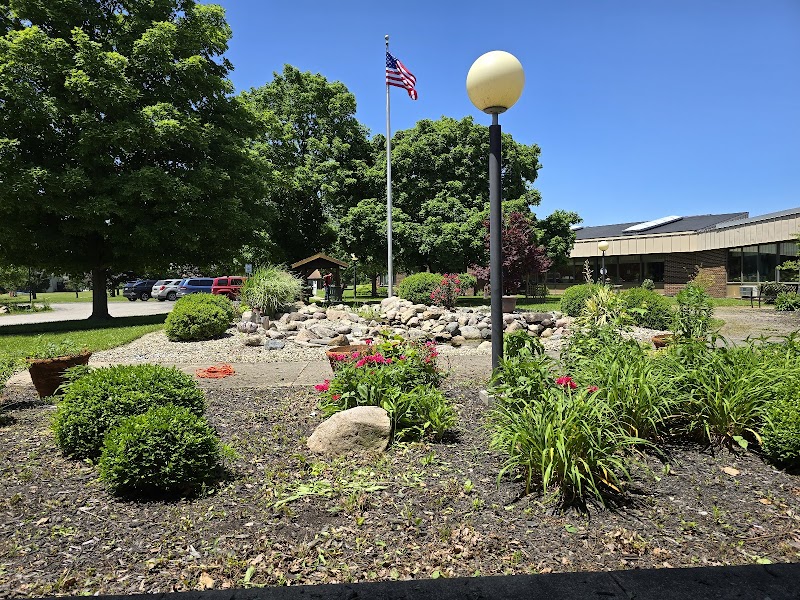
How is Pleasant Meadows Senior Living Staffed?

CMS rates PLEASANT MEADOWS SENIOR LIVING's staffing level at 1 out of 5 stars, which is much below average compared to other nursing homes. Staff turnover is 60%, which is 14 percentage points above the Illinois average of 46%. High turnover can affect care consistency as new staff learn residents' individual needs. RN turnover specifically is 79%, which is notably high. RNs provide skilled clinical oversight, so turnover in this role can affect medical care quality.

What Have Inspectors Found at Pleasant Meadows Senior Living?

State health inspectors documented 93 deficiencies at PLEASANT MEADOWS SENIOR LIVING during 2022 to 2025. These included: 3 Immediate Jeopardy (the most serious level, indicating potential for serious harm or death), 12 that caused actual resident harm, and 78 with potential for harm. Immediate Jeopardy findings are rare and represent the most serious regulatory concerns. They require immediate corrective action.

Who Owns and Operates Pleasant Meadows Senior Living?

PLEASANT MEADOWS SENIOR LIVING is owned by a for-profit company. For-profit facilities operate as businesses with obligations to shareholders or private owners. The facility operates independently rather than as part of a larger chain. With 109 certified beds and approximately 76 residents (about 70% occupancy), it is a mid-sized facility located in CHRISMAN, Illinois.
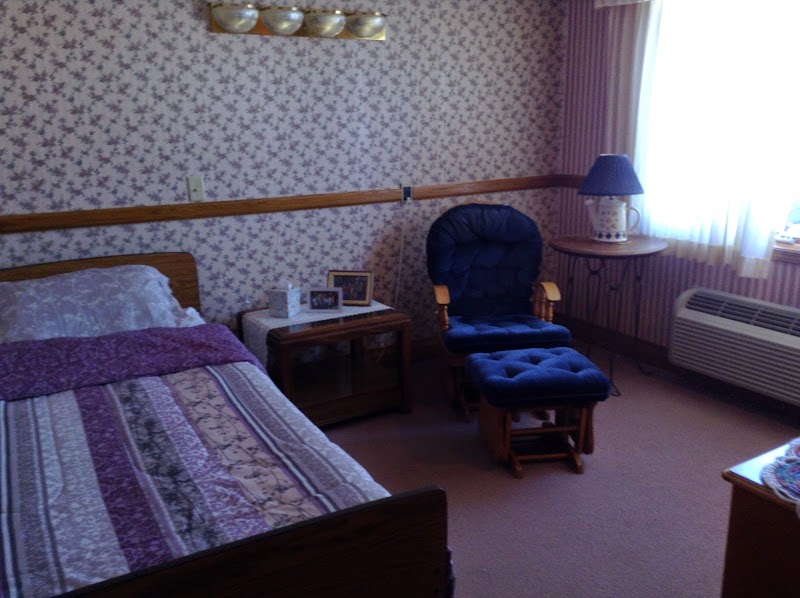
How Does Pleasant Meadows Senior Living Compare to Other Illinois Nursing Homes?

Compared to the 100 nursing homes in Illinois, PLEASANT MEADOWS SENIOR LIVING's overall rating (1 stars) is below the state average of 2.5, staff turnover (60%) is significantly higher than the state average of 46%, and health inspection rating (1 stars) is much below the national benchmark.

What Should Families Ask When Visiting Pleasant Meadows Senior Living?

Based on this facility's data, families visiting should ask: "What changes have been made since the serious inspection findings, and how are you preventing similar issues?" "What safeguards and monitoring systems are in place to protect residents from abuse or neglect?" "How do you ensure continuity of care given staff turnover, and what is your staff retention strategy?" "Can you walk me through typical staffing levels on day, evening, and night shifts?" These questions are particularly relevant given the facility's Immediate Jeopardy citations, the substantiated abuse finding on record, the facility's high staff turnover rate, and the below-average staffing rating.

Is Pleasant Meadows Senior Living Safe?

Based on CMS inspection data, PLEASANT MEADOWS SENIOR LIVING has documented safety concerns. The facility has 1 substantiated abuse finding (meaning confirmed case of resident harm by staff or other residents). Inspectors have issued 3 Immediate Jeopardy citations (the most serious violation level indicating risk of serious injury or death). The facility is currently on the Special Focus Facility watch list (a federal program monitoring the lowest-performing 1% of nursing homes nationwide). The facility has a 1-star overall rating and ranks #100 of 100 nursing homes in Illinois. Families considering this facility should ask detailed questions about what corrective actions have been taken since these incidents.

Do Nurses at Pleasant Meadows Senior Living Stick Around?

Staff turnover at PLEASANT MEADOWS SENIOR LIVING is high. At 60%, the facility is 14 percentage points above the Illinois average of 46%. Registered Nurse turnover is particularly concerning at 79%. RNs handle complex medical decisions and coordinate care — frequent RN changes can directly impact care quality. High turnover means new staff may not know residents' individual needs, medications, or preferences. It can also be disorienting for residents, especially those with dementia who rely on familiar faces. Families should ask: What is causing the turnover? What retention programs are in place? How do you ensure care continuity during staff transitions?

Was Pleasant Meadows Senior Living Ever Fined?

PLEASANT MEADOWS SENIOR LIVING has been fined $692,153 across 7 penalty actions. This is 17.3x the Illinois average of $40,000. Fines at this level are uncommon and typically indicate a pattern of serious deficiencies, repeated violations, or failure to correct problems promptly. CMS reserves penalties of this magnitude for facilities that pose significant, documented risk to resident health or safety. Families should request specific documentation of what issues led to these fines and what systemic changes have been implemented.

Is Pleasant Meadows Senior Living on Any Federal Watch List?

PLEASANT MEADOWS SENIOR LIVING is currently an SFF Candidate, meaning CMS has identified it as potentially qualifying for the Special Focus Facility watch list. SFF Candidates have a history of serious deficiencies but haven't yet reached the threshold for full SFF designation. The facility is being monitored more closely — if problems continue, it may be added to the official watch list. Families should ask what the facility is doing to address the issues that led to this status.