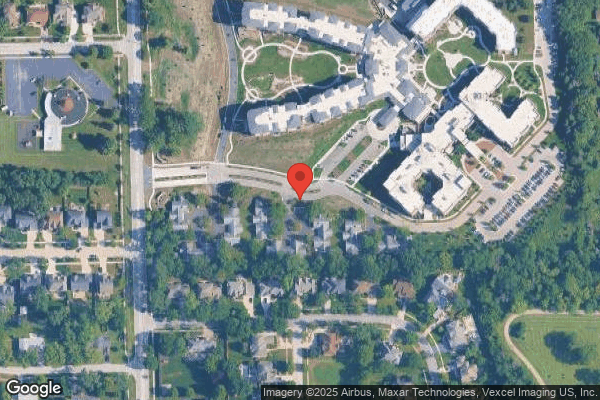
OAK TRACE

250 VILLAGE DRIVE, DOWNERS GROVE, IL 60516 (630) 769-6200
For profit - Corporation 104 Beds LIFESPACE COMMUNITIES Data: November 2025
Trust Grade
63/100
#172 of 665 in IL
Last Inspection: January 2025

Within standard 12-15 month inspection cycle. Federal law requires annual inspections.

Overview

Oak Trace in Downers Grove, Illinois has a Trust Grade of C+, indicating that it is decent and slightly above average. It ranks #172 out of 665 nursing homes in Illinois, placing it in the top half, and #12 out of 38 in Du Page County, meaning there are only 11 better local options. However, the facility is experiencing a worsening trend, with issues increasing from 6 in 2024 to 9 in 2025. Staffing is a relative strength, with a rating of 4 out of 5 stars and RN coverage better than 95% of Illinois facilities, although staff turnover at 50% is average. On the downside, the facility has faced fines totaling $13,780, which is concerning and indicates potential compliance problems. Specific incidents include a resident suffering significant weight loss due to inadequate nutritional interventions and another resident who fell during transfer, resulting in a serious head injury. Additionally, there were issues in the kitchen, such as improperly stored food items, raising concerns about food safety for the residents. Overall, while Oak Trace has some strengths, there are notable weaknesses that families should consider.

Trust Score
C+
63/100
In Illinois
#172/665
Top 25%
Safety Record
Moderate
Needs review
Inspections
Getting Worse
6 → 9 violations
Staff Stability
⚠ Watch
50% turnover. Above average. Higher turnover means staff may not know residents' routines.
Penalties
○ Average
$13,780 in fines. Higher than 54% of Illinois facilities. Some compliance issues.
Skilled Nurses
✓ Good
Each resident gets 93 minutes of Registered Nurse (RN) attention daily — more than 97% of Illinois nursing homes. RNs are the most trained staff who catch health problems before they become serious.
Violations
⚠ Watch
17 deficiencies on record. Higher than average. Multiple issues found across inspections.
★★★★☆
4.0
Overall Rating
★★★★☆
4.0
Staff Levels
★★★★☆
4.0
Care Quality
★★★★☆
4.0
Inspection Score
Stable
2024: 6 issues
2025: 9 issues

The Good

  • 4-Star Staffing Rating · Above-average nurse staffing levels
  • 4-Star Quality Measures · Strong clinical quality outcomes
  • Full Sprinkler Coverage · Fire safety systems throughout facility
  • No fines on record

Facility shows strength in staffing levels, quality measures, fire safety.

The Bad

Staff Turnover: 50%

Near Illinois avg (46%)

Higher turnover may affect care consistency

Federal Fines: $13,780

Below median ($33,413)

Minor penalties assessed

Chain: LIFESPACE COMMUNITIES

Part of a multi-facility chain

Ask about local staffing decisions and management

The Ugly 17 deficiencies on record

2 actual harm
Jan 2025 9 deficiencies 1 Harm
SERIOUS (G)

Actual Harm - a resident was hurt due to facility failures

Deficiency F0692 (Tag F0692)

A resident was harmed · This affected 1 resident

**NOTE- TERMS IN BRACKETS HAVE BEEN EDITED TO PROTECT CONFIDENTIALITY** Based on observation, interview, and record review, the facility failed to ensure resident maintained acceptable nutritional sta...

Read full inspector narrative →
**NOTE- TERMS IN BRACKETS HAVE BEEN EDITED TO PROTECT CONFIDENTIALITY** Based on observation, interview, and record review, the facility failed to ensure resident maintained acceptable nutritional status. Facility failed to provide adequate interventions to prevent further decline in resident's body weight. This failure resulted in R35 experiencing unplanned weight loss. This applies to 1 of 20 residents reviewed for nutrition and hydration in a sample of 20. Findings include: R35's face-sheet showed R35 is a [AGE] year old male admitted to the facility on [DATE] with diagnoses to include unspecified fall with left sub-trochanteric fracture, chronic obstructive pulmonary disease, dementia and hypertensive heart disease. R35's MDS (Minimum Data Set) dated 12/4/24 showed, R35 had cognitive impairment and was dependent for ADLs (activities of daily life). Progress notes dated 1/16/25 at 1:59 PM showed R35 lost about 10.1 lbs. in one month (12/16/24 to 1/15/25), which is -6.7% = Severe weight loss. Weight log: 1/16/2025 142.3 Lbs. 1/7/2025 144.7 Lbs. 1/2/2025 144.7 Lbs. 1/1/2025 145.6 Lbs. 12/16/2024 152.4 Lbs. Progress notes dated 1/10/25 at 1:32 PM showed, facility offered ONS (oral nutritional supplement) of Ensure Plant-based to meet estimated needs, snacks in between meals and smoothies. R35's Physician orders for January 2025 did not include magic cup. Skilled Nursing Evaluation dated 12/3/24 showed, cardiovascular - no edema issues. Mini Nutritional assessment dated [DATE] showed a score of 6.0 (0-7 = malnourished). On 1/14/25 at 9:15 AM, R35 was napping in his bed, appeared thin and frail. On 1/15/25 at 9:40 AM, V19 (R35's daughter) stated she thinks R35 looked skinnier now and is weaker than when he was admitted to the facility about six weeks ago. V19 stated she thinks R19 does not always get fed when R35 is not there. On 1/15/25 at 10:36 AM, V19 stated R35 does not always get the magic cup along with his meals as recommended by the dietician. V19 stated she had fed him the magic cup before, and he enjoyed it and R35 will eat it all. V19 stated a couple weeks ago she came to visit R35 at about 11:00 AM and his breakfast tray was on the bedside table untouched. V19 stated about 2-3 weeks ago she visited her father at about 6:00 PM and he told her he was hungry and did not get any dinner. V19 stated as she was talking with her dad, a CNA (Certified Nursing Assistant) entered the room and surprisingly exclaimed, 'Oh, the tray is gone!'. V19 stated she had been asking the facility for a care-plan meeting and they haven't scheduled one yet. On 1/15/25 at 12:41 PM, observed V17 (CNA) feed R35 lunch. R35 drank all the soup, ate all the carrots, about one quarter of the chicken & all the dessert. There was no 'magic cup' on the tray. On 1/15/25 at 3:24 PM, V16 (Social Services Aide) stated, there was no IDT (Inter Disciplinary Team) meeting held for R35 for initial care-plan nor for the change of condition of losing weight. On 1/15/25 at 3:08 PM, V2 (interim DON-Director of Nursing) stated, there was no IDT meeting conducted for R35 to address the decline in his body weight. V2 stated losing about 10 lbs. in one month is a change of condition. On 1/15/25 at 1:50 PM, V15 (RD-Registered Dietician) stated she called the family and the daughter (V19). (V19) stated (R35) will not take any supplements other than the vanilla magic cup. V15 stated the facility did not try any interventions other than offering the ONS, snacks and smoothies. V15 stated, When residents don't like certain food, we look for their preferences and offer more choices, which was not done in this case and (R35) continued to lose weight. If (R35) continues to lose weight, he will lose lean body mass, lose his muscle mass, and his disease prognosis will decline. On 1/16/25 at 12:11 PM, V15 (RD) stated there was no new interventions in place for R35's weight loss as of now. On 1/16/25 at 1:40 PM, V14 (MD-Medical Director) stated he depends on the RD's recommendations for nutritional supplements to meet resident nutritional needs. Policy on weight assessments and intervention with a review date of 2/26/22, showed, facility will begin nutrition interventions when a resident is identified as having significant weight loss.
CONCERN (D)

Potential for Harm - no one hurt, but risky conditions existed

Resident Rights (Tag F0550)

Could have caused harm · This affected 1 resident

**NOTE- TERMS IN BRACKETS HAVE BEEN EDITED TO PROTECT CONFIDENTIALITY** Based on observation, interview, and record review, the facility failed to provide privacy covers for residents requiring the us...

Read full inspector narrative →
**NOTE- TERMS IN BRACKETS HAVE BEEN EDITED TO PROTECT CONFIDENTIALITY** Based on observation, interview, and record review, the facility failed to provide privacy covers for residents requiring the use of urinary catheter bags. This applies to 2 out of 3 residents (R10 and R60) reviewed for privacy in a sample of 20. Findings include: 1. R10's EMR (Electronic Medical Record) said R10 required an indwelling urinary catheter for acute urinary retention related to malignant neoplasm of the bladder. R10's MDS (Minimum Data Set) dated 12/17/2024 said R10 was dependent on the facility staff for her toileting hygiene needs. On 1/14/2025 at 11:00 AM, R10 was in the dining room for lunch with other residents and visitors. R10's urinary catheter bag was attached to the bottom of her high-back wheelchair. R10 did not have a privacy covering her urinary catheter bag. R10's urinary catheter bag was exposed with dark-red urine. On 1/15/2025 at 8:55 AM, R10 was in the dining room for breakfast with other residents and visitors. R10 did not have a privacy covering her urinary catheter bag. R10's urinary catheter bag was again exposed with dark-red urine. 2. R60's EMR said R60 required the use of a suprapubic urinary catheter for obstructive uropathy related to benign prostatic hyperplasia. R60's MDS dated [DATE] said R60 was dependent on the facility staff for his toileting hygiene needs. On 1/15/2025 at 8:40 AM, V23 (Certified Nurse Assistant/CNA) transported and placed R60 in the dining room for breakfast with other residents and visitors. R60's urinary catheter bag was attached to the bottom of his recliner wheelchair. R60 did not have a privacy covering her urinary catheter bag. R60's urinary catheter bag was exposed with amber urine. On 1/16/2025 at 10:45 AM, V2 (Assistant Director of Nursing/ADON) said she expected staff to provide privacy bags for residents requiring the use of urinary catheter bags for their dignity. The facility's policy titled Resident Rights dated 10/10/2024, said (Facility) philosophy of care is founded upon its commitment to promote and protect the rights of each resident .To be treated with consideration, courtesy, respect, and full recognition of his/her dignity and individuality, including privacy in treatment and in care for all personal needs.
CONCERN (D)

Potential for Harm - no one hurt, but risky conditions existed

Deficiency F0553 (Tag F0553)

Could have caused harm · This affected 1 resident

**NOTE- TERMS IN BRACKETS HAVE BEEN EDITED TO PROTECT CONFIDENTIALITY** Based on observation, interview, and record review, the facility failed to facilitate resident rights to participate in the deve...

Read full inspector narrative →
**NOTE- TERMS IN BRACKETS HAVE BEEN EDITED TO PROTECT CONFIDENTIALITY** Based on observation, interview, and record review, the facility failed to facilitate resident rights to participate in the development of person centered care-plan and the right to request revisions to the care-plan. This applies to 1 of 20 residents reviewed for resident rights in a sample of 20. Findings include: R35's face-sheet showed, he is a [AGE] year old male admitted to the facility on [DATE] with diagnoses to include unspecified fall with left sub-trochanteric fracture, chronic obstructive pulmonary disease, dementia and hypertensive heart disease. R35's MDS (Minimum Data Set) dated 12/4/24 showed, R35 had cognitive impairment and was dependent for ADLs (activities of daily life). Progress notes dated 1/16/25 at 1:59 PM showed R35 lost about 10.1 lbs. in one month (12/16/24 to 1/15/25), which was -6.7% = Severe weight loss. Weight log: 1/16/2025 142.3 Lbs. 1/7/2025 144.7 Lbs. 1/2/2025 144.7 Lbs. 1/1/2025 145.6 Lbs. 12/16/2024 152.4 Lbs. Skilled Nursing Evaluation dated 12/3/24 showed, cardiovascular - no edema issues. Mini Nutritional assessment dated [DATE] showed a score of 6.0 (0-7 = malnourished). On 1/14/25 at 9:15 AM, R35 was napping on his bed. He woke up and asked for V19 (R35's daughter). R35 stated, he is doing alright. He was alert and was able to state that V19 is his daughter. R35 stated that at the moment he was comfortable and not in any pain. Appearance-wise, he looked thin and frail. On 1/15/25 at 9:40 AM, V19 (R35's daughter) stated, she thinks R35 looked skinnier, and he is weaker than how he was when he was admitted to the facility, about six weeks ago. V19 stated, she thinks that he does not always get fed when she is not there. On 1/15/25 at 10:36 AM, V19 stated, she had been asking the facility for a care-plan meeting and they haven't scheduled one yet. On 1/15/25 at 3:24 PM, V16 (Social Services Aide) stated, there was no IDT (Inter Disciplinary Team) meeting held for R35 for initial care-plan nor for the change of condition of losing weight. On 1/15/25 at 3:08 PM, V2 (interim DON-Director of Nursing) stated, for the short term residents, the initial IDT meeting is conducted within three days of admission to generate the initial care-plan. V2 (interim DON) stated, R35 was considered as a short term care resident. The IDT is repeated, and care-plan revised if there is a change in resident's condition, family requesting a meeting or if there are changes in discharge planning. V2 stated, there was no IDT meeting conducted for R35 to address the decline in the body weight of R35. V2 stated, losing about 10 lbs. in one month is a change of condition. V2 stated, the team members talk to V19 (R35's daughter) individually, but facility did not hold an IDT meeting for R35 and V19. Facility policy on Care Planning - Interdisciplinary Team (IDT) dated 2/3/2019 showed, facility's IDT is responsible for the development of an individualized comprehensive care plan for each resident.
CONCERN (D)

Potential for Harm - no one hurt, but risky conditions existed

Pressure Ulcer Prevention (Tag F0686)

Could have caused harm · This affected 1 resident

**NOTE- TERMS IN BRACKETS HAVE BEEN EDITED TO PROTECT CONFIDENTIALITY** Based on interview and record review the facility failed to implement measures to prevent the further deterioration of a pressur...

Read full inspector narrative →
**NOTE- TERMS IN BRACKETS HAVE BEEN EDITED TO PROTECT CONFIDENTIALITY** Based on interview and record review the facility failed to implement measures to prevent the further deterioration of a pressure ulcer. The applies to 1 of 4 residents R91 reviewed for pressure ulcers in the sample of 20. Findings include: R91 readmitted to the facility from a hospital stay on 12/12/24 with diagnoses that includes wedge compression fracture, dysphagia, acute respiratory failure, weakness, type 2 diabetes, gout, anemia and chronic kidney disease. R91's MDS (Minimum Data Set) dated 12/19/24 indicates he is cognitively intact. MDS indicates R91 is dependent on staff for his Activities of Daily Living, toileting and transferring between the wheelchair and bed. The MDS section M documents skin / ulcer treatments pressure reducing device for chair, pressure reducing device for bed, nutrition or hydration intervention to manage skin problems, pressure ulcer / injury care, application of non-surgical dressings and application of ointments / medications. On 01/16/25 at 11:07 AM, R91 was sitting up in his wheelchair and stated he had been up since the morning. R91 stated he had not been back to bed, transferred or repositioned since he was gotten out of bed. R91 stated he received his air mattress the prior week. R91 stated his pain was much worse before he received the air mattress. V32 Family Member of R91 stated he had been sitting up in the wheelchair when she arrived at 8:30 am. R91 stated he returned to the facility with wound and was disappointed he was not provided with the air mattress at that time. On 01/16/25 at 11:39 AM, V34 COTA (Certified Occupational Therapy Assistant) took R91 to the therapy room. On 01/16/25 at 11:54 AM, V34 with another therapy worker assisted R91 to stand with a walker. On 01/16/25 at 12:02 PM, V26 CNA (Certified Nursing Assistant) assigned to R91 stated she assisted him up to the wheelchair at 7:30 am. V26 stated R91 had not been back to bed, toileted or repositioned since she got him out of bed. On 01/16/25 at 12:08 PM, V27 RN assigned to R91 stated intervention include to reposition him every two hours, make sure his dressing is changed as ordered, document and notify physician of any changes to his wound. V27 stated CNAs are responsible to reposition and transfer residents. The wound may worsen and get bigger if he is not repositioned. It increases his risk of infection. Sitting in one position for too long decreases the blood circulation to his skin. On 01/16/25 at 02:35 PM, V2 DON (Interim Director of Nursing) stated R91 was upgraded to the air mattress because his wound was deteriorating. V2 stated, He should be off loaded as frequently as possible. We encourage him to reposition himself. Staff should reposition him every 2-3 hours. If he was up at 7:30 am the CNA should be assisting him to reposition by 9:30 am. Extended periods of time could cause him to develop further ulcerations and deterioration of his current wound. Even if he did not require incontinence care, the CNA should still assist him with offloading and examine his skin. 7:30 am to 11:54 is too long a time period without being repositioned. On 01/16/25 at 03:03 PM, V33 wound nurse stated R91's admitted back to the facility on [DATE] with a stage 3 sacral wound. V33 stated on 12/17/24 R91's sacral wound was 1.1cm x 0.8cm with depth of 0.8 cm. On 12/27/24 the sacral wound was 4.1 cm x 1.9cm with 0.1 depth. V33 stated, (R91's) mobility may have decreased as well as his nutritional status. He also has the contributing factor of long dialysis times on his wound healing. As a nurse it is recommended to reposition residents every two hours. Two hours is an important marker because extended periods in one position could contribute to pressure injuries. When he returned, he had a regular mattress which is not the same as a pressure relieving mattress. The air mattress assisted him with off-loading but repositioning by staff is still required. Staff should be going to him to reposition him not waiting for him to call for repositioning. He should receive assistance to reposition even if he is sitting in the chair. The admitting nurse does not measure wounds they document its presence and describe it. The wound nurse measures wounds. Anyone one on the floor can order an air mattress based on the mobility and skin condition of the resident. I verbally requested floor nurse to order the air mattress on 12/31/24. R91's current care plan includes pressure wound on the sacrum related to decreased functional mobility, incontinence and comorbidities such as chronic kidney disease, hemodialysis and diabetes mellitus was initiated on 1/7/25. The goal set resident's pressure ulcer will show signs of healing and remain free from infection by / through next review date. Interventions include administer treatments as ordered , educate the resident / family / caregivers as to the cause of skin breakdown including transfer / positioning requirements, importance of taking care during ambulating / mobility , good nutrition and frequent repositioning, follow facility policies / protocols for the prevention / treatment of skin breakdown, pressure relieving device on chair / chair off load heals, teach resident / family the importance of changing positions for prevention of pressure ulcers, encourage small frequent position changes. Wound evaluation documentation provided by the facility was completed by V33 Wound Nurse. on 12/17/24. The stage 3 sacral pressure wound measured 0.68cm2 x 1.14 cm x 0.81cm (Centimeter). V33 documented the wound as present on admission. Treatment documented as foam dressing, mobility aid provided, moisture barrier and nutritional / dietary supplementation. No other documentation of a sacral wound was provided by the facility prior to 12/17/24 documentation. Wound documentation by V33 on 12/27/24 stage 3 sacral pressure wound measured 6.11cm2 x 4.14 cm x1.86 cm. Treatment documented as foam dressing, mobility aid provided, moisture barrier and nutritional / dietary supplementation. Wound documentation by V33 on 1/7/25 unstageable sacral pressure wound measured 5.27cm2 x 4.62 cm x 2.37 cm. Treatment documented as cleanse with normal saline, enzymatic debridement (collagenase), calcium alginate dressing, foam, mattress with pump, mobility aid, moisture barrier and nutrition / dietary supplement. V35 wound doctor initial wound evaluation dated 1/9/25 documents a full thickness unstageable sacrum wound. Measuring 3.8cm x 3.8cm x 0.2 cm (centimeter). Plan of care recommendation off load wound reposition per facility protocol, upgrade offloading chair cushion and recommended upgrading dialysis chair dietician consult. Current Physician orders includes pressure relieving mattress order date 1/9/25. No documentation of repositioning of R91 was provided by the facility. The facility policy Prevention of Pressure Ulcers / Injuries dated 2/18/22 states assess the resident on admission for existing pressure ulcer / injury risk factors. Conduct a comprehensive skin assessment upon admission including skin integrity any evidence of existing or developing pressure ulcers or injuries areas of impaired circulation due to pressure from positioning or medical devices. Every two hours as tolerated, reposition residents who are reclining and dependent on staff for repositioning. Reposition more frequently as needed, based on the condition of the skin and tolerance, the resident's comfort, the resident's mobility, the support surface in use and the resident's stated preferences.
CONCERN (D)

Potential for Harm - no one hurt, but risky conditions existed

Tube Feeding (Tag F0693)

Could have caused harm · This affected 1 resident

**NOTE- TERMS IN BRACKETS HAVE BEEN EDITED TO PROTECT CONFIDENTIALITY** Based on observation, interview, and record review, the facility failed to correctly check G-tube (Gastrostomy) placement prior ...

Read full inspector narrative →
**NOTE- TERMS IN BRACKETS HAVE BEEN EDITED TO PROTECT CONFIDENTIALITY** Based on observation, interview, and record review, the facility failed to correctly check G-tube (Gastrostomy) placement prior to administration of medications. This applies to 1 of 1 resident (R91) reviewed for G-tubes in a sample of 20. The findings include: On January 15, 2025 at 9:17 AM, V8 (RN/Registered Nurse) was administering medications for R91 through the G-tube. V8 drew air into a syringe and pushed the air into the G-Tube site while listening for sounds. V8 then administered R91's medications via the G-Tube. On January 16, 2025 at 9:26 AM, V8 said she would check placement by pushing 30 Milliliters of air and auscultating like she had yesterday. V8 then said she checked for residual. On January 16, 2025 at 9:01 AM, V9 (RN) said they checked placement for the G-Tube by putting the stethoscope to their stomach and pushing air and listening for bubbling sounds to verify placement. On January 16, 2025 at 9:16 AM, V10 (RN Supervisor) said they checked placement for the G-Tube by pushing air and auscultating for gurgling sounds. On January 16, 2025 at 10:50 AM, V2 (DON/Director of Nursing) said to check for accurate placement of the G-Tube, they would check for residual. V2 said she would expect the staff to listen for bowel sounds. R91's face sheet showed she was admitted to the facility on [DATE] with diagnoses including encounter for surgical aftercare following surgery on the digestive system and gastrostomy status. The facility's Verifying Placement of Feeding Tube policy dated 2024 showed If performed in the facility, measure the pH of the gastric secretions: 1) Draw back on syringe to slowly obtain 5-10 ML [Milliliters] of aspirate, and empty into a clean medicine cup. 2) Dip the pH strip into the aspirate in the medicine cup. 3) Compare the color of the strip with color on the chart as per manufacturer's instructions.
CONCERN (D)

Potential for Harm - no one hurt, but risky conditions existed

Unnecessary Medications (Tag F0759)

Could have caused harm · This affected 1 resident

**NOTE- TERMS IN BRACKETS HAVE BEEN EDITED TO PROTECT CONFIDENTIALITY** Based on observation, interview, and record review, the facility failed to administer medications as ordered. There were 29 oppo...

Read full inspector narrative →
**NOTE- TERMS IN BRACKETS HAVE BEEN EDITED TO PROTECT CONFIDENTIALITY** Based on observation, interview, and record review, the facility failed to administer medications as ordered. There were 29 opportunities with 3 errors resulting in a 10.34% error rate. This applies to 2 of 10 residents observed in the medication pass. The findings include: 1. On January 15, 2025 at 8:19 AM, during the observation of medication administration, V8 (RN/Registered Nurse) prepared R205's medications. R205 had Amoxicillin-Pot Clavulanate Tablet 875-125 MG (Milligrams) and crushed the medication. V8 also took a PreserVision eye vitamin AREDS (Age-Related Macular Degeneration) 2 soft gel and crushed the soft gel. On January 16, 2025 at 9:26 AM, V8 said the Amoxicillin Clavulanate could be crushed. V8 said if the medication had potassium in it, she should have melted it. V8 said PreserVision also needed to be melted, and she should have put it on hold instead of administering the medication. R205's face sheet showed she was admitted to the facility on [DATE] with diagnoses including injury of left ankle, macular degeneration, acute respiratory failure with hypoxia and hypercapnia, and need for assistance with personal care. R205's POS (Physician Order Set) showed an order for Amoxicillin-Pot Clavulanate Tablet 875-125 MG with instructions to Give 1 tablet by mouth two times a day for aspiration pneumonia for 6 days, ordered on January 13, 2025 and with a discontinued date of January 16, 2025. R205's discontinued POS also showed an order for PreserVision AREDS 2 Oral Capsule (Multiple Vitamins [with] Minerals) with instructions to Give 1 capsule by mouth two times a day for Supplement, with a start date of January 14, 2025 and a discontinued date of January 15, 2025. R205's January 2025 MAR (Medication Administration Record) showed she received the Amoxicillin-Pot Clavulanate and PreserVision AREDS 2 Oral capsule on January 15, 2025. 2. On January 15, 2025 at 8:56 AM, during the observation of medication administration, V8 prepared R91's medications. R91 had a Terazosin 2 MG capsule due. V8 crushed the Terazosin capsule and put it in a medication cup and poured water into the cup. V8 asked if she could replace the capsule with another capsule. At 9:17 AM, V8 took the capsule with water to R91's room and administered the same medication to R91 through the G-Tube (Gastrostomy). On January 16, 2025 at 9:26 AM, V8 said she should have melted the capsule or opened it and administered it. V8 said she should have called the doctor and asked to change the medication and had called the doctor after the medication administration. R91's face sheet showed she was admitted to the facility on [DATE] with diagnoses including hypertensive heart and chronic kidney disease without heart failure, with stage 1 and benign prostatic hyperplasia (BPH) without lower urinary tract symptoms. R91's POS showed an order for Terazosin HCl (Hydrochloride) Oral Capsule 2 MG with instructions to Give 1 capsule via G-tube one time a day for BPH, ordered on December 16, 2024. On January 16, 2025 at 9:01 AM, V9 (RN) said soft gels cannot be crushed, and capsule cannot be crushed, but should be opened. V9 also said Amoxicillin-Clavulanate cannot be crushed because it was enteric coated. On January 16, 2025 at 9:16 AM, V10 (RN Supervisor) said soft gels, capsules, and Amoxicillin-Clavulanate could not be crushed. V10 said they would need to check with the pharmacy prior to crushing any medications, and with antibiotics, defer to the Infectious Disease team. On January 16, 2025 at 10:50 AM, V2 (DON/Director of Nursing) said the Amoxicillin-Clavulanate could not be crushed because it was enteric coated, soft gels could not be crushed, and capsules could not be crushed. V2 said capsule should be opened. The facility's [Pharmacy] provided a list of Common Oral Dosage Forms That Should Not Be Crushed dated 2024, which included Amoxicillin/Potassium Clavulanate The facility's Administering Medications policy revised April 2019 showed: The individual administering the medication checks the label three times to verify the right resident, right medication, right dosage, right time, and right method (route) of administration before giving the medication.
CONCERN (E)

Potential for Harm - no one hurt, but risky conditions existed

Deficiency F0625 (Tag F0625)

Could have caused harm · This affected multiple residents

**NOTE- TERMS IN BRACKETS HAVE BEEN EDITED TO PROTECT CONFIDENTIALITY** Based on interview and record review, the facility failed to provide residents and their representatives a written notification ...

Read full inspector narrative →
**NOTE- TERMS IN BRACKETS HAVE BEEN EDITED TO PROTECT CONFIDENTIALITY** Based on interview and record review, the facility failed to provide residents and their representatives a written notification of the facility's bed hold policy when transferred to the hospital. This applies to 4 out of 4 (R307, R58, R77, R6) residents reviewed for hospitalization in a sample of 20. Findings include: 1. R6's EMR (Electronic Medical Record) said she was her own responsible party, and her family member was her emergency contact/POA (Power of Attorney). R6's EMR said she required an emergency transfer to the hospital on 1/11/2025 and was currently admitted for a urinary tract infection. R6's late entry Progress Note dated 1/11/2025 said R6 was noted with change in her mentation, weakness, tremors, flushed face, and low blood pressure. The note continued to say R6 was transferred to the hospital and her POA was notified. The facility does not have documentation to show R6 and her representative were provided written notification of the facility's bed hold policy at the time of her hospital transfer. 2. R307's EMR said he was his own responsible party, and his spouse was his emergency contact. R307's EMR said he required an emergency transfer to the hospital on [DATE] and was admitted for low hemoglobin. R307's Progress Note dated 12/30/2024 said R307 had critical lab results requiring hospitalization. The note continued to say R307's spouse was notified. The facility does not have documentation to show R307 and his spouse were provided written notification of the facility's bed hold policy at the time of his hospital transfer. 3. R58's EMR said she was her own responsible party, and her family member was her emergency contact. R58's EMR said she required an emergency transfer to the hospital on 1/13/2025 and was currently admitted for an evaluation for acute change in health and abnormal lab results. R58's Progress Note dated 1/13/2025 said R58 was noted with low oxygen saturations, unrelieved left leg pain, anxiety, and pallor. The note continued to say R58 was transferred to the hospital and her emergency contact was notified. The facility does not have documentation to show R58 and her representative were provided written notification of the facility's bed hold policy at the time of her hospital transfer. 4. R77's EMR said she was her own responsible party, and her family member was her emergency contact. R77's EMR said she required an emergency transfer to the hospital on 1/08/2025 and was currently admitted for a GI (Gastrointestinal) problem needing a surgical procedure. R77's Progress Note dated 1/08/2025 said R77 was noted with low oxygen saturations and nausea with an episode of emesis. R77 was transferred to the hospital and her emergency contact was notified. The facility does not have documentation to show R77 and her representative were provided written notification of the facility's bed hold policy at the time of her hospital transfer. On 1/15/2025 at 2:00 PM, V2 (Assistant Director of Nursing/DON) said nurses do not provide residents with written documentation of the facility's bed hold policy. V2 said at times nurses verbally inform residents and their families of the bed hold policy at the time of their transfer and enter a progress note. V2 said she reviewed R6, R307, R58, and R77's EMRs and was unable to locate written notifications of the bed hold policy for their recent hospitalizations. On 1/16/2025 at 9:15 AM, V1 (Administrator) said all residents are required to receive a written notification of the facility's bed hold policy at the time of admission and when having a leave from the facility including hospitalizations. V1 said the facility's Bed Hold Policy form should be explained as indicated in the form to ensure they understand billing for holding their bed during their leave. V1 said the forms are to be uploaded to the residents' EMRs once completed. The facility's Bed Hold Policy form undated, said This community will notify, and/or representatives of the bed hold policy guidelines, as follows: Upon admission to the Community, At the time of transfer to hospital or other type of leave, At the time of non-covered therapeutic leave.
CONCERN (E)

Potential for Harm - no one hurt, but risky conditions existed

Accident Prevention (Tag F0689)

Could have caused harm · This affected multiple residents

4. On 1/15/25 at 10:56 AM, observed V17 (CNA-Certified Nursing Assistant) lowering R18 by herself onto the wheelchair via mechanical lift. V17 was operating the machine and at the same time trying to ...

Read full inspector narrative →
4. On 1/15/25 at 10:56 AM, observed V17 (CNA-Certified Nursing Assistant) lowering R18 by herself onto the wheelchair via mechanical lift. V17 was operating the machine and at the same time trying to hold R18 on the sling and managed to maneuver R18 to the chair by herself. V13 (RN-Registered Nurse) was standing at the door of the room watching the procedure. On 1/15/25 at 11:00 AM, V13 stated, she was watching only. V13 (RN) stated, mechanical lift transfer must be done by two staff and not just one person for safety reasons - one person handles the machine, and the other person supports the resident. On 1/15/25 at 11:10 AM, V17 (CNA) stated, she transferred the resident from bed to wheelchair by herself. V17 agreed that for safety reason, it should be always two people to transfer a resident via mechanical lift. Based on observation, interview, and record review, the facility failed to safely transfer, position, implement fall interventions, and secure a mattress cover for residents (R9, R18, R48, R60) at risk for accidents. This applies to 4 out of 4 residents (R9, R18, R48, R60) reviewed for accidents in a sample of 20. Findings include: 1. R48's Care Plan dated 1/15/2025 said he was a high risk for falls related to safety awareness deficiency, anti-anxiety medication use, debilitating cardio-respiratory conditions, and cognitive deficit. The Care Plan had a goal for R48 not to sustain a serious injury. The Care Plan had active interventions to Anticipate and meet the resident's needs .The resident needs prompt response to all requests for assistance initiated on 12/18/2024. R48's Care Plan said he needed assistance with his ADLs (Activities of Daily Living) including transfers and mobility. The Care Plan showed, [R48] has fluctuation in physical abilities and it was recommended he use a total-mechanical lift device and be assisted with his mobility. On 1/14/2025 at 11:00 AM, R48 was in the dining room sitting on his high-back bariatric wheelchair not properly positioned. R48 was slouched in his chair not in an upright sitting position and had a total-mechanical lift sling underneath him. R48 appeared uncomfortable, he was trying to adjust himself but was unable. At 12:10 PM R48 was in the same position in his wheelchair being assisted with lunch by his family member. R48 started to cough and said his bottom was hurting. Then V31 (Hospice Aide) came to visit R48 and said he did not appear comfortable. V31 said he was sliding off his wheelchair and not properly positioned. V31 requested assistance from the facility staff to assist her with properly positioning R48 in his wheelchair. On 1/15/2025 at 8:55 AM, R48 was in his room yelling in a standing position while being assisted with a sit-to-stand lift by V22 (Certified Nurse Assistant/CNA) and V21 (Restorative Aide/RA). R48 had a high black bariatric wheelchair and another wheelchair in his room. V21 said they were assisting R48 into his wheelchair because he was sliding. They continued to use the sit-to-stand lift to bring R48 into a sitting position on his high-back wheelchair, while they placed and adjusted a total-mechanical sling underneath him. On 1/16/2025 at 3:00 PM, V21 (RA) said R48 required the use of a total-mechanical lift device for transfers. V21 said that on 1/15/2025 they used the sit-to-stand lift device to lift R48 in a standing position to adjust his total-mechanical lift sling underneath. V21 said that with other residents who require assistance with positioning and depend on the use of a total-mechanical lift, she would have asked for assistance to roll the resident in the wheelchair to place the sling underneath. V21 said she used her judgment on using the sit-to-stand device with R48. V21 said R48 was now using a new geriatric recliner wheelchair. On 1/16/2025 at 3:15 PM, V2 (Assistant Director of Nursing/ADON) said she expects the nursing staff to follow resident's transfers and use the identified transfer equipment as indicated for safety. V2 said total-mechanical lift transfers required 2-staff members to be actively assisting and be within arms-length during the transfer. V2 said residents in wheelchairs should be properly positioned in an upright position, not slouched to prevent an injury. The facility's policy titled Safe Resident Handling/Transfers dated 10/01/2024, showed, It is the policy of this facility to ensure that residents are handled and transferred safely to prevent or minimize risks for injury and provide and promote a safe, secure and comfortable experience for the resident. 2. R60's Care Plan dated 1/15/2025 stated he was at risk for falls and had a goal to be free of injuries. The Care Plan had an active intervention to add floor mat to bed side due to bed exiting behavior initiated on 3/18/2024. On 1/14/2025 at 10:33 AM, R60 was in bed sleeping. R60 did not have a floor mat in place on the floor. R60's thick blue floor mat was folded up against his bathroom wall. On 1/16/2025 at 11:00 AM, V2 (DON) said R60 had a history of falling from bed. V2 said R60 had multiple fall prevention interventions including the use of a thick floor mat to the side he favored when in bed. V2 said she expected fall prevention interventions to be followed to ensure residents were provided with a safe environment. 3. R9's Care Plan dated 1/15/2025 stated R9 was at risk for falls and had a goal to be free from falls. The Care Plan had an active intervention to ensure staff maintain her in the center of the bed while resting initiated on 11/12/2024. R9's EMR said she required the use of pressure pressure-reducing device for her bed for her skin management. On 1/15/2025 at 4:00 PM, R9 was in bed on top of a foam egg crate mattress topper that was covered with a thin sheet. The foam mattress topper was on top of her air-loss mattress that had a plastic covering. The foam topper was not secured. R9's daughter was present and said R9's physician had recommended she use the foam mattress topper to help her with her skin. R9's daughter said she had asked the facility about the use of the foam mattress topper, and they approved its use. On 1/16/2025 at 1:40 PM, V2 said the facility did allow for mattress overlay covers but were required to be assessed individually before using them. V2 said she expected staff to follow up to ensure they were properly placed. V2 said she assessed R9's mattress and foam topper. V2 said she removed the topper for R9's safety because it was not secured properly, and she could have slid off. V2 said the facility did not have a policy about the use of mattress covers.
CONCERN (F)

Potential for Harm - no one hurt, but risky conditions existed

Food Safety (Tag F0812)

Could have caused harm · This affected most or all residents

Based on observation, interview and record review the facility failed to maintain the kitchen facility in a manner to prevent foodborne illness. This applies to 99 residents in the facility receiving ...

Read full inspector narrative →
Based on observation, interview and record review the facility failed to maintain the kitchen facility in a manner to prevent foodborne illness. This applies to 99 residents in the facility receiving dietary services. Findings include: On 01/14/25 at 03:13 PM, V2 DON (Interim Director of Nursing) confirmed 99 residents were being served from dietary services on entry to the facility 01/14/25. On 01/14/25 at 10:33 AM, the kitchen tour began in the lower-level kitchen with V4 Dietary Manager The dry storage contained: A dented can of pinto beans 6 pounds 15 ounces A dented can of great northern beans 6lbs 15 ounces A dented can of pears 6.56 pounds Two dented cans of pear halves 6.56 pounds. A 20lb tub of cherry pie filling opened in use no delivery date, opened on or use by date. The facility policy Production, Purchasing, Storage - Receiving dated 1/25 states date foods prior to placing in storage areas. Store distress / recalled products in a separate, designated area, marked with a sign return to supplier. The facility policy Production, Purchasing, Storage -Food and Supply Storage states refer to the Food Storage Chart in policy to determine discard dates for food items. Fruit puree/fillings and sauces are good for one month after opening and must be refrigerated. On 01/14/25 at 10:38 AM, V5 Director of Culinary Services and V6 Chef joined V4 and surveyor on kitchen tour. On 01/14/25 at 10:45 AM, a walk-in cooler contained a 32-ounce container of vanilla Greek yogurt with an expiration date of 1/8/25. On 01/14/25 at 10:50 AM, the walk-in freezer contained: Two bags of white shrimp 71-90 count without a delivery date or expiration date. Three facility wrapped packages identified by V4 as corned beef without label identifying contents, delivery date, opened on date or use by date. Two large factory wrapped slabs of meat identified by V4 as New York strip steaks without delivery dates or use by date. Four large factory wrapped slabs of meat identified by v4 as brisket without delivery dates or use by dates. A large metal pan labeled Tuna Casserole with an expiration date of 12/11/24. A large clear factory sealed bag of tater tots without any label to identify contents, delivery date or use by date. A 30-pound box of pearled onions. The box and inner bag containing onions were opened to air. The facility policy Production, Purchasing, Storage -Food and Supply Storage states wrap food tightly to prevent cross contamination. On 01/14/25 at 11:11 AM, the first-floor walk-in cooler contained a large clear facility bin containing raw poultry in a creamy orange marinade with a use by date of 1/10/25. On 01/14/25 at 11:20 AM, three red sanitization buckets were in use on the first-floor kitchen. V4 Dietary Manager tested the sanitization levels. Red sanitization bucket #1and #2 tested at 100 ppm (Parts Per Million). V6 Chef was observed dumping red sanitization bucket #3 prior to V4 testing its sanitization level. V6 stated he refilled the bucket to determine if there was an issue with the dispenser. V4 tested the sanitizer level of bucket #3 at 100 ppm. The facility policy Sanitization and Infection Prevention / Control- Sanitizing Food Contact Surfaces states the sanitizer solution must be at 200 ppm to 400 ppm for the J 512 Sanitizer. If the concentration of the sanitizing solution does not meet the standard the solution is mixed manually: each batch is tested and recorded. Associate advises the manager / supervisor so that the supplier can be contacted for repair of the unit. The unit kitchenettes were toured with V4 Dietary Manager, V5 Director of Culinary Services and V6 Chef. On 01/15/25 at 05:16 PM, The unit kitchenettes were toured with V4 Dietary Manager, V5 Director of Culinary Services and V6 Chef. V28 [NAME] tested the sanitizer level of the 4th floor kitchenette red bucket using an alternate brand of testing strips. V28 [NAME] stated she had filled and already tested the red sanitization bucket in use. The Sanitizer level measured 150 ppm. V6 Chef stated the strips are the same as other brand of strips and are ok to use. On 01/16/25 at 01:42 PM, V4 Dietary Manager stated the kitchen follow a chart as to when food expires. Dented cans are not to be used and should be moved to the area where dented cans are located. Serving food from dented cans may cause residents to become sick. V4 stated he believed the opened cherry pie filling should be dated and refrigerated per facility policy. Food items should be dated with the opened on and use by dates. Without a date staff would not know how long a food item is good to use and serve. V4 stated he did not know if someone would become ill from eating the cherry pie filling that had been accessed and left in the dry storage rather than being refrigerated. V4 stated staff should be checking the dates on food items and not serving expired food items. It the yogurt had been served it has the potential to call sickness. The Shrimp and beef should have been dated so we know when it came out of the box and when it should be used by. Food should be labeled and dated when it is taken out of its original container. All staff are responsible for making sure expired food is thrown out and label and dated. V4 stated the sanitizer dispenser was not dispensing the correct amount of sanitizer. V4 stated he was unaware of any prior issues with the dispenser. The red sanitization buckets are to be changed every two hours. The sanitizer level should be changed every time it is changed. The sanitizer range should be 200 ppm to 400 ppm. V4 stated they are not required to document if the sanitizer level is 200ppm or 400ppm only that it is in range. V4 stated he did not know why the red sanitizing buckets were not in range if they had been tested and changed as they were supposed to be. V4 declined to answer as to the outcome for residents related to the use of sanitizing solution not in range during food preparation. The facility Red Bucket Logs for January are initialed but do not indicate the sanitizers parts per million level.
May 2024 1 deficiency 1 Harm
SERIOUS (G) 📢 Someone Reported This

A family member, employee, or ombudsman was alarmed enough to file a formal complaint

Actual Harm - a resident was hurt due to facility failures

Accident Prevention (Tag F0689)

A resident was harmed · This affected 1 resident

**NOTE- TERMS IN BRACKETS HAVE BEEN EDITED TO PROTECT CONFIDENTIALITY** Based on interview and record review, the facility failed to follow their policy to ensure residents were safely transferred. Th...

Read full inspector narrative →
**NOTE- TERMS IN BRACKETS HAVE BEEN EDITED TO PROTECT CONFIDENTIALITY** Based on interview and record review, the facility failed to follow their policy to ensure residents were safely transferred. This failure resulted in R1 sustaining a fall and being hospitalized with a subarachnoid hemorrhage/contusion of the right side of the brain. This applies to 2 of 3 residents (R1, R3) reviewed for falls in the sample of 3. The findings include: 1. On May 15, 2024 at approximately 2:15 PM, R1 was lying in bed in her room. R1 was unable to answer questions due to her cognitive status. The EMR (Electronic Medical Record) shows R1 was admitted to the facility on [DATE]. The EMR continues to show R1 was transferred to the local hospital on May 4, 2024 following a fall and returned to the facility on May 5, 2024. R1 has multiple diagnoses including, anorexia, unsteadiness on feet, weakness, dementia, lack of coordination, muscle weakness, dysphagia, major depressive disorder, head laceration, hypertension, and glaucoma. R1's MDS (Minimum Data Set) dated April 4, 2024 shows R1 has severe cognitive impairment, requires supervision with eating and oral hygiene, requires partial/moderate assistance with toilet transfers, tub/shower transfers, and self-propelling her wheelchair. R1 requires substantial/maximal assistance with toilet hygiene, personal hygiene, bed mobility, and transfers from a sit to stand position, and chair/bed to chair transfers. R1 is totally dependent on facility staff for showering/bathing and dressing. R1 is always incontinent of bowel and bladder. On May 4, 2024 at 5:42 AM, V9 (LPN-Licensed Practical Nurse) documented, [R1] observed lying flat on back on floor feet resting on sit-to-stand [mechanical lift]. Hematoma to back of head noted ice applied, no active bleeding noted, denied pain at this time. 911 called to assist [R1] off floor and transport to [ER-Emergency Room] for eval. MD (Medical Doctor), POA (Power of Attorney), Supervisor, and DON (Director of Nursing) notified. The facility's final report to IDPH (Illinois Department of Public Health) dated May 6, 2024 shows: [AGE] year-old [R1] sustained a fall during a transfer using the [sit-to-stand mechanical lift]. She was transferred to the hospital for further evaluation and was found to have a subarachnoid hemorrhage/contusion right parietal and small hemorrhagic contusion left thalamus . The facility's fall investigation shows multiple facility staff members were interviewed. The fall investigation interviews include the following statements by V3 (CNA-Certified Nursing Assistant), V4 (CNA), and V9 (LPN): V3's (CNA) witness statement dated May 4, 2024 shows: I was transferring [R1] with the [sit-to-stand mechanical lift]. She was buckled in tight with her arms on the handlebars. As I was lifting her up, she started to slide out and I couldn't get her back in the chair fast enough to catch her from falling. I don't know if she became weak and her knees buckled. It happened pretty quickly. V4's (CNA) witness statement dated May 4, 2024 shows: I was in [R1's room] with another staff member (V3-CNA). We were giving care to both residents. I went over to [R1's] side to assist with the transfer in the [sit-to-stand mechanical lift]. The staff member had the resident in position for the transfer from bed to wheelchair. I stepped out of the room because I heard yelling down the hall. As I was walking towards the yelling, another staff member was coming out to ask for assistance. After helping in the other room, I returned to [R1's] room. When I got there, the resident was already on the floor with the safety belt still on. V9's (LPN) witness statement dated May 7, 2024 shows: I was down the hall when [V3] (CNA) came out of [R1's] room. I asked her if everything was alright, but she said no, [R1] is on the floor, she slipped out of the lift. When I entered the room, [R1] was lying on the floor in a supine position. I noted a bump to the back of her head. [R1] denied any pain and did not want to go to the hospital . On May 15, 2024 at 1:28 PM, V3 (CNA) said, I had [R1] dressed up and ready to transfer to the bathroom. I had [V4] (CNA) with me and I buckled [R1] into the sit-to-stand mechanical lift. I was trying to take her to the bathroom, but someone called out for [V4] (CNA) to help another resident. She said she would be right back, and she left the room. I continued with the mechanical lift transfer by myself, and [R1] slipped out of the sling. I was heading towards the bathroom, and she slipped out of the sling. [R1] gave up from holding on, and her legs buckled, and she fell through the sling. She hit her head pretty hard on the floor. The nurse came in and she heard what happened. The transfer started with two people, but [V4] left the room before the transfer actually started. They specifically said we are always supposed to have two people for any transfer, including stand and pivot transfers. That has always been in place. On May 15, 2024 at 10:56 AM, V2 (DON) said, They started [R1's] transfer with two CNAs, but the one CNA left the room, and the other CNA transferred the resident alone, using the mechanical lift, and [R1] fell. They are supposed to have two CNAs in the room the entire time they use the sit-to-stand. R1's CT of the head report from the local hospital, dated May 4, 2024 shows: Impression: 1. Small volume subarachnoid hemorrhage/hemorrhagic contusion in the right parietal region. Small hemorrhagic contusion left thalamus/caudate tail R1's hospital records dated May 5, 2024 at 5:06 PM show: Assessment/Plan: Trauma - major. Injury List: SAH (Subarachnoid Hemorrhage)/contusion right parietal (right side of brain), small hemorrhagic contusion left thalamus (center of brain). R1's hospital records show R1's subarachnoid hemorrhage was related to trauma. R1's hospital records do not show R1's subarachnoid hemorrhage was spontaneous in nature or caused by another chronic medical condition. On May 16, 2024 at 10:38 AM, V7 (Physician) said, The circumstances of [R1's] fall tell me that the subarachnoid hemorrhage was caused by the fall. Her muscle weakness and dementia maker her high risk for falls. I expect the facility to follow their policies when transferring residents. The facility's undated policy entitled Using a Mechanical Lifting Machine shows: Purpose: The purpose of this procedure is to establish the general principles of safe lifting using a mechanical lifting device. This policy does not supersede manufacturer's training or instructions. General guidelines: 1. At least two (2) nursing/therapy staff are recommended to safely move a resident with a mechanical lift. Refer to manufacturer's guidelines for specific guidance on requirements for sit-to-stand lifts versus full body sling lifts. The sit-to-stand mechanical lift Operator's Instructions, Rev. 09/29/2023 shows: The [sit-to-stand mechanical lift] was designed to be operated safely by one caregiver. However, depending on the situation, facility policy, and the patient's condition, two caregivers may be necessary . 2. On May 15, 2024 at approximately 2:50 PM, R3 was sitting in her room. R3 was not able to be interviewed due to her cognitive status. The EMR shows R3 was admitted to the facility on [DATE]. R3 has multiple diagnoses including COPD (Chronic Obstructive Pulmonary Disease), weakness, dysphagia, dementia, UTI (Urinary Tract Infection), chronic respiratory failure, anxiety disorder, and history of falling. R3's MDS dated [DATE] shows R3 has severe cognitive impairment, requires setup assistance with eating and oral hygiene, partial/moderate assistance with toilet hygiene, dressing, and bed mobility, and substantial/maximal assistance with showering/bathing, personal hygiene, and transfers between surfaces. R3 is frequently incontinent of urine, and always incontinent of stool. R3's Fall Risk Assessments dated March 21, 2024 and May 10, 2024 show R3 is at risk for falling. R3's fall risk care plan, initiated on April 15, 2022 shows multiple interventions. An intervention initiated on July 15, 2022 and revised on May 4, 2024 shows: [R3] requires extensive gait belt assistance by (1) staff to move between surfaces. On May 10, 2024 at 5:18 PM, V14 (RN-Registered Nurse) documented, At around 8:00 AM, CNA summoned nurse and informed nurse that resident is on the floor. Observed resident sitting on the floor mat in front of her wheelchair. Per CNA, she assisted resident getting up from the bed to transfer to chair, but her knees buckled down, so she lowered her slowly to the floor. No injuries noted. Able to move upper and lower extremities . The facility's fall report dated May 10, 2024 at 8:11 AM shows: CNA summoned nurse and informed nurse that resident is on the floor. Observed resident sitting on the floor mat in front of her wheelchair. Per CNA, she assisted resident getting up from the bed to transfer to the chair, but her knees buckled down, so she lowered her slowly to the floor. No injuries noted. On May 15, 2024 at 3:37 PM, V13 (CNA) said, I went to [R3's] room to get her ready for breakfast, and the nurse said we had to get her up to the chair after I changed her [incontinence brief]. I put my arm under her armpit and held her [incontinence brief]. I did not use a gait belt. She was unable to support herself on her own and started to fall, so I started guiding her down to the floor mat. I made sure she was okay, and I went and got the nurse, and we got her up. We put our arms under her arm pits and grabbed her [incontinence brief] and picked her up. We did not use a gait belt to get her up. The nurse did not correct us or say we were doing it wrong, or we should have used a gait belt. I mean, you would think she would have said something if we were doing it wrong, don't you? I asked them where the gait belts were, and they told me I was going to have to wait to find one. I have worked at the facility for two months now. They never trained me on the fact that I had to use a gait belt every time I transferred someone. They just told me the basics. I don't usually work in the skilled area of the facility. I usually work in assisted living and that is probably why I didn't get trained on gait belts. The facility called me after this happened and told me that we always have to use a gait belt. I did not see that [R3] needed a gait belt for transfers in the computer. R3's [NAME] Report as of May 10, 2024 shows: Category Transferring: Transfer: The resident requires extensive x gait belt assistance by (1) staff to move between surfaces. On May 15, 2024 at 1:37 PM, V6 (Therapy Program Director) said, [R3] fell on May 10, 2024. We evaluated her in July 2023 and determined she was a one-person maximum assist with transfers. They should have used a gait belt on her and done a stand and pivot transfer. They should always use a gait belt when transferring residents. The facility's undated policy entitled Gait Belt Procedures shows: Policy: Patient care providers will use gait belts when ambulating or transferring patients who are unsafe to ambulate/transfer independently.
Feb 2024 5 deficiencies
CONCERN (D)

Potential for Harm - no one hurt, but risky conditions existed

Incontinence Care (Tag F0690)

Could have caused harm · This affected 1 resident

Based on observation, interview, and record review, the facility failed to provide perineal and catheter care in a manner that would prevent urinary tract infection (UTI). This applies to 2 of 3 resid...

Read full inspector narrative →
Based on observation, interview, and record review, the facility failed to provide perineal and catheter care in a manner that would prevent urinary tract infection (UTI). This applies to 2 of 3 residents (R45 and R203) reviewed for perineal and indwelling urinary catheter care in the sample of 21. The findings include: 1. R45 had indwelling urinary catheter. On February 14, 2024 at 1:22 PM, V20 and V21 (Both Certified Nursing Assistants/CNA) rendered incontinence care to R45 who had a bowel movement. V20 used wet wipes to clean R45 from front to back of the perineum. However, V20 did not separate the labia to clean the inner corners of the labia, the urethra, and the catheter tubing from the urethra down. 2. On February 14, 2024 at 2:16 PM, V21 (CNA) assisted R203 to use the bedside commode. R203 urinated and had a bowel movement. After R203 used the commode, V21 wiped R203 by reaching the resident's mid perineal area towards the back area. V21 then applied barrier cream and pulled the disposable brief without wiping/cleaning R203's frontal perineum. On February 15, 2024 at 5:06 PM, (Director of Nursing) stated she expects when staff provides peri-care, that staff should clean every part of the perineum. For a resident with urinary catheter, they should clean the urethra going outward towards the catheter. This process must be done to prevent UTI. The facility's policy and procedure regarding perineal care dated February 2018 showed, The purposes of this procedure are to provide cleanliness and comfort to the resident, to prevent infection and skin irritation, and to observe the resident's skin condition. The same policy under procedure showed in-part, For female resident: . b. Wash perineal area, wiping from front to back. (1) Separate labia and wash area downward from front to back. (Note: If the resident has an indwelling catheter, gently wash the juncture of the tubing from the urethra down the catheter about 3 inches. Gently rinse and dry the area).
CONCERN (D)

Potential for Harm - no one hurt, but risky conditions existed

Deficiency F0694 (Tag F0694)

Could have caused harm · This affected 1 resident

Based on observation, interview, and record review, the facility failed to ensure that the PICC (Peripherally Inserted Central Catheter) line insertion site was visible, so that it could be monitored ...

Read full inspector narrative →
Based on observation, interview, and record review, the facility failed to ensure that the PICC (Peripherally Inserted Central Catheter) line insertion site was visible, so that it could be monitored for signs and symptoms of infection. This applies to 1 of 3 residents (R303) reviewed for intravenous therapy in the total sample of 21. The findings include: On February 13, 2024 at 11:13am, R303 was in bed with PICC in left arm antecubital area. A two-inch square gauze pad covered where the catheter was inserted and the site could not be visualized. The dressing was labeled with the date 2/9/24 and was not signed. The facility record shows R303 was receiving intravenous antibiotic therapy. On February 14, 2024 at 1:05pm, R303 continued to have the PICC, and the dressing remained with the gauze pad folded under the clear occlusive dressing and dated 2/9/24. On February 15, 2024 at 10:56am, V3 (Director of Nurses) viewed the dressing on the PICC on the left arm of R303. V3 stated, I see, that is incorrect. V3 stated there should not be a gauze pad under the clear occlusive dressing. V3 also stated the dressing should be signed and said she believes she knew who did the dressing. On February 15, 2024 at 11:05am, V3 provided the facility policy titled, Midline Catheter Dressing Change, dated February 2018. V3 stated the Midline policy is applied to PICC dressings. The facility policy titled, Midline Catheter Dressing Change, dated February 2018, shows, Guidance: 2. When a transparent dressing is applied over a sterile gauze dressing it is considered a gauze dressing and is changed: 2.1 Upon admission 2.2 Every two days 2.3 If the integrity of the dressing has been compromised (wet, loose, or soiled). 3. Sterile gauze dressings must be occlusive and are changed: 3.1 Upon admission 3.2 Every two days 3.3 If the integrity of the dressing has been compromised (wet, loose, or soiled). 6. Assessment of the vascular access site is performed: 6.1 Upon admission and during dressing changes 6.2 At least every 2 hours during continuous therapy 6.3 Before and after administration of the intermittent infusions 6.4 At least once every shift when not in use 6.5 Routinely for signs and symptom of infusion related complications at a frequency based on patient condition, age, type of medication and rate of flow.
CONCERN (D)

Potential for Harm - no one hurt, but risky conditions existed

Respiratory Care (Tag F0695)

Could have caused harm · This affected 1 resident

Based on observation, interview and record review the facility failed to follow physician's order for the administration of oxygen, and failed to ensure the oxygen nasal cannula tubing and humidifier ...

Read full inspector narrative →
Based on observation, interview and record review the facility failed to follow physician's order for the administration of oxygen, and failed to ensure the oxygen nasal cannula tubing and humidifier bottle were labeled per policy and procedure. This applies to 1 of 1 resident (R153) reviewed for oxygen use in the sample of 21. The findings include: R153 had multiple diagnoses including pulmonary fibrosis, acute respiratory failure with hypoxia and dependence on supplemental oxygen, based on the face sheet. On February 13, 2024 at 12:42 PM, R153 was in bed, alert and verbally responsive. R153 had ongoing oxygen at 5 (five) liters per minute via nasal cannula using an oxygen concentrator. R153 had no shortness of breath. The humidifier bottle attached to the oxygen concentration and the nasal cannula had no label to indicate when it was changed. On February 14, 2024 at 1:51 PM, R153 was in bed, alert and verbally responsive. R153 stated she was going to sleep. R153 had a breathing mask on while the BiPAP (Bi-level positive airway pressure) machine was connected to the oxygen concentrator at 3 (three) liters per minute was on going. The humidifier bottle and the oxygen tubing were attached to the oxygen concentrator had no label to indicate when it was changed. V6 (Registered Nurse) was inside R153's room and stated since the resident was taking a nap, V6 applied the BiPAP machine. V6 was asked at what level R153's oxygen should be set at, while the resident was on the BiPAP machine. V6 responded, 2 (two) liters per minute and then V6 proceeded to change R153's oxygen level to 2 (two) liters per minute. V6 was asked if the humidifier bottle and the oxygen tubing should be labeled and V6 responded, yes. R153's active medication report showed an active order dated February 6, 2024 for oxygen 2 (two) liters per minute via nasal cannula every shift. The same active medication report showed an order dated February 7, 2024 to use BiPAP machine at night with oxygen connector at 5 (five) liters for sleep apnea. On February 14, 2024 at 3:26 PM, V3 (Director of Nursing) stated the nurses should administer the oxygen via nasal cannula and/or via BiPAP machine as ordered by the physician because oxygen is like medication. V3 stated humidifier bottles and oxygen cannula/tubing's should be dated/labeled when changed, because the facility expects the nurses to change the oxygen cannula/tubing weekly every Wednesday. On February 14, 2024 at 3:30 PM, V3 and V6 confirmed R153 had an order for oxygen at 2 liters/minute when using a nasal cannula and oxygen at 5 liters/minute when using the BiPAP machine. R153's active care plan initiated on February 14, 2024 showed the resident uses oxygen and BiPAP machine due to chronic respiratory failure. The same care plan showed multiple interventions including administration of oxygen and BiPAP as ordered by the physician. The facility's policy and procedure regarding oxygen administration dated October 2010 showed, The purpose of this procedure is to provide guidelines for safe oxygen administration. The same policy showed, 1. Verify there is a physician's order for this procedure. Review the physician's orders or facility protocol for oxygen administration. The facility's policy regarding respiratory care-oxygen use showed in-part, 1. Oxygen is administered under orders of the attending physician, except in the case of an emergency. 2. The nurse shall verify physician's orders for the rate of flow and route of administration of oxygen (mask, nasal cannula etc. (et cetera)). The same policy under nursing responsibilities showed in-part, 1. Change oxygen tubing and mask/cannula weekly and as needed if it becomes soiled or contaminated. Date the tubing.
CONCERN (E)

Potential for Harm - no one hurt, but risky conditions existed

Deficiency F0805 (Tag F0805)

Could have caused harm · This affected multiple residents

**NOTE- TERMS IN BRACKETS HAVE BEEN EDITED TO PROTECT CONFIDENTIALITY** Based on observation, interview and record review, the facility failed to provide mechanical soft chili and pureed carrot cake f...

Read full inspector narrative →
**NOTE- TERMS IN BRACKETS HAVE BEEN EDITED TO PROTECT CONFIDENTIALITY** Based on observation, interview and record review, the facility failed to provide mechanical soft chili and pureed carrot cake for residents with modified diet consistencies. This applies to 8 of 8 residents (R13, R19, R30, R40, R42, R51, R66, R72) observed during dining in the sample of 21. The findings include: 1. On February 13, 2024 at 11:59 PM, during tray line service on the 4th floor, it was noted residents on Regular and Mechanical Soft diets received the same Chili. The Chili was noted to have whole red kidney beans and varying textures of ground meat. The Fall/Winter menu spreadsheet extension for Tuesday, Week 3 showed to serve ground chunky beef chili for mechanical soft diets. On February 13, 2024 at 12:20 PM, R66 was in the dining room with a diet card showed mechanical soft, nectar thick liquid. V10 (Dietary Assistant) who was in the area stated R66 should receive mechanical soft chili. R66 received regular consistency chili with sour cream along with mashed potatoes, creamed corn and nectar thick liquids. On February 13, 2024 at 12:28 PM, R30 was in the dining room with a diet card showed mechanical soft and R30 also received regular consistency chili with sour cream along with mashed potatoes, creamed corn. On February 13, 2024 at 12:34 PM, R13 received a room tray which included a bowl of regular consistency chili with sour cream. R13's diet card showed mechanical soft. V11 (R13's daughter) who was present in the room stated R13's food should be ground up as its hard for her to eat due to missing teeth. On February 13, 2024 at 12:36 PM, V9 (Cook) who was serving at the tray line in the unit pantry, stated she prepared the chili. V9 stated since the chili was prepared with ground beef was already ground, she was of the understanding it is already mechanical soft consistency. Facility recipe for Ground Chunky Beef Chili included as follows: Prepare per separate recipe. Set aside portions for ground texture. Place product inside robot coupe [blender] and pulse until desired consistency achieved (product resembles cooked Taco meat). Remove product from robot coupe and moisten with Broth . 2. On February 13, 2024 at 12:29 PM, R42 was in the dining room spoon fed by V12 (R42's Spouse). R42 was noted coughing profusely with his face turning red while he was fed pureed consistency dessert appeared to be a chocolate-colored pudding like mixture with uneven consistency. V12 stated, It's the consistency of the dessert triggered R42's coughing spell. V8 (Certified Dietary Manager) who was in the vicinity stated the dessert item was pureed carrot cake. V8 stated the same carrot cake was served to the regular consistency diet was pureed. When taste tested, the item had granular consistency with small pieces of unknown substance in it with a [NAME] flavor. V8 who also taste tested the same agreed to gritty texture and stated it must be the carrots was used to prepare the cake. R19, R40, R51 and R72 who were in the same dining room had diet cards showed pureed diet and was observed to receive the above granular consistency pureed carrot cake. Facility recipe for Cake Carrot no Icing from Mix (Plain Carrot Cake) included to mix cake mix and water as directed on the package; pour into prepared pans; and bake as directed. Facility recipe for Pureed Carrot Cake included blending ingredients of above prepared carrot cake, apple juice and thickener in a food processor until it develops a smooth mashed potato consistency. Facility recipe for regular consistency Carrot Cake included yellow cake mix, carrots julienne shredded fresh, water, eggs, oil, raisins (dry), crushed pineapple, ground cinnamon and whole cloves. On February 14, 2024 at 11:02 AM, V13 (Cook) stated she pureed the carrot cake. V13 stated she had originally prepared a separate carrot cake for mechanical soft and pureed diets and placed it on a counter to be pureed and stepped away. V13 stated she is not sure if the carrot cake prepared by another cook for the regular diets had walnuts added to it, was also mixed in with the cake she had earlier set on the counter to be pureed. V13 then showed a sample of leftover cake stored in the freezer she had prepared for mechanical soft and pureed diets. When taste tested, the cake had raisins added to it. On February 14, 2024 at 11:40 AM, V7 (Dietitian) stated the recipe should be followed to attain the diet texture for mechanically altered consistencies for residents with chewing and swallowing difficulties as larger pieces of food can cause choking, aspiration, hospitalization and even death. V7 added raisins and nuts should be avoided for preparation for pureed consistency diets. Facility policy titled Modified Texture Foods (revised January 2024) included as follows: Policy: Provide a standardized process for modified texture foods to meet community approved diet guidelines and to assure palatability, flavor, texture and nutritional value. Procedure: Foods requiring modification to a puree texture will have a smooth texture. Facility Dietary Manual (Tenth Edition) showed desserts must be smooth, like custard or yogurt. No course or textured desserts. Facility Diet Type Report printed on February 13, 2024 showed R13, R30 and R66 were on mechanical soft diets and R19, R40, R42, R51 and R72 were on pureed diets.
CONCERN (E)

Potential for Harm - no one hurt, but risky conditions existed

Infection Control (Tag F0880)

Could have caused harm · This affected multiple residents

Based on observation, interview, and record review, the facility failed to follow standard infection control practices related to hand hygiene and gloving during medication administration and provisio...

Read full inspector narrative →
Based on observation, interview, and record review, the facility failed to follow standard infection control practices related to hand hygiene and gloving during medication administration and provisions of peri-care. This applies to 4 of 5 residents (R16, R45, R60, R203) reviewed for infection control in the sample of 21. The findings include: 1. On February 14, 2024 at 9:20 AM, V22 (Nurse) administered medications to R16 via gastrostomy tube (g-tube). V22 performed multiple tasks from medication preparation, to getting water from the bathroom faucet, to checking placement of g-tube, and administration of medication via g-tube while wearing the same gloves. After administration of the medications to R16, V22 removed her gloves and left the room without hand hygiene and proceeded to approach another resident (R45) to administer medications. 2. On February 14, 2024 at 9:35 AM, V22 (Nurse) administered medications to R45 via g-tube. V22 put on her gloves without hand hygiene. V22 did multiple tasks from medication preparation, to getting water from the bathroom faucet, to checking placement of g-tube, and administration of medication via g-tube while wearing the same gloves. After administration of the medications to R45, V22 removed her gloves and left the room without hand hygiene. On February 14, 2024 at 1:22 PM, V20 and V21 (Certified Nursing Assistants/CNA) rendered incontinence care to R45 who had a bowel movement. V20 used her right gloved hand to clean R45's rectum and buttocks. While wearing the same gloves, V20 opened the bedside drawer to get a clean disposable brief, then V20 returned the same brief back inside the drawer when V21 told her that a clean disposable brief was already prepared and set up for R45. With the same soiled right gloved hand, V20 proceeded to apply barrier cream to R45's rectum and buttocks. After V20 completed the incontinence care to R45, V20 removed and disposed her gloves and left the room without performing hand hygiene to attend to another resident. 3. On February 14, 2024 at 1:38 PM, V20 and V21 (Both CNA) rendered peri-care to R60. V20 cleaned R60's frontal perineum, while V21 cleaned the back perineum. V20 and V21, applied new disposable brief, straightened the beddings, and repositioned R60 while wearing the same soiled gloves. 4. On February 14, 2024 at 2:40 PM, V20 provided peri-care to R203 after the resident urinated and had a bowel movement. V20 cleaned R203's perineum with her right gloved hand and using this same gloved hand applied barrier cream to R203. V20 changed her gloves without performing hand hygiene and assisted R203 back to bed. On February 15, 2024 at 9:41 AM, V5 (Infection Control Nurse) stated if the nurse is passing medication, and/or staff is providing direct care to a resident, the staff is expected to follow standard precaution by performing hand hygiene before and after care, changing gloves and performing hand hygiene in between task, and performing hand hygiene in between residents. This is to prevent spread of infection and cross contamination. The facility's hand hygiene policy and procedure dated December 1, 2021 showed, Hand hygiene is the most effective measure for preventing infections. Hand hygiene includes several actions intended to decrease colonization with transient flora. This objective can be achieved through handwashing (20-seconds) or hand disinfection with alcohol-based hand rub. The policy showed that the CDC (Centers for Disease Control and Prevention) had recommended multiple indications to perform hand hygiene including, contact with a resident's intact skin, between visits to different residents, anytime you remove protective gloves or PPE (personal protective equipment), between performing different procedures on the same resident. The same policy showed, Wearing gloves does not replace the need for hand hygiene.
Jun 2023 1 deficiency
CONCERN (D) 📢 Someone Reported This

A family member, employee, or ombudsman was alarmed enough to file a formal complaint

Potential for Harm - no one hurt, but risky conditions existed

Report Alleged Abuse (Tag F0609)

Could have caused harm · This affected 1 resident

**NOTE- TERMS IN BRACKETS HAVE BEEN EDITED TO PROTECT CONFIDENTIALITY** Based on interview and record review, the facility failed to follow their policy when they did not report allegations of alleged...

Read full inspector narrative →
**NOTE- TERMS IN BRACKETS HAVE BEEN EDITED TO PROTECT CONFIDENTIALITY** Based on interview and record review, the facility failed to follow their policy when they did not report allegations of alleged abuse to local law enforcement for three residents. This applies to 3 residents (R1, R2, R3) in a sample of 3 reviewed for abuse allegation investigations. The findings include: 1. R1's Electronic Health Record (EHR) showed R1 was admitted to the facility on [DATE] and has multiple diagnoses including unspecified fracture of upper end of left humerus, difficulty walking, need for assistance with personal care, unsteadiness on feet, type 2 diabetes, benign prostatic hyperplasia without lower urinary tract, hypertensive heart disease, and hypothyroidism. R1's Multiple Data Set (MDS) dated [DATE] showed R1 has severe cognitive impairment. The MDS showed R1 requires extensive assistance with bed mobility, transfer, dressing, and toileting. R1's Care Plan dated June 8, 2023 showed: R1 has an Activities of Daily Living (ADL) self-care performance deficit related to activity intolerance and impaired balance. R1 has behaviors of yelling at staff and saying inappropriate comments. R1 is on opioid pain medication therapy related to humerus fracture. R1's Physical Progress Notes dated June 22, 2023, written by V4 (R1's Orthopedic Doctor), showed R1 complained the overnight staff was rough with his arm. The note showed V4's office reported the concern to the state public health agency, and R1 was encouraged to raise concerns to facility administrator. On June 27, 2023, V7 (Registered Nurse - RN) stated, he read the progress note when R1 returned from the appointment and immediately gave the note to V2 (Director of Nursing - DON). On June 27, 2023, V2 stated, when she received the note, she immediately notified V1 (Administrator). V2 stated, V1 is the one who conducted the investigation and made reports. On June 27, 2023, V1 stated, as soon as she was made aware of the allegation, she filed the initial report with the state public health agency and started the investigation. When asked when the allegation was reported to law enforcement, V1 stated, they did not notify law enforcement, since there was no injury. R1's Serious Injury Incident and Communicable Disease Report dated June 22, 2023 showed Incident Category: Alleged Abuse Law Enforcement Notified: No. 2. R2's EHR showed R2 was admitted to the facility on [DATE] and has multiple diagnoses including generalized muscle weakness, unsteadiness on feet, other lack of coordination, pain in left leg, need for assistance with personal care, history of falling, right knee arthritis, unspecified osteoarthritis, hypertension, non-ST elevation myocardial infarction, and acute ischemic heart disease. R2's MDS dated [DATE] showed R2 has moderate cognitive impairment. The MDS showed R2 requires extensive assistance with bed mobility and toileting, and total dependence for transfers. R2's Care Plan dated August 16, 2022 showed R2 has an ADL self-care performance deficit related to weakness, gait and balance deficits, and need for assistance. R2's Serious Injury Incident and Communicable Disease Report dated May 17, 2023 showed R2 alleged a Certified Nursing Assistant (CNA) threw her into bed after lunch. The report showed Incident Category: Alleged Abuse Law Enforcement Notified: No. 3. R3's EHR showed R3 was re-admitted to the facility on [DATE] and has multiple diagnoses including urinary tract infection, need for assistance with personal care, unsteadiness on feet, weakness, hypertensive heart disease, and cervical region spinal stenosis. R3's MDS dated [DATE] showed R3 is cognitively intact. The MDS showed R3 requires extensive assistance with bed mobility, transfers, and toileting. R3's Care Plan dated March 1, 2023 showed R3 has an ADL self-care performance deficit related to impaired mobility, impaired balance due to spinal stenosis. R3's Serious Injury Incident and Communicable Disease Report dated May 13, 2023 showed R3 alleged she had a bruise on her right arm because the night girl grabbed her arm and the night girls can be mean. The Report showed Incident Category: Alleged Abuse Law Enforcement Notified: No. On June 28, 2023, V1 stated, she is the Abuse Coordinator. When asked if V1 knew the requirements for reporting allegations, V1 stated, for any allegation of abuse, exploitation, or neglect, report the preliminary allegation within two hours and contact 911/law enforcement if there is injury. The facility policy titled Resident Abuse/Neglect/Exploitation and Reporting Requirements (Reviewed dated: January 21, 2019) showed: Reporting Requirements for Abuse, Neglect, Exploitation, Misappropriation or Reasonable Suspicion of a Crime: .If a covered individual reasonably suspects that a crime has occurred against a resident or person receiving care in the health center, the individual must report the suspicion to the Abuse and/or Neglect coordinator and follow the federal/state regulations.
Mar 2023 1 deficiency
CONCERN (F)

Potential for Harm - no one hurt, but risky conditions existed

Food Safety (Tag F0812)

Could have caused harm · This affected most or all residents

Based on observation, interview, and record review the facility failed to ensure sanitizer concentration solution met standards and failed to discard expired food items. This applies to all 28 residen...

Read full inspector narrative →
Based on observation, interview, and record review the facility failed to ensure sanitizer concentration solution met standards and failed to discard expired food items. This applies to all 28 residents that consume food in the facility. Findings Include: 1. On 03/08/23 at 02:44 PM, V3 Food Service Supervisor tested the red sanitization buckets using Hydrion QT - 40 test strips. One red sanitizing bucket registered 0 ppm (parts per million). V3 stated it was sitting too long and that's why it read 0 ppm. On 03/09/23 at 11:57 AM, V3 stated the test log for the three-compartment sink is used for the sanitization buckets as well. V3 stated they were using that bucket yesterday and they didn't change that bucket every two hours as they were supposed to. The facility policy Safety & Sanitation Protection from Contamination dated 1/29/19 states Red Sanitizer Buckets are to be maintained at any station where food production is occurring. The facility policy Sanitizing food Contact Surfaces revised date 1/23 was reviewed. Use sanitizer at a concentration of 200 - 400 ppm. If the concentration of sanitizing solution does not meet the standards listed above, the solutions is mixed manually, and each batch is tested and recorded. Red Sanitizing Buckets are replaced every 2 hours. The 3-compartment sink log V3 states also covers the Red Sanitizing Buckets shows the Red Sanitizing Buckets were not changed and logged every two hours as per facility policy. 2. On 03/07/23 at 10:35 AM, during a tour of the first main kitchen items noted: In prep refrigerator: Open bag of hamburger buns (12 count 6 left) good through 3/6 2lb package of bread dated 1/9/23 noted with mold 30 loaves of bread without a received on or use by date. One (1/2 loaf) opened loaf of bread without a received on, opened on, or use by date. 10 12 count hamburger buns without a received or use by date 6 bags of bagels without a received or use by date 8 loaves of raisin bread without a received on or use by date Worcestershire sauce one gallon opened on 1/11/23 expired on 2/11/23 Soy sauce opened on 1/22/23 expired on 2/22/23 On 03/07/23 at 10:58 AM, during tour of lower-level dry goods storage 2 jars of capers 32 oz noted with broken seals. On 03/07/23 at 11:04 AM, during tour items noted in produce cooler Open bag of cheese opened on 2/6/23 expired on 2/12/23 Open bag shredded white cheese no manufacture label no opened on or use by date. Open carton of liquid egg yolk 32 fluid oz no opened on or use by date metal pan labeled cheese open 2/14/23 use by 2/20/23 Horseradish 32 oz jar opened on 12/25/22 no use by date. On 03/07/23 at 11:12 AM, item noted in freezer Opened bag of pepperoni wrapped in plastic wrap. Opened on 12/25/22 no use by date. The facility policy: Storage of Food and Supplies dated December 7, 2020 Was reviewed. Discard food past the use by, sell-by, best-by, or enjoy by date. Cover, label and date unused portions and open packages. Complete all sections on a Unidine Universal Date Label or use an approved labeling system. Do not hold cured meat in the freezer. The facility lists refrigerated storage life of foods dated January 2023 was reviewed. Liquid eggs are good for 3 days after opening. Cheese is good for 6 days after opening. Horseradish is good for 2 months after opening. Pepperoni is good for three weeks after opening.
Understanding Severity Codes (click to expand)
Life-Threatening (Immediate Jeopardy)
J - Isolated K - Pattern L - Widespread
Actual Harm
G - Isolated H - Pattern I - Widespread
Potential for Harm
D - Isolated E - Pattern F - Widespread
No Harm (Minor)
A - Isolated B - Pattern C - Widespread

Questions to Ask on Your Visit

  • "Can I speak with families of current residents?"
  • "What's your RN coverage like on weekends and overnight?"

Our Honest Assessment

Strengths
  • • Licensed and certified facility. Meets minimum state requirements.
Concerns
  • • 17 deficiencies on record, including 2 serious (caused harm) violations. Ask about corrective actions taken.
  • • $13,780 in fines. Above average for Illinois. Some compliance problems on record.
Bottom line: Mixed indicators with Trust Score of 63/100. Visit in person and ask pointed questions.

About This Facility

What is Oak Trace's CMS Rating?

CMS assigns OAK TRACE an overall rating of 4 out of 5 stars, which is considered above average nationally. Within Illinois, this rating places the facility higher than 99% of the state's 100 nursing homes. This rating reflects solid performance across the metrics CMS uses to evaluate nursing home quality.

How is Oak Trace Staffed?

CMS rates OAK TRACE's staffing level at 4 out of 5 stars, which is above average compared to other nursing homes. Staff turnover is 50%, compared to the Illinois average of 46%.

What Have Inspectors Found at Oak Trace?

State health inspectors documented 17 deficiencies at OAK TRACE during 2023 to 2025. These included: 2 that caused actual resident harm and 15 with potential for harm. Deficiencies causing actual harm indicate documented cases where residents experienced negative health consequences.

Who Owns and Operates Oak Trace?

OAK TRACE is owned by a for-profit company. For-profit facilities operate as businesses with obligations to shareholders or private owners. The facility is operated by LIFESPACE COMMUNITIES, a chain that manages multiple nursing homes. With 104 certified beds and approximately 101 residents (about 97% occupancy), it is a mid-sized facility located in DOWNERS GROVE, Illinois.

How Does Oak Trace Compare to Other Illinois Nursing Homes?

Compared to the 100 nursing homes in Illinois, OAK TRACE's overall rating (4 stars) is above the state average of 2.5, staff turnover (50%) is near the state average of 46%, and health inspection rating (4 stars) is above the national benchmark.

What Should Families Ask When Visiting Oak Trace?

Based on this facility's data, families visiting should ask: "Can I visit during a mealtime to observe dining assistance and food quality?" "How do you handle medical emergencies, and what is your hospital transfer rate?" "Can I speak with family members of current residents about their experience?"

Is Oak Trace Safe?

Based on CMS inspection data, OAK TRACE has a clean safety record: no substantiated abuse findings (meaning no confirmed cases of resident harm), no Immediate Jeopardy citations (the most serious violation level indicating risk of serious injury or death), and is not on the Special Focus Facility watch list (a federal program monitoring the lowest-performing 1% of nursing homes). The facility has a 4-star overall rating and ranks #1 of 100 nursing homes in Illinois. While no facility is perfect, families should still ask about staff-to-resident ratios and recent inspection results during their visit.

Do Nurses at Oak Trace Stick Around?

OAK TRACE has a staff turnover rate of 50%, which is about average for Illinois nursing homes (state average: 46%). Moderate turnover is common in nursing homes, but families should still ask about staff tenure and how the facility maintains care continuity when employees leave.

Was Oak Trace Ever Fined?

OAK TRACE has been fined $13,780 across 1 penalty action. This is below the Illinois average of $33,217. While any fine indicates a compliance issue, fines under $50,000 are relatively common and typically reflect isolated problems that were subsequently corrected. Families should ask what specific issues led to these fines and confirm they've been resolved.

Is Oak Trace on Any Federal Watch List?

OAK TRACE is not on any federal watch list. The most significant is the Special Focus Facility (SFF) program, which identifies the bottom 1% of nursing homes nationally based on persistent, serious quality problems. Not being on this list means the facility has avoided the pattern of deficiencies that triggers enhanced federal oversight. This is a positive indicator, though families should still review the facility's inspection history directly.