THE PEARL OF DOWNERS GROVE
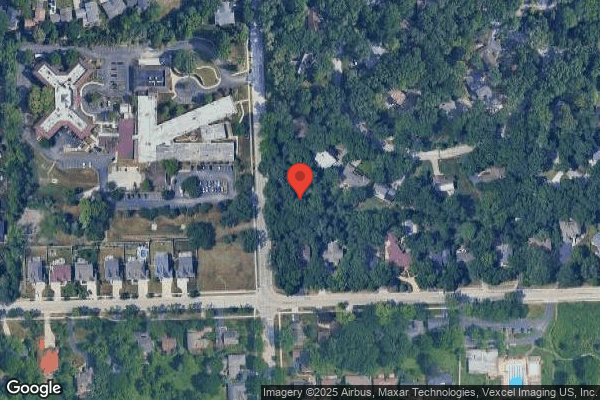
3450 SARATOGA AVENUE, DOWNERS GROVE, IL 60515 (630) 969-2900
For profit - Corporation 145 Beds Independent Data: November 2025 4 Immediate Jeopardy citations
Trust Grade
0/100
#652 of 665 in IL
Last Inspection: April 2025

Within standard 12-15 month inspection cycle. Federal law requires annual inspections.

Overview

The Pearl of Downers Grove has received a Trust Grade of F, indicating significant concerns about the facility's quality and care, which is far below average. It ranks #652 out of 665 nursing homes in Illinois, placing it in the bottom half of facilities in the state and last among the 38 homes in Du Page County. Unfortunately, the facility's trend is worsening, with reported issues increasing from 17 in 2024 to 22 in 2025. Staffing is a weak point, with a rating of only 2 out of 5 stars and a concerning turnover rate of 65%, well above the state average. The facility has also faced substantial fines totaling $276,473, which is higher than 85% of Illinois facilities, indicating serious compliance problems. Moreover, there have been alarming incidents reported, including critical failures to investigate multiple allegations of sexual abuse involving staff and residents. In one case, a staff member took sexually explicit videos of residents and the facility did not ensure their safety or report the incidents to the police, raising serious concerns about resident protection. While there is average RN coverage, the high turnover and the lack of a stable, trained staff may impact the quality of care provided. Overall, families should weigh these serious weaknesses against the facility's strengths before making a decision.

Trust Score
F
0/100
In Illinois
#652/665
Bottom 2%
Safety Record
High Risk
Review needed
Inspections
Getting Worse
17 → 22 violations
Staff Stability
⚠ Watch
65% turnover. Above average. Higher turnover means staff may not know residents' routines.
Penalties
✓ Good
$276,473 in fines. Lower than most Illinois facilities. Relatively clean record.
Skilled Nurses
✓ Good
Each resident gets 52 minutes of Registered Nurse (RN) attention daily — more than average for Illinois. RNs are trained to catch health problems early.
Violations
⚠ Watch
77 deficiencies on record. Higher than average. Multiple issues found across inspections.
★☆☆☆☆
1.0
Overall Rating
★★☆☆☆
2.0
Staff Levels
★★★☆☆
3.0
Care Quality
★☆☆☆☆
1.0
Inspection Score
Stable
2024: 17 issues
2025: 22 issues

The Good

  • Full Sprinkler Coverage · Fire safety systems throughout facility
  • No fines on record

Facility shows strength in fire safety.

The Bad

1-Star Overall Rating

Below Illinois average (2.5)

Significant quality concerns identified by CMS

Staff Turnover: 65%

19pts above Illinois avg (46%)

Frequent staff changes - ask about care continuity

Federal Fines: $276,473

Well above median ($33,413)

Significant penalties indicating serious issues

Staff turnover is elevated (65%)

17 points above Illinois average of 48%

The Ugly 77 deficiencies on record

4 life-threatening 7 actual harm
Apr 2025 19 deficiencies 2 Harm
SERIOUS (G)

Actual Harm - a resident was hurt due to facility failures

Pressure Ulcer Prevention (Tag F0686)

A resident was harmed · This affected 1 resident

**NOTE- TERMS IN BRACKETS HAVE BEEN EDITED TO PROTECT CONFIDENTIALITY** Based on observation, interview, and record review, the facility failed to implement interventions to prevent and treat a pressu...

Read full inspector narrative →
**NOTE- TERMS IN BRACKETS HAVE BEEN EDITED TO PROTECT CONFIDENTIALITY** Based on observation, interview, and record review, the facility failed to implement interventions to prevent and treat a pressure injury per facility policy. This failure resulted in the development of a DTI (Deep Tissue Injury) for a resident at moderate risk for the development of pressure injuries. This applies to 1 of 4 residents (R59) reviewed for pressure injuries in the sample of 18. The findings include: Face sheet, dated April 9, 2025, shows R59 was admitted to the facility on [DATE], and her diagnoses included pulmonary embolism, malignant neoplasm of bronchus or lung, weakness, diabetes, protein-calorie malnutrition, vascular dementia, congestive heart failure, chronic kidney disease, and need for assistance with personal care. MDS (Minimum Data Set), dated January 15, 2025, shows R59's cognition was severely compromised and R59 required substantial / maximal assistance from staff for rolling left and right. Skin Observation Weekly, dated October 10, 2024, shows R59's skin was normal with no open areas. Braden scale, dated October 9, 2024, shows R59 was at high risk for pressure injuries because she was completely immobile, was bedfast, and did not make even slight changes in body or extremity position without assistance. Braden scale, dated February 6, 2025, shows R59 was assessed to only be at moderate risk for pressure injuries, was chairfast, had very limited mobility and made occasional slight changes in body or extremity position but was unable to make frequent or significant changes independently. The assessment also shows R59 had very limited sensory perception. On April 8, 2025, at 12:33 PM, V10 (Licensed Practical Nurse) stated she was unaware of any pressure ulcer related to R59. On April 8, 2025, at 12:37 PM V12 (Wound Nurse) stated R59 had a facility-acquired pressure injury that was assessed as an unstageable right plantar DTI. V12 stated R59 had the pressure injury for months which was caused by her sitting position in her chair. V12 stated R59 was being treated with betadine and a gauze island twice a week. On April 8, 2025, at 12:39 PM, V12 (Wound Nurse) walked into R59's room and pulled back the sheets to observe R59's feet. V12 stated, that's not quite offloaded. R59 had black socks on both feet, both feet were resting on a pillow and R59's lateral plantar side of right foot touching pillow. R59's green pressure-relieving boots were on the counter across from her bed and not on her feet. V12 stated R59's pillow under her lower extremities should be placed back under her calves to give her a boost and so her feet were not touching anything. V12 stated R59's pillow should not have been placed under her feet. On April 8, 2025, at 2:07 PM, R59 was lying in bed with offload boots and V13 (CNA/Certified Nursing Assistant) took off the sock on the right foot. There was a dressing present. At 2:10 PM, V12 took off the dressing and R59 had a blackened area with raised edges on her right sole. This area was approximately 2.5 cm (centimeters) in diameter with redness in the surrounding area. V12 was asked to describe the area, and she said it was a deep tissue injury, which was unstageable due to necrotic tissue. Initial Wound Evaluation & Management Summary, dated February 25, 2025, shows R59 was identified to have a wound on her right plantar foot. The assessment shows R59 had a pressure ulcer identified as an unstageable DTI with intact skin greater than 7 days in duration measuring 2 centimeters (cm) by 2.5 cm and the depth was not measurable. The skin was assessed as intact with purple/maroon discoloration. The evaluation's dressing recommendations included betadine and silicone foam with border twice a week and as needed. The evaluation's intervention recommendations include offloading the wound, use of a pressure off-loading boot, and repositioning R59 per facility protocol. Care plan, initiated October 11, 2024, and reviewed April 8, 2025, showed R59 had the potential for impairment to skin integrity related to incontinence, the diagnosis of diabetes, and impaired mobility. R59's intervention, dated October 11, 2024, included providing a pressure reducing mattress on bed. The care plan fails to show any pressure relieving interventions implemented to prevent the development of a pressure injury on her lower extremities while sitting in her chair. The care plan also failed to show interventions for her diagnosed pressure injury, or the implementation of enhanced barrier precautions related to her wound. POS (Physician Order Sheet), dated January 1, 2025, to April 30, 2025, shows R59's physician orders included: - Offload boots to be worn while in chair and during bedtime three times a day for DTI (ordered February 26, 2025) - Bottom lateral foot: Monitor and cleanse wound with NSS (Normal Saline Solution), apply betadine and cover with dry dressing two times a week one time a day every Tues, Fri for wound care (ordered February 18, 2025, and revised February 26, 2025) - Right plantar foot: Cleanse wound with NSS, apply betadine and cover with dry dressing two times a week. One time a day every Tuesday, Friday for wound care (ordered February 26, 2025, and revised April 5, 2025) - Infection precautions enhanced barrier secondary to wounds (ordered March 27, 2025) On April 9, 2025, at 1:08 PM, V22 (Physician) stated usually on admission at the facility the wound care team assesses and recommends pressure injury prevention interventions for residents at risk for pressure injuries. V22 stated usually the interventions including repositioning, floating heels and use of pressure relieving boots is part of the resident's care plan as preventative measures the facility should be doing if a resident was identified as someone that requires those measures. V22 stated it was certainly possible that the lack of interventions could have caused R59's DTI. V22 stated the facility either did not conduct a proper assessment or if they were providing the interventions they did not document them. On April 9, 2025, at 12:25 PM, V38 (Physician) stated R59 should have interventions in place based on the facility protocol. V38 stated R59's pillow should be behind her heel and R59 should have both offloading boots on when in bed. Wound Evaluation and Management Summary, dated April 1, 2025, shows R59 had a pressure injury that was described as an unstageable DTI for greater than 40 days measuring 1.8 cm by 2 cm with a depth unmeasurable. The assessment was no exudate, and the skin was intact with purple/maroon discoloration. The treatment plan shows apply betadine twice a week and as needed for 22 days in addition to a gauze island with boarder to be applied twice a week and as needed for 22 days. The plan of care (reviewed and addressed) shows R59's wounds were to be off-loaded and R59 was to be repositioned per facility protocol. Wound Evaluation & Management Summary, dated April 8, 2025, shows R59's pressure ulcer measured 1.8 cm by 2 cm and the depth was not measurable. The wound was described as an unstageable DTI with intact skin with no exudate. The plan of care recommendations show R59's wound was to be off-loaded. Pressure Injury Prevention and Management Policy, undated, shows, The intent of this organization is to develop and maintain systems and pr\processes to ensure that the resident does not develop pressure ulcers/injuries (PU/PI) unless clinically unavoidable and that the facility provides care and services consistent with professional standards of practice to: Promote the prevention of pressure ulcer/injury development; Promote the healing of existing pressure ulcers/injuries (including prevention of infection to the extent possible); and Prevent development of additional pressure ulcer/injury Avoidable means that the resident developed a pressure ulcer/injury and that one or more of the following was not completed Evaluation of the resident's clinical condition and risk factors; Definition or implementation of interventions that are consistent with resident needs, resident goals, and professional standards of practice; Monitoring or evaluation of the impact of the interventions or Revision of the interventions as appropriate Risk Assessments 4. Findings from the pressure ulcer/injury risk assessment will be incorporated into the resident's plan of care Preventive Measures 1. Preventive interventions will be implemented based on the pressure ulcer/injury risk assessment, other related factors, and resident preferences. Such interventions may include: .c. Use of pressure reducing/relieving support surfaces or devices that assist with pressure redistribution and tissue load Care Plans: 1. A resident centered care plan will be developed and implemented to address the resident's risk for development of a pressure ulcer/injury and to promote healing if the resident has a pressure ulcer/injury
SERIOUS (G)

Actual Harm - a resident was hurt due to facility failures

Accident Prevention (Tag F0689)

A resident was harmed · This affected 1 resident

**NOTE- TERMS IN BRACKETS HAVE BEEN EDITED TO PROTECT CONFIDENTIALITY** Based on observation, interview, and record review, the facility failed to ensure safe wheelchair transport for a cognitively im...

Read full inspector narrative →
**NOTE- TERMS IN BRACKETS HAVE BEEN EDITED TO PROTECT CONFIDENTIALITY** Based on observation, interview, and record review, the facility failed to ensure safe wheelchair transport for a cognitively impaired resident (R34) that required staff assistance. As a result, R34 sustained pain and significant bruising to the right side of the face, forehead and orbital area to the right eye. This applies to 1 of 1 resident (R34) reviewed for fall-related accidents in the sample of 18. The findings include: The EMR (Electronic Medical Record) shows that R34, is a [AGE] year-old with diagnoses of dementia, psychosis, anxiety disorder, major depressive disorder, age related physical debility, repeated falls, unsteadiness of feet, difficulty walking, need of assistance with care, hyperlipidemia, Vitamin D deficiency, hypothyroidism, and chronic kidney disease. R1 was admitted to the facility on [DATE]. The MDS (Minimum Data Set) assessment dated [DATE], showed that R34's cognition was severely impaired with a BIMS (Brief Interview Mental Status) score of 0/15. The MDS documents that R34 required substantial to maximum assistance from staff during wheelchair transport in the corridor or similar places. On April 7, 2025, at 10:30 A.M., R34 was seated in her wheelchair in the corridor. R34 was observed with a dark blue bruise on the forehead, entire right side of her face and lower orbital area of the right eye. R34 was not interviewable and not able to verbalize how she acquired the bruise. R34 was noted to be anxious and was pacing back and forth from the outside and inside her room. V10 (LPN/Licensed Practical Nurse) was present during this time. V24 said that R34 sustained the bruise from a fall incident that occurred on March 15, 2025, while being transported by CNA using wheelchair without the use of wheelchair leg rests. V24 also said that R34 was anxious and must not be feeling comfortable from the facial bruise. The facility's incident report dated March 15, 2025, showed: CNA (Certified Nurse Assistant) was transporting (R34) to the dining room, for lunch when (R34's) foot got caught underneath the wheelchair, (R34) slid out of the wheelchair and landed on her side hitting her head .911 called . hematoma forehead. The nurse's progress notes March 15, 2025, at 1:19 P.M., showed CNA was transporting (R34) to the dining room for lunch when (R34) foot got caught underneath the wheelchair, (R34) slid out the wheelchair and landed on her right side hitting her head.BP 102/58 HR 103 R 18 T 96.9. NOD (Nurse on Duty) help CNA assist (R34) back to wheelchair and to her room. 911 called and .transport (R34) to .hospital for evaluation. On April 9, 2025, at 12:10 P.M., V17 (LPN/Nurse Supervisor on March 15,2025) said that R34 had fell forward while seated in her wheelchair and being transported and propelled by (V16/CNA). V17 said that R34's feet were caught underneath the wheelchair that caused the fall. V17 also said that the fall could have been prevented if leg rests were used. V17 added that during the fall incident on March 15, 2025, R34's leg rest were not used during transport and assisted by V16. On April 9,2025 at 12:17 P.M., V19 (CNA) said that R34 did not have the leg rests attached to the wheelchair when transported by V16 and R34 legs were caught and caused the fall. V19 said she saw V16 (CNA) propel R34 in a wheelchair and R34 fell forward. Multiple attempts made for an interview with V16 (CNA) during survey but to no avail. On April 9, 2025, at 12:19 P.M., V18 (LPN, on duty on March 15, 2025, Day shift) said that (V16) had propelled and assisted (R34) to dining room for lunch, (R34) fell forward, there were no leg rests used, (R34's legs/feet) were caught under the wheelchair. On April 9, 2025, at 11:42 AM, V2 (Acting Director of Nursing) said that V16 was supposed to use leg rests when assisting and transporting R34 to ensure safe transport. On April 9, 2025, at 12:06 P.M., V11 (Director of Skilled Rehabilitation/ Physical Therapist) stated that leg rests must be used to ensure safe transport using a wheelchair and being propelled by staff. V11 added this would prevent legs/feet being caught under the wheelchair during transport and would prevent fall accident. On April 9, 2025, at 12:40 P.M. V20 (CNA), said yes, (R34) has pain due to the bruise, she might not be able to say it but with the bruise that big, she must be in pain. On April 9,2025 at 12:42 P.M., V21 (RN) said that R34 has facial pain due to the large bruise. On April 9, 2025, at 11:00 A.M., V14 (Regional Nurse Consultant) said the facility must implement safe transport via wheelchair. V14 also said that facility has no policy for safe transport, but skilled therapy department practice was to be implemented to ensure safe transport for resident while being transported using a wheelchair.
CONCERN (D)

Potential for Harm - no one hurt, but risky conditions existed

PASARR Coordination (Tag F0644)

Could have caused harm · This affected 1 resident

**NOTE- TERMS IN BRACKETS HAVE BEEN EDITED TO PROTECT CONFIDENTIALITY** Based on interview and record review, the facility failed to refer a resident with a new mental health diagnosis for a level II ...

Read full inspector narrative →
**NOTE- TERMS IN BRACKETS HAVE BEEN EDITED TO PROTECT CONFIDENTIALITY** Based on interview and record review, the facility failed to refer a resident with a new mental health diagnosis for a level II PASRR (Preadmission Screening and Resident Review). This applies to 1 of 2 residents (R19) reviewed for PASRR in the sample of 18. The findings include: The EMR (Electronic Medical Record) showed R19 was admitted to the facility on [DATE], with admitting diagnoses including major depressive disorder, anxiety disorder, and seizures. The EMR continued to show R19 was diagnosed with unspecified psychosis not due to substance or known physiological condition on October 5, 2024. R19's Active Order Summary Report dated April 9, 2025, showed R19 had the following active medication orders: olanzapine (antipsychotic) oral tablet 10 mg (milligrams), give one tablet by mouth at bedtime related to major depressive disorder; and venlafaxine extended-release oral capsule 150 mg, give one capsule by mouth one time a day related to major depressive disorder. On April 9, 2025, at 8:50 AM, V26 (Admissions Coordinator) said she is responsible for submitting the level I PASRR for residents if it was not completed prior to admission to the facility. V26 said she has never submitted a re-screening for a resident's level I PASRR if the resident received a new mental health diagnosis. On April 9, 2025, at 9:42 AM, V24 (Social Services Director) said he has nothing to do with PASRRs for residents. V24 continued to say he is not able to log into the website to conduct PASRRs. V24 said the admissions department is responsible for PASRRs. On April 9, 2025, at 12:19 PM, V2 (DON/Director of Nursing) said R19 must have been diagnosed with psychosis because she had new behaviors at that time. V2 said V2 does not have anything to do with PASRRs. R19's Notice of PASRR Level I Screen Outcome dated October 23, 2023, completed by V26 (Admissions Coordinator) showed . Ascend Outcome: Level I Outcome: No Level II Required- No Serious Mental Illness/Intellectual Disabilities/Related Conditions. Rationale: The Level I screen indicates that a PASSR disability is not present because of the following reason: There is no evidence of a PASRR condition of an intellectual/developmental disability or a serious behavioral health condition. If changes occur or new information refutes these findings, a new screen must be submitted. The facility does not have documentation to show R19 had a rescreening completed when R19 was diagnosed with psychosis. The facility's undated policy titled Long-term Services and Supports (LTSS) Screening, Preadmission Screening and Resident Review (PASRR) Policy, showed .Policy: The organization observes preadmission screening requirements to ensure that: Medicaid-eligible individuals meet required level of care criteria for Long-term Services and Supports; People with known or suspected mental illness, intellectual disabilities, and/pr related conditions are not appropriately institutionalized or marginalized; to make sure that every individual receives the services and supports that will optimize their success in the least restrictive setting; Residents with these specific types of disabilities are admitted or allowed to remain in the facility, only if the facility can provide them with the services they need . 5) Signification Change in Condition: a. Additional Resident Reviews will be performed whenever there is: i. Resident with a previously negative level I screen who demonstrates new symptoms or possible mental illness, intellectual disability, or related condition. b. The facility will respond to a significant change in condition, or onset of new symptoms indicated by doing the following within 14 days: i. Notifying the PASRR authority .
CONCERN (D)

Potential for Harm - no one hurt, but risky conditions existed

Deficiency F0657 (Tag F0657)

Could have caused harm · This affected 1 resident

**NOTE- TERMS IN BRACKETS HAVE BEEN EDITED TO PROTECT CONFIDENTIALITY** Based on observation, interview, and record review, the facility failed to timely revise the care plan with specific fall-preven...

Read full inspector narrative →
**NOTE- TERMS IN BRACKETS HAVE BEEN EDITED TO PROTECT CONFIDENTIALITY** Based on observation, interview, and record review, the facility failed to timely revise the care plan with specific fall-prevention interventions for a cognitively impaired resident that required staff assistance. This applies to 1 of 1 resident (R34) reviewed for fall-related accidents in a sample of 18. The findings include: The EMR (Electronic Medical Record) shows that R34, a [AGE] year-old with diagnoses of dementia, psychosis, anxiety disorder, major depressive disorder, age related physical debility, repeated falls, unsteadiness of feet, difficulty walking, need of assistance with care, hyperlipidemia, Vitamin D deficiency, hypothyroidism, and chronic kidney disease. R1 was admitted to the facility on [DATE]. The MDS (Minimum Data Set) assessment dated [DATE] showed that R34's cognition was severely impaired with BIMS (Brief Interview Mental Status) score of 0/15. The MDS documents that R34 required substantial to maximum assistance from staff during wheelchair transport in the corridor or similar places. On April 7, 2025 at 10:30 A.M., R34 was seated in her wheelchair in the corridor. R34 was observed with a dark blue bruise on the forehead, entire right side of her face and lower orbital area of the right eye. R34 was not interviewable and not able to verbalize how she acquired the bruise. R34 noted to be anxious and was pacing back and forth from outside and inside her room. V10 (LPN/Licensed Practical Nurse) was present during this time. V24 said that R34 sustained the bruise from a fall incident that occurred on March 15, 2025, while being transported by CNA using a wheelchair without the use of wheelchair leg rests. V24 also said that R34 was anxious and must not be feeling comfortable from the facial bruise. The facility's incident report dated March 15, 2025 showed: CNA (Certified Nurse Assistant) was transporting (R34) to the dining room, for lunch when (R34) foot got caught underneath the wheelchair, (R34) slid out of the wheelchair and landed on her side hitting her head .911 called . hematoma forehead. The nurse's progress notes March 15 ,2025 at 1:19 P.M., showed CNA was transporting (R34) to the dining room for lunch when (R34) foot got caught underneath the wheelchair, (R34) slid out the wheelchair and landed on her right side hitting her head.BP 102/58 HR 103 R 18 T 96.9. NOD (Nurse on Duty) help CNA assist (R34) back to wheelchair and to her room. 911 called and .transport (R34) to .hospital for evaluation. Review of R34's EMR including the fall incidents and care plan-initiated February 23, 2023 showed prior falls on February 23, May 26, July 5, July 26, September 20, and September 27, 2024. Despite this history, the care plan lacked specific, updated interventions and no root cause analysis was conducted after each fall to address contributing factors. On April 9, 2025, the Acting Director of Nursing (V2) validated that the March 15, 2025, fall had not prompted a care plan revision and that no root cause analysis or targeted prevention measures had been implemented.
CONCERN (D)

Potential for Harm - no one hurt, but risky conditions existed

Deficiency F0676 (Tag F0676)

Could have caused harm · This affected 1 resident

Based on interview and record review, the facility failed to provide restorative services to a resident per facility policy. This applies to 1 of 1 resident (R29) reviewed for restorative services in ...

Read full inspector narrative →
Based on interview and record review, the facility failed to provide restorative services to a resident per facility policy. This applies to 1 of 1 resident (R29) reviewed for restorative services in the sample of 18. The findings include: On April 7, 2025, R29 stated he did not receive restorative therapy and would like to be receiving it. On April 8, 2025, at 12:13 PM V10 (Licensed Practical Nurse) stated she had not seen R29 receiving any restorative therapy. On April 8, 2025, V11 (Rehabilitation Manager) stated R29 was not receiving skilled therapy services because during his initial assessment R29 was evaluated to be at his prior level of functioning. R11 stated the therapy department did recommend R29 receive restorative therapy to be provided by the facility. V11 stated a referral was provided to V2 (Director of Nursing) for R29 to receive restorative therapy. On April 8, 2025, at 3:16 PM, V2 (Director of Nursing) stated she was not aware R29 was provided a referral for restorative therapy and R29 was not receiving restorative therapy. V2 also stated when the facility did not have enough staff, the facility CNAs (Certified Nursing Assistants) did not provide restorative therapy. Rehabilitation and Restorative Nursing Program document shows It is the policy of this facility that all residents will be screened for restorative care: 1. As terminated off active therapy, 2. When there is a significant change in status, 3. Quarterly with assessment progress, 4. On referral from nursing on therapy.
CONCERN (D)

Potential for Harm - no one hurt, but risky conditions existed

ADL Care (Tag F0677)

Could have caused harm · This affected 1 resident

**NOTE- TERMS IN BRACKETS HAVE BEEN EDITED TO PROTECT CONFIDENTIALITY** 2. On April 4, 2024 at 10:30 A.M., R44 was seated in his wheelchair in the main dining room. R44 was in the group of activities ...

Read full inspector narrative →
**NOTE- TERMS IN BRACKETS HAVE BEEN EDITED TO PROTECT CONFIDENTIALITY** 2. On April 4, 2024 at 10:30 A.M., R44 was seated in his wheelchair in the main dining room. R44 was in the group of activities that was ongoing. R44 was observed with long, jagged edge fingernails. The fingernails were embedded to R44's inner palm of his contracted left hand. The same observation was observed regarding R44' fingernails on April 8, 2025 at 1:07 P.M. During this time of observation, V3 (LPN/Licensed Practical Nurse) was present. The care plan that was initiated on December 31,2024 showed that R44 was identified with self-care deficit due to left hemiplegia, due to CVA (cerebral vascular accident) depression, ADHD (attention deficit hyperactivity disorder), anxiety, hypothyroidism, and hypertension. The care plan also showed that R44 required total assistance from staff for ADLs (Activities of daily Living) such as hygiene and personal care. 3. On April 4, 2024 at 11:00 A.M., R47 was seated in his wheelchair in his room. R47 was observed with long, jagged edge fingernails. The fingernails were embedded to R47's inner palm of his contracted left hand. During this observation, V4 (RN/Registered Nurse) was present. On April 8, 2025 at 11:30 A.M., R47 was sitting in his wheelchair in his room. R47's fingernails remained long, jagged edges with black substance under the nails. V3 was present during this observation. The care plan that was initiated on July 30, 2022 showed that R47 was identified with self-care deficit due to left hemiplegia, left hemiparesis due to CVA, diabetes mellitus, and anxiety disorder. The care plan also showed that R47 required total assistance from staff for ADLs (Activities of Daily Living) such as hygiene and personal care. Both residents had care plans identifying self-care deficits related to left hemiplegia from cerebrovascular accidents and other medical conditions. Each required total staff assistance with hygiene and personal care, yet their fingernails were untrimmed, compromising comfort and hygiene. The facility's undated policy regarding Fingernails/Toenails showed: The purpose of this procedure are to clean the nail bed, to keep nails trimmed, and to prevent infections. 1. Routine nail care must be performed by nursing staff and or qualified activity team members. 3. Nail care includes daily cleaning and regular trimming. 4. Proper nail care can aid in the prevention of skin problems around nail bed. 7. Trimmed and smooth nails to prevent the resident from accidentally scratching and injuring his or her skin. Based on observation and interview, the facility failed to provide nail care to residents who are dependent on staff assistance with ADLs (Activities of Daily Living). This applies to 3 of 3 residents (R44, R47, R485) in the sample of 18. The findings include: 1. R485's admission record showed R485 was admitted to the facility on [DATE], with multiple diagnoses including hemiplegia and hemiparesis of left dominant side following cerebral infarction, cardiomegaly and dysphagia. R485's MDS (Minimum Data Set) showed R485 was moderately cognitively impaired and needed assistance with ADL's including supervision/light touch assistance with eating and oral hygiene, substantial assistance with bed mobility and dependent on staff for personal hygiene, bathing, toileting, dressing and transfer. R485 had mobility impairment to her left arm and left hand. On April 8, 2025, at 12:05 PM, R485's right hand was observed with all fingernails long and black/brown/yellow colored debris underneath the nails. R485 stated she would like her nails to be cleaned and trimmed. V28 (LPN) made aware of R485 request for nail care.
CONCERN (D)

Potential for Harm - no one hurt, but risky conditions existed

Deficiency F0688 (Tag F0688)

Could have caused harm · This affected 1 resident

**NOTE- TERMS IN BRACKETS HAVE BEEN EDITED TO PROTECT CONFIDENTIALITY** Based on observation, interview, and record review, the facility failed to provide interventions, and failed to prevent further ...

Read full inspector narrative →
**NOTE- TERMS IN BRACKETS HAVE BEEN EDITED TO PROTECT CONFIDENTIALITY** Based on observation, interview, and record review, the facility failed to provide interventions, and failed to prevent further decrease in ROM (Range of Motion) and failed to provide positioning device for residents with hand contractures. This applies to 2 of 5 residents (R67 and R485) reviewed for limited range of motion in the sample of 18. The findings include: 1. R67 admission record showed R67 was admitted to the facility on [DATE], with multiple diagnoses including hemiplegia and hemiparesis following non traumatic intracerebral hemorrhage affecting the left non dominant side, dysphagia, unspecified mood disorder, neuralgia and neuritis, and gastrostomy status. R67's MDS (Minimum Data Set) dated January 7, 2025, showed that R67 was cognitively intact and was dependent on staff assistance for eating through a feeding tube, bathing, toileting, dressing, bed mobility and transfer. On April 8, 2025, at 1:27 PM, R67 was lying in bed and her left hand was contracted in flexion. R67 wrote on her paper with her right hand, I have a splint when asked about the positioning for her left hand. V28 (LPN) was present and looked for the splint in R67's room but did not find a splint for R67's left hand. R67 demonstrated using her right hand she could only partially extend her thumb, index and middle finger and the 4th and 5th digit were difficult to extend. V11 (Rehabilitation Director) provided R67's Physical Therapy discharge recommendations dated August 15, 2024, for date of service range from July 5, 2024, through August 15, 2024. V11 stated R67 did not receive any Occupational Therapy while in the facility. The Physical Therapy discharge recommendation showed only a restorative transfer program using a full mechanical lift was recommended. R67's care plan dated January 29, 2025, for functional maintenance identified R67 had limited range of motion on her left side however interventions did not specify which joints would need either PROM, (Passive Range of Motion), or AAROM (Active Assisted Range of Motion) or how many repetitions of exercise each joint should receive or what positioning device should be used for R67's left hand to prevent further contractures. 2. R485's admission record showed R485 was admitted to the facility on [DATE], with multiple diagnoses including hemiplegia and hemiparesis of left dominant side following cerebral infarction, cardiomegaly and dysphagia. R485's MDS (Minimum Data Set) dated showed R485 was moderately cognitively impaired and needed assistance with ADL's including supervision/light touch assistance with eating and oral hygiene, substantial assistance with bed mobility and dependent on staff for personal hygiene, bathing, toileting, dressing and transfer. R485 had mobility impairment to her left arm and left hand. On April 7, 2025, R485 was lying in bed and her left hand was noted with a flexion contracture. R485 stated she was supposed to have a splint in her left hand, but she doesn't have one. R485's OT (Occupational Therapy) Evaluation and Plan of Treatment dated March 26, 2025, showed R485's LUE (Left Upper Extremity) had a contracture. The OT Evaluation showed No, OT will not treat to address contracture and showed Nursing is managing the contracture. R485's care plan initiated on March 20, 2025, did not address any intervention for decreased range of motion and need for positioning device for the left-hand contracture. On April 8, 2025, at 3:03 PM, V1 (Administrator) stated they have a functional maintenance program, instead of a restorative program and that V2 is responsible to oversee that program. On April 8, 2025, at 3:23 PM, V2 (DON) stated R67 and R485 should have positioning devices or splinst to prevent further contractures and would refer them to therapy for an evaluation. The facility's policy titled Resident Mobility and Range of Motion undated, showed Policy 1. Residents will not experience an avoidable reduction in range of motion ROM .2. Residents with limited range of motion will receive treatment and services to increase and/or prevent a further decrease in ROM .3. Residents with limited range of motion will receive the appropriate services, equipment, and assistance to maintain or improve mobility unless reduction in mobility is unavoidable .Specific Procedures .1. As part of the resident's comprehensive assessment the licensed nurse may identify the residents .c. limitations in movement or mobility .2. As part of the comprehensive assessment the licensed nurse may also identify conditions that may place the resident at risk for complications .including .e. contractures .4. The care plan will be developed by the interdisciplinary team based on comprehensive assessment .6. Interventions may include therapies, the provision of necessary equipment, and/or exercises and will be based on professional standards of practice .
CONCERN (D)

Potential for Harm - no one hurt, but risky conditions existed

Incontinence Care (Tag F0690)

Could have caused harm · This affected 1 resident

**NOTE- TERMS IN BRACKETS HAVE BEEN EDITED TO PROTECT CONFIDENTIALITY** Based on observation, interview and record review the facility failed to document justification for continued use of an indwelli...

Read full inspector narrative →
**NOTE- TERMS IN BRACKETS HAVE BEEN EDITED TO PROTECT CONFIDENTIALITY** Based on observation, interview and record review the facility failed to document justification for continued use of an indwelling urinary catheter for a resident who experienced a urinary tract infection. This applies to 1 of 4 residents (R27) reviewed for catheter use in the sample of 18. The findings include: 1.R27's admission record showed R27 was admitted to the facility on [DATE], with multiple diagnosis including chronic atrial fibrillation, morbid obesity, sepsis unspecified organism, and benign prostatic hyperplasia with lower urinary tract symptoms. R27's MDS (Minimum Data Set) dated February 5, 2025, showed R27 was moderately cognitively impaired, and was dependent on staff assistance for toileting, bathing, dressing, bed mobility and transfer and had an indwelling urinary catheter and was always incontinent of bowel. R27's admission assessment dated [DATE], under genitourinary section showed R27 was incontinent of urine and did not identify the use of an indwelling urinary catheter. R27's physician order dated November 8, 2024, showed Foley catheter 16 Fr (French) and the order was revised on November 24, 2024, to add Monitor Foley Cath output Q (every) shift. The order did not include the reason for the indwelling urinary catheter, or the care and maintenance of the catheter to prevent urinary tract infection. On April 7, 2025, at 11:03 AM, R27 was observed with a urinary catheter tubing draining into a drainage bag. The facility did not provide any documentation that identified the reason for continuous indwelling urinary catheter use or evaluation of symptoms that resulted in the justification of indwelling urinary catheter use upon request. R27's care plan initiated on November 8, 2024, did not include the presence of the indwelling catheter or identify interventions for prevention of infection or reason for indwelling urinary catheter use. R27's urine culture obtained on March 12, 2025, grew Klebsiella pneumoniae ESBL (Extended Spectrum Beta Lactamase) greater than 100,000 colonies. R27 received antibiotic treatment from March 17 through March 24, 2025, for the urinary tract infection. On April 9, 2025, at 12:31 PM, V2 (Acting DON) stated there was no documentation or evaluation to justify the reason for continued catheter use and she wasn't sure if the indwelling catheter was being used for BPH (Benign Prostatic Hypertrophy) or due to wounds on the buttocks. V2 stated there was no policy regarding the evaluation for justification of indwelling urinary catheter use.
CONCERN (D)

Potential for Harm - no one hurt, but risky conditions existed

Deficiency F0744 (Tag F0744)

Could have caused harm · This affected 1 resident

**NOTE- TERMS IN BRACKETS HAVE BEEN EDITED TO PROTECT CONFIDENTIALITY** Based on interview and record review, the facility failed to develop a person-centered care plan to support a resident's dementi...

Read full inspector narrative →
**NOTE- TERMS IN BRACKETS HAVE BEEN EDITED TO PROTECT CONFIDENTIALITY** Based on interview and record review, the facility failed to develop a person-centered care plan to support a resident's dementia care needs. This applies to 1 of 2 residents (R26) reviewed for dementia care in the sample of 18. The findings include: The EMR (Electronic Medical Record) showed R26 was admitted to the facility on [DATE], with multiple diagnoses including Alzheimer's disease, ventricular tachycardia, and arthritis. R26's MDS (Minimum Data Set) dated March 7, 2025, showed R26 had moderate cognitive impairment. As of April 9, 2025, at 9:32 AM, R26's care plan did not include a care plan for Alzheimer's disease or dementia care including R26's dementia care needs or individualized interventions related to R26's symptomology. On April 9, 2025, at 9:36 AM, V24 (Social Services Director) said he conducts care plan meetings along with nursing and therapy. V24 said R26's comprehensive care plan was completed on March 14, 2025. V24 said R26's Alzheimer's disease diagnosis should have been discussed at the care plan meeting. V24 said R26's care plan should have included an Alzheimer's disease care plan.
CONCERN (D)

Potential for Harm - no one hurt, but risky conditions existed

Medication Errors (Tag F0758)

Could have caused harm · This affected 1 resident

**NOTE- TERMS IN BRACKETS HAVE BEEN EDITED TO PROTECT CONFIDENTIALITY** Based on interview and record review, the facility failed to follow their policy to ensure a resident received psychotropic medi...

Read full inspector narrative →
**NOTE- TERMS IN BRACKETS HAVE BEEN EDITED TO PROTECT CONFIDENTIALITY** Based on interview and record review, the facility failed to follow their policy to ensure a resident received psychotropic medications for a specific condition. This applies to 1 of 5 residents (R26) reviewed for unnecessary psychotropic medications in the sample of 18. The findings include: The EMR (Electronic Medical Record) showed R26 was admitted to the facility on [DATE], with the following diagnoses syncope and collapse, ventricular tachycardia, other Alzheimer's disease, other specified arthritis, benign prostatic hyperplasia with lower urinary tract symptoms, essential hypertension, pure hypercholesterolemia, long term use of insulin, and type 2 diabetes mellitus without complications. The EMR did not show R26 had any psychiatric diagnoses. R26's MDS (Minimum Data Set) dated March 7, 2025, showed R26 did not have any psychiatric/mood disorders. The MDS continued to show R26 was receiving antipsychotic, antianxiety, and antidepressant medications. R26's Order Summary Report dated April 14, 2025, showed R26 had active orders for clonazepam (antianxiety medication) oral tablet 0.5 mg (milligram), give one tablet by mouth at bedtime for anxiety; mirtazapine (antidepressant medication) oral tablet 30 mg, give one tablet by mouth at bedtime for depression; risperidone (antipsychotic medication) oral tablet 0.5 mg, give one tablet by mouth two times a day for psychosis; quetiapine fumarate (antipsychotic medication) oral tablet 200 mg, give one tablet by mouth three times a day for psychosis; and lorazepam oral concentrate 2 mg/mL (milliliter), give 0.25 mg/mL orally every four hours as needed for agitation, terminal restlessness, anxiety for 14 days, keep active for 60 days per hospice order. The facility does not have documentation to show R26 had conditions to indicate use for the psychotropic medications. On April 9, 2025, at 12:13 PM, V2 (DON/Director of Nursing) said R26 had not been seen by the psychiatric provider. V2 said the psychiatric provider comes weekly and V2 notifies the psychiatric provider when a resident needs to be seen. On April 9, 2025, at 12:37 PM, V2 said a resident needs a psychiatric diagnosis to receive psychotropic medications. The facility's undated policy titled Antipsychotic Medication Use showed, POLICY: Antipsychotic medications may be considered for residents with dementia but only after medical, physical, functional, psychological, emotional psychiatric, social, and environmental causes of behavioral symptoms have been identified and addressed. Antipsychotic medications will be prescribed at the lowest possible dosage for the shortest period of time and are subject to gradual dose reduction and re-review. Specific Procedures/Guidance: 1. Residents will only receive antipsychotic medications when necessary to treat specific conditions for which they are indicated and effective. 2. The Attending Physician/practitioner and other staff will gather and document information to clarify a resident's behavior, mood, function, medical condition, specific symptoms, and risks to the resident and others. 3. The Attending Physician/practitioner will identify, evaluate, and document, with input from other disciplines and consultants as needed, symptoms that may warrant the use of antipsychotic medications . 7. Antipsychotic medications shall generally be used only for the following conditions/diagnoses as documented in the record, consistent with the definition(s) in the Diagnostic and Statistical Manual of Mental Disorders (current and subsequent editions): a. Schizophrenia; b. Schizo-affective disorder; c. Schizophreniform disorder; d. Delusional disorder; e. Mood disorders (e.g., bipolar disorder, depression with psychotic features, and treatment refractory major depression); f. Psychosis in the absence of dementia; g. Medical illness with psychotic symptoms and/or treatment-related psychosis or mania (e.g., high-dose steroids); h. Tourette's disorder; i. Huntington Disease; j. Hiccups (not induced by other medications); or k. Nausea and committing associated with cancer or chemotherapy .
CONCERN (E)

Potential for Harm - no one hurt, but risky conditions existed

Comprehensive Care Plan (Tag F0656)

Could have caused harm · This affected multiple residents

**NOTE- TERMS IN BRACKETS HAVE BEEN EDITED TO PROTECT CONFIDENTIALITY** 2. R59's Face sheet, dated April 9, 2025, shows R59 was admitted to the facility on [DATE], and her diagnoses included pulmonary...

Read full inspector narrative →
**NOTE- TERMS IN BRACKETS HAVE BEEN EDITED TO PROTECT CONFIDENTIALITY** 2. R59's Face sheet, dated April 9, 2025, shows R59 was admitted to the facility on [DATE], and her diagnoses included pulmonary embolism, malignant neoplasm of bronchus or lung, weakness, diabetes, protein-calorie malnutrition, vascular dementia, congestive heart failure, chronic kidney disease, and need for assistance with personal care. On April 8, 2025, at 12:37 PM, V12 (Wound Nurse) stated R59 had a facility-acquired pressure injury that was assessed as an unstageable right plantar DTI (Deep Tissue Injury). V12 stated R59 had the pressure injury for months which was caused by her sitting position in her chair. V12 stated R59 was being treated with betadine and a gauze island twice a week. On April 8, 2025, at 12:33 PM, V10 (Licensed Practical Nurse) stated she was unaware of any pressure ulcer related to R59. Initial Wound Evaluation & Management Summary, dated February 25, 2025, shows R59 was identified to have a wound on her right plantar foot. Wound Evaluation & Management Summary, dated April 8, 2025, shows R59's pressure ulcer measured 1.8 cm by 2 cm and the depth was not measurable. The wound was described as an unstageable DTI with intact skin with no exudates. The plan of care recommendations show R59's wound was to be off-loaded. POS (Physician Order Sheet), dated January 1, 2025, to April 30, 2025, shows R59's physician orders included: - Offload boots to be worn while in chair and during bedtime three times a day for DTI (ordered February 26, 2025) - Bottom lateral foot: Monitor and cleanse wound with NSS (Normal Saline Solution), apply betadine and cover with dry dressing two times a week one time a day every Tues, Fri for wound care (ordered February 18, 2025, and revised February 26, 2025) - Right plantar foot: Cleanse wound with NSS, apply betadine and cover with dry dressing two times a week. One time a day every Tuesday, Friday for wound care (ordered February 26, 2025, and revised April 5, 2025) - Infection precautions enhanced barrier secondary to wounds (ordered March 27, 2025) Care plan, initiated October 11, 2024, and reviewed April 8, 2025, showed R59 had the potential for impairment to skin integrity related to incontinence, the diagnosis of diabetes, and impaired mobility. R59's intervention, dated October 11, 2024, included providing a pressure reducing mattress on bed. The care plan fails to show any pressure relieving interventions implemented to prevent the development of a pressure injury on her lower extremities while sitting in her chair. The care plan also failed to show interventions for her diagnosed pressure injury, or the implementation of enhanced barrier precautions related to her wound. Pressure Injury Prevention and Management Policy, undated, shows, Care Plans: 1. A resident centered care plan will be developed and implemented to address the resident's risk for development of a pressure ulcer/injury and to promote healing if the resident has a pressure ulcer/injury 3. Face sheet, dated April 9, 2025, shows R29 was admitted on [DATE], and R29's diagnoses includes bipolar disorder and major depressive disorder. Psychiatric note, dated January 23, 2025, shows R29 had diagnoses include major depressive disorder, bipolar disorder, insomnia, and unspecified psychosis. The psychiatric plan showed R29 was to continue current management utilizing clonazepam, lurasidone, Seroquel, melatonin and quetiapine. POS, dated April 9, 2025, shows R29 was receiving Seroquel, Lyrica, Clonazepam, melatonin and Quetiapine daily. On April 9, 2025, at 11:32 AM, V41 (Psychiatric Nurse Practitioner) stated R29 was prescribed lurasidone for his bipolar disorder, Seroquel for his depression and bipolar, and clonazepam for seizures and anxiety. Care plan initiated/revised March 21, 2025, shows R29's no care plans addressing R29's diagnoses of bipolar disorder, depression, anxiety, or his use of psychotropic medications.4. The EMR (Electronic Medical Record) showed R26 was admitted to the facility on [DATE], with multiple diagnoses including Alzheimer's disease, ventricular tachycardia, and arthritis. R26's MDS (Minimum Data Set) dated March 7, 2025, showed R26 had moderate cognitive impairment. As of April 9, 2025, at 9:32 AM, R26's care plan did not include a care plan for Alzheimer's disease or dementia care including R26's dementia care needs or individualized interventions related to R26's symptomology. On April 9, 2025, at 9:36 AM, V24 (Social Services Director) said he conducts care plan meetings along with nursing and therapy. V24 said R26's comprehensive care plan was completed on March 14, 2025. V24 said R26's Alzheimer's disease diagnosis should have been discussed at the care plan meeting. V24 said R26's care plan should have included an Alzheimer's disease care plan. The facility's undated policy titled Care Planning- Comprehensive Person-Centered showed, Policy: A baseline care plan to meet the resident's immediate needs shall be developed for each resident within forty-eight hours of admission. A person-centered comprehensive care plan that includes measurable objectives and timetables to meet the resident's medical, nursing, mental and psychosocial needs shall be developed for each resident. To the extent practicable, the resident/resident representative will be provided with opportunities to participate in the care planning process . Specific Procedures/Guidance: .2. The facility will develop and implement a comprehensive person-centered care plan for each resident, that includes measurable objectives and timeframes to meet a resident's medical, nursing, and mental and psychosocial needs as identified throughout the comprehensive Resident Assessment Instrument process . 13. The comprehensive care plan will: a. Incorporate identified problem areas; b. Incorporate risk factors associated with identified problems; c. Build on the resident's strengths; d. Be culturally competent and trauma-informed as applicable; e. Reflect treatment goals, timetables and objectives in measurable outcomes; f. Identify the professional services that are responsible for each element of care; g. Aid in preventing or reducing declines in the resident's functional status and/or functional levels; h. Promote resident safety; i. Enhance the optimal functioning of the resident by focusing on a rehabilitative program; and j. Reflect currently recognized standards of practice for problem areas and conditions . Based on observation, interview and record review, the facility failed to ensure each resident had a comprehensive care plan that outlined each residents' care needs accurately. This applies to 4 of 18 residents (R26, R27, R29, and R59) reviewed for care plans in the sample of 18. The Findings include: 1. R27's admission record showed R27 was admitted to the facility on [DATE], with multiple diagnosis including chronic atrial fibrillation, morbid obesity, sepsis unspecified organism, and benign prostatic hyperplasia with lower urinary tract symptoms. R27's MDS (Minimum Data Set) dated February 5, 2025, showed R27 was moderately cognitively impaired, and was dependent on staff assistance for toileting, bathing, dressing, bed mobility and transfer and had an indwelling urinary catheter and always incontinent of bowel. On April 7, 2025, at 11:03 AM, R27 was observed with urinary catheter tubing draining into a drainage bag. On April 9, 2025, V31 (Staffing Coordinator) provided a list of residents who needed 2 staff assist for incontinence care. R27's name was on that list. R27's care plan initiated on November 8, 2024, and revised on December 7, 2024, showed that R27 focus continence showed the resident is occasionally incontinent of bladder and continent of bowels due to which was left blank. The continence care plan intervention dated November 24, 2024, showed empty urinal as needed. There was no care plan for the use of, care for, maintenance or prevention of infection for R27's indwelling urinary catheter. There was no care plan to address R27's dependence on staff assistance for ADL care for bathing, dressing, bed mobility and transfer.
CONCERN (F)

Potential for Harm - no one hurt, but risky conditions existed

Transfer Notice (Tag F0623)

Could have caused harm · This affected most or all residents

**NOTE- TERMS IN BRACKETS HAVE BEEN EDITED TO PROTECT CONFIDENTIALITY** Based on interview and record review the facility failed to follow their policy and notify the Ombudsman in writing of resident ...

Read full inspector narrative →
**NOTE- TERMS IN BRACKETS HAVE BEEN EDITED TO PROTECT CONFIDENTIALITY** Based on interview and record review the facility failed to follow their policy and notify the Ombudsman in writing of resident transfers and discharges to the hospital. This failure has the potential to affect all 83 residents who reside in the facility. The findings include: R12's Face Sheet showed R12 to be [AGE] years old and admitted to the facility on [DATE]. R12's Hospital Transfer Form showed resident was discharged to the hospital on April 5, 2025. On April 9, 2025, at 2:05 PM, V24 (Social Services Director) stated he does not handle the notifying family's and Ombudsman of resident discharges. On April 9, 2025, at 2:08 PM, Surveyor asked V2 (Director of Nursing), Ombudsmen, why do we have to notify them? I'll have to check into that. I'll be honest with you, this is the first time I'm hearing about notifying the Ombudsman, in regard to resident transfers and discharges to the hospital. Later at 4:52PM, V2 verified that the facility has not been notifying the Ombudsman of resident transfers/discharges to the hospital. V2 stated she has been working at the facility for a year and she is not aware of the facility notifying the Ombudsman when a resident is transferred/discharged to the hospital. On April 9, 2025, at 3:38 PM V35 (Ombudsman) stated that she was not receiving discharge/transfer notification from the facility. V35 stated she checked her records as far back as December 2024 and she has not received any bed hold notifications from the facility. The facility's process for Reporting Resident Out of the facility to the Ombudsman policy showed the following: The facility will notify the Ombudsman of any resident who leaves the facility under the following circumstances: unplanned discharges, including hospitalization where return is uncertain. All communication with the Ombudsman must be documented in the resident's medical record.
CONCERN (F)

Potential for Harm - no one hurt, but risky conditions existed

Deficiency F0625 (Tag F0625)

Could have caused harm · This affected most or all residents

**NOTE- TERMS IN BRACKETS HAVE BEEN EDITED TO PROTECT CONFIDENTIALITY** Based on interview and record review the facility failed to ensure that bed hold notices were issued in writing to residents upo...

Read full inspector narrative →
**NOTE- TERMS IN BRACKETS HAVE BEEN EDITED TO PROTECT CONFIDENTIALITY** Based on interview and record review the facility failed to ensure that bed hold notices were issued in writing to residents upon transfer to the hospital. This failure has the potential to affect all 83 residents who reside in the facility. The findings include: R12's Face Sheet showed R12 to be [AGE] years old and admitted to the facility on [DATE]. R12's Hospital Transfer Form showed resident was discharged to the hospital on April 5, 2025. On April 8, 2025, 11:17 AM, V2 (Director of Nursing) stated V36 (Registered Nurse) who discharged R12, did not issue a bed hold notice and one was not issued because she did not see anything documented in R12's electronic medical record. V2 stated she was not aware of the bed hold policy and who was responsible for issuing the bed hold policy. V2 stated she will follow up with the facility's nurse consultant and look for the bed hold policy. On April 8, 2025, at 3:30 PM, V2 stated she did not find that a bed hold policy was given to R12. V2 stated they will give a bed hold notice to the resident or representative. On April 9, 2025, at 9:44 AM, V24 (Social Services Director) stated that he does not handle any notifications dealing with resident bed holds. On April 9, 2025, at 9:57 AM, V2 stated they gave R12's daughter a bed hold notice. V2 also stated that V34 (Business Office Manager) was responsible for giving bed hold notifications. On April 9, 2025, at 10:07 AM, V34 stated she issued a bed hold to R12's daughter yesterday. V34 stated yesterday was the first time she had issued a bed hold notice to anyone. V34 stated issuing bed holds has not been a part of her job duties. On April 9, 2025, at 1:19 PM, V2 stated that bed hold notifications are not being done. V2 gave the surveyor a copy of the forms sent out with R12. There was no bed hold notice within the forms. On April 9, 2025, at 1:25 PM V27 (Registered Nurse/RN) stated that when a resident is transferred to the hospital, they send with them a face sheet, orders, and labs. Then she showed the surveyor in her computer what she was sending. On April 9, 2025, at 1:30 PM V21 (RN) stated when a resident is transferred to the hospital she sends with them a face sheet, physician orders, labs, and any diagnostic exams. The facility's bed hold policy dated October 21, 2021, showed the following: 1. Prior to a transfer, written information will be given to the residents and the resident representatives that explains in detail: a. The rights and limitations of the resident regarding bed-holds; b. The reserve bed payment policy as indicated by the state plan (Medicaid residents); c. The facility per diem rate required to hold a bed (non-Medicaid residents), or to hold a bed beyond the state bed-hold period (Medicaid residents); and d. The details of the transfer (per the Notice of Transfer).
CONCERN (F)

Potential for Harm - no one hurt, but risky conditions existed

Deficiency F0725 (Tag F0725)

Could have caused harm · This affected most or all residents

**NOTE- TERMS IN BRACKETS HAVE BEEN EDITED TO PROTECT CONFIDENTIALITY** Based on interview and record review the facility failed to provide sufficient number of Nursing staff to ensure call lights are...

Read full inspector narrative →
**NOTE- TERMS IN BRACKETS HAVE BEEN EDITED TO PROTECT CONFIDENTIALITY** Based on interview and record review the facility failed to provide sufficient number of Nursing staff to ensure call lights are answered timely and assistance with ADL care is given as needed. This has the potential to affect all 83 residents who reside in the facility. The findings include: During the resident meeting on April 8, 2025, at 10:00 AM, 4 of the 7 residents in attendance, R6, R13, R36 and R58, all stated they experienced extended wait time for call light response during the evening and overnight shift. R33's name was on the list to attend the resident meeting, but did not attend, there was a note on the list next to his name that showed CNA did not get him up. On April 7, 2025, at 10:53 AM, R487 said she gets anxious during the overnight shift and sometimes the evening shift because she has to wait for a response to her call light 2 or 3 hours. R487 said she puts her call light on when she needs incontinence care or when she gets chest pressure and needs her PRN (as needed) medication from the Nurse. On April 8, 2025, at 12:39 PM, R33 was in his bed eating his lunch and stated he wanted to go to the resident meeting, but the CNA did not get him up because it was not his scheduled day to get up. R33 stated he wants to get up at least 3 days a week and wants to attend BINGO on Tuesday and Saturdays and wants to be dressed in his own clothes when he goes out of his room. R33's request was made known to V28 (R33's LPN) On April 9, 2025, at 2:40 PM, R13, stated almost every overnight she waits an extended amount of time to receive care for incontinence and stated it was uncomfortable to wait in a wet brief for it to be changed. On April 9, 2025, at 2;35 PM, R 36 stated during the day she uses the bathroom but during the night she uses the incontinence brief because the wait for call light response doesn't give her enough time to get to the bathroom without soiling the brief. On April 9, 2025, at 2:35 PM, R58 stated he listens at night and hears the call lights activated and sounding for 30 minutes or more without being turned off. R58 stated this occurs every overnight shift. The Resident Council Meeting minutes dated December 27, 2024, showed the residents raised concerns regarding extended call light response times on the evening, overnight shifts and during the weekends. Residents also identified a concern with medications that are scheduled to be given in the morning are not given until the afternoon. The Resident Council meeting minutes dated January 29, 2025, showed the meeting was attended by V35 (Ombudsman) and two family members. The family members raised concern regarding residents not receiving care on the weekends as they observe residents in bed wearing gowns in the afternoon. shaving of facial hair not being done, and residents are consistently soiled. Residents again raised the concern that medications scheduled to be given in the morning are not administered until the afternoon. Resident also stated staff will turn off a call light, not respond to the need, stating they will return, and staff do not come back. The Resident Council meeting minutes dated February 26, 2025, showed the residents again raised the concern regarding extended call light response times, during the evening and overnight shift. The Residents also raised a concern of not being able to get up out of bed before breakfast due to staffing. The Resident Council Meeting Minutes dated March 26, 2025, showed residents raised the concern regarding extended call light response times especially on the evening and overnight shifts. The residents reported that staff are complaining to them that there is short staffing. On April 9, 2025, at 9:46 AM, V1(Administrator) stated an evaluation of resident care needs in relation to number of CNA staff was not reviewed in response to the Resident Council Meeting concerns. V1 also explained that the Facility Assessment, dated August 8, 2024, showed in a 24-hour period direct care Nurses would be 4 RNs and 5 LPNs, and 30 CNAs. On April 9, 2025, at 10:30 AM, V31 (Staffing Coordinator/CNA) provided daily assignments for April 7-10, 2025, and a list of residents who need 2 staff assists with ADL care. Based on the list of residents, who need 2 staff assists, Unit 1 had 5 of 14 residents who needed 2 staff assists with ADL care. The Daily Assignment sheet for April 7, 2025. showed there was 1 CNA staff on Unit 1 for both the evening and the night shift. The daily assignment sheet for April 8, 9, and 10 showed there was 1 CNA on the overnight shift each day. Unit 2 had 10 of 23 residents who needed 2 staff assists with ADL Care. The Daily Assignment sheet showed on April 7, 8, 9, and 10, there was 1 CNA scheduled for Unit 2 on the overnight shift each day. Unit 3 had 15 of 43 residents who required 2 staff assists with ADL care. The Daily Assignment sheet for April 7, 8, 9, and 10, showed 2 CNA on Unit 3 on the overnight shift each day. R6 and R33 reside on Unit 2. R13, R36, R58, and R487 reside on Unit 3. V31 stated when the residents need 2 staff assists and there is only 1 assigned CNA, the Nurse could help the CNAs provide care for a resident if the nurse was not busy. V31 stated a CNA could come from another Unit to help give care for those residents who need 2 assists for care, which could potentially leave no CNA on a Unit while the CNA assists on another Unit. The Facility assessment dated [DATE], showed 30 CNA staff were needed to provide care in a 24-hour period based on resident care profile. The Daily Assignment sheets dated April 8 through 10, showed there were 20 CNAs who worked in each 24-hour period.
CONCERN (F)

Potential for Harm - no one hurt, but risky conditions existed

Deficiency F0801 (Tag F0801)

Could have caused harm · This affected most or all residents

Based on interview and record review, the facility failed to employ a qualified food service manager. This applies to all 83 residents residing in the facility. The findings include: Long Term Care Fa...

Read full inspector narrative →
Based on interview and record review, the facility failed to employ a qualified food service manager. This applies to all 83 residents residing in the facility. The findings include: Long Term Care Facility Application for Medicare and Medicaid, dated April 7, 2025, shows the facility census was 83 residents. On April 9, 2025, at 9:32 AM, V5 (Food Service Manager) stated she had not enrolled in the dietary manager course and did not take the course in the past. V5 stated she was sent the link for the class registration recently and needed to enroll in the class. V5 stated she had a Serve Safe Sanitation certification but no other certifications as the Food Service Manager. On April 8, 2025, at 9:30 AM, the facility provided a ServSafe certificate for V5 dated 11/22/24 and expiring November 22, 2029. As of April 10, 2025, at 4:20 PM, the facility failed to provide documentation regarding V5's qualification as the Food Service Manager.
CONCERN (F)

Potential for Harm - no one hurt, but risky conditions existed

Menu Adequacy (Tag F0803)

Could have caused harm · This affected most or all residents

Based on observation, interview, and record review, the facility failed to prepare and serve food to residents as per their planned and dietitian-approved facility menu and per facility policy. This a...

Read full inspector narrative →
Based on observation, interview, and record review, the facility failed to prepare and serve food to residents as per their planned and dietitian-approved facility menu and per facility policy. This applies to all 82 residents residing in the facility receiving oral diets. The findings include: Long Term Care Facility Application for Medicare and Medicaid, dated April 7, 2025, shows the facility census was 83 residents. Order Listing Report, dated April 8, 2025, shows there was one resident who did not receive an oral diet (R67) and there were 8 residents who received puree diets. Facility Menu Extension, dated April 8, 2025, show all residents on all diets received a hamburger patty (3 ounces) on a bun. The menu shows pureed diets were to receive pureed hamburger on a bun and mechanical diets were to be served a ground hamburger on a bun. Order Listing Report, dated April 8, 2025, shows 18 residents (R1, R4, R7, R16, R22, R23, R26, R33, F34, R35, R38, R39, R49, R53, R59, R60, R61, R70) had physician orders for Mechanical Soft Diets. On April 8, 2025, at 11:47 AM during lunch service, V6 (Dietary Aide) was plating ground meals onto lunch plates. V6 placed a scoop of ground beef, a scoop of ground green beans, and scoop of ground hash browned potatoes onto the Mechanical Soft plates. No bread was served on the mechanical soft lunch trays served to residents receiving Mechanical Soft diets. V6 served hamburger patties with cheese on a bun to regular and to all other diets other than those residents receiving pureed/mechanical soft diets at lunch. The hamburger patty appeared to weigh less than 3 ounces. On April 8, 2025, at 2:28 PM with V5 (Food Service Manager), one beef patty with one slice of cheese from lunch was weighed on a scale provided by V5. The beef patty and cheese weighed a total of 2.6 ounces. V5 stated the beef patty and cheese was expected to weigh 3 ounces total to provide the three ounces good quality protein per the planned/approved facility menu at lunch. V5 stated the egg omelet served in the morning was expected to provide two ounces of good quality protein. V5 stated the kitchen serves 5 raviolis in a serving at dinner which V5 thought would provide 2 ounces of good quality protein. V5 stated the residents served ground diets at lunch were formerly supposed to be served a bun with their ground hamburger patties but that the dietitian instructed the food service not to serve any bread to residents receiving mechanical soft diets. On April 8, 2025, at 10:44 AM, V5 stated she utilized a frozen, pre-made egg/cheese omelet product for breakfast instead of making the item by scratch. V5 provided the egg omelet manufacturing information which showed one omelet weighed 3.5 ounces but only each provided a total of 10 grams of protein per omelet. Review of facility cheese ravioli manufacturers product information showed a serving size of 9 ravioli only provided a total of 10 grams of protein per serving (including low quality protein from the pasta). Therefore 5 raviolis only provided an approximate total of 5.5 g high and low quality protein in the serving provide to residents. On April 9, 2025, at 10:09 AM, V40 (Dietitian) stated she discussed giving Mechanical Soft diets a soft piece of untoasted bread in replacement of any bread that was planned on the regular menu. V40 stated the residents receiving Mechanical Soft diets should have been served the equivalent of the regular menu bread servings from the hamburger bun which was two slices of bread. V40 stated she reviewed and approved all of the menus for all of the facility diets. V40 stated it was her expectation that a total of six ounces weight of good quality protein was served each day. V40 stated the hamburger patty was expected to provide 3 ounces of cooked good quality protein. V40 stated the manufacturer serving size of 9 ravioli did not appear to provide one total ounce of high quality protein in the serving. V40 stated if the facility only served 5 raviolis, the serving would not meet the equivalent of one ounce of high quality protein at dinner. V40 stated the menu as served on April 8, 2024, including the omelet, hamburger patty, and ravioli, did not provide a total of 6 ounces of high quality protein. Facility Menu policy, dated September 2, 2021, shows Menus are planned in advance and are followed as written to meet the nutritional needs of the residents The Director of Food and Nutrition Services and Registered Dietitian sign and approve the menus. Menus are served as written unless changed due to an unpopular item on the menu, and item could not be procured, or in the event of a special meal Facility Document Meal Pattern, dated September 2, 2021, shows Meat or Meat Alternatives should total to 5.5 ounces for the day. Facility Portion Control policy/procedure, dated May 15, 2020, shows Portion size is determined by the nutritional needs of the residents, federal and state regulations that specify the food groups, and portion sizes that must be served according to the facility menu `1. Use standardized recipes based on facility census and cycle menus. 2. Serve portions according to the menu spreadsheet 4. Weight or measure ingredients. Weighting is the most accurate 2. Facility Document Meal Pattern, dated September 2, 2021, shows the daily menu should contain 2 or more servings of fruit per day (1/2 cup per serving), 3 or more servings of vegetables per day (raw vegetables must be 1 cup serving), and 6 servings per day of grains/breads. Review of the facility Week 1 menu, approved February 7, 2025, shows the menu was short in food item servings on the following days: Sunday had only a total of 4 grain/bread servings and 2 vegetable servings Monday had only 1 vegetable serving Thursday had only 5 grain/bread servings and 1 vegetable serving Friday had only 3 grain/bread servings Saturday had only 5 grain/bread servings and 2 vegetable servings Review of facility Week 2 menu, approved February 6, 2025, shows the menu was short in food item servings on the following days: Monday had only a total of 5 grain/bread servings and 2 vegetable servings Tuesday day had only 1 fruit serving and 4 grain/bread servings Wednesday had only 2 vegetable servings Thursday had only 3 grain/bread servings and 2 vegetable servings Friday had only 2 grain/bread servings and 2 vegetable servings Saturday had only 4 grain bread servings Review of facility Week 3 menu, approved February 20, 2025, shows the menu was short in food item servings on the following days: Sunday had only 4 grain/bread servings and 2 vegetable servings Monday had only 4 grain/bread servings Tuesday had only 5 grain/bread servings Wednesday had only 4 grain/bread servings Thursday had only 4 grain/bread servings Friday had only 4 grain/bread servings Saturday had only 4 grain/bread servings. Review of facility Week 4 menu, approved March 26, 2024, shows the menu was short in food item servings on the following days: Sunday had only 5 grain/bread servings Monday had only 5 grain/bread servings Tuesday had only 2 vegetable servings Wednesday had only 1 fruit serving and 4 grain/bread servings Friday had only 1 fruit serving and 5 grain/bread servings Saturday had only 5 grain/bread servings
CONCERN (F)

Potential for Harm - no one hurt, but risky conditions existed

Food Safety (Tag F0812)

Could have caused harm · This affected most or all residents

Based on observation, interview, and record review, the facility failed to perform hand hygiene after touching soiled dishes per facility policy and failed to utilize sanitizing solution at the proper...

Read full inspector narrative →
Based on observation, interview, and record review, the facility failed to perform hand hygiene after touching soiled dishes per facility policy and failed to utilize sanitizing solution at the proper concentration to sanitize food contact services per manufacturer instructions. This applies to all 83 residents living in the facility. The findings include: Long Term Care Facility Application for Medicare and Medicaid, dated April 7, 2025, shows the facility census was 83 residents. Order Listing Report, dated April 8, 2025, shows there was one resident who did not receive an oral diet (R67). On April 8, 2025, at 9:51 AM in the dish machine room, V15 (Dietary Aide) scraped and loaded dirty dishes into the mechanical dish machine. V15 then removed her gloves and without washing her hands or replacing gloves, V15 walked to the clean side of the dish machine and touched clean/sanitized bowls. V15 removed the bowls from the clean/sanitized dish rack and placed the bowls into storage. V15 then put on a new pair of gloves without washing her hands. V15 walked to the dirty side of the dish machine and began touching dirty bowls. Without changing her gloves and/or washing her hands, V15 walked to the clean side of the dish machine and began touching clean/sanitized plate lids, stacked them, and returned them to storage. Without changing her gloves and/or washing her hands, V15 then took clean/sanitized beverage pitchers to storage. Without changing her gloves and/or washing her hands, V15 then stacked clean/sanitized plate lids and placed them into storage. On April 10, 2025, at 3:57 PM, V5 (Food Service Director) stated she expected staff to wash their hands and change their gloves after touching soiled dishes and before touching clean dishes. Facility Policy Use of Disposable Gloves for Food Handling, dated February 27, 2020, shows disposable gloves were to be used appropriately by all employees and hands were to be washed between glove use. Facility policy Safe Food Handling Practices, dated September 23, 2019, shows All work surfaces and equipment are clean and sanitized after each use If the person washing is also going to pull and store the clean dishes, hands must be washed before pulling the clean dishes. Germs/bacteria can be spread to the clean dishes if clean dishes are not pulled with clean hands. Hands must be washed with soap and water Mechanical Ware Washing (Dish Machine) Policy/Procedure, dated September 27, 2018, shows Handwashing is imperative to prevent cross-contamination when the same person washes the dirty dishes and stores the clean dishes. 2. On April 7, 2025, at 9:40 AM in the kitchen during lunch meal preparation, V6 (Dietary Aide) used a wipe cloth out of red sanitizer bucket at the cook's station to wipe the counter of the cook's station. V7 (Cook) used a quaternary ammonium test strip and measured the sanitizing solution concentration in the red bucket which measured 100 ppm (parts per million). V6 stated the minimum sanitizing solution concentration should measure 155 ppm quaternary ammonium. On April 10, 2025, at 3:57 PM, V5 stated the quaternary ammonium chemical sanitizing solution in the sanitizing wipe buckets should measure 150-400 ppm. Facility chemical manufacturing product information, undated, shows the facility chemical sanitizing solution was to be utilized at 150-400 ppm of active quaternary ammonium.
CONCERN (F)

Potential for Harm - no one hurt, but risky conditions existed

Infection Control (Tag F0880)

Could have caused harm · This affected most or all residents

3. On April 8, 2025, between 8:28 A.M. and 9:03 A.M., V28 (Licensed Practical Nurse/LPN) had administered multiple prescribed medications to R67 via the resident's gastric tube. A posted sign outside ...

Read full inspector narrative →
3. On April 8, 2025, between 8:28 A.M. and 9:03 A.M., V28 (Licensed Practical Nurse/LPN) had administered multiple prescribed medications to R67 via the resident's gastric tube. A posted sign outside R67's room clearly instructed staff to wear appropriate Personal Protective Equipment (PPE), including gown and gloves, due to R67's Enhanced Barrier Precautions (EBP) status, which was ordered in response to the resident's gastric tube care. Despite this posted instruction and the documented order on the April 2025 Physician Order Sheet (POS) requiring EBP, V28 failed to don the required PPE gown while administering the medications. Additionally, during the medication administration process, V28 changed soiled gloves but failed to perform hand hygiene before donning a clean pair of gloves, as required by the facility's undated Hand Hygiene policy. This policy documents that glove use is not a substitute for hand hygiene and mandates hand hygiene before and after glove use and before and after direct resident contact. Later that same day, at 1:11 P.M., V28, flushed R67's gastric tube. During this procedure, V26 also failed to wear the required PPE gown, despite engaging in direct contact with R67's gastric tube. This was a procedure/task that explicitly listed under High-Contact Resident Care Activities Requiring EBP in the facility's EBP policy dated March 28, 2024. Additionally, V28 failed to perform hand hygiene both upon entering and leaving R67's room. 4. On April 8, 2025, at 9:15 A.M., the medication administration observation continued with V28, with gloves on V28 performed a blood glucose finger-stick test on R6. Following this procedure, V28 removed the soiled gloves but failed to perform hand hygiene before proceeding to prepare and administer 14 units of Humalog insulin via subcutaneous injection to R6. This was not following the facility's Insulin Administration policy dated October 1, 2021, which requires handwashing before and after insulin administration. Furthermore, while still failing to perform hand hygiene, V28 administered multiple oral medications to R6 and subsequently proceeded to prepare and administer oral medications to R55. During this process, V28 did not perform hand hygiene before donning a new pair of gloves, nor after glove removal, as required by the facility's Hand Hygiene policy. The facility Policies show: Enhanced Barrier Precautions Policy (March 28, 2024): Requires gown and gloves during high-contact resident care activities, including device care or use during gastric feeding/enteral tube management. Insulin Administration Policy (October 1, 2021): Requires handwashing before and after insulin administration. Hand Hygiene Policy (Undated): Specifies that glove use does not replace hand hygiene and mandates hand hygiene before and after glove use, and before and after direct contact with resident's intact skin. 5. POS (Physician Order Sheet), dated April 9, 2025, shows R29's diagnoses included pressure ulcers, urinary tract status, major depressive disorder, bipolar disorder, paraplegia, epilepsy, osteomyelitis, and infection of intervertebral disc. On April 7, 2025, at 9:56 AM, R29 had no transmission or enhanced barrier precautions outside of his room indicating what type of precautions were required to enter his room or perform care. Inside of R29's room there were two red biohazard disposal bins. There was a PPE (Personal Protective Equipment) dispenser hanging on R29's door holding gloves, gowns and masks. R29 stated he was recently hospitalized for an infection in his blood. R29 had an indwelling urinary catheter hanging on the side of his bed. On April 7, 2025, at 10:03 AM V29 (Social Services) was unable to locate any barrier precautions signage outside R29's door of his room. Red biohazard bins were inside door of room. On April 7, 2025, at 10:06 AM, V10 (Licensed Practical Nurse) stated she just received labs that morning showing R29 had ESBL (Extended-spectrum beta-lactamase) infection in his urine and that R29 had MRSA (Methicillin-Resistant Staphylococcus aureus) infection in his wound. V10 stated she was waiting on two other cultures to come back from the laboratory. Nursing note, dated March 31, 2025, shows R29 had a MRSA infection and pneumonia and contact precautions were required. POS, dated April 9, 2025, shows the following active physician orders for R29: - April 7, 2025, Contact isolation for ESBL in urine - February 22, 2025, Infection precautions - enhanced barrier related to wounds, colostomy, urostomy, every shift for EBP (Enhanced Barrier Precautions) - January 12, 2025, Strict contact isolation for MRSA and C Striatum every shift for wound infection Physician Note, dated April 2, 2025, shows R29 was recently hospitalized at [hospital] January 2-January 12, 2025, for bacteremia, source likely sacral OM (Osteomyelitis), also treated for aspiration PNA (Pneumonia). The note shows R29 was stabilized and discharged back to facility on January 12, 2025, with IV ABT (Intravenous Antibiotic) Vancomycin and Meropenem EOT (End of Treatment) February 14, 2025. On April 9, 2025, at 3:47 PM, V2 (Director of Nursing) stated R29 should have had a contact precautions sign hanging on the door of his room. 6. POS, dated (January 1, 2025, to April 30, 2025, shows the following physician orders for R59: - Bottom Lateral foot: Monitor and cleanse wound with NSS, apply betadine and cover with dry dressing two times a week one time a day every Tuesday and Friday for wound care (ordered February 18, 2025, and revised February 26, 2025) - Right plantar foot: Cleanse wound with NSS apply betadine and cover with dry dressing two times a week. One time a day every Tuesday, Fri for wound care. And as needed for soilage and or saturation (ordered April 5, 2025) - Infection precautions enhanced barrier secondary to wounds (ordered March 27, 2025) On April 8, 2025, V10 (Licensed Practical Nurse) stated she was not aware of any pressure injuries regarding R59. On April 8, 2025, at 12:37 PM V12 (Wound Nurse) stated R59 had an unstageable right plantar DTI for months. At 12:39 PM, V12 walked into R59's room with no gown, no gloves, no mask and pulled back the sheets with bare hands to observe R59's feet. With bare hands, V12 pulled off R59's right sock and displayed R59's wound dressing on her foot. There was no isolation precaution sign at the entrance of R59's room and there were no PPE supplies at the entrance to R59's room. On April 8, 2025, at 1:30 PM, V12 (Wound Nurse) stated R59 should have EBP (Enhanced Barrier Precautions) in place for her wound. V12 stated she was unaware of R59's order for EBP. On April 9, 2025, at 12:25 PM V38 (Physician) stated she expected residents to be placed on enhanced barrier precautions for all wounds per Centers for Disease Control guidelines. R59's care plan, reviewed on April 8, 2025, shows no identification of R59's facility acquired pressure injury or need for Enhance Barrier Precautions related to R59's wound. Wound evaluation & Management Summary, dated April 8, 2025, shows R59's pressure ulcer measured 1.8 cm by 2 cm and the depth was not measurable. The wound was described as an unstageable DTI with intact skin with no exudate. The plan of care recommendations show R59's wound was to be off-loaded. Facility Enhanced Barrier Precautions (EBP) Policy, undated, shows EBP will be utilized in conjunction with standard precautions to provide targeted gown and glove use during high-contact resident care activities Enhanced Barrier Precautions refer to the infection control intervention aimed at reducing transmission of MDROs (Multi-Drug Resistant Organisms) through the targeted use of gown and gloves during high-contact resident care activities. 1. Criteria for Implementing EBP: EBP should be employed in the following scenarios: Residents with infection or colonization by a CDC (Centers for Disease Control) -targeted MDRO when contact Precautions are not otherwise applicable. Residents with wounds and/or indwelling medical devices, irrespective of MDRO infection or colonization status . High-Contact Resident Care Activities Requiring EBP: EBP should be utilized during the following activities: Dressing, bathing, showering, transferring, providing hygiene, changing linens, changing briefs or assisting with toileting, device care or use, wound care Based on observation, interview, and record review, the facility failed to conduct infection surveillance for resident infections in the facility. The facility also failed to have a complete water management program for Legionella. The facility also failed to follow their policy for EBP (Enhanced Barrier Precautions) and hand hygiene. This applies to all 83 residents residing in the facility. The findings include: The facility's Long-Term Care Application for Medicare and Medicaid dated April 7, 2025, showed the facility's census was 83 residents. 1. On April 8, 2025, at 1:04 PM, V2 (DON/Director of Nursing) said she is the Infection Preventionist for the facility. V2 said when a resident shows signs of an infection, the facility staff will notify the physician for orders. V2 said the facility uses McGeer's Criteria when an infection is identified. V2 continued to say V2, or facility staff do not complete a McGeer's Criteria assessment for residents with infections. V2 said when an antibiotic is ordered, the facility completes an assessment titled Antibiotic Timeout. V2 said the assessment does not include the McGeer's Criteria. V2 said she compiles a monthly list of residents who received antibiotics and conducts her infection surveillance from that list. V2 said from the list, V2 tracks infection trends and transmission-based precautions in the facility. The facility's Order Listing Reports for January 2025, February 2025, and March 2025 showed the resident status as current. On April 9, 2025, at 12:40 PM, the Order Listing Reports were reviewed with V2. Upon review of the reports, V2 said the reports were only run for residents who were currently residing in the facility at the time the report was generated. V2 said she should have been reviewing the antibiotic use and infections for all residents residing in the facility for the month. V2 said since she did not review all residents in the facility for the month who received antibiotics, V2 did not have accurate surveillance of infections within the facility. The Order Listing Reports for antibiotic use for all residents in the facility for January 2025, February 2025, and March 2025, dated April 9, 2025, showed in January 2025, 11 anti-infectives were prescribed for infections and no surveillance was completed. The report continued to show in February 2025, 9 anti-infectives were prescribed for infections and no surveillance was completed. The report showed in March 2025, 9 anti-infectives were prescribed and no surveillance was completed. On April 9, 2025, at 3:45 PM, V1 (Administrator) said V2 should be conducting surveillance for all infections identified in the facility. The facility's undated policy titled Antibiotic Stewardship Program showed Policy: The organization is committed to providing sufficient resources to establish and maintain systems and processes for a facility-wide system to monitor the use of antibiotics through an interdisciplinary Antibiotic Stewardship Program . The Antibiotic Stewardship team will analyze infection data (including type of infection or symptoms being treated, antibiotic utilization, and adverse outcomes, etc.) monthly and feedback will be provided to the QAPI (Quality Assurance and Performance Improvement) Committee regarding antibiotic stewardship practices . Specific Procedures/Guidance: . 7. Infection and antibiotic therapy usage will be maintained for each unit/neighborhood of the facility monthly. a. A tracking tool will be utilized to capture the following information at a minimum: i. Resident identifier and room location at onset. ii. Type of infection/symptom and if infection met or did not meet established criteria. iii. Antibiotic use (name of antibiotic, dose, frequency, duration of use); if multiple antibiotics are prescribed for the condition, each antibiotic will be tracked. iv. Outcome- resolution of symptoms, presence of adverse outcomes, etc. v. Type of precautions used (including adjustments for person centered care) . 10. Information from each unit/neighborhood will be reported at least monthly to the Director of Nursing and/or infection control preventionist for tracking/trending and analysis in the facility . 2. On April 8, 2025, at 3:56 PM, V23 (Maintenance Director) said for the facility's water management plan for Legionella, V23 will run the water in vacant resident rooms while a visual inspection of the room is being conducted. V23 continued to say V23 will test water temperatures in a resident room in each unit, the shower room, the kitchen, and the laundry room. V23 said he does not document temperatures of the hot water heaters or tanks. V23 said he does not perform chlorine testing of the facility's water. V23 said he is not aware if any of the hot water tanks or heaters have a thermometer on them. On April 9, 2025, at 12:05 PM, V23 said he does not know what the control measures are for the facility's water management plan for Legionella. V23 said he does not know what to do if the control measures are not met. On April 9, 2025, at 1:18 PM, V23 said the facility does not maintain documentation of running the water in vacant resident rooms. As of April 9, 2025, at 3:44 PM, the facility did not have documentation to show a water management plan containing areas at risk for Legionella growth, control measures for at risk areas, ways to respond when control measures are not met, or routine safety logs for control measures. On April 9, 2025, at 3:45 PM, V1 (Administrator) said her expectations are the facility should have a water management plan for Legionella including control measures and the monitoring of control measures. V1 said V23 should be completing documentation of control measure monitoring. The facility's policy dated November 16, 2023, titled Legionella/Water Management Plan showed Policy: The facility is committed to established and maintaining an effective water management system to minimize the occurrence of Legionnaire's Disease. Definitions: 'Legionnaire's Disease': is a serious type of pneumonia caused by bacteria, called Legionella, that lives in water. Legionella can make people sick when they inhale contaminated water from building water systems that are not adequately maintained. Specific Procedures/Guidance: 1. The facility will develop and maintain a water management program that includes the following elements: . c. Identify areas where Legionella could grow and spread. d. Decide where control measures should be applied, monitor and log compliance quarterly . e. Establish ways to respond when control measures are not met . g. Document all activities (i.e. monitoring, response to variances, etc.): i. Routine safety logs will be maintained . 2. The water management program will be reviewed at least annually and as needed, to include when: a. Data review shows control measures are persistently outside of control limits .
CONCERN (F)

Potential for Harm - no one hurt, but risky conditions existed

Antibiotic Stewardship (Tag F0881)

Could have caused harm · This affected most or all residents

Based on interview and record review, the facility failed to follow their policy for antibiotic stewardship. This applies to all 83 residents residing in the facility. The findings include: The faci...

Read full inspector narrative →
Based on interview and record review, the facility failed to follow their policy for antibiotic stewardship. This applies to all 83 residents residing in the facility. The findings include: The facility's Long-Term Care Application for Medicare and Medicaid dated April 7, 2025, showed the facility's census was 83 residents. On April 8, 2025, at 1:04 PM, V2 (DON/Director of Nursing) said when a resident in the facility has an infection, McGeer's Criteria is supposed to be used. V2 continued to say she had not completed McGeer's Criteria since she started as the Infection Preventionist in November 2024. V2 reviewed antibiotic use for R79 in March 2025. V2 said she did not complete McGeer's criteria for R79 and reviewing McGeer's Criteria now, R79 did not meet criteria for an infection. V2 said R79 was prescribed antibiotics due to laboratory results and R79 did not have any symptoms. V2 said R79's urine culture results showed R79 had a growth of ESBL (Extended-Spectrum Beta-Lactamases) of 50,000 to 100,000 colonies. V2 said R79's laboratory results did not meet McGeer's Criteria. V2 said when an antibiotic is ordered, the facility completes an assessment titled Antibiotic Timeout. V2 said the assessment does not include the McGeer's Criteria. V2 said she compiles a monthly list of residents who received antibiotics. The facility's Order Listing Reports for January 2025, February 2025, and March 2025 showed the resident status as current. On April 9, 2025, at 12:40 PM, the Order Listing Reports were reviewed with V2. Upon review of the reports, V2 said the reports were only run for residents who were currently residing in the facility at the time the report was generated. V2 said she should have been reviewing the antibiotic use for all residents residing in the facility for the month. V2 said since she did not review all residents in the facility for the month who received antibiotics, V2 did not have accurate monitoring of antibiotic use within the facility. The Order Listing Reports for antibiotic use for all residents in the facility for January 2025, February 2025, and March 2025, dated April 9, 2025, showed in January 2025, 11 anti-infectives were prescribed for infections and no surveillance was completed. The report continued to show in February 2025, 9 anti-infectives were prescribed for infections and no surveillance was completed. The report showed in March 2025, 9 anti-infectives were prescribed and no surveillance was completed. On April 9, 2025, at 1:51 PM, V25 (Agency RN/Registered Nurse) said when she suspects a resident has an infection, she calls the provider. V25 said she does not complete a McGeer's criteria when she suspects a resident infection. V25 said she was not instructed by the facility to complete a McGeer's Criteria when assessing a resident for a possible infection. On April 9, 2025, at 1:55 PM, V21 (Agency RN) said she was not instructed by the facility to complete McGeer's Criteria when she suspects a resident has an infection. V21 said she does not know what McGeer's Criteria is or how to complete the assessment. On April 9, 2025, at 2:01 PM, V27 (RN) said she suspects a resident has a UTI (Urinary Tract Infection) if the resident has symptoms like fever, confusion, lethargy, or a change from their baseline. V27 said she has not been instructed to complete the McGeer's Criteria for a suspected resident infection. V27 said she was unaware what McGeer's Criteria was. The facility did not have documentation to show McGeer's Criteria was performed for suspected resident infections from November 2024, to present. On April 9, 2025, at 3:45 PM, V1 (Administrator) said V2 should be following the facility's policy for antibiotic stewardship and accurately compiling antibiotic use. V1 continued to say V2 should be utilizing McGeer's Criteria to ensure a resident requires antibiotics. The facility's undated policy titled Antibiotic Stewardship Program showed Policy: The organization is committed to providing sufficient resources to establish and maintain systems and processes for a facility-wide system to monitor the use of antibiotics through an interdisciplinary Antibiotic Stewardship Program. Improving the use of antibiotics in the nursing facility to protect residents and reduce the threat of antibiotic resistance is a priority. The goals of the program include: Ensuring that residents who require an antibiotic, are prescribed the appropriate antibiotic, reducing the risk of adverse events, including the development of antibiotic-resistant organisms, from unnecessary or inappropriate antibiotic use. The Antibiotic Stewardship team will analyze infection data (including type of infection or symptoms being treated, antibiotic utilization, and adverse outcomes, etc.) monthly and feedback will be provided to the QAPI (Quality Assurance and Performance Improvement) Committee regarding antibiotic stewardship practices . Specific Procedures/Guidance: . 2. The Antibiotic Stewardship team will meet monthly to review antimicrobial regimens for appropriate: a. Drug; b. Indication for use (i.e. type of infection, symptom, prophylactic use, etc.); c. Opportunities for elimination of lines or devices; d. Cultures and sensitivities obtained during review period; e. Person centered precautions/isolation status; f. Clinical assessments; g. Resident response to antimicrobial therapy including the development of a secondary infection, allergy, adverse outcomes such as diarrhea, rash, gastritis, etc. 3. The Antibiotic Stewardship Program will review all routes of antibiotics: oral, intramuscular, intravenous, ocular, PEG (Percutaneous Endoscopic Gastrostomy), topical, etc. 4. A standard of criteria for defining various infections, (i.e. McGeer's Criteria) will be adopted and utilized for classifying infections and/or related symptoms. These standards will be approved by the QAPI Committee with input from the Medical Director, consulting pharmacist, Director of Nursing and infection control preventionist. These standards will be communicated and accessible to prescribing physicians/non-physician practitioners, and licensed nursing staff. a. Antibiotic therapy should be based on the following guidelines: (if the infective pathogen is not known) or prophylactic therapy (given to prevent development of an infection), the therapy is prescribed using a narrow spectrum antimicrobial over the shortest duration possible to achieve therapeutic effectiveness. b. If the infective pathogen is known: according to the microbiology results and susceptibilities, when available. c. Consistent with the appropriate dosage, route, and frequency or prescribed antibiotics for the individual as well as the site and type of infection, for the shortest number of days. d. Based on appropriate duration of a specific antibiotic and reviewed routinely to determine clinical effectiveness. i. Single antibiotic therapy should be used in most instances, where clinically appropriate. 5. When symptoms of infection are identified, the clinical team (i.e. nursing, provider, etc.) will complete an evaluation of the resident and communicate findings to the resident's physician for orders related to diagnostic testing and/or treatment. Tracking and surveillance will be initiated for all symptoms and/or infections that require diagnostic testing (i.e. urinalysis, chest x-rays, etc.) and/or with orders for antibiotic therapy. 6. The initial tracking/surveillance tool will be initiated by the infection control preventionist or designated licensed nurse (i.e. unit manager/coordinator, DON/Assistant Director of Nursing, etc.) and will be completed for each resident as applicable. 7. Infection and antibiotic therapy usage will be maintained for each unit/neighborhood of the facility monthly. a. A tracking tool will be utilized to capture the following information at a minimum: i. Resident identifier and room location at onset. ii. Type of infection/symptom and if infection met or did not meet established criteria. iii. Antibiotic use (name of antibiotic, dose, frequency, duration of use); if multiple antibiotics are prescribed for the condition, each antibiotic will be tracked. iv. Outcome- resolution of symptoms, presence of adverse outcomes, etc. v. Type of precautions used (including adjustments for person centered care). 8. The clinical record will be reviewed to validate the presence of absence signs and symptoms of infection, implementation of orders for diagnostic testing or treatment, resident response to treatment, and related diagnostic reports . 12. A summary of the monthly tracking, analysis and actions taken will be communicated to the QAPI Committee for additional oversight and oversight .
Feb 2025 3 deficiencies
CONCERN (D) 📢 Someone Reported This

A family member, employee, or ombudsman was alarmed enough to file a formal complaint

Potential for Harm - no one hurt, but risky conditions existed

Quality of Care (Tag F0684)

Could have caused harm · This affected 1 resident

Based on observation, interview, and record review the facility failed to ensure that a resident's non-pressure wounds received treatments as ordered by the wound physician for 1 of 3 residents (R2) r...

Read full inspector narrative →
Based on observation, interview, and record review the facility failed to ensure that a resident's non-pressure wounds received treatments as ordered by the wound physician for 1 of 3 residents (R2) reviewed for wounds in the sample of 7. The findings include: R2's Specialty Physician Wound Evaluation and Management Summary dated 1/14/25 shows that he has a non-pressure trauma wound to his left first toe measuring 0.9 cm (centimeters) x 0.6 cm. The dressing treatment plan is for xeroform gauze (gauze containing bismuth tribromophenate and petrolatum) and gauze roll once daily. This treatment plan is the same on the evaluations dated 1/20, 1/27, 2/3, 2/11 and 2/17. On 2/20/25 at 11:05 AM, R2 had a black scab on his left first toe. R2 did not have a dressing on his left first toe. R2's January and February Treatment Administration Record (TAR) shows a treatment order dated 1/1/25 for, Scattered scabs to L (left) dorsal foot and L great toe: Apply skin prep and leave open to air every day shift every Mon (Monday), Wed (Wednesday), Fri (Friday) for wound care. R2's January and February TAR does not show a treatment order for xeroform and gauze roll daily. R2's Specialty Physician Wound Evaluation and Management Summary dated 1/14/25 shows that he has a non-pressure trauma wound to his right lower lateral leg measuring 4 cm x 2.5 cm x 0.1 cm. The dressing treatment plan is for xeroform gauze and gauze roll once daily. This treatment plan is the same on the evaluations dated 1/20, 1/27, 2/3, 2/11 and 2/17. On 2/20/25 at 11:05 AM, V8 (Wound Licensed Practical Nurse) provided wound care to R2's right lower lateral leg. V8 cleansed the wound, applied silver sulfadiazine and calcium alginate and covered with rolled gauze. R2's January and February Treatment Administration Record (TAR) shows a treatment order dated 1/1/25 for, Right lateral leg: Cleanse with saline, apply calcium alginate with silver, cover with ABD and wrap with rolled gauze every day shift every Mon, Wed, Fri. R2's January and February TAR does not show a treatment order for xeroform, and gauze roll daily. R2's Specialty Physician Wound Evaluation and Management Summary dated 2/11/25 shows he has a skin tear to his left leg measuring 1 cm x 1 cm x 0.1 cm and a skin tear to his left hip measuring 0.8 cm x 0.9 cm x 0.1 cm. The dressing treatment plan for both of the skin tears was xeroform gauze and gauze roll daily. R2's February TAR does not document any treatment orders for R2's skin tears on his left leg or left hip. On 2/24/25 at 9:48 AM, V10 (Wound Physician) said that wound care is important for wound healing. V10 said that as a wound specialist, she sees the residents and creates a plan for treatment and the treatment plan should be followed. V10 said that she notifies the facility of the treatment plan, and it is in her notes. V10 said that different types of treatments are ordered for different types of wounds and the staff should follow what type of treatment is ordered. On 2/24/25 at 2:30 PM, V8 said that all pressure wounds should have orders and be followed. V8 said that the wound physician see the wounds weekly and comes up with a treatment plan. V8 said that the wound nurse places the wound treatment orders in the electronic medical record if there is a change in treatment after the physician sees the resident. V8 said that if the wound physician wants a specific type of dressing, that is what needs to be applied to the wound. The facility's undated Pressure Injury Prevention and Management Policy shows, The wound consultant will provide timely and accurate information to the nursing facility on the status of the pressure ulcer/injury and will provide recommendations for change in treatment and care of the pressure ulcer/injury Treatments will be ordered by the physician/practitioner. Treatment and interventions may include but are not limited to: Medications and biologicals to promote healing, special wound coverings/dressings orders for pressure ulcer/injury treatment will be specific for each resident Treatments, including preventative interventions, will be documented in the resident's medical record .
CONCERN (D) 📢 Someone Reported This

A family member, employee, or ombudsman was alarmed enough to file a formal complaint

Potential for Harm - no one hurt, but risky conditions existed

Pressure Ulcer Prevention (Tag F0686)

Could have caused harm · This affected 1 resident

Based on observation, interview, and record review the facility failed to ensure ordered pressure ulcer treatments were in place and failed to ensure pressure ulcer treatments from the Wound Physician...

Read full inspector narrative →
Based on observation, interview, and record review the facility failed to ensure ordered pressure ulcer treatments were in place and failed to ensure pressure ulcer treatments from the Wound Physician were implemented for 3 of 3 residents (R1, R2 and R3) reviewed for pressure ulcers in the sample of 7. The findings include: 1. R2's Specialty Physician Wound Evaluation and Management Summary dated 1/14/25 shows he has a Stage 4 pressure ulcer on his left posterior heel measuring 3.0 cm (centimeters) x 2.9 cm x 0.1 cm. The dressing treatment plan is for xeroform gauze (gauze containing bismuth tribromophenate and petrolatum), and gauze roll once daily. This treatment plan is the same on the evaluations dated 1/20, 1/27, 2/3 and 2/11. R2's Specialty Physician Wound Evaluation and Management Summary dated 2/17/25 show that the same wound was now 9 cm x 6 cm x 0.1 cm and the treatment plan changed to silver sulfadiazine and gauze roll once daily. On 2/20/25 at 11:05 AM, V8 (Wound Licensed Practical Nurse) provide wound care to R2's left posterior heel wound. There was no dressing on R2's heel wound. V8 cleansed the wound, applied skin prep to the wound and covered the wound with a bordered foam dressing. R2's January and February Treatment Administration Record (TAR) shows an order dated 1/1/25 for, Left heel: Cleanse with saline, pat dry apply skin prep and cover with comfort bordered foam dressing every Mon (Monday), Wed (Wednesday), Fri (Friday) for wound care. R2's January and February TAR does not document any orders for xeroform and gauze roll or silver sulfadiazine to his left heel pressure ulcer. R2's Specialty Physician Wound Evaluation and Management Summary dated 1/14/25 shows he has an unstageable Deep Tissue Injury on his right lateral ankle measuring 1.5 cm x 1.5 cm x 0.1 cm. The dressing treatment plan is for xeroform, and gauze roll once daily. This treatment plan is the same on the evaluations dated 1/20, 1/27, 2/3, 2/11 and 2/17. On 2/20/25 at 11:05 AM, V8 provided wound care to R2's right lateral ankle. V8 cleansed the wound, applied silver sulfadiazine cream and calcium alginate and wrapped with a gauze roll. R2's January and February TAR shows an order dated 1/1/25 for, Right lateral malleolus (ankle bone): Cleanse with saline, pat dry apply calcium alginate with silver and cover with gauze and wrap with rolled gauze every day shift every Mon, Wed, Friday for wound care. R2's TAR does not document any orders for xeroform, and gauze roll to be performed daily. On 2/24/25 at 9:48 AM, V10 (Wound Physician) said that wound care is important for wound healing. V10 said that as a wound specialist, she sees the residents and creates a plan for treatment and the treatment plan should be followed. V10 said that she notifies the facility of the treatment plan, and it is in her notes. V10 said that different types of treatments are ordered for different types of wounds and the staff should follow what type of treatment is ordered. On 2/24/25 at 2:30 PM, V8 said that all pressure wounds should have orders and be followed. V8 said that the wound physician see the wounds weekly and comes up with a treatment plan. V8 said that the wound nurse places the wound treatment orders in the electronic medical record if there is a change in treatment after the physician sees the resident. V8 said that she is not sure if calcium alginate and xeroform are the same but if the orders says a specific type of dressing, that is what needs to be applied to the wound. 2. On 2/20/25 at 10:55 AM, V8 (Wound Licensed Practical Nurse) provided wound care to R3's sacral wounds. R3 was turned to her left side. R3's brief was pulled down. R3 had purple/red discolorations to her left and right buttock present. R3 did not have a dressing on either of the wounds. There was no dressing located inside of the incontinence brief. V8 cleaned the wounds with saline, dried area and applied a bordered foam dressing to each of the wounds. R3's TAR shows an order dated 2/7/25 for, Sacrum wound: Cleanse with NS (normal saline), pat dry, apply [bordered foam dressing] daily every day shift for wound care. There is no other sacral/buttock wound orders on the TAR. R3's Specialist Physician Initial Wound Evaluation and Management Summary dated 2/10/15 shows that R3 has an unstageable deep tissue injury on her right buttock measuring 10 cm x 11.3 cm and an unstageable deep tissue injury on her left buttock measuring 9 cm x 12 cm. The treatment plan for both of the pressure injuries is for skin prep and gauze island with border daily. On 2/24/25 at 9:48 AM, V10 (Wound Physician) said that R3's treatment for her pressure injuries is skin prep to protect the skin and a bordered dressing for extra cushion. On 2/24/25 at 2:30 PM, V8 said that if a dressing comes off during care, the staff should notify the nurse or herself so the dressing can be re-applied. 3. R1's Specialty Physician Wound Evaluation and Management Summary dated 1/20/25 shows that R1 had an unstageable (due to necrosis) pressure injury of the left lateral heel measuring 0.9 cm x 3.1 cm. The treatment plan was for skin prep and gauze island with border daily. R1's Specialty Physician Wound Evaluation and Management Summary dated 2/3/25 shows the same wound was measuring 2.4 cm x 1.4 cm and the treatment plan was changed to betadine and gauze island with border daily. R1's Specialty Physician Wound Evaluation and Management Summary dated 2/10/25 shows the treatment plan for the same wound was changed to alginate calcium with silver and gauze island with border daily. R1's January and February TAR shows, and order dated 1/16/25 for, 'Left heel DTI (deep tissue injury): apply skin prep and leave open to air every day shift every Mon, Wed, Fri. R1's February TAR does not document an order for the changed dressing treatments on 2/3/25 or 2/10/25. The facility's undated Pressure Injury Prevention and Management Policy shows, The wound consultant will provide timely and accurate information to the nursing facility on the status of the pressure ulcer/injury and will provide recommendations for change in treatment and care of the pressure ulcer/injury Treatments will be ordered by the physician/practitioner. Treatment and interventions may include but are not limited to: Medications and biologicals to promote healing, special wound coverings/dressings orders for pressure ulcer/injury treatment will be specific for each resident Treatments, including preventative interventions, will be documented in the resident's medical record .
CONCERN (D) 📢 Someone Reported This

A family member, employee, or ombudsman was alarmed enough to file a formal complaint

Potential for Harm - no one hurt, but risky conditions existed

Infection Control (Tag F0880)

Could have caused harm · This affected 1 resident

Based on observation, interview and record review the facility failed to ensure a wound treatment cart was not brought into an isolation room to prevent cross-contamination and failed to remove gloves...

Read full inspector narrative →
Based on observation, interview and record review the facility failed to ensure a wound treatment cart was not brought into an isolation room to prevent cross-contamination and failed to remove gloves and perform hand hygiene during wound care to prevent the spread of infection for 1 of 3 residents (R2) reviewed for infection control in the sample of 7. The findings include: R2's Physician's Order Sheet shows an order dated 1/12/25 for: Strict contact isolation for MRSA (Methicillin-resistant Staphylococcus aureus) and C Striatum (Corynebacterium striatum) every shift for wound infection. On 2/20/25 at 11:05 AM, V8 (Wound Care Licensed Practical Nurse) brought the facility's treatment cart into R2's room to do his dressing changes. V8 cleansed R2's right leg wounds using saline and gauze and then with the same gloves on, reached into her treatment cart to get dressing supplies for R2's leg. V8 cleaned R2's right ankle and calf wounds, with the same gloves on, reached into her treatment cart to get additional dressing supplies. V8 removed R2's dressing from his sacrum and cleansed the wound with saline. V8 then picked up a tube of medihoney from R2's beside table and applied it to a piece of gauze and applied it to R2's wound. V8 then applied a bordered foam dressing to the wound. V8 did not perform a glove change or hand hygiene during the dressing change. After V8 was done performing R2's dressing changes, she picked up the tube of medihoney that was used on R2's sacrum wound and placed it into the treatment cart. V8 then placed the medical tape that she had used on R2's leg dressings into the treatment cart. On 2/20/25 at 1:44 PM, V3 (Infection Preventionist) said that treatment carts should not be brought into an isolation room. V3 said that if supplies are brought into an isolation room, they should stay in the room and only be used for that specific resident to prevent the spread of infection. V3 said that gloves should be removed, and hand hygiene performed after removing a soiled dressing. The facility's undated Hand Hygiene Policy shows, All staff are responsible for following hand hygiene procedure .When hands move from a contaminated body site to a clean body site during resident care.
Oct 2024 1 deficiency
CONCERN (D) 📢 Someone Reported This

A family member, employee, or ombudsman was alarmed enough to file a formal complaint

Potential for Harm - no one hurt, but risky conditions existed

Deficiency F0567 (Tag F0567)

Could have caused harm · This affected 1 resident

**NOTE- TERMS IN BRACKETS HAVE BEEN EDITED TO PROTECT CONFIDENTIALITY** Based on interview and record review, the facility failed to ensure resident funds were managed by the resident/spouse per the r...

Read full inspector narrative →
**NOTE- TERMS IN BRACKETS HAVE BEEN EDITED TO PROTECT CONFIDENTIALITY** Based on interview and record review, the facility failed to ensure resident funds were managed by the resident/spouse per the resident/spouse wishes. This applies to 1 of 3 residents (R1) reviewed for representative payee in a sample of 15. The findings include: Face sheet, printed 9/26/24, shows R1 was admitted to the facility on [DATE] and R1's diagnoses included Alzheimer's disease, dementia, heart failure, severe protein-calorie malnutrition, major depression disorder, history of thyroid neoplasm, generalized muscle weakness, anemia, and history of pulmonary embolism. The face sheet shows V5 (Wife) listed as R1's Emergency Contact #1, POA (Power of Attorney) - Care/Medical, POA - Financial, Responsible Party, and Primary [NAME] Contact. On 9/16/24 at 1:55 PM, R1 stated his wife handled all of the finances and paperwork regarding the facility. On 9/16/24 at 10:27 AM, V5 (Wife) stated the facility told her she had to pay $1020.00 for R1's room and board and then applied to Social Security to become the payee of R1's Social Security checks. V5 stated Social Security never asked her for permission to change the payee to the facility and she never gave the facility permission to ask Social Security for R1's payments. On 9/16/24 at 11:33 AM, V3 (Business Office Manager) stated V5 was using R1's Social Security check for expenses outside the facility and not turning the payment over to the nursing facility to pay towards R1's room and board per Medicaid rules. V3 stated she spoke with V5 and told her R1's income needed to be released to the facility to pay towards his monthly balance but V5 was not paying the facility what was owed. V3 stated V5 was keeping all of R1's income so V3 applied to become representative payee of R1's Social Security income so the checks would come directly to the facility. V3 stated she discussed this with V5 and V5 did not agree to allow the facility to apply to become representative payee, but V3 proceeded to apply and told V5 that the facility could submit the application because they were not receiving their potion of his income. V3 stated the application for representative payee could take months so V5 had time to contest the application, but V5 did not contest the application. On 9/16/24 at 2:58 PM, V1 (Administrator) stated she spoke with V31 (Corporate Business Office Manager) who told V1 once the facility has exhausted all attempts to collect the resident's portion of room and board, the facility had the legal right to apply for representative payee to obtain the payment. On 9/16/24 at 12:22 PM, V1 (Administrator) stated that the facility should obtain permission from family prior to applying to become a resident's representative payee. Request To Be Selected As Payee form, signed by V5 (Business Office Manager) on 8/21/24, shows the facility applied for representative payee status of R1's social security and provided a physician option that R1 was incapable of managing his funds. The form shows V5 (Wife) was listed as R1's spouse and whom we would contact. The form shows, [R1] does not owe [Facility] any money and we do not expect him to in the future . but also shows R1 owed the facility $13,266.50 from 6/2023 to the time of the application. The form shows, Spouse is using his income to pay mortgage, insurance, utilities and other expenses to live in the community. Facility Collection Policy, effective 9/1/24, shows, 9. For unpaid Patient Liability balances two days prior to the end of the month, the Business Office Manager must review the account to assess if initiating the Rep (Representative) Payee application is applicable. If applicable the Business Office Manager must initiate a Rep Payee application to be completed, and signed by physician, and submitted to social security before end of moth, or must have a signed RFMS (direct deposit software) agreement authorizing direct deposit.
May 2024 1 deficiency 1 Harm
SERIOUS (G) 📢 Someone Reported This

A family member, employee, or ombudsman was alarmed enough to file a formal complaint

Actual Harm - a resident was hurt due to facility failures

Accident Prevention (Tag F0689)

A resident was harmed · This affected 1 resident

**NOTE- TERMS IN BRACKETS HAVE BEEN EDITED TO PROTECT CONFIDENTIALITY** Based on interview and record review, the facility failed to provide safe transfer assistance. This failure resulted in R1 susta...

Read full inspector narrative →
**NOTE- TERMS IN BRACKETS HAVE BEEN EDITED TO PROTECT CONFIDENTIALITY** Based on interview and record review, the facility failed to provide safe transfer assistance. This failure resulted in R1 sustaining left and right femoral fractures. This applies to 1 of 3 residents (R1) reviewed for safe transfers. Findings include: R1's Medical diagnosis from the electronic record documents R1 as a [AGE] year old with diagnoses to include a right and left periprosthetic fracture around both artificial knee joints, dementia and physical disability. On 05/02/2024 at 11:18 AM, V13 Hospital staff stated Before these fractures, (R1) could not bear weight, she was contracted and unable to stand up on her own. She was bedbound. On 04/30/2024 at 02:17 PM, V9 Certified Nursing Assistant (CNA) stated That morning I got (R1) up out of bed like I always do. I put my arms under her armpits and did the pivot transfer. I felt her become dead weight then. Her knee seemed like it was swelling. I told the nurse (V6 Licensed Practical Nurse [LPN]). Then I took her down to the shower room and gave her a shower. The other knee was starting to swell up then, so I made sure the nurse knew what was going on. On 04/30/2024 at 11:00 AM V6 LPN stated (R1) is a one person assist for transfer. She's a pivot transfer. We don't always use a gait belt; it seems to cause (R1) pain when we do. We just put our hands under her arm pits and transfer. The Final Report to Illinois Department of Public Health dated 04/22/2024 documents under Summary CNA stated 'When I got to the room to get the resident up to the shower room, the resident was transferred by placing both arms under the patient's armpits to pivot and transfer.' The CNA stated she felt patient dead weight and sat the resident down in wheelchair. The CNA noticed when putting the gown on the resident, there was swelling observed to the left knee and the resident stated that there was pain to the left knee also. Under Summary of the Investigation, it documents All the staff from the day before (04/21/2024) stated they did not notice any swelling to the left or right knee. Xray's bilateral legs were ordered. The results stated there were fractures to both legs. The Radiology Results Report for R1 dated 04/22/2024 at 01:00 and 01:13 PM document under Findings: Right knee- There is an acute versus subacute comminuted fracture of the distal femur, immediately proximal to the distal femoral prosthesis with angulation. Left knee- There is an acute distal femoral shaft fracture, located immediately adjacent to the prosthetic femoral component of total knee replacement, which remains in anatomic alignment. The care plan for R1 dated 09/02/2023 and reviewed 03/05/2024 documents Transfer : The resident requires (SPECIFY what assistance) by (X) staff to move between surfaces (SPECIFY FREQ) and as necessary. Date Initiated: 09/02/2023 Revision on: 10/07/2023; which was incomplete and did not specify R1's individualized transfer needs. On 05/02/2024 at 10:45 AM, V2 Director of Nursing stated Transfer status is determined by the physical therapist. We monitor the residents everyday. The staff will notify nursing if a resident has a change in ability so the resident's transfer status can be reassessed. That information is then used in the care plans. The care plan for (R1) isn't updated. That is why there is no direction for transfers. On 05/01/2024 at 02:30 PM, V5 Physical Therapist stated The gait belt should always be used for every transfer. Anything else is not a safe transfer. On 05/01/2024 at 11:25 AM, V4 Medical Director stated (R1) has a lot of medical issues and has declined recently. She is very contracted on both legs. The injury may be the result of a forceful transfer. The undated Activities of Daily Living policy documents under Mobility (transfer and ambulation, including walking) i. Residents will be assisted with transfer and mobility as ordered by the physician/practitioner and/or as instructed in the resident's care plan
Apr 2024 2 deficiencies
CONCERN (D) 📢 Someone Reported This

A family member, employee, or ombudsman was alarmed enough to file a formal complaint

Potential for Harm - no one hurt, but risky conditions existed

ADL Care (Tag F0677)

Could have caused harm · This affected 1 resident

**NOTE- TERMS IN BRACKETS HAVE BEEN EDITED TO PROTECT CONFIDENTIALITY** Based on observation, interview and record review the facility failed to provide ADL (activities of daily living) assistance to ...

Read full inspector narrative →
**NOTE- TERMS IN BRACKETS HAVE BEEN EDITED TO PROTECT CONFIDENTIALITY** Based on observation, interview and record review the facility failed to provide ADL (activities of daily living) assistance to residents that required staff assistance for toileting/incontinence care for 2 of 3 residents (R2, R3) reviewed for activities of daily living in the sample of 11. The findings include: 1. R2's resident assessment dated [DATE] showed R2 was dependent on staff for toileting/incontinence care. The assessment showed R2 was incontinent of urine and stool. On 4/24/24 at 8:04 AM, R2 was in bed, dressed in a hospital gown. An odor of urine was noted in the room. R2 stated, I think I might be wet. I don't get up to the toilet. I just go in my brief. R2 stated her incontinence brief was last changed at 4:30 AM that morning. R2 complained of pain to her buttocks. At 8:25 AM, V8 Certified Nursing Assistant (CNA) and V9 Licensed Practical Nurse (LPN) entered R2's room to check R2's buttocks due to her complaint of pain to that area. V8 and V9 repositioned R2 on her side and pulled down R2's brief. R2's brief was saturated with dark yellow urine. R2's buttocks and vaginal area were bright red. V8 stated, No, it doesn't look like she has any wounds (to R2's buttocks). V8 and V9 repositioned R2 back onto the soiled brief and secured the brief in place. As V8 and V9 were walking out of R2's room, R2 stated out loud, Isn't someone going to change me? No response was noted from V8 or V9. On 4/24/24 at 9:30 AM, R2 remained in bed, lying on her back. R2 stated, No one has been in to change me. I'm still wet. On 4/24/24 at 9:35 AM, V8 CNA changed R2's soiled brief and provided her with incontinence care. R2's buttocks and vaginal area remained bright red in color. 2. R3's admission Evaluation dated 4/22/24 showed R3 was cognitively impaired to due his diagnoses of CVA (cerebral vascular accident) and cerebral hemorrhage. The evaluation showed R2 was incontinent of urine and stool. R3 was dependent on staff for toileting/incontinence care. On 4/24/24 at 8:39 AM, R3 was asleep in bed. V10 (Family of R3) and V8 CNA were at R3's bedside. V8 CNA stated she had not done cares at all on (R3) yet today. V10 stated, When I got here yesterday, (R3) still had the same clothes on that he was wearing the day before. He was so wet with urine that his brief had leaked, and his bedding was wet. It's to the point that I just expect (R3) to be dirty and wet when I get here everyday. I have to come daily if I expect anything to get done. At 8:48 AM, V8 CNA and V11 CNA changed R3's incontinence brief and provided him with incontinence care. R3's incontinence brief was saturated with urine and a large amount of stool. Urine, from R3's brief, had leaked onto R3's bed sheet. V10 (Family of R3) looked at the urine on R3's bed sheet and stated, Why am I not surprised by this? On 4/24/24 at 12:21 PM, V2 (Director of Nursing) stated incontinence care should be provided every two hours to residents that require assistance with toileting/incontinence care. The facility's Activities of Daily Living (ADLs) policy (undated) showed, Residents will be provided with care, treatment, and services as appropriate to maintain or improve their ability to carry out activities of daily living (ADLs). Residents who are unable to carry out activities of daily living independently will receive the services necessary to maintain good nutrition, grooming and personal and oral hygiene .
CONCERN (E) 📢 Someone Reported This

A family member, employee, or ombudsman was alarmed enough to file a formal complaint

Potential for Harm - no one hurt, but risky conditions existed

Safe Environment (Tag F0584)

Could have caused harm · This affected multiple residents

Based on observation, interview and record review the facility failed to ensure resident rooms were maintained in a clean and sanitary manner for 4 of 7 residents (R3, R6, R7, R8) reviewed for a clean...

Read full inspector narrative →
Based on observation, interview and record review the facility failed to ensure resident rooms were maintained in a clean and sanitary manner for 4 of 7 residents (R3, R6, R7, R8) reviewed for a clean, comfortable, homelike environment in the sample of 11. The findings include: On 4/24/24 at 8:39 AM, V10 (Family of R3) stated, This place is a nightmare. (R3) has only been here three days. Come look at the bathroom. V10 and this surveyor went into R3's bathroom. The garbage container, on the floor by the sink, was full of garbage. Stool was noted in the toilet and up to the bowl of the toilet. Soiled, damp washcloths hung from a towel bar and off the side of the sink. White, clumpy food debris was noted in the sink. Two toothbrushes laid on the sink by the faucet. A paper towel and two wadded tissues were on the bathroom floor. V10 stated, This place is dirty and unsanitary. The same stool was in the toilet yesterday. The food clumps in the sink were there yesterday. (R3) shares this bathroom with his neighbor so I assume all of these stains and things belong to him (neighbor) because (R3) doesn't really get out of bed right now. I was here twelve hours on Monday and Tuesday with (R3). No one has come to clean his room. Yesterday (Tuesday), I went looking for a housekeeper and couldn't find one. On 4/24/24 at 9:25 AM, both garbage containers in R8's room were full of garbage. Food debris was noted scattered across the floor of R8's room. On 4/24/24 at 9:45 AM, the floor of R7's room had tissues and food debris on the floor by R7's bed. On 4/24/24 at 9:50 AM, R6 was seated in a chair in her room. A large, dried, dark brown stain was noted down one of the sides of R6's chair. Food debris was noted on the floor by R6's bed. On 4/24/24 at 10:47 AM, V7 Housekeeper stated he just started working as a housekeeper at the facility three weeks ago. V7 stated he was instructed to clean each resident room, daily, on his assigned hall but, some days I just can't get all of my work done. Sometimes, all of the rooms don't get cleaned. V7 stated the facility had two housekeepers on the day shift, seven days a week, but no housekeeper on the evening or night shifts. On 4/24/24 at 1:06 PM, V1 Administrator stated she had received a few recent complaints about rooms needing to be cleaned. V1 stated each occupied resident room is to be cleaned once a day by housekeeping. The facility's Cleaning and Disinfecting Environmental Services policy (undated) showed, Environmental surfaces will be cleaned and disinfected according to CDC (Centers for Disease Control) recommendations for disinfection of healthcare facilities and OSHA (Occupational Safety and Health Administration) bloodborne pathogens standard . The facility's Housekeeping checklist (undated) showed each resident room was to be cleaned daily which included sweeping and mopping the floor, emptying trash, cleaning all furniture, and disinfecting/cleaning the bathroom.
Mar 2024 3 deficiencies
CONCERN (D) 📢 Someone Reported This

A family member, employee, or ombudsman was alarmed enough to file a formal complaint

Potential for Harm - no one hurt, but risky conditions existed

Grievances (Tag F0585)

Could have caused harm · This affected 1 resident

Based on observation, interview, and record review, the facility failed to make prompt efforts to resolve a resident and their POA's concerns. This applies to 1 of 3 residents (R1) reviewed for grieva...

Read full inspector narrative →
Based on observation, interview, and record review, the facility failed to make prompt efforts to resolve a resident and their POA's concerns. This applies to 1 of 3 residents (R1) reviewed for grievances in a sample of 6. The findings include: On 3/23/24 at 9:58 AM, telephone interview was done with V2 (DON-Director of Nursing) regarding R1's medications who stated that after the care plan meeting, it was discussed in the stand down meeting that V15 (Business Office Manager) and V1 (Administrator) would reimburse the family. On 3/23/24 at 11:12 AM, telephone interview was conducted with V3 (Social Worker). V3 stated they had a care plan conference regarding R1 with V12 (R1's daughter/POA-Power of Attorney), V9 and V13 (Unit Manager/LPN). He said he couldn't remember exactly what was all discussed in the meeting, but he would try. He stated, (V12) had some concerns that she brought (R1's) medications at the time of admission and they were now missing. She wanted the nurse to use those medications first. She received a bill for the medications. (V13) was going to follow up on this. After the meeting, (V13) found (R1's) medications. I'm not clinical, so I don't know what happened to the medications. I know the business office coordinator and (V1-Administrator) were going to work on reimbursing her. I did receive emails from (V12), but I don't remember exactly what they were about. I'm not in front of my computer now. When people have issues, a timely response should be sent to them. On 3/23/24 at 1:08 PM, surveyor called V15 (Business Office Manager) on her phone, but there was no answer. On 3/23/24 at 1:40 PM, telephone interview was conducted with V12 (R1's daughter/POA-Power of Attorney). V12 stated, After (R1's) care plan meeting on 3/13/24 over the phone with V3 (Social Worker), V9 (MDS/Minimum Data Set Coordinator/LPN-Licensed Practical Nurse), and V13 (Unit Manager/LPN), I emailed (V3) two different times and I never got any replies back from him. They said they would look for (R1's) missing medications. So, you are telling me, they found it on the same day of the care plan meeting afterwards? Why didn't they tell me? It's 3/23/24 today. That's 10 days afterwards. The business office representative never called me back to reimburse me for my mom's medications. I got a bill for a little over $100 dollars from their pharmacy for the co-pay. The business office manager never called me or reimbursed me. They were supposed to use (R1's) 3 months medication supply that I brought from home. They were brand new. I specifically told the nurse to use these up before they order from their pharmacy. They obviously didn't. On 3/23/24 at 2:15 PM, V1 (Administrator) submitted two emails from V12 to V3 (Social Worker). V1 stated that she talked to V12 yesterday and V12 complained that she emailed two emails to V3, and he never responded back. V12 forwarded those emails to V1. V1 then printed those emails and submitted them to surveyor. V1 stated that V3 should have replied back to (R1's) concerns. V1 stated she did not have concerns form for R1. Review of V12's emails to V3 shows there were two emails sent on 3/14/24 at 2:58 PM and 4:16 PM. V12 had concerns of R1's Medicare coverage of therapy, missing medications for R1 and a bill, having a difficult time making phone calls, having problems eating, speech therapy, R1's falls from her wheelchair, and transportation cost of $100 dollars to her appointment. R1's care plan progress notes from 3/13/24 by Social Services shows the following key points discussed during the care plan meeting: (R1) is unable to put weight on her left wrist, hindering her ability to use the walker effectively. An upcoming appointment will determine (R1's) weight-bearing status, potentially impacting her rehabilitation goals. The family expressed a desire for long-term care within the facility. The family expressed interest in exploring private therapy options after discharge. (R1) reporting a non-functioning room phone. Social services will arrange a replacement. The family mentioned concerns regarding (R1's) swallowing difficulties, which she had not previously disclosed to staff. The therapy manager advised a speech evaluation. Action items: Schedule a speech evaluation for (R1). Address the reported phone malfunction with social services. On 3/23/24 at 2:42 PM, telephone interview was done with V13 (Unit Manager/LPN). V13 stated, Yes, 3/13/24 was (R1's) care plan meeting. I told (V12) that I would look for (R1's) medications. (V8-LPN) had put them in the medication room because she found them in the medication cart. (V8) thought we are not supposed to use the resident's medications from home as per her prior DON (Director of Nursing) when it was a different company. I put the medications in my office. I did not tell (V12) that I found (R1's) medications. I wanted to send (V12) a professional email, but then maybe I thought I should give her a quick phone call. But I didn't get time. I'm still learning things. I got busy helping out CNA's (Certified Nursing Assistants) on the floor, attending meetings, and just being pulled in every direction. So, I'm sorry for that. I should have got back to her. On 3/24/24 at 11:30 AM, V15 called back surveyor. She stated she was not made aware that V12 received a bill for R1's medications from the pharmacy. She said she was never told by V1 or V3 to reimburse V12. Facility's policy titled Grievances/Complaints, Recording and investigation (Unknown Date) shows: All grievances and complaints filed with the facility will be investigated and corrective actions will be taken to resolve the grievance. 5. The Grievance officer/designee will record and maintain all grievances and complaints on the facility approved logs. 6. The administrator will be notified of receipt of the grievance, plans for investigation, conclusions and actions taken in response to the grievance. 7. The resident, or person acting on behalf of the resident, will be informed of the findings of the investigation, as well any corrective actions recommended. 9. Documentation of the investigation and actions taken in response to the will be maintained at the facility.
CONCERN (D) 📢 Someone Reported This

A family member, employee, or ombudsman was alarmed enough to file a formal complaint

Potential for Harm - no one hurt, but risky conditions existed

Pharmacy Services (Tag F0755)

Could have caused harm · This affected 1 resident

Based on observation, interview, and record review, the facility failed to use resident's medications brought from home at the time of admission and verify and reconcile those medications with the phy...

Read full inspector narrative →
Based on observation, interview, and record review, the facility failed to use resident's medications brought from home at the time of admission and verify and reconcile those medications with the physician and pharmacist. This caused R1 to be charged by the insurance company for medications that were ordered through the facility's pharmacy. The facility also failed to return the medications back to the responsible party. This applies to 1 of 3 residents (R1) reviewed for medications in sample of 6. The findings include: On 3/23/24 at 9:58 AM, telephone interview was conducted with V2 (DON-Director of Nursing). V2 stated the following: (V13-Unit Manager/LPN-Licensed Practical Nurse) is working on this issue. She attended (R1's) care plan meeting with (R1), (V3-Social worker), V9 (MDS/Minimum Data Set Coordinator/LPN), and (V12-R1's daughter) who lives out of state via phone. We did not know where R1's medications were. (V12) stated she gave it to the nurse at the time of admission. No one notified the management team that (R1's) medication was brought in. We tried to talk to (V12) as much as we could. We didn't know about the missing medications until the care plan meeting. (V13) started looking for (R1's) medications. When we had our stand down meeting which are in the late afternoons, we discussed reimbursing the family for the medications. On 2/23/24, the admitting nurse for (R1) was (V11 LPN/Agency). I tried to get in touch with her, but I was unable to contact her. She never replied back. (R1) came that day to us during shift change. V11 (LPN) worked in the evening that day. I'm not sure who did the actual admission. I talked to (V9) a few minutes ago and she said that (V13) found (R1's) medications on 3/13/24, the day of the care plan meeting. (V8-LPN) found the medication and gave it to (V13). I don't know what (V13) did with the medications. When residents or families bring medications from home, the nurses are able to use those medications, but we have to get a doctor's order once we enter the medications into the computer. We have to reconcile with the doctor and verify with pharmacy. The nurse should have put a label on those medications that has the name, date of birth , and room number. The nurse should have let the other nurses know that R1's medications were in the medication cart. I told (V13) later that R1's medications should have been labeled and the nurses should have used (R1's) medications brought from home. After this incident, we did a whole sweep of the facility and made sure if other residents brought medications from home. On 3/23/24 at 10:47 AM, V8 (LPN) stated, I didn't work on 2/23/24 when (R1) was admitted . I never received (R1's) medications from (V12). I found it in the medication cart. I put it in a bag and then put it in the medication room. As per our previous Director of Nursing, we were not allowed to take medications from the family. We had to order from our pharmacy. If it was a high cost medication like medications for cancer, then we would take it from the family and use it. I didn't know about the new policy of using a resident's new medications brought from home. (V2) never said anything to me. A couple of weeks ago, (V13) asked us if we saw (R1's) medications from home. I told her that I put her medications in the medication room. I went and got it and gave it to (V13). I don't know what (V13) did with it. On 3/23/24 at 11:35 AM, R1 stated, I remember when I came here with my daughter, we brought my medications from home and my daughter gave it to the nurse. I don't remember which nurse it was. I don't know anything about if I'm getting those meds from home or not. My daughter is my POA (Power of Attorney) and she takes care of that stuff. On 3/23/24 at 12:00 PM, V6 (LPN) stated, I started on 1/31/24 and I work full time here. I'm a new graduate nurse. I never had an admission so I'm not used to the family bringing medications for a resident. I'm not sure if we can use them or not. I would have to take it to my supervisor. On 3/23/24 at 12:11 PM, V7 (LPN) stated, I'm new here. I'm a regular nurse and I started in January 2024. I have never had any residents or their families bring medications from home at the time of admission. But if they did, I would take the medications and put it in a bag and then put it in the drawers by the nursing station. When I see (V2), I would then give it to her. I think most residents use our own pharmacy for their medications. (V2) never told me that we could use the resident's medications brought from home. On 3/23/24 at 11:12 AM, V3 (Social Worker) stated, I took part in R1's care plan meeting. (V12) had concerns with R1 not receiving her medications that she brought at the time of admission. She got a bill from the pharmacy and was upset. I know that (V13) followed up and found her meds. I think the business off and administrator were to going to work on this and reimburse her. I don't know what happened afterwards. I'm not clinical, so I don't know if nurses can use resident's medications brought from home. On 3/23/24 at 12:29 PM, V1 (Administrator) stated she talked to V12 about many concerns including R1's medications. V1 stated she was not clinical and did not know an answer to whether nurses are supposed to use resident medications brought from home. V1 submitted emails from V12 to V3 (Social worker) dated Thursday March 14th, 24 at 2:58 PM which documents the following: Medication-As I stated, when mom (R1) was admitted , I left a bag containing sealed bottles of Eliquis (at least 3 months worth), several new inhalers, potassium and water pills prescribed by her doctor. I received an explanation of benefits from her insurance company that all new meds were ordered upon her admission and were not fully covered by insurance, leaving a copay amount due. I need to know what happened to the medication I dropped off and who is responsible for the additional payment since there was no need to order more medication. On 3/23/24 at 12:53 PM, V9 (MDS Coordinator/LPN) stated, I attended (R1's) care plan meeting on 3/13/24. (V12) had concerns that she provided (R1's) medications from home at the time of admission. She was upset we didn't use them. Instead, we ordered (R1's) medications from our pharmacy. She wanted (R1's) medications brought from home back. (V13) went to look for it and she found them. That's all I know. On 3/23/24 at 1:40 PM, telephone interview was done with V12 (R1's daughter). V12 stated, I came with my mom (R1) to the facility and I gave the nurse (R1's) medications. I don't remember the name of the nurse exactly. When (R1) came, she was in one room and then changed to another room. So, there were several nurses involved. I told the nurse that she needs to use up there medications first. They are brand new from (R1's) pharmacy. The bottles were sealed. There were nebulizer meds, inhaler, and water pills. I thought that was rule that they are to use the resident's medications first. Then I got a bill from the facility's pharmacy for over a 100 dollars. I shouldn't have to pay for that because the nurse should have used the 3 month supply of my mom's brand new medications. On 3/23/24 at 2:42 PM, telephone interview was conducted with V13 (Unit Manager/LPN). V13 stated the following: I was there during the time of admission. I didn't see any of (R1's) medications during the time of admission. But, (V12) said she brought them and gave it to the nurse. I'm not sure which one. It was only brought to my attention during the care plan meeting that (R1)'s medications are missing and she is getting charged by the pharmacy. I reached out to the nurses, but I couldn't find it. I was going to wait for (V8) who's a strong and regular nurse to come back from vacation. When (V8) came back, she told me it was in the medication room. When the facility was owned by the old company, nurses were not expected to use the residents' medications brought from home. Instead, residents got there medications from the pharmacy that the facility uses. I have not seen the new policy when the facility was bought by the new company. I don't know what the new policy is and I have to talk to (V2) about medications brought during admission. On 3/23/24 at 1:44 PM, V9 went to V13's office and brought a bag of medications that belonged to R1. Surveyor and V9 went over the medications which included 1 bottle of women's multivitamins, 6 Albuterol Sulfate inhalers, 5 containers of Potassium Chloride SR MCP 80 MEQ (Milliequivalents), 1 container of Furosemide 20 MG (Milligrams), 2 containers of Eliquis 2.5 MG, and 2 boxes of Duoneb (Ipratropium/Albuterol). On 3/23/24 at 11:10 AM, surveyor called V14 (LPN) on her phone, but there was no answer. On 3/23/24 at 1:08 AM, surveyor called V15 (Business Office Manager) on her phone, but there was no answer. On 3/24/24 at 11:30 AM, V15 called back surveyor. She stated she was not made aware of V12 received a bill for R1's medications from the pharmacy. She said she was never told by V1 or V3 to reimburse V12. On 3/23/24 at 2:29 PM, surveyor called V11 via phone, but there was no answer. On 3/23/24 at 5:00 PM, V12 emailed surveyor the bill from the facility's pharmacy which shows she was charged $106.67 for the following medications: Eliquis 2.5 MG, Albuterol HFA 90 MCG/ACT, Furosemide 20 MG, Potassium Chloride ER8 MEQ CAP, Alprazolam 0.25 MG, Diphenox/Atropine 2.5-0.025 MG and Alprazolam 0.25 MG. R1's face sheet shows an admission date of 2/23/24. R1's MDS (Minimum Data Set) dated 2/29/24 shows a BIMS (Brief Interview of Mental Status) score of 15, which means she is cognitively intact. R1's admission evaluation completed by V11 and progress notes dated 2/23/24 do not mention anything that the family brought R1's medications from home. Facility's policy titled Medications Brought to Nursing Care Center by Resident or Responsible Party (1/23) shows: 1. Use of medications brought to the nursing care center by a resident or responsible party is allowed only when the following conditions are met and as allowed per state regulation: a. The medication name, dosage form, and strength have been verified by the nurse accepting the medication by: consulting a tablet identification reference or calling the dispensing pharmacy, Drug information center or Poison Control Center for physical description of the medication. Medications brought in to the nursing care center by a resident or responsible party are accepted only with a current order by the resident's prescriber, after the contents are verified by the nurse. 2. Medications not ordered by the resident's prescriber, or unacceptable for other reasons (such as questions of the identity, improper packaging or labeling of the medication), are returned to the family or responsible party. If unclaimed, the medications are disposed of in accordance with nursing care center's medication destruction/disposal procedures.
CONCERN (F) 📢 Someone Reported This

A family member, employee, or ombudsman was alarmed enough to file a formal complaint

Potential for Harm - no one hurt, but risky conditions existed

Accident Prevention (Tag F0689)

Could have caused harm · This affected most or all residents

Based on observation, interview, and record review, the facility failed to supervise/monitor and provide a safe environment for residents by not having a front desk receptionist or locking facility do...

Read full inspector narrative →
Based on observation, interview, and record review, the facility failed to supervise/monitor and provide a safe environment for residents by not having a front desk receptionist or locking facility doors during certain hours for one day (Sunday) of the week. This applies to all 76 residents in the facility. The findings include: On 3/23/24 at 9:55 AM, the Manager on Duty, V16 (Central Supply and Medical Records Coordinator), submitted a resident roster with 76 residents. On 3/23/24 at 10:28 AM, V2 (DON-Director of Nursing) stated, We don't have a front desk receptionist on Sundays. There is always a MOD (Manager on Duty) on the weekends, but they are not at the front desk. They are on the floors. Anyone can come in until 8 PM on Sundays. The evening nurse locks the front doors at 8 PM. There's a sign on the door that says visitors can come in through the unlocked doors on Sunday and they have to sign the visitor book. I talked to Corporate and the Administrator about this. It's not safe. I told them we need to hire another front desk receptionist. We need to make sure no one except resident visitors are coming in. We haven't hired anyone as of yet. Sometimes, V4 (Front Desk Receptionist) has to work in the assisted living for a couple of hours leaving the skilled front desk. You can't monitor who's coming in then. On 3/23/24 at 10:42 AM, V16 stated, (V5-Front Desk Receptionist) had an accident about a month ago, I think. So, we don't have a front desk receptionist on Sundays. The door is open from 8 AM to 8 PM. Visitors and family members can come in and they just have to sign in the book. Management is trying to recruit someone to fill the position. Anyone can walk in, so I think it's better to have someone at the front desk, so we can see who's coming in and going out. It's safer. On 3/23/24 at 10:47 AM, V8 (LPN-Licensed Practical Nurse) stated, I usually come to the building through the back doors. We have to swipe our badge. On Sundays, there is no desk receptionist. Anyone can walk in the building because the doors are unlocked. That's not safe. If they don't have a desk receptionist, then they should lock the front doors. There is a doorbell, and the nurses can hear it at the nursing station and let the visitor in. On 3/23/24 at 11:16 AM, V4 (Front Desk Receptionist) stated, Yes, I'm working today and tomorrow (Sunday). Tomorrow is the first Sunday that I will be working. Yes, there were some Sundays where there was no desk receptionist. I am not sure of the exact dates. The main receptionist (V5) is out. I think she has been out for 3 weeks maybe. I'm not sure. On Sundays, the nurses open the door in the morning and then it's open till 8 PM, where it's locked by the nurses. I don't think it's safe because anyone can come in. Visitors just sign in and then they go to the floors on Sundays. That's not right. On 3/23/24 at 11:35 AM, R1 stated, That's not safe if there is no front desk receptionist working on Sundays. There should be someone at the front desk if those doors are unlocked. On 3/23/24 at 11:51 AM, R2 stated, I feel safe here. It's a nice area. But yes, they could be safer here if they had a front desk receptionist on Sundays because the door is unlocked. On 3/23/24 at 11:53 AM, R3 stated, There should be someone at the front desk because if the doors are open, someone can come in because we have incapacitated residents here. And someone can steal from the residents. Anything can happen. On 3/23/24 at 12:00 PM, V6 (LPN) stated, I think they should have a desk receptionist also on Sundays for safety problems. What if someone who was banned from coming into the building enters and hurts the residents. Anyone can walk in because those doors are unlocked. That's an issue. On 3/23/24 at 12:15 PM, V1 (Administrator) submitted a facility data sheet which shows the facility has 76 residents. On 3/23/24 at 12:29 PM, V1 (Administrator) stated, (V5) who was our desk receptionist has been gone about 3 weeks. She had an extreme hand injury. On 3/17/24, we must not have had that Sunday covered with a front desk receptionist. I don't know the exact dates when we didn't have one. I know (V4) is currently working a few hours here in skilled and a few hours in assisted living. She's splitting her time. We are hiring for that position. We had 2 interviews for a part time position. Of course, there should be a front desk receptionist because the doors are unlocked. We need to know who's coming in. There's always family drama bound to happen. We need to keep our residents safe. On 3/23/24 at 1:40 PM, V12 (R1's daughter) stated via telephone the following, On Sunday 3/17/24, my sister (V17-R1's daughter) and V18 (R1's son-in-law) came to visit her. The doors were open to the facility and there was no front desk receptionist working that day. Visitors had to sign in the book. What if my mom rolls out in her wheelchair outside of the building. Some residents do that. I'm sure there are other residents who might do that or run away. Also, what if unknown people who are violent or banned from the facility come in? My sister is bipolar, and she could be violent. What if I had her banned from visiting my mom but she was able to come in on a Sunday because there was no front desk receptionist. She could harm my mom and that's concerning to me. On 3/23/24 at 2:30 PM, V9 (MDS/Minimum Data Set Coordinator/LPN) confirmed that R4, R5, and R6 are residents that are an elopement risk. R4-R6's elopement risk assessments and care plans show that they are at risk and wear an electronic monitoring bracelet. V9 confirmed that these residents can be affected by the open doors and no front desk receptionist on Sundays. Facility's policy titled Elopement/Missing Person (Unknown Date) shows: It is the intent of the facility to provide a safe and home-like environment for all residents to provide adequate supervision and assistance to prevent accidents. V1 was unable to provide a policy on front desk receptionists.
Feb 2024 9 deficiencies
CONCERN (D)

Potential for Harm - no one hurt, but risky conditions existed

Deficiency F0583 (Tag F0583)

Could have caused harm · This affected 1 resident

Based on observation, interview, and record review, the facility failed to provide privacy to a resident during incontinence care. This applies to 1 resident (R15) reviewed for incontinence care in a ...

Read full inspector narrative →
Based on observation, interview, and record review, the facility failed to provide privacy to a resident during incontinence care. This applies to 1 resident (R15) reviewed for incontinence care in a sample of 31. The findings include: On 1/31/24 at 9:55 AM, V12 (CNA/Certified Nurse Assistant) provided incontinence care to R15. In the middle of incontinence care, when R15's brief was unfastened and pulled down, V12 opened the door to tell V14 (LPN/Licensed Practical Nurse) that R15 wanted powder for her skin folds. After speaking to V14, V12 returned to R15's bedside and left the door ajar and the privacy curtain open, exposing R15's vagina and perineal area to any person walking down the hallway. On 1/31/24 at 10:30 AM, R15 said she has to tell the staff to close her door often while they are providing incontinence care. R15 said when the door is left open during incontinence care and privacy is not provided it makes her feel violated. On 1/31/24 at 4:16 PM, V2 (DON/Director of Nursing) said when incontinence care is provided, the resident's door should be closed, or the curtain should be closed to provide privacy. V2 said privacy is important to maintain the resident's dignity. The facility's undated policy titled, Dignity states, Policy: Each resident shall be cared for in a manner that promotes and enhances his or her sense of well-being, level of satisfaction with life, and feelings of self-worth and self-esteem .Specific Procedures/Guidance: .13. Staff promote, maintain, and protect resident privacy, including bodily privacy during assistance with personal care .
CONCERN (D)

Potential for Harm - no one hurt, but risky conditions existed

Pressure Ulcer Prevention (Tag F0686)

Could have caused harm · This affected 1 resident

Based on observations, interviews and record reviews, the facility failed to prevent acquired pressure ulcers from worsening and new pressure ulcers from developing for 2 residents (R19 and R65) who w...

Read full inspector narrative →
Based on observations, interviews and record reviews, the facility failed to prevent acquired pressure ulcers from worsening and new pressure ulcers from developing for 2 residents (R19 and R65) who were reviewed for wound care in a sample of 7. Findings include: 1. On 1/31/24 at 10:40am R19 was observed in her bed. On the floor in her room was an air mattress. V14 (Nurse) said that the air mattress is supposed to be on her bed and the staff brought it in today and will be putting it on her bed. No specialized mattress was observed on R19's bed the previous day, 1/30/24, only a standard mattress was observed. R19's nails were observed long and jagged. V14 (Nurse) started providing wound care for R19, and V8 ADON (Assistant Director of Nursing) assisted V14. R19 was observed with 2 new wounds to her right and left buttocks. Right buttock with open wound with bright red liquid in wound size 3.5cm X 3 cm. the left buttock with bright red liquid size 4cm X 3.5 cm. R19's brief was observed with bright red liquid in brief. The wound to the sacrum was 1.5 cm X 1 cm and open. After wound care was completed, V8 pushed R19's soiled brief against all three cleaned wounds. At 11:15am V8 said she should not have pushed the dirty brief up on the clean wounds because of infection control. R19's EHR (Electronic Health Record) did not show any wounds to R19's right and left buttocks and the wound to sacrum (most recent notes provided dated 1/17/24) showed the sacrum size 0.9 X 6.1 X 0/1 cm. R19's 10/20/23 care plan showed a risk for pressure injuries and skin breakdown with interventions of air loss mattress and for fingernails to be cut short. R19's January's EMAR (electronic medication administration record) showed sacrum, clean with normal saline and pat dry, apply 6 by 6 boulder foam dressing every Monday Wednesday and Friday start date January 3rd, 2024. There was no documentation for Friday January 19th showing that this treatment was done. 2. On 1/31/24 at 11:48 am V14 (Nurse) was providing wound care for R65, V8 (ADON) and V21 (Hospice Nurse) were assisting V14. V14 removed dressing the from R65's left chest wound and the date on the dressing was 1/26/24, (last wound care was to be on Monday 1/29/24). The lower left back dressing was removed with a date of 1/26/24 on it, (last wound care was to be done on Monday 1/29/24). There was a total of 5 days between wound care for R65's Left chest wound and his lower left back wound. R65's EHR showed that on 1/31/23 R65's wound to his sacrum was now positive for MRSA (Methicillin Resistant Staphylococcus Aureus) R65's current physician order sheets showed orders: 1/18/24 left buttock - paint with skin prep and let dry. Apply border form dressing every Mon, Wed, and Fridays. 1/3/24 left chest anterior apply calcium alginate and border form dressing every Mon, Wed, and Fridays. 1/18/24 left lower back paint with skin prep and let dry. Cover with border foam dressing every Mon, Wed, and Fridays. 1/18/24 Right upper back paint with skin prep and let dry. Cover with border foam dressing every Mon, Wed, and Fridays. 1/18/24 sacrum apply Dakins solution daily and as needed to wound. R65's January EMAR (electronic medication administration record) showed: Left lower back - paint with skin prep cover with border foam dressing every Mon, Wed, Fri. - not done 1/19/24 Right upper back - paint with skin prep and apply border foam dressing every Mon, Wed, Fri. - not done 1/19/24. Left chest anterior - cleanse with normal saline apply calcium alginate and apply border foam dressing - Mon, Wed, Fri - not done 1/19/24. Sacrum - apply Santyl ointment every day for wound care after cleanse with normal saline - not done on 1/19/24. Apply Dakins to sacrum every day - not done on 1/19/24. Left buttock - paint with skin prep and let dry, apply border foam dressing - not done on 1/19/24. R65's 10/20/23 care plan showed a focus on pressure injuries and skin breakdowns with interventions of treatment per physician orders. R65's Sacrum wound notes showed 1/24/24 - stage 4 4.0 X 10.3 X 0.6 cm. 2/1/24 - Sacrum stage 4 13.6 X 15 X 2. R65's left buttock wound notes: 1/24/24 - 7.1 X 6.9 X not measurable. 2/1/24 - signed off because wound merged into another site. R65's right upper back wound notes: 1/24/24 - 2.9 X 4 X 4cm. 2/1/24 - 2.9 X 3.5 X not measurable. On 1/31/24 at 3:35pm V2 DON (Director of Nursing) said that the facility did not have a wound care nurse and some residents wound care treatments are being missed because they do not have enough floor nurses to do the wound care. On 2/1/24 at 1:45pm V2 said that if a resident is to have an air mattress on their bed for a pressure wound and they don't have it on they can develop a new wound or the wound they have can worsen. On 2/1/24 at 10:01 V4 (Staffing Coordinator) said that since the wound nurse left, she sometimes is unable to get nurses in to do wound care. On 2/2/24 at 3:36 PM, V1 (Administrator) said that when the medication is given or treatment is completed the nurse is to initial the EMAR, if it is blank, I would assume the medication was not given or the treatment was not completed. The facilities pressure injury prevention and management policy dated May 2023 shows that the intent of this organization is to develop and maintain systems and processes to ensure that the residents do not develop pressure ulcers/injuries . The facility provides care and services consistent with professional standards of practice to promote the prevention of pressure ulcers and injury development, to promote the healing of existing pressure ulcers or injuries including prevention of infection to the extent possible and prevent development of additional pressure ulcers or injuries. The policy showed that the preventive measures and preventive interventions will be implemented based on pressure ulcer injury risk assessment. The interventions include the use of pressure reducing relieving support surfaces or devices that assist with pressure redistribution of tissue load, assist with personal hygiene and ADLs .Treatments will be ordered by the physician or practitioner, treatments and interventions may include but not limited to medication, biologics, wound coverings, and support devices. Treatments including preventive interventions will be documented in a resident's medical records, the physician or practitioner will be notified of the resident's refusal of prescribed treatment and or interventions for prevention of care.
CONCERN (D)

Potential for Harm - no one hurt, but risky conditions existed

Deficiency F0688 (Tag F0688)

Could have caused harm · This affected 1 resident

**NOTE- TERMS IN BRACKETS HAVE BEEN EDITED TO PROTECT CONFIDENTIALITY** Based on observation, interview, and record review, the facility failed to provide restorative services or treatment to prevent ...

Read full inspector narrative →
**NOTE- TERMS IN BRACKETS HAVE BEEN EDITED TO PROTECT CONFIDENTIALITY** Based on observation, interview, and record review, the facility failed to provide restorative services or treatment to prevent a decreased range of motion for a resident admitted with a limited range of motion. This applies 1 of 5 (R7) reviewed for range of motion in a sample of 31. The findings include: The EMR (Electronic Medical Record) showed R7 admitted to the facility on [DATE], with multiple diagnoses including hemiplegia and hemiparesis following cerebral infarction affecting the left dominant side, gout, muscle weakness, and fibromyalgia. The MDS (Minimum Data Set) dated 10/20/2023 showed R7 was severely cognitively impaired. The MDS continued to show R7 had upper extremity impairment on one side and was dependent on facility staff for self-care needs. R7's Nursing admission assessment dated [DATE] showed R7 had decreased left-hand grasp and left arm and leg weakness at the time of admission to the facility. The assessment continued to show that R7 had general weakness and a decline in functional mobility to the left side due to a history of cerebral vascular accident. On 1/30/2024 at 10:58 AM, R7 was in bed sleeping. R7's left hand was in a flexed fixed grip and her left foot was turned inward in a fixed extended position. R7's left hand and foot were contracted. On 2/01/2024 at 9:05 AM, V11 (Licensed Practical Nurse/LPN) said she was assigned to R7. V11 said she reviewed R7's chart and asked nursing staff and confirmed R7 was not receiving restorative services or had an order for hand splints. V11 said the facility did not have a restorative nurse. On 2/01/2024, V2 (Director of Nursing/DON) and V9 (Regional DON) said the facility did not have a restorative program. V2 continued to say that there was no staff doing mobility assessments for the residents. On 2/01/2024 at 10:27 AM, V10 (Therapy Director) said he was not familiar with R7 but was informed that there was a physician order for therapy evaluation for left contraction today. V10 said residents with contractions need to be assisted to maintain their highest level of function, if not they can get more contracted and have decreased mobility. V10 said residents with contractions may need range of motion and stretching exercises, or splints. The facility's Restorative Nursing Services policy undated, showed Policy: Residents will receive restorative nursing care as needed to help promote optimal safety and independence .Specific Procedures/Guidance .2. Restorative nursing care will be provided by qualified and competent staff and in accordance with federal/state regulation and/or guidance. 3. Residents may be started on a restorative nursing program upon admission, during the course of stay or when discharged from rehabilitative care. 4. Restorative goals and objectives are individualized and resident-centered and are outlined in the resident's plan of care .6. Restorative goals may include, but are not limited to supporting and assisting the resident in: a. adjusting or adapting to changing abilities; b. developing, maintaining or strengthening his/her physiological and psychological resources;
CONCERN (D)

Potential for Harm - no one hurt, but risky conditions existed

Accident Prevention (Tag F0689)

Could have caused harm · This affected 1 resident

**NOTE- TERMS IN BRACKETS HAVE BEEN EDITED TO PROTECT CONFIDENTIALITY** Based on observation, interview, and record review, the facility failed to follow fall interventions for residents identified as...

Read full inspector narrative →
**NOTE- TERMS IN BRACKETS HAVE BEEN EDITED TO PROTECT CONFIDENTIALITY** Based on observation, interview, and record review, the facility failed to follow fall interventions for residents identified as high risk for falls. This applies to 3 of 5 (R28, R42, and R64) reviewed for falls in a sample of 31. The findings included: 1. The EMR (Electronic Medical Record) showed R28 was admitted to the facility on [DATE], with multiple diagnoses including dementia, muscle weakness, abnormalities of gait and mobility, and age-related physical debility. The MDS (Minimum Data Set) dated 12/31/2023 showed R28 was severely cognitively impaired. The MDS continued to show R28 required substantial to maximal physical assistance with bed mobility and transfers from facility staff. R28's Morse Fall Scale dated 1/26/2024, showed R28 was a high risk for falls. R28's fall incident reports from 12/15/2023 to 1/15/2024, showed R28 had a total of six unwitnessed falls in her room. R28's fall incident reports dated 1/07/2024 at 3:50 PM, 1/15/2024 at 8:00 AM, and 1/15/2024 at 10:08 PM, all showed R28 was observed on the floor beside her bed. R28's fall care plan dated 2/01/2024, showed multiple fall interventions including applying a mat on the floor and a low bed landing mat in place when in bed. On 1/30/2024 at 11:04 AM, R28 was lying diagonally across her bed with her legs extending out and resting on top of her wheelchair seat. There was a floor mat folded up on the side of the room, not on the floor. 2. The EMR showed R42 was admitted to the facility on [DATE], with multiple diagnoses including hemiplegia and hemiparesis following cerebrovascular disease affecting the left non-dominant side, epilepsy, dementia, and muscle weakness. The MDS dated [DATE] showed R42 was severely cognitively impaired. The MDS continued to show R42 was dependent on facility staff for transfers. R42's Morse Fall Scale dated 11/05/2023, showed R42 was a high risk for falls. R42's fall incident reports dated 8/14/2023 and 11/05/2023, showed R42's falls were unwitnessed in the dining room. R42's fall incident reports continued to show R42 slid down from his chair during both incidents. R42's fall care plan dated 2/01/2024, showed multiple fall interventions including applying a Dycem (non-slip material) device to his reclining geriatric wheelchair and keeping in an area of high visibility. On 1/30/2024 at 10:52 AM and 1/31/2024 at 1:12 PM, R42 was sitting in his reclining geriatric wheelchair in his room. R42 did not have a Dycem (non-slip material) device placed on his reclining geriatric wheelchair at the time of both observations. 3. The EMR showed R64 was admitted to the facility on [DATE], with multiple diagnoses of fractures to his left fibula, lumbar vertebra, and left side ribs, muscle weakness, repeated falls, and dementia. The MDS dated [DATE] showed R64 was cognitively impaired. The MDS continued to show R64 required substantial to maximal physical assistance from facility staff for transfers. R64's Morse Fall Scale dated 12/16/2023, showed R64 was a high risk for falls. R64's fall incident report dated 5/24/2023, showed R64's fall was unwitnessed and slid from his recliner chair. R64's fall care plan dated 2/01/2024, showed multiple fall interventions including providing a high-back recliner wheelchair with Dycem (non-slip material) device. On 1/30/2024 at 11:10 AM and 1/31/2024 at 11:44 AM, R64 was sitting in his high-back wheelchair in his room. R64 did not have a Dycem (non-slip material) device placed on his wheelchair at the time of both observations. On 2/01/2024 at 11:28 AM, V2 (Director of Nursing/DON) said she expects the nursing staff to implement resident fall interventions such as low bed, floor mats, and Dycem (non-slip material) devices to prevent falls from happening and keep fall risk residents safe. The facility's Fall and Fall Risk Management policy undated, showed Policy: Based on previous evaluations and current data, the staff will identify interventions related to the resident's specific risks and causes to try to prevent the resident from falling and to try to minimize complications from falling .Resident-Centered Approaches to Managing Falls and Fall Risk- .7. In conjunction with the attending physician/practitioner, staff will identify and implement relevant interventions (e.g., hip padding or treatment of osteoporosis, as applicable) to try to minimize serious consequences of falling.
CONCERN (D)

Potential for Harm - no one hurt, but risky conditions existed

Unnecessary Medications (Tag F0759)

Could have caused harm · This affected 1 resident

Based on observation, interview, and record review, the facility failed to administer medications as ordered. There were 32 opportunities with 4 errors, resulting in a 12.5% error rate. This applies t...

Read full inspector narrative →
Based on observation, interview, and record review, the facility failed to administer medications as ordered. There were 32 opportunities with 4 errors, resulting in a 12.5% error rate. This applies to 2 (R15 and R26) of the 5 residents observed in medication pass. 1. On 1/31/24 at 9:25 AM, V14 (LPN/Licensed Practical Nurse) had finished removing and preparing medications for morning medication pass and was going into R15's room to give medications. Surveyor then counted the pills in R15's pill cup and noticed there were only 8 pills when there should have been 10 pills. The medication pass was stopped and V14 was told she was missing 2 pills. V14 then went back through each due medication again and realized she did not remove the Amiodarone 200 mg (milligram) tab or the Furosemide 20 mg tab from their pill cards and she would have missed giving them to R15. This counts as two errors, for two missed medications. R15's Face sheet shows the following diagnoses: Atrial Fibrillation and Hypertension. R15's POS (Physician Order Sheet) shows the following orders: Amiodarone 200 mg tab orally one time a day related to atrial fibrillation and Furosemide 20 mg tab orally one time a day related to edema. R15's MAR (Medication Administration Record) shows Amiodarone and Furosemide are both scheduled for AM medication pass. 2. On 1/31/24 at 12:09 PM, V11 (LPN) administered 2 units of Humulin N insulin to R26 from insulin pen. After providing privacy for R26 and performing hand hygiene, V11 put on gloves, pulled the cap off the Humulin N insulin pen, cleaned the top of the pen with alcohol, screwed the needle onto the top of the pen, dialed the pen up to 2 units, wiped R26's right lower abdominal quadrant with alcohol, and administered 2 units from Humulin N pen. V11 did not expel air from the Humulin N pen prior to administering the insulin. Surveyor then verified R26's insulin order against R26's POS (Physician Order Sheet) and MAR (Medication Administration Record) and saw the insulin ordered was Humalog Lispro insulin, NOT Humulin N. R26's Face sheet shows diagnoses of type 2 Diabetes Mellitus and long term use of insulin. R26's POS shows order with start date of 11/30/2023: Humalog Kwikpen (insulin Lispro) subcutaneous 100units/mL (milliliter) Inject as per sliding scale, subcutaneously three times a day. R26's January MAR shows the Humalog Kwikpen (insulin Lispro) sliding scale is ordered three times a day at 9 AM, 1 PM, and 5 PM. Neither R26's POS nor her MAR show a current order for Humulin N insulin. On 1/31/24 at 1:24 PM, V11 (LPN) was asked to remove R26's insulin pen that she administered insulin at 12:09 PM from the medication cart. V11 removed the Humulin N pen from the cart and surveyor asked V11 to pull up R26's MAR on her computer screen to verify the insulin order. V11 realized she administered the wrong insulin to R26, and she said she was going to call R26's doctor to notify them that she gave the wrong insulin. V11 then said she should have primed the air from R26's insulin pen to make sure the resident gets the insulin during the injection, and not just the air from the pen. V11 said the harm with administering the wrong type of insulin is that the resident's blood sugar can drop too low. These two insulin errors, wrong insulin and wrong administration technique, count as two medication errors. On 1/31/24 at 4:16 PM, V2 (DON/Director of Nursing) said missing a dose of Amiodarone is harmful because it can cause the resident's heart rate to become unstable. V2 said missing a dose of Furosemide is harmful because it can cause the resident to become fluid overloaded which can lead to swelling and breathing difficulty. V2 said giving a resident Humulin N insulin instead of Novolog Lispro insulin is harmful because it can cause a major drop in the resident's blood sugar which can lead to seizures or shock. V2 said all insulin pens need to be primed before insulin is administered to remove the air from the pen. V2 said if the pen is not primed before insulin administration, the resident will not get the correct dose of insulin which can lead to hyperglycemia/high blood sugar. The facility's policy titled, General Guidelines for Medication Administration dated 09/2018 states, Policy: Medications are administered as prescribed in accordance with good nursing principles and practices .Procedures: I. Preparation: .4. At a minimum, the 5 Rights-right resident, right drug, right dose, right route, and right time-should be applied to all medication administration and reviewed at three steps in the process of preparation: (1) when medication is selected, (2) when the dose is removed from the container, and (3) after the dose is prepared .a. Check #1: Select the medication, check the label, container, and contents for integrity, and compare the medication against the Medication Administration Record (MAR) by reviewing the 5 rights. b. Check #2: Prepare the dose by removing the dose from the container and verifying it against the label and the MAR by reviewing the 5 Rights. c. Check #3: Complete the preparation of the dose and re-verify the label against the MAR by reviewing the 5 Rights .II. Administration: .2. Medications are administered in accordance with written orders of the prescriber . The facility's policy titled, Insulin Administration dated 10/1/2021 states, Policy: To provide guidelines for the safe administration of insulin to residents with diabetes . General Guidelines .Steps in the Procedure (Insulin injections via Insulin Pen)- .Prime the insulin pen by removing air bubbles from the needle and ensures that the needle is open and working. The pen must be primed before each injection. To prime the insulin pen, turn the knob to the 2 units indicator. With the pen pointing upward, push the knob all the way. At least one drop of insulin should appear. You may need to repeat this step until a drop appears. Select the dose of insulin that has been prescribed by turning the dosage knob. Check that the dose is correct .
CONCERN (E)

Potential for Harm - no one hurt, but risky conditions existed

ADL Care (Tag F0677)

Could have caused harm · This affected multiple residents

Based on observation, interview, and record review the facility failed to provide personal ADL (Activities of daily living) care for 4 residents (R5, R19, R17, & R65) who are dependent on ADL care in ...

Read full inspector narrative →
Based on observation, interview, and record review the facility failed to provide personal ADL (Activities of daily living) care for 4 residents (R5, R19, R17, & R65) who are dependent on ADL care in a sample of 31. Findings include: 1. On 01/30/24 at 01:08 PM R5 was observed in her bed with long hair on her upper lip. R5 said that she did not like the hair on her lip and that staff never offer to shave her. R5's 1/9/24 care plan showed an ADL self-care deficit with interventions of physical assist with ADLs daily and as needed. R5's 1/15/24 MDS (minimum data set) section C showed that R5's mental cognition is intact. Section GG showed R5 needs setup or clean up assistance with personal hygiene. 2. On 01/30/24 at 12:21 PM, R17 was observed with long jagged fingernails with brown substances under the nails, hair on her chin, and her hair was observed oily. R17 said the last time her hair was washed was the previous week and that it bothers her very badly that her nails are not cut, she has hair on her chin and that her hair is dirty. R17 then told the surveyor that she needed her toenails cut badly. V14 (Nurse) came in the room and removed R17's shoes and socks. R17's toenails were observed long and curling under her toes. R14 said that she would put R17 on the list for the podiatrist to see. R17's EHR (electronic health record) showed that R17 is a diabetic. R17's MDS section C showed that her cognition is intact, and section GG showed that she needs supervision or touching assistance with personal hygiene. R17's 10/13/24 care plan showed ADL self-care deficit with interventions including physical assist with her ADLs. 3. On 01/30/24 at 11:27 AM R19 was observed with long jagged nails with brown substances under the nails. On 1/31/23 at 10:40am R19 was observed with long jagged nails with brown substances under the nails. R19's 12/20/23 care plan showed R19 has an ADL self-care performance deficit, with interventions including physical assist as needed with her ADLs. R19's care plan also showed a 10/20/23 care need for risk of pressure injuries and skin breakdowns with interventions including to keep fingernails short to avoid scratching. R19's 12/20/23 MDS section GG showed that R19 needs substantial maximal assistance with personal hygiene. 4. On 1/30/24 at 10:41 AM R65 was observed with long jagged nails with brown substances under the nails and a brown substance on his lips. R65 was also observed with long hair on his upper lip, chin, and neck. R65 told the surveyor that he would like to be shaved. On 1/31/24 at 11:48am R65 was observed with long jagged nails with brown substances under the nails and thick dry flaking skin on his scalp and face. R65's 1/24/24 care plan showed care needs due to a diagnosis of dementia with interventions including staff assisting with ADLs. R65's 1/23/24 MDS section GG showed that R65 is totally dependent for personal hygiene. On 1/31/24 at 11:48pm the state surveyor showed V4 (ADON) - Assistant Director of Nursing, the thick dry flaking skin on R65's scalp and face. V4 was then observed picking at R65's thick, dry, flaking skin, and said that personal hygiene should be done every day. V22 CNA (Certified Nursing Assistant) said that she was R65's CNA for the day and she had not provided personal hygiene for him for that day. V22 said that she had only changed his brief and cleaned his perineal area that morning at the start of her shift. The facility's ADL policy (no date) showed residents will be provided with care treatment and services as appropriate to maintain or improve their ability to carry out activities of daily living. Residents who are unable to carry out activities of daily living independently will receive the services necessary to maintain good nutrition, grooming, and personal hygiene.
CONCERN (E)

Potential for Harm - no one hurt, but risky conditions existed

Quality of Care (Tag F0684)

Could have caused harm · This affected multiple residents

Based on interview and record review, the facility failed to obtain vital information regarding residents' pacemakers and ensure that it was readily available in the resident's medical record. This ap...

Read full inspector narrative →
Based on interview and record review, the facility failed to obtain vital information regarding residents' pacemakers and ensure that it was readily available in the resident's medical record. This applies to 4 out of 4 residents (R13, R28, R34, R54) reviewed for pacemakers in a sample of 31. Findings include: 1. R13's face sheet documents an admission date of 10/28/2021. R13's face sheet shows diagnoses including hypertension, atrioventricular block, heart disease with heart failure, and presence of cardiac pacemaker. R13's medical record was reviewed. There was no physician order documenting the pacemaker and how often it should be checked prior to the start of the survey. R13's POS (Physician Order Sheet) showed an order on 01/31/24 (during the survey) for Pacemaker checks every 3 months and Pacemaker site monitoring: Inspect site. Notify physician of discomfort, redness, or discharge at site. Document condition of incision on Skin Integrity Report. R13's record did not show assessments in the progress notes, admission assessment or care plans that document the manufacturer, model, and serial number of the pacemaker. R13's care plan dated 11/16/22 showed Pacemaker checks and document in chart: Heart rate, Rhythm, Battery check. R13's January 2024 TAR (Treatment Administration Record) did not show any orders for pacemaker site monitoring. R13's February 2024 TAR showed an order for pacemaker site monitoring starting 02/01/24. 2. R28's face sheet documents an admission date of 02/27/23. R28's face sheet documents diagnoses including Encounter for adjustment and management of other cardiac device, hypertension, and presence of cardiac pacemaker. R28's medical record was reviewed. There was no physician order documenting the pacemaker and how often it should be checked prior to the start of the survey. R28's POS (Physician Order Sheet) showed an order on 01/31/24 (during the survey) for Pacemaker checks per EP/cardiologist orders and Pacemaker site monitoring: Inspect site. Notify physician of discomfort, redness, or discharge at site. Document condition of incision on Skin Integrity Report. R28's record did not show assessments in the progress notes after her pacemaker was replaced in 06/23. R28's admission assessment did not mention the presence of a pacemaker, and R28's care plans did not document the manufacturer, model, and serial number of the pacemaker. R28's January 2024 TAR did not show any orders for pacemaker site monitoring. R28's February 2024 TAR showed an order for pacemaker site monitoring starting 02/01/24. 3. R34's face sheet documents an admission date of 03/03/23. R34's face sheet shows she was admitted with diagnoses including presence of cardiac pacemaker, type 2 diabetes mellitus, hyperlipidemia, and muscle weakness. R34's medical record was reviewed. There was no physician order documenting the pacemaker and how often it should be checked prior to the start of the survey. R34's POS (Physician Order Sheet) showed an order on 01/31/24 (during the survey) for Pacemaker checks per EP/cardiologist orders and Pacemaker site monitoring: Inspect site. Notify physician of discomfort, redness, or discharge at site. Document condition of incision on Skin Integrity Report. R34's progress notes did not show the pacemaker was being checked and assessed. R34's care plan did not have any care plan showing she had a pacemaker or document the manufacturer, model, and serial number of the pacemaker. R34's January 2024 TAR showed pacemaker site monitoring starting 01/31/24. 4. R54's face sheet documents an admission date of 08/22/22. R54's face sheet documents the following diagnoses: hypertension, atherosclerotic heart disease, and presence of cardiac pacemaker. R54's medical record was reviewed. There was no physician order documenting the pacemaker and how often it should be checked prior to the start of the survey. R54's POS (Physician Order Sheet) showed an order on 01/31/24 (during the survey) for Pacemaker checks every 3 months and Pacemaker site monitoring: Inspect site. Notify physician of discomfort, redness, or discharge at site. Document condition of incision on Skin Integrity Report. R54's record did not show assessments in the progress notes. R54's care plan did not have any care plans showing he had a pacemaker or document the manufacturer, model, and serial number of the pacemaker. R34's January 2024 TAR did not show an order for pacemaker site monitoring. R34's February 2024 TAR showed pacemaker site monitoring starting 01/31/24. On 01/31/24 at 10:28 AM, V11 (LPN/Licensed Practical Nurse) said she was unable to find progress notes showing the facility staff were checking the pacemakers for residents on her unit. On 01/31/24 at 10:42 AM, V32 (RN/Registered Nurse) said the pacemaker orders went into the POS today (01/31/24). V32 said she was not aware of residents other than R34 who had a pacemaker. On 01/30/24 at 01:44 PM, V2 (DON/Director of Nursing) said the facility did not have any residents with pacemakers. On 01/31/24 at 03:43 PM, V2 said she did an audit of the facility and found there were residents with pacemakers. V2 said the staff are responsible for checking and assessing the site of the pacemaker, and to make sure the pacemaker is functioning properly. V2 said the residents have a monitor in their room which needed to be checked to make sure it was operating properly. V2 said the facility's policy said the pacemaker should be checked every three to six months per the EP (Electrophysiology) orders. V2 said the nurses should be documenting their assessments of the site and the pacemaker checks in a progress note. V2 said the type of pacemaker and serial number should go into an admission note. V2 was not able to provide a log showing the pacemakers were being checked. The facility's Care of a Resident with a Pacemaker policy dated 10/01/21 showed, Documentation- 1. For each resident with a pacemaker, document the following in the medical record on a pacemaker identification card upon admission: a. The name, address, and telephone number of the cardiologist; b. Type of pacemaker; c. Type of leads; d. Manufacturer and model; e. Serial number; f. Date of implant; and g. Paced rate. 2. When the resident's pacemaker is monitored by the Physician, document the date and results of the pacemaker surveillance, including: a. How the resident's pacemaker was monitored (phone, office, internet); b. Type of heart rhythm; c. Functioning of the leads; d. Frequency of utilization; and e. Battery life. 3. Use of and monitoring of the pacemaker will be addressed in the resident's comprehensive plan of care.
CONCERN (E)

Potential for Harm - no one hurt, but risky conditions existed

Deficiency F0760 (Tag F0760)

Could have caused harm · This affected multiple residents

**NOTE- TERMS IN BRACKETS HAVE BEEN EDITED TO PROTECT CONFIDENTIALITY** Based on observation, interview, and record review, the facility failed to ensure residents were free from significant medicatio...

Read full inspector narrative →
**NOTE- TERMS IN BRACKETS HAVE BEEN EDITED TO PROTECT CONFIDENTIALITY** Based on observation, interview, and record review, the facility failed to ensure residents were free from significant medication errors related to cardiac medications, insulin, and intravenous antibiotics. This applies to 4 residents (R15, R26, R36 and R63) reviewed for medications. The findings include: 1. On 1/31/24 at 9:25 AM, V14 (LPN/Licensed Practical Nurse) had finished removing and preparing medications for morning medication pass and was going into R15's room to give medications. Surveyor then counted the pills in R15's pill cup and noticed there were only 8 pills when there should have been 10 pills. The medication pass was stopped and V14 was told she was missing 2 pills. V14 then went back through each due medication again and realized she did not remove the Amiodarone 200 mg (milligram) tab or the Furosemide 20 mg tab from their pill cards and she would have missed giving them to R15. R15's Face sheet shows the following diagnoses: Atrial Fibrillation and Hypertension. R15's POS (Physician Order Sheet) shows the following orders: Amiodarone 200 mg tab orally one time a day related to atrial fibrillation and Furosemide 20 mg tab orally one time a day related to edema. R15's MAR (Medication Administration Record) shows Amiodarone and Furosemide are both scheduled for AM medication pass. R15's Care Plan dated 11/28/23 shows R15 is on diuretic therapy related to hypertension and interventions include administer diuretic medication Furosemide as ordered by physician. Care plan also shows R15 has altered cardiac status related to hypertension and atrial fibrillation. 2. On 1/31/24 at 12:09 PM, V11 (LPN) administered 2 units of Humulin N insulin to R26 from insulin pen. After providing privacy for R26 and performing hand hygiene, V11 put on gloves, pulled the cap off the Humulin N insulin pen, cleaned the top of the pen with alcohol, screwed the needle onto the top of the pen, dialed the pen up to 2 units, wiped R26's right lower abdominal quadrant with alcohol, and administered 2 units from Humulin N pen. V11 did not expel air from the Humulin N pen prior to administering the insulin. Surveyor then verified R26's insulin order against R26's POS (Physician Order Sheet) and MAR (Medication Administration Record) and saw the insulin ordered was Humalog Lispro insulin, NOT Humulin N. R26's Face sheet shows diagnoses of type 2 Diabetes Mellitus and long term use of insulin. R26's POS shows order with start date of 11/30/2023: Humalog Kwikpen (insulin Lispro) subcutaneous 100units/mL (milliliter) Inject as per sliding scale, subcutaneously three times a day. R26's January MAR shows the Humalog Kwikpen (insulin Lispro) sliding scale is ordered three times a day at 9 AM, 1 PM, and 5 PM. Neither R26's POS nor her MAR show a current order for Humulin N insulin. R26's Care Plan dated 11/17/23 shows R26 has Diabetes Mellitus and receives insulin and interventions include administer Diabetes medication as ordered by doctor. On 1/31/24 at 1:24 PM, V11 (LPN) was asked to remove R26's insulin pen that she administered insulin at 12:09 PM with from the medication cart. V11 removed the Humulin N pen from the cart and surveyor asked V11 to pull up R26's MAR on her computer screen to verify the insulin order. V11 realized she administered the wrong insulin to R26, and she said she was going to call R26's doctor to notify them that she gave the wrong insulin. V11 then said she should have primed the air from R26's insulin pen to make sure the resident gets the insulin during the injection, and not just the air from the pen. V11 said the harm with administering the wrong type of insulin is that the resident's blood sugar can drop too low. On 1/31/24 at 4:16 PM, V2 (DON/Director of Nursing) said missing a dose of Amiodarone is harmful because it can cause the resident's heart rate to become unstable. V2 said missing a dose of Furosemide is harmful because it can cause the resident to become fluid overloaded which can lead to swelling and breathing difficulty. V2 said giving a resident Humulin N insulin instead of Novolog Lispro insulin is harmful because it can cause a major drop in the resident's blood sugar which can lead to seizures or shock. V2 said all insulin pens need to be primed before insulin is administered to remove the air from the pen. V2 said if the pen is not primed before insulin administration, the resident will not get the correct dose of insulin which can lead to hyperglycemia/high blood sugar. 3. R36's face sheet showed R36 had osteomyelitis on the left ankle and foot and methicillin-resistant staphylococcus aureus infection of the left leg wound. R1's face sheet's special instruction also showed Contact isolation for Escherichia coli (stomach infection), Methicillin Sensitive Staphylococcus Aureus (MSSA), Streptococcus, and Enterococcus of the Wound. 01/30/24 11:38 AM R36, who is alert and interviewable, said he has been receiving Vancomycin intravenous (IV) administration therapy since he was admitted on [DATE]. R36 said that he did not receive his full antibiotics on 01/30/2024 morning since most of his IV medications were leaked, and medication administration ended within 15 minutes instead of one and a half hours. Observed fluid under the IV pole on the floor, and V16(Registered Nurse) said the administration was done by V30 (Registered Nurse- night nurse), and she does not know anything about it. The writer could not reach V30, and V2(Director of Nursing) said she could not reach V30 either. R36's Physician order sheets dated 01/13/2024 and 01/25/2023 showed to administer Vancomycin 1000 milligrams two times for infection. A review of the Vancomycin Administration record showed that R36 missed the morning dose of 1000 milligrams of Vancomycin on 01/26/2024 and 01/27/2024. On 02/01/2024 at 3:30 PM, V2(Director of Nursing) said V30 should have disconnected the medication's administration and called R36's physician to readminister the correct dose. V2 said nurses should have ensured R36 received Vancomycin as scheduled, notified the physician of the error, and reported it to the supervisors. 4. R63's face sheet showed R63 had diagnoses of cellulitis of the upper and lower limbs, sepsis, and bacteremia. R63's Physician order sheet dated 12/28/2023 to 01/15/2024, 01/16/2024-01/17/2024, and 01/17/2024 to 01/26/2024 showed Vancomycin 750 milligrams intravenously daily for infection. Reviewed R63's Vancomycin Administration sheet, and it showed R63 received medication administration at inconsistent times, including significant variations dated 01/19/2024 at 09:31 PM, 01/20/2024 at 00:21 AM, 01/21/2024 AT 10:33 PM, On 02/01/2024 at 3:30 PM, V2(Director of Nursing) said Vancomycin daily orders should be administered every 24 hours. On 02/02/2024, V31(Pharmacist-Director of Quality) said antibiotics should be administered within a standard time frame. The facility's General Guidelines for Medication Administration policy was revised in August 2020 in part showed 1. The facility establishes a schedule of routine administration time and utilizes it on the administration record. 2. Medications are administered within 60 minutes of scheduled administration times. The facility's policy titled, General Guidelines for Medication Administration dated 09/2018 states, Policy: Medications are administered as prescribed in accordance with good nursing principles and practices .Procedures: I. Preparation: .4. At a minimum, the 5 Rights-right resident, right drug, right dose, right route, and right time-should be applied to all medication administration and reviewed at three steps in the process of preparation: (1) when medication is selected, (2) when the dose is removed from the container, and (3) after the dose is prepared .a. Check #1: Select the medication, check the label, container, and contents for integrity, and compare the medication against the Medication Administration Record (MAR) by reviewing the 5 rights. b. Check #2: Prepare the dose by removing the dose from the container and verifying it against the label and the MAR by reviewing the 5 Rights. c. Check #3: Complete the preparation of the dose and re-verify the label against the MAR by reviewing the 5 Rights .II. Administration: .2. Medications are administered in accordance with written orders of the prescriber . The facility's policy titled, Insulin Administration dated 10/1/2021 states, Policy: To provide guidelines for the safe administration of insulin to residents with diabetes . General Guidelines .Steps in the Procedure (Insulin injections via Insulin Pen)- .Prime the insulin pen by removing air bubbles from the needle and ensures that the needle is open and working. The pen must be primed before each injection. To prime the insulin pen, turn the knob to the 2 units indicator. With the pen pointing upward, push the knob all the way. At least one drop of insulin should appear. You may need to repeat this step until a drop appears. Select the dose of insulin that has been prescribed by turning the dosage knob. Check that the dose is correct .
CONCERN (E)

Potential for Harm - no one hurt, but risky conditions existed

Deficiency F0761 (Tag F0761)

Could have caused harm · This affected multiple residents

**NOTE- TERMS IN BRACKETS HAVE BEEN EDITED TO PROTECT CONFIDENTIALITY** Based on observation, interview, and record review, the facility failed to properly label, contain, and store medications. This ...

Read full inspector narrative →
**NOTE- TERMS IN BRACKETS HAVE BEEN EDITED TO PROTECT CONFIDENTIALITY** Based on observation, interview, and record review, the facility failed to properly label, contain, and store medications. This applies to 5 residents (R17, R15, R24, R16, and R49) reviewed for medication storage in a sample of 31. Findings include: 1. On 2/1/24 at 10:09 AM, the [NAME] back hall medication cart was checked with V13 (RN/Registered Nurse). When checking narcotics on this cart, R17's bingo card for Hydrocodone-APAP 5-325mg tablets was found with 13 pills in it, but the pill in the 13th slot/hole was different than the other 12 pills and the 13th slot/hole was punctured and taped closed. The pill in the 13th slot was an ovular white pill, scored on one side and 'G037' printed on the other side. The pills in slots 1-12 were not punctured, ovular with a slight pink shade, scored on one side and 'WES301' printed on the other side. V13 verified that it was a different pill in slot 13 and said he did not know anything about the pill being switched with another pill. It was verified the pill in the 13th slot was Hydrocodone 10/325 and the pills in slots 1-12 were Hydrocodone 5/325, so the narcotic pill in the 13th slot was twice as strong as the pills in slots 1-12. On 2/1/24 at 10:47 AM, V2 (DON/Director of Nursing) was shown the bingo card for R17 and confirmed the pill in the 13th slot was different from the other On 2/1/24 at 2:04 PM, V2 said once a narcotic is punched out of a bingo card and the seal is broken, the nurse is supposed to waste the medication with another nurse verification and document the pill as wasted. V2 said the pill is not supposed to be put back in the bingo card and taped once it is removed, because the nurse may accidentally put the wrong pill back in the card and create a medication error. 2. On 1/31/24 at 9:55 AM, during incontinent care, R15 asked V12 (CNA/Certified Nurse Assistant) to get her powder from her bin with her belongings, to put under her breasts and her abdominal folds. V12 then went into R15's belongings at the bedside and found a small container of Nystatin powder. V12 asked R15 if that was what she was talking about and R15 said yes, that's the powder. V12 then asked V14 (LPN/Licensed Practical Nurse) if she could put the Nystatin powder on R15. V14 (LPN) told V12 (CNA) that she could not put the Nystatin powder on R15, and she needed to obtain a doctor's order for the medication. On 1/31/24 at 10:30 AM, R15 said she puts the Nystatin powder on herself twice a day and she does not tell her nurse because, it's not medicine, it's just powder. R15's MDS (Minimum Data Set) dated 11/28/23 shows her cognition is severely impaired. R15's Face sheet shows diagnosis of Dementia. On 1/31/24 at 4:16 PM, V2 (DON/Director of Nursing) said R15 has dementia and does not have an order to administer her own medications. V2 said R15's Nystatin should not be kept at her bedside and if R15 was self-administering Nystatin and she did not have a doctor's order for the medication, the facility would not be in compliance and the doctor would not be aware that R15 was receiving Nystatin. 3. On 1/31/24 at 11:54 AM, the [NAME] back hall medication cart was checked with V11 (LPN/Licensed Practical Nurse) and the following was found: 1. A Ventolin HFA-albuterol sulfate inhaler with no resident name label and expiration date of April 2020, 2. An uncontained/unbagged fluticasone nasal spray for R24 with no cap on the nasal applicator, 3. An uncapped/unbagged fluticasone nasal spray for R16 with no cap on the nasal applicator, and 4. An uncapped/unbagged fluticasone nasal spray for R49 with no cap on the nasal applicator. V11 said the nasal sprays not properly capped or contained is a hygiene and infection control issue because she did not know if the uncapped tips that go into the 3 residents' noses are touching each other and becoming contaminated. On 1/31/24 at 4:16 PM, V2 said all medications should be labeled and contained in the medication carts. V2 said you need to be able to decipher who each medication belongs to and not keeping all medications capped and bagged is a contamination risk. V2 said the fluticasone nasal sprays not being capped can lead to contamination and respiratory infection. V2 said all expired medications should be thrown away. The facility's policy titled, Controlled Substance Disposal revised 10/19/22 states, Policy: Medications classified as controlled substances by the Drug Enforcement Administration (DEA) are subject to special handling, storage, disposal, and recordkeeping in the facility in accordance with federal and state laws and regulations. Specific Procedures/ Guidance: .2. When a dose of a controlled substance is removed from the container for administration but refused by the resident or not given for any reason, it is not placed back in the container. It is destroyed in the presence of two licensed personnel, and/or in accordance with the facility policy and state regulations, and the disposal is documented on the accountability record on the line representing that dose . The facility's undated policy titled, Medication Storage states, Policy: The facility shall store all drugs and biologicals in a safe, secure, and orderly manner. Specific Procedures/Guidance: 1. Drugs and biologicals shall be stored in the packaging, containers or other dispensing systems in which they are received .2. The nursing staff shall be responsible for maintaining medication storage AND preparation areas in a clean, safe, and sanitary manner. 3. Drug containers that have missing, incomplete, improper, or incorrect labels shall be returned to the pharmacy for proper labeling before storing .
Jan 2024 1 deficiency
CONCERN (E) 📢 Someone Reported This

A family member, employee, or ombudsman was alarmed enough to file a formal complaint

Potential for Harm - no one hurt, but risky conditions existed

ADL Care (Tag F0677)

Could have caused harm · This affected multiple residents

**NOTE- TERMS IN BRACKETS HAVE BEEN EDITED TO PROTECT CONFIDENTIALITY** Based on observation, interview, and record review the facility failed to assist residents identified as needing assistance with...

Read full inspector narrative →
**NOTE- TERMS IN BRACKETS HAVE BEEN EDITED TO PROTECT CONFIDENTIALITY** Based on observation, interview, and record review the facility failed to assist residents identified as needing assistance with ADLs (Activities of Daily Living). This applies to 4 of 4 residents (R1, R2, R3, R4) reviewed for ADLs in the sample of 4. The findings include: 1. R1's EMR (Electronic Medical Record) showed R1 was admitted to the facility on [DATE]. R1's diagnoses included metabolic encephalopathy, major depression, diabetes type 2, cognitive communicative deficit, peripheral vascular disease, chronic kidney disease stage 3, and congestive heart failure. R1 was admitted under hospice care on January 11, 2024, for terminal protein calorie malnutrition. R1's change of condition MDS (Minimum Data Set) dated December 7, 2023 showed R1 had severely impaired cognition and required staff assistance for all ADLs (Activities of Daily Living). R1's care plan showed R1 has an ADL self-care performance deficit. Interventions included physical assist as needed with his ADLs, oral care routine, resident required maximum assistance from staff for toileting. R1 has bladder incontinence, and interventions included clean peri-area with each incontinence episode, the resident uses disposable briefs, change as needed. On January 17, 2024, at 10:25 AM, R1 was in a high-backed reclining wheelchair in his room. He had slid down in the chair and was leaning to the right, with his head turned to the right and covers had slipped off. R1 was unshaven and had long uneven hair on his cheeks and chin. He had a dark substance that came from his mouth and had formed chunks matted in his facial hair and had dripped onto his right shoulder leaving a stain area the size of a [NAME]. R1's lips and tongue were covered with this dark substance. R1's both eyes had a dried crusty substance coating along his eye lids and in the inner corner. R1's nails were long and jagged. R1 had areas on his abdomen and thighs where he had scratched himself causing the areas to bleed. V5 (Wound Care Nurse) came into the room and said his leg wounds were arterial ulcers he has had for years. Wound care physician was coming into see him today. On January 17, 2024, at 10:33 AM, V6 (LPN/Licensed Practical Nurse) was asked by surveyor to come into the room to see the condition R1 was in. V6 could not identify the dark substance. V6 said she had been told that morning that R1 was having difficulty swallowing and was not eating. V6 could not say if R1 had been fed breakfast this morning by his assigned CNA. On January 17, 2024, at 10:38 AM, V7 (CNA/Certified Nurse Assistant) said she was the assigned CNA for R1 and had not fed him any food or liquid that morning because she was told in report that he was not able to swallow. V7 said she had not been in R1's room yet today to provide any care. On January 17, 2024, at 11:06 AM, V8 (Hospice Nurse) said R1 was admitted under hospice care last week. V8 said that she and V12 (Hospice CNA/Certified Nurse Assistant) are in the facility twice a week and suspected R1 was not getting ADL care as needed. On Monday January 15, 2024, when they were at the facility, V8 said she and V12 provided a bed bath and when they were done, they put a new incontinence brief on R1 and dated it to show 1/15/2024. V8 provided a picture she took on Tuesday January 16, 2024, at approximately 11:30 AM, which showed R1 was still wearing the same incontinence brief which was wet but not saturated and needed to be changed. R1 was also still in his high-backed reclining wheelchair wearing a hospital gown. V8 said V12 was on her way to the facility, and they were going to get R1 into bed and provide ADL care. On January 17, 2024, at 1:45 PM, V7 (CNA) said she had not provided any care to R1 during her shift. V7 said hospice had been in the facility most of the day and had provided R1's care. 2. R2's EMR (Electronic Medical Record) showed R2 was admitted to the facility on [DATE]. R2's medical diagnoses included fracture of the nasal bones encounter for fracture with routine healing, bipolar disorder, dementia without behavioral disturbances, encephalopathy, chronic kidney disease stage 4, and history of falls. R2's MDS (Minimum Data Set) dated December 11, 2023 showed R2 had moderate cognitive impairment and showed R2 required supervision or touching assistance for all activities of daily living. R2's care plan showed R2 has impaired functional ability and requires assistance with ADLs, exhibits incontinence, has pain, history of falls, has impaired cognition and requires use of psychotropic medication, interventions include assist with ADLs and incontinence care as needed. On January 17, 2024, at 11:43 AM, R2 was sitting in the doorway to his room. R2 had long facial hair. R2 said they have been giving him a bed bath because of his rash (scabies) on his abdomen but no one has offered to shave him, and he would really like to be shaved. R2 said he is not able to shave himself. 3. R3's EMR (Electronic Medical Record) showed R3 was admitted to the facility on [DATE]. R3's diagnoses included personal history of traumatic brain injury, cognitive communicative deficit, and dementia without behavior disturbances. R3's MDS (Minimum Data Set) dated November 14, 2023, showed R3 had moderately impaired cognition and required substantial/maximum assistance for toileting, showering, and transfers. R3 required partial/ moderate assistance for personal hygiene and bed mobility. R3's care plan showed R3 has an ADL self-care performance deficit and interventions included physical assistance as needed for ADLs, mobility, and transfers. On January 17, 2024, at 1:02 PM, R3 was sitting in his wheelchair in is room. R3 was wearing a polo short with a white undershirt underneath. There was a dried dark colored area in the center of his chest on the white undershirt about the size of a quarter. R3 was also wearing a pair of sweatpants. R3's shirt and pants were covered with a lot of debris covering both his shirt and pants. There was dried white flakes on his shirt and pants and several dark circular areas where something had been spilled on his clothing and dried. R3 was unshaven and could not say when he had his last shower. R3 answered yes when asked if he would like the staff to shave him. 4. R4's EMR (Electronic Medical Record) showed R4 was admitted to the facility on [DATE]. R4's diagnoses included displaced in trochanteric fracture of the right femur, fracture of right clavicle, unspecified protein -calorie malnutrition, Parkinson's disease, bipolar disorder major depression, and peripheral vascular disease. R4's MDS (Minimum Data Set) dated December 31, 2023 showed R4 had moderately impaired cognition and required substantial/maximal assistance for ADL care. R4 is always incontinent of urine and frequently incontinent of bowel. R4's care plan showed R4 has an ADL self-care performance deficit with interventions that included staff to provide physical assistance with ADLs and functions. On January 17, 2024, at 10:42 AM, R4 was sitting in his wheelchair in his room. R4 said there are times he doesn't get his showers when he is supposed to. R4 was not able to say when he had his last shower but was more concerned because he wanted to be shaved. R4 had some facial hair to his cheeks and chin. R4 said they don't shave him as often as he needs to be. On January 17, 2024, at 2:36 PM, V2 (DON/Director of Nursing) said ADL care includes, oral care, bed bath or shower, skin care, combing hair, cleaning under nails before each meal, and shaving during shower day for both men and women. V2 said she was not sure if CNAs can cut nails or if the nurse must do it. V2 said showers are given twice a week and it is her expectation that on non- shower days the residents still receive the following care: wash face, hands, armpits, groin area; oral care; comb hair; and put on clean clothes. If resident spills something on clothing during meals or anytime, V2 said it is her expectation that the residents' clothing should be changed. Residents' incontinence brief should be checked and changed every two hours. The resident should also be repositioned and for those residents who are unable to eat or drink should have oral care provided at least every two hours. Facility provided their undated policy titled Activities of Daily Living (ADLs). The policy showed, Residents who are unable to carry out activities of daily living independently will receive the services necessary to maintain good nutrition, grooming, personal and oral hygiene. The definition of 'Activities of Daily Living (ADLs)': is a term used to collectively describe fundamental skills required to care for oneself such as eating, bathing, grooming, personal hygiene, toileting and mobility.' Under Specific procedures/Guidance 3. Each resident will be given proper daily personal attention and care, including skin, nail, hair, and oral hygiene
Aug 2023 3 deficiencies
CONCERN (D) 📢 Someone Reported This

A family member, employee, or ombudsman was alarmed enough to file a formal complaint

Potential for Harm - no one hurt, but risky conditions existed

Report Alleged Abuse (Tag F0609)

Could have caused harm · This affected 1 resident

**NOTE- TERMS IN BRACKETS HAVE BEEN EDITED TO PROTECT CONFIDENTIALITY** Based on interview and record review, the facility failed to ensure an injury of unknown origin was reported to the Administrato...

Read full inspector narrative →
**NOTE- TERMS IN BRACKETS HAVE BEEN EDITED TO PROTECT CONFIDENTIALITY** Based on interview and record review, the facility failed to ensure an injury of unknown origin was reported to the Administrator and the State Agency as shown in the facility's policy. This applies to 1 of 3 residents (R2) reviewed for injury of unknown origin in the sample of 6. The findings include: On August 17, 2023, at 2:33 PM, R2 was sitting up in a wheelchair in his room watching baseball on television. R2 was able to answer yes and no questions, but his degree of accuracy and understanding could not be determined due to his inability to speak and cognitive status. The EMR (Electronic Medical Record) shows R2 was admitted to the facility on [DATE]. R2 has multiple diagnoses including, displaced intertrochanteric fracture of the right femur, hemiplegia and hemiparesis affecting the right side, flaccid hemiplegia of the right side, dysphagia, aphasia, major depressive disorder, chronic atrial fibrillation, heart failure, dementia, chronic pain, urine retention, cognitive communication deficit, history of falling, and long-term use of anticoagulants. R2's MDS (Minimum Data Set) dated August 11, 2023, shows R2 has adequate hearing, unclear speech, is sometimes understood, and sometimes understands others. R2 has severe cognitive impairment. R2 is totally dependent on facility staff for bathing and requires extensive assistance with all other ADLs (Activities of Daily Living). R2 has a functional limitation in range of motion of one side of his upper and lower extremities and uses a wheelchair for mobility. R2 is always incontinent of bowel and bladder. On August 2, 2023, at 8:36 PM, V4 (LPN-Licensed Practical Nurse) documented, Weekly skin observation completed. New skin condition noted this week. Bruise to right thigh (front). Bruise is blue and purple in color starting on the upper inner thigh and extends to mid-inner thigh. The facility does not have documentation to show the physician, family, Administrator, or DON (Director of Nursing) were notified of the bruise on R2's inner thigh on August 2, 2023. On August 3, 2023, at 11:25 AM, V13 (NP-Nurse Practitioner) documented, Seen today for RLE (Right Lower Extremity) pain and increased RLE edema. Patient observed to have purple bruising on R (Right) inner thigh, R groin area.Report R thigh pain with RLE ROM (Range of Motion), increased edema noted as well. No documentation of fall, however per nursing staff, patient had reported fall.Assessment/Plan: RLE pain: with purple bruising on R inner thigh, groin, tenderness, painful movement, per staff, concern for fall? Limited assessment d/t (due to) [R2's] cognitive status, on Eliquis (blood thinner) for atrial fibrillation, send to ED (Emergency Department) for urgent eval. On August 3, 2023, at 11:50 AM, V14 (WCN-Wound Care Nurse) documented, [R2] sitting in his room in the wheelchair. Noted full leg non-pitting edema. Resident has diagnosis lymphedema, but the lower leg and foot are usually the area of swelling. Today resident presents with full right thigh, right knee, and right lower leg edema. There is bruising in the medial proximal portion of the right thigh, right groin, and the right scrotum. Asked resident if he is having pain and he states yes. Asked resident if he fell today, he said no. Asked resident if he fell yesterday and he said yes. Asked resident if he fell after dinner and he said no. Asked resident if he fell before dinner and he said yes. NOD (Nurse on Duty) updated. Administrator, DON, unit manager updated. Administrator advised nursing to send him to ER for evaluation and treatment. Unit manager is following through with orders. On August 4, 2023, at 12:48 AM, V15 (LPN) documented, Writer was notified by [local hospital] that [R2] was admitted with the diagnosis of right femur fracture. Hospital X-ray results for R2 dated August 3, 2023, show R2 had a comminuted intertrochanteric right hip fracture. The facility does not have documentation to show V1 (Administrator) or V2 (DON) were notified of bruising on R2's inner thigh, scrotum, or penis by V11 (Agency Nurse/Supervisor). On August 17, 2023, at 12:10 PM, V4 (LPN) said, On August 2, 2023, between 8:30 PM and 9:30 PM, me and [V10] (CNA-Certified Nursing Assistant) used a mechanical lift to put [R2] back to bed. We provided incontinence care to the resident and when we removed his brief, there was a large bruise on his inner right leg, from the upper thigh to the mid-groin that was purplish blue in color. The bruise was approximately 6 inches wide by 6 inches long and extended into his groin. When I saw the bruise, I let [V11] (Agency Nurse/Supervisor) know. I did not report it to the Administrator or physician. I went home around 11:00 PM that night and returned to work on day shift the next morning at 7:00 AM (August 3, 2023). Later that morning I saw the bruise and swelling in [R2's] leg was worse, and found out no one knew about it, so I notified [V12] (Unit Manager). The facility does not have documentation to show V4 (LPN) notified the Administrator of the injury of unknown origin on R2, including bruising on his inner thigh, groin, or scrotum. On August 17, 2023, at 12:33 PM, V2 (DON) said, On August 3, 2023, the large bruise on [R2's] inner thigh extended to his scrotum. The staff should have made an incident report right away on August 2. There is also no written assessment by the nurse of the bruising on August 2, 2023. The large bruise was not reported to me when it was identified on August 2. It was not until the next day that we found out about the bruising and swelling. I know this should have been reported right away. We used the agency staff as a supervisor that night and she did not report it to any of us. I did not report the bruising, injury of unknown origin, or fracture to the state agency until August 4, 2023, in the late afternoon. On August 17, 2023, at 1:24 PM, V12 (Unit Manager) said, On August 3, 2023, around 10:00 AM, [V4] (LPN) said to me, Has anyone told you about [R2's] big bruise? I told her I was not aware, and I asked the CNA to put him to bed and I did a body assessment. His leg and knee were huge. The bruising was extensive. I went to the DON and said I saw the bruising and I told her we had a reportable. I called the nurse practitioner and DON to the room because I wanted them to see what I saw. The wound nurse came to me, and I told her, and she (V14) contacted the Administrator about it. On August 17, 2023, at 2:49 PM, V10 (CNA) said, We saw the bruising on [R2's] leg on the evening of August 2, 2023. I do not know what happened to him that day. The bruising on his leg was pretty bad, and pretty big, bigger than the size of my hand. I did not report the bruising to the Administrator. On August 21, 2023, at 7:49 AM, V11 (Agency Nurse/Supervisor) provided a written statement to V2 (DON) regarding R2's bruising on August 2, 2023. V11's statement shows, At approximately 11:00 PM, towards the end of second shift, nurse (V4) informed me subjective assessment of abnormal discoloration on [R2's] penis and scrotum while changing him. We walked to the room and observed [R2] resting comfortably in bed. [V4] informed me that patient denies pain and no fall had been reported from other caregivers. I educated [V4] to follow her nursing judgement, report to MD, carry out any orders from MD. Notify DON, unit manager. Also chart change of condition and skin assessment, call the family to notify findings. After, notified staff MDS worker to contact DON because numbers were not left on assignment sheet for agency shift supervisor to notify any incidents. Oncoming nurse/shift supervisor were made aware of findings and to monitor for any change in pain or ROM. On August 21, 2023, at 9:32 AM, V2 (DON) said, I am a new DON, and I did not know how to do an investigation for abuse or injury of unknown origin. I did not think of reporting it since we could not find a reason, but now I know we have to do an abuse investigation and report it right away. On August 21, 2023, at 9:55 AM, V7 (Medical Director/Physician) said, I would expect them to follow their protocol and policy for abuse if there is an injury of unknown origin. On August 21, 2023, at 11:24 AM, V1 (Administrator), V2 (DON), and V19 (Nurse Consultant) were interviewed together. V2 (DON) said, I did not know about the bruising until the day after it was discovered. It happened on August 2, and I did not find out until August 3, 2023. V1 said, I was out of the building that week of the incident. [V2] took the lead on that and has been in her roll of DON for only a short time. V19 (Nurse Consultant) said, We need to work on our process. It is a matter of touch up. I was out of the building that week as was [V1] (Administrator). The facility's initial report to the State Agency was sent via fax transmittal on August 4, 2023, at 4:46 PM, and the final report was sent via fax transmittal to the State Agency on August 9, 2023, at 10:56 AM. The facility's abuse policy, revised 10/20/22 shows: Reporting: a. The organization will maintain systems to ensure that all alleged violations involving abuse, neglect, exploitation or mistreatment, including injuries of unknown source and misappropriation of resident property are reported immediately, but not later than 2 hours after the allegation is made, if the events that cause the allegation involve abuse or result in serious bodily injury, or not later than 24 hours if the events that cause the allegation do not involve abuse and do not result in serious bodily injury, to the administrator of the facility, or his or her designee, and to other officials (including to the State Survey Agency and adult protective services where state law provides for jurisdiction in long-term care facilities) in accordance with State law through established procedures. b. Each covered individual/mandated reporter shall report immediately, but not later than 2 hours after forming the suspicion, if the events that cause the suspicion result in serious bodily injury or crime, or not later than 24 hours if the events that cause the suspicion do not result in serious bodily injury. c. The organization will immediately report all alleged violations involving neglect, abuse, including injuries of unknown source, mistreatment and/or misappropriation of resident property, by anyone furnishing services on behalf of the provider, to the administrator or his or her designee of the facility.
CONCERN (D) 📢 Someone Reported This

A family member, employee, or ombudsman was alarmed enough to file a formal complaint

Potential for Harm - no one hurt, but risky conditions existed

Investigate Abuse (Tag F0610)

Could have caused harm · This affected 1 resident

**NOTE- TERMS IN BRACKETS HAVE BEEN EDITED TO PROTECT CONFIDENTIALITY** Based on interview and record review, the facility failed to thoroughly investigate a resident's injury of unknown origin. This...

Read full inspector narrative →
**NOTE- TERMS IN BRACKETS HAVE BEEN EDITED TO PROTECT CONFIDENTIALITY** Based on interview and record review, the facility failed to thoroughly investigate a resident's injury of unknown origin. This applies to 1 of 3 residents (R2) reviewed for injury of unknown origin in the sample of 6. The findings include: On August 17, 2023, at 2:33 PM, R2 was sitting up in a wheelchair in his room watching baseball on television. R2 was able to answer yes and no questions, but his degree of accuracy and understanding could not be determined due to his inability to speak and cognitive status. The EMR (Electronic Medical Record) shows R2 was admitted to the facility on [DATE]. R2 has multiple diagnoses including, displaced intertrochanteric fracture of the right femur, hemiplegia and hemiparesis affecting the right side, flaccid hemiplegia of the right side, dysphagia, aphasia, major depressive disorder, chronic atrial fibrillation, heart failure, dementia, chronic pain, urine retention, cognitive communication deficit, history of falling, and long-term use of anticoagulants. R2's MDS (Minimum Data Set) dated August 11, 2023, shows R2 has adequate hearing, unclear speech, is sometimes understood, and sometimes understands others. R2 has severe cognitive impairment. R2 is totally dependent on facility staff for bathing and requires extensive assistance with all other ADLs (Activities of Daily Living). R2 has a functional limitation in range of motion of one side of his upper and lower extremities and uses a wheelchair for mobility. R2 is always incontinent of bowel and bladder. On August 2, 2023, at 8:36 PM, V4 (LPN-Licensed Practical Nurse) documented, Weekly skin observation completed. New skin condition noted this week. Bruise to right thigh (front). Bruise is blue and purple in color starting on the upper inner thigh and extends to mid-inner thigh. On August 3, 2023, at 11:25 AM, V13 (NP-Nurse Practitioner) documented, Seen today for RLE (Right Lower Extremity) pain and increased RLE edema. Patient observed to have purple bruising on R (Right) inner thigh, R groin area.Report R thigh pain with RLE ROM (Range of Motion), increased edema noted as well. No documentation of fall, however per nursing staff, patient had reported fall.Assessment/Plan: RLE pain: with purple bruising on R inner thigh, groin, tenderness, painful movement, per staff, concern for fall? Limited assessment d/t (due to) [R2's] cognitive status, on Eliquis (blood thinner) for atrial fibrillation, send to ED (Emergency Department) for urgent eval. On August 4, 2023, at 12:48 AM, V15 (LPN) documented, Writer was notified by [local hospital] that [R2] was admitted with the diagnosis of right femur fracture. Hospital X-ray results for R2 dated August 3, 2023, show R2 had a comminuted intertrochanteric right hip fracture. The facility's initial report to the State Agency was sent via fax transmittal on August 4, 2023, at 4:46 PM, and the final report was sent via fax transmittal to the State Agency on August 9, 2023, at 10:56 AM. The facility's final report, submitted by V2 (DON-Director of Nursing) shows: Conclusion: Started investigation, employees who worked with the patient each shift were interviewed. No indication of fall or injury could be identified On August 17, 2023, at 10:45 AM, the facility's investigation of R2's bruising and femur fracture was reviewed with V2 (DON). V2 provided an undated, handwritten statement by V20 (CNA-Certified Nursing Assistant), an undated, handwritten statement by V4 (LPN), and a handwritten statement dated August 4, 2023, by V21 (Social Worker). On August 17, 2023, at 10:45 AM, V2 said, as of August 17, 2023, she had not interviewed any facility residents regarding R2's injury of unknown origin. V2 continued to say no other staff present in the facility between August 1, 2023, and August 3, 2023, had been interviewed regarding R2's injury. V2 said, I could not get any other statements from facility staff because they all work for agencies. On August 17, 2023, at 10:45 AM, V2 (DON) reviewed the staffing schedules for August 1, 2, and 3, 2023, and identified the scheduled staff employed by the facility and the scheduled staff obtained from a staffing agency. The facility's actual worked staffing schedules for the period August 1, 2023, to August 3, 2023, show the following staff, employed by the facility, were present in the facility. V2 said, as of August 17, 2023, at 10:45 AM the following staff had not been interviewed regarding R2's injury of unknown origin identified by V4 (LPN) on August 2, 2023: V10 (CNA) V12 (LPN-Unit Manager) V16 (CNA) V18 (CNA) V22 (CNA) V24 (CNA) V25 (CNA) V26 (CNA) V28 (CNA) V29 (CNA) The facility's actual worked staffing schedules for the period August 1, 2023, to August 3, 2023, show the following agency staff were present in the facility. V2 said as of August 17, 2023, at 10:45 AM, the following agency staff had not been interviewed regarding R2's injury of unknown origin on August 2, 2023: V5 (Agency Nurse) V11 (Agency Nurse) V15 (Agency Nurse) V23 (Agency Nurse) V27 (Agency CNA) On August 17, 2023, at 12:10 PM, V4 (LPN) said, On August 2, 2023, between 8:30 PM and 9:30 PM, me and [V10] (CNA) used a mechanical lift to put [R2] back to bed. We provided incontinence care to the resident and when we removed his brief, there was a large bruise on his inner right leg, from the upper thigh to the mid-groin that was purplish blue in color. The bruise was approximately 6 inches wide by 6 inches long and extended into his groin. When I saw the bruise, I let [V11] (Agency Nurse/Supervisor) know. I did not report it to the Administrator or physician. I went home around 11:00 PM that night and returned to work on day shift the next morning at 7:00 AM (August 3, 2023). Later that morning I saw the bruise and swelling in [R2's] leg was worse, and found out no one knew about it, so I notified [V12] (Unit Manager). V4 continued to say she was interviewed by V2 (DON) regarding R2's bruising and fracture on August 17, 2023, and provided an undated, handwritten statement to V2 (DON) on August 17, 2023. On August 17, 2023, at 12:33 PM, V2 (DON) said, Usually the Administrator interviews everyone involved. On August 17, 2023, at 1:24 PM, V12 (Unit Manager) said, No one has interviewed me about [R2's] injury. On August 17, 2023, at 2:08 PM, V18 (CNA) said, No one interviewed me about the situation with [R2] at all. On August 17, 2023, at 2:34 PM, V16 (CNA) said, I was never interviewed by [V1] (Administrator) or [V2] (DON) about [R2's] bruising or fracture. On August 17, 2023, at 2:49 PM, V10 (CNA) said, We saw the bruising on [R2's] leg on the evening of August 2, 2023. I do not know what happened to him that day. The bruising on his leg was pretty bad, and pretty big, bigger than the size of my hand. I did not report the bruising to the Administrator. No one has interviewed me about the resident's injury. On August 21, 2023, at 9:32 AM, V2 (DON) said, I am a new DON, and I did not know how to do an investigation for abuse or injury of unknown origin. I did not think of reporting the bruising since we could not find a reason for the bruising or the femur fracture, but now I know we have to do an abuse investigation and report it right away. On August 21, 2023, at 9:55 AM, V7 (Medical Director/Physician) said, I would expect them to follow their protocol and policy for abuse if there is an injury of unknown origin. On August 21, 2023, at 11:24 AM, V1 (Administrator), V2 (DON), and V19 (Nurse Consultant) were interviewed in V1's office, together. V2 (DON) said, I did not know about the bruising until the day after it was discovered. It happened on August 2, and I did not find out until August 3, 2023. V1 said, I was out of the building that week of the incident. [V2] took the lead on that and has been in her roll of DON for only a short time. V19 (Nurse Consultant) said, We need to work on our process. It is a matter of touch up. I was out of the building that week as was [V1] (Administrator).
CONCERN (D) 📢 Someone Reported This

A family member, employee, or ombudsman was alarmed enough to file a formal complaint

Potential for Harm - no one hurt, but risky conditions existed

Quality of Care (Tag F0684)

Could have caused harm · This affected 1 resident

**NOTE- TERMS IN BRACKETS HAVE BEEN EDITED TO PROTECT CONFIDENTIALITY** Based on interview and record review, the facility failed to ensure a resident received medication as ordered by the physician. ...

Read full inspector narrative →
**NOTE- TERMS IN BRACKETS HAVE BEEN EDITED TO PROTECT CONFIDENTIALITY** Based on interview and record review, the facility failed to ensure a resident received medication as ordered by the physician. This applies to 1 of 3 residents (R1) reviewed for improper nursing care in the sample of 6. The findings include: The EMR (Electronic Medical Record) shows R1 was admitted to the facility on [DATE], and transferred to the local hospital on August 6, 2023. R1 had multiple diagnoses including pneumonia, chronic respiratory failure, dysphagia, COPD (Chronic Obstructive Pulmonary Disease), heart failure, pleural effusion, chronic kidney disease, anemia, pulmonary hypertension, adult failure to thrive, pressure ulcer of the right and left heel, obstructive uropathy, muscle weakness, dysphagia, weakness, edema, and dementia. R1's MDS (Minimum Data Set) dated August 6, 2023, shows R1 had severe cognitive impairment, was totally dependent on facility staff for bathing, and required extensive assistance with all other ADLs (Activities of Daily Living). R1 had an indwelling urinary catheter and was always incontinent of stool. The EMR shows the following order for R1 dated August 2, 2023: Scopolamine (anti-nausea medication) 1 mg. (Milligram)/3 days transdermal patch 72 hour. Apply 1 mg. transdermally, one time a day every 3 days for nausea. The order was discontinued on August 5, 2023. The EMR shows the following order for R1 dated August 6, 2023: Scopolamine 1 mg./3 days transdermal patch 72 hour. Apply 1 mg. transdermally, one time a day every 3 days for nausea. The order was discontinued on August 14, 2023. R1's August 2023 MAR (Medication Administration Record) shows V4 (LPN-Licensed Practical Nurse) applied a Scopolamine patch to R1's neck (right or left side of neck not documented) on August 2, 2023, at 9:04 AM. R1's MAR continues to show on August 6, 2023, at 6:13 AM, V5 (LPN) documented she applied a Scopolamine patch to R1's left ear. The facility does not have documentation to show V5 removed the Scopolamine patch applied on August 2, 2023, prior to applying the patch on August 6, 2023. On August 6, 2023, at 3:07 PM, V6 (RN-Registered Nurse) documented a progress note for August 6, 2023, at 1:00 PM: Writer observed resident having difficulty verbally communicating. Resident can respond to name being called by turning his head toward writer's voice and grunting. When asked questions resident would grunt. Baseline resident is able to tell you what he wants. Resident refused to eat and is staring off towards the corner of room with mouth open. Mucous membranes are dry. skin turgor is poor On August 6, 2023, at 3:35 PM, V6 (RN) documented: Writer notified family and provider (V7) (Physician) New orders to start IV (Intravenous Fluids) NS (Normal Saline) 0.45 percent at 100 ml/hr. (Milliliters/Hour) for 48 hours On August 6, 2023, at 8:16 PM, V6 (RN) documented regarding R1, Change of condition, has not improved after IV therapy. Resident will be transported to hospital. On August 9, 2023, at 11:34 AM, V9 (Neurologist) documented, Mental Status: A&O (Alert and Oriented) x 3, names his children, follows commands, no aphasia. Encephalopathy, metabolic from multiple Scopolamine patches he had on. Mental status is much better and will continue to improve with time. On August 12, 2023, at 10:20 PM, V8 (Internal Medicine Physician) documented: [R1] brought to the ED (Emergency Department) from the nursing home because he is more altered and less responsive, usually he is A&O x 1. In the ED, patient is hypothermic, temperature 33.6 Celsius (92.48 degrees Fahrenheit). BP (Blood Pressure) was on low side as well. UA (Urinalysis) with UTI (Urinary Tract Infection), CXR (Chest X-ray) suggestive of PNA (Pneumonia). Patient was started on antibiotics. Neuro evaluation. Found to have multiple Scopolamine patches on him, removed.Today much more awake and oriented. Most likely his symptoms were due to the overdose with the Scopolamine patches. On August 16, 2023, at 7:36 AM, V5 (LPN) documented: Medication Error 8/6/2023 7:00 AM: Scopolamine patch applied behind left ear, was unable to locate previously placed patch for removal upon check. On August 17, 2023, at 3:18 PM, V5 (LPN) said, I did not know I had to take off the old medication patch before putting a new medication patch on. I do remember thinking the order was new and I thought I was the first one to put the patch on him so why would there be another patch on him? I was told on August 16, 2023, by [V2] (DON-Director of Nursing) that I made a medication error, and the resident went to the hospital with two medication patches on. On August 21, 2023, at 9:55 AM, V7 (Medical Director/Physician) said it is his expectation facility staff follow the physician's order when administering transdermal medications. V7 continued to say nursing staff should remove a previously applied transdermal medication patch prior to applying the new transdermal medication patch of the same medication. The facility's policy entitled Transdermal Drug Delivery System (Patch) Administration, revised 08-2020 shows: Policy: Medications will be administered in a safe and effective manner. The guidelines in this policy detail how to properly place patches and care for application site(s). Procedures: .3. Remove the old patch from the body. Fold the old patch in half with the adhesive sides together. Discard the patch according to facility policy. 4. Cleanse the area where the old patch was affixed with a water wet gauze pad and pat dry with another gauze pad. 5. Cleanse the area where the new patch will be placed using a gauze pad wet with clean water and pat dry with another gauze pad.8. Apply the new patch firmly to the skin.
May 2023 1 deficiency
CONCERN (D) 📢 Someone Reported This

A family member, employee, or ombudsman was alarmed enough to file a formal complaint

Potential for Harm - no one hurt, but risky conditions existed

Notification of Changes (Tag F0580)

Could have caused harm · This affected 1 resident

Based on interview and record review the facility failed to notify the physician of medications not available. This applies to 1 of 3 residents (R1) reviewed for receipt of medications in a sample of ...

Read full inspector narrative →
Based on interview and record review the facility failed to notify the physician of medications not available. This applies to 1 of 3 residents (R1) reviewed for receipt of medications in a sample of 11. Findings include: R1's admission Record dated 5/4/2023 documents R1 was admitted to the facility 4/28/2023 with diagnoses to include Covid-19, Spinal Stenosis, and Dorsalgia. R1's April 2023 Medication Administration Record (MAR) documents R1 with orders for daily AM medications to include Dexamethasone 6 mg (inflammation), Nebivolol 5 mg (hypertension), Omeprazole 20 mg (gastric reflux), Prednisone 40 mg (pain), Xarelto 10 mg (blood clot prophylaxis). The MAR documents R1 did not receive her AM medications on 4/28/2023. R1's April 2023 Medication Administration Record (MAR) documents R1 with orders for Pregabalin 50 mg three times a day for pain. The MAR documents R1 received zero doses of Pregabalin while at the facility. On 5/4/2023 11:39 AM, V5 (Nurse) stated R1 was admitted at around 1:30 AM on 4/28/2023. V5 stated she put R1's medication orders in around 7:00 AM as stat and it takes approximately 4 hours for stat orders to arrive to the facility. V5 stated medications are to be available for administration as soon as possible after admission. On 5/4/2023 at 1:25 PM, V4 (Nurse Practitioner) stated she was unaware R1 was not provided all her physician ordered medications on 4/28/2023. V4 stated, she expects the facility to provide medications as ordered or they should call the physician for further orders. The undated facility policy Change in a Resident's Condition documents the facility will promptly notify the resident, his or her physician/practitioner of changes in the resident's medical/mental condition and/or status. Specifically, the nurse will notify the resident's Attending Physician / practitioner or physician when there has been a need to alter the resident's medical treatment significantly.
Apr 2023 4 deficiencies 1 Harm
SERIOUS (G) 📢 Someone Reported This

A family member, employee, or ombudsman was alarmed enough to file a formal complaint

Actual Harm - a resident was hurt due to facility failures

Pressure Ulcer Prevention (Tag F0686)

A resident was harmed · This affected 1 resident

**NOTE- TERMS IN BRACKETS HAVE BEEN EDITED TO PROTECT CONFIDENTIALITY** Based on observation, interview, and record review, the facility failed to ensure residents identified as being at risk for pres...

Read full inspector narrative →
**NOTE- TERMS IN BRACKETS HAVE BEEN EDITED TO PROTECT CONFIDENTIALITY** Based on observation, interview, and record review, the facility failed to ensure residents identified as being at risk for pressure ulcers were provided interventions to prevent the development of facility-acquired pressure ulcers. The facility also failed to follow their policy for documentation and assessment of the facility-acquired pressure ulcers and implement new interventions to promote healing and prevent the further development of additional pressure ulcers. This failure resulted in R2 developing a facility-acquired Stage 2 pressure ulcer to the left outer ankle. This applies to 2 of 3 residents (R1, R2) reviewed for pressure ulcers in the sample of 7. The findings include: 1. The EMR shows R2 was admitted to the facility on [DATE]. R2 has multiple diagnoses including, COPD (Chronic Obstructive Pulmonary Disease), hypertension, muscle weakness, weakness, protein-calorie malnutrition, heart failure, chronic kidney disease, and glaucoma. R2's MDS dated [DATE] shows R2 has moderate cognitive impairment, requires supervision with eating, extensive assistance with bed mobility, dressing, and personal hygiene, and is totally dependent on facility staff for toilet use and bathing. R2 is always incontinent of bowel and bladder. R2's MDS continues to show R2 is at risk of developing a pressure ulcer and did not have a pressure ulcer at the time of the MDS assessment. R2's care plan, initiated July 30, 2022 shows R2 has the potential for impaired skin integrity related to impaired mobility, incontinence, prefers to stay in bed. As of April 17, 2023, R2's care plan was not updated to show interventions for R2's left lateral foot pressure ulcer and buttocks pressure ulcer. The EMR shows a physician order dated December 7, 2022 for CNA (Certified Nursing Assistant) to assist resident up in the wheelchair between 0700 (7:00 AM) - 930 (9:30 AM) every day. Nurse to document if patient refuses. The order is not shown on the MAR (Medication Administration Record) or TAR (Treatment Administration Order) to ensure facility nursing staff have a place to document acknowledgement of the order or R2's refusal. The facility does not have documentation to show R2 was assisted to the wheelchair daily or that the resident refused to get up to the wheelchair. On April 17, 2023 at 9:45 AM, R2 was sitting up in bed. R2's bilateral feet were resting on the bed, with his bilateral heels and the left lateral side of his foot resting on the mattress. A pair of foam boots were noted to be on the wheelchair near R2's bed. On April 17, 2023, at 11:30 AM, R2 was sitting up in bed with his heels and lateral side of his left foot resting on the mattress. V11 (RN) said R2 prefers to stay in bed and always stays in the same position in his bed. R2's foam boots were noted to be on R2's wheelchair across the room. On April 17, 2023 at 2:45 PM, R2 was sitting up in bed with his bilateral heels and lateral side of his left foot resting on the mattress. On April 18, 2023 at 10:52 AM, R2 was sitting up in his bed. V16 (CNA-Certified Nursing Assistant) and V17 (CNA) provided incontinence care to R2. R2's incontinence brief was soaked with urine. V16 and V17 said the folded sheet under R2's buttocks and the bed sheet were soaked with urine, approximately 6 to 8 inches from R2's left side. A strong urine odor was present, and the sheets had a dark brown dried ring around the urine-soaked area. A dressing covered a wound on R2's buttocks. On March 10, 2023 at 3:59 PM, V11 (RN) documented, .Writer also noted a wound on his left mid, lateral foot. Wound nurse and MD made aware. The facility does not have documentation to show R2 was seen by the wound care physician for the left lateral wound until April 18, 2023. The EMR shows an order dated March 10, 2023 to paint betadine to left medial lateral heel daily and as needed. The facility does not have documentation to show the wound care was administered on March 14 and 19, 2023. The order was discontinued on March 22, 2023. The EMR shows an order dated March 22, 2023 to paint left medial lateral (no site specified) daily and as needed every day shift for wound. The facility does not have documentation to show the wound treatment was administered on March 23, 27, 28, 29, 2023 and April 1, 6, and 9, 2023. On April 18, 2023 at 11:03 AM, V18 (Agency RN) was asked if she provided wound care to R2's left lateral foot. V18 said, I am from agency. I didn't even look at the TAR. That's up to the wound nurse. On April 18, 2023 at 11:10 AM, V15 (Wound Care Physician) and V3 (Wound Care Nurse) provided wound care to R2. V3 lifted R2's left leg from the bed to visualize R2's left lateral foot (outer foot) pressure ulcer. A second wound was visible on R2's left outer ankle. V3 and V15 did not acknowledge the presence of the ankle wound and did not assess the ankle wound. V3 set R2's leg down on the bed. This surveyor asked V3 if she was aware of a wound on R2's left ankle and V3 said no. This surveyor asked V3 and V15 to re-examine R2's left lateral leg. V3 lifted R2's left leg from the bed a second time, and V15 identified a Stage 2 pressure ulcer on R2's left outer ankle. V15 said the wound on R2's ankle is a Stage 2 pressure ulcer. V3 (Wound Care Nurse) said the wound on R2's left ankle is a newly developed, facility-acquired pressure ulcer as of April 18, 2023 and she was not aware of the pressure ulcer. R2 was turned to his left side. A pressure ulcer was visualized on R2's buttocks. V3 (Wound Care Nurse) continued to say the pressure ulcers on R2's buttocks and left lateral foot are facility-acquired pressure ulcers. V15 said, The wound on R2's left ankle is a Stage 2 pressure ulcer. The wound on his buttocks is a DTI (Deep Tissue Injury). They need to get a low air loss mattress for this resident. Pressure is the cause of his wounds, and if he is not being moved from that position or wearing the foam boots, then floating his feet with a pillow is the best option for him, especially if he refuses the boots. They need to change his position. V15 continued to say R2 was not referred to him to be seen for the pressure ulcer identified on R2's left lateral foot on March 10, 2023, and this was his first assessment of R2's current pressure ulcers. V15 said, If they do not put the residents on a referral list for me to see, then I do not know about the wounds and I do not see the residents. V15's (Wound Care Physician) progress note dated April 18, 2023 shows the following wound documentation: Site #1: Unstageable DTI of the left buttock partial thickness, Etiology: Pressure. Wound size: 2 x 2 x not measureable cm. Recommendations: Off-load wound, turn side to side in bed every 1-2 hours if able; low air loss mattress. Site #2: Stage 2 pressure wound of the left, lateral ankle partial thickness. Etiology: Pressure. Wound size: 0.8 x 0.8 x not measurable cm. Recommendations: Off-load wound, pressure off-loading boot, float heels in bed. Site #3: Stage 2 pressure wound of the left lateral foot, partial thickness. Etiology: Pressure. Wound size: 1.0 x 0.8 x not measurable cm. Recommendations: Off-load wound, pressure off-loading boot, float heels in bed. On April 18, 2023 at 1:26 PM, R2 was sitting up in bed eating lunch. R2's bilateral heels and the lateral side of his left foot were resting on the mattress. R2's heels were not off-loaded and R2 was not wearing foam boots. 2. The EMR (Electronic Medical Record) shows R1 was admitted to the facility on [DATE] with multiple diagnoses including hemiplegia and hemiparesis following cerebral infarction affecting his right dominant side, dementia, paroxysmal tachycardia, polyneuropathy, seizures, major depressive disorder, anxiety, repeated falls, peripheral vascular disease, chronic atrial fibrillation, right eye blepharitis, anemia, right shoulder pain, insomnia, anxiety, spinal stenosis, and sciatica. R1's MDS (Minimum Data Set) dated March 17, 2023 shows R1 has severe cognitive impairment, is able to eat with supervision, requires limited assistance with bed mobility, and extensive assistance with all other ADLs (Activities of Daily Living). R1 is frequently incontinent of bowel and bladder. R1's MDS continues to show R1 is at risk of developing pressure ulcers and did not have pressure ulcers at the time of the MDS assessment. On April 14, 2023 at 10:02 AM, V11 (RN-Registered Nurse) documented R1 had a right toe open blister measuring 1 cm (centimeter) by 1 cm. The documentation does not show which of R1's right toes had the open blister, or the location of the blister on R1's toe, the stage of the wound, type of tissue, the surrounding tissue description and presence/absence of pain with the pressure ulcer. On April 17, 2023 at 9:45 AM, R1 was sitting up in a wheelchair in his room. R1's wheelchair did not have foot/leg rests in place and R1's bilateral feet were resting on the floor of his room. R1 had bilateral elastic wraps extending from below his knees to each foot. R1 was wearing non-skid socks over the tops of his feet. The non-skid socks did not cover R1's heels, and his bare heels were resting on the floor. R1's bilateral legs appeared swollen from above his knees to his feet. R1 said, I have a sore on my butt and on my toe and it really hurts. R1 continued to say he has felt panicky lately when lying in bed and has spent the last three weeks sitting up in his wheelchair at night. On April 17, 2023 at 9:58 AM, V11 (RN) said R1 should have his legs elevated off of the floor while sitting in the wheelchair. V11 continued to say R1 has preferred to sit up in his wheelchair over the last three weeks due to shortness of breath. V11 said R1 does not have foam boots to offload his feet while sitting in the wheelchair. On April 17, 2023 at 11:30 AM, R1 continued to sit up in his wheelchair with his feet resting on the floor. On April 17, 2023 at 12:17 PM, V2 (DON-Director of Nursing) said, We did not put in new care plan interventions to address [R1's] pressure ulcer. We were aware he was wanting to sit in the wheelchair and refusing to go to bed over the last three weeks. We did not put interventions in place to prevent a pressure ulcer while he continued to sit up in the wheelchair. On April 18, 2023 at 8:50 AM, R1 was sitting in a wheelchair in his room eating his breakfast. R1's bilateral feet were resting on the floor. A new recliner chair was present in R1's room. R1 said, I have not tried to the recliner yet. On April 18, 2023 at 11:28 AM, V3 (Wound Care Nurse) and V11 (RN) transferred R1 from the wheelchair to his bed to provide wound care. V3 removed the bilateral elastic wraps from R1's lower legs. R1's legs appeared swollen from above his knees to the tips of his toes. His bilateral lower legs were red, with the right lower leg appearing redder than the left lower leg. R1 complained of pain on his right heel. V15 (Wound Care Physician) provided wound care to R1's right great toe. V15 was able to obtain bilateral pulses in R1's feet using a doppler device. V15 said the wound on R1's toe is a Stage 3 pressure ulcer and the wound required debridement. V15 continued to say, The biggest issue for this resident is incontinence and pressure. Also, the fact that he wants to sit in his wheelchair. A recliner will definitely help him offload his feet, or if he would be able to lay in bed for a while and offload his feet. V3 (Wound Care Nurse) turned to V15 and asked if R1's wound treatment should be administered three times a week. V15 said, No. [R1's] pressure ulcer treatment to his right great toe should be administered daily. The EMR shows the following order entered by V3 (Wound Care Nurse) for R1, dated April 18, 2023 at 11:57 AM: Right big toe wound: Cleanse with NS (Normal Saline), pat dry and cover with leptospermum honey, calcium alginate and island dressing every day shift every Tuesday, Thursday, Saturday. On April 18, 2023, V15 documented the following regarding R1's pressure ulcer: Stage 3 pressure wound of the right, first toe, full thickness. Etiology: pressure. Wound size (Length x Width x Depth): 1 x 1.2 x 0.1 cm. Exudate: Moderate serous. Additional wound detail: Venous and arterial are cofactors. Dressing treatment plan: Leptospermum honey apply once daily for 30 days. Alginate calcium apply once daily for 30 days. Secondary dressing(s): Gauze island with border apply once daily for 30 days. Recommendations: Off-load wound, elevate leg(s). No shoes unless open-toed. Plan of care reviewed and addressed: The best medical estimate of the time required for this wound to heal with continued physician evaluation and intervention is 69 days. This estimate is made with an 80 percent degree of certainty. The facility's undated Pressure Injury Prevention and Management Policy shows: Policy: The intent of this organization is to develop and maintain systems and processes to ensure that the resident does not develop pressure ulcers/injuries (PU/PIs) unless clinically unavoidable and that the facility provides care and services consistent with professional standards of practice to: Promote the prevention of pressure ulcer/injury development; promote the healing of existing pressure ulcers/injuries (including prevention of infection to the extent possible); and prevent development of additional pressure ulcer/injury. Evaluation/Assessments: 1. Evaluation/assessment of pressure ulcer/injury will be completed weekly and with significant change in condition of the ulcer/injury by a licensed nurse and/or practitioner. 2. Documentation of the evaluations/assessment of the pressure ulcer/injury will be maintained in the resident's medical record. Documentation may include a. Location of ulcer/injury. b. Date that the ulcer/injury was acquired (when known). C. Description of the ulcer/injury to include stage, measurements (length, width, depth), presence/absence of any tunneling or undermining, type of tissue (epithelial, granulation, sough, necrosis, etc.), presence/absence and type of drainage, surrounding tissue description, and presence/absence of pain with the ulcer/injury. d. Treatment and interventions to promote healing. Treatment Protocols: 1. Treatments will be ordered by the physician/practitioner.5. Treatments, including preventive interventions, will be documented in the resident's medical record. 6. The physician/practitioner will be notified of the resident's refusal of prescribed treatments and/or interventions for prevention and care. Investigations: 1. If the resident develops a facility-acquired or worsening pressure ulcer/injury, the facility will conduct an investigation to causative factors. 2. Interventions to promote healing the acquired or worsening pressure ulcer/injury and to minimize recurrence of development will be incorporated into the resident's care plan.
CONCERN (D) 📢 Someone Reported This

A family member, employee, or ombudsman was alarmed enough to file a formal complaint

Potential for Harm - no one hurt, but risky conditions existed

ADL Care (Tag F0677)

Could have caused harm · This affected 1 resident

**NOTE- TERMS IN BRACKETS HAVE BEEN EDITED TO PROTECT CONFIDENTIALITY** Based on observation, interview, and record review, the facility failed to provide timely assistance with toilet use, incontinen...

Read full inspector narrative →
**NOTE- TERMS IN BRACKETS HAVE BEEN EDITED TO PROTECT CONFIDENTIALITY** Based on observation, interview, and record review, the facility failed to provide timely assistance with toilet use, incontinence care, and provision of an urinal. This applies to 3 of 3 residents (R1, R2, and R3) reviewed for improper nursing care in the area of addressing resident's care needs in the sample of 7. The findings include: 1. On April 17, 2023, at 11:30 AM, R1 was sitting up in his room, with his feet resting on the floor. R1 pressed the call light to ask facility staff to assist him with his urinal. R1 appeared upset stating, It takes them too long to come help me! I told them I needed help. Where are they? R1's call light was illuminated over R1's door. No audible alarm could be heard in R1's room, outside of R1's room, or at the nurse's station. Multiple facility staff were observed walking past R1's room without entering the room to assist R1. R1's call light was answered by V10 (CNA-Certified Nursing Assistant) after 10 minutes had elapsed. V10 said, They have pagers we can wear so we know the call light is going off, but they go missing. I do not have a pager. We just have to watch for the lights to go on in the hallway. If we are in another resident's room, we would not know the call light was going off. On April 17, 2023, at 11:40 AM, V9 (Agency CNA) said, They did not give me a call light pager. I did not know they had them here. The EMR (Electronic Medical Record) shows R1 was admitted to the facility on [DATE], with multiple diagnoses including hemiplegia and hemiparesis following cerebral infarction affecting right dominant side, dementia, paroxysmal tachycardia, polyneuropathy, seizures, major depressive disorder, anxiety, repeated falls, peripheral vascular disease, chronic atrial fibrillation, right eye blepharitis, anemia, right shoulder pain, insomnia, anxiety, spinal stenosis, and sciatica. R1's MDS (Minimum Data Set) dated March 17, 2023, shows R1 has severe cognitive impairment, is able to eat with supervision, requires limited assistance with bed mobility, and extensive assistance with all other ADLs (Activities of Daily Living). R1 is frequently incontinent of bowel and bladder. On April 17, 2023, at 12:09 PM, V2 (DON-Director of Nursing) said, The CNAs have pagers for the call lights. The pagers are on the unit. V2 was not aware of missing pagers. V2 was not aware of facility staff working on R1's unit without a call light pager. 2. On April 18, 2023, at 10:50 AM, R2 was lying in bed. V10 (CNA) and V16 (CNA) were asked by this surveyor to check R2's incontinence brief. V10 said R2's incontinence brief was soaked with urine. A flat sheet was folded multiple times until the sheet was approximately 3 feet by 3 feet square and was underneath R2, between the resident and the bed sheet. The folded sheet and the bed sheet were soaked with urine underneath R2, approximately 4 to 6 inches from R2's left side. A strong urine odor was present, and a brown stain was observed on the folded sheet and on the bed sheet around the outside of the urine-soaked area. V10 could not say when R2 was provided incontinence care last. R2 was turned to his left side and an open area approximately 1/2 inch in diameter was visible on R2's left buttocks. The EMR shows R2 was admitted to the facility on [DATE]. R2 has multiple diagnoses including, COPD (Chronic Obstructive Pulmonary Disease), hypertension, muscle weakness, weakness, protein-calorie malnutrition, heart failure, chronic kidney disease, and glaucoma. R2's MDS dated [DATE], shows R2 has moderate cognitive impairment, requires supervision with eating, extensive assistance with bed mobility, dressing, and personal hygiene, and is totally dependent on facility staff for toilet use and bathing. R2 is always incontinent of bowel and bladder. R2's care plan, initiated January 23, 2023, shows R2 is Always incontinent of bladder and prefers to stay in bed. Check and change done in bed. Goals dated January 23, 2023, show: The resident will remain free from skin breakdown due to incontinence and brief use through the review date. Interventions dated March 25, 2023, show: Clean peri-area with each incontinence episode. On April 18, 2023, V15 (Wound Care Physician) documented: Unstageable DTI (Deep Tissue Injury) of the left buttock partial thickness, 2 x 2 x not measurable centimeters. 3. On April 18, 2023, at 12:00 PM, R3 was sitting up in a wheelchair in his room. R3 was not able to be interviewed due to his inability to say any other word than the word yes. R3 was wearing sweatpants and a t-shirt. R3's pants appeared wet, and R3's t-shirt was wet around his entire waistband, and approximately 3 inches from his waistband up towards his chest. V3 (Wound Care Nurse) checked R3's incontinence brief and said the brief was soaked with urine, and R3's clothing was soaked with urine. V3 said R3 should have been changed prior to his clothing and incontinence brief becoming soaked with urine. When R3 was moved from the wheelchair by facility staff, using a mechanical lift, the wheelchair cushion underneath R3 was soaked with urine. V10 (CNA) said she changed R3's incontinence brief around breakfast. Breakfast was observed being served at 9:00 AM on April 18, 2023. The EMR shows R3 was admitted to the facility on [DATE]. R3 has multiple diagnoses including, cerebral infarction affecting his right dominant side, flaccid hemiplegia affecting right dominant side, major depressive disorder, dementia, dysphagia, aphasia, chronic atrial fibrillation, heart failure, chronic pain, cognitive communication deficit, and long-term use of anticoagulants. R3's MDS dated [DATE], shows R3 has severe cognitive impairment, is totally dependent on facility staff for transfers between surfaces and bathing, requires extensive assistance with bed mobility, locomotion on and off the unit, dressing, toilet use, and personal hygiene, and supervision with eating. R3 is always incontinent of bowel and bladder. R3's MDS continues to show R3 has unclear speech. R3's care plan, initiated July 30, 2022, shows R3 has a communication limitation due to his CVA (Cerebrovascular Accident). R3 is aphasic but is able to answer yes or no questions. R3's care plan for communication problem related to aphasia due to CVA, initiated November 29, 2022, shows multiple interventions, including anticipate and meet needs, and resident is able to nod his head for yes and shake his head for no. The facility's undated policy entitled Answering the Call Light shows: Policy: The facility will maintain a functional call light system and will make all reasonable efforts to ensure timely responses to the resident's requests and needs. Definitions: Timely response is not defined by a pre-set measure of minutes but rather is defined that the response time was appropriate to situation and/or need. Response time varies based on each situation and is impacted from the resident's need and perception/understanding of the urgency and time lapse.
CONCERN (D) 📢 Someone Reported This

A family member, employee, or ombudsman was alarmed enough to file a formal complaint

Potential for Harm - no one hurt, but risky conditions existed

Deficiency F0808 (Tag F0808)

Could have caused harm · This affected 1 resident

**NOTE- TERMS IN BRACKETS HAVE BEEN EDITED TO PROTECT CONFIDENTIALITY** Based on observation, interview, and record review, the facility failed to ensure residents received therapeutic diets as ordere...

Read full inspector narrative →
**NOTE- TERMS IN BRACKETS HAVE BEEN EDITED TO PROTECT CONFIDENTIALITY** Based on observation, interview, and record review, the facility failed to ensure residents received therapeutic diets as ordered by the physician. This applies to 3 of 4 residents (R2, R3, R7) reviewed for special diets not being followed in the sample of 7. The findings include: 1. On April 18, 2023, at 8:50 AM, R2 was sitting up in bed. R2 was served his breakfast try. R2 received scrambled eggs, ground breakfast sausage, toast with jelly, whole milk, and a crispy tri-tater (triangular piece of hash brown potatoes) approximately 2 inches by 2 inches by 4 inches. The tri-tater hash brown potato appeared crispy and R2 was unable to cut the hash brown piece using the side of his fork. R2's breakfast tray ticket showed R2 was to receive a mechanical soft diet. No staff were observed assisting R2 eat his breakfast. R2 was not able to be interviewed regarding his diet due to his cognitive status. The EMR (Electronic Medical Record) shows R2 was admitted to the facility on [DATE]. R2 has multiple diagnoses including, COPD (Chronic Obstructive Pulmonary Disease), hypertension, muscle weakness, weakness, protein-calorie malnutrition, heart failure, chronic kidney disease, and glaucoma. R2's MDS (Minimum Data Set) dated March 15, 2023, shows R2 has moderate cognitive impairment, requires supervision with eating, extensive assistance with bed mobility, dressing, and personal hygiene, and is totally dependent on facility staff for toilet use and bathing. R2 is always incontinent of bowel and bladder. The EMR shows an order for R2 dated October 3, 2022, for a regular diet, mechanical soft texture. 2. On April 18, 2023, at 9:00 AM, R3 was sitting in a wheelchair in his room. R3 was served scrambled eggs, ground breakfast sausage, and crispy tri-tater hash brown potatoes. R3 was not able to be interviewed due to his cognitive status and inability to speak words other than yes. R3's breakfast tray ticket showed R3 should receive a mechanical soft diet. The EMR shows R3 was admitted to the facility on [DATE]. R3 has multiple diagnoses including, cerebral infarction affecting his right dominant side, flaccid hemiplegia affecting right dominant side, major depressive disorder, dementia, dysphagia, aphasia, chronic atrial fibrillation, heart failure, chronic pain, cognitive communication deficit, and long-term use of anticoagulants. R3's MDS dated [DATE], shows R3 has severe cognitive impairment, is totally dependent on facility staff for transfers between surfaces and bathing, requires extensive assistance with bed mobility, locomotion on and off the unit, dressing, toilet use, and personal hygiene, and supervision with eating. R3 is always incontinent of bowel and bladder. R3's MDS continues to show R3 has unclear speech. The EMR shows an order for R3 dated September 15, 2022, for a regular diet, mechanical soft texture. 3. On March 18, 2023, at 9:04 AM, R7 was served ground sausage, a crispy tri-tater hash brown potato, cold cereal with milk, and coffee by V14 (CNA). V14 attempted to cut the hash browns using the side of a fork. The hash browns were very hard and crispy and were difficult to cut into small pieces. R7's breakfast tray ticket showed R7 should receive a mechanical soft diet. The EMR shows R7 was admitted to the facility on [DATE]. R7 has multiple diagnoses including, dementia and dysphagia. R7's MDS dated [DATE], shows R7 has moderate cognitive impairment and requires supervision for eating. The EMR shows an order for R7 dated April 10, 2023, for a regular diet, with mechanical ground texture. The facility's Daily Spreadsheet - Week 1 Tuesday printed September 29, 2022, shows residents receiving a mechanical soft diet should not have received the crispy tri-tater hash brown potato and should have received 1/2 cup of peaches. On April 18, 2023, at 9:25 AM, V24 (Head Cook) said the diet spreadsheet shows residents receiving a mechanical soft diet should not have received the hash browns and should have received peaches. V24 said, We do not have any peaches, so we served everyone the crispy hash browns. On April 18, 2023, at 931 AM, V4 (Food Service Director) said, Residents with an order for mechanical soft diet should not have received the crispy hash browns and should have received the peaches. If we did not have peaches in the building, the staff could have substituted pears, which we have in stock.
CONCERN (E) 📢 Someone Reported This

A family member, employee, or ombudsman was alarmed enough to file a formal complaint

Potential for Harm - no one hurt, but risky conditions existed

Deficiency F0685 (Tag F0685)

Could have caused harm · This affected multiple residents

**NOTE- TERMS IN BRACKETS HAVE BEEN EDITED TO PROTECT CONFIDENTIALITY** Based on observation, interview, and record review, the facility failed to follow physician orders for an ophthalmologist referr...

Read full inspector narrative →
**NOTE- TERMS IN BRACKETS HAVE BEEN EDITED TO PROTECT CONFIDENTIALITY** Based on observation, interview, and record review, the facility failed to follow physician orders for an ophthalmologist referral and failed to ensure residents requesting vision exams and replacement of eyeglasses were assisted with making appointments. This applies to 4 of 4 residents (R1, R4, R5, R6) reviewed for delay in treatment and eye exams in the sample of 7. The findings include: On April 17, 2023, the facility provided an undated list of residents requesting to see the eye doctor. The list shows the names of R1, R4, R5, and R6. 1. On April 17, 2023, at 9:45 AM, R1 was sitting up in a wheelchair in his room. R1's right lower eyelid was drooping and flame red in color. Tears were streaming down R1's right cheek continuously. R1 said, My eye really bothers me. The bright light from the window hurts my eye. I feel like there is a string across my eye. It has been bothering me for a long time. The EMR (Electronic Medical Record) shows R1 was admitted to the facility on [DATE], with multiple diagnoses including hemiplegia and hemiparesis following cerebral infarction affecting right dominant side, dementia, paroxysmal tachycardia, polyneuropathy, seizures, major depressive disorder, anxiety, repeated falls, peripheral vascular disease, chronic atrial fibrillation, right eye blepharitis, anemia, right shoulder pain, insomnia, anxiety, spinal stenosis, and sciatica. R1's MDS (Minimum Data Set) dated March 17, 2023, shows R1 has severe cognitive impairment, is able to eat with supervision, requires limited assistance with bed mobility, and extensive assistance with all other ADLs (Activities of Daily Living). R1 is frequently incontinent of bowel and bladder. R1's MDS continues to show R1 has a vision impairment. The EMR shows the following order for R1 dated March 16, 2023: Erythromycin Ophthalmic ointment 5 mg/gm (Milligrams/Gram). Instill 1 centimeter in right eye two times a day for right eye blepharitis for 7 days. The EMR shows the following order for R1 dated March 27, 2023: Erythromycin Ophthalmic ointment 5 mg/gm (Milligrams/Gram). Instill 1 centimeter in right eye two times a day for right eye blepharitis for 7 days. The EMR shows the following order for R1 dated April 13, 2023: Polytrim Ophthalmic Solution 10000-0.1 Unit/ML (Unit/Milliliter) % Instill 1 drop in right eye four times a day for R (Right) blepharitis for 7 days. On April 12, 2023, at 12:59 PM, V19 (NP-Nurse Practitioner) documented: Chief complaint/reason for this visit: Debility, right eye blepharitis, BLE (Bilateral Lower Extremity) edema, sacral ulcer.Patient is alert and oriented x 2. Sitting up in chair. In no acute distress. Patient complains of right eye irritation. Reports itching. Denied pain, denied vision changes. Completed 1 week of erythromycin ointment with no relief.Eye pupils normal, right lower eyelid erythema, moist conjunctiva.Right eye blepharitis: persistent symptoms after completion of erythromycin eye ointment. Discussed with PCP (Primary Care Physician) to start on Polytrim eye drops QID (Four times a day) x 7 days. Ophthalmology consult. The EMR shows the following order for R1 dated April 12, 2023: Ophthalmologist referral. As of April 17, 2023, at 12:20 PM, the facility had not obtained an ophthalmologist referral appointment for R1. On April 17, 2023, at 12:21 PM, V19 (NP) said, I ordered for [R1] to see an ophthalmologist because of his right eye. I would assume they would have scheduled the appointment by now. I would have expected them to follow my order right away. On April 17, 2023, at 12:17 PM, V2 (DON-Director of Nursing) said, I thought [R1's] family was making the eye doctor appointment, according to [V5] (SSD-Social Service Director). We do not have an eye doctor who comes to the facility. If they have a preference, we try to send them to their preferred eye doctor. We do not have an eye doctor to refer residents to. On April 17, 2023, at 1:10 PM, V5 (SSD) said, We do not have an eye doctor who comes to the facility or one we can refer residents out to in the community. My job is to help with basic vision appointments. If the appointment is for a medical reason, then the nursing staff should make those appointments. We do not have an in-house eye doctor right now. I have been at the facility since January 14, 2023, and I asked [V20] (Former Administrator) multiple times, who I should refer residents with vision needs to, and [V20] told me we do not have anyone, so I have not been able to help residents with vision appointments. I have been telling their families to make the appointments and let us know when the appointment is, and we should be able to help with transportation of the residents or to have them ready for the family to take to the appointments. We currently have a list of four residents (R1, R4, R5, R6) requesting an eye doctor appointment. 2. On April 17, 2023, at 1:45 PM, R4 was sitting up in the chair in his room. R4 was not wearing his eyeglasses. R4's eyeglasses were on top of his bedside table, and the ear cushion was missing from one of the arms of R4's eyeglasses. R4 said wearing his eyeglasses was painful due to the missing ear protector cushion and the presence of a skinny wire where the ear cushion used to be. The EMR shows R4 was admitted to the facility on [DATE], with multiple diagnoses including, spinal stenosis, anxiety disorder, presence of a cardiac pacemaker, hypertension, and depression. R4's MDS dated [DATE], shows R4 is cognitively intact, is independent with bed mobility and transfers between surfaces and requires supervision with all other ADLs (Activities of Daily Living). R4 is always continent of bowel and bladder. R4's MDS continues to show R4 requires corrective lenses. On April 3, 2023, at 11:51 AM, V5 (SSD) documented, Writer spoke to the sister of [R4] via phone while [R4] sat in my office. Writer explained to both [R4] and his sister we don't currently have a facility eye doctor and if she wanted to make an appointment for [R4] to see their optometrist, she was more than welcome to do so. All we would need is the date and time of the appointment. To ensure [R4] is up and ready for that appointment. [R4's] sister seemed to understand and said she would let me know if and when she makes the appointment. On April 18, 2023, at 2:50 PM, V5 (SSD) said, [R4] requested an eye doctor appointment on April 3, 2023. No eye doctor appointment has been made for him. I spoke to his sister twice and told her to make the appointment and we would arrange for transportation. So far, the sister has not made the appointment. I cannot make him an appointment because I do not have an eye doctor to refer him to. 3. On April 17, 2023, at 10:00 AM, R5 was sitting up in a chair. R5 was not wearing eyeglasses. R5 could not be interviewed due to her cognitive status. The EMR shows R5 was admitted to the facility on [DATE]. R5 has multiple diagnoses including, atrial fibrillation, dementia, muscle disorder, insomnia, psychosis, major depressive disorder, anxiety disorder, and cognitive communication deficit. R5's MDS dated [DATE], shows R5 has severe cognitive impairment, is able to eat with supervision, is totally dependent on facility staff for bathing, and requires extensive assistance with all other ADLs (Activities of Daily Living). R5 is always incontinent of bowel and bladder. R5's MDS continues to show R5 has impaired vision and requires corrective lenses. On April 18, 2023, at 3:00 PM, V5 (SSD) said he believes the request for R5's eye doctor appointment was made on March 29 or 30, 2023. On April 18, 2023, at 3:10 PM, V21 (POA-Power of Attorney for R5) said, We requested new glasses for [R5] on March 3, 2023. Her glasses were thrown in the laundry with her clothing at the facility. She is not able to undress herself, so we felt it was the fault of the facility that her glasses got thrown in the laundry. After the glasses went through the laundry, the lenses had popped out of the frames. She needs new eyeglasses. The facility said they would look into it. She still does not have the eyeglasses. Recently they called me and said they don't have an eye doctor at the facility, and could I make an appointment for her? I told them I live in California and am unable to make those arrangements and they need to do it. I have a dear friend who visits her three times a week and she told me [R5] has not received new glasses yet. She is not appropriate to leave the facility, and I would like the exam to take place at the facility. The bottom line is she needs new glasses. We bought her the old glasses, and we want the facility to replace them. On April 17, 2023, at 6:17 PM, V2 (DON-Director of Nursing) documented, TC (Telephone Call) to POA (V21), regarding eye appointment and eyeglasses. Per [V21] they still need eye appointment and wishes for facility to make appointment. Advised POA would follow up in AM regarding eye appointment. POA verbalized understanding. 4. On April 17, 2023, at 1:49 PM, R6 was lying in bed sleeping. R6 was not wearing eyeglasses, and no eyeglasses were seen in R6's room. The EMR shows R6 was admitted to the facility on [DATE]. R6 has multiple diagnoses including, Alzheimer's disease, abnormal gait and mobility, muscle weakness, dementia, and glaucoma. R6's MDS dated [DATE], shows R6 has severe cognitive impairment and has moderately impaired vision. On April 17, 2023, at 6:42 PM, V2 (DON) documented, Attempted to contact [V13] (POA) regarding follow up on glasses. POA does not want (R6) sent out for appointment for her eyes. Offered the option to have readers available until can be seen by ophthalmology. POA receptive to this at this time. And she will also look for an old pair of eyeglasses of [R6]. On April 18, 2023, at 3:00 PM, V5 (Social Worker) said he could not recall the date R6's family requested an eye exam for R6. On April 19, 2023, at 12:32 PM, V13 (POA) said, I have been requesting the eye doctor see [R6] for quite some time. She has been there for about two years and has not seen the eye doctor since she has been there. Her glasses have been lost since right after she was admitted there. She also has glaucoma, and she has not had here eye pressures checked. It has been longer than six months that we have been waiting to get the eye doctor appointment. I know it was prior to July of 2022. She is too fragile to take out of the facility and needs someone who will come to her. I do not want her taken out of the facility, but I do want someone to come to the facility to examine her eyes. The facility's undated policy entitled Visually Impaired Resident Care shows: Policy: Residents with visual impairment will be assisted with activities of daily living, social activities, and other tasks as appropriate. Specific Procedures/Guidance: .2. While it is not required that our facility provide devices to assist with vision, it is our responsibility to assist the resident and representatives in locating available resources (e.g., Medicare, Medicaid, or local organizations), scheduling appointments and arranging transportation to obtain needed services. 3. Residents who have lost or damaged their devices will be assisted in obtaining services to replace the devices.
Apr 2023 2 deficiencies 1 IJ
CRITICAL (J) 📢 Someone Reported This

A family member, employee, or ombudsman was alarmed enough to file a formal complaint

Immediate Jeopardy (IJ) - the most serious Medicare violation

Pressure Ulcer Prevention (Tag F0686)

Someone could have died · This affected 1 resident

**NOTE- TERMS IN BRACKETS HAVE BEEN EDITED TO PROTECT CONFIDENTIALITY** 1. Based on interview, and record review, the facility failed to ensure a resident's treatment for her stage IV pressure ulcer w...

Read full inspector narrative →
**NOTE- TERMS IN BRACKETS HAVE BEEN EDITED TO PROTECT CONFIDENTIALITY** 1. Based on interview, and record review, the facility failed to ensure a resident's treatment for her stage IV pressure ulcer was completed as ordered, failed to ensure ongoing assessment and monitoring was done for the pressure ulcer, and failed to ensure the Wound Physician referral was carried out. These failures resulted in R1 being discharged to the hospital on 3/24/23 with a change in condition and a subsequent diagnosis of osteomyelitis to her stage IV pressure ulcer on her right heel. This applies to one of three residents (R1) reviewed for pressure ulcers in the sample of six. This failure resulted in an Immediate Jeopardy. The Immediate Jeopardy began on 3/8/23 when facility staff stopped providing treatments to the pressure ulcer on R1's right heel and stopped completing and documenting wound assessments for R1's right heel Stage IV pressure ulcer. V1 (Administrator) was notified of the Immediate Jeopardy on 4/7/23 at 8:55 AM. The surveyor confirmed by observation, interview and record review that the Immediate Jeopardy was removed on 4/7/23; however, the facility remains out of compliance at a Level Two due to additional time needed to evaluate the effectiveness of the training for the implementation of pressure ulcer assessment, monitoring, documentation, and completion of physician-ordered treatments. The findings include: R1's Face Sheet showed she was admitted to the facility on [DATE] and discharged on 3/24/23. On 4/1/23 at 9:53 AM, V4 (R1's Son) stated R1 had a pressure ulcer to her right heel that started in August 2022 at another facility. R1 had a stroke, went to the hospital and then to another rehab facility. R1 received treatment for her right heel wound at that facility and it improved, and she eventually transferred to this facility. V4 stated he received a call from the facility that R1 was unresponsive and had to go to the hospital. V4 stated when he got to the hospital, the Doctor lifted the cover over R1's feet and there was an awful odor, and the Doctor said the odor was from R1's heel wound. V4 stated the Doctor also told him R1 came in without a dressing on her right heel. V4 stated the boot for R1's right heel had discharge and blood in it and the Doctor told him that R1's pressure ulcer wound looked as if it had not been taken care of. V4 stated an MRI (Magnetic Resonance Imaging) was done that showed the wound to her right heel was infected to the bone. V4 stated the Doctor told him the infection had left R1 with three options: the first option would be surgery, but due to being [AGE] years old it was not advised because she would probably not survive; the second option would be intravenous antibiotics for 6 weeks, but her kidneys would not take that; or the third option would be to put R1 on hospice to die. V4 stated R1 was on hospice and dying. R1's 3/1/23 Interdisciplinary Discharge Summary from her previous facility showed that on 2/22/23, R1 was seen by a physician for her right heel stage IV pressure ulcer with noted improvement. R1's treatment was changed to include silver alginate, and R1 was to follow up with the physician in one week (3/1/23, day of admission). R1's 3/1/23 admission Skin Integrity form showed she had a stage 4 pressure injury to her right heel, and no assessment of the pressure injury was documented. R1's 3/1/23 pressure ulcer risk assessment showed she was at high risk for pressure ulcers. R1's 3/2/23 Physician's Progress Note showed the presence of a right heel wound and a left heel deep tissue injury, and the facility should elevate R1's heels in bed, obtain a wound care consult, and continue dressing changes as ordered. R1's Physician Order's for her right heel pressure ulcer (effective 3/1/23, printed 4/1/23) showed a treatment order for Dakin's solution to be applied to the right heel pressure ulcer topically on day shift on Monday, Wednesday, and Friday. The right heel was to be cleansed with the solution, rinsed with saline and patted dry, and then calcium alginate with silver applied and covered with a gauze island dressing. R1's orders showed the treatment could also be applied as needed. R1's March 2023 TAR (Treatment Administration Record) reflected entries for the same orders; one entry for a scheduled treatment every Monday, Wednesday, and Friday, and a separate entry for the same as needed order. R1's TAR showed the scheduled treatment order entry was never signed off as completed, and instead showed four entries of 9 (on 3/8, 3/10, 3/13, and 3/15). The legend on the TAR showed 9 = Other/See Progress Notes; however, R1's progress notes from those dates do not contain information regarding R1's stage IV pressure ulcer or her treatment. This same entry on the TAR also showed R1's scheduled order was discontinued on 3/15/23. The as needed treatment entry on R1's TAR showed the treatment was completed twice, and last completed on 3/7/23, the same day the entry showed that it was also discontinued. R1's March 2023 MAR (Medication Administration Record) again reflected the same order, and the entry was signed off as completed one time in March on 3/3/23. The MAR showed the treatment was also discontinued on 3/7/23. R1's March 2023 TAR and MAR showed no treatments were done for R1's right heel stage IV pressure ulcer after 3/7/23 (for 17 days), until she was hospitalized on [DATE]. R1's March 2023 Physician Orders showed orders were good for 30 days unless otherwise noted, did not show that her right heel pressure treatment orders were discontinued, nor did they include Wound Care consult referral. R1's 3/9/23 Weekly Wound Assessment (8 days after admission) showed the admitted stage IV pressure injury to her right heel with 100% granulation tissue present in the wound. The right heel pressure ulcer (in centimeters -cm) measured 2.5 x 3.4 x 0.1 cm. This was the last Weekly Wound Assessment documented for R1's stage IV pressure ulcer in her medical record; no other documented assessments were found for R1's right heel for the next 15 days prior to R1's hospitalization on 3/24/23. On 4/5/23 at 1:40 PM, V2 DON (Director of Nursing) verified that R1's 3/9/23 Weekly Wound Assessment was the last assessment in R1's medical record for R1's right heel pressure ulcer. On 4/5/23 at 3:21 PM, V9 (Nurse Practitioner) stated she saw R1 on 3/2/23 and put in a progress note. V9 stated R1 had a dressing on a wound to her right heel. V9 stated the facility should have put in the order for the Wound Care consult because it was documented in her progress note to get a Wound Care consult and it was the facility's protocol. V9 stated if treatments were not being done for R1's right heel wound, it would lead to deterioration of the wound, foul odor, soiled dressings, and infection, including osteomyelitis. V9 stated R1's wound could have taken 2-3 weeks to deteriorate from the 100% granulation tissue to eschar. V9 stated she reviewed her progress note and treatment order in R1's medical record and stated R1 should have been receiving treatments to her right heel wound on Mondays, Wednesdays, and Fridays. V9 described the R1's pressure ulcer treatment order and stated the treatment order was not discontinued. R1's 3/25/23 hospital Podiatry consult showed .Patient moaning during dressing change . Integumentary: There is a 4 cm diameter pressure ulceration on the posterior aspect of the patient's right heel. Covered with loosened eschar [dead tissue] .mild cellulitis surrounding the wound site . The Findings section of R1's 3/25/23 right heel MRI result from the hospital (from the day after R1's facility discharge) showed .soft tissue defect, skin at the area of the calcaneus [heel]. There is edema in the calcaneus. This is consistent with osteomyelitis . Under Impression the result showed Cellulitis, soft tissue ulcer with osteomyelitis calcaneus . On 4/1/23 at 10:56 AM, V5 LPN (Licensed Practical Nurse/Wound Care Nurse) stated R1 was admitted with the stage IV pressure ulcer to her right heel. The orders were to clean the wound with Dakin's solution, rinse with normal saline, apply calcium alginate and gauze. The treatments were to be done Monday, Wednesday, and Friday. V5 stated R1 came to the facility with these orders, and the treatment orders were to be continued. V5 stated they would not change the treatment unless the wound was deteriorating or not getting better after 2-3 weeks. V5 stated then they would ask the family if the facility could get a consult with their wound care physician. R1's Care Plan initiated on 3/2/23 with revisions on 3/9/23 and 3/17/23 showed she had a stage IV pressure ulcer to her right heel that was present upon admission. Interventions include to administer treatments as ordered and monitor for effectiveness, assess/record/monitor wound healing, measure length, width and depth where possible, assess and document status of the wound perimeter, wound bed and healing progress, report improvements and declines to the Doctor, follow facility policies/protocols for the prevention/treatment of skin breakdown, monitor dressing to make sure it is intact and adhering, and report loose dressing to the treatment nurse. On 4/1/23 at 3:20 PM, V5 LPN (Licensed Practical Nurse/Wound Care Nurse) stated if she is not here, the wound treatments still need to be done. V5 stated staff are to follow the treatment orders in the chart and that is why they are there. V5 stated if a dressing is not changed as ordered, the wound could deteriorate and become infected. V5 stated if the provider requests a Wound Care consult, then an order for it should put in. V5's weekly wound round notes showed measurements were done one time for R1 during her stay at the facility. V5 stated the rest of the time, they were just monitoring the right heel. V5 stated she could have missed R1's treatments when she was off with Covid, and added the other nurses are able to do treatments and measurements as well. On 4/1/23 at 4:56 PM, V6 RN (Registered Nurse/Nurse Practitioner) stated when a resident is admitted , a head-to-toe assessment is done and documented. V6 stated any wounds are documented and the Physician is informed. V6 stated an order is obtained for Wound Care to see the resident. V6 stated nurses can measure and describe the wound, but they cannot stage a wound. V6 stated if wound treatments are not done as ordered, the wound can deteriorate, including to the point of infection in the bone and sepsis. R1's 3/24/23 Nurse's Note showed when the nurse went to give R1 a respiratory treatment at 6:00 AM, R1 was very lethargic and could not open both eyes but was responsive to tactile stimuli. The notes showed when the physician was notified, R1 was sent to the emergency room. R1 did not return to the facility. On 4/5/23 at 12:40 PM, V2 DON (Director of Nursing) stated the facility's process for residents with wounds is to get a wound assessment upon admission and document the assessments in the resident's medical record. V2 stated families are notified about the wound. V2 stated if the Wound Care Doctor has a resident on caseload, then their notes are reviewed for the current treatment plan and those are entered as orders. V2 stated if the resident is not being seen by the Wound Care Physician, then orders are obtained from the primary Physician or Nurse Practitioner for a wound care consult. V2 stated if it is documented in the Physician or Nurse Practitioner progress notes that a Wound Care Consult is needed, the nurse will put in an order. V2 stated assessments of wounds and pressure ulcers are to be done weekly and the results documented in the resident's medical record. R1's Face Sheet showed diagnoses of dementia, major depressive disorder, anxiety, congestive heart failure, chronic obstructive pulmonary disease, hypothyroidism, anemia, hypertension, chronic kidney disease, hyperlipidemia, atherosclerotic heart disease, hemiplegia and hemiparesis of the left side. R1's 3/7/23 MDS (Minimum Data Set) showed R1 has moderate cognitive impairment, and bed mobility, toilet use, and personal hygiene occurred only once or twice. This MDS also showed one stage 4 pressure ulcer was present upon admission. The facility's undated Pressure Injury and Management showed the intent of this organization is to develop and maintain systems and processes to ensure that the resident does not develop pressure ulcers/injuries unless clinically unavoidable, and that the facility provides care and services consistent with professional standards of practice to promote the healing of existing pressure ulcers/injuries (including prevention of infection to the extent possible). The policy continued, showing that evaluation/assessment of pressure ulcers/injuries will be completed weekly and with significant change in condition of the ulcer/injury by a licensed nurse and/or practitioner. Regarding documentation, the policy showed documentation of the evaluations/assessment of the pressure ulcer/injury will be maintained in the resident's medical record and may include location of ulcer/injury, date acquired, description to include stage, measurements (length, width, depth), type of tissue (epithelial, granulation, slough, necrosis, etc.), presence/absence and type of drainage, surrounding tissue description, and presence/absence of pain with the ulcer/injury If a referral is made to a wound consultant, a physician's order will be obtained for the referral . Treatments will be ordered by the physician/practitioner . The effectiveness of the pressure ulcer/injury treatment will be evaluated weekly during the weekly evaluation/assessment of the wound . If improvement in the wound is not seen within two weeks, the physician/practitioner will be contacted with the assessment and alternative treatment measure obtained as indicated . The resident centered care plan will be developed and implemented to address the resident's risk for the development of a pressure ulcer/injury and to promote healing if the resident has a pressure ulcer/injury . The first Immediacy Removal Plan provided by the facility on 4/7/23 at 10:00 AM was not accepted and was returned to the facility. The second Immediacy Removal Plan was provided at 12:52 PM and accepted. The Immediate Jeopardy that began on March 8, 2023 was removed on April 7, 2023 when the facility took the following actions to remove the immediacy: The facility wound nurse was educated on 4/6/23 by the Regional Nurse Consultant on facility policies related to pressure injury prevention and management, completing an accurate assessment regarding pressure injuries, and completing weekly wound assessment. In the absence of the wound nurse or wound physician, the facility charge nurses will be responsible for treatments and assessments of wounds. On 4/7/23, the facility's Immediacy Removal Plan showed the Director of Nursing or her designee will ensure that the charge nurses are completing the treatments and assessments of wounds in the absence of the wound nurse or wound physician. On 4/7/23, the facility's Immediacy Removal Plan showed the Director of Nursing or designee will conduct audits of wound treatments and assessments to ensure the charge nurses are completing wound treatments and assessments in the absence of the wound nurse or wound physician. A skin sweep of all residents was completed on 4/6/23. Any resident identified with potential skin concerns have appropriate evaluation, assessment, treatment order, and care plan in place as applicable. All residents have an order in place for weekly skin evaluations for ongoing monitoring. Any resident identified through the skin evaluation triggering for pressure, arterial, surgical, stasis, and diabetic skin issues will have weekly wound assessment complete. Nursing staff were re-educated on facility wound protocol, including the process for ongoing care of existing pressure ulcers, including assessment, monitoring and wound treatment completion by the DON or designee. Remaining nursing staff will not be allowed to return to work after 4/7/23 until the wound education is completed. All new nursing employees will be provided this education upon hire. All agency nursing staff will also be provided this education prior to starting work at the facility. The Medical Director was notified of the alleged deficient practice on 4/6/23. The facility conducted an ad hoc QAPI meeting reviewing the abatement plan on 4/7/23. The QAPI meeting included educational material reviewed with staff, including policies related to pressure injury prevention and management and completing an accurate assessment regarding pressure injuries. The QAPI meeting included the new process of entering orders for weekly ongoing skin evaluations and the necessary weekly wound assessment, if applicable. 2. Based on observation, interview and record review the facility failed to ensure a resident's pressure ulcer treatment was being carried out as ordered. This applies to 1 of 4 residents (R6) reviewed for pressure ulcers in the sample of six. The findings include: On 4/5/23 at 10:26 AM, R6 was in an isolation room, wearing a hospital-type gown that did not cover her while up in her padded wheelchair. R6 was positioned with the right side of her body rubbing on the side of her wheelchair. At 10:31 AM, a skin check was done with V11 CNA (Certified Nursing Assistant) and R6 had a thin, self-adherent dressing to her right hip that was soiled with brown drainage. The dressing was partially rolled back to show an open wound. The dressing was not dated or initialed and no ABD (abdominal) gauze pad covered the self-adherent dressing. R6's April 2023 wound treatment orders showed to apply calcium alginate and collagen sheet to the wound daily, cover with an ABD gauze pad, secure with tape, and offload the wound. R6's April 2023 TAR (Treatment Administration Record) showed the treatment in place was clean R6's right hip pressure ulcer with normal saline, pat dry, apply calcium alginate, and cover with ABD pad. R6's TAR did not include the application of a collagen sheet. Additionally, R6's TAR showed treatments were not signed off daily as being completed on 4/1, 4/2, and 4/4/23. R6's March 2023 TAR R6 showed the treatment in place for March showed the application of calcium alginate, and the wound covered with ABD pad and tape. R6's listed wound treatments for the entire month of March 2023 also did not include the order for a collagen sheet to be applied to the R6's pressure wound. Additionally, R6's March 2023 TAR showed the treatments were not signed off as completed on 3/5, 3/10, 3/14, 3/23 and 3/29. The addition of the collagen sheet for R6's pressure injury treatment was noted in R6's 2/21/23 Wound Physician's Progress Note (43 days earlier). R6's 3/28/23 Wound Physician's Progress Note showed R6 had a stage 4, full thickness pressure ulcer to her right hip. The wound measured (in centimeters -cm) 2 x 3.8 x 1.4 cm depth, with moderate serous drainage, 95 % granulation tissue and 5 % slough present. On 4/5/23 at 12:40 PM, V2 DON (Director of Nursing) stated the facility's process for residents with wounds is to get a wound assessment upon admission and document the assessments in the resident's medical record. V2 stated families are notified about the wound. V2 stated if the Wound Care Doctor has a resident on caseload, then their notes are reviewed for the current treatment plan and those are entered as orders. R6's Face Sheet showed her diagnoses include dementia, hypertension, hyperlipidemia, hypothyroidism, dysphagia, psychosis, major depressive disorder, vitamin B12 deficiency anemia, chronic kidney disease, and spinal stenosis. R6's 3/11/23 Minimum Data Set (MDS) showed extensive assistance was needed for her activities of daily living and she has severe cognitive impairment. The facility's undated Pressure Injury and Management policy showed the intent of this organization is to develop and maintain systems and processes to ensure that the facility provides care and services consistent with professional standards of practice to . promote the healing of existing pressure ulcers/injuries (including prevention of infection to the extent possible). The policy continued and showed treatments will be ordered by the physician/practitioner evaluated weekly during the weekly evaluation/assessment of the wound .
CONCERN (D) 📢 Someone Reported This

A family member, employee, or ombudsman was alarmed enough to file a formal complaint

Potential for Harm - no one hurt, but risky conditions existed

Quality of Care (Tag F0684)

Could have caused harm · This affected 1 resident

Based on observation, interview and record review, the facility failed to provide a wound treatment as ordered by the physician and ensure a wound dressing was in place. This applies to one of three r...

Read full inspector narrative →
Based on observation, interview and record review, the facility failed to provide a wound treatment as ordered by the physician and ensure a wound dressing was in place. This applies to one of three residents (R3) reviewed for wounds in the sample of five. The findings include: On 4/1/23 at 10:35 AM, R3 was sitting in a chair in his room with his grip socks on. V5 LPN (Licensed Practical Nurse/Wound Care Nurse) removed the grip sock from R3's right foot. No bandage was present on the wound on the side of R3's foot. R3 stated the bandage became wet in the shower yesterday and came off. R3 stated he tried to get someone to replace it and it did not happen. V5 stated the treatment orders for the second toe on R3's right foot were to clean with normal saline, pat dry, apply a collagen sheet, and cover with an island dressing. V5 removed a collagen dressing from the second toe on R3's right foot and discarded the dressing. V5 changed her gloves. V5 applied a new collagen dressing to the second toe on R3's right foot. V5 covered R3's toes with a gauze island dressing. V5 stated the gauze island dressing was used for protection. The Physician Order Summary dated 4/1/23 for R1 did not show any treatment orders for the wound on the second toe of his right foot. The Initial Wound Evaluation & Management Summary dated 3/28/23 for R3 showed he has an arterial wound of the right second toe that is full thickness. The dressing and treatment plan included a primary dressing of leptospermum honey to be applied three times per week and as needed for thirty days. The secondary dressing was a foam border dressing to be applied three times per week and as needed. On 4/1/23 at 4:28 PM, V5 LPN (Licensed Practical Nurse/Wound Care Nurse) stated honey was added to the treatment of the wound on the second toe of R3's right foot. V5 stated she did not do it with the dressing change today because it was an as needed dressing change. V5 stated she would be applying the honey too much. V5 stated they have to follow the wound care physician's orders for treatments. V5 confirmed R3's last treatment order in the wound care physicians notes was on 3/28/23. On 4/1/23 at 5:00 PM, V5 stated the facility did not have a policy for wounds; the only policy they had was for pressure ulcers. The Care Plan dated 3/28/23 for R3 showed he has the potential for pressure development related to impaired mobility and diagnosis of peripheral vascular disease. R3 has a chronic wound on the second toe of his right foot (history of chronic osteomyelitis) and left lateral medial foot. The goal for R3 is his vascular ulcers will show signs of healing. Administer treatments as ordered and monitor for effectiveness. The admission Record printed 4/1/23 for R3 showed diagnoses including peripheral vascular disease, unsteadiness on feet, difficulty walking, and chronic osteomyelitis of the right ankle and foot.
Mar 2023 5 deficiencies 3 IJ (3 affecting multiple)
CRITICAL (K) 📢 Someone Reported This

A family member, employee, or ombudsman was alarmed enough to file a formal complaint

Immediate Jeopardy (IJ) - the most serious Medicare violation

Free from Abuse/Neglect (Tag F0600)

Someone could have died · This affected multiple residents

**NOTE- TERMS IN BRACKETS HAVE BEEN EDITED TO PROTECT CONFIDENTIALITY** Based on interview and record review the facility failed to keep residents free from sexual abuse and exploitation by V3 (Former...

Read full inspector narrative →
**NOTE- TERMS IN BRACKETS HAVE BEEN EDITED TO PROTECT CONFIDENTIALITY** Based on interview and record review the facility failed to keep residents free from sexual abuse and exploitation by V3 (Former Housekeeping Staff). R1, R3, R4 and R5 had sexually explicit videos and photographs taken of them by V3 in October 2022 and November of 2022. The facility failed to conduct a comprehensive investigation of these incidents and report these to the local police. The facility failed to ensure that residents exposed to abuse were kept safe for any additional abuse and take measures to ensure that additional residents were not exposed to abuse. This failure resulted in V3 taking sexually explicit videos and photographs involving R1, R3, R4, and R5 that was reported to the facility by V11 (Police Detective) on February 15, 2023. The facility also had an anonymous letter sent to them, dated October 12, 2022, regarding V3 and his past history of sexual abuse in the facility. V3's date of hire was October 11, 2022, and was suspended on November 18, 2022, after V22 (Former Administrator) became aware of the letter, and V3 later resigned. The facility failed to implement their Abuse policy and procedure and conduct a comprehensive investigation of the event and report the abuse to the state health department. This applies to 4 of 7 residents (R1, R3, R4, and R5) reviewed for sexual abuse in a sample of 7. The Immediate Jeopardy began on February 15, 2023, when police informed V1 (Administrator) of alleged sexual abuse of facility residents by V3 (Former Housekeeping Staff) and when V1 failed to implement the facility's abuse policy and procedure and take measures to ensure residents were free from abuse and reported cases of abuse were fully investigated. V1 (Administrator) and V2 (DON/Director of Nursing) were notified of the Immediate Jeopardy on March 8, 2023, at 3:46 PM. The surveyor confirmed by observation, interview, and record review that the Immediate Jeopardy was removed on March 10, 2023, but noncompliance remains at Level Two because additional time is needed to evaluate the implementation and effectiveness of the in-service training. Findings include the following: The facility submitted a preliminary abuse incident investigation report on February 15, 2023, in which the facility was notified by V11 (Police Detective) of an investigation of sexual abuse in the community. V11 informed the facility that during this investigation, V3 (Former Housekeeping Staff) was identified as the alleged offender and the police found multiple explicit pictures of male residents of the facility. The report continued to document that V3 was employed by the facility from October 11, 2022, until V3 was terminated on November 21, 2022. The facility documents in the initial report that all males that resided in the facility at the time of this incident that are cognitively able to be interviewed will be interviewed and assessed for injury and trauma. The facility continued to add that resident representatives, physicians and local law enforcement were also notified of the event and that the facility would conduct a complete and thorough investigation. The facility submitted the final report to the department on February 22, 2023. The undated report documents, FINAL: Unable to substantiate at this time. Police investigation is still ongoing with facility cooperation. All possible effected residents interviewed and no corroboration of alleged events. Trauma assessment and psychosocial counseling provided. Families notified about alleged incident in coordination with local law enforcement. On March 8, 2023, at 9:07 AM, V1 (Administrator) said V11 (Police Detective) came to the facility on February 15, 2023 and told V1 he was investigating a case in the community involving V3. V1 said V11 said the police had V3's cellphone and there were photographs of sexual abuse on V3's cellphone, oral in nature. V1 said the facility identified five residents (R1, R2, R3, R4, and R5) from the photographs provided by V11 as being the residents explicitly photographed by V3. V11 stated on March 14, 2023 that R2 was not one of the victims on the video. V1 continued to say he did not interview any staff members during this investigation. V1 said none of the residents said they were photographed so abuse was unsubstantiated. V1 continued to say this would not be abuse because he did not know if the photographs were taken consensually. On March 8, 2023, at 12:44 PM, V1 said he did not notify the local police department. V1 continued to say V11 did not tell V1 not to call the local police department. On March 14, 2023, at 3:51 PM, V11 said I did not tell the facility what to do, I told them they had their own protocol to follow, and ultimately it is their situation to investigate. I would not tell them what to do because it is their facility to run. On March 8, 2023, at 10:55 AM, V2 (DON) said she reviewed the male residents who resided in the facility while V3 was employed, and she found 14 to 15 residents that could have been affected. V2 continued to say social services interviewed residents with straight forward questions. V2 confirmed the interview questions asked were Have you ever had a male attendant in your room? i.e., CNA (Certified Nursing Assistant), nurse, housekeeper, maintenance, dietary worker? Was he White, African American, Hispanic, or Asian? Did he behave inappropriately towards you? On March 8, 2023, at 11:40 AM, V21 (Social Services Director) said, I have been working at the facility since January 14, 2023. All I was told was there was an incident with a former employee and was only told they may have had inappropriate behavior with residents. [V1] asked me to do trauma screenings and well-being checks daily for the first three days and then weekly for a month. I started around February 22, 2023, with the well-being checks. I used the trauma screening [the Electronic Medical Record system]. I took the residents' statements which was the three questions, and I wrote down their responses. I am newer at the facility and do not really know behavior patterns of the residents. I looked through medical records for behaviors and talked to staff. We have a lot of new staff here and agency staff that may not know the residents and their baseline behaviors. For a trauma screen for someone with a low BIMS (Brief Interview for Mental Status), you can't really do a trauma screening, I try to redirect them to keep them on topic. When I ask a yes or no questions, I need a yes or no answer, so I keep asking the question. If they cannot answer the questions, then I inform someone I cannot do the screening. I knew the residents understood what I was asking because I asked the residents if they understood what I was asking, and they would say yes. There were not any residents I could not complete the screenings on. I cannot gauge whether these residents could recall the event from a few months ago. 1. R1's EMR (Electronic Medical Record) showed R1 was admitted to the facility on [DATE], with multiple diagnoses including stroke affecting the left side, epilepsy, vascular dementia, depression, and aphasia. R1's MDS (Minimum Data Set) dated January 6, 2023, showed R1 had severe cognitive impairment. The MDS continued to show R1 required extensive assistance of facility staff for toilet use, personal hygiene, eating, dressing, and bed mobility. As of March 6, 2023, at 1:01 PM, R1's care plan did not show a care plan for abuse. On March 7, 2023, at 1:49 PM, V11 (Police Detective) said he was conducting an investigation of a sexual abuse allegation in the community and V3 was the perpetrator. V11 continued to say V3's cellphone was searched by police, and V3 had multiple nude photographs and nude video recordings of males. V11 said the photographs and videos had data to show they were taken at the facility. V11 said V3 took three videos of R1, which included two videos on November 5, 2022, at 6:11 PM and 6:15 PM of V3 washing R1, and one video on November 15, 2022, at 6:52 AM of R1's genitals. V11 continued to say V3 admitted to taking the nude photographs and videos of the residents. On March 6, 2023, at 2:47 PM, R1 was not interviewable. R1 would shrug his shoulders when asked questions. 2. R3's EMR showed R3 was admitted to the facility on [DATE], with multiple diagnoses including stroke affecting the right side, depression, dementia, and aphasia. R3's MDS dated [DATE], showed R3's cognitive skills for daily decision making was severely impaired. The MDS continued to show R3 required extensive assistance from facility staff for bed mobility, dressing, toilet use, and personal hygiene. As of March 6, 2023, at 1:47 PM, R3's care plans did not show a care plan for abuse. On March 7, 2023, at 1:49 PM, V11 said V3 took multiple three second videos of R3's genitalia on November 5, 2022. V11 continued to say on November 13, 2022, at 7:48 PM, V3 took a photograph of R3's genitals and then took a video of V3 performing oral sex on R3. On March 6, 2023, at 2:55 PM, due to R3's cognitive impairment, R3 could not be interviewed. On March 8, 2023, at 3:26 PM, V23 (LPN/Licensed Practical Nurse) said she remembered V3 working at the facility. V23 continued to say when V3 worked at the facility she remembered him spending a lot of time in R3's room. V23 said, It was like [V3] favored [R3]. 3. R4's EMR showed R4 was admitted to the facility on [DATE], with multiple diagnoses including: chronic obstructive pulmonary disease, dementia, dysphagia, legal blindness, and heart failure. R4's MDS dated [DATE], showed R4 had moderate cognitive impairment. The MDS continued to show R4 was totally dependent on facility staff for transferring, toilet use, personal hygiene, and locomotion on and off the unit. R4's care plan did not show an abuse care plan. On March 7, 2023, at 1:49 PM, V11 said on November 1, 2022, at 9:45 AM, V3 took a video of V3 touching R4's genitals. V11 continued to say V3 took a video on November 13, 2022, at 5:15 PM of V3 performing oral sex on R4. V11 said V3 took a video on November 16, 2022, at 7:52 PM, of V3 washing R4 and R4's genitals were exposed. 4. R5's EMR showed R5 was admitted to the facility on [DATE], with multiple diagnoses including: hemiplegia and hemiparesis following intracerebral hemorrhage affecting the left side, dementia, and pneumonia. R5's MDS dated [DATE], showed R5 had severe cognitive impairment. The MDS continued to show R5 required extensive assistance from facility staff for bed mobility, transfers, dressing, toilet use, and personal hygiene. R5's care plan did not show an abuse care plan. On March 7, 2023, at 1:49 PM, V11 said V3 took a video on October 22, 2022, at 6:23 PM of V3 touching R5's genitals. V11 continued to say V3 took another video at 6:36 PM of V3 touching R5's genitals. V11 said V3 took a video on October 30, 2022, at 4:59 PM, of V3 performing oral sex on R5. The Immediate Jeopardy that began on February 15, 2023, was removed on March 10, 2023, when the facility took the following actions to remove the immediacy. 1. The facility administrator was suspended until abuse education and polices are provided to administrator and his understanding is validated through completion of abuse training posttest. The administrator will be reeducated on abuse and neglect and the facility policies by the VP of clinical services and the Regional director of operations. The administrator's acting license will remain of record and the regional director of operations will fulfill administrative job duties in his absence. The Director of nursing will fulfill the role of the abuse coordinator in the administrator's absence. The administrator will receive training on March 9, 2023 and will return upon successful completion of training. The regional director of operations will follow up on the administrator's compliance with the abuse policy and reporting requirements. The regional director of operations will be notified of any potential abuse allegations and will review conclusions for accuracy prior to submission to state agency. The regional director of operations has reviewed the last 30 days of abuse reportables for accuracy of conclusion. Any discrepancies identified through the review of reportables will be amended and state agency notified. No changes have been made to the current abuse policy. 2. Trauma Screens have been conducted with all residents identified in the abuse incident. Any resident identified suffering psychological effects will be deferred to psych services and/or contract licensed social work for assessment and development of plan of care. The facility social workers will be responsible for psychological outcome monitoring and referral to contract licensed social worker if need is identified. 3. All residents of the facility have the potential to be affected by the alleged deficient practice. The facility will conduct interviews for all interviewable residents with a BIMS (Brief Interview for Mental Status) score of eight or greater screening for abuse and neglect. Non-interviewable residents will have skin assessments performed assessing for signs and symptoms of abuse. Any allegations of abuse and neglect that are identified in the audit for abuse will be immediately addressed in accordance with the facility abuse and neglect policy. 4. All staff of the facility will be reeducated on the facility abuse and neglect policy and use of personal cellphone and taking photographs of residents by the DON (Director of Nursing) or designee. No staff will be allowed to return to work after March 10, 2023, until the abuse and neglect education is completed. All new employees will be provided this education upon hire and before providing care in resident care areas. All agency staff will also be provided this education during the facility orientation prior to starting work at the facility. All staff who received abuse training will be provided an abuse post quiz to validate understanding of abuse policy education. The VP (Vice President) of clinical education will audit to ensure all required staff have received education in accordance with removal of immediate jeopardy plan. Any staff identified through posttest of not receiving 100% accuracy will be provided one on one education with the director of nursing. 5. The medical director was notified of the immediate jeopardy on March 8, 2023. 6. The facility will conduct an ad hoc QAPI (Quality Assurance and Performance Improvement) meeting reviewing the abatement plan by March 10, 2023. The QAPI meeting will include educational material reviewed with staff including abuse policy, cell phone policy and photographing of residents. The QAPI meeting will include the additional post abuse quiz with 100 percent expectant threshold rate and any employee not meeting threshold will receive 1:1 education by the director of nursing. The QAPI meeting will include the new process of regional director of operations to review all final abuse reportable to ensure conclusion of investigation is accurate prior to submission to state agency. The attendees of the ad hoc QAPI meeting will consist of the director of nursing services, the medical director, the facility infection preventionist, the regional director of operations, the VP of clinical operations, Human Resources, and a certified nursing assistant. The DON or designee will conduct daily observation audits across all shifts in resident care areas to identify staff utilizing cell phones daily for two weeks, then three times a week for two weeks, then monthly for two months. Any issues identified will be addressed immediately by DON/Designee and appropriate actions will be taken. The DON/Designee will identify any trends or patterns and educate as needed. All findings will be discussed with QAPI committee at least quarterly. The DON or designee will conduct daily staff interviews to validate understanding of reporting guidelines and investigating allegations of abuse daily for two weeks, then three times a week for two weeks, then monthly for two months. Any issues identified will be addressed immediately by DON/Designee and appropriate actions will be taken. The DON/Designee will identify any trends or patterns and educate as needed. All findings will be discussed with QAPI committee at least quarterly.
CRITICAL (K) 📢 Someone Reported This

A family member, employee, or ombudsman was alarmed enough to file a formal complaint

Immediate Jeopardy (IJ) - the most serious Medicare violation

Abuse Prevention Policies (Tag F0607)

Someone could have died · This affected multiple residents

**NOTE- TERMS IN BRACKETS HAVE BEEN EDITED TO PROTECT CONFIDENTIALITY** Based on interview and record review, the facility failed to implement their policy to thoroughly investigate an allegation of e...

Read full inspector narrative →
**NOTE- TERMS IN BRACKETS HAVE BEEN EDITED TO PROTECT CONFIDENTIALITY** Based on interview and record review, the facility failed to implement their policy to thoroughly investigate an allegation of employee to resident sexual abuse. This failure resulted in, facility staff identifying R1, R3, R4, and R5 as residents explicitly photographed by V3 (Former Housekeeping Staff) when V11 (Police Detective) came to the facility on February 15, 2023 and reported a sexual abuse investigation into V3. The facility also had an anonymous letter sent to them, dated October 12, 2022, regarding V3 and his past history of sexual abuse in the facility. This failure resulted in V3 taking sexually explicit videos and photographs involving R1, R3, R4, and R5 that was reported to the facility by V11 (Police Detective) on February 15, 2023. The facility also has an anonymous letter sent to them dated October 12, 2022, regarding V3 and past history of sexual abuse in the facility. V3's date of hire was October 11, 2022, and was suspended on November 18, 2022, after V22 (Former Administrator) became aware of the letter, and V3 later resigned. The facility failed to implement their Abuse policy and procedure and conduct a comprehensive investigation of the event and report the abuse to the state health department. This applies to 4 of 7 residents (R1, R3, R4, and R5) reviewed for sexual abuse in a sample of 7. The Immediate Jeopardy began on February 15, 2023, when police informed V1 (Administrator) of alleged sexual abuse of facility residents by V3 (Former Housekeeping Staff), and when V1 failed to implement the facility's abuse policy and procedure and take measures to ensure residents were free from abuse and reported cases of abuse were fully investigated. V1 (Administrator) and V2 (DON/Director of Nursing) were notified of the Immediate Jeopardy on March 8, 2023, at 3:46 PM. The surveyor confirmed by observation, interview, and record review that the Immediate Jeopardy was removed on March 10, 2023, but noncompliance remains at Level Two because additional time is needed to evaluate the implementation and effectiveness of the in-service training. The findings include: The facility submitted a preliminary abuse incident investigation report on February 15, 2023, in which the facility was notified by V11 (Police Detective) of an investigation of sexual abuse in the community. V11 informed the facility that during this investigation, V3 (Former Housekeeping Staff) was identified as the alleged offender and the police found multiple explicit pictures of male residents of the facility. The report continued to document that V3 was employed by the facility from October 11, 2022, until V3 was terminated on November 21, 2022. The facility documents in the initial report that all males that resided in the facility at the time of this incident that are cognitively able to be interviewed will be interviewed and assessed for injury and trauma. The facility continued to add that resident representatives, physicians and local law enforcement were also notified of the event and that the facility would conduct a complete and thorough investigation. The facility submitted the final report to the department on February 22, 2023. The undated report documents, FINAL: Unable to substantiate at this time. Police investigation is still ongoing with facility cooperation. All possible effected residents interviewed and no corroboration of alleged events. Trauma assessment and psychosocial counseling provided. Families notified about alleged incident in coordination with local law enforcement. On March 8, 2023, at 9:07 AM, V1 (Administrator) said V11 (Police Detective) came to the facility on February 15, 2023 and told V1 he was investigating a case in the community involving V3. V1 said V11 said the police had V3's cellphone and there were photographs of sexual abuse on V3's cellphone, oral in nature. V1 said the facility identified five residents (R1, R2, R3, R4, and R5) from the photographs provided by V11 as being the residents explicitly photographed by V3. V11 stated on March 14, 2023 that R2 was not one of the victims on the video.V1 continued to say he did not interview any staff members during this investigation. V1 said none of the residents said they were photographed so abuse was unsubstantiated. V1 continued to say this would not be abuse because he did not know if the photographs were taken consensually. R1's MDS (Minimum Data Set) dated January 6, 2023, showed R1 had severe cognitive impairment. R3's MDS dated [DATE], showed R3's cognitive skills for daily decision making was severely impaired. R4's MDS dated [DATE], showed R4 had moderate cognitive impairment. R5's MDS dated [DATE], showed R5 had severe cognitive impairment. On March 8, 2023, at 10:55 AM, V1 said V3 was suspended on November 18, 2022, because V22 (Former Administrator) received a letter about sexual abuse allegations about V3. On March 7, 2023, at 3:07 PM, V15 (Former Human Resources) said she worked as human resources starting around November 2022, and prior to working in human resources, she worked at the front desk. V15 said she received an anonymous letter while V3 was employed at the facility in October 2022 or November 2022. V15 continued to say the letter alleged V3 committed sexual abuse to residents. V15 said she opened the letter and immediately brought it to V22 (Former Administrator). The facility does not have documentation to show an investigation was completed in November 2022 for the allegations against V3. On March 8, 2023, at 3:26 PM, V23 (LPN/Licensed Practical Nurse) said she remembered V3 working at the facility. V23 continued to say when V3 worked at the facility she remembered him spending a lot of time in R3's room. V23 said, It was like [V3] favored [R3]. V23 continued to say she had never been interviewed by anyone in the facility regarding V3. On March 8, 2023, at 10:08 AM, V6 (RN/Registered Nurse) said she has worked at the facility for six years. V6 said she worked with V3 in October 2022 and November 2022. V6 continued to say she was never interviewed by the facility about working with V3. On March 8, 2023, at 10:12 AM, V7 (RN) said she has worked at the facility for eight years. V7 said she worked with V3 in October 2022 and November 2022. V7 continued to say she was never interviewed by the facility about working with V3. On March 8, 2023, at 10:24 AM, V19 (RN) said she has worked at the facility for three years. V19 said she worked with V3 in October 2022 and November 2022. V19 continued to say she was never interviewed by the facility about working with V3. On March 7, 2023, at 3:22 PM, V14 (RN) said she has worked at the facility for 15 years. V14 continued to say no one has interviewed her about V3. On March 7, 2023, at 3:26 PM, V32 (LPN) said she has worked at the facility for 14 years. V32 continued to say no one has interviewed her about V3. The facility's undated policy titled Abuse, showed, POLICY: This organization recognizes and respects that each resident has the right to be free from abuse, neglect, misappropriation of resident's property, and exploitation as defined in this subpart. This includes, but is not limited to, freedom from corporal punishment, involuntary seclusion and any physical or chemical restraint not required to treat the resident's medical symptom. The facility is committed to developing and operationalizing policies and procedures for screening and training employees, protection of residents and for the prevention, identification, investigation, and reporting of abuse, neglect, mistreatment, and misappropriation of property. DEFINITIONS: 'Abuse'- is the willful infliction of injury, unreasonable confinement, intimidation, or punishment resulting in physical harm, pain or mental anguish. Abuse also includes deprivation by an individual, including a caretaker, of goods or services that are necessary to attain or maintain physical, mental, and psychosocial well-being. Instances of abuse of all residents, irrespective of any mental or physical condition, can cause physical harm, pain or mental anguish. It includes verbal abuse, sexual abuse, physical abuse, and mental abuse including abuse facilitated or enabled through the use of technology. Willful, as used in this definition of abuse, means the individual must have acted deliberately, not that the individual must have intended to inflict injury or harm . 'Sexual abuse'- is non-consensual sexual contact of any type with a resident. SPECIFIC PROCEDURES/GUIDANCE: .2. Training . d. At a minimum, education on abuse, neglect, exploitation will be provided to facility staff upon hire and annually. In addition to the freedom from abuse, neglect, mistreatment of residents, misappropriation of property and exploitation requirements in 483.12, the organization will also provide training to their staff on: i. activities that constitute abuse, neglect, exploitation, and misappropriation or resident property as set forth at 483.12. ii. Procedures for reporting incidents of abuse, neglect, mistreatment, exploitation, or the misappropriation of resident's property. iii. Dementia management and resident abuse prevention . 3. Prevention a. The facility will not use verbal, mental, sexual, or physical abuse, corporal punishment, or involuntary seclusion . f. A comprehensive assessment and individualized care plan will be developed for each resident to assist staff in providing effective interventions to prevent abuse, meet the resident's needs and promote quality of life . 4. Identification a. During orientation and annually at a minimum, staff will be educated on observation and reporting important information about resident care, condition or behavior. Staff are encouraged and protocols will be maintained to promote timely identification and reporting of events such as suspicious bruising or residents, occurrences, patterns, and trends that may constitute abuse; and to determine the direction of the investigation. b. Staff are encouraged to identify, correct, and intervene in situations in which abuse, neglect and/or misappropriation of resident property is likely to occur. Immediately following ensuring the resident's safety, staff are to report any allegation or observation of abuse to their supervisor, director of nursing, administration or facility leadership member. c. Resident and environmental rounds will be conducted periodically throughout the day. These rounds and frequent monitoring are to ensure resident needs are being met in accordance with the plan of care, that residents are being supervised and that the environment is free of hazards. d. Administrative and facility leadership staff will supervise staff to identify inappropriate behaviors, action and response to resident needs. 5. Investigation Designated staff will immediately review and investigate all allegations or observations of abuse. a. the results of all investigations are to be communicated to the administrator or his or her designated representative and to other officials in accordance with State law, including to the State Survey Agency, within five working days of the incident, and if the alleged violation is verified appropriate corrective action must be taken. b. The organization will conduct analysis for trends and patterns related to incidents [i.e., falls, skin tears, bruising or injury of unknown origin, unusual occurrences, reportable incidents, etc.]. c. Outside investigative bodies, such as the local police will be contacted as directed by the administrator or his or her designee and in accordance with federal, state, and local law. d. The Quality Assurance/Performance Improvement Committee will monitor trends and patterns for needed changes in facility policy, practice or protocols. 6. Protection . b. The resident's plan of care will be revised to reflect interventions to minimize recurrence and to treat any injury or harm identified through assessment of the resident. c. Other residents who may have potentially been affected or at risk will be identified and a plan of care will be developed or revised as appropriate to ensure their safety. .e. The facility Quality Assurance/ Performance Improvement Committee will review and provide recommendation for unusual occurrences. An unusual occurrence or incident may include, but not be limited to: elopement, self-inflicted injury that is life threatening, suicide, ingestion of poison, violent behavior that cannot be re-directed and/or results in injury requiring transfer to an emergency room or hospital [i.e., rape, fracture, death, etc.] and other unusual incidents that require reporting to regulatory, investigative, or legal entities . The undated facility policy title, Abuse Investigation and Reporting, showed, POLICY: All reports of resident abuse, neglect, exploitation, misappropriation of resident property, mistreatment and/or injuries of unknown source ('abuse') shall be promptly reported to local, state, and federal agencies (as defined by current regulations) and thoroughly investigated by facility management. Findings of abuse investigations will also be reported. SPECIFIC PROCEDURES/GUIDANCE Role of the Administrator- 1. If an incident or suspected incident of resident abuse, mistreatment, neglect, or injury of unknown source is reported, the Administrator/designee will assign the investigation to an appropriate individual. 2. The Administrator/designee will provide any supporting documents relative to the alleged incident to the person in charge of the investigation. 3. The Administrator/designee will keep the resident and his/her representative informed of the progress of the investigation. 4. The Administrator/designee may suspend immediately any employee who has been accused of resident abuse, pending the outcome of the investigation. 5. The Administrator/designee will ensure that any further potential abuse, neglect, exploitation or mistreatment is prevented. 6. The Administrator/designee will inform the resident and his/her representative of the status of the investigation and measures taken to protect the safety and privacy of the resident. Role of the investigator- 1. The individual[s] conducting the investigation may, at a minimum: a. Review the completed documentation forms; b. Review the resident's medical record to determine events leading up to the incident; c. Interview the person(s) reporting the incident; d. Interview any witnesses to the incident; e. Interview the resident (as medically appropriate); f. Interview the resident's Attending Physician/Practitioner as needed to determine the resident's current level of cognitive function and medical condition; g. Interview staff members (on all shifts) who have had contact with the resident during the period of the alleged incident; h. Interview the resident's roommate, family members, and visitors; i. Interview other residents to whom the accused employee provides care or services; and j. Review all events leading up to the alleged incident. 2. The following guidelines may be used when conducting interviews: . d. Witness reports will be obtained in writing. Either the witness will write his/her statement and sign and date it, or the investigator may obtain a statement, read it back to the member and have him/her sign and date it . Reporting- 1. All alleged violations involving abuse, neglect, exploitation, or mistreatment, including injuries of an unknown source and misappropriation of property will be reported by the facility Administrator, or his/her designee, to the following persons or agencies: a. The state licensing/certification agency responsible for surveying/licensing the facility; b. The local/State Ombudsman; c. The Resident's Representative (Sponsor) of Record; d. Adult Protective Services (where state law provides jurisdiction in long-term care); e. Law enforcement officials (if applicable); f. The resident's Attending Physician; and g. The facility Medical Director. 2. An allegation of abuse, neglect, exploitation, or mistreatment (including injuries of unknown source and misappropriation of resident property) will be reported immediately, but no later than: a. Two hours if the alleged violation involves abuse OR has resulted in serious bodily injury; or b. Twenty-four hours if the alleged violation does not involve abuse AND has not resulted in serious bodily injury. 3. Verbal/written notices to agencies may be submitted via special carrier, fax, e-mail, or by telephone, in accordance with state regulations/guidelines . The Immediate Jeopardy that began on February 15, 2023, was removed on March 10, 2023, when the facility took the following actions to remove the immediacy. 1. The facility administrator was suspended until abuse education and polices are provided to administrator and his understanding is validated through completion of abuse training posttest. The administrator will be reeducated on abuse and neglect and the facility policies by the VP of clinical services and the Regional director of operations. The administrator's acting license will remain of record and the regional director of operations will fulfill administrative job duties in his absence. The Director of nursing will fulfill the role of the abuse coordinator in the administrator's absence. The administrator will receive training on March 9, 2023 and will return upon successful completion of training. The regional director of operations will follow up on the administrator's compliance with the abuse policy and reporting requirements. The regional director of operations will be notified of any potential abuse allegations and will review conclusions for accuracy prior to submission to state agency. The regional director of operations has reviewed the last 30 days of abuse reportables for accuracy of conclusion. Any discrepancies identified through the review of reportables will be amended and state agency notified. No changes have been made to the current abuse policy. 2. Trauma Screens have been conducted with all residents identified in abuse incident. Any resident identified suffering psychological effects will be deferred to psych services and/or contract licensed social work for assessment and development of plan of care. The facility social workers will be responsible for psychological outcome monitoring and referral to contract licensed social worker if need is identified. 3. All residents of the facility have the potential to be affected by the alleged deficient practice. The facility will conduct interviews for all interviewable residents with a BIMS (Brief Interview for Mental Status) score of eight or greater screening for abuse and neglect. Non-interviewable residents will have skin assessments performed assessing for signs and symptoms of abuse. Any allegations of abuse and neglect that are identified in the audit for abuse will be immediately addressed in accordance with the facility abuse and neglect policy. 4. All staff of the facility will be reeducated on the facility abuse and neglect policy and use of personal cellphone and taking photographs of residents by the DON (Director of Nursing) or designee. No staff will be allowed to return to work after March 10, 2023, until the abuse and neglect education is completed. All new employees will be provided this education upon hire and before providing care in resident care areas. All agency staff will also be provided this education during the facility orientation prior to starting work at the facility. All staff who received abuse training will be provided an abuse post quiz to validate understanding of abuse policy education. The VP (Vice President) of clinical education will audit to ensure all required staff have received education in accordance with removal of immediate jeopardy plan. Any staff identified through posttest of not receiving 100% accuracy will be provided one on one education with the director of nursing. 5. The medical director was notified of the immediate jeopardy on March 8, 2023. 6. The facility will conduct an ad hoc QAPI (Quality Assurance and Performance Improvement) meeting reviewing the abatement plan by March 10, 2023. The QAPI meeting will include educational material reviewed with staff including abuse policy, cell phone policy and photographing of residents. The QAPI meeting will include the additional post abuse quiz with 100 percent expectant threshold rate and any employee not meeting threshold will receive 1:1 education by the director of nursing. The QAPI meeting will include the new process of regional director of operations to review all final abuse reportable to ensure conclusion of investigation is accurate prior to submission to state agency. The attendees of the ad hoc QAPI meeting will consist of the director of nursing services, the medical director, the facility infection preventionist, the regional director of operations, the VP of clinical operations, Human Resources, and a certified nursing assistant. The DON or designee will conduct daily observation audits across all shifts in resident care areas to identify staff utilizing cell phones daily for two weeks, then three times a week for two weeks, then monthly for two months. Any issues identified will be addressed immediately by DON/Designee and appropriate actions will be taken. The DON/Designee will identify any trends or patterns and educate as needed. All findings will be discussed with QAPI committee at least quarterly. The DON or designee will conduct daily staff interviews to validate understanding of reporting guidelines and investigating allegations of abuse daily for two weeks, then three times a week for two weeks, then monthly for two months. Any issues identified will be addressed immediately by DON/Designee and appropriate actions will be taken. The DON/Designee will identify any trends or patterns and educate as needed. All findings will be discussed with QAPI committee at least quarterly.
CRITICAL (K) 📢 Someone Reported This

A family member, employee, or ombudsman was alarmed enough to file a formal complaint

Immediate Jeopardy (IJ) - the most serious Medicare violation

Investigate Abuse (Tag F0610)

Someone could have died · This affected multiple residents

**NOTE- TERMS IN BRACKETS HAVE BEEN EDITED TO PROTECT CONFIDENTIALITY** Based on interview and record review, in response to allegations of abuse, the facility failed to thoroughly investigate the all...

Read full inspector narrative →
**NOTE- TERMS IN BRACKETS HAVE BEEN EDITED TO PROTECT CONFIDENTIALITY** Based on interview and record review, in response to allegations of abuse, the facility failed to thoroughly investigate the alleged abuse and prevent further abuse or mistreatment from occurring. The facility failed to validate sexual abuse and implement training after an allegation of sexual abuse. This failure resulted in, facility staff identifying R1, R3, R4, and R5 as residents explicitly photographed by V3 (Former Housekeeping Staff) when V11 (Police Detective) came to the facility on February 15, 2023, and reported a sexual abuse investigation into V3. The facility also had an anonymous letter sent to them, dated October 12, 2022, regarding V3 and his past history of sexual abuse in the facility. This failure resulted in V3 taking sexually explicit videos and photographs involving R1, R3, R4, and R5 that was reported to the facility by V11 (Police Detective) on February 15, 2023. The facility also has an anonymous letter sent to them dated October 12, 2022, regarding V3 and past history of sexual abuse in the facility. V3's date of hire was October 11, 2022, and was suspended on November 18, 2022, after V22 (Former Administrator) became aware of the letter, and V3 later resigned. The facility failed to implement their Abuse policy and procedure and conduct a comprehensive investigation of the event and report the abuse to the state health department. This applies to 4 of 7 residents (R1, R3, R4, and R5) reviewed for sexual abuse in a sample of 7. The Immediate Jeopardy began on February 15, 2023, when police informed V1 (Administrator) of alleged sexual abuse of facility residents by V3 (Former Housekeeping Staff), and when V1 failed to implement the facility's abuse policy and procedure and take measures to ensure residents were free from abuse and reported cases of abuse were fully investigated. V1 (Administrator) and V2 (DON/Director of Nursing) were notified of the Immediate Jeopardy on March 8, 2023, at 3:46 PM. The surveyor confirmed by observation, interview, and record review that the Immediate Jeopardy was removed on March 10, 2023, but noncompliance remains at Level Two because additional time is needed to evaluate the implementation and effectiveness of the in-service training. The findings include: The facility submitted a preliminary abuse incident investigation report on February 15, 2023, in which the facility was notified by V11 (Police Detective) of an investigation of sexual abuse in the community. V11 informed the facility that during this investigation, V3 (Former Housekeeping Staff) was identified as the alleged offender and the police found multiple explicit pictures of male residents of the facility. The report continued to document that V3 was employed by the facility from October 11, 2022, until V3 was terminated on November 21, 2022. The facility documents in the initial report that all males that resided in the facility at the time of this incident that are cognitively able to be interviewed will be interviewed and assessed for injury and trauma. The facility continued to add that resident representatives, physicians and local law enforcement were also notified of the event and that the facility would conduct a complete and thorough investigation. The facility submitted the final report to the department on February 22, 2023. The undated report documents, FINAL: Unable to substantiate at this time. Police investigation is still ongoing with facility cooperation. All possible effected residents interviewed and no corroboration of alleged events. Trauma assessment and psychosocial counseling provided. Families notified about alleged incident in coordination with local law enforcement. On March 8, 2023, at 9:07 AM, V1 (Administrator) said V11 (Police Detective) came to the facility on February 15, 2023, and told V1 he was investigating a case in the community involving V3. V1 said V11 said the police had V3's cellphone and there were photographs of sexual abuse on V3's cellphone, oral in nature. V1 said the facility identified four residents (R1, R3, R4, and R5) from the photographs provided by V11 as being the residents explicitly photographed by V3. V11 stated on March 14, 2023 that R2 was not one of the victims on the video. V1 continued to say he did not interview any staff members during this investigation. V1 said none of the residents said they were photographed so abuse was unsubstantiated. V1 continued to say this would not be abuse because he did not know if the photographs were consensually. R1's MDS (Minimum Data Set) dated January 6, 2023, showed R1 had severe cognitive impairment. As of March 6, 2023, at 1:01 PM, R1's care plan did not show a care plan for abuse. As of March 6, 2023, at 1:26 PM, R2's care plans did not show a care plan for abuse. R3's MDS dated [DATE], showed R3's cognitive skills for daily decision making was severely impaired. As of March 6, 2023, at 1:47 PM, R3's care plans did not show a care plan for abuse. R4's MDS dated [DATE], showed R4 had moderate cognitive impairment. R4's care plan did not show an abuse care plan. R5's MDS dated [DATE], showed R5 had severe cognitive impairment. R5's care plan did not show an abuse care plan. On March 8, 2023, at 10:55 AM, V1 said V3 was suspended on November 18, 2022, because V22 (Former Administrator) received a letter about sexual abuse allegations about V3. On March 14, 2023, at 3:51 PM, V11 said I did not tell the facility what to do, I told them they had their own protocol to follow, and ultimately it is their situation to investigate. I would not tell them what to do because it is their facility to run. On March 7, 2023, at 3:07 PM, V15 (Former Human Resources) said she worked as human resources starting around November 2022, and prior to working in human resources, she worked at the front desk. V15 said she received an anonymous letter while V3 was employed at the facility in October 2022 or November 2022. V15 continued to say the letter alleged V3 committed sexual abuse to residents. V15 said she opened the letter and immediately brought it to V22 (Former Administrator). On March 8, 2023, at 3:26 PM, V23 (LPN/Licensed Practical Nurse) said she remembered V3 working at the facility. V23 continued to say when V3 worked at the facility she remembered him spending a lot of time in R3's room. V23 said, It was like [V3] favored [R3]. V23 continued to say she had never been interviewed by anyone in the facility regarding V3. On March 8, 2023, at 10:08 AM, V6 (RN/Registered Nurse) said she has worked at the facility for six years. V6 said she worked with V3 in October 2022 and November 2022. V6 continued to say she was never interviewed by the facility about working with V3. V6 said she had not received abuse training since August 2022, and had not received any training regarding taking pictures of residents. On March 8, 2023, at 10:12 AM, V7 (RN) said she has worked at the facility for eight years. V7 said she worked with V3 in October 2022 and November 2022. V7 continued to say she was never interviewed by the facility about working with V3. V7 said she had not received any training on taking pictures of residents. On March 8, 2023, at 10:14 AM, V17 (Housekeeper) was interviewed with V18 (Agency CNA/Certified Nursing Assistant) translating. V17 said she has worked at the facility for three years. V17 continued to say she worked with V3 in October and November 2022 but was never interviewed by the facility about him. V17 said she received abuse training when she started three years ago but has not had any training since. On March 8, 2023, at 10:24 AM, V19 (RN) said she has worked at the facility for three years. V19 said she worked with V3 in October 2022 and November 2022. V19 continued to say she was never interviewed by the facility about working with V3. V19 said she could not remember the last time she received abuse training, but it was at least two years ago. V10 continued to say she did not receive training about taking pictures of residents. On March 8, 2023, at 10:27 AM, V20 (Agency CNA) said he has worked regularly at the facility for the past two to three months. V20 continued to say the facility has not provided him abuse training or training about taking pictures of residents. On March 7, 2023, at 3:22 PM, V14 (RN) said she has worked at the facility for 15 years. V14 continued to say no one has interviewed her about V3. On March 7, 2023, at 3:26 PM, V32 (LPN) said she has worked at the facility for 14 years. V32 continued to say no one has interviewed her about V3. The facility's undated policy titled Abuse, showed, POLICY: This organization recognizes and respects that each resident has the right to be free from abuse, neglect, misappropriation of resident's property, and exploitation as defined in this subpart. This includes, but is not limited to, freedom from corporal punishment, involuntary seclusion and any physical or chemical restraint not required to treat the resident's medical symptom. The facility is committed to developing and operationalizing policies and procedures for screening and training employees, protection of residents and for the prevention, identification, investigation, and reporting of abuse, neglect, mistreatment, and misappropriation of property. DEFINITIONS: 'Abuse'- is the willful infliction of injury, unreasonable confinement, intimidation, or punishment resulting in physical harm, pain or mental anguish. Abuse also includes deprivation by an individual, including a caretaker, of goods or services that are necessary to attain or maintain physical, mental, and psychosocial well-being. Instances of abuse of all residents, irrespective of any mental or physical condition, can cause physical harm, pain or mental anguish. It includes verbal abuse, sexual abuse, physical abuse, and mental abuse including abuse facilitated or enabled through the use of technology. Willful, as used in this definition of abuse, means the individual must have acted deliberately, not that the individual must have intended to inflict injury or harm . 'Sexual abuse'- is non-consensual sexual contact of any type with a resident. SPECIFIC PROCEDURES/GUIDANCE: .2. Training . d. At a minimum, education on abuse, neglect, exploitation will be provided to facility staff upon hire and annually. In addition to the freedom from abuse, neglect, mistreatment of residents, misappropriation of property and exploitation requirements in 483.12, the organization will also provide training to their staff on: i. activities that constitute abuse, neglect, exploitation, and misappropriation or resident property as set forth at 483.12. ii. Procedures for reporting incidents of abuse, neglect, mistreatment, exploitation, or the misappropriation of resident's property. iii. Dementia management and resident abuse prevention . 3. Prevention a. The facility will not use verbal, mental, sexual, or physical abuse, corporal punishment, or involuntary seclusion . f. A comprehensive assessment and individualized care plan will be developed for each resident to assist staff in providing effective interventions to prevent abuse, meet the resident's needs and promote quality of life . 4. Identification a. During orientation and annually at a minimum, staff will be educated on observation and reporting important information about resident care, condition or behavior. Staff are encouraged and protocols will be maintained to promote timely identification and reporting of events such as suspicious bruising or residents, occurrences, patterns, and trends that may constitute abuse; and to determine the direction of the investigation. b. Staff are encouraged to identify, correct, and intervene in situations in which abuse, neglect and/or misappropriation of resident property is likely to occur. Immediately following ensuring the resident's safety, staff are to report any allegation or observation of abuse to their supervisor, director of nursing, administration or facility leadership member. c. Resident and environmental rounds will be conducted periodically throughout the day. These rounds and frequent monitoring are to ensure resident needs are being met in accordance with the plan of care, that residents are being supervised and that the environment is free of hazards. d. Administrative and facility leadership staff will supervise staff to identify inappropriate behaviors, action and response to resident needs. 5. Investigation Designated staff will immediately review and investigate all allegations or observations of abuse. a. the results of all investigations are to be communicated to the administrator or his or her designated representative and to other officials in accordance with State law, including to the State Survey Agency, within five working days of the incident, and if the alleged violation is verified appropriate corrective action must be taken. b. The organization will conduct analysis for trends and patterns related to incidents [i.e., falls, skin tears, bruising or injury of unknown origin, unusual occurrences, reportable incidents, etc.]. c. Outside investigative bodies, such as the local police will be contacted as directed by the administrator or his or her designee and in accordance with federal, state, and local law. d. The Quality Assurance/Performance Improvement Committee will monitor trends and patterns for needed changes in facility policy, practice or protocols. 6. Protection . b. The resident's plan of care will be revised to reflect interventions to minimize recurrence and to treat any injury or harm identified through assessment of the resident. c. Other residents who may have potentially been affected or at risk will be identified and a plan of care will be developed or revised as appropriate to ensure their safety. .e. The facility Quality Assurance/ Performance Improvement Committee will review and provide recommendation for unusual occurrences. An unusual occurrence or incident may include, but not be limited to: elopement, self-inflicted injury that is life threatening, suicide, ingestion of poison, violent behavior that cannot be re-directed and/or results in injury requiring transfer to an emergency room or hospital [i.e., rape, fracture, death, etc.] and other unusual incidents that require reporting to regulatory, investigative, or legal entities . The undated facility policy title, Abuse Investigation and Reporting, showed, POLICY: All reports of resident abuse, neglect, exploitation, misappropriation of resident property, mistreatment and/or injuries of unknown source ('abuse') shall be promptly reported to local, state, and federal agencies (as defined by current regulations) and thoroughly investigated by facility management. Findings of abuse investigations will also be reported. SPECIFIC PROCEDURES/GUIDANCE Role of the Administrator- 1. If an incident or suspected incident of resident abuse, mistreatment, neglect, or injury of unknown source is reported, the Administrator/designee will assign the investigation to an appropriate individual. 2. The Administrator/designee will provide any supporting documents relative to the alleged incident to the person in charge of the investigation. 3. The Administrator/designee will keep the resident and his/her representative informed of the progress of the investigation. 4. The Administrator/designee may suspend immediately any employee who has been accused of resident abuse, pending the outcome of the investigation. 5. The Administrator/designee will ensure that any further potential abuse, neglect, exploitation or mistreatment is prevented. 6. The Administrator/designee will inform the resident and his/her representative of the status of the investigation and measures taken to protect the safety and privacy of the resident. Role of the investigator- 1. The individual[s] conducting the investigation may, at a minimum: a. Review the completed documentation forms; b. Review the resident's medical record to determine events leading up to the incident; c. Interview the person(s) reporting the incident; d. Interview any witnesses to the incident; e. Interview the resident (as medically appropriate); f. Interview the resident's Attending Physician/Practitioner as needed to determine the resident's current level of cognitive function and medical condition; g. Interview staff members (on all shifts) who have had contact with the resident during the period of the alleged incident; h. Interview the resident's roommate, family members, and visitors; i. Interview other residents to whom the accused employee provides care or services; and j. Review all events leading up to the alleged incident. 2. The following guidelines may be used when conducting interviews: . d. Witness reports will be obtained in writing. Either the witness will write his/her statement and sign and date it, or the investigator may obtain a statement, read it back to the member and have him/her sign and date it . Reporting- 1. All alleged violations involving abuse, neglect, exploitation, or mistreatment, including injuries of an unknown source and misappropriation of property will be reported by the facility Administrator, or his/her designee, to the following persons or agencies: a. The state licensing/certification agency responsible for surveying/licensing the facility; b. The local/State Ombudsman; c. The Resident's Representative (Sponsor) of Record; d. Adult Protective Services (where state law provides jurisdiction in long-term care); e. Law enforcement officials (if applicable); f. The resident's Attending Physician; and g. The facility Medical Director. 2. An allegation of abuse, neglect, exploitation, or mistreatment (including injuries of unknown source and misappropriation of resident property) will be reported immediately, but no later than: a. Two hours if the alleged violation involves abuse OR has resulted in serious bodily injury; or b. Twenty-four hours if the alleged violation does not involve abuse AND has not resulted in serious bodily injury. 3. Verbal/written notices to agencies may be submitted via special carrier, fax, e-mail, or by telephone, in accordance with state regulations/guidelines . The Immediate Jeopardy that began on February 15, 2023, was removed on March 10, 2023 when the facility took the following actions to remove the immediacy. 1. The facility administrator was suspended until abuse education and polices are provided to administrator and his understanding is validated through completion of abuse training posttest. The administrator will be reeducated on abuse and neglect and the facility policies by the VP of clinical services and the Regional director of operations. The administrator's acting license will remain of record and the regional director of operations will fulfill administrative job duties in his absence. The Director of nursing will fulfill the role of the abuse coordinator in the administrator's absence. The administrator will receive training on March 9, 2023, and will return upon successful completion of training. The regional director of operations will follow up on the administrator's compliance with the abuse policy and reporting requirements. The regional director of operations will be notified of any potential abuse allegations and will review conclusions for accuracy prior to submission to state agency. The regional director of operations has reviewed the last 30 days of abuse reportables for accuracy of conclusion. Any discrepancies identified through the review of reportables will be amended and state agency notified. No changes have been made to the current abuse policy. 2. Trauma Screens have been conducted with all residents identified in abuse incident. Any resident identified suffering psychological effects will be deferred to psych services and/or contract licensed social work for assessment and development of plan of care. The facility social workers will be responsible for psychological outcome monitoring and referral to contract licensed social worker if need is identified. 3. All residents of the facility have the potential to be affected by the alleged deficient practice. The facility will conduct interviews for all interviewable residents with a BIMS (Brief Interview for Mental Status) score of eight or greater screening for abuse and neglect. Non-interviewable residents will have skin assessments performed assessing for signs and symptoms of abuse. Any allegations of abuse and neglect that are identified in the audit for abuse will be immediately addressed in accordance with the facility abuse and neglect policy. 4. All staff of the facility will be reeducated on the facility abuse and neglect policy and use of personal cellphone and taking photographs of residents by the DON (Director of Nursing) or designee. No staff will be allowed to return to work after March 10, 2023, until the abuse and neglect education is completed. All new employees will be provided this education upon hire and before providing care in resident care areas. All agency staff will also be provided this education during the facility orientation prior to starting work at the facility. All staff who received abuse training will be provided an abuse post quiz to validate understanding of abuse policy education. The VP (Vice President) of clinical education will audit to ensure all required staff have received education in accordance with removal of immediate jeopardy plan. Any staff identified through posttest of not receiving 100% accuracy will be provided one on one education with the director of nursing. 5. The medical director was notified of the immediate jeopardy on March 8, 2023. 6. The facility will conduct an ad hoc QAPI (Quality Assurance and Performance Improvement) meeting reviewing the abatement plan by March 10, 2023. The QAPI meeting will include educational material reviewed with staff including abuse policy, cell phone policy and photographing of residents. The QAPI meeting will include the additional post abuse quiz with 100 percent expectant threshold rate and any employee not meeting threshold will receive 1:1 education by the director of nursing. The QAPI meeting will include the new process of regional director of operations to review all final abuse reportable to ensure conclusion of investigation is accurate prior to submission to state agency. The attendees of the ad hoc QAPI meeting will consist of the director of nursing services, the medical director, the facility infection preventionist, the regional director of operations, the VP of clinical operations, Human Resources, and a certified nursing assistant. The DON or designee will conduct daily observation audits across all shifts in resident care areas to identify staff utilizing cell phones daily for two weeks, then three times a week for two weeks, then monthly for two months. Any issues identified will be addressed immediately by DON/Designee and appropriate actions will be taken. The DON/Designee will identify any trends or patterns and educate as needed. All findings will be discussed with QAPI committee at least quarterly. The DON or designee will conduct daily staff interviews to validate understanding of reporting guidelines and investigating allegations of abuse daily for two weeks, then three times a week for two weeks, then monthly for two months. Any issues identified will be addressed immediately by DON/Designee and appropriate actions will be taken. The DON/Designee will identify any trends or patterns and educate as needed. All findings will be discussed with QAPI committee at least quarterly.
CONCERN (F) 📢 Someone Reported This

A family member, employee, or ombudsman was alarmed enough to file a formal complaint

Potential for Harm - no one hurt, but risky conditions existed

Administration (Tag F0835)

Could have caused harm · This affected most or all residents

**NOTE- TERMS IN BRACKETS HAVE BEEN EDITED TO PROTECT CONFIDENTIALITY** Based on interview and record review, the facility failed to employ an administrator that meets the state requirements. V1 (Admi...

Read full inspector narrative →
**NOTE- TERMS IN BRACKETS HAVE BEEN EDITED TO PROTECT CONFIDENTIALITY** Based on interview and record review, the facility failed to employ an administrator that meets the state requirements. V1 (Administrator of Record) supplied the state agency with an acting administration license that expired in 2018. V1 also failed to implement the facility's abuse policies and procedures regarding the sexual abuse of residents. This has the ability to affect all 88 residents in the facility. The findings include: The Facility Data Sheet dated [DATE], showed a facility census of 88 residents. The Facility Data Sheet also notes V1 as administrator with a documented administration license. During the survey, V1 did not voice to the survey team that the listed license had expired in 2018. Review of the IDFPR (Illinois Department of Finance and Professional Regulation) website showed V1's temporary nursing home administrator license expired on [DATE]. The website does not show V1 has a current nursing home administrator license. On [DATE], at 10:48 AM, V35 (Regional Director of Operations) said V1 has applied for his temporary nursing home administrator license. V35 said he called the IDFPR, and they are processing his temporary license. V35 was unaware of what the license number V1 provided on the Facility Data Sheet was. V35 documented in a statement dated [DATE], that he spoke with the department of professional regulations on [DATE], about V1's license. According to V35, the documents were submitted in January of 2023, and it could take at least 12 weeks to process. On [DATE], at 10:48 AM, V35 said he is filling in as administrator during V1's suspension. On [DATE], at 4:36 PM, V35 said V1 is on suspension until the immediacy from the Immediate Jeopardies is removed. As of [DATE], V1 is still on suspension. The facility submitted a preliminary abuse incident investigation report on February 15, 2023, completed by V1, in which the facility was notified by V11 (Police Detective) of an investigation of sexual abuse in the community. V11 informed the facility that during this investigation, V3 (Former Housekeeping Staff) was identified as the alleged offender and the police found multiple explicit pictures of male residents of the facility. The report continued to document that V3 was employed by the facility from [DATE], until V3 was terminated on [DATE]. The facility documents in the initial report that all males that resided in the facility at the time of this incident that are cognitively able to be interviewed will be interviewed and assessed for injury and trauma. The facility continued to add that resident representatives, physicians and local law enforcement were also notified of the event and that the facility would conduct a complete and thorough investigation. The facility submitted the final report to the department on February 22, 2023. The undated report, completed by V1, documents, FINAL: Unable to substantiate at this time. Police investigation is still ongoing with facility cooperation. All possible effected residents interviewed and no corroboration of alleged events. Trauma assessment and psychosocial counseling provided. Families notified about alleged incident in coordination with local law enforcement. On [DATE], at 1:49 PM, V11 (Police Detective) said V3 was taken into custody and gave police permission to look at V3's cellphone. V11 continued to say V3's cellphone was searched by police, and V3 had multiple nude photographs and nude video recordings of males. V11 said the photographs and videos had data to show they were taken at the facility. V11 said the facility identified the residents on V3's cellphone as R1, R2, R3, R4, and R5. V11 continued to say V1 (Administrator) was aware the photographs on V3's cellphone were of the residents' genitals. On [DATE], at 9:07 AM, V1 (Administrator) said V11 (Police Detective) came to the facility on February 15, 2023 and told V1 he was investigating a case in the community involving V3. V1 said V11 said the police had V3's cellphone and there were photographs of sexual abuse on there, oral in nature. V1 said the facility identified five residents (R1, R2, R3, R4, and R5) from the photographs provided by V11 as being the residents photographed by V3. V1 said the facility did not interview any staff members during this investigation. V1 said none of the residents said they were photographed so abuse was unsubstantiated. V1 continued to say this situation would not be abuse because he did not know if the photographs were consensual. V1 said staff are not allowed to take pictures of residents, explicit or non-explicit. On [DATE], at 12:44 PM, V1 said he did not notify the local police department of the allegations regarding V3. V1 continued to say he was unaware if the local police department had been contacted. On [DATE], at 3:26 PM, V23 (LPN/Licensed Practical Nurse) said she remembered V3 working at the facility. V23 continued to say when V3 worked at the facility she remembered him spending a lot of time in R3's room. V23 said, It was like [V3] favored [R3]. V23 continued to say she had never been interviewed by anyone in the facility regarding V3. On [DATE], at 10:08 AM, V6 (RN/Registered Nurse) said she has worked at the facility for six years. V6 said she worked with V3 in [DATE] and [DATE]. V6 continued to say she was never interviewed by the facility about working with V3. V6 said she had not received abuse training since [DATE] and had not received any training regarding taking pictures of residents. On [DATE], at 10:12 AM, V7 (RN) said she has worked at the facility for eight years. V7 said she worked with V3 in [DATE] and [DATE]. V7 continued to say she was never interviewed by the facility about working with V3. V7 said she had not received any training on taking pictures of residents. On [DATE], at 10:14 AM, V17 (Housekeeper) was interviewed with V18 (Agency CNA/Certified Nursing Assistant) translating. V17 said she has worked at the facility for three years. V17 continued to say she worked with V3 in October and [DATE] but was never interviewed by the facility about him. V17 said she received abuse training when she started three years ago but has not had any training since. On [DATE], at 10:24 AM, V19 (RN) said she has worked at the facility for three years. V19 said she worked with V3 in [DATE] and [DATE]. V19 continued to say she was never interviewed by the facility about working with V3. V19 said she could not remember the last time she received abuse training, but it was at least two years ago. V10 continued to say she did not receive training about taking pictures of residents. On [DATE], at 10:27 AM, V20 (Agency CNA) said he has worked regularly at the facility for the past two to three months. V20 continued to say the facility has not provided him abuse training or training about taking pictures of residents. On [DATE], at 3:22 PM, V14 (RN) said she has worked at the facility for 15 years. V14 continued to say no one has interviewed her about V3. On [DATE], at 3:26 PM, V32 (LPN) said she has worked at the facility for 14 years. V32 continued to say no one has interviewed her about V3. The facility's undated policy titled, Abuse Investigation and Reporting, included the role of the administrator is to assign the investigation to an appropriate individual. The policy continued to show the role of the investigator is to interview and witnesses to the incident, and staff members of all shifts who have had contact with the resident during the period of the alleged incident. The policy showed the witness reports will be obtained in writing. The facility's undated policy titled, Abuse, included designated staff will immediately review and investigate all allegations of abuse, and local police will be contacted as directed but the administrator or designee and in accordance with federal, state, and local law.
CONCERN (F) 📢 Someone Reported This

A family member, employee, or ombudsman was alarmed enough to file a formal complaint

Potential for Harm - no one hurt, but risky conditions existed

QAPI Program (Tag F0867)

Could have caused harm · This affected most or all residents

Based on interview and record review, the facility failed to have the QAPI (Quality Assurance and Performance Improvement) committee meet and develop action plans when sexual abuse was committed to re...

Read full inspector narrative →
Based on interview and record review, the facility failed to have the QAPI (Quality Assurance and Performance Improvement) committee meet and develop action plans when sexual abuse was committed to residents by a staff member. This has the ability to affect all 88 residents in the facility. The findings include: The Facility Data Sheet dated March 8, 2023, showed a facility census of 88 residents. The facility submitted a preliminary abuse incident investigation report on February 15, 2023, in which the facility was notified by V11 (Police Detective) of an investigation of sexual abuse in the community. V11 informed the facility that during this investigation, V3 (Former Housekeeping Staff) was identified as the alleged offender and the police found multiple explicit pictures of male residents of the facility. The report continued to document that V3 was employed by the facility from October 11, 2022, until V3 was terminated on November 21, 2022. The facility documents in the initial report that all males that resided in the facility at the time of this incident that are cognitively able to be interviewed will be interviewed and assessed for injury and trauma. The facility continued to add that resident representatives, physicians and local law enforcement were also notified of the event and that the facility would conduct a complete and thorough investigation. The facility submitted the final report to the department on February 22, 2023. The undated report documents, FINAL: Unable to substantiate at this time. Police investigation is still ongoing with facility cooperation. All possible effected residents interviewed and no corroboration of alleged events. Trauma assessment and psychosocial counseling provided. Families notified about alleged incident in coordination with local law enforcement. The facility does not have documentation to show a QAPI committee meeting was held in response to V11 (Police Detective) reporting sexual abuse of residents in the facility on February 15, 2023. On March 9, 2023, at 3:33 PM, V2 (DON/Director of Nursing) said the last QAPI meeting was before January 17, 2023, but the facility cannot provide the QAPI sign in sheets for the meeting. The facility's undated policy titled Abuse, showed, POLICY: This organization recognizes and respects that each resident has the right to be free from abuse, neglect, misappropriation of resident's property, and exploitation as defined in this subpart. This includes, but is not limited to, freedom from corporal punishment, involuntary seclusion and any physical or chemical restraint not required to treat the resident's medical symptom. The facility is committed to developing and operationalizing policies and procedures for screening and training employees, protection of residents and for the prevention, identification, investigation, and reporting of abuse, neglect, mistreatment, and misappropriation of property . 6. Protection . e. The facility Quality Assurance/ Performance Improvement Committee will review and provide recommendation for unusual occurrences. An unusual occurrence or incident may include, but not be limited to: elopement, self-inflicted injury that is life threatening, suicide, ingestion of poison, violent behavior that cannot be re-directed and/or results in injury requiring transfer to an emergency room or hospital [i.e., rape, fracture, death, etc.] and other unusual incidents that require reporting to regulatory, investigative, or legal entities .
Mar 2023 13 deficiencies
CONCERN (D)

Potential for Harm - no one hurt, but risky conditions existed

Resident Rights (Tag F0550)

Could have caused harm · This affected 1 resident

**NOTE- TERMS IN BRACKETS HAVE BEEN EDITED TO PROTECT CONFIDENTIALITY** Based on observation, interview, and record review, the facility failed to assist a resident in a dignified manner while providi...

Read full inspector narrative →
**NOTE- TERMS IN BRACKETS HAVE BEEN EDITED TO PROTECT CONFIDENTIALITY** Based on observation, interview, and record review, the facility failed to assist a resident in a dignified manner while providing assistance with feeding which included 1 of 18 residents (R10) reviewed for dignity in a sample of 18. The findings include: R10's Facility assessment dated [DATE] showed R10 to be a [AGE] year old female with severe cognitive impairment, needing extensive assistance with eating, and admitted with diagnoses which include: dementia, dysphagia, unspecified psychosis, and encounter for palliative care. On 2/27/23 at 12:20 PM, V16 Certified Nursing Assistant (CNA)/Central Supply was assisting R10 with eating the noon meal. V16 would be scrolling on her cell phone between giving R10 bites of food. On 2/28/23 at 9:00 AM, V13 Licensed Practical Nurse stated staff should not be on their cell phones while providing assistance with residents. When providing feeding assistance, it is important to interact with the resident and also make sure they are safe while they are being fed. On 2/28/23 at 12:00 PM, V15 CNA stated when you are providing cares or assisting residents you should not be on your cell phone. The rule for cell phones is to use them on your break, and not while you are working. The facility's undated Dignity Policy showed Each resident shall be cared for in a manner that promotes and enhances his or her sense of well-being, level of satisfaction with life, and feeling of self-worth and self-esteem .5. e. provided with a dignified dining experience. At all 3 nurses stations in the facility had a sign posted to not use cell phones while working and use cell phone for personal use while on break.
CONCERN (D)

Potential for Harm - no one hurt, but risky conditions existed

Quality of Care (Tag F0684)

Could have caused harm · This affected 1 resident

**NOTE- TERMS IN BRACKETS HAVE BEEN EDITED TO PROTECT CONFIDENTIALITY** Based on observation, interview and record review the facility failed to implement orders for a resident with bilateral leg edem...

Read full inspector narrative →
**NOTE- TERMS IN BRACKETS HAVE BEEN EDITED TO PROTECT CONFIDENTIALITY** Based on observation, interview and record review the facility failed to implement orders for a resident with bilateral leg edema for 1 of 18 residents (R64) reviewed for quality of care in the sample of 18. The findings include: R64's Face Sheet shows that he was admitted to the facility on [DATE] with diagnoses of: heart failure, venous insufficiency and localized swelling of his bilateral lower limbs. R64's Physician's Order Sheet (POS) printed on 2/28/23 shows an order dated 2/3/23 for, ace wrap to bil (bilateral) LE (lower extremities) on in am and off at HS (nighttime) R64's POS also shows an order dated 1/30/23 for, tubigrip (compression bandage) to BLE in the morning for BLE edema/venous stasis. R64's Physician Note dated 2/23/23 shows, Patient was admitted to the hospital with chief complaint of b/l (bilateral) LE swelling Patient has +2 b/l LE edema .Plan: b/l LE edema. Continue Bumex. Continue Tubigrip and elevate b/l LE On 2/27/23 at 11:00 AM, R64 was sitting up in his wheelchair. R64's legs were not elevated. R64's bilateral legs were edematous and reddened. R64 said that he used to wear special stockings on his legs to help with the swelling, but he has not had anything on them since arriving at the facility. On 2/27/23 at 1:04 PM, R64 was assisted back to bed. R64 did not have ace wraps or tubigrips on his legs. V7 (Registered Nurse) said, Yeah, his legs look pretty swollen, I will call the doctor to see if I can get an order for stockings. 02/28/23 12:35 PM, R64 was sitting up in his chair and still had edematous and reddened bilateral lower legs. R64 did not have ace wraps or tubigrips on his legs. V7 said that she was not aware that R64 already had treatment orders for the swelling in his legs. R64's diuretic therapy r/t edema on lower extremities Care Plan shows, ace wrap to bil LE (Knee high) on in am and off at HS. R64 February 2023 Treatment Administration Record does not show the orders for ace wraps or tubigrips being applied or removed. The facility's undated Medication Orders Policy shows, Treatment Orders-When recording treatment orders, specify the treatment, frequency, and duration of the treatment. Orders should also identify products that are to be used in carrying out the treatment.
CONCERN (D)

Potential for Harm - no one hurt, but risky conditions existed

Pressure Ulcer Prevention (Tag F0686)

Could have caused harm · This affected 1 resident

**NOTE- TERMS IN BRACKETS HAVE BEEN EDITED TO PROTECT CONFIDENTIALITY** Based on observations, interview, and record review, the facility failed to ensure pressure reducing interventions were in place...

Read full inspector narrative →
**NOTE- TERMS IN BRACKETS HAVE BEEN EDITED TO PROTECT CONFIDENTIALITY** Based on observations, interview, and record review, the facility failed to ensure pressure reducing interventions were in place for residents at risk for pressure injuries for 2 of 3 residents (R7, R51) reviewed for pressure in a sample of 18. The findings include: 1. R7's Facility assessment dated [DATE] showed R7 is a [AGE] year old female, having severe cognitive impairment, is total dependent on staff for bed mobility, is at risk for developing pressure injuries, and having diagnoses which include: hemiplegia and hemiparesis (left), cerebral infarction (stroke), type 2 diabetes, aphasia, gastrostomy (feeding tube), and muscle weakness. During the survey, multiple observations of R7's heels were lying directly on the mattress. Observations were made on 2/27/23 at 9:15 AM and 12:10 PM, and on 2/28/23 at 10:00 AM and 11:45 AM. R7's Careplan printed on 2/28/23 showed R7 having a concern for potential skin integrity related to immobility, incontinence, and right sided weakness after a stroke. The Careplan has no references of offloading R7's heels and/or references to other pressure interventions needed to reduce the risk of pressure injuries. On 2/28/23 at 11:45 AM, V13 Licensed Practical Nurse stated R7 is nonverbal and needs assistance with all cares. R7 will smile and tap her foot if there is music playing, but R7 cannot change her position. On 3/1/23 at 10:00 AM V19 Certified Nursing Assistant stated residents should be repositioned a minimum of every 2 hours. During morning report R7 was designated as one of the residents needing repositioning to prevent skin issues. Earlier the other CNA (unidentified) told me R7 had been taken care of. On 3/1/23 at 10:10 AM, R7 was sitting in bed with both heels resting directly on the mattress. R7's Order Summary Report printed on 2/28/23 showed R1 having an order to float heels when in bed. R7's medical record showed no Braden Risk Assessment completed from 7/1/22 through 3/1/23. The facility did not provide a copy of a Braden Risk Assessment prior to completing the survey. 2. R51's Facility assessment dated [DATE] showed R51 to be a [AGE] year old male, with severe cognitive impairment, needing extensive to total ADL (activities of daily living) assistance, and was admitted to the facility with diagnoses which include: stroke, left sided hemiplegia and hemiparesis, dementia, communication deficit, and muscle weakness. R51's Braden Risk Assessment (skin) dated 1/23/23 showed R51 is at high risk for developing pressure injuries. During the survey, R17's was in a general sitting position with R51's heels lying directly on the mattress. These observations were on 2/27/23 at 9:25 AM and 12:55 PM, and on 2/28/23 at 9:45 AM and 12:40 PM. R51's Order Summary Report printed on 2/28/23 showed R51's having an order for offloading heels while in bed. R51's Careplan printed on 2/28/23 showed no references to pressure injury prevention or interventions related to pressure injuries. The facility's undated Pressure Injury Prevention Policy showed the policy's intent is to ensure residents do not develop pressure ulcers/injuries unless clinically unavoidable, implement interventions to prevent pressure injuries, and to develop a resident's careplan to prevent/heal a residents pressure injury needs.
CONCERN (D)

Potential for Harm - no one hurt, but risky conditions existed

Deficiency F0688 (Tag F0688)

Could have caused harm · This affected 1 resident

**NOTE- TERMS IN BRACKETS HAVE BEEN EDITED TO PROTECT CONFIDENTIALITY** Based on observation, interview, and record review, the facility failed to ensure residents with decreases in range of motion we...

Read full inspector narrative →
**NOTE- TERMS IN BRACKETS HAVE BEEN EDITED TO PROTECT CONFIDENTIALITY** Based on observation, interview, and record review, the facility failed to ensure residents with decreases in range of motion were assessed and interventions were implemented for 2 of 2 residents (R63 and R7) reviewed for range of motion in the sample of 18. The findings include: 1. R63's face sheet showed a diagnosis of hemiplegia and hemiparesis following a cerebral vascular accident affecting the right side and flaccid right side. A facility assessment done on 11/17/22 showed R63 had limited mobility on one side of his body. R63's doctor progress notes dated 2/15/23 showed R63 had a right shoulder subluxation (partial or incomplete shoulder dislocation). R63's Order Summary Report showed therapy recommended a right wrist/hand splint to be on during the day and a wheelchair trough for right arm support. The order had a start date of 9/20/22. On 2/28/23 at 9:45 AM, V4 (Physical Therapist) said R63 had a stroke that affected R63's right side. V4 said when R63's therapy ended on 9/20/22, it was recommended that R63 used a right wrist splint and wheelchair trough. V4 said a shoulder subluxation develops when muscle tone is decreased and the shoulder slumps forward. V4 added that the wheelchair trough was placed on R63's wheelchair arm rest to provide support and to minimizes R63's shoulder subluxation. On 2/27/23 at 10:15 AM and 12:20 PM, R63 was sitting in a wheelchair. At both times, R63's right wrist appeared flexed inward, and his right arm was in-between his legs. R63's right shoulder was slumped forward and below the level of his left shoulder. R63 did not have a splint on his right hand/wrist or a trough on his wheelchair. On 2/28/23 at 8:59 AM and 10:00 AM, R63 was sitting in a wheelchair. At both times, R63's right wrist appeared flexed inward, and his right arm was in-between his legs. R63's right shoulder was slumped forward and below the level of his left shoulder. R63 did not have a splint on his right hand/wrist or a trough on his wheelchair. On 02/28/23 at 09:41 AM, V2 (Director of Nursing) said the certified nursing assistants (CNA) working the floor were responsible for ensuring supportive devices such as a splint or trough were in place. On 02/28/23 at 10:14 AM, V5 (CNA) said she was the CNA taking care of R63 and said R63 did not use a splint or a wheelchair trough. On 02/28/23 at 10:30 AM, V2 said the application of R63's right wrist splint would be documented on the treatment administration record (TAR). R63's TAR documentation from 2/1/23 to 2/28/23 did not show the splint was applied. On 02/28/23 at 10:30 AM, V2 confirmed there was no documentation that R63's right wrist splint was applied. 2. 1. R7's Facility assessment dated [DATE] showed R7 is a [AGE] year old female, having severe cognitive impairment, is total dependent on staff for ADLs (activities of daily living), having upper extremity impairment, and having diagnoses which include: hemiplegia and hemiparesis (left), cerebral infarction (stroke). On 2/27/23 at 9:15 AM and 12:10 PM, R7's hands were laying across R7s lap in a closed contracted position. R7 had no splints or padded had rolls in R7's hands. R7's has approximately 1/2 inch fingernails which were pressing into R7's palms. No hand splints or hand rolls were noted in R7's room. On 2/28/23 at 11:45 AM, V13 Licensed Practical Nurse showed R7's fingers do open up enough to place two fingers in her palm. When V13 withdrew her fingers from R7's hand R7's fingers went back to the original contracted position with R7's nails pressing on R7's palm. V13 stated she does not remember R7 having any padded rolls or splints for R7's hands. V13 stated her hands have been like this for a long time. On 3/1/23 at 10:00 AM V19 Certified Nursing Assistant attempted to open R7's fingers away from R7's palm. V19 stated R7's fingers felt tights when trying to open them. R7's palm did show marks from where R7's fingernails rest on R7's palm. V19 stated she had not been told in report if R7 had any padded rolls or splints to use for her hands. R7's Careplan printed on 2/28/23 showed no areas of concern related to contractures or restorative interventions for contractures. On 02/28/23 at 12:15 AM, V12 Therapy Director stated if/when a resident has or develops hand contractures the facility can ask us to assess the resident to see if they a splint would be appropriate. V12 stated if there are any restorative measures needed the recommendations would be made by the therapy department and given to the facility. V12 stated he did not see any assessments for contractures or hand splints for R7 since the therapy company started in July of 2022. On 3/1/23 at 11:00 AM, V17 Regional Nurse Consultant stated the facility could not find a current assessment for R7's hand contractures. The facility's undated Range of Motions Policy showed the policy is to ensure residents receive the appropriate services and equipment, receive assistance to maintain or improve mobility, and to assess/identify residents complications regarding deficits with range of motion.
CONCERN (D)

Potential for Harm - no one hurt, but risky conditions existed

Accident Prevention (Tag F0689)

Could have caused harm · This affected 1 resident

Based on observation, interview, and record review the facility failed to have a fall prevention intervention in place for a resident at high risk for falls for 1 of 18 residents (R39) reviewed for sa...

Read full inspector narrative →
Based on observation, interview, and record review the facility failed to have a fall prevention intervention in place for a resident at high risk for falls for 1 of 18 residents (R39) reviewed for safety in the sample of 18. The findings include: R39's face sheet showed R39 had a history of repeated falls. R39's fall risk assessment done on 12/22/22 showed R39 was at high risk for falls. R39's Progress Note dated 12/22/22 showed R39 had a fall and was found on the floor next to her bed. R39's Fall Prevention care plan showed as an intervention for a fall mat to be at bedside while R39 was in bed. On 02/27/23 at 9:49 AM and 1:30 PM, R39 was in bed. There was no fall mat in place. No fall mat was observed in R39's room including under R39's bed. On 02/28/23 at 8:55 AM and 10:00 AM, R39 was in bed. There was no fall mat in place. On 02/28/23 at 10:14 AM, V5 (Certified Nursing Assistant-CNA) said she was the CNA taking care of R39. V5 said R39 did not need a fall mat and confirmed there was no fall mat in R39's room. On 2/28/23 at 10:30 AM, V2 (Director of Nursing) said R39 should have a fall mat in place.
CONCERN (D)

Potential for Harm - no one hurt, but risky conditions existed

Incontinence Care (Tag F0690)

Could have caused harm · This affected 1 resident

Based on observation, interview and record review the facility failed to ensure a resident's indwelling urinary catheter bag was kept off of the floor to prevent infections for 1 of 1 resident (R74) r...

Read full inspector narrative →
Based on observation, interview and record review the facility failed to ensure a resident's indwelling urinary catheter bag was kept off of the floor to prevent infections for 1 of 1 resident (R74) reviewed for catheter care in the sample of 18. The findings include: On 2/27/23 10:20 AM, R74 was sitting up in his wheelchair in his room. R74 had an indwelling urinary catheter bag hanging under his wheelchair. R74 said that he currently has burning in his penis area. At 10:30 AM, R74 requested to go back to bed due to the pain. V10, Certified Nursing Assistant (CNA) assisted R74 back to bed. R74 stood up from the wheelchair and transferred to the bed. V10 unhooked the catheter back from under the wheelchair and placed it on the floor. V10 then assisted R74 to get into the bed. While V10 was assisting him, the catheter bag was still on the floor and moving across the floor as he was getting repositioned. At one point during the repositioning, V10 had stepped on the catheter bag. V10 then hung the bag on the bed frame and lowered the bed. V10 then placed a fall mat on the side of R74 bed. The catheter bag was pinched between the low bed frame and the fall mat. At 11:52 AM, the catheter bag was still between the fall mat and the bed frame. On 2/28/23 at 1:07 PM, V9 (CNA) said that urinary catheter bags should always be off of the floor for sanitary reasons. R74's Indwelling Catheter Care Plan shows, Ensure proper placement of urinary drainage bag/anchoring of tubing in and out of bed. The facility's undated Urinary Catheter Care Policy shows, The purpose of this procedure is to prevent catheter-associated urinary tract infections Be sure the catheter tubing and drainage bag are kept off the floor.
CONCERN (D)

Potential for Harm - no one hurt, but risky conditions existed

Respiratory Care (Tag F0695)

Could have caused harm · This affected 1 resident

**NOTE- TERMS IN BRACKETS HAVE BEEN EDITED TO PROTECT CONFIDENTIALITY** Based on observation, interview and record review the facility failed to ensure a resident had an order for oxygen administratio...

Read full inspector narrative →
**NOTE- TERMS IN BRACKETS HAVE BEEN EDITED TO PROTECT CONFIDENTIALITY** Based on observation, interview and record review the facility failed to ensure a resident had an order for oxygen administration and failed to ensure equipment was changed weekly for 1 of 1 resident (R179) reviewed for oxygen administration in the sample of 18. The findings include: On 2/27/23 at 9:59 AM, R179 had oxygen applied at 3 liters via an oxygen concentrator with a humidifier bottle attached. The humidifier bottle was dated 1/12/23. On 2/28/23 12:30 PM, R179 still had oxygen applied at 3 liters and the humidifier bottle was still dated 1/12/23. R179's Face Sheet shows that she was admitted to the facility on [DATE]. R179's Physician's Order Sheet printed on 2/28/23 does not show an order for oxygen. R179's Nursing Notes dated 2/24/23 at 7:07 AM shows, Remains on cont (continuous) O2 (oxygen) at 2LPM (liters per minute)/NC (nasal cannula). On 2/28/23 at 12:35 PM, V7 (Registered Nurse) said that if a resident is in need of oxygen, an order is received from the physician and put in the computer. V7 said that the tubing and humidifier should be changed weekly and as needed. V7 said that a new humidifier should be used for each resident and should be dated with the date that it was opened. V7 said that she is not sure why R179's says 1/12/23 since she was not admitted to the facility on that date. The facility's undated Oxygen Administration Policy shows, Verify that there is a physician's order for this procedure Turn on the oxygen at the number of liters/minute as ordered by the physician/practitioner.
CONCERN (D)

Potential for Harm - no one hurt, but risky conditions existed

Medication Errors (Tag F0758)

Could have caused harm · This affected 1 resident

**NOTE- TERMS IN BRACKETS HAVE BEEN EDITED TO PROTECT CONFIDENTIALITY** Based on interview and record review, the facility failed to ensure as needed (PRN) psychotropic medications had a stop/duration...

Read full inspector narrative →
**NOTE- TERMS IN BRACKETS HAVE BEEN EDITED TO PROTECT CONFIDENTIALITY** Based on interview and record review, the facility failed to ensure as needed (PRN) psychotropic medications had a stop/duration date for 3 of 5 residents (R29, R39, and R27) reviewed for psychotropic medication in the sample of 18. The findings include: 1. R29's Order Summary Report showed an order for lorazepam (psychotropic medication) to be given as needed. There was no stop/duration date associated with the order. 2. R39's Order Summary Report showed an order for lorazepam (psychotropic medication) to be given as needed. There was no stop/duration date associated with the order. 3. R27's Facesheet printed on 2/28/23 showed R27 is a [AGE] year-old female admitted to the facility with diagnoses which include: Palliative care, dementia, major depressive disorder, and adult failure to thrive. R27's Order Summary showed R27 having an order for Lorazepam 0.5 mg tablet as needed (PRN) every 4 hours as needed for terminal restlessness and agitation. The order's start date is 8/23/22 with no end/stop date. On 3/1/23 at 10:45 AM, V6 Licensed Practical Nurse stated PRN anti-psychotropic medications need to have a 14 day stop date. If a doctor orders, it for longer than that it needs to have an end date for the order. R27's Pharmacist Recommendation sheet printed on 2/22/23 referenced the Federal Guidelines (483.45e) for PRN psychotropics drug orders being limited to 14 days and/or documented rationale for extending the time frame and not to exceed 180 days.
CONCERN (D)

Potential for Harm - no one hurt, but risky conditions existed

Unnecessary Medications (Tag F0759)

Could have caused harm · This affected 1 resident

Based on observation, interview and record review the facility failed to administer medications as ordered. There were 33 opportunities with 2 errors resulting in a 6.06% error rate. This applies to 1...

Read full inspector narrative →
Based on observation, interview and record review the facility failed to administer medications as ordered. There were 33 opportunities with 2 errors resulting in a 6.06% error rate. This applies to 1 of 4 residents (R130) observed in the medication pass. The findings include: On February 28, 2023, at 9:19 AM, V7 Registered Nurse (RN) was passing R130's morning medications. She gave R130 1 tablet of sodium bicarbonate (the physician order is for 2 tablets). V7 RN also stated, she could not give R130 her Veltassa (used for high potassium levels) because it was not available to be given. She stated, she called the pharmacy yesterday (February 27, 2023) and they said it would be delivered. The medication was still not there. R130's medication administration record (MAR) for February 2023 shows, Veltassa oral packet 8.4 mg (milligram) (Patiromer Sorbitex Calcium), give 1 packed by mouth one time day for routine . Sodium Bicarbonate Oral Tablet 650 mg (Sodium Bicarbonate (Antacid)), give 2 tablets by mouth two times a day for routine Take 2 tabs (1,300 mg total) PO BID (by mouth twice a day) . The facility's general guidelines for medication administration policy last revised August 2020 shows, Policy: Medications are administered as prescribed in accordance with good nursing principles and practices and only by persons legally authorized to administer . Procedures: I. Preparation: .4. At a minimum, the 5 rights- right resident, right drug, right dose, right route, and right time- should be applied to all medication administration and reviewed at three steps in the process of preparation: (1) when medication is selected, (2) when the dose is removed from the container, and (3) after the dose is prepared and the medication is put away. a. Check #1; Select the medication, check the label, container, and contents of integrity, and compare the medication against the Medication Administration Record (MAR) by reviewing the 5 rights. b. Check #2: Prepare the dose by removing the dose from the container and verifying it against the label and the MAR by reviewing the 5 rights. c. Check #3: Complete the preparation of the dose and re-verify the label against the MAR by reviewing the 5 rights .
CONCERN (D)

Potential for Harm - no one hurt, but risky conditions existed

Deficiency F0760 (Tag F0760)

Could have caused harm · This affected 1 resident

Based on observation, interview and record review the facility failed to administer medications as ordered. There were 33 opportunities with 2 errors resulting in a 6.06% error rate. This applies to 1...

Read full inspector narrative →
Based on observation, interview and record review the facility failed to administer medications as ordered. There were 33 opportunities with 2 errors resulting in a 6.06% error rate. This applies to 1 of 4 residents (R130) observed in the medication pass. The findings include: On February 28, 2023, at 9:19 AM, V7 Registered Nurse (RN) was passing R130's morning medications. She gave R130 1 tablet of sodium bicarbonate (the physician order is for 2 tablets). V7 RN also stated, she could not give R130 her Veltassa (used for high potassium levels) because it was not available to be given. She stated, she called the pharmacy yesterday (February 27, 2023) and they said it would be delivered. The medication was still not there. R130's medication administration record (MAR) for February 2023 shows, Veltassa oral packet 8.4 mg (milligram) (Patiromer Sorbitex Calcium), give 1 packed by mouth one time day for routine . Sodium Bicarbonate Oral Tablet 650 mg (Sodium Bicarbonate (Antacid)), give 2 tablets by mouth two times a day for routine Take 2 tabs (1,300 mg total) PO BID (by mouth twice a day) . The facility's general guidelines for medication administration policy last revised August 2020 shows, Policy: Medications are administered as prescribed in accordance with good nursing principles and practices and only by persons legally authorized to administer . Procedures: I. Preparation: .4. At a minimum, the 5 rights- right resident, right drug, right dose, right route, and right time- should be applied to all medication administration and reviewed at three steps in the process of preparation: (1) when medication is selected, (2) when the dose is removed from the container, and (3) after the dose is prepared and the medication is put away. a. Check #1; Select the medication, check the label, container, and contents of integrity, and compare the medication against the Medication Administration Record (MAR) by reviewing the 5 rights. b. Check #2: Prepare the dose by removing the dose from the container and verifying it against the label and the MAR by reviewing the 5 rights. c. Check #3: Complete the preparation of the dose and re-verify the label against the MAR by reviewing the 5 rights .
CONCERN (D)

Potential for Harm - no one hurt, but risky conditions existed

Deficiency F0883 (Tag F0883)

Could have caused harm · This affected 1 resident

Based on interview and record review, the facility failed to ensure residents were offered and/or received the influenza and/or pneumococcal immunizations to 2 of 5 residents (R44 and R129) reviewed f...

Read full inspector narrative →
Based on interview and record review, the facility failed to ensure residents were offered and/or received the influenza and/or pneumococcal immunizations to 2 of 5 residents (R44 and R129) reviewed for immunizations in the sample of 18. The findings include: The facility CMS 802 dated 2/28/23 shows R129 and R44 both currently reside in the facility. On 2/28/23 at 1:59 PM, V14, Infection Prevention Nurse, said as residents are being admitted , the nurse is offering pneumococcal and influenza vaccines. V14 said the Pneumococcal vaccine was done for all LTC (long term care) residents. R129's Immunization Report dated 3/1/23 has no date of administration and/or refusal for the Influenza vaccine. R44's Immunization Report dated 3/1/23 has no date of administration and/or refusal for the Influenza or Pneumococcal vaccines. The facility's Influenza Vaccination Policy (not dated) shows the following: All residents and employees who have no medical contraindications to the vaccine will be offered the influenza vaccine annually to encourage and promote the benefits associated with vaccinations against influenza. The facility will maintain a master list of all residents and employees who received the influenza vaccine each year and reasons that the vaccine was not administered to the residents who were in the facility during the scheduled immunization period. The facility's Pneumococcal Vaccine Policy (not dated) shows the following: Residents will be offered pneumococcal vaccines to aid in preventing pneumonia/pneumococcal infections. Prior to or upon admission, residents will be assessed for eligibility to receive the pneumococcal vaccine series, and when indicated, will be offered the vaccine series within thirty (30) days of admission to the facility unless medically contraindicated or the resident has already been vaccinated. The facility's Vaccination of Residents Policy (not dated) shows the following: All new residents shall be assessed for current vaccination status upon admission.
CONCERN (E)

Potential for Harm - no one hurt, but risky conditions existed

Deficiency F0692 (Tag F0692)

Could have caused harm · This affected multiple residents

**NOTE- TERMS IN BRACKETS HAVE BEEN EDITED TO PROTECT CONFIDENTIALITY** Based on observation, interview, and record review the facility failed to follow a dietitian's recommendation for residents with...

Read full inspector narrative →
**NOTE- TERMS IN BRACKETS HAVE BEEN EDITED TO PROTECT CONFIDENTIALITY** Based on observation, interview, and record review the facility failed to follow a dietitian's recommendation for residents with significant weight loss, failed to notify the dietitian of a resident with significant weight loss, and failed to monitor a resident's weight with significant weight loss. This applies to 4 of 9 residents (R41, R68, R17, and R67) reviewed for weight loss in the sample of 18. The findings include: 1. R41's Weights and Vitals Summary document showed R41 had significant weight loss of 10% in 6 months on 2/9/23. R41's 12/28/22 Nutrition/Dietary Note showed R41 triggered for significant weight loss of 6.7% on one month and the weight loss was undesirable. The same note showed the following recommendation was made, .to document [percentage] intake in [the electronic medical record] to better estimate if needs are being met. R41's Meal Intake documentation from 1/30/23 to 2/25/23 showed there were 13 missing meal intakes. On 02/28/23 at 10:38 AM, V3 (Dietitian) said that on 12/28/22 she evaluated R41 for a significant weight loss and made the recommendation for staff to document R41's meal intake percentage. V3 said she uses the meal intake percentage to evaluate weight loss interventions and see if further interventions need to be implemented. V3 added that if the meal intakes are not documented it makes it difficult to evaluate the resident. The facility's Weight Assessment and Intervention policy (undated) showed, Unplanned significant weight changes will be investigated and analyzed by the interdisciplinary team and conclusions shall be made regarding the: . approximate calorie, protein, and other nutrient needs compared with the resident's current intake. 2. On February 27, 2023, at 12:43 PM, R68 was sitting up in her wheelchair in the dining room. There was no one else in the dining room with her. She was sitting at a table that was facing a large television on the wall. She was watching TV and not eating lunch. She was slouched down in her wheelchair and not up to the table. At 1:13 PM, R68 was still sitting in the dining room in the same position. Her lunch tray was gone, and she was still watching TV. V9 Certified Nursing Assistant (CNA) stated, R68 feeds herself and she doesn't need any help. R68 ate 15% of her lunch tray. On February 28, 2023, at 12:29 PM, R68 was sitting up in her wheelchair in the dining room. She was the only resident in the dining room eating lunch. She was sitting at the same table facing the TV. She was fidgeting with her pants and watching TV. There was no one else in the dining room with her. There were staff around the corner at the nurses station doing nothing. R68 was slouched down in her wheelchair and had eaten 40% of her lunch tray. V10 CNA stated, R68 will feed herself but you have to go in there and put food on her fork and hand it to her to get her to start eating. At that time, V10 CNA went into the dining room and put some food on R68's fork and handed it to her. V10 then left the dining room. R68 ate the food that was on the fork. After that, she tried to eat her biscuit that was on her tray. The biscuit was still wrapped in a plastic wrap. She stuck her fork in the biscuit and attempted to eat the plastic on the biscuit. She did not get any biscuit or plastic and then set the fork down and continued watching TV. No staff came back to check on her. She ate 40% of her lunch tray. R68's face sheet shows, she was admitted to the facility on [DATE]. Her diagnoses listed include: dementia, anxiety, unspecified protein-calorie malnutrition, Alzheimer's Disease, chronic kidney disease, stage 3, major depressive disorder and diabetes mellitus type 2 (DM II). R68's initial nutritional at risk assessment dated [DATE], shows, .4. Chewing or Swallowing issues: requires some assistance at meals times . 5. Nutritional Needs: 5. Summary: 78 y F (year female) is a new admit. PMH (past medical history): Dementia, Alzheimer's. DM II, Vit B12 def, hyperlipidemia. COPD (chronic obstructive pulmonary disease), Skin: intact. meds/ labs reviewed. 75-100% avg po (by mouth) at meals providing ~1900 kcals, 80 g protein. current po unable to meet needs. rx to liberalize diet to reg with diet condiments/ reg text/ thin liquids. Provide diabetic snack at HS (~300 kcals, 10 g protein)- per policy. RD to monitor nutritional parameters per protocol. fu as needed . Plan of Care: resident is at risk for suboptimal nutritional status r.t multiple medical diagnosis, advanced age; also, at risk for fluctuations in BG levels. R68's electronic medical record (EMR) shows her admission weight as 160.5 lbs (pounds). On January 2, 2023, R68's EMR shows her weight as 150.2 lbs. 10 lbs weight loss since admission on [DATE]. R68's EMR shows, she was not seen again by the dietitian until January 23, 2023 (21 days after 10 lbs weight loss measured). R68's dietitian progress note dated January 23, 2023, shows, RD (registered dietitian) Significant Wt. Change note: Resident CBW (current body weight) 152 Lbs (1/9/23); IBW (ideal body weight) 113-138 Lbs. BMI (body mass index) 25.3- desirable for age. Resident triggers for MDS (minimum data set) -5% change over 30 days [comparison wt. 12/17/22, 161 Lbs, -5.6%, -9 Lbs]. Estimated needs require 2072 calories (30kcal/kg for maintenance), and 70 g protein (1.0g/kg for maintenance). Resident consumes 71% regular diet, thin liquids, and ensures TID (three times per day) which provides total of 2170 calories, 87 g protein. Intake is sufficient to meet needs at this time. RD Interviewed nurse on 1/23/23. Nurse reports Resident is fully capable of feeding herself but doesn't like to. Nurse reports if she cuts the food up and puts it in the resident's hand, the resident will eat. However, if the resident has more independence, she will lose interest in feeding herself. The resident is also reported to be very intrigued by TV. RD Rec: 1) Increase assistance with all meals to encourage better PO intakes and increase amount consumed. 2) Resident not to watch TV while eating to minimize distractions. R68's current weight on February 28, 2023, was 146 lbs (down another 4 lbs). R68's care plan did not address her significant weight loss or risk for weight loss. 3. R17's face sheet shows, she was admitted to the facility on [DATE]. Her diagnoses listed include: dementia, unspecified psychosis, unspecified mood disorder, major depressive disorder, anxiety disorder, irritable bowel syndrome and dysphagia. R17's EMR shows her admission weight on June 9, 2022, as 180 lbs. On July 1, 2022, she weighed 180 lbs. There is not another weight listed in her EMR until November 1, 2022 (3 months later). She weighed 121.6 lbs on November 1, 2022 (58.4 lb weight loss in 3 months). R17's EMR does not show any nutritional assessments were ever done. On December 28, 2022 (almost 2 months from significant weight loss measurement and 4 months since admission) she was seen by the dietitian. The progress note shows, Res cbw= 125 lbs (12/14), stable for 30 days, triggering sig wt loss of 30.6% in 180 days- sig and undesirable as resident BMI is 22.9 (< desirable for age), however suspect that weight measures at admission are likely erroneous. Meds: on furosemide - some wt fluctuations likely r./t (related to) fluid shifts. Res skin remains intact. [NAME] (estimated nutrition needs) based on abw of 57 kgs to support wt gain are: 1995 kcals (35 kcals), 57 g (1 g). Res is on a reg diet/ reg text/ thin liquids with fortified cereal at BF (breakfast). Avg po (average by mouth) at meals 75% provides 1800 kcals, 80 g protein. Res also received ensure pudding at L (lunch) trays. Current poc (plan of care) able to meet needs at this time. No new recs. RD (registered dietitian) to continue to monitor nutritional parameters per protocol. f/u as needed. The facility provided one nutritional assessment that was not signed or dated. The assessment shows it is the initial assessment however, the only date on the nutritional assessment was March 1, 2023 (the day of the survey). V2 Director of Nursing stated, she did not know what the date of the assessment was or when it was done. R17's care plan date initiated July 30, 2022, shows, Focus: Risk for alteration in nutritional status. Interventions: Weights per protocol . 4. R67's face sheet lists his diagnoses to include: Parkinson's Disease, DM II, depression, and spinal stenosis. R67's EMR shows his October 14, 2022, weight was 132 lbs. On November 1, 2022, he weighed 122 lbs (down 10 lbs in 18 days). On November 25, 2022, he weighs 125 lbs. On December 9, 2022, he weighs 110.2 lbs (down 14.8 lbs in 14 days). R67's EMR shows he was not seen by the dietitian until November 22, 2022 (22 days after 10 lb weight loss was measured). The progress note shows, CBW (11/17) is 124.8#, down 7.2#/5.5% x 30 days. He cont. (continues) a carb controlled/regular/thin diet. He reports he is eating well. He is receiving fort. (fortified) pudding and fort. cereal to provide additional kcal/pro d/t wt. loss Cont.to monitor weekly weights. No change is rec'd at this time. RD cont. to monitor nutrition parameters and f/u prn (followed up as needed). R67's EMR continues to show that he is not seen again by the dietitian until December 27, 2022 (another 18 days after 14.8 lb loss measured. The progress note shows, RD (registered dietitian) note for wt loss trigger: Res cbw= 110.2 lbs (12/9), triggering 12% wt loss in 30 days, 18.5% in 180 days- significant. Wt loss undesirable as res BMI is 16.8, < desirable for age. Skin remains intact. [NAME] based on abw of 50 kgs (kilograms) to support wt gain are: 1750 kcals (35 kcals/ kg abw), 1750 ml. Res is on a CCD diet/ reg text/ thin liquids with fortified puddling at L, cereal at BF. Avg po at meals 75-100% provides ~2200 cals, 98 g protein. Additional cals/ proteins from Glucerna shake tid (~600 KCALS, 40 G protein). Current POC able to meet needs at this time. Rx to liberalize diet to NAS with diet condiments/ reg text/ thin liquids - per policy. - likely to improve po intake as well. RD to continue to monitor nutritional parameters per protocol. f/u as needed. R67's EMR shows, his diet was not changed following dietitian recommendations until January 17, 2023 (20 days after being seen). R67's care plan date last revised on October 12, 2022, shows, Focus: Risk for alteration in nutritional status . R67's care plan date initiated January 17, 2023 (1 1/2 months after significant weight loss) shows, Focus: The resident has potential nutritional problem r/t (related to) risk for malnutrition, medication use, DM, HTN (hypertension), unplanned weight loss . On February 28, 2023, at 2:09 PM, V3 Dietitian stated, she just started in January. Prior to her starting the dietitian was being covered remotely. She was not able to answer any questions about R68, R17, or R67 because she was not here. She stated, generally I pull the weights weekly and will try to see anyone with significant weight loss weekly. The facility's weight assessment and intervention policy (no date) shows, Policy: The interdisciplinary team will strive to prevent, monitor, and intervene for undesirable weight loss for our residents. Specific Procedures/guidance: Weight assessment: 1. The nursing staff/designee will measure resident weights on admission as ordered by the physician/practitioner. a. If no weight concerns are noted weights will be measured monthly. 2. weights will be recorded in the resident's medical record. 3. If an inaccurate weight is suspected, the resident will be re-weighed according to facility protocol . 5. The designated dietary staff will review the weight records (based on frequency of weights) to follow individual weight trends over time. a. The treatment team will evaluate negative trends whether or not the criteria for significant weight change has been met . 7. The physician/practitioner, resident and resident representative will be informed of significant weight change (gain/loss). Analysis: 1. Unplanned significant weight change will be investigated and analyzed by the interdisciplinary team and conclusions shall be made regarding the: a. Resident's target weight range (including rationale if different from ideal body weight); b. Approximate calorie, protein, and other nutrient needs compared with the resident's current intake; c. The relationship between current medical condition or clinical situation and recent fluctuations in weight; and d. Whether and to what extent weight stabilization or improvement can be anticipated. Care Planning: 1. Care planning for unplanned weight changes or impaired nutrition risks will be interdisciplinary effort, including resident/resident representative input. 2. Individualized care plans shall address to the extent possible: a. The identified causes of weight loss; b. Goals and benchmarks for improvement; and c. Time frames and parameters for monitoring and reassessment .
CONCERN (E)

Potential for Harm - no one hurt, but risky conditions existed

Infection Control (Tag F0880)

Could have caused harm · This affected multiple residents

2. On 2/27/23 at 1:37 PM, V10 and V11 (CNAs) provided incontinence care to R40. V11 cleaned R40's front perineal area. R40 was turned to the side and V11 cleaned stool from R40's buttocks. With the sa...

Read full inspector narrative →
2. On 2/27/23 at 1:37 PM, V10 and V11 (CNAs) provided incontinence care to R40. V11 cleaned R40's front perineal area. R40 was turned to the side and V11 cleaned stool from R40's buttocks. With the same gloves on, V11 applied a barrier cream, assisted with turning him, pulled the incontinence brief up, pulled pants up, put the mechanical lift sling under him, transferred him to the chair and adjusted the resident in the chair. 3. On 2/27/23 at 1:04 PM, V7 (Registered Nurse) and V10 (CNA) provided incontinence care to R64. V10 cleaned R64's front perineal area and applied cream. With the same gloves on, V10 turned R64 to the side and cleaned stool from R64's buttocks, applied cream, applied an incontinence brief, applied an incontinence pad to the bed, touched R64's arms and legs to reposition and put away the barrier cream and perineal spray. 4. On 2/27/23 at 1:22 PM, V7 (Registered Nurse) and V10 (CNA) provided incontinence care to R44. V7 cleaned stool from R44's buttocks. With the same gloves, V7 applied barrier cream and an incontinence brief. On 2/28/23 at 1:07 PM, V9 (CNA) said that gloves should be removed, and hand should be wash after cleaning stool from a resident and before touching anything else. V9 said that it should be done for sanitary reasons. The facility's undated Perineal Care Policy shows, Wash and rinse the rectal area thoroughly remove gloves .wash and dry hands thoroughly. Based on observation, interview and record review the facility failed to ensure staff wore recommended PPE (personal protective equipment) for residents positive with COVID-19. The facility also failed to ensure staff changed their gloves and washed their hands during incontinence care to prevent the spread of infection. This applies to 12 of 18 residents (R20, R31, R36, R28, R40, R44, R64, R71, R25, R332, R333, R334, & R335) reviewed for infection control in the sample of 18. The findings include: 1. The facility's COVID positive residents list (no date) shows, the following residents positive for COVID: R20, R31, R36, R28, R71, R25, R332, R333, R334, & R335. On February 28, 2023, at 9:43 AM, V8 Registered Nurse (RN) was working the COVID-19 unit. She was wearing a black KN95 mask. She was observed going in and out of COVID-19 positive rooms with the same KN95 mask all day. At 3:08 PM, (wearing the same black KN95 mask) she stated, she provides her own masks because she wants too, and she orders them from Amazon. She stated, it was a KN95. She did not have any particular reason for not wearing the facility provided N95 masks. On March 1, 2023, at 9:54 AM, V14 Infection Control Nurse stated, staff should be wearing N95 masks in COVID positive rooms. The facility's Novel Coronavirus Prevention and Response policy last revised October 2022 shows, Specific Procedure/Guidance: 7. Procedure when COVID-19 is suspected or confirmed: f. Implement standard, contact, and droplet precautions. Wear gloves, gowns goggles/face shields, and a NIOSH-approved N95 or equivalent or higher-level respirator upon entering room and when caring for the resident.
Jan 2023 2 deficiencies 2 Harm
SERIOUS (G) 📢 Someone Reported This

A family member, employee, or ombudsman was alarmed enough to file a formal complaint

Actual Harm - a resident was hurt due to facility failures

Quality of Care (Tag F0684)

A resident was harmed · This affected 1 resident

**NOTE- TERMS IN BRACKETS HAVE BEEN EDITED TO PROTECT CONFIDENTIALITY** Based on interview and record review the facility failed to ensure a resident who experienced an unwitnessed fall was assessed a...

Read full inspector narrative →
**NOTE- TERMS IN BRACKETS HAVE BEEN EDITED TO PROTECT CONFIDENTIALITY** Based on interview and record review the facility failed to ensure a resident who experienced an unwitnessed fall was assessed and provided treatment in a timely manner for 1 of 3 residents (R1) reviewed for quality of care in the sample of 6. This failure resulted in R1 remaining in the facility with multiple rib fractures, a swollen eye, and contusions to both his knees. The findings include: On 1/22/23 at 12:23 PM, V12 (R1's family member) said she arrived at the facility at 8:30 AM on 1/3/23. V12 stated, When I walked in, he was sleeping, but his room looked like a murder scene. I noticed both his knees were red and appeared bruised. There was a thick mattress on the floor beside his bed. His walker was broken and there was blood all over the room. There was drops of blood from the bed to the bathroom and a larger area of blood in the bathroom, by the toilet. It was so awful, I took pictures. Everything on his overbed table had been knocked off and was on the floor. I asked him what happened, and he told me that he turned on his call light around 3:50 AM to go to the bathroom. He said that the CNA (Certified Nursing Assistant) told him no, 'just go in your diaper.' He told me that he decided to go by himself but lost his footing on the mattress and fell onto his walker. He had to hit that walker hard because it was broken, and he ended up with several fractured ribs. I was in tears when he told me what happened to him. I asked the CNA and nurses what happened, but no one knew anything. I waited in the room for a long time. Finally, an agency nurse came in to give him his morning medication, but she wanted no part of it. She said she didn't know anything, and she didn't want to be involved. By then, more of our family members had arrived and we went to the DON's (Director of Nursing's) office, but she wasn't there. Eventually, V2 (DON) came to his (R1's) room, but she said she didn't know anything about him falling. V2 told me that she had been on vacation and hadn't read her emails yet. R1's Face Sheet dated 1/22/23 showed diagnoses to include, but no limited to: spinal stenosis, depression, generalized muscle weakness, repeated falls, osteoarthritis, overactive bladder, hypertension, dementia, prostate cancer, abdominal aortic aneurysm, difficulty walking, and unsteadiness on feet. R1's facility assessment dated [DATE] showed he had moderate cognitive impairment; required limited assistance of one person for bed mobility, transfers, and toilet use; and was always continent of bowel and bladder. R1's Admit-Readmit Screener dated 12/27/22 showed R1 was admitted from an acute care hospital for rehab. This document showed that he had dementia/cognitive impairment and a recent fractured hip. This document showed R1 was alert and oriented to person, time, and situation. R1's Progress Notes were reviewed from 12/27/22 (admission) to 1/3/23 (transfer to the emergency room). There was no documentation of R1's unwitnessed fall by the nursing staff before 1:23 PM. At 1:23 PM, V19 (Agency LPN - Licensed Practical Nurse) charted, Resident was picked up by local ambulance, went out to local hospital accompanied by family per MD orders for further evaluation due to unwitnessed fall. R1's MD Progress Note dated 1/3/23 at 9:17 PM, showed, . Patient see in follow-up today for a fall that was unwitnessed earlier this a.m. (morning). Patient with dementia cannot give history. Discussed with family had significant blood in the room as well as some swelling in the right periorbital (eye) area, has some right chest pain, and bilateral knee pain . General: chronically ill appearing, does not appear stated age . Pain to right rib area . Redness to bilateral knees . Alert, cooperative, confused, cognition deficits noted. Assessments & Plan: .Status post fall: Potential rib injury; patient with trauma unwitnessed to orbital area; bilateral knee contusion; Because patient unable to give history and unwitnessed fall with significant mechanism evidenced by multiple injuries and blood sent here for evaluation. Further recommendation to follow. Discussed with family. Questions answered . The surveyor requested the facility's fall investigation and/or documentation of R1's unwitnessed fall. The facility was unable to provide the requested documentation. On 1/22/23 at 1:42 PM, V6 (RN - Registered Nurse) said after an unwitnessed fall, the nurse should perform a thorough assessment and observe for injuries. The nurse should provide first aid as needed. Then call the MD (Medical Doctor), family representative or POA, and the DON. V6 stated, If there was a lot of blood, a swollen eye, right rib pain, and bilateral knee contusions, then I would call 911. Those injuries would need immediate action. Especially if I didn't know what happened. V6 said the nurse should complete an Incident Report; document the resident assessment and interventions; and document any first aid provided. On 1/22/23 at 1:58 PM, V2 (DON) said after an unwitnessed fall the nurse should assess the resident and provide first aid. Then the nurse should call the MD for further orders; the family/POA should be notified; and the clinical person on call should be notified. The resident assessment and the information about the fall should be documented in the EMR (Electronic Medical Record). The nurse should complete an Incident Report; initiated Post-Fall Assessments; and enter a progress note. The documentation lets everyone know what happened. I don't know why there isn't any documentation of R1's fall. V2 stated, I went to talk to R1, and his family was very upset. The daughter told me there was blood on the floor and on his pillow. R1 told me that he got up, un-assisted, and went to the bathroom. He said he lost his footing on the fall mat and landed on his walker. He complained about pain in both his knees and his knees were red. He told me that he had bilateral knee replacements, so I started palpating areas. He complained of tenderness to his right rib area. I think he had a skin tear on his arm too. R1 denied hitting his head, but just to be safe I called V24 (MD), to get X-ray orders. V24 said he was on his way to the facility, and he would see R1 first. On 1/23/23 at 9:05 AM, V15 (RN) said she worked the night shift on 1/2/23 but was not assigned to R1's room. V15 said if there is an unwitnessed fall, then the nurse must do a head-to-toe assessment, initiate neuro checks according to facility protocol, and notify the MD right away. There should be documentation in the progress notes and an Incident Report completed. The nurse should describe what happened, how the resident looked, where the resident was found, and who was notified. V15 stated, It is very important for resident safety to treat the residents appropriately 24/7. The progress notes let the care team know what is happening with the resident, so we can follow-up and/or continue care. If a resident had an unwitnessed fall, increased pain with breathing or laughing, and soreness to the right ribs, then that would be alarming. The MD should have been notified immediately and the resident sent out for CT, X-rays, etc. I may give the resident pain medication while they wait for EMS to arrive, but they should be sent out for proper evaluation. On 1/27/23 at 11:28 AM, V2 (DON) said R1 reported that he fell during the night, but was unsure of the time. V2 stated, I spoke with the night shift staff and they said he didn't fall during their shift. They said he fell on the previous shift (2P-10P). The evening staff said they had no recollections of any falls and they had been in his room. I have no idea if V24 (MD) was notified of the fall before I called him. I'm not sure the exact time, just that it was before noon on 1/3/23. I should have been notified of R1's fall. They call or text me all hours of the day and night, but I didn't receive anything about this. The nurse should have called R1's POA and MD too. They did not follow the fall protocol and procedure. I didn't see anything charted about the fall or notifications that were made. V2 was asked what complications could arise from multiple rib fractures. V2 said R1 could have become short of breath and/or had a punctured lung. V2 said a thorough assessment showed that R1 needed to be sent to the hospital. On 1/27/23 at 3:13 PM, V24 (MD - medical doctor) said R1 was a recent admission. V24 stated, I don't remember all the specifics, but I think it was an unwitnessed fall. It was pretty bloody. Clinically I thought he was at his baseline. Because of the unknown mechanism of injury and the multiple injuries, I sent him out to the hospital to evaluated. He had rib pain. I wasn't sure if he hit his head. He was cleaned up by the time I got to the facility. I sent him to the emergency room, but he did not return to the facility. I'm not sure what time I was notified of R1's fall. It was in the morning of 1/3/23, but I would have to check my archives and I'm not sure if they go back that far. The surveyor requested V24 his phone/text archives and report the time he was notified. V24 did not call to provide the information. The facility's undated Assessing Falls and Their Causes Policy showed, The purposes of this procedure are to provide guidelines for assessing a resident after a fall and to assist staff in identifying causes of the fall . After a Fall: 1. If a resident has just fallen or is found on the floor without a witness to the event, evaluate for possible injuries to the head, neck, spine, and extremities. 2. Notify a licensed nurse to evaluate the resident for potential injury. 3. Obtain and record vital signs as soon as it is safe to do so. 4. If there is evidence of injury, provide appropriate first aid and/or obtain medical treatment immediately. 5. If an evaluation rules out significant injury, help the resident to a comfortable sitting, lying, or standing position, and document relevant details. 6. Notify the resident's attending physician/practitioner and family in an appropriate time frame. a. When a fall results in a significant injury or condition change, notify the practitioner immediately. b. Provide first aid/treatment as appropriate, notify EMS and/or arrange transport to the Emergency Department for further evaluation/treatment as needed and/or ordered . 8. Document the presence/absence of observed signs or symptoms of pain, swelling, bruising, deformity, and/or decreased mobility; and any changes in the level of responsiveness/consciousness and overall function. Note the presence or absence of significant findings. 9. If the resident hit their head or the fall was unwitnessed, complete and documented neurological checks per facility protocol and/or physician order. 10. Complete an incident report for resident after the fall occurs. The incident report form should be completed by the licensed nurse with input from other staff as appropriate and submitted to the Director of Nursing Services . The facility's undated Change in a Resident's Condition Policy showed, The facility will promptly notify the resident, his or her physician/practitioner, and representative of changes in the resident's medical/mental condition and/or status . Specific Procedures/Guidance: 1. The nurse will notify the resident's Attending Physician/practitioner or physician on call when there has been a (an): a. accident or incident involving the resident . g. need to transfer the resident to a hospital . 2. Prior to notifying the physician/practitioner, a nurse will notify the resident's representative when: a. The resident is involved in any accident that results in an injury including injuries of an unknown source . 7. The nurse/designee will record in the resident's medical record information relative to changes in the resident's medical/mental condition or status .
SERIOUS (G) 📢 Someone Reported This

A family member, employee, or ombudsman was alarmed enough to file a formal complaint

Actual Harm - a resident was hurt due to facility failures

Accident Prevention (Tag F0689)

A resident was harmed · This affected 1 resident

**NOTE- TERMS IN BRACKETS HAVE BEEN EDITED TO PROTECT CONFIDENTIALITY** Based on observation, interview, and record review the facility failed to provide toilet assistance to prevent an unwitnessed fa...

Read full inspector narrative →
**NOTE- TERMS IN BRACKETS HAVE BEEN EDITED TO PROTECT CONFIDENTIALITY** Based on observation, interview, and record review the facility failed to provide toilet assistance to prevent an unwitnessed fall; failed to follow the facility's fall protocol; and failed to assess a resident following an unwitnessed fall. These failures resulted in R1 sustaining multiple rib fractures, swelling to his right eye, and bilateral knee contusions. The facility failed to ensure fall interventions were in place for a resident with multiple falls (R3). This applies to 2 of 3 residents (R1, R3) reviewed for falls in the sample of 6. The findings include: 1. On 1/22/23 at 12:23 PM, V12 (R1's family member) said she arrived at the facility at 8:30 AM on 1/3/23. V12 stated, When I walked in, he was sleeping, but his room looked like a murder scene. I noticed both his knees were red and appeared bruised. There was a thick mattress on the floor beside his bed. His walker was broken and there was blood all over the room. There was drops of blood from the bed to the bathroom and a larger area of blood in the bathroom, by the toilet. It was so awful, I took pictures. Everything on his overbed table had been knocked off and was on the floor. I asked him what happened, and he told me that he turned on his call light around 3:50 AM to go to the bathroom. He said that the CNA (Certified Nursing Assistant) told him 'no, just go in your diaper.' He told me that he decided to go by himself, but lost his footing on the mattress and fell onto his walker. He had to hit that walker hard because it was broken, and he ended up with several fractured ribs. I was in tears when he told me what happened to him. I asked the CNA and nurses what happened, but no one knew anything. I waited in the room for a long time. Finally, an agency nurse came in to give him his morning medication, but she wanted no part of it. She said she didn't know anything, and she didn't want to be involved. By then, more of our family members had arrived and we went to the DON's (Director of Nursing's) office, but she wasn't there. Eventually, V2 (DON) came to his (R1's) room, but she said she didn't know anything about him falling. V2 told me that she had been on vacation and hadn't read her emails yet. R1's Face Sheet dated 1/22/23 showed diagnoses to include, but no limited to: spinal stenosis, depression, generalized muscle weakness, repeated falls, osteoarthritis, overactive bladder, hypertension, dementia, prostate cancer, abdominal aortic aneurysm, difficulty walking, and unsteadiness on feet. R1's facility assessment dated [DATE] showed he had moderate cognitive impairment; required limited assistance of one person for bed mobility, transfers, and toilet use; and was always continent of bowel and bladder. R1's Admit-Readmit Screener dated 12/27/22 showed R1 was admitted from an acute care hospital for rehab. This document showed that he had dementia/cognitive impairment and a recent fractured hip. This document showed R1 was alert and oriented to person, time, and situation. R1's Morse Fall Scale dated 12/27/22 showed R1 was at High Risk for Falling, with a score of 95. R1's Care Plan initiated 12/27/22 showed, R1 is at risk for falls r/t (related to) dementia and recent fall at home . fell on 1/3/23 and was sent to the hospital for an evaluation. Be sure the resident's call light is within reach and encourage the resident to use it for assistance as needed. The resident needs prompt response to all requests for assistance . Follow facility fall protocol. R1's Progress Notes were reviewed from 12/27/22 (admission) to 1/3/23 (transfer to the emergency room). There was no documentation of R1's unwitnessed fall by the nursing staff before 1:23 PM. At 1:23 PM, V19 (Agency LPN - Licensed Practical Nurse) charted, Resident was picked up by local ambulance, went out to local hospital accompanied by family per MD orders for further evaluation due to unwitnessed fall. R1's MD Progress Note dated 1/3/23 at 9:17 PM, showed, . Patient see in follow-up today for a fall that was unwitnessed earlier this a.m. (morning). Patient with dementia cannot give history. Discussed with family had significant blood in the room as well as some swelling in the right periorbital (eye) area, has some right chest pain, and bilateral knee pain . General: chronically ill appearing, does not appear stated age . Pain to right rib area . Redness to bilateral knees . Alert, cooperative, confused, cognition deficits noted. Assessments & Plan: .Status post fall: Potential rib injury; patient with trauma unwitnessed to orbital area; bilateral knee contusion; Because patient unable to give history and unwitnessed fall with significant mechanism evidenced by multiple injuries and blood sent here for evaluation. Further recommendation to follow. Discussed with family. Questions answered . The surveyor requested the facility's fall investigation and/or documentation of R1's unwitnessed fall. The facility was unable to provide the requested documentation. On 1/22/23 at 1:58 PM, V2 (DON) said after an unwitnessed fall the nurse should assess the resident and provide first aid. Then the nurse should call the MD for further orders; the family/POA should be notified; and the clinical person on call should be notified. The resident assessment and the information about the fall should be documented in the EMR (Electronic Medical Record). The nurse should complete an Incident Report; initiated Post-Fall Assessments; and enter a progress note. The documentation lets everyone know what happened. I don't know why there isn't any documentation of R1's fall. V2 stated, I went to talk to R1, and his family was very upset. The daughter told me there was blood on the floor and on his pillow. R1 told me that he got up, un-assisted, and went to the bathroom. He said he lost his footing on the fall mat and landed on his walker. He complained about pain in both his knees and his knees were red. He told me that he had bilateral knee replacements, so I started palpating areas. He complained of tenderness to his right rib area. I think he had a skin tear on his arm too. R1 denied hitting his head, but just to be safe I called V24 (MD), to get X-ray orders. On 1/22/23 at 8:25 PM, V17 (CNA - Certified Nursing Assistant) said he works the overnight shift (10P-6A), and he was assigned to R1 that night. V17 stated, He didn't fall for me. I haven't had a fall on my watch for months. I think R1 fell right before I came in. I have the same routine. I come in, get report, and collect my supplies for rounds. When I walked past R1's room, he was in bed, so I didn't think anything of it. I was in R1's room around 10:30 PM and noticed all the blood. There were drops of blood on the floor from R1's bed to the bathroom. I turned on the bathroom light and there was a pool of blood near the bathroom. I was like, WTH (what the hell)! I told the nurses right away and they said he'd been falling all day. I took a towel a tried to sop up the blood. The nurses from the previous shift was still there and stated, Oh, he fell. I basically was sitter with him that night. That's how I know he didn't fall on my shift. We use a lot of agency staff, so I don't know most of their names. I told the nurse that she needed to check his elbow because it was cut, and he had a few scratches on his face. I'm not sure what she did when she went in the room. On 1/23/23 at 9:05 AM, V15 (RN) said she worked the night shift on 1/2/23 but was not assigned to R1's room. V15 said if there is an unwitnessed fall, then the nurse must do a head-to-toe assessment, initiate neuro checks according to facility protocol, and notify the MD right away. There should be documentation in the progress notes and an Incident Report completed. The nurse should describe what happened, how the resident looked, where the resident was found, and who was notified. V15 stated, It is very important for resident safety to treat the residents appropriately 24/7. The progress notes let the care team know what is happening with the resident, so we can follow-up and/or continue care. If a resident had an unwitnessed fall, increased pain with breathing or laughing, and soreness to the right ribs, then that would be alarming. V15 said she was not assigned to R1's room; V21 (RN) was R1's nurse that night shift. On 1/23/23 at 12:07 PM, V21 (RN) said she remembers R1, and he was a very nice man. R1 was in bed and slept most of the night. R1 did not tell me about the fall, but I know he didn't fall on my shift. V21 stated, If R1 had an unwitnessed fall, then the previous nurse should have done a head-to-toe assessment. I did not receive report of any inquiries. If I had known, then R1 would have been on neuro checks and more frequent assessments. I don't know the nurses name, she was agency. She should have been the one to complete the Incident Report and document R1's fall. On 1/23/23 at 3:44 PM, V22 (RN) said she was familiar with R1. V22 stated, I think he fell twice that same night. One of the agency nurses had R1 and she didn't do anything. V17 (CNA) came to me and said that there was blood on R1's floor and his elbow was bleeding. R1 wasn't assigned to me, but I went in to check on him. There was blood all over the room. There was blood over by the window, which was 15 - 20 feet across his room. I told the agency nurse about it, and she said that he was found on the floor mat, next to his bed earlier in the shift. I was in his room around 10:30 PM with V17 (CNA). The agency nurse came down but was overwhelmed. R1 had a skin tear to his elbow. I don't know if the agency nurse did anything. When I told her about the blood in R1's room, the agency nurse replied, 'I didn't know he fell again. I can't do 2 falls in 1 shift!' I asked her if he could get out of bed, and she said she didn't know. The agency staff doesn't know anything about these residents, and they don't seem to know how to use the EMR (Electronic Medical Record). I'm not surprised there isn't any documentation. The communication is poor, and care can be disconnected because we have so much agency staff right now. V17 (CNA) was the one that asked if we could put a dressing on R1's skin tear, but the agency nurse didn't want anything to do with it. They don't want to be responsible for anything. I placed the dressing on R1's arm and left. I had my own assignment to take care of. I wouldn't be surprised if the agency CNA told him to go in his diaper, either. On 1/23/23 at 2:23 PM, V20 (Agency CNA) said she had been taking an assignment regularly at the facility since September. V20 stated, I remember R1, he was big sweetie. He used a walker and had a wheelchair. R1 could go to the bathroom with a 1 person assist. Basically, we were just there to keep him steady. He did really well. R1 would turn on his call light when he needed to go to the bathroom. He was continent but needed help to get to the bathroom. He would only try to get up by himself if someone wouldn't help him. I came in at 6 AM that day (1/3/23). I get report then start my rounds. He usually likes to sleep in a little bit, so his daughter made it to the room before I did. She expressed that he had a skin tear on his arm, and it was bleeding. She said she wasn't too sure what happened. I told the nurse and went back to check on him. He told me that he turned on his call light, to go to the bathroom, around 4 AM. He said that the CNA wouldn't take him to the toilet and told him to go in his diaper. R1 said that he tried to go to the bathroom himself but fell. he said he broke his walker. I could see the broken walker and a sharp part that had blood on it, where he probably cut his arm. He said he crawled to the bathroom. R1 said he yelled for help in the bathroom, but no one came, so he crawled back to bed. I did notice that his knees were really red. He was complaining of some pain to his right abdominal area when he laughed, talked, and sat up. That was a new pain for him. I told the nurse. I believe V6 (RN) did an assessment and said R1's knees were really red. R1 told her that's because I was crawling on the floor. There were little droplets of blood on the floor and in the bathroom, probably from his arm. The blood had dried up, so I had to call housekeeping to come clean it up. The walker was up against the wall, and I could see that it was broken. There was a thick mattress next to his bed. I'm sure that was hard for him to walk on. He was able to tell me what happened, but he wasn't sure who the CNA was that told him to go in his diaper. The CNA probably knew he had a diaper on and that's why they just told him to go in it. I was so surprised because he is one of the easiest residents to transfer. On 1/27/23 at 11:17 AM, V16 (CNA) said she was working the day shift on 1/3/23. V16 stated, I remember R1 telling me that he fell. He said that someone refused to take him to the bathroom, so he went by himself. He looked frustrated and irritated. This was around 6:30 - 7 AM. R1 had a scratch on his elbow. I told the nurse about it, she was an agency nurse, I don't know her name. I believe she did go and check on him. I remember he was very upset and so was his family. The whole situation with R1 was just not okay. He is an easy transfer, that's why I'm so confused that this happened. No one should refuse to take a resident to the bathroom and tell them to go in their diaper. That's just awful. R1 was able to tell us when he needed to go to the bathroom and was rarely incontinent. On 1/27/23 at 12:07 PM, V19 (Agency LPN) said she only worked one day at the facility and that was enough. V19 stated, I don't remember R1 by name, but I remember the incident. Nobody told me anything about a fall in report. But the family said that R1 turned on his call light overnight and staff refused to take him to the toilet, so he took himself. He crawled to the bathroom and back to bed. His knees were red, and his elbow had a skin tear. I had no part of the fall, and I didn't want any part of it. R1 was part of my assignment that day (1/3/23), but I didn't want to get involved in that mess. The family was very upset, so I excused myself from that too. They were getting pretty loud. I gave R1 his medications and got out of there. I apologized to them because of the negligence of the previous shift. I won't ever go back there. On 1/27/23 at 11:28 AM, V2 (DON) said R1 reported that he fell during the night, but was unsure of the time. V2 stated, I spoke with the night shift staff and they said he didn't fall during their shift. They said he fell on the previous shift (2P-10P). The evening staff said they had no recollections of any falls and they had been in his room. I have no idea if V24 (MD) was notified of the fall before I called him. I'm not sure the exact time, just that it was before noon on 1/3/23. I should have been notified of R1's fall. They call or text me all hours of the day and night, but I didn't receive anything about this. The nurse should have called R1's POA and MD too. They did not follow the fall protocol and procedure. I didn't see anything charted about the fall or notifications that were made. On 1/27/23 at 3:13 PM, V24 (MD - medical doctor) said R1 was a recent admission. V24 stated, I don't remember all the specifics, but I think it was an unwitnessed fall. It was pretty bloody. Clinically I thought he was at his baseline. Because of the unknown mechanism of injury and the multiple injuries, I sent him out to the hospital to be evaluated. He had rib pain. I wasn't sure if he hit his head. He was cleaned up by the time I got to the facility. I sent him to the emergency room, but he did not return to the facility. I'm not sure what time I was notified of R1's fall. It was in the morning of 1/3/23, but I would have to check my archives and I'm not sure if they go back that far. The surveyor requested V24 his phone/text archives and report the time he was notified. V24 did not call to provide the information. The facility's undated Assessing Falls and Their Causes Policy showed, The purposes of this procedure are to provide guidelines for assessing a resident after a fall and to assist staff in identifying causes of the fall . General Guidelines - 1. Falls are a leading cause of morbidity and mortality among the elderly in nursing homes . 4. Residents will be assessment upon admission and regularly afterward for potential risk of falls. Relevant risk factors must be addressed promptly . After a Fall: 1. If a resident has just fallen or is found on the floor without a witness to the event, evaluate for possible injuries to the head, neck, spine, and extremities. 2. Notify a licensed nurse to evaluate the resident for potential injury. 3. Obtain and record vital signs as soon as it is safe to do so. 4. If there is evidence of injury, provide appropriate first aid and/or obtain medical treatment immediately. 5. If an evaluation rules out significant injury, help the resident to a comfortable sitting, lying, or standing position, and document relevant details. 6. Notify the resident's attending physician/practitioner and family in a appropriate time frame. a. When a fall results in a significant injury or condition change, notify the practitioner immediately. b. Provide first aid/treatment as appropriate, notify EMS and/or arrange transport to the Emergency Department for further evaluation/treatment as needed and/or ordered . 8. Document the presence/absence of observed signs or symptoms of pain, swelling, bruising, deformity, and/or decreased mobility; and any changes in the level of responsiveness/consciousness and overall function. Note the presence or absence of significant findings. 9. If the resident hit their head or the fall was unwitnessed, complete and documented neurological checks per facility protocol and/or physician order. 10. Complete an incident report for resident after the fall occurs. The incident report form should be completed by the licensed nurse with input from other staff as appropriate and submitted to the Director of Nursing Services. Defining Details of Falls: 1. After an observed or probably fall, clarify the details of the fall, such as when or where the fall occurred and what the individual was trying to do at the time the fall occurred. 2. After an unwitnessed fall, document observations of the resident's location, position, and possible environmental factors. 3. Observe to see if care plan interventions were in place at the time of the fall . Identifying Causes of a Fall or Fall Risk: 1. Immediately begin to try to identify possible or likely causes of the incident . 2. Evaluate possible chains of events (trends/patters) or circumstances preceding a recent fall, including: a. Time of day of the fall; b. Time of last meal; c. What the resident was doing; d. Whether the resident was standing, walking, reaching, or transferring from one position to another; e. Whether the resident was among other persons or alone; f. Whether the resident was trying to get to the toilet; g. Whether any environmental risk factors were involved . g. Whether there is a pattern of falls for this resident. 3. Continue to collect and evaluate information until the cause of falling is identified or it is determined that the cause cannot be found. 4. As indicated, the attending physician/practitioner may examine the resident or may initiate testing to try to identify causes. 5. Consult with the attending physician/practitioner or medical director to confirm specific causes from multiple possibilities. When possible, document the basis for identifying specific factors as the causes. 6. If the cause is unknown but no additional evaluation is done, the physician/practitioner or nursing staff should note why . Documentation - When a resident falls, the following information should be recorded in the resident's medical record: 1. The condition in which the resident was found . 2. assessment dated , including vital signs and any obvious injuries. 3. Interventions, first aid, or treatment administered. 4. Notification of the physician and family, as indicated. 5. Completion of a falls risk assessment per facility protocol. 6. Appropriate interventions taken to prevent future falls. 7. The signature and title of the person reporting the data. Reporting - 1. Notify the following individuals when a resident falls: a. The resident's family; b. The Attending Physician/Practitioner (timing of notification may vary, depending on whether injury was involved); c. The Director of Nursing Services and/or licensed nurse. 2. Report other information in accordance with facility policy and professional standards of practice. 2. On 1/22/23 at 9:59 AM, the door to R3's room was open. The surveyor was standing next to V8 (LPN), at the medication cart, facing R3's room. R3 was lying on her right side in bed. R3 was fully clothed, lying on top of her bed linens. R3's was laying in a side-lying position with her knees and ankles bent. R3's legs were off the bed from her mid-thigh down. R3's knees were hanging down and her ankles were resting in the seat of her wheelchair. R3's wheelchair was parked parallel to her bed. There was a thick fall matt leaning against the wall, on the opposite side of R3's room. V8 did not intervene. R3's roommate had family visiting and they left the room, speaking to V8. R3 was sleeping on an air mattress. R3's Facesheet dated 1/22/23 showed diagnoses to include, but not limited to: diabetes, dementia, osteoarthritis, depression, peripheral vascular disease, polyarthritis, kyphosis, repeated falls, and abnormalities of gait and mobility. R3's facility assessment dated [DATE] showed R3 had severe cognitive impairment; required extensive assistance of one staff member for bed mobility, transfers, and toilet use; was not steady and required staff assistance to stabilize; was always incontinent of bowel and bladder. R3's Morse Fall Scale dated 1/6/23 showed she was a High Fall Risk, with a score of 75. R3's Care Plan revised 1/12/23 showed, R3 has impaired cognitive function/dementia or impaired thought processes AEB (as evidenced by) BIMS = 5 . Interventions: .Cue, reorient, and supervise as needed . R3's Care Plan revised 1/12/23 showed, R3 has a communication problem r/t (related to) dementia, impaired hearing and vision . Interventions: Ensure/provide a safe environment: Call light in reach. Adequate low glare light. Bed in lowest position and wheels locked . R3's Care Plan revised 1/17/23 showed, R3 has had an actual fall with no injury, at risk for falls d/t (due to) impaired cognition and safety awareness, impaired mobility, and dx (diagnosis of) dementia. Self reported fall on 11/2/22, claimed she rolled out of bed with no injury . Interventions: . When resident is in bed, fold up her w/c (wheelchair) and put it across the room (post fall 1/1/23). Provide assist with transfer and bed mobility, as necessary . The facility's Incident Report dated 10/22/22 to 1/22/23 showed R3 had 1 witnessed fall and 4 unwitnessed falls (in 3 months). On 1/22/23 at 1:49 PM, V8 (LPN) said R3 has dementia and is alert to self only. V8 stated, She had a history of falls at home. We try to keep her busy in activities during the day, but sometimes she wheels herself back to her room. If we see R3 in her room, we try to bring her back out unless the CNA has time to take her to the bathroom. R3 is only supposed to be in bed in the low position with the fall matt in place. She can transfer herself back to bed, but she's not supposed to. The fall mat should be next to the bed, whenever she's in bed. The surveyor described how R3 had her legs hanging off the bed, with her feet in the seat of the wheelchair. V8 stated, She shouldn't have been positioned like that. She could have slipped right off the bed. R3 has an increase of falling and a higher risk of injury (with the fall mat not in place). I'm not sure how that happened. On 1/23/22 at 1:58 PM, V2 (DON) said fall interventions should be in place. The interventions were put in place to prevent falls and/or prevent serious injury if the resident falls.
Dec 2022 1 deficiency
CONCERN (D) 📢 Someone Reported This

A family member, employee, or ombudsman was alarmed enough to file a formal complaint

Potential for Harm - no one hurt, but risky conditions existed

Deficiency F0697 (Tag F0697)

Could have caused harm · This affected 1 resident

**NOTE- TERMS IN BRACKETS HAVE BEEN EDITED TO PROTECT CONFIDENTIALITY** Based on observation, interview, and record review, the facility failed to provide pain medication in a timely manner for reside...

Read full inspector narrative →
**NOTE- TERMS IN BRACKETS HAVE BEEN EDITED TO PROTECT CONFIDENTIALITY** Based on observation, interview, and record review, the facility failed to provide pain medication in a timely manner for residents prescribed pain medication. This applies to 2 residents (R5 and R12) of 6 residents sampled for pain management. 1. On 12/21/22 at 9:12am, R5 stated she was just about to put on her call light to ask for pain medication. R5 stated she could feel the pain coming on and she was schedule for Physical Therapy. According to the facility medical record, R5 has diagnoses of right femoral subtrochanteric fracture and lung cancer with metastasis to the brain and bone. At 10:04am, the call light was still on in R5's room and V14 (PT- Physical Therapist) went into R5's room. V14 turned the call light off, left the room and went to speak with the Nurse (V3) who was working in the same unit. The PT then went to V4 (Registered Nurse) who was in the adjacent unit and told V4 that R5 needed pain medication. At 10:20am, R5 was grimacing and exhibiting increase breath rate. R5 stated she had been waiting an hour and could not hold out another 10 minutes without putting on the call light again. R5 stated she could not do the Range of Motion exercises with this amount of pain. At 10:28am, the call light was again on over R5's door. At 10:33am, R5's Nurse (V4) was in another room doing vital signs with a resident preparing to receive medications. V4 then went to the Nurses cart and retrieved medication for another resident and then went to that resident and measured vital signs then gave the medication. At 10:41am, V4 went to find V3 to retrieve the key for the narcotics lock box on the cart shared by both V3 and V4. At 10:44am, V3 got pain medication and took it to R5. On 12/21/22 at 10:54am, V3 stated there is one medication cart on the [NAME] Hall and 2 medication carts on the [NAME] Hall, with one of the carts shared between the 2 Nurses. V3 stated the medications for some of her residents are in the shared cart. V3 also stated that there is only one key for Narcotics so if a resident needs a narcotic and the other nurse has the key, you must find the other nurse. On 12/20/22 at 4:22pm, R5 stated she was in the facility for a month or so for therapy. R5 stated that the doctor wants R5 to ask for it as soon as the pain starts to bother me. R5 added, But they're not doing that. According to R5 it takes a long time for the Nurse to get the pain medication. R5 continued to add that by time she gets her pain medication, I am really in pain. The most recent comprehensive assessment, dated 11/16/22, shows R5 to be cognitively intact. The medication administration record (MAR) for R5 shows pain assessments were done for each shift and shows regular requests for pain medication after the start of the prescription on 12/7/22. There are 2 days in the record, the 16th and the 19th, with no notation about pain or pain assessments. On 12/27/22 at 12:43pm, V8 (Medical Doctor) stated R5 is a complicated resident whose pain control should be prioritized. 2. 12/27/22 at 9:46am, the call light for R12 was activated. No staff had entered the room and at 10:50am, V14 went into R12's room. R12's call light was turned off and then V14 came out and went up the hall. On 12/27/22 at 10:53am, R12 stated she has eczema on much of her body. R12 stated the combination of acetaminophen plus hydroxyzine works well when the itching gets bad. R12 described the itching as maddening. R12 stated it sometimes takes up to an hour and a half to get medication. On 12/27/22 at 10:57am, V9 (LPN - Licensed Practical Nurse) stated she was informed by V14 of R12's request. V9 stated she was helping the Nurse on the other unit with a new admit. V9 went to answer another resident's call light. V9 stated this is a new resident and she must look for orders before she can give R12 the medication. During an interview of 12/27/22 at 11:06am, R12 stated 10 minutes feels like an hour. R12 stated, Could you get my medication? At 11:09am, V9 went to R12 and asked which medication she wants then went to get it. At 11:10am V9 delivered pain medication to R12 1-1/2 hours after R12 first activated the call light for medication.
Dec 2022 1 deficiency
CONCERN (E) 📢 Someone Reported This

A family member, employee, or ombudsman was alarmed enough to file a formal complaint

Potential for Harm - no one hurt, but risky conditions existed

Deficiency F0725 (Tag F0725)

Could have caused harm · This affected multiple residents

**NOTE- TERMS IN BRACKETS HAVE BEEN EDITED TO PROTECT CONFIDENTIALITY** Based on interview and record review the facility failed to ensure there was enough qualified staff scheduled to answer call lig...

Read full inspector narrative →
**NOTE- TERMS IN BRACKETS HAVE BEEN EDITED TO PROTECT CONFIDENTIALITY** Based on interview and record review the facility failed to ensure there was enough qualified staff scheduled to answer call lights and administer medications in a timely manner. This applies to 5 of 5 (R1-R5) residents reviewed for staffing in a sample of 5. The findings include: On [DATE] at 10:15AM V5 (R1's wife) stated, It is the overnight shift that he has the most trouble with. If he needs something he usually calls me and then I call the desk. The other night he called me because he had had a bowel movement and he needed to be cleaned up. I called the desk, but no one answered the phone, so I came over here. It was so hot in his room we opened the window. Meds are usually on time. The first day we were here we were kind of nervous because no one came in to see him or greet him, but it is better now. He has called me in the middle of the night because he asked for a pain pill, and they didn't bring him one, so I called, and they brought him one. On [DATE] at 10:30 AM R2 stated, Sometimes the wait time for the call light is a little long. But I understand. I was a nurse once too. I asked a CNA how many patients he had one night, and he said- 18- that is a lot for 1 CNA. If I really need something urgently, I can yell, I have a mouth. I don't always get my meds on time. The nurse on the evening shift the other night, I saw her about 4 PM and then I never saw her again. I heard her in the hallway with her cart, I heard her lock and unlock her cart and then I heard her phone ring- It was an agency nurse. I heard her say to the person on the phone- 'oh, I'm so sorry' and I thought- 'oh, someone died'. I told the night nurse that I never got my pill and she said- well it is signed out. I am not supposed to take my one pill for Multiple Sclerosis (MS) any closer than 12 hours apart because it can cause seizures, so I try to keep it on a schedule. The next morning, I asked the nurse to give it to me about 9:00 AM- before I went to therapy because it helps with my MS- she gave it to me then I could get back on my schedule. I write things down so I can keep track. On 12/11 I got one pill about 3:00 PM then I never saw the PM nurse. A thin tall black man poked his head in about 4-4:30 PM and asked if I was ok and I told him I was and then I never saw anyone again. Yesterday the evening shift nurse didn't show up so the day shift nurse had to stay over until the facility could get someone from the agency to replace her. On [DATE] at 11:10 AM R3 stated, A couple weeks ago it took 4 hours to get a suppository. I asked for one about 7-8 PM and that nurse didn't want to do it, so I had to wait for the night shift nurse to give it to me about 12:00 AM. They needed a nurse and a CNA together and trying to coordinate that was terrible. I finally told the CNA to stay so the nurse could give the medication. Some of the CNAs are really good. Sometimes things happen and I understand that but not all the time. Sometimes I get my medication on time and sometimes no. They have too many Agency people here- that is the problem. They don't know the patients or the drugs. I swear there have been a couple medication errors for me, but I don't know. I know my meds and what I am supposed to take but sometimes they don't look right. There are too many people with English as a second language and they understand the words but not the context of the situation. The call light time varies by CNA and the staff are definitely overworked- sometimes it is 10 minutes and sometimes you can wait hours. On [DATE] at 11:30 AM R4 stated, The average wait time is about 10-15 minutes but sometimes it is close to an hour. I have called 911 before. It was on a weekend, and I felt like I was the only one in the building. It was so quiet, and no one came in my room to check on me. It was about 1 month ago in the middle of the night. The police came to the building and came to check on me and make sure I was ok. I do get my medications on time. The problem is the shortage of CNAs- there is just not enough of them for all these people. On [DATE] at 11:35 AM R5 stated, Sometimes they answer the call lights quickly and sometimes it takes a couple hours. I have made complaints before- some days are better than others. On [DATE] at 9:45 AM V4 (Staffing Coordinator) stated, The facility has to be losing a lot of money. Probably 80% of our staff is Agency staff. We had a change of ownership in July and there have been many staff changes. Everyone started leaving. It is because of the insurance. The PM shift is the worst. We get a lot of no call, no shows from the agency and then we have to try to find someone to replace them at the last minute. The facility keeps boosting the rate - they have to be losing money. We went from non-profit to profit so things are really changed. We have had a lot of complaints from residents, there is no continuity of care. I have about 9 Full-time (FT) nurses and 24 FT CNAs. Every time we get a complaint about someone from the agency then we have to do a DNR (Do Not Return) and that limits us too. We have had several residents call 911 when there call lights are not answered on time. We have a lot of challenges since COVID, we have been through many DONs and there is little management, but the biggest problem is the staffing. On [DATE] at 10:15AM V3 (RN) was observed passing morning medications in the short-term rehab hall. V3 stated, I have 19 residents today and several of them had appointments between 9:30 and 10:00 AM. I am a little behind today. I have 3 left to pass medications too. 1 is in therapy, 1 just came yesterday and I don't have her meds in my cart yet and the other one is in his room. We have meds scheduled at 9 AM and 10 AM and then there are some in the range. AM range is like 7-11 AM, noon range is 11-2PM and then the evening range which I am not here for. I think it just depends who puts the medications in. Sometimes they just follow the times on the hospital documentation and then they never get changed. On [DATE] at 1:20 PM V2 (Director of Nursing) stated, This place is a work in progress, and I know I have a lot of work to do here. I started on [DATE]st, and I have been the only person on the Clinical Management Team. I just hired an ADON (Assistant Director of Nursing) last week and we have a new Infection Preventionist. The facility undated facility policy entitled Answering the Call Light states, The facility will maintain a functional call light system and will make all reasonable efforts to ensure timely responses to the resident's requests and needs.
Dec 2022 4 deficiencies 1 Harm
SERIOUS (G) 📢 Someone Reported This

A family member, employee, or ombudsman was alarmed enough to file a formal complaint

Actual Harm - a resident was hurt due to facility failures

Quality of Care (Tag F0684)

A resident was harmed · This affected 1 resident

Based on interview and record review, the facility failed to monitor lab results and failed to provide physician treatments to a resident with an arterial wound. This applies to 1 of 3 residents (R1) ...

Read full inspector narrative →
Based on interview and record review, the facility failed to monitor lab results and failed to provide physician treatments to a resident with an arterial wound. This applies to 1 of 3 residents (R1) reviewed for lab monitoring and wounds in a sample of 15. This failure resulted in a delay of treating R1 for a low hemoglobin level causing him to experience symptoms which would have improved with treatment. Findings include: 1. admission record dated 12/15/2022 documents R1 admitted to the facility 11/10/2022 with diagnoses to include post amputation, anemia, and kidney transplants. On 12/9/2022 at 11:20 AM V10 (R1's Daughter) stated the facility is not doing labs frequently enough and R1 was eventually sent for a blood transfusion but she feels the blood transfusion should have been done sooner. R1 confirmed he was more tired and didn't feel good prior to receiving the blood transfusion. R1's Laboratory Report dated 12/1/2022 documents a Complete Blood Count (CBC) dated 11/14/2022 with results showing a hemoglobin level of 8.2 grams/deciliter (gm/dL) and a normal range of 14-18 gm/dL. R1's Order Listing Report dated 11/10-12/13/2022 documents physician orders to complete a CBC on 11/25/2022. R1's Laboratory Report dated 12/1/2022 documents a CBC dated 11/25/2022 with results showing a hemoglobin level of 7.1 gm/dL (normal range of 14-18 gm/dL). R1's Order Listing Report dated 11/10-12/13/2022 documents physician orders to complete a Complete Blood Count (CBC) on 11/28/2022. R1's Laboratory Report dated 12/1/2022 does not show a CBC was completed 11/28/2022 and documents the next CBC on 12/1/2022 which shows R1's hemoglobin level as 6.2 gm/dL (normal range of 14-18 gm/dL). V5's (Physician Assistant) Progress Note dated 12/1/2022 documents R1 with a low hemoglobin and V10 reporting R1 being fatigued. V5 ordered to repeat a stat CBC and a plan to send R1 to the emergency room if the repeat hemoglobin is below 7 gm/dL. R1's Progress Notes dated 12/1/2022 at 10:11 PM documents R1's repeat CBC result with a hemoglobin of 6.2 and R1 complaining of being tired the entire shift. V5 was contacted and ordered R1 sent to the emergency room for evaluation. This note further documents R1 transferred at approximately 8:05 PM. On 12/13/2022 at 1:30 PM V5 stated R1's hemoglobin that was low on 11/25/2022 should have been repeated in 2-3 days. V5 stated once she became aware of R1's hemoglobin of 6.2 gm/dL on 12/1/2022 when a stat CBC was completed and R1 was sent out for a blood transfusion. V5 stated there was a glitch and the order was not relayed in the system correctly. V5 confirmed R1's low hemoglobin was likely the cause of his symptoms (tired and not feeling well) and if the lab was completed timely as ordered on 11/28/2022, R1 would likely have been sent for blood transfusion or an emergency room evaluation sooner. V5 stated R1's care was delayed causing him to suffer from symptoms which would be improved with treatment. 2. On 12/9/2022 at 11:20 AM R1 had a wrapped gauze dressing to his left hand. R1's 11/10-12/13/2022 Order Listing Report documents an order dated 11/19/2022 to cleanse R1's left second finger with normal saline and paint with betadine every 3 days and as needed. R1's Wound Report, completed by V14 (Wound Physician) dated 11/18/2022, documents an initial evaluation of R1's wounds which include an arterial wound to the left second and fourth fingers. V14 documents a treatment order for the left second finger to include leptospermum Honey three times per week and apply a dressing. R1's 11/10-12/13/2022 Order Listing Report and November-December 2022 Treatment Administration Record does not document R1's order being changed from betadine to leptospermum Honey and R1's left second finger wound was treated with betadine during this period. On 12/15/2022 at 2:50 PM V14 stated R1 was admitted with multiple different wounds and the betadine was supposed to be applied to the wound on the left fourth finger, not the second finger. V14 stated he expects the facility to follow and implement his orders. V14 further stated that the left second finger has a significant vascular issue and a vascular surgeon evaluation was recently ordered and pending. V14 stated that particular arm has a fistula that has issues and has obstructed blood flow. V14 confirmed R1's treatment should have been changed but stated he doubts any treatments will be effective until the vascular issue is addressed. The Brief Interview of Mental status date 11/16/2022 documents R1 as cognitively intact.
CONCERN (D) 📢 Someone Reported This

A family member, employee, or ombudsman was alarmed enough to file a formal complaint

Potential for Harm - no one hurt, but risky conditions existed

Accident Prevention (Tag F0689)

Could have caused harm · This affected 1 resident

Based on observation, interview and record review the facility failed to follow safe transfer practices when utilizing a mechanical lift. This applies to 1 of 3 residents (R1) reviewed for mechanical ...

Read full inspector narrative →
Based on observation, interview and record review the facility failed to follow safe transfer practices when utilizing a mechanical lift. This applies to 1 of 3 residents (R1) reviewed for mechanical lift transfers in a sample of 15. Findings include: On 12/9/2022 11:20 AM R1 sat in a wheelchair and was noted with a right below the knee amputation and a left above the knee amputation. V10 (R1's Daughter) stated therapy assessed R1 and a full sling is required with use of the mechanical lift to be transferred safely. V10 stated the sling was ordered upon his admission but he still does not have a sling. R1 stated staff have transferred him using the sling that was seen laying on the back of the chair-the sling is a partial sling with straps that wrap around the legs. On 12/14/2022 at 10:16 AM V10 stated on 12/12/2022 after dinner a male nurse and female nursing assistant transferred R1 using the half-sling. On 12/14/2022 at 2:41 PM, V16 (Nurse) stated on 12/12/2022 during the evening, R1 requested to be transferred from bed to his wheelchair. V16 stated he and V21 (Nursing Assistant) used the mechanical lift sling in R1's room to get him up but it didn't fit him well and made the transfer difficult. On 12/13/2022 12:55 PM V6 (Physical Therapist) stated R1 requires a full body sling to transfer using the mechanical lift due to his bilateral amputations. V6 stated facility ordered one but it is on back order and until one can be obtained. R1 is to transfer with therapy using a sliding board or with the assist of 2 staff. V6 further stated, I made that very clear in my instructions. V6 further stated he specifically placed R1's transfer instructions in the electronic medical record (EMR) dashboard under special instructions so staff were aware. V6 stated, it is not safe for R1 to transfer with the half sling with cross leg straps. R1's EMR Resident Dashboard Special Instructions lists R1 is to only use the full body sling to transfer with the mechanical lift, and otherwise is to be transferred with 2 staff assisting. R1's Brief Interview of Mental Status dated 11/16/2022 documents R1 as cognitively intact.
CONCERN (D) 📢 Someone Reported This

A family member, employee, or ombudsman was alarmed enough to file a formal complaint

Potential for Harm - no one hurt, but risky conditions existed

Respiratory Care (Tag F0695)

Could have caused harm · This affected 1 resident

Based on observation, interview and record review the facility failed to consistently monitor pulse oximetry readings for a resident receiving oxygen. This applies to 1 of 3 residents (R1) reviewed fo...

Read full inspector narrative →
Based on observation, interview and record review the facility failed to consistently monitor pulse oximetry readings for a resident receiving oxygen. This applies to 1 of 3 residents (R1) reviewed for oxygen in a sample of 15. Findings include: On 12/9/2022 at 11:20 AM, R1 sat in a wheelchair with oxygen running via a nasal cannula at 3 liters/minute. R1 stated he was started using oxygen 11/23/2022. R1's Progress Notes dated 11/23/2022 at 4:12 PM document oxygen was implemented due to R1's low oxygen saturation and shortness of breath. On 12/14/2022 at 3:20 PM V8 (Registered Nurse) stated when a resident is on oxygen a pulse oximetry reading is completed every shift and documented in the electronic medical record under the vitals section. R1's 12/15/2022 Vitals and Weight Summary report does not document a pulse oximetry reading completed every shift between 11/23-12/13/2022. R1's Brief Interview of Mental Status dated 11/16/2022 documents R1 as cognitively intact.
CONCERN (D) 📢 Someone Reported This

A family member, employee, or ombudsman was alarmed enough to file a formal complaint

Potential for Harm - no one hurt, but risky conditions existed

Deficiency F0777 (Tag F0777)

Could have caused harm · This affected 1 resident

Based on interview and record review the facility failed to complete a stat Chest X-Ray timely. This applies to 1 of 3 residents (R1) reviewed for radiology testing in a sample of 15. Findings include...

Read full inspector narrative →
Based on interview and record review the facility failed to complete a stat Chest X-Ray timely. This applies to 1 of 3 residents (R1) reviewed for radiology testing in a sample of 15. Findings include: On 12/9/2022 at 11:20 AM, R1 and V10 (R1's Daughter) stated a Chest X-Ray was ordered 11/23/2022 because R1 was short of breath, and it was not done for several days. R1's Order Listing Report 11/10-12/31/2022 documents an order for a stat Chest X-ray on 11/23/2022. R1's Radiology Patient Report documents a Chest X-Ray was completed 11/25/2022 and normal. On 12/13/2022 at 12:21 PM, V2 (Director of Nursing) stated stat X-Rays are to be completed in 4 hours and confirmed R1's Chest X-Ray ordered 11/23/2022 did not get done timely. R1's Brief Interview of Mental Status dated 11/16/2022 documents R1 as cognitively intact.
Nov 2022 2 deficiencies
CONCERN (D) 📢 Someone Reported This

A family member, employee, or ombudsman was alarmed enough to file a formal complaint

Potential for Harm - no one hurt, but risky conditions existed

Notification of Changes (Tag F0580)

Could have caused harm · This affected 1 resident

Based on interview and record review the facility failed to notify a resident's family after a room change. This applies to 1 of 3 residents (R8) reviewed for notification of change from a total sampl...

Read full inspector narrative →
Based on interview and record review the facility failed to notify a resident's family after a room change. This applies to 1 of 3 residents (R8) reviewed for notification of change from a total sample of 16. The findings include: R8's EMR (Electronic Medical Record) includes diagnoses of personal history of Covid-19, Parkinson's disease, type 2 diabetes mellitus without complications, peripheral vascular disease, difficulty in walking, not elsewhere classified, personal history of urinary (tract) infections, spinal stenosis, lumbar region without neurogenic claudication, diaphragmatic hernia without obstruction or gangrene. On 11/02/22 at 9:20 AM, V20 (R8's POA/Power of Attorney) stated On 10/14/22, R8 had called me and told me that he was moved to another room. I called V8 (Interim DON/Director of Nursing) and asked her why R8 was moved. V8 told me that R8 had Covid and that the Social Worker was supposed to have called her with this information. On 11/02/22 at 2:47 PM, V1 (Administrator) stated that V8 was supposed to notify the family about R8's room change after he was known to have Covid-19. V1 stated that V8 told him that she did tell social services that she will notify the family and that she does not recall if she did. V1 stated that normally the social services calls family about room changes. Facility was not able to provide any documentation of notification of room change to V20 after R8 tested positive for Covid-19. Facility undated Policy and Procedure titled Room Change/Roommate Assignment included as follows: Specific Procedures/Guidance 2. Prior to changing a room or roommate assignment all parties involved in the change/assignment (e.g., residents and their representatives will be given advance notice of such change.) 8. Documentation of a room change is recorded in the resident's medical record.
CONCERN (D) 📢 Someone Reported This

A family member, employee, or ombudsman was alarmed enough to file a formal complaint

Potential for Harm - no one hurt, but risky conditions existed

Accident Prevention (Tag F0689)

Could have caused harm · This affected 1 resident

Based on observation, interview and record review the facility failed to do an incident report and follow up with an assessment after a fall incident. This applies to 1 of 3 residents (R8) reviewed fo...

Read full inspector narrative →
Based on observation, interview and record review the facility failed to do an incident report and follow up with an assessment after a fall incident. This applies to 1 of 3 residents (R8) reviewed for improper nursing in the sample of 16. The findings include: R8's EMR (Electronic Medical Records) included diagnoses of Parkinson's disease, type 2 diabetes mellitus without complications, peripheral vascular disease, difficulty in walking, not elsewhere classified, personal history of urinary (tract) infections, spinal stenosis, lumbar region without neurogenic claudication, diaphragmatic hernia without obstruction or gangrene, personal history of Covid-19. R8's Annual MDS (minimum data set) dated 10/07/22 showed that R9 was severely impaired in cognition and required limited assistance of one person physical assistance for transfers. On 11/01/22 at 12:53 PM, R8 was in his room and was seen standing up from wheelchair and then sit right back down. R8 was noted to have a dime sized red mark to his head. R8 was alert and oriented and was able to respond to queries clearly. R8 stated that he slipped out of his wheelchair on 10/30/22 at around at 10:00 PM and fell onto the floor and hit his head and there is a bump on his head and that it hurts. R8 stated that staff came to assist him about 15-20 minutes after the fall. R8 could not recall the names or titles of these staff members. R8 could not remember if he fell in his room or outside the room. R8 stated that he called his wife the next morning and she was not aware of the fall incident. On 11/01/22 at 2:12 PM, V8 (Interim DON) stated that she received no notification of R8's fall incident by facility staff and there was no documentation of the same. V8 stated R8's wife called me yesterday morning that R8 had slipped out of the chair and why wasn't she called. I talked to the agency nurse taking care of R8 (that morning of the phone call) and she stated that she did not get an endorsement from the night shift about the fall. The agency nurse stated that she had already assessed R8 during her morning shift, but I directed her to do another assessment and do a documentation. On 11/01/22 at 1:28 PM and 2:47 PM, V2 DON (Director of Nursing) stated that there was no incident report for the fall. V2 stated that she was informed that V8 (Interim DON) had put a note about the fall the next day after the fall but did not do an incident report. V2 stated that the incident report should be done on the same shift of the fall. V2 stated that a fall risk assessment should be done after the fall. On 11/02/22 at 10:55 AM, V15 (MDS Co-Ordinator) stated that fall risk assessments should be done after a fall on the same day of the incident. V15 stated that a fall risk assessment was not done after recent fall. Facility was not able to provide an incident report and fall risk assessment that was done post fall. Facility undated Policy and Procedure titled Fall Protocol included the following: Policy: The nursing staff, in conjunction with the interdisciplinary team will seek to identify and document resident risk factors for falls and establish a resident-centered fall prevention plan based on relevant information. Specific procedures/guidance: Fall Risk Assessment 1. A fall risk assessment will be completed on admission/readmission, quarterly and with a change in the resident's condition that significantly changes the resident's risk for falling . 2. The fall risk assessment will serve as a guide to developing an individualized care plan for the resident. Actual Fall 1. If a resident experiences a fall, the resident will be assessed for potential injury and a change of condition 2. The incident will be documented in the resident's medical record.
Understanding Severity Codes (click to expand)
Life-Threatening (Immediate Jeopardy)
J - Isolated K - Pattern L - Widespread
Actual Harm
G - Isolated H - Pattern I - Widespread
Potential for Harm
D - Isolated E - Pattern F - Widespread
No Harm (Minor)
A - Isolated B - Pattern C - Widespread

Questions to Ask on Your Visit

  • "What changes have you made since the serious inspection findings?"
  • "Why is there high staff turnover? How do you retain staff?"
  • "Can I speak with families of current residents?"
  • "What's your RN coverage like on weekends and overnight?"

Our Honest Assessment

Strengths
  • • Licensed and certified facility. Meets minimum state requirements.
Concerns
  • • Multiple safety concerns identified: 4 life-threatening violation(s), 7 harm violation(s), $276,473 in fines, Payment denial on record. Review inspection reports carefully.
  • • 77 deficiencies on record, including 4 critical (life-threatening) violations. These warrant careful review before choosing this facility.
  • • $276,473 in fines. Extremely high, among the most fined facilities in Illinois. Major compliance failures.
  • • Grade F (0/100). Below average facility with significant concerns.
Bottom line: This facility has 4 Immediate Jeopardy findings. Serious concerns require careful evaluation.

About This Facility

What is The Pearl Of Downers Grove's CMS Rating?

CMS assigns THE PEARL OF DOWNERS GROVE an overall rating of 1 out of 5 stars, which is considered much below average nationally. Within Illinois, this rating places the facility higher than 0% of the state's 100 nursing homes. A rating at this level reflects concerns identified through health inspections, staffing assessments, or quality measures that families should carefully consider.

How is The Pearl Of Downers Grove Staffed?

CMS rates THE PEARL OF DOWNERS GROVE's staffing level at 2 out of 5 stars, which is below average compared to other nursing homes. Staff turnover is 65%, which is 19 percentage points above the Illinois average of 46%. High turnover can affect care consistency as new staff learn residents' individual needs. RN turnover specifically is 64%, which is notably high. RNs provide skilled clinical oversight, so turnover in this role can affect medical care quality.

What Have Inspectors Found at The Pearl Of Downers Grove?

State health inspectors documented 77 deficiencies at THE PEARL OF DOWNERS GROVE during 2022 to 2025. These included: 4 Immediate Jeopardy (the most serious level, indicating potential for serious harm or death), 7 that caused actual resident harm, and 66 with potential for harm. Immediate Jeopardy findings are rare and represent the most serious regulatory concerns. They require immediate corrective action.

Who Owns and Operates The Pearl Of Downers Grove?

THE PEARL OF DOWNERS GROVE is owned by a for-profit company. For-profit facilities operate as businesses with obligations to shareholders or private owners. The facility operates independently rather than as part of a larger chain. With 145 certified beds and approximately 82 residents (about 57% occupancy), it is a mid-sized facility located in DOWNERS GROVE, Illinois.

How Does The Pearl Of Downers Grove Compare to Other Illinois Nursing Homes?

Compared to the 100 nursing homes in Illinois, THE PEARL OF DOWNERS GROVE's overall rating (1 stars) is below the state average of 2.5, staff turnover (65%) is significantly higher than the state average of 46%, and health inspection rating (1 stars) is much below the national benchmark.

What Should Families Ask When Visiting The Pearl Of Downers Grove?

Based on this facility's data, families visiting should ask: "What changes have been made since the serious inspection findings, and how are you preventing similar issues?" "How do you ensure continuity of care given staff turnover, and what is your staff retention strategy?" "Can you walk me through typical staffing levels on day, evening, and night shifts?" "Can I visit during a mealtime to observe dining assistance and food quality?" These questions are particularly relevant given the facility's Immediate Jeopardy citations, the facility's high staff turnover rate, and the below-average staffing rating.

Is The Pearl Of Downers Grove Safe?

Based on CMS inspection data, THE PEARL OF DOWNERS GROVE has documented safety concerns. Inspectors have issued 4 Immediate Jeopardy citations (the most serious violation level indicating risk of serious injury or death). The facility has a 1-star overall rating and ranks #100 of 100 nursing homes in Illinois. Families considering this facility should ask detailed questions about what corrective actions have been taken since these incidents.

Do Nurses at The Pearl Of Downers Grove Stick Around?

Staff turnover at THE PEARL OF DOWNERS GROVE is high. At 65%, the facility is 19 percentage points above the Illinois average of 46%. Registered Nurse turnover is particularly concerning at 64%. RNs handle complex medical decisions and coordinate care — frequent RN changes can directly impact care quality. High turnover means new staff may not know residents' individual needs, medications, or preferences. It can also be disorienting for residents, especially those with dementia who rely on familiar faces. Families should ask: What is causing the turnover? What retention programs are in place? How do you ensure care continuity during staff transitions?

Was The Pearl Of Downers Grove Ever Fined?

THE PEARL OF DOWNERS GROVE has been fined $276,473 across 4 penalty actions. This is 7.7x the Illinois average of $35,844. Fines at this level are uncommon and typically indicate a pattern of serious deficiencies, repeated violations, or failure to correct problems promptly. CMS reserves penalties of this magnitude for facilities that pose significant, documented risk to resident health or safety. Families should request specific documentation of what issues led to these fines and what systemic changes have been implemented.

Is The Pearl Of Downers Grove on Any Federal Watch List?

THE PEARL OF DOWNERS GROVE is not on any federal watch list. The most significant is the Special Focus Facility (SFF) program, which identifies the bottom 1% of nursing homes nationally based on persistent, serious quality problems. Not being on this list means the facility has avoided the pattern of deficiencies that triggers enhanced federal oversight. This is a positive indicator, though families should still review the facility's inspection history directly.