HOPE CREEK NURSING & REHAB
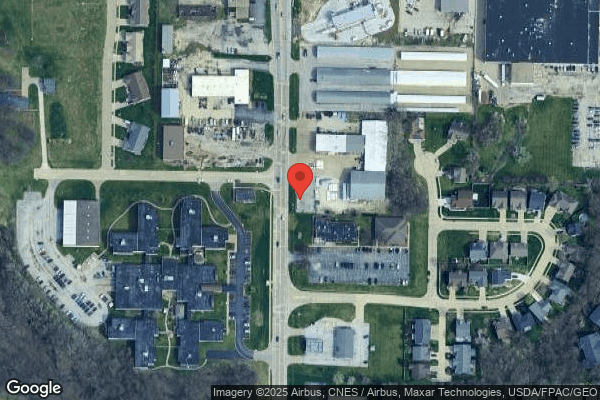
4343 KENNEDY DRIVE, EAST MOLINE, IL 61244 (309) 796-6600
For profit - Limited Liability company 245 Beds INFINITY HEALTHCARE CONSULTING Data: November 2025 4 Immediate Jeopardy citations
Trust Grade
0/100
#550 of 665 in IL
Last Inspection: August 2024

Within standard 12-15 month inspection cycle. Federal law requires annual inspections.

Overview

Hope Creek Nursing & Rehab has a Trust Grade of F, indicating poor performance and significant concerns regarding resident care. With a state ranking of #550 out of 665 facilities in Illinois, they are in the bottom half, and #8 out of 9 in Rock Island County means there is only one nearby option that is better. The facility is showing an improving trend, having reduced issues from 18 in 2024 to 6 in 2025, but still has a concerning history, including $387,618 in fines, which is higher than 81% of Illinois facilities. Staffing is a weakness with a poor rating of 1 out of 5 stars, although turnover is below the state average at 43%. Specific incidents include failures to prevent abuse among residents, not providing CPR for a resident in distress, and inadequate supervision leading to a resident exiting the facility unsupervised, emphasizing significant safety and care issues that families should carefully consider.

Trust Score
F
0/100
In Illinois
#550/665
Bottom 18%
Safety Record
High Risk
Review needed
Inspections
Getting Better
18 → 6 violations
Staff Stability
○ Average
43% turnover. Near Illinois's 48% average. Typical for the industry.
Penalties
✓ Good
$387,618 in fines. Lower than most Illinois facilities. Relatively clean record.
Skilled Nurses
⚠ Watch
Each resident gets only 29 minutes of Registered Nurse (RN) attention daily — below average for Illinois. Fewer RN minutes means fewer trained eyes watching for problems.
Violations
⚠ Watch
59 deficiencies on record. Higher than average. Multiple issues found across inspections.
★☆☆☆☆
1.0
Overall Rating
★☆☆☆☆
1.0
Staff Levels
★★☆☆☆
2.0
Care Quality
★☆☆☆☆
1.0
Inspection Score
Stable
2024: 18 issues
2025: 6 issues

The Good

  • Full Sprinkler Coverage · Fire safety systems throughout facility
  • No fines on record
  • Staff turnover below average (43%)

    5 points below Illinois average of 48%

Facility shows strength in fire safety.

The Bad

1-Star Overall Rating

Below Illinois average (2.5)

Significant quality concerns identified by CMS

Staff Turnover: 43%

Near Illinois avg (46%)

Typical for the industry

Federal Fines: $387,618

Well above median ($33,413)

Significant penalties indicating serious issues

Chain: INFINITY HEALTHCARE CONSULTING

Part of a multi-facility chain

Ask about local staffing decisions and management

The Ugly 59 deficiencies on record

4 life-threatening 5 actual harm
Aug 2025 2 deficiencies
CONCERN (D) 📢 Someone Reported This

A family member, employee, or ombudsman was alarmed enough to file a formal complaint

Potential for Harm - no one hurt, but risky conditions existed

Deficiency F0563 (Tag F0563)

Could have caused harm · This affected 1 resident

Based on interview and observation, the facility failed to ensure 1 of 4 residents (R1) in the sample of 7 reviewed for visitation rights were allowed to receive their chosen visitors.The findings inc...

Read full inspector narrative →
Based on interview and observation, the facility failed to ensure 1 of 4 residents (R1) in the sample of 7 reviewed for visitation rights were allowed to receive their chosen visitors.The findings include:On 8/22/25 at 11:37 AM, V4, Social Services Director, said V13 is R1's significant other/girlfriend. V4 said V13 is not allowed to visit R1 any longer. V4 said V13 calls the facility almost every day trying to come to the facility. V4 said R1's guardians, V9, would go back and forth about allowing V13 to visit R1. V4 said currently the decision to not allow V13 to visit has been made by the facility and the police.On 8/22/25 at 10:32 AM, V3, Receptionist, said V13 is not allowed to visit R1 at all. V3 said V4 came and told all the receptionists not to allow V13 to visit. V3 said she is supposed to ask V13 to leave and if she won't leave, they are supposed to get the police involved. V3 said V13 calls frequently and asks when she can visit again. V3 said she tells V13 to call V9. V3 said the electronic kiosk at the front desk even says, Access denied when V13 tries to check in to visit.On 8/22/25 at 12:35 PM, V1, Administrator, said V13 has not been in the facility since he has been the administrator (eight weeks). V1 said he just got caught up to speed on everything regarding V13 in relation to visiting R1 today since you (IDPH) came in and asked questions. V1 said he would never stop V13 from coming to visit R1. V1 said unless there is an order of protection, they cannot restrict a visitor. V1 said it's the resident's right to have visitors.R1's admission Record dated 8/22/25 shows V13 is his significant other.The facility was unable to provide any legal documents which prohibit V13 from visiting R1.The facility's Visitation Guidelines Policy (reviewed May 2025) shows the facility supports and encourages visitation for all residents in accordance with CMS federal regulations. Residents have the right to receive visitors. Any concerns, incidents, or restriction of visitation must be documented and reported to the Administrator.R1's current care plan provided by the facility does not address any restricted/limited visitation needs.
CONCERN (D) 📢 Someone Reported This

A family member, employee, or ombudsman was alarmed enough to file a formal complaint

Potential for Harm - no one hurt, but risky conditions existed

Deficiency F0808 (Tag F0808)

Could have caused harm · This affected 1 resident

Based on observation, interview and record review the facility to ensure a resident's therapeutic diet was provided. This applies to 1 of 3 residents (R3) reviewed for diets in the sample of 7.The fin...

Read full inspector narrative →
Based on observation, interview and record review the facility to ensure a resident's therapeutic diet was provided. This applies to 1 of 3 residents (R3) reviewed for diets in the sample of 7.The findings include:On 8/22/25 at 12:40 PM, R3 was in the dining room eating his noon meal. R3 was served one corndog, pasta salad, watermelon and cottage cheese. R3's neon colored diet card shows he is on regular diet, low concentrated sweets, no pork and double protein. R3 said he was served one corndog and should receive double protein.On 8/22/25 at 12:54 PM, V6 (Dietary Manager) said R3 is on regular diet, low concentrated sweets and no pork. V6 said the corn dogs are made with turkey and chicken. R3 should receive double protein with each meal and should have received two corn dogs. The cooks in the kitchen are new and she will in-service the staff to ensure residents receive their correct diet.R3's Physician Order Sheets dated through August 2025 shows his diet order is cardiac low concentrated sweets, provide 1/2 portion carbs and double proteins with meals and no pork.The facility's Therapeutic Diets undated Policy states, therapeutic diets are prepared and served as ordered by the attending physician.residents' trays will be clearly identified by a color-coded tray card, The tray card information is to include residents name, diet order and room number.
Jun 2025 2 deficiencies
CONCERN (D) 📢 Someone Reported This

A family member, employee, or ombudsman was alarmed enough to file a formal complaint

Potential for Harm - no one hurt, but risky conditions existed

Deficiency F0637 (Tag F0637)

Could have caused harm · This affected 1 resident

**NOTE- TERMS IN BRACKETS HAVE BEEN EDITED TO PROTECT CONFIDENTIALITY** Based on interview and record review, the facility failed to develop and implement a baseline care plan within 48 hours of admis...

Read full inspector narrative →
**NOTE- TERMS IN BRACKETS HAVE BEEN EDITED TO PROTECT CONFIDENTIALITY** Based on interview and record review, the facility failed to develop and implement a baseline care plan within 48 hours of admission for one of 29 residents (R76) in a sample of 67. Findings include: R76 was admitted on [DATE] with diagnoses of Polyosteoarthritis, Restless Leg Syndrome, Essential Hypertension, Anemia, Osteoporosis, Depression, Fall, Spinal Stenosis and Orthopedic Aftercare and Contusion of Right Hip. post fall at home. R76's Progress Notes document on 6/3/25, R76 sustained a fall, was transferred to the hospital, was surgically treated for a left wrist fracture and returned to the facility with a left-hand brace and sling to arm, non-weight bearing to left upper extremity and pain medication. R76's medical record did not include a completed Significant Change in Condition Comprehensive Assessment/Minimum Data Set (MDS). On 6/26/25 at 1:00 PM, V15 (Care Plan and MDS Coordinator) stated a Significant Change in Condition Comprehensive Assessment/MDS had not been completed and should have been.
CONCERN (D) 📢 Someone Reported This

A family member, employee, or ombudsman was alarmed enough to file a formal complaint

Potential for Harm - no one hurt, but risky conditions existed

Accident Prevention (Tag F0689)

Could have caused harm · This affected 1 resident

**NOTE- TERMS IN BRACKETS HAVE BEEN EDITED TO PROTECT CONFIDENTIALITY** Based on interview and record review, the facility failed to correctly assess fall risks, develop a comprehensive care plan and ...

Read full inspector narrative →
**NOTE- TERMS IN BRACKETS HAVE BEEN EDITED TO PROTECT CONFIDENTIALITY** Based on interview and record review, the facility failed to correctly assess fall risks, develop a comprehensive care plan and implement intervention to prevent a fall with injury. This resulted in the resident sustaining a wrist fracture due to a fall because appropriate fall prevention interventions were not implemented timely for one of 29 residents (R76) in a sample of 67. Findings include: The Comprehensive Care Plans Guidelines policy dated 5/25 documents the comprehensive care plan will be developed within 7 days after the completion of the comprehensive Minimum Data Set (MDS) assessment. All Care Assessment Areas (CAAs) triggered by the MDS will be considered in developing the plan of care. The comprehensive care plan will describe, at a minimum, the following: the services that are to be furnished to attain or maintain the resident's highest practical physical, mental and psychosocial well-being; any services that would otherwise be furnished but are not provided due to the resident's exercise of his or her right to refuse treatment; the residents goals for admission, desired outcomes and preferences for future discharge; and resident specific interventions that reflect the resident's needs and preferences and align with resident's cultural identity. The Fall Prevention and Management Program policy revised 5/5/25 documents risk factors for falls include Arthritis, Thyroid Disorders, Urinary incontinence or urgency, Depression, Sleep Deprivation, Pain, Orthostatic Hypotension, Deconditioning from inactivity or acute/chronic disease/condition, Diuretics and Narcotics. Fall Risk Assessment includes history of falls, ambulation/elimination status, gait/balance, systolic blood pressure, medication use and predisposing diseases. Fall Prevention includes to identify risk factors, implement individualized approaches/interventions based upon resident risk. the Fall Prevention Strategies/interventions list may be used to identify appropriate intervention and interventions should focus on risk factors. A plan of care will be developed/updated to accurately reflect the resident's risk of falls and related prevention interventions. R76 was admitted on [DATE] with diagnoses of Polyosteoarthritis, Restless Leg Syndrome, Essential Hypertension, Anemia, Age-related Osteoporosis, Depression, Fall, Spinal Stenosis, Low Back Pain, Fibromyalgia, Lack of Coordination, Hypotension, Insomnia and Orthopedic Aftercare and Contusion of Right Hip post fall at home. R76's Minimum Data Set, dated [DATE] documents R76 had a brief interview for mental status score of 14 (little to no cognitive impairment); utilized a walker and/or wheelchair for mobility due to lower extremity impairment; required partial/moderate assistance (helper does more than half the effort) for hygiene, dressing/grooming, sit to stand, chair/bed to chair, toilet and tub/shower transfers; had occasional urinary incontinence and bowel continence; frequently experienced pain which interfered with sleep, therapy activities; rated pain at an eight (0-no pain, 10-worst pain); and was being administered an antidepressant, diuretic (medication to increase urine production) and opioid (narcotic pain medication) medication. R76's Rehabilitation Evaluation follow-up note dated 6/2/25 documents R76 was to be on Fall and Safety Precautions per facility protocol and to continue with Therapy Services due to gait/balance instability and physical deconditioning post fall at home. R76's Fall Risk assessment dated [DATE] documents a score greater than ten indicated the resident was at high risk for falls. R76 scored an eight and was a low risk for falls. The Fall Risk Assessment documented R76 was independent with ambulation, continent of bowel and bladder, gait and balance were within normal limits and had one to two health conditions which are inaccurate assessments when compared to the MDS/Comprehensive assessment dated [DATE]. R76's Progress Notes, Change in Condition Assessment/Evaluation and the Post Fall Investigation Report documented on 6/3/25 at approximately 2:15 AM, R76 attempted to self-transfer to bathroom due to the need to have a bowel movement and an unwitnessed fall occurred. R76 complained of left wrist pain with edema. R76's x-ray report dated 6/3/25 documented a left wrist fracture which was surgically repaired on 6/4/25. R76's care plan did not include fall prevention intervention until 6/3/25. The care plan did not include goals and interventions for the following areas identified on the comprehensive assessment until 6/24/25: Active Range of Motion Restorative Nursing Program to bilateral upper and lower extremity to prevent further decline in Range of Motion; Self-Care Deficit with impaired dressing and grooming and would benefit from a Dressing/Grooming Restorative Program due to impaired strength and endurance; Self-Care Deficit with Activities of Daily Living related range of motion deficit from left wrist fracture; placed in a supervised smoking program; risk for constipation; risk for complications related to Hypotension; at risk for altered tissue perfusion related to Anemia; alteration in sleep pattern related to Insomnia; risk for renal complications due to Chronic Kidney Disease; goals and interventions for Gastric Esophageal Reflux Disease and Depression; and had an Open Reduction Internal Fixation of the Left Distal Radius (wrist) and utilized a splint. The Rehabilitation Therapy note dated 6/9/25 documents She continues on hydrocodone-acetaminophen 5-325 TID (three times daily) until 6/14. She does not know what the plan is for her wrist post fracture. She continues with PT (Physical Therapy) and OT (Occupational Therapy) as ordered. They are working on dynamic balance tasks patient requires max cues to remain NWB (non-weight bearing) to LUE (left upper extremity). On 6/25/25 at 10:05 AM, R76 stated she thought she could get up and make it to the bathroom by herself and hurt her left wrist. R76 stated she had to have her wrist surgically repaired with hardware placed and this really set me back. R76 stated staff told her that she didn't need to use the call light and could use the bathroom independently. On 6/25/25 at 11:45 AM, V16 (Licensed Practical Nurse assigned to R76 on 6/3/25) was unable to state what R76's fall risk was or which precautions were implemented prior to the fall. On 6/26/25 at 1:00 PM, V15 (Care Plan and Minimum Data Set Coordinator) stated R76's care plan was not completed until 6/24/25 and should have been. On 6/26/25 at 2:45 PM, V2 (Director of Nursing) stated she was unaware the comprehensive care plan had not been completed until 6/24/25.
Apr 2025 1 deficiency 1 Harm
SERIOUS (G) 📢 Someone Reported This

A family member, employee, or ombudsman was alarmed enough to file a formal complaint

Actual Harm - a resident was hurt due to facility failures

Free from Abuse/Neglect (Tag F0600)

A resident was harmed · This affected 1 resident

**NOTE- TERMS IN BRACKETS HAVE BEEN EDITED TO PROTECT CONFIDENTIALITY** Based on interviews and record review the facility failed to prevent and protect cognitively impaired residents from physical ab...

Read full inspector narrative →
**NOTE- TERMS IN BRACKETS HAVE BEEN EDITED TO PROTECT CONFIDENTIALITY** Based on interviews and record review the facility failed to prevent and protect cognitively impaired residents from physical abuse for 2 of 4 residents (R1, R4) reviewed for abuse in a sample of 7. This failure resulted in R1 wandering into R2's room, was then physically removed and led to R1 falling on the floor and sustaining head trauma and also resulted in R5 forcefully grabbing her roommate R4 by the hair and wrists that caused R4 to feel angry and scared of R5. Findings include: 1. Final incident report with incident date of 03/10/2025 indicated that, it is believed by staff witness [R1] entered [R2's] room and in turn pushed [R1] to keep him out of his room, which led to [R1] falling, however, [R2] was not observed by the staff at that moment. [R1] received a body assessment which revealed no abnormal findings and had no complaints of pain. R1's fall investigation report dated 03/10/2025 at 2:30 PM documented that R1 was allegedly pushed by another resident. R1 was wandering into R2's room as was allegedly pushed out of his room. R1 was observed on the ground and was unable to give a description. Description of immediate action taken documented a small, round, dark pink present to center occipital bone roughly the size of a dime and small amount of swelling noted. Injuries observed at time of incident indicated abrasion and swelling to top of scalp. Note within this same fall report dated 03/13/2025 indicated that R1 was up ad lib wandering per usual behavior, wandered into the doorway of a peer [R2], peer allegedly became agitated and allegedly pushed him. Root cause indicated wandering due to disease progression with nursing intervention to reduce wandering. (No further documentation was found related to R1's head trauma). R1's face sheet documented admission date of 07/14/2023 and a past medical history not limited to Alzheimer's disease, dementia, generalized anxiety disorder, weakness, hypertension, encephalopathy and depression. Face sheet indicated R1 is on comfort care. R1's care plan with date initiated of 07/21/2023 reads in part: demonstrates movement behavior and has been included in the elopement prevention program and has a wander guard in place; alteration in neurological status related to neuropathy, dementia and encephalopathy; impaired cognitive function or impaired thought processes related to Alzheimer's, dementia, anxiety, depression, neuropathy; history of falls and remains at risk for recurrent falls related to dementia, wandering and assistance needed with activities of daily living. R1's Brief Interview for Mental Status (BIMS) under Section C for cognitive patterns dated 01/13/2025 indicated severe cognitive impairment with score of 03/15. Section GG for functional abilities indicated R1 requires partial to moderate assistance to walk 10 to 150 feet. Section I for active diagnosis indicated non-traumatic brain dysfunction. R1's Wandering Risk Scale dated 01/23/2025 indicated resident is a high risk for wandering. R1's screening assessment for aggressive and/or harmful behavior dated 03/13/2025 documented minimal risk for aggression. On 04/08/2025 at 9:28 AM, R1 was observed sitting in a recliner chair in the day area on the memory unit. R1 was alert to self and was not interviewable. R2's face sheet documented last admission date of 10/31/2022 and a past medical history not limited to alcohol abuse with alcohol-induced anxiety disorder, major depressive disorder, unspecified personality and behavioral disorder due to known physiological condition, unspecified mood [affective] disorder, anxiety disorder and adult failure to thrive. R2's care plan with date initiated of 07/21/2023 reads in part: demonstrates behavior symptoms concerning inappropriate personal boundaries due to cognitive impairment secondary to alcohol persisting dementia or a related dementia; demonstrates behavioral distress as manifested by verbally abusive behavior when agitated, use of profanity/racial slurs, demeaning statements, verbal threats and yelling at others, physically abusive behavior when agitated towards staff, attempting to push, shove, scratch, hit, slap, kick, grab, choke or otherwise harm staff (date initiated 09/19/2024); has current self-harmful ideation (thoughts) and/or behavior (date initiated 09/19/2022); displays conflictual, difficult behavior with other persons related to mental/severe mental illness, dementia of the Alzheimer's type, difficult time adjusting to life in long-term care facility, history of substance abuse, poor ineffective coping skills initiated on 03/13/2025 with interventions not limited to: physical stop sign to resident's door way and intervene when any inappropriate behavior is observed; stop sign on door to deter others from entering .to prevent unwanted interaction due to agitation or confusion, initiated on 03/14/2025. R2's Brief Interview for Mental Status (BIMS) under Section C for cognitive patterns dated 12/31/2024 indicated severe cognitive impairment with score of 00/15. R2's psychiatric note dated 03/06/2025 (4 days prior to the incident with R1) indicated the resident was seen per staff request; increased agitation and aggression with plan to obtain urinalysis to rule out medical cause for behavior change and start sertraline [an antidepressant] and decrease mirtazapine [an antidepressant] due to ineffectiveness. R2's Medication Administration (Behavior Monitoring) note dated 3/10/2025 at 6:50 PM documented by V9 (Registered Nurse) reads in part, around [2:30 PM], resident pushed another male resident onto the ground because the resident accidentally wandering into his room. R2's screening assessment for aggressive and/or harmful behavior with effective date of 03/13/2025 documented a moderate problem with history or recent episode of aggressive/agitated behavior that includes aggression towards others. R2's trauma screening with effective date of 03/13/2025 documented history or presence of dysfunctional behavior and of mistreating others and showed significant trauma-related symptomology. R2's psychiatric note dated 03/13/2025 (3 days after to the incident with R1) indicated resident was seen per staff request for aggression towards peers after another confused resident walked into [R2's] room and [R2] pushed the resident to the floor. Note continued to document a plan to start donepezil (used to treat Alzheimer's disease/dementia) 5mg (milligram) by mouth at night for cognition and continue to taper mirtazapine due to ineffectiveness.dementia is worsening and unstable this visit. R2's active orders as of 04/08/2025 showed orders for behavior monitoring including verbal aggression with staff, agitation and aggression; alprazolam (an antianxiety medication) 0.25mg by mouth three times a day related to anxiety (03/27/2025); divalproex sodium tablet (a mood stabilizer) delayed release 250mg by mouth two times a day related to unspecified personality and behavioral disorder and mood [affective] disorder; donepezil hydrochloride 5mg by mouth at bedtime for dementia (03/14/2025); memantine hydrochloride 10mg by mouth daily related to unspecified personality and behavioral disorder; mirtazapine 30mg by mouth at bedtime related to major depressive disorder (03/14/2025); and sertraline hydrochloride 25mg by mouth daily related to major depressive disorder (03/11/2025). On 04/08/2025 at 9:24 AM, observed a white banner across R2's doorway that had a red stop sign in the middle of banner. R2 was in his room lying on the bed. When asked about the incident with R1, R2 said he came into my room, and I pushed him out. R2 did not recall whether this resident fell to the floor then repeated his previous statement, he came into my room, and I pushed him out. R2 did not answer any more questions asked by surveyor. On 04/08/2025 at 9:29 AM, V4 (Certified Nursing Assistant) said regarding the incident with R1 and R2, R1 went into R2's room and R2 pushed him out. V4 added that R1 had a bump on his head, then proceeded to show surveyor the area by patting the top and back of her head. V4 then said R1 either sits in the recliner chair in day area or wanders around the unit and gets anxious at times. V4 also said that R2 mainly stays in his room and doesn't let staff do a lot for him; he mainly goes out for smoke breaks and meals. On 04/08/2025 at 9:34 AM, V5 (Registered Nurse) said she was not working on the day of incident involving R1 and R2. V5 then said that R1 wanders throughout the day and R2 stays in his room. V5 added that R2 had no prior aggression, just likes to be alone. On 04/08/2025 at 11:13 AM, V1 (Administrator) said regarding incident with R1 and R2, that R1 was observed on floor outside of R2's room and there was suspicion that R2 pushed him because R1 wandered into the room. V1 added that the primary witness, V8 (Physical Therapy Assistant) saw R1 on the floor but didn't see R2 physically push him. V1 added that when he was informed about the incident, there were no apparent injuries found. V1 (Administrator) then said that R2 has no history of aggression with residents, but there have been prior staff concerns then referred surveyor to R2's progress note dated 03/03/2025 that indicated R2 had his hand on a nurse due to behaviors related to smoking. V1 added that V5 was the nurse involved. Informed V1 that during previous interview with V5 (Registered Nurse), she indicated that R2 had no prior aggression. V1 said he was unsure as to why V5 would make that statement because R2 was seen by psych that week due to this incident. V1 (Administrator) then said that R1 wanders, and his cognition is very low; staff try to supervise him and redirect as needed. Review of R2's progress note created by V5 (Registered Nurse) on 03/03/2025 at 11:23 AM documented that resident drew his fist back at nurses, cussing at [certified nursing assistant], staff told resident that he was not going out to smoke due to his behaviors On 04/08/2025 at 11:41 AM, V8 (Physical Therapy Assistant) said she was walking with another resident in the hallway near R2's room after 2:00 PM and had stopped at that resident's doorway which was across the hall and passed R2's room. V8 added that she saw what appeared to be, R1 being shoved from R2's doorway and into the hallway with force, then R2's door slammed shut. V8 (Physical Therapy Assistant) said R1 landed pretty hard and hit the back of his head on the ground. V8 said she did not see R2's hands physically push R1 out of the room. V8 (Physical Therapy Assistant) called for help because no one else was in the hallway at that time. V8 then said she opened R2's door and said to him, don't you put hands on anyone. R2 was in bed and did not respond. V8 then closed his door and at this time, an aide and a nurse were coming down the hallway. On 04/08/2025 at 1:07 PM, V2 (Director of Nursing) said she was not aware that R1 sustained any injuries after the incident with R2, and indicated there is no documentation that any injury was being monitoring. V2 then said she assumed nurses would assess resident's during neuro checks and if they found any injury, then they would document those findings. On 04/08/2025 from 1:22 to 1:31 PM, V9 (Registered Nurse) said that she documented an abrasion and swelling to the top of R1's scalp at the time of incident but now thinks they both were present prior to the incident with R2. V9 added that R1 had fallen in the past but couldn't recall any falls that occurred near the time of incident with R2. V9 (Registered Nurse) then said R2 is kind of [NAME] and can get agitated. She added that upon assessment, R2 was lying in his bed and was very agitated so she could only perform a quick body assessment on resident. On 04/08/2025 at 2:39 PM, V7 (Certified Nursing Assistant) said she was working on the memory unit on the day of R1 and R2's incident which had occurred around 3:00 PM. V7 said she was sitting in the dining/day area, and R1 was walking in the hallway like he always does when she heard a noise that sounded like someone fell. V7 (Certified Nursing Assistant) said she went down the hallway and saw R1 on the floor near R2's room and a therapy staff member (V8) were standing in front of another resident's room door who told V7 that R2 had pushed R1. V7 (Certified Nursing Assistant) then said that R1 had a bump to the back of his head with a small amount of blood present, that was not actively bleeding. V7 (Certified Nursing Assistant) added that after she was told what happened, she opened R2's door and he was standing in the middle of the room and didn't say anything but looked mad. V7 said she closed door then asked V8 to stay with R1 while she went to look for the nurse. V7 said when she returned to R1, a nurse was already there. V7 (Certified Nursing Assistant) then said that R2 can be aggressive to staff at times, shakes his fist at people, and doesn't like anyone coming into his room because he doesn't want to be bothered. V7 added that sometimes she is scared of R5. On 04/08/2025 at 2:53 PM, V10 (Agency Nurse) said she worked on the memory unit on the night shift after R1 and R2's incident and didn't recall being told about any head trauma. V10 said we did neuros [neurological assessments] on him; he didn't have any bruising. V10 then said she don't really recall the incident and ended the phone call. On 04/09/2025 at 1:50 PM, V1 (Administrator) said he did not identify or substantiate the incident with R1 & R2 as abuse because both residents have dementia and impaired cognition so there was no willful intent, and there was no concrete evidence or identification that R2 had pushed R1 out of his room. 2. Final incident report with incident date of 01/25/2025 at 8:47 PM documented that R4 and R5 were roommates on the memory care unit and were both in their room for the evening. Staff noted residents in the hallway and R5 had a hold of R4's hair then took a hold of R4's wrists. Staff intervened and R5 immediately released R4, residents were separated. R5 was placed on 1:1 supervision until transferred to the hospital for evaluation. Injuries non-apparent for both residents. New room assignment. R4's incident report dated 01/25/2025 initiated by V12 (Agency Nurse) documented that staff heard yelling and upon assessing situation, R4 told staff that her roommate (R5) pulled her hair; R5 was yelling at R4 and staff. R4's face sheet documented admission date of 12/19/2024 and a past medical history not limited to dementia, hypertension, atrial fibrillation and right femur fracture. Care plan with date initiated of 12/30/2024 documented impaired cognitive function or impaired thought processes related to dementia. R4's clinical census showed a room change from building 1-2 to 4-2 on 01/29/2025. R4's Brief Interview for Mental Status (BIMS) under Section C for cognitive patterns dated 03/24/2025 indicated severe cognitive impairment with score of 02/15. R4's screening assessment for aggressive and/or harmful behavior dated 01/28/2025 documented minimal risk for aggression. R4's trauma screening with effective date of 01/28/2025 documented exposure to and an increased vulnerability to trauma. On 04/09/2025 at 11:53 AM, V13 (Certified Nursing Assistant) said R4 is easy to work with and she has not seen any aggressive behaviors from R4. On 04/09/2025 at 11:55 AM, R4 said regarding the incident with R5, I didn't do anything to her, she just came behind me and pulled my hair. R5 was visibly distraught during interview and said she was angry and scared of her then indicated that she wanted to press charges but knows that R5 has mental problems. R5's incident report dated 01/25/2025 initiated by V12 (Agency Nurse) documented that staff heard yelling and upon assessing situation, R5 told staff that her roommate (R4) hit her. Report indicated that R5 was confused and agitated/anxious. R5's face sheet documented admission date of 09/26/2022 and a past medical history not limited to depression, dementia, history of covid and edema. R5's care plan with date initiated of 11/04/2022 documented in part, demonstrates behavioral distress manifested by verbal behaviors when agitated and physical altercation with another resident; has displayed conflictual, difficult behavior with other persons manifested by getting defensive when other peers come into her room uninvited and my express the need to physically or verbally defend herself (initiated 11/16/2023); impaired cognitive function .becomes easily confused, overwhelmed, and disoriented (initiated 05/31/2024); problem with depressed mood that is evidenced by and not limited to fluctuations in mood, behavior, and affect .(initiated 05/31/2024). R5's progress noted dated 01/25/2025 at 11:13 PM documented by V12 (Agency Nurse) indicated that yelling was heard, and upon V12's assessment, she saw aides separating R5 and her roommate (R4). R4 said that R5 pulled her hair. R5 was yelling at R4 and staff. R5's psychiatry note dated 01/28/2025 reads in part, history of Alzheimer's dementia with behavioral disturbance. Visited acute on this day after an altercation with another resident. She (R5) was reportedly the aggressor and attacked her new roommate [R4]. Note also documented a plan to start divalproex sodium 125mg capsule by mouth two times daily for BPSD (behavioral and psychological symptoms of dementia. R5's screening assessment for aggressive and/or harmful behavior dated 01/28/2025 documented history or recent episode of aggressive/agitated behavior, history of abuse/neglect either as recipient or perpetrator including abusive and/or inappropriate sexual behavior. R5's trauma screening with effective date of 01/28/2025 documented history or presence of dysfunctional behavior (e.g., provoking, aggressive . abrasive/inappropriate behavior) but is documented as a minimal risk for aggression. R5's Brief Interview for Mental Status (BIMS) under Section C for cognitive patterns dated 04/01/2025 indicated severe cognitive impairment with score of 03/15. R5's active orders as of 04/09/2025 showed orders for behavior monitoring including agitation with peers, wandering, restlessness; divalproex sodium 125mg capsule by mouth two times daily for BPSD (01/31/2025); donepezil 10mg by mouth the evening for dementia; memantine hydrochloride 10mg by mouth two times a day for dementia. On 04/09/2025 at 11:50 AM, R5 was observed in her room, alert to self and was not interviewable. On 04/09/2025 at 12:06 PM, V11 (Certified Nursing Assistant) said R4 and R5 were roommates on the memory unit and indicated that R5 is normally confused. On day of incident, V11 said she was in the day area on the unit after supper when she heard someone yelling out for help. When she went down the hallway, V11 (Certified Nursing Assistant) said she saw R5 standing behind R4 in the hallway and R5 had a hold of R4's hair. V11 added that when she approached the residents and tried to redirect R5, she let go of R4's hair but then grabbed her by the wrists. V11 continued to redirect R5 in a calm manner, then R5 finally let go of R4's hair and they were separated. R4 was redirected to the day area. R5 was redirected back to her room; V11 stayed with R5 until she left facility via ambulance. V11 (Certified Nursing Assistant) added that during her 1:1 with R5, she seemed angry and was saying that R4 needed to go to jail. On 04/09/2025 at 1:38 PM, V12 (Agency Nurse) said the incident between R4 and R5 occurred after dinner. V12 said she was in the nurse's office on the unit charting when she heard some commotion and headed down the hall and could hear the aides saying, let her go. V12 (Agency Nurse) added that when she approached R4 and R5, they were standing in the hallway outside the doorway of their room and R4 was accusing R5 of attacking her. V12 said R4 was visibly upset and was assessed for any injuries with none found. She added that R5 was sent out because she was the aggressor and R4 was moved to another room on the unit, then was eventually moved to another unit because R4's son didn't feel comfortable with R4 staying on the unit. On 04/09/2025 at 1:50 PM, V1 (Administrator) said he did not identify or substantiate the incident with R4 & R5 as abuse because both residents have dementia and impaired cognition so there was no willful intent. V1 added that R5 grabbed R4's hair, but it was not stated that R5 pulled R4's hair and R5 had grabbed R4's wrists but did not push her. Abuse Prevention Program policy last revised 01/2019 reads in part: it is the policy of this facility to prohibit and prevent resident abuse, neglect, exploitation, mistreatment, and misappropriation of resident property and a crime against a resident in the facility. The following procedures shall be implemented when an employee or agent becomes aware of abuse or neglect of a resident, or of an allegation of suspected abuse or neglect of a resident by a 3rd party. Screen-Train-Report-Identify-Investigate-Protect-Prevent. Abuse and Crime Reporting policy last revised 01/2019 reads in part: this facility will not tolerate resident abuse or mistreatment or crimes against a resident by anyone, including staff members, other residents, consultants, volunteers, and staff of other agencies, family members, legal guardians, friends or other individuals. This policy will define how the investigation of abuse allegations and mistreatment, or crimes will be conducted and outline the process of reporting, investigating and arriving at a conclusion or disposition of the allegation. All personnel must promptly report any incident or suspected incident of resident abuse, mistreatment, neglect, or exploitation including injuries of an unknown origin . For the purposes of this policy, and to assist staff members in recognizing abuse, the following definitions shall pertain and is not limited to: physical abuse-hitting, slapping, pinching, kicking, etc. It also includes controlling behavior through corporal punishment.
Jan 2025 1 deficiency
CONCERN (D) 📢 Someone Reported This

A family member, employee, or ombudsman was alarmed enough to file a formal complaint

Potential for Harm - no one hurt, but risky conditions existed

Deficiency F0676 (Tag F0676)

Could have caused harm · This affected 1 resident

**NOTE- TERMS IN BRACKETS HAVE BEEN EDITED TO PROTECT CONFIDENTIALITY** Based on interview and record review the facility failed to provide timely incontinence care for one of one resident(R1), review...

Read full inspector narrative →
**NOTE- TERMS IN BRACKETS HAVE BEEN EDITED TO PROTECT CONFIDENTIALITY** Based on interview and record review the facility failed to provide timely incontinence care for one of one resident(R1), reviewed for incontinence care, in a sample of 3. The facility policy, Guidelines for Incontinence Care, dated 9/21/23 documents, It is the policy of the facility to ensure that residents receive as much assistance as needed for cleansing the perineum and buttocks after an incontinent episode or with daily care. Frequency depends on bladder diary results and/or routine minimal every two-hour checks as well as care planning. R1's facility Face Sheet documents that R1 was admitted to the facility on [DATE] with the following diagnoses: Polyneuropathy, Arthritis, Morbid Obesity, Major Depressive Disorder, Lymphedema and Dementia. R1's most recent Minimum Data Set Assessment, dated 10/11/24 documents that R1 is, always incontinent of bowel and bladder. R1s Care Plan in effect on 1/16/2025 documents, (R1) has a functional bowel and bladder incontinence r/t (related to) Impaired Mobility, Physical limitations, Obesity. Interventions include: Check (R1) every 2/hrs (hours) and as required for incontinence. Wash, rinse and dry perineum. Change clothing PRN (as needed) after incontinence episodes. On 1/27/2025 at 8:15 A.M., V4/R1's daughter stated she came to the facility on 1/16/25 at 11:45 A.M. for a care plan meeting for (R1). V4 further states she went to (R1's) room at approximately 12:15 P.M. and found (R1) lying in a urine saturated bed. V4 states urine was up to (R1's) shoulders, and down to (R1's) knees. V4 states (R1's) gown and all of (R1's) blankets were also urine saturated. (V4) states she put call light on to alert staff, after an unknown amount of time, walked to nurse's station where two nursing employees were seated and voiced concerns with (R1's) need for immediate assistance. The two employees came to room and then V3/Certified Nursing Assistant also came into room and was trying to apologize. V3/CNA states she had come into (R1's) room at 8:00 A.M. to change (R1) before breakfast, but R1 refused the assistance. V3/CNA then stated she had not had time to return to room to provide care for R1, until now. On 1/27/25 at 9:08 A.M., V7/Certified Nursing Assistant stated she frequently works 4100 hall and was present the day of the incident with R1. V7 further states she was one of the staff members who responded to R1's room. States R1 was fully saturated with urine from her shoulders to her knees and all bed linens were also saturated. States she was one of two staff that assisted in giving R1 a shower on that day. Does not recall any pressure wounds present on R1's buttocks on that day. On 1/27/25 at 10:12 A.M., V3/Certified Nursing Assistant (CNA) stated, I have been a CNA for the past seventeen years. I have worked at (facility) since September (2023). I have almost always worked on 4200. When I came in that day (1/16/25), I begged V9/Staffing Coordinator not to schedule me on that floor (4100) because I wasn't oriented to the floor, and I knew that hallway was heavy. I worked there once in November, and I told her not to schedule me there again without some orientation. Well, when I came in that day and was scheduled on 4100, I knew it was going to be a rough day. It's a very heavy hall with two person lifts on it. I started in on the hall, getting people changed and dressed and up for breakfast. By the time I got to (R1), it was 9:30 (AM) or so. When I walked in (R1's) room I said to (R1) I was there to change her and get her set up for breakfast. (R1) told me 'No, I don't want breakfast.' I don't want to be changed. I don't feel well. I want to see the nurse. I wasn't going to argue with (R1) so I told her I would let the nurse (V8/Licensed Practical Nurse) know. I left the room; I was super busy and had more residents to get to. By the time I came back (from break at 12:15 P.M.), my coworker met me at the door and told me (R1's) family member was very upset because I hadn't changed (R1). I was called and talked to about this (incident) and they sent me home for the rest of the day. I haven't been back to 4100 since. On 1/27/25 at 10:53 A.M., V2/Director of Nurses stated she was called to R1's room on 1/16/24 due to R1's daughter being upset about her mom not receiving incontinence care. V2 states R1 was saturated with urine from her shoulders to her knees and that all bed clothing and linens were urine soaked. On 1/28/25 at 8:22 A.M., V12/Certified Nursing Assistant confirmed she worked 4100 the night of January fifteenth (2025). V12 stated, (R1) was my patient that night. That's always the hallway I work. I last (provided incontinence care for R1) between 2 and 3 A.M. (R1) is always a full bed change. (R1) pees a lot. V12 confirmed she did not provide any additional incontinent care for R1 that night. On 1/28/25 at 8:37 A.M., V2/Director of Nurses confirmed the facility policy is to provide incontinence care for incontinent residents every 2 hours and as needed. V2/DON also stated that V3/CNA should have alerted nursing staff when R1 refused incontinence care.
Dec 2024 1 deficiency 1 Harm
SERIOUS (G) 📢 Someone Reported This

A family member, employee, or ombudsman was alarmed enough to file a formal complaint

Actual Harm - a resident was hurt due to facility failures

Accident Prevention (Tag F0689)

A resident was harmed · This affected 1 resident

**NOTE- TERMS IN BRACKETS HAVE BEEN EDITED TO PROTECT CONFIDENTIALITY** 2) The Facility's undated Fall Prevention and Management policy for documentation documents A. Fall is documented in the medical...

Read full inspector narrative →
**NOTE- TERMS IN BRACKETS HAVE BEEN EDITED TO PROTECT CONFIDENTIALITY** 2) The Facility's undated Fall Prevention and Management policy for documentation documents A. Fall is documented in the medical record 1. date and time 2. location and any facts necessary to describe the fall 3. assessment post fall 4. any injuries and care provided 5. notification of physician and family and 6. suggested documentation up to seventy-two hours after fall. R4's Fall Investigation dated 11/9/24 documents [AGE] year-old female, BIMS (Brief Interview for Mental Status) score of 4 (out of possible 15, indicating severe cognitive impairment) witnessed to slide/roll off the edge of her bed. Discoloration noted to head/face. Resident with daily anticoagulant use. Sent to ER (Emergency Room) for (evaluation and treatment). R4's hospital record dated 11/9/24 documents CT (Computed Tomography) scan maxillofacial without contrast documents findings there is extensive soft tissue swelling surround the nose and anterior to the maxilla and right maxillary sinuses. I suspect nondisplaced fracture involving the nasal spine of the anterior maxilla at the inferior aspect of the nose. There are also possible bilateral nasal bone fractures with minimal displacement, although it is possible this appearance is due to motion. On 11/26/24 at 10:30 AM R4 had purple bruising to both sides of her nose and under her left eye. R4 also had bruising noted in the neck area. R4 did not recall falling, when asked about her bruises she stated, If you say they are there; I will believe you. R4's admission Care Plan dated 10/30/2024 documents B. Function and Goals-Mobility: Bed Mobility 2 plus person physical assist. R4's admission MDS (Minimum Data Set) assessment dated [DATE] documents GG. Function and Mobility-A. roll left and right: the ability to roll from lying on back to left and right side and return to lying on back on bed: 02. substantial/maximal assistance- helper does more than half the effort. Helper lifts or holds trunk or limbs and provides more than half the effort. V4's (Certified Nurse Aid) written statement dated 11/9/24 documents that V4 was using an underpad to turn R4 in the bed when R4 attempted to reach out towards her bed side table. V4's statement documents I tried to grab her hips, but she slipped under my hands and fell on the floor on her right side face down. V6 (Certified Nurse Aid) written statement dated 11/9/24 documents I was down the hallway talking to the RN when other CNA (V4) hollered down and said she needed help. (R4) was on the floor. On 11/27/24 at 9:45 AM V2 (Director of Nursing) confirmed that R4 was performing bed mobility with just one assist and should have had two. Based on observation, interview, and record review the facility failed to provide immediate post-fall care to one resident (R1) receiving anticoagulant therapy of three residents reviewed for falls with injury. This failure resulted in delayed treatment of a subdural hematoma. The facility also failed to safely turn and position one resident (R4) of three residents reviewed for accidents with injury. This failure resulted in R4 sustaining a nasal fracture. Findings include: Facility Employee Education Record/Falls and Anticoagulation: What You Should Know dated 11/18/24 documents: Key Points: Blood thinners, or anticoagulants, help prevent blood clots but can increase the risk of bleeding. Falling is a major reason why some people hesitate to take blood thinners. If you fall while on a blood thinner, contact your healthcare provider right away. Bleeding isn't always visible. You could bleed internally and not know it, and that's a significant concern. For example, we worry about brain bleeds when people fall and hit their heads- but if patients don't see blood, they might not realize that they're bleeding. If you fall while on a blood thinner: You should be assessed for bruising, and most importantly, for potential head trauma. Your doctor will want to know how you fell, what parts of your body were affected, and if you lost consciousness. Even if you think the fall was minor, you should call your doctor. Facility Policy/Post Fall Management Protocol (undated) documents: If fracture or head injury is suspected, Do Not Move resident, and advise resident not to move affected area, complete assessment. Neuro checks are completed for falls where the resident hit his head or if fall was unwitnessed and a head injury is demonstrated. Pain is assessed and addressed. Physician notification. Medications taken within the 24 hours before the fall; medications placing resident at risk. Neuro Check Flowsheet instructions: Neuro Checks should be completed for unwitnessed falls or fall in which head was hit. 1. Physician Order Summary Report dated 11/1/24 to 11/30/24 indicates R1 received the following anticoagulant medications: Aspirin 81mg (milligram) daily for Prophylaxis. Date initiated 8/16/24. Coumadin 3mg daily on Tuesday, Wednesday, Thursday, Saturday, Sunday related to Chronic Atrial Fibrillation and Coumadin 4mg daily on Monday, Friday related to Chronic Atrial Fibrillation. Date initiated 11/12/24. R1's Order Report also indicates Anticoagulant medication - monitor for discolored urine, black tarry stools, sudden severe headache, nausea/vomiting, diarrhea, muscle or joint pain, lethargy, bruising, sudden changes in mental status, or vital signs, shortness of breath, nose bleeds every shift for Monitor Anticoagulant Therapy. Date initiated 8/16/24. Incident Report indicates Incident Date: 11/16/24 and Time of Incident reported: 11pm. Report indicates R1 was found on the floor (in his room) on floor mat during routine cares. No evident injuries during initial assessment. Report indicates R1 began to have complaints of headache and nausea on 11/17/24 and was sent to the local ED (Emergency Department) for evaluation and treatment. Local Hospital ED (Emergency Department) Report dated 11/17/24 at 9:43pm indicates R1 Chief Complaint: Complaint of head and neck pain Pain scale 8. Fall from bed, had rolled off the bed during a bed change. Report indicates Onset: 11/16/24 and per EMS (Emergency Medical Services) R1 had an unwitnessed fall last night 11/16/24. (Facility) staff informed medics that R1 didn't tell them about the fall until today (R1) has a bruise to the right side of his head. Report indicates R1 is anticoagulated with Coumadin and currently bed-bound with left-side weakness from a prior stroke. Upon exam, R1 reports nausea and a very bad headache on the right side of his head. R1 states he fell last night while staff at the facility were rolling and changing him and stated he was unsure why they didn't have him evaluated at that time. Hospital Radiology/Head CT (Computed Tomography) dated 11/17/24 at 10:21pm indicates Findings: Acute large volume subdural hemorrhage with associated vasogenic edema and mass effect in the right cerebral hemisphere. 4mm (millimeter) of right-to-left midline shift. Reevaluation/Plan: Transfer to (a) University hospital for further evaluation and treatment. On 11/26/24 at 3:24pm V21, Hospital Social Worker stated that R1 was lucid and oriented when she spoke to him (on 11/17/24) and R1 stated he hit his head and rolled off the bed while being changed. On 12/3/24 at 10:30am V11, CNA (Certified Nurse Assistant) stated that at 10pm on 11/16/24 R1 was sitting on the edge of his bed when she did initial rounds. V11 stated at approximately 12am she was doing her check and change rounds when she found R1 and R1's bed wet with urine so she had to change R1 and his entire bed. V11 stated she did this by rolling R1 back and forth in his bed to get the wet linen out and the dry linen on the bed. V11 stated that R1 did not fall off the bed during care for R1. V11 stated R1 was lying in the bed when she was done, but she had to leave the room to get a top sheet and when she returned a few minutes later R1 was on the floor mat next to R1's bed. V11 stated that R1 told her that he rolled off the bed. V11 stated that she asked R1 if he was ok and R1 touched his head. V11 stated that the area on R1's head that he touched was like a carpet burn, about the size of a dime. V11 stated that she notified V10, RN (Registered Nurse) that R1 was on the floor and V10, RN and V13, CNA came into R1's room. V11 stated that V10 assessed R1, and all three staff got R1 back into bed. V11 stated she did not recall if V10 asked R1 if he had hit his head when he rolled off the bed. V11 stated that R1 stated that his head hurt and V10 gave R1 something for pain. R1's MAR (Medication Administration Record) dated 11/1/24 to 11/30/24 does not indicate any pain medication was administered to R1 on 11/16/24 or 11/17/24 by V10. On 12/3/24 at 9:20am V2, DON (Director of Nursing) stated that V10, RN no longer is employed at the facility. Multiple attempts were made to contact V10 by phone without success. On 11/27/24 at 1:34pm V13, CNA stated that she went in R1's room to help get R1 off the floor, R1 was mostly on the fall mat on the floor and R1's bed was in the lowest position it could go. V13 stated that she did hear V10 ask R1 if he hit his head. V13 stated I did see what looked like a quarter sized area of dried blood on (R1's) upper forehead - like at the hair line. No dripping blood. (V10 and V11) said (R1) had a skin condition and that it was not new. On 11/26/24 at 2pm V12, RN stated I was in the hallway passing meds near (R1) room (on 11/17/24) when I overheard (R1) tell someone he was on the phone with that he had a bad headache. I went into (R1's) room and asked him if he was ok and if he needed Tylenol. (R1) said 'yes' so I went to get some Tylenol and when I went back in, (R1) told me he fell the night before around 11pm. I didn't ask him how he fell, but he stated he fell out of bed and pointed to the top of his head. I saw an abrasion (larger than a fifty-cent piece) on the top-right side of (R1's head). V12 stated the area wasn't bleeding but noticeable. V12 stated that R1 did also complain of nausea and wanted to go to the hospital. V12 stated she then contacted V2, DON and was told to send R1 to the hospital. V12 stated, I did not get any report that (R1) had fallen the day before. V12 stated she was concerned when R1 told her he fell, because R1 is on Coumadin. V12 stated I just happened to overhear him complain about a headache later that evening, or I would not have known he fell. V12 stated If someone falls and they are on Coumadin - even if they say they are alright - they should be sent to the hospital. On 12/3/24 at 2:45pm V22, Physician/Medical Director stated that if he had been notified when R1 initially fell or was found on the floor, it would have been an immediate 'sendout' because he was on Coumadin and Aspirin. V22 stated time is critical in reversing the effects of the anticoagulants. R1 fell or rolled onto the mat next to his bed on 11/16/24 near midnight and was not sent to the hospital until 11/17/24 at approximately 9pm. V10, RN did not report that R1 had been found on the mat next to his bed, did not document that R1 had fallen until requested to do so by V2, DON on 11/17/24 and did not notify V22, Physician at the time of the fall. R1 was subsequently transferred from a local hospital ED to a University hospital from [DATE] to 11/27/24.
Aug 2024 14 deficiencies 1 IJ (1 affecting multiple)
CRITICAL (K) 📢 Someone Reported This

A family member, employee, or ombudsman was alarmed enough to file a formal complaint

Immediate Jeopardy (IJ) - the most serious Medicare violation

Free from Abuse/Neglect (Tag F0600)

Someone could have died · This affected multiple residents

**NOTE- TERMS IN BRACKETS HAVE BEEN EDITED TO PROTECT CONFIDENTIALITY** Based on observation, interview, and record review the facility failed to ensure residents were free from physical and verbal ab...

Read full inspector narrative →
**NOTE- TERMS IN BRACKETS HAVE BEEN EDITED TO PROTECT CONFIDENTIALITY** Based on observation, interview, and record review the facility failed to ensure residents were free from physical and verbal abuse and identify and investigate a potential allegation of abuse and protect resident from further abuse from R500, with a known history of verbal and physical aggression. These failures resulted in R500 verbally yelling and physically hitting R134 and shoving both R84 and R103 to the ground. R84 sustained a bleeding laceration to posterior head, facial bruising, and hospitalization requiring three staples to R84's posterior head. R103 experienced hip and knee pain, bruising, and hospital evaluation. R134 was hit in the face. These failures have the potential to affect all 35 residents residing in the facility's Dementia unit. These failures resulted in an Immediate Jeopardy. While the immediacy was removed on 8/29/24, the facility remains out of compliance at a Severity Level 2 as additional time is needed to evaluate the implementation and effectiveness of the facility's removal plan and quality assurance monitoring. Findings include: The facility's Abuse Prevention Program policy, revised 3/1/21, documents It is the policy of this facility to prohibit and prevent resident abuse, neglect, exploitation, mistreatment, and misappropriation of resident property and a crime against a resident in the facility. This policy also documents Identification of Allegations/ Internal Reporting Requirements: Employees are required to immediately report and incident, allegation or suspicion of potential abuse, neglect, exploitation, misappropriation of resident property, mistreatment or crime against a resident they observe, hear about, or suspect to the Administrator if available or an immediate supervisor who must immediately report it to the Administrator. In the absence of the Administrator, reporting can be made to the DON (Director of Nursing). Any incident, allegation or suspicion of potential abuse, neglect, exploitation, misappropriation of resident property, mistreatment or crime against a resident is reported to a covered individual; covered individuals are notified annually of these reporting requirements. Employees without fear of retaliation may also independently report to the state survey agency any allegation of abuse, neglect, exploitation, or mistreatment of resident property, and to local law enforcement if they have a reasonable suspicion that a crime was committed. Such reports may be made without fear of retaliation. Anonymous reports will also be thoroughly investigated. Reports should be documented, and a record kept of the documentation. Upon learning of the report, the Administrator or in the absence of the Administrator, the DON shall initiate an incident investigation. Investigation: All incidents, allegation or suspicion of abuse, neglect, exploitation, misappropriation of property, or crime against a resident will be documented. Any incident or allegation involving abuse, neglect, exploitation, misappropriation of resident property, or crime against a resident will result in an abuse investigation. Once the Administrator or in the absence of the Administrator the DON determines that there is an allegation or a reasonable cause for suspecting abuse, neglect, exploitation, misappropriation of property, or a crime against a resident, the Administrator or appointed investigator will investigate the allegation and obtain a copy of any documentation relative to the incident. This policy also documents Protection of Residents: The facility will take steps to prevent mistreatment while the investigation is underway. Residents who allegedly mistreated another resident will be immediately removed from contact with that resident during course of investigation. The accused resident's condition shall be immediately evaluated to determine the most suitable therapy, care approaches and placement, considering his or her safety, as well as the safety of the other residents and employees of the facility. All personnel, residents, visitors, etc. (etcetera) are encouraged to report incidents of resident abuse, mistreatment or neglect or suspected abuse, mistreatment, or neglect, without fear of retaliation or retribution from facility or its staff. Abuse: The willful infliction of injury, unreasonable confinement, intimidation, or punishment with resulting physical harm or pain or mental anguish or deprivation by an individual, including a caretaker, of goods or services that are necessary to attain or maintain physical, mental psychosocial well-being. Willful, as used in this definition of abuse, means the individual must have acted deliberately, not that the individual must have intended to inflict injury or harm. This same policy also documents Procedure: Upon receiving reports of physical or sexual abuse, the Charge Nurse will immediately examine the resident. Findings of the examination must be recorded in a separate incident report and in the resident's medical record. This report shall be made immediately, but no later than two hours after the allegation is made. If the events that cause the allegation involve abuse or resulted in serious bodily injury, or not less than 24 hours if the events that cause the allegation do not involve abuse and did not result in serious bodily injury. Crimes include but may not be limited to murder, manslaughter, rape, assault and battery, sexual abuse, theft robbery, drug diversion for personal use or gain, identify theft, and fraud and forgery. When an alleged or suspected case of abuse, neglect, exploitation, or crime against a resident is reported to the facility Administrator, the Administrator, or DON in the Administrator's absence, will notify the following persons or agencies of such incident immediately. Any incident that involves crimes or significant injury to a resident will be reported within two hours of the incident. Any incident that involves a resident death will be called to the (State Agency) immediately. Abuse allegations involving one resident upon resident upon another resident will be reported to (the States Agency). The Diagnosis Report for R500, documents R500 admitted to the facility on [DATE] with a diagnosis of Schizoaffective Disorder. R500 was diagnosed with Obsessive Compulsive Personality Disorder on 7/15/24 and diagnosed with Bipolar and Metabolic Encephalopathy on 7/25/23. R500 was also diagnosed with Anxiety on 8/21/24 after readmitting to the facility on 8/19/24 from psychological hospitalization. The facility Psychiatric service report for R500, dated 6/5/24, documents R500 with a diagnosis of Dementia. This report documents R500 with auditory hallucinations and delusions and making false accusations of staff. Psychiatric History includes multiple psychiatric hospitalizations and multiple medication changes prior to facility admission. The current Care Plan for R500 documents the following: Focus areas with goals and interventions listed: R500 has chronic health conditions, behaviors, challenges, and co-morbidities that include Schizoaffective and bipolar disorder. R500 requires the support, services and structure of the care setting and is under the care of psychiatry and receives medications and illness management through psychological services and psychosocial group programming; R500 demonstrates movement behavior that may be interpreted as wandering, pacing, or roaming the unit; R500 uses antipsychotic medications r/t (related to) behavior management; R500 displays behavioral symptoms related to Bipolar Disorder; R500 has behavior problem r/t anxiety, depression, change in mood, self-isolation, false accusations, repetitive questioning, agitation, tearful episodes, cursing, decreased socialization, delusions, hallucinations, pacing, panic, paranoia, and verbal aggression; R500 has impaired cognitive function, becomes easily confused, overwhelmed and disoriented; and R500 had chronic psychiatric illness and determined to have ineffective coping modalities that include disorganized thought processes and mood patterns, delusions, hallucinations, difficulty meeting basic physiological/self-care needs, and having reduced insight and judgement r/t Schizoaffective disorder; and R500 displays conflictual, difficult behavior with other persons with symptoms of open conflict with or repeated criticism of staff and unprovoked expressions of anger towards staff and peer. Being verbally and physically aggressive with her peers. Interventions include: Teach and remind the resident to communicate his/her feelings, including anger and frustration through means other than hitting, touching or verbally abusing another person; R500 has rapid cycling and significant shifts in mood that include mania and depression that may last for several days r/t bipolar disorder with following symptoms of hallucinations, becoming easily agitated, irritated, disturbed, having illogical thinking, and paranoid delusional thoughts about others. Goal is for R500 to seek assistance when experiencing aggressive impulses and refrain from engaging in verbal threats and loud, profane language toward others. Interventions include: Monitor/record/report to MD (medical doctor) prn (as needed) risk for harming others: increased anger, labile mood or agitation, feels threatened by others or thoughts of harming someone, possession of weapons or objects that could be used as weapons; and R500 has Behavioral Symptoms/Altercation with Roommate initiated on 4/4/24 as: R500 demonstrates behavioral distress related to: Ineffective coping mechanisms, bipolar disorder and Schizoaffective disorder. Problems are manifested by: Physically abusive behavior when agitated such as slapping or attempting to cause harm to a peer. The Behavior Monitoring Report for R500, dated 7/01/24 through 8/28/24 documents the following behaviors have been noted over the past 30 days: grabbing others, hitting others, kicking others, pushing others, physically aggressive towards others, scratching others, accusing of others, cursing at others, expressing frustration/anger at others, screaming at others, threatening others, entering other resident's rooms/personal space, disruptive sounds, repetitive motions, rummaging, agitated, anxious and restless, elopement and exit seeking, experiencing something not there, hoarding, neglecting self care, pacing, panic, refusing care, wandering and withdrawn/isolation. The Psychiatry Note for R500, dated 4/5/24, documents On 4/4/24 (R500) became agitated at her roommate (R134) for wandering on her (R500) side of the room and going through her (R500) belongings. When R500 attempted to take her belongings back, R134 raised their arms at R500 so (R500) struck (R134). R500 was sent to the local hospital for an evaluation and returned to the facility. On 8/27/24 at 2:47 pm, V2 DON (Director of Nursing) stated she does the Fall Investigations and V1 Administrator does the Abuse Investigations and there has only been one abuse allegation involving R500 and that was with R103. R500 is very territorial about her room and space and had just been at Geriatric psychological hospital for manic behavior, not for being aggressive. V2 DON stated That is the only incident she's had. There are no others. V2 DON stated R500 went out to the psychological hospital on 8/2/24 and just readmitted back to the facility on 8/19/24. On 8/20/24 R500 pushed R103 and R103 fell to the floor. V2 stated both residents went out to the local the hospital for evaluations, returned with no injuries and R500 was placed on one-to-one staff monitoring when she returned from the hospital. On 8/27/24 at 3:15 pm, V1 Administrator stated he is the Abuse Coordinator but was not involved in the incident with R84 because he was not at the facility but was involved with the altercation between R500 and R103. V1 Administrator stated V2 DON (Director of Nursing) does all the fall investigations and did R84's investigation as a fall, it was not considered abuse and he is unaware of the incident being potential abuse. On 8/23/24 at 11:40 am, R500's door was closed, and V20 Transportation CNA was sitting outside of R500's room. Upon entering R500's room noted two mattresses on the floor with bed frames standing empty. R500 was lying on one of the mattresses and R500's personal items were randomly scattered on the other mattress on the floor. R500 stated she was not feeling very good, had recently been in the hospital, has lost weight, doesn't know why, and requested a soda to drink. 1. A facility Abuse Investigation for R500 and R134, dated 4/4/24, documents V38 CNA (Certified Nursing Assistant) heard noise and went into R500 and R134's room, (R134) had two bears and a flower in her hand. (R500) went and took the bears out of (R134's) hand. (R134) got upset and raised her hands in the air. (V38) got in between the two (R134 and R500) and tried to intervene and (R500) reached around and slapped (R134). V22 RN (Registered Nurse) witness statement documents (V22 RN) was standing at the nurses' station and was trying to get there asap (as soon as possible) because (V22 RN) was hearing a commotion. When (V22) got in the room (R500) was complaining about (R134) getting into (R500's) stuff. (R134) put her hands up in the air and (R500) slapped (R134). The local hospital ED (emergency department) Physician Notes for R500, dated 4/4/24, documents R500 is from (The Facility) and staff sent her (R500) in due to having an altercation with her roommate. The Final Abuse Investigation documents the facility is unable to substantiate this allegation as well as (R500) made contact with (R134); regardless that V38 CNA and V22 RN witnessed R500 hit R134. On 8/23/24 at 12:00 pm, V22 RN stated R500 has had some bizarre behaviors, is aggressive at times and there was an incident awhile back with another resident, her old roommate before she moved and R500 has been aggressive with the staff. 2. A facility Fall Investigation for R84, dated 8/20/24 at 12:23 pm, documented by V29 LPN (Licensed Practical Nurse) documents staff was in the dining room at lunch when someone (R500) was heard yelling on the hallway. V29 LPN asked V41 CNA to go observe the area. V41 CNA went to the hall and started to go down the hall and observed (R84) at the end of the hall. (R84) was observed falling backwards. V41 CNA was unable to assist (R84) d/t not being close enough. V41 CNA's statement is documented as: I was serving food. I heard someone yell. I went to observe the area and resident was at the end of the hall by (R500's) room. I observed the resident falling backwards and was unable to assist d/t not being close enough. The resident in the room had yelled, stepped back into her room and slammed the door. The local hospital ED (emergency department) Physician Notes for R84, dated 8/20/24, documents R84 presented to ED with a head injury. Chief complaint was an unwitnessed fall with wound to the posterior scalp and bleeding controlled at this time. CT (computed tomography) of the cervical spine and the head were completed with small left posterior scalp contusion without hemorrhage or fractures. On 8/28/24 at 10:45 am. the facility's Video Surveillance surrounding R84's on 8/20/24 at 12:23 pm incident viewed with V1 Administrator and V2 DON and shows R84 standing in R500's doorway area. R500 cannot be seen due to recession of R500's door. V41 CNA is seen walking down the hallway towards R500's door, and at approximately 15 feet from R500's door R84 is seen quickly and forcefully falling, hitting the back of her head on the floor. V41 CNA is then seen anxiously and rapidly moving in circles and about the hallway with arms flailing about. Other Staff members are then seen going down the hallway to assist. The Video Surveillance does not show R500 at the doorway due to the surrounding walls; however, there is some shadowing movement to the left upper exterior door frame area that quickly disappears while R84 is falling backwards. R84 does not appear to have stumbled backwards as the fall was so quick and forceful. R84's walker is also noted to move in the lower middle door area but does not fall over. On 8/27/24 at 1:30 pm, V8 Anonymous Staff Member stated R500 has had a lot of behaviors lately and over the past month or so and has been in and out of the hospital because of aggressive behaviors. V8 stated on 8/20/24 around 12:30 pm she heard R500 yelling and screaming and (V8) was approximately 15 feet from R500's room when R500 took both of her hands, grabbed R84 and like a bowling ball slammed R84 to the floor. She (R500) hulk smacked her (R84's) head and R84's head was gushing blood all over the floor. V8 stated she has never seen anything like that happen before, witnessed the entire incident and wrote a witness statement stating exactly what she saw and gave it to V29 LPN. V8 stated her statement was changed to reflect something other than what she saw. V8 stated V2 DON told (V8) she watched the camera, R84 had stumbled, and V2 DON needed V8 to stop telling people that R500 slammed R84 down. V8 stated she kept telling V2 DON what (V8) saw and that there was no stumbling or (V8) would have seen that. V8 stated she also told V14 ADON (Assistant Director of Nursing) what she witnessed. On 8/28/24 at 10:45 pm, V2 DON stated R84 was startled by R500 when R500 yelled and slammed her door and R84 stumbled back and fell. R84 never said she was pushed. V2 DON stated she heard rumors that were going around about R84 being pushed down the next day (8/21/24). V2 DON stated V41 CNA was telling everyone that she saw R500 push R84 down and was told to stop telling people that because the facility cameras do not show R500 pushing R84 down. When asked if the cameras show R500 not pushing R84 down or why V2 DON didn't investigate V41 CNA's allegation of abuse; regardless of when the allegation was made, V2 DON became irritated, raised her voice and stated R500 did not push R84 down, R84 stumbled and fell back. On 8/28/24 at 10:50 am, V1 Administrator stated the incident with R84 was reported to the State Agency as a fall and even if it was found to be abuse after investigating, he would not have resubmitted the incident as abuse, he would document it on the five day only. V1 also stated a abuse allegations with residents with dementia, confusion or one with a UTI (urinary tract infection) would not be considered willful abuse due to the resident not having the cognition to be willful and he would not report it as abuse. V1 Administrator confirmed the video surveillance did not show that there was or was not contact between R500 and R84 due to quality of video and positioning of camera. On 8/23/24 at 11:30 am, 12:01 pm, and 12:17 pm R84 was wandering the Dementia unit hallways with a wheeled walker and with a slow and steady gait. Bruising was noted to R84's right cheek and three staples to back of her head. On this same date at 12:18 pm, R84 wandered into another resident room. On 8/27/24 at 12:57 pm and on 8/28/24 at 10:09 am, R84 was pacing the hallways with a wheeled walker with a slow steady gait. On 8/27/24 at 1:10 pm, V33 CNA stated she and other nursing staff were in the dining room on 8/20/24 at noon assisting residents with lunch and heard R500 screaming, heard a big loud bump; like something hit on the floor, and then heard a door slam. V33 CNA stated R84 was down by R500's room, in front of R500's door and then just fell back. R500's room is at the end of the hall and the camera at beginning of hall. R500's room has an entryway so her door cannot be seen unless your closer to her room. V33 CNA stated V41 CNA told (V33) that she saw R500's hands push R84 down. V33 CNA stated R84's fall was an aggressive fall. A slower fall would not have caused that to her head. On 8/23/24 at 11:58 am, V21 Restorative Nurse stated on 8/20/24, R84 lost her balance and fell backwards, hit her head and had bruising from the fall, went to the hospital and That's all I know. On 8/27/24 at 1:00 pm, V34 CNA stated on 8/20/24, during shift change report, she was informed that on day shift R84 was walking with her walker, fell, and hit her head by R500's door, but doesn't know the details. V34 stated R500 was not on one-to-one monitoring at that time. 3. A facility Physical Abuse Investigation for R500 and R103, dated 8/20/24 at 4:40 pm, documents the Nurse heard loud screaming from around the corner in the hallway and Housekeeper in the hallway witnessed physical aggression from R500 towards R103. The victim (R103) had a fall to the floor as a result of R500's Physical Aggression. The investigation includes a statement for V39 and V40 CNA's documenting witnessing R500 yelling at R103 you stay away from me and then R500 pushing R103 to the floor. There is no witness statement from a Housekeeper included in investigation. R103 fell to the floor onto left side and complained of left hip and left knee pain. R103 and R500 were both sent to the local hospital for evaluation and treatment. The Change in Condition Evaluation for R500, dated 8/20/24 at 4:44 pm documents: R500's behavioral changes as physical and verbal aggression and a danger to self and others; Dangerous behavior as pushed peer and as a result of the physical aggression receiver of the aggression fell to the floor; Behavioral changes as resident moving furniture around and had made comment of being filthy and disgusting; and Resident has new orders to be on 1:1 supervision until further notice when she returns from ED (emergency department). The ED Physician Notes for R500, dated 8/20/24, documents R500 was recently discharged from local behavioral hospital yesterday (8/19/24), re- admitted to (the Facility) and altercation occurred (8/20/24) between R500 and another resident. The local hospital Emergency Department Provider Notes for R103, dated 8/20/24 documents the patient (R103) was in an altercation at (the Facility) on memory unit, was pushed hard and fell down and complained of left hip and left knee pain. On 8/28/24 at 10:45 am, the facility's Video Surveillance surrounding R103's 8/20/24 at 4:40 pm incident was reviewed with V1 Administrator and V2 DON and shows R103 and R500 at a table near the entrance of the hallway. R500 is seen standing facing R103 and appears to be talking to R103 and then R500 is seen quickly and forcefully grabbing R103 and shoving R103 towards the floor. R500 is then seen standing nearby while R103 is being assisted. On 8/23/24 at 11:48 am, R103 was in the dining room, standing next to a table talking to other residents. Between 11:50 am through 12:38 pm, R103 was walking independently around the dining room, sat in a stationary chair in the dining room, fed self lunch and at 12:38 pm remained sitting in the dining room. On 8/27/24 at 12:54 pm, R103 was pacing the hallways independently. On 8/30/24 at 2:30 pm, V3 Infection Preventionist assisted R103 with lowering her left pant leg. A large bruise measuring approximately 13 inches was noted to R103's left hip. V3 confirmed this was from R103's fall. On 8/27/24 at 1:30 pm, V8 Anonymous Staff Member stated on 8/20/24 around 4:35 pm she heard and witnessed R500 scream out at R103, grab R103 and throw R103 into the hallway wall, very forcefully. V8 stated after this incident R500 was put on one-to-one monitoring. V8 stated They should have done that after the first time and the second time wouldn't have happened. On 8/23/24 at 11:58 am, V21 Restorative Nurse stated on 8/20/24, R500 and R103 had a resident to resident altercation and both residents went to the hospital and came back and That's all I know. On 8/27/24 at 1:00 pm, V34 CNA stated on 8/20/24, during second shift R103 was walking and R500 pushed R103 down in the hallway. V34 stated she didn't see it happen but heard the staff talking about seeing R500 push R103 and stated, That's how I know. V34 CNA stated R500 and R103 went out to the local hospital and R500 was put on one-to-one monitoring when she returned from the hospital and had not been on one-to-one prior to that. On 8/23/24 at 11:35 am, V20 Transportation CNA was sitting just outside of R500's room. V20 stated V41 CNA had to leave for family emergency so (V20) was filling in to help with R500's one-to-one monitoring. V20 stated she transported R500 to a behavioral health hospital on 8/2/24 after R500 attacked the staff and was having bizarre behaviors. R500 screamed at the top of her lungs during the last hour of the ride but other than that she didn't have any behaviors. V20 stated R500 just came back here on 8/19/24 and had to be put on one-to-one a couple of days ago. The medical record for R500 documents another emergency room evaluation occurred for R500 on 8/26/24 due to aggressive physical behavior. The local hospital ED report for R500, dated 8/26/24, documents (R500) is a resident of (the Facility) and was apparently becoming quite aggressive with staff. Patient came flying down the hallway and pushed staff x (times) 2. She has no idea why she is in the emergency department, and has some unusual behavior at times and flaps her hands around stating that she is shaking all over. This report documents R500 is positive for agitation and behavioral problems. The Final diagnoses for R500 is documented as Behavior concern in adult and Aggressive behavior. The facility's Abuse log, dated 2024, documents one abuse allegation involving R500, dated 8/20/24 at 4:40 pm and does not include the allegation involving R134 or R84. The Immediate Jeopardy began on 8/20/24 at 12:23 pm when the facility failed to prevent, identify and investigate a potential allegation of abuse and protect residents from further abuse. V1 Administrator was notified of the Immediate Jeopardy on 8/29/24 at 11:28 am. The surveyor confirmed through interview, observation and record review that the facility took the following actions to remove the Immediate Jeopardy: 1. Investigation of both incidents were completed and reported to state survey agency and physician for R84, R103, and R500. 2. R84 was transferred to the hospital for evaluation. 3. R103 was transferred to the hospital for evaluation. No injuries were noted and R103 returned to the facility with no new orders. 4. R500 was placed on one-to-one supervision on 8/20/24. 5. R500 care plan was updated to include one-to-one supervision and again updated to include one-to-one supervision until the resident is deemed safe by psychiatry and/or nursing assessment. 6. R500 care plan was updated to include behavior monitoring Q (every) shift. 7. R84, R103, and R500 care plans have been updated to include one-to-one time with Social Services as needed to vent feelings. 8. Administrator in-serviced by Risk Management Consultant on 8/29/24 regarding Abuse Prevention Policy. 9. In-servicing training by Administrator/designee on Abuse Prevention Policy with all staff was initiated on 8/29/24. 10. In-servicing training by Administrator/designee on Abuse Prevention Policy with all staff will continue, and any remaining employees must be trained prior to reporting for work for their next scheduled shift. Employees will not be allowed to work after 11:59 pm on 8/29/24 until they have completed the in-service. 11. QAA (Quality Assessment and Assurance) team members were in-serviced on the facility's Abuse Prevention Program policy and procedure by the Administrator on 8/29/24. 12. Social Services Director and/or designee will audit Trauma Screening assessments and Screening Assessments for Indicators of Aggressive and/or Harmful Behavior for all 35 residents with the potential to be affected by this alleged deficiency to ensure those assessments are current. Social Services Director/designee will ensure interventions are care planned for any residents assessed to be at risk. The audits will be completed by 11:59 pm on 8/29/24. 13. QAA team will review the Trauma Screening assessments and Screening Assessment for Indicators of Aggressive and/or Harmful Behaviors during quarterly QA (Quality Assurance) meetings with medical director and address any concerns. 14. QAA team will review the Trauma Screening assessments and Screening Assessment for Indicators of Aggressive and/or Harmful Behaviors during Morning QA meetings daily x 30 days on all new admits to assure compliance. 15. The facility will follow state and federal guidelines regarding Abuse Reporting by requiring reporting of all reports of abuse to be reported to the facility QA Committee for follow up and review. 16. In-service training by Administrator/designee on Abuse Prevention Policy with all staff will continue monthly for the next 3 months, then quarterly x 3 by the DON or Administrator. 17. Administrator will enforce the interventions of plan of removal of immediacy and assurance of continued compliance.
CONCERN (D)

Potential for Harm - no one hurt, but risky conditions existed

Resident Rights (Tag F0550)

Could have caused harm · This affected 1 resident

Based on observation and interview, the facility failed to ensure staff treated the resident with dignity and respect for one resident (R101) reviewed for resident's rights in a sample of 124. Finding...

Read full inspector narrative →
Based on observation and interview, the facility failed to ensure staff treated the resident with dignity and respect for one resident (R101) reviewed for resident's rights in a sample of 124. Findings include: On 08/26/24 at 10:00 AM, R101 stated she had diarrhea during the night, and no one answered R101's call light. R101 stated she had to clean herself up but made a mess on the bed and pointed at the blanket on the bed. R101 stated the staff were notified the blanket needed to be washed. On 8/26/24 at 10:00 AM, R101's bedside table was observed with a breakfast tray and a blanket on the bed was observed with a brown/diarrhea stool smear approximately 5 centimeters by 12 inches long. Multiple spots of brown/diarrhea stool were observed next to R101's bed on the floor. On 8/26/24 at 12:30 PM, R101 was observed to be lying in bed with a lunch tray on the bedside table (breakfast tray had been removed), fully clothed, covered with a blanket reading a book lying on the soiled blanket and brown spots remained on the floor. On 8/26/23 at 2:48 PM, R101 was observed in bed (lunch tray had been removed), fully clothed, covered with a blanket with eyes closed, lying on the soiled blanket and brown spots remained on the floor. On 8/26/23 at 2:50 PM, V10 (Certified Nurse Aid) was notified of R101's soiled blanket. V10 observed the blanket and stated V10 would take it off the bed immediately and get housekeeping to mop the floor.
CONCERN (D) 📢 Someone Reported This

A family member, employee, or ombudsman was alarmed enough to file a formal complaint

Potential for Harm - no one hurt, but risky conditions existed

Abuse Prevention Policies (Tag F0607)

Could have caused harm · This affected 1 resident

Based on observation, interview, and record review the facility failed to implement their abuse prevention program to protect residents from abuse for three (R84, R103, and R500) of four residents rev...

Read full inspector narrative →
Based on observation, interview, and record review the facility failed to implement their abuse prevention program to protect residents from abuse for three (R84, R103, and R500) of four residents reviewed for abuse in the sample of 124. Findings include: The facility's Abuse Prevention Program, revised 3/1/21, documents Employees are required to immediately report any incident, allegation, or suspicion of potential abuse, neglect, exploitation, misappropriation of resident property, mistreatment or a crime against a resident they observe, hear about, or suspect to the Administrator. In the absence of the Administrator, reporting can be made to the DON (Director of Nursing). Upon learning of the report, the Administrator or in the absence of the Administrator, the DON shall initiate an incident investigation. All incidents, allegations or suspicion of abuse, neglect, exploitation, misappropriation of property, or a crime against a resident will be documented. Any incident or allegation involving abuse, neglect, exploitation, misappropriation of resident property, or a crime against a resident will result in an abuse investigation. Once the Administrator or in the absence of the Administrator the DON determines that there is an allegation a reasonable cause for suspecting abuse, neglect, exploitation, misappropriation of property, or a crime against a resident, the Administrator or appointed investigator will investigate the allegation and obtain a copy of any documentation relative to the incident. The Charge Nurse must complete an incident report and obtain a written, signed and dated statement from the person reporting the incident. A completed copy of the incident report and written statements from the witnesses, if any, will be provided to the Administrator (in the absence of the Administrator, the DON) within twenty-four (24) hours of the occurrence of such incident. The facility will take steps to prevent mistreatment while the investigation is underway. Residents who allegedly mistreated another resident will be immediately removed from contact with that resident during course of the investigation. The accused resident's condition shall be immediately evaluated to determine the most suitable therapy, care approaches and placement, considering his or her safety, as well as the safety of the other residents and employees of the facility. This facility will not tolerate resident abuse or mistreatment or crimes against a resident by anyone, including staff members, other residents, consultants, volunteers, and staff of other agencies, family members, legal guardians, friends, or other individuals. A facility Fall Investigation for R84, dated 8/20/24 at 12:23 pm, documents staff were in the dining room at lunch when (R500) was heard yelling on the hallway. V29 LPN sent V41 CNA to observe incident. V41 CNA witnessed R500 yelling at R84 and witnessed R84 falling backwards hitting her head on the floor. The Final Investigative Report, dated 8/20/24, documents R84 noted to be wondering per usual and was startled by R500 when she wandered near (R500's) door. R500 yelled at R84 get out of here and slammed the door. R84 startled and fell backwards onto the floor, resulting in laceration to scalp requiring three staples. Facility root cause determined to be related to peer being agitated with (R84) for wandering in or near her room and startling (R84) when (R500) yelled at her to get away and slammed her door causing (R84) to step backwards quickly and without her walker falling onto the floor. This investigation does not include any safety measures being put in place to protect R84 or other residents from R500. A facility Fall Investigation, dated 8/20/24 at 4:40 pm, documents Resident (R103) was the receiver of physical aggression that resulted in a fall to the floor. Incident happened in the east hallway of the unit. Resident was observed on the floor laying on her left side. Resident stated that she didn't do anything. Resident stated that her left hip hurt. No injuries observed at time of incident. A facility Physical Aggression Investigation, dated 8/20/24 at 4:40 pm documents V35 LPN (Licensed Practical Nurse) heard loud screaming from R500, a Housekeeper witnessed physical aggression from (R500) to (R103) in the hallway. Victim (R103) fell to floor as a result. (R500) wanted (R103) to get away from her. On 8/28/24 at 10:45 am, the facility's Video Surveillance was reviewed with V1 Administrator and V2 DON surrounding 8/20/24 incidents for R84 at 12:23 pm and R103 at 4:40 pm, which shows R500 was not receiving any increased monitoring or one-to-one monitoring. On 8/23/24 at 11:30 am, 12:01 pm, and 12:17 pm, R84 was wandering the hallways with a wheeled walker, with bruising noted to her right cheek, and three stapled to the back of her head. On this same date at 12:19 pm, R84 wondered into R94 and R134's bedroom. On 8/27/24 at 11:45 through 12:40 pm, R84 was pacing the facility hallways. On 8/23/24 at 11:48 am through 12:38 pm, R103 was independently walking around dining room, feeding herself lunch, and talking with other residents. On 8/27/24 R103 was pacing the facility hallways. On 8/27/24 at 1:30 pm, V8 Anonymous Staff Member stated on 8/20/24, during lunch, she witnessed from approximately 15 feet away, R84 standing in front of R500's bedroom door, R500 yelling and screaming at R84, and R500 taking her hands grabbing R84 and like a bowling ball slammed R84 to the floor. V8 stated there were no new interventions put in place for increased monitoring for R500 after the incident. V8 stated on this same day around 4:35 pm R500 and R103 were at the front of the hallway and R500 grabbed R103 and threw (R103) into the hallway wall, very forcefully. After that is when they put R500 on one-to-one. They should have done that after the first time and the second time wouldn't have happened. On 8/28/24 at 10:07 am, V29 LPN (Licensed Practical Nurse) stated R500 has had some increased behaviors and has been physical with myself (V29) and possibly another resident. V29 LPN confirmed on 8/20/24 at 12:23 pm, R500 was yelling at R84 to get away from her and R84 fell to the floor. V29 LPN stated R500 was not on one-to-one before or after R84's fall. On 8/27/24 at 1:10 pm, V33 CNA stated on 8/20/24 during lunch, herself and other staff in the dining room heard R500 screaming at R84, heard a big bump, like something hit on the floor and then a door slam. V33 CNA confirmed there was no increased monitoring of R500 after the incident. On 8/27/24 at 1:00 pm, V34 CNA stated on 8/20/24, during shift report, it was reported to her that on first shift at lunch time, R84 was walking with her walker and fell and hit her head by R500's room. V34 stated R500 did not have one-to-one monitoring in place until after R500 pushed R103 in the hallway on second shift around 4:45 pm.
CONCERN (D) 📢 Someone Reported This

A family member, employee, or ombudsman was alarmed enough to file a formal complaint

Potential for Harm - no one hurt, but risky conditions existed

Investigate Abuse (Tag F0610)

Could have caused harm · This affected 1 resident

Based on interview and record review the facility failed to identify and investigate a potential allegation of verbal and physical abuse for two (R84 and R500) of four residents reviewed for abuse in ...

Read full inspector narrative →
Based on interview and record review the facility failed to identify and investigate a potential allegation of verbal and physical abuse for two (R84 and R500) of four residents reviewed for abuse in the sample of 124. Findings include: The facility's Abuse Prevention Program, revised 3/1/21, documents: It is the policy of this facility to prohibit and prevent resident abuse, neglect, exploitation, mistreatment, and misappropriation of resident property and a crime against a resident in the facility. The following Procedures shall be implemented when an employee or agent becomes aware of abuse or neglect of a resident, or of an allegation of suspected abuse or neglect of a resident by a 3rd party. Upon receiving reports of physical or sexual abuse, the Charge Nurse will immediately examine the resident. Findings of the examination must be recorded in a separate Incident Report and the resident's medical record. This report shall be made immediately, but no later than two hours after the allegation is made. The Charge Nurse must complete an incident report and endeavor to obtain a written, signed and dated statement from the person reporting the incident. A completed copy of the incident report and written statements from the witnesses, if any, will be provided to the Administrator or DON in the Administrator's absence within twenty-four (24) hours of the occurrence of such incident. When an alleged or suspected case of abuse, neglect, exploitation, or crime against a resident is reported to the facility Administrator, or DON in the Administrator's absence, will notify the following persons or agencies of such incident immediately. Any incident that involves crimes or a significant injury to a resident will be reported within 2 (two) hours of the incident. Abuse allegations involving one resident upon another resident will be reported to (the State Agency). On 8/23/24 at 11:58 am, V21 Restorative Nurse stated on 8/20/24, R500 and R84 and R500 and R103 had resident to resident altercations and R84 lost her balance and fell backwards and hit her head and had bruising from the fall. That's all I know. On 8/27/24 at 1:10 pm, V33 CNA stated on 8/20/24 during lunch, she and everyone in the dining room heard R500 screaming and heard a big bump, like something hit on the floor. Then a door slam. R84 was down by R500's room, opened up R500's door and then fell back. R500's room has an entry way so can't see her door unless your right there or closer to her room. V41 CNA said she saw R500's hands push R84 down. R84's fall was an aggressive fall. A slower fall would not have caused that to her head. On 8/27/24 at 1:30 pm, V8 Anonymous CNA stated she witnessed, wrote a statement saying R500 was yelling at R84, R500 grabbed R84 and shoved R84 to the floor. V8 stated she reported the abuse to V29 LPN, V2 DON, and V14 ADON and her statement on the incident report does not reflect what she wrote on her witness statement. On 8/27/24 at 3:15 pm, V1 Administrator stated he was not involved in the initial investigation for R84 because he was not at the facility and V2 DON completed a fall investigation for R84. V1 Administrator stated the incident was investigated as a fall and not abuse. V1 stated he is not aware of the incident being a potential abuse allegation. On 8/28/24 at 10:45 am, V2 stated R84 was startled by R500 yelled at her and slammed her door and R84 stumbled back and fell. R84 never said she was pushed. V41 CNA never said R84 was pushed until the next day, on 8/21/24. She was telling everyone the next day and I was hearing rumors that she was pushed. V2 DON stated she did tell V41 CAN to stop telling people R84 was pushed because R84 wasn't. DON confirmed the incident was not investigated as abuse because it wasn't.
CONCERN (D)

Potential for Harm - no one hurt, but risky conditions existed

PASARR Coordination (Tag F0644)

Could have caused harm · This affected 1 resident

Based on interview and record review the facility failed to do a Level 2 PASARR (Pre- admission Screening and Resident Review) screen for one of two residents (R73) reviewed for PASARRs in total sampl...

Read full inspector narrative →
Based on interview and record review the facility failed to do a Level 2 PASARR (Pre- admission Screening and Resident Review) screen for one of two residents (R73) reviewed for PASARRs in total sample of 124. Findings Include: The facility policy, named, Resident Assessment Policy and Procedure, dated 2019, documents the following: The facility shall coordinate assessments with the preadmission screening and resident review (PASARR) program. Referring all Level II residents and all residents with newly evident or possible serious mental disorder, intellectual disability, or a related condition for level II resident review upon a significant change in status assessment. The facility shall notify the state mental health authority or State intellectual disability, as applicable, promptly after a significant change in the mental or physical condition of a resident who has a mental disorder or intellectual disability for resident review. R73 's Medical Diagnosis List, dated 2/10/2021, documents the following diagnosis: Alcoholism, Anxiety, Depression, Disorganized Schizophrenia, and Schizoaffective Disorder-Depressive Type. R73 's Level one Form PASARR (Pre-admission Screening and Resident Review), dated 9/11/2018, documents the following: (The Pre-admission Screening and Resident Review) Level 1 identification Screen was reviewed and shows that a nursing facility placement is appropriate for you. The PASARR Level I screen remains valid for your stay at the nursing facility and should be transferred with you if you relocate. No further Level 1 screening is required unless you are known to have or are suspected of having a major mental illness or intellectual disability and exhibit a significant change in treatment needs. 1.) Does this individual have any of the following major mental illnesses: Major Depression, Bipolar, Psychotic Disorder, Schizophrenia, Schizoaffective Disorder. The answer is NO. R73's Diagnosis Report from the facility, dated 2/10/2021, documents the following Diagnosis: Major Depressive Disorder, Alcohol Abuse, Disorganized Schizophrenia, and Schizoaffective Disorder-Depressive Type. R73 's admission Notes, dated 2/21/2021, documents R1's admission date was 2/10/2021. On 8/29/2024 at 8:19AM V25/Social Service Coordinator, stated, Yes, a new PASARR (Pre-admission Screening and Resident Review) should have been done when resident was admitted to the facility. Resident has a diagnosis of Disorganized Schizophrenia, and Schizoaffective Disorder Depressive Type and R73's Level 1 did not reflect that.
CONCERN (D)

Potential for Harm - no one hurt, but risky conditions existed

Deficiency F0657 (Tag F0657)

Could have caused harm · This affected 1 resident

Based on record review and interview the facility failed to update the care plan to reflect the removal of the tracheostomy for one of one resident (R127) reviewed for careplans in a sample of 124. Fi...

Read full inspector narrative →
Based on record review and interview the facility failed to update the care plan to reflect the removal of the tracheostomy for one of one resident (R127) reviewed for careplans in a sample of 124. Findings include: The facility policy, named Comprehensive Person-Centered Care Planning Policy and Procedure, dated 2022, documents the following: The facility will develop and implement a baseline care plan for each resident that includes instructions needed to provide effective and person-centered care. The interdisciplinary team will review and revise after each assessment both the comprehensive and quarterly review assessment. R127's Physician Order Sheets, dated 8/20/2024, documents the following: Mid neck: Cleanse. with wound cleanser, apply an antibiotic ointment and cover with band-aide as needed for discontinued trach site. R127's Care Plan dated 6/26/2024, documents the following: R127 has a tracheostomy related to impaired breathing mechanics. R127's Care Plan has not been revised to show the removal of the tracheostomy. On 8/29/2024 at 10AM V19/MDS (Minimum Data Set/Care plan Coordinator stated, I should have updated the care plan and discontinued R127's tracheostomy off of it.
CONCERN (D)

Potential for Harm - no one hurt, but risky conditions existed

Deficiency F0688 (Tag F0688)

Could have caused harm · This affected 1 resident

Based on interview and record review the facility failed to provide range of motion programming to residents with limitations in range of motion for two of seven residents (R57, R78) reviewed for limi...

Read full inspector narrative →
Based on interview and record review the facility failed to provide range of motion programming to residents with limitations in range of motion for two of seven residents (R57, R78) reviewed for limited range of motion in a sample of 124 residents. Findings include: 1. R57's current care plan documents I would benefit from participation in an AROM (Active Range of Motion) Restorative Nursing Program as evidenced by the following risk factors and potential contributing diagnosis: History of Cerebral Vascular Accident (lack of blood flow to the brain) with Hemiplegia or Hemiparesis both involve weakness or paralysis on one side of the body). Resident will have AROM exercises to the following extremities- left upper extremity, left lower extremity, right upper extremity, right lower extremity. Interventions: The Restorative Aide and/or Unit Aide will complete AROM Programming to the following extremities bilateral upper and lower 15 repetitions times two sets six to seven days per week. R57's Point of Care History Restorative Nursing Active Range of Motion flowsheet lacked documentation AROM was conducted as ordered: 7/30/24- 8/27/24, 19 of 29 days. On 8/29/24 at 10:25 AM, R57 stated No one has ever done any exercises or range of motion to me. 2. R78's current Careplan documents I would benefit from participation in the PROM (Passive Range of Motion) Restorative Nursing Program as evidenced by the following risk factors and potential contributing factors: - Contractures Upper and lower Extremities, - Requires Total Assistance with most ADL's (Activities of Daily Living) - General Weakness, Spastic quadriplegic (paralysis in all four extremities), cerebral palsy, contracture of muscle in multiple sites. Contractures of Lower Extremities or (Decreased ROM (Range of Motion), - Contractures of Upper Extremities or (Decreased ROM), - Decreased Strength/Endurance/Sitting Balance. R57's Point of Care History Restorative Nursing Active Range of Motion flowsheet lacked documentation PROM was conducted as ordered: 7/29/24- 8/27/24, 9 of 30 days. On 8/27/24 at 11:00 AM, R78 stated No when asked if passive range of motion has been conducted daily by staff. On 8/29/24 at 10:35 AM, R78 stated No. Not ever done. When asked if PROM had ever been done by staff.
CONCERN (D)

Potential for Harm - no one hurt, but risky conditions existed

Incontinence Care (Tag F0690)

Could have caused harm · This affected 1 resident

Based on observation, interview and record review, the facility failed to ensure a residents indwelling urinary catheter drainage bag was secured in a dignity enclosure bag for one of four residents (...

Read full inspector narrative →
Based on observation, interview and record review, the facility failed to ensure a residents indwelling urinary catheter drainage bag was secured in a dignity enclosure bag for one of four residents (R55) reviewed for urinary catheters in the total sample of 124. Findings include: Facility's (indwelling urinary catheter) Foley Catheter Management Policy, dated 2/28/19, documents, Policy: the facility will have a system for the management of urinary catheters. All Catheter bags are covered with privacy bags at all times. R55's Care Plan, dated 7/8/24, and 8/27/24 states R55 has 16fr, Balloon 10ml indwelling catheter due to hydronephrosis. On 8/28/24 at 10:47 AM, R55 was sitting in a wheelchair in her room. R55's indwelling urinary catheter drainage bag was attached to the underneath of her wheelchair touching the ground. The drainage was not contained in a privacy covering. On 8/29/24 at 9:56 AM, V2 (DON, Director of Nursing), confirmed that all residents who have an indwelling urinary catheter should have a privacy bag covering the urinary drainage bag and it should be kept off of the floor.
CONCERN (D)

Potential for Harm - no one hurt, but risky conditions existed

Deficiency F0761 (Tag F0761)

Could have caused harm · This affected 1 resident

Based on observation, interview and record review the facility failed to store medications in a safe manner for three residents (R7, R5, and R124) observed during a routine medication pass in a total ...

Read full inspector narrative →
Based on observation, interview and record review the facility failed to store medications in a safe manner for three residents (R7, R5, and R124) observed during a routine medication pass in a total sample of 124. Findings Include: The facility's Storage of Medications policy dated 5/8/19 documents the purpose of the policy is to ensure that medications are stored in a safe, secure and orderly manner. Medications are stored in the containers in which they are received. On 8/27/24 at 8:10 AM V22 (Registered Nurse) opened her medication cart and pulled out a clear medicine cup full of pills with writing on the side and administered the medications to R124. V22 stated that the medicine cup was full of R124's morning medications to include: Aspirin 81 mg (milligrams), Clopidogrel 75 mg, Lisinopril 5 mg, Oxybutin 10 mg, Vitamin D 10 mg, Keflex 500 mg, Carbidopa-Levodopa 25-100mg, Ropinorole .25 mg and Triheyphenidyl hydrochloride 2 mg. Also, on 8/27/24 at 8:10 AM V22 stated that she did not normally prepare medications before she is ready to administer them. V22 stated that there were no more pre-prepared medications in her cart. Upon further inspection of V22's medication cart there was another clear medication cup with pills in it. V22 stated Oh that is (R63)'s vitamins. V22's medication cart also had another clear medication cup with writing on the side with one white pill in it. V22 stated that is (R67)'s nametidine. There were multiple other clear medication cups in the medication cart that had writing on them but did not have any pills in them. V22 stated those are just reminders for me on who is going to need medicine again on my shift. V22 repeatedly asking Is it against the rules to put the medicine back in the cart? On 8/27/24 at 9:00 AM V22 confirmed that her medication cart held all medicines for the residents who live in building one floor one. On 8/28/24 at 8:40 AM V30 (Registered Nurse) had a clear medication cup with writing on the side in the top of her medication cart. V30 stated that the cup contained R8's morning medications to include Ascorbic Acid 500 mg, Aspirin 81 mg, Ergocalciferol 1.25 mg, furosemide 40 mg, losartan potassium 25 mg, Omperazole 20 mg, protonix 40 mg, potassium chloride 20 meq (milliequivalents), proanalol 60 mg and Zinc 22 mg. On 8/28/24 at 9:05 AM V30 (Registered Nurse) confirmed that her mediation cart held all the medicines for the residents who live in building four floor one.
CONCERN (D)

Potential for Harm - no one hurt, but risky conditions existed

Deficiency F0849 (Tag F0849)

Could have caused harm · This affected 1 resident

Based on observation, interview, and record review, the facility failed to ensure coordinated care was implemented by failing to ensure documented hospice services rendered was included in the residen...

Read full inspector narrative →
Based on observation, interview, and record review, the facility failed to ensure coordinated care was implemented by failing to ensure documented hospice services rendered was included in the resident's medical record and available and accessible to the interdisciplinary team (IDT) for one of 11 residents (R71) reviewed for Hospice care Management in a total sample of 124. Findings include: The Nursing Facility Hospice, General Inpatient and Respite Care Services Agreement, dated 10/19/20, documents Hospice will develop a Plan of Care which will identify the care and services that are needed and will specifically identify which provider is responsible for performing the respective functions that have been agreed upon and included in the Plan of Care. The Plan of Care will also reflect the participation of the Hospice, the facility, and the Hospice patient and his or her family to the extent possible. A copy of the Plan of Care will be furnished to the facility upon each update. Hospice will provide representatives of the Facility with access to attend and participate in the Interdisciplinary Team conferences for the purpose of developing and evaluating the Plan of Care. Medical Records. Facility shall prepare and maintain medical records for each Hospice. R71's Facility Notification of Admission, dated 5/2/24, documents R71 was admitted to the facility for degeneration of the brain and elected hospice benefits. R71's Careplan, dated 5/4/24, has no documentation that R71 has chosen to receive Hospice Services R71's Careplan, date 8/16/24, documents I (R71) have chosen to receive Hospice services. and lacks specific Hospice responsibilities/interventions. R71 record lacked scanned Hospice documents or Progress Note entries by Hospice services or the facilities Interdisciplinary Team (IDT). On 8/28/24 at 11:07 AM, V16 (Licensed Practical Nurse) stated there are hospice binders on the floor although V16 could not find the Hospice binder or any documentation by Hospice services. On 8/28/24 at 11:50 AM, V11 (Hospice Registered Nurse and V11's Case Manager) stated I see R71 twice monthly. My Licensed Practical Nurse (Hospice LPN) brings over (to facility) the visit notes and plan of care but I think (Hospice LPN) takes the records to medical records. On 8/29/24 at 10:47 AM, V3 (Infection Preventionist/Careplan Assist) stated The Hospice records are probably in Medical Record. Why would staff need access to the Hospice's records? On 8/29/24 at 11:10 AM, V19 (Careplan Coordinator) stated I've never put those things (Hospice specific interventions) in the Careplan. I only put in (Careplan) that the resident is on hospice.
CONCERN (E)

Potential for Harm - no one hurt, but risky conditions existed

Deficiency F0679 (Tag F0679)

Could have caused harm · This affected multiple residents

Based on observation, interview and record review, the facility failed to provide an ongoing program of activities daily to meet the resident's physical, mental, and psychosocial well-being. These fai...

Read full inspector narrative →
Based on observation, interview and record review, the facility failed to provide an ongoing program of activities daily to meet the resident's physical, mental, and psychosocial well-being. These failures have the potential to affect all 35 residents residing in building four on the second floor. Findings include: The facility roster, dated 8/26/24, documents 35 residents (R5, R11, R16, R20, R26, R28, R29, R33, R34, R39, R41, R46, R49, R51, R54, R57, R65, R71, R72, R75, R78, R83, R86, R90, R96, R101, R106, R109, R110, R114, R125, R126, R129, R135, R141) reside on building four on the second floor. The Quality of Life Policy and Procedure, no date, documents III. Activities A. The Facility shall provide, based on the comprehensive assessment and careplan and the preferences of each resident, an ongoing program to support residents in their choice of activities, both facility-sponsored group and individual activities and independent activities, designed to meet the interests of and support the physical, mental, and psychosocial well-being of each resident, encouraging both independence and interaction in the community. 08/26/24 11:15 AM, R51stated We (R51 and R125) go outside all the time, but we can't now related to COVID. This all started on Saturday (8/23/24). 08/26/24 10:25 AM, R101stated I participate in activities sometimes but there is nothing to do now. I just watch TV (television). 08/26/24 10:40 AM, R114 stated there has not been any activities since 8/23/24 and residents are not allowed off the unit. On 8/26/24 at 11:15 AM, R125 stated I am going stir crazy. We are stuck up here and can't even leave. We could at least play Bingo or something, but we haven't had any activities since this all started (8/23/24). On 8/26/24 between 10:20 AM and 12:45 PM, 8/26/24 between 1:30 PM and 2:30 PM, 8/27/24 between 10:45 AM and 12:30 PM, 8/27/24 between 1:00 PM and 1:50 PM and 8/28/24 between 10:00 AM and 11:30 AM no group activities were observed. On 8/27/24 at 1:50 PM, V15 (Activity Director) stated We can't do activities in the activity room because the air conditioning doesn't work in there. I have activity aides doing one on ones (activities) on the COVID-19 unit (building four on the first floor). V15 stated Oh, I forgot (about building four, second floor) residents not being allowed to leave their unit. I'll have to tell V26 (Activity Aide) to go up there (building four on the second floor) and do some activities with them.
CONCERN (F)

Potential for Harm - no one hurt, but risky conditions existed

Deficiency F0565 (Tag F0565)

Could have caused harm · This affected most or all residents

Based on record review and interview the facility failed to effectively resolve grievances voiced in resident council meetings. This failure has the potential to affect all 160 residents who reside in...

Read full inspector narrative →
Based on record review and interview the facility failed to effectively resolve grievances voiced in resident council meetings. This failure has the potential to affect all 160 residents who reside in the facility. Findings Include: Resident Council Meeting Minutes dated 10/25/23 documents concerns from residents stating the kitchen needs to be more organized to be able to serve meals on time, and there needs to be more staff in the dining room to help serve meals on time as well. The General Feedback/Grievance Form dated 10/25/23 documents Resident Council topic of concern Dietary. Detailed Description of Occurrence: kitchen to be more organized, need service to be faster, would like alternatives to spicy food. The Steps taken to investigate concern and corrective action taken areas were blank. The Resident Council Meeting Minutes dated 11/29/23 documents concerns from residents that their meal tickets that staff helps them fill out does not always match what they are serving for the meal, prefer their milk in the cartons, soups are not hot enough and council members are wondering when there will be another full time dietary manager. The General Feedback/Grievance Form dated 11/29/23 documents Resident Council topic of concern Dietary. Detailed Description of Occurrence: menu of the day and what is served is different than what is on the meal ticket, prefer milk in cartons, soup not hot enough, eating in rooms not given a choice of what to eat, full time dietary manager? The Steps taken to investigate concern and corrective action taken areas were blank. Resident Council Meeting Minutes dated 12/7/23 documents concerns from residents that they would like meal likes and dislikes to be added to their meal tickets with the new system that is being used to print tickets, requested more staff to help take orders and help serve meals in the dining room, council members suggested having managers help serve lunch in the dining room as it has been done in the past. The General Feedback/Grievance Form dated 12/27/23 documents Resident Council topic of concern Dietary. Detailed Description Occurrence: would like likes and dislikes on meal ticket, dinner time to have more staff to take orders and serve trays, have managers help serve at lunch times, dinner-not everyone getting same meal in rooms. The Steps take to investigate concern and corrective action taken areas were blank. A General Feedback/Grievance Form dated 1/31/24 documents Resident Council topic of concern Dietary. Detailed Description of Occurrence: when eating in rooms, would like to have a menu available, menus on the table are inconsistent, lunch service is not accurate of their ticket, breakfast is closing too early, dinner orders not taken and inconsistent times. The Steps taken to investigate concern and corrective action taken areas were blank. Resident Council Meeting Minutes dated 2/28/24 documents concerns council members suggested having more managers in the dining room to help serve lunch. There was no correlating Grievance Form for this request. Resident Council Meeting Minutes dated 4/24/24 documents concerns from residents that they would like to be offered the chef salads and that they are sometimes given food they do not want. A General Feedback/Grievance Form dated 4/24/24 documents topic of concern Dietary. Detailed Description of Occurrence: meal of the month, chef's salad, food given that they don't want, tables need cleaned. Steps taken to investigate concern area was blank. Corrective action taken: documents Attended meeting and addressed all concerns signature on form was illegible. On 8/28/24 at 2:30 PM V15 (Activity Director) stated that grievances associated with resident council meeting minutes are written out on a grievance form and given to the applicable department head and each one should have a response in writing on the back of the form. On 8/29/24 at 8:15 AM R37 (Resident Council President) stated We bring up things in resident council, but nothing ever gets taken care of. We usually don't even hear anything in return but when we do it's oh, we talked to the staff. Well, maybe quit talking and start taking action, this is so silly. These are easy things to help us with. The Resident Room Roster dated 8/26/24 lists 160 residents currently reside in the facility.
CONCERN (F)

Potential for Harm - no one hurt, but risky conditions existed

Food Safety (Tag F0812)

Could have caused harm · This affected most or all residents

Based on observation, interview and record review the facility failed to store dry foods in a clean manner and failed to ensure all kitchen staff had their hair covered. These failures have the potent...

Read full inspector narrative →
Based on observation, interview and record review the facility failed to store dry foods in a clean manner and failed to ensure all kitchen staff had their hair covered. These failures have the potential to affect all 160 residents who currently reside in the facility. Findings Include: The facility's Employee Health and Personal Hygiene policy dated 4/2017 documents Food service employees shall maintain good personal hygiene and free from communicable illnesses and infections while working in the facility. Hair restrains will be worn at all times. Beards should be well trimmed and covered with an appropriate hair restraint. The facility's Storage of dry foods/supplies policy dated 4/2017 documents dry foods stored in bins such as flour and sugar will be removed from the original packaging. Storage bins used will be kept clean, labeled and dated. Scoops will not be stored in the food bins. On 8/27/24 at 9:00 AM in the dry storage room in the kitchen there were four clear bins individually marked oatmeal, flour, thickener and bread crumbs. None of the bins were labeled with dates. V31 (Dietary Manager) confirmed that there were no dates on the bins and there should be. The outside of each bin appeared cloudy and dirty. The tops of the bins had an approximate 1-inch gap between the fixed lid portion and the portion of the lid flips backwards for access. V3 stated I would not consider any of those covered with that big of a gap. On 8/28/24 at 9:30 AM V32 (Cook) was moving about the kitchen area with a hair net on the crown of her head with her long mid back length hair sticking out of the back unrestrained. V32 also had some long pieces of hair out of the front of the hairnet. V32 did not respond when asked if she normally wore her hairnet in this fashion, but she did put all her hair under hairnet when questioned. The Resident Room Roster dated 8/26/24 lists 160 residents currently reside in the facility.
CONCERN (F)

Potential for Harm - no one hurt, but risky conditions existed

Infection Control (Tag F0880)

Could have caused harm · This affected most or all residents

8. On 8/28/24 at 10:47 AM, V13 (Wound Care Nurse) donned a gown and gloves. V13 removed R55's border foam dressing and gauze from R55's inner knee area. The gauze and dressing were saturated with bloo...

Read full inspector narrative →
8. On 8/28/24 at 10:47 AM, V13 (Wound Care Nurse) donned a gown and gloves. V13 removed R55's border foam dressing and gauze from R55's inner knee area. The gauze and dressing were saturated with blood and a clear drainage. R55's wound bed was red with grey and purple wound edges. V13 proceeded to perform R55's wound vac dressing change. V13 then removed her gloves and gown, washed her hands and went to her medication cart outside of R55's room. V13 started to re-enter R55's room and spoke out loud stating, I do not need to put a gown and gloves on because the wound is covered, so there is no need for a gown and gloves. V13 re-entered R55's room, without applying a gown or gloves and retrieved the label for the wound vac dressing out of the wound vac dressing change kit that was sitting on R55's bedside table. V13 then walked back to her medication cart, filled out the label outside of R55's room on her medication cart, and walked back into R55's again without applying a gown or gloves and placed the label on R55's wound vac dressing. On 8/28/24 at 10:47 AM, R55 was sitting in a wheelchair in her room. R55's indwelling urinary catheter drainage bag was attached to the underneath of her wheelchair touching the ground. The urinary catheter drainage tubing had white foam traveling from the bag and up the tubing, urine was dark yellow. On 8/29/24 at 10:54 AM, V3 (LPN/Infection Preventionist), stated that when placing a resident on or off enhanced barrier precautions depends on the type of infection and if the infection can be detained, then the resident does not need to be in contact precautions, only enhanced barrier precautions. 8/29/24 10:58 AM, V2 stated that when placing a resident on enhanced barrier precautions compared to contact precautions that it depends on what type of infection, such as MRSA (methicillin-resistant Staphylococcus aureus), it depends on the type of MRSA that it falls under in infections and if it can be contained. It does not matter if it is MRSA, some types of MRSA does not need to be in contact isolation, you can use enhanced barrier with some types. R55's Care Plan, dated 7/8/24, and 8/27/24 states R55 has 16fr, Balloon 10ml indwelling catheter due to hydronephrosis. The facility policy named, Hand Washing, dated 2/28/2019, documents the following: The facility requires staff to wash hands after direct resident contact for which handwashing is indicated by accepted professional practice. 9. On 8/28/2024 at 10:00AM R127 was laying in his bed with eyes closed. R127 bed was up to a 40-degree angle. R127 G-tube is in place and clamped. On 8/28/2024 at 11:30AM V37/RN (Registered Nurse) entered R127's bathroom and proceeded to wash her hands with soap and water, rinsed, then dried her hands, and applied clean gloves. V37 went to R127's bed side, explained to R127 that she was needing to flush R127's gastrostomy tube. R127 nodded yes. V37/RN proceeded by unclamping the gastrostomy tube and poured the accurate amount of water in the tube for the flush. The gastrostomy tube was kinked in multiple places and V37 attempted several times to get the kinks out by rubbing the tube with her gloved hands. The flush was completed. V37/RN began to walk towards the door with her gloves still on her hands, by the time V37 was at the doorway V37 gloves were removed, and V37 proceeded to leave the room with the dirty gloves in her hand and left the room without washing her hands. On 8/29/2024 at 8AM V3/IP/ADON (Infection Preventionist/Assistant Director of Nurses) stated, Anytime there is a procedure done on a resident and they are using gloves. The gloves need to be removed in the room and their hands need to be washed prior to leaving the room. The resident room roster, dated 8/26/2024, lists 160 residents currently residing in the facility. 7. On 8/26/24 at 12:30 PM, R122 was sitting in bed in his room. R122's room contained a sign for Enhanced Barrier Precautions on the door. R122 stated he has a wound on his sacrum that requires dressing changes. R122's current Care Plan, dated 7/29/24, documents I am on enhanced barrier precautions for, wounds or skin opening requiring a dressing. Interventions: Assess or signs and symptoms of active infection and notify MD (Medical Doctor). This same Care Plan, dated 8/22/24, documents The resident has infection of the sacrum wound. Resident with osteomyelitis of the sacrum. R122's Nursing Progress Notes, dated 8/18/2024 at 8:59 PM, documents Received call from (lab services). (R122's) wound culture positive for MRSA. On 8/28/24 at 1:45 PM, V12 (Facility's Wound Doctor) applied a Personal Protective gown without tying the back and began providing R122's wound care. V12 then measured R122's sacral wound and palpated the interior of the wound with a gloved hand. V12 then picked up a bottle of wound cleaner and sprayed the sacral wound wearing the same gloves, then placed a contaminated gloved hand on the side rail of R122's bed. After wound care was completed, V12 removed the right soiled glove, picked up the bottle of wound cleaner from the contaminated field and placed the wound cleaner in her pocket. On 8/29/24 at 11:30 AM, V2 (Director of Nursing) confirmed R122's wound culture was positive for MRSA on 8/18/24 and he has remained in Enhanced Barrier Precautions (EBP). V2 stated R122 was not placed in Contact Isolation for MRSA. V2 stated The wound is contained. V2 then confirmed that during R122's wound care, touching the wound and then touching items without changing gloves and conducting hand hygiene could potentially contaminate the resident's room with the MRSA. On 8/29/24 at 11:50 AM, V3 (Licensed Practical Nurse/Infection Control Preventionist) stated she interpreted the guidance to be that R122 could be in EBP. V3 stated I didn't realize that he should be in contact isolation following the positive wound culture infection. Based on observation, interview and record review, the facility failed to don PPE (Personal Protective Equipment) properly during a COVID-19 outbreak, ensure Personal Protective Equipment (PPE) was utilized throughout wound care, residents were placed in contact isolation with active wound infections and Enhanced Barrier Precautions per order, assess residents for signs and symptoms of COVID-19, initiate isolation precautions and ensure a resident's environment was kept free from cross contamination of MRSA (Methicillin- Resistant Staphylococcus Aureus) pathogen during wound care for eight of 32 residents (R55, R37, R57, R71, R101, R114, R122, R127) reviewed for Infection Control in the sample of 124 residents. These failures have the potential to affect all 160 residents who currently reside in the facility. Findings Include: 1.The Facility's Post Public Health Emergency-Standard and Guidelines policy dated 5/16/2023 documents The facility will follow CDC (Center for Disease Control) guidelines including prompt detection, triage and isolation of potentially infectious residents to prevent unnecessary exposures of COVID-19. Source Control Measures: Source control refers to the use of respirators or well-fitting face masks to cover a person's mouth and nose to prevent spread of respiratory secretions when they are breathing, talking, sneezing, or coughing. People, particularly those at high risk for severe illness, will be encouraged to wear the most protective mask they can that fits well and that they will wear consistently. The facility will allow all individuals to use a mask or respirator based on personal preference, informed by their perceived level of risk for infection based on their recent activities and their potential for developing severe disease if they are exposed. Source control options for HCP (Health Care Providers) include: A NIOSH approved particulate respirator with N95 filters or higher; a respirator approved under standards used in other countries that are similar to NIOSH approved N95 filtering face piece respirators; a barrier face covering that meets ASTM F3502-21 requirements including Workplace Performance Plus PR a well-fitting facemask. When used solely for source control any of the options listed above can be used for an entire shift unless they become soiled, damaged, or hard to breathe through. If they are used during the care of a resident for which a NIOS Approved respirator or facemask is indicated for personal protective equipment (PPE) they should be removed and discarded after the resident care encounter and new one should be donned. Source control is recommended for individuals in healthcare setting who: have suspected or confirmed SARS-CoV-2 infection or other respiratory infection; had close contact or a higher-risk exposure with someone with SARS-CoV-2 infection, for 10 days after their exposure. On 8/27/24 at 9:15 AM V3 (Licensed Practical Nurse/Infection Preventionist) provided a list of current COVID positive residents to include R3, R19, R30, R37, R47, R58, R68, R74, R87, R89, R97, R108, R119, R123, and R142. V3 stated that in building four floor one she has instructed staff to wear N95 masks at all times on the unit because that is where most of the COVID is, and it started there. V3 stated that in building one floor one she has instructed staff to wear surgical masks while on the unit because there are only a few over there. V3 stated that she has not instructed any staff that worked previously with the residents who then became positive to wear any face masks. Only the staff on the units that have COVID need to be wearing masks of any sort, if you are not on those units, you do not need to mask unless you want to. On 8/27/24 in building one floor one V22 (Registered Nurse) did not wear a mask at any time during her day shift, V14 (Registered Nurse) did not have a mask on, V21 (License Practical Nurse) did not have a mask on, V35 (Certified Nurse Aid) did not have a mask on and V34 (Certified Nurse Aid) had her surgical mask under her chin while she was walking through the dining room on the unit. 1. On 8/27/24 at 1:30 PM V35 (Certified Nurse Aid) was pushing R127 out of his room with her mask under her chin. R127 stated that V35 did not have her mask up over her nose and mouth at any time when she was toileting him. On 8/28/24 at 8:40 AM V30 (Registered Nurse) was in the hallway of building four floor one with her N95 under her chin. V30 confirmed that her N95 mask should have been covering her mouth and nose. 2. R37's Nurse's Notes dated 8/24/24 document Resident is COVID positive per rapid swab testing. On 8/29/24 R37's door had a Contact Precautions sign on the door. The sign documented that a gown, gloves, facemask and N95 mask were required for all cares. On 8/29/24 at 8:15 AM V7 (Certified Nurse Aid) transferred R37 in a sit to stand with no mask, no gowns or gloves. R37 confirmed that V7 had not had any PPE on during any of her cares. During the interview R37 repeatedly coughed and asked for a tissue and a glass of water. This cough and congestion are annoying. On 8/29/24 at 8:20 AM V7 (Certified Nurse Aid) confirmed that R37 was in Contact Isolation for COVID positive status. Stated I guess I should have had something (Personal Protective Equipment) on. The Infection Control/Isolation Guidelines policy, no date, documents Objective: To prevent unprotected exposure of residents, visitors and staff to potentially infectious microorganisms or diseases and to decrease the spread of in-house or community acquired infections. Contact Precautions- intended to prevent transmission of infectious agents which spread by direct contact with the resident (hand or skin-to-skin contact that occurs when performing resident care activities that require touching the resident) or indirect contact with an intermediate object/person (example, environmental surfaces or items in resident's environment/room). Enhanced Barrier Precautions- Intended to prevent the transmission of multi-drug resistant organisms which are spread by direct contact with the resident (hand or skin-to-skin contact that occurs when performing resident care activities that require touching the resident) or indirect contact with an intermediate object/person (example, environmental surfaces or items in resident's environment/room). Contact Precautions are used for MDRO's (Multi-drug Resistant Organisms) and Major Wound Infections. Post Contact Precaution sign on the door. Use of PPE [NAME] gown upon entry into resident's environment/room. [NAME] gloves upon entry into resident's environment/room. Enhanced Barrier Precautions are used for known infection or colonization with an MDRO. Use for the above when Contact Precautions do not apply. Post Enhanced Barrier Precaution sign on the door. The Post Public Health Emergency-Standards and Guidelines policy, dated 5/16/23, documents Source control refers to the use of respirators or well-fitting face masks to cover a person's mouth and nose to prevent spread of respiratory secretions when they are breathing, talking, sneezing, or coughing. Source control is recommended for individuals in healthcare settings who: Have suspected or confirmed SARS-COV-2 (COVID-19) infection or other respiratory infection. SARS-COV-2 Viral Testing will be performed on anyone with COVID-19 symptoms, regardless of vaccination status. The Center for Disease Control Symptoms of COVID-19, dated 6/25/24, documents The following list does not include all possible symptoms. Symptoms may change with new COVID-19 variants and can vary depending on vaccination status. Possible symptoms include: Fever or chills Cough Shortness of breath or difficulty breathing Sore throat Congestion or runny nose New loss of taste or smell Fatigue Muscle or body aches Headache Nausea or vomiting 3. On 08/26/24 at 10:40 AM, R57 was observed to be coughing upon entering room. On 8/29/24 at 10:40 AM, R57 stated R57 began coughing yesterday and felt weak. R57 stated R57 I told someone (about cough and feeling weak). I can't remember who. and stated that no COVID-19 tests have been conducted. The Progress Notes lack documentation of R57's complaints of cough and weakness, notification to V3 (Infection Preventionist) or Physician and/or COVID-19 testing. On 8/26/24 at 10:00 AM, R71's room door was observed to have no Enhanced Barrier Precaution sign posted. 4. R71's current Careplan documents I am on enhanced barrier precautions for Vancomycin-resistant enterococci (VRE), Colonization with Multi-drug Resistant Organism (MDRO). On 5/24/24, R71's Physician ordered Enhanced Barrier Precautions. On 8/27/24 1:13 PM, V16 (Licensed Practical Nurse) looked up R71's Physician's order and stated R71 has an active order for EBP and an EBP sign should be posted on R71's door. 5. On 08/26/24 10:00 AM, R101 stated R101 had diarrhea during the night. On 8/26/24 at 10:00 AM, R101's blanket on the bed was observed with a brown/diarrhea stool smear on R101's blanket and multiple spots of brown/diarrhea stool was observed next to R101's bed on the floor. R101 room door did not have an isolation sign posted. On 8/26/23 at 2:50 PM, V10 (Certified Nurse Aid) was notified of R101's complaints of diarrhea. On 8/29/24 at 10:20 AM, R101 was observed coughing upon entering R101's room and R101's room door did not have an isolation sign posted. On 8/29/24 at 10::20 AM, R101 stated R101 developed a cough over the past few days and had another episode of diarrhea on 8/29/24. R101 denies having a COVID-19 test conducted. R101's Progress Notes dated 8/26/24 through 8/29/24 at 12:00 PM, lacked documentation of R101's diarrhea or cough and/or notification to V3 or Medical Doctor On 8/29/24 at 10:42 AM, V16 (Licensed Practical Nurse) stated V16 was unaware of R101's diarrhea and cough. V16 stated if and/or when a resident presents with signs and symptoms of COVID-19, V3 is notified. On 8/29/24 at 10:55 AM, V3 stated V3 was unaware of R101's symptoms of diarrhea and cough. 6. On 08/26/24 at 11:00 AM, R114 stated I started coughing last night. I have not felt well the past week. A wicked flu, I guess. No, I haven't had a COVID-19 test but I think I should. I know it's going around. On 8/29/24 at 10:20 AM, R114 stated I told them (staff) I didn't feel right. I've had a head cold for weeks. R114's Progress Notes, dated 8/27/24 at 2:44 PM, documents R114 complained to a surveyor that R114 has been coughing. This nurse asked him how R114 was doing R114 wants to be tested for Covid-19. Director of Nursing aware and would notify infection prevention nurse. R144's Progress Notes, dated 8/27/24 at 3:23 PM, documents R114 complaining of cough and nasal congestion. Requested to be Covid-19 tested. Covid-19 test negative. Medical Doctor notified and new orders received and noted. Resident made aware of new orders. R114's Physician's Order, dated 8/27/24, documents to administer a cough suppressant medication as needed for seven days. On 8/27/24 at 1:10 PM, V17 (Certified Nurse Aide) stated if a resident presented with signs and symptoms of COVID-19, V17 would notify the nurse on duty. On 8/27/24 at 1:13 PM, V16 stated if a resident presented with signs and symptoms of COVID-19, V16 would notify V3. On 8/29/24 at 10:55 AM, V3 stated Isolation is test based only. If testing (COVID-19) is negative, we don't initiate isolation. The Physician would be notified, and we would go by the doctor's recommendation.
Jul 2024 1 deficiency 1 IJ (1 affecting multiple)
CRITICAL (K) 📢 Someone Reported This

A family member, employee, or ombudsman was alarmed enough to file a formal complaint

Immediate Jeopardy (IJ) - the most serious Medicare violation

Deficiency F0678 (Tag F0678)

Someone could have died · This affected multiple residents

**NOTE- TERMS IN BRACKETS HAVE BEEN EDITED TO PROTECT CONFIDENTIALITY** Based on interview and record review the facility failed to immediately provide CPR (Cardiopulmonary Resuscitation) to one resid...

Read full inspector narrative →
**NOTE- TERMS IN BRACKETS HAVE BEEN EDITED TO PROTECT CONFIDENTIALITY** Based on interview and record review the facility failed to immediately provide CPR (Cardiopulmonary Resuscitation) to one resident (R1) identified as having no Advance Directives and failed to follow their policy which documents that Direct and non-direct care staff upon finding a resident non-responsive shall remain with that resident as is possible while signaling for assistance. The facility also failed to ensure all staff received training on the facility CPR Policy. On [DATE] at approximately 9:25am R1 was found unresponsive and without a pulse or respirations in his room by V7 (RN - Registered Nurse). V7 then left R1's room to make telephone calls to another nurse regarding R1's condition and to V2, (DON - Director of Nursing). This failure resulted in R1 not receiving Cardiopulmonary Resuscitation when found without a pulse and not breathing by V7, (RN) who left R1 and did not return to R1's room until V5, (RN) and V6, (LPN - Licensed Practical Nurse) had started CPR. This failure placed 59 current residents (R2, R4, R5, R6, R7, R8, R9, R10, R11, R12, R13, R14, R15, R16, R17, R18, R19, R20, R21, R22, R23, R24, R25, R26, R27, R28, R29, R30, R31, R32, R33, R34, R35, R36, R37, R38, R39, R40, R41, R42, R43, R44, R45, R46, R47, R48, R49, R50, R51, R52, R53, R54, R55, R56, R57, R58, R59, R60, R61) identified as having Advanced Directives indicating Full Code status at risk of not receiving immediate life sustaining treatment. This failure resulted in an Immediate Jeopardy. The Immediate Jeopardy was identified to have started on [DATE] at 9:25am when R1 was found by V7 (RN) without a pulse or respirations and did not stay with R1 to initiate CPR. V1 (Administrator) was notified of the Immediate Jeopardy on [DATE] at 2:20pm. While the immediacy was removed on [DATE], the facility remains out of compliance at Severity Level Two as the facility continues to monitor the effectiveness and training related to Advance Directives, code status, and initiation of CPR. Findings include: Facility Policy/Cardiopulmonary Resuscitation (undated) documents: It is the policy of (the facility) that Cardiopulmonary Resuscitation (CPR) shall be initiated and maintained by qualified staff in cases of recognized cardiac and/or pulmonary arrest to sustain or support a resident's cardiac and/or pulmonary function until advanced life support systems are available. Cardiopulmonary Resuscitation shall be initiated on all residents except those who have designated through advanced directives and/or have a specific physician order for DNR (Do Not Resuscitate), No Code or No CPR. Implementation of a code is as follows: Direct and non-direct care staff upon finding a resident non-responsive shall remain with that resident as is possible while signaling for assistance. The facility shall provide education to all employees regarding advance directives and the implementation of such. In servicing of advance directives policy and procedure shall be conducted annually. AHA (American Heart Association) Cardiac Arrest Treatment dated/reviewed [DATE] documents: If you think the person may be suffering cardiac arrest and you're a trained lay rescuer: Ensure scene safety. Check for response. Shout for help. Tell someone nearby to call 911 or your emergency response number. Ask that person or another bystander to bring you an AED (automated external defibrillator), if there's one on hand. Tell them to hurry - time is critical. If you're alone with an adult who has signs of cardiac arrest, call 911 and get an AED (if one is available). Check for no breathing or only gasping. If the person isn't breathing or is only gasping, begin CPR with compressions. Administer high-quality CPR. Push down at least two inches in the center of the chest at a rate of 100 to 120 pushes a minute. Allow the chest to come back up to its normal position after each push. Use an AED. As soon as it arrives, turn it on and follow the prompts. Continue CPR. Administer it until the person starts to breathe or move, or until someone with more advanced training, such as an EMS team member, takes over. Progress Note dated [DATE] at 5:34pm indicates R1 was admitted to the facility at 4:50pm with a gastric feeding tube and on dialysis. Note indicates R1 was receiving oxygen at 3L (liters). Physician Order Summary Report (POS) indicates R1 was admitted with diagnoses that included Congestive Heart Failure, Critical Illness Myopathy, Dilated Cardiomyopathy, Diabetes Mellitus, History of Prostate Cancer, Seizure Disorder, Encephalopathy, Dysphagia, Respiratory Failure. R1's electronic medical record did not contain Advanced Directives/Code Status. Progress Note dated [DATE] at 9:00am (documented by V5, RN - Registered Nurse) indicates V5 was called to come to building/Unit 2 by V7 (Charge Nurse). Note indicates V5 arrived and initially saw a resident on the floor in the dining room. Note indicates V5 was then sent to R1's room by V7 who stated that (R1) died. Note indicates V5 entered R1's room where family was present and noted R1 with no pulse and unresponsive. Note indicates V5 received a call at that time from V2 (DON - Director of Nursing) asking what was being done for R1. Note indicates V5 told V2 that she had just entered R1's room and did not know R1's code status but was instructed by V7 to start CPR. Note indicates another nurse (V6, LPN) arrived with the crash cart and began respirations for R1. Note indicates EMT's (Emergency Medical Technicians) arrived and took over CPR for R1. Progress Note - Clarification note dated [DATE] at 2:55pm indicates V5 was called to Unit 2 by V7, RN on duty related to an emergency. Note indicates V5 immediately responded to Unit 2 and upon arrival noted a female resident on the floor with a hematoma on her head. Note indicates as V5 went to assess the resident on the floor, the RN on duty (V7) informed V5 that V5 was needed down the hallway for a code. Note indicates V5 responded to R1's room where family was present and yelling and confirmed that R1 had no pulse or respirations. Note indicates the assigned nurse (V7) confirmed R1 was a full code and shortly thereafter V6 (LPN) arrived with the crash cart. Note indicates EMT's arrived and took over the code. On [DATE] at 1:45pm V7 (RN) stated that the night nurse told her in report that R1 had no code status identified, so R1 would be a Full Code. V7 stated I was in same hallway passing meds, (R1's) daughter came out of room to tell me R1 was dead. I immediately went into his room, and he had no pulse, no breathing. I left (R1's) room to call the house supervisor, she then called Code Pink. V7 stated she then called V2 (DON) and told her R1 did not have a POLST (Physician Orders for Life-Sustaining Treatment) and V2 said to start CPR. V7 stated she then went back to R1's room and V5 and V6 were placing the backboard under R1 and started CPR. V7 stated Sometimes we have to call the DON to find out what to do. On [DATE] at 9:10am V2, (DON) stated the first call she received was at 9:29am on [DATE] from V7, (RN) who reported The new guy is dead. V2 reported that V7 told her that R1 had no POLST and they are going to do CPR. After confirming phone calls were made I told (V5) to go back into the room to help the other nurses. On [DATE] V5 stated that she immediately responded to the Code called and arrived on Unit 2. V5 stated that V7 (RN) was standing by the nurse's station, did not appear to be on the phone and was not assisting a resident who was on the floor. V5 stated she asked V7 where was the Emergency? and V7 pointed toward R1's room. V5 stated R1 had no pulse, no respirations and she immediately started compressions. V5 stated she did not know why V7 left R1 to come out and make phone calls if she already knew R1 was a Full Code. V5 stated she would have stayed with the resident, started CPR and started yelling for other staff to come and help - make phone calls, etc. On [DATE] at 3:37pm V18 (Medical Director) stated that it's very hard to determine if the brief delay in initiating CPR lessened chances of survivability but of course the sooner starting the better. V18 stated staff should follow facility protocol as far as responding to CPR. On [DATE] V1 (Administrator) stated, We do not have signatures for (V5, RN) or (V7, RN -Agency staff) indicating that they received training on our CPR policy. All staff, including Agency staff should be familiar with our critical policies and I would say the CPR policy is critical. All licensed nurses should know how to respond and be familiar with CPR procedures. V1 confirmed that both V5 and V7 work regularly at the facility. On [DATE] the surveyor confirmed through interview and record review the facility took the following actions to remove the immediacy: 1. In-servicing by members of the Nurse Management team for licensed and certified staff on the facilities Advanced Directives, Cardiopulmonary Resuscitation, POLST Form, and Code Pink-Nurse Emergency Page was initiated on [DATE]. 2. In-service by members of the Quality Assurance team for All staff on the facilities Advanced Directives, Cardiopulmonary Resuscitation, POLST Form, and Code Pink-Nurse Emergency Page was initiated on [DATE]. 3. DON/MDSC (Minimum Data Set Coordinator)/SS (Social Services) team members completed an audit of all residents' code status orders, POLST Forms and advanced directive care plans on [DATE]. This audit was repeated [DATE] with no inconstancies noted. A review of all new admits on [DATE] and [DATE] completed. 4. V7 has been removed from the facility's schedule and has not worked since the alleged deficiency. 5. All staff who have not received the above-mentioned in-service will by 11:00 PM on [DATE] or will be removed from the facility schedules until the in-servicing has been completed with a QAT (Quality Assurance Team) member. Quality Assurance Activities to assure the alleged deficient practice will not recur include: 1. In-servicing training by members of the Nurse Manager Quality Assurance Team on Advanced Directives, Cardiopulmonary Resuscitation, POLST Form, and Code Pink-Nurse Emergency Page with all staff will continue monthly for the next 3 months, then quarterly x 3 quarters. 2. DON/MDSC/SSD will complete an audit of all residents' code status orders, POLST Forms and advanced directive care plans monthly x 3 months then quarterly and PRN (as needed). 3. LNHA (Licensed Nursing Home Administrator) will enforce the interventions of plan of removal of immediacy.
Apr 2024 1 deficiency 1 IJ
CRITICAL (J) 📢 Someone Reported This

A family member, employee, or ombudsman was alarmed enough to file a formal complaint

Immediate Jeopardy (IJ) - the most serious Medicare violation

Free from Abuse/Neglect (Tag F0600)

Someone could have died · This affected 1 resident

Based on interview and record review the facility failed to develop a system to assess and evaluate residents for capacity to consent to sexual activity, failed to ensure two cognitively impaired resi...

Read full inspector narrative →
Based on interview and record review the facility failed to develop a system to assess and evaluate residents for capacity to consent to sexual activity, failed to ensure two cognitively impaired residents (R1, R2) who engaged in a sexual act had the capacity to consent, and failed to prevent two cognitively impaired residents (R1, R2) who didn't have the capacity to consent, from engaging in a sexual act resulting in (R1) experiencing psychosocial harm as any reasonable person would be affected in a total sample of four resident reviewed for abuse. These failures resulted in an Immediate Jeopardy. While the immediacy was removed on 4/4/24, the facility remains out of compliance at a Severity Level Two as additional time is needed to evaluate the implementation and effectiveness of the removal plan including their Inservice Training and Quality Assessment oversite. Findings include: Facility Policy Abuse Prevention Program dated 3/1/21 documents: As part of the social history evaluation and MDS (Minimum Data Set) assessments, staff will identify residents with increased vulnerability for abuse, neglect, exploitation, mistreatment, or who have needs and behaviors that might lead to conflict. Abuse: The willful infliction of injury, unreasonable confinement, intimidation, or punishment with resulting physical harm or pain or mental anguish or deprivation by an individual, including caretaker, of goods or services that are necessary to attain or maintain physical, mental psychosocial well-being. Willful, as used in this definition of abuse, means the individual must have acted deliberately, not that the individual must have intended to inflict injury or harm. Sexual Abuse: Including, but not limited to, sexual harassment, sexual coercion, or sexual assault. Facility Assessment of Resident Capacity to Consent Sexual activity Policy (undated) documents: Purpose: To protect and ensure safety, health, and well-being of residents of (the Facility) who engages in sexual activity. Policy: It is the facility's policy to recognize and support each resident's right to engage in sexual activity, so long as the Facility is certain that there is consent among all parties to the sexual activity. This policy applies to all residents who are able to demonstrate consent by words and/or affirmative actions, even if the resident is non-verbal or is suffering from Dementia or some other cognitive deficit. Capacity to engage in sexual activity is defined as: I. The ability to understand information relevant to a decision to engage in sexual activity, and II. the ability to appreciate the reasonably foreseeable consequences of such a decision or lack of a decision. Capacity to consent to sexual activity has four key components: I. The ability to communicate a decision to engage in sexual activity. II. The ability to understand a decision to engage in sexual activity, consistent with an individual's values. III. The ability to appreciate the potential consequences of a decision to engage in sexual activity, including risks and benefits. IV. The ability to rationalize and reason the process utilized to reach the decision to engage in sexual activity, free from undue influence or coercion. Facility Incident Report dated 3/13/24 indicates on 3/13/24 at 1:00am V3, CNA (Certified Nurse Assistant) found R1 standing on the side of R2's bed with R1's penis in R2's mouth. Room Census Report indicates on 3/13/24 R1 and R2 were roommates at that time. Current MDS (Minimum Data Set)/BIMS (Brief Interview for Mental Status) indicate both R1 and R2 are severely cognitively impaired and unable to give consent. On 4/2/24 at 11:40am R1's spouse (V5) who visits R1 every day, stated prior to R1 becoming cognitively impaired, R1 was very cognizant of boundaries, never experimented sexually like that and he would have been devastated to have been found in that situation. V5 stated she absolutely believes R1 had no idea what he was doing or who he was doing it with. V5 stated (R1) is no longer a reasonable person, but when he was a reasonable person, this would have never happened. On 4/2/24 at 9:14am V11, R2's Family stated R2 was bisexual and would not have had any trauma related to this incident. On 4/2/24 at 3:15pm V1, Administrator stated that they concluded the investigation and found the sexual act between R1 and R2 was consensual. V1 stated that the facility does have an assessment to determine ability to consent for non-cognitive impaired residents, however it was not utilized due to R1 and R2's cognitive impairments. No assessment was completed to confirm R1 or R2's ability to consent to sexual activity was performed prior to the incident or after the incident. Consensual Sexual Relationship Agreement (undated) indicates the resident will be assessed by the professional staff to be alert, aware, coherent and capable of making decisions supporting their own choices and welfare. Agreement states residents are to be counseled regarding safe sex practices/behavior and to engage only with other residents who have decisional capacity AND consent to the relationship. On 4/2/24 at 3;21pm V12, Medical Director stated that with (BIMS) scores like that, neither R1 nor R2 would be able to consent. V12 stated R1 and R2 would not be able to understand the consequences of their actions due to their level of cognitive impairments. V12 stated the facility needs to focus on how to prevent this from happening in the future. The Immediate Jeopardy was identified to have started on (3/13/24) when R1 was found at R2's bedside with (R1's) penis in R2's mouth. . V1, Administrator was notified of the Immediate Jeopardy on 4/3/24 at 1:15pm. On 4/4/24 the surveyor confirmed through observation, interview and record review the facility took the following action to remove the immediacy. 1.Investigation of alleged abuse completed and reported to IDPH, alleged perpetrator and alleged victim's physician and resident representatives notified of alleged abuse. Investigation was initiated 3/13/24 and concluded 3/18/24. Initial Report was sent to IDPH 3/13/24 and Final Investigation Report was sent to IDPH on 3/18/24. 2. Both R1 & R2 were immediately separated by nursing staff and assessed for any signs of injury or trauma by Licensed Practical Nurse on 3/13/24. 3. Both R1 & R2 were sent to the local emergency room for evaluation on 3/13/24 and returned with no evidence of any injury or harm the same day. No new orders. 4. Both R1 & R2 were moved to two separate rooms in two separate hallways within the facility on 3/13/24. 5. The local police department was notified of the alleged incident on 3/13/2024. 6. R1 care plan has been updated to include one on one with staff times 7 days on 3/13/24 by SSD (Social Services Director). 7. R2 care plan has been updated to include Behavior Monitoring every hour x 7 days to assess for changes in mood/behavior post incident on 3/13/24 by Social Services Director. 8. R1 & R2 care plan has been updated to include 1 on 1 time with Social Services as needed to vent feelings. Facility SSD will continue to meet with R1 to assure R1 remains at baseline for mood and behavior on 3/13/24 by Social Services Director. 9. DON (Director of Nursing) and LNHA/(Licensed Nursing Home Administrator) were in-serviced on Assessment of Residents Capacity to Consent Sexual Activity Policy and Procedures by V13, Consulting Company CEO (Chief Executive Officer) on 4/3/24. 10. In-servicing by DON (Director of Nursing)/LNHA (Licensed Nursing Home Administrator) on Abuse Prevention Policy with facility staff was initiated 3/13/2024 and repeated 3/20/2024. Additional in-servicing regarding facility's abuse prevention policy will be completed by the Administrator or designee on or before 5:00 PM on 4/4/24. Any staff who has not been in-serviced on the facility's Abuse Prevention Policy by 5:00 PM on 4/4/24 will not be able to clock-in for work. 11. In-servicing training by Human Resources Director on Abuse Prevention Policy with facility staff will continue, and any remaining employees must be trained prior to reporting for work for their next scheduled shift. 12. QAT (Quality Assurance Team) members were in-serviced on Assessment of Residents Capacity to Consent Sexual Activity Policy and Procedures by the LNHA on 4/3/2024. 13. Social Service Director and Social Services Coordinator or designee will complete the Capacity to Consent Worksheet on all residents on or before 5PM 4/4/2024. 14.Social Service Director and Social Services Coordinator will complete the Capacity to Consent Worksheet on all residents going forward upon admission and quarterly. 15. In-service training by DON/LNHA on Abuse Prevention Policy with all staff will continue monthly for the next 3 months, then quarterly x 3 by the DON or Administrator. 16. LNHA will enforce the interventions of plan of removal of immediacy and assurance of continued compliance. 17. Quality Assurance (QA) Activities to ensure the alleged deficient practice will not recur include: -- QAT will review the Capacity to Consent Worksheet during quarterly QA meetings with medical director and address any concerns. -- QAT will review the Capacity to Consent Worksheet during Morning QA meetings daily x 30 days on all new admits to ensure compliance. -- QAT will review the Brief Assessment of Informed/Intimate Relationships during quarterly QA meetings with Medical Director and address any concerns. -- QAT will review the Brief Assessment of Informed/Intimate Relationships during morning QA meetings daily x 30 days on all new admits to ensure compliance. -- The facility will follow state and federal guidelines regarding Abuse Reporting by requiring reporting of all reports of abuse to be reported to the Regional Consultants and facility QA Committee for follow up and review.
Jan 2024 1 deficiency
CONCERN (D) 📢 Someone Reported This

A family member, employee, or ombudsman was alarmed enough to file a formal complaint

Potential for Harm - no one hurt, but risky conditions existed

Free from Abuse/Neglect (Tag F0600)

Could have caused harm · This affected 1 resident

**NOTE- TERMS IN BRACKETS HAVE BEEN EDITED TO PROTECT CONFIDENTIALITY** Based on observation, interview and record review the facility failed to prevent resident to resident physical abuse for one res...

Read full inspector narrative →
**NOTE- TERMS IN BRACKETS HAVE BEEN EDITED TO PROTECT CONFIDENTIALITY** Based on observation, interview and record review the facility failed to prevent resident to resident physical abuse for one resident (R2) of three residents reviewed for abuse in the sample of four. Findings include: Facility Policy/Abuse Prevention Program dated 3/1/21 documents: It is the policy of this facility to prohibit and prevent abuse, neglect, exploitation, mistreatment, and misappropriation of resident property and a crime against a resident in the facility. This facility will not tolerate resident abuse or mistreatment or crimes against a resident by anyone, including staff members, other residents, consultants, volunteers or staff of other agencies, family members, legal guardians, or other individuals. Abuse (definition): The willful infliction of injury, unreasonable confinement, intimidation, or punishment with resulting physical harm or pain or mental anguish or deprivation by an individual, including caretaker, of goods and services that are necessary to attain or maintain physical, mental, psychosocial well-being. Willful as used in this definition of abuse, means the individual must have acted deliberately, not that the individual must have intended to inflict injury or harm. Census room assignment report indicates R2 and R3 were roommates from 12/12/23 to 12/20/23. Current POS (Physician Order Report Summary) indicates R2 was admitted to the facility on [DATE] with diagnoses that include: Colostomy, End Stage Renal Disease-Dialysis Dependent, Left Hemiplegia, Mood Disorder. Progress Note dated 12/20/23 at 3:10pm indicates R2 informed staff of an altercation between himself and roommate (R3). R2 stated that (R3) said he couldn't wait until (R2) moves out, words were exchanged and R2 called R3 a Motherfucker and then R3 slapped R2 across the face twice. Note indicates R2 and R3 were separated, R3 was moved to another room and R2 had no signs/symptoms of injury from being slapped. Note indicates physician notified, report made to Police and arrived to take report and R2 left for dialysis. Current POS (Physician Order Report Summary) indicates R3 was admitted to the facility on [DATE] with diagnoses that includes Amnesia and Wernicke's Encephalopathy. Incident Report witness statement dated 12/24/23 indicates R3's statement as follows: (On 12/20/23) R2 was getting ready to go to the hospital and R2 started smoking in the room. Statement indicates R2 had choice words for R3 and R3 wasn't going to accept that. Statement indicates R2 and R3 got closer and started yelling and screaming, R3 grabbed R2 and slapped R2 in the face. Statement indicates R2 was swearing at R3 and R3 told R2 to shut up and get out of there and R3 walked over to R2 and slapped R2. On 1/24/24 at 10:45am R3 stated that he and R2 were roommates and R2 thought he could smoke in their room. R3 stated he didn't know if R2 was smoking/vaping nicotine or marijuana. R3 stated R2 would get obstinate when he was told not to smoke in their room. R3 stated that he slapped R2 in the face 2 or 3 times with an open hand and that R2 then left the room to report the incident to a manager or nurse. Final Investigation Incident Report Description dated 12/25/23 indicates After a thorough investigation, the facility understands (R2) alleged (R3) made physical contact with him. When interviewed (R3) confirmed the allegation. On 1/24/24 at 1:30pm V5, Social Service Coordinator stated R2 utilizes a wheelchair and does become argumentative and agitated when confronted about smoking/vaping in the facility. V5 stated she really wasn't sure how R2 and R3 ended up being roommates.
Nov 2023 1 deficiency 1 Harm
SERIOUS (G) 📢 Someone Reported This

A family member, employee, or ombudsman was alarmed enough to file a formal complaint

Actual Harm - a resident was hurt due to facility failures

Pressure Ulcer Prevention (Tag F0686)

A resident was harmed · This affected 1 resident

**NOTE- TERMS IN BRACKETS HAVE BEEN EDITED TO PROTECT CONFIDENTIALITY** Based on interview and record review, the facility failed to perform pressure ulcer treatments per order for one (R1) of three r...

Read full inspector narrative →
**NOTE- TERMS IN BRACKETS HAVE BEEN EDITED TO PROTECT CONFIDENTIALITY** Based on interview and record review, the facility failed to perform pressure ulcer treatments per order for one (R1) of three residents reviewed for pressure ulcers in a sample of five. This failure resulted in (R1) acquiring a Stage 4 pressure ulcer. Findings include: Facility Skin Integrity Guideline, undated, documents The purpose is to provide a comprehensive approach for monitoring skin conditions, decrease pressure ulcer and/or wound formation by identifying those patients/residents who are at risk, and implementing the appropriate interventions, and to promote healing of wounds whether admitted or acquired. R1's current care plan documents (R1) is at risk for skin breakdown related to impaired mobility with an intervention of monitor skin care daily, and assess for changes in skin condition each shift. (R1) has a pressure ulcer to her right heel related to immobility with an intervention of administer treatments as ordered and monitor for effectiveness, prevalon boots at all times, and the resident needs assistance to turn/reposition at least every two hours, more often as needed or requested. R1's Treatment Administration Record/TAR, dated 6/1-6/30/23, has no documentation R1 has a pressure ulcer, or is getting any skin treatments. R1's Weekly skin check, dated 7/18/23 and 7/25/23, documents R1 has no loss of skin integrity. R1's TAR, dated 7/1-7/31/23, documents Right heel cleanse with dakins solution cover with army battle dressing and wrap with kerlix daily, start date 7/28/23. This form has no documentation the treatment was completed on day shift on 7/28-7/30/23. R1's TAR, dated 7/1-7/31/23, documents Prafo boots while in bed every shift for wound care, start date 7/28/23. This form has no documentation the treatment was completed on day shift on 7/28-7/30/23. This form has no documentation the treatment was completed on evening shift on 7/29 and 7/30/23. R1's TAR, dated 8/1-8/31/23, documents Right heel cleanse with dakins solution cover with army battle dressing and wrap with dressing daily, start date 7/28/23. This form has no documentation the treatment was completed on day shift on 8/2/23. R1's Initial wound evaluation, dated 8/2/23, by wound physician documents Unstageable due to necrosis of the right lateral heel full thickness pressure wound 2x3.5x not measurable cm/centimeters. Identified 7/27/23. R1's Weekly skin check, dated 8/8/23, documents under Does resident have loss of skin integrity? Yes. R1's nurses note, dated 8/9/23, documents No dressing on foot when hospice CNA/Certified Nurse Aid did shower. R1's wound evaluation, dated 8/9/23, by wound physician documents Stage three pressure wound of the right lateral heel partial thickness pressure wound 0.6x1x0.1cm. Identified 7/27/23. R1's TAR, dated 8/1-8/31/23, documents Right heel cleanse with normal saline, cover with xeroform and island dressing daily every day shift for wound care, start date 8/4/23. This form has no documentation the treatment was completed on day shift on 8/10/23. R1's TAR, dated 8/1-8/31/23, documents Prafo boots while in bed every shift for wound care, start date 7/28/23. This form has no documentation the treatment was completed on day shift on 8/1, 8/2, 8/13, and 8/15/23. This form has no documentation the treatment was completed on evening shift on 8/13 and 8/16/23. R1's TAR, dated 8/1-8/31/23, documents Right heel skin prep daily every day shift for wound care, start date 8/11/23. This form has no documentation the treatment was completed on day shift on 8/12, 8/13, and 8/15/23. R1's wound evaluation, dated 8/16/23, by wound physician documents Stage three pressure wound of the right lateral heel full thickness pressure wound 2.5x4x0.4cm. Identified 7/27/23. R1's wound evaluation, dated 8/23/23, by wound physician documents Stage four pressure wound of the right lateral heel full thickness pressure wound 3x4x0.4cm. Identified 7/27/23. R1's TAR, dated 8/1-8/31/23, documents Santyl External ointment apply to right heel every day shift for wound care. Cleanse with normal saline, apply santyl to wound bed and cover with gauze island dressing daily. This form has no documentation the treatment was completed on day shift on 8/26, and 8/28/23. R1's wound evaluation, dated 8/30/23, by wound physician documents Stage four pressure wound of the right lateral heel full thickness pressure wound 2.8x4x0.4cm. Identified 7/27/23. R1's TAR, dated 9/1-9/30/23, documents Flagyl tablet apply to right lateral heel topically every day and night shift for pressure ulcer. Crush Flagyl and mix with betadine and apply to wound bed cover with gauze sponge and roll gauze twice a day. This form has no documentation the treatment was completed on day shift on 9/20/23. R1's TAR, dated 9/1-9/30/23, documents Low air loss mattress set to weight on bed every shift for pressure ulcer. This form has no documentation for evening shift for 9/2, 9/6, 9/10, 9/16, and 9/18/23. It also has no documentation for day shift on 9/20-9/22/23. R1's TAR, dated 9/1-9/30/23, documents Prevalon boots at all times every shift for wound care. This form has no documentation for evening shift for 9/2, 9/6, 9/10, 9/16, and 9/18/23. It also has no documentation for day shift on 9/20, and 9/21/23. R1's wound evaluation, dated 9/6/23, by wound physician documents Right heel stage four pressure injury in house acquired 3x4x0.4cm. Identified 7/27/23. Serous color, moderate amount, foul odor, wound red color with defined margins. Current interventions include betadine twice a day since 8/23/23, wheelchair cushion, and heel boots. R1's X-ray of the right foot, dated 9/9/23, documents (R1) has a worsening wound, rule out osteomyelitis. R1's weekly wound evaluation, dated 9/13/23 documents Right heel stage four pressure injury in house acquired 3x4x0.4cm. Identified 7/27/23. Serous color, moderate amount, foul odor, wound red color with defined margins. Current interventions include crush flagyl and mix with betadine twice a day and cover with gauze sponge since 9/13/23, pressure redistribution mattress, wheelchair cushion, and heel boots. R1's weekly wound evaluation, dated 9/20/23 documents Right heel stage four pressure injury in house acquired 4x4x0.4cm. Identified 7/27/23. Serous color, scant amount, no odor, wound red color with defined margins. Current interventions include crush flagyl and mix with betadine twice a day and cover with gauze sponge since 9/13/23, pressure redistribution mattress, wheelchair cushion, and heel boots. On 11/3/23 at 11:00am, V7 LPN/Licensed Practical Nurse/Wound Nurse stated I work Monday through Friday as the wound nurse. I am working the memory care unit today (1000 hall first floor) so the nurses are responsible for their own treatments if I am working the floor, and on the weekends since I don't work. On 11/7/23 at 12:35pm, V4/R1's POA/Power of Attorney stated (R1's) pressure ulcer went from a stage 1 to a stage 4 in a month because they did not do their job. On 11/7/23 at 2:22pm, V10 RN/Registered Nurse Hospice Compasses stated She was admitted [DATE] until 9/26/23. (R1) had wound orders in place but her wound was bad by the time we admitted her. On 11/7/23 at 3:05pm, V11 LPN MDS/Minimum Data Set stated I would expect the nurse to sign off the treatment plan when cares are completed. Sometimes they don't do that but if it is not charted it is not done in the nursing world. After you complete a treatment, you are to sign the form to show you did it. On 11/7/23 at 3:12pm, RN [NAME] of hope Hospice stated She was on hospice [DATE], to 9/7/23 when (V4- R1's) POA revoked. We struggled with getting the wound report from (facility) and our bath aid discovered no dressing on the foot (and the wound nurse had charted the dressing was changed) so our nurse came in and did the dressing change. Protocol is to remove the dressing and do the wound care, but they were having the wound care nurse doing the treatments at the (facility).
Oct 2023 1 deficiency
CONCERN (D) 📢 Someone Reported This

A family member, employee, or ombudsman was alarmed enough to file a formal complaint

Potential for Harm - no one hurt, but risky conditions existed

Unnecessary Medications (Tag F0759)

Could have caused harm · This affected 1 resident

Based on record review and interview, the facility failed to ensure medications were administered within the one hour before/one hour after the designated 8:00 a.m. and 9:00 a.m., medication pass for ...

Read full inspector narrative →
Based on record review and interview, the facility failed to ensure medications were administered within the one hour before/one hour after the designated 8:00 a.m. and 9:00 a.m., medication pass for two residents (R4 and R6) of four residents (R2, R3, R4, and R6) reviewed for medications being administered on time, in a total sample of four. FINDINGS INCLUDE: Facility policy, entitled Medication Administration, not dated, document, Unless otherwise specified by the physician, medications will be administered within 60 minutes before or after the facility's dosing schedule, except before or after meal orders and non-routine time ordered medications and 4. Medication Administration Record will be signed after for each medication administered to the resident. Medications that are refused by the resident or are not administered for other reasons will be circled on the particular day of no administration. The reason for not administering the medication will be documented on the back of the Medication Administration Record. On 10/12/23, V2 Confirmed, according to the time-stamped Electronic Medical Record [EMR], R4 and R6 did not receive some of their medications according to standards of practice and facility policy requiring medications to be administered no more than one hour before/one hour after the designated medication time. R4's EMR, for the 8:00 a.m., medication pass, for October 2023, document the following medications were administered/time-stamped one to two hours late for the 8:00 a.m. medication pass on 10/1,2,4, 8-11/2023: Ascorbic Acid 500 milligrams [mg], Aspirin 81 mg, Multi-Vitamin, Metoprolol Succinate 25 mg, Empagliflozin 10 mg, Venlafaxine 150 mg, and Zinc 220 mg. On 10/8-11/23, 8:00 a.m. Med pass: Apixaban 5 mg, Gabapentin 300 mg, Lactobacillus Rhamnosus one capsule, and Potassium Chloride 20 Milli-Equivalent [MEQ] were administered up to 2.5 hours late. R6's EMR, for the 8:00 a.m./ and 9:00 a.m., medication pass, for October 2023, document the following medications were administered/time-stamped one to two hours late: 10/8-9/2023 Potassium Chloride 20 MEQ, Lactobacillus Capsule; 10/9/2023 Cholecalciferol, Escitalopram Oxalate 20 mg; 10/9-11/2023 Bisacodyle one tablet; 10/8, 10, 12/2023 Bupropion 150 mg, Carvedilol 25 mg; 10/3, 8, 10, 12/2023 Fluticasone-Salmeterol Aerosol Powder, Oxcarbazepine 600 mg; and 10/9-10/2023 Vancomycin Capsule 250 mg.
Aug 2023 9 deficiencies
CONCERN (D)

Potential for Harm - no one hurt, but risky conditions existed

Comprehensive Care Plan (Tag F0656)

Could have caused harm · This affected 1 resident

**NOTE- TERMS IN BRACKETS HAVE BEEN EDITED TO PROTECT CONFIDENTIALITY** Based on observation, interview and record review, the facility failed to develop a plan of care for a resident who is a current...

Read full inspector narrative →
**NOTE- TERMS IN BRACKETS HAVE BEEN EDITED TO PROTECT CONFIDENTIALITY** Based on observation, interview and record review, the facility failed to develop a plan of care for a resident who is a current smoker in the facility for one of one resident (R49) reviewed for smoking in the sample of 32. Findings include: The facility's Policy and Procedure of Comprehensive Care Plans revised December 2017 states, Comprehensive Care Plan will be developed for each resident that includes: problem/need of resident; measurable objectives and interventions to meet the resident's medical, nursing, and mental and psychosocial needs that are identified in the Comprehensive Assessment. This same policy documents Comprehensive Care Plans are to be done with every new admission, annually, quarterly and upon a significant change in status. The facility's Smoking Policy (undated) documents the resident's Care Plan will be reflective of the resident's needs for safe smoking. This same policy states, The Smoking Assessment will be done by the Social Services Designee with input from the IDT (Interdisciplinary Team) as a Care Plan will need to be developed that addresses: 1. Significant findings on the Smoking Assessment. 2. Degree of supervision needed for safety. 3. Type of protective equipment needed, if any (apron/holder/etc.) 4. Education on Smoking Policy and the opportunity to express desire for cessation of smoking. The Care Plan will be reviewed quarterly and as needed. R49's admission Record documents R49 admitted to the facility on [DATE]. R49's Quarterly Minimum Data Set/MDS assessment dated [DATE] documents R49 as cognitively intact and a current tobacco user. R49's Smoking Evaluation dated 7/10/23 documents R49 as a current cigarette smoker in the facility. On 8/22/23 at 10:39 AM, R49 was sitting in a wheelchair in R49's room. R49 stated that R49 is a current smoker in the facility. At this time, R49 pulled out a clear zippered pouch that was tucked in between R49 and the left side of R49's wheelchair. This pouch contained R49's cigarettes and lighter. As of 8/21/23, R49's current Care Plan did not document R49's smoking status nor interventions related to R49's smoking. On 8/23/23 at 1:20 PM, V11 (Care Plan Coordinator) verified a care plan was not developed for R49's current smoking status prior to 8/22/23. V11 stated R49's smoking care plan was added on 8/22/23 and verified it should have been created upon R49's admission to the facility.
CONCERN (D)

Potential for Harm - no one hurt, but risky conditions existed

ADL Care (Tag F0677)

Could have caused harm · This affected 1 resident

Based on observation, interview and record review, the facility failed to address a residents need for incontinence care for one resident (R42) and failed to provide daily grooming needs for one resid...

Read full inspector narrative →
Based on observation, interview and record review, the facility failed to address a residents need for incontinence care for one resident (R42) and failed to provide daily grooming needs for one resident (R90) out of three residents reviewed for activities of daily living in a sample of 32. Findings include: The facility's Activities of Daily Living (ADL) policy undated, documents Residents are given routine daily care and HS (bedtime) care by a CNA (Certified Nursing Assistant) or a Nurse to promote hygiene, provide comfort, and provide a homelike environment . ADL care of the residents includes: Assisting the resident in personal care such as bathing, showering, dressing, eating, hair care, oral care, appropriate skin care (as indicated and as per care plan) as well as encouraging participation in physical, social and recreational activities. The facility's Incontinence Care policy undated documents It's the policy of the facility to ensure that residents receive as much assistance as needed for cleaning the perineum and buttocks after an incontinent episode or with routine daily care. 1. R90's care plan documents I have a Self Care Deficit and I require assistance with ADLs to maintain the highest possible level of functioning as evidence by the following limitations and potential contributing factors: End-Stage disease progress with unavoidable deterioration in ADL abilities, general weakness, spastic quadriplegic cerebral palsy, and contractures of muscle in multiple sites. Personal Hygiene and Oral Care: Resident usually requires dependent assistance and one person support for Personal Hygiene and Oral Care. Provide assistance with all ADL's as required per the residents need dependence: Eating, Transferring, Bed Mobility, Bathing, Dressing, Personal Hygiene, Ambulation and Personal Hygiene. On 08/20/23 at 8:26 AM R90 observed sitting in the dayroom with what appears to be over a week worth of facial hair growth around her chin. R90 has bilateral contractions of the hands and stated she needs assistance with grooming and eating because she cannot hold objects in her hands. R90 also stated she had a shower Friday (8/18/23) afternoon and doesn't know when the last time she was shaved. On 08/22/23 at 10:28 AM, V6, CNA verified R90 received a shower on 8/18/23 on second shift and stated Shaving (R90)'s facial hair is part of the normal routine on her shower days. I'm not sure why she didn't get shaved. On 8/22/23 at 12:10 PM, V2, Director of Nursing (DON) stated They should be shaving (R90)'s facial hair when there's visible hair during her morning cares. It shouldn't only be done on her shower days. On 8/23/23 at 9:50 AM, V7, CNA stated I saw the facial hair on the side of her chin that they missed, so I shaved her today. It supposed to be done on third shift because (R90) is a third shift get up, but if I see it, I'll shave her. 2. R42's minimum data set (MDS) documents a BIMS (Brief Interview of Mental Status) of 15. A BIMS of 15 indicates an individual is cognitively intact. Section H0400 of the MDS, Bowel Continence documents 2. Frequently incontinent. R42's care plan documents Personal hygiene: (R42) is extensive 1:1 with personal care. Toilet use: (R42) is 1:1 extensive assist with mechanical lift using a standard sling to and from wheelchair to toilet for bowels, resident has an indwelling foley catheter. (R42) prefers female staff for toileting needs. Bowels: (R42) has bowel incontinence related to immobility and neurogenic bowel and constipation. Administer laxatives scheduled and as needed for constipation. R42'S physician order sheet dated 2/1/23 documents for R42 to have a suppository rectally every 6:00 AM. R42's medication administration record documents R42 was administered the suppository rectally on 8/20/23 at 6:00 AM. 08/20/23 8:14 AM upon entry of R42's room, there was a strong bowel movement (BM) like odor in the room. R42 stated It's about time you're here! I've been pushing my call light since 7:00 AM. I had a BM and need changed. This surveyor explained the purpose of the visit. At that point, R42 picked up her call light and hit the button stating I'm getting tired of this. I've been waiting since 7:00 AM and it's now 8:15 AM. This happens all the time on first shift. They don't have enough staff to answer the call lights around here. Upon exiting the room, this surveyor went to the call light system next to the nurses' station and verified R42's call light was on with an audio chime. On 8/23/23 at 9:43 AM, V3, Assistant Director of Nursing (ADON) stated I would say that answering a call light in a timely manner would be within 10-15 minutes. Waiting until 8:35 AM to answer her call light is excessive. (R42) gets a suppository on third shift every day, which means she gets it by 6:00 AM, so she they should be taking that into consideration for her morning cares. (R42) is very alert and oriented.
CONCERN (D)

Potential for Harm - no one hurt, but risky conditions existed

Quality of Care (Tag F0684)

Could have caused harm · This affected 1 resident

Based on interview and record review, the facility failed to follow a physician's order to obtain daily weights for one of 26 residents (R111) reviewed for physicians' orders in the sample of 32. Find...

Read full inspector narrative →
Based on interview and record review, the facility failed to follow a physician's order to obtain daily weights for one of 26 residents (R111) reviewed for physicians' orders in the sample of 32. Findings include: The facility's Physicians Orders (Following Physician Orders) Policy, undated states, It is the policy of this facility to follow the orders of the physician. At the time of admission the facility must have physician orders for the resident's immediate care. The facility will have orders to provide essential care to the resident, consistent with the resident's mental and physical status upon admission. R111's current Order Summary Report documents R111 with diagnoses to include but not limited to: Chronic Diastolic Congestive Heart Failure/CHF; Localized Edema; and Atrial Fibrillation. This same Order Summary Report documents an order for daily weights to be obtained and a weight gain of three pounds in one day or five pounds in one week is to be reported to R111's Cardiologist (V10). This order has a start date of 7/3/23 with no end date. R111's current Care Plan documents R111 has a diagnosis of CHF and documents daily weights are to be monitored and reported if there is a weight gain of three pounds in one day or five pounds in one week to R111's Cardiologist. R111's Treatment Administration Record/TAR dated 7/1/23-7/31/23 states, Daily Weight-Report weight gain of three pounds in one day or five pounds in one week to (V10/R111's Cardiologist). This same TAR did not document a daily weight was obtained on the following days in July 2023: 4, 8-11,15, 17, 18, 20, 22, 24-29. R111's TAR dated 8/1/23-8/31/23 states, Daily Weight-Report weight gain of three pounds in one day or five pounds in one week to (V10/R111's Cardiologist). This same TAR did not document a daily weight was obtained on August 6, 2023. As of 8/20/23 at 10:38 AM, R111's Weights and Vitals Summary Report documented daily weights were not obtained on the following days in July 2023: 4, 8-11,15, 17, 18, 20, 22, 24-29. This same report documented a daily weight was not obtained on August 6, 2023. On 8/23/23 at 11:05 AM, V2 stated the facility is aware that weights not being obtained and recorded in the residents' medical record is a known issue. V2 stated the facility is Working on it. V2 verified daily weights should be recorded in the medical record on the day the weight was obtained by whomever weighed the resident. V2 stated that if R111's daily weights are not recorded daily, R111's Cardiologist's office (V10) would not be able to be notified with the parameters V10 put into place. At this time, V2 verified V2 manually back charted on August 22nd R111's daily weights for the above missing dates in July. V2 was unable to provide documentation on where the weights were previously located. V2 stated, I know this looks bad.
CONCERN (D)

Potential for Harm - no one hurt, but risky conditions existed

Accident Prevention (Tag F0689)

Could have caused harm · This affected 1 resident

**NOTE- TERMS IN BRACKETS HAVE BEEN EDITED TO PROTECT CONFIDENTIALITY** Based on observation, interview and record review the facility to ensure a resident (R49) was not in possession of their own smo...

Read full inspector narrative →
**NOTE- TERMS IN BRACKETS HAVE BEEN EDITED TO PROTECT CONFIDENTIALITY** Based on observation, interview and record review the facility to ensure a resident (R49) was not in possession of their own smoking materials (cigarettes and lighter) and failed to identify the root cause of falls (R71) for two of eight residents reviewed for accidents and supervision in the sample of 32. Findings include: 1. The facility's Smoking Policy, undated, documents All residents' smoking materials will be kept by the facility in a secure location. This same policy states, Procedure: 10. Smoking materials will be kept in a safe/secure location within the facility under staff control. 11. Residents will have no smoking materials in their possession. This includes lighters, matches, loose tobacco, rolling papers, chewing tobacco, pipes and loose pipe tobacco. A. Smoking materials may be accepted by the Administrator, SSD/Social Service Director, Charge Nurse. B. All smoking materials will be held in the facility smoking cart/receptacle (secured). R49's Quarterly Minimum Data Set/MDS assessment dated [DATE] documents R49 as cognitively intact and a current tobacco user. R49's Smoking Evaluation dated 7/10/23 documents R49 as a current cigarette smoker in the facility. On 8/22/23 at 10:39 AM, R49 was sitting in a wheelchair in R49's room. R49 stated that R49 is a current smoker in the facility. R49 pulled out a clear zippered pouch that was tucked in between R49 and the left side of R49's wheelchair. R49 stated, I keep them (cigarettes and lighter) right here next to my cell phone. It always stays with me. At this time, R49 showed the contents of the clear pouch which contained cigarettes and a lighter. On 8/22/23 at 2:43 PM V2 (Director of Nursing) verified R49 should not be in possession of his own smoking materials. On 8/23/23 at 11:52 AM V1 (Administrator) stated R49 should not have been holding his own smoking materials. V1 stated R49 has since relinquished R49's smoking materials. 2) Facility Policy/Incidents, Accidents, Falls (undated) documents: An exact description of the circumstances (not opinion or conjecture) surrounding the incident/accident are to be documented. All falls will have a site investigation by appropriate staff in an effort to define the root cause of the fall. This will help provide information to enable staff to roll out interventions to prevent another similar occurrence. On 8/20/23 at 7:30am and 11:30am R71 was observed resting in a reclining chair in the dining room on the memory Care Unit. R71 was also resting in a reclining chair in the dining room several times on 8/21/23 and 8/22/23. Fall Risk reviews dated 3/4/23 through 7/22/23 indicate R71 is high risk for falls. Fall Incident Report dated 5/9/23 at 10:02pm witness statement indicates observed (R71) lying face down on floor in dining room with feet towards reclining chair and was noted with increased anxiety and agitation. Report Root Cause (of fall): Related to mood and increased anxiety. Incident report investigation does not indicate if staff were present in the dining room to supervise R71 who exhibited increased anxiety. Report does not indicate when R71 was last observed in the dining room prior to being found on the floor face down. Fall Incident Report dated 7/15/23 at 12:40am witness statement indicates V12, LPN (Licensed Practical Nurse) was in the nurse room charting when she overheard a resident yelling and when she came out noticed R71 on the floor yelling for help. Statement indicates supervisor was called. Witness statement indicates V13, Nurse was called to the floor regarding a fall and when arrived on the floor, (R71) was yelling for help in the dining room. Statement indicates R71 was lying on his side on the floor. Statement indicates R71 was noted to have a big knot on the left side of his head and complained of head pain and generalized pain. Report indicates Root Cause (of fall): Slid out of (reclining chair while sleeping). Nursing interventions initiated include High observation when in (reclining chair). On 8/20/23 at 11:30am V9. Family stated that she comes to visit and stay with R71 every day. V9 stated she has concerns about how R71 has fallen out of the reclining chair in the dining room and has observed there are times when there are many residents in the dining room - including R71 - who are left unattended/unsupervised. V9 stated she believes R71 has fallen when no staff were present in the dining room. On 8/23/23 at 11:45am V3, ADON (Assistant Director of Nursing) stated that the investigations should include whether staff were present and what the resident was doing prior to falling. V3 stated the dining room on the Memory Care unit should be supervised at all times if residents are present, but it doesn't happen 100% of the time. V3 acknowledged determining whether a resident was being supervised should be part of determining root cause of a fall.
CONCERN (E)

Potential for Harm - no one hurt, but risky conditions existed

Resident Rights (Tag F0550)

Could have caused harm · This affected multiple residents

Based on observation, interview and record review, the facility failed to answer resident call lights in a timely manner for six residents (R15, R36, R38, R42, R49, R62) of 32 residents reviewed for c...

Read full inspector narrative →
Based on observation, interview and record review, the facility failed to answer resident call lights in a timely manner for six residents (R15, R36, R38, R42, R49, R62) of 32 residents reviewed for call lights in a sample of 32. Findings include: The facility's Call Light Policy undated, documents It is the policy of the facility to have a system in place to allow staff to respond promptly to a resident's call for assistance and to ensure that the call system is in proper working order. 2) Call lights are to be answered promptly by staff who see that the call light has been activated. 1. R42's minimum data set (MDS) documents a BIMS (Brief Interview of Mental Status) of 15. A BIMS of 15 indicates an individual is cognitively intact. On 08/20/23 at 8:14 AM upon entry of R42's room, there was a strong bowel movement (BM) like odor in the room. R42 stated It's about time your here! I've been pushing my call light since 7:00AM. I had a BM and need changed. This surveyor explained the purpose of the visit. At that point, R42 picked up her call light and hit the button stating I'm getting tired of this. I've been pushing my call light since 7:00 AM. This happens all the time on first shift. They don't have enough staff to answer the call lights around here. Upon exiting the room, this surveyor went to the call light system next to the nurses station and verified R42's call was on with an audio chime. On 8/20/23 at 8:35 AM, staff observed answering R42's call light. On 8/23/23 at 9:43 AM, V3, Assistant Director of Nursing (ADON) stated I would say that answering a call light in a timely manner would be within 10-15 minutes. Waiting until 8:35 to answer (R42)'s call light is excessive. She (R42) gets a suppository on 3rd shift every day, which means she gets it by 6:00 am, so she they should be taking that into consideration for her morning cares. (R42) is very alert and oriented. 2. On 8/22/23 at 9:30 am, during the Resident Group meeting, R15, R36, R38, R49 and R62, stated the facility staff are not answering their call lights in a timely manner and have become immune to the sound and don't even hear the call lights sounding anymore. The only staff who answer their call lights are the Nurses and CNA's (Certified Nursing Assistants) and sometimes the Housekeepers will stop in. R15 stated he generally waits 20 minutes for someone to answer his call light and he doesn't like having to wait. R36 stated she uses her call light if her roommate needs something, and it can take them awhile to come. R38 stated one morning she turned her call light on waiting for someone to come in to get her up. R38 stated no one came to check in on her for an hour so she called V15 Facility Ombudsman to get some help. R49 stated he doesn't have to use his call light very often, but when he does it can take them longer than it should to answer the call light. R62 stated she had to wait on the toilet for an hour and a half for someone to help her off the toilet. R62 stated it was painful sitting there for so long. On 8/22/23 at 11:15 am, V15 Facility Ombudsman stated one morning R38 called her at 7:45 am upset because she was still in bed, and it was her shower day, and no one had answered her call light. V15 stated (V15) called the front desk and spoke to someone who was going to get someone to go down to R38's room and when V15 visited with R38, R38 stated no one came to her room for over an hour. V15 Facility Ombudsman stated she comes to all the Resident Council Meetings, but missed July and the residents continue to complain about the call lights not being answered timely and are not getting responses to these concerns. The facility Resident Council Meeting Minutes, dated 7/24/23, 6/28/23. 5/31/23, 4/26/23, 2/22/23, 1/24/23, 10/26/22, and 8/31/22 all document residents voicing concerns with resident call lights not being answered in a timely manner. The Resident Council Meeting held on 2/22/23 documents Call lights still not working properly. Maintenance continues to work on the work orders for them daily. The Resident Council Meeting held on 4/26/23 documents Council Members stated at times their Call light cord gets pulled out of the wall. Wanted to know if there is some way to prevent this from happening. The facility Grievance Forms, dated 7/25/23, 5/16/23, 3/6/23, 1/12/23, 11/2/22, and 9/17/22 document Resident and Family grievances filed regarding call lights not being answered in timely manner. On 8/22/23 at 2:45 pm, V1 Administrator stated he attends many of the meetings and confirmed call lights are brought up at the Council Meetings. V1 Administrator stated each Department Head is responsible for the concern in their department and staff have been in-serviced and educated regarding each concern.
CONCERN (E)

Potential for Harm - no one hurt, but risky conditions existed

Deficiency F0565 (Tag F0565)

Could have caused harm · This affected multiple residents

Based on interview and record review the facility failed to ensure Resident Council Members complaints and concerns were addressed and residents received responses and/or rationales for their recommen...

Read full inspector narrative →
Based on interview and record review the facility failed to ensure Resident Council Members complaints and concerns were addressed and residents received responses and/or rationales for their recommendations for five (R15, R36, R38, R49, and R62) of five residents reviewed for Resident Council Concerns in the sample of 32. Findings include: The facility's Resident Council Policy, dated 2/9/16, documents The role of the Resident Council is to improve the quality of life of the residents who reside in the facility and to take part in actions to maintain a positive living environment. The Resident Council offers an avenue by which residents can have an active role in influencing decisions which will affect them. Participation and involvement in the Resident Council gives the resident a sense of being in control which results in a positive impact on their physical and mental health. Some objectives of the council are as follows: A. Improves communication between staff and residents; B. Serves as a source for new ideas; C. Helps to identify quality of life issues; D. Assists individual residents to speak and be heard in a collective voice to affect change; E. Identify issues early when they may be easier to correct, before becoming larger scale; F. Provide input on the planning of acclivities and events; G. Provide support and friendship amongst members through regular meetings; H. Provide educational information/industry updates on topics of interest to Resident Council members; I Encourages a person centered philosophy of care through recommendations; J. Communicate information from center staff on issues that may affect residents; K. Formation of subcommittees to address special interests/complete special tasks. Regulations . 6. When a resident or family group exists, the facility must listen to the views and act upon the grievances and recommendations of residents and families concerning proposed policy and operational decisions affecting resident care and life in the facility. Group Concerns and Follow-Up: The council group members who voice a concern usually expect a timely response about the resolution to their concern. This must happen. The Administrator monitors this process. Examples of concerns: Missing items, Customer service, Quality of care and services provided, Questions regarding facility policies/processes/systems, and Care issues identified during the care conference or discharge planning process. A concern is any issue identified by the group that requires a response from the facility in the form of a resolution to some degree that satisfies the group with an explanation and comment. Effective Council Requirements: Concerns - When concerns are voiced show serious interest and approach follow up on all concerns and get back with resolution/Document demonstrate that all concerns/requests brought up by the council either individually or by the group are very important. The Resident Council Meeting Minutes, dated 1/24/23, 2/22/23, 3/29/23, 4/26/23, 5/31/23, 6/28/23, and 7/24/23 document resident council member concerns regarding call lights not being answered timely or functioning properly. The Minutes dated 4/26/23 document call light cords getting pulled out of the wall. The 2/22/34, and 3/29/23 Minutes document Call lights still not working properly. Maintenance continues to work on the work orders for them daily. The Resident Council Meeting Minutes, dated 1/24/23, 2/22/23, 4/26/23, and 5/31/23 document resident council member concerns regarding staff being on cellular telephones while working. The Resident Council Meeting Minutes, dated 4/26/23, 5/31/23, 6/28/23, and 7/24/23 document resident council member concerns regarding juice from vegetables not being strained thoroughly and getting into their other foods and making sandwiches soggy and recommended juicy vegetables be put into a separate bowl. The Resident Council Meeting Minutes, dated 1/24/23, 2/22/22, 3/29/23, 5/31/23, 6/28/23, and 7/24/23, document in Old Business that all concerns from prior month were not resolved. The Minutes dated 5/31/23 under Old Business is blank with no documentation indicating prior month review and concerns were addressed. On 8/22/23 at 9:30 am, during the Resident Group Meeting, R15, R36, R38, R49, and R62 stated they have repeatedly voiced concerns during the monthly Resident Council Meetings about call lights not being answered timely and that some of the CNAs won't help on other wings because it is not their assigned area. R15, R36, R38, R49, and R62 stated CNAs (Certified Nursing Assistants) being on their cellular telephones while at work has gotten better but there are some CNAs who continue to do it and nothing gets done. R15, R36, R38, R49, and R62 stated juicy vegetables are still being put on the same plate as other foods and sandwiches and they suggested using a bowl for the vegetables or a baggie for the sandwiches and nothing has been done. These same residents stated they feel like no one is listening to them, nothing changes, and have some fear of retaliation of not being cared for, or being ignored, if they complain. R38 stated Every meeting they (management staff) say they are checking on things, but that's about it. R38 stated there used to be more people who came to the meetings but don't anymore because nothing changes. R15, R36, R49 and R62 commented they agree and have given suggestions, but no one has responded to them or given them any feedback as to why their suggestions are not considered. On 8/22/23 at 9:30 am, R49 stated the kitchen is so unorganized, there are usually only three or four people in the dining room to pass trays. R49 stated yesterday (8/21/22) there were 10 people out there passing trays, that was the first time they have ever done that. R38 stated that is only because you (State Agency) is here. R49 stated a couple of weeks ago they opened the kitchen window at 4:30 pm but didn't start serving dinner until 5:00 pm and it is chaotic a lot of the time. R15 stated the kitchen staff are loud and play around, which slows things down a bit, and sometimes is not enjoyable. It is a very chaotic time. R49 stated the kitchen will get the plates filled with food, set the plates in the window and they will sit there until there is someone in the dining room to pass them out. R38 stated she did not get a dinner tray last night, they forgot me. R38 stated this is not the first time it has happened and R38 has to wheel herself to the kitchen window to request a meal tray. R15, R36, R38, R49, and R62 confirmed they have recommended all the staff help during mealtimes and it doesn't happen, and they are not told why. On 8/22/23 at 9:30 am, R15, R36, R38, and R62 stated they have other concerns that they have told Administration about including: keeping the courtyard and patio doors open so residents can get in and out; CNAs not wanting to work on Monday and Thursdays because those are shower days; The CNAs not having enough help; and only CNAs and Nurses answering the call lights. On 8/22/23 at 11:15 am, V15 Facility Ombudsman stated she has been coming to all the Resident Council Meetings and the residents are upset because they receive no response to their concerns, the concerns are still occurring and some fear retaliation of being ignored or cared for. V15 stated V1 Administrator does come to some of the meetings and is aware of the resident complaints and concerns. V15 Facility Ombudsman stated V4 HR (Human Resources) was the acting Facilitator for a while due to not having an Activity Director and in June's Resident Council Meeting the residents voiced concerns and issues with staff being on their cellular telephones. V4 HR told them We live in America; we can't beat them. We in-service them to not be on their phones. Disciplinary and aggressive discipline and we can't help it. Do you think all we do is 'twittle' our thumbs. V15 Facility Ombudsman stated one of the residents stated Sometimes and V4 HR got upset and stated, I work my butt off for you guys. and doesn't even want to work here anymore. V15 Facility Ombudsman stated V1 Administrator was present in this meeting and did not say anything or intervene, so she stopped the meeting. On 8/22/23 at 2:45 pm, V1 Administrator stated he attends many of the meetings and confirmed there are repeat concerns brought up at the Council Meetings. V1 Administrator stated the concerns are discussed in Department Head meetings and each Department Head is responsible for the concern in their own department.
CONCERN (E)

Potential for Harm - no one hurt, but risky conditions existed

Medication Errors (Tag F0758)

Could have caused harm · This affected multiple residents

Based on observation, interview and record review the facility failed to provide an appropriate indication for use of antipsychotic medications, failed to identify target behaviors on the psychotropic...

Read full inspector narrative →
Based on observation, interview and record review the facility failed to provide an appropriate indication for use of antipsychotic medications, failed to identify target behaviors on the psychotropic medication consent, failed to document justification for administration of antipsychotic injections and failed to justify duplicate antipsychotic medications for six residents (R61, R63, R71, R73, R115, R233) of seven residents reviewed for unnecessary medications in the sample of 32. Findings include: Facility Policy/Psychotropic Drug Usage (undated) documents: Each resident receiving an antipsychotic medication for organic brain disorders (referred to as Dementia) is observed for: Episodes of the behavioral symptoms being treated and/or manifestation of the disordered thought process. The following specific conditions are acceptable to warrant the use of antipsychotic medications: Organic mental syndromes (including all forms of dementia) with associated psychotic and/or agitated behavior which are: persistent, not caused by a preventable reason and causing the resident to represent a danger to himself or to others; continuously scream, yell, or pace if these specific behaviors cause an impairment in functional capacity OR experience psychotic symptoms (hallucinations, paranoia, delusions). Antipsychotics are not to be used if one or more of the following are the only indication: wandering, poor self-care, restlessness, impaired memory, anxiety, depression (without psychotic features), insomnia, unsociability, indifference to surroundings, fidgeting, nervousness, uncooperativeness, agitated behaviors which do not represent a danger to resident or others. Any resident receiving psychotropic medications will have a signed consent for the use of the medication. The signed informed consent will include the medication name with dose and frequency. The behavioral management will be included on the consent along with the potential side effects of the psychotropic medication used. On 8/20/23, 8/22/23 and 8/23/23 at various times during the day - R61, R63, R71 and R233 were observed in the dining room of the memory care unit. All were calm; no behaviors were observed on any of the days of observation. Current Physician's Order Summary Report (POS) indicates R61 receives Olanzapine (antipsychotic) 5mg (milligrams) every bedtime for physical/verbal aggression related to Neurocognitive Disorder with Lewy Bodies - start date 7/20/23. Current Care Plan indicates R61 displays behavioral symptoms related to Anxiety and Neurocognitive Disorder with Lewy Bodies. Care Plan indicates R61 has cognitive impairment/Dementia This problem is related to diagnosis of Alzheimer's Disease or another form of Dementia. Care Plan indicates R61 uses psychotropic medications related to behavior management. Cognitive Impairment/Dementia - disoriented to time. Care Plan does not indicate use of an antipsychotic medication or specific behaviors to be monitored. No behavior tracking by CNAs (Certified Nurse Assistant) or nurses were found or presented for R61. Psychiatry Note dated 7/27/23 indicates R61 has diagnoses of Dementia, MDD (Major Depressive Disorder) and Neurocognitive Disorder with Lewy Body. Note indicates R61 is on Olanzapine for MDD and BPSD (Behavioral and Psychological Symptoms of Dementia). Note indicates (R61) Still yelling out but no other behavioral concerns. Psychotropic Medication Consent dated 2/9/23 indicates diagnosis of Lewy Body Dementia and does not identify any specific behaviors exhibited. 2) Current Physician's Order Summary Report (POS) indicates R63 receives Seroquel (antipsychotic) 25mg at 8am - start date 8/5/23 for BPSD (Behavioral and Psychological Symptoms of Dementia) and Seroquel 50mg at 7pm start date 8/4/23 for BPSD. POS indicates refusing cares and agitation start date 9/8/22. Current Care Plan indicates R63 has maladaptive behavioral symptoms related to a diagnosis of Alzheimer's Dementia or other Dementia causing debilitating cognitive loss. Care Plan indicates R63 has a behavioral problem related to refusal of care at times. Care Plan indicates R63 has a history of physically aggressive behaviors (hitting, kicking, cursing at others) related to Dementia, poor impulse control; can become combative with cares. Care Plan indicates R63 uses psychotropic medications related to behavioral management, persistent mood disorder. Care Plan does not indicate specific use of an antipsychotic medication or specific behaviors to be monitored. CNA behavior monitoring 7/26/23 to 8/23/23 indicates R63 has resistance to care. Monitoring indicates R63 had grabbing, hitting, kicking, and pushing on 7/26/23 and was physically aggressive toward others/scratching other on 7/30/23. Psychiatry Note dated 8/10/23 indicates R63 has a diagnosis of Vascular Dementia, severe with agitation and receives Seroquel for Dementia with agitation. Psychotropic Medication Consent dated 2/2/23 indicates Seroquel was ordered for R63 on that date for agitation - no supporting diagnosis or behaviors were documented on the consent. Psychotropic Medication Consent dated 8/4/23 indicates consent was received for Seroquel for R63 on that date for BPSD - no identified behaviors were documented on the consent. 3) Current POS indicates Seroquel 50mg twice daily was ordered on 7/20/22 for R71 with diagnosis of Alzheimer's Dementia with physical/verbal agitation/aggression. Current Order Listing Report indicates Haldol (antipsychotic) 5mg IM (intramuscular) injection was ordered on 3/23/23, 4/10/23, 4/27/23 and 7/17/23 as either one time or as needed injections. MAR (Medication Administration Record) indicates R71 received Haldol IM injections on 3/25/23, 4/10/23, 4/14/23, 7/17/23 and 7/18/23. All Behavior Monitoring Progress Notes indicate Monitor for behaviors such as anxiety, depression, change in mood, self isolation, false accusations etc. There must be a nurses note for any behavior with added documentation for non-pharmacological interventions and prn (as needed) medication administration. No progress notes were found to describe R71 behavior requiring an intramuscular antipsychotic medication on 3/25/23, 4/10/23, 4/14/23. Progress Note dated 7/17/23 at 1:50pm indicates R71 was agitated and combative with staff. Progress Note dated 7/18/23 at 9:07am indicates R71 fell out of a reclining chair and was agitated. Psychiatric Note dated 4/27/23 indicates R71 has been reported with recent dementia-associated mood/behavioral disturbances such as anxiety, agitation, sexually inappropriate behaviors towards staff, screaming, hitting, and kicking staff, and spitting his medications out. Note indicates R71 was started on as needed IM Haldol on 4/10/23 which has been administered on 4/10/23 and on 4/14/23 due to agitation. Current Care Plan indicates R71 exhibits the symptom of resisting care which is related to Dementia of the Alzheimer's type or related dementia. These behavioral symptoms are manifested by refusing/resisting food and eating and refusing medications. Care Plan indicates R71 uses psychotropic medications related to behavioral management. Care Plan does not indicate specific use of an antipsychotic medication. Psychotropic Medication Consent dated 7/17/23 indicates consent to administer Seroquel 50mg twice daily to R71 was received on that date. Consent indicates Seroquel was initiated for agitation. No supporting diagnosis was documented. Consent indicates behaviors exhibited were agitation, cursing, delusions (not identified), combative behavior, hitting, depression, hallucinations (not identified), panic attacks, paranoia, resisting care, screaming, verbal aggression and withdrawal. Psychotropic Medication Consent dated 7/17/23 indicates consent to administer Haldol 5mg every four hours as needed (x) two weeks to R71 was received on that date. Consent indicates Haldol was initiated for agitation. No supporting diagnosis was documented. Consent indicates behaviors exhibited were agitation, cursing, delusions (not identified), combative behavior, hitting, depression, hallucinations (not identified), panic attacks, paranoia, resisting care, screaming, verbal aggression and withdrawal. No consents for Haldol or Seroquel were found or presented prior to consents dated 7/17/23. 4) Current POS indicates Quetiapine (antipsychotic) 100 mg twice daily was ordered on 8/21/23 for R233 with diagnosis of Dementia and Haloperidol (antipsychotic) 5mg IM every six hours as needed for agitation related to Dementia with Agitation for 14 days if unable to give oral. Current MAR indicates R233 also had orders for Olanzapine (antipsychotic) 5mg IM every six hours as needed for agitation (x) 14 days (8/17/23 - 8/21/23) and Olanzapine oral 5mg every six hours as needed for agitation (x) 14 days (8/17/23 - 8/21/23. Current Order Listing Report indicates Haldol/Haloperidol (antipsychotic) 5mg IM (intramuscular) injection was administered on 8/16/23, 8/21/23, 8/22/23 and Olanzapine (antipsychotic) was administered on 8/18/23, three times on 8/19/23, twice on 8/20/23 and once on 8/21/23. Current orders and administration record indicates three different antipsychotic medications were ordered simultaneously for R233. Current Care Plan indicates R233 has movement behavior that may be interpreted as wandering, pacing, or roaming; behavioral symptoms concerning inappropriate personal boundaries due to diagnosis of Dementia. Symptoms include making rude, abrasive, insulting, sexually explicit and/or insensitive remarks in an effort to upset other persons. Behavioral symptoms related to Dementia: include wandering, pacing, motor agitation, verbal abuse/aggression, socially inappropriate and/or maladaptive/disruptive behavior. Behavior of crawling on the floor. CNA Behavior monitoring documented for 8/21/23 and 8/22/23 only. Psychotropic Medication Consent dated 8/17/23 indicates consent to administer Seroquel 75mg twice daily for Dementia with Behavioral Disturbance/agitation and psychosis was received on that date. Consent indicates behaviors include agitation, delusions (not specific), combative behavior/biting, hallucinations (not specific), pacing, paranoia (not specified), resistance to care, sleep disturbance, verbal aggression. Psychotropic Medication Consent dated 8/17/23 indicates consent to administer Olanzapine 5mg oral/IM every six hours x 14 days for agitation. No supporting diagnosis was documented. Consent indicates behaviors include agitation, delusions (not specific), combative behavior/biting, hallucinations (not specific), pacing, paranoia (not specified), resistance to care, sleep disturbance, verbal aggression. Psychotropic Medication Consent dated 8/21/23 indicates consent to administer Haldol 5mg oral/IM every six hours as needed for (diagnosis code). No behaviors/ symptoms documented on R233's consent for Haldol. Psychotropic Medication Consent dated 8/21/23 indicates consent to administer Seroquel 100mg oral twice daily for (diagnosis code). This consent was due to an increase in R233's Seroquel from 8/17/23. No behaviors/symptoms documented on R233's consent for Seroquel on the consent dated 8/21/23. On 8/22/23 at 1:45pm V8, LPN (Licensed Practical Nurse) stated that R61, R63, R71 and R233's main behaviors are being combative with care and agitation. V8 stated R233 is new, and she has heard he crawls around on the floor in the evening, but she has not witnessed the behavior on day shift. On 8/23/23 at 12:30pm V3, ADON (Assistant Director of Nursing) stated that residents have been admitted with antipsychotics. V3 stated psychotropic medications is a work in progress and have been getting push back from the psychiatry services when they communicate their concerns when ordering antipsychotics for residents with dementia. V3 acknowledged the consents should include a diagnosis other than dementia, specific behaviors should be documented, and the care plan should specify which psychotropic is being given with specific behaviors. 5) The POS (Physician Order Sheet) for R73, dated August 2023, documents R73 with the following diagnoses: Frontotemporal Neurocognitive Disorder, Schizoaffective Disorder, Dementia, and Anxiety. The POS for R73, dated August 2023, documents the following Physician Orders as: Ativan (antianxiety) 0.5 mg (milligrams) one tablet three times a day for Anxiety prior to meals; Seroquel (antipsychotic) 25 mg one tablet daily for Schizoaffective Disorder; Seroquel 50 mg one tablet daily for psychotic features related to Schizoaffective Disorder; and Sertraline (antidepressant) HCI (hydrochloride) 50 mg one time daily for Depression. This same POS documents: Behavior Monitoring for behaviors such as anxiety, depression, change in mood, self-isolation, false accusations, etc. There must be a nurses note for any behavior with added documentation for non-pharmaceutical interventions and prn medications administered. On 8/22/23 at 1:40 PM, on 8/23/23 at 9:30 am, and on 8/23/23 at 1:10 PM, R73 was sitting in a stationary chair in the dining room. During these times R73 exhibited no behaviors, other than making occasional high pitched grunting type vocal sounds. On 8/23/23 at 1:10 PM V8 LPN (Licensed Practical Nurse), stated R73 can get up alone but it takes a lot of work on his part and has to be helped. V8 LPN stated R73 has been doing very good and staff have not been seeing any behaviors other than when he makes sporadic noises. The Psychotropic Medication Consent for R73's use of the Seroquel, dated 3/21/23, does not list any resident specific behaviors identified to support the use of this antipsychotic medication. The Psychotropic Medication Consent for R73's use of Ativan, dated 3/21/23, lists pacing as the only identified behavior for the use of this antianxiety medication. The Psychotropic Medication Consent for R73's use of Sertraline, dated 3/21/23, lists Depression as the behavior for the use of this antidepressant medication. No specific depression behaviors have been identified. The CNA (Certified Nursing Assistant) Behavior Tracking for R73, dated July through August, do not document why Behavior Tracking is being done for R73, and does not list the identified behaviors the CNAs are to be monitoring for R73's use of Seroquel, Ativan, or Sertraline. 6) The POS (Physician Order Sheet) for R115, dated August 2023, documents R115 with the following diagnoses: Dementia with Agitation, Depression, Bipolar Disorder-Manic severe with Psychotic features. The POS for R115, dated August 2023, documents the following Physician Orders: Melatonin 5 mg one tablet at bedtime for Insomnia; Olanzapine (antipsychotic) 12.5 mg in the evening for Dementia with agitation and hallucination; Sertraline (antidepressant) HCI 50 mg one and a half tablets one time daily for Depression; Trazodone (antidepressant) HCI 100 mg one tablet at bedtime for irregular sleep pattern related to Depression; and Donepezil 10 mg one tablet at bedtime for Dementia. This same POS documents: Behavior Monitoring for behaviors such as anxiety, depression, change in mood, self-isolation, false accusations, etc. There must be a nurses note for any behavior with added documentation for non-pharmaceutical interventions and prn medications administered. On 8/20/23 through 8/22/23 between 9:30 AM through 3:00 PM, there were no behaviors noted during investigation. On 8/22/23 at 1:40 PM, R115 was sitting in a stationary chair in dining room with bilateral arms folded on top of the table, leaning forward with head resting on folded arms with her eyes closed. After saying R115's name, R115 raised her head, with eyes slanted open stated, I'm ok, just a little tired and rested head back on folded arms on top of the table. On 8/21/23 at 8:30 am, V8 LPN (Licensed Practical Nurse), stated R115 does not have a lot of behaviors, gets up for meals and activities but does sleep a lot. The Psychotropic Medication Consent for R115's use of Olanzapine, dated 5/26/23, does not include supporting diagnosis or list any resident specific identified behaviors for monitoring. The Psychotropic Medication Consent for R115's use of Sertraline, dated 5/23/23 and 5/26/23, does not include any specific identified behaviors to support the use of this antidepressant medication. The Psychotropic Medication Consent for R115's use of Trazodone, dated 7/28/23, does not include any specific identified behaviors to support the use of this antidepressant medication. The CNA Behavior Tracking for R115, dated July through August, do not list any identified behaviors the CNAs are to be monitoring for R115's use of Olanzapine, Sertraline, or Trazodone.
CONCERN (E)

Potential for Harm - no one hurt, but risky conditions existed

Deficiency F0809 (Tag F0809)

Could have caused harm · This affected multiple residents

Based on observation, interview, and record review the facility failed to ensure Residents were offered snacks in the evening for five (R15, R36, R38, R49, and R62) of five residents reviewed for Resi...

Read full inspector narrative →
Based on observation, interview, and record review the facility failed to ensure Residents were offered snacks in the evening for five (R15, R36, R38, R49, and R62) of five residents reviewed for Resident Council Meetings in the sample of 32. Findings include: The facility Snacks policy and procedure, dated 4/2023, documents Snacks will be passed out by staff during specific times as ordered by physician/RD (Registered Dietician) and in the evening time snacks will be available for residents. Procedure: Snacks will be available in the evening to provide residents with additional foods at night between dinner and breakfast meals; The snack will be provided according to what is ordered for each specific resident and passed out to the resident. On 8/20/23 through 8/22/23 between 9:00 am through 3:00 pm, there were no visible snacks for residents at the Nurses Station or dining room areas. On 8/22/23 at 9:30 AM, during the Resident Group Meeting, R15, R36, R38, R49, and R62) stated they are not offered snacks in the evening before bed and have bought their own. R36 and R62 stated the staff used to offer them snacks in the evening because they are diabetic but no one offers snacks anymore. R62 stated her roommate can be very loud and noisy at times and the staff give her roommate snacks to quiet her down but they don't offer (R38) snacks. These same residents stated, We have learned who to-go-to to get help and who not too. On 8/22/23 at 11:15 AM, V15 Facility Ombudsman stated the residents are upset because they do not get a response to their concerns. V15 was unaware the residents were not receiving snacks. On 8/22/23 at 2:45 PM, V1 Administrator stated the facility staff should be offering snacks to the residents in the evening if they are wanting them.
CONCERN (F)

Potential for Harm - no one hurt, but risky conditions existed

Food Safety (Tag F0812)

Could have caused harm · This affected most or all residents

Based on observation, interview and record review, the facility failed to store food off the floor in the dry food storage area, refrigerator, and freezer. This failure has the potential to affect 123...

Read full inspector narrative →
Based on observation, interview and record review, the facility failed to store food off the floor in the dry food storage area, refrigerator, and freezer. This failure has the potential to affect 123 of the 125 residents residing in the facility. Findings include: The facility's Food Storage of Dry Foods/Supplies policy dated 4/2017 documents Food and hoods shall be stored at minimum of six inches off the floor and 18 inches from the ceiling and clear of ceiling sprinklers, sewer pipes and vents. The facility's Storage of Refrigerated/Frozen Foods policy dated 4/2017 documents Foods should be stored at a minimum of six inches from the floor. On 8/20/23 at 6:26 AM, a walk-through of the kitchen and food storage areas was conducted with V4, Human Resources Director (HR). During the walk through, there are 24 boxes of food in the dry storage, 22 boxes of food in the freezer and 6 boxes of food in the refrigerator observed sitting on the floor. V4, HR, stated That's the food that was delivered on Friday. They just haven't gotten around to putting it away yet. On 8/21/23 at 10:40 AM, V5, Assistant Dietary Manager (ADM), stated I'm not going to lie, the food should have never been left on the floor. The problem was that the truck arrived later in the day on Friday and the dietary staff just left everything sitting on the floor instead of putting it away before they left. They should have stayed to put everything away. There were still boxes of food on the floor when I came in this morning, but I got everything put away. The facility census and data reporting sheet dated 8/20/23 documents 125 residents residing in the facility. Of the 125 residents residing in the facility, R6, R39 and R86 are NPO (Nothing by Mouth).
Apr 2023 1 deficiency
CONCERN (E) 📢 Someone Reported This

A family member, employee, or ombudsman was alarmed enough to file a formal complaint

Potential for Harm - no one hurt, but risky conditions existed

Deficiency F0697 (Tag F0697)

Could have caused harm · This affected multiple residents

**NOTE- TERMS IN BRACKETS HAVE BEEN EDITED TO PROTECT CONFIDENTIALITY** Based on observation, interview and record review, the facility failed to train staff on potential opioid overdose and the admin...

Read full inspector narrative →
**NOTE- TERMS IN BRACKETS HAVE BEEN EDITED TO PROTECT CONFIDENTIALITY** Based on observation, interview and record review, the facility failed to train staff on potential opioid overdose and the administration of Naloxone (opioid antagonist) for the reversal of opioid overdose. This failure has the potential to affect 41 (R2, R3, R4, R5 and R7- R43) of the facilities 132 residents that are currently prescribed opioid medication. Findings include: The Substance Abuse and Mental Health Administration (SAMHSA), states opioid overdose deaths can be prevented by administering Naloxone, a medication approved by the Food and Drug Administration to reverse the effects of opioids. The United States Surgeon General has recommended that Naloxone be kept on hand where there is a risk for an opioid overdose. Facilities should have a written policy to address opioid overdoses. The facility policy, Opioid Overdose, dated (updated) 10/2022 directs staff, Opioids are drugs including heroin as well as prescription pain relievers. Opioid overdose occurs when a person takes a larger dose of opioids than their body can handle, and breathing slows or even stops as a result, eventually leading to brain damage or death. Many opioid overdose deaths are preventable with the timely administration of an emergency opioid antagonist, like Naloxone, an FDA (Federal Drug Administration)- approved opioid overdose reversal medication, and the provision of emergency medical care. Naloxone can rapidly reverse an opioid overdose. It can quickly restore breathing, brain function and save the life of a person experiencing an opioid overdose. Naloxone can safely be administered by a nasal spray or an injection. Signs of opioid overdose include: Unresponsiveness to voice or touch, Loss of consciousness, Breathing difficulty with choking sounds, gasping or gurgling, Unable to speak. This policy applies to all residents who reside in a skilled nursing facility. Staff are trained upon hire and annually to recognize the signs of opioid overdose and on how to administer Naloxone. Naloxone competency training required. R3's facility admission Record documents that R3 was readmitted to the facility on [DATE] with the following diagnosis: Malignant Neoplasm of Right Lung. R3's current Physician Order Sheet, dated April 2023 includes the following medications: Acetaminophen 325 MG two tablets every 4 hours as need for pain; Hydrocodone- Acetaminophen (opioid) 5/325 MG (milligrams) give 1 tablet by mouth every 4 hours as need for pain; Morphine Sulfate (opioid) Oral Tablet 15 MG give 1 tablet by mouth every 12 hours for pain; Morphine Sulfate Concentrate Solution 20 MG/ML (milliliter) give 0.5 ML sublingually ever 2 hours as needed for pain. R3's March 2023 Physician Order Sheet documents, 3/24/23 at 8:00 P.M., Morphine Sulfate Oral Tablet 15 MG administered, Hydrocodone- Acetaminophen 5/325 MG administered at 10:22 P.M. This same administration record documents, 3/25/23 at 2:28 A.M., Morphine Sulfate Concentrate Solution 20 MG/ML administered 0.5 ML (10 MG) and again at 4:20 A.M. administered 0.5 ML (10 MG). R3's (local) Hospice Visit form, dated 3/25/23 at 7:45 A.M. documents, (R3) in bed upon arrival, HOB (head of bed) slightly elevated, minimally responsive, would open her eyes minimally to name and touch. The facility Alleged Abuse form, dated 3/25/23 at 9:44 A.M. documents, (R8/Licensed Practical Nurse) was notified by (V5 and V6/Certified Nursing Assistants- CNAS) that (V4/Licensed Practical Nurse) allegedly gave an improper dose of Morphine (Morphine Sulfate) to (R3). R3's Level of Consciousness: Stuporus (Responsive only to vigorous stimulation). On 4/10/23 at 9:01 A.M., V6/Certified Nursing Assistant (CNA) stated, I reported (V4/Licensed Practical Nurse) because she was medicating (R3) because she was hollering out to go to the bathroom. (R3) always hollers when she needs something. (R3) doesn't use her call light. After (V4/LPN) gave her medicine, (R3) passed out and couldn't be awaken. (R3) wouldn't respond and she was foaming at the mouth. I was concerned because whenever I have seen (R3) get medicine with a syringe, it is only partially full and when (V4/LPN) gave (R3) medicine that night, the syringe was totally full. I don't know if (V4/LPN) gave (R3) too much. When (R3) started hollering, (V4/LPN) said, 'I'm not going to listen to this all night. We're fixin to get (R3) comfortable.' When I left the next morning (6:00 AM), (R3) was still unresponsive. On 4/10/23 at 9:06 A.M., V5/Certified Nursing Assistant) stated, (R3) was yelling out (that night). (R3) needed to use the bathroom. But that's what (R3) does (yells out). ( R3) only yelled out once. At that time, (V4/Licensed Practical Nurse) said, 'I can't do this all night.' (V4/LPN) gave (R3) a full syringe of medicine and then (R3) was completely out of it all night. We couldn't get (R3) awake. On 4/10/23 at 1:00 P.M., V8/Licensed Practical Nurse stated, I came in early that morning (3/25/23), around 5:30 AM. (V4/Licensed Practical Nurse) was down the hall. The CNAs (V5 and V6) were upset and said that (V4/LPN) stated she was not going to listen to this all night (R3 yelling) and gave (R3) a full syringe worth of medicine earlier and that (R3), who had been standing, talking and toileting with their assistance, was now completely out of it. In report, (V4/LPN) told me she thought (R3) was dying. (V4/LPN) was in a bad mood from the time I got there. At one point (V4/LPN) even yelled at me. I saw (R3) for the first time around 6:15 A.M., (R3) was unresponsive, had loud respirations. Around 1:00 (PM) (R3) woke up and has been fine ever since. (R3) does yell out on occasion. I have not been trained by the facility on opioid overdose or how to administer Naloxone. On 4/10/23 at 1:25 P.M. an observation of facility emergency medication supply (Cubex) with (V12/Assistant Director Of Nurses) who stated she was also unsure if the facility had a policy for opioid overdoses and also verified she had never been trained on the administration of Naloxone. A sign hanging near the facility emergency medication supply documents the Cubex contains Naloxone (Opioid Antagonist) Injection 0.4 MG/ML. On 4/10/23 at 2:00 P.M., V9/ Pharmacist verified the facility emergency medication box contains (4) doses of Naloxone. V9/Pharmacist also verified that facility staff should be educated on it's use. On 4/10/23 at 3:35 P.M.,V1/Administrator verified that facility staff had not been educated on the recognition of opioid overdose and the administration of Naloxone. On 4/11/2023 at 2:00 P.M., V4/Licensed Practical Nurse stated, I worked the night (R3) was having a lot of pain. Around 2:00 in the morning I heard (R3) yelling out. I was at the nurse's station. I went to (R3's) room and she told me she was in pain. I gave her 0.5 ML of Morphine and 0.5 ML of Ativan, in the same syringe. I don't know if I ' m supposed to do it that way. She didn't calm down much and was yelling out, so I called Hospice. They told me to go ahead and repeat the dose. It was around 4:30 and I mixed the Morphine and Ativan in the same syringe and gave it to her again. I have not been trained by the facility on opioid overdose or how to administer Naloxone. On 4/11/23 at 2:30 P.M., V10/Licensed Practical Nurse verified she had not been trained on opioid overdose or the administration of Naloxone. The facility Resident Analgesic/Opioid Pharmcy Report, dated 4/12/23 documents 41 facility residents (R2, R3, R4, R5 and R7- R43) have current physician orders for opiods.
Feb 2023 1 deficiency 1 IJ (1 affecting multiple)
CRITICAL (K) 📢 Someone Reported This

A family member, employee, or ombudsman was alarmed enough to file a formal complaint

Immediate Jeopardy (IJ) - the most serious Medicare violation

Accident Prevention (Tag F0689)

Someone could have died · This affected multiple residents

**NOTE- TERMS IN BRACKETS HAVE BEEN EDITED TO PROTECT CONFIDENTIALITY** Based on observation, interview, and record review, the facility failed to provide supervision during a period of increased faci...

Read full inspector narrative →
**NOTE- TERMS IN BRACKETS HAVE BEEN EDITED TO PROTECT CONFIDENTIALITY** Based on observation, interview, and record review, the facility failed to provide supervision during a period of increased facility visitation where visitors were exiting the facility locked unit doors, when a daily pacing, agitated, cognitively impaired resident exited the facility through the Locked Unit doors. These failures resulted in R4 not being adequately supervised and exiting from the facility, through the locked unit doors, on 2/05/23 around 1:40 P.M. R4 was last observed by staff between 12:15 P.M and 12:30 P.M. Staff did not observe R4 exiting the building and were unaware that R4 had left the facility, crossed a busy two-lane road to a gas station to purchase cigarettes. R4 was found by a passerby lying in the road, approximately two blocks from the facility, after being observed falling multiple times, next to a major four lane highway with a posted speed limit of 45 MPH. The passerby (V15) drove R4 to the local (ER) emergency room where ER staff phoned facility staff, who were unaware that R4 was missing, approximately 30 minutes later to alert them of R4's location. R4 is one of twenty five residents (R4 - R28) residing on the facility first floor locked memory care unit. These failures resulted in an Immediate Jeopardy. While the immediacy was removed on 2/09/2023, the facility remains out of compliance at a Severity Level 11 as the facility continues to educate staff on elopement policies and procedures including Wanderguards (electronic monitoring device), perform elopement drills with utilization of Code Orange, and continue monitoring of compliance with follow up as part of the facility's QAPI (Quality Assurance and Performance Improvement) program. FINDINGS INCLUDE: The (undated) facility policy, Policy and Procedure Regarding Missing Residents and Elopement documents, It is the policy of this facility that all residents are provided adequate supervision to meet each resident's nursing and personal care needs. All staff will be trained upon orientation, missing resident in-service training will be conducted at minimum annually. Random elopement drills will be conducted at a minimum every 6 months. An 'At Risk List' shall be posted at each nurses' station and at the reception area. All residents shall be assessed for behaviors that place them at risk of elopement utilizing an elopement risk assessment upon admission, quarterly, annually and upon significant change of condition. R4's facility admission Record documents that R4 was admitted to the facility on [DATE] with the following diagnoses: Disorganized Schizophrenia, Dementia and Tobacco Use. R4's Nursing Progress Notes, dated 10/19/2020 document, 2:30 P.M. (R4) arrived to facility at 2:30 P.M. by way of family vehicle. Resident alert with confusion. Noticeable involuntary hand movements. VA (Veteran's Administration) meds received in a box from family. Dark circles around his eyes unsure if there was a previous fall. Area appears to be healing. Skin dry and intact. Catheter noted on arrival. Resident was also noted with 200 cash that was immediately given to his brother that was still in the building. Brother also noted that the catheter was a new insert from the VA hospital. Resident noted with missing teeth and no dentures. Resident stated that he wears glasses but not sure where they are. Resident stated that he would like to be a DNR however not sure if he fully understands the concept. Bed placed in a low position and mats on both sides. Call light in place. Takes meds whole, general diet. R4's Wandering Risk Assessment, dated 10/19/2020 documents, (R4) is confused and may at some point exit seek, however (R4) is new to the facility and it's hard to determine that at this time. Based on the responses provided above, do you feel this resident is at risk for wandering, elopement, or getting lost. Yes: very likely to wander, elope, or get lost. No further Wandering Risk Assessments/Elopement Risk Assessments are present in R4's electronic medical record, until 5/31/22. R4's Nursing Progress Notes, dated 10/20/2020 document, Wanderguard placed on (R4's) right ankle. R4's Nursing Progress Notes, dated 4/06/2021 document, (R4) approached CNA stating that he removed his wanderguard off of his leg and flushed it down the toilet. CNA (Certified Nursing Assistant) asked resident why he removed the wanderguard and resident stated because he didn't want it. CNA told DON (Director of Nursing) and this charge nurse. This nurse called V26/ADON (Acting Director of Nursing) who states that facility is out of the wanderguards and to have staff be sure to monitor resident. R4's Nursing Progress Notes, dated 11/01/2022 document, (R4) alert with confusion, pacing hallways - bringing staff various items from room, gait unsteady at times, speech difficult to understand d/t (due to) mumbling, able to understand when spoken to and able to follow commands. Gray discoloration to face. Appears comfortable. Continent of Bowel and Bladder. Feeds self meals with no difficulties. R4's Nursing Progress Notes, dated 1/09/2023 document, (R4's) brother came to this nurse and asked if something happened with resident today. He stated that resident has called him several times wanting to leave here now. Resident has not made any complaints or accusations about anyone or anything today. I was in his room [ROOM NUMBER] minutes earlier to give him his medicine and he was lying, relaxed in bed watching TV. Brother took resident with him and stated he would call back in the morning. R4's Nursing Progress Notes, dated 1/29/2023 document, (R4) alert to self only with confusion per normal, up ad lib (as desired), pacing from room to nurses station all day shift, showing staff his possessions from his room, in good spirits, mumbles words, unable to understand what he says, took all meds well, ate all meals well, no agitation noted. R4's current Minimum Data Set Assessment, dated 12/02/2022 documents R4's Cognitive Status as 9:15 (moderate impairment) and R4's Activities of Daily Living, Ambulation as 1/1 (requires staff supervision). R4's current Physician Order Sheet, dated February 2022 includes the following physician orders, dated 1/13/2021: Wandering every shift, (R4) wanders at times; Hallucinations every shift and Clozapine (anti-psychotic) 50 MG (milligrams) by mouth in the morning, 100 MG by mouth at bedtime. On 2/06/23 at 10:15 A.M., R4 was up ambulating in the hallway from his room to the nurses' station and back. R4 appeared agitated. R4 was confused and unable to answer questions. When staff attempted to intervene and calm R4, he became increasingly agitated. Staff finally able to redirect R4 back to his room. On 2/06/23 at 10:35 A.M., V6/Licensed Practical Nurse (LPN) stated, I have been an employee here for the past sixteen years. Oftentimes, I work on this Unit. (R4) hasn't eloped before (the incident on 2/05/23), but he does wander the unit pacing and agitated. I have seen him at the Exit doors, looking outside. (R4) didn't have a wanderguard bracelet on, prior to his actual elopement yesterday, that I can remember. When (R4) returned from the ER (Emergency Room) last night, they attempted to put one on him, but he wouldn't let them. Evidently, he has one in his shirt pocket. He keeps trying to hand it to me. I'm not sure why (R4) never had a bracelet on, he should have. On 2/6/23 at 11:02 A.M., V9/R4's Guardian stated, I have been (R4's) guardian for the past fifteen years. (R4) has had schizophrenia for many, many years. I take him to all his VA appointments. Previously he had been in a VA home in Iowa. I took him out of there because he was homesick, and I attempted to take care of him at my home. That didn't work out very well, so I placed him here. I live close by, and I visit him almost every day. He is a wanderer and a pacer. He is very anxious and paces constantly, usually from one door to another. I don't know if (R4) has ever tried to get out before, but I understand why he did on Sunday (2/05/23). When (R4) started the Clozapine many years ago, they told him he couldn't smoke. Well, smoking is the only pleasure (R4) has in life. I noticed he had been getting more and more agitated, so I bought him a pack of cigarettes, gave them to the nurse and asked if they take (R4) outside once a day for one cigarette. It seems to keep (R4) calm. Well, after his escape yesterday, I found out (R4) had been without cigarettes for the past three or four days. And that's exactly what (R4) did. (R4) walked right out of this building, through the front door and walked across that busy street and bought a pack of cigarettes. Then (R4) walked up to the busiest street around here, crossed the street and some lady found (R4) laying in the street and took him to the ER. I can't believe how (R4) walked out the front door. Other patients have bracelets on that won't let them out the door, but (R4) doesn't have one. I don't know why they never put one on him. At least (R4) wouldn't have been able to get outside and almost get hit by a car. On 2/6/23 at 11:20 A.M., V2/Director of Nurses (DON) stated, I have been the director of nurses here for the past six months or so. I don't recall (R4) ever attempting to elope before. I would think (R4) is at risk for eloping. (R4) is ambulatory, has a mental illness and paces frequently. I don't know why (R4) never had an elopement bracelet on before this. Maybe because (R4) never tried to escape before. I watched the video of (R4) leaving the building. It was around 1:40 in the afternoon. (R4) walked right out the front door. There was a couple in front of (R4), then (R4), then another person behind (R4). (V11/Receptionist) didn't recognize (R4) as a resident. When we talked to (V11) later that night, (V11) said she thought (R4) looked suspicious, so (V11) followed (R4) outside. (V11) saw (R4) go across the street and then (V11) went back inside and called one of the CNAs (Certified Nursing Assistants). They said no one was missing. It wasn't until the hospital called, 30 minutes or so (later) that we figured out it was (R4). At that time, V2/DON verified no Wandering Risk Assessments/Elopement Risk Assessments for R4 were completed between 10/19/20 and 5/31/22. On 2/06/23 at 11:29 A.M., V10/Licensed Practical Nurse (LPN) stated, I am the Restorative Nurse, but I just happened to volunteer for some over time, and I was the nurse on Sunday when (R4) eloped. We didn't even know (R4) was gone, until the hospital called and asked if we were missing a resident. I was in the middle of doing a 2 PM tube feeding. (R4) is usually very anxious and kind of agitated. (R4) likes to pace a lot. I heard (R4) walked right out of the locked door, behind some visitors. I don't know where the CNAs were when (R4) left. I know I was busy with other residents. I had someone fall around 1:00 (pm) and we had a lot of visitors in the Unit that day. On 2/06/23 at 1:41 P.M., V1/Administrator stated, (R4) doesn't have a care plan for elopement. (R4) didn't fit the criteria. At that time, V1/Administrator verified the facility had not followed its policy of having elopement drills every six months nor was list of residents at risk for eloping posted at the exits and each nurse's station. V1 also verified that V11/Receptionist had not attended the last facility in-service on resident elopement. On 2/06/23 at 2:04 P.M., V15/Concerned Citizen stated, (On Sunday-2/05/23) I was driving up the hill from (south of facility) and had driven by the (facility) when I saw (R4) walking. (R4) had shoes on, pants, a tee shirt, and a button-down shirt, that was unbuttoned. It was kind of cool out and it struck me as odd, as it was breezy outside. Also, I noticed (R4's) walk. (R4) walked with his head and chest out and his body was behind. I watched (R4) 'splat' on the road a couple of times. I mean (R4) fell, (R4) fell hard. I kept thinking (R4) had to be injured. Finally, the third time (R4) fell, (R4) was up to the frontage road, getting ready to cross that busy highway. When (R4) fell the last time, (R4) just laid on the road. I was terrified (R4) was going to get ran over by a car. It was a very busy on the road, cars go speeding by and run red lights all the time. I drove up to (R4) as (R4) was laying on the ground and asked (R4) if he was hurt. (R4) got up and came over to my truck and got in. My dog was in the front seat between us. I asked (R4) if he needed help and (R4) nodded yes. (R4) told me he wanted to go to [NAME] Rock (town he lived in before his stay at the facility), but I could tell that wouldn't be a good idea. The only place I could think to take (R4) was to the ER (Emergency Room). I live over by that way. (R4) never turned to look at me. (R4) stared straight ahead. I could tell something was wrong with (R4). (R4) shook and jerked the whole time and kept mumbling to himself. At one point (R4) lit up a cigarette and I told (R4) he couldn't smoke in my truck. (R4) didn't argue, (R4) threw it out immediately. I drove up to the ER and explained I found (R4) laying in the street. They could tell something was wrong with (R4) and got (R4) out of my truck and put (R4) in a wheelchair. They asked me for my name and telephone number, and I gave it to them, then I left. I was just trying to help. On 2/08/23 at 9:20 A.M., V20/Social Services Coordinator stated, I did (R4's) assessment for elopement in December 2022. (R4) only scored a 9, so (R4) wasn't considered high risk for eloping. I didn't do an elopement care plan for (R4). I rely on the nurses to guide some of my answers. I didn't know (R4) did not accept his nursing home placement. I thought (R4) was happy to be here. On 2/08/23 at 9:25 A.M., V2/Director of Nurses (DON) stated, The elopement risk assessment is completed by Social Services quarterly. The nurses do it on admission. I don't totally agree with the way (R4's) assessment was scored on 12/02/22. I think (R4) has always been at risk for eloping. (R4) fits the criteria due to his severe mental illness, dementia, agitation, and pacing. In my opinion, (R4) is at high risk for eloping. On 2/08/23 at 3:16 P.M., V11/Receptionist stated, I have been employed here for the past twelve years as a receptionist. On Sunday (2/05/23) I worked at the front reception desk from 8 AM until 7 PM. It was a busy day. We had a lot of visitors in the building. It was around 1:30 (P.M.) or so when another resident's spouse came up to me and said he saw a man with a blue shirt and pants on, that looked kind of odd, exiting the front door and wondered if it was a resident. I only saw the back of him. I went outside and I saw a man with a blouse shirt and pants on, walking down the hill, in front of the building, getting ready to cross the street to go to the gas station. The man was walking quickly. I came back inside and called the Unit on the first floor and (V23/Certified Nursing Assistant CNA) answered the phone. I didn't think it was a resident because any resident that lives back there has an alarm bracelet on that sounds when they come through the double doors, and I hadn't heard any alarm when (R4) came through. When (V23/CNA) answered, I asked (V23) if there had been a visitor back there with a blue shirt and pants on. She told me yes, one had been in the dining room, but he was no longer there. I went back outside and told the resident's spouse that (R4) wasn't a resident. So, he left. It wasn't until the hospital called around 2:05 (P.M.) asking if we were missing a resident, that we realized there was a problem. (R4) had left the building and was in the emergency room. At that time, V11/Receptionist verified she had not attended the yearly in-service on resident elopement in August 2022. On 2/09/23 at 10:57 A.M., V23/Certified Nursing Assistant (CNA) confirmed she worked in the unit on 2/05/23. At that time, V23/CNA stated, It was a nice day outside and we had a lot of visitors in the unit that day. At one time, I saw a man in the dining room with a blue shirt and blue pants on, so when (V11) called and asked me, I told her the man had left. (R4) was his normal self that day. He always paces back and forth and gets very agitated at times. There were three of us (CNAs) on Sunday and at 1:30 in the afternoon, we were taking turns, taking a break, and assisting other residents. No one saw (R4) go through the locked doors. On 2/09/23 at 11:22 A.M., V24/CNA verified she worked the locked unit on Sunday. V24/CNA stated, It was a busy day on Sunday (2/05/23), we had a lot of visitors. I saw (R4) that day. (R4) was his usual self, pacing up and down the hallway. I didn't see (R4) go through the locked doors that afternoon. I was helping another resident, at that time. On 2/09/23 at 11:54 A.M., V 25/CNA verified she was working the unit the past Sunday (2/05/23). V25/CNA stated, I don't recall anything different with (R4) on Sunday. (R4) paces all the time. I didn't see (R4) leave through the locked doors. I can't remember exactly what I was doing at that time. R4's Emergency Department (ED) Report, dated 2/05/23 at 2:07 P.M. documents, Time seen 2:07 P.M. [AGE] year old male presents to the ED. A bystander was driving when she found the patient on the ground on the side of the road. It is unknown where he was found but she picked him up and transported him here to the ED and left her number if we have further questions. Patient is oriented X (times) 1 and states he has fallen a couple of times and has scrapes and bruises. Patient is a resident at (facility) memory care unit. (Facility) was called and confirmed. It is unknown when they (facility) last saw him today. Health Status: Skin: Abrasion of left knee, ecchymosis of right thigh. Disposition: Medically cleared. (V2/Director of Nurses) called and states the last time they saw (R4) was around 1:50 P.M. R4's Nursing Progress Notes, dated 2/05/23 at 9:20 P.M. document, (R4) returned to this facility via medics, brother accompanied (R4) via private vehicle. (R4) agitated upon arrival. Medications given. Per brother's request a shower was given with skin checks completed. Three 1 CM (centimeter) circular red areas on top of right knee noted. 2 X 1 circular abrasion noted to right hip. The Immediate Jeopardy was identified to have begun on 2/05/23 when R4 exited the facility through the Locked Unit doors, walked across the street to buy cigarettes, and was found lying at the side of the road approximately two blocks from the facility, after being observed falling multiple times, next to a major four lane highway with a posted speed limit of 45 MPH. V1/Administrator and V2/Director of Nurses were notified of the Immediate Jeopardy on 2/09/23 at 3:45 P.M. The surveyor confirmed through interview and record review that the facility took the following actions to remove the Immediate Jeopardy: 1. R4 was reassessed for elopement risk by the Charge Nurse on 2/05/2023. On 2/05/2023, Wanderguard placed on resident with resident being non-compliant. Wanderguard placement compliance occurred on 2/07/2023 per physician's order. Social Service Coordinator updated care plan on 2/06/2023 related to elopement on 2/05/2023. 2. On 2/05/2023 - 2/06/2023, Social Services and nursing management team re-assessed all current residents for elopement risk All residents who have cognitive impairment with behaviors of agitation and pacing were reviewed for elopement risk. Residents who meet criteria will be assessed by the IDT based on such assessments, the team will determine the appropriateness for the placement of a wanderguard with MD (Medical Doctor) orders. Additionally, all residents identified as high risk for elopement were immediately assessed by V26/ADON and social services for interventions to address their high risk for wandering to include placement of wanderguards and care plan updates related to elopement. List of residents at risk for elopement is posted at the reception area and all nurses station and will be updated by social services team. Residents will be assessed for elopement risk on admission, readmission, quarterly and with significant change. Missing person drills were conducted on all 3 shifts initiated on by Administrator/designee on 2/06/23 through 2/08/23 and will be conducted quarterly by Administrator/Designee. Administrator/designee will ensure that the facility utilizes Code Orange in the event of a missing person and follow its policy. 3. Administrator immediately educated receptionist to include validation of people leaving the facility on 2/05/2023. HR (Human Resource) Director/designee educated all remaining receptionists on 2/06/2023 and 2/07/2023. On 2/05/2023, Administrator immediately initiated education on missing person policy and to utilize Code Orange in event of a missing person and to follow missing policy procedure when there is concern for a missing person. Staff were educated to recognize residents at risk for elopement and interventions needed for high-risk residents. On 2/08/2023, Administrator initiated staff education to monitor the locked exit doors during periods of increased facility visitation. 4. On 2/09/2023 the Administrator educated Social Services team on identifying residents with cognitive impairment with behaviors of agitation and pacing. Monitoring for compliance related to this will be conducted by the Social Services Director or designee with oversight from the Administrator 7 days weekly. This monitoring will be done X 4 weeks. It will include various shifts as well as some weekend days. Afterwards, this monitoring will continue 3 days weekly for a period of not less than 6 months to ensure ongoing compliance. After that, random monitoring will occur ongoing. Any concerns will be addressed and if found the resident will be placed on the High Risk for Wandering List with the Interdisciplinary Team evaluating the resident(s) for a wanderguard bracelet. 5. On 2/05/2023, Administrator/designee began education of all staff on Missing person policy- to include prevention of missing residents and procedure for the response to missing person. Staff who were not present for the initial in-service and agency staff are required to be educated prior to beginning of their next scheduled shift at the facility. 6. On 2/09/2023, the Administrator/DON/Designee initiated all staff education to review residents with cognitive impairment with behaviors of agitation and pacing for elopement risk. Staff who were not present for the initial in-service and agency staff are required to be educated prior to the beginning of their next scheduled shift at the facility. 7. HR Director/designee will ensure that staff will be trained on missing person policy upon hire, quarterly and annually. This was initiated by HR/designee on 2/06/23 and is ongoing for all new staff upon orientation. 8. On 2/08/2023, Administrator/designee began education to all staff regarding monitoring the locked exit doors during increased numbers of visitors. Staff who were not present for the initial in-service and agency staff are required to be educated prior to the beginning of the next scheduled shift at the facility. 9. On 2/06/2023, social services ensured that an updated list of residents at risk for elopement was posted at the reception area and at every nurses' station. 10. On 2/09/2023, Regional Director of Operations in-serviced administrator on the risks, severity, and prevention of elopement for facility residents. 11. All monitoring done by facility staff as well as by Regional Team staff (RDO/RNC) will be presented to the QAPI Committee at their weekly meetings. Any concerns will have been addressed. However, any patterns will be identified. If indicated, an Action Plan will be written by the QAPI Committee. Any Action Plan will be monitored weekly by the Administrator until resolved. 12. A member of the Regional Team, (RDO/RNC), will attend the QAPI meetings either in person or remotely for a period of not less than 3 months to serve as additional oversight, reference, and support. Note: When the facility is placed back into substantial compliance, QAPI meetings will go to monthly.
Jan 2023 1 deficiency 1 Harm
SERIOUS (G) 📢 Someone Reported This

A family member, employee, or ombudsman was alarmed enough to file a formal complaint

Actual Harm - a resident was hurt due to facility failures

Pressure Ulcer Prevention (Tag F0686)

A resident was harmed · This affected 1 resident

**NOTE- TERMS IN BRACKETS HAVE BEEN EDITED TO PROTECT CONFIDENTIALITY** Based on observation, interview and record review the facility failed to prevent the development of pressure wounds for one resi...

Read full inspector narrative →
**NOTE- TERMS IN BRACKETS HAVE BEEN EDITED TO PROTECT CONFIDENTIALITY** Based on observation, interview and record review the facility failed to prevent the development of pressure wounds for one resident (R1) of three residents reviewed for incontinence care. This failure resulted in R1 acquiring a Stage 2, Stage 4 and two Deep Tissue Injuries. Findings include: Facility Policy/Skin Integrity Guideline dated 2011 documents: To provide comprehensive approach for monitoring skin conditions To decrease pressure ulcer and/or wound formation by identifying those patients/residents at risk, and implementing appropriate interventions Patients/Residents will be assessed or observed for skin breakdown as necessitated by change in condition. The interdisciplinary plan of care will address problems, goals, and interventions directed toward prevention of pressure ulcers and/or skin integrity concerns identified. Patients/Residents will be observed by the CNA (Certified Nurse Assistant) daily for reddened/open areas, edema of feet or sacrum. Changes will be reported to the licensed nurse and documented. Initiate positioning schedule to meet individual patient/resident needs and minimize concentrated pressure to skin as indicated by the individualized care plan. Care plan is to be implemented, evaluated and revised based on the needs of the resident. If patient/resident is refusing or choosing not to receive treatment, review risks, benefits and alternatives. Re-evaluate and attempt other interventions. Treatment Protocol for Reddened, Denuded Areas: Protect from moisture, pressure and further injury Current Physician's Order Report Summary indicates R1 was admitted to the facility 1/7/23 with diagnoses that include Left Humerus Fracture, Heart Disease with Pacemaker, Defibrillator and Heart Valve Replacement and Obesity. Initial/admission Skin assessment dated [DATE] and Weekly Skin Check dated 1/11/23 indicates no alteration in skin on R1's buttocks or coccyx. Progress Note dated 1/15/23 at 8:49 am indicates a small open area noted to R1's coccyx approximately 0.3 cm (centimeters) circular in size, R1 repositioned off buttock, refusing to get out of bed at this time. Note indicates dressing applied and wound NP (Nurse Practitioner) notified. Progress Note dated 1/17/23 indicates V7, Wound NP attended and examined R1, orders received and noted. Wound NP Report dated 1/17/23 indicates R1 was assessed on that date and found to have scattered denuded areas, large erythema to buttocks and coccyx associated with incontinent dermatitis; open wounds left and right buttocks. Report Assessment Note: New onset of multiple areas to buttocks/coccyx; multiple comorbidities; history of non-compliance. Refer to wound flow sheet for specific measurements and assessments. Due to noncompliance - these areas have a high potential for decline related to incontinence of stool and urine. Weekly Wound Evaluation dated 1/17/23 indicates rash on R1 coccyx, scattered area of erythema (redness), wound margins defined Incontinent Dermatitis. On 1/18/23 at 11:15am V9, LPN (Licensed Practical Nurse) administered wound care to R1's coccyx wound. At that time R1 was noted to have a large area of red denuded skin across his buttocks/coccyx and several open areas of various size as well as one oval shaped wound covered with black tissue. Two open areas were noted under R1's scrotum. V9 stated R1 just moved to this unit yesterday and his notes only indicated one small open area and incontinent dermatitis. V9 stated she would notify V7, Wound NP of the identified open areas. On 1/19/23 at 3pm V10, LPN stated she did not physically round with V7, Wound NP (on 1/17/23) and only documents the wound assessment from the sheet given to her by V7. V10 stated We still don't have V7's dictated report from 1/17/23. Weekly Wound Evaluation, completed by V10, dated 1/17/23 was completed based solely on handwritten notes from V7. No facility staff visualized, assessed and/or documented on R1's wounds on 1/17/23. On 1/19/23 at 4pm V2, DON (Director of Nursing) stated they do not get V7's full dictated report until several days after V7 rounds. V2 stated facility staff do not round with V7 (V7) rounds with his own nurses and they've only just left the handwritten notes. V2 stated they currently do not have a designated wound care nurse - floor nurses do the treatments. On 1/18/23 at 4pm V7, Wound NP stated when he assessed R1 on 1/17/23 at the facility R1 was full of stool and he told the staff they needed to keep R1's skin clean in order to prevent further skin breakdown. V7 stated the combination of R1's skin being moist, wet and pressure was the perfect storm for a rapid decline in R1's skin. V7 stated he told facility staff they cannot put R1 in a chair and leave him up all day. V7 stated that given R1's age, comorbidities, weight and noncompliance (R1) is going to be hard to heal. V7 stated he is aware R1 was transferred to another facility (today) and will be seeing R1 at the receiving facility in the morning (1/19/23). V7's Wound/Skin Consult to Eval/Treat Report dated 1/19/23 indicates R1 transferred to another facility (on 1/18/23). Assessed coccyx/buttocks incontinence dermatitis wounds appear to be related to pressure this assessment. Right buttock to coccyx pressure ulcer Stage 4/proximal coccyx pressure ulcer Stage 2/new onset multiple wounds. Presents with wound to scrotum trauma related to undergarment/right ischium DTI (Deep Tissue Injury)/traumatic wound to left and right knee/right heel with blanchable erythema/left heel DTI. Wound Assessments as follows: 1) Right buttock to coccyx: pressure ulcer Stage 4; 4.5cm x 4.9cm x 0.1cm, 50% black slough 2) Proximal coccyx: pressure ulcer Stage 2; 1.0cm x 0.6cm x 0.1cm 3) Right ischium Deep Tissue Injury: 3.1cm x 1.0cm x 0.1cm 10% purple black, erythema large, slough 80% yellow 4) Scrotum traumatic wound: 1.2cm x 0.8cm x 0.1cm 5) Right heel: mild to moderate blanchable erythema 6) Left heel Deep Tissue Injury: 0.7cm x 1.0cm x 0cm deep purple Report indicates R1 was transferred to receiving facility (on 1/18/23) and were not acquired at the receiving facility. No wound care plan was initiated after identification of a new skin impairment on 1/15/23.
Nov 2022 1 deficiency
CONCERN (D) 📢 Someone Reported This

A family member, employee, or ombudsman was alarmed enough to file a formal complaint

Potential for Harm - no one hurt, but risky conditions existed

Deficiency F0558 (Tag F0558)

Could have caused harm · This affected 1 resident

Based on observation, record review and interview the facility failed to answer call lights in a timely manner for one resident (R1) of six reviewed for call lights in a sample of six. Findings includ...

Read full inspector narrative →
Based on observation, record review and interview the facility failed to answer call lights in a timely manner for one resident (R1) of six reviewed for call lights in a sample of six. Findings include: The facility policy, named Call Lights with no date, documents, Policy, it is the policy of the facility to have a system in place to allow the staff to respond promptly to a residents call for assistance. Procedure: 2). Call lights are to be answered promptly by staff who see that the call light has been activated. On 11/07/2022 at 9:00 AM an observation was done on unit 4-2 for answering call lights in a timely manner. (R1's) call light was activated by (R1) at 9:00 AM, and was not answered until 9:14 AM. At 10:45 AM (R1) activated the call light again and the call light was not answered until 11:03 AM. On 11/07/2022 at 9 AM, (R1) stated, My call light does not get answered at night. I must wait a very long time. I was very sick the other night and my call light was not answered, so I had to wait for the first shift to come in and take care of me. I had to wait at least 2 or 3 hours before anyone would answer the call light. This seems to be an ongoing problem here. I was sick during the night, and I needed someone to help me get cleaned up. On 11/07/2022 at 9:30 AM (R2) stated, Sometimes when they don't have enough staff, I must wait to it seems forever, but it's probably an hour or two. It hurts so bad to hold my urine, but I don't want to wet the bed. I have a phone and I even time it, to see how long it takes staff to come and help me. On 11/07/2022 at 9:45 AM (R3) stated, They never answer my call light at night. You must wait a very long time. I just don't think they have enough staff at night. I really don't know the issue, but this happens all the time. On 11/07/2022 at 10 AM (R4) stated, Occasionally I have a problem with getting help at night. I need go to the bathroom and need help. There are times you have to wait a very long time. (R1's) BIMS (Brief Interview for Mental Status) dated 10/05/2022, documents, (R1) is a 15. Not cognitively impaired. The facility Resident Council Minutes, dated 10/26/2022, documents, Call light wait times on 3rd's are taking longer than 20 minutes at a time. (R1's) Grievance form, dated 11/02/2022 at 4 PM, documents, (R1's) daughter called V7/Social Service that (R1) was violently ill and throwing up, at approximately 3AM. (R1) threw up so violently that it caused (R1) to have a bowel movement. (R1) put call light on at this time and it was not answered until 5:30AM. On 11/07/2022 at 10:30 AM V2/DON (Director of Nurses) stated, Call lights need to be answered in a timely manner. There has been a problem with (R1) on 3rd shift. (R1) had gotten sick the other night and (R1) said it took 2 to 3 hours to get help and that was when first shift came in.
Jul 2022 20 deficiencies 1 Harm
SERIOUS (G)

Actual Harm - a resident was hurt due to facility failures

Accident Prevention (Tag F0689)

A resident was harmed · This affected 1 resident

**NOTE- TERMS IN BRACKETS HAVE BEEN EDITED TO PROTECT CONFIDENTIALITY** Based on interview and record review, the facility failed to investigate and determine a root cause analysis of a fall, failed t...

Read full inspector narrative →
**NOTE- TERMS IN BRACKETS HAVE BEEN EDITED TO PROTECT CONFIDENTIALITY** Based on interview and record review, the facility failed to investigate and determine a root cause analysis of a fall, failed to implement fall interventions, and failed to provide supervision during toileting to prevent a fall for one of five residents (R120) and failed to monitor a personal safety monitoring device for a resident identified as high risk for elopement for one of two residents (R341) reviewed for accidents/incidents in the sample of 64. As a result of this failure R120 fell in the bathroom after being left unattended on the toilet on 05/03/22, and was subsequently transferred to a local hospital and diagnosed with a left femoral neck fracture. Findings include: 1. The facility's Incidents/Accidents/Falls policy (undated) documents the following: It is the policy of the facility to ensure that any incident/accident to include falls is reported immediately to the nurse or appropriate person designated to be in charge. After the resident has had immediate attention and their safety is established, a written report will be entered into Risk Management. The facility will ensure that incidents and accidents that occur involving residents are identified, reported, investigated and resolved. The facility will create a data base related to incidents/accidents as part of the QAPI (Quality Assurance Process Improvement) process to enable trending and tracking. This information will be used to implement corrective actions to include any needed training to prevent recurrences when possible. It will be part of the QAPI (Quality Assurance and Performance Improvement- monthly meeting) Agenda. R120's Fall Risk Reviews (dated 04/05/22, 04/11/22, and 05/07/22) all document scores greater than 10, indicating R120 is at high risk for falls. R120's Minimum Data Set Assessment (dated 05/16/22) documents in Section C, Cognitive Patterns, a Brief Interview for Mental Status score of 1, indicating severe cognitive impairment. This same assessment documents in Section G, Functional Status, that R120 requires extensive assistance (resident involved in activity, staff provide weight-bearing support) with two+ persons physical assist with toilet use. R120's current care plan documents the following fall prevention intervention: Anticipate and meet the individual needs of the resident. R120's Fall Investigation (dated 2/8/22) is blank and does not document the following: a root cause analysis was determined, a care plan review was conducted or new fall prevention intervention was implemented. On 06/30/22 at 10:10 AM, V19 (Minimum Data Set Assessment Coordinator) stated that R120's fall on 2/8/22 was never investigated, and therefore, a root cause of R120's fall was not determined. V19 stated R120's care plan was not reviewed and a new fall prevention intervention was not implemented after R120's 2/8/22 fall. R120's current care plan has no mention of R120's 2/8/22 fall. R120's Fall Investigation (dated 4/5/22) documents R120 was found on the fall mat next to her bed. On 06/30/22 at 10:14 AM, V19 (Minimum Data Set Assessment Coordinator) stated, it was found that (R120's) air mattress was not set correctly. It was not set to the correct weight that correlates with what R120 weighs, which may have caused her to roll out of bed. The mattress should have been set to (R120's) current weight at that time. R120's Fall Investigation (dated 04/20/22) documents R120 fell while attempting to stand unassisted in the dining room. On 06/30/22 at 10:18 AM, V19 (Minimum Data Set Assessment Coordinator) stated the fall prevention intervention to obtain a Depakote level was ordered after R120's 04/20/22 fall, and V19 stated it was never completed. R120's Fall Investigation (dated 05/03/22) documents that R120 had an unwitnessed fall and was found on the floor in the bathroom next to the toilet, and was sent to a local hospital for evaluation. This same investigation documents that R120 was left unattended by a staff member after being placed on the toilet, and was on the floor once staff returned. R120's local hospital medical record (dated 05/03/22) documents R120's results of a CT (Computed Tomography) scan of R120's pelvis as follows: Nondisplaced linear subcapital femoral neck fracture. On 06/30/22 at 10:24 AM, V19 (Minimum Data Set Assessment Coordinator) stated R120 is a 2:1 assist, and staff should have never left her alone on the toilet. On 06/30/22 at 2:00 PM, V29 (Licensed Practical Nurse) stated she was the nurse working at the time of R120's 05/03/22 fall. V29 stated, (R120) should not be left alone on the toilet. She is a high fall risk. She even wears a helmet, which should have been the first clue not to leave her unattended. I immediately educated the CNA (Certified Nursing Assistant) after she left her alone. I told her this cannot happen on a dementia unit, and (R120) is just too busy and impulsive of a person to leave alone in the bathroom. (R120) is a person that you just can't leave alone. 2. The facility's Policy and Procedure for Personal Safety Monitoring Devices for Residents at Risk of Elopement (dated 08/12/2011) documents the following: All residents shall be assessed for behaviors that place them at risk of elopement utilizing an elopement risk assessment upon admission, quarterly, annually and upon significant change of condition. The primary care physician for all residents identified of being at risk of elopement will be notified and an order will be obtained for a personal safety device. The order for the personal safety device will be written on the Physician's Order Sheet in the resident's medical record. The personal safety device will be applied to the resident according to resident needs. Devices may be applied to any extremity. Residents dependent on wheelchairs for transportation may have devices applied to the chair. A plan of care will be developed for all residents identified to be at risk for elopement. All personal safety devices and exit door alarms will be tested daily to assure that each device and door alarm are functioning properly. R341's Wandering Risk Scale (dated 06/12/22) documents a score of 11, indicating R341 is a high risk for wandering. R341's Elopement Risk Review (dated 06/12/22) documents a score of 16, indicating R341 is a high risk for elopement. R341's Progress Note (dated 6/13/22) documents the following: (R341) is very confused and angry that she is here. She keeps asking to call the police because we are holding her hostage. Easily redirected for a few minutes. She is also exit seeking every chance she gets. (Personal Safety Monitoring Device) in place to left ankle. On 06/30/22 at 09:25 AM, R341 was sitting at the table in the dining room with a group of residents participating in a bingo activity. An unidentified staff member was providing assistance with the activity. An personal safety monitoring device was in place around R341's left ankle. R341's current Physician's Orders do not have an order for a personal safety monitoring device in place. R341's current care plan has no mention of R341's personal safety monitoring device. R341's Medication Administration Record and Treatment Administration Record (dated 6/12/22 - 6/30/22) have no mention of any monitoring of 341's personal safety monitoring device. On 06/30/22 at 10:00 AM, V2 (Director of Nursing) confirmed that R341's medical record has no record of monitoring R341's electronic personal safety monitoring device. V2 also confirmed that R341's current care plan has no mention of R341's personal safety monitoring device and stated, (R341) should have a care plan for this. On 06/30/22 at 12:00 PM, V1 (Administrator) stated that standard practice for an elopement risk is to obtain a physician's order, document daily checks of the personal safety monitoring device on the MAR (medication administration record) or TAR (treatment administration record), and a care plan should be in place noting the elopement risk and personal safety device. V1 confirmed that none of the above mentioned has been completed since R341's admission to the facility on [DATE].
CONCERN (D)

Potential for Harm - no one hurt, but risky conditions existed

Resident Rights (Tag F0550)

Could have caused harm · This affected 1 resident

Based on observation, interview and record review, the facility failed to ensure electronic monitoring was not tampered with for one of two residents (R34) whose rooms are electronically monitored by ...

Read full inspector narrative →
Based on observation, interview and record review, the facility failed to ensure electronic monitoring was not tampered with for one of two residents (R34) whose rooms are electronically monitored by family in a sample of 64. Findings Include: The Facility's undated Policy and Procedure: Photographing, Video Recording, Audio Recording, and Other Imaging of Residents, Visitors and Employees policy documents, 2. Photographing/Audio Recording of Residents by Residents, Family Members and/or by Visitors: The facility is not required to obtain consent from the resident, but must be notified in advance, when the resident is the subject of the photography/audio recording and such recording is performed by the resident or the resident's family members or the resident's visitors. R34's Electronic Monitoring Notification and Consent Form dated 4/1/2022 documents, the type of electronic monitoring device I am planning to install is video and audio. The form does not contain any indication of any conditions or restrictions on the monitoring. The State of Illinois Electronic Monitoring in Long Term Care Facilities Act documents the following: Section 40. Obstruction of electronic monitoring devices. (a) A person or entity is prohibited from knowingly hampering, obstructing, tampering with, or destroying an electronic monitoring device installed in a resident's room without the permission of the resident or the individual who consented on behalf of the resident in accordance with Section 15 of this Act. On 6/27/22 at 9:00 AM, a clean, white washcloth was unfolded and was covering the camera on R34's night stand. On 6/27/22 at 9:30 AM, V24 (R34's Guardian) stated, There are certain staff that cover the camera up, I complained to the old DON (Director of Nursing) I showed a video of them covering it up to V1 (Administrator) and he stated he would look into it. Video Footage dated 6/30/22 at 4:08 AM shows V22 (CNA/Certified Nursing Assistant) and V23 (LPN/Licensed Practical Nurse) enter R34's room, both V22 and V23 are talking to R34 pleasantly, both employees move out of camera vision and one person is heard whispering Camera and then a white cloth of some sort covers the camera. On 6/27/22 at 9:30 AM, V24 (R34's Guardian) stated, I have also been kicked out of his room before for recording. I signed a consent. I am (R34's) guardian. He can no longer answer for himself. If I want to video a g-tube (Gastric tube) feeding to show the doctor that it doesn't flow well, then I should be able to do that. These nurses are very defensive. R34's Nurse's Notes dated 6/19/22 at 1:01 PM document, (V24) requested supervisor because she had been kicked out her father's room. This writer approached and daughter was sitting in the hallway and upset that she was unable to view her father's care per the camera and that she is his voice and has the right to be in his room or watch on the camera per the State of Illinois Law. This writer entered the room and the nurse was providing g-tube medication and two CNAs (Certified Nursing Assistants) were present. Nurse expressed that daughter was taking pictures with her phone and she was not comfortable being recorded or pictures taken as she is providing cares and asked the daughter to step out of the room. On 6/28/22 at 1:00 PM, V1 (Administrator) stated (V24) is R34's guardian. We have posted a sign that there is electronic monitoring happening in that room. The daughter should always be allowed to stay in the room.
CONCERN (D)

Potential for Harm - no one hurt, but risky conditions existed

Deficiency F0563 (Tag F0563)

Could have caused harm · This affected 1 resident

Based on observation, interview and record review, the facility failed to allow visitation for one resident (R82) of 13 residents reviewed for visitation during a COVID-19 outbreak in the sample of 64...

Read full inspector narrative →
Based on observation, interview and record review, the facility failed to allow visitation for one resident (R82) of 13 residents reviewed for visitation during a COVID-19 outbreak in the sample of 64. Findings include: Facility Policy/COVID-19 Visitation and Communal Dining/Activities dated/revised 3/11/22 documents: Facilities must allow indoor visitation at all times and for all residents as permitted under the regulations. While previously acceptable during the PHE (Public Health Emergency), facilities can no longer limit the frequency and length of visits for residents, the number of visitors, or require advance scheduling of visits. COVID-19 Positive Residents dated 6/27/22 indicated 13 residents were identified as COVID-19 positive on that date. Resident Rapid COVID Testing Log indicates R82 tested positive for COVID-19 on 6/21/22. On 6/29/22 at 9:35am R82 stated that he and his family were told visitors are not allowed in the facility during a COVID outbreak. R82 stated he has not had any visitors since he went into isolation for COVID. At that time, R82 was in a room at the end of the COVID unit hallway with a RED ZONE sign outside of his room. On 7/1/22 at 9:40am V31, Family stated she was told she was unable to have in person visits with R82 because he tested positive for COVID and was in a COVID unit. V31 stated that she went to pick up laundry from R82 (on 7/1/22) and was told she could not go onto the COVID unit. V31 stated that if she had known she could visit she would have been visiting R82 because he misses his roommate and V31 visits often. On 7/28/22 at 2:45pm V15, LPN/IP (Licensed Practical Nurse/Infection Preventionist) stated that visitors have not been allowed to see residents in the Red Zone. V15 stated they allowed window visits only.
CONCERN (D)

Potential for Harm - no one hurt, but risky conditions existed

Deficiency F0578 (Tag F0578)

Could have caused harm · This affected 1 resident

**NOTE- TERMS IN BRACKETS HAVE BEEN EDITED TO PROTECT CONFIDENTIALITY** Based on interview and record review, the facility failed to obtain Advanced Directives for two of five residents (R108 and R241...

Read full inspector narrative →
**NOTE- TERMS IN BRACKETS HAVE BEEN EDITED TO PROTECT CONFIDENTIALITY** Based on interview and record review, the facility failed to obtain Advanced Directives for two of five residents (R108 and R241) reviewed for Code Status in the sample of 64. Findings include: Facility Policy/Advance Directives Policy and Procedure dated [DATE] documents: The following steps will be completed to promote and implement this process: Determine upon admission whether the resident/legal representative has an advanced directive and if not, determine whether the resident/legal representative wishes to formulate an advance directive. Establish mechanisms for documenting and communicating resident choices to the IDT (Interdisciplinary team). 1. Upon admission, the facility will provide written information to resident/legal representative concerning the resident's rights to make decisions regarding medical care including the right to accept/refuse medical treatment and the right to formulate advance directives. 2. Upon admission, the facility must determine if the resident executed an advance directive or has given other instructions to indicate what care is desired in case of subsequent incapacity. 3. If the resident/legal representative has executed one or more advance directives (or executes one upon admission), copies will be obtained and incorporated into the resident medical record. 4. If the resident has not executed advance directives or is incapacitated, the facility will advise the resident/legal representative regarding the right to establish an advance directive. 5. The resident choice of advance directive will be developed into the resident's plan of care. 1) Current Physician's Order Sheet indicates R108 was re-admitted to the facility on [DATE]. No Advance Directives/Code Status documentation was found in R108's electronic or paper-based medical record until [DATE]. State Uniform Practitioner Order For Life-Sustaining Treatment (POLST) Form dated [DATE] indicating R241 directives are Attempt Resuscitation/CPR (Cardiopulmonary Resuscitation) were not entered into R108's medical record until [DATE]. Current interim and comprehensive care plan do not include R241's Advanced Directives/Code Status. 2) Current Physician's Order Sheet indicates R241 was admitted to the facility on [DATE]. No Advance Directives/Code Status documentation was found in R241's electronic or paper-based medical record until [DATE]. State Uniform Practitioner Order For Life-Sustaining Treatment (POLST) Form dated [DATE] indicating R241 directives are DNR/Do Not Resuscitate were not obtained or entered into R241's medical record until [DATE]. R241's Baseline Care Plan Advanced Directives/Code Status dated [DATE] indicates both Advance Directives and Code Status areas were unmarked. Current Care Plan indicates Advance Directives were not included in R241's care plan until [DATE]. On [DATE] at 9:30am V14, LPN (Licensed Practical Nurse) stated that if she needs to know a resident's code status, she usually goes to the hard paper-based chart first - and it should also be on the physician's orders in the electronic chart. On [DATE] at 11:15am V10, Admissions/Medical Records stated a nurse has to enter Code Status in resident's electronic record. V10 stated that they had to wait for the signed POLST form to enter the resident's directions. V10 stated Not sure what happens in the interim while POLST is waiting to be signed by the physician. V10 stated As far as I know a resident is a Full Code if there are no directives in the chart, but that doesn't seem right if they are a DNR.
CONCERN (D)

Potential for Harm - no one hurt, but risky conditions existed

Abuse Prevention Policies (Tag F0607)

Could have caused harm · This affected 1 resident

Based on record review and interview, the facility failed to recognize potential abuse for two of eleven residents (R51 and R127) reviewed for abuse in a total sample of 64. Findings Include: The Fa...

Read full inspector narrative →
Based on record review and interview, the facility failed to recognize potential abuse for two of eleven residents (R51 and R127) reviewed for abuse in a total sample of 64. Findings Include: The Facility's Abuse Prevention Program dated 3/1/21 documents It is the policy of this facility to prohibit and prevent resident abuse, neglect, exploitation, mistreatment, and misappropriation of resident property and a crime against a resident in the facility. The Facility's Abuse Prevention Program defines abuse as the willful infliction of injury, unreasonable confinement, intimidation, or punishment with resulting physical harm or pain or mental anguish or deprivation by an individual, including a caretaker, of goods or services that are necessary to attain or maintain physical, mental psychosocial well-being. Willful, as used in this definition of abuse, means the individual must have acted deliberately, not that the individual must have intended to inflict injury or harm. Verbal Abuse is defined as Any use of oral, written, or gestured language that includes disparaging and derogatory terms to residents or their families, or within their hearing distance, to describe residents, regardless of their age, ability to comprehend or disability. Physical Abuse is defined as Hitting, slapping, pinching, kicking, etc. It also includes controlling behavior through corporal punishment. Injury of Unknown Origin is defined as the source of the injury was not observed by any person or the source of the injury could not be explained by the resident; and the injury is suspicious because of the extent of the injury or the location of the injury or the number of injuries at one particular point in time or the incidence of injuries over time. The Abuse Prevention Program also documents If you suspect abuse separate the alleged perpetrator and assure all residents safety. 1. V24/ R34's family video footage time stamped 5/18/2022 shows R51 sitting in the chair in R34's room. The video shows V25 (Housekeeper) enter the room followed by R34 who is gesturing towards his bed. V25 stated Oh my god, he peed all over this bed, it's soaked. V25 started to remove bedding. R34 can be seen walking over to R51 and saying You get the hell out of here! in an angry tone and grabbed R51 by either the hand or wrist and pulled him outside of R34's room. V25 did not intervene. On 6/28/22 at 2:00 PM, V2 (Director of Nursing) stated (V25) should have removed (R51) when she first walked in the room, but definitely should have stepped in and separated (R34 and R51) when R34 began yelling. 2. R127's Nurse's Notes dated 5/23/22 at 6:27 PM document, CNA (Certified Nursing Assistant) reported an area to pt's (patient's) upper left side lip, noted small bruised area on pt's lip, unknown origin. On 6/28/22 at 1:30 PM, V1 (Administrator) stated, This injury of unknown origin was never reported to me, I did not know about it.
CONCERN (D)

Potential for Harm - no one hurt, but risky conditions existed

Report Alleged Abuse (Tag F0609)

Could have caused harm · This affected 1 resident

Based on interview and record review, the facility failed to ensure that two allegations of abuse were immediately reported to the Administrator for three of 11 residents (R34, R51 and R127) reviewed ...

Read full inspector narrative →
Based on interview and record review, the facility failed to ensure that two allegations of abuse were immediately reported to the Administrator for three of 11 residents (R34, R51 and R127) reviewed for abuse in the sample of 64. Findings include: The Facility's Abuse Prevention Program dated 3/1/21 documents It is the policy of this facility to prohibit and prevent resident abuse, neglect, exploitation, mistreatment, and misappropriation of resident property and a crime against a resident in the facility. The Facility's Abuse Prevention Program defines abuse as the willful infliction of injury, unreasonable confinement, intimidation, or punishment with resulting physical harm or pain or mental anguish or deprivation by an individual, including a caretaker, of goods or services that are necessary to attain or maintain physical, mental psychosocial well-being. Willful, as used in this definition of abuse, means the individual must have acted deliberately, not that the individual must have intended to inflict injury or harm. Verbal Abuse is defined as, Any use of oral, written, or gestured language that includes disparaging and derogatory terms to residents or their families, or within their hearing distance, to describe residents, regardless of their age, ability to comprehend or disability. Physical Abuse is defined as, Hitting, slapping, pinching, kicking, etc. It also includes controlling behavior through corporal punishment. Injury of Unknown Origin is defined as, the source of the injury was not observed by any person or the source of the injury could not be explained by the resident; and the injury is suspicious because of the extent of the injury or the location of the injury or the number of injuries at one particular point in time or the incidence of injuries over time. The Abuse Prevention Program also documents If you suspect abuse separate the alleged perpetrator and assure all residents safety. The Abuse Prevention Program documents, Employees are required to immediately report any incident, allegation or suspicion of potential abuse, neglect, exploitation, misappropriation of resident property, mistreatment, or a crime against a resident they observe, hear about, or suspect to the Administrator if available or an immediate supervisor who must immediately report it to the Administrator. 1. Video footage time stamped 5/18/2022 shows R51 sitting in the chair in R34's room. The video shows V25 (Housekeeper) enter the room followed by R34 who is gesturing towards his bed. V25 stated Oh my god, he peed all over this bed, it's soaked. V25 started to remove bedding. R34 can be seen walking over to R51 and saying You get the hell out of here! in an angry tone and grabbed R51 by either the hand or wrist and pulled him outside of R34's room. V25 did not intervene. On 6/27/22 at 11:00 AM, V25 (Housekeeper) stated she did not recall being in R34's room to do a bed change due to another resident urinating on them. On 6/28/22 at 2:00 PM, V2 (Director of Nursing) stated (V25) should have removed (R51) when she first walked in the room, but definitely should have stepped in and separated (R34 and R51) when R34 began yelling. (V25) should of reported this immediately. 2. R127's Nurse's Notes dated 5/23/22 at 6:27 PM document, CNA (Certified Nursing Assistant) reported area to pt's (patient's) upper left side lip, noted small bruised area on pt's lip, unknown origin. On 6/28/22 at 1:30 PM, V1 (Administrator) stated, This injury of unknown origin was never reported to me, I did not know about it.
CONCERN (D)

Potential for Harm - no one hurt, but risky conditions existed

Investigate Abuse (Tag F0610)

Could have caused harm · This affected 1 resident

Based on record review and interview, the facility failed to investigate two instances of potential abuse for two of 11 residents (R34 and R51) reviewed for abuse in a sample of 64. Findings Include:...

Read full inspector narrative →
Based on record review and interview, the facility failed to investigate two instances of potential abuse for two of 11 residents (R34 and R51) reviewed for abuse in a sample of 64. Findings Include: The Facility's Abuse Prevention Program dated 3/1/21 documents It is the policy of this facility to prohibit and prevent resident abuse, neglect, exploitation, mistreatment, and misappropriation of resident property and a crime against a resident in the facility. The Facility's Abuse Prevention Program defines abuse as the willful infliction of injury, unreasonable confinement, intimidation, or punishment with resulting physical harm or pain or mental anguish or deprivation by an individual, including a caretaker, of goods or services that are necessary to attain or maintain physical, mental psychosocial well-being. Willful, as used in this definition of abuse, means the individual must have acted deliberately, not that the individual must have intended to inflict injury or harm. Verbal Abuse is defined as Any use of oral, written, or gestured language that includes disparaging and derogatory terms to residents or their families, or within their hearing distance, to describe residents, regardless of their age, ability to comprehend or disability. Physical Abuse is defined as Hitting, slapping, pinching, kicking, etc. It also includes controlling behavior through corporal punishment. Injury of Unknown Origin is defined as the source of the injury was not observed by any person or the source of the injury could not be explained by the resident; and the injury is suspicious because of the extent of the injury or the location of the injury or the number of injuries at one particular point in time or the incidence of injuries over time. The Abuse Prevention Program also documents If you suspect abuse separate the alleged perpetrator and assure all residents safety. The Abuse Prevention Program documents Employees are required to immediately report any incident, allegation or suspicion of potential abuse, neglect, exploitation, misappropriation of resident property, mistreatment, or a crime against a resident they observe, hear about, or suspect to the Administrator if available or an immediate supervisor who must immediately report it to the administrator. The Abuse Prevention Program documents All incidents, allegations or suspicion of abuse, neglect, exploitation, misappropriation of property or a crime against a resident will be documented. Any incident or allegation involving abuse, neglect, exploitation misappropriation of resident property, or a crime against a resident will result in abuse investigation. If there is an Injury of Unknown Origin, the person gathering facts will complete an Incident Report. If the injury is classified as an Injury of Unknown Origin the time frames for reporting and investigating abuse will be followed. The Abuse Prevention Program documents The final investigation report will be completed within five (5) working days of the reported incident. The final report shall include facts determined during the process of the investigation, review of medical records, personnel files and interview of witnesses. 1. V24's Video footage for V34 time stamped 5/18/2022 shows R51 sitting in the chair in R34's room. The video shows V25 (Housekeeper) enter the room followed by R34 who is gesturing towards his bed. V25 stated Oh my god, he peed all over this bed, it's soaked. V25 started to remove bedding. R34 can be seen walking over to R51 and saying You get the hell out of here! in an angry tone and grabbed R51 by either the hand or wrist and pulled him outside of R34's room. V25 did not intervene. On 6/27/22 at 11:00 AM, V25 (Housekeeper) stated she did not recall being in R34's room to do a bed change due to another resident urinating on them. On 6/28/22 at 2:00 PM, V2 (Director of Nursing) stated (V25) should have removed (R51) when she first walked in the room, but definitely should have stepped in and separated (R34 and R51) when R34 began yelling. V25 should of reported this to the nurse immediately. 2. R127's Nurse's Notes dated 5/23/22 at 6:27 PM document, CNA (Certified Nursing Assistant) reported area to pt's (patient's) upper left side lip, noted small bruised area on pt's lip, unknown origin. On 6/28/22 at 1:30 PM, V1 (Administrator) stated, This injury of unknown origin was never reported to me, I did not know about it. On 6/29/22 at 10:00 AM, V1 (Administrator) confirmed that he does not have an investigation into R34's incident on 5/18/22 or R51's upper lip swelling and bruising on 5/23/22.
CONCERN (D)

Potential for Harm - no one hurt, but risky conditions existed

Deficiency F0692 (Tag F0692)

Could have caused harm · This affected 1 resident

**NOTE- TERMS IN BRACKETS HAVE BEEN EDITED TO PROTECT CONFIDENTIALITY** Based on record review and interview, the facility failed to obtain orders for routine water flushes with gastric feedings and f...

Read full inspector narrative →
**NOTE- TERMS IN BRACKETS HAVE BEEN EDITED TO PROTECT CONFIDENTIALITY** Based on record review and interview, the facility failed to obtain orders for routine water flushes with gastric feedings and failed to have one resident (R34) assessed by a Registered Dietician. R34 was one of three residents reviewed for nutrition in a sample of 64. Findings Include: The Facility's undated Dietitian Consultant Policy and Procedure documents, A qualified, licensed Dietitian will be contracted for consulting purposes. The Dietitian Consultant Policy and Procedures documents, The dietitian will work with the facility per contract which may include but not limited to a) assess special nutritional needs of the residents. R34's admission Record documents R34 was admitted on [DATE] with a gastric tube in place and was being fed through the gastric tube three times daily. R34's Medical History and admission Orders form dated 2/7/2022 documents Diet: IsoSource 1.5 cal (Calories) two containers bolus TID (Three times daily). R34's admission Physician Order Sheet dated 2/9/22 documents IsoSource 1.5 cal, two containers three times a day. R34's Medication Administration Record dated February 2022 documents Enter Total amount of fluid used for flushes during the shift. The amounts recorded every shift by nursing staff from 2/9/22 varies from 0 to 360 ml (milliliters) per shift. On 6/28/22 at 9:00 AM, V24 (R34's Guardian) stated, I kept asking about the flushes and tried to tell them what I had been doing at home, but a lot of them would get irritated. On 6/28/22 at 11:00AM, V2 (Director of Nursing) stated, It looks like (in February) there was no consistent amount anyone was flushing with. On 6/30/22 at 11:43 AM, V19 (Registered Nurse/ Care Plan Coordinator) stated, (R34) did not have any doctor orders for flushes until 3/15/22 and those were based on (V24's) home flushes, our doctor agreed with those. (R34) has not been seen by a Registered Dietician and he should have because of his (gastric tube).
CONCERN (D)

Potential for Harm - no one hurt, but risky conditions existed

Tube Feeding (Tag F0693)

Could have caused harm · This affected 1 resident

Based on observation, interview and record review, the facility failed to ensure the feeding port cap was secure to prevent the unintended leakage of formula, and failed to position a resident to prev...

Read full inspector narrative →
Based on observation, interview and record review, the facility failed to ensure the feeding port cap was secure to prevent the unintended leakage of formula, and failed to position a resident to prevent aspiration for one of two residents (R132), reviewed for tube feedings, in a sample of 64. FINDINGS INCLUDE: The facility policy, Enteral Tube, dated October 2021 directs staff, The facility assures the safe and effective administration of enteral formulas based on nursing assessment of the resident's condition and approval by the physician. R132's current Physician Order Sheet, dated June 2022 includes the following diagnoses: Parkinson's Disease, Lewy Body Dementia, TIA (Transient Ischemic Attack) and History of Gastrostomy Tube. This same document includes the following Physician Orders: 2-Cal (Calorie) 1 can (237 ml) (Milliliters) TID (Three times daily) through g-tube by gravity, for weight loss; Flush 180 ml of water before and after bolus feeding tid. R132's current Care Plan, dated 3/22/2019 includes the following Focus Area: (R132) has a G-tube in place due to history of Parkinson related spells, Dysphasia. Also included are the following Interventions: Elevate HOB (Head of Bed) at least 30 degrees when giving medication slurry and feeding. On 6/27/2022 at 11:38 A.M., V13/Licensed Practical Nurse (LPN) prepared to administer a Gastrostomy feeding for R132. V13/LPN entered R132's room, positioned R132's bed flat, lifted R132's gown and exposed R132's feeding tube. R132's gown and bed linens were saturated with curdled feeding and a feeding port cap was uncapped. At that time V13/LPN left R132's room multiple times to retrieve supplies with the head of R132's bed, flat. V13/LPN then administered R132's feedings and water flushes, elevated R132's head of the bed to 30 degrees and left R132's room at 12:05 P.M. On 6/217/2022 at 12:05 P.M. V13/LPN verified the uncapped feeding port cap and the prolonged period of R132's bed being flat during the administration of a tube feeding.
CONCERN (D)

Potential for Harm - no one hurt, but risky conditions existed

Deficiency F0698 (Tag F0698)

Could have caused harm · This affected 1 resident

**NOTE- TERMS IN BRACKETS HAVE BEEN EDITED TO PROTECT CONFIDENTIALITY** Based on interview and record review, the facility failed to obtain a physician's order for the implementation of dialysis, fail...

Read full inspector narrative →
**NOTE- TERMS IN BRACKETS HAVE BEEN EDITED TO PROTECT CONFIDENTIALITY** Based on interview and record review, the facility failed to obtain a physician's order for the implementation of dialysis, failed to follow physician ordered dietary restrictions, and failed to communicate the resident's condition regularly with the dialysis center, for two of two residents (R84 and R113), reviewed for dialysis, in a sample of 64. The (undated) facility policy, Communication Hemodialysis directs staff, To ensure coordination of care for residents requiring Hemodialysis in the community. All residents that are admitted to the facility with needs for Hemodialysis will have coordination of services between the facility and the Hemodialysis unit. Special consideration will be given to residents going to dialysis to coordinate therapy, medication administration and meals. A sack lunch will be provided to residents that are going to dialysis during meal times following the special dietary orders of the resident. The facility will obtain orders from the physician for the resident dialysis. 1.) R113's current Physician Order Sheet, dated June 2022 documents that R113 was admitted to the facility on [DATE] with the following diagnoses: End Stage Renal Disease, Chronic Kidney Disease, Acute Kidney Failure and Dependence on Renal Dialysis. Also included are the following physician orders: Daily Weight for End Stage Renal Disease; Right Upper Extremity- Check thrill and bruit every shift for End Stage Renal Disease. No physician orders for the implementation of Hemodialysis is noted. R113's current Medical Record from admission on [DATE] through 6/28/22 includes two Dialysis Communication Forms from the facility to the Dialysis Unit where R113 has been seen three times weekly. On 3/27/22 at 2:35 P.M., R113 stated, I have been here (facility) since April. I go to dialysis three times a week. I don't remember the facility (staff) giving me a Communication Form to take with me to Dialysis, maybe once or twice. On 6/29/22 at 11:00 A.M., V4/Registered Nurse (RN) verified the missing physician's order for R113's thrice weekly dialysis. At that time, V4/RN also stated, We have recently started a communication form between us and the dialysis center. We have one (communication form) from yesterday. 2. The facility's Fluid Restrictions policy, no date available, documents, A water pitcher will not be placed in the resident's room to ensure that accurate monitoring of the fluid restriction is completed. R84's Order Summary Report, dated 6/28/22, documents that R84 has the diagnosis of End Stage Renal Disease and an order for Renal (Dialysis) diet with double protein portions and a fluid restriction of 1500 ml(milliliters)/day. R84's report has no documentation of physician orders for R84 to receive peritoneal dialysis. On 06/27/22 at 11:20 AM, R84 was alert and oriented sitting up in her wheel chair. R84 stated that she is waiting to go to dialysis. R84 stated that she goes to dialysis every Monday, Wednesday, and Friday for three hours, They provide lunch to me before I leave (pointing to the Styrofoam container on her bedside table). A 22 oz (ounce) water jug was sitting on R84's bedside table. R84 stated, I was served a peanut butter and jelly sandwich and a cup of chocolate pudding. This is pretty normal for what I'm served for lunch before dialysis. On 06/30/22 at 09:15 AM, R84 was alert sitting up in her wheel chair. R84 had a 22 oz water jug sitting on her bedside table. R84 stated, I'm on a fluid restriction, but they still fill that up on a regular basis. I know I'm on a fluid restriction so sometimes I'll pour some water out. Yesterday I was served a peanut butter and jelly sandwich, vanilla pudding, and a banana for lunch. I'm supposed to be on a double protein diet, but I'm not sure if what I get is double protein or not. On 06/30/22 at 09:36 AM, V6 (Certified Nursing Assistant-CNA) stated, We fill (R84's) water jug every shift. I don't know if she is on a fluid restriction. I'm the usual CNA that takes care of (R84) and this hallway. On 06/30/22 at 09:39 AM, V5 CNA stated, All residents get their water pitchers refilled every shift. I know (R84) has a water pitcher in her room, but I don't know if she is on a fluid restriction. On 06/30/22 at 11:00 a.m., V2 (Director of Nursing) stated, (R84) is on a fluid restriction so she should not have a water pitcher in her room. The staff should know this. On 06/30/22 at 11:33 AM, V7 (Activity Director former Dietary Manager) stated, I don't know how much protein is actually in a peanut butter and jelly sandwich, but it's not a double protein portion.
CONCERN (D)

Potential for Harm - no one hurt, but risky conditions existed

Menu Adequacy (Tag F0803)

Could have caused harm · This affected 1 resident

**NOTE- TERMS IN BRACKETS HAVE BEEN EDITED TO PROTECT CONFIDENTIALITY** Based on interview and record review, the facility failed to ensure the resident's menu met a resident's nutritional preferences...

Read full inspector narrative →
**NOTE- TERMS IN BRACKETS HAVE BEEN EDITED TO PROTECT CONFIDENTIALITY** Based on interview and record review, the facility failed to ensure the resident's menu met a resident's nutritional preferences for one of six resident (R113), reviewed for food preferences, in a sample of 64. The (undated) facility policy, Resident Likes and Dislikes/Food Preferences, directs staff, Resident's food preferences will be recorded and consistently utilized. Data including resident likes, dislikes, allergies, food preferences will be entered into the computerized tray card system. The (undated) facility policy, Dining Experience documents, Meals will be nourishing, attractive, palatable and will haven taken into account religious, cultural and ethnic needs. All residents will be visited by the Dining Services Manager within 48-72 hours to introduce them to the dining program and inquire about food preferences and eating habits. R113's current Physician Order Sheet, dated June 2022 documents that R113 was admitted to the facility on [DATE]. This same document includes R113's current diet as: Consistent Carbohydrate, Regular Diet. R113's current Care Plan, dated 4/25/22 includes the following Focus Area: Nutrition and the following Interventions: Prepare/serve (R113's) nutritional diet; Determine food preferences through one-to-one interview. R113's current Minimum Data Set Assessment, dated 4/29/22 Section C: Cognitive Status documents R113's Cognition as 15:15 (Cognitively Intact). R113's current Meal Tray Card, provided by V8/Dietary Supervisor and verified as current, documents no food likes or dislikes. On 6/27/22 at 1:00 P.M., R113 was seated in his room with an untouched meal tray in front of him. At that time, R113 stated, I'm not eating that. The food is horrible. I am Hispanic and I want Mexican food. My family has to bring me in enchiladas, tacos and burritos, so I have something to eat. At that same time, R113 denied any facility staff member interviewing him for his food preferences and stated, No one has ever asked me what I like to eat. If they had, I would have told them I wanted Mexican food. On 6/29/22 at 2:10 P.M., V8/Dietary Supervisor stated, I am the interim dietary supervisor. I don't know who asks the resident's food preferences. I don't do that. I have no idea if (R113) likes Mexican food. On 6/29/22 at 2:20 P.M., V7/Activity Director and former Dietary Manager stated, I have been helping out with the kitchen. My activity staff tries to go in and see a new resident on admission and ask them their food preferences. Once we know their preferences, we try to get them on their food tray cards. I don't know why (R113) doesn't have any food likes/dislikes on his food tray card.
CONCERN (E)

Potential for Harm - no one hurt, but risky conditions existed

Deficiency F0919 (Tag F0919)

Could have caused harm · This affected multiple residents

Based on observation, interview and record review, the facility failed to provide a functioning call system to 20 residents (R11, R29, R32, R42, R46, R65, R67, R82, R85, R86, R92, R108, R109, R110, R1...

Read full inspector narrative →
Based on observation, interview and record review, the facility failed to provide a functioning call system to 20 residents (R11, R29, R32, R42, R46, R65, R67, R82, R85, R86, R92, R108, R109, R110, R117, R241, R243, R244, R245, R246) of 136 residents reviewed for call light response. Findings include: Facility Policy/Call Lights (undated) documents: It is the policy of the facility to have a system in place to allow the staff to respond promptly to a resident's call for assistance and to ensure the call system is in proper working order. 1. All facility staff must be oriented to and aware of the call light system. 2. Call lights are to be answered promptly by staff who see that the call light has been activated. 3. Bedside call lights will be seen and heard over the door of the resident's room as well as at the nurses' station area. 4. In the event of a widespread call light malfunction - bells or other means of notifying the staff will be instituted. Further every 15 minute documented rounds will be initiated until the call lights are functioning. The Centers for Medicare and Medicaid (CMS) Resident's Census and Condition of Residents Report, form 672, dated and signed by V4 (Consultant) on 6/28/22, documents that at the time of the survey 136 residents resided in the facility. Resident Roster dated 6/27/22 at 10:07am indicates 20 residents in Building 2. On 6/28/22 at 8:24am, R82 was in his bed and wanted his CNA (Certified Nurse Assistant). R82 stated he has had his call light on for 3 hours and wanted to get up out of bed. On 6/28/22 at 8:30am, V5, CNA stated that the resident call light is supposed to display on the computer screen by the nurses' station and that there is no sound when a resident activates their call light. V5 also stated the room should display on the overhead marquee sign located on the ceiling at the center of the two resident hallways. V5 stated It's not my regular floor - I don't know how everything works here. V5 stated the call system didn't seem to be working right. On 6/28/22 at 8:34am, the marquee light only indicated one activated call light and it was not R82's room. The computer screen at that time did not have the accurate time/day stamp and indicated that R82's call light had been activated at 5:36am; two other resident rooms were displaying activation times of 4:36am and 3:55am on the computer screen but not on the marquee. On 6/28/22 at 3:44pm V32, Maintenance Director stated they have a new system coming in for the call system because they have identified issues with the call system on that unit in the past. V32 verified the time/date stamp on the current call system computer was incorrect and V32 stated he is unable to fix it. V32 stated the main time/date is wrong and that's why all the other times are wrong. At that time as V32 was checking the system, V32 stated The reason there is no sound is because someone turned the volume all the way down. V32 stated that in the past he has had to glue the volume switch in a fixed position to prevent staff from turning it down or off. V32 stated that this is the first he's heard about a problem here this time. Call system response times were reviewed form 6/20/22 to 6/29/22. V1, Administrator and V32 state that it is impossible to know if the response times are accurate because the system itself is not working properly. On 6/28/22 at 2:30pm V1, Administrator stated There is a perpetual problem with the call system.
CONCERN (F)

Potential for Harm - no one hurt, but risky conditions existed

Deficiency F0725 (Tag F0725)

Could have caused harm · This affected most or all residents

Based on observation, interview, and record review, the facility failed to provide required staff to care for dependent residents. This failure has the potential to affect all 136 residents residing i...

Read full inspector narrative →
Based on observation, interview, and record review, the facility failed to provide required staff to care for dependent residents. This failure has the potential to affect all 136 residents residing in the facility. Findings include: The facility's Staffing policy, no date available, documents, It is the policy of this facility to provide an adequate number of staff to successfully implement resident functions to meet resident needs. Adequate staffing ratios, by numbers and positions, required to meet the needs of the resident will be maintained. The facility's Grievance form, dated 1/6/22, documents, Topic of Concern: Call light response time. The facility's Grievance form, dated 1/20/22, documents a concern with long call light times and staff responsiveness. The facility's Resident Council/Food Committee Minutes, dated 4/27/22, document, Topic: Council members feel at times that call lights are not answered in a timely fashion. The facility's Resident Council/Food Committee Minutes, dated 5/26/22, document, Topic: Council members commented that they don't feel there is enough staff on the floors. Council members stated that they don't get their call lights answered quickly. On 06/30/22 at 09:36 AM, V6 Certified Nursing Assistant/CNA stated, We work short all the time. It's just not possible to get everyone taken care of like they should with only 2-3 people on the hall. The call lights are constantly going off and we can't get to them like we should. The meals aren't delivered timely so they get cold. The residents complain about the cold food, and that it doesn't taste good. On 06/30/22 at 09:39 AM, V5 CNA stated, Two to three CNAs on this hall is not enough to take care of all these people. We can't get things done. It takes a long time to pass trays, and the food gets cold. I try to warm the plates up when I serve them, but I don't always have time. The residents complain all the time about the food being terrible and it's cold. The substitutes that we can offer the residents are peanut butter and jelly, grilled cheese, and soup. On 06/30/22 at 10:51 AM, V9 (Scheduler) stated, The minimum number of nursing staff is five nurses on each shift, 15 CNAs for first and second shift, and 9-10 CNAs for 3rd shift. The staff complain that these numbers aren't enough. The Centers for Medicare and Medicaid (CMS) Resident's Census and Condition of Residents Report, form 672, dated and signed by V4 (Consultant) on 6/28/22, documents that at the time of the survey 136 residents resided in the facility.
CONCERN (F)

Potential for Harm - no one hurt, but risky conditions existed

Deficiency F0730 (Tag F0730)

Could have caused harm · This affected most or all residents

Based on interview and record review, the facility failed to conduct the required 12 hours of CNA (Certified Nursing Assistant) in-services including Dementia training. This failure has the potential ...

Read full inspector narrative →
Based on interview and record review, the facility failed to conduct the required 12 hours of CNA (Certified Nursing Assistant) in-services including Dementia training. This failure has the potential to affect all 136 residents residing in the facility. Findings include: The facility's CNA In-Service forms were reviewed. There was no documentation of the required CNA in-services totaling 12 hours. On 06/30/22 at 11:28 AM, V1 (Administrator) stated, There is no tracking of the individual required 12 hour CNAs trainings that the staff have received. I don't feel that we have the required 12 hours, and we are deficient. The Centers for Medicare and Medicaid (CMS) Resident's Census and Condition of Residents Report, form 672, dated and signed by V4 (Consultant) on 6/28/22, documents that at the time of the survey 136 residents resided in the facility.
CONCERN (F)

Potential for Harm - no one hurt, but risky conditions existed

Deficiency F0801 (Tag F0801)

Could have caused harm · This affected most or all residents

Based on interview and record review, the facility failed to employ the services of a Certified Dietary Manager. This failure has the potential to affect all 136 residents currently residing in the fa...

Read full inspector narrative →
Based on interview and record review, the facility failed to employ the services of a Certified Dietary Manager. This failure has the potential to affect all 136 residents currently residing in the facility. Findings Include: The facility's Classification Description for Director of Food Services job description (undated) documents the following: Duties: Develops nutrition care plans on each resident; Attends multi-disciplinary care plans as scheduled; Assumes in-service training for dietary employees. The training should encompass regular and therapeutic diets, interpretation of classification description and work procedures, use of equipment, safety and sanitation standards, and personal grooming; Follow up on nutrition goals set for residents, including supplements, diet changes, weight recommendations, etc. Evaluate progress being made towards goals with Dietician; Prepares all schedules; Writes general and therapeutic menus with approval of consultant Dietician on aspects of Food Service Department; Analyzes cost of nutrition programs; Sets budget guidelines for Food Services; Purchases all major equipment for department; Conducts and/or attends in-service training. Obtains 10 hours of continuing education annually. This same job description also documents: Acceptable Experience and Training: Meets minimum education requirements for State of Illinois; Has completed 90 hour program and is willing to complete the Certified Dietary Managers Program. Has Illinois Department of Public Health Sanitary License. On 06/27/22 at 10:42 AM, V8 (acting Dietary Supervisor) stated she currently does not have the certification of a CDM (Certified Dietary Manager). At this same time, V7 (Activity Director former Dietary Manager) stated no one at the facility is currently certified as a CDM. 06/29/22 at 02:10 PM, V8 (acting Dietary Supervisor) stated the following, I have only been here acting as the kitchen supervisor for the past two weeks. I am not certified and I don't plan to be. This is only a temporary plan. They have reassured me that they are hiring someone to do this job. The Centers for Medicare and Medicaid (CMS) Resident's Census and Condition of Residents Report, form 672, dated and signed by V4 (Consultant) on 6/28/22, documents that at the time of the survey 136 residents resided in the facility.
CONCERN (F)

Potential for Harm - no one hurt, but risky conditions existed

Deficiency F0804 (Tag F0804)

Could have caused harm · This affected most or all residents

Based on observation, interview, and record review, the facility failed to ensure residents were served warm, palatable meals. This failure has the potential to affect all 136 residents in the facilit...

Read full inspector narrative →
Based on observation, interview, and record review, the facility failed to ensure residents were served warm, palatable meals. This failure has the potential to affect all 136 residents in the facility. Findings include: The facility Assessment, dated 5/27/22, documents, Services and Care We Offer Based on our Residents' Needs: Nutrition-Individualized dietary requirements, liberal diets, specialized diets, IV nutrition, tube feeding, cultural or ethnic dietary needs, assistive devices, fluid monitoring or restrictions. The facility's Dining Experience policy, no date available, documents, Meals will be nourishing, attractive, palatable, and will have taken into account religious, cultural, and ethnic needs. The facility's Monitoring Food Temperatures for Meal Service policy, no date available, documents, Food temperatures will be monitored daily to prevent food borne illness and to ensure foods are served at palatable temperatures. The facility's Resident Council/Food Committee Minutes, dated 4/28/21, document, Topic: Council members concerned that at times the food is not very good. They feel sometimes it is very good and then at other times it doesn't taste very well. The facility's Resident Council/Food Committee Minutes, dated 5/26/21, document, Topic: Council members wanted to know if they can have more variety in the menus. The facility's Resident Council/Food Committee Minutes, dated 12/29/21, document, Topic: Residents still concerned that at times the meals don't seem very good. They also stated that it could be hotter at times. Residents wanted to know what could be done to improve the food quality. The facility's Resident Council/Food Committee Minutes, dated 5/26/22, document, Topic: Council Members concerned that the food is not hot enough when they get it and at times the food seems to be over-cooked. Council members stated that they are not always getting what is on their meal tickets or on the alternate menu. 1. R6's Social Service note, dated 6/28/22, documents, Care plan meeting held with IDT (Interdisciplinary Team) and R6. R6 mentioned that food has not been great and some meals have been cold. On 06/27/22 at 11:36 AM , R6 was alert and oriented sitting up in her wheel chair in her room watching TV. R6 stated, I am the Resident Council President as well. We have issues with each meeting, but they never get back with us on how they are going to be resolved. Do you know how many times we have complained about this food that is absolutely terrible? It tastes awful, it's hard, and is cold. It seems like we talk about this monthly and they tell us they are working on it. The serving sizes are even ridiculously small. When asked about it, I was told they are limited on how much money they are able to spend on each resident so the serving sizes are smaller. When we have meat sandwiches, it's two slices of bread and the thinnest slice of meat. There isn't anything else. No condiments or toppings are served with it. It's ridiculous. I don't think the food is ever warm when it gets to us. This gets ridiculous. All we have to look forward to in this place is food, and we can't even enjoy that. 06/27/22 12:36 PM, R6 was alert sitting up in her wheelchair with her lunch tray on her bedside table. R6 stated, The food is not warm. I will never eat these lima beans. Do you see this pasta stuff? There is only a few chunks of chicken in it. I told you, it's always canned fruit. 2. On 06/27/22 at 12:28 PM, R51 was alert and oriented sitting up in her motorized wheelchair. R51 stated, The food is horrible here. The food is not even edible it tastes so bad, and it's cold on top of it all. I've complained numerous times at the resident council meetings, but they never get back with us about it. The food never changes. On 06/27/22 at 12:42 PM, R51's tray was delivered. R51 was served a grilled cheese, chicken noodle soup, and canned fruit cocktail. R51 touched her grilled cheese and stuck her finger into her soup. R51 stated, This food isn't even warm enough to eat, and this grilled cheese is so greasy. R51 turned her hand over to reveal grease on R51's palm. R51 also turned the grilled cheese over that was covered in dark brown coloring. R51 stated, They flip the burnt side down so we don't see it, but I know it is always burnt. 3. On 06/27/22 at 11:20 AM, R84 was alert and oriented sitting up in her wheel chair. R84 stated, The food is absolutely terrible here. 4. On 06/27/22 at 11:14 AM, R118 was alert and oriented sitting up in her wheelchair. R118 stated, The food here is horrible and it's always cold. On 06/27/22 at 12:40 p.m., R118 was alert sitting up in her wheel chair in her room with her lunch on her bedside table. R118 was served chicken cacciatore, lima beans, and fruit cocktail. R118 stated, The pasta tastes ok, but it's cold. The lima beans are awful, and see it's only canned fruit. I don't like this this. 5. On 06/27/22 at 12:17 PM, R122 was alert sitting up in his wheel chair in his room. R122 stated, I can't stand the food. I don't even want to tell you how awful it is. It's cold and does not taste good. Do you see those cookies over there? I'm diabetic, but I always have those cookies if I don't like what is served. On 6/27/22 at 12:50 p.m., R122 was sitting up in his wheel chair at his bedside table. R122 was served chicken cacciatore, lima beans, and fruit cocktail. A clothing protector was lying on R122's tray over his food. R122 stated, I took a bite of the pasta and it's not good, and I don't like lima beans. I only ate the fruit cocktail. R122's Physician progress note, dated 10/21/22, documents, History of Diabetes poorly controlled patient's blood sugars are in the 500 range. R122 has been eating a lot more cookies lately and more sugary snacks as well which is probably responsible for this increases we are attempting to adjust his insulin to control this. On 6/27/22 at 1:05 p.m., V4 (Registered Nurse) removed a meal tray from an opened meal tray cart. Carts doors were propped open. The plate contained chicken cacciatore pasta that had a temperature of 120 degrees Fahrenheit, lima beans that had a temperature of 118 degrees Fahrenheit. V4 confirmed temperatures and stated, The residents have complained to me about the taste of the food and that the food is cold. On 06/30/22 at 09:36 AM, V6 (Certified Nursing Assistant-CNA) CNA stated, We work short all the time. It's just not possible to get everyone taken care of like they should with only 2-3 people on the hall. The call lights are constantly going off and we can't get to them like we should. The meals aren't delivered timely so they get cold. The residents complain about the cold food, and that it doesn't taste good. 06/30/22 09:39 AM, V5 (CNA) stated, Two to three CNAs on this hall is not enough to take care of all these people. We can't get things done. It takes a long time to pass trays, and the food gets cold. I try to warm the plates up when I serve them, but I don't always have time. The residents complain all the time about the food being terrible and it's cold. On 06/30/22 at 11:33 AM, V7 (Activity Director) stated, The problem with the food temperatures is that the food is hot when it leaves the kitchen, and then it drops once we get it out to the residents. The time it takes to then serve the meals, and how they are stored can contribute to that as well. The residents have complained in the resident council meetings about the food temperature, taste and presentation. The facility's Resident Census and Conditions of Residents (CMS form 672), dated 06/28/22 and signed by V4 (Consultant), documents that 136 residents currently reside in the facility.
CONCERN (F)

Potential for Harm - no one hurt, but risky conditions existed

Deficiency F0806 (Tag F0806)

Could have caused harm · This affected most or all residents

Based on observation, interview, and record review, the facility failed to provide substitutes of equal nutritional value during meals. This had the potential to affect all 136 residents residing in t...

Read full inspector narrative →
Based on observation, interview, and record review, the facility failed to provide substitutes of equal nutritional value during meals. This had the potential to affect all 136 residents residing in the facility. Findings include: The facility's Dining Experience policy, no date available, documents, Meals will be nourishing, attractive, palatable, and will have taken into account religious, cultural, and ethnic needs. Staff will offer alternatives, food replacements or other choices if a resident is observed to not eat well, or express dissatisfaction with the meal. The facility's Menu Substitutes policy, dated 2014, documents, The facility will need to have substitutes available. Substitutes should be of similar nutritive value as the menu. This means that the substitute food to be offered should be from the same food group as the menu item that was not eaten. On 06/27/22 at 11:14 AM, R118 was alert and oriented sitting up in her wheelchair. R118 stated, The food here is horrible and it's always cold. I don't get an option of what I do and don't want before the meal is served. I don't even know what we are having for lunch today. If I don't like what they are serving the only options I have are peanut butter and jelly sandwich, chicken and noodle soup, and grilled cheese. On 06/27/22 at 11:36 AM, R6 was alert and oriented sitting up in her wheel chair in her room watching TV. R6 stated, I am the Resident Council President as well. We have issues with each meeting, but they never get back with us on how they are going to be resolved. Do you know how many times we have complained about this food that is absolutely terrible? It tastes awful, it's hard, and is cold. We used to be able to choose what we wanted before the meal in case we don't want what they are serving, but they don't do that anymore. I'm not sure what we are having for lunch. Sometimes I'm offered a substitute, but the only substitutes they have are grilled cheese, chicken noodle soup, and peanut butter and jelly. We never get fresh fruit. The only fruit we get is canned fruit that's full of sodium and sugar. This gets ridiculous. All we have to look forward to in this place is food, and we can't even enjoy that. On 06/27/22 at 12:17 PM, R122 was alert sitting up in his wheel chair in his room. R122 stated, I can't stand the food. I don't even want to tell you how awful it is. It's cold and does not taste good. Do you see those cookies over there? I'm diabetic, but I always have those cookies if I don't like what is served. The only thing I've ever been offered besides what is served is grilled cheese, peanut butter and jelly, or soup. I tend to eat a lot of peanut butter and jelly. The facility's Alternate Menu Choices, dated 6/29/22, documents, Today's menu: Lunch-Roast beef/brown gravy, baked potato, cauliflower, pear crisp. Always available: Chicken noodle soup, tomato soup, hot dog, peanut butter and jelly. On 06/29/22 at 11:45 AM, V11 and V12 (Both Cooks) were serving the facility lunch of roast beef, gravy, baked potato, mixed vegetables, and pear crisp. V11 stated, The only substitute we have today is hot dogs. We do not have a substitute for the potatoes or the mixed vegetables. On 06/30/22 at 09:39 AM, V5 (Certified Nursing Assistant) stated, The residents complain all the time about the food being terrible and it's cold. The substitutes that we can offer the residents are peanut butter and jelly, grilled cheese, and soup. On 06/30/22 at 11:33 AM, V7 (Activity Director and former Dietary Manager) stated, Every day we are supposed to be informing the residents of the meals and if they would like the substitute. We always have an alternative menu available. We have peanut butter and jelly, soup, and grilled cheese all the time. The kitchen will have one other substitute like a hot dog or hamburger. But with our dietary budget sometimes we don't have much to offer. We don't have substitutes we offer each day if the residents don't like the vegetable or starch. So there would not be a substitute of equal nutritive value. I don't know how much protein is actually in a peanut butter and jelly sandwich, but it's not a double protein portion. The residents have complained in the resident council meetings about the food temperature, taste and presentation. The facility's Resident Census and Conditions of Residents (CMS form 672), dated 06/28/22 and signed by V4 (Consultant), documents that 136 residents currently reside in the facility.
CONCERN (F)

Potential for Harm - no one hurt, but risky conditions existed

Food Safety (Tag F0812)

Could have caused harm · This affected most or all residents

Based on interview, observation and record review, the facility failed to ensure items in the kitchen were clean and dry, food items were dated upon opening, scoops were stored out of direct contact w...

Read full inspector narrative →
Based on interview, observation and record review, the facility failed to ensure items in the kitchen were clean and dry, food items were dated upon opening, scoops were stored out of direct contact with food, beverages and nutritional supplements were not expired, and pipelines in the freezer were undamaged and functioning without signs of water damage. This failure has to potential to affect all 136 residents currently residing in the facility. Findings include: The facility's Storing Utensils, Tableware, and Equipment policy (undated) documents the following: Glasses and cups should be stored upside down/inverted. Store all scoops used for bulk foods in a clean, sanitized location. Do not store scoops for bulk food in bins. The facility's Labeling and Dating of Foods policy (undated) documents the following: Once a package is opened, it will be re-dated with the date the item was opened and shall be used by the safe food storage guidelines or by the manufacturer's expiration date. On 06/27/22 from 10:40 AM - 11:15 AM, a tour of kitchen was conducted with V8 (Acting Dietary Supervisor), and V7 (Activity Director former Dietary Manager) was also present during the tour. On 06/27/22 at 10:45 AM, a metal shelf in the pantry contained large stacked piles of metal dishes including trays, pots, cupcake pans and lids. Multiple dishes were wet upon unstacking them. V8 (acting Dietary Manager) confirmed that multiple dishes were stacked before allowed to completely dry at this time. On 06/27/22 at 10:47 AM, a large bin of oatmeal had a large scoop sitting in the oatmeal. The handle of the scoop was sitting in direct contact with the oatmeal. V8 removed the scoop that was sitting in the oatmeal and stated, It is not supposed to be left sitting in there. On 06/27/22 at 10:50 AM, the walk-in freezer contained a large opened bag of peas, and had no date on the bag. V8 confirmed the bag was opened and undated and stated, It should have a date. A large icicle-shaped chunk of ice was hanging from the left corner of the freezer's motor box behind the fans. This ice was approximately 5 feet in length and extended downward. A large chunk of ice approximately 12 inches high was frozen on the freezer's floor underneath the large icicle. V8 stated, That's been there for a while. V7 (Activity Director) stated, There must be a slow leak in a pipe somewhere. We have to clean this up every so often. On 06/27/22 at 10:52 AM, the facility's Meat/Dairy Cooler's fan covers and motor box surrounding the fans had a large amount of scattered areas of dust and debris attached. A full crate containing several half-pint cartons of chocolate milk, along with a second crate approximately half full of additional half-pint cartons of chocolate milk all had an expiration date of 6/23/22. V8 confirmed the presence of dust and debris on the fan covers and surrounding motor box and stated, that needs to be cleaned. V8 then confirmed multiple half-pints of chocolate milk were expired and stated, This should not be in here. On 06/27/22 at 10:57 AM, the facility's Produce Cooler's fan motor box surrounding the fans had a large amount of scattered areas of dust and debris attached. V8 confirmed the presence of dust and debris and stated, Maintenance needs to clean that. On 06/27/22 at 11:06 AM, several light fixture covers and ceiling tiles throughout the kitchen had several large areas of dust and debris attached. V8 confirmed dust and debris was attached and stated, They need to be cleaned. On 06/27/22 at 11:11 AM, the small cooler near the serving table contained a carton of a nutritional supplement with an expiration date of 08/14/2021. The bottom area of this cooler was covered with multiple areas of a dark, sticky substance. V8 confirmed the nutritional supplement was expired and stated that the cooler needs to be cleaned. On 06/27/22 at 11:13 AM, a bin containing dishes was on the lower shelf of a metal shelving unit near the hot water/coffee dispensing machine. V8 stated that the bin of dishes was clean. A plastic cup in this bin was sitting upright and contained a small amount light brown fluid with debris floating throughout the liquid. V8 verified the presence of brown liquid and debris floating within it and stated, Apparently that (plastic cup) is not clean. 06/29/22 at 02:10 PM, V8 stated the following, I have only been here acting as the kitchen supervisor for the past two weeks. I am not certified and I don't plan to be. This is only a temporary plan. They have reassured me that they are hiring someone to do this job. The Centers for Medicare and Medicaid (CMS) Resident's Census and Condition of Residents Report, form 672, dated and signed by V4 (Consultant) on 6/28/22, documents that at the time of the survey 136 residents resided in the facility.
CONCERN (F)

Potential for Harm - no one hurt, but risky conditions existed

Deficiency F0868 (Tag F0868)

Could have caused harm · This affected most or all residents

Based on interview and record review, the facility's Quality Assurance Committee failed to meet quarterly to identify, review and correct identified issues. This failure has the potential to affect al...

Read full inspector narrative →
Based on interview and record review, the facility's Quality Assurance Committee failed to meet quarterly to identify, review and correct identified issues. This failure has the potential to affect all 136 residents residing in the facility. Findings Include: On 6/30/2022, V1/Administrator provided the following: (The facility) Quarterly QAA (Quality Assurance Attendance) meeting dated May 27, 2022. On 06/30/2022 at 9:15 A.M., V1/Administrator, was unable to provide attendance sign-in sheets for any Quality Assurance Meetings held with documentation of who attends, or issues that have been identified and are being discussed for performance improvement, prior to 5/27/2022. At that time, V1 stated he has only conducted one QA Meeting and has no idea what happened prior to him beginning employment at the facility. The Centers for Medicare and Medicaid (CMS) Resident's Census and Condition of Residents Report, form 672, dated and signed by V4 (Consultant) on 6/28/22, documents that at the time of the survey 136 residents resided in the facility.
CONCERN (F)

Potential for Harm - no one hurt, but risky conditions existed

Infection Control (Tag F0880)

Could have caused harm · This affected most or all residents

**NOTE- TERMS IN BRACKETS HAVE BEEN EDITED TO PROTECT CONFIDENTIALITY** Noncompliance resulted in two deficient practices. A. Based on observation, interview and record review, the facility failed to ...

Read full inspector narrative →
**NOTE- TERMS IN BRACKETS HAVE BEEN EDITED TO PROTECT CONFIDENTIALITY** Noncompliance resulted in two deficient practices. A. Based on observation, interview and record review, the facility failed to complete required COVID-19 testing, failed to ensure staff donned and doffed PPE (personal protective equipment) prior to entering/exiting a COVID-19 isolation/quarantine room and failed to ensure appropriate signage was posted to identify residents in COVID-19 isolation. These failures have the potential to affect all 136 residents in the facility. B. Based observation, interview and record review, the facility failed to place a urinary catheter collection bag in a clean area for one of three residents (R67) reviewed for urinary catheters in the sample of 64. 1. Findings include: Facility Policy/COVID-19 Residents and Staff Testing dated 3/31/22 documents: Testing of Staff and Residents during an outbreak Investigation: A new COVID-19 infection in any staff or nursing home-onset COVID-19 infection in a resident triggers an outbreak investigation. Upon identification of a single new case of COVID-19 in any staff or residents, testing should begin immediately. Staff COVID-19 line list indicates V36, Dietary tested COVID positive on 6/2/22 and returned to work on 6/7/22 On 6/29/22 at 2:45pm V15 LPN/IP (Licensed Practical Nurse/Infection Preventionist) stated V36 did not work the day before she tested positive and did not come into contact with residents. V15 tested positive at home. Staff COVID line list indicates V37, Nurse tested positive on 6/7/22. On 6/29/22 at 2:45pm V15 stated that V37 is an office worker who tested positive at home, was asymptomatic and came back after 5 days at home. Staff COVID line list indicates V38, TeleHealth Nurse tested COVID positive on 6/16/22 and returned to work on 6/21. On 6/29/22 at 2:50pm V15 stated that V38 tested COVID positive at home (on 6/16/22) and notified V15 on 6/17/22. V15 stated that V38 had seen three residents in person in the facility on 6/15/22 and all three residents were tested on [DATE] and were negative. V15 stated that also on 6/17/22, V38 called to report positive COVID at home results. V15 stated that V38 came to the facility the next day and tested negative, however was directed to get a PCR (Polymerase Chain Reaction) test. V15 stated that V38 was terminated after not providing proof of PCR test. Staff COVID line list indicates V10, Medical Records tested COVID positive at home on 6/18/22. Staff COVID line list indicates V4, RN (Registered Nurse) tested Negative on 6/18/22 however did have symptoms and outbreak status was initiated at that time. On 6/29/22 at 2:45pm, V15 stated that up until 6/18/22 there were not two staff who were positive at the same time and focused resident testing had been done based on close contact tracing. V15 stated that only two staff since 6/18/22 have tested positive (other than V4 and V10). On 6/28/22 at 2:35pm V15, LPN/IP (Licensed Practical Nurse/Infection Preventionist) stated that she was told by 'Corporate that there needs to be 2 staff (at the same time) or two residents (at the same time) or one resident and one staff (at the same time) testing positive for COVID-19 in order to consider it an outbreak. V15 stated all residents and staff were tested for COVID-19 on 6/19/22 with two positive residents identified. V15 stated that all staff continue to be tested every day and residents are tested three times per week. 2) On 6/27/22, 11 COVID positive residents were residing in Building 2 and two COVID positive residents were residing in Building 3; four residents were in quarantine in Building 2 and two residents in quarantine were located in Building 4 (for COVID-19 isolation). On 6/27/22 and 6/28/22, no signage was posted on the closed double doors going into Building 2. Each individual resident room had either a Yellow Zone (Transmission Based Precautions - Contact/Droplet) or Red Zone sign (Transmission Based Precautions - Contact/Droplet). PPE (Personal Protective Equipment) was donned at the entrance to each individual room. In the Red Zone hallway, two (full) trash bins (one for linen and one for trash) were set up in the hallway up against (touching) the clean linen/supply cart. On 6/27/22 at 11:10am, V33, CNA (Certified Nurse Assistant) was seen exiting a Red Zone room with an N95 mask, face shield and gown on, and removed her gown in the middle of the hallway into the biohazard bins. On 6/27/22 at 11:15am V33, CNA (Certified Nurse Assistant) stated the bins were set up this way when she started her shift. V33 stated that she is used to the trash bins being inside of the isolation rooms so I can take off my PPE before I leave the resident's room. I don't know why it's this way. It doesn't seem right. On 6/27/22 at 2:32pm, V35, CNA entered a Yellow Zone room in Building 4 without a gown or gloves. No PPE set up was outside of or near the room. Several minutes later both V34, CNA and V35 exited the Yellow Zone room. At that time, V34 and V35 stated that they did not notice the Yellow Zone sign and stated Maybe they need to get PPE outside of the room. Yellow Zone sign indicates: Transmission Based Precautions - Contact/Droplet PPE Required: N95 mask, face shield, gown, gloves. On 6/28/22 at 2:40pm V15, LPN/IP (Licensed Practical Nurse/Infection Preventionist) stated that signage should have been posted on the double doors, before entering the Yellow and Red Zones; that staff should remove contaminated PPE prior to exiting an isolation room; contaminated trash/linens should not be placed (touching) a clean linen/supply cart and staff should don appropriate PPE when entering any quarantine/isolation room. 3) The facility form Yellow Zone, dated 6/27/22 documents, (Residents in) Yellow Zone (due to) Not-Up-To-Date (COVID-19 boosters): R37. On 6/27/22 at 11:30 A.M., R37 had a sign posted on R37's room door reading Green Zone, Standard Precautions. PPE (Personal Protective Equipment) required: Surgical mask or KN95, Eye wear if directed by facility At that time, R37 was seated in a reclining wheel chair in the 200 hall Dining Room/Activity Room with three other residents present. At that time, V13/Licensed Practical Nurse (LPN) stated, As far as I know, (R37) is in the green zone. On 6/28/22 at 8:30 A.M., R37 was seated in the 200 hall Multi-Purpose Room, being fed the morning meal. One other resident was seated at the same table and 4 other residents were present at another nearby table. A sign on R37's door read, Green Zone. At that time, V21/Licensed Practical Nurse (LPN) stated, It looks like (R37) is in the green zone. I really don't know. The facility form Yellow Zone, dated 6/27/22 documents, (Residents in) Yellow Zone (due to) Exposure: R391. On 6/27/22 at 10:56am, a sign on (R391's) room door read, Green Zone. The door to (R391's) room was wide open to the hallway. At that time, R391 stated, We were COVID tested this past Friday (June 24, 2022). My roommate spiked a temp of 103 degrees and they moved him out. He must be positive because they told me I had to stay in my room for the next 10 days. On 6/28/22 at 8:00 A.M., R391 was seated in a wheel chair in his room. The door to R391's room was wide open to the hallway. A sign posted on R391's door read, Green Zone. On 6/29/22 at 3:15pm V15, LPN/IP observed and acknowledged that both R37 and R391's signs should have been Yellow Zone signs - not [NAME] Zone. At that time V15 immediately changed the [NAME] signs to Yellow. V15 stated that staff may have been switching them around but really didn't know how they got switched. The Centers for Medicare and Medicaid (CMS) Resident's Census and Condition of Residents Report, form 672, dated and signed by V4 (Consultant) on 6/28/22, documents that at the time of the survey 136 residents resided in the facility. 2. Findings include: Current Physician Order Sheet indicates R67 was admitted to the facility 3/31/22 with diagnoses that include Neuromuscular Dysfunction of Bladder, Chronic Obstructive Pulmonary Disease and Hospice care. On 6/27/22 at 11:08am, R67 was sitting in her room in a wheelchair. Urinary catheter tubing was noted and was attached to a urinary drainage collection bag which was hooked onto the edge of a trash can next to R67's chair. The collection bag was approximately half full with urine. At 2:29pm, R67's urinary collection bag was still hooked onto the garbage can next to R67's wheelchair. On 6/28/22 at 8:24am, R67 was sitting in her room in a wheelchair. At that time R67's urinary catheter tubing and collection bag was on the floor next to R67's chair. On 6/29/22 at 9:05am, R67's urinary catheter collection bag was hung by the hook on a trash can next to R67's wheelchair. At that time, R67 stated that if the catheter bag is hung from the back of her wheelchair the tubing pulls and is uncomfortable so she prefers to have it hung in front of her. R67 stated that no one told her it shouldn't be hung on a trash can. On 6/29/22 at 9:10am, V17, CNA (Certified Nurse Assistant) stated that R67's catheter bag should not be hung on a garbage can but R67 prefers it that way. V17 stated that there is a privacy bag on the back of R67's wheelchair and the bag should be in there. On 6/29/22 at 2:40pm V15, LPN/IP (Licensed Practical Nurse/Infection Preventionist) stated R67's catheter bag should not be hung on a garbage can or ever be on the floor, That definitely is an infection control issue. Facility Policy/Procedure/Training dated 6/30/22 documents: Never place bag on floor. Do not hang/allow catheter drainage bags on contaminated surfaces or inappropriate places for infection control: Garbage cans, bedside tables, above the bladder, the floor, dining table, on top of dresser or nightstand, laying flat on bed.
Understanding Severity Codes (click to expand)
Life-Threatening (Immediate Jeopardy)
J - Isolated K - Pattern L - Widespread
Actual Harm
G - Isolated H - Pattern I - Widespread
Potential for Harm
D - Isolated E - Pattern F - Widespread
No Harm (Minor)
A - Isolated B - Pattern C - Widespread

Questions to Ask on Your Visit

  • "What changes have you made since the serious inspection findings?"
  • "What safeguards are in place to prevent abuse and neglect?"
  • "Can I speak with families of current residents?"
  • "What's your RN coverage like on weekends and overnight?"

Our Honest Assessment

Strengths
  • • 43% turnover. Below Illinois's 48% average. Good staff retention means consistent care.
Concerns
  • • Multiple safety concerns identified: Federal abuse finding, 4 life-threatening violation(s), 5 harm violation(s), $387,618 in fines. Review inspection reports carefully.
  • • 59 deficiencies on record, including 4 critical (life-threatening) violations. These warrant careful review before choosing this facility.
  • • $387,618 in fines. Extremely high, among the most fined facilities in Illinois. Major compliance failures.
  • • Grade F (0/100). Below average facility with significant concerns.
Bottom line: This facility has a substantiated abuse finding. Extreme caution advised. Explore alternatives.

About This Facility

What is Hope Creek Nursing & Rehab's CMS Rating?

CMS assigns HOPE CREEK NURSING & REHAB an overall rating of 1 out of 5 stars, which is considered much below average nationally. Within Illinois, this rating places the facility higher than 0% of the state's 100 nursing homes. A rating at this level reflects concerns identified through health inspections, staffing assessments, or quality measures that families should carefully consider.
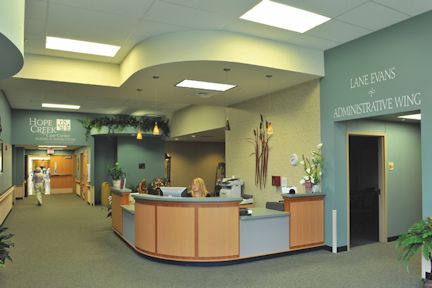
How is Hope Creek Nursing & Rehab Staffed?

CMS rates HOPE CREEK NURSING & REHAB's staffing level at 1 out of 5 stars, which is much below average compared to other nursing homes. Staff turnover is 43%, compared to the Illinois average of 46%. This relatively stable workforce can support continuity of care.

What Have Inspectors Found at Hope Creek Nursing & Rehab?

State health inspectors documented 59 deficiencies at HOPE CREEK NURSING & REHAB during 2022 to 2025. These included: 4 Immediate Jeopardy (the most serious level, indicating potential for serious harm or death), 5 that caused actual resident harm, and 50 with potential for harm. Immediate Jeopardy findings are rare and represent the most serious regulatory concerns. They require immediate corrective action.
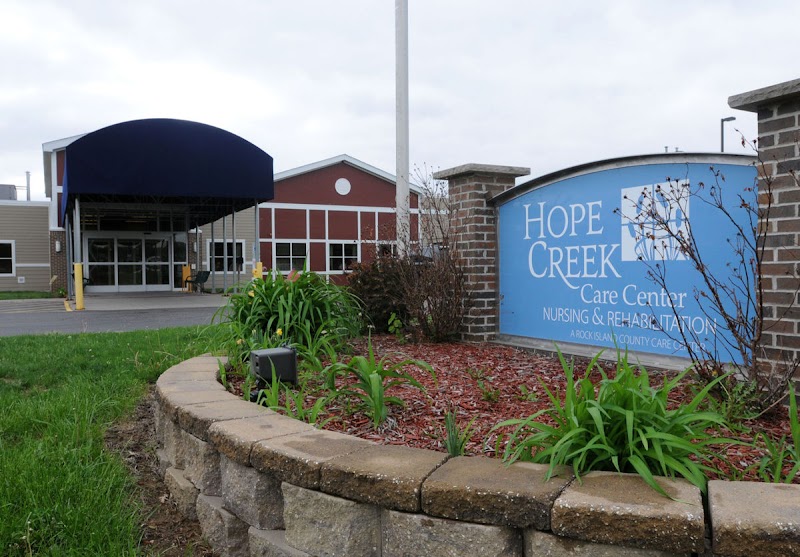
Who Owns and Operates Hope Creek Nursing & Rehab?

HOPE CREEK NURSING & REHAB is owned by a for-profit company. For-profit facilities operate as businesses with obligations to shareholders or private owners. The facility is operated by INFINITY HEALTHCARE CONSULTING, a chain that manages multiple nursing homes. With 245 certified beds and approximately 146 residents (about 60% occupancy), it is a large facility located in EAST MOLINE, Illinois.
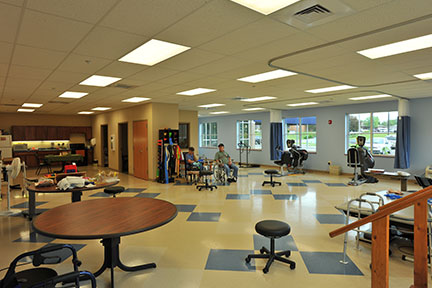
How Does Hope Creek Nursing & Rehab Compare to Other Illinois Nursing Homes?

Compared to the 100 nursing homes in Illinois, HOPE CREEK NURSING & REHAB's overall rating (1 stars) is below the state average of 2.5, staff turnover (43%) is near the state average of 46%, and health inspection rating (1 stars) is much below the national benchmark.

What Should Families Ask When Visiting Hope Creek Nursing & Rehab?

Based on this facility's data, families visiting should ask: "What changes have been made since the serious inspection findings, and how are you preventing similar issues?" "What safeguards and monitoring systems are in place to protect residents from abuse or neglect?" "Can you walk me through typical staffing levels on day, evening, and night shifts?" "Can I visit during a mealtime to observe dining assistance and food quality?" These questions are particularly relevant given the facility's Immediate Jeopardy citations, the substantiated abuse finding on record, and the below-average staffing rating.

Is Hope Creek Nursing & Rehab Safe?

Based on CMS inspection data, HOPE CREEK NURSING & REHAB has documented safety concerns. The facility has 1 substantiated abuse finding (meaning confirmed case of resident harm by staff or other residents). Inspectors have issued 4 Immediate Jeopardy citations (the most serious violation level indicating risk of serious injury or death). The facility has a 1-star overall rating and ranks #100 of 100 nursing homes in Illinois. Families considering this facility should ask detailed questions about what corrective actions have been taken since these incidents.

Do Nurses at Hope Creek Nursing & Rehab Stick Around?

HOPE CREEK NURSING & REHAB has a staff turnover rate of 43%, which is about average for Illinois nursing homes (state average: 46%). Moderate turnover is common in nursing homes, but families should still ask about staff tenure and how the facility maintains care continuity when employees leave.

Was Hope Creek Nursing & Rehab Ever Fined?

HOPE CREEK NURSING & REHAB has been fined $387,618 across 5 penalty actions. This is 10.5x the Illinois average of $36,955. Fines at this level are uncommon and typically indicate a pattern of serious deficiencies, repeated violations, or failure to correct problems promptly. CMS reserves penalties of this magnitude for facilities that pose significant, documented risk to resident health or safety. Families should request specific documentation of what issues led to these fines and what systemic changes have been implemented.

Is Hope Creek Nursing & Rehab on Any Federal Watch List?

HOPE CREEK NURSING & REHAB is not on any federal watch list. The most significant is the Special Focus Facility (SFF) program, which identifies the bottom 1% of nursing homes nationally based on persistent, serious quality problems. Not being on this list means the facility has avoided the pattern of deficiencies that triggers enhanced federal oversight. This is a positive indicator, though families should still review the facility's inspection history directly.